MSI’s Prestige PC341WU 5K 34-Inch Professional Monitor Now Available

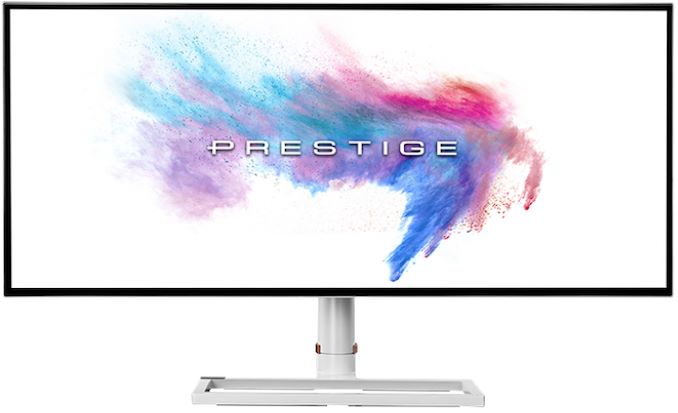
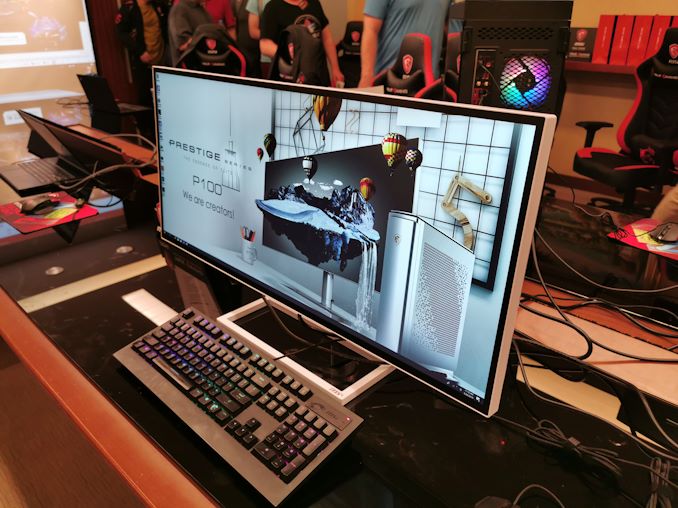
MSI entered the display market just a couple of years ago, and relatively rare for the the commodity-driven monitor market, MSI has opted to spend a good deal of effort putting together monitors to address niche markets. One of such monitors is the Prestige PC341WU, a 5K LCD designed for professional/prosumer users who require high color accuracy.


MSI’s Prestige PC341WU uses LG’s 34-inch Nano-IPS panel, which is a 21:9 aspect ratio panel with a 5120×2160 resolution. The monitor sports a 450 nits typical brightness, 600 nits peak brightness, a 1200:1 contrast ratio, a 8 ms response time, and a 60 Hz refresh rate. Being a professional monitor, the LCD can display 1.07 billion colors (8-Bit+FRC) and reproduce 100% of the sRGB and 98% of the DCI-P3 color spaces. Furthermore, the monitor carries VESA’s DisplayHDR 600 badge, so it has to support at least HDR10. Unfortunately, MSI doesn’t list anything about factory calibration for the display.


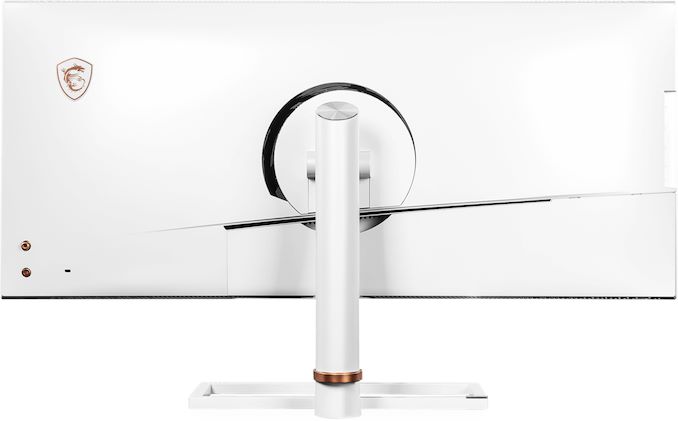
The ultra-wide 5K monitor offers DisplayPort, HDMI, and USB Type-C inputs. This allows it to be compatible with all PCs available today, including those that only feature Thunderbolt 3 or USB-C ports. In addition, the LCD has a dual-port USB 3.0 hub, an SD card reader, and audio connectors.


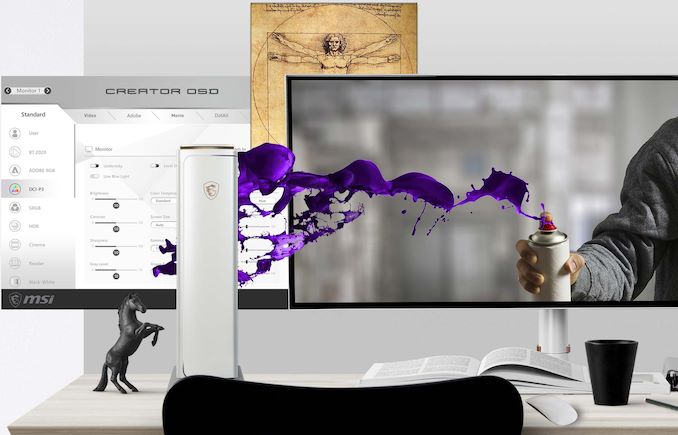
Like other professional-grade monitors, the MSI Prestige PC341 supports Picture-in-Picture (PIP) and Picture-by-Picture (PBP) capabilities that are required by those who connect more than one PCs to a single display. Also, it features a special Creator OSD to enable professional to fine-tune the monitor for their needs. Last but not least, the LCD comes with an adjustable stand that can regulate height, tilt, and swivel.


The Prestige PC341WU will be available in the US starting from September 16, 2019, at an MSRP of $1,199.99. For a limited time, before the end of this month, B&H will offer the display with a $200 gift card.


The MSI Prestige 5K Display
  Prestige PC341WU
Panel 34-inch Nano IPS
Native Resolution 5120 × 2160
Maximum Refresh Rate 60 Hz
Response Time 8 ms GtG
Brightness 450 cd/m² (typical)

450 cd/m² (peak)
Contrast 1200:1
Backlighting LED
Viewing Angles 178°/178° horizontal/vertical
Curvature
Aspect Ratio 21:9
Color Gamut 100% sRGB/BT.709

98% DCI-P3
DisplayHDR Tier 600
Dynamic Refresh Rate Tech
Pixel Pitch 0.1554 mm²
Pixel Density 163 PPI
Inputs DisplayPort

HDMI

USB Type-C
Audio 3.5 mm output

3.5 mm input
USB Hub 2 × USB 3.0 Type-A connectors

1 × USB 3.0 Type-B input
Card Reader SD Card Reader
Stand Adjustments Height: ? mm

Tilt: -?˚ -?˚

Swivel: -?˚ – ?˚
MSRP $1199.99

Related Reading:


Source: MSI


Source: AnandTech – MSI’s Prestige PC341WU 5K 34-Inch Professional Monitor Now Available

Need for Speed: The LG UltraGear (27GN750) 240 Hz IPS Monitor with G-Sync

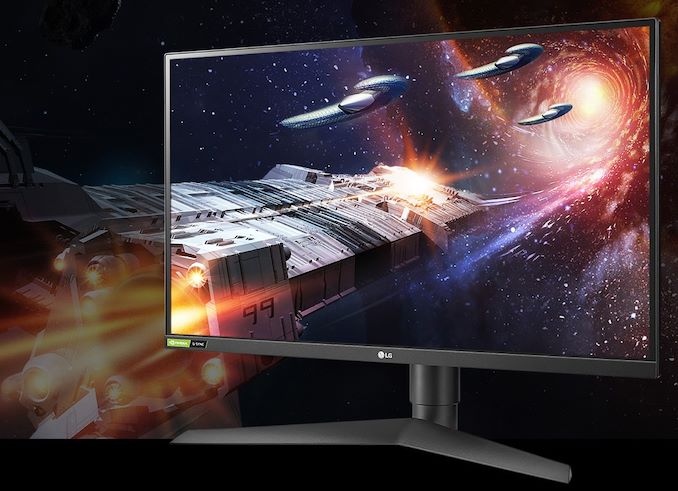
LG has expanded its family of UltraGear displays aimed at hardcore and esports gamers. The newest model, the UltraGear 27GN750, supports a 240 Hz maximum refresh rate as well as NVIDIA’s G-Sync variable refresh rate technology. The LG UltraGear 27GN750 is the industry’s first IPS monitor featuring such a high refresh rate along with the G-Sync technology.


Based on the so-called ‘fast IPS’ 27-inch panel, the LG UltraGear 27GN750 has a 1920×1080 resolution, 400 nits brightness, a 1000:1 contrast ratio, 178°/178° viewing angles, a 1 ms GtG response time, and a variable refresh rate of up to 240 Hz supported by NVIDIA’s G-Sync technology. Unfortunatelly, LG does not disclose the range of the VRR supported by the LCD.


The 27-inch gaming monitor can display 16.78 million of colors and can reproduce 99% of the sRGB color space. Furthermore, it also carries VESA’s DisplayHDR 400 badge and therefore supports HDR10 transport.


Because LG’s UltraGear monitors are designed predominantly for gamers, they support numerous features aimed at this audience, including LG’s Dynamic Action Sync mode, Black Stabilizer, and Crosshair.


As far as connectivity is concerned, the LG UltraGear 27GN750 has one DisplayPort, two HDMI inputs, as well as a dual-port USB hub.


The LG UltraGear Display with a 240 Hz Refresh Rate
  UltraGear 27GN750
Panel 27-inch class IPS
Native Resolution 1920 × 1080
Maximum Refresh Rate 240 Hz
Dynamic Refresh Technology NVIDIA G-Sync
Range ?
Brightness 400 cd/m²
Contrast 1000:1
Viewing Angles 178°/178° horizontal/vertical
Response Time 1 ms GtG
Pixel Pitch ~0.27675 mm²
Pixel Density ~82 PPI
Color Gamut Support 99% sRGB
Inputs 1×DP 1.2

2×HDMI 2.0
Audio headphone out
Stand ?
Warranty ? years
MSRP ?

Being one of the leading makers of high-end displays and offering hundreds of models, LG introduced its separate UltraGear brand targeted at demanding gamers only in mid-2019, somehow later than its competitors. The addition of the rather unique (as of today) UltraGear 27GN750 featuring a 240 Hz refresh rate enables the company to address a new market segment of gamers that require maximum performance yet demand quality of an IPS panel. In fact, this is the world’s second IPS LCD featuring a 240 Hz refresh rate and its only competitor is Dell’s Alienware 27 model AW2720HF.


Related Reading:


Source: LG


Source: AnandTech – Need for Speed: The LG UltraGear (27GN750) 240 Hz IPS Monitor with G-Sync

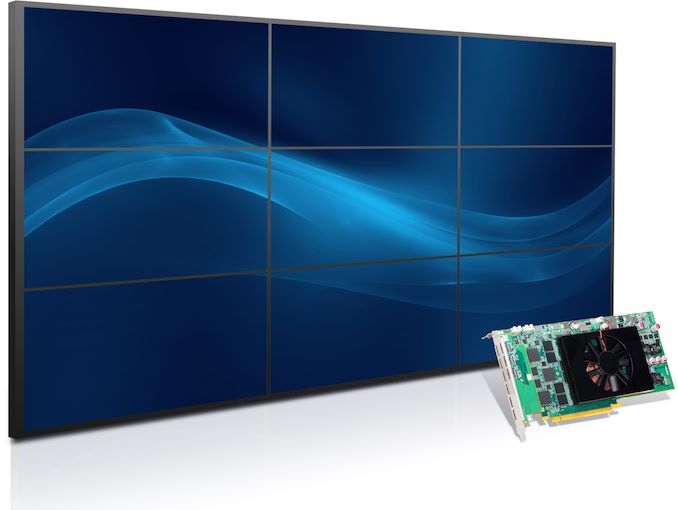
Matrox Acquired by Co-Founder

Matrox on Monday announced that Lorne Trottier, a co-founder of Matrox, has acquired 100% ownership of the Matrox group of companies, which includes three divisions: Matrox Imaging, Matrox Graphics, and Matrox Video.


Founded in 1976 by Lorne Trottier and Branko Matić, Matrox may not be a widely-known name among the PC crowd these days as it has been years since the company released its own GPU and essentially quit the market of consumer graphics cards. Back in the day, Matrox’s Parhelia and Millennium G400/G450/G550 graphics cards provided superior 2D image quality (something that was very important back in the CRT era), but failed to offer competitive performance in 3D games. This failure led the company to leave the market of consumer graphics cards and focus on niche markets instead. Back in 2014 Matrox officially ceased to design its own graphics processor IP and has been using AMD’s Radeon GPUs coupled with its renowned software since then.


In fact, when it comes to multi-display graphics cards and other graphics solutions for various purposes as well as for specialized niche solutions for video and imaging applications, Matrox has rather unique offerings. Serving aerospace, broadcast, financial, cinematography, digital signage, and other industries, Matrox almost certainly earns good profit margins.


It is hard to say how change of the ownership will affect product development and roadmap of Matrox, but usually such changes focuse the companies on their key products, which enables growth.


Since Matrox has always been a privately held company, financial terms of the deal were not disclosed.


Here is what Lorne Trottier had to say:


“This next phase represents a renewed commitment to our valued customers, suppliers, and business partners, as well as to our 700 dedicated employees worldwide. At Matrox, our culture is defined by our passion for technological innovation and product development. We maintain the highest degree of corporate responsibility vis-a-vis production quality and industry standards. I am extremely proud of our accomplishments over our 40-plus-year history and would like to thank my co-founder for his contributions.”


He added:


“I look forward to championing a corporate culture defined by forward-thinking business practices, transparency, and teamwork. I am excited to lead this great organization as we implement growth initiatives. Matrox is a great Canadian success story. We owe this success and our bright prospects to the talented and dedicated people at all levels of this organization.” 


Related Reading:


Source: Matrox


Source: AnandTech – Matrox Acquired by Co-Founder

Western Digital 20 TB HDD: Crazy Capacity for Cold Storage

As operators of cloud datacenters need more storage capacity, higher capacity HDDs are being developed. As data hoarders need more capacity, higher capacity HDDs are needed. Last week Western Digital introduced its new Utrastar DC HC650 20 TB drives – hitting a new barrier in rotating data. 


The drives feature shingled magnetic recording (SMR) technology, which layers data on top of another much like a shingled roof, and therefore is designed primarily for write once read many (WORM) applications (e.g., content delivery services). Western Digital’s SMR hard drives are host managed, so they will be available only to customers with appropriate software.


Western Digital’s Utrastar DC HC650 20 TB is based on the company’s all-new nine-platter helium-sealed enterprise-class platform, a first for the company. The new 3.5-inch hard drives feature a 7200 RPM spindle speed and will be available with a SATA 6 Gbps or SAS 12 Gbps interface depending on the SKU. Since the product is not expected to be available immediately, the manufacturer does not disclose all of its specifications just yet, but has stated that key customers are already in the loop.


Featuring a very high per-platter capacity of around 2.2 GB, the Utrastar DC HC650 20 TB HDDs offer a higher sequential read performance than its predecessors, but its IOPS per TB performance is lower than that of older HDDs. That said, Western Digital’s clients who will use the 20 TB SMR HDDs will need to manage the physical limitations of SMR, by maximizing sequential writes.


As far as availability is concerned, the 20 TB version of the Ultrastar DC HC650 SMR drives will be available as samples by the end of the year. Actual shipments will start once the drives are qualified by customers. Because the HDDs will be available to select customers only, Western Digital does not publish per-unit pricing.


Related Reading


Source: Western Digital


Source: AnandTech – Western Digital 20 TB HDD: Crazy Capacity for Cold Storage

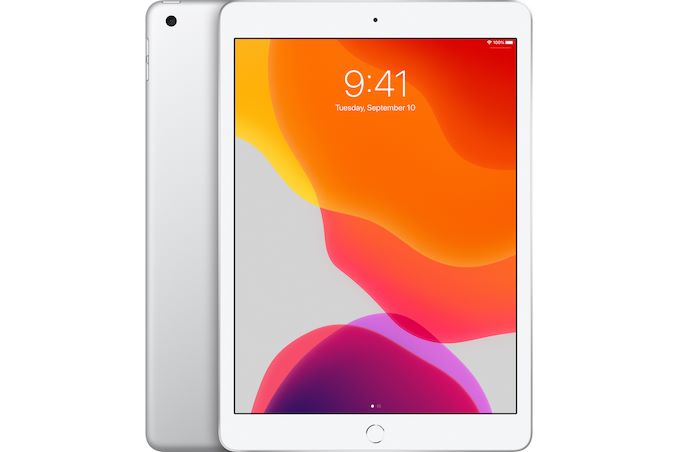
Apple Announces 10.2-Inch, A10-Powered 7th Gen iPad: Launching Sept. 30th for $329

As part of today’s fall keynote presentation for mobile devices, Apple took the wraps off of the latest iteration of their entry-level iPad. Now entering its 7th generation, the new iPad continues to retain most of the classic tablet’s design elements and features, however strictly speaking, Apple has finally moved past the tablet’s classic 9.7-inch size. As part of an effort to align the entry-level iPad with Apple’s higher-end iPad Air, the company has ever so slightly enlarged the tablet, with the latest model filling out to 10.2 inches diagonal.


Size increases aside, however, the latest iPad still takes up the same spot within Apple’s lineup as the previous iPad model. With Apple holding to the $329 retail price for the base 32 GB model ($299 education), this is Apple’s entry-level iPad, optimized for content consumption and some very light content creation. The latter, in turn, actually gets a small boost in this generation, with the addition of Apple’s Smart Connector, allowing the tablet to be used with Apple’s matching Smart Keyboard.


Apple iPad Comparison
  iPad Air

(2019)
iPad 7th Gen

(2019)
iPad 6th Gen

(2018)
SoC Apple A12 Bionic

2x Vortex

4x Tempest


4-core “G11P” GPU

Apple A10

2x Apple Hurricane

4x Apple Zephyr


6 Core PowerVR GPU

Display 10.5-inch

2224×1668

IPS LCD

DCI-P3/True Tone

500 Nits Brightness

Fully Laminated
10.2-inch

2160×1620


IPS LCD

500 Nits Brightness
9.7-inch

2048×1536

IPS LCD
Size Height 250.6 mm 250.6 mm 240 mm
Width 174.1 mm 174.1 mm 169.5 mm
Depth 6.1 mm 7.5 mm 7.5 mm
Weight 456 grams (Wi-Fi) 483 grams (Wi-Fi) 469 grams (Wi-Fi)
RAM 4GB LPDDR4X 2GB? LPDDR4 2GB LPDDR4
NAND 64GB / 256GB 32GB / 128GB
Battery 30.2 Wh 32.4 Wh
Front Camera 7MP, f/2.2

HDR, WCG

Retina Flash
1.2MP, f/2.2

HDR

Retina Flash
Rear Camera 8MP,  f/2.4, AF

HDR, WCG
8MP,  f/2.4, AF

HDR
Cellular Gigabit-class LTE-A 2G / 3G / 4G LTE
SIM Size NanoSIM + eSIM NanoSIM
Wireless 802.11a/b/g/n/ac 2×2 MIMO

BT 5.0
802.11a/b/g/n/ac 2×2 MIMO

BT 4.2
Connectivity USB-C

Apple Smart Connector
Lightning
Apple Smart Connector
Lightning
Launch OS iOS 12 iOS 13 iOS 11
Launch Price (Wi-Fi / Cellular)


$499/$629 (64G)

$649/$779 (256G)

(Wi-Fi / Cellular)


$329/$459 (32G)

$429/$559 (128G)

(Wi-Fi / Cellular)


$329/$459 (32G)

$429/$559 (128G)

In the case of the 7th generation iPad, taking a quick look at the specs actually tells us most of what we need to know about Apple’s new tablet. In short, Apple has made the tablet a bit larger than its predecessor, but little else. Based upon the same A10 SoC, same 32.4 Watt-hour battery, and the same camera modules, there’s not a whole lot new for the new iPad beyond its size. So by and large, the 7th generation iPad is pretty much a side-grade to the previous iPad.


The important part for Apple here is that the latest model of the tablet, besides being a bit larger overall – with size continuing to be important to consumers – is that this aligns the design of the iPad with the new iPad Air (again). Specifically, the 7th generation iPad gets the same 250.6mm x 174.1mm footprint as Apple’s higher-end tablet. This means that the two tablets can share a lot of accessories that are designed to match the size of a tablet – case in point, Apple’s Smart Keyboard, which fits both the iPad and the iPad Air. The iPad is still a good 23% thicker, so cases and the like will still need to take this into account, but it means the iPad Air is no longer alone with its slightly enlarged footprint.
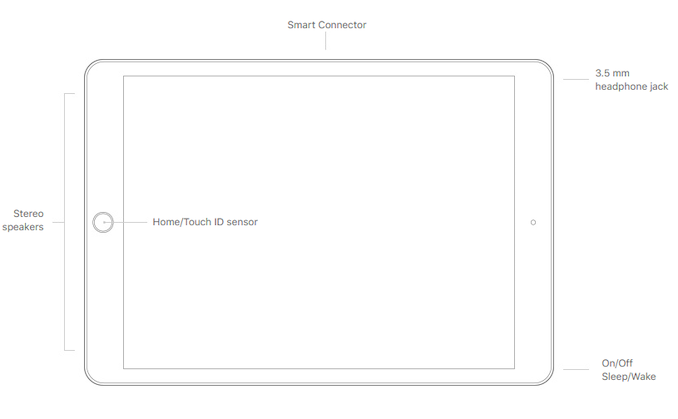


Blowing up the tablet also means that Apple has moved on to a slightly larger display panel. Owing to its thicker bezels, the 7th gen iPad doesn’t get the same 10.5-inch screen as the iPad Air, but rather it gets a 10.2-inch IPS LCD. Apple has opted to retain their same “retina” PPI of 264, so as a result the resolution on the new iPad is just a bit higher, shifting up to 2160×1620, still following the classic 4:3 aspect ratio. Meanwhile, the new iPad is also the first time Apple’s entry-level tablet is getting an official brightness rating, with Apple rating it for 500 nits, the same as the iPad Air. It should be noted, however, that this is as far as the iPad goes; the Air retains other advantages such as the laminated panel and wide color gamut.
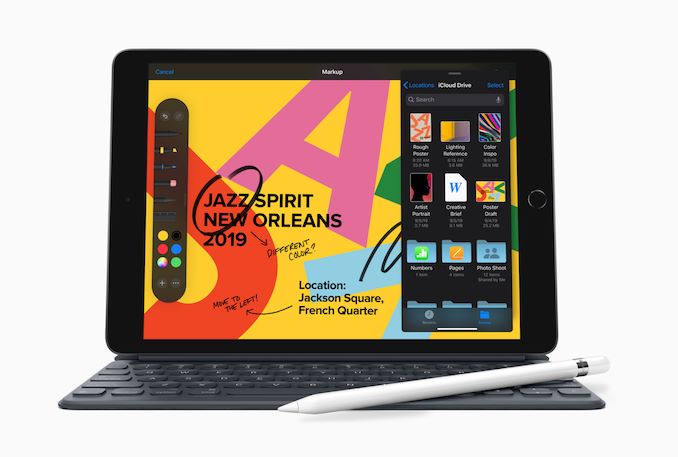


As this is an entry-level iPad, there isn’t much in terms of frills to talk about from a feature perspective. Apple has retained the use of the Touch ID-equipped home button, and the 3.5mm jack has thankfully not been excised from this model. Meanwhile Apple’s technical specifications do note that the tablet now includes a dual microphone setup to improve audio pickup, which is something that’s been restricted to the Air models (classic and modern) up until now. Apple Pencil support has also returned, with the tablet continuing to support the first-gen pencil, but not the more intricate second-gen pencil used with the current iPad Pro models.



Curiously, however, Apple hasn’t unified the tablet lineups in terms of I/O ports: the 7th generation iPad is still using Apple’s Lightning connector, rather than the USB-C connector of the iPad Air and iPad Pro. So while many Air/Pro accessories will work with the new entry-level iPad, anything expecting that USB-C port will not. In that respect the new iPad is closer to being backwards compatible with the now legacy iPads than it is being unified with the newer models.


Rounding out the package, Apple has interestingly opted not to scale up their battery at all for the new iPad, even with its larger size. As with its predecessor, the 7th generation iPad packs in a 32.4 Wh battery, which even with the slightly larger screen, Apple is still rating as being capable of driving the tablet for up to 10 hours. Consequently, while this is technical minutiae that Apple will never get in to, I’m curious whether Apple has even changed parts here, or if they’re still using the exact same battery as the 6th gen iPad as a means to keep down costs.


Unfortunately, the newest iPad isn’t going to do anything about improving the tablet’s performance, as Apple is once again using the A10 SoC, first introduced for the iPhone 7. Though by no means a slouch, A10 is among Apple’s older SoCs – the company only supports devices going back to the A9 – and as a result it comes with the same basic image processing and Wi-Fi capabilities as the earlier iPad. And, while Apple doesn’t disclose memory capacity, because of the Package-on-Package nature of the A10’s memory, the SoC is almost certainly still the same 2GB version as before.


Last but not least, however, the new iPad does get a small boost to its cellular capabilities. The 7tn generation iPad seems to be borrowing from the iPad Air here once again, incorporating a similar “Gigabit-class” LTE radio, which will allow for faster transfer speeds than the older iPad’s sub-Gigabit radio. And on a technical note, like the iPad Air, Apple has done away with CDMA support for the new iPad; now it’s solely GSM/UMTS/LTE, meaning that in the unlikely event it falls back from 4G LTE, the iPad can’t use Verizon and Sprint’s 3G CDMA networks.
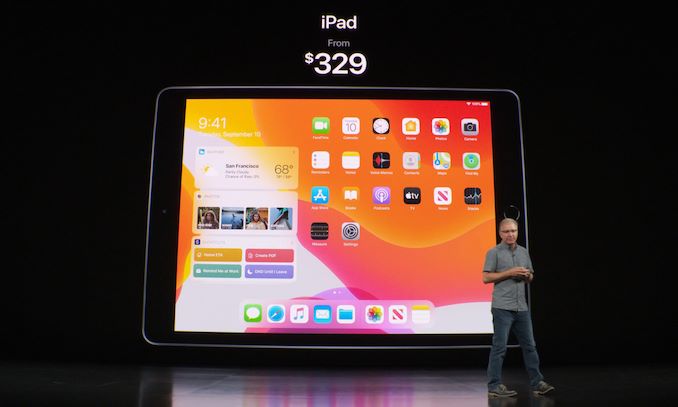


Wrapping things up, the 7th generation iPad will come in Apple’s usual mix of colors, capacities, and Wi-Fi/Cellular feature sets. The lineup will continue to start at $329 for the base-model 32GB Wi-Fi version, while an upgrade to 128GB of storage will cost another $100, and adding cellular is a $130 upgrade. Apple will begin selling the tablets shortly after the new iPhone 11 series goes on sale, with the iPad set to being shipping on September 30th.


Source: AnandTech – Apple Announces 10.2-Inch, A10-Powered 7th Gen iPad: Launching Sept. 30th for 9

Apple Announces New iPhone 11, iPhone 11 Pro, & iPhone 11 Pro Max

Apple’s new iPhone Special Event just finished up at the Steve Jobs theatre in Cupertino – and as expected we saw the launch of a new generation of iPhones – the new iPhone 11 series. The new iPhone 11 is the successor to the iPhone XR of last year and is projected to again be Apple’s most successful device for the year, upgrading the camera system with new photography experiences as well as introducing the new A13 chipset.

The new iPhone 11 Pro and 11 Pro Max are Apple’s first iPhones with the “Pro” designation, and are the successors to last year’s XS and XS Max. They also bring the new back glass design, but this time include three camera modules, and this year Apple also upgrades the display panel to make it much brighter and much more efficient.


Source: AnandTech – Apple Announces New iPhone 11, iPhone 11 Pro, & iPhone 11 Pro Max

The Apple 2019 iPhone Event Live Blog (10am PT)

The fall season is approaching yet again, and it’s time again for another round of iPhone updates, representing Apple’s newest 2019 mobile hardware. The event should be starting at 10am PT, and the show again takes place on the Apple Park campus in the Steve Jobs theatre.


This year we’re expecting a new refresh of last year’s iPhone XS, XS Max and XR models. We’re still not quite sure what Apple is going to be calling the new phones, but if the numerous leaks prove to be true, we’ll be seeing incremental design updates with a new in-vogue triple-camera setup as being the key new features of the phones, as well as naturally Apple introducing new internal hardware such as the new Apple A13 SoC, which might bring some surprises to the table this year.


Source: AnandTech – The Apple 2019 iPhone Event Live Blog (10am PT)

Nokia 7.2 Launched: 6.3-Inch PureDisplay, 48MP Camera, Snapdragon 660

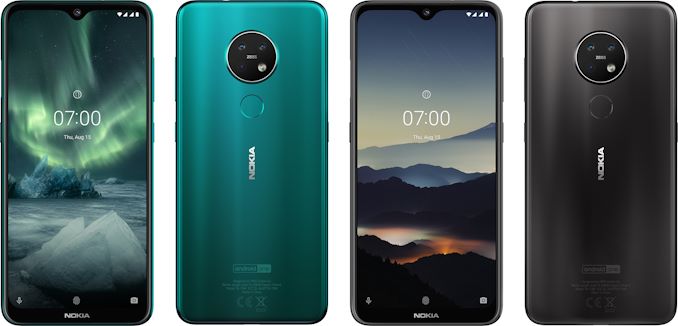
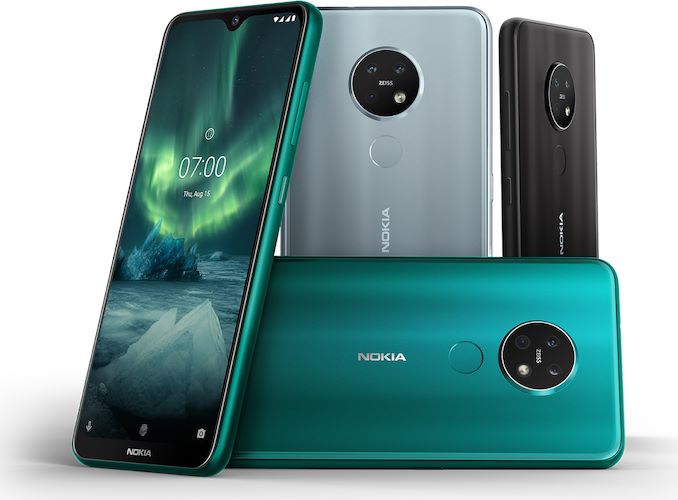
HMD Global has announced its new ‘performance mainstream’ smartphone, the Nokia 7.2. It is aimed at the mass market, yet features premium capabilities, like a large HDR10-capable display with PurePlay enhancements, and a triple-module camera with a 48 MP sensor. When compared to its predecessor in the same price segment, the Nokia 7.2 upgrades itself in every important aspect like the screen size, performance, and imaging capabilities.


The design language of the Nokia 7.2 is somewhat different when compared to its ancestor, the Nokia 7.1, as well as other advanced Nokia handsets available today. The chassis is symmetric with very smooth edges to ensure a pleasant grip. The handset no longer has sharp/diamond-cut edges that were meant to ensure firm grip and give a somewhat special feeling. There is a reason for that. The enclosure no longer uses an aluminum unibody frame, but features a frame made of a polymer composite along with Corning Gorilla Glass 3 on both sides. Nokia says that the polymer composite it uses is twice as strong as polycarbonate at half the weight of aluminum. Use of the polymer instead of metal enabled Nokia to install a 6.3-inch LCD and boost battery capacity while maintaining weight of the phone at around 160 grams (same as predecessor).


Speaking of the display, the Nokia 7.2 features a 6.3-inch IPS LCD with a 2244×1080 resolution as well as Nokia’s PureDisplay hardware and software technology enabled by a PixelWorks chip that can process HDR10 content, upscale SDR content to HDR, as well as adjust brightness and contrast dynamically to provide the best possible image quality both indoors and outdoors.


Inside the Nokia 7.2 is the Qualcomm Snapdragon 660 that integrates eight Kryo cores (so, four semi-custom Cortex-A73 and four semi-custom Cortex-A53 cores) as well as an Adreno 512 graphics core, and an X12 LTE modem. The application processor is paired with 4 or 6 GB of LPDDR4 memory as well as 64 GB or 128 GB of NAND flash storage. Meanwhile, the device is equipped with a 3,500 mAh battery that can be fast charged.


As noted above, the Nokia 7.2 got significant upgrades when it comes to imaging. The main camera module is a 48 MP equipped with Zeiss optics, an ultrawide 8 MP sensor, a 5 MP depth module, and a LED flash. Also, there is a 20 MP camera for selfies on the front of the phone. To take advantage of the new triple-module camera as well as the new front sensor, Nokia developed its new camera software that takes advantage of the new hardware and supports ‘AI-powered night mode’ (which is probably a way to call Google Android’s Night Mode). Besides, there is Pro Camera Mode that enables a precise control of white balance, ISO, aperture, and shutter speed. Obviously, there are various refinements when it comes to the selfie camera too.


Physical interfaces of the Nokia 7.2 include a fingerprint reader on the back, power, volume and Google Assistant buttons, as well as a USB Type-C for data and power. For those who care, there still is a 3.5-mm audio jack for headsets.


General Specifications of the Nokia 7.2
  Nokia 7.2

Good
Nokia 7.2

Better
Display Size 6.3″ IPS
Resolution 2280×1080 (19:9)
PPI 400 PPI
Cover Gorilla Glass 3
Processor PixelWorks
SoC Snapdragon 636

 Kryo 260

4 × Kryo 260 Gold (semi-custom Cortex-A73 cores) @ 2.2 GHz

4 × Kryo 260 Silver (semi-custom Cortex-A53 cores) @ 1.84 GHz
GPU Adreno 512
RAM 4 GB LPDDR4 6 GB LPDDR4
Storage 64 GB + microSD 128 GB + microSD
Networks GSM GPRS (2G), UMTS HSPA (3G), LTE (4G)
SIM Size Nano SIM
SIM Options Dual SIM, second SIM slot is used by microSD card
Local Connectivity 802.11ac Wi-Fi, BT 5.0, NFC,

3.5mm jack,

USB 2.0 Type-C
Front Camera 20 MP
Rear Camera Main: 48 MP, f/1.8, 0.88µm, Quad-Pixel, PDAF

Ultrawide: 8 MP, f/2.2

Depth: 5 MP, (f/2.4, 1.12µm ?)

Flash: LED
Battery 3,500 mAh
Dimensions Height 159.9 mm | 6.3 inches
Width 71.8 mm | 2.8 inches
Thickness 8 mm | 0.31 inches
Weight 160 grams | 5.63 ounces
Launch OS Android 9.0

The Nokia 7.2 smartphone will be available in Cyan Green, Charcoal, and Ice finishes later this month. The 4 GB + 64 GB model will cost €299, whereas the more advanced 6 GB + 128 GB SKU will be priced at €349.


Related Reading:


Sources: Nokia, GSMArena


Source: AnandTech – Nokia 7.2 Launched: 6.3-Inch PureDisplay, 48MP Camera, Snapdragon 660

GOODRAM Reveals IRDM Ultimate X: A Lineup of PCIe 4.0 x4 SSDs

GOODRAM has introduced its first SSDs featuring a PCIe 4.0 x4 interface designed for new-generation high-end PCs. Set to be available in 500 GB, 1 TB and 2 TB configurations, the drives are based on Phison’s PS5016-E16 controller.


Just like other PCIe 4.0 x4 SSDs powered by the E16, GOODRAM’s IRDM Ultimate X SSDs use 3D TLC NAND memory. From performance point of view, the manufacturer promises up to 5000 MB/s sequential read speed, up to 4500 MB/s sequential write speed as well a 750K read/write random IOPS for 1 TB and 2 TB drives, which is in line with other products based on the Phison’s PS5016-E16 controller. Meanwhile, the cheapest 500 GB version provides a lower write speed as well as random performance.


In a bid to ensure consistent performance under high loads, the GOODRAM IRDM Ultimate X SSDs are equipped with an aluminum heat spreader, which as with other drives suggests a compatibility focus on desktop PCs.


GOODRAM’s IRDM Ultimate X Specifications
Capacity 500 GB 1 TB 2TB
Model Number ? ? ?
Controller Phison PS5016-E16
NAND Flash 3D TLC NAND
Form-Factor, Interface M.2-2280, PCIe 4.0 x4, NVMe 1.3
Sequential Read 5000 MB/s
Sequential Write 2500 MB/s 4500 MB/s
Random Read IOPS 550K IOPS 750K IOPS
Random Write IOPS 400K IOPS 750K IOPS
Pseudo-SLC Caching Supported
DRAM Buffer Yes, capacity unknown
TCG Opal Encryption No
Power Management ?
Warranty 5 years
MTBF ? hours
TBW ? ? ?
MSRP ? ? ?

One interesting feature of GOODRAM’s IRDM Ultimate X SSDs mentioned by PCLab.pl is its five-year warranty, a rare peculiarity for consumer drives these days. As for availability, expect the Ultimate X SSDs to be available this November. Prices will obviously depend on capacity.


Related Reading


Source: GOODRAM (via PCLab.pl)


Source: AnandTech – GOODRAM Reveals IRDM Ultimate X: A Lineup of PCIe 4.0 x4 SSDs

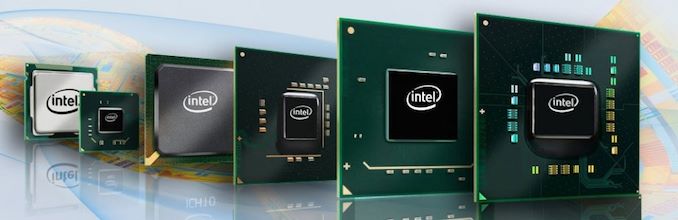
Intel Documents Show Driver Support for Unannounced 400-Series Chipsets

Intel does not often disclose its own chipset names in advance, but from time to time we get glimpses into accidental publication. This week, driver documents from the company show software support for unannounced 400-series and 495 chipsets, which are led to believe will be for future generations of products, following on from the 300-series products.


As it turns out, Intel’s chipset drivers have supported the company’s 400-series and 495 chipsets as of mid-August. Software support may indicate that the launch of Intel’s new platforms is imminent. Meanwhile, we can only guess about their specifications and capabilities.


Another interesting addition to Intel’s family of chipsets is the H310D PCH, found in the same document. Based on its name, we can suspect that this is a yet another version of the entry-level H310, but we have no idea about its peculiarities. The original H310 was built on 14nm, the H310C was built on 22nm, so who knows what the H310D will be.


Related Reading


Source: Intel (via Twitter/momomo_us)


Source: AnandTech – Intel Documents Show Driver Support for Unannounced 400-Series Chipsets

Acer’s ConceptD 9 Pro: A 17.3-Inch Convertible w/ Core i9 & Quadro RTX 5000

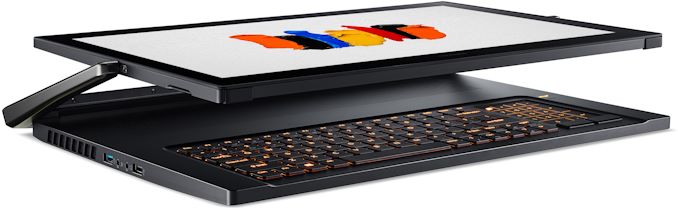
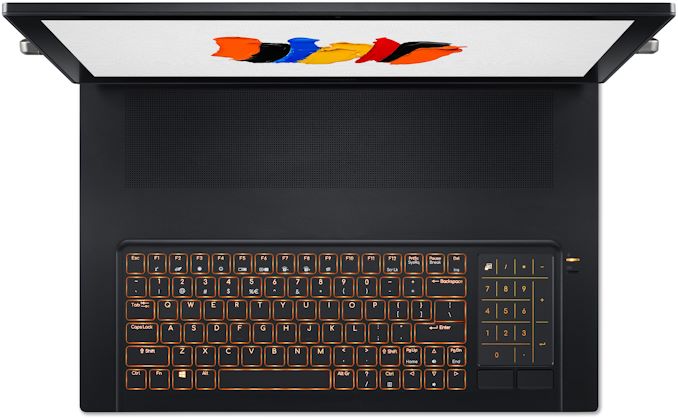
In the recent years, leading makers of gaming PCs have been experimenting with unorthodox form-factors in an attempt to maximize performance and improve overall experience. Having learnt from its Predator Triton laptops, Acer applied its expertise to mobile workstations and this week introduced one of the industry’s first convertible notebooks featuring Intel’s Core i9 CPU and NVIDIA’s Quadro RTX 5000 GPU.


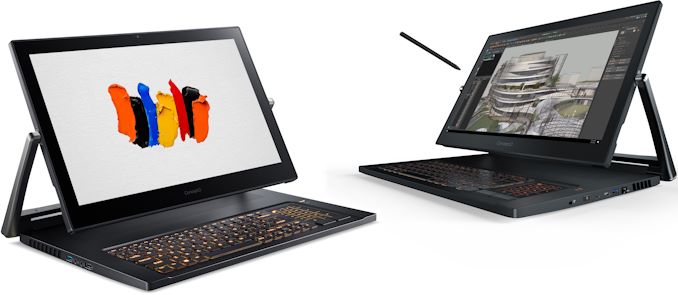
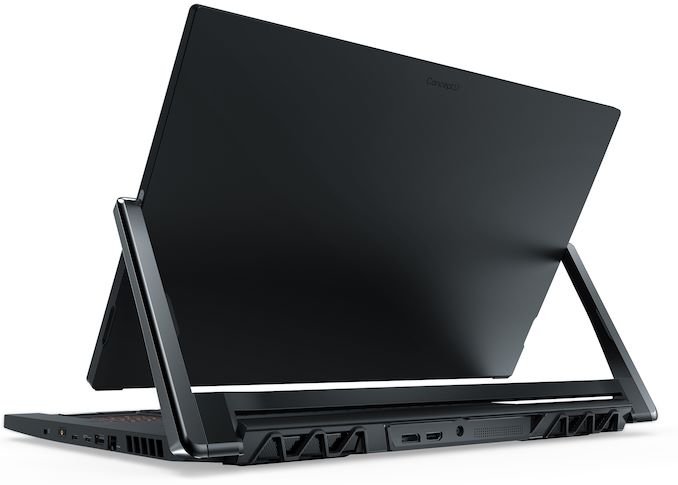
The Acer ConceptD 900 Pro is a 17.3-inch convertible PC that uses the chassis originally developed for the Predator Triton 900 gaming PC. The chassis features Acer’s CNC-machined Ezel Aero Hinge that can flip, extend, or recline the display in a bid to offer the most optimal position for creativity. The notebook also places its mechanical keyboard to its front side to improve cooling for high-TDP components while retaining a relatively low z-height. Speaking of cooling, it is necessary to note that the PC uses Acer’s 4th Generation cooling system featuring metallic Aeroblade 3D fans.


To comply with requirements of graphics professionals, the ConceptD 900 Pro is equipped with a Pantone Validated 4K Ultra-HD display that can cover 100% of the Adobe RGB color space and is factory calibrated with a Delta E <1 color accuracy. Furthermore, the convertible workstation comes with a Wacom EMR stylus with 4,096 levels of pressure sensitivity that is magnetically attached to the machine.


When it comes to the insides, the ConceptD 900 Pro packs up to Intel’s 9th Gen Core i9 CPU with eight cores, NVIDIA’s Quadro RTX 5000 GPU, 32 GB of DDR4 RAM, as well as two PCIe 3.0 x4 M.2 SSDs operating in RAID mode for ultimate reliability or performance.


Being a 17.3-inch powerhouse, Acer’s ConceptD 900 Pro is certainly not an ultraportable machine. The system weighs around 4.1 kilograms and is around 2.4 cm (0.94 inch) thick. Considering that we are dealing with an extremely capable machine in a unique form-factor, the weight and thickness are quite justified for those who actually need it.


Acer intends to start sales of its flagship ConceptD 9 Pro convertible workstation in EMEA sometimes in November at prices starting at €5,499.


Related Reading:


Source: Acer


Source: AnandTech – Acer’s ConceptD 9 Pro: A 17.3-Inch Convertible w/ Core i9 & Quadro RTX 5000

Samsung’s 8K QLED TV 55-Inch: A More Affordable 8K Ultra-HD TV

Being flagship televisions available today, 8K Ultra-HD TVs not only feature a resolution of 7680×4320 pixels, but also pack all the latest technologies that manufacturers have to offer these days and therefore can provide ultimate experience even with 4K or 2K content. Samsung’s Q900 family of 8K TVs do exactly that, but because of its premium positioning, the company offered them in large sizes, which means price tags excessive for most. Up until this week.


At IFA, Samsung introduced its smallest 8K UHDTV to date: the Q900R 55-inch model QN55Q900RBFXZA, which costs significantly less than the rest of the SKUs in the lineup.


The television uses Samsung’s IPS-class 7680×4320 panel backed by a quantum dot-enhanced LED backlight that promises FALD-like operation, which Samsung dubs Direct Full Array 16X technology (in case of the 55-inch model). The TV features a peak brightness of 4000 nits, which is the maximum luminance at which HDR content is mastered these days. Speaking of HDR, the Q900-series officially supports HDR10, HDR10+, and HLG formats, but not Dolby Vision (at least for now). As far as color gamut is concerned, the Q900-series can reproduce 100% of the DCI-P3 space.


Just like its bigger brothers, the Samsung Q900R 55-inch uses the company’s Quantum Processor 8K as its brain. The SoC is responsible for all decoding, upscaling, and other operations. Among the capabilities of the chip that Samsung is particularly proud of is its proprietary 8K AI Upscaling technology, which is designed to enhance the quality of digital content to panel’s native resolution (does not work with PCs, games, analogue content, etc.). Furthermore, the SoC is also able to interpolate content to 240 FPS and supports AMD’s FreeSync/HDMI Variable Refresh Rate technologies.


Last but not least, the UHDTV comes with a 60-W 4.2-channel audio subsystem.


While technological excellence of Samsung’s Q900-series Ultra-HD televisions is well known, the key feature of the 55-inch model is its price. The 8K television carries a price tag of $2,499, which is in line with higher-end 4K TVs. Considering the fact that retail prices tend to fall below MSRPs, the 55-inch Q900 will likely be considerably more widespread than its larger counterparts.


Related Reading:


Source: Samsung


Source: AnandTech – Samsung’s 8K QLED TV 55-Inch: A More Affordable 8K Ultra-HD TV

Dynaboook Reveals Tecra X50: A Lightweight 15.6-Inch Laptop with a 10+ Hrs Battery Life

Dynabook, formerly PC division of Toshiba, today introduced its flagship Tecra laptop aimed at corporate, business, and education users. The Tecra X50 comes with a 15.6-inch IGZO laptop, weighs around 1.4 kilograms and can work for over 10 hours on one charge depending on the workload.


15.6-inch notebooks are considered as workhorses that spend most of their life on the desk, so very few companies try to make them truly lightweight and friendly to road warriors. Dynabook appears to be one of such companies, and at 1.42 kilograms, the Tecra X50 is among the lightest laptops featuring a 15.6-inch Full-HD IGZO screen on the market. The mobile PC uses an Onyx Blue magnesium alloy chassis featuring a 17.6 mm z-height, which explains how Dynabook has managed to reduce the weight of the Tecra X50 to the ballpark of a 13.3-inch class laptop. Magnesium alloy is of course stronger than plastic used for some ultra-low-weight 15.6-inch machines, so while the Tecra X50 is not the lightest 15.6-incher available today, it offers a combination of sturdy design and relatively low weight.


Inside the Tecra X50, there is up to Intel’s 8th Generation Core i7-8665U (Whiskey Lake) processor with Intel UHD Graphics 620 accompanied by up to 32 GB of dual-channel DDR4-2400 memory as well as an up to 1 TB PCIe 3.0 x4 NVMe SSD. On the connectivity side of matters, the Tecra X50 features Intel’s Wi-Fi 5 or Wi-Fi 6 with Bluetooth 5.0 wireless technologies, two Thunderbolt 3 ports, two USB 3.0 connectors, an HDMI output, a microSD card reader, and a 3.5-mm connector for headsets.


Since the Tecra X50 is designed for corporate and business users, Dynabook put a lot of emphasis on manageability and security. The system can be powered by a vPro-enabled CPU, it has a TPM 2.0 chip inside, it has a Synaptics fingerprint reader, and an HD webcam with IR sensors for Windows Hello as well as a privacy shutter.


Other features of the Dynabook Tecra X50 worth talking about include AccuPoint joystick-like pointing device, a spill-resistant keyboard, stereo speakers with harman/kardon badge, and a microphone array.


One of the key selling points of the Tecra X50 is its battery life. The machine comes with a built-in 48 Wh battery and this battery can power the machine for over 10 hours on one charge depending on the configuration and workload, according to Dynabook. Since the notebook uses an IGZO display that consumes a lower amount of power than traditional LCDs, it is logical to expect the Tecra X50 to last longer than competitors. Meanwhile, actual configuration matters a lot. Higher-end Tecra X50 notebooks with Intel’s Core i7, dual-channel memory, touch screen, and an advanced SSD will last for about 10:45 hours on one charge, which is rather good. Meanwhile, lower-end Core i3-based configs with 4 GB of RAM and a non-touch display can last for 17+ hours in the lab, according to Dynabook. Keep in mind that the test results were achieved only in the lab using MobileMark 2014, so the real world battery life is something that will depend on tasks, exact system specification, and other factors.


Dynabook’s Tecra X50
  General Specifications

PLR33U-0KP004

PLR33U-0KQ004
Long-Lasting Version
Display 15.6″ 1920×1080 IGZO

or

15.6″ 1920×1080 IGZO with 10-point multitouch
15.6″ 1920×1080 IGZO
CPU up to Intel Core i7-8665U Intel Core i3-8xxxU
Graphics HD Graphics 620 (24 EUs) HD Graphics 620 (24 EUs)
RAM up to dual-channel 32 GB DDR4 4 GB DDR4
Storage Up to 1 TB SSD (PCIe) 256 GB SSD
Wi-Fi PLR33U-0KP004: Intel Wireless-AC 9560 (802.11ac)

PLR33U-0KQ004: Intel Wi-Fi 6 AX200 (802.11ax)
?
Bluetooth Bluetooth 5 ?
USB 3.0 2 × USB 3.0 Type-A
TB3 2 × Type-C TB3/USB 3.1 ports (also used for charging, external display, etc.)
Card Reader MicroSD
Fingerprint Sensor Yes
Other I/O Webcam with RGB + IR sensors and shutter, microphone, stereo speakers, audio jack, anti-spill keyboard, AccuPoint joystick
Battery 48 Wh, up to 10 hours 45 minutes 48 Wh, up to 17+ hours
Dimensions Thickness 17.6 mm | 0.69 inches
Width 359 mm | 14.1 inches
Depth 250 mm | 9.8 inches
Weight Starting at 1.42 kg (3.13 lbs)
Price ? ?

Dynabook intends to start sales of the Tecra X50 in the near future at prices starting from $1,544.


Related Reading:


Source: Dynabook


Source: AnandTech – Dynaboook Reveals Tecra X50: A Lightweight 15.6-Inch Laptop with a 10+ Hrs Battery Life

New Uses for Smartphone AI: A Short Commentary on Recording History and Privacy

This opinion piece is reactionary to recent announcements.


Having just attended the Huawei keynote here at the IFA trade show, there were a couple of new features enabled through AI that were presented on stage that made the hair on the back of my neck stand on end. Part of it is just an impression on how quickly AI in hand-held devices is progressing, but the other part of it makes me think to how it can be misused.


Let me cover the two features.


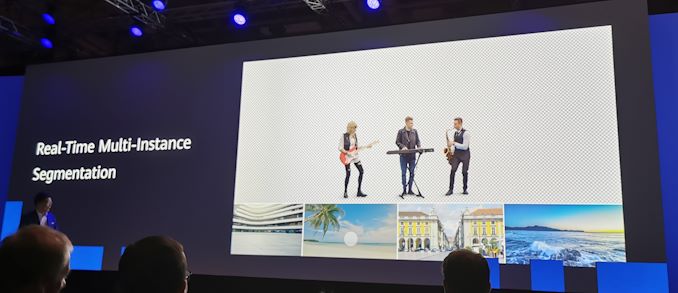
“Real-Time Multi-Instance Segmentation”


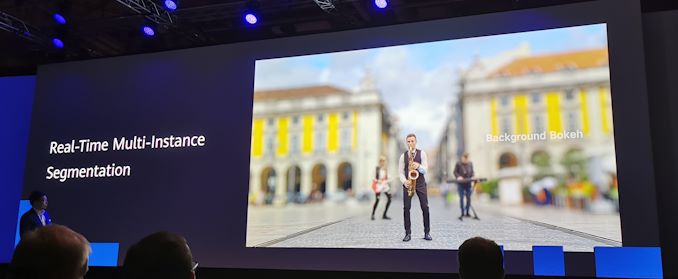
Firstly, AI detection in photos is not new. Identifying objects isn’t new. But Huawei showed a use case where several people were playing musical instruments, and the smartphone camera could detect both the people from the background, and the people from each other. This allowed the software to change the background, from an indoor scene to an outdoor scene and such. What this also enabled was that individuals could be deleted, moved, or resized. Compare the title image to this one, where people are deleted and the background moved.


What does this mean? People can be removed from photos. Old lovers can be removed from those holiday photographs. Individuals can easily be removed (or added) from the historical record. The software would automatically generate the background behind them (if it’s the original background), and the size of people could even be changed. This was not only photographs, but video. The image blow shows one person increased in size, but it could just as easily be something significant.


Now I know that these algorithms already exist on photo editing software on a PC, if you know how to use it. I know that the demo that Huawei showed on stage was more of a representative aspect to AI on a smartphone, but I could imagine something similar coming to a smartphone, and being performed on a smartphone, and the goal to make it as easy to use as possible on a smartphone. How we in future might interpret the actions of our past selves (or past others) may have to take into account the level of access (and ease of use) in the ability to modify images and video.


Detecting Health Rate with Cameras


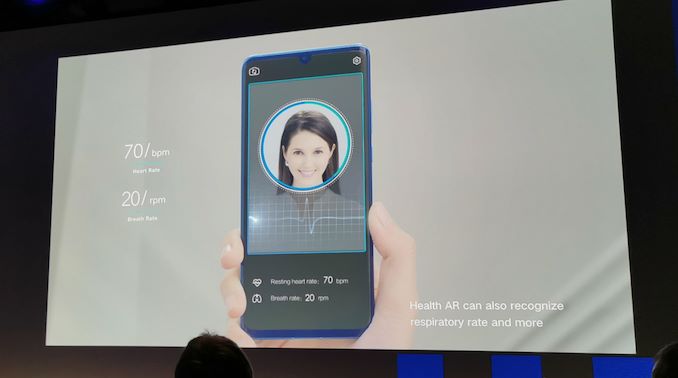
The second feature was related to Health and AR. By using a pre-trained algorithm, Huawei showed the ability for your smartphone to detect your heart rate simply by the front facing camera (and assuming the rear facing camera too). It does this by looking at small facial movements between video frames, and works on the values it predicts per pixel to get an overall picture.


Obviously, it isn’t meant to be used as a diagnostic tool (at least, I hope not). I could imagine similar technology being used with IP cameras for a home security system perhaps, and when it detects an elderly relative in distress, it can perform the appropriate action. But it lends itself to abuse, if you are able to use it on other people unsuspectingly. Does that constitute an invasion of privacy? Does it work on these smartphones with 10x zoom? I’m not sure I’m qualified to answer those questions. 


A big part of me wants to see technology moving forward, with development and progression from generation to generation. But in seeing these two technology features today, there’s the tiniest part that doesn’t sit right, unless the correct security procedures are in place, such as edited images/videos have a signature marker, or only pre-registered people on a smartphone can have their heartbeat measured. Hopefully my initial fears aren’t as serious as they first appear.


Source: AnandTech – New Uses for Smartphone AI: A Short Commentary on Recording History and Privacy

Huawei Announces Kirin 990 and Kirin 990 5G: Dual SoC Approach, Integrated 5G Modem

For the last 3 years, Huawei has announced its next generation SoC at the IFA technology show here in Berlin. In every occasion, the company promotes its hardware, using the latest process technologies, the latest core designs, and its latest connectivity options. The flagship Kirin processor it announces ends up in every major Huawei and Honor smartphone for the next year, and the Kirin 990 family announced today is no different. With the Mate 30 launch happening on September 19th, Huawei lifted the lid on its new flagship chipset, with a couple of twists.


Source: AnandTech – Huawei Announces Kirin 990 and Kirin 990 5G: Dual SoC Approach, Integrated 5G Modem

Negear Expands 802.11ax Portfolio with Orbi Wi-Fi 6 Mesh System and Nighthawk EAX80 Extender

As part of IFA 2019, Netgear has a number of new announcements across different product lines. The wireless networking products are of particular interest to us. We had attended Qualcomm’s Wi-Fi 6 Day last month, and I had tweeted about Netgear’s Orbi Wi-Fi 6 (RBK850) that was showcased at the event. Things are being made official today, with additional details becoming available.


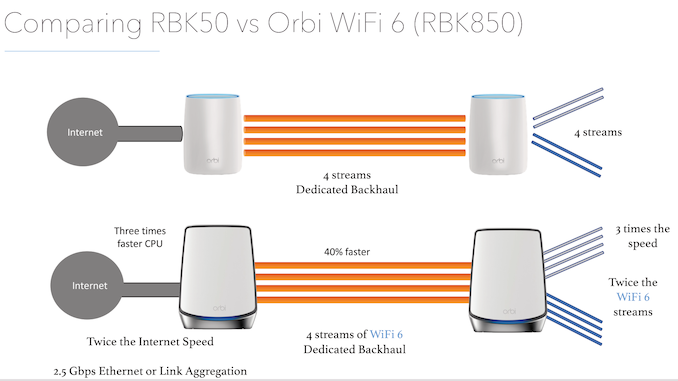
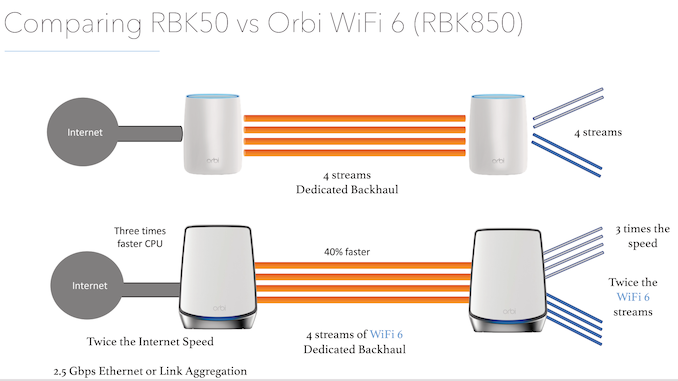
Netgear’s Orbi systems need little introduction, given their wide retail reach and popularity. At CES 2019, the company had divulged some details about the meshing together of Orbi and Wi-Fi 6. The key to the great performance of the Orbi RBK50 (802.11ac) was the dedicated 4×4 wireless backhaul between the router and the satellites. This left two 2×2 streams (one in 5 GHz and one in 2.4 GHz) available for the client devices connected to either member of the kit. The Orbi RBK850 (the kit carries the RBK852 designation) retains the same 4×4 backhaul, but makes the move from Wi-Fi 5 to Wi-Fi 6. In theoretical terms, the wireless backhaul is now 2.4 Gbps (4×4:4 / 80MHz 802.11ax) compared to 1.73 Gbps in the RBK50. The clients also get 4×4:4 streams from the satellite or the router, with one set of spatial streams dedicated to 2.4 GHz duties / 1.2 Gbps, and another to 5 GHz duties / 2.4 Gbps. Wired backhaul is also supported (the dedicated wireless backhaul spatial streams are disabled in that case), just like the Orbi RBK50.


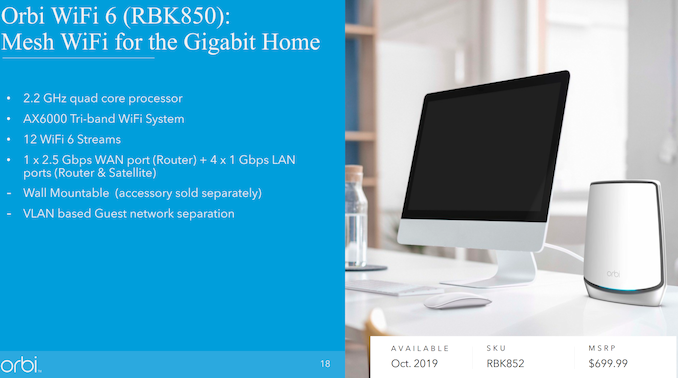
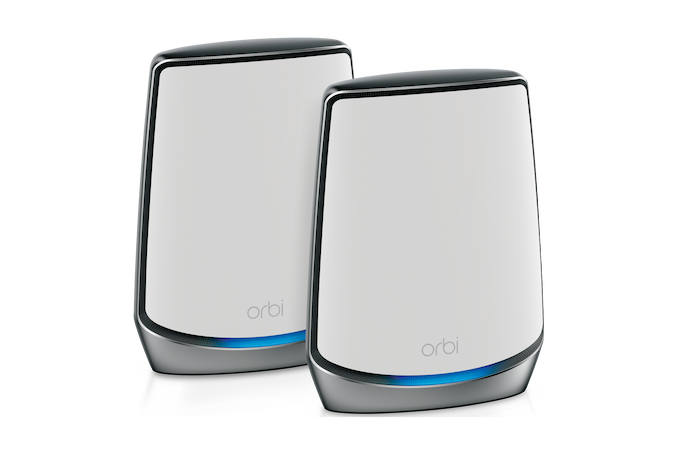
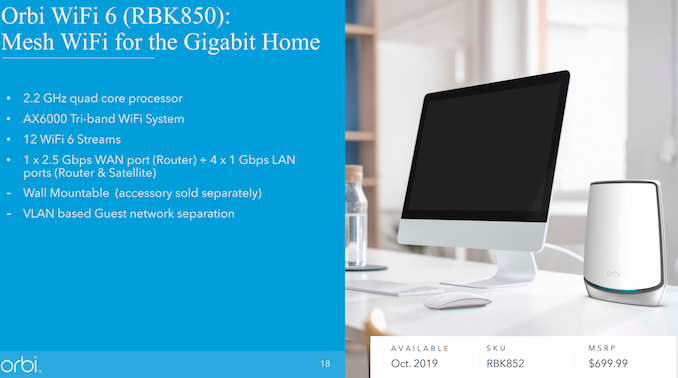
As announced at Qualcomm’s Wi-Fi 6 Day, the Orbi RBK852 is based on Qualcomm’s Networking Pro 1200 platform. It will be available next month and the kit (a single router and satellite) will be priced at $700.


In other Orbi news, Netgear is announcing that the Orbi Voice and Outdoor Orbi satellites for the original Orbi (802.11ac) are getting a ‘Universal Mode’ update, enabling them to act as extenders for any router (even non-Netgear ones). This is a welcome addition to the Orbi family’s feature set, and will help the company draw more people into the Orbi ecosystem.


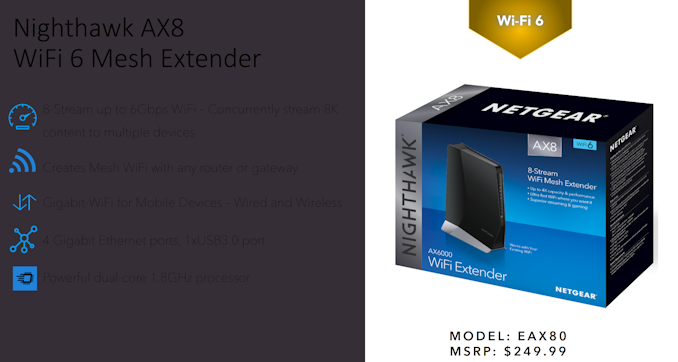
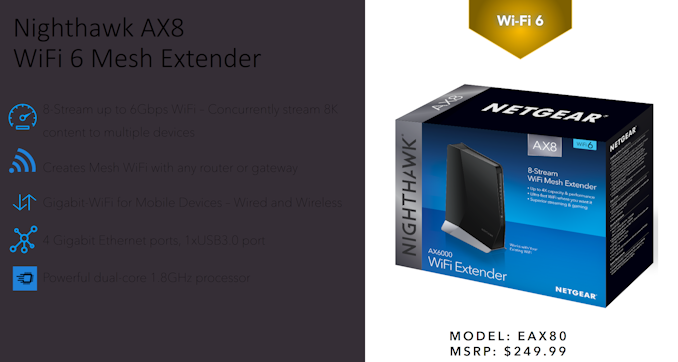
Netgear is also announcing the Nighthawk EAX80 Wi-Fi 6 wireless extender today. It is based on a Broadcom chipset and meant to complement the Wi-Fi 6 routers already in the market.


Netgear is aiming to promote ease of extender use with an app-based configuration flow. The EAX80 will be available later this month for $250.


Based on reader feedback for previous Wi-Fi 6 articles, I brought up two questions for Netgear related to the above announcements – one related to the pricing of the Orbi RBK852 at $700 (a tad too high?), and another related to the consumer appetite for Wi-Fi 6 equipment given the current draft nature of the 802.11ax standard.


On the cost aspect, Netgear noted that the premium Wi-Fi 6 Nighthawk routers priced around the $300 – $400 range have been selling relatively well. Given that a mesh system is essentially the hardware for at least two wireless routers in one kit, the pricing is justified. Regarding the consumers’ ability to stomach a $700 expense for a Wi-Fi system, Netgear pointed to internal surveys that showed consumers treating Orbi-like Wi-Fi systems as long-term investments (3-5 years). Given that these are folks who have invested in the latest premium notebooks and phones (Wi-Fi 6 clients), Netgear believes that the target market would not be put off by the price tag of the Orbi Wi-Fi 6 kit.


Apropos the Wi-Fi 6 standard’s pending ratification, Netgear believes that the issues currently holding back Wi-Fi 6 in the draft stage are all controllable via the firmware, and will not require any hardware fixes. Since ongoing firmware updates have pretty much become the norm for most electronic products nowadays, any changes in the standard between now and eventual ratification can also make it to units already deployed in the field. It must also be noted that a final standard is needed to ensure maximum inter-operability between Wi-Fi 6 clients and APs from different vendors. Given that Netgear has systems based on silicon from all three major chipset vendors (Qualcomm, Broadcom, and Intel), interoperability issues should not be much of a concern for their customers.


Overall, we see that the Wi-Fi 6 market is poised to take off with the ongoing launch of multiple Wi-Fi 6 client systems and phones. The rollout of DOCSIS 3.1 as well as FTTH ISPs has brought gigabit Internet to many households, and consumers’ appetite for practical gigabit Wi-Fi has been whetted. Netgear’s 802.11ax portfolio expansion is happening at the right time for the company to take advantage of the current state of the market.


Source: AnandTech – Negear Expands 802.11ax Portfolio with Orbi Wi-Fi 6 Mesh System and Nighthawk EAX80 Extender

Netgear Expands 802.11ax Portfolio with Orbi Wi-Fi 6 Mesh System and Nighthawk EAX80 Extender

As part of IFA 2019, Netgear has a number of new announcements across different product lines. The wireless networking products are of particular interest to us. We had attended Qualcomm’s Wi-Fi 6 Day last month, and I had tweeted about Netgear’s Orbi Wi-Fi 6 (RBK850) that was showcased at the event. Things are being made official today, with additional details becoming available.


Netgear’s Orbi systems need little introduction, given their wide retail reach and popularity. At CES 2019, the company had divulged some details about the meshing together of Orbi and Wi-Fi 6. The key to the great performance of the Orbi RBK50 (802.11ac) was the dedicated 4×4 wireless backhaul between the router and the satellites. This left two 2×2 streams (one in 5 GHz and one in 2.4 GHz) available for the client devices connected to either member of the kit. The Orbi RBK850 (the kit carries the RBK852 designation) retains the same 4×4 backhaul, but makes the move from Wi-Fi 5 to Wi-Fi 6. In theoretical terms, the wireless backhaul is now 2.4 Gbps (4×4:4 / 80MHz 802.11ax) compared to 1.73 Gbps in the RBK50. The clients also get 4×4:4 streams from the satellite or the router, with one set of spatial streams dedicated to 2.4 GHz duties / 1.2 Gbps, and another to 5 GHz duties / 2.4 Gbps. Wired backhaul is also supported (the dedicated wireless backhaul spatial streams are disabled in that case), just like the Orbi RBK50.


As announced at Qualcomm’s Wi-Fi 6 Day, the Orbi RBK852 is based on Qualcomm’s Networking Pro 1200 platform. It will be available next month and the kit (a single router and satellite) will be priced at $700.


In other Orbi news, Netgear is announcing that the Orbi Voice and Outdoor Orbi satellites for the original Orbi (802.11ac) are getting a ‘Universal Mode’ update, enabling them to act as extenders for any router (even non-Netgear ones). This is a welcome addition to the Orbi family’s feature set, and will help the company draw more people into the Orbi ecosystem.


Netgear is also announcing the Nighthawk EAX80 Wi-Fi 6 wireless extender today. It is based on a Broadcom chipset and meant to complement the Wi-Fi 6 routers already in the market.


Netgear is aiming to promote ease of extender use with an app-based configuration flow. The EAX80 will be available later this month for $250.


Based on reader feedback for previous Wi-Fi 6 articles, I brought up two questions for Netgear related to the above announcements – one related to the pricing of the Orbi RBK852 at $700 (a tad too high?), and another related to the consumer appetite for Wi-Fi 6 equipment given the current draft nature of the 802.11ax standard.


On the cost aspect, Netgear noted that the premium Wi-Fi 6 Nighthawk routers priced around the $300 – $400 range have been selling relatively well. Given that a mesh system is essentially the hardware for at least two wireless routers in one kit, the pricing is justified. Regarding the consumers’ ability to stomach a $700 expense for a Wi-Fi system, Netgear pointed to internal surveys that showed consumers treating Orbi-like Wi-Fi systems as long-term investments (3-5 years). Given that these are folks who have invested in the latest premium notebooks and phones (Wi-Fi 6 clients), Netgear believes that the target market would not be put off by the price tag of the Orbi Wi-Fi 6 kit.


Apropos the Wi-Fi 6 standard’s pending ratification, Netgear believes that the issues currently holding back Wi-Fi 6 in the draft stage are all controllable via the firmware, and will not require any hardware fixes. Since ongoing firmware updates have pretty much become the norm for most electronic products nowadays, any changes in the standard between now and eventual ratification can also make it to units already deployed in the field. It must also be noted that a final standard is needed to ensure maximum inter-operability between Wi-Fi 6 clients and APs from different vendors. Given that Netgear has systems based on silicon from all three major chipset vendors (Qualcomm, Broadcom, and Intel), interoperability issues should not be much of a concern for their customers.


Overall, we see that the Wi-Fi 6 market is poised to take off with the ongoing launch of multiple Wi-Fi 6 client systems and phones. The rollout of DOCSIS 3.1 as well as FTTH ISPs has brought gigabit Internet to many households, and consumers’ appetite for practical gigabit Wi-Fi has been whetted. Netgear’s 802.11ax portfolio expansion is happening at the right time for the company to take advantage of the current state of the market.


Source: AnandTech – Netgear Expands 802.11ax Portfolio with Orbi Wi-Fi 6 Mesh System and Nighthawk EAX80 Extender

Lenovo’s ThinkVision S28u-10: A 4K Business Display

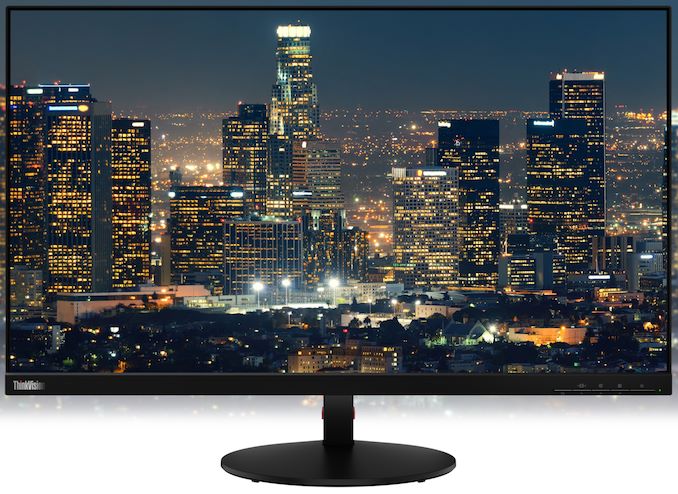
Lenovo has introduced its new business and prosumer-oriented display that brings together an ultra-high-definition resolution, an accurate color reproduction as well as reduced emission of blue light to improve eye comfort.


The Lenovo ThinkVision S28u-10 monitor is based on a 28-inch IPS panel of 3840×2160 resolution that can display 1.07 billion of colors and reproduce 99% of the sRGB color space as well as 90% of the DCI-P3 color gamut. For some reason, Lenovo says nothing about support of the Adobe RGB color space, which is often required by designers and photographers. Since we are dealing with an IPS display, it is reasonable to expect it to feature all known IPS peculiarities.


As is standard with Lenovo’s monitors designed for business and prosumer market segments, the ThinkVision S28u-10 comes in a chassis that can adjust its tilt, but for those who need additional flexibility it has VESA mounts. As for connectivity, the LCD has a DisplayPort and an HDMI input.


One of the key selling points of the ThinkVision S28u-10 display is TÜV Rhineland’s Eye Comfort certification, which, as the name suggests, is designed to ensure that the monitor is good for prolonged use. The certificate requires a display to reduce blue light content, flicker, and reflection as well as provide consistent image quality from different viewing angles. Specialists from TÜV Rhineland test displays in accordance with safety and health requirements set in Europe, US, UK, and Hong Kong.


Brief Specifications of the Lenovo ThinkVision S28u-10
  S28u-10
Panel 28″ IPS
Native Resolution 3840 × 2160
Maximum Refresh Rate 60 Hz (?)
Response Time ? ms
Brightness ? cd/m²
Contrast 1,000:1
Viewing Angles 178°/178° horizontal/vertical
Pixel Pitch 0.1614 mm²
Pixel Density 157 ppi
Display Colors 1.07 billion (?)
Color Gamut Support DCI-P3: 90%

sRGB/Rec 709: 99%

Adobe RGB: ?
Stand Tilt and height adjustable
Inputs 1 × DisplayPort 1.2

1 × HDMI 2.0
PSU External (?)
Launch Price & Date October 2019

?

Lenovo’s ThinkVision S28u-10 monitor will be available in October. Pricing should follow shortly.


Related Reading:


Source: Lenovo


Source: AnandTech – Lenovo’s ThinkVision S28u-10: A 4K Business Display

Lenovo’s Yoga C940 15.6-Inch: Eight Cores and GTX 1650

Lenovo today introduced its brand-new Yoga C940 convertible laptop with a 15.6-inch display that is aimed at performance-driven consumers and creative professionals. In addition to a large screen, the new hybrid notebook got a discrete GeForce GTX GPU, a first for the product family.


At first glance, it looks like the Lenovo Yoga C940 15.6 is an extension of the Yoga 9-series family with a product featuring a 15.6-inch Full-HD or Ultra-HD HDR-supporting display and better graphics. It comes in an all-metal Iron Grey CNC-milled chassis featuring a 360° watchband hinge that looks very similar to the chassis used by the Yoga C940 14. Meanwhile, the addition of a discrete GPU, use of Intel’s 9th Generation Core processor with up to eight cores, and some other factors (like a numpad) somewhat change positioning of the system enabling Lenovo to address demanding consumers and creative professionals who need CPU and GPU horsepower more than they need other features (more on that later).


The Lenovo Yoga C940 15.6-inch is based on Intel’s 9th Generation Core i7 or Core i9 processor with six or eight cores that is accompanied by NVIDIA’s GeForce GTX 1650, a combination that guarantees rather decent performance. The system can be equipped with up to 16 GB of DDR4 memory as well as an up to 2 TB SSD (see general specifications in the table below).


Other features of the Yoga C940 15.6-inch are generally similar to its smaller brother, the C940 14-inch. The system features Wi-Fi 5 or Wi-Fi 6, two Thunderbolt 3 ports, and one USB 3.1 (Gen1) Type-A connector. In addition, the convertible comes with a Dolby Atmos-supporting rotating soundbar, a far field microphone array supporting Alexa, Wake on Voice and similar functionality, a fingerprint reader, and a webcam with Lenovo’s TrueBlock privacy shutter.


The 15.6-inch version of the Yoga C940 is 17.5 mm thick and weighs around 1.9 kilograms, which is generally in line with contemporary convertible machines of this size. The Full-HD version is rated for 12 hours of operation on one charge, whereas the Ultra-HD models are expected to work for 9 hours.


Lenovo’s Yoga C940 15.6-Inch
  Yoga C940 14-Inch FHD

C940-15IRH
Yoga C940 14-Inch UHD

C940-15IRH
Display Type  IPS IPS
Resolution 1920×1080 3840×2160
Brightness 500 cd/m² 500 cd/m²
Color Gamut 72% NTSC 72% NTSC
Touch Yes Yes
HDR DisplayHDR 400 DisplayHDR 400
CPU Intel’s 9th Generation Core i7/i9
Graphics Intel UHD 620 + NVIDIA GeForce GTX 1650
RAM Core i9: 16 GB DDR4

Core i7: 12 GB or 16 GB DDR4
Storage PCIe 3.0 x4 SSD: 256 GB, 512 GB, 2 TB

Optane Memory H10: 32 GB 3D XPoint + 512 GB QLC

Optane Memory H10: 32 GB 3D XPoint + 1 TB QLC
Wi-Fi Wi-Fi 5 or Wi-Fi 6
Bluetooth Bluetooth 5
Thunderbolt 2 × USB Type-C TB3 ports
USB 1 × USB 3.1 Gen 1 Type-A
Fingerprint Sensor Yes
Webcam HD camera with IR and TrueBlock shutter
Other I/O Far-field microphone, Dolby Atmos soundbar, TRRS audio jack trackpad, etc.
Battery Capacity ? Wh
Life up to 12 hours up to 9 hours
Dimensions Thickness 17.5 mm | 0.69 inches
Width 355.5 mm | 13.1 inches
Depth 238.5 mm | 9.39 inches
Weight 1.9 kilograms | 4.19 lbs
Operating System Windows 10

Lenovo plans to start sales of its Yoga C940 15.6-inch hybrid laptops this October at prices starting at $1709.99.


Now, a couple of words about positioning of the Yoga C940 15.6. The evolution of Lenovo’s high-end convertible laptops is an interesting story by itself. Historically, Lenovo had two 13/14-inch class advanced convertibles: ThinkPad X1 Yoga with a decent Intel Iris-branded integrated GPU in a carbon fiber chassis as well as Yoga 9-series with a regular integrated GPU in an all-metal chassis. Last year, the company adopted an aluminum chassis for its ThinkPad X1 Yoga, but removed the superior Iris graphics. Effectively, Lenovo left the market of convertibles with decent graphics to its competitors like Dell and HP who offer rather advanced Envy x360 2-in-1 and XPS 2-in-1 systems with discrete GPUs. With the Yoga C940 15.6 featuring up to eight-core CPU along with NVIDIA’s GeForce GTX 1650 graphics processor, Lenovo is returning to the market of high-end convertibles aimed at those who value performance most of all.


Related Reading:


Source: Lenovo


Source: AnandTech – Lenovo’s Yoga C940 15.6-Inch: Eight Cores and GTX 1650

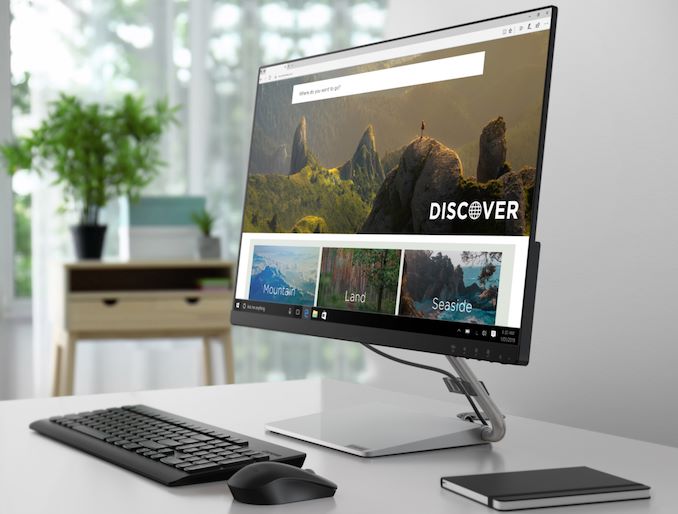
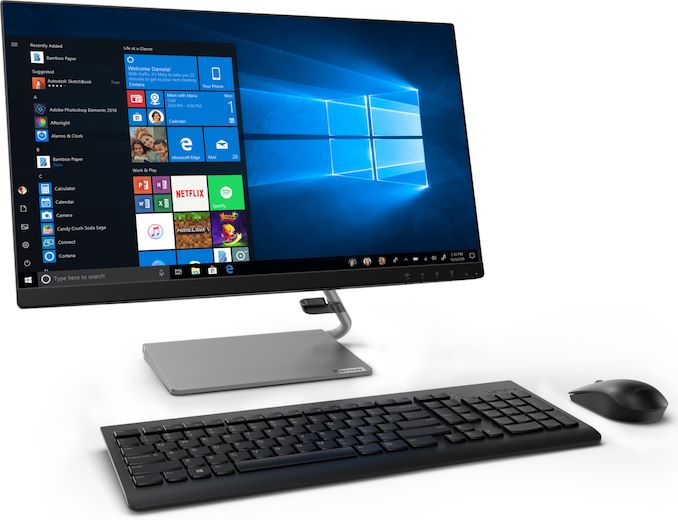
Lenovo’s Q24i & Q27q Ultra-Thin Displays with Reduced Eye Fatigue

Lenovo has unveiled two new consumer displays featuring ultra-thin bezels, AMD’s FreeSync variable refresh rate technology, and certified to minimize eye fatigue by TÜV Rhineland Eye Comfort standards. The LCDs will be available already this month and will not be too expensive.


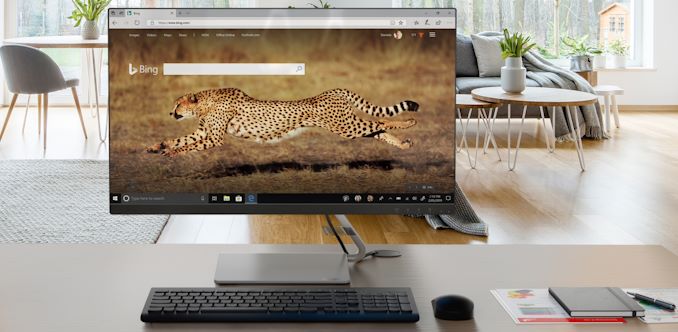
The new monitors carrying the TÜV Rhineland Eye Comfort badge are Lenovo’s Q24i and Q27q that come in an ultra-thin/ultra-compact chassis that blends in with any surroundings — whether this is home or office — and features ultra-thin ‘near edgeless’ bezels on three sides. Both monitors feature AMD’s FreeSync variable refresh rate technology, built-in stereo speakers, as well as DisplayPort and HDMI inputs.


The smaller Lenovo Q24i has a 23.8-inch Full-HD panel, whereas the larger Lenovo Q27q comes with a 27-inch QHD IPS panel. Other specifications are yet to be disclosed, yet expect them to be in-line with other mainstream monitors available today.


Besides design, the key selling feature of the Q24i and Q27q monitors is TÜV Rhineland’s Eye Comfort certification. The latter ensures that a display carrying the appropriate badge reduce blue light content, flicker, and reflection. They also offer consistent image quality from different perspectives, which pretty much requires a high-quality IPS or VA-class panel. Experts from TÜV Rhineland evaluate monitors according to safety and health requirements set in Europe, US, UK, and Hong Kong, so test results can be used internationally.


Specifications of Lenovo’s Consumer Displays with

TÜV Rhineland Eye Comfort Certificate
  Lenovo Q24i Lenovo Q27q
Panel 23.8″ 27″ IPS
Native Resolution 1920 × 1080 2560 × 1440
Maximum Refresh Rate ? ?
Response Time ? ?
Variable Refresh Rate AMD FreeSync AMD FreeSync
Brightness ? cd/m² ? cd/m²
Contrast 1000:1 (?) 1000:1
Viewing Angles 178°/178° horizontal/vertical (?) 178°/178° horizontal/vertical
Color Gamut Support sRGB: ? sRGB: ?
Stand Tilt and height adjustable
Inputs DisplayPort

HDMI
DisplayPort

HDMI
USB Hub ? ?
Audio 2 × 3 W

audio output port
2 × 3 W

audio output port
Thickness 6.9 mm | 0.3 inches
Launch Price $189.99 $299.99

Both new monitors from Lenovo will be available later this month. The smaller Lenovo Q24i will be priced at $189.99, whereas the larger Lenovo Q27q will carry a $299.99 price tag.


Related Reading:


Source: Lenovo


Source: AnandTech – Lenovo’s Q24i & Q27q Ultra-Thin Displays with Reduced Eye Fatigue