Western Digital Reveals 18 TB DC HC550 'EAMR' Hard Drive

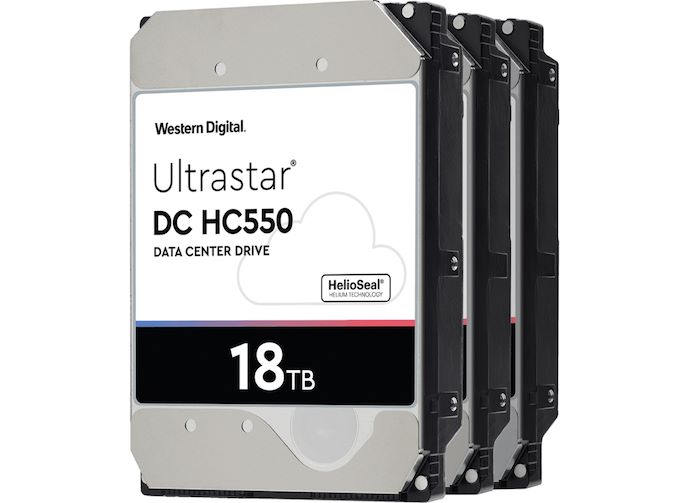
Marking an important step in the development of next-generation hard drive technology, Western Digital has formally announced the company’s first hard drives based on energy-assisted magnetic recording. Starting things off with capacities of 16 TB and 18 TB, the Ultrastar DC HC550 HDDs are designed to offer consistent performance at the highest (non-SMR) capacities yet. And, with commercial sales expected to start in 2020, WD is now in a position to become the first vendor in the industry to ship a next-generation EAMR hard drive.


18 TB Sans SMR


The Western Digital Ultrastar DC HC550 3.5-inch hard drive relies on the company’s 6th Generation helium-filled HelioSeal platform with two key improvements: the platform features nine platters (both for 16 TB and 18 TB versions), and they using what WD is calling an energy-assisted magnetic recording technology (EAMR). The latter has enabled Western Digital to build 2 TB platters without using shingled magnetic recording (SMR).


Since we are dealing with a brand-new platform, the Ultrastar DC HC550 also includes several other innovations, such as a new mechanical design. Being enterprise hard drives, the new platform features a top and bottom attached motor (with a 7200 RPM spindle speed), top and bottom attached disk clamps, RVFF sensors, humidity sensors, and other ways to boost reliability and ensure consistent performance. Like other datacenter-grade hard drives, the Ultrastar DC HC550 HDDs are rated for a 550 TB/annual workload, a 2.5 million hours MTBF, and are covered by a five-year limited warranty.


MAMR? HAMR? EAMR!


The research and development efforts of the hard drive manufacturers to produce ever-denser storage technology has been well documented. Western Digital, Seagate, and others have been looking at technologies based around temporarily altering the coercivity of the recording media, which is accomplished by applying (additional) energy to a platter while writing. The end result of these efforts has been the development of techniques such as heating the platters (HAMR) or using microwaves on them (MAMR), both of which allow a hard drive head to write smaller sectors. With their similar-yet-different underpinnings, this has lead to the catch-all term Energy-Assissted Magnetic Recording (EAMR) to describe these techniques.


Being a large corporation, Western Digital does not put all of its eggs into one basket, and as a result has been researching several EAMR technologies. This includes HAMR, MAMR, bit-patterned media (BPM), heated-dot magnetic recording (HDMR, BPM+HAMR) and even more advanced technologies.


At some point in 2017, the company seemed to settle on MAMR, announcing a plan to produce MAMR-based HDDs for high-capacity applications. Still, while the company focused on MAMR and, presumably for competitive reasons was publicly downplaying HAMR for a while, WD did not really stop investing in it.


Ultimately, having designed at least two EAMR technologies, Western Digital can now use either of them. Unfortunately, for those competitive (and to some degree political) reasons as before, the manufacturer also doesn’t really want to disclose which of those technologies it’s using. So while the new Ultrastar DC HC550 HDDs are using some form of an EAMR technology, WD isn’t saying whether it’s HAMR or MAMR.


As things stand, the only thing that the company has said on the matter is telling ComputerBase.de that the new drivers do not use a spin-torque oscillator, which is a key element of Western Digital’s MAMR technology.


Here is an official statement from Western Digital:


“The 18 TB Ultrastar DC HC550 is the first HDD in the industry using energy assisted recording technology. As part of our MAMR development, we have discovered a variety of energy assisted techniques that boost areal density. For competitive reasons, we are not disclosing specific details about which energy assist technologies are used in each drive.”


With MAMR apparently eliminated, it would seem that WD is using a form of HAMR for the new drives. However at least for the time being, it’s not something the company is willing to disclose.


IOPS-per-TB Challenge


Ultimately, whether HAMR or MAMR, the end result is that WD’s EAMR tech has allowed them to increase their drive platter density and resulting drive capacities. Density improvements are always particularly welcome, as it should allow the HC550 to offer higher sequential performance than existing 7200 RPM hard drives. However, since the new storage devices feature a single actuator that enables around 80 IOPS random reads, IOPS-per-TB performance of the new units will be lower when compared to currently available high-capacity 10 – 14 TB HDDs (think 4 IOPS-per-TB vs. 5.7 – 8 IOPS-per-TB) and will require operators of large datacenters to tune their hardware and software to guarantee their customers appropriate QoS.


Unlike Westen Digital’s flagship 20 TB shingled magnetic recording (SMR) hard drive for cold storage applications, the company’s 16 TB and 18 TB nearly HDDs use energy-assisted conventional magnetic recording (CMR), which ensures predictable performance both for random read and write operations. As a result, while the Ultrastar DC 650 SMR HDD will be available only to select customers that can mitigate peculiarities of SMR, the Ultrastar DC 550 hard drives will be available to all clients that are satisfied with their IOPS-per-TB performance and will have qualified them in their datacenters.


Samples & Availability


Western Digital will ship samples of its EAMR-based Ultrastar DC HC550 16 TB and 18 TB hard drives to clients late this year and plans to initiate their volume ramp in 2020. One additional thing to note about the 16 TB EAMR-enabled HDDs is that these drives will likely be used primarily for technology validation, as there are commercial 16 TB CMR+TDMR available today that do not need extensive tests by operators of datacenters.


Related Reading:


Source: Western Digital


Source: AnandTech – Western Digital Reveals 18 TB DC HC550 ‘EAMR’ Hard Drive
Logitech Unveils G604 Lightspeed Wireless Gaming Mouse: 15 Programmable Controls

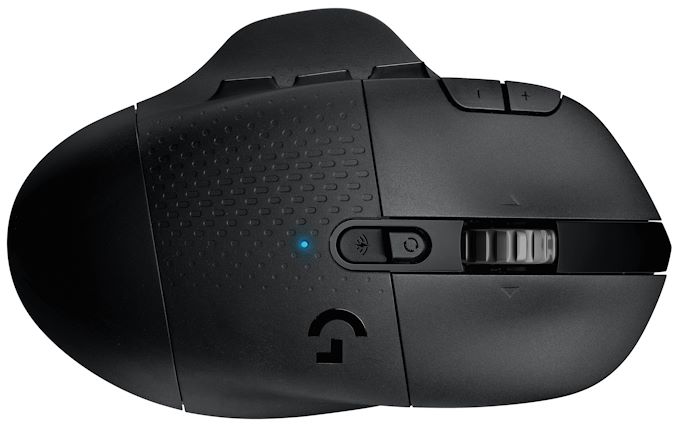
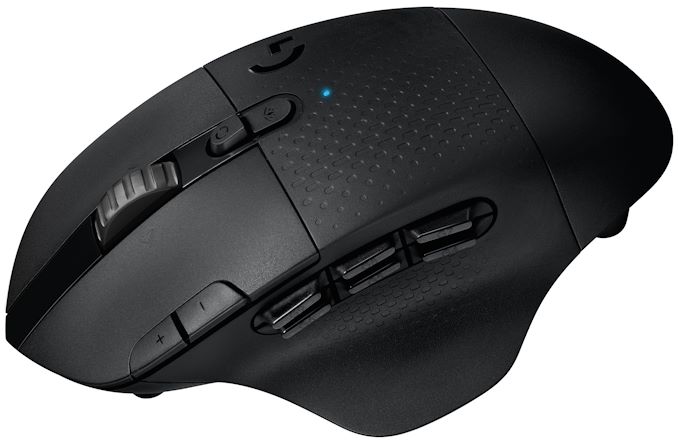
Ever the purveyor of peripherals, Logitech is once again expanding its G series of mice with a new high-end wireless mouse for gamers. The Logitech G604 Lightspeed features the company’s latest high-precision sensor as well as 15 fully programmable controls that makes the mouse particularly useful for enthusiasts who play games that benefit from macros.


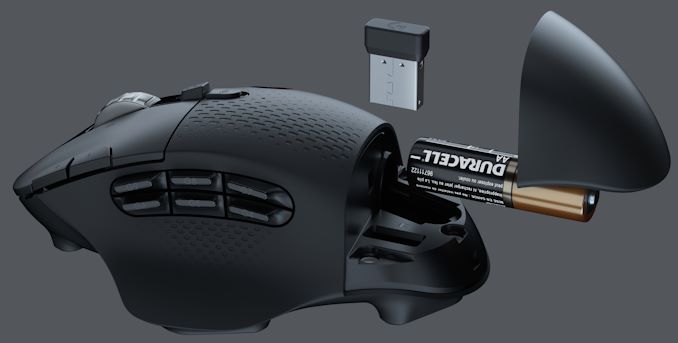
The Logitech G604 Lightspeed is based on the company’s Hero sensor, which a tracking resolution up to 16,000 DPI. That sensor is being paired with a 32-bit Arm Cortex-M-powered SoC, and on the communications side of matters the wireless mouse supports both Bluetooth and Logitech’s proprietary Lightspeed wireless technology. The latter is designed to offer more performance and lower latency than standard Bluetooth, with Logitech offering much greater polling rates – up to 1000 Hz – when using Lightspeed.


In fact this same platform is used for other mice from Logitech, and as a result, the G604 supports the usual Logitech G-series features, such as automatic surface tuning. And that extends to battery life as well; Logitech is promissing a very long battery life for the mouse, rating it to run for up to 240 hours on a single AA battery.


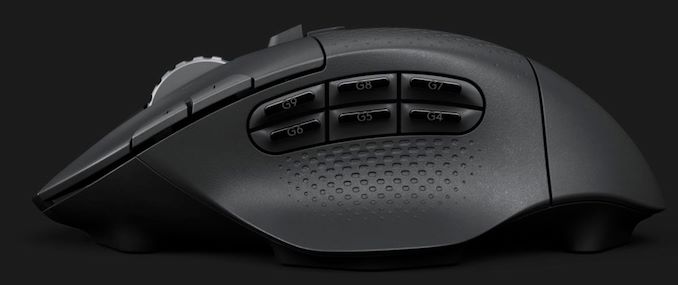
From ergonomics point of view, the G604 Lightspeed is a successor of Logitech’s G602 launched several years ago. The new mouse features a similar shape, however Logitech says that they have refined the design to make it more comfortable and provider a better grip. Logitech’s G604 Lightspeed has 15 controls (including six thumb buttons for high demand actions) each of which can be reprogrammed.


Logitech will start sales of the G604 Lightspeed this fall at a price of $99.99.


Related Reading:


Source: Logitech


Source: AnandTech – Logitech Unveils G604 Lightspeed Wireless Gaming Mouse: 15 Programmable Controls

HP Launches Their S430c 43.4-Inch Ultrawide Curved Display

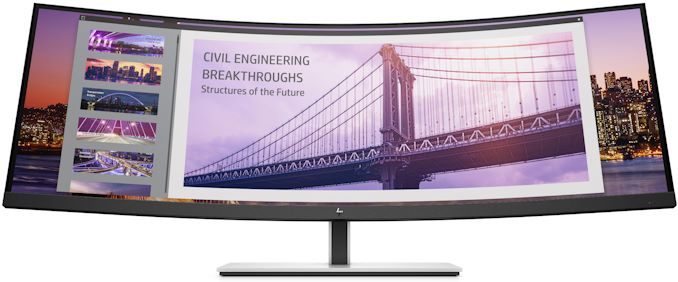
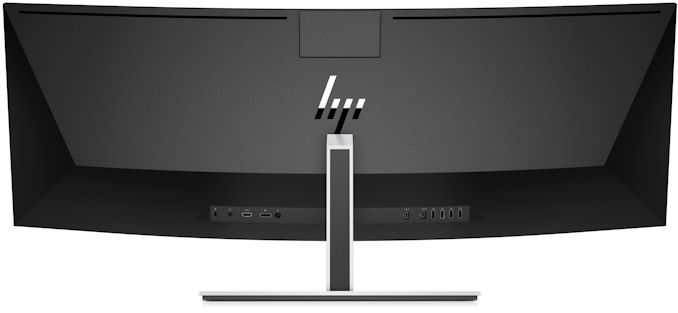
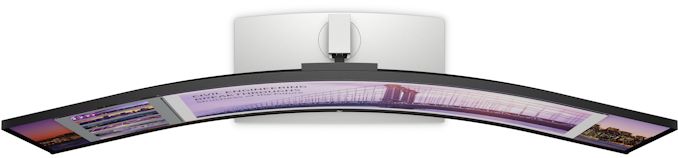
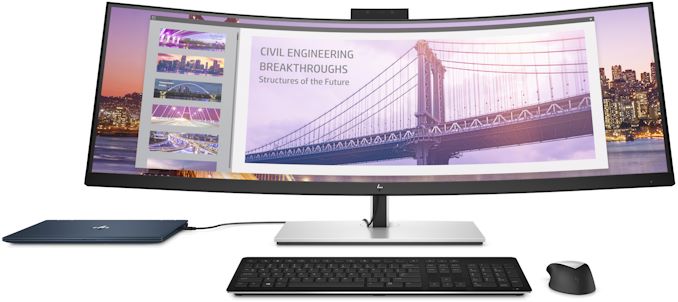
Along with their new Elite Dragonfly notebook, today HP is also rolling out its first ultra-wide curved display, which is being aimed at replacing dual-display setups used by business customers. The S430c Curved Ultrawide Monitor boasts a sizable 43.4-inch diagonal size, which is laid out in a 32:10 aspect ratio with an ultra-wide 4K resolution. Meanwhile, with its roots firmly in the business side of HP’s lineup, the company is also outfitting the monitor with a bevy of business-focused features, such as docking capabilities and a pop-up webcam with IR sensors.


Internally, the HP S430c curved ultrawide monitor uses a 43.4-inch VA panel, which offers a 3840×1200 resolution framed in an 1800R curve. The monitor offers a max brightness of 350 nits, a 3000:1 contrast ratio, a 5 ms GtG response time, 178º/178º vertical/horizontal viewing angles, a 60 Hz refresh rate, and to top things off, the screen has an antiglare coating. Seeing as this isn’t a video-focused monitor, HP is sticking just covering the sRGB color gamut (99%), which is the primary color space used by office and productivity applications.


Moving on, for connectivity the display has a DisplayPort 1.2 input, a HDMI 2.0 port, and two USB Type-C (DP alt-mode) inputs, allowing the monitor to be connected to virtually any PC. Both USB-C ports can deliver up to 85 W of power to their host laptops (with a total limit of 100W), meaning the monitor can charge even higher-performance 15.6-inch machines. Those USB-C ports also feed the monitor’s built-in USB hub, giving the monitor four downstream USB Type-A ports.


Meanwhile for extra features, the S430c includes a pop-up Full HD webcam with IR sensors for Windows Hello, as well as two microphones. The display also supports HP’s Device Bridge technology, which allows the user to control two PCs at the same time on a split screen without a dedicated KVM.


Like other monitors for professionals, the HP S430c comes with a stand that can adjust height and tilt. Meanwhile, HP will also offer a VESA mount adapter for those who need it.


Sales of the HP S430c Curved Ultrawide Monitor will start on November 9. The monitor will retail for $999.


The S430c Curved Ultrawide Monitor
  General Specifications
Panel 43″ VA
Native Resolution 3840 × 1200
Maximum Refresh Rate 60 Hz
Response Time 5 ms
Brightness 350 cd/m²
Contrast 3000:1
Backlighting LED
Viewing Angles 178°/178° horizontal/vertical
Curvature 1800R
Aspect Ratio 32:10
Color Gamut sRGB: 99%
Dynamic Refresh Rate Tech
Pixel Pitch 0.274 mm²
Pixel Density 92.7 PPI
Inputs 1 × DisplayPort 1.2

1 × HDMI 2.0

2 × USB 3.1 Type-C (w/ 85 W PD)
Audio speakers (?)

3.5-mm audio jack
Webcam Full-HD IR webcam with microphones
USB Hub 4 × USB 3.0 Type-A connectors
Stand Height adjustment

Tilt: -5~20 degree
Power Standby: 0.5 W

Typical: 80 W

Maximum: 220 W
MSRP US: $999

Related Reading:


Source: HP


Source: AnandTech – HP Launches Their S430c 43.4-Inch Ultrawide Curved Display

The OPPO Reno 10x Zoom Review: Bezeless Zoom

The Oppo Reno 10x Zoom is another Snapdragon 855-based phone that was released earlier in the year, and while we did a quick hands-on test of the device back in May, we never really got to fully reviewing the unit until now. Beyond putting the Reno 10x through our usual testing suite, what’s interesting is that in this time Oppo has had the opportunity to refine the software, and we’ve seen particular improvements on the side of the camera with the introduction of a new low-light photography mode.

The device has two key characteristics: A full-screen minimal bezel display which is enabled by housing the front-camera in a mechanical motorised slide-out mechanism, and a triple-camera setup amongst which we find a “periscope” zoom camera module. Both of these features separately aren’t unique to the Reno 10x, however their combination is unique to Oppo.


Source: AnandTech – The OPPO Reno 10x Zoom Review: Bezeless Zoom

Intel Core i9-9900KS TDP Details: ASUS Maximus XI Apex Support

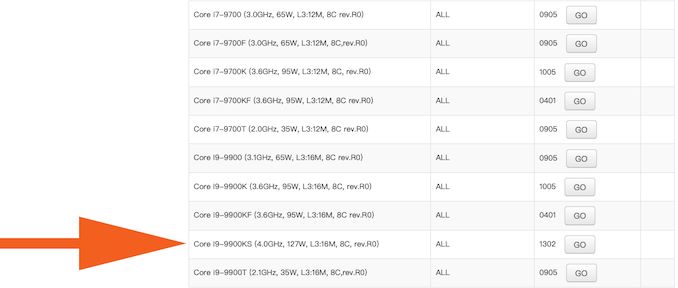
Intel announced plans to launch its eight-core Core i9-9900KS processor along with its performance specifications quite a while ago, but the company did not disclose the TDP. As the processor will have an all-core base frequency of 4.0 GHz and an all-core turbo of 5.0 GHz, this number is vitally important for motherboard support. This week ASUS released a new BIOS version for some of its motherboards that adds support for the Core i9-9900KS and revealed the number. 


The Intel Core i9-9900 processor has a base frequency of 4.0 GHz as well as an all-core turbo frequency of 5.0 GHz, which essentially makes it an eight-core Coffee Lake Refresh silicon binned to hit higher clocks when cooling is good enough. As it turns out, in a bid to enable higher frequencies, Intel has increased the TDP all the way to 127 W (according to a listing at ASUS.com), which is considerably higher when compared to any existing (or historical) Intel’s CPU for mainstream platforms.


One thing that should be noted is that Intel only guarantees base frequency at a rated TDP (e.g., 4.0 GHz at 127 W), so everything above base (i.e., turbo clocks) means a higher power consumption. As a result, not only will the Core i9-9900KS require a motherboard that can supply 127 W of power and a cooling system that will dissipate 127 W of power, but it will need an advanced platform to hit the turbo clocks. Fortunately, there are plenty of high-end motherboards and coolers around to support the Core i9-9900KS. 


Intel 9th Gen Core 8-Core Desktop CPUs
AnandTech Cores Base

Freq
All-Core Turbo Single

Core Turbo

Freq
IGP DDR4 TDP Price

(1ku)
i9-9900KS 8 / 16 4.0 GHz 5.0 GHz 5.0 GHz UHD 630 2666 127 W ?
i9-9900K 8 / 16 3.6 GHz 4.7 GHz 5.0 GHz UHD 630 2666 95 W $488
i9-9900KF 8 / 16 3.6 GHz 4.7 GHz 5.0 GHz 2666 95 W $488
i7-9700K 8 / 8 3.6 GHz 4.6 GHz 4.9 GHz UHD 630 2666 95 W $374
i7-9700KF 8 / 8 3.6 GHz 4.6 GHz 4.9 GHz 2666 95 W $374

One thing to keep in mind is that the information about the TDP of the Core i9-9900KS comes from a third party (albeit a very reliable one), not from Intel. Intel has confirmed that the new Core i9-9900KS will be released in October.


Related Reading:


Source: ASUS


Source: AnandTech – Intel Core i9-9900KS TDP Details: ASUS Maximus XI Apex Support

AMD’s New 280W 64-Core Rome CPU: The EPYC 7H12

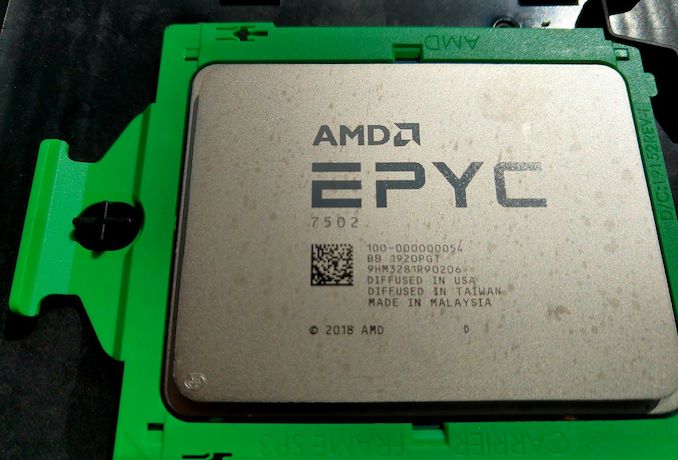
If there’s something that gets everyone excited, it is more performance. On the Enterprise side, AMD has made big strides with its latest EPYC processor stack, featuring up to 64 cores per socket with 128 PCIe 4.0 lanes and 8-channel memory, featuring a very high performance per dollar in the marketplace. In order to coincide with the launch of the processor line-up in Europe today, AMD is unveiling a new chip to act as the new Halo product: the EPYC 7H12.


Source: AnandTech – AMD’s New 280W 64-Core Rome CPU: The EPYC 7H12

HP’s Unveils Elite Dragonfly Laptop: 13.3-Inch Convertible With a 24.5 Hour Battery Life

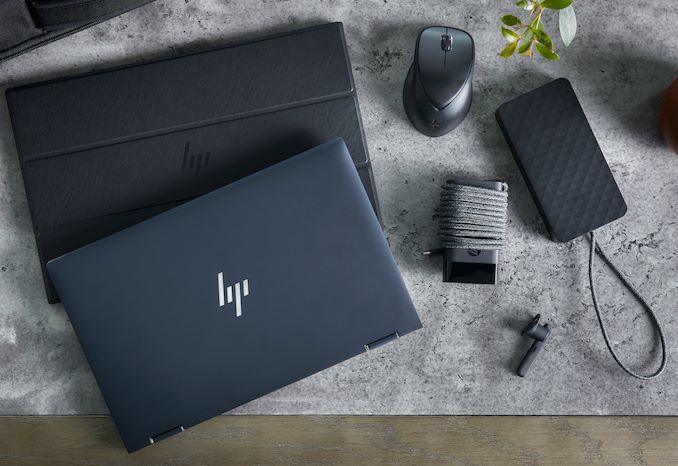
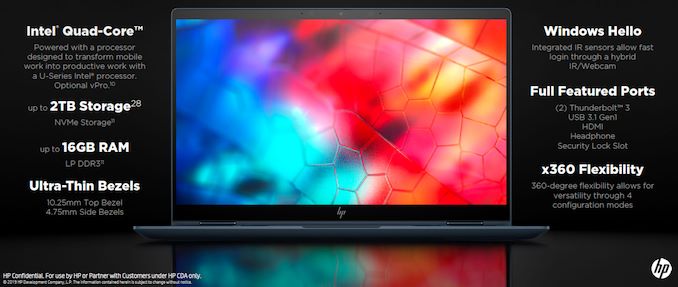
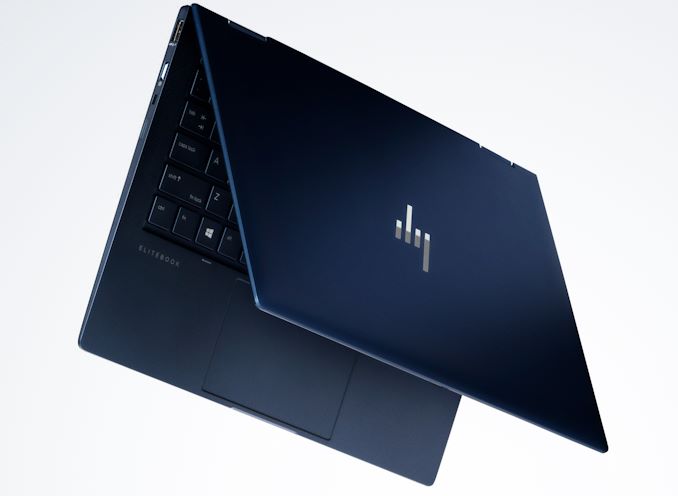
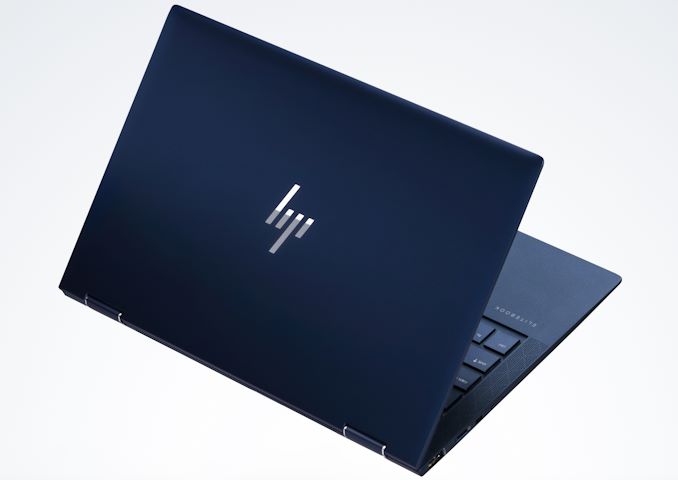
HP this morning is introducing its new flagship 13.3-inch convertible laptop, which the company is calling the Elite Dragonfly. The Project Athena-class laptop is designed to check all of the boxes for a high-end, compact laptop, offering premium features, a very low weight, and most interesting of all, an optional high-capacity battery that HP claims will run the laptop for over 24 hours.


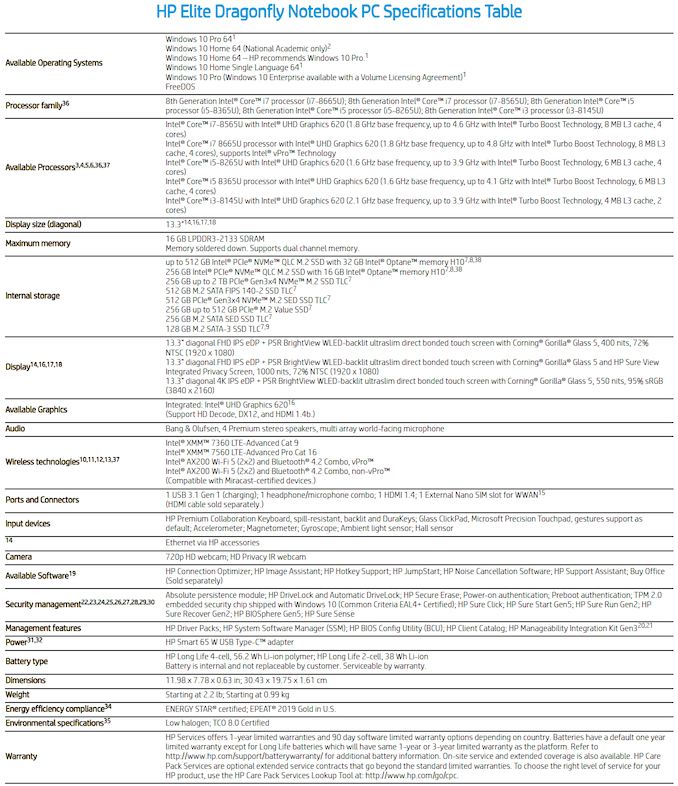
The HP Elite Dragonfly notebook comes in a CNC-machined magnesium alloy chassis, which has allowed HP to reduce its weight to around 990 grams (in case of the low-weight SKU with a 38 Wh battery) and maintain a 1.61 cm z-height. According to HP, the chassis also meets the durability requirements for the MIL-STD 810G standard (including spill resistance), so it looks like HP has been able to cut down on weight without compromising the durability of the laptop. Meanwhile, the entire chassis is covered with an oleophobic coating, to make the entire laptop resistant to fingerprints and smudges.


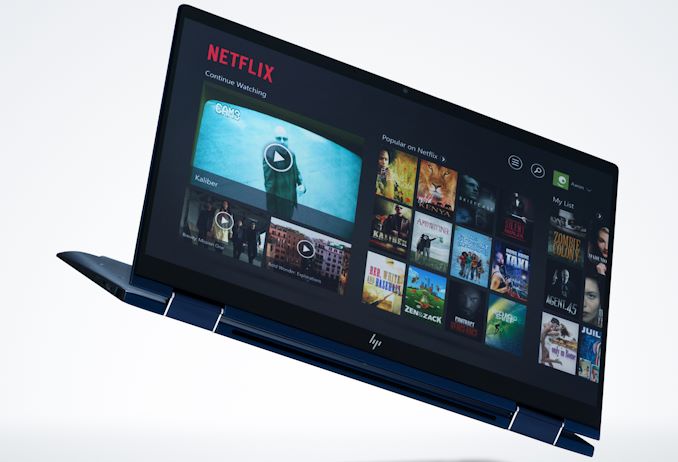
Front and center of the convertible notebook is the 13.3-inch touch-enabled display, which is available in Full HD (1080p) or Ultra HD (4K) resolutions, and options include a version of the FHD panel that incorporates Intel’s 1 Watt panel tech. The display panel itself is protected by Corning’s Gorilla Glass 5, and for the privacy-minded, HP is also offering their SureView privacy screen as an option.


HP says that it has taken it a long time to engineer a laptop that could include all of the Elite Dragonfly’s features, and to that end it has to stick to Intel’s proven low-power 8th Gen Core i3/i5/i7 processors (Whiskey Lake). Despite usage of a previous-generation CPU, the Elite Dragonfly is compliant with Intel’s Project Athena requirements, so overall experience should be in line with other laptops designed for that program. The CPU is accompanied by up to 16 GB of soldered-down dual-channel LPDDR3-2133 memory as well as an SSD with capacities going up to 2 TB. Higher-end SKUs will use a PCIe 3.0 x4 drive, whereas cheaper or specialized models will come with a SATA drive, allowing HP to offer a FIPS 140-2-certified drive to customers who need it.


Communications are critical for business these days, so this is where the Elite Dragonfly excels. The convertible laptop comes with Intel’s Wi-Fi 6 + Bluetooth 5 adapter, an optional Intel XMM 7360/7560 4G/LTE modem with 4×4 antennas, and an optional GbE adapter. Meanwhile, when it comes to wired connectivity the laptop includes a Thunderbolt 3-enabled USB-C port, a stand-alone USB-C port, a USB Type-A port, a full-size HDMI port, and a 3.5-mm audio connector. Speaking of audio, when not using headphones the PC has four Band & Olufsen-badged speakers as well as a microphone array as its disposal.


Being an Elite-branded laptop, the HP Dragonfly supports all the key security features that the manufacturer has to offer. In addition to HP SureView privacy screen as well as a 720p Privacy Camera (with or without IR sensor), the convertible supports HP’s Sure Sense, Sure Recover, and Embedded Reimaging technologies, a TPM 2.0 module, and an Absolute persistence module.


Meanwhile, when it comes to battery life, HP is making some bold claims, stating that that an Elite Dragonfly equipped with a Core i5 processor, 8 GB of RAM, a 128 GB SSD, and a 1-Watt Full-HD display, and a 56.2 Wh battery can last for up to 24 hours and 30 minutes on a single charge. These results are based on MobileMark 2014, a relatively light workload, so results will vary with the workload used. Meanwhile, machines with other configurations (e.g. a smaller battery) will last for a shorter amount of time.


HP intends to start sales of its Dragonfly laptops on October 25. Prices for the entry-level Dragonfly convertibles will start at $1,549, but higher-performance SKUs will cost significantly more. In addition the the PC itself, the company will offer a travel mouse as well as a leather sleeve.


Related Reading:


Source: HP


Source: AnandTech – HP’s Unveils Elite Dragonfly Laptop: 13.3-Inch Convertible With a 24.5 Hour Battery Life

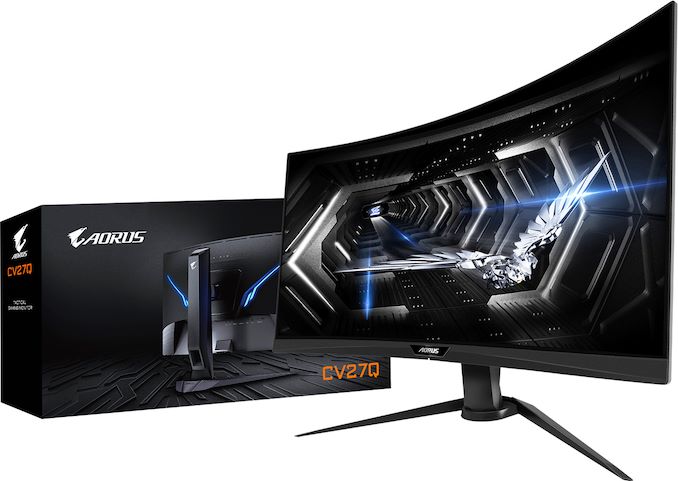
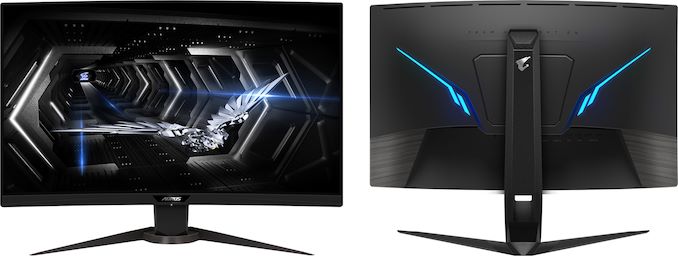
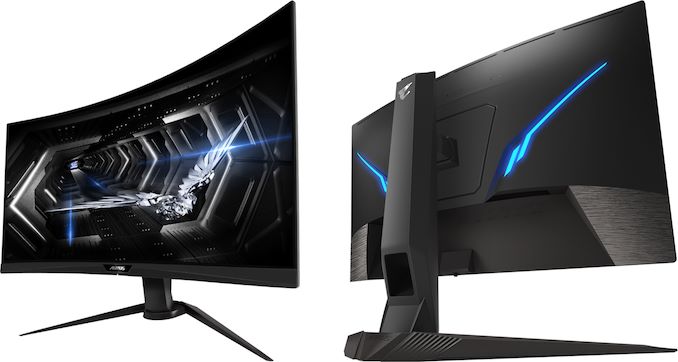
GIGABYTE’s Aorus CV27Q Curved ‘Tactical’ Monitor: 165 Hz QHD With FreeSync 2

GIGABYTE has introduced a new display aimed at hardcore gamers, incorporating a multitude of capabilities aimed at the target audience. Dubbed the ‘Tactical Monitor’, the Aorus CV27Q is a QHD curved LCD that’s able to run at up to 165Hz, and includes support for AMD’s FreeSync 2 refresh rate technology. The gaming-focused monitor also includes active noise canceling, GameAssist OSD functions, and RGB stripes that can be controlled using the company’s software.


The GIGABYTE Aorus CV27Q is based on an 8-bit 27-inch curved VA panel featuring a 2560×1440 resolution, 400 nits peak brightness, a 3000:1 static contrast ratio, a maximum refresh rate of 165Hz, a 1 ms MPRT response time, and 178°/178° viewing angles. The panel also sports a 1500R curvature, which means that it provides a wider field of view than most 27-inch LCDs available today.


As mentioned previously, the Aorus CV27Q is an AMD FreeSync 2-certified monitor, meaning that the display meets AMD’s minimum requirements for HDR contrast ratios and color gamuts, as well as supporting direct-to-display tonemapping, and low framerate compensation (LFC) mode. Officially, the monitor is able to hit 90% of the DCI-P3 color gamut, and while it meets the requirements for HDR it only hits the minimum, with an HDR brightness of 400 nits (and matching DisplayHDR 400 certification). Judging from Gigabyte’s specifications, it looks like this is an edge-lit monitor – Gigabyte doesn’t list how many zones it has – which would be consistent with that performance level. As for FreeSync 2 range, the manufacturer says it is between 48 Hz and 165 Hz.


Meanwhile, GIGABYTE has informed us that they have also submitted the device to NVIDIA for G-Sync Compatible certification, so that the monitor’s variable refresh modes can be used with GeForce cards. Whether this happens is ultimately up to NVIDIA – which is why GIGABYTE isn’t advertising it as a feature quite yet – but as the company already has other monitors that have been certified by NVIDIA, GIGABYTE should have the expertice to pass certification here as well.


Moving on to gaming-specific features of the Aorus CV27Q, one of the capabilities that GIGABYTE is especially proud of is its 2nd Generation active noise canceling (ANC) technology. Here, ANC uses a special chip along with a dual mic setup to remove ambient noises from the background of the microphone feed. Meanwhile on the output side of matters, GIGABYTE claims that the monitor offers a 120 dB signal-to-noise-ratio (SNR), with the monitor able to support high impedance headphones up to 600 Ohm.


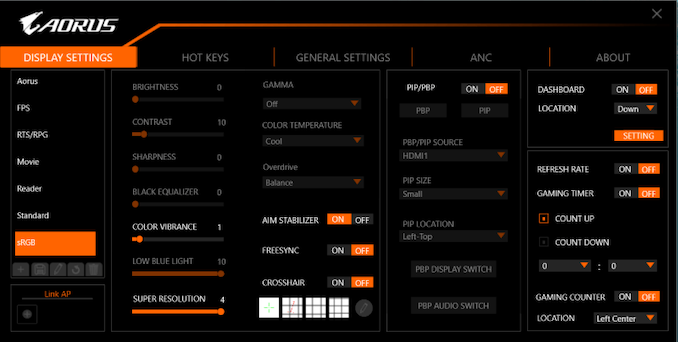
Another interesting capability is Black Stabilizer 2.0 that promises to improve details of dark parts of a scene without affecting other areas. This sounds vaguely like local dimming, however with an edge-lit monitor it’s not clear that this monitor will have enough zones to use it effectively. Other features driven by the firmware include crosshair, aim stabilizer (which reduces motion blur in fast-paced scenes, though GIGABYTE does not disclose how it does it), timer & counter, as well as OSD Sidekick that allows to tune the monitor to a particular game or situation.


To connect the GIGABYTE Aorus CV27Q to PCs and consoles, the monitor has one DisplayPort 1.4 and two HDMI 2.0 connectors. Furthermore, the LCD has a dual-port USB 3.0 hub as well as as 3.5-mm audio jacks for headphones and a mic. As far as ergonomics is concerned, the display comes with a stand that can adjust height, tilt, and swivel.


The GIGABYTE Aorus CV27Q
  General Specifications
Panel 27″ 8-bit VA
Native Resolution 2560 × 1440
Maximum Refresh Rate 165 Hz
Response Time 1 ms MPRT
Brightness 400 cd/m² (peak)
Contrast 3000:1
Backlighting ELED (Edge-Lit LED)
Viewing Angles 178°/178° horizontal/vertical
Curvature 1500R
Aspect Ratio 16:9
Color Gamut >?% sRGB/BT.709

90% DCI-P3

16.7 million colors
DisplayHDR Tier 400
Dynamic Refresh Rate Tech AMD FreeSync 2

NVIDIA G-Sync Compatible (applied for official certification which is yet to be received)
Pixel Pitch 0.3114 mm²
Pixel Density 91.79 PPI
Inputs 1 × DP 1.4

2 × HDMI 2.0
Audio 3.5 mm input and output
USB Hub 2 × USB 3.0 Type-A connectors

1 × USB 3.0 Type-B input
USB Hub Tilt: -5° ~ +21°

Swivel: -20° ~ +20°

Height: +/- 130 mm
MSRP $459.99

Set to be available shortly, the GIGABYTE Aorus will cost $459.99, which is a tad higher when compared to other mid-range FreeSync 2 curved displays, but extra features tend to come at a premium.


Related Reading:


Source: GIGABYTE’s Aorus


Source: AnandTech – GIGABYTE’s Aorus CV27Q Curved ‘Tactical’ Monitor: 165 Hz QHD With FreeSync 2

NVIDIA Announces Call of Duty: Modern Warfare Game Bundle for GeForce RTX 20 Cards

With the arrival of Fall also comes the biggest quarter of the year for new game releases, and to that end NVIDIA is updating their hardware game bundles. This morning the company is announcing a new bundle for their GeForce RTX cards, which will see the latest Call of Duty game, Modern Warfare, included with the cards as well as systems containing them. This latest bundle is currently scheduled to run through mid-November, or until NVIDIA updates it once more.


Like previous NVIDIA GeForce RTX game bundles, the Call of Duty: Modern Warfare bundle is focused on including a flagship game that showcases the features of NVIDIA’s newest cards. In this case, Modern Warfare checks all of the boxes; along with being a high-profile game in and of itself, the game is receiving (practically obligatory) support for ray tracing via DXR, as well as adaptive shading support.


Digging into the bundle itself, as this is a single game bundle, NVIDIA’s deal is pretty straightforward. The company will be including the game with all of their GeForce RTX cards, from the RTX 2060 up to the RTX 2080 Ti. This offer also applies to many desktop and laptop systems including these cards as well, so long as the vendor is a participating NVIDIA partner.


NVIDIA Current Game Bundles

(September 2019)
Video Card Bundle
GeForce RTX 20 Series (All) Call of Duty: Modern Warfare (2019)
GeForce GTX 16 Series (All) None

Meanwhile, the fact that this is an RTX-only bundle means that NVIDIA’s GTX 16 series cards are being left out. The company has not launched a bundle for those cards, so at least for the time being, only the RTX 20 cards are getting a game bundle.


Finally, as always, codes must be redeemed via NVIDIA Redemption portal on a system with a qualifying graphics card installed. More information and details can be found in the terms and conditions. Be sure to verify the participation of any vendors purchased from, as NVIDIA will not give codes for purchases made from non-participating sellers.


Source: AnandTech – NVIDIA Announces Call of Duty: Modern Warfare Game Bundle for GeForce RTX 20 Cards

Reaching for Turbo: Aligning Perception with AMD’s Frequency Metrics

For those that keep a close eye on consumer hardware, AMD recently has been involved in a minor uproar with some of its most vocal advocates about the newest Ryzen 3000 processors. Some users are reporting turbo frequencies much lower than advertised, and a number of conflicting AMD partner posts have generated a good deal of confusion. AMD has since posted an update identifying an issue and offering a fix, but part of all of this comes down to what turbo means and how AMD processors differ from Intel. We’ve been living on Intel’s definitions of perceived standards for over a decade, so it’s a hard nut to crack if everyone assumes there can be no deviation from what we’re used to. In this article, we’re diving at those perceived norms, to shed some light on how these processors work.


Source: AnandTech – Reaching for Turbo: Aligning Perception with AMD’s Frequency Metrics

CEVA Announces NeuPro-S Second-Generation NN IP

It’s been a few years since machine learning and neural networks first started to be the hot new news topic. Ever since then, the market has transformed a lot and a lot of companies and the industry as a whole has shifted from a notion of “what can we do with this” to rather a narrative of “this is useful, we should really have it”. Although the market is very much far from being mature, it’s no longer in the early wild-west stages that we saw a few years ago.


A notable development in the industry is that there’s been a whole lot of silicon vendors who have chosen to develop their own IP instead of licensing things out – in a sense IP vendors were a bit behind the curve in terms of actually offering solutions, forcing in-house developments in order for their product not to fall behind in competitiveness.


Today, CEVA announces the new second generation of NeuPro neural networks accelerators, the new NeuPro-S. The new offering improves and advances the capabilities seen in the first generation, with CEVA also improving vendor flexibility and a new product offering that embraces the fact that a wide range of vendors now have their own in-house IP.


The NeuPro-S is a direct successor to last year’s first-generation NeuPro IP, improving on the architecture and microarchitecture. The core improvements of the new generation lie around the way the block now improves and handles memory, including new compression and decompression of data. CEVA quotes figures such as 40% reduces memory footprint and bandwidth savings, all while enabling energy efficiency savings of up to 30. Naturally this also enables for an increase in performance, claiming up to 50% higher peak performance in a similar hardware configuration versus the first generation.


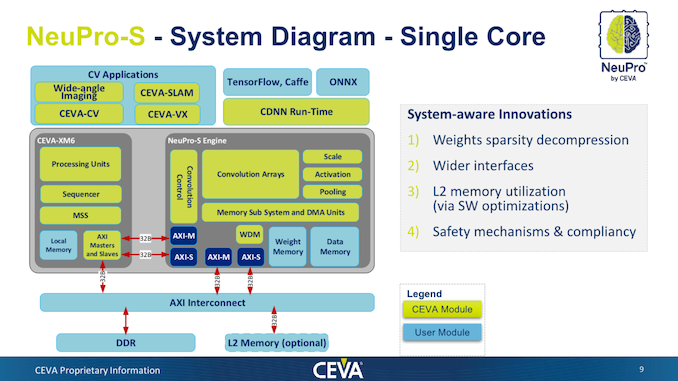
Diving deeper into the microarchitectural changes, innovations of the new generation includes new weight compression as well as network sparsity optimisations. The weight data is retrained and compressed via CDNN via CEVA’s offline compiler and remains in a compressed form in the machine’s main memory – with the NeuPro-S decompressing in real time via hardware.


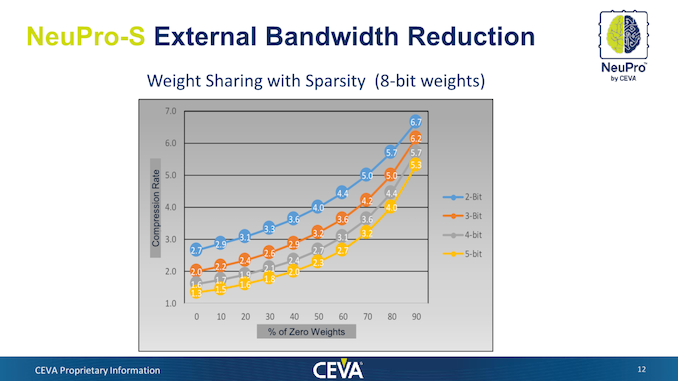
In essence, the new compression and sparsity optimisation sound similar to what Arm is doing in their ML Processor with zero-weight pruning in the models. CEVA further goes on to showcase the compression rate factors that can be achieved – with the factor depending on the % of zero-weights as well as the weight sharing bit-depth. Weight-sharing is a further optimisation of the offline compression of the model which reduces the actual footprint of the weight data by sharing finding commonalities and sharing them across each other. The compression factors here range from 1.3-2.7x in the worst cases with few sparsity improvements to up to 5.3-.7x in models with significant amount of zero weights.


Further optimisations on the memory subsystem level includes a doubling of the internal interfaces from 128-bit AXI to 256-bit interfaces, enabling for more raw bandwidth between the system, CEVA XM processor and the NeuPro-S processing engine. We’ve also seen an improvement of the internal caches, and CEVA describe the L2 memory utilisation to have been optimised by better software handling.


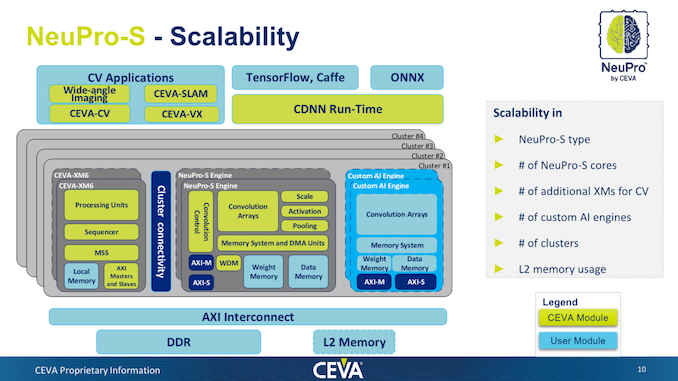
In terms of overall scaling of the architecture, the NeuPro-S doesn’t fundamentally change compared to its predecessor. CEVA doesn’t have any fundamental limit here in terms of the implementation of the product and they will build the RTL based on a customer’s needs. What is important here is that there’s a notion of clusters and processing units within the clusters. Clusters are independent of each other and cannot work on the same software task – customers would implement more clusters only if they have a lot of parallel workloads on their target system – for example this would make sense in an automotive implementation with many camera streams, but wouldn’t necessarily see a benefit in a mobile system. The cluster definition is a bit odd and wasn’t quite as clear whether it’s actually any kind of hardware delimitation, or the more likely definition of software operation of different coherent interconnect blocks (As it’s all still connected via AXI).


Within a cluster, the mandatory block is CEVA’s XM6 vision and general-purpose vector processor. This serves as the control processor of the system and takes care of tasks such as control flow and processing of fully-connected layers. CEVA notes that processing of ML models can be processed fully independently by the NeuPro-S system, whereas maybe other IPs need to still rely on maybe the CPU for some processing of some layers.


The NeuPro-S engines are naturally the MAC processing engines that add the raw horsepower for wider parallel processing and getting to the high TOPS figures. A vendor needs at minimum a ratio of 1:1 XM to NeuPro engines, however it may chose to employ more XM processors which may be doing separate computer visions tasks.


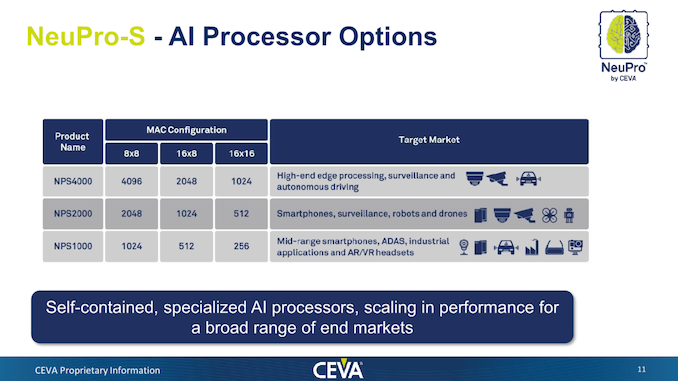
CEVA allows allow scaling of the MAC engine size inside a single NeuPro-S block, which ranges from 1024 8×8 MACs to up to 4096 MACs. The company also allows for different processing bit-depths, for example allowing 16×16 as it still sees the need for some use cases that take advantage of the higher precision 16-bit formats. There are also mixed format configurations like 16×8 or 8×16 where the data and weight precision can vary.


In total, a single NeuPro-S engine in its maximum configuration (NPS4000, 4096 MACs) is quoted as reaching up to 12.5 TOPS on a reference clock of 1.5GHz. Naturally the frequency will vary based on the implementation and process node that the customer will deploy.


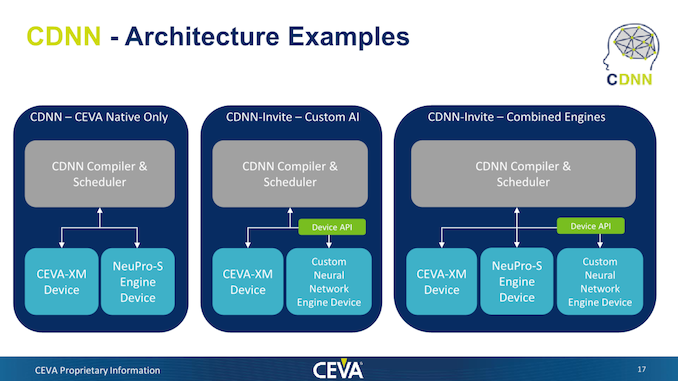
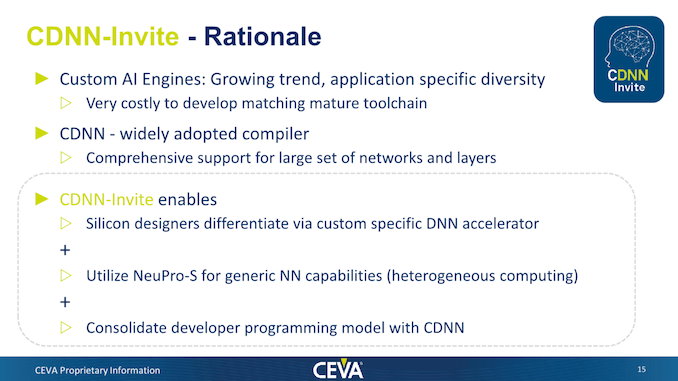
As some will have noted in the block diagram earlier, CEVA also now allows the integration of third-party AI engines into their CDNN software stack and to interoperate with them. CEVA calls this “CDNN-Invite”, and essentially the company here is acknowledging the existence of a wide-range of custom AI accelerators that have been developed by various silicon vendors.


CEVA wants to make available their existing and comprehensive compiler and software to vendors and enable them to plug-in their own NN accelerators. Many vendors who chose to go their own route likely don’t have quite as extensive software experience or don’t have quite as much resources developing software, and CEVA wants to enable such clients with the new offering.


While the NeuPro-S would remain a fantastic choice for generic NN capabilitites, CEVA admits that there might be custom accelerators out there which are hyper-optimised for certain specific tasks, reaching either higher performance or efficiency. Vendor could thus have the best of both worlds by having a high degree of flexibility, both in software and hardware. One could choose to use the NeuPro-S as the accelerator engine, use just their own IP, or create a system with both units. The only requirement here is that a XM processor be implemented as a minimum.


CEVA claims the NeuPro-S is available today and has been licensed to lead customers in automotive camera applications. As always, silicon products are likely 2 years away.


Related Reading:


Source: AnandTech – CEVA Announces NeuPro-S Second-Generation NN IP

Wi-Fi 6 Is Officially Here: Certification Program Begins

Wi-Fi Alliance on Monday officially started its Wi-Fi 6 certification program, informally kicking off the widescale adoption of the new Wi-Fi standard. As with the group’s previous certification programs, the Wi-Fi 6 certification program is focused on verifying the interoperability and feature sets of IEEE 802.11ax devices, ensuring that they work well with each other and that the devices feature all of the required performance and security capabilities of the new standard.


Wi-Fi Alliance’s certification comes as device manufacturers have already been shipping Wi-Fi 6 products for the last several months – essentially seeding the hardware ecosystem to get to this point. So the first task for the group’s members and test labs will be to certify existing Wi-Fi 6 devices. This includes existing access points, routers, and client devices, including Samsung’s Galaxy Note 10, which has become the first smartphone to receive certification.


Under the hood, the new standard takes a bit of a departure from past Wi-Fi iterations by focusing more on improving performance in shared environments, as opposed to solely boosting peak device transfer rates. To that end, while the maximum throughput supported by Wi-Fi 6 is 2.4 Gbps, the crucial improvement of the Wi-Fi 6/802.11ax technology the standard’s enhanced spectral efficiency. Among other things, the technology adds OFDMA (Orthogonal Frequency-Division Multiple Access) to allow different devices to be served by one channel, by dedicating different sub-carriers for individual client devices. Wi-Fi 6 also adds mandatory support for MU-MIMO – a feature first added in 802.11ac Wave 2 – as well as transmit beamforming for better reaching individual clients.


In fact, even existing Wi-Fi 5 (802.11ac) client devices can benefit from a Wi-Fi 6 (802.11ax) AP, though Wi-Fi 6 Certified devices will deliver the best results.


Meanwhile, Wi-Fi Alliance mandates that Wi-Fi 6 certified devices support WPA3 security, 1024-QAM, 160 MHz channels, and that devices support target wake time (a battery-saving tech that minimizes device check-ins).


Finally, along with the launch of the certification program itself, the Wi-Fi Alliance has already certified its first dozen devices. The following network adapters, chipsets, and access points have all been Wi-Fi 6 certified:


  • Broadcom BCM4375
  • Broadcom BCM43698
  • Broadcom BCM43684
  • Cypress CYW 89650 Auto-Grade Wi-Fi 6 Certified
  • Intel Wi-Fi 6 (Gig+) AX200 (for PCs)
  • Intel Home Wi-Fi Chipset WAV600 Series (for routers and gateways)
  • Marvell 88W9064 (4×4) Wi-Fi 6 Dual-Band STA
  • Marvell 88W9064 (4×4) + 88W9068 (8×8) Wi-Fi 6 Concurrent Dual-Band AP
  • Qualcomm Networking Pro 1200 Platform
  • Qualcomm FastConnect 6800 Wi-Fi 6 Mobile Connectivity Subsystem
  • Ruckus R750 Wi-Fi 6 Access Point


Wi-Fi Names and Performance
Naming Peak Performance
New Name IEEE

Standard
1×1

Configuration
2×2

Configuration
3×3

Configuration
Wi-Fi 4 802.11n 150 Mbps 300 Mbps 450 Mbps
Wi-Fi 5 802.11ac 433 Mbps over 80MHz


867 Mbs over 160MHz

867 Mbps over 80MHz


1.69 Gbps over 160MHz

1.27 Gbps over 80 MHz


2.54 Gbps over 160 MHz

Wi-Fi 6 802.11ax 867 Mbs over 160MHz


depends

1.69 Gbps over 160MHz


on network

2.54 Gbps over 160 MHz


configuration

Related Reading:


Source: Wi-Fi Alliance


Source: AnandTech – Wi-Fi 6 Is Officially Here: Certification Program Begins

The Corsair K63 Wireless Mechanical Keyboard Review: PC Gaming Untethered

Today we are taking a look at a wireless mechanical keyboard from Corsair, the K63. Designed with living room gaming in mind, the K63 seeks to combine the benefits for mechanical keyboards with the convenience of wireless communication, with a battery life lengthy enough for long gaming sessions.


Source: AnandTech – The Corsair K63 Wireless Mechanical Keyboard Review: PC Gaming Untethered

TCL Shows Off 132-Inch Micro LED 4K UHDTV: 24,000,000 Micro LEDs

Direct view Micro LED displays are a relatively new display technology that so far has been publicly demonstrated only by Samsung and Sony, the two of which tend to experiment with variety of technologies in general. At IFA last week TCL, a major maker of televisions, threw its hat into the ring by demonstrating its ultra-large Micro LED-based Ultra-HD TV.


Dubbed the Cinema Wall 132-Inch 4K, TCL’s Micro LED television uses 24,000,000 individually controlled LEDs as RGB subpixels, and features a 1,500 nits max brightness level as well as a 2,500,000 contrast ratio (good enough to compete against OLEDs). The manufacturer claims that the TV can display a wide color gamut, but does not disclose whether they’re using DCI-P3 or BT.2020.


Like other early-generation display products, TCL is not revealing if and when plans to release its 132-inch 4K Micro LED TV commercially, but the fact that that it has a device that is good enough to be shown in public (see the video by Quantum OLED channel here) is an important step. Just like other makers of Micro LED televisions, TCL might want to increase peak brightness supported by these devices, as many modern titles are post-produced using Dolby’s Pulsar reference monitor for Dolby Vision HDR, which has a peak brightness level of 4000 nits.


Numerous TV makers are currently investigating Micro LED technology as a viable alternative to OLED-based screens. While OLEDs tend to offer superior contrast ratio when compared to LCDs, they have a number of trade-offs, including off-axis color shifting, ghosting, burn-in, etc. WOLED has mitigated some of these issues, but it has also introduced others due to the inherient limitations of using color filters.


By contrast Micro LED TVs are expected to be free of such drawbacks, while still retaining the advantages of individual LEDs like brightness, contrast, fast response time, and wide viewing angles. As an added bonus, Micro LED TVs will not need any bezels and can be made very thin.


Related Reading:


Sources: Quantum OLED, MicroLED.info, LEDs Inside


Source: AnandTech – TCL Shows Off 132-Inch Micro LED 4K UHDTV: 24,000,000 Micro LEDs

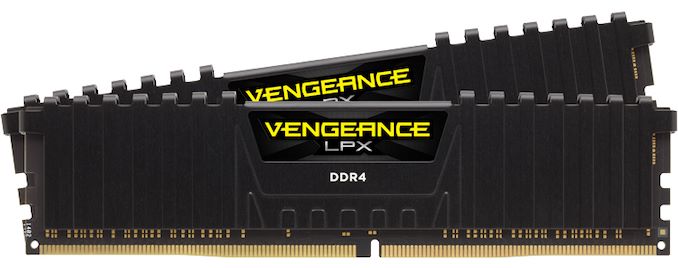
Corsair Reveals Vengeance LPX DDR4-4866 Memory Kit

Corsair on Thursday released its fastest memory kit to date, the Vengeance LPX DDR4-4866, aimed at the most performance-hungry enthusiasts. The modules are specifically tested for compatibility AMD’s Ryzen 3000/X570 platforms, though they can work with Intel-based PCs too.


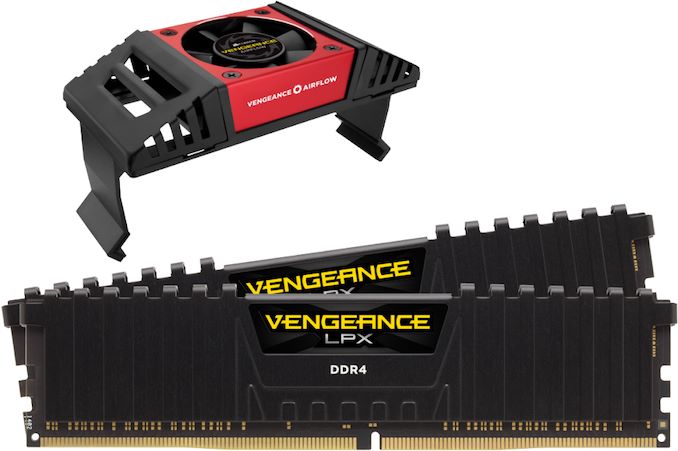
Corsair’s Vengeance LPX DDR4-4866 memory kit consists of two 8 GB memory modules (CMK16GX4M2Z4866C18) featuring a CL18 26-26-46 latency and a 1.5V voltage. The unbuffered DIMMs rely on Micron’s cherry-picked DRAM devices as well as Corsair’s custom 10-layer PCB. The modules are traditionally equipped with aluminum heat spreaders, and are compatible Corsair’s Vengeance Airflow fan to improve cooling.


The manufacturer claims that it has tested its Vengeance LPX DDR4-4866 modules with AMD’s Ryzen 3000-series processors paired with ASUS’s ROG Crosshair VIII Formula, the MSI MEG X570 Godlike, and the MSI Prestige X570 Creating motherboards. Meanwhile, since the UDIMMs feature an XMP 2.0 SPD, they will be able to work with Intel Z390-based platforms at DDR4-4800 as well.


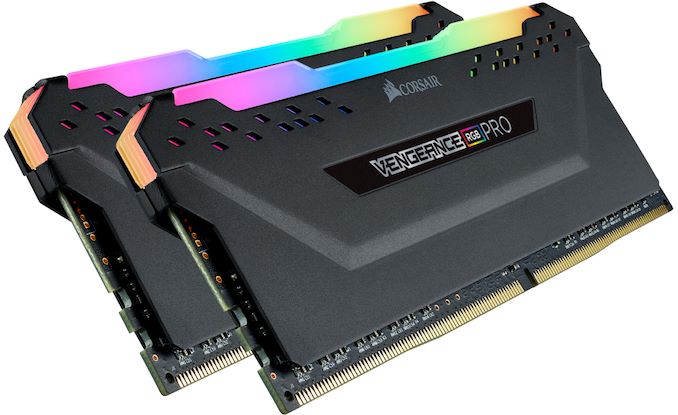
For those who need high-end performance and RGB LEDs as well, Corsair will also offer Vengeance RGB Pro DDR4-4700 16 GB kit. The RGB Pro kit cannot be equipped with a fan, but it will still feature the same DRAM chips, a custom PCB, an XMP 2.0 profile, and aluminum heat spreaders.


Being a true flagship offering, Corsair’s 16 GB Vengeance LPX DDR4-4866 memory kit is expensive to say the least: in the US the kit costs $984, whereas in Europe it is priced at €1,064,99.


There is one thing to note about Corsair’s Vengeance LPX DDR4-4866 and Vengeance RGB Pro DDR4-4700 memory kits. AMD as well as third-party observers sayd that the Ryzen 3000 processors show the highest memory subsystem performance when frequencies of Infinity Fabric (fClk), memory controller (uClk), and DRAM (mClk) are equal (i.e., the fClk to mClk ratio is set at 1:1). Which can be an issue, as few Ryzen CPUs can support such high fClk clocks; so using exceptionally fast DDR4 memory modules (e.g., DDR4-4000+) may be unfavorable in many cases. That said, it remains to be seen what kind of advantages will Corsair’s DDR4-4700 and DDR4-4866 kits bring.


Related Reading:


Source: Corsair


Source: AnandTech – Corsair Reveals Vengeance LPX DDR4-4866 Memory Kit

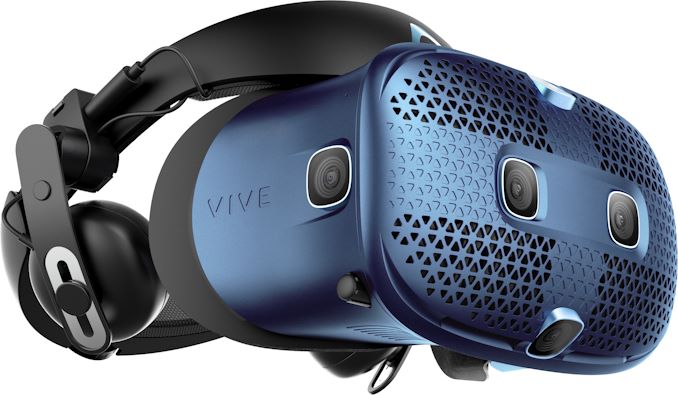
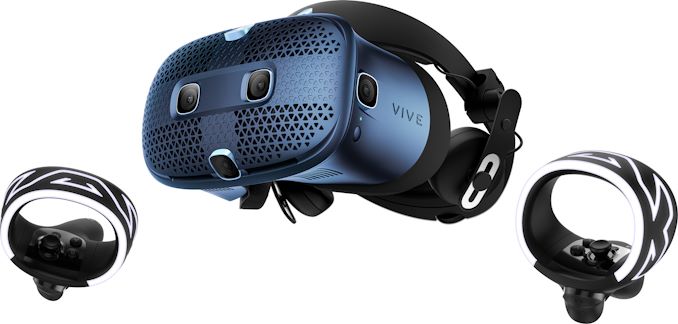
HTC Unveils Final Specs & Availability Date of Cosmos VR Headset for PCs

HTC this week announced final specifications as well as availability date of the Vive Cosmos, its next-generation tethered VR headset, which promises numerous improvements along with modularity for further upgrades. Among the key features of the Vive Cosmos are higher resolution displays, full 6DoF inside-out tracking built around six cameras and integrated sensors, a lower weight, as well as all-new knuckles-style controllers. The headset is available for pre-order now and will ship in early October.


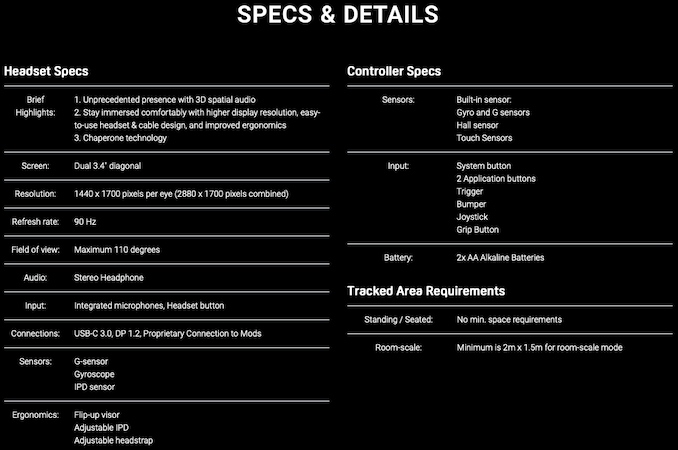
Originally unveiled at CES early this year, the Vive Cosmos head mounted display (HMD) is equipped with two 3.4-inch RGB LCD screens, each offering a per eye resolution of 1440×1700 (2880×1700 combined resolution), a 90 Hz refresh rate, and a 110-degree field of view (officially, this is the same as the original Vive). On which note, HTC has been relatively mum on the optics used, though it has been confirmed that they’re continuing to use Fresnel lenses.


As this is a tethered headset by default, in its standard configuration the HMD connects to a host PC using via DisplayPort 1.2 and USB 3.0. Alternatively, the VR HMD can be equipped with a WiGig-based wireless adapter from HTC.


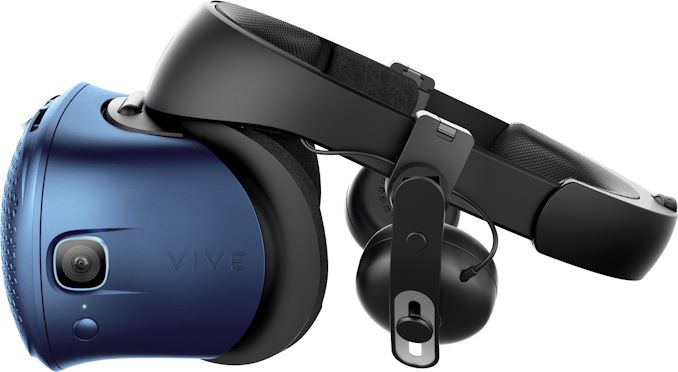
The VR headset comes with a built-in inside-out 6-degree-of-freedom (6DoF) positional tracking enabled by six cameras, a G-sensor, as well as a gyroscope, which is an important distinction from the original Vive (and Vive Pro), as it does not require any external sensors for tracking. This greatly simplifies the setup process and removes some of the friction from using the device, though as a realistic assessment it’s unlikely to be quite as stable as using external sensors. Like all HTC Vive HMDs, the Cosmos has its own spatial audio-supporting stereo headphones as well as microphones.


The new headset also comes with brand-new knuckle-style controllers, which are tracked by the HMD as part of its inside-out tracking. The controllers feature touch sensitivity, two application buttons, a trigger, a joystick, a bumper, and a grip button; all the common controls found on current-generation VR controllers. There is one notable caveat about the Cosmos controllers though: they are powered by two AA batteries and cannot be recharged from outside, which means that users will need to swap batteries after they get run down.


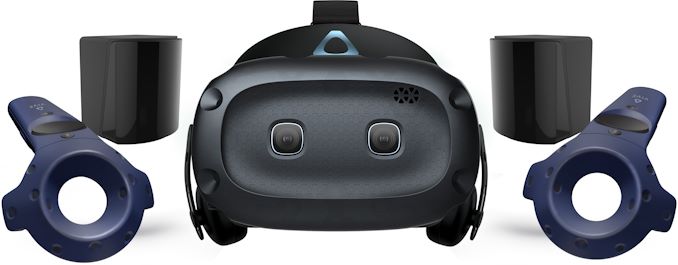
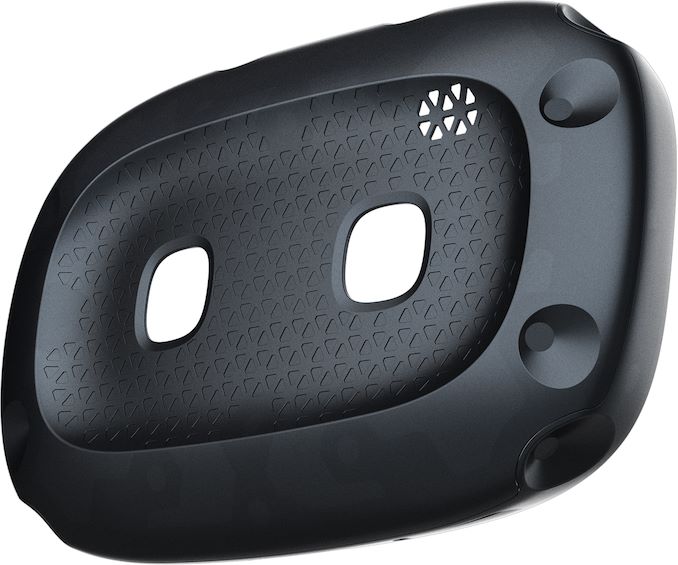
A unique capability of the Vive Cosmos is modular design of its front panel, which can be detached and replaced by another one, allowing upgrades and new features to be added. Fittingly, the very first ‘mod’ is the Vive Cosmos External Tracking Mod, and it is designed to allow the headset to be tracked externally using the SteamVR ecosystem’s existing Lighthouse base stations (though this also means the Cosmos controllers cannot be used). This one will be available in Q1 2020 for under $200.


The new HTC Vive Cosmos has a lower weight compared to its predecessors, the manufacturer says without elaborating. Meanwhile, the HMD continues to use a headstrap similar to that of the Vive Pro, with a sizing dial and enhanced ergonomics that balance the weight for added comfort.


HTC’s Vive Cosmos VR headset will be launching on October 3rd for $699. However for anyone looking to get started right away, HTC has already started taking pre-orders this week.


Related Reading:


Source: HTC


Source: AnandTech – HTC Unveils Final Specs & Availability Date of Cosmos VR Headset for PCs

Arm Joins CXL Consortium

Arm has officially joined the Compute Express Link (CXL) Consortium in a bid to enable its customers to implement the new CPU-to-Device interconnect and contribute to the specification. Arm was among a few major technology companies that was yet to join the CXL consortium and given the number of chips that use Arm’s IP, its support is hard to overestimate.


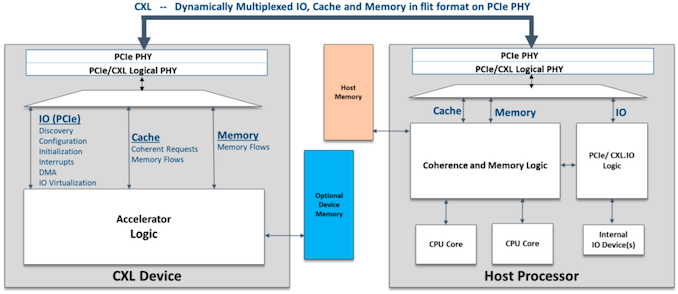
Arm is not completely new to CXL. The company has been participating in CXL workgroups and has provided technological and promotional resources to support development of the technology. The formal joining of the CXL consortium indicates the company’s commitment to provide its customers a full software framework to CXL, though the company does not say anything about plans to add appropriate logic to its upcoming AMBA PCIe Gen 5 PHY implementations.


Arm is a board member in the PCI SIG and the Gen-Z Consortium. Besides, the company supports its own CCIX interface for inter-package chip-to-chip interface. By supporting CXL, Arm will enable its clients to build CPUs or accelerators that support low-latency cache coherency as well as memory semantics between processors and accelerators.


Arm says that CCIX, which supports full cache coherency, will be used as an inter-package chip-to-chip interface for heterogeneous system-on-packages. Meanwhile, since this functionality is not in the scope of CXL at present, it will not compete against Arm’s version of CCIX.


Related Reading:


Source: Arm


Source: AnandTech – Arm Joins CXL Consortium

The Xiaomi Mi9 Review: Flagship Performance At a Mid-Range Price

We’re edging towards to latter half of 2019 and the next and last upcoming wave of device releases, however among the many device releases of the year one device we missed to review was the new Xiaomi Mi9. The phone was amongst the earliest releases of the year, being actually representing one of the first Snapdragon 855 devices announced back in February.


Xiaomi’s always been an interesting vendor that stood out alongside Huawei as one of the bigger Chinese vendors that have a larger presence in the west. Particularly last year and especially this year Xiaomi has made a lot of progress in terms of their push in European markets by officially releasing and offering their flagship devices in different market. The Mi9, as opposed to past iterations, thus no longer represents being a special case or import device, but rather a simple official Amazon purchase.


Today the Mi9 can be had for even less than its original 445€ launch price, being available for less than 400€, whilst still offering flagship performance, a triple camera setup, a great screen, all in a compact and attractive package. We’ll go over the device and exactly investigate how Xiaomi is able to offer such hardware at a low price, if there’s compromises and where they lie.


Source: AnandTech – The Xiaomi Mi9 Review: Flagship Performance At a Mid-Range Price

Giveaway: QNAP TS-932X NAS & Seagate IronWolf Drive Bundle
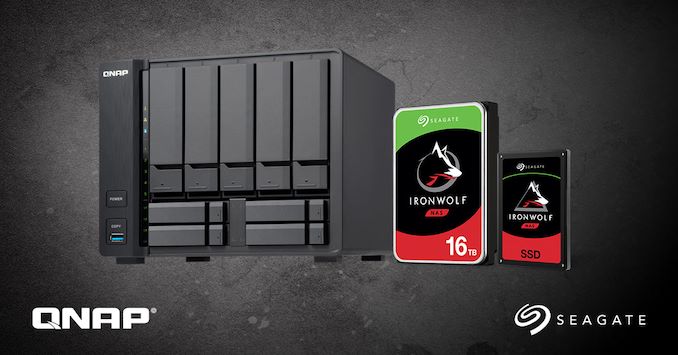
We’re back this week with another giveaway, this time courtesy of Seagate. After giving away some of their new Ironwolf 110 SSDs a couple of months back, this month the company has decided to up the ante. Rather than just giving away the SSDs, this time the company will be giving away a complete NAS setup, comprised of QNAP TS-932X-2G 9 bay NAS, as well as one of each of Seagate’s IronWolf Pro 16GB HDD and Ironwolf 110 240GB SSD.


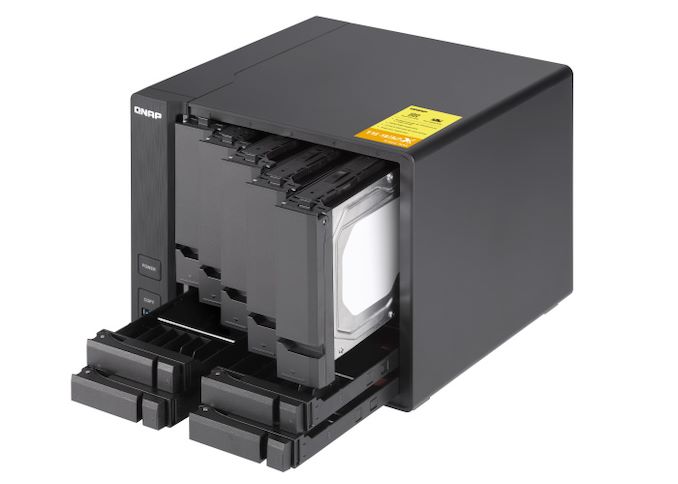
Starting things off, we have QNAP’s TS-932X-2G, a business-class NAS. This is one of the company’s compact 9 bay NASes, sporting 5 3.5-inch SATA drive bays along with another 4 2.5-inch SATA bays. The NAS is designed particularly for tiered storage, with the 3.5-inch bays being ideal for HDDs, while the 2.5-inch bays can hold SSDs (or in a pinch, 2.5-inch HDDs). Under the hood, the 932X is based on a quad core ARM Cortex A57-based SoC, the Alpine AL-324, which runs at 1.7GHz. This specific model comes with 2GB of DDR4 pre-installed in the single SO-DIMM slot, though it can be upgraded.


In terms of I/O, the NAS comes with a trio of USB 3.0 Type-A ports, among other things. But perhaps the most interesting feature here is the NAS’s Ethernet support: a pair of GigE RJ45 ports, along with a pair of 10GigE SFP+ ports. Owing to its business-focused design, QNAP has opted for SFP+ ports, which means that the NAS can be equipped with any of several different flavors of 10GigE depending on what kind of cabling you’d like to use. The one downside to this is that it means the ports aren’t actually usable without buying a transceiver, so there’s an additional cost (10GBASE-T transceivers are ~$50) before 10GigE is actual usable.


QNAP TS-932X NAS
  TS-932X-2G
CPU Model Alpine AL-324 (Cortex-A57)
Cores 4C
Freq. 1.7 GHz
Encryption Acceleration 256-bit AES
Memory Speed DDR4, one SO-DIMM slot
Capacity 2 GB, single-channel
Bays 5 × 3.5″

4 × 2.5″
Storage interface SATA 6 Gbps
Ethernet 2 × GbE

2 × 10 GbE SFP+
Audio 1 speaker

1 × 3.5mm audio out
USB 3 × USB 3.0 Type-A  
Other I/O Copy button, buzzer, LED notifications, etc.
Dimensions Height 183 mm | 7.19″
Width 225 mm | 8.85″
Depth 224 mm | 8.8″
Power Consumption Standby 21.66 W
Operating 42.15 W
OS QNAP QTS 4.3
MSRP $599

Seagate IronWolf HDD & SSD


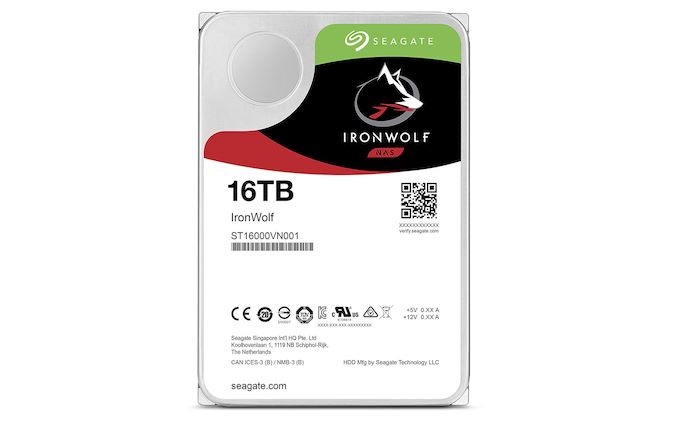
Meanwhile from Seagate, we have a pair of IronWolf drives from them. For mass storage, the company is including their top capacity 16TB IronWolf HDD. A recently launched product from the company, the 16TB IronWolf is a helium-based 7200 RPM drive, and the highest capacity IronWolf drive from the company to date. As part of the IronWolf family it’s specifically designed for use in NASes, incorporating the necessary sensors and low-vibrational design to best handle being packed in tight with a number of other actively running HDDs.


Seagate is also including one of their IronWolf SSDs as well, the 240GB version of the IronWolf 110. The drives, based on 3D TLC NAND with sustained performance numbers of 560 / 535 MBps sequential reads / writes, support a relatively hearty 1 DWPD endurance, despite the usual read-heavy scenarios that NASes drive. This makes them well suited for use as cache drives, which is exactly what Seagate is going for in this giveaway with the QNAP NAS.


Seagate Ironwolf 110 Series Specifications
Capacity 240 GB 480 GB 960 GB 1920 GB 3840 GB
Form Factor 2.5″ 7mm SATA
NAND Flash 3D TLC
Sequential Read 560 MB/s
Sequential

Write
345 MB/s 535 MB/s
Random Read 55k IOPS 75k IOPS 90k IOPS 90k IOPS 85k IOPS
Random

Write
30k IOPS 50k IOPS 55k IOPS 50k IOPS 45k IOPS
Idle Power 1.2 W
Active Power 2.3 W 2.7 W 3.2 W 3.4 W 3.5 W
Warranty 5 years
Write

Endurance
435 TB

1 DWPD
875 TB

1 DWPD
1750 TB

1 DWPD
3500 TB

1 DWPD
7000 TB

1 DWPD

The giveaway is running through September 27th and is open to all US residents (sorry, ROW!). You can enter below, and you can find more details (and the full discussion) about the giveaway over on the AnandTech Forums.


AnandTech Seagate IronWolf + QNAP NAS Giveaway


Source: AnandTech – Giveaway: QNAP TS-932X NAS & Seagate IronWolf Drive Bundle
Patriot Launches Viper VP4100 PCIe Gen 4 SSDs: Up to 5 GB/s

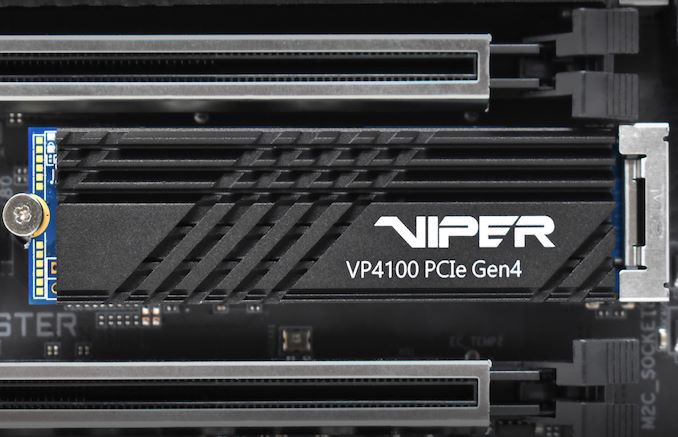
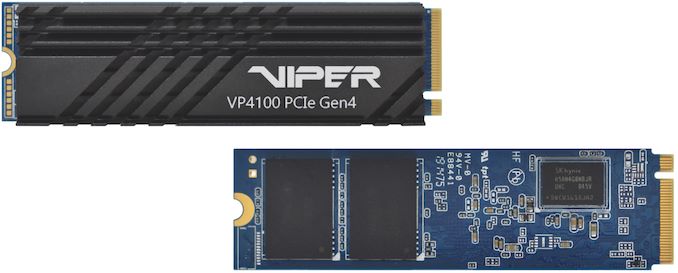
Patriot’s Viper Gaming division this week officially introduced its first PCIe 4.0 SSDs, several weeks ahead of schedule. The Viper VP4100 drives use Phison’s PS5016-E16 controller and generally resembles competing products. However, because of a custom firmware, the SSDs may differ a bit as compared to other E16 drives.


Available in 1 TB as well as 2 TB configurations and equipped with Phison’s PS5016-E16 controller as well as 3D TLC NAND memory, the Patriot Viper VP4100 is rated for up to 5000 MB/s sequential read speeds, up to 4400 MB/s sequential write speeds, as well an 800K peak read/write random IOPS. While the rated sequential write speed of the VP4100 is 100 MB/s lower than other drives based on the same controller, its rated random read/write performance is 50K IOPS higher, which looks like a reasonable tradeoff because random speeds usually have a more significant impact on end user experience.


Patriot’s Viper VP4100 SSDs
Capacity 1 TB 2TB
Model Number VP4100-1TBM28H VP4100-2TBM28H
Controller Phison PS5016-E16 (PCIe 4.0 x4)
NAND Flash 3D TLC NAND
Form-Factor, Interface M.2-2280, PCIe 4.0 x4, NVMe 1.3
Sequential Read 5000 MB/s
Sequential Write 4400 MB/s
Random Read IOPS 800K IOPS
Random Write IOPS 800K IOPS
Pseudo-SLC Caching Supported
DRAM Buffer 1 GB 2 GB
TCG Opal Encryption No
Power Management ?
Warranty 5 years
MTBF ? hours
TBW 1800 TB 3600 TB
MSRP $399.99 $599.99

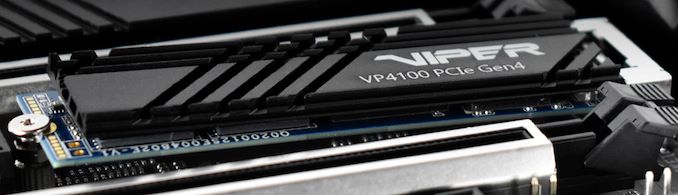
To make sure that performance of the Patriot Viper VP4100 SSD is consistent under high loads, the manufacturer equipped the drives with an external thermal sensor as well as an aluminum heat spreader.


Patriot’s Viper VP4100 SSD will be covered by a 5-year warranty and will be available in the near future. The 1 TB model will carry a recommended price tag of $399.99, whereas the 2 TB version will be priced at $599.99.


Related Reading:


Source: Patriot


Source: AnandTech – Patriot Launches Viper VP4100 PCIe Gen 4 SSDs: Up to 5 GB/s