New MSI MEG X570 Unify: An All-Black Motherboard with no RGB!!

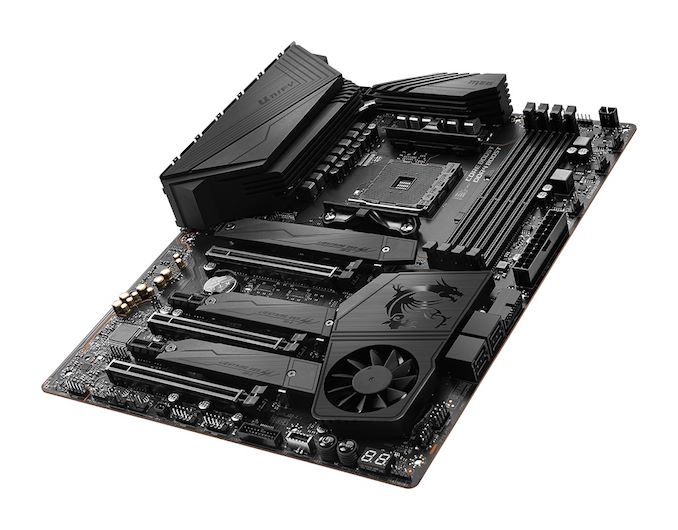
The concept and implementation of RGB can be a deal-breaker when buying a new motherboard. With many models to choose from, not many are brave enough to drop the rainbow lighting money spinning feature. The new MSI MEG X570 Unify takes a different approach with a unified all-black design and drops all integrated RGB LEDs and shares the same core feature set as the X570 Ace model with 2.5 gigabit Ethernet, a Wi-Fi 6 802.11ax wireless interface, and three PCIe 4.0 x4 M.2 slots.
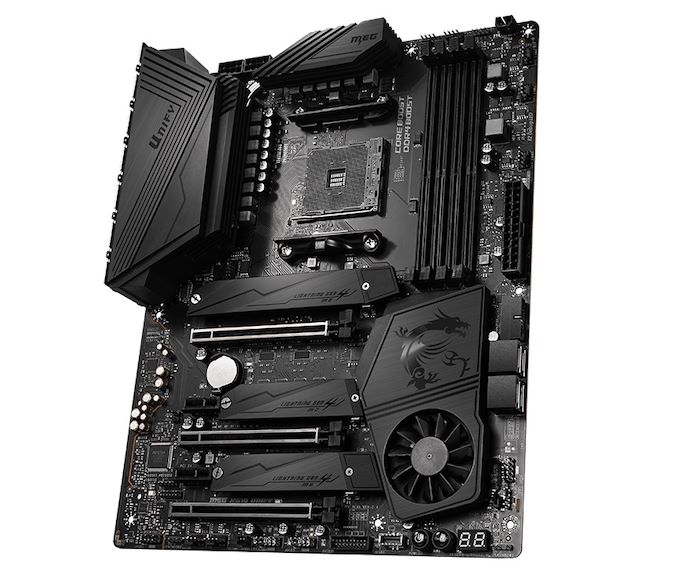


The MSI MEG X570 Unify combines sleek and uniformed all-black aesthetics without the swathes of RGB LEDs which some users find garish. With similar specifications to the MSI MEG X570 Ace which we reviewed at launch, the MEG X570 Unify takes a more direct approach with some very interesting features. Not only has MSI dropped all of the fancy plastic on the rear panel cover and removes the integrated RGB LEDs, but the power delivery heatsink is incorporated into the large aluminium rear panel cover to create a massive and robust cooling solution for power users; the X570 Unify is using a 14-phase power delivery design and two 8-pin 12 V ATX connectors for power. The Unify is more focused towards enthusiasts and represents MSI’s higher-tier of X570 models. 
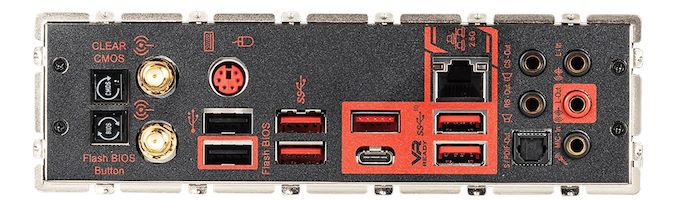


Looking at the core feature set, the MSI MEG X570 Unify includes three PCIe 4.0 x4 M.2 slots which each come with individual heatsinks for improved cooling performance when used with NVMe based drives. Also included four SATA ports and for the networking, a Realtek RTL8125 2.5 GbE port, and an Intel AX200 Wi-Fi 6 802.11ax wireless interface. On the rear panel, there is a Realtek ALC1220 HD audio codec with three USB 3.1 G2 Type-A, one USB 3.1 G2 Type-C, two USB 3.1 G1 Type-A, and two USB 2.0 ports. Also present is a clear CMOS button, a Flash BIOS button, and a PS/2 combo port. There are three full-length PCIe 4.0 slots which operate at x16, x8/x8, and x8/x8/x4, as well as two PCIe 4.0 x1 slots. Supported memory speeds allow for DDR4-4600 and up to 128 GB to be installed.
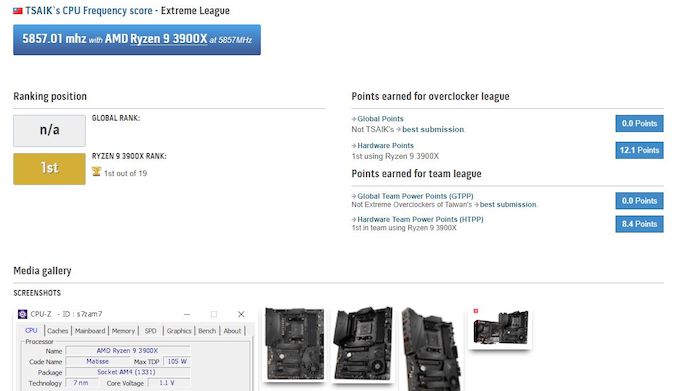


The Ryzen 9 3900X at 5.85 GHz using the MSI MEG X570 Unify


Everything about this model screams enthusiast, but without all of the bells and whistles of the MEG X570 Ace. The MSI MEG X570 Unify even managed to push a Ryzen 9 3900X to 5857.01 MHz which is the current highest frequency for this processor on HWBot. That sends a very clear message that this model is suited for overclocking, but still provides users with the same premium desktop motherboard features as other competitive models in its product segment.


At present, there is no pricing information available for the MSI MEG X570 Unify, but it is expected to hit the shelves soon and it’s likely the launch of this model was due to coincide with the launch of the 16-core 7nm AMD processor, the Ryzen 9 3950X which has been pushed back to November.


Related Reading


Source: AnandTech – New MSI MEG X570 Unify: An All-Black Motherboard with no RGB!!
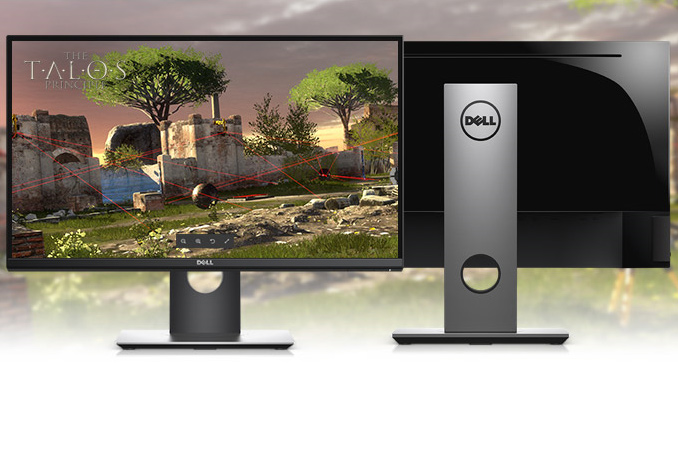
IDC PC Monitor Trends: IPS and 21.5-Inch Most Popular, Curved Displays Get Traction

Sales of large displays and/or gaming displays have been increasing in the past few years, but recently monitor manufacturers have also rolled-out oversized displays and curved LCDs for their clientele. But while the market install base of such advanced displays is growing, the most popular monitors still measure 21.5 inches, according to analysts from IDC. Meanwhile, IPS LCD panels now dominate the market, leaving TN and VA behind.


IDC market researchers expect 122 million PC monitors to ship in 2019, down 1% from the previous year. In Q2, sales of PC displays totaled around 30 million units, driven by migration of commercial desktops to Windows 10 yet offset by manufacturers’ focus on premium gaming and curved LCDs and their emphasis shift away from volumes to focus on higher ASP growth.


Based on data from IDC, displays featuring a 21.5-inch diagonal are still the most popular, and analysts expect that populatity to stick until 2023, where it sees the 23.8-inch market becoming top. Whether this popularity stems from the screen size or the price of the display is another matter entirely. As larger displays are manufactured in larger quantities, in a commodity market, eventually pricing of the larger displays is reduced.


Nonetheless, sales of curved monitors (which mostly belong to the premium segment) grew 44.7% year-over-year in the second quarter. It is believed (by some other analysts) that half of all curved displays are designed for gamers, which means that these displays offer advanced features and might command a significant premium because of that market.


It is also noteworthy that IDC reports that IPS-based LCDs now account for about 50% of the market, trailed by TN and VA panels, which inidicates demand for higher-quality displays is growing. The one market that TN panels still held was for fast refresh rates, but so-called ‘Fast IPS’ panels have entered the market which have refresh rates of up to 240 Hz while offering great viewing angles and saturated colors, so it remains to be seen how the panel market develops in the coming years.


As far as monitor manufacturers are concerned, Dell retained its No. 1 position in Q2 with a 21.4% market share followed by HP with a 15.2% share. TPV, the only Top 5 display maker that managed to significantly boost its shipments in the second quarter, commanded 14.4% of the market trailed by Lenovo with a 10% share as well as LG with a 8.2% share.


Top 5 PC Monitor Makers

Q2 2019, IDC
  Q2 2019 Q2 2018 Q2 2018->

Q2 2019
Sales Share Sales Share Growth
Dell 6.4 million 21.4% 6.4 million 20.7% 1.1%
HP 4.6 million 15.2% 4.7 million 15.2% -1.9%
TPV 4.3 million 14.4% 4.0 million 13.0% 8.9%
Lenovo 3.0 million 10.0% 3.2 million 10.4% -5.8%
LG 2.5 million 8.2% 2.5 million 8.3% -3.3%
Others 9.2 million 30.7% 10.0 million 32.4% -7.3%
Total 30.1 million 100% 30.7 million 100.0% -2.2%

This information is derived from recent IDC press releases. IDC offers the full report.


Related Reading


Source: IDC


Source: AnandTech – IDC PC Monitor Trends: IPS and 21.5-Inch Most Popular, Curved Displays Get Traction

Supermicro Expands European Manufacturing Operations

This week Supermicro has expanded operations in the Netherlands. The new facilities will enable the company to make servers and storage systems in Europe quicker, offer its customers more flexible configurations, improve services offered to clients, and expand its presence in Europe just ahead of the looming 5G era.


Supermicro’s expanded EMEA Operations Park in s-Hertogenbosch, the Netherlands, will manufacture servers and storage solutions (using numerous components produced at other factories) according to exact requirements of clients as well as test proof-of-concept systems on site and remotely at the Cloud Center of Excellence (CCoE) lab.


Among the things that Supermicro offers to its customers the company names SuperServer solutions, Petascale All-Flash NVMe storage arrays, BigTwin high-performance servers for critical applications, SuperBlade machines for datacenters and HPC, and GPU Systems for accelerated AI/ML and HPC applications. Because of expanded EMEA Operations Park in s-Hertogenbosch, Supermicro will now be able to produce more of the  systems locally and tailor them more precisely for the needs of local customers.


In the light of rising demand for servers and storage systems across the world, equipment manufacturers are expanding their manufacturing capacities to capitalize on the next round of technological evolution. Meanwhile, because of increasing labor costs in China as well as concerns about security, numerous companies tend to stay away from the ‘the world factory’ and prefer to expand production capacities elsewhere. As an added bonus of such a decision, server makers gain the ability to better serve their customers due to a closer collaboration with the latter.


Here is what Perry Hayes, president of Supermicro B.V. had to say:


“Expanding the Supermicro European facilities in the Netherlands enables us to further support our EMEA customers and expand our market presence. Customers will experience extended field service and manufacturing coupled with more opportunities for collaboration leveraging onsite research and design staff to address market requirements.”


Related Reading


Source: Supermicro


Source: AnandTech – Supermicro Expands European Manufacturing Operations

Intel Quietly Mentions 2.5 GbE Ethernet Controllers

One of the parts that was quietly mentioned in yesterday’s Cascade Lake X-Series processor launch was support for new Ethernet controllers. Specifically it mentioned Intel’s i225 Ethernet controller range, which are rated for 2.5 GbE networking speed. This is news to us – up until this point, Intel has been relatively quiet on its ‘multi-gigabit’ Ethernet strategy (2.5GbE and 5GbE) and other companies have taken the lead.


Source: AnandTech – Intel Quietly Mentions 2.5 GbE Ethernet Controllers

GIGABYTE Unveils Three New 'X299X' Motherboards For Cascade Lake-X

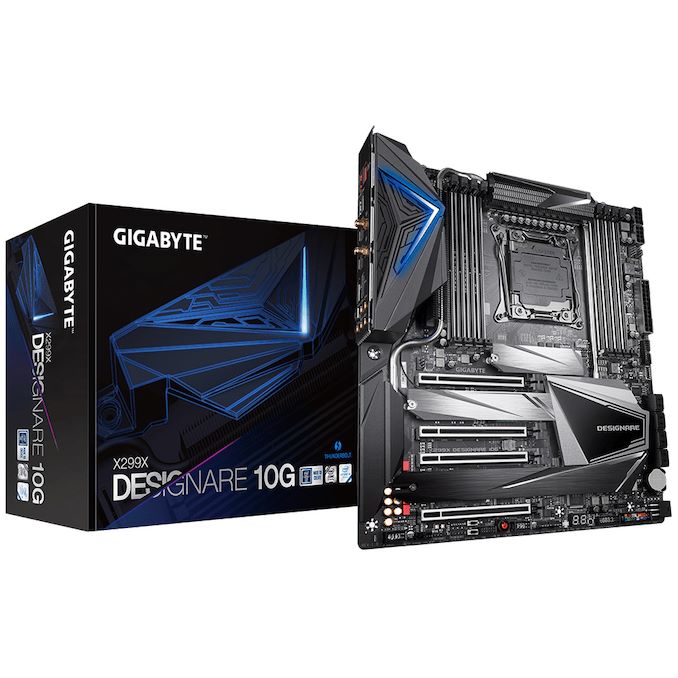
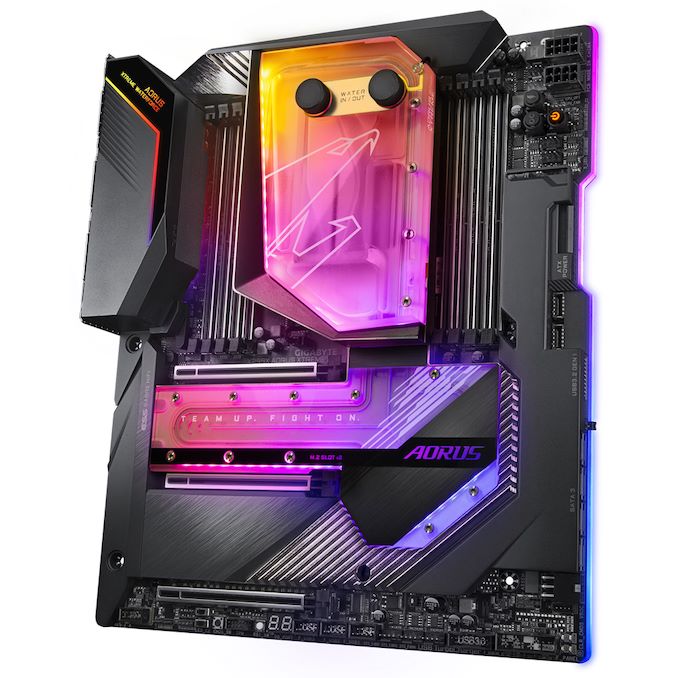
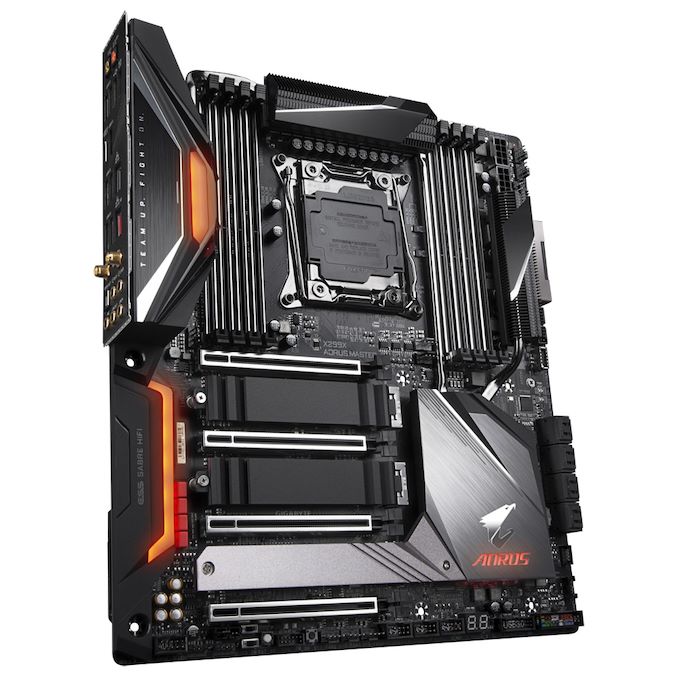
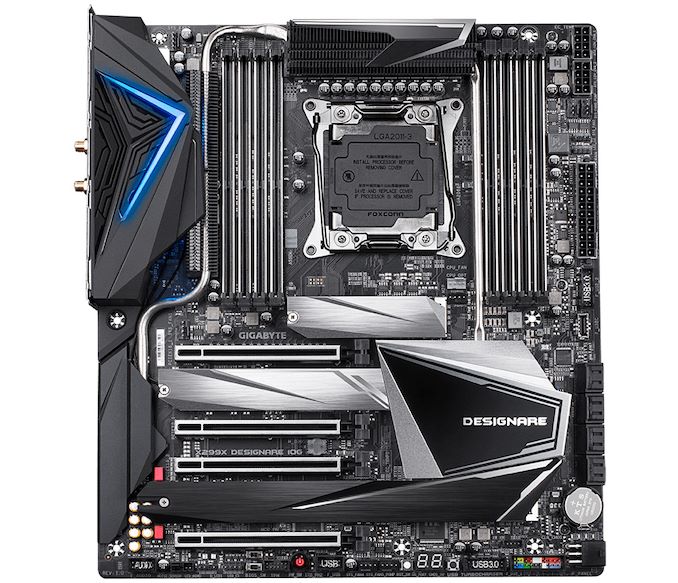
Back at Computex 2019, GIGABYTE had three new models of motherboards on display. These new motherboards at the time were almost mistaken for next-generation Intel boards, with GIGABYTE quickly rubbishing the rumours of a new chipset at the time, as they were marked with X299G. GIGABYTE has finally lifted the lid on the new models, with its launch and support for Intel’s Cascade Lake-X HEDT processors. These boards are built on the same X299 chipset, and are called the the GIGABYTE X299X Designare 10G, X299X Aorus Xtreme Waterforce, and the X299X Aorus Master.


Two X’s are Better Than One


The new GIGABYTE X299X models use the same previous LGA2066 chipset we’ve seen in the past, but with uprated componentry and controller sets. The extra X in X299X is to signify that these models are designed for the new Intel 10th generation HEDT Cascade Lake-X processors – this is not a new iteration of the X299 chipset.


Some of the new features of the motherboards include using Intel’s 802.11ax Wi-Fi 6 wireless interface, most likely the Intel AX200, but this has yet to be confirmed. The GIGABYTE X299X Designaire is using Intel 10 GbE networking which offers two 10GbE ports on the rear panel; this is likely to be using Intel’s X550-AT2 controller.


The GIGABYTE X299X Aorus Xtreme Waterforce with RGB virtually everywhere


One of the key features with these new models is that there are more PCIe lanes available from the Cascade Lake-X processors, as we move from 44 to 48. As a result of this, the GIGABYTE X299X Designaire 10G and slightly leaner X299X Aorus Master both have two full-length PCIe 3.0 slots which operate at x16, with the other two full-length slots running at both x8. By contrast, the beefier water block-clad and RGB-laden GIGABYTE X299X Aorus Xtreme Waterforce has an impressive three-full length PCIe 3.0 slots which all run at x16. This is one of the main benefits of using Intel’s Cascade Lake-X processors with the new X299X models.


The GIGABYTE X299X Aorus Master is expected to be the cheapest of the three


GIGABYTE’s new HEDT trio all feature 16-phase power deliveries with eight memory slots with support for quad-channel memory and allow users to install up to 256 GB of DDR4. With content creators in mind, GIGABYTE has stated that all three models will work well with NVIDIA’s Quadro graphics cards, and users looking to build a Cascade Lake-X gaming system can use multiple graphics card due to SLI and CrossFire support. The top tier X299X Designaire 10G and X299X Aorus Xtreme Waterforce models include dual Thunderbolt 3 Type-C ports on the rear panel and solid native support for PCIe 3.0 x4 M.2 slots with support for Intel’s VROC RAID technology.


The GIGABYTE X299X Designaire 10G with dual Thunderbolt 3 and dual 10 G Ethernet


While the new X299X models are all suited to content creators and enthusiasts, the X299X Designaire is the more professional of the three with its dual 10G networking and dual Thunderbolt 3 connectivity. The X299X Aorus Xtreme Waterforce is primarily designed for enthusiasts and overclockers looking to create a solid and monolithic water-cooled system with little to no restrictions on PCIe and NVMe storage when used with Cascade Lake-X processors. All three models feature Realtek ALC1220-VB HD audio codecs with ESS 9218 Sabre DAC’s for improved and good quality onboard audio.


Pricing and availability are currently unknown, but with Intel’s top Cascade Lake-X processor, the Core i9-10980XE expected to launch at under $1000, the high-core consumer market space looks set to be an interesting one for the remainder of 2019.


Related Reading


Source: AnandTech – GIGABYTE Unveils Three New ‘X299X’ Motherboards For Cascade Lake-X

HyperX Pulsefire Dart Wireless Gaming Mouse with Qi Charging Launched

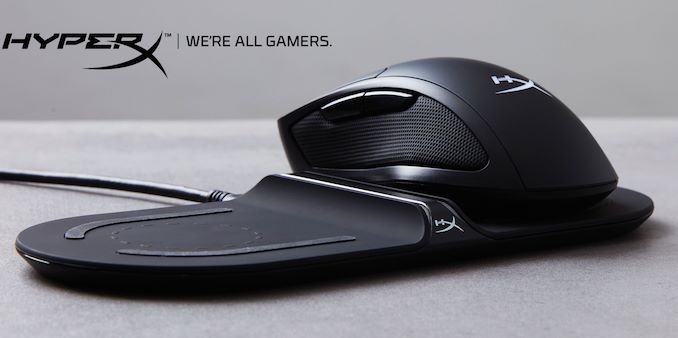
Kingston has introduced its new HyperX-branded Pulsfire Dart gaming mouse that features Qi charging as well as a 16,000 DPI resolution. In addition, the company also announced its ChargePlay Base pad for the mouse and all the other Qi-enabled devices such as headsets and smartphones.


The HyperX Pulsefire Dart (HX-MC006B) wireless gaming mouse uses the Pixart 3389 sensor with its native DPI of up to 16,000 DPI as well as Omron switches. The manufacturer says that the mouse features a 450 IPS (inches-per-second) sensor as well as a 1000 Hz polling rate.The device has an ergonomic design with padded leatherette side-grips as well as RGB LEDs that can be controlled using the HyperX Ngenunity software that also allows to monitor battery life. The mouse connects to its host PC using a 2.4 GHz wireless adapter.


The Pulsefire Dart wireless mouse can be charged wirelessly using the HyperX ChargePlay Base (HX-CPBS-A) rated 10 Watts that can also be used to charge other Qi-compatible devices, such as smartphones. Alternatively, the device can be charged using an included cable. Kingston says that its HyperX Pulsefire Dart mouse can work for 50 – 90 hours on one charge depending whether its RGB LEDs are on or off.


Kingston’s HyperX Pulsefire Dart mouse is now available from various retailers for $99.99, whereas the 10W ChargePlay Base pad is $59.99.


Related Reading


Source: Kingston/HyperX


Source: AnandTech – HyperX Pulsefire Dart Wireless Gaming Mouse with Qi Charging Launched

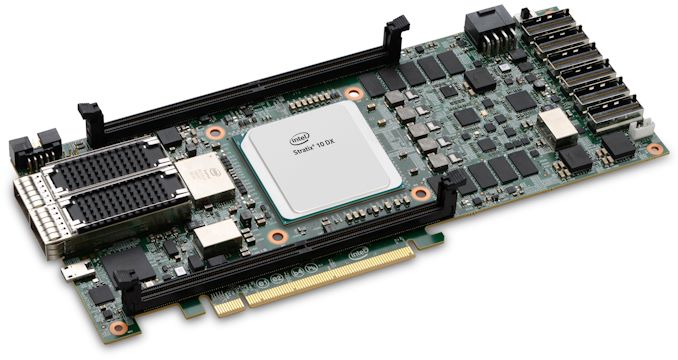
Intel Ships Stratix 10 DX FPGAs: Supports PCIe 4.0, UPI, and Optane DCPMM

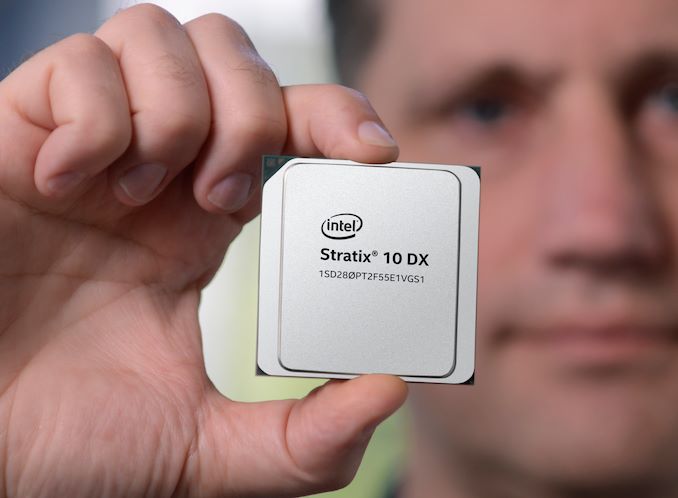
Last week Intel announced it has started shipments of its Stratix 10 DX FPGA to early adopters. The DC models are designed for next-generation cache-coherent accelerators for custom servers. Unique to the Stratix family, the Stratix 10 DX field-programmable arrays support Intel’s Ultra Path Interconnect (Intel UPI) for direct coherent connection with Intel’s future Xeon Scalable processors. This is also in line with support for PCIe Gen 4, HBM2 memory, Intel Optane memory, and 100 GbE.


Intel’s Stratix 10 DX FPGAs feature four Arm Cortex-A53 cores as well as up to 2,753,000 logic elements, 933,7120 adaptive logic modules, and 3,732,480 ALM registers. The FPGA can connect to upcoming Intel’s Xeon Scalable processors using a UPI interface at a peak speed of 28 GB/s and with a rated 37% lower latency. Intel states that for its partners that want aggressive communications, UPI connectivity will act as a launch pad for future FPGA connectivity options, such as PCIe 5.0 and CXL. 


Depending on the application that a Stratix 10 DX is used for, the FPGA can use up to 4 TB of Intel Optane DC persistent memory DIMMs (using up to eight DIMMs), or up to 8 GB of HBM2 memory, or a mix. Each Stratix 10 DX family member can support a number of transciever and memory tiles which can be mixed and matched – ultimately these FPGA users design their own PCBs, making it possible, rather than just off-the-shelf cards. In addition, the chip has a 100 GbE interface and can be used for SmartNICs.


One of the first customers to get Intel’s Stratix DX FPGA is VMware, which will use it to build on-premises and cloud solutions for its clients. That said, it is reasonable to think that VMware already has Intel’s next-generation Xeon Scalable processors and will be ready with solutions featuring these CPUs and the new FPGAs when the products launch commercially.


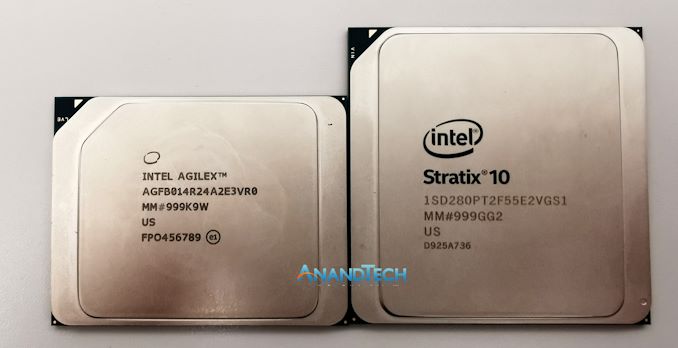
The Stratix 10 DX family represents the final element of the ‘Altera’ family of FPGAs since the acquisition by Intel. After Stratix comes Agilex, built on Intel’s 10nm, which is already shipping to select customers. Agilex was purporse built for Intel’s 10nm process, and thus the integration of Altera into Intel now seems complete.


Related Reading


Source: Intel


Source: AnandTech – Intel Ships Stratix 10 DX FPGAs: Supports PCIe 4.0, UPI, and Optane DCPMM

Team Group Unveils MP33 SSDs: Entry-Level PCIe Drives

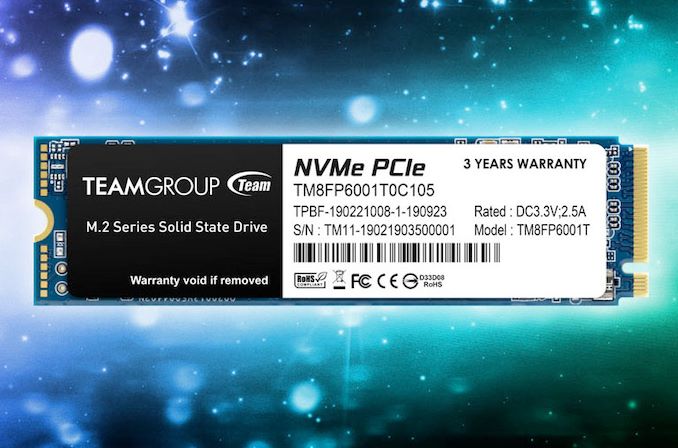
Team Group has introduced its new family of NVMe SSDs aimed at the budget PC market. The new MP33 drives use controllers from Silicon Motion and Phison and will be available in 128 GB, 256 GB, 512 GB, and 1 TB configuration.


Team Group’s MP33 SSDs are based on Silicon Motion’s SM2263XT or Phison PS5013-E13T controller as well as 3D TLC NAND memory from Intel or Toshiba. Using different controllers and memory from different suppliers within one family of drives enables the manufacturer to offer the most competitive prices for all configurations, however the actual performance is likely to differ, making this a difficult product to qualify as users will never know which configuration they are buying.


The MP33 drives from Team Group come in the M.2-2280 form-factor and feature a PCIe 3.0 x4 interface. When it comes to performance, the SSDs feature up to 1800 MB/s sequential read speed, up to 1500 MB/s sequential write speed, up to 220K random read IOPS, as well as up to 200K random write IOPS.


Team Group MP33 SSD Specifications
Capacity 128 GB 256 GB 512 GB 1 TB
Model Number TM8FP6128G0C101 TM8FP6256G0C101 TM8FP6512G0C101 TM8FP6001T0C101
Controller Silicon Motion SM2263XT

Phison PS5013-E13T
NAND Flash 3D TLC NAND from Intel or Toshiba
Form-Factor, Interface M.2-2280, PCIe 3.0 x4, NVMe 1.3
Sequential Read 1500 MB/s 1600 MB/s 1700 MB/s 1800 MB/s
Sequential Write 500 MB/s 1000 MB/s 1400 MB/s 1500 MB/s
Random Read IOPS 90K 160K 220K 220K
Random Write IOPS 100K 200K 200K 200K
Pseudo-SLC Caching Supported
DRAM Buffer No
TCG Opal Encryption ?
Power Management ?
Warranty ? years
MTBF ?
TBW 100 TB 200 TB 400 TB 600 TB
Additional Information Link
MSRP ? ? ? ?

Since the MP33 SSDs do not feature any heat spreader, they can be installed inside desktops and laptops. Team Group’s MP33 SSDs will be available in the near future from the company’s retail partners. Pricing will depend on exact configuration, but we expect the drives to be priced very competitively.


Related Reading


Source: Team Group


Source: AnandTech – Team Group Unveils MP33 SSDs: Entry-Level PCIe Drives

HP’s 2019 Spectre 13 X360 Launched: Ice Lake, OLED, 22 Hours

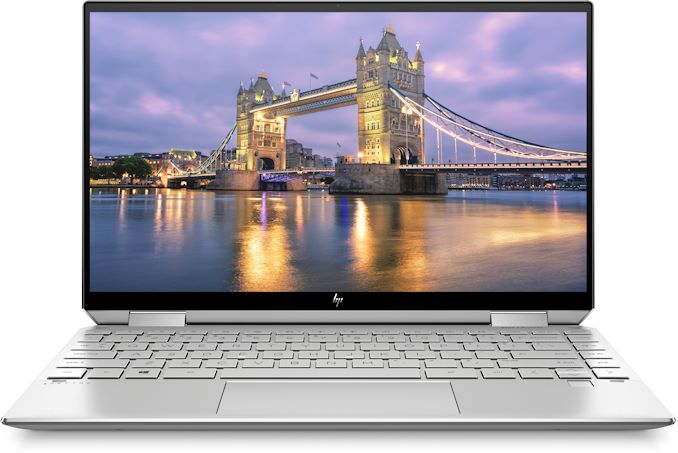
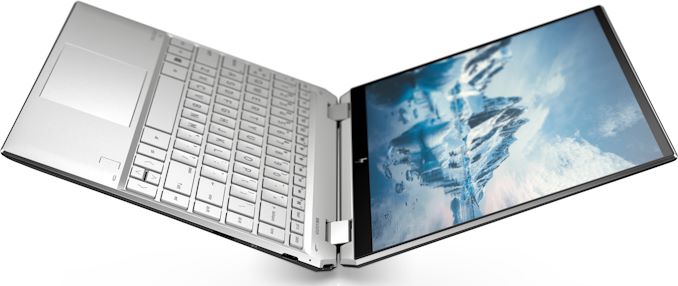
HP has introduced a new version of its 13-inch Spectre x360 convertible laptop. The Project Athena-class hybrid notebook is smaller than its predecessor yet features higher performance, improved responsiveness, an optional OLED monitor, improved security, and a battery life of up to 22 hours.


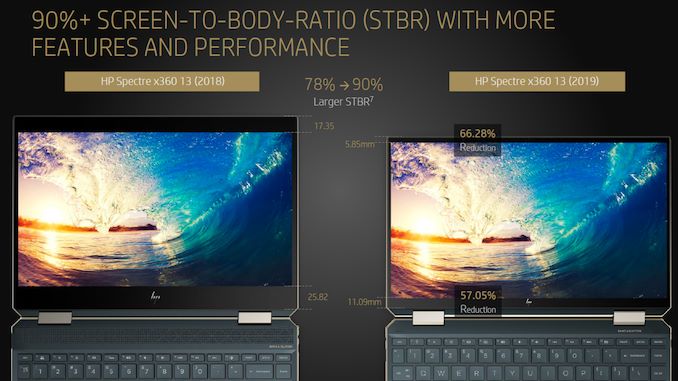
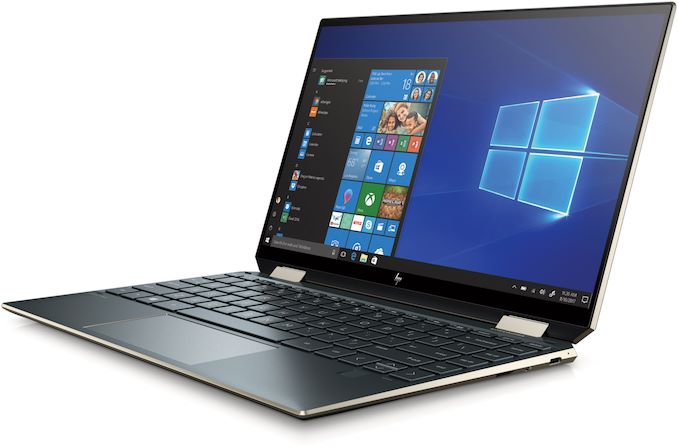
The 2019 HP Spectre 13 x360 comes in an all-new CNC-machined aluminum chassis with Natural Silver, Poseidon Blue or Nightfall Black finish with ultra-thin display bezels that enabled HP to make the convertible laptop smaller while preserving a 13.3-inch display size. The latest Spectre 13 x360 convertible is 17 mm (0.67 inches) thick and weighs 1.30 kilograms (2.88 lbs), which means that it is 2.5 mm thicker than is predecessor, but has the same weight. Meanwhile, design of the laptop is generally similar to 2018 model as it features diamond-shape edges as well as an angled USB Type-C connector located in the faceted edge on the right.


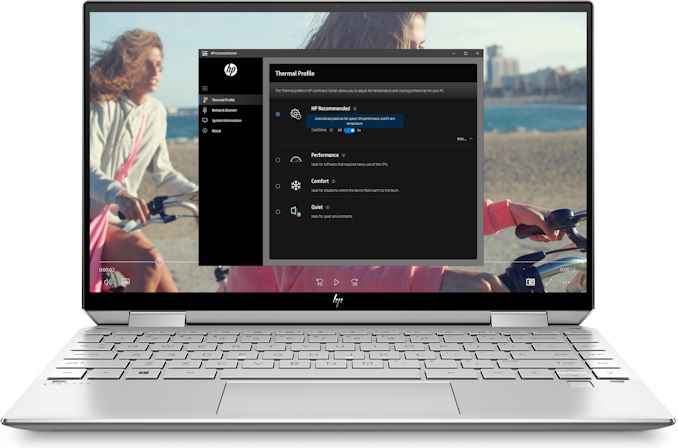
Besides aesthetics, there are other reasons why HP had to redesign its 2019 HP Spectre 13 x360. The new hybrid notebook is based on Intel’s 10th Gen Core Ice Lake processor with up to four cores as well as Intel Iris Plus graphics. The new CPU uses a smaller motherboard, but benefits greatly from a good cooling system, so HP had to enhance its thermal design too. In particular, the new cooler has two fans, three heat pipes, larger air inlets and outlets, as well as graphite insulation. Furthermore, HP enables customers to use the PC in Performance, Comfort, and Quiet modes so that to balance performance, fan noise, and temperature according to needs at every given time. It is not stated if this means that HP has increased the power mode of the CPU, which we see on some other high performance Ice Lake designs.


Depending on exact SKU, the CPU inside the HP Spectre 13 x360 is accompanied by 8 or 16 GB of LPDDR4X memory onboard as well as a 512 GB or 1 TB Intel SSD with 32 GB of Intel Optane Memory caching drive. Since we are talking about a high-end machine, its connectivity are top-notch as well: the machine has Intel’s Wi-Fi 6 AX201 + Bluetooth 5 adapter as well as an optional 4G/LTE Gigabit modem that can both use the laptop’s 4×4 antennas simultaneously; two Thunderbolt 3 ports, a ISB 3.1 Gen 1 Type-A connector, two display outputs (HDMI 2.0, DisplayPort 1.4), a microSD card reader, and a 3.5-mm headset port. On the multimedia side of things the computer has a Windows Hello-enabled webcam, stereo speakers co-designed with Bang & Olufsen, and a microphone array. To ensure maximum security and privacy, the notebook not only has a webcam kill switch, but a dedicated microphone mute button.


Traditionally, HP plans to offer multiple 13.3-inch touch-enabled display options with its new Spectre 13 x360. The top-of-the-range models will come with a 4K Ultra-HD OLED panel that covers 100% of the DCI-P3 color gamut. Cheaper SKUs will use a Full-HD IPS panel and a power consumption of 1 W, which will allow HP to hit up to a 22 hour battery runtime. In addition, there will be version of the hybrid laptop with HP’s SureView privacy screen technology as well as an anti-reflection glass cover.


Talking about battery life, it should be noted that all 2019 Spectre 13 x360 machines will come with a 60 Wh Li-ion polymer battery and a 65 W power brick. Therefore, their battery life will depend mostly on internal and display configurations rather than on the battery capacity.


General Specifications of the HP Spectre 13 x360 (2019)
  General specifications, actual products will offer different configs
LCD Diagonal 13.3″
Resolution | Brightness | Features 3840×2160 OLED

1920×1080

1920×1080 with SureView

Optional anti-reflection glass
Color Gamut 100% DCI-P3 (in case of OLED)
Touch Support Yes
Protective Glass Corning Gorilla Glass NBT
CPU Up to Intel Core i7-1065G7
Graphics Intel Iris Plus Graphics
RAM 8 GB or 16 GB LPDDR4-3200 (onboard)
Storage 256GB, 512 GB or 1 TB NVMe SSD

Optional Intel Optane Memory 32 GB caching SSD
Wireless: Wi-Fi, Bluetooth, LTE, NFC, and GPS options Intel Wi-Fi 6 AX201 + Bluetooth 5


Gigabit 4G/LTE modem on select SKUs

USB Type-A 1 × USB 3.1 Gen 1
Type-C 2 × TB3/USB 3.1 Gen 2
Thunderbolt 2 × TB 3 (for data, DP displays, power)
Card Reader microSD
Cameras Front HP TrueVision HD IR Webcam with integrated dual array digital microphones, and an electrical kill switch
Fingerprint Sensor Yes
Other I/O Microphone, two stereo speakers, audio jack
Other Sensors Accelerometer, gyroscope, magnetometer, Hall effect sensor, ambient light sensor
Battery 60 Wh
Dimensions Width 30.68 cm | 12.08 inches
  Depth 19.45 cm | 7.66 inches
  Thickness 1.7 cm | 0.67 inches
Weight 1.30 kilograms | 2.88 pounds
Launch Price Starting at $1,099

HP’s latest Spectre 13 x360 convertible notebooks will be available this month starting at $1,099.99 for the cheapest model with a Full-HD LCD. Advanced SKUs with an OLED monitor will cost starting from $1,499.99.


Related Reading


Source: HP


Source: AnandTech – HP’s 2019 Spectre 13 X360 Launched: Ice Lake, OLED, 22 Hours

Samsung’s Micro LED Wall TVs Now Available: Up to 8K, Up to 292-Inches

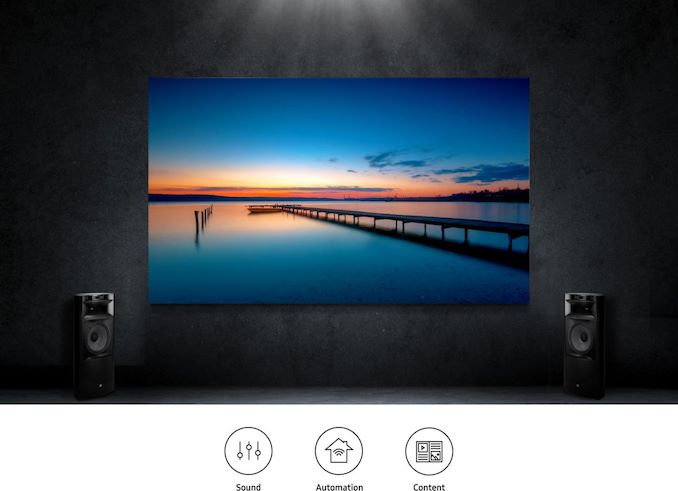
Samsung has started global sales of its Micro LED-based ‘The Wall’ display systems. The Wall televisions will be available in multiple configurations, but customized according to individual orders. The most basic Wall will offer a Full-HD resolution as well as a 73-inch size, wheareas the most advanced model will feature an 8K resolution and a 292-inch size.


Samsung’s The Wall televisions (IW008R) rely on the company’s bezel-less 806.4 × 453.6-mm Micro LED cabinets with a 960×540 resolution as well as 0.84-mm² individually-controlled LEDs. The building blocks feature 250 – 2000 nits brightness (regular/peak), around 10,000:1 contrast ratio, a 16-bit color depth, up to a 100/120 Hz refresh rate, as well as 155°/135° horizontal/vertical viewing angles. The modules also feature Samsung’s Black Seal and Ultra Chroma technologies to further improve contrasts and color saturation.


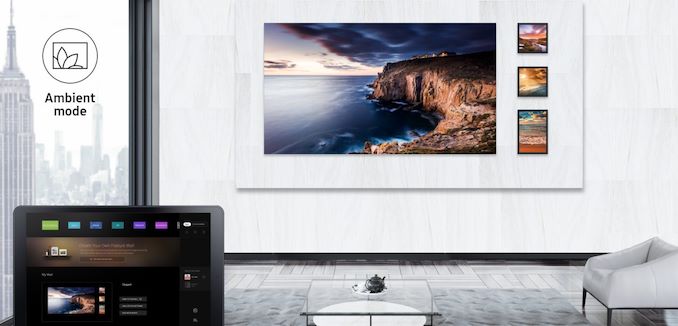
The Wall TVs come with a multimedia box based on Samsung’s Quantum Processor Flex SoC that supports a 20-bit internal processing, AI upscaling, video decoding, various HDR modes (HDR10+, LED HDR), and can run a variety of applications (Bixby, Netflix, YouTube, SmartThings, etc.).


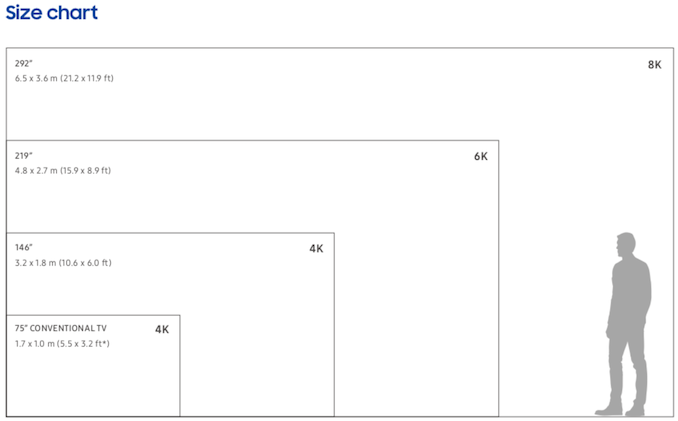
As in case of competing Micro LED-based TVs, resolution of Samsung’s Wall televisions depends on their size. The Full-HD version uses only four cabinets and measures 73 inches in diagonal. By contrast, the 4K Full-HD model relies on 16 modules and therefore measures 146 inches. 6K and 8K Wall TVs feature 219-inch and 292-inch diagonals, respectively. Samsung can build non-standard bespoke Micro LED TVs as well for those who need them.


Samsung does not disclose pricing of its Wall televisions, but asks interested customers to contact it for an individual offering. That said, it is pretty obvious that pricing of Samsung’s Micro LED TVs will be well above MSRP of its ultra-premium QLED 4K or 8K televisions.


Related Reading:


Source: Samsung (via MicroLED-Info.com)


Source: AnandTech – Samsung’s Micro LED Wall TVs Now Available: Up to 8K, Up to 292-Inches

RGB Everything: A Graphics Card Holder from Cooler Master

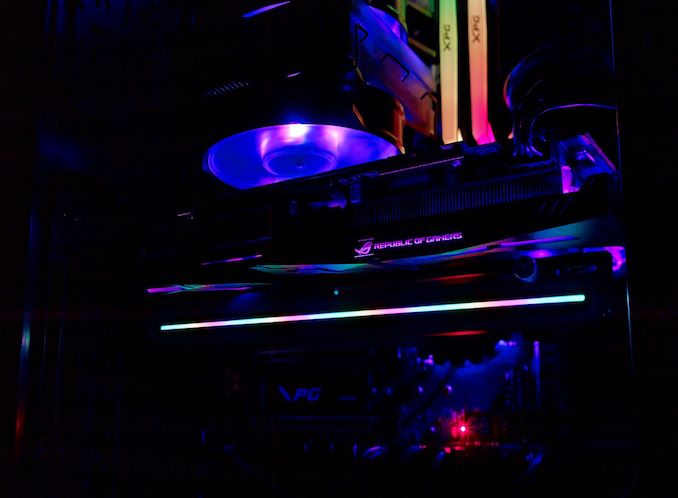
In my youth, I spent some stupid amount of money on cold cathode tubes for my PC, the equivalent of RGB LEDs in the early 2000s. I had my system lit up like a Christmas tree, if only because I was at university and wanted to show it off at our gaming parties with 40-60 other people. Fast forward almost two decades, and RGB has gone through a number of phases from being garish, to tasteful, to gaming, and to driving sales of PC components. Almost everything today has RGB LEDs, even storage drives and power supplies – the stuff that usually gets put into the back of the system. When I woke up this morning, I thought that everything had been RGB’ed. I was wrong.


Source: AnandTech – RGB Everything: A Graphics Card Holder from Cooler Master

WD My Passport 5TB DAS Review: Compact and Consistent Capacity Champ Gets SMR Right

Cost-conscious consumers with bulk storage requirements need to rely on hard drives. On the portable front, HDD vendors have been using 2.5″ drives in external bus-powered enclosures to serve the market. Seagate was the first vendor to put out a 5TB portable bus-powered drive, and Western Digital recently introduced a slew of 5TB models of their own. Similar to Seagate, Western Digital has also adopted SMR platters for their portable hard drives over the last couple of generations. Today, we take a look at features and characteristics of the WD 5TB My Passport Portable External Hard Drive.


Source: AnandTech – WD My Passport 5TB DAS Review: Compact and Consistent Capacity Champ Gets SMR Right

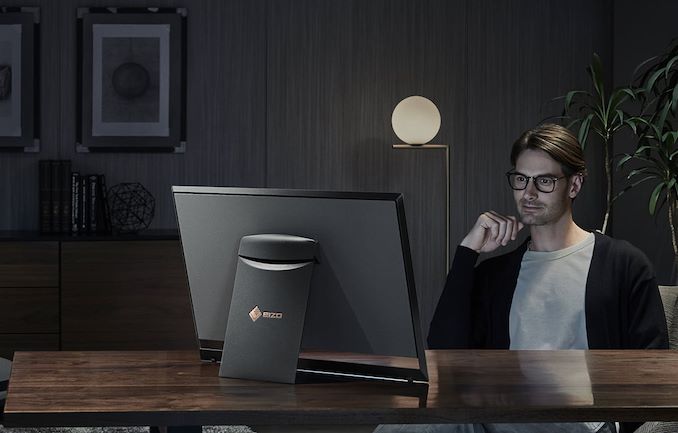
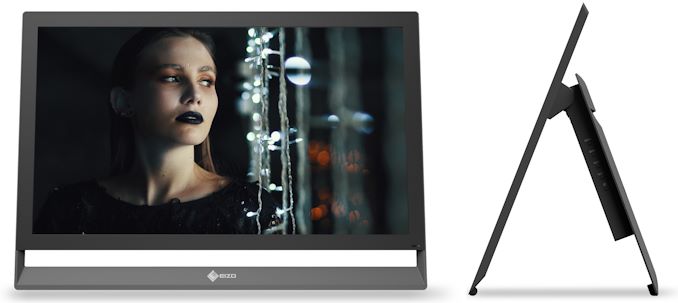
EIZO Reveals Limited Edition 21.6-Inch Foris Mova OLED Monitor

EIZO has introduced a unusual new 4K OLED monitor that is aimed at the personal entertainment. Dubbed the Foris Nova, this new display is a compact 21.6-inch 4K monitor that covers 80% of the BT.2020 color gamut and features a stylish design. Most curious of all, however, EIZO is releasing it as a limited edition product – only 500 of the OLED monitors will be made.


Based on an OLED panel made by JOLED, EIZO’s Foris Nova features a 3840×2160 resolution, 132 – 330 nits brightness (typical/peak), a contrast ratio of 1,000,000:1, and a black-white-black response time of 0.04 ms. The display can reproduce 1.07 billion colors, covers 80% of the BT.2020 color space and supports HDR10 and HLG HDR formats.


The Foris Nova connects to host PCs using two HDMI 2.0 inputs, it also has 1 W stereo speakers, one headphone output, and one line out.


EIZO is officially positioning its Foris Nova for entertainment, though its limited support for the BT.2020 color gamut may be helpful to production personnel in a pinch as well.


EIZO Foris Nova Specifications
  Foris Nova
Panel 21.6″ OLED
Native Resolution 3840 × 2160
Maximum Refresh Rate 60 Hz
Response Time 0.04 ms (black-white-black)
Brightness minimum: 0.0005 cd/m²

typical: 132 cd/m²

maximum: 330 cd/m²
Contrast 1,000,000:1
Viewing Angles 178°/178° horizontal/vertical
Pixel Pitch 0.1245 mm²
Pixel Density 204 ppi
Display Colors 1.07 billion
Color Gamut Support DCI-P3: ?

sRGB/Rec 709: ?

Adobe RGB: ?

SMPTE C: ?

Rec2020: 80%
Stand Tilt and height adjustable
Inputs 2 × HDMI (2.0a? 2.0b?)
PSU External
Launch Price & Date November 1st, $????

The manufacturer will start sales of its Foris Nova monitor starting November 1 in Japan. However with only 500 units slated to be made, this is clearly detined to become a rare monitor.


Related Reading:


Source: EIZO


Source: AnandTech – EIZO Reveals Limited Edition 21.6-Inch Foris Mova OLED Monitor

Microsoft Announces Surface Laptop 3 Family: Now Including 15-Inch Models & Custom AMD Ryzen APUs

Kicking off the holiday quarter for Microsoft, today the company held its annual Surface press event, where the company announced a slate of new laptops, tablets, & 2-in-1s for the PC market. While there are a few items to get through, probably the marquee announcement for AnandTech readers is the Surface Laptop 3 family. The latest iteration of Microsoft’s laptops aren’t changing too much in terms of overall design, but this year’s models include a new 15-inch model, as well as models that incorporate semi-custom AMD Ryzen APUs, marking the first time AMD has landed a deal for a Surface device.


Source: AnandTech – Microsoft Announces Surface Laptop 3 Family: Now Including 15-Inch Models & Custom AMD Ryzen APUs

Microsoft Announces Surface Duo – An Android Dual-Screen Device

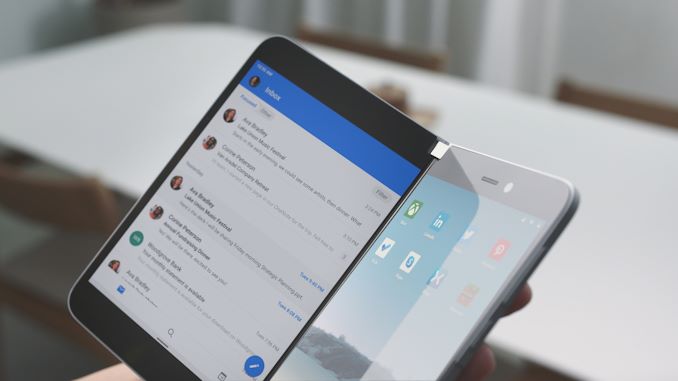
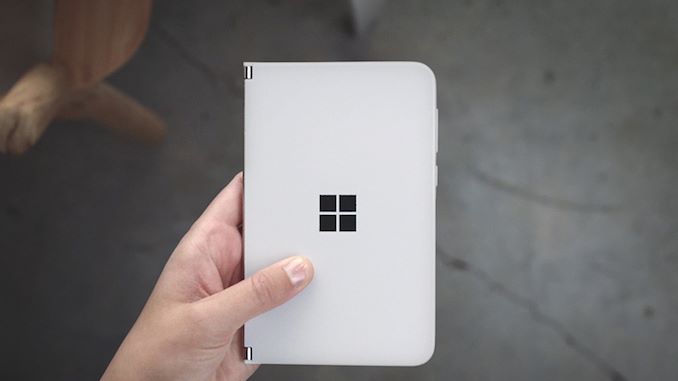
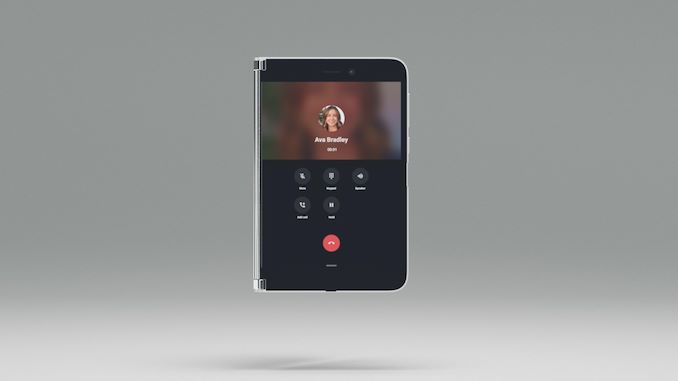
Today at Microsoft’s Surface event in New York, alongside new laptops and various other Surface devices, we saw the company announce a new kind of device; the new “Surface Duo”. The new device more or less loosely described as a phone, is a clamshell dual-screen phone with a full swivel hinge design.


The design of the phone at the moment look relatively simplistic, but we were certainly shown just prototype devices. The interesting design aspect was that the device lacked any kind of external features aside from the Windows logo – particularly missing from the device was any kind of rear camera.


On the “inside” – or rather more aptly, on the side with the screens, we did see the device have an earpiece speaker as well as a camera. It’s possible Microsoft where is envisaging you using this single camera in all scenarios and would be relatively practical given you can use the opposing outwards facing screen as the viewfinder.


The screens themselves has two 5.6” screens which when unfolded amount to a diagonal of 8.3”.


The device is running a customized version of Android as the OS.


Currently the prototype devices are said to be running Android 9 Pie with a Snapdragon 855 SoC – although these specifications are sure to change until the device’s actual launch.


Much like the Surface Neo, this has been pretty much just a teaser pre-announcement of the Duo as the devices aren’t scheduled to come out until the holiday season in 2020.


Source: AnandTech – Microsoft Announces Surface Duo – An Android Dual-Screen Device

Samsung Stops Production of Phones in China

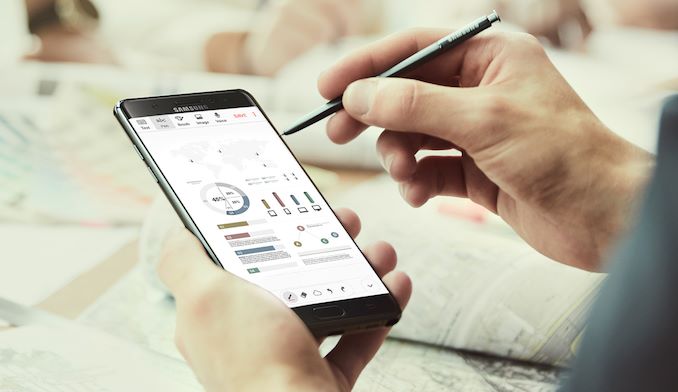
Samsung had ceased to make mobile phones in China, the company revealed on Wednesday. The company has been withdrawing from handset manufacturing in the country for a while now as its position in the Chinese market is not strong, whereas business conditions are better elsewhere.


Samsung used to run multiple phone manufacturing facilities in China. About a year ago, the company shut down its plant in Tianjin, then it closed its plant in Huizhou in mid-2019. Recently, the world’s No. 1 maker of smartphones ceased production of handsets in another factory in Huizhou. Equipment used at its facilities in China was relocated to plants in other countries, such as India and Vietnam.


The statement by Samsung reads as follows:


“As part of our ongoing efforts to enhance efficiency in our production facilities, Samsung Electronics has arrived at the difficult decision to cease operations of Samsung Electronics Huizhou.”


There are at least three major reasons why Samsung decided to stop making phones in China. First of all, its market share in the country  has recently dropped from 15% in mid-2013 to 1% as of today, as the company lost market share to companies like Huawei and Xiaomi (based on data from Counterpoint). Secondly, rising labor costs in China make the country less attractive for large corporations. Thirdly, the ongoing trade war between China and the US poses risks for Samsung as goods produced in China may be subject to tariffs in the United States.


Samsung is not the only company to move production from China to other countries because of rising labor costs as well as the trade war with the US. Companies like ASUS and Apple also ask their suppliers to produce components for their products in other contries because of concerns about tariffs.


Related Reading:


Sources: Reuters, Mobile World Live, Dow Jones Newswires


Source: AnandTech – Samsung Stops Production of Phones in China

GlobalFoundries Mulls IPO Plans for 2022

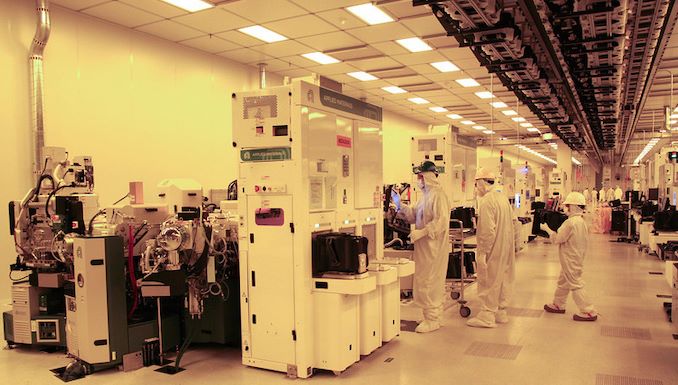
After a decade of being a privately-held contract maker of semiconductors, GlobalFoundries has revealed that it’s mulling going public in 2022. The move will help GF’s current owners to return some of their investments that, to date, total almost $21 billion. However if GlobalFoundries wants to go public there’s a long road ahead of them; for a successful IPO, GlobalFoundries will have to become a consistently sizably profitable company.


Founded in 2009 after AMD spun off its manufacturing division in 2008, GlobalFoundries is now the world’s third largest contract maker of chips behind TSMC and Samsung Foundry. For years, the company tried to compete for customers like AMD by offering leading-edge process technologies, before switching gears in 2018 and giving up on cutting-edge processes like 7nm in order to focus on specialized nodes.


Development of leading-edge manufacturing technologies is extremely expensive and GlobalFoundries has historically been losing money. By switching to specialized technologies, GF essentially stopped competing against TSMC and Samsung Foundry and could concentrate on making money rather than introducing a new leading-edge node every year or so. As part of its reorganization, GlobalFoudries had to sell some of its assets, including two fabs as well as Avera Semiconductor, a contract chip designer.


In a bid to return some of its money back and raise money for further development, Mubadala, the sole owner of GlobalFoundries, plans to sell a minority stake in the company sometimes in 2022, chief executive Tom Caulfield told The Wall Street Journal. The CEO did not announce how much money GlobalFoundries wants to get for a minority stake, but stresses that IPO will be a turning point for the company.


“It is about us coming of age and being a real vibrant business, and the way of proving that is as a publicly traded company,”


IPO plans may indicate that CEO of GlobalFoundries is confident of the company’s current strategy and hopes that the chipmaker will be profitable two years down the road.


Related Reading:


Source: The Wall Street Journal


Source: AnandTech – GlobalFoundries Mulls IPO Plans for 2022

Goke Unveils Toshiba XL-Flash-Based NVMe SSDs: Ultra-Low Latency

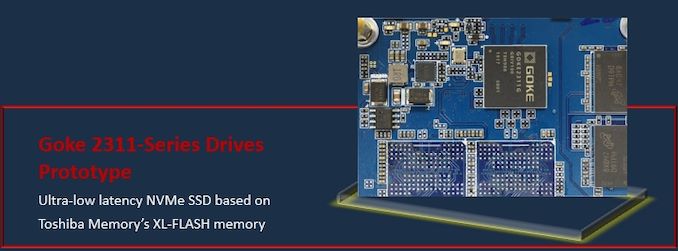
Goke Microelectronics has introduced its new NVMe SSDs based on Toshiba’s XL-Flash NAND memory. The new drives are aimed at applications that require an ultra-low latency as well as high reliability and availability.


Based on Goke’s proprietary 2311 controller and Toshiba’s XL-Flash NAND SLC flash memory, the company’s 2311-series SSDs feature capacities of up to 4 TB and promise to offer a 4K random read latency of less than 15 μs (an under 20μs was hit by prototype drives and the manufacturer plans to improve that) as well as a maximum sustained read/write bandwidth of up to 3/1 GB/s. When it comes to security, the controller supports SM2/3/4 and SHA-256/AES-256.


Goke’s 2311-series SSDs are the industry’s second family of drives (announced so far) featuring Toshiba’s XL-Flash 128 Gb XL (16 planes, 4 KB page sizes). This type of memory promises to significantly reduce read latency when compared to TLC 3D NAND based SSDs: from  20μs all the way to 15 μs in case of Gecko’s upcoming drives (or to 5 μs in an ideal case, based on Toshiba’s estimates).


Goke plans to start production of its 2311-series SSDs powered by Toshiba’s XL-Flash NAND memory sometimes in 2020. As the drives are aimed at select applications only, the maker does not disclose their pricing as it will depend on configuration and volumes.


Related Reading:


Source: Goke Microelectronics


Source: AnandTech – Goke Unveils Toshiba XL-Flash-Based NVMe SSDs: Ultra-Low Latency

Intel's Cascade Lake-X CPU for High-End Desktops: 18 cores for Under $1000

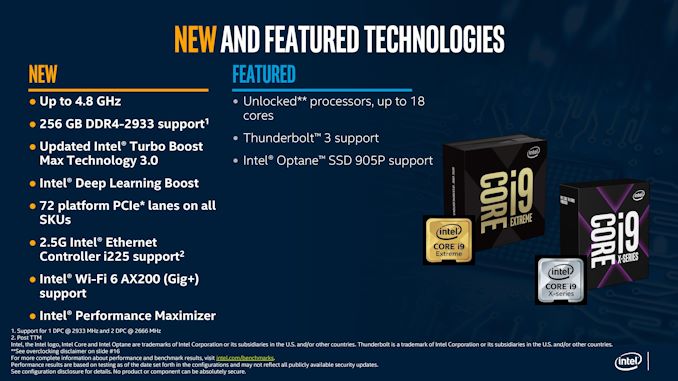
With someone in the press having broken their embargo earlier today, Intel is lifting the lid earlier than planned on their upcoming Cascade Lake-X family of processors for the high-end desktop (HEDT) market. Similar to the way Intel’s Cascade Lake based Xeon Scalable processors are a further revision of their Skylake Xeons, offering clock speed increases and security fixes in hardware, the new HEDT processors will grant higher frequencies, more memory capacity, and better protection against side-channel attacks. The key numbers however are the big drop in Intel’s pricing: Intel will be releasing its 18-core part, the Core i9-10980XE, for under $1000.


Intel Cascade Lake-X
AnandTech Cores

Threads
Base All

Core
TB2 TB3 TDP Price

(1ku)
Core i9-10980XE 18C / 36T 3.0 3.8 4.6 4.8 165 W $979
Core i9-10940X 14C / 28T 3.3 4.1 4.6 4.8 165 W $784
Core i9-10920X 12C / 24T 3.5 4.3 4.6 4.8 165 W $689
Core i9-10900X 10C / 20T 3.7 4.3 4.5 4.7 165 W $590

This pricing is a significant shift in Intel’s strategy, and a number of fingers will be pointed at AMD as having made this happen. Next month AMD is set to launch its 16-core Ryzen 9 3950X at $749, which will offer 16 PCIe 4.0 lanes and support for 128 GB of DRAM. So Intel needed something similarly speedy, but with more PCIe lanes and more memory support that they could offer for just a bit more, leading to the 10980XE for $979. Ultimately, the on-shelf price is often just slightly higher than tray price, so don’t be surprised if retail prices land at around $1000. 


All the CPUs will support 256 GB of quad-channel memory, and have 48 PCIe 3.0 lanes. Memory speed support is listed as DDR4-2933 for 1 DIMM per channel, and DDR4-2666 for 2 DIMMs per channel. All these CPUs have a TDP of 165 W, up from 140 W in the previous generation, which Intel states will help the CPUs to turbo longer under Intel’s recommended settings (as we know, consumer motherboard manufacturers like to ignore these anyway). All these CPUs are supported in X299 motherboards.


There is no 16-core in this stack, with Intel’s official reasoning being that they assess the market with each generation and they don’t believe there’s a suitable price point for such a part when the 14C and 18C parts are so close. Most people will point the finger and say that no-16 core Intel part means no direct comparison with the Ryzen 9 3950X, which is something to think about.


Another point to note is that Intel has stopped this stack at the 10 core and no lower. This means that there will be no cross over between Intel’s consumer processor stack and the HEDT stack, with users needing to spend just a little bit more from the Core i9-9900K/KF to reach up to the Core i9-10900X. It will be interesting to see where Intel’s Core i9-9900KS fits in, although that still only has dual channel memory and 16 PCIe 3.0 lanes.


These CPUs will have the same security mitigations as the Cascade Lake Xeon processors, with updated hardware mitigations for a number of side channel attacks. We are waiting to hear from Intel if the firmware that supports these processors will also have additional fixes in for Zombieload by default.


One question about this launch is surrounding Intel’s 14nm capacity. Within the last week, there have been reports that despite Intel’s best efforts and promises to match demand, and that Q3 and upcoming for Q4 is going to be busier than expected. We reached out to Intel last week for clarification, and the company said that the bulk of its capacity is focusing on the high-end processors in the market: the Xeon Scalable, the Core i9, Core i7, and Core i5. It will be interesting to see if launching another family of products is going to put additional strain on Intel’s capacity and demand.


With AMD’s recent Zen 2 Ryzen 3000 series launch on 7nm earlier in the year, Threadripper 3 coming later this year, and Intel swinging another generation of 14++ into the high-end desktop market, Intel is going to have some tough times. Don’t get me wrong, this pricing update from Intel is a good thing for users, especially those looking at implementing things like DL Boost to their workflow, but this market is suddenly turning very aggressive, and it will be interesting to see if Intel can be agile enough to keep pace.


Intel’s Cascade Lake-X processors will be available in November. More details should be released nearer to launch.


Related Reading


Source: AnandTech – Intel’s Cascade Lake-X CPU for High-End Desktops: 18 cores for Under 00

SteelSeries Sensei Turns Ten: Sensei Mouse Relaunched For Its Tenth Anniversary

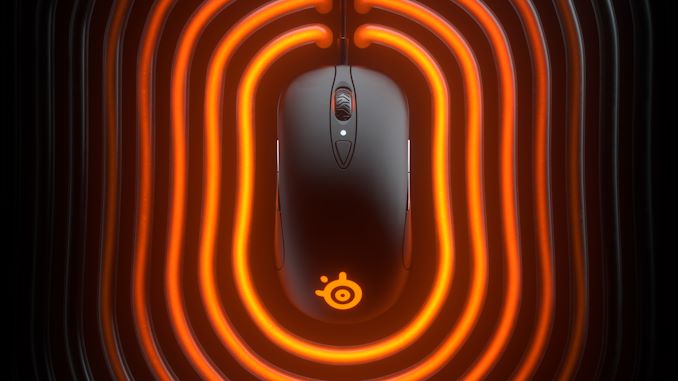
Today SteelSeries is bringing back one of their classic peripherals, outfitted with the latest tech. SteelSeries launched the Sensei Mouse back in 2009 and it quickly became one of their most popular mice, especially in e-sports, and the company has been fielding requests to re-release this model.  So for its tenth anniversary, SteelSeries is bringing back the Sensei but with new features and improvements to the original design.


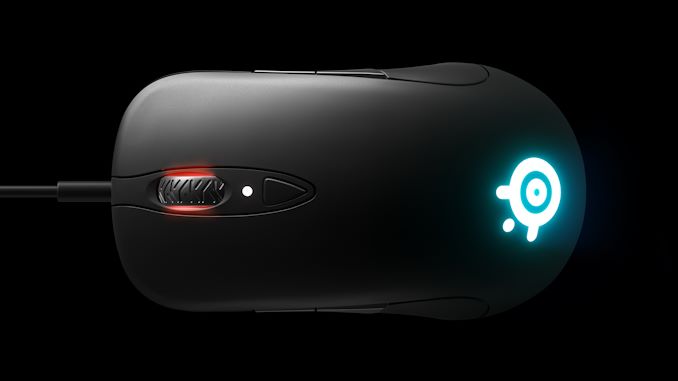
Left-handed gamers will appreciate that SteelSeries hasn’t changed the ambidextrous design, and the new mouse features the exact same dimensions as the original, which first launched as the SteelSeries Xai back in 2009, before being rebranded as the Sensei.


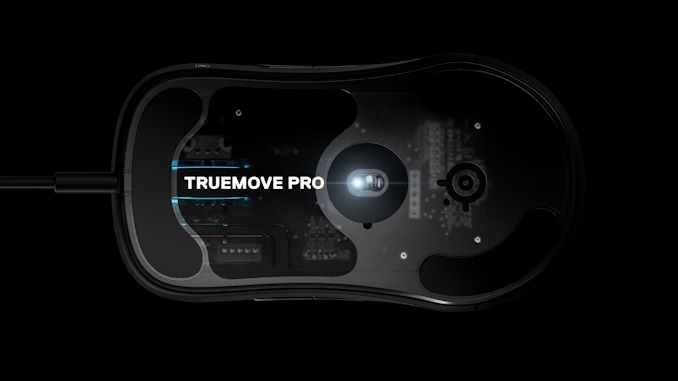
The new mouse builds on the original though, featuring an updated sensor dubbed the TrueMove Pro. This optical sensor is the latest design by SteelSeries and PixArt, and offers 18,000 Counts-Per-Inch (CPI), and can track at up to 450 inches-per-second. SteelSeries has also improved the new sensor’s ability to handle tilted mouse moves to avoid false tracking. SteelSeries claims this is the best performing sensor on any surface.


The company has chosen to stick with just a wired version of the Sensei Ten, in order to keep the weight in check, and the mouse comes in at just 92 grams. The mouse features eight buttons, and SteelSeries switches rated for 60 million clicks. There’s onboard memory on the mouse as well providing the ability to pre-store functions and have that saved right on the mouse, so it will be available on any PC it’s used on.


SteelSeries Sensei Ten
  Specs
Sensor TrueMove Pro Optical Sensor
Counts-Per-Inch 50-18,000 in 50 CPI Steps
Inches-Per-Second 450+
Acceleration 50G
Polling Rate 1000 Hz
Hardware Acceleration None
Shape Ambidextrous
Buttons 8
Illumination 2 Independent RGB Zones
Weight 92 g / 3.25 oz (without cable)
Dimensions (L x W x H) 126 x 63-68 x 21-39 mm

4.96 x 2.48-2.67 x 0.83 -1.54 inches
Cable 2 m / 6.75 foot
Compatibility Windows / Mac / Xbox / Linux
Price $69 USD

SteelSeries also took the opportunity to address the exterior, which features a different finish than the original’s metallic finish. The new mouse construction should be more durable as a result with a matte black finish. There’s also two independently controlled RGB zones, and the underside of the mouse is transparent plastic in a nod to classic technology such as the Gameboy Color.


Despite the advanced features, the Sensei Ten mouse is launching at a very affordable $69 USD, with global availability starting today.


Source: SteelSeries


Source: AnandTech – SteelSeries Sensei Turns Ten: Sensei Mouse Relaunched For Its Tenth Anniversary