Nova 5T: Huawei Can Still Make New Phones With Google Services (sort of)

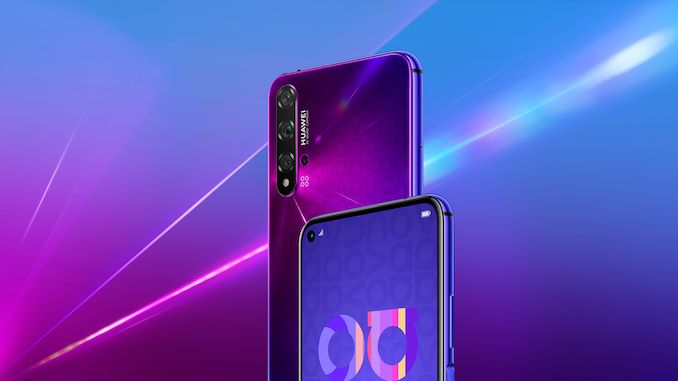
Today at a small event in Paris, Huawei announced its latest device for the more mass market: the Huawei Nova 5T. The Nova line from Huawei is part of its strategy to address the wider market with almost up-to-date components: it is priced well below the P series and Mate series flagships, but has the hardware inside from high-end devices launched earlier this year, all for a modest cost. This time around, the Nova gets a redesign, and despite US-China issues, this device has Google Media Services installed.


Source: AnandTech – Nova 5T: Huawei Can Still Make New Phones With Google Services (sort of)

PCIe 6.0 Dev Reaches v0.3; On-Track for a Full Specification In 2021

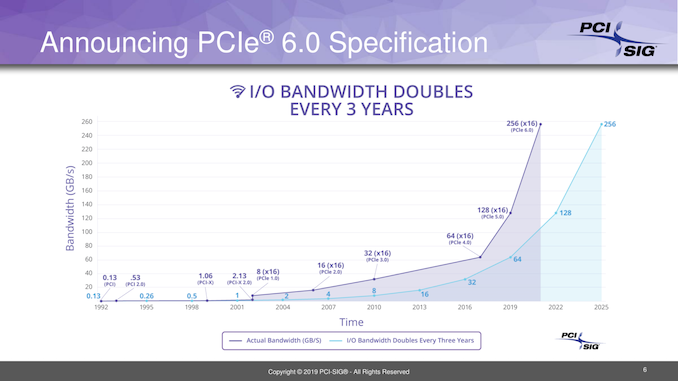
Having wrapped up their work on the PCI-Express 5.0 specification earlier this year, the PCI-SIG wasted no time in getting to work on the next version of the specification, PCIe 6.0. That specification, which is expected to be finished in 2021, will once again double PCIe’s bandwidth to 64 GigaTransfers/second – or roughly 128GB/sec (each direction) for a x16 slot – thanks to some high-end encoding technologies like PAM4.


At the time that PCIe 6.0 was first announced, the group was just beginning work on the specification. And now a few scant months later, the group has released a brief update, announcing that they have already completed version 0.3 of the new spec.


The announcement itself is light on technical details, as the design goals and major underlying technologies for PCIe 6.0 were announced at the very start of the project. However the organization is keen to ensure that PCIe development continues moving at a steady pace, to avoid repeating the long gap between 3.0 and 4.0.


And the group’s members will certainly be busy. Even with the 0.3 specification in hand, it’s going to be nearly another two years before the specification is done, reflecting on the fact that there’s a lot of work left to be done to solve the technical challenges in developing PCIe 6.0, and bringing new signaling standards into the specification while maintaining backwards compatibility.


Source: AnandTech – PCIe 6.0 Dev Reaches v0.3; On-Track for a Full Specification In 2021

AMD Refreshes Embedded GPU Lineup, Launches Polaris-Based Embedded Radeon E9560 & E9390

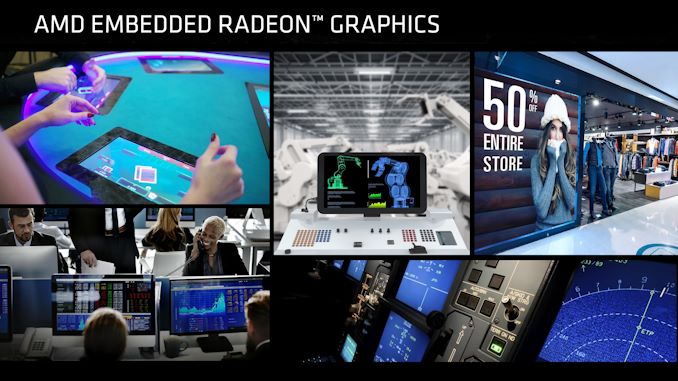
AMD’s GPU division has long had its hands in many businesses. While their consumer GPUs and semi-custom efforts tend to attract the most attention – and more recently, their GPU co-development deal with Samsung – it’s still not the entirety of AMD’s GPU efforts. The company also has an arm of the GPU business developing products for the embedded market, which aptly enough are sold as AMD’s Embedded Radeon products.
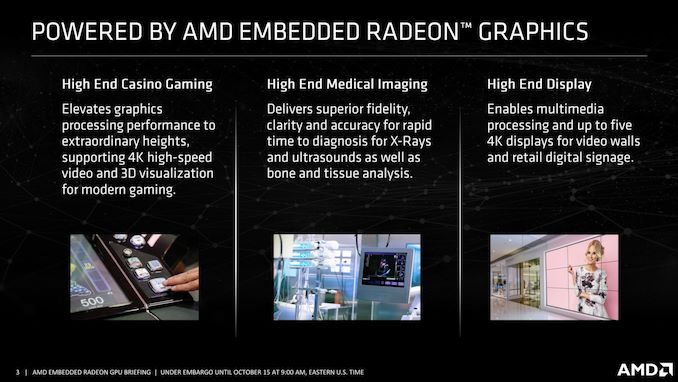


With extremely long product cycle times and niche use cases, we don’t regularly hear from the Embedded Radeon team. In fact, prior to today, the last time the company announced anything was three years ago with the E9000 series of products. But this week with the Global Gaming Expo taking place in Las Vegas (ed: so the gambling kind of gaming), AMD’s embedded group has popped up to announce a couple of new products.


AMD Embedded Radeon Discrete Video Cards
  Radeon E9550 Radeon E9390 Radeon E9550 Radeon E9260
CUs 36 28 36 14
GPU Boost Clock ~1.24GHz ~1.09GHz 1.12GHz 1.4GHz
Memory Type GDDR5 GDDR5 GDDR5 GDDR5
Memory Bus Width 256-bit 256-bit 256-bit 128-bit
VRAM 8GB 8GB 8GB 4GB
Displays 6

(4x DP 1.4)
6

(4x DP 1.4)
6 5
TDP Up To 130W Up To 75W Up To 95W Up To 50W
GPU Polaris 10 Polaris 10 Polaris 10 Polaris 11
Architecture GCN 4 GCN 4 GCN 4 GCN 4
Form Factor FHSS PCIe

9.5-inches
FHSS PCIe

6.8-inches
MXM MXM & PCIe

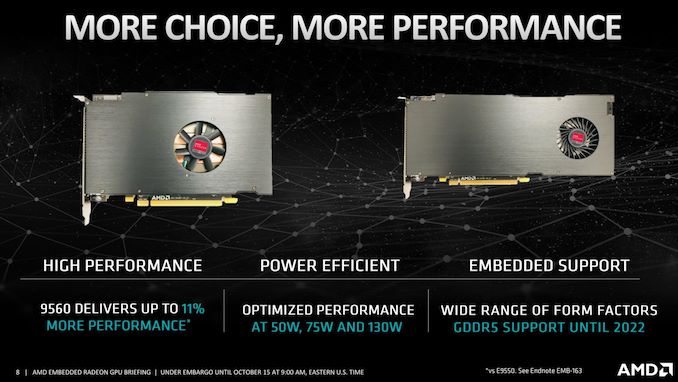
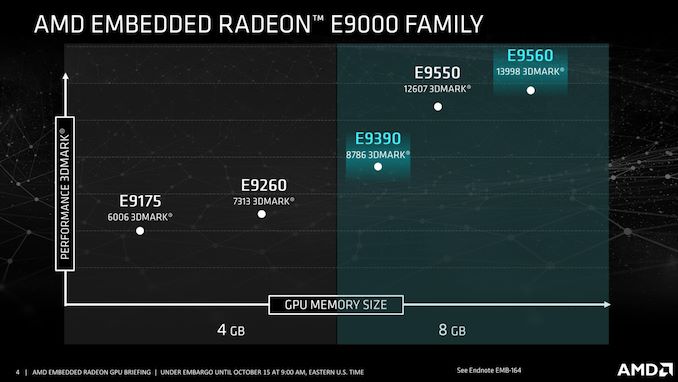
Being revealed today are the Embedded Radeon E9560, and its lower-power counterpart, the E9390. Both are based on AMD’s Polaris 10 GPU, and are designed to fit in to AMD’s existing E9000 family of embedded video cards, as part of what AMD calls its “ultra-high performance” band. The E9560 is a 36 CU part with a max TDP of 130 Watts, and will become AMD’s highest performing Embedded Radeon part yet. Meanwhile the E9390 is a 28 CU part with a lower TDP of 75W, allowing it to work in systems without an auxiliary PCIe power connector.


These parts are, to be honest, unremarkable from a technical perspective. And AMD’s own announcement is fairly low key to match. AMD already offers a Polaris 10-based part here, the E9550, so the newest parts aren’t bringing new features to the table. Nor are AMD’s gaming customers necessarily looking for something new.


Instead, the thrust of AMD’s announcement today is on the business side of matters. As casino gaming is a conservative, long cycle business where individual parts need to be qualified, AMD offers a limited number of products for a number of years to meet those needs. Specifically, AMD guarantees that it will offer its Embedded Radeon products for a minimum of 3 years. And, as it so happens, the last Embedded Radeon products were announced 3 years ago.


So, with the originally planned sales cycle for their E9000 parts coming to an end, AMD is refreshing their lineup of Polaris-based parts for another 3 years. The new parts being introduced today will let AMD fine-tune the upper-end of its product stack by offering both a higher performance part and a high-end part that can work off just a PCIe slot. Meanwhile the E9550, E9260, and E9175 are being renewed for another 6 years. With availability planned to go into late 2022, these parts will end up having a 6-year sales lifecycle once all is said and done.


And getting there will be a bit more of a challenge than in past cycles. The entire E9000 series is GDDR5-based, and AMD is entering in a new 3-year cycle right as the GDDR5 to GDDR6 transition is underway in earnest. As a result, the company is taking additional steps to ensure that it can meet its own availability guarantees – and that their gaming customers are aware of this. Many of those customers are already aware of the memory transition itself, so AMD is paying the issue special attention to satisfy customers who absolutely need these parts available for the entire 3-year window. Ultimately Embedded Radeon GPUs will make the transition as well – I’d consider it a foregone conclusion that AMD will have Navi-based parts at some point in the next year or so – but their embedded customers are also going to need Polaris parts for a while still.


Otherwise, the new parts are exactly what it says on the tin: more of the same, both in terms of features and planned support. Gaming operators will want to take note of the available form factors, however: AMD is only slated to offer the new E9000 series cards in full-height PCIe cards. Typically, AMD has offered Embedded Radeon parts in MXM and the occasional PCIe form factor, but this isn’t the case here. As a result, these newest parts become the first Polaris 10-based PCIe cards in the Embedded Radeon family, while AMD will continue to offering the MXM E9550 alongside all of this.


Source: AnandTech – AMD Refreshes Embedded GPU Lineup, Launches Polaris-Based Embedded Radeon E9560 & E9390

AMD B550A System Spotted: OEM Only Chipset, PCIe 3.0

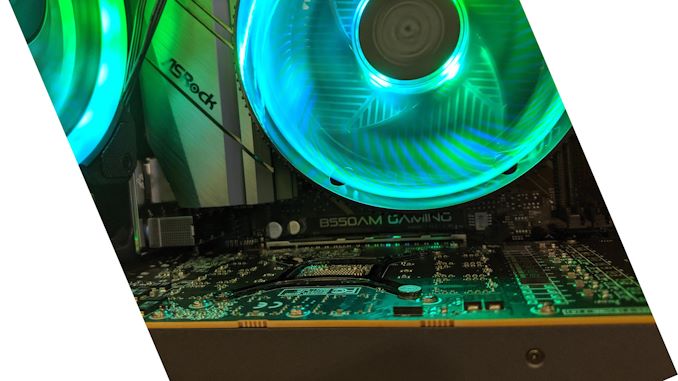
In every motherboard generation on AMD’s AM4 socket, we have seen a premium motherboard chipset and a more budget friendly chipset play out in the market. For the latest generation, focusing on Ryzen 3000 processors, we only have the X570 chipset in the market right now, and we’re expecting to see a B550 chipset and motherboards built on that chipset at somepoint in the future. B550 hasn’t been announced yet, but one avid Reddit user has spotted an OEM system built on the B550A chipset in stores. The existance of B550A has been verified by an AMD employee.


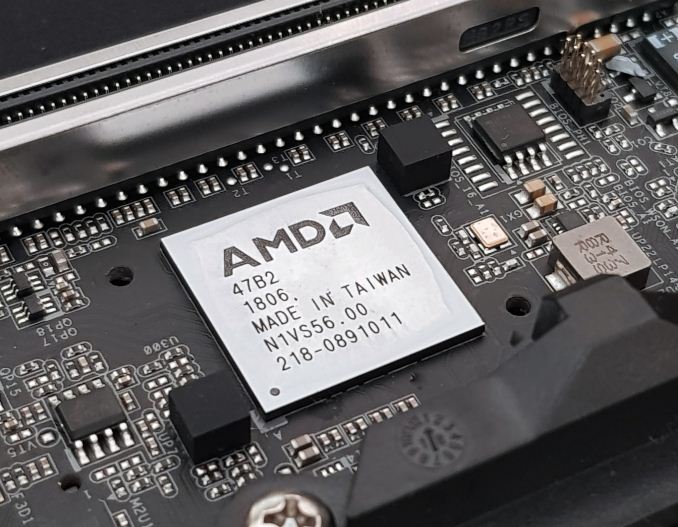
AMD’s B550A chipset belongs to the company’s Promontory-LP family and therefore supports 2+4 PCIe Gen 3 lanes, two USB 3.2 Gen 2 links, and six USB 2.0 connectors. The chipset is supposed to support overclocking, yet since it is only available to OEMs, it is up to them to support the feature. The key capabilty of the B550A is that is has been validated to support AMD’s Ryzen 3000 desktop processors.


One of the interesting things to note here is that AMD’s B550 chipset has not been announced yet. In fact, the existence of the B550A was confirmed by AMD employee in a Reddit comment. It was confirmed that B550A is an OEM version of one of AMD’s chipsets based on that Promontory-LP hardware. It is unknown at this point if B550 will act more like B550A, or rather like X570.


Image from Reddit


In the meantime, there a couple of words to say about OEMs and rebrands. One of the interesting things about big PC makers is that they demand product refreshes from their suppliers every year, which is why we see rebrandings of previously released products particularly in case of GPUs. To that end, the quiet introduction of AMD’s B550A chipset does not seem like something unusual as it seems to be OEM bound only. Meanwhile, the validation of a Promontory-class chipset for AMD’s Ryzen 3000 CPUs enables OEMs to offer reasonably-priced PCs powered by the latest processors.


Here is what AMD’s Robert Hallock had to say:


“It has a B550A motherboard. This is a version of the PCIe Gen 3 ‘Promontory-LP’ (e.g., X470, B450) chipset specifically for use in pre-built systems (e.g. OEM customers). […] OEMs are customers, too, and they may have different needs and wants than a DIYer. Not every product decision is considered through the lens of a channel product.”


Related Reading


Sources: Computerbase.de, Toms Hardware, Reddit


Source: AnandTech – AMD B550A System Spotted: OEM Only Chipset, PCIe 3.0

Made by Google 2019 Live Blog (Starts at 10am ET/14:00 UTC)

We’ve seen the latest and greatest smartphones from Apple, Samsung, LG, and Huawei. Now as we’re getting ready to close out the year, it’s the final major smartphone launch of the year: Google’s. Taking place in New York City this morning is the company’s annual Made by Google event, where the Android maker itself announces its slate of hardware for the next year to come.


The big news here is the Pixel 4 family of flagship smartphones, which besides the usual leaks, Google has also teased for months on end. Google has frequently also used their annual event to announce updated Chromebooks, as well as Google Assistant, Home/Hub, and other product updates. So if past years are anything to go by, this year’s event should offer plenty of developments from within Google’s hardware ecosystem.


Source: AnandTech – Made by Google 2019 Live Blog (Starts at 10am ET/14:00 UTC)

HP Unveils Chromebox Enterprise G2: A Chrome OS-Based Business Desktop

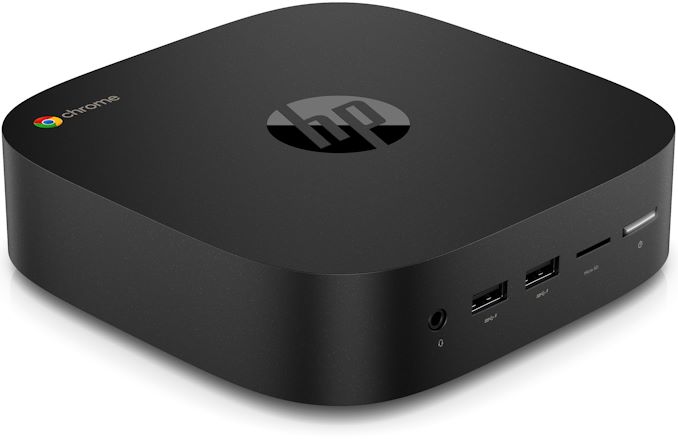
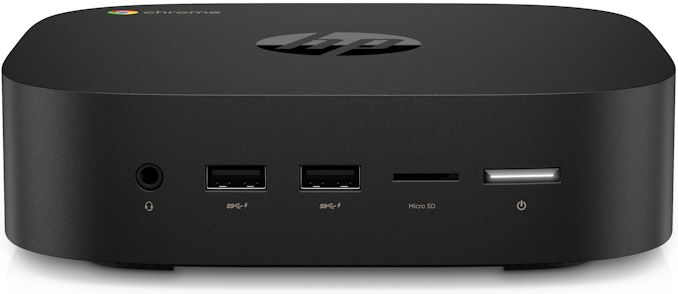
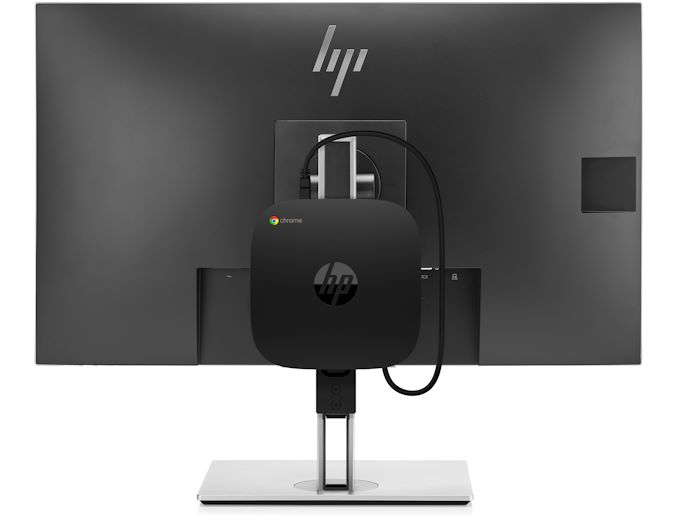
Business and enterprise desktops is an interesting market recently – on the one hand, because extended support for Windows 7 nears its end early in 2020, multiple companies are eager to buy new PCs; on the other hand, margins are low and competition between suppliers is cut-throat. To minimize competition, HP has released one of the industry’s first Chromebox for Enterprise: a UCFF desktop PC for frontline workers, call centers, shared spaces, kiosks, or digital signage applications.


The Chromebox Enterprise G2 comes in a small 14.93×14.93×4 cm black box that packs Intel’s 7th Generation dual-core Core i3-7130U with UHD 620 graphics CPU or Celeron 3867U with UHD 610 graphics CPU that is paired with 16 GB DDR4-2400 DRAM as well as an M.2 SSD.


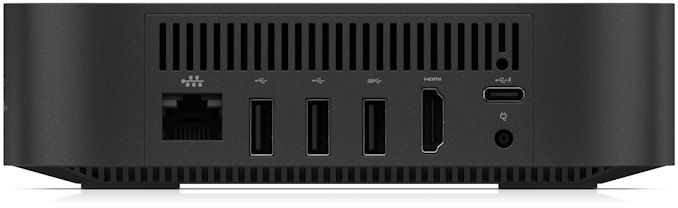
In a bid to meet requirements of all possible applications, the Chromebox Enterprise G2 features rather vast connectivity capabilities that include GbE, Wi-Fi 5, Bluetooth 4.2, three USB 3.0 Type-A ports, two USB 2.0 Type-A ports, one USB Type-C connector, one HDMI display output, one 3-in-1 SD card reader, and a 3.5-mm headphone jack. Depending on configuration, the Chromebox Enterprise G2 comes with a 65 W or a 90 W power brick.


HP’s Chromebox Enterprise G2
Model Celeron Core i3
CPU Intel Celeron 3867U

(2C, 1.8 GHz, 2 MB cache)
Intel® Core i3-7130U

(2C, 2.7 GHz, 3 MB cache)
GPU Intel HD Graphics 610 Intel HD Graphics 620
DRAM 16 GB DDR4-2400

Two DDR4 SO-DIMM slots
Motherboard proprietary
Storage SSD 32 GB or 64 GB M.2 SSD
DFF
  SD 3-in-1 card reader
Wireless Intel Dual Band Wireless-AC 7265 802.11ac (2×2) and Bluetooth 4.2
Ethernet 1 × GbE port (Realtek RTL8151GH-CG GbE LOM)
USB Front 1 × USB 3.0 Type-A
Back 1 × USB 3.0 Type-C

1 × USB 3.0 Type-A

2 × USB 2.0 Type-A
Display Outputs 1 × HDMI
Audio 1 × 3.5mm audio jack for headsets (Realtek ALC5662-CG codec)
PSU External 65 W External 90 W
Warranty Typical, varies by country
Dimensions Length: 14.93 cm | 5.87 inches

Width:  14.93 cm | 5.87 inches

Height: 4 cm | 1.57 inches
OS Chrome OS with Chrome Enterprise Upgrade
MSRP ? ?

Unlike Chromebooks, Chromeboxes have not really gained traction on the market partly because people expect high performance and advanced multimedia capabilities from their desktops, but mostly because people are so used to Windows programs. By releasing a Chromebox for Enterprise, HP obviously faces some risks, but believes that since many people use web-based apps nowadays, they will use a Chrome OS-based desktop without any problems. Meanwhile, the advantage of web-based applications is also their disadvantage because they depend on reliability of Internet connection. On the other hand, one indisputable trump that HP’s Chromebox Enterprise G2 has is support for numerous capabilities aimed precisely at businesses, including 24/7 Google support, automatic software updates through June 2024, virus protection, sandboxing, verified boot, remote management, and easy deployment. All in all, it will be interesting to sell how successful HP’s Chromebox for Enterprise is going to be.


HP’s Chromebox Enterprise machines will be available in November. Pricing will depend on configurations.


Related Reading


Source: HP


Source: AnandTech – HP Unveils Chromebox Enterprise G2: A Chrome OS-Based Business Desktop

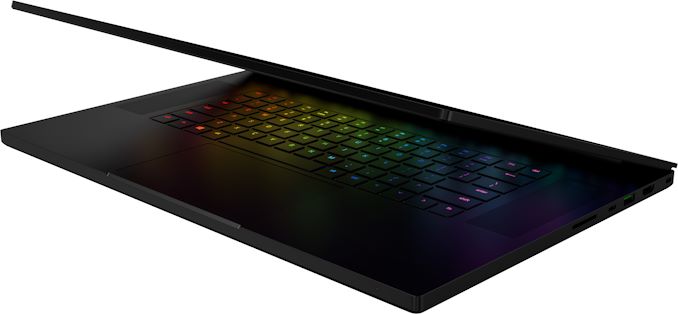
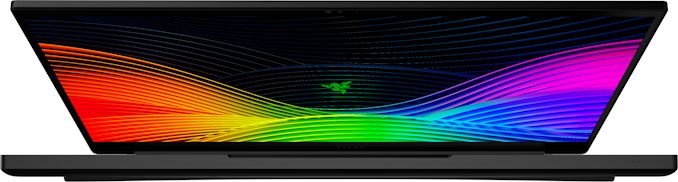
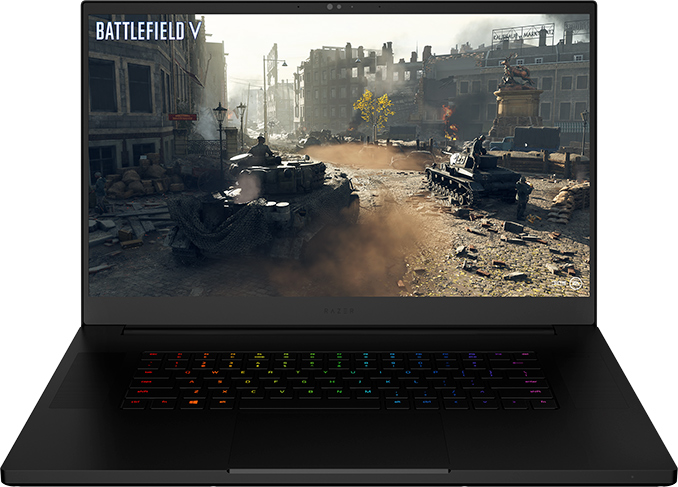
Razer’s Blade Pro 17 for eSports: Now with a 240 Hz Display

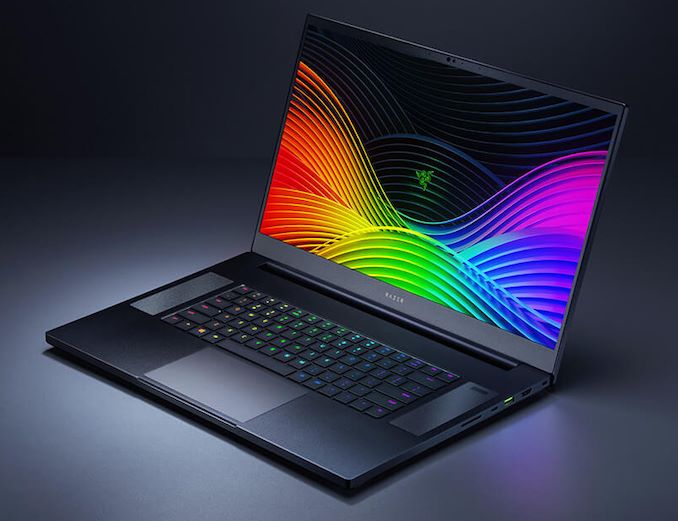
Already a big name in the gaming laptop market thanks to its sizable-yet-portable form factor, Razer has announed that they’re going to be expanding the range of their flagship Blade Pro 17 laptop even further with another new display option. With an eye towards eSports gamers, who are particularly keen on refresh rates and input latency, Razer is now offering the Blade Pro 17 with a 240 Hz Full-HD display.


Hitting and maintaining a frame rate of 240 fps requires a lot of graphics horsepower, so Razer is only offering its 240 Hz display option for Blade Pro 17s equipped with NVIDIA’s GeForce RTX 2070 Max-Q or GeForce RTX 2080 Max-Q GPUs. Meanwhile, other key components remained intact from other Blade Pro 17 models with a Full-HD LCD. The notebook still uses Intel’s six-core Core i7-9750H processor (2.6 GHz – 4.5 GHz) accompanied by 16 GB of DDR4-2667 memory (user upgradeable to 64 GB of DDR4-3200 memory) as well as a 512 GB PCIe 3.0 x4 SSD (expandable to 2 TB) SSD. Unfortunately, Razer only ships a 1 TB SSD with its 4K Blade Pro 17 model for now.


Past that, the 240Hz version of the Blade Pro 17 is identical to its siblings, right down to the 70.5 Wh battery and 2.75 kilograms weight. Unfortunately, Razer doesn’t provide detailed battery life estimates of its different laptop configurations, so it’s unclear whether the 240Hz panel comes with any drawbacks to desktop battery life, or if the real pinch will only be felt when gaming, when the display has reason to go to its maximum refresh rate.


The Razer Blade Pro 17 General Specifications
  RZ09-02876*92 RZ09-02877*92 ? RZ09-02878*92 ? RZ09-03148*92
Display Diagonal 17.3″
Resolution 1920×1080 3840×2160
Response Time ? ms
Brightness 300 cd/m² 400 cd/m²
Refresh Rate 144 Hz 240Hz 144 Hz 240Hz 120 Hz
Color Gamut sRGB: 100% AdobeRGB 100%
CPU Intel Core i7-9750H processor:

6C/12T,

2.6 GHz Base

4.5 GHz Turbo

12 MB
RAM 16 GB DDR4-2667

Upgradeable to 64 GB DDR4-3200
Graphics RTX 2060

6 GB GDDR6
RTX 2070

8 GB GDDR6
RTX 2080

8 GB GDDR6
Storage 512 GB PCIe 3.0 x4 SSDs

Spare M.2 slot for PCIe or SATA SSDs
1 TB PCIe 3.0 x4 SSD

Spare M.2 slot
Wi-Fi 2×2 802.11ax Wi-Fi module
Bluetooth BT 5.0
General Ports 1 × Thunderbolt 3 for data, display output

1 × USB 3.12Gen 2 Type-C

3 × USB 3.2 Gen 2 Type-A

1 × HDMI 2.0b

1 × 2.5 GbE
Other I/O HD webcam with IR,

TRRS connector for audio,

speakers,

microphone array,

SD UHS-III card reader
Dimensions (W × D × H) 395 × 260 × 19.9 mm

15.55 × 10.24 × 0.78 inches
Weight 2.75 kg | 6.06 pounds
Battery 70.5 Wh
Price $2,499 $2,799

$2,499
$2,799 $3,199

$2,899
$3,199 $3,699

Razer’s Blade Pro 17 notebooks with a 240 Hz display are now available to order in the US. The model equipped with NVIDIA’s GeForce RTX 2070 Max-Q retails for $2,799, while the version with NVIDIA’s GeForce RTX 2080 Max-Q starts at $3,199. These happen to be the same prices as the original 144Hz models, and as a result Razer has also discounted prices on the 144Hz Blade Pro 17 laptops with RTX 2070/RTX 2080 GPUs by $300.


Related Reading:


Source: Razer (via WindowsCentral)


Source: AnandTech – Razer’s Blade Pro 17 for eSports: Now with a 240 Hz Display

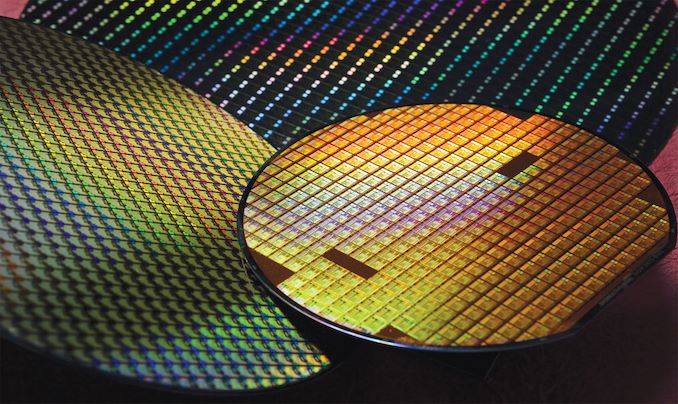
Samsung & TSMC Develop 8nm & 7nm Automotive-Grade Nodes

As vehicles are getting ‘smarter’ and gaining autopilot capabilities, it is easy to predict that the demand for higher-performing and more complex automotive SoCs will be growing rapidly in the coming years. To produce those SoCs, specialized manufacturing lines will be needed, which is why the two leading contract chip makers, Samsung and TSMC, are working on new nodes and IP aimed precisely at automobiles.


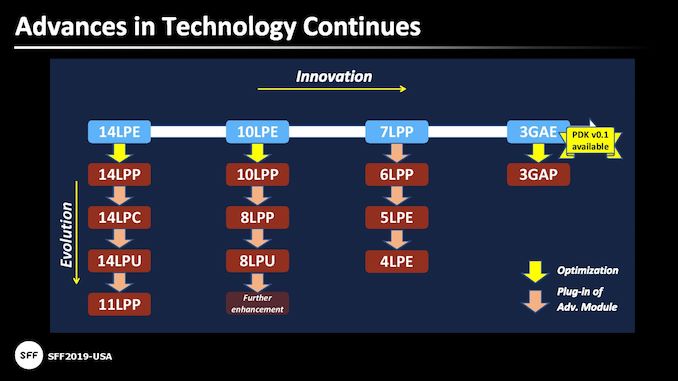
Samsung Foundry this past week said that in the near future it would introduce a version of its 8 nm process for automotive applications. At present, Samsung has two manufacturing processes that are defined as 8 nm: 8LPP and 8LPU, which are evolved from the company’s 10 nm node. It is likely that the automotive-grade 8 nm will be a further evolution of that technology. Right now, the most advanced nodes that Samsung uses to make chips for automobiles are its 28FDS and 14 nm technologies, so an 8 nm node will be a huge step forward.


Samsung did not disclose much about its automotive-grade 8 nm process, but the comapny did note that chips for cars have to comply with AEC-Q100 reliability standards, which mandates support for a -40°C to +105°C ambient operating temperature range, as well as a number of qualification reliability tests such as wear-out tests. Furthermore, to win designs with leading auto makers, these chips have to be made in facilities that have an IATF 16969-certified supply chain quality management system, which in short emphasizes defect prevention and variation reduction. Furthermore, any IP being fabbed, as well as development tools and the final devices themselves have to meet various ISO 26262 (aka ASIL) functional safety requirements, both individually and in context of a particular application.


Meanwhile, over in Taiwan, TSMC’s most advanced automotive-grade process technology today is 16FFC, which is current-generation as far as the automotive market is concerned, as it lags consumer SoC designers by two or three years. Looking towards the near future, TSMC has been developing an automotive-grade version of its N7 (1st Generation 7 nm) technology for quite a while, and expects it to be qualified by 2020. In fact, Synopsys has already developed essential automotive-grade IP for N7 (including DesignWare IP for LPDDR4X, MIPI CSI-2, MIPI D-PHY, and PCIe 4.0 IP), so chip designers are probably already working on new SoCs for vehicles to be made using TSMC’s leading-edge process.


Finally, while GlobalFoundries no longer develops leading-edge process technologies, it still has numerous nodes that can be used by the automotive industry for years to come, including 22FDX and 12LP. For now, these technologies are good enough for advanced SoCs, but it remains to be seen what the company offers to its clients from the auto industry.


Related Reading:


Sources: Samsung, TSMC, SemiWiki


Source: AnandTech – Samsung & TSMC Develop 8nm & 7nm Automotive-Grade Nodes

Corsair 16GB DDR4-5000 Vengeance LPX Memory Kit: Built for AMD Ryzen 3000 and MSI

The high-tech industry loves milestones that are round numbers, be it frequency, number of cores, transistor count or something else. It is not that extra 100 MHz – 200 MHz or a couple of additional CPU cores radically improve performance or user experience these days, but because milestones symbolize an achievement, a new height from where we will go and hit the next ones. Today, the industry has reached a milestone as Corsair introduced the industry’s first commercial DDR4-5000 memory modules. We saw numerous companies ‘promote’ DDR4-5000 earlier this year at Computex, but none were seriously considering bringing them to retail. Corsair is the first.


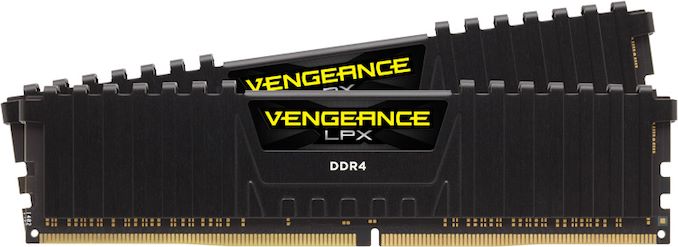
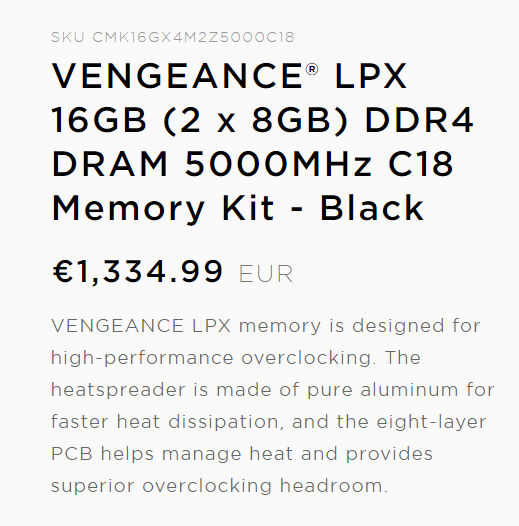
Corsair’s dual-channel Vengeance LPX DDR4-5000 (CMK16GX4M2Z5000C18) memory kit comprises two 8 GB unbuffered modules featuring a CL18 26-26-46 latency and a 1.5V voltage. The memory modules use Micron’s cherry-picked memory ICs and use a custom 10-layer PCB from Corsair. The enthusiast grade modules are equipped with aluminum heat spreaders, and are compatible with Corsair’s Vengeance Airflow fan to maximize their cooling.


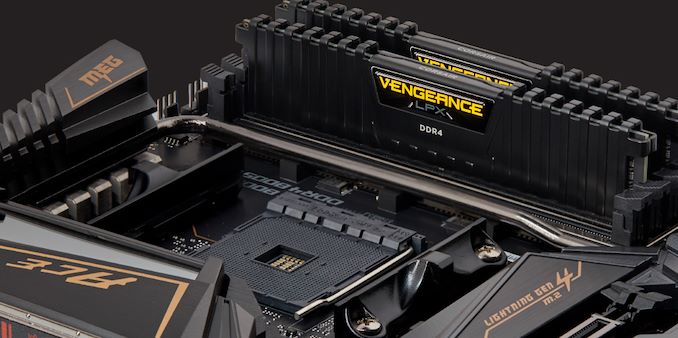
Corsair says that its Vengeance LPX DDR4-5000 (CMK16GX4M2Z5000C18) memory kit was tuned to hit the desired data transfer rate on high-end platforms based on AMD’s Ryzen 3000 processor and X570 chipset. To be more precise the modules were developed and validated on MSI’s X570 Godlike, MEG X570 Ace, MEG X570 Unify, and Prestige X570 Creation motherboards. 


It is unclear how well the modules will work in DDR4-5000 mode when used with other platforms. In any case, keep in mind that modules require 1.5 Volts, which is a whopping 25% increase over standard DDR4 voltage, so they have to be installed in an enthusiast-grade mainboard with a quality and clean memory power supply. In order to reach the DDR4-5000 mode requires some user intervention beyond just setting the XMP profile: to set up the right settings Corsair recommends to check out its Ryzen 3000 memory overclocking guide.


Designed for die-hard performance enthusiasts, overclockers, and benchmarkers, Corsair’s dual-channel 16GB Vengeance LPX DDR4-5000 memory kit is certainly not cheap at all. The company sells it for a sizeable $1,224.99 in the USA ($76.56/GB) and for €1,334.99 in Europe.


Corsair says that there are limited review samples available – if we get one in to test, what would you like to see?


Related Reading


Source: Corsair


Source: AnandTech – Corsair 16GB DDR4-5000 Vengeance LPX Memory Kit: Built for AMD Ryzen 3000 and MSI

Synopsys Demonstrates CLX & CCIX 1.1 over PCIe 5.0: Next-Gen In Action

Synopsys, one of the leading developers of chip development tools and silicon IP, demonstrated its CXL over PCIe 5.0 as well as CCIX 1.1 over PCIe 5.0 solutions at ArmTechCon 2019. The showcase indicates that the company’s IP is up and running, and is ready to be licensed by interested parties.


CXL and CCIX are chip-to-chip interconnect protocols for connecting processors to various accelerators that maintains memory and cache coherency at low latencies. Both protocols are designed for heterogeneous systems that use traditional CPUs along with accelerators featuring scalar, vector, matrix, and spatial architectures. Both CXL 1.0/1.1 as well as CCIX 1.1 use PCIe Gen 5 PHY stack at 32 GT/s per lane and support different link width natively. Aiming the same market segment and using the same physical interface, the CXL and CCIX protocols have numerous differences both on hardware as well as firmware/software side of things and will therefore compete against each other. Meanwhile, providers of silicon IP are gearing up to support both CXL and CCIX as they have a broad range of customers.


Synopsys recently introduced its 16-lane DesignWare CXL IP solution for SoCs to be made using 16 nm, 10 nm, and 7 nm FinFET process technologies. The package comprises the company’s CXL 1.1-compliant controller (supporting CXL.io, CXL.cache, CXL.mem protocols), silicon-proven PCIe Gen 5 controller, silicon-proven 32 GT/s PHY (allowing >36 dB channel loss across power, voltage, and temperature variations for long reach connections), RAS capabilities, and VC Verification IP.


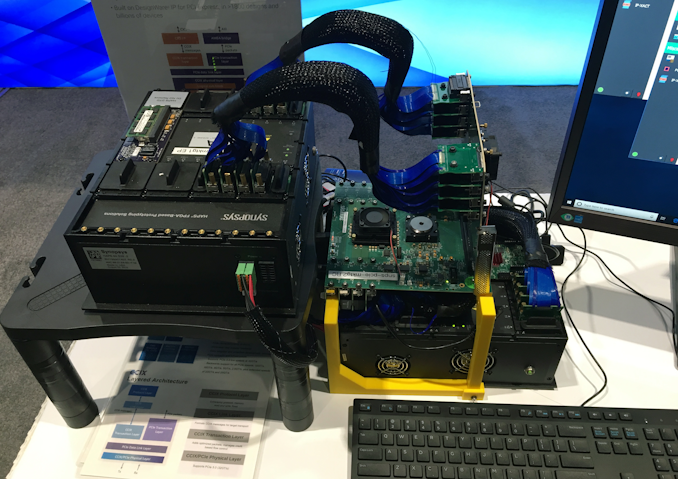
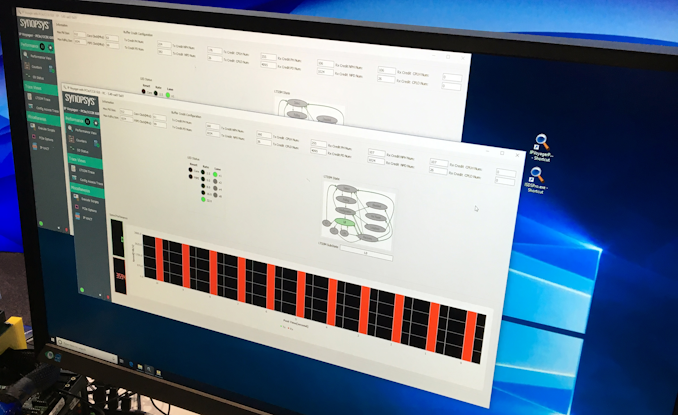
The company yet has to formally announce availability of its DesignWare CCIX 1.1 IP package that will enable implementation of a CCIX 1.1 over PCIe Gen 5 at 32 GT/s speed, but at ArmTechCon the company demonstrated that the solution is already functional.


Both showcases were carried out using an FPGA as well as special equipment, but not using actual chips, which is not particularly surprising. But even such demonstrations indicate that Synopsys is ready not only with competitive PCIe 5.0 PHY and IP, but also with CXL and CCIX implementations.


Related Reading:


Sources: David Schor/Twitter, Anshel Sag/Twitter, Synopsys


Images by Ryan Smith/AnandTech


Source: AnandTech – Synopsys Demonstrates CLX & CCIX 1.1 over PCIe 5.0: Next-Gen In Action

The SilverStone Strider Platinum ST1200-PTS 1200W PSU Review: Small in Size, Big on Compliance

Today we are taking a look at a special PSU from SilverStone, the ST1200-PTS. The latest addition to the Strider series appears like a typical 80Plus Platinum 1200W PSU on paper, yet it’s only 140 mm deep, making it a truly unique product as the only ATX-compliant 1200W PSU on the market.


Source: AnandTech – The SilverStone Strider Platinum ST1200-PTS 1200W PSU Review: Small in Size, Big on Compliance

Intel to Discontinue Nearly All Desktop Kaby Lake CPUs

Intel has announced End-of-Life plan for most of its desktop Kaby Lake and remaining Skylake processors. The boxed and tray versions of the chips will be available for interested parties for one more year and then will become history. The move will enable Intel to cut the number of product SKUs it offers to partners and reduce pressure on its factory network, which will help to increase supply of newer products made using various versions of Intel’s 14 nm process technology.


Introduced early in 2017, Intel’s desktop 7th Generation Core processors (Kaby Lake) have been around for nearly three years now. The CPUs certainly served their purpose, but it is time for them to go and Intel recommends its partners to place their final orders on these products by April 24, 2020. The final shipments will be made by October 9, 2020. Some of Intel’s Kaby Lake and Skylake products will be moved to Internet of Things (IoT) status and will be available for a little longer to IoT customers and probably some PC makers as there are still previous-generation motherboards on the market that need to be sold.


Intel Kaby Lake S SKUs
  Status Last Shipment Date

for EOLed CPUs
Tray Boxed
Core i7-7700K EOL EOL October 9, 2020
Core i7-7700 IoT EOL October 9, 2020
Core i7-7700T IoT EOL October 9, 2020
Core i5-7600K EOL EOL October 9, 2020
Core i5-7600 EOL EOL October 9, 2020
Core i5-7600T EOL EOL October 9, 2020
Core i5-7500 IoT EOL October 9, 2020
Core i5-7500T IoT EOL October 9, 2020
Core i5-7400 EOL EOL October 9, 2020
Core i5-7400T EOL EOL October 9, 2020
Core i3-7350K EOL EOL October 9, 2020
Core i3-7320 EOL EOL October 9, 2020
Core i3-7300 EOL EOL October 9, 2020
Core i3-7300T EOL EOL October 9, 2020
Core i3-7100 EOL EOL October 9, 2020
Core i3-7100T EOL EOL October 9, 2020
Pentium G4620 EOL EOL October 9, 2020
Pentium G4600 EOL EOL October 9, 2020
Pentium G4560 EOL EOL October 9, 2020
Pentium G4560T EOL EOL October 9, 2020
Celeron G3950 EOL EOL October 9, 2020
Celeron G3930 EOL EOL October 9, 2020
Celeron G3930E Launched Launched
Celeron G3930T Launched Launched
Celeron G3930TE Launched Launched

Intel’s desktop 6th Generation Core CPUs were launched in 2016 and most of them have been in EOL status for a while. This week, Intel said it would stop taking orders on the remaining desktop Skylake products on April 24, 2020, and will cease their shipments by October 9, 2020.


Intel Skylake S SKUs
  Status Last Shipment Date

for EOLed CPUs
Tray Boxed
Core i7-6700K EOL EOL September 7, 2018
Core i7-6700 IoT EOL October 9, 2020
Core i7-6700T EOL EOL March 6, 2020
Core i5-6600K EOL EOL September 7, 2018
Core i5-6600 EOL EOL March 6, 2020
Core i5-6600T EOL EOL March 6, 2020
Core i5-6500 IoT EOL October 9, 2020
Core i5-6500T EOL EOL March 6, 2020
Core i5-6402P EOL EOL September 7, 2018
Core i5-6400 EOL EOL March 6, 2020
Core i5-6400T EOL EOL March 6, 2020
Core i3-6320 EOL EOL March 6, 2020
Core i3-6300 EOL EOL March 6, 2020
Core i3-6300T EOL EOL March 6, 2020
Core i3-6100 EOL EOL March 6, 2020
Core i3-6100T EOL EOL March 6, 2020
Core i3-6098P EOL EOL September 7, 2018
Pentium G4520 EOL EOL March 6, 2020
Pentium G4500 EOL EOL March 6, 2020
Pentium G4500T EOL EOL March 6, 2020
Pentium G4400 EOL EOL March 6, 2020
Pentium G4400T EOL EOL March 6, 2020
Celeron G3920 EOL EOL March 6, 2020
Celeron G3900 EOL EOL March 6, 2020
Celeron G3900T EOL EOL March 6, 2020

Winding down production of desktop Skylake and Kaby Lake processors in the next few months will free manufacturing capacities for newer Intel products and will enable the company to increase shipments of newer CPUs, such as 8th and 9th Generation Coffee Lake, that are also made using Intel’s 14 nm fabrication technology.


Related Reading:


Source: Intel


Source: AnandTech – Intel to Discontinue Nearly All Desktop Kaby Lake CPUs

New Tools & IP Accelerate Development of 5nm Arm ‘Hercules’ SoCs

Arm, Synopsys, and Samsung Foundry have developed a set of optimized tools and IP that will enable chip designers to build next-generation SoCs based on Arm’s Hercules processor cores on Samsung’s 5LPE (5 nm, Low Power Early) node faster. The three companies expect the tools and IP to be used by designers of SoCs for a wide variety of applications.


The set of Synopsys tools are certified by Samsung Foundry for its 5LPE manufacturing technology, and now includes the Fusion Design Platform as well as QuickStart Implementation Kit that are enabled to optimize power, performance, and area for 5LPE designs. Meanwhile, Arm will provide Artisan Physical IP and POP IP tailored for Samsung’s 5LPE process. The IP packages will enable Arm’s partners to quickly develop 5LPE-optimized SoCs based on the Arm Hercules general-purpose CPU cores.


Samsung Foundry’s 5LPE fabrication process is the company’s 3rd Generation refinement of its 7LPP node that uses more EUV layers and features other improvements. The new technology provides an up to 25% higher ‘logic efficiency’, it also allows chip designers to lower power consumption of their SoCs by 20% (at the same performance and complexity) or improve their performance by 10% (at the same power and complexity). While developers can reuse 7LPP IP on SoCs build for 5LPE while taking advantage of the benefits the latter provides, to extract the maximum value of the new technology, optimized tools and IP are needed.


Considering that Arm’s Hercules are the company’s next-generation advanced CPU cores and 5LPE is a leading-edge process technology, Samsung expects the new tools and IP to be used for SoCs aimed at HPC, automotive, 5G, and AI applications.


Samsung expected to tape out the first 5LPE chips in the second half of 2019 and plans to start volume production using the node in the first half of 2020.


An official statement of Jaehong Park, executive vice president of Foundry Design Platform Development at Samsung Electronics, reads as follows.


“Synopsys’ Fusion Design Platform and QuickStart Implementation Kits provide a design-ready solution for next-generation Arm-based processors. This is a great example of how Samsung 5LPE technology can be utilized to give designers a competitive advantage in their high-performance CPU designs. Through our close partnership with Arm and Synopsys, customers will now be able to extract maximum value out of our 5-nanometer processes for design applications targeted at high-performance and low-power markets.”


Related Reading


Source: Synopsys


Source: AnandTech – New Tools & IP Accelerate Development of 5nm Arm ‘Hercules’ SoCs

Fitbit Shifts Production Away from China

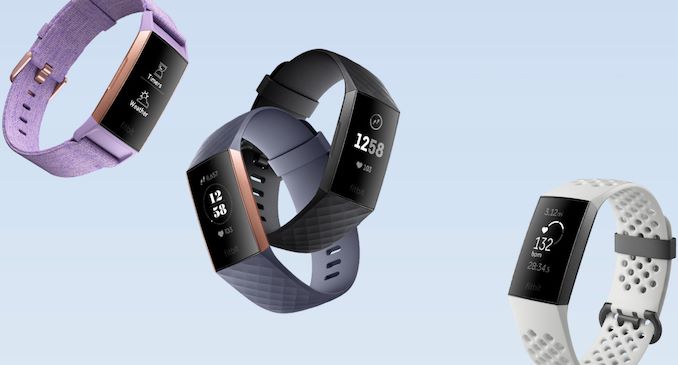
Fitbit has announced plans to shift its production away from China starting early 2020. The company indicated that the decision was conditioned by the fact that its products were subject to Section 301 tariffs as a consequence of the ongoing trade war between the US and China.


Fitbit has been evaluating options how to move production of all of its fitness trackers and smartwatches away from China from 2018. As a result of its efforts, all of its devices will be produced in other countries and therefore will not be subject to Section 301 tariffs.


The company did not say where it will make its trackers and watches going forward, but promised to reveal more details in its upcoming Q3 earnings conference call.


Fitbit, which sells fitness trackers and smartwatches worth around $300 million per quarter, is not the first company to move its production away from China and is rather a part of the trend. Last week Samsung ceased to make smartphones in Tianxia and before that such giants as Apple and ASUS revealed intentions to lower purchase of components from Chinese suppliers. By contrast, companies like Intel and LG Display are actually ramping up manufacturing of OLED panels and 3D NAND memory in China due to comfortable business conditions and rising local demand.


Here is what Ron Kisling, CFO of Fitbit, had to say:


“In 2018, in response to the ongoing threat of tariffs, we began exploring potential alternatives to China. As a result of these explorations, we have made changes to our supply chain and manufacturing operations and have additional changes underway. Based on these changes, we expect that effectively all trackers and smartwatches starting in January 2020 will not be of Chinese origin.”


Related Reading


Source: Fitbit


Source: AnandTech – Fitbit Shifts Production Away from China

TRX40 Chipset For Upcoming AMD Ryzen Threadripper Listed

In what is being put down to an inadvertent leak by MSI, it could be that the currently unannounced chipset for AMD’s new 3rd Gen Ryzen Threadripper series processors has been officially mentioned (not withstanding the unconfirmed leaks from various sources). With the new AMD Ryzen Threadripper third generation set to hit the shelves in November, a lot of discussion is circulating about potential motherboard chipsets names and monikers. On one end we’re expecting compatibility with current X399 motherboards, and yet on the other new chipsets are expected to hit the market.


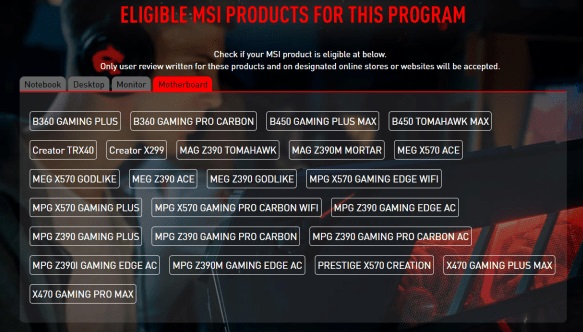
On MSI’s promotional pages, in which users can redeem rewards for purchasing specific and eligible MSI products, an unknown motherboard was revealed which piqued interest among users. Under MSI’s $25 Steam Gift Card promotion, an unreleased model named Creator TRX40 was listed which at present, hasn’t been announced by MSI or AMD. We know that the Creator series is MSI’s new content creator focused range with our announcement that MSI is refreshing some X299 models, notably the MSI Creator X299.


MSI has since removed the Creator TRX40 reference from its website


Little is known about what AMD intends to call the chipset for the new HEDT 3rd generation Threadripper processors, but it has been speculated that it might be called TRX80. With the accidental leak on the MSI website which has since been removed with much haste, it adds further speculation to the fire that AMD might release two chipsets instead of one. We have no confirmation as to what each of these chipset names mean, and some users have theorised that it could relate to consumer/commercial platforms or the memory channel count.


We know that AMD’s new 3rd Gen Ryzen Threadripper series will start with an entry-level model with 24 cores, with a 64-core part speculated to be in the pipeline. AMD has kept its cards closely to its chest as we’ve seen from previous product launches, but it remains an exciting time for users looking to build a single-socket system that features high core and thread count based on Ryzen’s Zen2 7nm architecture. We expect more information to become available closer to the next-gen Ryzen Threadripper series is set to launch in November.


Related Reading


Source: AnandTech – TRX40 Chipset For Upcoming AMD Ryzen Threadripper Listed

Diving into Intel’s Regional Focus: How is the UK different to the US? What about Brexit?

In this industry, it’s very easy to fall into a lull that the North American market is blueprint from which every other commercial market is drawn up. In reality, each region and sub-region has its own foibles, from the types of customers in play, budgets customers can spend, and the requirements therein that might be unique to that region. Of course, within Europe there are several sizeable markets that aren’t like the North American market at all, and this year in the UK a lot of talk has been about how Brexit will affect business, supply, and revenue.

This week Intel UK held an open house for media and partners to demonstrate the latest range of Intel devices, mostly derived from Ice Lake notebooks, Project Athena devices, gaming laptops, and super desktop rigs that are sold in the market. Intel also paired that up with a number of presentations going over Intel’s strategy and how it plays out to the local consumer base. From my perspective, given that I’ve been to over a dozen equivalent events driven by the US PR teams, the presentations at this event approached a number of market issues in a very uniquely British way.

Based on my questions after the first few talks, the local PR team offered me some 1-on-1 interview time with one of the keynote speakers, Jeff Kilford. Jeff, having worked at Intel for 25 years, is a key spokesman on local client strategy. His background includes being the Director of Intel’s IT to managing the whole of the Client Computing Group in the UK. His work involves a lot of discussions with Intel’s place in the UK as it relates to consumers and commercial use cases, as well as retailers, OEMs, and local distribution and supply chain.


Source: AnandTech – Diving into Intel’s Regional Focus: How is the UK different to the US? What about Brexit?

HP Unveils Chomebooks for Enterprise: AMD and Intel

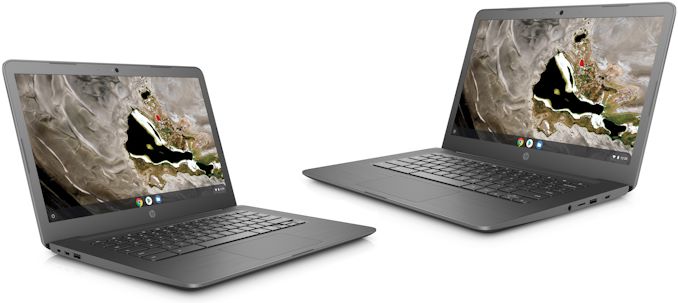
HP has introduced its first business-oriented Chromebooks for Enterprise mobile PCs that support advanced security, management, and deployment features. The lineup consists of two machines featuring different configurations: Intel-based Chromebook Enterprise x360 14E G1 convertibles with 8th Generation processors, as well as AMD-powered Chromebook Enterprise 14A G5 laptops.


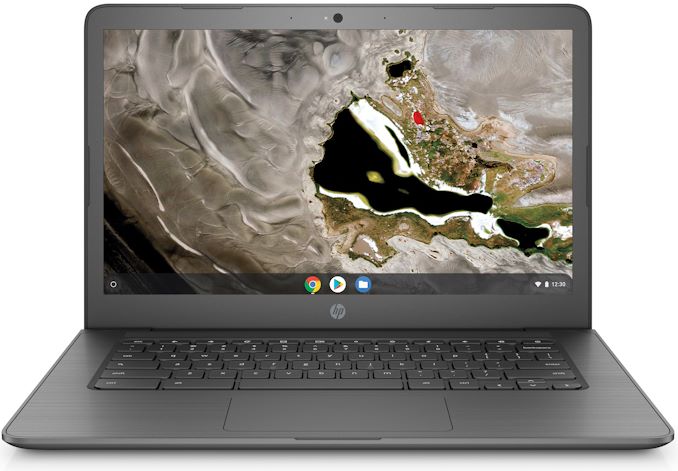
HP’s Chromebook Enterprise 14A G5: A Cheap Business Machine


HP’s entry-level Chrome OS-based machine for business users is the Chromebook Enterprise 14A G5 that is equipped with a 14-inch HD or Full-HD display and is based on AMD’s dual-core A4-9120C with Radeon R4 graphics or dual-core A6-9220C with Radeon R5 graphics. The system comes equipped with 8 GB of DDR4-1866 RAM as well as an eMMC 5.0 drive featuring capacity from 16 to 64 GB. The machine is 1.83 cm thick and weighs 1.57 kilograms, which is comparable to other 14-inch laptops.


Other features of the notebook include Wi-Fi 5, Bluetooth 4.2, two USB 3.1 Gen 1 Type-A ports, two USB 3.1 Gen 1 Type-C connectors (with Power Delivery and DisplayPort support), a microSD card reader, a 3.5-mm audio connector for headsets, a 720p camera, stereo speakers, a microphone array, a spill resistant keyboard, a touchpad, and a 47.36 Wh battery that can last for up to 9 hours, according to HP.


Since we are dealing with a business-class machine, it comes with Google’s H1 security chip that enable security features supported (or to be supported) by Chrome OS, including verified boot, battery cutoff, and guaranteed reset.


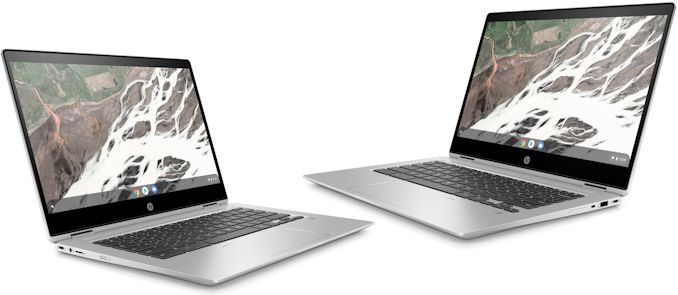
HP’s Chromebook Enterprise x360 14E G1: A More Advanced Business Machine


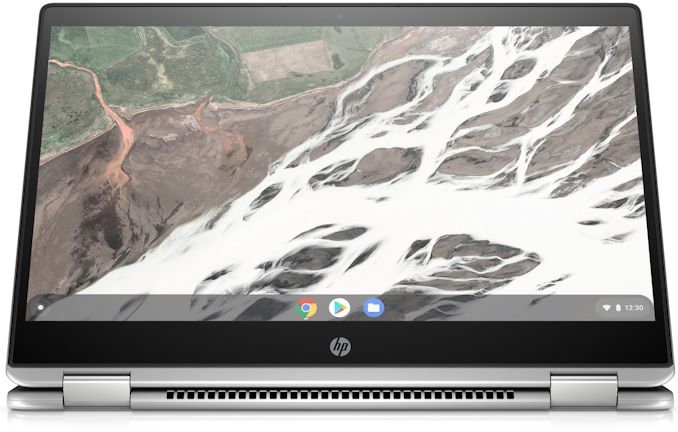
Moving on to the Chromebook Enterprise x360 14E G1, which is a more advanced and presumably more expensive Chrome OS-powered laptop from HP. Being a premium convertible PC, the notebooks comes in a metallic chassis with a 14-inch Full-HD IPS-class monitor with thin side bezels as well as a 360° hinge that flips and folds the laptop into notebook, stand, tent, and tablet modes. The hybrid machine weighs 1.61 kilograms and features a 1.6 cm z-height.


Offering considerably higher performance than its counterparts mentioned above, the Chromebook Enterprise x360 14E G1 machines pack Intel’s 8th Generation Core (also Pentium or Celeron) processors with up to four cores as well as Intel UHD Graphics 610/620 that are accompanied by up to 16 GB of DDR4-2133 RAM as well as an eMMC 5.0 storage solution of up to 64 GB capacity. When it comes to connectivity, the PC features Wi-Fi 5, Bluetooth 4.2, one USB 3.1 Gen 1 Type-A port, two USB 3.1 Gen 2 Type-C connectors with DisplayPort as well as power delivery for docking, a microSD card reader, and a 3.5-mm connector for headsets.


Being aimed at users that demand something better than average, HP’s Chromebook Enterprise x360 14E G1 computers feature B&O-badged speakers as well as a 60.9 Wh battery that can last for up to 13 hours. The notebook also has a 720p webcam, a microphone array, Google’s H1, and other essentials.


Sales & Availability


HP will start sales of its Chromebook Enterprise x360 14E G1 convertibles and Chromebook Enterprise 14A G5 laptops later this month. Pricing is unknown.


Related Reading:


Source: HP


Source: AnandTech – HP Unveils Chomebooks for Enterprise: AMD and Intel

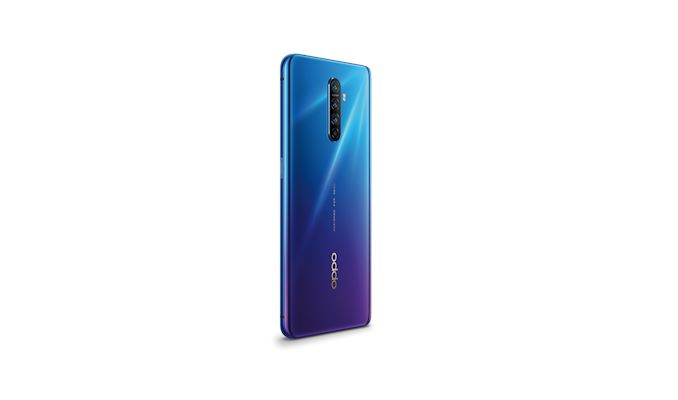
The Oppo Reno Ace: 90 Hz AMOLED 6.5-inch HDR10+ with 65W Charging

Today in China, top 5 smartphone company Oppo launched its latest flagship smartphone. The new Oppo Reno Ace goes above and beyond the Oppo Reno launched earlier in the year by jamming in some quite impressive specifications into a device that retails around USD $420.


Source: AnandTech – The Oppo Reno Ace: 90 Hz AMOLED 6.5-inch HDR10+ with 65W Charging

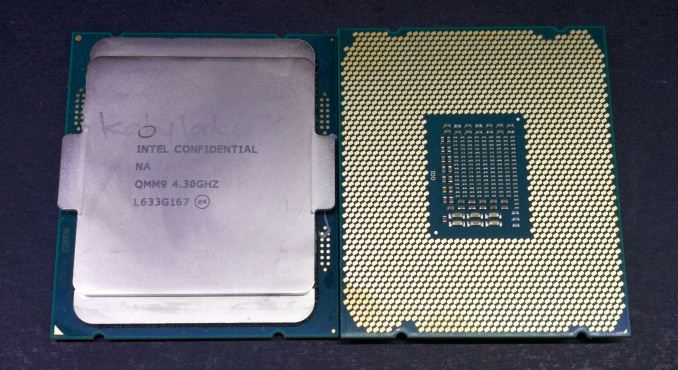
Intel Releases Advisory: Update X299 for Cascade-X, and Lose Kaby-X Support

Motherboard firmware is a fickle thing: in order to support as many CPUs as possible, especially in the multi-core and turbo era, each processor has to have its own entry in the support table in the BIOS. With luck, some processor variants can share entries, but ultimately the more processors a platform supports, the larger the BIOS firmware tends to be. As we have moved from basic BIOS implementations to complex UEFI interfaces, the amount of free space inside BIOS firmware has reduced drastically.


As a result, in recent generations, we’re seeing motherboards drop support for certain ranges of processors. Recently, a range of AMD AM4 motherboards have dropped support for the earliest A-series processors that were supported on the platform, mostly because these parts were not widely used at the end of the day. Now, Intel is doing the same thing: for users who invested in the X299 platform, in order to support the new Cascade Lake-X processors, that same BIOS version is unlikely so support the quad-core Kaby Lake-X processors.


Source: AnandTech – Intel Releases Advisory: Update X299 for Cascade-X, and Lose Kaby-X Support

Intel Starts to Close Omni-Path: OPA1 Xeon CPUs on EOL, OPA2 Axed

Intel this week announced plans to discontinue its 1st Generation Xeon Scalable processors with Omni-Path interconnect a year from now. With no 2nd Generation Xeon Scalable products announced to date supporting the technology as well as already cancelled plans for Omni-Path 200 Gbps fabric, Intel is canning the whole project.


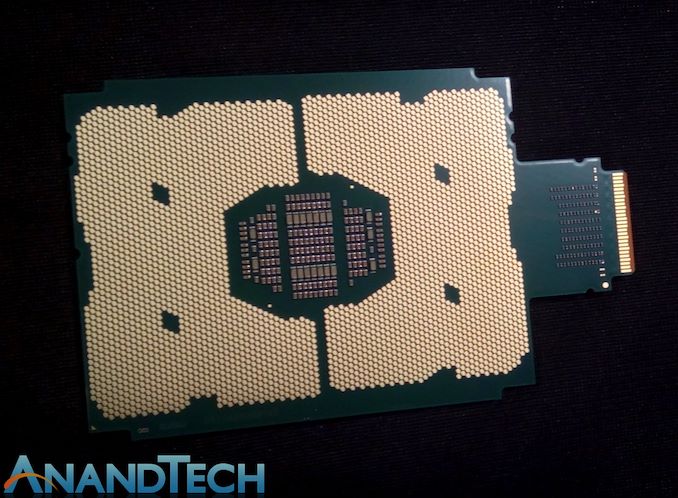
Early in the decade, Intel acquired Cray’s interconnect assets as well as QLogic’s InfiniBand technology in a bid to build its own fast, highly-scalable, low-latency interconnect technology for datacenters and supercomputers. The result of Intel’s design efforts was creation of the Omni-Path network fabric technology that was developed primarily with Intel Xeon Phi-based HPC systems in mind. Indeed, Intel’s 2nd Generation Xeon Phi (Knights Landing) were the first to get Omni-Path and eventually the technology found its way into Xeon Scalable F-series CPUs as well as add-in cards for regular Xeon systems. Meanwhile, a lot has changed since 2012 when longer-term roadmap for Omni-Path was set. Intel’s Xeon Phi products have been discontinued and their underline MIC architecture seems to be gone. Besides, there are also a host of new interconnection technologies that would be competing with Omni-Path. As a result, the company canned development of its 2nd Generation Omni-Path interconnect that promised speeds of up to 200 Gbps earlier this year and reportedly advised its customers not to start designs using the OPA 100 technology.


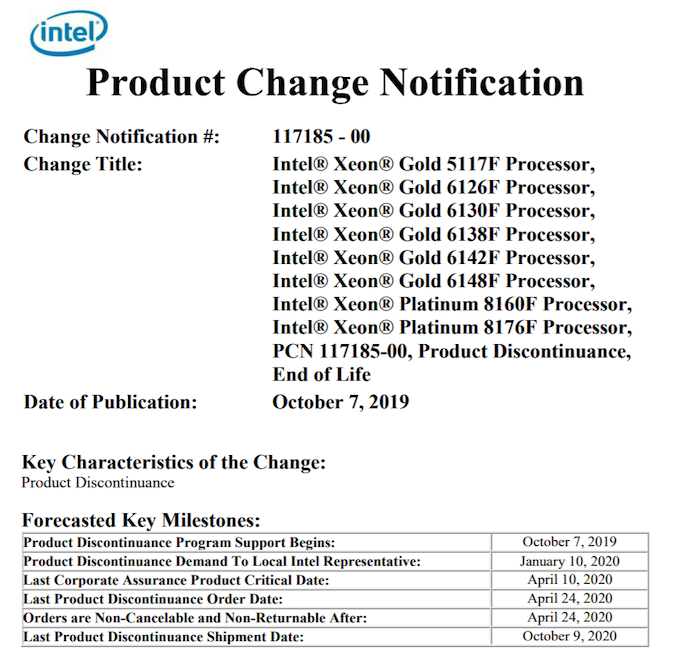
This week Intel said that it would discontinue its Xeon Gold 5117F, Xeon Gold 6126F, Xeon Gold 6130F, Xeon Gold 6138F, Xeon Gold 6142F, Xeon Gold 6148F, Xeon Platinum 8160F, and Xeon Platinum 8176F processors. These are the first generation Xeon Scalable processors with OPA built in to the package. The company’s partners have to make final orders on CPUs by April 24, 2020, whereas the final chips will be shipped on October 9, 2020.


It remains to be seen whether Intel will commit to development of a new high-speed interconnect for HPC in the near future, or will rely on Infiniband HDR 400G or technologies for its next-gen supercomputer designs.


Related Reading


Sources: Intel, CRN


Source: AnandTech – Intel Starts to Close Omni-Path: OPA1 Xeon CPUs on EOL, OPA2 Axed