Kioxia Expands Automotive Grade eUFS Lineup: 512 GB for Extreme Conditions

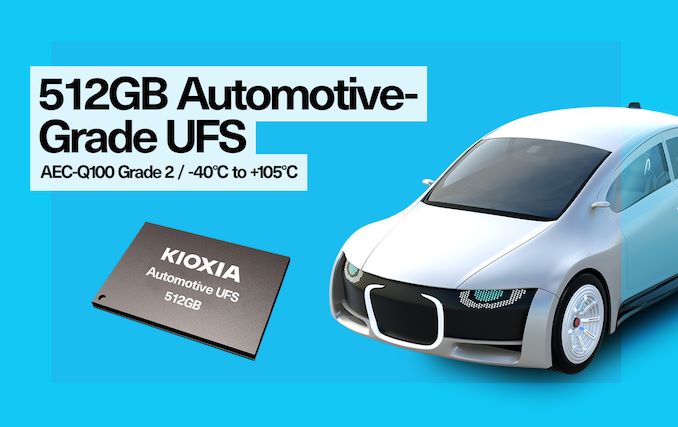
Kioxia (formerly Toshiba Memory), has expanded its lineup of embedded UFS (eUFS) storage with a 512 GB device based on the company’s BiCS 3D NAND flash. The chip is rated to support a very wide range of operating temperatures along with special features that increase its reliability and endurance.


Kioxia’s eUFS 512 GB drive for automotive applications uses the company’s specially developed controller as well as BiCS 3D TLC NAND flash memory. The chips are compliant with the UFS 2.1 HS-G3 specification and can use two full-duplex HS-Gear3 lanes with a 5.8 GT/s data transfer rate per lane, which means a hypothetical maximum bandwidth of 1200 MB/s (assuming that pSLC caching and other performance-boosting methods are used, of course). Other members of the automotive eUFS 2.1 family include drives featuring capacities between 16 GB and 256 GB.


Since Kioxia’s automotive grade eUFS storage devices will work in rough environments, they are AEC-Q100 Grade 2 qualified and can operate in extreme temperatures between -40ºC and 105ºC for prolonged amounts of time. In addition, controllers of these drives support functions like Refresh, Thermal Control, and Extended Diagnosis that are designed to improve overall reliability and endurance.


Kioxia has started sampling of its automotive grade eUFS 2.1 512 GB drives with customers. Commercial shipments of such storage devices will begin no earlier than in 2020.


Related Reading:


Source: Kioxia


Source: AnandTech – Kioxia Expands Automotive Grade eUFS Lineup: 512 GB for Extreme Conditions

ASUS: Intel CPU Shortages Easing, But Future Is Uncertain

During its earnings call with analysts and investors, ASUS commented that while the tight supply of Intel’s processors persisted, it is no longer as severe as it was in late 2018. The company said that based on claims of the chipmaker, it did not expect CPU shortages in Q1 2020, but the situation with Q2 2020 remained unclear. Meanwhile, to lessen the impact of insufficient supply from Intel, ASUS now offers more AMD-based products.


Intel has increased its 14 nm production capacity in terms of wafer starts per month (WSPM) by 25% in 2019 as compared to 2018, yet the company admits that its backlogged status will persist in the fourth quarter of this year, so not all of its partners will get all the chips they want. The world’s largest supplier of processors continues to give priority to production of server and higher-end client processors, so the situation with supply of entry-level products continues to be uncertain. Since ASUS is focused primarily on premium products, it was not affected by shortages of Intel’s inexpensive processors as severely as its peers who have more numerous inexpensive offerings in their lineups, though there was still some negative impact on the company.


Here is what S.Y. Hsu, co-CEO of ASUS, had to say.


“The Intel CPU shortage began in Q4 of last year and continued into Q1 of this year. In Q2 and Q3 of this year the situation is easing and the messaging from our partner tells us that in Q4, we still face some shortage. This is not something that is unique to ASUS, but affects the entire PC industry. As for 202… Currently, the information transparency lets… allows us to know that in Q1 we will have some – we will not have CPU shortage. However, there is not enough transparency for Q2 because this is a situation that has continued from Q4 of last year.”


Considering that sales of PCs are usually slow in the first quarter and Intel’s fabs are running at full steam at the moment (keep in mind that production cycle of modern CPUs is long), it is likely that supply-demand balance will be more or less met in Q1. Meanwhile, demand for computers in Q2 and onwards is something that is harder to predict.


In a bid to lower the impact of Intel CPU shortages, ASUS and other makers of PCs and components have developed more AMD-based products. In the desktop space, where AMD is very competitive and is gaining market share, this approach has clearly worked. In the laptop space, on the other hand, the lion’s share of ASUS notebooks is based on Intel processors. Meanwhile, notebooks in general commanded 71% of ASUS’ revenue in Q3 2019.


To lessen the impact of Intel CPU shortage, this year ASUS introduced several AMD-powered notebooks and began to promote them among retailers and end users, which is why they are now better received by the market than before, according to the company.


Related Reading:


Source: ASUS


Source: AnandTech – ASUS: Intel CPU Shortages Easing, But Future Is Uncertain

NUVIA: New Server CPU Startup Going After Intel and AMD

Founded by former senior Apple CPU architects, NUVIA for the first time publicly revealed its existence with the announcement of a successful first investment round. The company broke cover with the press release that it completed a Series A funding round of $53 million from a group of major investors:


“The funding round was co-led by prominent Silicon Valley investors Capricorn Investment Group, Dell Technologies Capital, Mayfield and WRVI Capital, with additional participation from Nepenthe LLC.”


What’s special about NUVIA is that this isn’t your ordinary silicon-valley start-up company trying to find success with a new idea, but rather group of industry heavy-weights with extremely impressive resumes:


“NUVIA was founded in early 2019 with the goal of reimagining silicon design to deliver industry-leading performance and energy efficiency for the data center. The company was founded by John Bruno, Manu Gulati and Gerard Williams III, who have collectively driven system engineering and silicon design for more than 20 chips, with more than 100 patents granted to date. NUVIA’s founders bring a rich silicon design heritage, having held a diverse array of engineering leadership roles at Google, Apple, ARM, Broadcom and AMD.”


The founding trio of Bruno, Gulati and Williams were key high-level architects at Apple whose expertise brought fruition to many generations of Apple’s SoCs and CPU microarchitectures. Williams was the chief architect on all of Apple’s CPU designs, including the recent Lightning core in the A13.


NUVIA’s goals are to create new chip and CPU designs that are aiming to compete at the highest performance levels in the datacentre market, aiming for an upheaval in the industry for what the company describes as “A step-function increase in compute performance and power efficiency”.


What gives credibility to the new company’s lofty goals is the founder’s track record of their past designs. Apple’s silicon success over the last half decade has been one of the most impressive developments in the industry, and it seems NUVIA has been able to recruit top talent with the aim to reproduce such success in the datacentre market.


NUVIA’s business model isn’t exactly clear at the moment, however given its hiring positions it looks like the company is aiming to create a new server SoC with a new custom CPU microarchitecture, essentially a new ground-up design, positioning the company as aiming to be a direct competitor to other vendors such as Intel, AMD and Marvell.


The company currently hasn’t disclosed the ISA the new designs would be working on, but given the engineer’s extensive experience with Arm processors I wouldn’t be surprised if it will be an ARMv9 design.


We’re expecting to hear more from NUVIA over the coming months and years, and looking forward if the new design teams will be able to deliver on its goals.


Source: AnandTech – NUVIA: New Server CPU Startup Going After Intel and AMD

The Dell XPS 13 7390 2-in-1 Review: The Ice Lake Cometh

It’s difficult to overstate how important the XPS 13 is to Dell’s lineup, and to the industry as a whole. This is the device that reshaped the entire market with the advent of the InfinityEdge display back in 2015 which transformed the laptop landscape in an instant, rendering all other devices as dull and out of date. But other manufacturers are relentless, and Dell’s early design lead was never going to last forever. Other laptops have arguably caught, and even surpassed the XPS 13 over the last couple of generations. But Dell’s latest model of their flagship 13-inch laptop hopes to take the reins back.


Source: AnandTech – The Dell XPS 13 7390 2-in-1 Review: The Ice Lake Cometh

NVIDIA Announces Q3 FY 2020 Earnings

Today NVIDIA announced their results for the third quarter of their 2020 fiscal year, and the company’s results took a hit compared to their Q3 2019 results with earnings of $3.014 billion this quarter, down 5% year-over-year. Gross margin was up though to a very healthy 63.6%, up 3.2% from a year ago. Operating income was down 12% to $927 million, with net income down 27% to $899 million. Earnings-per-share fell to $1.45, down 26% from $1.97 a year ago.


NVIDIA Q3 2020 Financial Results (GAAP)
  Q3’2020 Q2’2020 Q3’2019 Q/Q Y/Y
Revenue $3014M $2579M $3181M +17% -5%
Gross Margin 63.6% 59.8% 60.4% +3.8% +3.2%
Operating Income $927M $571M $1058M +62% -12%
Net Income $899M $552M $1230M +63% -27%
EPS $1.45 $0.90 $1.97 +61% -26%

NVIDIA breaks its business into two high-level categories, with GPU and Tegra. GPU revenue was down 8% to $2.565 million, while Tegra was up 10% to $449 million.


Breaking these down into markets, NVIDIA’s Gaming revenue was down 6% to $1.659 billion, with NVIDIA attributing this to a decline in desktop GPU sales. A year ago, NVIDIA launched their Turing platform, meaning they are now a year into their latest platform, with sales not quite as high as when it launched. However, the desktop GPU sales drop was partially offset by increased notebook GPUs as well as gaming platform SoCs.


Professional Visualization set a record for revenue, up 6% from a year ago and coming in at $324 million. NVIDIA has stated that they’ve had strong sales in mobile workstation products.


Data Center revenue was down 8% to $726 million. NVIDIA has seen lower enterprise revenue, and sales of products with lower margins than some of their top-tier datacenter products, but this drop was partially offset by increased hyperscale demand.


Automotive revenue was down 6% to $162 million, with lower sales of autonomous vehicle solutions and legacy infotainment modules being singled out, but growth in AI cockpit solutions helped stem the decline.


Finally, OEM and Other revenue was $143 million, down 3% from a year ago.


NVIDIA Quarterly Revenue Comparison (GAAP)

($ in millions)
In millions Q3’2020 Q2’2020 Q3’2019 Q/Q Y/Y
Gaming $1659 $1313 $1764 +26% -6%
Professional Visualization $324 $291 $305 +11% +6%
Datacenter $726 $655 $792 +11% -8%
Automotive $162 $209 $172 -22% -6%
OEM & IP $143 $111 $148 +29% -3%

NVIDIA has been riding a large wave of success over the last several years, and the company has diversified itself significantly, but the last couple of quarters have seen the company fall back to earth somewhat. But with strong margins, they are investing heavily in R&D, with $53 million more spent in this quarter than a year ago, and for first nine months of their 2020 fiscal year, they’ve spent and additional $163 million so far, bringing the total for 2020 to $400 million.


Looking ahead to Q4, NVIDIA is expecting revenue of $2.95 billion, plus or minus 2% with a gross margin of 64.1%, plus or minus 0.5%.


Source: NVIDIA Investor Relations


Source: AnandTech – NVIDIA Announces Q3 FY 2020 Earnings

SimplyNUC Unveils Sequoia: AMD Ryzen V-Series-Based UCFF PC

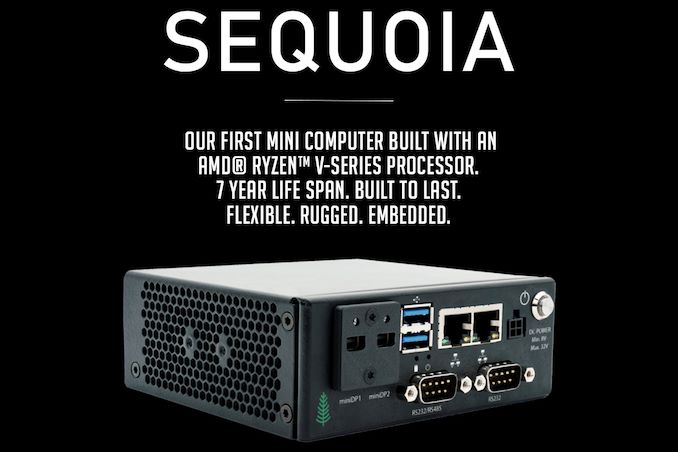
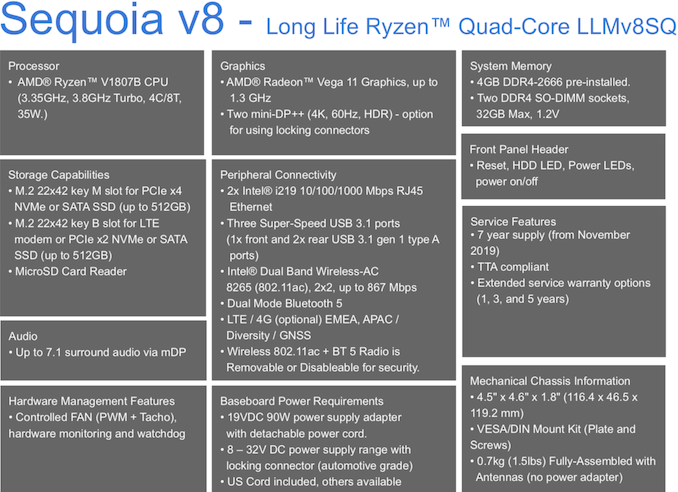
SimplyNUC, a maker of ultra-compact form-factor (UCFF) PCs, has introduced its first PCs that use AMD’s Ryzen Embedded processors. The Sequoia units are rugged commercial systems designed for applications like edge data analytics, electronic kiosks, and digital signage that can withstand up to 95% of relative humidity as well as temperatures as high as 60°C.


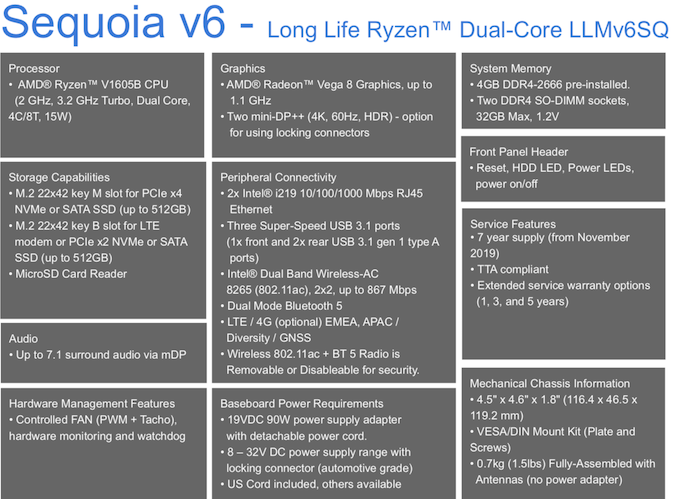
SimplyNUC will offer two versions of its Sequoia UCFF systems: the Sequoia v6 equipped with AMD’s quad-core Ryzen V1605B processor with AMD Radeon Vega 8 graphics, 4 GB of memory, and a 128 GB SSD. Meanwhile the Sequoia v8 is powered by AMD’s quad-core Ryzen V1807B processor with AMD Radeon Vega 11 graphics, 4 GB of DDR4 RAM, and 128 GB SSD. As always with SimplyNUC PCs, the Sequoia computers can be tailor-made in accordance with requirements of a particular client.


UPDATE 11/15: AMD’s Ryzen V1605B is a quad-core processor that was incorrectly called a dual-core CPU by the PC maker.


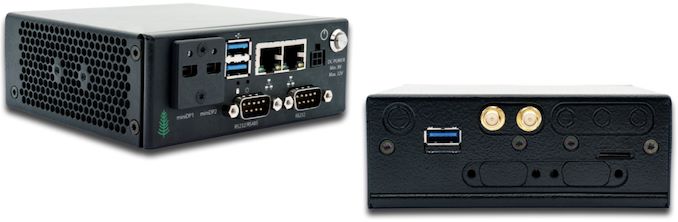
Being flexible systems aimed at a wide range of applications, all SimplyNUC Sequoia UCFF PCs feature very extensive connectivity, which includes Wi-Fi 5, Bluetooth 5, optional 4G/LTE modem, two GbE ports (controlled using Intel’s i210-LM), two Mini DisplayPort outputs, Serial RS-232/Serial RS-485 video outputs, an optional microSD card reader, and several USB 3.1 Gen 2 ports.


When sold in default configurations, SimplyNUC’s Sequoia v6 will cost £445, whereas the Sequoia v8 is to be priced at £560. Since we are talking about embedded systems, the manufacturer guarantees a seven-year supply for the computers (starting from November 2019) and will offer them with warranty options of up to five years.


Related Reading:


Source: SimplyNUC


Source: AnandTech – SimplyNUC Unveils Sequoia: AMD Ryzen V-Series-Based UCFF PC

SMIC Begins Volume Production of 14 nm FinFET Chips: China’s First FinFET Line

SMIC has started volume production of chips using its 14 nm FinFET manufacturing technology. The largest contract maker of semiconductors in China is the first company in the country to join the FinFET club, as only a handful of companies have managed to develop fabrication processes that rely on such transistors. SMIC’s FinFET line is considerably smaller than those of other foundries, yet the fact that the company is using it is already a big deal for China.


SMIC’s previous-generation manufacturing technology is 28 nm, so the 14 nm process tangibly increases transistor density, boosts performance, and lowers power consumption, which naturally enables the company to produce more complex and expensive chips that were otherwise outsourced to its larger rivals. At present, SMIC ramps up production using its 14 nm process technology at one of its 300-mm fabs, so initial volumes are not high. Meanwhile, SMIC’s plans include building up a new 300-mm production line for 14 nm and thinner process technologies with a monthly capacity of 35,000 wafer starts per month. Construction of the fab was completed earlier this year and the company is currently installing production equipment.


In addition to ramp of its 1st Generation FinFET platform, SMIC’s development of its 12 nm process is well underway and there are customers who plan to use the technology. Furthermore, the company is developing more advanced processes, including those that will require extreme ultraviolet lithography (EUVL) tools, that will be used next decade. In fact, the company has even acquired an EUV step-and-scan system from ASML, but it has not been installed so far.


Being relatively small foundry, SMIC is gradually closing the gap between itself and larger rivals when it comes to technology development. Meanwhile, because each new process costs more in terms of R&D, companies need to increase their production volumes to make development financially viable. Therefore, it is crucial for SMIC (and other foundries) to procure advanced production equipment on a timely manner and increase their manufacturing volumes for long-term success.


Dr. Zhao Haijun and Dr. Liang Mong Song, SMIC’s co-CEOs said in their joint statement:


“Over the past two years, we have not only narrowed the advanced technology gap, but also expanded comprehensive mature node technology platforms. We have confidence that with the wave of 5G applications, we will enter a new stage of development.


[…]


FinFET technology development continues to push forward: the first generation of FinFET has already successfully begun mass production and will begin to contribute revenue in the fourth quarter; meanwhile, the development of second generation of FinFET is steady, and customer engagement is smooth. We believe that SMIC will benefit from the extensive business opportunities brought by the upcoming 5G product migration, and we will exit this period of transition and re-enter growth.”


Related Reading:


Source: SMIC


Source: AnandTech – SMIC Begins Volume Production of 14 nm FinFET Chips: China’s First FinFET Line

Intel Recalls Quad Core Xeon CPU Because of Inadequate Stock Cooler

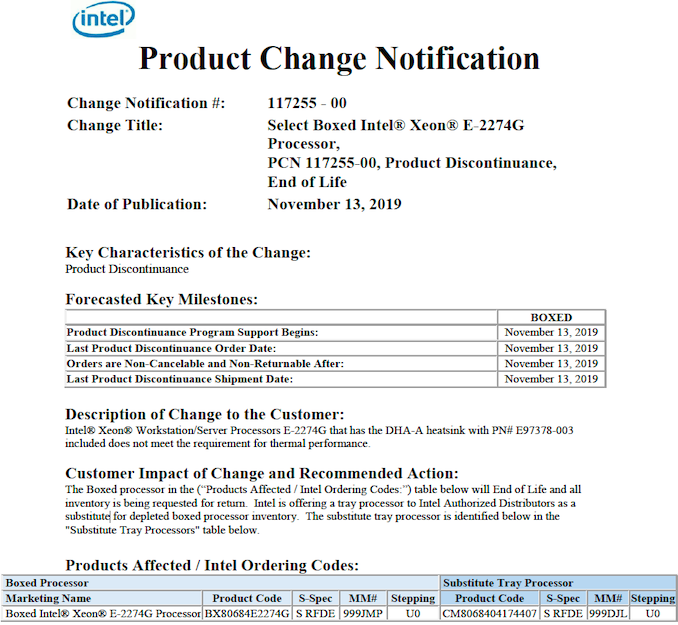
Intel this week recalled one of its boxed processors because the bundled cooling system the company supplied has been found to be insufficient for fully cooling the CPU. For any Intel partners with stock, this specific chip is being recalled, with Intel suggesting a chip-only tray/OEM version as a replacement.


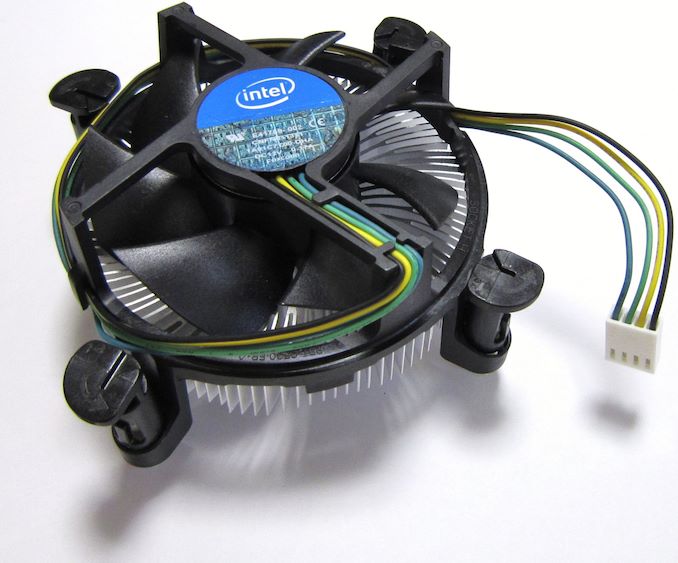
The processor in question is the boxed quad-core Xeon E-2274G (Coffee Lake), which has an official TDP rating of 83 W. The boxed CPU was supplied with Intel’s DHA-A heatsink (PN: E97378-003), which apparently cannot cool the chip well enough to meet Intel’s own requirements. As a result, Intel is recalling the boxed chip. Curiously, Intel has used their DHA-A cooler with chips up to 84W since at least 2013, which makes the whole recall rather bizarre.


Intel’s distributors are advised to return existing inventory of the boxed Xeon E-2274G product and get a tray version instead. It is unclear whether Intel intends to release a new boxed version of its Xeon E-2274G processor with a new cooler, but for now the company recommends to use tray version of the chip with a proper third-party cooling device.


UPDATE 11/18: A source with knowledge of the matter told us that as many as 50 Xeon E-2274G processors were shipped with a ‘wrong’ cooler, which made Intel recall the whole batch.


Related Reading:


Source: Intel

Image Source: Wikipedia


Source: AnandTech – Intel Recalls Quad Core Xeon CPU Because of Inadequate Stock Cooler

Motorola Brings Back The Razr: Flip-Phone In 2020

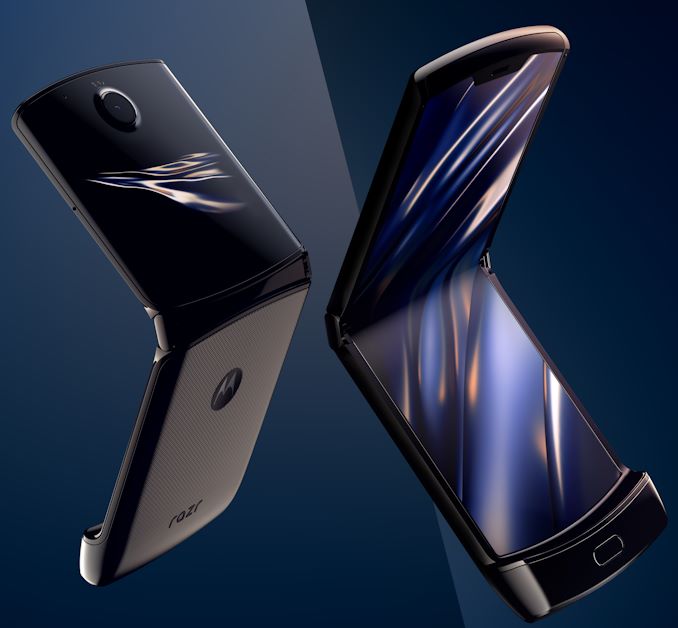
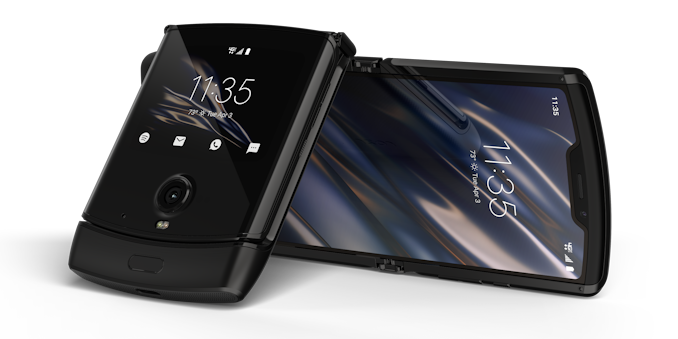
Motorola has today announced a modern successor to one of the most iconic phones ever released: the Razr V3. The popular flip-phone was first released in 2004 and had been a huge success for the company as it went on to sell over a 100M units. The clamshell design was immensely popular as it was a lot thinner and had a unique design. The new Razr takes the core aspects of this design and ports it over to the latest 2019 technologies. At the heart of the new smartphone lies Motorola’s take on foldable displays, giving the new Razr a proper modern “full body screen” experience.


Motorola razr (2020)
  razr (2020)
SoC Snapdragon 710

2x Kryo 360 (CA75)
@ 2.2GHz 
6x Kryo 360 (CA55)
@ 1.7GHz


Adreno 616

DRAM 6GB LPDDR4X
Display Main foldable display

6.2″ pOLED

2142 x 876 (21:9)

External display

2.7″ OLED

800 x 600 (4:3)

Size Height 172 mm unfolded / 94 mm folded
Width 72 mm
Depth 6.9 mm unfolded / 14mm folded
Weight 205 grams
Battery Capacity 2510mAh
Wireless Charging
Rear Cameras
Main 16MP 1.22µm Dual-pixel PD

f/1.7 no OIS
Telephoto
Wide
Extra
Front Camera 5MP 1.12µm

f/2.0
Storage 128GB
I/O USB-C
no headphone jack
Wireless (local) 802.11ac Wave 2 Wi-Fi

Bluetooth 5.0 LE + NFC
IP Rating none
“splash-proof nano-coating”
Other Features It’s a flip-phone


Capacitive fingerprint reader

Dual-SIM eSIM only
Street Price: $1499

At the heart of the new Razr, don’t expect any kind of flagship components as Motorola had to make due with limited internal space. The phone comes with a Snapdragon 710 SoC which is at the mid-range segment. Similarly, the phone comes with 6GB of RAM, but does at least have 128GB of storage.


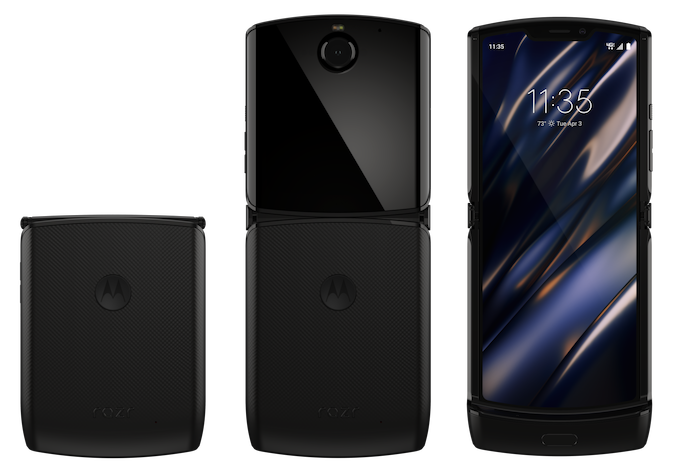
Of course, if you’re interested in the new Razr it’s not because of hardware, but because of its design. Motorola did an excellent job of capturing the Razr clamshell design language and transferring it to the modern age.


At the centre we find a flexible plastic OLED panel with a 6.2” diagonal with a resolution of 2142 x 876. The screen’s elongate 21:9 aspect ratio betrays the true size of the phone as it’s not quite all that wide at 72mm. It’s certainly a bigger form-factor phone than the original Razr which came in at 53mm width.


The top side of the screen sees a display notch – but it’s actually adding to the design of the phone as the whole top design is curved and it has the iconic Razr feel to it. There’s an earpiece speaker as well as a small 5MP f/2.0 front-facing camera.


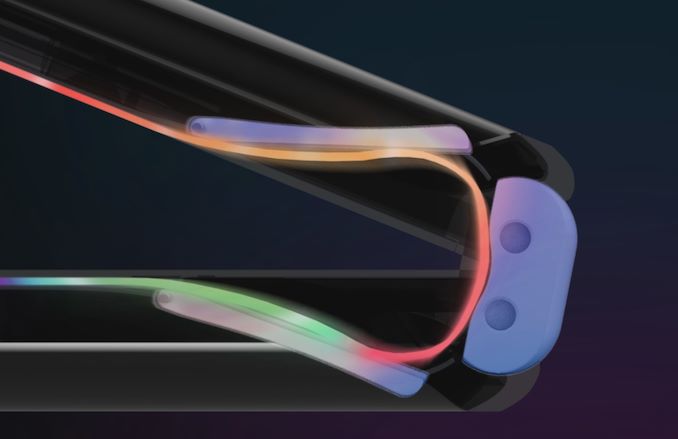
Motorola’s hinge design on the new unit is very unique as the company has been able to avoid some of the compromises and issues as we’ve seen with other foldable phones such as the Galaxy Fold. The main issue with an inward folding phone display is the curvature and radius of the bend – the thickness of your folded design is limited by how aggressively you can actually make the screen fold.


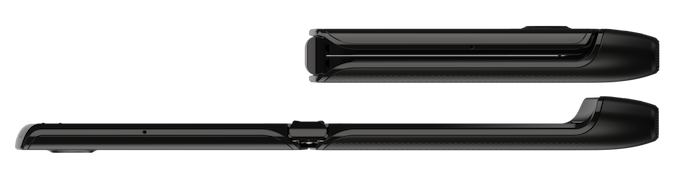
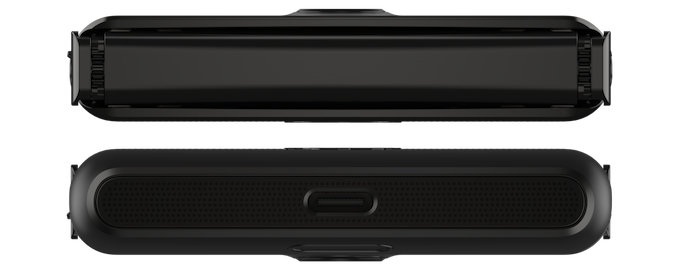
Motorola’s take on the Razr is that the phone has two internal moving plates that allow the screen panel to recess further into the body of the phone when it’s in a folded state, allowing the screen and the bend radius to more fully take advantage of the full 14mm thickness of the phone when it’s folded. Of course, the issue of this design is that you cannot physically achieve it without some give between the screen’s height and the body height as the two cannot be the same between folded and unfolded positions. It’s here that the new Razr’s design is ingenious; when it’s being folded, the whole bottom half of the screen slightly slides into the chin of the phone.


What Motorola did here with this design is allow for more vertical tension on the plastic screen itself. The swivelling internal support plates which allow the screen to bend into the phone body when folded also serve as structural supports for the screen when it’s unfolded. This allows the Razr to essentially solve the middle crease issue we’ve seen in other foldables such as the Galaxy Fold or the Huawei Mate X, giving a much “flatter” screen at the hinge. Motorola’s engineering of the fold screen seemingly seems to be the best we’ve seen so far from any vendor.


Of course, there’s still limitations with the hinge design. For example, there still will be some gaps for particulates to possibly enter the hinge. In Motorola’s renders we see that the hinge gears are visible from the outside when the phone is folded, to which I have to wonder about what happens to the mechanism if there’s any dust or any other debris entering it.


The phone’s I/O consists simply of a USB-C port at the bottom of the phone in the iconic “chin”. We find a bottom speaker and that’s about it in terms of what you’ll find on the phone. There’s no SIM tray as the phone is eSIM only and of course no expandable storage either. The front of the chin sports a fingerprint reader.


When closed, you the front side of the phone looks excellent and the curved glass panel embeds both a secondary display as well as the main camera. The display is also OLED here, but it’s of a smaller 2.7” diagonal featuring a resolution of 800 x 600 in a 4:3 form-factor.


The main camera is a 16MP unit with 1.22µm dual pixel PD in a f/1.7 lens, but it lacks OIS. Frankly given the phone’s extremely limited z-height of 6.9mm when unfolded we weren’t expecting anything more.


Finally, the phone does appear to be quite heavy at 205g, but is nowhere near the weight of other phones such as the Galaxy Fold or Mate X. The battery is 2510mAh is on the smaller side, but it’s also a less demanding SoC as well as a lower resolution display so we can’t say too much about how battery life might end up.


The new Razr launches December 26th for pre-order with availability on January 9th for a price tag of $1499. Clearly it’s going to be more of a fashion phone rather than being a contender in terms of value it brings, but in terms of design and innovation it brings to the foldable phone segment I think Motorola has been able to achieve something special here, and I’m looking forward to experience the new Razr.


Source: AnandTech – Motorola Brings Back The Razr: Flip-Phone In 2020

The AMD Ryzen 9 3950X Review: 16 Cores on 7nm with PCIe 4.0

Deciding between building a mainstream PC and a high-end desktop has historically been very clear cut: if budget is a concern, and you’re interested in gaming, then typically a user looks to the mainstream. Otherwise, if a user is looking to do more professional high-compute work, then they look at the high-end desktop. Over the course of AMD’s recent run of high-core count Ryzen processors that line has blurred. This year, that line has disappeared. Even in 2016, mainstream CPUs used to top out at four cores: today they now top out at sixteen.


Source: AnandTech – The AMD Ryzen 9 3950X Review: 16 Cores on 7nm with PCIe 4.0

Buffalo Releases LXW-10G2/2G4 Switch: Two 10 GbE + Four 2.5 GbE Ports

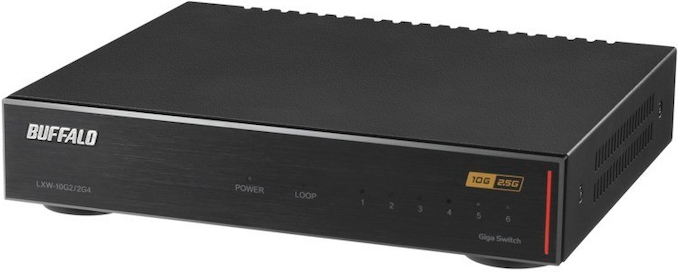
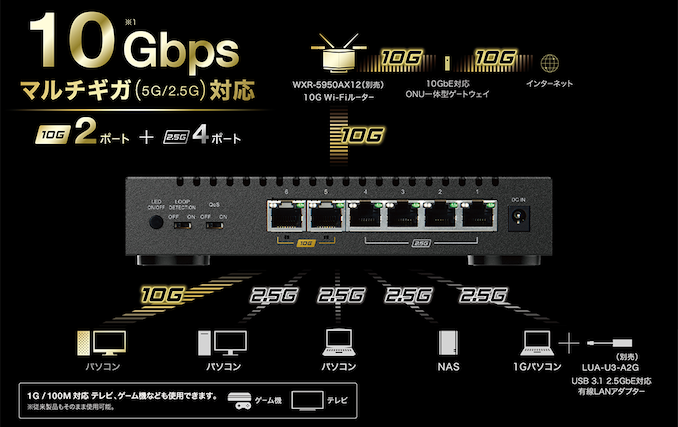
One of the big reasons for why faster-than-GbE networks have not gained traction in the consumer space is due to a lack of appropriate network switches. 10 GbE switches are generally aimed at businesses, and they are priced accordingly. Fortunately, the situation is beginning to change. Buffalo Japan has introduced its new six-port switch featuring two 10 GbE ports and four 2.5 GbE ports that is designed for home use.


Buffalo’s LXW-10G2/2G4 Giga Switch is aimed at homes with a high-speed optical Internet connectivity as well as multiple computers or NAS with 2.5 GbE or 10 GbE network adapters and/or Gigabit-class Wi-Fi. The switch can automatically prioritize 10 GbE connectivity and also supports loop detection to optimize a network’s configuration and performance. Besides the switch, Buffalo also offers its WXR-5950AX12 10G Wi-Fi router as well as LUA-U3-A2G 2.5 GbE USB adapter for PCs.


Buffalo’s LXW-10G2/2G4 switch will be available starting from mid-December exclusively in Japan, but nothing stops the company to start sales of the product elsewhere. The price of the switch will be approximately ¥34,000 including taxes ($312 with VAT, $283 w/o VAT), which is quite expensive even by Japanese standards. Though at least for the time being, it’s a rather unique offering in the consumer switch space; similar switches with a mix of ports have generally combined 10 GbE with pure GbE, so the use of 2.5 GbE ports makes for an interesting development.


Related Reading:


Source: Buffalo Japan (via PC Watch, Hermitage Akihabara)


Source: AnandTech – Buffalo Releases LXW-10G2/2G4 Switch: Two 10 GbE + Four 2.5 GbE Ports

Rambus Unveils PCIe 5.0 Controller & PHY

Rambus has developed a comprehensive PCIe 5.0 and CXL interface solution for chips built using 7 nm process technologies. The interface is now available for licensing by SoC designers and will enable them to bring PCIe 5.0/CXL-supporting hardware to the market faster.


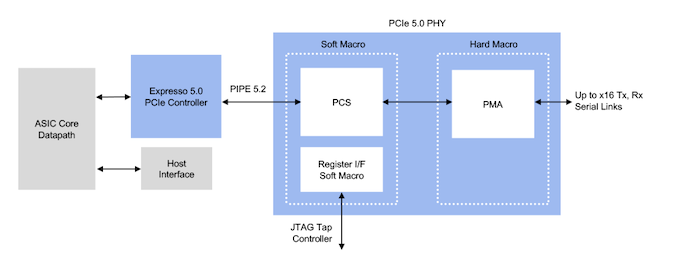
Rambus’ PCIe 5.0 solution includes a controller core originally developed by Northwest Logic (which was recently acquired by Rambus) and is backwards compatible with PCIe 2.0, PCIe 3.0 and PCIe 4.0, as well as a PHY that also supports CXL. The solution supports 32 GT/s per lane data transfer rate and is designed for advanced 7 nm FinFET process technologies. Besides the IP itself, Rambus will also offer design, integration, and support services to speed up the development process.


Rambus believes that its PCIe 5.0 solution will be used by developers of processors for AI, HPC, storage, and 400 GbE networking applications. Considering the fact that many of the upcoming accelerator chips will use the CXL interface, it is important that Rambus’ PHY also support the new technology.


Rambus did not disclose how much its PCIe 5.0 solution will cost to its licensees.


Related Reading:


Source: Rambus


Source: AnandTech – Rambus Unveils PCIe 5.0 Controller & PHY

AMD Adds Radeon RX 5300M To Mobile GPU Lineup

Over the second-half of this year, AMD has been gearing up to cascade their latest Radeon graphics architecture to successively cheaper and more mainstream products. Last month we saw the announcement of the mid-tier Radeon RX 5500 and RX 5500M series for desktop and mobile respectively. And now this morning the company is adding a third tier of Radeon mobile discrete graphics to their lineup, with the addition of the Radeon RX 5300M series.


Revealed alongside today’s 16-inch MacBook Pro announcement – with Apple once again getting their own exclusive Radeon Pro SKUs – the 5300M represents the further proliferation of AMD’s Radeon RDNA architecture. Based on AMD’s Navi 14 GPU, AMD is tapping their (currently) smallest Navi chip to offer a lower performing and presumably lower priced graphics adapter for laptop use.


AMD Radeon RX Series Mobile Specification Comparison
  AMD Radeon RX 5300M AMD Radeon RX 5500M AMD Radeon Vega Pro 20 AMD Radeon RX 560X
CUs 22 22 20 14/16
Texture Units 88 88 80 64
ROPs 32 32 32 16
Game Clock 1181MHz 1448MHz N/A N/A
Boost Clock 1445MHz 1645MHz 1300MHz 1275MHz
Throughput (FP32) 4.1 TFLOPs 4.6 TFLOPs 3.3 TFLOPs 2.6 TFLOPs
Memory Clock 14 Gbps GDDR6 14 Gbps GDDR6 1.5 Gbps HBM2 7 Gbps GDDR5
Memory Bus Width 96-bit 128-bit 1024-bit 128-bit
Max VRAM 3GB 4GB 4GB 4GB
Typical Board Power ? 85W ? ?
Architecture RDNA (1) RDNA (1) Vega

(GCN 5)
GCN 4
GPU Navi 14 Navi 14 Vega 12 Polaris 11
Launch Date Q4 2019 Q4 2019 10/2018 04/2018

At a high level, the 5300M is a further cut down version of Navi 14. AMD has held the number of CUs constant at 22 (which was already a cut-down amount from a full chip), and instead they’ve cut the memory bus instead. By disabling one of the 4 memory partitions, the resulting chip ends up with a 96-bit GDDR6 memory bus, and a proportional drop in memory bandwidth. The end result is that the 5300M gets a maximum of 168GB/sec of memory bandwidth, down from 224GB/sec in 5500M. This also limits the card to 3GB of VRAM, further differentiating the 5300M from the 5500M, and lowering the total bill of materials costs for OEMs.


Otherwise, while the processing core of the GPU hasn’t been cut back further in terms of hardware, the 5300M does ship with noticeably lower clocks. The game clock for the new adapter is just 1181MHz, 267Mhz lower than on the 5500M. The net result is that, on paper, shading, texturing, compute, and ROP performance should all be around 82% of 5500M’s performance, not counting the hit from the reduced memory bandwidth.


Meanwhile, AMD unfortunately isn’t disclosing TDPs for the new mobile part. So it’s not clear how much lower (if at all) the power consumption of the 5300M is. The drop in clockspeeds as well as the narrower memory bus should help to reduce power consumption, however there’s a wildcard in how much AMD needs to bin for power for their mobile parts.


At any rate, like the Radeon RX 5500M series, the Radeon RX 5300M is officially launching this quarter. With Apple seemingly having first dibs on the Navi 14 silicon, expect to see it show up in other laptops soon.


Source: AnandTech – AMD Adds Radeon RX 5300M To Mobile GPU Lineup

Seagate Reveals FireCuda Gaming Dock: TB3 Dock With 4 TB HDD & M.2 NVMe SSD Bay

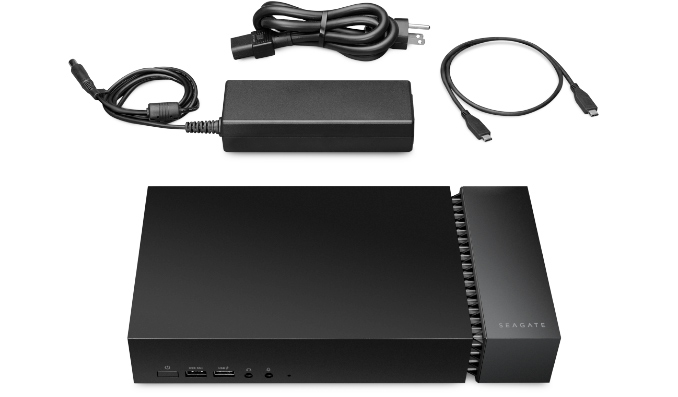
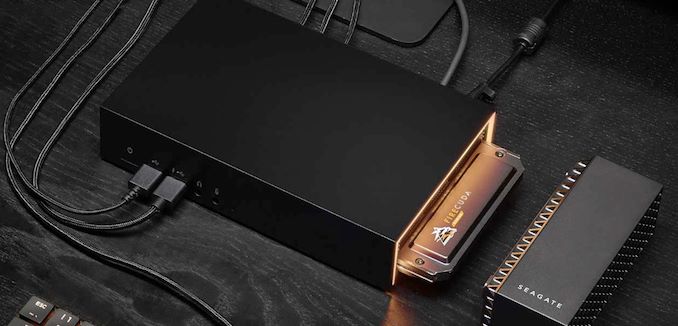
Seagate has introduced its first Thunderbolt 3 docking solution designed specifically for laptop gamers. Seagate’s FireCuda Gaming Dock includes a hard drive, an M.2 SSD slot, and features a variety of essential connectors, few of which are found in large numbers on today’s ultra-compact notebooks.


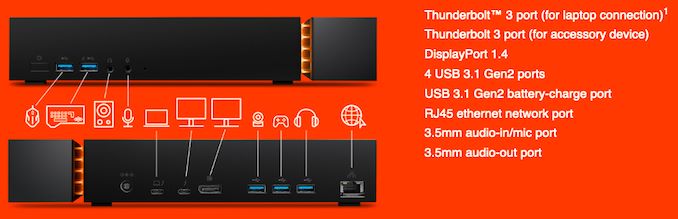
Seagate’s FireCuda Gaming Dock (STJF4000400) is designed to expand the storage capacity of today’s laptops and add ports required to attach various peripherals. The device comes with a built-in 4 TB hard drive, and also has an M.2 PCIe 3.0 x4 slot for an additional SSD to boost performance and add capacity if needed. In addition, the docking station offers a GbE port, five USB 3.1 Gen 2 ports, an extra Thunderbolt 3 port to daisy chain more TB3 devices, a DisplayPort 1.4 output, a headphone output, and an audio-in connector.


In a bid to appeal to gamers, the FireCuda Gaming Dock has integrated RGB LEDs that can be controlled using the company’s own software.


By launching its FireCuda Gaming Dock, Seagate is looking to address the market of modern ultra-thin notebooks from the outside-in, as fewer and fewer laptops come with user-accessible/upgradable storage. By and large, Seagate is banking on the fact that mobile PCs generally lack space to store games, and may not have enough ports for a full suite of peripherals. Therefore, integrating storage into a TB3 docking station makes a lot of sense.


Seagate’s FireCuda Gaming Dock will be available later this month for $349.99.


Related Reading:


Source: Seagate


Source: AnandTech – Seagate Reveals FireCuda Gaming Dock: TB3 Dock With 4 TB HDD & M.2 NVMe SSD Bay

Apple’s 2019 Mac Pro and Pro Display XDR Will Be Available in December

Alongside today’s 16-inch MacBook Pro announcement, Apple has also confirmed that their long-awaited redesign of the Mac Pro, which has been due this fall, will be launching next month.


Apple’s upcoming Mac Pro desktop will be the company’s highest-performing desktop in years and will address the key issues of the cylindrical Mac Pro, namely insufficient graphics performance as well as limited expandability. The Mac Pro systems will be based on Intel’s Xeon W processors with up to 28 cores paired with up to 1.5 TB of DDR4-2933 as well as up to 4 TB of solid-state storage (using two SSDs based on the T2 controller). To offer its customers a whopping compute and graphics performance, Apple will equip its Mac Pro with up to two AMD Radeon Pro Vega II Duo graphics cards in MPX form-factor with a total of 16384 stream processors (4096 SPs per GPU) and 128 GB of HBM2 memory (32 GB per GPU). Furthermore, the systems may be equipped with the Afterburner ProRes and ProRes RAW FPGA-based accelerator card, or any other accelerator that is compatible with PCIe 3.0 bus (granted that the system has 64 PCIe lanes). In fact, with a 1.4 kW PSU, the new Mac Pro could accommodate quite a lot of options.


With the new Mac Pro workstation offering massive performance, its owners will naturally benefit from new high-resolution displays and here Apple has a unique proposition with its unique Pro Display XDR, which is also due out in December. The 32-inch monitor is based on a 10-bit IPS panel and features a 6016×3384 resolution, 1,000 nits – 1,600 nits brightness (sustained/peak), and a 1,000,000:1 contrast ratio because of Mini-LED backlighting.


Apple will start taking orders on its new Mac Pro as well as Pro Display XDR in December. The Mac Pro workstation will start at $5,999 for a version with an eight-core processor. The standard version of the monitor will be priced at $4,999, whereas a model with nano-texture glass will be priced at $5,999. The display will come without a stand or VESA mount adapter that will have to be acquired separately for $999 and $199, respectively.


Related Reading:


Source: Apple


Source: AnandTech – Apple’s 2019 Mac Pro and Pro Display XDR Will Be Available in December

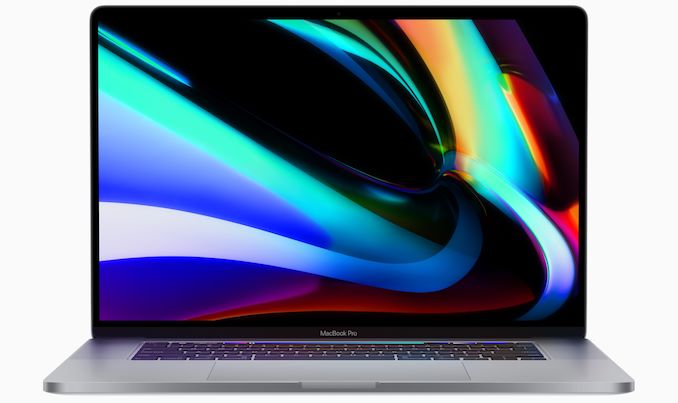
Apple Rolls Out 16-Inch MacBook Pro: A Bit Bigger, A Bit More Refined

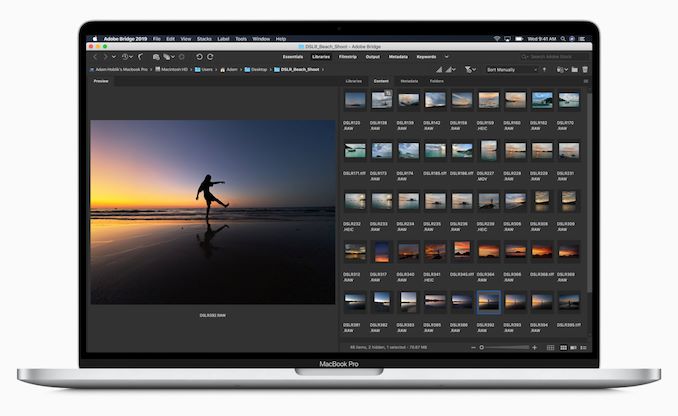
With rumors swirling for the last few months a new high-end MacBook Pro laptop from Apple, the company this morning is making those rumors a reality, announcing and launching the 16-Inch MacBook Pro. Replacing Apple’s 15-inch model, the new laptop is a half-step of sorts for Apple to improve their flagship professional laptop, addressing some long-simmering critiques about the laptop, but not radically overhauling the unibody-built, Touch Bar-equipped laptop design that Apple has used since 2016. The end result is a laptop that’s an incremental improvement over the 15-inch models, with Apple making the new laptop a bit larger, a bit more powerful, and significantly overhauling their problematic Butterfly Switch keyboard.


Apple’s MacBook Pro lineup of course needs no introduction. The company pioneered a lot of the design elements that have become common-place across the industry in premium laptops, including the ultrabook-like thin & light design, high-DPI (Reinta) displays, and more. However the most recent generation of models have been received with less enthusiasm, as Apple’s continued focus on thinness and soldering down components has run headlong into traditional expectations for what a “professional” laptop should entail. And while Apple is not one for mea culpas, I don’t think there’s any doubt that the 16-inch MacBook Pro design is an effort to respond to some of the biggest criticisms about the previous 15-inch design.


Overall then, the new 16-inch MacBook Pro is not a radically departure from the 15-inch in terms of the design. There are a few tells in the design – small changes that you’ll spot if you know what to look for – but externally Apple has kept to the same unibody design that we’ve seen since the first wave of Touch Bar notebooks in 2016. So from the outside, the 16-inch laptop looks like an ever-so-larger version of the 15-inch model.


And indeed, the laptop’s larger footprint sounds bigger than it actually is. While Apple called their previous laptop the 15-inch MacBook Pro, the actual screen was 15.4-inches diagonal, while this one is 16-inches flat. So with just a 0.6-inch increase in screen size and some slightly smaller bezels, the footprint of the 16-inch model is only 5% larger than the 15-inch model. So it’s just enough to not be the same size as the previous MacBook Pro, but also not substantially larger ala the long-retired 17-inch model. Meanwhile the new model has bulked up just a bit in weight and height as well; at 2kg, it’s 0.17 kg heavier, and Apple has added another 0.7mm to the height, bringing it to 16.2mm. Overall this means that although the new laptop is decidedly not identical to the 15-inch laptop it replaces, it’s very much a similar successor that’s meant to fit in to the same role as the earlier model.


MacBook Pro 15 & 16-Inch (Base Models)
Model 2019 (16-inch) 2019 (15-inch) 2018 (15-inch) 2017 (15-inch)
CPU 2.6 GHz

Core i7-9750H

6 CPU Cores

(Coffee Lake-R)
2.6 GHz

Core i7-9750H

6 CPU Cores

(Coffee Lake-R)
2.2GHz

Core i7-8750H

6 CPU Cores

(Coffee Lake)
2.8GHz

Core i7-7700HQ

4 CPU Cores

(Kaby Lake)
GPU Intel UHD Graphics 630 + AMD Radeon Pro 5300M (4GB) Intel UHD Graphics 630 + AMD Radeon Pro 555X (4GB) Intel HD Graphics 630 + AMD Radeon Pro 555 (2GB)
Display 16″ 3072 x 1920 IPS LCD

P3 Gamut

True Tone
15.4″ 2880 x 1800 IPS LCD

P3 Gamut

True Tone
15.4″ 2880 x 1800 IPS LCD

P3 Gamut
Memory 16GB DDR4-2666 16GB DDR4-2400 16GB LPDDR3-2133
SSD 512GB PCIe SSD 256GB PCIe SSD
Touch Bar Yes
I/O 4x Thunderbolt 3 (supports DP1.2 & USB 3.1 Gen 2 modes),

3.5mm Audio
Battery Capacity 100 Wh 83.6 Wh 76 Wh
Battery Life 11 Hours 10 Hours
Dimensions 1.62 cm x 35.79 cm x 24.59 cm 1.55 cm x 34.93 cm x 24.07 cm
Weight 4.3 lbs (2.0 kg) 4.02 lbs (1.83 kg)
Price $2399 $2399 $2399 $2399

Headlining the new laptop is of course its 16.0-inch display. The 0.6 longer diagonal nets an 8% gain in total screen real estate, and Apple has scaled up the display resolution accordingly. The resulting 3072 x 1920 resolution panel is just a bit denser than the old 15-inch panel – offering 226 PPI versus 220 PPI – however in practice I don’t expect the difference to be noticeable (if Apple were really looking to increase their density, they would have needed to go to 4K or beyond). Otherwise the display is similar to the last generation, using an IPS panel with support for the P3 color space, and a maximum brightness of 500 nits.


The Magic Keyboard: Butterfly Out, Scissor Back in


Going under the hood, even the small increase in the laptop’s volume is still enough to make a big difference throughout the laptop, as Apple has essentially rolled back some of the changes they’ve made in previous generations to slim down the laptop. The biggest of which is, of course, the keyboard. While I remain a fan of the butterfly keyboard, there’s no getting around the fact that, despite Apple’s best efforts, it developed long-term reliability concerns, particular with dust ingress. Even after 3 revisions, the issue apparently wasn’t entirely resolved, and so Apple is rolling back the butterfly mechanism entirely.


Replacing the butterfly is a more traditional switch mechanism, which is what Apple eliminated in the first place. Unfortunately, unlike with the butterfly switch’s launch, the company isn’t providing any handy diagrams of the new switch, so it’s hard to say just how “traditional” it really is. A big part of the reason Apple stopped using switch style in the first place was that they weren’t happy with the stability of the keys, so I would assume they’ve found another way to address that issue.


At any rate, the new Magic Keyboard offers a whole lot more key travel than the previous butterfly mechanism. According to Apple, the newest keyboard offers a full 1mm of key travel, which is almost double the 0.55mm the older, butterfly-based keyboard offered. So reliability concerns aside, for anyone who wasn’t happy with the shallow key travel of the recent MacBook Pro models, the new keyboard may be more up your alley.


Apple is also using the occasion to (thankfully) make a couple of other key-related changes to their keyboard. First off, the new keyboard marks the return of a physical Escape key, shortening the Touch Bar just slightly to accommodate the key. The lack of a physical key has been one of the longstanding critiques about the Touch Bar MacBook Pro models, as it’s a heavily used key in some application environments. Meanwhile the arrow keys have been harmonized; Apple is now using a more traditional inverted-T setup, making all four keys half-height, rather than having the left and right keys being full-size keys while the up/down keys were half-height.


Battery Size & Cooling


The other big change under the hood is total battery capacity. For their latest MacBook Pro, Apple is shipping the laptop with a 100 Watt-hour battery, which for practical purposes is the absolute largest battery they can even ship in a laptop – any larger and special permission is required to bring them on airplanes. Prior to this, Apple had shipped batteries as large as 99.5 Whr in the last revision of the 3rd generation MacBook Pro, however Apple cut the battery size beginning with the Touch Bar models, and has slowly been increasing it since then. Overall, the new battery is 16.4 Whr (~20%) larger.


The net result of the new battery is that Apple’s official battery life figures are being bumped up an hour, from 10 hours on the 15-inch MacBook Pro to 11 hours on the 16-inch laptop. Which, as I’m sure some of our readers will have noted by now, is a smaller change than you’d expect for a 20% jump in battery capacity. And to answer why that is, let’s talk about cooling.


Further taking advantage of their extra volume, Apple has refined their cooling design for the new laptop. While Apple’s previous design was arguably no slouch, it was definitely tuned to size and volume over performance; a sensible decision in 2016, but less so in 2019. Without recapping the entire history of Intel CPUs, in the last 4 years Intel has doubled the number of cores in their chips while only making moderate improvements in their power efficiency, and as a result the amount of power required to run the entire chip during heavy workloads has been creeping up. So the MacBook Pro hasn’t entirely kept up with the needs of a now 8 core processor running at full tilt.
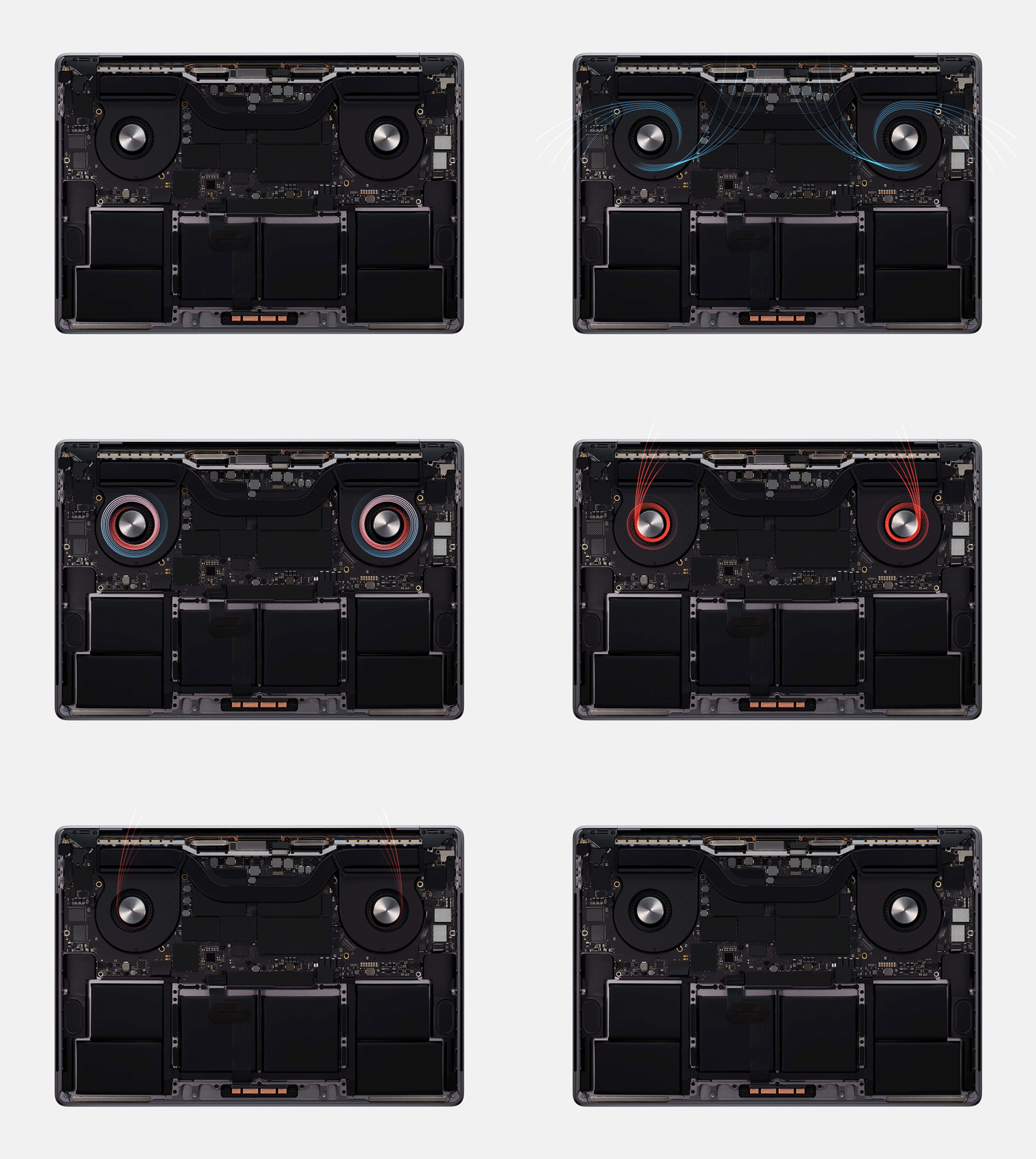


To that end, Apple’s revised cooling design incorporates more of everything: more heatsink mass, more heatsink surface area, and more airflow running through those heatsinks. As a result, the 16-inch MacBook Pro can sustain 12 more watts of thermal dissipation, according to Apple. Unfortunately the company doesn’t quote the previous generation figure, so we don’t know what the total is, but 12 more watts is still significant in a 15/16-inch laptop, and should go a long way towards allowing the CPU and GPU to stay at higher turbo clockspeeds for longer.


Intel Inside & AMD GPUs Too


And for the moment at least, Apple’s CPU cooling needs won’t be changing. The company refreshed their 15-inch MacBook Pro just this summer with Intel’s latest 6 and 8 core chips, ranging from the Core i7-9750H up to the Core i9-9980HK. These are still Intel’s best chips for high-end (45W TDP) laptops, so these are the same CPUs that are going into Apple’s newest hardware.


A much more significant change, however, is on the GPU side of matters. The new laptops continue to use discrete mobile GPUs, and for their new laptop Apple is tapping AMD’s newest Radeon Pro 5300M and Radeon Pro 5500M mobile GPUs. These are based on AMD’s 7nm RDNA architecture, offering significant gains in performance and power efficiency over the Radeon Pro 500 (Polaris) chips that they replace.


AMD Radeon Mobile Specification Comparison
  AMD Radeon Pro 5500M AMD Radeon Pro 5300M AMD Radeon RX 5500M AMD Radeon Vega Pro 20
CUs 24 20 22 20
Boost Clock ~1300MHz ~1250MHz 1645MHz 1300MHz
Throughput (FP32) 4.0 TFLOPs 3.2 TFLOPs 4.6 TFLOPs 3.3 TFLOPs
Memory Clock 12 Gbps GDDR6 12? Gbps GDDR6 14 Gbps GDDR6 1.5 Gbps HBM2
Memory Bus Width 128-bit 128-bit 128-bit 1024-bit
Max VRAM 8GB 4GB 4GB 4GB
Architecture RDNA (1) RDNA (1) RDNA (1) Vega

(GCN 5)
GPU Navi 14 Navi 14? Navi 14 Vega 12
Launch Date 11/2019 11/2019 Q4 2019 10/2018

As these are Apple-specific SKUs, AMD doesn’t offer a whole lot of details about the new chips, but the specifications are similar to AMD’s Radeon RX 5500M, which was announced last month. Notably, Apple’s Radeon Pro 5500M SKU has 2 more active CUs than the open market Radeon RX 5500M; however overall throughput is lower, as Apple surely running their SKUs at lower TDPs. Joining this is also the Radeon Pro 5300M, which is the base SKU for the new MacBook Pro. On paper, this chip offers around 20% lower performance than the 5500M. Meanwhile Apple is also segmenting their GPU options by VRAM; while the 5300M comes with just 4GB of GDDR6 memory, the 5500M is available with both 4GB and a rather unique to Apple 8GB of VRAM.


Overall, Apple is claiming that the new GPUs offer a significant improvement in performance over Apple’s previous generation 15-inch laptop. The Radeon Pro 5300M should be 120% faster than the Radeon Pro 555X used in the last-generation base models, while the Radeon Pro 5500M is said to offer 80% more performance than the outgoing Radeon Pro 560X.


More Memory, More Storage, More Profit


Shifting gears, Apple is also further ramping up their memory and storage capacity options for the new notebook. After moving to DDR4 and adding a 32GB option on the last-generation notebook, for the new 16-inch model Apple is doubling the DRAM options again, with the new top-end SKU now offering 64GB of DRAM. Better still, memory speeds are being increased slightly, from DDR4-2400 to DDR4-2667, so the new laptop gets 11% more memory bandwidth. Do note, however, that the base models still only come with 16GB of RAM, so that much hasn’t changed.


Apple is thankfully also increasing their storage options across the board. The base configuration for the MacBook Pro 16-inch includes 512GB of flash, up from 256GB in the last generation. Meanwhile the high-end has increased by the same increment as well, and as a result Apple is now offering laptops with a whopping 8TB of storage. While I don’t expect Apple to be alone here for too long, for practical purposes this is a new record for laptop storage; the only other laptops I know that come close are large laptops that are RAIDing together two SSDs. This, I suspect, is Apple flexing its muscles on the chip and integration front; producing their own SSD controller (as part of the T2) means they aren’t reliant on component suppliers in the same way that other vendors are.


But the extra RAM and storage options will set your wallet back significantly. Apple is charging $400 to go from 16GB to 32GB of RAM, and another $400 on top of that to make it 64GB. Meanwhile the 1TB of storage upgrade runs for $200, and 8TB of storage is a $2400 upgrade – the cost of a whole 16-inch MacBook Pro to being with. So it goes without saying that Apple’s upgrade pricing remains ridiculously steep; Apple is charging around 3x to 4x what the DRAM and NAND cost in the spot market. Unfortunately everything is still soldered down as well, so potential MacBook buyers will have to decide up-front how much RAM and on-board storage they wish to pay for.


Rounding out the package, Apple has also given their audio system an upgrade. The embiggened laptop now incorporates a 6 speaker setup, as well as what Apple is calling “force‑cancelling woofers” to minimize the vibrations caused by their speakers. The platform has also added support for Dolby Atmos audio. Meanwhile, according to the company’s press release, they’ve also improved the triple microphone array to reduce hiss by 40% and improve the overall signal to noise ratio. Apple’s spec sheets also specifically mention beamforming, but it’s not clear how much of this is new and how much of it is simply something Apple wasn’t previously disclosing.


What’s Not Changing


For all of the changes big and small in the 16-inch MacBook Pro, there are also several elements that aren’t changing from the previous 15-inch laptop; or at least aren’t changing enough for Apple to even bother noting the change in their specifications. As I noted towards the start, this laptop is something of a half-step forward, so not everything has received the same focus as the keyboard and cooling system.


The biggest surprise to me is that Apple hasn’t upgraded their wireless capabilities at all; the 16-inch MacBook Pro still ships with 802.11ac (Wi-Fi 5) wireless. For a long time, Apple was on the cutting-edge of wireless support, being among the first vendors to add support for new wireless technologies and standards. So it’s a surprise that a high-end laptop being launched by the company in late 2019 isn’t going to ship with Wi-Fi 6, which Apple already made available in their phones a bit earlier this year.


Meanwhile don’t expect any new wired I/O options either. Apple has retained the same 4 port Thunderbolt 3 setup, with 2 of the TB3-enabled USB-C ports on either side of the laptop. This is joined by a 3.5mm combo jack. Admittedly the internal plumbing of these laptops hasn’t changed – Apple would still need more PCIe lanes for more TB3 ports – but including just 4 USB-C ports has remained a friction point with some Apple users.


Don’t expect a better camera, either. Apple is still shipping the same 720p FaceTime HD camera as they have been for the past several years.


Pricing & Availability


Wrapping things up, the launch of the 16-inch MacBook Pro is a hard launch for Apple. The company is taking orders now, with delivery dates as soon as this week. Meanwhile the laptop will be available at brick & mortar stores a bit later, which judging from Apple’s past launches is usually a week or two of lag time.


Pricing starts at $2399 for the base model, and $2799 for the upgraded model. Further build-to-order options go as high as $6099.


Source: AnandTech – Apple Rolls Out 16-Inch MacBook Pro: A Bit Bigger, A Bit More Refined

The SK Hynix Gold S31 SATA SSD Review: Hynix 3D NAND Finally Shows Up

SK Hynix has been in the NAND and SSD business for a long time, but we haven’t had the opportunity to review a drive with SK Hynix NAND in years. SK Hynix 3D NAND has been considerably more popular in mobile applications like smartphones and memory cards, and their client OEM SSDs are widespread but not sampled for review.


This year, SK Hynix decided to start competing directly in the retail SSD market by introducing the SK Hynix Gold S31 SATA SSDs. The Gold S31 showcases SK Hynix’s vertical integration with the NAND, DRAM, controller and firmware all produced in-house. 


Source: AnandTech – The SK Hynix Gold S31 SATA SSD Review: Hynix 3D NAND Finally Shows Up

ASUS & Google Team Up for ‘Tinker Board’ AI-Focused Credit-Card Sized Computers

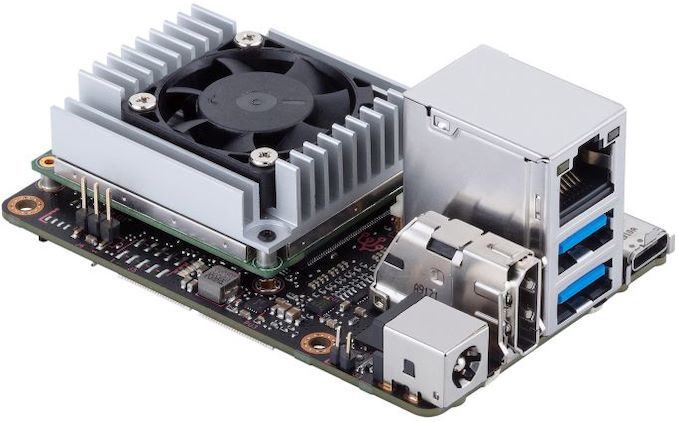
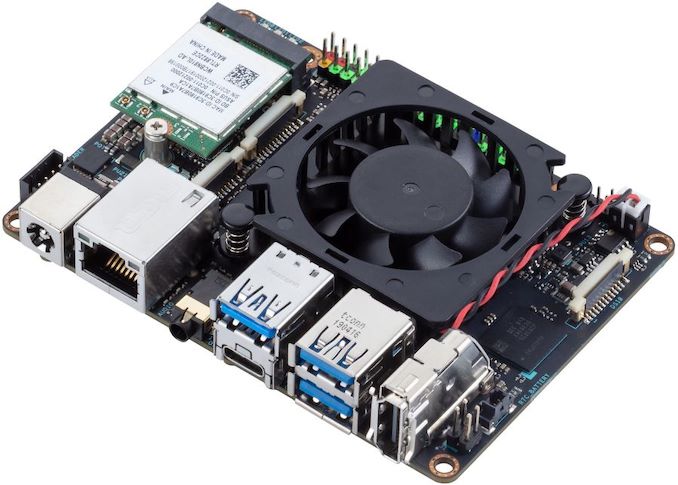
ASUS and Google have joined forces to develop a new project that the companies are calling ‘Tinker Board’ single board computers (SBCs). With a footprint not much larger than a credit card, the systems are designed for building small systems to work on AI inference applications like image recognition.


The systems in question are the Tinker Edge T and Tinker Edge R. The former is based on the NXP i.MX8M with an Edge TPU chip that accelerates TensorFlow Lite, whereas the Tinker Edge R is powered by the Rockchip RK3399 Pro processor with an NPU for 4K machine learning. The SBCs officially support Android and Debian operating system, though nothing prevents them from running Linux or other OSes.


Both Tinker Edge T and Tinker Edge R computers feature active cooling as well as mainstream I/O interfaces, including GbE, USB 3.0, and HDMI.


ASUS and Google position their Tinker Edge T and Tinker Edge R for various edge AI applications that have to be compact and very energy efficient.


ASUS plans to demonstrate its Tinker Edge T and Tinker Edge R SBCs at the IoT Technology 2019 conference in Japan, which kicks off on November 20. Pricing of the devices remains to be seen, but it will depend on volumes and other factors.


Related Reading:


Source: ASUS (via PC Watch)


Source: AnandTech – ASUS & Google Team Up for ‘Tinker Board’ AI-Focused Credit-Card Sized Computers

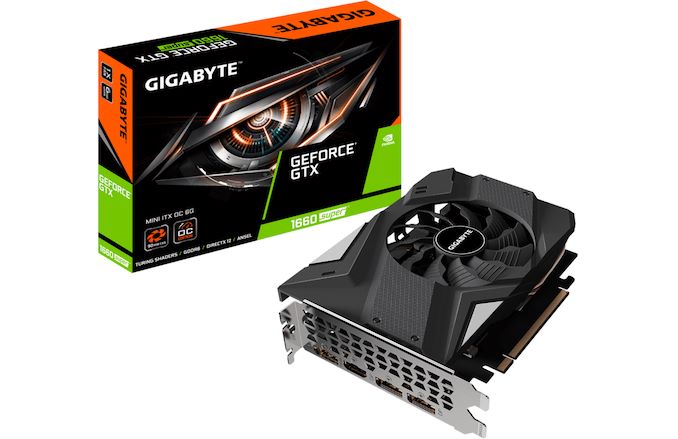
ASUS & GIGABYTE Prep Mini-ITX GeForce GTX 1660 Super Cards

Last week NVIDIA introduced its latest GeForce GTX 1660 Super performance mainstream GPU. There are plenty of designs to chose from, and both ASUS and GIGABYTE are now set to offer small form factor designs. 


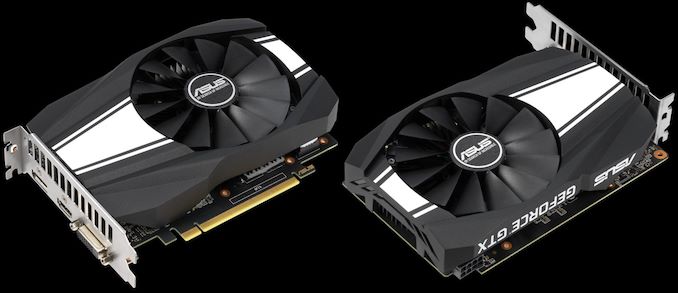
ASUS has two new GeForce GTX 1660 Super boards that are 17.4 centimeters (6.9 inches) long. The ASUS Phoenix PH-GTX1660S-6G and Phoenix PH-GTX1660S-O6G cards are based on NVIDIA’s TU116 GPU with 1408 CUDA cores, carry 6 GB of GDDR6 memory, share the same PCB design with one 8-pin auxiliary PCIe power connector, feature three display outputs (DVI-D, DP 1.4, HDMI 2.0b), and use the same dual-slot cooling system with one dual ball bearing fan. The only difference between the two are their clocks and even they are pretty close: up to 1815 MHz vs 1830 MHz in OC mode.


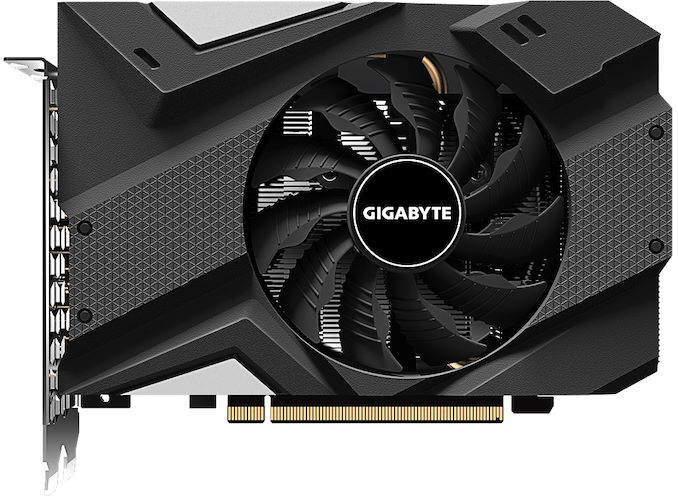
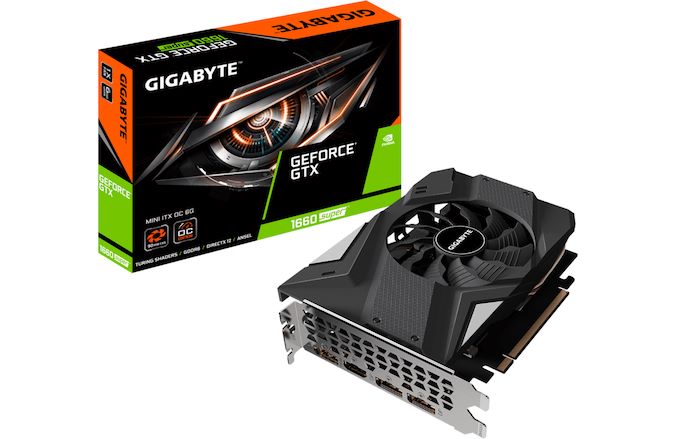
GIGABYTE has a more ‘canonical’ GeForce GTX 1660 Super Mini ITX OC 6G (GV-N166SIXOC-6GD) board that is exactly 17 centimeters long. The card has NVIDIA’s TU116 GPU clocked at up to 1800 MHz, 6 GB of 14 Gpbs GDDR6 RAM, uses a dual-slot single-fan cooler with a heat pipe that can stop the fan in idle mode, has an 8-pin PCIe power connector, and offers four display outputs (DP 1.4, HDMI 2.0b).


NVIDIA GeForce GTX 1660 Super Graphics Cards for Mini-ITX
  NVIDIA

Reference
ASUS

Phoenix
PH-GTX1660S-6G
ASUS

Phoenix
PH-GTX1660S-O6G
GIGABYTE
GV-N166SIXOC-6GD
CUDA Cores 1408
ROPs 48
Core Clock 1530 MHz 1530 MHz (?)
Boost Clock 1785 MHz 1815 MHz 1830 MHz 1800 MHz
Memory Clock 14 Gbps GDDR6
Memory Bus Width 192-bit
VRAM 6 GB
Single Precision Perf. 5 TFLOPS ~5 TFLOPS
Display Outputs 1×DVI-D

1×DP 1.4

1×HDMI 2.0b
1×DVI-D

1×DP 1.4

1×HDMI 2.0b
3×DP 1.4

1×HDMI 2.0b
TGP 125W ? ? ?
GPU TU116

(284 mm2)
Transistor Count 6.6B
Architecture Turing
Manufacturing Process TSMC 12nm “FFN”
Launch Date 10/29/2019 Q4 2019
Launch Price $229 ? ? ?

All three graphics cards are listed at ASUS’ and GIGABYTE’s websites, so expect them to be available shortly. Pricing wise, they should not be much more expensive than NVIDIA’s $229 MSRP for the GeForce GTX 1660 Super.


Related Reading


Sources: ASUS (1, 2), GIGABYTE


Source: AnandTech – ASUS & GIGABYTE Prep Mini-ITX GeForce GTX 1660 Super Cards

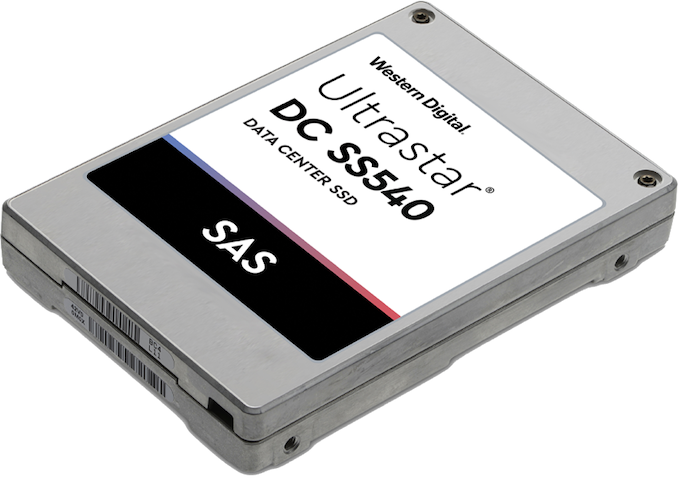
Western Digital Ultrastar DC SS540 SAS SSDs: Up to 15.36 TB, Up to 3 DWPD

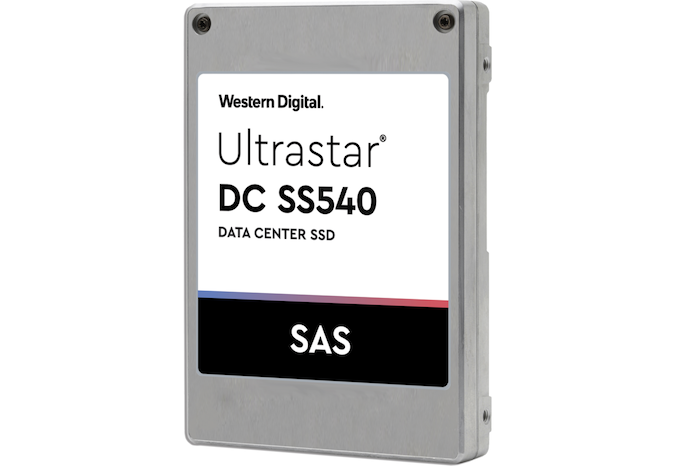
Western Digital has introduced its new series of SSDs designed for mission critical applications, including OLTP, OLAP, hyper converged infrastructure (HCI), as well as software-defined storage (SDS) workloads. The Ultrastar DC SS540 drives are aimed at mixed and write intensive workloads and can be configured accordingly. Since the SSDs use an SAS 12 Gbps interface, they are drop in compatible with existing machines.

The Western Digital Ultrastar DC SS540 is based on the company’s sixth-generation dual-port SAS 12 Gbps platform co-developed with Intel as well as 96-layer 3D TLC NAND memory (presumably, also from Intel) and comes in a 2.5-inch/15 mm form-factor. The new SSDs are drop-in compatible with existing servers that support 9, 11, and 14 W per drive power options (SKUs with higher power consumption offer higher random read/write speeds).


As is traditional for SAS SSDs from Western Digital and Intel, the Ultrastar DC SS540 supports extended error correction code (ECC with a 1×10^-17 bit error rate) to ensure high performance and data integrity, exclusive-OR (XOR) parity in case a whole NAND die fails, and parity-checked internal data paths. In addition, the Ultrastar SS540 complies with the T10 Data Integrity Field (DIF) standard, which requires all interconnect buses to have parity protection (on the system level), as well as a special power loss data management feature that does not use supercapacitors. As usual, Western Digital’s Ultrastar SS540 will be available in different SKUs with capabilities like instant secure erase and/or TCG+FIPS encryption to conform with various security requirements.


The manufacturer plans to offer the Ultrastar DC SS540 rated for 1 or 3 drive writes per day (DWPD) to target different workloads. The former will offer capacities between 960 GB and 15.36 TB, whereas the latter will feature capacities from 800 GB to 6.4 TB. The new lineup does not include drives rated for 10 DWPD and less than 1 DWPD, so those who need higher or lower endurance (as they run extremely read intensive or extremely write intensive workloads) will have to use previous-generation offerings from Western Digital. When it comes to warranty and MTBF, the drives are rated for a 0.35% annual failure rate (AFR), 2.5 million hours MTBF and are covered with a five-year limited warranty (or the max PB written, whichever occurs first).


As far as sustained performance is concerned, the Ultrastar DC SS540 is rated for up to 2130 MB/s sequential read/write speed, up to 470K IOPS random write IOPS, and up to 240K random write IOPS, depending on exact model, which is generally in line with performance of the Ultrastar DC SS530 SSDs launched last year. Traditionally, higher capacity SSDs are slightly slower when it comes to writes and mixed workloads, but those who need maximum performance can always use more drives to hit desired speeds.

Western Digital’s Ultrastar DC SS540 SSDs are currently sampling and qualified by select clients of the company. The manufacturer plans to start commercial shipments of the drives in the Q1 2020.


HGST Ultrastar SS540 Series Specifications
  3 DWPD 1 DWPD
Capacities 6.4 TB

3.2 GB

1.6 TB

800 GB
15.36 TB

7.68 TB

3.84 TB

1.92 TB

960 GB
Form Factor 2.5″/15mm
Interface SAS 6/12 Gb/s, dual port for 12 Gb/s
Controller Proprietary
NAND 96-layer

3D TLC NAND
Sequential Read 2116 ~ 2130 MB/s 1985 ~ 2130 MB/s
Sequential Write 1008 MB/s ~ 2109 MB/s 1985 MB/s ~ 2130 MB/s
Random Read (4 KB) IOPS 237K ~ 470K IOPS 237K ~ 470K IOPS
Random Write (4 KB) IOPS 128K ~ 240K IOPS 79K ~ 110K
Mixed Random R/W (70:30 R:W, 4KB)

Max IOPS
182K ~ 300K IOPS 143K ~ 200K IOPS
Read/Write Latency (average) 140/60 ms ~ 150/80 ms 140/90 ms ~ 150/300 ms
Power Idle 3.7 W (<15 TB) – 4.7 W (>15 TB)
Operating 9 W, 11 W, 14 W (configurable)
Endurance DWPD 3 1
Max. PB 6.4 TB: 36,150 TB

3.2 TB: 17,150 TB

1.6 TB: 9,410 TB

800 GB: 4.700 TB
15.36 TB: 30,110 TB

7.68 TB: 15,050 TB

3.84 TB: 7,000 TB

1.92 TB: 3,760 TB

960 GB: 1,880 TB
Encryption AES-256 (?)

TCG + FIPS
Power Loss Protection Yes
MTBF 2.5 million hours
Warranty Five years or max PB written (whichever occurs first)
Models WUSTR6464ABSS20x

WUSTR6432BSS20x

WUSTR6416BSS20x

WUSTR6480BSS20x

WUSTVA1A1BSS20x

WUSTVA176BSS20x

WUSTVA138BSS20x

WUSTVA119BSS20x

WUSTVA196BSS20x

Legend for Model Numbers Example: WUSTR6464ASS201=6.4TB, SAS 12Gb/s, TCG

W = Western Digital

U = Ultrastar

S = Standard

TR = NAND type/endurance

(TM=TLC/mainstream endurance,

TR=TLC/read-intensive) 64 = Full capacity (6.4TB) 64 = Capacity of this model

15 = 15.2TB 76 = 7.6TB 38 = 3.84TB 32 = 3.2TB 19 = 1.92TB 16 = 1.6TB 96 = 960GB 80 = 800GB 48 = 480GB 40 = 400GB

A = Generation code

S = Small form factor (2.5” SFF) S2 = Interface, SAS 12Gb/s

1 = Encryption setting

0 = Instant Secure Erase

1 = TCG Enterprise encryption

4 = No encryption/Secure Erase 5 = TCG+FIPS

Related Reading:


Source: Western Digital


Source: AnandTech – Western Digital Ultrastar DC SS540 SAS SSDs: Up to 15.36 TB, Up to 3 DWPD