Intel Confirms Comet Lake-Based NUC 10 ‘Frost Canyon’ UCFF PCs

Intel has officially confirmed plans to release its NUC10 ‘Frost Canyon’ ultra-compact form-factor PCs with mobile Comet Lake processors. The main selling point of the systems will be CPUs with up to six x86 cores as well as support for up to 64 GB of DDR4 memory, offering the laptop platform in a pint-sized desktop form factor.


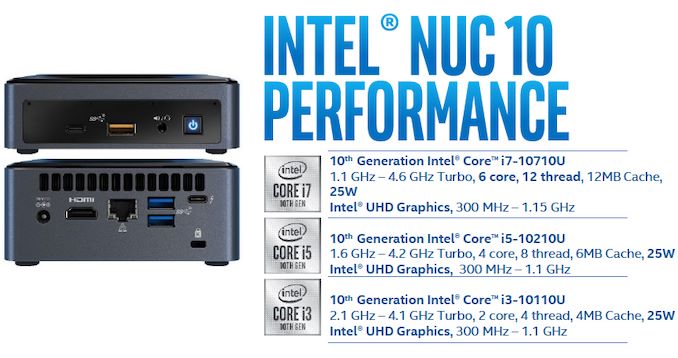
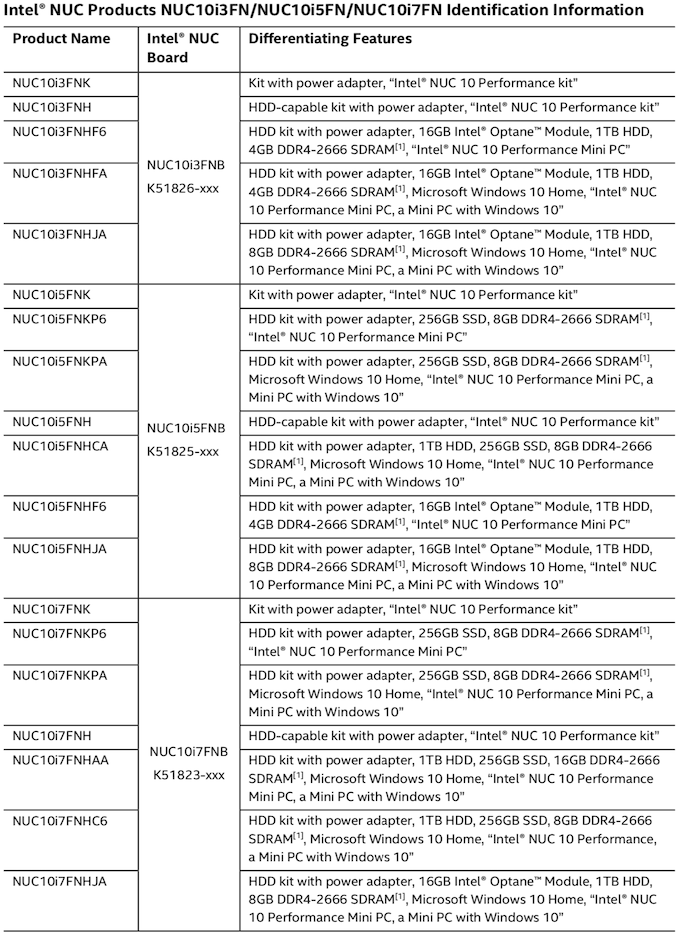
Intel’s NUC 10 ‘Frost Canyon’ lineup is based on Intel’s 10th Generation Core i3-10110U/i5-10210U/i7-10710U processors with two, four, or six cores, as well as UHD Graphics. The NUC family will include three base versions: the slim NUC10FNK with an M.2 slot for SSDs, the taller NUC10FNH with a 2.5-inch bay and an M.2 slot, as well as the NUC10FNB motherboard enabling third parties to build clones of the Frost Canyon in different chassis. In total, Intel will offer over 20 different NUC 10 SKUs (PCs, kits, boards), offering different specifications, level of performance and pricing. All systems will use CPUs featuring a configurable TDP-up of 25 W and therefore the processors will work at higher Turbo clocks all the time granted that they will be cooled using an active cooling system.


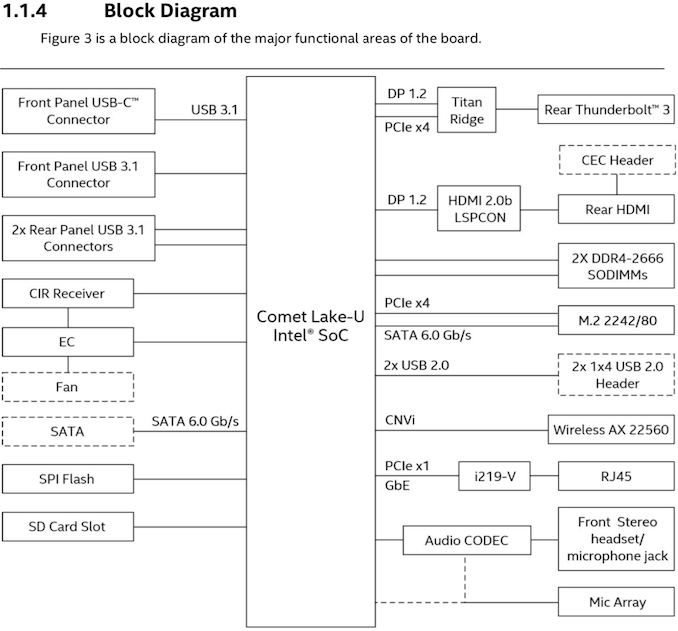
The Intel NUC 10 platform will have a Thunderbolt 3 port controlled by Intel’s Titan Ridge chip, USB 3.2 Gen 2 and USB 2.0 Type-A ports, GbE, HDMI, and the usual audio connectors. As an added bonus, the Frost Canyon NUC PCs are also equipped with far-field microphones supporting Amazon’s Alexa and Microsoft’s Cortana assistants.


With rather powerful processors and sophisticated connectivity, Intel’s Frost Canyon UCFF PCs look very potent for various applications except gaming as Intel’s UHD Graphics can barely satisfy those who play demanding titles. Good news is that the systems feature a Thunderbolt 3 port that can be used to connect an external graphics box, but the latter tend to be rather expensive.


Intel’s NUC 10 will be available in the coming weeks. Prices have not yet been published.


Related Reading:


Source: Intel (Thanks to SH for the tip)


Source: AnandTech – Intel Confirms Comet Lake-Based NUC 10 ‘Frost Canyon’ UCFF PCs

Intel Publishers Letter to Customers Apologizing for CPU Shipment Delays

In a move that I don’t believe has precedence within the x86 CPU industry, Intel this afternoon has publicly published a letter to its customers and partners apologizing for ongoing CPU shipment delays. The letter, from Intel’s EVP and GM of Sales, Marketing and Communications, Michelle Johnston Holthaus, addresses the ongoing supply shortage, with Intel acknowledging the difficulties it has created for its customers (e.g. OEMs and hyperscalers), as well as updating customers on their efforts to boost chip production. None the less, it’s also a sobering letter, with Intel informing customers that the current supply shortages still haven’t been resolved, and not offering any further guidance on when Intel might finally catch up to demand.


For more than a year now, we’ve been covering the ongoing story of Intel’s efforts to supply enough CPUs to meet customer demands. In a process that has been exacerbated by their 10nm delay – with 10nm chips just now shipping in high volume – as well as Spectre/Meltdown having the unexpected side effect of driving the major hyperscalers to buy additional/replacement hardware, Intel has had its hands full trying to keep up with demand. Even after bringing online additional 14nm fab capacity and shifting some ancillary 14nm products to 22nm, boosting overall 14nm capacity by 25%, Intel still hasn’t been able to produce as many CPUs as it could otherwise sell.


This of course is not a bad problem for a business to have, at least in small doses. Having demand exceed supply means that Intel’s CPUs are still highly coveted, and that the overall volume of chips shipped along with the prices Intel can fetch for those in-demand chips have driven them to record revenues, particularly in the datacenter business. Very rarely can a semiconductor manufacturer run multiple high-volume fabs at maximum production and still have demand outpace them. None the less, with the problem going on for over a year now, customers who rely on Intel’s chips are growing increasingly weary of being unable to acquire all the chips they need in a timely manner, and the resulting impacts it’s having on their own businesses.


Of particular interest in the letter (published below) is a section talking about particularly recent CPU shipment delays. As outlined in the letter, the high demand means that Intel has little-to-no buffer for variations in fab output, which means its customers are more directly feeling these variations. While we previously haven’t been aware of any specific Intel supply issues (other than the general, ongoing supply shortage), the letter confirms that Intel has experienced “production variability” this quarter, and as a result there have been new CPU shipment delays. It’s these delays in particular that Intel is apologizing for.
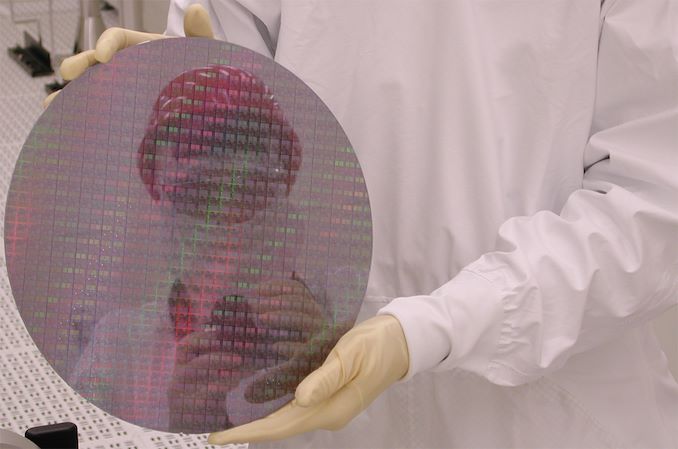


While I won’t hazard a guess as to precisely what has happened for Intel, the company has spent the last year trying to maximize the output of its 14nm fabs, while also ramping up 10nm. This includes significant new orders for equipment and other capital expenditures to boost fab production. Based on the tone of the letter, it sounds like these efforts haven’t gone quite as well as what Intel was planning for – perhaps indicating that chip yields have taken an unexpected hit or that Intel hasn’t been able to run as many wafers as they intended. Though whatever the issue, Intel has also confirmed that they aren’t changing their Q4 revenue guidance; so it would seem the company still believes it can ship all the processors it planned for this quarter.


Either way, I cannot recall Intel (or any other x86 vendor) ever publicly publishing a letter in this fashion. Normally these kinds of interactions take place in the back room between chip suppliers and their customers, so the fact that it’s significant enough to warrant a public letter – presumably for legal reasons – is remarkable. Unfortunately it also means that it doesn’t look like Intel is going to be able to meet demand for its chips any time soon, something that I’m sure Intel’s competitors are happy to hear.


To our customers and partners,


I’d like to acknowledge and sincerely apologize for the impact recent PC CPU shipment delays are having on your business and to thank you for your continued partnership. I also want to update you on our actions and investments to improve supply-demand balance and support you with performance-leading Intel products. Despite our best efforts, we have not yet resolved this challenge.


In response to continued strong demand, we have invested record levels of Capex increasing our 14nm wafer capacity this year while also ramping 10nm production. In addition to expanding Intel’s own manufacturing capability, we are increasing our use of foundries to enable Intel’s differentiated manufacturing to produce more Intel CPU products.


The added capacity allowed us to increase our second-half PC CPU supply by double digits compared with the first half of this year. However, sustained market growth in 2019 has outpaced our efforts and exceeded third-party forecasts. Supply remains extremely tight in our PC business where we are operating with limited inventory buffers. This makes us less able to absorb the impact of any production variability, which we have experienced in the quarter. This has resulted in the shipment delays you are experiencing, which we appreciate is creating significant challenges for your business. Because the impact and revised shipment schedules vary, Intel representatives are reaching out with additional information and to answer your questions.


We will continue working tirelessly to provide you with Intel products to support your innovation and growth.


Sincerely,

Michelle Johnston Holthaus

Executive Vice President

General Manager, Sales, Marketing and Communications Group


Source: AnandTech – Intel Publishers Letter to Customers Apologizing for CPU Shipment Delays

PowerColor Launches Radeon RX 5700 XT Liquid Devil w/ Pre-Installed Water Block

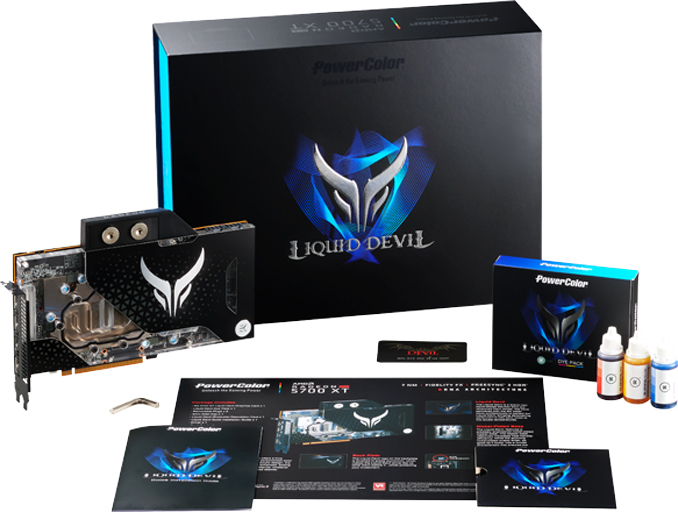
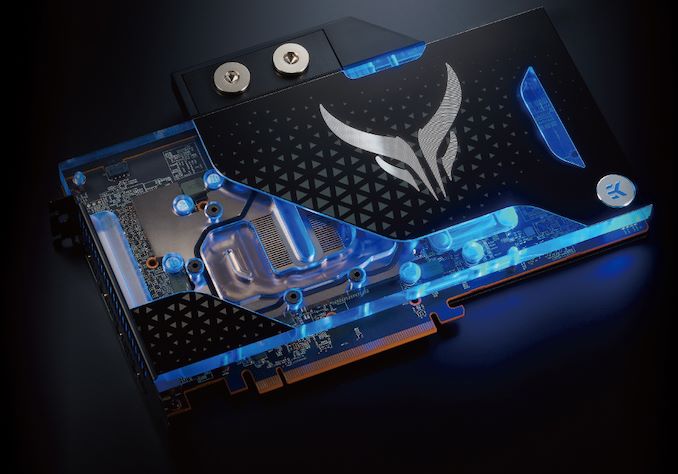
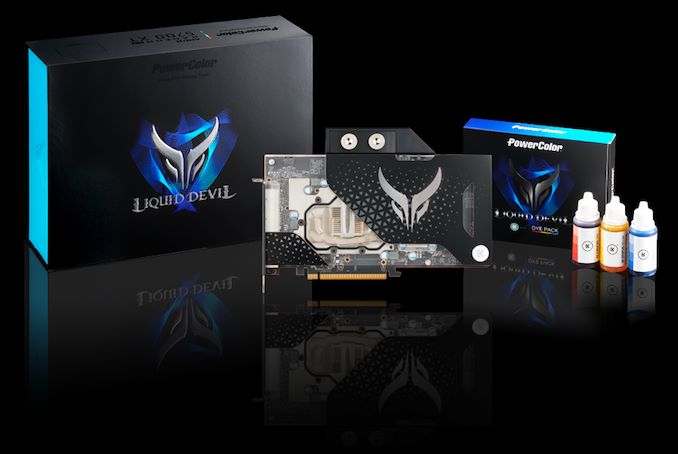
PowerColor has introduced one of the industry’s first custom Radeon RX 5700 XT-based graphics card with a pre-installed water block. The board uses cherry-picked Naxi 10 GPUs as well as an enhanced VRM to maximize the board’s overclocking potential, something that will be appreciated by those looking for peak performance.


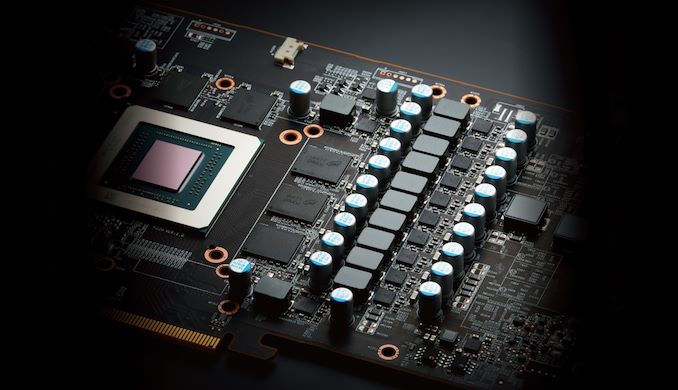
PowerColor’s Liquid Devil 5700 XT (AXRX 5700XT 8GBD6 WDH/OC) relies on a custom 12-layer PCB with a 10-phase digital VRM that uses solid-state coils, DrMOS modules, and high-polymer capacitors to handle over 300 W of power. The card is equipped with a water block designed by EKWB that features a nickel-plated copper base as well as the Liquid Devil logotype. The board has two 8-pin PCIe auxiliary power connectors and the manufacturer recommends that it’s used with at least a 700 W PSU.


Out of the box, the PowerColor Radeon RX 5700 XT Liquid Devil features GPU boost clock of up to 2070 MHz, the highest frequency of AMD’s Navi XT chip on a commercial card to date. Meanwhile, the key feature of the video card is its overclocking potential which promises to be very high because of the advanced VRM and a liquid cooling system.


As far as connectivity is concerned, the video card has three DisplayPort 1.4 outputs and an HDMI 2.0 port.


PowerColor’s partners will start sales of the Liquid Devil 5700 XT starting November 25 at an MSRP of $599/€599/£569.


Related Reading:


Source: PowerColor


Source: AnandTech – PowerColor Launches Radeon RX 5700 XT Liquid Devil w/ Pre-Installed Water Block

AnandTech Exclusive: An Interview with Intel’s Raja Koduri about Xe

This week Raja gave the keynote at Intel’s HPC DevCon event, a precursor to Supercomputing, and I did my usual thing of asking for the interview, fully expecting the same ‘not quite yet’ response. To my surprise, Intel agreed, and we spent the best part of an hour discussing his role at Intel, his work, and some of the finer details of the recent Xe-HPC, Ponte Vecchio, and Aurora announcements.


Source: AnandTech – AnandTech Exclusive: An Interview with Intel’s Raja Koduri about Xe

ASUS Unveils The ProArt StudioBook Pro 17: A Cheaper Mobile Workstation

In addition to launching its top of the line ProArt StudioBook Pro X mobile workstation that is priced at a whopping $4,999.99, ASUS also introduced its less expensive workstations this week. The ProArt StudioBook Pro 17 come equipped with NVIDIA’s Quadro RTX graphics and therefore features certifications from professional software vendors.


Source: AnandTech – ASUS Unveils The ProArt StudioBook Pro 17: A Cheaper Mobile Workstation

NEC's MultiSync PA311D, a 10-bit IPS 4K Professional Monitor

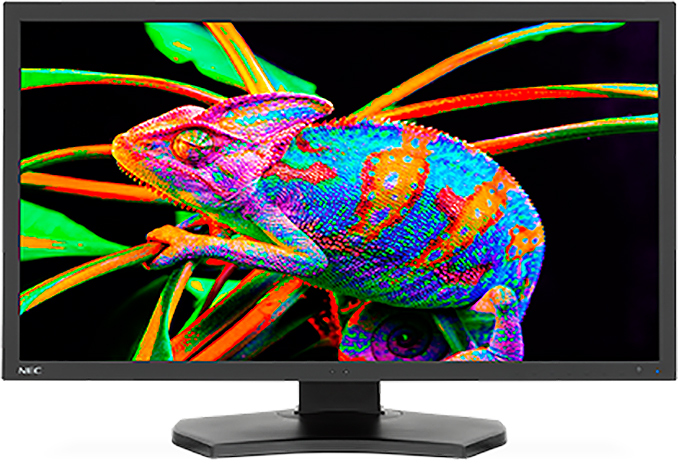
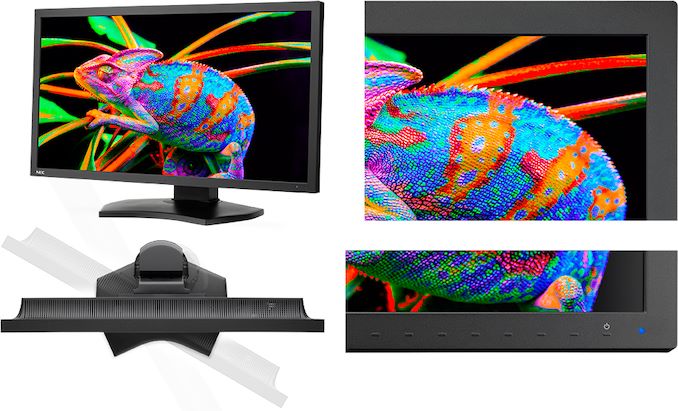
NEC this week introduced a new professional display for color critical applications. The NEC MultiSync PA311D LCD features a 4K resolution, covers 100% of the AdobeRGB color space and is aimed at people working with computer graphics, video, and photography. The monitor supports sophisticated connectivity, including a USB-C input that supports 65 W power delivery.


The NEC MultiSync PA311D LCD display is based on a 31.1-inch 10-bit IPS panel with a true 4K resolution of 4096×2160. Combined with its wide gamut W-LED backlighting, that can reproduce 1.07 billion colors across 99.9% of the sRGB, 97.4% of the NTSC, and 100% of the AdobeRGB color gamuts. The monitor features a peak luminance of 350 nits, a 1400:1 contrast ratio, an 8 ms typical response time, and unusual for a pro grade monitor, a top refresh rate of 75Hz.


Being aimed at professionals, the monitor uses NEC’s custom color processor and comes with a 14-bit 3D LUT (look-up table) for color gradations. NEC has also implemented an always-on backlight sensor here, in order to offer steady colors and brightness levels. And of course, monitor calibration is supported through the company’s SpectraView II calibration software (with a color sensor sold separately or as a part of an appropriate bundle).


One unexpected capability of the monitor is that it is touch capable, and it comes with an appropriate stand that can adjust height, tilt, swivel, or change the LCD’s orientation.


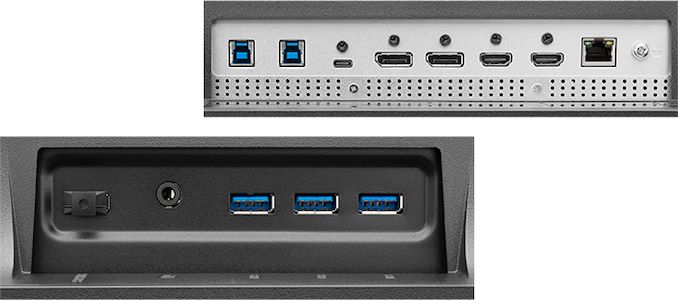
The pro monitor also offers a few different input options. The monitor has two DisplayPorts, two HDMI ports, and a USB Type-C connector, the latter of which is still relatively new to professional LCDs. The USB-C port can deliver up to 65 W of power to its host PC, which is enough for most 13 and 15-inch class laptops. In addition, the display has a GbE jack, a 3.5-mm jack for headphones, and a triple-port USB 3.0 hub with two USB Type-B upstream ports.


Specifications of the NEC MultiSync PA311D Display
  PA311D
Panel 31.1″ IPS
Native Resolution 4096 × 2160
Maximum Refresh Rate 75 Hz
Response Time 8 ms
Brightness 350 cd/m² (typical)
Contrast 1400:1
Viewing Angles 178°/178° horizontal/vertical
3D LUT  14-bit LUT
Dynamic Refresh Rate none
Pixel Pitch 0.170 mm²
Pixel Density 149 ppi
Display Colors 1.07 billion
Color Gamut Support DCI-P3: ?%

Adobe RGB: 100%

sRGB: 99.9%

NTSC: 97.4%
Aspect Ratio 1.9:1
Stand Can adjust tilt, swivel, height, and change orientation
Inputs 2 × DisplayPort

2 × HDMI 2.0a/2.0b

1 × USB-C with 65 W PD
USB Hub 3-port USB 3.0 hub
GbE 1 × GbE
Launch Date November 2019

NEC’s PA311D professional monitor will be available later this month directly from the company for $2,999 or $3,249 for SpectraView bundle. Besides calibration bundle, users can also get a special lighting hood for the monitor to ensure consistent color reproduction at all times and in all environments. The display is backed by a four-year warranty.


Related Reading:


Source: NEC


Source: AnandTech – NEC’s MultiSync PA311D, a 10-bit IPS 4K Professional Monitor

ASUS Releases ProArt StudioBook Pro X: 17-Inch Workstation With Xeon & Quadro

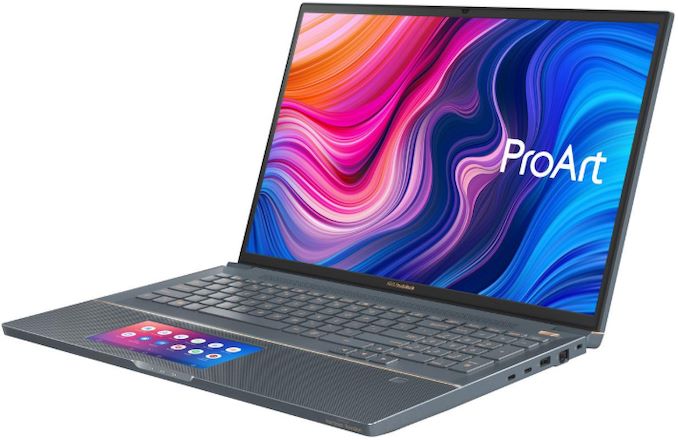
ASUS has started sales of its top of the range mobile workstation, the ProArt StudioBook Pro X. The heavily-packed machine packs in Intel’s Xeon processor, an NVIDIA Quadro RTX video card, and is equipped with a 17-inch Pantone Validated display as well as a ScreenPad 2.0 trackpad. And, fittingly for a workstation-class laptop, the notebook has received certifications from multiple professional software vendors, ensuring that the laptop will work with their software and qualifies for full end-user support.


The ASUS ProArt StudioBook Pro X W730 comes in a premium-looking metallic chassis with a Turquoise Grey finish that houses a 1920×1200 resolution 17-inch NanoEdge display, which offers wide viewing angles as well as an antiglare coating. Developed with workstation/productivity use in mind in mind, the display covers 97% of the DCI-P3 color gamut, is Pantone Validated, and is factory-calibrated to a Delta E<1.5 accuracy, a rare feature for laptops.


Inside the ProArt StudioBook Pro X is Intel’s hexa-core Xeon E-2276M processor, as well as NVIDIA’s Quadro RTX 5000 GPU with 16 GB GDDR6 memory. The system comes with 64 GB of ECC DDR4-2666 DRAM (upgradeable to 128 GB) as well as 4 TB of storage using two PCIe 3.0 x4 SSDs, and one hard drive.


When it comes to connectivity, the ASUS ProArt StudioBook Pro X naturally features everything that modern professionals might require, including Wi-Fi 6, Bluetooth 5.0, two Thunderbolt 3 ports, three USB 3.1 Gen 2 Type-A ports, GbE, an HDMI 2.0 output, an SD 4.0/UHS-II card reader, and a 3.5-mm audio jack for a headset.


In a bid to further improve the comfort of the desktop replacement laptop, the notebook has a keyboard with 19-mm key pitches and a two-millimeter key travel. Meanwhile, like other high-end machines from ASUS today, the ProArt StudioBook Pro X uses ASUS’s ScreenPad 2.0 touchpad, which places a small display underneath the trackpad. On the multimedia side of matters, the laptop has Harman Kardon speakers with an amplifier, a microphone array, and an HD webcam.


In terms of bulk, the 17-inch class laptop – while not light – is surprisingly also not particularly heavy: the 2.8-cm thick machine weighs 2.5 just kilograms. Meanwhile, the ProArt StudioBook Pro X is equipped with a 95 Wh 6-cell battery, which is nearly the maximum capacity allowed to carry in airplanes.


The ASUS ProArt StudioBook Pro X
  W730
Primary Display General 17.3-inch OLED with touch
Resolution

Color Gamut
1920×1200

97% DCI-P3
Features Pantone Validated

Factory calibrated to Delta E<1.5 accuracy
CPU Options Intel Xeon E-2276M

8C/16T, 12 MB cache, 2.8 – 4.7 GHz
Graphics Integrated HD Graphics 630 (24 EUs)
Discrete NVIDIA Quadro RTX 5000 16 GB GDDR6
RAM 64 GB DDR4-2666
Storage SSD 2 x PCIe 3.0 x4
HDD 1 x HDD
Capacity 4 TB
Wireless Wi-Fi Intel Wi-Fi 6 (802.11ax)
Bluetooth Bluetooth 5.0
USB 3.1 Gen 2 2 × TB 3 (Type-C)

3 × USB 3.1 Gen 2 Type-A
Thunderbolt 2 × TB 3 (data, DP displays)
Display Outputs 1 × HDMI 2.0

2 × TB3 with DisplayPort
Gigabit Ethernet Yes
Card Reader SD 4.0/UHS-II (312 MB/s)
Webcam HD webcam
Fingerprint Sensor Yes, with Windows Hello support
Other I/O Microphone array, Harman/Kardon stereo speakers, audio jack, ScreenPad 2.0
Battery 95 Wh Li-Poly
Dimensions Width 38.2 cm | 15.04 inch
Depth 26.5 cm | 10.43 inch
Thickness 2.8 cm | 1.11 inch
Weight 2.5 kilograms | 5.51 lbs
Price $4,999.99

The ASUS ProArt StudioBook Pro X is available at MSRP of $4999.99 directly from ASUS as well as its retail partners like Amazon.


Related Reading:


Source: ASUS


Source: AnandTech – ASUS Releases ProArt StudioBook Pro X: 17-Inch Workstation With Xeon & Quadro

ASUS Brings Wi-Fi 6 to Desktops with PCE-AX3000 Card

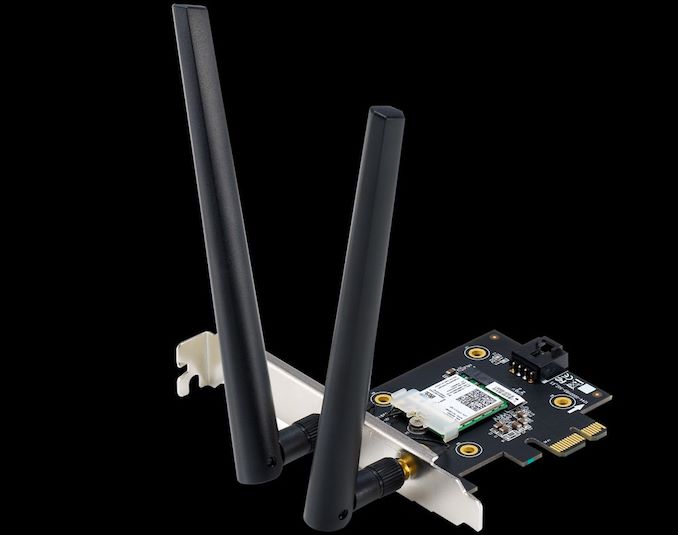
ASUS has introduced one of the industry’s first Wi-Fi 6 cards for desktops. The ASUS PCE-AX3000 dual band PCIe 3.0 x1 adapter promises to provide up to 2.4 Gbps data transfer rates over 160 MHz channels when used with an appropriate router.


The ASUS PCE-AX3000 card is essentially an adapter carrying an M.2-2230 Wi-Fi 6 card for laptops. The actual radio that powers the card is unknown, however it supports all key features of the Wi-Fi 6 specification, including 2.4 GHz and 5 GHz bands, 80 MHz and 160 MHz channels, MU-MIMO, OFDMA (Orthogonal Frequency-Division Multiple Access) for allowing different devices to be served by one channel, and WPA3. Besides Wi-Fi 6, the card also supports Bluetooth 5.0 technology allowing desktops to connect to various mobile and peripheral devices.


The PCE-AX3000 Dual Band PCI-E Wi-Fi 6 has two large antennas to ensure strong signal and fast connectivity in various situations. The adapter should be compatible with all existing desktops that use Windows 10 (64-bit) or Linux.


Numerous modern laptops feature Wi-Fi 6, providing higher performance in crowded networks, but not everything is that rosy with desktops as Wi-Fi 6 adapters for desktops are practically nonexistent. Luckily, with products like the ASUS PCE-AX3000, 2.4 Gbps connectivity will now be available for desktop computers too.


Related Reading:


Source: ASUS (via Hermitage Akihabara)


Source: AnandTech – ASUS Brings Wi-Fi 6 to Desktops with PCE-AX3000 Card

Porsche Design Unveils Fanless 15.6-Inch Ultra One Laptop

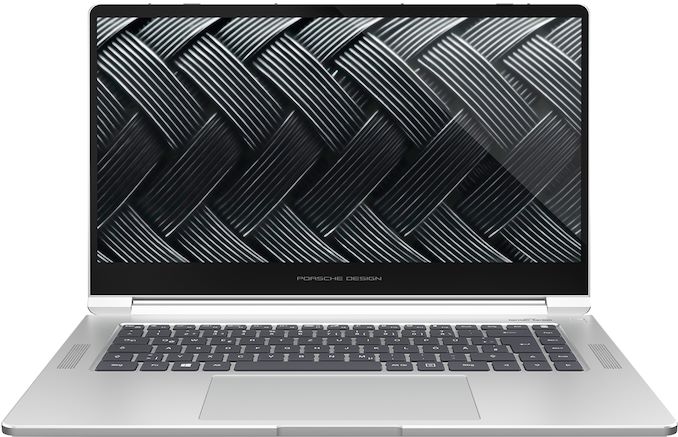
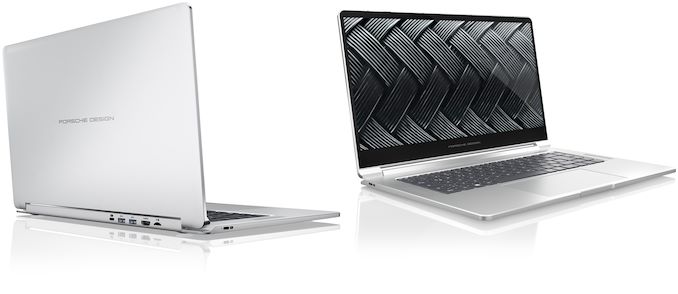
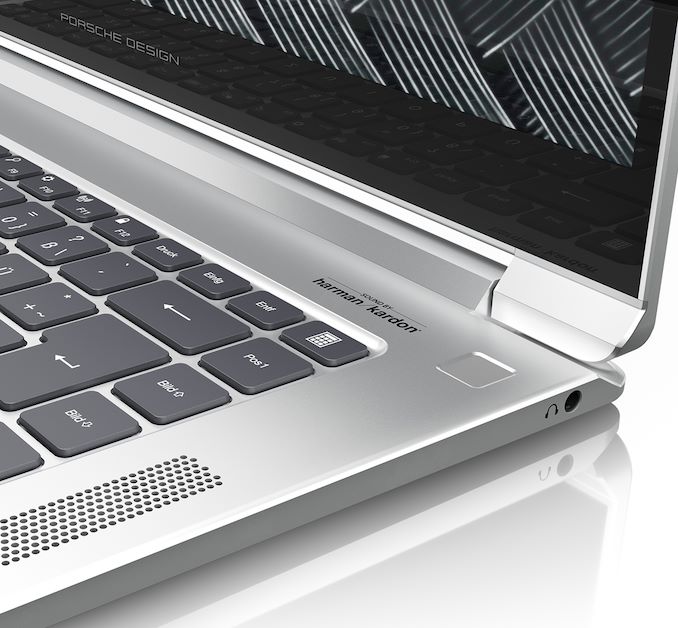
Just like its parent company, Porsche Design specializes in the creation of devices that offer a unique set of features with an eye towards high-end styles. This month the company introduced its Ultra One laptop, which offers a 15.6-inch Full-HD touchscreen display in a chassis that is thinner than most 13-inch mobile PCs, and with a fanless cooling design, is also dead silent as well.


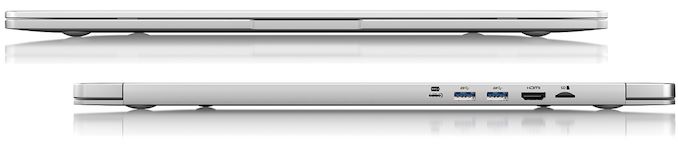
In terms of design, the Porsche Design Ultra One comes in a magnesium chassis with polished stainless-steel elements; the body measures 359×249.5×13.8mm and the complete laptop weighs around 1.5 kilograms. The chassis features a special hinge block that puts virtually all ports of the machine at the back in a bid to hide cables when they are in use and further emphasize ‘Apple MacBook’ style minimalism without actually removing  the USB Type-A, USB Type-C, HDMI, and microSD ports. Of course, it is debatable whether these ports are in a comfortable place to use, but at least they are present.


At the heart of the Porsche Design Ultra One notebook is Intel’s low-power 8th Generation Core i5-8200Y or i7-8500Y (Amber Lake-Y) dual-core processors, which use Intel’s UHD Graphics 615 and come with a TDP of just 5 W. The CPU is accompanied by 8 GB or 16 GB of RAM as well as a 512 GB or 1 TB SSD, depending on the model (see the table below for details). Since Intel designed the processor to be as energy efficient as possible, do not expect the Porsche Design Ultra One to offer performance akin to that expected from Porsche cars. What it will likely offer is a very long battery life assuming that there is a high-capacity battery under the hood.


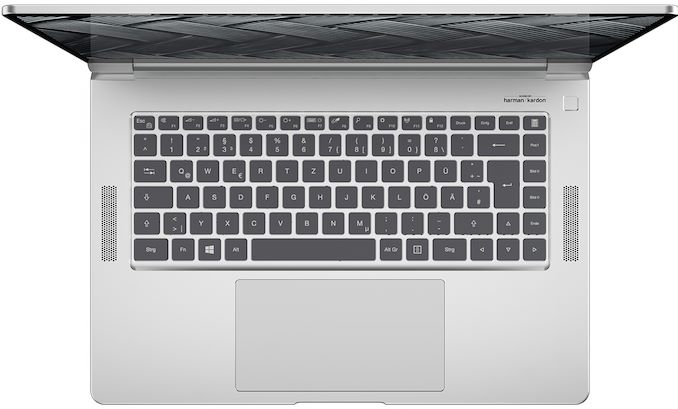
In order to make the Porsche Design Ultra One notebook as comfortable to use as possible, the manufacturer equipped it with a backlit keyboard featuring large flat keys (I wonder what mechanism they use) with keys like PgUp, PgDn, Home, End, Ins, Del, as well as a special key to launch the Calculator app. Furthermore, the laptop has an oversized touchpad, a page from Apple’s book, and a fingerprint reader.


On the multimedia side of things, the Porsche Design Ultra One features stereo speakers co-designed with Harman/Kardon, and Cortana-supporting microphone array. For some reason, the manufacturer never mentions any webcam that is also not seen anywhere, so either it is hidden, or is not there, which is odd, given lifestyle nature of the device.


Porsche Design Ultra One
  Ultra One i5 Ultra One i7
Display 15.6-inch 1920×1080 with touch
CPU Intel Core i5-8200Y

2C/4T

1.30 GHz – 3.90 GHz

4 MB
Intel Core i7-8500Y

2C/4T

1.50 GHz – 4.20 GHz

4 MB
Graphics HD Graphics 615
RAM 8 GB 16 GB
SSD 512 GB 1 TB
HDD  
ODD  
Wi-Fi Wi-Fi 5 (802.11ac)
Bluetooth Bluetooth 4.2
USB 3.0 2 × Type-A

2 × Type-C
GbE
Card Reader microSD
Other I/O HDMI, microphone, stereo speakers by Harman/Kardon, audio jack
Battery ?
Dimensions Width: 359 mm

Depth: 249.5 mm

Thickness: 13.8 mm
Weight Starting at 1.5 kg
Additional Information Link Link
Price $1,350 $1,800

The Porsche Design Ultra One i5 and i7 laptops will be available in late December for $1,350 and $1,800, respectively. The company is currently taking pre-orders.


Related Reading:


Source: Porsche Design (via Liliputing)


Source: AnandTech – Porsche Design Unveils Fanless 15.6-Inch Ultra One Laptop

AMD Announces Radeon Pro W5700: Navi Gets Drafted to The Pros

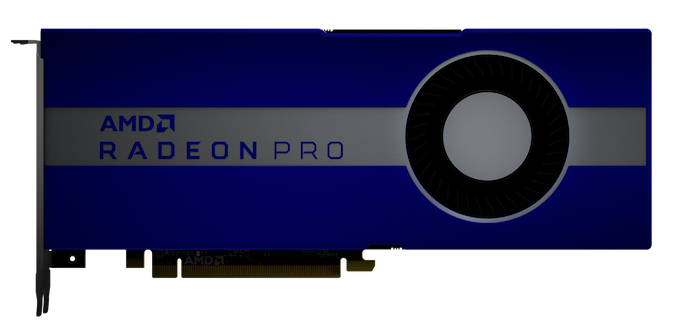
Taking a break from their recent run of consumer-focused video card launches, this morning AMD is turning their attention to the professional side of the market. With their new Navi GPUs and the underlying RDNA architecture in hand, the company is now looking to apply that technology to their workstation video cards, which have been and continue to be an important facet of AMD’s overall GPU business. To that end, today AMD is announcing the first Navi-based Radeon Pro card, the Radeon Pro W5700.


Source: AnandTech – AMD Announces Radeon Pro W5700: Navi Gets Drafted to The Pros

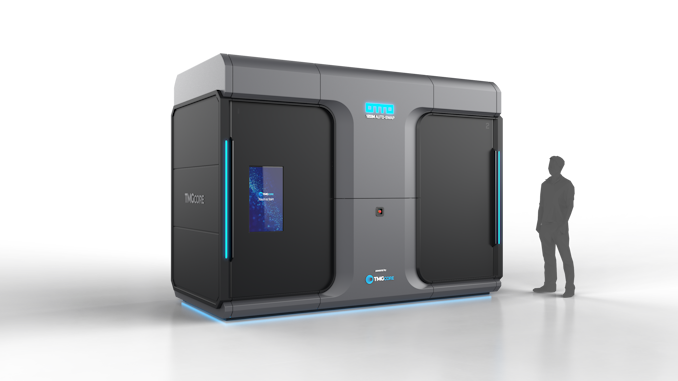
The Automated, Self-Contained, Liquid Immersed Data Center: TMGcore’s OTTO

Immersion cooling of servers is always fun, and it has evolved in the 20 years or so since I first saw it with $300/gallon special 3M liquids. In 2019, at every enterprise trade show, we see a few servers that use this cooling in data centers, despite the different infrastructure needs they have. In order to simplify adoption, TMGcore have developed fully self-contained and physically dense server containers. Not only that, but ‘OTTO’ is supposed to be better for the environment too.


Source: AnandTech – The Automated, Self-Contained, Liquid Immersed Data Center: TMGcore’s OTTO

Demand for HDD Storage Booming: 240 EB Shipped in Q3 2019

Demand for storage is stronger than ever as, in addition to growing user-generated data, machine-generated data now requires a formidable amount of storage space and will need even more in the future as the number of connected devices increases. Since the bulk of data continues to be stored on hard drives, it is not surprising that the third quarter was particularly successful for HDD makers, which despite the dent that flash sales are making, still set a record in terms of total shipped capacity.


Record 240 EB Shipped


The combined capacity of all of the hard drives sold by Seagate, Toshiba, and Western Digital in the third quarter totaled a whopping 240 exabytes (EB), of which 140 EB were nearline HDDs, according to TrendFocus. To put the number into perspective: the combined capacity of all HDDs and SSDs shipped last year was 912 EB and, today we are talking only about hard drives in one quarter. In fact, even when compared to Q2’s 207.5 EB, this is still 15% growth.


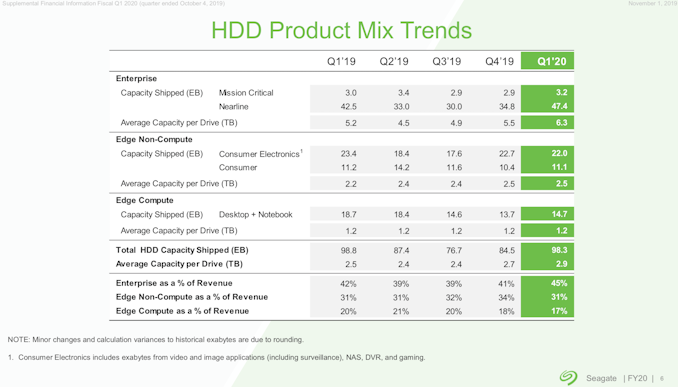
Market observers are attributing the significant rise in shipping HDD capacity to increasing shipments of enterprise-class nearline 14 TB, 15 TB, and 16 TB hard drives, which by now have been qualified by a substantial number of companies. For example, the average capacity of Seagate’s enterprise HDD (mission critical + nearline drives) was 6.3 TB in Q3 2019, up from 5.2 TB in the same period last year. By contrast, the average capacity of Seagate’s client hard drives was at 1.2 TB (unchanged from Q3 2018), as the bulk of such drives are intended for notebooks and their capacities range from 500 GB to 1 TB.  In terms of units shipped, client and consumer electronics HDDs by far outsell enterprise and nearline drives, so, the average capacity of a Seagate HDD is 2.9 TB, up from 2.5 TB a year ago.


Unit Shipments Down


When it comes to total unit shipments however, not everything is quite as rosy, based on data from TrendFocus. The three manufacturers sold 83 million HDDs in the third quarter, up from 78.6 million in Q2 and 78 million in Q1, but down from around 88 million in the same quarter of 2018. In fact HDD sales have been in decline for a long time. Nidec, a Japanese motor manufacturer who is responsible for around 85% of all HDD spindle motors, said earlier this year that unit sales of hard drives had declined by around 43% from 2010 to 2018, going from around 650 million units in 2010 to 375 million units in 2018. Based on Nidec’s forecast, HDD shipments will drop to 309 million drives in 2019, which will further drop to 290 million units in 2020.


Market Shares


When it comes to market shares in Q3 2019, Seagate was leading the pack with a 40.2% share, Western Digital followed with 35.4%, whereas Toshiba trailed with 24.4% of HDD unit shipments.


For readers interested to learn more about Seagate’s and Western Digital’s HDD businesses today, we included some supplementary information below.


Related Reading:


Sources: StorageNewsletter/TrendFocus, Seagate, Western Digital


Source: AnandTech – Demand for HDD Storage Booming: 240 EB Shipped in Q3 2019

Philips Launches Momentum 392M7C: An Entry-Level Curved 38.5-Inch Gaming Monitor

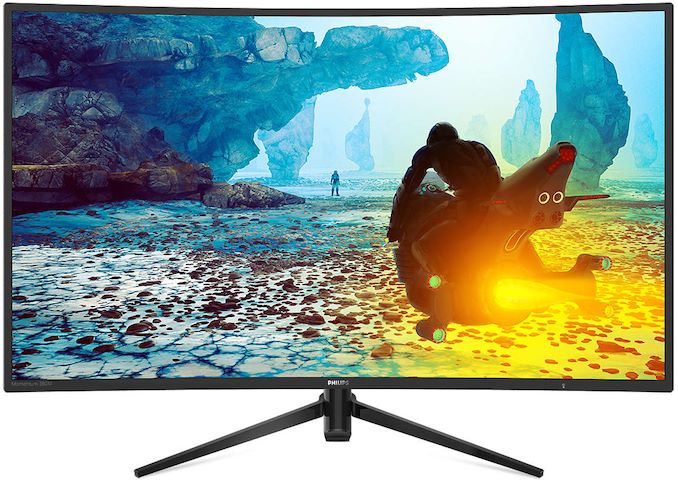
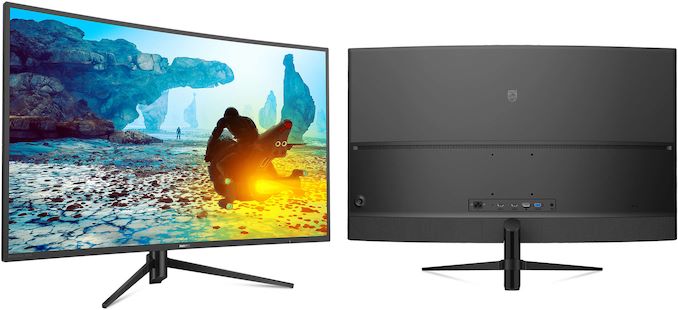
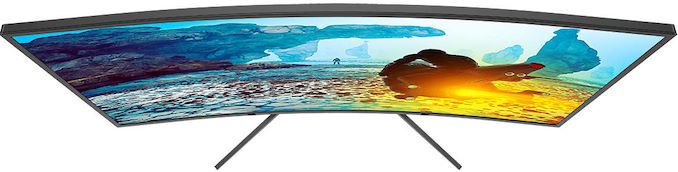
Philips has quietly unveiled its new Momentum 392M7C curved monitor, which is aimed at gamers who are after an entry-level large screen display with high refresh rates and variable refresh support. The huge display with a 3000R curvature promises to provide a cinema-like immersion, though its Full-HD resolution and a relatively low pixel density will have an impact on the experience.


Under the hood, the Philips Momentum 392M7C is built from a 38.5-inch VA with a 1920×1080 resolution. The display features a maximum brightness of 250 nits, a 5000:1 contrast ratio, a 3000R curvature, a 1 ms MPRT response time, and a 144 Hz maximum refresh rate with VESA’s Adaptive-Sync variable refresh rate technology on top (e.g. FreeSync). The monitor can display 16.7 million colors and covers 105.48% of the sRGB and 94.11% of the NTSC color gamuts, which is in line with other inexpensive mainstream LCDs.


Besides its size and a high refresh rate, the main peculiarity of the Momentum 392M7C is its Full-HD resolution and a pixel density of 57 PPI, the latter of which is quite low by today’s standards. For gaming and video playback, pixel density is not often crucial – especially when many video sources are 1080p – but for typical productivity applications a 38.5-inch Full-HD screen with a 57 PPI pixel density does not seem like an optimal combination. Meanwhile, the LCD supports Philips’ SmartImage presets for various game genres (FPS, RTS, Racing, custom) to provide optimal experience.


As for connectivity, the Momentum 392M7C has one DisplayPort input, two HDMI inputs, and one D-Sub input to maintain compatibility both with new and legacy PCs. Furthermore, the monitor has a headphone output. As for the stand, only the tilt is adjustable, which is typical for large entry-level monitors.


Philips Momentum 392M7C
  General Specifications
Panel 38.5″ VA with non-glare coating
Native Resolution 1920 × 1080
Maximum Refresh Rate 144 Hz
Dynamic Refresh Rate VESA Adaptive-Sync
Response Time 1 ms MPRT
Brightness 250 cd/m²
Contrast 5000:1
Curvature 3000R
Viewing Angles 178°/178° horizontal/vertical
Color Gamut 105.48% sRGB

94.11 NTSC
Pixel Pitch 0.445×0.445 mm
PPI 57 PPI
Inputs 1 × DisplayPort

1 × D-Sub

2 × HDMI
Audio 3.5-mm headphone jack
Stand Tilt: -5°/10°
Power Consumption Standby 0.5 W
Maximum 46.4 W
Additional Information Link
Price ?

The Philips Momentum 392M7C is set to hit the market shortly. Though as we sometimes see with other entry-level monitors, it probably won’t be available worldwide.


Related Reading:


Source: Philips (via TFTCentral)


Source: AnandTech – Philips Launches Momentum 392M7C: An Entry-Level Curved 38.5-Inch Gaming Monitor

MSI Unveils Cubi 5 10M Palm-Sized PC: Comet Lake with 64 GB of RAM & Wi-Fi 6

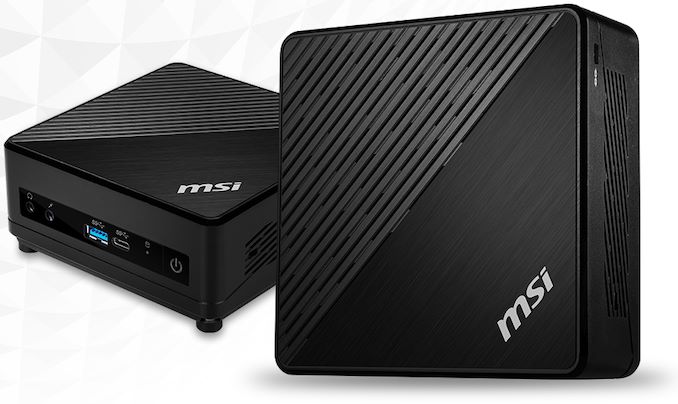
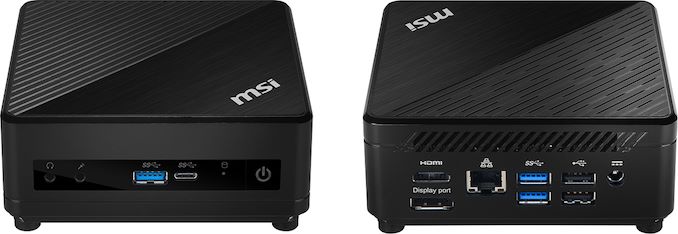
MSI has introduced one of the industry’s first ultra-compact desktops powered by Intel’s 10th Generation ‘Comet Lake-U’ processors, the Cubi 5 10M. With Comet Lake-U available in up to 6 core configurations and supporting up to 64 GB of memory, the Cubi 5 10M is powerful enough that it can be used for a wide variety of applications, including productivity, photo editing, design, and multimedia playback.


Measuring 124×124×53.7 mm and weighing 550 grams, MSI’s Cubi 5 10M compact PCs are quite literally palm-sized. Under the hood, they pack one of Intel’s 10th Generation Core i3/i5/i7 processors with two, four, or six cores as well as Intel’s UHD 630 Graphics. The CPU is cooled down using an active cooling system, so the processors should be able to turbo fairly often. The SoC is accompanied by two SO-DIMM memory slots supporting up to 64 GB of DDR4-2666 memory, an M.2 slot for an SSD, and a 2.5-inch bay for additional storage.


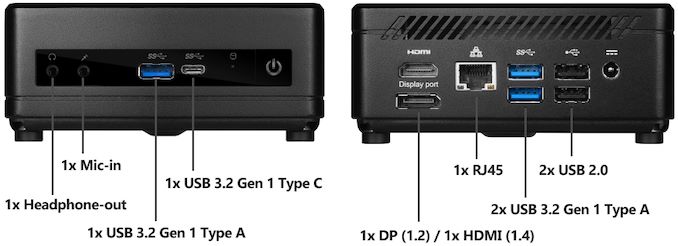
On the wireless connectivity side of matters, MSI’s Cubi 5 10M UCFF systems come with either Intel’s Wireless AC 9462 or Wireless AX201 adapters with Bluetooth 5. As for wired connectivity, the mini-PC offers GbE (Intel WGI219V), three USB 3.2 Gen 1 Type-A connectors, one USB 3.2 Gen 1 Type-C port, two USB 2.0 headers, two display outputs (DisplayPort 1.2, HDMI 1.4), a headphone output, a microphone in, and a power connector. The Cubi comes with a 65 W external power brick, and it can be further equipped with an external power switch to turn it on or off when it is located in a hard to reach area.


Overall, the Cubi 5 10M SFF PC is fairly typical for a small form factor PC design, incorporating Intel’s latop-focused hardware to instead build a small and low power desktop. With Comet Lake-U reaching 6 cores, the system should be able up to the task for most office-grade, non-graphics-heavy workloads, as well as making for a modest HTPC.


MSI is already listing its Cubi 5 10M ultra-compact desktop on its website, so expect it to hit the market shortly. They’ve yet to disclose the pricing, however, so we’ll have to see where that ends up.


Source: MSI (via Liliputing)


Source: AnandTech – MSI Unveils Cubi 5 10M Palm-Sized PC: Comet Lake with 64 GB of RAM & Wi-Fi 6

Dell’s Alienware Aurora Ryzen Edition Comes w/ Ryzen 5 3500 or Ryzen 9 3950X

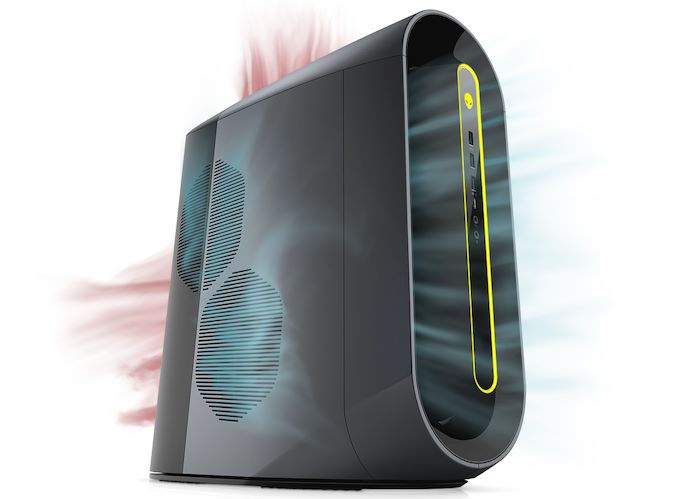
Dell’s Alienware division has started sales of its Aurora Ryzen Edition desktops. The latest Aurora systems not only put AMD’s processors back into mid-tower Aurora machines for the first time in more than a decade, but also feature rather interesting configurations. In order to address as wide audience as possible, Dell is offering their Aurora Ryzen Edition PCs with nearly the complete range of AMD’s Ryzen 3000 processors, including the entry-level Ryzen 5 3500, which up until now has only officially been available in China, Russia, and select Eastern European countries.


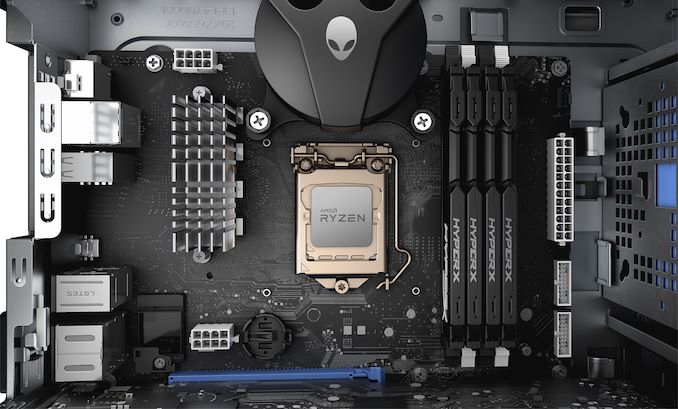
The Alienware Aurora Ryzen Edition desktop comes in the brand’s latest chassis featuring its Legend design language, which blends futuristic style of Alienware (known from the early 2000s) with the recent trends towards minimalism, efficiency, and, of course, addressable RGB LEDs. Traditionally for Alienware, these systems can be configured using various AMD Ryzen 3000-series CPUs supporting the PCIe Gen 4 interface, a variety of GPUs from AMD (up to Radeon VII) or NVIDIA (up to GeForce RTX 2080 Ti), and different storage options.


(ed: yes, Dell put the Ryzen logo on top of an LGA processor)


One of the interesting things about the Aurora Ryzen Edition configurations offered by Dell is that the cheapest machines come with AMD’s six-core Ryzen 5 3500 CPU (w/ AMD Radeon RX 5700 8 GB GDDR6, 8 GB DDR4 RAM, 1 TB HDD, 850 W PSU) and start at $1,199, whereas the most advanced builds are equipped with 16-core Ryzen 9 3950X processor and can be beefed up with any graphics and storage components.


AMD’s Ryzen 5 3500 CPU is currently only officially sold in select markets where the company has to compete against Intel’s entry-level six-core Core i9-9000-series CPUs, and where the relatively inexpensive Ryzen 5 3500 does not affect sales of cheaper previous-generation Ryzen 2000-series products. Eventually, the CPU should make it to other markets, but for now it is exclusively available in China, Russia, select Eastern European countries, and from Alienware, a boutique PC maker.


At present, Dell’s Alienware Aurora Ryzen Edition desktops can be purchased in North America, whereas customers in China and Europe will be able to buy them in the first half of 2020.


Related Reading:


Source: Dell/Alienware


Source: AnandTech – Dell’s Alienware Aurora Ryzen Edition Comes w/ Ryzen 5 3500 or Ryzen 9 3950X

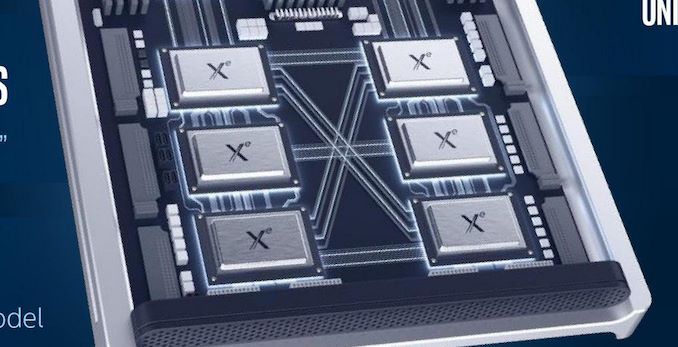
Intel’s 2021 Exascale Vision in Aurora: Two Sapphire Rapids CPUs with Six Ponte Vecchio GPUs

For the last few of years, when discussing high performance computing, it has been tough to avoid hearing the word ‘exascale’. Even last month, on 10/18, HPC twitter was awash with mentions of ‘Exascale Day’, signifying 10^18 operations per second (that’s 10 million million million). The ‘Drive to Exascale’ is one of the key features of the current high-computing market, and Intel is going in with the new Supercomputer ordered by the Argonne National Laboratory.


Source: AnandTech – Intel’s 2021 Exascale Vision in Aurora: Two Sapphire Rapids CPUs with Six Ponte Vecchio GPUs

Intel’s Xe for HPC: Ponte Vecchio with Chiplets, EMIB, and Foveros on 7nm, Coming 2021

Today is Intel’s pre-SC19 HPC Devcon event, and with Raja Koduri on stage, the company has given a small glimpse into its high-performance compute accelerator strategy for 2021. Intel disclosed that its new hardware has the codename ‘Ponte Vecchio’ and will be built on a 7nm process, as well as some other small interesting bits.


Source: AnandTech – Intel’s Xe for HPC: Ponte Vecchio with Chiplets, EMIB, and Foveros on 7nm, Coming 2021

Raja Koduri at Intel HPC Devcon Keynote Live Blog (4pm MT, 11pm UTC)

Prior to the annual Supercomputing conference, Intel hosts its HPC Developer Conference a couple of days before. This year’s HPC Devcon keynote talk is from Intel SVP, Chief Architect and General Manager of Architecture, Raja Koduri, with promises to cover Intel’s efforts as it relates to Graphics and Software in HPC. We’re here with the live blog of Raja’s presentation. It starts at 4pm Mountain Time (11pm UTC), so come back then to follow along.


Source: AnandTech – Raja Koduri at Intel HPC Devcon Keynote Live Blog (4pm MT, 11pm UTC)

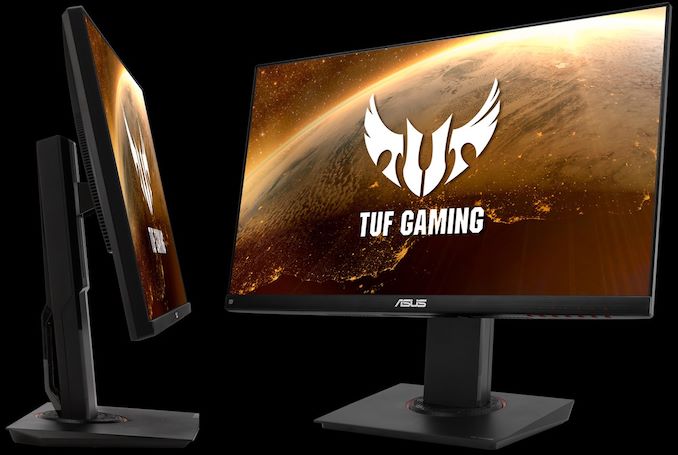
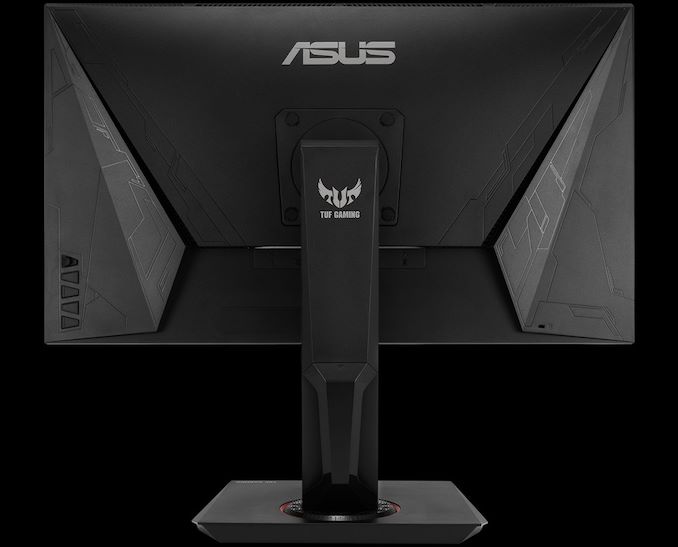
28-Inches of TUF Gaming: The ASUS VG289Q 4K IPS Monitor w/ DCI-P3 & FreeSync

ASUS has introduced a new TUF-series monitor, which is designed for mainstream gamers who need a quality monior with support for major features, but are not necessarily interested in extreme performance. The TUF Gaming VG289Q combines all the main selling points of modern gaming displays: a large screen size with a 4K resolution, AMD’s FreeSync variable refresh rate, and DCI-P3 as well as HDR support.


Based on a non-glare 28-inch IPS panel, the ASUS TUF Gaming VG289Q has a 3840×2160 resolution, 350 nits peak luminance, a 1000:1 contrast ratio, 178°/178° viewing angles, a 5 ms GtG response time, and a 60 Hz refresh rate. Overall then, ASUS seems to be covering their bases by building a modest monitor around a solid 28-inch panel, but not chasing high-end features like high refresh rates that quickly drive up the price of a monitor.


Meanwhile, the TUF Gaming VG289Q monitor can display 1.07 billion colors and covers 90% of the DCI-P3 color gamut, something that will please multimedia enthusiasts. The LCD also technically supports HDR modes — the ASUS Multi HDR (for games and movies) mode as well as the HDR10 mode — although its peak brightness is too low for HDR, so the actual HDR user experience is something that remains to be seen.


Because the TUF VG289Q is designed for gamers, it inherits pre-set display modes for gaming, including genre-specific Gamevisual presets, Gameplus overlays (crosshair, time, FPS counter), and Shadow Boost feature that makes darker areas lighter without overexposing bright areas within a scene.
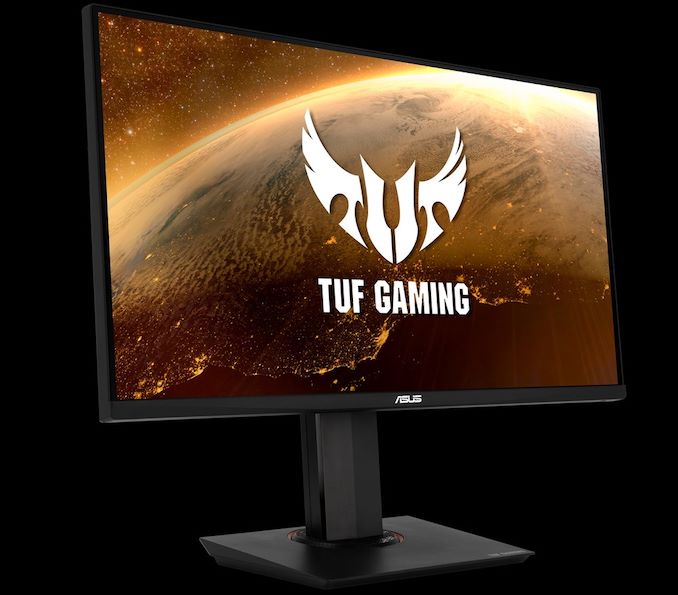
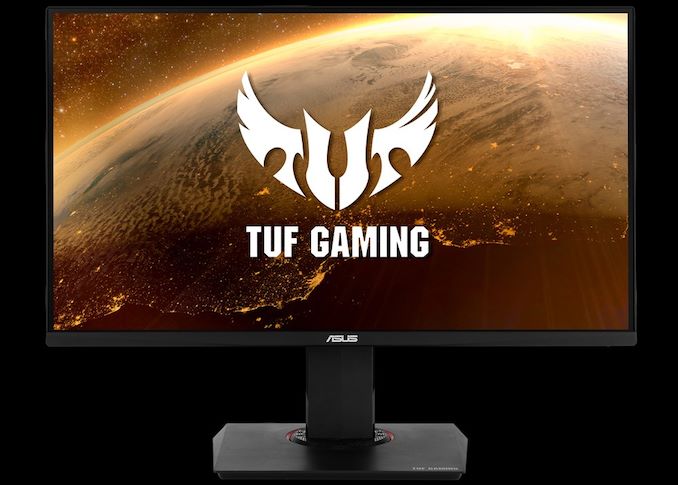


As far as connectivity is concerned, the ASUS TUF VG289Q has one DisplayPort 1.2, two HDMI 2.0 ports, and a headphone jack, an essential set of connectors to plug-in a PC and a couple of game consoles. Meanwhile, the monitor comes with a stand that can adjust height, swivel, tilt, and orientation.


ASUS has not announced pricing of its TUF Gaming VG289Q display, but considering positioning of the TUF brand and characteristics of the LCD, the product should be priced reasonably for a 28-incher. As for its launch date, the monitor should become available in the near future.


ASUS TUF Gaming VG289Q
  General Specifications
Panel 28″ IPS with non-glare coating
Native Resolution 3840 × 2160
Maximum Refresh Rate 60 Hz
Dynamic Refresh Rate AMD FreeSync (40 Hz ~ 60 Hz?)
Response Time 5 ms (gray-to-gray)
Brightness 350 cd/m²
Contrast 1000:1
Viewing Angles 178°/178° horizontal/vertical
Color Gamut 90% DCI-P3
Pixel Pitch 0.1614×0.1614 mm
PPI 157 PPI
Inputs 1 × DisplayPort 1.2

2 × HDMI 2.0
Audio 3.5-mm headphone jack
Color Black
Power Consumption Standby 0.5 W
Maximum 65 W
Additional Information Link
Price ?

Related Reading:


Source: ASUS (Hermitage Akihabara)


Source: AnandTech – 28-Inches of TUF Gaming: The ASUS VG289Q 4K IPS Monitor w/ DCI-P3 & FreeSync

Intel’s ‘Frost Canyon’ NUC Revealed: SFF PC w/ Comet Lake

Intel Thailand this week inadvertently disclosed the company’s plans to release its next-generation NUC small form-factor PCs based on Comet Lake processors in the near future. Meanwhile, a store from the Netherlands has also inadvertently revealed the NUC’s key specifications. As it turns out, Intel’s ‘Frost Canyon’ NUCs will feature processors with up to six cores and will support up to 64 GB of memory.


Source: AnandTech – Intel’s ‘Frost Canyon’ NUC Revealed: SFF PC w/ Comet Lake