Arm Server CPUs: You Can Now Buy Ampere’s eMAG in a Workstation

One of the critical elements to all these new server-class Arm processors is availability. We are not yet at the point where these chips are freely sold on the open market: anyone who wants to use them needs to buy a server (or a rack of servers), or rent a cloud instance. One of the benefits of x86 in this space is that users can write code for x86 servers on other easily accessible hardware, then port it up to the big server iron. Well now it seems that one of the Arm licencees playing in the server space has a workstation based product in the hands of distributors ready for software developers to cut their teeth on the hardware.


Source: AnandTech – Arm Server CPUs: You Can Now Buy Ampere’s eMAG in a Workstation

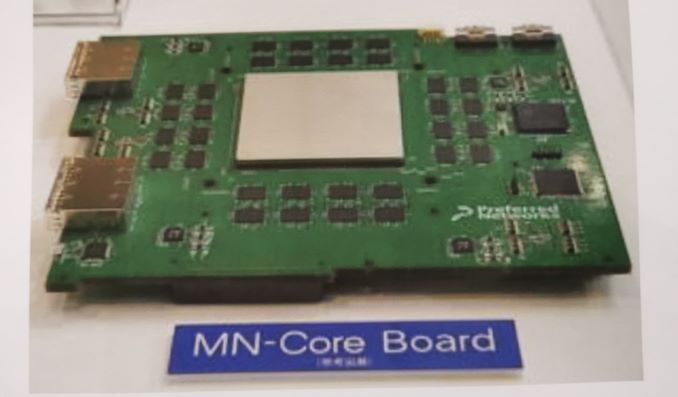
Preferred Networks: A 500 W Custom PCIe Card using 3000 mm2 Silicon

Pushing the physical limits of hardware is always a fun story, but I was positively blown away when I saw this poster at Supercomputing. Preferred Networks, seemingly a spin-out from Tokyo University, is shoving several large chiplets into a single PCIe card for peak performance, peak power, and it looks like they’re ready to deploy over 4800 of these cards into a custom supercomputer.


Source: AnandTech – Preferred Networks: A 500 W Custom PCIe Card using 3000 mm2 Silicon

Cosemi Launches 100-Meter USB 3.1 Gen 2 Optical Cables

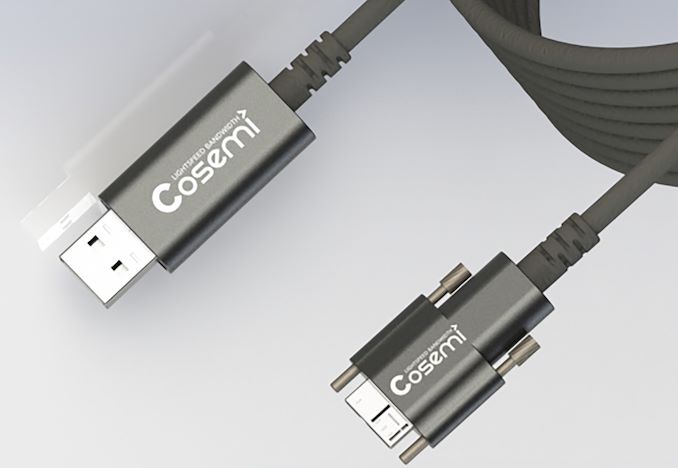
Cosemi has introduced new USB 3.1 Gen 2 active optical cables, which support full speed USB connections at distances of up to 100 meters. The cables are designed primarily for industrial applications.


Cosemi’s USB 3.1 Gen 2 active optical cables feature a USB Type-A connector on one side as well as a USB Type-B connector with a screw locking mechanism on another side. The cables can enable data transfers at up to 10 Gbps speed, but they cannot power devices (which is what hybrid active optical cables are needed for), which somewhat limits applications they can address.


USB 3.1 Gen 2 active optical cables like the ones offered by Cosemi are primarily used to connect industrial equipment, such as machine vision systems, to computers located off the factory floor without using expensive signal booster solutions. Considering the fact that more and more industrial equipment is becoming ‘intelligent’ and requires full time data connections, such long USB cables will be needed. Depending on exact environments, Cosemi will offer its optical cables in standard flex or super high-flex versions.


Cosemi said that it would begin sampling of its USB 3.1 Gen 2 active optical cables in Q1 2020. Commercial shipments will begin later, whereas pricing will depend on the length as well as flexibility.


Related Reading:


Source: Cosemi


Source: AnandTech – Cosemi Launches 100-Meter USB 3.1 Gen 2 Optical Cables

The ADATA Ultimate SU750 1TB SSD Review: Realtek Does Storage, Part 1

Realtek has entered the SSD controller market and scored several design wins with ADATA for retail SSDs. The ADATA SU750 entry-level SATA drive is not as important to their strategy as NVMe drives, but it may help Realtek establish a foothold in this market.


Source: AnandTech – The ADATA Ultimate SU750 1TB SSD Review: Realtek Does Storage, Part 1

AOC’s Agon AG493UCX: A 49-Inch Ultrawide Curved Monitor w/ 120 Hz Refresh & VRR

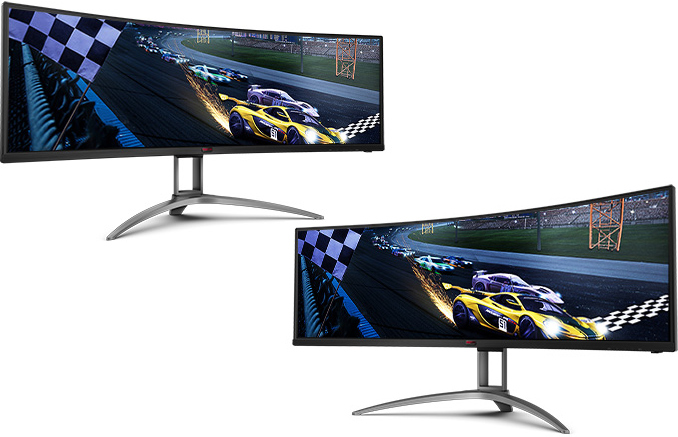
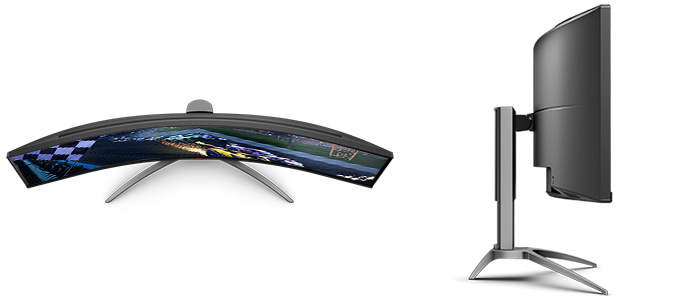
In recent years, displays with an ultrawide aspect ratio have gained traction both among gamers and among prosumers. At first, monitors with a 21:9 aspect ratio were released by a handful of manufacturers, but more recently, most of leading brands launched even wider LCDs featuring a 32:9 or 32:10 ratios. TPV Technology – which makes displays under AOC and Philips brands – was among the first manufacturers with professional-grade 32:9 monitors, so now it’s following-up with the gamer-focused AOC Agon AG493UCX.


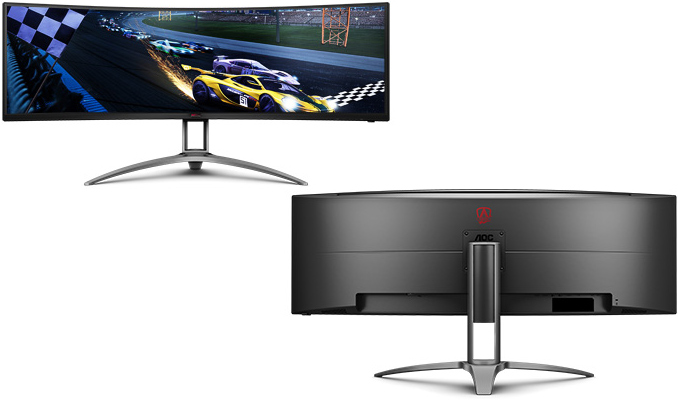
The AOC Agon AG493UCX uses a 5120×1440 VA panel that features a 1800R curvature, which essentially means that the display offers the same number of pixels and screen real estate as two 27-inch QHD LCDs. Other specifications of the LCD include a max luminance of 550 nits, a 3000:1 contrast ratio, 178º/178º vertical/horizontal viewing angles, a 1 ms MPRT response time, and a refresh rate up to 120 Hz. The monitor can display 121% of the sRGB or 93% of the DCI-P3 color gamuts. Additionally, it comes factory calibrated to a Delta<2 accuracy (presumably for the sRGB color space).


Since we are dealing with a monitor aimed at gamers and entertainment enthusiasts, the AOC Agon AG493UCX supports VESA Adaptive-Sync variable refresh rate technology, so expect it to be certified by AMD for its FreeSync as well as NVIDIA for its G-Sync Compatible label. Speaking of certifications, the display also carries VESA’s DisplayHDR 400 badge.


Just like other premium monitors for gamers, the Agon AG493UCX has multiple display inputs (two DisplayPort 1.4 inputs, two HDMI 2.0 ports, and one USB Type-C port with a 65-W Power Delivery) as well as a triple-port USB 3.2 Gen 1 Type-A hub. What is surprising is that the monitor has docking capabilities, which includes a GbE port, and a KVM switch, features which aren’t particularly common in gaming-focused gear. In addition, it has built-in 5 W speakers and a headphone output.


One indisputable advantage of AOC’s Agon AG493UCX is its stand that can adjust its height, tilt, and swivel, a very rare feature on large displays.


AOC’s UltraWide 49-Inch Gaming Display
  Agon AG493UCX
Panel 49″ VA
Native Resolution 5120 × 1440
Maximum Refresh Rate 120 Hz
Response Time 1 ms MPRT
Brightness up to 550 cd/m²
Contrast up to 3000:1
Backlighting W-LED
Viewing Angles 178°/178° horizontal/vertical
Curvature 1800R
Aspect Ratio 32:9
Color Gamut sRGB: 121%

DCI-P3: 93%

NTSC: 102%
Dynamic Refresh Rate Tech VESA Adaptive-Sync
Pixel Pitch 0.234 mm²
Pixel Density 108 PPI
Inputs 2 × DisplayPort 1.4

2 × HDMI 2.0b

1 × USB-C with 65 W Power Delivery
Audio 3.5 mm output
USB Hub 3 × USB 3.2 Type-A connectors
Ethernet 1 GbE port
Webcam
Stand Height: 100 mm

Swivel: -15.5° ±1.5° ~ 15.5° ±1.5°

Tilt: -3.5°±1.5° ~ +13.5±1.5°
MSRP $999.99

The AOC Agon AG493UCX will be available starting from January 7, 2020, for $999.99 in the US. Meanwhile, since AOC China already lists the display on its website, expect the monitor to hit the market in the country shortly.


Related Reading:


Source: AOC China (via TFT Central)


Source: AnandTech – AOC’s Agon AG493UCX: A 49-Inch Ultrawide Curved Monitor w/ 120 Hz Refresh & VRR

Toshiba Announces 6 TB HDDs for Surveillance Applications

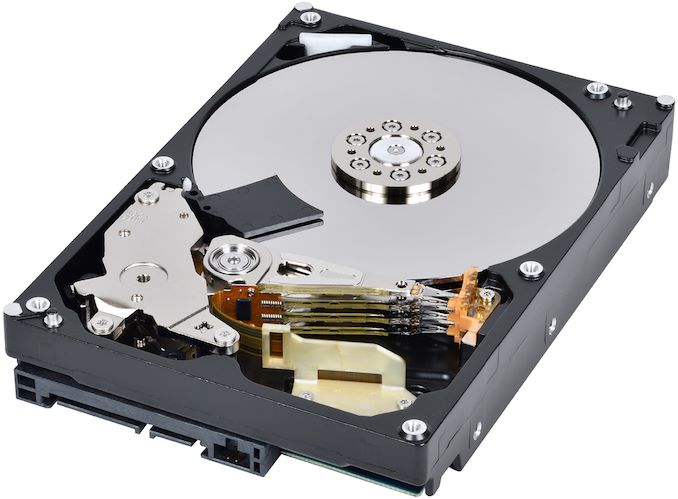
Toshiba has introduced a new line of energy-efficient hard drives for surveillance applications. The new DT02-V series HDDs will support up to 32 HD streams and offer capacities of up to 6 TB. The company says that the key advantage that the new drives will provide over its direct predecessors is improved reliability.


Toshiba’s DT02-V family of 3.5-inch hard drives will include models with 2 TB, 4 TB, and 6 TB capacities featuring a 5400 RPM spindle speed, a 128 MB cache buffer, and a SATA 6 Gbps interface. Being aimed at digital video recorder (DVR) and network video recorder (NVR) platforms applications, the DT02-V HDDs support a variety of enhancements, such as ability to record data from up to 32 cameras simultaneously as well as being rated to run 24/7 – including in multi-drive environments.


Performance-wise, Toshiba expects its DT02-V HDDs to offer up to 185 MB/s sustained sequential data transfer speeds. As for reliability, they are rated for up to 180 TB per year workload, 600,000 load/unload cycles, and one million hours MTBF, which is significantly below ratings of enterprise-grade hard drives, but is in line with other HDDs for surveillance applications.


According to Toshiba, its new DT02-V hard drives offer higher reliability compared to the prior-generation low-spin MD04ABA-V HDDs. Overall, the drives offer higher performance at a lower level of power consumption.


Specifications of Toshiba’s DT02-V HDDs
AnandTech.com 6 TB 4 TB 2 TB
P/N DT02ABA600V DT02ABA400V DT02ABA200V
RPM 5400 RPM
Interface SATA 6 Gbps
DRAM Cache 128 MB
Persistent Write Cache none
ATA Streaming Supported
Read-Modify-Write ?
Sequential Data Transfer Rate (host to/from drive) ? 185 MB/s ?
MTBF 1 million
Rated Annual Workload 180 TB
Acoustics (typical, low power) 22 dBA
Power Consumption Operating ? 4.11 W ?
Active Idle ? 2.36 W ?
Standby ? 0.20 W ?
Warranty ? Years

Toshiba considers hard drives for surveillance applications as a very important market for the company as demand for such HDDs is expected to grow in the coming years, particularly in China. As a company that wants to expand sales of its storage devices, Toshiba believes it is crucial for it to address growing markets.


The company is sampling the 4 TB model of the new HDDs today, while samples of 6 TB drives are due in January, and samples of 2 TB SKUs are expected in March. It is unclear when the manufacturer plans to start volume sales of the new hard drives, but it is safe to say that this should happen in 2020.


Related Reading:


Source: Toshiba


Source: AnandTech – Toshiba Announces 6 TB HDDs for Surveillance Applications

Western Digital Starts Sales of WD_Black P50 USB 3.2 Gen 2×2 SSDs

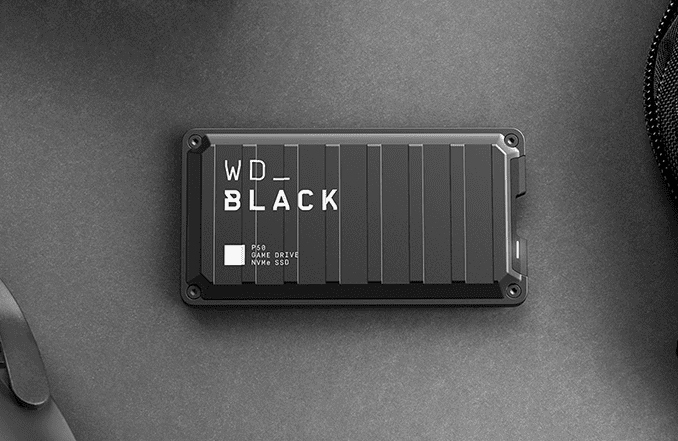
Western Digital has started sales of its WD_Black P50 SSDs that were announced earlier this year. The drives are aimed at the high-performance market and are among the first peripherals to support USB 3.2 Gen 2×2, which offers a full 20Gbps over a USB-C cable.


The WD_Black P50 Game Drive is an external storage device containing an internal NVMe SSD, with capacities of 500 GB, 1 TB, or 2 TB. The device offers a USB 3.2 Gen 2×2 Type-C interface via ASMedia’s ASM2364 USB-to-PCIe bridge, driving peak interface transfer rates of up to 20 Gbps (2.5 GB/s).


As one of the fastest consumer-grade external SSDs available today and among the first 2×2 devices, the WD_Black P50 SSD is on the cutting edge for USB devices. However, as with the launch of any new USB standard, the market starts at 0 for both hosts and peripherals; so the number of hosts that can actually use the drive at its full interface speed is still very limited. The number of hosts will grow over time – we’re already seeing 2×2 controllers show up in new Threadripper motherboards – but for those who do not want to pay extra for the USB 3.2 Gen 2×2 technology, Western Digital does also offer the SanDisk Extreme Pro Portable SSD, which uses a more common USB 3.2 Gen 2 interface at 10 Gbps.


Western Digital’s WD_Black P50 external SSDs are currently offered by the company’s own online store with ETA between one and two weeks in the US. The 500 GB version is priced at $149.99, the 1 TB SKU costs $239.99, and the 2 TB model carries a $399.99 MSRP. It remains to be seen whether the drives will make it to retailers like Amazon or Newegg this holiday season, but it makes a great deal of sense for the company to start sales of its high-end product as soon as possible.


Related Reading:


Sources: Western Digital, PC Watch


Source: AnandTech – Western Digital Starts Sales of WD_Black P50 USB 3.2 Gen 2×2 SSDs

Qualcomm Snapdragon Tech Summit Day 3 Live Blog: ACPC and XR

The annual Qualcomm Snapdragon Tech Summit is in its final day, and the main focal points for discussion are the Windows on Snapdragon-based Always Connected PCs, with updates to the 8cx family of processors, and the into augmented reality and virtual reality with Qualcomm’s efforts in XR being expanded. We’re here ready to report, with the presentation set to start at 2pm ET / 7pm UTC.


Source: AnandTech – Qualcomm Snapdragon Tech Summit Day 3 Live Blog: ACPC and XR

AIC to Offer Dual Socket 1U with Four 300W FPGAs

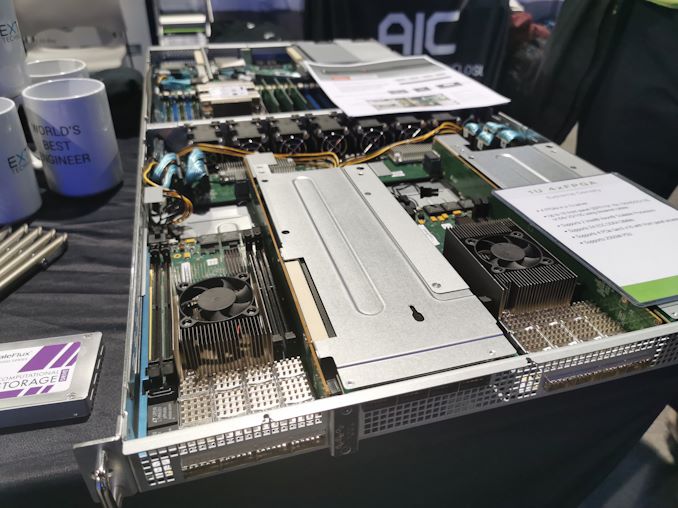
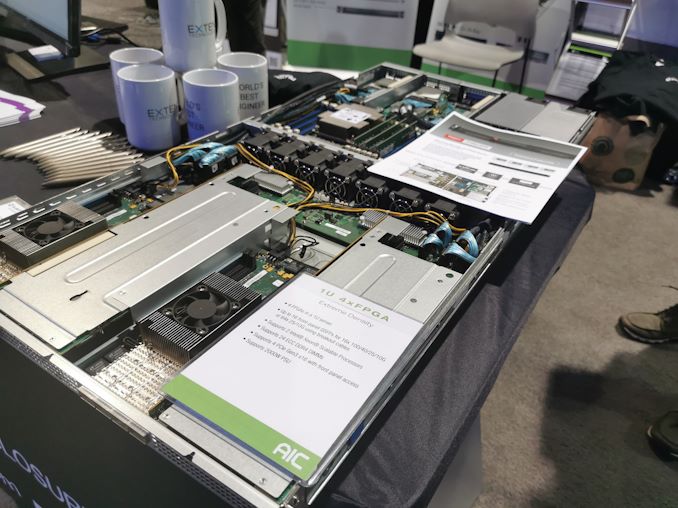
Aside from specific events relating to Xilinx or Altera/Intel, we don’t cover much FPGA news. FPGAs by their very nature are very focused pieces of hardware, and it’s usually a binary option if you need one. They can be difficult to build for without the right expertise as well, but if you have the right engineer and the product needs one, then sometimes it’s a very easy sell. In recent months the key noise on FPGAs has been around SmartNICs, 5G network accelerators, and simulation – both Intel and Xilinx announcing new hardware this year relating to the latter. In order to support FPGA developers, AIC was showing off one of its new server builds at Supercomputing.


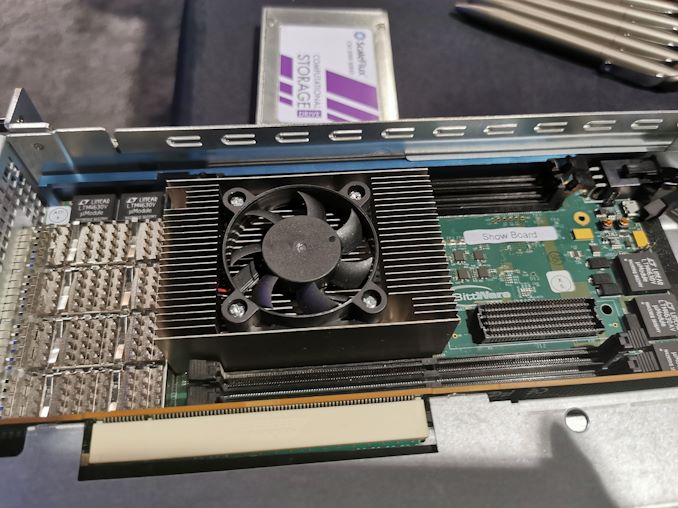
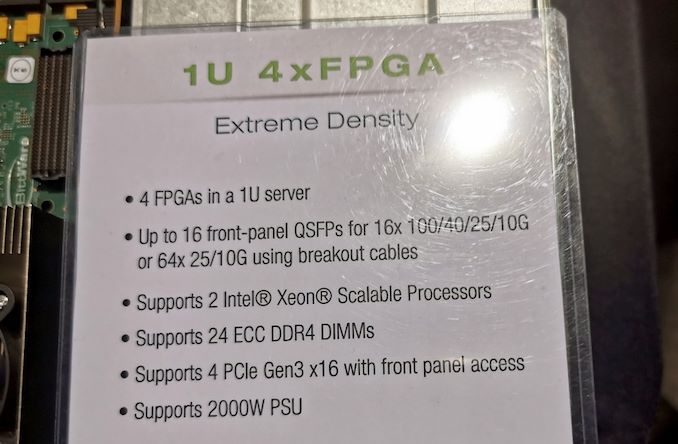
The key with FPGA simulation is often timing and/or accuracy, and accelerated networking is often latency and co-processor bound. All of these problems can be improved through the density of the hardware. AIC’s new 1U server piles on the extreme density, allowing for two Xeon Scalable CPUs and four 300W FPGAs in 1.75 inches. These are air cooled, and backed by redundant 2000W power supplies.


In the example box on display, AIC showed FPGAs with QSFP+ ports with slots requiring additional memory, making for a very packed server. Each of the PCIe cards with an FPGA are installed via the front panel, which will allow for adjusting the connectivity between servers a little easier. AIC stated that these servers are typically engineered for 5G. We were told that this is where a lot of business is right now, with R&D focused on making sure they have the right silicon design, accelerators, and co-processors in place.


AIC didn’t have a specific SKU name to give to this design just yet, as they are still going through testing and validation, but expect it to be ready for customers soon.


Related Reading


Source: AnandTech – AIC to Offer Dual Socket 1U with Four 300W FPGAs

A Success on Arm for HPC: We Found a Fujitsu A64FX Wafer

When speaking about Arm in the enterprise space, the main angle for discussion is on the CPU side. Having a high-performance SoC at the heart of the server has been a key goal for many years, and we have had players such as Amazon, Ampere, Marvell, Qualcomm, Huawei, and others play for the server market. The other angle to attack is for co-processors and accelerators. Here we have one main participant: Fujitsu. We covered the A64FX when the design was disclosed at Hot Chips last year, with its super high cache bandwidth, and it will be available on a simple PCIe card. The main end-point for a lot of these cards will be the Fugaku / Post-K supercomputer in Japan, where we expect it to hit a one of the top numbers on the TOP500 supercomputer list next year.


Source: AnandTech – A Success on Arm for HPC: We Found a Fujitsu A64FX Wafer

Ryzen UCFF-palooza: Multiple PC Makers Now Shipping AMD Ryzen Embedded Systems

While AMD’s Ryzen Embedded APUs aren’t new, the rate of adoption for them is. AMD unveiled this week that four more manufacturers are now offering ultra-compact form-factor (UCFF) PCs powered by their embedded Ryzen APUs. With systems shipping from ASRock, EEPD, OnLogic, and SimplyNUC, the small form factor boxes can be used for a wide variety of use cases, ranging from home entertainment to business and industrial applications.


ASRock’s 4X4 BOX R1000V UCFF PCs Finally Available


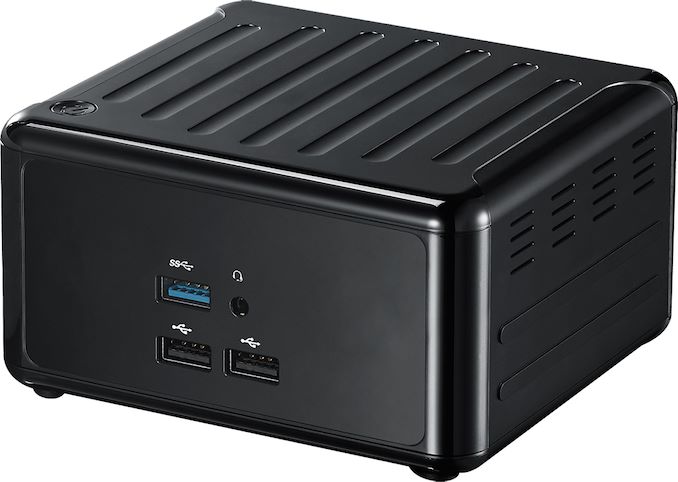
Originally introduced earlier this year, ASRock’s 4X4Box R1000V and 4×4 BOX-R1000M systems come in black Intel NUC-like chassis that packs a motherboard with soldered down AMD’s dual-core Ryzen Embedded R1505G APU with Radeon Vega 3 Graphics or dual-core Ryzen Embedded R1606G APU with Radeon Vega 3 Graphics, respectively.
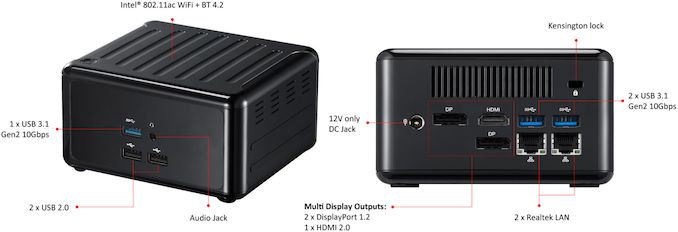


The systems have everything that we come to expect from a modern PC, including two SO-DIMM slots supporting up to 32 GB of DDR4-2400 memory, an M.2-2260 slot for a SATA or PCIe 3.0 x4 SSD, two Realtek RTL8111G GbE controllers, Intel’s Wireless-AC 3168 module, multiple USB Type-A ports (three USB 3.0, two USB 2.0), three display outputs (two DisplayPorts, one HDMI), and a 3.5-mm audio jack.


AMD’s Ryzen Embedded R-series processors are rated to run for 24/7, so ASRock’s 4X4 Box-R1000M and 4X4 Box-R1000V can be used for applications that need to be always on, such as digital signage, kiosks, and so on. Meanwhile, three display outputs make ASRock’s AMR Ryzen Embedded-based systems rather decent solutions for office. Finally, as the boxes include a watchdog timer and are rated to run at temperatures of up to 40ºC, the system can be used for non-extreme industrial applications.


ASRock’s 4X4 Box-R1000M and 4X4 Box-R1000V are now finally available as barebones. Prices of actual systems will depend on their configurations, whereas barebones are now sold at Newegg: the model R1000V costs $309.99, whereas the model V1000M is priced at $409.99.


EEPD’s ProFive NUCR with AMD R1000


EEPD offers ProFive NUCR single-board-computers (SBCs) powered by AMD’s dual-core Ryzen Embedded R1505G or 1606G APUs. The motherboards measure 101.6 mm × 101.6 mm and are designed primarily for industrial-grade embedded systems or custom NUC-like chassis.
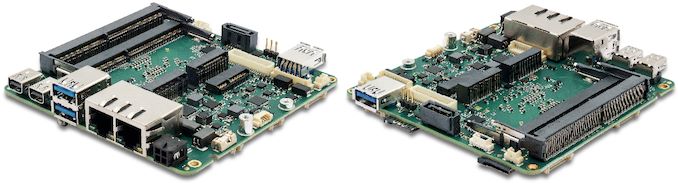


EEPD’s ProFive NUCR with AMD’s Ryzen Embedded R1000-series APUs are rated to operate in temperature ranges between 0°C and + 60°C and with a maximum relative humidity of 95% @ 40°C (non-condensing), so they can indeede be used for a wide variety of applications. The SBCs have two SO-DIMM memory slots, three M.2 slots for SSDs or Wi-Fi modules (Type B, Type E, Type M), a SATA header, two GbE ports, two DisplayPort++ connectors, USB 3.1 Gen 1 connectors, a microSD slot, RS-232 and RS-232/485 ports, and GPIO.
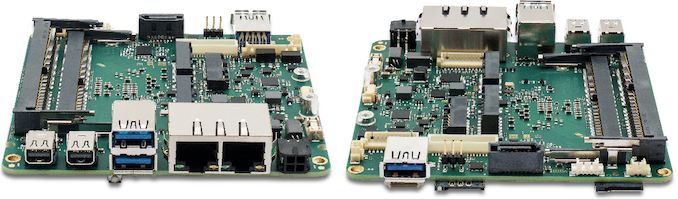


The manufacturer says that in addition to embedded, commercial, and industrial applications, its ProFive NUCR with AMD’s Ryzen Embedded R1000-series APUs can be used for vehicles and mobile robots, which greatly expands use cases for the parts as these applications will see a serious growth in the coming years.


EEPD does not disclose pricing of its ProFive NUCR SBCs, but it is obvious that they depend on multiple factors, including volumes and additional options.


OnLogic’s MC510-40 AMD Ryzen Mini-ITX Computer


OnLogic uses one of AMD’s highest performing Ryzen Embedded APU model V1605B with four cores and Radeon Vega 8 graphics. The system is aimed at a range of applications, including those that need more general purpose and graphics horsepower, but may be used for embedded applications and even home entertainment too.
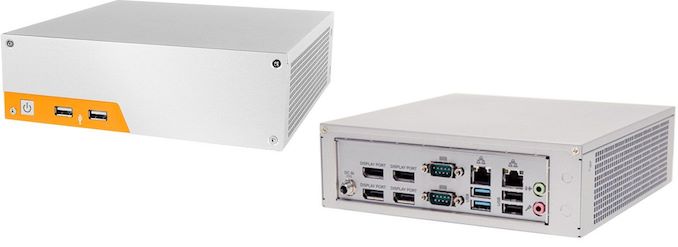


OnLogic’s MC510-40 AMD Ryzen Mini-ITX computer comes in a stylish aluminum + steel chassis that can pack up to 32 GB of DDR4 memory, an M.2-2280 SSD, and a 2.5-inch HDD or SSD. As for connectivity, the system has Wi-Fi or optional 4G support, two GbE ports, four DisplayPort 1.3 outputs, six USB connectors (four USB 3.1 and two USB 2.0), two RS-232 ports, and audio connectors. One of the things that differentiate the MC510-40 from competing Ryzen Embedded is support for an mPCIe socket for expansion.


The MC510-40 machine is certified to work in temperature ranges between 0°C and 50°C, which is wide enough for home/office, kiosks, commercial, and some industrial applications. Meanwhile, the APU requires active cooling, so potentially hot environments will not be suitable for this PC.


OnLogic currently offers its MC510-40 barebones for €656.95 w/o VAT (€794.91 w/ VAT), but when fully configured the system will naturally cost more.


SimplyNUC’s Sequoia UCFF PCs


SimplyNUC’s Sequoia UCFF PCs with AMD’s quad-core Ryzen Embedded APUs come in small rugged NUC-like chassis that can withstand up to 95% of relative humidity as well as temperatures as high as 60°C. The manufacturer says that the systems can be used for a wide range of applications, including edge data analytics, electronic kiosks, and digital signage.
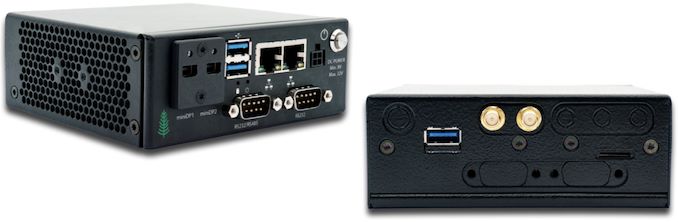


Unlike its rivals, SimplyNUC offers pre-configured Sequoia UCFF systems. The cheaper one is the Sequoia v6 equipped with AMD’s quad-core Ryzen V1605B processor, 4 GB of memory, and a 128 GB SSD. The more advanced one is the Sequoia v8 is based on AMD’s quad-core Ryzen V1807B processor, 4 GB of DDR4 RAM, and 128 GB SSD. Meanwhile, SimplyNUC can further tailor its PCs for needs of a particular customer.


Since Sequoia systems will be used for a variety of applications, the maker equipped it with extensive connectivity, which includes Wi-Fi 5, Bluetooth 5, optional 4G/LTE modem, two GbE ports (controlled using Intel’s i210-LM), two Mini DisplayPort outputs, Serial RS-232/Serial RS-485 video outputs, an optional microSD card reader, and several USB 3.1 Gen 2 ports.


When shipped in default configurations, SimplyNUC’s Sequoia v6 is priced at £445, whereas the Sequoia v8 costs £560.


Related Reading:


Source: AMD


Source: AnandTech – Ryzen UCFF-palooza: Multiple PC Makers Now Shipping AMD Ryzen Embedded Systems

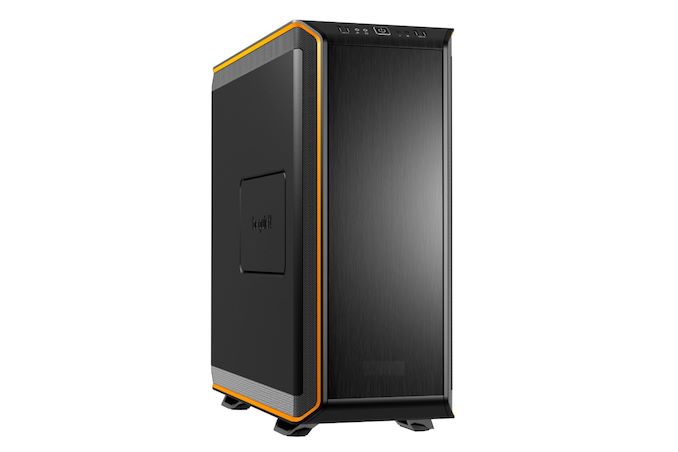
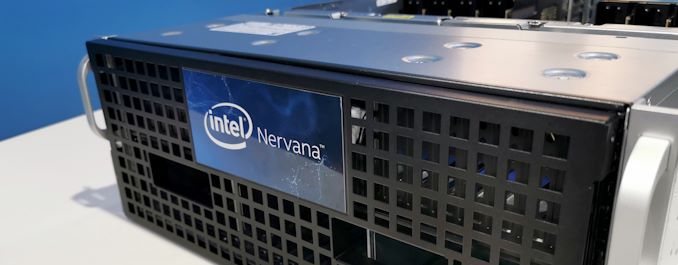
Supermicro Shows Off Intel Nervana NNP-T Servers: 8-Way PCIe and OAM

One of the key elements to deep learning and training is lots of very dense compute, as well as the dense servers to go through the computation. Intel’s Nervana NNP-T Spring Crest silicon, which we saw at Hot Chips earlier this year, is the ‘big training silicon’ that came out of the acquisition with Nervana: a 680 mm2 built on TSMC 16nm with CoWoS with four stacks of HBM2. The servers using this silicon are now starting to appear, and we caught sight of two at the Supermicro booth at Supercomputing.


Source: AnandTech – Supermicro Shows Off Intel Nervana NNP-T Servers: 8-Way PCIe and OAM

Qualcomm Announces Snapdragon 865 and 765(G): 5G For All in 2020, All The Details

We’re here in Maui for the second day of Qualcomm’s fourth annual Snapdragon summit, for what is probably the most exciting part of the event, as we cover the disclosure of the intricate details of the brand new Snapdragon 865 and 765 SoCs that the company had briefly announced yesterday.

Indeed, this year, Qualcomm isn’t launching just one SoC, but rather two new platforms at the same time. The Snapdragon 865 is self-explanatory in its positioning; as a direct successor to the Snapdragon 855 we expect the new chip to represent the best Qualcomm is able to deliver, and be the silicon that powers most of 2020’s flagship devices. The new top-model this year is accompanied by the new Snapdragon 765 and 765G SoCs. As with other 7-series models since the launch of the new range, the new generation adds of the new features introduced with the new Snapdragon 865, at a lower performance level and a more affordable price for what is becoming an increasingly popular device category.


Source: AnandTech – Qualcomm Announces Snapdragon 865 and 765(G): 5G For All in 2020, All The Details

Qualcomm Snapdragon Tech Summit Live Blog Day Two: All About Mobile

After yesterday announcing both the Snapdragon 765 and Snapdragon 865 mobile platforms, which will aim to provide a lot of 5G coverage to 2020 devices, Qualcomm today is going to go deep into what is inside both of these chips. We’re here will full live blog coverage – the talk starts at 7pm UTC / 2pm ET.


Source: AnandTech – Qualcomm Snapdragon Tech Summit Live Blog Day Two: All About Mobile

Quick Bytes: Motorola in Profit, 2020 Focus on Innovation, Foldables, and 5G

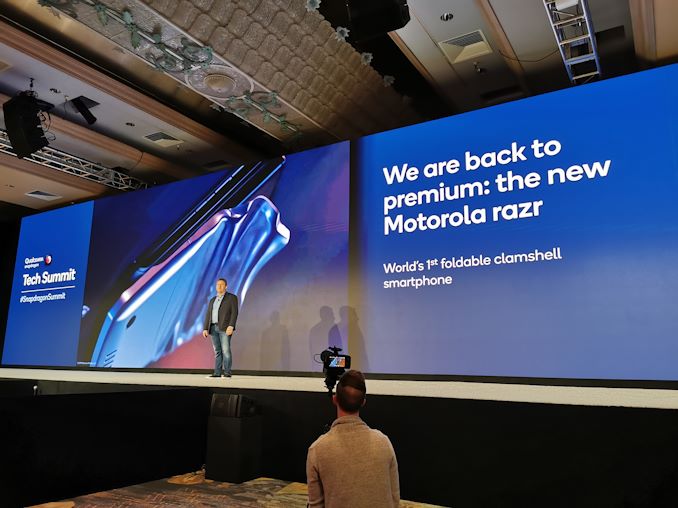
The first guest company to present at Qualcomm’s Snapdragon Tech Summit this year was Motorola. For readers who haven’t been keeping up, Motorola is now owned by Lenovo, and its focus is still very much on the smartphone market. Even recently they announced their first foldable smartphone, a new Motorola Razr – a modern take on the classic clamshell ‘razr’ phone, but this time putting a foldable OLED display on the inside. A number of press and analysts are calling it one of the more ‘sensible’ flexible display technology deployments in the market today, although at $1500 it is still a lot to invest in an old style clamshell device. That being said, Motorola had some words about its future.


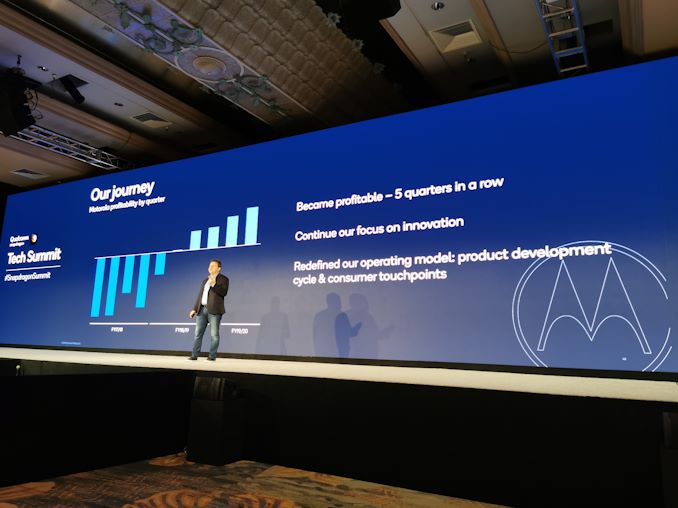
Before the future, the past – as the Motorola Mobility company was split from the Motorola Solutions arm of the business in 2011, it was sold to Google in 2012 and then in 2014 was sold again to Lenovo. On stage, Motorola showed that their 2017/2018 financial results were quite bad, but over 18/19 and 19/20, the Motorola brand is now again profitable. The success of devices like the Z3 flagship down to the budget E5 Play has meant that the company has been profitable for five consecutive quarters, which to be honest I didn’t expect was the case.


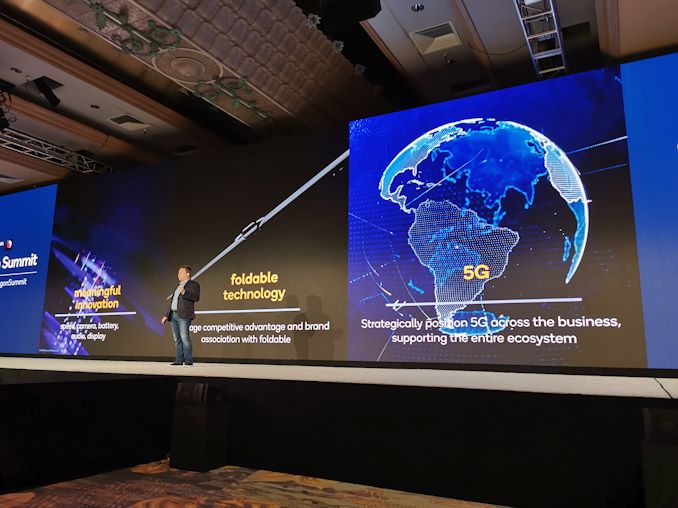
On the back of this profitability, Lenovo wants to return Motorola to its roots: innovation. Motorola has had much success in the previous decade with devices like the Razr, which has means that in this decade a device like the new 2019/2020 Razr, with a flexible display, is key to that strategy. The three areas that Motorola wants to focus on for 2020 is innovation, foldables, and 5G. From Motorola’s own research, they’ve determined that for something like 5G, customers who use it suddenly put ‘data speeds’ higher up on their list of device must-haves, and so part of the goal is to bring innovative solutions to market that can help the customer with user experiences they need before they even know they need them.


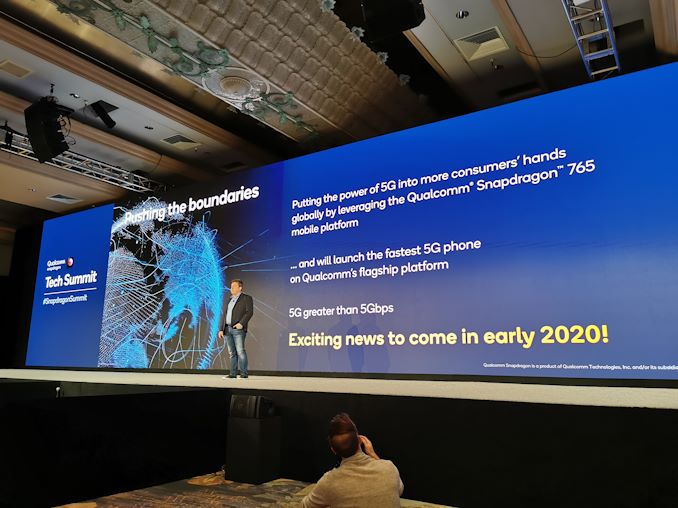
In 2020, Motorola is planning to expand its key product lines to a more global audience. On stage, the Motorola executive stated that the company will be bringing out devices in 2020 based on the new Snapdragon 765 platform with 5G integrated, but also on the new Snapdragon 865 platform with the external X55 modem, and that these devices will be coming to countries outside of North America. Motorola also made a very big claim: they will be bringing the fastest 5G phone to market with the 865 platform, supporting over 5 Gbps on 5G.


It’s worth noting on AnandTech that we haven’t done a review of a Motorola phone in a while. If they’re serious about this, and it sounds like they are, then we perhaps need to get back in touch.


Quick Bytes are shortened news pieces about topics mentioned at large press events. Because sometimes smaller announcements get buried at a keynote presentation because a dozen key points are mentioned in one article, and our Quick Bytes series separates out a few topics for targeted discussion.


Source: AnandTech – Quick Bytes: Motorola in Profit, 2020 Focus on Innovation, Foldables, and 5G

Quick Bytes: Qualcomm’s Prediction of 1.4 Billion 5G Smartphones by 2022

I wanted to cover a quick comment that Qualcomm made yesterday at its Snapdragon Tech Summit event. We’re currently in 2019, with the first wave of 5G devices currently rolling out. The devices are here, and the networks on a global scale are taking their time to add 5G in different stages – some are starting with mmWave, some are starting with Sub-6 GHz, and then eventually everyone everywhere should support both. There is always a question about what the level of adoption is like, and Qualcomm gave a very clear figure about where the market is headed.


Now it’s fairly obvious that as time goes on, as 5G gets cheaper and the operators actually give data plans that make sense, that more and more users will invest in 5G enabled devices. That will drive certain use cases that will eventually make certain forms of 5G a fundamental feature for smartphones, just like 4G is today. Of the devices out in the market that support 5G, due to the limited chipset/modem support, we’re dealing mostly with flagship smartphones: the Samsung Galaxy S 10 5G, the Oppo Reno 5G, the OnePlus 7 Pro 5G, the LG V50 ThinQ 5G, and so on. It’s a high cost of entry, and part of the announcement this week from Qualcomm is that they’re going to be introducing 5G into more mid-range chips to enable mid-range devices.


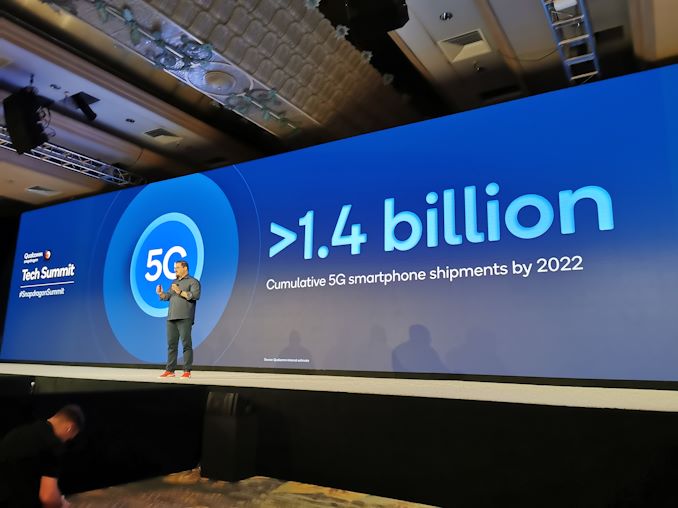
As part of that drive to take 5G to the mass market, Qualcomm stated on stage that they expect more than 1.4 billion smartphones (that’s smartphones, not 5G-enabled IoT devices) with 5G to be shipped by 2022.


At the moment, the biggest market for 5G adoption is South Korea. Qualcomm has stated in an interview with us that there are 2 million 5G subscribers in South Korea, and Samsung has stated in September that they had passed that 2 million mark and they expect 4 million by the end of 2019. Samsung is the only smartphone provider with a ‘mid-range’ 5G implementation right now, the Galaxy A90 5G, which starts around $620.


In order to go from 2 million to 4 million to 1.4 billion is going to require a wide adoption of Qualcomm’s new mid-range 5G-enabled chipsets. To that end, Qualcomm announced the Snapdragon 765 and 765G, which will power upper-mid range smartphones in 2020. The SoCs will have integrated X52 modems that will offer support for both mmWave and Sub 6 GHz 5G (assuming the OEMs add the antennas). In order to go to 1.4 billion, it’s going to require more than just Qualcomm to bring 5G to the mid-range, and in an interview earlier this year with Richard Yu, he stated that they are also ready to bring 5G to the mid-range in 2020.


In order to provide some context and to see if this number is viable, I looked back at the data for 4G/LTE adoption. It’s worth noting that the 1.4 billion number for 5G that Qualcomm presented is for ‘smartphones’, not ‘phones’ – there are a large number of 4G non-smart phones that are sold every year.


Smartphone Unit Shipments
AnandTech 4G

Year
4G

Shipments
4G

Sum
  5G

Year
5G

Sum
Year 1 2010 4m 4m   2019 4m
Year 2 2011 18m 22m   2020
Year 3 2012 95m 117m   2021
Year 4 2013 273m 390m   2022 1400m ?
Year 5 2014 542m 932m   2023
Year 6 2015 967m 1899m   2024
Year 7 2016 1206m 3109m   2025

(Editor’s note: This information is from Statista, which only discloses the underlying data sources to Pro subscribers. Normally Statista data is questionable if you don’t have the original source, however we were able to find media reports with similar numbers for specific years.)


The title of the first 4G smartphone (albeit WiMAX rather than LTE) is usually attributed to the HTC Evo 4G, which came out in June 2010. By the end of 2010, there were 4 million 4G smartphone shipments, and it took 6 years to reach a sum of 1.4 billion. So in order for the market to hit that 1.4 billion number within 4 years of 5G devices coming to market (2019-2022), they’re going to have to beat the rate of 4G adoption by a significant factor.


That being said, the device market is a lot more mature. Both Qualcomm and Huawei are saying that consumers looking for a new phone will want a 5G future-proof device from next year, and this will drive sales. I have confidence in companies like Qualcomm and the OEMs to push out plenty of 5G devices, though I remain skeptical about infrastructure rollout.


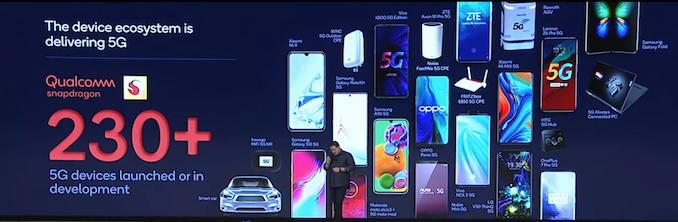
Qualcomm has stated that they have 150 designs with 5G already, although not all of those are smartphones. In the presentation today, they said 230+ were either deployed or in development.


Quick Bytes are shortened news pieces about topics mentioned at large press events. Because sometimes smaller announcements get buried at a keynote presentation because a dozen key points are mentioned in one article, and our Quick Bytes series separates out a few topics for targeted discussion.


Source: AnandTech – Quick Bytes: Qualcomm’s Prediction of 1.4 Billion 5G Smartphones by 2022

ASRock Reveals Mars UCFF PCs: 0.74-Liters With Intel Core Inside

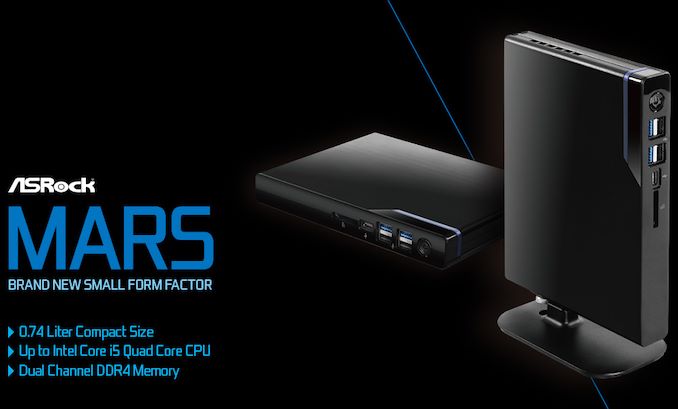
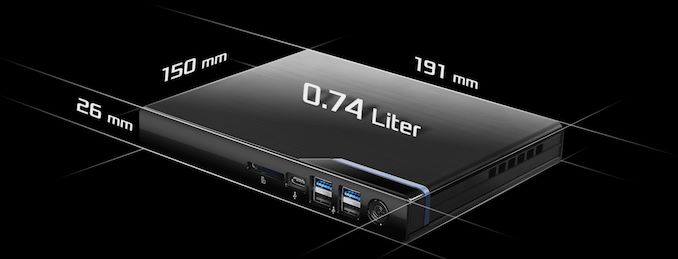
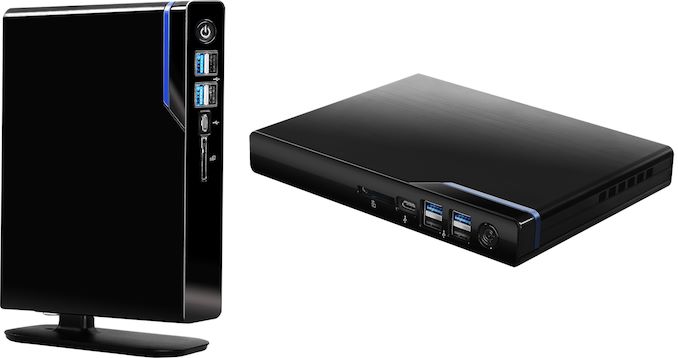
ASRock has introduced its new Mars series of ultra-compact form-factor (UCFF) barebones PCs. The Intel Core-based PCs come in a 0.74-liter chassis and can house up to 32 GB of memory as well as two storage devices. Like other UCFF PCs, ASRock is positioning Mars for use both as a traditional office PC, as well as applications like digital signage.


ASRock’s Mars PCs are based on Intel’s 8th Generation quad-core Core i5 or dual-core Core i3/Celeron processors. They are accompanied by up to 32 GB of DDR4 memory (using two SO-DIMMs), an M.2-2280 SSD (featuring a PCIe 2.0/3.0 x4 or SATA interface), and a 2.5-inch storage device. The CPU is cooled using a proprietary active cooling system that ASRock says is designed to allow the laptop-grade chip to turbo as frequently as possible.


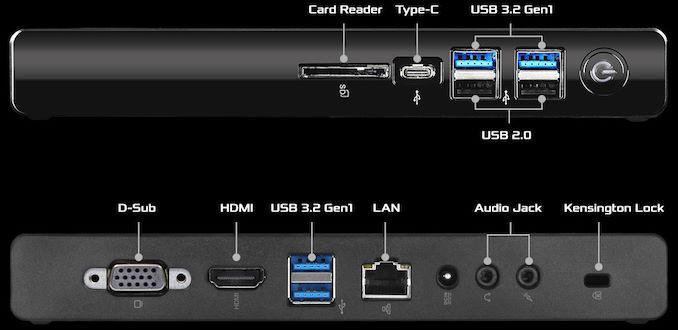
Featuring lavish connectivity, ASRock’s Mars systems come with a GbE adapter, one USB 3.2 Gen 1 Type-C connector, four USB 3.2 Gen 1 Type-A and two USB 2.0 ports, an SD card reader, two display outputs (HDMI 1.4 supporting a 4Kp30 resolution, D-Sub), and two audio jacks. Furthermore, the machines can be equipped with an M.2-2230 Wi-Fi + Bluetooth module.
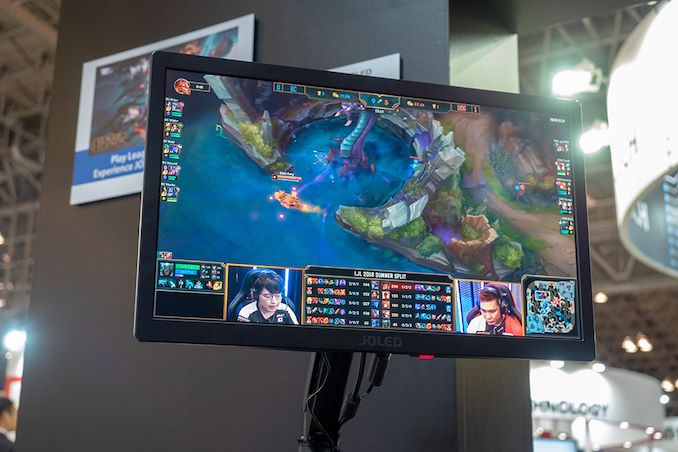


ASRock’s Mars Barebones UCFF PCs
Model Mars-i5-8265U

Mars-i3-8145U
Mars-C4205U
CPU Intel Core i5-8265U

(4C/8T, Turbo 3.9 GHz)

Intel Core i3-8145U

(2C/4T, Turbo 3.9 GHz)
Intel Celeron C4205U

(2C/2T, 1.8 GHz)
GPU UHD Graphics 620 UHD Graphics 610
DRAM Two DDR4 SO-DIMM slots

Up to 32 GB of DDR4-2400 in dual-channel mode
Motherboard proprietary
Storage SSD M.2-2280 (PCIe 3.0 x4 or SATA) M.2-2280 (PCIe 2.0 x4 or SATA)
DFF 1 ×  2.5-inch/9.5-mm SATA 6 Gbps
  SD Card Reader
Wireless Optional M.2-2230 802.11ac Wi-Fi + Bluetooth module
Ethernet 1 × GbE port
USB Front 2 × USB 3.1 Gen 1 Type-A

2 × USB 3.1 Gen 1 Type-C

2 × USB 2.0 Type-A
Back 2 × USB 3.1 Gen 1 Type-A
Display Outputs 1 × HDMI 1.4 (4Kp30)

1 × D-Sub
Audio 2 × 3.5mm audio jacks
PSU External 65 W
Warranty Typical, varies by country
Dimensions Length: 150 mm

Width: 26 mm

Height: 191 mm
MSRP ? ?

While ASRock’s Mars offers decent performance for office applications and media streaming/playback, its lack of a 4Kp60 output clearly makes it less competitive among demanding users with modern displays. On the other hand, presence of a D-Sub makes Mars compatible with legacy monitors.


Expect ASRock’s Mars UCFF PCs to hit the market in the near future. Pricing of actual systems will depend on their configurations.


Related Reading:


Source: ASRock  


Source: AnandTech – ASRock Reveals Mars UCFF PCs: 0.74-Liters With Intel Core Inside

Dell: Intel CPU Shortages Worsened in Q4, Premium & Commercial PCs Impacted

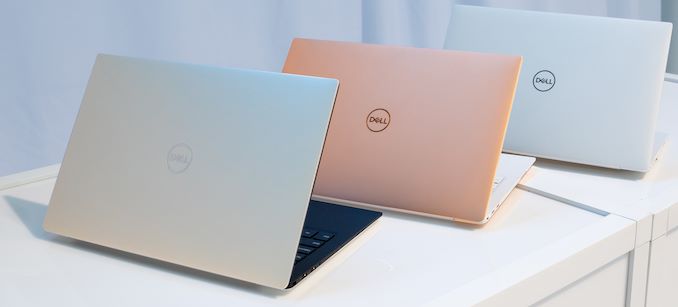
Shortages of Intel’s CPUs have persisted for well over a year now, but according to Dell, they actually got worse in the ongoing quarter because of unexpectedly high demand for client computers and servers. As a result, the company had to cut its revenue forecast for the fourth quarter as sales of its PCs were impacted by the tight supply.


Last week Intel issued a letter apologizing for CPU shipment delays because despite of the fact that it increased its 14 nm capacity by 25% year-over-year in 2019, demand still outpaced supply. Furthermore, Intel experienced production variability in the fourth quarter and because it had limited inventory buffers, it could not absorb the impact. Intel did not explain what variability meant in this case, but based on comments from Dell, it looks like Intel could not produce enough processors for commercial and premium system.


Here is what Jeffrey Clarke, COO of Dell, had to say:


“Intel CPU shortages have worsened quarter-over-quarter the shortages are now impacting our commercial PC and premium consumer PC Q4 forecasted shipments.”


Even though Intel’s supply and demand balance is not favorable to makers of systems, Dell’s PC business revenue was on the rise in Q3 increasing to $11.4 billion by 5% year-over-year. Sales of commercial PCs were up 9% to $8.3 billion, whereas shipments of consumer computers were up 6% to $3.1 billion.


It is particularly noteworthy that Dell remains cautious about Intel CPU supplies going forward, though it naturally does not make any actual predictions, but rather promises to monitor situation and adjust forecasts. Dell is not the first PC company that is cautious about Intel’s ability to meet demand as ASUS also expressed similar concerns earlier this month.


Related Reading:


Sources: Dell, Reuters


Source: AnandTech – Dell: Intel CPU Shortages Worsened in Q4, Premium & Commercial PCs Impacted

The Huawei Mate 30 Pro Review: Top Hardware without Google?

It’s been roughly 2 months now since Huawei announced the new Mate 30 Pro as well as the Kirin 990 chipsets. As an unusual hectic fall season finally calms down, it’s been due time to have a closer look at the new the company’s new flagship device and new silicon chipset.

There’s no beating around the bush that one aspect that vastly overshadowed the actual device itself, is the fact that Huawei had been banned from using Google’s mobile services. The Mate 30 Pro consequently is one of the first phones released by the company which doesn’t come with any Google applications preinstalled. There’s a lot to talk about in this regard and we’ll address this more in depth later on in the article, but I’d like to flip the narrative upside down here first and first discuss the hardware aspects of the new phone and see if Huawei had been able to create a competitive device, and if the worry about the software actually makes sense in the first place in terms of considerations of the device.


Source: AnandTech – The Huawei Mate 30 Pro Review: Top Hardware without Google?

JOLED Starts Trial Production of Printed OLED Sheets at 5.5G Plant

JOLED has started trial production of printed OLED substrates at its 5.5G plant at its Nomi Site, which was officially completed on Monday, November 25. The sheets will be used to make high-resolution mid-size OLED displays in 2020, when the factory starts mass production.


JOLED’s 5.5G facility has a monthly production capacity of 20,000 1,300×1,500-mm substrates, which are processed using the company’s own high-speed printing method. Based around batch EL layer formation, LOLED’s process is said to greatly improve productivity, which the company hopes will eventually give them an edge in producing cheaper OLED panels.


JOLED started to build its 5.5G OLED plant in July 2018, and aims to start volume production at the facility in 2020. Right now, the factory is producing samples, which will be sent to JOLED’s customers. The plant is located near Nomi in Ishikawa Prefecture in Japan.


Having inherited the OLED operations of Sony and Panasonic, JOLED currently uses a 4.5G production line near Nomi to make its printed OLED screens. That fab is considerably smaller than the new one, which limits the development of the company’s business.


Related Reading:


Source: JOLED


Source: AnandTech – JOLED Starts Trial Production of Printed OLED Sheets at 5.5G Plant