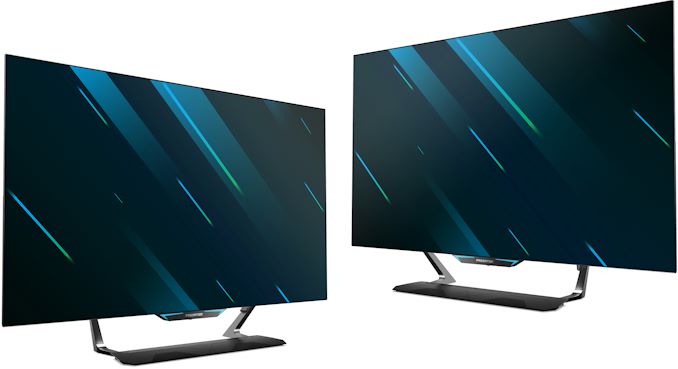
CES 2020: Acer’s Predator X32 4Kp144 Monitor w/1152-Zone Mini LED FALD & G-Sync Ultimate

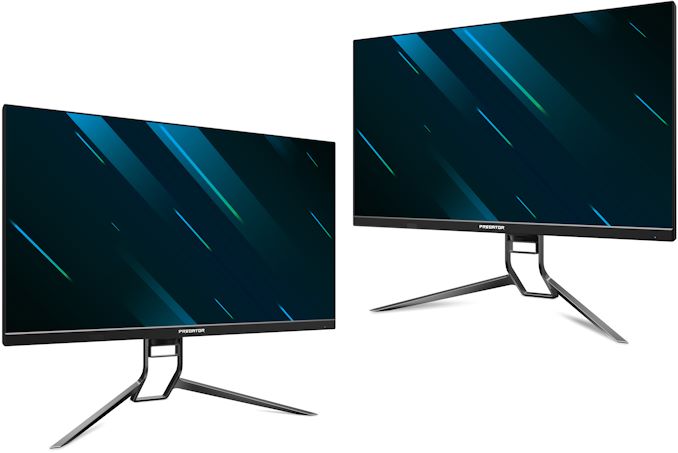
Acer and ASUS were the first and only companies to announce 27-inch NVIDIA G-Sync HDR 4Kp144 displays with a 384-Zone Mini LED-based Full Array Local Dimming (FALD) backlighting, and the DCI-P3 color space support three years ago. Time has come to up the ante and at CES 2020 Acer is announcing its Predator X32: a 32-inch G-Sync Ultimate 4Kp144 display that improves its predecessor in every possible way.


Acer’s Predator X32 is based on a 10-bit IPS panel with a 3840×2160 resolution that is equipped with a Mini LED-based backlighting. The updated Mini LED system offers 1,152 individually controlled local dimming zones, enabling a peak birghtness of 1400 nits in HDR mode as well as a very high contrast ratio. In fact, the combination of the higher peak brightness and the higher number of dimming zones, promises a solid improvement of HDR image quality when compared to the Predator X27.


The monitor can display 1.07 billion of colors and reproduce the sRGB, Adobe RGB, PCI-P3, and Rec. 2020 color spaces. Furthermore, the Predator X32 comes factory calibrated with a DeltaE<1 accuracy.
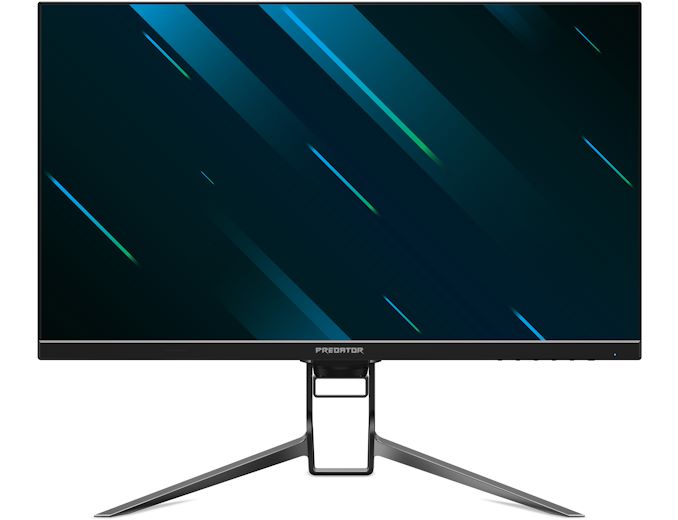


Apart from a high luminance, a high contrast ratio, and wide color spaces, one of the Predator X32’s key selling points is support for a variable refresh rate of up to 144 Hz handled by NVIDIA’s G-Sync Ultimate processor. As with other G-Sync Ultimate monitors, enabling a 144 Hz refresh rate requires 4:2:2 chroma subsampling due to interface bandwidth constraints. Speaking of interfaces, it is necessary to note that the monitor has a DisplayPort 1.4 as well as three HDMI 2.0 connectors. In addition, the monitor has a quad-port USB 3.0 hub for various peripherals.
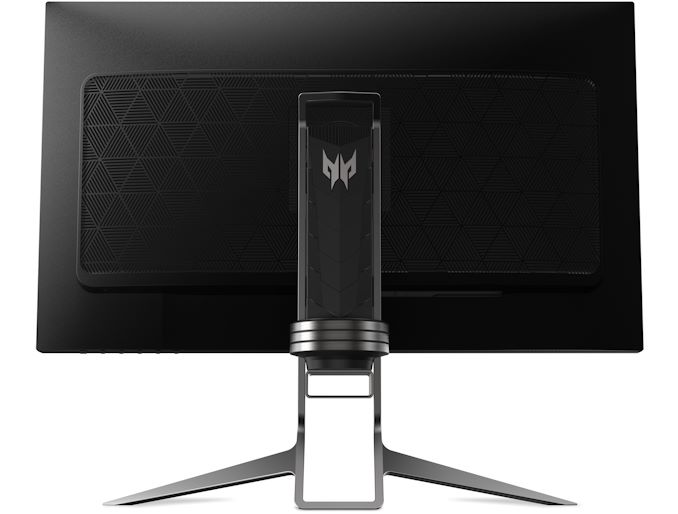


Acer intends to start selling its Predator X32 gaming monitor in EMEA and North American regions sometimes in the second quarter. Of course, pricing of an almost exclusive product will be high: €3,299 in Europe and $3,599 in the USA.


Brief Specifications of the Predator X32 4Kp144 Display
  Predator X32
Panel 32″ IPS
Native Resolution 3840 × 2160
Maximum Refresh Rate up to 144 Hz
Response Time ?
Brightness ? cd/m² (sustained)

1440 cd/m² (peak)
Contrast high
Viewing Angles 178°/178° horizontal/vertical
HDR Yes
Backlighting Mini-LED-based 1152-zone FALD
Pixel Pitch 0.1845 mm²
Pixel Density 138 ppi
Display Colors 1.07 billion
Color Gamut Support Adobe RGB

DCI-P3 (?)

Rec. 2020

sRGB
Aspect Ratio 16:9
Stand Hight, Tilt, and Swivel adjustable
Inputs 1 × DisplayPort

2 × HDMI 2.0
USB Hub 4-port USB 3.0 hubs
Audio 2 × 4 W speakers

audio jack
Launch Date Q2 2020

Related Reading:


Source: Acer


Source: AnandTech – CES 2020: Acer’s Predator X32 4Kp144 Monitor w/1152-Zone Mini LED FALD & G-Sync Ultimate
Lenovo’s Qreator 27: A Sub-$900 10-Bit 4K Professional Monitor w/ Qi Charging

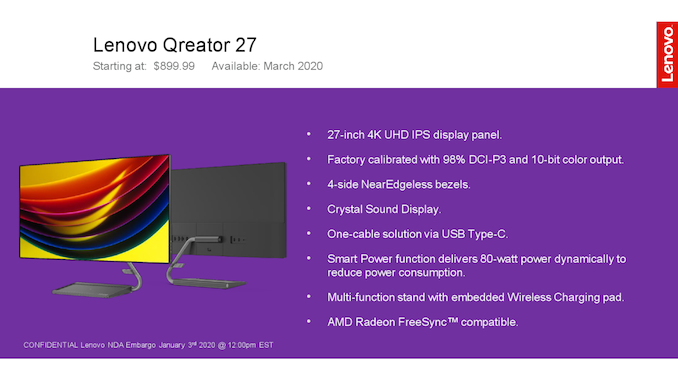
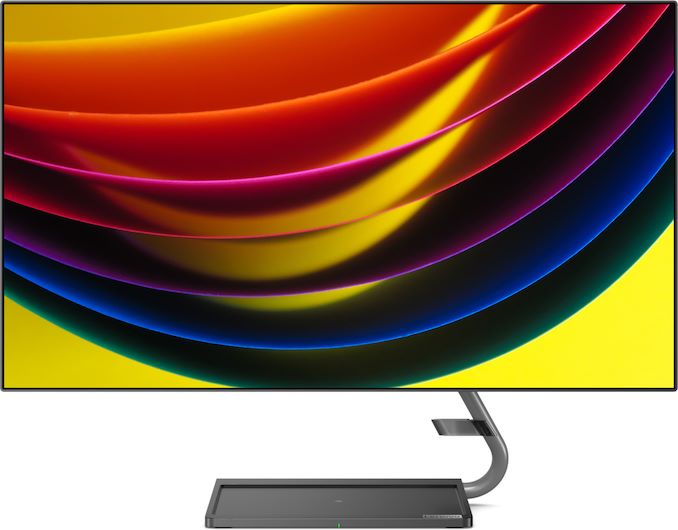
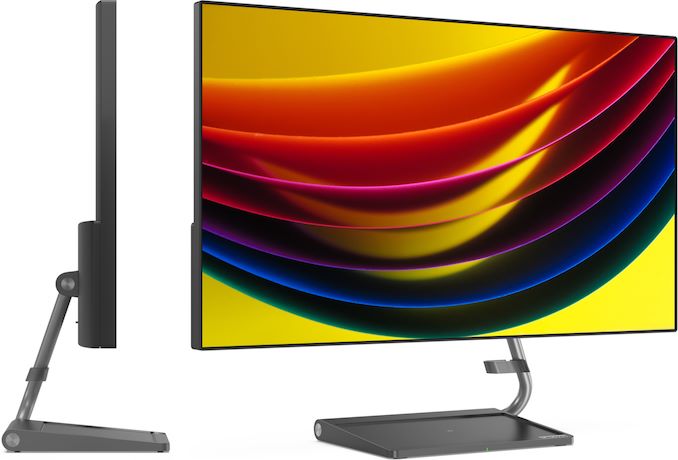
Just in time for CES 2020, Lenovo has introduced a new display for media creators, the Qreator 27. Lenovo’s latest monitor offers essential professional-grade qualities along with a number of value-added features like built-in LG’s Crystal Sound audio sub-system, a Qi wireless charger for mobile devices, and even some gaming technologies. Equally important, the Qreator 27 shouldn’t be too hard on the wallets of its content creator market, with a retail price under $900.


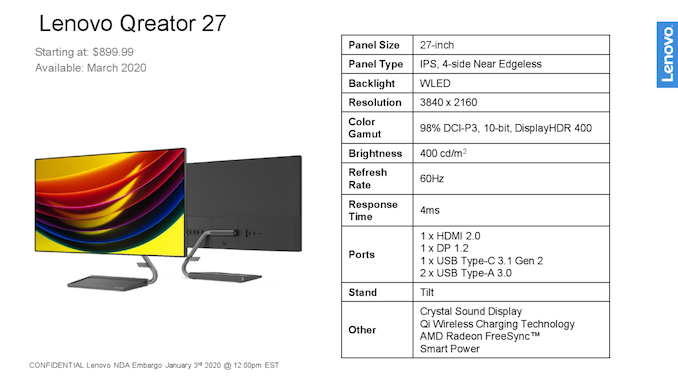
The Lenovo Qreator 27 monitor relies on — you guessed it right — a 27-inch 10-bit IPS panel with a 3840×2160 resolution. The display offers a max brightness of 400 nits, a 4 ms response time, and a 60 Hz refresh rate. Under the hood, the LCD uses a WLED backlighting and can generate 98% of the DCI-P3 color gamut, which is in line with professional-grade monitors and which is important for videographers, game designers, and other digital content creators.


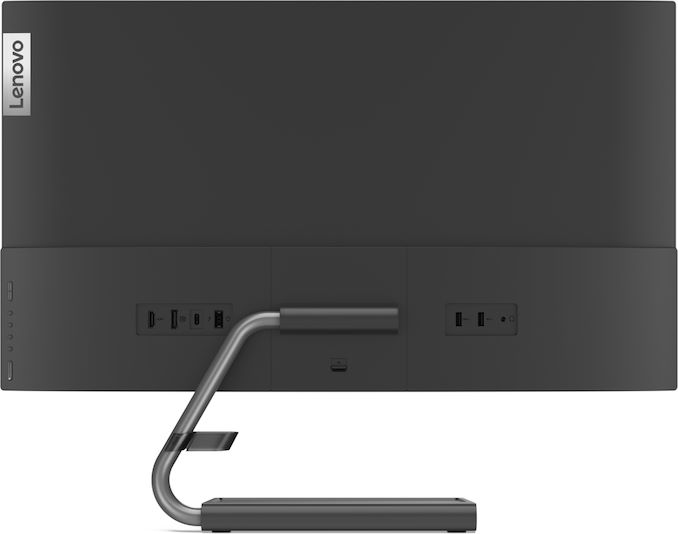
As far as connectivity is concerned, the Qreator 27 has a DisplayPort 1.2, an HDMI 2.0, and a USB 3.1 Gen 2 with DP Alt mode connector (presumably with Power Delivery support). In addition, it has a dual-port USB 3.0 hub.


Not many professional displays feature integrated speakers, but this is not the case with the Qreator 27, which uses LG’s Crystal Sound technology that produces sound by vibrating the screen panel. Also, the monitor has a Qi wireless charging pad that will make life for many people significantly easier.


While the LCD is designed primarily for professionals, it features VESA’s DisplayHDR 400 certification as well as AMD’s FreeSync variable refresh rate technology. Not that DisplayHDR 400 guarantees proper HDR experience due to mediocre brightness or FreeSync with a refresh rate of up to 60 Hz is important, but the fact that the Qreator 27 supports these technologies makes it somewhat more attractive to those who are going to use the device not only for work.


Lenovo will start sales of its Qreator 27 monitor in March for $899.99.


Related Reading:


Source: Lenovo


Source: AnandTech – Lenovo’s Qreator 27: A Sub-0 10-Bit 4K Professional Monitor w/ Qi Charging

32-Inch G-Sync Ultimate Monitors w/1152 Zone Mini-LED Inbound, & LG 2020 OLED G-Sync Compatibile Too
Following yesterday’s announcement of the first 360Hz G-Sync monitor, the ASUS ROG Swift 360, this morning NVIDIA is announcing some updates in the high-end HDR portion of the market as well.


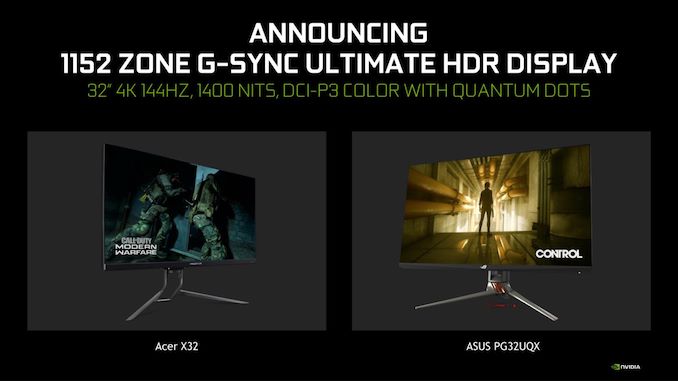
Kicking things off, NVIDIA is using CES 2020 to once again drum up interest in G-Sync Ultimate (HDR) monitors, this time by announcing a pair of new 32-inch 4K monitors with Mini-LED backlighting. For those keeping track, this is the second set of Mini-LED-based monitors that the company has announced; NVIDIA first unveiled 27-inch monitors back at Computex 2019 for Acer and ASUS, though those monitors have yet to ship.


Besides being the first G-Sync Ultimate monitors available in a 32-inch panel size, the new 32-inch models’ claim to fame is an 1152 zone backlighting system, which is the largest number of zones announced for an LCD monitor to date. According to NVIDIA, the forthcoming Acer X32 and the ASUS PG32UQX will be able to offer a peak brightness of 1400 nits, with the finer-grained Mini-LED FALD backlighting providing better local contrast and reduced backlight blooming. Otherwise these new monitors are fairly similar to the current-generation 27-inch models, offering a 3840×2160 resolution with a maximum refresh rate of 144Hz (with 4:2:2 chroma subsampling).


Increasingly typical for CES monitor announcements, NVIIDA isn’t offering any guidance on when these monitors will be available.; for now, they’re works in progress. As mentioned earlier, we’re still waiting on last year’s 576 zone 27-inch monitors, the ASUS PG27UQX and its Acer equivalent, to start shipping. We haven’t heard anything about those monitors since Computex, so we’ll be poking NVIDIA about those as well.


Though it is interesting to note that if they do end up shipping, they’ll be quickly outclassed in backlighting technology by the new 32-inch designs. Even with the larger panel size of the 32-inch monitors, the backlighting density is still much greater. The 27-inch monitors will have ~1.85 LEDs per square inch, while the 32-inch monitors will offer 2.63 LEDs per square inch, a 42% increase in LED density.


LG’s 2020 OLED TVs Are Certified As G-Sync Compatible


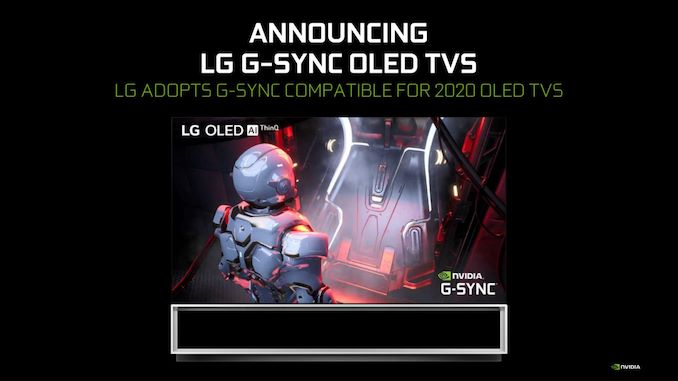
Meanwhile in the high-end TV space, NVIDIA is announcing that they have already certified LG’s new 2020 OLED TVs as G-Sync Compatible. This follows last year’s certification of the E9, C9, and B9 series of TVs, all of which received HDMI-VRR variable refresh support, and were later certified by NVIDIA once their G-Sync Compatible certification program launched. As was the case with last year’s monitors, NVIDIA’s certification means that they meet the company’s standards for image stability (e.g. no artifacting or flickering), and that HDR gaming works as well. All told, NVIDIA says that 12 OLED monitors are being certified, though ahead of LG’s own announcement they aren’t specifying model numbers.


LG of course remains the player to beat in the TV space as far as most gamers are concerned. Their WOLED-based TVs have developed a (well earned) reputation for both low input latency and for HDR image quality, the latter a product of individually addressable OLED subpixels. And while LG and NVIDIA are not close partners in the way NVIDA and their PC monitor partners are – today’s announcement is basically just certifying a setup built on top of industry standards – it’s none the less important for NVIDIA, since LG all but has a lock on the high-end market for gaming TVs.


Source: AnandTech – 32-Inch G-Sync Ultimate Monitors w/1152 Zone Mini-LED Inbound, & LG 2020 OLED G-Sync Compatibile Too

NVIDIA Releases CES Game Ready Driver: Variable Rate SSAA for VR, Max Frame Rate Control, & More
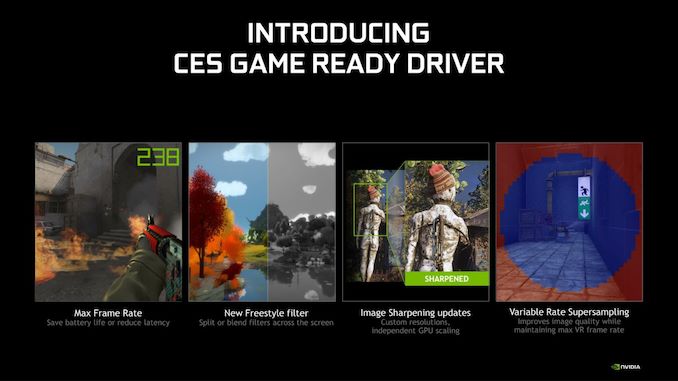
While NVIDIA doesn’t have any new GPU hardware to show off at this year’s CES, the company is not coming entirely empty-handed. Along with a couple of monitor announcements, NVIDIA is also releasing a new video driver today, which they’re calling the CES Game Ready Driver, which will be introducing a few new quality of life improvements for GeForce users.


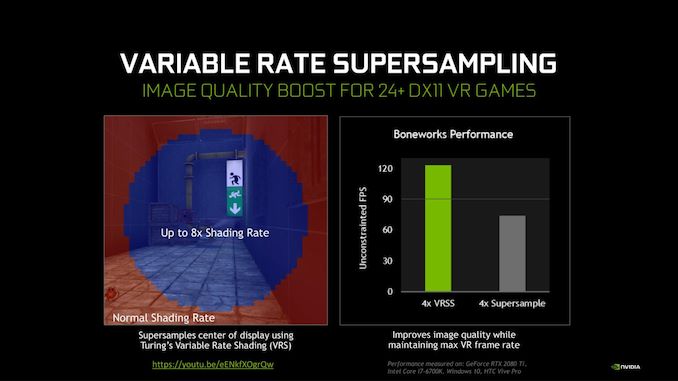
The marquee addition for the latest driver is what NVIDIA is calling Variable Rate Supersampling (VRSS) for Virtual Reality. Based on the Variable Rate Shading technology found in NVIDIA’s Turing GPU architecture, VRSS invokes the same concept, but in reverse. Rather than shading a section of the screen at a fraction of the normal rate (100%/1:1), as is normally done with VRS, VRSS can shade that section at a rate over 100%. This technique, in turn, is being deployed for use in VR headsets as a means to offer a mid-grade option between running without any kind of supersampling, and using relatively expensive full screen supersampling.


It’s this sectionality, in turn, that truly drives the utility of VRSS. As it’s based on NVIDIA’s variable rate shading technology, the company can do VRSS in a foveated manner, running it only towards the center of the VR user’s field of view, where they are most likely to see this difference. This way the outer edges of the screen don’t receive any supersampling, conserving resources in an area where the user isn’t likely to notice the benefit. We’ve been seeing NVIDIA talk about foveated rendering for some time now, and VRSS is a very practical application of that idea.


Diving a bit under the hood, the maximum image quality boost from VRSS should be fairly close to full screen supersampling, though based on NVIDIA’s announcement there seems to be a few differences. The outstanding question is whether VRSS can supersample geometry as well as shaders/textures. VRS, for reference, only dials down the sampling rate of the latter, while leaving geometry untouched. So if VRSS similarly doesn’t deal with geometry, then that would mean there would still be some geometry aliasing.


Finally, along with allowing foveated supersampling, NVIDIA will also support dynamically adjusting the VRSS sampling ratio. This means that the amount of supersampling can be dialed up or down as needed. Similar to dynamic resolution scaling, this is designed to allow games to hold to a (relatively) fixed framerate, while the complexity of the world changes around the user. Which for VR headsets means that NVIDIA can hold the framerate to 90fps, and do as much (or as little) VRSS as the remaining GPU resources allow.


VRSS is launching today, and is initially supported in 24 DirectX 11 VR games.


Max Frame Rate Cap, Freestyle Updates, & Image Sharpening Updates


Moving on, today’s driver is also introducing a couple of more minor changes to NVIDIA’s software stack. First off, NVIDIA has finally added support for a maximum framerate cap. Long available via third party utilities like MSI Afterburner – as well as in competitor AMD’s drivers – a frame rate cap does exactly what’s in the name: it allows a user to cap the maximum framerate of a give to a specific value. The uses for a framerate cap outside of the maximum refresh rate are a bit on the niche side of matters, but some G-Sync users swear by keeping a game capped just below the monitor’s maximum refresh rate. As well, frame rate caps can be used to reduce the overall rendering performance required for a game, thereby saving battery life. That use is conceptually similar to (but less advanced than) AMD’s Radeon Chill technology.


The new driver is also introducing some changes to NVIDIA’s ever-evolving image sharpening option. Image sharpening can now be used with custom resolutions, and the feature is being tweaked to allow for GPU resolution scaling to be enabled/disabled independently when using image sharpening.


Finally, the CES driver is delivering a small update to NVIDIA’s Freestyle filters to enable more options to use multiple filters at once. A new filter has been added that allows for multiple filters to be used in a split screen fashion, allowing for filters to be split or blended across the screen.


Source: AnandTech – NVIDIA Releases CES Game Ready Driver: Variable Rate SSAA for VR, Max Frame Rate Control, & More

Intel’s 10th Gen 45W Core-H CPUs Show Up in the Acer ConceptD 7 Ezel

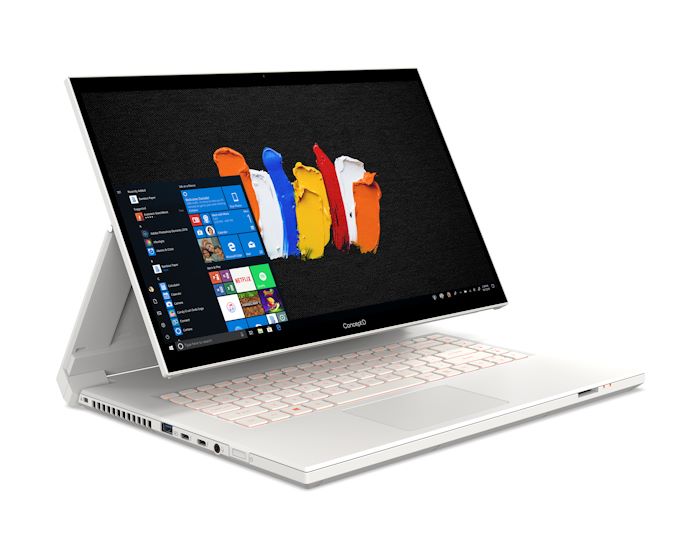
For users that regularly track Intel’s laptop process lines, then you will likely be used to the nomenclature that Y-series is sub 10 W, U-series is usually 15 W but sometimes 28 W, and the H-series sits at 35 W and 45 W levels. We often see the Y-series go into ultra-portables, the U-series in the flagship devices, and the H-series always go into something more substantial that requires a lot of grunt and where performance takes precedence over portability. To date Intel has only released the U-series hardware on its 10th Gen, so the fact that Acer gave us a pre-briefing on one of its new laptops and stated that it has a 10th Gen H-series CPU was quite a shock. The new CPU will go into the company’s new Ezel line of laptops, designed for content creators: the name Ezel is a play on words of ‘Easel’, as in a painters’ easel or tripod.


Before we get into the new Ezel, it should be noted that Intel technically has two families of CPUs which it calls ‘10th Gen’, one based on its 14++ manufacturing node called Comet Lake, and one based on its 10+ node called Ice Lake. Even though Acer doesn’t state specifically, we can 99.95% guarantee that we are talking about a Comet Lake processor here, based on the older Skylake microarchitecture. This is primarily because Intel has this week confirmed to us that its 28 W Ice Lake processor is only now ready for its partners – so a 45 W variant would absolutely not be ready at this time. Intel has already released 9th Gen 45 W mobile processors, and Comet Lake is just a tweaked variant of those, so it stands to reason that these are Comet Lake.


As for the Ezel, it will come in two varieties: the Ezel and the Ezel Pro. Both devices will get 45 W processors, however the standard Ezel will use consumer hardware, such as a Core i9 processor, non-ECC memory and GeForce RTX graphics, while the Ezel Pro will use a H-series Xeon E processor, ECC memory, and Quadro RTX graphics.


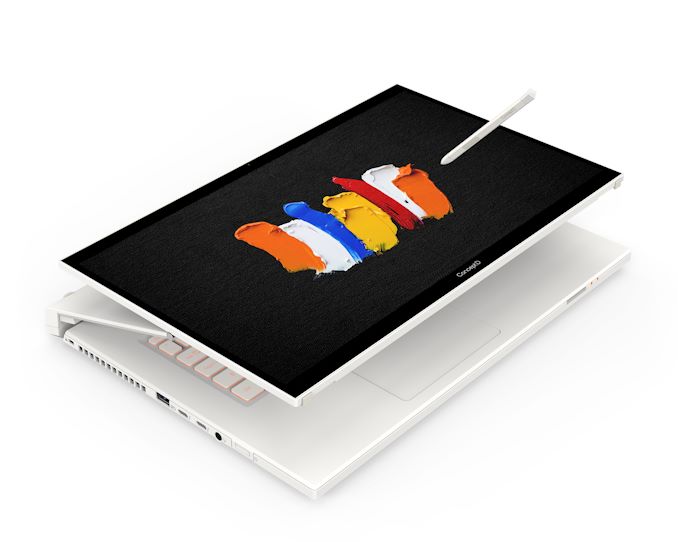
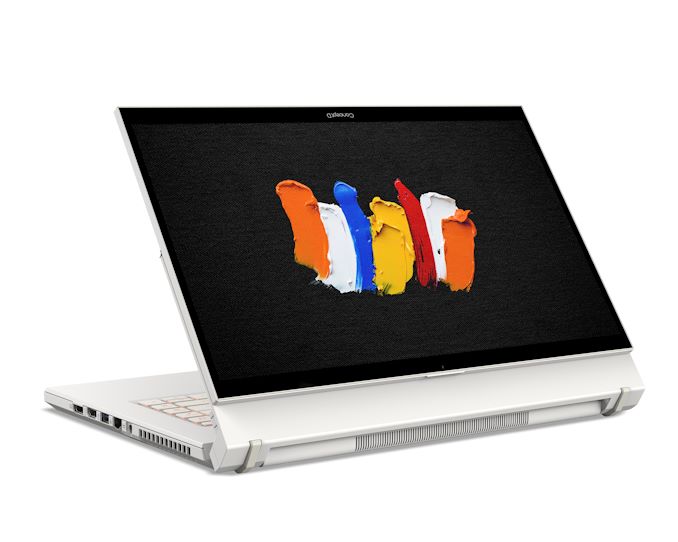
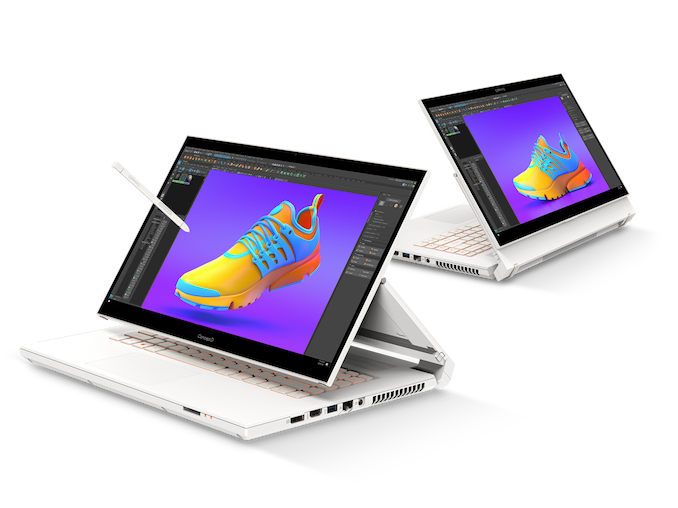
The Ezel builds on Acer’s design of an adjustable display that can rotate about a horizontal axis, allowing a user to bring it closer to them rather than having the display connected at the hinge of the base of the laptop. This allows for closer inspection of the screen in a more comfortable position to a traditional laptop. On a personal level, I’d point out that it is worth seeing in person as to how nice this sort of monitor functionality is really nice to work with. Acer is also bundling the Ezel with a Wacom EMR pen, making the device great for artists and designers.


The display is a 15-inch 4K IPS panel, with a 400-nit brightness and factory color calibration, good for reproducing 100% of the Adobe RGB color gamut with an accuracy of dE < 2. Users can also manipulate the color settings through software in the ConceptD Palette. The display uses Gorilla Glass 6, allowing for even brash artists, and comes with an anti-glare coating.


For memory and storage, there will be up to 32 GB of DDR4, and up to 2TB PCIe SSDs (that’s plural). The idea is that this hardware should be able to edit 4K video in real time, either for gig workers on the Ezel, or businesses with the Ezel Pro. Both laptops are part of the RTX Studio platform, which means that the hardware has gone through NVIDIA’s own testing for creator app validation.


Connectivity on both devices includes two TB3 ports, an SD card slot, DP1.4, HDMI 2.0, and a fingerprint sensor. Acer says that the laptop has been designed to run all-out at under 40 dB. Unfortunately no battery capacity or weight was mentioned.


Acer did give a suggesting pricing and timeframe for the Ezel and Ezel Pro, however we were emailed after our briefing to state that they’re changing it to ‘TBD’ depending on design finalization in order to align with other releases (Intel’s 10th Gen H-Series might not have a fixed date yet, as at the time of writing they have not even been announced. As it is CES, Intel might be announcing them as part of the show).


Source: AnandTech – Intel’s 10th Gen 45W Core-H CPUs Show Up in the Acer ConceptD 7 Ezel

TP-Link Expands Wi-Fi 6 Lineup, Introduces IoT Security with HomeCare Pro

TP-Link is announcing a slew of upgrades to their Wi-Fi 6 product stack at CES 2020. We have already covered the updates to the Deco Mesh Networking family in a separate piece.


On the routers side, we have the Archer AX90 and GX90 (both in the AX6000 class). The RE505X AX1500-class is the new product in the range extender line. TP-Link is also introducing an AX3000 PCIe card (Archer TX3000E)


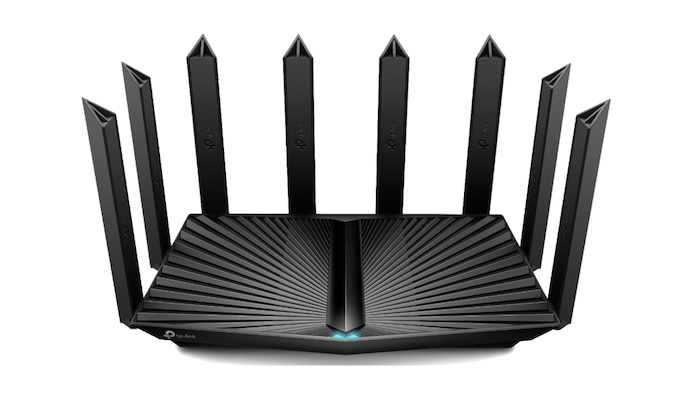
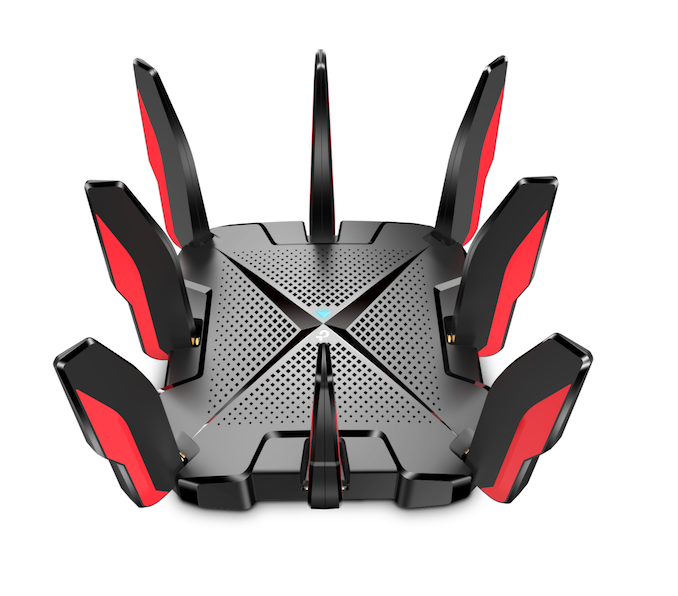
The Archer AX90 uses three bands to achieve the AX6000-class rating (1201 Mbps @ 5 GHz + 4804 Mbps @ 5 GHz + 574 Mbps @2.4 GHz). It comes with a networking SoC featuring a 1.5GHz quad-core processor (making it look likely to be based on a Broadcom BCM47622 design). It comes with a 2.5 Gbps WAN/LAN port, a 1 Gbps WAN/LAN port, three Gigabit LAN ports and both a USB 3.0 and a USB 2.0 port. The eight antennae are quipped with beamforming support. The router also supports the newly update premium anti-virus and IoT security feature (TP-Link HomeCare Pro). It is priced at $300 and will be available in April 2020.


The Archer GX90 is the gamers’ version of the AX90, and features a different external design as well as a modified UI. The 4×4 5 GHz band is dedicated as a gaming band, and there are software features such as ‘Game Accelerator’ to provide QoS functionality.


The GX90 is priced at $330 and will come to market in late Q2 2020.


The Archer TX3000E PCIe adapter is a PCIe 3.0 x1 Wi-Fi 6 card based on the Intel AX200 chipset. It features 1024-QAM and 160 MHz-wide channel support while also including Bluetooth 5.0. It also comes with a flexible external antenna.


The TX3000E is priced at $50 and will be available later this month.


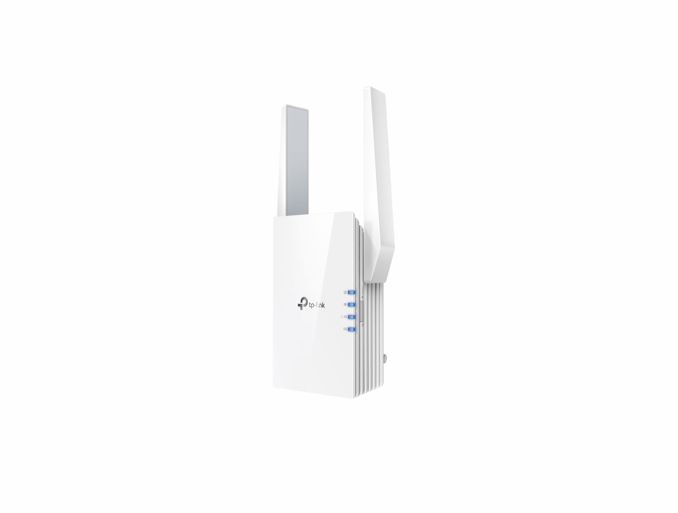
The RE505X range extender is compatible with TP-Link’s OneMesh family. It is an AX1500 dual-band device that can also act as an access point. The TP-Link Tether app can be used for hassle-free configuration of the extender.


The RE505X is priced at $70 and will be available in March 2020.


Overall, TP-Link has augmented their Wi-Fi 6 product stack with compelling budget offerings. As Wi-Fi 6 becomes more widespread, this strategy could help TP-Link gather greater mind and market share, particularly in North America.


On the cybersecurity side, TP-Link also announced the Avira-powered HomeCare Pro network security solution. Similar to solutions from other vendors like Netgear’s BitDefender-powered Armor and Securifi’s IoT Security feature, HomeCare Pro inspects and monitors connected devices for vulnerabilities and protection against unexpected / suspicious network traffic. TP-Link’s existing HomeCare solution lacked fine-grained IoT device protection and parental controls, and this is addressed by HomeCare Pro. The capabilities offered by HomeCare Pro include anti-virus (across multiple end-device platforms, with blocking of malicious sites and intrusion detection), IoT security (safety and vulnerability checks), and parental controls (content filtering, time limits etc.). HomeCare Pro is also able to provide comprehensive reports related to the network behavior of each connected device.


The feature is set to be offered on a trial basis with all TP-Link Wi-Fi 6 products starting in late Q1 2020. Following this, the feature can be kept active on a subscription basis for $6/mo. or $55/yr.


Source: AnandTech – TP-Link Expands Wi-Fi 6 Lineup, Introduces IoT Security with HomeCare Pro

Kingston’s Fast SD Cards at CES 2020: UHS-II at 300 MB/s & UHS-I at 170 MB/s

Kingston has introduced several new high-performance Secure Digital memory cards at CES 2020, as well as new card readers. This time around the company decided to focus on SD cards designed for performance demanding users, so the lineup includes UHS-I DDR-200 as well as UHS-II devices.


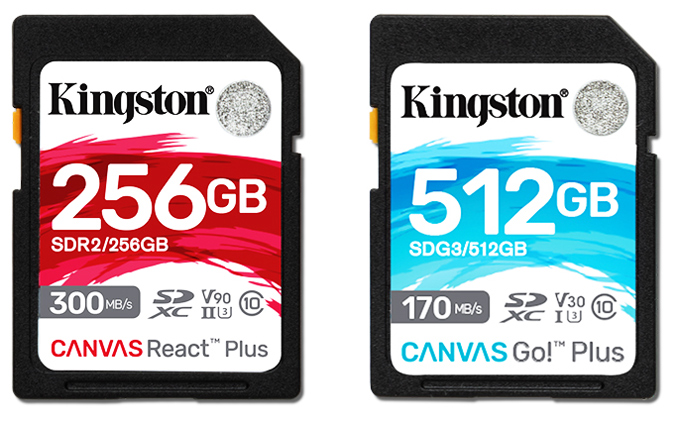
Kingston’s Canvas React Plus memory cards with a UHS-II interface are rated for up to 300 MB/s sequential read speeds and are set to be available in 128 GB, 256 GB, and 512 GB configurations. The Canvas React Plus UHS-II cards are also compliant with Video Speed Class V90 specification, which mandates a minimum write speed of 90 MB/s to allow recording of Ultra-HD and 360° video. Traditionally for UHS-II cards, they can work with UHS-I hosts, but to show their full performance potential they require a UHS-II host that uses extra pins on the cards.


The UHS-II interface enables data transfer rates of up to 312 MB/s, and was first introduced as a part of the Secure Digital 4.0 specification back in mid-2011. Partly because UHS-II requires additional pins (and redesigned hosts), as well as for some other reasons, the technology has not really taken off on the mass market just yet. To date, only a handful of companies have introduced their SD cards with a UHS-II interface and now Kingston is one of them.


Another interesting introduction of Kingston is its Canvas Go! Plus family of SD cards featuring a UHS-I interface that supports a sequential read speed of up to 170 MB/s courtesy of a DDR-200 transfer rate. Also, the card also carries the V30 badge, indicating support for a minimum write speed of 30 MB/s. One thing to note is that DDR-200 is not covered by the UHS-I specification and officially the UHS-I bus only supports up to 104 MB/s throughput. Meanwhile, SanDisk/Western Digital have offered UHS-I cards along with card readers that support a DDR-200 operation for years. As it turns out, Kingston has decided to join the UHS-I/DDR-200 club to compete head-to-head against its rival.


Along with its new cards, Kingston introduced its latest MobileLite Plus readers designed to support the maximum speeds that the new devices have to offer.


Kingston did not reveal when it plans to make its new Canvas React Plus and Canvas Go! Plus cards as well as MobileLite Plus readers available, but it is reasonable to expect them to hit the market this year.


Related Reading:


Source: Kingston


Source: AnandTech – Kingston’s Fast SD Cards at CES 2020: UHS-II at 300 MB/s & UHS-I at 170 MB/s

TP-Link Updates Deco Mesh Networking Family with Wi-Fi 6

TP-Link is announcing three new products in their Deco mesh networking lineup at CES 2020 – the Deco X20, X60, and X90. All three come with Wi-Fi 6 (802.11ax) capabilities.


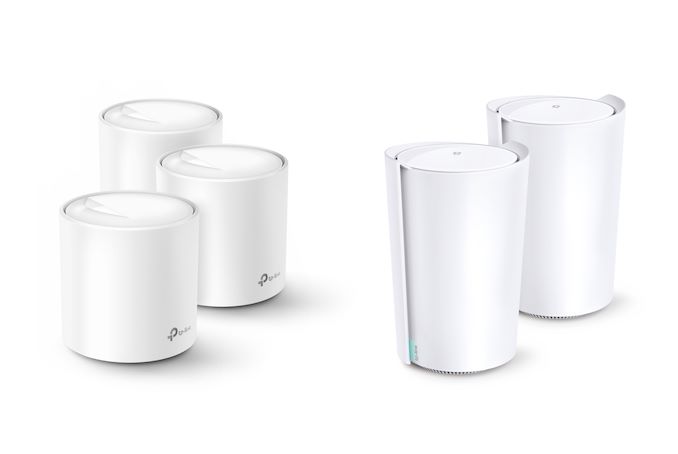
The highest-end is the Deco X90 with two 5 GHz radios and one 2.4 GHz one. It comes with the AX6600 tag (574 Mbps @ 2.4 GHz, 1201 Mbps @ 5 GHz, and 4804 Mbps @ 5 GHz), and TP-Link claims that it can serve up to 200 devices in a 6000 sq. ft. area. The WAN port is a 2.5 Gbps port, and the unit features dynamic backhaul technology to shift communication between the mesh units to any of the three available bands. Availability of the Deco X90 is slated for April 2020 at a $450 price point for a kit of two units.


The Deco X60 is an AX3000 class mesh unit (574 Mbps @ 2.4 GHz, 2402 @ 5 GHz). TP-Link indicates that this can serve up to 150 clients in a 5000 sq. ft. area. The LAN port is a gigabit port. The X60 will make it to the market in March 2020 with a $270 price point for a pack of two units.


The Deco X20 is a budget offering ($190 for a pack of 2, and $270 for a pack of 3) in the AX1800 class (574 Mbps @ 2.4 GHz, 1201 Mbps @ 5 GHz). It will also come to the market in March 2020.


Compared to the Wi-Fi 5 Deco units, we see that the z-height is considerably more (particularly for the Deco X90 units) to better accommodate the antennae and radios. All the Deco Wi-Fi 6 units include full Wi-Fi 6 capabilities including OFDMA support and MU-MIMO on both uplink and downlink sides. They also include the optional subscription-based HomeCare Pro for cybersecurity (both antivirus and IoT devices). The mesh networking market is highly competitive, and it bodes well for TP-Link to target a wider budget range compared to offerings such as Netgear’s Orbi.


Source: AnandTech – TP-Link Updates Deco Mesh Networking Family with Wi-Fi 6

Gone in 240 Hz: Lenovo’ Legion Y25-25 ‘Fast IPS’ Monitor w/ FreeSync at CES 2020

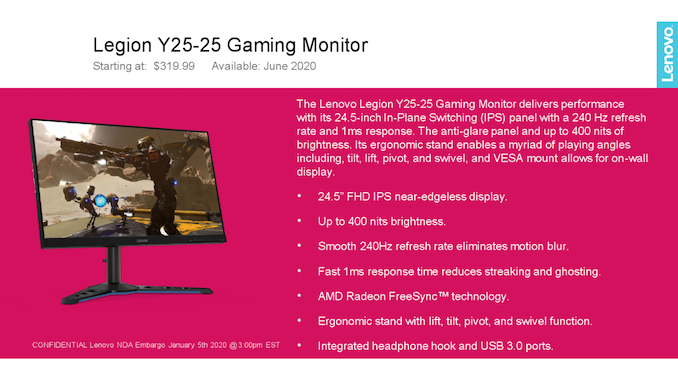
Lenovo seems to be getting more serious about gaming than it has ever been and its CES announcements just prove the theory. In a bid to address gamers demanding no-compromise performance, the company has announced its Legion Y25-25, a 24.5-inch Full-HD gaming display that uses a ‘Fast IPS’ panel featuring fine color reproduction and a 240 Hz maximum refresh rate.


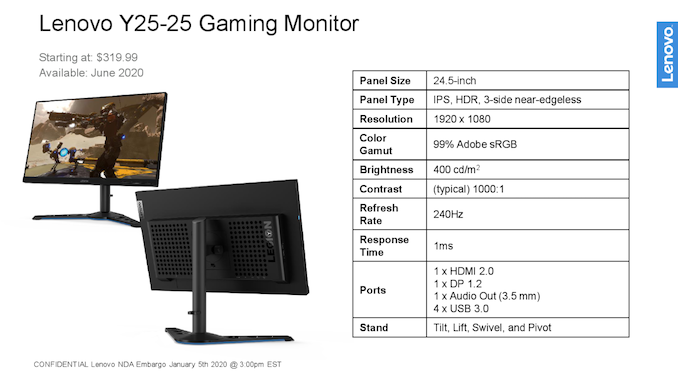
Traditionally, 240 Hz displays relied on TN panels that have their downsides when it comes to colors and viewing angles, making them unsuitable for some users. But with the arrival of Full-HD Fast IPS panels from AU Optronics, it is likely that popularity of 240 Hz LCDs will get higher. With its Legion Y25-25, Lenovo is among the first suppliers to introduce a 24.5-inch IPS display featuring a 1920×1080 resolution, 400 nits max brightness, 178°/178° viewing angles, a variable refresh rate of up to 240 Hz (with AMD’s FreeSync compatibility), and a 1 ms GtG response time.


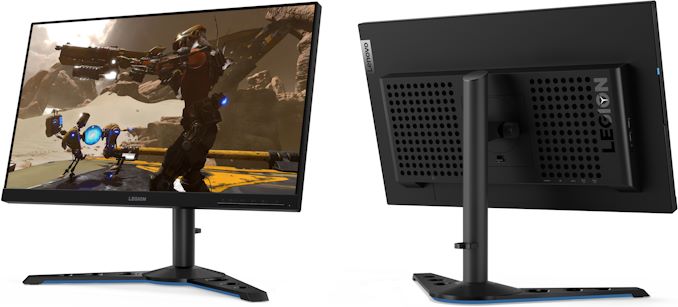
From industrial design point of view, the Legion Y25-25 takes a page from Lenovo’s book and therefore has a minimalist look. The monitor has extremely thin bezels (enabling to build ‘borderless’ multi-monitor configurations), a stand that can adjust height, tilt, swivel, and even supports portrait mode, as well as a headphone hook. As for connectivity, the Legion Y25-25 has a DisplayPort 1.2. an HDMI 2.0, a multi-port USB 3.0 hub, and a headphone jack.


Lenovo plans to start sales of the Legion Y25-25 sometimes in June for $319.99. While the product will not be the first 24.5-inch IPS display with a 240 Hz refresh rate on the market, its price looks rather competitive given its capabilities.


Related Reading:


Source: Lenovo


Source: AnandTech – Gone in 240 Hz: Lenovo’ Legion Y25-25 ‘Fast IPS’ Monitor w/ FreeSync at CES 2020

Seagate Expands External Flash Storage Lineup with FireCuda Gaming SSD and BarraCuda Fast SSD

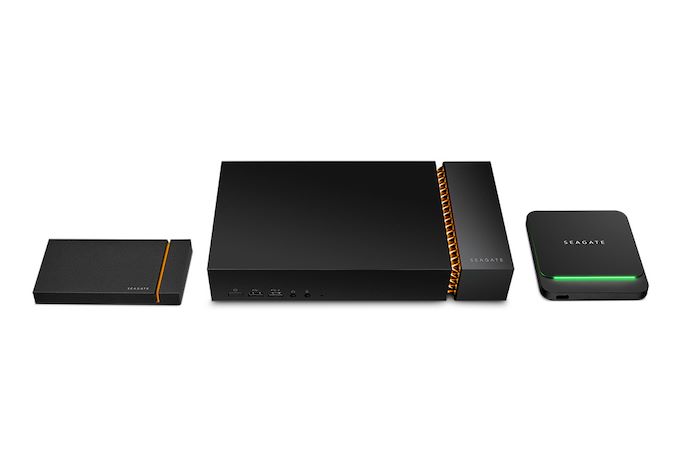
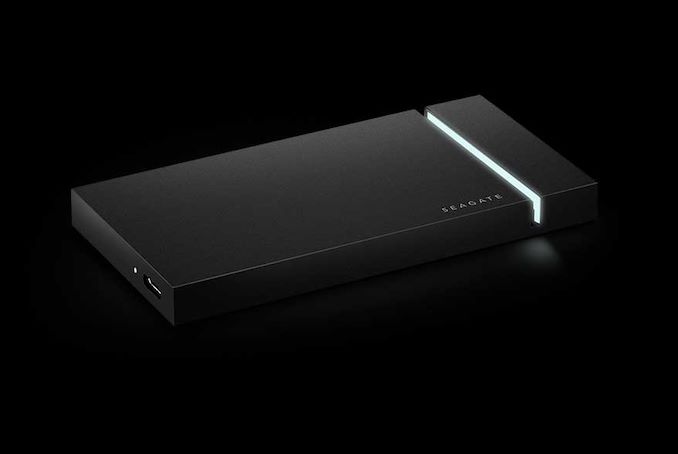
Late last year, Seagate had launched the FireCuda Gaming Dock, a 4TB external hard drive / Thunderbolt 3 dock with a Titan Ridge controller. It stood out in the Thunderbolt 3 peripheral market for two different aspects – a number of USB 3.1 Gen 2 10 Gbps ports, and a PCIe 3.0 x4 M.2 NVMe SSD slot inside the dock. At CES 2020, Seagate is further expanding their external storage solution set for gamers with the FireCuda Gaming SSD. Equipped with a USB 3.1 Gen 2×2 bridge chip and a FireCuda NVMe 510 SSD inside, the external SSD can reach speeds of up to 2000 MBps. The design of the chassis is similar to that of the FireCuda Gaming Dock, as seen above. It also brings in the option of controllable RGB lighting with the Seagate Toolkit.


The FireCuda Gaming SSD will be available in 500GB ($190), 1TB ($260), and 2TB ($500) capacities in March. The product will be going against the WD_BLACK P50 which is already available in retail for $180, $250, and $500 for the same capacity points. It must be noted that USB 3.1 Gen 2×2 host ports are not currently widespread yet, and hence, Seagate is not losing much by delaying its entry into that market segment.


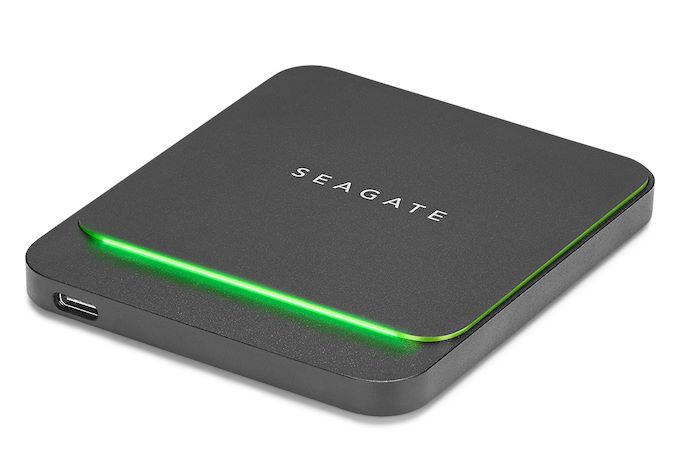
The new Seagate BarraCuda Fast SSD is a follow-up to the Seagate Fast SSD that we reviewed in late 2018. Even though it wasn’t explicitly mentioned, we believe that the new BarraCuda Fast SSD uses newer 96L 3D NAND while retaining the same SATA SSD controller and USB 3.1 Gen 2 bridge chip. Rated speeds remain the same at up to 540 MBps, but the pricing is down to $95, $170, and $300 for the 500GB, 1TB, and 2TB capacity points.


Source: AnandTech – Seagate Expands External Flash Storage Lineup with FireCuda Gaming SSD and BarraCuda Fast SSD

Intel at CES 2020: 45W 10th Gen Mobile CPUs Soon, Tiger Lake with Xe Graphics Later

As we move into 2020, there is a lot of talk about what Intel’s 2020 plans will be. Discussions about the expansion of Intel’s 10nm process node products, such as Ice Lake, beyond the mobile platform are often very heated, especially when we have limited information out of the company directly. For CES 2020, Intel has disclosed a couple of products for consumption: moving its 10th Gen mobile CPU line in to 45 W hardware, but we also had a couple of details about the post-Ice Lake hardware, called Tiger Lake.


Source: AnandTech – Intel at CES 2020: 45W 10th Gen Mobile CPUs Soon, Tiger Lake with Xe Graphics Later

Nixeus Announces NX-EDG274K: A 27" 144Hz FreeSync-Certified 4K Gaming Monitor

Nixeus is announcing the addition of a 27″ 4K monitor to their EDG series at CES 2020. The NX-EDG274K gaming monitor sports a 3840×2160 panel, a 144 Hz maximum refresh rate, and AMD’s FreeSync dynamic refresh rate technology. It comes with two DisplayPort 1.4 connections with VESA Display Stream Compression Technology in order to support the massive bandwidth required for driving 4K resolution at 144 Hz. The monitor allows users to adjust the adaptive over-drive and anti-ghosting FreeSync settings with OSD settings. 128 distinct levels are available for users to have fine-grained control.


The Nixeus NX-EDG34 display builds upon a AHVA panel with a 3840×2160 resolution, and is capable of reaching 350 nits typical brightness (up to 400 nits in HDR mode), a 1000:1 contrast ratio, 178°/178° viewing angles, and a 4 ms GtG response time. In terms of refresh rates, the monitor’s maximum rate is 144 Hz, and in variable refresh mode it operates in a 48 Hz – 144 Hz range. The LCD can display 16.7 million colors and supports an HDR mode, which suggests a wider-than-sRGB color gamut.


In addition to the two DisplayPort 1.4 connections, the monitor also comes with two HDMI 2.0 connections capable of driving 3840×2160 at 60 Hz. The monitor also comes with stereo speakers and a 3.5mm audio output jack. The monitor is expected to go on sale later this quarter. Pricing is yet to be made public.


Nixeus NX-EDG274K
Panel 27″ AHVA
Native Resolution 3840 × 2160
Brightness 350 cd/m² typical

400 cd/m² HDR
Contrast 1000:1
Maximum Refresh Rate 144 Hz
Variable Refresh Rate AMD FreeSync

48 Hz ~ 144 Hz
Response Time 4 ms GtG
Viewing Angles 178°/178° horizontal/vertical
Pixel Pitch 0.156 mm
Pixel Density 163 ppi
Anti-Glare Coating ?
Inputs 2 × DisplayPort 1.4

2 × HDMI 2.0
USB Hub No
Stand NX-EDG274K: height and tilt adjustable

100×100 VESA mount
Audio Stereo speakers

headphone output
Launch Price TBD

Based on the specifications, the closest match for a monitor already in the market is the Acer Nitro XV273K. Given that Nixeus prices their offerings very competitively, we expect the street price of the NX-EDG274K to be lower than the $810 that the Acer Nitro XV273K is being sold for.


Source: AnandTech – Nixeus Announces NX-EDG274K: A 27″ 144Hz FreeSync-Certified 4K Gaming Monitor

NVIDIA & ASUS Unveil 360Hz 1080p G-Sync Monitor: ROG Swift 360

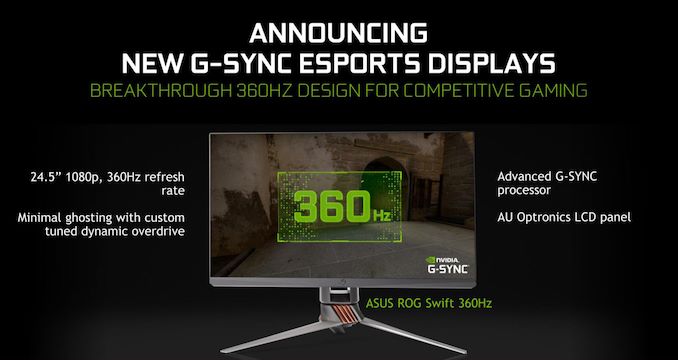
Even though CES proper doesn’t kick off for one more day, NVIDIA and ASUS are getting in an announcement a bit ahead of the curve relating to a new monitor. The two companies have been working on a new high-performance 1080p display aimed at competitive gaming that offers a blistering 360Hz maximum refresh rate,  50% faster than the current crop of 240Hz market leaders. The new monitor will be sold by ASUS as the ROG Swift 360, and is set to be available later this year.


Like other G-Sync projects, NVIDIA’s latest display endeavor looks to be an effort for the company to differentiate itself and its technology in a crowded market, this time by offering an LCD monitor with a rather absurd refresh rate.


The ROG Swift 360 itself is based on a 24.5-inch panel being supplied by AU Optronics, and which is capable of running at up to 360Hz. This is 120Hz faster than the current generation of high-end gaming monitors, which top out at 240Hz, and is an uncommonly large jump to make in a single generation. Unfortunately NVIDIA isn’t disclosing what type of panel is being used here, however all of the 24.5-inch 240Hz G-Sync monitors that have been released to date have been TN, so that’s a safe bet, especially with the kind of refresh rate NVIDIA and ASUS are looking to hit. The bigger question is whether this is a new panel from AUO, or if it’s a further overclocked version of their popular M250HTN01 panel.


NVIDIA and ASUS have not released much else with regards to technical details at this time. The monitor isn’t set to ship until later this year – which as we’re at the very start of the year, likely means it’s still several months off – so the companies undoubtedly still have some technical details to hammer out. Though as most of the work is in the panel and controller, it shouldn’t be too different from ASUS’s 240Hz ROG Swift PG258Q.


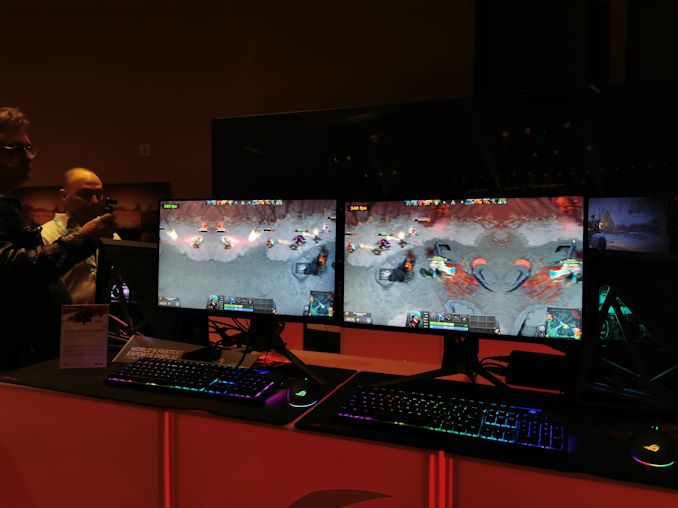
ASUS 360 Hz on left, 240 Hz on right. It is a TN Panel


One thing that NVIDIA has confirmed, however, is that this will be a true G-Sync monitor, with NVIDIA supplying the monitor’s display controller. This is an important distinction not only for compatibility purposes, but because it means that the monitor supports full variable overdrive functionality, which will become increasingly important with such a wide refresh rate range. Even fast TN monitors still need to overdrive their pixels to hit high refresh rates, so the overdrive logic is practically as important as the panel itself in order to minimize ghosting. Though it goes without saying that with NVIDIA aiming to beat current generation monitors by 50%, it’ll be interesting to see just how well 360Hz works in practice, and if the monitor really is fast enough to make a 360Hz refresh rate useful.


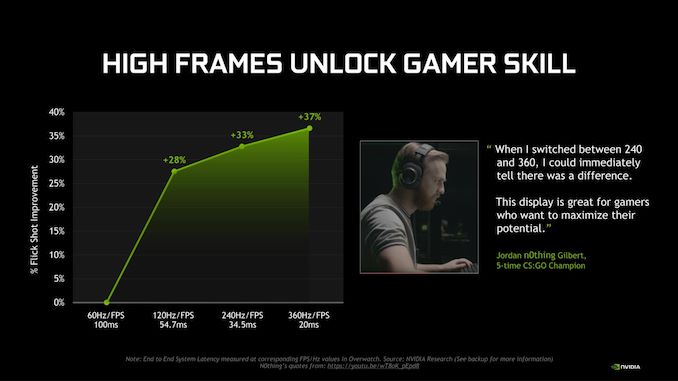
The target market for the ROG Swift 360, in turn, is competitive gaming, as well as anyone who wants a competition-grade monitor. The benefits of higher refresh rates are pretty well known at this point – higher refresh rates make for smoother experiences and reduce rendering latency – and NVIDIA thinks that there’s still enough benefit to justify a 360Hz monitor. That said, with 240Hz monitors offering an already tiny 4.16ms frame time, the absolute benefit of 360Hz is small: that 50% jump in refresh rate only shaves off a further ~1.4ms at the monitor level (for a total of 2.77ms), which isn’t nearly as great as the jump from 60Hz to 120Hz, for example.


Still, NVIDIA has done their own research around the new monitor and player performance, finding that even with the diminishing returns, a 360Hz monitor did improve flick shot performance in Overwatch. As well, they measured a 14.5ms reduction in total (end-to-end) latency, going from 34.5ms at 240Hz to 20ms at 360Hz.


NVIDIA and ASUS will have the ROG Swift 360 on display this week at CES. So while the monitor won’t be on sale for a while yet, we should be able to get a first-hand look at how well NVIDIA’s future gaming monitor is set to perform.


Source: AnandTech – NVIDIA & ASUS Unveil 360Hz 1080p G-Sync Monitor: ROG Swift 360

CES 2020: HP’s Elite Dragonfly to Get 10th Gen Intel Core, Tile Tag, & 5G Modem

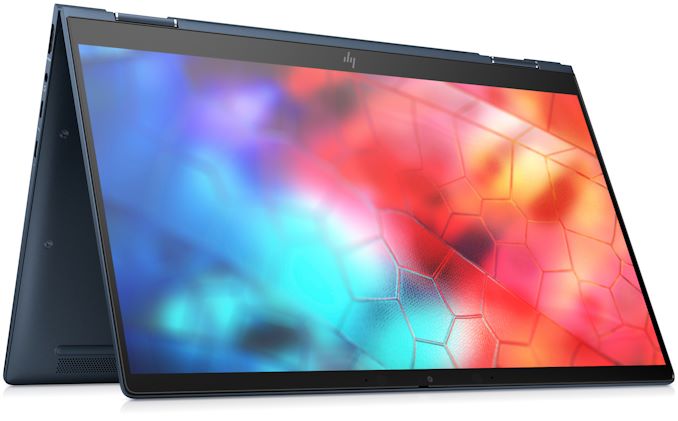
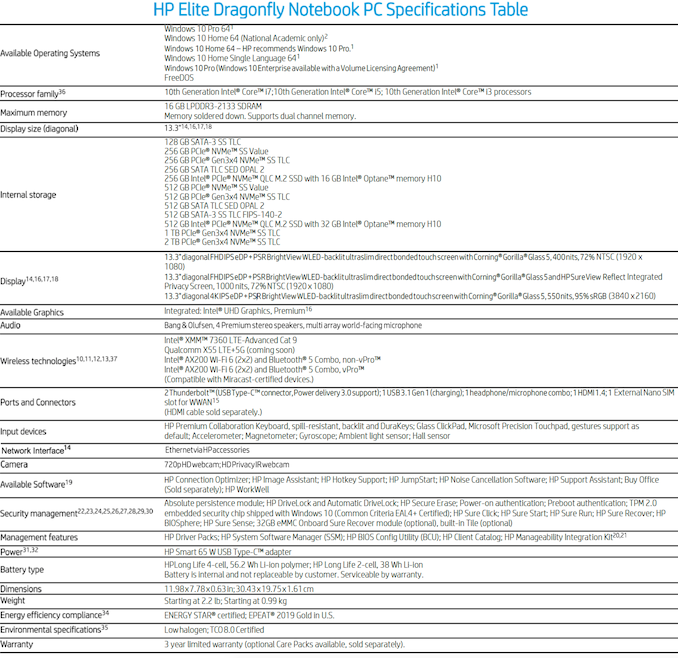
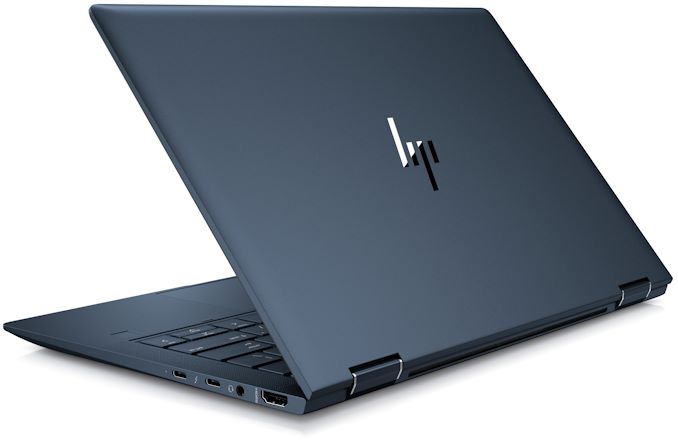
HP’s Elite Dragonfly convertible was one of the most impressive PCs launched last year, as it managed to bring together solid specifications, advanced connectivity, and a 24.5-hours battery life all in an extremely compact 13.3-inch design. At CES 2020 HP has announced that it will introduce an updated version of the machine in February. Notably, the refreshed Elite Dragonfly will offer two additional options: an integrated Tile tag for easy finding, as well as HP’s SureView Reflect privacy screen. Meanwhile, later this year HP will release the 2nd Generation Elite Dragonfly that will be based on Intel’s 10th Generation Core processor and will feature a built-in 5G modem.


PC makers rarely do mid-cycle refreshes for their products for many reasons, but this is not the case with HP’s Elite Dragonfly hybrid machine. As it appears, the company has decided to integrate a Tile tag into its flagship laptop in a bid to make its finding easier if it is lost or stolen even if it is turned off. For those not familiar with the technology, Tile is a small tag that is attached to an item and connected to a smartphone using Bluetooth. When a device gets lost, say, in an office, the Tile application tries to connect to an appropriate tag using Bluetooth and if fails it then attempts to connect to it via a fleet of smartphones that participate in the Tile community. Integrating additional hardware into an existing design can be challenging, but HP and Tile have managed to put a tag into the already tightly-packed Elite Dragonfly.


HP’s Elite mobile PCs are aimed at customers from business, corporate, and government sectors, which is why all of them feature a plethora of built-in security technologies along with various additional options. Users who are concerned about prying eyes who could get a glimpse at some confidential information can already get an Elite Dragonfly convertible laptop with HP’s SureView privacy screen technology that promises to prevent from ‘over the shoulder’ spying. The company’s next-generation SureView Reflect promises to be more efficient than the currently used technology, which will make the machine a bit more secure.


Both built-in Tile and SureView Reflect technologies will be available as options for HP’s 1st Generation Elite Dragonfly starting from February. Later this year the company plans to introduce the Elite Dragonfly G2 that will retain chassis and most of the hardware of the original model (so, dimensions and weight will remain the same), but will get Intel’s 10th Generation Core i3/i5/i7 processor platform with all of its peculiarities. In addition, the G2 will be offered with an optional Qualcomm Snapdragon X55 5G modem.


HP yet has to reveal launch timeframe of its Elite Dragonfly G2 convertible, but it is likely that the new model will won’t arrive for several more months, as it would otherwise render the refreshed model redundant when it launches in February.


Related Reading:


Source: HP


Source: AnandTech – CES 2020: HP’s Elite Dragonfly to Get 10th Gen Intel Core, Tile Tag, & 5G Modem

CES 2020: Lenovo Goes eGFX with Legion BoostStation Box

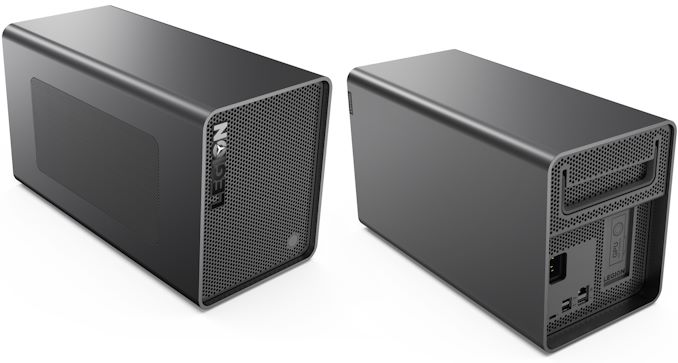
With high-end laptops like the ThinkPad X1 Extreme and Legion Y720, Lenovo has been addressing mobile gamers a couple of years now. These machines deliver enough horsepower for usage on the go, but fall a bit short for gaming on bigger desktop displays. In a bid to radically increase graphics performance of its Thunderbolt 3-enabled notebooks, Lenovo has introduced its Legion BoostStation eGFX box.


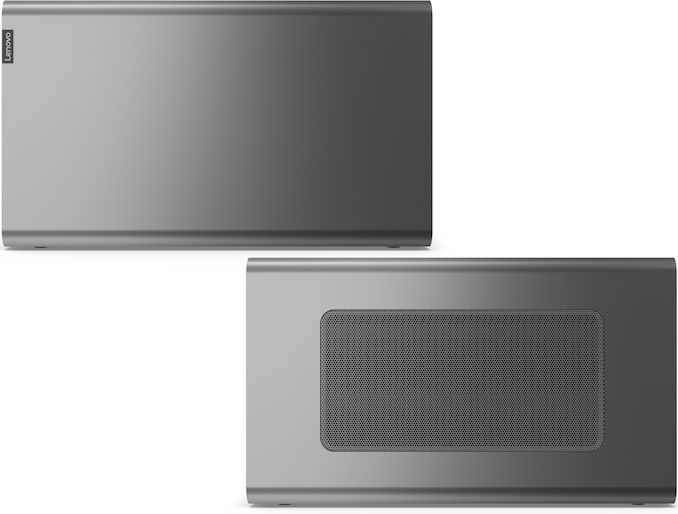
The Legion BoostStation eGFX chassis is made of aluminum and can house any modern dual-wide graphics card that is up to 300 mm long. The box can also accommodate one 2.5-inch/3.5-inch SATA drive, and two M.2 PCIe SSDs. For external connectivity, the eGFX box also has a GbE controller, two USB 3.1 Gen 1 ports, one USB 2.0 connector, and an HDMI display output.


The Legion BoostStation is equipped with a 500 W power supply and can deliver up to 100 W of power over its Thunderbolt 3 interface back to the host, which leaves well over 300 W to the graphics card, enough even for the most advanced boards available today. Meanwhile, if 500 W is not enough, the PSU can be swapped for something more powerful, as the BoostStation uses a standard ATX power supply.


Lenovo will offer its eGFX chassis as barebones for $249.99 in May, 2020. In addition, the company will offer the Legion BoostStation eGPU box with factory-installed AMD Radeon RX 5700 XT, NVIDIA GeForce RTX 2080 Super 8 GB, NVIDIA GeForce RTX 2070 Super 8 GB, NVIDIA GeForce RTX 2060 Super 8 GB or NVIDIA GeForce GTX 1660 Ti graphics card.


Related Reading:


Source: Lenovo


Source: AnandTech – CES 2020: Lenovo Goes eGFX with Legion BoostStation Box

CES 2020: Acer Goes Big Format with Predator CG552K 55-Inch 4K OLED Monitor

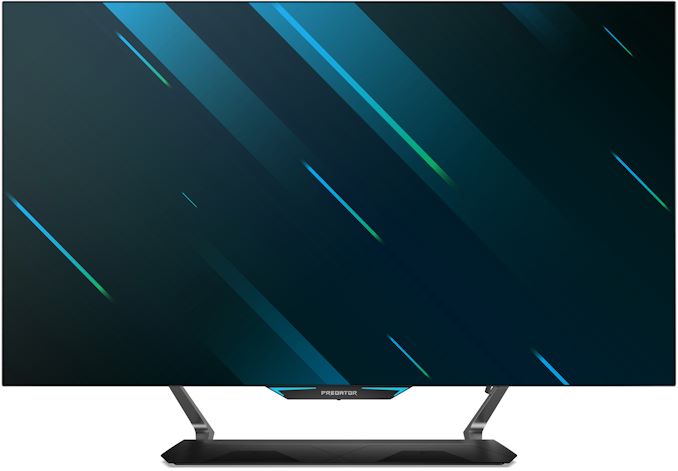
As the culminating of its CES 2020 announcements, Acer has introduced its first big-format OLED display aimed at gamers. The Predator CG552K brings to the table everything that the OLED technology generally has to offer, and adds a 120 Hz maximum refresh rate along with variable refresh rate technologies supported by modern GPUs from AMD and NVIDIA.


Acer’s 55-inch Predator CG552K features a 3840×2160 resolution, 400 nits maximum brightness, and can display 98.5% of the DCI-P3 color gamut all with a calibration accuracy of Delta E<1. Since Acer uses an advanced OLED panel, they are able to offer not only a very high contrast ratio, but also extremely deep blacks, a 0.5 ms response time, as well as a 120 Hz refresh rate, one of the most important features for demanding PC gamers.


To take advantage of the high refresh rate, the Predator CG552K supports three (ish) variable refresh rate technologies, including HDMI 2.1 VRR (currently supported by Xbox One), VESA’s Adaptive-Sync (which means that the display will probably get AMD’s FreeSync certification), and NVIDIA G-Sync compatibility (which is likely piggybacking on HDMI-VRR).


Unfortunately, Acer says nothing about HDR10 or DolbyVision support for the Predator CG552K, so it appears that the display does not support any kind of HDRt, a clear disadvantage when compared to popular OLED TVs such as LG’s G-Sync-compatible 2019 OLED UHDTVs.


In a bid to prevent burn-ins and prolong lifespan of the OLED monitor, Acer equipped it with sensors that automatically adjust brightness according to room’s light level and turn it off when nobody is around. Connectivity wise, the Acer Predator CG552K has two DisplayPort 1.4 connectors, three HDMI 2.0 ports, a USB Type-C input, and a couple of USB 2.0/3.0 ports. In addition, the display has two 10 W speakers.


Acer Predator CG552K Display Specifications
Panel 55-inch OLED
Resolution 3840 × 2160
Refresh Rate 120 Hz
Response Time 0.5 ms gray-to-gray
Brightness Peak: 400 cd/m²
Contrast ?:1
Viewing Angles ?°/?° horizontal/vertical
Color Saturation 98.5% DCI-P3
Display Colors 1.07 billion
3D-LUT ? bits
Pixel Pitch 0.3108 mm²
Pixel Density 81 PPI
Anti-Glare Coating ?
Inputs 2 × DP 1.4

3 × HDMI 2.0

2 × USB-C
USB Hub Dual-port USB 2.0/3.0 hub
Audio 2 × 10 W speakers
Mechanical Design Chassis Colors: black, metallic, w/RGB LEDs
Power Consumption Idle ? W
Active ? W

Acer’s Predator CG552K will be available in the third quarter. In North America, the product will cost $2,999, whereas in Europe it will carry a €2,699 price tag. It is noteworthy that the price of the device is a $1,000 lower when compared to the Alienware 55, the industry’s first OLED display for gamers that has very similar characteristics as the Predator CG552K.


Related Reading:


Source: Acer


Source: AnandTech – CES 2020: Acer Goes Big Format with Predator CG552K 55-Inch 4K OLED Monitor

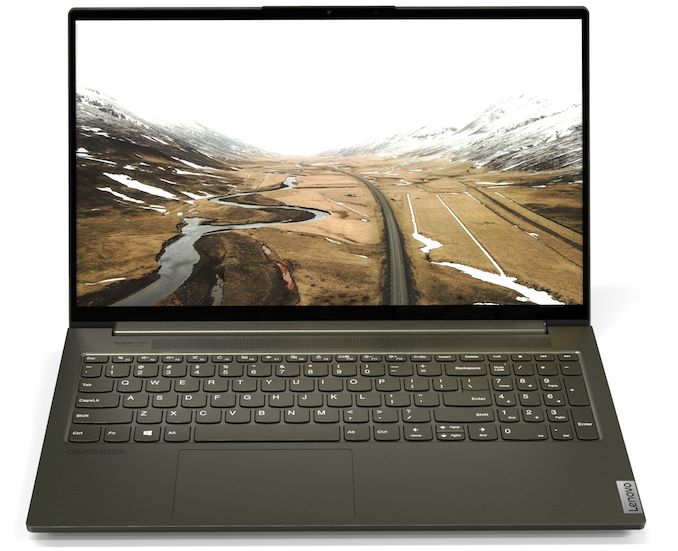
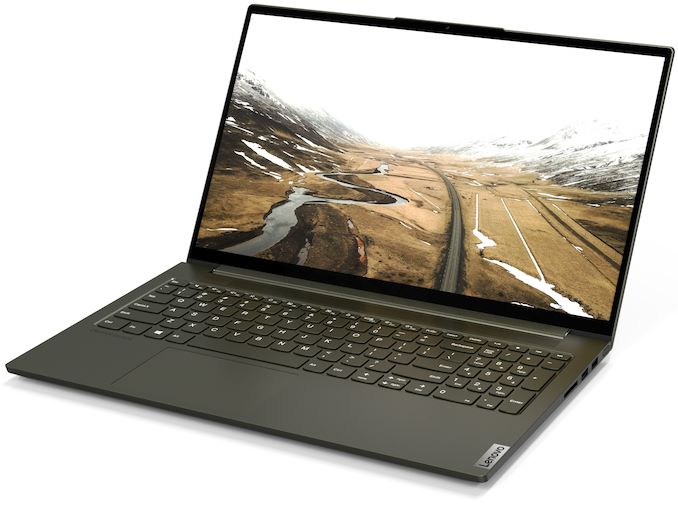
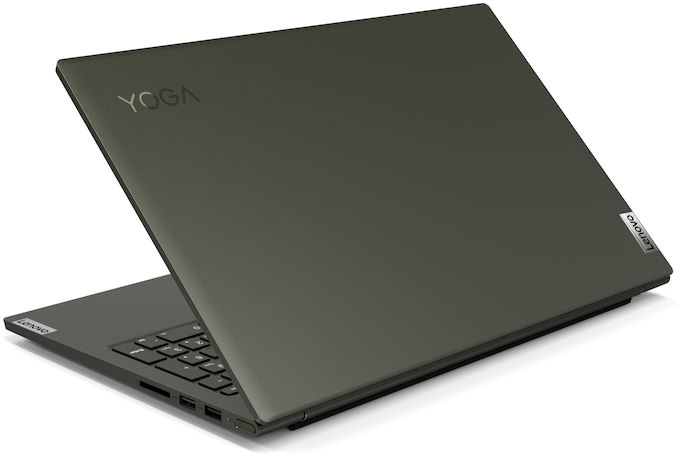
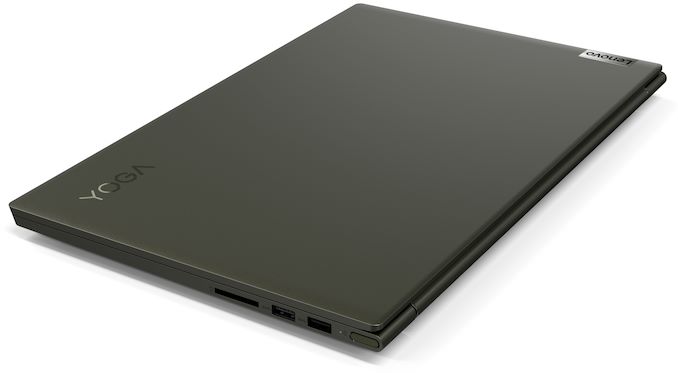
Lenovo’s Yoga Creator 7: A Budget 15.6-Inch NVIDIA Studio Laptop for Creators

Nowadays the market for content creation is bigger than ever. And while suitable machines need to be fairly fast, few of need to be an expensive machine with a professional-grade GPU; moderately-priced machines are increasingly powerful enough to do the job. So, aiming for this audience, Lenovo is introducing its Yoga Creator 7, a 15.6-inch laptop that promises to meet performance needs of mobile digital content creators.


The Lenovo Yoga Creator 7 is equipped with a 15.6-inch display panel that covers 100% of the sRGB color gamut, which remains the web standard. The notebook is based on Intel’s 10th Generation Core processors (presumably Comet Lake, though Lenovo does not specify) that is accompanied by NVIDIA’s GeForce GPU with NVIDIA Studio drivers certified by select ISVs for their applications. The system supports Lenovo’s Q-Control technology to boost performance when it is needed most as well as Lenovo’s Intelligent Cooling that automatically adjust fan speed depending on the workload to optimize battery life. Speaking of the latter, Lenovo says that the mobile PC can last for 13 hours on one charge and supports its Rapid Charge capability.


Being a performance-mainstream notebook, the Yoga Creator 7 comes with a Windows Hello-compliant IR-enabled webcam, a fingerprint scanner, an optional Wi-Fi 6 adapter, Dolby Atmos-certified speakers, and far-field microphones compatible with Amazon Alexa and Microsoft Cortana.


The 15.6-inch Lenovo Yoga Creator 7 weighs 1.9 kilograms and is 16.4 mm thick, which is lower than that of mainstream 15.6-inch notebook, which will make it more attractive for the modern audience.


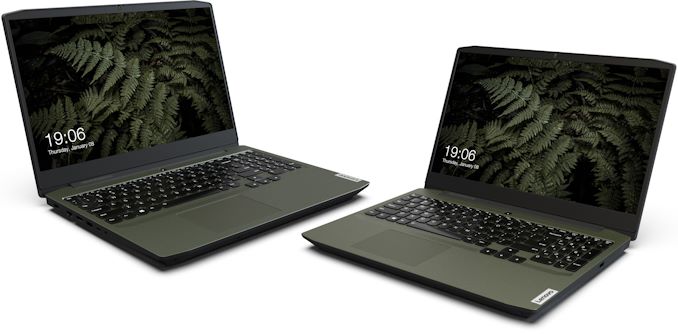
In addition to the Yoga Creator 6, Lenovo also announced its IdeaPad Creator 5 15.6-inch mainstream laptop. The IdeaPad features an IPS display, Intel’s 10th Gen Core processors, an NVIDIA’s GeForce GPU with Studio Drivers, up to 16 GB DDR4 DRAM, and up to 1 TB PCIe SSD. The machine weighs 2.2 kilograms and promises up to 8 hours of battery life, which is in line with other mainstream 15.6-inch-class machines.


For now, Lenovo plans to make its Yoga Creator 7 and IdeaPad Creator 5 available on select markets and has no plans to bring them to North America.


Related Reading:


Lenovo


Source: AnandTech – Lenovo’s Yoga Creator 7: A Budget 15.6-Inch NVIDIA Studio Laptop for Creators

CES 2020: Acer’s Spin 3 & Spin 5 Get Ice Laked

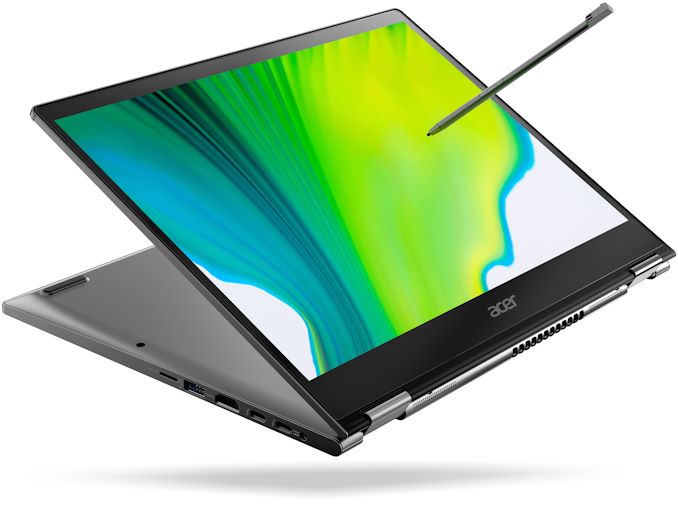
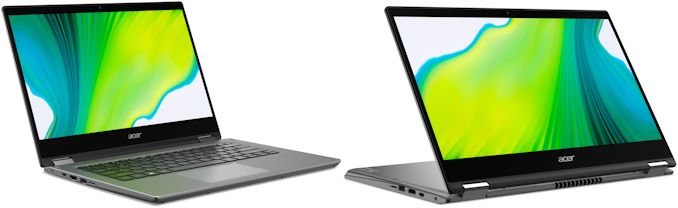
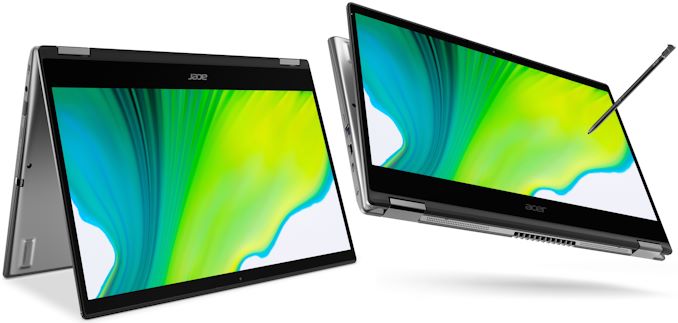
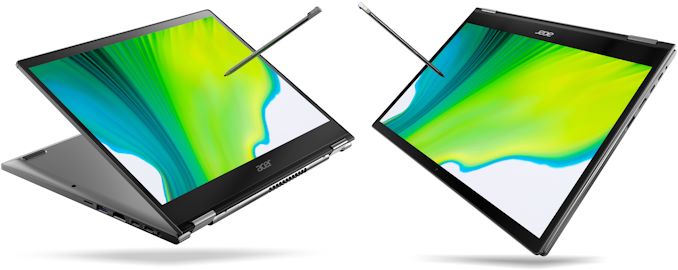
Today at CES 2020, Acer has introduced its new inexpensive Spin 3 and Spin 5 convertible laptops that are based on Intel’s Ice Lake processors. The hybrid mobile PCs are slimmer than their predecessors and provide significantly greater graphics performance, especially when it comes to higher-end models. Both machines will ship with optional Acer’s new Active Stylus with Wacom AES technology that offers 4096 pressure levels, which will be welcomed by creative professionals.


Conceptually, the new Acer Spin 3 and Acer Spin 5 share many similarities. Both are based on Intel’s 10th Generation Core ‘Ice Lake’ processors, both come in tough aluminum chassis to ensure durability, both use TN displays and LPDDR4X memory to prolong battery life, both have Thunderbolt 3 ports to connect various bandwidth-hungry peripherals (external graphics, advanced storage, etc.), both are equipped with audio subsystem with Acer True Harmony enhancements, and both come with Windows 10 Home, which emphasizes their target audience. Meanwhile, being conceptually similar, these notebooks have a number of important differences that set them far apart.


The Acer Spin 3: Ice Lake on Budget


The Acer Spin 3 model SP314-54N is a convertible laptop with a 14-inch Full-HD display panel with ‘up to 170° viewing angles’, which is something one would expect from a TN screen. The PC weighs around 1.5 kilograms and comes in a chassis that is 16.9 mm thick.


The hybrid notebook is powered by Intel’s 10th Gen ‘Ice Lake’ Core i3/i5 processor with Intel UHD ‘G1’ (32 EUs) or Intel Iris Plus ‘G4’ (48 EUs) integrated graphics. This is accompanied by up to 16 GB of LPDDR4X memory as well as a PCIe 3.0 x4 SSD with capacities ranging from 128 GB to 1 TB.


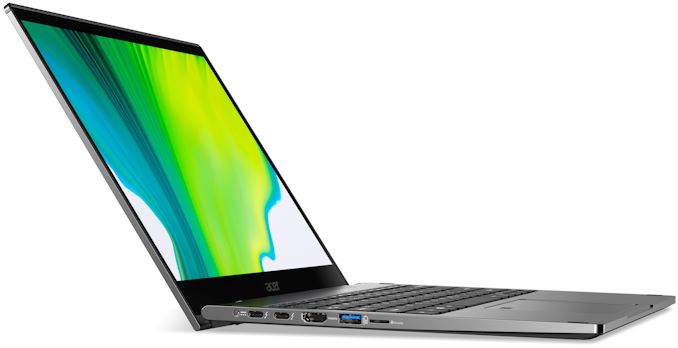
Connectivity wise, the Acer Spin 3 (SP314-54N) laptop has just about everything that one might need these days, including Wi-Fi 6, two Thunderbolt 3 ports, two USB 3.1 Gen 2 connectors, an HDMI output, a microSD card reader, and a 3.5-mm jack for headsets.


Acer says that its upcoming Spin 3 will offer up to 12 hours of uptime on its 48 Wh battery, which is in line with promises of other makers of 13/14-inch machines.


Sales of Acer’s Spin 3 will begin next month in EMEA, where it will cost starting at €649. The product will arrive to North America in April, where prices will start at $699.


The Acer Spin 5: A Sub-$900 Ice Lake with Premium Features


The Acer Spin 5 model SP513-54N hybrid mobile PC is a considerably more advanced system than the Spin 3. First up, the system comes with a slightly smaller 13.5-inch TN display panel with a 2256×1504 resolution and a 3:2 aspect ratio that is believed to be more comfortable to use for web browsing than a 16:9 aspect ratio of the Spin 3. Secondly, the Spin 5 weighs 1.2 kilograms and comes in a chassis that is 14.9 mm thick, 2 mm thinner when compared to the Spin 3.


Acer decided to equip its Acer Spin 5 (SP513-54N) convertible with Intel’s quad-core Core i5-1035G4 or Core i7-1065G7 processor featuring Iris Plus ‘G4’ and Iris Plus ‘G7’ integrated graphics with 48 EUs and 64 EUs, respectively. The CPU is paired with up to 16 GB of LPDDR4X memory as well as a PCIe 3.0 x4 SSD with capacities up to 1 TB (and to emphasize the premium nature of the device, this system does not offer a 128 GB SSD). The connectivity side of the latest Spin 5 is similar to that of the Spin 3, so it will support Wi-Fi 6 as well as Thunderbolt 3 among other things.


Despite being thinner and lighter than the Spin 3, the Spin 5 comes with a higher-capacity 56 Wh battery that enables up to 15 hours of runtime, according to Acer.


The more advanced Spin 5 convertible will hit EMEA in March carrying price tags from €999. Customers in North America will have to wait for the new Spin 5 till June and pay from $899.


Specifications of Acer’s Spin 3 and Spin 5 Convertible Laptops
  Acer Spin 3

SP314-54N
Acer Spin 5

SP513-54N
LCD Diagonal 14-inch TN 13.5-inch TN
Resolution Brightness Features 1920×1080

170°/160° viewing angles
2256×1504

170°/160° viewing angles
Color Gamut ? ?
Touch Support Multi-touch Multi-touch
Protective Glass ? ?
Pen Option Acer Active Stylus with Wacom AES (active electrostatic) technology


4096 pressure levels

Two configurable buttons

CPU Intel Core i5-1035G4

(4C/8T, 6 MB cache, 1.1 – 3.7 GHz)


Intel Core i5-1035G1

(4C/8T, 6 MB cache, 1.0 – 3.6 GHz)


Intel Core i3-1005G1

(2C/4T, 4 MB cache, 1.2 – 3.4 GHz)

Intel Core i7-1065G7

(4C/8T, 8 MB cache, 1.3 – 3.9 GHz)


Intel Core i5-1035G4

(4C/8T, 6 MB cache, 1.1 – 3.7 GHz)

Graphics Intel UHD Graphics ‘G1’ w/ 32 EUs at 900-1050 MHz, 461 – 537 GFLOPS

Intel Iris Plus Graphics ‘G4’ w/ 48 EUs at 900-1050 MHz, 691 – 806 GFLOPS

Intel Iris Plus Graphics ‘G7’ w/ 64 EUs at 1050-1100 MHz, 1.07 – 1.1 TFLOPS
RAM up to 16 GB dual-channel LPDDR4X
Storage 128 GB PCIe 3.0 x4 SSD

256 GB PCIe 3.0 x4 SSD

512 GB PCIe 3.0 x4 SSD

1 TB PCIe 3.0 x4 SSD
256 GB PCIe 3.0 x4 SSD

512 GB PCIe 3.0 x4 SSD

1 TB PCIe 3.0 x4 SSD
Wireless Wi-Fi, Bluetooth Intel Wi-Fi 6 AX201 2×2 802.11ax 160MHz + Bluetooth 5.0
Cellular

WWAN
?
USB 3.1 2 × USB 3.1 Gen 1 Type-A
Thunderbolt 2 × TB 3 (for data, charging, DP displays)
Display Output 1 × HDMI 1 × HDMI 2.0
Card Reader 1 × microSD
Cameras Front 720p webcam
Hardware Authentication None Fingerprint reader
Audio 2 far-field microphones, 2 speakers, audio jack
Battery 3-cell 48 Wh battery

up to 12 hours of battery life

65 W charger
4-cell 56 Wh battery

up to 15 hours of battery life

65 W charger
Dimensions Width 325 mm | 12.8 inches 300 mm | 11.81 inches
  Depth 230 mm | 9.06 inches 235 mm | 9.25 inches
  Thickness 16.9 mm | 0.67 inches 14.9 mm | 0.59 inches
Weight 1.5 kilograms | 3.31 pounds 1.2 kilograms | 2.65 pounds
Sensors Accelerometer
Operating System Microsoft Windows 10 Home 64 bit
Launch Time EMEA February 2020 March 2020
US April 2020 June 2020
Launch Price EMEA €649 €999
US $699 $899

Related Reading:


Source: Acer


Source: AnandTech – CES 2020: Acer’s Spin 3 & Spin 5 Get Ice Laked

CES 2020: Acer ConceptD 700 Workstation For Creators, With Xeon E

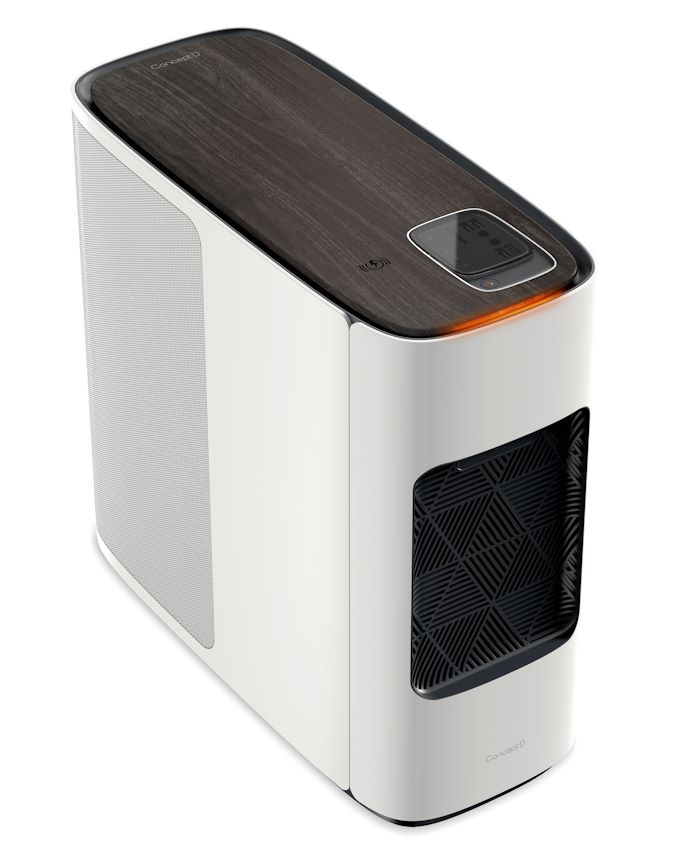
Through 2019, all the major hardware providers and OEMs in the spaces we cover have been pushing the idea of the ‘Creator’ – someone who needs a high powered system in order to process video, animation, architecture, engineering, and anything with some level of computer-aided design which requires a lot of compute. To that end, Acer is putting forward its latest desktop offering for this market. The ConceptD 700 is build ground up with the Xeon E platform paired with NVIDIA’s Quadro GPUs, offering traditional Intel mainstream performance but with extra layers of professional features.


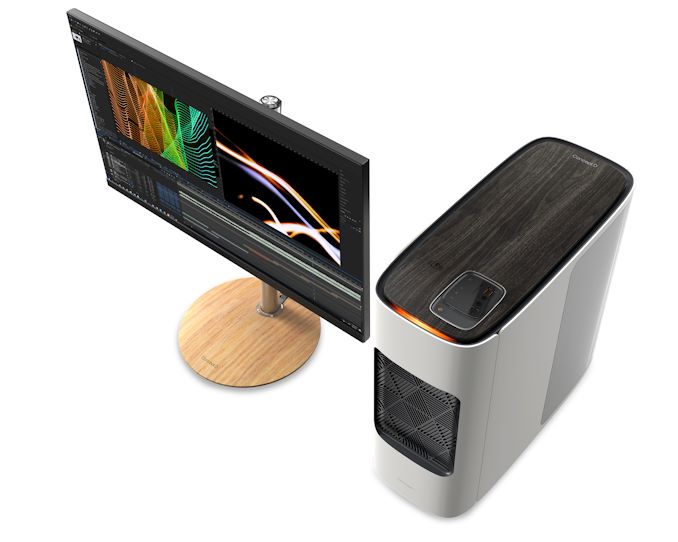
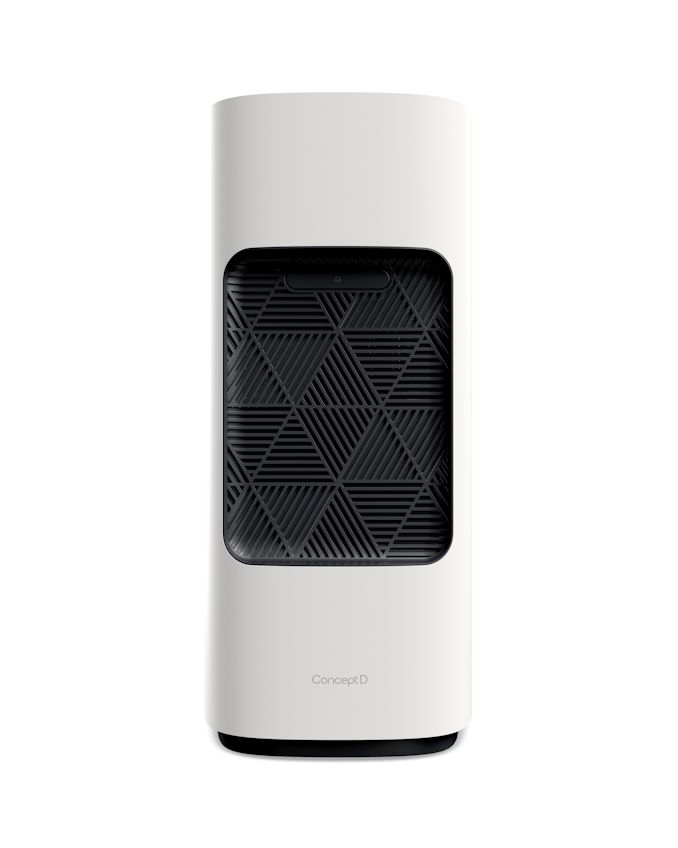
The design of the ConceptD 700 Workstation is meant to appear seemless, and integrate into a professional environment, offering a peak 40 dBA noise level and ‘minimalist Scandinavian design’. This means a white finish on most of the case, a wood-grain inspired top of the chassis, and a triangular patterned front panel equipped with three energy-efficient cooling fans to draw air into the chassis. Not only this in the design, but there’s also a wireless charging spot on the top of the case along with a headset pop-out cradle.


Inside is the Xeon E-2200 platform, designed for up to 8 cores, up to 64 GB of DDR4-2666 ECC memory, multiple M.2 SSDs and other 2.5/3.5-inch storage options. The Quadro inside will be an RTX 4000, which enables the unit to get the ‘RTX Studio’ badge. Acer says the unit has been testified and certified by major ISVs to ensure software compatibility, which enables it to go after the creator market.


The Acer ConceptD 700 will be available in Europe from March, starting at EUR 1700. Specifications for that price are unknown, such as core count, storage, or memory, aside from the styled chassis and the Quadro RTX 4000.


Source: AnandTech – CES 2020: Acer ConceptD 700 Workstation For Creators, With Xeon E