CES 2020: EVGA Showcases New Nu Audio Pro Card

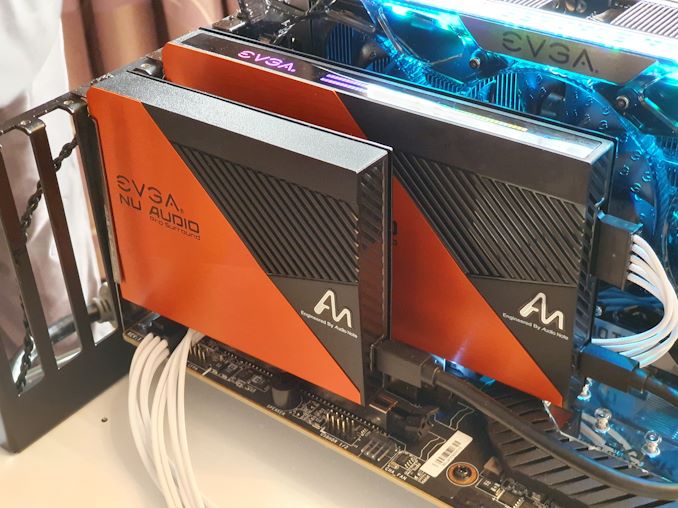
Initially announced last November, EVGA at CES 2020 showcased the new second generation Nu Audio Pro audio card. The latest model improves upon its predecessor in several ways, including adding 7.1 channel output option, as well as adding RGB lighting. Overall, EVGA remains a relative newcomer to the sound card market, with the company having started off its journey with the original Nu Audio last year, targeting the more niche high-end internal audio solution market.
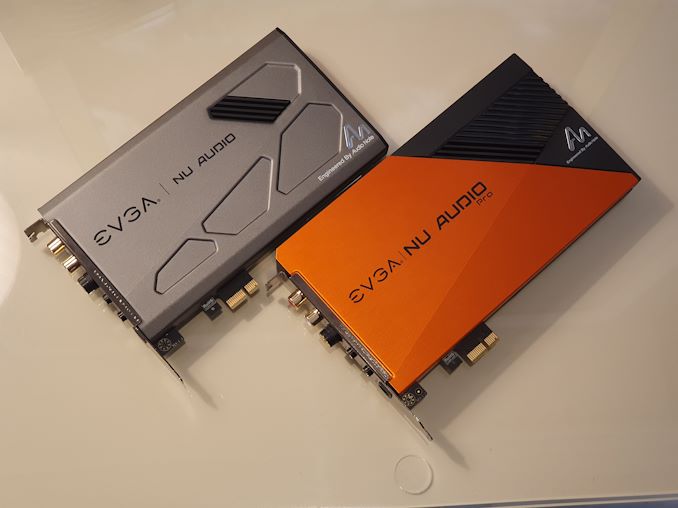


Nu Audio vs Nu Audio Pro


The new Nu Audio Pro improves upon the first generation in terms of component choices; it still contains the same XMOS xCORE-200 DSP accompanied by Asahi Kasei Microdevices’ (AKM) AK4493 DAC, the AKM AK5572 ADC, and the Cirrus Logic CS5346 ADC. But it’s said that the supporting analog components have been improved so the new characteristics of the card are enhanced.
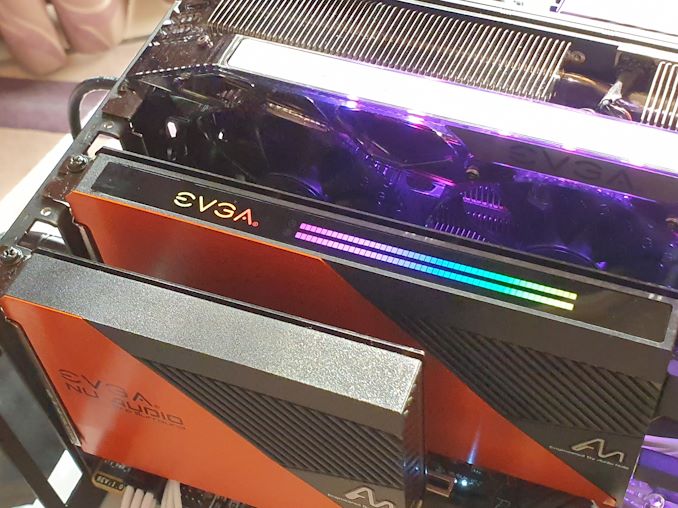


Design-wise, we’re also seeing a refresh as the new card now sports a red-black finish, and it has hopped on the RGB train with side-mounted LED strips that can be animated and synced with audio playback.


The main board is a straightforward replacement to last year’s model and comes at a $199 price tag.
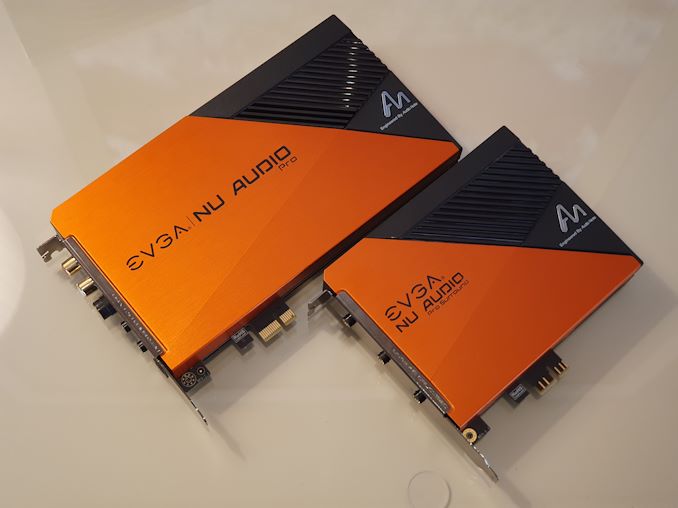


Nu Audio Pro & Nu Audio Pro Surround


Instead, what’s special for EVGA’s audio card this year is the introduction of a second daughter board that allows for 7.1 channel audio playback. The second board has three additional outputs and is fully self-contained in terms of the audio signal generation, including its own DACs. The interface between the card is digital via a repurposed DisplayPort connector between the two boards. The daughterboard’s PCIe connector just serves as grounding as well as structural support – in theory you can have this free-floating instead of having it take up a PCIe slot on your motherboard, but there might be degradations due to possible lesser grounding.


The full Nu Audio Pro kit with the 7.1 add-on card can be had for $299; otherwise the boards are sold separately for $199 and $119 respectively, with availability set in the comings months. Overall, EVGA tells us that they’re continuing to iterate on their designs, and that the company is also investigating the development of an external USB version of the card (The PCIe versions actually use a PCIe to USB bridge internally for connectivity) in the future.


Related Reading:


Source: AnandTech – CES 2020: EVGA Showcases New Nu Audio Pro Card
CES 2020: Patriot Goes Big on Bandwidth For New EVLVR 2 TB3 SSDs

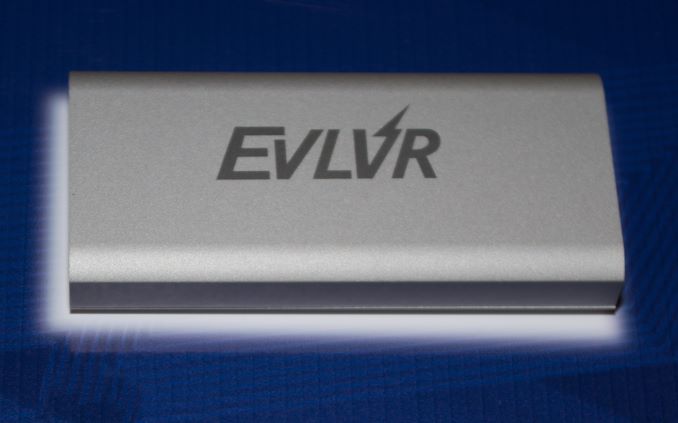
At this year’s CES, Patriot has introduced an enhanced version of its EVLVR (Evolver) Thunderbolt 3 external SSD. The new drive is set to offer radically improved sequential read/write performance versus the earlier EVLVR, and will come in capacities of up to 2 TB.


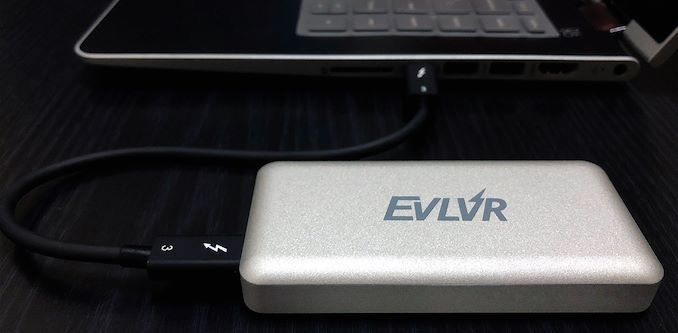
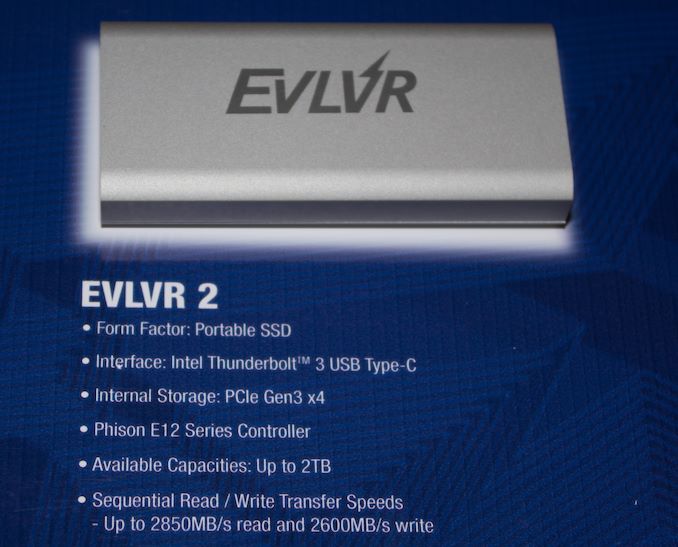
The Patriot EVLVR 2 Thunderbolt 3 SSDs come in a new candybar aluminum chassis with rounded edges that seems to have dimensions similar to the original EVLVR (10.1cm (L) × 4.6cm (W) × 1.1cm (H)). The chassis is big enough to house an M.2-2280 SSD based on Phison’s PS5012-E12 controller, using a PCIe 3.0 x4 connection to bridge theSSD to the Intel Thunderbolt 3 controller.


Patriot’s original EVLVR was based on Phison’s PS5008-E8 chip, which a low-cost controller featuring four NAND channels and a PCIe 3.0 x2 interface. As a result, the upgrade of the EVLVR2 to the high-end Phison PS5012-E12 featuring eight NAND channels and a PCIe 3.0 x4 interface should greatly boost the performance of the new drives. Officially, Patriot is claiming that the drive can hit sequential read speeds of up to 2.85 GB/s, while sequential writes will top out at 2.6 GB/s.


Patriot plans to offer its EVLVR 2 external SSDs in capacities of up to 2 TB, up from a maximum capacity of 1 TB in case of the original model. Though we’ll have to wait and see just what the company will be charging for these capacities; the company is not announcing when it plans to start selling the new drive.


Related Reading:


Source: Patriot


Source: AnandTech – CES 2020: Patriot Goes Big on Bandwidth For New EVLVR 2 TB3 SSDs

CES 2020: Cherry Unveils Viola Mechanical Switch for Low-Cost Keyboards

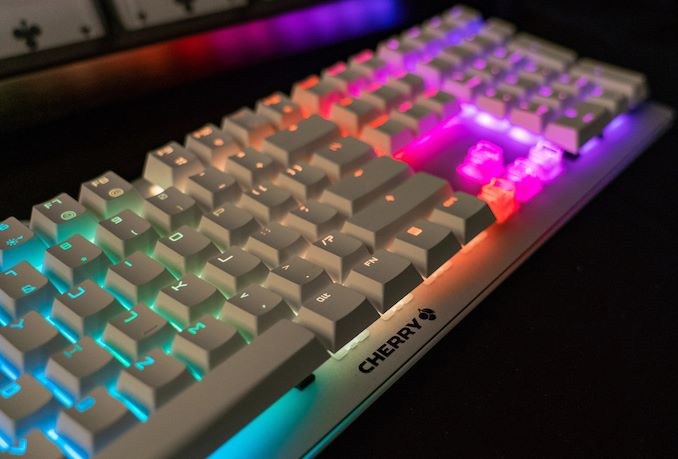
Since their resurgance in the gaming market almost a decade ago, mechanical switch keyboards have become and have remained a popular item within the gaming market as well as the market for high-end keyobards in general. And it’s easy to see why, as mechanical switches have many advantages compared to keyboards with rubber dome or membrane switches; however they have one major disadvantage, their high cost. Cherry, the company that commands a sizable share of the switches market, introduced its low-cost Viola switches at CES 2020 that promise to enable keyboards makers to build cbeaper mechanical keyboards.


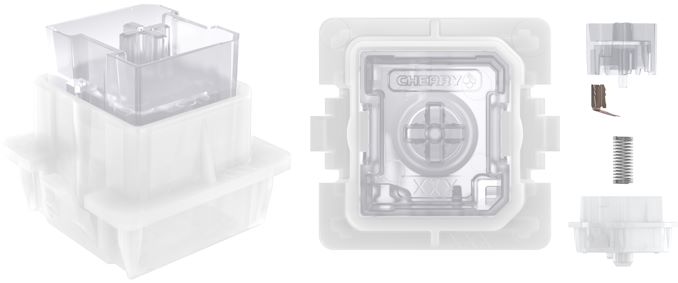
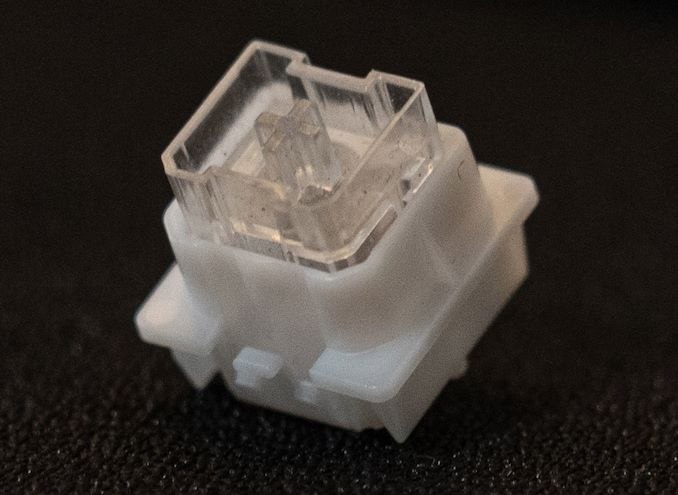
The Cherry Viola is a brand-new switch with a spring and V-shape bronze contact system. The switch uses an industry standard cross-stem that is compatible with a wide array of keycaps, and is contained in a precisely-engineered housing made of a plastic polymer featuring eight pillars. The engineering tolerance for the new switch is less than 0.01 mm, which helps to ensure wobble free keystrokes, a solid feel, and better typing accuracy. The switch uses a POM-socket, so it is frame mounted and does not require soldering.


Cherry’s Viola switch resembles Cherry’s MX Red when it comes to a 2 mm actuation point, a 4 mm total travel distance, and a 45 cN actuation force. Cherry promisees that the switch will be ‘mechanical’ and ‘tactile’, but the company does not want to draw direct parallels with its MX-series due to obvious reasons.


Comparison of Mechanical Keyboard Switches
  Cherry

Viola
Cherry

MX Blue
Cherry

MX Brown
Cherry

MX Red
Cherry

Silver
Razer Green
Actuation Point 2 mm 2.2 mm 2 mm 2 mm 1.2 mm 1.9 mm ± 0.4 mm
Actuation vs Reset Point no data no data no data no data no data 0.4 mm
Total Travel 4 mm 4 mm 4 mm 4 mm 3.4 mm 4 mm
Actuation Force 45 cN 60 cN 55 cN 45 cN 45 cN 50 g
Actuation Feel cross/linear linear/tactile linear/tactile linear linear soft tactile
Switch Lifecycle ? million 50 million 50 million 50 million 50 million 60 million
Switch Color white

transparent
blue brown red silver green

The architecture of the Viola switch was engineered not only to reduce its costs, but also to decrease production costs for makers of keyboards. Furthermore, since Viola uses transparent plastic, the switch is fully compatible with SMD LEDs enabling manufacturers to build low-cost gaming keyboards with RGB backlighting.


At this time Cherry is not disclosing the cost of its Viola switch, but the company says that it expects the Viola to be a killer of rubber dome switches, which implies that it is rather cheap to make. Though ultimately the final price of keyboards are up to the manufacturers, so we’ll find out the answer to the cost question in the coming quarters when the first products based on the Viola switch emerge on the market.


Related Reading:


Source: Cherry


Source: AnandTech – CES 2020: Cherry Unveils Viola Mechanical Switch for Low-Cost Keyboards

CES 2020: MSI Announces MAG X570 Tomahawk WiFi

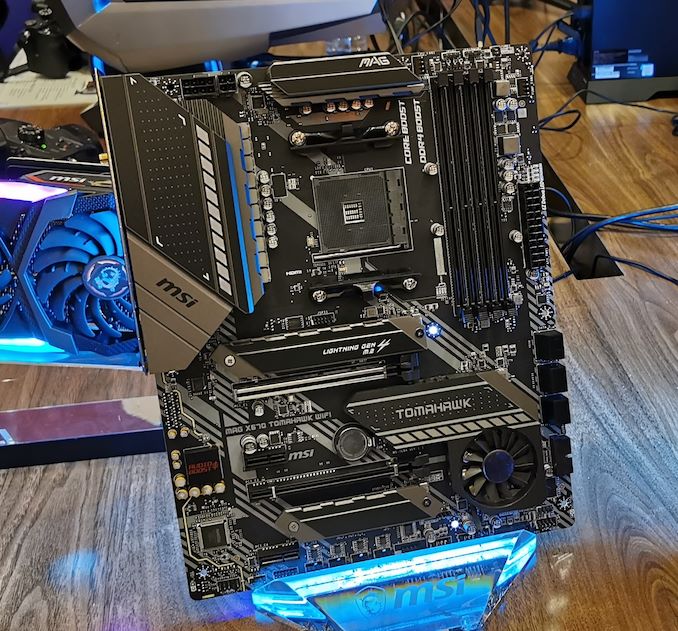
Looking to give AMD Ryzen buyers another affordable option for an X570 motherboard, MSI has brought one of its most popular B series models to the premium X570 chipset. The MSI MAG X570 Tomahawk WiFi will have a 12-phase CPU power delivery, support up to DDR4-4600 memory, and two PCIe 4.0 M.2 slots for just $189.


The MSI Tomahawk series is one that we have seen frequently here at AnandTech, with each iteration featured on the lower end of the AM4 socket models including the AMD’s B350, and B450 chipsets. This is the first time the Tomahawk series has been brought to a premium chipset, with the MSI MAG X570 Tomahawk WiFi looking to cater to users looking to save some money over its other premium models while offering X570’s main feature; PCIe 4.0 capability.


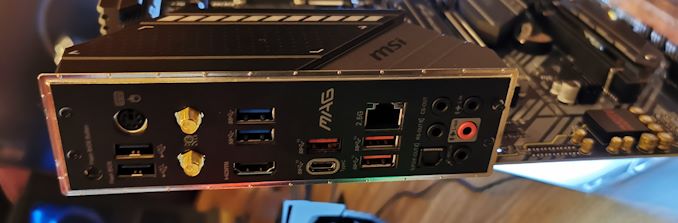
One of the core features of the MSI MAG X570 Tomahawk WiFi is in its networking capabilities, with a Wi-Fi 6 + BT 5.0 radio and a Realtek RTL8125-CG 2.5 G Ethernet controller. Other primary features include support for up to 128 GB of DDR4-4600 memory, three USB 3.1 G2 Type-A ports and one USB 3.1 G2 Type-C port on the rear panel, a 12+2 power delivery cooled by a large aluminum heatsink, as well as two full-length PCIe 4.0 slots which operate at x16, and x16/x4. Storage is handled by six SATA ports, and two PCIe 4.0 x4 M.2 slots for the latest PCIe 4.0 NVMe solid-state drives.


MSI didn’t give specific availability or pricing for the MAG X570 Tomahawk WiFi motherboard, but they did say they expect it to cost around the $200 mark and hit the shelves sometime in Q1 of this year.


Source: AnandTech – CES 2020: MSI Announces MAG X570 Tomahawk WiFi

CES 2020: Lenovo Unveils IdeaPad Duet Chromebook Detachable

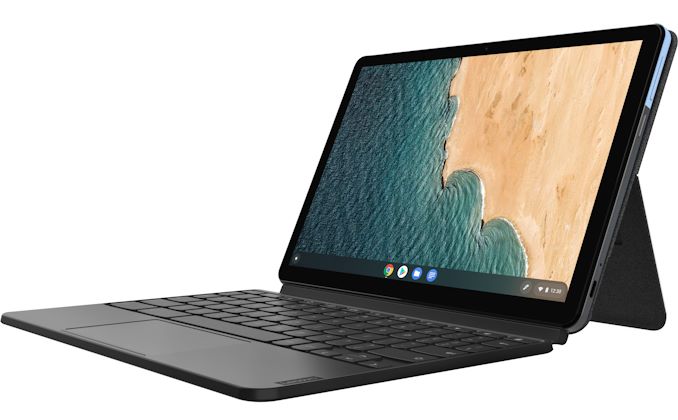
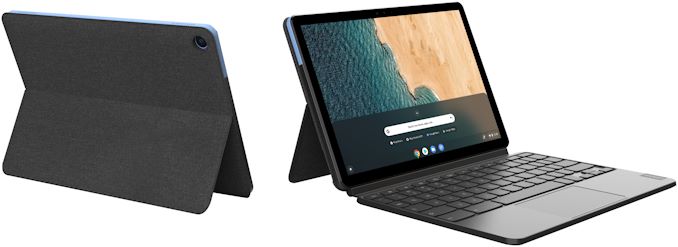
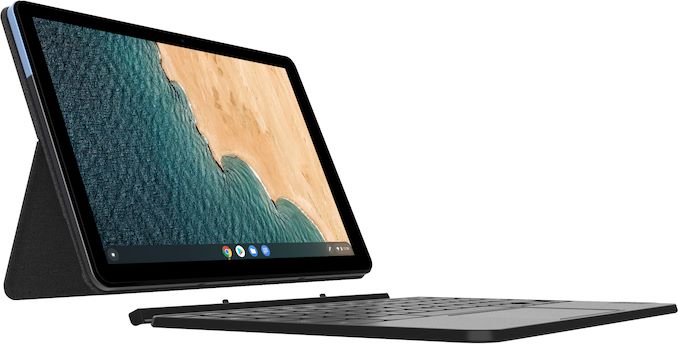
The market for pure, Google Android-based tablets is not exactly thriving, and since Google ChromeOS can run applications for Android, pretty much all interest in non-Apple (or non-Windows) tablets has followed. To that end, at this week’s CES Lenovo rolled out its IdeaPad Duet Chromebook, an inexpensive 2-in-1 that is as light as a tablet.


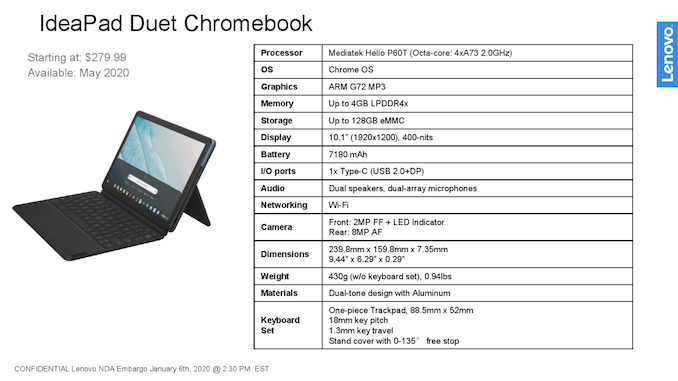
The IdeaPad Duet Chromebook is equipped with a 10.1-inch display featuring a 1920×1200 resolution and 400 nit maximum brightness, which is rather typical for a tablet. At the heart of the system is the Mediatek Helio P60T SoC (4x Arm Cortex-A73 at 2.0 GHz and Arm Mali G72-MP3), which  is paired with 4 GB of LPDDR4X memory as well as a 128 GB eMMC solid-state storage.


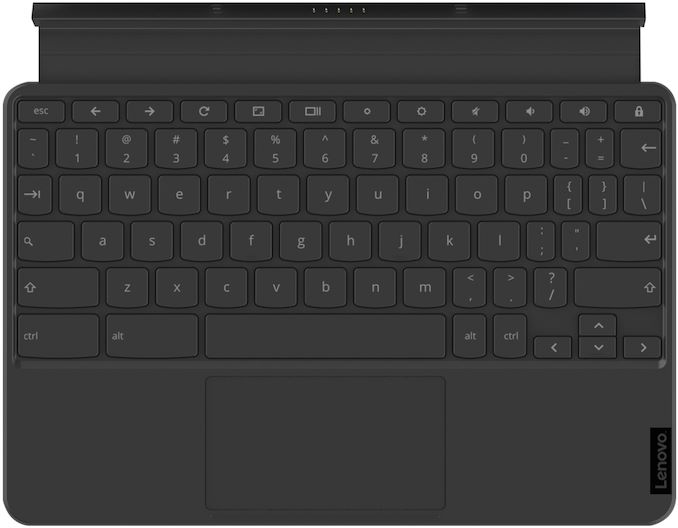
Just like all modern tablets, the IdeaPad Duet Chromebook has a front and rear camera, speakers, microphones, Wi-Fi, and a USB Type-C connector. A key component of the product — which is why Lenovo defines it as a Chromebook — is its detachable keyboard with a trackpad, which has an 18 mm key pitch with 1.3 mm of key travel. The device also has a kickstand.


Given dimensions (the 10.1-inch slate is 7.3 mm thick) and a weight of 430 grams, the IdeaPad Duet Chromebook is well suited to serve as a tablet. However the detachable keyboard just as quickly transforms the device into an ultraportable laptop. While 2-in-1 Chromebooks are nothing new, those that are made by well-known OEMs are usually expensive, whereas Lenovo plans to sell its IdeaPad Duet Chromebook for $279.99, which is in line with cheap laptops running Google’s OS. It remains to be seen whether target audience of Chromebooks will actually bite a 10.1-inch detachable, but for people looking for an Android tablet, Lenovo’s offering may look attractive.


Lenovo plans to start sales of the IdeaPad Duet Chromebook in April.


Related Reading:


Source: Lenovo


Source: AnandTech – CES 2020: Lenovo Unveils IdeaPad Duet Chromebook Detachable

ARRIS Expands Wi-Fi 6 Portfolio with AX6600 SURFboard mAX Mesh System

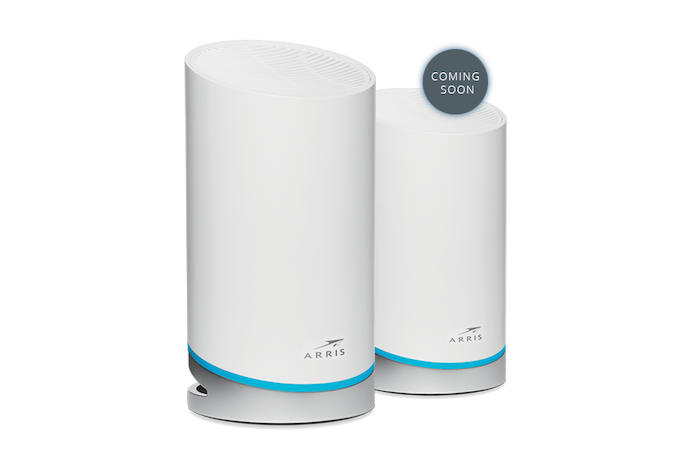
ARRIS announced the SURFboard mAX AX6600 Mesh Wi-Fi 6 System, a Broadcom BCM6755-based design, at CES 2020. In 2019, ARRIS had announced the SURFboard mAX PRO AX11000 for $650 (kit of two) and the SURFboard mAX PLUS AX7800 for $550 (kit of two). The new AX6600-class SURFboard mAX will enter at a lower price point (exact pricing was not announced) to complement the higher-end kits.


Similar to other AX6600-class Wi-Fi 6 mesh designs, the SURFboard mAX also comes with a tri-band configuration (2×2 2.4 GHz for 600 Mbps, 2×2 5 GHz for 1200 Mbps, and a 4×4 160 MHz-wide 5 GHz radio for 4800 Mbps). The 4×4 is used as a dedicated backhaul in the mesh kit. ARRIS claims that a kit of two can blanket a 5500 sq. ft. area.


In terms of the internal components, the unit seems similar to the Asus ZenWiFi AX (XT8), but the industrial design and antennae placement (which affects performance) are different. Additionally, the SURFboard mAX AX6600 comes with only two gigabit Ethernet ports per unit (unlike the Asus ZenWiFi which comes with a 2.5 Gbps port). ARRIS also indicated Alexa compatibility for the unit.


Availability is slated for Q2 2020, and the pricing ought to be under the $550 mark (given that the mAX PLUS AX7800 kit sells for that). Similar to the other members of the mAX family, the AX6600 version will also be available as a standalone router.


Source: AnandTech – ARRIS Expands Wi-Fi 6 Portfolio with AX6600 SURFboard mAX Mesh System

CES 2020: ZOTAC Announces ZBOX Edge MI643 Powered By Intel Comet Lake

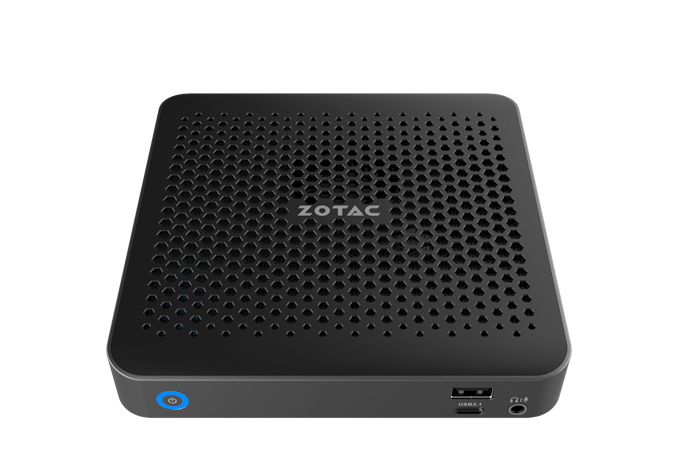
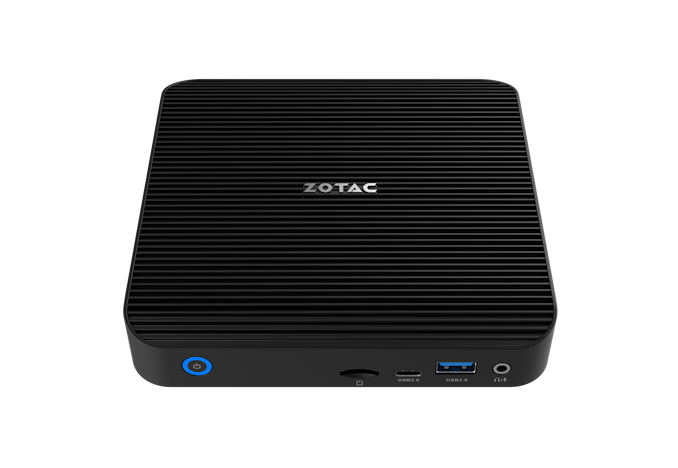
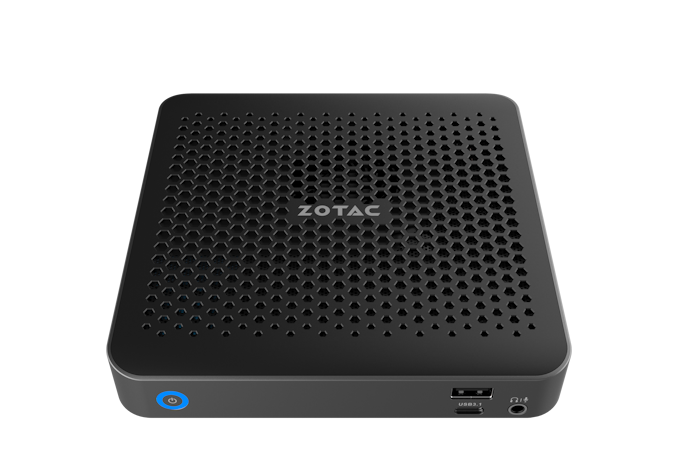
All told, ZOTAC has launched several ZBOX SFF PCs at this year’s CES. Typical for the company’s wide reach, they’re gearing up to release a range of boxes at multiple TDPs, and incorporating CPUs from both x86 vendors. Towards the higher end of their latest product stack is the ZOTAC ZBOX Edge MI643, which like the rest of the Edge series PCs, is non-exclusively focused on the edge computing market. Overall, the MI643 is a compact desktop system based on Intel’s Core i5-10210U quad-core processor, and measures just 1.12 inches tall.


Under the hood, the quad-core Intel processor offers a base frequency of 1.60 GHz, and turbo clocks up to 4.20 GHz. The configurable TDP of between 10 and 25 W makes it ideal for smaller systems which usually sacrifice size for cooling potential. For graphics, the MI643 is utilizing Comet Lake’s integrated Intel UHD graphics, which offers a base frequency of 300 MHz and a maximum turbo frequency of 1.10 GHz.


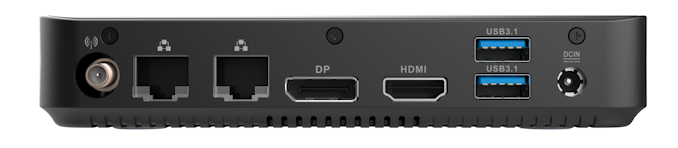
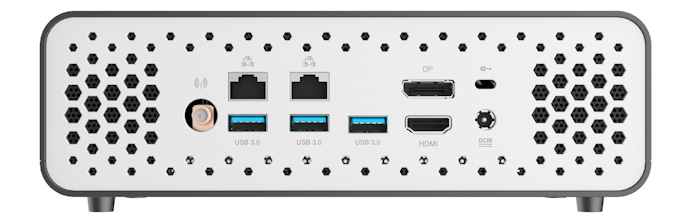
Elsewhere, some of the main features of the ZOTAC ZBOX Edge MI643 include two SODIMM slots capable of supporting up to 64 GB of DDR4-2400/2666 memory, with two M.2 slots for available for M.2 SSDs. On the rear panel is two Gigabit Ethernet ports, as well as an antenna port for the 802.11ac wireless interface (which also offers BT 5.0 connectivity). In terms of USB options, there are three USB 3.1 G1 Type-A ports and one USB 3.1 G1 Type-C port. The ZOTAC ZBOX Edge MI643 also includes a single 3.5 mm audio jack, a microSD card reader, and a pair of video outputs consisting of an HDMI 2.0 port and a DisplayPort 1.2 output.


At present, there is no information on the expected pricing or availability of the MI643, but it is expected that they will hit retail shelves in the coming months.


Source: AnandTech – CES 2020: ZOTAC Announces ZBOX Edge MI643 Powered By Intel Comet Lake

CES 2020: Patriot Demonstrates PXD External SSD w/ USB-C

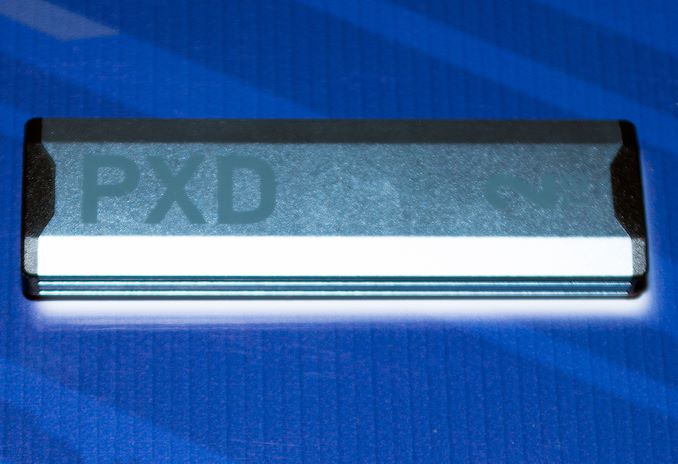
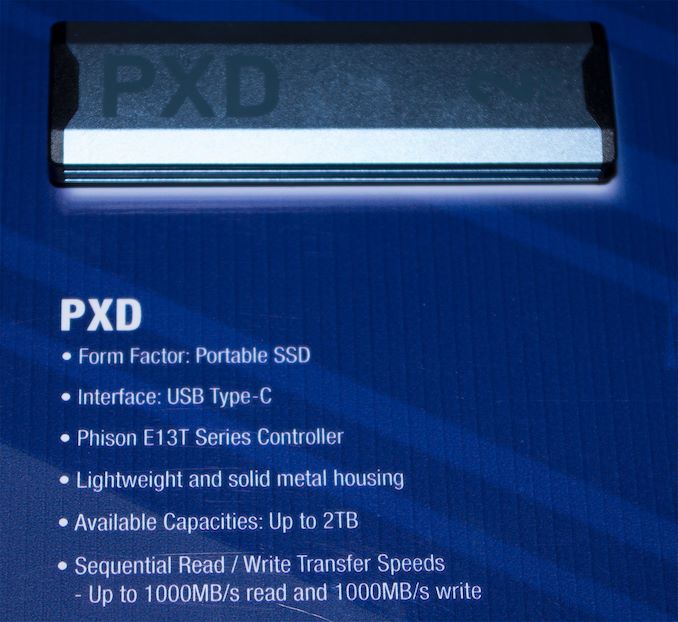
Among the many storage vendors at this year’s CES was Patriot, who was showcasing its upcoming PXD external SSD. The device features a USB 3.1 Gen 2 Type-C interface and is designed for users seeking for a high-performance ultra-portable storage solution.


The Patriot PXD drives are based on the Phison PS5013-E13T DRAM-less controller and 3D NAND memory, making it closer to a full-fledged SSD rather than a simple USB flash drive. Because of this, the external drive is well positioned to exceed standard USB flash drives in almost every metric, not the least of which is much high performance, of course, but also higher reliability as well as endurance. Meanwhile, since the PXD is still a mobile storage solution that is intended to be used like a USB flash drive, it will come in a metal enclosure.


Patriot plans to offer its PXD SSDs in 512 GB, 1 TB, and 2 TB configurations. The company rates the drives for up to 1000 MB/s sequential read and write speeds, which is generally a limit for a USB 3.2 Gen 2 interface.


Patriot is expected to start shipments of its PXD external SSDs sometimes later this year. Pricing has not been announced, as ultimately that will be highly dependent on where NAND prices are once the drive finally ships.


Related Reading:


Source: Patriot


Source: AnandTech – CES 2020: Patriot Demonstrates PXD External SSD w/ USB-C

CES 2020: Lian Li Announces New LANCOOL II Chassis, Now With Mesh

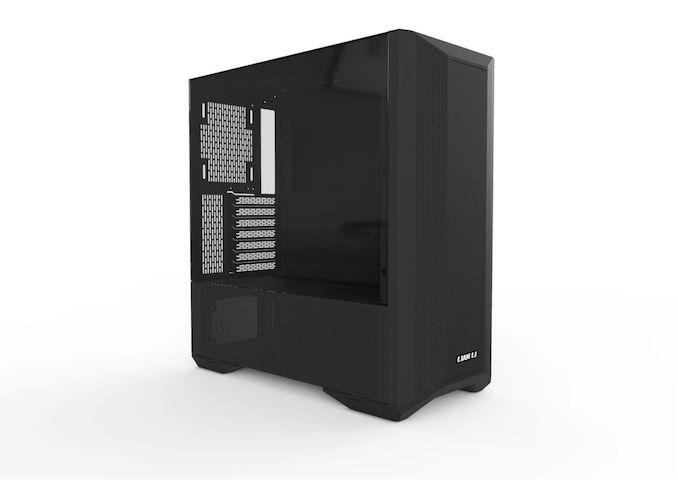
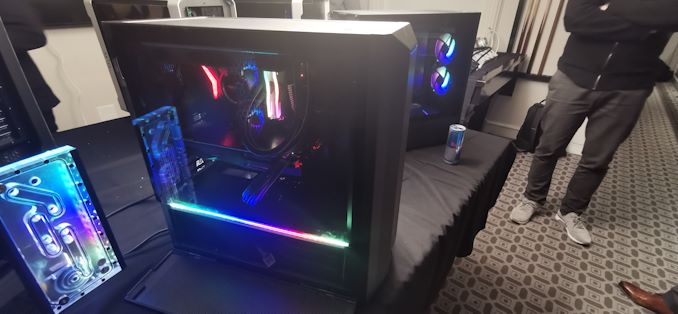
A regular fixture at CES, revered chassis manufacturer Lian Li is once again at this year’s event, showcasing its latest addition to the LANCOOL range of cases, the Lian Li LANCOOL II Mesh. The Mesh builds on the LANCOOL series with an integrated mesh front panel for improved airflow.


An alternative to the original LANCOOL II chassis, the LANCOOL II Mesh encompasses a mesh front panel and flip shroud panels which are designed to provide better airflow throughout. This allows builders with high-end CPUs and video cards to still receive plenty of cooling, as mesh panels allow more airflow to circulate in comparison to solid panels, as such with the original LANCOOL II model


The Lian Li LANCOOL II Mesh is a mid-tower chassis constructed from steel and features tempered glass side panels, much like its more solid sibling, the LANCOOL II. It supports PSUs up to 210 mm in length, as well as support for graphics cards up to a maximum length of 384 mm. As for fans, there is space for eight fans overall, with up to three 120 mm or two 140 mm in the front, two 120 mm above the PSU chamber, up to two 140 mm fans in the top, and a single 120 mm fan at the rear.


While Lian Li informed us that the  LANCOOL II Mesh won’t be available until April, it is expected to launch with an MSRP of $89.99.


Source: AnandTech – CES 2020: Lian Li Announces New LANCOOL II Chassis, Now With Mesh

CES 2020: Samsung’s 8K QLED TVs Use AI Quantum 8K SoC, Add Support For AV1 Video

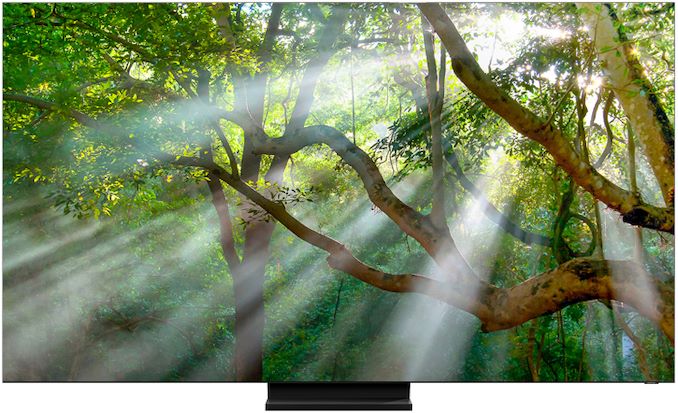
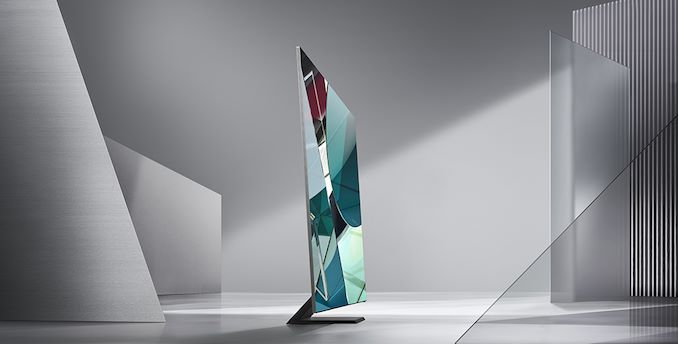
Most years CES feels first and foremost like a TV show, and certainly this year’s show hasn’t disappointed. Among the many vendors making TV announcements for CES 2020 was Samsung, who introduced its upcoming lineup of premium 8K QLED televisions, the Q950-series. Samsung’s new Ultra-HD TVs offer a 7680×4320 resolution with quantum dot enhancements, while under the hood Samsung is using its new “AI Quantum 8K” SoC that brings support for the cutting-edge AV1 codec as well as some additional capabilities.


One of the key features of Samsung’s Q950-series 8K televisions is the so-called ‘Infinity Screen’ design that uses extremely narrows bezel to produce a scree-to-body ratio of 99%. Samsung also went thin on depth, with a thickness of just 15 mm, making the TV look rather small for the big panel within.


Unfortunately, though not uncommon for CES TV announcements, Samsung is not disclosing much in the way of the general characteristics of the Q950-series televisions; so if nothing else, we’d expect them to be same or better than those of its predecessors, the Q900-series. Which, as a refresher, those TVs featured a quantum dot-enhanced LED backlight that is also capable of FALD-like operation – which Samsung calls Direct Full Array Elite technology – driving a peak brightness of 4000 nits (the maximum luminance at which HDR content is mastered these days). Furthermore, the Q900-series TVs were already hitting 100% of the DCI-P3 color gamut.


Moving on, another important element of the Samsung Q950 Ultra-HD TV family is that they incorporate the company’s latest “Quantum Processor 8K” SoC, which has higher compute and machine learning performance. Along with Samsung’s latest generation upscaling technologies – all but required given the lack of 8K native content today – the SoC is also capable of AV1 decoding. This makes the Q950 among the first TVs to get AV1 decoding, and sets it up nicely to be ready for next-generation streaming options using the higher efficiency codec.


In addition to video-related enhancements, Samsung also improved the audio sub-system of the of its Q950-series TVs both in terms of hardware and in terms of software. On the hardware side of things, the TV has an integrated 5.1 audio subsystem. As for software, the televisions support such capabilities as Active Voice Amplifier that improves voice clarity based on ambient noises; Object Tracking Sound+ to enhance surround sound in response to movements on the screen, and Q-Symphony to align the work of built-in audio subsystem with Samsung’s soundbars. Last but not least, the Q950-series TVs also support various voice assistants, such as Amazon’s Alexa, Samsung’s Bixby, and Google’s Assistant.


Samsung’s Q950-series televisions will be available later this year.


Related Reading:


Source: Samsung


Source: AnandTech – CES 2020: Samsung’s 8K QLED TVs Use AI Quantum 8K SoC, Add Support For AV1 Video

CES 2020: Lenovo’s Yoga Slim 7 15-Inch Packs Ice Lake & GeForce GTX

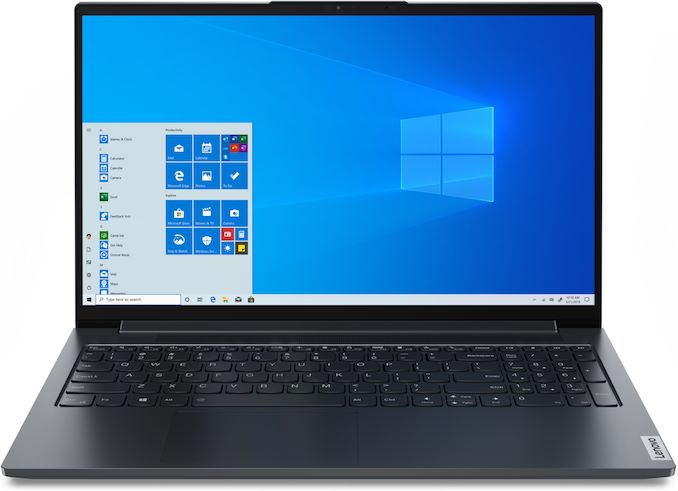
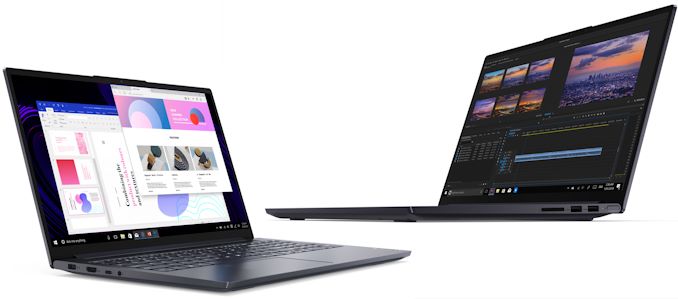
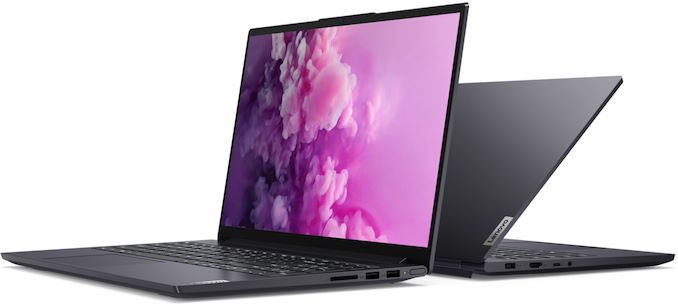
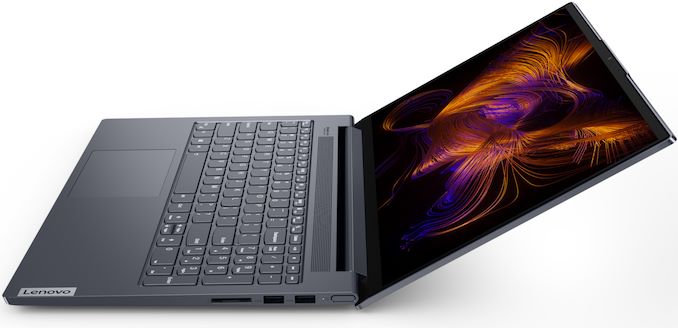
As part of their CES 2020 offerings, Lenovo has introduced its new ultra-slim 15.6-inch-class laptop aimed at a wide range of performance levels. When equipped with entry-level hardware, the multi-purpose Yoga Slim 7 15 notebook can be used for office and other applications that do not need a lot of horsepower, whereas beefier models can be used for gaming, thanks to the inclusion of NVIDIA’s GeForce GTX GPUs.


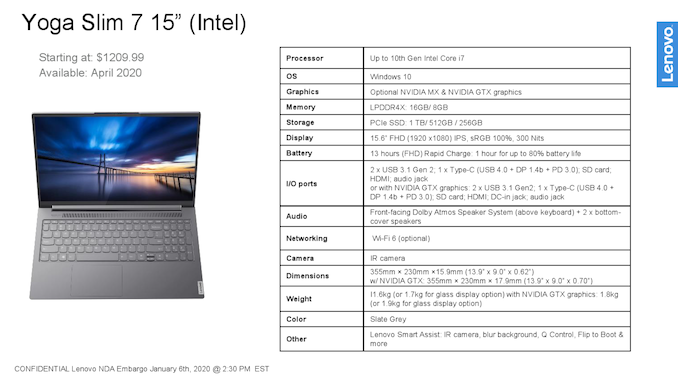
The Lenovo Yoga Slim 7 15 laptop is equipped with a 15.6-inch Full-HD IPS display and is based on Intel’s 10th Generation Core ‘Ice Lake’ processor. This is paired with 8 GB or 16 GB of LPDDR4X memory as well as a 256GB/512GB/1TB PCIe SSD. All versions of the Yoga Slim 7 15 come with the usual connectivity and multimedia capabilities for higher-end notebooks, including Wi-Fi 6, Bluetooth, Thunderbolt 3, HDMI, a SD card reader, a Windows Hello-compliant webcam, and a 3.5-mm combo audio jack.


Meanwhile, all versions of the Lenovo Yoga Slim 7 15 laptops will come in Slate Grey CNC-machined aluminum chassis. So they will look and feel rather similar (yet not the same!). However, they will be very different under the hood.


Lower-end versions of the laptop will rely on Intel’s integrated graphics, which as we’re talking about Ice Lake, is more than enough for productivity and video playback applications, as well as entry-level gaming with the higher-end Iris Plus CPUs. More advanced Yoga Slim 7 15 notebooks step up to NVIDIA’s GeForce MX graphics processor, while the beefiest configurations feature NVIDIA’s GeForce GTX GPUs to offer solid laptop gaming performance.


With all of that said, there are some form factor differences depending on the GPU used. Higher-end discrete GPU requires better cooling, so while the typical Yoga Slim 7 15 SKUs with integrated graphics or a GeForce MX GPU are 15.9 mm thick, the versions of the Slim with a GeForce GTX are 17.9 mm thick. Furthermore, while ‘default’ machines weigh 1.6 kg – 1.7 kg, those with a high-performance GPU weigh 1.8 kg – 1.9 kg, a notable difference in size and weight.


Lenovo’s Yoga Slim 7 15 will hit the market this April at prices starting at $1209.99.


Related Reading:


Source: Lenovo


Source: AnandTech – CES 2020: Lenovo’s Yoga Slim 7 15-Inch Packs Ice Lake & GeForce GTX

Seeing Is Believing: Intel Teases DG1 Discrete Xe GPU With Laptop & Desktop Dev Cards At CES 2020

While CES 2020 technically doesn’t wrap up for another couple of days, I’ve already been asked a good dozen or so times what the neatest or most surprising product at the show has been for me. And this year, it looks like that honor is going to Intel. Much to my own surprise, the company has their first Xe discrete client GPU, DG1, at the show. And while the company is being incredibly coy on any actual details for the hardware, it is none the less up and running, in both laptop and desktop form factors.


Source: AnandTech – Seeing Is Believing: Intel Teases DG1 Discrete Xe GPU With Laptop & Desktop Dev Cards At CES 2020

ASUS Going Fast: Quad PCIe 4.0 x4 SSD Storage Add-in Card Hyper M.2
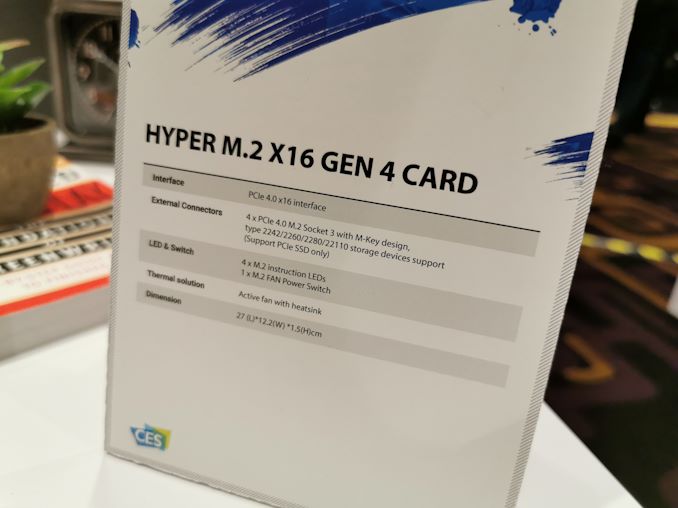
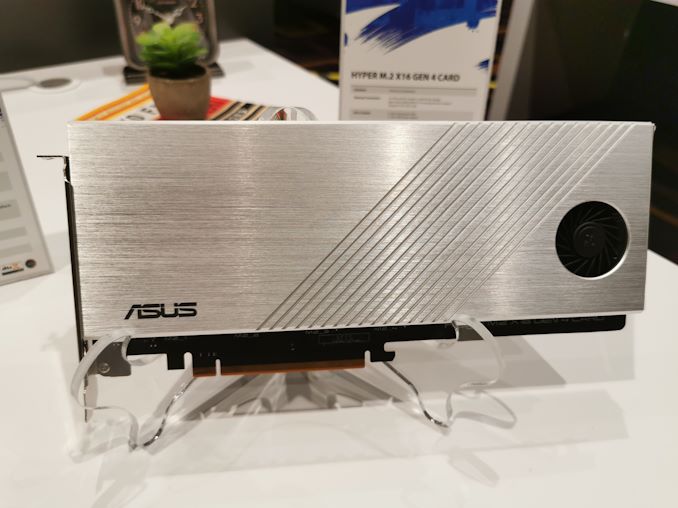
One of the driving features of performance in the high-end desktop space is the creator community: the need for fast CPUs and fast storage is strong, regardless of cost. Rendering video, requiring large 8K datasets, and being able to mix and match the hardware to meet the required performance is in-of-itself an exciting area to delve into. In order to meet the needs of the most demanding creators, ASUS is upgrading its quad M.2 card it put into the market last year to now support PCIe 4.0 SSDs for the latest AMD systems.


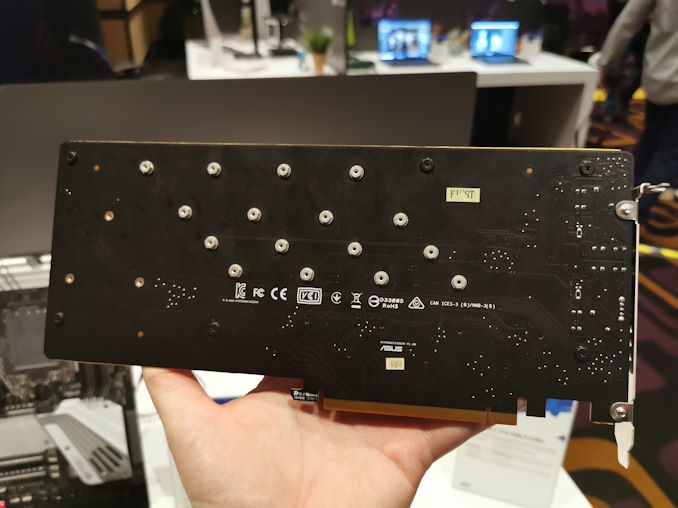
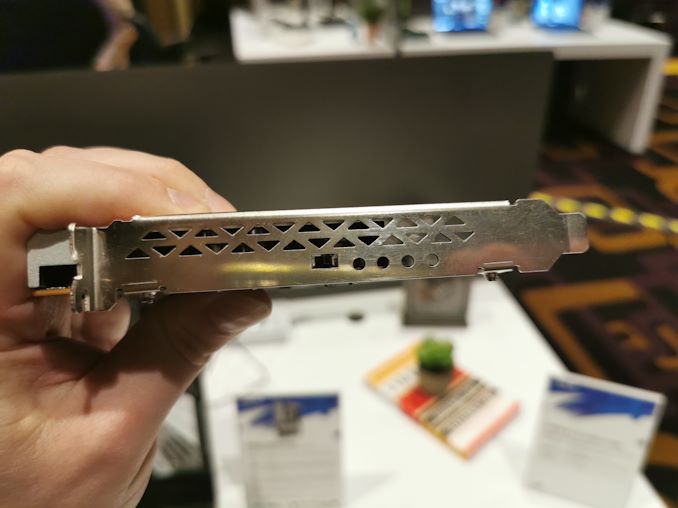
The card is essentially a mounting point to take a full x16 PCIe slot and bifurcate it into four separate PCIe 4.0 x4 links, which is each paired with an M.2 connector. Thus each drive should be able to achieve full speed – in order to ensure this, the drive also comes with a full aluminium heatsink and fan, which operates at a reasonably low RPM. The fan can be enabled or disabled via a switch on the PCIe bracket, and the bracket also has four activity LEDs for each of the drives.


One of the big issues with the older PCIe 3.0 version was the support of the card on different systems. The card worked well on AMD systems, but had issue with Intel systems, because Intel’s PCIe solution did not support multiple endpoints in the same way. With this new solution, that problem ultimately disappears, because Intel has no PCIe 4.0 solution right now.


We expect the Hyper M.2 x16 Gen 4 card to be available soon, focused mainly for Threadripper and EPYC systems. Pricing should be equivalent to the PCIe 3.0 version.


Source: AnandTech – ASUS Going Fast: Quad PCIe 4.0 x4 SSD Storage Add-in Card Hyper M.2
DRAMeXchange: Blackout at Samsung’s Fab Will Not Affect Commodity DRAM Prices in Q1

Following a power outage and consequent disruption of production at Samsung’s Line 13 fab in Hwaseong, South Korea, back on December 31, 2019, there had been some concerns about what the disruption would do to the wider DRAM market. However it seems like the industry as a whole will escape unscathed from the event; according to analysts from DRAMeXchange, a division of TrendForce, the Samsung disruption will not have a tangible effect on prices of commodity DRAM. Though DDR4 prices on the whole are still increasingly primed to trend up as part of cyclical market motions.


The fire itself and subsequent disruption of production at Samsung’s Line 13 fab did not notably impact global supply of commodity DRAM, so DRAMeXchange is not expecting DRAM makers to increase their quotes because of that. In fact, to evade a potential hit from US tariffs on Chinese imports, PC makers produced more computers than they needed back in the fourth quarter and shipped them to the USA. As a result, their production will be lower than seasonally anticipated in Q1 2020.


However, because memory makers plan to limit increase of DRAM bit output this year and this could mean a supply-driven price hike, PC makers may be inclined to increase their memory buying in the first quarter to raise DRAM inventories while the prices are low (or at least predictable). Due to a behavior like that, commodity DRAM prices will stay flat or even increase when compared to the fourth quarter of 2019. To some degree, the incident at Samsung’s fab could make PC makers more willing to get DRAMs they need as soon as possible.


Samsung uses its Line 13 fab in Hwaseong, South Korea, to make specialty DRAM chips using 20 nm and 25 nm process technologies. Specialty memory is procured through quarterly lock-in deals, as opposed to the larger and more fluid trading that goes on for commodity DRAM. Notably, because of these differences, companies that consume specialty DRAM products do not proactively stock such devices, which means they are somewhat more exposed to disruptions and typically have to accept prices that they are offered. To that end, DRAMeXchange expects monthly contract prices on specialty DRAM to start increasing from this month and onwards.


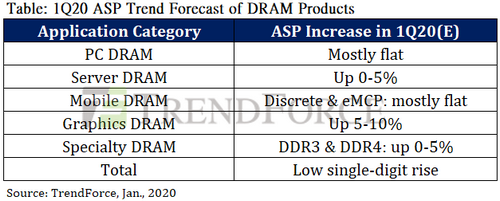
The analysts also predict average selling prices of server DRAM and graphics DRAM to increase because demand for such memory devices has been growing since mid-December. Meanwhile, the market observers expect prices of mobile DRAMs to stay flat in the first quarter even despite imminent launch of next-generation handsets by various makers in Q1 and Q2.


Related Reading:


Source: TrendForce


Source: AnandTech – DRAMeXchange: Blackout at Samsung’s Fab Will Not Affect Commodity DRAM Prices in Q1

CES 2020: ZOTAC ZBOX CA621 Nano With Passive Cooled AMD Ryzen 3 3200U

One of the more interesting announcements from ZOTAC at CES 2020 comes via the ZBOX CA621 Nano. What makes this stand out from ZOTACs other announcements is that it is powered by an AMD Ryzen 3 3200U dual-core processor, and that it is entirely passively cooled.


Lying at the heart of the CA621 Nano, AMD’s Ryzen 3 3200U processor offers two CPU cores and AMD’s Vega 3 integrated graphics. And, with a default operating TDP of just 15 W, this makes it a prime candidate for passively cooled SFF systems such as ZOTAC’s latest ZBOX. To that end, ZOTAC is the latest vendor to dip their foot into the market for passively cooled Ryzen systems, and given how well-known the ZBOX brand is, this is perhaps the highest profile SFF passively cooled Ryzen system announced to date.


Rounding out the CA621, not only does the system boast silent operation, but it includes dual Gigabit Ethernet, four USB 3.1 G1 Type-A ports, 802.11ac Wi-Fi with BT 5.0 support, and a microSD card reader. A Kensington lock means that the system can be secured, which is useful as the system is small enough to fit in the pocket and could be easily stolen if left in a public place, or office setting. 


ZOTAC ZBOX CA621 Nano rear panel


Alongside the CA621, ZOTAC is also announcing an air-cooled version of this box, the ZBOX MA621 Nano which is identical in specification to the CA621 minus the passive cooling function. The MA621 Nano also omits the Kensington security lock and features an all-black design, whereas the CA621 Nano has a white rear panel with a white surround on the front panel.


No pricing or availability information has been announced, but the CA621 and MA621 Nano are well setup to serve as low-cost alternatives to the ZBOX Intel-based models.


Source: AnandTech – CES 2020: ZOTAC ZBOX CA621 Nano With Passive Cooled AMD Ryzen 3 3200U

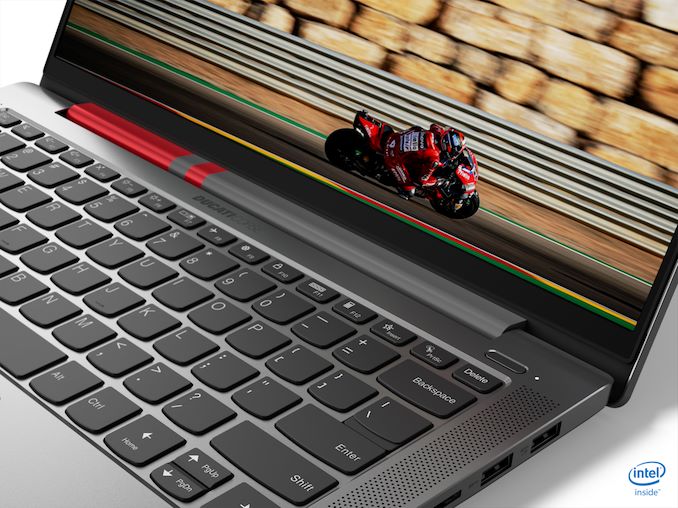
CES 2020: Lenovo Ducati 5, a Notebook Designed from a Motorbike

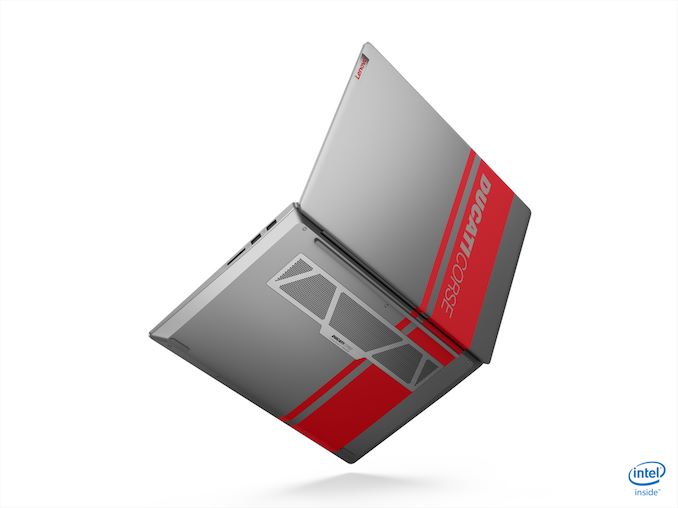
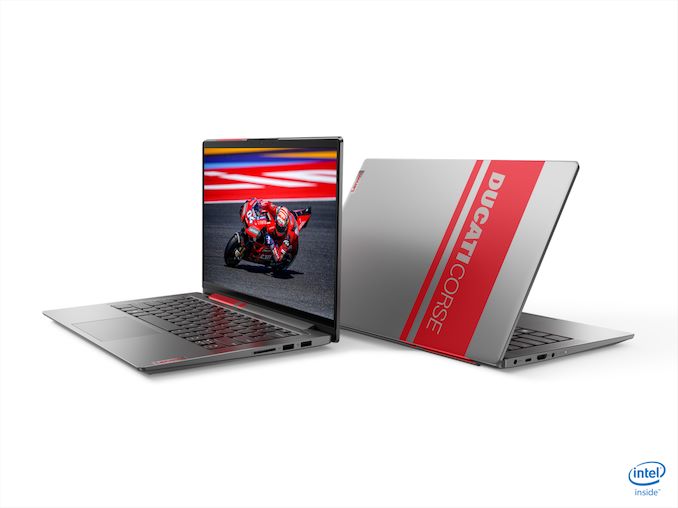
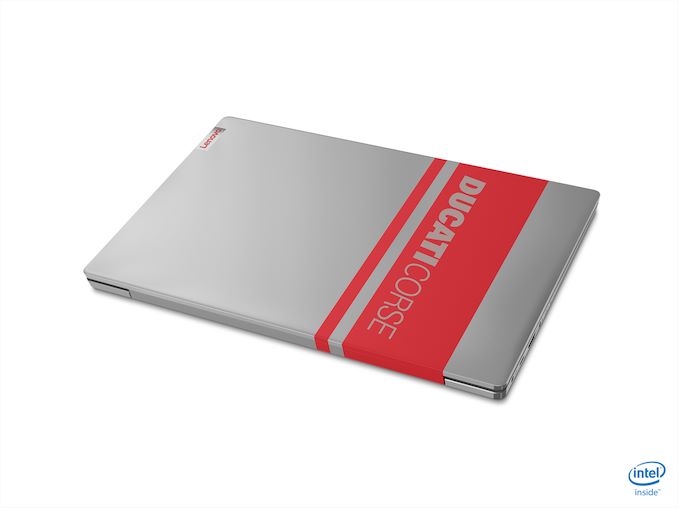
Branded hardware isn’t a new concept, and the latest one out of the gate is Lenovo’s new Ducati 5 laptop. Lenovo has partnered with Ducati to combine the styling of two of Ducati’s two-wheelers into a new notebook to be used by those who want to show off their affiliation. The laptop is going to be limited edition, with only 12,000 units available, while aiming for a reasonable price point.


We’ve seen these sorts of collaborations before. We know that Porsche Design always  partners with Huawei for its smartphones, and I’ve even seen ASRock sell motherboards with what looks like a Lamborghini on the front (even though there was no official collaboration there). I remember back in 2009, when I purchased an Acer Ferrari One, a $450 dual-core AMD Fusion notebook that should have been about $300, but I used that think like no-other. I still have it. But there are two types of these sorts of collaborations – one where the company involved gets a lot of hardware it can use internally / show off on camera at racing events, and one where the goal is actually to offer an end-user something special.


With the new Lenovo Ducati 5, I believe it’s the former: expect to see a lot of Ducati notebooks in the new MotoGP season. Lenovo states that the design is inspired by the Ducati Panigale, with notes to match the honeycomb exhausts of the Ducati Monster frames. The BIOS is even MotoGP themed apparently, and you should expect some extra MotoGP background options. The unit will be supplied in a Ducati-branded gift box, with a Ducati laptop sleeve.


This hardware is fairly middle of the road: a 14-inch 1080p IPS device with 300 nits brightness, featuring up to a Core i5-1035G1 (that’s the low-end graphics model), with 8 GB of memory and up to 1 TB of NVMe storage. Connectivity comes via two USB-A ports, a Type-C, a HDMI 1.4b output, and an SD card reader. WiFi is an 802.11ax solution (Wi-Fi 6), the battery is good ‘up to 12 hours’, and the unit comes with a fingerprint reader as well as a privacy shutter for the camera. Weight is listed at 1.58 kg / 3.48 lbs.

Pricing for the Lenovo Ducati 5 will start from 900 Euros, and will go on sale in April. As mentioned, this is a 12,000 unit limited edition product, but also will not be sold in the USA.


Source: AnandTech – CES 2020: Lenovo Ducati 5, a Notebook Designed from a Motorbike

Seagate Demonstrates HAMR and Dual-Actuator Hard Drives in the Lyve Drive Mobile System

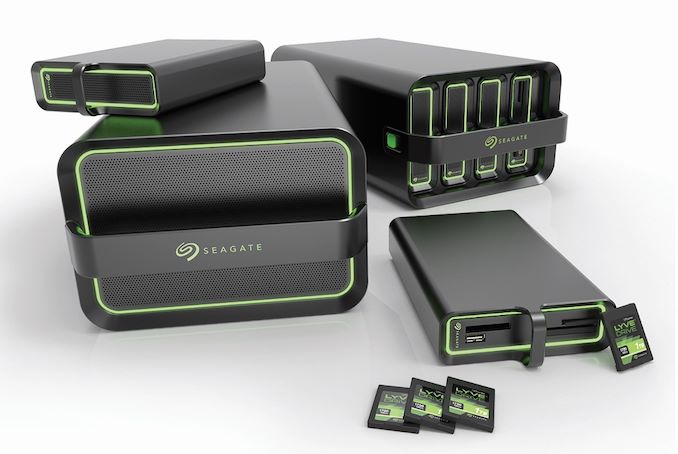
Seagate had two major announcements at CES 2020 – one featuring updates to their lineup of external storage devices, and the other related to a modular storage system with the Lyve branding on it. The novelty of the modularity and data storage capacity aside, we found the hard drives being used in the sytem to be more interesting. Seagate’s demonstrations included HAMR and dual-actuator drives.


The Lyve Drive Mobile Storage System is a set of products aimed and enterprises and businesses that need to collect a large amount of data in the field and move them to centralized storage in-house at a later point in time. This is common in the media and entertainment industry (where the video recording may take place outside the studio), or, enterprises that collect sensor and image data from cars driven to train machine learning models.


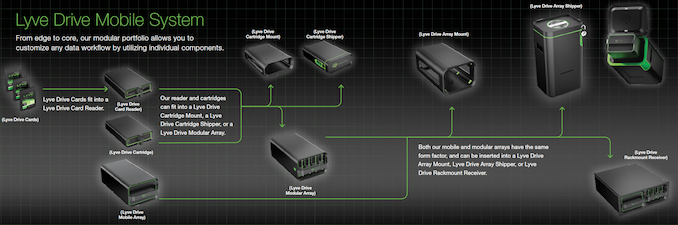
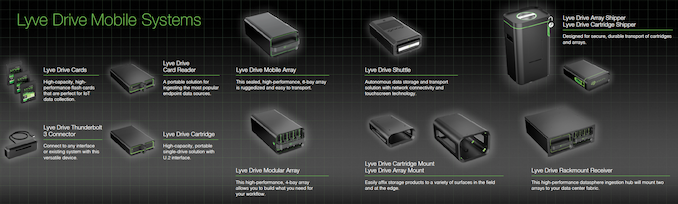
The system includes high-performance CFExpress cards, a Thunderbolt 3 connector for the same, card readers, cartridges with a U.2 interface, 6-bay mobile arrays and 4-bay modular arrays (capable of handling 3.5″ hard drives), a shuttle device that can act as a DAS or a network-attached drive, cartridge and array mounts and shippers, and a 4U rackmount receiver.


The Lyve Drive Mobile demonstration at CES 2020 had a 108TB Mobile Array comprising of six 18TB Exos HAMR hard drives and a 56TB Modular Array with four 14TB Exos 2×14 hard drives. The Exos 2×14 drives use the MACH.2 multi-actuator technology. The latter provides twice the IOPS and up to 480 MBps sequential write throughput compared to single-actuator drives. To our knowledge, this is the first time that Seagate has had a public demonstration of their dual-actuator drives, even though they had indicated multiple months of live production traffic on the Mach2 drives early last year.


The demonstrations indicate that HAMR and dual-actuator Seagate drives may get a public release with widespread market availability very soon. On the Lyve Drive front, Seagate didn’t provide any pricing information or retail readiness status for any of the components.


Source: AnandTech – Seagate Demonstrates HAMR and Dual-Actuator Hard Drives in the Lyve Drive Mobile System

CES 2020: Alienware Showcases Concept UFO, 8" Handheld For Gaming

Dell and Alienware have unveiled a new portable gaming machine it is calling Concept UFO. Demonstrated during its Dell Experience press conference at CES 2020, the Alienware Concept UFO is a handheld gaming device which is powered by one of Intel’s 10th generation Core processors, with an 8″ screen, and detachable controllers.


A lot of speculation has been placed on Alienware’s Concept UFO and what the driving force behind the CPU and graphics. Alienware has confirmed that the 8″ Concept UFO is using an Intel 10th generation Core processor, although they aren’t detailing which model.


When pressed on the graphics performance, Alienware didn’t specify but made a very tongue in cheek comment about it using Intel’s latest graphics processor. With Intel having demonstrated their first Xe dGPU, the DG1, at this year’s show as well, there is some degree of speculation that the Concept UFO could be an Xe concept device. Running counter to that, however, is that there’s no indication that DG1 will be shipping in 2020, which would make this a concept device for hardware that won’t be ready for another year. Either way, Dell and Alienware are staying mum on the issue for the time being.


As for the design of the Alienware Concept UFO handheld, it’s all-white with black buttons and illuminated thumbsticks. One of the most interesting elements is that it features detachable controllers, which are very similar to the Joy-Cons used by Nintendo’s Switch handheld game console. On the rear is a kickstand which allows users to place it on a table and game if it were a games console, or use it with the controllers attached to the device like a handheld.


Another interesting feature is that Concept UFO can be attached to an external monitor, although we can confirm that Concept UFO’s 8″ screen is manufactured by a partner, and not by Dell themselves. Dell refused to comment and go into detail about the exact technical specifications, or who manufactures the panel.


Alienware didn’t have much to say when pressed on the official specifications, or if and when it may get past the concept stage into production. It’s an interesting concept which, if nothing else, will pique the interest of gamers while showing off Alienware’s research and design team as it looks to continue to be at the forefront of PC gaming.


Source: AnandTech – CES 2020: Alienware Showcases Concept UFO, 8″ Handheld For Gaming

CES 2020: ASUS Launches Ultralight 14-Inch Project Athena ExpertBook B9450 – Just 865 Grams

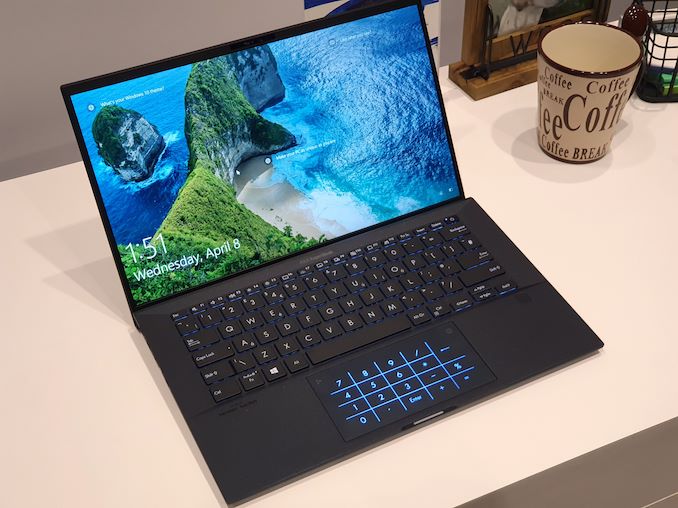
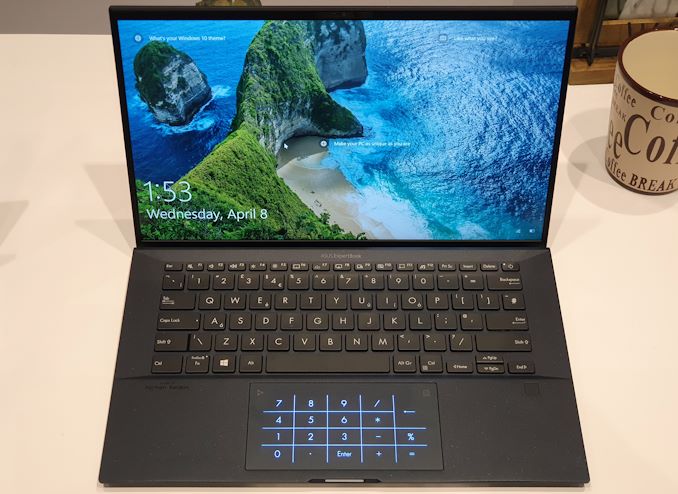
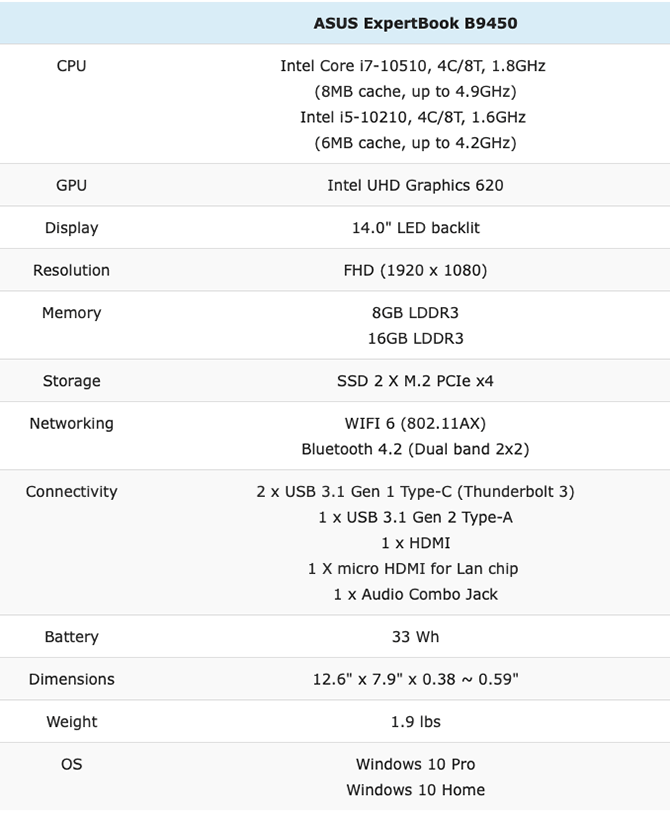
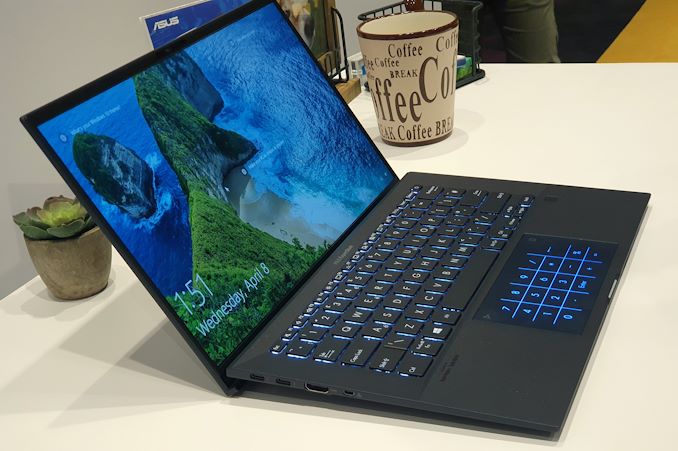
Among its many CES 2020 announcements this week, ASUS has unveiled its ultra-light 14-inch ExpertBook B9 (B9450) laptop, which as alluded to in the name, is aimed at the corporate market. The laptop is powered by Intel’s 10th Generation ‘Comet Lake’ processor is equipped with robust business and security features, and furthermore is Project Athena certified as well.


The ASUS ExpertBook B9 (B9450) comes in a 13-inch-class magnesium alloy chassis that 14.9 mm thick and houses a 14-inch NanoEdge Full-HD display with anti-glare coating and ultra-thin bezels. Since the machine is based on Intel’s 10th Generation Core platform with a smaller footprint when it comes to the motherboard size, the internal architecture of the machine enabled ASUS to install a 33 Wh battery in case of the 865 gram model, as well as a 66 Wh battery in case of 995 gram SKU that can last for up to 24 hours on one charge.


The ExpertBook B9 (B9450) is based on Intel’s quad-core Core i5-10210 (1.6 GHz – 4.2 GHz) or Core i7-10510 (1.8 GHz – 4.9 GHz) processors, which is paired with 8 GB or 16 GB of LPDDR3 memory, as well as up to two M.2 NVMe SSDs. In the case of a two drive configuration, the drives can furthermore operate in RAID 0 mode for superior performance or RAID 1 mode for added reliability.


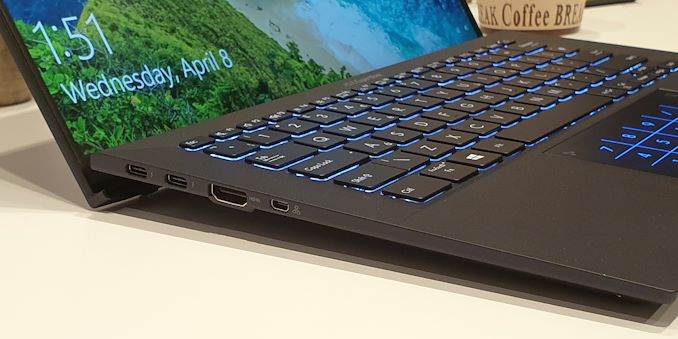
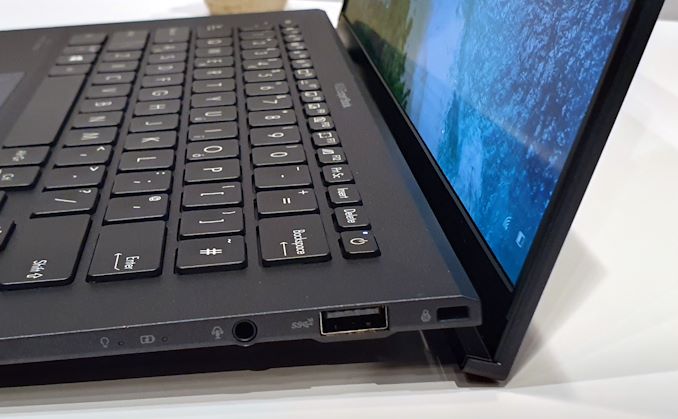
Connectivity wise, the ASUS ExpertBook B9 has Wi-Fi 6, Bluetooth 4.2, GbE (over mDP port) Thunderbolt 3, USB 3.1 Gen 2 Type-A, HDMI, and a 3.5-mm audio jack for headsets.


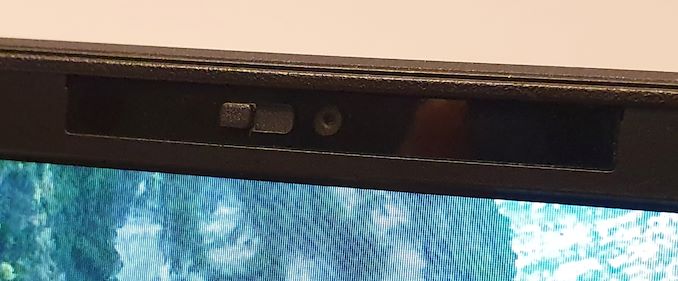
Like most laptops designed for business and corporate customers, the ASUS ExpertBook B9 has sophisticated security capabilities, including a Windows Hello-capable webcam with IR sensors and a shutter, a fingerprint reader, an optional TPM 2.0 chip, and various enhancements from ASUS.


ASUS yet has to announce pricing and availability dates of its ExpertBook B9 (B9450) laptop.


It is noteworthy that the ExpertBook B9 (B9450) notebook resembles the ASUSPRO B9 (B9450) laptop demonstrated back at IFA last September. The latter one was based on Intel’s Ice Lake platform, yet featured an extremely similar chassis and had the same feature set. The one that ASUS introduced at CES is powered by Comet Lake and is 15 grams lighter. At this point, the destiny of Ice Lake-based ASUSPRO B9 is unknown, but it is possible that it is still in development.


Related Reading:


Source: ASUS


Source: AnandTech – CES 2020: ASUS Launches Ultralight 14-Inch Project Athena ExpertBook B9450 – Just 865 Grams

CES 2020: ZOTAC Edge CI341, A SFF PC With 6 W Passively Cooled Intel Gemini Lake CPU

With CES 2020 expected to be dominated with announcements of new mobile processors from both Intel and AMD, ZOTAC has taken things in a slightly different direction, preparing a few new ZBOX Edge SFF PCs. Chief among these is  ZOTAC ZBOX Edge CI341, which features an Intel Celeron N4100 quad-core processor with Intel UHD 600 integrated graphics, and two SO-DIMM slots supporting up to 8 GB of DDR4-2400 memory.


The ZOTAC ZBOX Edge CI341 is designed with edge computing in mind with a small size and equally low power consumption, thanks to Intel Celeron N4100 and its 6 W TDP. While the Intel Gemini Lake architecture (which is based on the 14 nm process node) isn’t new, it nonetheless allows ZOTAC to produce a PC with a slim 32 mm chassis and a passively cooled design. This means that the ZBOX Edge CI341 is near silent. For storage, a single M.2 slot is present which supports both M.2 2242 and M.2 2280 form factor SSDs.


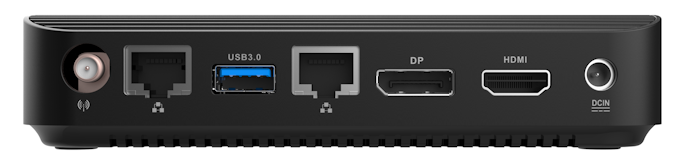
Located on the front panel is a power button, a microSD card reader, and a single USB 3.1 G1 Type-A port, with a further USB 3.1 G1 Type-A port located on the rear panel. Also featured are dual Intel Gigabit Ethernet and 802.11ac Wi-Fi antenna port which also features BT 5.0 support. As for display connectivity, there are both DisplayPort 1.2 and HDMI 2.0 outputs.


ZOTAC hasn’t unveiled any pricing or when the ZBOX Edge CI341 will hit retail shelves, but we do know that two versions will be available for purchase; one with Windows 10, and one without. We also know that both models will ship with just 4 GB of DDR4-2400 memory which populates one of two available SODIMM slots.


Source: AnandTech – CES 2020: ZOTAC Edge CI341, A SFF PC With 6 W Passively Cooled Intel Gemini Lake CPU