CES 2020: be quiet! Unveils New Pure Rock 2 CPU Cooler For Entry Level

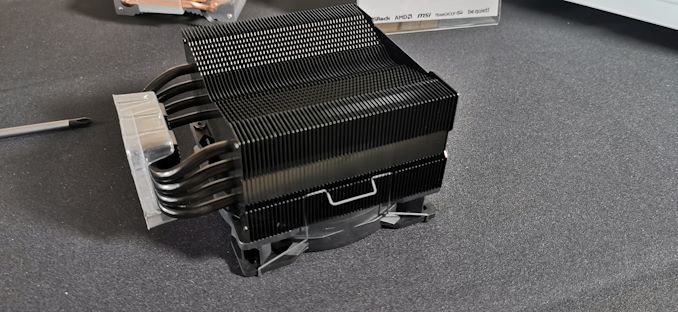
Adding to its extensive selection of CPU air coolers, be quiet! has announced its latest entry-level model, the Pure Rock 2. Building on the success of the original Pure Rock cooler, the be quiet! Pure Rock 2 keeps it simple with support for up to 150 W TDP processors, and comes with an included Pure Wings 2 120 mm PWM fan.


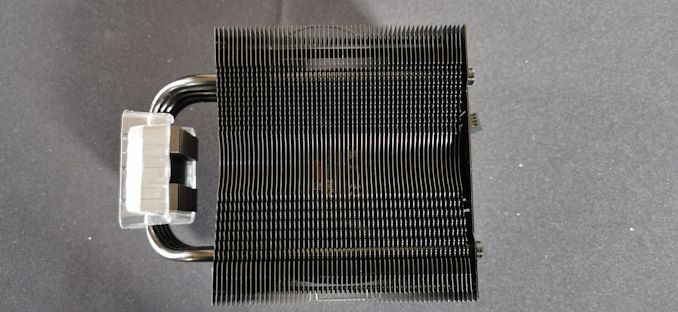
The be quiet! Pure Rock 2 has four 6 mm heat pipes with a direct contact baseplate design for better cooling performance. Targetted entry-level users, the Pure Rock 2 boasts the same 150 W TDP cooling performance as the previous Pure Rock model. To aid memory compatibility, the Pure Rock 2 cooler uses an asymmetrical design.


It comes in two versions including a standard silver, or in black which looks good with its anodised coating. Supplied with the be quiet! Pure Rock 2 is a single Pure Wings 2 120mm PWM cooling fan, with fan retention clips for two fans included in the accessories.


The be quiet! Pure Rock 2 is set to launch in April with an MSRP of around $40 for the silver model, and $44 for the black model.


Source: AnandTech – CES 2020: be quiet! Unveils New Pure Rock 2 CPU Cooler For Entry Level

CES 2020: Clevo & XMG Prepare Notebooks w/ 12-Core AMD Ryzen 9 3000 CPUs

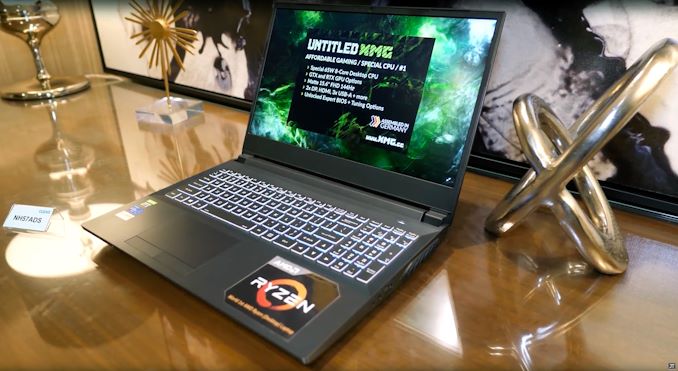
AMD attracted a lot of attention at CES 2020 with its launch of the Ryzen 4000-series Mobile APUs with up to eight cores in a 15W TDP form factor. The processors enable AMD to compete for all segments of the notebooks market, from ultra-portables to high-end gaming machines for the first time in years. But when it comes to gaming, there are people who always want more and for them Clevo and its partner XMG are preparing a desktop replacement laptop with an AMD Ryzen 3000-series processor featuring up to 12 cores.


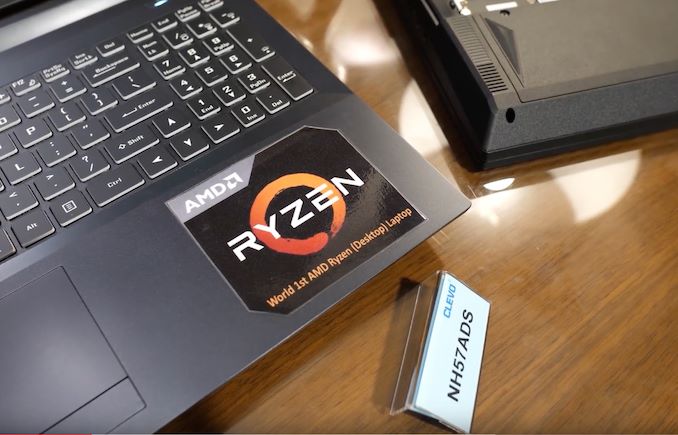
Clevo is a leading producer of higher-end notebook platforms which are used by some well-known PC suppliers, such as Eurocom. For obvious reasons, virtually all gaming platforms by Clevo released in the recent years relied on Intel’s processors for high-end laptops or even desktops (albeit with TDP-down feature). By contrast, AMD’s Ryzen 3000-series desktop processors have something that Intel cannot offer just yet, up to x86 12 cores, which is why Clevo has developed its NH57ADS notebook platform powered by desktop processors, according to Jarrod’s Tech.


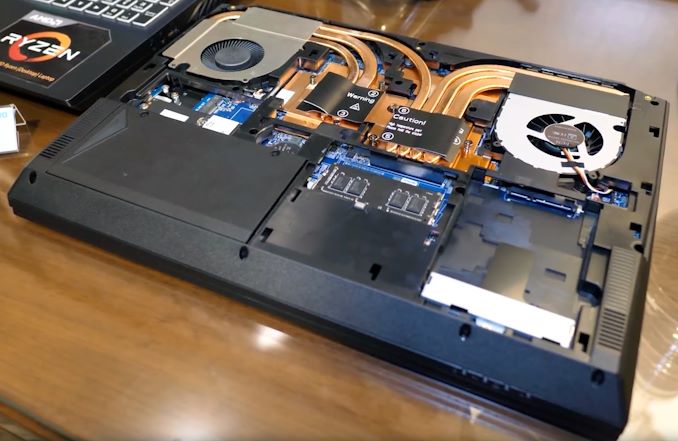
XMG, a supplier of gaming laptops from Germany, will be one of Clevo’s first customers to use the NH57ADS platform for its codenamed XMG Apex 15 gaming laptop aimed at those who want a no-compromise performance in a clamshell form-factor. The notebook is based on up to AMD’s 12-core Ryzen 9 3900-series processor with an up to 65 W TDP that is paired with NVIDIA’s GeForce GTX/RTX graphics with a TDP of up to 115 W. Note that XMG here is using AMD’s special option to lower the TDP of its desktop CPUs down a class, to help reduce thermals at the expense of performance. To cool down the CPU and the GPU, Clevo uses a rather formidable cooling system with two blowers and six heat pipes. XMG reportedly plans to offer its own settings for the cooler and a BIOS that supports overclocking.


Since the NH57ADS platform and the codenamed XMG Apex 15 machine are designed to replace desktops, they feature a modular design and therefore can be upgraded, assuming that AMD will offer more high-end processors in its AM4 form-factor with a 65 W TDP and there will be an appropriate BIOS update for the NH57ADS. The system itself can be equipped with up to 64 GB of DDR4 memory, two M.2-2280 SSDs (one PCIe, one SATA), and a 2.5-inch storage device. As for connectivity, everything is pretty regular: Wi-Fi 6, Bluetooth, GbE, USB-A, USB-C, HDMI, a microSD, and audio connectors.


The 15.6-inch Clevo NH57ADS is 3.25 cm thick and weighs 2.7 kilograms, which is not too heavy, but not too portable either. Maxed out configurations of the machine will also come with a 230 W external power supply, which will further increase weight.


Clevo does not pre-announce products for its clients, so it is hard to say which suppliers will eventually offer the NH57ADS platform and when. Evidently, notebooks like the XMG Apex 15 are going to be expensive, which is natural for DTRs.


For the sake of truth, it is necessary to note that Clevo’s NH57ADS is not the first DTR notebook to feature a desktop AMD Ryzen processor. ASUS introduced its ROG Strix GL702ZC with an eight-core AMD Ryzen 7 1700 back in late 2017, but that was a 17.3-inch machine.


Related Reading:


Source: Jarrod’s Tech/YouTube


Source: AnandTech – CES 2020: Clevo & XMG Prepare Notebooks w/ 12-Core AMD Ryzen 9 3000 CPUs

CES 2020: MSI Preparing Creator 17 Laptop with Mini LED Monitor

Mini LED-based Full Array Local Dimming (FALD) backlighting significantly improves brightness and contrasts of contemporary LCD monitors particularly when it comes to HDR games and videos. By now, a few companies have released desktop displays and televisions with Mini LEDs, but so far technology has not taken off. As it turns out, MSI is also prepping a Mini LED-powered product, its Creator 17 laptop.


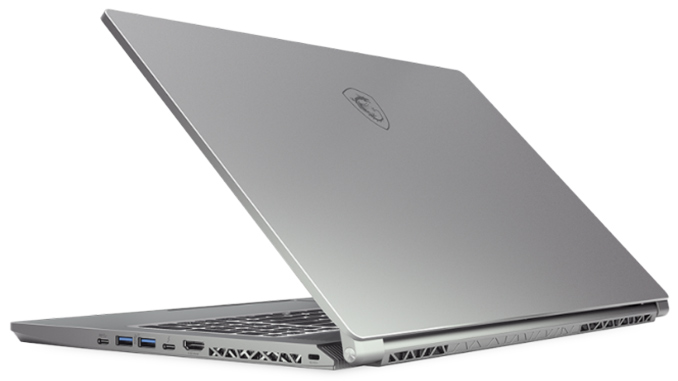
The central part of the MSI Creator 17 notebook is its Ultra-HD 17-inch display with a Mini LED-based backlighting that boasts a 3840×2160 resolution as well as a peak brightness of 1000 nits, a not-so-common combination even for desktop LCDs and a unique for mobile PCs. Also, MSI says that the monitor can reproduce 100% of the DCI-P3 color space.


MSI does not reveal what is inside its Creator 17 desktop replacement notebook, but it is reasonable to expect the machine to have enough horsepower to run demanding DCC applications since this PC is clearly designed primarily for content creation. To some degree, a Thunderbolt 3 port and a UHS-III SD card reader (one of the industry’s first, by the way) highlight the target market for this mobile PC.


MSI does not talk about pricing or availability timeframe of its Creator 17. At present, MSI’s Creator 17 largely seems like a prototype (which is why MSI does not reveal specifications of its internal hardware), so it is hard to make predictions about its availability timeframe, though a good guess would be ‘this year’.


Related Reading:


Source: MSI


Source: AnandTech – CES 2020: MSI Preparing Creator 17 Laptop with Mini LED Monitor

CES 2020: ASUS Unveils Dual-Screen ZenBook Duo UX481 Notebook

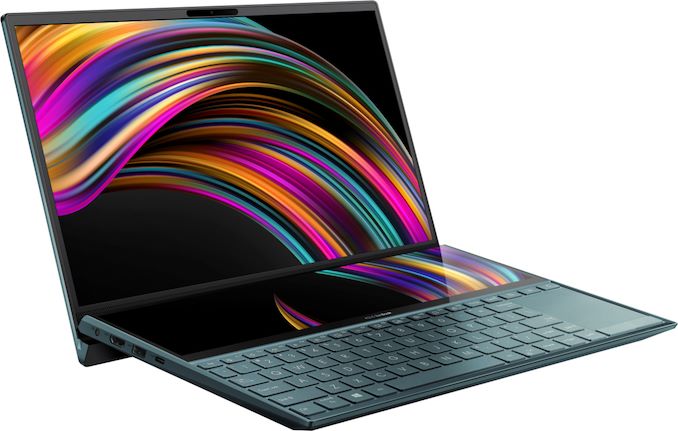
Last year ASUS introduced its exclusive ZenBook Pro Duo laptops with a secondary display aimed at creative professionals with performance-hungry color critical workloads. At CES 2020, the company revealed a new iteration of its dual-screen notebook — the ZenBook Duo UX481 — designed for road warriors (or creators in budget) and promising to offer decent performance and battery life in addition to the second monitor.


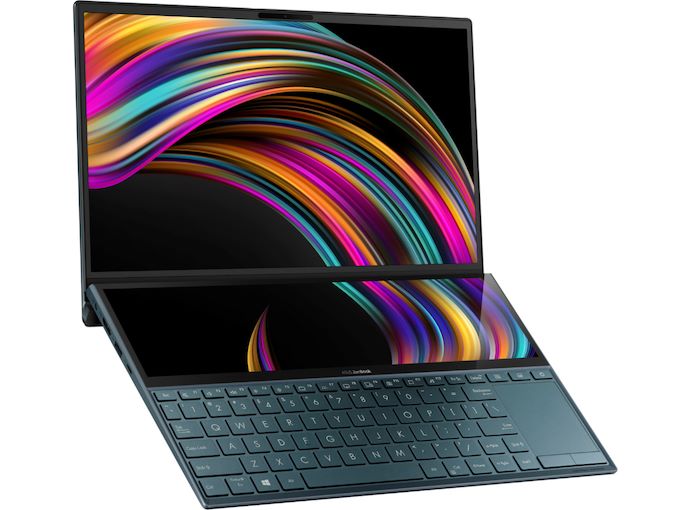
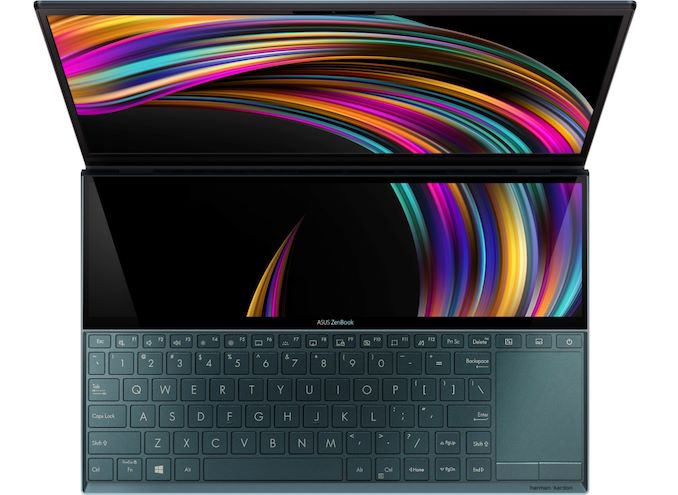
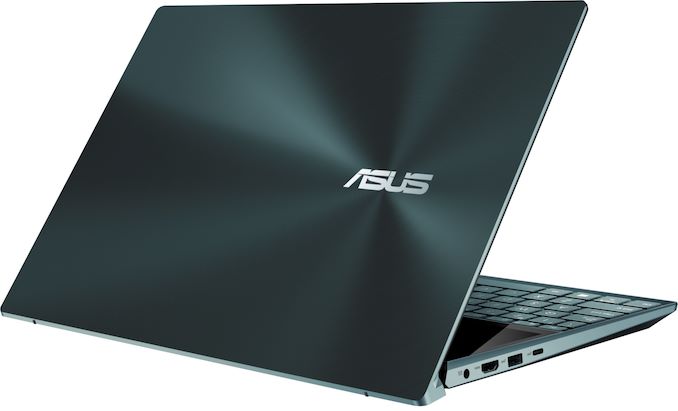
The ASUS ZenBook Duo model UX481 comes in the company’s signature Celestial Blue aluminum unibody and is equipped with a Pantone Validated 14-inch Full HD display with optional touch support and a 12.6-inch auxiliary screen. The latter can be used to run apps designed for the company’s ScreenPad or just extend Windows programs to it and increase useful screen real estate. It will be interesting to find out how significantly will the auxiliary monitor improve performance in productivity applications used by people who work on the go, but at least ASUS believes that this LCD makes sense for the target audience.


Inside the ZenBook Duo machine is Intel’s 10th Generation Comet Lake Core i5-10210U or Core i7-10510U processor (with UHD Graphics) that can be optionally enhanced with NVIDIA’s discrete GeForce MX 250 GPU with 2 GB of GDDR5 memory. The system comes with up to 16 GB of soldered-down LPDDR3 DRAM as well as a 256GB/512GB/1 TB PCIe SSD. Connectivity wise, we have a fairly standard 2020 laptop here, so it has Wi-Fi 6, Bluetooth 5, USB 3.2 Gen 1/2 with Type-A as well as Type-C connectors, HDMI, microSD, and a combo audio jack.


ASUS equipped its ZenBook Duo with a 70 Wh battery, but it is rather hard to make predictions about actual battery life of the notebook given its second screen and applications developed for it. As for portability, being aimed at road warriors, the ZenBook Duo UX481 is relatively compact and lightweight for an aluminum 14-incher (especially when an additional screen is taken into account): it weighs 1.5 kilograms and is 19.9 mm thick.


The ASUS ZenBook Duo UX481 Laptop
  UX481
Primary Display General 14-inch
Resolution

Color Gamut
1920×1080

?
Features Pantone Validated

Optional Touchscreen
Secondary Display Diagonal 12.6-inch with touch
Resolution ?
Viewing Angles 178˚ (?)
CPU Options Intel Core i7-10510U

Intel Core i5-10210U
Graphics Integrated Intel UHD Graphics
Discrete NVIDIA GeForce MX250 w/ 2 GB GDDR5
RAM up to 16 GB LPDDR3
Storage SSD 256 GB PCIe 3.0 x2

512 GB PCIe 3.0 x2

1 TB PCIe 3.0 x4
Wireless Wi-Fi Intel Wi-Fi 6 (802.11ax)
Bluetooth Bluetooth 5.0
USB 1 × USB 3.2 Gen 2 Type-C

1 × USB 3.2 Gen 2 Type-A

1 × USB 3.2 Gen 1 Type-A
Thunderbolt
Display Outputs 1 × HDMI
Gigabit Ethernet none
Card Reader microSD
Webcam Windows Hello-capable webcam with IR sensors
Fingerprint Sensor none
Other I/O Microphone, stereo speakers, audio jack
Battery 70 Wh Li-Poly
Dimensions Width 32.3 cm
Depth 22.3 cm
Thickness 19.9 mm
Weight 1.5 kilograms | 3.3 lbs
Price various

ASUS will start sales of its ZenBook Duo model UX481 sometimes in the first quarter. The company does not announce pricing of its unique laptop, but it is natural that they will be sold at a premium.


Related Reading:


Source: ASUS


Source: AnandTech – CES 2020: ASUS Unveils Dual-Screen ZenBook Duo UX481 Notebook

Updates to Intel’s Data Center Group (DCG)

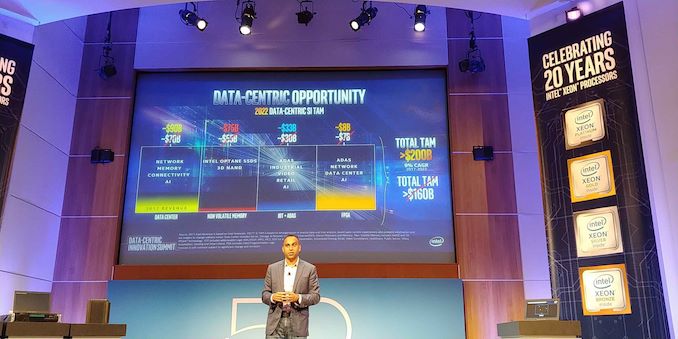
Rumors back in November were abound about Intel having some sort of reorganization internally. A number of my industry peers both on the journalist side and the analyst side were hearing murmurs of people getting laid off and other movement inside the organization. Intel made no announcement around it, publicly or privately, and we noticed during the Supercomputing conference that some of our internal contacts were not being as punctual in responding as usual. This week, through a private call with Intel to us, we were able to confirm that updates are taking place inside Intel. This call was on the back of some position changes on Intel’s biography pages for their most senior staff. It was noted several days ago that Intel’s EVP of the Data Center Group, Navin Shenoy, had a new title: EVP and GM of the Data Product Group. We reached out to Intel to get some official clarification and understanding on the matter.


Through our call with the Intel spokesperson, we can confirm that there has been what is described as a ‘realignment’ within the data-centric business inside Intel, rather than a reorganization, hence why the matter hasn’t been discussed publically up to this point. The spokesperson was keen to clarify that this realignment is not an unusual element to Intel’s business – over 2019 the company has promoted that it is going after a very different looking market to what it was 10-20 years ago, not only CPUs but also AI, IOTG, Networking, Memory/Storage, and all the new ways that the market is segmented and where Intel historically has had a low market share. This movement to go after a market with more potential value than its current Xeon/data center CPU market share has been a series of positive messages from Intel, noting that it has diversified its product portfolio in this market in order to grow beyond its traditional CPU base.


The realignment/reorganisation for Intel is essentially this – adjusting the Data Center Group in order to better align with the company’s new market goals and help drive internal efficiency. As a result, some groups have merged, others have been created, some of Intel’s employees have had promotions, job title changes, job responsibilities changed, and a few employees have also been let go as a part of this change. Our spokesperson would not put a number on the people affected by the realignment that no longer had a position, but it is our understanding that most of these people are in the sales and marketing departments.


As mentioned, the biggest outward change that most people will notice near the top of the organization is that former EVP and GM of DCG, Navin Shenoy, is now the EVP and GM of the Data Products Group (DPG). DPG differs from DCG by virtue of covering most/all of Intel’s focus into this expanded TAM opportunities by being platform focused, rather than specifically product focused. The position change for Navin is meant to highlight his increased responsibilities as Intel has grown. There will still be product groups under DPG, for example ‘DCG’ will still exist in some form as a sub-group under DPG.


The other big change from our perspective is with the VP of DCG and GM of Xeon Processors and Data Center Marketing, Lisa Spelman. She’s getting a promotion of sorts, and her new role is now as the VP and GM of a new ‘Xeon and Memory (Optane) Group’ (XMG), which will co-ordinate the Xeon product lines and Optane memory opportunities. She will still have a hand in the marketing, with members of her team also expanding their roles to cover some of Lisa’s old responsibilities.


It was reported a few weeks ago that Raj Hazra would be retiring as GM from DCG’s Enterprise and Government Group – this group will be rolled into a combined group with DCG’s Cloud Platforms and Technology Group, which is currently being run by Jason Grebe. Jason will be the GM of the new combined group, covering a large portion of Intel’s Enterprise, Cloud, and Government business.


Other details about what the realignment entails were unfortunately unavailable. I mentioned to my contacts at Intel that not having a public announcement about this isn’t a great idea, especially after a year or two of pushing the ‘Data-Centric’ vision of Intel and everyone getting to know the individual groups. Not having any public statement means that when a new group gets mentioned out of thin air, investors and customers are going to be very confused. When we asked for a new organization chart to help understand the new corporate design (as well as reporting hierarchies), Intel stated that they’re not in a position to share this information publicly at this time.


Intel’s official statement on the matter at this time is the following:


“Changes in our workforce are driven by the needs and priorities of our business, which we continually evaluate. We are committed to treating all impacted employees with professionalism and respect.”


With CES around the corner, while not a DCG focused event, Intel has a keynote and there is potential for something to be mentioned then. Intel also has its quarterly earnings report on January 23rd, and if nothing is mentioned I encourage some of the financial analysts on that call to ask questions.


Source: AnandTech – Updates to Intel’s Data Center Group (DCG)

CES 2020: ASUS Showcases Full White Concept System

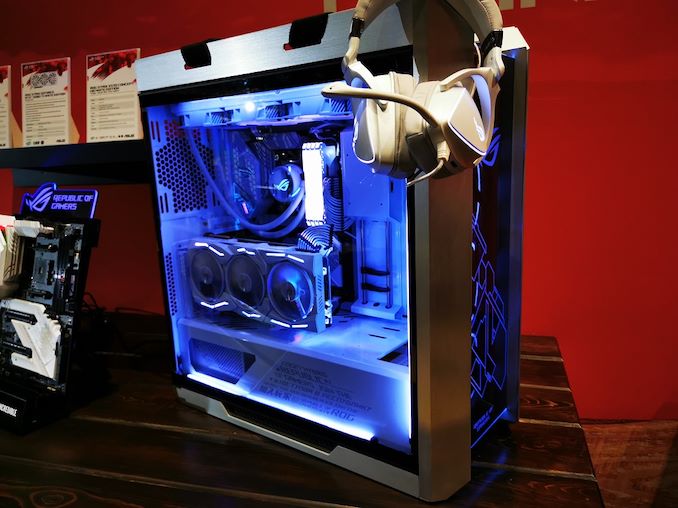
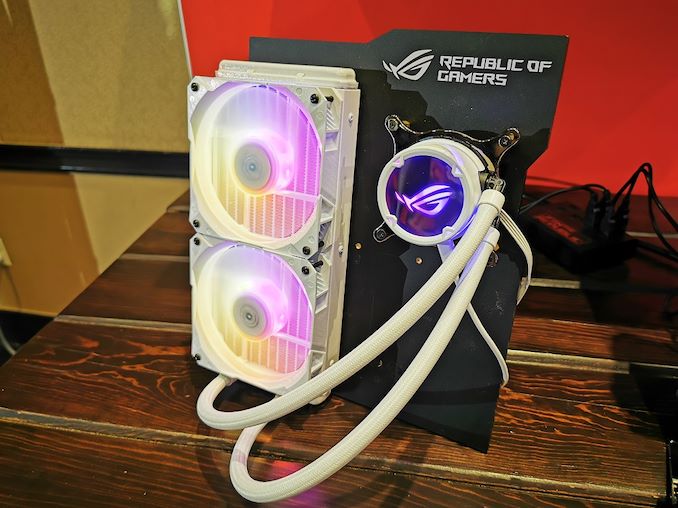
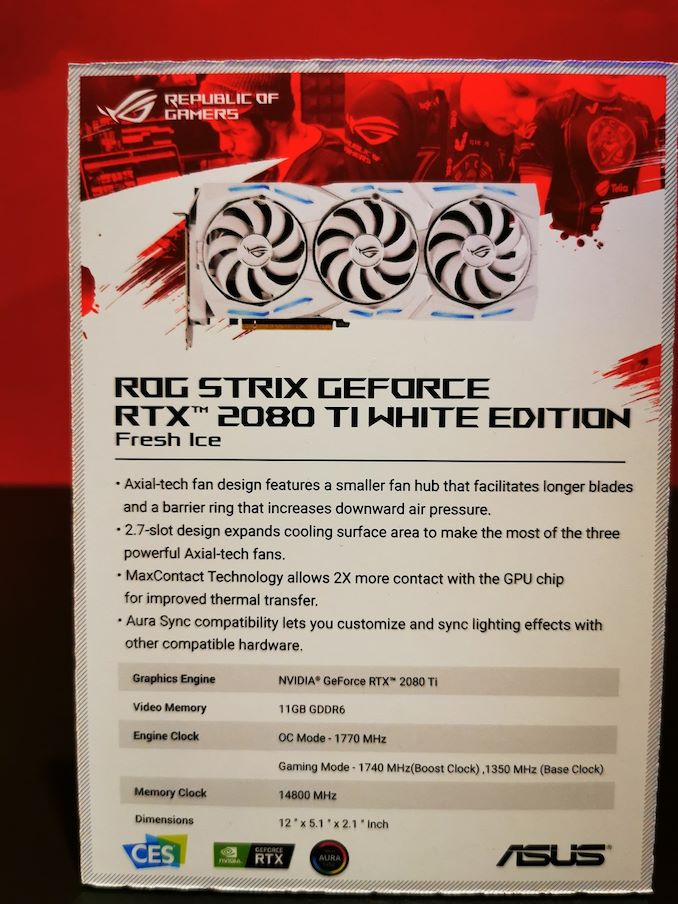
At the ASUS suite at CES 2020, the company showcased quite a few concepts in addition to many new products ranging from laptops, Chromebooks, chassis, and peripherals. One of the most interesting items at the suite was an all-white system featuring a number of all-white concept products. This not only included a white ROG Strix X570 motherboard, but an all-white ROG RTX 2080 Ti White Edition graphics card, as well as a new white ROG Strix 850 W power supply, and an all-white 240 mm AIO; ASUS refers to these products as ‘fresh ice’.


Equipped with a full range of white components, the ASUS all-white concept system features the ROG Strix LC 360 RGB White Edition all-in-one CPU cooler which features an aluminium radiator, with copper fins, and with white sleeved rubber tubing. The cooler supports most Intel sockets including LGA115x, 2011-3, 2066, and 1366, with support for AMD sockets AM4 and TR4. The CPU block includes ARGB LED lighting, while the two supplied 120 mm cooling fans are also white with ARGB LEDs. The PWM cooling fans are designed to operate up to 2500 rpm, with a maximum airflow of 80.95 CFM.


Installed into the system is an all-white version of its ROG Strix RTX 2080 Ti with a maximum boost clock of 1770 MHz on the core, with a memory clock of 14800 MHz effective. It includes all the regular features including a triple-fan cooler with axial-tech fans, a 2.7 slot design, and includes Aura Sync-enabled RGB LEDs integrated into the coolers shroud.


ASUS hasn’t revealed if any of the all-white products will make it to full production, but it’s hard to deny that if it did, they would be popular with users. With a lot of white-coloured chassis already on the market, the all-white range on display could inspire even more users to create snow-themed systems, a color which allows RGB LEDs to pop even more. One of the main reasons white doesn’t always work is that some vendors seem to have issue with white PCBs eventually turning yellow after 6-12 months. We’ll see if ASUS has solved that issue.


Related Reading


Source: AnandTech – CES 2020: ASUS Showcases Full White Concept System

AMD Ryzen Mobile 4000: Measuring Renoir’s Die Size

I’m pretty sure that the next time I go to a trade show where new silicon is being announced, the next tool I need in my backpack is a set of calipers in order to measure the die size. While die size doesn’t in of itself mean much as a number on its own, it is the end result of lots of hard work, focused co-design between silicon engineers and the semiconductor fabs, and ultimately there’s a fine balance between features, die size, performance, power, and at the end of the day, cost. With AMD showcasing the first x86-based 8-core CPU to move into the 15 W power envelope, finding out the die size is one of the elements of our investigation into how AMD has created its new Renoir / Ryzen Mobile 4000 product.

When I first saw the silicon, I wasn’t able to take pictures. Instead, I had to guess the size by manually placing it next to a 8-core Zen 2 chiplet from AMD’s monster 64-core Threadripper 3990X. We’ve known the die size for a while now, at 10.32 x 7.34 mm, or 75.75 mm2. My guess at the time that the new Renoir APU was almost exactly double the Zen 2 chiplet, and I mean it was scary how close to double the size it was. At the time of the announcement of Ryzen Mobile 4000, I had stated in our article that I estimated 150 mm2 for the die size. Turns out, I wasn’t too far wrong.


Source: AnandTech – AMD Ryzen Mobile 4000: Measuring Renoir’s Die Size

Here's Some DDR5-4800: Hands-On First Look at Next Gen DRAM

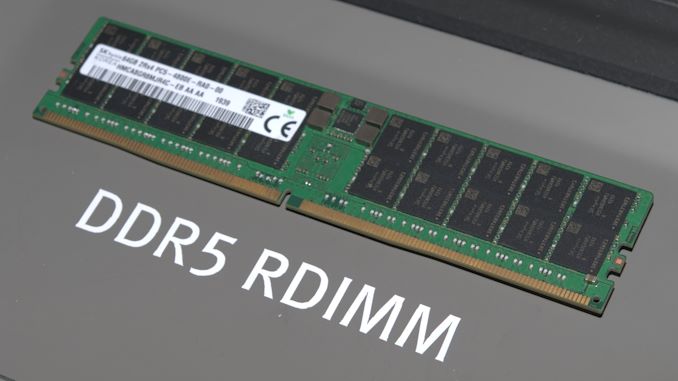
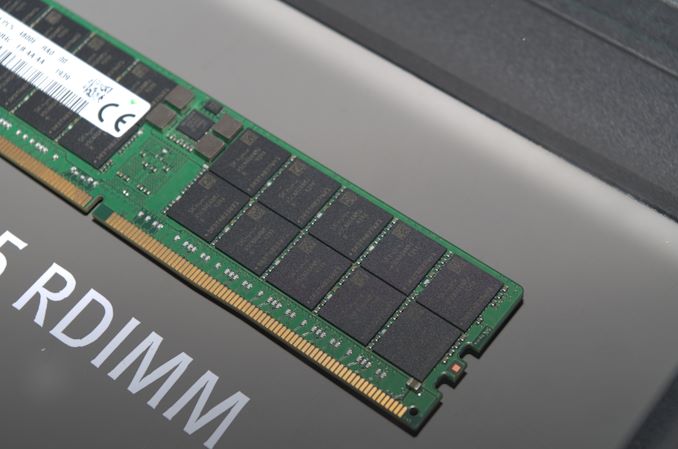
Just like all major makers of DRAM, SK Hynix produced its first DDR5 memory chips a couple of years ago and has been experimenting with the technology since then. To that end, it is not surprising that the company displayed its DDR5 RDIMM at CES 2020, which implies that development is proceeding as planned.


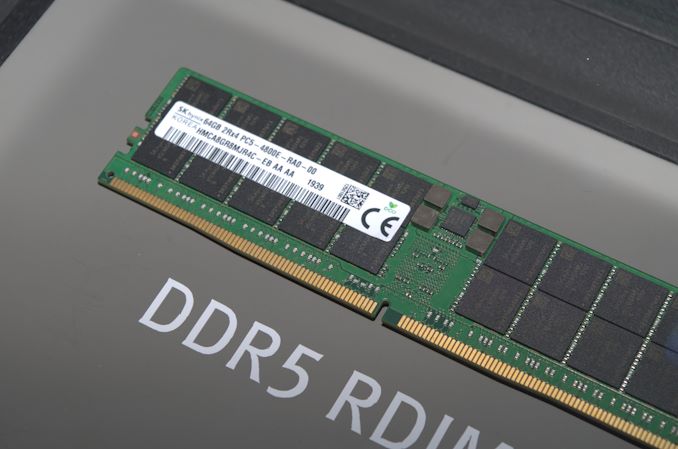
At the trade show, SK Hynix demonstrated its 64 GB DDR5 RDIMM with ECC rated for a 4800 MT/sec/pin data transfer rate. The module marked as HMCA8GR8MJR4C-EB carries 20 memory chips marked as H5CNAG4NMJ as well as IDT’s P8900-Z2 register clock driver (RCD). The memory devices are marked differently than the ones SK Hynix used for 16 GB RDIMM back in late 2018, though we do not know the difference.


The DDR5 RDIMMS feature 288 pins on a slightly curved edge connector (to reduce the insertion force on every pin), just like DDR4 modules, yet its layout and design are a bit different when compared to DDR4 to prevent installment of DDR5 modules into DDR4 slots and vice versa.


It is unknown whether SK Hynix has already started to sample its DDR5 RDIMMs with developers of server platforms and servers, but it is obvious that all DRAM makers are aligning their DDR5 production schedules with CPU designers and other companies.


At present, it is unclear when exactly the first DDR5 platforms are set to hit the market, but a good guess would be 2021. One of the first platforms to confirm support for DDR5 memory has been Intel’s Xeon Sapphire Rapids, set for deployment in the Aurora Supercomputer. AMD support for DDR5 is unknown so far.


Related Reading:


Source: SK Hynix


Source: AnandTech – Here’s Some DDR5-4800: Hands-On First Look at Next Gen DRAM

TRX80 and WRX80 Don’t Exist: Neither Does the ‘Intel LGA1159’ Socket

For anyone that isn’t following the minutiae of desktop computing, one of the more prominent rumors in AMD land is the presence of upcoming sockets called TRX80 and WRX80. These parts, assumed to be aimed at ‘casual’ and ‘workstation’ users, have formed the basis of many rumors and a lot of speculation, especially on the back of TRX40 which does exist for the latest generation of AMD Threadripper CPUs. Similarly, recent news has been posted about the potential existence of a theoretical LGA1159 socket for Intel, despite the fact that LGA1200 is often cited as the next generation socket for upcoming Comet Lake processors on the desktop. We reached out to a few contacts while we were here at CES to put some weight into these rumors, to confirm them one way or the other, for good.


It’s at this point I want to talk about sources. For anyone who has studied journalism, or even history at a high school level, there is the concept of sources carrying different amounts of weight. A primary source, for example, would be a direct participant in an event who would be able to recount with specific detail what they did/saw or what is planned. A secondary source might be a journalist collating or analyzing data from primary sources, a piece of software including a list of details about other products, or an artist depicting the events taking place from information they have collected. Tertiary sources go beyond this, and might involve individuals discussing an event without any direct experience of a specific instance. When it comes to the journalism that the tech press practices, depending on the publication, different numbers and different levels of sources form the minimum requirements for each publication. This acts as the minimum barrier required in order to present the information to its readers. 


Here at AnandTech, we often use at least two sources for any particular story, preferably both primary sources. If the second source is trusted, for example a fellow media peer in the industry that has a history of accuraccy and one that we trust, they can be treated similarly to a primary source, albeit technically a secondary source (we often try to find a separate primary source different to the one they have used). Sometimes we have a lower standard for entry for the sake of humor, such as our report into Intel’s mythical Core i9-9900KFC, which never saw the light of day but I enjoyed writing it in a very tongue-in-cheek style (and I hope that came across). So to put this in to context, if I write something based on primary sources, I nominally act as a second source for others that cite my work.


Back to this specific matter, I had noticed that any mention of TRX80, WRX80, or LGA1159, was written about by journalists with no primary sources about any of it. So in order to find out when these two AMD eight-channel chipsets were going to come out, as well as the existence of yet another consumer Intel socket, I naturally went to ask AMD, Intel, as well as their primary partners and OEMs. The partners and OEMs that work with Intel and AMD are involved in developing and selling future platforms, and as such they have insight into the next 6-9 months of products coming into the market. They also have ideas about the 9-18 month schedule, but as we’ve seen in the past, that is often subject to change. Obviously none of the companies we spoke to were prepared to speak about future products, such as their own LGA1200 motherboards, however that doesn’t apply here.


All of our primary sources in this regard had very puzzled looks on their faces when I mentioned either the TRX80, WRX80, or LGA1159. One of them looked at me in amazement, and specifically said ‘what are you on about?’. I explained the situation, with ‘the internet’ talking about new 8-channel consumer motherboards, or an updated socket for Intel’s Comet Lake and beyond. The answer I got was very clear cut from everyone I talked to: no-where on their roadmaps has it ever said TRX80, WRX80, or LGA1159. None of the companies I talked had even heard of these names, let alone had any products with these features in the pipeline.


On the LGA1159 socket, one source actually knew what I was talking about, at least to some degree. They stated that the reason why people are confused here is that Intel distributed some early engineering samples of six-core Comet Lake CPUs in LGA1150 packaging, and those photographs got leaked onto the internet. The reason Intel could do this is that there’s next to no difference between Coffee Lake Refresh and Comet Lake silicon, and as a result some early testing could be done. However, the same source also showed us the different packaging for the 10-core engineering sample, where the layout is somewhat different. As it stands, this is the issue with assuming what you see is always going to be at retail – if the fact that something is an engineering sample isn’t taken into account, perhaps you shouldn’t write about every rumor you see or hear.


But does this mean that there will never be a product called TRX80, WRX80, or have the LGA1159 socket? No. But what I am told from my sources is that as it stands these products have never existed. There might be a future LGA1159 socket for Intel CPUs, or future upgraded motherboards for AMD CPUs, but as it stands, all of my contacts confirmed that none of them exist on roadmaps today.


It should be pointed out that our sources did request anonymity. This is par for the course for this sort of response, even when confirming when a particular ‘product’ doesn’t exist. Should these sources be able to provide information about actual future products, and I may wish to call upon them again, and they’d rather not act as a magnet for future questions from all the other tech media.


Source: AnandTech – TRX80 and WRX80 Don’t Exist: Neither Does the ‘Intel LGA1159’ Socket

CES 2020: ASUS Reveals Portable 15.6-inch ZenScreen MB16ACE USB-C Monitor

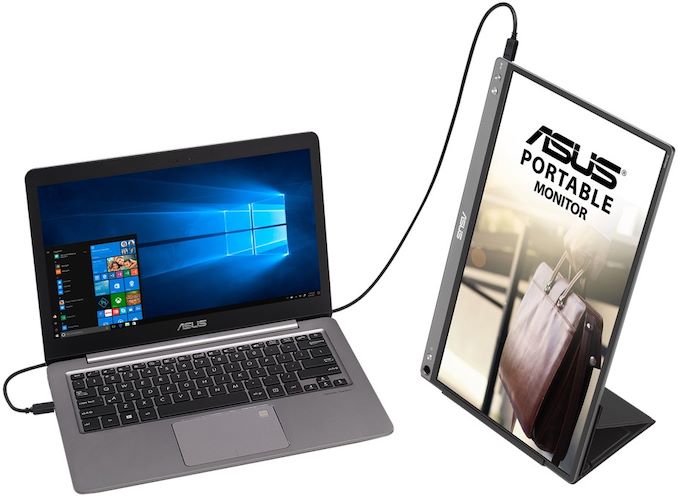
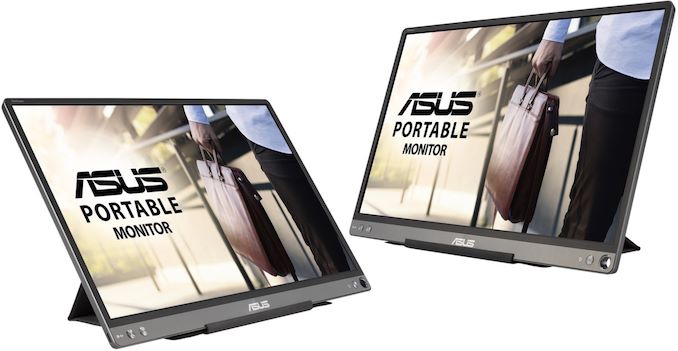
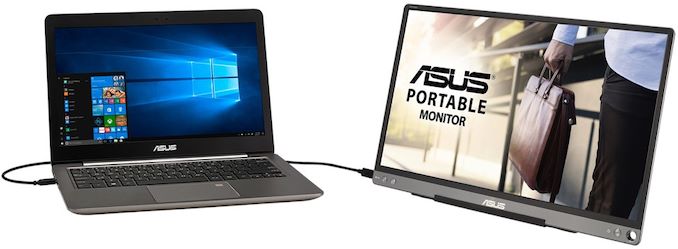
ASUS has introduced its latest external display for laptops that features a USB Type-C connector that is used to transfer both video signal as well as power. To simplify use, the ZenBook MB16ACE monitor comes with a new foldable case that can be easily transformed into a stand.


As the name suggests, the ZenScreen MB16ACE belongs to the company’s premium Zen product lineup and therefore matches ZenBooks in terms of design and premium feel. In general, the ZenScreen MB16ACE uses a 15.6-inch IPS panel featuring a 1920×1080 resolution, 250 nits brightness, a 5 ms response time, and a non-glare coating. Since the LCD comes in a metallic chassis, it is 8 mm thick and weighs 710 grams, which can be considered as a price for some additional toughness.


One of the main selling points of the ZenScreen MB16ACE is of course its USB Type-C single-cable connection (using DP Alt Mode), which greatly simplifies use of the additional display with a laptop while on the go. The monitor can still be plugged to a regular USB Type-A port, but in this case the host system must have a DisplayLink driver installed.


Like most monitors from ASUS, the ZenScreen MB16ACE supports various color temperatures, eight video preset modes, and even modes for games. Meanwhile, the display fully supports HDCP, so it can be used to view protected content.


It is noteworthy that the ZenScreen MB16ACE can be used both in landscape as well as portrait modes and comes with a special folio that can be used as a stand, which clearly improves usability of the device.


ASUS already lists its ZenScreen MB16ACE USB-C display over at its website, so expect the product to launch shortly. Pricing is unknown.


Related Reading:


Source: ASUS


Source: AnandTech – CES 2020: ASUS Reveals Portable 15.6-inch ZenScreen MB16ACE USB-C Monitor

CES 2020: MSI's 300 Hz Gaming Laptops, the GS66 Stealth & GE66 Raider

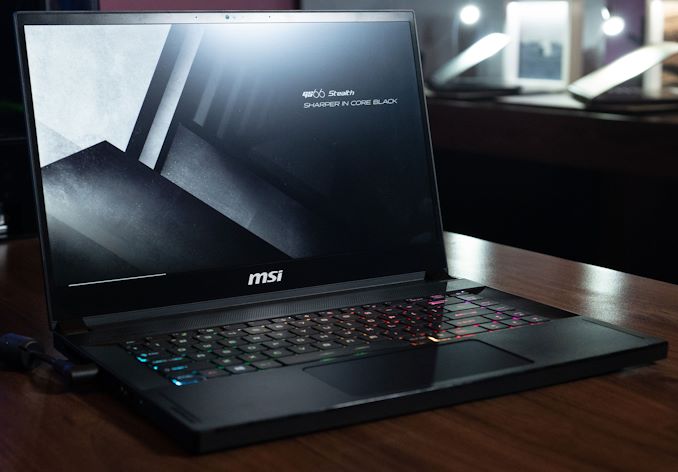
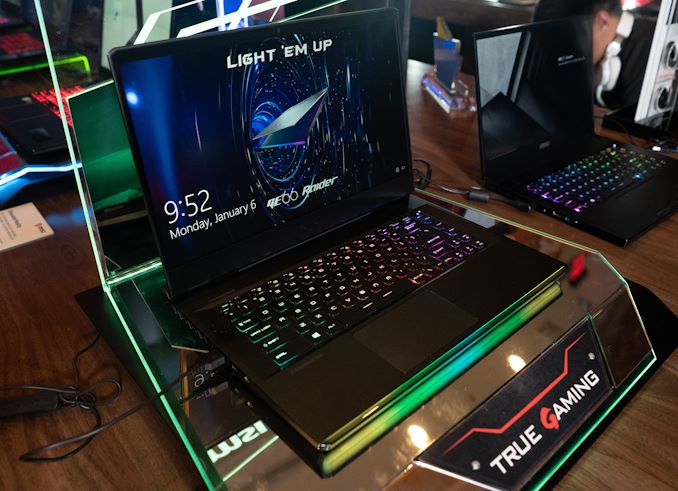
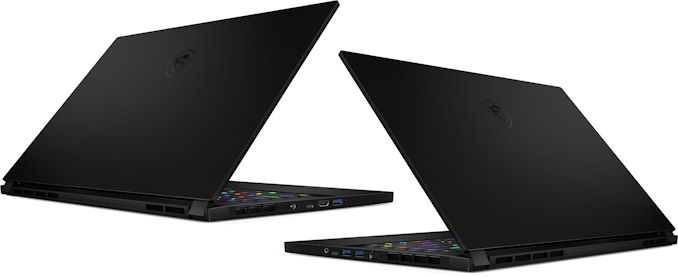
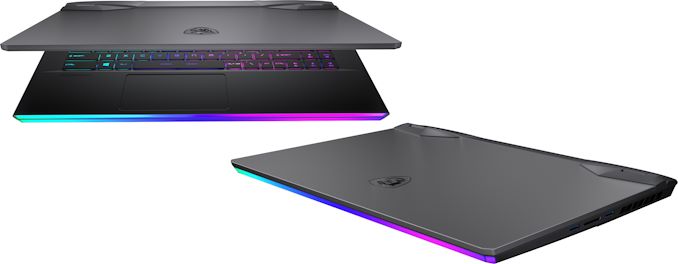
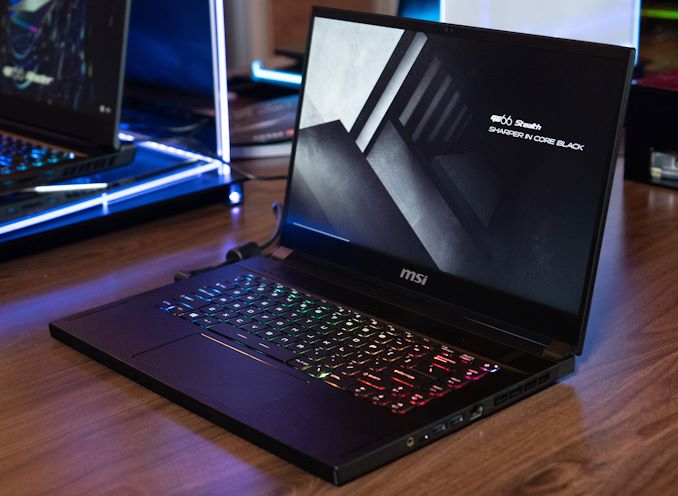
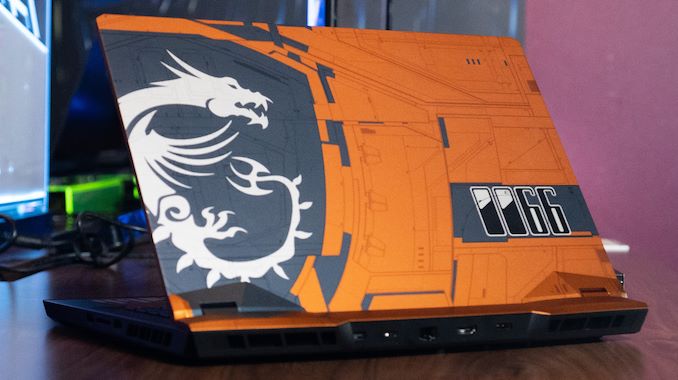
MSI demonstrated a revamped version of its sleek and light GS-series Stealth gaming notebook at CES 2020 this week. The GS66 Stealth laptop continues to feature a low-profile design, but now comes in a ‘Core Black’ aluminum chassis and features the latest internal hardware. In addition, MSI has an all-new compact GE66 Raider gaming notebook with panaramic aurora lighting and new internals. However, the main advantage of the new models over predecessors is its optional display panel with a 300 Hz refresh rate.


Nowadays mobile gamers demand thinner and lighter notebooks, but are not ready to give up desktop-like performance. With the MSI GS66 Stealth and the MSI GE66 Raider, they will actually be getting something that they cannot have even with a desktop PC right now: a Full-HD panel featuring a 300 Hz maximum refresh rate, presumably with a variable refresh rate technology.


To ensure that the 300 Hz LCD can demonstrate itself in all of its glory, the MSI GS66 Stealth and the MSI GE66 Raider pack the latest and greatest hardware, which specifications are kept under wraps for now, but one can make a good educated guess about them. In case of the GS66, the CPU and the GPU are cooled down using MSI’s redesigned Cooler Boost Trinity cooling system that now uses three fans with blades that are only 0.1 mm thick to maximize airflow.


MSI showcased its GS66 Stealth and GE66 Raider laptops at CES, but said nothing about availability timeframe of the product. Considering the fact that Acer and ASUS already use overclocked 300 Hz panels with their gaming laptops, it should not be big a problem for MSI to get such panels too. Meanwhile, there might be other components that MSI needs to procure for its upcoming GS66 Stealth and GE66 Raider notebooks.


Related Reading:


Source: MSI


Source: AnandTech – CES 2020: MSI’s 300 Hz Gaming Laptops, the GS66 Stealth & GE66 Raider

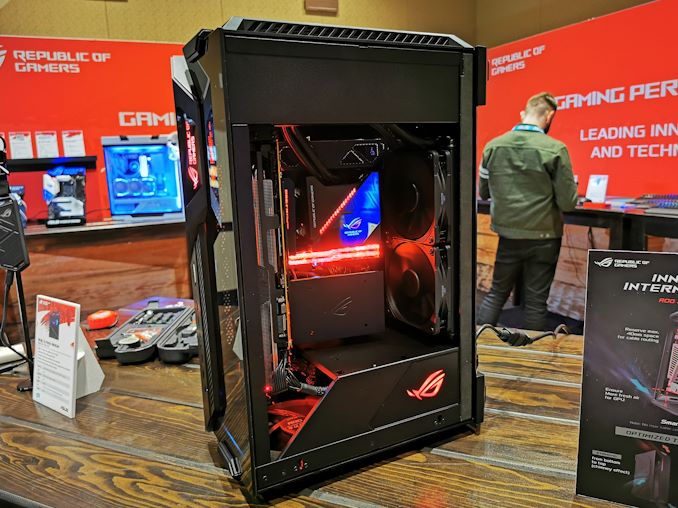
CES 2020: ASUS Unveils ROG Z11 Mini ITX Chassis For Gamers

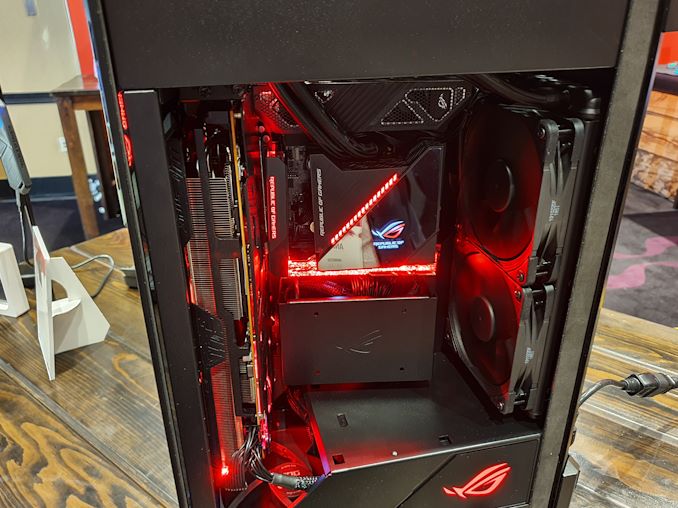
In addition to its new notebook, Chromebook, and system announced during CES 2020, ASUS has unveiled a new gaming chassis designed for mini-ITX motherboards. The ASUS ROG Z11 features an 11-degree tilted interior design for improved heat dissipation and better cable management.


The ASUS ROG Z11 case is constructed with an aluminium outer frame, with steel interior, and comes with a specially designed motherboard try which is off to an 11-degree angle in comparison to standard motherboard tray implementations. This design is to allow for more airflow which is critical in high-performance systems that are using smaller form factors such as mini-ITX. Due to the implementation of the design, users can position the ROG Z11 upright which resembles a more conventional design, or on its side.


Hardware compatibility in generic mini-ITX systems can be a little lacklustre, but the ASUS ROG Z11 is designed to accommodate full-size power supplies and has good support for cooling. Supplied with the ROG Z11 is three 140 mm cooling fans, with support for a 240 mm radiator at the rear. Users can also install a 120 mm radiator in the bottom of the chassis.


On the front panel is a LiveDash 1.77″ OLED screen which is also featured on the ASUS ROG Zenith II Extreme rear panel cover, and allows users to upload and customize the panel with GIFs and animations. The front I/O panel includes a single USB 3.1 G2 Type-C, one USB 3.1 G2 Type-A, and two USB 2.0 ports, with a button to control the addressable RGB lighting.


At present, ASUS hasn’t revealed any information about the pricing or availability, but it is expected to be launched sometime this year. 


Source: AnandTech – CES 2020: ASUS Unveils ROG Z11 Mini ITX Chassis For Gamers

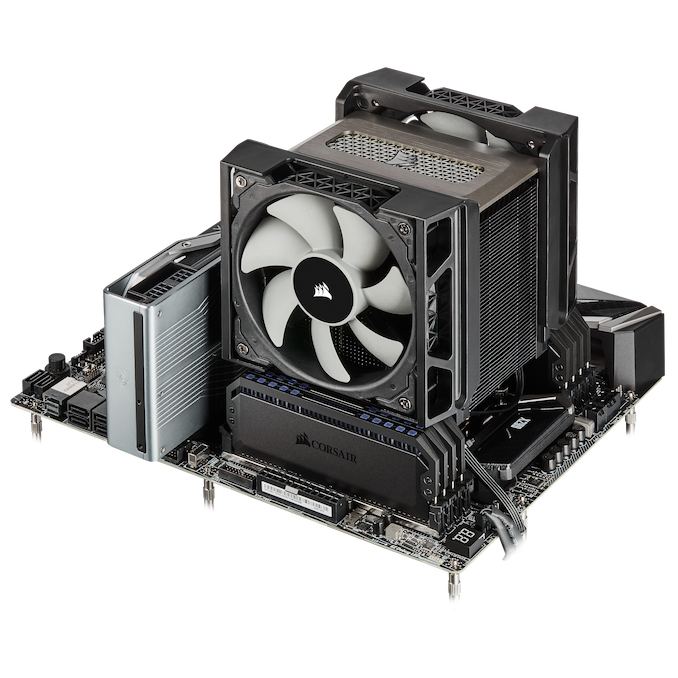
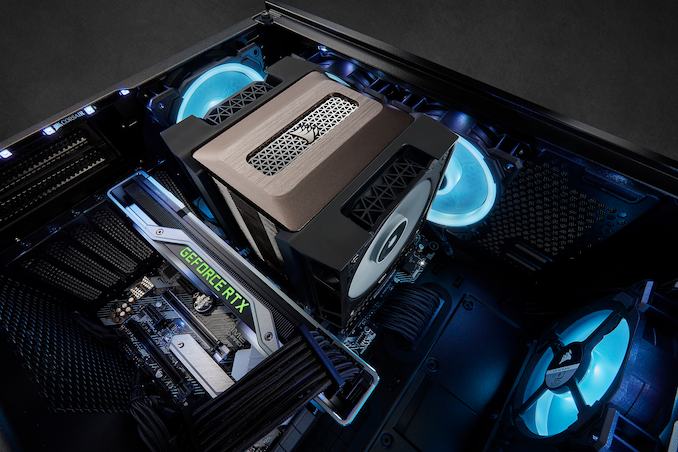
CES 2020: Corsair Announces The A500 CPU Cooler, Back to Air Cooling

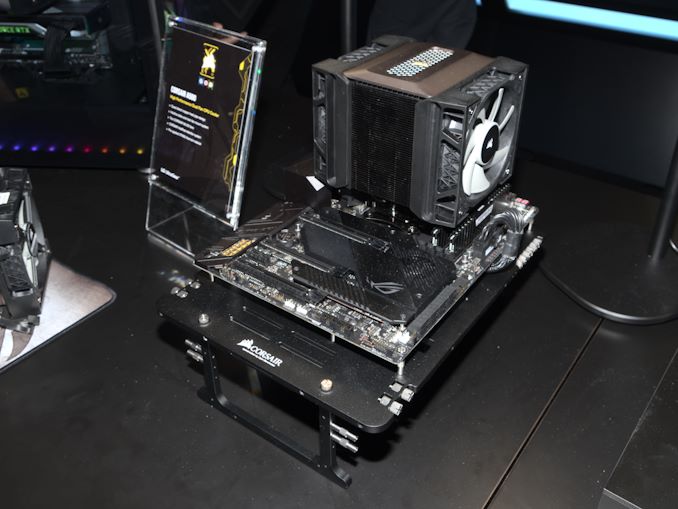
Although Corsair’s cooling division is more widely known for its extensive range of CLC CPU cooling solutions, Corsair has once again moved back into the air-cooled CPU cooler business. Corsair has once before tried to tackle the market with its older A50 and A70 models, the new A500 looks to target Noctua’s NH-D15 with some very interesting features.


Moving back into the air cooling market after the launch of the Corsair A50 and A70 air CPU coolers, the new Corsair A500 looks to add a new dimension to its current cooling line-up. More known for its closed-loop liquid solutions, the A500 is a dual fan tower cooler with cooling capabilities stretching up to 250 W TDP. While the A500 doesn’t support AMD’s TR4 socket, it supports Intel’s 2011 LGA20xx sockets, including AM4, AM3, FM2, and LGA115x.


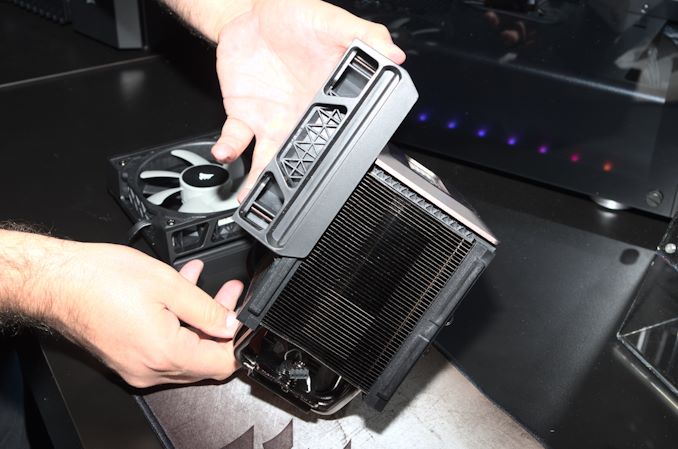
In an interesting design twist to conventional tower coolers, the Corsair A500 uses a ratchet-style slide and lock fan retention system, which is designed to make users lives easier when installing. It is a full tower cooler with dimensions of 144 x 169 x 171 mm, with two of Corsair’s ML120 cooling fans which can ramp up to 2400 rpm are included in the package. On the cooling plate, Corsair has pre-applied its XTM50 thermal paste out of the box for first-time applications.


When asked about why Corsair is going the air-cooling route after many successful AIO launches, it stated that the air cooling market is still huge with users, especially those who still don’t trust liquid-cooled solutions due to rare issues such as leaks. Aiming for Noctua’s NH-D15 CPU cooler which many in the industry see as the golden standard, Corsair states the performance is on par with the NH-D15, if not better in certain situations.


Corsair has priced the A500 at $99.99 and is available to pre-order directly on Corsair’s store. The A500 is expected to hit retail channels later on in the week.


Source: AnandTech – CES 2020: Corsair Announces The A500 CPU Cooler, Back to Air Cooling

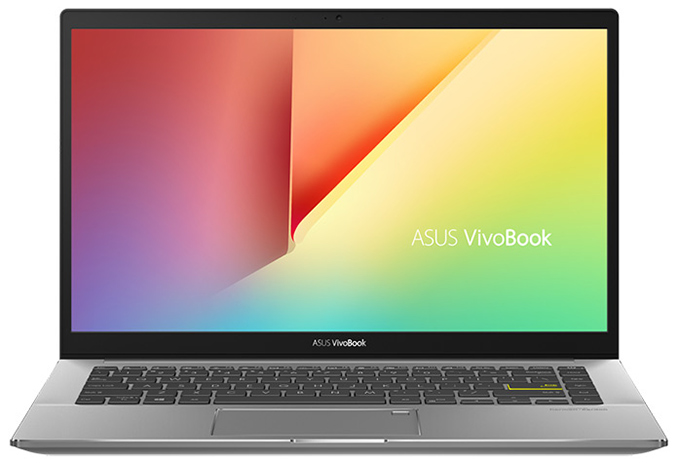
CES 2020: ASUS’ Latest VivoBook S Packs 10th Gen, Lots of Colors

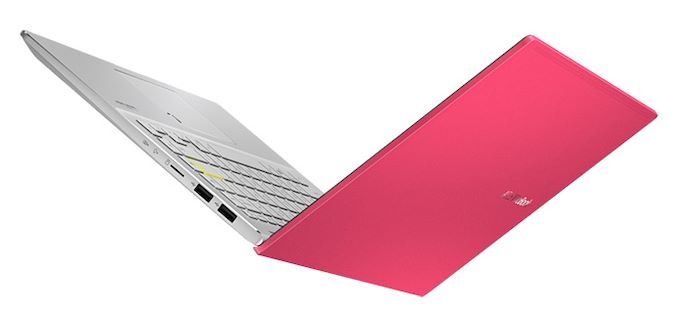
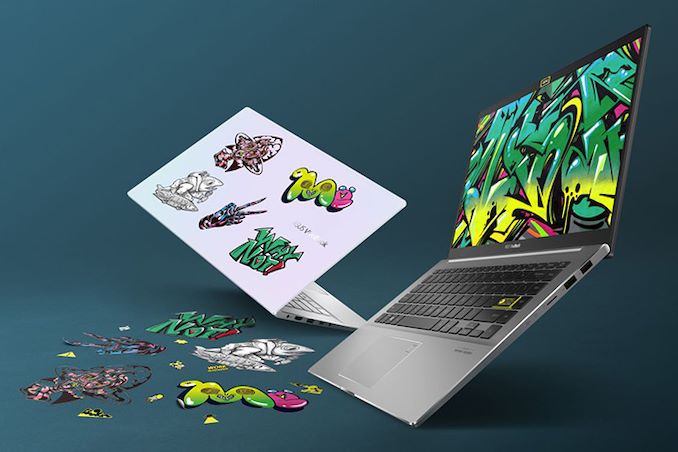
ASUS has introduced its new VivoBook S-series laptops that attempt to fuse style with performance in a reasonably priced package. The new notebooks are based on Intel’s latest 10th Generation Core processors and come in in chassis made of brushed aluminum and lightweight plastic with Resolute Red, Gaia Green, Dreamy White, or Indie Black finish.


ASUS’s 2020 family of VivoBook S notebooks includes 13.3-inch (S13 S333), 14-inch (S14 S433), as well as 15.6-inch (S15 S533) models equipped with a Full-HD display featuring thin NanoEdge bezels as well as 178°/178° viewing angles. The smallest machines come in black or white, whereas the larger laptops actually offer a choice between red, green, black, or white. As far as portability is concerned, the notebooks feature pretty much the same z-height of 15-16mm, but their weight varies from 1200g to 1800g depending on size and GPU installed.


The VivoBook S13 S333 is powered by Intel’s quad-core Ice Lake processors with up to Iris Plus ‘G7’ graphics with 64 EUs, whereas the VivoBook S14 S433 and the VivoBook S15 S533 are based on Intel’s quad-core Comet Lake processors with UHD Graphics. In both cases, ASUS offers optional GeForce MX discrete GPUs (see exact models in the table below). Whether or not it makes sense to install a standalone graphics processor into a mobile PC with Intel’s Iris Plus ‘G7’ is up to debate, but at least it is possible to get it with systems that come with basic integrated graphics.


One feature on these notebooks is the colored enter key. ASUS has stated that this key has a yellow outline (it’s more visible on darker keyboards) to act as an entry point into the modern world. What this means is that IMs and DMs and social media all require hitting ‘Enter’ to submit, and so this is one of the lifestyle additions that the company will take into its marketing strategy.


All the other features and specifications of all the 2020 VivoBook S variants are similar: Wi-Fi 6, Bluetooth 5, USB 3.2 Gen 1 Type-A/Type-C, microSD, webcam, Harman/Kardon speakers, microphone, audio jack, and a 50 Wh battery. The manufacturer does not disclose actual battery life figures, but it is reasonable to assume that the VivoBook S13 S333 13.3-incher with integrated graphics will have a considerably longer uptime than the VivoBook S15 S533 15.6-incher with a discrete GPU.


ASUS’s 2020 VivoBook S13/S14/S15
  VivoBook S13

S333
VivoBook S14

S433
VivoBook S15

S533
Display 13.3-inch 1920×1080 14-inch 1920×1080 15.6-inch 1920×1080
CPU Intel Core i7-1065G7: 4C/8T, 1.3 – 3.9 GHz

Intel Core i5-1035G1: 4C/8T, 1.0 – 3.6 GHz


Ice Lake

Intel Core i7-10510U: 4C/8T, 1.8-4.9GHz

Intel Core i5-10210U: 4C/8T, 1.6-4.2GHz


Comet Lake

Graphics iGPU Intel UHD Graphics ‘G1’ w/ 32 EUs

900-1050MHz, 461 – 537 GFLOPS


Intel Iris Plus Graphics ‘G7’ w/ 64 EUs

1.05-1.1GHz, 1.07 – 1.1 TFLOPS

Intel UHD Graphics
dGPU NVIDIA GeForce MX350

NVIDIA GeForce MX330
NVIDIA GeForce MX250
RAM 8 GB or 16 GB DDR4-2666
SSD 16 GB Intel Optane + 256 GB SSD

32 GB Intel Optane + 512 GB SSD
Wi-Fi Wi-Fi 6 (802.11ax)
Bluetooth Bluetooth 5.0
USB 2 × USB 2.0 Type-A

1 × USB 3.2 Gen 1 Type-A

1 × USB 3.2 Gen 1 Type-C
GbE
Card Reader microSD
Other I/O HDMI, webcam, microphone, stereo speakers, audio jack
Battery 50 Wh
Dimensions Width 30.5 cm | 12 inch 32.5 cm | 12.79 inch 36 cm | 14.17 inch
Depth 19 cm | 7.87 inch 21.3 cm | 8.4 inch 23.4 cm | 9.2 inch
Thickness 1.5 cm | 0.59 inch 1.57 cm | 0.62 inch 1.6 cm | 0.63 inch
Weight 1.2 kg | 2.65 lbs 1.4 kg | 3.08 lbs 1.8 kg | 3.97 lbs
Additional Information ? ? ?
Price ? ? ?

ASUS yet has to announce MSRPs of its VivoBook S13 333, S14 S433, as well as S15 S533 laptops, but it is obvious that prices will depend on exact configurations. Good news is that the company promises to launch the notebooks in ‘early 2020’.


Related Reading:


Source: ASUS


Source: AnandTech – CES 2020: ASUS’ Latest VivoBook S Packs 10th Gen, Lots of Colors

I Ran Off with Intel’s Tiger Lake Wafer. Who Wants a Die Shot?

One of the surprises at CES from Intel was the presence of Tiger Lake, Intel’s next generation platform beyond Ice Lake. Tiger Lake is Intel’s vehicle for delivering the first generation of its Xe-LP graphics in a mobile form factor, and there has been a lot of buzz around what Tiger Lake exactly is. We learned this week that it is built on a 10nm+ process, which is different to the ‘10nm’ Ice Lake process (and don’t ask about what Cannon Lake was). Intel has also promoted that Tiger Lake will have higher performance than Ice Lake, both in CPU and graphics, and come with the next generation AI features. Tiger Lake will be out by the end of 2020, but the thing that surprised us most at CES 2020 was the presence of a Tiger Lake wafer.


Source: AnandTech – I Ran Off with Intel’s Tiger Lake Wafer. Who Wants a Die Shot?

Asustor, QNAP, and Synology Introduce New NAS Units at CES 2020

The network-attached storage (NAS) vendors had a relatively quiet presence at CES 2020 compared to what we used to see in earlier years. We have a few announcements and show presence coverage from a couple of vendors to cover, but, a commentary on the current stage of the NAS market is first required to set the stage.


Where is the Network-Attached Storage Market Headed?


As an active follower of the network-attached storage (NAS) market and a media analyst covering CES for more than a decade, the change in the approach of the NAS vendors to the show over time has been interesting to observe. At a higher level, it also shows the direction in which the NAS market is headed. In the early 2010s, the cloud concept was still in its infancy and over-the-top (OTT) streaming was just taking off. However, the rise of smartphones and the associated user-generated content meant that consumers suddenly had a significant amount of data at home that needed access in a centralized manner. A number of vendors attempted to capitalize on this home consumer demand by releasing NAS units catering specifically to this market segment. Fast forward to 2020, and a number of things have changed on the home consumer front:


  • Smartphones are backed up by virtually free and virtually unlimited cloud storage, and most consumers are not bothered by the downscaling of the photo and video resolutions
  • Cloud-based services also enable easier sharing of content with contacts around the world – an aspect that has been a pain point when the content resides on a local NAS device.
  • Cloud-based services such as OneDrive even provide ransomware protection – meaning that even PC / notebook backups for many consumers are moving to the cloud
  • Physical media usage has dropped down considerably, and most consumers do not bother to back up their Blu-rays and DVDs. OTT services such as Netflix, Amazon Prime, Disney+, and Hulu are able to provide instant gratification with a good UI and steady stream of new content compared to media stored in a local server.

The factors mentioned above have led to the market for consumer-focused NAS devices experiencing little to no growth in the past couple of years. While the underlying data storage explosion thesis remains unchanged. However, the place where the data gets stored as well as the type of customers who want fast, reliable, and centralized storage with a focus on privacy have become skewed. From the perspective of NAS vendors, the primary growth area is in small businesses and enterprises. We will be seeing hardware and software features focusing on various segments of that market moving forward. For example, QNAP already has Thunderbolt 3-equipped NAS units for enterprises involved in media production.


Where does that leave the consumer NAS models? Since the area is not a growing segment, we will see second tier vendors such as ZyXEL (which last released new NAS units back in 2015) completely exit the market. We also believe that Netgear is completely dropping the home-consumer oriented models in the ReadyNAS lineup. Some vendors (such as Iomega / LenovoEMC) have lso completely exited the NAS market despite having had SMB- and enterprise-focused units in their lineup. Moving forward, the retail crowd will be served by units such as the Western Digital My Cloud Home / Home Duo / Expert / Pro series. Given the huge hard drive capacities, the retail crowd hardly needs more than four bays. This segment is also least bothered by aspects such as SSD caching. Synology, QNAP, and Asustor will release updated models of their 2-bay and 4-bay NAS units every year or two, but the main focus will be on their SMB offerings. On the software side, we believe that NAS apps such as Plex, Twonky Media Server etc. will slowly turn into abandonware. Prosumers and enthusiasts among the home consumers will end up purchasing low- and mid-range SMB NAS units for their privacy-focused centralized data storage needs.


The effects of the above trends has already been seen at CES over the last few years. In the early 2010s, Synology used to have a presence at one of the press events (Pepcom or ShowStoppers) and also a booth in the main show floor. QNAP used to have either a booth or a suite at one of the hotels. Asustor used to share a suite with Asus. At CES 2020, Synology had a fly-in and fly-out presence at Pepcom along with a 4-bay NAS announcement. QNAP did have a booth and a number of announcements, but the focus was mostly on business features. Asustor announced a new business NAS unit, but didn’t have any presence at the show. Netgear didn’t have any ReadyNAS units on display in their suite. We did have some upcoming / second-tier vendors such as Terramster displaying their wares at the show. Vendors such as QNAP, Synology, and Asustor have begun organizing their own annual user conferences to announce new products and software features. Additionally, other business conferences focused on virtualization, security etc. are turning out to be better events for these NAS vendors. Overall, CES is no longer an important show for the NAS market. Having said that, the rest of this piece captures some of the demonstrations and announcements made in the NAS space as part of CES 2020.


Asustor’s Lockerstor 10 Pro


In H2 2019, Asustor had launched the Lockerstor 8 (AS6508T) and Locketstor 10 (AS6510T) tower form-factor NAS units along with demonstrations of the AS-T10G and AS-U2.5G 10Gb and 2.5Gb network adapters. They had also demonstrated updates to various native apps in the Asustor Data Manager (ADM) OS. These Denverton (Atom C3538) units came with dual Intel-based 10GBASE-T ports and dual Realtek-based 2.5G RJ-45 ports along with two M.2 NVMe SSD slots for caching purposes. Priced at $999 (AS6508T) and $1149 (AS6510T), they are cost-effective solutions for SMBs.



The Lockerstor 10 Pro (AS7110T) uses an Intel Xeon quad-core processor with DDR4 ECC memory. This 10-bay NAS comes with a 10Gb port as well as three 2.5Gb ports, has dual M.2 NVMe / SHCI SSD slots, and two USB 3.2 Gen 2 (10 Gbps) ports. Availability is slated for Q1 2020. We do not have any additional details as yet, but, it seems strange that the Lockerstor 8 and 10 come with dual 10Gb ports, while the Lockerstor 10 Pro has got to make do with just one. We have reached out to Asustor for further comments.


QNAP’s TS-251D and TS-230


QNAP has been regularly releasing updates to their QTS and also announcing new hardware models throughout the year. As part of CES 2020, they announced the TS-251D (2-bay single-gigabit NAS featuring the Intel Celeron J4005, with a PCIe 2.0 x4 expansion slot for either additional M.2 SSDs or NBASE-T ports up to 10 Gb or USB 3.1 Gen 2 ports) and the TS-230 (2-bay single-gigabit NAS featuring a Realtek RTD1296 quad-core Cortex A53-based SoC and 2GB of DDR4 RAM) for home consumers.



QNAP also launched the VS-8348 VioStor NVR NAS with a Core i5-8400T and QVR Pro native app for SMB video surveillance recording needs. The company has also been focusing on AI solutions. As part of this, they are adding face recognition to their QVR Pro motion search functionality. The same technology is being demonstrated with the QVR Face to monitor staff attendance in office environments, and digital signage products. Another AI application is their KoiMeeter video conferencing solution that can provide audio transcription and real-time translation in meetings. The QuWAN QoS features helps optimize network bandwidth for unhindered meetings. The company has also been making a big push in the network infrastructure space with their Guardian switches. The QGD-1602P was the new product being demonstrated in this segment. An update to the existing QGD-1600P, it integrates 10G SFP+ ports and has a 370W total PoE budget. It can also run the QTS operating system. The QuCPE Edge Computing Server was also being displayed at CES 2020.


Synology’s DS420j


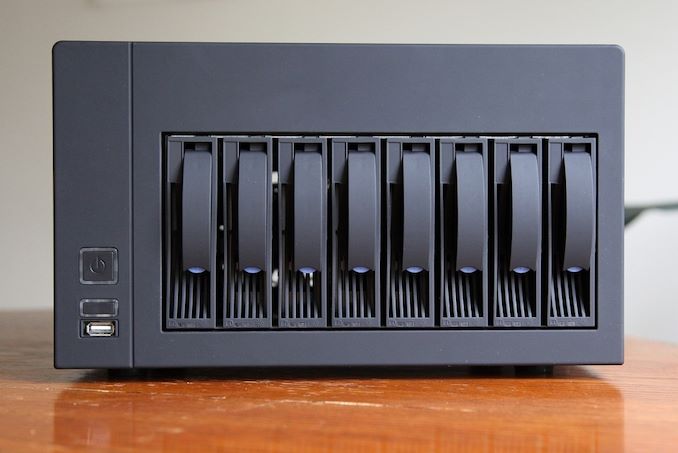
Synology announced the 4-bay DS420j NAS at CES 2020, though the details of the unit have been public for a few months now. It is based on the same Realtek RTD1296 used by QNAP in its TS-230 unit. The DS420j accommodates two extra bays compared to that unit and comes with 1GB of RAM . There is a single gigabit LAN port and two USB 3.0 ports in the unit. The unit supports the ext4 filesystem only for the internal volume.
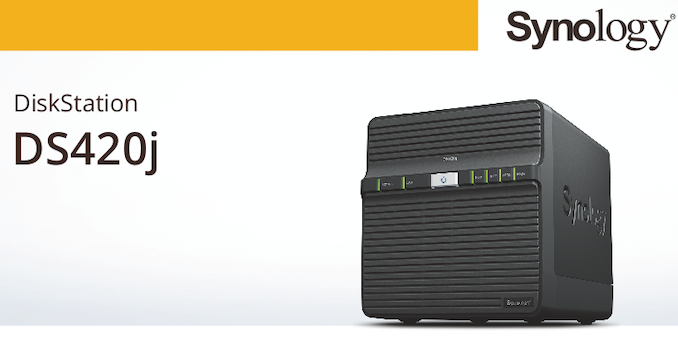


Synology is also promising new features in their updates to the Synology DSM over the course of 2020, but was silent on the details. We look forward to hearing about the new features shortly. On the business / enterprise side, Synology also announced the availability of the SA3600, a 12-bay Xeon-D 1567-based NAS with SATA / SAS support, two 10GB BASE-T ports, and four gigabit LAN ports. The 2U rackmount NAS also comes with two PCIe 3.0 x8 slots and can support both btrfs and ext4 for the internal volume. They key feature of the SA3600 is the expandability offered with the help of the 12- and 24-bay RX1217sas and RX2417sas expansion units. The maximum number of supported drive bays is 180.


Terramaster at CES 2020


Terramaster started off as a direct-attached storage (DAS) manufacturer. We had reviewed one of their offerings back in 2017. Recently, they have started a push on the NAS front too, with products targeting a wide range of customers ranging from home consumers to enterprises. The products on display at CES 2020 were actually the ones launched last year, but they did provide insight into the breadt of their offerings.
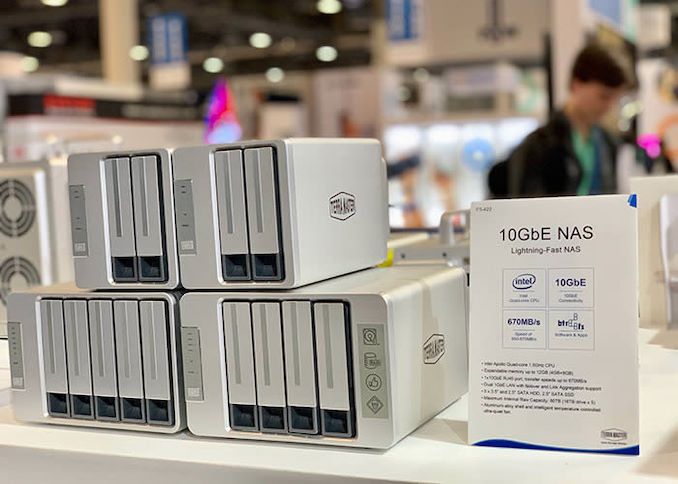


The key product from Terramaster, in our opinion, is the surprisingly affordable F5-422. At $570 for a 10GBASE-T Apollo Lake x86-based 5-bay unit supporting btrfs, it doesn’t break the bank. However, the platform holds back the maximum speeds to around 650 MBps over the 10GBASE-T port. Terramaster’s TOS 4.1 operating system is the Linux-based OS for their NAS units and it comes with a ‘desktop-like’ UI similar to Synology’s DSM. The company also had rackmount enterprise NAS units based on Denverton and Core i3 platforms, as well as Thunderbolt 3-equipped DAS units at their booth.


Source: AnandTech – Asustor, QNAP, and Synology Introduce New NAS Units at CES 2020

Intel: 28 W Ice Lake Core i7-1068G7 Coming Q1

One of most frequent questions I’ve had in my personal inbox over the last few weeks has been questioning the existence of the fastest Ice Lake processor. Back when Intel announced the Ice Lake family, it consisted of a top 28 W part, several 15 W chips, and a number of 9 W CPUs. To date, all we’ve seen are the 15 W chips, and so I reached out to Intel asking for an update on the situation.


Source: AnandTech – Intel: 28 W Ice Lake Core i7-1068G7 Coming Q1

Got a Spare $10,000? Here’s Your Keyboard: ADATA’s 24K Gold Design

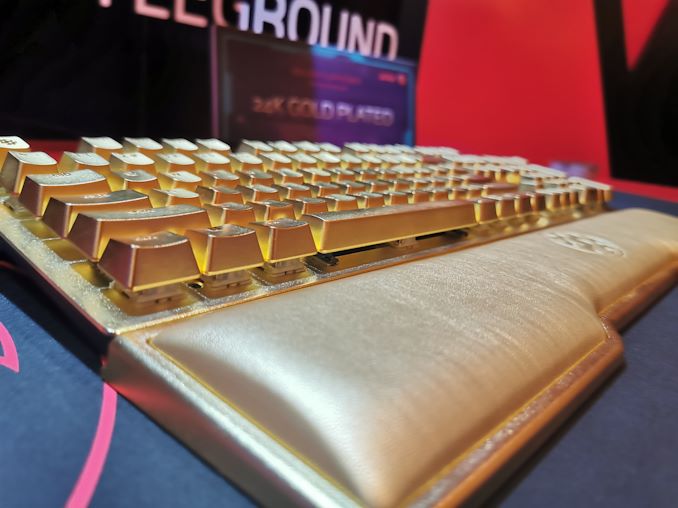
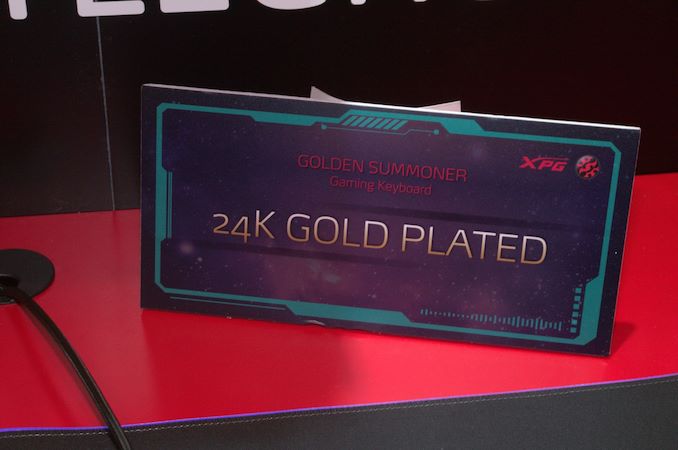
RGB has been the main ‘feature’ of the gaming PC market of late, with all the fancy lights adding to the ‘bling’ of a standard machine. But what if that bling was actual bling, and we started moving into precious metals being used for the most random accessories? Well ADATA has you covered with its 24-carat gold keyboard design.


ADATA told us that they initially received the request from someone with enough money, and they designed their aluminium Summoner keyboard to have 24K gold plating. After building it, they built a few more: six to be exact. The retail price of the unit, we were told, is $10k. Unfortunately ADATA isn’t sampling this one to press.


The gold on the keyboard is a plating, rather than making it solid gold. However, behind the gold is aluminium, which makes it heavier than a standard keyboard. The unit was actually quite cold to type on, given that all the keys are metallic. The keyboard isn’t plated at the bottom, in case anyone was wondering.


If you have money burning a hole in your pocket, then give your ADATA rep a call.


I forgot to ask if it comes with a warranty.


Source: AnandTech – Got a Spare ,000? Here’s Your Keyboard: ADATA’s 24K Gold Design

CES 2020: Kingston’s HyperX Adds 32 GB UDIMMs & New Fury Speed Bins to Lineup

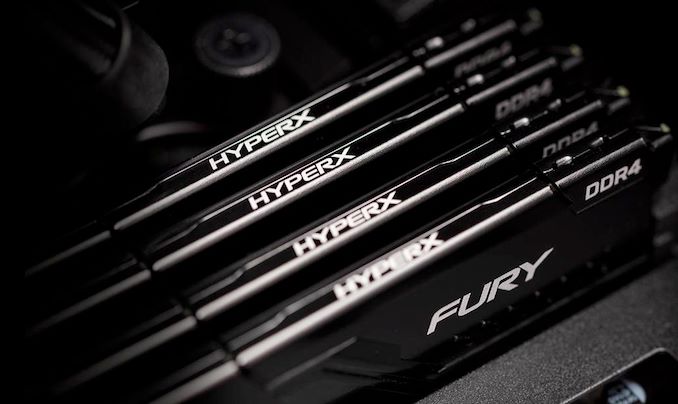
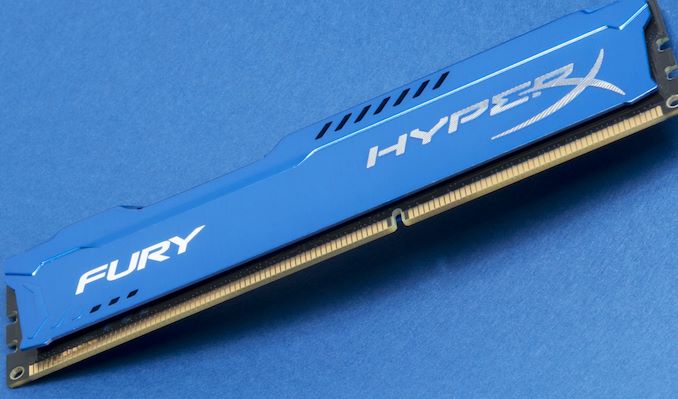
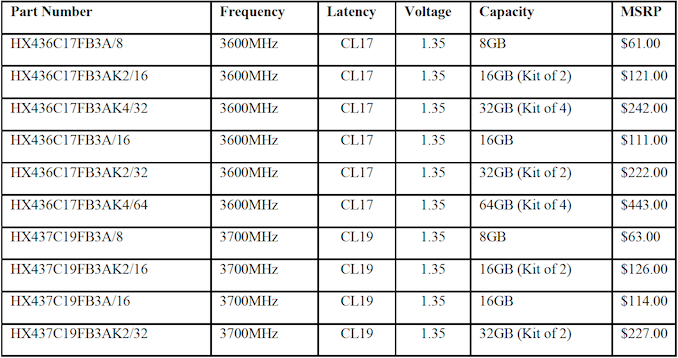
Kingston’s HyperX division introduced a stack of new memory modules at CES 2020. Firstly, the company added 32 GB unbuffered DIMMs and SO-DIMMs to its Fury and Impact families. Secondly, the Fury and Fury RGB lineups now include DDR4-3600 as well as DDR4-3700 modules.


32 GB: Now From Kingston HyperX


Kingston’s 32 GB HyperX Fury unbuffered DIMMs as well as 32 GB Impact unbuffered SO-DIMMs are based on 16 Gb memory chips from an undisclosed supplier. According to the manufacturer, the 32 GB modules feature XMP SPD profiles for easier speed setting and are compatible with the latest platforms from AMD and Intel.


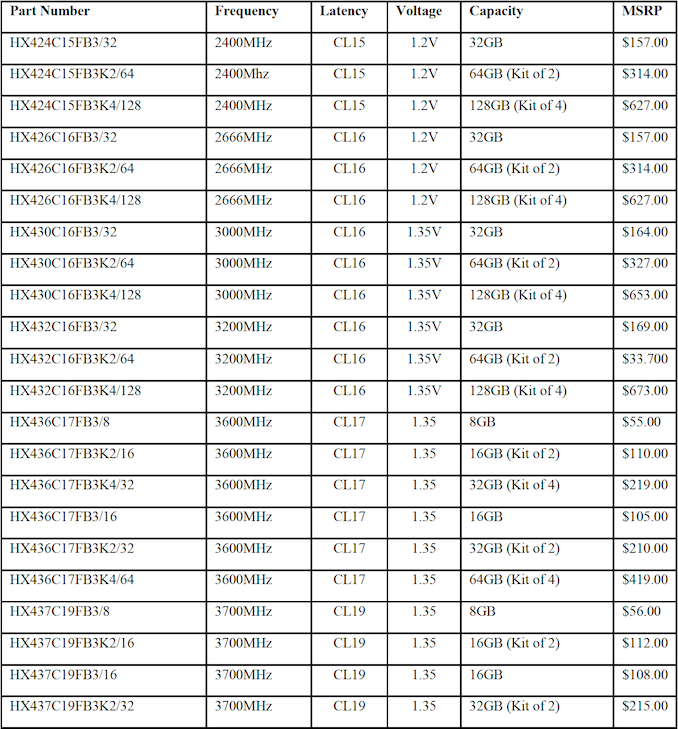
The desktop-oriented 32 GB HyperX Fury UDIMMs are rated for DDR4-2400/CL15 at 1.2V, DDR4-2666/CL16 at 1.2 V, DDR4-3000/CL16 at 1.35 V, and at DDR4-3200/CL16 at 1.35 V operation. These modules are equipped with aluminum heat spreaders and will be available solo, in 64 GB duos, and in 128 GB quartets.


Prices of the modules will vary from $157 for a 32 GB DDR4-2400/CL15 UDIMM to $673 for a 128 GB DDR4-3200/CL16 kit.


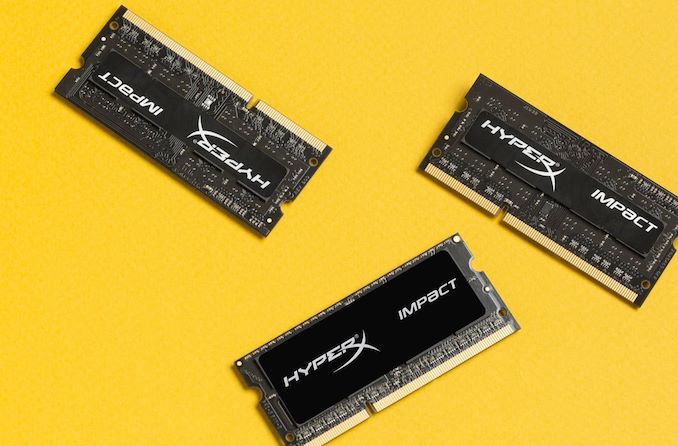
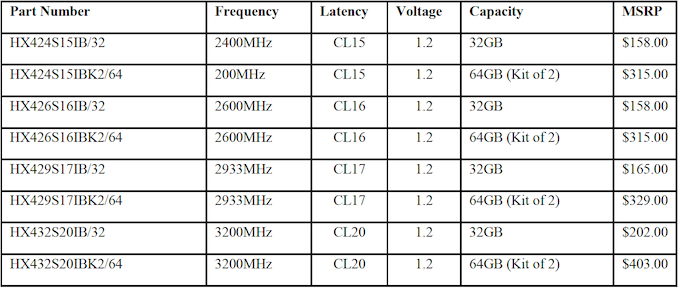
The notebook-bound 32 GB HyperX Impact SO-DIMMs all feature a 1.2 V VDDQ and are rated for DDR4-2400/CL15, DDR4-2600/CL16, DDR4-2933/CL17, and DDR4-3200/CL20. In a bid to maintain compatibility with as many laptops as possible, these modules do not have metallic heat spreaders and will be available as single modules and as 64 GB kits. One 32 GB HyperX Impact DDR4-2400/CL15 module is priced at $158, whereas a 64 GB DDR4-3200/CL20 kit costs $403.
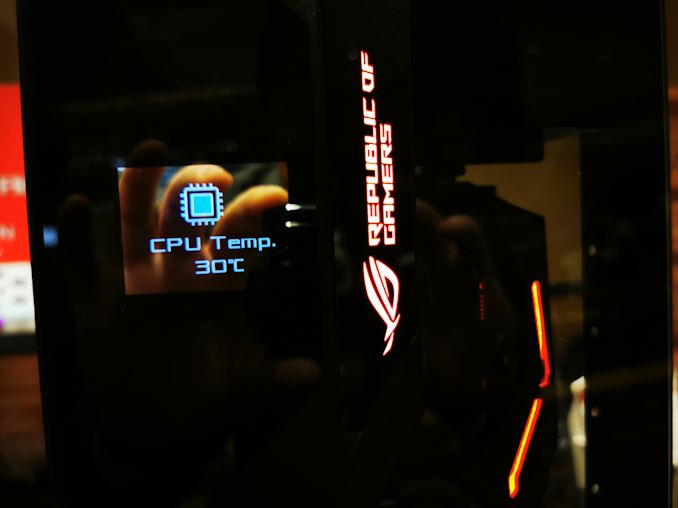


Furious DDR4-3600 & DDR4-3700
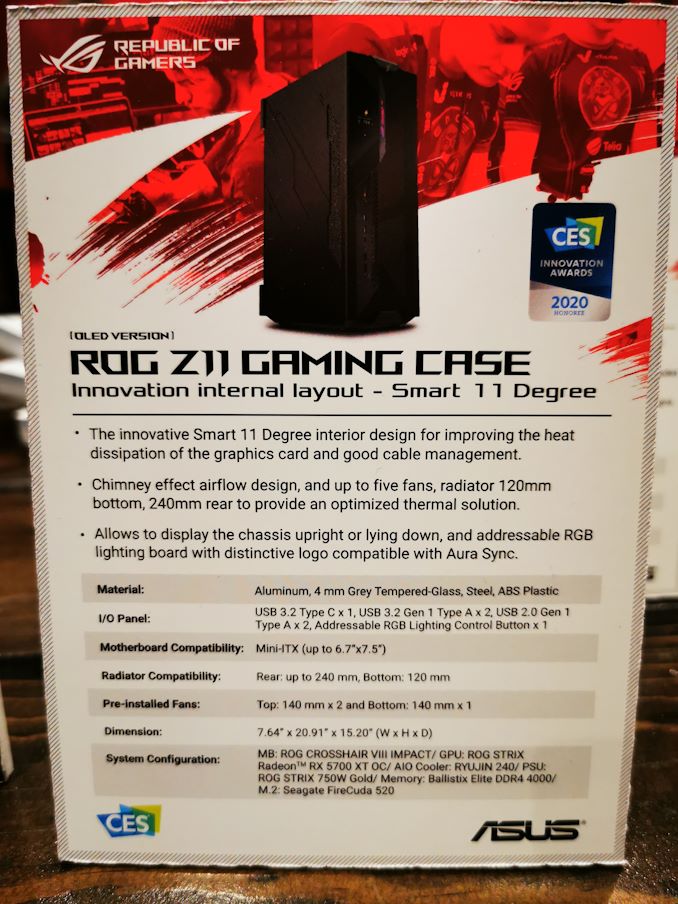


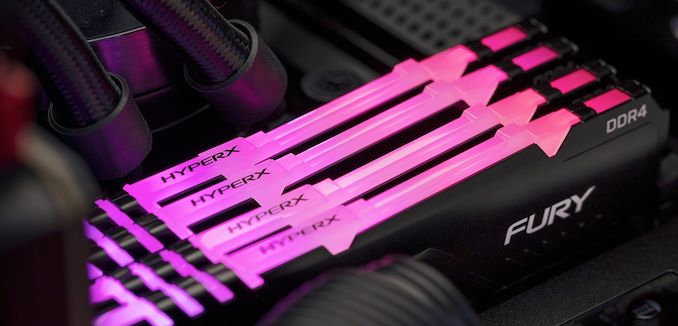
The HyperX Fury and HyperX Fury RGB modules are not Kingston’s top-of-the-range offerings aimed at PCs where every bit of performance matters, this is a prerogative of the HyperX Predator lineup. Nonetheless, both HyperX Fury and HyperX Fury RGB families are gradually increasing performance, so from now on the company offers 8 GB and 16 GB UDIMMs rated for DDR4-3600/CL17 and DDR4-3700/CL19 at 1.35 V operation.


Quite naturally, faster HyperX Fury and HyperX Fury RGB memory modules cost more than slower ones. The 32 GB HyperX Fury DDR4-3700/CL19 kit carries a price tag of $215, whereas the blingy 32 GB HyperX Fury DDR4-3700/CL19 kit is priced at $227.


Availability


At press time, HyperX Gaming website did not list the new 32 GB UDIMMs nor the DDR4-3600 and DDR4-3700 offerings. But since Kingston has already published MSRPs for the new products, expect them to hit the market shortly.


Related Reading:


Source: Kingston/HyperX


Source: AnandTech – CES 2020: Kingston’s HyperX Adds 32 GB UDIMMs & New Fury Speed Bins to Lineup

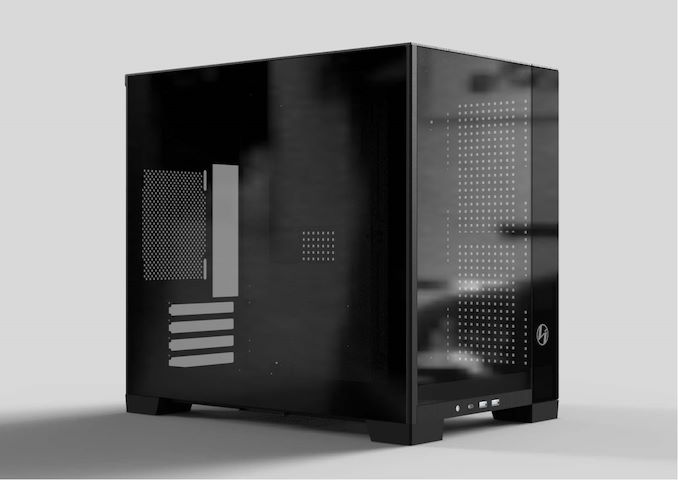
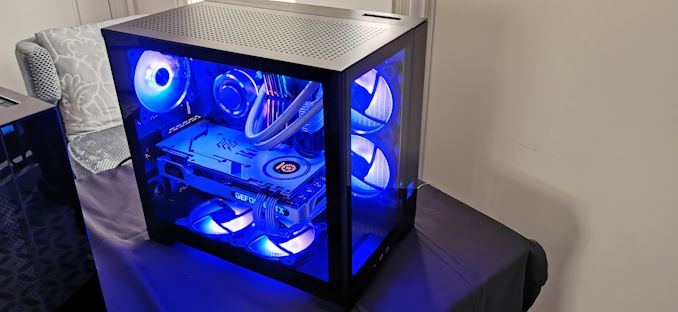
CES 2020: Lian Li Unveils The O11D Mini: A Versatile 38 Liter ATX Chassis

During CES 2020, renowned chassis manufacturer Lian Li unveiled its latest chassis, the O11D Mini. Remodelling the popular O11 Dynamic into a more compact shell, Lian Li has made the new O11D Mini very space-efficient for an ATX case, with a total volume of just 38 liters.


The Lian Li O11D Mini can fit ATX, Micro ATX, and Mini-ITX motherboards, and offers plenty of support for water-cooled systems. Depending on the form factor of the motherboard installed, the O11D Mini can house up to three 280 mm radiators with a mini-ITX motherboard installed, a 280 mm and 240 mm radiator with a micro-ATX motherboard, and two 240 mm radiators with an ATX sized board. Bundled with the O11D is three motherboard trays, one for each of the supported form factors.


Devised from the same DNA as the Lian Li O11 Dynamic, which also allows users to order customized water-cooled mid-plates for better cooling support with style, the O11D Mini retains a similar design, but with a much smaller desktop footprint. At the rear is four PCI blanking plates with an all-black aluminum design, while the internal structure is made of steel. The case also includes a tempered glass side panel, as well as a glass front panel.


While there is no other information available at present on exact dimensions or the maximum supported graphics card length, the Lian Li O11D Mini is on display at CES 2020. Lian has said the price is expected to be below $100 and will hit retail shelves in May of this year.


Source: AnandTech – CES 2020: Lian Li Unveils The O11D Mini: A Versatile 38 Liter ATX Chassis