ASML Ramps Up EUV Scanners Production: 35 in 2020, Up to 50 in 2021

ASML shipped 26 extreme ultraviolet lithography (EUVL) step-and-scan systems to its customers last year, and the company plans to increase shipments to around 35 in 2020. And the ramp-up won’t stop there: as semiconductor fabs ramp up their own usage of EUV process technologies, they are going to need more leading-edge equipment, with ASML expecting to sell up to 50 EUVL scanners in 2021.


With 26 EUV scanners sold last year, ASML did not quite meet its goal of selling (which means building and installing) 30 EUV production tools in 2019. Nonetheless, it is still considerably higher than 18 EUV tools shipped in 2018. In the Q4 2019 alone, ASML shipped eight EUV machines, and received orders for nine more, which is a good indicator that demand for EUV tools is growing as semiconductor makers adopt EUVL for high-volume manufacturing (HVM) using their 5 nm and 7 nm nodes.


What is no less important than record EUV shipments is that in 2019 the company deployed six Twinscan NXE: 3400C scanners that can process more than 170 300-mm wafers per hour (up from 125 WPH – 155 WPH in case of the NXE: 3400B) and which use the latest light source from Cymer. The final configuration of the Twinscan NXE: 3400C will cost about 30% more than the NXE: 3400B, which will (among other things) help to drive ASML’s EUV revenue from €2.8 billion in 2019 to €4.5 billion in 2020.


ASML’s EUV Shipments
  2018 2019 2020 2021
Actual 18 26 35 45 – 50
Target 20 30 ? ?

One of ASML’s complications though is that because demand for EUV scanners consistently outpaces supply,  the company cannot meet its own sales goals. In 2018 the company shipped 18 EUV scanners, two short of its goal of 20. And in 2019 it missed its own target by four units, which slipped to 2020 ‘due to temporary supply constraints in the NXE:3400C ramp’ and are now a part of this year’s target. In fact, some market observers estimate that ASML may have a backlog of as many as 49 EUV scanner orders.


ASML believes that in a bid to meet its EUV shipments targets for 2020 and 2021, it will have to increase its output capability by reducing its cycle time for EUV tools because lead time reduction takes longer. The company is confident that it can increase its output capability to ‘above 50’, though to go above 60 it will have to use its production facility currently constructed for high-NA (0.55 NA) to build its EUV low-NA (0.33 NA) tools. Considering that high-NA scanners are years away, the decision may be instrumental, but will require additional investments.


Peter Wennink, CEO of ASML, said the following:


In EUV, it was a breakthrough year with the technology now starting in high volume production and producing consumer products that are available in the market. As we continue to execute on our accelerated EUV roadmap, we were able to ship our first NXE:3400C in 2019, which provides higher productivity, translating to increased customer value, delivering higher ASP and improved gross margins. We shipped six 3400C systems in Q4, of the eight EUV systems total we shipped in the quarter, bringing the total to 26 EUV systems and full year sales of around 2.8 billion euros in 2019.[…]


For full-year 2020, we plan for EUV sales of around €4.5 billion on 35 systems. We continue to see demand building for next years’ shipments and expect a healthy order flow to continue. In order to fulfill the expected strong demand increase, we are working on cycle time reduction to enable a capacity of 45-50 systems next year. 2021 is shaping up to be a very busy year.


Related Reading:


Sources: ASML, WikiChip, SeekingAlpha


Source: AnandTech – ASML Ramps Up EUV Scanners Production: 35 in 2020, Up to 50 in 2021
MSI’s Optix MAG342CQR Ultra Curved Monitor: 34 Inch & 144Hz with a 1000R Curve

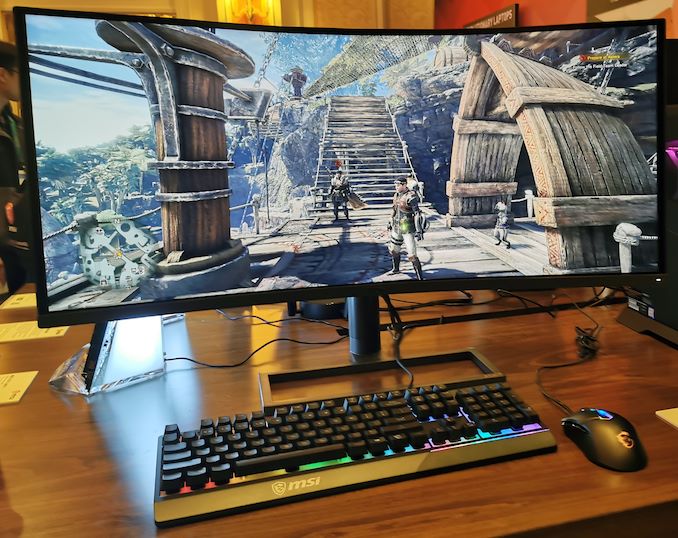
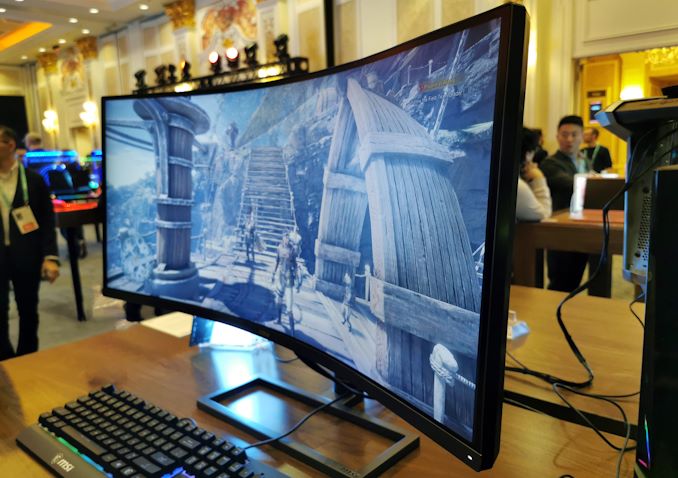
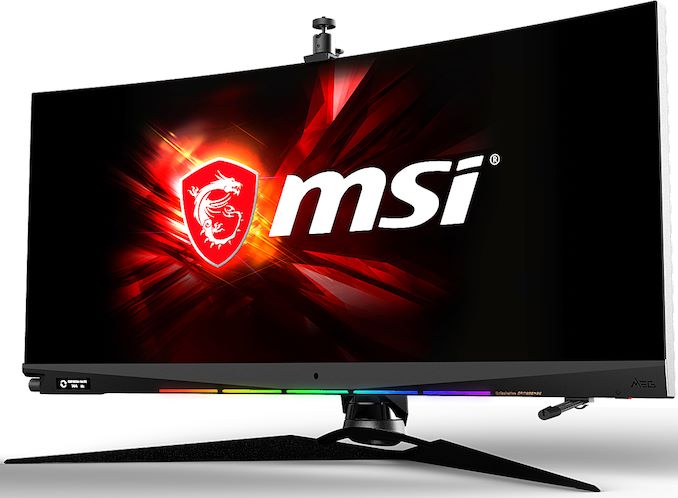
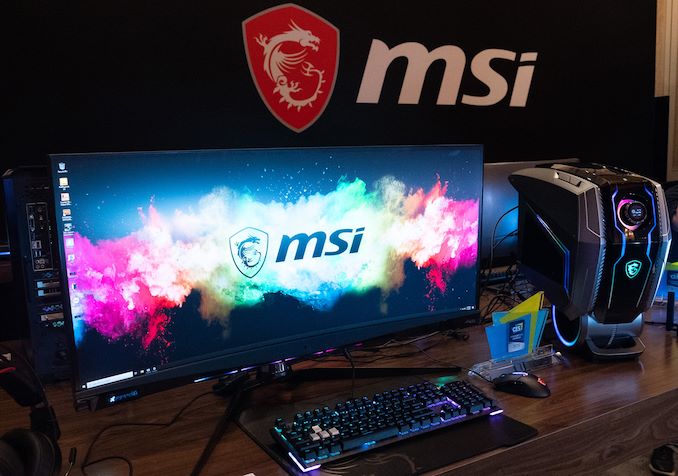
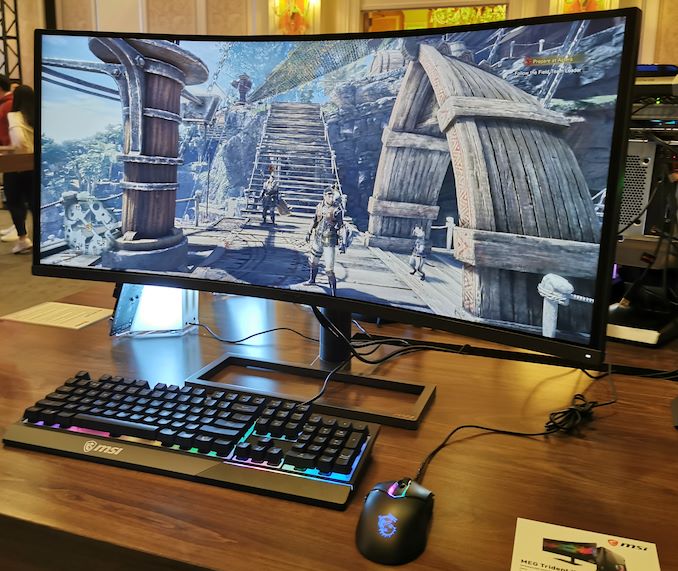
Having entered the market for gaming displays not so long ago, MSI is certainly not afraid of experimenting with various technologies in a bid to address niches that are not yet crowded with competitors. At CES, the company demonstrated its aggressively curved Optix MAG342CQR monitor that also boasts a 144 Hz variable refresh rate as well as quantum dot backlighting enhancements for accurate colors and a wider color gamut.


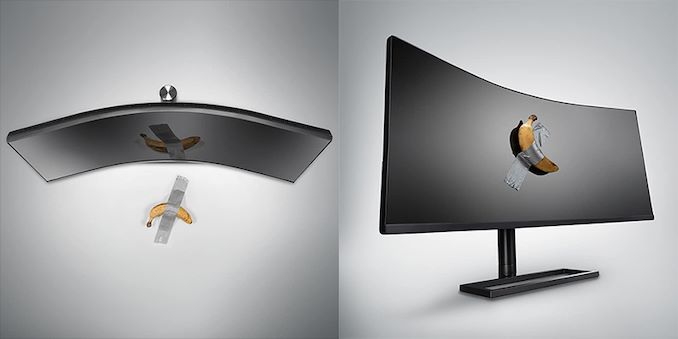
The MSI Optix MAG342CQR display uses a 34.5-inch Super PVA panel featuring a 3440×1440 resolution, a 21:9 aspect ratio, a 1 ms response time, and maximum refresh rate of 144 Hz. The key characteristic of this panel is its aggressive curvature of a 1000R radius, which MSI promotes as being the most optimal curvature, matching the curvature of the human eye.


The Optix MAG342CQR comes with a LED backlighting enhanced with quantum dots that improve color accuracy and ensures that the monitor can accurately display 1.07 billion colors. At the moment, MSI does not disclose which color gamuts will be supported by the display, but we are almost certainly talking about the sRGB and DCI-P3 spaces.


Traditionally for contemporary gaming displays, the MSI Optix MAG342CQR support VESA’s Adaptive-Sync variable refresh rate technology, so it is logical to expect the monitor to gain AMD’s FreeSync and NVIDIA’s G-Sync Compatible certifications by the time of its commercial launch later this year.


One of the interesting things to note about MSI’s Optix MAG342CQR is that it is based on a Super PVA panel made by Samsung Display, according to TFT Central. Samsung itself introduced its own lineup of ultra-curved displays featuring a 1000R curvature at CES, but its family does not include a 21:9 34-inch LCD just yet, so MSI currently has the world’s only 34-inch monitor with a 1000R curvature.


MSI plans to ship its Optix MAG342CQR sometimes in Q2 or Q3 this year, but does not have a firm launch date just yet.


Related Reading:


Source: MSI, TFT Central


Source: AnandTech – MSI’s Optix MAG342CQR Ultra Curved Monitor: 34 Inch & 144Hz with a 1000R Curve

HP’s New Rugged Education Edition Chromebooks: 11.6- & 14-Inch Displays, Low-Power CPUs

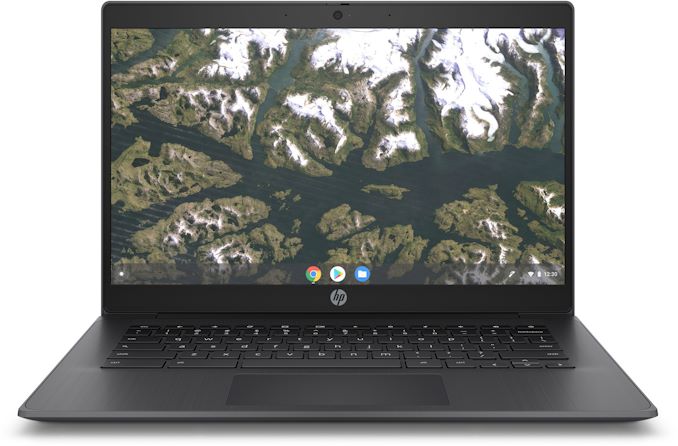
HP this week introduced its new family of Chromebooks designed for students and teachers. The laptops use low-power SoCs from AMD and Intel to ensure a long battery life, they are rugged enough to survive classes and their feature set is tailored for the specifics of educational environments.


HP’s new family of Education Edition Chromebooks includes four machines: the HP Chromebook 11 G8 EE based on Intel’s dual-core or quad-core Celeron N4000-series ‘Gemini Lake’ SoCs; the HP Chromebook 11A G8 EE featuring AMD’s A4-9120C and A6-9220C SoCs with Excavator x86 cores and a GCN 3-based GPU; the convertible HP Chromebook 11 x360 G3 EE powered by Gemini Lake; and the HP Chromebook 14 G6 also with Gemini Lake inside.


As their names suggest, the notebooks feature a 11.6-inch and 14-inch display with or without touch and/or stylus support. Most of the models will have a 1366×768 resolution, but there will be 14-inch SKUs with a 1920×1080 resolution.


All the 2020 Education Edition Chromebooks machines from HP are built to withstand drops on wood and concrete, they feature a spill-resistant keyboard, and support modern connectivity, such as Wi-Fi 5, USB Type-C, and microSD. In order to ensure that all modern programs for education can run fast enough even when used simultaneously, the systems come equipped with 8 GB of RAM, but their local storage is limited to an eMMC 5.1 drive with capacities ranging from 16 GB to 128 GB. Meanwhile, like all Chromebooks, these are feature Google’s H1 security chip.


HP’s 2020 Education Edition Chromebooks are equipped with a 47.36 Wh battery that provides from 10 to 13.5 hours of battery life, according to the manufacturer. As for portability, the laptops feature a 1.83 cm – 2.09 cm z-height and weight from 1.32 kilograms to 1.54 kilograms. Considering the fact that these Chromebooks will be used primarily in classes and are not supposed to be carried around for a long time, they seem compact and light enough.


HP’s 2020 Education Edition Chromebooks
  Chromebook

11 G8
Chromebook x360 11 G3 Chromebook

11A G8
Chromebook

14 G6
Display Diagonal 11.6-inch 14-inch
Resolution 1366×768 1366×768

1920×1080
Type/

Brightness/

Touch
SVA/220cd/m²

IPS/220cd/m²

IPS/220cd/m²/T
IPS/220cd/m²/T

Gorilla Glass 3

with or without digitizer
SVA/220cd/m²

IPS/220cd/m²

IPS/220cd/m²/T
SVA/220cd/m²

IPS/250cd/m²

SVA/220cd/m²/T

IPS/250cd/m²/T
CPU Intel Celeron N4120 – 4C

Intel Celeron N4100 – 4C

Intel Celeron N4020 – 2C

Intel Celeron N4000 – 2C
AMD A6-9220C

AMD A4-9120C

2 cores
Celeron N4120

Celeron N4100

Celeron N4020

Celeron N4000
Security Chip Google H1
Graphics Intel UHD Graphics 600 AMD Radeon R5

AMD Radeon R4
UHD 600
RAM 8 GB LPPDR4-2400 8 GB DDR4-1866 8 GB LPPDR4-2400
Storage Capacity 16 GB

32 GB

64 GB
32 GB

64 GB
16 GB

32 GB
16 GB

32 GB

64 GB

128 GB
Type eMMC 5.0
Wi-Fi Intel Dual Band Wireless-AC 9560 (Wi-Fi 5) Qualcomm

Wi-Fi 5
Intel Dual Band Wireless-AC 9560
Bluetooth Bluetooth 5.0 Bluetooth 4.2 Bluetooth 5.0
WWAN
GbE
Display Output HDMI
USB Type-A 2 × USB 3.1 Gen 1 2 × USB 2.0 2×USB 3.1 Gen 1
Type-C 2 × USB 3.1 Gen 1 1×USB 3.1 Gen 1
Camera Webcam 720p 720P w/shutter
Main 5 MP
Other I/O microSD, TRRS connector for audio, speakers, microphones
Battery 47.36 Wh
Dimensions Thickness 1.88 cm | 0.74 in 2.09 cm | 0.82 in 1.88 cm | 0.74 in 1.83 cm | 0.72 in
Width 29.5 cm | 11.61 in 32.65 cm | 12.85″
Depth 20.53 cm | 8.08 in 22.7 cm | 8.93 in
Weight 1.32 kg | 2.91 lbs 1.45 kg | 3.19 lbs 1.37 kg | 3.02 lbs 1.54 kg | 3.38 lbs
Battery Life ? ? 10 hours 13.5 hours
Price (starting at) ? ? ? ?

HP will start shipping its 2020 Intel-based EE Chromebooks this month, whereas AMD-powered models will be available in February. Prices will vary depending on the configuration.


Related Reading:


Source: HP


Source: AnandTech – HP’s New Rugged Education Edition Chromebooks: 11.6- & 14-Inch Displays, Low-Power CPUs

NZXT Releases C-Series PSUs: 80Plus Gold and up to 850W, Built By Seasonic

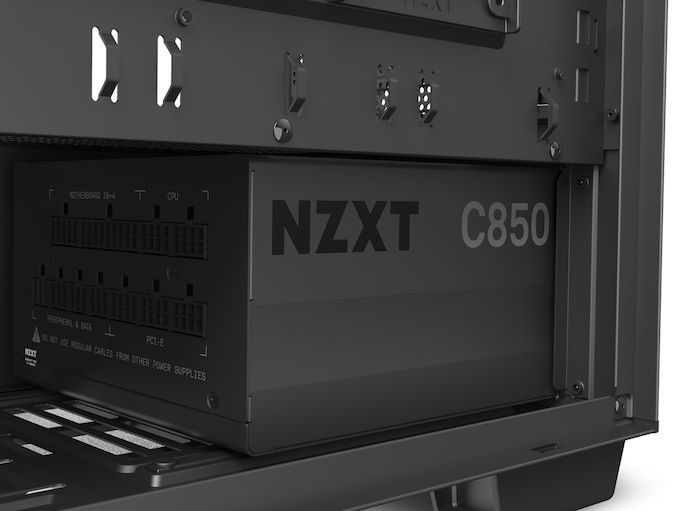
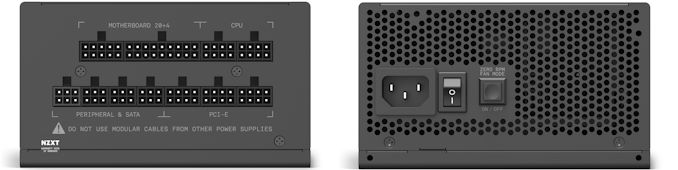
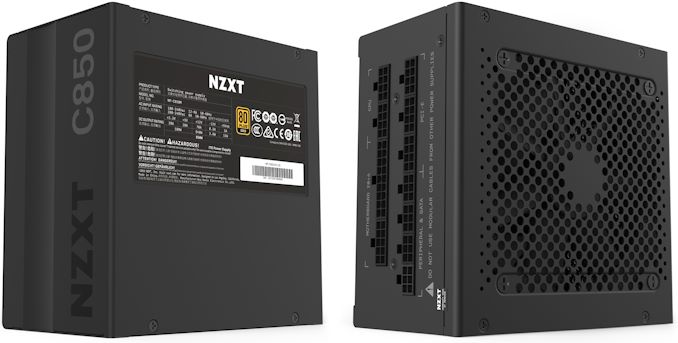
NZXT has introduced its new lineup of essential power supplies for gaming systems that promise high quality at reasonable prices. NZXT’s modular C-series PSUs will be available in 650 W, 750 W, and 850 W capacities that will also support the latest high-end graphics cards to drive gaming sessions, as well as Zero-RPM mode under low loads for quiet operation.


The NZXT C-series power supplies are made by Seasonic, which produces PSUs for numerous brands, and has a reptuation for building high-quality PSUs. Accordingly, the Seasonic-built units are using ‘high-quality components’ and are compliant with the ATX12 v2.4/EPS12V v2.92 specifications. The power supplies conform to the 80Plus Gold requirements, so they are they are mandated to be 87% – 92% efficient under a 50% or 100% load as well as 87% – 90% efficient under a 20% load.


NZXT’s C-series PSUs measure 150×150×86 mm and therefore they can fit into any ATX-compliant computer case, including smaller ones. All devices are equipped with a 120-mm fluid dynamic bearing fan that produces up to 32.3 dBA noise, but which can work in Zero-RPM mode (activated with a press of a button) when the load is light.


NZXT C-Series PSUs Output Specifications
  650 W 750 W 850W
Rated Combined Rated Combined Rated Combined
+3.3V 20 A 100 W 20 A 100 W 20 A 100 W
+5V 20 A 20 A 20 A
+12V 54 A 648 W 62 A 648 W 70 A  840 W
-12V 0.3 A 3.6 W 0.3 A 3.6 W 0.3 A 3.6 W
+5Vsb 3 A 15 W 3 A 15 W 3 A 15 W
Total Power 650 W 750 W 850 W

Rated for 650 W, 750 W, and 850 W, NZXT’s C-series PSUs can handle performance gaming PCs with one or two AMD Radeon VII or NVIDIA GeForce RTX 2080 Ti graphics cards (two high-end boards are supported only by the 850 W SKU), up to eight SATA drives, and three or six peripherals.


NZXT C-Series PSUs Connectivity Specifications
Connector type 650 W 750 W 850 W
ATX 24 Pin 1
EPS 4+4 Pin 1
EPS 8 Pin
PCIe 6+2 Pin 2 4 6
SATA 8
4P Molex 3 6
Floppy

NZXT will start sales of its C-series PSUs shortly first in the USA and then in the rest of the world. The cheapest 650 W model is priced at $109.99, the mid-range 750 W SKU costs $119.99, and the higher-end 850 W version carries a $129.99 price tag. The power supplies are backed with a 10-year warranty, which is becoming increasingly common for mid-range and high-end PSUs.


Related Reading:


Source: NZXT


Source: AnandTech – NZXT Releases C-Series PSUs: 80Plus Gold and up to 850W, Built By Seasonic

USB 3.2 Gen 2 Portable SSDs Roundup – Featuring the Samsung T7 Touch and the SanDisk Extreme Pro

External bus-powered storage devices have grown in storage capacity as well as speeds over the last decade. Palm-sized flash-based storage devices with a Thunderbolt 3 interface are capable of delivering 2GBps+ speeds, while the USB-based mainstream market has moved on to to 1GBps+ offerings in the last year. In today’s review, we take a look at a number of different bus-powered USB 3.2 Gen 2 storage devices featuring NVMe SSDs, including the Samsung Portable SSD T7 Touch and the SanDisk Extreme Pro Portable SSD.


Source: AnandTech – USB 3.2 Gen 2 Portable SSDs Roundup – Featuring the Samsung T7 Touch and the SanDisk Extreme Pro

Motorola’s $1500 Foldable Razr to Ship Early February: Pre-Orders Soon

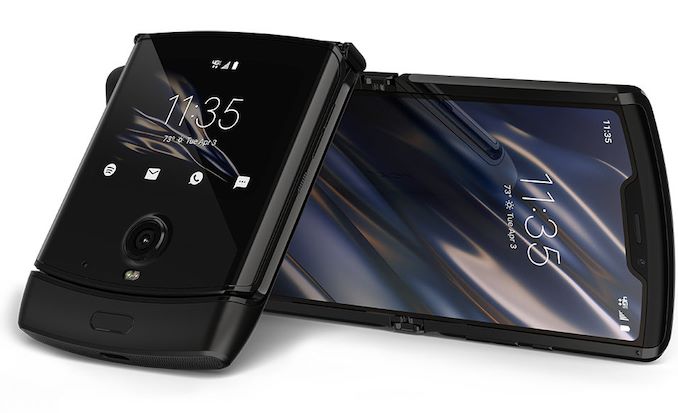
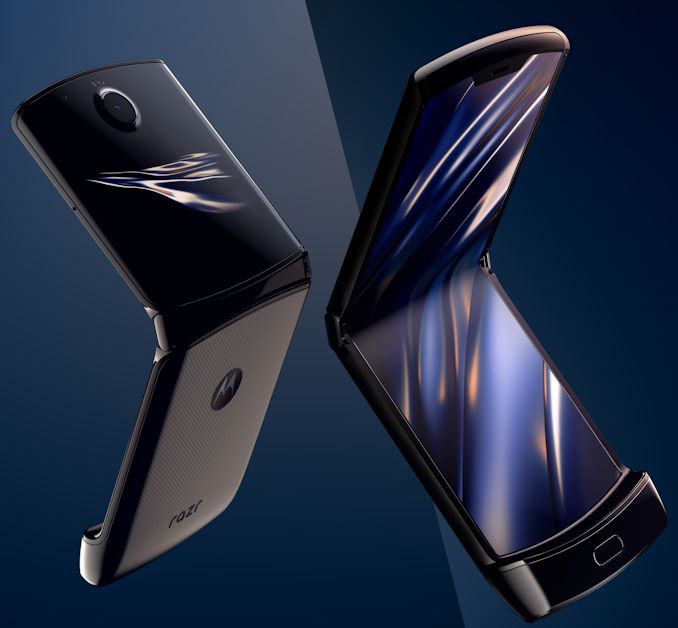
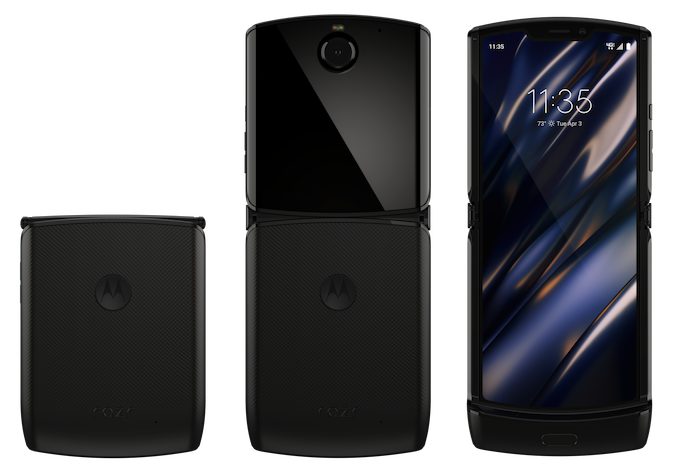
Today Motorola announced it will ship its foldable flip smartphone on February 6 and will start pre-orders on January 26. The new Motorola Razr will be available for pre-order directly from the company, from Verizon, and from Walmart. Being a unique phone with a foldable display, the list price for the 2020 Razr without contract is set to be $1500.


The main feature of the new Motorola Razr is its exclusive clamshell design with a foldable 6.2-inch pOLED main screen and a 2.7-inch OLED external display. Because of internal architecture of the smartphone, and space constraints, Motorola use Qualcomm’s mid-range Snapdragon 710 SoC with 6 GB of RAM and 128 GB of storage rather than a flagship 8-series SoCs. 


Motorola originally planned to start taking pre-orders on the new Razr on December 26, 2019, to then begin shipments on January 6, 2020. As it turns out, the demand for the foldable flip smartphone was so high that the company had to delay its launch to build more units. 


The new Motorola Razr will cost $1,499. Verizon will offer trade-in programs to its customers (up to $300 per device) and those who switch to it (up to $500 per device) to sweeten the deal. Furthermore, it will be possible to split up the price of the new Razr to 24 payments of $62.49 a month.


Related Reading:


Source: The Verge, Slashgear


Source: AnandTech – Motorola’s 00 Foldable Razr to Ship Early February: Pre-Orders Soon

TerraMaster Reveals TD2 Thunderbolt 3 DAS: 2 Bays For 32 TB

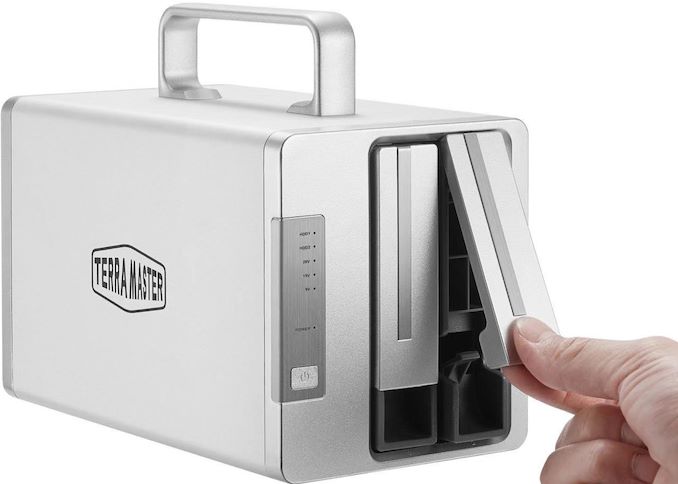
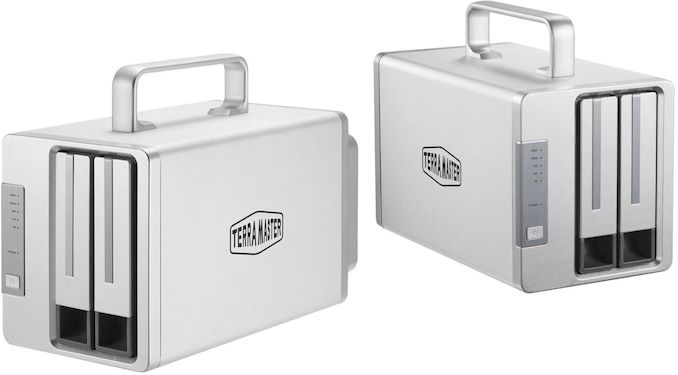
TerraMaster has unveiled a new entry-level Thunderbolt 3 DAS, the aptly named TD2 Thunderbolt 3, which is aimed at video professionals who need a relatively small storage device that still provides ample capacity. On the whole the new dual-bay DAS is relatively basic, with TerraMaster aiming to keep the retail price down while still offering enough performance for today’s on-set video workflows.


TerraMaster’s TD2 Thunderbolt 3 DAS can house two 2.5-inch or 3.5-inch SATA storage devices operating in single disk, JBOD, RAID 0, or RAID 1 mode (selectable using a hardware knob on the back). At present, the device supports up to two 16 TB hard drives, offering a current maximum capacity of 32 TB. As for performance, TerraMaster says that the DAS can support up to 760 MB/s read speeds when two SSDs are used. To ensure that the drives installed in the DAS do not overheat, the product also has its own cooling system.


The TD2 Thunderbolt 3 DAS has two Thunderbolt 3 connectors to daisy chain the device with another TB3 appliances, as a DisplayPort to easily connect a 4K monitor without using an additional port and/or cable. Meanwhile, it’s worth noting that the DAS does not to support power delivery back to the host.


TerraMaster’s TD2 Thunderbolt 3 DAS is now available directly from the company as a barebones device for $249.


Related Reading:


Source: TerraMaster


Source: AnandTech – TerraMaster Reveals TD2 Thunderbolt 3 DAS: 2 Bays For 32 TB

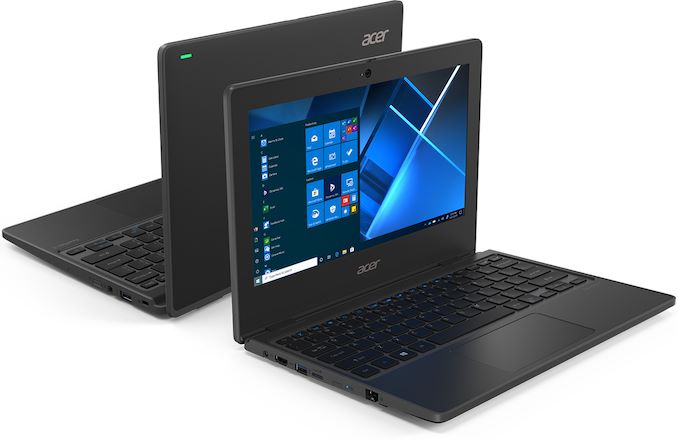
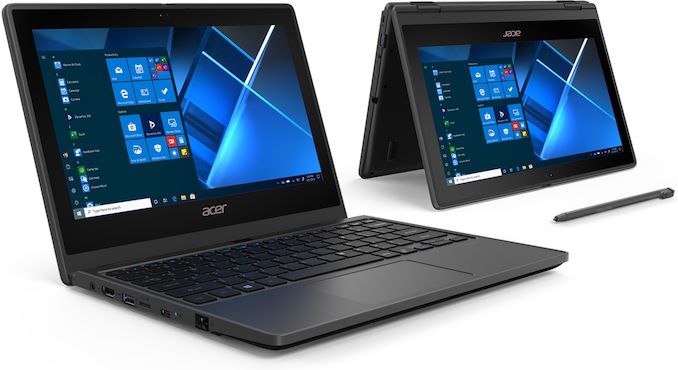
Acer Unveils TravelMate B3 Notebook & Convertible: 11.6-Inch LCD & Gemini Lake Refresh

Alongside their new Chromebooks, Acer has also revealed a new set of inexpensive Windows laptops aimed at students. Powered by Intel’s Gemini Lake SoCs, Acer’s TravelMate B3 will be available in clamshell and convertible form-factors to satisfy different needs.


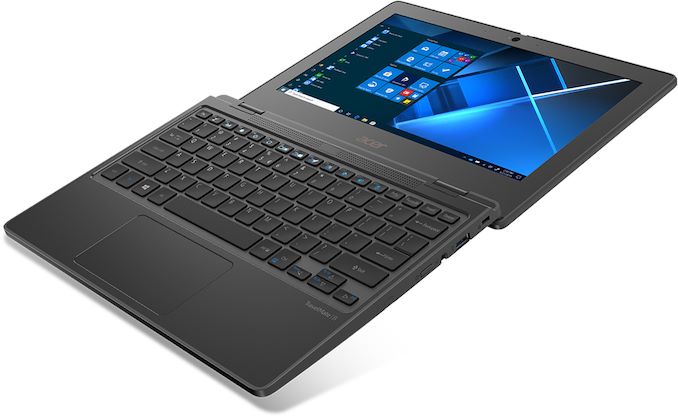
Acer’s TravelMate B3 machines use a rugged chassis made of plastic that is said to be impact resistant and therefore tough enough for educational environments. The mobile PCs are equipped with a 11.6-inch, 16:9 aspect ratio IPS display, with Acer offering either a 1366×768 or 1920×1080 resolution panel depending on SKU. Meanwhile, with a 20.95 mm z-height and at up to 1.49 kilograms weight the computers are clearly designed for longevity and durability over portability.


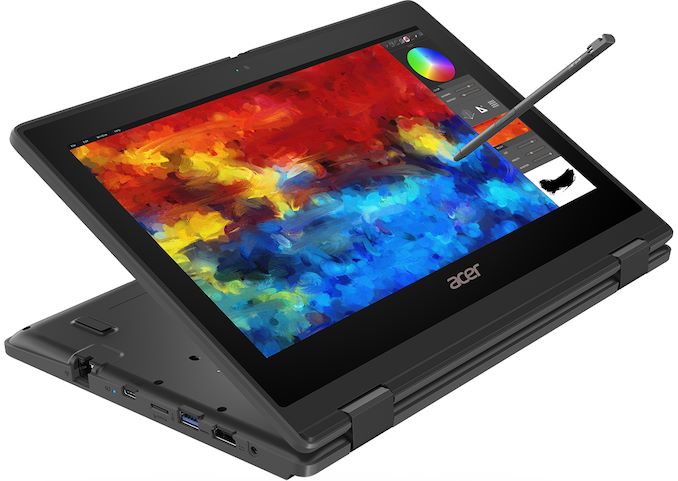
As noted above, the TravelMate B3 machines will be available in two form factors. The clamshell model will be sold as the TravelMate B3, while the convertible will be sold under Acer’s Spin sub-brand as the TravelMate B3 Spin. Both portables are based on Intel’s low-power quad-core Gemini Lake Refresh SoC, and are accompanied by 4 GB or 8 GB of DDR4 memory as well as 64 GB, 128 GB, or 256 GB NAND flash storage.


As far as I/O features are concerned, the new Acer TravelMate B3 PCs feature Wi-Fi 5, Bluetooth 5, GbE, USB 3.2 Gen 1 Type-A and Type-C, HDMI, microSD, a 3.5-mm combo audio jack, a webcam, a microphone array, and speakers.


According to the manufacturer, the TravelMate B3s can work for up to 12 hours on one charge (based on MobileMark 2014 testing), which should be enough for one day in classes.


Acer’s TravelMate B3 & TravelMate Spin B3
  TravelMate B3

(B311-31)
TravelMate Spin B3

HD (B311R-31)
TravelMate Spin B3

Full-HD (B311RN-31)
Display Diagonal 11.6″ IPS 11.6″ IPS with touch
Resolution 1366×768 1920×1080
Brightness ? cd/m² ? cd/m² ? cd/m²
CPU Intel Celeron dual-core N4020

Intel Celeron quad-core N4120

Intel Pentium Silver quad-core N5030
Graphics Intel UHD 600/605 Graphics
RAM 4 GB or 8 GB DDR4
Storage 64 GB eMMC

128 GB eMMC

128 GB NVMe SSD

256 GB NVMe SSD
Wi-Fi Wi-Fi 5
Bluetooth Bluetooth 5.0
WWAN
GbE + + +
USB 2 × USB 3.2 Gen 1 Type-C

1 × USB 3.2 Gen 1 Type-A
Camera 720p webcam
Other I/O microSD, TRRS connector for audio, speakers, microphones
Battery 48 Wh
Dimensions Thickness 20.95 mm | 0.82 inches
Width 295 mm | 11.61 inches
Depth 215 mm | 8.46 inches 212 mm | 8.35 inches
Weight 1.4 kilograms | 3.08 pounds 1.49 kilograms| 3.28 pounds
Battery Life 12 hours
Price (starting at) $239 $329

Acer’s TravelMate B3 and TravelMate Spin B3 will be available this April starting at $239 and $329, respectively.


Related Reading:


Source: Acer


Source: AnandTech – Acer Unveils TravelMate B3 Notebook & Convertible: 11.6-Inch LCD & Gemini Lake Refresh

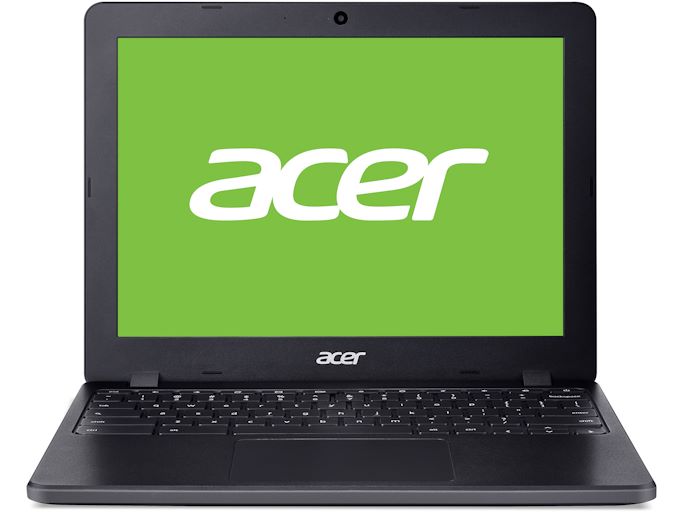
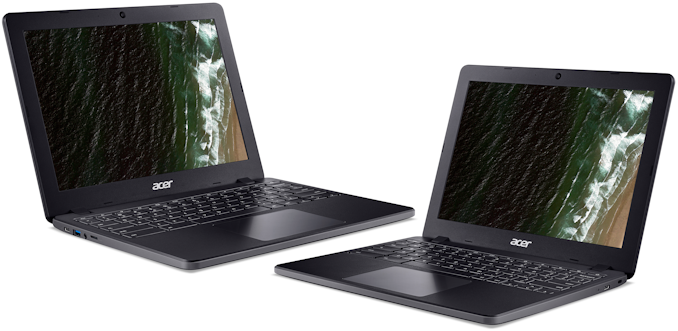
Acer Launches Chromebook 871/Chromebook 712: Intel’s Comet Lake Inside

Acer has introduced a new Chromebook computer designed specifically for the education environment. The upcoming Chromebook 871/Chromebook 712 machines are rugged enough to handle bumps of life at school and are based on Intel’s Comet Lake processors.


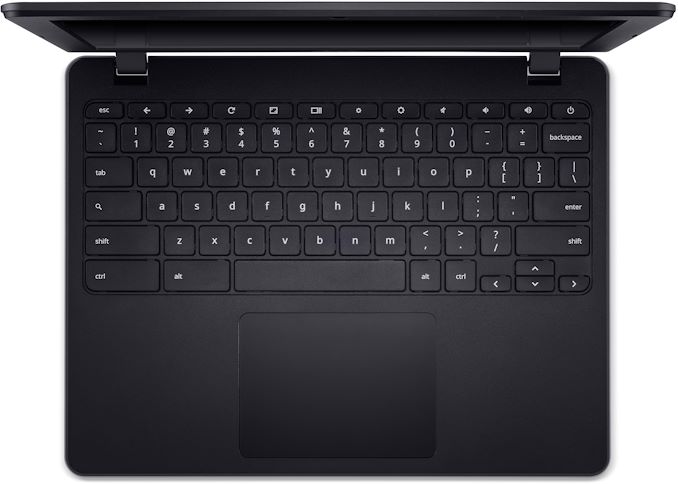
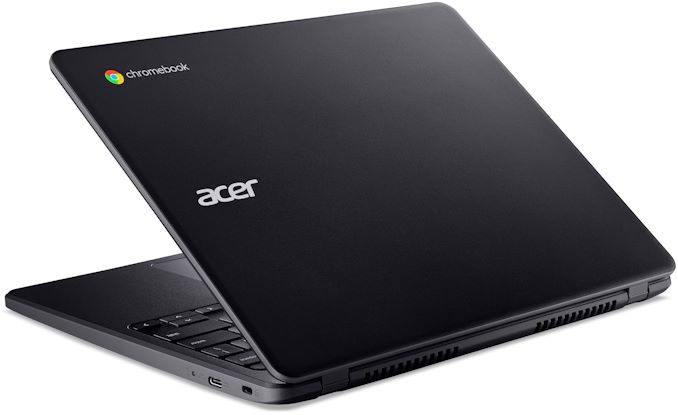
Acer’s Chromebook 871/Chromebook 712 comes in a Shale Black plastic chassis that is sufficiently tough to survive drops, shocks, high/low temperatures, and humid or dusty environments. To make the laptop as rugged as possible, Acer had to increase its z-height to 21.5 cm, which is rather thick, but a good news is that the notebook has a spill-resistant keyboard. As for weight, the machine weighs 1.4 kilograms.


The laptop is equipped with a 12-inch IPS display panel featuring a 1366×912 resolution as well as a 3:2 aspect ratio. In fact, the manufacturer plans to offer two versions of its Chromebooks 871: the model C871 with a regular screen as well as the model C871T with a touch-enabled screen.


The Acer Chromebook 871 – which will go by the Chromebook 712 in the retail market – is based on up to Intel’s dual-core Core i3-10110U processor, and is accompanied by 4 GB or 8 GB of DDR4 memory as well as 32 GB or 64 GB eMMC storage. Connectivity-wise, the laptop is rather typical by today’s standards as they feature Wi-Fi 5, Bluetooth 5, USB 3.2 Gen 1 Type-A and Type-C connectors, a microSD card reader, and a 3.5-mm audio jack for headsets. The Chromebook 871/Chromebook 712 from Acer also have a standard set of multimedia capabilities, such as a webcam, stereo speakers, a microphone array.


The manufacturer equipped its new Chromebooks with a 48 Wh battery, which is a rather high capacity for a 12-inch laptop. Meanwhile, Acer does not disclose actual battery life figures for its new Chromebooks.


Acer’s Chromebook 871/Chromebook 712
  Chromebook 712
Display Diagonal 12″ IPS with or without touch
Resolution 1366×912
Brightness ? cd/m²
CPU 10th Gen Core

(Comet Lake)


Intel Core i3-10110U

Intel Pentium Gold 6405U

Intel Celeron 5205U

Graphics Intel UHD Graphics
RAM 4 GB or 8 GB DDR4
Storage 32 GB or 64 GB eMMC
Wi-Fi Wi-Fi 5
Bluetooth Bluetooth 5.0
WWAN
GbE
USB 2 × USB 3.2 Gen 1 Type-C

1 × USB 3.2 Gen 1 Type-A
Camera Full-HD
Other I/O microSD, TRRS connector for audio, speakers, microphones
Battery 48 Wh
Dimensions Thickness 21.5 mm | 0.85 inches
Width 296 mm | 11.65 inches
Depth 229 mm | 9.02 inches
Weight 1.4 kilograms | 3.09 pounds
Battery Life ?
Price (starting at) $329.99 | €299

Acer will start sales of its new Chromebook 871/Chromebook 712 laptops in North America in March and in EMEA in May. Prices of the PCs will start at $329.99 in the USA and €299 in Europe. The notebooks will be covered by a one year international warranty.


Related Reading:


Source: Acer


Source: AnandTech – Acer Launches Chromebook 871/Chromebook 712: Intel’s Comet Lake Inside

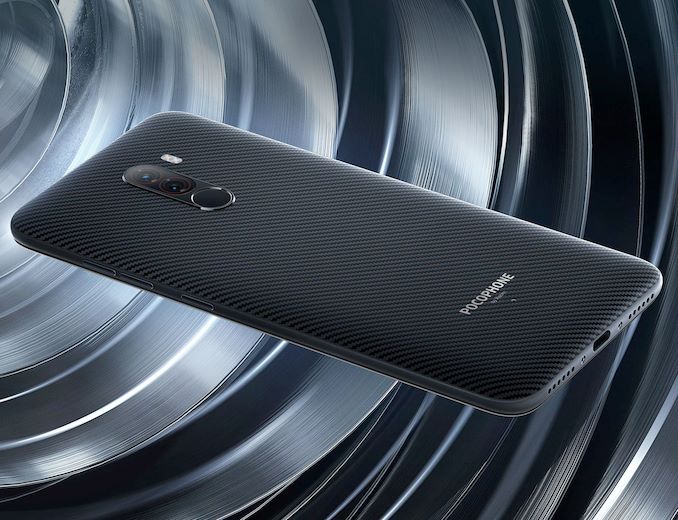
Xiaomi Spins Off Poco to Separate Company

In a bid to address the smartphone market as broadly as possible, Xiaomi has introduced a number of sub-brands over the years, including Black Shark, Redmi, and Poco. But even with Xiaomi’s deep involvement, those brands aren’t necessarily meant to always stay tied to their parent company, it would seem. Effective immediately, Xiaomi is spinning of POCO entirely, transforming it into an independent company and will now have its own strategy that will not depend on Xiaomi.


So far, Poco has released only one smartphone, the Pocophone F1. The handset was launched in 2018 and offered a rather competitive combination of specifications and price. In the recent days rumors transpired that the Pocophone F2 was in the works and its launch was imminent. Around the same time, Xiaomi announced the spin off.


Manu Kumar Jain, VP of Xiaomi, said the following:


“Poco F1 is an extremely popular phone across user groups, and remains a top contender in its category even in 2020. We feel the time is right to let Poco operate on its own now, which is why we’re excited to announce that Poco will spin off as an independent brand,”


It is not completely clear how ownership of Poco will be structured. Meanwhile, as a separate entity, Poco will inevitably compete against Xiaomi, but it looks like both entities are prepared for that.


In the recent years Xiaomi has consistently introduced new categories of products in a bid to build up its own ecosystem and not only increase its ARPU (average revenue per user), but also attract new clients with new devices. And while Poco will initially target smartphones and other mobile devices, the overall small size of the firm and its product portfolio means that competition from this brand should not significantly affect Xiaomi’s business, at lease initially.


What remains to be seen is what exactly will Poco inherit from Xiaomi. Today, Poco uses Xiaomi’s MIUI and some other software, so it will be interesting to see whether as a separate company Poco will develop its own UI and applications, or will continue to use something from Xiaomi.


Related Reading:


Source: TechCrunch


Source: AnandTech – Xiaomi Spins Off Poco to Separate Company

TSMC Boosts CapEx by $1 Billion, Expects 5N Node to Be Major Success

TSMC is on track to begin high-volume production of chips using its 5 nm technology in the coming months, the company said in its conference call last week. While so far the number of 5 nm tape-outs is lower when compared to the number of 7 nm tape-outs several months before production start, TSMC expects the process to become a major commercial success. Meanwhile, to ensure that it has no production constraints, the company plans to increase its 2020 CapEx by $1 billion.


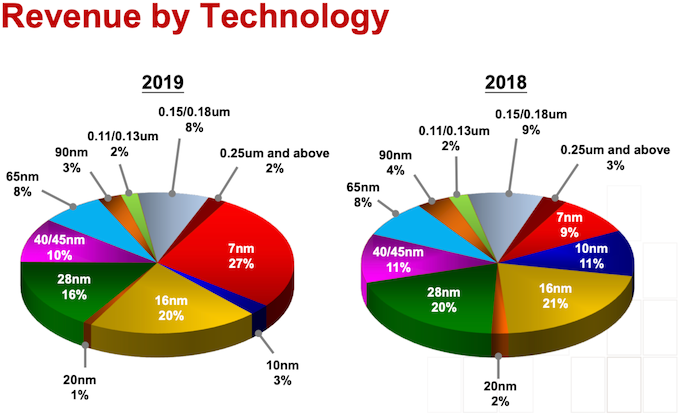
It is well known that TSMC’s N5 manufacturing technology provides substantial improvements over the company’s N7 fabrication process (1.8x higher transistor density, +15% frequency or -20% power consumption), so major customers of the company are more than inclined to adopt it. TSMC is on track to start high volume manufacturing (HVM) using the technology in the first half of this year. So far, the number of N5 tape-outs is lower when compared to the number of N7 tape-outs at the same stage of development (i.e., several months before HVM) becase alpha customers have taped out a slightly lower number of N5 designs and other clients are yet to catch up. Meanwhile, TSMC remains optimistic about the technology’s ramp and expects N5 revenue to account for 10% of its 2020 wafer sales revenue, which essentially means that business performance of N5 in its first year will be the same as business performance of N7 in its first year.


There are several reasons why TSMC’s N7 node turned out to be a huge commercial success for the foundry. First up, most of its customers skipped the 10 nm node and were more than motivated to go with 7 nm. Secondly, TSMC did not have a strong competition with its N7 technology: GlobalFoundries pulled out of the 7 nm race, whereas Samsung Foundry hardly processed any significant number of wafers using its 7LPP process. Thirdly, because N7 is a considerably more complex technology than TSMC’s 16 nm or 10 nm nodes, the company charges more money per wafer than before, which drives a greater revenue share for the process.


C. C. Wei, Vice Chairman and CEO of TSMC said the following:


“The 5 nm tape-out is little bit less than 7 nm compared at the same stage of the time. However, the most important thing is that the high-volume tape-out is almost equal. So, we expect that our 5 nm ramp is a very fast and smooth and it will contribute about 10% to this year’s revenue.”


Since TSMC’s N7 is considered as a long-living node, demand for the process is not expected to drop radically when N5 enters HVM, as there are tens of fabless semiconductor developers waiting to produce their 7 nm designs. Apparently, to satisfy demand for chips made using TSMC’s N7, N7+, N7P, N6, N5, and N5P manufacturing technologies (and offer some additional capacity for specialty processes as well as for advanced packaging), the company will have to further increase its 2020 CapEx by a billion of dollars up from $14 billion – $15 billion estimated last year.


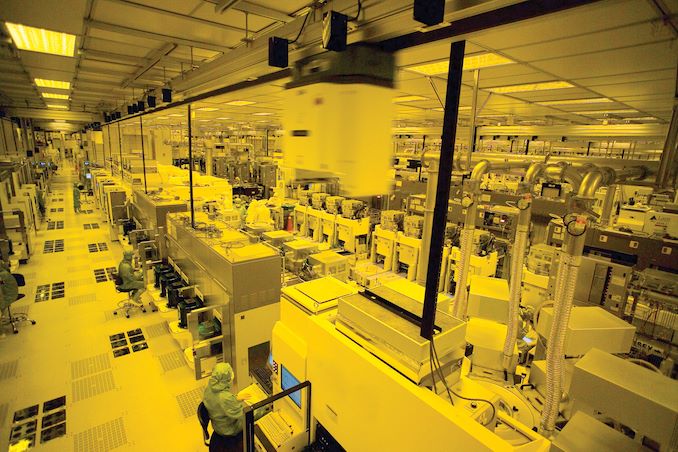
TSMC does not say exactly how the additional $1 billion will be spent, but since in the coming quarters it will be ramping production using four process technologies that that use extreme ultraviolet lithography (EUVL) for select layers (up to 14 layers in case of N5, up from 4 and 5 in case of N7+ and N6) and multipatterning for some others, it is likely that the foundry is going to need some additional leading-edge equipment.


Wendell Huang, VP and CFO of TSMC, said the following:


“Other than the advanced technology, we also mentioned earlier, we also increased the CapEx this year for specialty technology as well as advanced packaging. So those are the areas that we are focusing on.”


Related Reading:


Source: TSMC


Source: AnandTech – TSMC Boosts CapEx by Billion, Expects 5N Node to Be Major Success

ZOTAC’s UCFF Zbox Magnus EN92080V: Up to 8-Core i9 and RTX 2080

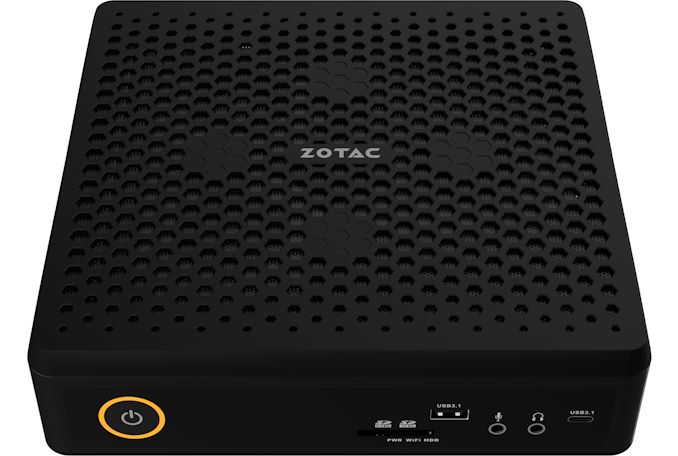
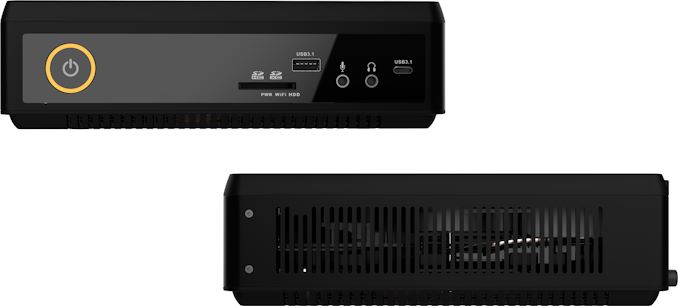
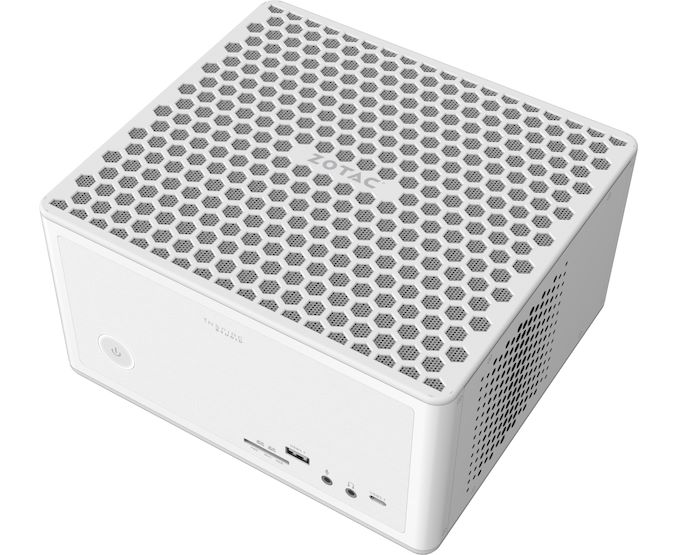
ZOTAC introduced its upcoming high performance ultra-compact form-factor (UCFF) gaming machine that promises to offer performance of a high-end gaming laptop. The Zbox Magnus EN92080V packs an Intel eight-core processor as well as NVIDIA’s GeForce RTX 2080.


The ZOTAC Zbox Magnus EN92080V comes in a slim chassis that measures only 62.2 mm (2.45 inches) in height and features a volume of just 2.65 liters. The PC it is powered by Intel’s eight-core Core i9 processor (with a 45 W TDP) as well as NVIDIA’s GeForce RTX 2080 graphics processor in its version for laptops. It is unclear whether the GPU is soldered down to the motherboard of the model EN9280V, or is located on an MXM card and thus can be upgraded eventually. It’s worth noting that the Zbox Magnus EN92080V does not seem to have a Thunderbolt 3 port, but the UCFF gaming PC can house up to 32 GB of DDR4-2666 memory using two SO-DIMM slots, one 2.5-inch storage device, and an SSD in an M.2 form-factor, so at least memory and storage can be expanded.


Moving on to connectivity of the Zbox Magnus EN92080V, everything looks pretty standard for today’s gaming laptops. The machine features the Rivet Killer AX1650 Wi-Fi 6 + Bluetooth 5 adapter, two Ethernet ports (one GbE, one 2.5 GbE, also from Rivet), two USB 3.1 Type-C connectors, four USB 3.0 Type-A connectors, four display outputs (one DisplayPort 1.4, two HDMI 2.0b, one USB-C), and SD card reader, and two 3.5-mm audio jacks for headphones and a microphone.


Historically, ZOTAC used GeForce MXM modules for its small form-factor Zbox Magnus systems, but improved energy efficiency of NVIDIA’s desktop GPUs and ZOTAC’s own cooling systems allowed the company to switch to regular graphics cards and enable its customers to upgrade them. With the Zbox Magnus EN92080V, ZOTAC uses a mobile CPU and a mobile GPU again, but this time to make a UCFF gaming PC that offers performance of a premium desktop computer.


ZOTAC will start sales of its Zbox Magnus EN92080V in the coming months. Pricing will be revealed when the product is launched.


Related Reading:


Sources: ZOTAC


Source: AnandTech – ZOTAC’s UCFF Zbox Magnus EN92080V: Up to 8-Core i9 and RTX 2080

MSI Reveals Optix MEG381CQR 37.5-Inch HDR600 144 Hz Curved Monitor

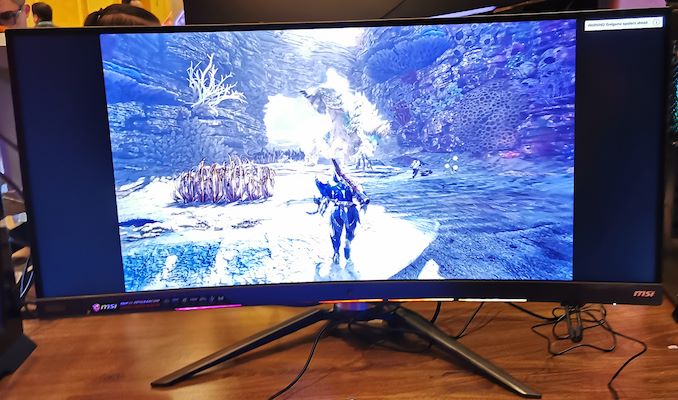
MSI has announced its new curved gaming display that combines a near-4K resolution with an up to 144 Hz variable refresh rate supported by VESA’s Adaptive-Sync technology, and 600 nits brightness in HDR mode. In addition to its main capabilities, the MEG381CQR monitor has two interesting ‘smart’ features, such as an auxiliary OLED screen that displays various information as well as a special webcam that can recognize user’s face and load an appropriate profile tailored for them based on the game being played.


The MSI Optix MEG381CQR uses a 37.5-inch IPS panel featuring a 2300R curvature, a 3840×1600 resolution, a 1 ms GtG response time, and a variable refresh rate of up to 144 Hz handled by VESA’s Adaptive-Sync technology. The LCD is VESA DisplayHDR 600 certified, so it supports a peak brightness of at least 600 nits in HDR mode, but also some kind of a local dimming technology (edge lit?) to ensure a higher contrast ratio and deeper blacks. It is logical to expect the monitor to support a wide color gamut (think >90% DCI-P3), but MSI currently does not confirm this.


As we noted in our previous coverage of 37.5-inch ultrawide displays featuring a 3840×1600 resolution, they are very well suited both for gaming and for watching Ultra-HD videos filmed in an aspect ratio of 2.35:1 or 2.40:1, which is a popular aspect ratio for movies.


Traditionally for gaming displays, the Optix MEG381CQR is equipped with a stand that can adjust height, tilt, and swivel. In fact, to maximize precision of height adjustment, the display seems to have a special knob on top. Other notable features of the monitor are the aforementioned OLED screen that can display various information that might be crucial for a particular game, and a special camera to recognize the owner and adjust settings in accordance with their preferences.


MSI currently does not have a firm launch date for its Optix MEG381CQR monitor and only says that it plans to launch it sometimes in the third or the fourth quarter. Pricing of the display is also not set, so we can only make guesses based on MSRPs of other curved 37.5-inch displays which appear to be pretty expensive.


Related Reading:


Source: MSI


Source: AnandTech – MSI Reveals Optix MEG381CQR 37.5-Inch HDR600 144 Hz Curved Monitor

The AMD Radeon RX 5600 XT Review, Feat. Sapphire Pulse: A New Challenger For Mainstream Gaming

While at this point we’ve pretty much reached the “mid-generation” point in the GPU space, that doesn’t mean activity in the GPU market is slowing down. Indeed, just three weeks into 2020 and AMD is already up to bat with a new video card, the Radeon RX 5600 XT. Announced a couple of weeks back at CES 2020, the Radeon RX 5600 XT is AMD’s answer to the $200-$300 mainstream video card segment, and is designed to be their ultimate 1080p gaming card. And of all of the AMD RX 5000 series video card launches in the last six months, it’s quickly shaping up to be the biggest fight yet between AMD and NVIDIA.


Source: AnandTech – The AMD Radeon RX 5600 XT Review, Feat. Sapphire Pulse: A New Challenger For Mainstream Gaming

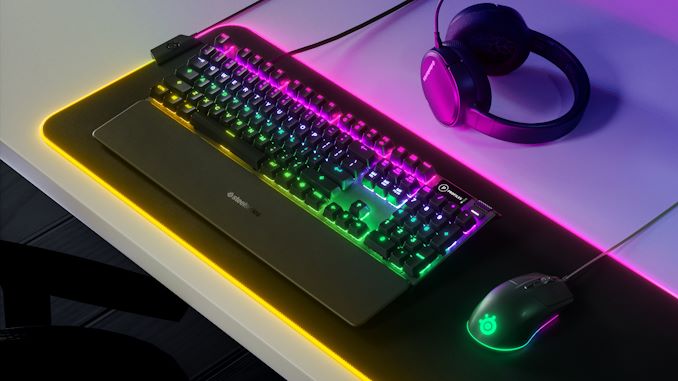
SteelSeries Launches Low-Cost Gaming Peripherals With The Rival 3 Gaming Mouse, Apex 3, and Apex 5 Gaming Keyboards

Often we see a lot of fanfare when companies launch their latest flagship products, but those products often come at the high-end of the price spectrum, so it is refreshing to get a new launch of some lower-cost alternatives. SteelSeries is launching a trio of new peripherals today all aimed at the budget-conscious gamer with the new Rival 3 Gaming Mouse, as well as the Apex 3 and Apex 5 gaming keyboards.


Rival 3 Gaming Mouse


What constitutes a gaming mouse? It is certainly not just the RGB lighting, although most, including this product, offer customizable lighting. The mouse sensor is one of the key aspects, and SteelSeries worked with PixArt to develop a new sensor which they’ve dubbed the TrueMove Core optical sensor. The new sensor offers 8500 CPI, one-to-one tracking, and over 300 IPS and 35G of acceleration capability. For a mouse in this price bracket, it is very capable.


SteelSeries Gaming Mouse
  Rival 3
Sensor TrueMove Core
Sensor CPI True 8500
Acceleration 300 IPS / 35 G
RGB Backlighting 3 Zones
Weight 77 grams
Onboard Storage 5 profiles
Main Buttons SteelSeries 60 M Click Rating
Total Buttons 6
Mouse Type Right-Handed
MSRP $29.99

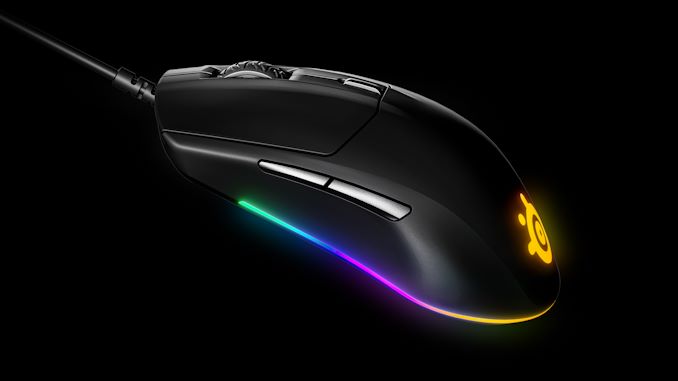
The Rival 3 is a right handed mouse (if you need an ambidextrous they offer the Sensei series) which weighs in at just 77 grams. It offers three zones of RGB backlighting which achieves 750 lux, making this the brightest LEDs in any SteelSeries mouse. There are six buttons and the main buttons feature a SteelSeries switch rated at up to 60 million clicks, whereas a comparable Omron would only be rated at 10-20 million. The casing is finished in matte black, so it should stand up well to the test of time.


The mouse features customization through the SteelSeries Engine software, and offers onboard storage for five profiles, so even if it’s not used with the software, you can still choose your CPI profile on the go.


The new Rival 3 Gaming Mouse is available globally today for a MSRP of $29.99.


Apex Gaming Keyboards


SteelSeries Gaming Keyboards
  Apex 3 Apex 5
Switch Type POM Reinforced Membrane Hybrid Mechanical
Key Cap   Standard MX 4mm throw
RGB Backlighting 10-Zone Per-Key
Frame Plastic Aluminum
Cable Management 3-Way 3-Way
Onboard Storage No 5 profiles
Media Keys Yes with Volume Wheel Yes with Volume Wheel
Wrist Rest Detachable Magnetic Detachable Magnetic
OLED Display No Yes
MSRP $49.99 $99.99

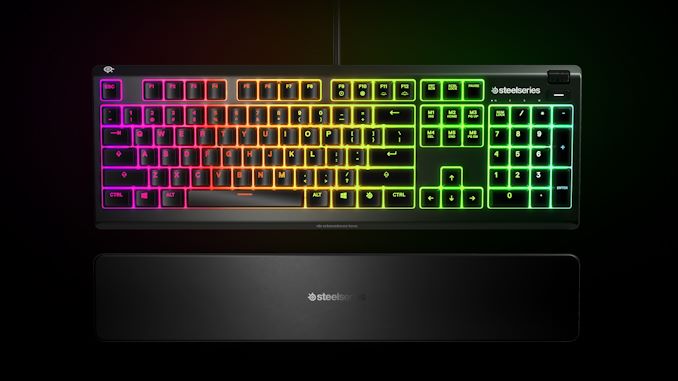
SteelSeries is also launching two new gaming keyboards which feature anti-ghosting and RGB lighting, without breaking the bank. The Apex 3 is launching today with an MSRP of $49.99, and the Apex 5 is available globally for $99.99.


The Apex 3 features an upgraded and reinforced membrane switch, which SteelSeries says offers an improved key feel. The keyboard offers ten zones of RGB backlighting as well, and a magnetically attached wrist rest. There’s dedicated media keys, and a volume wheel as well, and the keyboard offers three routes for cable management so you can route the USB cable out the left, right, or middle of the keyboard. Finally, the Apex 3 is rated for IP32 water resistance, so it should survive an accidental spill.


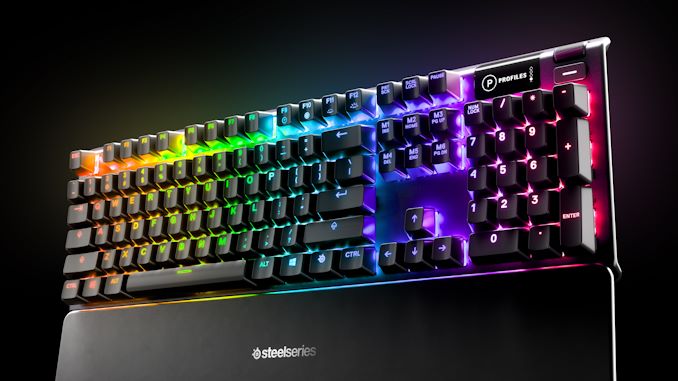
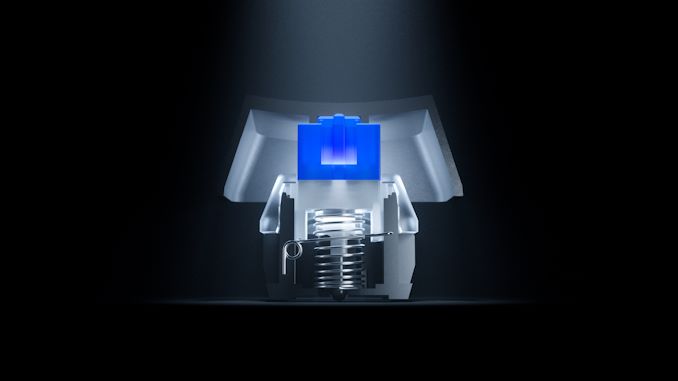
The Apex 5 ramps up the features, as expected since it is literally double the price of the Apex 3, but for $99.99 this gaming keyboard offers hybrid mechanical switches, which are true mechanical switches, but which feature  the smoothness of a membrane switch coupled with the click of a blue switch. The keys are also individual backlit with per-key RGB lighting.


The Apex 5 features the same OLED display as the Apex 7 and Pro lineup, which can be used to view in-game info, song information, and more. The OLED is coupled with media keys, and offers five onboard profiles meaning the keyboard can remember your settings as you move it from device to device.


The Apex 5 also features a full aluminum frame, and offers a premium magnetically attached wrist rest.


All of these products are available globally today. Check out SteelSeries.com for more details.


Source: AnandTech – SteelSeries Launches Low-Cost Gaming Peripherals With The Rival 3 Gaming Mouse, Apex 3, and Apex 5 Gaming Keyboards

CES 2020: ADATA Preparing Three PCIe 4.0 Consumer SSDs

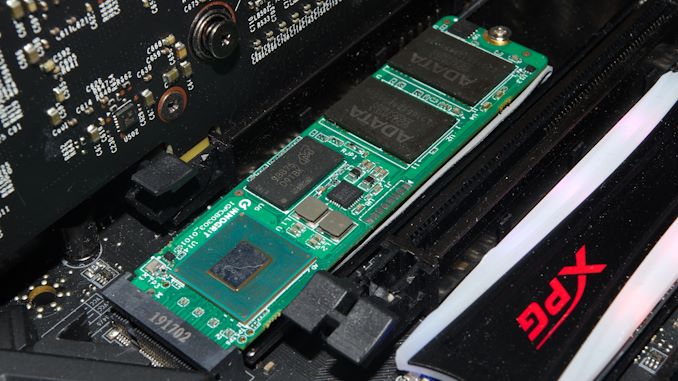
Among a mountain of new product announcements at CES, ADATA previewed three upcoming high-end consumer SSDs supporting PCIe 4.0. These will launch under their XPG gaming-oriented brand, and will serve to complement or replace the existing XPG Gammix S50, which ADATA’s current PCIe 4.0 SSD based on the Phison E16 controller. The E16 launched last summer and is so far the only consumer PCIe 4.0 SSD controller shipping in retail SSDs. Phison’s own E18 follow-up controller is expected to arrive around Q3, but before then we’ll see other competitors start to deliver their own PCIe 4.0 SSD controllers.


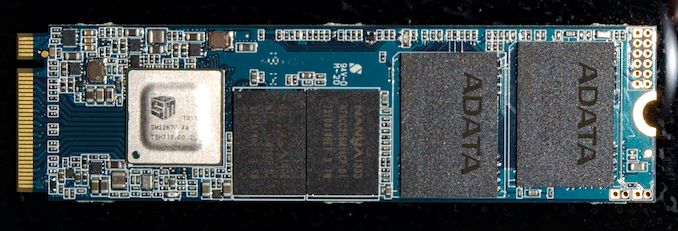
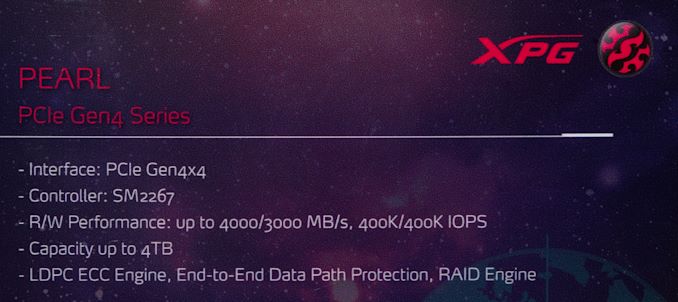
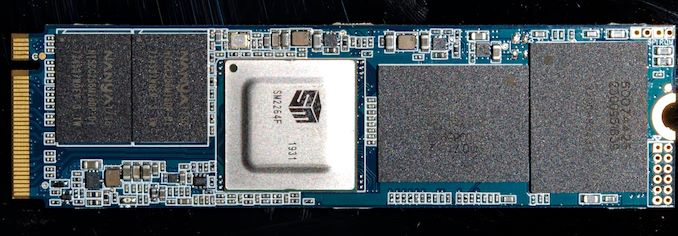
ADATA tries out SSD controllers from almost everyone in the market, but their most popular SSDs in recent years rely on Silicon Motion controllers. The SM2262 and SM2262EN controllers are used in ADATA’s best-performing PCIe 3.0 SSDs. For PCIe 4.0, Silicon Motion will replace those with the high-end SM2264 8-channel controller and the more mainstream SM2267 4-channel controller. Thanks to supporting much faster NAND interface speeds, the SM2267 should be able to offer performance comparable to current-generation 8-channel controllers, which means most of the extra bandwidth provided by the upgrade to PCIe 4.0 will go unused by the SM2267. Still, at 4GB/s for sequential reads, 3GB/s for sequential writes, and 400k IOPS for random IO, this is not by any measure a low-end solution. ADATA will be using the SM2267 in the XPG Pearl.


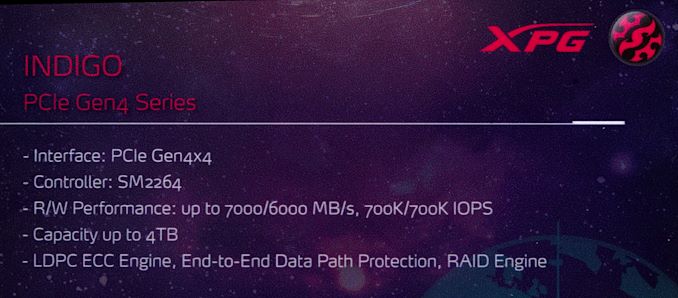
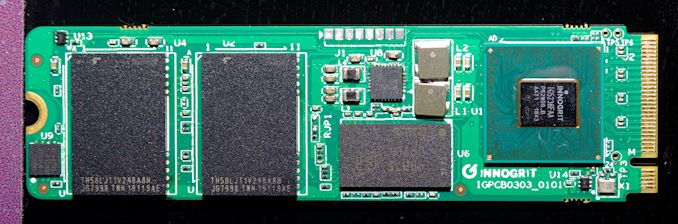
ADATA’s drive using the Silicon Motion SM2264 will be the XPG Indigo. This should hit 7GB/s for sequential reads, more or less saturating the PCIe 4.0 x4 interface. Sequential writes will be a bit slower at around 6GB/s, and random IO speeds will get up to 700k IOPS.


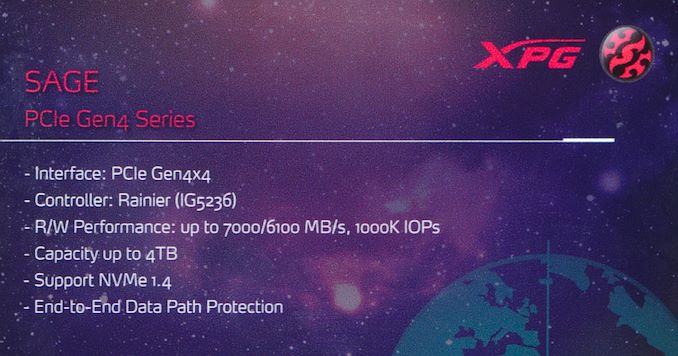
Lastly and perhaps most interesting is the XPG Sage, one of a handful of upcoming products using the Rainier controller from newcomer Innogrit. This is currently promising the highest performance: 7GB/s reads, 6.1GB/s writes, and 1M IOPS for random IO. Those minor increases in top-line performance numbers relative to the XPG Indigo won’t matter to real-world consumer usage, and whether the Sage or Indigo is the better overall performer may come down to which controller architecture offers better performance at low queue depths.


The release dates for ADATA’s upcoming PCIe 4.0 SSDs have not been set, and it’s not yet clear whether the Innogrit or Silicon Motion solutions will be ready to ship first. Of the three new drives, only the Innogrit-based Sage was featured in live demos at ADATA’s CES 2020 exhibit. It appears unlikely that any of them will ship until around Computex (June) at the earliest. All three drives are currently planned to be offered in capacities up to 4TB using 96L TLC NAND—but for at least the Sage, ADATA hasn’t decided whether to use Toshiba or Micron TLC.


Source: AnandTech – CES 2020: ADATA Preparing Three PCIe 4.0 Consumer SSDs

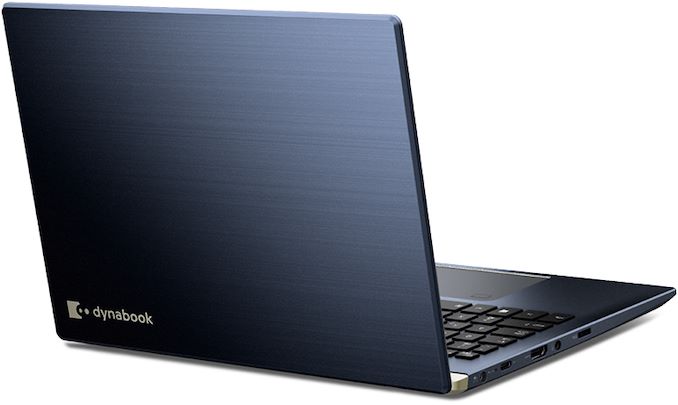
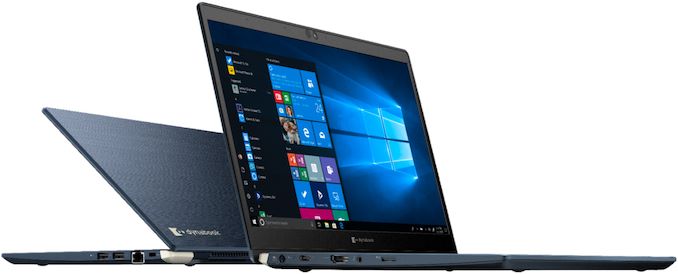
Dynabook Presents ‘Hyper-Light’ 13.3-Inch Portégé X30L-G Laptop with 6-Core CPU

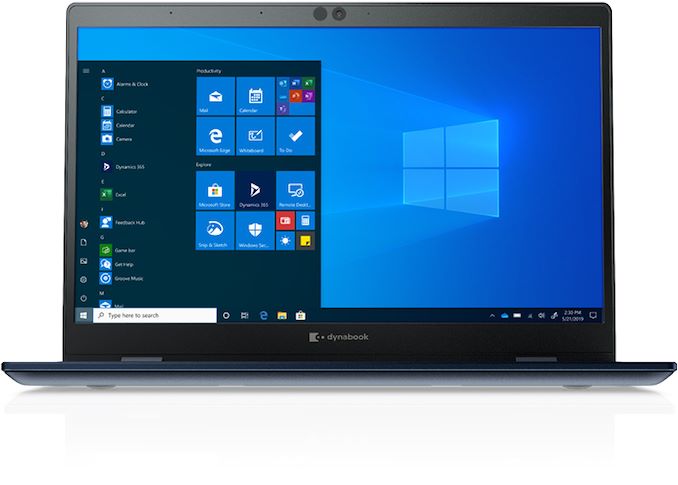
Dynabook has introduced its redesigned ‘hyper-light’ 13.3-Inch Portégé X30L-G, which has been updated to be lighter and more powerful than its predecessor. The new systems pack Intel’s 10th Generation Core processors with up to six cores (Comet Lake-U) as well as all the traditional and latest connectivity technologies, all while weighing less than a kilogram.


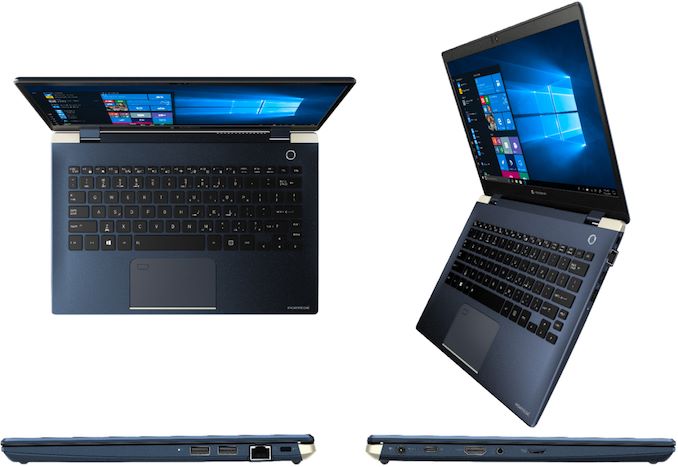
To make the 2020 Portégé X30L-G lighter than its predecessors, Dynabook had to redesign it both inside and outside (for the first time in years). The laptop still comes in a familiar Onyx Blue magnesium alloy chassis and features a 13.3-inch display (up to Full-HD, IGZO, 470 nits brightness), albeit with slightly thinner bezels as well as a different hinge. The new internal and external architecture enabled Dynabook to reduce the weight of the Portégé X30L-G to 870 grams (~1.90 pounds), which is very low for a 13.3-inch machine. Despite the light weight of the laptop, its chassis is ‘engineered to meet’ MIL-STD-810G testing methodology standards for drop, temperature, humidity and dustproof, which should ensure that the notebook is rugged enough.


The new Dynabook Portégé X30L-G is based on Intel’s 10th Generation “Comet Lake” Core processors with built-in UHD Graphics, which enabled the company to optimize its internal structure and ultimately make the system lighter. The system supports up to 24 GB of DDR4 memory using onboard DRAM and an SO-DIMM slot, while storage is provided via an M.2 SSD, with Dynabook using both PCIe and SATA drives depending on the SKU.


As far as connectivity is concerned, the new notebook is equipped with a Wi-Fi 6 + Bluetooth 5 wireless module, a GbE port (which returns to a Portégé X30 after a couple of generations without it), one USB 3.0 Type-C connector, two USB 3.0 Type-A ports, a microSD card reader, an HDMI output, and a 3.5-mm combo audio jack. While the return of a GbE port is a rather remarkable event, the laptop no longer has a 4G/LTE option, or at least it is not mentioned in the press release and on the product page.


Other features of the Portégé X30L-G notebook include a backlit keyboard (but it is unclear whether it is also spill resistant), a microphone array, and DTS-badged speakers. Meanwhile, the laptop no longer has a trackpoint, which will be missed by loyal Toshiba Portégé customers that have been accustomed to it.


Business are corporate customers are the target audience of Dynabook’s Portégé series notebooks, so the new X30L-G features SecurePad with Synaptics Natural ID fingerprint sensor, a webcam with IR sensors (for Windows Hello facial recognition), Intel Authenticate technology as well as a discrete Trusted Platform Module (TPM 2.0).


Dynabook’s Portege X30L-G
  General Specifications
Display Diagonal 13.3-inch
Resolution, Brightness, Features 1366×768, 220 nits, anti-glare

1920×1080, 470 nits, IGZO, anti-glare

1920×1080, 300 nits, 10-point multi-touch
CPU Core i3-10110U – 2C/4T, 2.1 – 4.1 GHz, 4 MB

Core i5-10210U- 4C/8T, 1.6 – 4.2 GHz, 6 MB

Core i7-10510U – 4C/8T, 1.8 – 4.9 GHz, 8 MB

Core i7-10710U – 6C/12T, 1.1 – 4.7 GHz, 12 MB
Graphics UHD Graphics
RAM up to 8 GB DDR4 onboard

up to 24 GB DDR4 w/ SODIMM slot
Storage M.2 SATA SSD up to 512 GB

M.2 PCIe NVMe SSD up to 512 GB

M.2 PCIe NVMe SSD up to 1 TB with Intel Optane Technology
Wi-Fi Intel AX200 Wi-Fi 6 controller
Bluetooth Bluetooth 5
GbE Intel i219-series GbE controller
USB 3.2 Gen 1 2 × Type-A

× Type-C
TB3
Card Reader MicroSD
Fingerprint Sensor Yes
Other I/O Webcam with RGB + IR sensors, microphone, HDMI, stereo speakers, audio jack
Security Trusted Platform Module (dTPM) 2.0

Intel Authenticate
Battery 42 Wh
Dimensions Width 308.8 mm | 12.16 inches
Depth 211.6 mm | 8.33 inches
Thickness 17.9 mm | 0.7 inches
Weight Starting at 870 grams (1.9 lbs)
Price $1,599.99

Dynabook will start sales of its Portégé X30L-G already next month both directly and through its retail partners like Amazon. Select models will come with a three-year limited warranty, whereas Featured and Built-to-Order machines will get a four-year limited warranty. Entry level configuration of the Portégé X30L-G will be priced at $1,599.99.


Related Reading:


Source: Dynabook


Source: AnandTech – Dynabook Presents ‘Hyper-Light’ 13.3-Inch Portégé X30L-G Laptop with 6-Core CPU

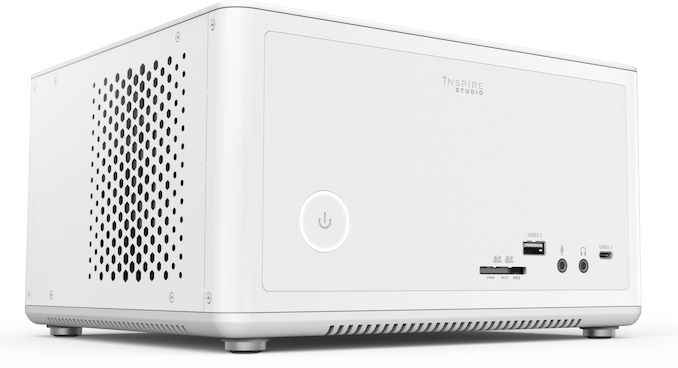
CES 2020: ZOTAC’s Inspire Studio SFF PCs for Creators w/ 8-Core CPU & GeForce RTX

Being one of the leading suppliers of small form-factor gaming PCs, ZOTAC recently started to offer SFF workstations powered by Intel’s Xeon CPUs as well as NVIDIA’s Quadro graphics cards. Meanwhile, there are a lot of creators that do not necessarily need professional-grade hardware for their work (or just cannot afford it), so for that market ZOTAC is putting together its Inspire Studio desktops.


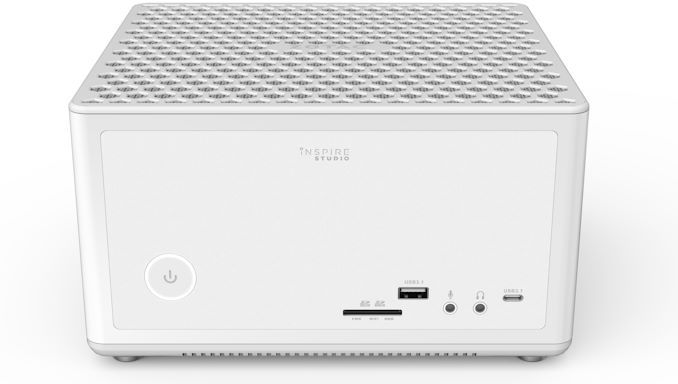
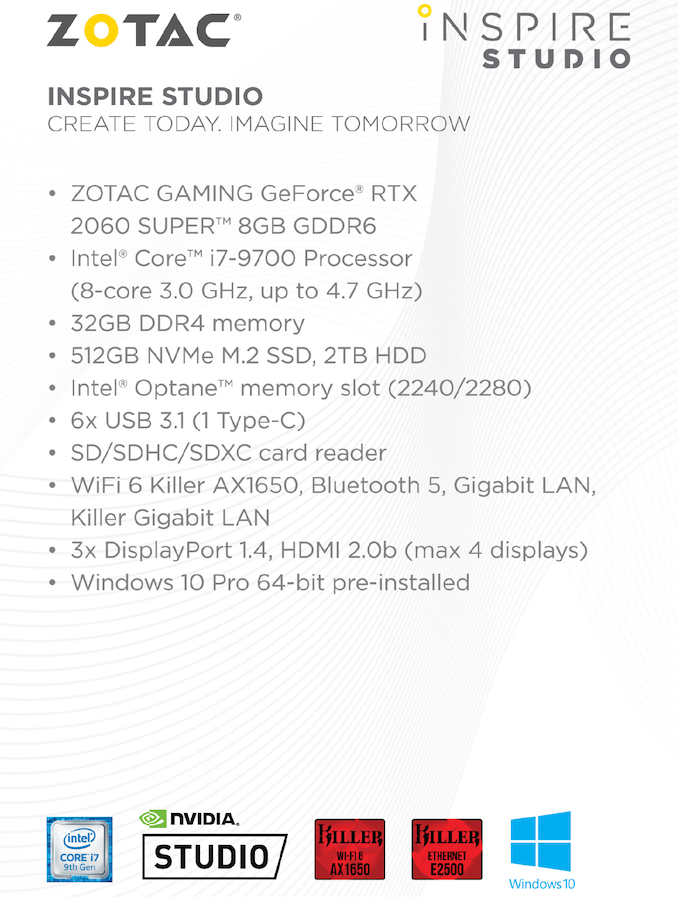
ZOTAC’s Inspire Studio machines are based on Intel’s Core i7-9700 CPU with eight cores (and a 65 W TDP) and a full-fledged GeForce RTX 2060 Super graphics card. The system can be equipped with 32 GB of DDR4 memory, a 512 GB NVMe/PCIe SSD (or an Intel Optane Memory caching SSD), and a 2 TB hard drive. As for connectivity, the Inspire Studio has a Wi-Fi 6 + Bluetooth 5 adapter (the Killer AX1650), two GbE ports (controlled by a Killer controller), USB Type-A and Type-C connectors, four display outputs (three DisplayPort 1.4, one HDMI 2.0b), an SD card reader, and a 3.5-mm audio jack for headsets.


All Inspire Studio SFF desktop PCs come with Windows 10 Pro and NVIDIA Studio drivers pre-installed, so the machines are ready for a variety of professional applications right out of the box.


Since the ZOTAC Inspire Studio is aimed at creators who naturally value style, it comes in a rather unique white chassis. The latter also differentiates the PCs from ZOTAC’s Q-series workstations that come in black.


ZOTAC’s Inspire Studio SFF desktops will be available later this year from the company’s partners as well as directly. The manufacturer yet has to announce pricing of the new system.


Related Reading:


Source: ZOTAC


Source: AnandTech – CES 2020: ZOTAC’s Inspire Studio SFF PCs for Creators w/ 8-Core CPU & GeForce RTX

CES 2020: TerraMaster Shows Off 5-Bay F5-422 NAS with 10 Gb Ethernet

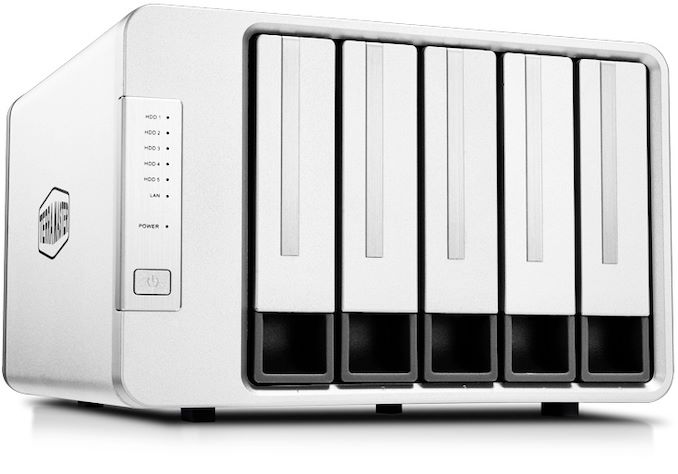
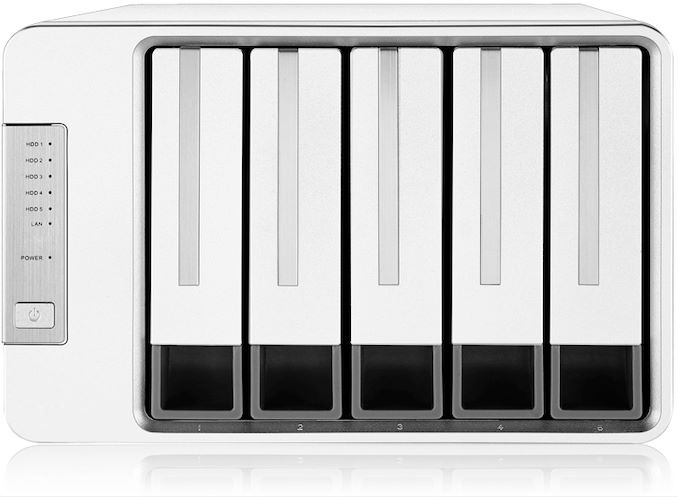
TerraMaster unveiled a new five-bay NAS with a 10 GbE connectivity at this year’s CES. The F5-422 is based upon Intel Apollo Lake SoC, and runs the company’s TOS 4.1 operating system on top of it, supporting up to 5 3.5-inch drives.


The TerraMaster F5-422 is powered by Intel’s Celeron J3455 quad-core SoC (1.5 GHz – 2.3 GHz) that is paired with 4 GB of memory (expandable to 12 GB). The unit can accommodate five 3.5-inch/2.5-inch hard drives or solid-state drives, which means with today’s largest 16 TB HDDs, the NAS can accommodate a total of 80 TB in storage. And, as you’d expect for a modern NAS, the F5-422 supports various RAID modes, including RAID 1, RAID 5, RAID 6, and RAID 10.


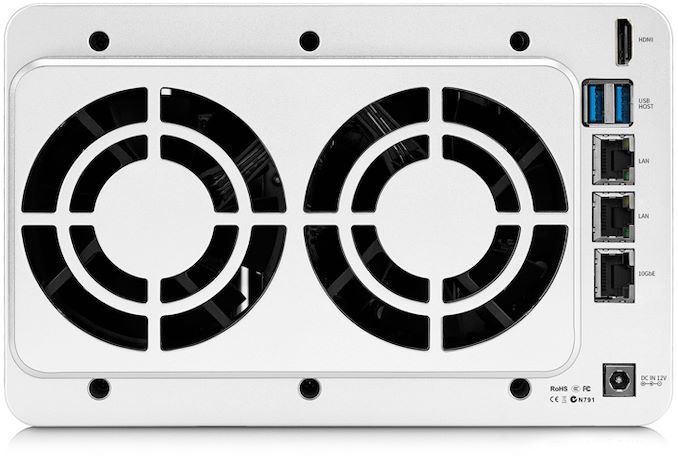
Once released, the F5-422 NAS will be one of a handful of prosumer NASes on the market with support for high speed Ethernet, thanks to its one 10 GbE port. As well, the NAS supports two 1 GbE connectors, two USB 3.0 ports, and an HDMI display output. Though it should be noted that despite presence of an HDMI port, the NAS is not designed to work as a media player.


From performance point of view, the NAS is rated to read data at up to 670 MB/s speed as well as write data at up to 650 MB/s when all of its drives operate in RAID 5 mode. Meanwhile, TOS 4.1 OS supports SSD caching to accelerate I/O performance. The NAS can be used by large companies as it supports concurrent access for up to 500 users.


In addition to AES-NI and RAID modes, TerraMaster’s F5-422 with TOS 4.1 supports multiple security layers, including clustered Btrfs file system and snapshots as well as scheduled backups (including an option to back up to the cloud).


TerraMaster will begin selling the F5-422 shortly. Prices will vary with the configuration.


Related Reading:


Source: TerraMaster


Source: AnandTech – CES 2020: TerraMaster Shows Off 5-Bay F5-422 NAS with 10 Gb Ethernet