
Another round of AMDGPU/AMDKFD kernel driver improvements were sent out this week as feature development for DRM-Next ahead of Linux 7.1 begins to wind down…
Category Archives: Linux
Tails 7.6 Privacy-Focused Linux Distro Released with Automatic Tor Bridges
Tails 7.6 has been released today as the sixth update in the Tails 7.x series of this portable Linux distribution based on Debian GNU/Linux and designed to protect you against surveillance and censorship.
Ubuntu 26.04 LTS Beta Is Out Now with Linux Kernel 7.0 and GNOME 50
Canonical released today the beta version of the upcoming Ubuntu 26.04 LTS (Resolute Racoon) distribution ahead of the final release on April 23rd, 2026.
Raspberry Pi Imager 2.0.7 Released With UI Fixes and Improved Device Support
Raspberry Pi Imager 2.0.7 delivers UI fixes, improved device support, better search, and multiple bug fixes across Linux, Windows, and macOS.
Linux Just Changed Forever, New Feature That Could Replace Windows & macOS in 2026
Linux is evolving faster than ever, and this new breakthrough feature could completely change the future of operating systems. From immutable Linux systems and universal apps to better gaming support, stronger security, and improved performance, Linux is becoming a serious competitor to Windows and macOS. In this video, we explore how modern Linux distributions are transforming the computing world and why millions of users may switch to Linux in the coming years.
KDE’s KWin Compositor Lands First Step Toward Vulkan Support
Merged today was the very first step toward implementing Vulkan support within KDE’s KWin compositor as an alternative to OpenGL rendering…
AnduinOS 1.4.2 Offers Redesigned GNOME for Windows Refugees
AnduinOS 1.4.2 pairs Ubuntu’s already easy-to-use foundation with a heavily customized GNOME desktop and Flatpak apps to ease the transition from Windows to Linux.
The post AnduinOS 1.4.2 Offers Redesigned GNOME for Windows Refugees appeared first on FOSS Force.
Open-Source Nouveau Performance With Linux 7.0 + NVK Mesa 26.1-dev vs. NVIDIA Linux Driver
As a few months have passed since our prior round of testing the fully open-source NVIDIA Linux driver stack with the Nouveau kernel driver and Mesa NVK Vulkan driver plus Zink, here is a fresh round of benchmarks using Linux 7.0 and Mesa 26.1-dev compared to the open-source stack shipped by Ubuntu 25.10 (Linux 6.17 + Mesa 25.2) for showing how far the open-source NVIDIA driver has progressed the past few months. Plus testing against the NVIDIA official Linux graphics driver for putting that Nouveau/NVK performance into perspective.
Bringing AI education to 1.25 million students across Latin America
We’re excited to share that we are expanding our Experience AI programme across Latin America with the aim of training 24,000 educators and reaching 1.25 million students by 2028, thanks to generous funding of $4.6 million from Google.org.
Working with education partners across Argentina, Brazil, Chile, Colombia, Dominican Republic, El Salvador, Mexico, Peru, and Uruguay, we will help young people develop a foundational understanding of AI technologies, their social and ethical implications, and the role that AI can play in their lives.
AI literacy across the globe
AI systems are part of everyday life in how we find information, work, and solve problems. We think that young people need more than access to AI tools: they need the knowledge, skills, and confidence to understand and create their own AI tools.
Experience AI, developed in partnership with Google DeepMind, is a free educational programme that helps teachers and students learn about artificial intelligence (AI). It introduces young people to how AI systems work and how they are used in everyday contexts through lessons, classroom resources, and hands-on activities. The resources give young people opportunities to think critically about the role of AI in society.

Through a global network of Experience AI partners, we have so far reached an estimated 2.9m young people and trained 30,000 educators. The programme’s resources are used in more than 180 countries and are available in 19 languages. In recognition of its impact, Experience AI was named a laureate of the 2025 UNESCO King Hamad Bin Isa Al-Khalifa Prize for the Use of ICT in Education.
Impact through partnerships
In Latin America, as in other parts of the Experience AI network, our focus will be on sustainable, locally led delivery through partner organisations. Using our established ‘train-the-trainer’ model, we will equip 24,000 educators with the skills and knowledge to use the Experience AI resources to confidently deliver AI literacy lessons.

Our aim is to create a lasting impact for teachers and classrooms across the region and ensure that high-quality AI education is accessible to young people in a wide range of settings.
Supporting critical thinking
Experience AI is designed not only to build technical understanding, but also to help young people think critically about AI and its impacts.
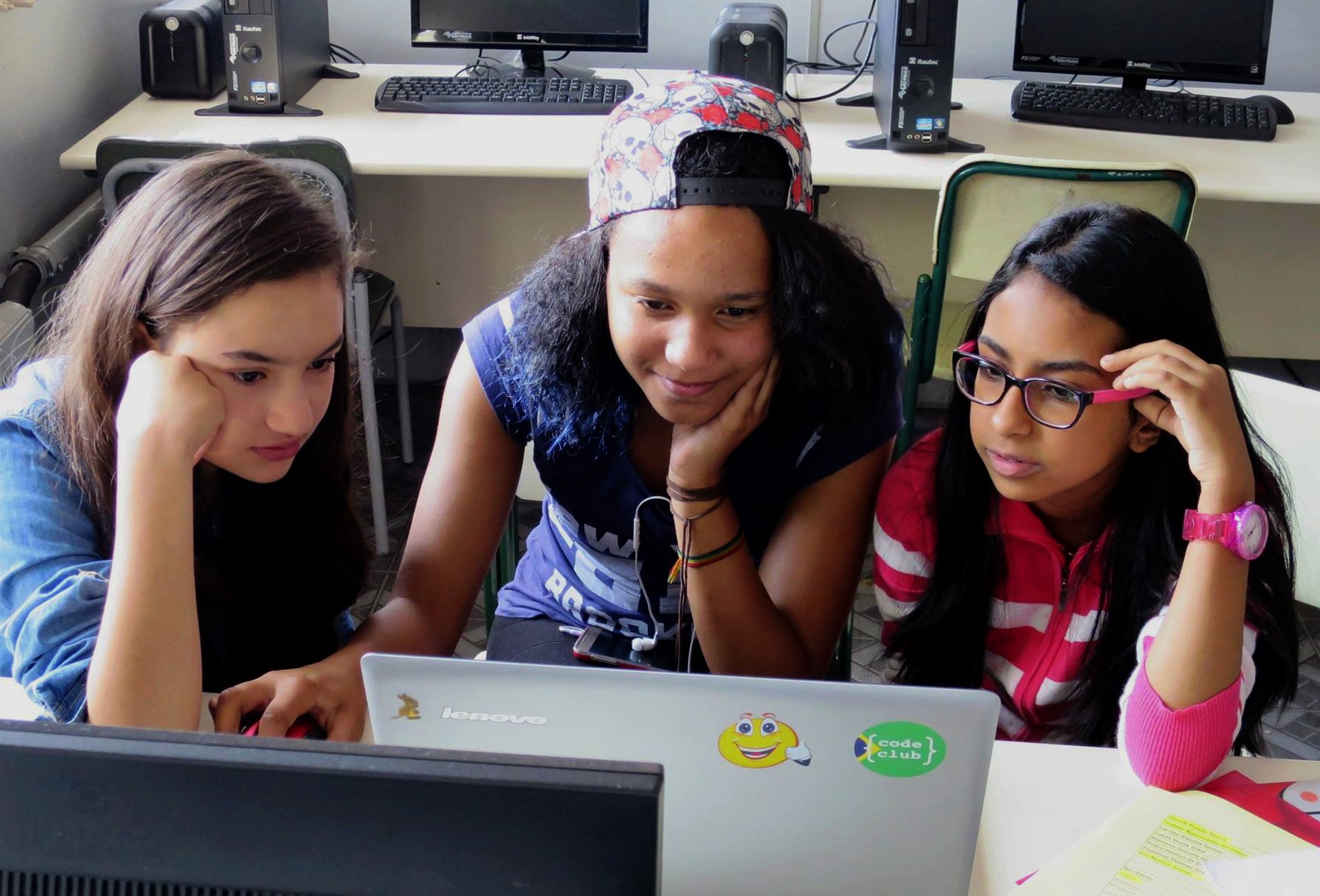
Through the programme, students across Latin America will develop a foundational understanding of how AI works, while exploring key topics including how data is used in AI systems, how to identify AI-generated misinformation, and how to use generative AI tools responsibly. This will help them to understand the opportunities and challenges of AI, and to make informed decisions about how they use these technologies.
Looking ahead
As AI systems are being built into many aspects of today’s world, it’s essential that young people have the opportunity to understand, question, and build with these technologies.
With support from Google.org, we will expand access to high-quality AI education across Latin America through Experience AI, helping over a million young people develop the skills, knowledge, and confidence to navigate and shape a world where AI technologies are widely used.
You can find out more about Experience AI at experience-ai.org.
The post Bringing AI education to 1.25 million students across Latin America appeared first on Raspberry Pi Foundation.
The forge is our new home (Fedora Community Blog)
Tomáš Hrčka has announced
that the Forgejo-based Fedora Forge is now a
fully operational collaborative-development platform; it is ready for
use by the larger Fedora community, which means the homegrown Pagure platform’s days are numbered:
While pagure.io has been a vital part of our community for many
years, the time has come to retire our homegrown forge and transition
to this powerful new tool.The final cutover is planned for Flock to Fedora 2026. We strongly
encourage teams to migrate their projects well before the conference
to ensure a smooth transition. The pagure.io migration is only the
first step in a broader infrastructure modernization effort. By the
2027 Fedora 46 release, we plan to retire all remaining Pagure
instances across the project, including the package source
repositories on src.fedoraproject.org. Getting familiar with Fedora
Forge now will help ensure your team is ready as the rest of the
Fedora ecosystem transitions.
There is a migration
guide for Fedora community members that own projects hosted on
Pagure and need to move to the new forge.
[$] Vibe-coded ext4 for OpenBSD
A number of projects have been struggling with the question of which
submissions created by large language models (LLMs), if any, should be
accepted into their code base. This discussion has been further muddied by
efforts to use LLM-driven reimplemention as a way to remove copyleft
restrictions from a body of existing code, as recently happened with the Python chardet module. In
this context, an attempt to introduce an LLM-generated implementation of
the Linux ext4 filesystem into OpenBSD was always going to create some
fireworks, but that project has its own, clearly defined reasons for
looking askance at such submissions.
Ubuntu Will Switch To ntpd-rs As Its Next Rust System Component
Canonical engineers are planning a switch to ntpd-rs as the newest Rust-based system component for Ubuntu Linux for handling time synchronization…
AMD Announces The Ryzen 9 9950X3D2
AMD this morning finally announced the long-rumored Ryzen 9 9950X3D2 flagship processor with 3D V-Cache for both of the CCDs…
GitHub hits CTRL-Z, decides it will train its AI with user data after all
As of April 24 you’ll be feeding the Octocat unless you opt outMicrosoft’s GitHub next month plans to begin using customer interaction data – “specifically inputs, outputs, code snippets, and associated context” – to train its AI models.…
Intel Xe Driver In Linux 7.1 Enabling THP For Device Pages As A Big SVM Win
Sent out today was a new batch of “drm-xe-next” material of Intel Xe kernel graphics driver improvements ready for the upcoming Linux 7.1 kernel cycle. Standing out in this pull is enabling Transparent Hugepages (THP) support for drm_pagemap as a big win for those making use of Shared Virtual Memory (SVM) for GPU compute and the like…
Fedora 45 Aims For IPv6-Mostly Support Out-Of-The-Box
One of the early features for Fedora 45 that was approved this week is enabling IPv6-mostly support within NetworkManager for a more modern out-of-the-box network experience…
NXP Neutron NPU Kernel Driver Blocked For Now By A Closed-Source User-Space Blob
Last month NXP posted open-source Linux kernel driver patches for their Neutron NPU accelerator. The NXP Neutron NPU aims to help with edge AI applications and this neural processing unit is found in their different SoCs. Unfortunately, their GitHub repository for the user-space software ends up containing a binary-only blob that will end up delaying plans on getting this driver into the mainline Linux kernel…
An Enticing Optimization For Linux Memory Reclaim On Today’s Multi-Core Platforms
A new set of Linux kernel patches for batch TLB flushing for dirty folios within the kernel’s vmscan path were recently floated on the Linux kernel mailing list. This batch TLB flushing optimization for dirty folios during memory reclaim can be a significant performance win with today’s multi-core hardware…
Firefox 150 Promises Support for the GTK Emoji Picker on Linux, Beta Out Now
With Firefox 149 rolling out to the stable channel across all supported platforms, Mozilla has promoted the next major version of its open-source, free, and cross-platform web browser, Firefox 150, to the beta channel for public testing.
Open source Meshery 1.0 debuts, offering new layer of control for cloud-native infrastructure
Wildly popular CNCF project finally hits its 1.0 release and it could completely change how organizations manage cloud native infrastructure.