
Sometimes 1+1 does equal 3 in the minds of Steam users
The post <i>Peak</i> Dev Explains The Completely Bonkers Psychology Behind Game Prices appeared first on Kotaku.

Sometimes 1+1 does equal 3 in the minds of Steam users
The post <i>Peak</i> Dev Explains The Completely Bonkers Psychology Behind Game Prices appeared first on Kotaku.

If you’re looking to get a new phone, consider this entry in the Pixel series.
The post Google Pixel 9a Drops to All-Time Low to Compete With Samsung Galaxy S25 Deals, Now the Cheapest Gemini-Powered Smartphone appeared first on Kotaku.

Steam has unveiled its mega list of the most played PC VR games of 2025. And it looks to be another year of ‘old reliables’, as the top 50 only features a single game released that year.
Valve released its annual “best of” games list, again offering insight into what PC VR people are playing on Steam.
As in years past, the list is sectioned into platinum, gold, silver and bronze rankings, and games within those rankings are sorted randomly. Notably, Valve says rankings are calculated by measuring “unique players over the calendar year.”
Below you’ll see the top 50 games, with the only game actually released in 2025 being Stargazer’s early access dating sim VR Secretary: Ailey Edition (2025), which has a silver rating. Check out the list below:
You can see the full list, including the 50 bronze titles, here.
The list may seem damning at first blush; many of the top titles around the 6–10+ year-old age range are still dominating years on. Still, if you look at the flatscreen version of the chart, it’s essentially the same story. Old (but gold) games persist while some new viral games break through.
What is disheartening though is there weren’t nearly as many of those breakthrough VR games this past year. Only the one, mentioned above.
Still, it’s a sufficiently wide smattering of genres. The big social VR apps are all there, as well as a lucky dip of some great single-player games too, such as Half-Life: Alyx, Skyrim VR, The Walking Dead: Saints & Sinners, and Arizona Sunshine Remake and Arizona Sunshine II.
Mods and ports are also doing some heavy lifting as well, which really is one the best things about owning a VR-ready rig. Skyrim VR, Fallout 4 VR, Assetto Corsa, Half-Life 2 VR Mod, and VTOL VR Mod Loader suggest that PC VR users are regularly engaging in big, moddable games that feature high replayability.
Maybe you still don’t believe me that PC VR isn’t fizzling out, but there is clear proof it’s actually growing, and not shrinking. Monthly connected headsets on Steam are going up year-over-year, in part thanks to Quest’s ability to play PC VR games in addition to native platform titles.
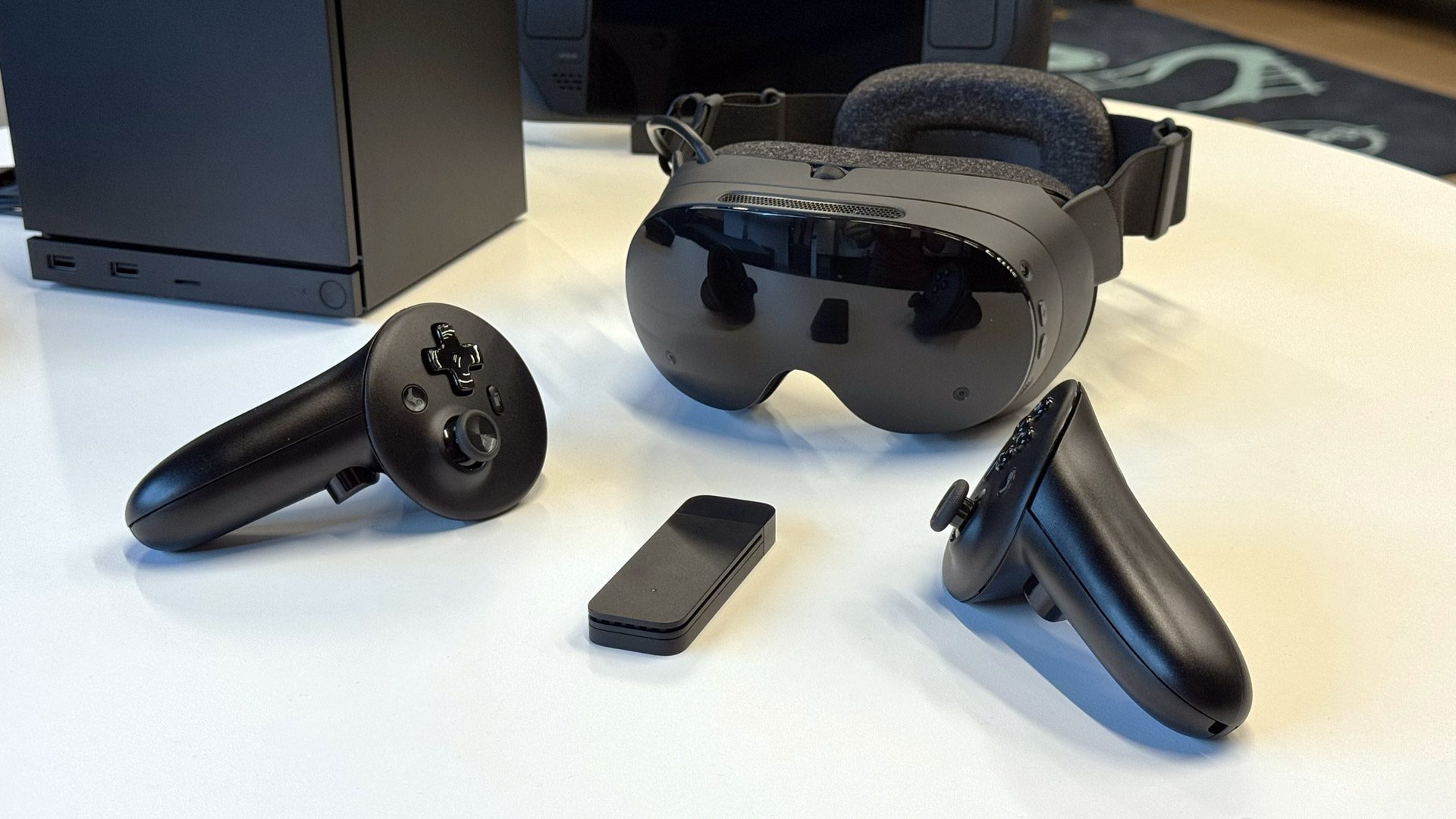
In the near future, I’d also like to see whether Valve’s forthcoming Steam Frame can move the needle in PC VR game adoption—maybe not to the degree that Steam Deck did with PC gaming—but it stands a fair chance of making some sort of difference.
As a standalone VR headset with the ability to download and play many Steam games natively, it may be aiming to hit the sweet spot for PC and PC VR gaming, so much so that it kicks off a hybrid VR headset hardware race—basically Valve’s only reason for putting out hardware in the first place. As always, I’ll be keeping my eyes peeled on the monthly Steam hardware survey to see how Steam Frame stacks up to the current reigning champ: Quest 3.
The post Steam Reveals Most Played PC VR Games of 2025 appeared first on Road to VR.

You’ll love the freedom and sound these alternative headphones give you.
The post Shokz Starts Open-Ear Sports Headphone Clearance With OpenRun Pro Bone-Conduction Headphones at Their Lowest Price Since Launch appeared first on Kotaku.

For a limited time, you can get yourself the Jackery Explorer 300 for 31% off at Amazon.
The post Jackery Is Offloading the Explorer 300 Portable Power Station at an All-Time Low, Priced Like Small Power Banks appeared first on Kotaku.

Amazon’s compact 3.1-channel soundbar delivers clearer dialogue, deeper bass, and immersive virtual surround sound—now available for just $175 after a limited-time discount.
The post Amazon Fire TV Soundbar Plus Hits New Record Low After Two Price Cuts in One Week (Newest Model With Built-in Subwoofer, 3.1 Channel, Dolby Atmos) appeared first on Kotaku.

Amazon’s $200-off deal on the latest and best MacBook Air with the powerful M4 processor is an absolute steal.
The post Apple MacBook Air (2025 13-inch, M4) Drops to Its Lowest Price Ever in a New Year Laptop Clearance appeared first on Kotaku.
A new era appears to be kicking off in immersive hardware as long-time VR developers reel from a Christmas season without new consumer hardware drawing in audiences.
UploadVR spoke with a number of developers finding themselves in varying degrees of distress over the overall direction of investment in VR and the overwhelming cost of reaching people in headsets about their wares.
Several spoke on condition of anonymity for fear of their business relationships with platform companies being affected by their comments. If you have comments you’d like to share with UploadVR, you can email ian@uploadvr.com or message 1-949-610-3857. I will assume comments are fine to associate with your name unless you include the words “on background” in your message to request I take steps to anonymize your statements.
“We are definitely seeing a shift in the market and a need to diversify in terms of platforms,” wrote Tommy Palm, the head of Resolution Games. “We’ve been preparing for this for some time as we’ve aimed to make our games available to players across as many platforms as possible for the last few years. While it’s no easy task to launch a game like Demeo x Dungeons & Dragons: Battlemarked across Quest, PlayStation and Steam – with the goal of more platforms to come – the game did exceed our sales goals over the holidays, and being cross platform helped with that.”
Creature led by Doug North-Cook released several projects in 2025 with partners of the label launching new games and downloadable content at a regular pace. Maestro continues dropping hugely appealing DLC content and our reviewer found Deadly Delivery from Creature-associated Flat Head Studio to be “hilarious horror best played with friends”.
“The state of the industry leaves no room for error,” North-Cook wrote. “With no new headset this holiday sales were up over the holidays but not where they would be in a new device era. I fully expect most studios will have a difficult time finding a positive path forward this year as industry trends, lack of investment, and declining per-developer revenue hit everyone hard.”
“Creature isn’t slowing down at all though. We have several large titles in development across multiple partner studios – some of our most ambitious yet. We also had a positive holiday with our catalog overall doing pretty well and Deadly Delivery ranking as one of the top selling titles leading into the holidays.”
Cloudhead Games laid off 40 people after teasing for years work on a major title following their standout release Pistol Whip. The studio confirmed in the comments on our initial article about the layoffs that both versions of the game – one for Intel machines and one for ARM systems – will be packaged for sale on the forthcoming Steam Frame. At 16 people now, founder Denny Unger’s first week of 2026 involved resetting Cloudhead’s strategy and “reverse recruiting” for dozens of now-former colleagues looking for new remote positions.
Some VR game developers have been buoyed by revenue from the subscription programs offered by Sony and Meta that their games are downloadable through. Some developers, however, see these subscriptions becoming a larger percentage of a smaller income pie overall. With no new VR hardware from Meta in 2025 and confirmation that their third-party Horizon OS headset program has been shelved, developers growing overly dependent on subscription revenue likely face difficult decisions about how to maintain independence or continue VR development.
Do VR developers build games for controller-free hand tracking or for a new set of controllers from Valve that differ from Meta Quest in the number of buttons they have?
Do they build volumes that float in space alongside other volumes and windows, or do they construct fully immersive virtual worlds?
Can VR developers expect the targeting of eye tracking in all future headsets to help them build more responsive software?
In early 2025, we met virtually with Ryan Payton of Meta-owned studio Camouflaj to cover their work on the Batman: Arkham Shadow Game of the Year edition.
“We’re as hungry as ever,” Payton told us during the broadcast. “I think a Wolverine VR game would be incredible. I want that.”
A Meta Neural Band worn on each wrist could conceivably make that dream come true. When combined with the idea that computer vision could help more accurately detect precision microgestures, we’re glimpsing an era with Meta’s Display glasses that could see users do much more than just navigating menus in headsets or glasses privately with simple thumb swipes.
In the dreams we seem to share with the director of one of the best VR games produced by Meta, we want something wholly more robust from our experience in headset. Wolverine’s adamantium claws can seem to slide out from underneath the skin of our wrists and then we can use our new tools to climb up brick walls in wide field of view virtual reality. This can be done without controllers in hand as wristbands vibrate haptic effects for us instead. If this is the way, it would require Meta figuring out how to transition its ecosystem from selling two inexpensive controllers in the box with each headset to bundling up a pair of Neural Bands instead.
Without third-party Horizon OS headsets to differentiate the experience inside Meta’s ecosystem near term, and as executives court partners like UFC and James Cameron long term, VR game developers are left wondering what space Meta is making for them in their future endeavors.
50-degree field of view AR glasses with a wristband on your dominant hand to interact with menus or handwrite will certainly be interesting to some people for tasks out in the physical world. However, that’s so very far from the presence-inducing VR of the sort we would want in a Wolverine game. We can only have dual-wielding indestructible claws via a pair of bands on both wrists with wide field of view virtual reality doing the work of transporting us into a world of superheroes.
Consider the next two years facing two of the best games made for VR – Batman: Arkham Shadow and Half-Life: Alyx. Near term, pirates are likely to try to run Batman: Arkham Shadow on the Frame headset before Meta chooses to put it for sale on the Steam store.
Meanwhile, Valve is working to get Half-Life: Alyx running performant in the standalone Steam Frame. If that should happen, will there be the same demand to get that experience running directly on a Meta standalone?
I’m illustrating that some of the biggest-budget exclusive software products made for VR headsets – games owned 100% by the platform – find their virtual worlds diametrically opposed in the pressure ahead for their distribution.
Alyx faces developer-led optimization to bring an experience that sings with a high-powered PC down to run performant on a low-powered standalone headset. Batman faces the demand of PC buyers hungry for more high-quality content than the market can produce, and a publisher with some motivations against selling software via a competitor’s storefront.
Nintendo releases the revamped Virtual Boy next month and we’ll be curious if Sony can pull together a coherent strategy after the PlayStation VR2. Meanwhile, Apple chips away at major software updates for visionOS and we’ll have a review of Steam Frame once we receive the completed headset from Valve.
For now, multiple long-time VR development studios still find themselves committed to the medium and working on new software, but they are also recalibrating their expectations for a smaller market near-term and difficult decisions ahead about focus and differentiation.

Devs are still gloating about giant worlds without telling us what you can do in them
The post 2026 RPG That Lets You Ride Dragons Promises A Map Twice The Size of <i>Skyrim</i> appeared first on Kotaku.

Founded by ex-Polygon editors it’s for her, them, and even him
The post <i>Mothership</i> Is A New Website About Gender And Games Which Feels Like A Radical Thing To Launch In 2026 But Shouldn’t Be appeared first on Kotaku.

There’s a good chance your local GameStop has closed, but don’t worry, CEO Ryan Cohen should be just fine
The post GameStop CEO Aims For $35 Billion Payout As Stores Close By The Hundreds appeared first on Kotaku.

A large shop in Japan has barren shelves and is running low on gaming PCs as hardware around the world gets more expensive
The post AI-Fueled PC Gaming Crisis Has One Store Begging For People’s Old Rigs appeared first on Kotaku.
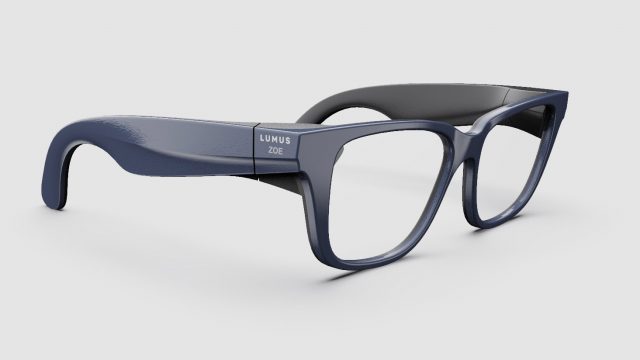
Lumus, the company that developed the waveguide optic used in Meta’s Ray-Ban Display smart glasses, says it has achieved a 70° field-of-view in a new design revealed this week at CES 2026. This conveniently matches the 70° field-of-view that Meta achieved in its ‘Orion’ prototype, but only with the use of novel materials.
Back in 2024, Meta revealed its first AR glasses prototype, codenamed Orion. One of the prototype’s big innovations was its ability to squeeze a 70° field-of-view into such a small form-factor. This was made possible with the use of unique waveguide optics made with silicon carbide, a novel material that enabled the wider field-of-view thanks to its greater refractive index.
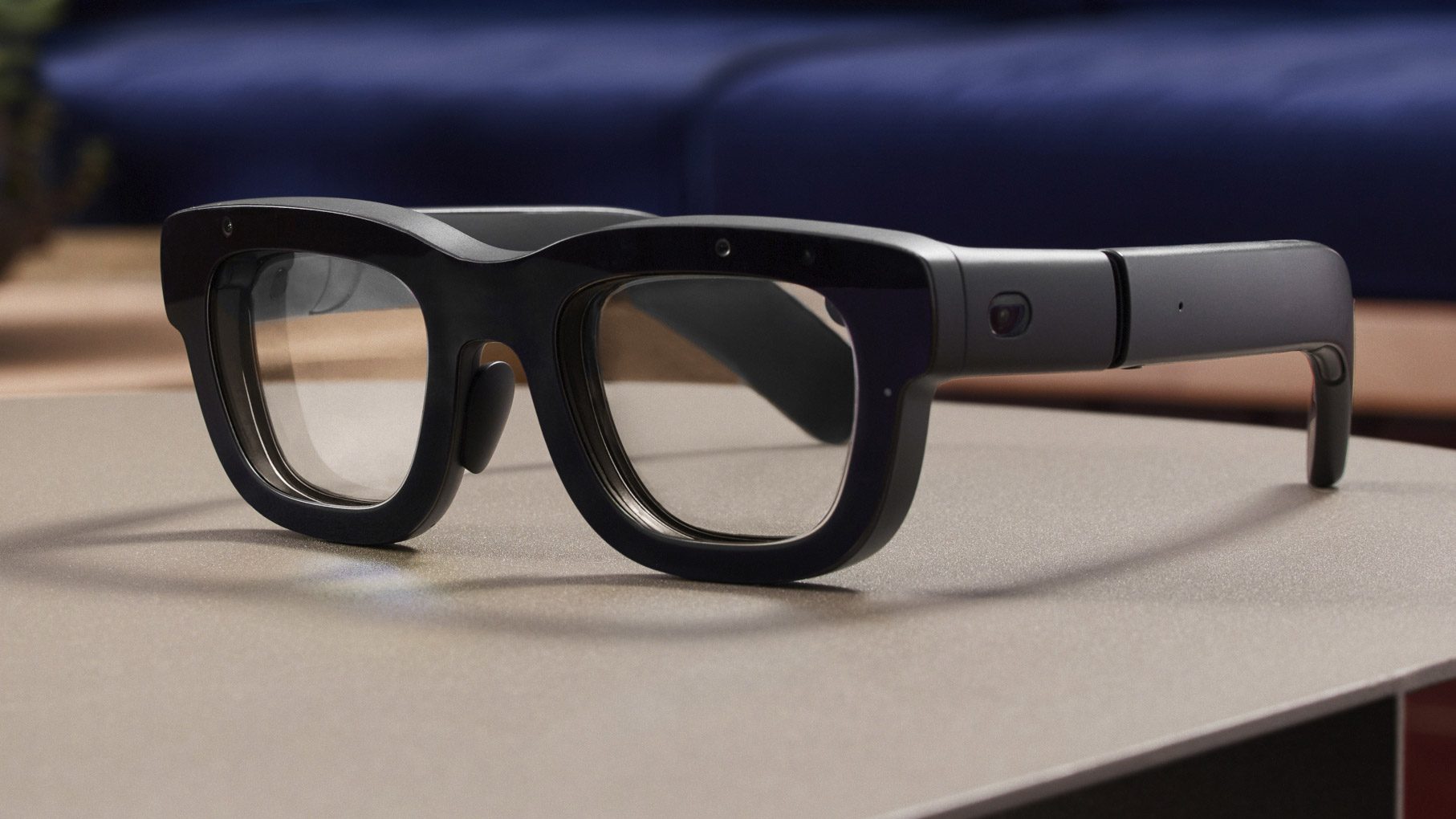
In 2025, Meta talked about the challenges of manufacturing silicon carbide waveguides, affordably, at scale. While the company said progress was being made, it still conceded that the work is ongoing.
“We’ve successfully shown that silicon carbide can flex across electronics and photonics. It’s a material that could have future applications in quantum computing. And we’re seeing signs that it’s possible to significantly reduce the cost. There’s a lot of work left to be done, but the potential upside here is huge,” the company said at the time.
But now Lumus, the company that developed the waveguides in Meta’s Ray-Ban Display glasses says it has achieved a 70° field-of-view in its glass waveguides. The company claims it’s the “world’s first geometric waveguide to surpass a 70° FOV.”
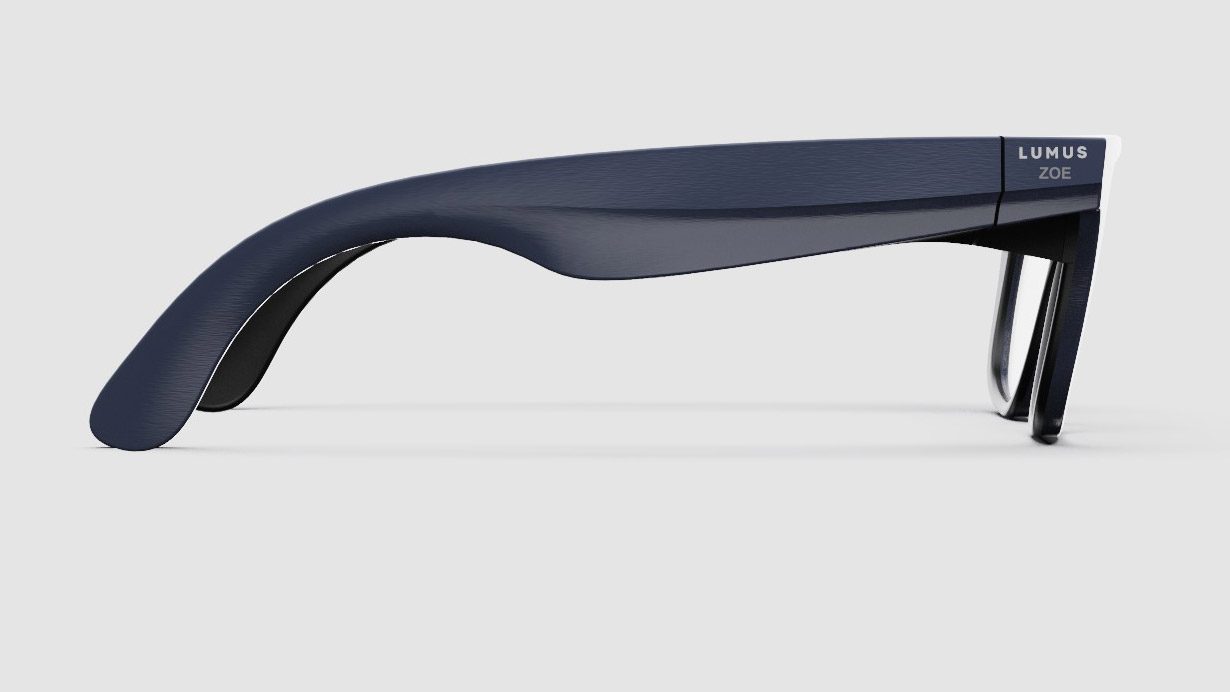
The company announced that it is showing the new ZOE waveguide this week at CES 2026. Renders provided by the company show the company’s latest prototype to include the ZOE optics (though it’s worth noting that Lumus’ prototypes typically do not include on-board battery, compute, or tracking hardware, which would add bulk to any real product based on ZOE).
My gut tells me it probably isn’t a coincidence that Lumus has been aiming for a 70° field-of-view, which just happens to match what Meta achieved with its Orion prototype. Most likely, the company was tasked (implicitly or maybe even directly) with doing exactly that—proving that its waveguides could reach the 70° benchmark without using silicon carbide.
Beyond simply achieving a 70° field-of-view as a proof-of-concept, Lumus says the ZOE optic is made with the same process as its other glass waveguides. That’s a big deal, because the company has already proven that such waveguides can be manufactured at scale, thanks to the use of its waveguides in Ray-Ban Display, Meta’s first smart glasses with a display.
That means Lumus’ ZOE waveguide is most definitely on the shortlist for what Meta could use in its first pair of wide field-of-view AR glasses, which the company said it hopes to bring to market before 2030.
Granted, field-of-view isn’t everything. When it comes to optics, everything is a tradeoff. Increased field-of-view can impact brightness, PPD, and various visual artifacts. Without being able to see the new ZOE optic for myself, it’s hard to say whether or not Lumus has something truly new here, or if they’ve simply boosted field-of-view by trading other downsides.
I expect I’ll have a chance to see the ZOE optic later this year at AWE 2026 where I usually meet with Lumus to see their latest developments. In the meantime, I’ve also reached out to the company to learn more about how it reached the 70° field-of-view and what tradeoffs it did or didn’t have to make to get there.
The post Meta Waveguide Provider Claims “world’s first” 70° FoV Waveguide appeared first on Road to VR.

The generative-AI tool Grok has been found to be producing images of undressed minors
The post Elon Musk’s Bot Lies About Locking Deepfake Nudity Factory Behind A Paywall appeared first on Kotaku.

People online spent a lot of time arguing about representation in the first and second games, but Warhorse’s co-founder isn’t too concerned
The post <i>Kingdom Come Deliverance 2</i> Boss Says Only ‘Terminally Online Culture Warriors’ Care About Controversies appeared first on Kotaku.

Also: a mystery game is set to appear at the first Xbox showcase of the year
The post Would You Pay Over $1,000 For A Steam Machine? appeared first on Kotaku.

Wyll was rewritten in the development phase, but that’s not the only reason he has less involvement than other companions
The post Larian Explains Why <em>Baldur’s Gate 3’s</em> Most Underserved Companion Felt Shortchanged appeared first on Kotaku.

This persistent rumor won’t go away, despite mountains of evidence proving it to be false
The post The Conspiracy That Todd Howard Hates <i>Fallout: New Vegas</i> Is Absurd appeared first on Kotaku.

The RPG got some flak for characters like Gale and Halsin coming on too strong
The post After <em>Baldur’s Gate 3</em>, Larian Wants Companions To Stop Trying To Immediately Have Sex With You appeared first on Kotaku.

You’re saving a nice $30 with this deal, plus enjoying free delivery with your purchase.
The post Samsung Galaxy Buds 3 FE (2025) Drops to All-Time Low With Its First Cut of the Year While AirPods Go Back to Near Full Price appeared first on Kotaku.