Meta CTO Explains Layoffs & Strategy Shift: “VR Is Growing Less Quickly Than We Hoped”

In a series of interviews at Davos, Meta’s CTO explained why the company is reducing its investment in VR.

If you somehow missed it: last week Meta shut down three of its acquired VR game studios, conducted significant layoffs at a fourth, canceled the Batman: Arkham Shadow sequel, and announced the shutdown of Horizon Workrooms and its Quest headsets for business offering. These actions came a month after the company officially confirmed “shifting some of our investment from Metaverse toward AI glasses and Wearables”.

Palmer Luckey: Meta Isn’t Abandoning VR, Studio Closures “A Good Thing”
Palmer Luckey thinks Meta closing its VR game studios is “a good thing for the long-term health of the industry”, and that the narrative of it “abandoning” VR is “obviously false”.
UploadVRDavid Heaney

At the World Economic Forum in Davos, Meta CTO Andrew Bosworth has finally made public statements about the VR layoffs and shutdowns, via a series of interviews.

One of the interviews was with veteran tech reporter Alex Heath. While Heath hasn’t yet shared the interview (this is set to happen in the coming days), he has published an article with key quotes wherein Bosworth declares that “VR is growing less quickly than we hoped”.

“We’re still continuing to invest heavily in this space, but obviously, VR is growing less quickly than we hoped,” Bosworth apparently told Heath. “And so you want to make sure that your investment is right-sized.”

According to Heath, Bosworth claimed that Meta has seen “really, really positive pickup” in Horizon Worlds on smartphones, and plans to double down on this with continued investment in Horizon on mobile.

“You’ve got a team that actually has product market fit in a huge market on mobile phones, and they’re having to build everything twice. They’re building it once for mobile phones, and building again for VR. There’s a pretty easy way to increase their velocity: just let them build for mobile. So Horizon is very focused now on mobile — not exclusively, but almost exclusively,” Bosworth is quoted as saying.

0:00

/1:40

Clip from Axios interview with Meta CTO Andrew Bosworth.

Another interview, available in full on YouTube, was conducted by Axios’ chief technology correspondent Ina Fried.

In it, Bosworth gave a very similar explanation for Meta’s shift in strategy.

“It’s like any investment, you’re gonna look at how you do over the course of years and you’re gonna reinvest in some areas and trim your losses in others.

For us, we’re seeing tremendous growth of our metaverse on mobile. You know, Horizon is this thing that started on VR headsets. But obviously there’s much more users today on mobile phones. We’ve been pivoting over the last year to focus on the mobile market and it’s going really well, and so you kinda wanna double down on that.”

Bosworth also seemed to suggest that Meta’s significant investment in the VR side of Horizon Worlds, and repeated pushes to convince Quest headset wearers to use it, came at “an expense of user experience”.

“We’re gonna let VR be what it is, what it does”, Bosworth said. “We’re gonna have focus a lot more on the third party content library, the ecosystem that’s developed there.”

That seems to suggest that Meta will pull back on pushing Horizon Worlds for VR users and on making its own content, leaving the content ecosystem to third-party developers and letting headset owners choose the content they want.

VR Modder Luke Ross Removes All Mods Following ‘Cyberpunk 2077’ DMCA Takedown

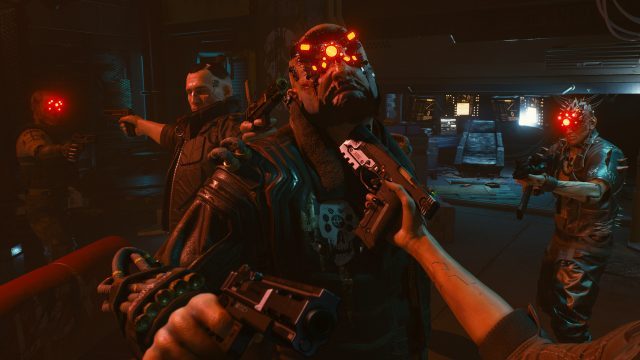
Luke Ross, the prolific VR modder, was recently involved in a DMCA takedown issued by CD Projekt for his paywalled Cyberpunk 2077 VR mod, which the studio claims breaks its terms of service. Now, Ross has removed access to all of his various VR mods in response.

Patreon immediately removed Ross’ Cyberpunk 2077 VR mod following the DMCA takedown earlier this week, seemingly running afoul of the game’s ‘Fan Guidelines’, which state that content created by the community should have “[n]o commercial usage.”

Like many of Ross’ VR mods, Cyberpunk 2077 was only available to active Patreon subscribers who pay $10 per month to not only support Ross’ ongoing work with his R.E.A.L. VR mod suite, but also to gain access to a number of VR mods for popular flatscreen games, including Elden Ring, Far Cry, Final Fantasy VII Remake, and Ghostrunner.

In the wake of the Cyberpunk 2077 controversy, Ross has effectively pulled all VR mods from his Patreon, the reasons of which he details to his Patreon supporters (via Reddit) in a message titled “Under attack”.

First, a bit of backstory: the initial DMCA takedown issued by CD Projekt was solely due to Cyberpunk 2077 VR mod being paywalled, Ross says. While the studio later claimed it would allow the mod if it were offered for free, that was something Ross wasn’t (and still isn’t) willing to do.

In its wake, Ross says it’s sparked “rampant piracy of my software,” and what he calls a “domino effect” of other publishers following CD Projekt’s lead. In the following days, Ross received a similar DMCA takedown from 505 Games for its action platformer Ghostrunner, which led to his decision to remove the mods.

“No mention of any terms of service violation this time. Again Patreon automatically complied. I don’t blame them; DMCA law is carefully worded to give infinite power to big companies, who only need to write on a slip of paper that they “believe” their copyright has been infringed in order to nuke from the sky anything they don’t like—and to give infinite headaches to creators like me, who instead have the only recourse of going to court, sustaining huge costs to get through the legal process,” Ross tells subscribers.

Repeated claims by other developers could lead to account termination, Ross says, hence why he removed all mods and paused billing for one month, an ostensible bid to stem the permanent outflow of subscribers.

“I hope one month will be enough for the fog to clear up, and to understand what is going to happen to our collective attempt to make VR available for AAA games. To boldly go where no publisher wants to go (or to let us go) anymore,” Ross says, underlining that many developers refuse to develop their own VR support.

Still, Ross is prepared to close up shop entirely.

“Hopefully we’ll find a way together, in the next few weeks. But if we can’t, we’ll always have the memories of the wonderful times we spent in those beautiful virtual worlds.”

Notably, none of Ross’ VR mods via the R.E.A.L. VR mod suite contain game files. Instead, the software inserts custom rendering code directly into PC games to enable stereoscopic 3D, head-tracking, and OpenXR compatibility.


You can view the entire message on Reddit, courtesy user ‘Top_Team_3138’. We’ll be following further developments, so check back soon. 

The post VR Modder Luke Ross Removes All Mods Following ‘Cyberpunk 2077’ DMCA Takedown appeared first on Road to VR.