‘Thief VR: Legacy of Shadow’ Review – So Close to Stealing My Heart

Thief VR: Legacy of Shadow does a respectable job of bringing the storied series to VR for the first time, all the while offering up one of the best stealth games currently in the medium. Some stumbling blocks keep it from being the end-all VR stealth game of my dreams, and it’s painful to know how surprisingly close it actually got.

Developer: Maze Theory
Publisher: Vertigo Games
Available On: Quest, PSVR 2, SteamVR 
Reviewed On: Quest 3, SteamVR
Release Date: December 4th, 2025
Price: $30

Gameplay

We’ve been waiting more than a decade for the next Thief game, with the last having landed on console and PC back in 2014. I wish I could say that playing the VR installment feels like a long-awaited homecoming, although I’ve never actually played any of the older titles, which reach back to Thief: The Dark Project (1998).

I did however have an hour-long hands-on with Thief VR back in September, which left me pretty impressed with what developer Maze Theory was building towards, and also curious as to what it could become.

Now, with the full game under my belt, I can say the studio has delivered on many of the promises: great visuals, immersive storytelling, world-class voice talent, and (mostly) well constructed missions that feel like lived-in places. While I initially called its object interaction “smart”, continue to the Immersion section below for more on why I think that isn’t exactly the case. There are more gripes beyond object interaction, but nothing that made me want to hate Thief VR—maybe just not love it as much as I could.

Image courtesy Maze Theory, Vertigo Games

Anyway, here’s the setup: your name is Magpie, a professional thief who finds a magical relic, turning you from your standard sticky-fingered prowler into something of a Super Thief. At the behest of your fixer and chief mission-giver Cassandra, you need to dig deeper into why Baron Northcrest is so intent on gathering up relics for some surely evil plan. I mean, he’s evil, so of course he’s doing evil things, but you have to stop him somehow.

Gameplay mostly follows this pattern: you’re placed outside of a large building that needs infiltrating, of course covered with guards walking their various circuitous routes. Most of the guards can be knocked out and dragged away into the cover of darkness, while a small minority are essentially immortal tanks that need to be avoided entirely. It’s up to you whether you want to knock out, kill, or avoid any guard. Not killing one of the armor-clad goons, doing a mission undetected, or sweeping up a specific amount of loot can unlock more abilities to choose from at the end of each level.

Image captured by Road to VR

While you don’t need any of the abilities, they certainly make life a lot easier: better heath regen when eating food, quieter movement when crouching or jumping from high ledges, and a ready supply of arrows that you would normally have to scavenge levels to find.

I always stole everything I saw regardless of whether it was gold, silver, bronze, or whatever. That tactic worked until around the halfway mark, when levels get a little larger, and you need to explore a lot more beyond the main mission objectives. There’s no time limit, so it entirely depends on your appetite for completionism.


While you can hunt secondary objectives, thwack guards and turn each level upside down for hours until you’ve shaken out every last coin and golden goblet, the most scarce resource of all is invariably arrows. You have a black jack for knocking out guards, a lockpick for opening pickable doors and chests, and your inherent Glyph Vision, which lets you temporarily highlight important things and reveal otherwise invisible secret areas.


But it’s the bow and (lack of) arrow that could mean the difference between you restarting from an automatic checkpoint, or restarting the mission entirely.

Arrow types include a water arrow to put out fire, a fire arrow to light key items on fire, a blunt arrow for knocking out guards, regular arrows for killing and disabling lights, and rope arrow, which lets you spawn vertical ropes to climb up on specific attachment points. While the game usually serves up the arrow you need at the time, levels are chock-full of byways and different ingress points, making variety an important factor. The bow works well, although I think the aiming angle is somewhat odd, making shooting the thing a bit of a chore.

Image courtesy Maze Theory, Vertigo Games

Missions often serve up a good amount of variety, save the last two, which I talk more about below. Levels are often multilayered buildings with high and low ingress points, which means you can mostly tackle them in any style you want—or at least it appeared to be that way to me. Granted, Thief VR doesn’t give you the sort of freedom you get in Hitman, but it’s also a built-for-VR game that doesn’t need to make any of the weird affordances you see in the various Hitman ports/VR modes.

In all, it took me a little over five hours to play the campaign all the way through, although your mileage may vary according to how safe you want to play it, or how much loot you’re willing to hunt for. That said, missions are replayable once you’ve beaten the game, so you can go back and try to get high scores and unlock more abilities.


I rarely include impressions of end levels for the sake of spoilers, but this unfortunately bears mentioning: the ending of Thief VR was such a massive letdown, I just had to say something. In the missions leading up to the ending, the game reuses two previous levels, which aren’t really mixed up to feel like anything new—possible signs that the game was rushed out the door.

Then, once you’re tromped through the last mission, and are finally served up what should be the cherry on top of the cake, it all basically ends in five minutes. You don’t get to apply any of the skills you honed throughout the entire game: just a few rando button presses and you’re done. Insult to injury: the game unceremoniously tosses you back to your home base after this short encounter, placing you in front of a mission screen to you can replay whatever.

Immersion

Thief VR looks awesome, as it’s densely packed with tons of environmental storytelling stuff, like posters, graffiti, and found notes all over the place, all of which help you understand the story beyond the periodic conversations you can eavesdrop on before guards head out on planned patrol routes.

Levels offer a ton of places to hide and explore, making it feel like a lived-in place. And what’s more, it also looks good and performs mostly well, even on Quest, which is likely the lowest tier version of the game. Notably, while it’s been a while since I played the demo, which was on PSVR 2, one remarkable thing is every version of the game feels a little too dark for my liking. Like, I need just a bit more light to read and see comfortably.

Image captured by Road to VR

Voice acting is also some of the best you’ll find in any game, VR or otherwise. Stephen Russell reprises his role as Garrett—notably lacking from the 2014 game, which tapped fellow voice acting veteran Romano Orzari instead. In any case, Thief VR’s whole cast seem to have been directed to deliver lines naturally, and less gamey than they might have otherwise.

Immersion is a fickle thing though, and can be quickly broken. For example, walls aren’t always capable of stopping or otherwise muffling noise. This seems to be more buggy behavior than something planned, as I noticed in some levels that guards would be somewhat muffled through doors, while other levels I could hear a guard snoozing from above or below me, as if he were in the same room. At one point, I could hear a half-dozen guards having conversations in possibly three different rooms, many of them featuring the same voice actor.

Guards are also stupid as sin—much dumber than those from analogue series, such as Hitman. I initially went into the game trying to play it as quietly and as far away from baddies as possible, but if I had known I could just run past a guy and then hide somewhere else for 10 seconds before he gives up and goes back about his pre-planned route, I wouldn’t have been so ginger. Here I am (sped up) alarming a guard, which brings their indicator to red before I make a daring escape up a regular ladder, which as we all know, can only be used by Super Thieves.


Really. A miscreant has entered an impenetrable palace, knocked out a bunch of dudes, and just showed their face before hiding under a table and you’re not able to alarm other guards? To me, Thief VR seems more content using the carrot rather than the stick: you’ll lose a valuable achievement, but guards won’t go five-star mode on your ass to hunt you down, which means you’ll mostly only ever replay a mission to get an achievement, and not save yourself from getting twacked to death.

Notably, even if a guard is on you, there’s a way of parrying their hits with your trusty black jack. Simply parry in the direction of their hit three times in a row, and guards will be knocked on their knees, allowing you to pop them on the head for a quick dirt nap. I don’t dislike that, as it gives you some recourse in a game fundamentally eschewing melee combat.

Object interaction is also a bit of a sore spot too—more than I thought it would be from my initial hands-on back in September. Most objects are interactable, which is a big plus in the immersion department, but grabbing them feels just a little too fumbly to be reliable. For example, even getting your lockpicks out of your inventory can be hit or miss, which can be frustrating when you need to quickly open a chest or door between you and freedom. Items include what feel like a singular point in the middle that you need to grab for, otherwise you might just paw at it ineffectually.

Okay, questionable game logic and weird bits aside: I think Thief VR’s overall strengths help compensate for some of its weaker moments, as they just become background static to what otherwise is a fun and enjoyable game. Many of these things may be subjects of future patches, although this is the game as it is at launch.

Comfort

Thief VR is a very comfortable game, as it doesn’t include any sort of vehicle rides, or other ways of forcing your perspective in uncomfortable ways.

At times, I did find myself struggling to reach items, even when artificially crouched, which made it slightly less comfortable to play seated than standing and physically crouching, or using a combo of physical and artificial crouch to grab things on the floor.

Thief VR: Legacy of Shadow Comfort Settings – December 4th, 2025

Turning
Snap-turn ✔
Quick-turn ✔
Smooth-turn ✔
Movement
Teleport-move ✖
Dash-move ✖
Smooth-move ✔
Arm Swing-move ✖
Blinders ✔
Head-based direction ✔
Controller-based direction ✖
Swappable movement hand ✖
Posture
Standing mode ✔
Seated mode ✔
Artificial crouch ✔
Real crouch ✔
Accessibility
Subtitles ✔
Adjustable difficulty ✖
Two hands required ✔
Real crouch required ✖
Hearing required ✖
Adjustable player height ✔

The post ‘Thief VR: Legacy of Shadow’ Review – So Close to Stealing My Heart appeared first on Road to VR.

Meta Reality Labs Reportedly Facing Up To 30% Budget Cut

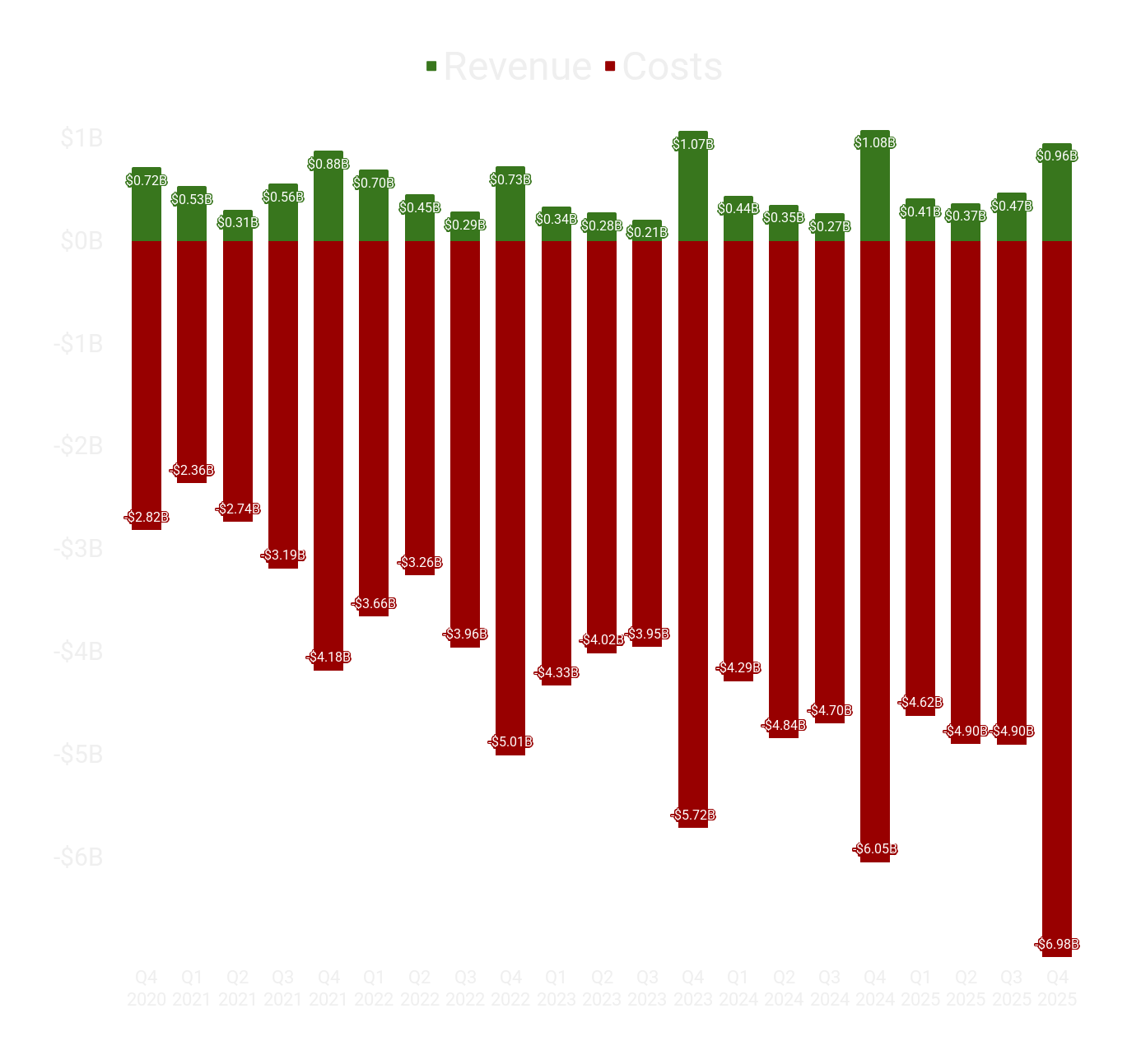
Meta Reality Labs is facing up to 30% budget cuts, Bloomberg reports, higher than the 10% Mark Zuckerberg normally asks for during budget cycles.

Reality Labs, if you’re unaware, is the division of Meta behind its Quest headsets, Horizon software, smart glasses, and sEMG wristband, as well as researching future technologies such as Codec Avatars and AR glasses.

Since Meta started breaking out the financial results of Reality Labs in its earnings calls in Q4 2020, it’s been public knowledge that the division spends significantly more than it brings in, resulting in a financial “loss” that has been the fuel for countless clickbait articles each quarter.

But while describing this as a “loss” is technically correct in an accounting sense, much of it would be more accurately described as long-term investment. XR headsets like Quest are still a relatively early technology. Further, as of 2022 more than 50% of Reality Labs spending was on the research and development of AR glasses, and the company has yet to even launch a true AR glasses device.

Still, Meta is a business, and at some point, it wants Reality Labs to be profitable, a goal that will involve spending less.

In July 2024, The Information reported that Reality Labs was told to cut spending by 20% by 2026. But the first three quarters of 2025 have seen Reality Labs spend roughly the same as it did in 2024.

Bloomberg’s new report comes as Meta is planning its budget for next year. According to the report, executives are “considering” a cut “as high as 30%” for Reality Labs, with associated layoffs that would arrive as early as January.

Proposed cuts would primarily target VR and Horizon Worlds, according to the report, at a time when Meta is hoping to scale up its smart glasses ambitions.

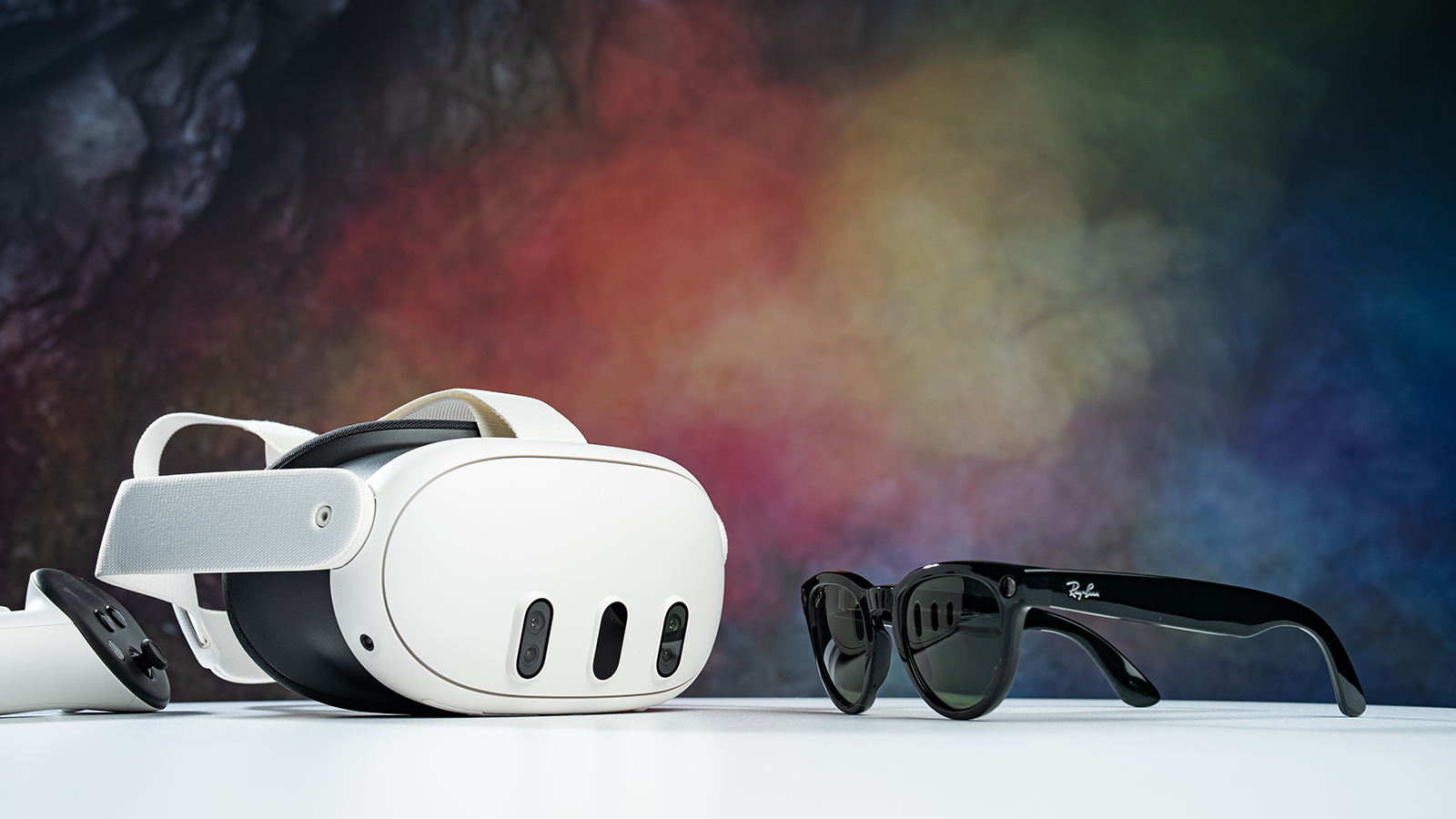
As Ray-Ban Meta Sales Skyrocket, Quest Sales Are Down Again
Meta Reality Labs revenue rebounded in Q2, up 5% compared to 2024. But this was driven by the Ray-Ban Meta glasses, while Quest headset sales were again down.
UploadVRDavid Heaney

The company, with its partner EssilorLuxottica, is still selling many of its smart glasses models as fast as it can make them. Simultaneously, it has seen Quest headset sales decline in 2025 compared to 2024, with Quest 3S proving only a hit during the holidays, not the rest of the year.

This combination of significant success in the smart glasses space and relative failure in growing its VR headset business is likely the driver of the company’s decision to focus cuts on the latter, and it will be paying close attention to the sales of its next headset to decide how to invest through the rest of the decade.

Apple’s Head Of UI Leaves To Lead Design At Meta Reality Labs
Apple’s head of user interface design is leaving the company, after almost 20 years, to lead design at Meta Reality Labs.
UploadVRDavid Heaney

Valve: Steam Frame Doesn’t Support Stereoscopic Rendering of Flat Games but the Feature is “on our list”

Valve says that Steam Frame won’t be able to display traditional (‘flat’) games in stereoscopic 3D at launch, but they are looking into the feature for future development.

The News

The announcement of Steam Frame came with a lot of info but equally as many unanswered questions. One thing on my mind is whether or not the headset will be able to render flat games in stereoscopic 3D (assuming the game supports it). A Valve spokesperson told me that such a feature doesn’t currently exist, but the company is looking into it.

“For […] stereoscopic 3D content on [Frame], we don’t currently support it, but it’s on our list.”

The company further said it’s considering a system-level implementation that could display any stereoscopic 3D content, whether it’s stereoscopically rendered games, videos, or photos. Should the stereoscopic 3D feature be built, Valve told me it would “be our goal” to be able to display such content when streamed from a PC or rendered directly on the headset itself.

In an age of impressive conversion of 2D content into 3D content (like we’ve seen on headsets from Apple and Samsung), I also asked if the company was exploring any technology to automatically convert flat Steam games into stereoscopic output for viewing in 3D on Frame; unfortunately Valve said it isn’t something they’re currently looking into.

My Take

Without any automatic stereoscopic 3D conversion, the big question becomes: what content is actually available to users in stereoscopic 3D?

In 2025, there are very few flat games that natively support stereoscopic 3D rendering. But there’s a handful of third-party mods that inject themselves into the rendering pipeline to generate stereoscopic 3D frames from flat games. Since these aren’t developer-level integrations, such mods can work well for some games but not others.

Side-by-side stereoscopic rendering (where the left and right eye views are packed into a single, final frame) is the most widely compatible format for stereoscopic 3D content today. So the lowest hanging fruit for Valve would be to allow Frame to view any arbitrary side-by-side content in stereoscopic 3D, whether rendered in real-time from a game or pre-rendered images or videos.

While there isn’t a singular and widely available marketplace of professional stereoscopic 3D media, some modern phones and XR headsets can capture stereoscopic 3D images and videos. And automatic 2D-to-3D conversions of photos and videos is becoming increasingly accessible. Most of these can be viewed in one way or another on modern XR headsets and Steam Frame could eventually be among them.

The post Valve: Steam Frame Doesn’t Support Stereoscopic Rendering of Flat Games but the Feature is “on our list” appeared first on Road to VR.

Follow Alice’s Adventures In Wonderland Down The Walkabout Rabbit Hole

When Don Carson was hired by Lucas Martell in September 2021 to work as an artist on Walkabout Mini Golf, the former theme park designer mentioned a name and place he wanted to see in virtual reality.

Carson’s dream space opens to the public in VR this week. In Walkabout Mini Golf, the final paid add-on course of 2025 from studio Mighty Coconut finds visitors at the bottom of a rabbit hole following Alice on a journey growing curiouser and curiouser.

0:00

/2:21

When he was a child, Carson loved Alice’s Adventures in Wonderland by Lewis Carroll with illustrations by John Tenniel. First published in 1865, Alice’s series of encounters with strange creatures has seen every kind of adaptation from those original words and images. From release on December 4, 2025, Carson’s course design for Martell’s Walkabout with holes by Henning Koczy will see people leaning in to look through the keyhole at a royal garden beyond. Then they’ll follow Alice’s trail of dropped bottles, growing small and large along the way in a mad laughing party of their own.

As the course opens, Walkabout’s core design team convenes at Carson’s home studio in the Pacific Northwest to rough out ideas for the game that will open in 2027. Below is an image of the Walkabout Path for Alice’s Adventures In Wonderland drawn by Carson as an early concept in 2024.

Pen and ink drawing by Don Carson of an early draft of the “walkabout path” through Alice’s Adventure’s In Wonderland.

First shown publicly in our coverage of the game’s 36th course, the Mother Goose-inspired Forgotten Fairyland, the “Walkabout Path” for each course starts as a continuous circuitous block carved in virtual reality with Gravity Sketch. At the same time visitors follow Alice’s finalized path for the first time, Walkabout’s designers meet in the physical world to wear VR headsets together in the same space as they rough out places as a kind of team-building exercise of pure spatial creation.

You can watch our full 27-minute tour of Alice’s Adventures in Wonderland with Carson and Koczy taking us along Alice’s adventure from the Cheshire Cat to the Jabberwocky and Queen, and find all of our coverage of Walkabout at UploadVR.com/Walkabout.

Walkabout Mini Golf Creator Lucas Martell Makes A Sandbox For Artists To Play Inside
Walkabout Mini Golf follows Alice down the rabbit hole into Wonderland this week. We sat down with game director Lucas Martell for an in-depth Q&A about the game.
UploadVRIan Hamilton

Each new course from Walkabout features 36 new hole designs, 18 each in easy and hard modes. I only briefly glimpsed the eye-catching new visual effect shown in Wonderland’s hard mode, but in my tour video above you can see Koczy himself – the designer of all the holes – putting right into a Mad Tea Party. I won’t spoil what happens in that video if you’re waiting to experience it for yourself.

There are well beyond 1,000 unique hole designs in Walkabout now, many of them designed by Koczy. At the Mad Tea Party he’s a wizard in Wonderland channeling something into Walkabout I first experienced almost a decade ago.

I enjoy sitting on Amalthea around Jupiter and Pistol Whip’s levels are still dreamy, but to my personal taste a Walkabout Mad Tea Party with friends played like Alice in Wonderland may be the best experience in all of virtual reality now.

Meta’s Smart Glasses SDK Is Now Available To Build With, But Not Yet To Ship

Meta’s Wearables Device Access Toolkit, which lets smartphone apps access the camera of its smart glasses, is now available as a public preview.

That means that developers can download it and integrate it into their iOS and Android phone apps, and can test it on their own glasses, but they cannot yet ship it for general public use.

Announced at Connect 2025, Wearables Device Access Toolkit lets phone apps capture a photo or initiate a video stream from the glasses. The app can then store or process the frames it receives. And since Meta smart glasses function as Bluetooth audio devices, developers can combine this visual capability with audio in and out.

Developers could, for example, leverage the SDK to add first-person livestreaming or recording features to their apps. Or they could feed the camera imagery to a third-party multimodal AI model to analyze what you’re looking at and answer questions about it.

For a video stream, the maximum resolution is 720p and the maximum frame rate is 30 FPS. To make this work, the SDK temporarily creates a Wi-Fi Direct connection between the glasses and the phone.

Ray-Ban Meta and Oakley Meta HSTN glasses are currently supported, with support for Oakley Meta Vanguard and Meta Ray-Ban Display coming in the near future. But to be clear, support for the latter will only include receiving camera imagery, not displaying anything on the HUD.

Interested developers can find Wearables Device Access Toolkit at wearables.developer.meta.com.

Early Developer Experiments

Meta provided an early version of the Wearables Device Access Toolkit to a handful of developers several months ago, including Twitch, Microsoft, Logitech Streamlabs, and Disney.

Twitch and Logitech Streamlabs are using the SDK to let you livestream your first-person view on their platforms, just as you already can on Instagram, while Microsoft is using it for its Seeing AI platform that helps blind people navigate and interact with the world around them.

0:00

/0:40

How 18Birdies is using the toolkit.

One particularly interesting use case comes from 18Birdies. The golf app is experimenting with using Meta Wearables Device Access Toolkit for real-time yardages and club recommendations, helping golfers without requiring them to take their phone out of their pocket.

Another is from Disney’s Imagineering team, which explored using the toolkit to give guests a personal AI guide in Disney parks.

Disney Explores Using Ray-Ban Meta Glasses To Guide Guests Around Its Parks
Disney is exploring using Ray-Ban Meta glasses to give guests a personal AI guide in its parks, leveraging the new Meta Wearables Device Access Toolkit.
UploadVRDavid Heaney

Apple’s Head Of UI Leaves To Lead Design At Meta Reality Labs

Apple’s head of user interface design is leaving the company, after almost 20 years, to lead design at Meta Reality Labs.

Alan Dye joined Apple in 2006, and since 2015 had been the VP in charge of the company’s software design, including the user interfaces of its operating systems and the design language it encourages developers to follow. He was involved in the iOS 7 redesign and watchOS, and led work on the iPhone X swipe interface, AirPods pairing interface, CarPlay, Dynamic Island, visionOS, as well as key Apple apps like the App Store, Safari, Maps, TV, Notes, and FaceTime.

Bloomberg’s Mark Gurman first reported Dye’s move, and a few hours later Mark Zuckerberg confirmed it in a post on Threads, stating that Meta is forming a new top-level “creative studio”.

Dye will be joined by Billy Sorrentino, who was one of his deputies at Apple since 2016, and Joshua To, who previously led interface design at Reality Labs.

Here’s Mark Zuckerberg’s explanation of the new design studio’s role at Meta Reality Labs:

“The new studio will bring together design, fashion, and technology to define the next generation of our products and experiences. Our idea is to treat intelligence as a new design material and imagine what becomes possible when it is abundant, capable, and human-centered. We plan to elevate design within Meta, and pull together a talented group with a combination of craft, creative vision, systems thinking, and deep experience building iconic products that bridge hardware and software.”

“We’re entering a new era where AI glasses and other devices will change how we connect with technology and each other. The potential is enormous, but what matters most is making these experiences feel natural and truly centered around people. With this new studio, we’re focused on making every interaction thoughtful, intuitive, and built to serve people.”

The claim that Meta plans to “elevate design” is particularly notable, given that the company’s Quest headsets have long been criticized for their confusing, scattered, and clunky user interface. Meta started rolling out a design overhaul earlier this year, but it’s still experimental, and far from complete.

We also criticized the interface design of Meta Ray-Ban Display in our review, pointing out that it takes far too many swipes and taps to accomplish many common tasks.

Quest v83 PTC Has The Evolved Horizon OS UI Meta Teased At Connect
Horizon OS v83 PTC includes the evolved Quest system UI that Meta teased at Connect, as well as scene understanding for slanted ceilings and inner walls.
UploadVRDavid Heaney

It will likely take years, or at the very least many months, before the results of Dye’s new design team arrive in Meta products. But it could, if all goes well, be a crucial ingredient for Meta’s hopes to stave off competition from Apple and Google in the smart glasses and XR headsets market as the technology matures and scales to hundreds of millions of users in coming years.

Quest Headsets Get Second Exclusive Avatar: Fire and Ash 3D Clip

Quest headsets now have a second exclusive 3D clip from Avatar: Fire and Ash.

It comes just under three months after the first exclusive 3D clip from the movie arrived on Quest headsets just after Meta Connect.

0:00

/0:30

The short 3D clips are the first results, albeit small, of Meta’s exclusive multi-year partnership with James Cameron’s new company Lightstorm Vision, which has the goal of “making stereoscopic technology ubiquitous for all visual media by enabling stereoscopic 3D content creation in as seamless a manner as traditional 2D”.

The partnership, announced almost exactly one year ago, should help bring significantly more 3D video content to Quest headsets. At the time, Meta said it will bring “world-class 3D entertainment experiences spanning live sports and concerts, feature films, and TV series featuring big-name IP” to Horizon OS.

James Cameron appeared on-stage during the Meta Connect 2025 keynote for around twelve minutes, where he reiterated his views on how VR headsets are the ideal viewing platform for 3D content.

Apple’s competing visionOS offers hundreds of 3D movies through Apple TV and Disney+, but Meta’s platform currently lacks an equivalent offering.

James Cameron: VR Headsets Solve The Problems Of 3D Cinema
James Cameron, who recently announced a partnership with Meta, waxed lyrical about how XR headsets solve the problems of traditional 3D glasses.
UploadVRDavid Heaney

You can find the Avatar: Fire and Ash 3D clip in the TV app on Quest, where you can also find the two official trailers for the movie in 3D.

Oh My Galaxy! Brings A New Action Puzzler To Samsung Galaxy XR

Oh My Galaxy! is a new mixed reality arcade puzzler that’s out today on Samsung Galaxy XR.

Marking its first launch on Samsung’s headset, Oh My Galaxy! is the latest game from FRENZIES developer nDreams Near Light. The premise involves transforming your room into an interplanetary playground, tasking you with saving planets from alien attackers using hand tracking controls to fling asteroids at them.

0:00

/0:44

Release trailer

Near Light states there are over 100 increasingly difficult stages split across three main chapters, promising physics-based gameplay with various objectives. Defeating these aliens requires using different asteroids with unique abilities, ranging from the “high-explosive Boom Boulder to the six-part Splitter Stone.”

nDreams calls this one of the first “original titles” for Samsung’s headset, joining launch titles Enigmo and Inside [JOB] as one of three currently exclusive Android XR games. However, while Enigmo is a timed exclusive that’s coming to Quest, no further platforms were mentioned in today’s announcement, so it’s unknown if Oh My Galaxy! will eventually arrive elsewhere.

Oh My Galaxy! is available now on Samsung Galaxy XR for $9.99.