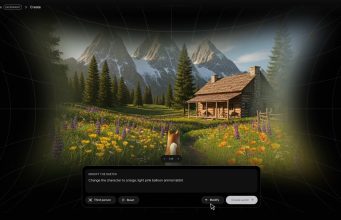
You Can Now Share Your Quest Activity As Your Discord Status

Meta is rolling out the ability to link your account to Discord to share what Quest app or Horizon World you’re currently in.

At Connect 2025, Meta announced that Discord was coming to Quest in 2026, including the ability to share your status to show friends what you’re playing.

The Discord app for Quest is still set for 2026, so isn’t here yet. But what is now “rolling out”, seemingly ahead of schedule, is the status sharing feature.

You can set it up on the web in the App Connections section of the Meta Accounts Center on the web, or in the mobile app at Accounts Center –> Your information and permissions –> App connections.

If you don’t see Discord listed yet, it means it hasn’t rolled out to your account yet, so you need to check again at a later date.

Meta says that the rollout is “gradual” in case there are any issues or bugs.

Note that for the app or world you’re in to show up you’ll need to have your Horizon Active Status set to Online or Joinable, and you can thus hide your current activity by switching to Offline.

Tracked: Shoot To Survive Update Lets You Keep Exploring After Finishing The Story

Tracked: Shoot to Survive now lets you continue exploring after completing the story.

Following last month’s release on Quest 3 and 3S, Incuvo has continued patching its latest survival adventure Tracked: Shoot to Survive. The first patch introduced visual upgrades, bug fixes and a new sleeping feature, and its second post-launch update, Patch 1.2.0, is now live. This lets you continue playing and exploring after rolling credits, spawning you back at your father’s cabin.

Patch 1.2.0 for TRACKED is live! �
Continue exploring after the story, never lose key items again, enjoy better nights, smoother crafting, a sharper knife… and tons of fixes across the whole game!

Full notes �https://t.co/D112ouZBL8 pic.twitter.com/P3eosG5qkb

— TRACKED: Shoot To Survive (@TRACKEDVR) December 4, 2025

Other changes largely focus on UX improvements and further bug fixes, such as changes to prevent you from losing critical narrative items. Knife damage has been buffed, new markers on the Fast Travel boards show currently active quest locations, missing sound effects have been fixed, and autosaves “should no longer occur at inopportune moments.” You can read the full patch notes here.

It’s welcome news for Incuvo’s latest VR game, as we came away with mixed impressions during our 3/5-star review. While we believe Tracked: Shoot to Survive offers an engaging survival adventure and praised its VR-focused crafting mechanics, we criticized its launch build for issues with its presentation, enemy AI, and performance.

Tracked: Shoot to Survive is available on Quest 3 and 3S.

[Industry Direct] ‘I Am Bird’ Open-World VR Flight Adventure Takes Off on Meta Quest

We at New Folder Games—creators of I Am Cat, I Am Security, and I Am Monkey—are expanding our series with a new VR experience built around dynamic, natural-feeling flight.

Industry Direct by New Folder Games

Industry Direct is our program for sponsors who want to speak directly to the Road to VR newsletter audience. Industry Direct posts are written by sponsors with no involvement from the Road to VR editorial team and do not appear in our front-page editorial feed. Industry Direct sponsors help make Road to VR possible.

A New Way to Explore VR Worlds

Our latest title, I Am Bird, is available now on Meta Quest! In this game, players step into the role of a super-powered bird and freely fly across a large vertical city full of activities and exploration.

Flight Built Around Natural Movement

We designed a gesture-based flight system that lets players control movement intuitively:

  • Spread your arms to glide
  • Tilt to change direction
  • Lean forward to dive
  • Use quick motions for dashes and fast turns

The system supports both smooth gliding and tight technical flying through narrow streets. Comfort options allow players to adjust assist levels and motion sensitivity.

A Vertical Open City

We built the city around height, speed, and momentum. Each district has its own identity and traversal flow-from wide avenues suited for fast glides to dense blocks crafted for precision flying. Rooftops, ledges, and tall structures hide shortcuts, collectibles, and optional challenges.

Become a Watchful Protector

As an aerial guardian, players respond to various events across the city, including:

  • High-speed chases
  • Street-level disruptions
  • Rescue scenarios
  • Quick-response encounters
  • Support missions for bird allies

All action sequences revolve around timing and positioning, making movement central to every encounter.

Tools for a Super-Bird

We equipped the game with a range of gadgets that expand player abilities and support different mission types. Gadgets can distract enemies, enhance mobility, highlight objectives, or help solve environmental tasks. All tools are gesture-based to keep the flight flow uninterrupted.

Activities Across Every District

Beyond main objectives, the city contains:

  • Races
  • Obstacle courses
  • Light side stories
  • Rooftop collectibles
  • Small events that appear during exploration

These optional activities encourage repeated visits to familiar areas from different altitudes and angles.

Available now

With I Am Bird, we aimed to create a VR experience centered entirely on the joy of free flight and open-world exploration. Intuitive controls, a vertical city full of content, and a wide variety of missions combine to offer a fresh take on movement-driven VR gameplay.

I Am Bird is now available worldwide on Meta Quest!

The post [Industry Direct] ‘I Am Bird’ Open-World VR Flight Adventure Takes Off on Meta Quest appeared first on Road to VR.

Legendary Tales Reveals First DLC With Next Year’s Dawn Of History

Legendary Tales gets its first DLC with ‘Dawn of History’ next year on PC VR and PlayStation VR2.

Developed by Urban Wolf Games, Legendary Tales is a dark fantasy RPG that received its full release in February 2024. Featuring physics-based combat with a quest-driven storyline, this comes with skill trees, explorable dungeons, crafting and more. Now, nearly two years after its full launch, it’s lifted the curtain on its first DLC expansion.

0:00

/2:21

Announcement trailer

Detailing the news on Steam, Urban Wolf Games states the DLC’s name signifies a new beginning and marks “a new chapter” for Legendary Tales, also offering a nod to the game’s ending song. Its content preview offered a look at three currently unnamed maps and three additional enemies: Fallen Warrior, Nangdo, and Succubus.

New item categories were also highlighted, with rings and two new types of weapons: Book and Staff. This upcoming DLC will also introduce five new legendary weapons, new ‘Seal’ features, and a quick slot for potions. Additional passive skills will be added, like the ability to reduce your casting time when using a different spell to the previous one.

To coincide with this announcement, Urban Wolf Games also announced that Legendary Tales has received a price reduction on both PlayStation VR2 and Steam. While it was previously available for $54.99, that’s now been permanently reduced to $39.99.

Legendary Tales is out now on PS VR2 and Steam, and Dawn of History reaches both platforms in Q1 2026.

‘Thief VR: Legacy of Shadow’ Review – So Close to Stealing My Heart

Thief VR: Legacy of Shadow does a respectable job of bringing the storied series to VR for the first time, all the while offering up one of the best stealth games currently in the medium. Some stumbling blocks keep it from being the end-all VR stealth game of my dreams, and it’s painful to know how surprisingly close it actually got.

Developer: Maze Theory
Publisher: Vertigo Games
Available On: Quest, PSVR 2, SteamVR 
Reviewed On: Quest 3, SteamVR
Release Date: December 4th, 2025
Price: $30

Gameplay

We’ve been waiting more than a decade for the next Thief game, with the last having landed on console and PC back in 2014. I wish I could say that playing the VR installment feels like a long-awaited homecoming, although I’ve never actually played any of the older titles, which reach back to Thief: The Dark Project (1998).

I did however have an hour-long hands-on with Thief VR back in September, which left me pretty impressed with what developer Maze Theory was building towards, and also curious as to what it could become.

Now, with the full game under my belt, I can say the studio has delivered on many of the promises: great visuals, immersive storytelling, world-class voice talent, and (mostly) well constructed missions that feel like lived-in places. While I initially called its object interaction “smart”, continue to the Immersion section below for more on why I think that isn’t exactly the case. There are more gripes beyond object interaction, but nothing that made me want to hate Thief VR—maybe just not love it as much as I could.

Image courtesy Maze Theory, Vertigo Games

Anyway, here’s the setup: your name is Magpie, a professional thief who finds a magical relic, turning you from your standard sticky-fingered prowler into something of a Super Thief. At the behest of your fixer and chief mission-giver Cassandra, you need to dig deeper into why Baron Northcrest is so intent on gathering up relics for some surely evil plan. I mean, he’s evil, so of course he’s doing evil things, but you have to stop him somehow.

Gameplay mostly follows this pattern: you’re placed outside of a large building that needs infiltrating, of course covered with guards walking their various circuitous routes. Most of the guards can be knocked out and dragged away into the cover of darkness, while a small minority are essentially immortal tanks that need to be avoided entirely. It’s up to you whether you want to knock out, kill, or avoid any guard. Not killing one of the armor-clad goons, doing a mission undetected, or sweeping up a specific amount of loot can unlock more abilities to choose from at the end of each level.

Image captured by Road to VR

While you don’t need any of the abilities, they certainly make life a lot easier: better heath regen when eating food, quieter movement when crouching or jumping from high ledges, and a ready supply of arrows that you would normally have to scavenge levels to find.

I always stole everything I saw regardless of whether it was gold, silver, bronze, or whatever. That tactic worked until around the halfway mark, when levels get a little larger, and you need to explore a lot more beyond the main mission objectives. There’s no time limit, so it entirely depends on your appetite for completionism.


While you can hunt secondary objectives, thwack guards and turn each level upside down for hours until you’ve shaken out every last coin and golden goblet, the most scarce resource of all is invariably arrows. You have a black jack for knocking out guards, a lockpick for opening pickable doors and chests, and your inherent Glyph Vision, which lets you temporarily highlight important things and reveal otherwise invisible secret areas.


But it’s the bow and (lack of) arrow that could mean the difference between you restarting from an automatic checkpoint, or restarting the mission entirely.

Arrow types include a water arrow to put out fire, a fire arrow to light key items on fire, a blunt arrow for knocking out guards, regular arrows for killing and disabling lights, and rope arrow, which lets you spawn vertical ropes to climb up on specific attachment points. While the game usually serves up the arrow you need at the time, levels are chock-full of byways and different ingress points, making variety an important factor. The bow works well, although I think the aiming angle is somewhat odd, making shooting the thing a bit of a chore.

Image courtesy Maze Theory, Vertigo Games

Missions often serve up a good amount of variety, save the last two, which I talk more about below. Levels are often multilayered buildings with high and low ingress points, which means you can mostly tackle them in any style you want—or at least it appeared to be that way to me. Granted, Thief VR doesn’t give you the sort of freedom you get in Hitman, but it’s also a built-for-VR game that doesn’t need to make any of the weird affordances you see in the various Hitman ports/VR modes.

In all, it took me a little over five hours to play the campaign all the way through, although your mileage may vary according to how safe you want to play it, or how much loot you’re willing to hunt for. That said, missions are replayable once you’ve beaten the game, so you can go back and try to get high scores and unlock more abilities.


I rarely include impressions of end levels for the sake of spoilers, but this unfortunately bears mentioning: the ending of Thief VR was such a massive letdown, I just had to say something. In the missions leading up to the ending, the game reuses two previous levels, which aren’t really mixed up to feel like anything new—possible signs that the game was rushed out the door.

Then, once you’re tromped through the last mission, and are finally served up what should be the cherry on top of the cake, it all basically ends in five minutes. You don’t get to apply any of the skills you honed throughout the entire game: just a few rando button presses and you’re done. Insult to injury: the game unceremoniously tosses you back to your home base after this short encounter, placing you in front of a mission screen to you can replay whatever.

Immersion

Thief VR looks awesome, as it’s densely packed with tons of environmental storytelling stuff, like posters, graffiti, and found notes all over the place, all of which help you understand the story beyond the periodic conversations you can eavesdrop on before guards head out on planned patrol routes.

Levels offer a ton of places to hide and explore, making it feel like a lived-in place. And what’s more, it also looks good and performs mostly well, even on Quest, which is likely the lowest tier version of the game. Notably, while it’s been a while since I played the demo, which was on PSVR 2, one remarkable thing is every version of the game feels a little too dark for my liking. Like, I need just a bit more light to read and see comfortably.

Image captured by Road to VR

Voice acting is also some of the best you’ll find in any game, VR or otherwise. Stephen Russell reprises his role as Garrett—notably lacking from the 2014 game, which tapped fellow voice acting veteran Romano Orzari instead. In any case, Thief VR’s whole cast seem to have been directed to deliver lines naturally, and less gamey than they might have otherwise.

Immersion is a fickle thing though, and can be quickly broken. For example, walls aren’t always capable of stopping or otherwise muffling noise. This seems to be more buggy behavior than something planned, as I noticed in some levels that guards would be somewhat muffled through doors, while other levels I could hear a guard snoozing from above or below me, as if he were in the same room. At one point, I could hear a half-dozen guards having conversations in possibly three different rooms, many of them featuring the same voice actor.

Guards are also stupid as sin—much dumber than those from analogue series, such as Hitman. I initially went into the game trying to play it as quietly and as far away from baddies as possible, but if I had known I could just run past a guy and then hide somewhere else for 10 seconds before he gives up and goes back about his pre-planned route, I wouldn’t have been so ginger. Here I am (sped up) alarming a guard, which brings their indicator to red before I make a daring escape up a regular ladder, which as we all know, can only be used by Super Thieves.


Really. A miscreant has entered an impenetrable palace, knocked out a bunch of dudes, and just showed their face before hiding under a table and you’re not able to alarm other guards? To me, Thief VR seems more content using the carrot rather than the stick: you’ll lose a valuable achievement, but guards won’t go five-star mode on your ass to hunt you down, which means you’ll mostly only ever replay a mission to get an achievement, and not save yourself from getting twacked to death.

Notably, even if a guard is on you, there’s a way of parrying their hits with your trusty black jack. Simply parry in the direction of their hit three times in a row, and guards will be knocked on their knees, allowing you to pop them on the head for a quick dirt nap. I don’t dislike that, as it gives you some recourse in a game fundamentally eschewing melee combat.

Object interaction is also a bit of a sore spot too—more than I thought it would be from my initial hands-on back in September. Most objects are interactable, which is a big plus in the immersion department, but grabbing them feels just a little too fumbly to be reliable. For example, even getting your lockpicks out of your inventory can be hit or miss, which can be frustrating when you need to quickly open a chest or door between you and freedom. Items include what feel like a singular point in the middle that you need to grab for, otherwise you might just paw at it ineffectually.

Okay, questionable game logic and weird bits aside: I think Thief VR’s overall strengths help compensate for some of its weaker moments, as they just become background static to what otherwise is a fun and enjoyable game. Many of these things may be subjects of future patches, although this is the game as it is at launch.

Comfort

Thief VR is a very comfortable game, as it doesn’t include any sort of vehicle rides, or other ways of forcing your perspective in uncomfortable ways.

At times, I did find myself struggling to reach items, even when artificially crouched, which made it slightly less comfortable to play seated than standing and physically crouching, or using a combo of physical and artificial crouch to grab things on the floor.

Thief VR: Legacy of Shadow Comfort Settings – December 4th, 2025

Turning
Snap-turn ✔
Quick-turn ✔
Smooth-turn ✔
Movement
Teleport-move ✖
Dash-move ✖
Smooth-move ✔
Arm Swing-move ✖
Blinders ✔
Head-based direction ✔
Controller-based direction ✖
Swappable movement hand ✖
Posture
Standing mode ✔
Seated mode ✔
Artificial crouch ✔
Real crouch ✔
Accessibility
Subtitles ✔
Adjustable difficulty ✖
Two hands required ✔
Real crouch required ✖
Hearing required ✖
Adjustable player height ✔

The post ‘Thief VR: Legacy of Shadow’ Review – So Close to Stealing My Heart appeared first on Road to VR.

Meta Reality Labs Reportedly Facing Up To 30% Budget Cut

Meta Reality Labs is facing up to 30% budget cuts, Bloomberg reports, higher than the 10% Mark Zuckerberg normally asks for during budget cycles.

Reality Labs, if you’re unaware, is the division of Meta behind its Quest headsets, Horizon software, smart glasses, and sEMG wristband, as well as researching future technologies such as Codec Avatars and AR glasses.

Since Meta started breaking out the financial results of Reality Labs in its earnings calls in Q4 2020, it’s been public knowledge that the division spends significantly more than it brings in, resulting in a financial “loss” that has been the fuel for countless clickbait articles each quarter.

But while describing this as a “loss” is technically correct in an accounting sense, much of it would be more accurately described as long-term investment. XR headsets like Quest are still a relatively early technology. Further, as of 2022 more than 50% of Reality Labs spending was on the research and development of AR glasses, and the company has yet to even launch a true AR glasses device.

Still, Meta is a business, and at some point, it wants Reality Labs to be profitable, a goal that will involve spending less.

In July 2024, The Information reported that Reality Labs was told to cut spending by 20% by 2026. But the first three quarters of 2025 have seen Reality Labs spend roughly the same as it did in 2024.

Bloomberg’s new report comes as Meta is planning its budget for next year. According to the report, executives are “considering” a cut “as high as 30%” for Reality Labs, with associated layoffs that would arrive as early as January.

Proposed cuts would primarily target VR and Horizon Worlds, according to the report, at a time when Meta is hoping to scale up its smart glasses ambitions.

As Ray-Ban Meta Sales Skyrocket, Quest Sales Are Down Again
Meta Reality Labs revenue rebounded in Q2, up 5% compared to 2024. But this was driven by the Ray-Ban Meta glasses, while Quest headset sales were again down.
UploadVRDavid Heaney

The company, with its partner EssilorLuxottica, is still selling many of its smart glasses models as fast as it can make them. Simultaneously, it has seen Quest headset sales decline in 2025 compared to 2024, with Quest 3S proving only a hit during the holidays, not the rest of the year.

This combination of significant success in the smart glasses space and relative failure in growing its VR headset business is likely the driver of the company’s decision to focus cuts on the latter, and it will be paying close attention to the sales of its next headset to decide how to invest through the rest of the decade.

Apple’s Head Of UI Leaves To Lead Design At Meta Reality Labs
Apple’s head of user interface design is leaving the company, after almost 20 years, to lead design at Meta Reality Labs.
UploadVRDavid Heaney