
Yakuza Kiwami 3 may be the final straw for disillusioned fans

Yakuza Kiwami 3 may be the final straw for disillusioned fans

The outspoken It Takes Two director Josef Fares is already teasing his next game on social media

Get over 1,400 computer and tabletop games while funding those helping immigrants and refugees
Crossings offers up incredibly visceral and engaging combat by keeping things simple while still offering a variety of choices for players. However, it has a lot of rough edges that show the more you play it.
Coincidentally or not, Crossings is one of two Norse mythology-based roguelites that released for Meta Quest in December. However, the similarities between it and Soul Assembly’s Street Gods end with the setting. Neat Corp, whose previous titles include the stealth thriller Budget Cuts series and cozy island farming sim Garden of the Sea, set a dark tone from the instant you load in. With the previously delayed co-op mode and Steam version now available, read on for our full review.
What is it?: A Norse mythology roguelike
Platforms: Meta Quest 3/3S; SteamVR (played natively on Quest 3 and SteamVR via Virtual Desktop)
Release Date: December 18, 2025 (Quest); February 6, 2026 (Steam)
Developer: Neat Corp
Publisher: Creature Label
Price: $9.99
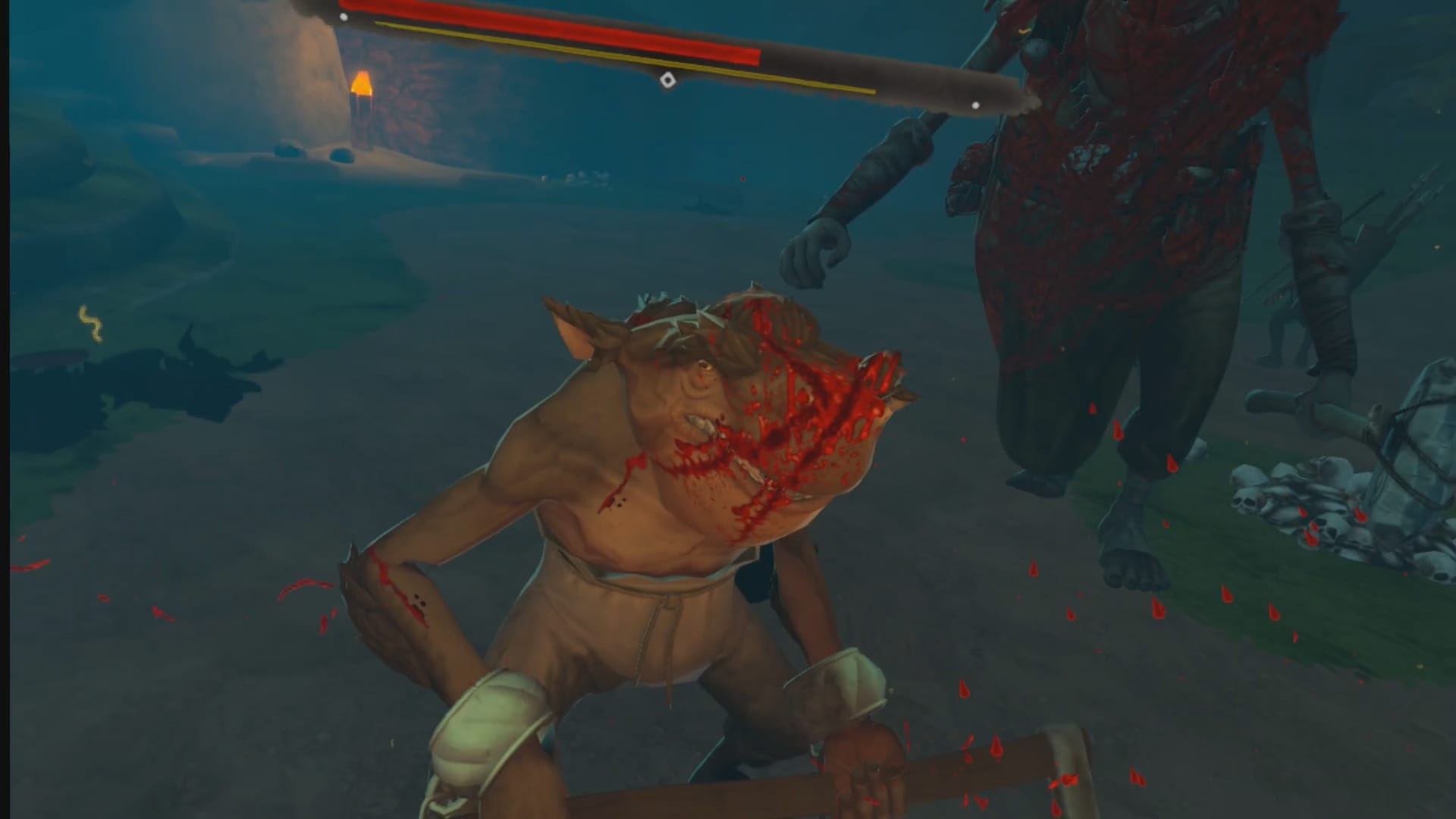
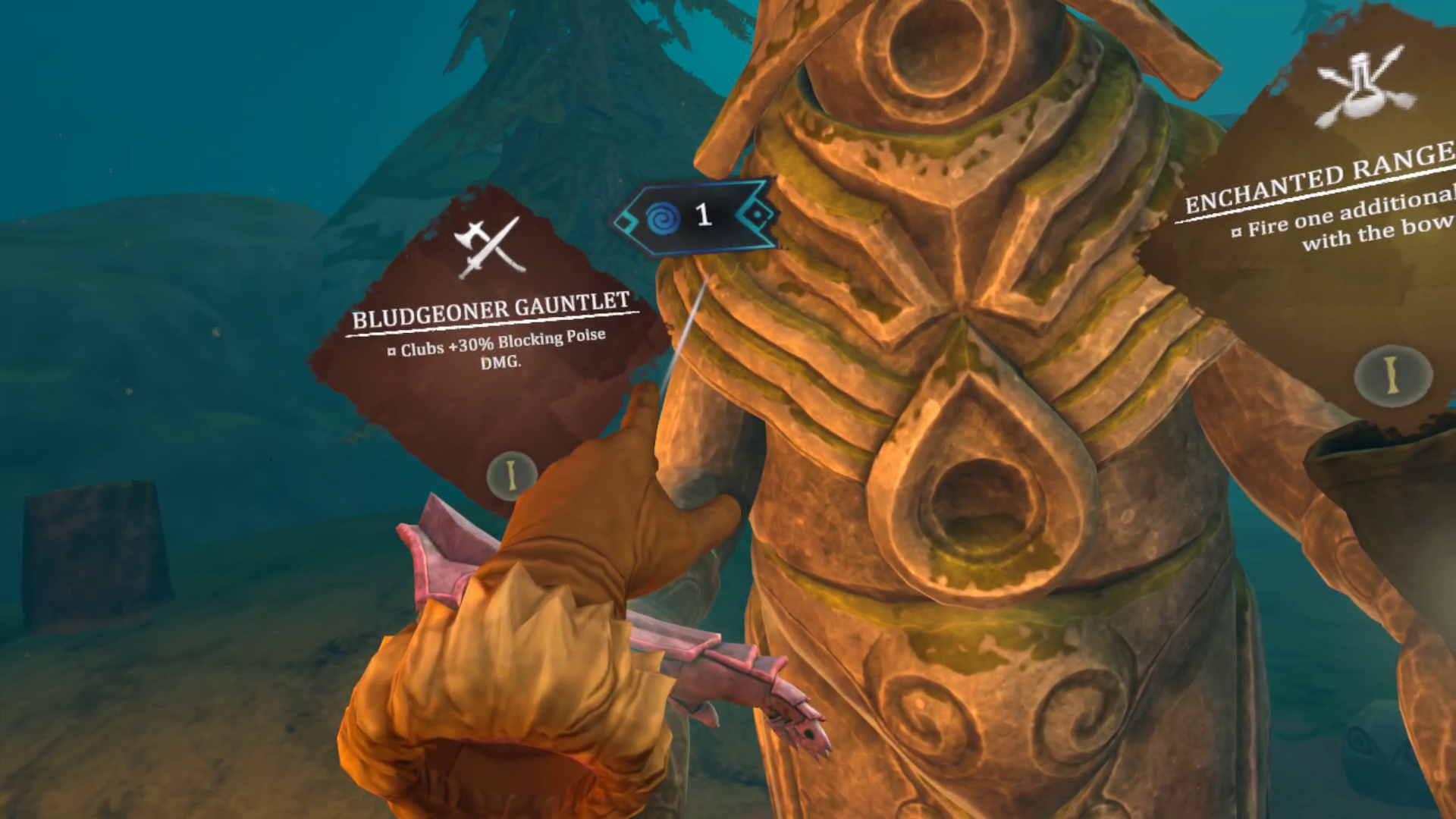
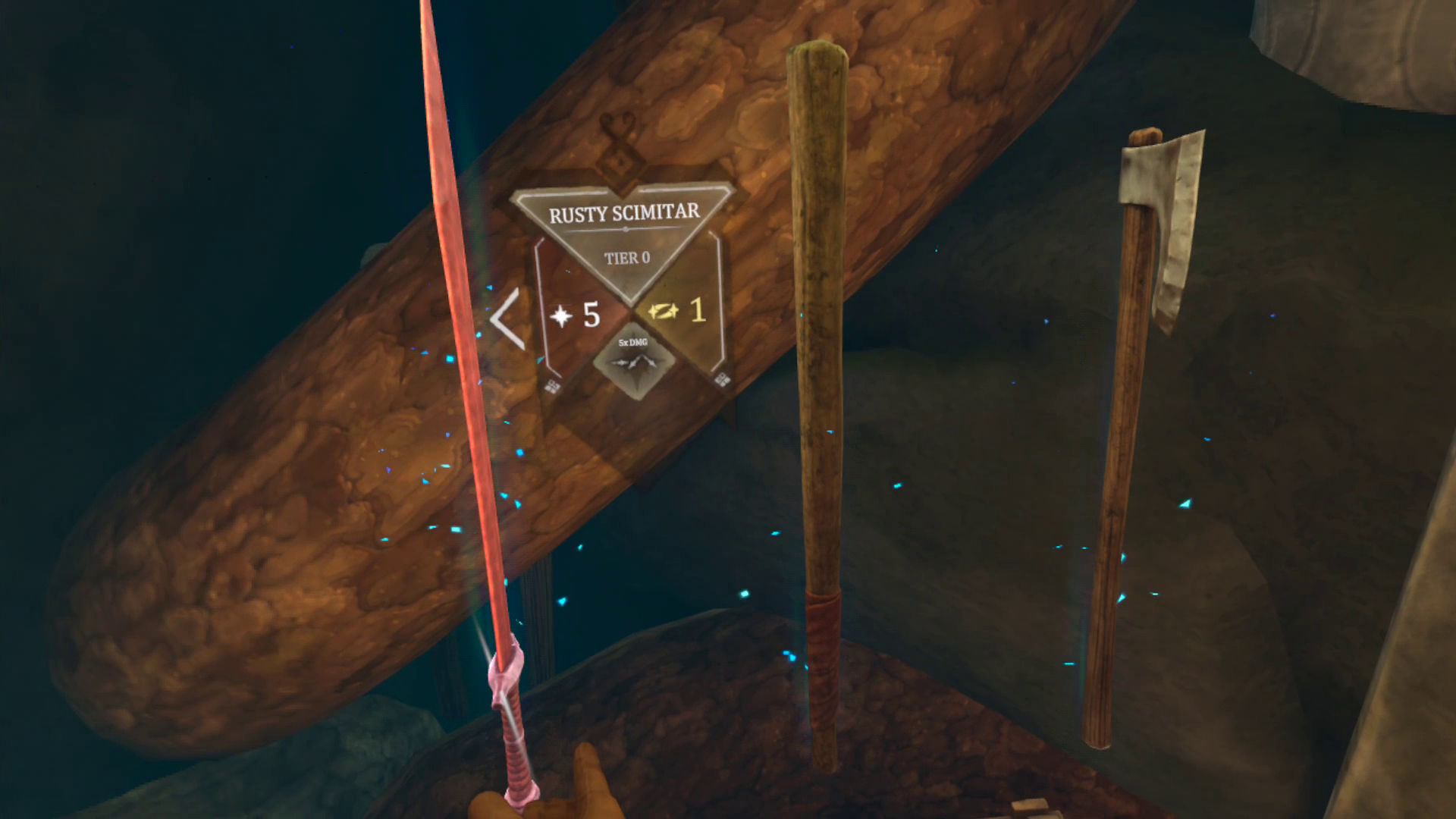
Crossings on Meta Quest. Captured by UploadVR
In Crossings, you awaken in the Norse afterlife, starting in a forest blanketed in fog with a choice of weapons to start your run with. Each weapon has a tier, damage stats, and special gesture-based combo attacks that offer a buff such as a damage multiplier or status ailment, if performed correctly. If you pick another weapon, it simply replaces the original. There is no full body avatar here, just hands and wrists, which are replaced with your weapon (primary hand) or item (secondary hand) when in use. The floating hands are nothing new to VR, but seeing them disappear in favor of an item was jarring and a bit immersion breaking.
You continuously come across weapons in treasure chests, so you’re not married to the same weapon until the run ends. Some of the perks you come across are tied to specific weapon types, like increasing the block damage when using a club, incentivizing you to backtrack for a weapon you passed on earlier because there’s an upgrade available.
0:00
Fighting an enemy in Crossings. Captured on Quest 3 by UploadVR.
The same goes for magic. Each run starts with the same three wind magic attacks, triggered by a simple, unarmed, dual-arm gesture: crush, lift, and push. As the run progresses, you come across podiums with three statues offering your choice of replacement spells for one of the gestures, bringing different more powerful elemental attacks. Every perk and spell replacement costs units of either health or mana. You will randomly get offered a choice of an extra unit of health or mana from translucent statues that pop up after defeating enemies, so you’re never forced to skip an upgrade because you can’t ‘afford’ it.
The combat is almost brilliant in its simplicity. It feels, for lack of a better term, chunky. Enemies visibly take damage and react accordingly when hit. Every hit registers thanks to terrific sound design and the standard fighters can quickly close the distance on you with far-ranging leaping attacks or throwing spears. A lone enemy is a threat to hurt you in Crossings which is a nice change of pace from the horde-like feeling in other roguelites.
0:00
Fighting a boss in Crossings – Captured on Steam by UploadVR
This is still a roguelite though, so expect to see the same enemies quite often. Getting to the third boss fight only to find out it’s the same (or very similar) model as the first with a couple of new attacks was a bit of a letdown. Also, this is a slower-paced, more measured rogue, closer to something like In Death or Ancient Dungeon VR than the recent Roboquest. This isn’t necessarily a bad thing. I quite enjoyed it. Just a point of comparison.
You will spend just as much time exploring and looting as in combat. Successful runs can get quite lengthy, so if you are doing well and fully exploring an area, expect to be in headset for over an hour before you go down. A run save feature would be welcome in future updates.
Crossings uses artificial stick-based locomotion. You can choose between snap and smooth turning, but there are no settings for degrees on snap turning or speed for smooth turning. There are also no available vignettes for those prone to motion sickness.
Your weapon defaults to your primary hand with your inventory appearing on your other hand, but this can be changed in settings.
Unfortunately, Crossings still shows signs of an early release. The options lack, well, options like turn speed/angles and vignettes. You can only run in a straight line. Trying to strafe or draw your weapon slows you back down. The magic gestures, specifically the crush spell, can be hit-or-miss at times. I used push more than anything else simply because it registered more consistently than crush or lift. At times, I triggered them accidentally and lost mana.
0:00
Selecting an upgrade. Captured on Quest 3 by UploadVR.
Then there’s the co-op gameplay. Crossings originally released in Early Access on Quest without the promised co-op mode. That was added later, shortly before the Steam release, and it still feels unfinished. There is no voice chat, which to my understanding was a deliberate move by the developers to force communication via body language and hand motions. A curious choice when Discord exists (and will soon have native Quest integration) and players on Quest can use the Horizon OS voice chat to communicate. I’m curious how many players will opt for the silent communication approach as intended.
Your friend joins with a full body, a curious choice given you yourself just have hands. Mercifully, you do not see your buddy’s arm transform into a club/sword/axe/mace when they pull their weapon, but the weapon floats awkwardly at their wrist instead of appearing to be actually held. Same with the bow and arrow and the lamp that keeps you on the right path forward. This doesn’t affect the gameplay, but it’s tough to unsee.
The aforementioned translucent statues randomly appear for each player while being unseen by the other. When you both arrive at the upgrade statues, if one player selects an upgrade, that statue shuts down, even if the other player wanted the upgrade in the other hand. Passing inventory items, like potions, to each other was quite cumbersome. It’s surprisingly clunky, especially coming from a seasoned developer like Neat Corp. Crossings in general feels better as a singleplayer experience than a co-op one.
For this review, Crossings was played and captured on both Meta Quest 3 and PC. My PC uses an RTX 5070 Ti with a Ryzen 5 5600X processor and 64GB of RAM.
When playing on PC, Crossings was played on a Quest 3 using Virtual Desktop on the Ultra preset. The in-game graphics were set to the highest level.
You can find the minimum and recommended specs on the Steam page to learn more.
From a technical standpoint, Crossings nails the atmosphere. Fog is used quite liberally, even in some interior areas, but that’s to be expected since you’re in the afterlife. This is paired with excellent music and sound design to create a dark, unnerving world. However, the world-building here is light. Ethereal voices make references to whatever quest you’re on and runs play out in a mostly linear fashion, despite the open maps to explore.
In terms of fidelity, there’s not a great deal of difference between the standalone and PC versions. Visually, it does feel like the Quest version was the priority. Both versions were performant with no major bugs or issues to speak of, other than occasional hitching in co-op.
Crossings manages to mask its flaws with strong, well-designed combat and a moody atmospheric world to explore. The co-op experience comes up short and the game lacks several comfort features, but these are all fixable issues and with an attractive $10 price point, it’s a welcome addition to one of the most crowded genres in VR.

UploadVR uses a 5-Star rating system for our game reviews – you can read a breakdown of each star rating in our review guidelines.

A new listing for an Xbox Series version of Resident Evil 5 indicates a remake could be on the way

Another evocative action banger from Grasshopper Manufacture

Created in Black Myth: Zhong Kui‘s engine, this is the most remarkable chef work

Also: is Blizzard preparing to reveal a StarCraft shooter?

This might explain why the Switch 2 port isn’t coming anytime soon…

2XKO isn’t meeting Riot Games’ expectations
UploadVR is taking on two new staff writers, James Tocchio and Mike Johnson, to continue to be the best source of VR gaming news, impressions, and reviews.
James started at UploadVR last week, while Mike will be formally joining us from next week.
As we ramp our output back up following staff transitions, we also want to assure everyone that we will continue to bring you the latest news, reviews, comments, and interviews from this industry via our passionate and dedicated team of human staff writers and supporting freelancers. It is their content and their livelihoods that you support when you read and share our articles.
If you want to help us further expand, consider becoming an UploadVR Member or Patron.

The action-RPG’s tutorial ends with a lesson in getting good

Speedy little drones and talented operators are providing the coolest views of the 2026 Winter Olympics

The latest game from Edmund McMillen combines a vast array of systems with a giant pile of poo jokes

The Warcraft card game has only been available digitally since it launched in 2014

Epic claims it was communicative but Santa Ragione disagrees

One of the first Pokémon Lego sets has a fun detail in the build

Amazon’s live-action series is bringing back some actors who were part of the games

Ben Affleck, Scarlett Johansson, Jeff Goldblum, Sofía Vergara, George Clooney, MrBeast, and so many other stars and actors want to sell you AI and food

The generated League of Legends characters look the part, but the video is an incoherent mess