Quest Now Has A Disney+ App With Downloads & Dolby Atmos

Quest headsets now have an official Disney+ app, with support for downloads and Dolby Atmos immersive audio.

It was already possible to watch Disney+ via the website in the Horizon OS web browser, but this is limited to 720p.

With the official app, Meta says Disney+ streams at up to 4K resolution with Dolby Vision HDR for all subscribers of the service. Quest 3 only has 2K regular LCD panels, so the benefits of 4K and HDR compared to 1080p SDR will be marginal, but the higher bitrate that comes alongside the higher resolution version should be very noticeable on the giant virtual screen, in terms of seeing fewer compression artifacts.

Disney+ Premium subscribers also get Dolby Atmos immersive audio in supported titles, a feature added to Horizon OS in v74 last year, as well as the ability to download content for offline viewing. That means you can now bring your Quest on a plane and watch Disney+ movies you’ve prepared, for example.

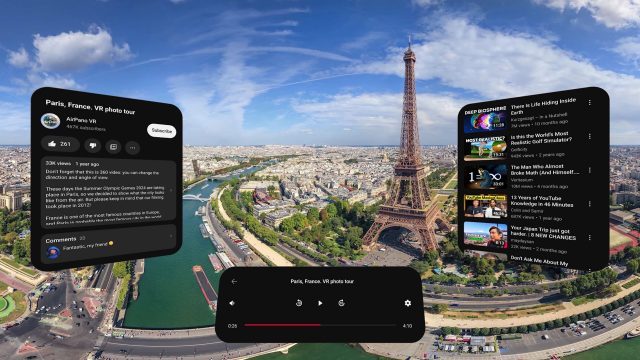
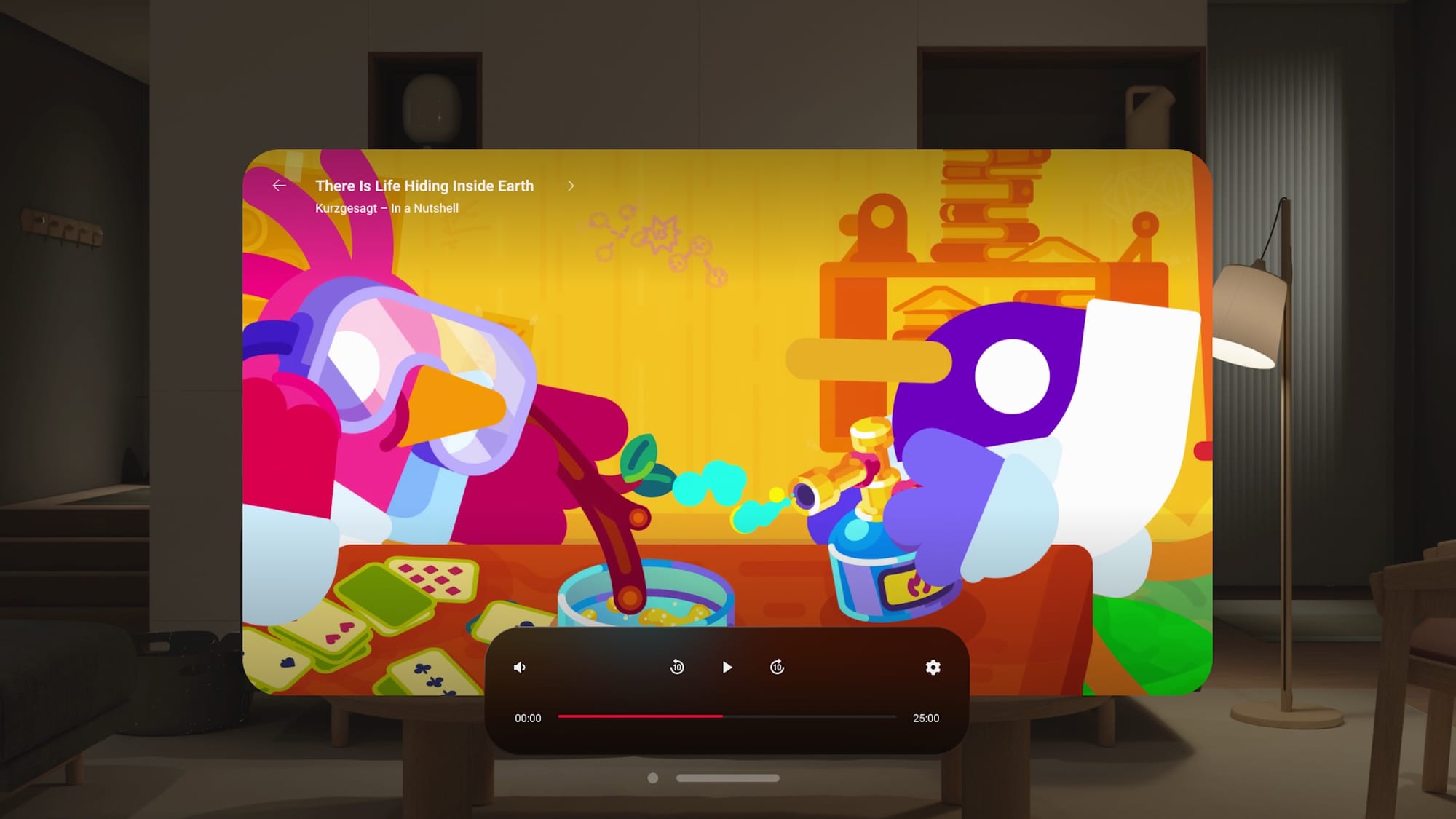
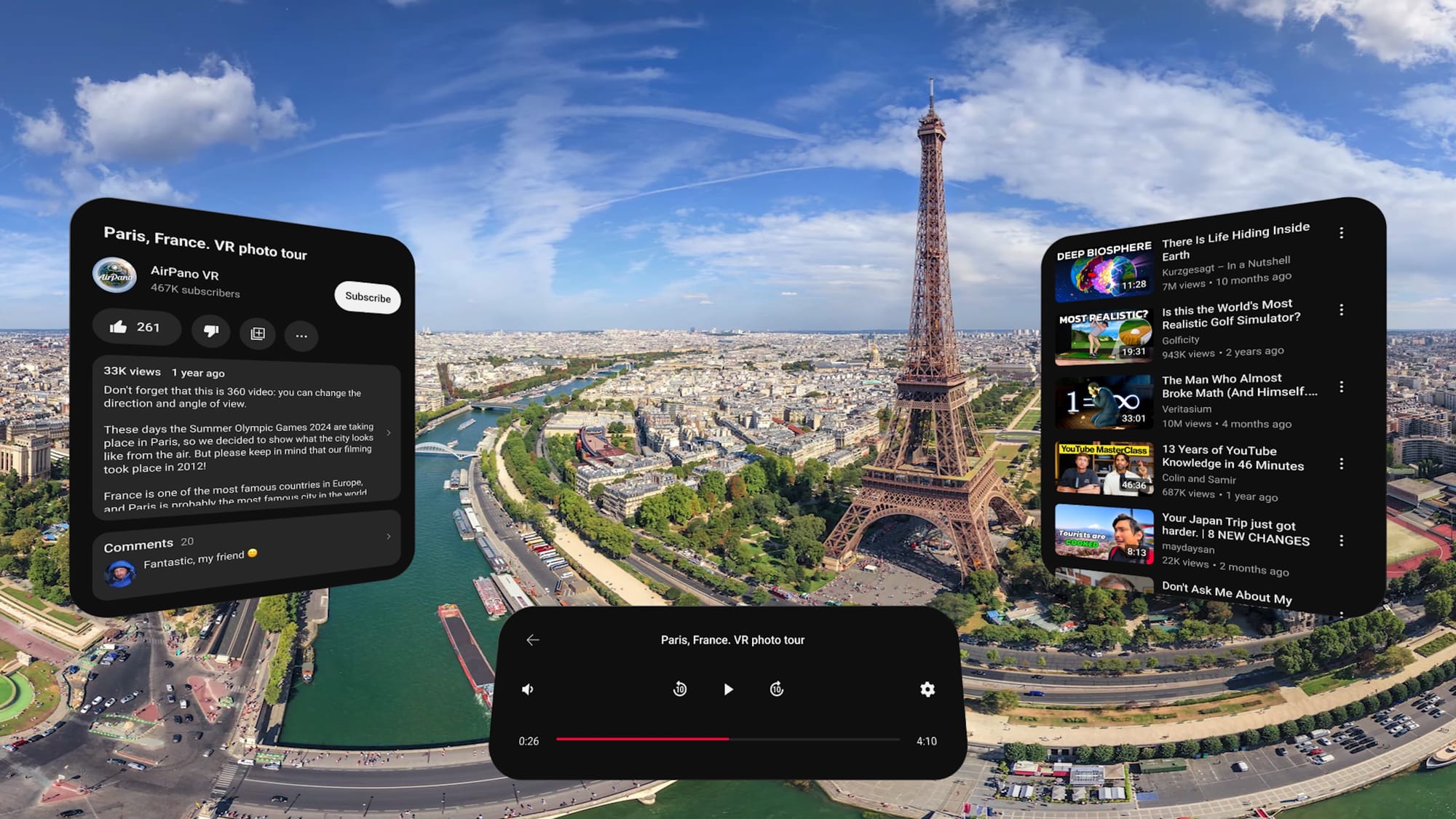
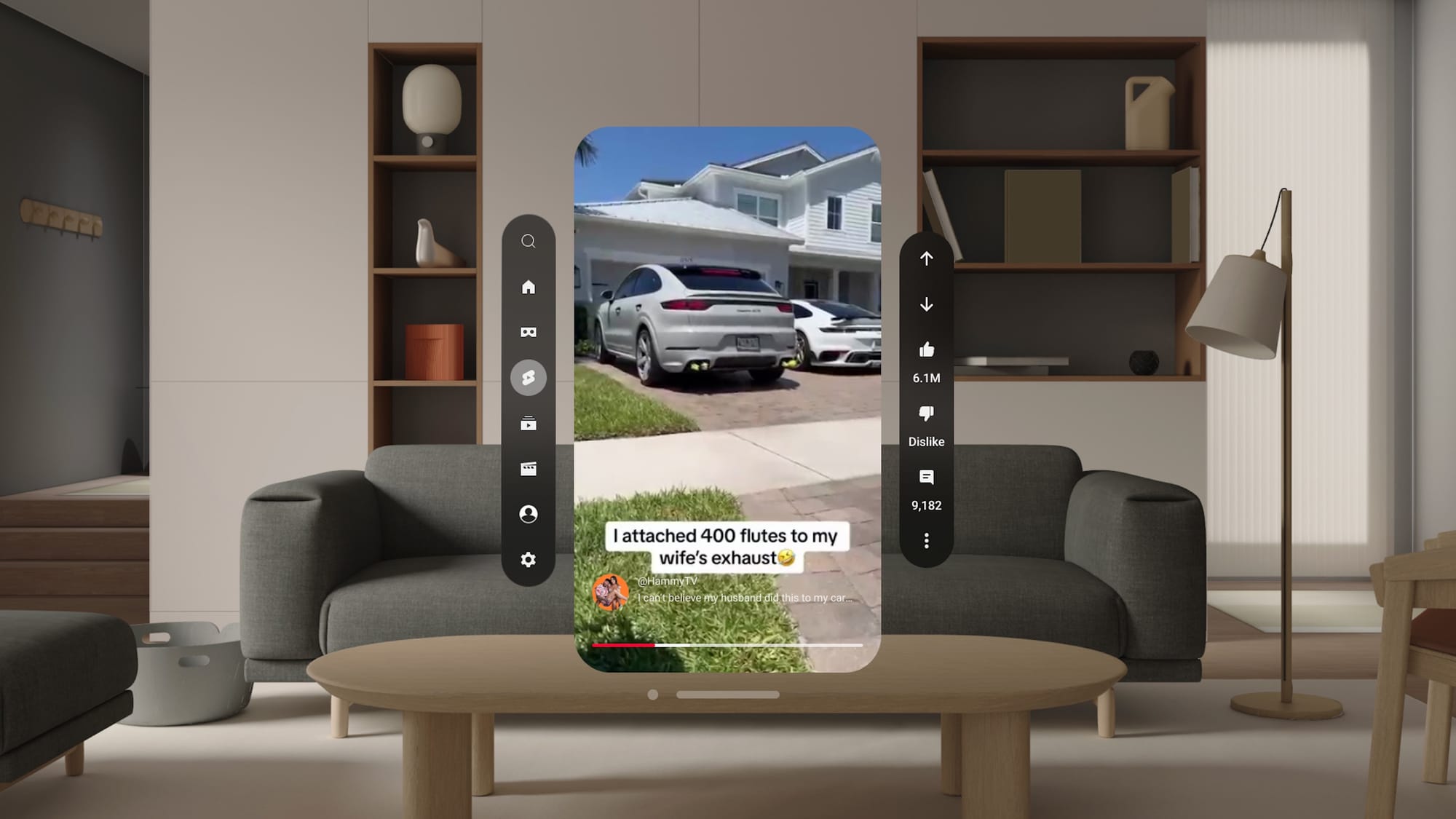
Window screenshots of Disney+ on Quest.

The only other major streaming platform with an app on Quest’s store with download support is Amazon Prime Video, which arrived on Meta’s platform alongside the launch of Quest 3S.

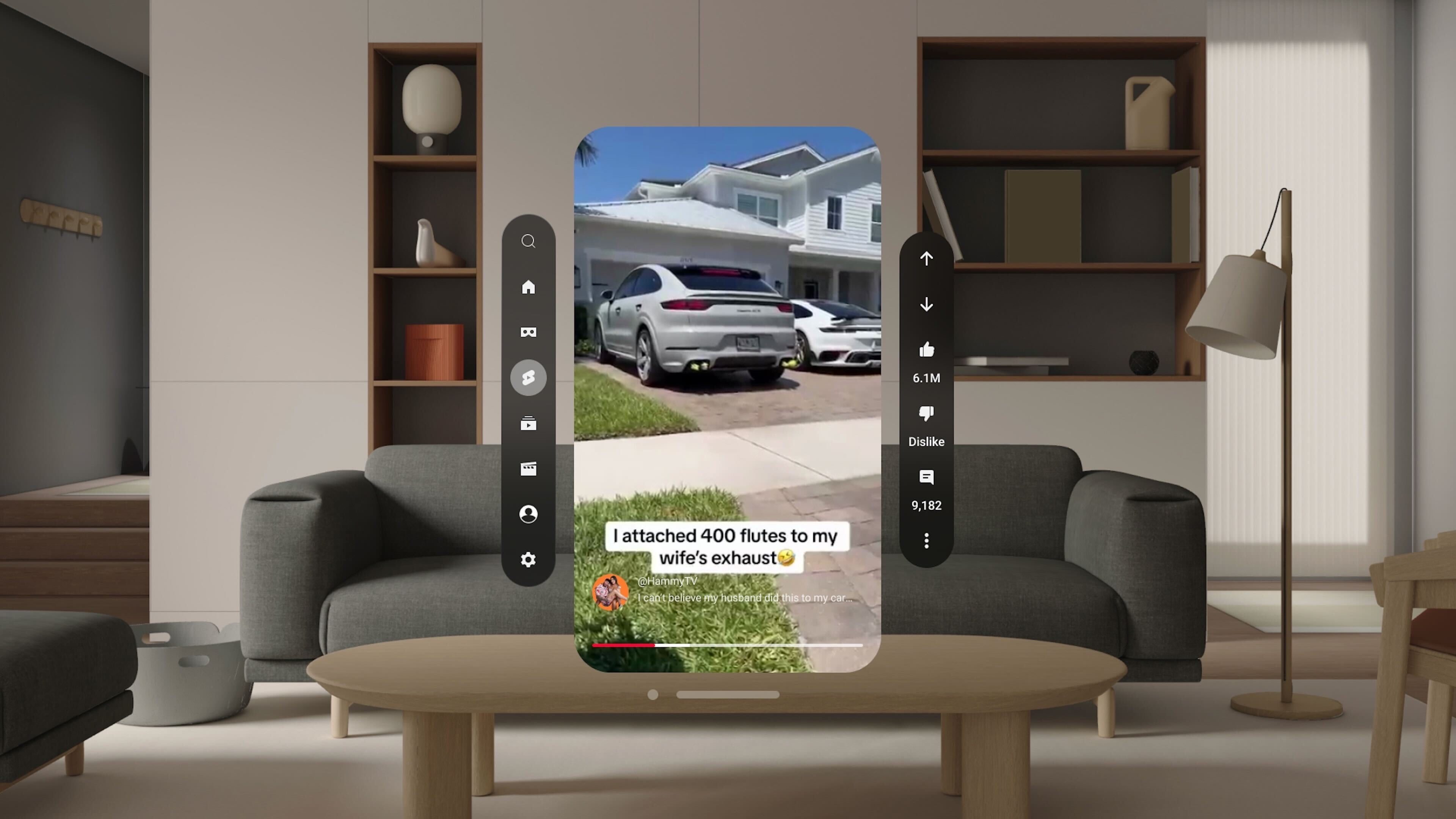
What isn’t supported on the Quest Disney+ app that is on the visionOS version, however, is 3D. Despite headsets being the ideal way to watch 3D movies, solving the problems of traditional 3D glasses in cinemas, the Quest app is limited to 2D only. It also lacks the custom 3D environments of the visionOS Disney+ app, such as the Alien: Earth Containment Room.

You can grab Disney+ on the Meta Horizon Store for free, and you’ll need a Disney+ subscription, of course. Meta claims that the app is currently only available in the US, but I was able to download and use it in the UK, despite not using a VPN or proxy of any kind.

New Amazon Prime Video Quest App Supports Downloads
Amazon just launched an all-new Prime Video Quest app that supports downloads for offline viewing.
UploadVRDavid Heaney

[Industry Direct] Free-to-Play Elemental VR Arena ‘Crystal Conquest’ Launches in Early Access

Crystal Conquest is our free-to-play elemental class battler now available on Meta Quest. Players can step into various classes and roles to battle it out! Aeromancers fly, Geomancers control space with stone and impact, Hydromancers heal allies and extinguish attacks, Pyromancers pressure with decisive burst damage and more.

Industry Direct by the Crystal Conquest Team

Industry Direct is our program for sponsors who want to speak directly to the Road to VR newsletter audience. Industry Direct posts are written by sponsors with no involvement from the Road to VR editorial team and do not appear in our front-page editorial feed. Industry Direct sponsors help make Road to VR possible.

Our goal with Crystal Conquest has always been to make a VR battler that feels immersive, expressive, and truly distinct from match to match—not just a series of casters trading the same projectiles. Each class was built with its own unique moveset, counter logic and roles for combat.

Class Identity Built for Counterplay

We designed each class to have clear strengths and roles. Hydromancers can block fire arcs using their water moves and recover pushes by healing allies. Aeromancers reposition using tornados, flying, and wind bow snipes. Geomancers can summon shields, create stone weaponry, or throw boulders at the enemies. Pyromancers control tempo through offensive flame attacks and dashes. Monks move through combat with agile double jumps and direct melee strikes, interrupting players in close range.

These class identities form the backbone of Crystal Conquest. Encounters unfold cleanly, and counters feel intuitive: water extinguishes fire, mobility punishes aim, stone structures resist high-sustain lanes, and air angles break static defense. The result is a style of VR combat where players can read the moment, react, and then express their role fully.

And there’s still more to come with classes! At launch, we’re offering our primarily gesture based character, the Monk who moves through combat with agile double jumps and direct melee strikes, interrupting players in close range.

A Discord-fan voted class, the Illusionist—a shadow magic user who wields daggers in a rogue manner—is in the works and will be available shortly after launch!

3v3 Conquest Mode with Towers, Minions, and Objective Flow

Conquest mode offers a structured 3v3 MOBA-style environment with minions, capture points, and towers arranged to reward positioning and timing. This format allows class synergy to matter beyond raw combat as you battle it out and unlock potions and other powerful items.

Hydromancers can heal minions under pressure. Geomancers anchor forward positions or reinforce chokes. Aeromancers scout and engage from elevation that shift the tempo of the lane. Pyromancers turn small openings into decisive pushes. Monks break formations and force responses behind the frontline.

Duels and Cooperative PvE

For those who prefer direct contest, the 1v1 duels provide space to battle it out with another player or in a private lobby with your friend.

For players looking to play collaboratively, Gauntlet mode introduces escalating PvE waves supported by AI allies or a friend, creating a co-op environment that functions as both practice and progression.

Free-to-Play Access Without Stat Advantages

Crystal Conquest launches as free-to-play to encourage wide participation and immediate entry. Classes can be unlocked through play or purchased directly, but no stat boosts or competitive advantages are sold. This ensures that performance reflects player decision-making rather than purchase history.

A few cosmetics and class skins will be available at launch. We’re planning more cosmetics and skins alongside seasonal options and playtest rewards. But we are committed to making sure that balance remains grounded in fair access.

You can also earn an exclusive free skin by joining our Discord!

Crossplay at Launch

Crystal Conquest supports full crossplay between Quest and Steam/PC VR at launch!

Entering Early Access

As we launch the game in Early Access, our focus is on refinement and responsiveness. Standalone performance, platform parity, and input clarity remain at the center of development. With each playtest wave, we observe how players move, counter, coordinate, and highlight their own experiences.

Crystal Conquest is built to let movement, class identity, and counter logic become the foundation of VR arena expression. Whether flying as an Aeromancer, holding space as a Geomancer, sustaining a push as a Hydromancer, burning through lanes as a Pyromancer, or intercepting duels as a Monk, players can enter, observe, and act with intent.

Play Now

Crystal Conquest is our vision of VR battleground identity: clear roles, readable counters, distinct movement, and the ability to express skill through elemental purpose rather than identical casting.

We look forward to seeing you in the arena.

Crystal Conquest is available worldwide on Meta Quest, SideQuest and SteamVR!

The post [Industry Direct] Free-to-Play Elemental VR Arena ‘Crystal Conquest’ Launches in Early Access appeared first on Road to VR.

VR Design Unpacked: The Best Shotguns in VR (and what makes them feel great)

Our series Inside XR Design highlights examples of great XR design. Today we’re looking at shotguns in several different VR games to learn what makes them feel great in the player’s hand. In doing so, we’ll uncover the secret to making anything feel great in VR.

Editor’s Note: Two of the games feature in this episode of Inside XR Design, Boneworks and Arizona Sunshine 2, were released this month way back in 2019 and 2023 respectively. Despite being years old, both games remain great examples of using the power of feedback to make VR weapons feel great. To commemorate these dual anniversaries, we’re bumping this episode back up to the front page to highlight what they can teach us about VR interaction design.

You can find the complete video below, or continue reading for an adapted text version.

Ok, we’re jumping right into this… if I asked you ‘what’s your favorite shotgun in VR?’ you can probably picture it in your head pretty quickly. But could you tell me exactly what makes that shotgun feel so great?

Well, that’s kind of a trick question, because the answer is like 50 different little details that all add up to how a shotgun ultimately feels in the player’s hands.

So today we’re going to look at some of my favorite shotguns in VR and dissect all those little details to talk about how they contribute to that feeling. And by the end of this… I’m going to make the case that if we can understand what makes a shotgun feel great in VR, we can figure out how to make anything feel great in VR.

Arizona Sunshine 2 – Sunshine Shorty

Let’s kick things off with one of my favorite shotguns in all of VR. That would be the sawed-off pump-action shotgun in Arizona Sunshine 2—lets call it the Sunshine Shorty.

Just look at this thing go. It’s incredibly satisfying to use. But why?

Well first of all, it’s pump action. You just can’t beat a pump-action shotgun in VR. Two-handed interactions in VR are always interesting, and making the player perform such a visceral and well-recognized gesture is always gonna make them feel like a bad-ass. Pumping a shotgun to load the next round is a clear extension of the ‘Instructed Motion’ concept I introduced in the previous episode, and an example of how such movements can infuse players with emotion.

The way the Sunshine Shorty reloads has a great little detail too. In many VR games you can reload a weapon just by touching the magazine or shell to the right place on a gun, but in Arizona Sunshine, you need to actually slide the shell into the weapon. The developers made this feel great by adding a custom hand-pose to show the player pushing the shell into the gun.

This little detail adds a lot to the feel of the weapon, because it changes reloading from just touching one thing to another into performing a gesture that captures more of the fantasy of sliding rounds into a shotgun. And importantly, it’s still feels good without being tedious. You might say the interaction is generous to the player… you don’t need to get the motion or position perfectly right in order for it to work.

But the motions themselves are only part of what makes using the shotgun satisfying. Providing feedback to the player intention is critical as well, and the easiest way to do this is with great sound and haptics.

And getting the sounds right is everything.

Let’s listen to how much less satisfying it is to use the Sunshine Shorty with weak sounds vs. strong ones:

View post on imgur.com

Unmute for sound

Sounds make such a difference.

For a shotgun, getting the pump-action sound just right is crucial. As someone who’s fired real shotguns, I wouldn’t say the Sunshine Shorty’s pumping sound is particularly realistic, but remember, the goal is to convey the feeling of pumping a shotgun, not simply playing back a perfect replication of a sound. In the case of this shotgun, its got just the right amount of crunch, clack, and metallic sounds to give a very satisfying feeling every time you pump it.

View post on imgur.com

Unmute for sound

And though I can’t show you haptics on video, haptics can be almost as beneficial as audio itself, because it ties specific weapon sound effects to different locations on the weapon. For instance, when you pump the gun you should feel a haptic rumble in the pump hand, but not the trigger hand.

And again, both sounds and haptics are about giving the player feedback when they do something. When a player pumps the gun you’re conveying that they did something right by giving them the feedback of a sound effect and a haptic rumble.

Another piece of feedback is seeing the shotgun shell ejected from the gun after pumping it. This further reiterates the player has interacted with the shotgun in a valid way.

And there’s a great little detail the developers added here. On most real-life shotguns, the shell ejection port is on the side of the weapon so the shell is ejected away from the wielder. But the Sunshine Shorty has an ejection port on the top of the shotgun, just to make the feedback of ejecting the shell even more visible for players. I love it.

There’s one huge thing we haven’t talked about yet about what makes this shotgun feel great in VR. That would be the things the player actually shoots the gun at. You could do literally everything perfectly about the gun itself—the sounds, effects, tuning etc—but if the player pulls the trigger and the enemy just slowly lays down, that’s absolutely not gonna feel good.

Arizona Sunshine 2 might even go a bit over the top with the visual impact and sound effects when shooting zombies, but damn it feels great. The key is that the effect on the target correctly matches the sound and recoil of the weapon. Since the shotgun sounds powerful when it shoots, to deliver the feedback of that expectation, the target you’re shooting at needs to be satisfyingly impacted.

So the Sunshine Shorty feels great for all the reasons we talked about. But we can also learn a lot by noticing where things could be better. If I could just snap my fingers and make it so, these are the improvements I’d wanna to see with this gun:

First: Having an animated transition in hand poses between holding the shell and sliding it into the gun would make reloading look smoother visually.

Second: While the gun operates realistically in terms of pumping and loading, visually if we look into the chamber we can see the next shell from the gun isn’t actually loaded into the barrel. It just sits there until the chamber closes and then essentially appears in the barrel to be ejected after the shot.

And Third: Unless you’re counting while reloading, there’s no clear way to know when the shotgun is completely full of shells. That often means you’ll go to put another shell in the gun but end up throwing it on the ground instead because it can’t fit. This happened to me all the time when playing the game. Giving players an audio cue to indicate when the gun is almost full and then completely full is a subtle way to avoid this—and you’ll see exactly that with the next shotgun we talk about.

Continue on Page 2 »

The post VR Design Unpacked: The Best Shotguns in VR (and what makes them feel great) appeared first on Road to VR.

Meta CTO Responds To The Speculation: “VR Is Not Dead”

Meta’s CTO has responded to speculation of VR being “dead” at the company.

After reports from outlets like Bloomberg, The New York Times, The Wall Street Journal, and Business Insider suggested that Meta is “considering” a cut “as high as 30%” for its “metaverse” teams, Meta issued an official statement confirming “shifting some of our investment from Metaverse toward AI glasses and Wearables”.

“Within our overall Reality Labs portfolio we are shifting some of our investment from Metaverse toward AI glasses and Wearables given the momentum there,” the official statement read. “We aren’t planning any broader changes than that.”

Meta Confirms “Shifting Some” Funding “From Metaverse Toward AI Glasses”
Meta has officially confirmed “shifting some of our investment from Metaverse toward AI glasses and Wearables”, following reports of an up to 30% budget cut for parts of Reality Labs.
UploadVRDavid Heaney

Following this, in an “ask-me-anything” session on his Instagram page, Meta’s CTO Andrew Bosworth was asked the question “Is VR dead for Meta now? You seem to have moved on to glasses and AI?”.

Here’s how Bosworth responded:

0:00

/1:00

Every now and then there’s just a narrative that people cannot help writing, and I’ll give you the way to know.

First of all, the answer is no: VR is not dead. We’re also investing a lot in glasses and AI, and that’s the trick.

The way to know if there’s a convenient narrative is if it appears zero-sum. Meta is a big company. We can invest in many things. We can invest in VR, glasses, and AI — and by the way, we have been for years.

Every year we go through a budget process, and in that budget process, we ask every team, “Hey, can you do the same work more effectively?” We’ve got better tools, we’ve got AI, we’ve got things. You’re trying to right-size it. How big is the market? How fast is it growing? Is that what we expected? If it’s slower than we expected, let’s make sure our burn rate is lower. If it’s faster than expected, let’s double down and make sure we take advantage and don’t cede it to other people. You’re being smart about it, but it’s normal stuff.

Bosworth’s response doesn’t contradict Meta’s official confirmation of shifting some investment “from Metaverse toward AI glasses and Wearables”, but seems to push back on the idea that an up to 30% spending cut means the company is no longer investing at all, suggesting that it can work on VR, glasses, and AI concurrently.

Meta CTO: 2025 Will Determine Whether AR/VR Bet Is Visionary Or “A Legendary Misadventure”
In a leaked memo, Meta’s CTO told staff that 2025 will determine whether its hardware & metaverse division is “the work of visionaries or a legendary misadventure”.
UploadVRDavid Heaney

Meta’s funding shift from Horizon Worlds and VR to smart glasses comes just over a year after a leaked memo from Bosworth told Reality Labs staff that 2025 will determine whether their projects are “the work of visionaries or a legendary misadventure”.

In the memo, Bosworth described 2025 as “the most critical year in my 8 years at Reality Labs”, and told staff they “need to drive sales, retention, and engagement across the board but especially in MR”. Note that at the time, Meta was using MR to refer to VR too, a nomenclature that it ended earlier this year.

“And Horizon Worlds on mobile absolutely has to break out for our long term plans to have a chance”, Bosworth followed that sentence with.

Since then, Reality Labs saw its highest-ever quarterly revenue in Q4 2024 with the launch of Quest 3S, which was the top-selling console on Amazon US for Christmas. But this momentum did not carry through into 2025 at all.

The first two quarters of 2025 saw Quest sales decline year-over-year, revealing that while Quest 3S was a popular stocking stuffer, it simply is not a successful year-round product. While Q3 saw a rebound, Meta explained that this was due to retailers stocking up on Quest 3S for this year’s holiday season.

Meanwhile, Meta has continued to push its Horizon Worlds “metaverse” platform with multi-million-dollar creator competitions, especially focused on smartphone-only worlds, as the company hopes to scale the platform from a social VR space to a cross-platform Roblox and Fortnite competitor. But this doesn’t seem to have gained much traction.

Ray-Ban Meta Sales Have More Than Tripled This Year So Far
Sales of Ray-Ban Meta glasses so far this year have more than tripled compared to the same time last year, more than 200% growth.
UploadVRDavid Heaney

This relative stagnation in its Quest and Horizon Worlds efforts comes as the company is seeing skyrocketing sales and significant public and investor interest in its smart glasses.

Back in February, in its Q4 2024 earnings call, Meta’s partner EssilorLuxottica said that the Ray-Ban Meta glasses had sold 2 million units, and in its Q2 2025 call in July said that sales had more than tripled since last year, performing “exceptionally well”.

In its Q2 2025 call in July, the company said that the glasses were performing “exceptionally well” in the market, with sales having more than tripled compared to 2024.

Meta Delays Ultralight Headset, Starts Work On Gaming-Focused Quest 4
Meta is delaying its ultralight headset with a tethered puck to the first half of 2027, and, separately, starting work on a gaming-focused Quest 4, leaked memos reveal.
UploadVRDavid Heaney

This doesn’t mean Meta isn’t working on new headsets, though. Leaked memos reveal that it plans to launch its rumored ultralight headset with a tethered compute puck in the first half of 2027, and that it recently started work on a gaming-focused Quest 4 set to be a “large upgrade” over Quest 3, though at a higher price.

Asymmetrical Co-op Game ‘VR Giants’ Comes to Quest with PC Cross-play & Free Friend Pass

Asymmetric VR games are a rare but wonderful treat, especially those which let you play with non-VR friends. The newly released VR Giants not only lets you play with a non-VR friend, but thanks to the ‘Friend Pass’ feature, your friend plays for free with only one copy of the game between the two of you.

VR Giants, an asymmetric co-op VR game first launched on Steam, is now available in Early Access on Quest. The game features two distinct roles: the VR player is Goliath and the non-VR player is David. The pair work together to tackle platforming challenges from two completely different perspectives.

The release of VR Giants on Quest includes a free Friend Pass which allows a friend to join you as David, free of charge. Your co-op partner can join via another Quest or on a PC thanks to newly added cross-play with the Steam version of the game (and its equivalent Friend Pass).

I appreciate the thoughtful inclusion of the Friend Pass and cross-play as it maximizes the opportunity to play the game with your friends regardless of what platforms they have access to.

Developer Risa Interactive says the game includes 23 levels with some eight hours of co-op gameplay.

The post Asymmetrical Co-op Game ‘VR Giants’ Comes to Quest with PC Cross-play & Free Friend Pass appeared first on Road to VR.

Best Buy’s $250 Quest 3S Deal With $110 Of Perks Is Back

Quest 3S is on sale for $250 again, and from Best Buy it comes with a $50 gift card, 1 month of Xbox Game Pass Ultimate, and The Walking Dead: Saints & Sinners.

For Black Friday 2025, the 128GB model of the headset was on sale for $250 ($50 off its regular $300 price), and the 256GB storage model for $330 ($70 off its regular $400 price), in a sale that ended after December 2. On top of this, Best Buy was providing $110 of perks. Now, Meta has brought the sale back, and Best Buy has brought its deal back too.

You can find the deal for the 128GB base model of Quest 3S here, and for the 256GB model here.

Both deals end after 11:59 pm PT on January 3, giving plenty of time to order for a holiday season gift.

In both cases, you still get 3 months of the Meta Horizon+ subscription, as with all purchases of new Meta Quest headsets.

You could use the $50 Best Buy gift card to get the Elite Strap to make the headset more comfortable for just $20, for example, while during the 1 month of Xbox Game Pass Ultimate (normally $30) you can play popular flatscreen games like Call of Duty on a giant virtual screen.

As for The Walking Dead: Saints & Sinners, it’s also normally $30, and it’s widely considered to be one of the best VR games of all time due to its physics-based combat system, earning an ‘Essential’ score in our review.

The Walking Dead: Saints & Sinners Review – The Best Zombie Apocalypse To Date
With two big updates under its belt, there’s never been a better time to get into The Walking Dead: Saints & Sinners. Read on for our 2021 The Walking Dead: Saints & Sinners review! Note: This is an updated review based on The Walking Dead: Saints & Sinners after its second free
UploadVRJamie Feltham

While Quest 3S can run all the same content as Quest 3, and has the same fundamental capabilities (including the same XR2 Gen 2 chipset and 8GB RAM), if you have the funds we always recommend Quest 3 over Quest 3S. The proper Quest 3 features Meta’s advanced pancake lenses which are clearer and sharper over a wider area, have a wider field of view, and are fully horizontally adjustable, suitable for essentially everyone’s eyes. These pancake lenses also enable Quest 3 to be thinner, which makes the headset feel slightly less heavy.

Still, at $250 and with $110 worth of perks Quest 3S is hard to say no to, and it could be an impulse gift for the holiday season to bring a friend or loved one into VR and mixed reality.

‘Laser Limbo AR Battles’ Launches for Multiplayer Mixed Reality Mayhem

Laser Limbo AR Battles is now out of early access on Quest, bringing with it a host of mixed reality mini-games sure to get you and a buddy up and moving with guns, laser swords, and more.

Laser Limbo is a mixed reality shooter that’s grown considerably since it was initial launched into early access last year. First devised as a co-located bullet-time shooter, the game quickly grew to include multiple PvP shooter modes, co-op wave modes, multiple gun-free party modes, and even a map editor so you could design your own challenges.

Image courtesy freeroam.ar

In the latest update, Laser Limbo also now includes laser-sword combat, playable solo or in back-to-back co-op. The update also includes three weapon-free modes: Coin Clash, where players navigate a shifting laser maze while collecting coins; a 3D puzzle race that pits two opponents against each other; and Pop ’N’ Stop, a freeze-on-alarm bubble-popping challenge inspired by ‘Red Light, Green Light’.

Notably, developer freeroam.ar says it can be played in living rooms, whole floors, arcades, and larger co-located spaces. While at-home gameplay is capped at two players, enterprise support via a Windows client expands Laser Limbo to eight players. VR arcades looking for more info on the enterprise version can find more here.

You can find Laser Limbo AR Battles on the Horizon Store for Quest 2 and above, priced at $15

The post ‘Laser Limbo AR Battles’ Launches for Multiplayer Mixed Reality Mayhem appeared first on Road to VR.