
It’s a busy month, with High on Life 2 and Avatar: Frontiers of Pandora as well

It’s a busy month, with High on Life 2 and Avatar: Frontiers of Pandora as well
Watching a movie or chilling out with a meditative VR experience can meaningfully expand the use case and the amount of time someone might be willing to spend in a headset.
Unfortunately there are many factors that push against this trend. Most notably the soft cloth head straps that ship with the Quest 3 and 3s (and the Quest 2 previously) are not comfortable for many people, especially for longer sessions.
The dream of a personal theater to view movies and other entertainment is not new, born out of the Oculus revolution. But early VR was developed mainly for gaming, with head straps prioritizing stability on the head for movement rather than comfort lying down.
The laying down use case is now being served by many more consumer choices than ever before. I’ve been testing these options to bring them to light for others like me, who are seeking a comfortable solution.
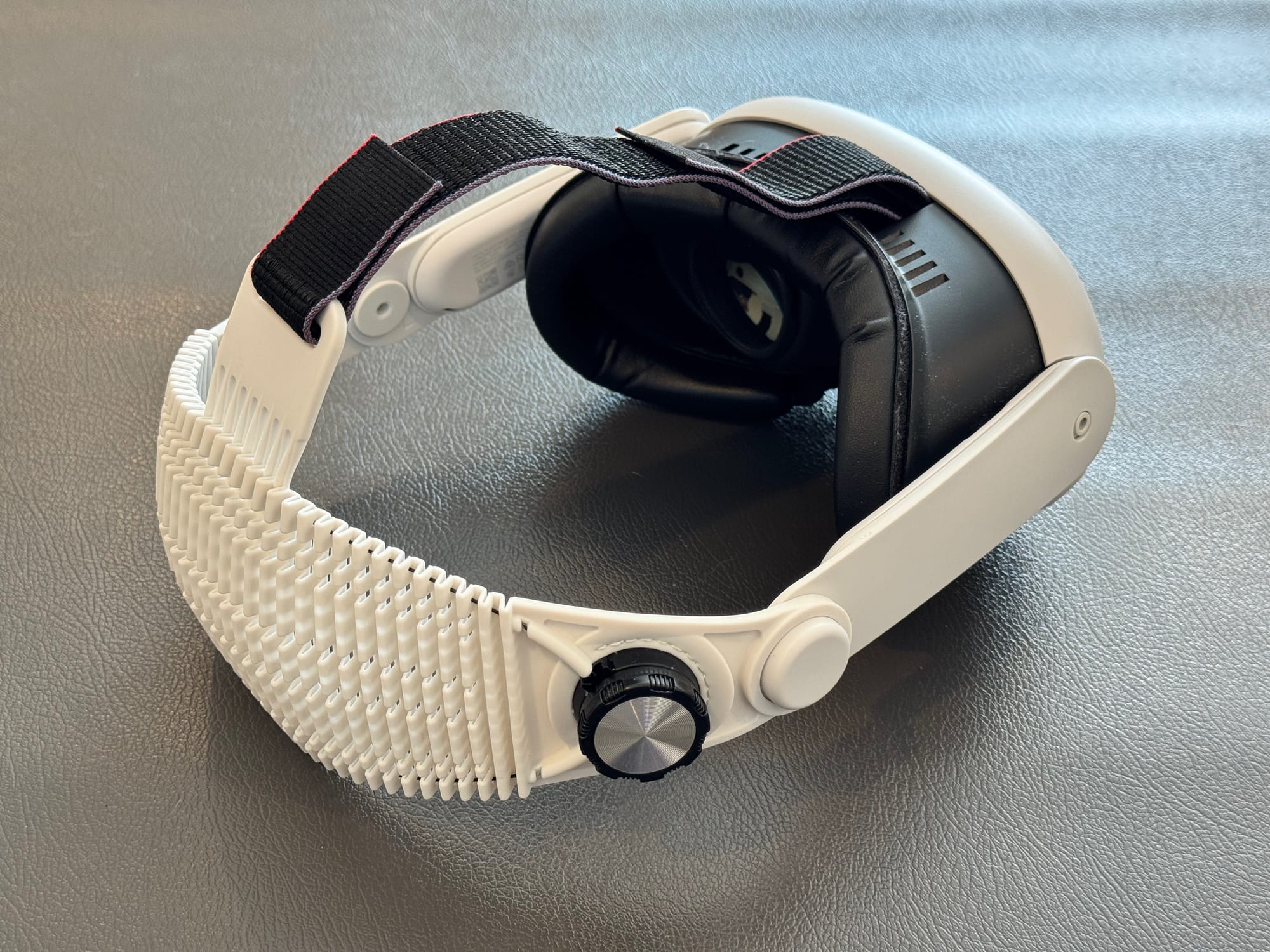
Apexinno has introduced a new lightweight head strap that uses a silicone accordion rear strap, reminiscent of the Apple knit straps for Vision Pro. The top strap is a fabric and Velcro piece that sits front-to-back to provide lift on the headset to reduce pressure on the face and cheekbones.
The A3 successfully replicates much of the satisfying gathering, cupping sensation that the Apple knit straps provide on the back of the head. It makes for a comfortable and lightweight solution that essentially disappears once you’re laying down. There is a scroll wheel on the right hand side that tightens the rear strap. To loosen you pull outward on the knob and the rear strap relaxes.
For someone looking for a solution similar to the Apple Vision Pro Knit strap but for far less money, and without having to go with 3rd party adapters, the Apexinno A3 is a compelling choice. You can find the A3 available for $29.99 on the Apexinno website or Amazon.com
Editor’s Note: Apexinno provided a review unit of the A3 head strap for this article.
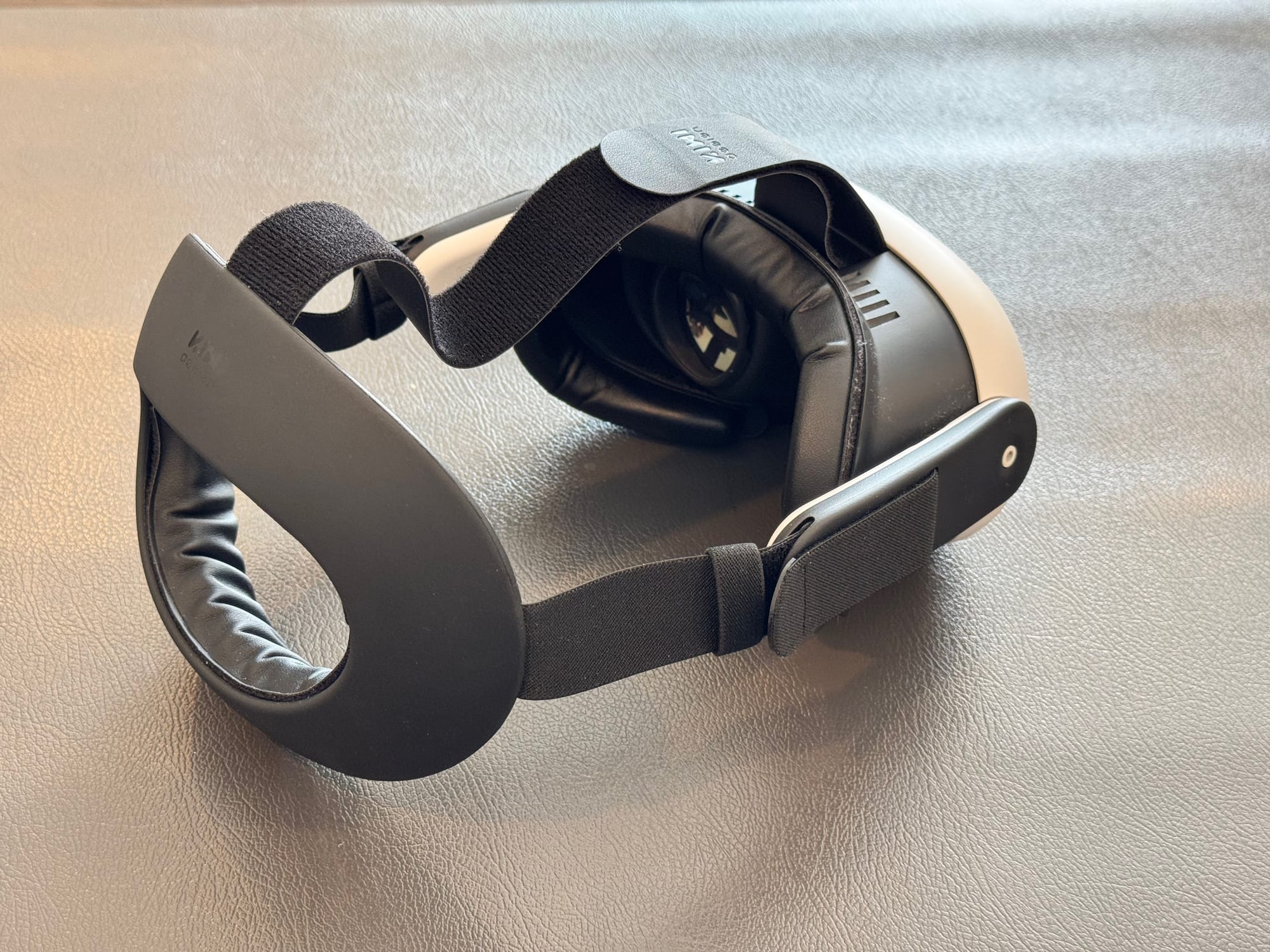
Kiwi Design’s K4 Flex takes a different approach. It combines a rigid yet flexible rear pad and elastic side straps to create a secure yet very comfortable experience for the user. The rear is well cushioned with a synthetic leather pad and a front to rear top strap is also present to provide lift for the headset off the face. Also noticeable is the high level of fit and finish and attention to detail in the design and construction of the K4 Flex. It feels and behaves like a high-quality product.
In practice this is one of the most comfortable head straps I’ve used on my quest. During lying down sessions the rear pad is more apparent than the Apexinno, and some people might find it not as suited to full horizontal VR. However, it is well padded and flexible enough that it was never uncomfortable for me, just noticeable.
My impression of the K4 Flex is that it neatly falls between a true lying down solution and a capable elite-style head strap, with some valuable qualities of both types. And in the end might be the most compelling for all-around use.
The K4 Flex is available on the Kiwi Design website for $34.99 or Amazon.com.
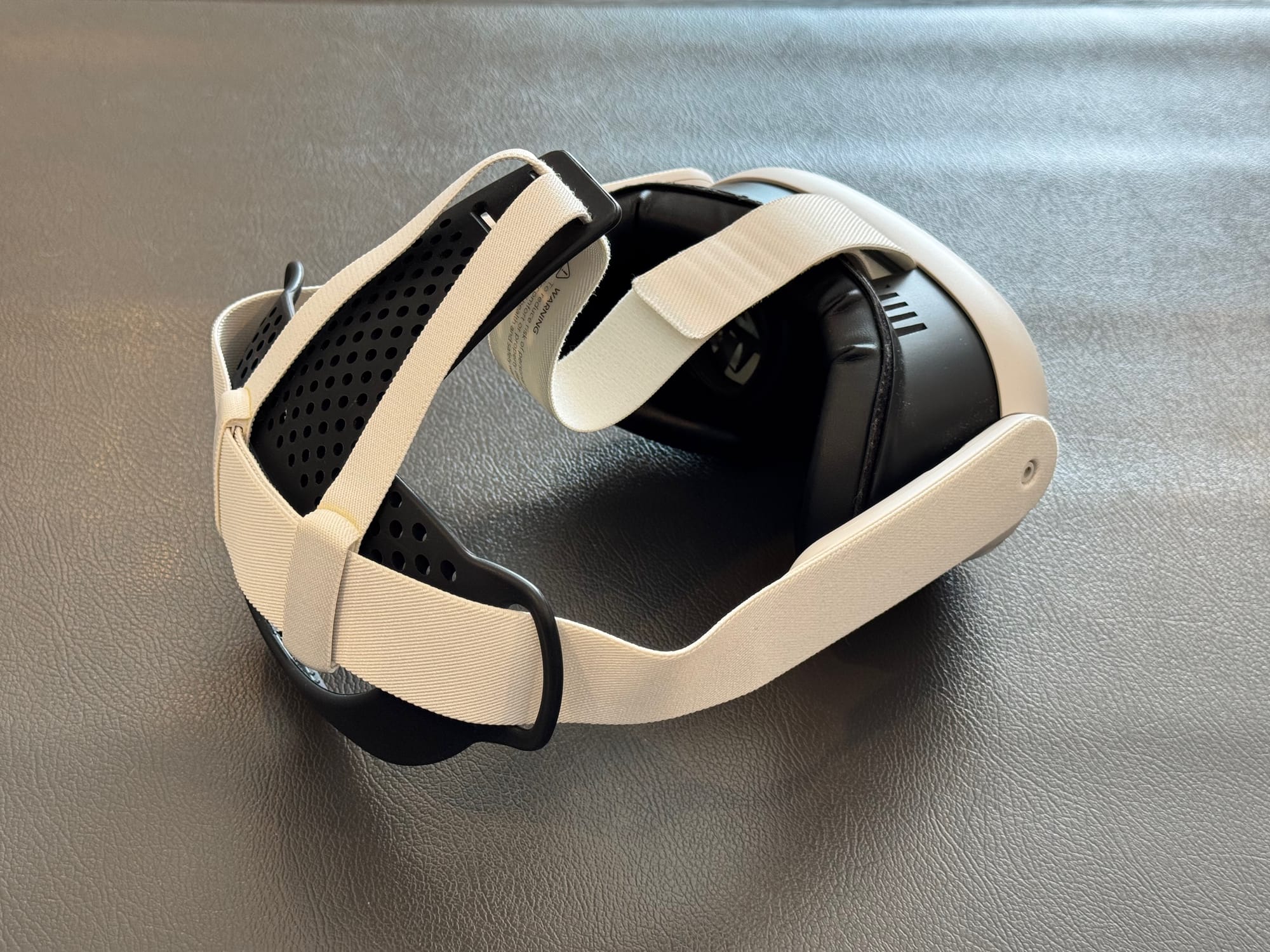
A low cost solution I found that greatly improved the comfort of the stock Meta Quest head strap is the addition of a rear head pad. This spreads the pressure of the strap more widely and evenly across the back of the head and reduces the “hot spots” where I would get sore using the stock strap alone.
These are commonly available on Amazon and other online marketplaces. Apexinno features one on their website. I purchased mine from Ali Express for less than $10.
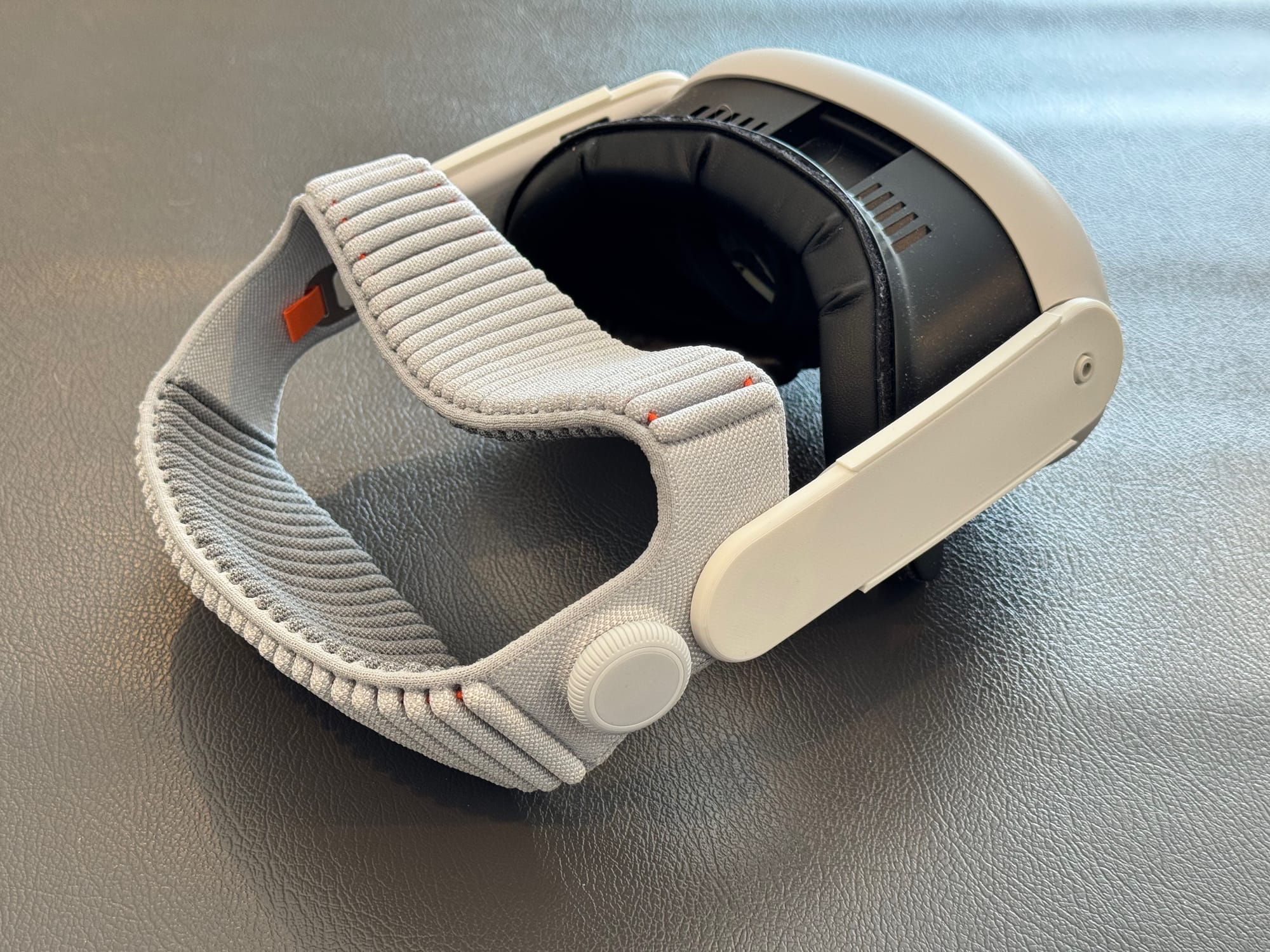
I previously wrote about my experience adapting an Apple Dual Knit bank to my Meta Quest 3, using 3rd party adapters from an Etsy vendor. While this is easily the most expensive solution here, it also has some unique advantages.
The Dual Knit strap is exceptionally well made and designed, no surprise given its Apple design and lofty price tag. The woven material is soft and luxurious to the touch. The adjustment knob serves a dual function, and does so with a feeling of quality and precision. The tungsten weights built into the rear strap and the cross-head design instead of a front-to-back design means that weight is managed differently. Given the Quest 3’s lighter weight than the Vision Pro, this makes for a very balanced and comfortable solution that offers terrific adjustability.
The comfort of Apple’s design demonstrates that the Vision Pro was designed with the reclined or lying down use case in mind. Quest owners can now experience Apple’s design choices for themselves.
One added benefit of these soft straps is the convenience afforded when traveling with your Quest. I was able to simply roll the entire thing up, headset and strap, into a sweatshirt and stick it in my bag – no special travel case required. As someone who travels for work frequently, it’s not a small thing to have that option. Convenience is king when making decisions about what to bring along.
What all of these options really highlight is an acknowledgment of the broader spectrum of how many people actually use VR. For years, head strap design decisions were built around the assumption that users would be standing, moving, and playing. But a lot of us also want to lean back, watch a movie, or spend some quiet time in a headset. Comfort for those moments looks different than it does for active gaming, and the industry is finally starting to recognize that.

Also: Project Windless‘s publisher confirms its genAI-friendly development cycle

The life sim will allow anyone to access an island regardless of who owns it

The hugely popular farming sim is a chill, easygoing experience, but it still helps to know a thing or two
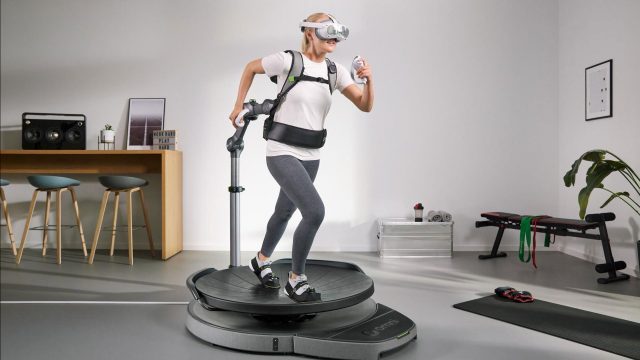
Virtuix announced it’s joined the Made for Meta program, which opens the door to bring official Quest compatibility to the company’s Omni One VR treadmill.
Made for Meta is a hardware partnership that certifies that accessories not only work with Meta devices, but also meet the company’s quality standard. Since the 2023 launch of the program, a wide range of Made for Meta accessories have been certified, including bHaptics TactSuit Pro, Logitech MX Link stylus, and Roto VR Explorer Chair.
As the latest member of the program, Virtuix says it plans to make its Omni One VR treadmill compatible with Quest headsets and games, effectively broadening Omni One’s reach to the world’s largest XR user base.
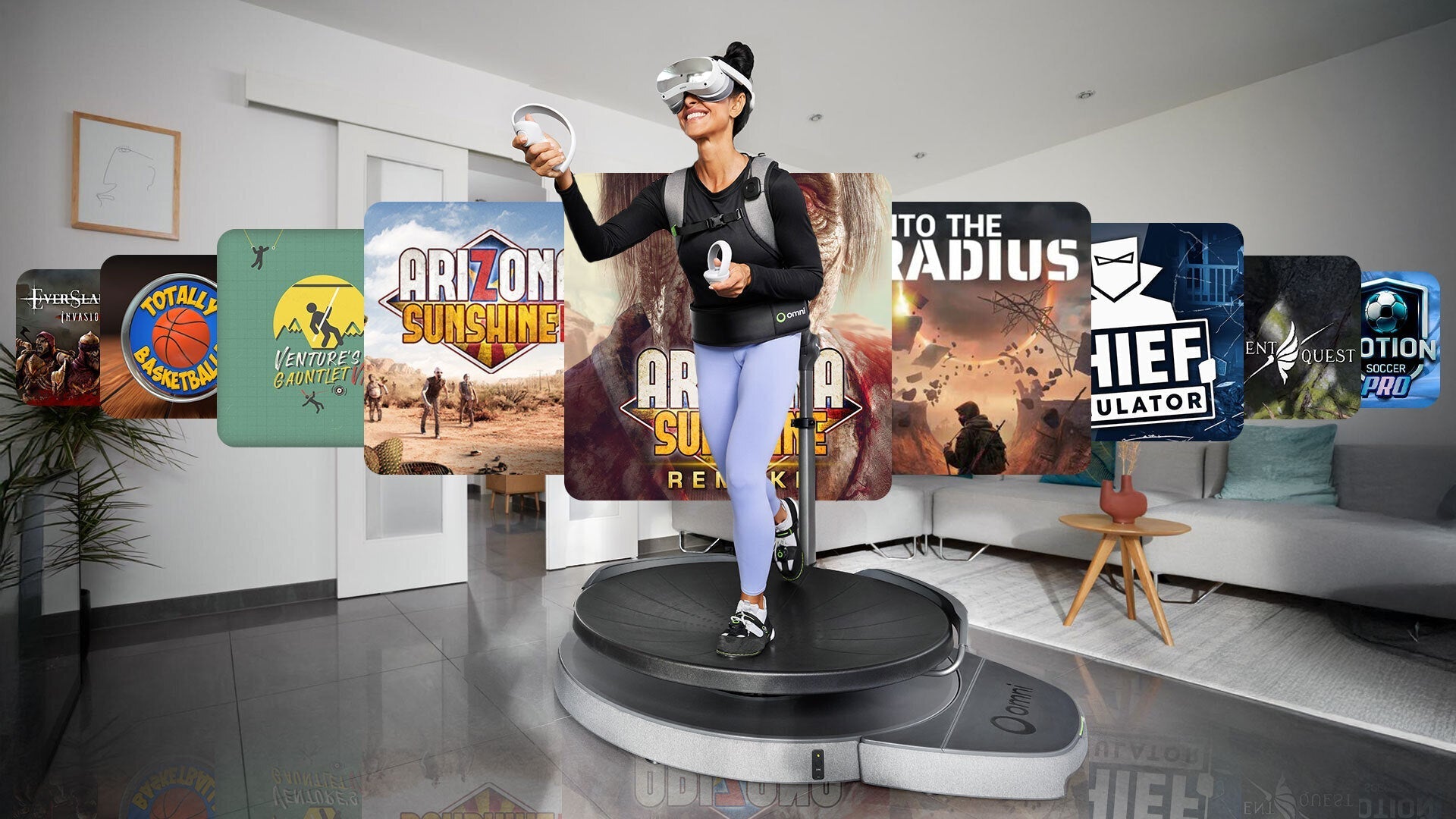
Official Quest support will be a first for Omni One. Before joining Made for Meta, the VR treadmill supported PC VR headsets through its ‘Core’ device, priced at $2,600, as well as a custom Pico 4 Enterprise Ultra headset through its ‘Complete’ system, priced at $3,500.
“Joining the Made for Meta program expands our addressable market to millions of active Quest users who already own and love their VR headset and games library,” said Jan Goetgeluk, CEO of Virtuix. “We look forward to collaborating with Meta as we continue to scale our consumer business and bring our immersive, full-body gaming experience to a mass audience.”
Speaking to Road to VR, Goetgeluk says Omni One won’t support all Quest games, however the company plans to make “a large number of games compatible,” which will include tight integration with the Omni One SDK. Goetgeluk says we’ll learn more about product and compatibility at a later date.
This follows the VR treadmill creator’s recent stock market debut on the Global Market tier of the Nasdaq, which came alongside an additional $11 million investment from Chicago Venture Partners, with an additional $50 million equity line of credit that the company says it will use to scale sales of Omni One.
The post Omni One VR Treadmill Joins ‘Made for Meta’ Program, Opening Door to Quest Compatibility appeared first on Road to VR.
Earlier this month, No More Rainbows and DigiGods developer Squido Studio announced that it was partnering up with gaming streamer jmancurly’s video game publishing company CurlyBlue to create VR experiences – the first being a colorful dungeon crawler named Wizherd.
The lore of Wizherd goes that in ancient times, the world was protected by a magical group called “the herd.” Life was once peaceful, but now zombies and other evil forces threaten the world. As a result, players now take on the role of wizards as they embark on missions to hold off the forces of darkness.
What is it?: A magic-based, dungeon-crawling adventure title that lets players conjure spells and team up with other would-be wizards.
Platforms: Meta Quest
Release Date: February 12, 2026
Developer: Squido Studio
Publisher: CurlyBlue LTD.
Price: Free To Play
As a fan of magic and fantasy games, I was curious to see Wizherd in action, especially after seeing the game’s blocky art style that calls back to the old Final Fantasy games from the original PlayStation era. Unfortunately, new players are greeted to a steep and confusing learning curve that could sour the experience for most.
When you first boot up Wizherd, you are instantly thrust into a magical hub with little in the way of an introduction to the world you and your fellow would-be sorcerers must explore. There are tutorial missions posted to a bulletin board, but they amount to little more than grinding the player’s experience level by venturing off into the wilderness to battle undead monsters. The bulletin board also features daily and weekly quests that any player can perform. Once you complete a mission, you can claim your reward by opening a treasure chest beside the board.
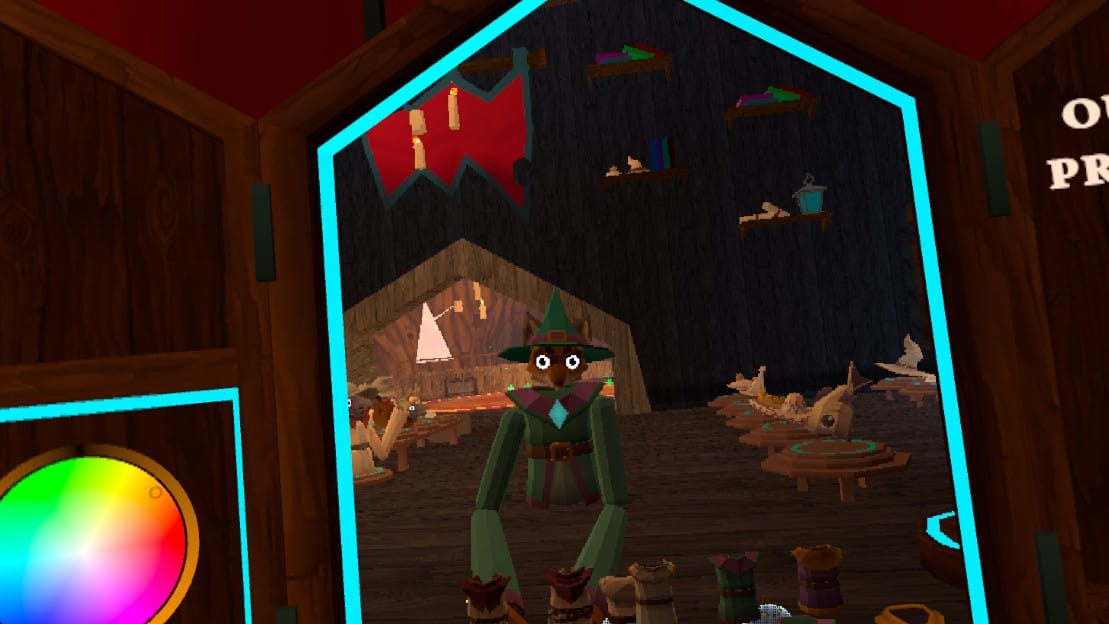
Players can move their character in one of two ways in Wizherd, by either moving the right joystick or physically swinging their arms at the ground to propel forward. The former doesn’t always work, and the latter takes some getting used to. Once the player gets a handle on moving around, the world outside the hub consists of sunny hillsides, castle-like structures, and underground caverns flooded with lava.
Wizherd’s magic system is simple enough: the player chooses between three different elemental spells at the start of the game and equips their selection to their hands. By holding down the trigger and releasing it in the middle of a tossing motion, the player can throw a ball of fire or ice at an enemy, though this action can be somewhat clunky and frustrating in the middle of a frantic battle. Melee-based spells like fire swords, on the other hand, are quite fun to swing around once you have them unlocked.
Spells can be upgraded at certain parts of the hub by spending coins and crystals. You can also customize your wizard avatar’s look by purchasing cosmetic items like robes, hats, and even animal faces you can equip at a vanity. There is even a color slider you can use to adjust your character’s skin tone.
Wizherd is free-to-play, though there are two different types of in-game currency. Coins are earned by defeating enemies, while crystals can be obtained by completing tasks or spending real-world money. The rewards for completing quests can be quite small at first, so you might have to either grind for a while or bust out your wallet.
0:00
Combat and exploration can be hit or miss.
The overall presentation can be hit or miss. As mentioned before, there is a sort of retro charm to Wizherd’s blocky graphics, but the music and sound isn’t anything you haven’t heard before in Minecraft. Most of the time you’ll be hearing the chatter of other players who are just as confused as you.
So far, Wizherd has some potential, but getting started can be tedious if you don’t want to spend due to the grind needed to get a decent loadout. There is some potential here, but only time will tell if the game has enough staying power to keep players coming back.

TeamSpeak seems to be rather enjoying the technical issues
Nintendo’s strangest Switch 2 accessory has arrived: a remarkably faithful recreation of the Virtual Boy.
Toward the end of last year, Nintendo dropped the surprise announcement that Virtual Boy games would soon be playable on Switch and Switch 2 via the company’s subscription-based membership service, Nintendo Online + Expansion Pack. For the first time in 30 years, Nintendo fans would be able to play Virtual Boy games like Red Alarm, Wario Land, and Mario’s Tennis on a current-gen Nintendo console.
Perhaps even more surprising was the announcement that the catalog of Virtual Boy games would be accompanied by two new accessories: an inexpensive cardboard “headset” priced at $24.99, and a full-on replica Virtual Boy for $99.99. In both cases, the Switch and Switch 2 slot into these accessories (like a dock) in order to play the old games.
We’re aware that not everyone knows what the Virtual Boy was, so here’s a quick rundown.
Released in 1995, Nintendo’s Virtual Boy was the first standalone home stereoscopic 3D gaming system, providing a 384×224 red-only image to each eye via its two lenses. While often described as a “VR headset”, Virtual Boy lacked any kind of head tracking, not even rotational, and had a tiny field of view of around 20 degrees. That’s not to say it wasn’t an interesting 3D device – it just wasn’t really VR.
Virtual Boy was a market failure, selling very few units, and was discontinued after just one year. But it had a lasting cultural impact in the gaming world, and is looked back on fondly by many in the VR industry.
I’ve been a Virtual Boy fan since I was 11 years old and found one sitting under the Christmas tree in 1995. I’ve written about why I think the retro system is worth experiencing (and owning) in 2026, and I’ve written about alternative ways to play the system’s tiny library of games on modern VR headsets like Meta’s Quest. So it’s quite natural that I’d have bought the new headset the moment it was announced. Which I did.
Well, it’s arrived. And it’s beautiful.
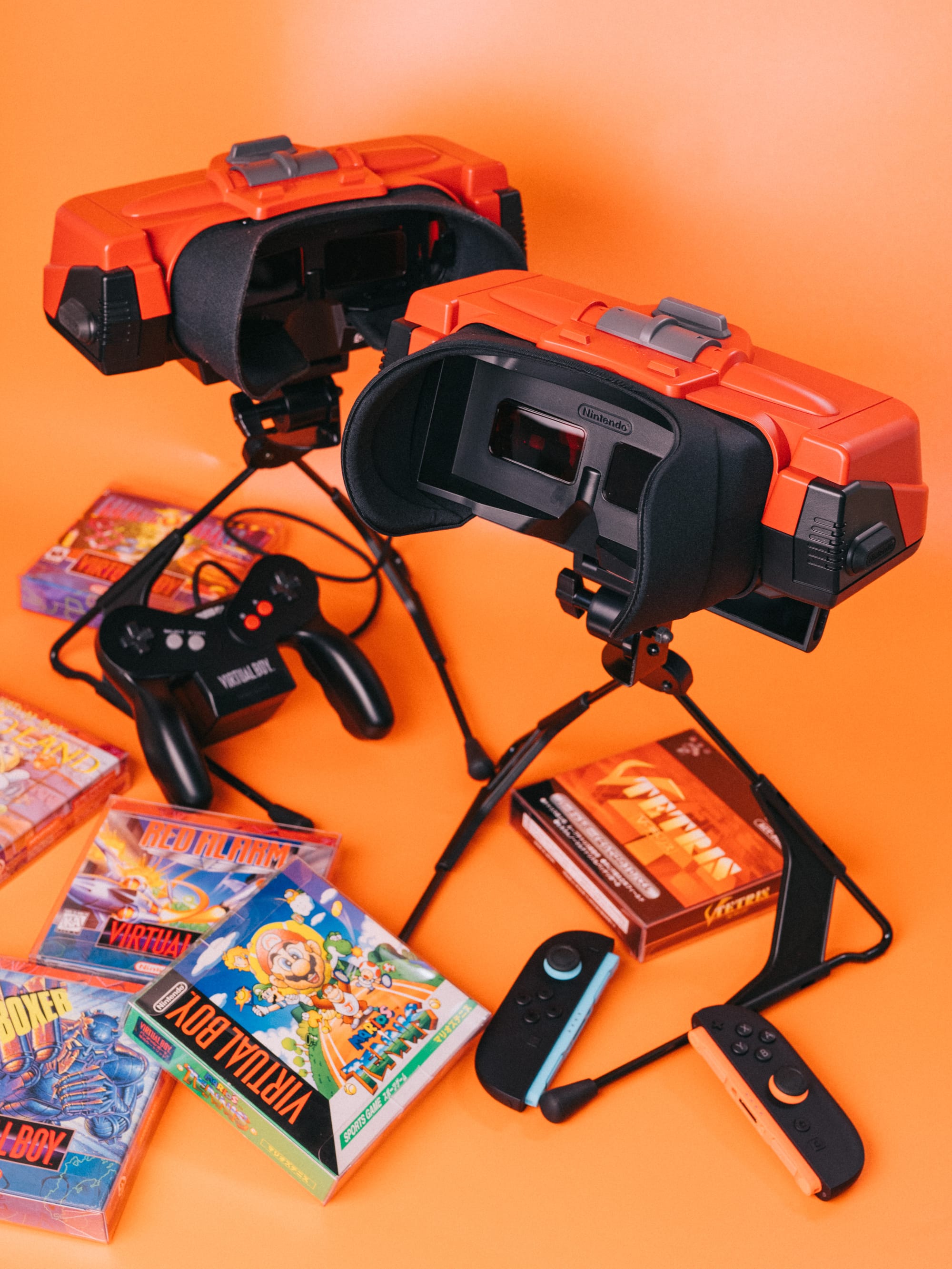
A couple of items of note: To start, due to the way that Virtual Boy games are displayed, you will need to buy one of Nintendo’s official accessory “headsets” to play the Virtual Boy’s catalog on Switch and Switch 2.
A Nintendo rep had previously stated that the old Labo cardboard headset would work just fine, but a subsequent statement issued by the company walked back that claim, saying that to play VB games, you’ll need to buy the new gear.
Second, I’m using the term “headset” loosely. Virtual Boy was never, in fact, a headset, as Nintendo opted to sell it on a stand, rather than in a configuration that allowed mounting the unit to your head. This was the right call, since the original Virtual Boy was ridiculously heavy, and though the new replica “headset” is lighter, it’s indeed a replica. The new model is not a headset, either.
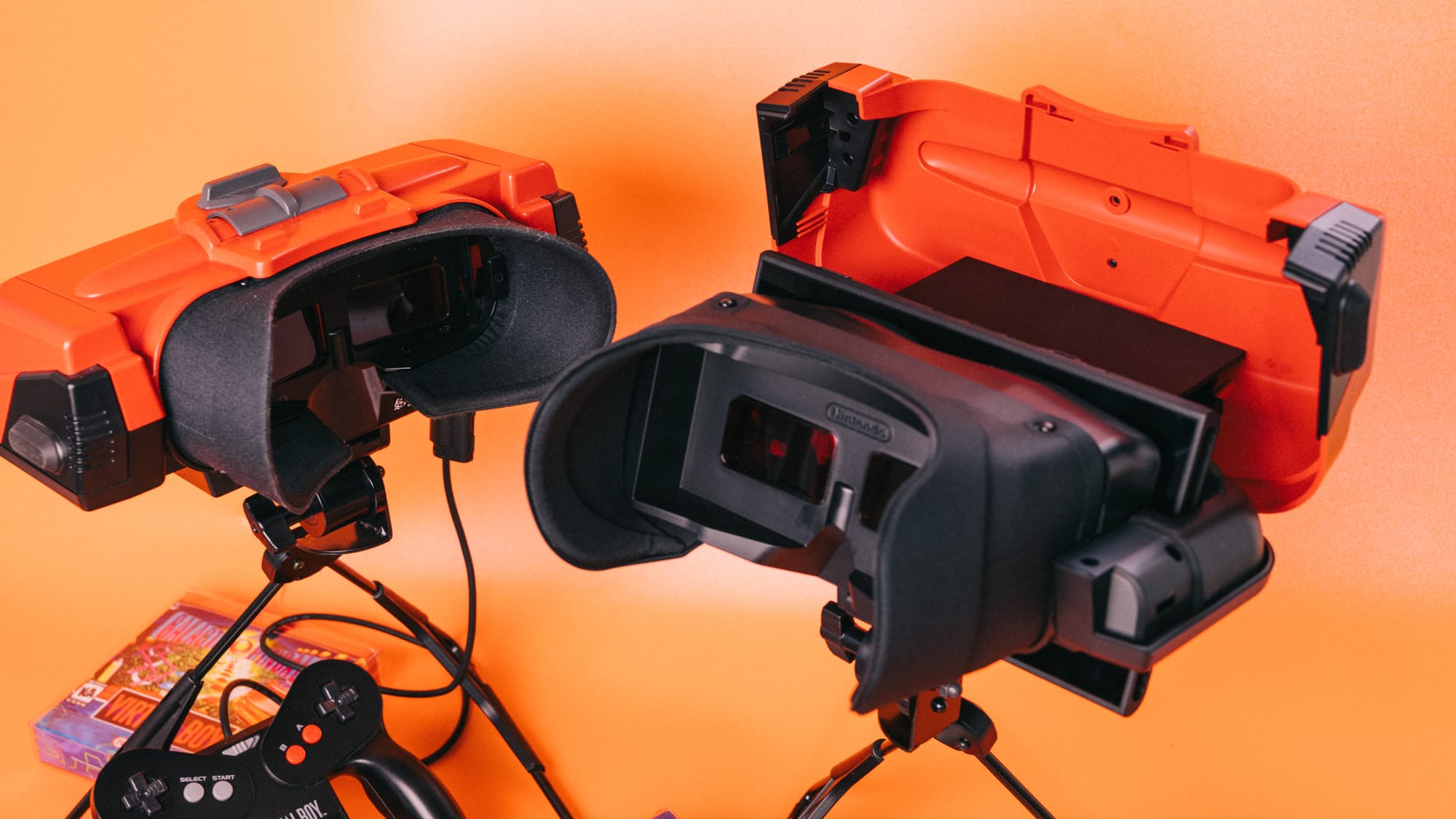
What most surprised me when the headset arrived was just how faithful its design is to the original system. Owning my launch edition Virtual Boy from 1995 gave me a great opportunity to put the two pieces of hardware side by side, to compare the units and take some photos.
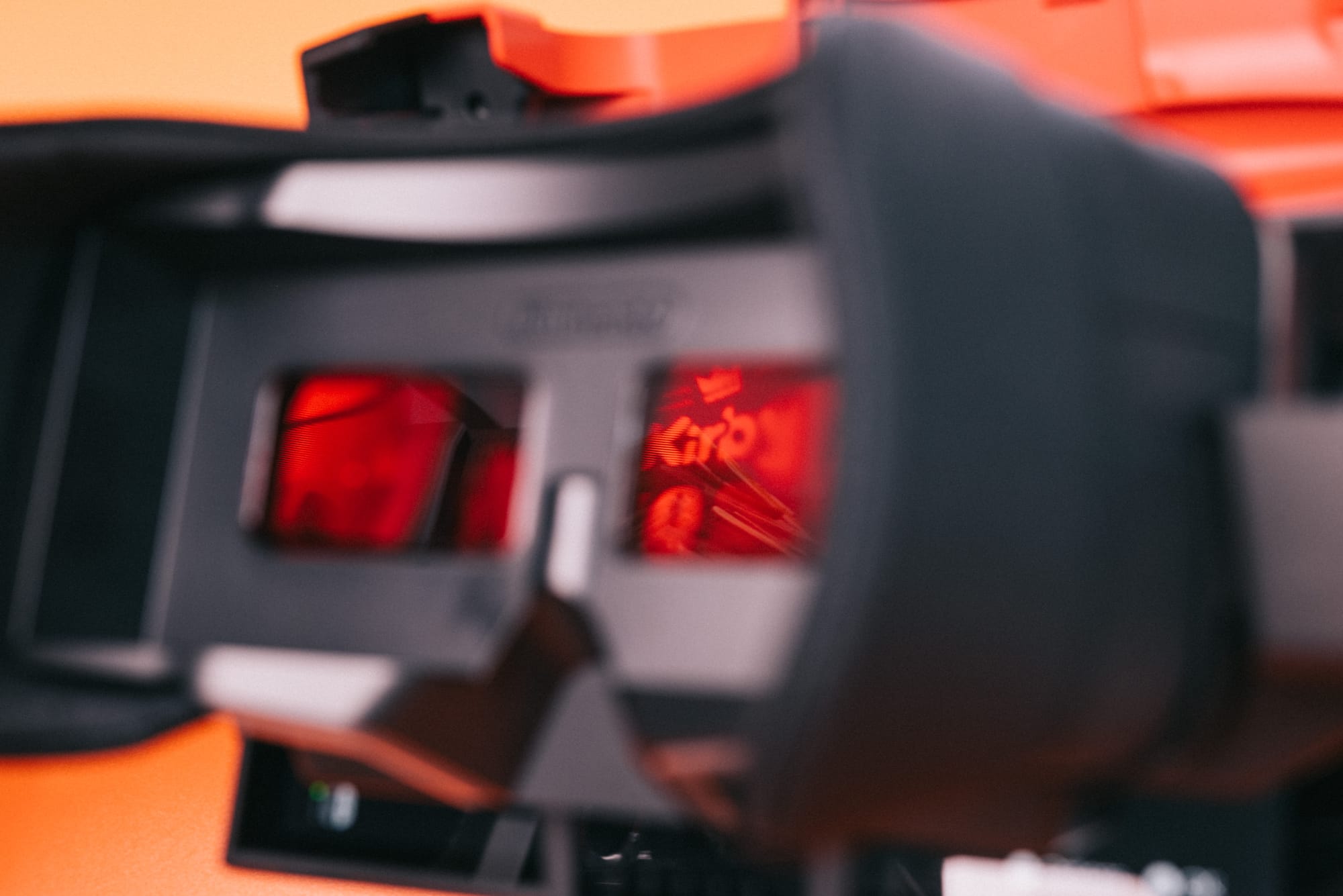
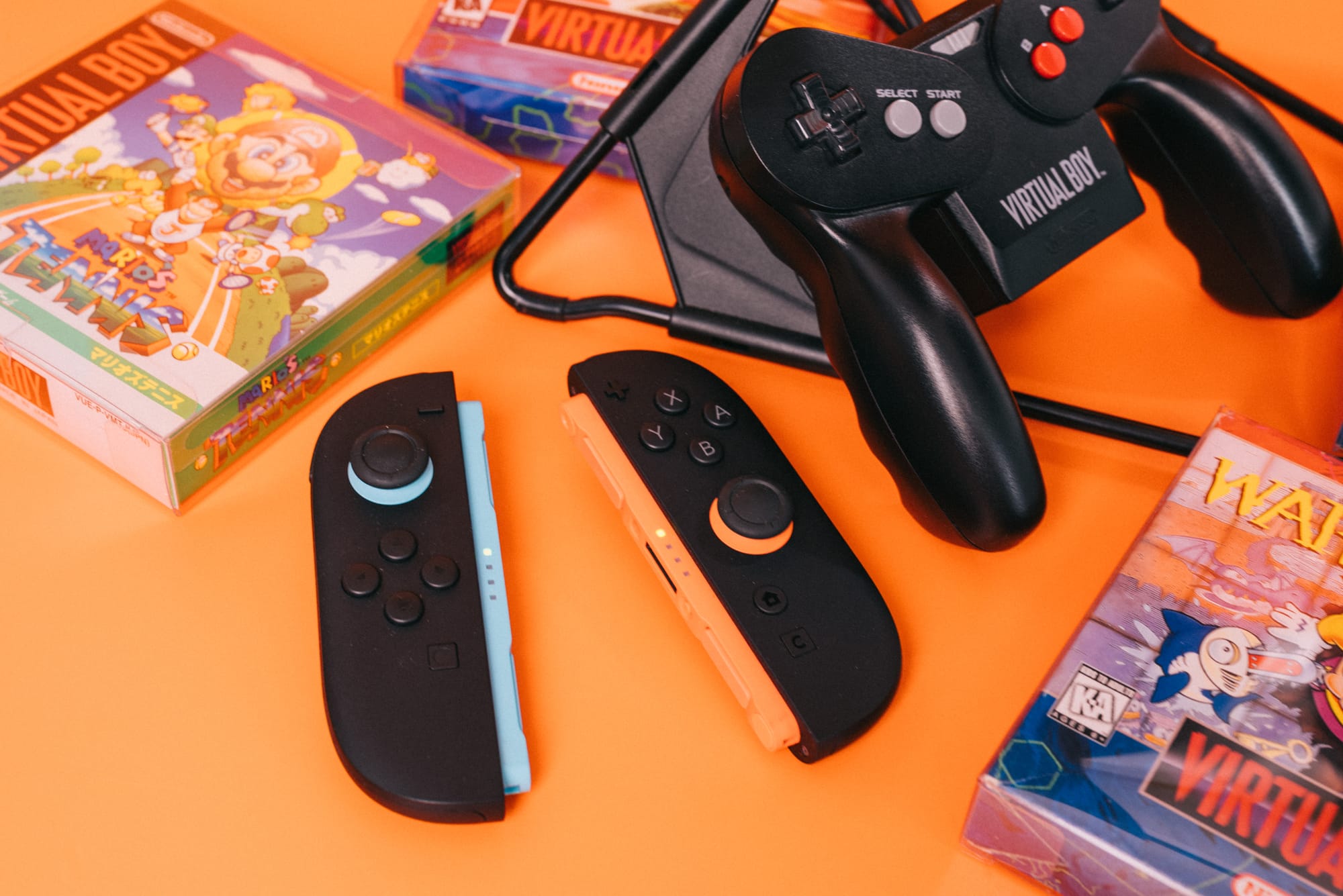
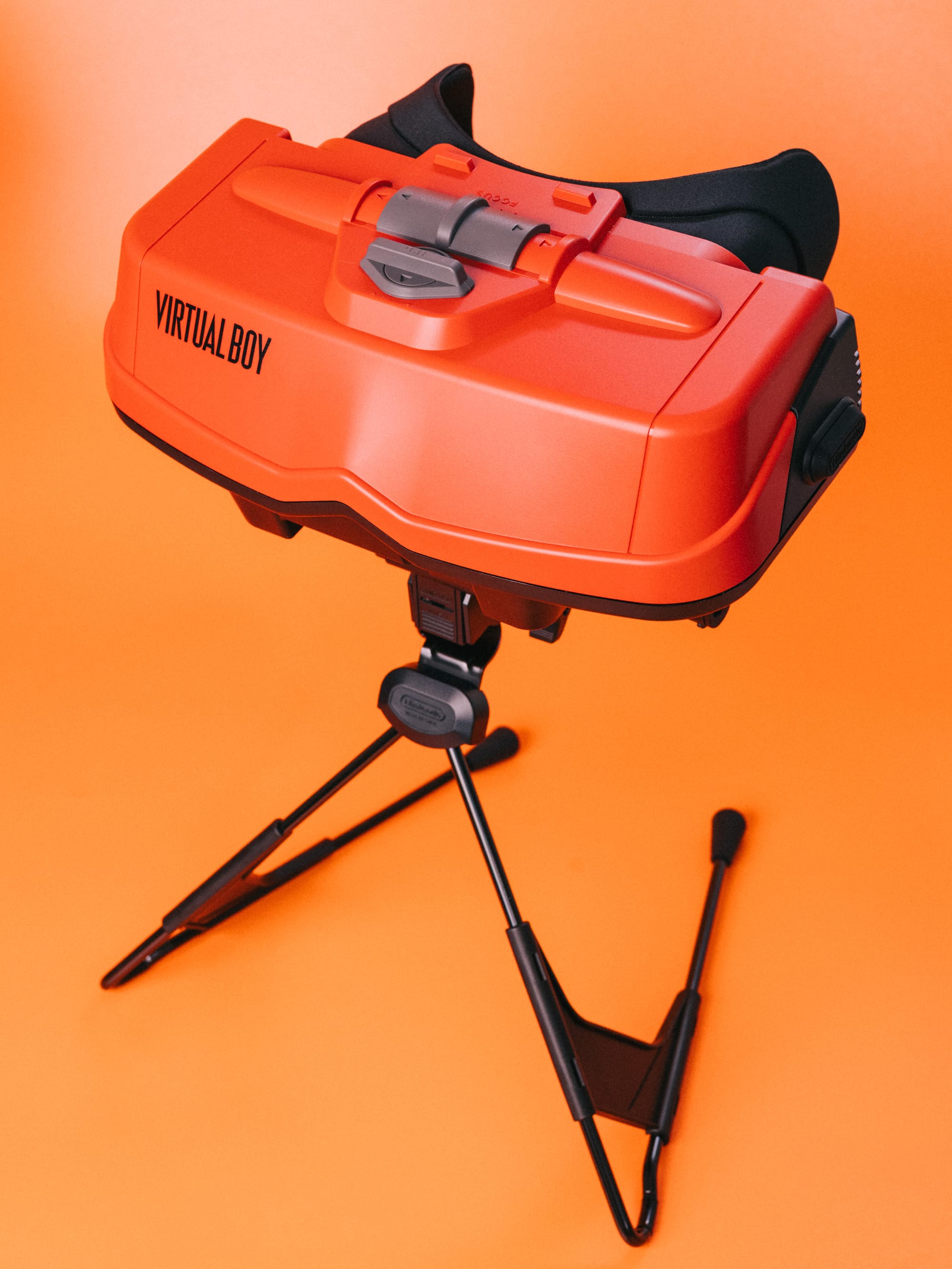
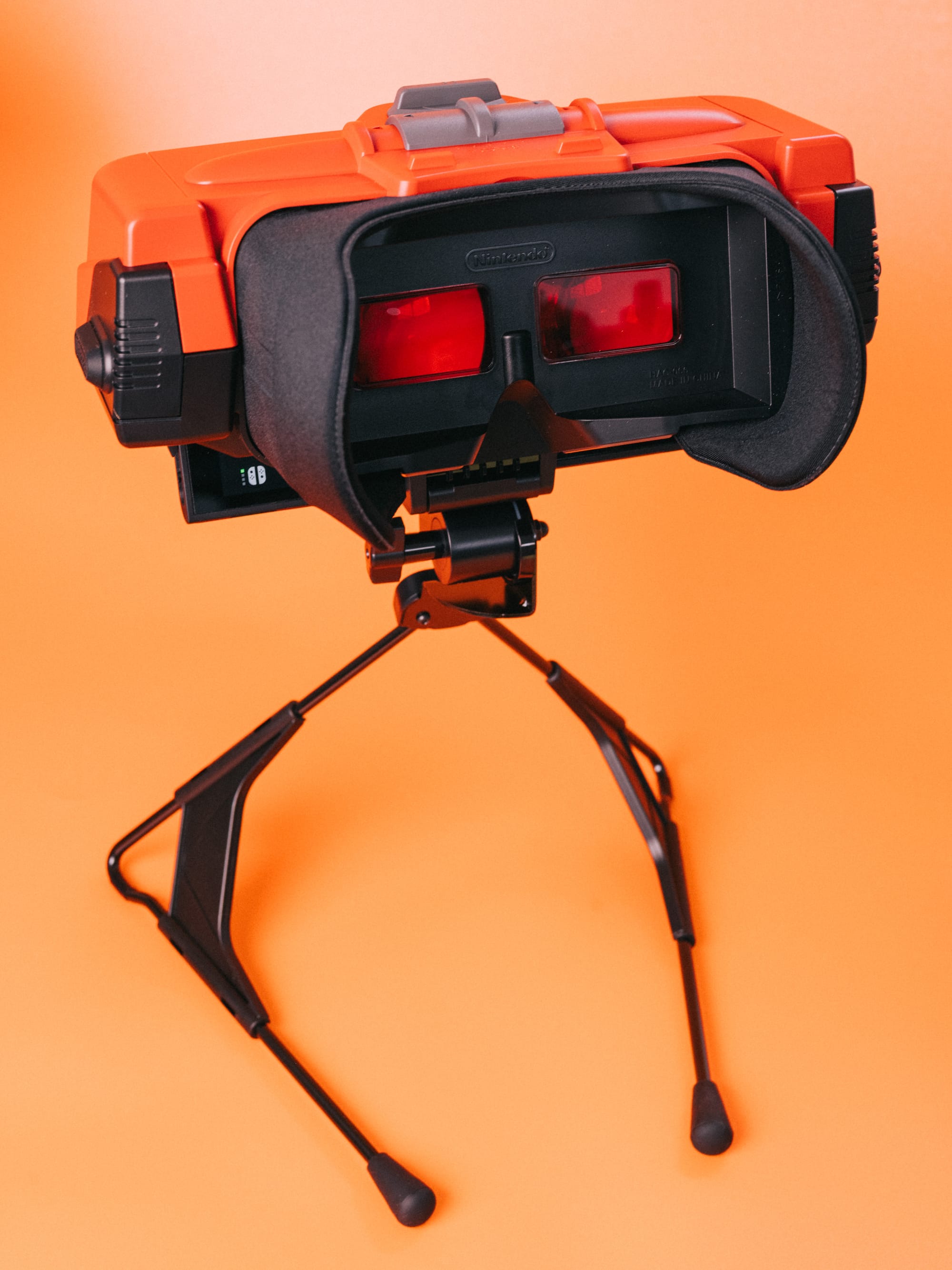
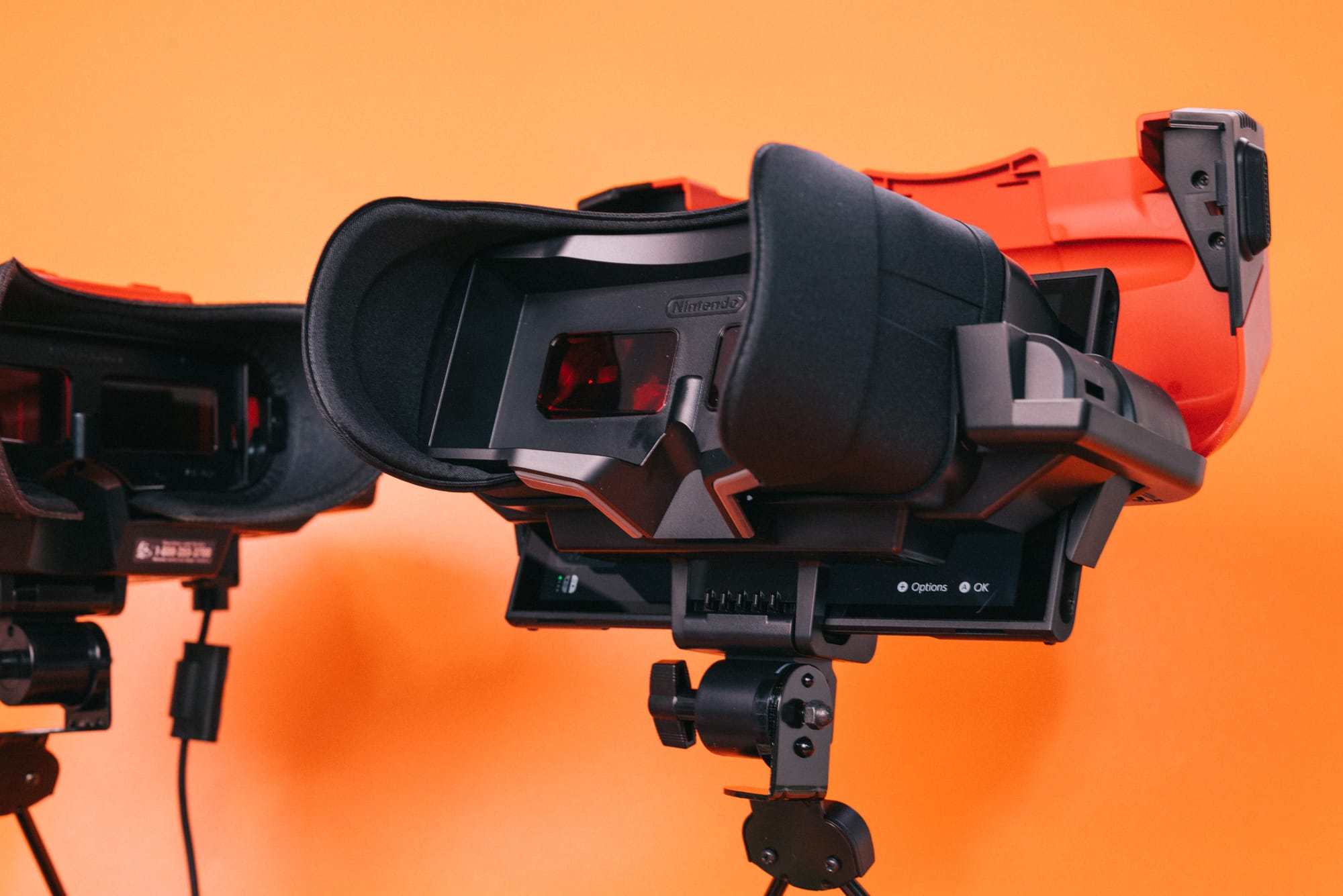
It’s so identical that my ten-year-old daughter (who I taught to solder on my original Virtual Boy when its ribbon cables detached) saw the new unit and asked, “You bought another Virtual Boy?”
It’s true that the new Virtual Boy is slightly larger than the original, but then again, we need to slot a Switch or Switch 2 inside it. That naturally requires some extra space. That said, the small details are incredibly accurate. The rubber bumpers on the side of the unit, the rubber nubs at the end of the stand’s legs, the focus and IPD controls, the (fake) volume control and headphone jack and EXT. port, they’re all here and replicated perfectly. Even the stand’s adjustment mechanism utilizes a virtually identical acorn nut as the original.
The next thing you’ll notice is that it’s remarkably well made. The stand feels good, deploys tightly, and holds the unit well. The adjustment point on the stand also cinches tightly. The plastic feels dense and solid, the spring-loaded docking cradles work beautifully and hold the Switch in place nicely, and the satin foam of the eye-shroud feels more comfortable than the original.
In short, Nintendo did a great job making an almost perfect replica of their least successful gaming system.
It should also be noted that the new Virtual Boy arrives configured to work with Switch 2. To use the original Switch, we are required to install an adapter plate, which involves unscrewing four screws, swapping the plate, and reattaching the screws. The adapter plate comes packaged with the unit.
 UploadVRJames Tocchio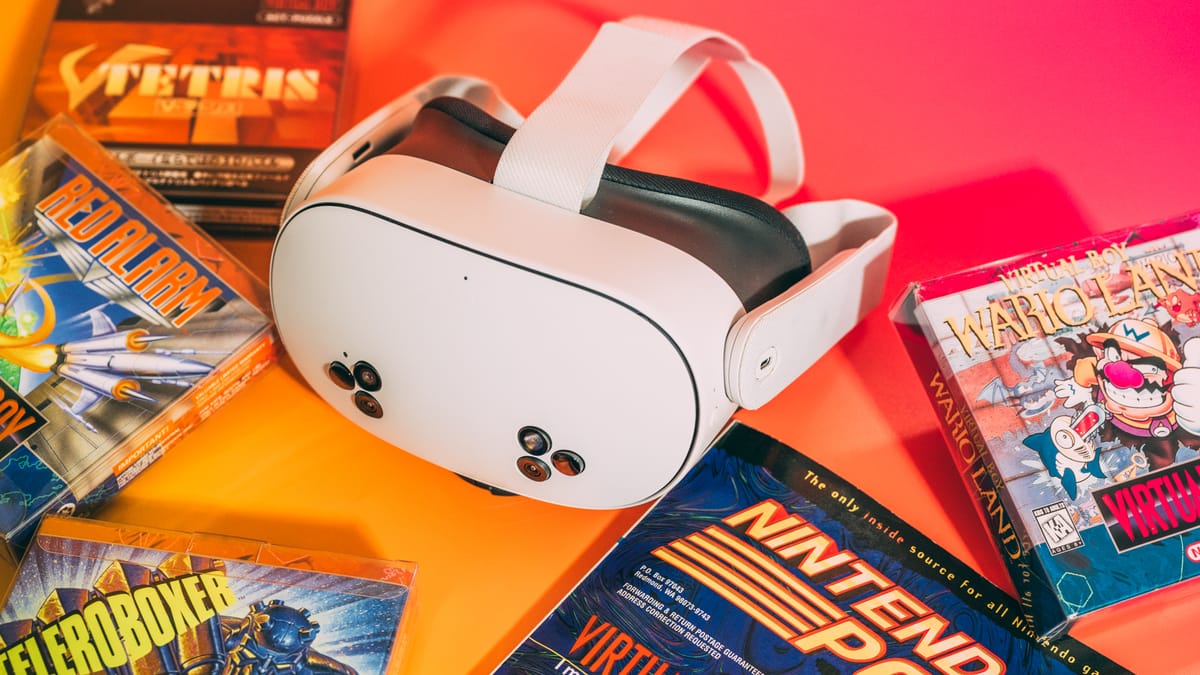
Do you need to spend $99.99 on a replica Virtual Boy headset? Probably not. Despite it being well made and effective at its one and only job, unless you’re a big fan of weird tech and oddball experimental products, you’ll almost certainly regret buying this thing.
Additional strikes against it would come down to the fact that these games are only accessible on Switch or Switch 2 via Nintendo’s subscription service. You won’t really own these games on Switch unless Nintendo releases some sort of purchasable collection. As of now, you’re buying a headset to play games that you’re essentially renting.
And if you’ve never played Virtual Boy and simply want to try out some old, weird games, there are cheaper and easier ways to experience Virtual Boy’s compact library.
But if you’re like me and love the Virtual Boy, well, you’ve probably already spent the money.
If you’d like your own Virtual Boy for Switch and Switch 2, you’ll have to be a member of Nintendo Online, and then grab one via the company’s website. We’ll have an overview of all the Virtual Boy games playable on Switch and Switch 2 soon.
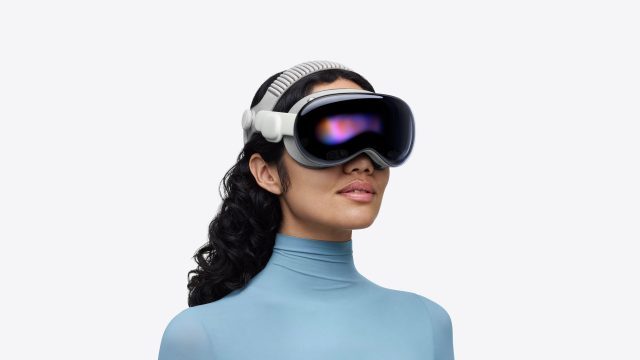
Apple Vision Pro just got a new update that brings Foveated Streaming to the headset, essentially the same bandwidth-saving feature Valve is bringing to its upcoming Steam Frame headset.
As noted by VR supply chain analyst Brad Lynch, foveated streaming has arrived on Vision Pro via the latest visionOS 26.4 beta update, which landed on February 16th.
Much like Valve’s foveated streaming solution for Steam Frame, Apple’s implementation uses Vision Pro’s eye-tracking to optimize the streamed image to serve up the highest quality at the very center of your view, according to recent Apple developer documentation.
If you have an existing virtual reality game, experience, or application built for desktop computers or a cloud server, you can stream it to Apple Vision Pro with the Foveated Streaming framework.
Foveated Streaming allows your endpoint to stream high quality content only where necessary based on information about the approximate region where the person is looking, ensuring performance.
Additionally, Apple notes that on Vision Pro, foveated streaming allows for a sort of hybrid approach to computing: you can display visionOS spatial content alongside streaming content, such as a flight simulator rendering a cockpit using RealityKit while processor-intensive landscapes are streamed from a remote computer to the device.
The key difference is the focus and implementation. Valve seems to be applying Foveated Rendering globally, meaning all Steam apps will benefit out of the box. Valve’s focus is also on local PC streaming, which is done via a direct Wi-Fi 6E connection.
Instead, Vision Pro apps and games need to be specifically integrated with Apple’s version of the technology, with Apple additionally supporting NVIDIA’s CloudXR SDK, which allows developers of existing VR apps created for desktop computers as well as cloud servers to stream to Vision Pro.
On the face of it, it looks like Apple is matching Valve punch-for-punch with foveated streaming, although I wouldn’t take this as Apple meaningfully looking to compete with the upcoming Steam Frame on the consumer end of things.
The $3,500 Vision Pro M5 refresh likely won’t come down in price anytime soon, and I don’t suspect Apple is trying to get a bunch of PC VR developers onboard to create consumer-facing versions of their apps that will need to be specifically integrated with Vision Pro foveated streaming.
If I were an enterprise user though, I would may be pretty interested in the new update, as this opens up one of the key features Steam Frame is bringing to the table.
Being able to push more compute-intensive apps to a headset they likely already own could stop some companies from justifying a Steam Frame(s) purchase, which Apple is all too happy to oblige—especially as the recent memory and storage crisis has seen components shoot up in price so dramatically, causing Valve to take reassess pricing and release date of Steam Frame.
The post VisionOS Update Gives Devs Improved Tools for VR Cloud Streaming appeared first on Road to VR.

If you love shovelware just wait
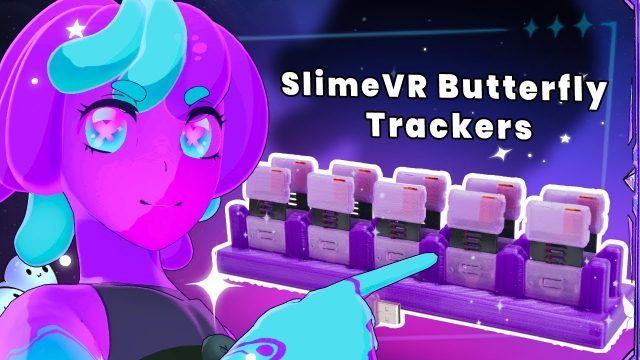
SlimeVR has launched its next crowdfunding campaign, this time looking to get backers excited about its next-gen ‘Butterfly’ body trackers, which promise to be thinner, lighter, and offer a longer-lasting battery.
SlimeVR’s crowdfunding campaign for the new Butterfly Trackers quickly crossed its $180,000 funding goal when it went live on February 9th, now sitting at over $347,000 from nearly 760 backers.
Much like the original SlimeVR Full-Body Tracker, which attracted more than $9 million in 2021, the IMU-based body tracking solution lets VR users better articulate their avatars without the need of base stations or external sensors of any type. It’s also handy for things like motion capture and VTubing.
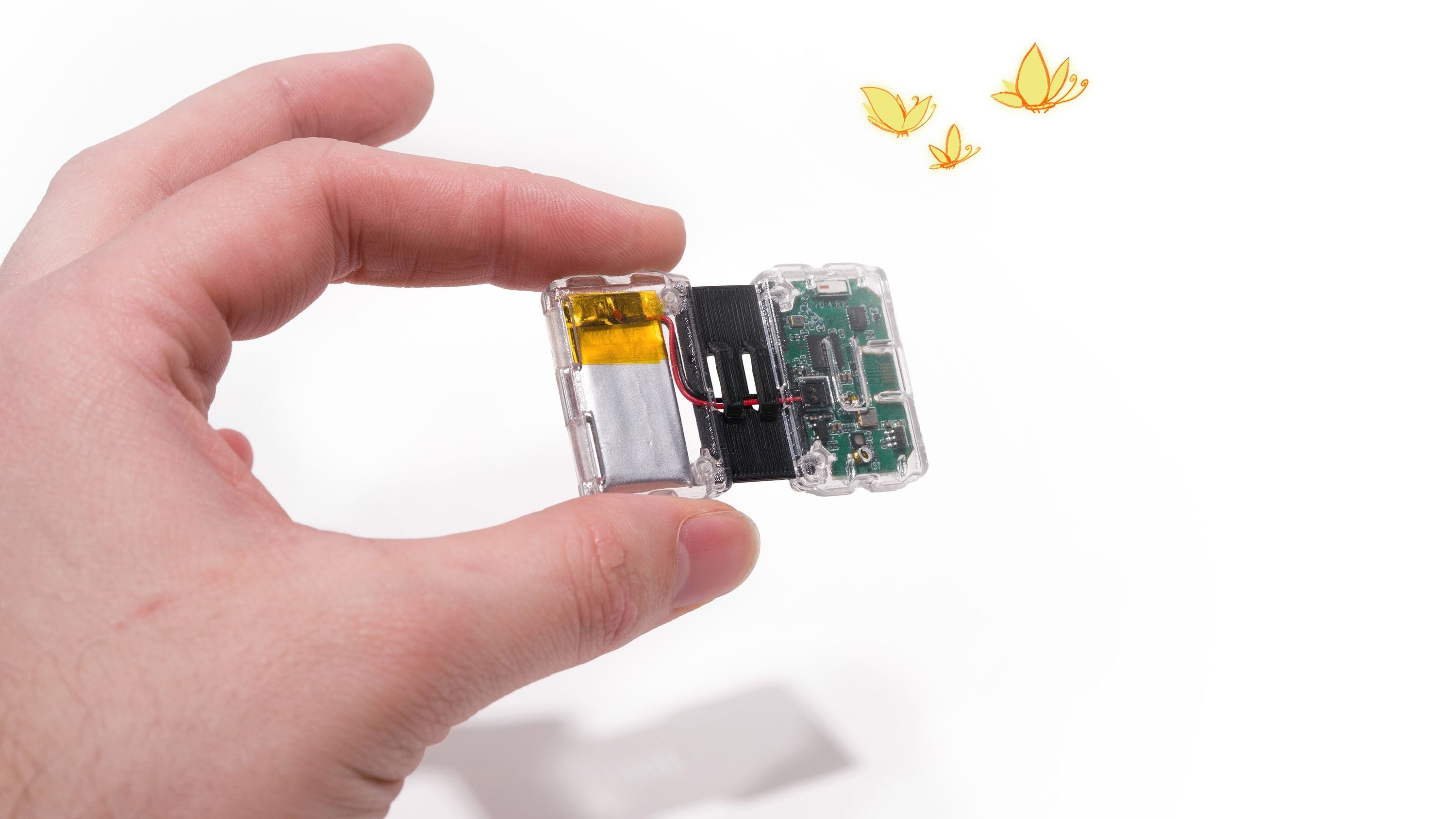
That said, Butterfly Trackers are built using the same tracking technology and the ICM-45686 IMU chip by TDK as the original, something SlimeVR notes also includes the same long drift reset times and tracking quality.
The key innovation however is the inclusion of a custom 2.4 GHz dongle instead of Wi-Fi, which essentially allows the trackers to be smaller, lighter, and have a longer battery life. SlimeVR estimates each tracker can last up to 48 hours on a single charge, which is more than double its original Full-Body Trackers.
And because they’re so thin and light, this also includes a few new methods of attachment, including directly via straps, clips, and even iron-on patches.
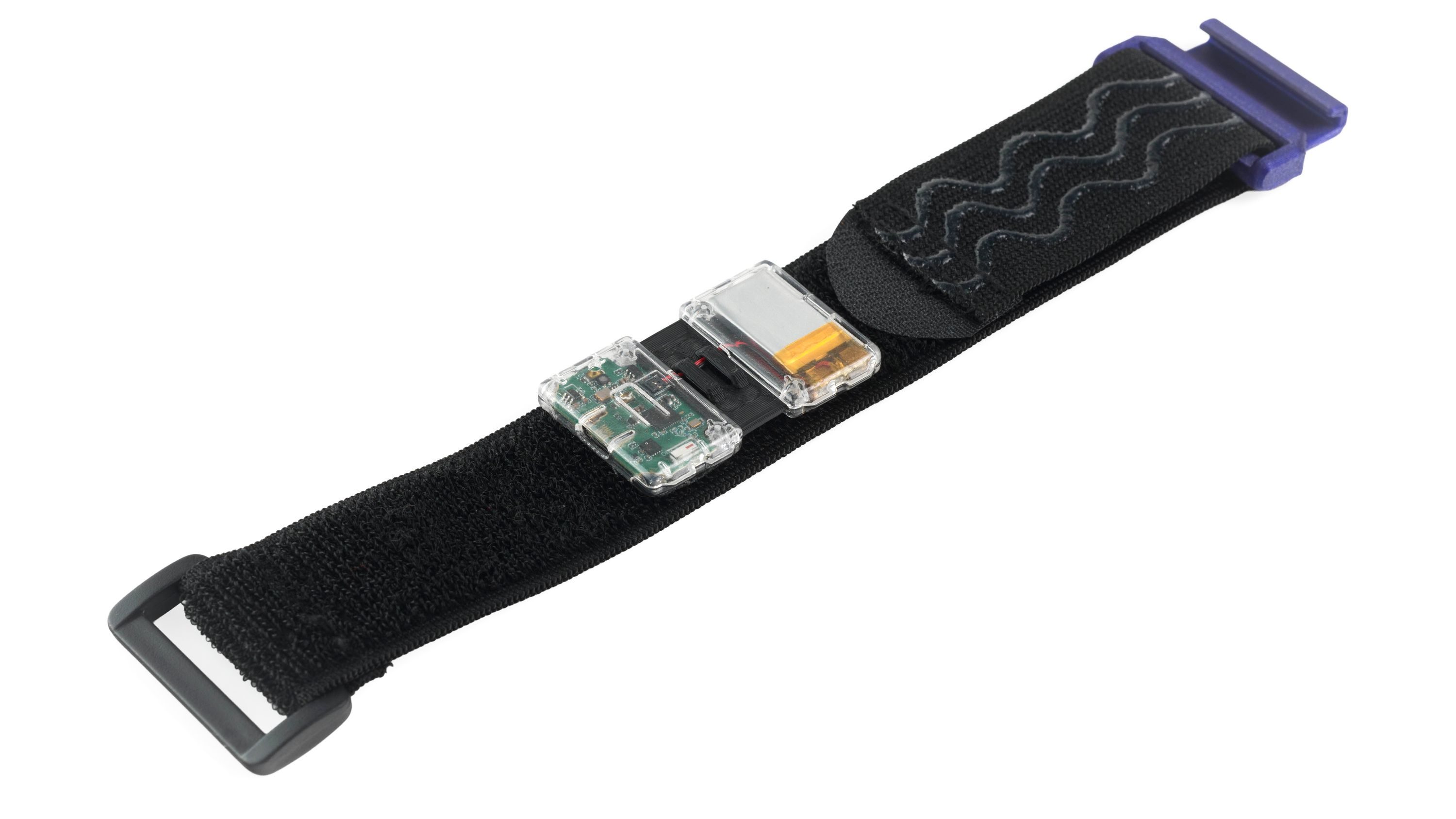
Notably, all SlimeVR trackers are compatible with standalone headsets, including Meta Quest, Pico, or Steam Frame, as well as any headset that uses SteamVR.
The campaign’s lowest backer tier is the ‘Core Set Bundle’, which includes six Butterfly Trackers for $279, which are estimated to ship by Aug 31st, 2026. SlimeVR says the six-unit bundle is enough to track the position and rotation of your hip, knees, and chest, as well as the position (re: not rotation) of your feet.
You can check out the full specs list and additional funding tiers over on the SlimeVR Butterfly Tracker Crowd Supply campaign, which ends March 19th.
The post SlimeVR Launches Crowdfunding Campaign for Thinner & Lighter Full-Body Trackers appeared first on Road to VR.

Great, just great
Now available in its 1.0 version, The Pirate: Republic of Nassau is greater than the sum of its parts, offering a myriad of options to fulfill the pirate fantasy.
In July 2025, I wrote an impressions piece of The Pirate: Republic of Nassau for UploadVR. Initially impressed with what was on offer, the potential for more content, including melee combat and multiplayer, led me to believe it had a promising future. Having just debuted its 1.0 version, I returned to this pirate fantasy in hopes of seeing if my prediction was correct. Better than the sum of its parts, I can confidently say it was.
What is it?: An open-world 18th-century pirate VR game.
Platforms: Quest (Reviewed on Quest 3)
Release Date: Out Now
Developer/Publisher: Home Net Games
Price: $19.99
To not repeat myself, I will briefly touch upon what I expounded on in my initial thoughts and focus on what is brand new. The Pirate: Republic of Nassau is light on narrative, instead opting to give players a slew of activities to fund your newly founded pirate republic on Nassau during the golden age of piracy. Equipped with nothing more than a sloop and a skeleton crew, the sole objective is to grow your empire by recruiting historical pirates such as Blackbeard and Anne Bonny by defeating them in naval battle first.
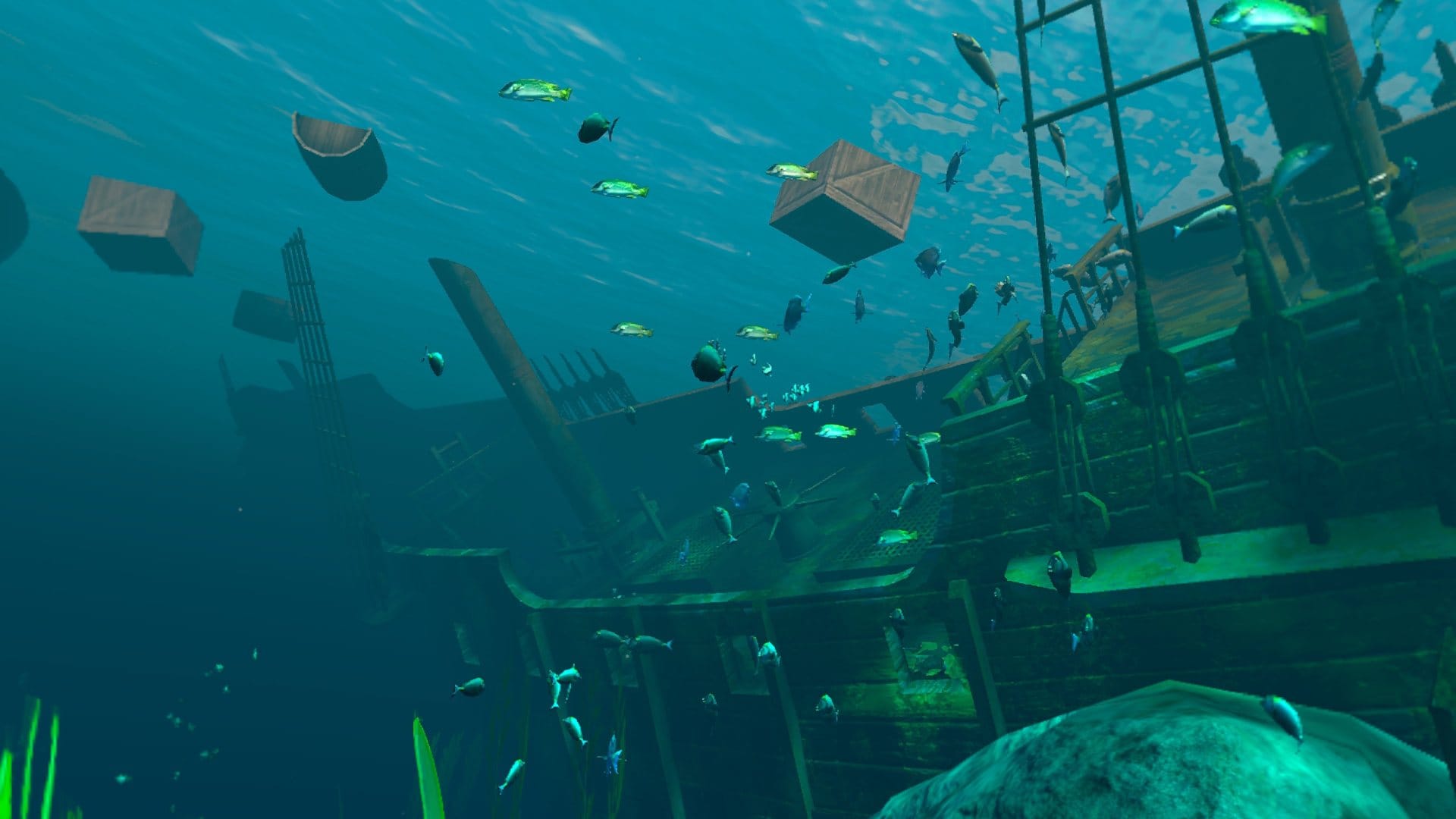
Your initial vessel being rather unfit against these legends, the only sensible choice is to improve your ship with hard-earned gold. Nassau itself will generate money as you build the town, but in the modest beginning, doing lowly work is the way to go. Looting crates from fallen ships, treasure diving, and clashing at sea against rival ships, among the novel options, is the only path forward. With your work cut out for you, it is effortless for time to slip by once you get a hold of the game’s mechanics.
Not many changes in this 1.0 version positively impact the moment-to-moment gameplay, but improvements do exist. In the Early Access version, you could only fast travel from one port to another from the map in your cabin. This removed any wonder because the only way to discover new ports was by paying either the Merchant’s Guild or at the tavern to hear rumors from far-off places. Now, there is an option to visually move your small ship through the map and discover uncharted territories in the process. New ports in the Caribbean mean new vendors, merchants, and quests, and finding out about them in no particular order instills a sense of free will when playing.
The clearest improvement over the initial release is the crisper visuals, especially inside the cabin. Whereas it formerly looked blurry and unfocused, now the cabin looks pristine in comparison. As the place where players strategize and choose where to embark upon next, it’s a logical rework. Other areas, such as the ship’s deck, nearby islands when sailing, and the new explorable areas on foot, still show muddy textures.

A handy spyglass lying on your right-hand side when aboard the ship goes further into feeling like a captain. Having to close one eye when looking at an enemy ship at a distance evokes Jack Sparrow’s films. Amidst all the quality-of-life changes, the highlight is the time boost, bar none. The ability to sail faster is a game changer. When the wind was against the sails before this helpful mechanic, the vessel would grind to a halt. Now, turning on fast forward with the click of a button speeds things up when needing to sail to a lighthouse or catch crates of sugar or in naval battle, significantly improving the experience.
A game like The Pirate: Republic of Nassau should be judged by its full package, not each element individually. That is why sea shanties seem like an inconspicuous addition that would fade into the background if the tunes were not as catchy as they are. Developer Home Net Games is no stranger to pirate-themed games, with The Pirate: Caribbean Hunt dating back ten years. This experience is evidenced in the musical choices. Wildly fun rhymes of tall tales sung by gravelly voices sound right at home by ringing a bell on your ship’s deck or when visiting taverns.
One of my most eagerly anticipated features, cave exploration, added damp, pitch-black areas hidden deep within some islands. Accessible through hearing rumors in taverns, this is a refreshing change-up to standing in your ship all the time, as no ports can be explored on foot. I would appreciate seeing that in a future update, as the developer pledged to continue supporting this pirate simulator. But I digress.
0:00
Engaging in naval combat while the crew sings their heart out fits the scene perfectly.
The caverns themselves—apparently full of treasure—leave much to be desired, only truly displaying corridor after corridor of skeleton bones, rats, and sparse gold pouches. Random small spiders hanging from stalactites creep up in surprising ways, so that at least excites in an otherwise uneventful incursion. For those with arachnophobia, these can also be entirely removed in the settings. Another option to make the cave double the size in hopes of finding more loot is also an option.
Feeling isolated is a strong emotion recreated in these tunnels. Always holding a torch to guide you in the dark severely increases the eerie atmosphere. Bats, the hollow echoes, and water dropping do their best to convince the mind that you are in fact spelunking. Because the only true danger faced exploring these desolate caves is falling to your death, it ends up being a rather introspective activity.
A second land-based foray is exploring jungles to exact revenge on another pirate captain who stole from you. Set in the middle of the day, the suspiciously hallway-shaped islands focus more on melee combat as there is not much in the way of exploration. The ability to crouch and try to be stealthy in the process of approaching enemy camps is an option, with twigs littered around that can reveal your location to enemies and ruin the surprise.
Once getting rid of said foes, it does not feel particularly rewarding to explore every nook and cranny, because there is not much to see. Occasional gold pouches will be left by corpses or left near campsites, but other types of items like cannonballs, planks, or oil are nowhere to be seen. This makes the exploration limiting, resulting in a very straightforward experience that is only salvageable by the combat, which in and of itself is a mixed bag.
0:00
This combat demonstration speaks for itself.
The combat feels undercooked, with collisions being a notable hit or miss. Armed to the teeth with a sword, a hatchet, bombs that explode on contact with campfires, and three daggers on your chest, no foe stands a chance. That said, while fighting the pirate captain, who naturally donned the flashier clothes, his attacks did not register from my perspective when gesturing my sword swings, so a baffling “You lost. Try Again?” message was deflating. A video game that tries to do too much might end up not doing everything well, and that seems to be the case here.
Ultimately, as a diversion taking away from the commerce and naval combat, it serves as a nice complement, but not the main course. On my second try with the boss, I threw a hatchet at his head before he could get close, and he collapsed right then and there. I earned a good bit of gold coins from a chest nearby in that incursion that would have taken me longer otherwise. At least that was satisfying.
The Pirate: Republic of Nassau is a bit unsatisfactory when it comes to comfort. Other than the expected smooth or snap turning, there’s the ability to turn off or on hand commands to signal your crew to raise the sails and to use hand motion to rotate when swimming. New options like Auto-Aim and Auto-Fire are welcome for naval combat, but since Early Access there is no option to teleport instead of artificial stick-based locomotion. This is most noticeable with the new on-foot explorable levels.
Another lacking feature related to those walkable areas is that there is no option to toggle instead of holding down the button to grab items. When holding a torch while spelunking or carrying both swords when fighting, this can become cumbersome the longer the time played.
The final new mode is multiplayer. PvE, PvP, and Port Attack are the possible sessions prospective players can choose. Deciding how many players—or bots—can enter, the tier of both your and your enemy’s ship, and if Auto Aim should be allowed or not are some variables to fiddle with. Playing the entire campaign with friends sounded like a more enticing idea, but it certainly would be a lot more complex than the currently available skirmishes at sea.

There is no one defining aspect of The Pirate: Republic of Nassau that stands out above the rest. It is every element working in tandem that makes it a worthwhile golden age of piracy fantasy. A veritable time sink, the pleasant hands-on activities to expand your criminal empire, from wreck diving to engaging in spontaneous naval combat, hark back to the best moments of Assassin’s Creed: Black Flag. The newly added tasks, such as exploring gloomy caves and fighting buccaneers, while not spectacular, add a sense of variety to easily spend several hours in. The result is a worthwhile endeavor that those intrigued by the pirate’s life should sail away.

UploadVR uses a 5-Star rating system for our game reviews – you can read a breakdown of each star rating in our review guidelines.

But Peace Walker‘s coop mode is back

The MMO maker promises no cosmetic store to start

Welcome to the new Thin Mint grind

People have only gotten more unhinged about Highguard after its studio’s layoffs

Actor Roger Clark describes one of his favorite Cameo requests

Also: when are we getting a Dragon Ball racing game?