
Facebook really hopes your kids will play Grow A Garden via its terrible phone-based metaverse

Facebook really hopes your kids will play Grow A Garden via its terrible phone-based metaverse

Hermen Hulst’s message to staff praised the studio’s remakes

Artur Ganszyniec just completed a playthrough of the RPG in which he shared recollections of his time working on it
The Exorcist: Legion VR has been forced to rename to Exorcism of the Legion (Last Rites).
Fun Train announced that the license holders for The Exorcist IP chose not to renew the license for the well-regarded horror title. As a result, the game will continue to be available under its new name, Exorcism of the Legion (Last Rites), a name Fun Train fully owns.
This change will take effect when players update the game on their platform of choice. The Steam, Quest, and PlayStation VR2 store listings already show the new name, though the original PlayStation VR version is still listed for sale under the original name, both in a complete set and as individual chapters.
Fun Train’s Tarzan VR was delisted from all VR storefronts at the end of January after Fun Train opted out of renewing the license. Additionally, The Twilight Zone VR has also been renamed ‘Tales From the Zone’ on the Quest and PS VR2 stores.
 UploadVRIan Hamilton
The Exorcist: Legion VR first released episodically for Steam in 2017, Meta Quest 1 in May 2019, and PlayStation VR1 in 2018. The Quest version received multiple graphical updates, including a 90Hz update for Quest 2, and a full graphics overhaul on Quest 3. A free epilogue add-on was also released for Quest in October 2024. The original PlayStation VR edition also received a visual update.
A sequel, The Exorcist: Legion SIN (Safety In Numbers), with co-op gameplay was announced in late 2021. After an initial delay into 2023, Fun Train announced the game was shelved indefinitely due to the changing VR gaming landscape.
 UploadVRHenry Stockdale
Exorcism of the Legion (Last Rites) is available on Meta Quest and Steam for $24.99, and on PS VR2 and PS VR1, the latter under its original name, for $29.99.

The deckbuilder was originally set to enter Early Access last year
The bizarre weaponry and battle-ready pets of comic shooter Vortex 9 are coming to VR soon on Quest headsets.
Developed by iWorlds, the VR port of Vortex 9 will launch on Meta Quest on February 26. The shooter has previously been released as a free-to-play game on iOS and Google’s Play Store, where it has cumulatively amassed more than 10 million players. The VR port will be Crossplay compatible, which could help the game’s transition to VR.
0:00
Vortex 9 hangs its hat on absurdity. Players customize a variety of stylish heroes and jump into colorful arenas wielding over-the-top weapons, such as battle lollipops and bubble miniguns. Players can also create and play with cute battle pets across several multiplayer modes, including Team Battle, Solo Deathmatch, and Capture Point.
Vortex 9 is available on the Apple App Store and Google Play. The Meta Quest release drops February 26, and can be wishlisted now.
The infamous cave in which a youth football team was trapped in 2018 is coming to VR spelunking game Cave Crave.
3R Games has announced that the next real-world cave to appear in their virtual reality spelunking game Cave Crave will be Thailand’s Tham Luang. The cave gained international attention in 2018 when a youth football team became trapped in the cave by rising flood waters.
To ensure accuracy and appropriate context, the studio is collaborating with diver Vern Unsworth, who directly participated in the rescue, and 3D cave-scanning expert Roo Walters. The new cave will appear in Cave Crave’s Tourist Mode, a non-gamified virtual recreation of real-world locations.
0:00
This addition to the game’s “real cave” experiences follows an earlier update that added Utah’s Nutty Putty Cave, another real-world cave that closed in 2009 after the death of John Edward Jones. 3R Games is careful to note that their real cave recreations aim to offer a way to explore dangerous or permanently closed sites that’s both respectful and authentic, and not gamified experiences.
In Cave Crave, you’ll explore tight tunnels and caves, spelunk your way through the darkness, mark walls with chalk and use various other caving tools to plumb the depths and escape to the safety of the open air.
Previous updates have added an Arcade Mode, which turns the game into a competitive race against time, where you aim for the quickest run on the online leaderboards.
Cave Crave is out now on PlayStation VR2, Quest, and Steam.
The music-driven arena combat title is scheduled for release on PS VR2 on March 5.
Rager drops players into a stylized arena for intense, timing-based combat in tune to a dubstep-glitchy-rock soundtrack. We first tried the game as a demo on Steam and said “With a full pace of strikes, blocks, and ducks, RAGER makes me feel like I’m engaging with an immersive fitness routine that’s straight out of a movie.”
 UploadVRK. Guillory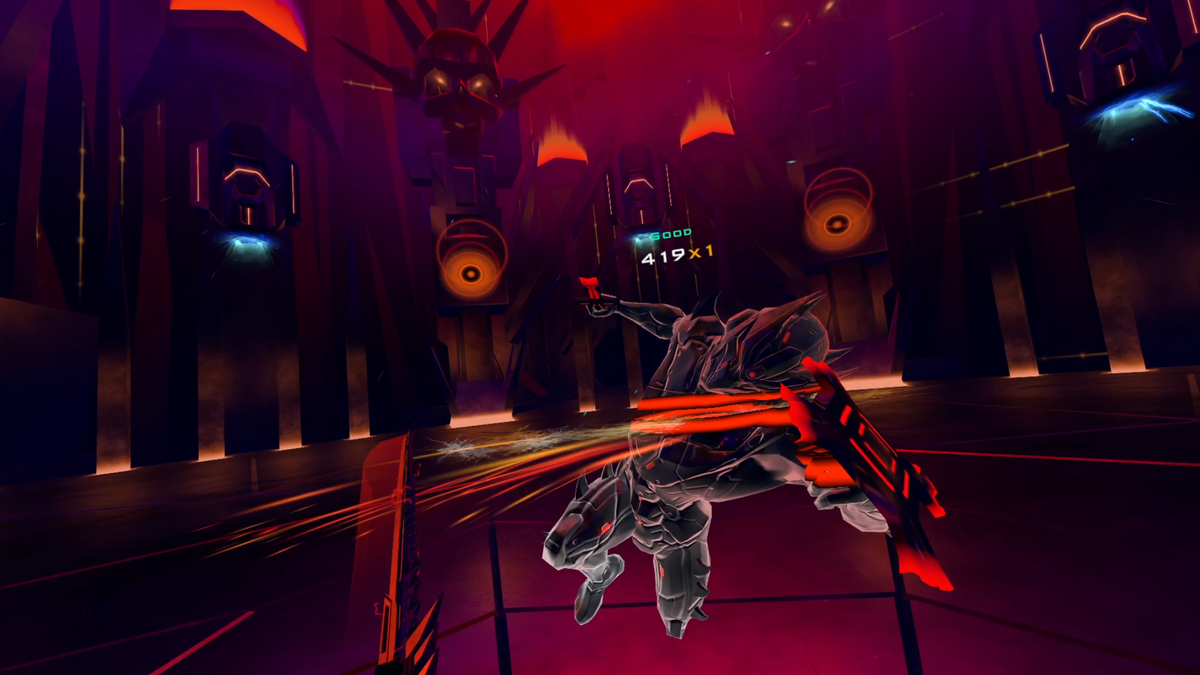
Rager first debuted on Steam and Quest in Early Access in October 2025. A November 2025 update added a new ‘freestyle mode’ with four new levels. At the time of this article, it remains in Early Access on both platforms with no date for a full release.
0:00
The PS VR2 version will launch with a full campaign comprised of twelve levels and three boss fights along with the aforementioned freestyle mode. The game runs at a native ninety frames per second, features headset haptics, and utilizes eye-tracked dynamic foveated rendering for better visuals and performance.
Rager is out now in Early Access on Steam and Meta Quest 3/3S for $14.99.

Bluepoint’s reported shutdown is just the latest example of Sony struggling after buying up nearly a dozen studios since 2019

Monster Strike made an ex-Capcom producer a ton of money that he then spent in-game

Bluepoint Games was acquired only four years ago

Also, we find out why Woody is back despite the end of Toy Story 4

A new industry report paints a harsh picture of gaming’s present challenges and future prospects for growth

Christopher Judge was approached by a fan at a convention and talked about the remakes and what he’s doing next

The loot shooter’s entire calendar has been pushed back another three months

40 devs have been laid off at Watch Dogs, Far Cry studio Ubisoft Toronto

Hello, Mario is free to download and out now on phones and the Nintendo Switch
Meta is accelerating its plans for a Meta Ray-Ban Display successor, hoping to launch later this year, The Information reports.
The current Meta Ray-Ban Display, exclusively available in the US for just under five months now, is a monocular device. It has a small display in the right lens, while your left eye sees nothing. In our review, we described how this “just feels wrong”, inducing a constant minor feeling of eyestrain when the display is active for more than a few seconds.
The reason that Meta Ray-Ban Display is monocular is that, as Meta’s CTO pointed out in the weeks before the device’s launch, the components for a binocular device would cost more than twice as much, since it also requires implementing disparity correction. It would also drive up the bulk and weight, harming social acceptability even further than it already is.
But the cost of in-lens waveguides and miniature light engines should decrease with scale, and Meta executives have described the demand for Meta Ray-Ban Display as significantly higher than expected, leading to the delay of the plan to launch the product internationally.
 UploadVRDavid Heaney
During development, Meta Ray-Ban Display was internally codenamed Hypernova. Last year, Bloomberg’s Mark Gurman reported that Meta plans to release a successor, codenamed Hypernova 2, in 2027. Hypernova 2 would include a display in both eyes, he wrote at the time.
This timeline was corroborated by supply-chain analyst Ming-Chi Kuo, who also said Meta would replace the first-generation product with a successor in 2027.
Now, though, The Information’s Jyoti Mann reports that Hypernova 2 will launch this year, not in 2027. While the report doesn’t go into much detail, Mann describes Meta executives as being “concerned that launching too many devices in quick succession could confuse customers”.
Given that Meta plans to launch its ultralight Horizon OS headset in early 2027, and that multiple sources point towards the company aiming to launch its first true AR glasses in the second half of 2027, shipping binocular HUD glasses this year may make for a less confusing release sequence.
Mann’s report says Meta has also revived plans to launch a smartwatch, hoping to release that later this year too.
With the binocular HUD glasses, Meta could be hoping to get ahead of Apple’s upcoming smart glasses, widely believed to be launching in early 2027. With Apple’s first glasses lacking a display at all, Mark Zuckerberg could be hoping to present Meta as the technology leader in the smart glasses space.
 UploadVRDavid Heaney
Keep in mind that Meta’s hardware roadmap is constantly shifting, and the company frequently spins up and cancels headsets before they ship. When a specific product gets close to shipping, we’ll bring you any reliable rumors of its imminent arrival. Until then, be ready for anything planned to get canceled or delayed.

Todd Howard is cautious about what the new tech can and can’t help with

Pico announced that it’s showcasing the core OS and platform capabilities of its upcoming XR headset ‘Project Swan’ at next month’s Game Developers Conference (GDC).
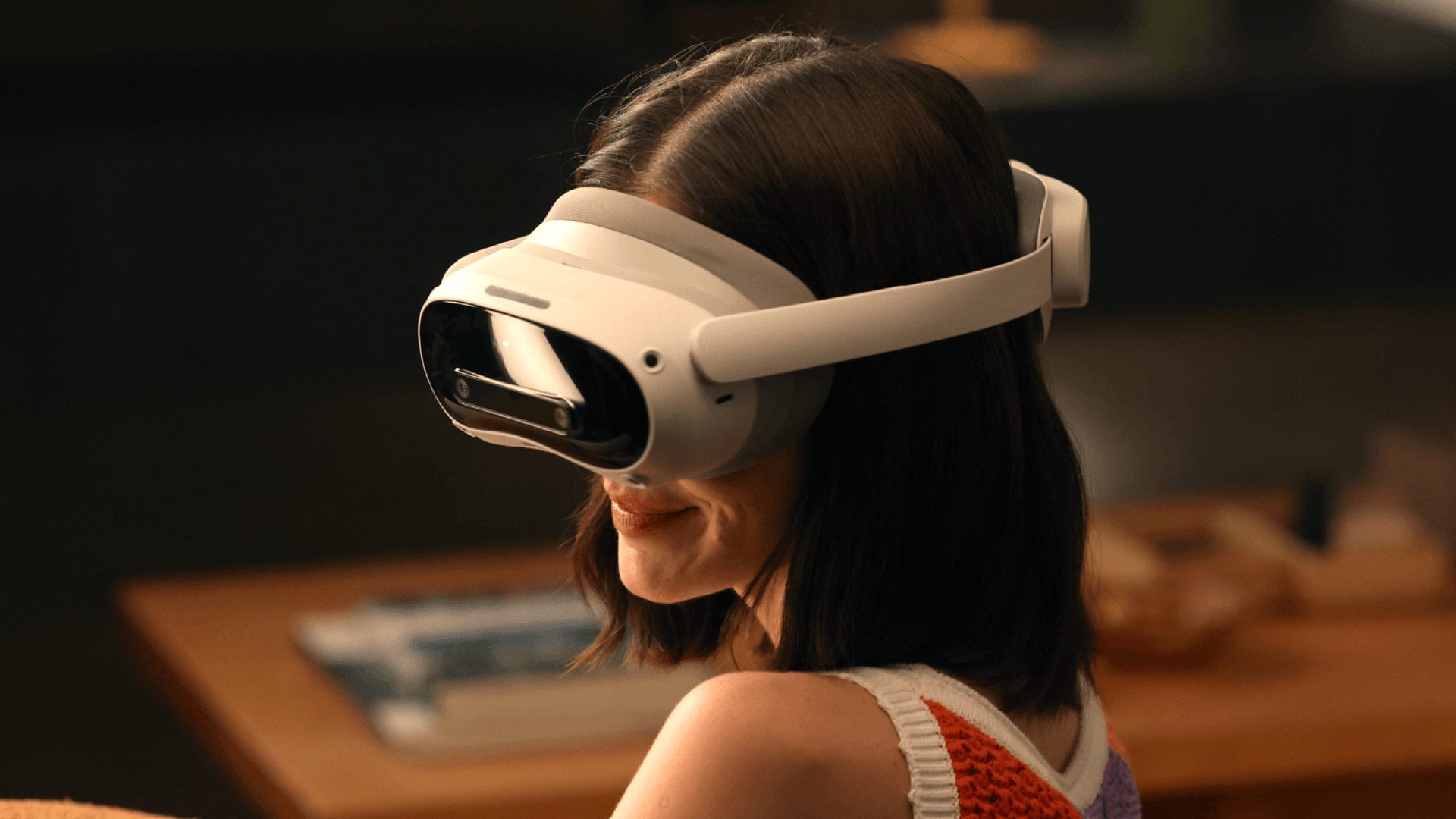
Project Swan is going to be Pico’s next flagship XR headset, the company says in its GDC session description, which is also slated to run PICO OS 6, the next version of the company’s Android-based operating system.
While the company hasn’t expressly said it will also reveal Project Swan’s hardware at GDC in March, Pico says it will provide “an overview of Project Swan’s graphics performance, multimodal interaction system, and developer toolchain, as well as practical guidance on bringing existing apps or games into spatial computing workflows,” which is set to include “concrete examples and live demos.”
“This session introduces the core OS and platform capabilities that enable developers—from XR specialists to non-XR app, web, and game creators—to build or adapt content for this emerging medium,” Pico says. “It presents a new paradigm for spatial experiences in which games and apps coexist, allowing a primary experience to run alongside companion applications in a shared environment.”
The Information initially reported last summer that Project Swan is set to be a slim and light headset weighing in at around 100 grams, which allegedly features a hybrid design that offloads processing to a tethered compute puck. Other reported features include hand and eye-tracking for input.
Then, in November 2025, Zhenyuan Yang, Vice President of Technology at Pico parent company ByteDance, revealed the headset will house a self-developed chip with a custom microOLED display, the latter of which is said to approach 4,000 PPI—slightly higher than that of Apple Vision Pro’s 3,386 PPI.
Furthermore, Yang said Pico’s microOLED displays reach an average 40 PPD (over 45 at center), and addresses brightness limitations by incorporating microlens (MLA) technology and optical compensation for uniform color and luminance.
We expect to learn more at GDC next month, which takes place March 9th – 13th at the Moscone Center in San Francisco, California.
Project Swan is slated to mark a significant next step for the company. Pico’s parent company ByteDance ostensibly isn’t throwing money at its XR division like it was before though, so it’s a new game.
Battle lines have shifted since Pico first launched its Pico 4 series headsets in 2022 though. Back then, Pico was nipping at Meta at its peripheral territories in East Asia and Europe, relying on its unique access to the Chinese market, and leaning heavily into enterprise. It also released Pico 4 Ultra in 2024, a direct competitor to Quest 3.
That same year, Apple released Vision Pro, priced at $3,500. A year later, it followed up with an M5-based hardware refresh at the same price point, while Google formally launched Android XR alongside Samsung’s Galaxy XR headset, priced at $1,800—moves that effectively reframed the competitive landscape.
Rather than racing to the bottom, companies are increasingly targeting the high end, as early expectations around mass-market consumer adoption seemed to have faltered, with Meta’s recent pullback from funding first-party Quest content possibly signaling a broader shift in how the industry approaches the consumer XR segment.
That said, I’d expect Project Swan to straddle the prosumer-enterprise segment, as the company’s next flagship probably won’t be cheap enough to make any grand overtures to consumers while simultaneously offering the very same consumer-oriented platform Pico built up over the years, which hosts a wide array of XR games and apps.
To me, this increasingly puts Pico more in competition with visionOS and Android XR, rather than as a direct competitor to Horizon OS. That said, Meta’s upcoming headset could possibly arrive next year, which is reportedly also a slim and light headset tethered to a compute puck, which may put all four—Apple, Google, Meta and Pico—in the same boat.
The post Pico to Showcase VisionOS and Android XR Competitor at GDC Next Month appeared first on Road to VR.