
Fortnite, Roblox, Minecraft, and GTA V continue to be the most popular games, years and years after launch

Fortnite, Roblox, Minecraft, and GTA V continue to be the most popular games, years and years after launch

Also: the Saudi Arabia gaming death grip intensifies

The shortform video app’s customer service has given Finji the runaround
If you’ve been craving a visit to a cluster of islands that feels like a mix of Animal Crossing and Webfishing, Fish! in VRChat is worth a look.
The new social fishing world from TrickForge Studios features four scenic islands full of unique inhabitants as well as upgradable rods, an array of purchasable boats, and over 20,000 fish to possibly catch.
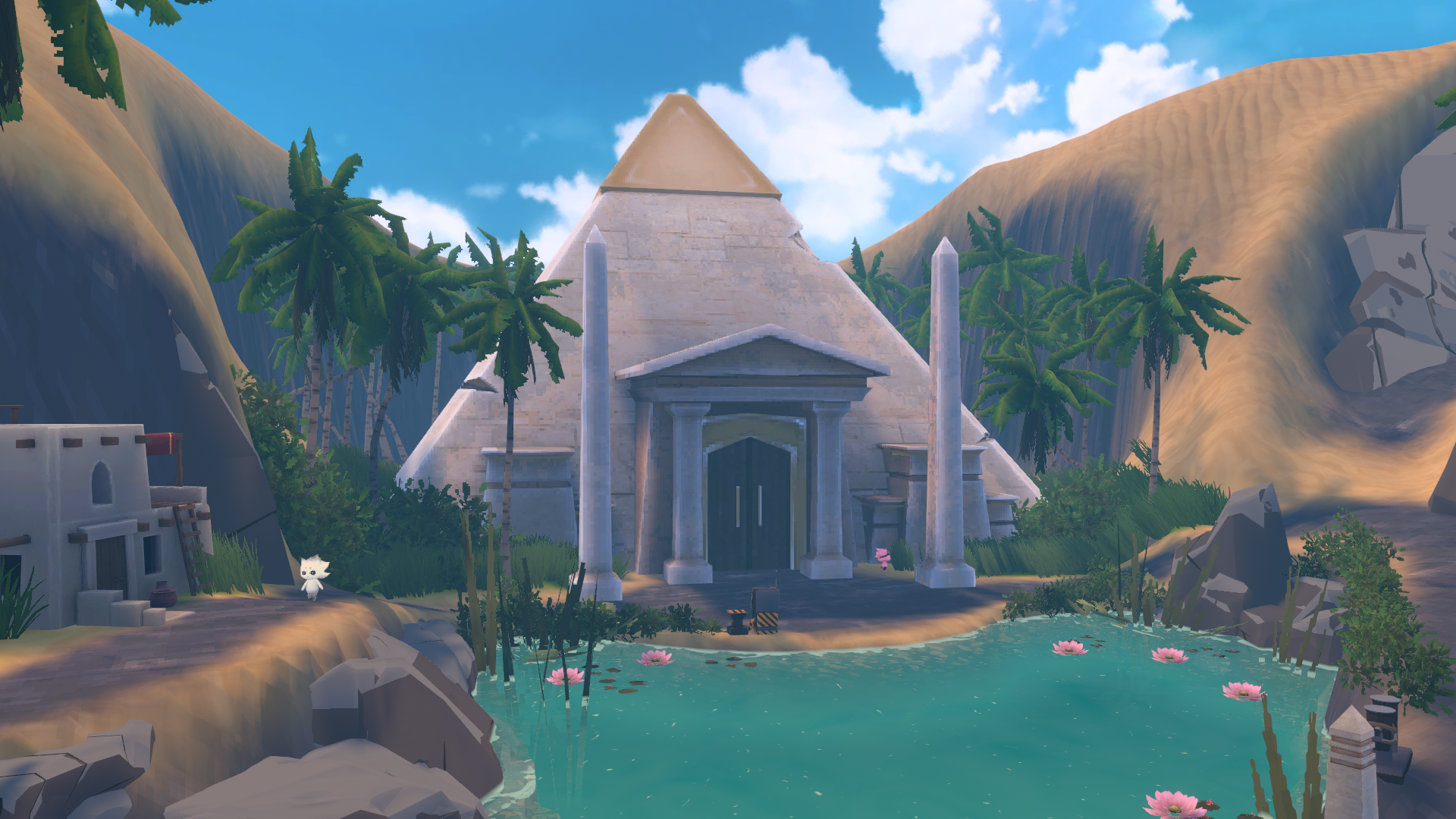
Loading the map will welcome players to a main lobby where they can choose to go through a short tutorial to understand how fishing mechanics work. Pulling the trigger on a VR controller while holding a fishing rod will cast the line.
Once a fish bites, an exclamation point will appear above the bobber. Press the trigger button while the exclamation point is active and a fishing minigame will begin. Repeatedly pulling the trigger while keeping the fish icon within the goal area of your line will help to reel the fish in. If the fish falls outside of the goal area for too long, the minigame will fail and the fish will escape.
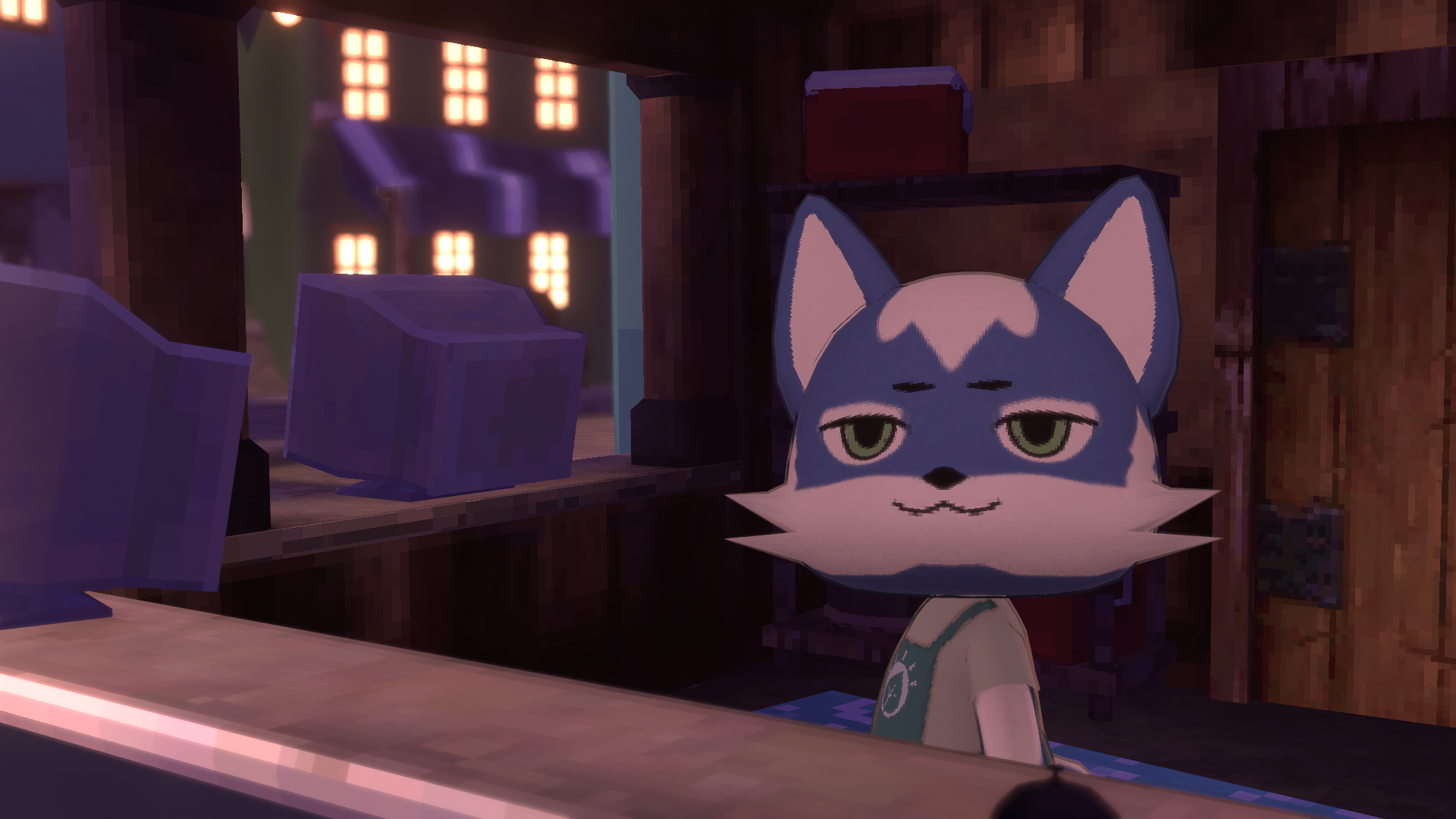
Once the fish is caught, it will remain in the player’s inventory until it can be sold at the village’s shop. Each island has a store for selling goods as well as offering new fishing rods and different types of boats (surfing board, rowboat, dinghy, racing boat, and yacht). Captured fish can contain various appearance and size traits that can affect sale value.
Along with catching fish among the islands is the possibility of obtaining special relic pieces that can be used to enchant fishing rods. Hidden along the nooks and crannies of each island are also scraps of metal that can be used to play a special prize machine for perks, experience, and game currency.
0:00
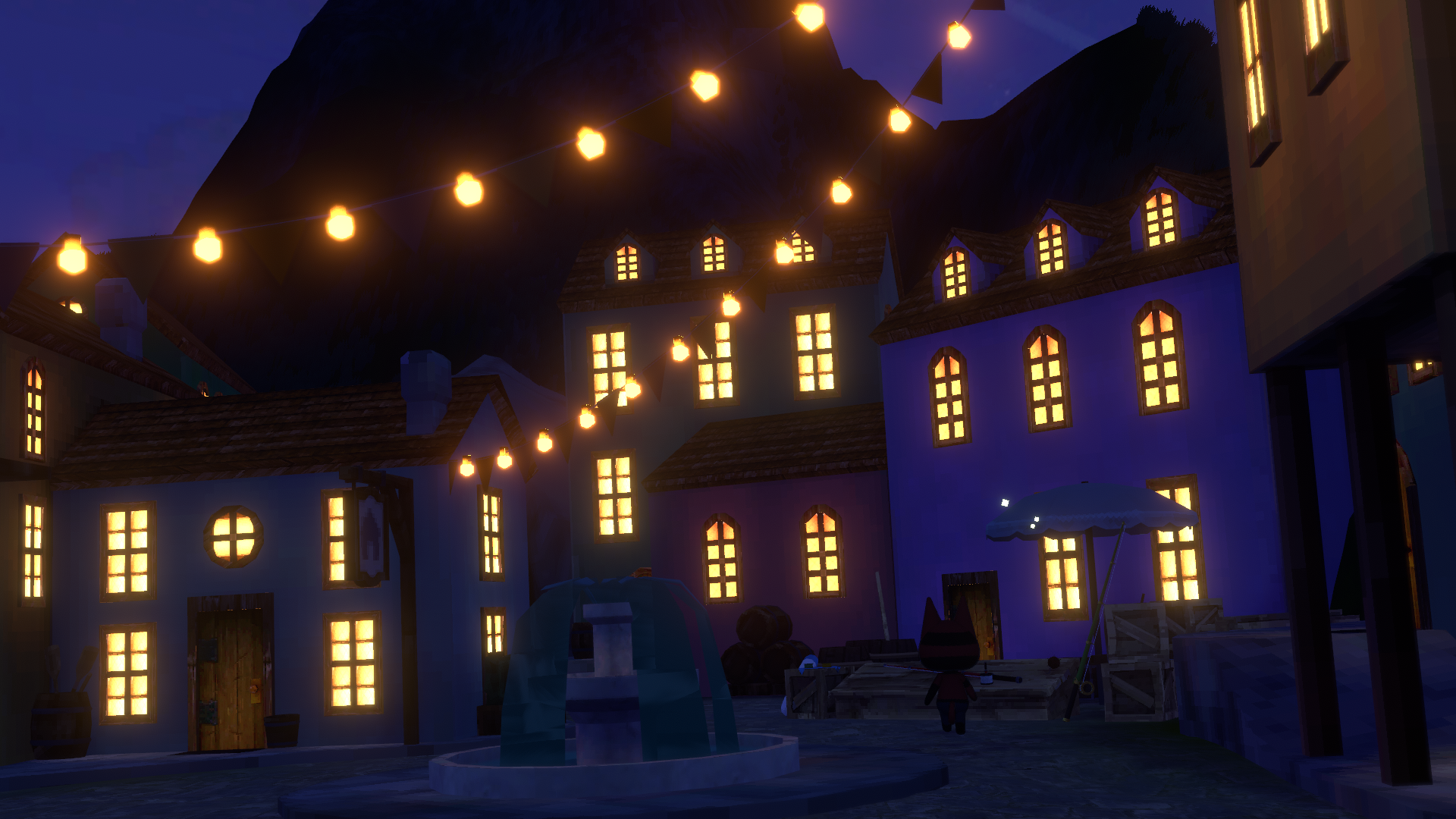
Although Fish! contains cozy design, it’s also hiding plenty of secrets. On one island I found a villager inhabiting a dirt-laden shack who remarked that something terrible occurred to the house’s previous inhabitant but wouldn’t say what. A small distance away I spotted a headless ghost wandering along a path next to the swamp. A walk up that same path leads to a church where an ungodly eye shines atop the steeple.
Fish! is a standout experience both as a playable game and as an online “destination” to visit. Weather and day cycles affect the islands to provide different vistas throughout play. A sunny day can be overtaken by fog and moody rain, giving way to serene evenings. It truly feels like a fun-filled vacation.
Godfall, head of TrickForge Studios, spent almost 8 months with his team to bring the experience to life. The soundtrack and environmental modeling were handled by Godfall and Svenssko while coding and programming were completed by Kittehkun and Gamerexde.
“I think developing for immersive platforms might be in a really good state right now,” Godfall explained in an interview with UploadVR. “The goal at TrickForge Studios currently is to keep making great VRChat games, and then expand into Steam and console games in the future.”
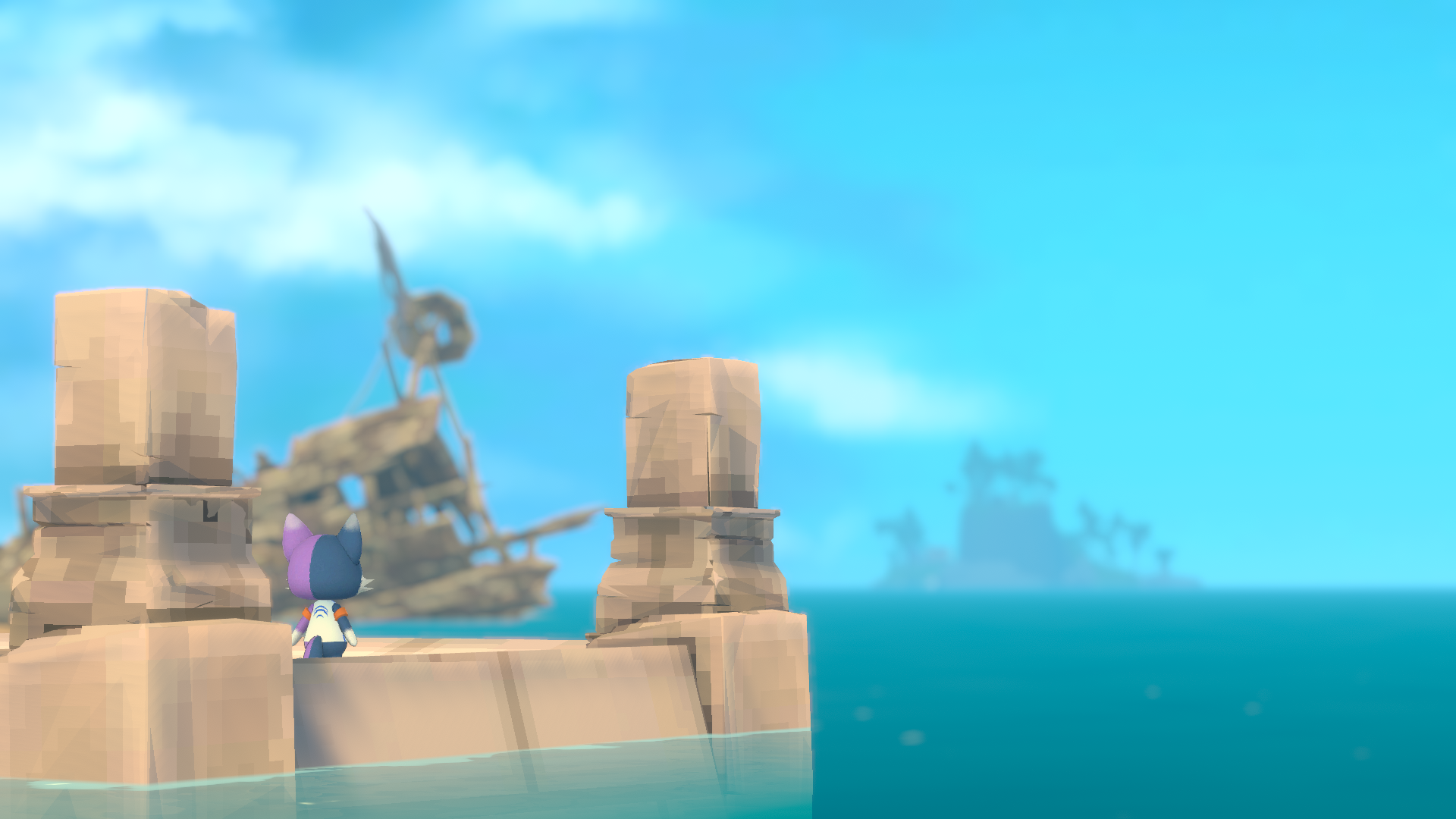
Fish! is currently in beta with expectations to wipe player progress upon the release of 1.0 at the end of the month. Visitors can enjoy the preview with their friends as long as they understand progress must be reset due to the map needing a fresh upload to debut the full game. TrickForge Studios has announced new areas upon the 1.0 release along with secrets and additional content.
“We want to offer everyone a full game experience, with simple optional transactions,” said Godfall. “We are very passionate about FISH! and we want to keep the integrity of it.”
You can find Fish! on VRChat, available in VR on standalone and PC VR headsets.
Birdseed is a cozy, free-to-play game about photographing silly birds. And trying the Early Access release, I simply love it.
Games are so often obsessed with spectacle, which is paradoxically one of the reasons I so dearly appreciate Birdseed. This gentle game about watching and photographing comically cute birds doesn’t shout or overstimulate you. Instead, it invites you to relax, slow down, and simply enjoy a peaceful slice of nature filled with charming, delightfully curious birds.
After my first hands-on session with the Early Access release, I found myself returning over and over, not just to satisfy daily objectives and collect more in-game currency, but to simply exist, to listen to music or the sounds of nature, to hang out and shoot some photos of my hilarious birdbrained pals.
0:00
As someone who’s been a photographer for over 20 years, and a writer covering the camera industry for more than a decade, I was especially interested in how Birdseed, a game about photographing birds, handles the art and craft of photography.
While I personally love mechanical cameras and the extreme nuance of making a picture with a dedicated camera, adjusting aperture and shutter speed, ISO, and reading all about the finer points of depth-of-field and circle of confusion and other photography nonsense that most of the humans on Earth have never heard about, I understand that highly technical simulations of making pictures don’t always make for a good gaming experience. For most people, serious photography is obtuse and opaque and boring.
Birdseed sidesteps that by being incredibly simple. You can’t move very far. In fact, you stand (or sit) in just a small central viewpoint from where the whole of your observation and photographing occur. You hold a camera, and that camera has just two controls: It can zoom in and out, and it can take a picture. That’s it (for now). There are unlockable lenses of different focal lengths that can be interchanged, and future updates will likely bring art lenses and special effect filters and all of that good stuff. But for now, we’re basically using a point-and-shoot, a type of camera that works as its name suggests. Point it at something, shoot, and a picture comes out.
The simplicity of gameplay is beautiful, and perfect for a game that’s trying to do what Birdseed is trying to do. That is, put a camera in your hand, and give you something to point it at.
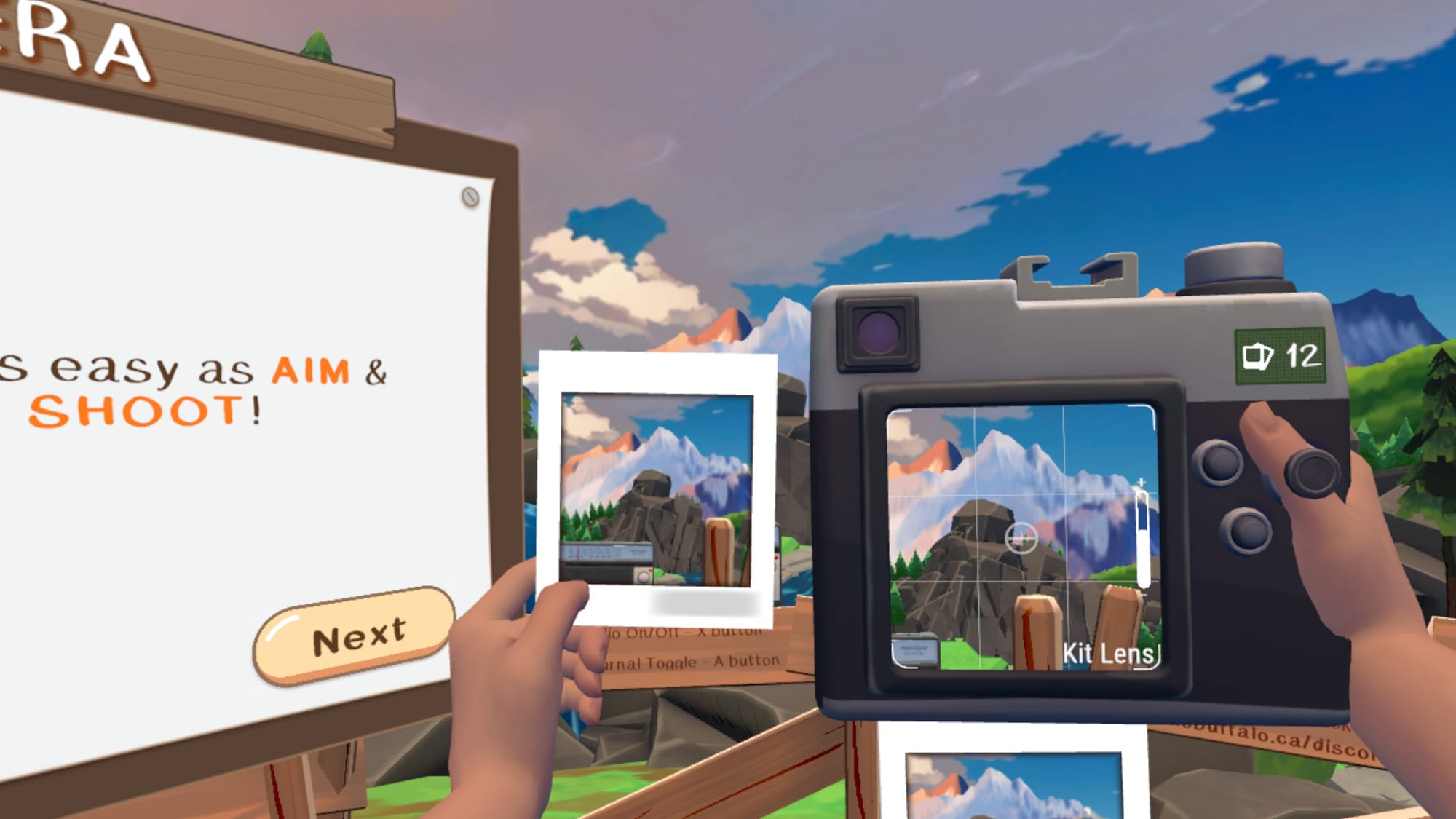
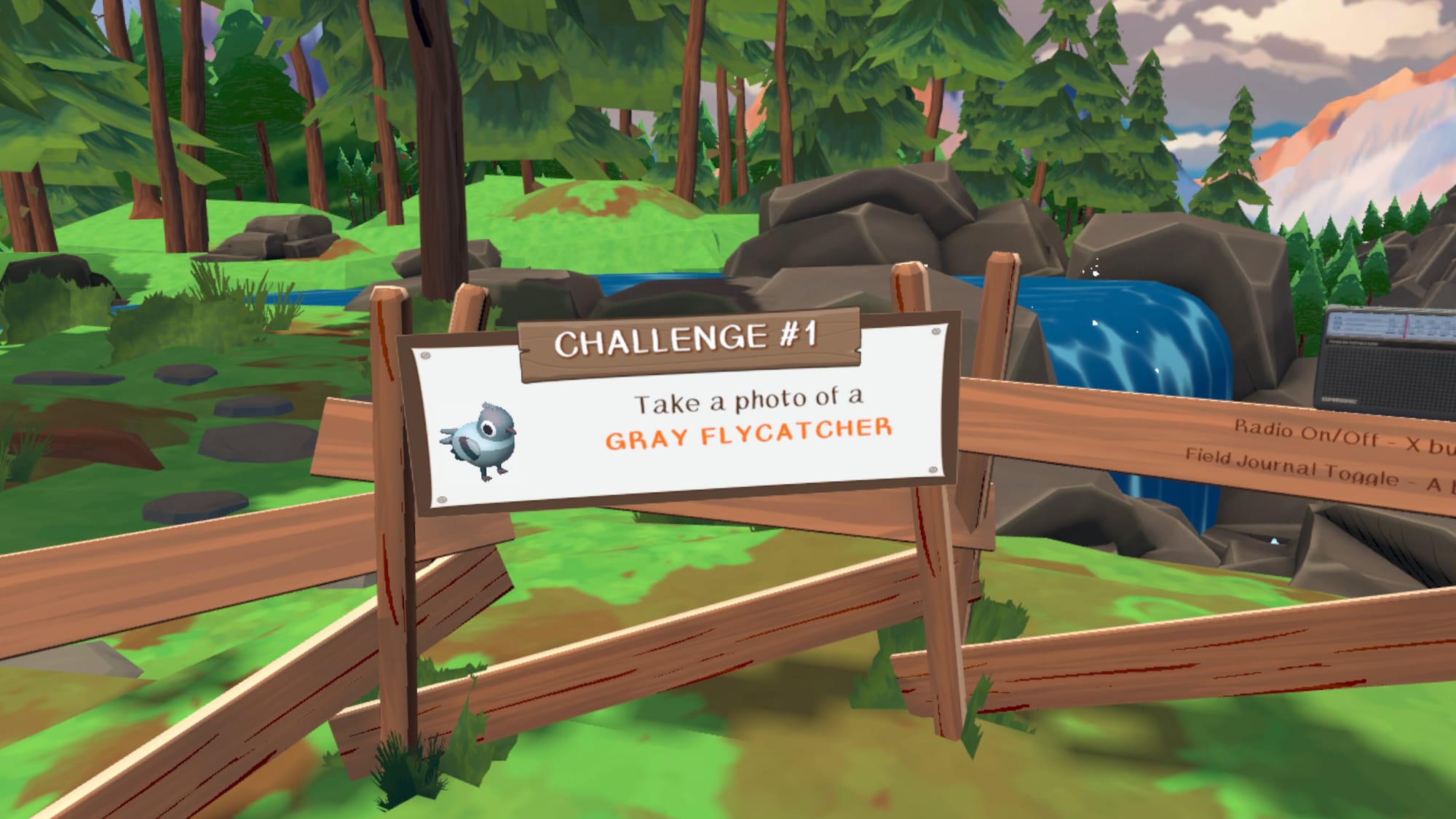
The environment is far from photorealistic, but it still manages to be lush and pretty, presented with artfully-crafted cartoonish simplicity. A pastel sun creeps low across a distant mountain range. Marshmallow clouds drift across the azure sky. Sparkling water dances down a falls while towering evergreens sway in the breeze. And within this beautiful nature scape flit birds of all sorts.
They dance among the branches, preen on the rocks, and soar high in the sky. And they look absolutely stupid (complimentary). They’re goofy and silly, delightfully plump and bouncy. Their enormous eyes blink dumbly as they flutter and squawk and bounce. Even when diving on the wind, they look more like bowling pins than sleek products of a million years’ evolution. I love these dumb birds.
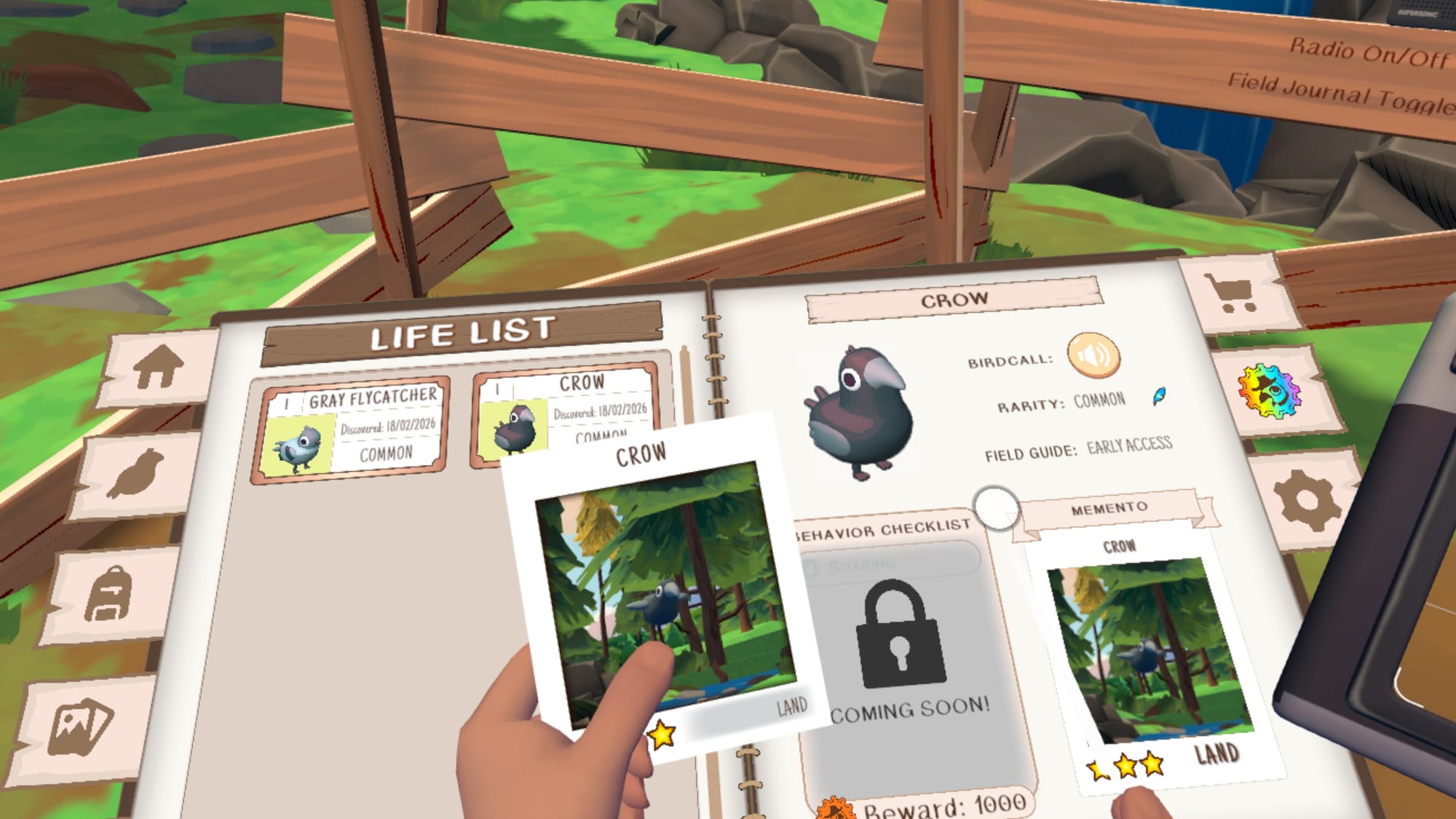
You have twelve pictures per day, as you’re using a film camera, and these images are instantly ejected to be held, looked at, and then stored automatically in your photo album. Photos are rated for their content, as well as for the rarity of the bird, and the bird’s poses or actions are marked as well. Capturing a rare bird or a bird in a rare action or pose will rate higher, and higher ratings or achieving certain challenges (for example, photographing a specific type of bird or making a three-star photo) will earn in-game currency which can be spent to buy new lenses and cosmetic items, such as new skins for your camera.
The scarcity of available photos per day is an interesting mechanic, and one that I appreciate. As happens in real life when we’re shooting a film camera, the knowledge that we only have a limited number of shots tends to change the way we photograph. It forces me to pause for a moment, or to think deeper during the act of making an image. Do I really want to use a frame to make this photo? The result is that I either make better pictures, or sometimes I miss out. I found the same thing happening in Birdseed.

Exhausting your daily supply of film doesn’t necessarily mean the play session is over. You can still hang out in the environment, watch birds, and enjoy the scenery. There’s even a radio with which you can listen to some chill tunes.
If there’s one major strike against Birdseed, it’s that the game is not technically solid. During my play sessions, there were several instances of the game crashing. Restarting my Quest 3S smoothed things out temporarily, but a few more crashes led me to uninstall and reinstall Birdseed, which seemed to mostly solve the problem.
For now, and when it works without crashing, I’m enjoying every minute that I spend in Birdseed. Though those minutes amount to just about 30 per day, it’s a nice half hour in VR. Birdseed has been a lovely experience that will surely only become more endearing, fully-fledged, and enjoyable when the game officially releases in March.
Birdseed VR is out now in Early Access on Quest 3 and 3S, with the full release coming in March on Quest and Steam.

The court ruled 6-3 that the President couldn’t use a 1977 law to enact the tariffs against over 50 countries

The maker of Bloodborne Top Down Arena revealed the legal move after Sony decided to shut down Bluepoint

The action-RPG might finally get a sequel

The Pokémon Company will give updates on just about everything going on in the series

The 22-year-old GBA games are yours for a mere $20, each, this Pokémon Day
The musical rhythm climbing game is coming to Meta Quest Early Access on March 5th.
Developed by Zeitlos Interactive, Peak Rhythm is a VR climbing game that challenges players to climb in sync to an exciting soundtrack. Players grab handholds in time with the beat, which is visually denoted by “Timing Rings” which tighten around the various handholds.
Multiple types of grips add variety. Twist grips ask that you twist your wrist like a volume knob, and Double grips demand you grab hold with both hands. Grip and climb at the right moment and you’re propelled ever higher; miss the beat and you fall. The higher you climb, the higher your name lands on the leaderboard.
0:00
The game is launching in Early Access with original tracks spanning several genres, including Drum & Bass, Dubstep, House, and Disco, with tracks from FEISTLING, Killin’ Void, Ion Diary, and funiel.
Also launching in Early Access is a fully functional Beatmap Editor, supporting custom maps and players’ own music files. Multiplayer is planned as an Early Access update shortly after launch.
Peak Rhythm launches in Early Access on Quest on March 5, 2026 for $12.99.
Horizon+ crossed over 1 million “active subscribers” in 2025, according to Meta.
If you’re unaware, Horizon+ is Meta’s $8/month game subscription service for Quest headset owners. Subscribers get access to a Games Catalog of around 50 major VR titles, as well as an Indie Catalog of around 50 smaller titles, for a total of around 100 games.
The Games Catalog has grown to include some of the biggest and best VR games of all time, including Asgard’s Wrath 2, Assassin’s Creed Nexus VR, Cubism, Demeo, Dungeons of Eternity, Eleven Table Tennis, Ghosts of Tabor, Job Simulator, Kingspray Graffiti, Les Mills Bodycombat, Maestro, Moss, Pistol Whip, Puzzling Places, Real VR Fishing, Red Matter 1 & 2, Synth Riders, The Climb 2, and The Thrill of the Fight.
Subscribers are also offered two specific games each month, pre-selected by Meta. Redeeming them lets you play them while you remain subscribed, or when you resubscribe in future.
 UploadVRJames Tocchio
All new Quest 3 and Quest 3S purchases come with 3 months of Horizon+. While these new users presumably aren’t included in Meta’s 1 million figure, we’ve reached out to the company to explicitly ask.
On a purely financial basis, assuming you’re not fundamentally against the idea of a subscription, Horizon+ offers excellent value, and so reaching 1 million subscribers isn’t particularly surprising.
Back in October, Meta opened enrollment in the Horizon+ Games Catalog and Indie Catalog to any interested developer, providing they meet the strict requirements.
 UploadVRDavid Heaney
Horizon+ represents a gradual but significant shift in the way many VR headset owners access premium titles since the launch of the original Oculus Quest almost seven years ago. It could have significant upsides for developers enrolled in the program, while bringing reduced spending for those not.
Apple too takes a similar approach on Vision Pro with the $7/month Apple Arcade subscription, but goes further, not offering the ability to outright buy many of the platform’s top games.


Scott Myers, Snap’s top executive in charge of Specs, has left the company ahead of the planned release of its consumer AR glasses.
Myers reportedly left his six-year tenure at the company due to a dispute with Snap CEO Evan Spiegel, tech outlet Sources claims, characterizing the dispute as a “blow-up” centered around the company’s strategy.
A Snap spokesperson confirmed Myers’ departure on Reddit, nothing that Specs are still on track for release this year:
“Scott Myers has decided to step down from his role at Snap. We thank him for his contributions and wish him the best in his next chapter. We can’t wait to bring Specs to the world later this year. We remain focused on disciplined execution and long term value creation for our developer partners, community and shareholders.”
Myers came to Snap in 2020 to oversee all aspects of Specs, including hardware, software, product and operations. He previously held senior positions at SpaceX, Apple, and Nokia, according to his LinkedIn profile.

This comes at a critical moment for Snap. In September 2025, Spiegel noted in an open letter that the company is heading into a make-or-break “crucible moment” in 2026, positioning Specs are an integral part of the company’s future.
“This moment isn’t just about survival. It’s about proving that a different way of building technology, one that deepens friendships and inspires creativity, can succeed in a world that often rewards the opposite,” Spiegel said.
The consumer version of Specs is set to be the company’s sixth generation glasses following the release of its fifth-gen hardware in 2024. As ‘true’ AR glasses (re: not smart glasses like Meta Ray-Ban Display), the device is ostensibly set to frontrun some of Snap’s largest competitors.
It’s uncertain why Myers left Snap; the company even disputed the “blow-up” narrative with TechCrunch, providing no other reasoning, which makes Myers’ departure an even greater mystery—especially on the eve of the company’s big consumer AR glasses launch.
Speculatively speaking, there is at least one recent sign that could point to trouble brewing in the background. Myer’s departure follows a recent move by the company to form a wholly-owned subsidiary dedicated to Specs.
Snap says the so-called ‘Specs Inc’ subsidiary will primarily allow for “new partnerships and capital flexibility,” including the potential for minority investment. More concretely, Specs Inc also insolates Snap from any potential failure.
Whether that betrays a lack of confidence is unclear, although the top executive who oversaw the release of the fourth and fifth-gen versions—notably the only two with displays and AR capabilities—doesn’t smack of confidence.
The post Snap’s Top AR Exec Quits Ahead of Specs Consumer Debut appeared first on Road to VR.
Hidden IO’s latest update to ZIX upgrades the Unity engine to push the game forward while its new free-to-play spinoff aims to grow its player base.
Neon-themed co-op roguelite ZIX was hitting performance ceilings, according to Hidden IO, limiting its abilities to increase enemy counts and the overall pace of the game. The new Foundation update upgrades the Unity engine, bringing “meaningfully better” performance and enabling higher enemy counts and more intense encounters on each run.
 UploadVRPete Austin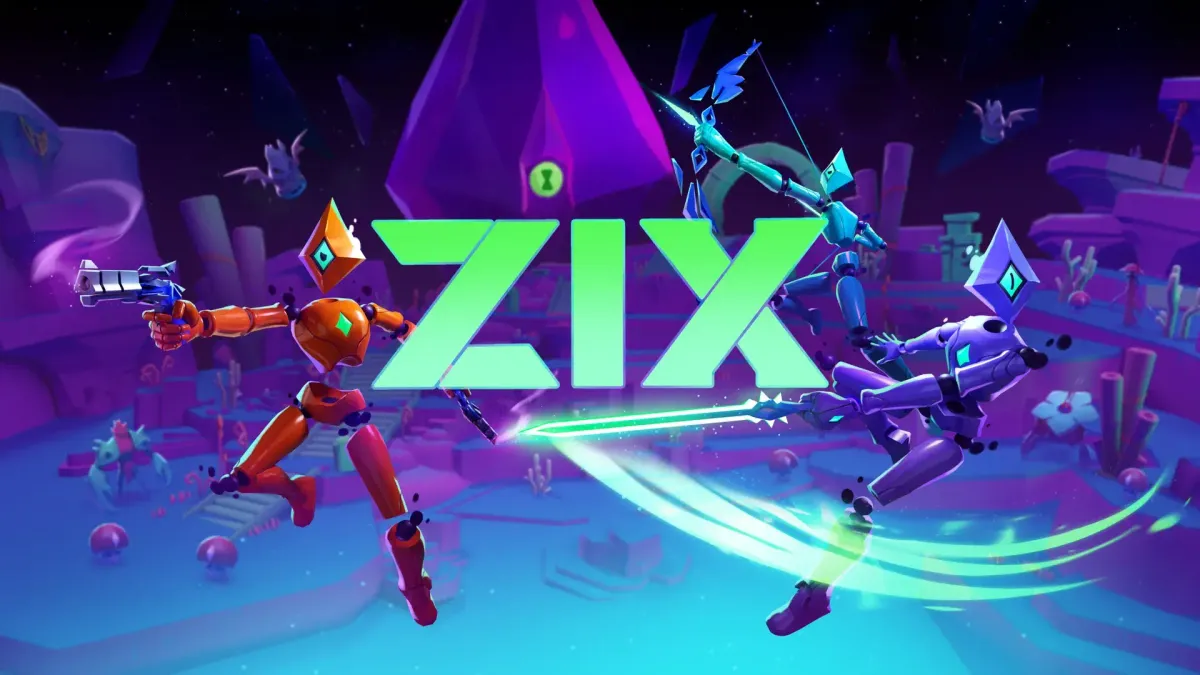
In the dev post, Hidden IO also confirmed it is working on Gogo Dojo, a new free-to-play title designed to showcase the best of ZIX’s gameplay style in an easier, more accessible setting. Pre-alpha playtesting for Gogo Dojo is said to start ‘soon’ in Hidden IO’s Discord.
Explaining why it is developing a free game, Hidden IO stated “ZIX lives or dies by how many people play it. We can’t sustain development without players, and the current VR landscape is tough. Many studios are struggling, and we’re not immune to that reality.”
0:00
ZIX VR Game Trailer
The Foundation update is said to set the stage to expand ZIX in the future, including a revamped progression system and expanded build variety.
ZIX is available now in Early Access on Quest 3 and Steam for $19.99.
Meta published a blog post for developers wherein it lays out its new strategy for the Quest ecosystem and Horizon Worlds, taking the two in separate directions.
Titled ‘Our Renewed Focus in 2026’ and written by the VP of Content at Meta Reality Labs, Samantha Ryan, much of the post repeats what CTO Andrew Bosworth has already said in a series of public interviews and Instagram “ask me anything” sessions in recent weeks.
 UploadVRDavid Heaney
The gist of Meta’s new VR and metaverse strategy, according to its executives, is that Horizon Worlds will become “almost exclusively mobile”, and the platform will no longer be pushed on Quest owners. Meanwhile, on the VR side, Meta will focus on funding and supporting the third-party developer ecosystem instead of putting out its own blockbuster VR games to compete with them.
Meta is removing individual Horizon Worlds destinations from the in-VR store on Quest, Ryan writes, and “separating worlds from the Store” in the smartphone app.
Last month, Meta also announced that Quest’s new ‘Navigator’ UI will soon become the default and the Horizon Feed will be removed, meaning the headset will boot to a grid of your installed apps. Some Quest owners on the Public Test Channel (PTC) have also received a refreshed Navigator that lacks the ‘Worlds’ button.
 UploadVRDavid Heaney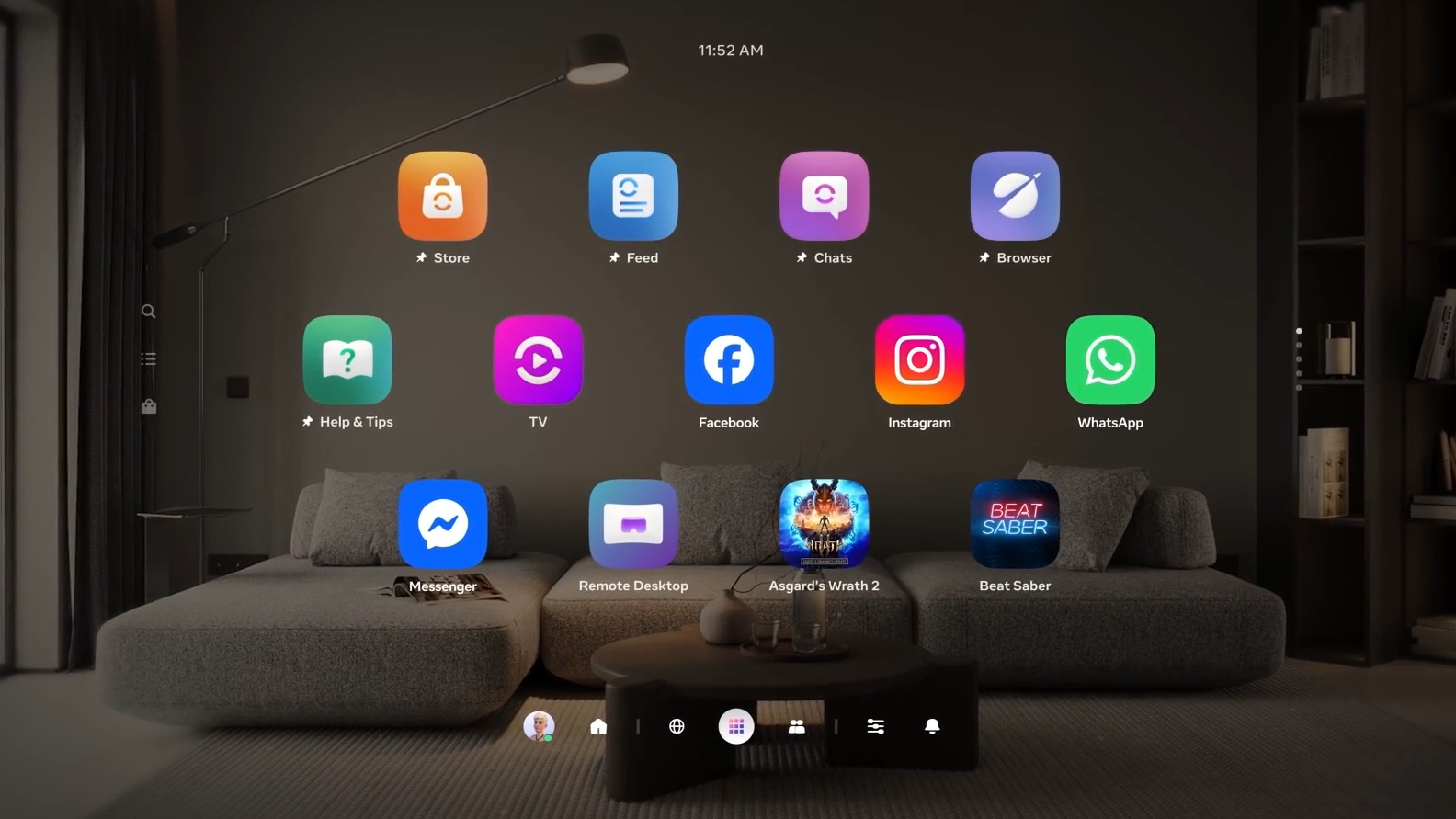
The post also seems to take aim at the gloom and doom discourse around the future of the Quest platform that followed Meta’s shutdown of three of its acquired VR game studios, significant layoffs at a fourth, cancelation of the Batman: Arkham Shadow sequel, and deprecation of Horizon Workrooms and Quest headsets for business offering.
As well as noting that Meta has “a robust roadmap of future VR headsets”, echoing comments from the CFO and CTO, Ryan claims that VR “is still growing”, and that Quest had “a tremendous holiday season that was on par with our 2024 results”.
“Total payment volume on the platform remained similar year-over-year in 2025”, Ryan writes, also noting that Quest headset sales remain “far ahead of all competitors” while Meta remains “the single biggest investor in the VR industry”.
 UploadVRDavid Heaney
In what seems to be an attempt to reassure developers, Ryan claims Meta is “focused on supporting the third-party developer community” through “strategic partnerships and targeted investments”.
Last year multiple new VR games earned millions of dollars of revenue on the platform, Ryan claims, including UG, Hard Bullet and The Thrill of the Fight 2.
“While we’re proud of the world-class work from Oculus Studios over the years, among 1P and 3P apps, 86% of the effective time people spend in their VR headsets is with third-party apps”, Ryan notes.
Ryan also claims that in 2025 Meta invested “nearly $150 million in VR developer programs”.
 UploadVRDavid Heaney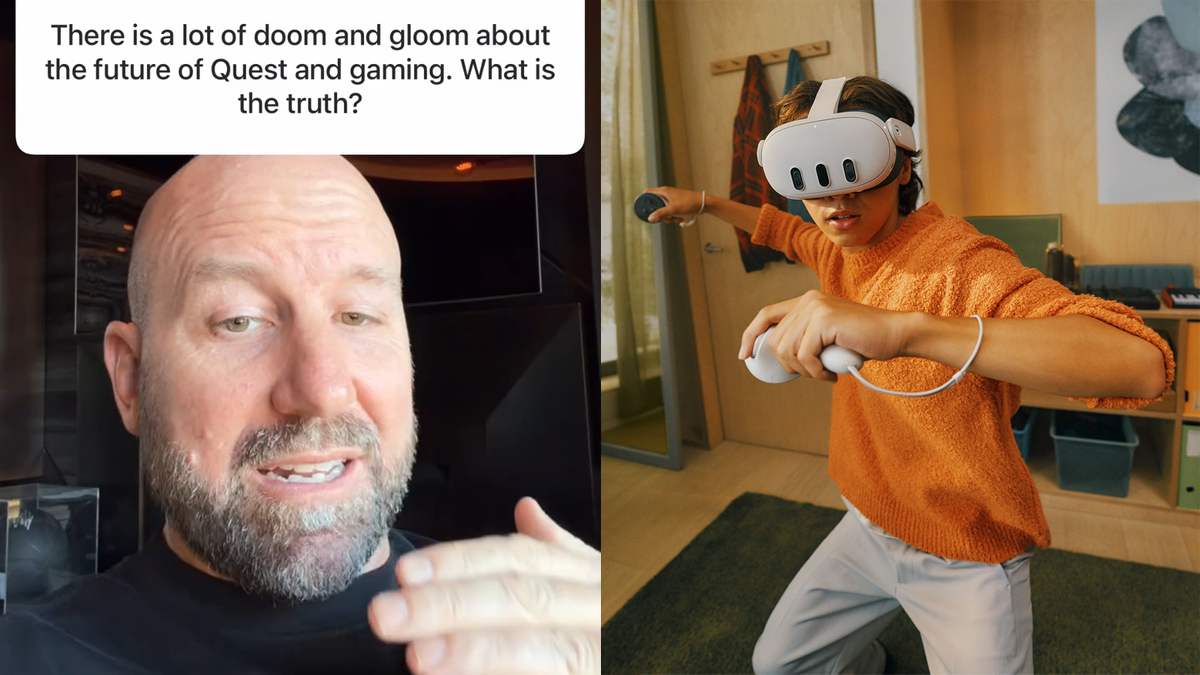
Of course, words are cheap, and since acquiring Oculus almost twelve years ago, Meta’s VR strategy has constantly shifted under developers’ feet. Many will be weary of this instability, and UploadVR will keep a close eye on the Quest platform in the wake of Meta’s latest change of direction.

New evidence suggests that a viral “AI-generated” video might have just been face replacement
ByteDance’s Pico will detail its competitor to visionOS, which will include a shared-space for 2D and spatial apps to run together, set to debut in its next headset.
We first heard that the owner of TikTok’s VR platform Pico was working on a high-end headset over two years ago, when The Information reported that Pico 5 had been canceled in favor of a short-term Pico 4 refresh and a longer-term Apple Vision Pro competitor called Project Swan.
Now, Pico has listed a GDC 2026 talk titled ‘Bring Your Apps and Games to General Spatial Computing with Project Swan’, set to take place on March 12.
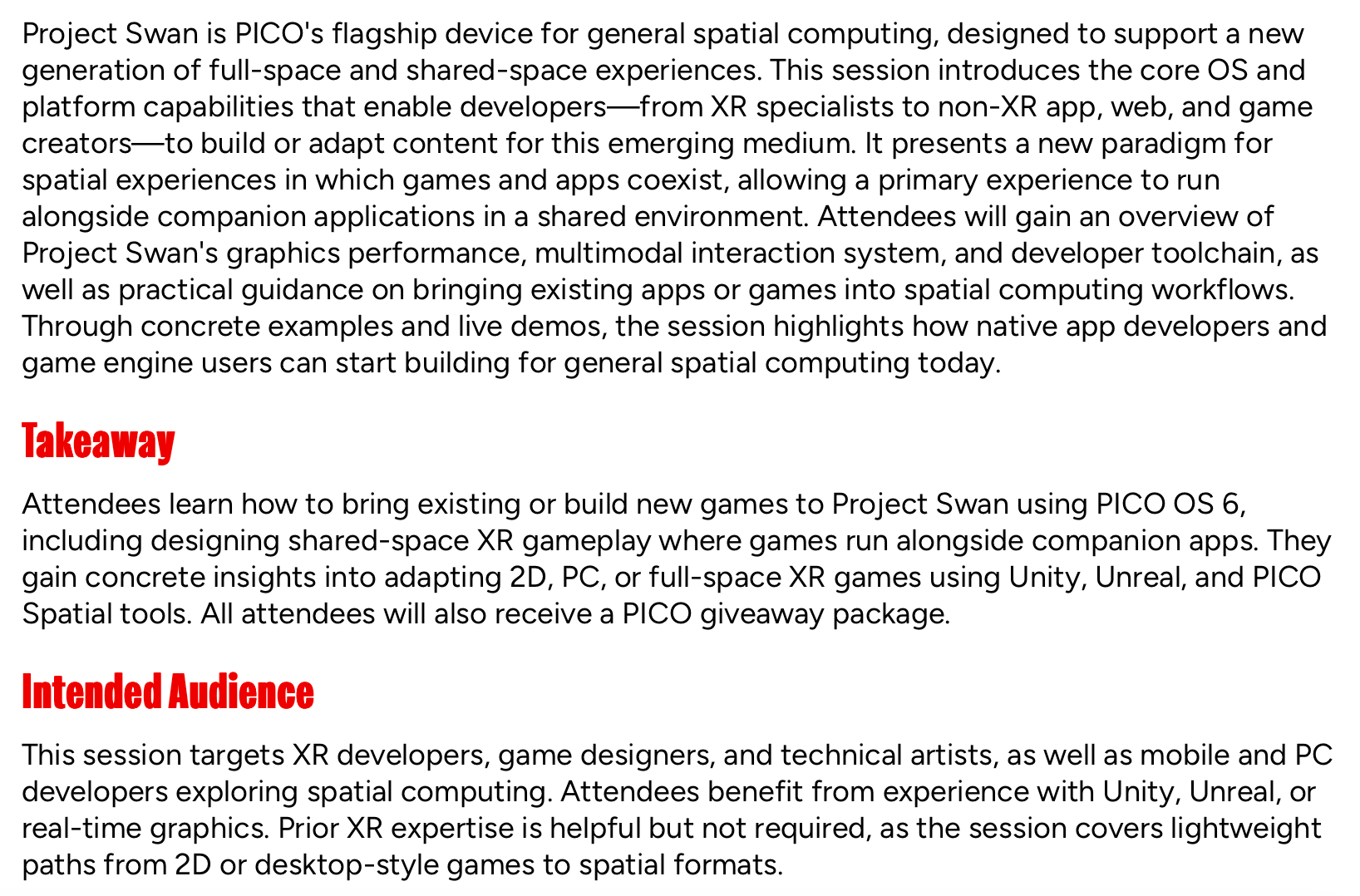
The listing says the talk will guide developers through building or porting games to its upcoming “flagship device for general spatial computing”, running “Pico OS 6”.
Notably, the listing mentions that Pico OS 6 supports “a new paradigm for spatial experiences in which games and apps coexist, allowing a primary experience to run alongside companion applications in a shared environment”. Currently, only Apple Vision Pro’s visionOS supports this concept of an XR shared space, with both 2D windows and 3D volumes, while Meta’s Horizon OS and Google’s Android XR are limited to running one spatial experience at a time.
While the listing describes Pico OS 6, it doesn’t say anything about the upcoming headset itself, other than calling it a “flagship device”. What exactly will it be?
 UploadVRDavid Heaney
Back in July, The Information reported that Pico was working on an ultralight headset resembling a pair of goggles, with an onboard dedicated image coprocessor and a tethered compute puck, similar to Meta’s next headset.
Then, in November, a Chinese news outlet reported that ByteDance’s Vice President of Technology said that Pico’s 2026 headset will have 4K micro-OLED displays and a dedicated R1-style passthrough chip.
UploadVR’s Mike Johnson and Kyle Riesenbeck will be in attendance at GDC 2026, and we’ve reached out to ByteDance in hopes of going hands-on with Project Swan. We’ll let you know if we get a response.

Grom is a new location players will be able to skate in March, but only if you pay or grind for free currency

Midsummer Studios is closing down, leaving its life sim Burbank unreleased

Facebook really hopes your kids will play Grow A Garden via its terrible phone-based metaverse