
The hero shooter’s soft reboot is making healbotting a pain in the ass

The hero shooter’s soft reboot is making healbotting a pain in the ass

The last time a mainline Resident Evil game did this well according to Metacritic was in 2004

“EA killed this franchise.”
The Amusement shows a lot of potential as a narrative puzzler, but its implementation of roomscale movement may push players away early in the demo.
Roomscale VR games are becoming a rarity these days as the realities of limited play spaces and VR ‘epic fail’ videos may have softened developer interest in these types of experiences. That hasn’t stopped recent efforts like Hotel Infinity, Laser Dance, and Eye of the Temple from offering up terrific gameplay. When done right, a roomscale game is some of the most immersive time spent in VR.
What is it?: A roomscale narrative puzzle adventure
Platforms: Steam (played on Quest 3 via Virtual Desktop)
Release Date: February 23, 2026 (part of Steam Next Fest)
Developer: Curvature Games
Publisher: ARTE France
Price: free (demo only)
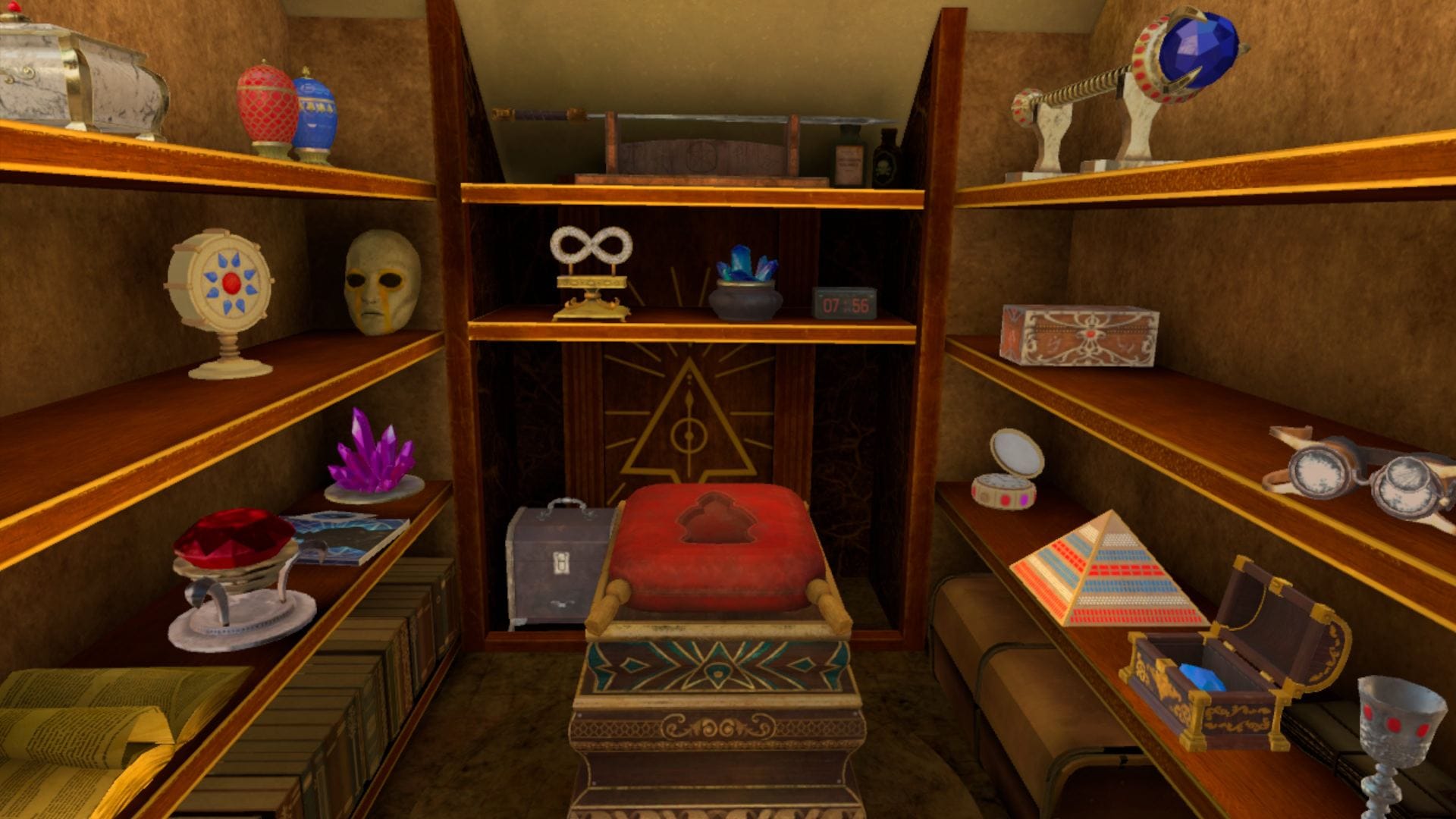
Enter The Amusement, a narrative adventure with environmental puzzles and the promise of a poignant family story. The Amusement utilizes roomscale movement with an optional teleportation system. It starts out well enough in a confined room with items to pick up, observe, and add to inventory. Then it quickly proceeds to the bulk of the demo, a zig-zag of a garden maze with thin paths that were painful to navigate with the movement system as currently designed.
I played The Amusement demo twice. First, in a limited play space with teleportation, a cumbersome exercise limited by a snap-only turning system without an option to change the size of the turn angle. This was not ideal by any stretch and made the garden maze section quite annoying to play through. I don’t recommend it.
Then, I rearranged my room to get a completely open space and the maze still feels too constricted. Unlike the aforementioned Laser Dance & Eye of the Temple where you are constantly ducking, dodging, and otherwise navigating obstacles, in The Amusement I just walked a few steps, turned, walked a few more, wash, rinse, repeat until you reach a tube with a wheel to rotate into another part of the maze. If you accidentally walk into an object, the screen simply blacks out, telling you to reposition.
It is immersive. It’s just not interesting and fails to capitalize on being roomscale in the same way the aforementioned games do. I hope that in the full release, there will be more open areas with environmental pieces to interact with that really take advantage of the 1:1 movement. The maze is roughly half of the demo’s runtime, so in this short sample size, it sticks out more than it likely will in the full release.
The Amusement uses roomscale 1:1 movement with an option for teleportation instead. At the time of this article, snap turn is the only stick turn method with no option to adjust the turn angle. The game has a vignette effect for turning and climbing that can be turned off in settings.
This game involves climbing, which may be problematic for new VR users.
It’s a real shame too because the simple process of walking through the world is the only real flaw in an otherwise strong demo. The lead character, Samantha, has been sent by her mother to investigate her late father’s amusement park. The story is delivered through a combination of cardboard cutout animations, shadows cast against the walls of the world, and voiceovers all befitting the cinematics of the 1920s, the setting for the game. This very effectively evokes the sense that Samantha is reliving her complex childhood memories as the story moves along.
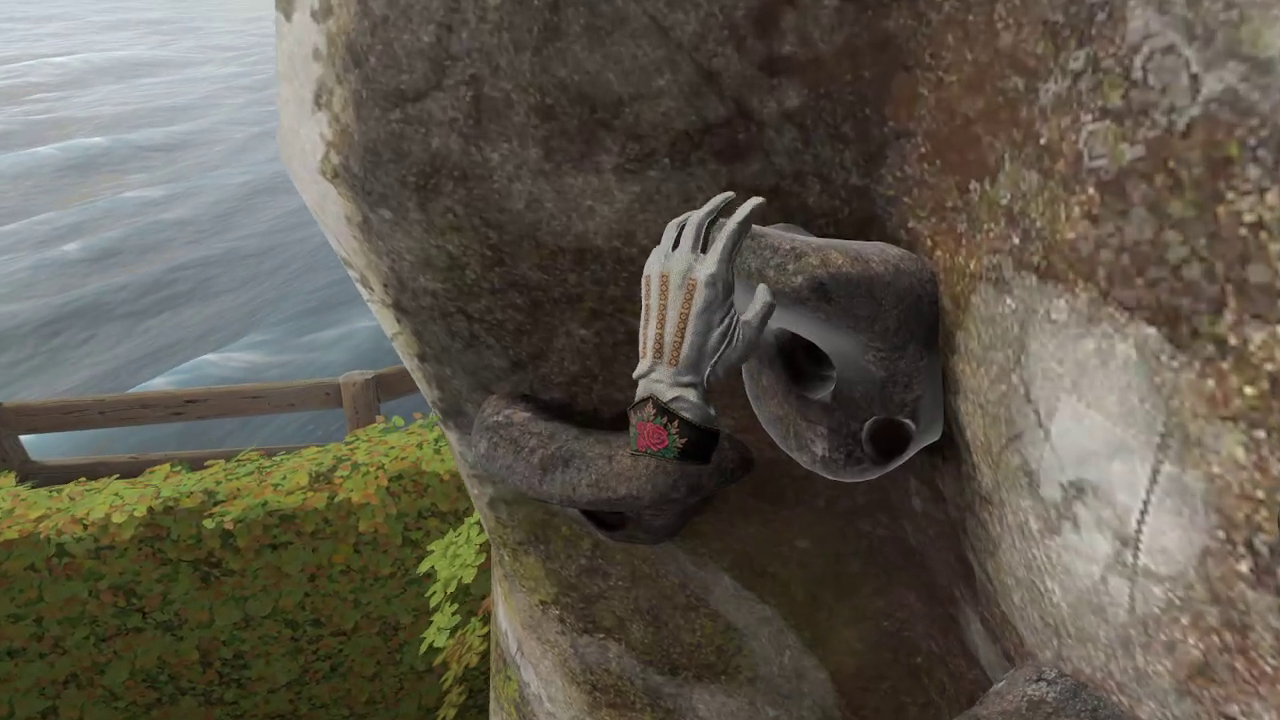
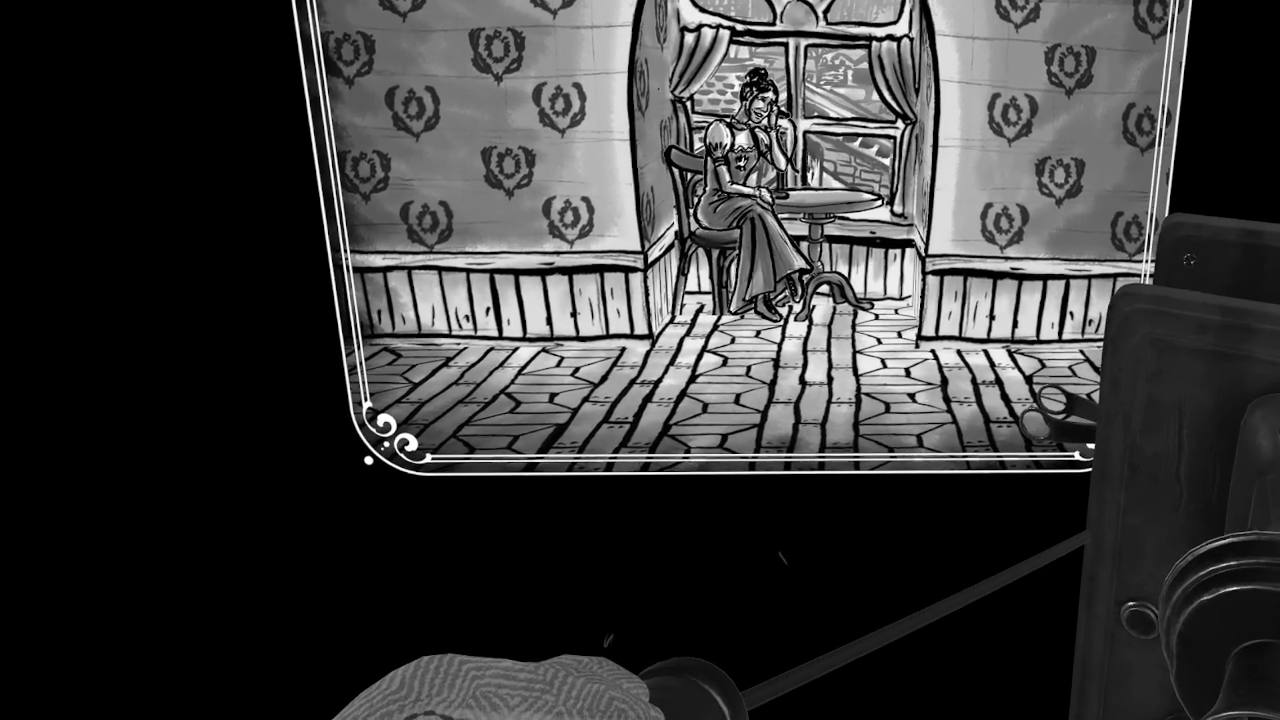
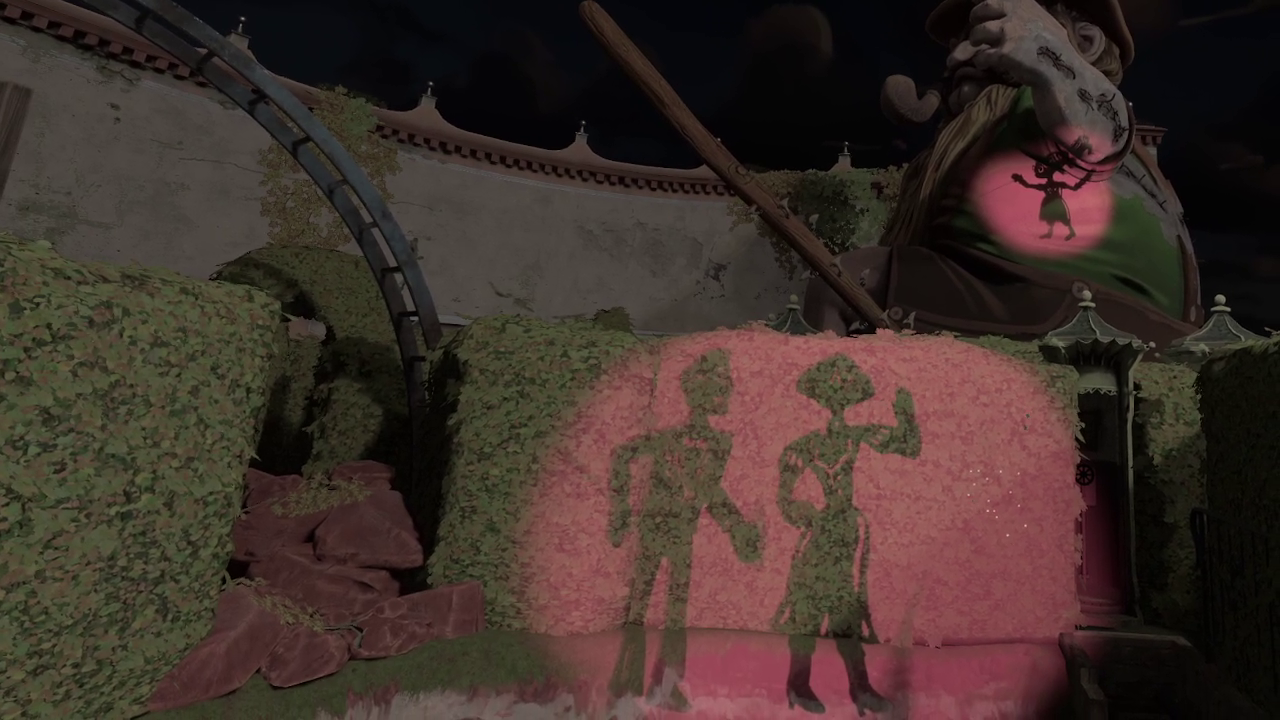
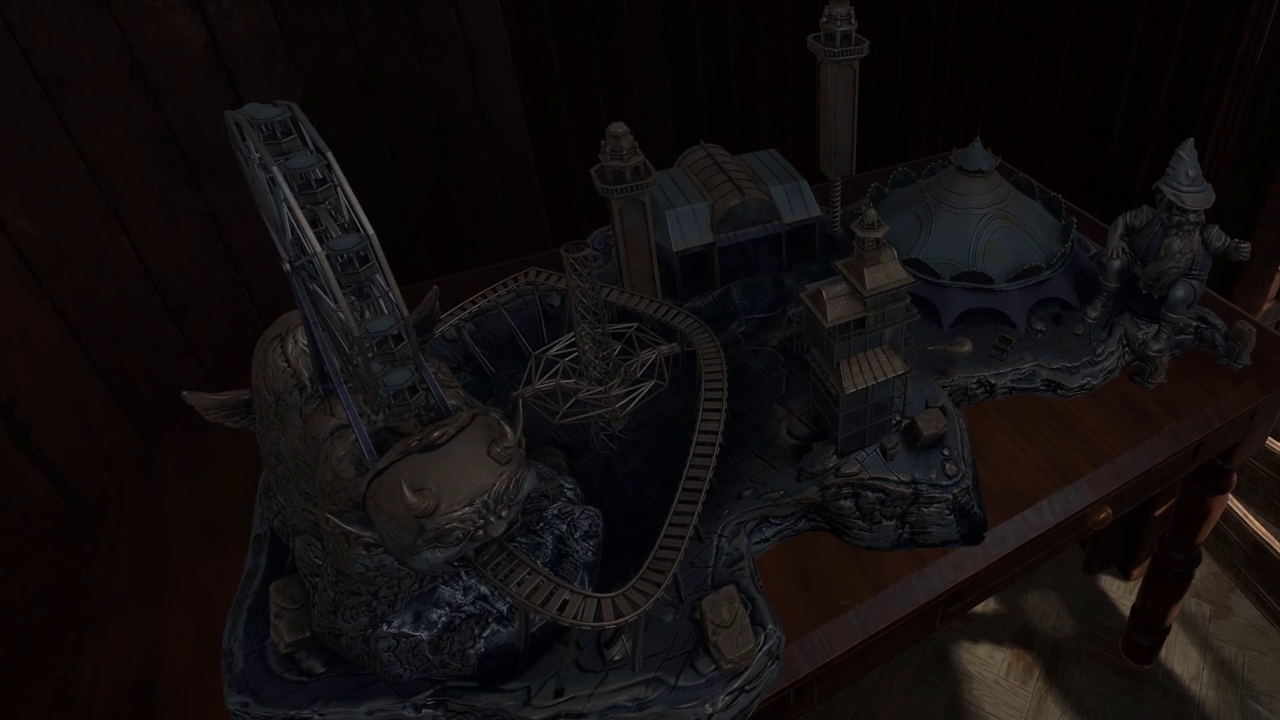
The Amusement screenshots captured by UploadVR
The puzzles themselves make great use of VR. Navigating the garden maze to find an item that could be used as a makeshift ladder rung and using a yo-yo of all things to move between rooms is very creative and rewards thinking outside the box.
This demo was played on Steam using a Meta Quest 3 and Virtual Desktop on the Ultra preset. The game itself was played on the default graphics settings.
My PC has an RTX 5070 Ti with 16GB of VRAM, a Ryzen 5 5600X processor, and 64GB of DDR4 RAM.
The more I played, the more I was reminded of both Eye of the Temple and The 7th Guest VR. The Amusement combines the physical movement (climbing and navigating) of the former with the environmental, sometimes tabletop-based puzzle solving of the latter.
Despite the roomscale movement not really adding anything to the experience, The Amusement demo is still well worth playing. If you enjoy story-based puzzle games and have been waiting for a new one after last year’s stellar Ghost Town, this is one to watch.
0:00
The Amusement story scene captured by UploadVR
The Amusement can be wishlisted now on Steam and Meta Quest and is slated for a Spring 2026 release.

Capcom’s horror series has perfected its shooting and scares, but fumbles in taking the next step forward

Even with Valve’s mandatory AI disclosures, the information is typically buried on a Steam page

Player complaints include stuttering sound effects, a mandatory launcher, and blurry visuals

We’ve scraped through the avalanche to rescue these fantastic games

Also known as Journal with Witch, the anime series’ central relationship is stunning in its richness and authenticity
Retrocade on Apple Vision Pro is the nostalgic virtual 1980s arcade experience VR gamers have been waiting for, and arguably the best visionOS title yet, though multiplayer is sorely missing.
One of the first ideas anyone with any interest in retro gaming has when they first try VR is a faithful recreation of a 1980s video game arcade. Earlier this month, Resolution Games released the best version of this idea we’ve seen yet, exclusively on Apple Vision Pro’s $7/month aptly-named Apple Arcade game subscription service.
What is it?: A virtual 1980s arcade with 10 iconic games
Platforms: Apple Vision Pro
Developer: Resolution Games
Price: Available via the $7/month Apple Arcade subscription
Retrocade was developed by Resolution Games, the veteran XR game studio behind dozens of top titles across all major headsets. Chances are, if you’re a VR gamer, you’ve seen their logo pop up before a game you love. Apple contracted Resolution to build Game Room for Vision Pro’s launch and the Gears & Goo tower defense game that released last year, both also on Apple Arcade. Resolution also ported its flagship cross-platform title Demeo to visionOS.
Retrocade is also available as a flatscreen game on iPhone and iPad, and if you’re a mobile gamer I’m sure you’d have fun with it. But where it really shines is in its native visionOS version, with realistic true-scale cabinets placed in either your physical space or a nostalgic depiction of a typical 1989 American arcade.
0:00
UploadVR-captured footage in VR mode. Would you believe me if I told you I intentionally sucked at Pac-Man to keep the footage short enough for all our social platforms?
In this virtual arcade you’ll find the following 10 licensed games cabinets:
While the virtual cabinets are impressively realistic, and the control elements like joysticks and buttons are animated, I should note that you don’t actually directly interact with them using your hands. Instead, the game requires a Bluetooth gamepad, such as a PlayStation DualShock controller, the controls of which map to those of the cabinets.
Pressing the Select button on your controller inserts a virtual coin into the cabinet, and Start remotely presses its 1 Player mode button. From here, the action buttons (eg, AB/XY) map to the cabinet’s action buttons and you can use either of the sticks, or the D-Pad, to move the joystick.
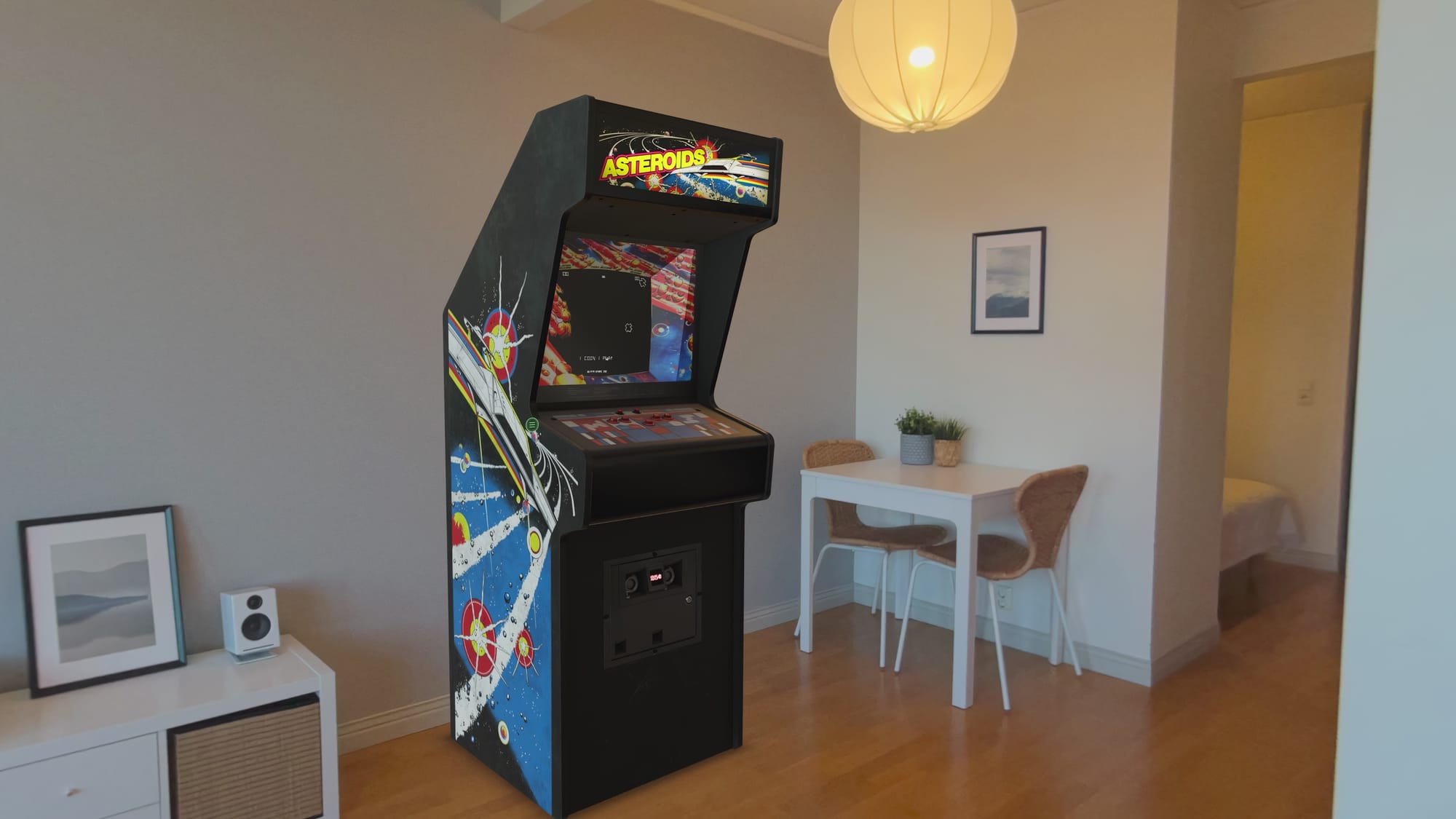
The virtual coins inserted into the cabinets are unlimited, by the way. There are no microtransactions in Retrocade, though that might be an interesting monetization option for people unwilling to pay the subscription fee for Apple Arcade.
When playing any of the games, you can switch between being inside the virtual arcade, with all the other cabinets visible around you, or to have only the cabinet you’re playing in your physical space. Retrocade can be a VR or mixed reality game, whichever you prefer.
 UploadVRIan Hamilton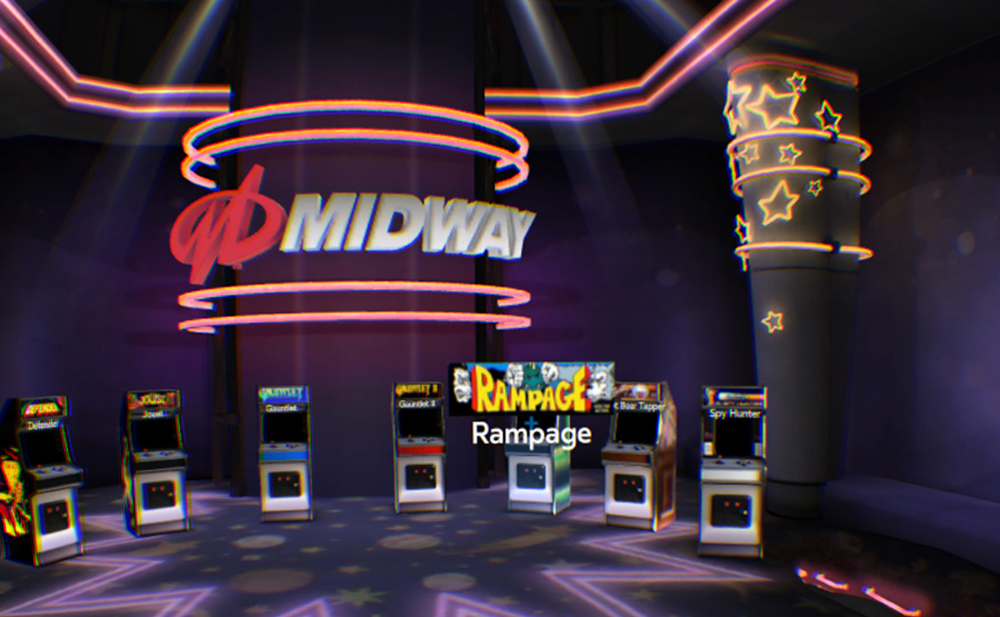
0:00
There have been other official attempts in the past to bring a retro arcade to VR, such as the discontinued Oculus Arcade for the Samsung Gear VR phone-holder headset and Oculus Go. But both headsets were 3DoF, rotation tracking only, meaning you couldn’t lean around and appreciate the cabinet as an object in space.
A decade later, Retrocade on Apple Vision Pro is the same idea but done right – mostly. The combination of the powerful M-series chipset, high-resolution micro-OLED displays, rock-solid positional tracking and hard work of Resolution Games delivers a feeling that the cabinet is truly there in front of you, and the virtual arcade environment induces a deep feeling of immersive nostalgia.
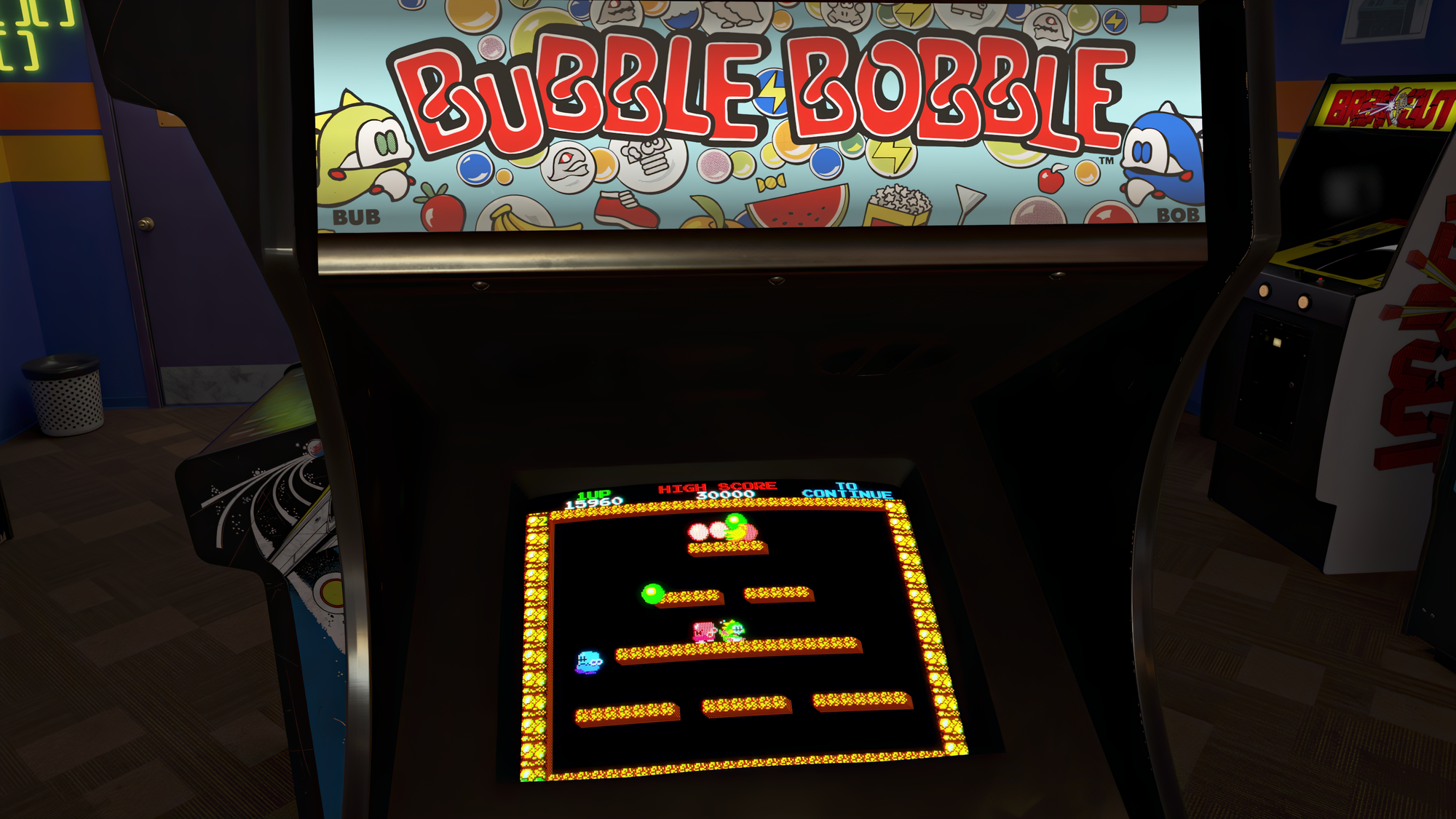
The smallest details of each cabinet are faithfully recreated in real-time, and the on-by-default CRT filter, to my eyes at least, looks identical to what you’d get from a real display of the era. Retrocade would be a delight to look at if it were just a non-interactive passive environment. And yet what you get here is 10 fully-playable, true-to-original games too – some of the most iconic of all time.
All this is not to say that Retrocade is perfect.
I understand why Resolution chose to require a controller, as it’s far more precise and reliable than hand tracking input would have been. Though I do wish hand tracking input was an experimental option, or at least supported for pressing buttons. There’s something a little jarring about having such a realistic cabinet not respond to poking at the buttons.
Another issue is that the mixed reality mode operates as a Full Space, so it doesn’t support visionOS Shared Space multitasking. You can’t put on a movie or YouTube video in the background, if that’s your thing, and nor could you have an instant messaging or security camera app open. If you absolutely need multitasking, you can play Retrocade in a 2D window, where it essentially acts like the iPad app. But this entirely removes the magic of having a virtual cabinet.
The more pressing problem with Retrocade, though, is that you might feel lonely. The magic of the real arcade was not just the cabinets, but the people there beside you. The real Bubble Bobble and Track & Field supported simultaneous multiplayer, while the other games supported alternating turns. What I really want here is SharePlay – to see friends as Personas standing beside me, able to interact with the cabinet too. The only social layer in Retrocade is that the game sends your stats to Apple Game Center, so you can asynchronously compete with friends, but this just isn’t the same thing as feeling together.
0:00
UploadVR-captured footage in mixed reality mode, showing how the cabinet truly feels as if in your physical environment.
If you accept it as a singleplayer experience, Retrocade is a beautifully polished rendition of the virtual 1980s arcade VR gamers have dreamed of. It’s a shame that it’s exclusive to a $3500 headset, but it seems Apple paid for the development of the game. Hopefully other VR platforms get something similar, perhaps from another arcade game company like Sega, in the near future.
You can find Retrocade on the visionOS App Store via the Apple Arcade subscription.

UploadVR uses a 5-Star rating system for our game reviews – you can read a breakdown of each star rating in our review guidelines.
The PlayStation VR2 port of Titan Isles has blasted its way onto Sony’s headset.
Today, Psytec Games has released their high-mobility action-adventure shooter Titan Isles on Sony’s PlayStation VR2. The game lands just twelve days after Psytec announced its PS VR2 release date.
Designed to make the most of PS5’s hardware, the PS VR2 port runs at a native 90fps on base PS5, boosted to 120fps on PS5 Pro. The devs also confirmed that both the base and Pro versions utilize native resolution and eye-tracked foveated rendering for maximum visual clarity. Psytec Games has also made the most of the PS5 controller’s adaptive triggers, giving each weapon its own resistance, plus headset haptics and full bHaptics support.
0:00
We previously reviewed Titan Isles when it debuted on Meta Quest, and found it to be “a compelling action adventure that’s equally enjoyable in co-op and single-player.” Our reviewer went on enthusiastically, writing that Titan Isles was “the most fun I’ve personally had with a VR co-op experience since Dungeons of Eternity.”
Titan Isles is available starting today on the PS VR2 store at a cost of $24.99. The game is also available on Steam and Quest.

Asha Sharma offered only vague responses when asked about what to expect from Xbox’s next era

Rothman said “yes” when Matt Belloni asked if Sony’s Spider-Man Universe would be getting a fresh reboot
Sherlock Holmes: The Master Detective is the latest VR adaptation of the iconic detective, delivering uneven investigations in Early Access.
No stranger to video game adaptations, Arthur Conan Doyle’s legendary detective has seen his fair share of reimaginings, from a young amateur grappling with the supernatural in Sherlock Holmes: The Awakened to the immersive theater online co-op seen in Sherlock Holmes: The Case of the Hung Parliament. Each iteration hones in on a different aspect of the character that, done well, is interesting in its own right. Out now on Early Access, Sherlock Holmes: The Master Detective is an uneven portrayal of the character, even if there is an entertaining core gameplay at the heart of it.
What is it?: A hidden object puzzle game featuring Sherlock Holmes.
Platforms: Meta Quest 3 and 3S (Reviewed on Quest 3)
Release Date: Out now
Developer/Publisher: Messworks
Price: $ 14.99
Starting in the famous 221B Baker Street apartment, a woman bursts through the door clamoring for help: a man has died in mysterious circumstances. Before leaving, you are allowed to rummage through the place. Sherlockians will find his previous exploits scattered around the furniture. Picking up files from his old cases like The Hound of the Baskervilles makes the seasoned investigator mutter a few words about how it ended in such a tragic way. An out-of-place Meta Quest 3 box earns the description of being “a lens into countless realities,” signaling that the story is developing in the current era.
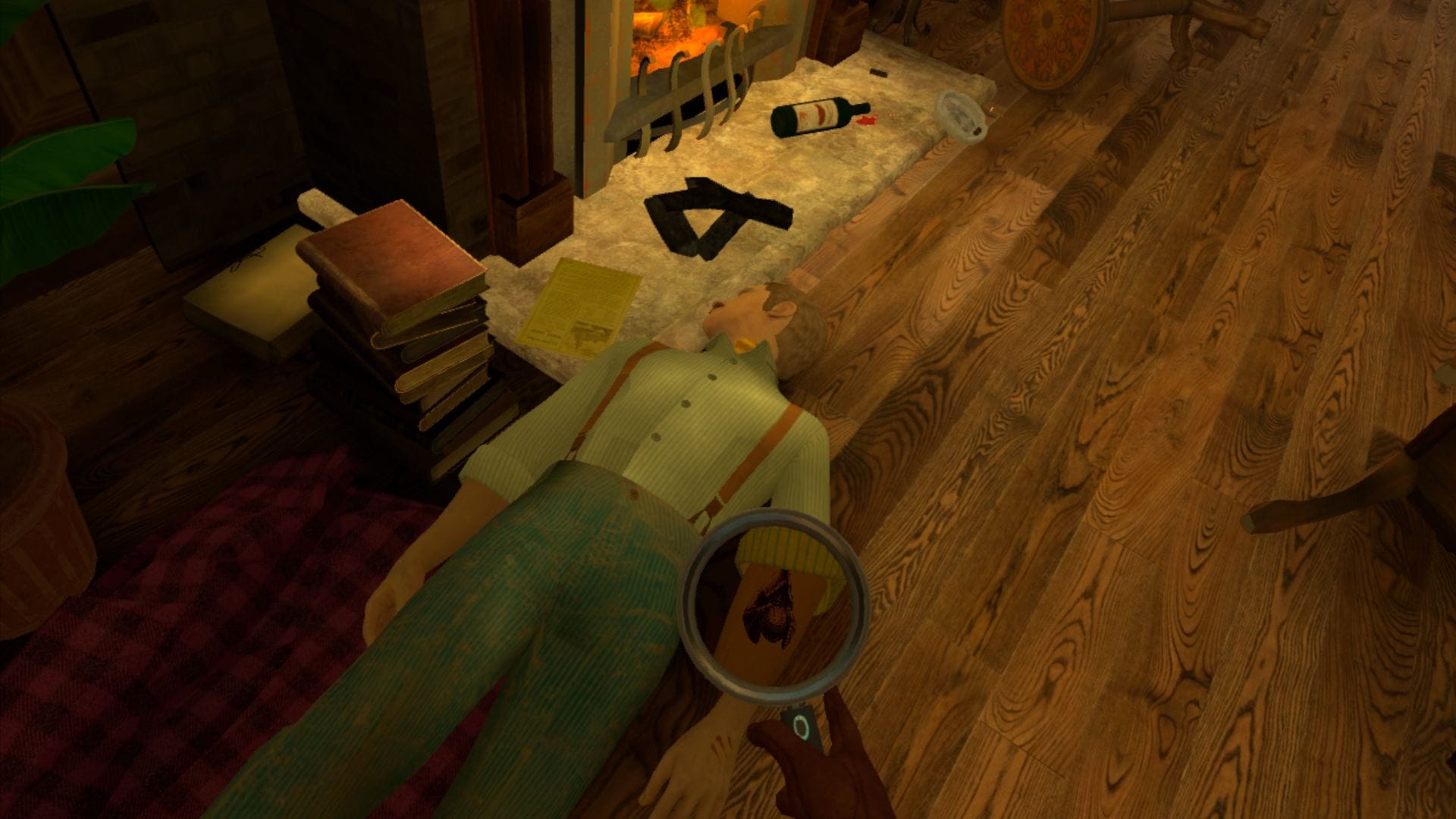
A modern-day Sherlock Holmes has been done before, most notably in the famous 2010 BBC series with Benedict Cumberbatch. This time around, he is brought up to speed with innovative tools to help with his sleuthing. This version of the character is armed with a magnifying glass, a chemical analyzer, and a fingerprint scanner. After finding and packing them in a slick toolbox, one last tutorial reveals itself as the focus. Much like classic point-and-click adventures, Sherlock Holmes: The Master Detective asks you to find hidden objects in a specific area.
Leaving the apartment only to find the crime scene is just down the street, it is relatively surprising that you are allowed to explore the short but shady alleyways of London. Graphically, it is your usual Quest 3 slightly cartoony look, but the music and attention to detail are appreciated. Walking by a record store, for instance, lets you listen to the sound of a vinyl emanating from a record player. A souvenir shop showing Holmes’ own escapades shudders amusingly when grabbed. Lastly, a red telephone box ringing close to the mansion where the crime happened whispers to Sherlock that there is more than meets the eye in this case.
There are currently only two cases available to play. One in a lavish residence, the other in some shadowy docks, the way they unfold is rather straightforward: question the suspects, find the correct items in determined areas, and accuse the guilty party of the murder. As mentioned, finding objects is the main course, such as keys, torn documents, or pieces to grander puzzles in a sea of everyday items.
Other than object finding, light puzzles like reconstructing torn photographs and moving pieces to fit a painting are a welcome change of pace. My personal favorite was using the modern tools at hand: carefully inspecting a corpse’s markings and accessories worn with the magnifying glass or analyzing a cup with the fingerprint scanner felt more akin to detective work.
Of course, like any other respectable whodunit, there is an overarching plot of a secret society with paranormal overtones. Because there are only two episodes so far, it ends on a cliffhanger that still has no answer. At the time of writing, the developer has not given a concrete timeline of when new updates will drop, so I would recommend entering this mystery with caution. I would personally be devastated if they did not follow through with the enticing setup.
As an Early Access release, it is understandable when only certain options are offered or shortcuts are taken, but in this case they felt like they detracted from the experience. The only way to move is by teleporting and snap turning, with no smooth turning or walking to speak of. What stood out like a sore thumb, though, was the use of generative AI. The voice acting is wooden, and the sound quality is blown out. Sherlock’s accent itself, jumping from American to British as the chapters changed, was jarring to say the least. Using AI-generated images can be considered harmless, as the clue-finding is where it’s at, but it is still there.
0:00
A video of the hidden object gameplay in Sherlock Holmes: The Master Detective.
Sherlock Holmes: The Master Detective is a promising title with considerable drawbacks. The atmosphere is so well recreated that even in its modern setting, it feels attuned to the iconic tales from which it originated. Emphasizing object searching, it is a relaxing experience that fans of point-and-click mysteries will enjoy. While the lack of constant communication regarding future support from the developers is alarming, the current offering is a middling pastime.
Sherlock Holmes: The Master Detective is out now in Early Access for Meta Quest 3/3S.
Quest 3 mixed reality game Laser Dance adds two new challenge modes this week in its first major content update.
Launching February 26th, the update introduces two new challenge modes designed to intensify the game’s Mixed Reality laser obstacle courses.
Thomas Van Bouwel, the creator of Laser Dance and the critically acclaimed puzzle game Cubism, has announced the “Challenge Update” for Laser Dance is coming this week.
The update adds two optional unlockable game modifiers to increase the game’s difficulty and to add to replayability. The first, called Grid Overlay, layers a dense mesh of lasers over existing levels, which demands heightened precision from players. The second, called Invisible Lasers, causes laser beams in the play area to fade as players approach, demanding more player spatial awareness. Audio cues and controller haptics become more critical in this mode.
0:00
Laser Dance turns your living space into a challenging maze full of lasers, where the goal of the game is to navigate the maze and reach certain places throughout the room. We reviewed the game when it debuted late last year, calling it “one of the easiest games to play ever made. […] it belongs in most libraries and should be a go-to party game.”
Laser Dance is available now on Quest 3 and 3S.

Less reach and flexibility, more character growth and emotional intimacy

This collection of boomer shooters contains some fantastic games, like Selaco and Warhammer 40,000: Boltgun, and costs less than $20

Tokyo Scramble is not making a great impression

The coolest-looking Star Wars game in years is arriving later this year on consoles and PC
Drawing from its comic book origins, Empire City offers a promising glimpse into one of 2026’s most anticipated VR titles.
After an early look into the sewer lair of the eponymous turtles, Cortopia Studios, recently known for Gorn 2 and Escaping Wonderland, have released a limited-time PC VR demo as part of Steam Next Fest. The new demo is roughly 15-20 minutes long and functions as an extended tutorial that introduces the combat and parkour mechanics.
What is it?: A hack and slash adventure
Platforms: Steam (played on Quest 3 via Virtual Desktop)
Release Date: February 24, 2026 (part of Steam Next Fest)
Developer: Cortopia Studios
Publisher: Beyond Frames
Price: free (demo only)
The demo goes through each turtle in turn, starting with Leonardo, then Michelangelo, Donatello, and ending with Raphael before a final section where you can choose your preferred character. The four brothers are infiltrating a building while encountering numerous Foot clan soldiers. Each turtle has their signature weapon and most of the enemies can be put down without too much difficulty. Each successive hit or parry of an enemy’s attack builds up a focus meter that, when maxed, activates a signature trait. Depending on which turtle is selected, this can be anything from increased focus gain to more damage landed per attack.
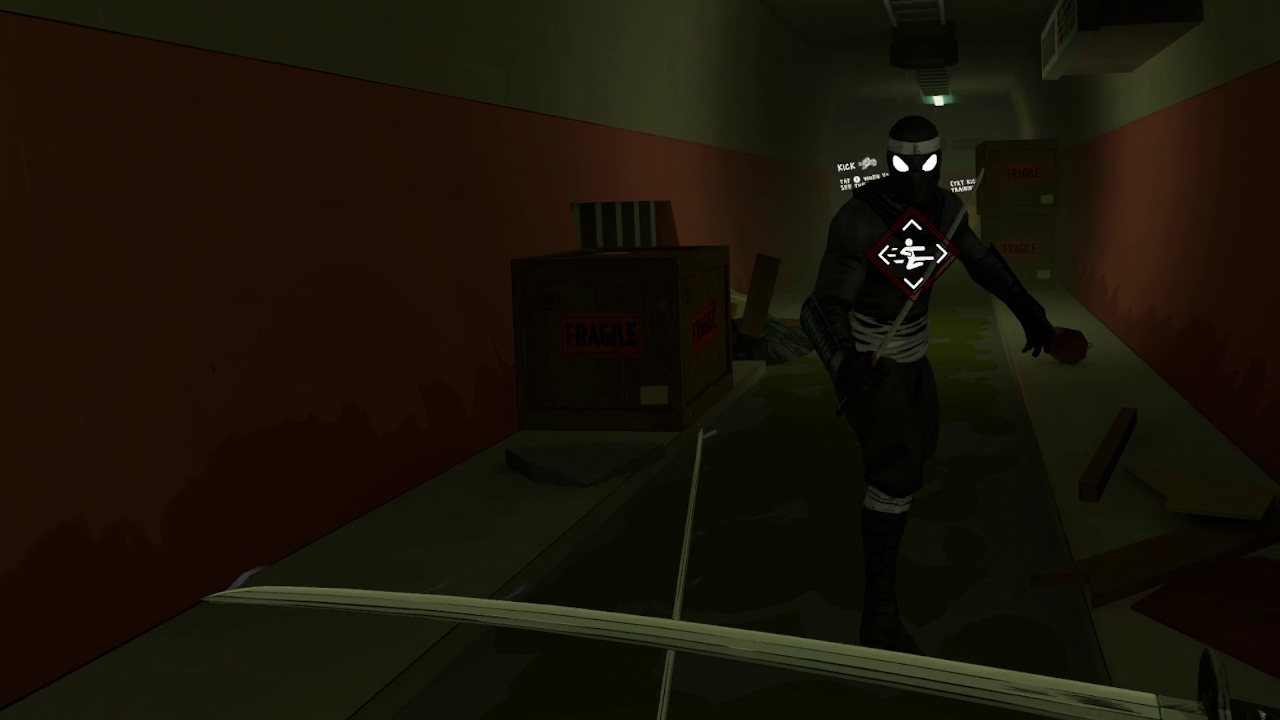
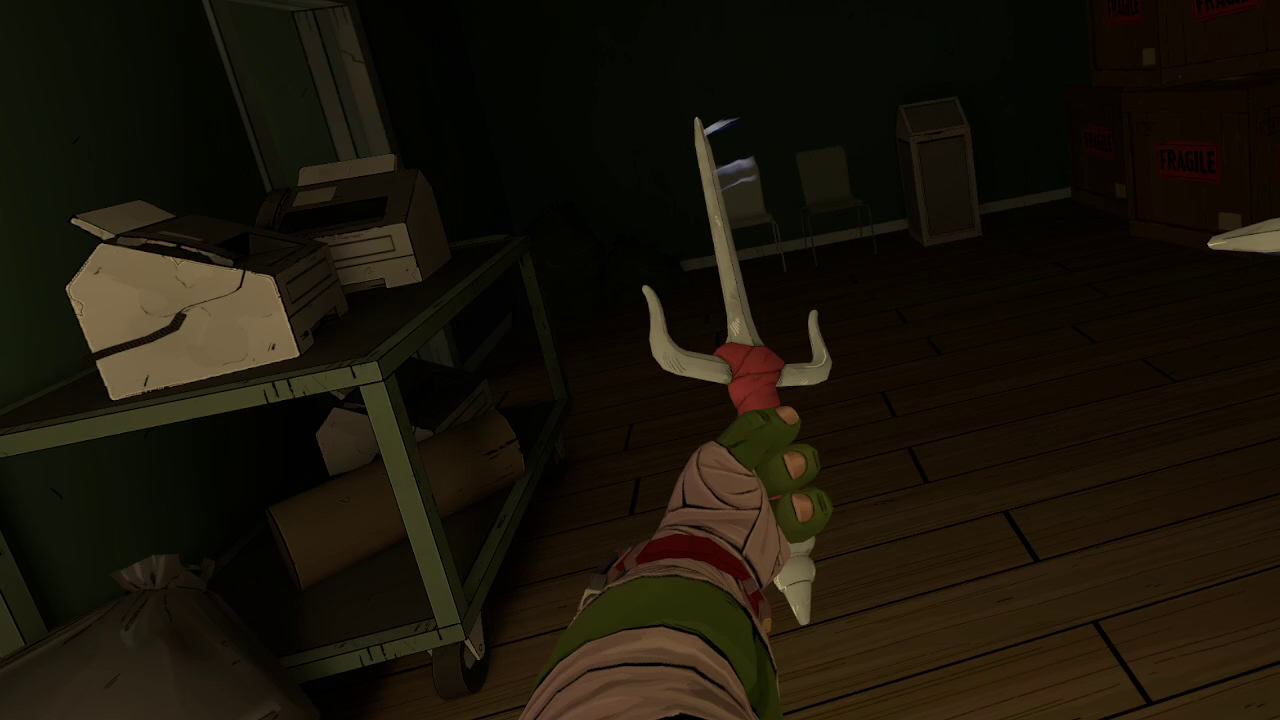
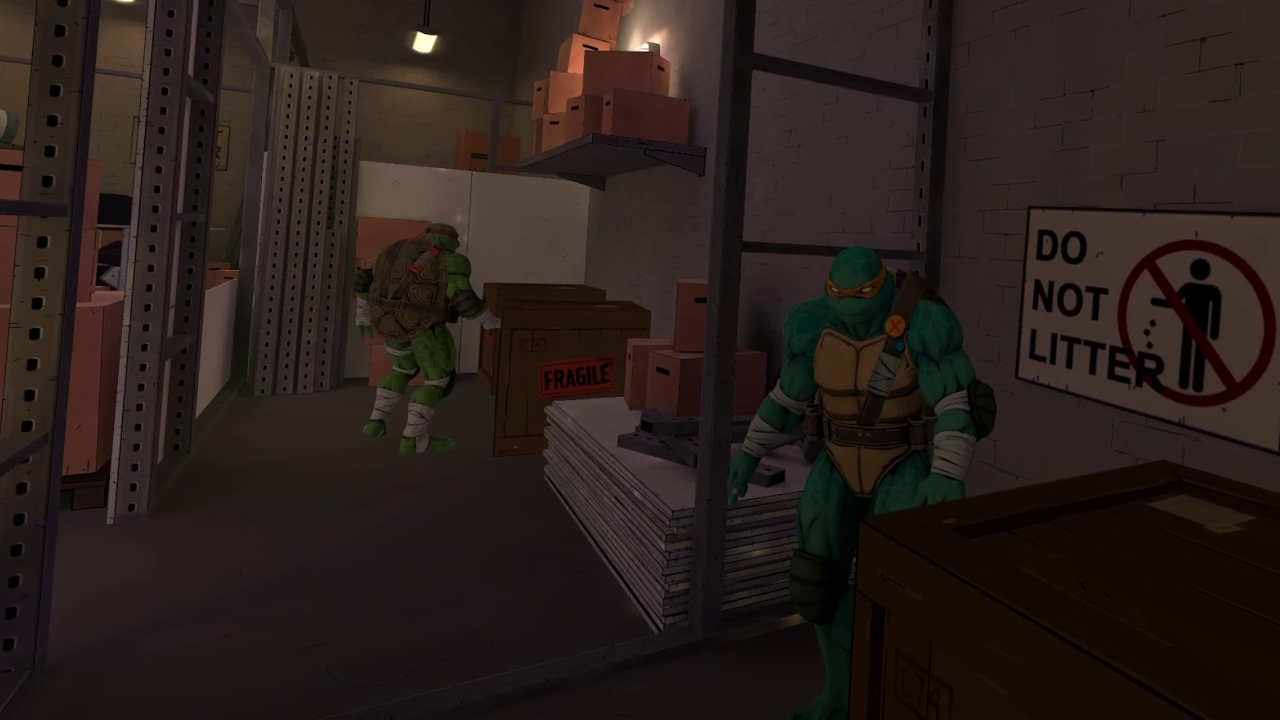
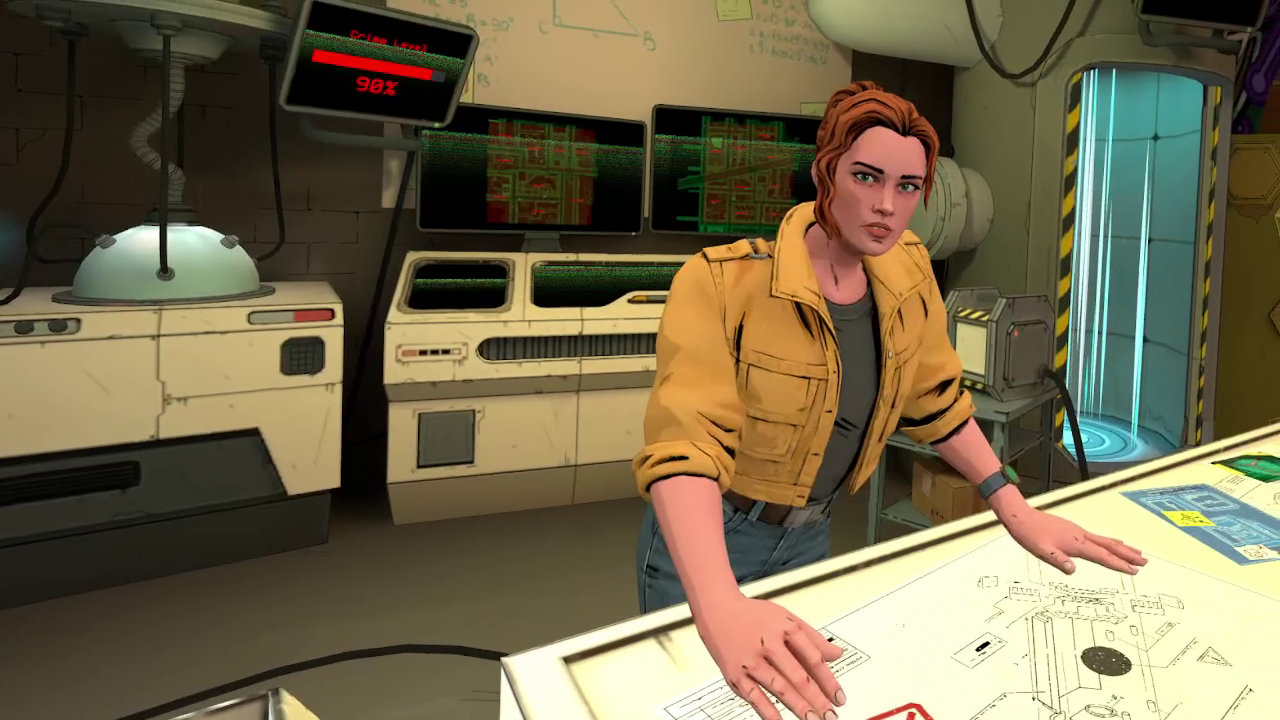
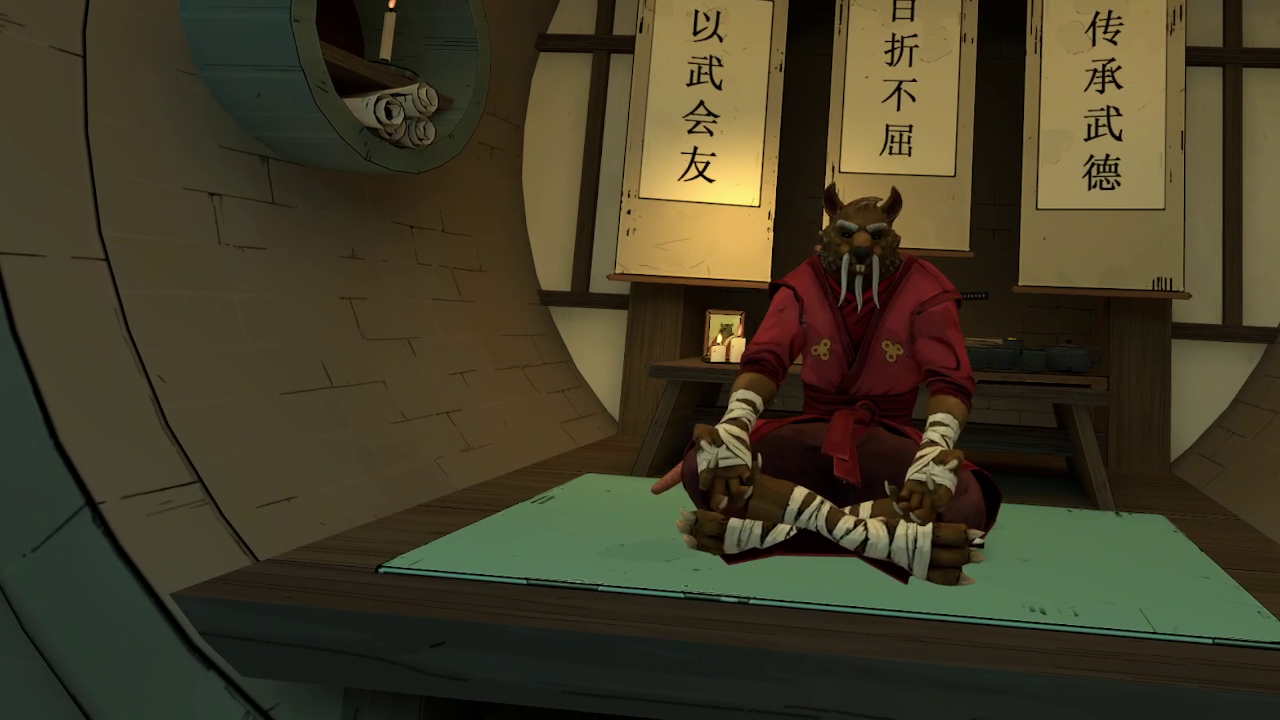
Teenage Mutant Ninja Turtles: Empire City screenshots captured by UploadVR
It should be noted that the combat is not physics based, more akin to something like Deadpool VR than Blade and Sorcery. Weapons do not have any weight and can be swung with the lightest flick of the wrist. This is not a complaint and it absolutely fits with the IP, but those who prefer more ‘realistic’ combat may bump into what’s on offer here.
The demo breaks down into each character introducing a part of the gameplay. Leonardo gives movement and combat basics, Donatello has to hack locked doors by solving a couple of simple puzzles, Michelangelo parkours across the rooftops, and Raphael is forced to work on his parrying technique by the turtles’ sensei, Master Splinter. Each section plays out in just a few minutes, long enough to get familiar with how to play the game, then this section of the demo ends with a boss fight I won’t spoil, except to say I promptly lost.
This demo was played on Steam using a Meta Quest 3 and Virtual Desktop on the Ultra preset. The game itself was played on the default graphics settings.
My PC has an RTX 5070 Ti with 16GB of VRAM, a Ryzen 5 5600X processor, and 64GB of DDR4 RAM.
Everything here just works. The combat and parkour is fluid and intuitive, the voice acting is spot on for each turtle, and though weapons have no weight, they still feel distinct from one another and coupled with the focus meter traits, offer a reason to try different turtles depending on playstyle. I could’ve stood on that roof twirling Michelangelo’s nunchucks for hours.
After this, the demo moves to the aforementioned sewer lair. From what I can tell, this is the same as the earlier hands-on demo from months back. Seeing it for the first time, there’s a clear attention to detail, with each room instantly recognizable as to its inhabitant. This is also the first time Master Splinter and April O’Neil are shown.
Empire City uses stick-based movement with options for snap and smooth turning. Both turn options have modifiers for angle and speed respectively.
Between the lack of a teleport movement option and the parkour elements, we do not recommend this game for new VR users who are not yet acclimated to artificial movement.
Aesthetically, Empire City utilizes a cel-shaded art style similar to Deadpool VR that fits the turtles’ comic book origins. Everything is sharp and detailed with no visible performance issues to speak of.
Overall, this demo does exactly what a great demo is supposed to: make me want to play the full game. There’s very little in the way of story to pick up on here other than the involvement of the Foot clan. It is simply an introduction to the world and masterfully serves its purpose.
0:00
Teenage Mutant Ninja Turtles: Empire City can be wishlisted on Steam, Meta Quest, and Pico now and is listed as coming in Spring 2026. The demo is playable as part of Steam Next Fest until March 2 at 10am PST.