The third course in Walkabout Mini Golf’s Passport series takes a trip back to the golden age of filmmaking.
The thirty-ninth course for Walkabout Mini Golf has been confirmed to be Passport: Hollywood. This is the third Passport entry, following trips to Venice and Tokyo. This new DLC is scheduled for March 12 for $4.99.
Prior to VR development, the team at Mighty Coconut spent ten years working animation and VFX for Hollywood features and series. Many of its current team members have film backgrounds, so Passport Hollywood doubles as a love letter to the company’s cinematic roots.
March 12 is also three days before the annual Academy Awards, so the timing for this course lines up with an increased attention on the filmmaking industry.
Passport Hollywood is the first DLC for Walkabout under its new pricing structure, which was announced as part of a restructuring within Mighty Coconut following a twenty five percent staff layoff. There will also be a reduction in DLC courses in 2026, going from seven to six and development of the iOS version will be sunset sometime in the near future.
We will have full coverage of the Passport Hollywood course when it releases next week.
Walkabout Mini Golf is available on Steam, PSVR2, Quest, Pico, and Apple App Store. The game is also available as part of Meta’s Horizon+ subscription service.
Meta has finally brought VR’s favorite block-slashing rhythm game to its Horizon+ subscription service. If you were hoping to jump into Beat Saber’s (2019) massive swath of DLC content though, you’ll still need to toss out a few bucks.
The News
Horizon+ subscribers probably already know the score. Meta says in its terms and conditions that apps in the 100+ catalogue only include the base games themselves, and not free access to paid DLC, in-game currency, etc.
Normally priced at $30, the base comes with 62 free songs which arrived from its eight OST Music Pack drops, Extras, and Camellia Pack. Excluding the 26 purchasable Mixtape and Music Packs released over the years, Meta has brought a total of 239 paid songs to the game—effectively making the bulk of Beat Saber’s content paywalled.
Notably, Horizon+ members must keep paying the $8 per-month subscription price (or $60 annual) to retain access to games. Still, it’s not a bad deal—especially considering every new Quest 3 and Quest 3S purchase comes with a three-month trial.
Popular titles included in the 100+ catalogue include Ghosts of Tabor, Job Simulator, Red Matter, Cubism, Pistol Whip, Moss, Walkabout Mini Golf, Demeo Battles, and Asgard’s Wrath 2.
It also benefits from monthly game drops, with March including Arizona Sunshine Remake and The Pirate: Republic of Nassau. You can see the full list here.
My Take
Meta is essentially making Beat Saber free to all new users, many of whom probably would have bought the game anyway. Granted, that’s through a three-month trial, although it may be enough for users to personally figure out whether the calculus of Horizon+ shakes out in their favor.
It is slightly more insidious than that though. Once you buy a DLC pack for a Horizon+ game like Beat Saber, the sunk cost fallacy takes over. You need to either buy the game once the trial ends, start paying for Horizon+ indefinitely to keep the game and access to DLC, or part ways entirely—knowing you have DLC for a game you don’t actually own, (and will never get a refund for).
By putting its most popular first-party game in Horizon+ though, it says to me that not only is the game possibly nearing end-of-life (or at least end of any heavy-hitting DLC), but that Meta is attempting to make Horizon+ into its biggest revenue streams moving forward—because it’s certainly not funding games like it used to.
That said, Meta announced last month that Horizon+ had topped over one million active subscribers throughout the course of 2025. Nobody really knows how Meta defines “active,” or whether that includes users on the three-month trial, but the company doesn’t tend to reveal user numbers/sales volumes unless they reach significant milestones, making it a first any way you slice it.
Arizona Sunshine Remake and The Pirate: Republic of Nassau are the Horizon+ monthly games on Quest for March.
March 2026 brings several new games to the Horizon+ Monthly Games Catalog, including the zombie slaughter-fest Arizona Sunshine Remake, and the swashbuckling adventure The Pirate: Republic of Nassau.
Beat Saber, GOLF+, Spatial Ops, and The 7th Guest VR also make their way to the catalog. Previously redeemed games will remain in your library while subscribed to the service.
Here’s what you need to know about this March’s offerings.
Arizona Sunshine Remake
0:00
/1:37
Arizona Sunshine Remake is the definitive updated refresh of 2016’s Arizona Sunshine, an award-winning VR shooter that debuted even before standalone VR. Arizona Sunshine Remake brings updated high-res textures, co-op multiplayer, delightfully gruesome gore, and includes all of the original game’s DLC and updates in one package. Our review said it best. “It’s hard not to recommend grabbing Arizona Sunshine Remake.”
The Pirate: Republic of Nassau
0:00
/0:46
In The Pirate: Republic of Nassau, you’ll command pirate ships and experience the early 18th century life as a true sea captain. Beginning in Nassau, the heart of pirate culture, you’ll engage in naval battles, recruit legendary pirates, explore and expand Nassau, and build your privateering fleet. Our review called it “a worthwhile golden age of piracy fantasy.”
Horizon+ continues offering a Games Catalog of Quest titles that any subscriber can access. Meta can add new games to and remove games from the catalog at any time. Here is the current Horizon+ Games Catalog in the US:
Angry Birds VR: Isle of Pigs
Asgard’s Wrath 2
Assassin’s Creed Nexus VR
Beat Saber
Blacktop Hoops
Cubism
Deisim
Demeo
Demeo Battles
Dungeons of Eternity
Final Fury
Fruit Ninja 2
Ghosts of Tabor
GOLF+
Green Hell VR
Grimlord
Human Fall Flat VR
I Expect You To Die 3
iB Cricket
In Death: Unchained
Into Black
Into the Radius
Job Simulator
Kingspray Graffiti
Les Mills Bodycombat: Fitness Workouts
Maestro
Medieval Dynasty New Settlement
Moss
Onward
Pets & Stuff
Pistol Whip
Premium Bowling
Project Demigod
Puzzling Places
Racket Club
Real VR Fishing
Red Matter
Red Matter 2
Spatial Ops
Starship Home
Synth Riders
The 7th Guest VR
The Climb 2
The Light Brigade
The Thrill of the Fight
Thief Simulator VR: Greenview Street
Titans Clinic
Townsmen VR
Walkabout Mini Golf
War of the Worlds
Zero Caliber: Reloaded
Horizon+ Indie Catalog Games
Meta continues to add new games to the separate Indie Games Catalog, and you can see the entire list here.
Alvo
Apex Construct
Arcade Paradise VR
Battlenauts
Bocce Time!
Cactus Cowboy – Desert Warfare
Chess Club
Coffee Quest VR
Crumbling
Cybrix
Darksword: Battle Eternity
DIG VR
Disc Frenzy
Discovery 2
Elysium Trials
Espire 1: VR Operative
Final Overs – VR Cricket
Galaxy Kart
Ghost Signal: A Stellaris Game
Gravity League: Galactic Football
Hide The Corpse
I Am Hamster – Simulator
Innkeeper VR
Ironlights
IRON GUARD
Killer Frequency
LAX VR
Laser Thief
Make It Stable – Kids & Family Fun!
Motion Soccer PRO
Mythic Realms
Noun Town Language Learning
Operation Serpens
Retropolis 2: Never Say Goodbye
Rogue Ascent VR
Rogue Piñatas: VRmageddon
RUNNER
Shooty Fruity
Slot Car VR
Space Elevator
Squingle
Stupid Cars
Sushi Ben
Tactica
Taiko Frenzy
The Curious Tale of the Stolen Pets
The Pirate Queen with Lucy Liu
The Secret of Retropolis
The Wizards
Tiny Archers
Towers and Powers
ULTIMATE SWING GOLF by Clap Hanz
Underworld Overseer
Vibe Punch
We Are One
Windlands 2
Meta Horizon+ is a subscription service that gives players access to a monthly selection of games for $7.99 USD per month, or $59.99 USD a year. New users can give Meta Horizon+ a try for a month.
Raceclub is a made-for-VR love letter to formula racing that has you literally chasing ghosts in a promising, addictive work-in-progress.
I sat down with Raceclub, which just released on Meta Quest in Early Access, intending to only play about two hours. This is first impressions, not a full blown review, so I just need to get a feel for the game. Two dead extra batteries and a fully drained Quest 3 later, Raceclub had pulled off the VR trick of making me forget I was sitting in a chair awkwardly holding my controllers in mid air.
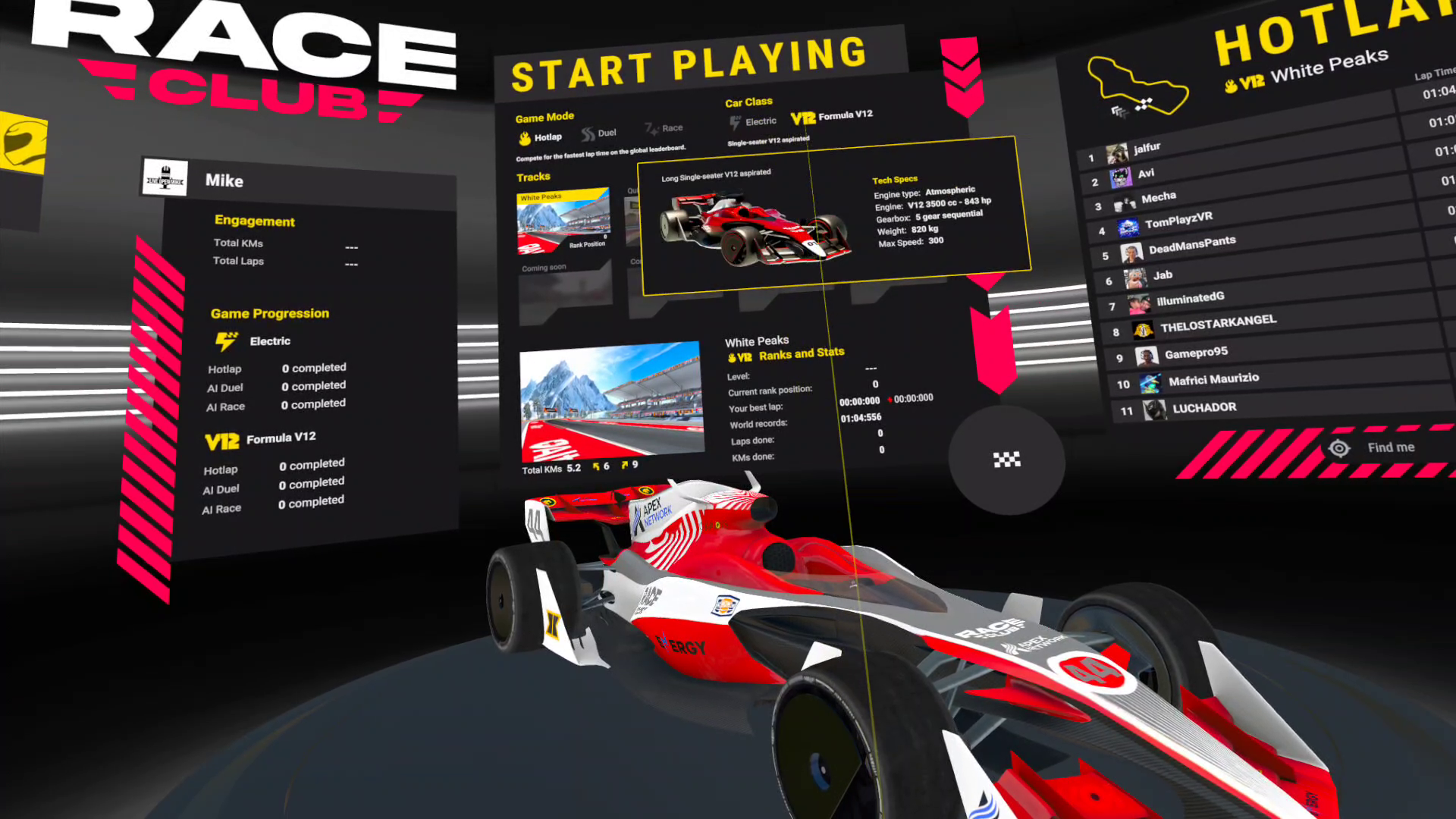
Raceclub main menu captured by UploadVR
The Facts
What is it?: A formula-style racing game Platforms: Meta Quest (played on Meta Quest 3) Release Date: February 26, 2026 (Early Access) Developer and Publisher: Mixer Lab Games Price: $ 12.99
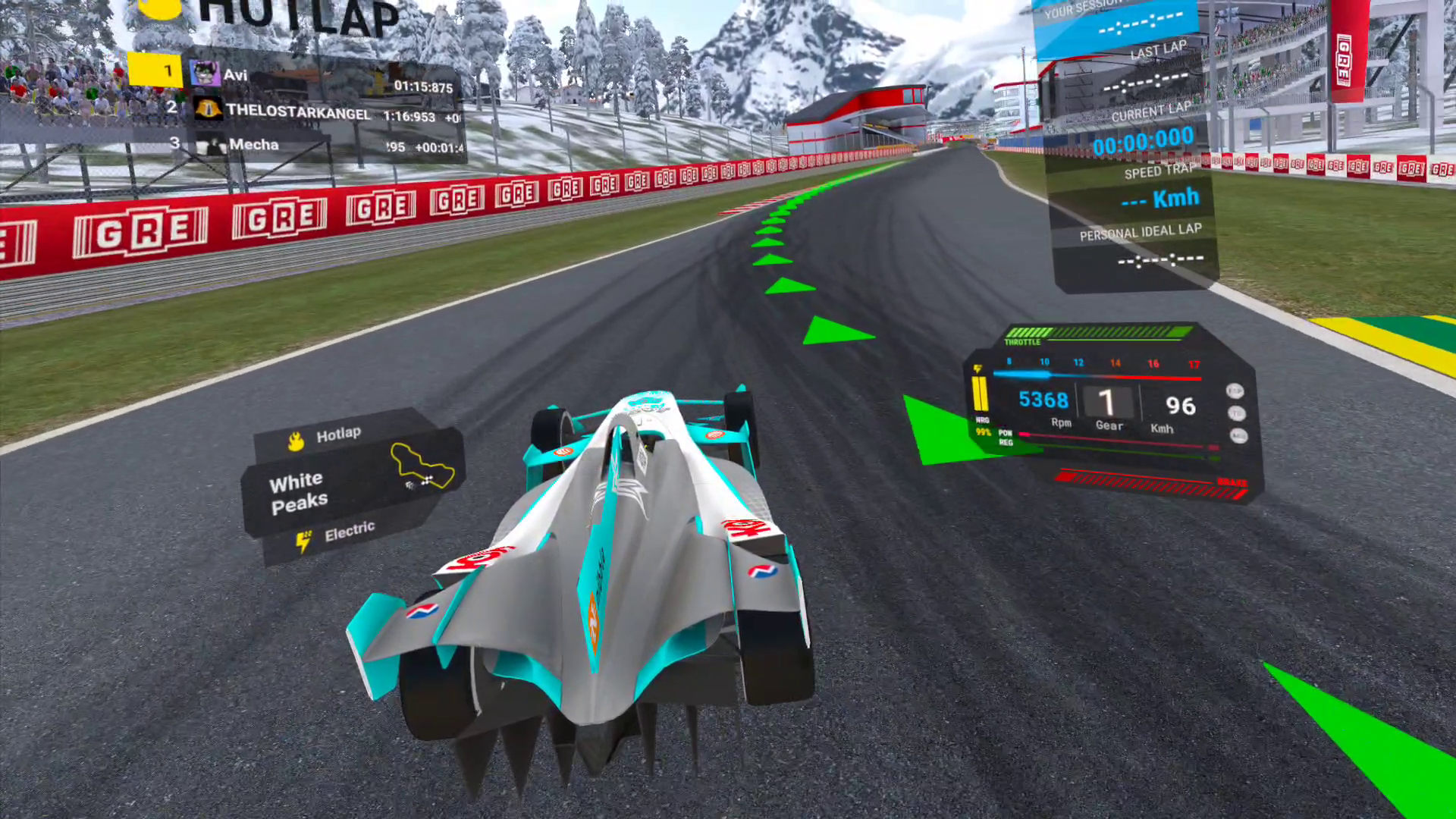
Raceclub offers two types of vehicles: Formula V12 is a more traditional F1 style car and Formula Electric is inspired by Formula E with an electric engine. Past that, cars can be customized with multiple color options and decals and racing has multiple viewing angles. First person views included a traditional cockpit look, the ‘snorkel’ position just behind the driver, the nose of the car, and one seemingly on the track itself under the car. For those prone to motion sickness, there is a third person view behind the car.
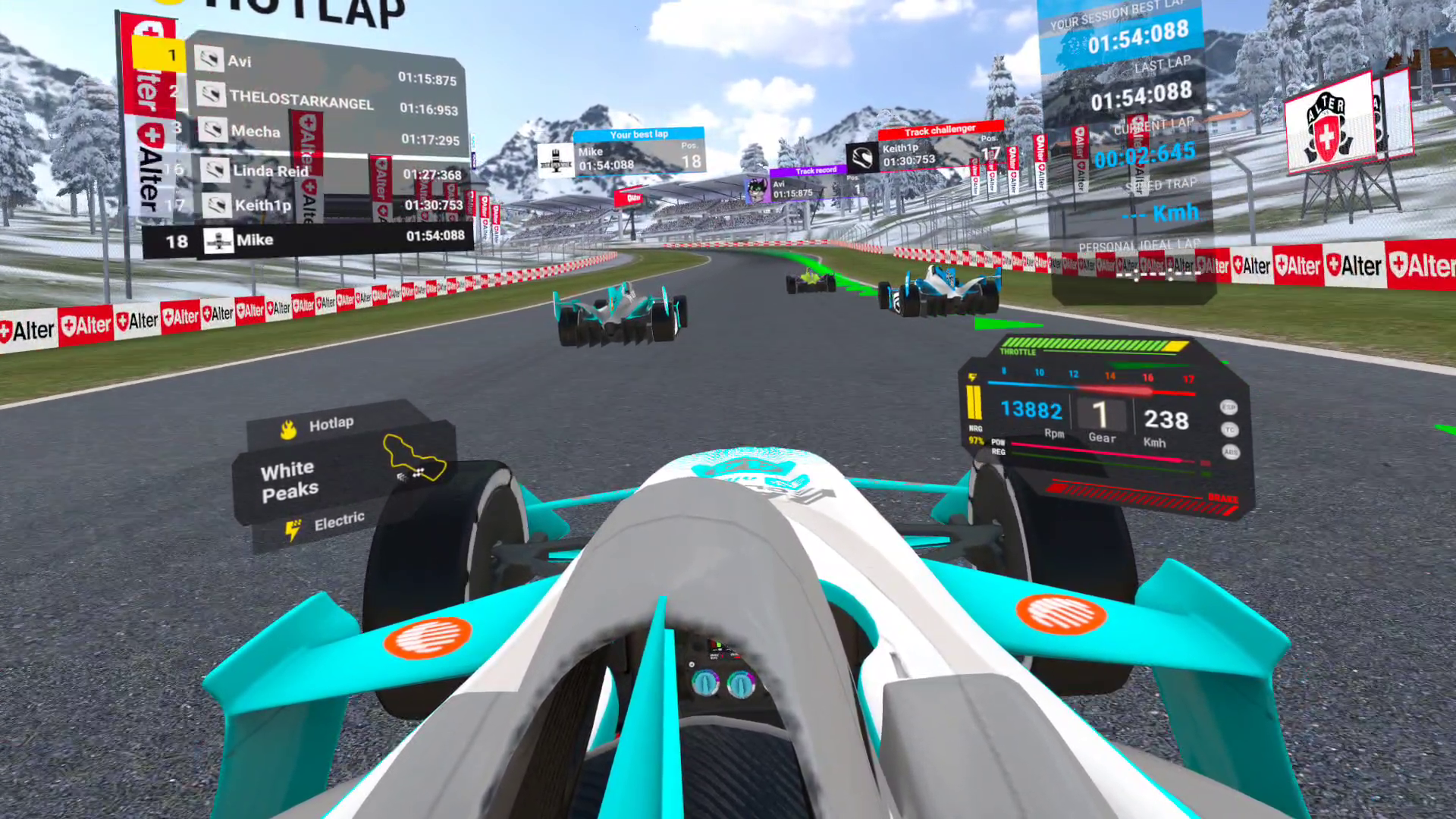
There are two modes available to play. In the time attack mode, there are three ghost cars on the track: the car one space ahead on the global leaderboards, a replay of your personal best lap (after you complete one lap), and a replay of the best lap on the top of the leaderboard. I spent over two hours just in this mode, trying to shave milliseconds off my time to improve.
0:00
/0:22
The other mode is a 1v1 ‘duel’ vs an AI driver. If the AI’s lap time is beaten, a new, faster opponent appears on the next lap, consistently ramping the challenge up as your skills improve. A third, eight-car race mode against AI, is currently unavailable.
One important note is Raceclub does not have vehicle collisions, a (missing) feature that may put some players off. It was odd to phase right through a translucent car instead of crashing, but I quickly stopped caring. I just needed a new personal best.
Two views of the electric car in Raceclub captured by UploadVR
One feature I wrote off as immersion breaking when I first saw it, but then realized its purpose is the ‘line’ visualization. It is a visual marker that runs through the entire track of the perfect racing line to take. Trying to keep my car on that line was part of what kept me playing. Every time I messed up and got off that line, I ran another lap to try again. It is a simple, but remarkably effective mechanic.
This is still an Early Access game though, meaning there is room to grow. Half of the tracks are listed as coming soon along with the eight-car race mode. Visually, the game is decent. Admittedly, there is no time to stop and admire the surroundings when chasing ghosts, but while on straightaways I had a second or two to look around and everything looked fine, but nothing stood out. The most glaring feature missing though, is multiplayer.
Comfort
Raceclub is a high speed racing game with a high sensation of simulated speed. For newer VR users, the third person view, above and behind the car is highly recommended.
There have been a lot of racing games on Quest, from kart racers like Dash Dash World and Galaxy Kart to more serious titles like EXOcars, Downtown Club, and Grid Legends. I’ve played them all, but nothing has quite pulled me in like Raceclub did. Without the horsepower to run the likes of Gran Turismo 7, Assetto Corsa, or EA’s F1 series, this is already a top notch effort on Meta Quest with room to grow.
Raceclub is available now in Early Access on Meta Quest for $12.99.
ByteDance’s Pico announced the key display and compute specs of its “Project Swan” headset, coming later this year, and detailed the revamped XR operating system it will run.
Project Swan Headset
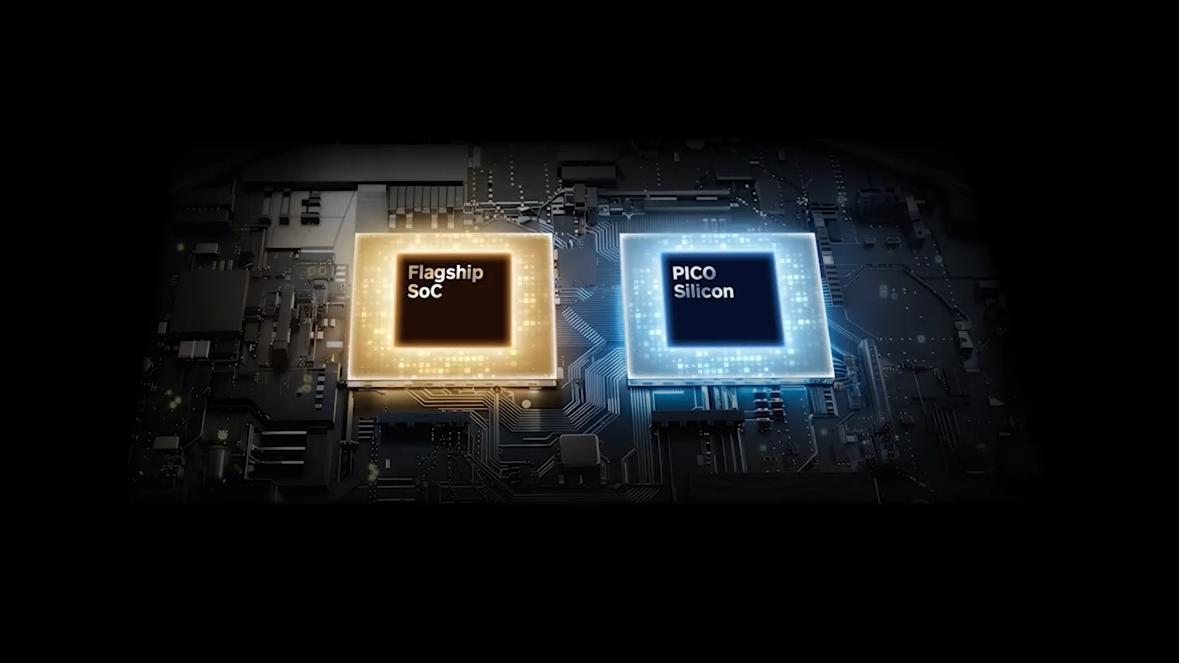
After years of rumors, ByteDance first officially teased a high-end Pico headset back in November, when its VP of Technology said during a talk in China that it would arrive in 2026 with micro-OLED panels with 4000 pixels per inch (PPI) and a dual-chip architecture with a self-developed coprocessor for computer vision and image processing.
Now, Pico has officially announced these details to the world, and also says that the main processor will have double the CPU and GPU performance of the Snapdragon XR2 Gen 2 in today’s Pico 4 Ultra and Meta Quest 3 headsets.
0:00
/0:20
Pico’s graphic depicting the “new generation” micro-OLED displays.
Pico says the “new generation” 4000 PPI micro-OLED panels will deliver an average angular resolution of 40 pixels per degree (PPD) and peak of 45 PPD, greater than that of Apple Vision Pro and good enough for text on virtual monitors. That strongly suggests 4K per-eye resolution, though this will depend on the field of view.
Meanwhile, the custom chip that powers computer vision and image processing will deliver “approximately 12 milliseconds of latency”, the company says, the same figure Apple gives for the R1 chip in Vision Pro headsets.
Other than these display and compute specs, and confirming that it will feature hand and eye tracking, Pico isn’t yet revealing specific details about Project Swan, including who is providing the powerful new primary chipset. It’s possible it could be a Snapdragon XR2 Gen 3 from Qualcomm, but there’s no direct indication of this.
Pico’s graphic depicts the two chips beside each other.
Last year, The Information reported that Pico was working on an ultralight headset a fraction of the weight of typical VR headsets, achieved via the use of a tethered compute puck. But the company isn’t yet confirming the form factor, and a graphic during the announcement depicted the primary and secondary chipsets positioned alongside each other, not one separated into a puck. It’s possible that report referred to a different in-development Pico headset.
Pico OS 6 & Pico Spatial Engine
While Project Swan is what will draw headlines, Pico’s main focus with today’s announcement is actually Pico OS 6, the revamped version of its XR operating system that the new headset will run.
We first learned of Pico OS 6 and some of its standout features last month via the listing for a talk the company is set to give next week at GDC 2026. The listing referred to Pico OS 6 supporting “a new paradigm for spatial experiences in which games and apps coexist, allowing a primary experience to run alongside companion applications in a shared environment”, and today the company has explained what that means.
0:00
/0:20
Pico OS 6
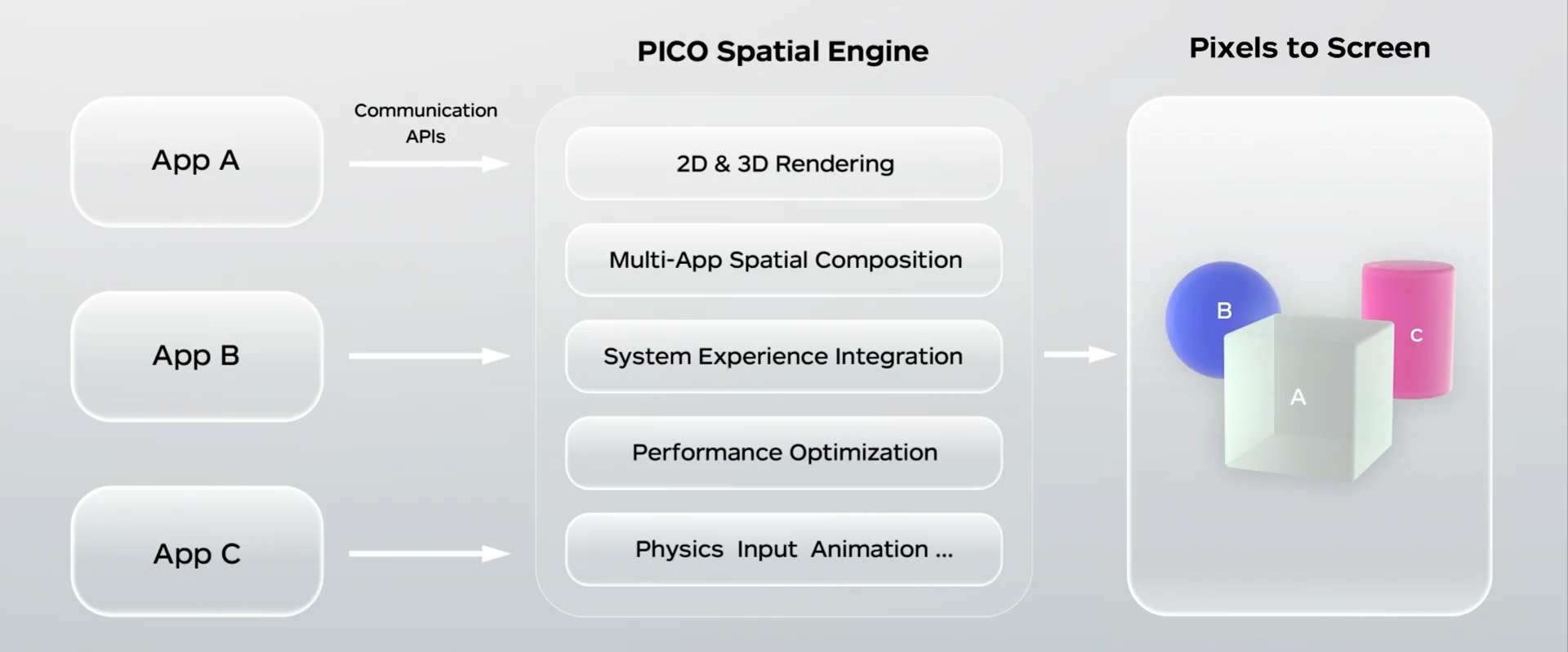
Like Apple’s visionOS, Pico OS 6 features an advanced OS-level compositor with a unified rendering architecture that enables both 2D and 3D apps to run alongside each other, with either a virtual environment or physical reality as the background. The operating system handles rendering and interaction, enabling a cohesive experience where all system-level features are supported and consistent. That includes environmental lighting, dynamic occlusion, spatial audio, physics with real-world surface collisions, and scene understanding.
The company calls this system Pico Spatial Engine, and says it has spent the past two years building it.
This is in stark contrast to Meta’s Horizon OS and Google’s Android XR, which only support running a single 3D app at a time.
The general architecture of Pico Spatial Engine.
Pico OS 6 features a visionOS-like design language that the company calls Cloud Crystal, and developers will be able to use the Pico Spatial UI system to build interfaces that feel consistent with the OS and adapt to real-world lighting, leveraging Pico Spatial Engine.
0:00
/0:20
A mixed reality game running on Pico OS 6.
Developers can build apps using Pico Spatial SDK, with support for Android Studio and Kotlin, or continue to use Unreal and Unity, with Pico Spatial Support for both engines providing the key features of the Pico Spatial Engine.
Pico says the OS continues to fully support OpenXR, and that all apps that run on Pico 4 Ultra today will be able to run on Project Swan.
The company also introduced an open-source WebXR framework called WebSpatial, which it calls an “open, minimal extension to HTML, CSS, and JS” that lets web developers easily build spatial experiences.
Global Early Access Program
Pico has opened applications for closed beta access to Pico OS 6 and the Project Swan headset.
The company says it will choose “a select few with deep expertise across XR platforms” to join the program, and wants “rigorous feedback” on the hardware and software before a wider release.

 UploadVRIan Hamilton