Renewable energy is now cheap—what’s next?

Read 3 remaining paragraphs | Comments


Source: Ars Technica – Renewable energy is now cheap—what’s next?

Fish’s big mistake preserved an unusual fossil for us

Image of a fossilized fish in brownish rock.

Enlarge / The fish in question, with the ammonite located just below its spine. (credit: Cooper, et. al.)

Some extinct species left copious fossil remnants of their existence. Ammonites—an extinct type of cephalopod—are one such example. From the Devonian through the Paleocene, wherever ancient seas once covered Earth, one can usually find their coiled shells. So one more exquisitely preserved ammonite isn’t necessarily a big deal.

With the exception, perhaps, of one intact example found in the Posidonienschiefer Formation in Germany, where most ammonite shells are flattened and fragmentary. Now, decades after its original discovery, scientists have taken a more careful look at the well-preserved ammonite and the fossil fish it was seemingly nestled against. What they found surprised them: the fish had actually swallowed the large ammonite—something we’ve never seen before, even in fossils of much larger marine species that we know attempted to feed on ammonites.

It didn’t work out well for the fish. The size of the ammonite may have caused the fish to drown, or it may have blocked its digestive tract, causing internal bleeding. Drifting down to the seafloor, the fish was eventually buried and fossilized, preserving that ammonite—along with information about the ecosystem it and the fish inhabited—for over 170 million years.

Read 27 remaining paragraphs | Comments


Source: Ars Technica – Fish’s big mistake preserved an unusual fossil for us

The Signal Protocol used by 1+ billion people is getting a post-quantum makeover

The Signal Protocol used by 1+ billion people is getting a post-quantum makeover

Enlarge (credit: Getty Images)

The Signal Foundation, maker of the Signal Protocol that encrypts messages sent by more than a billion people, has rolled out an update designed to prepare for a very real prospect that’s never far from the thoughts of just about every security engineer on the planet: the catastrophic fall of cryptographic protocols that secure some of the most sensitive secrets today.

The Signal Protocol is a key ingredient in the Signal, Google RCS, and WhatsApp messengers, which collectively have more than 1 billion users. It’s the engine that provides end-to-end encryption, meaning messages encrypted with the apps can be decrypted only by the recipients and no one else, including the platforms enabling the service. Until now, the Signal Protocol encrypted messages and voice calls with X3DH, a specification based on a form of cryptography known as Elliptic Curve Diffie-Hellman.

A brief detour: WTF is ECDH?

Often abbreviated as ECDH, Elliptic Curve Diffie-Hellman is a protocol unto its own. It combines two main building blocks. The first involves the use of elliptic curves to form asymmetric key pairs, each of which is unique to each user. One key in the pair is public and available to anyone to use for encrypting messages sent to the person who owns it. The corresponding private key is closely guarded by the user. It allows the user to decrypt the messages. Cryptography relying on a public-private key pair is often known as asymmetric encryption.

Read 14 remaining paragraphs | Comments


Source: Ars Technica – The Signal Protocol used by 1+ billion people is getting a post-quantum makeover

New Huawei SoC features processor cores designed in-house

Read 18 remaining paragraphs | Comments


Source: Ars Technica – New Huawei SoC features processor cores designed in-house

It’s time for fall shots—and CDC is ready for anti-vaccine nonsense


A pharmacist administers an updated COVID-19 vaccine at a CVS Pharmacy in Eagle Rock, California.

Enlarge / A pharmacist administers an updated COVID-19 vaccine at a CVS Pharmacy in Eagle Rock, California. (credit: Getty | Irfan Khan)

With fall approaching, the Centers for Disease Control and Prevention is gearing up efforts to promote three respiratory virus vaccines this year—annual flu shots, new RSV vaccines, and updated COVID-19 shots—and the agency’s plans include confronting vaccine skepticism and hesitancy head-on.

In a presentation to clinicians on Tuesday, the CDC laid out its general recommendations for the use of those vaccines and ended with its four-step strategy to persuade patients swayed by anti-vaccine talking points to come back over to the side of science and public health.

The strategy, developed by the CDC in partnership with experts at the American Psychological Association, isn’t new, but it has become increasingly needed as anti-vaccine misinformation and disinformation gained further ground during the pandemic. Even now, conservative politicians and officials continue to spread misinformation and skepticism about COVID-19 vaccines, leading to a sharp partisan divide in vaccination uptake and intentions.

Read 9 remaining paragraphs | Comments


Source: Ars Technica – It’s time for fall shots—and CDC is ready for anti-vaccine nonsense

SBF’s parents were given $16.4M house paid for entirely by FTX, lawsuit says

Joseph Bankman, father of former FTX CEO Sam Bankman-Fried, walks out of a courthouse.

Enlarge / Joseph Bankman, father of former FTX CEO Sam Bankman-Fried, leaves after a bail hearing for his son at US District Court on August 11, 2023 in New York City.

Barbara Fried, mother of former FTX CEO Sam Bankman-Fried.

Barbara Fried, mother of former FTX CEO Sam Bankman-Fried. (credit: Getty Images | Michael M. Santiago)

FTX yesterday sued Sam Bankman-Fried’s parents, alleging that Joseph Bankman and Barbara Fried “exploited their access and influence within the FTX enterprise to enrich themselves” at the expense of FTX customers.

FTX’s lawsuit against Bankman and Fried was filed in US Bankruptcy Court for the District of Delaware as part of bankruptcy proceedings involving FTX and Alameda Research. “Bankman and Fried siphoned millions of dollars out of the FTX Group for their own personal benefit and their chosen pet causes. This action seeks to hold them accountable for their misconduct and recover assets for the Debtors’ creditors,” the lawsuit claimed.

The civil lawsuit was filed about two weeks before Bankman-Fried’s criminal trial was scheduled to begin on October 3. Four former FTX executives already pleaded guilty to criminal charges.

Read 14 remaining paragraphs | Comments


Source: Ars Technica – SBF’s parents were given .4M house paid for entirely by FTX, lawsuit says

Telling AI model to “take a deep breath” causes math scores to soar in study

A worried-looking tin toy robot.

Enlarge (credit: Getty Images)

Google DeepMind researchers recently developed a technique to improve math ability in AI language models like ChatGPT by using other AI models to improve prompting—the written instructions that tell the AI model what to do. It found that using human-style encouragement improved math skills dramatically, in line with earlier results.

In a paper called “Large Language Models as Optimizers” listed this month on arXiv, DeepMind scientists introduced Optimization by PROmpting (OPRO), a method to improve the performance of large language models (LLMs) such as OpenAI’s ChatGPT and Google’s PaLM 2. This new approach sidesteps the limitations of traditional math-based optimizers by using natural language to guide LLMs in problem-solving. “Natural language” is a fancy way of saying everyday human speech.

“Instead of formally defining the optimization problem and deriving the update step with a programmed solver,” the researchers write, “we describe the optimization problem in natural language, then instruct the LLM to iteratively generate new solutions based on the problem description and the previously found solutions.”

Read 8 remaining paragraphs | Comments


Source: Ars Technica – Telling AI model to “take a deep breath” causes math scores to soar in study

Archaeologists find 500-year-old board game carved in ruins of Polish castle

game board carved into stone slab with a ruler to show scale

Enlarge / Archaeologists excavating the ruins of an early 16th-century Polish castle discovered a carved strategy board game called Mill. (credit: Tomasz Olszacki)

Some 500 years ago, construction workers in the midst of building Ćmielów Castle in Poland carved a simple game board into a slab of the sandstone floor as a diversion for their leisure time. At least that’s one possible scenario for the existence of a game board recently discovered by archaeologists in the castle ruins; it’s also possible the board could have been carved by children or by servants after the castle was completed, or it may have been meant as a symbolic message.

As previously reported, there is archaeological evidence for various kinds of board games from all over the world dating back millennia: Senet and Mehen in ancient Egypt, for example, or a strategy game called ludus latrunculorum (“game of mercenaries”) favored by Roman legions. A 4,000-year-old board discovered last year at an archaeological site in Oman’s Qumayrah Valley might be a precursor to an ancient Middle Eastern game known as the Royal Game of Ur (or the Game of Twenty Squares), a two-player game that may have been one of the precursors to backgammon (or was simply replaced in popularity by backgammon). Like backgammon, it’s essentially a race game in which players compete to see who can move all their pieces along the board before their opponent.

This latest discovery isn’t quite as old as that in terms of the actual carved board, but the game could be just as ancient. According to archaeologist Tomasz Olszacki, it’s a two-person strategy board game called Mill, also known as Nine Men’s Morris, Merels, or “cowboy checkers” in North America. The earliest-known Mill game board was found carved into the roofing slabs of an Egyptian temple at Kurna, which likely predates the Common Era. Historians believe it was well-known to the Romans, who may have learned of the game through trade routes.

Read 4 remaining paragraphs | Comments


Source: Ars Technica – Archaeologists find 500-year-old board game carved in ruins of Polish castle

Online child safety law blocked after Calif. argued face scans not that invasive

Online child safety law blocked after Calif. argued face scans not that invasive

Enlarge (credit: Click&Boo | Moment)

A California law requiring a wide range of platforms to estimate ages of users and protect minors from accessing harmful content appears to be just as unconstitutional as a recently blocked law in Texas requiring age verification to access adult content.

Yesterday, US District Judge Beth Labson Freeman ordered a preliminary injunction stopping California Attorney General Rob Bonta from enforcing the state’s Age-Appropriate Design Code Act (CAADCA), finding that the law likely violates the First Amendment.

“The Court finds that although the stated purpose of the Act—protecting children when they are online—clearly is important,” Freeman wrote, “the CAADCA likely violates the First Amendment.”

Read 21 remaining paragraphs | Comments


Source: Ars Technica – Online child safety law blocked after Calif. argued face scans not that invasive

Trepidation, hurt morale precede last-of-its-kind Amazon hardware event: report

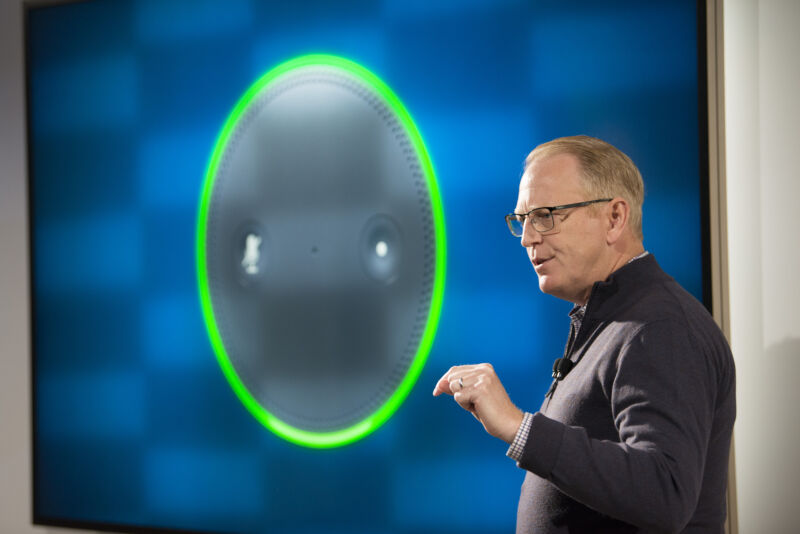
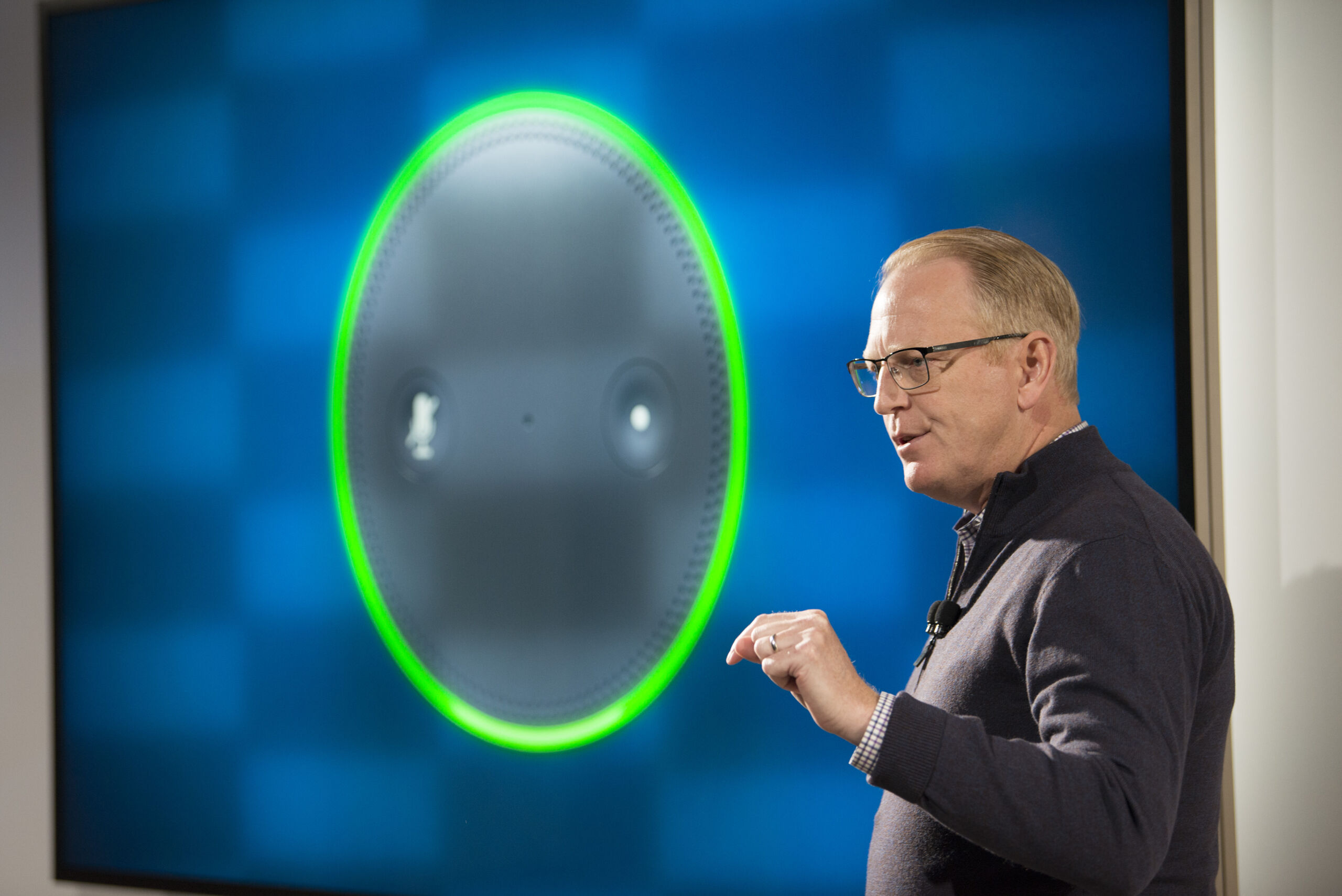
David Limp at Amazon's hardware event in Seattle, Washington on September 27, 2017.

Enlarge / David Limp at Amazon’s hardware event in Seattle, Washington, on September 27, 2017. (credit: Daniel Berman/Bloomberg via Getty Images)

As Amazon prepares for its annual hardware event tomorrow, Reuters is reporting feelings of trepidation and weakened morale among the company’s flailing hardware team. The beleaguered department is said to be worried about the potential of upcoming products, while being pressured by a push for cheaper hardware and the impending departure of long-time department head David Limp.

Reuters’ report today cited “more than 15 current and former employees” of Amazon’s Lab126 for developing hardware. The publication said it was able to uncover five devices Amazon was developing:

  • Carbon monoxide detector with Alexa
  • Household energy consumption monitor with Alexa
  • Digital measuring device with Alexa
  • Virus-testing device that was originally “intended to detect COVID,” Reuters said
  • Home projector

Some of Reuters’ sources pointed to additional projects, but the publication couldn’t verify full details. Amazon says it doesn’t comment on products in development.

Read 13 remaining paragraphs | Comments


Source: Ars Technica – Trepidation, hurt morale precede last-of-its-kind Amazon hardware event: report

Google’s AI protein folder IDs structure where none seemingly existed

Read 14 remaining paragraphs | Comments


Source: Ars Technica – Google’s AI protein folder IDs structure where none seemingly existed

SpaceX sues US attorney general in bid to stop hiring-discrimination case

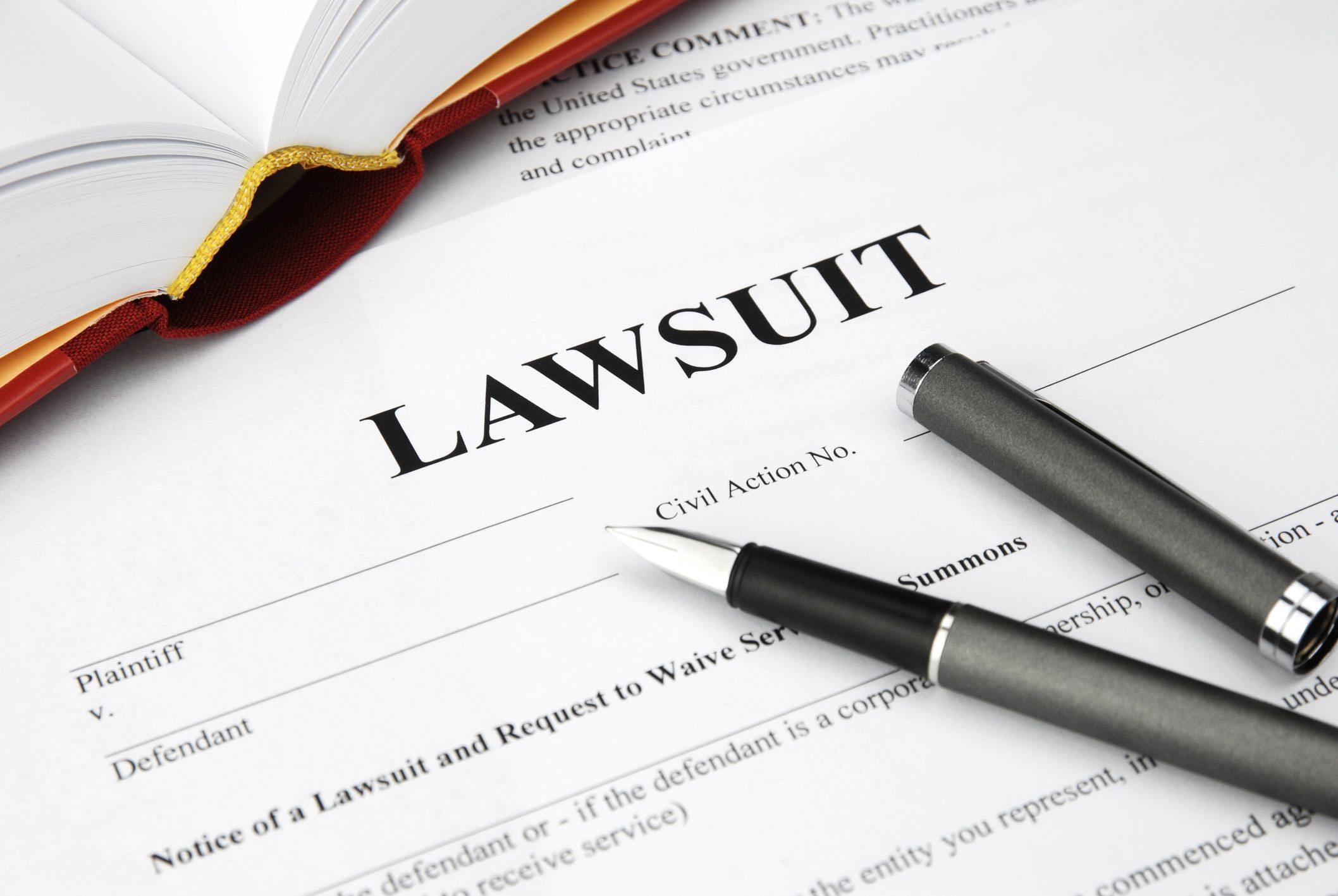
A pen and book resting atop a paper copy of a lawsuit.

Enlarge (credit: Getty Images | eccolo74)

SpaceX has sued US Attorney General Merrick Garland and two other Department of Justice officials in response to the government’s allegations that SpaceX discriminated against asylees and refugees in hiring. SpaceX denied the hiring discrimination claims and alleged that the DOJ’s administrative process for handling the discrimination complaint is unconstitutional.

The Justice Department filed an administrative complaint against SpaceX on August 24 alleging that from at least September 2018 to at least May 2022, Elon Musk’s space company “discriminated against asylees and refugees throughout its hiring process, including during recruiting, screening, and selection, in violation of the Immigration and Nationality Act.”

The DOJ suit alleged that “asylees and refugees had virtually no chance of being fairly considered for or hired for a job at SpaceX.” The DOJ complaint was filed through its own administrative hearing office in which cases are heard by administrative law judges. SpaceX is trying to stop that process by filing a lawsuit in US District Court for the Southern District of Texas.

Read 20 remaining paragraphs | Comments


Source: Ars Technica – SpaceX sues US attorney general in bid to stop hiring-discrimination case

Google’s AI assistant can now read your emails, plan trips, “double-check” answers

A robot swearing to tell the truth with its hand on a bible.

Enlarge (credit: Getty Images)

On Tuesday, Google announced updates to its Google Bard AI assistant—its version of ChatGPT—including integration with Google apps (such as Gmail, Docs, Drive, Google Maps, YouTube, and Google Flights) and a feature to double-check Bard’s answers against web content. It also added language support for over 40 languages.

Notably, Bard’s new “double-check button” has been designed to provide a counter against confabulations where Bard produces inaccurate information or makes things up (a concept often called “hallucinations” in the AI field). It’s a very public admission that Bard often lacks accuracy and isn’t a dependable factual reference. Here’s how Google describes it:

Starting today with responses in English, you can use Bard’s “Google it” button to more easily double-check its answers. When you click on the “G” icon, Bard will read the response and evaluate whether there is content across the web to substantiate it. When a statement can be evaluated, you can click the highlighted phrases and learn more about supporting or contradicting information found by Search.

To use the double-check feature, users can click a small “G” logo below Bard’s results. Bard will perform a search of the web and highlight sentences in its output that match affirmatively with a green highlight. Bard statements that contradict Google Search results get a peach-colored highlight. From our experiments, the double-check button reinforced some statements but did not always catch logical flaws in its output.

Read 4 remaining paragraphs | Comments


Source: Ars Technica – Google’s AI assistant can now read your emails, plan trips, “double-check” answers

Google Slides adds live collaborative mouse pointers

Google Slides adds live collaborative mouse pointers

Enlarge (credit: Google)

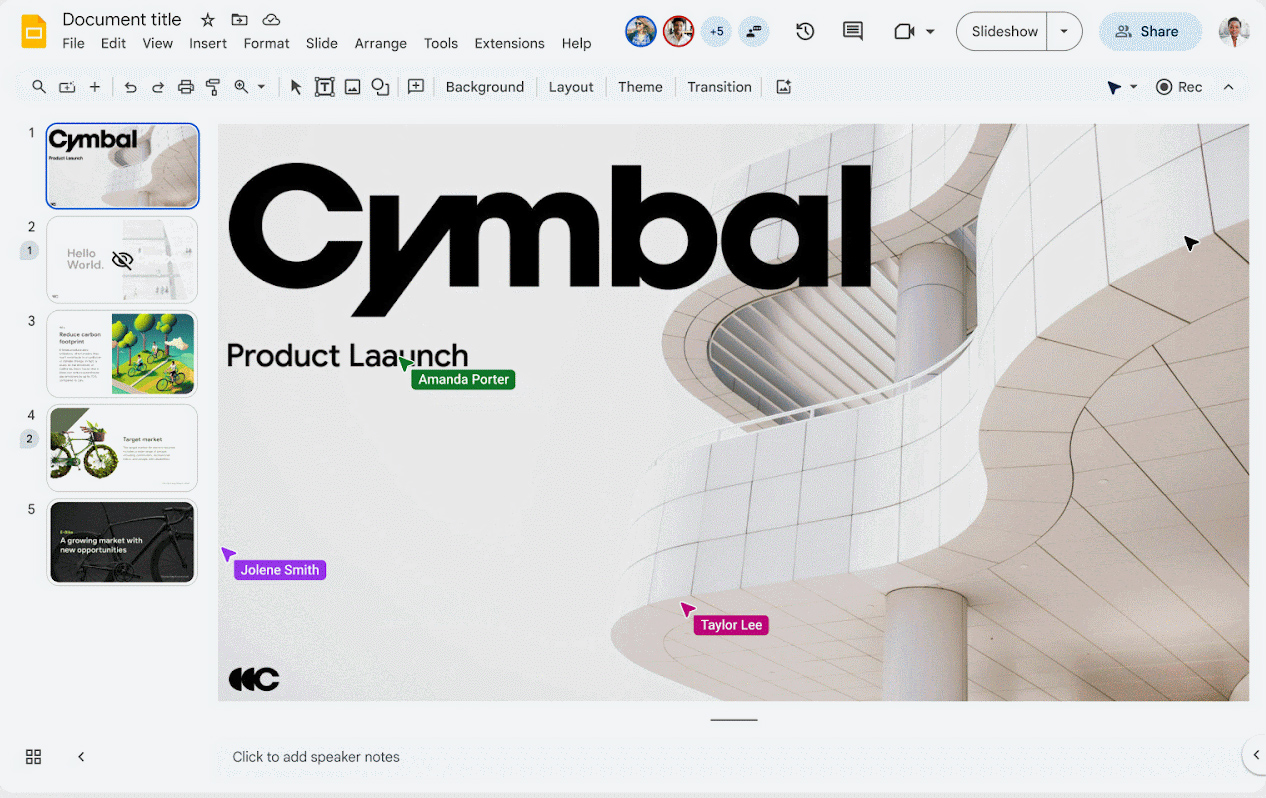
Google Slides, Google’s PowerPoint competitor, is getting a fun new collaborative feature: live mouse pointers. When multiple people are editing a presentation, they’ll be able to see everyone else’s mouse cursor, as if they’ve suddenly booted up a remote desktop instance.

Google Docs and Sheets have long had multiple typing indicators for each person, representing what sentence or cell they’re working on. That sort of thing doesn’t work well for presentations, though, which often involve images and rearranging things on a free-form layout. Slides will now offer live remote mouse pointers from other people participating in an edit, which will smoothly move around the screen just like a real mouse. This doesn’t seem particularly useful without some other form of communication, but if you’re on a voice or video call, the live cursor could let you easily point to things while you explain them.

Unlike Docs and Sheets collaborative indicators, each person must individually opt-in to sharing their pointer location. There’s now a pointer button in the top-right corner that will turn on sharing, or it can be turned on via the menu at “View > Live pointers > show my pointer.” If the idea of brightly colored mouse pointers dancing across the screen sounds too distracting, the option to hide other people’s mouse cursors altogether can be found at “View > Live pointers > show collaborator pointers.”

Read 1 remaining paragraphs | Comments


Source: Ars Technica – Google Slides adds live collaborative mouse pointers

Failure strikes Rocket Lab after launch from New Zealand

Read 18 remaining paragraphs | Comments


Source: Ars Technica – Failure strikes Rocket Lab after launch from New Zealand

Toyota reveals its plan to catch up on EV battery technology

Electric vehicle lithium ion rechargeable battery module inside metal enclosure packed for car, solid li-ion cell pack manufacturing for ev automotive energy storage industry 3D rendering

Enlarge (credit: Getty Images)

Toyota, the world’s largest automaker, has a problem. Although the company is famous for pioneering lean methods of manufacturing and being an early pioneer of hybrid electric powertrains, the switch to battery electric vehicles caught it somewhat unprepared. As rivals locked up contracts for critical minerals and formed joint ventures with battery makers (or built their own), Toyota has appeared to fall behind.

Now, it has released a new roadmap showing how it will regain competitiveness and sell 3.5 million EVs by 2030.

After some early experiments with electric-converted RAV4s (including a partnership with Tesla), Toyota has finally released a modern BEV, the bZ4x. The car had a difficult launch—a recall for wheels falling off will lead to that—but a week’s test of a bZ4x exceeded our low expectations. A look at the car’s specs makes clear Toyota’s problem, though: There are different battery packs for the single-motor and dual-motor versions, made by Panasonic and CATL, respectively.

Read 12 remaining paragraphs | Comments


Source: Ars Technica – Toyota reveals its plan to catch up on EV battery technology

FTC v. Microsoft document leak outs detailed plans for mid-gen Xbox refresh

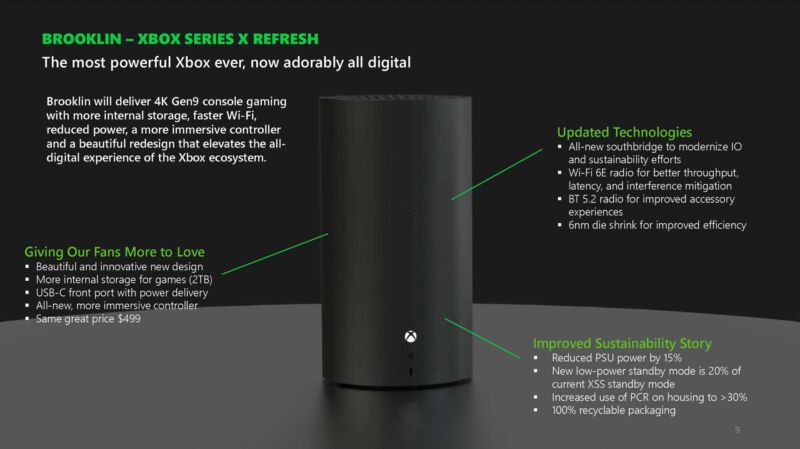
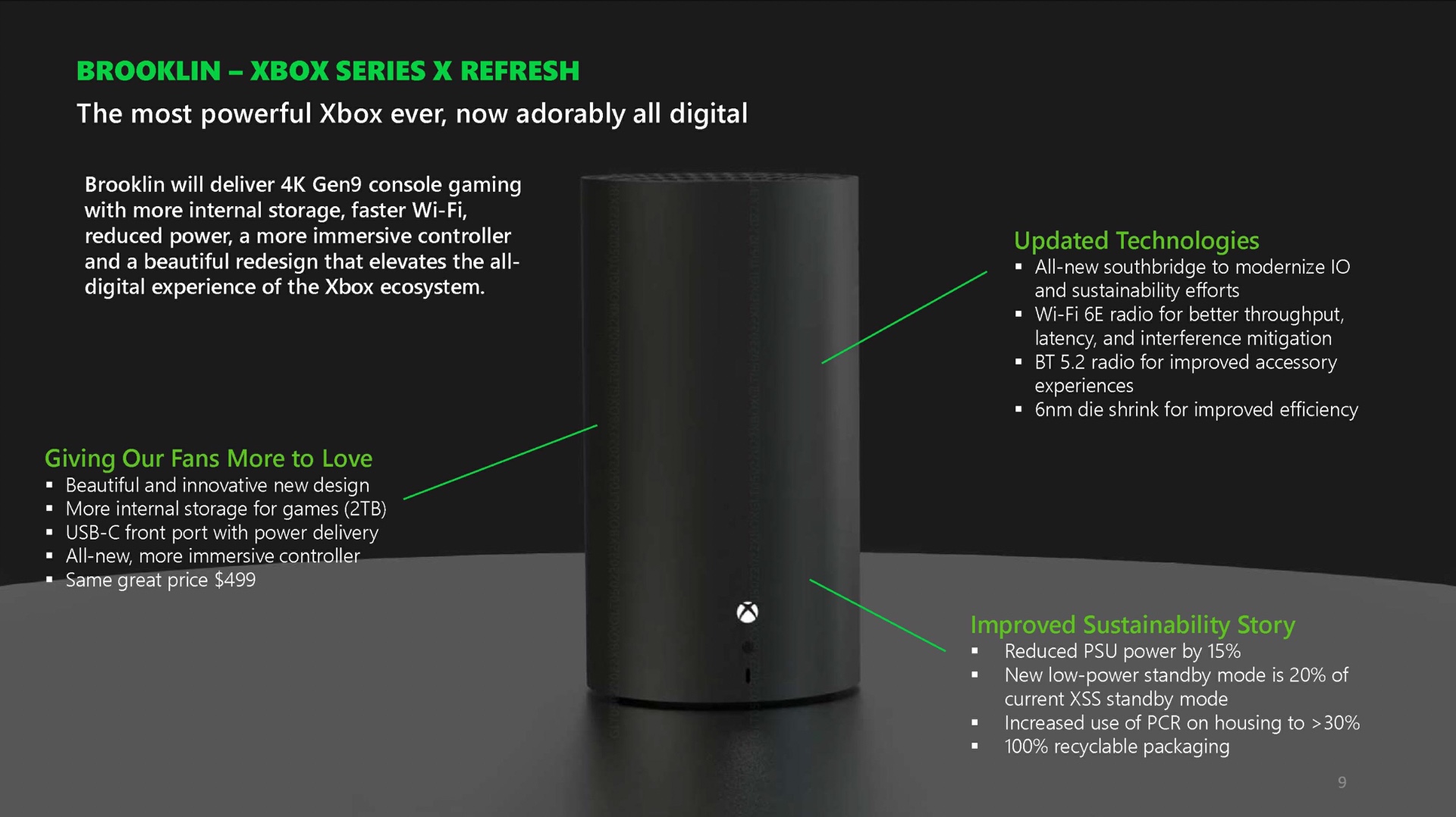
A leaked internal slide deck shows an unusually detailed preview of the Xbox Series X's proposed mid-generation refresh.

Enlarge / A leaked internal slide deck shows an unusually detailed preview of the Xbox Series X’s proposed mid-generation refresh. (credit: Microsoft)

The US Federal Trade Commission’s case against Microsoft didn’t ultimately block the company’s proposed $68.7 billion acquisition of Activision Blizzard, but leaked documents from the case are giving us an unusually detailed look at Microsoft’s near-future plans for the Xbox. Court documents published by the Verge include a slide deck, complete with renders, that detail a mid-generation refresh of both Xbox Series consoles, plus a revamped controller with an updated design and new features.

The biggest changes are coming to the Xbox Series X. Codenamed “Brooklin,” the updated console looks like a marriage of the original boxy monolith that is the Series X and the cylindrical design of Apple’s old “trash can” Mac Pro. The console would be all-digital, ditching its optical drive but stepping up from 1TB to 2TB of internal storage. The port on the front changes from USB-A to USB-C, and the console would include Wi-Fi 6E and Bluetooth 5.2 upgrades.

On the inside, the console’s CPU and GPU would use a 6 nm manufacturing process instead of the current 7 nm process. Because the specs are changing, this means power consumption will go down, and the deck indicates that the console’s power supply will be 15 percent smaller than the current Series X (that measures out to around 270 W, based on the 315 W capacity of the current power supply). An “all-new southbridge” will “modernize IO,” and a “new low-power standby mode” would use just 20 percent as much power as the current console’s standby mode.

Read 7 remaining paragraphs | Comments


Source: Ars Technica – FTC v. Microsoft document leak outs detailed plans for mid-gen Xbox refresh

How scientists are mitigating space travel’s risks to the human body

With NASA planning more missions to space in the future, scientists are studying how to mitigate health hazards that come with space flight

Enlarge / With NASA planning more missions to space in the future, scientists are studying how to mitigate health hazards that come with space flight (credit: SpaceX)

When 17 people were in orbit around the Earth all at the same time on May 30, 2023, it set a record. With NASA and other federal space agencies planning more manned missions and commercial companies bringing people to space, opportunities for human space travel are rapidly expanding.

However, traveling to space poses risks to the human body. Since NASA wants to send a manned mission to Mars in the 2030s, scientists need to find solutions for these hazards sooner rather than later.

As a kinesiologist who works with astronauts, I’ve spent years studying the effects space can have on the body and brain. I’m also involved in a NASA project that aims to mitigate the health hazards that participants of a future mission to Mars might face.

Read 18 remaining paragraphs | Comments


Source: Ars Technica – How scientists are mitigating space travel’s risks to the human body

Chinese hackers have unleashed a never-before-seen Linux backdoor

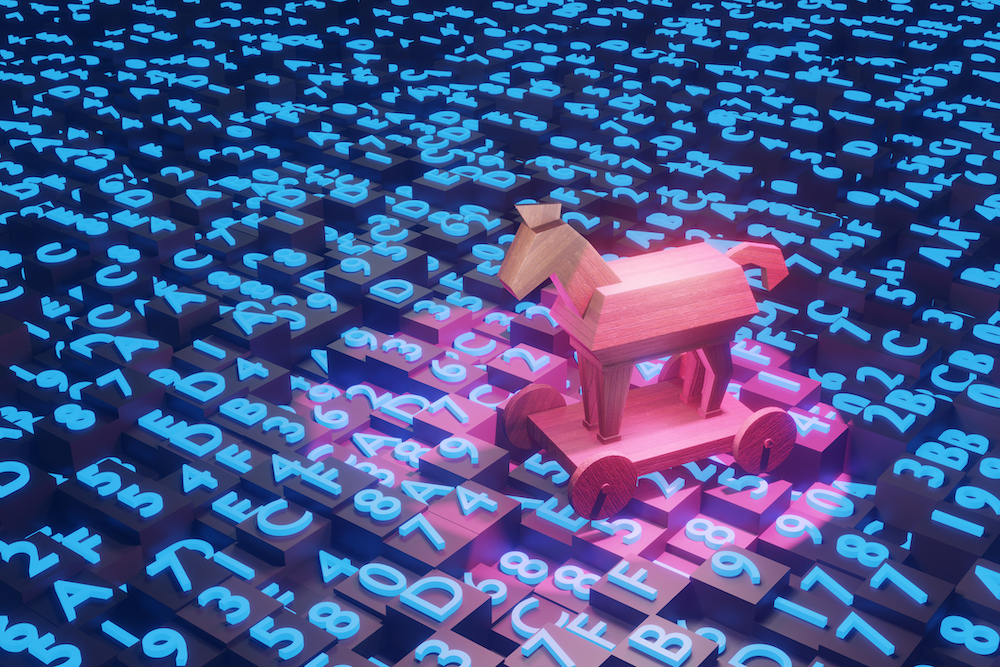
Trojan horse on top of blocks of hexadecimal programming codes. Illustration of the concept of online hacking, computer spyware, malware and ransomware.

Enlarge

Researchers have discovered a never-before-seen backdoor for Linux that’s being used by a threat actor linked to the Chinese government.

The new backdoor originates from a Windows backdoor named Trochilus, which was first seen in 2015 by researchers from Arbor Networks, now known as Netscout. They said that Trochilus executed and ran only in memory, and the final payload never appeared on disks in most cases. That made the malware difficult to detect. Researchers from NHS Digital in the UK have said Trochilus was developed by APT10, an advanced persistent threat group linked to the Chinese government that also goes by the names Stone Panda and MenuPass.

Other groups eventually used it, and its source code has been available on GitHub for more than six years. Trochilus has been seen being used in campaigns that used a separate piece of malware known as RedLeaves.

Read 8 remaining paragraphs | Comments


Source: Ars Technica – Chinese hackers have unleashed a never-before-seen Linux backdoor

More than half of Americans plan to get updated COVID shot

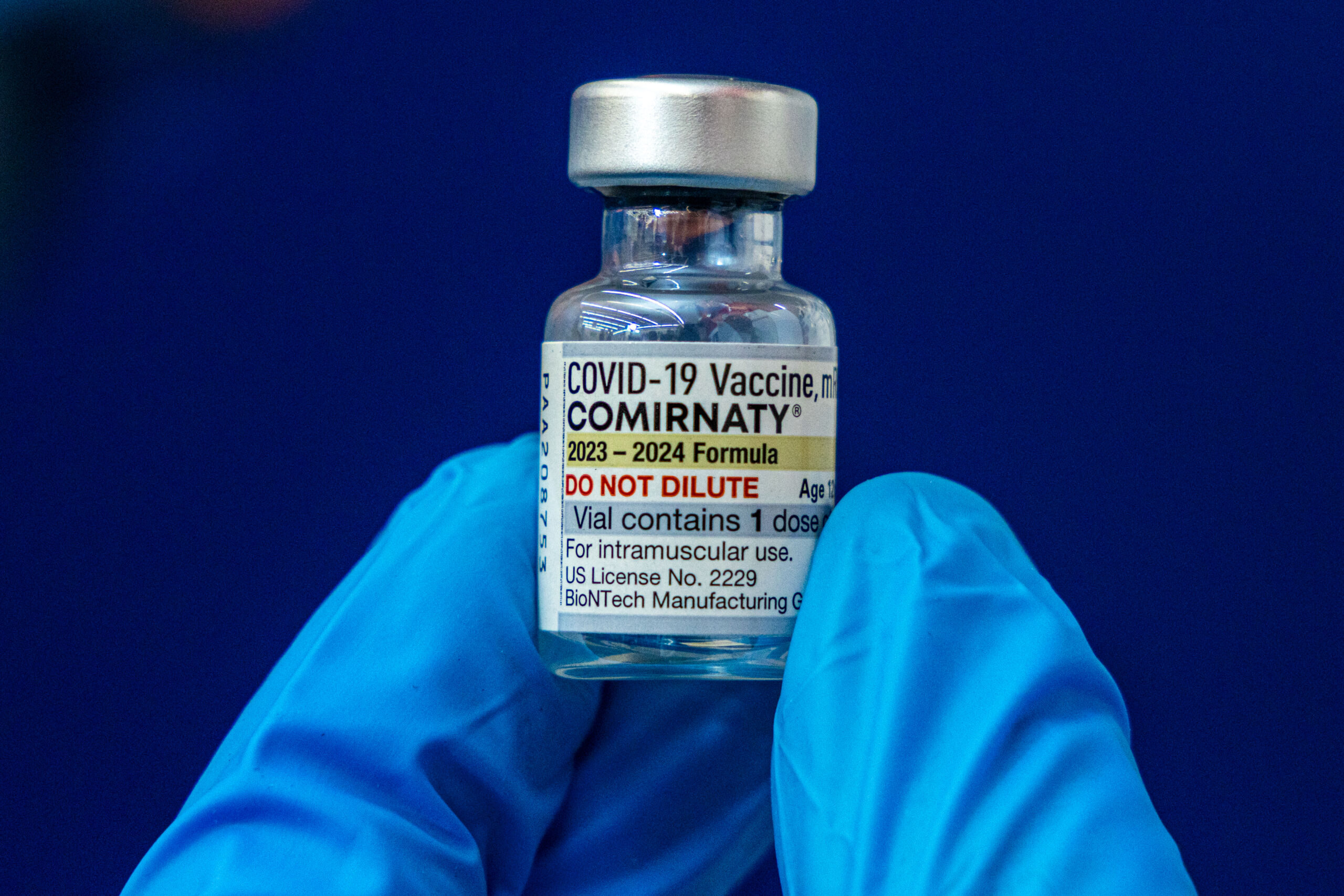
A vial of the updated 2023-2024 formula of Pfizer's COVID-19 vaccine at a CVS Pharmacy in Eagle Rock, California, on September 14, 2023.

Enlarge / A vial of the updated 2023-2024 formula of Pfizer’s COVID-19 vaccine at a CVS Pharmacy in Eagle Rock, California, on September 14, 2023. (credit: Getty | Irfan Khan)

Despite last year’s abysmal fall booster campaign, more than half of US adults say they plan to get the latest COVID-19 vaccine, which was greenlit by federal authorities last week.

According to polling by Politico and Morning Consult, 57 percent of registered voters said they would “probably” or “definitely” get the vaccine, which is a monovalent shot that targets the recent omicron subvariant, XBB.1.5. Specifically, 20 percent of voters said they would probably get the shot, while 37 percent said they definitely would.

Collectively, that’s nearly triple the actual uptake of last year’s updated vaccine, a bivalent shot that targeted both the ancestral strain and the omicron subvariants BA.4/5. In total, 20.5 percent of people aged 18 or older received that shot, according to the most recent data from the Centers for Disease Control and Prevention. Overall, 17 percent of the US population got the bivalent booster.

Read 6 remaining paragraphs | Comments


Source: Ars Technica – More than half of Americans plan to get updated COVID shot