The best laptop deals aren’t on Amazon. Here’s where to shop during Prime Big Deal Days

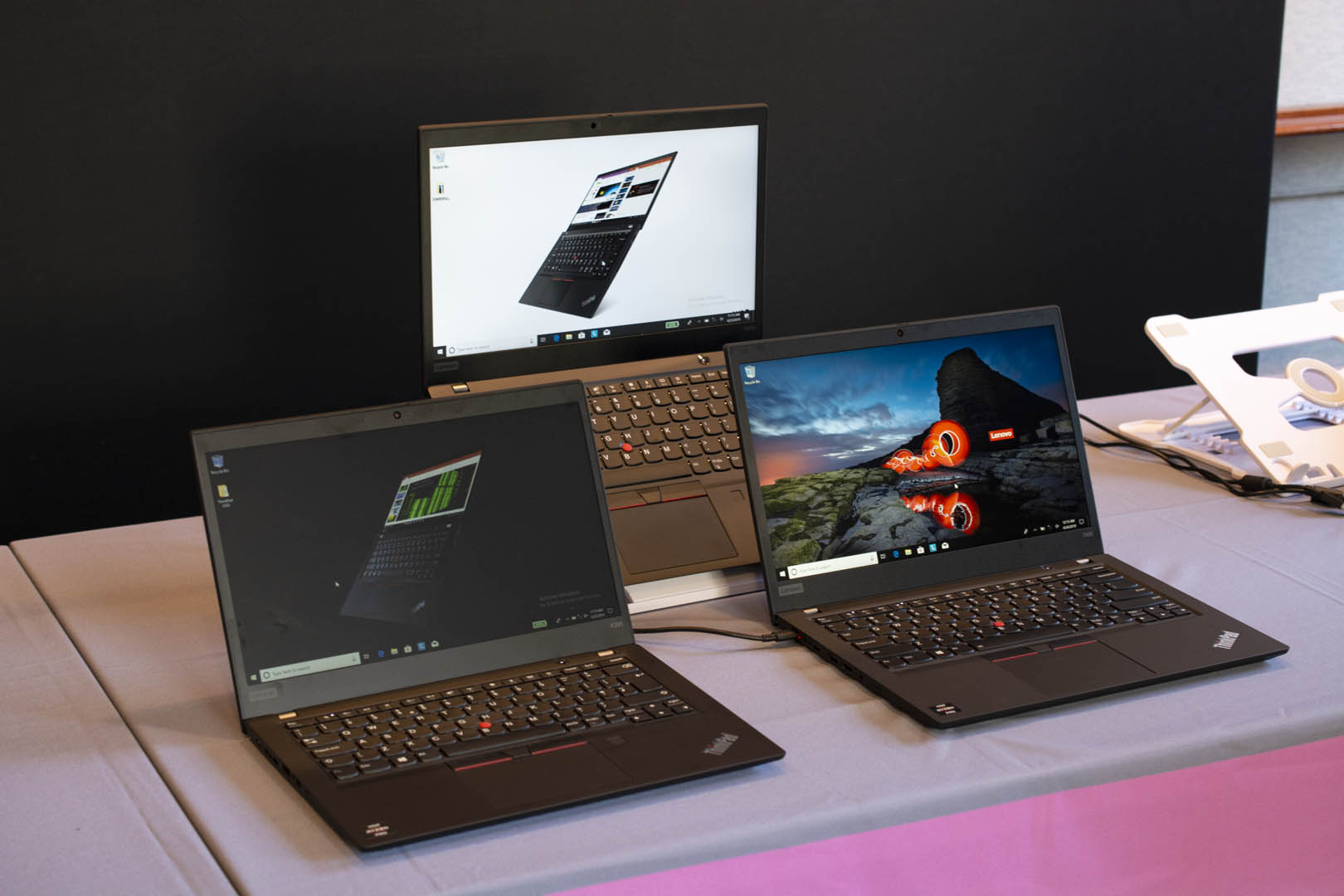
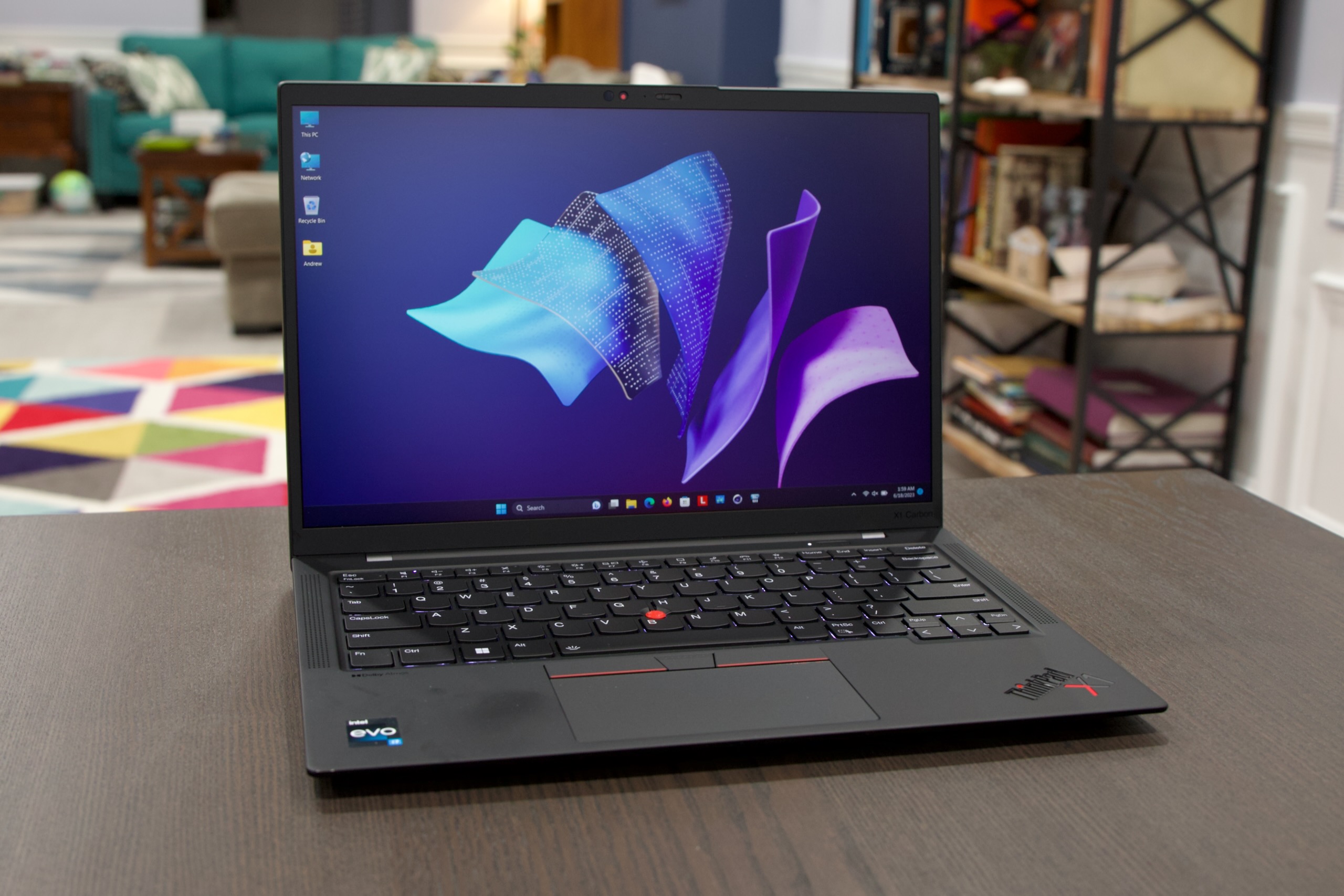
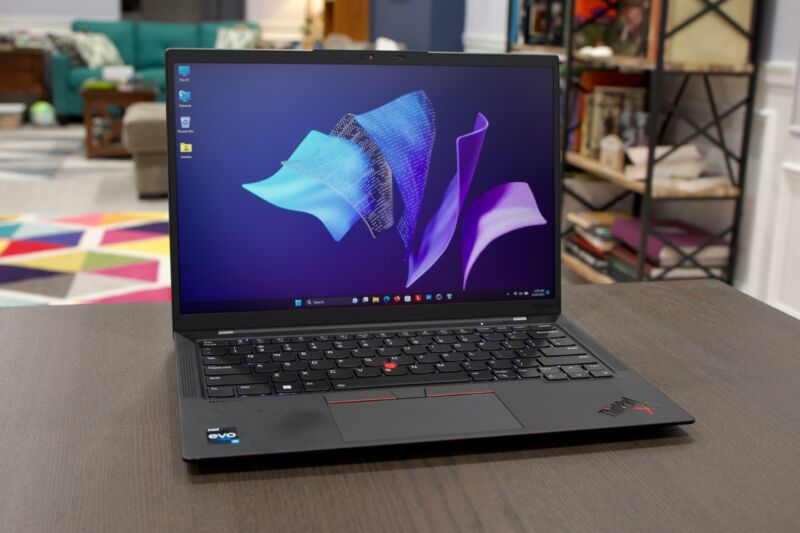
Lenovo's ThinkPad X1 Carbon Gen 11.

Enlarge / Lenovo’s ThinkPad X1 Carbon Gen 11. (credit: Andrew Cunningham)

If you’re in the market for a new laptop or mobile workstation, Amazon Prime Big Deal Days are packed with terrific PC deals. However, depending on what you’re looking for, Amazon may not be the destination for the best savings. In addition to Amazon, manufacturers like HP, Dell, and Lenovo are running their own sales, and Best Buy has some big discounts on Microsoft Surface products. We’ve rounded up some of the best laptop deals in this Dealmaster. And if you prefer to use your Prime membership for the free two-day shipping, we also have you covered.

Lenovo deals

  • Lenovo ThinkPad X1 Carbon Gen 11 (14-inch, Intel Core i7-1365U) for $1,615 (was $3,229) at Lenovo
  • Lenovo Yoga 7i (16-inch, Intel Core i5-1340P) for $855 (was $1,140) at Lenovo
  • Lenovo ThinkPad L13 Gen 2 AMD (13-inch, AMD Ryzen 5 Pro 5650U) for $389 (was $1,639) at Lenovo
  • Lenovo IdeaPad 1 (15-inch, AMD Athlon Gold 7220U) for $280 (was $400) at Lenovo
  • Lenovo ThinkBook 15 Gen 4 (15-inch, Intel Core i5-1235U) for $780 (was $1,499) at Lenovo
  • Lenovo Legion Slim 7 Gen 8 (16-inch, AMD Ryzen 7 7840HS and RTX 4060) for $1,400 (was $1,680) at Lenovo
  • Lenovo ThinkPad X1 Carbon Gen 10 (14-inch, Intel Core i7-1270P) for $1,443 (was $3,609) at Lenovo
  • Lenovo ThinkPad P16 Gen 2 (16-inch, Intel Core i9-13950HX and RTX A5000) for $5,469 (was $9,939) at Lenovo
  • Lenovo Slim Pro 7 (14-inch, AMD Ryzen 7 7840HS and RTX 3050) for $1,085 (was $1,450) at Lenovo
  • Lenovo Legion Pro 5i Gen 8 (16-inch, Intel Core i5-13500HX and RTX 4050) for $1,100 (was $1,480) at Lenovo
  • Lenovo ThinkPad E16 Gen 1 (16-inch, Intel Core I5-1335U) for $797 (was $1,449) at Lenovo
  • Lenovo ThinkBook 15 Gen 4 (15-inch, AMD Ryzen 7 5825U) for $764 (was $1,469) at Lenovo
  • Lenovo ThinkPad P14s Gen 4 (14-inch, Intel Core i7-1360P and RTX A500) for $1,859 (was $3,389) at Lenovo
  • Lenovo IdeaPad Slim 3 (15-inch, AMD Ryzen 3 7330U) for $440 (was $650) at Lenovo
  • Lenovo 3i Chromebook (15-inch, Intel Pentium Silver N6000) for $310 (was $440) at Lenovo
  • Lenovo IdeaPad Slim 3i Chromebook (14-inch, Intel Core i3-N305) for $425 (was $550) at Lenovo
  • Lenovo ThinkPad X13 Yoga Gen 2 (13-inch, Intel Core i5-1145G7) for $739 (was $3,129) at Lenovo
  • Lenovo ThinkPad T14s Gen 2 (14-inch, Intel Core i5-1145G7) for $869 (was $3,629) at Lenovo
  • Lenovo ThinkPad X13 Yoga Gen 2 (13-inch, Intel Core i5-1145G7) for $729 (was $3,089) at Lenovo
  • Lenovo ThinkBook 14 Gen 4 (14-inch, Intel Core i5-1235U) for $730 (was $1,404) at Lenovo
  • Lenovo LOQ (16-inch, Intel Core i5-13500H and RTX 4050) for $850 (was $1,200) at Lenovo
  • Lenovo ThinkPad T14s Gen 4 (14-inch, AMD Ryzen 5 Pro 7540U) for $907 (was $1,649) at Lenovo
  • Lenovo LOQ (15-inch, Intel Core i7-13700H and RTX 4050) for $1,050 (was $1,400) at Lenovo
  • Lenovo ThinkPad X13 Gen 4 (13-inch, Intel Core i7-1355U) for $1,094 (was $2,189) at Lenovo
  • Lenovo ThinkPad E14 Gen 4 (14-inch, AMD Ryzen 7 5825U) for $1,204 (was $2,189) at Lenovo
  • Lenovo Legion Slim 5i Gen 8 (16-inch, Intel Core i5-13500H and RTX 4050) for $1,050 (was $1,350) at Lenovo
  • Lenovo ThinkPad T14s Gen 4 (14-inch, Intel Core i5-1345U) for $1,490 (was $2,709) at Lenovo
  • Lenovo ThinkPad P16s Gen 2 (16-inch, Intel Core i7-1360P and RTX A500) for $1,529 (was $2,789) at Lenovo
  • Lenovo ThinkPad P16 Gen 2 (16-inch, Intel Core i7-13700HX and RTX A1000) for $2,139 (was $3,899) at Lenovo
  • Lenovo ThinkPad P1 Gen 6 (16-inch, Intel Core i7-13700H and RTX A2000) for $2,409 (was $4,389) at Lenovo
  • Logitech MX Keys Mini Combo for $150 (was $200) at Lenovo
  • Logitech MK750 Wireless Solar Keyboard and Mouse for $68 (was $85) at Lenovo
  • Logitech Lift for Business (Graphite) mouse for $56 (was $70) at Lenovo

Best Buy

  • Apple MacBook Air 15-inch Laptop – M2 chip for $1,049 (was $1,299) at Best Buy
  • Apple 10.2-Inch iPad (9th Generation) for $270 (was $330) at Best Buy
  • Apple 10.9-Inch iPad Air (5th Generation) for $500 (was $600) at Best Buy
  • Microsoft Surface Laptop 4 (13.5-inch, AMD Ryzen 5 Surface Edition) for $700 (was $900) at Best Buy
  • Microsoft Surface Laptop 5 (13.5-inch, Intel Evo Platform Core i5) for $900 (was $1,000) at Best Buy
  • Microsoft Surface Laptop Go 2 (12.4-inch, Intel Core i5) for $600 (was $700) at Best Buy
  • Microsoft Surface Laptop Studio (14.4-inch, Intel Core i5) for $1,100 (was $1,600) at Best Buy

Dell

  • Dell Inspiron 15 Laptop (15-inch, Intel Core i3-1215U) for $300 (was $330) at Dell
  • Dell Inspiron 15 Laptop (15-inch, Intel Core i5-1135G7) for $330 (was $530) at Dell
  • Dell XPS 13 Laptop (13-inch, Intel Core i5-1230U) for $599 (was $799) at Dell
  • Dell XPS 17 Laptop (17-inch, Intel Core i7-13700H and RTX 4060) for $1,799 (was $2,399) at Dell
  • Dell Inspiron 14 (14-inch, Qualcomm Snapdragon) for $300 (was $500) at Dell
  • Dell XPS 13 Laptop (13-inch, Intel Core i7-1250U) for $1,099 (was $1,349) at Dell
  • Dell XPS 13 Laptop (13-inch, Intel Core i7-1250U) for $849 (was $1,099) at Dell
  • Dell Inspiron 14 2-in-1 Laptop (14-inch, AMD Ryzen 5 7530U) for $500 (was $700) at Dell
  • Dell XPS 15 Laptop (15-inch, Intel Core i7-13700H and ARC A370M) for $1,199 (was $1,499) at Dell
  • Dell XPS 15 Laptop (15-inch, Intel Core i9-13900H and RTX 4060) for $1,999 (was $2,499) at Dell
  • Dell Inspiron 16 Laptop (16-inch, Intel Core i5-1335U) for $530 (was $850) at Dell
  • Dell XPS 15 Laptop (15-inch, Intel Core i7-13700H and RTX 4050) for $1,749 (was $2,149) at Dell
  • Dell XPS 15 Laptop (15-inch, Intel Core i9-13900H and RTX 4070) for $2,399 (was $2,999) at Dell
  • Dell XPS 13 Laptop (13-inch, Intel Core i7-1360P) for $1,599 (was $1,949) at Dell
  • Dell Inspiron 16 2-in-1 Laptop (16-inch, AMD Ryzen 5 7530U) for $650 (was $850) at Dell
  • Dell Inspiron 14 Plus Laptop (14-inch, Intel Core i7-12700H) for $700 (was $1,300) at Dell
  • Dell Latitude 3420 Laptop (14-inch, Intel Core i7-1165G7) for $699 (was $1,396) at Dell
  • Dell Latitude 3440 Laptop (14-inch, Intel Core i5-1335U) for $849 (was $1,550) at Dell
  • Dell Latitude 5540 Laptop (15-inch, Intel Core i5-1335U) for $939 (was $1,879) at Dell
  • Dell Vostro 14 Laptop (14-inch, Intel Core i5-1335U) for $549 (was $749) at Dell
  • Dell Precision 3581 Workstation (15-inch, Intel Core i7-13800H and RTX A500) for $1,739 (was $3,479) at Dell
  • Dell Precision 3480 Workstation (14-inch, Intel Core i7-1370P and RTX A500) for $2,049 (wa $3,538) at Dell
  • Dell Precision 3470 Workstation (14-inch, Intel Core i7-1270P) for $759 (was $1,515) at Dell
  • Dell Vostro 16 (16-inch, Intel Core i7-1360P and RTX 2050) for $849 (was $1,199) at Dell
  • Dell Precision 7670 Workstation (16-inch, Intel Core i5-12600HX and RTX A2000) for $1,249 (was $2,505) at Dell
  • Dell G15 Gaming Laptop (15-inch, AMD Ryzen 7 7840HS and RTX 4050) for $800 (was $1,200) at Dell
  • Alienware m16 Gaming Laptop (16-inch, Intel Core i7-13700HX and RTX 4070) for $1,400 (was $2,000) at Dell
  • Alienware m18 Gaming Laptop (18-inch, Intel Core i9-13980HX and RTX 4090) for $3,300 (was $4,300) at Dell
  • Alienware m16 Gaming Laptop (16-inch, Intel Core i7-13700HX and RTX 4060) for $1,350 (was $1,700) at Dell
  • Alienware x16 Gaming Laptop (16-inch, Intel Core i7-13700H and RTX 4070) for $2,000 (was $2,400) at Dell
  • Alienware x16 Gaming Laptop (16-inch, Intel Core i9-13900HK and RTX 4090) for $3,100 (was $3,800) at Dell
  • Alienware x14 R2 Gaming Laptop (14-inch, Intel Core i7-13620H and RTX 4060) for $1,600 (was $2,000) at Dell

HP

  • HP Pavilion Laptop 15t-eg300 (15-inch, Intel Core i7-1355U) for $580 (was $1,000) at HP
  • HP Pavilion Plus Laptop 14-eh1047nr (14-inch, Intel Core i5-13500H) for $700 (was $950) at HP
  • HP Envy Laptop 17-cw0097nr (17-inch, Intel Core i7-1355U and RTX 3050) for $1,350 (was $1,750) at HP
  • HP Spectre x360 2-in-1 Laptop 14t-ef200 (13-inch, Intel Core i5-1355U) for $950 (was $1,400) at HP
  • HP Laptop 14z-em000 (14-inch, AMD Ryzen 5 7530U) for $350 (was $630) at HP
  • HP ENVY Laptop 17t-cr100 (17-inch, Intel Core i5-13500H) for $650 (was $1,050) at HP
  • HP Laptop 17z-cp200 (17-inch, AMD Athlon Gold 7220U) for $280 (was $500) at HP
  • OMEN by HP Gaming Laptop 16z-xd000 (16-inch, AMD Ryzen 5 7640HS and RTX 4050) for $900 (was $1,300) at HP
  • HP Envy x360 2-in-1 Laptop 15-ew1047nr (15-inch, Intel Core i5-1335U) for $850 (was $1,150) at HP
  • HP Chromebook 14a-na1047nr (14-inch, Intel Celeron N4500) for $215 (was $280) at HP

Microsoft

  • Microsoft Surface Pro 9—save up to $500 with prices starting at $900 at Microsoft
  • Microsoft Surface Laptop 5—save up to $451 with prices starting at $900 at Microsoft
  • Microsoft Surface Go 3—save up to $100 with prices starting at $400 at Microsoft
  • Microsoft Surface Laptop Go 2—save up to $200 with prices starting at $550 at Microsoft
  • Microsoft Surface Laptop 4—save up to $1,000 with prices starting at $700 at Microsoft

Walmart

  • Lenovo Ideapad 5 (14-inch, AMD Ryzen 7 5700U) for $449 (was $830) at Walmart
  • Microsoft Surface Pro 8 (13-inch, Intel Core i5-1135G7) for $690 (was $900) at Walmart
  • HP Laptop (15-inch, AMD Ryzen 5 7520U) for $399 (was $449) at Walmart
  • MSI Sword 15 1(15-inch, Intel Core i7-12650H and RTX 4060) for $899 (was $1,099) at Walmart
  • ASUS VivoBook (15-inch OLED, AMD Ryzen 7 5800H) for $549 (was $699) at Walmart
  • Lenovo Ideapad Flex 5i (15-inch, Intel Core i5-1135G7) for $499 (was $709) at Walmart
  • Lenovo IdeaPad 1i (15-inch, Intel Core i3-1215U) for $329 (was $550) at Walmart
  • Lenovo Ideapad 5 (14-inch, AMD Ryzen 7 5700U) for $449 (was $548) at Walmart

Amazon

  • Apple MacBook Air 13.3-inch Laptop M1 for $750 (was $999) at Amazon
  • Apple iPad Air (5th Generation) for $500 (was $599) at Amazon
  • Apple iPad (9th Generation) for $249 (was $329) at Amazon
  • Apple iPad Mini (6th Generation) for $469 (was $499) at Amazon
  • Apple iPad Pro 12.9-inch (6th Generation) for $1,049 (was $1,099) at Amazon
  • Lenovo Flex 5 Laptop (14-inch, AMD Ryzen 5 5500U) for $612 (was $800) at Amazon
  • Lenovo Flex 5 Laptop (14-inch, AMD Ryzen 7 7730U) for $735 (was $850) at Amazon
  • Razer Blade 15 Gaming Laptop (15-inch, 12th Gen Intel Core i7 and 3080 Ti) for $2,400 (was $3,700) at Amazon
  • Asus ROG Strix G16 (2023) Gaming Laptop (16-inch, Intel Core i9-13980HX and RTX 4070) for $1,680 (was $2,000) at Amazon
  • Lenovo 3i Chromebook (15-inch, Intel Celeron N4500) for $255 (was $300) at Amazon
  • Acer Nitro 17 Gaming Laptop (17-inch, AMD Ryzen 7 7840HS and RTX 4060) for $1,050 (was $1,400) at Amazon
  • CyberpowerPC Gamer Xtreme VR Gaming PC (Intel Core i7-12700F) for $1,060 (was $1,170) at Amazon
  • Acer Nitro 17 Gaming Laptop (17-inch, AMD Ryzen 7 7840HS and RTX 4050) for $950 (was $1,200) at Amazon
  • Dell Inspiron 3020 Desktop (Intel Core i7-13700 and RTX 3060) for $1,340 (was $1,600) at Amazon
  • Samsung Galaxy Book3 Pro (14-inch, Intel Core i7-1360P Processor) for $1,310 (was $1,650) at Amazon
  • MSI Creator M16 (16-inch, 13th Gen Intel Core i7 and RTX 4060) for $1,100 (was $1,600) at Amazon
  • MSI Raider GE76 Gaming Laptop (17-inch, Intel Core i9-12900H and RTX 3060) for $1,000 (was $1,375) at Amazon
  • Asus Vivobook Pro 16X Laptop (16-inch, Intel Core i9-13980HX and RTX 4070) for $1,800 (was $2,200) at Amazon
  • HP 15 Laptop (15-inch, Intel Core i3-1215U) for $320 (was $500) at Amazon
  • Asus Vivobook 15 Laptop, (15-inch, Intel Core i3-1215U) for $270 (was $370) at Amazon
  • Dell Inspiron 7630 Laptop (16-inch, Intel Core i7-13700H and RTX 3050) for $1,110 (was $1,400) at Amazon
  • Asus Vivobook 14 Laptop (14-inch, Intel Core i5-1235U) for $400 (was $480) at Amazon

Ars Technica may earn compensation for sales from links on this post through affiliate programs.

Read on Ars Technica | Comments


Source: Ars Technica – The best laptop deals aren’t on Amazon. Here’s where to shop during Prime Big Deal Days

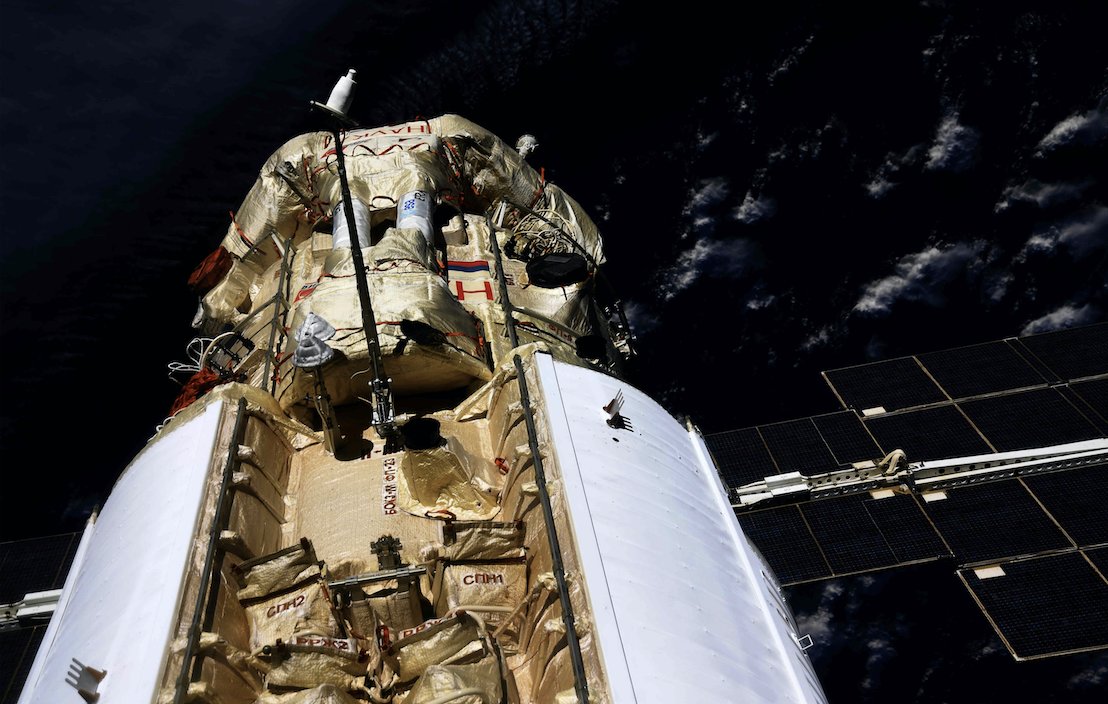
For the third time in a year, Russian hardware on the space station is leaking

Read 14 remaining paragraphs | Comments


Source: Ars Technica – For the third time in a year, Russian hardware on the space station is leaking

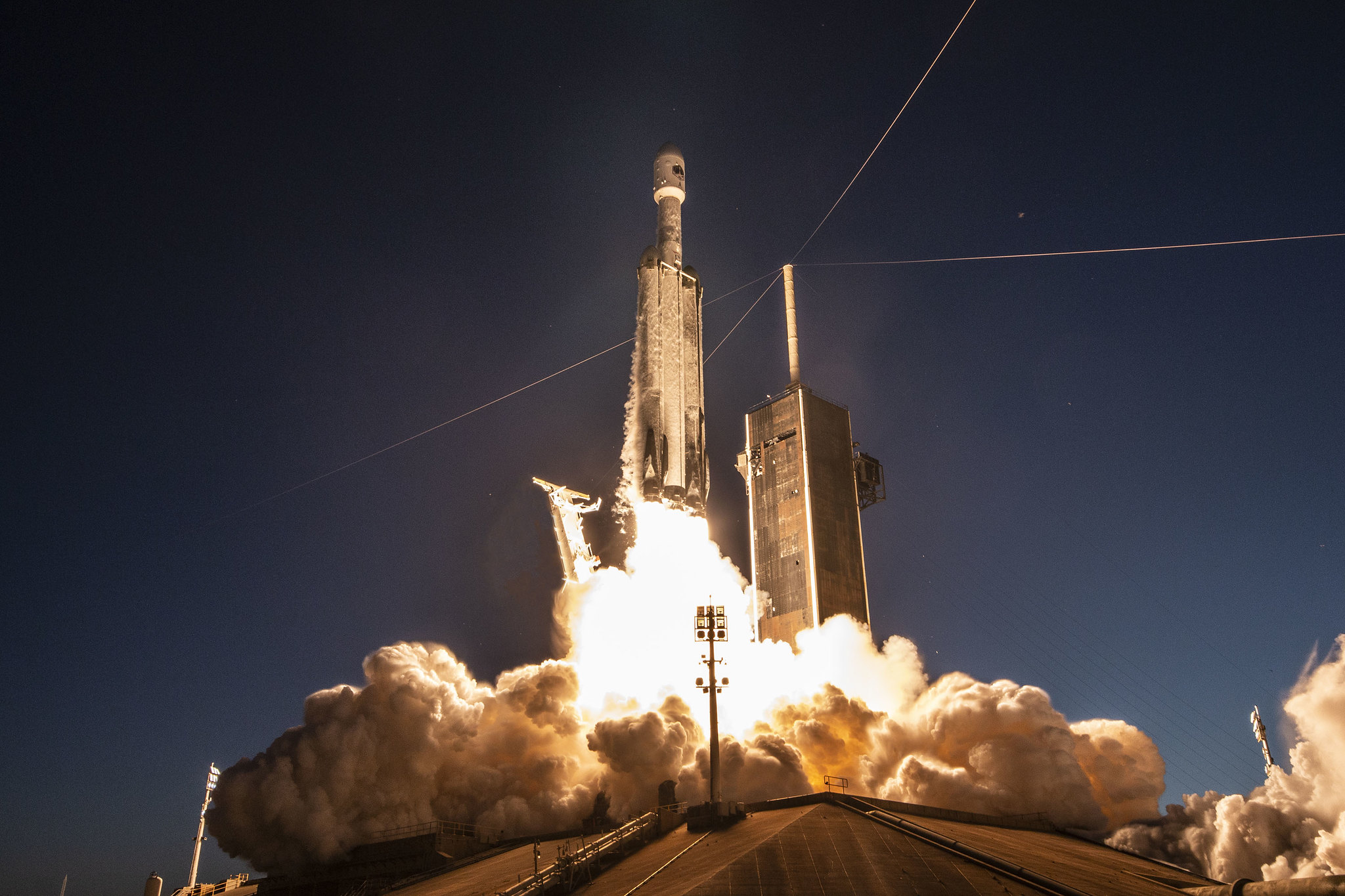
SpaceX’s Falcon Heavy rocket is about to become a workhorse for NASA

Read 33 remaining paragraphs | Comments


Source: Ars Technica – SpaceX’s Falcon Heavy rocket is about to become a workhorse for NASA

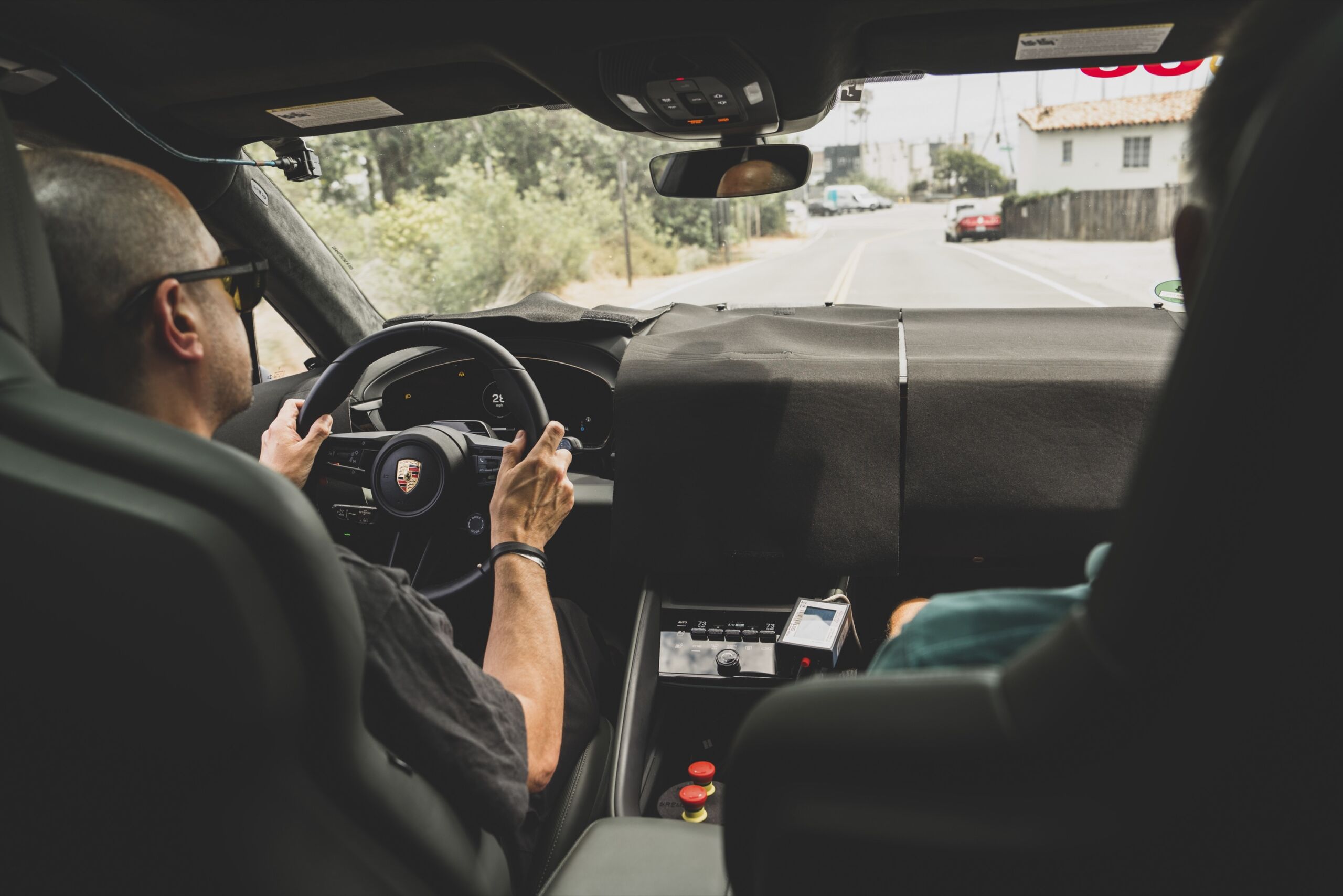
Porsche’s Macan EV comes out in 2024—we drive the prototype

Several black Porsche Macan prototypes drive east away from the setting sun

Enlarge / The 2024 Porsche Macan is still months away from going on sale, but Porsche let us drive the prototype in Los Angeles this summer. (credit: Porsche)

MARINA DEL REY, Calif.—Porsche’s plans to electrify 80 percent of its product range by 2030 requires the German automaker to offer more than just Taycans. Other than the 911, which probably won’t be a battery-electric vehicle (unless and) until solid-state batteries alter the energy-to-mass calculations, that means everything else in the lineup will need to trade engine, exhaust, and fuel tank for a battery pack and an electric motor or two. And it’s starting with its second-best-selling model, the Macan crossover.

An all-new Macan arrives in showrooms next year for model year 2024 and will confusingly coexist for some time alongside the current gas-burning Macan, which recently went through its midlife refresh. The new version is entirely electric, however, and will be built on a new 800 V architecture called Premium Platform Electric, being developed by Porsche together with its corporate sibling, Audi.

Spy shots of barely disguised Macan EVs have been circulating for some time as Porsche puts on its finishing touches. Some of those test cars have even been spotted here in the US; a couple of years ago, it decided to develop local market prototypes. For our market, that means things like making sure the satellite radio works and that the advanced driver assistance system (or ADAS) can read our road signs and knows that on US highways, faster traffic rarely sticks to the leftmost lane.

Read 11 remaining paragraphs | Comments


Source: Ars Technica – Porsche’s Macan EV comes out in 2024—we drive the prototype

Unity CEO John Riccitiello is retiring, effective immediately

Unity CEO John Riccitiello

Enlarge / Former Unity CEO John Riccitiello. (credit: Unity)

John Riccitiello, CEO of Unity, the company whose 3D game engine had recently seen backlash from developers over proposed fee structures, will retire as CEO, president, and board chairman at the company, according to a press release issued late on a Monday afternoon, one many observe as a holiday.

Riccitiello “will continue to advise Unity to ensure a smooth transition,” the company stated, as it seeks to find a permanent CEO. James M. Whitehurst, a former Red Hat and IBM executive, will serve as interim CEO, while Roelof Botha, lead independent director of the Unity board, is now chairman.

“It’s been a privilege to lead Unity for nearly a decade and serve our employees, customers, developers and partners, all of whom have been instrumental to the Company’s growth,” Riccitiello said. “I look forward to supporting Unity through this transition and following the Company’s future success.”

Read 1 remaining paragraphs | Comments


Source: Ars Technica – Unity CEO John Riccitiello is retiring, effective immediately

Thousands of WordPress sites have been hacked through tagDiv plugin vulnerability

Thousands of WordPress sites have been hacked through tagDiv plugin vulnerability

Enlarge (credit: Getty Images)

Thousands of sites running the WordPress content management system have been hacked by a prolific threat actor that exploited a recently patched vulnerability in a widely used plugin.

The vulnerable plugin, known as tagDiv Composer, is a mandatory requirement for using two WordPress themes: Newspaper and Newsmag. The themes are available through the Theme Forest and Envato marketplaces and have more than 155,000 downloads.

Tracked as CVE-2023-3169, the vulnerability is what’s known as a cross-site scripting (XSS) flaw that allows hackers to inject malicious code into webpages. Discovered by Vietnamese researcher Truoc Phan, the vulnerability carries a severity rating of 7.1 out of a possible 10. It was partially fixed in tagDiv Composer version 4.1 and fully patched in 4.2.

Read 8 remaining paragraphs | Comments


Source: Ars Technica – Thousands of WordPress sites have been hacked through tagDiv plugin vulnerability

“Church of Bleach” family gets years in prison for deadly “miracle” solution

Bottles of MMS, a bleach product sold by Genesis II Church of Health and Healing.

Enlarge / Bottles of MMS, the bleach product that Genesis II Church of Health and Healing was ordered to stop selling. (credit: Genesis II Church of Health and Healing)

A federal judge in Miami has handed down years-long prison sentences to a Florida father and his three adult sons who were convicted in July of using a faux church to sell an industrial-strength bleaching agent as a “miracle” solution they falsely claimed could cure serious illnesses such as cancer, HIV/AIDS, and COVID-19.

Father Mark Grenon, 66—the patriarch of the so-called “Church of Bleach”—and one of his sons, Joseph Grenon, 36, were sentenced to 60 months in prison (five years). That’s the statutory maximum sentence for their conviction of conspiring to defraud the US by distributing an unapproved and misbranded drug.

Jonathan Grenon, 37, and Jordan Grenon, 29, received longer sentences of 151 months in prison (12 years and seven months), because they were convicted of contempt of court as well as conspiring to defraud the US.

Read 13 remaining paragraphs | Comments


Source: Ars Technica – “Church of Bleach” family gets years in prison for deadly “miracle” solution

Dealmaster: Pre-Amazon Big Deal Days tech deals that don’t require a Prime membership

Amazon’s second big sale-a-thon of the year is coming this week, but you don’t have to wait for the savings to drop during the retailer’s Prime Big Deal Days. There are plenty of bargains to be found from Amazon rivals, including laptops from Lenovo, tech gear and gadgets from Best Buy, and vacuums from Target. Whether you need a new ThinkPad laptop or an Apple MacBook, this list has you covered. Of course, Amazon is inescapable, so we’ve also included a few pre-Prime Day deals as well.

Lenovo deals

  • Lenovo ThinkPad X1 Carbon Gen 11 (14-inch, Intel Core i7-1365U) for $1,615 (was $3,229) at Lenovo
  • Lenovo Yoga 7i (16-inch, Intel Core i5-1340P) for $855 (was $1,140) at Lenovo
  • Lenovo ThinkPad L13 Gen 2 AMD (13-inch, AMD Ryzen 5 Pro 5650U) for $389 (was $1,639) at Lenovo
  • Lenovo IdeaPad 1 (15-inch, AMD Athlon Gold 7220U) for $280 (was $400) at Lenovo
  • Lenovo ThinkBook 15 Gen 4 (15-inch, Intel Core i5-1235U) for $780 (was $1,499) at Lenovo
  • Lenovo Legion Slim 7 Gen 8 (16-inch, AMD Ryzen 7 7840HS and RTX 4060) for $1,400 (was $1,680) at Lenovo
  • Lenovo ThinkPad X1 Carbon Gen 10 (14-inch, Intel Core i7-1270P) for $1,443 (was $3,609) at Lenovo
  • Lenovo ThinkPad P16 Gen 2 (16-inch, Intel Core i9-13950HX and RTX A5000) for $5,469 (was $9,939) at Lenovo
  • Lenovo Slim Pro 7 (14-inch, AMD Ryzen 7 7840HS and RTX 3050) for $1,085 (was $1,450) at Lenovo
  • Lenovo Legion Pro 5i Gen 8 (16-inch, Intel Core i5-13500HX and RTX 4050) for $1,100 (was $1,480) at Lenovo
  • Lenovo ThinkPad E16 Gen 1 (16-inch, Intel Core I5-1335U) for $797 (was $1,449) at Lenovo
  • Lenovo ThinkBook 15 Gen 4 (15-inch, AMD Ryzen 7 5825U) for $764 (was $1,469) at Lenovo
  • Lenovo ThinkPad P14s Gen 4 (14-inch, Intel Core i7-1360P and RTX A500) for $1,859 (was $3,389) at Lenovo
  • Lenovo IdeaPad Slim 3 (15-inch, AMD Ryzen 3 7330U) for $440 (was $650) at Lenovo
  • Lenovo 3i Chromebook (15-inch, Intel Pentium Silver N6000) for $310 (was $440) at Lenovo
  • Lenovo IdeaPad Slim 3i Chromebook (14-inch, Intel Core i3-N305) for $425 (was $550) at Lenovo
  • Lenovo ThinkPad X13 Yoga Gen 2 (13-inch, Intel Core i5-1145G7) for $739 (was $3,129) at Lenovo
  • Lenovo ThinkPad T14s Gen 2 (14-inch, Intel Core i5-1145G7) for $869 (was $3,629) at Lenovo
  • Lenovo ThinkPad X13 Yoga Gen 2 (13-inch, Intel Core i5-1145G7) for $729 (was $3,089) at Lenovo
  • Lenovo ThinkBook 14 Gen 4 (14-inch, Intel Core i5-1235U) for $730 (was $1,404) at Lenovo
  • Lenovo LOQ (16-inch, Intel Core i5-13500H and RTX 4050) for $850 (was $1,200) at Lenovo
  • Lenovo ThinkPad T14s Gen 4 (14-inch, AMD Ryzen 5 Pro 7540U) for $907 (was $1,649) at Lenovo
  • Lenovo LOQ (15-inch, Intel Core i7-13700H and RTX 4050) for $1,050 (was $1,400) at Lenovo
  • Lenovo ThinkPad X13 Gen 4 (13-inch, Intel Core i7-1355U) for $1,094 (was $2,189) at Lenovo
  • Lenovo ThinkPad E14 Gen 4 (14-inch, AMD Ryzen 7 5825U) for $1,204 (was $2,189) at Lenovo
  • Lenovo Legion Slim 5i Gen 8 (16-inch, Intel Core i5-13500H and RTX 4050) for $1,050 (was $1,350) at Lenovo
  • Lenovo ThinkPad T14s Gen 4 (14-inch, Intel Core i5-1345U) for $1,490 (was $2,709) at Lenovo
  • Lenovo ThinkPad P16s Gen 2 (16-inch, Intel Core i7-1360P and RTX A500) for $1,529 (was $2,789) at Lenovo
  • Lenovo ThinkPad P16 Gen 2 (16-inch, Intel Core i7-13700HX and RTX A1000) for $2,139 (was $3,899) at Lenovo
  • Lenovo ThinkPad P1 Gen 6 (16-inch, Intel Core i7-13700H and RTX A2000) for $2,409 (was $4,389) at Lenovo
  • Logitech MX Keys Mini Combo for $150 (was $200) at Lenovo
  • Logitech MK750 Wireless Solar Keyboard and Mouse for $68 (was $85) at Lenovo
  • Logitech Lift for Business (Graphite) mouse for $56 (was $70) at Lenovo

Best Buy

  • Apple MacBook Air 15-inch Laptop – M2 chip for $1,049 (was $1,299) at Best Buy
  • Apple 10.2-Inch iPad (9th Generation) for $270 (was $330) at Best Buy
  • Apple 10.9-Inch iPad Air (5th Generation) for $500 (was $600) at Best Buy
  • Bose Headphones 700 Wireless Noise Cancelling Over-the-Ear Headphones for $299 (was $379) at Best Buy
  • Microsoft Surface Laptop 4 (13.5-inch, AMD Ryzen 5 Surface Edition) for $700 (was $900) at Best Buy
  • Microsoft Surface Laptop 5 (13.5-inch, Intel Evo Platform Core i5) for $900 (was $1,000) at Best Buy
  • Microsoft Surface Laptop Go 2 (12.4-inch, Intel Core i5) for $600 (was $700) at Best Buy
  • Microsoft Surface Laptop Studio (14.4-inch, Intel Core i5) for $1,100 (was $1,600) at Best Buy
  • Alienware AW2523HF 24.5-inch IPS LED FHD monitor for $300 (was $450) at Best Buy
  • Dell S2722QC 27-inch 4K IPS LED UHD monitor for $300 (was $400) at Best Buy
  • Alienware AW3423DWF 34-inch Quantum Dot OLED Curved Ultrawide Gaming Monitor for $900 (was $1,000) at Best Buy
  • Nest Hub 7-inch Smart Display with Google Assistant (2nd Gen) for $60 (was $100) at Best Buy
  • eero Pro 6 AX4200 Tri-Band Mesh Wi-Fi 6 System (3-pack) for $240 (was $400) at Best Buy
  • eero 6+ AX3000 Dual-Band Mesh Wi-Fi 6 System (3-pack) for $195 (was $300) at Best Buy
  • eero Pro 6E AXE5400 Tri-Band Mesh Wi-Fi 6E System (3-pack) for $400 (was $550) at Best Buy
  • Amazon Echo Show 8 (2nd Gen, 2021 release) for $60 (was $130) at Best Buy

Walmart deals

  • Apple Watch SE (1st Gen) GPS, 44 mm Space Gray Aluminum Case for $149 (was $309) at Walmart

Amazon pre-Prime Day deals

  • Amazon Kindle Scribe (16 GB) with Basic Pen for $265 (was $340) at Amazon
  • iRobot Roomba Combo i5 for $249 (was $350) at Amazon
  • LG UltraWide WFHD 29-Inch FHD 1080p Computer Monitor 29WN600-W for $150 (was $200) at Amazon
  • LG 28MQ780-B 28-Inch SDQHD (2560×2880) Nano IPS DualUp Monitor for $653 (was $700) at Amazon
  • LG UltraFine 31.5-Inch Computer Monitor 32UP83A-W for $300 (was $400) at Amazon
  • LG 32-inch Ultragear 4K UHD (3840×2160) Gaming Monitor for $650 (was $700) at Amazon
  • LG gram (2022) Laptop 16Z90Q 16-inch, Intel Evo 12th Gen Core i7 for $1,055 (was $1,200) at Amazon
  • LG 32UN500-W Monitor 32-inch UltraFine (3840×2160) Display for $250 (was $300) at Amazon
  • Dyson Outsize Cordless Vacuum Cleaner for $449 (was $528) at Amazon
  • DeWalt 20V MAX XR Impact Driver, Brushless for $99 (was $149) at Amazon
  • DeWalt 20V MAX Cordless Drill and Impact Driver for $139 (was $239) at Amazon
  • Apple AirPods Pro (2nd Generation, Lightning) Wireless Earbuds for $199 (was $249) at Amazon
  • Apple AirPods (3rd Generation, Lightning) Wireless Earbuds for $150 (was $170) at Amazon
  • Apple AirPods Max Wireless Over-Ear Headphones for $480 (was $549) at Amazon
  • Apple MacBook Air 13.3-inch Laptop M1 for $750 (was $999) at Amazon
  • Apple iPad Air (5th Generation) for $500 (was $599) at Amazon
  • Apple iPad (9th Generation) for $249 (was $329) at Amazon
  • Apple iPad Mini (6th Generation) for $469 (was $499) at Amazon
  • Apple iPad Pro 12.9-inch (6th Generation) for $1,049 (was $1,099) at Amazon
  • Apple AirTag 4 Pack for $89 (was $99) at Amazon

Ars Technica may earn compensation for sales from links on this post through affiliate programs.

Read on Ars Technica | Comments


Source: Ars Technica – Dealmaster: Pre-Amazon Big Deal Days tech deals that don’t require a Prime membership


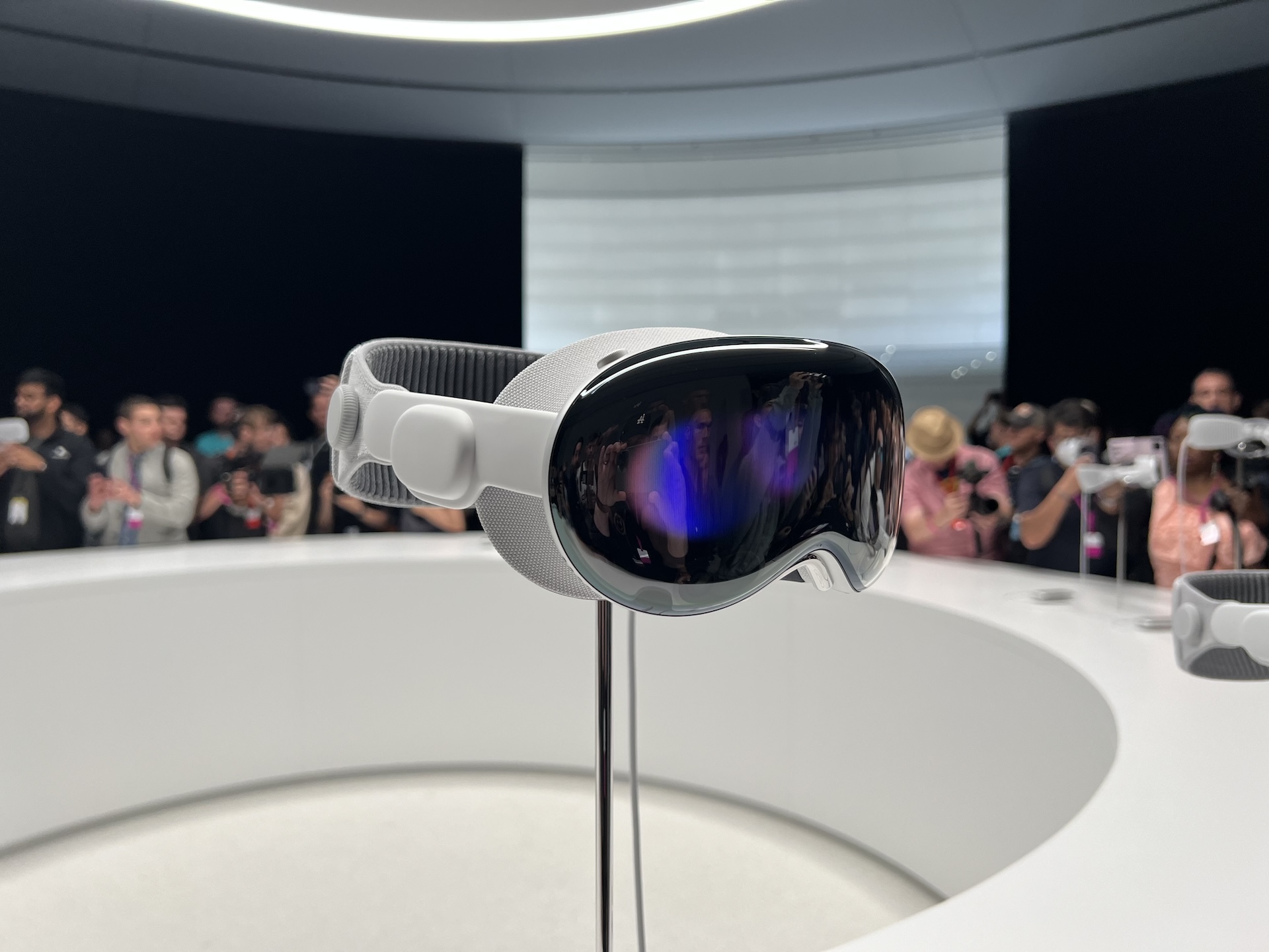
Report: Apple is already designing a lighter Vision Pro to fix “neck strain”

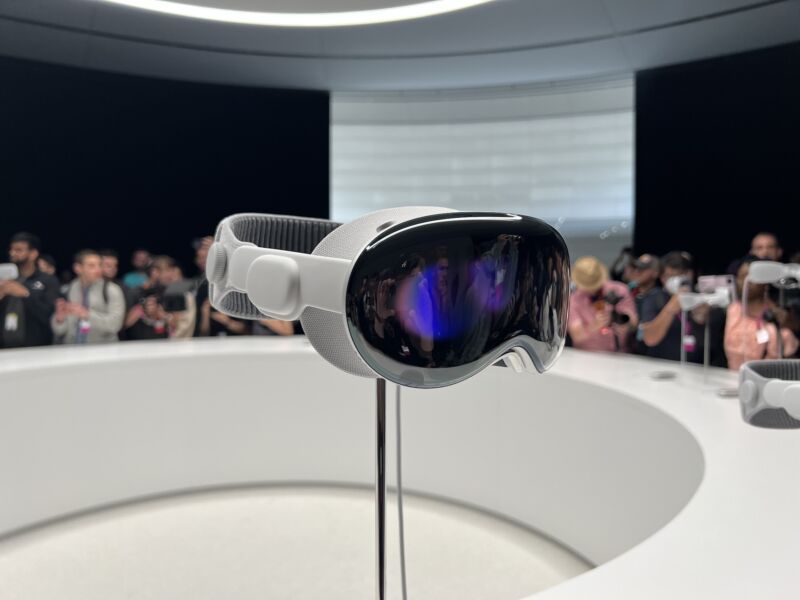
Apple's Vision Pro headset.

Enlarge / Apple’s Vision Pro headset. (credit: Samuel Axon)

When it jumps into a new market for the first time, Apple has a long history of releasing intriguing first-generation devices, followed by second- or third-generation revisions that realize the full potential of the original idea. Examples of this phenomenon include the second-generation iPod, which expanded compatibility beyond the Mac; the iPhone 3G refresh that increased cellular data speeds and ushered in the App Store; the 2010 MacBook Air refresh that switched to all-SSD storage and defined the template for the modern laptop; and the long-lived iPad 2, which did most of the same things as the first iPad but in a much faster and lighter package.

Apple is already working on a next-generation version of its Vision Pro headset to address early complaints about the as-yet-unreleased first-generation model, according to Bloomberg’s Mark Gurman. The headset’s roughly 1-pound weight has apparently “caused neck strain” among some testers, and Apple allegedly sees the not-yet-finalized optional top strap as an imperfect solution to the problem. Apple also wants to reduce the device’s size along with its weight.

Apple is also considering changing the way that prescription lenses are built into the headset. The initial version will use interchangeable Zeiss lenses that attach to the headset magnetically, but next-gen versions could have prescription lenses built-in during manufacturing.

Read 4 remaining paragraphs | Comments


Source: Ars Technica – Report: Apple is already designing a lighter Vision Pro to fix “neck strain”

Maya reservoirs relied on aquatic plants like water lilies to help keep water clean

Lidar-derived hillshade image showing map of reservoirs

Enlarge / Lidar map of Tikal, Guatemala, showing some of its reservoirs. (credit: Image adapted Tankersley et al. 2020)

The ancient Maya city of Tikal relied on urban reservoirs to supply water during periods of drought. They essentially built “constructed wetlands” that relied upon key minerals and aquatic plants and other biota to keep the water supply potable, a “self-cleaning” approach similar to that employed in constructed wetlands today, according to a new paper published in the Proceedings of the National Academy of Sciences.

“Most major southern lowland Maya cities emerged in areas that lacked surface water but had great agricultural soils,” said author Lisa Lucero, an anthropologist at the University of Illinois Urbana-Champaign. “They compensated by constructing reservoir systems that started small and grew in size and complexity.”

Like many Maya cities, Tikal was built on top of porous limestone, which limited access to drinking water during the seasonal droughts, which typically lasted five months, although more severe droughts also occurred, particularly in the ninth century CE. So the people of Tikal relied on collecting rainwater stored in reservoirs to survive. They quarried the limestone for bricks, mortar, and plaster, all used to construct buildings on site. The resulting depressions were plastered to waterproof them as reservoirs. Eventually, the Maya built a system of canals, dams, and sluices to store and transport water. It’s estimated that Tikal’s reservoirs could hold as much as 900,000 cubic meters of water for a population of up to 80,000 people between 600 to 800 CE.

Read 9 remaining paragraphs | Comments


Source: Ars Technica – Maya reservoirs relied on aquatic plants like water lilies to help keep water clean

Tired of shortages, OpenAI considers making its own AI chips

A glowing OpenAI logo on a blue background.

Enlarge (credit: OpenAI / Benj Edwards)

OpenAI, the creator of ChatGPT and DALL-E 3 generative AI products, is exploring the possibility of manufacturing its own AI accelerator chips, according to Reuters. Citing anonymous sources, the Reuters report indicates that OpenAI is considering the option due to a shortage of specialized AI GPU chips and the high costs associated with running them.

OpenAI has been evaluating various options to address this issue, including potentially acquiring a chipmaking company and working more closely with other chip manufacturers like Nvidia. Currently, the AI firm has not made a final decision, but the discussions have been ongoing since at least last year. Nvidia dominates the AI chip market, holding more than 80 percent of the global share for processors best suited for AI applications. OpenAI CEO Sam Altman has publicly expressed his concerns over the scarcity and cost of these chips.

The hardware situation is said to be a top priority for OpenAI, as the company currently relies on a massive supercomputer built by Microsoft, one of its largest backers. The supercomputer uses 10,000 Nvidia graphics processing units (GPUs), according to Reuters. Running ChatGPT comes with significant costs, with each query costing approximately 4 cents, according to Bernstein analyst Stacy Rasgon. If queries grow to even a tenth of the scale of Google search, the initial investment in GPUs would be around $48.1 billion, with annual maintenance costs at about $16 billion.

Read 3 remaining paragraphs | Comments


Source: Ars Technica – Tired of shortages, OpenAI considers making its own AI chips

Striking UAW workers win key battery plant concession from General Motors

people hold strike signs saying UAW ON STRIKE

Enlarge / UAW members and workers at the Mopar Parts Center Line, a Stellantis Parts Distribution Center in Center Line, Michigan, hold signs after walking off their jobs at noon on September 22, 2023, and picketing outside the facility. (credit: MATTHEW HATCHER/AFP via Getty Images)

On Friday, the United Auto Workers gained a key concession from General Motors in its ongoing strike. Workers at GM battery manufacturing plants will be allowed to unionize, as revealed by UAW President Shawn Fain in a livestream.

“We were about to shut down GM’s largest money-maker, in Arlington, Texas. The company knew those members were about to walk immediately. And just that threat has provided a transformative win,” Fain said. Our plan is winning at GM, and we expect it to win at Ford and Stellantis as well.”

The autoworker strike began when around 13,000 workers walked off their jobs at three factories in Michigan, Missouri, and Ohio after the UAW’s previous contract with Ford, Stellantis, and General Motors expired without a new contract in place in mid-September. A week later, another 5,600 workers joined the strike at 38 locations across 20 states.

Read 5 remaining paragraphs | Comments


Source: Ars Technica – Striking UAW workers win key battery plant concession from General Motors

Spanish company’s success comes at a critical time for Europe’s launch industry

Read 11 remaining paragraphs | Comments


Source: Ars Technica – Spanish company’s success comes at a critical time for Europe’s launch industry

Net neutrality’s court fate depends on whether broadband is “telecommunications”

FCC Chairwoman Jessica Rosenworcel speaks at an event while standing on a stage in front of a microphone.

Enlarge / FCC Chairwoman Jessica Rosenworcel speaks during the US Chamber of Commerce’s Global Aerospace Summit in Washington, DC, on Wednesday, Sept. 14, 2022. (credit: Getty Images | Bloomberg)

With the Federal Communications Commission preparing to reimpose net neutrality rules and common-carrier regulation on Internet service providers, the broadband industry is almost certain to sue the FCC once the decision is made.

The Democratic-majority FCC is expected to define broadband as a telecommunications service, which means it would face common-carrier regulations under Title II of the Communications Act. Industry trade groups that represent Internet service providers will likely argue, as they have unsuccessfully argued before, that the FCC does not have authority to classify broadband as a telecommunications service.

Federal appeals courts upheld previous FCC decisions on whether to apply common carrier rules to broadband, a fact that current agency officials point to in their plan to revive Obama-era regulation of ISPs under Title II. But some legal commentators claim the FCC is doomed to fail this time because of the Supreme Court’s evolving approach on whether federal agencies can decide “major questions” without explicit instructions from Congress.

Read 81 remaining paragraphs | Comments


Source: Ars Technica – Net neutrality’s court fate depends on whether broadband is “telecommunications”

Enhance your calm: Demolition Man turns 30

Stallone ion riot gear pointing a pistol

Enlarge / Sylvester Stallone starred as LAPD Sergeant John Spartan in the 1993 action comedy Demolition Man. (credit: Warner Bros.)

Thirty years ago today, Demolition Man first hit theaters, pitting Sylvester Stallone against Wesley Snipes in a crime-free but killjoy future where even minor vices have been declared illegal. The passage of time hasn’t quite elevated this sci-fi action comedy to the legendary status of Die Hard or Lethal Weapon, but it’s still an under-appreciated gem of ’90s action movies, precisely because it unapologetically leans into the massive explosions and campy humor with wild abandon.

(Spoilers below, because it’s been 30 years.)

Demolition Man started out as a spec script by Peter Lenkov, then a recent college grad eager to break into Hollywood. (Lenkov went on to create his own shared fictional TV universe with the interconnected reboot series Hawaii 5-0, MacGuyver, and Magnum P.I.) Lenkov was a Lethal Weapon fan and envisioned an action movie about a cryogenically frozen “super cop” who wakes up decades in the future in a world largely free of crime, where he must battle his criminal arch-nemesis. As for the title, Lenkov had been listening to Sting’s “Demolition Man” constantly because the cassette player in his car was broken. Inspiration strikes in nonlinear ways.

Read 12 remaining paragraphs | Comments


Source: Ars Technica – Enhance your calm: Demolition Man turns 30

Lamplighters League is light stealth, heavy pulp style, and XCOM gun battles

Screenshot showing character lining up a shot in Lamplighters League

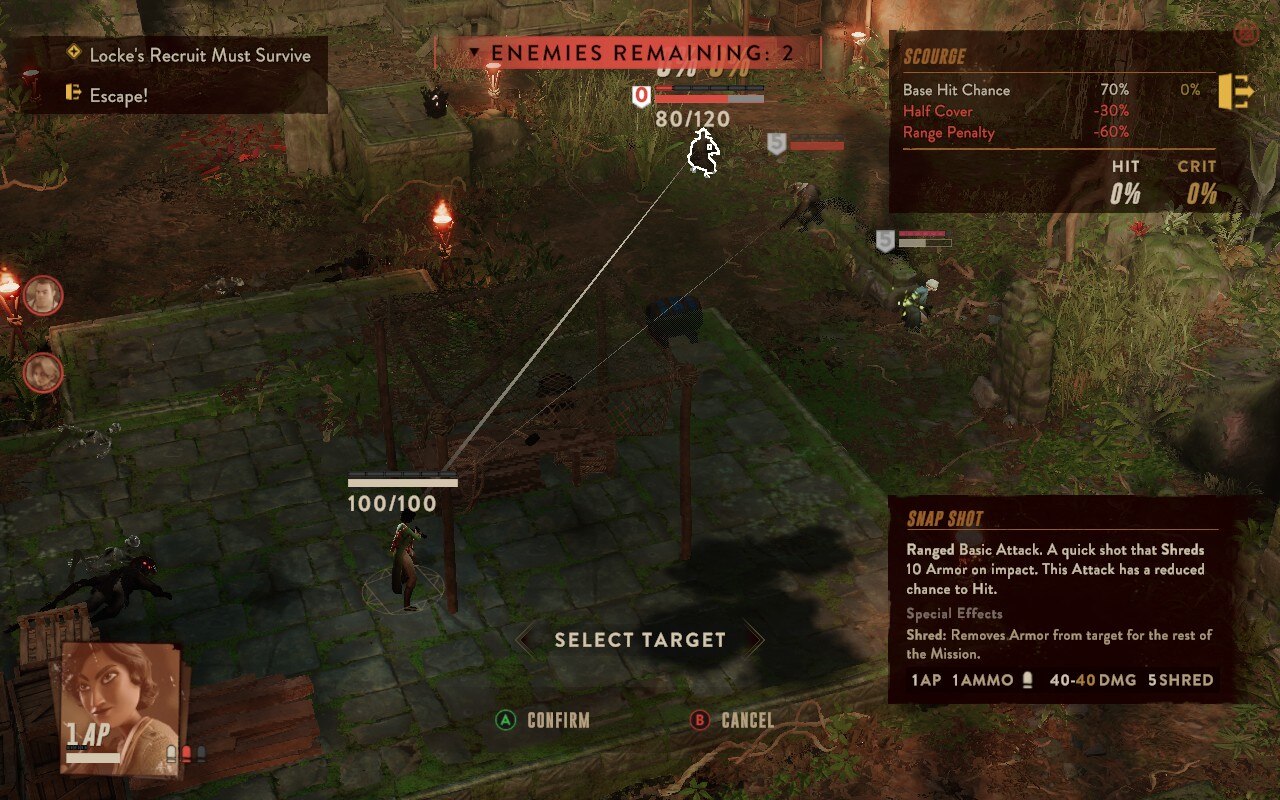
Enlarge / Purnima, the sniper you can recruit, is an assassin who refused to do a job for the evil Council because it involved a child murder. Now, as part of your team, she will kill a gazillion goons. Strange times. (credit: Harebrained Schemes / Paradox Interactive)

Lamplighters League is a modern XCOM-style turn-based strategy game with a Weird War-ish, Indiana Jones-like feel, a light stealth element, and it’s made by the folks who made Battletech and the Shadowrun Returns series. If you pay for Game Pass, or you see this game at any price that feels reasonable (including its debut $50), that should tell you enough about whether to try it. I think you should.

I wanted to get that out of the way because I have some nits to pick with Lamplighters League, some technical and some tactical. But I don’t want to lose sight of how excited I am to have a meaty new tactics game to sink into, especially one based on an original, if heavily referential, world. If you’re a fan of tile-based movements, two actions per turn, home bases full of upgrade potential, and engaging little interactions between your troops, you don’t get that many solid games like this per year, so take note of Lamplighters League. The number of years between XCOM titles is getting longer, not shorter—we need some reserves.

Read 25 remaining paragraphs | Comments


Source: Ars Technica – Lamplighters League is light stealth, heavy pulp style, and XCOM gun battles

Amazon’s Project Kuiper satellites add to astronomers’ light-pollution woes

satellite streaks

Enlarge (credit: Alan Dyer/Getty Images)

Amazon is set to launch two satellite prototypes for its Project Kuiper network, which will eventually number more than 3,200 orbiters. Project Kuiper could become a rival to SpaceX’s Starlink constellation, which is now nearly 4,800 strong. Amazon’s launch is planned for 2 pm Eastern time today, with a backup launch window tomorrow. This rapid growth of the satellite industry has come at a cost for astronomers and fans of the night sky, as two new studies and panels at an international astronomy conference stressed this week.

All spacecraft in low-Earth orbit reflect sunlight, and some glint enough to be visible to the naked eye—artificial constellations that compete with stellar ones. Satellites can cause problems for astronomers when they streak across images, interfere with radio observations, or make hard-earned data less scientifically useful. By one estimate, there could be some 100,000 satellites swarming the skies in the 2030s. While scientists are mainly concerned about this aggregate effect, some individual satellites are very bright indeed. A study published in the journal Nature this week shows that a prototype of AST SpaceMobile’s BlueBird swarm has become one of the brightest objects in the heavens. Another study documents how even deliberately darkened satellites are still twice as bright—if not more—than the limit astronomers have called for to minimize effects on space science.

Such concerns prompted a major conference this week, organized by the International Astronomical Union’s Centre for the Protection of the Dark and Quiet Sky from Satellite Constellation Interference, known as CPS. It’s being held in the Canary Islands, where there are several observatories. It’s the first in-person meeting of its kind, bringing together scores of astronomers, as well as satellite industry representatives, advocates of Indigenous and environmental perspectives, and policy experts.

Read 19 remaining paragraphs | Comments


Source: Ars Technica – Amazon’s Project Kuiper satellites add to astronomers’ light-pollution woes

Vaccine may save endangered California condors from succumbing to bird flu

condor

Enlarge / A numbered and tagged California Condor in the wild. (credit: Educational Images via Getty)

Early March last year, an endangered California condor—one of less than 350 of its kind surviving in the wild—perched on an Arizona cliff face staring into space for days. It’s probably sick from lead poisoning, thought Tim Hauck, the condor program director with The Peregrine Fund, a nonprofit conservation group helping to reintroduce condors to the skies above Grand Canyon and Zion. These bald-headed scavengers—weighing up to 25 pounds with black-feathered wings spanning nearly 10 feet—often fall victim to lead exposure when they consume the flesh of cows, coyotes, and other large mammals killed by ranchers and hunters firing lead bullets. Listlessness and droopy posture are telltale signs. “We were like, I bet this bird’s got into something bad,” said Hauck.

His team of eight wildlife biologists stationed at Arizona’s scenic Vermillion Cliffs National Monument, 150 miles north of Flagstaff, hoped the ailing condor would glide down off its 1,000-foot sandstone ledge to visit their feeding station, where they could trap it to do a health examination. The Peregrine Fund provides supplemental food for the condors—most of which were raised in captivity and released into the wild—in part so the biologists can easily catch them for regular checkups, provide therapy for lead poisoning, vaccinate against West Nile virus, and update equipment used to track the condors’ whereabouts.

A week later, when the sick bird did finally get trapped at the feeding station, Hauck immediately noticed something he hadn’t seen before in lead-poisoned condors. Its eyes were cloudy, a condition called corneal edema. He consulted with Stephanie Lamb, a veterinarian who volunteers at Liberty Wildlife Center, a Peregrine Fund partner organization in Phoenix. He wanted to know if she thought the condor might be ill from something more worrisome than lead poisoning: highly pathogenic avian influenza, or HPAI, the virus responsible for the deaths of millions of wild birds and domestic chickens worldwide during the last two years. HPAI kills 90 to 100 percent of domestic poultry it infects, often within 48 hours, though less is known about the mortality rates for wild birds. Corneal edema, Lamb told him, was indeed on the list of symptoms.

Read 32 remaining paragraphs | Comments


Source: Ars Technica – Vaccine may save endangered California condors from succumbing to bird flu

Thousands of Android devices come with unkillable backdoor preinstalled

abstract image

Enlarge (credit: gremlin via Getty Images)

When you buy a TV streaming box, there are certain things you wouldn’t expect it to do. It shouldn’t secretly be laced with malware or start communicating with servers in China when it’s powered up. It definitely should not be acting as a node in an organized crime scheme making millions of dollars through fraud. However, that’s been the reality for thousands of unknowing people who own cheap Android TV devices.

In January, security researcher Daniel Milisic discovered that a cheap Android TV streaming box called the T95 was infected with malware right out of the box, with multiple other researchers confirming the findings. But it was just the tip of the iceberg. This week, cybersecurity firm Human Security is revealing new details about the scope of the infected devices and the hidden, interconnected web of fraud schemes linked to the streaming boxes.

Read 15 remaining paragraphs | Comments


Source: Ars Technica – Thousands of Android devices come with unkillable backdoor preinstalled

US government considers protecting octopuses used in research

Image of an octopus against a blue backdrop

Enlarge (credit: NOAA)

While cephalopods have captured the imagination of marine biologists, science fiction writers, and curious individuals, it’s only recently that the public has become significantly interested in learning more about these animals. Part of their appeal has come from recent studies revealing the intelligence behind some of their sophisticated behaviors.

Now, feeding into this growing recognition, the National Institutes of Health (NIH) announced feedback for proposed guidelines that would, if passed, give various protections to cephalopods studied within a laboratory setting.

This announcement results from years of studies on cephalopod pain sensation, intelligence, and adaptation, combined with letters to US Congress members about the humane treatment of cephalopods.

Read 21 remaining paragraphs | Comments


Source: Ars Technica – US government considers protecting octopuses used in research