TSMC, Samsung seeking permanent US licenses to operate China chip plants

Aerial photo taken at night shows the TSMC plant area in Nanjing, Jiangsu province.

Enlarge / Aerial photo taken at night shows the TSMC plant area in Nanjing, Jiangsu province. (credit: NurPhoto / Contributor | NurPhoto)

The US Commerce Department announced today that key foreign chipmakers can continue receiving critical US chipmaking tools at China-based plants, Reuters reported.

This decision extends special authorizations that were granted to foreign chipmakers—including South Korea’s SK Hynix and Samsung, as well as the Taiwan Semiconductor Manufacturing Co (TSMC)—after the Biden administration curbed shipments of advanced chips and chipmaking equipment to China last October.

Those export controls were intended to slow down China’s rapid advancement of AI and military technologies, but the new rules also ended up negatively impacting US chip production. To overcome those inadvertent impacts on US chip supplies, the Biden administration granted limited special authorizations to allow some chipmakers to continue shipping equipment into China. Now, those chipmakers will be able to continue operating Chinese plants “without the headache of applying for US licenses,” Reuters reported.

Read 15 remaining paragraphs | Comments


Source: Ars Technica – TSMC, Samsung seeking permanent US licenses to operate China chip plants

Meta Quest 3 hands-on review: VR rejoins the real world

Look into my eyes... all three of them.

Enlarge / Look into my eyes… all three of them. (credit: Meta)

You’d be forgiven for not realizing that the Quest 3 is actually the fourth headset in Meta’s popular Quest line. In fact, Meta would probably prefer that everyone forget about last year’s ill-considered Quest Pro, which paired a handful of minor improvements with an absolutely massive $1,500 starting price. Even a quick price drop to $1,000 couldn’t save this over-engineered stopgap gadget.

What a difference a year makes—or three years, for VR aficionados who wisely stuck with 2020’s Quest 2 until now. The Quest 3 offers distinct improvements over previous Quest headsets in the areas that matter most (resolution, form factor, etc.) without many of the Pro’s more expensive, heavy, and least necessary indulgences (eye-tracking cameras, rechargeable controllers, charging dock, etc.). The Quest 3 also offers a usable (but rough) suite of new mixed-reality features, providing an intriguing glimpse of a world where VR content is routinely layered over our view of reality.

Most importantly, the Quest 3 does this all at a mass-market price (starting at $500) and in a way that ensures continuity with Quest’s existing software. While there’s nothing here that will usher in the long-sought virtual reality revolution, this is the kind of incremental improvement the space needs if it’s going to continue to increase the size of its niche.

Read 29 remaining paragraphs | Comments


Source: Ars Technica – Meta Quest 3 hands-on review: VR rejoins the real world

Google.com tests a news-filled homepage, just like Bing and Yahoo

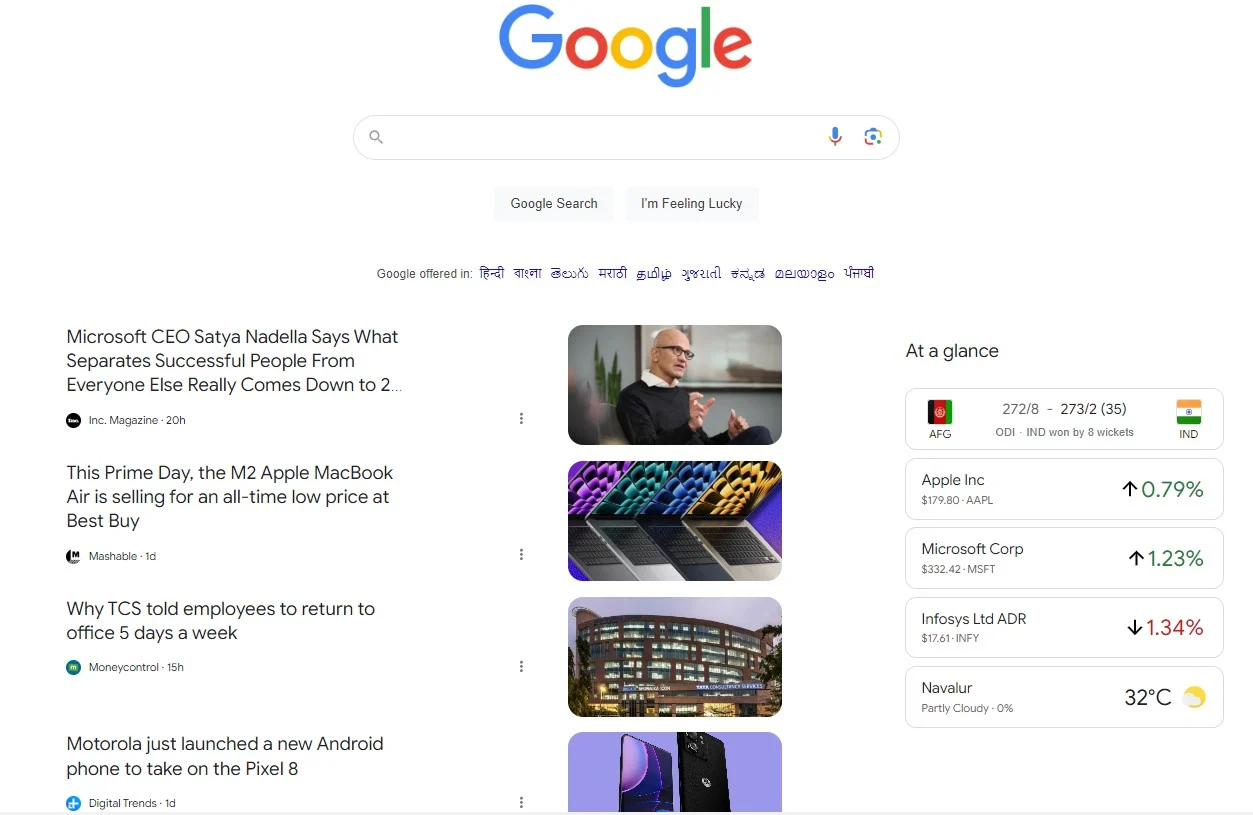
The future of Google.com? Experiments in India show this news-filled version of Google.com.

Enlarge / The future of Google.com? Experiments in India show this news-filled version of Google.com. (credit: MSPoweruser)

Google is still wondering if it should make major changes to its homepage. The last experiment we saw filled the usually stark white page with info cards showing things like the weather and stocks, but this new experiment, spotted by the site MSPoweruser, has a much bigger focus on news.

Instead of a homepage featuring only the Google logo, a search box, and a few buttons, this latest experiment looks a lot more like the “Google Discover” newsfeed you get on the Google mobile app. That means rows of news articles that Google has algorithmically detected will interest you, often with wild month-to-month quality swings in the sites it promotes. To the right of the newsfeed is a stack of “at a glance” cards featuring sports scores, stocks, and the weather. The change makes Google look a lot busier—and a lot more like Bing and Yahoo.

The Verge reached someone at Google about this and was told it’s an experiment currently being run in India.

Read 2 remaining paragraphs | Comments


Source: Ars Technica – Google.com tests a news-filled homepage, just like Bing and Yahoo

Maryland’s first local malaria case in 40 years initially duped doctors

Under a magnification of 1,125x, this photomicrograph of a blood specimen revealed the presence of intraerythrocytic <em>Plasmodium falciparum</em> ring-form trophozoites. Note the erythrocyte in the center contained four ring-staged trophozoites and that all rings exhibited a single chromatin dot.

Enlarge / Under a magnification of 1,125x, this photomicrograph of a blood specimen revealed the presence of intraerythrocytic Plasmodium falciparum ring-form trophozoites. Note the erythrocyte in the center contained four ring-staged trophozoites and that all rings exhibited a single chromatin dot. (credit: CDC)

Catching malaria in the US is extremely rare, but when it happens, the mosquito-borne parasite can masquerade as another parasite that’s regularly found in the country, leading to a misdiagnosis that has foiled doctors around the world for years. Such was the case this year in Maryland, when the state saw its first locally acquired malaria case in over 40 years, according to a report this week.

The misdiagnosis led the patient to a weeks-long treatment for the wrong infection and held up public health responses to pinpoint and thwart further transmission. To date, the source of the patient’s infection remains a mystery.

As global travel and climate warming expand malaria’s range, awareness of the diagnostic pitfall and better testing will be increasingly needed, the report’s authors suggest. The report was published Thursday in the Centers for Disease Control and Prevention’s Morbidity and Mortality Weekly Report.

Read 16 remaining paragraphs | Comments


Source: Ars Technica – Maryland’s first local malaria case in 40 years initially duped doctors

Even with no brains, jellyfish can learn from their mistakes

Image of a largely transparent jellyfish with relatively thick tentacles.

Enlarge / No brain, but still some smarts. (credit: Bielecki, et. al.)

They don’t have a brain or spinal cord. They float around in a way that often appears aimless. Though jellyfish lack a central nervous system, these gelatinous creatures again show that they might think more than we think they do.

Jellyfish, or medusae, belong to the group Cnidaria, members of which are already known to be capable of associative learning. This is how they can maintain awareness of their surroundings (and possible predators). Now, an international team of scientists has found that the cnidarians are capable of a slightly more advanced type of associative learning known as operant conditioning, which entails remembering the positive or negative effects of a previous action. Despite lacking a brain, Caribbean box jellies (Tripedalia cystophora) can still learn from their mistakes to avoid a potentially disastrous outcome.

Damage control

T. cystophora are about the size of a human fingernail, and while they are much less complex than vertebrates such as humans, they still have a rather sophisticated visual system for a jellyfish. The jellies have 24 eyes around their bodies—and they need them. They live in mangrove swamps where crashing into long roots is almost inevitable in murky water, and a jelly might do serious damage to its delicate body in these encounters. Its vision assists it in navigating among the roots and can be especially useful for hunting around these gnarly tangles.

Read 11 remaining paragraphs | Comments


Source: Ars Technica – Even with no brains, jellyfish can learn from their mistakes

Dealmaster: Amazon Prime Day is over but these tech deals are still active

Dealmaster: Amazon Prime Day is over but these tech deals are still active

Enlarge (credit: Vitamix)

Amazon’s Prime Day may be over this year, but not all the deals are gone. Whether you’re looking for Sony’s latest WF-1000XM5 headphones to Apple’s AirPods Pro with a USB-C charging case, AirTags to Peblebee trackers, or home gear like Dyson, Vitamix, and Theragun, there’s plenty to choose from if you missed Amazon’s shopping event earlier this week.

Gear Ars readers bought that’s still on sale

  • Sony WF-1000XM5 for $278 (was $300) at Amazon
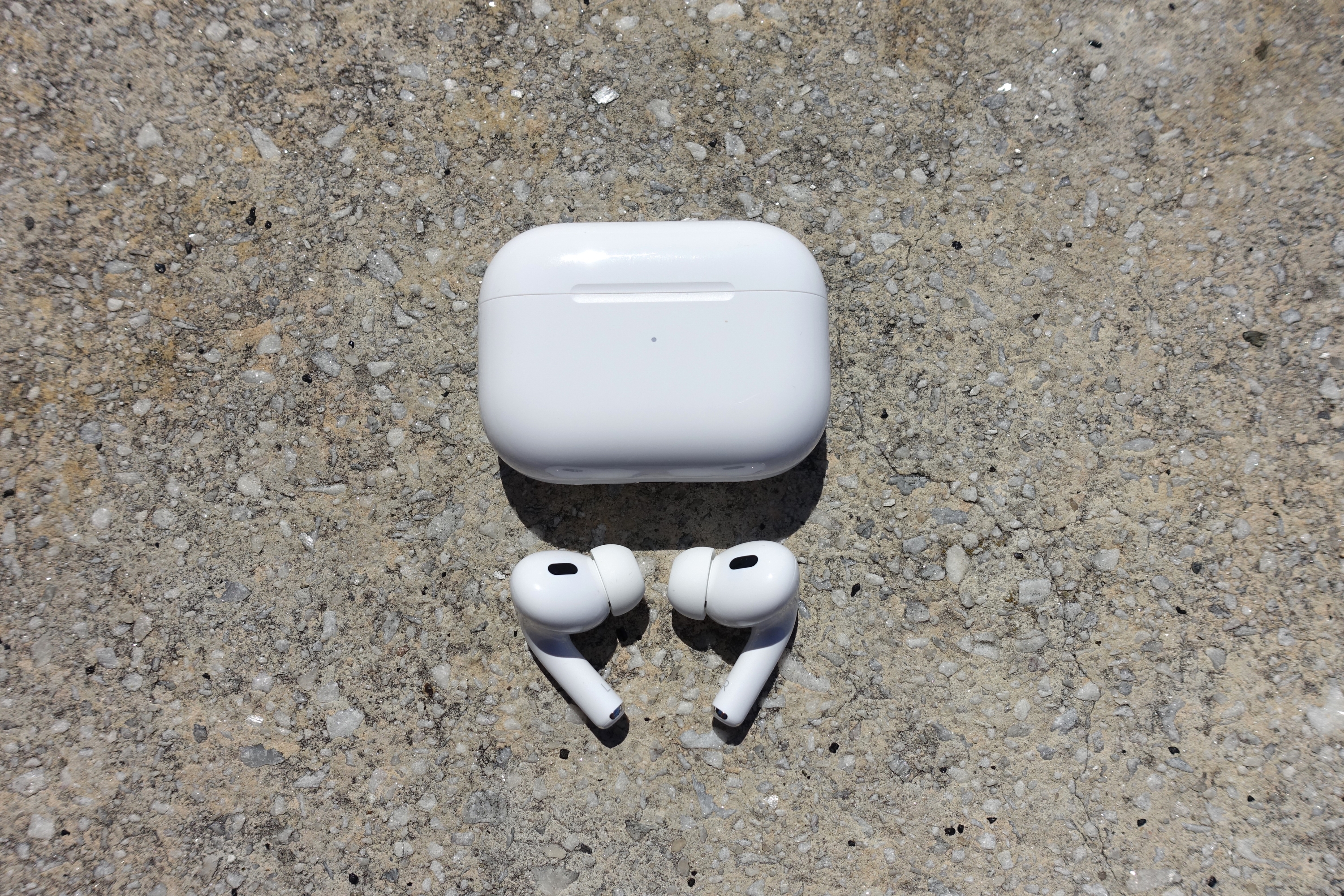
  • Apple AirPods Pro (2nd Gen) with MagSafe Charging Case (USB-C) for $200 (was $249) at Amazon
  • Vitamix E310 Explorian Blender for $290 (was $350) at Amazon
  • Govee RGBIC Floor Lamp, LED Corner Lamp for $60 after coupon (was $100) at Amazon
  • Apple AirTag 4 Pack for $89 (was $99) at Amazon
  • Ergonomic Desk Chair with Adjustable Lumbar Support for $117 (was $190) at Amazon
  • Catan (Base Game) Adventure Board Game for Adults and Family for $27 (was $49) at Amazon
  • AeroGarden Harvest with Gourmet Herb Seed Pod Kit for $90 (was $165) at Amazon
  • Apple iPad (9th Generation) for $270 (was $379) at Amazon
  • Anker USB-C Docking Station, PowerExpand 9-in-1 PD Dock for $120 (was $150) at Amazon
  • AMD Ryzen 7 5800X3D Desktop Processor for $302 (was $320) at Amazon
  • Sennheiser Momentum True Wireless 3 Earbuds for $142 (was $280) at Amazon
  • Apple MagSafe Charger (official) for $35 (was $39) at Amazon
  • PNY 512GB Turbo Attaché 3 USB 3.2 Flash Drive for $33 (was $37) at Amazon
  • 160W USB-C 6-Port Fast Charging Station for $30 (was $40) at Amazon
  • Asus ROG Strix Nvidia GeForce RTX 4070 Ti OC Edition Gaming Graphics Card for $910 (was $1,050) at Amazon
  • Legend of Zelda Link’s Awakening for $43 (was $60) at Amazon
  • Lutron Caseta Deluxe Smart Dimmer Switch (2 Count) Kit with Caseta Smart Hub for $170 (was $256) at Amazon
  • Apple 2020 MacBook Air Laptop M1 Chip for $899 (was $999) at Amazon
  • Soundcore by Anker A20i True Wireless Earbuds for $30 (was $40) at Amazon
  • Mario + Rabbids Sparks of Hope – Standard Edition for $30 (was $60) at Amazon
  • Beats Solo3 Wireless On-Ear Headphones for $100 (was $200) at Amazon
  • Vitamix 5200 Blender for $410 (was $550) at Amazon
  • Theragun PRO 5th Gen for $479 (was $599) at Therabody
  • Theragun mini for $169 (was $199) at Therabody
  • Theragun Elite for $319 (was $399) at Therabody
  • Theragun Prime for $209 (was $299) at Therabody
  • Theragun PRO 4th Gen for $349 (was $599) at Therabody
  • DeWalt 20V Max Batteries, Compact, 4.0-Ah, 2-Pack for $129 (was $239) at Amazon
  • Bose QuietComfort Earbuds II for $279 (was $299) at Amazon
  • DeWalt 20V Max XR Brushless 1/2 in. Drill/Driver Kit for $169 (was $249) at Amazon
  • DeWalt 20V Max Impact Driver, 3-Speed, Battery and Charger Included for $169 (was $219) at Amazon
  • Beats Studio Pro for $180 (was $350) at Amazon
  • 100PCS Reusable Cable Ties for $7 (was $14) at Amazon
  • Keychron C3 Pro QMK/VIA Custom Gaming Keyboard for $37 (was $46) at Amazon
  • Google Pixel Tablet with Charging Speaker Dock for $419 (was $499) at Amazon
  • Logitech MX Keys Mini Combo for $150 (was $200) at Lenovo
  • Logitech MK750 Wireless Solar Keyboard and Mouse for $68 (was $85) at Lenovo
  • Logitech Lift for Business (Graphite) mouse for $56 (was $70) at Lenovo
  • Dyson V8 Absolute vacuum for $300 (was $520) at Dyson
  • Dyson V15 Detect Absolute vacuum for $600 (was $750) at Dyson
  • Dyson V12 Detect Slim Absolute vacuum for $450 (was $650) at Dyson
  • Dyson Outsize Plus vacuum for $450 (was $600) at Dyson

Lenovo laptops

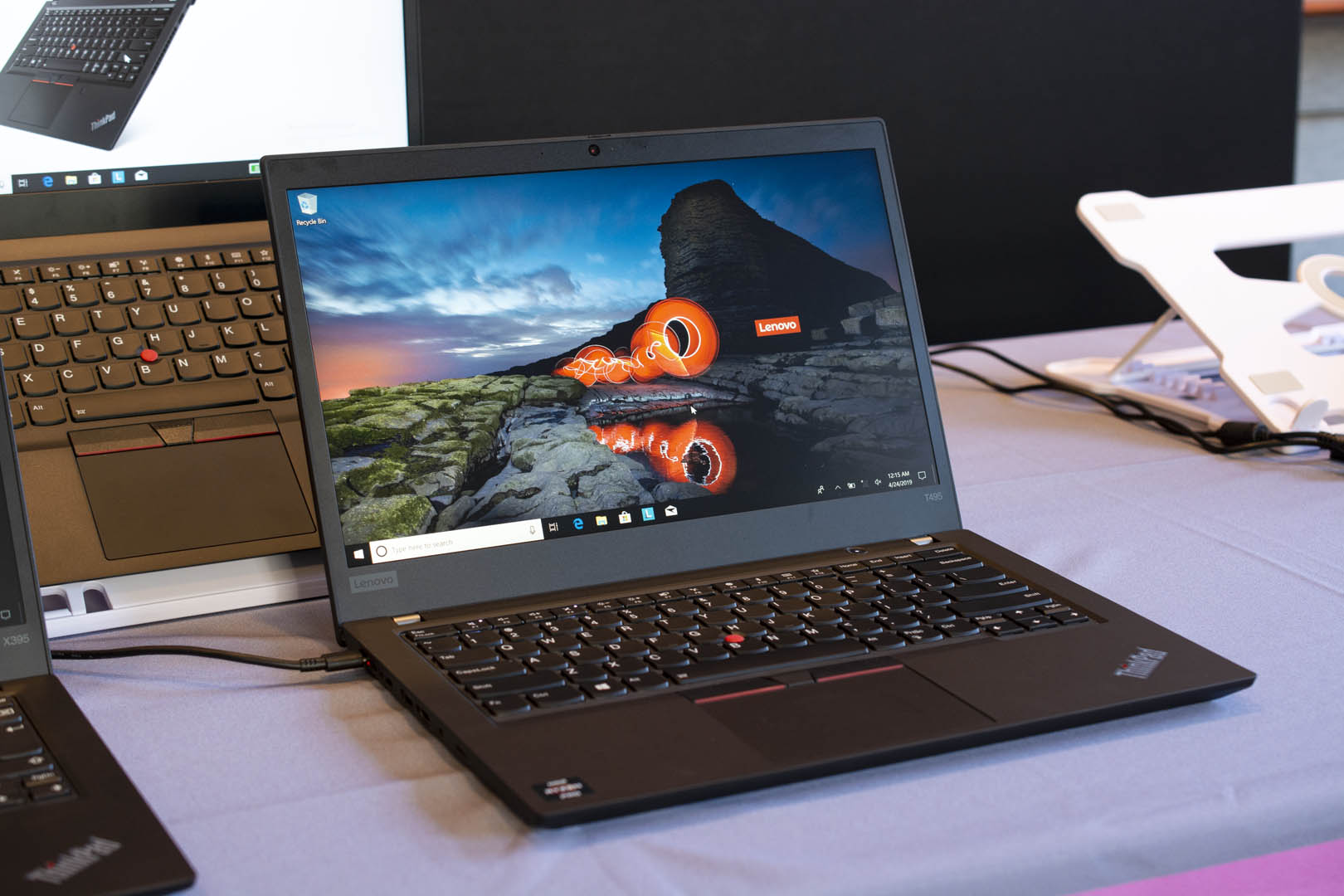
  • Lenovo ThinkPad X1 Carbon Gen 11 (14-inch, Intel Core i7-1365U) for $1,615 (was $3,229) at Lenovo
  • Lenovo ThinkPad X1 Carbon Gen 10 (14-inch, Intel Core i7-1270P) for $1,443 (was $3,609) at Lenovo
  • Lenovo ThinkPad X13 Gen 4 (13-inch, Intel Core i7-1355U) for $1,094 (was $2,189) at Lenovo
  • Lenovo ThinkPad E14 Gen 4 (14-inch, AMD Ryzen 7 5825U) for $1,204 (was $2,189) at Lenovo
  • Lenovo ThinkPad E16 Gen 1 (16-inch, Intel Core I5-1335U) for $797 (was $1,449) at Lenovo
  • Lenovo Yoga 7i (16-inch, Intel Core i5-1340P) for $855 (was $1,140) at Lenovo
  • Lenovo IdeaPad 1 (15-inch, AMD Athlon Gold 7220U) for $280 (was $400) at Lenovo
  • Lenovo Legion Slim 7 Gen 8 (16-inch, AMD Ryzen 7 7840HS and RTX 4060) for $1,400 (was $1,680) at Lenovo
  • Lenovo ThinkPad T14s Gen 4 (14-inch, Intel Core i5-1345U) for $1,490 (was $2,709) at Lenovo
  • Lenovo ThinkPad P16s Gen 2 (16-inch, Intel Core i7-1360P and RTX A500) for $1,529 (was $2,789) at Lenovo
  • Lenovo ThinkPad P16 Gen 2 (16-inch, Intel Core i7-13700HX and RTX A1000) for $2,139 (was $3,899) at Lenovo
  • Lenovo ThinkPad P1 Gen 6 (16-inch, Intel Core i7-13700H and RTX A2000) for $2,409 (was $4,389) at Lenovo
  • Lenovo ThinkPad P14s Gen 4 (14-inch, Intel Core i7-1360P and RTX A500) for $1,859 (was $3,389) at Lenovo
  • Lenovo ThinkPad P16 Gen 2 (16-inch, Intel Core i9-13950HX and RTX A5000) for $5,469 (was $9,939) at Lenovo
  • Lenovo Slim Pro 7 (14-inch, AMD Ryzen 7 7840HS and RTX 3050) for $1,085 (was $1,450) at Lenovo
  • Lenovo Legion Pro 5i Gen 8 (16-inch, Intel Core i5-13500HX and RTX 4050) for $1,100 (was $1,480) at Lenovo
  • Lenovo ThinkBook 15 Gen 4 (15-inch, AMD Ryzen 7 5825U) for $764 (was $1,469) at Lenovo
  • Lenovo IdeaPad Slim 3 (15-inch, AMD Ryzen 3 7330U) for $440 (was $650) at Lenovo
  • Lenovo 3i Chromebook (15-inch, Intel Pentium Silver N6000) for $310 (was $440) at Lenovo
  • Lenovo IdeaPad Slim 3i Chromebook (14-inch, Intel Core i3-N305) for $400 (was $550) at Lenovo
  • Lenovo ThinkPad X13 Yoga Gen 2 (13-inch, Intel Core i5-1145G7) for $729 (was $3,089) at Lenovo
  • Lenovo ThinkBook 14 Gen 4 (14-inch, Intel Core i5-1235U) for $730 (was $1,404) at Lenovo
  • Lenovo LOQ (16-inch, Intel Core i5-13500H and RTX 4050) for $850 (was $1,200) at Lenovo
  • Lenovo ThinkPad T14s Gen 4 (14-inch, AMD Ryzen 5 Pro 7540U) for $907 (was $1,649) at Lenovo
  • Lenovo LOQ (15-inch, Intel Core i7-13700H and RTX 4050) for $1,050 (was $1,400) at Lenovo
  • Lenovo Legion Slim 5i Gen 8 (16-inch, Intel Core i5-13500H and RTX 4050) for $1,050 (was $1,350) at Lenovo

Apple gear

  • Apple AirPods Pro (2nd Gen, USB-C) Wireless Earbuds for $200 (was $249) at Amazon
  • Apple AirPods (3rd Generation, Lightning) Wireless Earbuds for $150 (was $170) at Amazon
  • Apple AirPods Max Wireless Over-Ear Headphones for $480 (was $549) at Amazon
  • Apple MacBook Air 13.6-inch Laptop M2 chip for $899 (was $1,099) at Best Buy
  • Apple MacBook Air 13.3-inch Laptop M1 for $899 (was $999) at Amazon
  • Apple iPad Air (5th Generation) for $559 (was $599) at Amazon
  • Apple iPad (9th Generation) for $270 (was $329) at Amazon
  • Apple 2021 10.2-inch iPad (Wi-Fi, 64GB) with AppleCare+ (2 Years) for $339 (was $398) at Amazon
  • Apple iPad Mini (6th Generation) for $469 (was $499) at Amazon
  • Apple iPad Pro 12.9-inch (6th Generation) for $1,049 (was $1,099) at Amazon
  • Apple AirTag 4 Pack for $89 (was $99) at Amazon
  • Apple iPhone 14 Plus Leather Case with Magsafe for $28 (was $59) at Amazon
  • Apple Magic Keyboard with Numeric Keypad for $96 (was $129) at Amazon
  • MacBook Air 15-inch Laptop – M2 chip 16GB Memory for $1,449 (was $1,699) at Best Buy
  • MacBook Air 15-inch Laptop – M2 chip 8GB Memory for $1049 (was $1299) at Best Buy
  • AirPods Pro (2nd generation) with MagSafe Case (USB‑C) for $200 (was $250) at Best Buy
  • Apple Mac mini Desktop – M2 Chip 8GB Memory for $499 ($599) at Best Buy
  • AirPods (3rd generation) with Lightning Charging Case for $150 (was $170) at Best Buy

Apple accessories

  • Pebblebee Clip 2-pack for $55 (was $60) at Peblebee | 4-pack for $100 (was $120) at Peblebee
  • Pebblebee Card & Clip Multi-pack for $80 (was $120) at Peblebee
  • Chipolo CARD Spot 1-pack for $60 (was $70) at Chipolo
  • Apple MagSafe Charger – Wireless Charger with Fast Charging Capability for $33 (was $39) at Amazon
  • Apple iPhone MagSafe Battery Pack – Portable Charger with Fast Charging for $94 (was $99) at Amazon
  • Belkin MagSafe 3-in-1 Wireless Charging Stand – 2nd Gen for $127 (was $150) at Amazon

DeWalt tools

  • DeWalt 20V Max XR Brushless Cordless 1/2 in. Drill/Driver Kit for $169 (was $249) at Amazon
  • DeWalt 20V Max Battery Pack with Charger, 3 Ah, Extra Long Run Time for $97 (was $179) at Amazon
  • DeWalt 20V Max Circular Saw, 6-1/2-Inch, Cordless, Tool Only for $149 (was $219) at Amazon
  • DeWalt Powerstack 20V Max Battery, Rechargeable, 5Ah, Lithium Ion, 2-Pack for $250 (was $349) at Amazon
  • DeWalt 20V Max Cordless Drill Combo Kit, 3-Tool (DCK340C2) for $170 (was $271) at Amazon
  • DeWalt 20V Max XR Rotary Hammer Drill, D-Handle, 1-Inch, Tool Only (DCH133B) for $169 (was $249) at Amazon
  • DeWalt 20V Max Batteries, Compact, 4.0-Ah, 2-Pack (DCB240-2) for $129 (was $239) at Amazon
  • DeWalt 20V Max Impact Driver, Cordless, 3-Speed, Battery and Charger Included for $169 (was $219) at Amazon

Greenworks tools

  • Greenworks 80V 20-inch Snow Blower, and 730 CFM Handheld Blower for $650 (was $1,200) at Best Buy
  • Greenworks 80 Volt Pro Rapid Battery Charger for $68 (was $100) at Best Buy
  • Greenworks 80 Volt 12-Inch Single Stage Cordless Brushless Snow Shovel for $276 (was $350) at Best Buy
  • Greenworks 10-inch 80 Volt Cultivator/Tiller for $334 (was $400) at Best Buy
  • Greenworks 80 Volt 2Ah Battery for $129 (was $150) at Best Buy
  • Greenworks 24-Volt 22-Inch Cordless Hedge Trimmer for $130 (was $150) at Best Buy
  • Greenworks 24-Volt 22-Inch Cordless Hedge Trimmer for $70 (was $80) at Best Buy
  • Greenworks 24 Volt 2000 Lumen LED Work Light AC/DC for $62 (was $70) at Best Buy
  • Greenworks 80 Volt 20-Inch Single Stage Cordless Brushless Snow Blower for $446 (was $500) at Best Buy
  • Greenworks TORQDRIVE 24-Volt 12-Inch Cutting Diameter Straight Shaft Grass Trimmer and Edger for $120 (was $130) at Best Buy
  • Greenworks Multi Tool w. 2AH battery, 2A charger for $103 (was $110) at Best Buy
  • Greenworks 48-Volt 14-Inch Cordless Brushless Chainsaw for $250 (was $260) at Best Buy

Personal care

  • Beurer Bluetooth Wrist Blood Pressure Monitor for $35 (was $60) at Best Buy
  • Beurer Upper Arm Blood Pressure Monitor for $25 (was $35) at Best Buy
  • Beurer Insect Bite Healer for $23 (was $30) at Best Buy
  • Beurer Abdominal Muscle EMS Belt for $46 (was $60) at Best Buy
  • Beurer Pulse Oximeter for $31 (was $40) at Best Buy

Ars Technica may earn compensation for sales from links on this post through affiliate programs.

Read on Ars Technica | Comments


Source: Ars Technica – Dealmaster: Amazon Prime Day is over but these tech deals are still active

Microsoft finally owns Candy Crush as it closes $69B Activision Blizzard deal

Microsoft, Activision, Blizzard, King,

Enlarge / The crucial part, you see, is You. (credit: Microsoft / Activision Blizzard)

It has been a long road since January 2022 when Microsoft first announced its intentions to buy the gaming conglomerate Activision Blizzard King. But after overcoming a Federal Trade Commission lawsuit and appeasing UK antitrust authorities, it’s official: Microsoft owns the makers and publishers of Call of DutyFallout, Overwatch, WarCraft, Diablo, Candy Crush, and many more titles.

There’s even a trailer for it—a trailer for a corporate acquisition. It features iconic moments from Microsoft’s prior acquisitions, including Halo and Fallout, and Activision Blizzard’s titles, including a meme-friendly StarCraft moment, stripped of its “Hell” preface.

Microsoft’s trailer for purchasing Activision Blizzard.

“Whether it was late nights spent playing the Diablo IV campaign with friends from start to finish, gathering the entire family in the rec room for our weekly Guitar Hero night, or going on an epic streak in Candy Crush, some of my most memorable gaming moments came from experiences their studios have created,” said Phil Spencer, CEO of Microsoft Gaming, in a press release. “It is incredible to welcome such legendary teams to Xbox.”

Read 4 remaining paragraphs | Comments


Source: Ars Technica – Microsoft finally owns Candy Crush as it closes B Activision Blizzard deal

Netflix is opening physical stores in 2025 as marketing ploy

Screenshot from Squid Game trailer

Enlarge (credit: Netflix)

“Netflix and chill” usually implies a cozy night in with a companion and no one else in your living room besides those on your TV screen. In 2025, the term could start taking on an opposite meaning, as Netflix opens physical stores with merchandise and activities inspired by its content.

Netflix House will debut in two undetermined cities in the US before expanding globally, Josh Simon, Netflix VP of consumer products, told Bloomberg yesterday. Netflix House will be the streaming company’s first permanent retail location and will seek to promote fandom around its original programming.

Netflix didn’t disclose many specifics about what customers will be able to do there beyond buying Stranger Things T-shirts (presumably) and other merch. By far the most exciting aspect teased is the potential for a real-life Squid Game obstacle course.

Read 6 remaining paragraphs | Comments


Source: Ars Technica – Netflix is opening physical stores in 2025 as marketing ploy

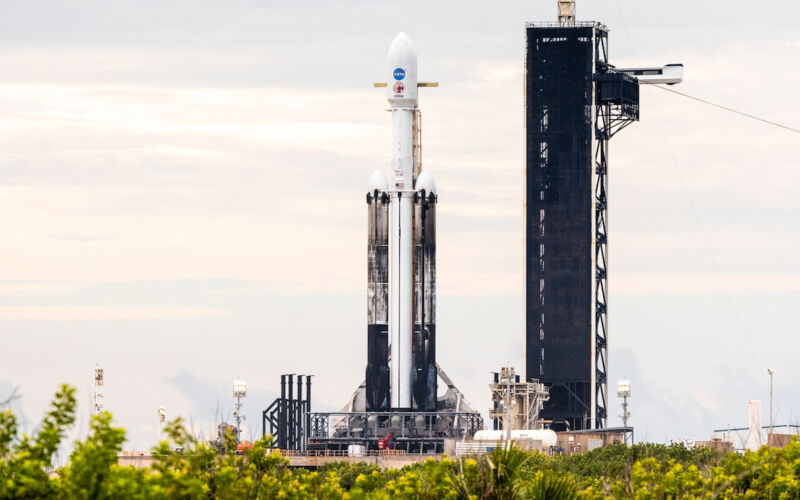
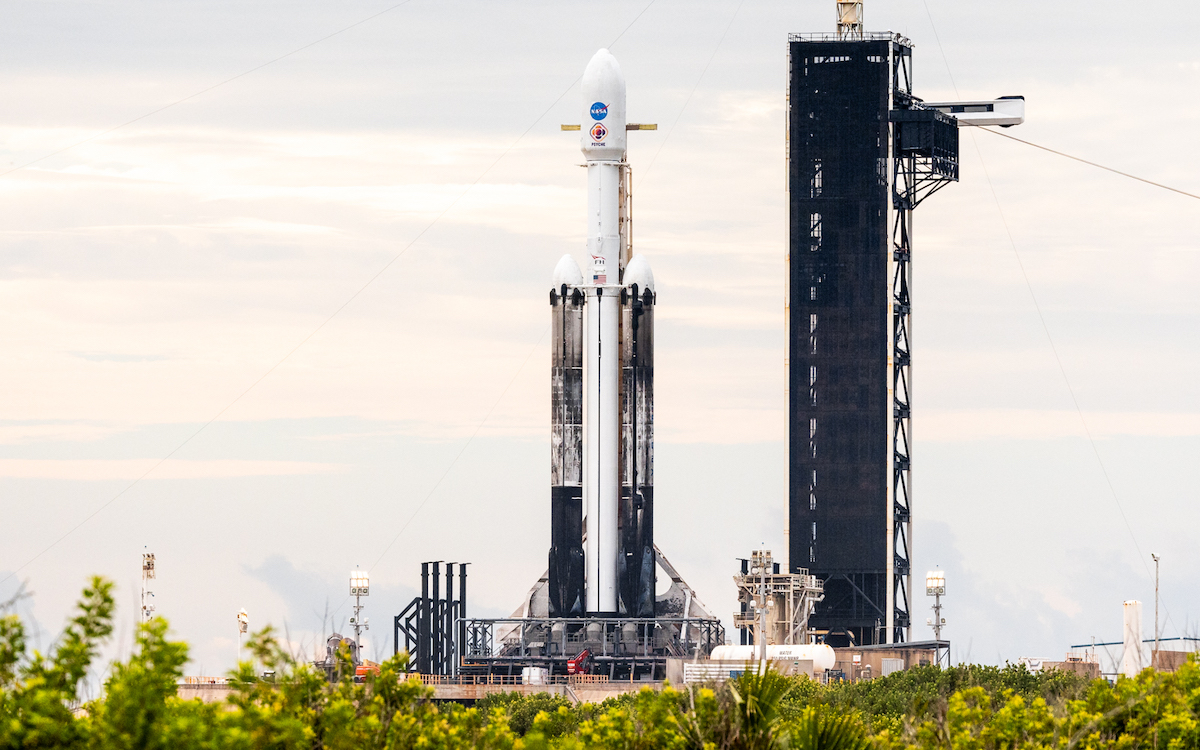
NASA is about to launch a mission of pure discovery to a metal asteroid

Read 37 remaining paragraphs | Comments


Source: Ars Technica – NASA is about to launch a mission of pure discovery to a metal asteroid

Review: The Fall of the House of Usher is a gloriously Gothic horror delight

mysterious female figure in red cape and skull mask staring directly into the camera while revelers dance behind her

Enlarge / A wealthy pharmaceutical dynasty faces a horrific reckoning in The Fall of the House of Usher. (credit: Netflix)

Halloween approacheth yet again, and that means it’s time for another classic horror miniseries from Mike Flanagan and Netflix, the partnership that brought us The Haunting of Hill House, The Haunting of Bly Manor, and Midnight Mass. For his final (sob!) project with Netflix, Flanagan has gifted us with The Fall of the House of Usher. To say it’s an adaption of the famous short story by Edgar Allan Poe wouldn’t be doing the miniseries justice. What Flanagan has done is something quite extraordinary: it’s more an inventive remix of the best of Poe’s oeuvre, creating something that’s entirely Flanagan’s own while still channeling the very essence of Poe.

(Some spoilers below, but no major reveals.)

In Poe’s original short story, an unnamed narrator visits his old friend Roderick Usher, who has fallen ill along with his twin sister Madeline—the last surviving members of a once prominent family. The nature of their illness is never disclosed, but Roderick appears to be going mad, convinced his fate is tied to the Usher house—and there is an ominous crack starting from the roof running down the front of the house. Roderick accidentally entombs Madeline alive, believing she has died, and one dark stormy night, she re-emerges and attacks him in revenge. As the twins expire and the narrator flees in terror, the entire house splits in two and sinks into a nearby lake. It’s pure Gothic horror, a genre that inspired Poe’s many short stories and poetry in the early 19th century.

Read 12 remaining paragraphs | Comments


Source: Ars Technica – Review: The Fall of the House of Usher is a gloriously Gothic horror delight

Biggest DDoSes of all time generated by protocol 0-day in HTTP/2

How DDoSers used the HTTP/2 protocol to deliver attacks of unprecedented size

Enlarge (credit: Aurich Lawson / Getty)

In August and September, threat actors unleashed the biggest distributed denial-of-service attacks in Internet history by exploiting a previously unknown vulnerability in a key technical protocol. Unlike other high-severity zerodays in recent years—Heartbleed or log4j, for example—which caused chaos from a torrent of indiscriminate exploits, the more recent attacks, dubbed HTTP/2 Rapid Reset, were barely noticeable to all but a select few engineers.

HTTP2/Rapid Reset is a novel technique for waging DDoS, or distributed denial-of-service attacks, of an unprecedented magnitude. It wasn’t discovered until after it was already being exploited to deliver record-breaking DDoSes. One attack on a customer using the Cloudflare content delivery network peaked at 201 million requests per second, almost triple the previous record Cloudflare had seen of 71 million rps. An attack on a site using Google’s cloud infrastructure topped out at 398 million rps, more than 7.5 times bigger than the previous record Google recorded of 46 million rps.

Doing more with less

The DDoSes hitting Cloudflare came from a network of roughly 20,000 malicious machines, a relatively small number compared with many so-called botnets. The attack was all the more impressive because, unlike many DDoSes directed at Cloudflare customers, this one resulted in intermittent 4xx and 5xx errors when legitimate users attempted to connect to some websites.

Read 20 remaining paragraphs | Comments


Source: Ars Technica – Biggest DDoSes of all time generated by protocol 0-day in HTTP/2

Rocket Report: European rockets finally fly; Artemis II core stage issues

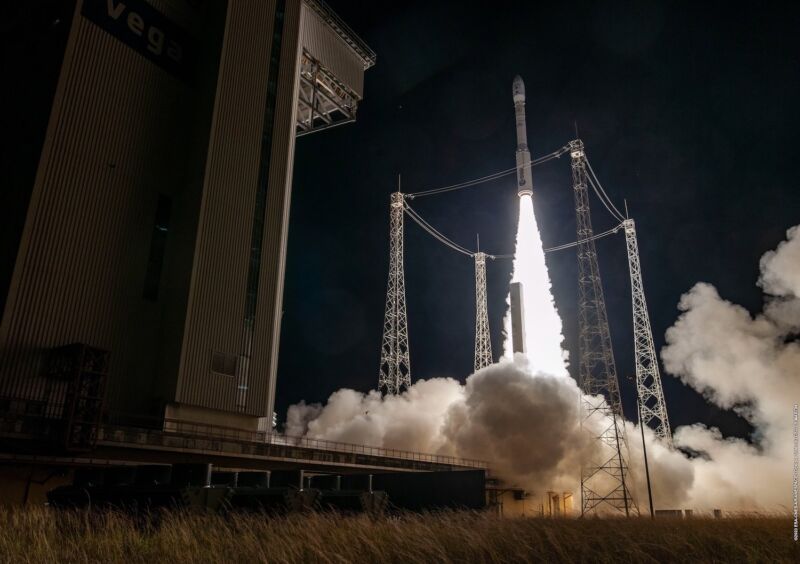
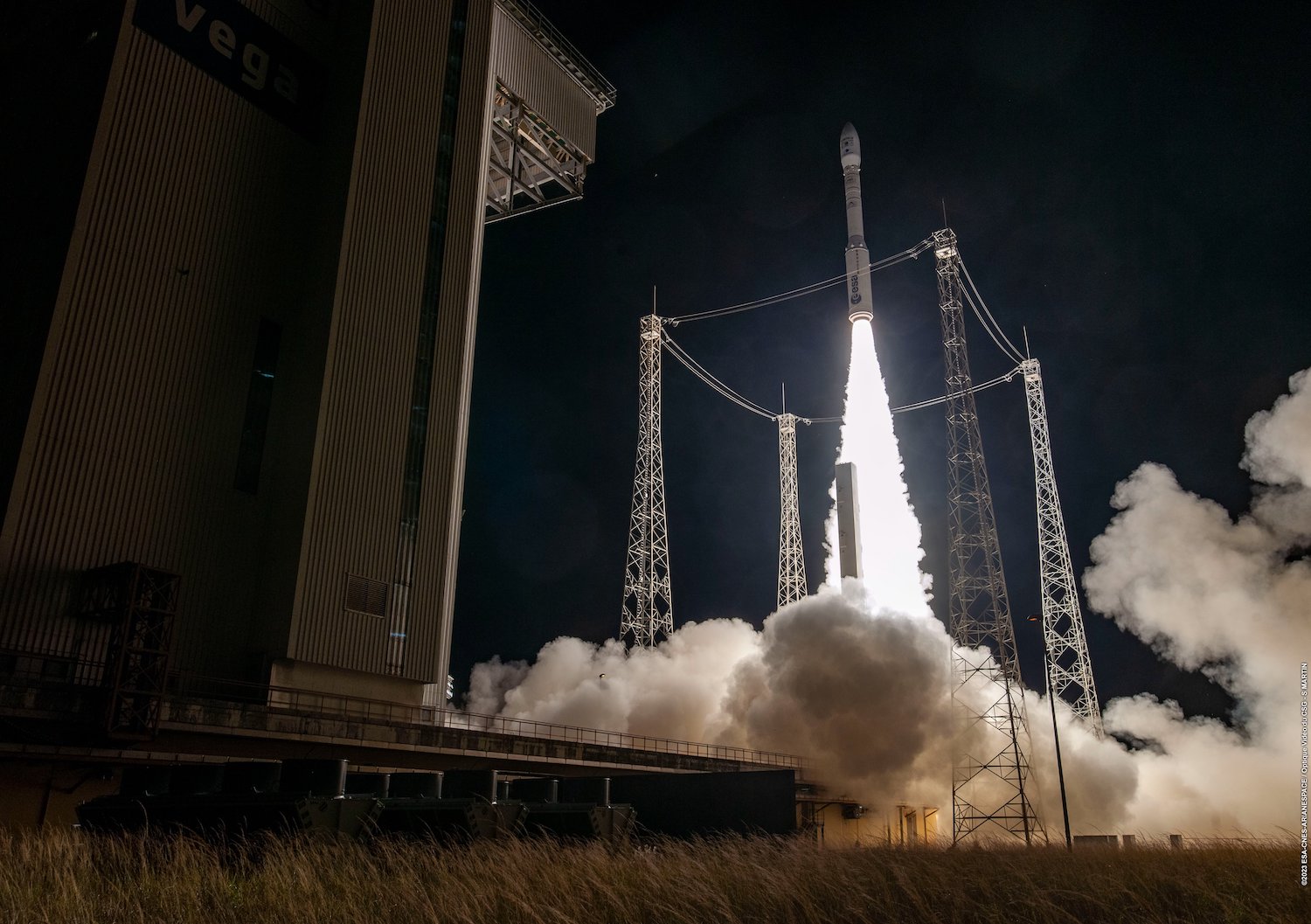
A Vega rocket rides a column of exhaust from its solid-fueled first stage, kicking off a mission to deliver 12 small satellites into orbit.

Enlarge / A Vega rocket rides a column of exhaust from its solid-fueled first stage, kicking off a mission to deliver 12 small satellites into orbit. (credit: ESA/CNES/Arianespace)

Welcome to Edition 6.15 of the Rocket Report! We’re now more than three-quarters of the way through the year, and as of Thursday, there have been 156 orbital launches since January 1. Last year, which set a record for global launch activity, we didn’t reach 156 orbital launches until mid-November. At the cadence set so far in 2023, we could end the year at roughly 200 orbital launches. We’ll see if the world’s launch providers, led by SpaceX and China, keep pace for next couple of months. I’m betting they do.

As always, we welcome reader submissions, and if you don’t want to miss an issue, please subscribe using the box below (the form will not appear on AMP-enabled versions of the site). Each report will include information on small-, medium-, and heavy-lift rockets, as well as a quick look ahead at the next three launches on the calendar.

A Spanish rocket startup launched its first test flight. A Spanish launch company, named PLD Space, claimed success on Saturday after its suborbital Miura 1 rocket lifted off and achieved an altitude of 46 kilometers (29 miles) before plummeting into the Atlantic Ocean, Ars reports. Saturday’s launch from Southern Spain is exciting for several reasons, but most notably because PLD Space is the first of Europe’s new space launch companies to have some credible success. To that end, Saturday’s modest flight represented the dawn of the European commercial space age.

Read 22 remaining paragraphs | Comments


Source: Ars Technica – Rocket Report: European rockets finally fly; Artemis II core stage issues

Ubuntu 23.10 is a Minotaur that moves faster and takes up less space

The Ubuntu 23.10 desktop, working just fine before you start messing with it.

Enlarge / The Ubuntu 23.10 desktop, working just fine before you start messing with it.

Ubuntu 23.10, codenamed Mantic Minotaur, is the 39th Ubuntu release, and it’s one of the three smaller interim releases Canonical puts out between long-term support (LTS) versions. This last interim before the next LTS doesn’t stand out with bold features you can identify at a glance. But it does set up some useful options and upgrades that should persist in Ubuntu for some time.

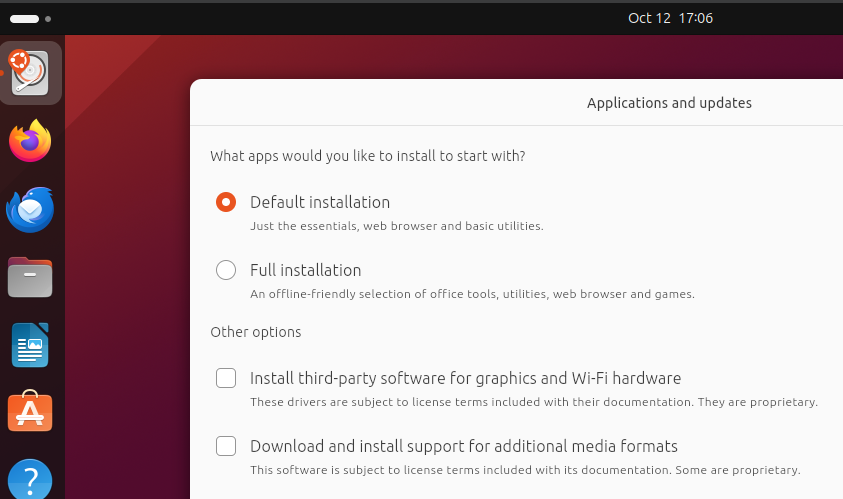
Your new installation options in Ubuntu 23.10. Neither of them is "Minimal," but that might be coming.

Your new installation options in Ubuntu 23.10. Neither of them is “Minimal,” but that might be coming.

Slimmed down and Flutter-ed up

Two of the biggest changes in Ubuntu 23.10 are in the installer. Ubuntu now defaults to a “Default installation,” which is quite different from what the “default” was even just one release prior. “Default” is described as “Just the essentials, web browser, and basic utilities,” while “Full” is “An offline-friendly selection of office tools, utilities, web browser, and games.” “Default” is somewhat similar to what “Minimal” used to be in prior versions, while “Full” is intended for those who are offline or have slow connections or just want as many options as possible right away.

At the moment, most people won’t be saving much, assuming they install off an ISO file. The ISO for Ubuntu 23.10 is 4.6GB, which is smaller than the 4.9GB ISO of Ubuntu 23.04, but not drastically so. This may change, however; Ubuntu staffers note that they have bigger plans for provisioning and install options, which may make it into 24.04. For now, it’s a way to avoid clutter in your app search, at least, if not your disk overall.

Read 9 remaining paragraphs | Comments


Source: Ars Technica – Ubuntu 23.10 is a Minotaur that moves faster and takes up less space

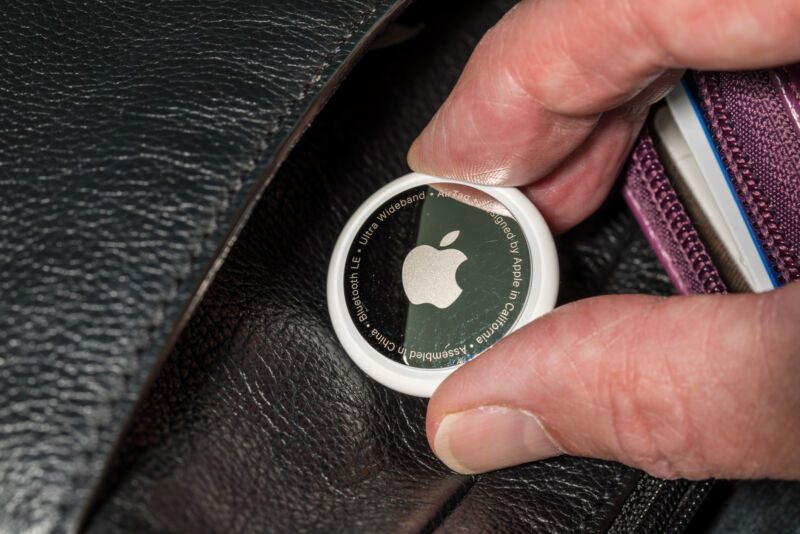
Apple AirTags stalking led to ruin and murders, lawsuit says

Apple AirTags stalking led to ruin and murders, lawsuit says

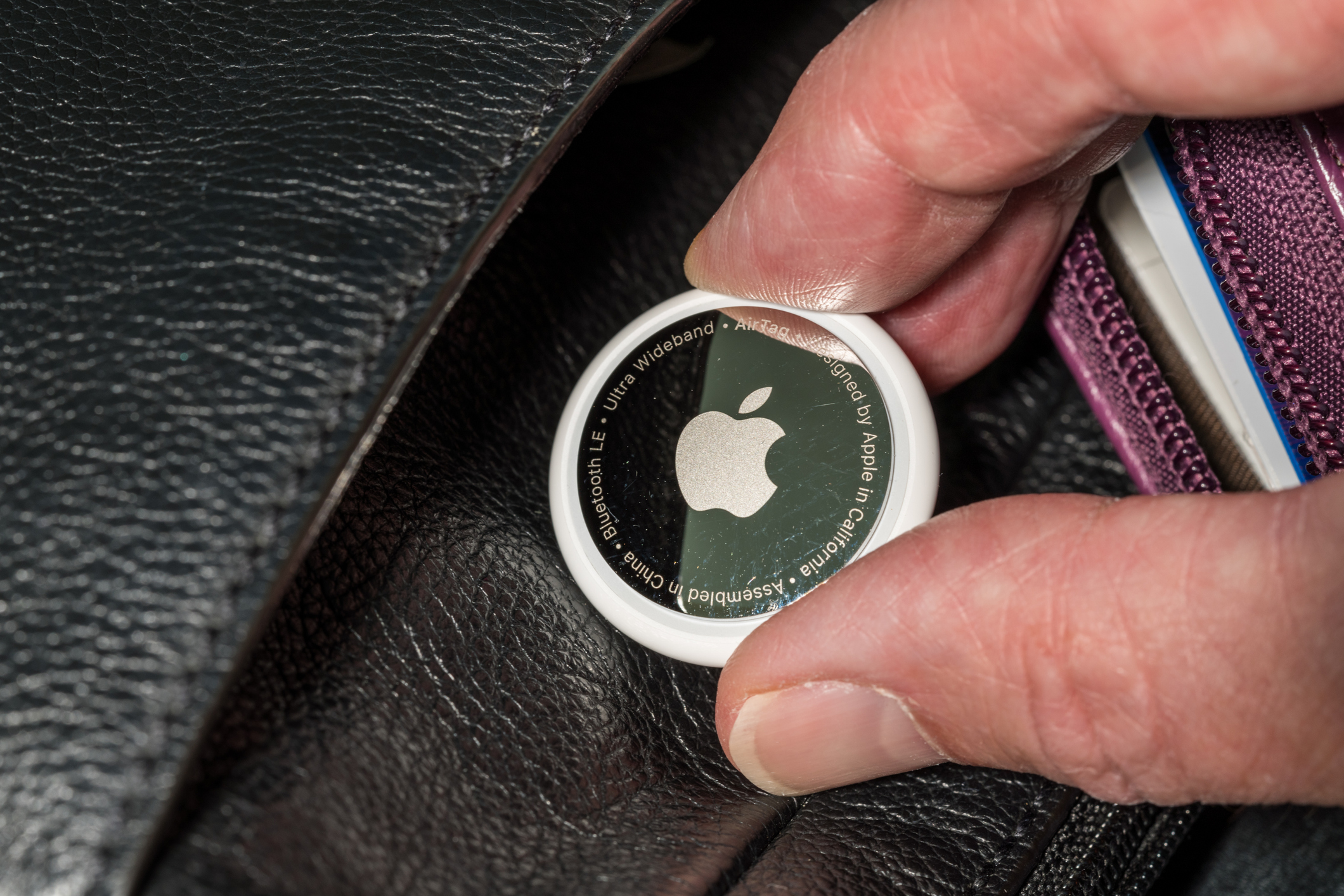
Enlarge (credit: BackyardProduction | iStock Editorial / Getty Images Plus)

This month, more than three dozen victims allegedly terrorized by stalkers using Apple AirTags have joined a class-action lawsuit filed in a California court last December against Apple. They alleged in an amended complaint that, partly due to Apple’s negligence, AirTags have become “one of the most dangerous and frightening technologies employed by stalkers” because they can be easily, cheaply, and covertly used to determine “real-time location information to track victims.”

Since the lawsuit was initially filed in 2022, plaintiffs have alleged that there has been an “explosion of reporting” showing that AirTags are frequently being used for stalking, including a spike in international AirTags stalking cases and more than 150 police reports in the US as of April 2022. More recently, there were 19 AirTags stalking cases in one US metropolitan area—Tulsa, Oklahoma—alone, the complaint said.

This seeming escalation is concerning, plaintiffs say, because Apple allegedly has not done enough to mitigate harms, and AirTags stalking can lead to financial ruin, as victims bear significant costs like hiring mechanics to strip their cars to locate AirTags or repeatedly relocating their homes. AirTags stalking can also end in violence, including murder, plaintiffs alleged, and the problem is likely bigger than anyone knows, because stalking is historically underreported.

Read 22 remaining paragraphs | Comments


Source: Ars Technica – Apple AirTags stalking led to ruin and murders, lawsuit says

Microsoft disputes $29B tax bill after “one of the largest” audits in IRS history

A building on the Microsoft Headquarters campus is pictured July 17, 2014 in Redmond, Washington.

Enlarge (credit: Getty Images)

On Wednesday, Microsoft revealed in a Securities and Exchange Commission filing and blog post that the Internal Revenue Service says the company owes the US Treasury $28.9 billion in back taxes, plus penalties and interest, reports the Associated Press. The claim comes as a result of a lengthy IRS audit that examined how Microsoft distributed its profits across different countries from 2004 to 2013. Microsoft disagrees with the IRS’s claim and intends to appeal the decision.

According to the AP, the ongoing IRS probe began in 2007 and is described as “one of the largest in the Service’s history” in court documents released last year. Recently, Microsoft received notification that the audit phase has concluded, triggering the next steps for settling the dispute. At the core of the IRS investigation is the practice known as “transfer pricing,” which some critics argue allows companies to report lower profits in countries with higher taxes and vice versa, minimizing their overall tax obligations.

Microsoft maintains that it has complied with IRS rules all along and will proceed to appeal the agency’s decision—a process expected to last for years. Here’s how the company described the episode in Section 8.01 of its SEC filing:

Read 4 remaining paragraphs | Comments


Source: Ars Technica – Microsoft disputes B tax bill after “one of the largest” audits in IRS history

SpaceX details Starlink-for-phones plan, launching in 2024

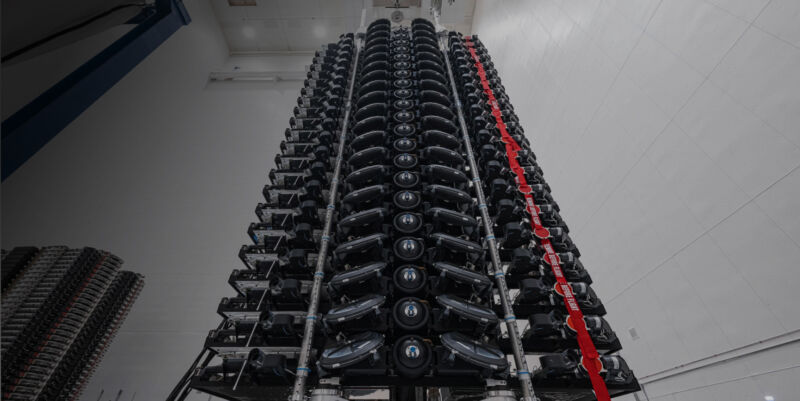
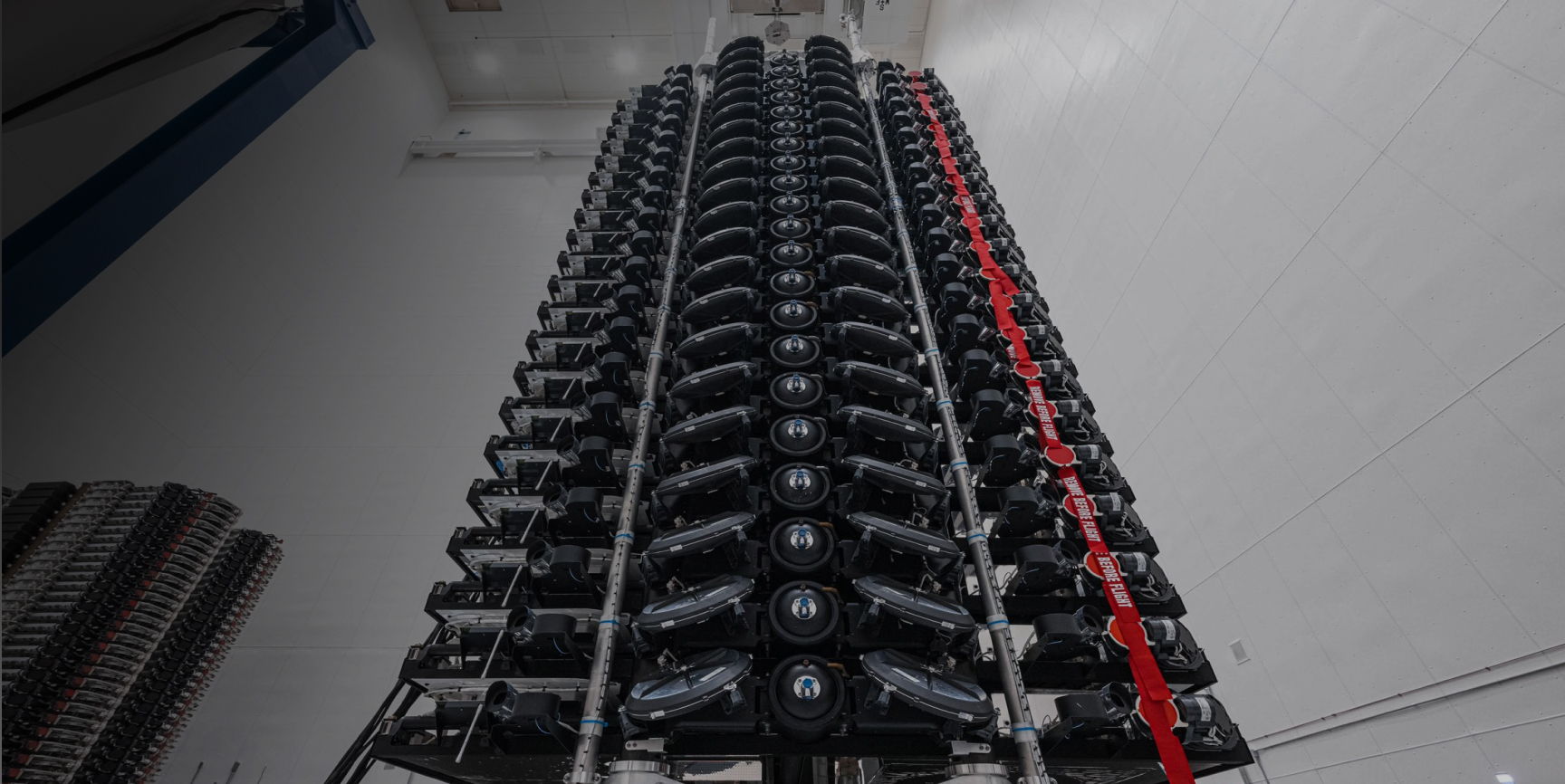
A stack of Starlink V2 Minis.

Enlarge / A stack of Starlink V2 Minis. (credit: SpaceX)

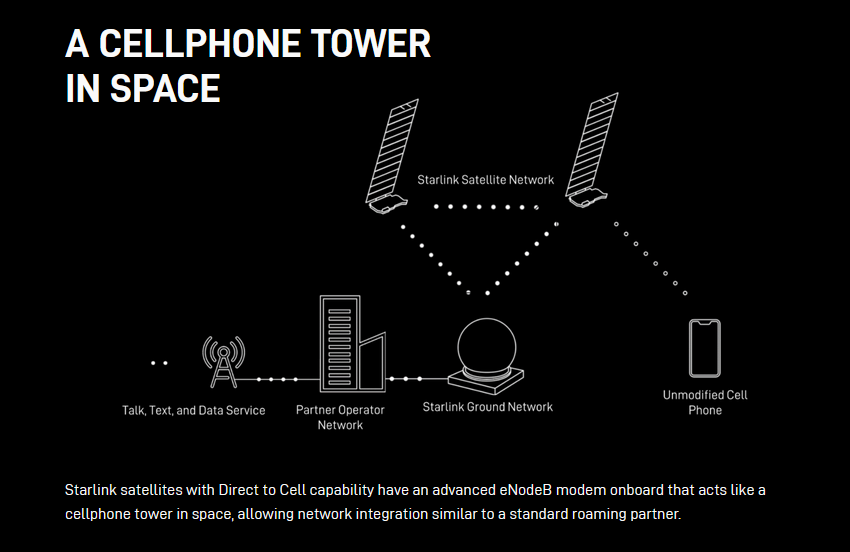
Starlink’s website update is revealing a bit more about its plans for a satellite-delivered cell phone service. The new page for “Starlink Direct to Cell” promises “ubiquitous coverage” from “cellphone towers in space” that will work over bog-standard LTE. The current timeline claims there will be text service starting in 2024, voice and data in 2025, and “IoT” service in 2025.

Today satellite phone connectivity still requires giant, purpose-built hardware, like the old-school Iridium network phones. If you’re only looking for emergency texting, you can also make do with Apple’s introduction of the barely there connectivity paradigm, requiring being inside a connectivity window, holding up a phone, and following a signal-targeting app. Starlink wants to bring full-blown space connectivity to normal smartphone hardware.
Starlink satellites with LTE modems will beam Internet directly to your smartphone.

Starlink satellites with LTE modems will beam Internet directly to your smartphone. (credit: SpaceX)

The plan for Starlink Direct to Cell is different thanks to a lot of foundational improvements over what’s currently available. First, those other two networks are in a higher orbit: the iPhone’s Globalstar network is at 1,400 km above Earth, and Iridium is at 781 km. Starlink currently operates a lot closer to Earth, in the 550 km range. The other major shift is that SpaceX is developing the world’s largest rocket, Starship, and having the world’s largest rocket means you get to launch the world’s biggest satellites. Bigger satellites can involve bigger, more sensitive antennas than what generally are launched into space, and this part of the operation isn’t rocket science: Your tiny smartphone will have a much easier time connecting to the closer, bigger satellites, leading to a level of cellular space service that wasn’t possible before.

Read 3 remaining paragraphs | Comments


Source: Ars Technica – SpaceX details Starlink-for-phones plan, launching in 2024

T-Mobile switches users to pricier plans and tells them it’s not a price hike

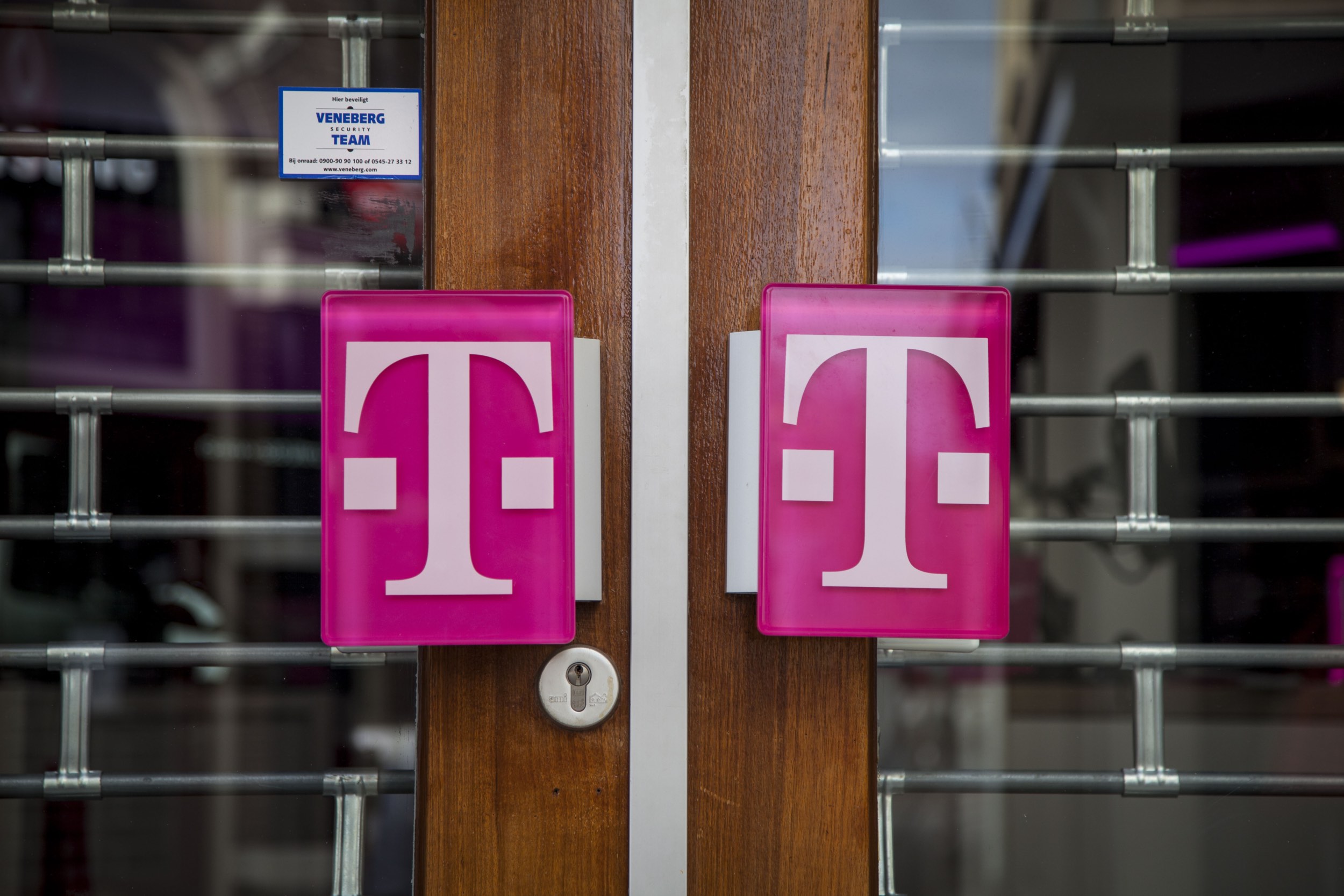
The T-Mobile logo on the doors of a T-Mobile store.

Enlarge / A T-Mobile store on April 3, 2020, in Zutphen, Netherlands.

T-Mobile is moving people to newer, more expensive plans starting with the November bill cycle unless customers call the company to opt out, according to multiple reports.

The forced migration surfaced on Reddit two days ago and was confirmed by The Mobile Report, which published portions of leaked documents indicating how the plan changes will be implemented. T-Mobile also confirmed the change to CNET, telling the news site that “there will be an increase of approximately $10 per line with the migration.”

“We’re always looking for ways to give our customers more from our services so we’re moving a small number who were on older rate plans to newer plans that will deliver them enhanced features,” T-Mobile told CNET.

Read 15 remaining paragraphs | Comments


Source: Ars Technica – T-Mobile switches users to pricier plans and tells them it’s not a price hike

What would signal life on another planet?

Read 27 remaining paragraphs | Comments


Source: Ars Technica – What would signal life on another planet?

Oops—It looks like the Ariane 6 rocket may not offer Europe any launch savings

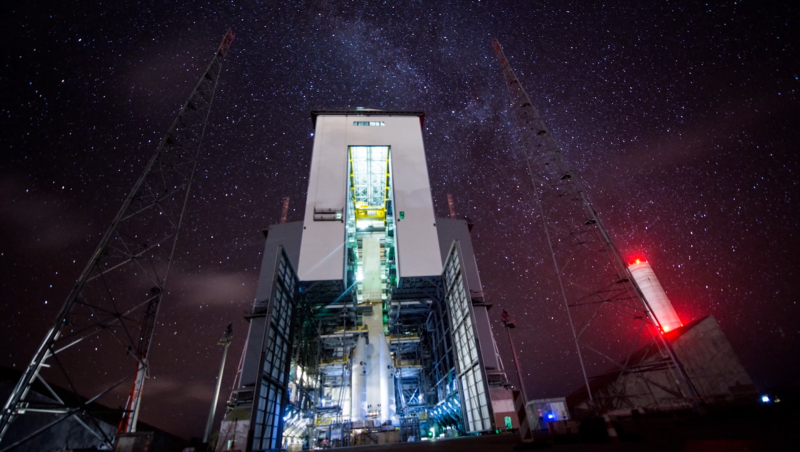
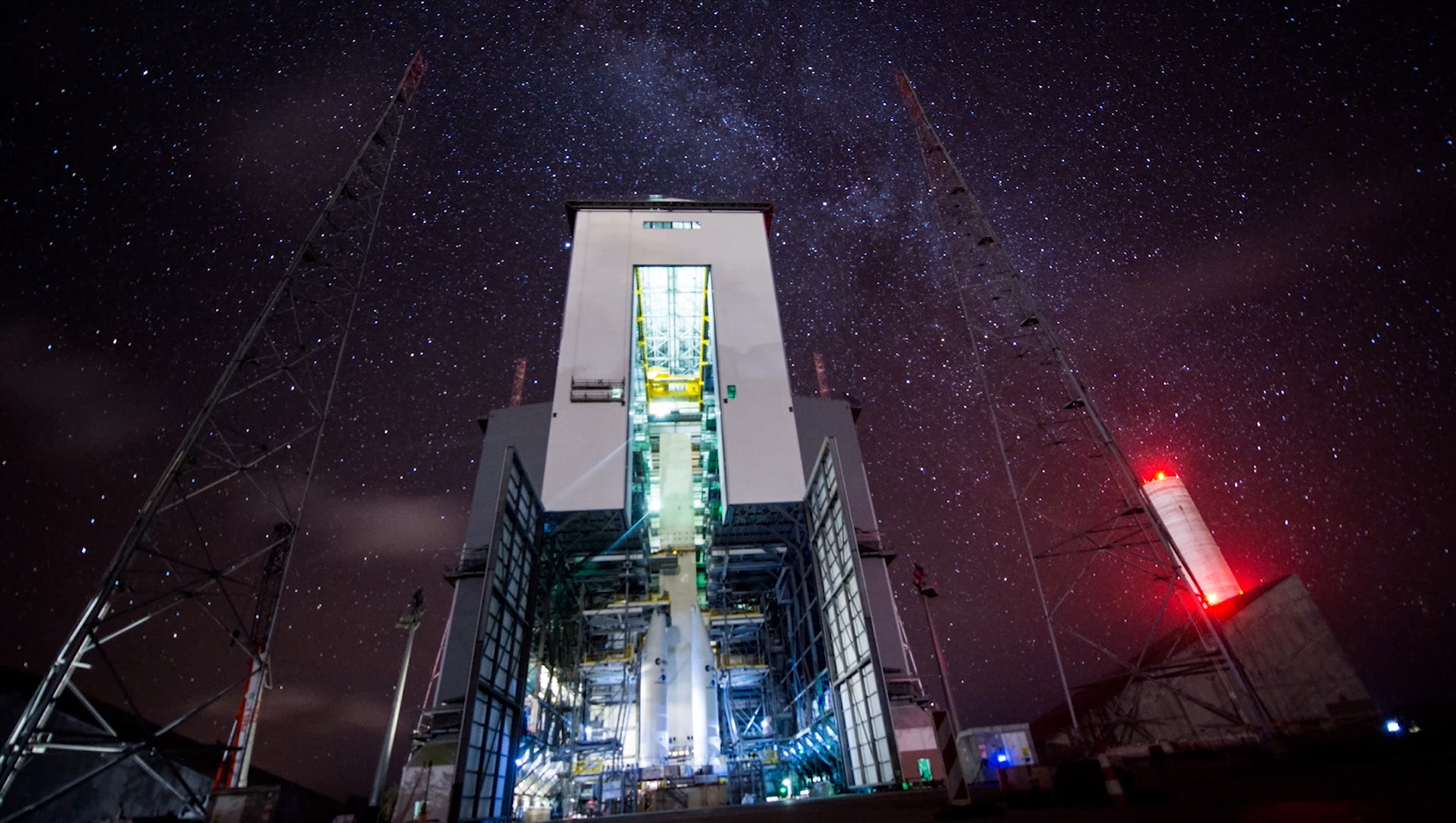
Night time at a giant rocket hanger.

Enlarge / Under the stars with the Ariane 6 launch base at Europe’s spaceport in French Guiana. (credit: ESA)

Nearly a decade ago the European Space Agency announced plans to develop the next generation of its Ariane rocket, the Ariane 6 booster. The goal was to bring a less costly workhorse rocket to market that could compete with the likes of SpaceX’s Falcon 9 booster and begin flying by 2020.

It has been well documented that development of the Ariane 6 is running years behind—the vehicle is now unlikely to fly before the middle of 2024 and subject to further delays. For example, a critical long-duration hot fire of the vehicle’s Vulcain 2.1 main engine had been scheduled for “early October,” but there have been no recent updates on when this key test will take place.

However, there are also increasing concerns that the Ariane 6 rocket will not meet its ambitious price targets. For years, European officials have said they would like to cut the price of launches by half with a rocket that is easier to manufacture and by flying an increased cadence of missions.

Read 16 remaining paragraphs | Comments


Source: Ars Technica – Oops—It looks like the Ariane 6 rocket may not offer Europe any launch savings

Kia EV5 revealed, but US future is uncertain for this electric crossover

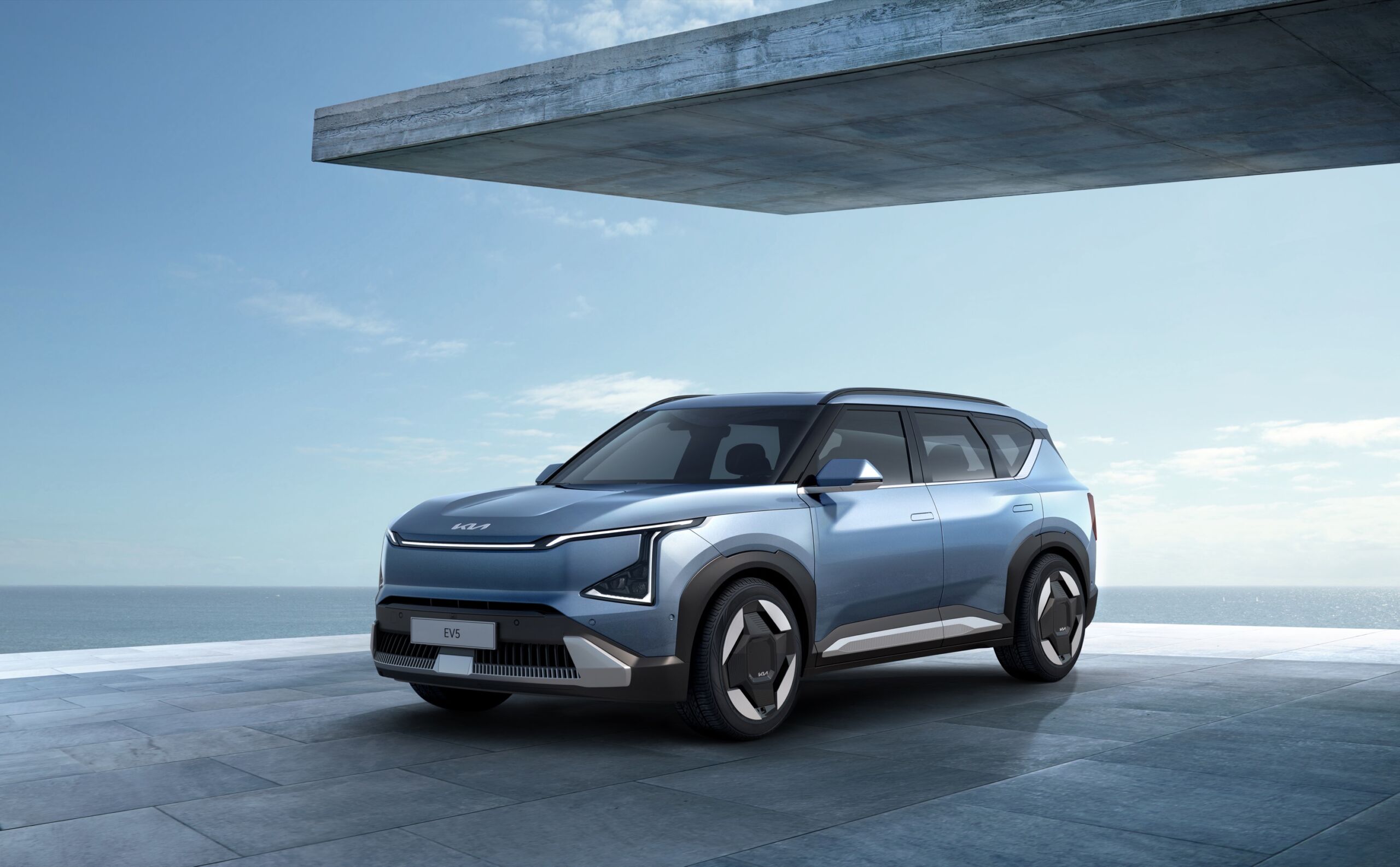
A rendering of a blue Kia EV5 crossover

Enlarge / There’s a very distinct family resemblance between the EV9 and the EV5 (pictured). (credit: Kia)

Following the launch of the new EV9, the next product in Kia’s EV onslaught is the smaller EV5. And while the first round of EV5s will go on sale in China and South Korea in the coming months, it will still be some time before the compact SUV is offered globally.

Even worse, we aren’t totally sure if the EV5 will come to America; sources within Kia have both confirmed and denied plans to bring this SUV to the US. The company’s president and CEO said it would be headed stateside, but then Kia’s public relations team denied this statement, with other internal sources saying the EV5 would not be offered in the US. Kia confirms that the EV5 will come to North America, but we’re told this just means Canada and possibly Mexico.

Why? It’s complicated. The likely culprit is that the EV5 isn’t planned to be built in North America, making it ineligible for the new Inflation Reduction Act (IRA) tax credit. That $7,500 credit could drastically reduce the price of a new EV, and Kia not being able to make use of this would reduce the EV5’s competitiveness in the US. Just a thought.

Read 9 remaining paragraphs | Comments


Source: Ars Technica – Kia EV5 revealed, but US future is uncertain for this electric crossover