Google plans RISC-V Android tools in 2024, wants developers to “be ready”

Google plans RISC-V Android tools in 2024, wants developers to “be ready”

Enlarge (credit: Google)

Android is slowly entering the RISC-V era. So far we’ve seen Google say it wants to give the up-and-coming CPU architecture “tier-1” support in Android, putting RISC-V on equal footing with Arm. Qualcomm has announced the first mass-market RISC-V Android chip, a still-untitled Snapdragon Wear chip for smartwatches. Now Google has announced a timeline for developer tools via the Google Open Source Blog. The last post is titled “Android and RISC-V: What you need to know to be ready.”

Getting the Android OS and app ecosystem to support a new architecture is going to take an incredible amount of work from Google and developers, and these tools are laying the foundation for that work. First up, Google already has the “Cuttlefish” virtual device emulator running, including a gif of it booting up. This isn’t the official “Android Emulator”—which is targeted at app developers doing app development—Cuttlefish is a hardware emulator for Android OS development. It’s the same idea as the Android Emulator but for the bottom half of the tech stack—the kernel, framework, and hardware bits. Cuttlefish lets Google and other Android OS contributors work on a RISC-V Android build without messing with an individual RISC-V device. Google says it’s working well enough now that you can download and emulate a RISC-V device today, though the company warns that nothing is optimized yet.

The next step is getting the Android Emulator (for app developers) up and running, and Google says: “By 2024, the plan is to have emulators available publicly, with a full feature set to test applications for various device form factors!” The nice thing about Android is that most app code is written with no architecture in mind—it’s all just Java/Kotlin. So once the Android RunTime starts spitting out RISC-V code, a lot of app code should Just Work. That means most of the porting work will need to go into things written in the NDK, the native developer kit, like libraries and games. The emulator will still be great for testing, though.

Read 1 remaining paragraphs | Comments


Source: Ars Technica – Google plans RISC-V Android tools in 2024, wants developers to “be ready”

Microsoft rolls out Windows 11 23H2, a new baseline for the frequently updated OS

Microsoft rolls out Windows 11 23H2, a new baseline for the frequently updated OS

Enlarge (credit: Microsoft)

Windows 11’s next yearly update is here. Microsoft is rolling out the Windows 11 2023 Update, also known as Windows 11 23H2, to the general public starting today, the company announced in a blog post.

Microsoft Windows Servicing and Delivery VP John Cable describes the 23H2 update as “scoped,” “cumulative,” and “streamlined,” which are all different ways of saying that it doesn’t do a whole lot in and of itself other than rolling the version number over. Most of the big new features, including the Copilot AI assistant, actually began rolling out a month ago to Windows 11 22H2. It’s just that you’ll know that any PC running 23H2 has those features, whereas older versions of 22H2 may not.

Cable notes a couple of 23H2-specific additions, namely that the Chat app from earlier Windows 11 releases has been replaced by Microsoft Teams (free) (that was not our parenthetical; that’s what the company calls it), which is pinned to the taskbar by default just like Chat used to be. Built-in system apps get a new “system” label in the “All apps” view on the Start menu, and system apps are now managed separately from other apps in the Settings app under System > System Components.

Read 3 remaining paragraphs | Comments


Source: Ars Technica – Microsoft rolls out Windows 11 23H2, a new baseline for the frequently updated OS

Dust of death—did it do in the dinosaurs?

Read 10 remaining paragraphs | Comments


Source: Ars Technica – Dust of death—did it do in the dinosaurs?

Relish the Halloween horror of this purple fungus that “mummifies” spiders

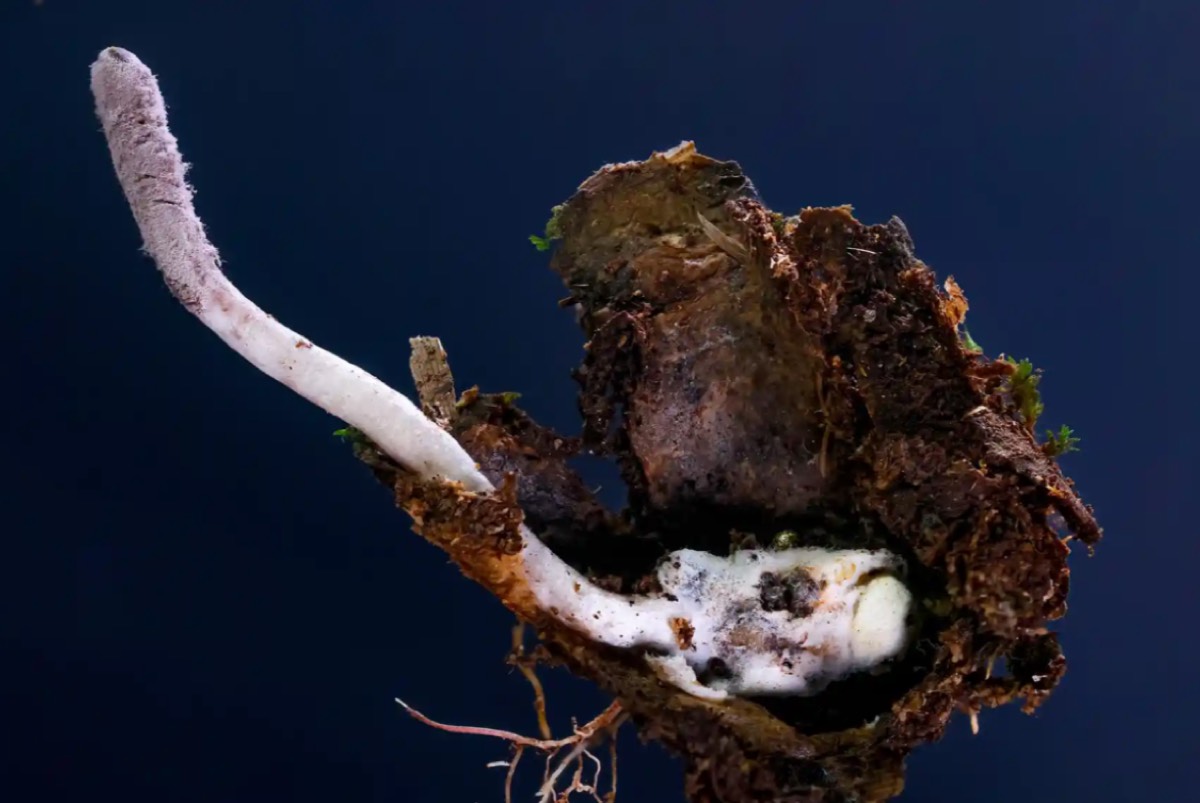
long tubular purple fungus growing out of a spider

Enlarge / A purple parasitic fungus, discovered in March in a Brazilian rainforest, pokes out of a trapdoor spider’s burrow after wrapping itself around the unfortunate spider. (credit: João Araújo)

It’s Halloween, that time of year when we seek out scary things like vampires, werewolves, ghosts, mummies, and all kinds of similar fictional monsters. But Mother Nature has her own horrors—like the strange species of parasitic purple fungus discovered earlier this year in a Brazilian rainforest that infects trapdoor spiders and gradually “mummifies” its hosts.

There are lots of horrifying parasitic examples in nature, such as the lancet liver fluke, whose complicated life cycle relies on successfully invading successive hosts—snails, ants, and grazing mammals—and altering their hosts’ behavior via a temperature-dependent “on/off” switch. Then there is a parasitic worm (trematode) that targets a particular species of marsh-dwelling brown shrimp (amphipod), turning the shrimp an orange hue and altering the host shrimp’s behavior. Or consider the species of small-headed flies (Acroceridae) that lay batches of eggs near spiders (or in the webs) and when the larvae hatch, they pierce through the spiders’ leg joints. There’s also a kleptoparasitic fly species (Milichiidae) that steals food from spider webs and will sometimes snatch prey right out of a spider’s mouth. (Rude!)

But fungi are arguably the champions for viscerally gruesome parasitic behavior. According to João Araújo, assistant curator of mycology at the New York Botanical Garden, the newly discovered fungus belongs to the Cordyceps family of “zombifying” parasitic fungi. There are more than 400 different species, each targeting a particular type of insect, whether it be ants, dragonflies, cockroaches, aphids, or beetles. In fact, Cordyceps famously inspired the premise of The Last of Us game and subsequent TV series.

Read 4 remaining paragraphs | Comments


Source: Ars Technica – Relish the Halloween horror of this purple fungus that “mummifies” spiders

Scientists will soon find out whether the Lucy mission works as intended

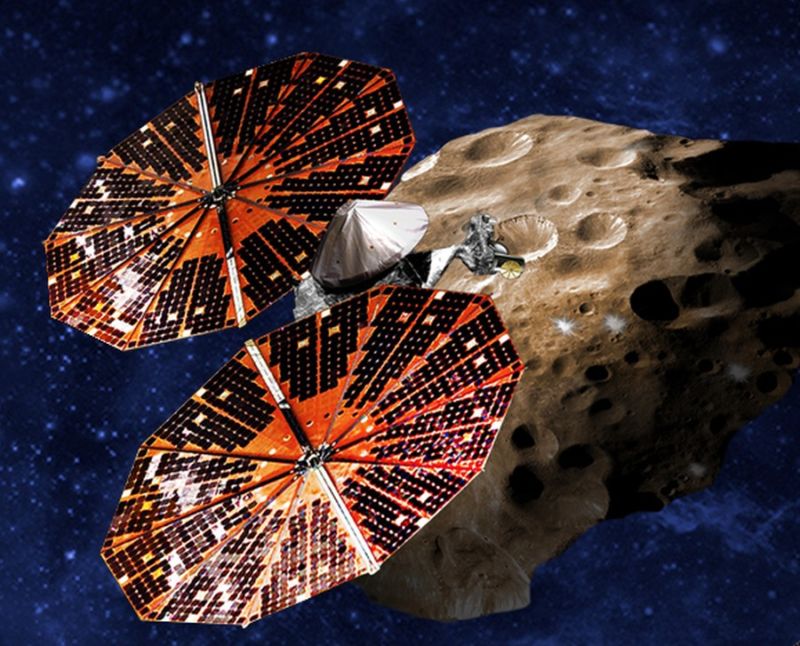
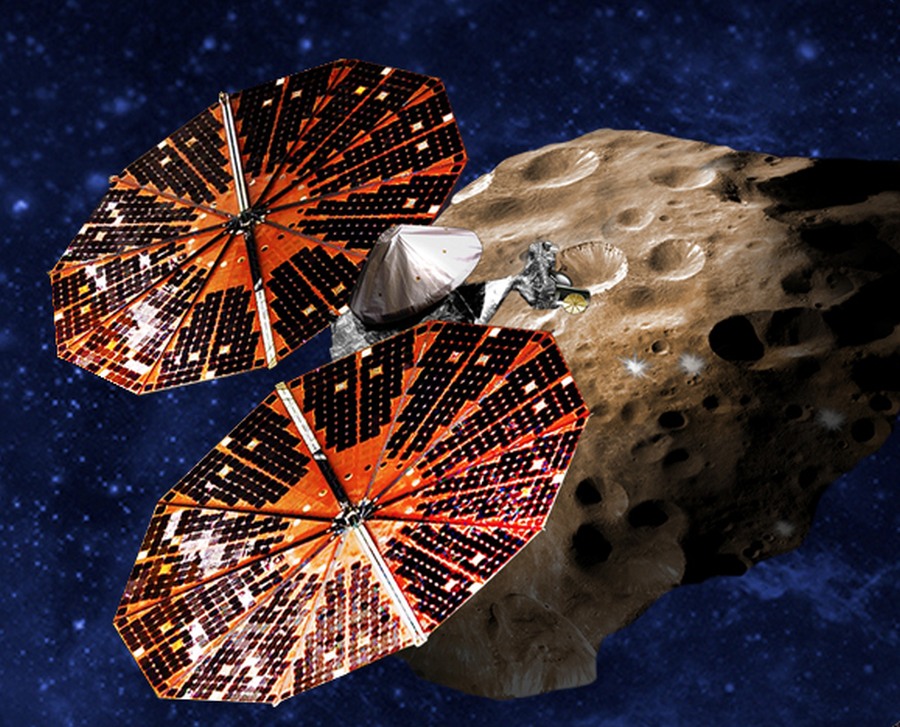
An artist’s conception of the Lucy spacecraft flying by a Trojan asteroid.

Enlarge / An artist’s conception of the Lucy spacecraft flying by a Trojan asteroid. (credit: NASA)

A little more than two years have passed since the Lucy mission launched on an Atlas V rocket, ultimately bound for asteroids that share an orbit with Jupiter. After a gravity assist from Earth in 2022, the spacecraft has been making a beeline for an intermediate target, and now it is nearly there.

On Wednesday, the $1 billion mission is due to make its first asteroid flyby, coming to within 265 miles (425 km) of the small main belt asteroid Dinkinesh. In a blog post, NASA says the encounter will take place at 12:54 pm ET (16:54 UTC).

About an hour before the encounter, the spacecraft will begin attempting to lock on to the small asteroid so that its instruments are oriented toward it. This will allow for the best possible position to take data from Dinkinesh as Lucy speeds by at 10,000 mph (4,470 meters per second).

Read 6 remaining paragraphs | Comments


Source: Ars Technica – Scientists will soon find out whether the Lucy mission works as intended

Facing 110 years in prison, Sam Bankman-Fried “can’t recall” what he did at FTX

Sam Bankman-Fried pictured from the side as he leaves a courtroom.

Enlarge / Sam Bankman-Fried leaves federal court in New York on Thursday, February 16, 2023. (credit: Getty Images | Bloomberg)

Facing cross-examination at his criminal fraud trial yesterday, Sam Bankman-Fried repeatedly testified that he doesn’t remember details about what he did and said while running cryptocurrency exchange FTX. Bankman-Fried responded “I’m not sure” or “I can’t recall” to many questions from US prosecutor Danielle Sassoon, according to news reports from the trial.

Sassoon “grilled Mr. Bankman-Fried about the inconsistencies between his public statements and how he ran his crypto empire before it collapsed spectacularly in November,” a New York Times article said. Bankman-Fried “insisted that he couldn’t remember much of what he had said publicly” and “added that he wasn’t significantly involved in the hedge fund he founded, Alameda Research.”

The New York Post wrote that Bankman-Fried answered with some variation of “I can’t recall” over 100 times on Monday. But Sassoon “presented jurors with a mountain of tweets, emails, and podcast clips revealing that the MIT grad did in fact say dozens of things he claimed not to have recalled,” the article said.

Read 16 remaining paragraphs | Comments


Source: Ars Technica – Facing 110 years in prison, Sam Bankman-Fried “can’t recall” what he did at FTX

There was a heavy dose of the future at the 2023 Japan Mobility Show

Read 66 remaining paragraphs | Comments


Source: Ars Technica – There was a heavy dose of the future at the 2023 Japan Mobility Show

One year after being bought for $44 billion, X is worth $19 billion

Read 6 remaining paragraphs | Comments


Source: Ars Technica – One year after being bought for billion, X is worth billion

Toyota has built an EV with a fake transmission, and we’ve driven it

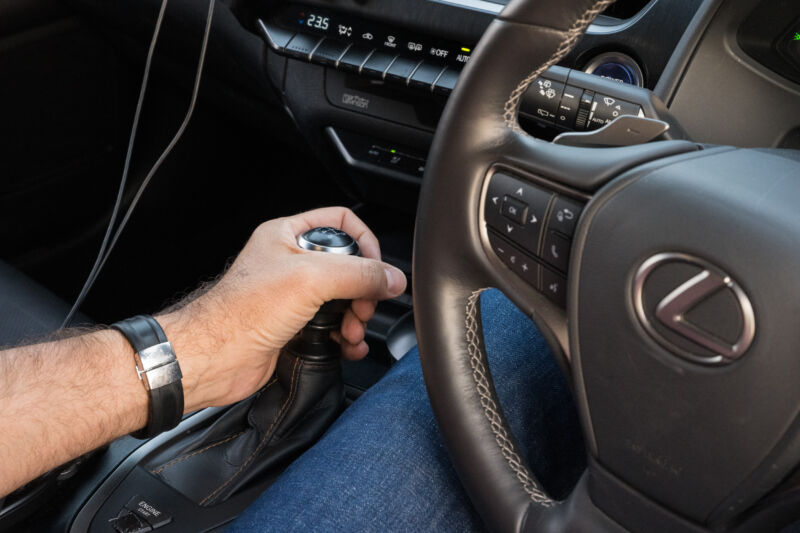
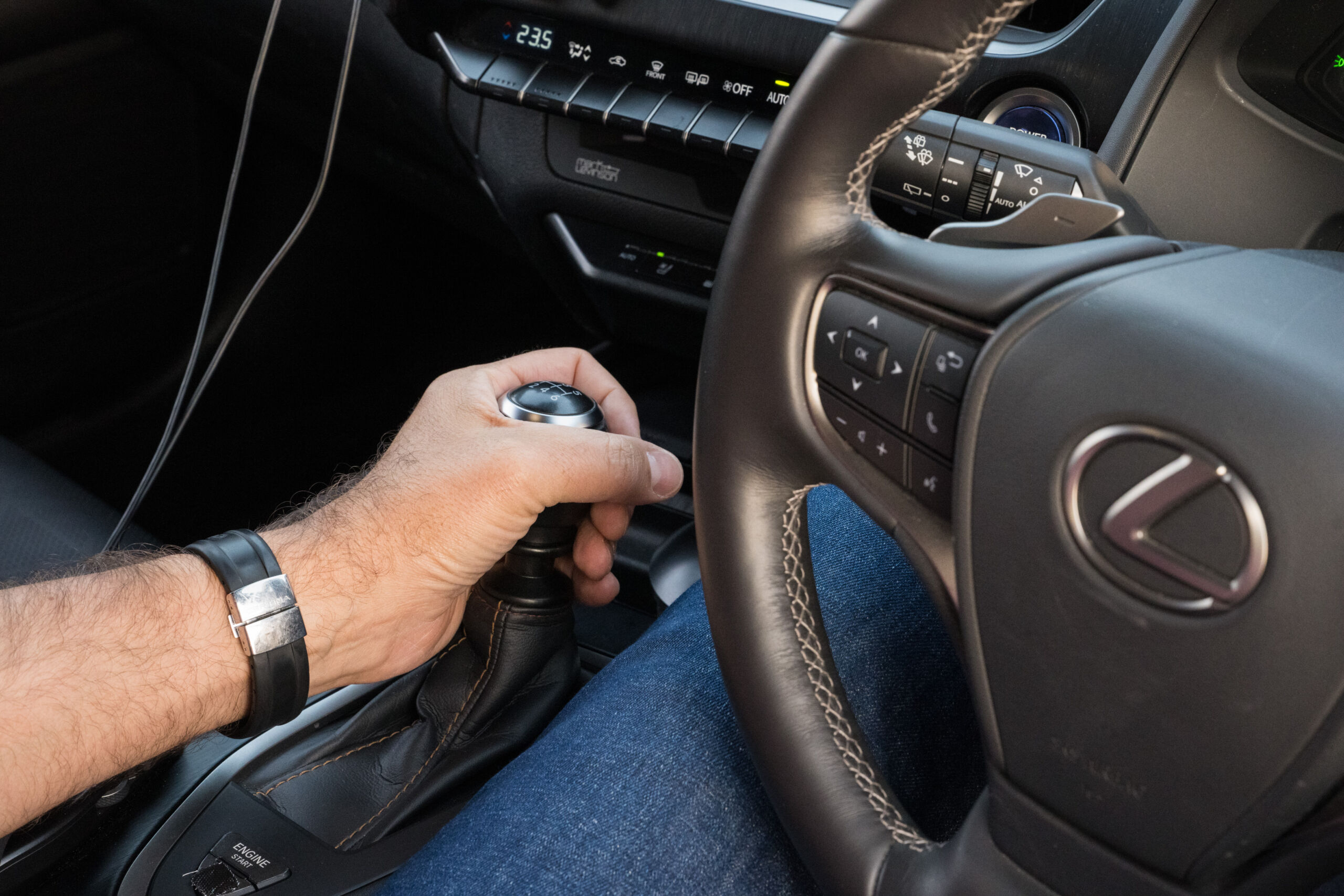
A man's hand operates the gear lever in a Lexus EV

Enlarge / The Lexus UX300e is an electric crossover available in Europe, China, and Japan, but not usually with three pedals or a gear lever. (credit: Toyota)

Electric cars do a lot of things well. They’re smooth. They’re quiet. They’re easier on the environment, and they’re even scientifically proven to be less stressful. But what they don’t tend to be is engaging, at least not in the way that a traditional car with three pedals and a stick shift is.

A manual car requires a lot more of the driver. That level of forced engagement brings with it a sort of focus that can make the simple act of driving a lot more fun. In an ideal world, it would be possible to layer that kind of engagement on top of the otherwise ideal EV experience.

That is exactly what Toyota has done with what it calls the “Manual BEV concept.” Think of it as an EV that brings all the hands-on enjoyment of a manual transmission—despite lacking a manual transmission. It’s something of a testbed to find ways to bring more fundamental driver enjoyment to the next generation of battery-powered electric vehicles, and after running a few laps around Toyota’s test track in one, I’m convinced every sports-oriented EV in the future needs this.

Read 21 remaining paragraphs | Comments


Source: Ars Technica – Toyota has built an EV with a fake transmission, and we’ve driven it

Daily Telescope: A spooky image of the Solar System’s largest planet

A view of Jupiter from 7,700 km above the surface.

Enlarge / A view of Jupiter from 7,700 km above the surface. (credit: NASA/JPL-Caltech/SwRI/MSSS/ Image processing by Vladimir Tarasov)

Welcome to the Daily Telescope. There is a little too much darkness in this world and not enough light; a little too much pseudoscience and not enough science. We’ll let other publications offer you a daily horoscope. At Ars Technica, we’re going to take a different route, finding inspiration from very real images of a universe that is filled with stars and wonder.

Good morning. It is October 31—or, for people in many countries around the world, Halloween.

According to the US Library of Congress, Halloween has its roots in the ancient Celtic festival of Samhain. This was a pagan celebration to welcome the harvest at the end of summer, when people would light bonfires and wear costumes to ward off ghosts. Celtic people believed that during the festival, spirits walked the Earth. Later on, Christian missionaries introduced All Souls’ Day on November 2, which perpetuated the idea of the living coming into contact with the dead around the same time of year.

Read 4 remaining paragraphs | Comments


Source: Ars Technica – Daily Telescope: A spooky image of the Solar System’s largest planet

Why you should take your 3DS along for a “StreetPass Halloween”

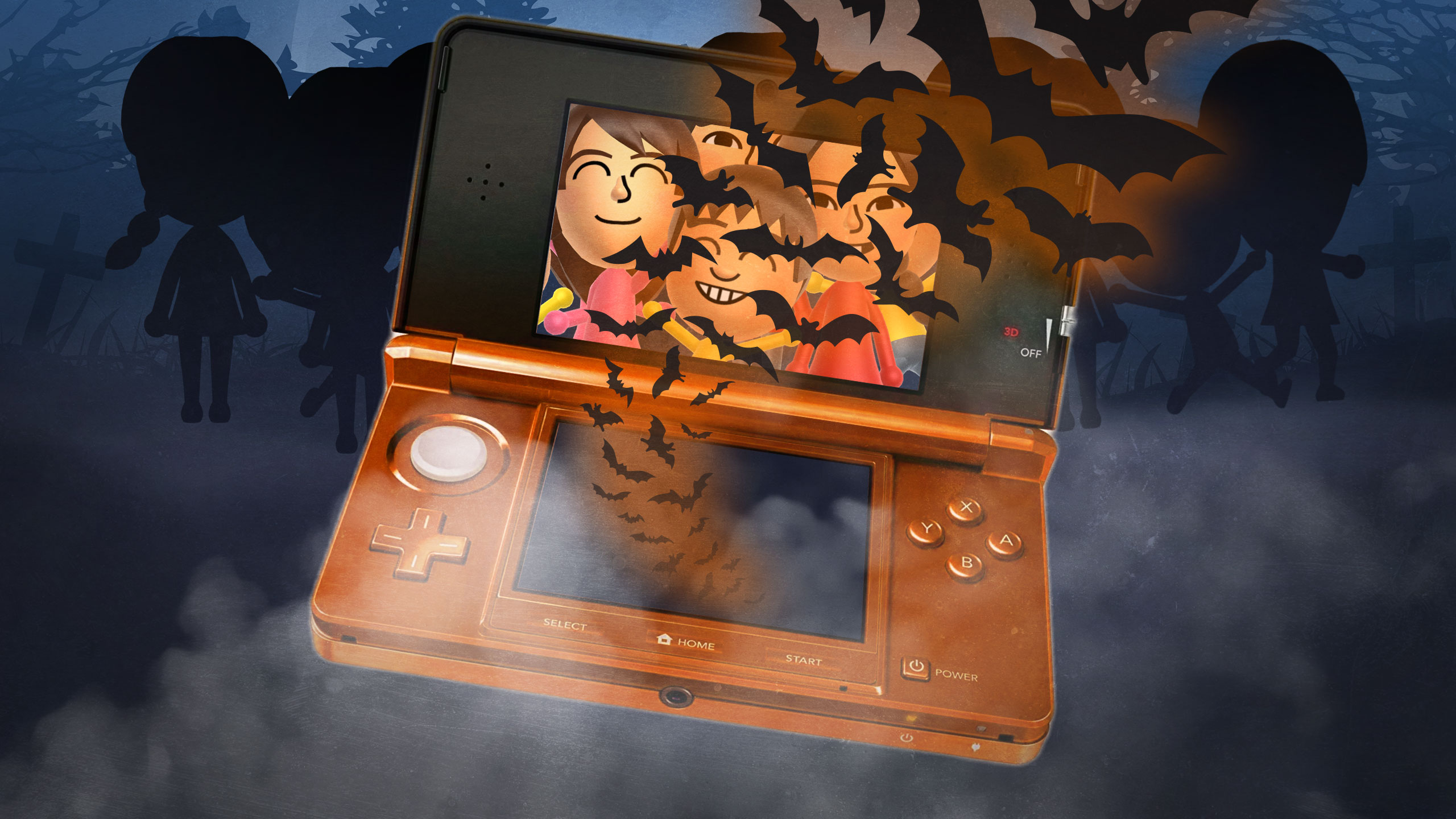
It's no trick, 3DS players are treating themselves to StreetPass tags this Halloween.

Enlarge / It’s no trick, 3DS players are treating themselves to StreetPass tags this Halloween. (credit: Aurich Lawson | Getty Images)

When it comes to unique gimmicks, the Nintendo 3DS is mainly remembered for the wow factor of its glasses-free stereoscopic 3D effects (which Nintendo would eventually abandon with the introduction of the 2DS line). But today, more than 12 years after the launch of the 3DS, a group of dedicated players has been gathering to ensure that another unique 3DS feature still has a bright and active future after being abandoned by Nintendo.

We’re talking about StreetPass, the proto-social-network that Nintendo devised to let 3DS owners instantly and silently exchange Mii avatars (and some basic information) when two consoles get close enough to communicate wirelessly. Those exchanged Miis can then be used as companions in simple minigames, like tiny board-game pieces crafted to look like 3DS-owning friends and strangers you pass on the street.

Even as most portable gamers have given up their 3DS consoles for the Switch or Steam Deck, thousands of 3DS fans have met at various events this year to trade StreetPass “tags” with their nostalgic brethren. The next such set of gatherings will take place on “StreetPass Halloween,” when participants are encouraged to throw a system in their candy bag, leave one on and idle near a candy distribution door, or even just drive slowly around town with a 3DS in the front seat.

Read 10 remaining paragraphs | Comments


Source: Ars Technica – Why you should take your 3DS along for a “StreetPass Halloween”

A giant battery gives this new school bus a 300-mile range

Read 9 remaining paragraphs | Comments


Source: Ars Technica – A giant battery gives this new school bus a 300-mile range

Apple introduces new M3 chip lineup, starting with the M3, M3 Pro, and M3 Max

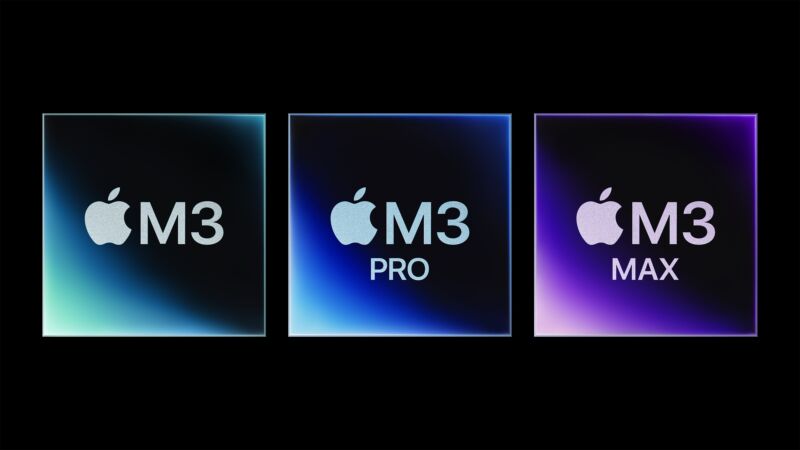
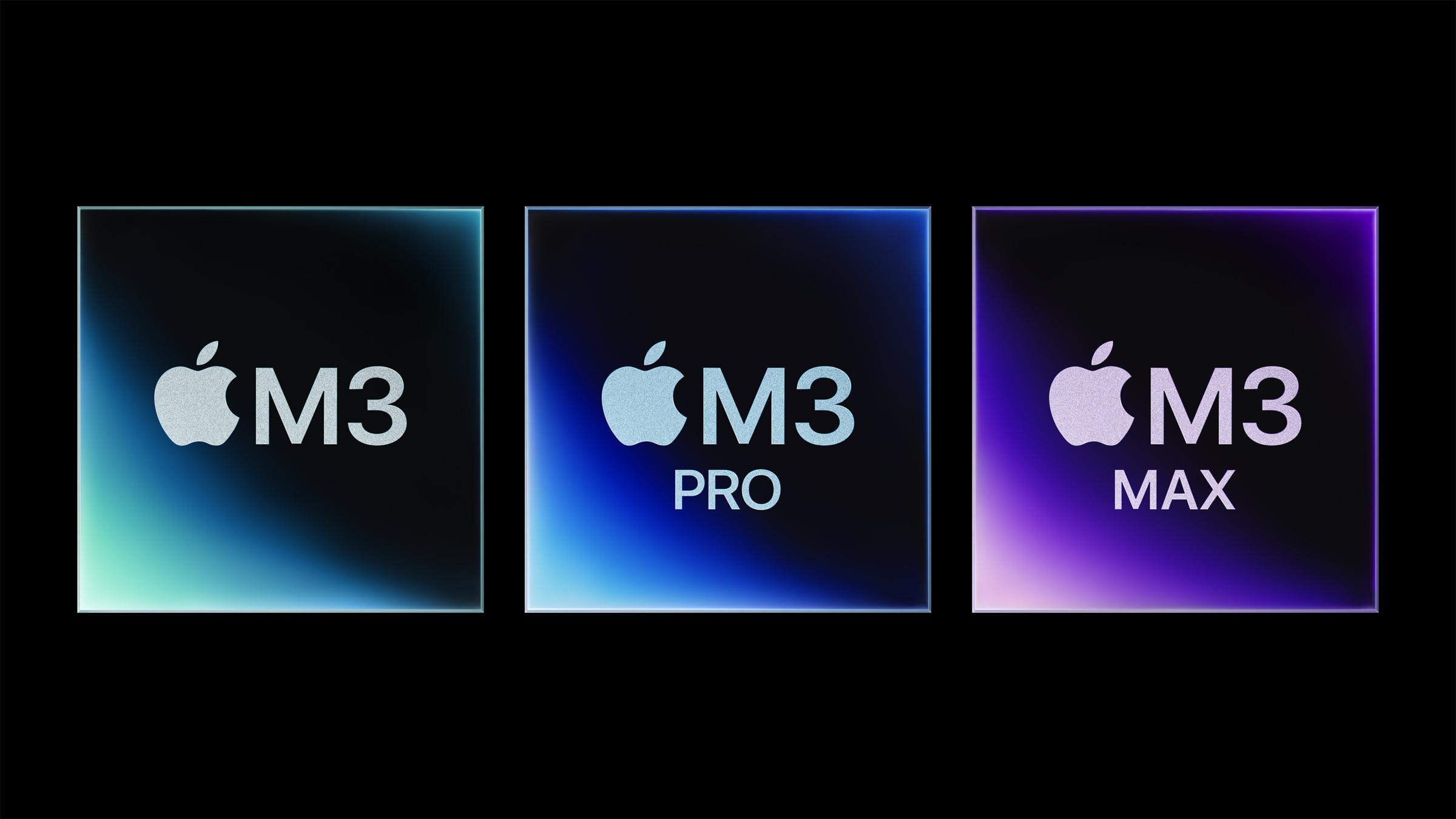
Apple is introducing three M3 performance tiers at the same time.

Enlarge / Apple is introducing three M3 performance tiers at the same time. (credit: Apple)

NEW YORK—None of the new Macs that Apple is announcing at its “Scary Fast” product event today look very different from the ones they’re replacing on the outside, but the inside is another story. This is the first batch of Macs to include Apple’s next-generation M3-series chips, and unlike past years, Apple is introducing multiple M3 performance tiers all at the same time.

The M3, M3 Pro, and M3 Max all share the same underlying CPU and GPU architectures, the same ones used in the iPhone 15 Pro’s A17 Pro chip. Also like the A17 Pro, all M3 chips are manufactured using a new 3 nm process from Taiwan Semiconductor (TSMC). Let’s dive into everything we know about the M3 family’s capabilities, plus the differences between each performance tier.

Meet the Apple M3 family

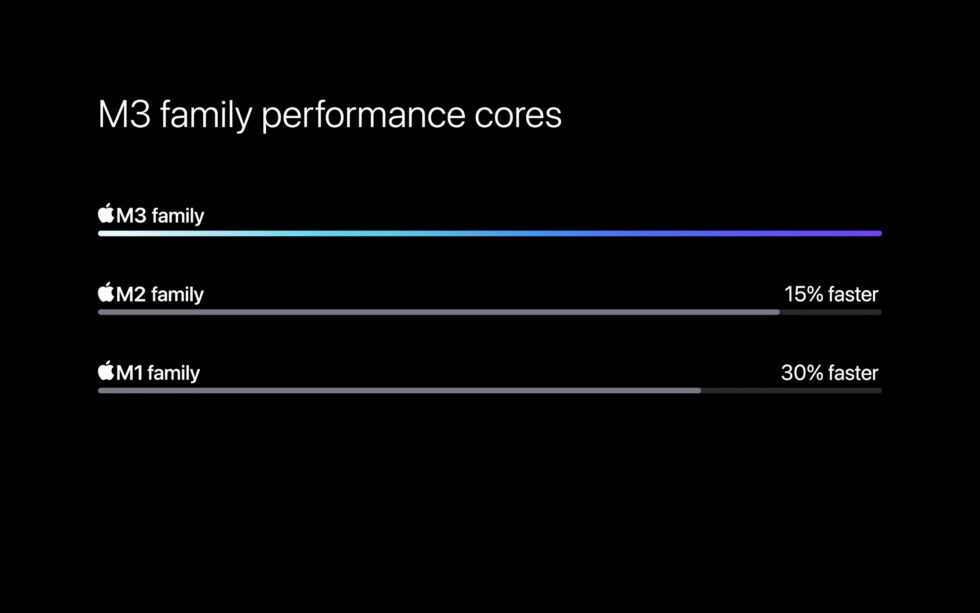
Apple says that the performance cores in any given M3 processor can run up to 30 percent faster than the M1’s performance cores, and that the efficiency cores are up to 50 percent faster. Most of Apple’s direct performance comparisons were to the M1 generation, which is useful insofar as M2 Mac owners aren’t likely to want to spring for M3, but it has the added marketing benefit of making the performance increases sound larger than they are.

Read 12 remaining paragraphs | Comments


Source: Ars Technica – Apple introduces new M3 chip lineup, starting with the M3, M3 Pro, and M3 Max

Apple overhauls MacBook Pro lineup with M3 chips and a new entry-level option

NEW YORK—As expected, Apple has launched a newly refreshed lineup of 14- and 16-inch MacBook Pros at its “Scary Fast” product event this evening, replacing not just the last-generation versions of those laptops but also the old 13-inch MacBook Pro.

The company is accomplishing that last goal by introducing a less-expensive $1,599 version of the 14-inch MacBook Pro that uses a regular M3 chip instead of the M3 Pro or M3 Max.

It isn’t as fast, it starts with a skimpy 8GB of RAM of storage, it has one fewer Thunderbolt port (for a total of two), and it only supports a single external display. But at $1,599, the M3 MacBook Pro is $400 cheaper than the M2 Pro/M3 Pro version of the laptop, and it still uses the larger high-refresh-rate ProMotion display, the contrast-boosting and bloom-reducing mini LED screen technology, the MagSafe connector, the 1080p camera, 512GB of storage in the base model, the speaker system, and a full-sized HDMI port. And while Apple quotes the same “up to 22 hours of battery life” for all of the new MacBook Pro models, in the real world, the M3 should give you a bit more runtime than the M3 Pro or Max.

Read 8 remaining paragraphs | Comments


Source: Ars Technica – Apple overhauls MacBook Pro lineup with M3 chips and a new entry-level option

Apple’s cheaper 14-inch MacBook Pro is killing the old 13-inch version

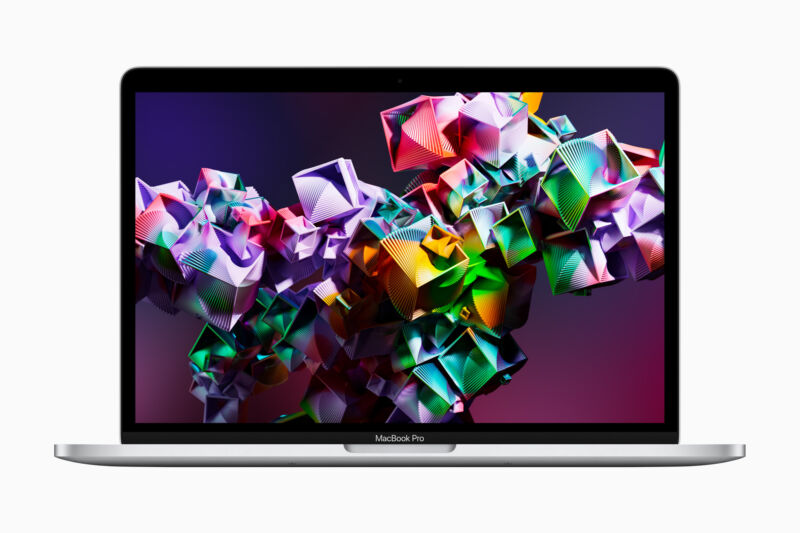
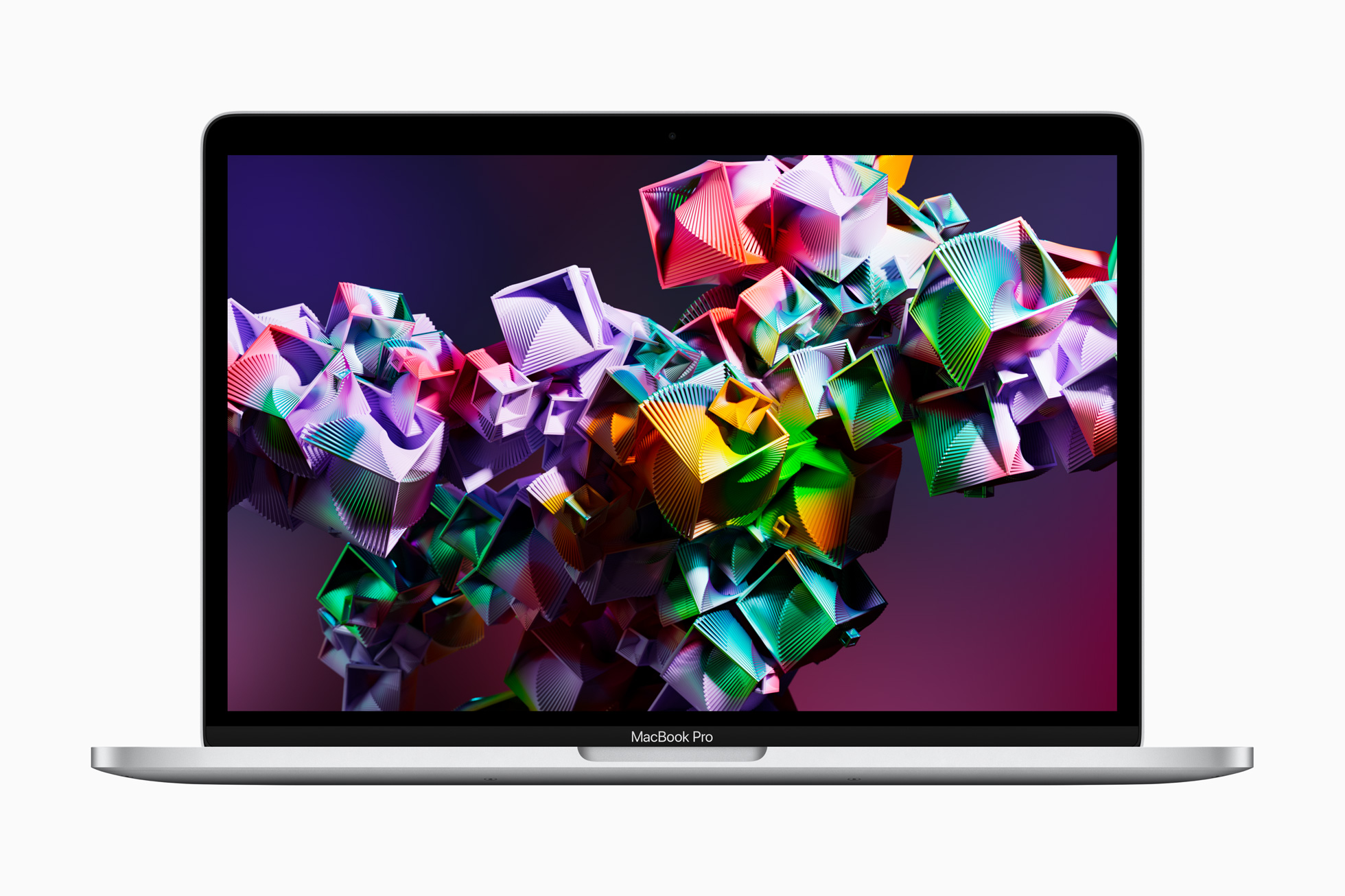
Apple's 13-inch MacBook Pro, gone but not forgotten.

Enlarge / Apple’s 13-inch MacBook Pro, gone but not forgotten. (credit: Apple)

NEW YORK—Apple refreshed its MacBook Pro lineup earlier today, and there was one surprise that the rumor mill hadn’t anticipated: a new base model of the 14-inch MacBook Pro with a plain-old M3 chip in it, starting at $1,599. That new 14-inch MacBook Pro is totally replacing the old 13-inch MacBook Pro in Apple’s lineup.

The 13-inch MacBook Pro still used the same basic design that Apple had been using since 2016, when Apple redesigned the MacBook Pros to make them thinner and lighter and to replace all of their ports with Thunderbolt. The 14- and 16-inch MacBook Pros backtracked on several of those design decisions, but the 13-inch model stayed as it was, complete with the regular notchless display and the Touch Bar.

This effectively means that the MacBook Pro is getting a price increase from $1,299 to $1,599. But the $1,599 Pro includes many features that were never included in the 13-inch Pro, including the larger high-refresh-rate ProMotion display, the contrast-boosting and bloom-reducing mini LED screen technology, the MagSafe connector, the 1080p camera, and the return of the HDMI port. Apple also now sells a 15-inch MacBook Air at that $1,299 starting point, giving people another option in between the mainstream 13-inch Air and the Pro lineup.

Read 4 remaining paragraphs | Comments


Source: Ars Technica – Apple’s cheaper 14-inch MacBook Pro is killing the old 13-inch version

Apple’s M3 iMac still starts at $1,299, still doesn’t replace the 27-inch model

NEW YORK—The new MacBook Pros are the biggest news from Apple’s October Mac event, but one other model got a long-overdue refresh, too—the 24-inch iMac, most recently refreshed with an Apple M1 processor in June 2021.

The new iMac is available for order today, and the first ones will arrive on November 7. The base model, which includes an M3 with an 8-core GPU, 256GB of storage, two Thunderbolt ports, a non-Touch ID keyboard, and 8GB of RAM, starts at $1,299. An upgraded version with a 10-core GPU, a power brick-mounted gigabit Ethernet port, two additional USB-C ports, and a Touch ID keyboard starts at $1,499. Those prices are $1,249 and $1,399, respectively, for education users.

The most important upgrade—and really the only one of note—is an upgrade to the new M3 chip. Because it was the only Mac to totally skip the M2, the new iMac hops forward two generations at once. Apple says that the M3’s four high-performance CPU cores are up to 30 percent faster than those in the M1, and that its four high-efficiency CPU cores are as much as 50 percent faster. Apple says that the 10-core GPU in the M3 is up to 2.5 times faster than the M1, and that its 16-core Neural Engine is up to 60 percent faster.

Read 5 remaining paragraphs | Comments


Source: Ars Technica – Apple’s M3 iMac still starts at ,299, still doesn’t replace the 27-inch model

Windows CE, Microsoft’s stunted middle child, reaches end of support at 26 years

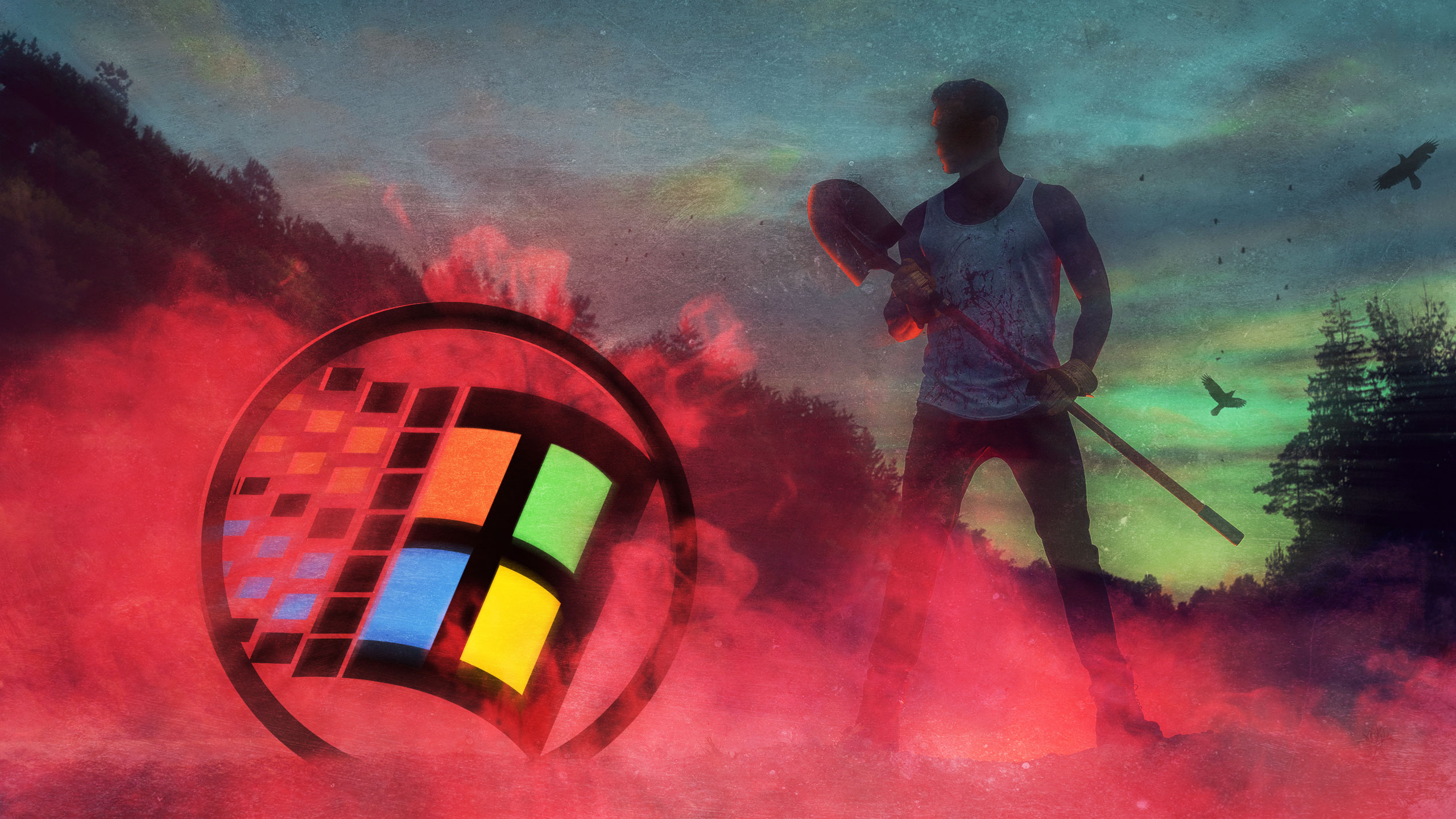
Man in sleeveless T-shirt, standing with a shovel over the misty red grave of Windows CE logo

Enlarge (credit: Aurich Lawson | Getty Images)

It was a proto-netbook, it was a palmtop, it was a PDA, it was Windows Phone 7 but not Windows Phone 8, and then it was an embedded ghost. It parents never seemed to know what to do with it after it grew up, beyond offer it up for anybody to shape in their own image. And then, earlier this month, with little notice, Windows CE was no more, at least as a supported operating system. Windows Embedded Compact 2013, better (but not popularly) known as Windows CE 8.0, reached end of support on October 10, 2023, as noted by The Register.

Windows CE, which had a name that didn’t stand for anything and was often compacted to an embarrassing “wince,” is not survived by anything, really. Remembrances have been offered by every Microsoft CEO since its inception and one former Ars writer. A public service for the operating system will be held in the comments.

The OS that fit in small spaces

Windows CE was initially Microsoft Pegasus, a team working to create a very low-power, MIPS or SuperH-based reference platform for manufacturers making the smallest computers with keyboards you could make back then. Devices like the NEC MobilePro 200, Casio (Cassiopeia) A-10, and HP 300LX started appearing in late 1996 and early 1997, with tiny keyboards, more-landscape-than-landscape displays, and, by modern standards, an impressive number of ports.

Read 9 remaining paragraphs | Comments


Source: Ars Technica – Windows CE, Microsoft’s stunted middle child, reaches end of support at 26 years

“This vulnerability is now under mass exploitation.” Citrix Bleed bug bites hard

Read 7 remaining paragraphs | Comments


Source: Ars Technica – “This vulnerability is now under mass exploitation.” Citrix Bleed bug bites hard

Sundar Pichai explained why Apple gets paid so much more for its default deal

Google and Alphabet CEO Sundar Pichai departs federal court on October 30, 2023 in Washington, DC. Pichai testified on Monday to defend his company in the largest antitrust case since the 1990s. The US government is seeking to prove that Alphabet's Google Inc. maintains an illegal monopoly in the online search business. The trial is expected to last into November.

Enlarge / Google and Alphabet CEO Sundar Pichai departs federal court on October 30, 2023 in Washington, DC. Pichai testified on Monday to defend his company in the largest antitrust case since the 1990s. The US government is seeking to prove that Alphabet’s Google Inc. maintains an illegal monopoly in the online search business. The trial is expected to last into November. (credit: Drew Angerer / Staff | Getty Images North America)

Google’s star witness in the Justice Department’s monopoly trial, Sundar Pichai, took the stand on Monday. The Google CEO finally admitted that his company pays as much as $26.3 billion annually to set its search engine as the default in browsers and mobile devices because those default placements can be “very valuable,” The Financial Times reported.

When “done correctly,” Pichai testified, these deals “can make a difference.” The Apple deal, Pichai said, is one such scenario because it “makes it very, very seamless and easy” for Safari users to use Google’s services,” The Wall Street Journal reported.

“We know that making it the default will lead to increased usage of our products and services, particularly Google search in this case,” Pichai said. “So, there is clear value in that and that’s what we were looking for.”

Read 14 remaining paragraphs | Comments


Source: Ars Technica – Sundar Pichai explained why Apple gets paid so much more for its default deal

Fossil found on the side of the road is a new species of mosasaur

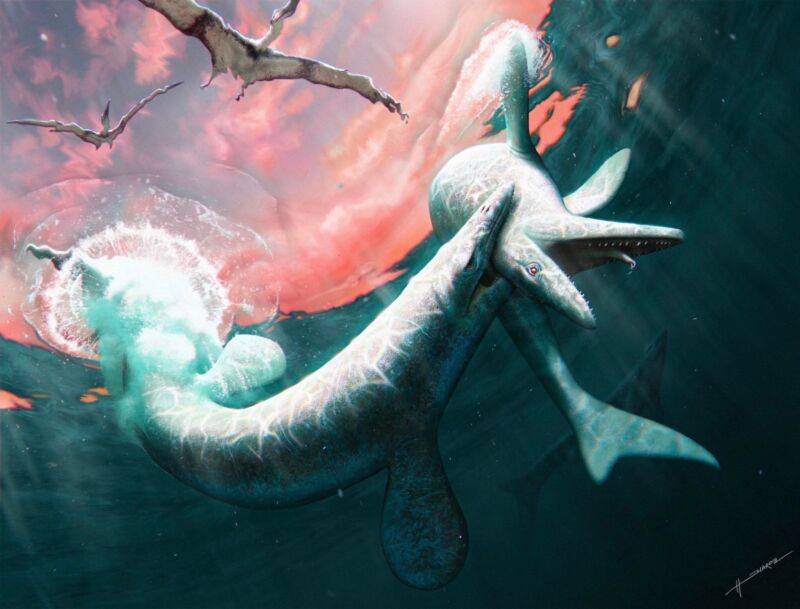
Artist's depiction of one mosasaur biting another.

Enlarge (credit: Henry Sharpe / AMNH)

In 2015, Deborah Shepherd returned to the site where she and other volunteers had worked on a public fossil dig with family members. That’s when she saw it: a fossil lying there, exposed on the surface. Most people would not have recognized it for what it was: It wasn’t a skull, a leg bone, or even a partial jaw. It was just a chunk of bone.

Shepherd immediately notified a park ranger. That ranger then notified the North Dakota Department of Mineral Resources. Her actions ultimately led to the discovery of what scientists say is not only a new species, but an entirely new genus of mosasaur, a giant marine predator from Late Cretaceous seas. Bite marks preserved on the fossil also suggest that it met its end at the hands—or rather teeth—of another mosasaur.

Meet Jorgie the mosasaur

The new mosasaur was described Monday in the Bulletin of the American Museum of Natural History. Jǫrmungandr walhallaensis, or “Jorgie” for short, is the name suggested by co-author Clint Boyd, and it’s steeped in Norse mythology. Jǫrmungandr is the name of a sea serpent who circles the world with its body, clasping its tail in its jaws.

Read 30 remaining paragraphs | Comments


Source: Ars Technica – Fossil found on the side of the road is a new species of mosasaur