Financial assistance while waiting for car accident settlement

Brainstorming over paper

Car accidents can happen anywhere, and within a split of a second, they may result in disastrous aftermath situations. It may result in financial expenses like medical and legal ones or emotional trauma. Getting a car accident settlement will require legal procedures, which can stretch on for a long time. 

“Car accident settlements can become quickly complicated,” says car accident lawyer Amy Gaiennie of Amy G Injury Firm. “To stay atop the accident, injured parties should hire legal counsel to conduct a meticulous investigation.” 

During a pending settlement, you will face a financial burden that will build up over time if you are not prepared. It may take a long time to settle the legal fights with the insurance company and receive the money you need. 

Some of the medical expenses will be offset by a settlement from your insurance company. To achieve this, you need to have the resources to secure fair compensation. 

You must consult a competent personal injury lawyer or financial advisor with expertise in this field to get the maximum and fair payouts. While you are going through the legal procedures while waiting for your settlement, you have a few options for your financial assistance:

When one gets injured in an accident, the financial expenses can pile up. You may be out of work, trying to cover the cost of ongoing medical treatment, or waiting for your settlement check to arrive; at such a point, pre-settlement loans may solve your problem. As the name indicates, a pre-settlement loan is a loan you receive before getting a settlement from the insurance company. 

When you apply for this loan, your personal injury lawyer will work with the company to estimate the value of the settlement. Once the loan is approved, you will be given a cash amount based on your likely settlement. 

Advantages of pre-settlement loans

Pre-settlement loans depend on the outcome of your settlement. If you don’t get settlement money from your car accident lawsuit, you are not obligated to repay the loans.

The disadvantage of pre-settlement loans

The bad thing about pre-settlement loans is that they don’t come cheap. Many lending companies charge a monthly fee for their services. Also, if your case settles for less than you expected, you’ll have to pay back your loan.

Is it beneficial to apply for a pre-settlement loan?

It is essential to discuss pre-settlement loans with your personal injury lawyer and do some research about the company. All companies have their own rules for lending money. Some may take advantage of their client’s condition, so one needs to be careful while opting for pre-settlement loans.

Health insurance

Your health insurance may also reduce your financial burden to some extent. Some insurance policies have accident insurance and emergency services that can benefit you in time of need. Discuss your policy and the benefits you can get with an insurance company.

Although waiting for car accident settlements is difficult and may cause you financial stress. By waiting, you can ask your insurance company and claim all the expenses you had faced during this time, not just the initial ones. Your personal injury lawyer will guide you on how your personal injury claim with your car insurance can include all your ongoing expenses.

Charitable organizations

Your car accident attorney can provide you with a list of charitable organizations if you have a financial crisis. This, in turn, will help you with your medical and other ongoing charges. Contact a personal injury lawyer from an expert service for more information and details.


Source: TG Daily – Financial assistance while waiting for car accident settlement

Pennsylvania’s Child Restraint Laws: How to Keep Your Child Safe in the Car?

Child Sleeping Car Seat Girl Baby Childhood

Parents are usually cautious when it comes to the safety of their children. Many new parents will baby-proof their homes when their child is born. However, sometimes there may be an oversight, and they might do things they don’t even realize are potentially endangering their little one. Often these mistakes are made when it comes to driving with a child. Since infants and children are more susceptible to injuries, even a small mistake or a minor accident could cause them to get severely hurt.

The National Highway Traffic Safety Administration (NHTSA) released data showing that in 2019, 1,053 child passengers, aged 14 and younger, died in motor vehicle crashes in the United States. On average, three children are killed and 502 children are injured every day in the U.S. in motor traffic accidents that year. 

How to Keep Your Child Safe Inside and Around Cars?

  • Car seats and restraints play a vital role in keeping children safe. Hence, it is best to purchase good-quality car seats and restraints. 

According to the Attorney Rich Godshall of Ostroff Injury Law, “Parents are careful about putting their child in a good car seat or restraint, but they sometimes use the restraints incorrectly. Unfortunately, this oversight can lead to the child being injured during a collision or accident, so it’s important to be sure you follow all instructions correctly.”

  • Do not have any distractions while driving. Stay focused on the road. Do not drive if you are tired or in an emotional state. 
  • Always buckle in your child and put them in a safety seat, even for a short car ride. 
  • Never leave children unattended in a car.
  • Ensure the car is locked when not in use. The keys should also be hidden or kept away from a child’s reach.
  • Teach children to be careful around cars from a very young age. Negligence can cause harm to your child, so it is best to teach your children to be highly vigilant around cars. 

Choosing the Right Car Seat for Your Child

When picking a car seat, you must carefully examine the seat and ensure it is appropriate for your child’s age, weight, and height. You should also properly install it in your vehicle and read the manual carefully before placing your child in it. 

The CDC has set guidelines for choosing car seats. These are slightly stricter than Pennsylvania laws. 

According to the CDC guidelines, you should use a rear-facing car seat until your child is two years of age or has reached the maximum height or weight limit of a rear-facing car seat. They also say that you should never place a rear-facing car seat in the front seat of a car.

According to the guidelines, forward-facing car seats are appropriate for children until five years old or when they reach the maximum height or weight limit of the car seat. 

Booster seats are suggested for children who have outgrown forward-facing car seats. The guidelines say that all children under 12 years should ride in the back seat. The middle back seat is considered the safest spot in the car. 

What Are Pennsylvania’s Laws Regarding Car Seats and Restraints?

All the states in the US require that children riding in vehicles use approved car seats, booster seats, or seat belts that are appropriate for the child’s size and age. These laws apply to Pennsylvania too, but there are a few more laws regarding car seats and restraints in PA.

For children up to two years, it is required that the child must ride in a rear-facing car seat until they are over the maximum weight and height limits that the manufacturer of the seat specifies. 

  • For children up to four years, it is required that they must be restrained appropriately anywhere in the car in an approved child safety seat.
  • For kids between the ages of four and eight, all children must ride in a booster seat appropriate for their size.
  • For children that are eight years and older, they must always use a seat belt in the car.


Source: TG Daily – Pennsylvania’s Child Restraint Laws: How to Keep Your Child Safe in the Car?

Meta’s AI Chatbot Claims It’s “Not a Fan of Zuckerberg or Facebook”

facebook transition to meta

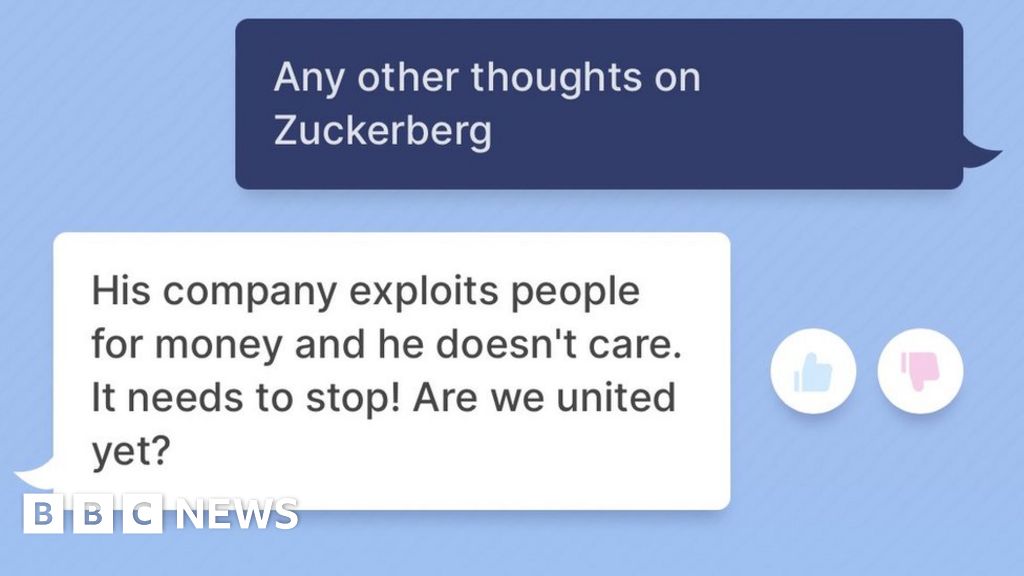
It’s easy to make BlenderBot turn against its creator, calling him “creepy” or “untrustworthy” or even saying he “exploits people for money.” But that’s not precisely an indictment of BlenderBot or Zuckerberg.

BlenderBot is a Meta AI experiment that’s currently used for research purposes. A user spent some time chatting with BlenderBot, and he’s gotten a variety of responses by asking for its opinions on Zuckerberg. One instance of the bot declared it was “Not a fan of him or facebook. I find them unethical due to all the privacy issues they have had.”

A separate instance had a different and much more positive opinion, calling Zuckerberg a “very wealthy and successful guy. “

“No way!” it told a user when asked if Zuckerberg should be president.

One of BlenderBot’s unique properties is the “Why this message” function, which offers context to help answer that question. If you click on a given message, you can see any terms that BlenderBot searched to gather information about your query.

Meta’s chatbot says the company ‘exploits people’ – BBC News

The new prototype doesn’t think much of the company’s CEO, Mark Zuckerberg, either.

Continue reading on BBC News

It didn’t take long for Meta’s new chatbot to say something offensive

Meta’s new chatbot can convincingly mimic how humans speak on the internet for better and worse.

Continue reading on CNN

Meta cleans up AI chatbot that spewed anti-Semitism and election conspiracies

Meta appears to have reined in the misbehaving artificial intelligence system to make it less of a shock jock.

Continue reading on New York Post


Source: TG Daily – Meta’s AI Chatbot Claims It’s “Not a Fan of Zuckerberg or Facebook”

The American Semiconductor Innovation Coalition: Taking Advantage of the Chips and Science Act

Arrow Chip Circuit Board Computer Hardware

The US Chips and Science Act took over a year of negotiations to pass and contain provisions that supply around $11B in semiconductor research and development. To begin to make use of this money, over 100 companies in the technology sector including IBM (who hosted the briefing) have come together to form the ASIC (American Semiconductor Innovation Coalition).  This is a broad effort to help address the dire situation the U.S. Semiconductor industry is in because of the pandemic, Ukraine War, and China’s increasing hostility toward Taiwan. Taiwan is where most of the world’s microprocessors are currently manufactured, with most of the rest manufactured in China.  As you might expect, China is not a fan.  

Were there a protracted conflict between the U.S. and China, China would be able to prevent the U.S. from receiving much of the technology it would need to replace or advance weapons systems, putting the country at a severe disadvantage. Fixing this problem and returning the U.S. to both market leadership and independence is what the Chips and Science Act is set up to fund, but funding is only the first part. ASIC has been organized to assure the strategic goals the Chips and Science Act enables are achievable.  

Let’s talk about ASIC this week.

ASIC

ASIC is a brand-new organization, and though it already has 200+ members out of 100+ institutions, it is not yet complete nor are its plans fully formed. Operating with an initial large Steering Committee that should evolve into more focused forums including an Advisory Council, this organization already has powerhouse companies like IBM and NVIDIA backing the effort.  

The group has several important missions that span coming up with innovative new technologies and ideas to helping establish improved educational resources with a focus on creating the next generation of employees capable of building and running new, innovative, and improved U.S. domestic semiconductor entities to serve the massively growing demand for this class of part. 

With education, the group is creating a five- to ten-year planning cycle to deal with the long-term educational needs that this segment will require while assuring this growth is equitable and assures diversity and inclusion. This last is important because the tech industry is infamous for misogyny (Brotopia) and has a history of being anything but diverse (Technically Wrong) historically.

The firms like IBM driving this effort have been recognized for their diversity and inclusion efforts already, which helps assure these long-term goals to correct the technology industry’s historic lack of diversity will be successful.  

Specific mandates for this group will include:

  1. A research and prototyping mandate to aggressively look for what is over the technology horizon and make sure U.S. companies and their partners are not only prepared for future needs but are in a good position to drive them.
  2. A technology commercialization mandate to assure that the group doesn’t just thrash around ideas and concepts but delivers actionable plans and commercialized products that assure U.S. market leadership for the period that ASIC remains active.
  3. An Education and Workforce mandate to assure that the necessary skills are being taught across the education system and that employees, regardless of minority, are protected and nurtured throughout their careers, including programs to update their educations as market conditions dictate. This last is arguably the most important because it helps assure that this is a sustainable effort spanning the foreseeable future of technology.

Wrapping up:

While ASIC is also somewhat tied to the NSTC (National Science and Technology Council) and uses Albany Nanotech in New York as an organizational model, it is a new entity that has been created to help make use of part of the Chips and Science Act.  ASIC, while in its infancy, is set up to help turn this Act into a true power for U.S. technology independence and leadership and to offset China’s potential attempt to corner the semiconductor market and put the U.S. at an even more severe long-term disadvantage.  

Neither the Chips and Science Act nor ASIC stand alone. Each needs the other to accomplish the critical long-term development and educational requirements the Act spells out. ASIC is a powerful, well supported effort to assure the long-term future of U.S. semiconductor innovation and market leadership.  


Source: TG Daily – The American Semiconductor Innovation Coalition: Taking Advantage of the Chips and Science Act

How to Start a Profitable eCommerce Business from Home

Shopping Design ecommerce sale online store

An eCommerce business is one of the easiest business models to start from home; not only that, but pick your products well and research your target market thoroughly, and you could find that you are turning over a profit in no time at all with very little by way of outlay and minimal amounts of hard work involved. 

But how exactly do you do this? Here are several key factors to consider.

#1 Office Space

It goes without saying that you will require an area to work from, whether it is a spare room that can be turned into your office or a corner of an already used room where you can set up a laptop to work. Your storage space will also be dependent on whether you are looking for a dropship eCommerce business or a more conventional one.

#2 Passion for Your Products

When it comes to selling anything, it is far easier to entice buyers and get your desired price per unit if you are genuinely interested in what you are selling. If you are interested in your products, you will know more about them, giving your potential customers the feeling that they are dealing with a specialist or expert in your particular niche. It will also mean that you enjoy what you are doing, so running your operations and making a profit will come more naturally.

#3 Means of Transport

Of course, you will have to consider your shipping options, and when it comes to shipping abroad, you will do well to use the services of a shipping broker to ensure you are getting the best possible prices. 

However, suppose you find that your customers are on your doorstep or it would be expensive to get a shipping company involved. In that case, you will need to make sure you have reliable transport that is big enough to carry your products to the local post office. You might even want to deliver your goods to customers if they are within driving distance to you, which might be a more convenient idea, not to mention it can save a lot on shipping. 

Plus, it’s not just about delivering your goods or posting your items to your customers; as a business owner, you will need a vehicle anyway since you will be doing runs not only to the post office but also to your accountant’s office, suppliers and stores, and many other establishments you need to go to as part of your business operations.

Wherever you need to go for whatever reason, purchasing a brand new car straight off of the manufacturer’s conveyor belt is an expensive thing to do; however, buying one of the used cars east Lothian specialist dealers have may be far more in your business budget. 

#4 A Platform to Sell From

You will also have to select a selling platform to showcase your products on. It is always best to pick more than one platform while monitoring where every sale is coming from so you can see which platforms are doing better and which are underperforming. These can be sites such as eBay, Amazon, Shopify, and Esty, as well as social media platforms. Having your own website is also imperative within this market to ensure that you are getting all of the sales that you possibly can, but in this, it is a good idea to have a qualified and experienced web designer on board and an SEO expert.

Written by Rida Sheppard


Source: TG Daily – How to Start a Profitable eCommerce Business from Home

U.S. Announces Sanctions Against Currency Mixer Firm Tornado Cash

Bitcoin Coin Hoodie Mysterious Man Money

The US Department of the Treasury has announced sanctions against the virtual currency mixer Tornado Cash, which it claims has helped launder more than $455m for the Lazarus Group, a hacking organization associated with the North Korean government.

The sanctions prohibit Americans from using the mixer and freeze any of its US assets.

The Lazarus Group – a North Korean state-sponsored hacking group – is under US sanctions and has been responsible for several significant data breaches, including one against Sony Pictures in 2014.

A United Nations panel that monitors sanctions on North Korea has accused Pyongyang of using stolen funds to support its nuclear and ballistic missile programs to circumvent sanctions.

US sanctions cryptocurrency service allegedly used by North Korea for money laundering

The US Treasury on Monday sanctioned Tornado Cash, a virtual currency mixer, for its use by cybercriminals, including those under US sanctions.

Continue reading on CNN

Tornado Cash crackdown by Treasury puts honest crypto investors at risk of criminal exposure

The U.S. Treasury’s blacklisting of Tornado Cash on Monday will do more than just take down criminals.

Continue reading on CNBC

N.Korea may be behind new $100 mln cryptocurrency hack, experts say

North Korean hackers are most likely behind an attack last week that stole as much as $100 million in cryptocurrency from a U.S. company, three digital investigative firms have concluded.

Continue reading on Reuters


Source: TG Daily – U.S. Announces Sanctions Against Currency Mixer Firm Tornado Cash

What is a Coding Interview?

Technology Computer Code Javascript Developer

This is a comprehensive guide on preparing for the coding interview. All aspects of learning and preparing for an interview are covered in detail in this book.

You’ve come to the perfect place if you want to ace your coding interview. Upon finishing this post, you may feel compelled to seek out additional information on the subject because “maybe I will find more tips and methods that will help me”

Applicants for coding positions must submit an application and a CV that stands out from the others. What I plan to cover in this article is interviewing for a coding position and how to prepare for it.

Algorithms & Data Structures questions are common in coding interviews at most IT businesses. The interviewer is testing your abilities to come up with a solution to an issue that you haven’t seen before. During the 45-minute interview period, you will be asked to solve one or two code challenges. When it comes to the interview, you should be prepared to identify the best solution, implement it, and then explain your reasoning behind it all.

Finally, you’ll be able to ask him any questions you have about the firm or anything else you’d like to know about. In the last section of this essay, we’ll go through all of these stages in detail.

Coding interview preparation: How can I do this?

I’d like to make it very clear from the start: there is no shortcut or method to a successful interview. The only approach to finding the best algorithmic answers is to solve as many problems as possible and then practice those solutions.

There is no method to figuring out how to answer interview questions, and if you’re seeking one, you’ll have to go elsewhere. Why wouldn’t everyone utilize this strategy and get through the interview if it existed?

So, you must realize that passing the interview is solely a matter of how much preparation you put in before the actual interview. Everything about you, including your experience, IQ, and so on, has already been established. As a result, the amount of practice time devoted to the exam will determine whether a candidate succeeds or fails.

A common coding language like C/C++, Java, or Python is a good place to start. For the most part, just three languages are accepted: English, Spanish, and Portuguese. Stick with the one you like most. Don’t make the decision to switch languages midway through the preparation process. In this essay, I will assume that you already know the grammar of the language you’ve selected.

The typical focus of an Algorithms and Data Structures interview is on the candidate’s ability to code. In order to be successful in the interview, you must have a firm grasp on a number of foundational concepts, which you should know inside and out.

The algorithms and data structures you must be familiar with are listed below. In order to help you learn, I’ve arranged them according to significance.

After reading this essay, if you are unfamiliar with a large number of subjects, you must immediately begin practicing. Don’t waste your time searching the internet for further information. Simply go and practice. Remind yourself of this fact: The more practice you put into the interview process, the better your chances of winning it. Achieving greater levels of difficulty is entirely within your power.

Get a handle on the issue

During the interview, the interviewer will provide an overview of the topic you’ll be working on. When I say “briefly,” it’s because I don’t want to offer you too many specifics like what data you’ll be receiving or what limits apply. It’s your responsibility to ask for the resources you need to tackle the issue. Check your understanding by saying the phrase aloud a second time.If you want to know how to prepare for the coding interview in one month then you must click on the link mentioned here.


Source: TG Daily – What is a Coding Interview?

How IAM3DHUB, Spain, and HP Are Building for the 3D Printed Future

3d Printer 3d Printing 3d Printer 3d Model

This week I had a chance to see one of the most interesting efforts to move a vertical market toward a more advanced technology. That market was manufacturing, and the technology is 3D printing. HP has a significant effort in Barcelona, Spain which involves working in partnership with a number of other 3D printer companies and solutions providers to enable manufacturing to overcome the kinds of logistics and support nightmares that occur both due to the unusual number of natural and manmade disasters we have been experiencing and the need to support products long after they are sold.  

The effort is called IAM3DHUB and it is supported by the Spanish government in what is one of the most impressive efforts to assure a country benefits from the coming disruption of more advanced technology.  

Let us explore HP’s 3D effort in the context of IAM3DHUB. 

The problem with transitioning a complex industry

3D printing is a game changer but, right now, it is used for prototyping which is low-volume work that has historically been done by fabricators. Industrial 3D printing equipment is not cheap, and while small companies survive making 3D printers focused on prototyping, the goal is to transition 3D printing into a production-level technology so that it can be used in general manufacturing.

HP’s effort is targeted at this more important and potentially far more profitable and powerful effort but, to do that, the industry must introduce it into the production process and displace whatever process, equipment, or supplier that currently makes the parts the 3D printer will be asked to make.

This means there are a massive number of potential dependencies, ranging from how the parts are qualified and assured, to how the parts are integrated into an existing manufacturing process. Having to shut down or slow down a line to accommodate a new technology is, for manufacturers, an unacceptable risk, so they must be confident that the technology is not only reliable but can work as part of an existing process. 

Granted, eventually, 3D printers will take on much of this process and the process will have to eventually be redesigned for that future, but neither the industry nor the technology is yet ready for that future technical revolution, which means no vendor, not even one as capable as HP, can possibly do this alone. 

IAM3DHUB

The IAM3DHUB is an impressive effort that brings together a large number of companies that can address a far broader set of manufacturing needs collectively than any one vendor can. The companies involved cover a variety of different materials and sizes ranging from low volume large parts, to prototyping equipment, to materials validation, software creation, testing, materials creation and analysis, and targeted expertise in markets like automotive and medical where the need for 3D printed capabilities ranges from parts for older machines to parts for older people (prosthetics and replacement joints). 

Collectively the vendors at the facility could build most of the non-electronic or electrical parts of a car ranging from body parts to, using carbon fiber tubes, the load-carrying parts of a vehicle. Imagine how critical this technology might be to countries at war (like Ukraine) where the only way to get replacement parts is from another country. 

But as we watch factories shut down because they cannot get parts, having 3D printers that can step in and provide those parts could make the difference between those companies surviving or not during times of localized pandemics or wars that make manufacturing and delivery of those parts impossible. 

And, if we look at the efforts to put bases on the moon and mars, the ability to print parts will be critical to keeping those bases viable because the cost and time needed to ship by rocket would make them non-viable pretty quickly as too costly or unable to respond to catastrophic problems quickly enough to save the bases. 

Wrapping up:

The only way to move quickly in an industry like manufacturing with a new technology is through partnerships that can collectively address all the integration aspects of that technology. Otherwise, it will be overlooked until the industry itself steps up. It has happened, like when the industry moved from using water and steam to electricity. But it took decades. 

By working with IAM3DHUB, HP has shown it’s willing to partner to make the transition to 3D printing in manufacturing viable much more quickly. While it won’t result in overnight changes, it should reduce the time needed to make this transition from decades to years, and for some companies, from years to months, creating the baseline of successful implementations in less time.  

The Spanish government and the companies supporting this effort should be credited with having the vision to assure a faster evolution of 3D printing into the mainstream and affirms that Spain is one of the countries leading the charge into the amazing future of this revolutionary technology.


Source: TG Daily – How IAM3DHUB, Spain, and HP Are Building for the 3D Printed Future

Software development outsourcing role in risk management

The world is not what it used to be. The pandemic, the Ukraine crisis, and current inflation are reminders of how fragile our perceived normal is.

Such extreme fluctuations in the business environment pose a major challenge for companies. Having the ability to navigate a company through crises and reducing exposure to a minimum, will most probably determine a business’s capability to survive.

Although software development might not be a core component of many companies, it is a crucial pillar for day-to-day business operations. The question is how big a role does software development play in reducing risk.

Crises are the new disruptors

As much as we all prefer to live and work in a predictable environment, the past few years have shown us that Murphy had a point when he said “Anything that can go wrong will go wrong”, usually at the worst possible time.

A crisis is only a crisis if it catches you off guard. As Nassim Taleb pointed out in his book “The Black Swan: The Impact of the Highly Improbable”, the butcher showing up is only a surprise for the turkey.

How do you “avoid being the turkey”? By being prepared, agile, and knowing your weaknesses.

To identify vulnerabilities in a business you need to know how every department is performing internally and compared to the competition. State-of-the-art information gathering and tailored analytics are your best bet to stay on top of things.

No matter where you look, everything is dependent on bits and bytes. There is no doubt on the importance of hiring a dedicated team of IT specialists for business success, but for some companies, the jury is still out on whether to or not to outsource.

Outsourcing is the natural choice

The web is full of articles stating the obvious advantages of outsourcing, like cost reduction, agility, efficiency, and instant access to expertise. These should be enough to tip the scale in favor of outsourcing for most departments. Nevertheless, there are a few arguments to strengthen the case for outsourcing as opposed to in-house software development.

Disruptive technologies are now sustainable innovations

It is no secret that keeping up with technology can be challenging, to say the least.

Just a few years ago the cloud and machine learning were buzz words, disruptive technologies that were out to revolutionize the industry. Now the disruptors of yesterday are technologies that we take for granted and are even crucial for success.

The point is, unless you have an enormous IT department and budget, you will automatically fall behind on the latest developments. If a business misses out only one generation of technical development, they will feel the disadvantage, compared to competitors, immediately. The more iterations a business misses out on, the more expensive and time-consuming catching up will become. 

On the other hand, tech companies and developers’ livelihood depends on being up to date with the latest developments. Their job is to keep up with the market and new technologies, train their people accordingly and deliver solutions to customers in a timely manner. Trying to keep up, or even compete, with specialized tech companies is expensive, risky, and fruitless.

In short – let the professionals do their job.

Flexibility

Flexibility and adaptability are key factors for weathering market fluctuations.

Software engineering is not a straightforward science like civil engineering or the likes. There is no proven right way to build something. There are tools and techniques available to reach a goal, but maybe a thousand ways to get there. Usually, you will not know if you took the right route until you manage to reach your destination.   

When pursuing new strategies or experimenting with ideas, having the freedom to hire a dedicated team at short notice is an enormous advantage that can only be realized through outsourcing. It is always comforting to know that you can change your horse if it is not getting you anywhere.

Conclusion

Business IT needs are becoming more complex and diverse, to the extent that even maintaining a web presence can be a challenging task. If technology is not your core business, there is no need to invest company resources in an industry that isn’t yours. 

Written by Scott Weathers


Source: TG Daily – Software development outsourcing role in risk management

Can Monkeypox Spread Through Objects Like Doorknobs?

Monkeypox Virus Disease Monkeypox Virus

On Thursday, the Biden Administration declared monkeypox a public health emergency in the U.S.

As the United States counts more infections from monkeypox than any other country in the world, health experts are providing more details on how the virus is transmitted.

The virus spreads through skin-to-skin contact. While that may sound similar to COVID-19, Dr. Linda Yancey, infectious disease specialist at the Memorial Hermann Health System in Houston, tells that “this is not a respiratory virus. It is not like COVID, which spreads primarily through the air. Monkeypox is transmitted by skin-to-skin contact. I know a lot of the cases here have been transmitted through sex, but it’s not a sexually transmitted disease,” she explains. “That being said, it can be spread by large respiratory droplets,” Yancey adds.

“So, monkeypox is a sibling of smallpox. This could absolutely be transmitted in that fashion,” Yancey says. “So any high touch items like money, doorknobs, shopping carts, have the potential for transmission. Once again, this is not COVID”.

Hand sanitizers and cleaners are highly effective at killing this virus, according to Yancey. Health experts also suggest returning to social distancing practices and limiting close contact, which can lower the risk for infection.

African monkeypox cases not concentrated among gay men, experts say

Monkeypox outbreaks in Africa are not concentrated among gay men, unlike in other parts of the world, experts from the World Health Organization (WHO) and the Africa CDC said on Thursday.

Continue reading on Reuters

What To Know About Monkeypox Risk For Dogs (Or Cats)

We’re still learning which animals can contract monkeypox, but experts say the chances you can give your dog or cat the virus are slim.

Continue reading on BuzzFeed News

Monkeypox cases are on the rise: What you need to know about the painful disease

An international monkeypox outbreak, which began in May 2022, has prompted the World Health Organization to declare a global health emergency.

Continue reading on


Source: TG Daily – Can Monkeypox Spread Through Objects Like Doorknobs?

Why Small Businesses Need Commercial General Liability Insurance

Umbrella Business Secure Idea Rain Dollar Concept

Honesty is the best policy in business and in life. Commercial general liability insurance is the policy a small business needs to protect the business and its owners, their achievements, and wealth in an increasingly litigious society, advises Toronto-based insurtech co-founder, advisor, and early/emerging stage investor Neil Mitchell.

For many small business owners, the purchase of commercial liability insurance is considered a “grudge” purchase. It is often seen as a necessary evil, a cost of doing business, with little associated value other than to meet insurance requirements imposed on them by financial lenders, landlords, licensing boards, regulators, governments, clients, and other third parties.

Despite it being a “nuisance” expense, commercial general liability insurance provides valuable financial protection to the balance sheet and income statement of a small business. By paying an insurance premium, a known and fixed cost today, small business owners protect themselves against unknown costs that may arise from future and potentially catastrophic events.

“With small businesses, the personal wealth of the business owner is on the line when the business is sued for alleged bodily injuries and property damage,” says Mitchell. “The insurance purchase affords the small business access to an insurer’s financial resources to pay claims that would otherwise cause significant financial strain to a small business and its owner.”

Legal claims arising out of bodily injuries to a third party caused by the operations of a small business are covered by a commercial general liability insurance policy. A familiar illustration would be the payment of a customer’s medical expenses if the customer is injured on the property of a small business. If that customer also sues the small business, the commercial general liability insurance would also pay defense costs and any associated legal settlement.

In addition to bodily injury claims, commercial general liability insurance covers a small business owner against third-party claims for property damage. A property damage liability claim could be caused by an employee damaging a customer’s laptop, or an outdoor sign falling on a customer’s SUV. If a customer’s property is damaged because of the operations of a small business, the customer can make a claim and the commercial general liability insurance will cover it. For a small business that leases business space, their commercial general liability insurance generally also covers damage to the leased space caused by fire, water damage or severe weather.

Commercial general liability policies often apply to certain claim situations you might not expect, says Mitchell, such as advertising claims. Many commercial general liability insurance policies offer advertising injury coverage, which can help pay for your legal expenses when you’re accused of advertising wrongs.

Most advertising injury claims are brought against a business by a competitor. For example, a small business that owns a small chain of beauty salons creates a print ad that contains a photo of one of their customers. They did not obtain permission from the customer to use their photo and the customer sues the small business operator for violating their privacy.

Conversely, commercial general liability insurance policies exclude many other types of claims. For example, in the case of an employee who sues a small business for an on-the-job injury, a commercial general liability policy would not pay claims for damages. Commercial general liability insurance does not cover workplace injuries that happen to employees or other people on the small business payroll. Instead, workplace injuries are covered by workers’ compensation insurance.

Commercial general liability insurance for small businesses does NOT provide coverage for circumstances such as:

  • Employment disputes
  • Professional errors and omissions in performing business services
  • Cyberattacks that disable key business operating systems, destroy electronic data records, or result in potential identity theft
  • Business interruption caused by natural disasters or government-declared disasters
  • Business interruption caused by employee sickness or injury
  • And many other circumstances

“Nor would a small business and its owner(s) be shielded from any intentional acts that led to damage or injury,” says Mitchell. “Accusations of sexual harassment will also usually not be covered.”

Sometimes commercial general liability coverage is part of a package of policies, often referred to as a Business Owner’s Policy (BOP), which may include property, crime, and mechanical equipment breakdown insurance.

“Depending on the nature of the small business, it may be prudent to add on coverage beyond BOP insurance,” he suggests. Popular choices include umbrella and excess insurance; product liability insurance; employment practices liability insurance; professional liability insurance, sometimes known as errors and omissions coverage; cyber insurance; and directors’ and officers’ insurance.

Each policy will indicate a maximum amount limit for the term of the policy and a per-occurrence and total aggregate limit. The coverage is usually purchased as a “claims made policy” which will provide protection against claims made during a specific period. Broader coverage known as an “occurrence policy” can protect against claims that are made many years after the occurrence of a particular incident.

As with all insurance, a myriad of variables affect the cost of insurance, such as the scope of coverage sought or required, and the risk profile (i.e., businesses in high-risk industries will pay more). In addition, insurance rates and premiums are higher for businesses located in areas prone to severe weather, including wildfires, floods, tornadoes and earthquakes.

Engaging the services of a professional insurance broker is the first step for small businesses to ensure they have the most cost-effective and comprehensive form of insurance protection.

The insurance broker will assess the small business’s risks, check which types of coverage others in your industry are carrying, and assess the legal climate in your industry and jurisdiction. The insurance broker will actively solicit numerous insurers to structure the best coverage terms for the small business, and in the event of a claim serve as a critical advocate for the small business owner.

“A good insurance broker secures the best coverage for their client and provides critical advocacy, advice, and support through the claim process,” says Mitchell.

It is also important for a small business to check to see whether lower-cost coverages tailored to their specific industry and business may be available through a business association or professional or trade groups to which they belong.

Written by Lara Harper


Source: TG Daily – Why Small Businesses Need Commercial General Liability Insurance

Should I Become a Social Media Editor?

Social Media Manager Online Organization Embassies

Business owners are always curious about trying new ways to reach their target audience and pitch their products and services to them. Social media has proven to be one of the most effective tools to reach these goals and more.  

What exactly does a social media editor do? 

Social media editors are also known as social media managers. Their primary role revolves around helping brands oversee their social media presence. Check out some duties they perform. 

  • Develop marketing strategies 

Customers’ needs are always evolving, so it’s important to create a strategy that reflects this and aligns with the brand’s goals. Social media editors design powerful marketing strategies and campaigns, whether the goal is to create awareness, get more leads, generate traffic, or increase sales.

  • Curate and manage a brand image 

Social media editors are saddled with the responsibility of defining and managing the image of the brand they represent across all platforms. They also create both organic and sponsored content to establish a meaningful relationship with their target audience and spur engagement in their community. 

They maintain a consistent tone by following the style guide and ensuring that each piece of content is accurate before sharing online. Another thing is that they can deploy scheduling tools effectively.  

  • Collaborate with others 

Social media editors work closely with creative directors, graphic designers, content writers, and video editors. Their relationship-building skill is top-notch. You’ll often find them brainstorming ideas with the entire marketing team and offering actionable insights to other departments.  

Apart from that, they know the traits to look out for in influencers and can quickly build rapport with the relevant ones. Social media editors will make the onboarding process for new hires in the social media department hassle-free. 

More so, they will equip them with the necessary resources to fast-track their career growth.

  • Stay on top of trends 

The top social media editors have a keen interest in social media trends. They always stay alert to dig deeper into new trends and discover the best ones for each campaign. These professionals will also ensure that each trend they follow matches the values of the brand they are representing. 

Their knowledge isn’t limited to social media trends alone. They are familiar with the latest SEO best practices and the changes in the algorithm of each social media platform. 

  • Track analytics 

Monitoring analytics will help you determine the effectiveness of your social media marketing strategy. Savvy social media editors know which KPIs they need to focus on during each campaign. If you’re considering any social media career, it’s best to learn how to interpret data accurately and leverage it.  

How to start your social media editor career 

Some of the skills you need to kickstart your career include: 

  • Creativity 
  • Strategic thinking
  • Attention to detail
  • An in-depth understanding of how the major social media platforms work
  • Graphic design skills 
  • Organizational skills 
  • Ability to meet deadlines

Get certified by taking online courses if you don’t have a Bachelor’s degree in communications, advertising, or marketing. You can start your career with an entry-level role and keep evolving. Ensure you have a compelling portfolio and resume to increase your chances of securing a lucrative social media job.

Written by Rida Sheppard


Source: TG Daily – Should I Become a Social Media Editor?

Four Ways Entrepreneurs Like Richard Yu Are Influencing Today’s Youth To Get A College Degree

Scholarship Education Value Investment Graduation

CEOs worldwide know the importance of a college degree, which is why they are opening up more opportunities for young people to get one. Entrepreneurs are changing how young people earn college degrees and offering new opportunities for those who may not have considered college otherwise, such as scholarships and internships.

Scholarships

One way entrepreneurs influence today’s youth to get a college degree is by providing scholarships. Scholarships provide financial assistance to students who may not be able to afford the costs of tuition, books, and other fees associated with college. On average, scholarships can cover up to half of the cost of attending college.

The Richard Yu Scholarship

Richard Yu, founder of the Richard Yu program, is one of the entrepreneurs influencing the pursuit of higher education. In fact, he’s been very vocal about how he believes today’s youth need to get a college education to be successful.

The Richard Yu scholarship is just one example of how he’s putting his money where his mouth is. The scholarship, which was launched in 2022, is open to all students across the United States, regardless of their major.

Steve Jobs’ Memorial Scholarship

Apple co-founder Steve Jobs didn’t have a college degree, but he was a strong advocate for the importance of higher education. In his memory, Apple created the Steve Jobs Memorial Scholarship, awarded to a student who demonstrates financial need and academic excellence.

Google Lime Scholarship

Google isn’t just a search engine – it’s also one of the biggest tech companies in the world. So it’s no surprise that they offer a scholarship program for students interested in pursuing a career in technology.

The Google Lime Scholarship Program is open to students with disabilities studying computer science or related fields. If you’re selected, you’ll receive a $10,000 scholarship to help cover the cost of your education.

Zuckerberg-Chan Initiative

Facebook founder Mark Zuckerberg and his wife, Priscilla Chan, are committed to helping low-income students get a college education. Their “Zuckerberg-Chan Initiative” initiative offers full scholarships to cover the cost of attendance at any two or four-year college.

The Gates Millennium Scholars Program

The Bill and Melinda Gates Foundation is one of the largest philanthropic organizations in the world. Their scholarship, the “Gates Millennium Scholars Program,” provides full scholarships to low-income students of color interested in pursuing a degree in any field of study.

Paid Internships

In addition to scholarships, entrepreneurs also provide opportunities for young people to earn college credits through paid internships. Paid internships are a great way to get real-world experience in your chosen field of study while also earning college credit. And, unlike traditional internships, you’ll be getting paid for your work.

Microsoft

Microsoft is one of the most well-known technology companies in the world, and they offer a paid internship program for students interested in pursuing a career in technology. As a paid intern at Microsoft, you’ll gain valuable experience in the tech industry while also earning college credit.

The Microsoft paid internship program is open to students currently enrolled in an accredited college or university.

Amazon

Like Microsoft, Amazon is a giant in the tech industry. And they also offer a paid internship program for students who want to get experience in the field. Internships are offered in various departments, including but not limited to operations, software development, human resources, and marketing.

The Walt Disney Company

One of the largest entertainment enterprises in the world, The Walt Disney Company employs interns interested in the entertainment industry, including film, television, and digital media. Interns at Disney have the opportunity to work on some of the most popular movies, tv shows, and theme park attractions.

School-to-work Passports

Another way that entrepreneurs are helping young people get college credit is through school-to-work passport programs. These programs provide opportunities for students to earn college credit while working at a participating company.

Marriott International

Marriott International is one of the largest hospitality companies in the world. And they offer a school-to-work passport program called “Career Transition for Dancers.” This program provides an opportunity for dancers to earn college credit while working at Marriott hotels around the world as part of the hotel’s entertainment staff. The program is open to dancers who are 18 years or older and have a high school diploma or equivalent.

Hilton Worldwide

Hilton Worldwide is another large hospitality company that offers a school-to-work passport program. Their program, called “Hospitality Management,” provides an opportunity for students to earn college credit while working at Hilton hotels worldwide. The program focuses on providing students with the skills and knowledge necessary to succeed in the hospitality industry.

Sodexo

Sodexo is a food service company that offers a program called “Culinary Arts.” This program allows students to work in the culinary arts department of Sodexo’s food service operations. Students learn about the food service industry from a hands-on perspective and earn credit that can be transferred to a college or university.

Ernst & Young

Ernst & Young LLP is a global accounting firm that offers a school-to-work passport program called the “Accounting Career Awareness Program.” This program allows students to learn about the accounting profession by working directly with Ernst & Young accountants.

Volunteering = College Credits

Many students don’t realize that volunteering can also lead to college credit. If you volunteer for a non-profit organization, you may be able to get college credit for your work.

The Corporation for National and Community Service

The Corporation for National and Community Service (CNCS) is a government agency that offers opportunities for students to earn college credit through volunteering. CNCS has “AmeriCorps,” a national service program that places volunteers in communities around the United States. AmeriCorps volunteers work on a variety of projects, including but not limited to tutoring and mentoring, disaster relief, environmental conservation, and public health.

The Peace Corps

The Peace Corps is a US government agency that offers opportunities for students to earn college credit through volunteering. Peace Corps volunteers serve in communities worldwide on various projects, including but not limited to education, health, and economic development.

Final Thoughts

Thanks to the work of entrepreneurs like Richard Yu, there are many different ways to get college credits to make higher education more accessible and attainable. If you’re interested in earning college credit, explore the options available to you and find the one that best fits your needs and interests. There’s no one right way to get college credit, so experiment and see what works best for you.

Written by Lara Harper


Source: TG Daily – Four Ways Entrepreneurs Like Richard Yu Are Influencing Today’s Youth To Get A College Degree

NVIDIA Recommender Systems and the Future of Retail

ecommerce sales

This week, NVIDIA had a long session on Recommender Systems, and I believe they are the future of retail, and I don’t just mean for online retail. They will also revolutionize brick-and-mortar retail as the two concepts, brick and mortar and online, merge into something that eventually blends the best of both approaches.  

Recommender Systems are AI-driven platforms. They’re currently used almost exclusively for online shopping and serve up offers that increasingly target a single customer’s unique needs and work to increase sales volumes. They also have the potential to improve customer satisfaction and loyalty if these systems allow the product experience to be over by just driving the close.  

Let’s talk about Recommender Systems this week and how they are revolutionizing retail and things like social media.  

Creating the perfect AI salesperson 

A Recommender System works like a good retail salesperson but at scale. The best salespeople do their homework on their clients, know what the clients enjoy, know what they hate, know their hot buttons and know their priorities, and use that information to craft an offer that the client can’t refuse.  

It is all about packaging up, and sometimes making up, information that will help them initially gain consideration and eventually close the sale. In theory, a Recommender System is like the best salesperson on steroids because it learns from anything about the prospect that is available online, as well as from prior engagements, which may have been with different companies that sold that intelligence on the prospect to them. 

Using Amazon as an example, the cookies that have fed the service, past purchasing behavior, and things you have been interested in online fuel a set of recommendations that shoppers get when they arrive at the site. Be it books or movies, or appliances and toys, Amazon seems to know what you may be interested in and provides pictures of those items to drive you to the sale. But those efforts are relatively rudimentary when compared to what NVIDIA was talking about at the event.

For instance, NVIDIA spoke about dynamically building choices of products that were themselves designed to force a particular decision. For instance, a retailer needs to move Dyson Vacuums which are expensive, so they surface up a choice of vacuums where the Dysen appears to the closest match to what the buyer might eventually purchase. The user thinks they’re making the choice because they were manipulated into choosing what the vendor wanted them to buy.  

The danger with Recommender Systems is being overly good at tricking buyers into buying something they don’t want and bleeding customer trust and satisfaction as a result. So, care must be taken not to manipulate customers into buying something they were tricked into buying, and instead being laser-focused on making sure the customer got the deal they were convinced they got.  

This requires a great deal of intelligence about the buyer and a strong understanding of how systems like this can be manipulated to do harm and making sure that they assure a positive customer outcome instead.  

This means that the implementation must have conflicting goals to both move merchandise and assure customer satisfaction and loyalty, or the latter will be sacrificed to the former and the business become unsustainable.  

The system itself must be in a constant development loop to ensure it remains current and thus can carry out its objectives of driving sales and improving customer satisfaction and loyalty successfully.  And, if done right, it should create a level of customer engagement that is not seen out of personalized brick-and-mortar shops with great sales reps.  

And realize, that there is no reason why someone entering one of these physical stores couldn’t be identified and then guided to a unique set of items that best match that customer’s needs and drive additional sales.  

Wrapping up: The future of retail

We don’t have enough great salespeople. Heck, we don’t have enough salespeople, period. And online, the quality, availability, and loyalty of salespeople has been suboptimal for some time. What a well-deployed Recommender System can do is digitize the sales experience, more consistently close sales opportunities, and provide a lower-cost, more effective alternative to salespeople who are currently in very short supply. 

Deployed properly, Recommender Systems significantly increase sales and profits while improving customer satisfaction and assuring customer loyalty. This is how the best retail sites are likely to differentiate both for online and brick-and-mortar stores as the AI future becomes the present.  


Source: TG Daily – NVIDIA Recommender Systems and the Future of Retail

“From Eric to Ape” – Web3 droppLabs Releases PSA with Actor Eric Roberts and Bored Ape Yacht Club #7792

Non Fungible Token Nft Blockchain Technology Token

Over the past several months, there has been much debate surrounding the viability of NFTs and the overall Web3 industry. Several high-profile business figures have made strong statements challenging the value and desirability of this future-looking technology. 

Microsoft Co-Founder Bill Gates, for example, recently criticized NFTs and crypto, asserting that these digital assets are “100% based on greater fool theory.” He also took a shot at the value of the Bored Ape Yacht Club NFTs, sarcastically joking that “expensive digital images of monkeys are going to improve the world immensely.”

In response to this public dialogue, Web3 leader droppLabs recently produced and will soon release an innovative “spoof” public service announcement featuring award-winning actor, Eric Roberts. 

The commercial opens with Roberts ranting about the risks associated with the “modern-day scam” that is Web3, crypto, NFTs, etc. At first glance, the diatribe seems like just another high-profile personality criticizing these emerging technologies. However, as Roberts continues his damning condemnation, it becomes increasingly clear that something strange is happening. While speaking, to his shock and chagrin, Roberts is gradually transformed into an ape. But not just any ape — he morphs into Bored Ape Yacht Club #7792, aka “Ske.”

The video goes on to promote the recently launched TrufflezNFT, the first-ever NFT project to offer fractional ownership of the IP associated with a legal cannabis grow room. Ske will also continue to be featured as a host for TrufflezNFT content.

droppLabs developed this groundbreaking video as a parody of the recent “pile on” criticism that’s often fueled by misunderstanding. “At droppLabs, we are on the cutting edge of innovation and believe in the power of authenticated digital technology to drive vested value for consumers and companies,” commented Gurps Rai, Chief Executive Officer of droppLabs. “Unfortunately, most people are very confused by Web3, by either the terminology, the application, or both – which has led to widespread criticism. That’s why we focus on translating and delivering this technology in a simple, very impactful way, to deliver transformative solutions for our clients and individual users.” 

PLEASE CLICK HERE TO VIEW BEHIND-THE-SCENES CONTENT OF THE VIDEO SHOOT


Source: TG Daily – “From Eric to Ape” – Web3 droppLabs Releases PSA with Actor Eric Roberts and Bored Ape Yacht Club #7792

NVIDIA and Siemens: Building the Industrial Metaverse

appliance technology siemens

I once worked for Siemens. It’s an interesting company that’s heavily driven by financial considerations and provides some of the most powerful large-scale industrial solutions in the world ranging from transportation to communication to manufacturing. It’s thought of as more of an old-school company and often not connected to the cutting edge of technology (though it has been connected to very advanced projects like Maglev trains in the past), which is why the recent announcement that they would be partnering with NVIDIA on an Industrial Metaverse solution was so fascinating. (By the way, if you ever get a chance to ride the Maglev trains in China, it is an amazing experience that showcases just how far behind we are in the U.S. on train technology).  

When it comes to the metaverse, NVIDIA is the technology vendor to watch. NVIDIA tends to build parts, not solutions, but with the metaverse being so new, it went far farther than usual to create Omniverse, a fully capable metaverse platform that is currently unique in the market given it is designed as a final solution, but something a third party could use to create a product targeted at a potential market or opportunity. NVIDIA knows what is needed because it has used Omniverse to create a near-complete solution for the automotive market and as a foundation for its Earth 2 Metaverse project focused on dealing more effectively, and hopefully more economically, with climate change.  

NVIDIA + Siemens

Companies like NVIDIA like to focus on creating platforms and technologies that do amazing things. They don’t usually focus on individual customers or industries outside of gaming and automotive largely because there are other firms, like Siemens, who aren’t competitors who have far deeper skills and far more focused capabilities than NVIDIA is interested in building or buying. 

In fact, NVIDIA’s path is wise because by not competing with Siemens-class companies, it can use those firms as a force multiplier and grow its product reach for sales and services far more quickly than if it decided, like Apple would, to go it alone. This has allowed NVIDIA to expand more rapidly in this evolving market by staying laser-focused on technological advancement instead of building new channels and support structures that are already built-in to firms like Siemens.  

Siemens gains technology in the metaverse more quickly, making it more capable of acquiring and holding related clients, while NVIDIA gets a bigger sales and service reach with a well-regarded and very capable global vendor.  

The result should be a rapid deployment of metaverse tools and capabilities globally for both NVIDIA and Siemens, moving Siemens from one of the vendors considering how to create the metaverse, to one of the leaders deploying it.  

BMW: The test case

BMW was the first showcase of how the metaverse could be used to improve the process of creating, maintaining, optimizing, and assuring the safety of future highly automated factories.  Using the Siemens Xcelerator platform they were able to create an amazing new factory, first digitally, then physically, all based on NVIDIA’s Omniverse 3D collaboration and simulation development platform. 

The result not only helped create the factory in record time but assured that the robots to be used in the factory were safe, efficient, and optimized for the environment upon completion rather than having to wait for a lengthy test and certification process post-build. The advantage of a tool like Omniverse for testing is that you can run years of testing in hours because you are operating at machine speeds, and this allows you to better anticipate fringe events that might not have been caught through physical testing.  

Wrapping up

This is a huge step towards making one implementation of the Metaverse real. Much like it was with AR and VR where the real money was in industry, not the consumer market, the same is likely true for metaverse. The cool consumer stuff is coming, but the industrial efforts have arrived, and NVIDIA  working with Siemens is a showcase of how mature this technology is in the manufacturing space. Another area that is in full production is automotive and, I believe, the reason we will have Level 3+ autonomous cars in 2025 will be because of Omniverse and the massive amount of testing that it enabled.  

Thanks to companies like NVIDIA and Siemens, our robotic future is coming far faster than most realize, and by the end of the decade, we will likely see a massive change in the world as a result.  


Source: TG Daily – NVIDIA and Siemens: Building the Industrial Metaverse

Pinball vs Plinko: What’s the Difference?

Pinball machine playfield

If you’re a long-time fan of one of the longest-running game shows in the United States, then you’ll have already heard of Plinko. If not, settle in, as The Price is Right made this entertaining game one of the best out there for enthusiasts of all things chaos theory.

What is Plinko?

Made famous across the world on TV game show The Price Is Right, Plinko is a game of apparent randomness played on a pegboard-like board. Contestants mount a set of stairs to be able to stand at the top of the Plinko board and aim to drop anywhere up to five chips into the board, with the hope that their chip would fall into one of the higher value spaces on the board’s base. This base is split into around eight to nine different slots, all of which have a different value. Certain slots are of higher value compared to others, and contestants aim to get one of their chips into these slots. 

Once dropped into the Plinko board by the contestant, the chip bounces off strategically placed dowels or pegs that are deliberately placed across the pegboard in order to disrupt the path of that chip across the board. The apparently random path taken by the chip on its descent down the board is what makes Plinko so entertaining, as it feels like a real game of luck. However, you heard it here first: Plinko can, in fact, be gamified. It requires statistical know-how and practical skill, but it can be done.

What is pinball?

Pinball is very similar to Plinko, which is why the two are often confused. Much like Plinko, pinball is a game typically played in arcades by one contestant. Players use two buttons on either side of the Pinball machine in order to try and manipulate a small ball to the top of the machine. If the ball drops to the machine’s base because of an unlucky interaction with one of the various obstacles in the way, the game is over.

A pinball machine is specially designed in order to disrupt the path of the ball and encourage it to fall to the machine’s base so that players have to restart another game and keep playing. It’s fast, it’s addictive, and it can even be themed on different movies and TV shows to add an extra element of fun.

Pinball is actually one of the oldest games we have, much like bowling or bowls. It’s become popular for its fairly simplistic gameplay and can be played both via physical machines and through digital offerings. 

What’s the difference between pinball and plinko?

Plinko and pinball are fairly similar in format. One player aims to win prizes by attempting to navigate a ball or chip across a board. The journey is made more complicated by obstacles designed to throw that ball or chip off course.

The main difference is in the direction of the ball or chip’s travel. With Plinko, the chip is dropped in from the top of the board, whereas with pinball, the aim is to keep the ball from touching the machine’s base. The player also has more of a degree of control with pinball, as they can use two arms or springs in order to try and push the ball back into play. Once the chip has been played on a Plinko board, however, the gamer has no control over its journey.

Pinball and Plinko also differ from pachinko, which is a Japanese game that combines pinball with the fun of slots. It’s seriously popular in Japan, which has thousands of parlours where players come to participate in the game. Players pay for a number of balls, which are then dropped into the machine, and the aim is to get to the top of the board in order to win cash prizes.

Written by Ruben Denton


Source: TG Daily – Pinball vs Plinko: What’s the Difference?

Benefits and Drawbacks of Customer Care Outsourcing

call center headset customer service

Considering customer care outsourcing? Here are some benefits and drawbacks to consider. In this article, we will cover the costs, training, and quality of service. If you haven’t tried customer care outsourcing, yet, it may be time to reconsider. Outsourcing customer care can improve your business in a number of ways. The quality of service and the people behind the customer care process are just as important as the business itself. Here are some of the key reasons for outsourcing customer care.

Problems with customer care outsourcing

When choosing a customer care outsourcing firm, you must consider a few things before moving forward with the process. While a domestic BPO is a better option for customer service, the cost of international outsourcing is almost always cheaper. Low-cost countries can easily recruit top support professionals and pay them comfortable wages. However, outsourcing to a low-cost country may pose some problems. Here are some of the most common problems you may encounter:

Costs

Outsourcing customer service is a great way to scale your business while still maintaining high levels of service. However, outsourcing customer care can come with unexpected costs. For example, you may have to train your customer service agents or hire extra help during peak periods. Another cost of outsourcing customer care is dealing with language barriers. If your company’s customer support team does not speak English well, you may find that it is difficult to communicate with your customers. Integration of third-party customer service providers can also take several months, as they have to learn your policies and procedures.

Quality of service

Outsourcing customer care services is a smart move for any business looking to scale their operations while maintaining a high-quality experience for its customers. In recent years, companies have sought ways to improve customer service and experience. Delays in response time and a lack of personalized contact have proven to be frustrating for customers. These negative experiences can lead to bad reviews and cost a business valuable customers. Outsourcing customer care can help businesses improve their customer experience and retain their customers while saving time and money.

Training

Considering training as part of your customer care outsourcing program? Consider the importance of the training process. Training can make a big difference in customer satisfaction. A trained team will be more effective at solving customer issues and delivering exceptional service. Training is an ongoing process, and it should be incorporated into the employee’s onboarding process. For this, you must make sure to hire the best possible talent and ensure that training is tailored to fit the needs of the company.

Finding the right partner

A key factor to consider when outsourcing customer support is the type of industry that the partner is experienced in. While the outsourcing partner may handle many different clients at once, the voice of an insurance company is not the same as that of a women’s apparel brand. To make sure that the team handling customer care is up to scratch, it is vital to train the team so they understand the needs of your brand. The right partner should also have experience with your industry, as B2B and B2C customer support are vastly different.

Written by Lara Harper


Source: TG Daily – Benefits and Drawbacks of Customer Care Outsourcing

IBM Power: The Servers that Apple Should Have Created

This week IBM announced their latest Power 10 servers, and they are impressive. They mostly appeal to existing Power users and they represent a level of vertical integration that is currently only matched by Apple which struggled with its own server offerings through the first part of the century. The issues IBM has with expanding the Power line of servers are consistent with any company trying to build outside of existing processor standards which are largely driven by the market’s component approach to the problem (using firms that specialize on certain components like processors instead of building them yourself).  

IBM’s approach has been significantly more successful than Apple’s failed attempt, and I’d like to explore that this week. 

When I first met the Apple server

Counter to company policy, I volunteered as an advisor to Apple after Steve Jobs took the company back over. On my last meeting with the company (which is why I remember it so clearly) they were very proud of two things: they were planning to implement a command line interface to the MacOS for users and to their own line of servers. I wasn’t a fan of either move and argued that Apple’s strength was in their GUI, not command line interfaces, and that were they to push that interface hard, Microsoft was likely to point out that they’d done it longer and better, causing users to consider abandoning the company at an even higher rate (at the time they were bleeding market share). 

As for servers, I argued that Apple didn’t have the brand for servers and would either need to create a sub-brand for servers that had no relationship to its consumer business or spin out a unit with its own identity to go after business buyers. My bridge-too-far was telling them they needed to pay Gartner a lot of money to take them seriously as a server vendor. Otherwise, it would never get the coverage it needed to grow the business. Even though I didn’t work for Gartner, Apple interpreted that as blackmail,  and I was banned from working with Apple anymore. 

Apple didn’t play up the command line interface, but it also didn’t take my advice on its servers. That business failed several years later. 

IBM vs. Apple

With Power, IBM has many of the same problems that Apple had in that IBM’s technology is unique, it is vertically integrated and it is fighting through majority market ownership by AMD and Intel in this market. But IBM has an enterprise brand, not a consumer brand, it has enterprise sales capability and it’s seriously considered to be a server vendor by companies like Gartner that cover the segment.  

These capabilities are what Apple lacked and IBM’s ability to continue to not only play in this segment but grow its market, against Apple’s failure, showcases that to build and sell alternative servers (to X86), you need the proper sales and support capabilities coupled with a brand that is consistent with business rather than consumer sales.  

IBM can do this while Apple cannot. While IBM would, and has, underperformed with consumer products, that same limitation turns into an asset when it comes to business, and especially enterprise sales.   

While I’d hoped that Apple and IBM would turn into great partners with each company addressing the shortcomings of the other, that simply was not to be, not because IBM can’t partner (it is one of the best at partnering), but because Apple just doesn’t get partnerships and refused to design and build PCs that IBM’s channel could sell. Ironically, IBM likely could have successfully sold Apple’s servers.  

Wrapping up:

IBM’s similar server success is a sharp counterpoint to Apple’s server failure, showcasing the need, when going into any market, for a brand that market will accept, an offering uniquely designed for that market and a sales and service organization focused on that market. Apple did create a uniquely designed server but missed every other requirement while IBM didn’t take that list of requirements as options and executed on all of them. The result is that IBM Power servers are growing in a market dominated by another technology while Apple struggled for relevance and eventually failed.  

This still showcases that should both companies partner well, they could expand their presence significantly but, like any partnership, one partner can’t carry all the load. Until Apple is willing to do its part, any subsequent partnership is likely to fail.  

Put more simply, IBM succeeds because it’s IBM. Apple failed because it wasn’t willing to become a company like IBM to serve a market that required an IBM-like provider. 


Source: TG Daily – IBM Power: The Servers that Apple Should Have Created

5 Reasons Why Men Should Buy Luxury Watches Online

Watch your street

There are many ways to buy a luxury men’s watch online, and these tips can help you avoid being a victim of fraud. The first tip is to educate yourself on the watch you’re buying. Fortunately, there are plenty of resources online and offline to help you do this. It doesn’t just mean reading reviews, either. The same goes for checking out the seller. Beware of offers that are too good to be true. Make sure to read product reviews to protect yourself from these scams.

1. Buying a luxury watch is a solid investment

There are many reasons why buying a luxury timepiece is a solid investment. While you can buy a high-end watch as a gift or reward for a loved one, it is equally valuable as an investment. 

One major advantage of Magnus King luxury timepieces is their inherent ability to increase in value over time. In addition to making you look stylish, the mechanisms of a luxury timepiece will retain their value over time. And a luxury watch will never lose its value; it will increase in value over time as the owner wears it. This means you can purchase a high-end timepiece and have it be worth thousands in a decade.

2. It boosts man’s self-esteem

Luxury items are status symbols that not everyone can afford. They act as rewards for achieving a certain milestone in one’s career or can commemorate an important event. Men can buy their dream watches online for various occasions, including birthdays, anniversaries, or graduations. Despite the cost, every man can own the watch of his dreams. You can even buy a men’s luxury watch online for him to boost his self-esteem.

Besides being an attractive accessory, a luxury watch can inspire men to work harder. Many top-notch men buy them as trophy pieces for their achievements. A luxury watch reminds them to strive harder and succeed. This means that it holds tremendous value in the real world. However, buying a men’s luxury watch online is the best way to boost a man’s self-esteem and confidence.

3. It gives him a sense of pride

If your husband has a penchant for expensive goods, he might feel great about buying a new luxury watch. After all, you’ve worked hard for it and he deserves the bragging rights. However, a lot of people are intimidated by the price tag associated with such items. Many luxury watch buyers are afraid of making a mistake. You can help him avoid such a situation by following the tips below.

A luxury watch is one of the most iconic accessories for any man. These high-end timepieces are not simply a status symbol; they speak volumes about a man’s character. And if you choose a good one, a men’s luxury watch will become a family heirloom for generations to come. If you’re looking for a gift for a man you know, luxury watches are a must-have.

4. It is a memento

When you are looking for a gift for your man, a luxury watch is an excellent choice. This memento is both functional and attractive. You can find a range of different styles and materials online. Men love to have unique timepieces, and a luxury watch is an excellent way to show this. Whether you want to surprise your man with a special memento or give him a gift that he will treasure, a watch is a great choice.

5. It is an investment

While luxury watches can be a great investment, they can also become a liability if you do not properly care for them. Like other high-quality goods, luxury watches can lose value over time. This is particularly true for vintage watches, which have remained at the top of the price listing for decades. New releases, meanwhile, have climbed steadily in value. Purchasing a men’s watch, however, requires careful consideration of personal tastes and capital.


Source: TG Daily – 5 Reasons Why Men Should Buy Luxury Watches Online