They’re a notable improvement over the company’s earlier attempts at digital likeness.

They’re a notable improvement over the company’s earlier attempts at digital likeness.
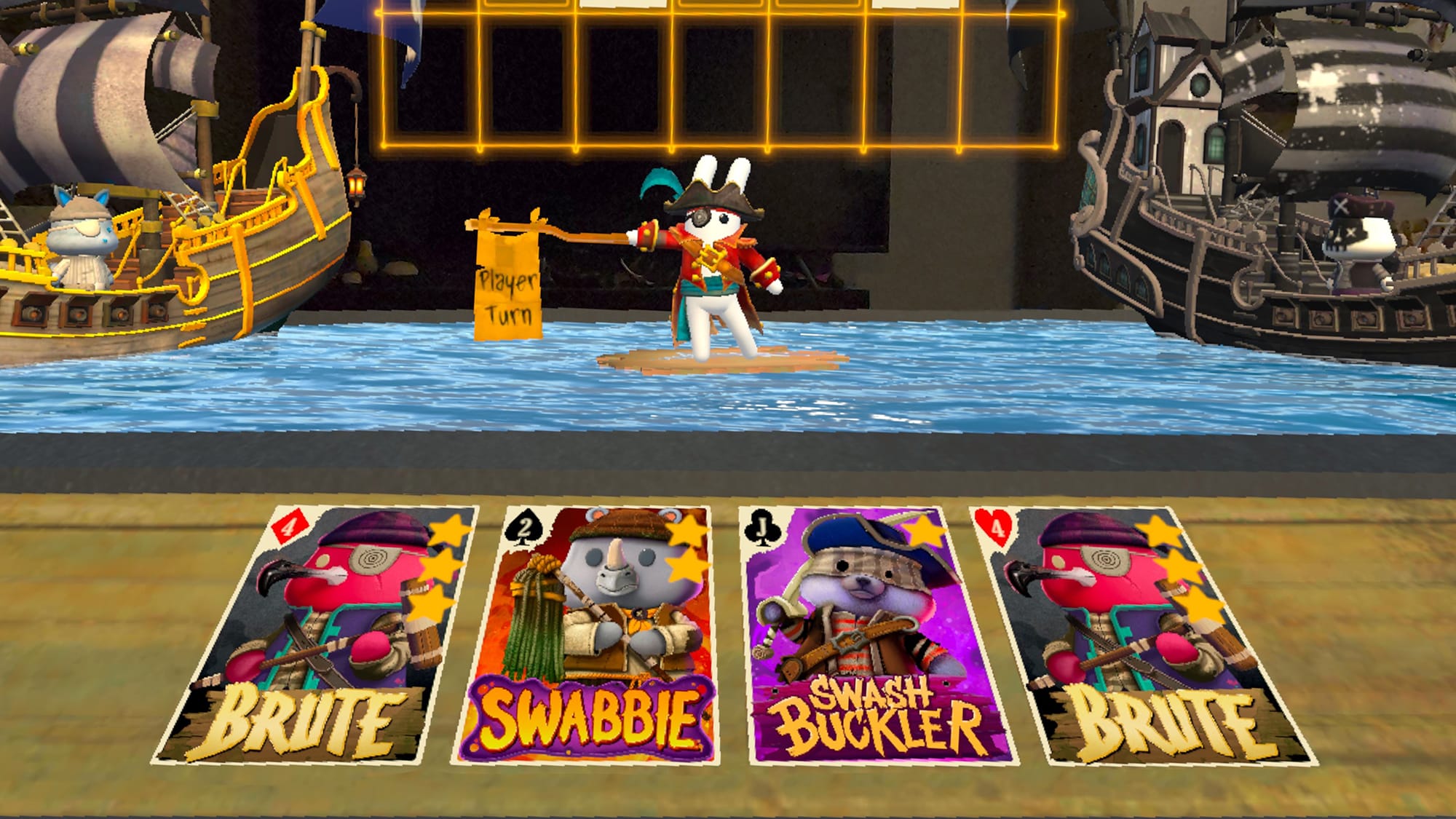
Announced today at Meta Connect, Cardmada is a hand-tracked, free-to-play tactical card battler set in a Wonderland-inspired world coming to Meta VR Glasses and Quest 3.
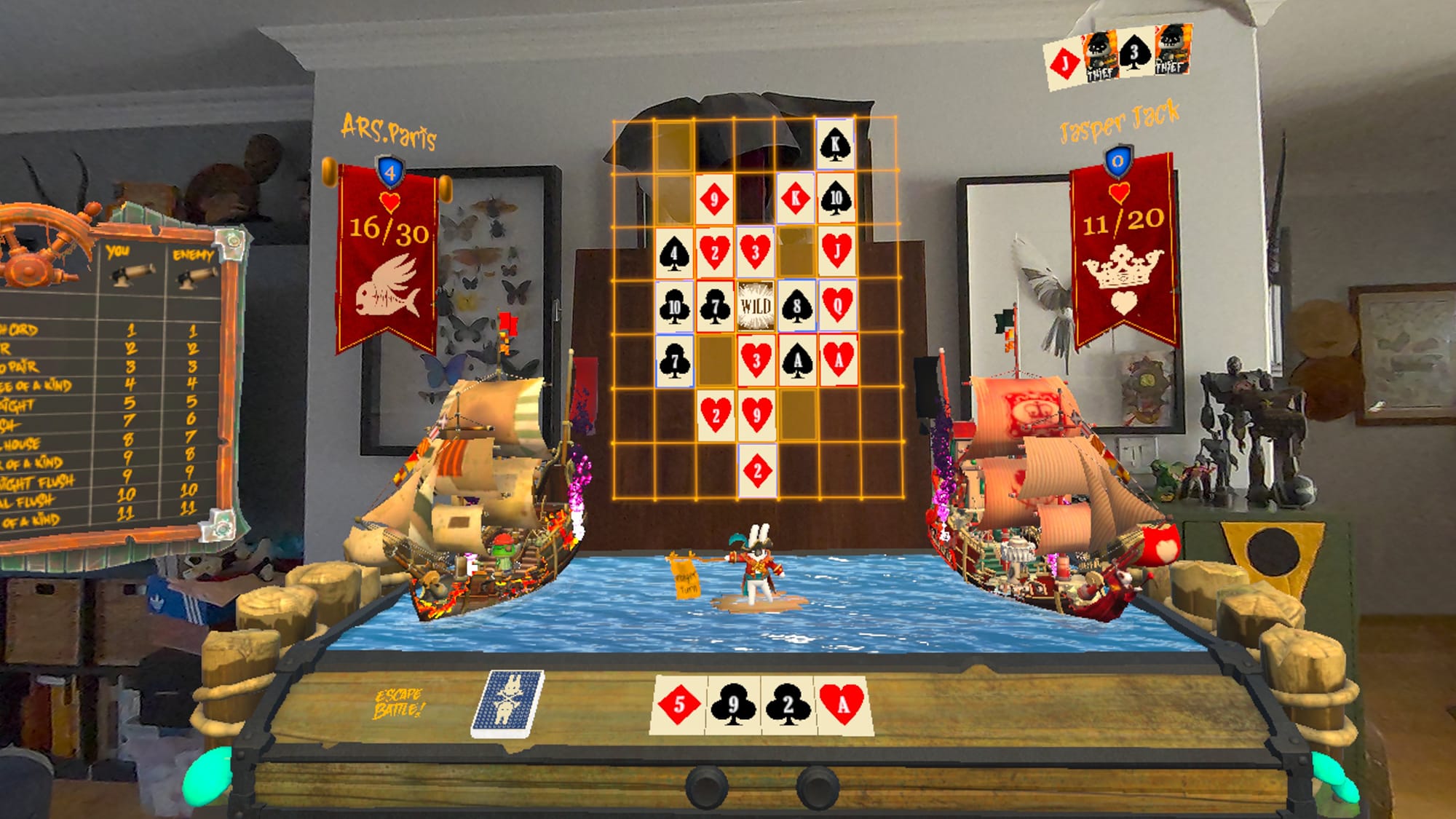
Said to be ‘designed from the ground up for natural hand and eye interaction,’ Cardmada has you take command of a pirate ship, recruiting a crew of misfits to combat rival captains in head-to-head battles. You will build poker-inspired combinations of cards to trigger cannon attacks and outmaneuver your opponents to victory.
There was not a lot of additional information provided, but looking through the provided screenshots (see below), the game clearly has mixed reality support and the unlockable rewards you would expect to see in a free-to-play title.




Concept art provided by Meta depicts different ship types and three character archetypes: Skullywags, Queen’s Armada, and Whisperwakes.
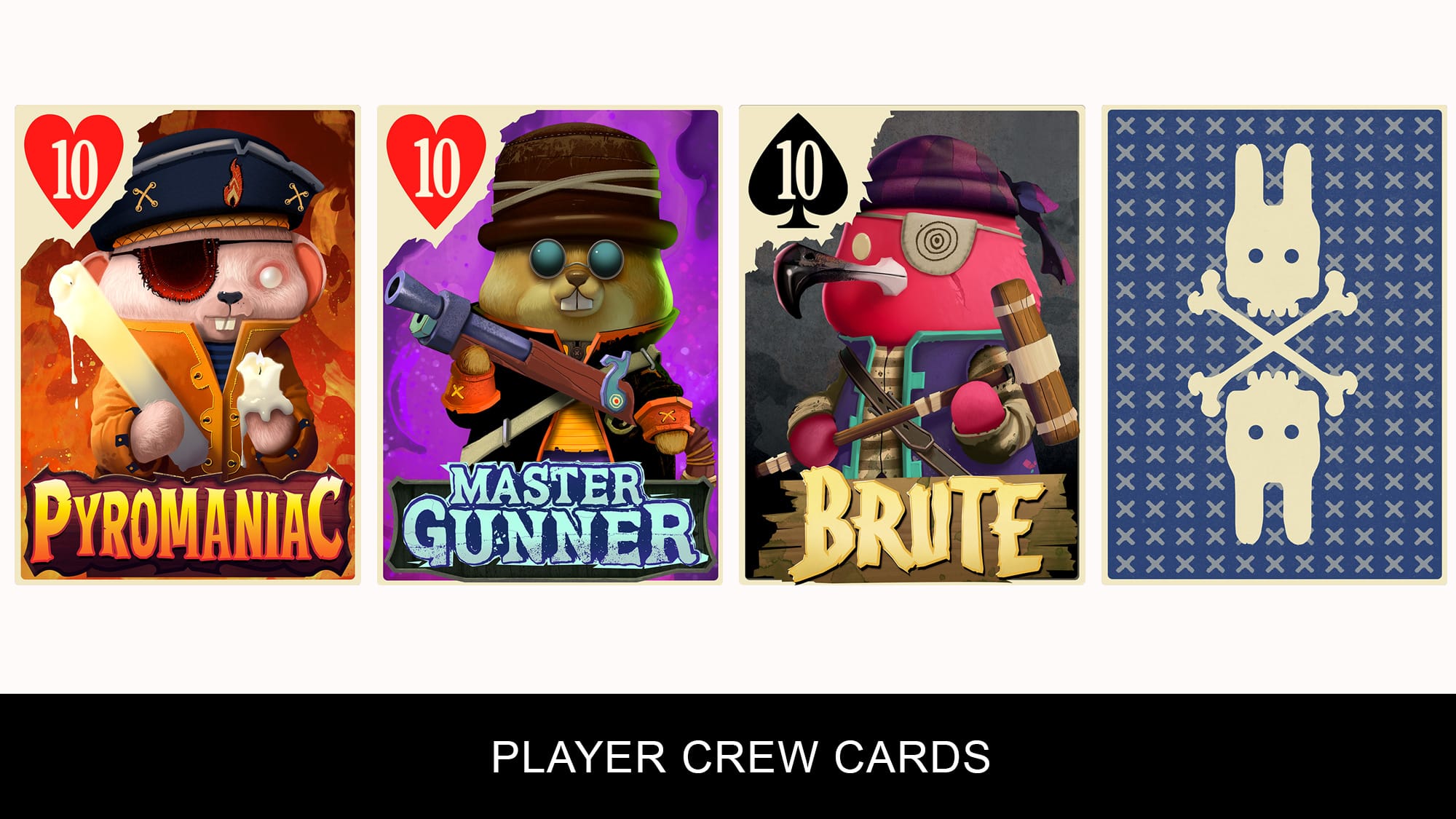



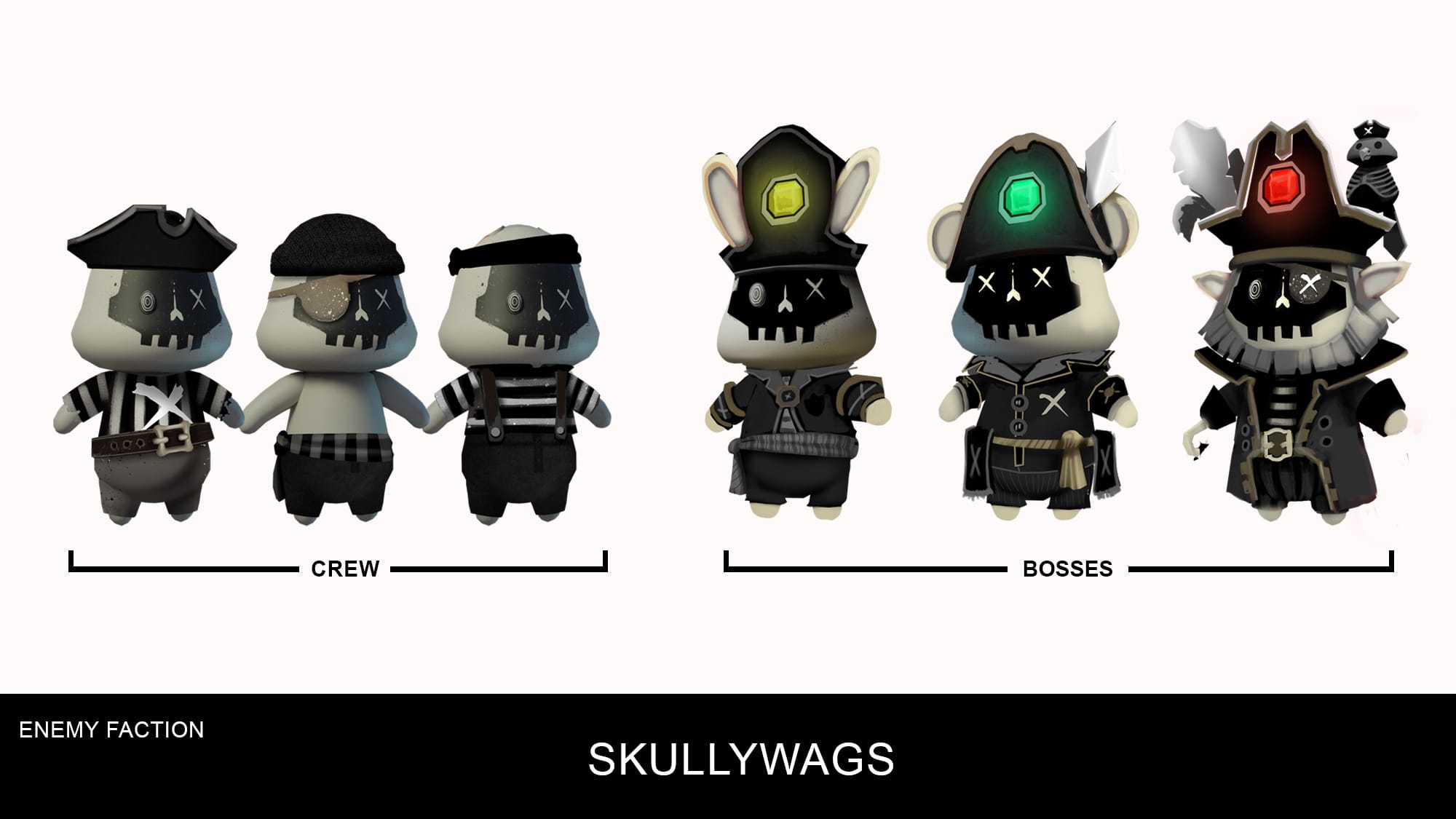


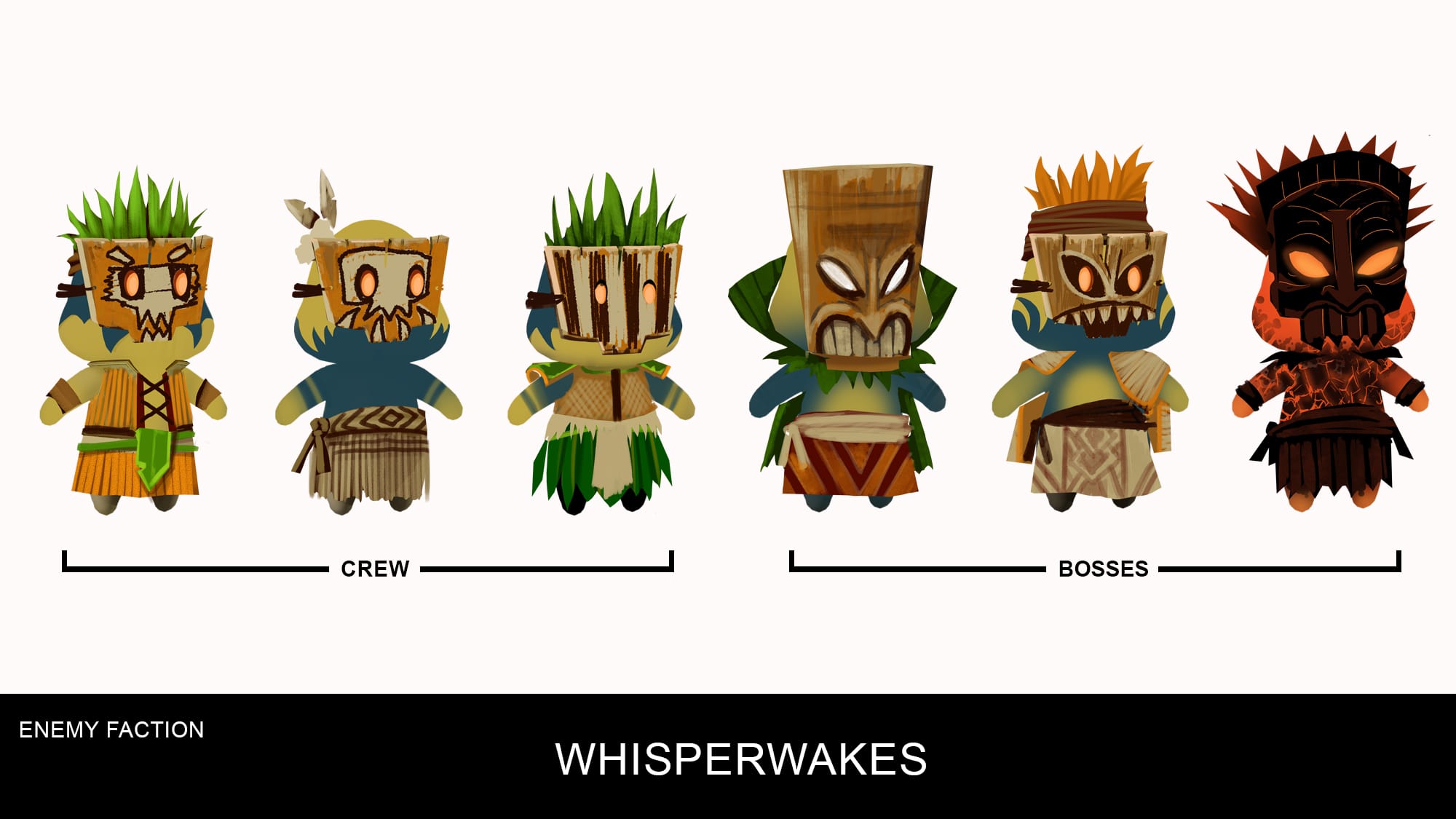

Cardmada can be wishlisted now on the Meta Horizon store for Meta VR Glasses and Quest 3.
Dice Throne Digital is a free-to-play adaptation of the popular fantasy-themed tabletop strategy game coming to Meta VR Glasses & Quest 3 with crossplay support across XR devices, mobile, and PC. It is expected to launch in early 2027.
Announced at Meta Connect today, Dice Throne Digital spatializes the popular dice-and-card game, which has sold over 1.5M physical copies worldwide and raised over $18M across multiple crowdfunding campaigns.

You will compete with other players in a fantasy-based battle, embodying your chosen heroes and rolling dice to trigger their special abilities and playing cards to manipulate dice rolls in your favor. Attacks will play out in front of you on a mixed reality tabletop board.

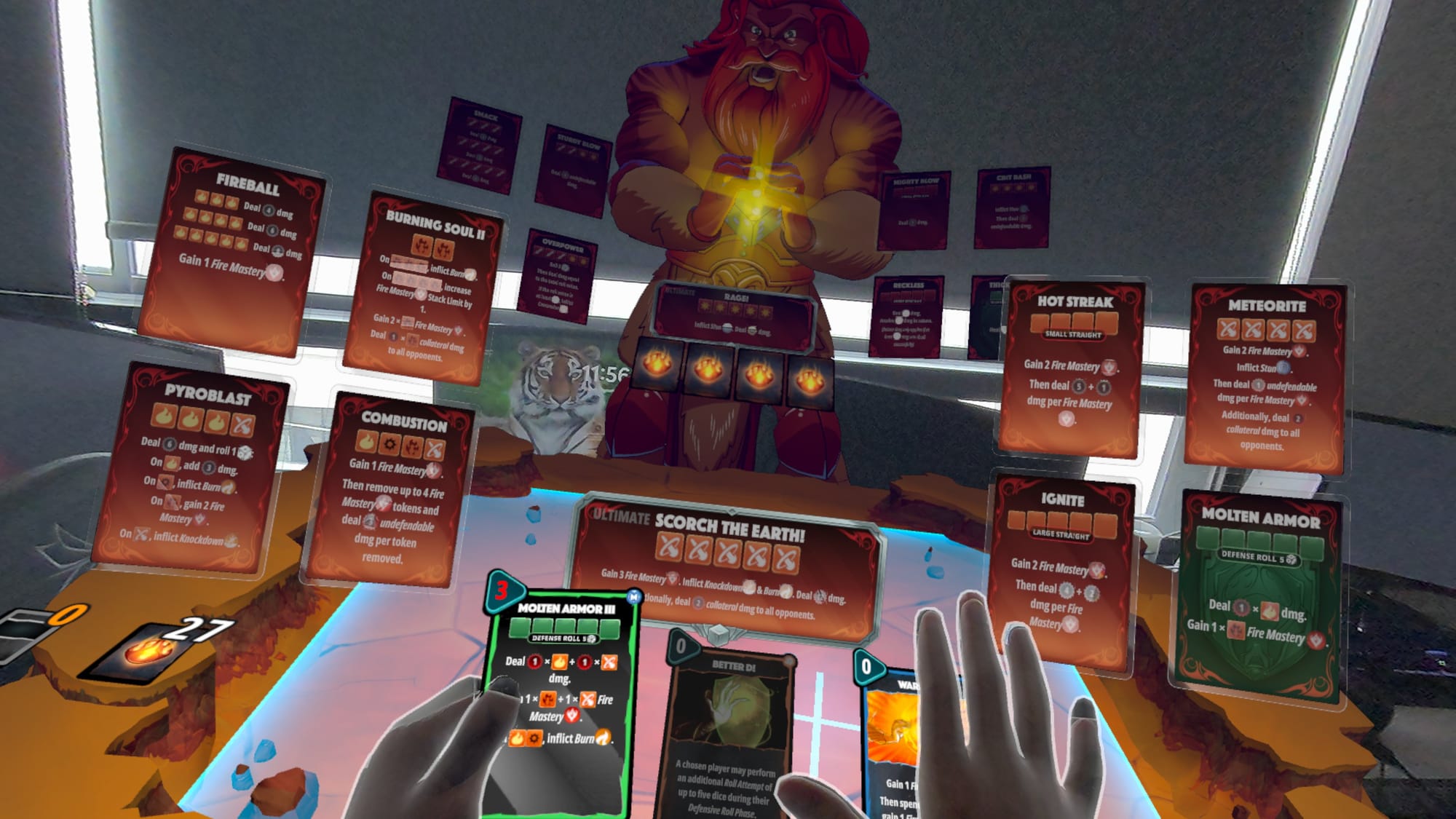
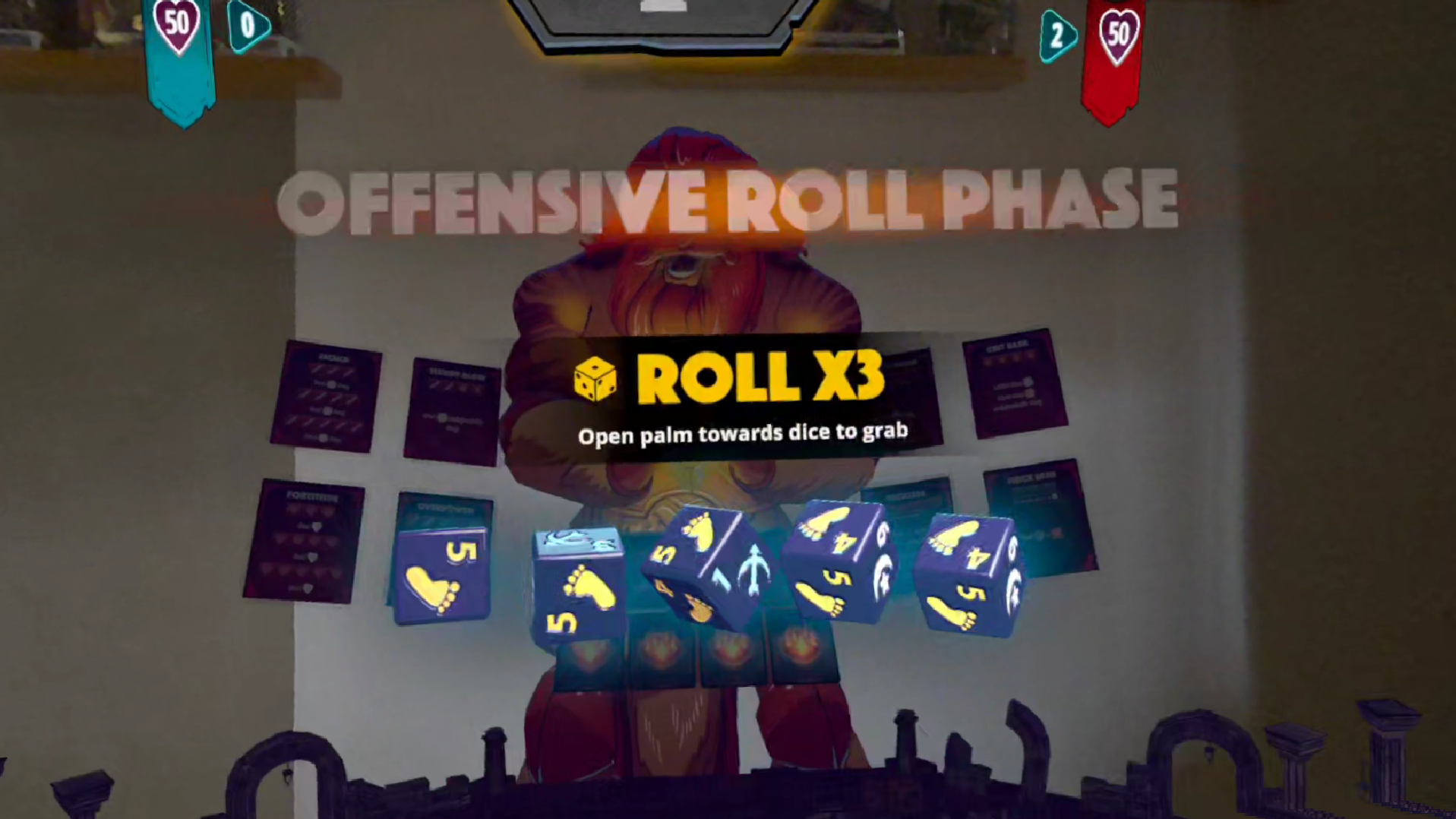
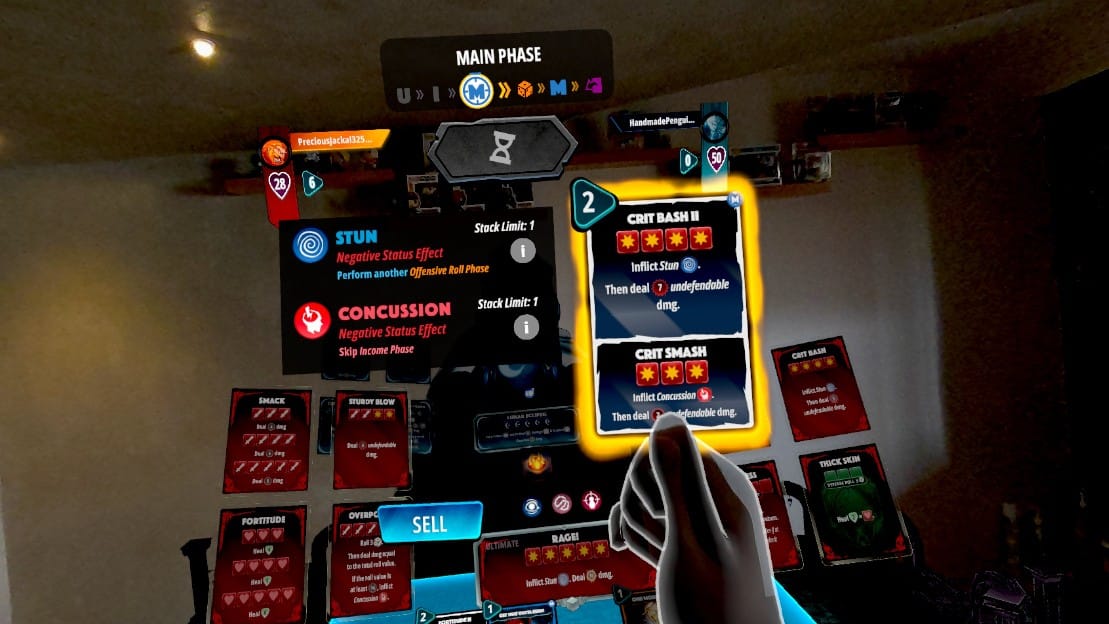
The original tabletop game has forty-five different heroes as of July 2026, spread across multiple seasons and crossovers with Marvel including the X-Men, Black Panther, Black Widow, Deadpool, Captain Marvel, and Doctor Strange. We do not know if these will carry over to Dice Throne Digital. The images provided to us show several original characters pictured below.
With the game being free-to-play, we expect new cards, dice, and characters to be unlockable through a combination of playtime rewards and in-app purchases.



You can wishlist Dice Throne Digital on the Meta Horizon store now.
The smart glasses are also arriving in five new markets this fall.
Sorry Apple, it looks like Meta’s VR Glasses are the real Vision Pro successor.
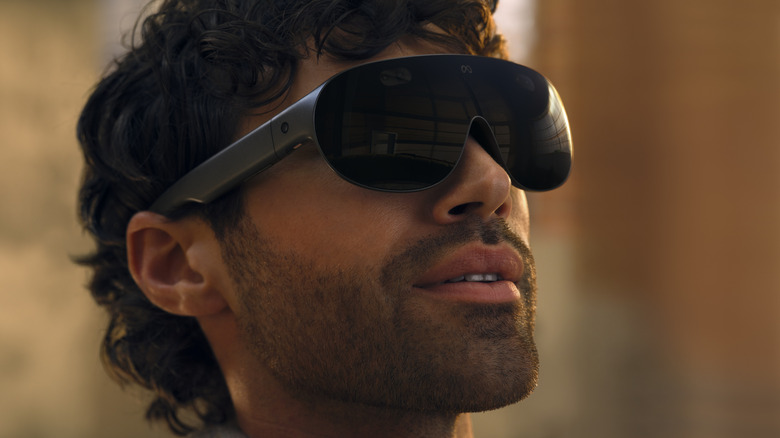
Meta VR Glasses were just officially announced. Priced at $1300, they have 2.4K micro-OLED displays, weigh 100 grams, and are powered by a tethered puck with Qualcomm’s Snapdragon Reality Elite chipset.
0:00
Meta VR Glasses introduction trailer.
The puck runs the same operating system as Quest 3, and supports all the same content, rendered at notably higher resolution thanks to a combination of the more powerful chipset (essentially an XR2 Gen 3 by a different name) and eye-tracked foveated rendering. It features 12GB of RAM and 128GB of storage, and there’s a microSD slot in the puck to expand it.
The caveat to the content compatibility is that Meta VR Glasses will not come with controllers by default, but you’ll be able to buy Touch Plus controllers separately (available in a new all-black color), or pair the controllers from your existing Quest 3 or Quest 3S, and there’ll be a bundle with controllers “in some retail channels”.
 UploadVRDavid Heaney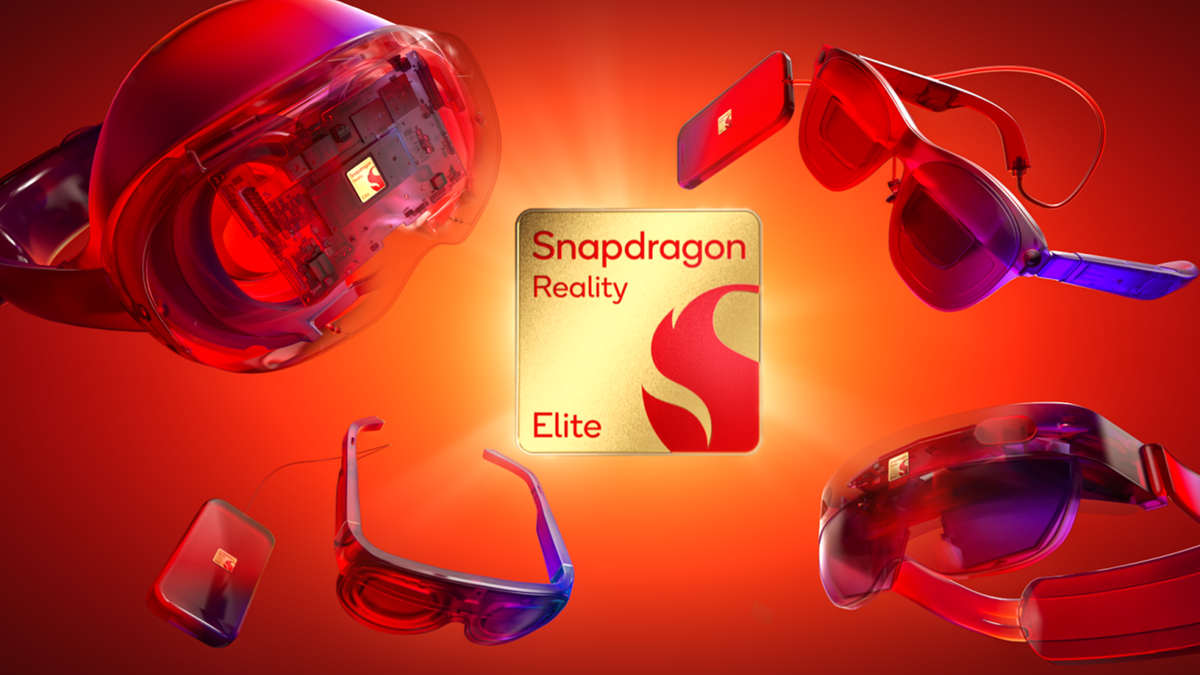
The stark difference between Meta VR Glasses and any Quest, however, is the split architecture, and the dramatic reduction in weight and bulk this enables.
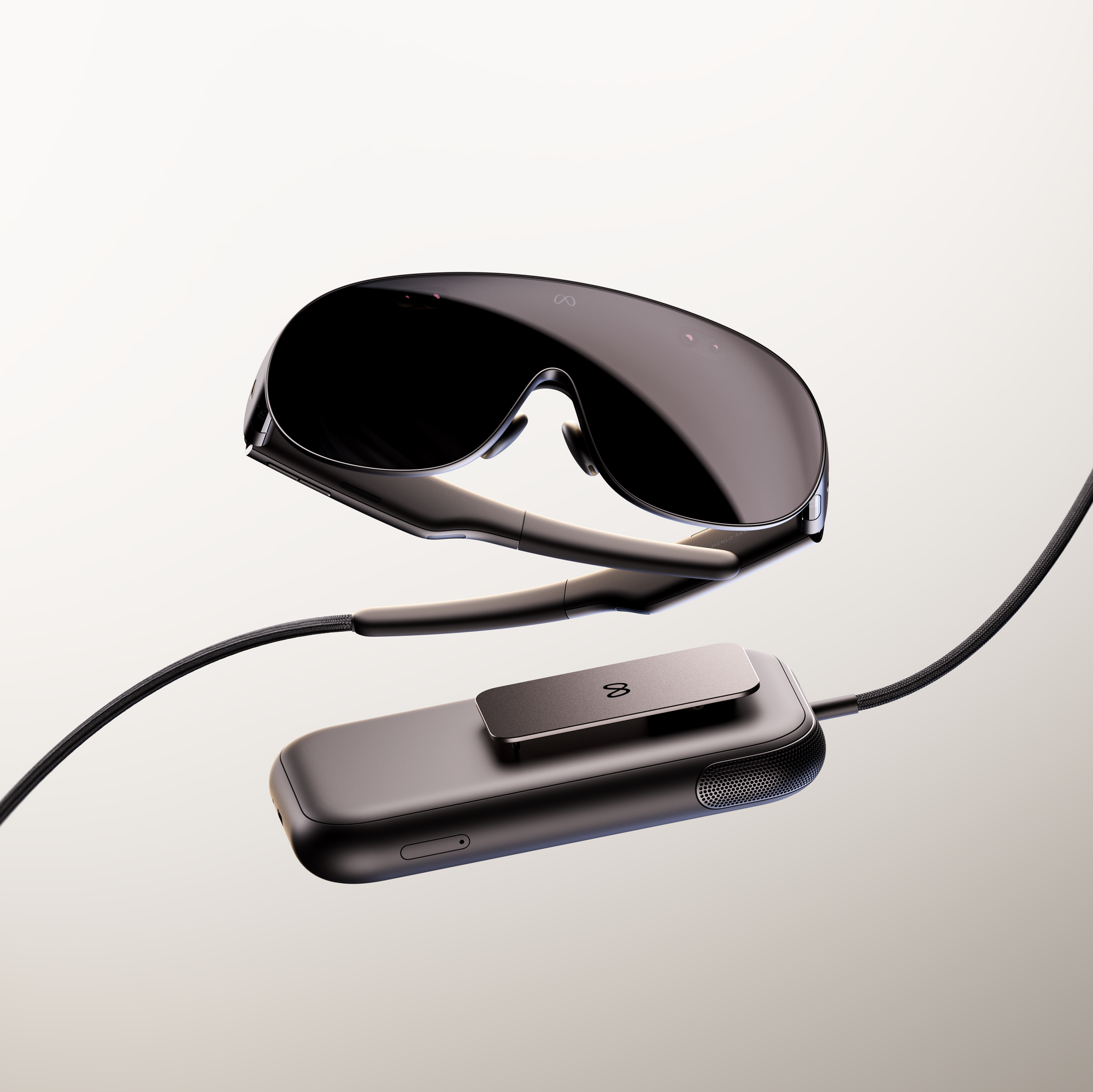
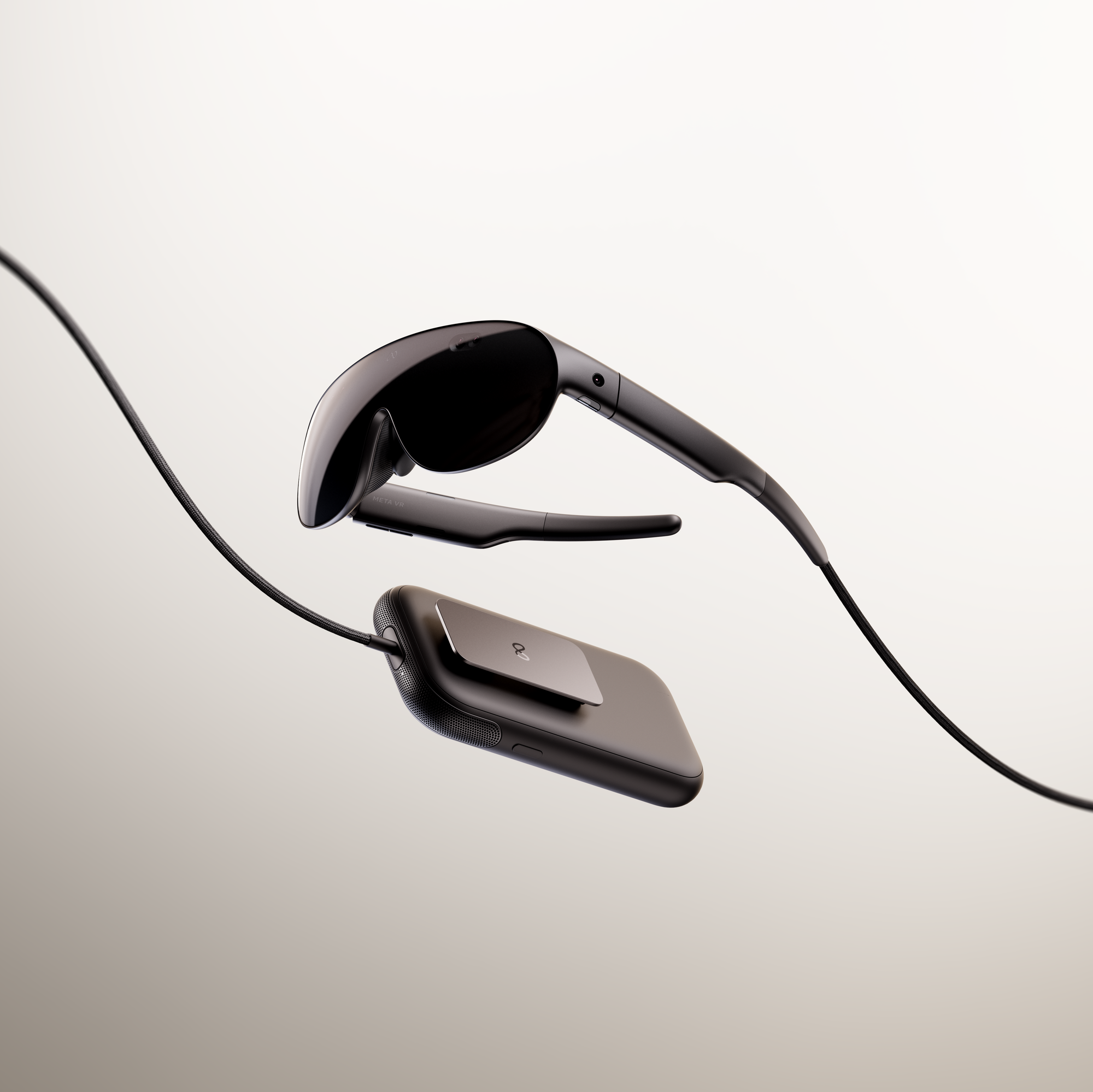
Meta VR Glasses have no onboard computing, not even a tracking coprocessor, and thus entirely rely on the 300-gram puck, which is roughly the size of two phones stuck together and provides both power and data over a thin and flexible hybrid fiber optic cable.
Meta VR Glasses
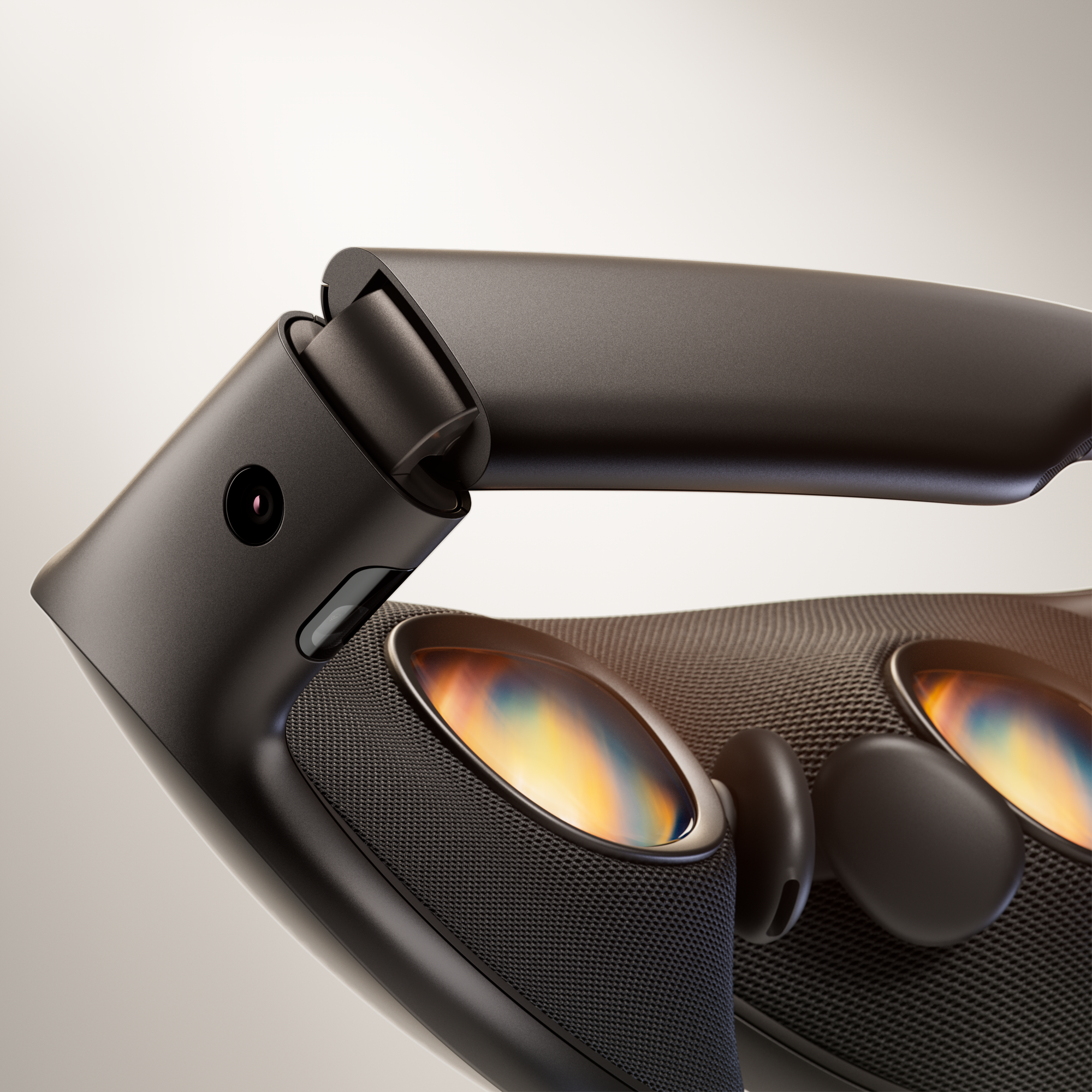
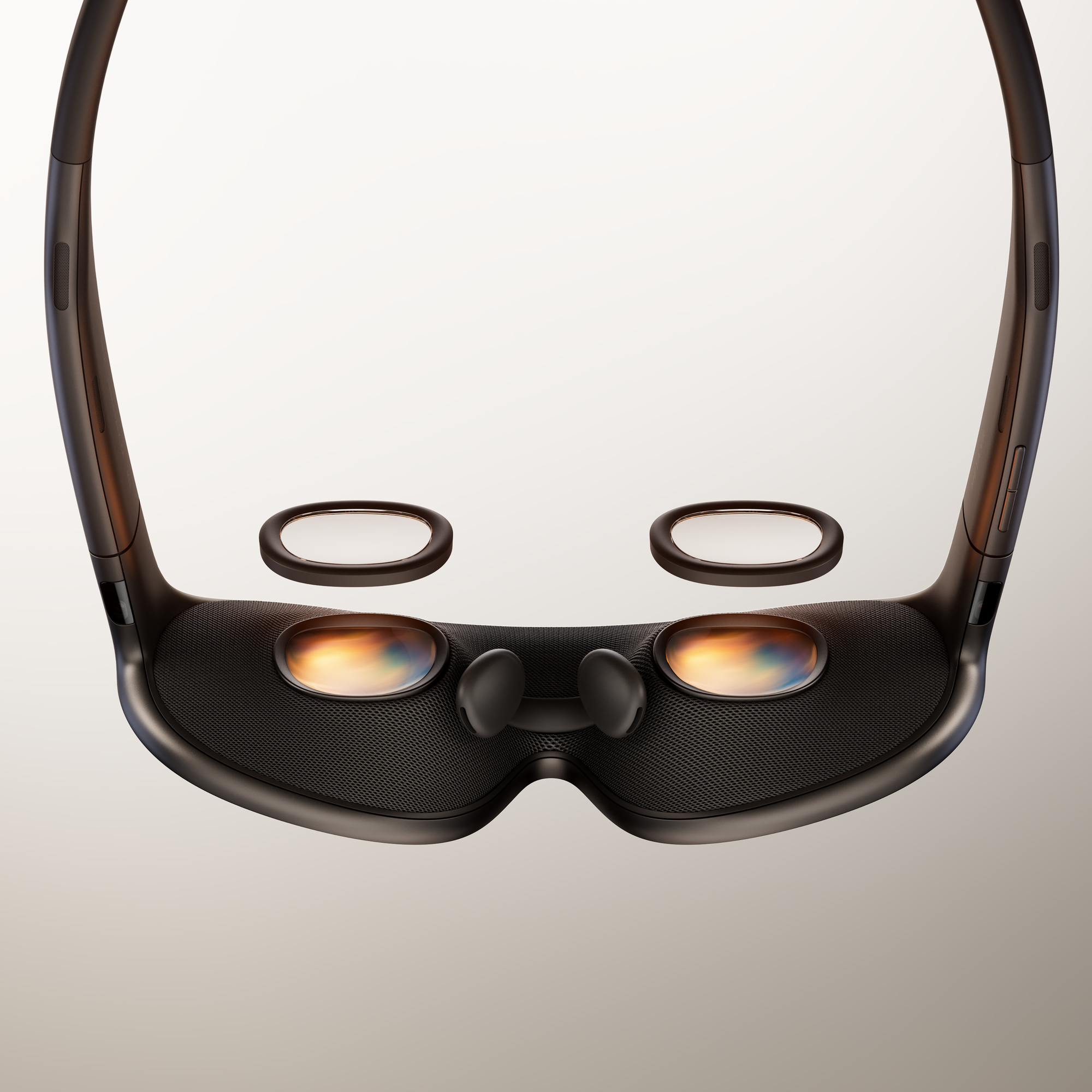
Meta VR Glasses have an open-periphery design, so you naturally see the real world to your sides and below you. The frame is built with a magnesium alloy that minimizes weight while also enabling a fanless, passively cooled design that weighs “around” 100 grams.
Another key difference is the display and field of view. With dual 120Hz 2412×2288 HDR micro-OLED displays, Meta VR Glasses have the highest resolution of any Meta headset to date, and are the company’s first non-LCD headset since the original Oculus Quest in 2019.
The device supports the Dolby Vision HDR format, and Meta says it’s the first VR product to be IMAX Enhanced certified.
The form factor brings a major optical compromise, though: the field of view. Meta advertises 70° horizontal × 66° vertical (equating to ~87° diagonal) compared to the roughly 110° horizontal × 96° vertical of Quest 3.
| Meta VR Glasses | Quest 3 | Steam Frame | Apple Vision Pro | |
| Display Type | Micro-OLED | LCD | LCD | Micro-OLED |
| Pixels Per Eye | 2412×2288 | 2064×2208 | 2160×2160 | 3660×3200 |
| Field of View | 70° × 66° | 110° × 96° | 110° × 110° | 100°× 73° |
| Angular Resolution (central) |
37 PPD | 25 PPD | ~25 PPD | 44 PPD |
| Chipset | Snapdragon Reality Elite |
Snapdragon XR2 Gen 2 |
Snapdragon 8 Gen 3 |
Apple M5 |
| RAM | 12GB | 8GB | 16GB | 16GB |
| Passthrough | Color 26 PPD |
Color 18 PPD |
Monochrome Low-res |
Color |
| Hand Tracking | ✅ | ✅ | ❌ | ✅ |
| Eye Tracking | ✅ (4-camera) |
❌ | ✅ (2-camera) |
✅ (4-camera) |
| Face Tracking | ✅ | ❌ | ❌ | ✅ |
| Tracked Controllers |
Optional | Included | Included | Optional |
| Price & Storage | $1300 (128GB) |
$600 (512GB) |
$1059 (256GB) |
$3700 (256GB) |
| MicroSD Slot | ✅ | ❌ | ✅ | ❌ |
The narrower field of view makes Meta VR Glasses feel far less immersive than a Quest headset when the optional light blockers are attached for fully immersive experiences. But, somewhat ironically given the name of the product, Meta VR Glasses should shine without the light blockers in passthrough mixed reality, where a natural view of your periphery is often preferable to darkness.
Meta plans to market the product as “a private cinema, multiple monitor workspace, and game console in one device that fits in your bag”.
0:00
0:00
Meta VR Glasses
Essentially, Meta VR Glasses at its core is the same market proposition as the Xreal Aura Android XR device but with a VR-style passthrough display system that offers a larger field of view (~87° diagonal vs Xreal’s 70°), higher resolution, and full opacity, alongside the inclusion of eye tracking and optional tracked controllers. We do not yet know the price of Xreal Aura.
To expand the library of content available to Meta VR Glasses owners who don’t buy Touch Plus controllers, Meta announced a swathe of new hand tracking VR and mixed reality games, including a new hand-tracked Beat Saber mode called Flux. You can read about the gaming announcements here.
For the first time for a Meta standalone device, you can also plug in any USB-C DisplayPort device to the puck, including a phone, laptop, or gaming handheld, and have it shown as a virtual screen, without the need for a capture card.
 UploadVRJames Tocchio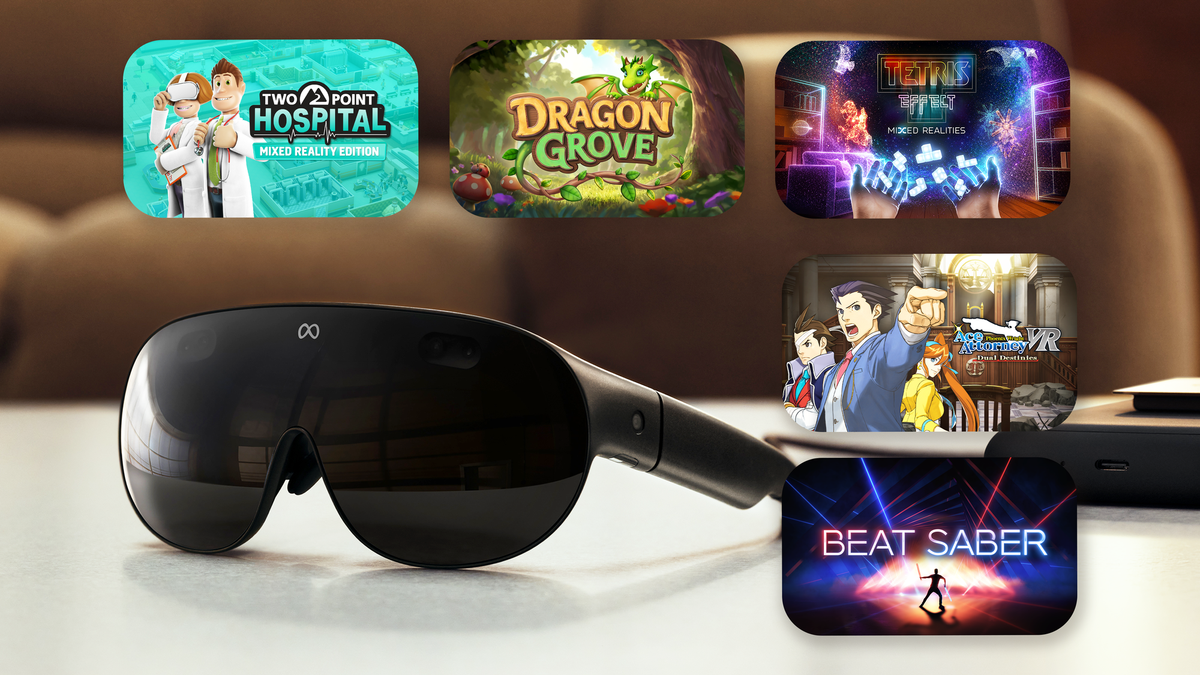
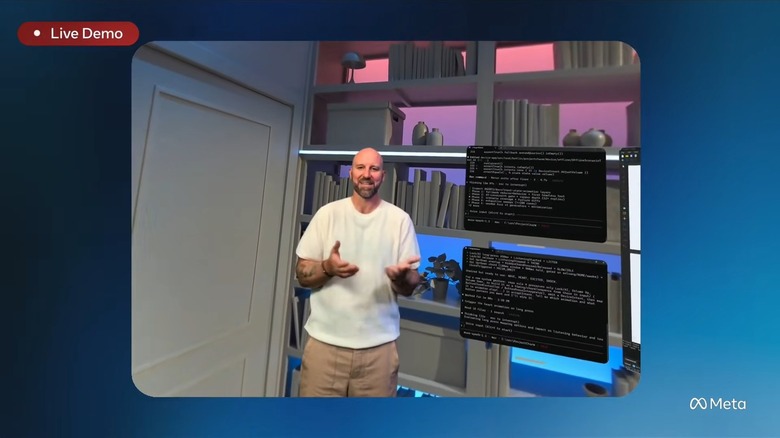
Meta VR Glasses will also feature the first implementation of Hologram, the company’s realistic avatar tech. Similar to Apple Vision Pro’s Personas, it will both let you join flatscreen WhatsApp video calls as a photorealistic face-tracked avatar, and appear as a full-scale realistic avatar in calls with other Meta VR Glasses (and eventually Quest 3) owners.
However, at launch in spring, your spatial Hologram will be a stereoscopic video stream, not volumetric. It displays at true scale, but is only seen as a front-angle view. Even if you change your perspective, the Hologram will stay as a head-on perspective, like billboarded assets in a video game. Meta says it plans to evolve Hologram over time post-launch to become a truly 6DoF 3D system, at which point it will become the default platform-level avatar experience for its VR platform, effectively superseding the cartoon Meta Avatars.
Blackpink in your upper-facial area.

Blackpink in your upper-facial area.

The latest lineup comes in two new frame styles: Aviator and Zena.
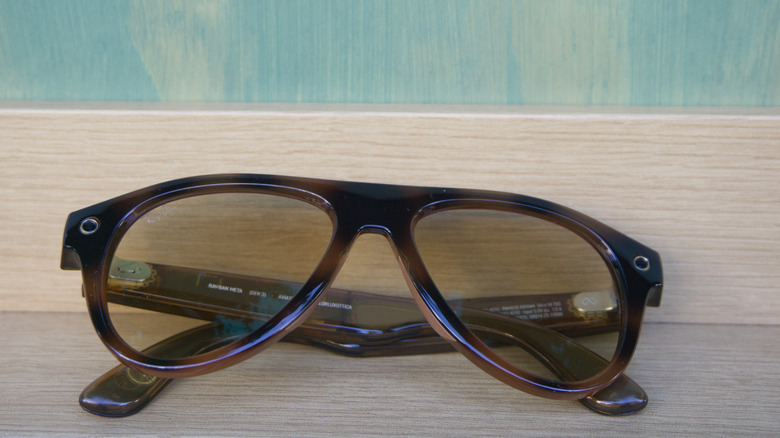
The latest lineup comes in two new frame styles: Aviator and Zena.
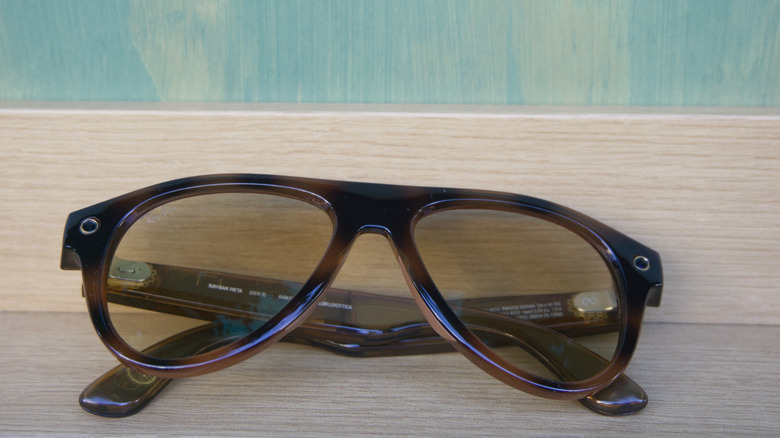
That’s one way to avoid the whole surreptitious recording issues.

After a free trial it’ll cost $150 to add on, or require a Meta One subscription.
Have your virtual assistant book a flight while you’re jogging.

Samsung phones have a few different triangle symbols that can display in the status bar in different scenarios. This is how to tell what they mean.

As respiratory virus season nears and fall vaccination drives get underway, more than half of US children are facing uncertainty over access to this year’s COVID-19 shot. The Centers for Disease Control and Prevention has unexpectedly delayed the distribution of the shots to a key federal program and some states.
Usually, the CDC would allow states to order the newly available seasonal COVID-19 vaccines through the federal Vaccine for Children (VFC) program, which provides vaccines at no cost to children who are uninsured, underinsured, Medicaid-eligible, or Indigenous people in the US. Approximately 52 percent of all US children are eligible for vaccines through the program.
Additionally, The Guardian reports that at least 11 states and one US territory are part of a universal vaccine purchase program, in which they buy all vaccines for children—regardless of their ability to pay or insurance status—through contracts otherwise for the VFC. The 11 states and one territory include: Alaska, Connecticut, Hawaii, Maine, Massachusetts, New Hampshire, New Mexico, Rhode Island, Vermont, Washington, Wyoming, and American Samoa.
As respiratory virus season nears and fall vaccination drives get underway, more than half of US children are facing uncertainty over access to this year’s COVID-19 shot. The Centers for Disease Control and Prevention has unexpectedly delayed the distribution of the shots to a key federal program and some states.
Usually, the CDC would allow states to order the newly available seasonal COVID-19 vaccines through the federal Vaccine for Children (VFC) program, which provides vaccines at no cost to children who are uninsured, underinsured, Medicaid-eligible, or Indigenous people in the US. Approximately 52 percent of all US children are eligible for vaccines through the program.
Additionally, The Guardian reports that at least 11 states and one US territory are part of a universal vaccine purchase program, in which they buy all vaccines for children—regardless of their ability to pay or insurance status—through contracts otherwise for the VFC. The 11 states and one territory include: Alaska, Connecticut, Hawaii, Maine, Massachusetts, New Hampshire, New Mexico, Rhode Island, Vermont, Washington, Wyoming, and American Samoa.

Meta has finally unveiled its next-gen mixed reality headset, Meta VR Glasses. While they could technically fit somewhere in its Quest lineup, Meta seems to be making a concerted effort to bridge the gap between its experimental augmented reality projects, like Orion, and its much bulkier Quest gaming platform.
Previously known as ‘Project Phoenix’, Meta VR Glasses are a compute puck-tethered device which are going on sale sometime in Spring 2027, priced at $1,300. You can check out the full specs and launch details here.
I got a hands-on preview of VR Glasses at Meta’s big annual Connect developer conference, giving me a chance to get to grips with the new gaze and hand gesture-based UI, get an early feel for ergonomics, and experience the most pixel-dense display Meta has ever sold.
After a long stint of LCDs from Meta, we’re finally getting proper micro-OLED panels. You’ll find the full specs here—but it bears mentioning that VR Glasses are visually impressive: 5.5MP (2,412 x 2,288) per-eye resolution at 37 pixels per degree (PPD), with a refresh rate up to 120Hz.
That class-leading pixel density comes at a tradeoff though: its 70-degree horizontal field-of-view (FOV) is noticeably smaller than Quest 3’s 110-degree FOV, which some may find frustrating on the face of things.

The display’s black are predictably deep, there’s no noticeable OLED smearing, and panels are sufficiently bright—maybe not as bright as I would have hoped, although I suspect that had more to do with the fact that I didn’t try it with the optional light blocker accessory Meta will ship when VR Glasses go on sale next year. Ambient reflections and lighting stole a little bit of the perceived brightness.
The color passthrough view on VR Glasses is the best I’ve seen on a standalone VR headset, as I saw no noticeable stitch lines, no appreciable latency, good color reproduction, acceptable brightness, and seemingly zero weird bendiness of the environment or near-field objects which is somewhat common of Quest headsets.

It’s really approaching the threshold of ‘passthrough as a genuine reproduction of the environment’. Combined with its sharp and much brighter displays, I’d consider Meta VR glasses streets ahead of the cadre of AR devices with birdbath optics that seek to achieve the same end with optical passthrough: using your world as a backdrop for content.
The impressively compact pancake optics of VR Glasses are also very clear, although the sweet spot isn’t as large as Quest 3, requiring you to find a good fit with the array of supplied nose pads and choose the actual Meta VR Glasses size that’s right for your head (between a ‘Standard’ and ‘Large’ variant of the device). No data yet on what that means substantively in real-world measurements. More on that below. IPD is easily adjustable by physically moving the lenses inwards or outwards independently, supporting 56-70 mm IPD in addition to prescription add-ons.
That makes VR Glasses the first Meta headset to support asymmetric IPD adjustment, though asymmetric adjustment can be difficult to calibrate correctly, compared to using an IPD dial on the outside of the headset.
That pocketable compute puck, which needs to breathe through a mesh grill at the top for active cooling, packs in a battery rated for up to three hours, powering a Qualcomm Snapdragon Reality Elite processor (XR2 Gen 3), which is up to 11% higher max GPU frequency vs Quest 3’s Snapdragon XR2+ Gen 2.

When they offered me to play Beat Saber, I thought “ah ha, my perfect apples-to-apples comparison,” but alas, it was actually a new hand-tracked mode coming to the game called ‘Flux’. This mode completely reimagines the gameplay, making it all about punching and garrote-wiring flying bars in half with an energy beam connected to both hands (as opposed to slashing blocks).
VR Glasses won’t come with controllers in the box, but it is compatible with the same Touch Plus controllers that Quest 3 and 3S use today. With them, the headset can play all existing content from the Horizon store, including the traditional block-slashing Beat Saber mode.
Back to performance: there was one graphically demanding scene that showed off the new chipset likely working at full bore; select film content will include an immersive theater of sorts, which are actually fully rendered bespoke environments that change according to what’s happening in the film.

I was watching a clip from Avengers: Infinity War, as Peter Dinklage’s character is forging the all-mighty Stormbreaker axe. It’s admittedly a cool gimmick, because I don’t expect all films to get this sort of treatment, but I was watching Dinklage forge from inside his forge. Star power blasting away, steam rising from grates, particles flying everywhere in a fully-rendered environment as the film kept up at what I suspect was probably somewhere south of 4K native playback.
A half-hour demo is a poor basis for understanding long-term comfort for any device, even for a 100g headset that does its level best to be the all-day productivity headset… er… glasses. In Meta’s own words: “the weight is over.”

That said, I tried on both the small and large versions, notably two different SKUs, and found the large to be very comfortable. Initially, I started with the small, but it clamped too hard on the sides of my head, and kept slipping from my nose as a result. Both small and large are shipping with multiple nose pads, although I’m hoping Meta shores up their messaging on actual sizing before launch, since I would be pretty miffed if I bought the small and I had no reasonable way of finding out before buying.
Another thing I didn’t count on was the real value add of the downward-facing sensors. Sitting down, I could put my hands in my lap and do all of the UI gestures without having to Wingardium Leviosa in front of my face constantly. That includes looking to highlight, pinching to select, and swiping your index finger with your thumb to scroll, all of which just felt right.

Eye-tracking appears to only be for UI stuff for now, although I’m betting we’ll hear more about what sort of streaming and rendering tech has gone into the compute puck, and how eye-tracking informs that.
Audio is the same (or maybe even slightly better) experience you’ll have with Meta Ray-Ban Display, which include off-ear speakers that comes with the usual trade-offs. Less bass, acceptable mids and treble, and the usual audio bleed. If I were on a plane (where this thing wants to be) I would most definitely opt for headphones and the optional light blocker, which clips in for a more immersive (and less light bleed-y) experience.
Meta seems to be forging a new path with VR Glasses. While they could conceptually fit somewhere in its Quest lineup, they appear to represent a more concerted effort by Meta to bridge the chasm between its Display glasses, experimental augmented reality projects, like Orion, and its much bulkier Quest gaming platform.
Meta VR Glasses are an interesting mid point between the still elusive all-day AR glasses of the near future, and the much heavier, and less compact VR headsets of today. It’s attempting to bridge that gap by being slim and light (~100g on-head weight), and by offering some of the best color passthrough I’ve seen on VR device yet.

In the end, it feels like Meta purposefully reframed the device by not calling it something like, I don’t know, ‘Quest Air’.
And at $1,300, the appeal is pretty clear: Meta wants prosumers and productivity-minded people to look at VR Glasses not only as a jack of all trades, but one that doesn’t take up half of your carry-on, or weigh too terribly heavy on your head like its main competitors, Apple Vision Pro and Samsung Galaxy XR.
Disclosure: Meta provided lodging for one Road to VR reporter to attend Meta Connect 2026 where information for this article was gathered.
The post Meta VR Glasses Hands-on: What Apple Vision Pro Probably Should Have Been appeared first on Road to VR.

Meta today unveiled its long-awaited next-gen mixed reality headset: Meta VR Glasses.
Previously known under the codename ‘Project Phoenix’, Meta VR Glasses was announced today, but isn’t launching just yet; the compute puck-tethered device is slated to go one sale sometime in Spring 2027, priced at $1,300.
While we’re still waiting on a precise release date, Meta did reveal an avalanche of details on the hardware alongside a slate of new immersive and casual viewing content coming to the headset. You can catch Road to VR’s hands-on with Meta VR Glasses here.
Meta VR Glasses feature what the company is calling its ‘5K Infinite Display’, which uses micro-OLED panels, offering a 5.5MP (2,412 x 2,288) per-eye resolution at 37 pixels per degree (PPD)—notably higher than Quest 3’s 25 PPD.
In fact, despite being significant lower resolution than Vison Pro’s 11.7MP per-eye resolution, Meta says VR Glasses has a higher PPD (34 vs 37) because VR Glasses spreads its pixels over a tighter field-of-view of about 88° diagonally (H70° × V66°).
That’s not the only thing that’s smaller. Meta VR Glasses weigh about 100g on the head, as the battery and compute have been moved to a separate puck connected to a proprietary port via an optical cable.

Inside that pocketable puck (~300g) is Qualcomm’s new Snapdragon Reality Elite processor (XR2 Gen 3) and a battery with a claimed 3+ hours of mixed use. The puck can also be used charged while in use, when plugged into its included 45W USB-C power supply.
Lenses can be manually adjusted for a interpupillary distance (IPD) range between 56–70mm, and can also be fit with prescription inserts from Meta partner Zenni Optical.
As for sensors, VR Glasses comes with a wide array: eye-tracking cameras for UI selection and biometric unlock, front and downward-facing camera sensors for a wider hand-tracking range, and full color passthrough sensors offering 26 PPD. It of course also does the same capable 6DOF spatial tracking pioneered in the company’s Quest lineup.
Like its Meta Ray-Ban Display smart glasses, Meta VR Glasses support a mix of gaze and hand gestures: look to highlight a button, pinch your fingers together to select, rub your thumb up or down, or side to side to scroll through content.

While that mix of eye and hand-tracking is its main input scheme (i.e., not shipping with physical controllers), Meta VR Glasses do support Quest’s Touch Plus controllers, which the company says you can either buy separately or actually use from your existing Meta Quest 3 or 3S.
Meta is also baking in Surface Keyboard—released earlier this year on Quest—to turn any flat surface into a keyboard and trackpad, which comes in addition to being able to pair Bluetooth peripherals like keyboards, gamepads, and more.
Meta VR Glasses are being offered in two sizes (for different head sizes), Standard and Large, which are notably two separate SKUs. Only one storage option has been announced thus far: 128GB internal storage with the option to expand up to 1TB via the puck’s microSD card slot.
When they do launch next spring, Meta VR Glasses are targeting broad international availability, with supported regions including: US, UK, Canada, Mexico, Germany, Poland, France, Netherlands, Belgium, Italy, Switzerland, Austria, Ireland, Iceland, Finland, Spain, Sweden, Norway, Denmark, Japan, Taiwan, Korea, Singapore, Australia, New Zealand.
| VR Glasses Sizing | Small, Large |
| Display Type | 5K Infinite Display using micro-OLED panels |
| Resolution | 5.5MP (2,412 x 2,288) |
| Pixel Density | 37 PPD |
| Refresh Rate | Up to 120Hz |
| Lens Type | Pancake lenses with integrated eye tracking |
| Field-of-view | H70° × V66° (D88°) |
| IPD Range | 56–70mm (independently adjustable) |
| Processor | Qualcomm Snapdragon Reality Elite processor (XR2 Gen 3) |
| RAM | 12GB |
| Internal Storage | 128GB |
| Expandable Storage | microSD card slot (up to 1TB) |
| microSD Card | Not included with device |
| VR Glasses Weight | ~100g |
| Compute Puck Weight | 300g |
| Connection | Connected via optical tether |
| Media Playback | Up to 3 hours per charge |
| Power Supply | 45W USB-C power supply included |
| Charging | Fast charging (can charge during use) |
| USB-C Cable | USB 3.2 Gen 2 cable |
| DisplayPort Alt Mode | Full DP Alt Mode support |
| Video Streaming | Video streaming to Meta VR Glasses from DP USB video sources |
| Eye Tracking | 4 cameras, 2 per eye |
| Hand Gestures | Index tap, thumb swipe |
| Voice Control | Meta AI |
| Motion Controller Support | Touch Plus support |
| Wi-Fi | gen TBD |
| Bluetooth | gen TBD |
| Bluetooth peripheral support | keyboards, gamepads, etc |
| Virtual Display | Mac or PC |
| Phone Mirroring | Yes |
| Positional Tracking | 6DoF |
| Passthrough Cameras | 26 PPD RGB |
| Autofocus | Yes |
| Depth Sensing | Yes |
| Biometric Authentication | Iris detection |
Meta VR Glasses run the same OS and store as Quest, so the entire Quest catalog of VR games and apps are there.
At least in terms of gaming without Touch controllers, Meta has promised 75+ games and apps optimized for hand gesture input, with its headliners including a modified version of Beat Saber for hand-tracking, 3D puzzle game Dragon Grove, courtroom sim Phoenix Wright: Ace Attorney, Dual Destinies, and a modified version of Tetris Effect for hand-tracking.
Meta says all of your usual streaming apps will be there at launch: Disney+ and Peacock, both with 3D, plus HBO, YouTube, Prime Video and more. Other streaming services can also be accessed via the built-in browser.
Meta VR Glasses is also technically an ‘IMAX Enhanced’ certified VR device supporting Dolby Vision and Dolby Atmos immersive spatial audio, which means you’ll be able to watch select films in IMAX’s exclusive expanded aspect ratio.
Outside of casual gaming, video, and 180-degree immersive sports content, which you also find on Quest, Meta is leaning particularly hard into productivity.
The device supports wireless multi-screen virtual desktop streaming from Mac, PC or phone, opening it up to be more of a general computing device. Native DisplayPort-In also allows you to directly wire into laptops, consoles and handhelds.
Disclosure: Meta provided lodging for one Road to VR reporter to attend Meta Connect 2026 where information for this article was gathered.
The post Meta Announces ‘VR Glasses’ Next-Gen XR Headset, Priced at $1,300 appeared first on Road to VR.

Today at Meta’s annual Connect developer conference the company unveiled its next-gen mixed reality headset: Meta VR Glasses. Coming alongside it early next year is an update to everyone’s favorite block-slashing rhythm game that flips the script for hand-tracking-centric input.
Beat Saber (2019) is getting an update in Spring 2027 on Meta VR Glasses and Meta Quest that finally brings hands-tracking to the game, albeit in an slightly unexpected way.
Called ‘Flux’, the update essentially reimagines the block-slashing action in a new single-player experience that uses your hands as weapons.
Check in out in action in the video below:
I had an opportunity to go hands-on with Flux in my demo with Meta VR Glasses, letting me play a single song.
Instead of slicking with, well sabers, you wield what Meta calls ‘Flux Powers’, electricity-imbued moves like the ‘Flux Tether’, which channels power between your palms to slice through rod-style notes in time with the beat of its regular slate of pulse-pounding tracks.

You also get punch through note, colored blue, red, or a light purple, the latter of which indicates you need to put both hands together. Destroying notes builds Jolt energy, which essentially gives you an extra score boost. As an OG Beat Saber fan, I immediately clicked into the new control scheme, handily scoring an ‘S’ class on what was probably the easiest setting.
Notably, Flux will also support Touch controllers too when it arrives early next year on Meta VR Glasses and Quest, coming along with 35 songs from the Original Soundtracks, Extras, and Anniversary packs, including tracks from Lindsey Sterling, Teminite, DragonForce, Haywyre, Camellia, Boom Kitty, Jaroslav Beck and Zakka G. Meta says more Flux songs are planned post-launch.
When it arrives, ostensibly alongside Meta VR Glasses next year, there’s also set to be what the company is calling an “enhanced Campaign mode,” which is set to include a “light narrative element” into the experience. The update is also coming with new barriers, missions, in-game rewards, and a new menu system that’s said to more quickly get you into game modes and new content.
Disclosure: Meta provided lodging for one Road to VR reporter to attend Meta Connect 2026 where information for this article was gathered.
The post ‘Beat Saber’ is Getting a Big Hand-tracking Update Next Year, Subbing Blocks for Orbs & Rods appeared first on Road to VR.
We may earn a commission from links on this page.
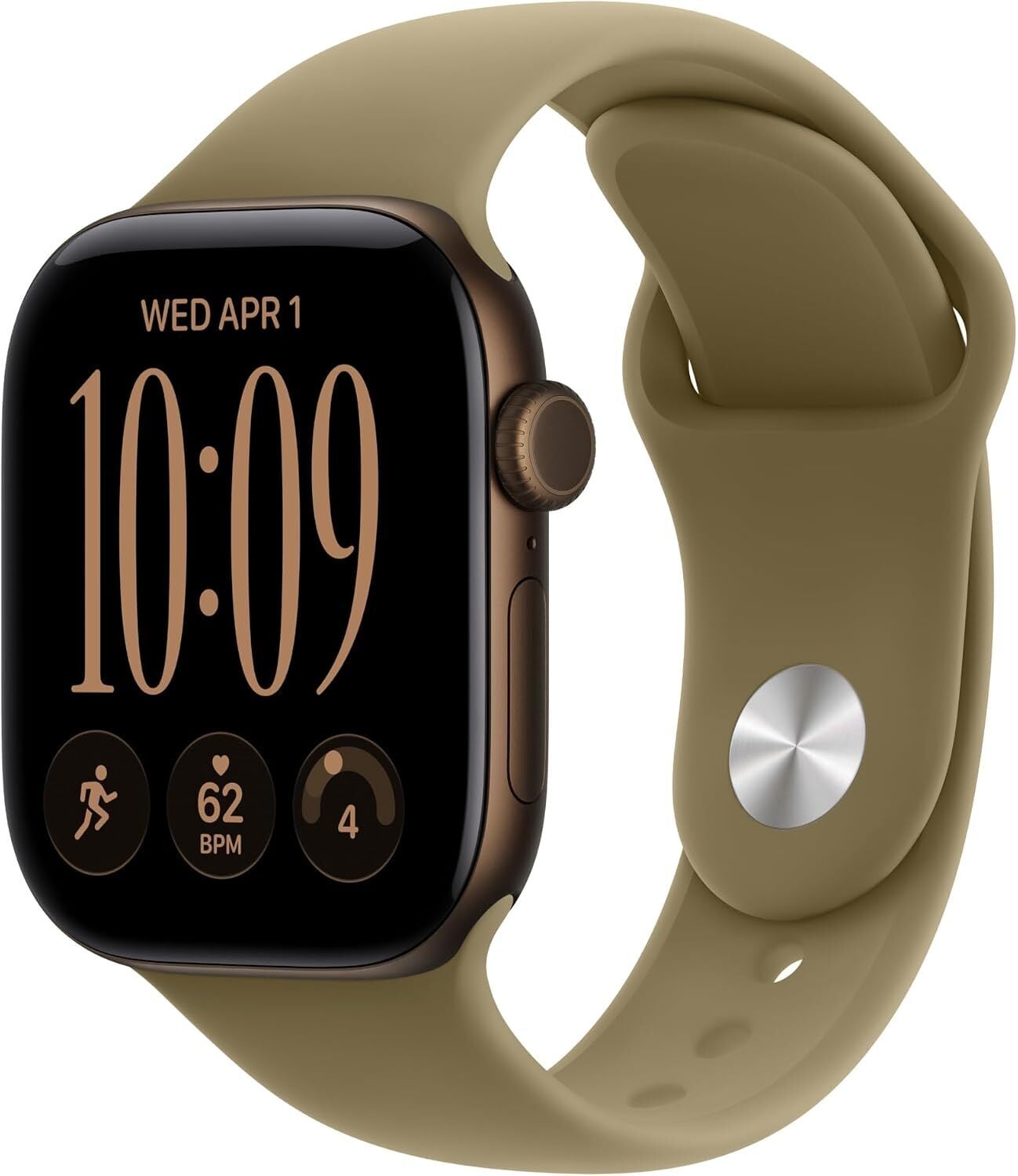
One of the big features Apple announced alongside the new Apple Watches is Siri AI—now available on your wrist! You need to join a waitlist to try Apple’s new and improved chatbot, and since my turn just came up, I put the new on-wrist Siri through its paces. Here’s how it went, and why I don’t think the experience lives up to Apple’s promises (yet, anyway).
Since Siri AI requires Apple Intelligence, you’ll need a device that supports it. Those include iPhones 15 Pro and newer, and an Apple Watch that is Series 9 or newer. If you want to use Siri AI on the Apple Watch, you need both a supported watch and a supported phone—a new watch and old phone won’t do the trick. With my phone and watch both on iOS 27 (the iOS 27.2 developer beta on the phone; watchOS 27.0 on the Apple Watch Series 12), I enabled Siri AI in my phone’s Settings app, which put me on a waiting list. A few days later, I got a notification that I was in.
Once I’d upgraded to Siri AI on my watch, I went about asking it plenty of questions and watched it struggle to answer many of them. The first thing I tried was to ask where I could find the nearest yoga studio; it responded with a list of yoga studios, none of them particularly close to my home. After rewording my question a few times, it finally listed one about a mile away. This is one of those examples where using AI is less efficient than a Google search—or even plain old regular Siri: When I asked this same question of the old Siri model last week, it quickly found the closest studio.
With my phone in another room, I next decided to try some of the questions that Apple provides as examples on the WatchOS 27 page. Here’s how that went.
“What’s a good warm-up for deadlifts?” Siri gave me paragraphs of text about the purpose of warmups in general. When I tapped “Show More,” I was sent to the bottom of a long bulleted list of exercises. I’m not reading all that.
“Read my upcoming events.” Siri needed a good five seconds to think about this one, but then correctly rattled off my next few calendar appointments.
“Set a new move ring goal.” Actually, I first started by asking what my Move ring goal was, and Siri could not tell me. So I blindly set a new goal, and later saw it updated to the new value in the Fitness app…sort of. When I asked for a goal of burning 350 calories, it gave me a goal of 350. When I asked for a goal of 325, Siri responded that it has changed my goal to 325, but when I checked the Fitness app, it showed that my goal had been set to 320 calories.
I then put Siri AI to the test with a few requests that other Apple Watch users have reported give the chatbot some trouble. The first involved setting a timer; perhaps that function is buggy for some users, but it worked quickly for me. “Siri, set a timer for five minutes” did exactly that, with only a few seconds of waiting. Likewise, “Siri, what’s the weather for today?” brought up the weather forecast instantly.
One of the purported new features of Siri AI is its ability to search your emails and messages for information that is relavent to a conversation you’re having with it. On the Apple Watch, this doesn’t work for me as well as I would like. First, I asked Siri what my daughter had recently asked me to buy for her. (She is constantly texting me to ask for things.) Siri responded that my daughter had sent me a wish list of LEGO sets on Sept. 12. This is true. But it wasn’t until I specified, “wasn’t there a makeup kit?” that Siri was also able to find that request, which was from Sept. 13.
Meanwhile, the iPhone version of Siri AI was able to find the wishlist and makeup kit requests and tell me about them in the same initial response, without the additional prompting. In another test of its search capabilities, I asked who I had sent “Ramona’s dad’s phone number” to. The Watch version of Siri AI found that text message, but was only able to tell me the phone number of the person I had sent it to. Siri AI on the phone, on the other hand, was able to figure out that the person requesting the number had introduced themselves by name earlier in that conversation, and it told me exactly who that person was (even though I had not entered the name into my contacts).
Still, plenty of requests don’t work even that well, or don’t work at all. The watch’s Siri app routinely crashes, taking me back to the home screen. Sometimes Siri’s voice breaks up, and it interrupts itself to start its message over again. Good save, but weird to listen to. Sometimes Siri “thinks” for a long time. Many requests take five to 10 seconds, during which time I certainly could grab my phone and look up the answer myself. Whenever Siri is stumped, it searches the web and gives me a sea of unhelpful text.
For example, I tried to see if Siri could explain a mysterious icon on my watch screen. I asked, “Why is this icon gray?” (in a variety of phrasings to clarify I meant one that I was looking at right now). Instead of telling me anything useful, or explaining that it can’t see my watch screen, it read me some text from the Internet about what gray icons mean, in general, as a concept. Another time, I asked it to resume playing my podcast. Instead of starting up my usual podcast app, it told me that Episode 550 of My Favorite Murder had just come out. I don’t like murder podcasts, have never listened to My Favorite Murder in my life, and episode 550 was—now that I check—the third-most-recent episode, not the one that just came out. (The iPhone’s version of Siri AI, on the other hand, happily started my podcast app.)
At least one thing worked better on the watch: Both versions of Siri AI said they had no information on my sleep data, but the version on the watch was at least able to tell me what time I had gone to bed and what time I had woken up. That’s something.
The promised Conversations app likewise did not work as expected. When you press the digital crown on the watch, a mini app picker pops up with Siri in the center, surrounded by a few of your most recent apps. If you scroll down, you get the full list (or grid) as before. Tapping that center button is supposed to show you a list of recent conversations, but mine kept showing me “No conversations.” Later, exactly one conversation showed up there: the one where I asked what a gray icon meant. That was the only question in that conversation, even though I had been conversing with Siri all day.
I like the idea of the new Siri AI, and being able to ask follow-up questions is nice, especially now that I can interrupt the chatbot to clarify my questions. (“Give me two specific warm-up exercises I can do before snatches” got it to stop lecturing me about warm-ups in general.) But the long waits for answers, the frequent crashes, and the bot’s inability to access data that is right there on the device are frustrating. Here’s hoping it gets better with the next update.