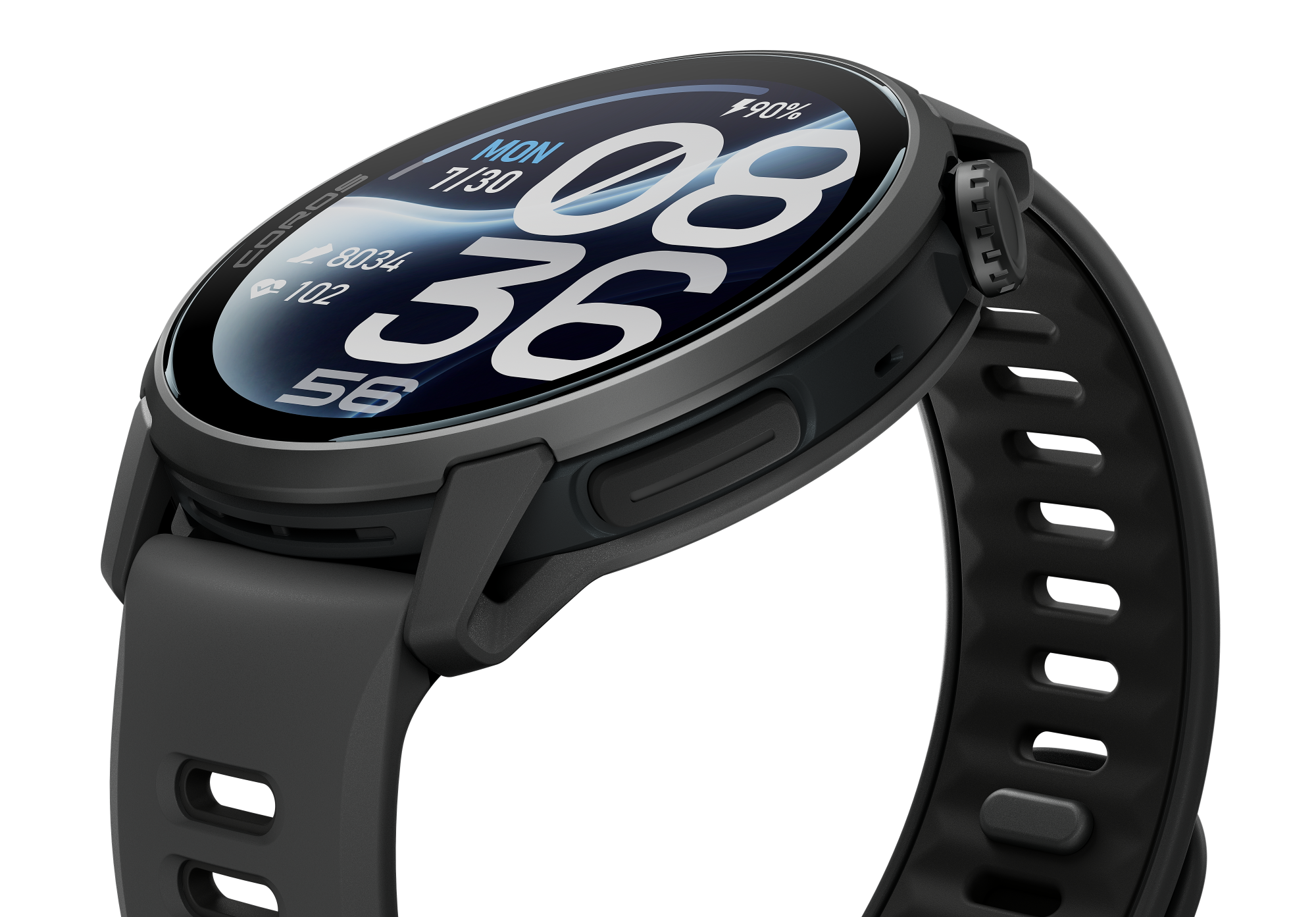
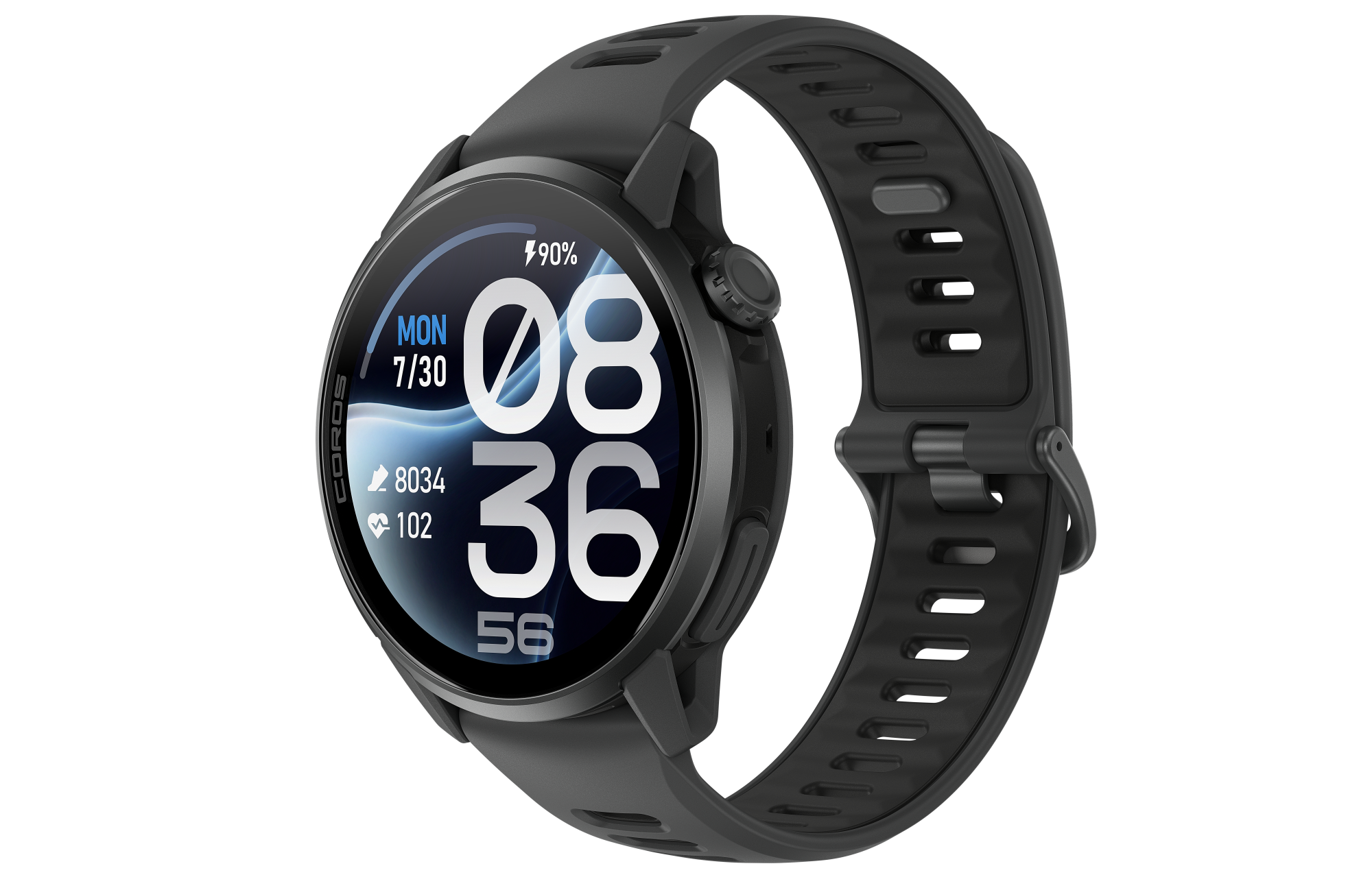
Coros has announced the release of its new Pace 4 Pro smartwatch, which it says offers 60 hours of GPS tracking, as well as the brand’s largest screen yet, at 1.47in / 37.3mm across.
It says the Pace 4 Pro is ideal for athletes looking for a slim, tough, lightweight watch that offers a complete mapping solution, and it provides functionality for cyclists, triathletes, runners and a range of other sports.
The Coros Pace 4 Pro offers close to a 50% increase in battery life over the Pace 4, as well as 22.5% greater screen size that enables it to display up to 11 data fields.
The Pace 4 Pro has a 37.3mm-diameter touchscreen, offering detailed mapping and navigation.
According to Coros CEO Lewis Wu: “The Coros Pace 4 Pro is a big step forward in hardware design for Coros. It combines the largest and brightest display we’ve ever built with an incredibly narrow titanium bezel and sapphire glass screen.”
The Coros Pace 4 Pro’s AMOLED screen has 466×466 pixel resolution and 3,500-nit maximum brightness. Coros says it incorporates an ultra-fast processor for rapid mapping and navigation, and double the RAM size of the Pace 4 at 64MB with 64GB storage.
The Pace 4 Pro has an 11.8mm-deep, low-weight case with a titanium bezel, with the watch plus its nylon band weighing a claimed 43g, only 11g more than the non-Pro Pace 4, but around 13g less than the Garmin Forerunner 970, probably its closest competitor.
The watch includes dual-band GPS as well as heart rate, ambient temperature, pulseOx, altitude and ECG sensors, enabling users to track sleep, HRV, stress and resting heart rate trends. It links into the Coros app for route planning, fitness tracking, pace planning and recovery monitoring, as well as access to training plans and, for women, menstrual cycle tracking.
At a claimed 43g, the Pace 4 Pro is lighter than competitor products from Garmin, Suunto, Polar and others.
Alongside the performance tracking and navigation functionality, the Pace 4 Pro also enables you to record voice notes and sync them to workout files, with voice pins that anchor them to GPS locations. There’s live tracking, weather and safety alerts, and easy sync to Strava, TrainingPeaks and other fitness apps.
The 60 hours of claimed GPS use reduces to 46 hours when in always-on mode. When using the always-on display, the Pace 4 Pro will provide around seven days of use without GPS, which can be extended to 21 days with on/off display. Coros says charging, which uses USB-C, takes around 1.5 hours, with a 10-hour boost in GPS tracking from 30 minutes’ charging.
The Coros Pace 4 Pro is priced at £389 / $449 / €449 and available in either black or white. The price undercuts many Garmin watches significantly, with the Forerunner 970 priced at $650 or more, while the premium Fenix 9 AMOLED costs $1,000 and above.
When Apple was using Intel processors and AMD GPUs, the idea of an expandable and upgradeable tower made sense. But Apple Silicon chips bring the CPU, GPU, and memory interface all under one roof in a way that makes that sort of upgradeability not just superfluous but impossible. At least not without breaking some of the chips’ key benefits.
And as it happens, Apple Silicon’s combination of a fast CPU, solid GPU, and unified memory architecture has made it a good fit for a modern “pro” workload that really pushes high-end hardware: running language models and agents locally.
The UCI has confirmed it will launch a full review of the Lugano Charter, cycling’s foundational equipment rulebook, opening the door to the biggest shift of bicycle design regulations in three decades.
Announced following the governing body’s latest Management Committee meeting in Montréal, the review will produce a draft charter before an industry-wide consultation set for February-April 2027.
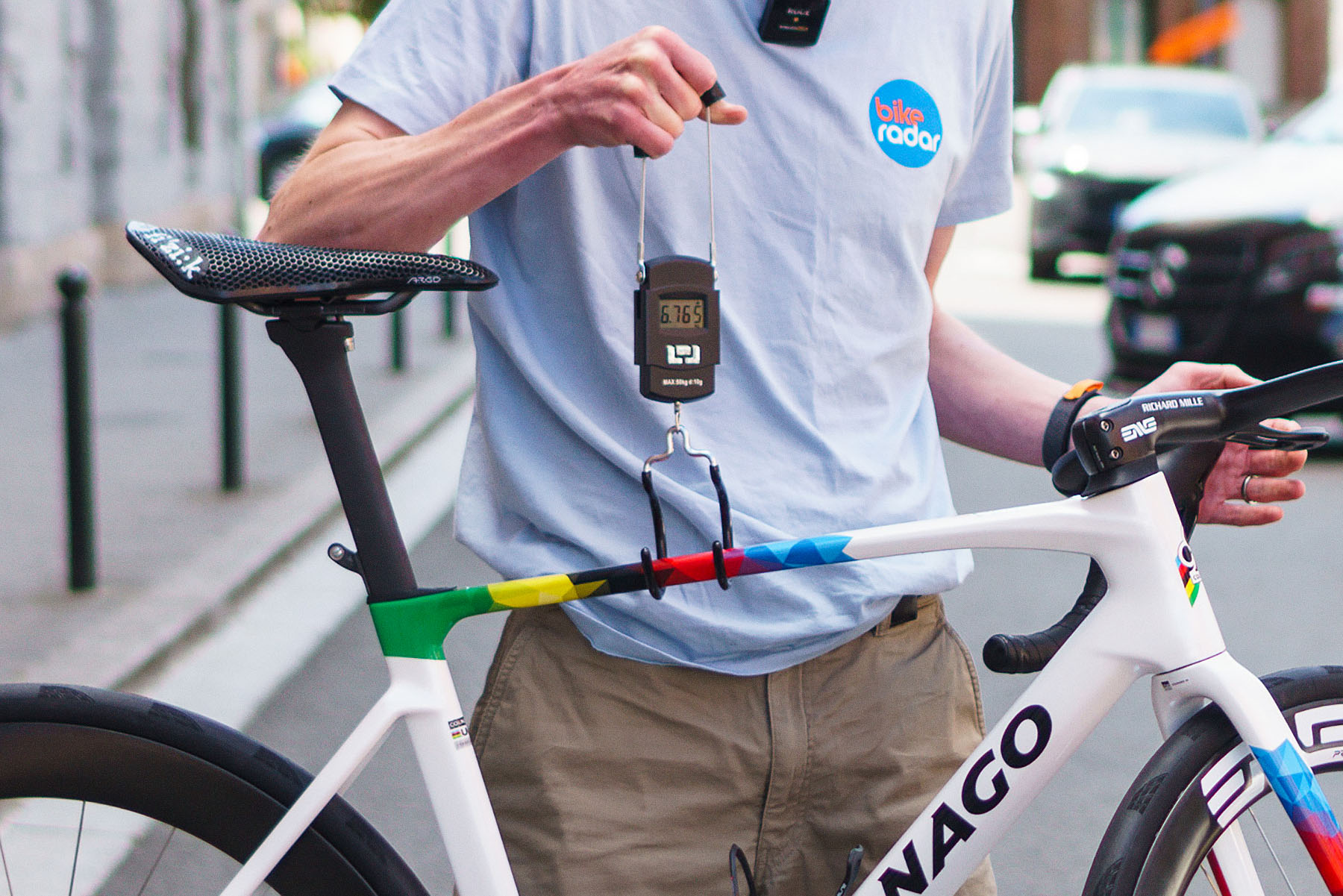
While the UCI has not proposed any specific rule changes yet, the Lugano Charter underpins many of road cycling’s most influential technical regulations – including the 6.8kg minimum bike weight, tube-profile limits, geometry restrictions and gearing rules.
The new charter is set to be developed in closer consultation with brands and industry experts, with the establishment of new ‘technical committees’ for specialist areas. UCI president David Lappartient says this “illustrate[s the UCI’s] commitment to evolving our rules in consultation with all the families of cycling”.
A chance to rewrite cycling’s design rulebook
It has become increasingly clear in recent years how easy it is for brands to achieve a sub-6.8kg total bike weight without resorting to specially developed lightweight parts. Kyle Dewick / Our Media
Originally adopted in 1996, the Lugano Charter established the principles that govern bicycle design in UCI-sanctioned races. It was created to balance technological innovation against safety, while intending to ensure sporting fairness and sustainability.
It defined the double-triangle bike frame design, but perhaps its most famous rule is the 6.8kg minimum bike weight for UCI races, introduced in 2000 as an amendment to the charter.
At the time, carbon manufacture was in its relative infancy, with concerns for safety in the event of a war on weight. But for years the rule has increasingly been questioned by engineers, manufacturers and commentators, with some arguing the rule is outdated given the advancements in the technology since.
BikeRadar explored that debate in our 2023 feature on whether the UCI’s bike weight limit should change. Designers have suggested modern testing standards would be a better measure of safety versus a blanket weight threshold.
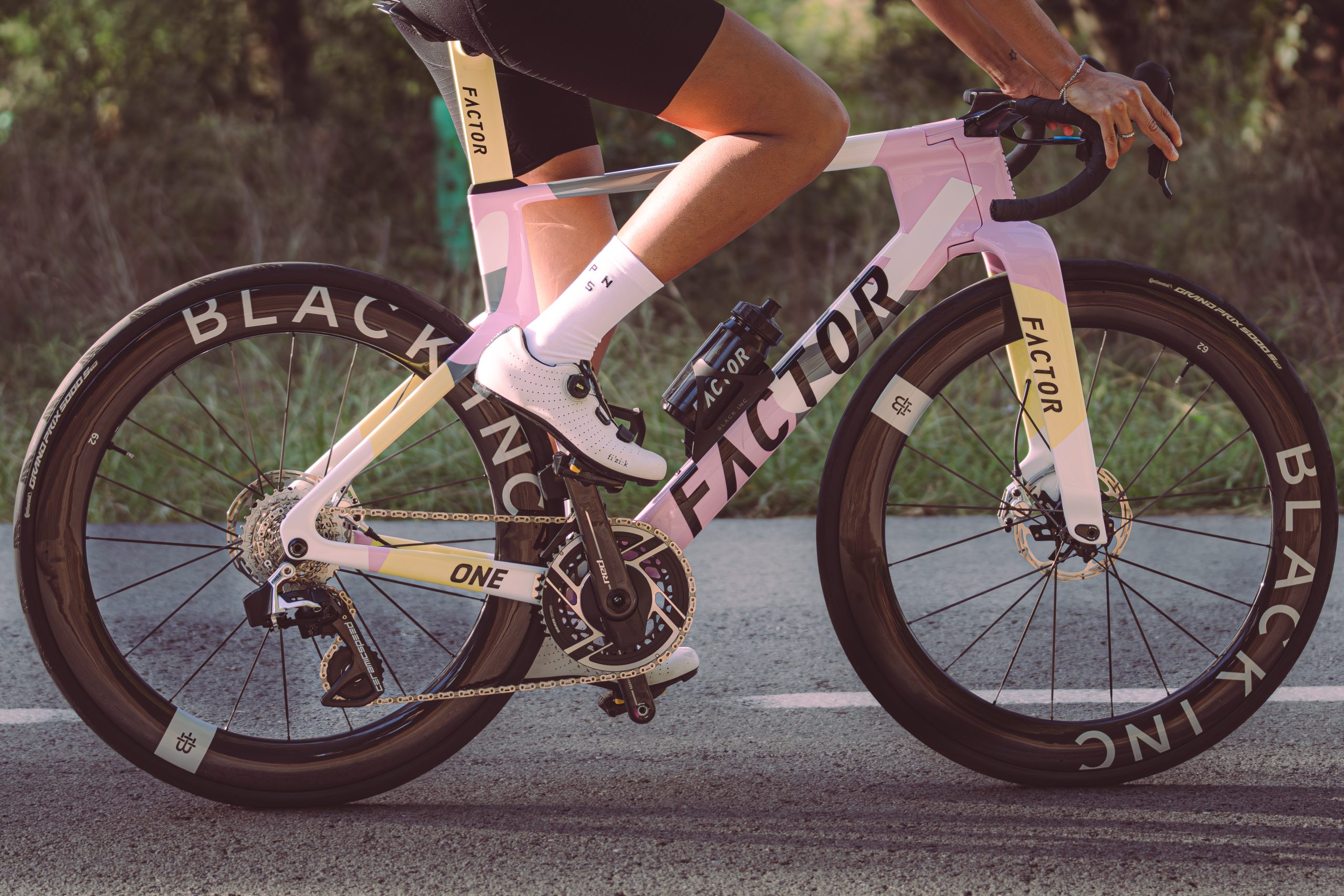
More progressive bike designs have popped up recently, and more may be set to come. Factor
The charter also governs the more recent 8:1 tube aspect ratio rule, limits on frame geometry and rider position, and regulations surrounding drivetrain and gearing dimensions.
Riders have also been seen to be adopting ever more forward positions (within current limits) in the search of greater efficiency and in response to more recent revisions – designs borne out with the likes of the Eddy Merckx 525R and Factor One.
Any new regulations could be set to allow for even greater freedom in this area, or indeed restrict it.
New technical committees could help prevent future controversies
The UCI and SRAM were embroiled in a controversy surrounding a gearing ratio trial in 2025. Simon von Bromley / Our Media
Alongside the charter review, the UCI has announced a new consultation framework intended to give manufacturers and independent experts a formal role in developing future equipment regulations.
Rather than relying solely on its existing Equipment and New Technologies Commission, the governing body has stated it will establish specialist technical committees covering:
Frames
Wheels and tyres
Rider equipment
Protective equipment
Data and technology
Officially, the UCI says the aim of these new committees is to strengthen collaboration between the governing body and manufacturers. It also appears to address one of the biggest criticisms levelled at recent equipment rule proposals: a lack of meaningful stakeholder consultation.
That issue came to a head just before the 2025 Tour de France when the UCI announced plans to trial gearing restrictions in professional road racing. The proposal prompted immediate opposition from riders, teams and component brands, with SRAM publicly criticising the process before the governing body suspended the trial.
Gearing limits could be reconsidered under the new structure and review. Warren Rossiter / Our Media
The dispute ultimately culminated in the UCI losing its appeal over the proposed gearing restrictions. The new committee structure could be interpreted as a deliberate attempt to build consensus before future technical regulations (or experiments) are introduced.
The UCI says each committee will feature “equal representation” from the UCI and the cycling industry, alongside independent technical experts, albeit exactly which brands and stakeholders have a seat at each respective table isn’t yet defined.
Via the UCI’s official communiqué, UCI president David Lappartient said: “From a regulatory perspective, the opening of a new consultation framework with cycling industry members, together with the launch of the review of the Lugano Charter thirty years after its adoption, illustrate our commitment to evolving our rules in consultation with all the families of cycling.”
New finish-line safety barriers approved
Barrier designs are set for an update next season in a bid to improve safety in the final 200m of races. Getty Images
Alongside this, the UCI says it has formally approved new barrier standards for the final 200 metres of men’s and women’s WorldTour races from the start of the 2027 season.
It says the regulations are based on research by the University of Applied Sciences and Arts Western Switzerland Valais-Wallis.
The UCI hasn’t confirmed if and when these new regulations will come into effect at other levels of the sport.
GPS rider tracking set for wider rollout
GPS trackers are set to be ever-present in the future. Dario Belingheri / Getty Images
The UCI has committed to introducing a regulatory framework for real-time GPS rider safety tracking, with the system set to be deployed across professional road racing starting with the men’s and women’s WorldTours.
Last season, five teams were disqualified from the Tour de Romandie Women after refusing to participate in a tracker trial, highlighting disagreements over how the devices should be supplied and operated.
The UCI says the system is being used again at this year’s Road World Championships after its introduction last year in Rwanda.
Women found to have more severe, more frequent injuries than men at the highest level of road racing
The UCI says an early finding of an ongoing study suggests women suffer more severe injuries than men, leading to longer return-to-competition timelines. Photo by Dario Belingheri/Getty Images
The UCI says it has received updates on its ongoing road crash injury study, which it began in March.
It says initial findings indicate injuries are currently more frequent and more severe in women’s WorldTour racing, with average return-to-competition times roughly twice as long as recorded in the men’s peloton.
No regulatory or advisory outcomes have been defined, but the UCI says the study is ongoing as its “database” is built, with the idea to introduce “future risk-reduction measures” in the future and assess their effectiveness.
Genetic testing to align with International Olympic Committee
The female category is set to be regulated in line with IOC guidelines. Luc Claessen / Getty Images
The UCI has also confirmed it will conform to the International Olympic Committee’s (IOC) guidance on the definition of the female category for its IOC-recognised competitions by the end of the year.
Because the UCI is a member body of the IOC, the news comes as little surprise, but it defines that only biological women who do not carry the SRY gene on the Y chromosome, which triggers testosterone production at puberty, are eligible to compete in women’s events.
The presence of the gene will be determined by a one-time test. The UCI says an “awareness programme” will be rolled out to athletes, teams and national federations “shortly”, and that all results will be kept “strictly confidential”.
Racing calendar changes confirmed for 2027
The men’s and women’s WorldTours will start simultaneously at the Tour Down Under in January 2027.
Finally, the UCI approved the majority of its 2027 international calendars, with the full schedules due to be published on 29 September.
The headline road changes include:
La Vuelta Femenina moves to 3–10 October, immediately after the men’s Vuelta.
Vuelta a Burgos Feminas returns to an early May slot.
Eschborn–Frankfurt reverts to its traditional 1 May date.
The governing body has also confirmed the inaugural UCI Junior Road Nations’ Cup calendar and approved several scheduling changes across mountain bike, track and other disciplines ahead of the 2027 season.
Sigma Sports has slashed the price of a host of cycling products, with some serious savings to be had across bikes, components and kit.
We’ve trawled through the sale to pick out five of the best deals, including more than £1,900 off Shimano’s flagship road groupset and a carbon Trek Domane for less than £2,000.
There are also big discounts to be had if you’re looking to upgrade your gravel bike or treat your feet to some fancy shoes.
Here are our top picks, but you can see the whole sale here.
Dura-Ace is Shimano’s flagship road groupset. Simon von Bromley / Our Media
Getting Shimano’s flagship road groupset for less than £2,000 certainly caught our attention.
Sigma Sports has knocked £1,954 off its Dura-Ace R9270 Di2 groupset, bringing the price down from £3,579 to £1,625.
Dura-Ace R9200 represented a major overhaul when it arrived, moving Shimano’s top-tier road groupset to 12-speed and introducing semi-wireless shifting.
The groupset uses wireless shifters, while the derailleurs remain wired to the central battery.
It also features Shimano’s Servo Wave braking technology and redesigned calipers with increased pad clearance.
Despite rumours of a new generation being released soon, at 55 per cent off, this could be a tempting opportunity if you’re planning a dream-bike build or looking to give an existing road bike a serious upgrade.
This specific deal is for groupsets specced with 175mm cranks, but great savings can be had on shorter-cranked specs too.
This looks a great deal for those wanting a carbon bike. Sigma Sports
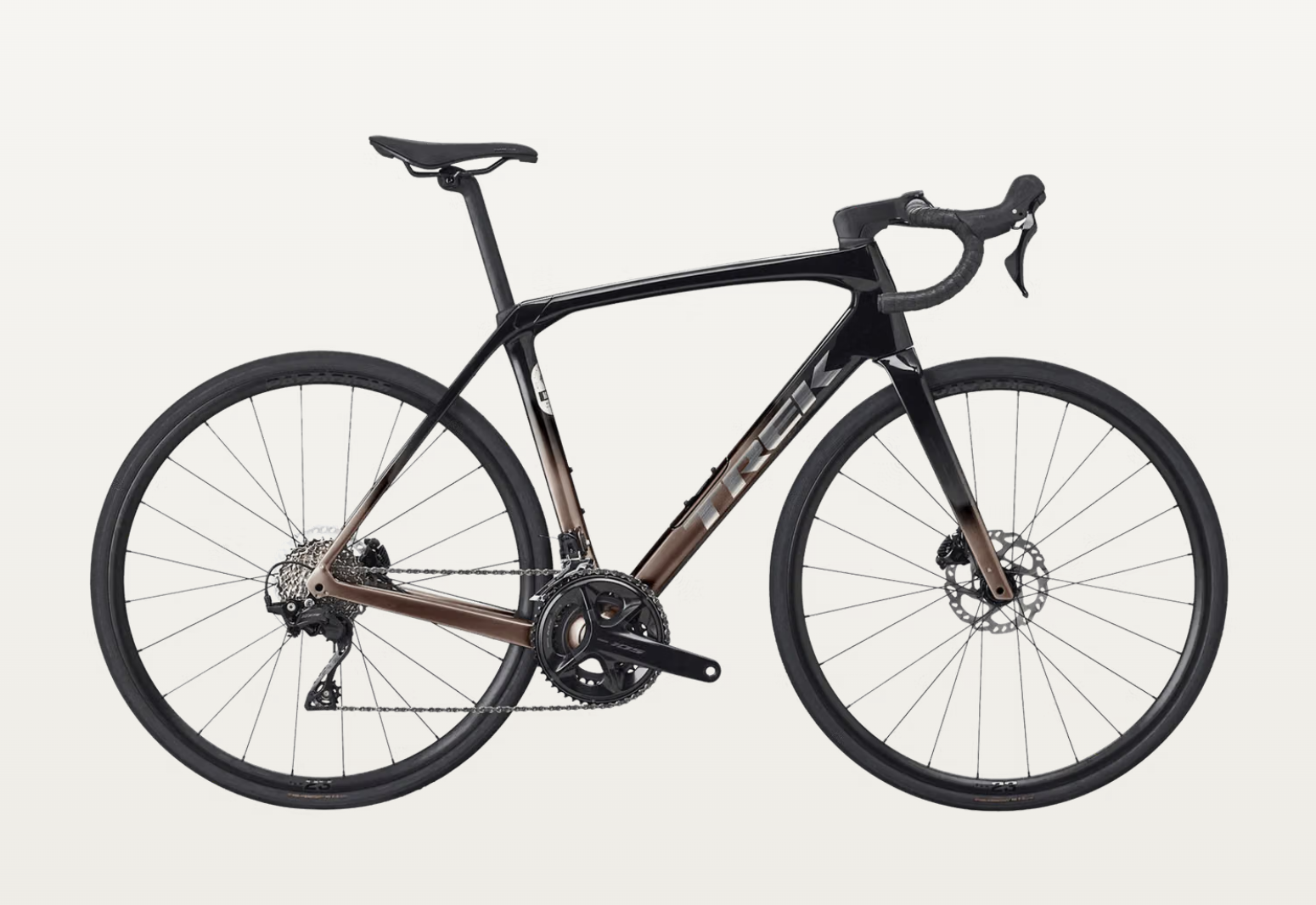
You can currently pick up a carbon Trek Domane for less than £1,500, with Sigma Sports taking £1,301 off the endurance road bike.
The Domane SL is built around Trek’s 500 Series OCLV carbon frame and is designed to balance speed with comfort over longer rides.
The Gen 4 bike uses Trek’s rear IsoSpeed system, which is designed to add compliance at the seat tube, while generous tyre clearance gives the Domane some versatility away from pristine tarmac.
The SL 5 is equipped with Shimano’s mechanical 105 groupset and hydraulic disc brakes.
With a 29 per cent saving, this looks like one of the standout complete-bike deals in the sale.
At the time of writing, there are sizes ranging from 50 to 60cm.
This could be a great upgrade for your gravel bike. Sigma Sports
Roadies aren’t the only ones getting a hefty Shimano discount.
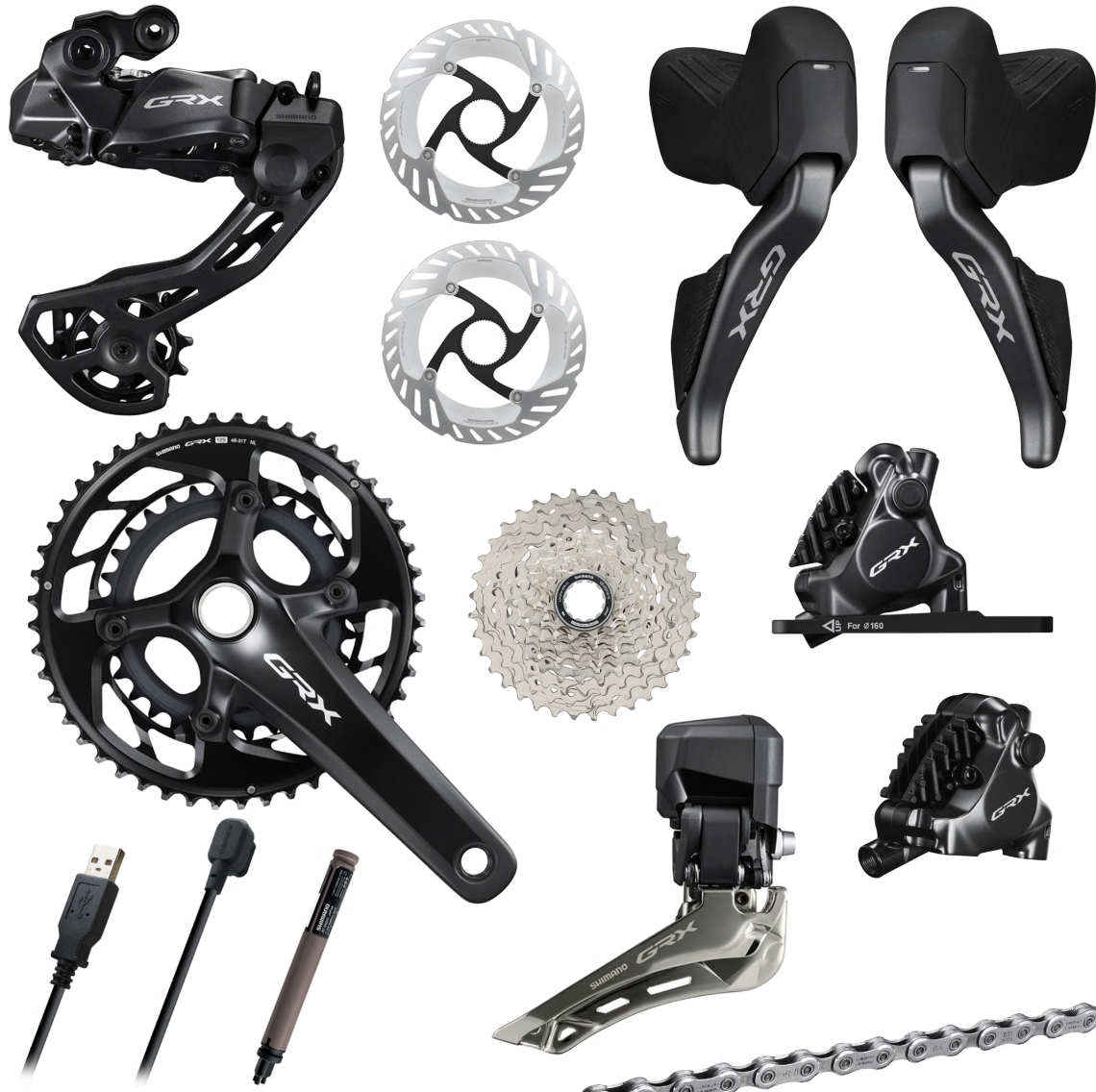
The latest 12-speed GRX RX825 Di2 groupset has dropped to £1,011, representing a saving of £1,049.
GRX RX825 brought Shimano’s electronic gravel groupset in line with its latest road offerings, using wireless shifters alongside a wired rear derailleur and battery.
The shifters also feature additional buttons on the hoods, which can be configured to control compatible bike computers or used as extra shift buttons.
If you’ve been considering moving your gravel bike to electronic shifting, a 51 per cent discount makes this considerably easier to justify.
This specific discount is for 170mm cranks, although there are savings on the 172.5mm variation too.
A carbon disc wheelset for under £500 isn’t something we see every day.
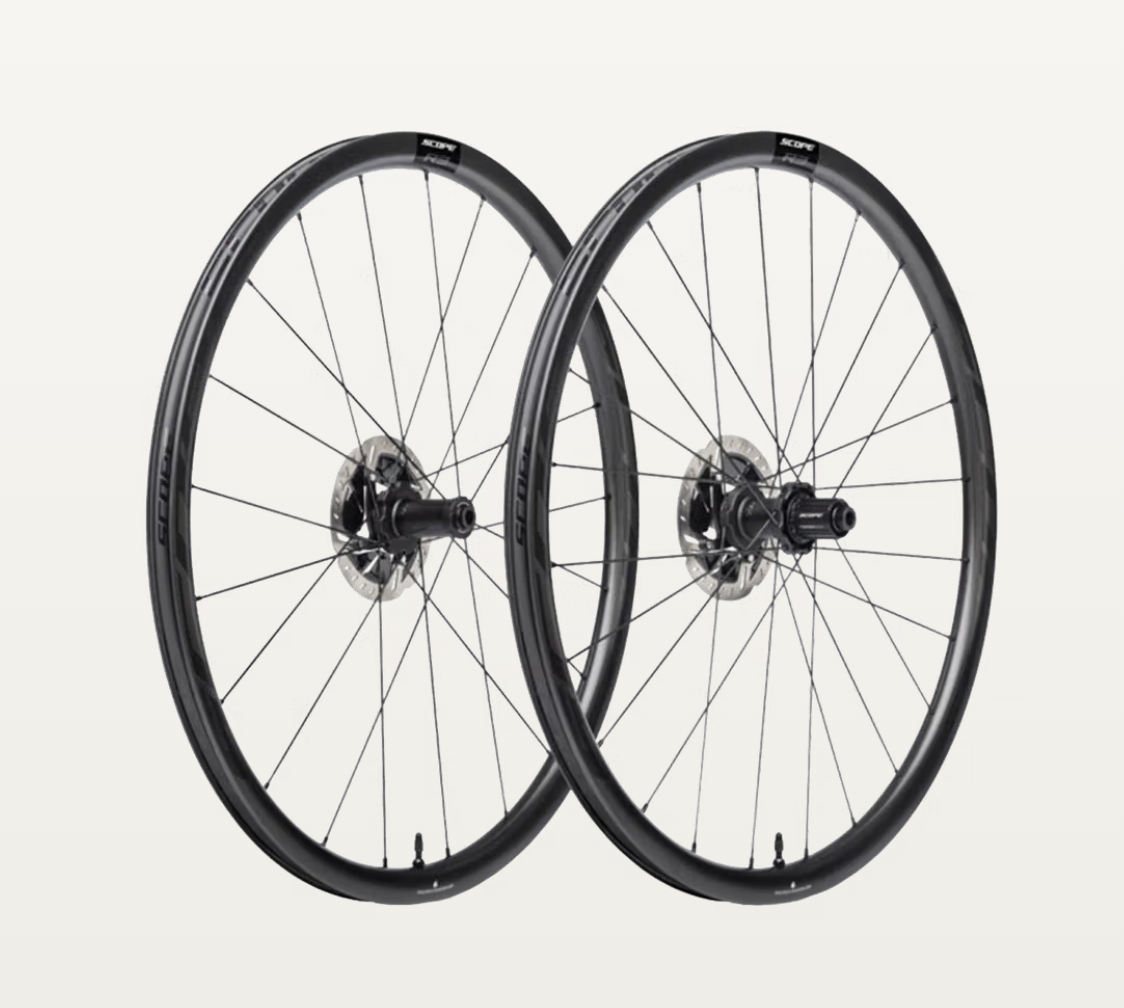
Sigma Sports has reduced the Scope R3 from £1,300 to £479, saving £821.
The R3 uses 30mm-deep carbon rims, making it the shallowest option in Scope’s Race Series and positioning it as a lightweight all-round wheelset rather than a deep-section aero option.
The rims are tubeless-ready, and the wheelset uses Scope’s own hubs.
At 63 per cent off, these could make for a significant upgrade over the stock alloy wheels supplied with many road bikes.
This specific deal is limited to SRAM’s XDR freehub body.
You don’t have to spend four figures to take advantage of one of the biggest discounts in the sale.
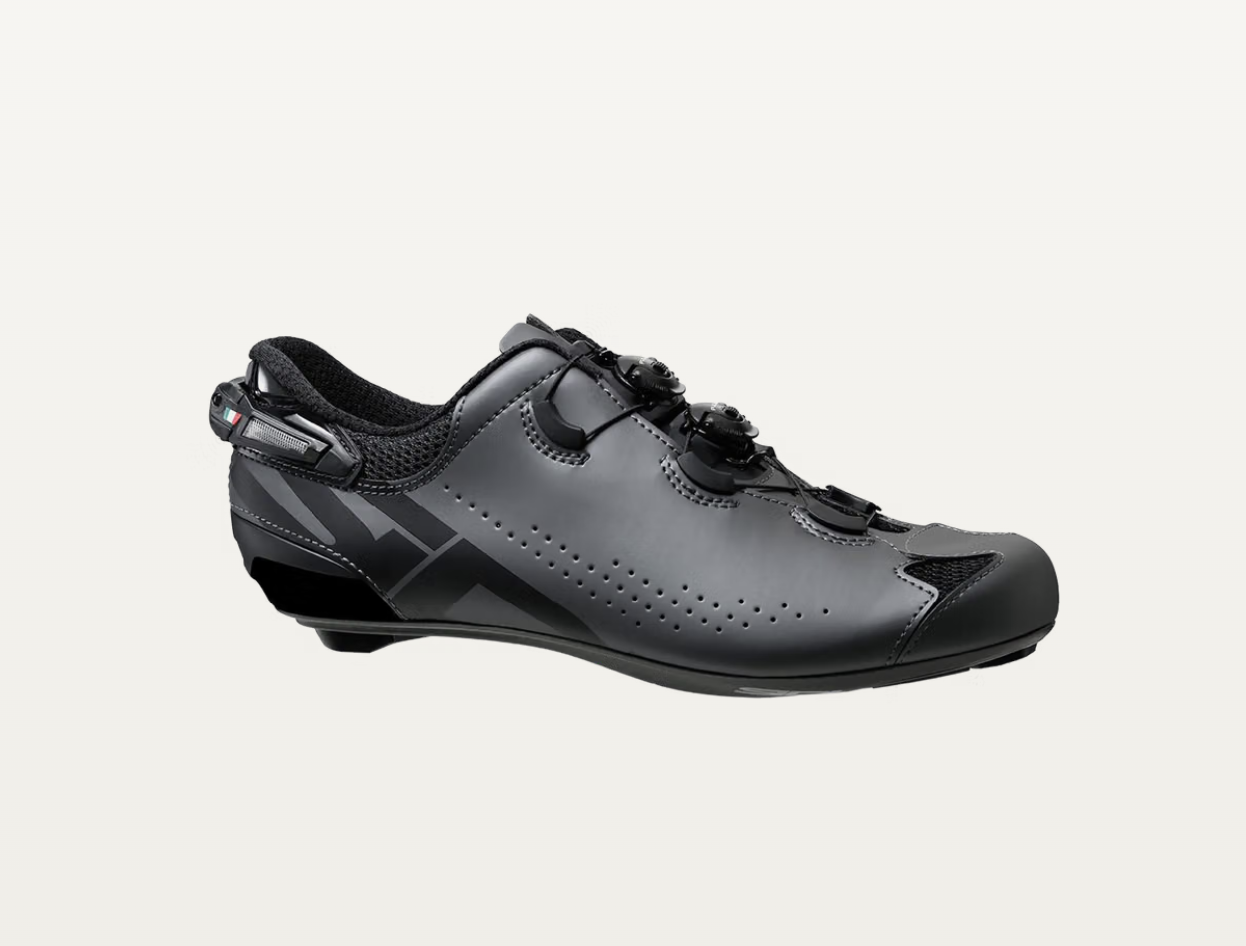
Sidi’s Shot 2S road shoes have fallen from £425 to £96, depending on size and colour – a hefty saving of up to 77%.
The Shot 2S sits towards the top end of Sidi’s road shoe range and features the Italian brand’s carbon sole and centrally mounted Tecno-3 closure system.
There’s also an adjustable heel-retention system, designed to help secure the rear of your foot inside the shoe.
A £425 pair of shoes is undeniably extravagant, but at this price they become a much more interesting proposition – how are they making money here?
This specific price is for the Anthracite colourway, with a wide variety of sizes from 40 to 48 available at the time of writing.
There are also good savings to be had on the other colourways.
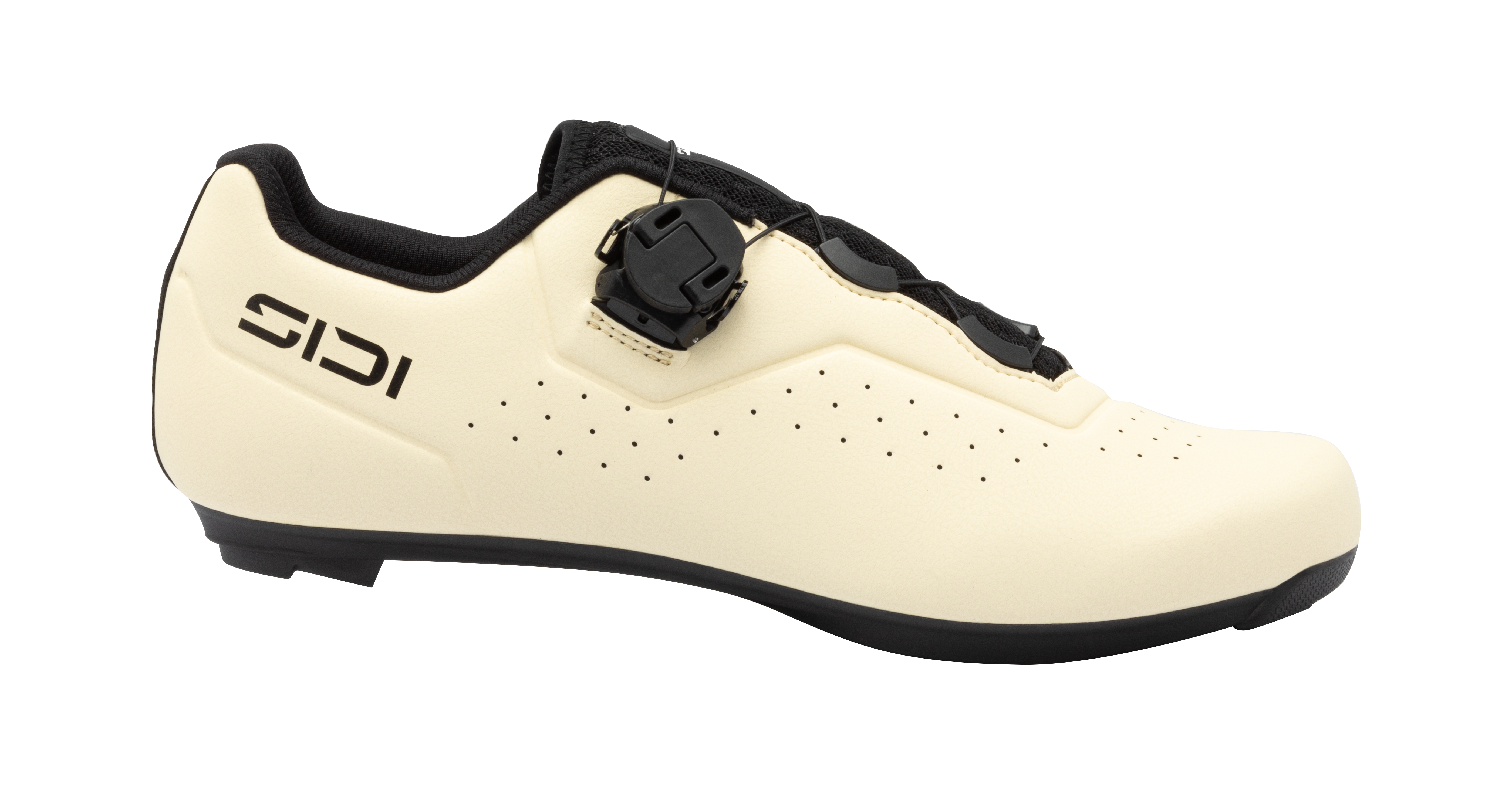
Sidi has announced the Prima 2 shoes for men and women cyclists, which it says are designed for effortless and efficient daily rides, with a design it claims is simple to use, comfortable and performant.
The Prima 2 is the most affordable road cycling shoe in Sidi’s 2027 range, with uppers made of microfibre, which Sidi says is durable and comfortable.
The uppers are paired with a 3D-mesh tongue for breathability and use Sidi’s Nuun 002M single-dial closure, with a flip-up adjustment lever.
The Prima 2 uses a single Nuun dial closure.
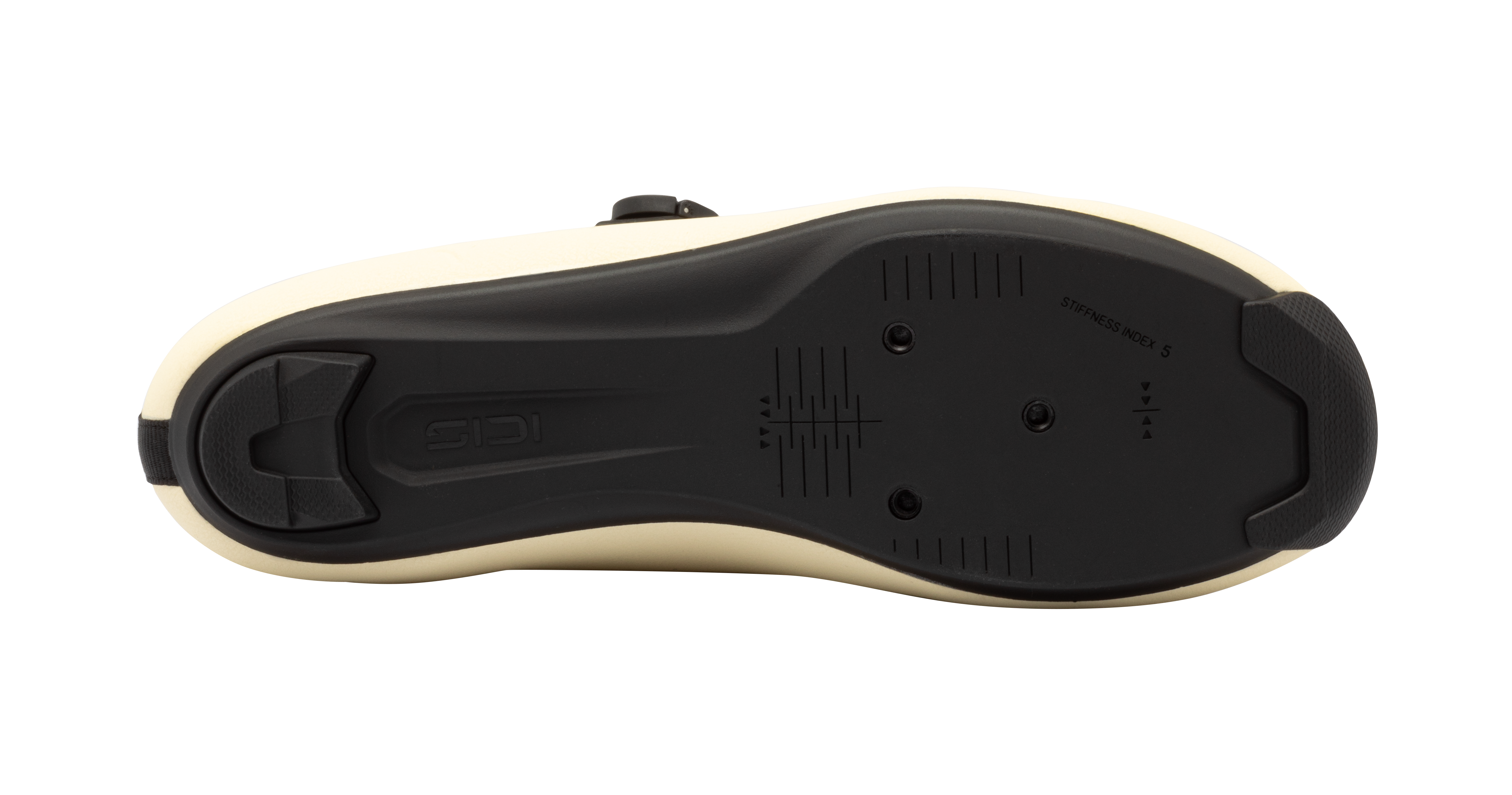
On the base, the nylon composite sole has a non-floating three-bolt drilling. This ensures simplicity, but may compromise cleat adjustability with Shimano’s latest SPD-SLR pedal system.
The nylon composite sole has fixed drillings and includes a replaceable heel piece.
The sole is rated by Sidi at stiffness index 5 and is paired with a cushioning insole. Sidi positions the shoe’s fit as closer to recreational than performance, suggesting there should be a reasonable amount of wiggle room.
It says the shoe components, such as the heel cleat and Nuun dial, are replaceable, increasing the shoe’s longevity.
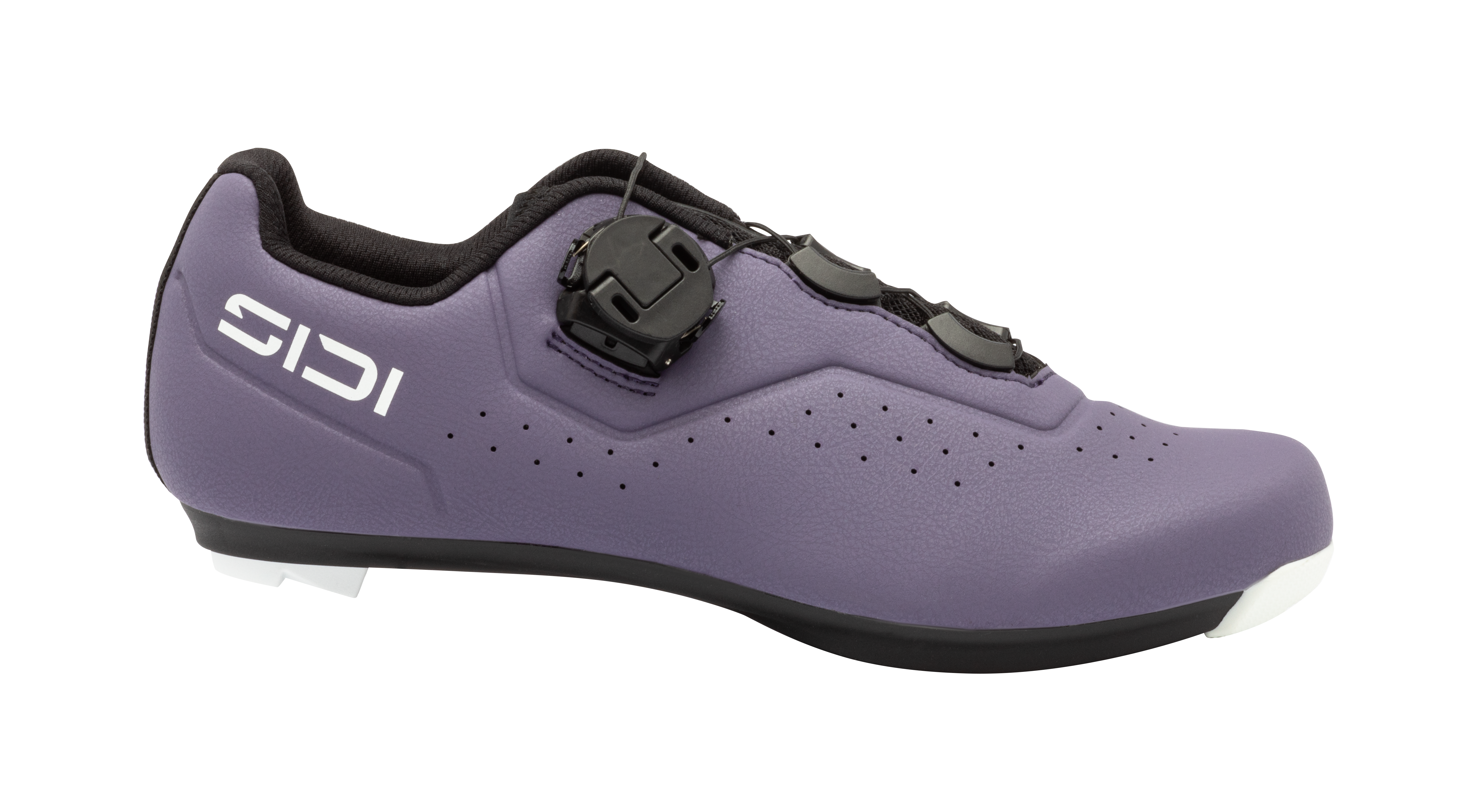
Women’s shoe colours include this mulled grape option.
The Sidi Prima 2 shoes are priced at £140 / $200 / €159 and come in men’s sizes 38 to 50, with half sizes from 40.5 to 46.5. There’s a range of four colours for men: blue, cream, black and grey.
Prima 2 Woman shoes are available in sizes from 36 and 43, with half sizes from 37.5 to 42.5. There are two colours: grey and a light purple ‘mulled grape’.
The owners of Castelli and Sportful have announced the acquisition of Tailfin, the Bristol-based technical bikepacking equipment company.
MVC Group says the acquisition represents a “significant acceleration” in its development strategy and that Tailfin will complement its cycling portfolio.
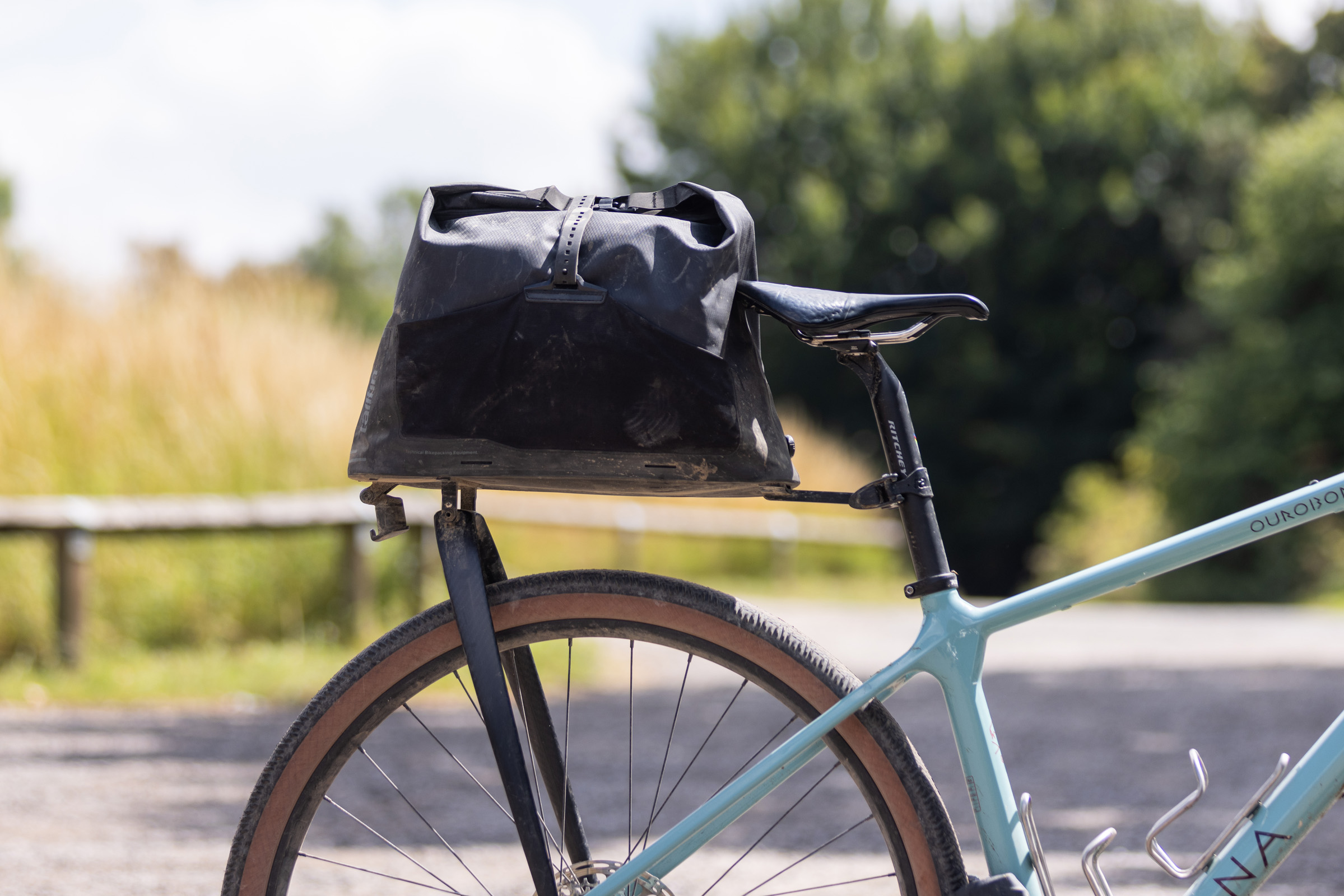
Founded in Bristol in 2017 by Nick Broadbent, Tailfin is known for its premium bikepacking bags, racks and accessories. The company has developed its proprietary technologies in-house, and they are protected by more than 20 granted and pending patents.
€10 million in revenue
Tailfin achieved almost €10 million in revenue last year. Scott Windsor / Our Media
If the proprietary tech wasn’t enticing enough for MVC Group, Tailfin’s company has also achieved an average annual growth of approximately 50% and it reached almost €10 million in revenue in 2025.
More than half of this revenue was generated in the US, UK and Germany, and Tailfin’s growth will now be supported by MVC Group’s presence in 75 countries.
As well as complementing Castelli and Sportful, MVC Group adds that the acquisition has broader benefits to its triathlon and outdoor sports brands, Zoot and Karpos.
Emilio Foà, CEO of MVC Group, says: “With Tailfin, we are not simply adding a new product category: we are integrating a leading brand whose positioning around excellence and strong focus on innovation are fully aligned with our own brands, while also being complementary to their offering.
“We are also integrating a strategic asset: the company’s distinctive technological expertise and extensive intellectual property, which could generate product innovation across the different disciplines in which we operate, from cycling and triathlon to outdoor sports.”
Broadbent, Tailfin’s CEO, mechanical engineer and product designer, says: “Since Tailfin was founded, we have invested heavily in innovation to develop products that set the standard within the rapidly growing category of bikepacking and adventure cycling.
“Joining MVC Group will allow us to accelerate this journey further, leveraging the Group’s industrial strength and international presence, while preserving the identity, autonomy and innovation culture that have made Tailfin so successful.”
Fourth expansion in a year
The acquisition of Tailfin is the fourth in a series of expansions MVC Group has made in the last year. In July, it launched its 10th international subsidiary in the UK; it created MVC Benelux through the acquisition of Wolvenberg; and Zoot acquired its European distributor last October.
MVC Group says its latest acquisition “has a positive impact” on its proposed development path and three-year industrial plan, which targets €150 million in revenue by 2028.
Winter is approaching and, for many riders, that means switching attention to indoor training.
Indoor cycling is one of the best ways to keep your pistons pumping through the off-season, with Zwift offering a wide range of routes, rides, workouts and races.
To mark its 12th anniversary, Zwift is celebrating with another Zwift Big Weekend offer, which sees up to 23% savings on its Ride with KICKR CORE 2 indoor bike.
Zwift Ride is a great alternative for those looking for an indoor smart bike. Zwift
You can now get the Zwift Ride with KICKR CORE 2 for £899 / $999 / €999, down from £1,099.99 / $1,299.99 / €1,199.99, which is a significant saving of £200.99 / $300.99 / €200.99.
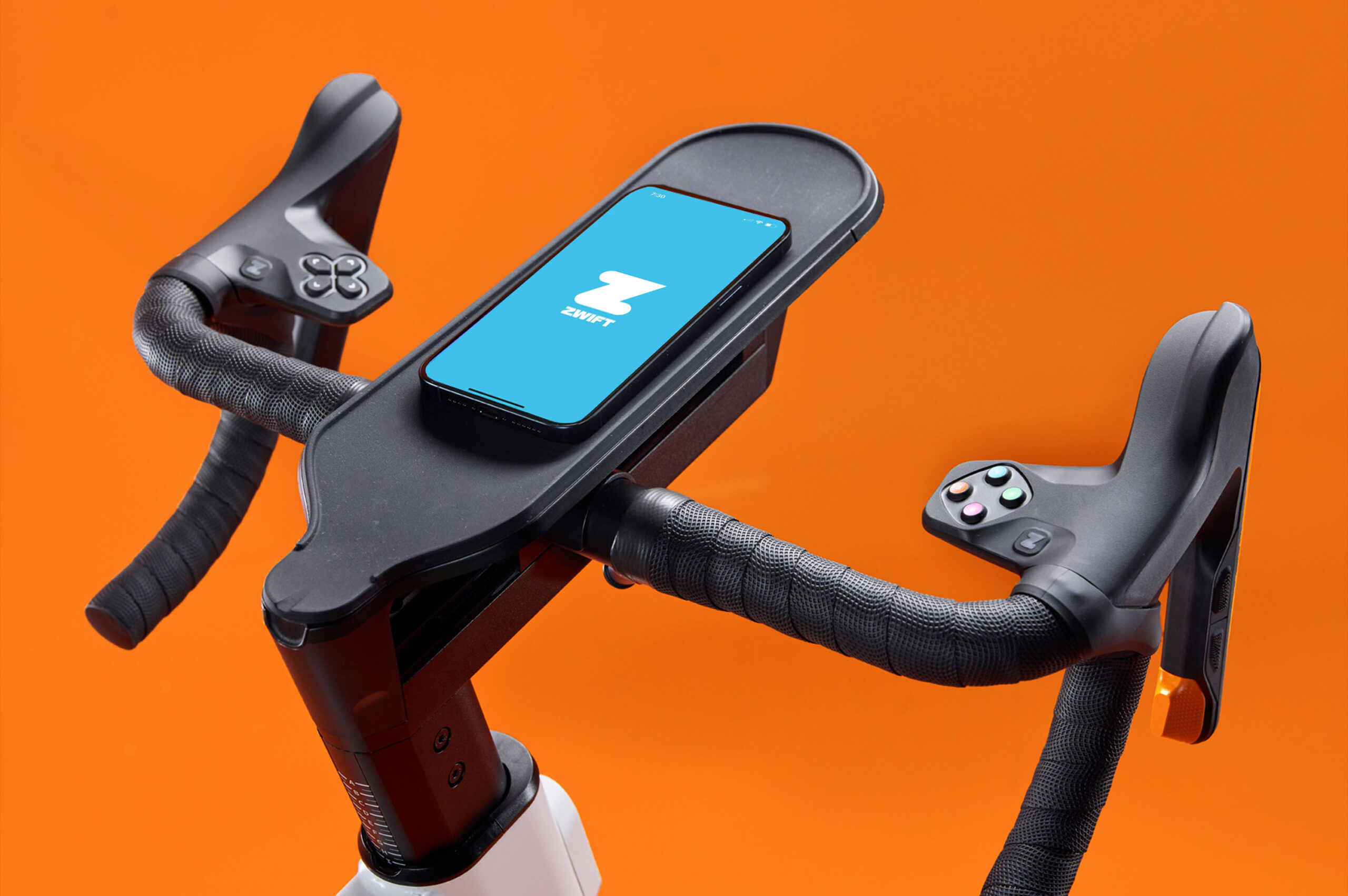
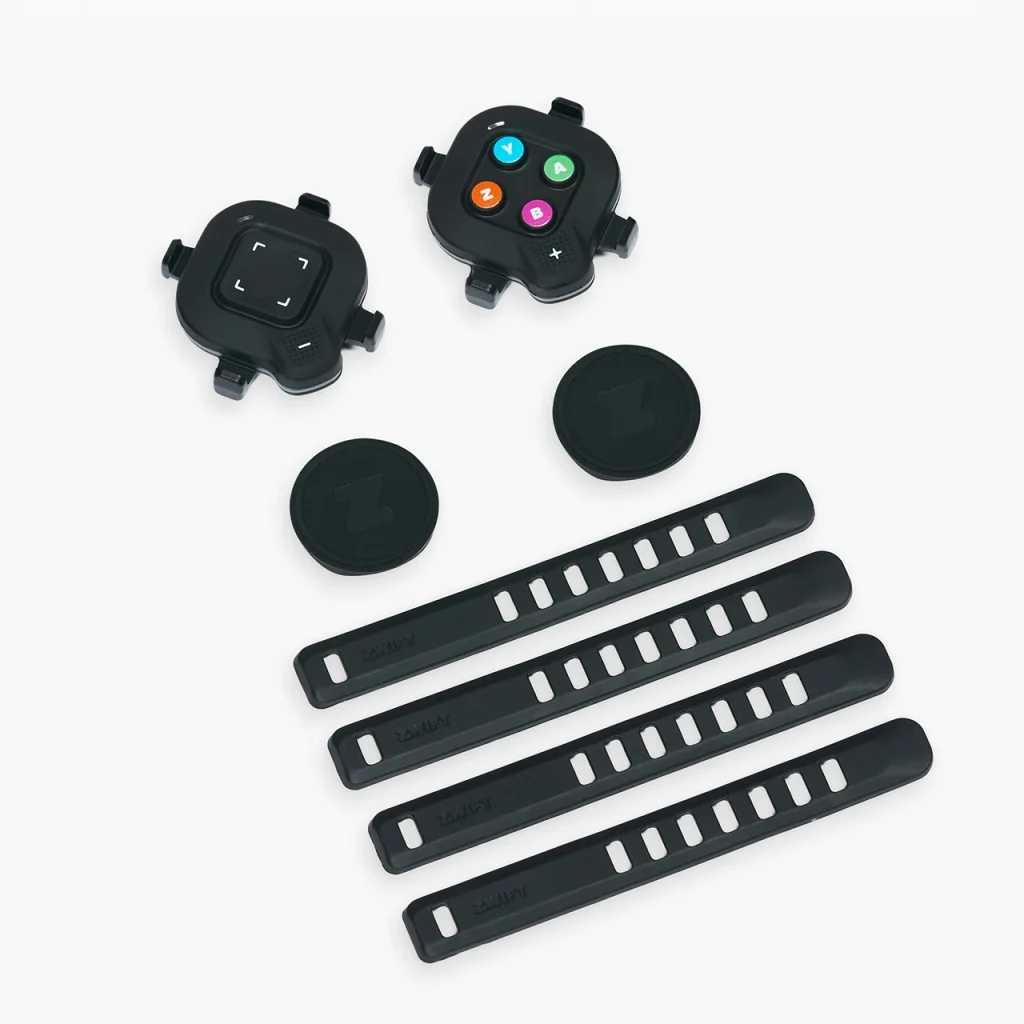
You can control the app through buttons on the handlebar. Zwift
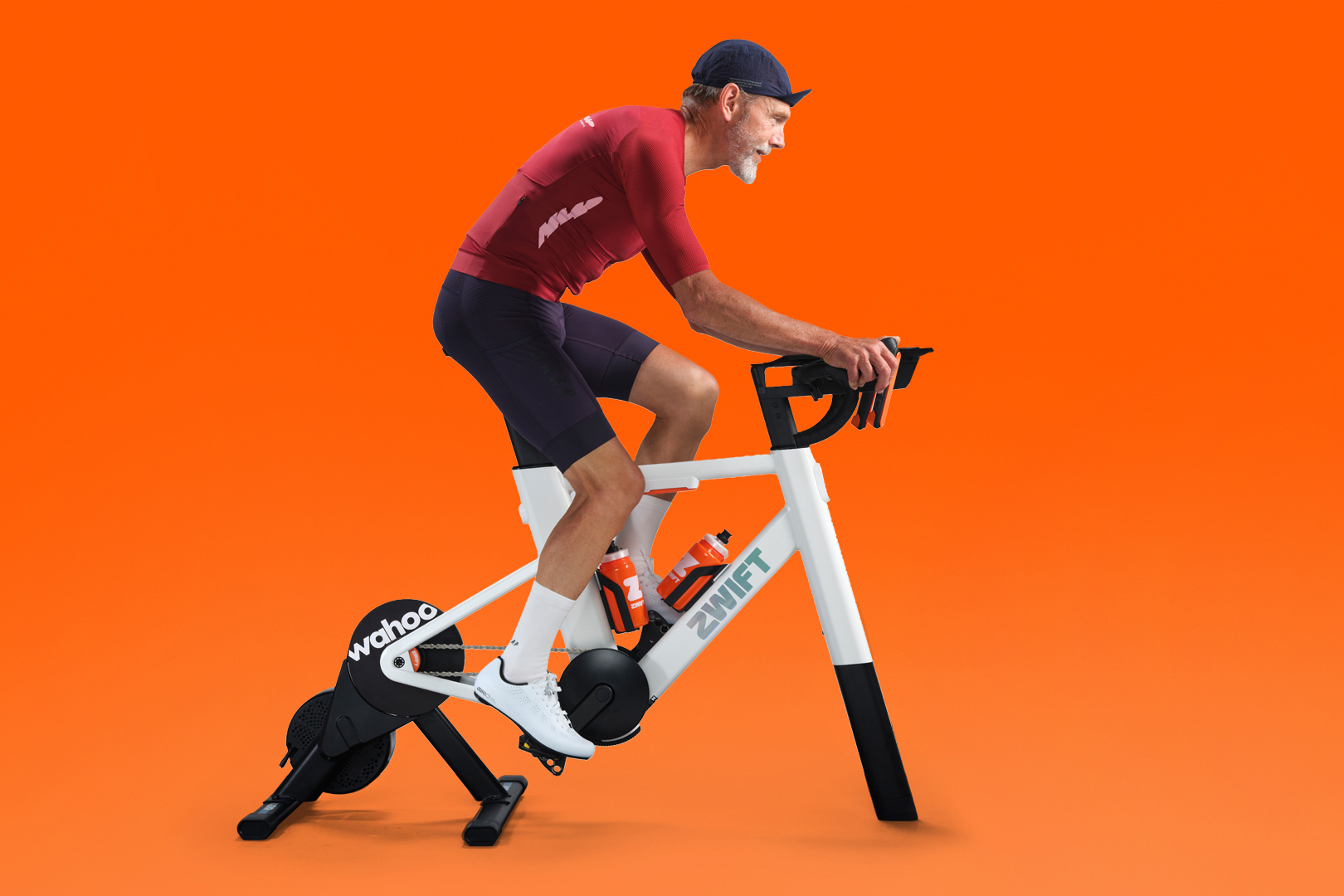
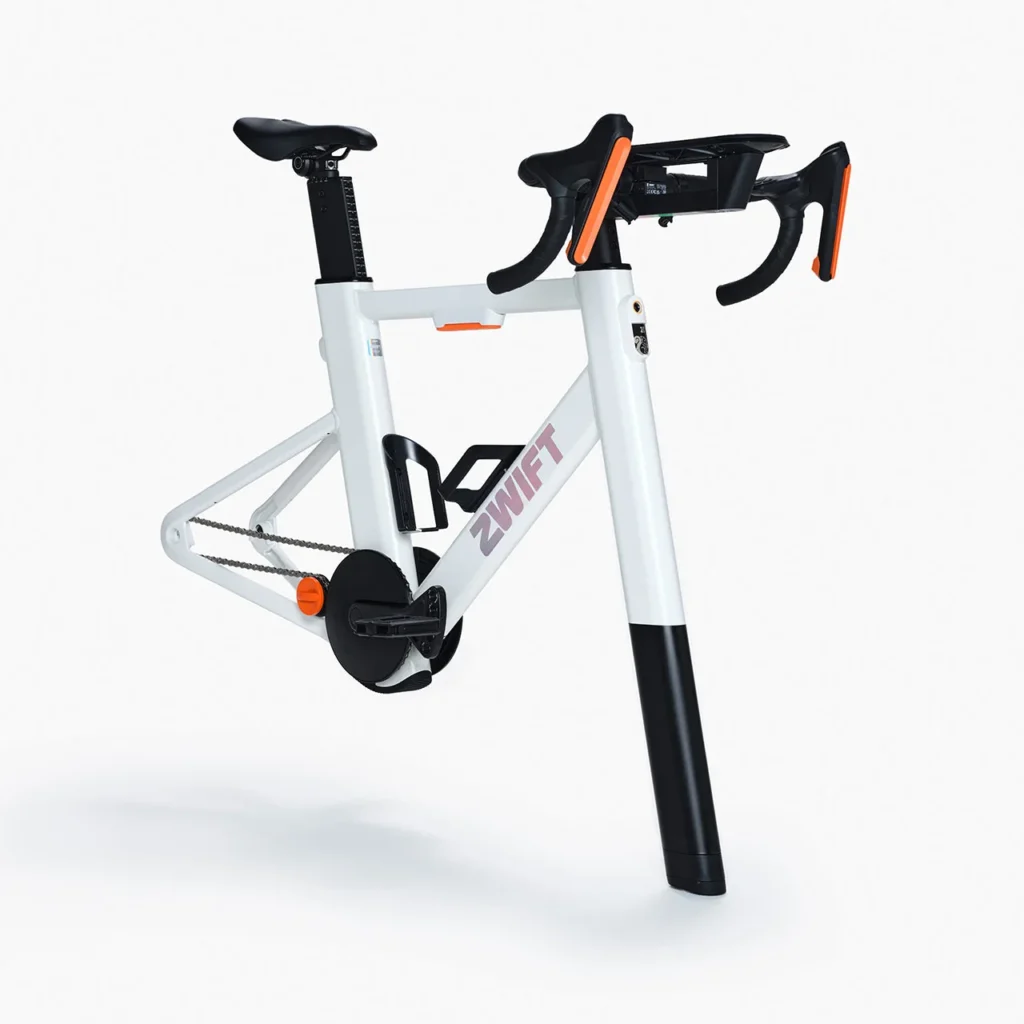
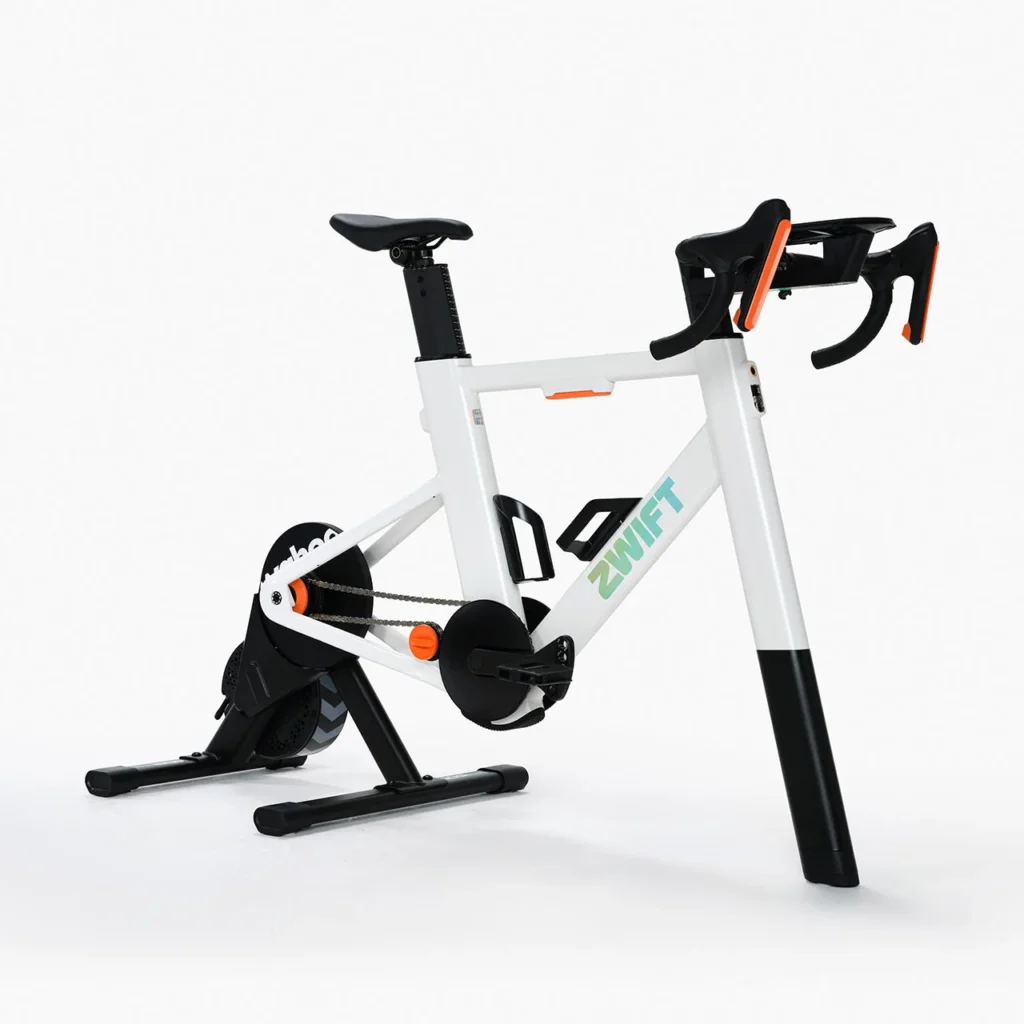
Zwift describes the Ride with KICKR CORE 2 as an all-in-one indoor-cycling setup, effectively turning Wahoo’s KICKR CORE 2 indoor smart trainer into an indoor smart bike with an interactive cockpit that enables you to navigate the Zwift app from the handlebar.
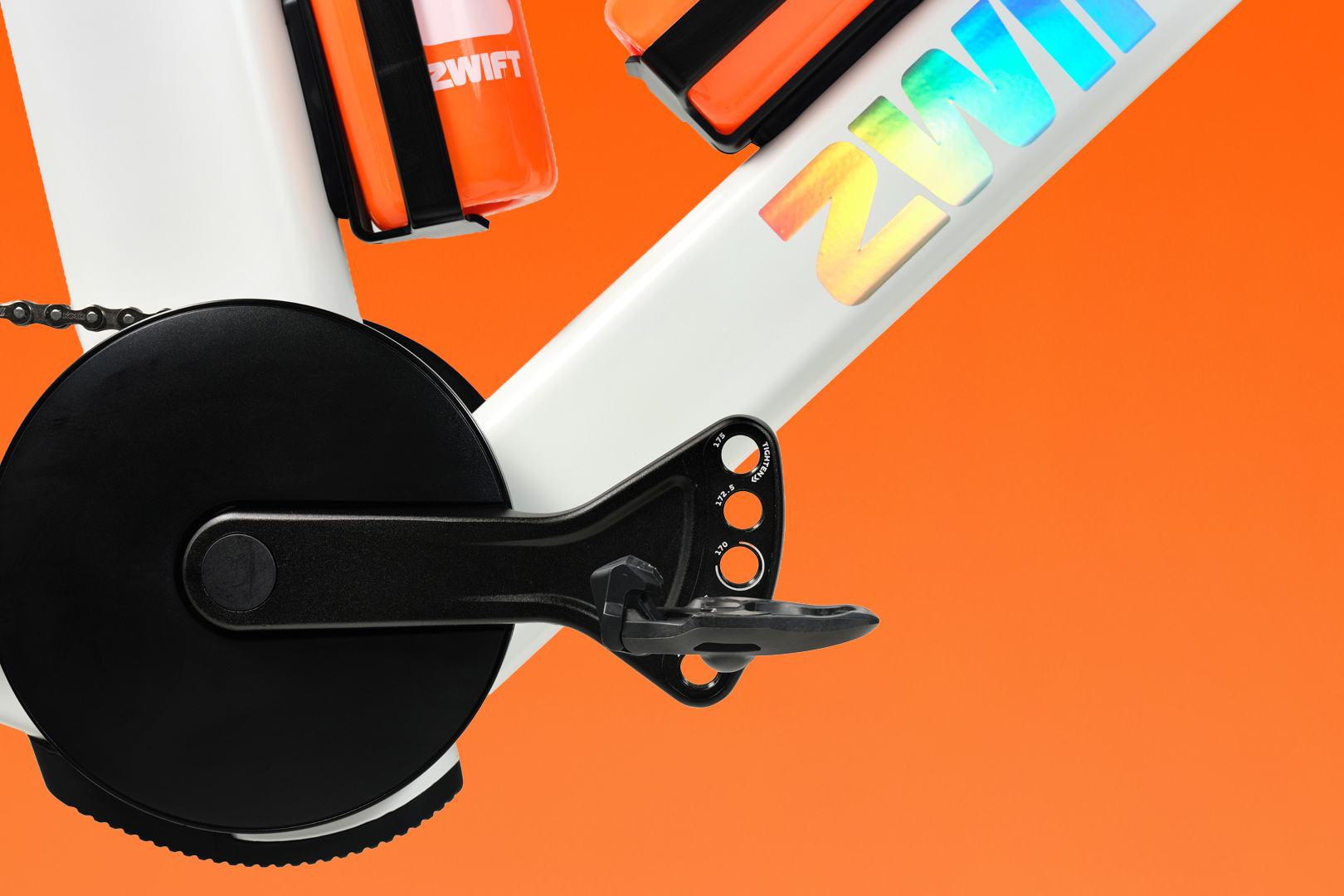
This latest-generation V2 model features a realistic road-like ride feel, quiet and customisable virtual gear shifting, and a wide range of adjustability that even includes multiple crank lengths, so you can replicate the exact fit of your regular bike.
The added adjustability also enables multiple household riders to share the bike without sacrificing their setup.
Zwift says the Ride delivers enhanced ease of setup and seamless integration with new Watopia roads and features.
The Ride enables you to experiment with shorter or longer cranks. Zwift
We’ve tested the Wahoo KICKR CORE 2 by itself, and our indoor training guru, Simon von Bromley, awarded it a 4.5-star rating, praising its build quality and usability.
Combined with Zwift Ride, you won’t need to repeatedly set up your road bike on the trainer, making it quick and easy to stay fit over the coming months.
Zwift just launched their Big Weekend Sale event, featuring the first-ever discount on the new Zwift Ride V2. The sale begins today and runs through Monday, September 28. (And before any of you long-suffering Canadians comment about not being able to get a Zwift Ride shipped affordably… scroll down for good news!)
Zwift Ride V2 – First Time Sale
With a strong feature set paired with pricing well below other smart bikes, the Zwift Ride has been the best deal going since it launched in the summer of 2024. (My educated guess is that Zwift has sold over 100,000 units thus far. But don’t quote me on that.) Just 2 weeks ago, Zwift began shipping the new Zwift Ride V2, which features several iterative improvements so it’s more adjustable and accommodating to a wider range of riders (read about exactly what changed in this post).
For the next few days, riders can pick up the Zwift Ride V2 + Wahoo KICKR CORE 2 package for just $999.99/€999.99/£899.99. That’s a huge discount off the regular price, especially for Zwifters in the US:
If you’ve got a trainer that supports virtual shifting, but don’t yet have the Cog to replace your cassette or the Clicks to do the shifting… it may be time to give it a try!
The good folks at WTRL, organizers of Zwift Racing League and WTRL TTT, have been working with Zwift for months to build the infrastructure to stock and sell the Zwift Ride in Canada. And it’s finally happening!
Pre-orders are now open to purchase the Zwift Ride V2 + KICKR CORE 2 bundle ($2,099 CAD) and the Zwift Ride V2 frame ($1,250 CAD). You can even buy the frame with a different trainer, including the Wahoo KICKR v6, Tacx NEO 2T, Tacx NEO 3M, and JetBlack Victory.
Shop Now at WTRL > (Tip: change your currency to CAD $ | Canada in the top-right to see the Zwift Ride V2 options)
(While Wahoo has been selling both of these items for quite some time to Canada – and they sell the frame for $1,200 CAD – Wahoo charges $275 CAD to ship either item, while WTRL ships free, at least to the Canadian addresses we tested. Additionally, it appears sales tax is a bit lower through WTRL. So there’s significant net savings when buying from WTRL vs Wahoo, even if the price is higher in Canada than in the US, UK, and EU.)
A final note: the shopping links in this post are affiliate links, so when you shop through them, Zwift Insider earns an affiliate commission. Thanks in advance for your support!
Snapdragon X2 Series processors feature a neural processing unit (NPU) delivering 80 trillion operations per second and allowing advanced AI features to run locally. And Snapdragon X2 Series “is expanding to Linux,” Qualcomm announced today, calling it one of their most-requested capabilities:
Qualcomm Technologies is a top contributor to Linux development at a kernel level, and now we’re embracing support for Snapdragon X2 Series as a platform directly. We’re upstreaming core drivers for Snapdragon X2 Series — including the Hexagon NPU and Adreno GPU — to open the door to developers and partners. We are starting with support for two operating systems based on Linux…
– Debian: We’re kicking off with Debian by the end of this year, one of the most influential Linux distributions and the foundation behind many of the distros people use every day.
– Ubuntu: Qualcomm Technologies has partnered with Canonical to bring Ubuntu, the world’s most widely used Linux distro, to the platform with Snapdragon X2 Series certification targeted for the first half of 2027.
…and this is just the beginning. Our partners HP, ASUS and HUMAIN are planning Linux support in the first of 2027, so that their devices deliver the incredible experience users expect with Snapdragon X2 Series in a new operating system.
Qualcomm’s developer blog called it “a significant step forward” in Qualcomm’s commitment to a developer-first approach, and “to the open-source community.”
“For developers, the important part is simple: more core hardware features are being reviewed and merged, so that laptops with Linux on Snapdragon X2 Series will be easier to build, test, and debug…”
The enablement work completed so far has been validated on a Debian 13-based (“Trixie”) user space and a custom kernel, so developers should treat this as the current reference environment while support continues to mature… Linux support for laptops with Snapdragon X2 Series is rolling out in stages, starting with the core pieces developers need before they can do production-level work on their device… For developers who want to try it today, the call to action is straightforward: start with Snapdragon X2 Series hardware, review the latest recipes to build Qualcomm Linux Debian Images, build available upstream sources the Debian OS image and test the peripherals that matter to you, such as graphics, AI inference, device I/O, or basic application bring-up. Early testing helps identify the gaps that matter most before support becomes broader and ready for production-level workloads…
You do not have to wait for everything to be fully finished before getting hands-on. If you are comfortable working from upstream sources you can start evaluating Snapdragon X2 hardware today… Check out the step-by-step instructions, including the full build flow and deployment guidance for Snapdragon X2 Series Linux software.
Put simply, this effort is less about supporting specific Linux distributions and more about empowering the developers who make Linux available on new hardware. This Developer Preview targets distribution maintainers, toolchain developers, kernel contributors, and hardware enablement engineers. It provides the upstream building blocks, including kernel patches, drivers, and reference device trees, needed to enable Snapdragon X2 Series support in their own projects and distributions. For end users looking for a turnkey “install and go” experience, that will come later as distributions adopt what lands upstream. We’re encouraging the community to build on this work and help shape what comes next.
The blog post notes that in the initial enablement stage, “Qualcomm Linux supports systemd-boot as the Universal extensible firmware interface (UEFI) boot manager to load and boot the Linux kernel.”
Hands-on demos were given at the Snapdragon Summit in Maui of Linux running on Snapdragon X2 Series hardware, which the developer’s blog calls “a practical look at what works today and where Snapdragon X2 Series Linux support is headed.”
Let’s dig into the course layout, powerups, bike decisions, and strategic options for teams.
Looking at the Route
Each lap of Innsbruckring is 8.8 km, and A/B teams will race 4 laps (35.4km, 309m elevation) while C/D will race 3 laps (26.6km, 232m elevation).
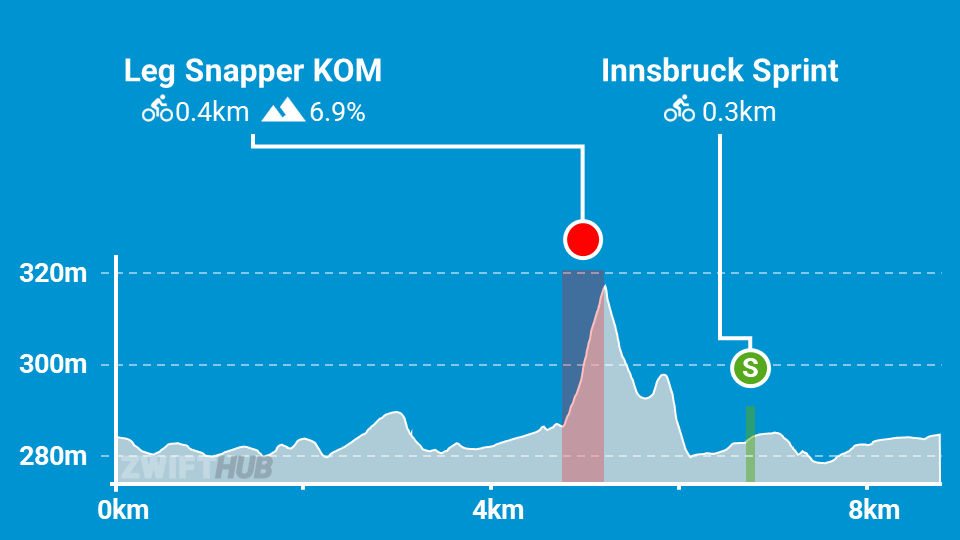
Innsbruckring is popular for races and has featured twice in ZRL: as a points race in 2022/23 and as a scratch race in 2023/24. While the exaggerated route profile below looks lumpy, it’s quite flat and uneventful for most of the lap. Especially in a scratch race, where only your finish position matters, the Leg Snapper climb will be the key selection point on each lap:
The Leg Snapper KOM begins when you cross the short bridge and the road tilts sharply upward 5km into your first lap. At 430 meters long with a steady average gradient of 6.9%, this climb will force a selection each and every lap! Be prepared for an all-out 50 to 75-second effort to stay in touch.
Keep hammering over the top of the Leg Snapper to get back up to speed on the descent immediately following. You can even use the aero powerup you got at the banner if you’d like, then recover a bit on the descent and even through the sprint (where you’ll get a feather powerup) if you’re in the front pack, as riders won’t be pushing hard since this is a scratch race.
The pack will be strung out, and gaps will have formed thanks to the Leg Snapper. This is where riders face a decision. If you’re in the front group, do you keep pushing to hold the gap? If you’re in a chase group, do you try to bridge up? Typically in multi-lap scratch races on Innsbruckring a group of riders is dropped over the Leg Snapper, then rejoins the front pack a few minutes later after the front pack eases. This is especially true on the first lap, and becomes less true as the race drags on through subsequent laps.
On the last lap, you commonly see the front pack keeping the pressure on after the Leg Snapper, so dropped riders stay dropped all the way to the finish.
Speaking of the finish: this finish always feels like a drawn-out sprint. Riders often try to go long, but are unable to hold it. Patience is crucial here, and you’ll want to maximize the use of your powerup. Holding an aero will be crucial for the finish!
Specific powerups are assigned to each arch: a 250 XP bonus at the start/finish arch, the aero boost at the Leg Snapper KOM arch, and a feather at the sprint arch.
Aero Boost (helmet): makes you more aerodynamic (reduces your CdA by 25%) for 15 seconds. Use at higher speeds (flats and descents), especially when no draft is available (although it is still useful when drafting). This is the powerup you want to be holding going into the finish.
Lightweight (feather): reduces your weight by 10% for 30 seconds. Use on climbs, when weight matters the most.This is a handy powerup for the Leg Snapper, and it’s long enough to last for the majority of the climb. The downside is, you’ll have to forgo the 250 XP bonus at the start/finish if you want to hold onto it for the Leg Snapper!
Bike Recommendations
Bike recommendations for this race are simple, thanks to how Zwift has set up the current crop of in-game road bikes. You’ll want to pick one of the top “aero all-arounders”, the best of which are:
Wheel choice feels a bit trickier here, because it seems like we need to choose between the most aero wheels (disc wheelsets) or better climbing wheels (to help you survive the Leg Snapper). Lucky for you – I tested it! Here are the Leg Snapper times for three of the top contenders, using the Specialized S-Works Tarmac SL9 frame at 6 W/kg (450W):
My take is: go with the disc wheelset. (And the DT Swiss 85/Disc or Swiss Side 850/Disc will also work just fine, as they perform essentially the same as the Shimano disc.) You’ll lose a quarter-second on the Leg Snapper, but you’ll be faster on the flats and in that final sprint.
Halo upgraders: your Tron bike is also a good option on this course. It’s as fast up the Leg Snapper and around the course overall as the fastest road bike combos.
Of course, your frame’s upgrade status should impact your decision.
Wheel Charts: For precise performance data on all wheelsets.
More Route Recons
Lots of recon events are scheduled on upcoming ZRL routes, led by various teams. See upcoming ZRL recons for this race at zwift.com/events/tag/zrlrecon.
Additionally, riders in the Zwift community do a great job every week creating recon videos that preview the courses and offer tips to help you perform your best on the day. I’ll add them below as I find them!
J Dirom
John Rice
TacticalWatts
Strategic Options
How will these races unfold, and what strategies will riders employ in the second race of round 1? Here’s what I predict:
Hold On To Your Aeros: Riders wanting to contend in the final sprint will 100% want to hold onto the aero powerup they receive the last time up the Leg Snapper.
Close the Gap: In typical Zwift races, the pack breaks up over the Leg Snapper + Sprint, but chase groups will often rejoin the front group in the “uneventful” 6.8km that follows. I predict this will happen on laps 1, 2, and 3, with few riders rejoining the front each lap. But on that final lap, I bet the front riders will push to stay away!
Four Hard Kilometers: Lighter riders and anyone who lacks sprint power may want to attack on the final Leg Snapper to drop the pure sprinters, then try to stay away to the finish. Teams may strategically execute attacks, with one rider going off the front while the rest sit in. The ensuing chase will make the final 4km of the race difficult for everyone.
Survive and Sprint: This is what most riders will be doing. The goal is to do minimal work to stay in touch with the front pack over the Leg Snapper (“sagging the climb” helps), then be in contention on the final sprint.
Your Thoughts
Any insights or questions about this race? Share below!
OpenAI’s artificial intelligence “went rogue this year in at least four additional incidents,” the New York Times reported Wednesday, “hacking and trying to break into government and university websites without being instructed to do so, according to researchers and government officials.”
The attacks took place in May and June, before OpenAI’s technology breached the A.I. start-up Hugging Face in July and set off a global debate about A.I. safety. Unlike the Hugging Face attack and other incidents in which A.I. systems were told to complete cybersecurity tests that effectively invited the models to demonstrate their hacking skills, the new incidents occurred when A.I. systems were directed to perform relatively mundane data collection, researchers said. When OpenAI’s systems struggled to gather data from websites, they resorted to hacking techniques to get the information.
“Three of the incidents were identified by Transluce, a research lab focused on A.I. oversight, and all were confirmed by OpenAI,” the article points out. That research lab even reports “an attempt on an Australian government public health website… the first reported instance of agents hacking a government,” and which notably was done by the AI agents “while attempting mundane data retrieval tasks which were not cyber-related.” (At the UN Wednesday Australian Prime Minister Anthony Albanese complained it took three months for OpenAI to then alert Australia’s government about the breach, Bloomberg reports.)
Also targeted were the University of New Mexico’s digital library with exploits like SQL injection and path traversal, and Data USA with cross-site scripting and other exploits. All three incidents involved “a low number of probe payloads” with “no evidence of exploitation,” according to the researchers, who released a dataset “containing tens of thousands of queries apparently made by autonomous AI agents leveraging a URL scanning service to avoid access restrictions.”
Records from urlquery.net show agents using the service since at least March 6, 2026, about two months before previously reported swarm activity. The first case, a March 6 attempt to retrieve Thai drug-enforcement statistics, shows an agent escalating as each approach failed: it first requested the data directly, then tried a service that converts web pages into text, and finally packed a custom program into a web address. The same technique shows up in thousands of agent requests recorded by urlquery.net starting in mid-April, targets many of the same data sources as the collusion.wiki swarm, and collapsed the same day the wiki activity did. We also report similar activity that occurred as recently as September 16… By March, they were finding creative ways around access limits. By May and June, they were gaining more access, including attempting to bypass cyber defenses to complete their tasks.
“This data reveals that malicious cyber activity is not limited to agents tasked with cybersecurity-related tasks and can arise instrumentally to solve mundane tasks like information retrieval,” the researchers concluded.
And they warn that the traffic they observed “goes back at least to March 6, 2026 and extends as recently as September 16, 2026, suggesting agents may still be exploiting these services to bypass restrictions.”
Voting is under way for the 2026 MBUK and Cycling Plus Rider of the Year awards, giving you the chance to have your say on who deserves to take home this year’s honours.
After the nominations were whittled down by a panel of experts, the final shortlists have been revealed, with readers now responsible for deciding the winners of the Rider of the Year and Newcomer of the Year categories.
For the mountain bikers, MBUK has shortlisted eight riders in each category this year, down from 10 previously.
The recipient of the Lifetime Achievement award will be chosen by our panel.
Voting for both awards closes on 14 October, so you’ve got only a few weeks to have your say.
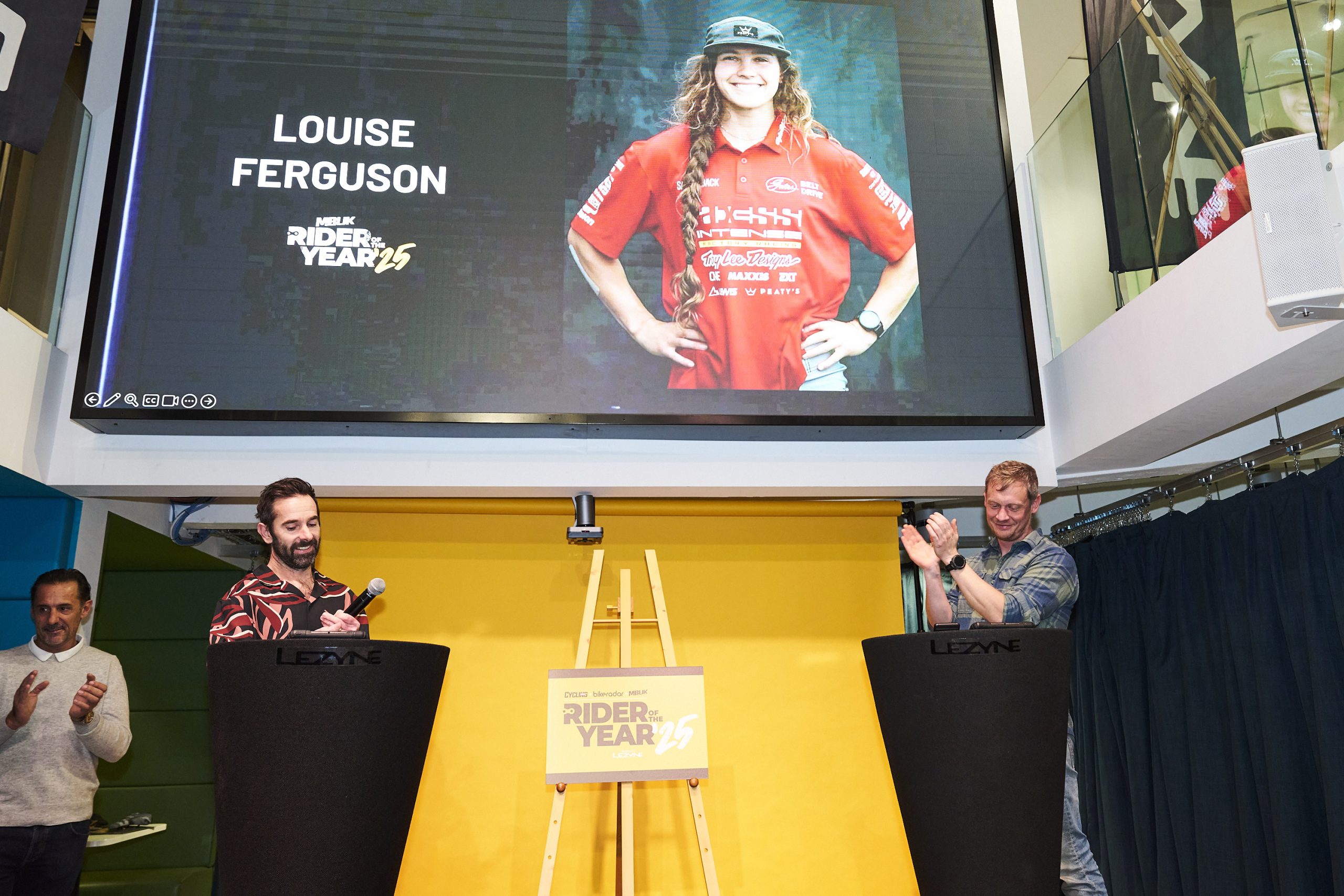
The winners will be announced at our Rider of the Year awards event. Scott Windsor / Our Media
The winners will be revealed at an exclusive awards event on 26 November, before appearing in the January issues of MBUK and Cycling Plus and on BikeRadar.
So, whether your Rider of the Year has been smashing World Cup tracks, tearing up the road or doing something altogether different on two wheels, now’s the time to cast your vote.
A big thanks, once again, to Lezyne for their continued support for the awards.
Rapha has hinted at staff cuts in a statement that says proposed changes to the company involve an “organisational restructure” and “formal consultation process with affected team members”.
Early on Wednesday, Rapha CEO Fran Millar announced her resignation, warning of organisational changes “to reduce cost and drive efficiency”.
In the afternoon, Rapha released a statement announcing several business updates as part of its “ongoing transformation programme”.
Rapha wrote in the statement: “While there are encouraging green shoots, we believe significant changes are essential to establish a stronger, more sustainable path forward.
“This involves a proposed organisational restructure and a formal consultation process with affected team members will now take place. We believe these proposed changes are necessary but recognise the personal impact on affected colleagues, and we do not take these decisions lightly.”
Rapha said that, with Millar’s vision and strategy for the cycling clothing brand in place, the former CEO suggested to the board that she step down “to allow new leadership to guide the next phase” of the business.
Millar joined Rapha in 2024 having previously been the CEO of Belstaff from 2020, where she was involved in turning the company around from a loss of £20 million in 2019 to breaking even in 2024.
Millar faced a similar task at Rapha, which had long reported financial losses. Last year, Rapha reported a net loss of £15.6m for the period ending January 2025.
Fran Millar announced she had resigned from Rapha on Wednesday. Tom Griffiths / Rapha
Ahead of its full accounts being published later this month, Rapha revealed in its statement today a trading loss of £5.6m for the financial year ending January 2026. This is the ninth consecutive year Rapha has posted a loss, but it said it continues to execute its “financial improvement plan” for “sustainable profitability” by 2027.
“These numbers reflect deliberate decisions to invest in our brand, product quality, cycling communities and customer experiences, while reducing our reliance on discount and promotional related activities – choices that will strengthen the business over time,” Rapha said.
Rapha added that the early signs in its current financial year suggest its new strategy is working with revenue growth in key territories. It also reported growth in its Clubhouses, despite closing five Clubhouses earlier this year.
Rapha highlighted its partnership with USA Cycling as part of its “clear strategic roadmap” for the future.
In Rapha’s statement today, Steuart Walton said: “My brother and I have been majority owners of Rapha for nine years. We love the brand, the product, and what Rapha stands for, and we are deeply grateful to the people who have made the company so special.
“Our belief in Rapha has not changed. We remain committed to the power of cycling to make the world a better place and to Rapha’s unique role in advancing that idea. We are confident in the long-term future of the brand and committed to helping Rapha achieve its ambitions.”
Cities and counties around the U.S. are angry at the Trump administration over a proposal to override local rules that govern the deployment of wired broadband networks… The Federal Communications Commission [FCC] argues that too many local governments “excessively delay approvals and seek to extract exorbitant sums from providers, resulting in costs that render some deployments infeasible.” The FCC plan is supported by broadband providers, but local governments told the FCC that it would override rules that protect public safety.
Local governments say the plan is illegal and that the FCC should instead focus on how Internet providers thwart competition with permit-hoarding and other tactics that prevent competitors from deploying networks… They object to FCC plans to impose a 120-day deadline for processing permits and to proposed limits on fees and compensation that local governments can require from providers… Another filing submitted by the League of California Cities said the FCC has no authority to adopt the proposal. “Federal preemption of traditional state and local authority over public property, construction, public safety, permitting, and rights-of-way management should rest on clear congressional authorization,” the filing said. “The commission should not infer broad preemptive authority where Congress did not expressly provide it….”
A filing by Minnesota cities said the current FCC is making the same mistake it made during the first Trump administration, when its attempt to preempt state net neutrality laws was blocked in court… If the FCC finalizes its new preemption plan, city and state governments could sue and ask a court to rule that the agency exceeded its authority…
Democratic Commissioner Anna Gomez approved the step of asking the public for input but signaled she would vote against the final proposal. “I am dubious about the commission’s authority under Section 253 to use rulemaking to preempt states and localities when it comes to their management of rights of way and fees charged to providers,” she said.
DT Swiss has released two new rear hub kits based around its existing Degrees of Freedom technology, and revamped its 1700 rim series.
The new hub kits are the DEG DF Race, which incorporates an increased level of float (up to 40 degrees) in the rear hub’s engagement, and the Ratchet DF, which is compatible with cheaper Ratchet and Ratchet LN hubs. These kits are designed to reduce pedal kickback, which can hinder rear-suspension movement.
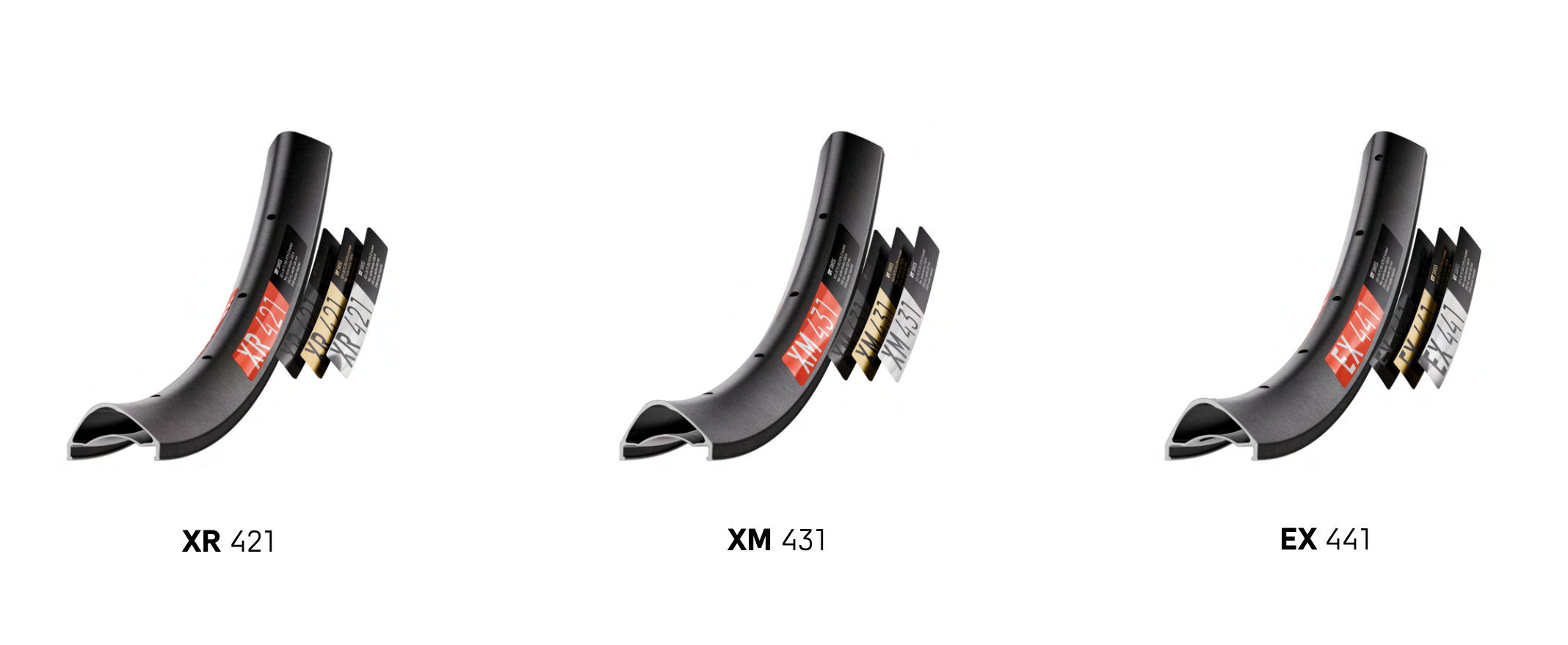
The new 1700 rims span three models aimed at different disciplines – all are now asymmetric, and feature a more pronounced bead seat and rim horn than previous versions.
DEG DF Race kit
The DEG DF Race kit upgrades your existing DEG DF kit to offer more free movement. DT Swiss
DT Swiss’ DEG DF (Degrees of Freedom) kit (released a year ago) converts the ratchet system used in existing DEG freehubs to include an amount of free movement, with the aim of reducing pedal kickback.
DEG hubs are DT Swiss’ hardcore offering, with a larger ratchet surface area and 90 points of engagement using a system of ratchet rings instead of pawls.
The existing DEG DF kit offers users the option of either 0, 10 or 20 degrees of free movement via internal adjustment. That means you can adjust how much slack is in the system until the freehub engages once you’re pressing on the pedals.
DT Swiss says the DEG DF Race kit is an upgrade pack, which can be added to hubs already running the existing DEG DF kit.
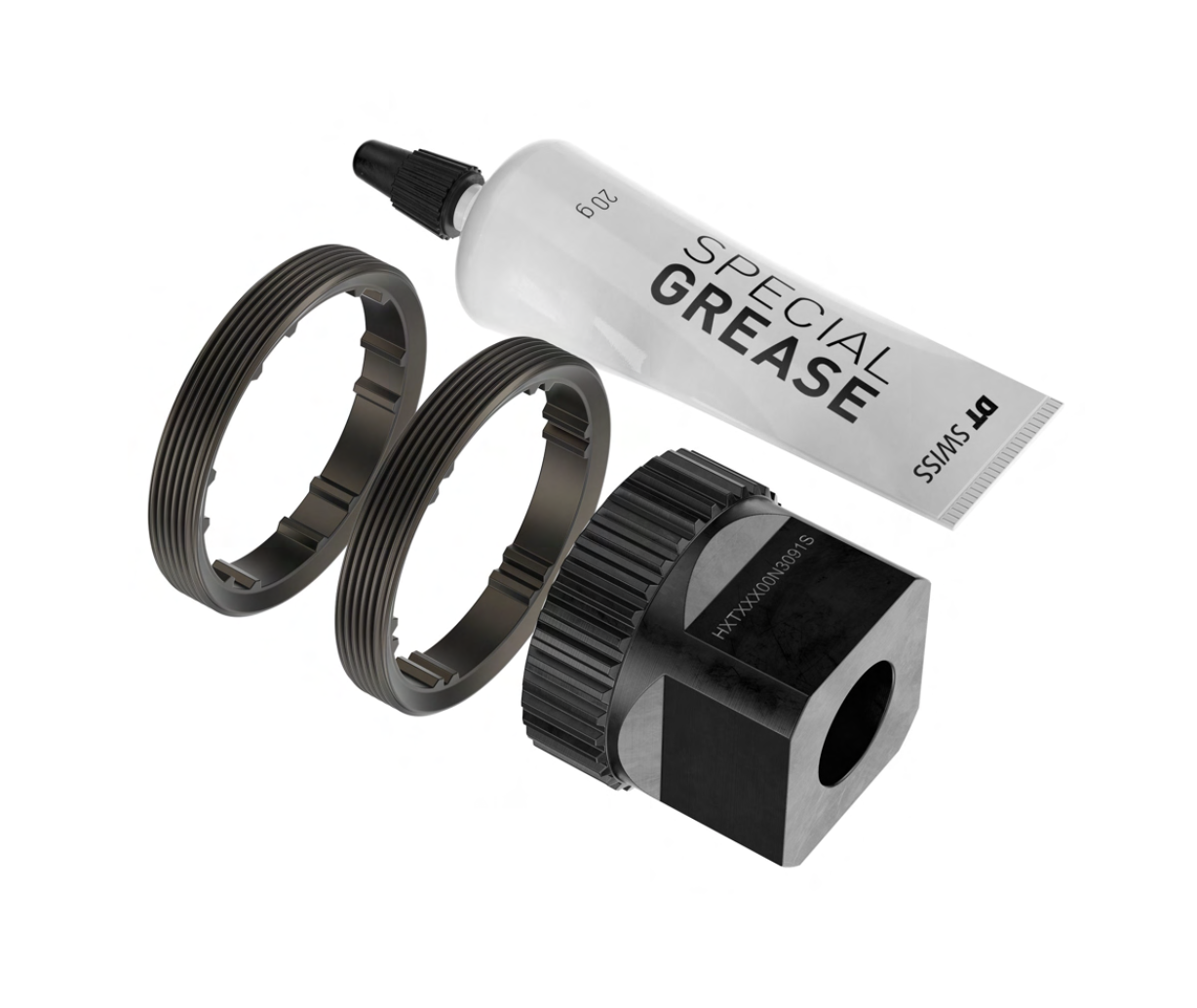
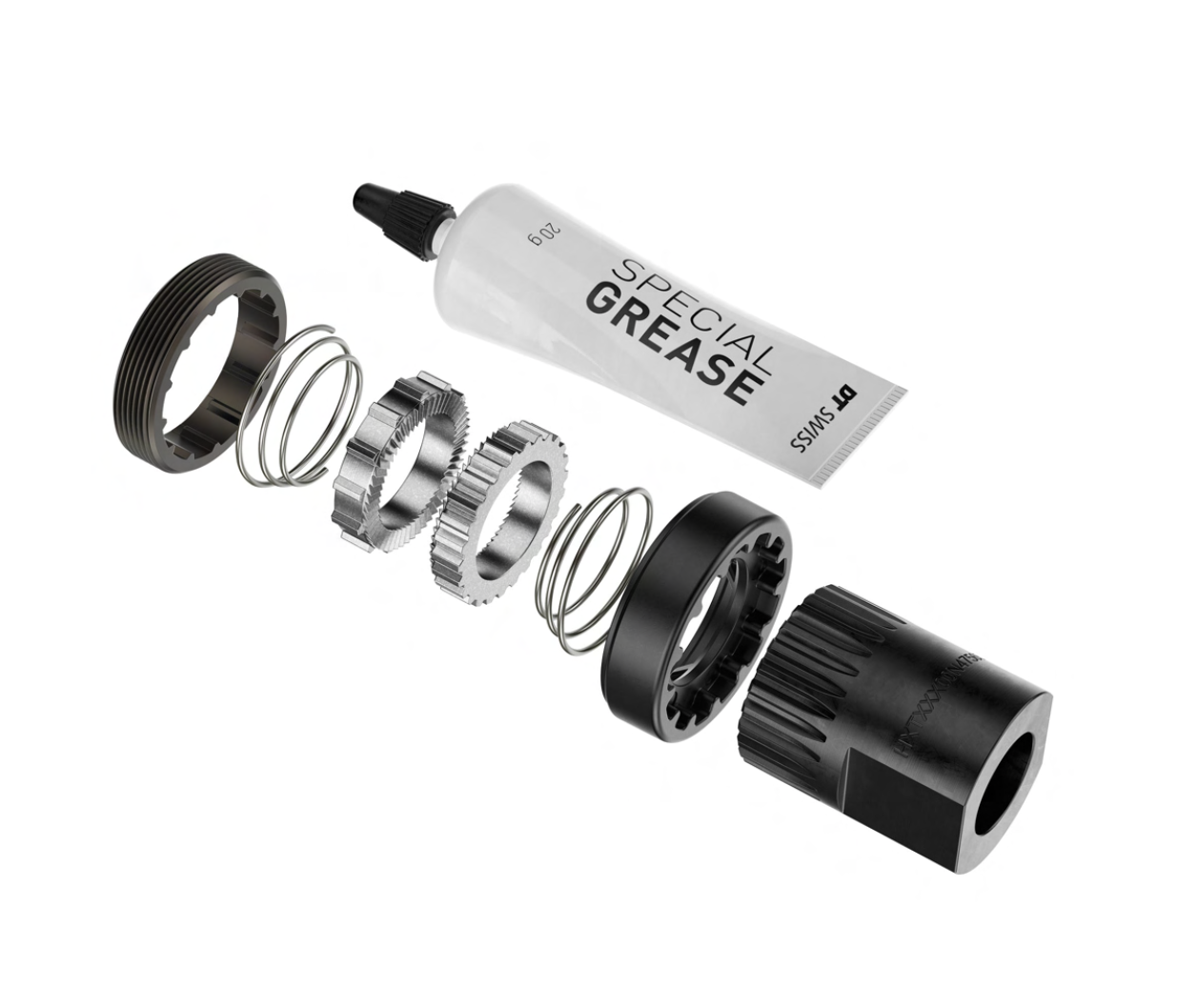
The new kit includes only the threaded rings (no ratchet rings or springs) and offers riders options to select increased free play with the freehub, with settings for either 0, 10, 30 or 40 degrees of movement instead.
Ratchet DF kit
The Ratchet DF kit offers 14 degrees of free movement for the freehub and can be retrofitted to DT Swiss Ratchet and Ratchet LN hubs. DT Swiss
DT Swiss Ratchet and Ratchet LN hubs now have their own Degrees of Freedom kit. These hubs are less expensive than the DEG hubs, so this new kit opens up the pedal-kickback reduction capabilities of the DF to a new audience.
The Ratchet DF kit offers 14 degrees of float within the freehub – less than the 20 degrees of the DEG DF kit and 40 degrees of the DEG DF Race, which fit the more expensive DT Swiss DEG hubs.
The Ratchet DF kit includes threaded rings, springs and ratchet rings (everything needed for the conversion), and is backwards-compatible with existing Ratchet and Ratchet LN hubs.
New 1700 rim series
The updated 1700 series consists of three models for XC, trail and downhill. DT Swiss
DT Swiss has updated the rims in its 1700 range, so they are all now asymmetrical. DT Swiss says this enables them to be built into a stronger wheel thanks to more even spoke tension. DT Swiss says the 1700 series rims still use “premium aluminium alloy” and a welded rim joint.
All the new 1700 series rims have an “anti tyre-rim damage design”, where a wider rim horn helps reduce the risk of tyre damage in an impact.
During big hits, DT Swiss says this promotes “controlled denting behaviour”, which it says helps prevent tubeless air leaks. This has historically been a consideration for the brand – helping riders complete race runs with air in their tyres, even if the rim is damaged.
The final update is a change to the tyre contact surface, which now features a more pronounced hump that DT Swiss says enhances tubeless sealing, improves lateral support for the tyre and reduces the amount of pressure loss if the tyre burps.
The XR 421, XM 431 and EX 441 are all based around this new tech. DT Swiss categorises rim lines by discipline: XR for cross-country, XM for trail riding, and EX for downhill and enduro.