Tour Down Under prologue gallery: how the teams made their road bikes even faster 

The 2026 Tour Down Under got under way today with a short, sharp prologue, with lots of time trial-specific setup tweaks on show.

With an agreement in place that teams can’t use TT bikes for this race, riders have been forced to make changes to their normal road bike setups for maximum speed on the 3.6km thrash.

I was at the race start in Adelaide with access to the bikes. Here’s what I was able to glean about the tech decisions the teams have made.

Changes driven by necessity

Decathlon Van Rysel bikes in a row
The 2026 Tour Down Under prologue revealed an array of setups – some through necessity. Ashley Quinlan / Our Media

The absence of time-trial specific bikes isn’t as surprising as it might first seem – it was a decision made by the race organisers and teams, in collaboration with the UCI, due to the unique location of the Australian race.

Alongside a reduced carbon footprint, part of the reason stems from haulage costs. Should the teams have been obliged (on performance grounds) to bring their time trial bikes, one team insider suggested the total additional weight would have amounted to around 200-300kg – which would result in thousands of pounds of extra air-freight fees.

Ultimately, for a 3.6km time trial, this was deemed an avoidable cost.

You could argue this improves technical competitiveness. With bigger-budget teams such as UAE Team Emirates-XRG, Visma-Lease a Bike and Ineos Grenadiers in a stronger financial position than smaller teams competing at the same level, it was suggested to BikeRadar that the ‘poorer’ teams might have had to make hard decisions about whether to bring the equipment at all.

All teams receive financial support to arrive at the race, according to our source, but this doesn’t cover the entirety of the bill. Effectively, teams are required to fund the shortfall, and this means they bring enough specialist equipment for their key riders, while others make do with the standard equipment they’d usually race with.

With that covered off, let’s dive into the main changes the teams have made.

Wheel swaps

UAE Team Emirates rider going down ramp at Tour Dow Under.
Road bikes were effectively ‘converted’ into time trial bikes. Ashley Quinlan / Our Media

An open goal, given the prologue is officially designated a time trial, has been to fit deeper front wheels than the road-race mandated 65mm, and disc rear wheels. 

Some Groupama-FDJ United riders had use of the Miche Kleos RD SPX3 tri-spoke front wheel, while Jayco-AlUla riders used a Cadex Aero 4-Spoke Tubeless Disc Brake wheelset. All other teams stuck with wheels with a regular laced-spoke design.

Not all the riders are using the fastest wheelsets available, though, a decision driven mainly by the additional costs associated with shipping over the extra equipment for riders who won’t be targeting a strong individual performance in the prologue. 

1x dominates

Taped out CarbonTi chainrings
Single chainrings were commonplace, but not exclusive. Ashley Quinlan / Our Media

Team mechanics have been hard at work switching over the bikes of the main contenders for the prologue, and overall victory, to a single-chainring setup up front. 

The benefits of 1x drivetrains include improved aerodynamic performance, plus a small weight saving when the front derailleur and second (inner) chainring are removed. 

There’s also less chance of slipping a chain or accidentally calling for a shift should fingers stray over the front derailleur shifter, which remains fitted to all the bikes.

The largest chainring I spotted? 60 teeth.

Mixed tyre choices

Groupama FDJ United WIlier Filante SLR
Some riders had a mix of tyres on their bikes… Ashley Quinlan / Our Media

Teams were running a mix of tyres for the race.

Alpecin-Premier Tech, for example, chose to run odd tyres for the prologue (a Pirelli P Zero Race TT mounted to the Shimano rear disc wheel, and a P Zero Race TLR RS to the front wheel), for practical reasons.

Given the prologue finished late in the evening, and the bikes needed to be ready for the journey to the start of stage 1 by 8am the following day, it was deemed too much of a drain on resource to make wholesale changes to the tyre setup in between (bearing in mind the limit of kit each team has brought with it).

Groupama FDJ United WIlier Filante SLR
…sometimes due to a lack of options. Ashley Quinlan / Our Media

There were also variations in size – defending Tour Down Under champion Jhonatan Narváez, of UAE Team Emirates, was running 25mm Continental Grand Prix 5000 TT TR tyres on his combination of ENVE SES 6.7 front wheel and ENVE SES Disc rear wheel.

Meanwhile, Enzo Paleni of Groupama-FDJ United was running a 25mm Grand Prix 5000 TT TR on his Miche rear disc wheel, and a 28mm Grand Prix 5000 S TR on his Miche Kleos RD SPX3 front wheel.

Team mechanics revealed the choice of a 25mm rear tyre was down to concerns over passing the UCI’s credit card width rule governing tyre-frame spacing when running a 28mm tyre.

Off-sponsor selections

Zipp wheel on Lotto-Intermarché bike at Tour Down Under
These Zipp wheels were sourced from old stock at Lotto-Intermarché – the brand sponsored the team (as it was then) a couple of years previously. Ashley Quinlan / Our Media

Some teams were running non-sponsor-correct components.

At Lotto-Intermarché, some riders were using a Zipp Super 9 Disc wheel (a common sight among SRAM-sponsored teams), given wheel sponsor Oquo has yet to release one.

But the most common non-sponsor choice was single chainrings. 

Jayco Alula custom chainring
Single chainrings were the single most common non-sponsor correct component. Ashley Quinlan / Our Media

UAE Team Emirates-XRG had taped over the CarbonTi branding on its 1x chainrings (it has used these without covering them up previously), while Alpecin-Premier Tech and Ineos Grenadiers were using unbranded Miche RD R92 chainrings. 

Jayco-AlUla was another team to opt for third-party chainrings, fitting an SR-TMP DM from Dutch chainring specialist The Mechanic Parts.

Rider-position tweaks

Rider positions also changed to improve speed for the short prologue.

Most riders opted to run an identical position to their normal race setup – again, some team mechanics confirmed this was partly because of the desire to reduce setup time between the short prologue and the following morning’s stage one. 

However, some riders, including XDS-Astana’s Marco Schrettl, made small tweaks to their saddle position for the race, pushing it as far forward as the rails allowed in order to pitch him further forward over the bottom bracket. 

This more closely imitates a rider’s time trial position on a TT bike, and opens the hip angle for improved power transfer. 

The Morning After: Elon Musk wants a $134 billion payout from OpenAI and Microsoft

Part of a lawsuit accusing OpenAI of abandoning its non-profit status claims Musk is owed anywhere from $79 billion to $134 billion in damages for the “wrongful gains” of OpenAI and Microsoft.

Musk claims in the filing that he’s entitled to a chunk of the company’s recent $500 billion valuation, after contributing $38 million in “seed funding” during the AI company’s early years. It wasn’t just money — according to the filing, Musk helped advise on key employee recruitment, introductions with business contacts and startup advice.

If this sounds familiar, it’s because the lawsuit dates back to March 2024. It’s still going.

— Mat Smith

The other big stories (and deals) this morning


Anthropic opens up Claude Cowork to anyone with a $20 subscription

Anthropic’s AI assistant can handle simple tasks on your PC for you.

TMA
Engadget

Claude Cowork, Anthropic’s AI assistant for handling simple tasks on your computer, is now available to anyone with a $20-per-month Pro subscription. It was previously an exclusive feature for its Max subscribers, who pay a minimum of $100 per month.

As a reminder, the intriguing part of Claude Cowork is its ability to work on its own. If you have the macOS Claude app and a Pro subscription, you can prompt Claude Cowork to work on tasks on your local computer, like creating documents based on files you have saved or organizing your folders. Don’t expect it to deal with high-level PC work just yet, but it can handle simple organizational tasks.

Continue reading.


Dr. Gladys West, whose mathematical models inspired GPS, dies at 95

Her decades-long career finally received wider recognition in 2018.

Pioneering mathematician Dr. Gladys West has passed away at the age of 95. Her name may not be familiar to you, but her contributions will be. West’s work laid the foundation for the global positioning system, GPS, we all use (sometimes daily). Beyond DoorDash requests and Google Maps navigation, GPS is now an essential component of industries ranging from aviation to emergency response systems.

Continue reading.


ASUS will not release any new smartphones this year

Will the company be joining the likes of LG?

TMA
Engadget

ASUS might step back from smartphones. According to translations of recent quotes from Chair Jonney Shih, the company does not plan to release new phone models in the future. Previous reports suggested ASUS would not introduce any smartphones in 2026, but Shih’s recent comments indicate the pause may last longer, if not indefinitely. We’ve reached out to ASUS for additional comment. It’s not like the company changes its mind

Continue reading.

This article originally appeared on Engadget at https://www.engadget.com/general/the-morning-after-engadget-newsletter-121509123.html?src=rss

Sony is handing control of its Bravia TV business to China’s TCL

Sony is ceding control of its Bravia TV brand to China’s TCL as part of a new “strategic partnership,” the companies announced in a joint press release. The Japanese electronics giant plans to sell a majority 51 percent stake in its home entertainment arm to TCL, while retaining a 49 percent share. The joint venture is set to start operations in April 2027, pending regulatory and other approvals. 

The new combined business will sell TVs carrying Sony and Bravia branding while using TCL’s display technology. The partnership will also leverage Sony’s picture and audio expertise, supply chain management and other areas of expertise. For its part, TCL will contribute its vertical supply chain strength, global market presence and end-to-end cost efficiency. 

“By combining both companies’ expertise, we aim to create new customer value in the home entertainment field,” Sony CEO Kimio Maki said in a statement. “We expect to elevate our brand value, achieve greater scale and optimize the supply chain in order to deliver superior products and services to our customers,” added TCL Electronics chairperson DU Juan. 

The news will come as a shock to some, particularly in Japan, as Sony has been strongly associated with high-quality TVs since the Trinitron days. However, it’s currently fighting in a low-margin TV business full of formidable competitors including Samsung, LG, Hisense and TCL. The company has already sold off or closed other electronics operations, including PCs and tablets, and is barely hanging in with its smartphone business.

Sony effectively stopped making its own LCD and OLED panels some time ago, while TCL has increased its own production — having recently purchased LCD Panel patents from Samsung and taken over its plant in China. Other Japanese companies like Toshiba and Hitachi have already exited the TV business, while some including Panasonic have a highly reduced presence. 

The Bravia brand survived mainly thanks to customers willing to pay extra for high-end picture and sound quality, along with Sony’s association to filmmaking and high-end camera gear. As I detailed in a recent explainer, Sony was a pioneer in many key flat panel breakthroughs, having developed LED backlighting, quantum dot technology and the first OLED TVs. 

This article originally appeared on Engadget at https://www.engadget.com/home/home-theater/sony-is-handing-control-of-its-bravia-tv-business-to-chinas-tcl-120957252.html?src=rss

How to put data first in K–12 AI education by using data case studies

In Germany, as in many countries, AI topics are rapidly entering formal computer science education. Yet, this haste often risks us focusing on fleeting technological developments rather than fundamental concepts. As computer science educator Viktoriya Olari, from Free University of Berlin, discovered in her research, the fundamental role of data, which powers most modern AI systems, is critically underestimated in many existing frameworks. If students are to become responsible designers of such systems, they can’t afford to treat AI as an opaque box. Rather, they must first master the messy, human process that begins with the data itself.

Viktoriya Olari, from Free University of Berlin.
Viktoriya Olari

In our October research seminar, Viktoriya shared the results of her work over the last four years on how schools can shift the focus from the latest technologies to the underlying data. Her research offers a clear structure for what young people should learn about data and how teachers can make it work inside ordinary classrooms.

Why begin with data?

Viktoriya’s analysis of existing AI education frameworks found the data domain is underrepresented, with essentials such as data cleaning often not addressed at all. She argues that, because modern AI systems are data driven, students need both language and routines for working with data: being able to name concepts like training vs test data, data quality, and bias, and to explain practices such as collection, cleaning, and pre-processing. That’s the rationale for teaching data concepts and practices first, and then placing modelling inside an explicit, staged lifecycle.

Word clouds for two foundational components: data concepts and data practices.
A slide from Viktoriya’s presentation. Click to enlarge.

Her talk presented this argument in the German school context, where AI topics are entering state curricula quickly. Her critique targets how existing frameworks fail to address data and how that gap undermines responsible evaluation and design. The proposed model centres data by pairing an eight-stage, data-driven lifecycle with a curated set of key concepts and practices, and by making “data-based judgment skills” a key outcome.

Viktoriya’s work organises this understanding into two foundational components: data concepts (the vocabulary, e.g. training/test data, data quality, overfitting) and data practices (the actions, e.g. collect, clean, train, evaluate).

A lifecycle for learning

Viktoriya’s framework is built around an eight-stage data lifecycle, stretching from defining a task through gathering, preparing, modeling, evaluating, and finally sharing or archiving results. Inside that backbone she has identified two layers of learning targets:

  • Data concepts – roughly a hundred ideas that give teachers and students a common language, from “training vs. test data” and “bias” to “features”, “labels”, and “provenance”.
  • Data practices – 28 kinds of hands-on work (and 69 subpractices) that materialise those ideas: for instance collecting, cleaning, splitting datasets, checking quality, training and evaluating models, and handling privacy and deletion responsibly.

More details are available in her work on data-related concepts and practice.

Viktoriya’s 8-stage process model of the data-driven lifecycle.
A slide from Viktoriya’s presentation. Click to enlarge.

Viktoriya’s 8-stage process model of the data-driven lifecycle. It serves as a guide for curriculum developers and teachers, outlining 28 key data-related practices and providing 69 examples of subpractices for use in K–12 computer science education.

A collection of 133 key data-related concepts.
A slide from Viktoriya’s presentation. Click to enlarge.

A collection of 133 key data-related concepts. These concepts are organised according to the eight stages of the data-driven lifecycle and provide the foundational vocabulary for teaching AI education.

Making it teachable

Viktoriya’s team set out to redesign the format so that real data work could happen within ordinary lessons. They ended up with three “Data Case Study” architectures, each using authentic datasets and domain questions. The materials are supported by Orange 3, an unplugged machine learning and data visualisations tool familiar to the teachers participating. Variants emerged across three design cycles to address specific challenges, but teachers choose among them based on learning objectives and class context.

  1. Bottom-up: Students create a workflow step by step (e.g. import, inspect, clean, transform, split, train, evaluate). This approach is excellent for procedural fluency, but teachers reported an over-emphasis on operating Orange and too little reflection on the lifecycle unless explicit reflection is added. 
  2. Top-down: Students start from a prepared workflow, read plots, infer the role of each branch, identify issues in the data/practices, and justify changes. This architecture directly counters the reflection gap seen in bottom-up and leans into reasoning rather than routine. 
  3. Puzzle-like: Using “widgets,” visualisations of data tables, that stand for parts of a data pipeline, students rebuild a valid flow collaboratively. This encourages discussion, works without devices, and makes thinking visible.
The school-specific data case study
A slide from Viktoriya’s presentation.

The data case study method uses real-world data and context to help students achieve three key learning outcomes: go through the data-driven lifecycle, reflect on data practices and concepts in a criteria-guided manner, and develop data-based problem-solving and judgment skills.

What happened in the German classrooms

Viktoriya’s team ran three design cycles with small groups in Germany, with students aged 14 to 15. Each cycle lasted around 48 hours of teaching. Because participating teachers already knew Orange 3, the emphasis was on pedagogy rather than software training.

The projects drew on manageable real-world data: spreadsheets, time-series sets, a few geographical samples. Two examples are:

  • Forecasting Berlin air quality – Students explored how data quality, feature choice, and evaluation metrics shape predictions, then argued which model best answered the civic question.
  • Classifying Tasmanian abalone – A deceptively simple dataset that invites talk about imbalance, feature engineering, and what counts as “good enough” accuracy.

Some groups experimented with collecting their own sensor data, a plan that occasionally failed when the hardware didn’t cooperate. However, even that became part of the lesson: reliability, risk, and missing data are real features of data science, not mistakes to hide.

A computing classroom filled with learners

Student work reflected the three architectures. In the bottom-up groups, guided builds produced complete workflows and concise reflections, while top-down groups submitted annotated screenshots and critiques, and the puzzle-based lessons ended with posters and verbal presentations. Across them all, assessment focused on reasoning: not whether the “right” model appeared, but whether students could explain the stage they were in and justify their choices.

Teaching resources

Everything Viktoriya described is open and classroom-ready (currently in German). The computingeducation.de/proj-datacases hub hosts teacher guides, student tasks, and sample Orange 3 files. The growing library of data cases covers topics from climate data to air quality analytics.

Why it matters now

In the UK, a curriculum review has been recently released and along with the Government’s response. Across Europe and beyond, education systems are racing to add AI content to their curricula. Tools will come and go, and benchmarks will keep moving. What endures is the capacity to reason about data: to know what stage of work you’re in, what evidence supports your decisions, and what trade-offs you’re making. That is why Viktoriya’s contribution is unique — it gives teachers a map, a shared vocabulary, and practical ways to make data visible and the focus of discussion in schools.

You can read this blog to see how we’ve used Viktoriya’s framework in our work designing a data science curriculum for schools.

Join our next seminar

Join us at our seminar on Tuesday 27 January from 17:00 to 18:30 GMT to hear Salomey Afua Addo talk about how to teach about neural networks in Junior High Schools in Ghana.

To sign up and take part, click the button below. We’ll then send you information about joining.

We hope to see you there. This will be the final seminar in our series on teaching about AI and data science — the next series focuses on how to teach about applied AI across subjects and disciplines.

You can view the schedule of our upcoming seminars, and catch up on past seminars on our previous seminars page.


Teachers in England, take part in our new data science study

We’re looking for upper key stage 2 teachers in England who want to join our new collaborative study exploring how to teach learners aged 9 to 11 about data-driven computing. The study will look at:

  • How Computing teachers currently approach topics related to data-driven computing
  • What key ideas pupils need to understand
  • How pupils make sense of data and probability

Our aim for the study is to find practical ways for Computing teachers to build young people’s confidence in working with data in lessons. The study will involve two workshops held throughout 2026.

Register your interest by filling in this form.

The post How to put data first in K–12 AI education by using data case studies appeared first on Raspberry Pi Foundation.

ESP32-E22 debuts with tri-band Wi-Fi 6E and dual-mode Bluetooth

Espressif Systems has announced the ESP32-E22, its first Wi-Fi 6E connectivity co-processor and the starting point of a new product line targeting higher-performance wireless designs. The company positions the device as a radio co-processor that offloads Wi-Fi and Bluetooth networking functions from a host processor, allowing the host to focus on application-level tasks. ESP32-E22 integrates […]

Can I clean my drivetrain without worrying about squeaky discs?

In our Tech Q&A series, we tackle cycling queries – big or small, complex or simple – with insights from the BikeRadar team and trusted industry experts. Next up, a reader wants to know how they can clean and lubricate their drivetrain without contaminating their rotor.

Is there a practical way to clean and lubricate the drivetrain on my disc-brake equipped bike without having to remove the back wheel, to avoid contaminating the rear rotor?

A reader, via email

Absolutely, but it requires you to take care. 

Simon von Bromley points out that one solution is to simply wax your chain rather than using off-the-shelf lubes, because this cuts out the need for cleaning and re-lubing. But that’s not the question we’ve been asked. 

Muc-Off rotor protector
While there are items on the market for this problem, there are also workarounds. Tom Marvin / Our Media

Digital editor Jack Luke explains there are covers you can buy for brake rotors (from Muc-Off, for example) or, if you want to save some cash, you can tie a plastic bag over the disc – or use a piece of cardboard to shield it.

However, these aren’t strictly necessary. Instead, you simply need to take care not to overspray any aerosols on the rotor.

Will Soffe cleaning a road bike chain
Chain cleaning devices can help prevent contamination. Scott Windsor / Our Media

When applying degreaser, either use a brush or spray it downwards so it doesn’t find its way into the brake caliper or onto the disc.

Fenwicks Foaming Chain Cleaner on work bench.
Foaming chain degreasers keep things together and prevent them from migrating onto your disc. Scott Windsor / Our Media

Using a foaming chain cleaner (for example, Fenwicks) will also reduce the risk of contamination, because the foam settles directly onto the chain and cassette.

It’s a similar situation when applying lube.

Applying chain lube to a bike chain
Lube should be applied slowly, with only the links receiving drips. Our Media

Make sure to hold the bottle close to the chain links and squeeze drips of lubricant onto the rollers as you turn the cranks backwards.

You can then use a rag to wipe off any excess.

MultiCM Flasher enables parallel programming of Raspberry Pi Compute Modules

Recently featured on Tindie, the MultiCM Flasher is a parallel programming device designed to flash multiple Raspberry Pi Compute Module variants simultaneously. The device supports eMMC-based Compute Modules across several generations, including CM3, CM3+, CM4S, CM4, and CM5. The MultiCM Flasher is designed for programming up to seven Compute Modules in parallel, with support for […]

Bank of England ‘Must Plan For a Financial Crisis Triggered By Aliens’

A former Bank of England analyst has urged contingency planning for a potential financial shock if the U.S. government were to confirm the existence of extraterrestrial intelligence. The argument is that “ontological shock” alone could destabilize confidence and trigger crisis dynamics. The Independent reports: [Helen McCaw, who served as a senior analyst in financial security at the UK’s central bank and worked for the Bank of England for 10 years until 2012] said politicians and bankers can no longer afford to dismiss talk of alien life, and warned a declaration of this nature could trigger bank collapses. She reportedly said: “The United States government appears to be partway through a multi-year process to declassify and disclose information on the existence of a technologically advanced non-human intelligence responsible for Unidentified Anomalous Phenomena (UAPs).”

“If the UAP proves to be of non-human origin, we may have to acknowledge the existence of a power or intelligence greater than any government and with potentially unknown intentions.” Her warning comes as senior American officials have recently indicated their belief in the possibility of alien life. […] Ms McCaw said: “UAP disclosure is likely to induce ontological shock and provoke psychological responses with material consequences … There might be extreme price volatility in financial markets due to catastrophising or euphoria, and a collapse in confidence if market participants feel uncertain on how to price assets using any of the familiar methods.”

The former Bank of England worker explained there might be a rush towards assets such as gold or other precious metals, and government bonds, which are perceived as “safe.” Alternatively, she said precious metals might lose their status as perceived safe assets if people speculate that new space-faring technologies will soon increase the supply of precious metals. The article cites a recent UFO documentary, The Age of Disclosure, where 34 U.S. government insiders, including those from the military and intelligence community officials, share insights about the governments work with UAP. Per the film’s description, the documentary “reveals an 80-year global cover-up of non-human intelligent life and a secret war among major nations to reverse-engineer advanced technology of non-human origin.”


Read more of this story at Slashdot.

The Fastest Human Spaceflight Mission In History Crawls Closer To Liftoff

An anonymous reader quotes a report from Ars Technica: Preparations for the first human spaceflight to the Moon in more than 50 years took a big step forward this weekend with the rollout of the Artemis II rocket to its launch pad. The rocket reached a top speed of just 1 mph on the four-mile, 12-hour journey from the Vehicle Assembly Building to Launch Complex 39B at NASA’s Kennedy Space Center in Florida. At the end of its nearly 10-day tour through cislunar space, the Orion capsule on top of the rocket will exceed 25,000 mph as it plunges into the atmosphere to bring its four-person crew back to Earth. “This is the start of a very long journey,” said NASA Administrator Jared Isaacman. “We ended our last human exploration of the moon on Apollo 17.”

[…] “We really are ready to go,” said Wiseman, the Artemis II commander, during Saturday’s rollout to the launch pad. “We were in a sim [in Houston] for about 10 hours yesterday doing our final capstone entry and landing sim. We got in T-38s last night and we flew to the Cape to be here for this momentous occasion.” The rollout began around sunrise Saturday, with NASA’s Space Launch System rocket and Orion capsule riding a mobile launch platform and a diesel-powered crawler transporter along a throughway paved with crushed Alabama river rock. Employees, VIPs, and guests gathered along the crawlerway to watch the 11 million-pound stack inch toward the launch pad. The rollout concluded about an hour after sunset, when the crawler transporter’s jacking system lowered the mobile launch platform onto pedestals at Pad 39B.

The rollout keeps the Artemis II mission on track for liftoff as soon as next month, when NASA has a handful of launch opportunities on February 6, 7, 8, 10, and 11. The big milestone leading up to launch day will be a practice countdown or Wet Dress Rehearsal (WDR), currently slated for around February 2, when NASA’s launch team will pump more than 750,000 gallons of super-cold liquid hydrogen and liquid oxygen into the rocket. NASA had trouble keeping the cryogenic fluids at the proper temperature, then encountered hydrogen leaks when the launch team first tried to fill the rocket for the unpiloted Artemis I mission in 2022. Engineers implemented the same fixes on Artemis II that they used to finally get over the hump with propellant loading on Artemis I. […] If the launch does not happen in February, NASA has a slate of backup launch dates in early March.


Read more of this story at Slashdot.
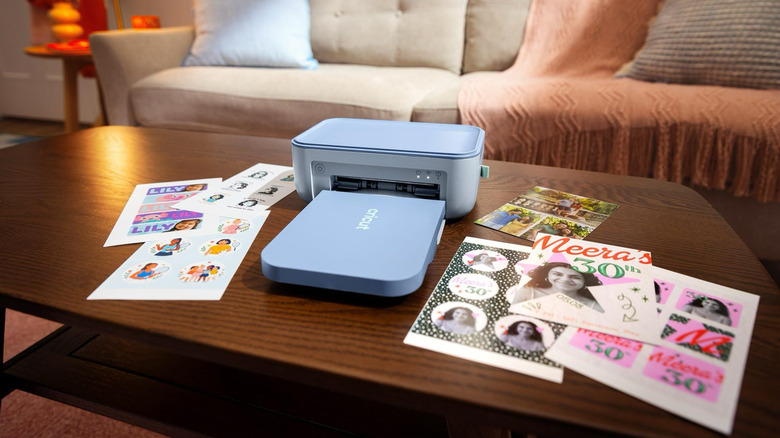
Banana Pi’s BPI-CM6 compute module runs on SpacemiT K1 RISC-V processor

Banana Pi’s BPI-CM6 is a compute module based on the SpacemiT K1 octa-core RISC-V processor. First revealed in April 2025, the module is now available for purchase from multiple sources and is described as a compact compute platform for edge computing, robotics, industrial control, and network storage applications. The BPI-CM6 adopts a 40 × 55 […]

The World’s Longest-Running Lab Experiment Is Almost 100 Years Old

alternative_right shares a report from ScienceAlert: It all started in 1927, when physicist Thomas Parnell at the University of Queensland in Australia filled a closed funnel with the world’s thickest known fluid: pitch, a derivative of tar that was once used to seal ships against the seas. Three years later, in 1930, Parnell cut the funnel’s stem, like a ribbon at an event, heralding the start of the Pitch Drop Experiment. From then on, the black substance began to flow. At least, that is, in a manner of speaking. At room temperature pitch might look solid, but it is actually a fluid 100 billion times more viscous than water.

It took eight years for the first droplet to finally hit the beaker below. Then, they dripped at a cadence of once every eight years or so, slowing down only after air conditioning was installed in the building in the 1980s. Today, 96 years after the funnel was cut, only nine drops in total have seeped out. The last was in 2014. Scientists expect another will fall sometime in the 2020s, but they are still waiting. No one has ever actually seen a droplet fall directly, despite all the watchful eyes. The experiment is now live-streamed, but various glitches in the past meant that each fateful moment has slipped us by.


Read more of this story at Slashdot.

Germany’s EV Subsidies Will Include Chinese Brands

Germany is reinstating EV subsidies after a sharp sales drop, rolling out a 3 billion-euro program offering 1,500-6,000 euros per buyer starting in May and running through 2029. Unlike some neighboring countries, the incentives are open to all manufacturers with a focus on low- and middle-income households. From a report: “I cannot see any evidence of this postulated major influx of Chinese car manufacturers in Germany, either in the figures or on the roads — and that is why we are facing up to the competition and not imposing any restrictions,” German Environment Minister Carsten Schneider said at a Monday press conference. The decision is a major boon for affordable Chinese automakers like BYD that are steadily gaining ground in the European market, [Bloomberg noted].

Germany’s green-light for Chinese EVs stands in stark contrast to other nations’ approaches. In the UK, subsidies introduced last year effectively excluded Chinese battery-powered vehicles, while France’s so-called social leasing scheme includes similar restrictions. […] Germany maintains strong diplomatic ties with China. German automakers are among the most significant players in China’s automotive industry. Over the past years, China’s policies — including purchase subsidies and purchase tax reductions — have not excluded models or automakers from specific countries. Whether German automakers like Volkswagen or American automakers like Tesla, all enjoy national-level purchase incentive policies in China on par with domestic automakers.


Read more of this story at Slashdot.
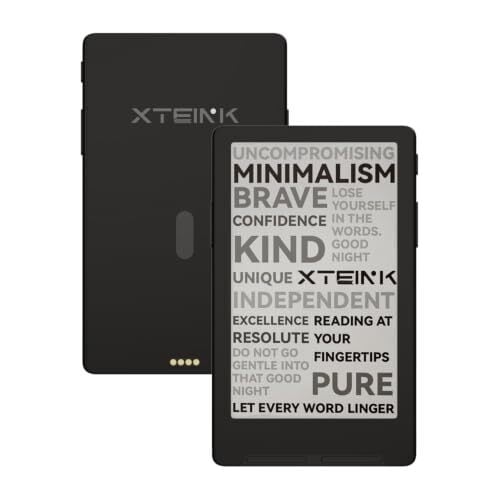
Nvidia leans on emulation to squeeze more HPC oomph from AI chips in race against AMD

AMD researchers argue that, while algorithms like the Ozaki scheme merit investigation, they’re still not ready for prime time.Double precision floating point computation (aka FP64) is what keeps modern aircraft in the sky, rockets going up, vaccines effective, and, yes, nuclear weapons operational. But rather than building dedicated chips that process this essential data type in hardware, Nvidia is leaning on emulation to increase performance for HPC and scientific computing applications, an area where AMD has had the lead in recent generations.…