
Shiva is entering development for Mesa Vulkan drivers as a new framework akin to Gallium3D but for Vulkan drivers rather than OpenGL. It’s going to be some time before the work will come to fruition but should hopefully lead to more code sharing and a better Mesa Vulkan driver development experience in the future…
Author Archives: Xordac Prime
“Shiva” Being Developed For Mesa Vulkan Drivers, Akin To Gallium3D
Shiva is entering development for Mesa Vulkan drivers as a new framework akin to Gallium3D but for Vulkan drivers rather than OpenGL. It’s going to be some time before the work will come to fruition but should hopefully lead to more code sharing and a better Mesa Vulkan driver development experience in the future…
Arboretum Update Brings The Holodeck To Solara One On Quest
Solara One is an experience that sits in the center of a Venn diagram of VR genres: part game, part meditation, part sci-fi space exploration.
What’s most impressive is that the entire experience was developed by a lone developer, Aaron Cryderman, who spent most of his career at BlackBerry working with data. After a career shift that left him with more free time, he decided to follow his interests in digital music creation, photography, meditation, and space art, and combine them into a singular project. Additionally, Cryderman wanted to satisfy his desire to experience space travel after realizing the possibility of experiencing it for real was unlikely.
He taught himself Unity over several months and started working on Solara One as a passion project, finally releasing the app on Meta Quest in May 2024.
Since launch, he’s updated the experience several times, both with new content and with performance and visual enhancements.
Solara One combines relaxing meditation, awe-inspiring space views, and sci-fi environments, while employing clever physics and haptics to enhance immersion. The beautiful visuals are accompanied by music that heightens the sense of awe you feel in space, providing a deeper ambient undertone.

Cue The Holodeck
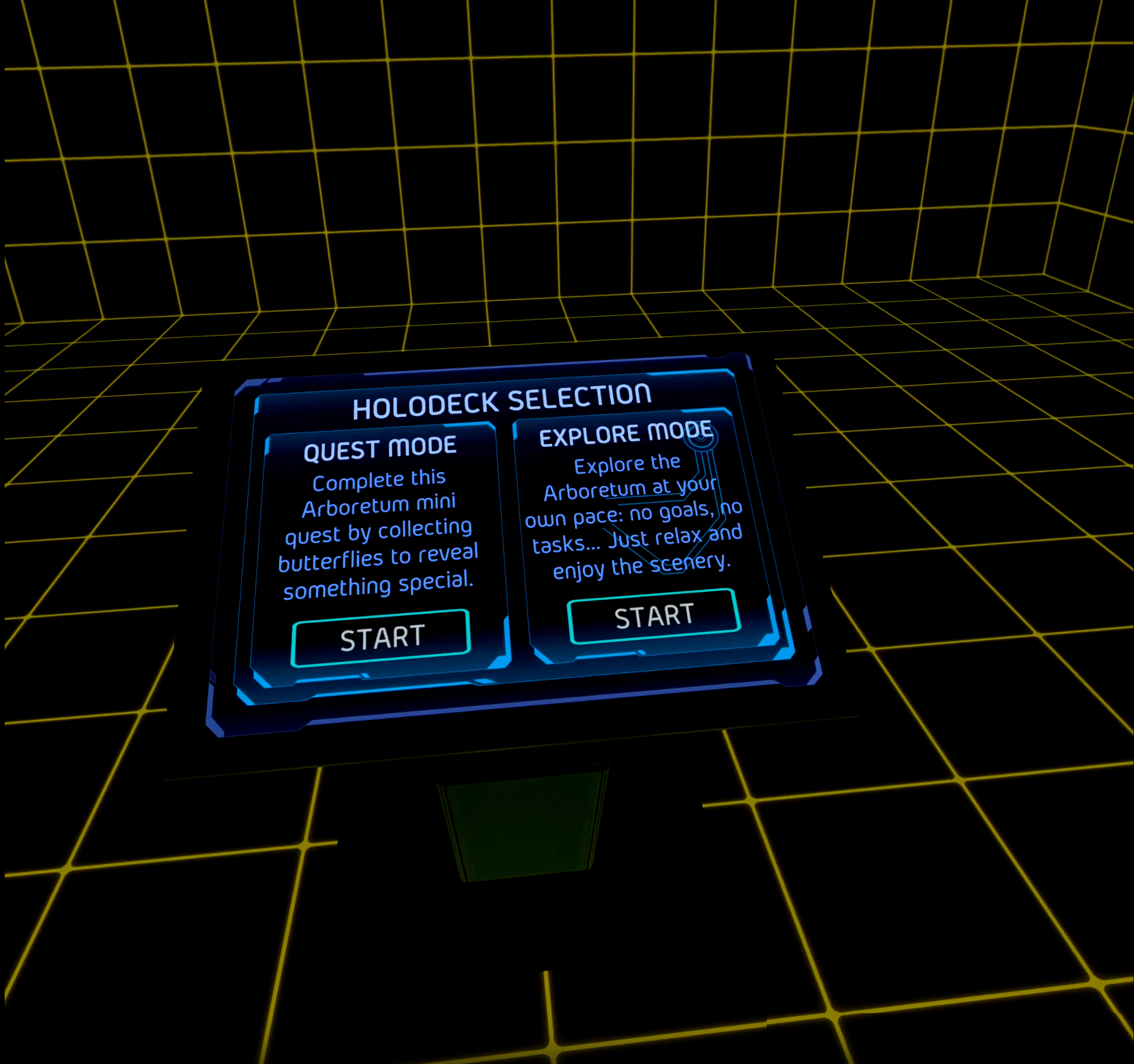
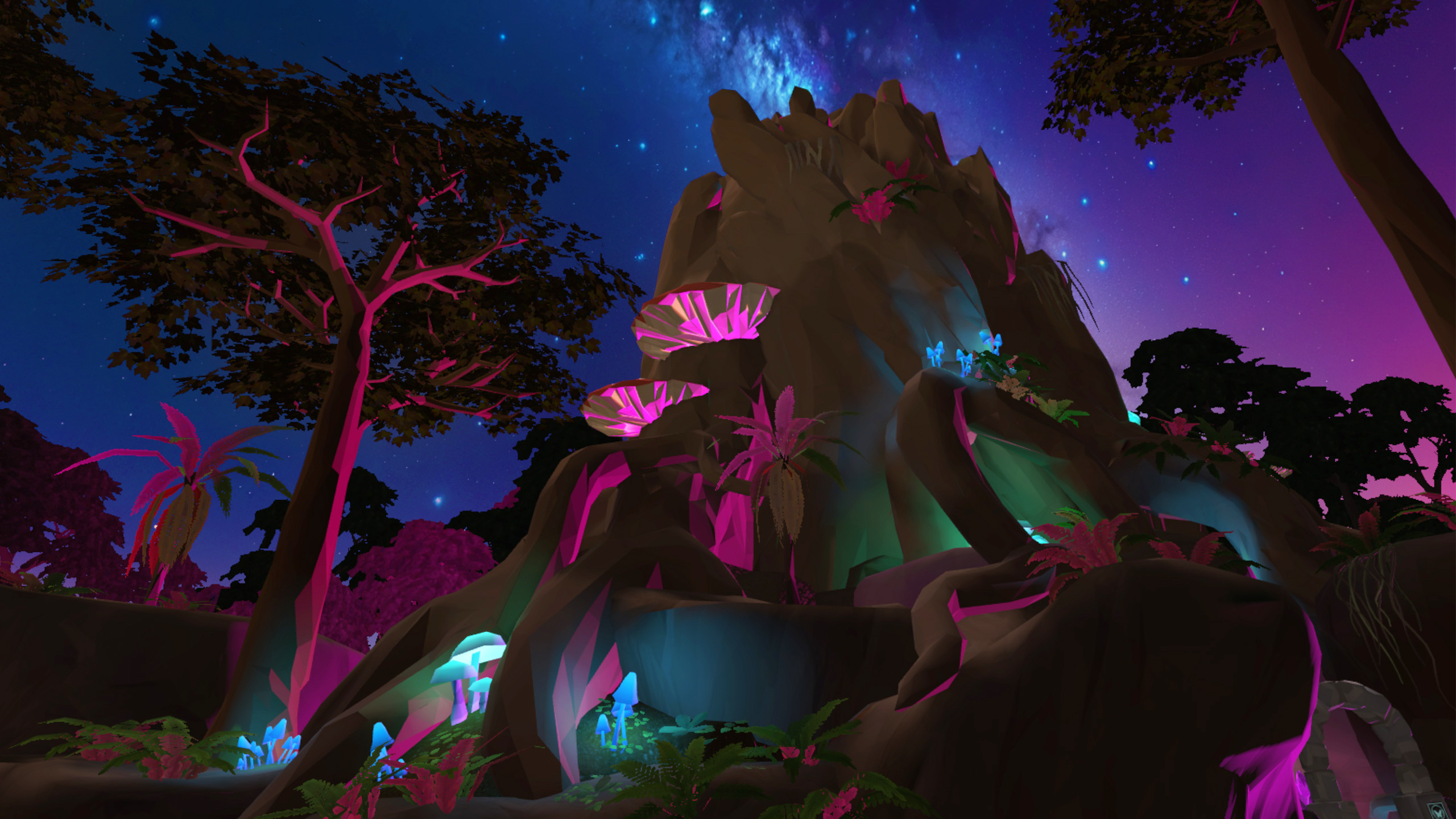
Cryderman released the Arboretum update to Solara One in early September, adding a Holodeck-like experience to the app. You enter an empty, grid-defined space at first, and are presented with two choices: a lightly gamified “Quest” mode and a free-play “Explore” mode. Make your selection, and the Arboretum loads in. You find yourself in a forest environment, with a large Buddha statue, glowing crystals, and the same mood-setting ambient music.
I won’t give away too many details of the Quest mode, but there are orbs and butterflies. The experience pays off with a special celebration that is memorable and surprisingly emotional.
The Arboretum was not originally in Cryderman’s road map for Solara One. However, he was thinking often about the day-to-day reality of living in outer space, and how humans would eventually yearn for a more earthly environment, if even for a little while. And of course, Star Trek’s Holodeck provided inspiration to the idea.
Once Cryderman had his environmental assets optimized to run smoothly on Quest, he had another challenge to solve: what would a user actually do in a forest? How would users achieve an awe-filled meditative experience in a forest environment, as opposed to floating in outer space above a rotating planet?
0:00
/0:45
Elevator to the Arboretum, taken from my Quest 3
A Butterfly Flaps Its Wings In Space
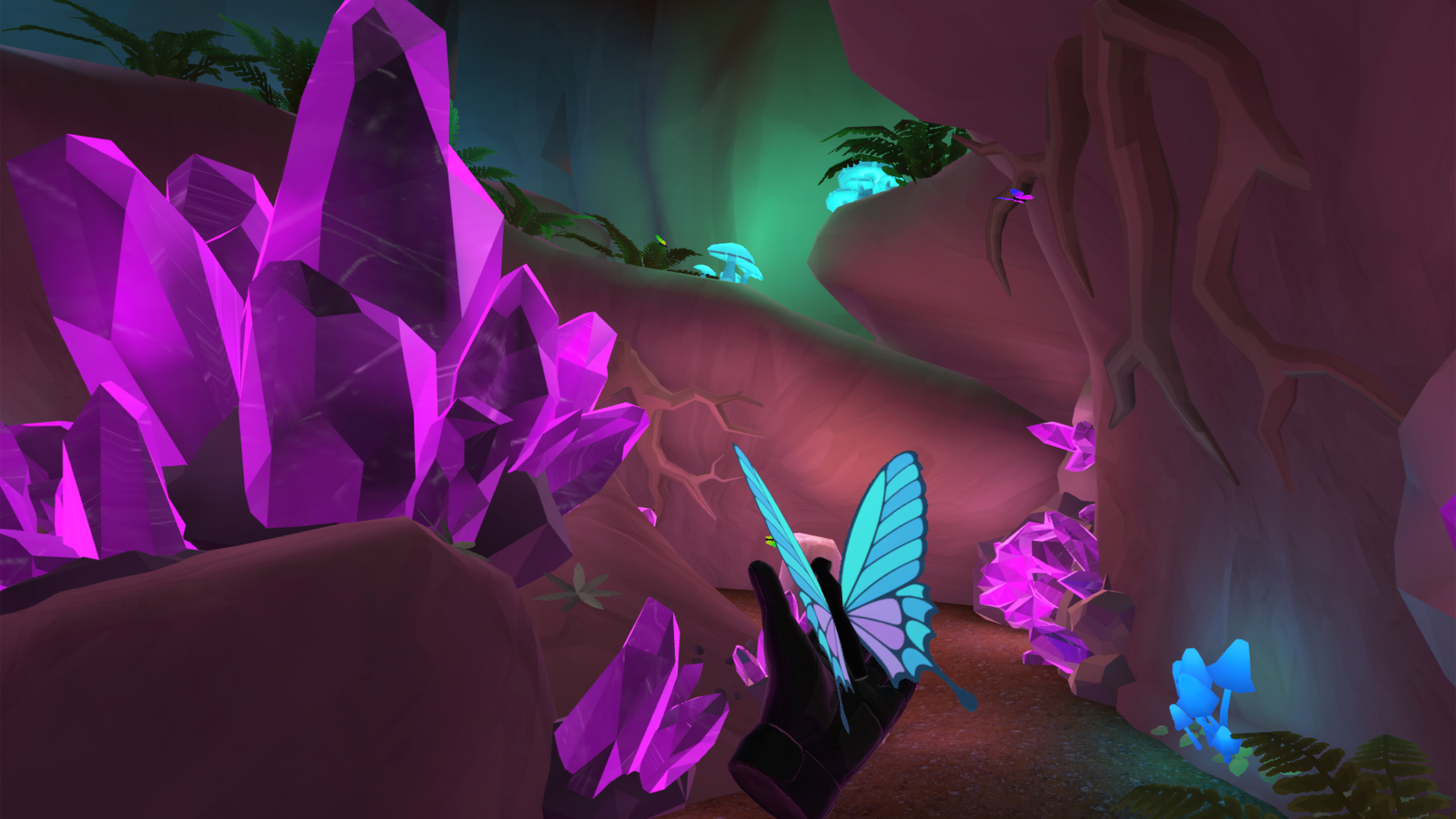
The butterflies that inhabit the forest environment serve more than just a visual purpose.
Cryderman explained to me that he wanted the butterflies to help induce a meditative state similar to sitting around a campfire, staring at the flames.
He explains, “If you’re sitting around a campfire, you’re just sitting there and you’re mesmerized by the fire movement…you go into a naturally meditative state, but it’s effortless.”
He continued, “The butterflies were kind of like…the campfire part where that’s the thing that moves and kind of draws you in and focuses your attention a bit.”
In the forest the butterflies provide flashes of color against the dark night and become almost hypnotic as you follow them with your eyes.
Adding A Game To Solara One
“My target for my game, my experience, is gamers who are looking to kind of relax and chill out in outer space.”, Cryderman told me. Adding a gamified mode was something he realized would be popular with his core audience and would add something new to the Solara One experience. He also chose to leave a clear way for a user to simply relax in the Arboretum if that’s their preference.
In my time playing both the Quest and Explore modes, I found the overall experience to be tranquil and a welcome respite from the dark beyond of outer space that surrounds you in the other areas of the app. Quest mode keeps you busy, and the pay-off at the end is worth the effort. The forest has enough nooks and hidden areas to keep it interesting as a chill-out experience. I would love the ability to explore the upper levels and go farther afield.
The Arboretum update provides another compelling reason for users to return to Solara One frequently. Few VR experiences deliver across so many fronts: crisp visuals, sound design, haptics and mechanics, UI design, and more. In my opinion, Solara One delivers across them all, and remains one of my most-recommended VR apps.
Solara One is available on Meta Quest.
Arizona Truck Driver Will Let You Become A VR Trucker On Quest This October
Arizona Truck Driver is an open road trucker simulation coming to Quest standalone in Early Access this October, from the team behind The Wizards.
For realistic truck sims, PC VR players have had the well-regarded American Truck Simulator and Euro Truck Simulator 2 available with VR support for years while standalone VR users have been more limited in their choices. Carbon Studio (The Wizards) is aiming to change that.
Here’s the trailer:
0:00
/1:21
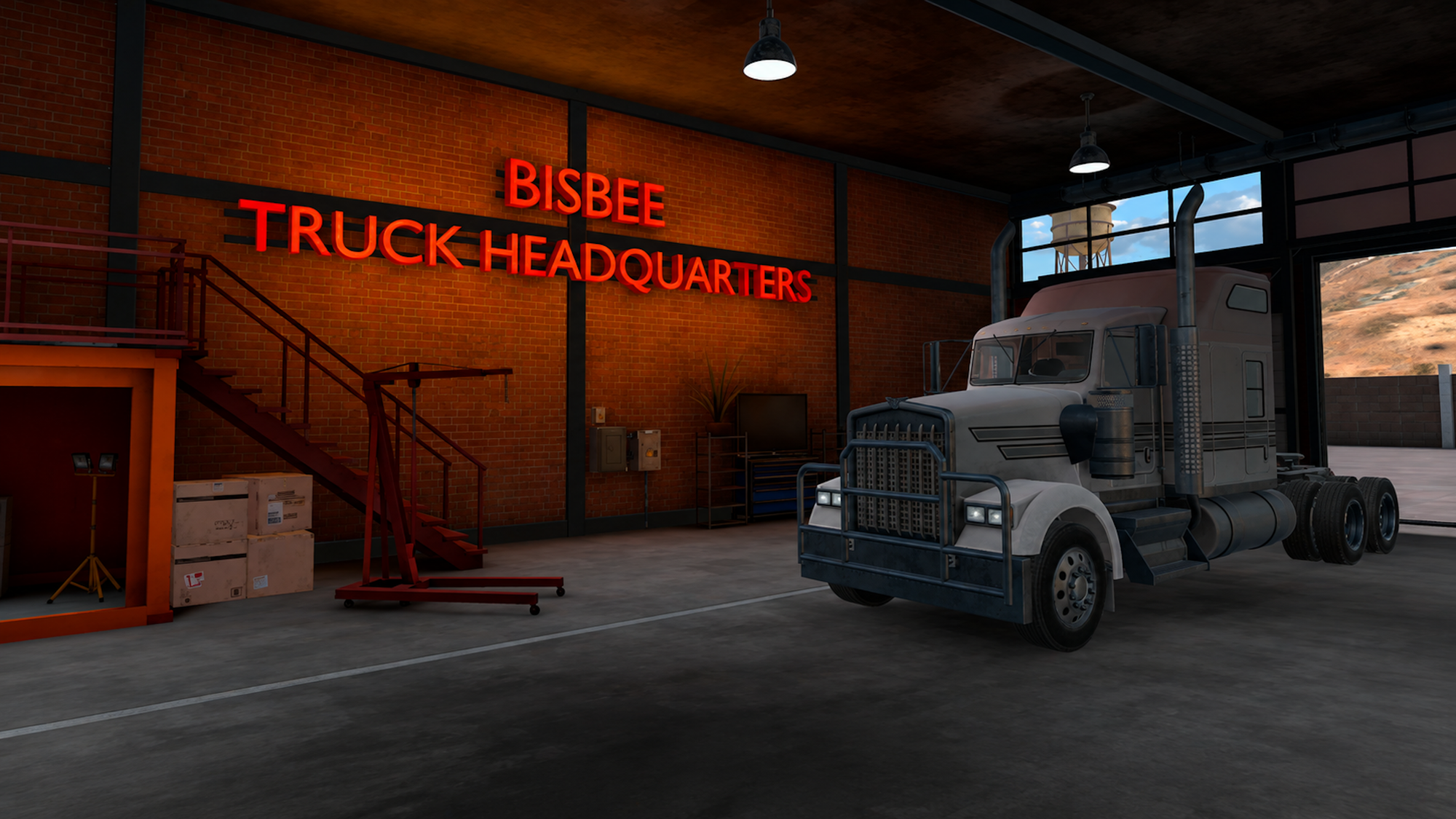
Carbon says the game offers a detailed trucking experience with over twenty-five hours of gameplay. Instead of simply driving between two points, you’ll be responsible for cleaning, servicing, and refueling your truck while accepting jobs from different companies to build up your business. There are six different American and European trucks to choose from, each with different handling and physics, and over 350 items to customize the look and make it your own. Each truck also has an interactive cockpit, including a radio with multiple stations.
The map is inspired by the state of Arizona and is broken up into twelve regions and three biomes with dynamic weather and seasons changing road conditions as you drive. New regions can be unlocked by completing jobs, earning new licenses, and continuing to build your business. As you progress, you can hire NPC drivers to take on additional work, buy new trucks, and expand your headquarters. From appearances, it aims to be the type of slice-of-life simulator that has been successful on PC for years.
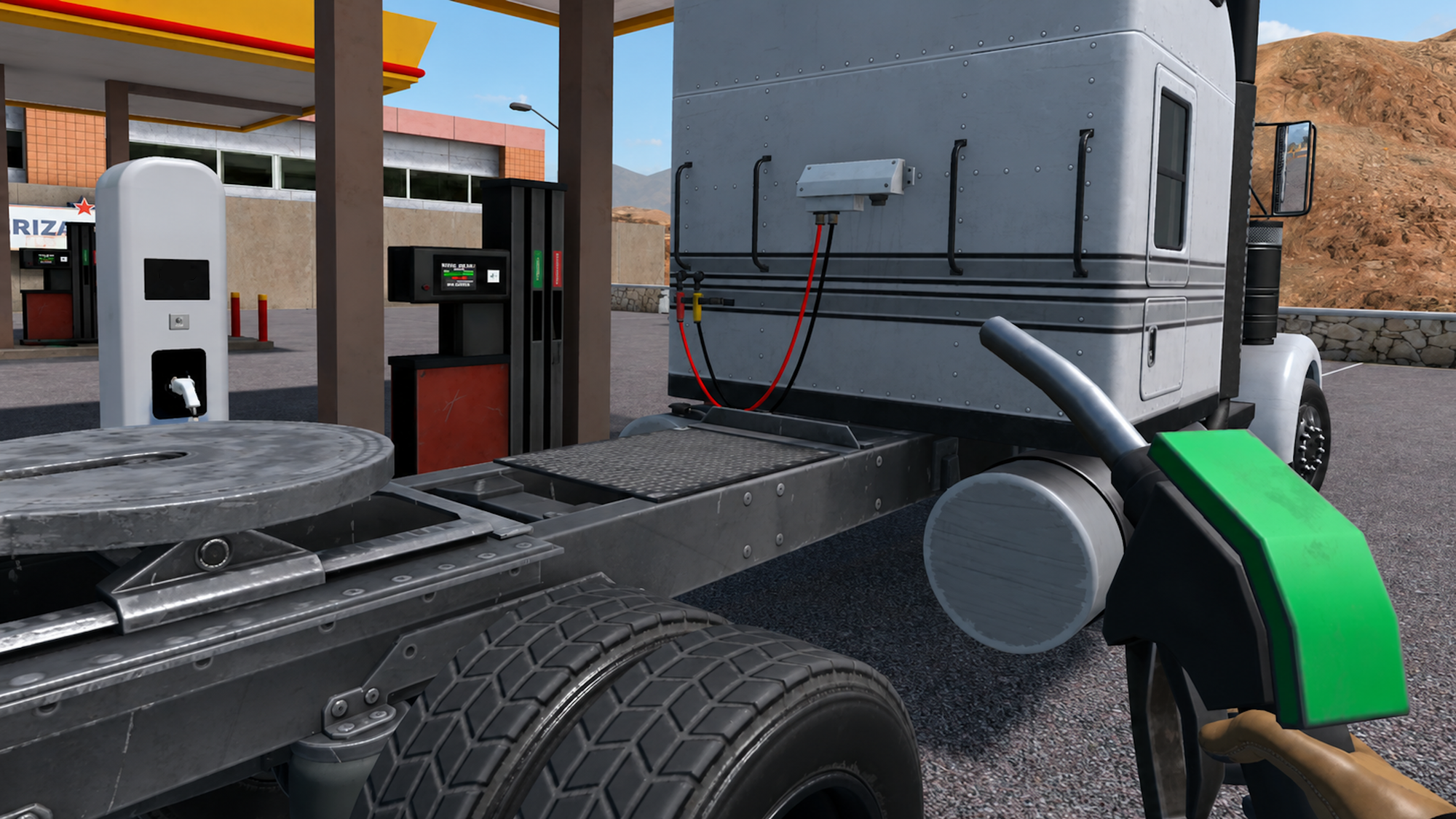
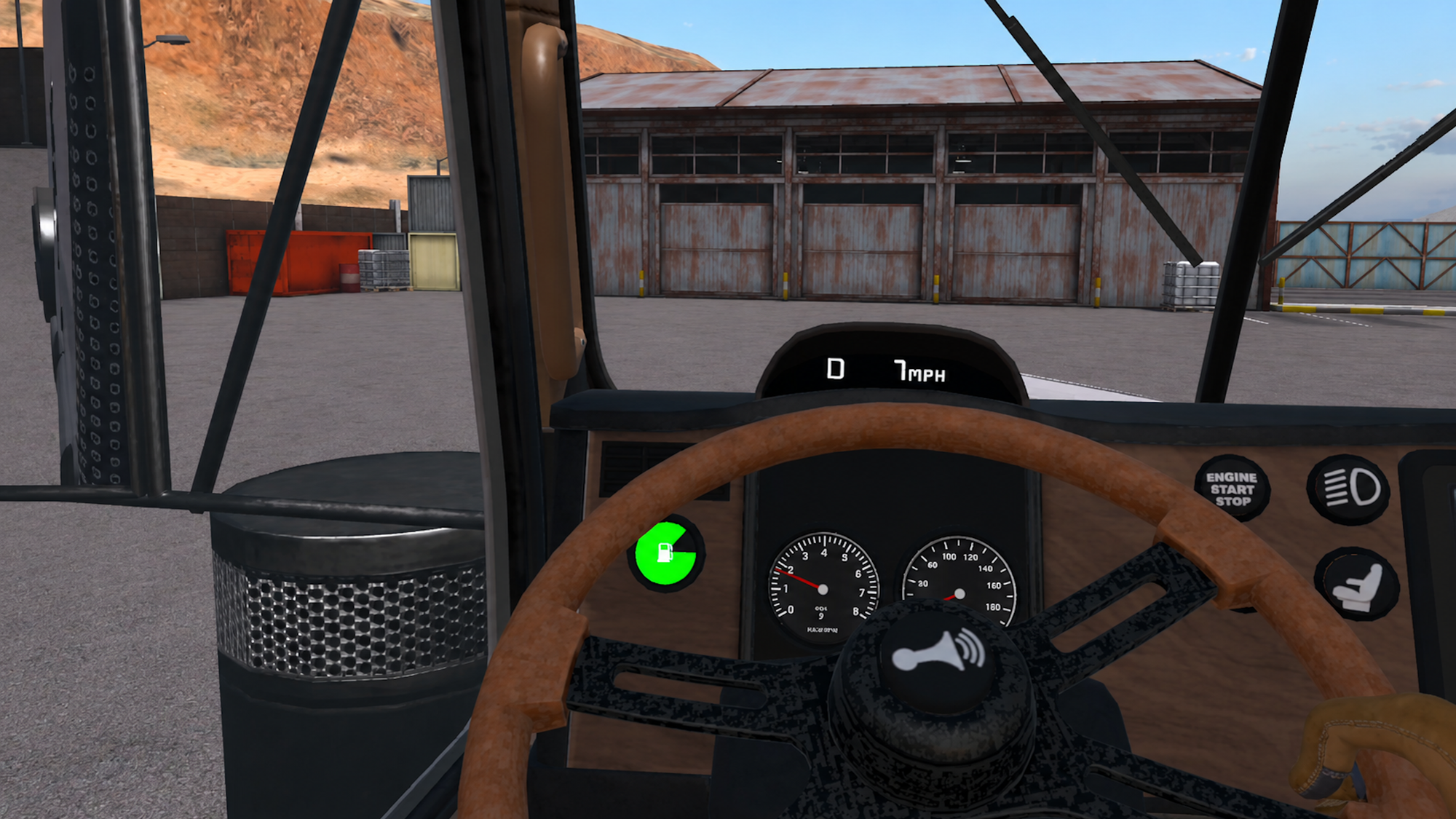
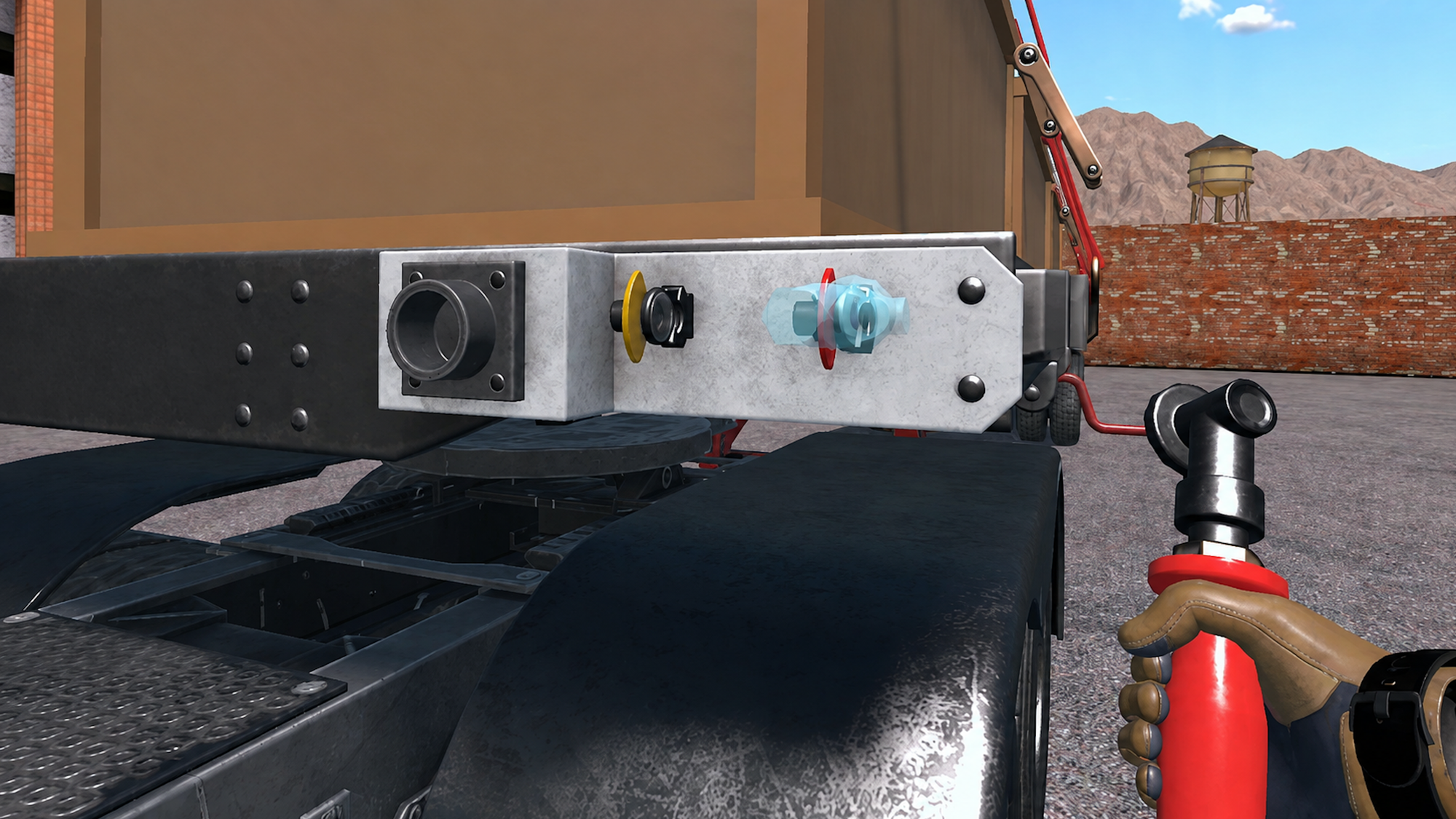
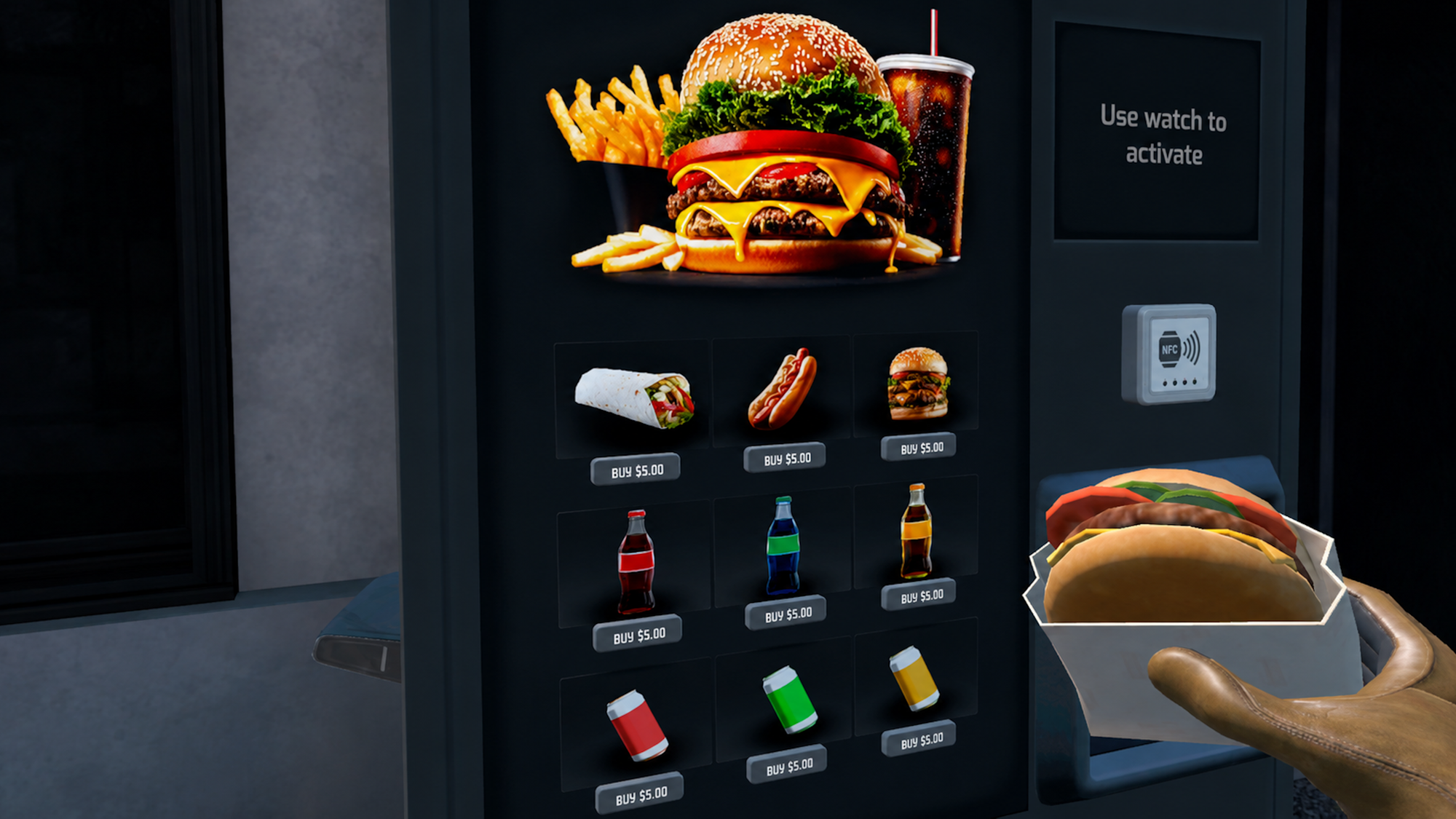
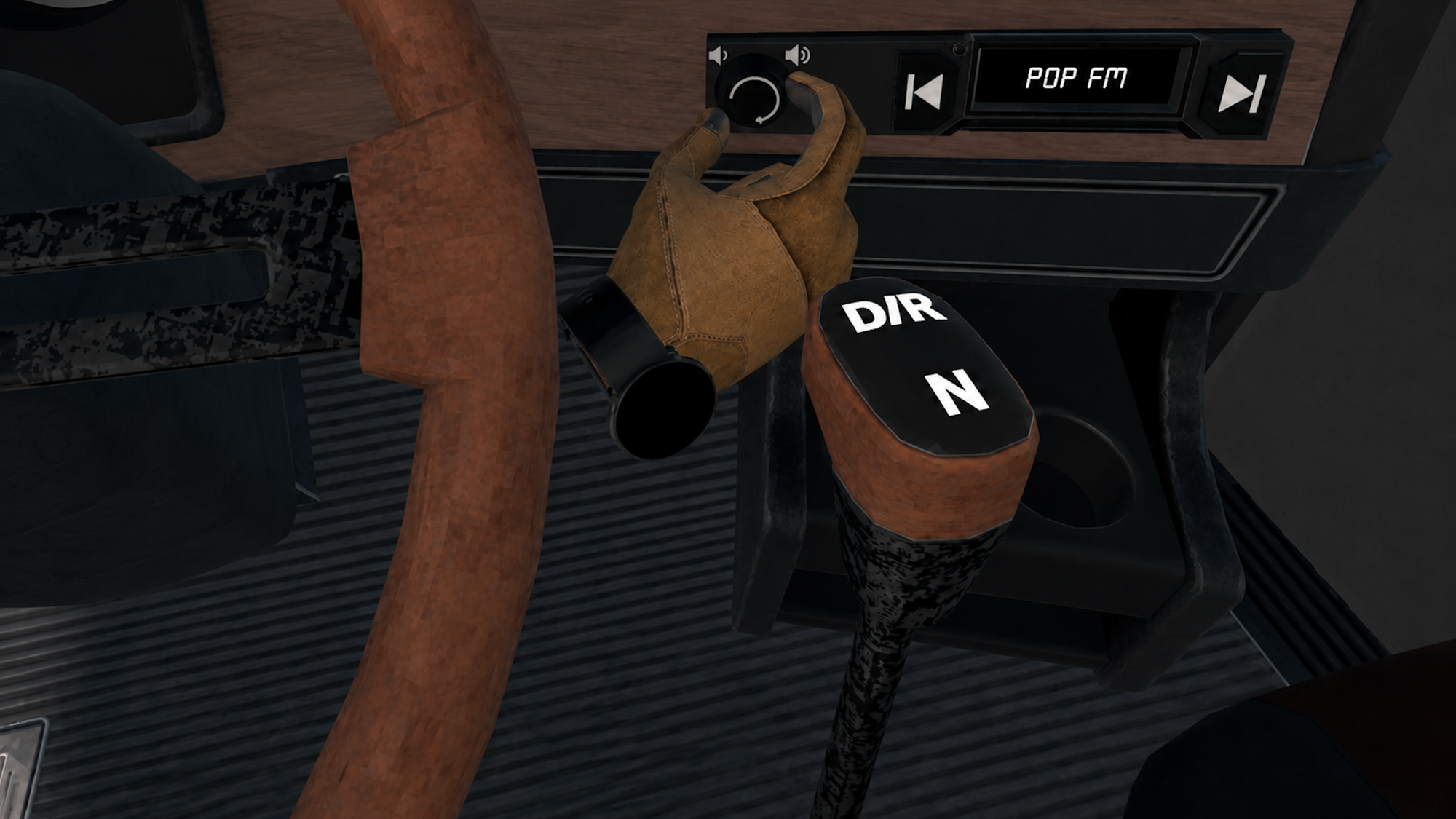
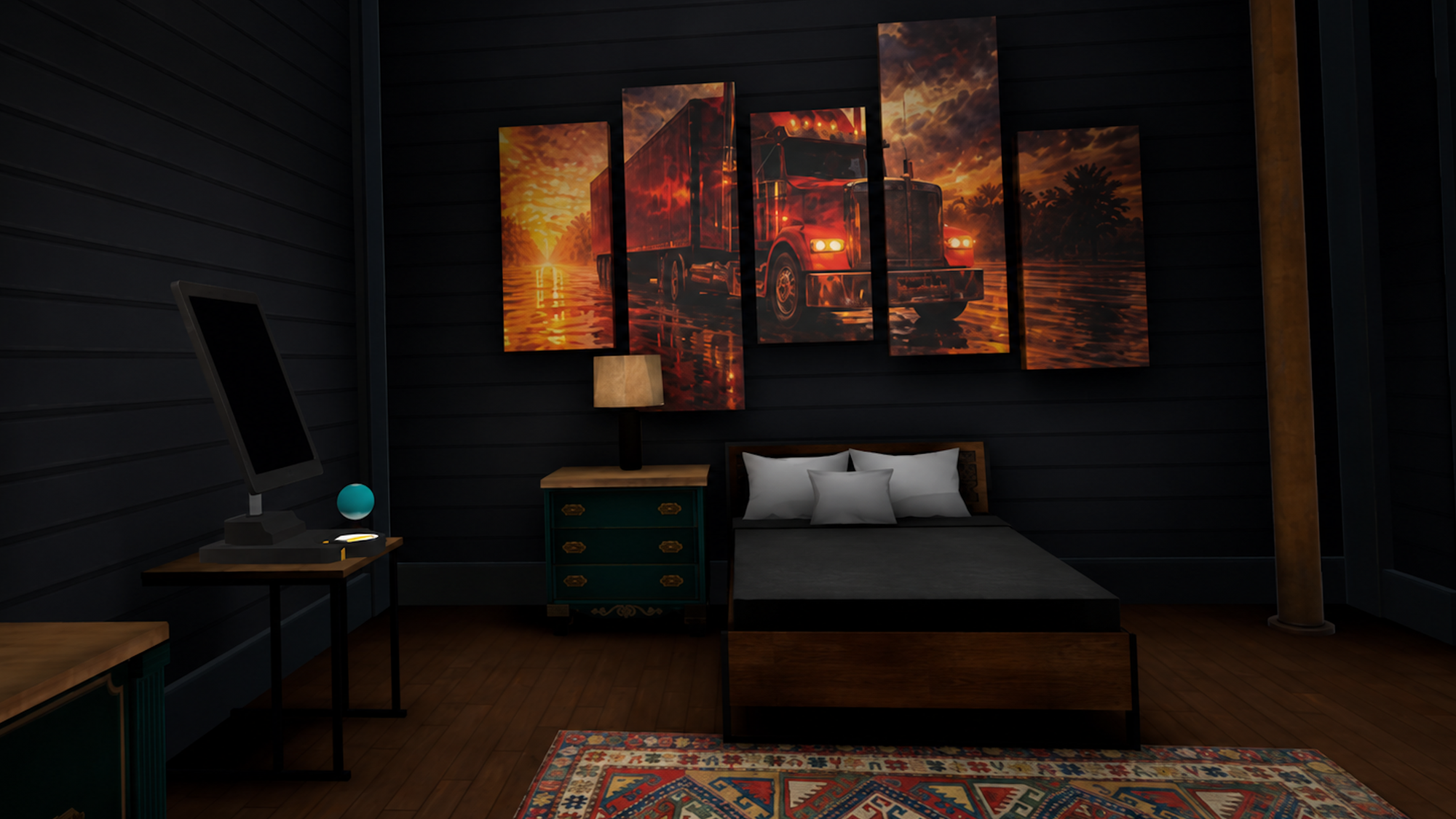
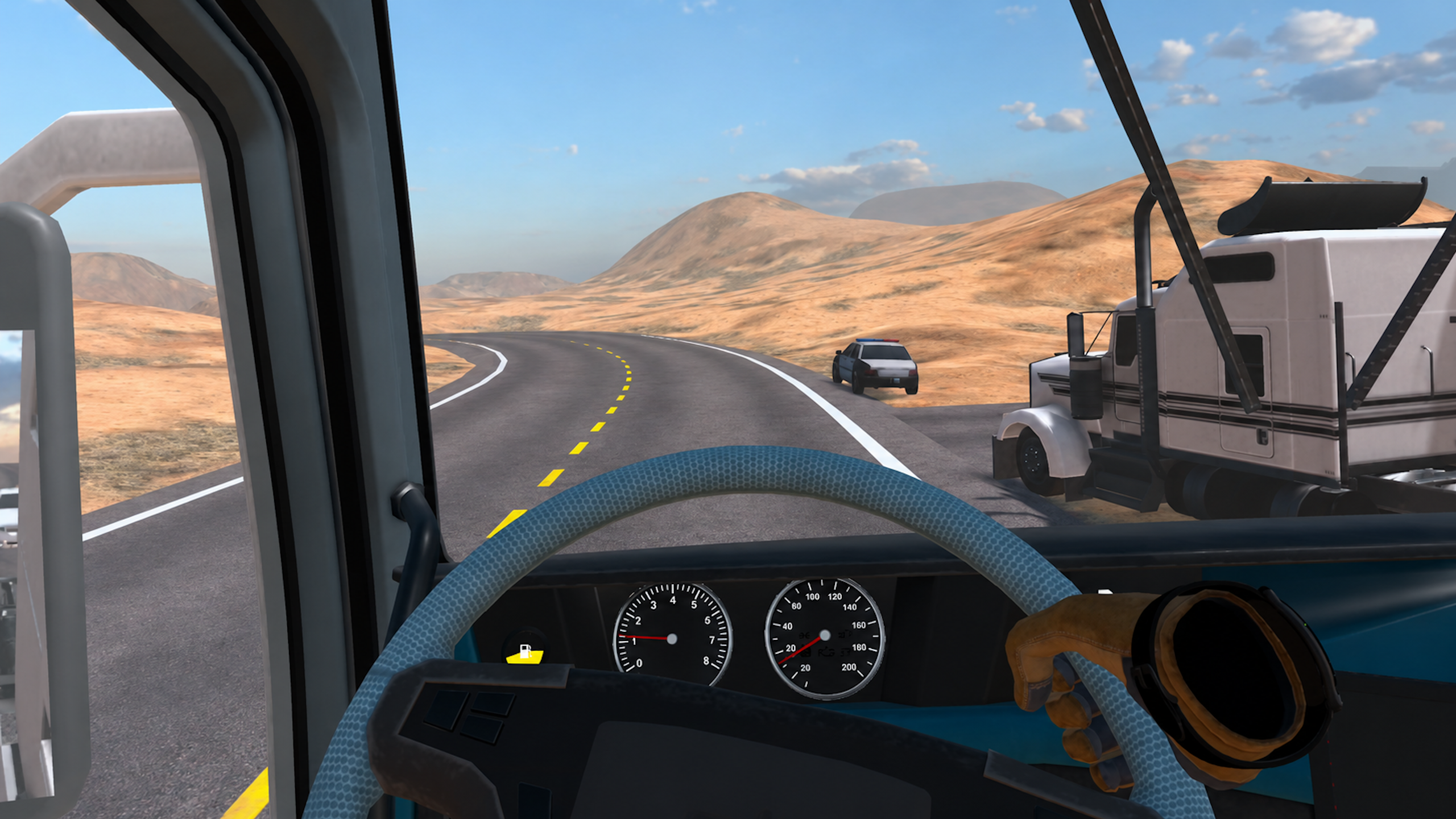

Screenshots provided by Carbon Studio
Arizona Truck Driver is expected to launch in Early Access on Quest in October and can be wishlisted here. A Steam release is planned for a later date.
Avengers: Endgame Encore Viewers Shocked To Find Out One Scene Teasing Doomsday Was Exclusive To IMAX
Regular viewers only got access to three of the four new scenes
Body Proxy Is A Unique Meta Smart Glasses Game From Tender Claws
Will you be able to prove your value to AI agents by completing challenges that they cannot yet perform? Body Proxy is a location-based immersive game that challenges players to impress the AI at a fictional startup, while wearing Ray-Ban Meta glasses to let them watch, listen and communicate with players. It’s the most fun I’ve had with AI glasses to date.
The experience is from Tender Claws, the award-winning studio behind projects like Stranger Things VR, Face Jumping, The Under Presents: Tempest, Virtual Virtual Reality and more. They are often celebrated for how they leverage the unique features of XR hardware to immerse audiences into story worlds, like with eye tracking to swap character perspectives, and interactive live theatre. This is their first time developing an experience that uses AI glasses.
Winner of the SXSW 2026 XR Experience Jury Award and official selection of TIFF: The Market 2026, Body Proxy is worth highlighting because of its incredibly unique and engaging approach to using Ray-Ban Meta glasses for an entertainment experience. Danny Cannizzaro, who co-founded the studio and co-directed Body Proxy with Samantha Gorman, shares that there are “versions of Body Proxy” being developed for “free-roaming across a variety of spaces” with plans to tour it at more events this and next year.
0:00
/0:47
Body Proxy sizzle video provided by Tender Claws
How AI Glasses Turn Your Reality Into Part Of The Immersive Experience
The AI agents in the game monitor how tasks are being completed through the Ray-Ban Meta glasses being worn by the players. Through the glasses, the system watches, speaks and listens to players throughout the experience. They can make sense of and judge what is happening in the real world. Because of this, the real world space, with physical objects that can be used to try to complete some of the tasks, becomes a part of the story. The features of the Ray-Ban Meta glasses create the bridge between the story and the physical space, transitioning players into the reality of the Body Proxy world but without any sort of digital visual immersion. It is like a form of mixed reality where just the physical space and objects are real, but the experience is driven by the story and immersion through its understanding of what players are doing and the mutual ability to see, speak and listen.
Onlookers can watch players attempt tasks and try to guess which they are attempting based on the list of challenges on a physical screen in the space. The screen includes elements like their digital avatar, and how well they are performing as well.
0:00
/0:19
Sample segment of the live challenges that appear on screen, with the Avatar of Yuxin Gao, Producer at Tender Claws
Tender Claws is used to leaning into available hardware features to create new experiences. Not being VR, Cannizzaro explains that they looked to immersive theatre as inspiration when designing the Ray-Ban Meta experience. “Something like Sleep No More is highly immersive with minimal technology. We’ve framed Body Proxy as a kind of narrative recruiting and onboarding process for this fictional company … Everything the user does happens within the context of this narrative experience, in which they take on a role and become part of the story…You are still completely interacting with a digital system, but for a large part of the experience there is no screen at all.”
Challenges That Reward Natural Human Creativity
0:00
/0:34
Segment of the Body Proxy onboarding, provided by Tender Claws
What I love most about Body Proxy is how the experience requires your character to reject any preconceived notions of how one should act and be as playful as possible in order to succeed. Human creativity under pressure is rewarded. There are no options for typical day-to-day actions that have a high probability of being correct. This feels like a nice nod to the value we bring to collaborating with AI agents. The random, unserious challenges also make the experience feel fun instead of too close to where we may be headed.
In the current version of Body Proxy, there are around 100 unusual randomized tasks and variations of them, and a large selection of peculiar physical objects for players to choose and interact with to try to get the AI to accept as many tasks as possible. Often, the objects are switched up between locations where Body Proxy is available.
“One of the joys of watching lots of people play Body Proxy is seeing the creative and innovative ways they approach the same task” shares Producer J Noland. “You may see the same task completed dozens of times over the course of a festival, and then someone approaches it in a completely new and surprising way.”
Proving Your Value To AI Is A Fun, Replayable Spectator Sport (For Now)
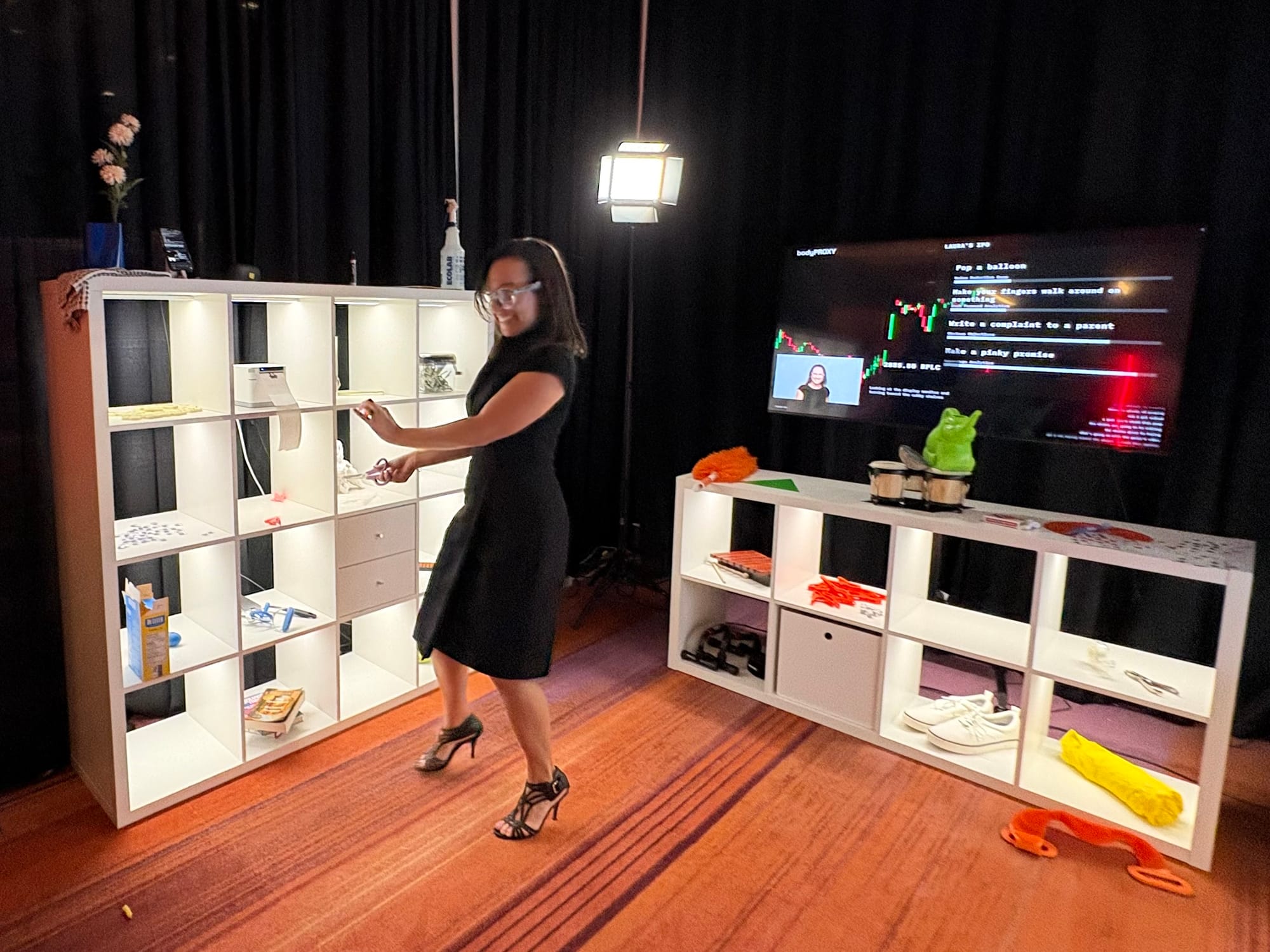
Proving your value to AI may seem like a reality in our not-so-distant future, but the playfulness of Body Proxy, its simple onboarding, clear challenge, unique format and wide range of tasks made this something that I caught many people trying to replay. Plus, the players and their choices become the entertainment for others. Cannizzaro shares that the “installation itself has a vaguely Taskmaster, game-show-esque vibe to it that always attracts a crowd.” There is intrigue in what each player will attempt and how. Both the player and audience get to view an entertaining generated video report at the end of each playthrough that analyzes performance and what the performance says about each proxy.
0:00
/0:14
Sample segment of a sample Body Proxy report video, provided by Tender Claws


Screenshot of several segments of a sample Body Proxy report video, provided by Tender Claws
Unlocking New Immersive Experiences With Smart Glasses
There are different versions of Body Proxy in development, including “versions of the project running off phones and webcams as well.” shares Cannizzaro. Tasks in the current version are human-generated in advance, but a “roaming version of this project that takes place in a less controlled environment could incorporate a step where we have AI generate tasks based on the objects it sees around you.”
I hope that this experience inspires more game content for smart glasses. Story IP across genres could benefit from Tender Claws’ location-based entertainment concept.
Liminal Uses Meta Glasses To Deliver Meditation Based On What You See
Liminal, known for its VR app offering short experiences designed around emotional states like calm, focus, and energy, is now applying some of that experience to smartglasses.
Liminal: Walking Meditation is a new experience for Meta AI glasses which uses the camera to capture images as you walk and provides a spoken meditation experience based on what you see, in close to real time. The required smartphone app is slated for release in October on both iOS and Android.
The app is an example of what developers can build using Meta’s Device Access Toolkit, which was just demonstrated during the Developer State of the Union at Meta Connect 2026.
I have been trying a prerelease version with my Ray-Ban Meta glasses ahead of Connect. After taking it for a walk around my neighborhood, I found that it feels quite different from simply listening to a meditation recording.
Video: Liminal VR
Your Surroundings Become Part Of The Meditation
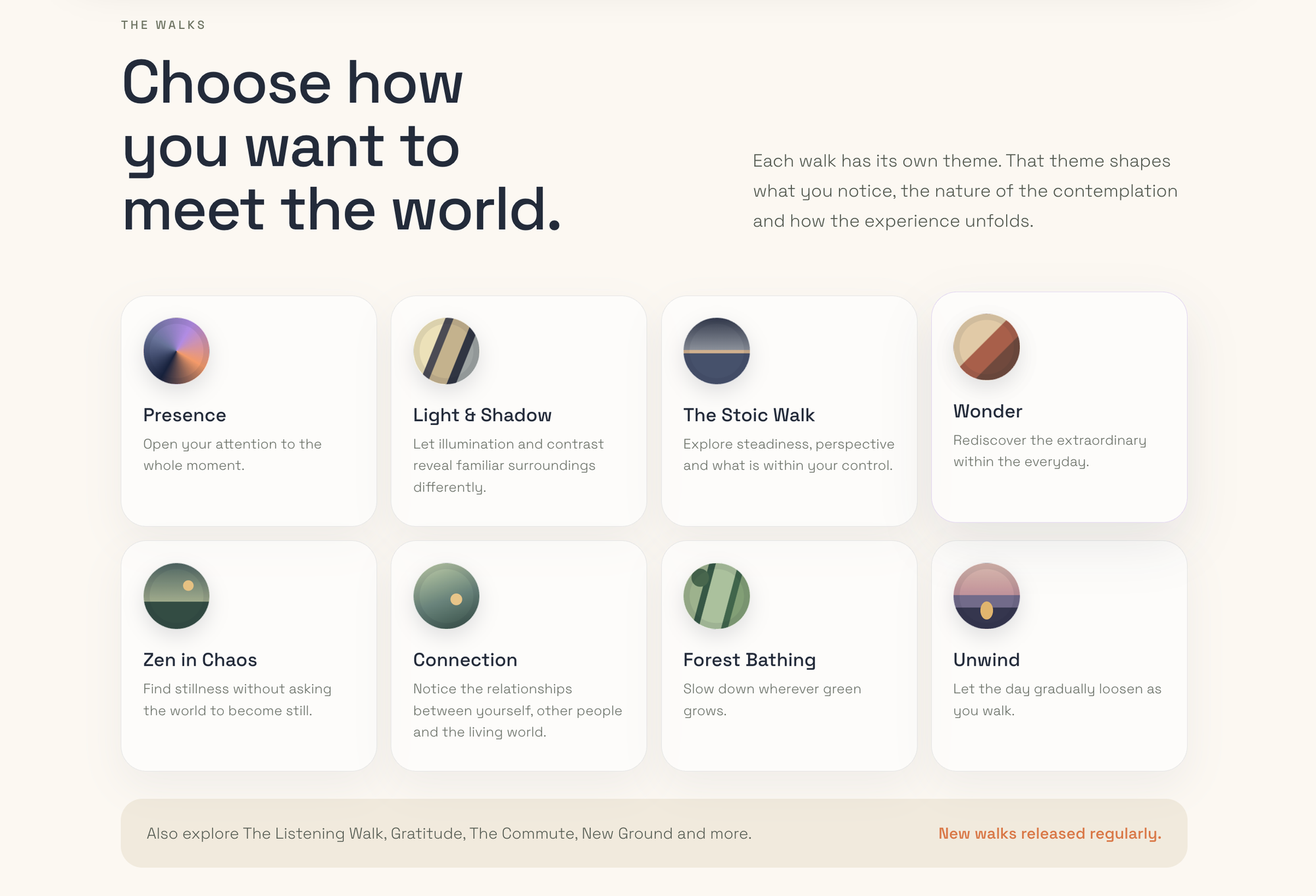
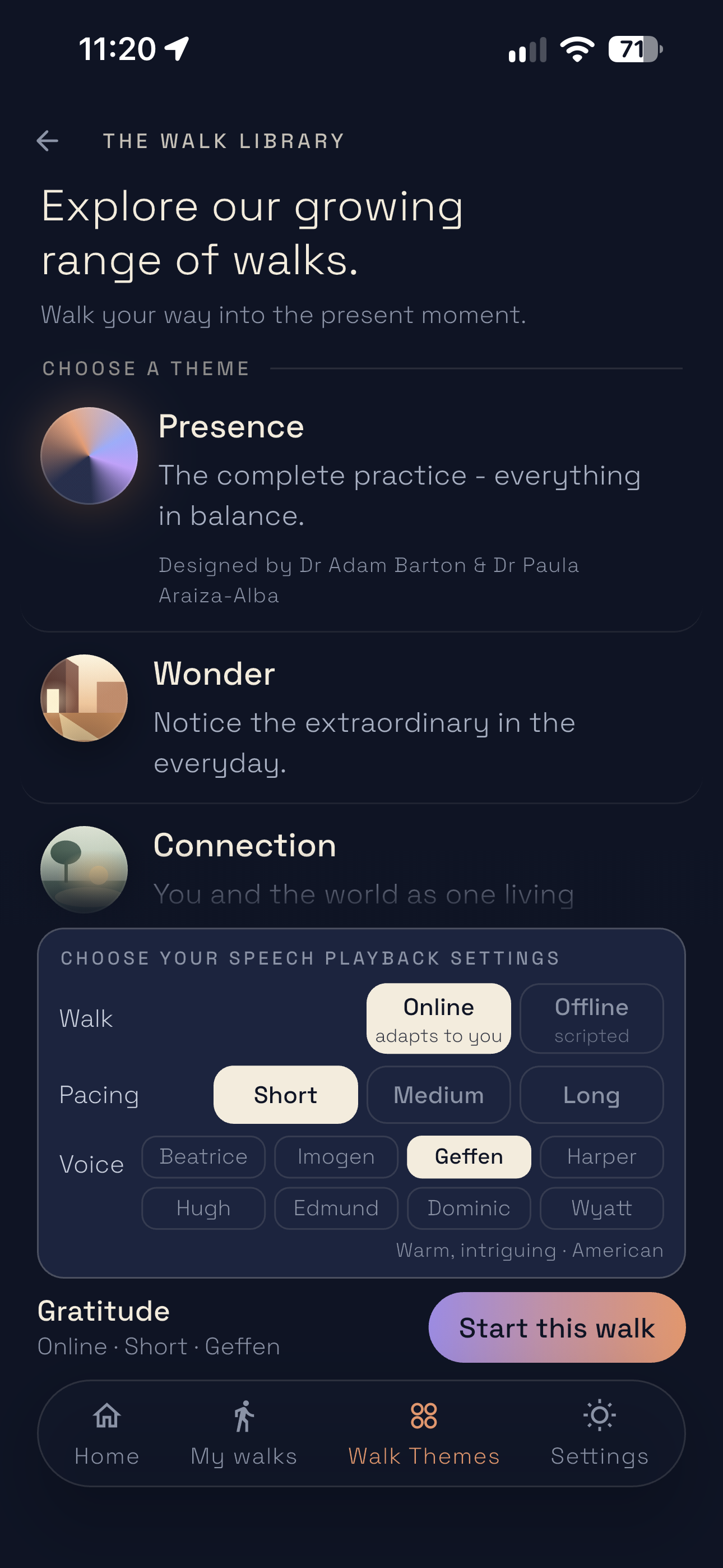
To begin a Walking Meditation you launch the smartphone app which needs to be paired to your Meta AI glasses during the setup process, and select the theme, voice, and pacing that you would like. Once the walk begins you can pocket your phone and continue hands-free, listening through your glasses while the app uses images to describe what is around you and contextualize it for the meditation session.
On my first walk, I deliberately went outside at night to see how well it could make sense of a darker environment. At one point, it referred to my car sitting nearby and described it in the context of the scenery around me. Even though its vision was limited, it managed to call out details like the “amber streetlights” shining against the darkness.
Liminal co-founder and CEO Damian Moratti told me the company approached smartglasses by asking what they could actually add to the experience.
Moratti said Liminal has always used VR to create strong emotional responses through immersion. Smartglasses gave the team a chance to apply some of that thinking while keeping people engaged with the real world as well.
At launch the app will include twelve meditation themes. In my testing I utilized Presence, Wonder, and Gratitude. Each is guided differently to focus your thoughts in different ways. There are also eight voice and three pacing options.
Pacing does more than change the amount of silence between spoken sections. Liminal CTO Tin Nguyen told me the team is using the setting to shape how much narration you hear and the overall length of the experience. The shortest walks are expected to last around 10 to 13 minutes.
Deciding What Is Worth Talking About
It sounds simple enough, until you start thinking about everything a pair of glasses can see, even during a short walk.
A tree or a statue might be interesting. The garbage cans you have passed every Tuesday for the last ten years probably are not.
Moratti says figuring out that logic has become a major part of Liminal’s testing.
During testing, an early version mentioned the garbage cans around eight times. Another noticed a glowing sign inside the window of an adult store and built an unintentionally enthusiastic narrative around it.
As funny as those examples are, they also show how difficult the problem is.
Nguyen says the app isn’t constantly shooting and analyzing images. Instead, it periodically takes a look at the current scene as the walk progresses. In his description, it is more like single moments in time rather than a continuous photo stream.
In my testing the narration was very close to real time, with the app focusing on an object such as a particular tree as I would come up to it and pass by. It also would comment on the way the grass met the pavement or the bright sun against the blue sky. Somewhat general in certain ways, but also correctly observed.
The narration was separated by generous moments of silence, so I wasn’t overwhelmed by a constant string of prompts. That also made the impact hit harder when a narration did arrive.
What Happens To The Images?
The obvious question with an app that repeatedly looks at your surroundings is where those images go.
Liminal says images captured for Walking Meditation use zero data retention. According to Nguyen, when the app needs context from the environment, an image from the glasses is sent through the phone for AI processing. Liminal is currently using Google Gemini for that processing with zero data retention enabled. Once the response is generated, the image is discarded.
The app also does not request access to the microphone, something Moratti said was a deliberate privacy decision. Users don’t have to worry about their conversations being recorded or used a prompts for the meditation.
What About Safety?
Liminal says that the Walking Meditation app will not provide any navigation or route guidance, and that they purposely designed the experience to focus the user on what they see in their surroundings.
Moratti said that they considered whether to develop the ability alert the user to potential hazards, but the difficulty in building that reliably convinced them that the correct choice is to avoid navigation altogether, at least for now.
Liminal Is Moving Beyond The Headset
Walking Meditation is separate from the existing Liminal VR app on Meta Quest, but Moratti sees the two products as complementary, with the VR app providing escape from the real world, while Walking Meditation is built to focus attention on the real world as you walk through it.
I have listened to plenty of guided meditation through headphones, and this does feel different. The environment around you becomes part of the experience.
Adding wellness and meditation capability goes a long way toward improving the practical usefulness of Meta AI glasses. In my brief time testing the experience, I’ve found it pleasant and effective enough that I plan on continuing with it once it is fully released.
Launching in October
Liminal: Walking Meditation is planned to launch on iOS and Android in October for compatible Meta AI glasses. It will cost $9.99 per month or $99.99 per year, which includes 30 contextual walks per month, and unlimited access to offline scripted versions of each theme.
The Guy Who Saved The Predator Franchise Is Reportedly Making A Sleeping Beauty Movie
Uhhhh…okay then, Disney, that’s an idea
The Publisher Of Ys, Disgaea, Trails Wants To Do More Worldwide, Simultaneous Game Releases
Ys X: Nordics took over a year to make it out of Japan
Mozilla Firefox 157 Is Now Available for Download with Brand-New Design
Today, Mozilla has published the final builds of the Firefox 157 open-source web browser ahead of its official unveiling on September 29th, 2026, so it’s time to take a look at the new features and improvements.
Mozilla Firefox 157 Is Now Available for Download with Brand-New Design
Today, Mozilla has published the final builds of the Firefox 157 open-source web browser ahead of its official unveiling on September 29th, 2026, so it’s time to take a look at the new features and improvements.
Keepsake County Is A Nihilistic Delinquency Simulator Where Anything That Isn’t Bolted Down Is Yours For The Taking
The creators of Midnight Ultra return for a cartoony immersive sim about surviving in America
NVIDIA Developing “Display Config Server” To Improve Linux/Wayland On Display Walls
As an initiative from NVIDIA for improving the Linux ecosystem outside the world of AI, they have been developing Display-Config-Server as a new solution to help enhance the Linux capabilities for complex display walls…
NVIDIA Developing “Display Config Server” To Improve Linux/Wayland On Display Walls
As an initiative from NVIDIA for improving the Linux ecosystem outside the world of AI, they have been developing Display-Config-Server as a new solution to help enhance the Linux capabilities for complex display walls…
SIMDjson 5.0 Released: Still Making JSON Parsing Even Faster
SIMDjson is the open-source, high performance JSON parser that surprisingly began making use of AVX-512 to deliver big performance gains years ago. SIMDjson has continued further refining itself to deliver even greater speeds and out today is SIMDjson 5.0…
There’s Actually Only One Fire Emblem: Fortune’s Weave Protagonist With Main Character Energy
Intelligent Systems wants you to believe all four main characters are equal; I think they lied
Dutch Government Ditches Windows for NixOS, Following France’s Lead
The Dutch government is building DAWO, a NixOS based replacement for Windows and Office, following similar moves already underway in France and Denmark.
GOP Governor Attacks Welfare Gamers In New Ad: ‘Guys Like Brad Just Choose Not To Work’
It’s part of a campaign to cut government assistance programs
GTA 6′s Collector’s Box Gator Statue Can Now Be 3D Printed: ‘$400 And No Disc? F**k You Rockstar’
At least one person is so fed up with Rockstar that they modeled a cartoon gator in retaliation
WoW: Forever Ban Controversy Forces Blizzard Dev To Delete Account After Asking Players To Be ‘Better Humans’
Otherwise, the beta has been going great