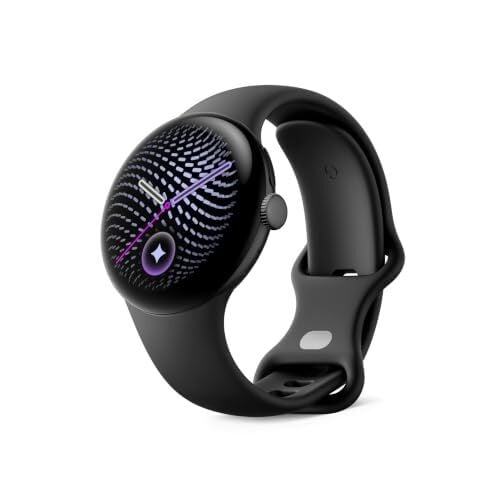
UnifyDrive expands its private NAS lineup with UC450 Pro and UC250

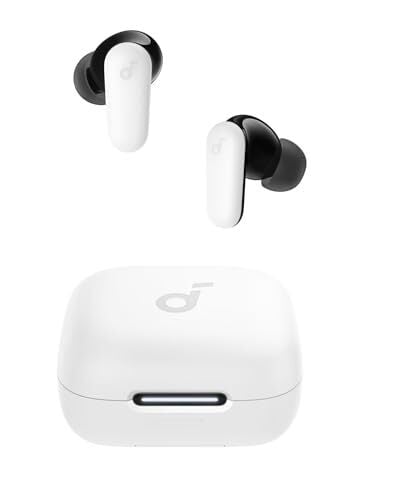
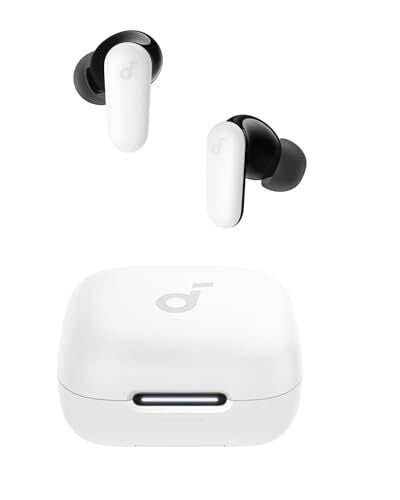
UnifyDrive has expanded its private NAS lineup with the UC450 Pro and UC250, two closely related systems focused on local storage, processing, and on-device services. The models address different performance tiers, ranging from low-power, always-on operation to workstation-class workloads. The UC450 Pro is built around Intel’s Core Ultra 5 225H processor, which combines CPU cores […]

Weight-Loss Drugs Could Save US Airlines $580 Million Per Year

An anonymous reader quotes a report from the New York Times: Weight-loss drugs like Ozempic have transformed millions of lives with easily administered treatments and quick results. Now it turns out the dropped pounds may have a surprising perk for airlines, too: lower fuel costs, as slimmer passengers lighten their aircraft’s loads.

According to a study published last week by Jefferies, a financial services firm, the four largest U.S. carriers — American Airlines, Delta Air Lines, Southwest Airlines and United Airlines — could together save as much as $580 million per year on fuel thanks to weight-loss drugs, known as GLP-1s. One in eight U.S. adults said they were taking a GLP-1 in a November survey published by KFF, a nonprofit health research group. Fuel is among airlines’ largest expenses. The Jefferies study estimates that the four airlines will together consume 16 billion gallons of fuel in 2026 at a total cost of $38.6 billion, nearly 20 percent of their total expenses.

The savings from skinnier passengers would amount to just 1.5 percent of fuel costs. But airlines and pilots must scrutinize even the smallest changes to a plane’s weight and balance, and a lighter payload means each jet burns less fuel to generate the thrust necessary to fly. Investors could also stand to benefit: The researchers estimated that a 2 percent reduction in aircraft weight could boost earnings per share by about 4 percent. “Please note savings are before any lost snack sales,” the Jefferies analysts added.


Read more of this story at Slashdot.

FBI’s Washington Post Investigation Shows How Your Printer Can Snitch On You

alternative_right quotes a report from The Intercept: Federal prosecutors on January 9 charged Aurelio Luis Perez-Lugones, an IT specialist for an unnamed government contractor, with “the offense of unlawful retention of national defense information,” according to an FBI affidavit (PDF). The case attracted national attention after federal agents investigating Perez-Lugones searched the home of a Washington Post reporter. But overlooked so far in the media coverage is the fact that a surprising surveillance tool pointed investigators toward Perez-Lugones: an office printer with a photographic memory. News of the investigation broke when the Washington Post reported that investigators seized the work laptop, personal laptop, phone, and smartwatch of journalist Hannah Natanson, who has covered the Trump administration’s impact on the federal government and recently wrote about developing more than 1,000 government sources. A Justice Department official told the Post that Perez-Lugones had been messaging Natanson to discuss classified information. The affidavit does not allege that Perez-Lugones disseminated national defense information, only that he unlawfully retained it.

The affidavit provides insight into how Perez-Lugones allegedly attempted to exfiltrate information from a Secure Compartmented Information Facility, or SCIF, and the unexpected way his employer took notice. According to the FBI, Perez-Lugones printed a classified intelligence report, albeit in a roundabout fashion. It’s standard for workplace printers to log certain information, such as the names of files they print and the users who printed them. In an apparent attempt to avoid detection, Perez-Lugones, according to the affidavit, took screenshots of classified materials, cropped the screenshots, and pasted them into a Microsoft Word document. By using screenshots instead of text, there would be no record of a classified report printed from the specific workstation. (Depending on the employer’s chosen data loss prevention monitoring software, access logs might show a specific user had opened the file and perhaps even tracked whether they took screenshots).
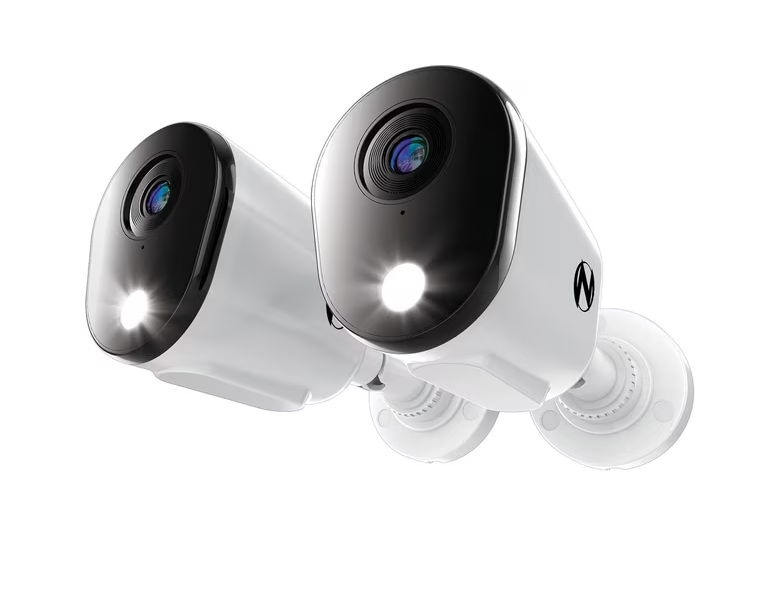

Perez-Lugones allegedly gave the file an innocuous name, “Microsoft Word – Document1,” that might not stand out if printer logs were later audited. In this case, however, the affidavit reveals that Perez-Lugones’s employer could see not only the typical metadata stored by printers, such as file names, file sizes, and time of printing, but it could also view the actual contents of the printed materials — in this case, prosecutors say, the screenshots themselves. As the affidavit points out, “Perez-Lugones’ employer can retrieve records of print activity on classified systems, including copies of printed documents.” […] Aside from attempting to surreptitiously print a document, Perez-Lugones, investigators say, was also seen allegedly opening a classified document and taking notes, looking “back and forth between the screen corresponding the classified system and the notepad, all the while writing on the notepad.” The affidavit doesn’t state how this observation was made, but it strongly suggests a video surveillance system was also in play.


Read more of this story at Slashdot.

‘America Is Slow-Walking Into a Polymarket Disaster’

In an opinion piece for The Atlantic, senior editor Saahil Desai argues that media outlets are increasingly treating prediction markets like Polymarket and Kalshi as legitimate signals of reality. The risk, as Desai warns, is a future where news coverage amplifies manipulable betting odds and turns politics, geopolitics, and even tragedy into speculative gambling theater. Here’s an excerpt from the report: […] The problem is that prediction markets are ushering in a world in which news becomes as much about gambling as about the event itself. This kind of thing has already happened to sports, where the language of “parlays” and “covering the spread” has infiltrated every inch of commentary. ESPN partners with DraftKings to bring its odds to SportsCenter and Monday Night Football; CBS Sports has a betting vertical; FanDuel runs its own streaming network. But the stakes of Greenland’s future are more consequential than the NFL playoffs.

The more that prediction markets are treated like news, especially heading into another election, the more every dip and swing in the odds may end up wildly misleading people about what might happen, or influencing what happens in the real world. Yet it’s unclear whether these sites are meaningful predictors of anything. After the Golden Globes, Polymarket CEO Shayne Coplan excitedly posted that his site had correctly predicted 26 of 28 winners, which seems impressive — but Hollywood awards shows are generally predictable. One recent study found that Polymarket’s forecasts in the weeks before the 2024 election were not much better than chance.

These markets are also manipulable. In 2012, one bettor on the now-defunct prediction market Intrade placed a series of huge wagers on Mitt Romney in the two weeks preceding the election, generating a betting line indicative of a tight race. The bettor did not seem motivated by financial gain, according to two researchers who examined the trades. “More plausibly, this trader could have been attempting to manipulate beliefs about the odds of victory in an attempt to boost fundraising, campaign morale, and turnout,” they wrote. The trader lost at least $4 million but might have shaped media attention of the race for less than the price of a prime-time ad, they concluded. […]

The irony of prediction markets is that they are supposed to be a more trustworthy way of gleaning the future than internet clickbait and half-baked punditry, but they risk shredding whatever shared trust we still have left. The suspiciously well-timed bets that one Polymarket user placed right before the capture of Nicolas Maduro may have been just a stroke of phenomenal luck that netted a roughly $400,000 payout. Or maybe someone with inside information was looking for easy money. […] As Tarek Mansour, Kalshi’s CEO, has said, his long-term goal is to “financialize everything and create a tradable asset out of any difference in opinion.” (Kalshi means “everything” in Arabic.) What could go wrong? As one viral post on X recently put it, “Got a buddy who is praying for world war 3 so he can win $390 on Polymarket.” It’s a joke. I think.


Read more of this story at Slashdot.

Apple Reportedly Replacing Siri Interface With Actual Chatbot Experience For iOS 27

According to Bloomberg’s Mark Gurman, Apple is reportedly planning a major Siri overhaul in iOS 27 and macOS 27 where the current assistant interface will be replaced with a deeply integrated, ChatGPT-style chatbot experience. “Users will be able to summon the new service the same way they open Siri now, by speaking the ‘Siri’ command or holding down the side button on their iPhone or iPad,” says Gurman. “More significantly, Siri will be integrated into all of the company’s core apps, including ones for mail, music, podcasts, TV, Xcode programming software and photos. That will allow users to do much more with just their voice.” 9to5Mac reports: The unannounced Siri overhaul will reportedly be revealed at WWDC in June as the flagship feature for iOS 27 and macOS 27. Its release is expected in September when Apple typically ships major software updates. While Apple plans to release an improved version of Siri and Apple Intelligence this spring, that version will use the existing Siri interface. The big difference is that Google’s Gemini models will power the intelligence. With the bigger update planned for iOS 27, the iOS 26 upgrade to Siri and Apple Intelligence sounds more like the first step to a long overdue modernization.

Gurman reports that the major Siri overhaul will “allow users to search the web for information, create content, generate images, summarize information and analyze uploaded files” while using “personal data to complete tasks, being able to more easily locate specific files, songs, calendar events and text messages.” People are already familiar with conversational interactions with AI, and Bloomberg says the bigger update to Siri will be support both text and voice. Siri already uses these input methods, but there’s no real continuity between sessions.


Read more of this story at Slashdot.

Giant Toe Slippers

Because apparently people will buy anything except what I’m selling, Bravest Studios and artist Canyaon have made Toe Slides. They’re slides that look like big toes. They’re…what’s the word I’m looking for? “Not to be worn around foot fetishists?” Unnerving. That’s the word. Available in men’s sizes 4 – 15 (size down two for women’s), they cost $110. But the looks on people’s faces when they see you wearing them! And can you really put a price on your feet being the stars of tens of poorly viewed Instagram stories?

Spotify Lawsuit Triggered Anna’s Archive Domain Name Suspensions

An anonymous reader quotes a report from TorrentFreak: Spotify and several major record labels, including UMG, Sony, and Warner, have taken legal action against the unknown operators of Anna’s Archive. The action follows the shadow library’s announcement that it would release hundreds of terabytes of scraped Spotify data. Unsealed documents reveal that the court already issued a broad preliminary injunction, ordering hosting companies, Cloudflare, and domain name services, to take action. […] All these documents were filed under seal, as the shadow library might otherwise be tipped off and take countermeasures. These documents were filed ex-parte and kept away from Anna’s Archive. According to Spotify and the labels, this is needed “so that Anna’s Archive cannot pre-emptively frustrate” the countermeasures they seek.

The lawsuit (PDF), which was unsealed recently, explains directly why Anna’s Archive lost several of its domain names over the past weeks. The .ORG domain was suspended by the U.S.-based Public Interest Registry (PIR) in early January, while a domain registrar took the .SE variant offline a few days later. “We don’t believe this has to do with our Spotify backup,” AnnaArchivist said at the time, but court records prove them wrong. The unsealed paperwork shows that the court granted a temporary restraining order (TRO) on January 2, which aimed to target Anna’s Archive hosting and domain names. The sealed nature of this order also explains why the .ORG registry informed us that it could not comment on the suspension last week. While the .ORG and the .SE domains are suspended now, other domains remain operational. This suggests that the responsible registrars and registries do not automatically comply with U.S. court orders.

[…] While the unsealed documents resolve the domain suspension mystery, it is only the start of the legal battle in court. It is expected that Spotify and the music companies will do everything in their power to take further action, if needed. Interestingly, however, it appears that the music industry lawsuit may have already reached its goal. A few days ago, the dedicated Spotify download section was removed by Anna’s Archive. Whether this removal is linked to the legal troubles is unknown. However, it appears that Anna’s Archive stopped the specific distribution of Spotify content alleged in the complaint, seemingly in partial compliance with the injunction’s ban on ‘making available’ the scraped files.


Read more of this story at Slashdot.

Judge orders stop to FBI search of devices seized from Washington Post reporter

A federal judge today ordered the US government to stop searching devices seized from the house of a Washington Post reporter. It may be only a temporary reprieve for the Post and reporter Hannah Natanson, however. Further proceedings will be held on whether the search can resume or whether the government must return the devices.

Natanson herself isn’t the subject of investigation, but the FBI executed a search warrant at her home and seized her work and personal devices last week as part of an investigation into alleged leaks by a Pentagon contractor. The Post filed a motion to force the return of the reporter’s property, and a separate motion for a standstill order that would prevent review of the seized devices until the court rules on whether they must be returned.

“Almost none of the seized data is even potentially responsive to the warrant, which seeks only records received from or relating to a single government contractor,” a Post court filing today said. “The seized data is core First Amendment-protected material, and some is protected by the attorney-client privilege.”

Read full article

Comments

Millions of people imperiled through sign-in links sent by SMS

Websites that authenticate users through links and codes sent in text messages are imperiling the privacy of millions of people, leaving them vulnerable to scams, identity theft, and other crimes, recently published research has found.

The links are sent to people seeking a range of services, including those offering insurance quotes, job listings, and referrals for pet sitters and tutors. To eliminate the hassle of collecting usernames and passwords—and for users to create and enter them—many such services instead require users to provide a cell phone number when signing up for an account. The services then send authentication links or passcodes by SMS when the users want to log in.

Easy to execute at scale

A paper published last week has found more than 700 endpoints delivering such texts on behalf of more than 175 services that put user security and privacy at risk. One practice that jeopardizes users is the use of links that are easily enumerated, meaning scammers can guess them by simply modifying the security token, which usually appears at the right of a URL. By incrementing the token—for instance, by first changing 123 to 124 or ABC to ABD and so on—the researchers were able to access accounts belonging to other users. From there, the researchers could view personal details, such as partially completed insurance applications.

Read full article

Comments

Apple Developing AI Wearable Pin

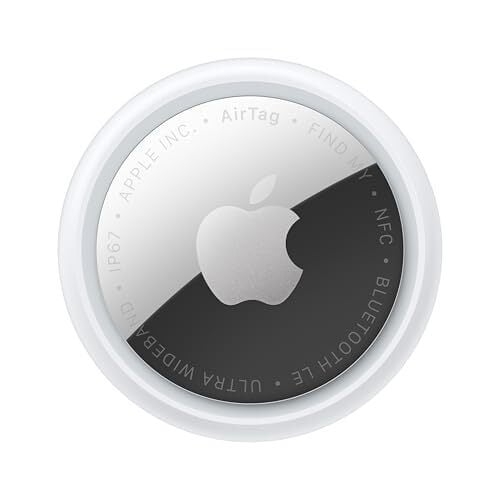
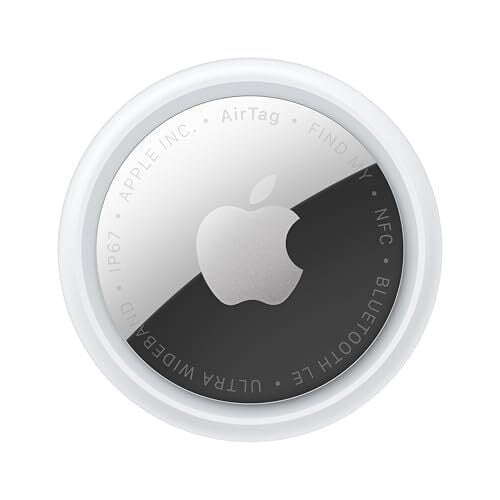
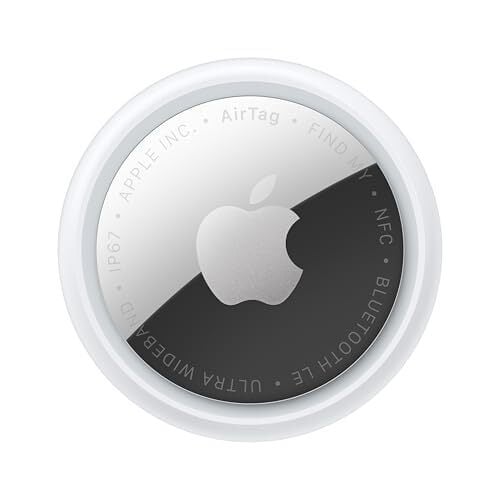
According to a report by The Information (paywalled), Apple is reportedly developing an AirTag-sized, camera-equipped AI wearable pin that could arrive as early as 2027.

“Apple’s pin, which is a thin, flat, circular disc with an aluminum-and-glass shell, features two cameras — a standard lens and a wide-angle lens — on its front face, designed to capture photos and videos of the user’s surroundings,” reports The Information, citing people familiar with the device. “It also includes three microphones to pick up sounds in the area surrounding the person wearing it. It has a speaker, a physical button along one of its edges and a magnetic inductive charging interface on its back, similar to the one used on the Apple Watch…” 9to5Mac reports: The Information also notes that Apple is attempting to speed up development in hopes of competing with OpenAI’s first wearable (slated to debut in 2026), and that it is not immediately clear whether this wearable would work in conjunction with other products, such as AirPods or Apple’s reported upcoming smart glasses. Today’s report also notes that this has been a challenging market for new companies, citing the recent failure of Humane’s AI Pin as an example.


Read more of this story at Slashdot.

Man Builds Water-Squirting Robot To Keep His Cat Off Kitchen Counter

This is a video documenting Youtuber The Lab-X’s quest to build an AI-powered water turret to keep his cat Cookie off the kitchen counter. The 3D printed bot, named Puffy, uses computer-vision to track the cat’s movement and spray him when he’s detected on the counter. Lab-X plans to sell build-it-yourself kits and assembled units in the future if you’re interested. Over the course of six weeks, Cookie, who is far more calm than my cats (but equally stubborn) took fewer and fewer sprays to get down. Eventually, just the sound of Puffy opening was enough to deter him. How about that! Alternatively, keep your cats off the kitchen counters the same way I do: not having counters. Plus I don’t have to open drawers, I can just reach right in there for a spoon. “Do you rent or own?” Right now I’m squatting.

Apple Might Turn Siri Into an AI Chatbot to Rival ChatGPT

Last week, Apple finally admitted it will need to team up with Google to finally make good on that contextual Siri promise it made two years ago, which would have allowed the virtual assistant to integrate with content like your texts or emails to answer personal questions and take actions for you. Now, according to a new report, the iPhone company might actually go one step further and turn Siri into a full-fledged AI chatbot—one on par with the likes of ChatGPT, and perhaps even more sophisticated.

Currently, Siri has AI implementation, but only technically, and it’s certainly underwhelming: You can use it to get tech support on Apple products or shunt questions off to ChatGPT, but otherwise, Siri basically works as it always has. But according to Bloomberg’s Mark Gurman, who has reliably reported on insider information at Apple before, the company is finally not only looking to make Siri smarter, but also change the way you interact with it. Currently planned for iOS and macOS 27 under the name “Campos,” Siri’s new chatbot interface will still be powered by Gemini, but will allow you to both type and talk to Siri, with full continuity between your conversations. This upgrade will be in addition to the overdue features that were already announced.

In other words, it’ll look something like the chatbot interface from the ChatGPT app or the standalone Gemini app. Yes, you can technically type to Siri right now, but it mostly works like a separate input method, rather than as a full conversation. You can’t scroll through your previous questions to Siri or peruse the assistant’s previous answers, and if you ask Siri to reference a message you sent it two weeks ago, it’ll have no idea what you mean. That’s far behind what other AI chatbots offer right now.

The update will also apparently further expand Siri’s capabilities even beyond the contextual or personalization upgrades that were already revealed. Gurman says that, while the contextual upgrades will be able to pull information from other apps like Messages, the chatbot-style Siri will be “integrated into all of the company’s core apps, including ones for mail, music, podcasts, TV, Xcode programming software and photos.” Essentially, Siri will have more access to your iPhone than other AI chatbots, and those integrations will go beyond what was previously promised. That could make it more or less appealing to you, depending on your tastes in AI integration.

When the new Siri could arrive

With the chatbot interface planned for iOS 27, it’s likely to come after the contextual upgrades, rather than at the same time. That’s because, as Gurman said previously, those upgrades are set for the spring. He predicts we’ll learn more about it during this year’s WWDC, which, if it follows the standard set by previous years, will take place in June.

The move to turn Siri into a chatbot could come across as a a much-overdue modernization, as Google has already done the same with Gemini over on Android, but it’s also a bit of a surprise, as Apple had previously said it did not intend to turn Siri into a “bolt-on chatbot on the side” for Apple Intelligence.

But Apple was likely talking about quality of the experience rather than expressing any significant anti-chatbot bias among the development team, meaning the fact that Siri is turning into a chatbot could mean the company is finally happy with the direction it’s headed. But it’s also possible that the professed skepticism about turning Siri into a chatbot was meant to appeal to AI skeptics in general. Unfortunately, if you’re still skeptical about AI, it currently seems like iOS 27 will be a boring update for you, as Gurman indicated the new Siri chatbot will be the “primary new addition” to the operating system.

However you feel about it personally, Siri as a full-fledged AI chatbot could seriously upset ChatGPT’s market dominance—ironic, given its early integration with Apple Intelligence. Currently, OpenAI has reportedly admitted it’s in a Code Red situation, as it is losing market share to Google and introducing ads to bolster its bottom line. The new Siri, being powered by Gemini, is unlikely to hurt Google (although it will have more access to your phone than the standalone Gemini app), but its ease-of-access might make it the new go-to for iPhone users, and that could hurt pretty much every AI company Apple isn’t in business with directly.

mRNA cancer vaccine shows protection at 5-year follow-up, Moderna and Merck say

In a small clinical trial, customized mRNA vaccines against high-risk skin cancers appeared to reduce the risk of cancer recurrence and death by nearly 50 percent over five years when compared with standard treatment alone. That’s according to Moderna and Merck, the two pharmaceutical companies that have collaborated on the experimental cancer vaccine, called intismeran autogene (mRNA-4157 or V940).

So far, the companies have only reported the top-line results in a press release this week. However, the results align closely with previous, more detailed analyses from the trial, which examined rates of recurrence and death at earlier time points, specifically at two years and three years after the treatment. More data from the trial—a Phase 2 trial—will soon be presented at a medical conference, the companies said. A Phase 3 trial is also underway, with enrollment complete.

The ongoing Phase 2 trial included 157 patients who were diagnosed with stage 3 or stage 4 melanoma and were at high risk of having it recur after surgical removal. A standard treatment to prevent recurrence after such surgery is immunotherapy, including Merck’s Keytruda (pembrolizumab). This drug essentially enables immune cells, specifically T cells, to attack and kill cancer cells—something they normally do. But, in many types of cancers, including melanoma, cancer cells have the ability to bind to receptors on T cells (called PD-1 receptors), which basically shuts the T cells down. Keytruda works by physically blocking the PD-1 receptors, preventing cancer cells from binding and keeping the T cells activated so they can kill the cancer.

Read full article

Comments

Nova Launcher Gets a New Owner and Ads

Nova Launcher has been acquired by Instabridge, which says it will keep the app maintained but is evaluating ad-supported options for the free version. Android Authority reports: Today, Nova Launcher announced that the Swedish company Instabridge has acquired it from Branch Metrics. Instabridge claims it wants to be a responsible owner of Nova and does not want to reinvent the launcher overnight. However, the launcher still needs a sustainable business model to support ongoing development and maintenance. To this end, Instabridge is exploring different options, including paid tiers and ad-supported options for the free version. The new owners claim that if ads are introduced, Nova Prime will remain ad-free. However, this is misleading, as ads are already here for some users. Last year, the founder and original programmer of Nova Launcher left the company, signaling its “death” as he had been the sole developer working on the launcher for the past year.


Read more of this story at Slashdot.