No, Okta, senior management, not an errant employee, caused you to get hacked

No, Okta, senior management, not an errant employee, caused you to get hacked

Enlarge (credit: Omar Marques/SOPA Images/LightRocket via Getty Images)

Identity and authentication management provider Okta on Friday published an autopsy report on a recent breach that gave hackers administrative access to the Okta accounts of some of its customers. While the postmortem emphasizes the transgressions of an employee logging into a personal Google account on a work device, the biggest contributing factor was something the company understated: a badly configured service account.

In a post, Okta chief security officer David Bradbury said that the most likely way the threat actor behind the attack gained access to parts of his company’s customer support system was by first compromising an employee’s personal device or personal Google account and, from there, obtaining the username and password for a special form of account, known as a service account, used for connecting to the support segment of the Okta network. Once the threat actor had access, they could obtain administrative credentials for entering the Okta accounts belonging to 1Password, BeyondTrust, Cloudflare, and other Okta customers.

Passing the buck

“During our investigation into suspicious use of this account, Okta Security identified that an employee had signed-in to their personal Google profile on the Chrome browser of their Okta-managed laptop,” Bradbury wrote. “The username and password of the service account had been saved into the employee’s personal Google account. The most likely avenue for exposure of this credential is the compromise of the employee’s personal Google account or personal device.”

Read 11 remaining paragraphs | Comments


Source: Ars Technica – No, Okta, senior management, not an errant employee, caused you to get hacked

A historic Falcon 9 made a little more history Friday night

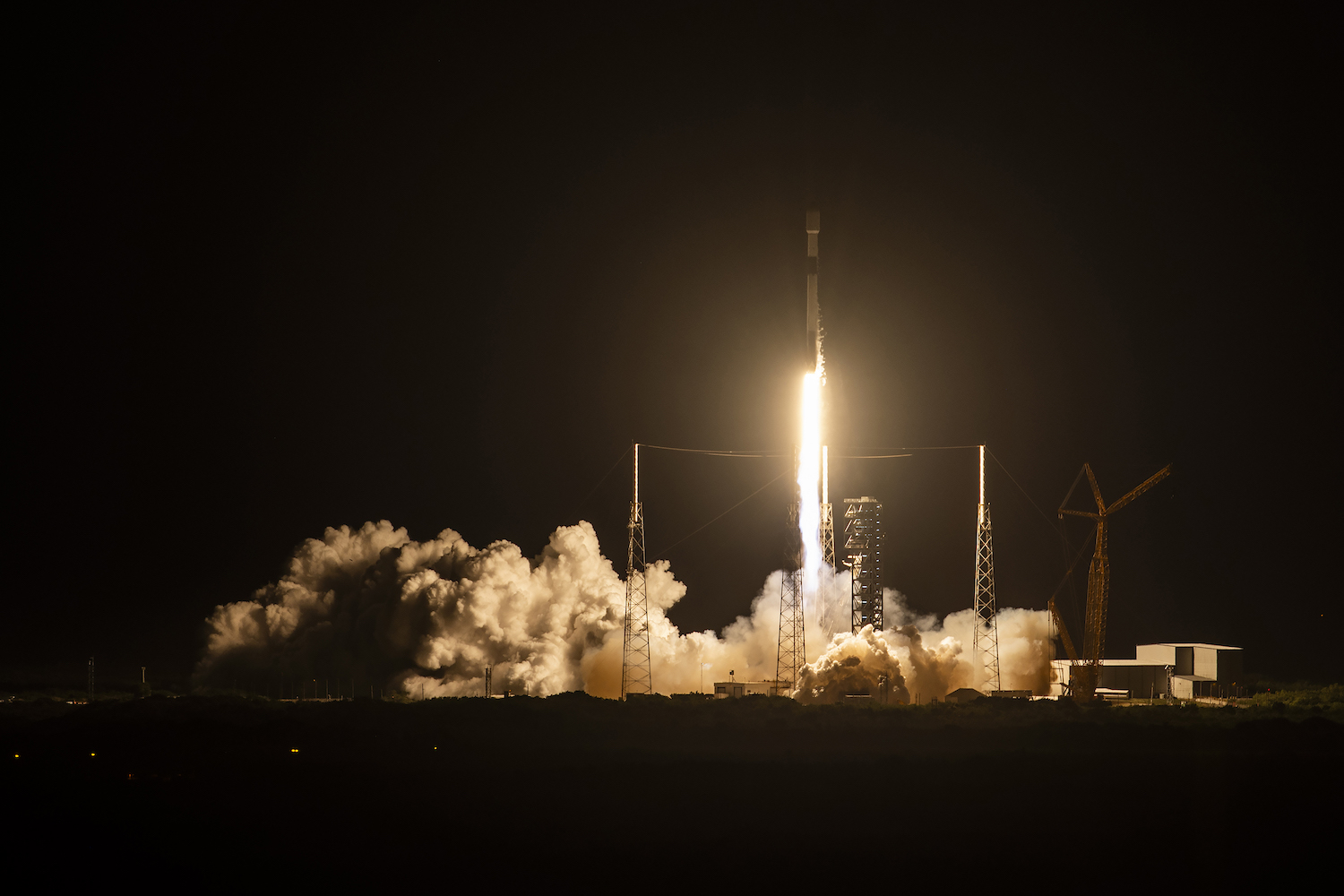
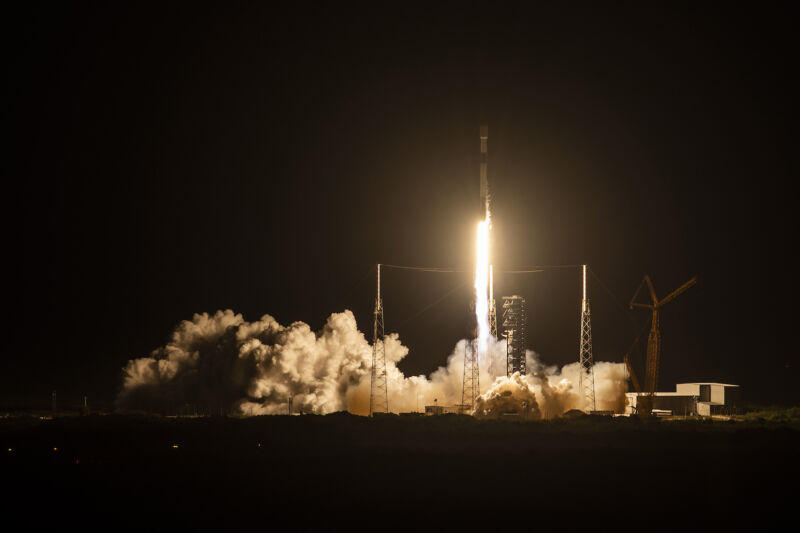
A Falcon 9 rocket lifts off from Cape Canaveral Space Force Station on Friday night.

Enlarge / A Falcon 9 rocket lifts off from Cape Canaveral Space Force Station on Friday night. (credit: SpaceX)

CAPE CANAVERAL, Florida—In three-and-a-half years of service, one of SpaceX’s reusable Falcon 9 boosters stands apart from the rest of the company’s rocket inventory. This booster, designated with the serial number B1058, has now flown 18 times. For its maiden launch on May 30, 2020, the rocket propelled NASA astronauts Doug Hurley and Bob Behnken into the history books on SpaceX’s first mission to send people into orbit.

This ended a nine-year gap in America’s capability to launch astronauts into low-Earth orbit and was the first time a commercial spacecraft achieved this feat. At that time, the rocket was fresh from SpaceX’s factory in Southern California, glistening white in color, with a bright red NASA “worm” logo emblazoned on the side.

Over the course of its flights to space and back, that white paint has darkened to a charcoal color. Soot from the rocket’s exhaust has accumulated, bit by bit, on the 15-story-tall cylinder-shaped booster. The red NASA worm logo is now barely visible.

Read 11 remaining paragraphs | Comments


Source: Ars Technica – A historic Falcon 9 made a little more history Friday night

It’s almost showtime for SpaceX’s massive Starship rocket

Read 9 remaining paragraphs | Comments


Source: Ars Technica – It’s almost showtime for SpaceX’s massive Starship rocket

Diablo IV will get its first expansion and WoW Classic will revisit Cataclysm

Soda additive linked to thyroid toxicity may finally get banned by FDA

Sundrop is among the citrus soft drinks that still contains BVO.

Enlarge / Sundrop is among the citrus soft drinks that still contains BVO. (credit: Sun Drop)

The Food and Drug Administration may finally ban a food additive used in citrusy drinks that the agency determined over 50 years ago could not be considered generally safe. The agency proposed a ban on the additive Thursday.

The additive is brominated vegetable oil (BVO), which is a flavoring emulsifier and stabilizer that has been used to keep citrus flavoring from separating and floating to the top of soft drinks since the 1920s. It was previously used in big brand-name beverages such as Mountain Dew and Gatorade but has been removed amid toxicity concerns in recent years. Since at least 2014, PepsiCo and Coca-Cola have been phasing out BVO from their drinks, though it can still be found in some store-brand sodas and regional drinks, including the citrus soda Sun Drop.

BVO is already banned in Europe, Japan, Australia, and New Zealand. In October of this year, California banned BVO, along with other problematic food additives, including red dye No. 3. (While reporting California’s ban on red dye No. 3, Ars also reported that the FDA planned to ban BVO.)

Read 8 remaining paragraphs | Comments


Source: Ars Technica – Soda additive linked to thyroid toxicity may finally get banned by FDA

What do we know about the Switch 2’s hardware power?

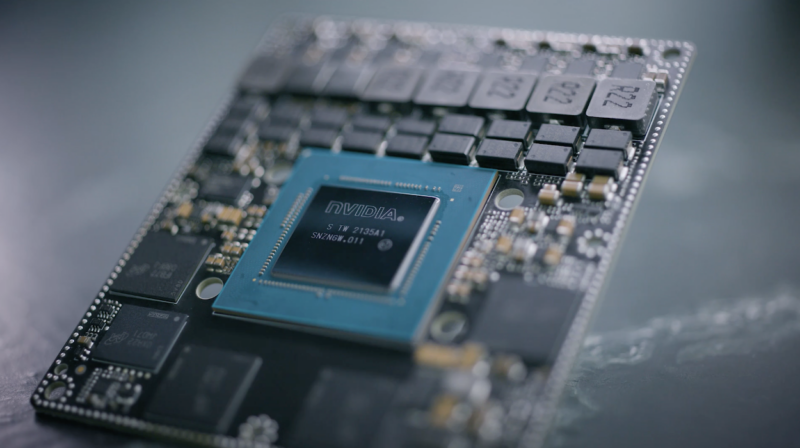
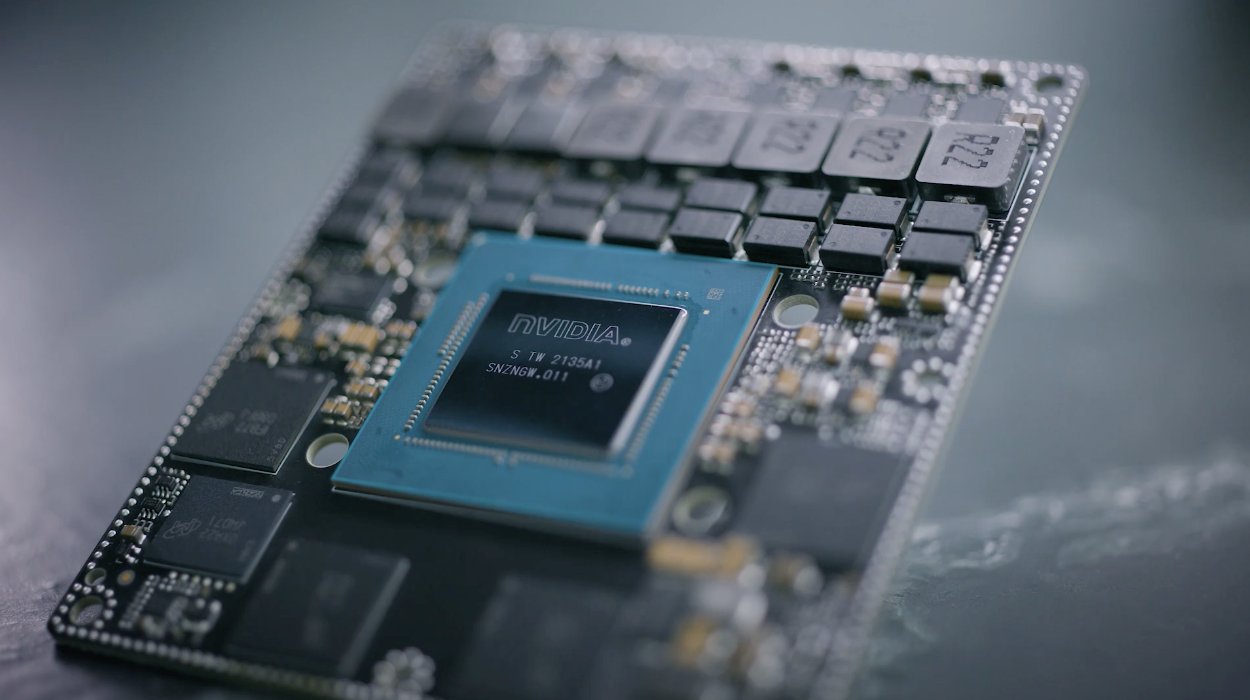
A look at the Nvidia T234 that could be the basis for a scaled-down custom chip in the next Nintendo console.

Enlarge / A look at the Nvidia T234 that could be the basis for a scaled-down custom chip in the next Nintendo console. (credit: Nvidia / Imgur)

In recent months, the long-running speculation surrounding Nintendo’s inevitable follow-up to the Switch has become more frequent and more specific, pointing to a release sometime in late 2024. Now, the pixel-counting boffins over at Digital Foundry have gone deep with some informed speculation on the system, dissecting leaked details on what they’re convinced is the Nvidia chip Nintendo will be putting in their Switch follow-up.

That chip is the Nvidia T239, a scaled-down, custom variant of the Nvidia Orin T234 that is popular in the automotive and robotics markets. While Digital Foundry can’t say definitively that this is the next Switch chip with “absolute 100 percent certainty,” the website points to circumstantial links and references to the chip in a number of leaks, a recent Nvidia hack, LinkedIn posts from Nvidia employees, and Nvidia’s own Linux distribution.

“From my perspective, the bottom line is that by a process of elimination, T239 is the best candidate for the processor at the heart of the new Nintendo machine,” Digital Foundry’s Richard Leadbetter writes. “With a mooted 2024 release date, there have been no convincing leaks whatsoever for any other processor that could find its way into the new Switch.”

Read 9 remaining paragraphs | Comments


Source: Ars Technica – What do we know about the Switch 2’s hardware power?

Dealmaster: Pre-Black Friday deals on home entertainment, Herman Miller chairs, and laptops

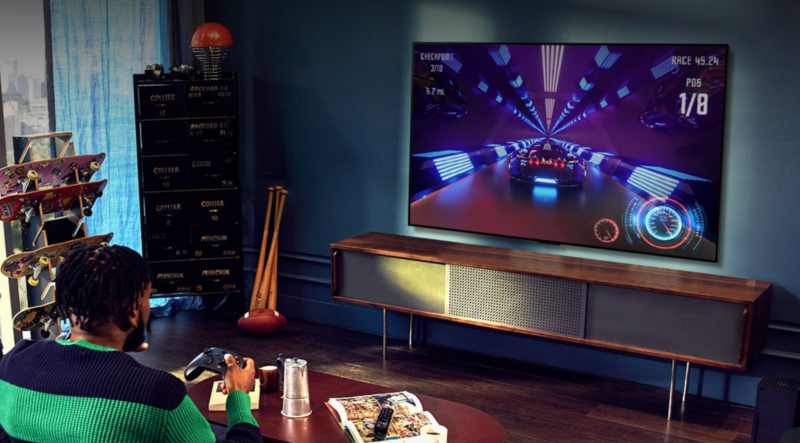
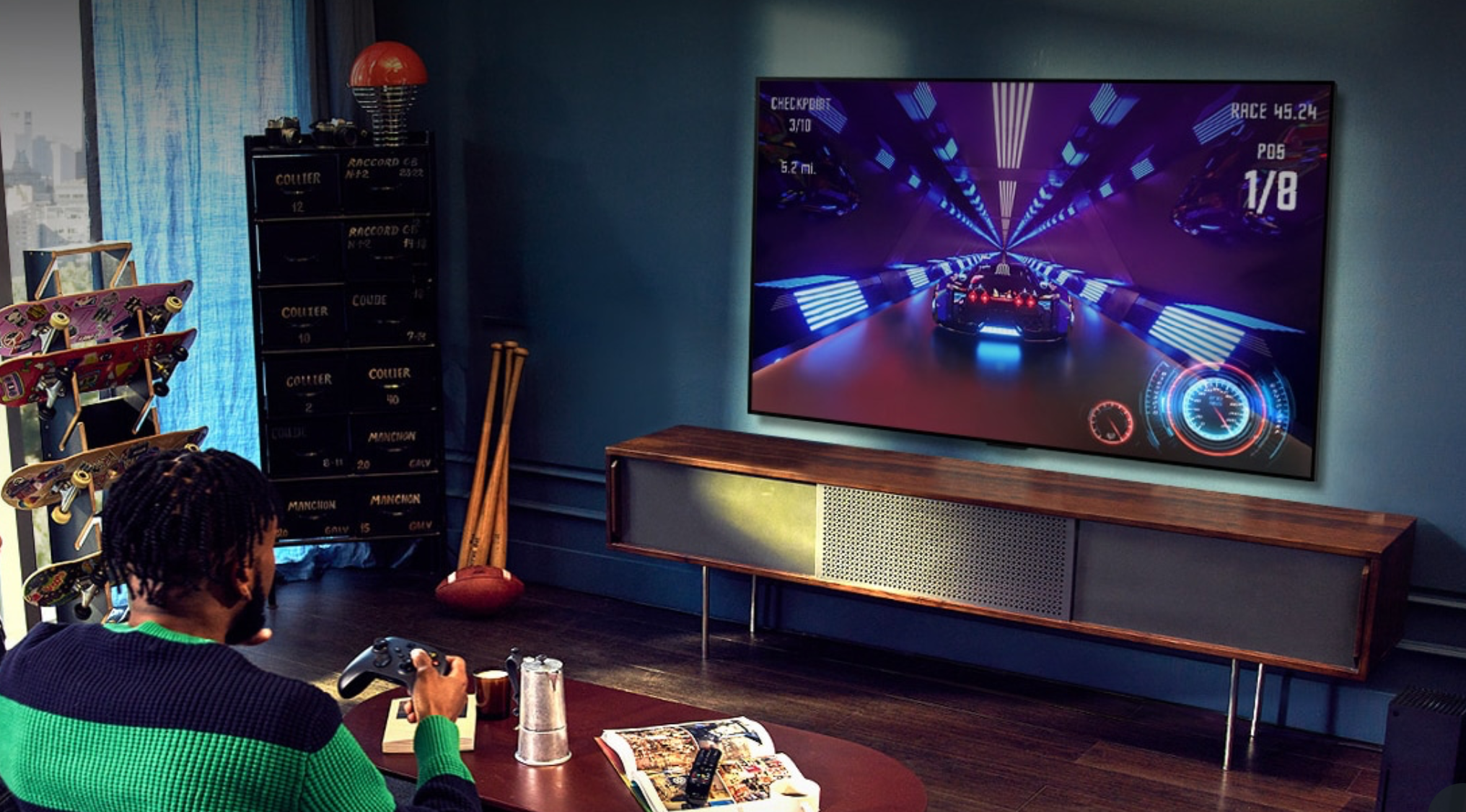
A promotional image for LG's larger OLED televisions.

Enlarge / A promotional image for LG’s larger OLED televisions. (credit: LG)

Whether you need a monitor for work or you want a larger living room screen for entertainment, our curated pre-Black Friday Dealmaster comes with plenty of savings on monitors, displays, and TVs. Complete the setup with upgraded audio, as we found some deals on soundbars, speakers, headphones, and more. In addition to home entertainment, there are savings on Lenovo laptops, Apple MacBooks and iPads, chargers and tech gear, and more. And for a luxurious and ergonomic upgrade, Herman Miller’s popular office and gaming chairs, including the Aeron and Embody, are on sale at up to 25 percent off, making it a perfect self-care gift for yourself or your loved one for the holiday.

Featured deals

  • Sony WF-1000XM5 The Best Truly Wireless Bluetooth Noise Canceling Earbuds for $248 (was $300) at Amazon
  • Sony WH-1000XM5 for $330 (was $400) at Amazon
  • Bose QuietComfort Earbuds II for $199 (was $279) at Amazon
  • Lenovo ThinkPad T16 (16-inch, Intel Core i5-1240P) for $876 (was $2,829) at Lenovo
  • Apple MacBook Air (13-inch, M1) for $750 (was $1,000) at Best Buy
  • Apple AirPods Pro (2nd Generation) with USB-C charging for $190 (was $249) at Amazon
  • Apple AirTag 4-pack for $87 (was $99) at Amazon
  • LG B3 55-inch Class OLED 4K UHD for $997 (was $1,297) at Amazon
  • Apple 2023 MacBook Air Laptop M2 chip, 15-inch for $1,099 (was $1,299) at Amazon
  • Apple AirPods Pro (2nd Generation) with USB-C charging for $190 (was $249) at Amazon
  • Samsung 55-inch Odyssey Ark 4K UHD for $1,800 (was $2,700) at Samsung
  • Sony HT-A5000 soundbar for $698 (was $998) at Crutchfield
  • Lenovo LOQ (15-inch, Intel Core i7-13700H and RTX 4050) for $1,030 (was $1,400) at Lenovo
  • Kindle Paperwhite Signature Edition Essentials Bundle for $245 (was $265) at Amazon

Lenovo deals

  • Lenovo ThinkPad T16 (16-inch, Intel Core i5-1240P) for $876 (was $2,829) at Lenovo
  • Lenovo Legion Pro 5i Gen 8 (16-inch, Intel Core i5-13500HX and RTX 4050) for $1,070 (was $1,480) at Lenovo
  • Lenovo Slim 5 Gen 8 (16-inch, AMD Ryzen 5 7640HS and RTX 4050) for $950 (was $1,300) at Lenovo
  • Lenovo LOQ (15-inch, Intel Core i7-13700H and RTX 4050) for $978 (was $1,400) at Lenovo
  • Lenovo LOQ (16-inch, AMD Ryzen 7 7840HS and RTX 4050) for $911 (was $1,260) at Lenovo
  • Lenovo Legion Slim 7i Gen 8 (16-inch, Intel Core i7-13700H and RTX) for $1,330 (was $1,770) at Lenovo
  • Lenovo Legion Pro 5i Gen 8 (16-inch, Intel Core i5-13500HX and RTX) for $1,070 (was $1,480) at Lenovo
  • Lenovo ThinkPad X1 Carbon Gen 10 (14-inch, Intel Core i7-1270P) for $1,260 (was $3,609) at Lenovo
  • Lenovo Legion Slim 5 Gen 8 (16-inch, AMD Ryzen 5 7640HS and RTX 4050) for $950 (was $1,300) at Lenovo
  • Lenovo ThinkPad L14 Gen 3 (14-inch, AMD Ryzen 5 Pro 5675U) for $599 (was $2,688) at Lenovo
  • Lenovo Legion Slim 5i Gen 8 (16-inch, Intel Core i5-13500H and RTX 4050) for $1,000 (was $1,350) at Lenovo
  • Lenovo ThinkPad T14 Gen 3 (14-inch, Intel Core i5-1250P) for $914 (was $3,049) at Lenovo
  • Lenovo LOQ (15-inch, Intel Core i5-13500H and RTX 3050) for $697 (was $1,020) at Lenovo
  • Lenovo ThinkBook 14 Gen 4 (14-inch, Intel Coire i5-1235U) for $632 (was $1,404) at Lenovo
  • Lenovo ThinkPad P16 Gen 2 (16-inch, Intel Core i7-13700HX and RTX A1000) for $1,749 (was $3,899) at Lenovo
  • Lenovo LOQ (16-inch, Intel Core i5-13500H and RTX 4050) $781 (was $1,200) at Lenovo
  • Lenovo IdeaPad Slim 3 (15-inch, AMD Ryzen 5 7530U) for $400 (was $700) at Lenovo
  • Lenovo Legion Pro 5 Gen 8 (16-inch, AMD Ryzen 5 7645HX and RTX 4050) for $1,026 (was $1,430) at Lenovo
  • Lenovo Legion Pro 5 Gen 8 (16-inch, AMD Ryzen 7 7745HX and RTX 4070) for $1,330 (was $1,960) at Lenovo
  • Lenovo ThinkPad E16 Gen 1 (16-inch, AMD Ryzen 7 7730U) for $894 (was $1,719) at Lenovo
  • Lenovo ThinkPad P1 Gen (16-inch, Intel Core i7-13700H and RTX A2000) for $1,979 (was $4,389) at Lenovo
  • Lenovo ThinkPad E15 Gen 5 (14-inch, AMD Ryzen 5 7530U) for $610 (was $1,219) at Lenovo
  • Lenovo ThinkPad T14 Gen 4 (14-inch, Intel Core i7-1365U) for $1,086 (was $2,859) at Lenovo
  • Lenovo ThinkPad E16 Gen 1 (16-inch, Intel Core i5-1355U) for $725 (was $1,449) at Lenovo
  • Lenovo ThinkPad P16s Gen 2 (16-inch, Intel Core i7-1360P and RTX A500) for $1,629 (was $3,629) at Lenovo
  • Lenovo ThinkPad P14s Gen 4 (14-inch, Intel Core i7-1360P and RTX A500) for $1,529 (was $3,389) at Lenovo
  • Lenovo ThinkPad P14s Gen 4 (14-inch, AMD Ryzen 7 Pro 7840U) for $1,099 (was $2,199) at Lenovo
  • Lenovo Legion Slim 7 Gen 8 (16-inch, AMD Ryzen 7 7840HS and RTX 4060) for $1,235 (was $1,680) at Lenovo
  • Lenovo X1 Carbon Gen 10 (14-inch, Intel Core i7-1260P) for $1,203 (was $3,439) at Lenovo

Monitors and displays

  • Samsung 34-inch ViewFinity S65VC Ultra-WQHD for $600 (was $700) at Samsung
  • Samsung 27-inch ViewFinity S80PB 4K UHD for $450 (was $580) at Samsung
  • Samsung 34-inch ViewFinity S50GC Ultra-WQHD for $280 (was $380) at Samsung
  • Samsung 34-inch ViewFinity S65UA Ultra-WQHD for $500 (was $600) at Samsung
  • Samsung 27-inch Viewfinity S80TB 4K UHD for $500 (was $580) at Samsung
  • Samsung 55-inch Odyssey Ark 4K UHD for $1,800 (was $2,700) at Samsung
  • Samsung 49-inch Odyssey G9 DQHD for $1,000 (was $1,500) at Samsung
  • Samsung 28-inch Odyssey G70B 4K UHD for $600 (was $800) at Samsung
  • Samsung 49-inch Odyssey OLED G95SC DQHD for $1,400 (was $1,800) at Samsung
  • Samsung 43-inch Odyssey Neo G7 4K UHD for $800 (was $1,000) at Samsung
  • Samsung 32-inch Odyssey Neo G8 4K UHD for $1,000 (was $1,500) at Samsung
  • Samsung 32-inch M70C Smart Monitor 4K UHD for $430 (was $600) at Samsung
  • LG 27-inch Ultra Gear QHD for $400 (was $500) at LG
  • LG 34-inch 34WN80C-B UltraWide WQHD IPS for $400 (was $550) at LG
  • LG 34-inch Curved UltraWide QHD for $400 (was $600) at LG
  • LG 27-inch UltraFine 4K OLED pro for $1,800 (was $1,900) at LG
  • LG 43-inch 4K UHD IPS Smart Monitor for $500 (was $600) at LG
  • LG 22-inch Class Full HD IPS for $80 (was $120) at LG
  • LG 27-inch FHD IPS 3-Side Borderless for $130 (was $180) at LG

TVs, headphones, soundbars, audio, and home entertainment gear

  • Samsung 65-inch Class OLED S90C for $1,600 (was $2,600) at Samsung
  • Samsung 83-inch Class OLED S90C for $3,500 (was $5,400) at Samsung
  • Samsung 55-inch Class OLED S95C for $1,900 (was $2,500) at Samsung
  • Samsung 77-inch Class OLED S95C for $3,600 (was $4,500) at Samsung
  • Sony WF-1000XM5 The Best Truly Wireless Bluetooth Noise Canceling Earbuds for $248 (was $300) at Amazon
  • Sony WH-1000XM5 for $330 (was $400) at Amazon
  • Bose QuietComfort Earbuds II for $199 (was $279) at Amazon
  • Lexie Hearing – Lexie Lumen self-fitting OTC hearing aids for $649 (was $799) at Best Buy
  • Lexie Hearing – Lexie B2 OTC Hearing Aids Powered by Bose for $899 (was $999) at Best Buy
  • Lexie Hearing – Lexie B1 for $699 (was $849) at Best Buy
  • Poly – formerly Plantronics – Voyager 4320 for $158 (was $170) at Best Buy
  • Samsung 55-inch Class TU690T Crystal UHD 4K for $350 (was $380) at Samsung
  • Samsung 65-inch Class QLED 4K QN90C for $1,700 (was $2,800) at Samsung
  • Soundcore by Anker P20i True Wireless Earbuds for $30 (was $40) at Amazon
  • Soundcore by Anker Life P3i Hybrid Active Noise Cancelling Earbuds for $50 (was $60) at Amazon
  • Samsung 98-inch Class QLED 4K Q80C for $5,000 (was $8,000) at Samsung
  • Samsung 65-inch Class Samsung Neo QLED 8K QN800C for $2,600 (was $3,500) at Samsung
  • Samsung 75-inch Class The Frame QLED 4K LS03B for $2,600 (was $3,000) at Samsung
  • Samsung S-series 3.0 ch. Soundbar S50B for $150 (was $250) at Samsung
  • Samsung Sound Tower Party Audio ST40B for $230 (was $500) at Samsung
  • Samsung Q-series 3.1.2 ch. Wireless Dolby Atmos Soundbar Q700C for $400 (was $700) at Samsung
  • Samsung Q-series 5.1.2 ch. Wireless Dolby Atmos Soundbar Q800C for $690 (was $1,000) at Samsung
  • Samsung Q-series 7.1.2 ch. Wireless Dolby Atmos Soundbar Q900C for $989 (was $1,400) at Samsung
  • Samsung Q-series 9.1.2 ch. Wireless Dolby Atmos Soundbar Q910C for $989 (was $1,400) at Samsung
  • LG 65-inch Class G3 Series OLED 4K UHD for $2,300 (was $3,000) at Best Buy
  • LG 77-inch Class G3 Series OLED 4K UHD for $3,500 (was $4,300) at Best Buy
  • LG 83-inch Class G3 Series OLED 4K UHD TV for $5,000 (was $6,000) at Best Buy
  • Sony HT-A7000 soundbar for $998 (was $1,398) at Crutchfield
  • Sennheiser AMBEO Soundbar | Max for $2,000 (was $2,500) at Crutchfield
  • Sony HT-A5000 soundbar for $698 (was $998) at Crutchfield
  • Yamaha SR-B20A soundbar for $150 (was $200) at Crutchfield
  • Sony HT-S2000 soundbar for $348 (was $498) at Crutchfield
  • Sony HT-A3000 soundbar for $498 (was $698) at Crutchfield
  • Amazon Fire TV Stick for $20 (was $40) at Amazon
  • Amazon Fire TV Stick 4K Max for $45 (was $60) at Amazon
  • Samsung 120-inch Class The Premiere LSP7T 4K Smart Laser Projector for $3,000 (was $3,500) at Samsung
  • Samsung 70-inch Class QLED 4K QE1C for $940 (was $1,800) at Samsung
  • Samsung 75-inch Class Samsung Neo QLED 8K QN900C for $4,500 (was $6,300) at Samsung
  • Samsung 65-inch Class Samsung Neo QLED 8K QN800C for $2,600 (was $3,500) at Samsung
  • Samsung 43-inch Class Samsung Neo QLED 4K QN90C for $1,000 (was $1,200) at Samsung
  • Samsung 55-inch Class Samsung Neo QLED 4K QN85C for $1,000 (was $1,500) at Samsung
  • Samsung 55-inch Class QLED 4K Q70C for $850 (was $1,000) at Samsung
  • Samsung 86-inch Class Crystal UHD TU9010 (2021) for $1,600 (was $1,700) at Samsung
  • Samsung 85-inch Class Crystal UHD CU7000 for $900 (was $1,100) at Samsung
  • Samsung 50-inch Class QLED 4K Q80B (2022) for $900 (was $1,000) at Samsung

Apple gear

  • Apple 2020 MacBook Air Laptop M1 chip, 13-inch for $750 (was $999) at Amazon
  • Apple 2023 MacBook Air Laptop M2 chip, 15-inch for $1,050 (was $1,299) at Amazon
  • Apple MacBook Air (15-inch, M2) for $1,099 (was $1,299) at Best Buy
  • Apple MacBook Air (13-inch, M1) for $750 (was $1,000) at Best Buy
  • Apple iPad Mini (6th Generation) for $400 (was $499) at Amazon
  • Apple iPad (9th Generation) for $249 (was $329) at Amazon
  • Apple iPad (10th Generation) for $399 (was $449) at Amazon
  • Apple iPad Air (5th Generation) for $500 after coupon (was $599) at Amazon
  • Apple AirPods Pro (2nd Generation) with USB-C charging for $190 (was $249) at Amazon
  • Apple AirPods (3rd Generation) for $150 (was $169) at Amazon
  • Apple AirPods Max Wireless Over-Ear Headphones for $480 (was $549) at Amazon
  • Apple AirTag 4-pack for $87 (was $99) at Amazon
  • Apple iPad Pro 12.9-inch (6th Generation) 128GB for $990 (was $1,099) at Amazon

Herman Miller and Tempur-pedic office and gaming chairs

  • Herman Miller Aeron Chair for $1,353 (was $1,805) at DWR
  • Herman Miller Embody Chair for $1,703 (was $2,270) at DWR
  • Herman Miller Sayl Chair for $588 (was $735) at DWR
  • Herman Miller Sayl Chair, Special Gaming Edition for $816 (was $1,020) at DWR
  • Herman Miller Cosm Chair, Low Back for $1,048 (was $1,310) at DWR
  • Herman Miller Cosm Chair, Mid Back for $1,256 (was $1,570) at DWR
  • Herman Miller Cosm Chair, High Back for $1,680 (was $2,100) at DWR
  • Herman Miller x Logitech G Vantum Gaming Chair for $636 (was $795) at DWR
  • Herman Miller x Logitech G Embody Gaming Chair for $1,384 (was $1,845) at DWR
  • Herman Miller Eames Aluminum Group Chair, Executive for $2,040 (was $2,550) at DWR
  • Herman Miller Eames Aluminum Group Chair, Management for $2,296 (was $2,870) at DWR
  • Herman Miller Eames Soft Pad Chair, Executive Height for $3,516 (was $4,395) at DWR
  • Herman Miller Mirra 2 Chair for $1,128 (was $1,410) at DWR
  • Herman Miller Setu Chair, With Arms for $668 (was $835) at DWR
  • Herman Miller Aeron Chair, Special Gaming Edition for $1,354 (was $1,805) at DWR
  • Herman Miller Aeron Stool for $1,391 (was $1,855) at DWR
  • Herman Miller Lino Chair for $684 (was $855) at DWR
  • Herman Miller Verus Task Chair for $564 (was $705) at DWR
  • TEMPUR-Lumbar Support Office Chair for $299 (was $352) at Tempur-pedic

Tech essentials

  • Western Digital 10TB WD Red Pro NAS Internal Hard Drive for $250 (was $350) at Amazon
  • Seagate IronWolf 12TB NAS Internal Hard Drive for $200 (was $260) at Amazon
  • UGREEN 100 W 2-Pack USB C to USB C Cable for $14 (was $20) at Amazon
  • Uni USB C to USB C Cable 10-foot, 100 W USB C Cable for $8 (was $20) at Amazon
  • UGREEN USB C Charger Cable 2-Pack 60 W USB C Cable for $6 (was $12) at Amazon
  • UGREEN 100 W 2-Pack USB C to USB C Cable for $10 (was $16) at Amazon
  • UGREEN 100 W USB C Charger, Nexode 4-Port GaN Foldable Compact Wall Charger Power for $45 (was $75) at Amazon
  • Anker 120 W USB C Charger, Anker 737 GaNPrime for $60 (was $89) at Amazon

Tablets and e-readers

  • Amazon Fire Max 11 tablet for $150 (was $230) at Amazon
  • Google Pixel Tablet with Charging Speaker Dock for $399 (was $499) at Amazon
  • Kindle Paperwhite Signature Edition Essentials Bundle for $245 (was $265) at Amazon

Games

  • Super Mario Bros. Wonder – Nintendo Switch (European version) for $53 (was $60) at Amazon
  • The Legend of Zelda: Tears of the Kingdom – Nintendo Switch (US version) for $58 (was $70) at Amazon
  • The Legend of Zelda: Breath of the Wild – Nintendo Switch (US version) for $45 (was $60) at Amazon

Ars Technica may earn compensation for sales from links on this post through affiliate programs.

Read on Ars Technica | Comments


Source: Ars Technica – Dealmaster: Pre-Black Friday deals on home entertainment, Herman Miller chairs, and laptops

Leap seconds could become leap minutes, despite pushback from Russians, Vatican

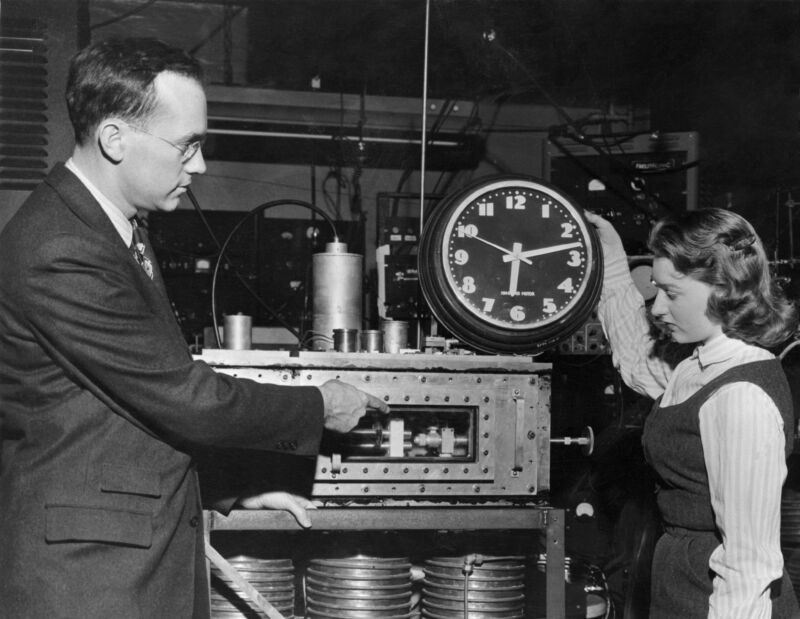
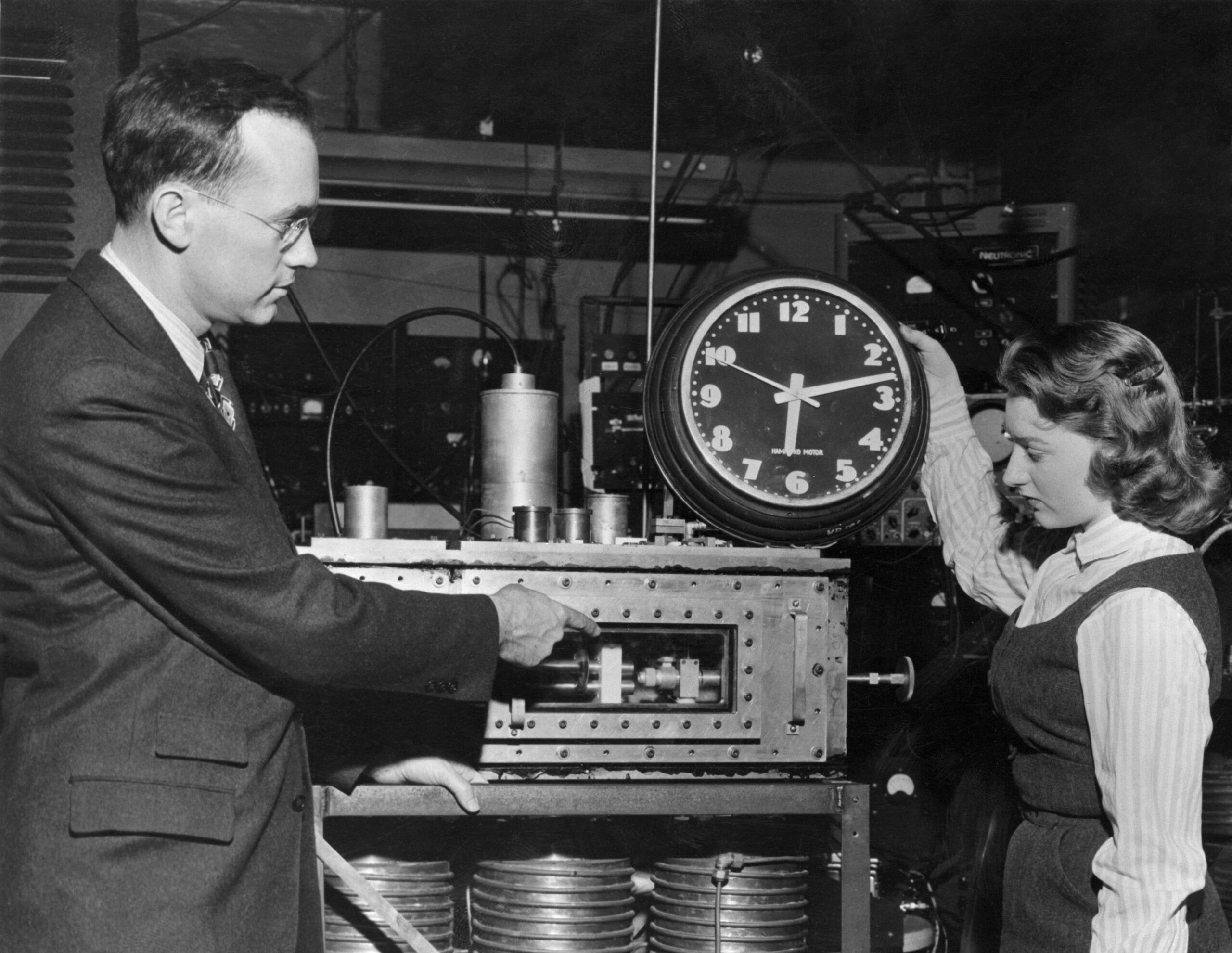
Dr. Charles H. Townes, inventor of the maser, a key component of atomic clocks, illustrates the differences between it and a standard clock.

Enlarge / Dr. Charles H. Townes, inventor of the maser, a key component of atomic clocks, illustrates the differences between it and a standard clock. (credit: Getty Images)

One of the leading thinkers on how humans track time has a big, if simple, proposal for dealing with leap seconds: Don’t worry about them. Do leap minutes instead, maybe one every half-century or so.

“We all need to relax a little bit,” said Judah Levine, leader of the Network Synchronization Project in the Time and Frequency Division at the National Institute of Standards and Technology (NIST), to The New York Times. Leap seconds—when coordinated, near-impeccable atomic time is halted for one second to synchronize with the Earth’s comparatively erratic movements—are a big headache, especially to computer technology.

The International Bureau of Weights and Measures (IBWM) has already voted to eliminate leap seconds entirely by 2035, or at least how they are currently implemented. Levine plans to submit a paper outlining a “leap minute,” timed to the next World Radiocommunications Conference held by the International Telecommunication Union (ITU). Starting November 20 in Dubai, United Arab Emirates, the world’s radio and communications policymakers will debate various measures and standards. The Times suggests Levine’s paper may be published after the conference, but awareness of it—including the Times story itself—should make it a point of contention.

Read 6 remaining paragraphs | Comments


Source: Ars Technica – Leap seconds could become leap minutes, despite pushback from Russians, Vatican

Kingpin is back with a snazzy eyepatch in trailer for darker, bloody Echo

Echo is the first Marvel project to feature a deaf protagonist and the first series to air all five episodes at once.

If, like us, you miss the darker, more adult-oriented Netflix Defenders series (Jessica Jones, Daredevil, Luke Cage, Punisher), you’ll be intrigued by the official trailer for Echo, which seems to be channeling some of the same gritty energy. In fact, it’s the first Marvel project to earn a TV-MA rating and the first to feature a deaf protagonist. In other firsts, Marvel will drop all five episodes at once on both Disney and Hulu.

(Spoilers for Hawkeye below.)

We’ve already met Maya Lopez (Alaqua Cox), aka Echo, in Hawkeye. She was the deaf commander of the Tracksuit Mafia, capable of perfectly copying another person’s movements. And she was on a quest to discover the true identity of Ronin, the assassin who had killed her father. That put her on a collision course with Clint Barton/Hawkeye, who had hung up his Ronin gear for good.

Read 5 remaining paragraphs | Comments


Source: Ars Technica – Kingpin is back with a snazzy eyepatch in trailer for darker, bloody Echo

Matic is a $1,795 robot vacuum for people concerned about privacy

Remember when a Roomba recorded a lady on the toilet, and images from the video ended up on Facebook? It’s the type of horror story that rarely happens, yet once is enough to make you second-guess the smart home products you bring into your personal spaces forever.

That’s why I was so intrigued by Thursday’s announcement of Matic. It’s an upcoming robot vacuum and mop that has been in development for six years by ex-Google Nest engineers Mehul Nariyawala and Navneet Dalal. It stands out from other consumer options because of the privacy it offers. The device doesn’t require a connection to the Internet or cloud and performs all processing on-device.

Cloud-free cleaning

All of the mapping Matic does occurs on the device’s hardware, which Dalal told TechCrunch has computing power comparable to that of an iPhone 6. Other robot vacuums can work without the cloud, but then their mapping features won’t work.

Read 22 remaining paragraphs | Comments


Source: Ars Technica – Matic is a ,795 robot vacuum for people concerned about privacy

Artists may “poison” AI models before Copyright Office can issue guidance

An image OpenAI created using DALL-E 3.

Enlarge / An image OpenAI created using DALL-E 3. (credit: OpenAI)

Artists have spent the past year fighting companies that have been training AI image generators—including popular tools like the impressively photorealistic Midjourney or the ultra-sophisticated DALL-E 3—on their original works without consent or compensation. Now, the United States has promised to finally get serious about addressing their copyright concerns raised by AI, President Joe Biden said in his much-anticipated executive order on AI, which was signed this week.

The US Copyright Office had already been seeking public input on AI concerns over the past few months through a comment period ending on November 15. Biden’s executive order has clarified that following this comment period, the Copyright Office will publish the results of its study. And then, within 180 days of that publication—or within 270 days of Biden’s order, “whichever comes later”—the Copyright Office’s director will consult with Biden to “issue recommendations to the President on potential executive actions relating to copyright and AI.”

“The recommendations shall address any copyright and related issues discussed in the United States Copyright Office’s study, including the scope of protection for works produced using AI and the treatment of copyrighted works in AI training,” Biden’s order said.

Read 18 remaining paragraphs | Comments


Source: Ars Technica – Artists may “poison” AI models before Copyright Office can issue guidance

Elon Musk tries to avoid testifying in Twitter-stock probe, asks court for help

Elon Musk on stage at an event, resting his chin on his hand

Enlarge / Elon Musk at an AI event with Britain Prime Minister Rishi Sunak in London on Thursday, Nov. 2, 2023. (credit: Getty Images | WPA Pool )

Elon Musk’s attempt to avoid testifying in a Twitter stock-purchase investigation continued yesterday with Musk asking a court to block a subpoena issued by the Securities and Exchange Commission.

Musk’s filing in US District Court for the Northern District of California claimed the SEC is “harassing” him, exceeding its authority to investigate, and making “overly burdensome” demands for “irrelevant evidence.” The filing comes about a month after the SEC sued Musk to force him to testify. Musk provided testimony twice in July 2022 but is resisting the SEC’s attempt to question him a third time.

The SEC is investigating the purchases of Twitter’s stock that Musk made in the months before he bought the company outright. The agency began its investigation in April 2022 after Musk acquired a 9 percent stake in Twitter and failed to disclose it within 10 days as required under US law.

Read 13 remaining paragraphs | Comments


Source: Ars Technica – Elon Musk tries to avoid testifying in Twitter-stock probe, asks court for help

How long will Jeff Bezos continue to subsidize his New Shepard rocket?

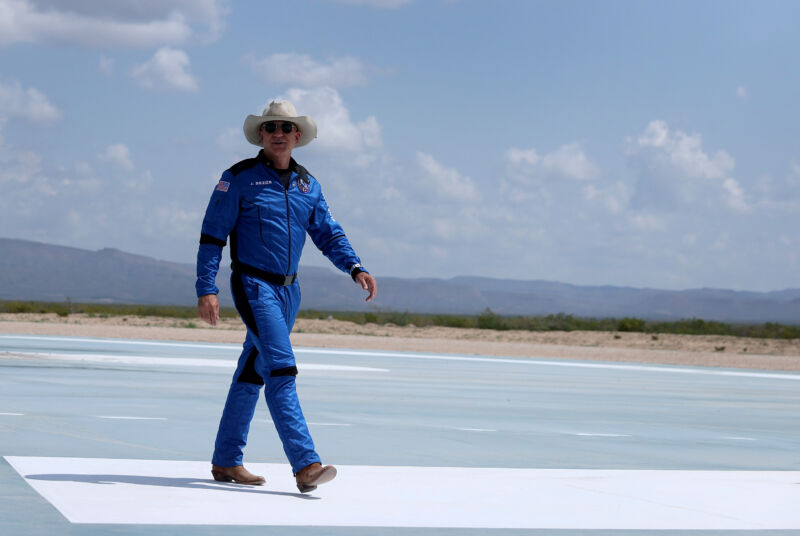
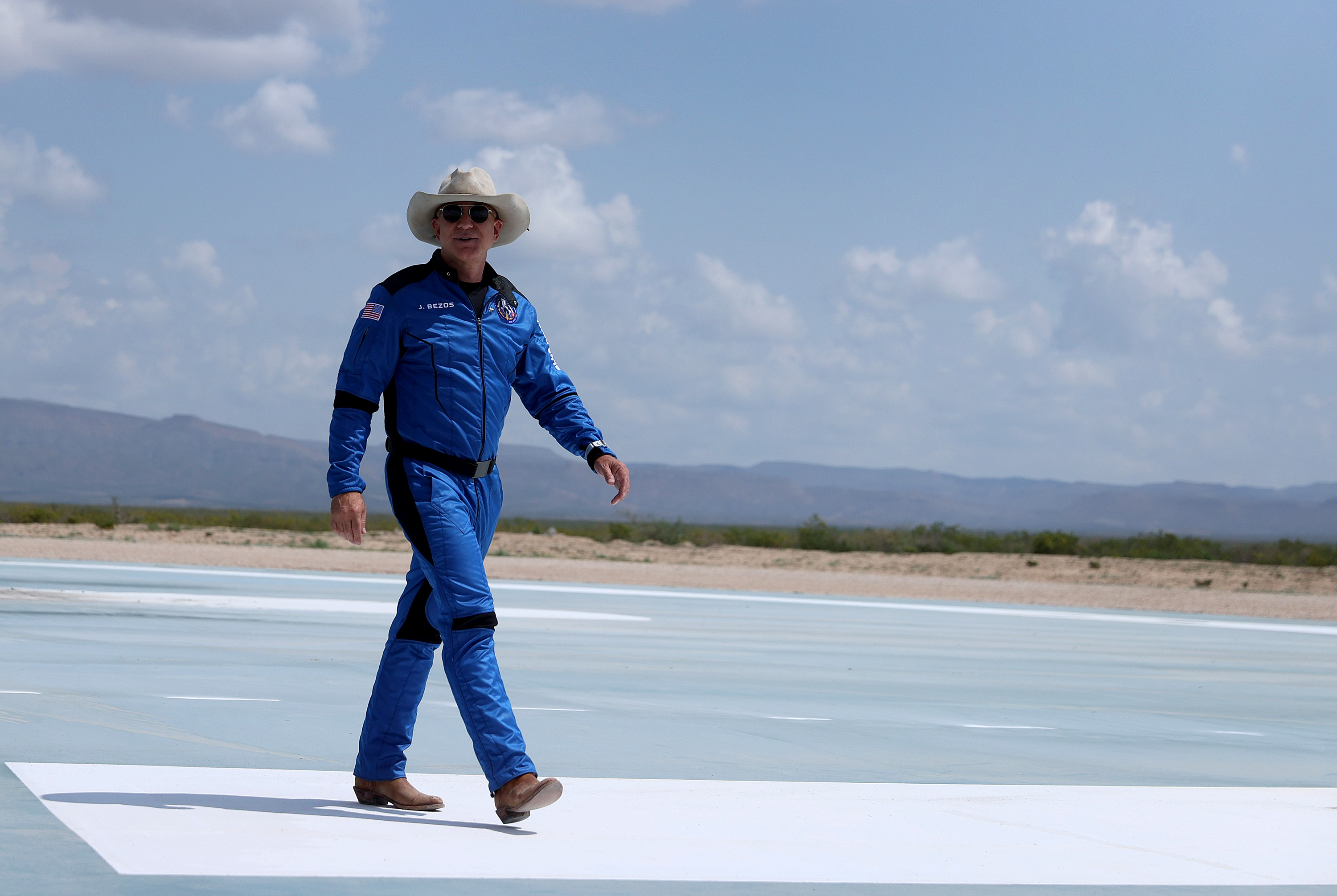
Jeff Bezos walks near Blue Origin’s New Shepard after flying into space on July 20, 2021 in Van Horn, Texas.

Enlarge / Jeff Bezos walks near Blue Origin’s New Shepard after flying into space on July 20, 2021 in Van Horn, Texas. (credit: Joe Raedle/Getty Images)

Virgin Galactic smoothly completed its sixth human spaceflight in six months on Thursday, continuing an impressive cadence of missions with its VSS Unity spacecraft. This performance has made the company the clear leader in suborbital space tourism.

A key question is where this leaves the other company with a launch system capable of carrying private astronauts above the atmosphere: Blue Origin. That company’s New Shepard rocket and spacecraft have been grounded since an engine failure nearly 14 months ago. During that uncrewed flight, the rocket broke apart, but the capsule safely parachuted to the West Texas desert.

Blue Origin finished its accident analysis this spring and implemented a fix to the issue, including design changes to the BE-3 engine combustion chamber. In May, the company said it planned to return to flight “soon.” Then, in September, the Federal Aviation Administration closed its mishap investigation. So where is New Shepard?

Read 11 remaining paragraphs | Comments


Source: Ars Technica – How long will Jeff Bezos continue to subsidize his New Shepard rocket?

Perfect Dark finally gets the full-featured PC port it deserves

It’s hard to go back to the N64 original after seeing the smooth visual and control improvement of this PC port.

For decades now, PC players who wanted to check out Rare’s seminal 2000 shooter masterpiece Perfect Dark were stuck with the compromises inherent in emulating an aging title designed for very different hardware. Now, over 23 years after its release, Perfect Dark has gotten the full PC port it so richly deserves, complete with graphics and control updates that make the experience much more enjoyable for a modern audience.

The “work-in-progress” port from GitHub user fgsfdsfgs is described as “mostly functional,” with “minor graphics- and gameplay-related issues, and possibly occasional crashes.” But those are a small price to pay for a version of the game that comes complete with full mouse-and-keyboard controls for the first time, alongside a 60 fps frame rate, support for modern widescreen monitor resolutions, and even the ability to load custom levels.

After some quick testing, we can say this is easily the best way to play Perfect Dark today. The mouse-and-keyboard controls in particular make this version of the game stand out from the quality 2010 Xbox 360 port. And while the character models and level designs can feel a bit repetitive and blocky from a modern viewpoint, the added resolution and upscaling represent a big improvement over the muddiness of the N64 original (despite the improvements enabled by the then-massive 4MB RAM expansion pack).

Read 4 remaining paragraphs | Comments


Source: Ars Technica – Perfect Dark finally gets the full-featured PC port it deserves

Intel’s failed 64-bit Itanium CPUs die another death as Linux support ends

Intel’s failed 64-bit Itanium CPUs die another death as Linux support ends

Enlarge (credit: Intel)

Officially, Intel’s Itanium chips and their IA-64 architecture died back in 2021, when the company shipped its last processors. But failed technology often dies a million little deaths. To name just a few: Itanium also died in 2013, when Intel effectively decided to stop improving it; in 2017, when the last new Itanium CPUs shipped; in 2020, when the last Itanium-compatible version of Windows Server stopped getting updates; and in 2003, when AMD introduced a 64-bit processor lineup that didn’t break compatibility with existing 32-bit x86 operating systems and applications.

Itanium is dying another death in the next version of the Linux kernel. According to Phoronix, all code related to Itanium support is being removed from the kernel in the upcoming 6.7 release after several months of deliberation. Linus Torvalds removed some 65,219 lines of Itanium-supporting code in a commit earlier this week, giving the architecture a “well-earned retirement as planned.”

The first Itanium processors were released in mid-2001, the result of years of collaboration between Intel and HP. The initial designs were made for servers, where their parallelized design would (theoretically) be able to speed things up by executing multiple instructions simultaneously. From there, the instruction set would eventually migrate into lower-end servers and then to consumer PCs.

Read 4 remaining paragraphs | Comments


Source: Ars Technica – Intel’s failed 64-bit Itanium CPUs die another death as Linux support ends

The UAW beat the big three; Elon Musk’s Tesla is among its next targets

Handshake and contract signing an agreement.

Enlarge (credit: Getty Images)

Six weeks of targeted strikes by the United Auto Workers has proved to be an effective approach. Ford, Stellantis, and General Motors have all reached tentative agreements with the UAW over the past 10 days. Now, the union wants to focus its attention on automakers like Toyota and Tesla, who have resisted unionization or opened plants in right-to-work states that are hostile to collective bargaining.

The UAW began strike action at three car factories in mid-September, the first time in the union’s history that it initiated industrial action against all three of the big US automakers simultaneously.

After watching years of executive pay raise largesse, the union asked for a 36 percent pay increase spread over four years, the return of cost-of-living adjustments, and the return of defined-benefit pensions. Among other demands were an end to the two-tiered system of hiring some employees as temporary workers, which meant that people hired after 2007 could be paid half as much as someone doing the same job hired before that practice was instituted.

Read 6 remaining paragraphs | Comments


Source: Ars Technica – The UAW beat the big three; Elon Musk’s Tesla is among its next targets

AI helps 3D printers “write” with coiling fluid ropes like Jackson Pollock

Jackson Pollock working in his Long Island studio adjacent to his home in 1949.

Enlarge / Jackson Pollock working in his Long Island studio adjacent to his home in 1949. (credit: Martha Holmes/The LIFE Picture Collection via Getty Image)

If you’ve ever drizzled honey on a piece of toast, you’ve noticed how the amber liquid folds and coils in on itself as it hits the toast. The same thing can happen with 3D and 4D printing if the print nozzle is too far from the printing substrate. Harvard scientists have taken a page from the innovative methods of abstract expressionist artist Jackson Pollock—aka the “splatter master”—to exploit the underlying physics rather than try to control it to significantly speed up the process, according to a new paper published in the journal Soft Matter. With the help of machine learning, the authors were able to decorate a cookie with chocolate syrup to demonstrate the viability of their new approach.

As reported previously, Pollock early on employed a “flying filament” or “flying catenary” technique before he perfected his dripping methods. The paint forms various viscous filaments that are thrown against a vertical canvas. The dripping technique involved laying a canvas flat on the floor and then pouring paint on top of it. Sometimes, he poured it directly from a can; sometimes he used a stick, knife, or brush; and sometimes he used a syringe. The artist usually “rhythmically” moved around the canvas as he worked. His style has long fascinated physicists, as evidenced by the controversy surrounding the question of whether or not Pollock’s paintings show evidence of fractal patterns.

Back in 2011, Harvard mathematician Lakshminarayanan Mahadevan collaborated with art historian Claude Cernuschi on an article for Physics Today examining Pollock’s use of a “coiling instability” in his paintings. The study mathematically describes how a viscous fluid folds onto itself like a coiling rope—just like pouring cold maple syrup on pancakes.

Read 8 remaining paragraphs | Comments


Source: Ars Technica – AI helps 3D printers “write” with coiling fluid ropes like Jackson Pollock

Former head of NASA’s climate group issues dire warning on warming

Pollution and sunrise

Enlarge (credit: Alexandros Maragos / Getty Images)

During the past year, the needles on the climate dashboard for global ice melt, heatwaves, ocean temperatures, coral die-offs, floods, and droughts all tilted far into the red warning zone. In summer and fall, monthly global temperature anomalies spiked beyond most projections, helping to drive those extremes, and they may not level off any time soon, said James Hansen, lead author of a study published Thursday in the journal Oxford Open Climate Change that projects a big jump in the rate of warming in the next few decades.

But the research was controversial even before it was published, and it may widen the rifts in the climate science community and in the broader public conversation about the severity and imminence of climate impacts, with Hansen criticizing the United Nations Intergovernmental Panel on Climate Change for underestimating future warming, while other researchers, including IPCC authors, lambasted the new study.

The research suggests that an ongoing reduction of sulfuric air pollution particles called aerosols could send the global average annual temperature soaring beyond the targets of the Paris climate agreement much sooner than expected, which would sharply increase the challenges faced by countries working to limit harmful climate change under international agreements on an already treacherous geopolitical stage.

Read 40 remaining paragraphs | Comments


Source: Ars Technica – Former head of NASA’s climate group issues dire warning on warming

Daily Telescope: Lucy finds not one but two diamonds in the sky

This image shows the “moonrise” of the satellite as it emerges from behind asteroid Dinkinesh as seen by the Lucy Long-Range Reconnaissance Imager.

Enlarge / This image shows the “moonrise” of the satellite as it emerges from behind asteroid Dinkinesh as seen by the Lucy Long-Range Reconnaissance Imager. (credit: NASA/Goddard/SwRI/Johns Hopkins APL/NOAO)

Welcome to the Daily Telescope. There is a little too much darkness in this world and not enough light; a little too much pseudoscience and not enough science. We’ll let other publications offer you a daily horoscope. At Ars Technica, we’re going to take a different route, finding inspiration from very real images of a universe that is filled with stars and wonder.

Good morning. It is November 3, and today we have a treat from NASA. A couple of days ago I wrote about NASA’s Lucy mission preparing to fly by its first asteroid target, the small main-belt asteroid Dinkinesh. Now, it is complete.

This flyby was not so much about the science but rather proving the capability of the spacecraft to point its instruments and take data while whizzing by an asteroid. In this case, Lucy zoomed by Dinkinesh at a speed of 10,000 mph (4,470 meters per second). And, as can be seen from the first images returned by Lucy, the spacecraft succeeded.

Read 5 remaining paragraphs | Comments


Source: Ars Technica – Daily Telescope: Lucy finds not one but two diamonds in the sky

Why OLED monitor burn-in isn’t a huge problem anymore

Three

Enlarge (credit: Aurich Lawson | Getty Images)

Until recently, OLED computer monitor selection was limited. Today, there’s more than a handful available. LG Display and Samsung Display have made picking an OLED monitor exciting by designing competing models—white OLED (WOLED) and quantum dot OLED (QD-OLED), respectively—and monitor vendors are steadily addressing OLED scarcity and price barriers.

But what about longstanding fears of OLED burn-in?

People tend to display static images on computer monitors more frequently than on TVs—things like icons, taskbars, and browser address bars—making burn-in risk a concern.

Read 70 remaining paragraphs | Comments


Source: Ars Technica – Why OLED monitor burn-in isn’t a huge problem anymore