Buc-ee’s and Mercedes-Benz are partnering to add high-speed chargers

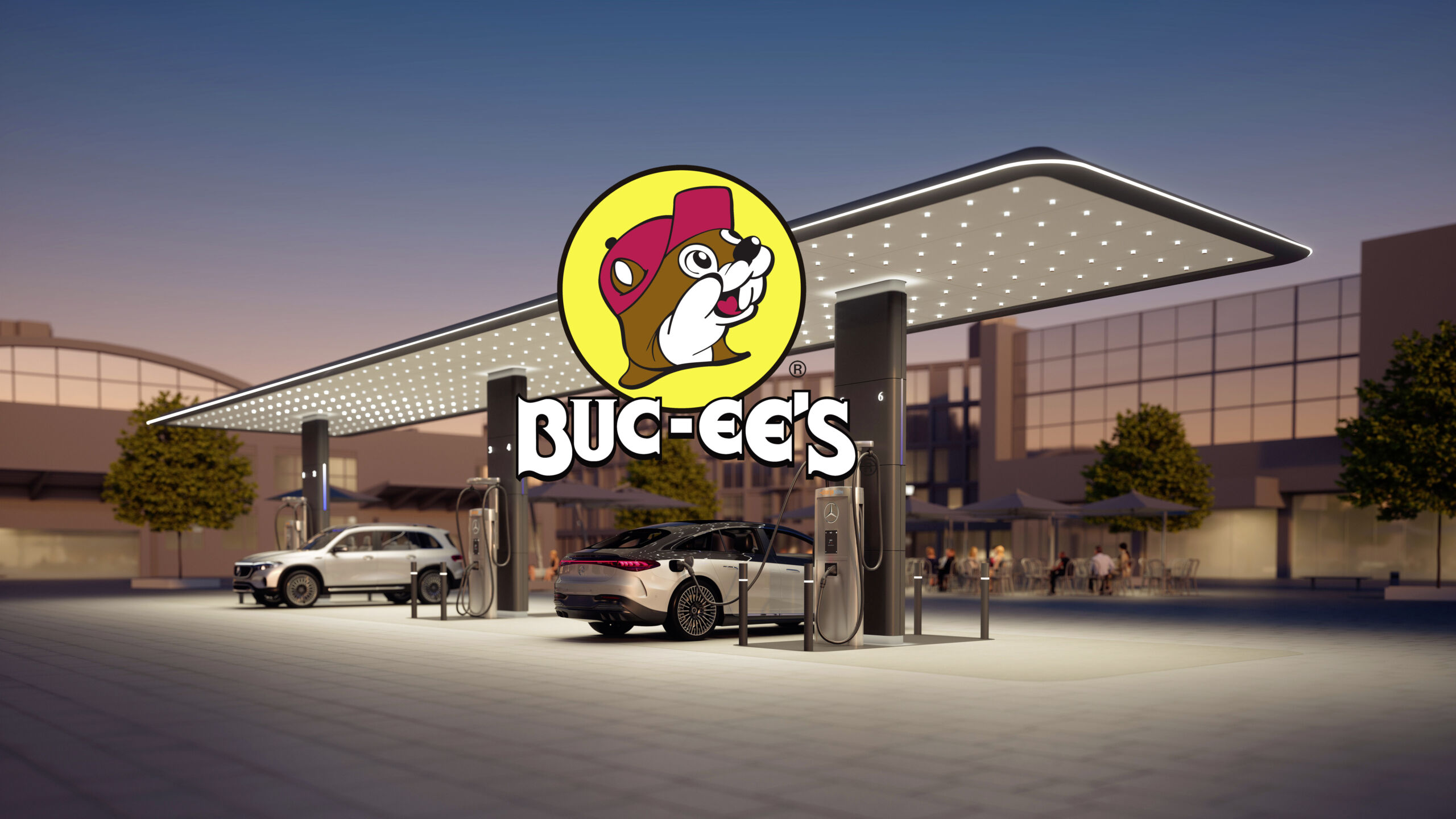
The Buc-ee's logo superimposed on top of a rendering of a Mercdes-Benz charging site

Enlarge / Mercedes-Benz is launching a network of branded EV charging sites, and some of them are coming to Buc-ee’s travel centers, so you can stock up on cake balls while you charge your EV. (credit: Mercedes-Benz/Buc-ee’s/Jonathan Gitlin)

Fast electric vehicle charging is coming to Buc-ee’s, the Texas-based travel center chain with a cult following. On Thursday it announced a partnership with Mercedes-Benz to build charging hubs at Buc-ee’s travel centers along major transit corridors in the South and Southeast, including I-75 and I-95. The announcement says that “about 30” should be operational by the end of 2024, but that Mercedes plans to build charging hubs at most Buc-ee’s locations.

Last week Mercedes revealed it is also partnering with shopping center operator Simon to bring Mercedes charging hubs to at least 55 Simon properties across the US and Canada.

Mercedes revealed in January it was getting into the EV infrastructure game with a plan to build out more than 400 charging hubs by 2027, under the Mercedes-Benz HPC North America banner. To do so, it partnered with ChargePoint, which provides EV charging solutions, as well as MN8 Energy, a solar and battery-storage company that will mean the Mercedes charging hubs will use entirely renewable energy to recharge their customers.

Read 5 remaining paragraphs | Comments


Source: Ars Technica – Buc-ee’s and Mercedes-Benz are partnering to add high-speed chargers

Frank Borman, commander of the first mission to orbit the Moon, has died

Read 25 remaining paragraphs | Comments


Source: Ars Technica – Frank Borman, commander of the first mission to orbit the Moon, has died

Daily Telescope: Peeling back the layers of the Garlic Nebula

The Garlic Nebula in all its glory.

Enlarge / The Garlic Nebula in all its glory.

Welcome to the Daily Telescope. There is a little too much darkness in this world and not enough light, a little too much pseudoscience and not enough science. We’ll let other publications offer you a daily horoscope. At Ars Technica, we’re going to take a different route, finding inspiration from very real images of a universe that is filled with stars and wonder.

Good morning. It’s November 10, and today’s photo reveals a faint supernova.

It has the formal name CTB-1, and after its discovery in the 1950s, it was thought to be a planetary nebula. (Regular readers will recall that planetary nebulae turned out to not have anything to do with planets.) CTB, in case you were wondering, stands for “Cal Tech Observatory catalog B.”

Read 5 remaining paragraphs | Comments


Source: Ars Technica – Daily Telescope: Peeling back the layers of the Garlic Nebula

Is the NFL making progress in tackling its concussion crisis?

Read 41 remaining paragraphs | Comments


Source: Ars Technica – Is the NFL making progress in tackling its concussion crisis?

Rocket Report: Tough times Astra and Virgin; SpaceX upgrading launch pad

Welcome to Edition 6.19 of the Rocket Report! While we wait for SpaceX to launch the second full-scale test flight of Starship, a lot of the news this week involved companies with much smaller rockets. Astra is struggling to find enough funding to remain in business, and Virgin Galactic says it will fly its suborbital Unity spaceplane for the last time next year to focus on construction of new Delta-class ships that should be easier to turn around between flights. It’s a tough time to raise money, and more space companies will face difficult decisions to stay alive in the months ahead.

As always, we welcome reader submissions, and if you don’t want to miss an issue, please subscribe using the box below (the form will not appear on AMP-enabled versions of the site). Each report will include information on small-, medium-, and heavy-lift rockets, as well as a quick look ahead at the next three launches on the calendar.

Virgin Galactic plans “pause” in flight operations. Virgin Galactic will reduce the frequency of flights of its current suborbital vehicle and stop them entirely by mid-2024 as it concentrates resources on the next generation of vehicles, Space News reports. This was unexpected news for anyone outside of the company. As Ars has previously reported, Virgin Galactic has ramped up the flight rate for its VSS Unity suborbital spaceplane to about one mission per month, a rather impressive cadence, especially when Blue Origin, the other player in the suborbital human spaceflight market, has not flown any people to space in more than a year.

Read 22 remaining paragraphs | Comments


Source: Ars Technica – Rocket Report: Tough times Astra and Virgin; SpaceX upgrading launch pad

Combined Hulu and Disney+ app launches in March; beta debuts in December

Samel L. Jackson in a scene from Secret Invasion

Enlarge / Hulu content may do a not-so-secret-invasion of Disney+. (credit: Marvel)

An app combining the libraries of Disney+ and Hulu will launch in late March 2024, Walt Disney Company CEO Robert Iger said in a Q4 2023 earnings call on Wednesday nightThe full app’s release will follow the beta that launches in December.

Iger told investors that the beta will be available to US subscribers bundling their Disney+ and Hulu subscriptions and will give “parents time to set up profiles and parental controls that work best for their families ahead of the official launch,” as per a transcription from The Motley Fool.

We first learned that Disney was planning a combined Disney+ and Hulu app in May when Disney owned two-thirds of Hulu. At the time, Iger called the unified app a “local progression” of Disney’s consumer portfolio that would streamline content, boost audience engagement, and impress advertisers. Disney also pointed to potential cheaper customer acquisition costs. Wednesday’s update follows Disney’s announcement last week that it’s buying the last third of Hulu, giving Disney total ownership.

Read 14 remaining paragraphs | Comments


Source: Ars Technica – Combined Hulu and Disney+ app launches in March; beta debuts in December

Why we had to wait nearly two years for an OLED Steam Deck

Mood lighting orb not included.

Enlarge / Mood lighting orb not included. (credit: Valve)

Given the 2021 launch of Nintendo’s Switch OLED, it might seem a little weird that we’ve had to wait nearly two years after the original Steam Deck launch for today’s announcement of an OLED-equipped version. In interviews surrounding that announcement, though, Valve says an OLED screen was never in the cards for the original Steam Deck, given the timeline involved.

Valve designer Jeremy Selan tells IGN that “the display technology for the HDR display, we kicked that off prior to even having shipped the first [Steam Deck].” Selan added to Rock Paper Shotgun that work on this OLED update started “basically immediately” after the original unit was released.

“We knew we needed a better display, even from day one,” Selan told RPS. “It just takes multiple years, it takes a lot of money.”

Read 9 remaining paragraphs | Comments


Source: Ars Technica – Why we had to wait nearly two years for an OLED Steam Deck

Bored Ape creator says UV lights at ApeFest burned attendees’ eyes and skin

People walk by a Bored Ape Yacht Club NFT billboard in Times Square on June 23, 2022 in New York City. Sunglasses would have been a good idea for this year's ApeFest.

Enlarge / People walk by a Bored Ape Yacht Club NFT billboard in Times Square on June 23, 2022 in New York City. Sunglasses would have been a good idea for this year’s ApeFest. (credit: Getty | Noam Galai)

Lamps emitting ultraviolet light in the corner of a Bored Ape NFT event in Hong Kong last Saturday are the likely cause of severe eye and skin injuries among attendees, according to Yuga Labs, the creator of Bored Ape Yacht Club (BAYC) and host of the event.

The injuries reportedly occurred during “ApeFest,” a three-day annual meet-up of people who own Bored Ape NFTs—which sell for tens of thousands of dollars and, amid the 2021 NFT craze, saw highly inflated prices of hundreds of thousands of dollars. However regretful, owners of the cryptocurrency-backed, digital images of nonchalant cartoon primates are automatic members of the BAYC. This year, their annual club event ran from November 3–5 and promised “mayhem” and “One big night full of surprises.”

Soon after an ApeFest party Saturday night, some attendees reported severe pain and burning sensations in their eyes, as well as vision problems and skin irritation, according to Yuga Labs. Doctors and others on the Internet quickly speculated that the cause was UV exposure and photokeratitis (aka snow blindness, arc eye, or welder’s flash), which is akin to a sunburn on the cornea (the clear tissue covering the front of your eye) due to exposure to UV light. The New York Times reported as of Tuesday that the number of attendees injured was over 20.

Read 5 remaining paragraphs | Comments


Source: Ars Technica – Bored Ape creator says UV lights at ApeFest burned attendees’ eyes and skin

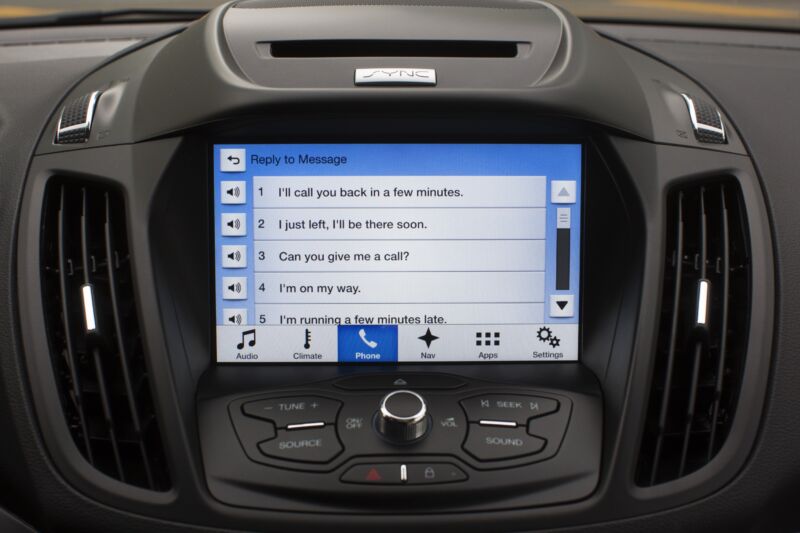
Five big carmakers beat lawsuits alleging infotainment systems invade privacy

Read 14 remaining paragraphs | Comments


Source: Ars Technica – Five big carmakers beat lawsuits alleging infotainment systems invade privacy

Gmail’s “Quick Reply” UI brings it one step closer to instant messaging

Does Gmail want to be an instant messaging client? Last month the popular webmail app shipped an emoji reactions bar in the mobile app, where a single tap would send a new email with your emoji response. Now, a wild new UI experiment spotted by Android Police goes another step further: a quick reply bar that looks just like instant messaging input.

Rather than the usual input block you get for writing paragraphs of overly formal text, this new Gmail experiment has a one-line input bar at the bottom for replies. A drop down just above it lets you pick from the usual “reply,” “reply all,” or “Forward” options. Besides that you get an attachment and send button. An “expand” button will presumably launch the usual compose interface.

So far this seems to be an extremely rare test that only one person has gotten, so it’s not necessarily going to roll out to everyone. Given the recent emoji launch, though, Gmail certainly seems jealous of its instant-messaging cousins.

Read on Ars Technica | Comments


Source: Ars Technica – Gmail’s “Quick Reply” UI brings it one step closer to instant messaging

Sparse innards of $25 counterfeit AirPods Pro revealed by CT scans 

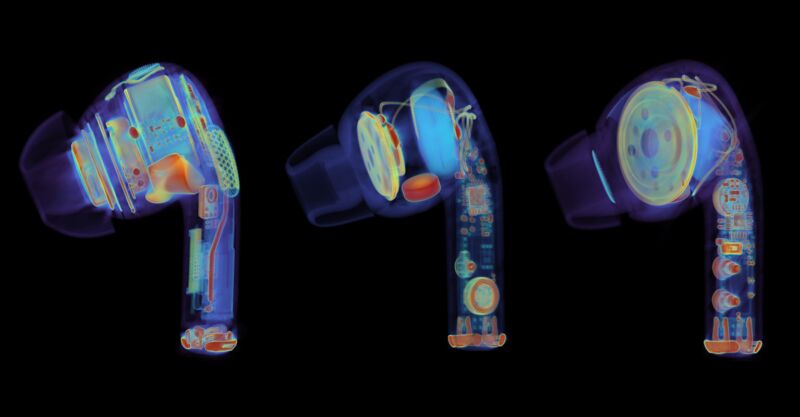
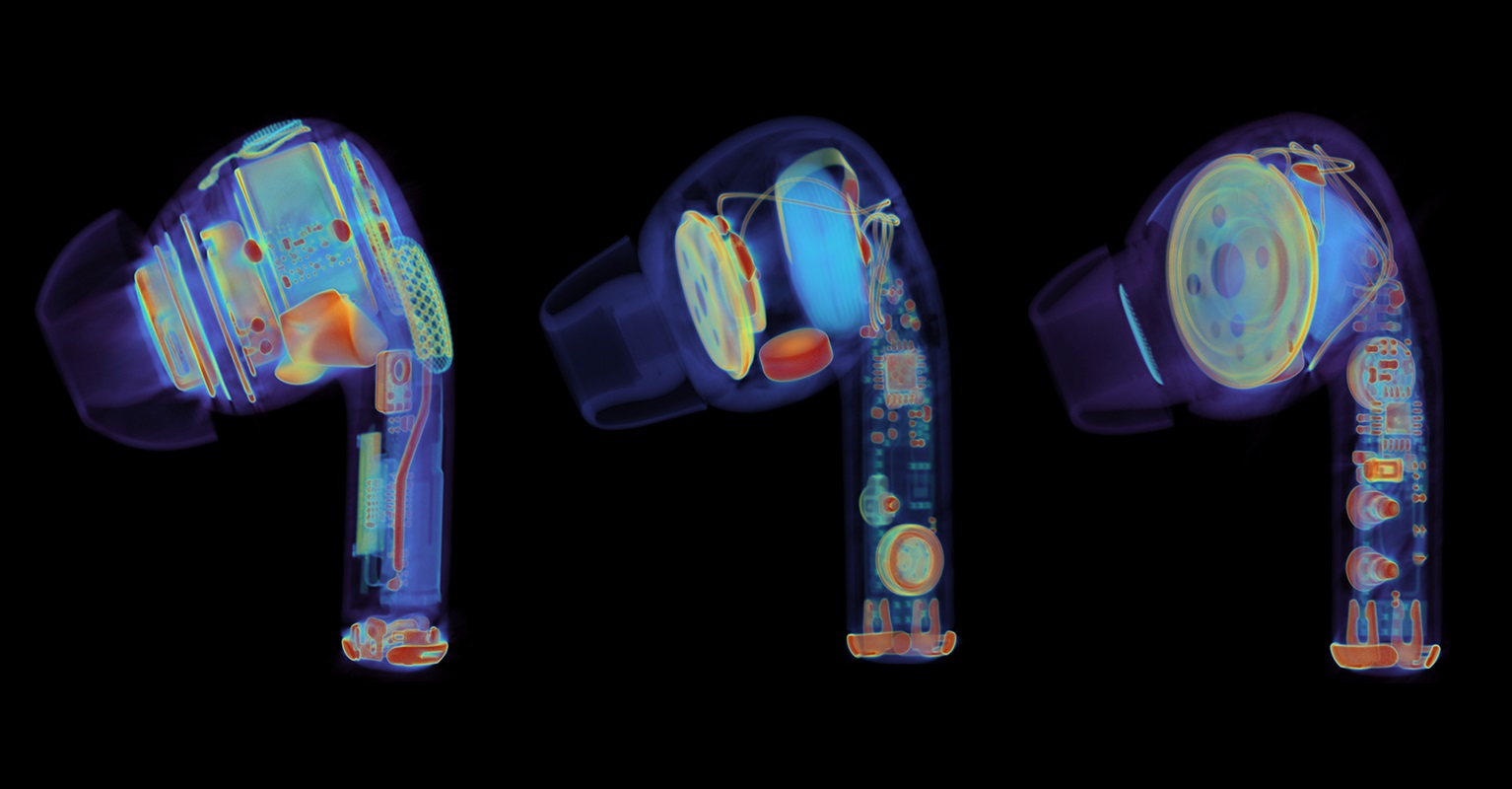
Lumafield's blog shared this image showing CT scans of three earbuds. The left is a real AirPods Pro (2nd Gen). The wire-riddled two on the right are fakes.

Enlarge / Lumafield’s blog shared this image showing CT scans of three earbuds. The left is a real AirPods Pro (2nd Gen). The wire-riddled two on the right are fakes. (credit: Lumafield)

Whether they’re products pretending to be made by a brand or devices claiming to be something they’re not, (like a microSD card posing as an SSD), fraudulent electronics pose a threat to unsuspecting shoppers’ wallets and, at times, their safety. With their popularity and high prices, scammers often target Apple products. But what’s actually inside those faux Apple devices?

To find out, Lumafield busted out its $75,000 CT scanner to illustrate what people get when they end up with counterfeit MacBook chargers or knockoff AirPods Pro.
Lumafield makes industrial CT scanners and software. Lately, it has been using its Neptune scanner to examine electronics, like Apple’s $130 Thunderbolt 4 cable. This week, Lumafield provided CT scans (which you can play with via Lumafield’s online Voyager software) of the AirPods Pro 2nd Generation (here), two counterfeits (here and here), as well as a look at Apple’s 85 W MagSafe 2 Power Adapter (here) and a fake (here).

Read 23 remaining paragraphs | Comments


Source: Ars Technica – Sparse innards of counterfeit AirPods Pro revealed by CT scans 

Google, Meta, TikTok defeat Austria’s plan to combat hate speech

Google, Meta, TikTok defeat Austria’s plan to combat hate speech

Enlarge (credit: Matt Cardy / Contributor | Getty Images Europe)

On Thursday, a top European court ruled that Austria cannot force Google, Meta, and TikTok to pay millions in fines if they fail to delete hate speech from their popular social media platforms.

Austria had attempted to hold platforms accountable for hate speech and other illegal content after passing a law in 2021 requiring tech giants to publish reports as often as every six months detailing content takedowns. Like the European Union’s recently adopted Digital Services Act, the Austrian law sought to impose fines—up to $10.69 million, Reuters reported—for failing to tackle illegal or harmful content.

However, soon after Austria tried to enforce the law, Google, Meta, and TikTok—each with EU operations based in Ireland—challenged it in an Austrian court. The tech companies insisted that Austria’s law conflicted with an EU law that says that platforms are only subject to laws in EU member states where they’re established.

Read 16 remaining paragraphs | Comments


Source: Ars Technica – Google, Meta, TikTok defeat Austria’s plan to combat hate speech

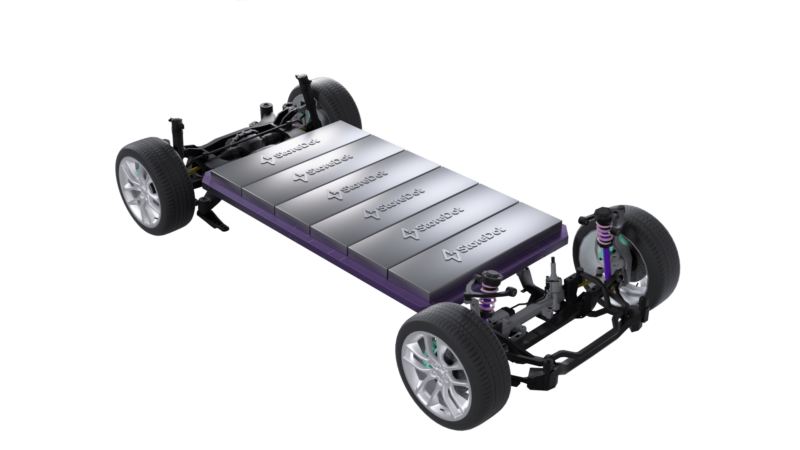
Polestar will begin testing StoreDot’s 5-minute charge battery

Read 6 remaining paragraphs | Comments


Source: Ars Technica – Polestar will begin testing StoreDot’s 5-minute charge battery

Steam Deck OLED promises better screen, longer battery life, and faster Wi-Fi

Steam Deck OLED

Enlarge (credit: Valve)

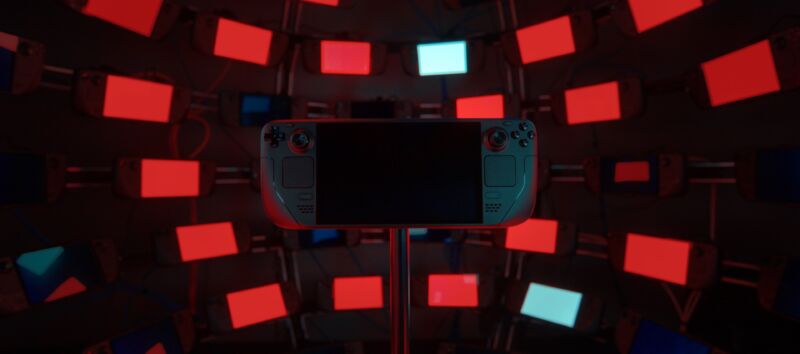
An update to Valve’s handheld PC gaming system, a “Limited Edition” Steam Deck OLED, will be available next week. The new version improves the screen quality, the amount of battery, and the Wi-Fi capacity, plus a “6nm APU.” Starting at $549 for the 512GB storage version, the OLED Decks are available beginning November 16, with “highly limited” quantities.

LCD models of the Steam Deck are also being phased out, with discounts on the 64GB and 512 GB versions while supplies last.

Valve claims the Steam Deck OLED will offer “brighter colors, blacker blacks,” with “amazing motion rendition,” shoring up one of the major nitpicks about the Deck’s launch version. The OLED model also touts 30–50 percent more battery life, weighs 30 g less than the original, and can download up to three times faster.

Read 1 remaining paragraphs | Comments


Source: Ars Technica – Steam Deck OLED promises better screen, longer battery life, and faster Wi-Fi

Tumblr is reportedly on life support as its latest owner reassigns staff

Tumblr app open on an Android phone

Enlarge / “You’ll never be bored again” is one of the more fitting slogans attached to Tumblr. (credit: Getty Images)

It’s not quite the end of Tumblr, but when management is supposedly sending memos with the Lord Tennyson quote about having “loved and lost,” it doesn’t look like there’s much of a future.

Internet statesman and Waxy.org proprietor Andy Baio posted what is “apparently an internal Automattic memo making the rounds on Tumblr” to Threads. The memo, written to employees at WordPress.com parent company Automattic, which bought Tumblr from Verizon’s media arm in 2019, is titled or subtitled “You win or you learn.” The posted memo states that a majority of the 139 employees working on product and marketing at Tumblr (in a team apparently named “Bumblr”) will “switch to other divisions.” Those working in “Happiness” (Automattic’s customer support and service division) and “T&S” (trust and safety) would remain.

“We are at the point where after 600+ person-years of effort put into Tumblr since the acquisition in 2019, we have not gotten the expected results from our effort, which was to have revenue and usage above its previous peaks,” the posted memo reads. After quotes and anecdotes about love, loss, mountain climbing, and learning on the journey, the memo notes that nobody will be let go and that team members can make a ranked list of their top three preferred assignments elsewhere inside Automattic.

Read 8 remaining paragraphs | Comments


Source: Ars Technica – Tumblr is reportedly on life support as its latest owner reassigns staff

Fans of Connections, rejoice! Rebooted classic sci-doc series returns with original host

slim elderly man in the center of a colorful vortex with dolphins on either side

Enlarge / Host James Burke returns for a reboot of his classic science series Connections on Curiosity Stream. (credit: Curiosity Stream)

Some 15 years ago, a friend recommended I check out a vintage BBC science documentary series called Connections: “I just think it will resonate with how your mind works.” He was right. I was immediately hooked and devoured every available episode, following host James Burke down countless fascinating historical rabbit holes before arriving at an unexpected final destination—although in retrospect, the haphazard journey somehow made perfect sense. Connections was the science documentary series for compulsively curious people who weren’t necessarily drawn to more traditional science and nature documentaries. And now Burke is back and better than ever with six new episodes of a rebooted Connections, thanks to the folks at Curiosity Stream.

The series had been around for decades before I made my belated discovery. The BBC first aired Connections to the UK back in 1978, expanding to the US the following year. Produced and directed by Mick Jackson, each episode would start with some past innovation or event—the invention of the cannon and subsequent changes to castle fortifications to eliminate blind spots, for example. Then Burke would spend the remainder of the episode tracking a path through a series of seemingly unrelated events—maps, limelight, incandescent bulbs, substituting guncotton for ivory in billiard balls, the zoopraxiscope, the telegraph—to demonstrate how they all connected to produce a modern-day breakthrough: the movie projector.

Much of the delight came from all those surprising and unexpected connections. But Burke also had an overarching philosophy about the nature of change and innovation, arguing that rather than progress occurring in a conventional linear fashion, it occurred nonlinearly via an intricate web of interconnected events. In short, one simply could not understand a new modern scientific breakthrough or technology in isolation. That’s why the series was subtitled “An Alternative View of Change.”

Read 29 remaining paragraphs | Comments


Source: Ars Technica – Fans of Connections, rejoice! Rebooted classic sci-doc series returns with original host

AMD pulls back on drivers for aging-but-popular graphics cards and iGPUs

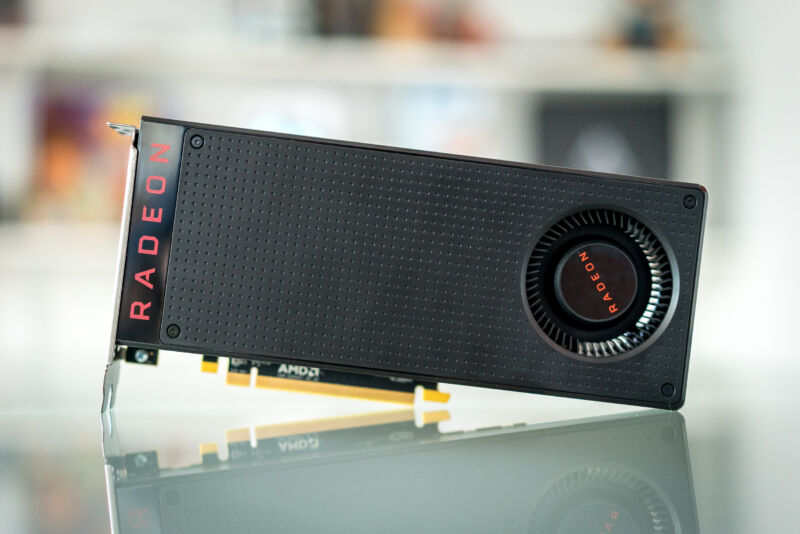
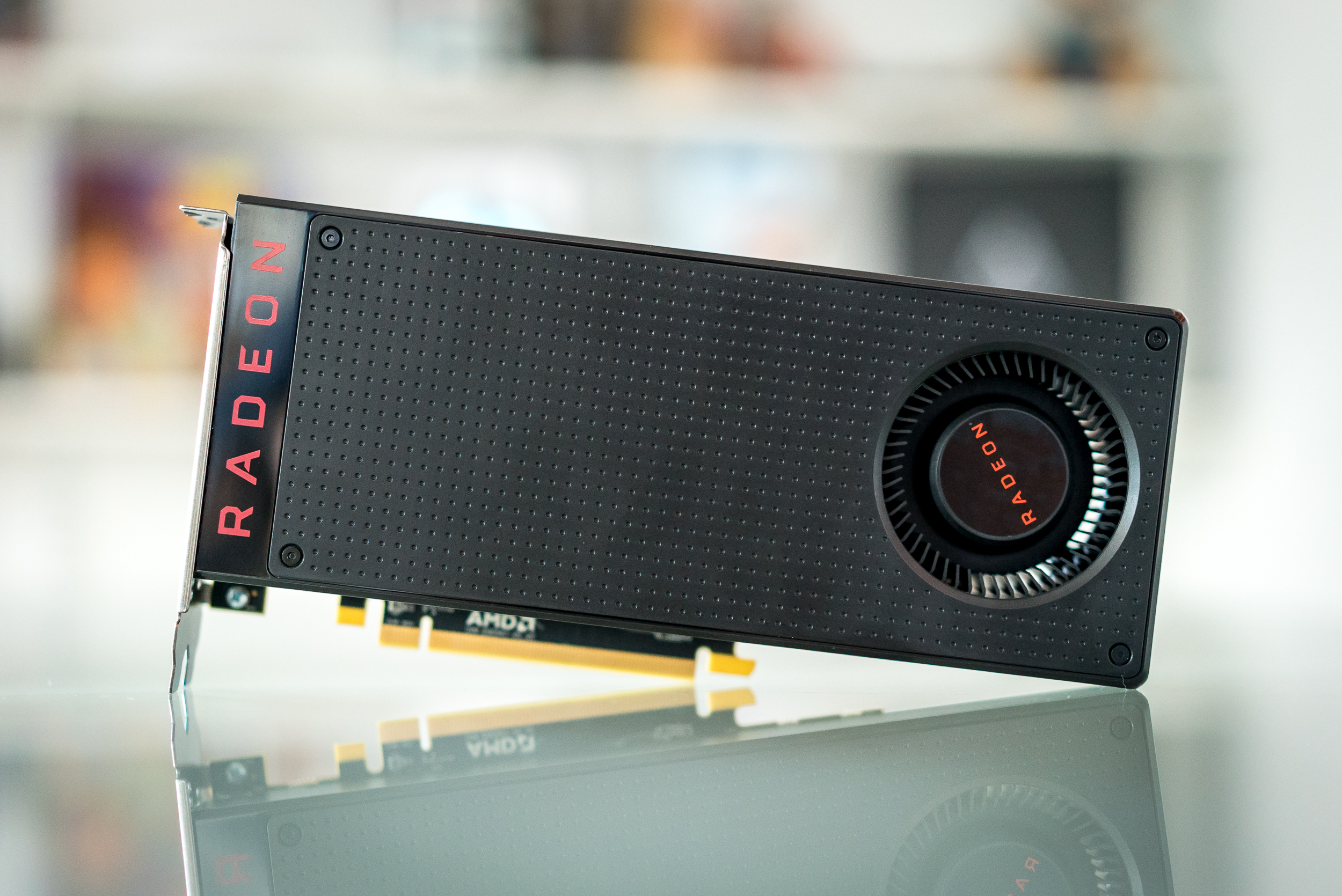
AMD's RX 480, which got good reviews back in 2016 for its performance and budget-friendly $200 starting price.

Enlarge / AMD’s RX 480, which got good reviews back in 2016 for its performance and budget-friendly $200 starting price. (credit: Mark Walton)

After a couple of years of cryptocurrency- and pandemic-fueled shortages, 2023 has been a surprisingly sensible time to buy a new graphics card. New midrange GPUs like Nvidia’s GeForce RTX 4060 and AMD’s Radeon RX 7600 haven’t been huge upgrades over their predecessors, but they’re at least reliable performers that you can consistently buy at or under their launch prices.

If you’ve been hanging on to an old AMD Radeon GPU, though, there’s some bad news: According to AnandTech, AMD is beginning to pull back on driver support for some of its late-2010s-era GPUs, most notably its Polaris and Vega GPU architectures. Support for these GPUs has already been removed from the company’s Linux drivers, and Windows drivers for the GPUs will be limited mostly to “critical updates.”

“The AMD Polaris and Vega graphics architectures are mature, stable and performant and don’t benefit as much from regular software tuning,” reads AMD’s official statement. “Going forward, AMD is providing critical updates for Polaris- and Vega-based products via a separate driver package, including important security and functionality updates as available. The committed support is greater than for products AMD categorizes as legacy, and gamers can still enjoy their favorite games on Polaris and Vega-based products.”

Read 5 remaining paragraphs | Comments


Source: Ars Technica – AMD pulls back on drivers for aging-but-popular graphics cards and iGPUs

Mario Kart 8 update nerfs controversial “sandbagging” strategy

Baby Luigi represents the reaction of sandbagging racers in this artistic rendering.

Baby Luigi represents the reaction of sandbagging racers in this artistic rendering. (credit: Nintendo)

Since Mario Kart 8‘s launch on the Wii U, one of the game’s most successful and controversial strategies has involved intentionally hanging out at the back of the pack to amass and abuse the game’s best items. Now, over nine years since the game’s initial release, Nintendo has taken steps to eliminate the controversial “bagging” strategy in the latest update to the Switch’s Mario Kart 8 Deluxe.

Mario Kart 8 players who made use of “bagging” (short for “sandbagging” and sometimes also called “item smuggling”) in online races would briefly retreat to last place to sit on a regenerating item box, waiting to acquire some of the game’s most powerful items (which are much more likely to appear when you are far away from first place). The bagging player could then use one of those items (say, a Golden Mushroom and/or Starman) to quickly catch up with the pack before using the other amassed item (say, a Bullet Bill) to build up a dominant lead. The strategy can be especially effective on tracks like “Cheese Land,” where using a Bullet Bill in very specific locations can extend how long the powerful item lasts.

Not “cheating,” but not exactly “racing”?

Despite bagging’s controversial reputation among many players, the strategy isn’t really comparable to outright cheating—baggers play an unmodified version of the game as it was designed, after all. And for years, many Mario Kart 8 players have argued that it’s a perfectly fair strategy that requires actual skill to use effectively. “Sandbagging is a risk vs reward kind of thing,” GameFAQs user RydeonHD wrote in 2016. “There have been many times where it can just plain out backfire (in those cases, it would’ve just been better to strive for first).”

Read 5 remaining paragraphs | Comments


Source: Ars Technica – Mario Kart 8 update nerfs controversial “sandbagging” strategy

EU regulator says Apple should be on hook for €14.3 billion tax bill

Read 20 remaining paragraphs | Comments


Source: Ars Technica – EU regulator says Apple should be on hook for €14.3 billion tax bill

The 2024 Nissan Z Nismo is sharper and quicker, but it comes at a cost

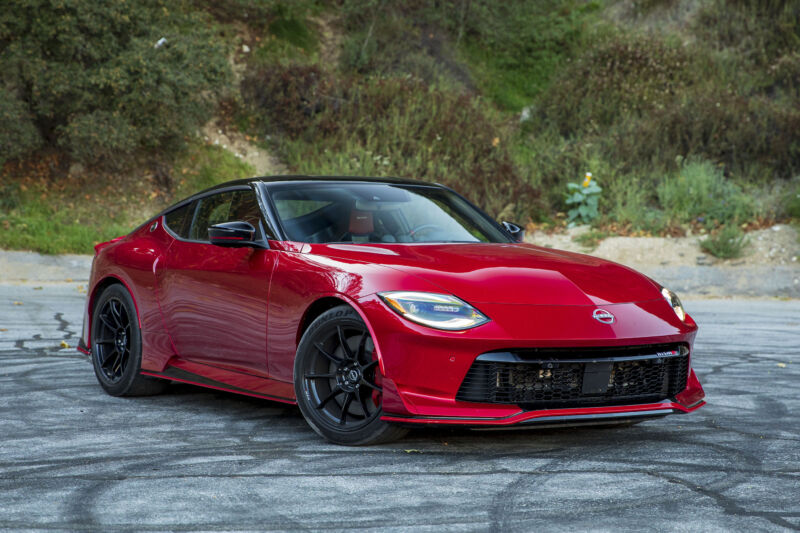
A red Nissan Z Nismo parked by some foliage

Enlarge / The Nismo version of the Nissan Z has a raft of mechanical changes, but the first thing you notice is a less-objectionable front fascia. (credit: Bradley Iger)

In the world of high-performance Nissan cars, the Nismo badge carries weight. Like BMW M and Toyota’s Gazoo Racing arm, it oversees Nissan’s motorsports efforts and serves as its in-house tuning department for the automaker’s most performance-focused road car offerings. Founded in 1984, the skunkworks division has a reputation for building formidable track weapons like the GT-R Nismo, which set a lap record for volume production road cars at the famed Nürburgring back in 2013.

While the department has been relatively quiet lately (likely due to the limited number of enthusiast models that have graced Nissan’s line-up in recent years), we knew it was only a matter of time before we’d see its handiwork applied to the new Z.

As we noted in our first drive of the standard Z last year, the seventh-generation machine ushered in a much-needed overhaul of Nissan’s rear-drive sports car that addressed many of its predecessor’s shortcomings, but a few laps of Las Vegas Motor Speedway’s road course revealed that there was still room for improvement in terms of outright performance prowess.

Read 16 remaining paragraphs | Comments


Source: Ars Technica – The 2024 Nissan Z Nismo is sharper and quicker, but it comes at a cost