[$] The challenge of maintaining curl

Keynote sessions at Open Source Summit events tend not to allow much time for
detailed talks, and the 2025 Open
Source Summit Europe
did not diverge from that pattern. Even so,
Daniel Stenberg, the maintainer of the curl
project, managed to cram a lot into the 15 minutes given to him.
Like the maintainers of many other projects, Stenberg is feeling some
stress, and the problems appear to be getting worse over time.

[$] Highlights from systemd v258: part one

The next release of systemd has been percolating for an unusually
long time. Systemd releases are usually about six months apart, but
v257 came out in
December 2024, and v258 just now seems to be nearing the finish
line; the third release candidate for v258 was published on
August 20 (release
notes
). Now is a good time to dig in and take a look at some of
the new features, enhancements, and removals coming soon to
systemd. These include new workload-management features, a concept for
multiple home-directory environments, and the final, once-and-for-all
removal of support for control
groups version 1
.

An Infamous Cave Sealed After a Fatal Accident is Being Reopened for Exploration – in VR

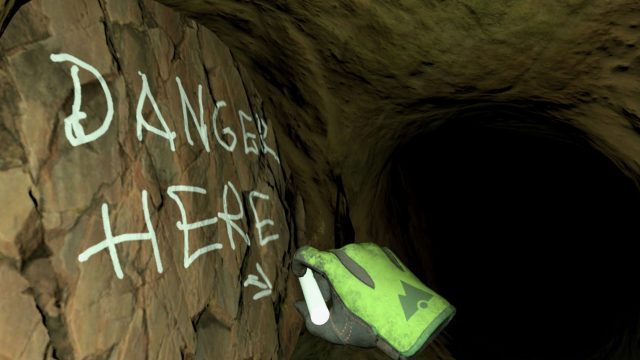
Cave Crave (2025) is a VR game where you explore caves. No monsters, no treasure chests, no puzzles—just the oppressive cave interiors tightening around you as you traverse further underground. Now, developers 3R Games are doing something few would expect: they’re purposefully recreating a now inaccessible cave system where a man died.

Next month, Cave Crave is releasing an update on Quest and PSVR 2 that brings to the game a recreation of Nutty Putty Cave, the infamous Utah-based cave system which attracted amateur and professional cavers alike before being permanently sealed shut in 2009, following a fatal accident that killed 26-year-old John Edward Jones.

In short, Jones was caving through Nutty Putty with a group when he broke off to go solo, finding himself trapped in a vertical fissure just 10 by 18 inches wide. What resulted was 27 hours of rescue attempts that ultimately failed to save him. You may have seen the image below, showing Jones’ route, as the haunting story has reverberated around the Internet ever since.
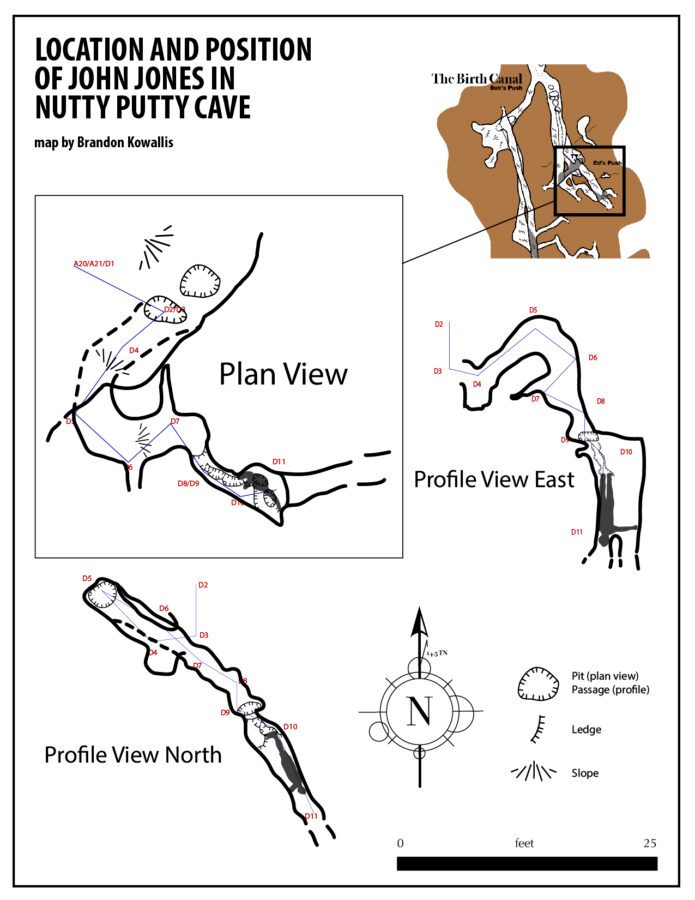
Rescue map of Nutty Putty | Image courtesy Brandon Kowallis

You can’t go there today in any capacity. In the wake of the disaster, explosives were used to collapse the ceiling of the section where Jones’ body was, and all entry points to the cave were permanently sealed off by filling them with concrete so nothing of the sort could ever happen there again.

To recreate Nutty Putty, 3R Games says they’ve used public documentation and an official cave map provided by Brandon Kowallis, a rescuer in the incident who later wrote a detailed account of the efforts to extract Jones. Kowallis’ recounting is a harrowing read that I won’t recap here.

Profit, Ethics, and the Virtual Tourist

Critically, the studio says its recreation of Nutty Putty “avoids gamification of the tragedy,” ostensibly by allowing users to visit in ‘Tourist Mode’, an option that removes bits like environmental hazards, collectibles, and player death.

“Our goal is to give VR explorers access to a place that can no longer be visited in reality—nothing more, nothing less,” says Piotr Surmacz, CEO of 3R Games and director of the title.

But recreating Nutty Putty raises questions. To the studio’s credit, they seem to be handling the recreation with grace, since it won’t be gamified. Still, I’m conflicted.

Dark Tourism isn’t anything new. Purposefully visiting a place you know has a history of misery and death can be for remembrance, exploring your own feelings on the matter, or simple morbid fascination. None of it should be penalized when it’s done with respect, and especially not when done in such a low stakes arena as a single-player virtual reality game.

I don’t take issue with the recreation. Ideally, some platform at some time in the future will recreate the whole world in detail, maybe even including the past and present so we can explore it virtually. To this day, one of my favorite apps is Google Earth VR, which lets you do that to an extent, admittedly with much less granularity since it only integrates 3D building, geographic scans, and Google Street View 360 photos.

Google Earth VR is free though, which somewhat abstracts profit motive from the equation—knowing full well Google makes money in other unseen ways, but not directly from me popping my head into some of the most gut wrenching places on Earth, like the Chernobyl Exclusion Zone, the crematorium at Buchenwald, or public memorials to tragedies of all sorts—many of which are captured on Google Street View.

While the update is free, Cave Crave is a paid game. In a way, it could be seen as profiting off the misery of Jones’ death to some extent. 3R Games hasn’t made any indication that it’s associated with any sort of charity or caving association, which you might expect given the nature of the update.

That difference—between exploration as public service and as commercial product—is where things get murky.

This will be the first real cave 3R Games is recreating for the game. Since launch on Quest and PSVR 2 in June 2025, Cave Crave has exclusively included fictional caves, which offer players challenging and memorable paths to traverse. Many popular caves have been involved in tragedies, albeit less publicized than Jones’, so recreating any cave may come with similar moral grey areas.

The whole thing leaves me with more questions than answers, which feels unsettling.

Is this a somber homage to the real world risks of caving? Or is it a publicity stunt to attract eyeballs to the studio’s game? I think it’s a little of both.

And how is stepping into Nutty Putty different from playing any game based in history, like World War II? Companies profit off those motifs all the time without any whiff of controversy despite the real implication that the events undoubtedly saw the deaths of thousands.

I’m still not sure. Maybe because it was more recent. Maybe because we can relate more directly to Jones; if he were alive today, maybe he’s be playing Cave Crave right now. Maybe I’m partially wrapped up in the taboo of reopening something that was purposefully closed, not only for safety, but as a memorial to a man who died in the most gruesome way any caver can think of. Maybe having it featured in a game, and not as a part of a public tool, feels just a little too off-color.

Whatever the case, in writing this, I’ve become part of the same dark tourism circuit as Cave Crave. And by reading it, so have you.

The post An Infamous Cave Sealed After a Fatal Accident is Being Reopened for Exploration – in VR appeared first on Road to VR.


Meta Connect’s Agenda Essentially Confirms A Smart Glasses SDK

The agenda for Meta Connect 2025 strongly suggests that a smart glasses SDK of some kind is inbound.

On the schedule, 3 of the developer sessions set to take place on day 2 include “new developer toolkit from Meta to be announced September 18” in their titles.

The first session is listed as being hosted by Lansing Lee, a Meta product manager. And Lee’s LinkedIn bio is “I help companies bring their apps to AI-powered smart glasses like Ray-Ban Meta”.

The second will be hosted by Valentina Chacón Buitrago, whose LinkedIn reveals that they worked on Meta’s now-defunct Spark AR development platform.

The third is set to be from Conor Griffiths, whose LinkedIn says that he manages “software integrations with external parties for Ray-Ban Meta and Oakley Meta glasses”, as well as “the development of AR & AI content by external partners for Meta’s future wearable devices”.

Our discovery comes just days after CNBC reported that Meta has reached out to third-party developers to build “experimental apps” for its upcoming HUD glasses with sEMG wristband. CNBC said that this developer outreach relates to “particularly those who specialize in generative AI”, and suggested that Meta wants to use the apps to promote the glasses.

Meta’s HUD Glasses Could Support Third-Party Apps
Meta has reached out to third-party developers to build “experimental apps” for its upcoming HUD glasses with sEMG wristband, CNBC reports.
UploadVRDavid Heaney

What’s entirely unclear is exactly what form a Meta smart glasses SDK might take.

The Ray-Ban Meta and Oakley Meta HSTN glasses have extremely limited onboard computing capabilities, more akin to a Fitbit than a smartphone or XR headset, and Meta’s CTO Andrew Bosworth has repeatedly cited this compute constraint as the reason that a traditional on-device SDK isn’t available.

That leaves two possibilities, as far as we can see.

One is that the SDK will be server-side, letting developers build integrations for Meta AI, rather than the glasses themselves. This would be akin to Alexa Skills, rather than traditional apps.

What Is Hypernova?

Hypernova is the codename for Meta’s upcoming smart glasses with a small heads-up display (HUD) in one eye.

While Meta hasn’t directly confirmed plans to soon launch HUD glasses, multiple executives have strongly hinted at it, and The Verge, The Information, The Financial Times, and Bloomberg’s Mark Gurman have all released reports claiming the launch is set for this year.

To be clear, this is not AR. The reports suggest that the small HUD will be used to show the time, weather, and notifications, to frame and preview photos, for turn-by-turn navigation, to show captions and translations of real-world speech, and to optionally display Meta AI responses as text instead of audio.

According to The Information, the addition of the HUD brings Hypernova to around 70 grams, compared to the 50 grams of Ray-Ban Meta glasses.

According to Gurman, Hypernova will be controlled by finger gestures from its long-in-development sEMG neural wristband, reportedly set to be included in the box.

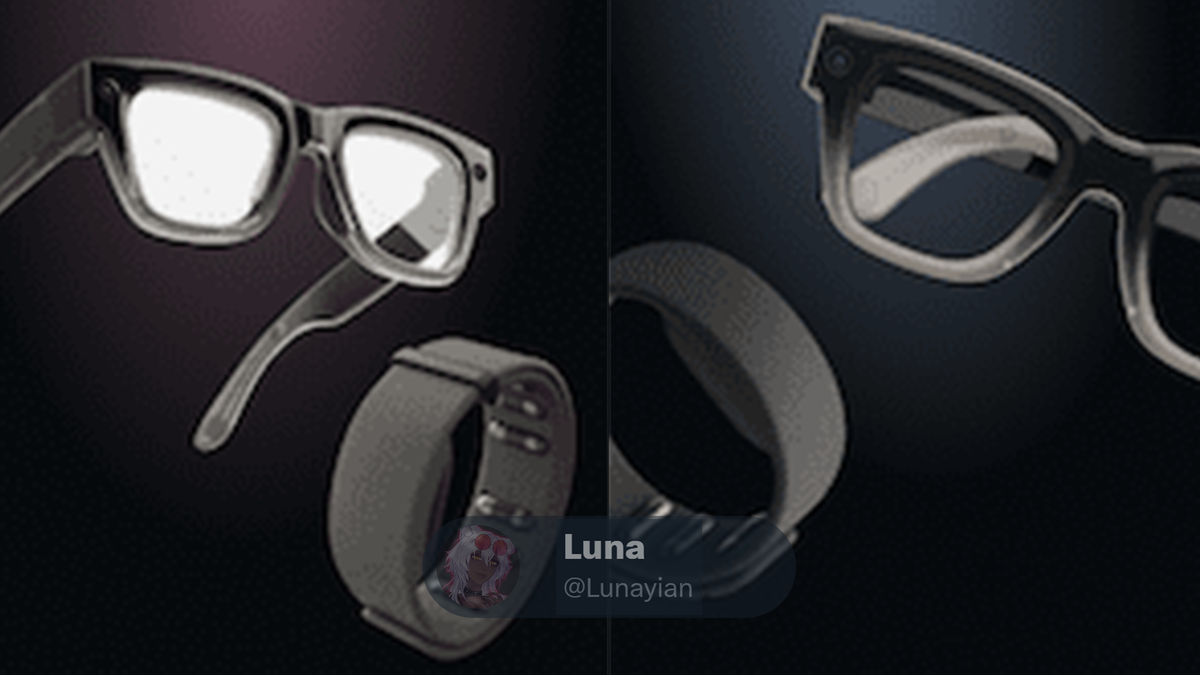
In July, renders of Hypernova and its wristband were discovered in early firmware on a public Meta server, and an engraving visible in one of the renders seemingly revealed the product’s name: Meta Celeste.

The other is that the SDK could be limited to the upcoming HUD glasses with the sEMG wristband, and future Meta smart glasses with a display. We don’t yet know what chipset the HUD glasses will have onboard, but given the reported $800 price and 70-gram weight, it’s possible that it has notably more computing power. The addition of the display, and rich local input from the wristband, would also make an SDK more appealing.

The SDK could, of course, be a combination of these two possibilities. Perhaps some apps run server-side as an extension of Meta AI, and perhaps others run locally on the HUD glasses. The SDK could even fundamentally be about bridging these two avenues together.

Meta’s CTO Teases What To Expect At Connect 2025
Meta CTO Andrew Bosworth teased what to expect at Meta Connect 2025, which takes place in September.
UploadVRDavid Heaney

Meta Connect 2025 starts just under three weeks from now, and UploadVR will bring you full coverage of all the biggest announcements.

Meta AI On Smart Glasses Can Now Access Your Calendar

Meta AI on Ray-Ban and Oakley smart glasses can now access and add events to your Google Calendar and Outlook Calendar.

To link your Google or Outlook calendar, open your glasses settings in the Meta AI smartphone app and navigate to the App Connections section. If you don’t see it yet, you’ll need to wait for it to “roll out”.

The AI assistant can then answer questions about an event from a natural language search, summarize your schedule for any time period, or even create new events.

Here are some examples Meta gives for how you can use the new integration:

Search your calendar for events and ask for details about events by saying things such as:
• “Hey Meta, what time is my first meeting tomorrow?”
• “Hey Meta, when is my doctor’s appointment?”
• “Hey Meta, what’s the address for the party tonight?”

Summarize your schedule for a day or multiple days by saying things such as:
• “Hey Meta, what does my day look like tomorrow?”
• “Hey Meta, what’s on my schedule for this weekend?”

Create calendar events by saying things like:
• “Hey Meta, add a coffee break tomorrow at 10 a.m.”
• “Hey Meta, create an event on my Google calendar at 2 p.m. to go for a walk for 40 minutes.”

You can also set up Calendar alerts in the Meta AI app, and the assistant will then read out a reminder for upcoming events.

The calendar integrations come just under a year after Meta added a Calendar app to Quest’s Horizon OS, which also supports Google Calendar and Outlook Calendar, and reflect the company’s intention to make both its headsets and glasses general computing platforms that integrate with your daily life.

Meta says that it won’t use your linked calendar data to train AI models. However, note that if you have Voice Storage enabled in the privacy settings, Meta-contracted reviewers can listen to the voice request itself (ostensibly to improve Meta AI).

Ray-Ban Meta Glasses Now Translate Speech & Meta AI Is Now Available In Europe
Ray-Ban Meta glasses can now translate speech between English, French, Italian, and Spanish, and multimodal Meta AI is finally rolling out to Europe.
UploadVRDavid Heaney

Other Meta Smart Glasses Updates

The latest Meta smart glasses firmware update also improves capture speed, brings Audible to all English language countries, and adds location context to the Meta AI Reminders feature.

  • Capture Speed: Meta says it has reduced the latency between initiating media capture and the capture actually occurring, meaning you should miss capturing transient moments less often.
  • Audible: Meta AI commands to control Amazon’s Audible (e.g. “Hey Meta, play my audiobook”) should now work in all English-language countries. Previously it was US-only.
  • Location-Aware Reminders: the feature that lets you ask Meta AI on the glasses to remind you of something you see or say (for example, where you parked, or that you’re low on milk) is now aware of the location where you created the reminder, and you can ask the AI about this.

Meta’s CTO Teases What To Expect At Connect 2025
Meta CTO Andrew Bosworth teased what to expect at Meta Connect 2025, which takes place in September.
UploadVRDavid Heaney

Meta says it has many more smart glasses announcements set for Connect 2025, just under three weeks from now.

The company is also widely expected to launch its first smart glasses with a display, codenamed Hypernova, with its long-in-development sEMG wristband in the box.

Valve’s Steam Link Is Coming To Pico Headsets

Valve’s Steam Link is coming to Pico headsets, a ByteDance beta test registration form confirms.

The form, hosted at an official ByteDance URL, lets Pico owners sign up for the beta test of Steam Link. It lets registrants select Pico 4 Ultra, Pico 4, and Pico Neo 3 Link, suggesting Valve plans to support all three of ByteDance’s consumer headsets.

Valve Launches Steam Link PC VR Streaming App For Quest
Valve just launched a free Steam Link app on the Quest Store that can stream SteamVR games from your PC.
UploadVRDavid Heaney

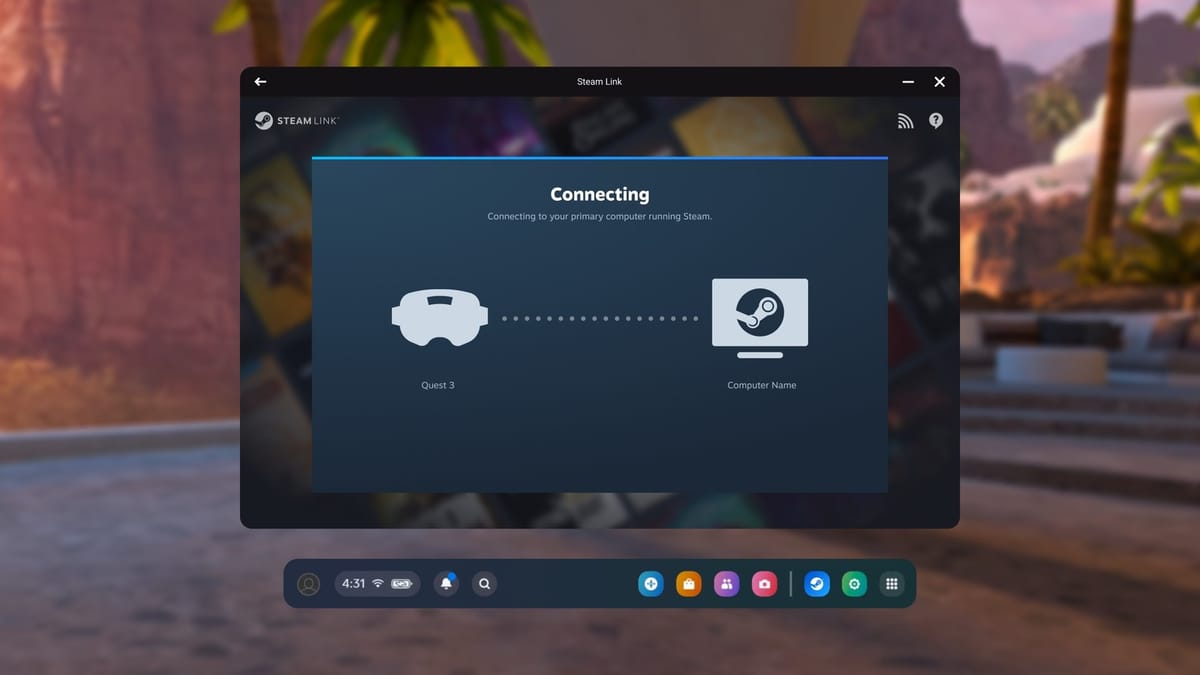
Currently, the VR version of Steam Link is only available on Meta Quest headsets, via the Meta Horizon Store. The app launched in late 2023, and lets Quest owners almost instantly wirelessly connect directly to SteamVR on their gaming PC for free.

References to Pico headsets in the Steam Link app were first spotted by VR enthusiast Luna, who discovered back in November that the app already runs on Pico headsets if sideloaded, with “some minor quirks”. This is because Horizon OS and Pico OS are Android-based operating systems that support OpenXR, the open-standard API that the Steam Link app uses.

What’s interesting is that Steam Link on the Meta store does actually have PICO’s headsets listed in the config file alongside the Meta lineup (Hollywood, Seacliff, Eureka). The PICO 4 controller profile is there too.

I wonder if we’ll see it on the PICO store at some point? � https://t.co/SUlYer56rZ pic.twitter.com/MARDYh4YPM

— Luna (@Lunayian) November 19, 2024

Then, in January, VR enthusiast Brad Lynch’s Discord datamining group discovered Pico 4 and Pico 4 Ultra controller icons in SteamVR, another step in the process of supporting the headsets.

Tonight’s SteamVR Beta update added icons for all of the Pico 4/4U controllers in preparation for its official Steam Link support pic.twitter.com/oQTdX7T3i3

— SadlyItsDadley (@SadlyItsBradley) January 8, 2025

Lynch’s team also discovered references to HTC’s Vive Focus 3 and Vive Focus Vision standalone headsets, suggesting Valve eventually plans to make the Steam Link VR app available for all widely available Android-based standalone VR headsets.

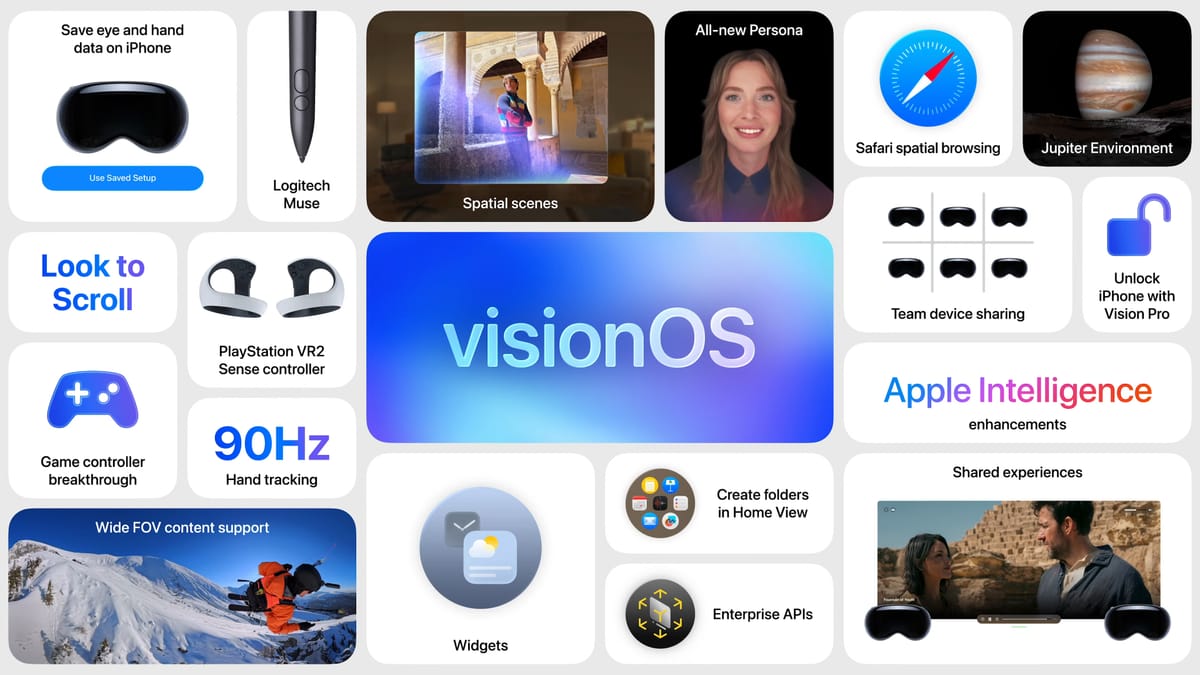
visionOS 26 Brings PS VR2 Controllers, Photorealistic Personas, Spatial Scenes & More
visionOS 26 will bring PS VR2 controllers & Logitech Muse stylus support, much more realistic Personas, spatial Widgets, volumetric Spatial Scenes, local SharePlay, and much more.
UploadVRDavid Heaney

We wonder whether the VR version of Steam Link might also come to Apple Vision Pro at some point, given that visionOS 26 is adding native support for the PlayStation VR2 Sense controllers, which Sony will sell separately from the headset.

Currently you can use the Steam Link iPad app on Vision Pro to play flatscreen games, but to play PC VR games on visionOS you need to use the open-source tool ALVR, which lacks the end-to-end software stack integration of Steam Link.

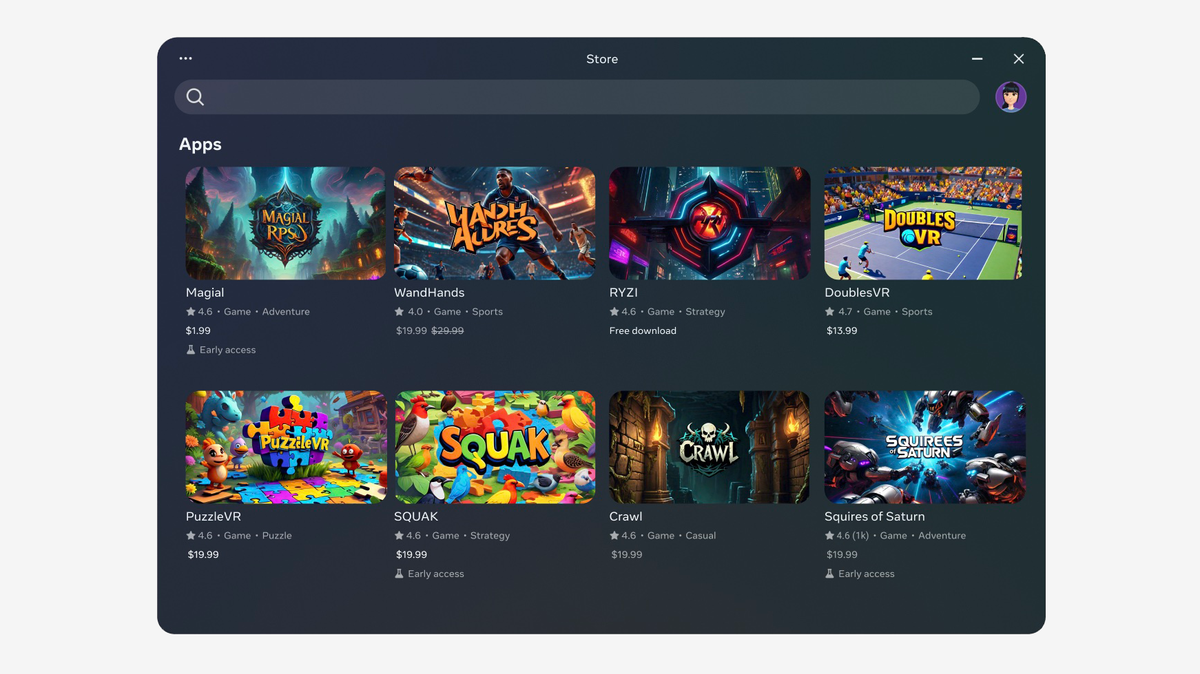
Meta Offering 30% Off 500+ Quest Games With This Discount Code

Meta is offering 30% off hundreds of Quest games on its Horizon Store this weekend via the discount code TAKE30.

Over 500 titles are eligible for the discount. That’s far too many for us to reasonably list, but you can see the full selection here.

Eligible games range from blockbusters like Metro Awakening and Arizona Sunshine 2 to indie gems like Superhot VR, Dungeons Of Eternity, Walkabout Mini Golf, Real VR Fishing, and GOLF+.

To apply the discount, just enter the code TAKE30 at checkout.

You can use it as many times as you want, up until 11:59 PT on Monday.

Sale Bundles

Separately, Meta is also offering two sale bundles with two games each.

The bundles give you a roughly 33% discount over buying the two games separately:

The sale bundles also end at 11:59 PT on Monday.

Quest’s App Lab Is No More As Meta Horizon Store Launches
App Lab has now been merged into the Meta Horizon Store, the new name for the more open Quest Store.
UploadVRDavid Heaney

World War Z VR Review: Brains Not Included

World War Z VR aims to bring the carnage of the hit 2019 game to PC VR and Quest headsets in all its glory. While my preview on Quest 3 didn’t prove quite up to that task, I hoped that the rest of the game could bring Saber’s iconic action-horror epic to life. Maybe it was just a rough first stab. So I strapped my headset back on and dove back in.

As discussed in the preview, numerous key elements from the original World War Z weren’t in their best form. Defense kits that let you use specialized traps at key moments are fewer and more rigid in their implementation. As a result, some aren’t even worth wasting one of the keys you find mid-level to unlock them. There’s also fewer weapons, no melee combat (outside of a shove ability), no multiplayer, and the levels are far less varied. Which is to say, the design ethos of “Left 4 Dead But Bigger” that made World War Z such a hit is completely absent.

The Facts

What is it?: A single-player VR spin-off of the hit 2019 zombie co-op shooter.
Platforms: Quest, Steam (reviewed on Quest 3)
Release Date: Out now
Developer/Publisher: Saber Interactive
Price: $19.99

Now, that doesn’t preclude the game from being its own valid, unique experience. It absolutely could’ve used the hordes of Zeke and the novelty of VR in some creative fashion. Sadly, it doesn’t. This is one of the most bog-standard VR shooters I’ve ever played. It might be the worst thing Saber has released since their debut title, Will Rock. And like Will Rock, I doubt many will remember this game years from now.

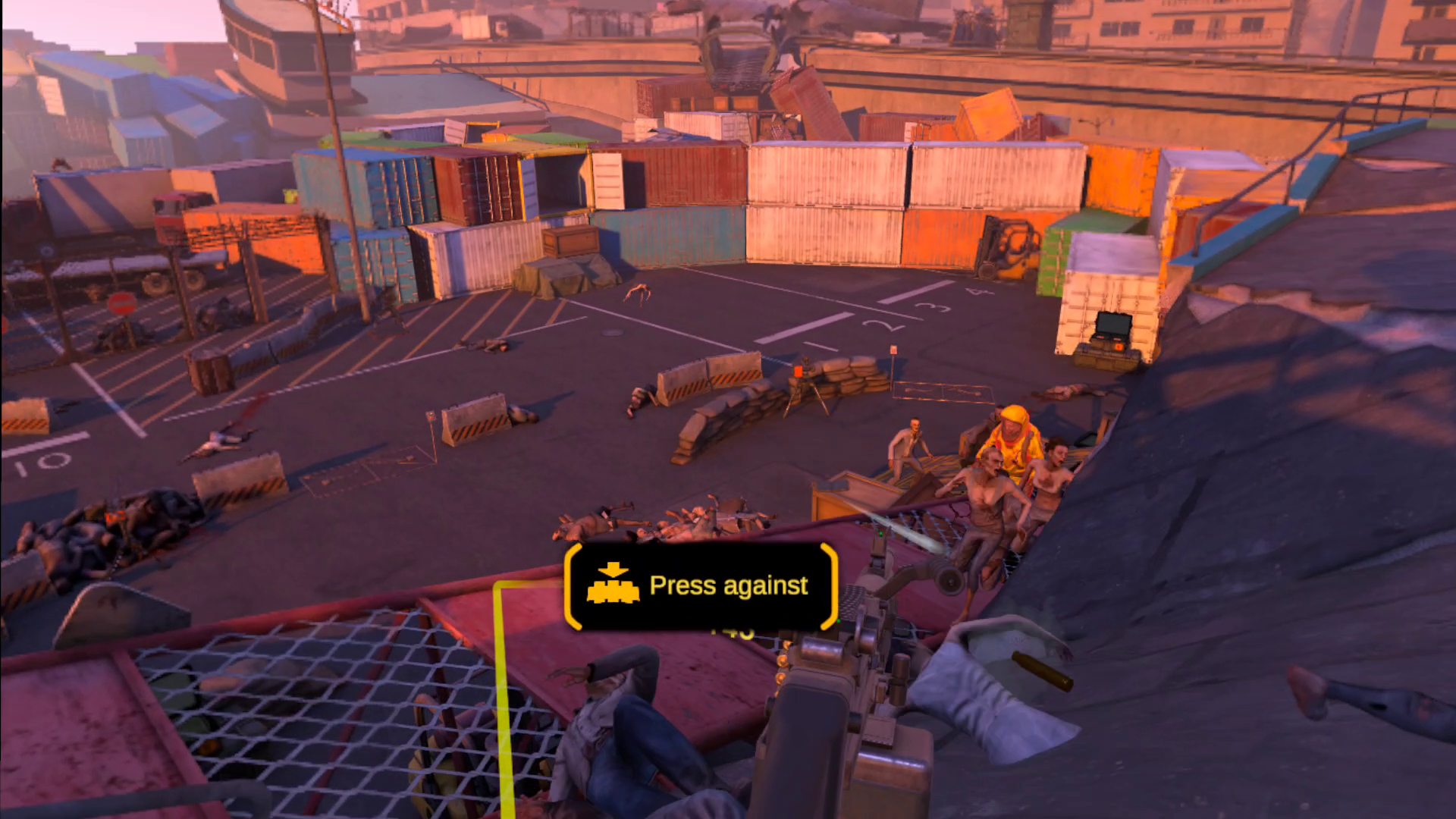
The player holds an LMG at the ready as a horde of undead climb up a ramp. There is a screen prompt for the player to reload by pressing their controller against their virtual ammo packs.
There’s an attempt at recreating the layout of the cruise ship’s finale from the 2019 game, but it falls flat.

World War Z VR is a single-player, first-person horror shooter that sends players through bite-sized missions that can be played standing or sitting. Both styles are thoroughly supported, with an array of accessibility and immersion options. It’s clear Saber wants no player left behind, but for all that effort, they barely do anything with the VR part of World War Z VR.

Here’s how it uses virtual reality: manually reload weapons, or not. Manually toss grenades, or not. Turn a gun turret left and right with your hands, or… not. Crank, pull, smack, and shake story objective items to progress through the level. Basically, things you could do in 2011 with a PS Move controller or Wii Remote. The only exceptions are the barebones VR staples of dual-wielding weapons and… climbing ladders. And the ladders are a bit finicky about letting you climb off them. That is, unless we’re counting the inconsistently working healing spray as a unique VR selling point.

Comfort

While World War Z VR is playable standing, I’d recommend playing seated. There’s no benefit to standing and several gameplay adjustments that reduce the need for actual physical movement.

Player movement speed is smooth, even when sprinting. The integrated health and sprint meters on the player’s left wrist are easily read at all times. Weapons can be wielded in either dominant hand or with both. The red screen effects when damaged can get obnoxious.

You can adjust where your ammo pouches and guns are at any time. There’s also a toggle for playing seated in the settings. Snap turning and smooth turning are supported.

That said, far away enemies require a fair bit of accuracy, so those with unsteady hands may take considerable frustration when trying to hit distant Screamers, a special type of Zeke that can summon additional enemies. Manual grenade throwing can also be hard to gauge.

So the main hook to keep playing is a small, gradually expanding pool of perks and weapons. The idea is that they’ll add an ounce of variety to replaying the same handful of missions over and over. Other than an unexpected special zombie variant spawning to inconvenience you for a few seconds, that’s it. Most perks can only be unlocked by clearing missions on various difficulties or grinding experience points that slowly level you up. Experience points aren’t spent on anything; they purely exist to drag out the unlock process for a few unlockables.

Combat is fairly lethargic, except for when you’re defending a vulnerable objective, like a doorway or a bus. The health bars on these objectives can drop faster than a heartbeat, so you really have to be aggressive in defending them. However, the hordes are easily handled the moment you switch to simplified reloading and finally unlock the dual-pistol/SMG perk. Then it becomes pure spray and pray.

To be fair, manual reloading is well implemented and more involved. Except, it absolutely doesn’t fit the pace or balancing of the game, so you’re just making things harder for yourself if you use it. Still, mowing down zombies in and of itself could at least be mildly entertaining, if the sound design and score weren’t so by the numbers that they register as mutely as the impact when Zeke are shot.

Yet what really hit me was how rushed the current build of the game feels. I mean this in no exaggerated terms: I almost thought I wouldn’t be able to finish my playthrough of World War Z VR. There were multiple instances of soft-lock glitches preventing progress. We can all agree that’s pretty alarming to find in a release build available for sale, though a recent patch addressed some issues, particularly the soft-locks and a healing perk that broke your medical spray.

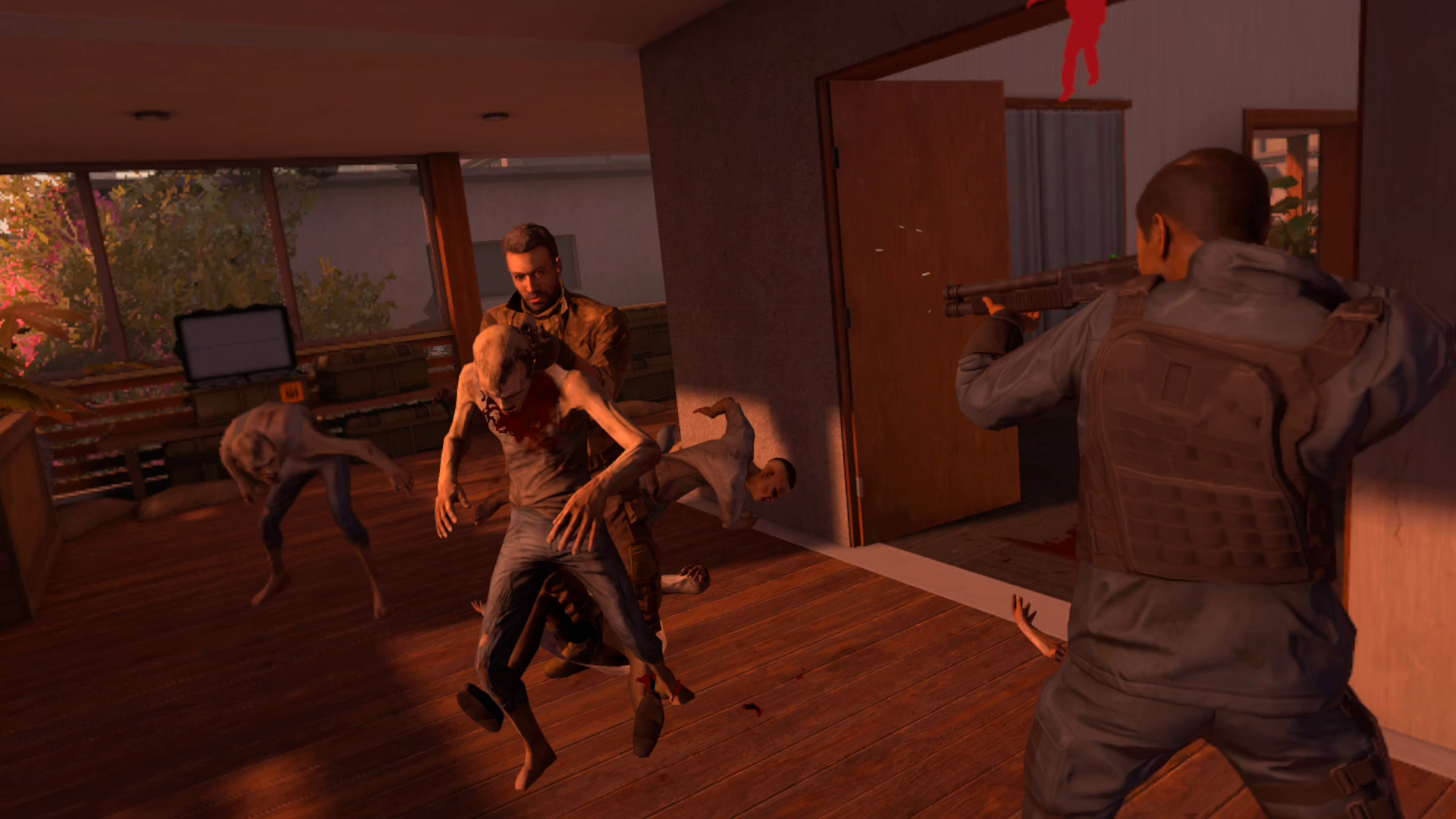
Two of the player's allies are directly engaged with the undead. One of the zombies is contorting poorly while ragdolling. It almost looks like the one ally is aiming at the other. Their artificial intelligence is... not great.
Your NPC companions are more convincingly brainless than the actual zombies.

Mind you, the bugs were not the most glaring aspect. Your companion NPCs are typically as useless as confused ducklings. The New York levels are poorly lit, for some reason. Certain weapons are cumbersome to reload no matter the style of reloading you use. There’s a total lack of any facial animations despite several scenes that leave you staring at unmoving faces. And this is after patching. They did at least rebalance a few rougher encounters to be easier, so there’s that.

Of the three campaigns, each riffs on ones from the original flat release, but smaller. Their stories are dull, predictable, and laden with brief spurts of “humor” that range from mediocre to downright questionable. The New York stages are so pedestrian in their scenario design that they even have a “guard the bus full of survivors” mission. The Tokyo stages boast the most claustrophobic encounters, with its second mission culminating in a space so cramped it’d be small for a Call of Duty Zombies map.

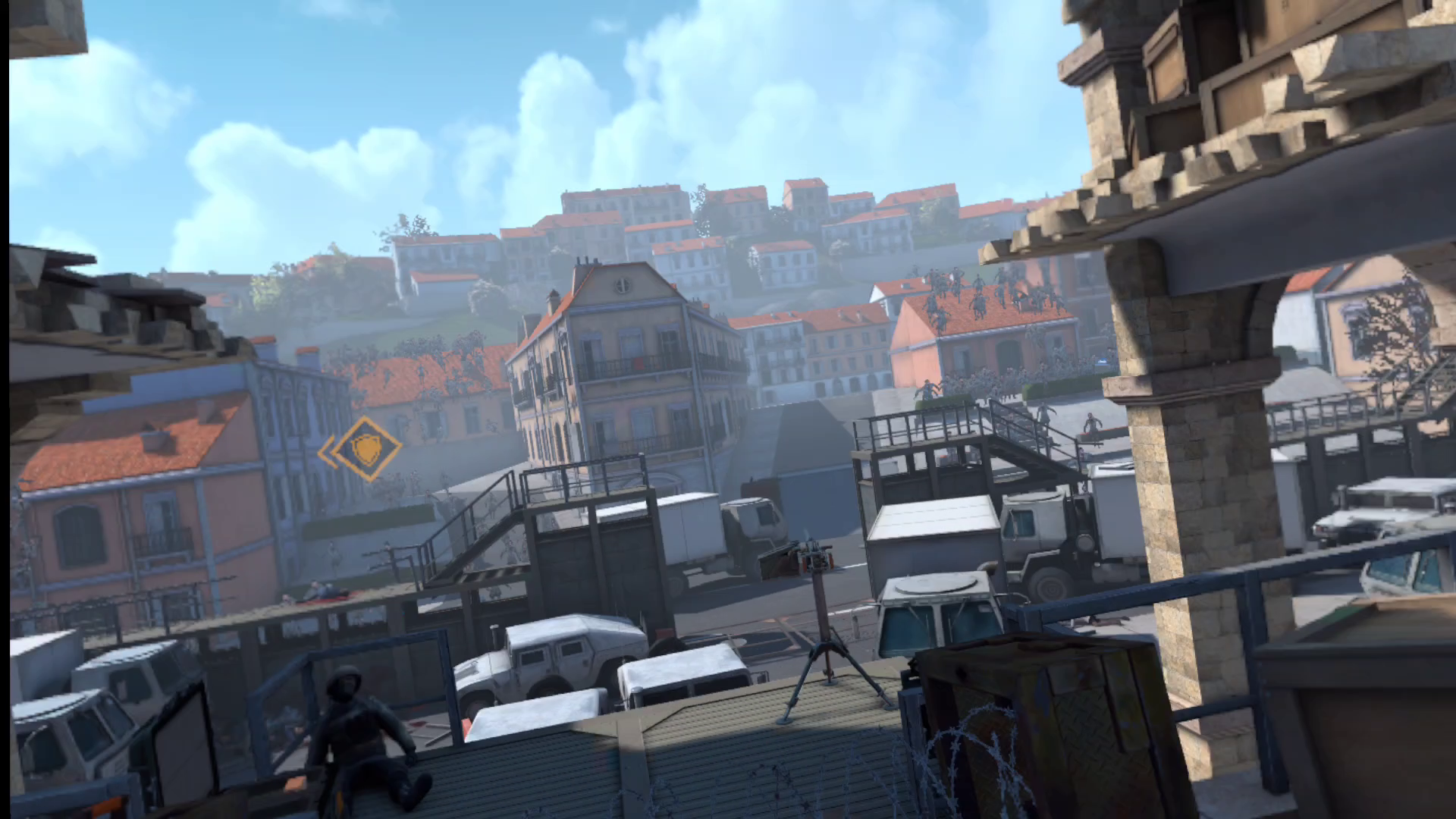
There's an array of buildings supposed to represent Marseilles, France. Instead, they look like if Duplo and cardboard cutouts were stacked haphazardly together. There's also some 2D zombie sprites.
This is the moment the game kept not finishing the mission. Really got to take in that skyline.

Marseille tries to depict the largest scope, but these missions show how compromised everything is for smoother performance. Granted, this is the Quest 3 version, and Quest ports often have more concessions made, but even by that grading scale, this is rough. The framerate is smooth, but at the cost of obvious sprites in the background, obfuscated hordes to hide their real spawn points, and scenarios so cramped that trying to recreate the flat experience feels pointless.

This should’ve tried to chart its own path, not attempt to be 1:1 with an experience made for fundamentally different specs. I’ll be told by the end mission screen that I’ve killed several hundred Zeke, but it rarely feels like that. Mostly it feels like I’m gunning down a couple dozen at a time. Whenever it does work, a glimmer of the intended experience shines through all too briefly. It wasn’t worth the effort.

The absence of melee weapons, a key feature of the flat game, is also confusing. Yes, I can shove enemies, but how is that a suitable replacement? Melee combat was one of the first things VR games got right, so why isn’t it here? It’s weird that this new release by a major studio lacks a feature zombie games from half a decade ago can boast. It’s not for lack of gore either – especially since the patch, even a revolver or shotgun can insta-gib enemies into a pile of limbs and blood.

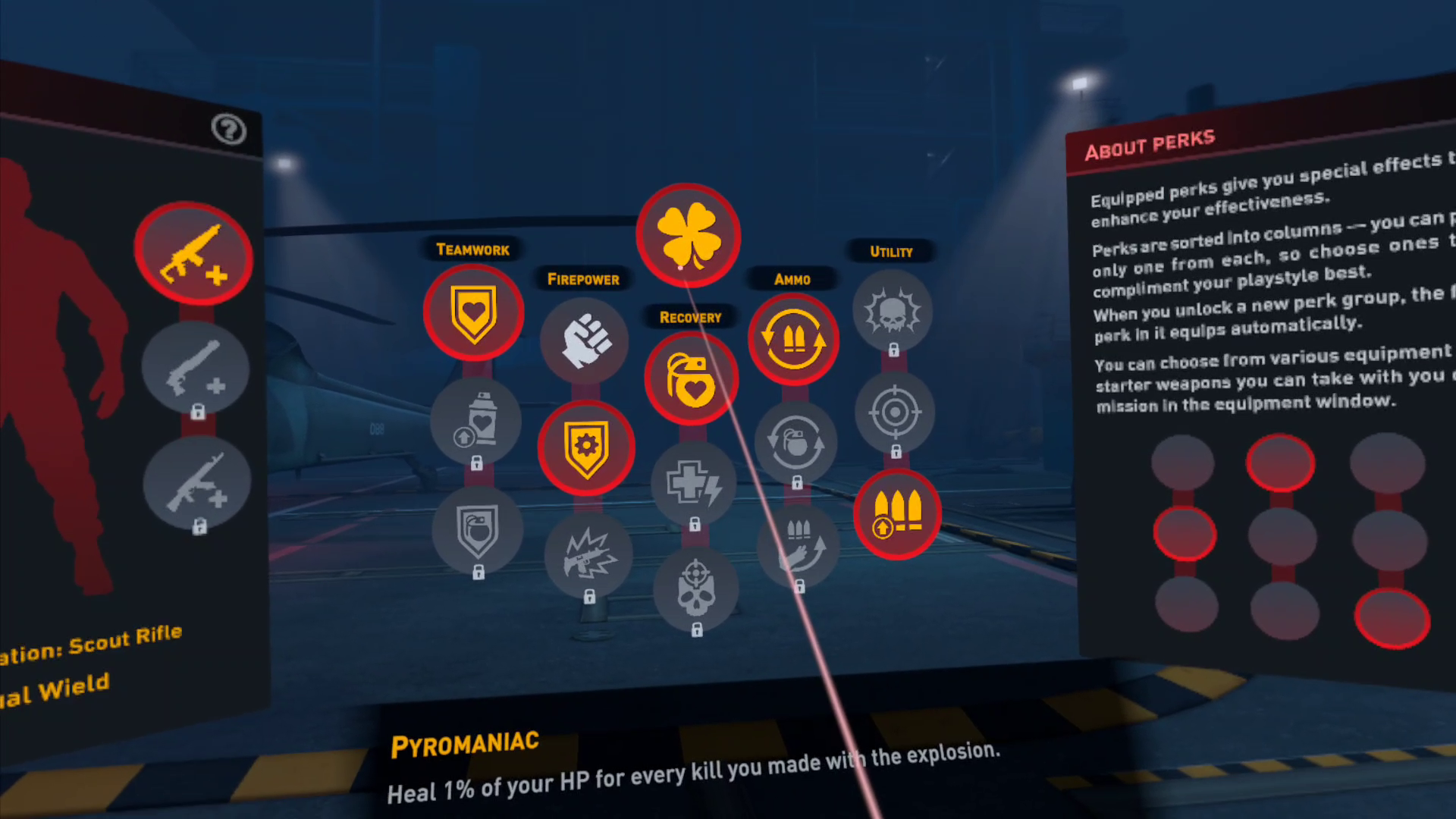
An array of perks are displayed, with tutorial text explaining how they work and that the currently highlighted one is "Pyromaniac - Heal 1% of your HP for every kill made with the explosion."

Perk design is just as strange. There’s no class system, and leveling up is basically just a carrot on a stick because it caps out at level 10. Of the perks available, there are objectively superior and inferior options. Why would I want a taser instead of always having two pistols or SMGs, each with a deeper ammo pool to boot? Why would I enhance my shove when I can make defense kits last longer? What good is receiving one percent of your health back per Zeke exploded when you can instantly refill 20% of your med spray every time you kill two of the most common special Zeke types?

You also have no input over what gear your companions wield. They won’t heal you or help any other way beyond shooting Zeke. Paired with static levels that only seem to alter what weapons spawn in crates, everything rapidly grows repetitive. And the weapon spawns change every checkpoint reset, so it’s possible to die and get stuck with less than ideal weapons on your next attempt.

World War Z VR Review – Final Verdict

Perhaps it’s fitting that when the campaign concludes, there’s no real plot resolution for World War Z VR. All you get is some narration trying to make sense of the disparate campaigns. Then you’re encouraged to replay the missions you’re already tired of, and to raise your level… even if it’s maxed out. That’s it.

There’s nothing remarkable here. Between the underwhelming graphics, compromised design, and gimmicky use of motion mechanics, this feels like an early Wii game. This reeks of the same ilk as Dead Rising: Chop Till You Drop, but at least that was built from the fantastic Resident Evil 4 Wii Edition. World War Z VR isn’t so lucky. All it achieves is a reminder that sometimes, dead is better.


UploadVR uses a 5-Star rating system for our game reviews – you can read a breakdown of each star rating in our review guidelines.

Hubris & MLB Home Run Derby Are Quest’s Horizon+ Monthly Games For September

Hubris and MLB Home Run Derby are the Horizon+ monthly redeemable games for September.

What Is Meta Horizon+?

The $8/month Horizon+ subscription lets you redeem two Meta-selected Quest games each month as well as access the dozens of titles in its Games Catalog. The service was formerly called Quest+.

Redeeming the monthly games lets you play them while your subscription remains active. Should you cancel the subscription, previously redeemed games won’t be playable until you resubscribe.

Meanwhile, you get access to all Games Catalog games upon subscribing, until your subscription ends.

Horizon+ is available on Quest 2, Quest Pro, Quest 3, and Quest 3S.

Last month’s monthly redeemable games were The Room VR and Starship Troopers: Continuum.

Hubris

Hubris is a sci-fi action adventure game with impressive visuals and a story campaign that takes you to a “beautiful but deadly alien world”.

It features running, jumping, climbing, swimming, and shooting mechanics built for VR.

In our PC VR review, we strongly praised its graphics, and were impressed by its movement and interaction mechanics, but found its combat and storyline to be average.

“Hubris probably won’t leave a huge lasting impression, but it’s still a standard action-adventure shooter that’s enjoyable enough to keep you playing through to the end.”

Hubris PC VR Review: Looks Aren’t Everything
Hubris is a visually stunning sci-fi, action-adventure VR game from Cyborn studio. The game delivers AAA-level graphics, but does the gameplay live up to the visuals? Find out in our full review of Hubris for PC VR. Hubris, the first large scale VR title from 3D animation and game studio
UploadVRTony Mowbray

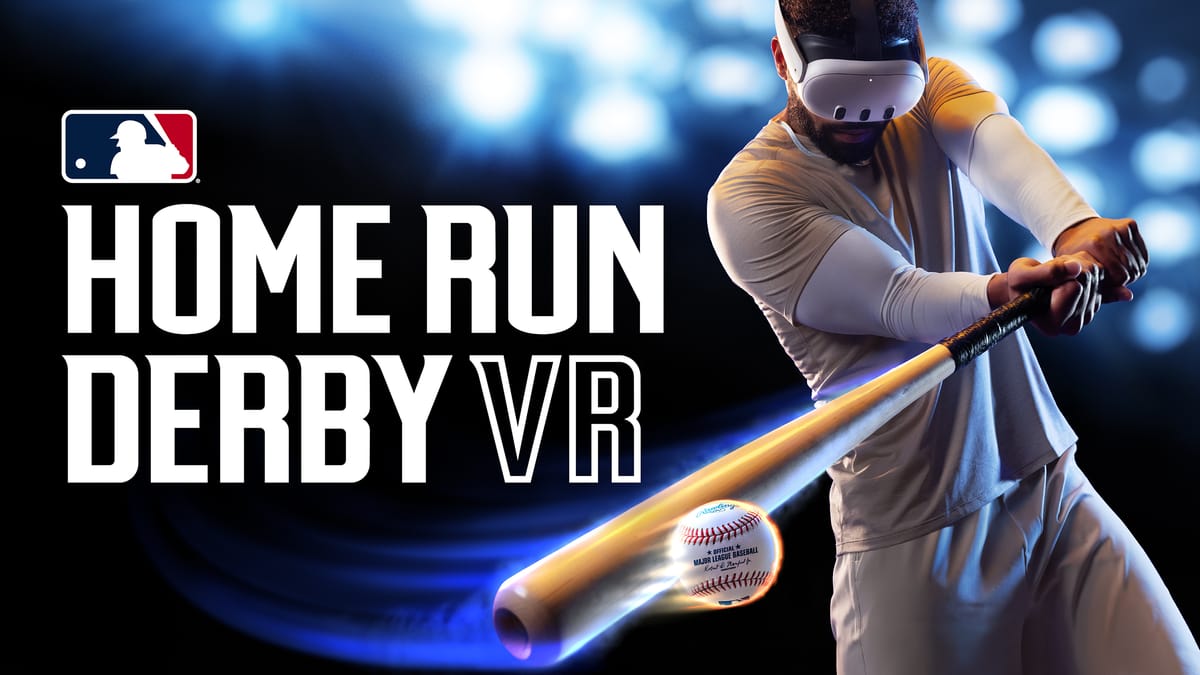
MLB Home Run Derby

MLB Home Run Derby is the officially licensed VR Major League Baseball game.

It was released on PC VR and the original PlayStation VR all the way back in 2018, and arrived on Quest last year.

MLB Home Run Derby VR Swings Onto Quest Today
MLB Home Run Derby VR relaunched today on Quest with expanded multiplayer and customizable clubhouses.
UploadVRHenry Stockdale

The game includes every MLB team and every MLB ballpark.

New Games Catalog Games

Horizon+ also offers a Games Catalog of Quest titles that any subscriber can play, featuring some of the most iconic games in VR.

Here’s the full Horizon+ Games Catalog as it currently stands in the US:

  • Angry Birds VR: Isle of Pigs
  • Asgard’s Wrath 2
  • BAM
  • Broken Edge
  • Cook-Out
  • Cosmonious High
  • Cubism
  • Deisim
  • Demeo
  • Dumb Ways Free For All
  • Dungeons Of Eternity
  • Eleven Table Tennis
  • Elven Assassin
  • Espire 2: Stealth Operatives
  • Exploding Kittens VR
  • Fruit Ninja 2
  • Garden of the Sea
  • Ghosts of Tabor
  • Guardians Frontline
  • Human Fall Flat VR
  • In Death: Unchained
  • Job Simulator
  • Medieval Dynasty New Settlement
  • Mini Motor Racing X
  • Onward
  • Pistol Whip
  • Pixel Ripped 1995
  • Premium Bowling
  • Puzzling Places
  • Red Matter
  • Swarm
  • Sweet Surrender
  • Synth Riders
  • Tetris Effect: Connected
  • The Climb 2
  • Thief Simulator VR: Greenview Street
  • Titans Clinic
  • Walkabout Mini Golf

Note that Meta can remove games from the catalog at any time, or add new ones.

Banners & Bastions Hands-On: Satisfying Strategy In Mixed Reality

Banners & Bastions brings its mixed reality strategy game to Quest today in an early access release. Read on for my initial impressions.

Banners & Bastions from Not Suspicious knows exactly what it is and nails the feel of a short-form strategy experience. Developed by the same team that brought us Airspace Defender and Tablecraft, you can feel the inspiration from those earlier titles right away.

If you’ve previously played Airspace Defender, the domed world concept and how you manipulate objects will seem immediately familiar, though with a vastly different game type. Where the previous game is basically Missile Command in mixed reality, Banners & Bastions houses a lot more depth and strategy.

0:00

/0:59

Mixed Reality Meets Tower Defense

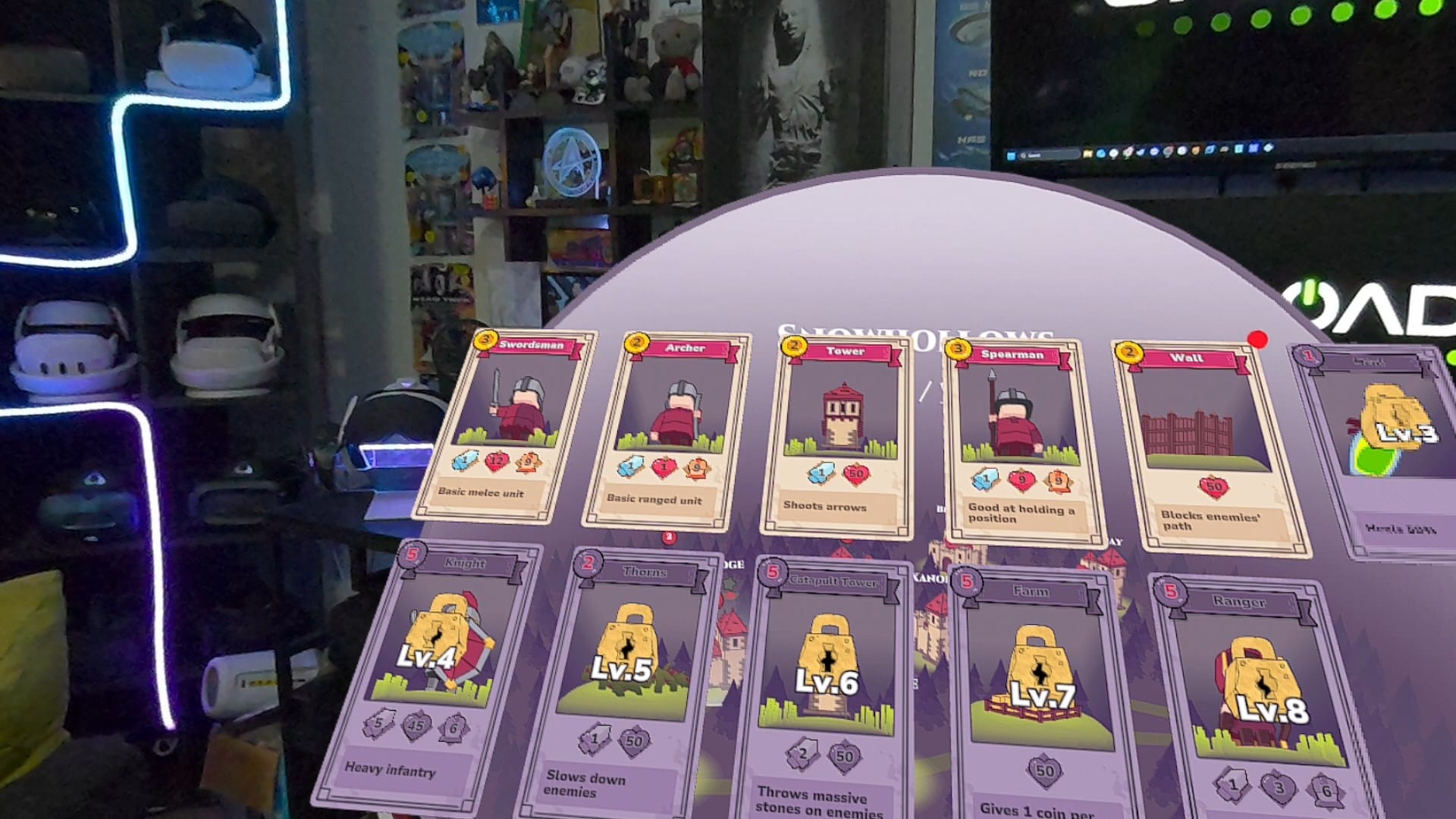
Banners & Bastions sees you interact with the battlefield by moving your flag to direct troop movements, deploying units by grabbing and positioning them around the board or selecting new ones when available, and dropping them right into the action. You can cast spells like fireballs, which you simply grab and drop onto enemy units.

Each campaign takes place across turn-based waves, allowing you to strategically place units and defenses before the next round. You can recruit troops like archers, swordsmen, and spear carriers as well as place defensive structures like towers, walls, and other barriers to block choke points. Once a round starts, you observe miniature-scale battles playing out in real time from a top-down perspective, intervening as needed by repositioning your troops or using a spell. Dropping a fireball and watching it decimate the tiny hordes of enemies trying to besiege my castle is very satisfying.

0:00

/0:10

Being able to physically lean in and rotate and reposition the battlefield also helps with immersion and spatial awareness.

Like Airspace Defender, the entire experience is hands-only, so for this one you will once again be putting down the controllers. Hand tracking requires a mix of broad gestures and small, deliberate pinches to drag troops around the world. Hand tracking mostly holds up well, though there are a few moments that remind me of the current limitations with gesture-only input, especially when the lighting in my room isn’t ideal. We’d be very curious to take this idea for a spin in a headset with eye-tracked pinches, like Apple Vision Pro, and we hope Not Suspicious can find some support from hardware companies toward that end.

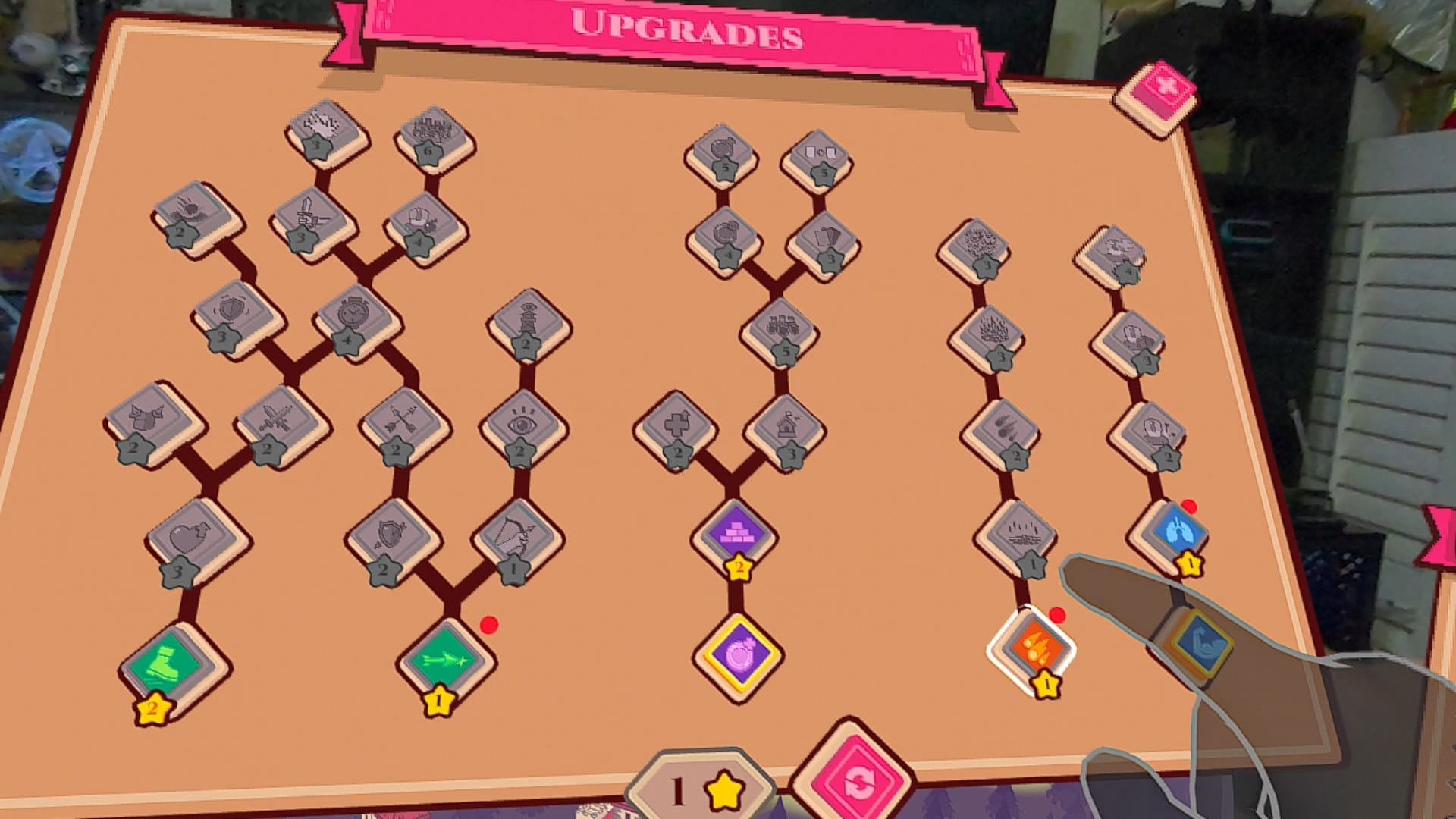
Progression in Banners & Bastions

Early Access Performance and Progression

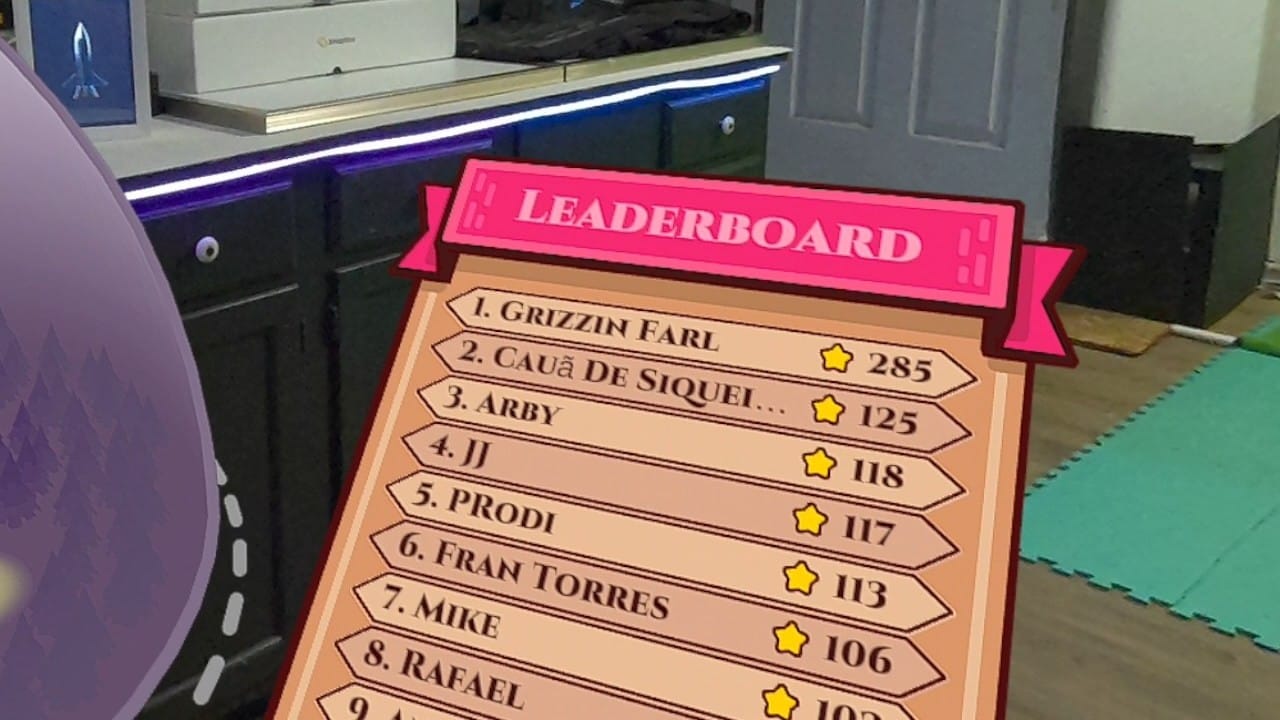
Banners & Bastions shows a clear progression structure even in its early access release. Players earn stars through successful campaigns, unlocking new troops and upgrades across a wide specialization tree as they climb the global leaderboards. There are multiple card types already implemented, along with various enemies to fend off. Pacing is nicely balanced and never gets overwhelming, at least not in what I’ve played so far.

You’re never sitting around waiting too long, and it also doesn’t throw too much at you too quickly. There is enough challenge to keep you thinking, though, especially once you start getting into the later rounds and optimizing troop combinations and map placements. Still, it avoids overwhelming casual players. As someone who doesn’t usually gravitate toward this genre, I appreciate that learning curve.

The map can be rotated and repositioned but not resized. I keep wanting to zoom in or even expand the dome to be larger just to get a better view of the battles taking place. Just like Airspace Defender, I also find myself wanting an interior view. Imagine being able to step inside the dome and watch the battle play out around you or even swing a sword or fire a few arrows from a first-person perspective.

A mechanic like that wouldn’t necessarily be essential to gameplay, but it’s something I’ve seen in other games that incorporate an RTS element, such as Guardians Frontline, and it feels like an opportunity for a fun immersive layer in this one. Entering the battle embodying one of your tiny warriors would be an awesome gameplay experience.

0:00

/6:36

The Final Round

Not Suspicious is building a track record here of developing mixed reality games with smart design that embrace the idea that a good game in a headset doesn’t necessarily need to take over your whole environment to work. Banners & Bastions’ visuals are clean, the controls are intuitive, and the gameplay is satisfying, all set inside a well-structured package.

Even as someone who doesn’t normally go in for strategy games, I find myself enjoying the grind, often rethinking my placements, and chasing down a better outcome with each new campaign. While I didn’t intend to, I ended up playing long enough to run out my Quest battery. So if you plan on picking this one up, make sure you have some spare external batteries handy or a charger nearby.

Banners & Bastions is available now in early access on Meta Quest 2, 3, 3S, and Pro for $9.99.

Be sure to join Ian and Don on this week’s VR Sideload, where they will be talking about Banners & Bastions as well as having more discussion with Christopher Stockman, founder and studio director at Bit Planet Games, around their upcoming game, Super RC, and the latest update for No Man’s Sky, as well as everyone’s favorite anti-hero coming to Meta Quest in Deadpool VR.