
On December 24 2025, Linus Torvalds posted a strongly
worded message celebrating a ruling in
the ongoing GPL-compliance lawsuit filed
against VIZIO by the Software Freedom Conservancy (SFC). This case and
Torvalds’s response have put a spotlight on an old debate over the extent
to which the source-code requirements of the GNU
General Public License (version 2) extend to keys and other data
needed to successfully install modified software on a device. It is worth
looking at whether this requirement exists, the subtleties in
interpretation that cloud the issue, and the extent to which, if any, the
SFC is demanding that information.
Category Archives: Linux
[$] LWN.net Weekly Edition for January 8, 2026
Inside this week’s LWN.net Weekly Edition:
- Front: What to expect in 2026; LAVD scheduler; libpathrs; Questions for the TAB; Graphite; 2025 timeline.
- Briefs: shadow-utils 4.19.0; Android releases; IPFire 2.29-199; Manjaro 26.0; curl strcpy(); GNU ddrescue 1.30; Ruby 4.0; Partial GPL ruling; Quotes; …
- Announcements: Newsletters, conferences, security updates, patches, and more.
Nitrux 5.1 Drops Virtual Machine Support and Shifts Fully to Bare Metal
Nitrux 5.1 ends official support for virtual machines, focusing exclusively on physical hardware for performance, stability, and a tightly controlled system design.
NVIDIA Optimizes Printing Of Linux Memory Stats For 11% System Time Savings
A NVIDIA engineer restructuring some of the printf-related code within the memory resource controller “memcg” statistics printing code to reduce the system time by 11% for dumping those stats…
Linus Torvalds: “The AI Slop Issue Is *NOT* Going To Be Solved With Documentation”
The Linux kernel developers for months now have been debating proposed guidelines for tool-generated submissions to the Linux kernel. As part of the “tools”, the main motivator for this documentation has been around the era of AI and large language models with coding assistants and more. Torvalds made some remarks on the Linux kernel mailing list around his belief in focusing the documentation on “tools” rather than explicitly focusing on AI, given the likelihood of AI-assisted contributions continuing regardless of documentation…
Linux Patches Enable Intel GPU Firmware Updating From Non-x86 Systems
The modern Intel Xe kernel graphics driver was designed from the start to be more broadly compatible with non-x86 architectures given their discrete graphics processors being front and center, unlike the legacy i915 kernel graphics driver being very x86 minded. While this allows running Intel Arc Graphics on ARM or RISC-V, there are some other kinks still being ironed out with using Intel graphics in the non-x86 world. One of those limitations currently being worked through is the lack of GPU firmware updating on non-x86 systems…
How can we teach about AI in the arts, humanities and sciences? Research seminar series 2026
For the last five years, once a month, we have hosted an online seminar sharing computing education research. Seminars are organised as usually year-long series with changing themes. In 2025, for example, our theme was ‘Teaching about AI and data science’. In 2024, it was ‘Teaching programming (with or without AI)’.
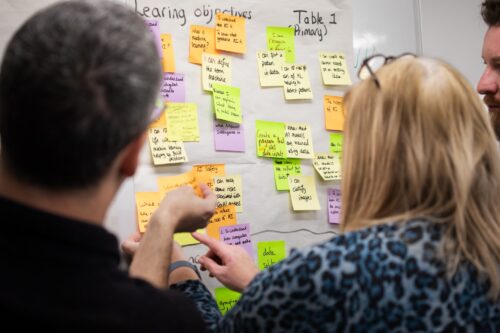
It is not surprising that for the last few years our focus has been on AI technology, and for 2026 we will continue this. But we will shift from showcasing how computing education research is changing teaching and learning in computing lessons, to showcasing how computing education research in other disciplines, such as art or geography, is starting to include teaching about AI. For example, art lessons may change so that learners find out how professional artists are using AI tools to create arts. Or geography lessons may change so that learners discover how professional geographers are using AI to make predictions about physical or human aspects of geography, such as volcanic activity and global warming.
Our series for 2026 is called ‘Applied AI’. This title recognises that AI technology is applied across contexts, across careers, across disciplines, and this means what we teach across school subjects will change.
Encouraging a pull from disciplines, rather than a push from computer science
The majority of resources and professional development material related to teaching about AI have been developed by the computer science community. For example, we have developed the popular Experience AI resources in collaboration with Google DeepMind. In these resources, the contexts were carefully selected to represent real-world examples across disciplines, and to to enable the teaching of particular technical or social and ethical concepts. This could be described as “a push” of content from computing towards other disciplines. For example, to enable teaching about the ethical issues around plagiarism, an art context is used in the Experience AI resources; to enable teaching about the potential benefits of using AI tools, an ecological geography context is used.
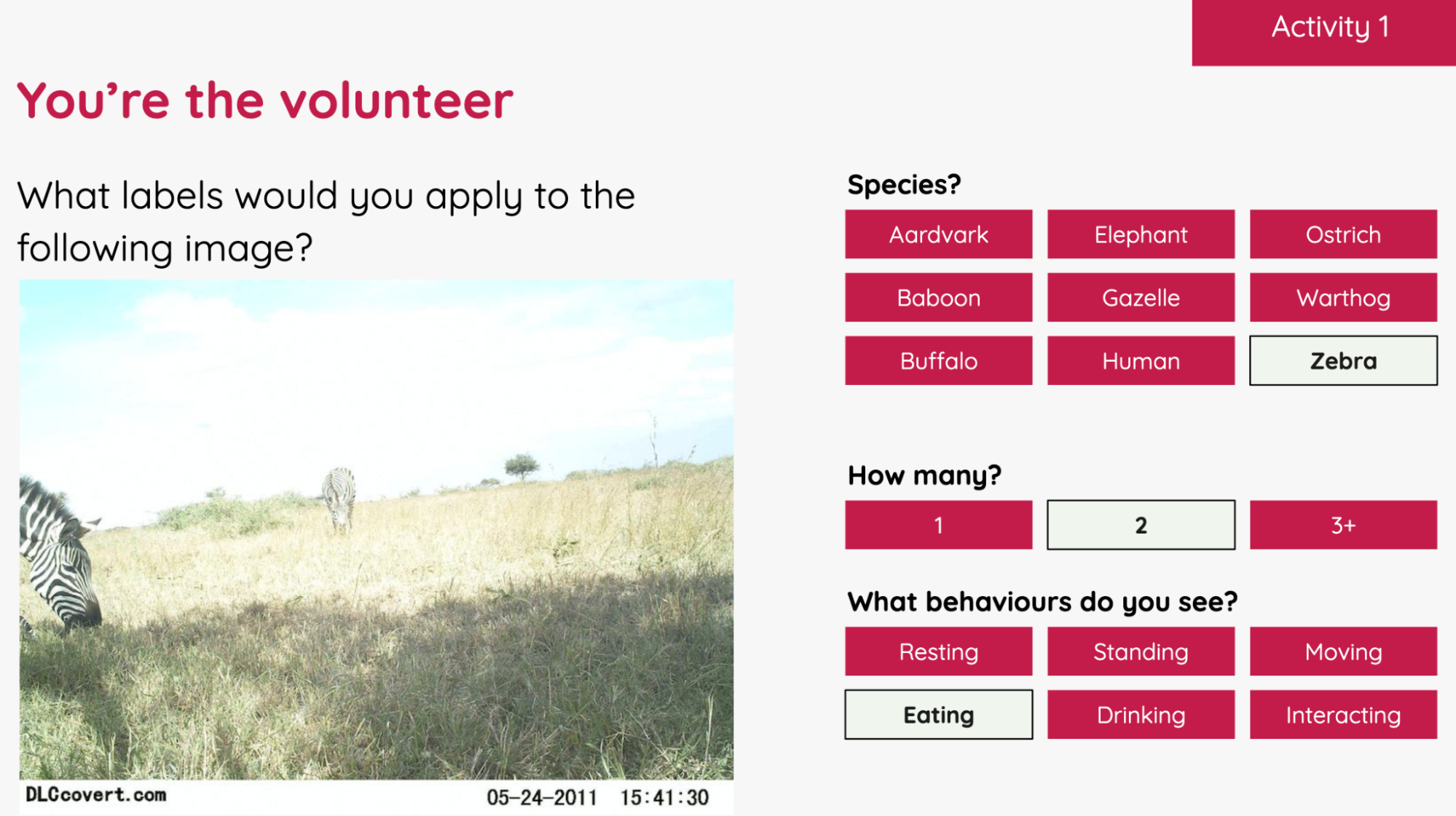
AI applications are always situated within a particular topic. Most current AI applications are data-driven: vast amounts of data are collected and processed to produce models that can then either be used to generate outputs or make predictions. For example, data about artworks can be collected and used to train a model for generating outputs similar to the artworks; this is an application of AI in the art discipline. Or data on wild fires can be collected and used to train a model for making predictions about current or prospective fires; this is an application of AI in the geography discipline.
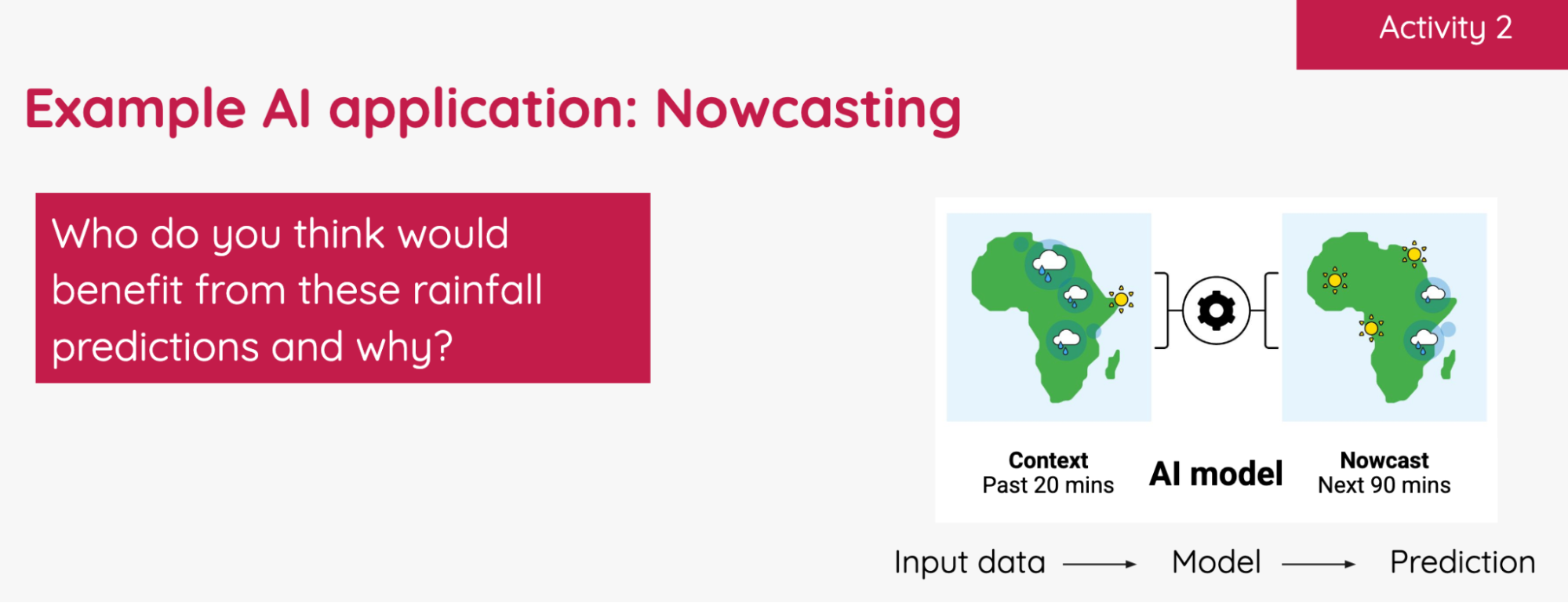
In reality, the best people to recognise how AI technology is being applied in a discipline and what students in that discipline should be taught about these applications are the people working in the discipline, for example the art and geography teachers. Computer science educators can work to build the technical understanding and the general social and ethical understanding that is common across applications. But the detail of how AI technology is changing a discipline can only truly be understood by the respective community, by the artists and art educators, by the geographers and the geography educators.
An emerging focus
At present, though, most educators are grappling with how they can use AI tools for productivity, such as creating lesson plans, or answering emails. Or they are looking at how they can use AI for general teaching and learning, for example for personalisation, say for students with additional needs. The idea that their underpinning discipline is changing is, perhaps, not yet on teachers’ radar. But at universities, such as in undergraduate courses, and in the world of work, education and training are changing. Data science courses are now being offered across faculties, including science, geography, language, and art faculties. These changes will start to filter down to school-based education via curriculum change. While some resources and professional development materials addressing this shift are already becoming available, change is still fragile and patchy.
Raising awareness, building community and a common language
The aims of our Applied AI research seminar series in 2026 are to start to:
- Raise awareness of the forthcoming changes that applying AI will bring to disciplines
- Build a cross-discipline community
- Think about a common language that could be used across disciplines
If we can start to agree on what common concepts could be taught in the arts, sciences and humanities, it gives us a better chance to:
- Understand how to use AI as it is applied in different disciplines
- Help students to build useful mental models and develop the agency and critical thinking skills they need to evaluate these applications and decide when and how to use them and how far to trust them
We need your help
To make our 2026 series a success, we need to spread the word about our seminars to groups of educators, researchers, industry and policy makers across the arts, sciences, and humanities.
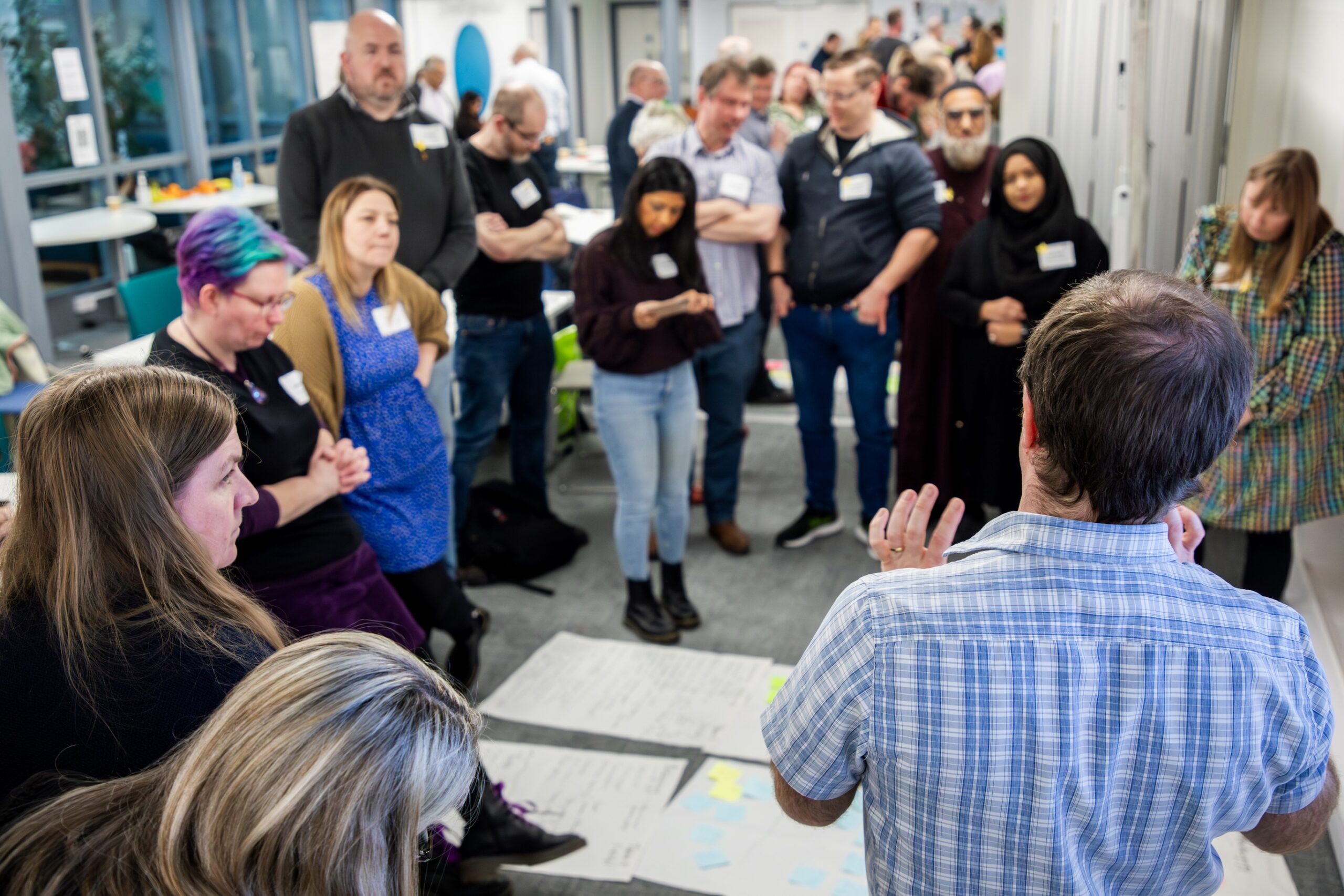
Please tell those you know in these groups about the seminar series, and share it through your social media and other networks. If you have ideas for subject associations we could connect with or publications where we can write about our series, please let us know.
Join our ‘Applied AI’ seminar series
We have already arranged the following seminars across 2026 and will add more speakers for the remaining monthly slots soon. Seminars always take place online on Tuesdays at 17:00 to 18:30 UK time.
- 10 February: Social studies, public policy, economics and AI — Thema Monroe-White (George Mason University, USA)
- 17 March: Arts and AI — Rebecca Fiebrink (University of the Arts London, UK)
- 14 April: Healthcare and AI — Kathryn Jessen Eller (Data Science, AI & You (DSAIY) in Healthcare, USA)
- 14 July: Literacy and AI — Dan Verständig (Goethe University Frankfurt, Germany)
- 8 September: History and AI — Jie Chao (The Concord Consortium)
- 6 October: Robotics and AI — Eleni Petraki & Damith Herath (University of Canberra, Australia)
- 10 November: Geography and AI — Doreen Boyd (University of Nottingham, UK)
To sign up and take part, click the button below. We’ll then send you information about joining. We hope to see you there.
You can view the schedule and details of our upcoming seminars on this page, and catch up on past seminars on our previous seminars page.
PS If you are teaching upper primary school learners in England, you can currently register your interest in our upcoming collaborative study on data science education. You’ll find out more about some of the research we’ve done in this area in this blog post.
The post How can we teach about AI in the arts, humanities and sciences? Research seminar series 2026 appeared first on Raspberry Pi Foundation.
Etnaviv Driver Wires Up PPU Flop Reset Support Needed By Some Vivante Hardware
Sent out today was the latest batch of drm-misc-next changes to DRM-Next for staging ahead of the upcoming Linux 6.20~7.0 kernel cycle. The reverse-engineered Etnaviv DRM driver for Vivante graphics/NPU hardware has added a new “PPU flop reset” feature gleaned off studying the downstream vendor kernel driver…
Linux Kernel Considers Linking The Relocatable x86 Kernel As PIE In 2026
To allow for additional security hardening of the Linux kernel, a patch series has been updated more than one year later to link the relocatable x86_64 kernel as Position Independent Executable (PIE) code…
IPFire Linux Firewall Distro Adds Wi-Fi 7 and Wi-Fi 6 Support, LLDP and CDPv2
IPFire 2.29 Core Update 199 has been released today by developer Michael Tremer as a new update to this hardened Linux firewall distribution that primarily performs as a router and a firewall, which introduces Wi-Fi 7 support and many other changes.
TUXEDO Launches InfinityBook Max 16 With OLED Display and RTX Graphics
TUXEDO InfinityBook Max 16 launches with Intel Core Ultra 9 HX, RTX graphics, OLED display, and full Linux support.
Gentoo’s 2025 Report: Financial Health and the Push Away From GitHub
Gentoo’s 2025 report outlines stable finances, ongoing migration to SPI, and plans to move development infrastructure away from GitHub toward Codeberg.
Open Source Initiative (OSI) Not Doing Its Job, Instead It’s Promoting Microsoft Ponzi Schemes
And the site they were meant to manage as a successor/heir/continuity for opensource.org has been inactive for 6 months (it’ll be 6 months tomorrow)
FEX 2601 Brings Various Fixes, Improvements For Wine & DXVK/VKD3D-Proton
FEX, the open-source emulator for running x86 and x86_64 binaries on AArch64 (ARM64) Linux and that is sponsored by Valve and to be used by the Steam Frame, is out with a new monthly feature release…
HSBC app takes a dim view of sideloaded Bitwarden installations
Customers report being locked out after grabbing the password manager via F-DroidSome HSBC mobile banking customers in the UK report being locked out of the bank’s app after installing the Bitwarden password manager via an open source app catalog.…
Immutable Distro Nitrux 5.1 Released with Linux Kernel 6.18 LTS, New Tools
Nitrux developer Uri Herrera announced today the general availability of Nitrux 5.1 as a new stable update to this immutable and systemd-free distribution featuring new and updated components.
AMD Linux GPU Driver Improvement Coming For DP-HDMI Dongles
For those using a DisplayPort to HDMI dongle currently with the AMDGPU Linux kernel graphics driver may find some higher resolutions / modes unavailable. Fortunately, a fix is on the way for dealing with this situation due to an oversight in the kernel driver…
Try Joplin: Your Open Source Evernote Alternative
If you rely heavily on note-taking apps and want to switch from a proprietary to an open-source solution, this app might be what you’re looking for.
The post Try Joplin: Your Open Source Evernote Alternative appeared first on FOSS Force.
Intel FSP Improvements With Core Ultra Series 3 “Panther Lake”
While for years open-source firmware enthusiasts have been after an open-source Firmware Support Package “FSP” for Intel CPUs and back during Raja Koduri’s tenure at Intel it sounded like it might happen, it has yet to happen. But at least with the forthcoming Intel Core Ultra Series 3 “Panther Lake” there are some FSP improvements…
IPFire 2.29 Core Update 199 Brings WiFi 6 and WiFi 7 to the Firewall Platform
IPFire 2.29 Core Update 199, an open-source firewall, brings full WiFi 6 and WiFi 7 support, higher throughput, improved wireless stability, and updated core components.