
ReactOS began 2026 with another “major step” towards Windows NT 6 compatibility with updating its MSVCRT implementation from Wine for the Microsoft C Runtime DLL library. That improved support for a number of Windows applications running on this open-source OS. ReactOS is taking another step-forward now with addressing a very annoying usability issue where up until now you may need to refresh the file manager for seeing folder changes…
Category Archives: Linux
[$] A high-level quality-of-service interface
Quality-of-service (QoS) mechanisms attempt to prioritize some processes (or
network traffic, disk I/O, etc.) over others in order to meet a system’s
performance goals. This is a difficult topic to handle in the world of Linux,
where workloads, hardware, and user expectations vary wildly. Qais Yousef spoke
at the 2025 Linux Plumbers Conference, alongside his collaborators John Stultz,
Steven Rostedt, and Vincent Guittot, about their plans for introducing a
high-level QoS API for Linux in a way that leaves end users in control of its
configuration. The talk focused specifically on a QoS mechanism for the
scheduler, to prioritize access to CPU resources differently for different kinds
of processes.
(slides;
video)
Linus Torvalds tries vibe coding, world still intact somehow
The Emperor Penguin tries it… just for funPerhaps the most famous low-level systems programmer has tried “vibe coding” for himself – and he seems to be enjoying it.…
Canonical Launches Minimal Ubuntu Pro for Secure Cloud Deployments
Canonical expands Ubuntu Pro to minimal cloud images available on AWS, Azure, and Google Cloud Platform.
KDE Plasma 6.6 Beta Released With Plasma Login Manager, Plasma Setup
The KDE Plasma 6.6 beta release is available today for helping to test this next iteration of the Plasma 6 desktop…
Wine 11.0 Released With Many Improvements For Windows Games & Apps On Linux
As expected, Wine 11.0 stable was officially released today. This is a big step forward for this open-source software to run Windows games and applications on Linux and other platforms. Wine also serves as the basis for Valve’s Steam Play (Proton) that has been critical to the recent successes of Linux gaming…
Fresh Adds an Easy-to-use and Powerful Text Editor to the Linux Terminal
Fresh is an easy-to-use and poweful text editor for the terminal. It takes many things we love about modern graphical editors and brings them to the terminal.
Intel’s Fantastic New Open-Source Demonstrator For AMX-BF16: Over 4x The Performance At 69% The Power
When it comes to software leveraging Intel Advanced Matrix Extensions (AMX) functionality in modern Xeon processors, it’s largely been limited to AI applications/libraries like oneDNN, OpenVINO, DeepRec, etc. But Intel now has another great open-source real-world AMX demonstrator with their Open Image Denoise library. This open-source library providing high quality denoising filters for images rendered using ray-tracing can end up benefiting big time from AMX-FP16 (AMX-COMPLEX) found with the newest Xeon 6 “Granite Rapids” processors. I ran some benchmarks of their new Open Image Denoise library with AMX-FP16 and was honestly blown away by the results.
Firefox 147 released
Version
147.0 of the Firefox web browser has been released. Notable
changes in this release include support for the XDG Base
Directory specification, enabling local
network access restrictions for users with enhanced
tracking protection (ETP) set to “Strict”, and a fix that improves
Firefox’s rendering with GNOME on fractionally scaled
displays. Firefox 147 also includes a number of security
fixes, including several sandbox escape vulnerabilities.
Debian Libre Live 13.3 Images Released For Avoiding Non-Free Firmware
Building off this past weekend’s Debian 13.3 release is now Debian Libre Live 13.3 images for this derivative that ships the install/live media without any of the non-free firmware assets to remain a free software blessed image…
formerly
When Jack Wallen’s column of the Joplin note-taking app that published on Wednesday, he mentioned the app’s rich collection of plugins for expanding its features.…
The post formerly appeared first on FOSS Force.
Firefox 148 Enters Public Beta Testing with Improved Support for Screen Readers
With Firefox 147 hitting the stable channel today, Mozilla has promoted the next major version of its open-source, free, and cross-platform web browser, Firefox 148, to the beta channel for public testing.
FFmpeg Merges A Number Of Vulkan Improvements To Start 2026
FFmpeg developer Lynne has landed a number of Vulkan-related imporvements to this widely-used open-source multimedia library. Over the past year FFmpeg saw Vulkan shader-based decoding for more video formats, AV1 and VP9 extension work, performance improvements, and other work around Vulkan Video. It will be very exciting to see how FFmpeg delivers in 2026 with Vulkan Video and how the software ecosystem as a whole begins taking up this cross-platform, open industry standard for video encode/decode…
Learning from Code Clubs around the world: How approaches differ but values are shared
Every week, young people around the world gather in libraries, classrooms, community centres, and makerspaces to create with code. From Gujarat to Glasgow, Nairobi to New Jersey, the settings may differ, but the energy is unmistakable.

We set out to learn from the wealth of experiences within the global Code Club community: how clubs adapt to local needs, and which practices consistently support young people’s learning. Although we found small differences in how clubs make Code Club work locally, what stands out far more are the shared principles that make it work everywhere. Here we share stories from across our network that collectively paint a vibrant picture of what makes this movement work.
Inspiration from the people who make Code Club thrive
One theme runs through every story: Code Club is powered by people who really understand the needs of their community.
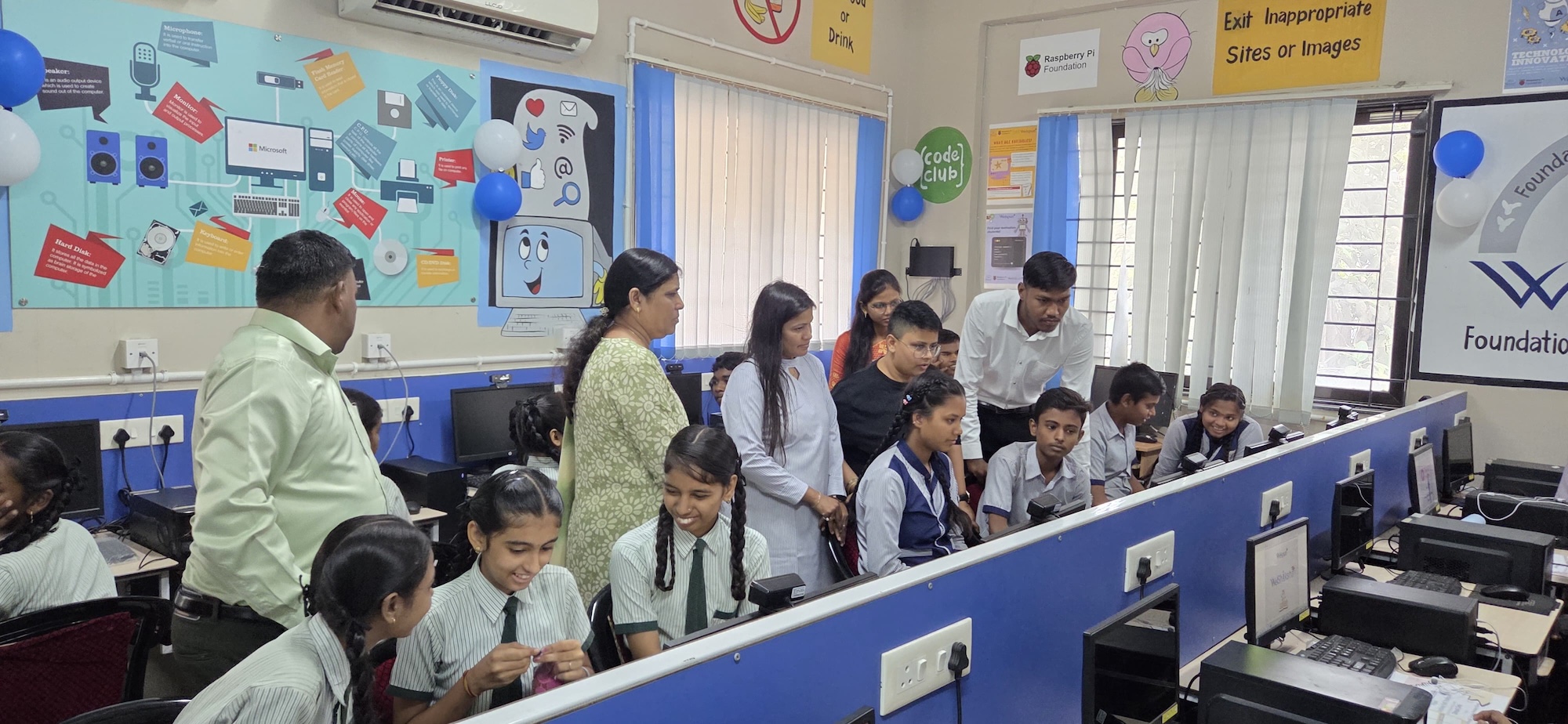
During a visit to a set of Code Clubs in India, our team met a group of girls who once faced barriers to attending school. Now, they are confidently creating Scratch projects and exploring new technologies. Their club leader explained how a simple change — allowing girls to attend school wearing traditional attire — opened doors for families. Seeing these young creators code with pride is a vivid reminder of how opportunity can reshape futures.
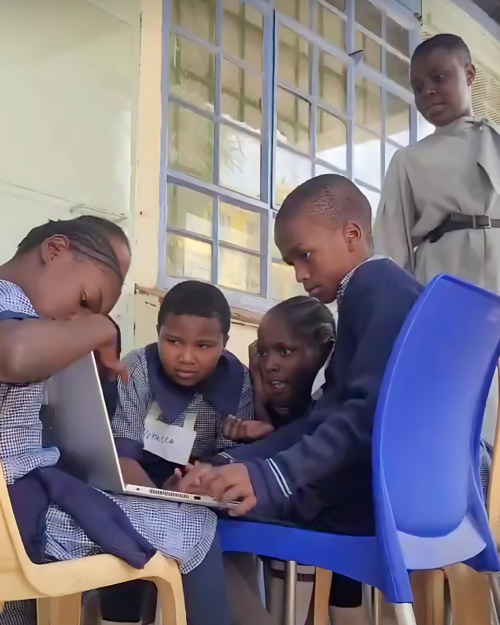
A club leader at Better Juniors Digital Club at Better Life Primary and Junior School in Kenya described how their programme began with just one laptop. Rather than letting that limit what learners could do, he found solutions everywhere: applying for grants, borrowing digital space from a nearby hub, and setting up equipment so children could work on projects together. His determination effectively created a bridge between schools and resources, opening up real opportunities for every child to learn.
We also heard from educators whose clubs have become long-standing pillars of their communities. At Rhiwbina Library in Wales, leaders have been running Code Club for over a decade, creating a space where older creators naturally guide new ones. When asked about club rules, one child replied: “There’s only one and that’s ‘respect’.” That simple principle continues to shape a joyful, collaborative atmosphere.
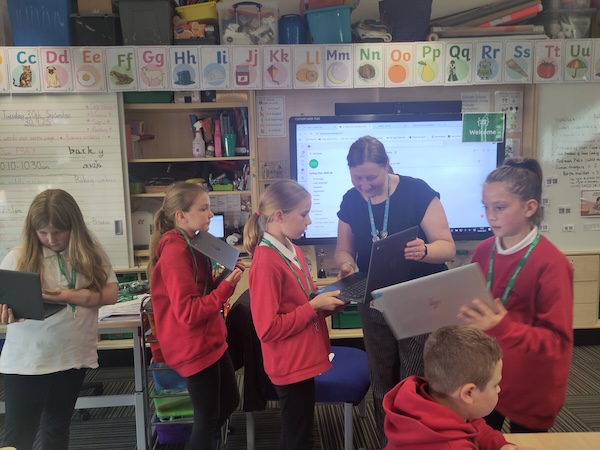
And sometimes the inspiration comes from the young people themselves. At Hillside Primary in Scotland, an enthusiastic creator took it upon himself to run taster sessions and codealongs for new members, helping them discover whether Code Club was right for them. His enthusiasm and leadership were infectious, and that spirit of young people lifting up their peers is something we’ve seen in clubs all over the world.
Moments of joyful learning capture the spirit of Code Club
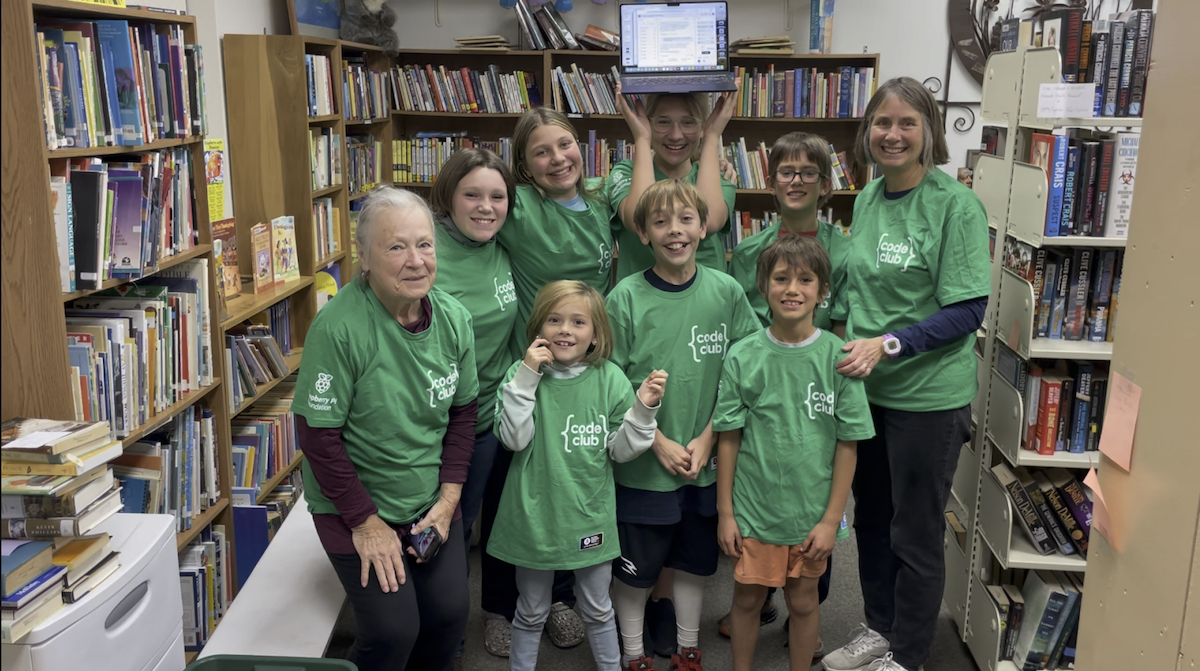
In one club that meets across three different venues in Pennsylvania, USA — a creative arts centre, a coffee shop, and a library — the excitement became contagious. The librarian, Miss Sandy, was so inspired by the learners’ projects — including the moment they added “Shredder Cat”, the library’s pet mascot, into their digital creations — that she has begun learning to code alongside them.
At one showcase event in India, learners proudly demonstrated text-to-speech and video-sensing projects — remarkable achievements for many of them in their first year of coding. They explained their ideas with confidence and clarity, sharing the logic behind their work as parents, teachers, and mentors looked on with pride.
In the UK, we experienced a beautiful moment at Fakenham Academy where the room filled with a chorus of squarks, clicking, tapping, and squeaking sounds as learners adapted the Grow a Dragonfly project in their own creative ways.
From applause erupting whenever a project is finished to a room buzzing with micro:bits or young people debugging together on a shared laptop, these snapshots show Code Club at its best.
All about community: Belonging, identity, and a resourceful spirit
Whatever the context or setting, Code Club leaders are resourceful. They are not waiting for others to solve their challenges; together with their creators, they are finding local solutions that work. Communities share equipment, mentor each other, offer space, and build continuity for learners in imaginative ways. Young people are gaining far more than digital skills: they are developing belonging, confidence, and a clear sense that they are part of something bigger.
For example, in a club in Kenya, two groups learnt side by side in a shared space. Younger learners were welcomed by older peers who acted as mentors, creating a real sense of community — collaborative, vibrant, and full of pride in each other’s achievements.
We also saw how deeply this work is woven into people’s identities. One team member visiting three clubs in Malvern, UK, wrote about Bob Bilsland, a Code Club champion for 13 years, describing how naturally he connected with learners at their own level and how fully he embodied the role of mentor and champion:
“Seeing his versatility as he mentored, sparked excitement and connected with creators at their own level was a thing to behold… he truly walks the talk.”
The impact can sometimes show up in unexpected ways. Holly, a leader from Illinois, USA, shared that her learners wear their Code Club t-shirts to school as “spirit gear” on Fridays. She told us how much this meant to her students:
“They absolutely love their shirts and are thrilled to be able to wear them… It makes them feel like a team.” A reminder that belonging matters just as much as skills.
Across every example, we saw resilience, creativity, and generosity in action because Code Clubs grow from strong communities.
Locally rooted but globally informed
These stories underscore something essential: Code Club grows not because of any one model, but because communities everywhere make it their own. Sandra Keeru, Programme Coordinator in Kenya, put it beautifully when she reflected that:
“Code Club is locally rooted but globally informed.”
Each club reflects the needs, culture, and creativity of its community, yet everywhere the same shared values shine through: curiosity, inclusion, and the belief that young people can achieve remarkable things.
Code Club is more than just learning to code; it’s about creating opportunities, encouraging confidence, and building a global network of digital creators. Whether you’re a mentor, educator, or young digital maker, there’s a place for you in the community. Start your Code Club journey today and join a global community of digital creators.
The post Learning from Code Clubs around the world: How approaches differ but values are shared appeared first on Raspberry Pi Foundation.
Bcachefs Ships Latest User-Space Utilities With bcachefs-tools 1.35
Kent Overstreet has shipped the latest version of bcachefs-tools, the user-space code complementing the Bcachefs file-system kernel driver. There are a number of improvements present in this latest version with Overstreet remaining committed to advancing Bcachefs even with its current out-of-tree kernel status…
LLVM/Clang 22 Feature Development Ends With Intel Nova Lake, Arm C1 & Ampere1C Support
LLVM/Clang 22 feature development ended overnight with the code now being branched and working toward a stable release likely by the end of February…
wl-proxy Announced As Rust Crate For Proxying Wayland Connections
Announced today on the Wayland mailing list is wl-proxy as a Rust crate for proxying Wayland connections and intercepting/manipulating Wayland messages…
Haiku OS Pulls In Updated Drivers From FreeBSD 15
The BeOS-inspired Haiku open-source operating system project just published a new status report to detail how they ended out the year…
Fastfetch 2.57 System Information Tool Brings COSMIC and Niri Support
Fastfetch 2.57 system information tool is out with broader desktop environment detection, terminal improvements, and changes to Windows support.
Firefox 147 Is Now Available for Download, Here’s What’s New
Mozilla has published today the final builds of the Firefox 147 open-source web browser ahead of its official unveiling on January 13th, 2026, so it’s time to take a look at the new features and improvements.