
In preparing for the GNOME 50 Alpha release, the “50.alpha” tags just occurred for the Mutter compositor and GNOME Shell. Most notable with GNOME Mutter 50 Alpha is the X11 back-end indeed being removed to focus exclusively on the Wayland session…
Category Archives: Linux
Linux 7.0 To Focus Just On Full & Lazy Preemption Models For Up-To-Date CPU Archs
A Linux scheduler patch queued up into a TIP branch this past week further restrict is the preemption modes that will be advertised. With it hitting the “sched/core” branch, it will likely be submitted for the upcoming Linux 7.0 (or alternatively, what could be known as Linux 6.20 instead)…
Three Small Plugins That Make Joplin Click
According to our writer, three small, easy-to-miss plugins were all it took for Joplin to live up to its Evernote-killer reputation.
Radicle 1.6.0 released
Version
1.6.0 of the Radicle peer-to-peer, local-first code collaboration
stack has been released. Notable changes in this release include
support for systemd
credentials, use of Rust’s clap crate for
parsing command-line arguments, and more. LWN covered the project in March
2024.
Intel Panther Lake GSC Firmware Published Ahead Of Laptop Availability
While Intel has been upstreaming various Panther Lake firmware bits to linux-firmware.git for pairing with their open-source kernel drivers ahead of Core Ultra Series 3 laptops shipping, one piece of the puzzle only published today is the GSC firmware for the Panther Lake graphics…
Intel Compute Runtime Updated With Initial Crescent Island & Nova Lake S Support
The Intel Compute Runtime 26.01.36711.4 was published today as their first release of 2026 for this open-source GPU compute stack providing Level Zero and OpenCL support across their range of graphics hardware going back to Tiger Lake. Notable with this new Compute Runtime release is having now production-ready Panther Lake support while also introducing early support for next-generation hardware…
KDE Plasma 6.6 Beta Is Out as a Feature Preview Ahead of February Stable Launch
The KDE Plasma 6.6 Beta is now available, giving users a first look at changes scheduled for the February 17 stable release.
Coolest Projects 2026: Opens for entries in January!
Coolest Projects is our global technology showcase for young people up to age 18. It’s a place where young creators share the brilliant things they’ve made using digital technology — from first-ever Scratch projects and coding for fun experiments to ambitious robotics builds — with a global audience. Everyone who takes part receives certificates and rewards to celebrate their achievements.
What you need to know about Coolest Projects 2026
Coolest Projects is open to any young person, anywhere in the world. Creators can submit their tech projects to our online showcase, explore the global project gallery, and join our special celebration livestream. There are in-person events in some countries for local creators, too (find out more below).
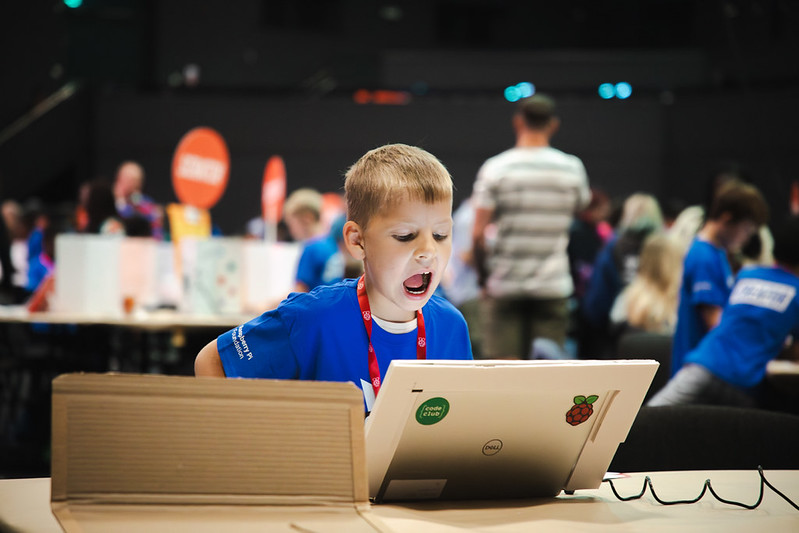
By taking part in Coolest Projects, young people can:
- Join an international community of digital makers
- Represent their country on a global stage
- Receive feedback on their creations
- Earn certificates to recognise their achievements
- Celebrate their progress at our livestream event on 24 June 2026
It is completely free to take part in Coolest Projects, and we welcome all kinds of digital technology projects — from first attempts to an ambitious STEM project or advanced build. Projects don’t need to be finished to be submitted.
Creators can enter a project into one of seven categories: Scratch, Games, Hardware, Web, Mobile Apps, Advanced Programming, and the emergent category of AI.
How Coolest Projects makes a difference
The findings from the Coolest Projects 2025 Impact report offer clear, evidence-based insights into how Coolest Projects builds confidence, creativity, and a sense of belonging for young people around the world. In 2025, almost 12,000 young people from 41 countries took part in Coolest Projects online, a 57% increase on the previous year. This year, we’re excited to welcome even more creators to the Coolest Projects community.
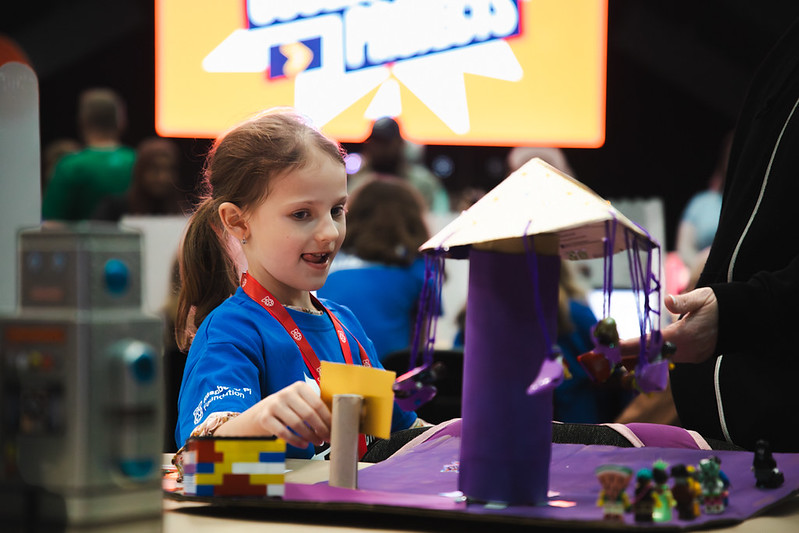
Our annual evaluation shows that Coolest Projects continues to have a powerful impact on young digital creators worldwide. In 2025:
- 100% of mentors and 72% of young people taking part in the online showcase said their confidence in digital making increased
- 83% of young people felt inspired to continue learning and participating in computing after taking part
- 74% of young creators and 100% of mentors said Coolest Projects helped them or their team feel a sense of belonging in computing
- 80% of surveyed young people said seeing projects from around the world made them feel part of a larger community of makers
Creators told us how proud they felt sharing their work:
“It feels like I’m being noticed!” – Young creator, UK
“I enjoyed presenting my project and seeing so many creative ideas from others.” – Young creator, India
With many early-stage makers joining for the first time, including 55% of young people at in-person events, Coolest Projects continues to be an accessible entry point into the world of digital creativity.
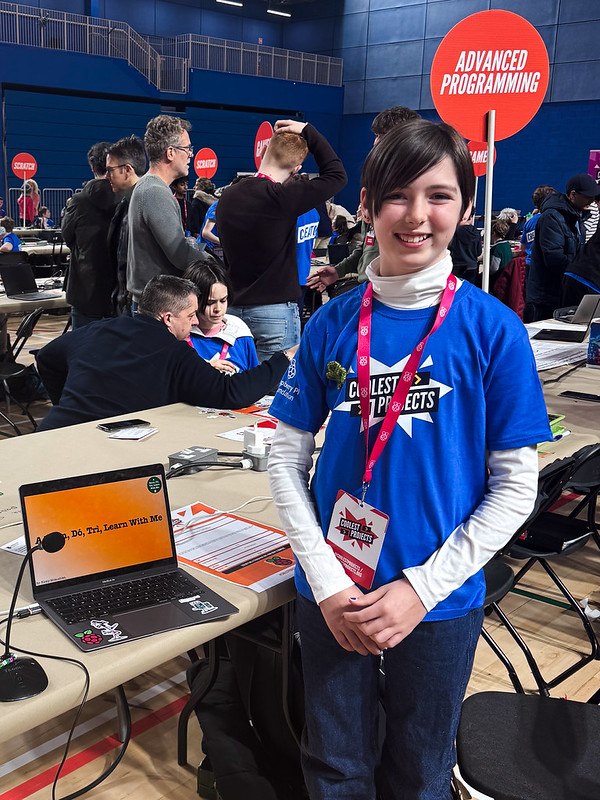
We’re also proud to see growing participation from girls who code, who tell us they value the chance to share their ideas and be inspired by others. At in-person events, girls made up 63% of creators in India, 50% in the US, 39% in Ireland, and 37% in the UK.
Find out more about the incredible creativity and collaboration from mentors and makers worldwide in our 2025 Impact report: rpf.io/cp-impact-2025
How to take part in Coolest Projects
- Come up with an idea — or choose something you’ve already made for school or a science fair project. Whether it started as a small classroom task or a personal coding challenge, any tech creation can be part of Coolest Projects. Our projects site offers hundreds of free, step-by-step guides — ideal for beginners, mentors, and anyone looking for engaging STEM activities for kids. The 2025 online gallery is also a great place to find inspiration for your next cool coding project.
- Select your category. Our category pages break down each of the seven categories, including our AI category.
- Work on the project individually or with friends. Young people can take part individually or in teams of up to five.
- Submit it via the Coolest Projects website by 27 May 2026. We encourage creators to take part in both the online showcase and their local in-person event — find the dates below.
- See your project showcased in our online gallery.
- Join the celebration livestream to discover creations from around the world on 24 June 2026.
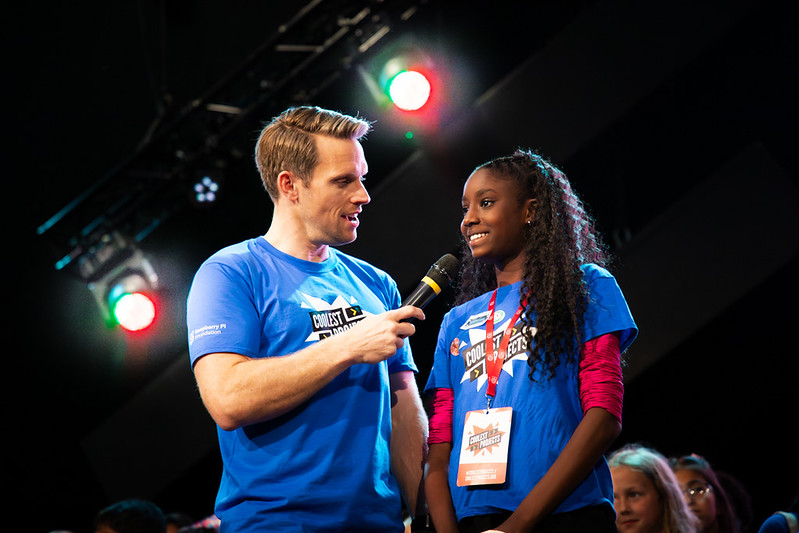
Group codes for mentors entering multiple projects online
If you’re entering several projects on behalf of your group, you can create a group code to link young people’s projects to your account.
Here’s a quick reminder of how it works:
- Sign up or log in: Use your Raspberry Pi account or create a new one.
- Create a group: Add your group details, including name and country.
- Share your group code: Young people enter the code on their project submission form.
- Review and submit: View all linked projects in your group dashboard.
There is no limit to the number of young people who can submit through one group code.
If you’d like a full walkthrough, watch our step-by-step group code ‘how-to’ video.
Whether your coders are beginners or experienced digital makers, there are lots of resources to support them. Visit the Coolest Projects guidance page for mentor guides, session plans, and more.
Coolest Projects in-person events in 2026
Alongside the global online showcase, Coolest Projects events will take place in several countries again this year. We encourage creators to take part in both their local in-person event and the global showcase.
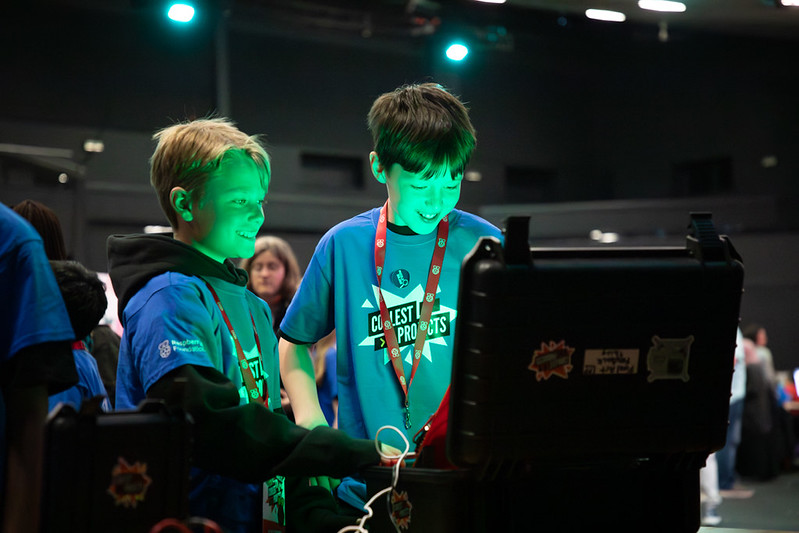
Save the date for:
- Coolest Projects Belgium – 14 March
- Coolest Projects Japan – 28 March
- Coolest Projects USA (Minnesota) – 11 April
- Coolest Projects Ireland – 25 April
- Coolest Projects USA (Georgia) – 2 May
- Coolest Projects UK – 16 May
- Coolest Projects Sudan (held in Egypt) – 12 August
- Coolest Projects Nigeria – 29 August
More dates coming soon for:
- Coolest Projects Canada
- Coolest Projects India
- Coolest Projects Indonesia
- Coolest Projects Malaysia
- Coolest Projects South Africa
- Coolest Projects Sri Lanka
Sign up to the Coolest Projects newsletter to be the first to hear about events near you.
We can’t wait to see what your young people create
Whether your young people already have something they’re excited to share or they’re ready to start something new, Coolest Projects is the perfect place to celebrate their creativity, problem solving, and imagination.
We can’t wait to see the incredible projects they bring to Coolest Projects 2026.
The post Coolest Projects 2026: Opens for entries in January! appeared first on Raspberry Pi Foundation.
XWayland RandR Improvements Merged For Kicking Off 2026 X.Org Server Activity
Michel Dänzer of Red Hat has kicked off 2026 xorg-server activity with landing a patch series enhancing the Resize and Rotate (RandR) extension support under XWayland for improving mode handling by X11 clients…
New “Thames” Linux Accelerator Driver Posted Along With Companion Gallium3D Driver
Tomeu Vizoso as the open-source developer behind the “Rocket” driver for reverse-engineered Rockchip NPU support, Teflon as a Mesa framework for TensorFlow Lite and NPU uses, and various Etnaviv driver work, has announced his newest creation: Thames…
Unraid Plans Internal Boot Support and Multiple Arrays for 2026
Unraid’s 2026 plans include booting without USB flash drives, expanded storage arrays, and a modernized web interface.
Thunderbird 147 Adds “Show Full Path” Folder Pane Option for Compact View Modes
After Firefox 147, Mozilla Thunderbird 147 has been released today as the latest stable version of this open-source, cross-platform, and free email client app that also features chat, addressbook, calendar, and news capabilities.
1M+ Windows defections fueling one of Linux’s biggest growth stories in 2026
Zorin OS 18 passes 2 million downloads in under three months, with most coming from Windows users as Windows 10 support ends and hardware limits tighten.
ZLUDA Boasts Full Llama.cpp Support, Better Windows Handling For CUDA On Non-NVIDIA GPUs
The open-source ZLUDA project for bringing CUDA to non-NVIDIA hardware that can run unmodified is out with a new progress report. ZLUDA had a productive fourth quarter with now enjoying better Microsoft Windows support, full support for running Llama.cpp atop ZLUDA, AMD ROCm 7 support, and other enhancements…
Hangover 11.0 Released: Wine + FEX/Box64 Pairing For Windows x86 Apps On ARM64 Linux
Building off today’s release of Wine 11.0 for enabling countless Windows applications and games to run well under Linux and being the basis of Valve’s Proton for Steam Play, Hangover 11.0 is now available. Hangover is the open-source project that pairs Wine with either the FEX-Emu or Box64 emulators for enabling x86 32-bit and 64-bit Windows games/apps to run on native ARM64 Linux systems…
Not Journalism: Almost 80% of the ‘Articles’ We Saw About Torvalds and ‘Vibe Coding’ Are LLM Slop (Sometimes Slop Images)
The real issue is, Torvalds who created Git as a solution to proprietary prison is entertaining Microsoft’s own proprietary prison
NVIDIA 580.126.09 Released to Improve Compatibility with Recent Linux Kernels
NVIDIA released today NVIDIA 580.126.09 for Linux, FreeBSD, and Solaris platforms with a few important changes for those using the production branch version of the graphics driver.
KDE Ships Plasma 6.5.5 as January Bugfix Update for Plasma 6
KDE Plasma 6.5.5 is now available as the January 2026 bugfix release, delivering fixes across Wayland, KWin, Discover, and core desktop components.
JPEG-XL Image Support Returns To Latest Chrome / Chromium Code
To the frustration of many developers and end-users, back in 2022 Google deprecated JPEG-XL support in Chrome/Chromium and proceeded to remove the support. That decision was widely slammed and ultimately Google said they may end up reconsidering it. In November there was renewed activity and interest in restoring JPEG-XL within Google’s image web browser and as of yesterday the code was merged…
ReactOS Receives Fix For A Very Annoying Usability Issue
ReactOS began 2026 with another “major step” towards Windows NT 6 compatibility with updating its MSVCRT implementation from Wine for the Microsoft C Runtime DLL library. That improved support for a number of Windows applications running on this open-source OS. ReactOS is taking another step-forward now with addressing a very annoying usability issue where up until now you may need to refresh the file manager for seeing folder changes…