Coolest Projects is the world’s leading technology showcase for young people, a space where creativity, curiosity, and problem-solving come together through code. Last November, Coolest Projects returned to South Africa, providing another exciting opportunity to celebrate and amplify the voices of young digital creators across Mzansi, a local name for South Africa.
Coolest Projects brings young people together to share what excites them the most about creating with technology, whether that’s making a game, a website, a robot, or a simple Scratch animation. What matters most is not perfection, but participation.
A showcase for young makers
Coolest Projects, an initiative of the Raspberry Pi Foundation, is brought to South Africa by our long-standing partner Coder:LevelUp, giving young people the space to share how they get creative with technology.
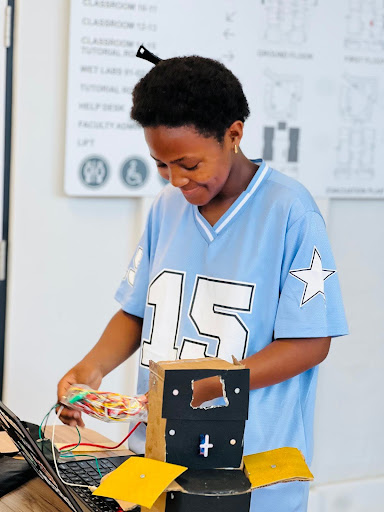
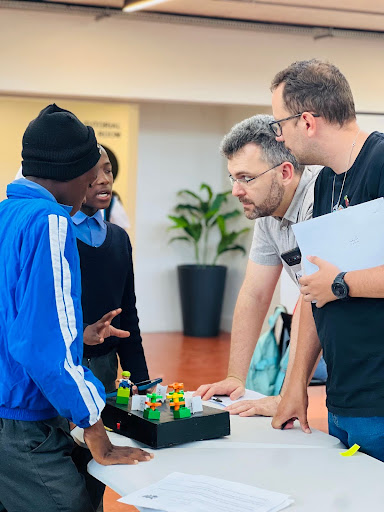
I spent the day surrounded by young people explaining their ideas with a mix of excitement, nerves, and confidence — the kind of emotions you get when you build something yourself and someone is finally asking you about it.
The event brought together over 250 young people to share the projects they had been working on. Some had been preparing for months, while others had begun exploring their ideas more recently. All of them arrived ready to explain what they made, how it worked, and what they would do differently next time.
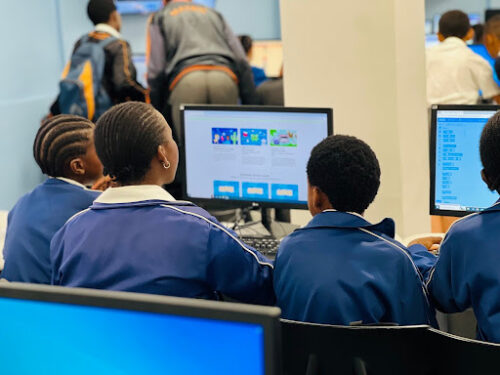
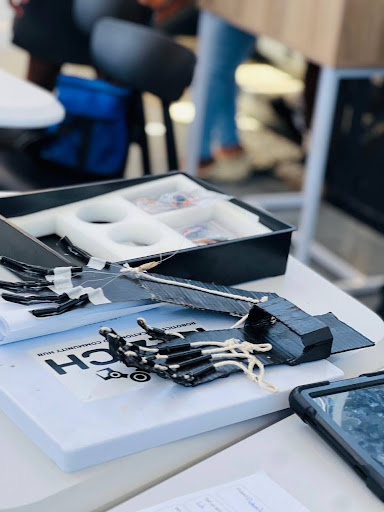
There wasn’t a single kind of project. There was a Scratch animation at one table, a game at the next, and a hardware project across the room. Some projects were polished, others rougher around the edges. But the event isn’t about perfection, it’s about learning and having the courage to show your work.
For a lot of participants, this was the first time they had presented their work to an audience, and you could see their confidence build as they spoke. By the end of the day, many were already talking about what they wanted to build next! From experience, we know that many of these young people will come back to Coolest Projects in the future, with our global impact data showing that over 1 in 10 participants in the Coolest Projects online showcase in 2025 had also taken part in Coolest Projects in 2024.
The coolest projects and the coolest people
One of my favourite things about Coolest Projects is that although you might come for the projects, what stays with you is often the people behind them. Coolest Projects celebrates both what young people build and who they are becoming.
The coolest projects
A project that really stood out to me was created by a group of girls who built a language app that translates words from isiZulu, one of South Africa’s official languages, into French and other languages — an ambitious and thoughtful idea.
What made this project especially meaningful to me was how well it reflected South Africa’s identity as a rainbow nation, with 12 official languages and countless cultures intersecting everyday. Their work wasn’t just technical, it was deeply relevant. It showed how young creators are already thinking about inclusion, communication, and using technology to bridge the gap between people in different parts of the country. Seeing these young girls confidently present such a culturally aware solution was incredibly inspiring.
And the coolest people
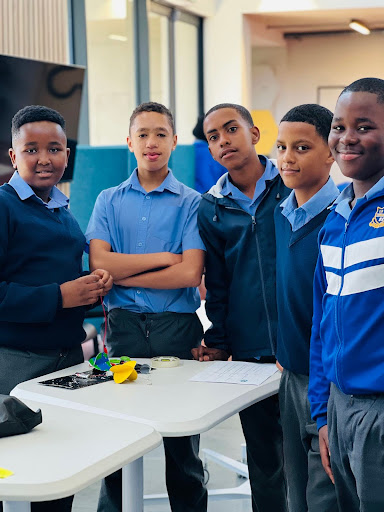
A group of boys arrived with a project that, honestly, fell apart on the day. Things didn’t work the way they had planned. But instead of shutting down or panicking, they laughed it off, explained what should have happened, and kept the energy positive. Their confidence, humour, and teamwork were great to see.
They showed that Coolest Projects is not about having everything work perfectly. It’s about showing up, trying something ambitious, and being willing to talk about what went wrong.
Why does Coolest Projects matter?
Coolest Projects goes beyond showcasing technical skills. It helps young people:
- Build confidence in presenting ideas
- Develop problem-solving and communication skills
- See themselves as creators, not just consumers, of technology
For many young creators in South Africa, participating in Coolest Projects is a powerful way to gain recognition and see that their ideas matter and that they belong in the world of technology.
We look forward to Coolest Projects South Africa returning in 2026 to once again showcase the incredible potential of young tech creators across the country.
Inspired to take part?
The Coolest Projects 2026 global online showcase is now open for entries. Find all the details on how to enter, as well as details of Coolest Projects in-person events you can look forward to throughout 2026, in our recent blog post.
To be the first to hear about events near you, sign up to the Coolest Projects newsletter.
The post A day with young creators at Coolest Projects Mzansi 2025 appeared first on Raspberry Pi Foundation.