
Linus Torvalds merged the Device Mapper “DM” changes overnight that include one stand-out change for Linux 6.19…
Category Archives: Linux
Intel llm-scaler-vllm Beta 1.2 Brings Support For New AI Models On Arc Graphics
Following yesterday’s release of a new llm-scaler-omni beta there is now a new beta feature release of llm-scaler-vllm that provides the Intel-optimized version of vLLM within a Docker container that is set and ready to go for AI on modern Arc Graphics hardware. With today’s llm-scaler-vllm 1.2 beta release there is support for a variety of additional large language models (LLMs) and other improvements…
Celebrating the community: Irioluwa, Michelle, Jedidiah and Inioluwa
We love hearing from members of the community and sharing the stories of amazing young people, volunteers, and educators who are using their passion for technology to create positive change in the world around them.
In our latest story, we’re meeting a group of inspiring young innovators from Belfast — Michelle, 15, Inilouwa, 18, Jedidiah, 14 — and Irioluwa, 11, who are using their creativity and technical skills to tackle an issue that impacts millions of young women across the UK: period poverty.
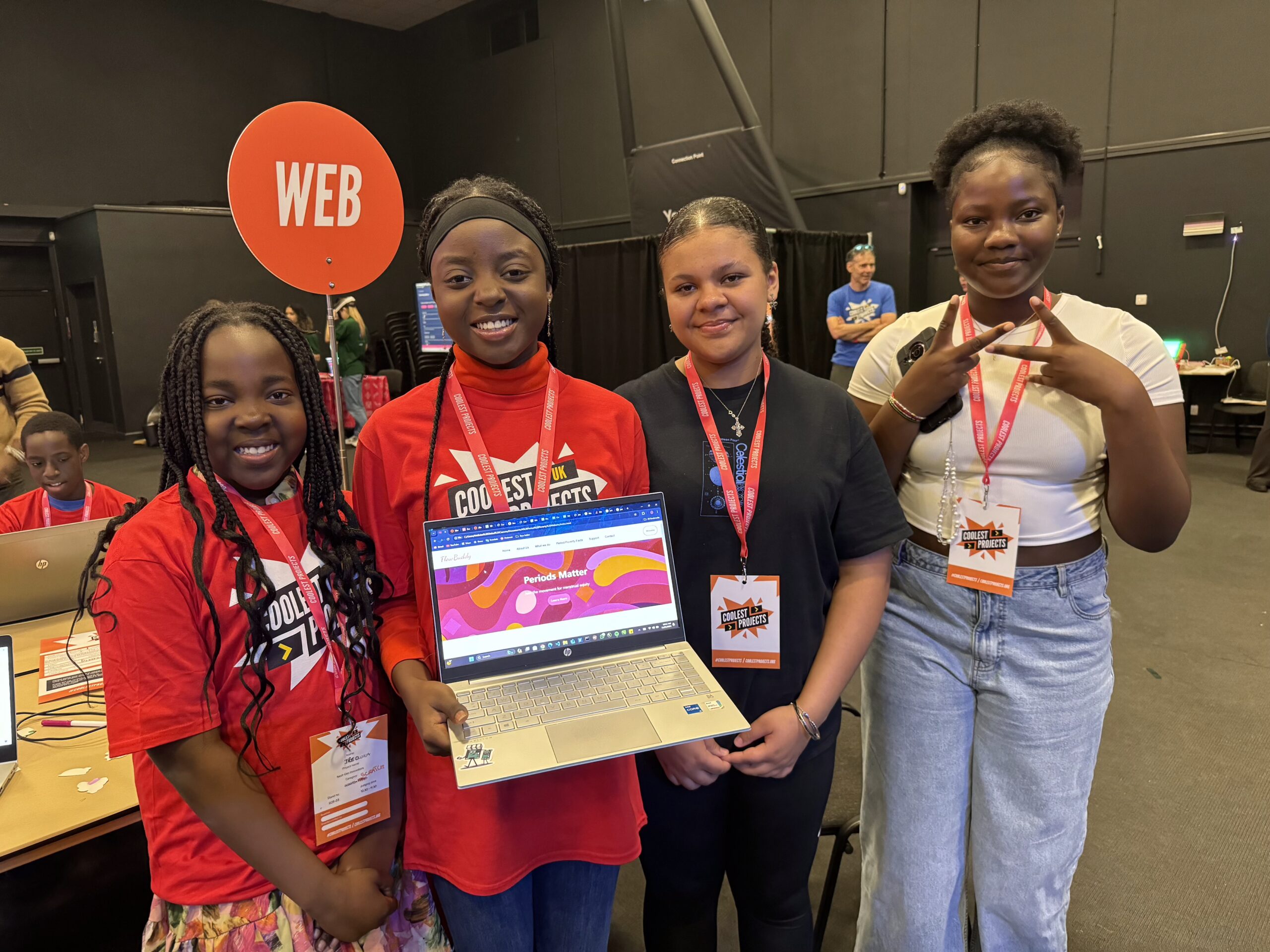
The power of community
The group first connected through Diverse Youth, a community space that gave them the chance to collaborate, learn, and grow.
At the youth centre, the girls were introduced to Code Club through mentor, and Jedidiah’s mum, Tiwa. When Tiwa offered them the opportunity to travel to Coolest Projects UK and showcase projects they had been working on, they knew they wanted to make something special…

Tackling taboo topics
The idea for Flow Body began when Inilouwa was inspired by her sister’s experience at school.
“So, for me, it was my sister actually, that really inspired this project because she would tell me, her school at the time, they run out of period products very frequently, so not a lot of girls could access it.”
Wanting to make a difference, the team created Flow Body, a website connecting young women to period charities in the UK and providing reliable information about periods, puberty, and related health issues.
Playing to their strengths
The technical side of the project was led by Inilouwa, with the rest of her teammates supporting her with research and content creation.
“So, alongside Michelle, I researched the diseases and what can come from period poverty and how different people get by with the lack of period products around,” Jedidiah said.
Their research highlighted just how widespread period-related health issues are.
The team discovered that one of the biggest challenges is access to accurate information, given the stigma around discussing menstruation, and using technology to solve this issue seemed like the perfect fit to them.
Inilouwa explained, “Having that access to information that’s tailored to young women, to young parents, to everyone all across the board would be really helpful, you know, in order to make periods less of a strange topic to discuss.”

Celebrating teamwork
After taking home judges’ favourite in the web category, the girls could not recommend the experience enough. When asked what advice they would give to other young people thinking of taking the leap and entering Coolest Projects, the answer was simple…
“Do it. Don’t be afraid. Even if tech is not your thing, it’s not a lot of people’s things. But like you learn so much, you grow so much and it’s very fun. It is. It really is,” said Inilouwa.
If you are interested in getting involved in Coolest Projects, keep an eye on the website for exciting announcements for 2026 plans.
Want support on your coding journey? Find a Code Club near you to learn alongside a likeminded community.
The post Celebrating the community: Irioluwa, Michelle, Jedidiah and Inioluwa appeared first on Raspberry Pi Foundation.
Linux Kernel 5.4 Reaches End-of-Life: Time to Retire a Workhorse
One of the most widely deployed Linux kernels has officially reached the end of its lifecycle. The maintainers of the Linux kernel have confirmed that Linux 5.4, once a cornerstone of countless servers, desktops, and embedded devices, is now end-of-life (EOL). After years of long-term support, the branch has been retired and will no longer receive upstream fixes or security updates.
RPM 6.0.1 Fixes Key Regressions And Improves Signature Handling
RPM 6.0.1 package manager addresses crashes, crypto issues, and build problems introduced in RPM 6.0.
Cinnamon 6.6 Desktop Environment Released with Redesigned Application Menu
The Linux Mint team released today the Cinnamon 6.6 desktop environment, which will be the default in the upcoming Linux Mint 22.3 (Zena) release expected in late December 2025 or in early 2026.
Linux 6.19 Networking Delivers 4x Improvement For Heavy Transfer Workloads, New Hardware
The big set of networking subsystem updates was recently merged for the ongoing Linux 6.19 merge window. There are some enticing core networking improvements like a big performance improvement for heavy transfer workloads, Bluetooth PAST enablement, and more. Plus a lot of wired and wireless networking driver activity and new hardware enablement…
Intel’s Vulkan Linux Driver Merges Shader VMA Allocator For Ray-Tracing Capture/Replay
Merged today to the Intel open-source “ANV” Vulkan driver in Mesa 26.0 is introducing a shader VMA allocator. Long story short this new allocator steps toward enabling Vulkan ray-tracing capture/replay support, which can come in hand for debugging issues with Vulkan ray-tracing on Intel graphics hardware under Linux and similarly to assist in optimizing for better performance…
Monado 25.1.0: Enabling tomorrow’s OpenXR experiences
Released as UnitedXR wraps up in Brussels, this latest update to the cross-platform Open-Source OpenXR runtime delivers major improvements across hand tracking, device support, and the core runtime infrastructure. Whether you are an XR platform maker, XR OEM, researcher, developer, or XR enthusiast, version 25.1.0 introduces new capabilities that make Monado even more reliable, more flexible, and better prepared for tomorrow’s XR experiences.
[$] LWN.net Weekly Edition for December 11, 2025
Inside this week’s LWN.net Weekly Edition:
- Front: Rust in CPython; Python frozendict; Bazzite; IETF post-quantum disagreement; Distrobox; 6.19 merge window; Leaving the TAB.
- Briefs: Let’s Encrypt retrospective; PKI infrastructure; Rust in kernel to stay; CNA series; Alpine 3.23.0; cmocka 2.0; Firefox 146; 2024 Free Software Awards; Quotes; …
- Announcements: Newsletters, conferences, security updates, patches, and more.
Glibc Now Enabling 2MB THP On AArch64 By Default For Better Performance
The GNU C Library’s malloc implementation is now enabling 2MB Transparent Huge Pages (THP) by default for AArch64 Linux. This is being done in the name of better performance — a healthy 6.25% performance improvement is noted for SPEC with this change…
Qt Toolkit Lands IO_uring Abstraction
The newest feature to land in the cross-platform Qt toolkit is QIORing as an abstraction for Linux’s IO_uring interface. This QIORing may also end up supporting Microsoft’s Windows IORing implementation as well…
Beginners Guide for Rename Command in Linux
In Linux, the rename command is an amazing utility that allows you to rename single or multiple files at once, based on a set of rules or regular expressions you specify.
10 Years of Let’s Encrypt Certificates
Let’s Encrypt has published
a retrospective that covers the decade since it published its first
publicly trusted certificate in September 2015:
In March 2016, we issued our one millionth certificate. Just two years
later, in September 2018, we were issuing a million certificates every
day. In 2020 we reached a billion total certificates issued and as of
late 2025 we’re frequently issuing ten million certificates per
day. We’re now on track to reach a billion active sites, probably
sometime in the coming year.
Kroah-Hartman: Linux CVEs, more than you ever wanted to know
Greg Kroah-Hartman is writing
a series of blog posts about Linux becoming a Certificate
Numbering Authority (CNA):
It’s been almost 2 full years since Linux became a CNA (Certificate
Numbering Authority) which meant that we (i.e. the kernel.org
community) are now responsible for issuing all CVEs for the Linux
kernel. During this time, we’ve become one of the largest creators of
CVEs by quantity, going from nothing to number 3 in 2024 to number 1
in 2025. Naturally, this has caused some questions about how we are
both doing all of this work, and how people can keep track of it.
So far, Kroah-Hartman has published the introductory post, as well
as a detailed
post about kernel version numbers that is well worth reading.
Why So Many Software Projects Are Quitting Microsoft and GitHub
In a nutshell, they eventually figure out it’s not ‘free hosting’ but a trap
Thunderbird 146 Introduces Configuration UI for Setting Up OpenPGP Keyservers
With the release of the Firefox 146 web browser earlier today, the Mozilla Thunderbird 146 open-source email client is out now as well, introducing various new features and plenty of improvements.
[$] Mix and match Linux distributions with Distrobox
Linux containers have made it reasonably easy to develop, distribute, and
deploy server applications along with all the distribution dependencies that they
need. For example, anyone can deploy and run a Debian-based PostgreSQL container
on a Fedora Linux host. Distrobox is a project that is designed to
bring the cross-distribution compatibility to the desktop and allow users to
mix-and-match Linux distributions without fussing with dual-booting, virtual
machines, or multiple computers. It is an ideal way to install
additional software on image-based systems, such as Fedora’s Atomic Desktops
or Bazzite, and also
provides a convenient way to move a development environment or
favorite applications to a new system.
FreeBSD 15.0 vs. Ubuntu Linux For AMD EPYC Server Performance
Given the recent release of FreeBSD 15, I started off my testing in looking at how FreeBSD 15.0 improves performance versus FreeBSD 14.3. Now it’s onto the next important question: how is FreeBSD 15.0 performing relative to Linux on servers? Here are some benchmarks exploring that topic today.
Find out how your Fedora system really feels (with the linux-mcp-server!)
Generative AI systems are changing the way people interact with computers. MCP (model context protocol) is a way that enables generate AI systems to run commands and use tools to enable live, conversational interaction with systems. Using the new linux-mcp-server, let’s walk through how you can talk with your Fedora system for understanding your system […]