Europe is packed with incredible cycling destinations, often just a short hop from the nearest city.
Among them are the ‘Great Lakes’ of northern Italy, in the foothills of the Alps. Less than a two-hour drive from Milan, Lakes Como and Garda combine breathtaking scenery with easy access.
Planning your trip has never been easier. Skyscanner’s free city break tool lets you map your route, book flights, hire a car, and reserve hotels all in one place. That means less time on logistics and more time on the road, soaking up Italy’s best cycling routes.
Each spring, the Garda Bike Festival draws riders from across Europe for road cycling, mountain bike and eMTB events. Even better, this takes place alongside a huge expo showcasing the latest cycling gear.
The next exhibition is set for 1 to 3 May 2026, so use the Skyscanner tool to start planning your trip in advance.
Lake Garda’s floating cycle path extends for 2.5km, hanging over the water for spectacular lake and mountain views.
Cyclists of all abilities can enjoy the smooth surface and stunning panoramic vistas, making it a must-ride for anyone looking to combine riding with unforgettable scenery.
Near Lake Como, the Madonna del Ghisallo climb is a must for road cyclists. Ride past the chapel, explore the cycling museum, and soak in sweeping lake views. Push a little further and the surrounding roads reward you with rolling hills, charming villages and panoramic views.
The 160km loop around the entirety of Lake Como is an epic endurance ride for advanced cyclists and features a mix of flat roads, rolling hills and short climbs.
Microshift manufactures drivetrain components for all cycling disciplines, including mountain, road and gravel bikes.
The brand may be off the radar for some riders and tends to feature on bikes at the low- to mid-range of the market. Its products are generally priced below SRAM or Shimano components at comparable spec points.
A large proportion of its range is compatible with Shimano’s shifting systems. This is because Microshift uses the same cable pull ratio on certain products. It makes Microshift products ideal inexpensive replacements if you’re shopping on a budget or can’t find Shimano in stock.
Microshift is unusual in that it also shares the same cable pull ratio across many of its road bike groupset and mountain bike groupset components. This means riders can mix and match, for example, drop-bar shifters with mountain bike groupsets, creating a mullet drivetrain on a budget.
It also produces less common shifter styles, such as thumb and bar-end shifters, for most drivetrains. All of this makes Microshift a popular option with dedicated home tinkerers.
In this article, we will delve into the full Microshift product range, explaining the hierarchy of its groupsets for road, gravel and mountain bike components. We’ll also outline the compatibility of its parts with those from other manufacturers.
Microshift road groupsets
Microshift doesn’t make road cranksets. Microshift
Microshift’s road groupsets are compatible with Shimano parts because both brands use the same pull ratio, making them an inexpensive replacement.
All cassettes can be fitted onto Shimano HG freehubs.
Microshift R8
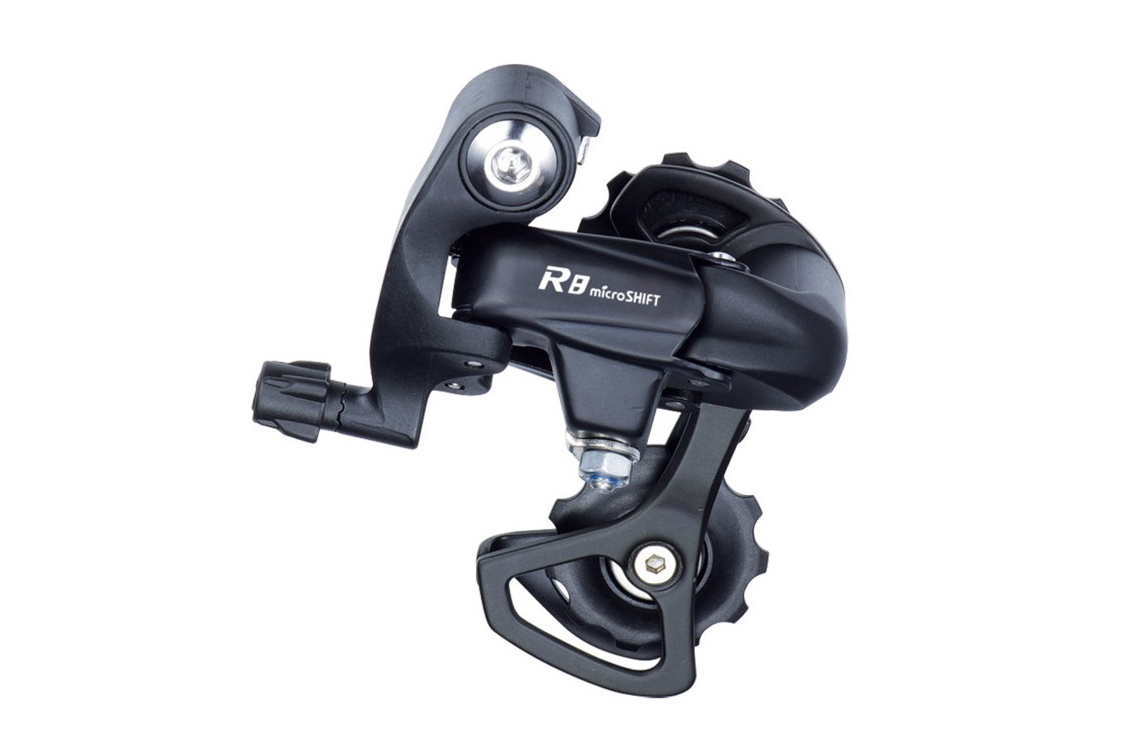
The R8 features a steel construction and is the entry level into the Microshift range.
8-speed
Cage lengths: short, long
Rear derailleur material: steel, composite
Compatibility: Shimano road
The R8 groupset is a part of Microshift’s R-Series of components and sits at the bottom of the brand’s hierarchy, but uses the same shifting technology as others in the range.
Available with a single, double or triple-chainring setup, the R8 family can be specced with either drop-bar shifters or Microshift’s Xpress flat-bar shifters.
Cassettes range from 12-28t to 11-34t and are available in a silver or black finish.
Microshift R9
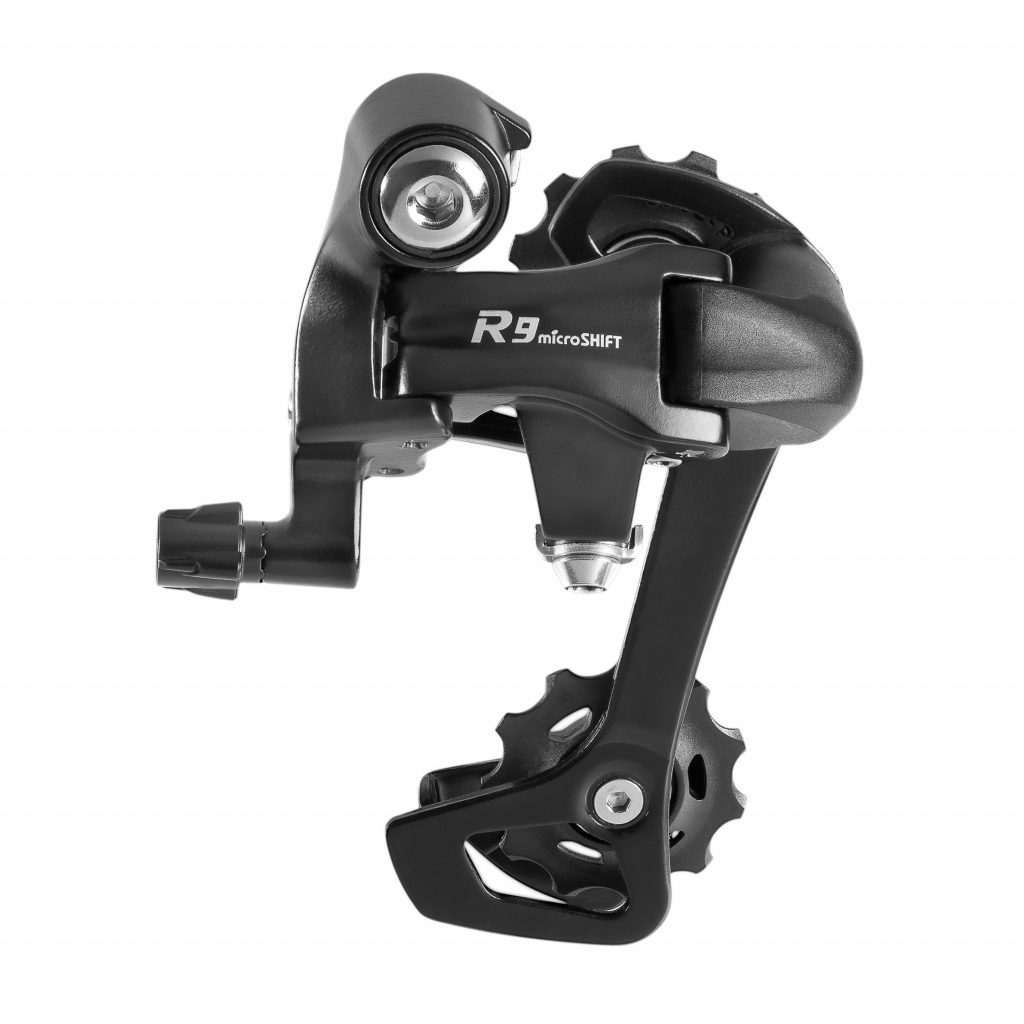
The R9 is manufactured from aluminium. Microshift
9-speed
Cage lengths: short, medium, long
Rear derailleur material: aluminium, steel (cage)
Compatibility: Shimano road
The R9 features the same shifting system as the R8, but has an aluminium rear derailleur as opposed to steel, offering a weight saving.
The R9 groupset is compatible with single, double or triple-chainring setups, with the option of a drop-bar or Microshift’s flat-bar shifters. The R9 is also available with bar-end shifters for time trial bikes, as well as thumb shifters for a ’90s mountain bike aesthetic.
Cassettes range from 11-25t to 11-34t.
Microshift R10
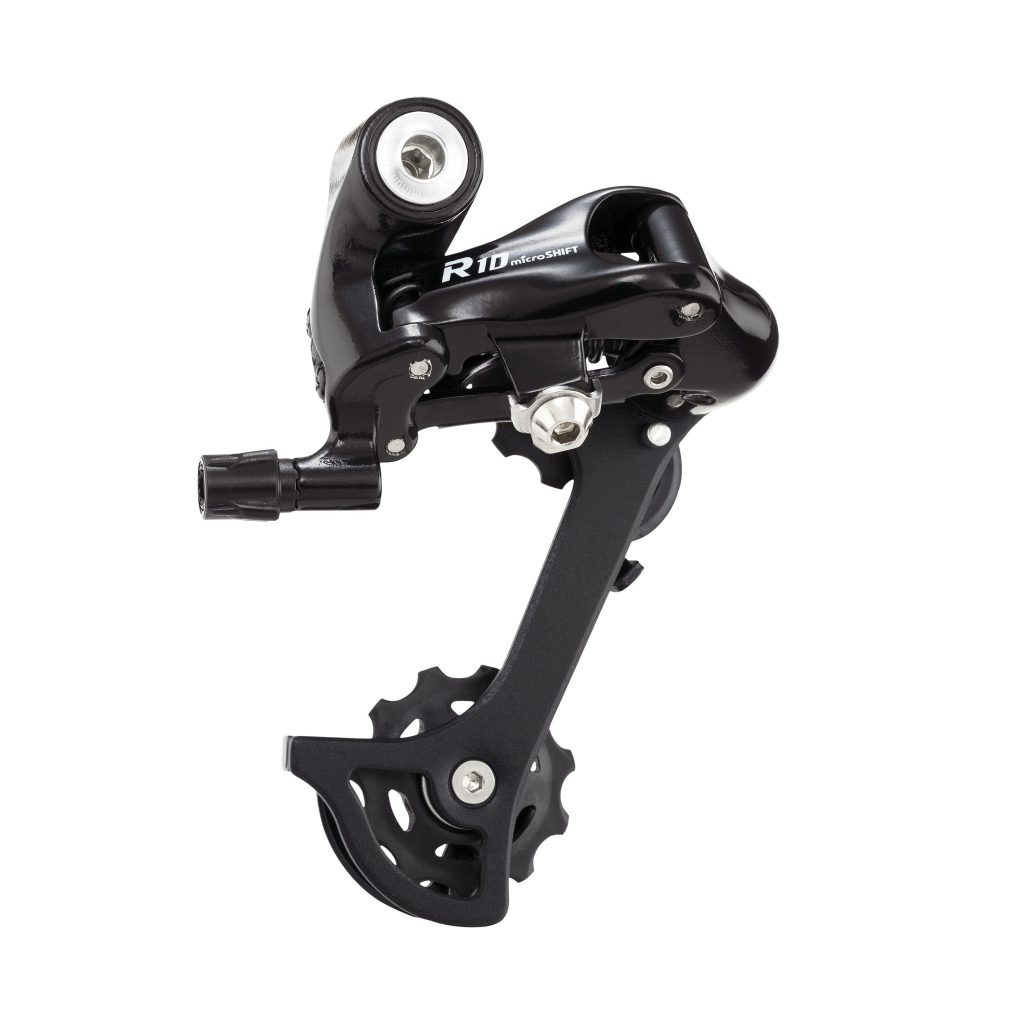
R10 is the top model in the R-Series range. Microshift
10-speed
Cage lengths: short, medium, long
Rear derailleur material: aluminium, steel (cage)
Compatibility: Shimano road
The R10 groupset tops the R-Series range and features an aluminium-machined rear derailleur that still uses the steel cage found on the R8 and R9.
The R10 is compatible with double or triple chainrings, with the same options of drop-bar, flat-bar, bar-end and thumb shifters as the R9.
Cassettes range from 11-25t to 11-34t.
Microshift Centos
SQUIRREL_TEXT_13317537
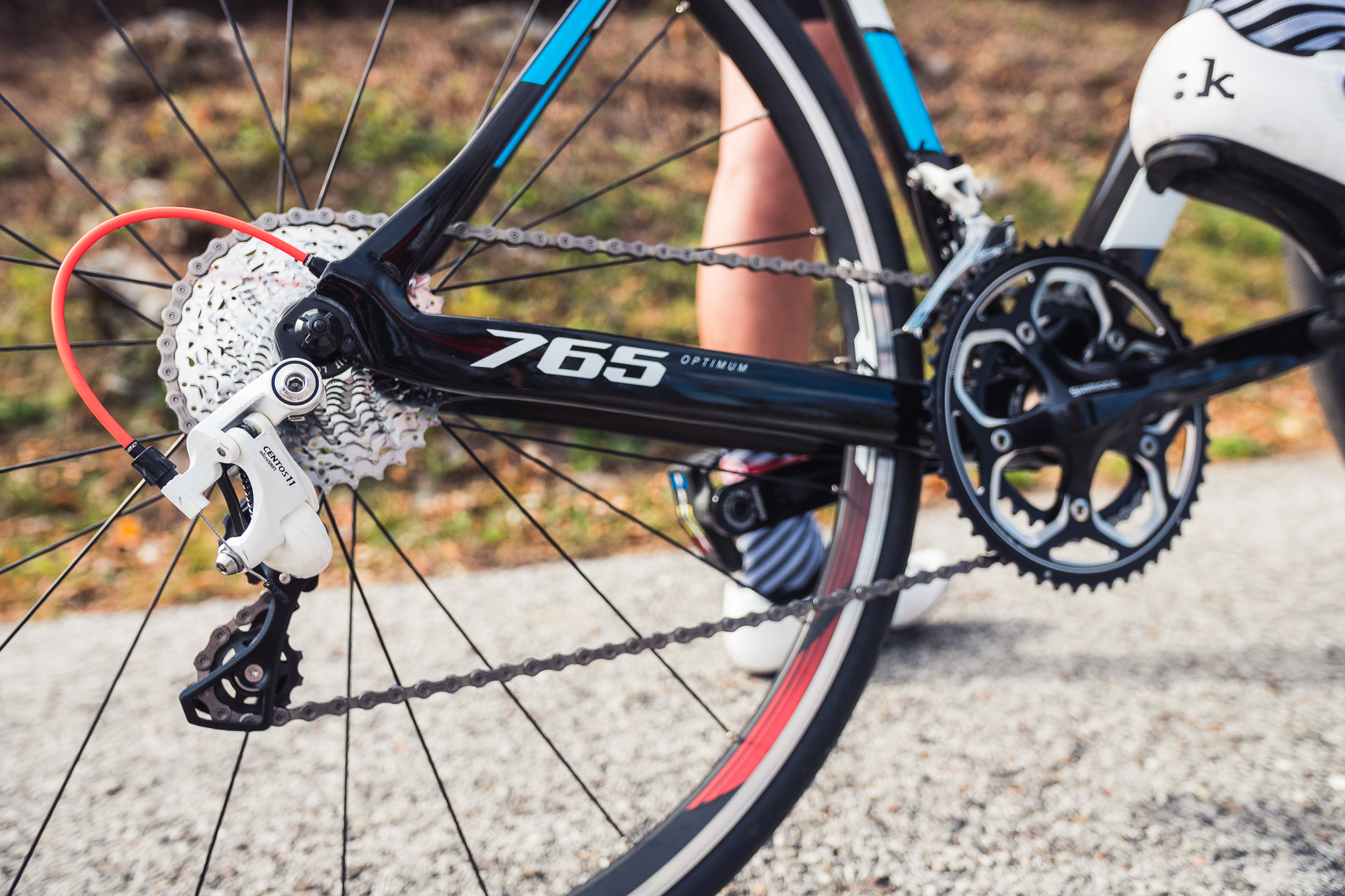
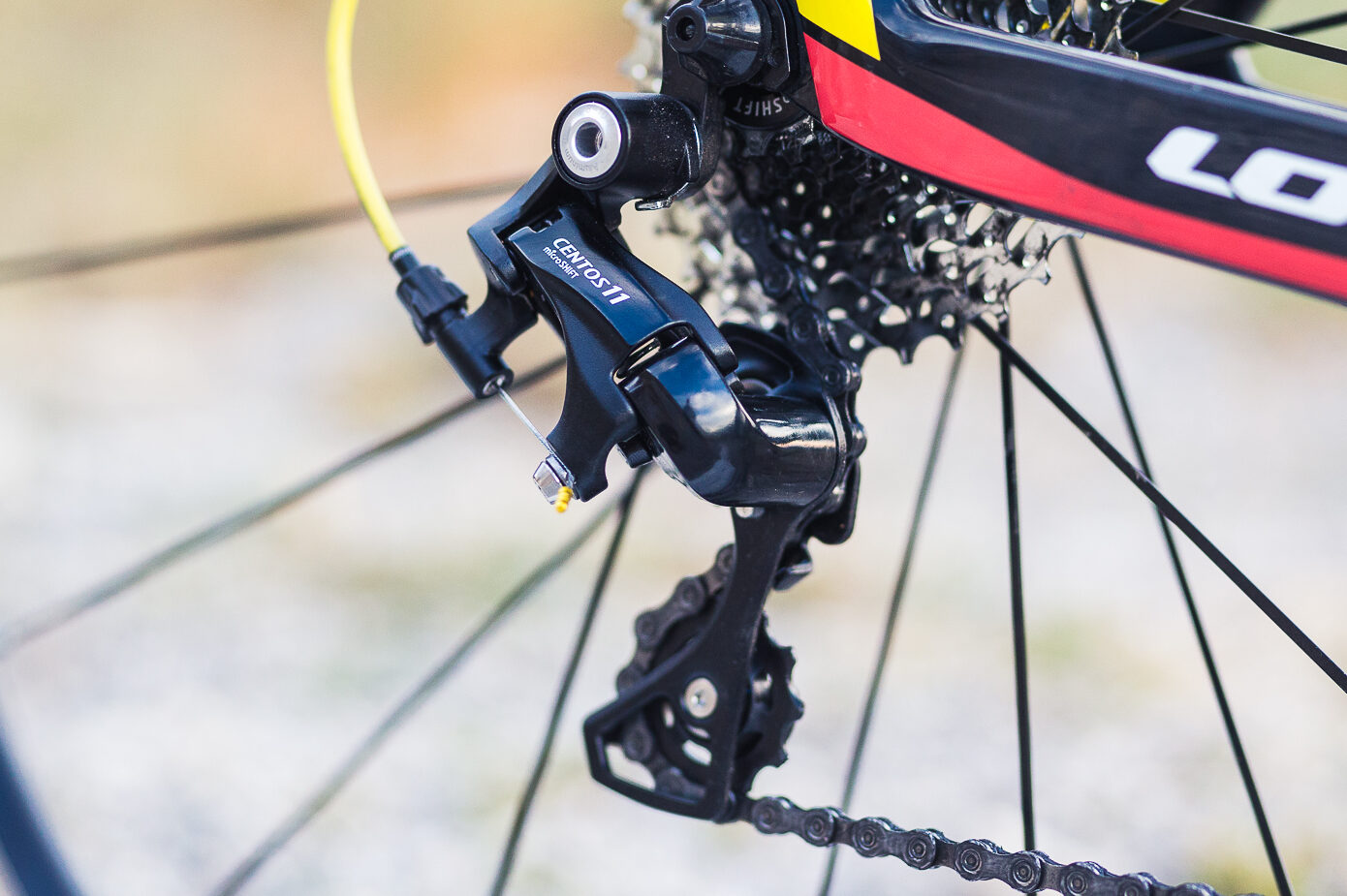
Centos is the brand’s 11-speed offering for the road. Microshift
11-speed
Cage length: short
Rear derailleur material: aluminium
Compatibility: Shimano road
The Centos groupset is Microshift’s 11-speed offering, which the brand says offers race-level shifting performance.
Unlike the R-Series, the Centos’ rear derailleur features forged aluminium construction, as well as an aluminium cage.
It’s only compatible with a double chainring with a short cage, and is positioned near to Shimano’s 105 groupset in terms of performance.
Centos is available with drop-bar shifters with 12mm of adjustable reach that can be set by a screw under the hood. It’s also available with Centos Xpress and Xpress Plus bar shifters, as well as thumb shifters.
Cassettes range from 11-25t to 11-34t.
SQUIRREL_13317537
Microshift Cypher
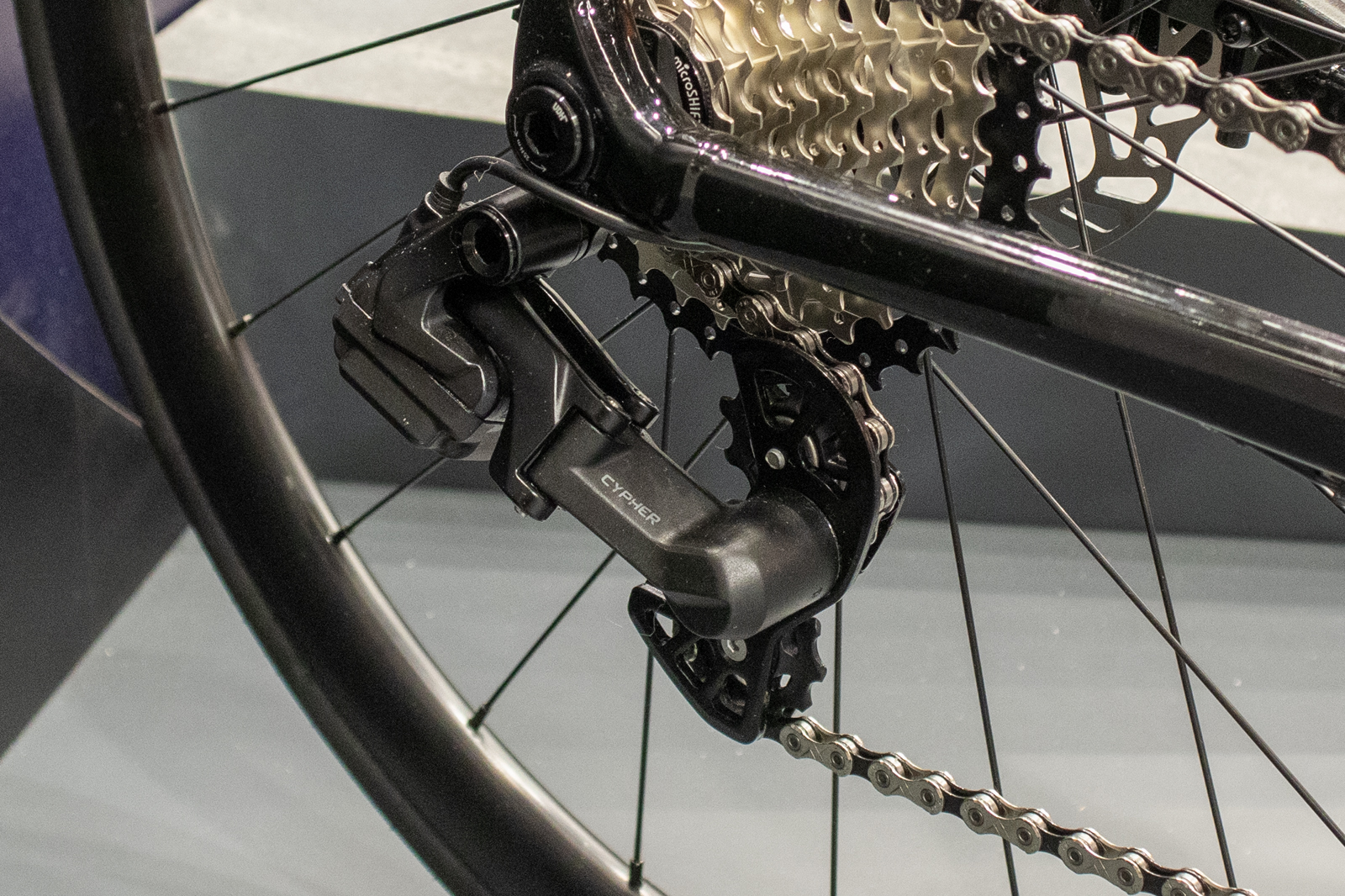
Microshift Cypher rear derailleur. Stan Portus / Our Media
While the specs of Microshift’s first electric groupset are unknown, it appears to take a lot of inspiration from the brand’s Sword groupset, with 10-speed shifting and cable-actuated brakes.
We’ll likely see the groupset launched sometime in late 2025.
Microshift mountain bike groupsets
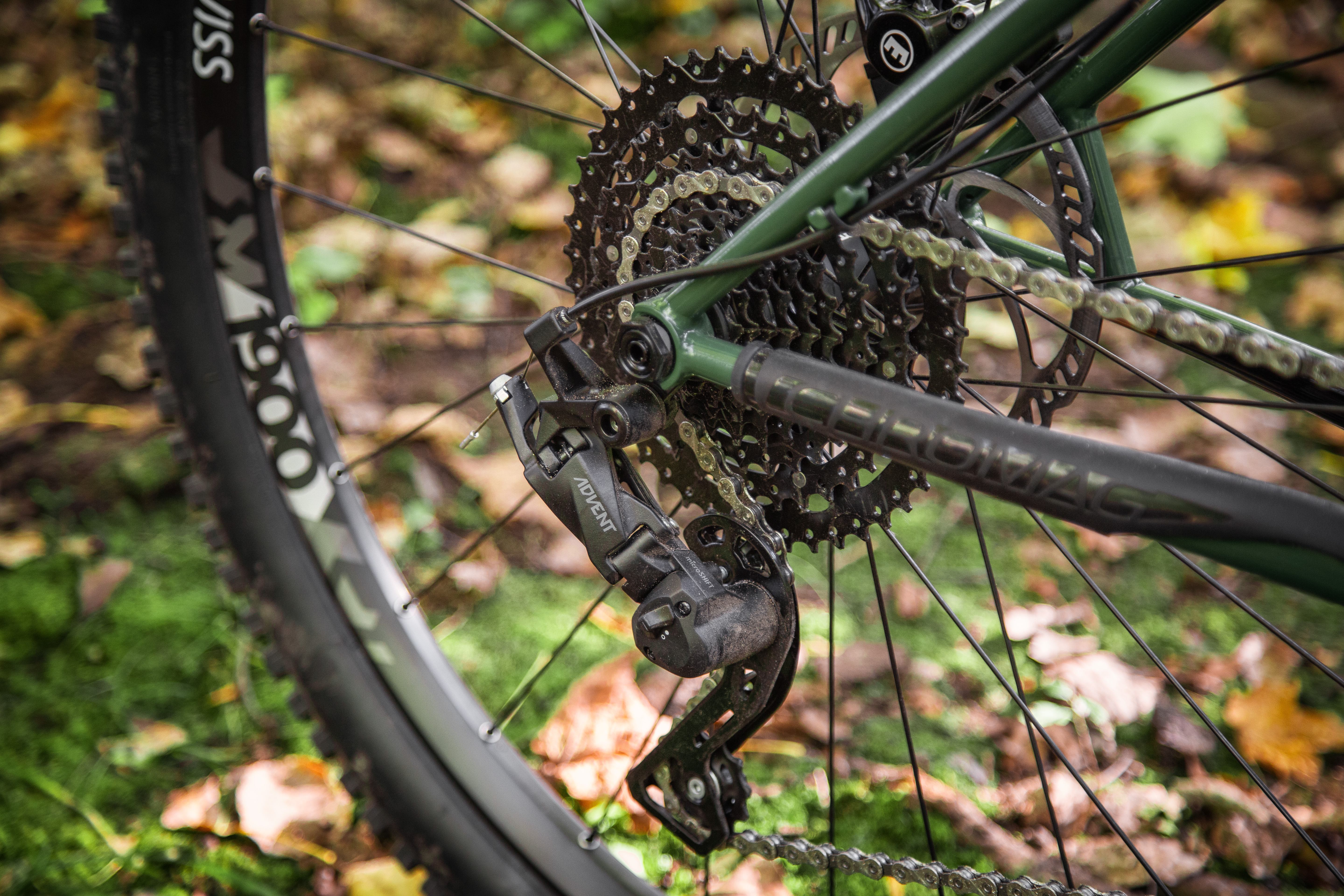
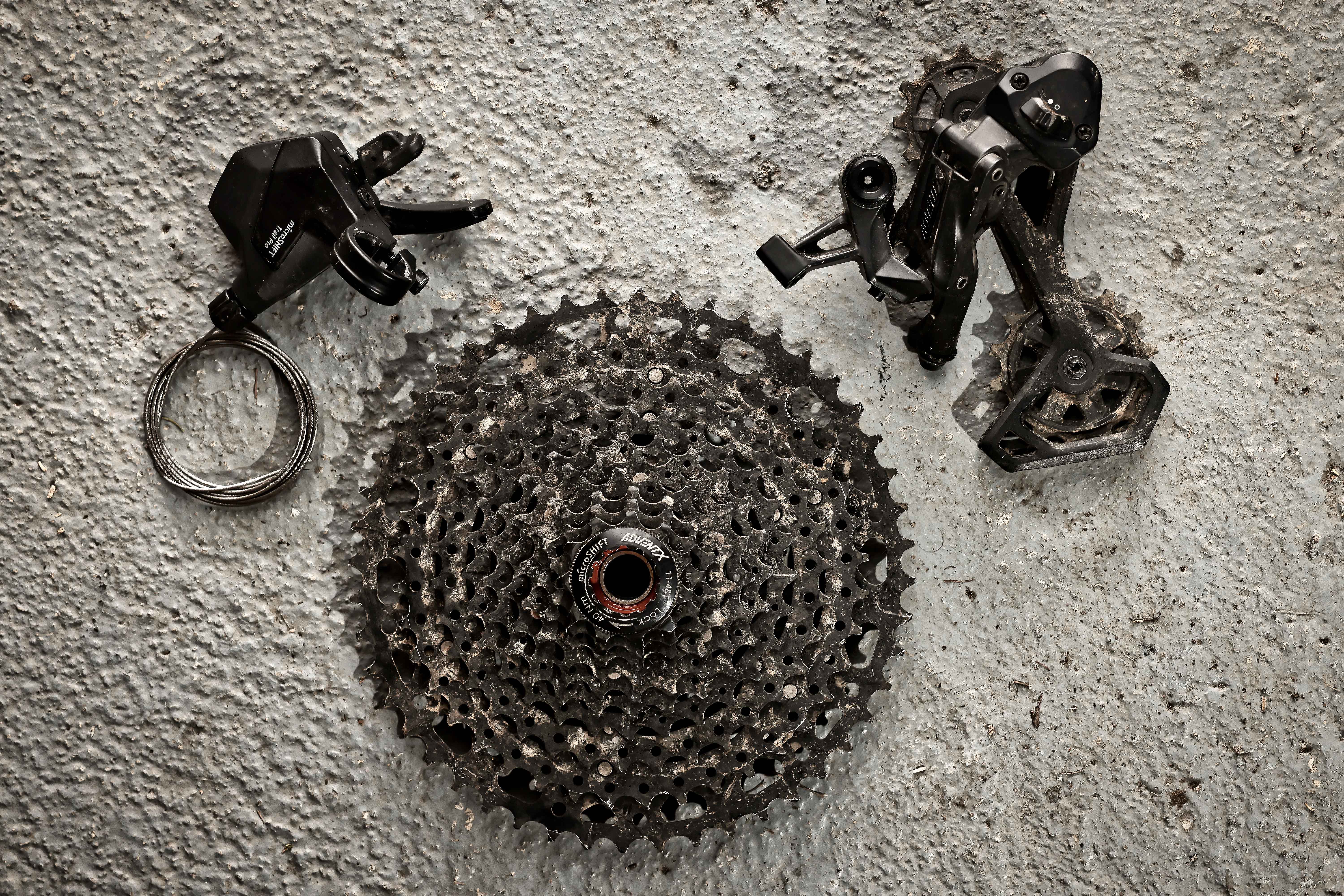
Advent X features larger pulleys with taller teeth for chain retention. Andy Lloyd / Microshift
Some of Microshift’s mountain bike groupsets are compatible with Shimano because they use the same pull ratio.
The brand has also released its own proprietary shifting system on the Acolyte, Advent and Advent X groupsets. These aren’t compatible with Shimano’s drivetrains, but the cassettes can be fitted onto an HG freehub body.
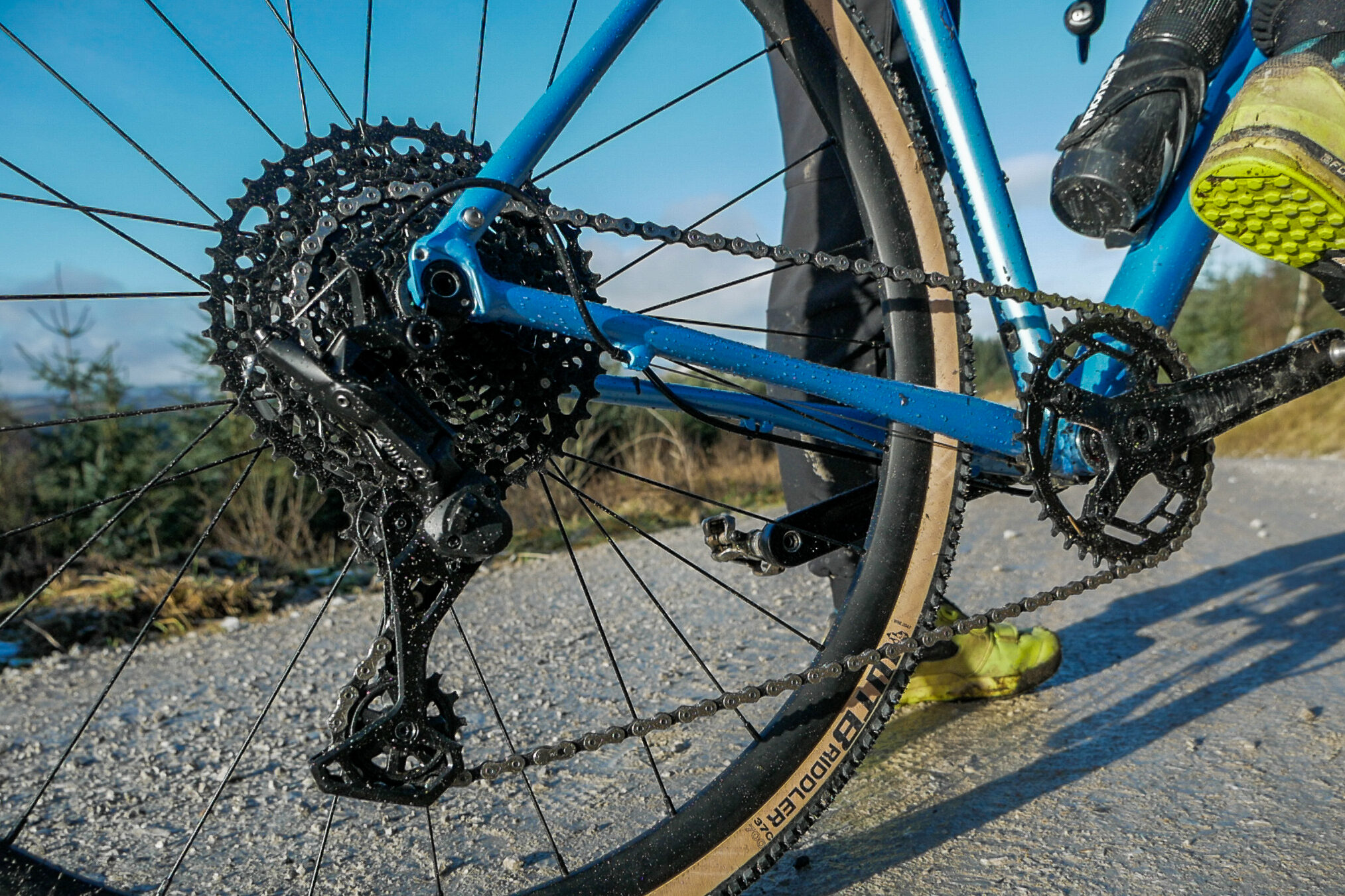
Advent X works on both mountain and gravel bikes. Microshift
While Microshift makes gravel-specific groupsets, many of its mountain bike groupsets can be paired with drop-bar levers. This enables you to choose from a wide range of durable components for your gravel riding exploits.
These models include the Advent X, Advent and XLE.
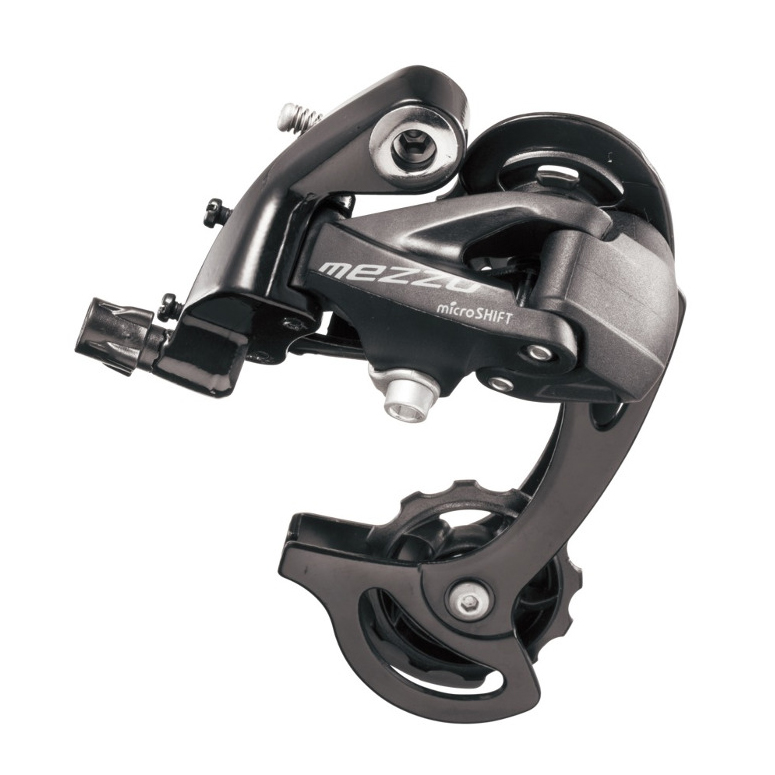
Microshift Mezzo
Mezzo is Microshift’s entry-level mountain bike groupset. Microshift
The Mezzo groupset is Microshift’s lower-tier mountain bike groupset, which the brand says is aimed at mid-level mountain bikes.
It can be set up as either 8- or 9-speed and is compatible with double or triple chainrings.
The rear-derailleur outer link is made out of a composite, while the body is forged aluminium.
The Mezzo groupset is available with Microshift’s thumb tap shifters and is compatible with Shimano’s mountain bike drivetrain components.
Cassettes range from 12-28t to 11-34t and are available in a silver or black finish.
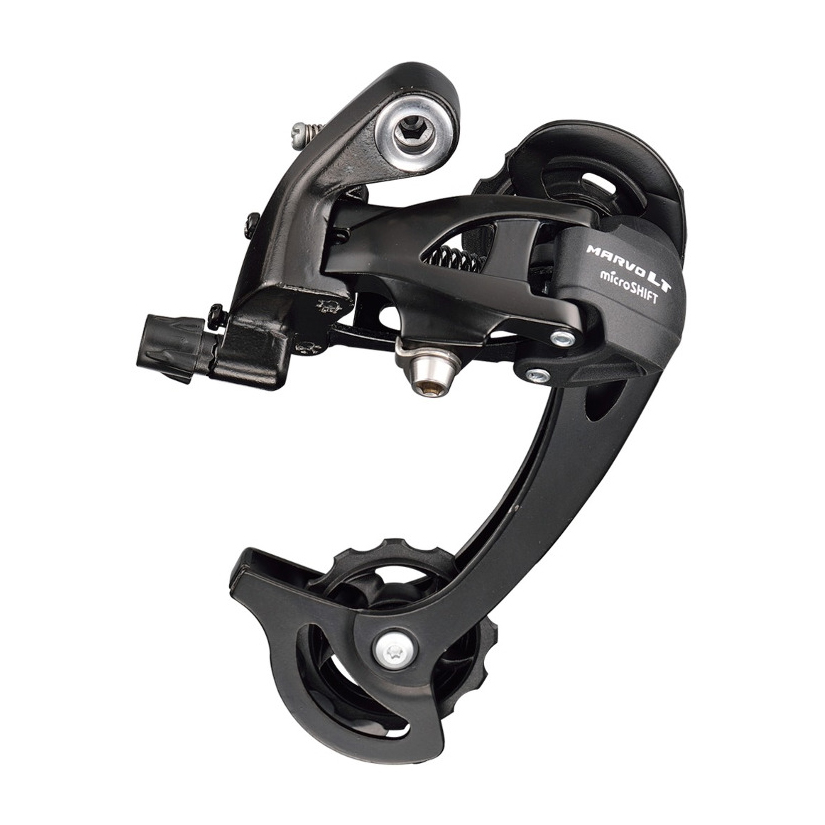
Microshift Marvo
A full-metal construction should make the Marvo durable on the trails. Microshift
9-speed
Cage length: short, long
Rear derailleur material: aluminium, steel (cage)
Compatibility: Shimano mountain
The Marvo sits just above the Mezzo in the Microshift line-up, with the rear derailleur featuring full-metal construction for durability on the trails.
Available with Microshift’s Xpress shifters, the Marvo groupset is compatible with a double or triple chainring.
Cassettes range from 11-32t to 11-36t.
Microshift XLE
XLE is compatible with a 2x setup. Microshift
11-speed
Cage length: short, medium, long
Rear derailleur material: aluminium, steel (cage)
Compatibility: Shimano mountain
The XLE is the brand’s mid-range groupset. The XLE rear derailleur is the first in Microshift’s line-up to feature a clutch. This makes it compatible with 1x setups.
XLE is also compatible with a double chainring and uses Microshift’s Xpress flat-bar shifters, or drop-bar shifters if you’re of a gravel persuasion.
Cassettes range from 11-40t to 11-46t.
Microshift XCD
The XCD derailleur is available with or without a clutch. Microshift
11-speed
Cage length: medium
Rear derailleur material: aluminium
Compatibility: Shimano mountain
The XCD is Microshift’s top-of-the-line Shimano-compatible mountain bike groupset, featuring a full-aluminium rear derailleur that can be specced with or without a clutch.
XCD is only compatible with a 1x setup using Microshift’s Xpress Plus shifter.
Cassettes range from 11-42t to 11-46t.
Microshift Acolyte
SQUIRREL_TEXT_13317550
A super-short cage means Acolyte can be used on 20in wheels. Microshift
8-speed
Cage length: super short, medium
Rear derailleur material: aluminium with a steel cage
Compatibility: Acolyte range only
The Acolyte is the first groupset in the Microshift range that uses the brand’s proprietary cable pull technology. This means it’s incompatible with Shimano’s mountain bike components.
The Acolyte rear derailleur is constructed from aluminium and features a steel cage with the option of a clutch.
A ‘Super Short’ cage enables the rear derailleur to be used on 20in wheels for kids’ bikes or folding bikes.
Positioned for light trail use and commuting, the Acolyte groupset is only compatible with a 1x drivetrain.
Cassettes range from 12-42t to 12-46t.
SQUIRREL_13317550
Microshift Advent
SQUIRREL_TEXT_13078233
Advent features a ratchet-and-pawl clutch to keep the chain in place. Microshift
9-speed
Cage length: medium, long
Rear derailleur material: aluminium, steel (cage)
Compatibility: Advent range only
The Advent is a mid-tier mountain bike groupset using Microshift’s proprietary cable pull ratio.
Compatible with single or double chainrings, the Advent’s rear derailleur can be specced with a clutch for keeping the chain in check on bumpy descents.
There is a large choice of shifters, with the groupset also able to use Microshift’s drop-bar levers and bar-end levers for gravel bikes.
Cassettes range from 11-42t to 11-46t.
SQUIRREL_13078233
Microshift Advent X
SQUIRREL_TEXT_13139407
Microshift Advent X offers great shifting at an impressive price. Ian Linton / Immediate Media
10-speed
Cage length: medium
Rear derailleur material: aluminium
Compatibility: Advent X and Sword only
The Advent X is Microshift’s top-tier groupset using its proprietary cable pull ratio.
Compatible only with a 1x setup, the Advent X’s rear derailleur features full-aluminium construction, as well as a clutch to keep the chain running smoothly.
Aimed at performance mountain biking, the groupset can also be specced with drop-bar levers for gravel riding.
The Advent X is available only with an 11-48t cassette.
Sword is the brand’s first gravel groupset. Kaden Gardener / Our Media
Microshift has long made mullet drivetrain compatible components for gravel bikes, but has only recently delved into gravel-specific groupsets with its Sword range.
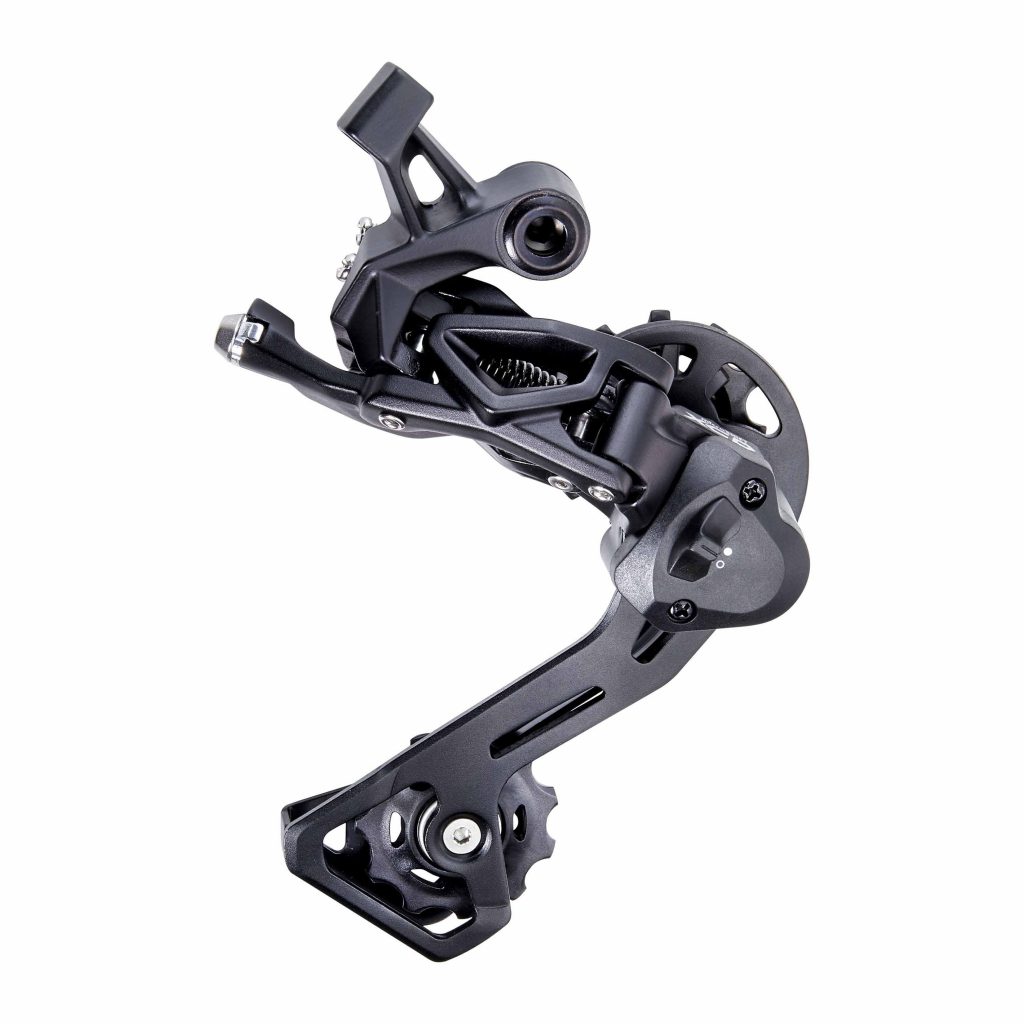
Microshift Sword
SQUIRREL_TEXT_13140159
Microshift Sword is the brand’s first fully fledged gravel groupset. Kaden Gardener / Our Media
10-speed
Cage length: medium and long
Rear derailleur material: aluminium
Compatibility: Advent X and Sword range only
Microshift Sword is the Taiwanese brand’s new mechanical gravel bike groupset that’s available in 1x and 2x options.
The shifters have received a radical redesign, similar in appearance to a Shimano GRX-815 Di2 lever, albeit less angular. There’s texturing on the hoods for improved grip and the shifters are cable-actuated, meaning you cannot run hydraulic disc brakes on this groupset.
The rear derailleur has also been redesigned with a clutch for improving chain retention.
The 1x drivetrain option is paired with an 11-48t cassette, whereas you’ll need to use an 11-38t cassette on the 2x alternative.
Be aware the groupset doesn’t include a namesake chain, bottom bracket, brake calibers or disc brake rotors, so you’ll need to factor these into the cost too.
Microshift offers a large range of shifters. Microshift
Microshift also produces a wide range of shifters that are compatible with internal gear hubs.
This includes drop-bar, trigger, twist, bar-end and thumbie-style shifters for Shimano 8- and 11-speed Alfine hubs, as well as 3-, 7- and 8-speed Shimano Nexus hubs.
Shimano only produces trigger and grip shifters for these hubs. Microshift’s range opens up options for using an internal gear hub on any bike.
A drop-bar gravel bike with an internal gear hub? We like it.
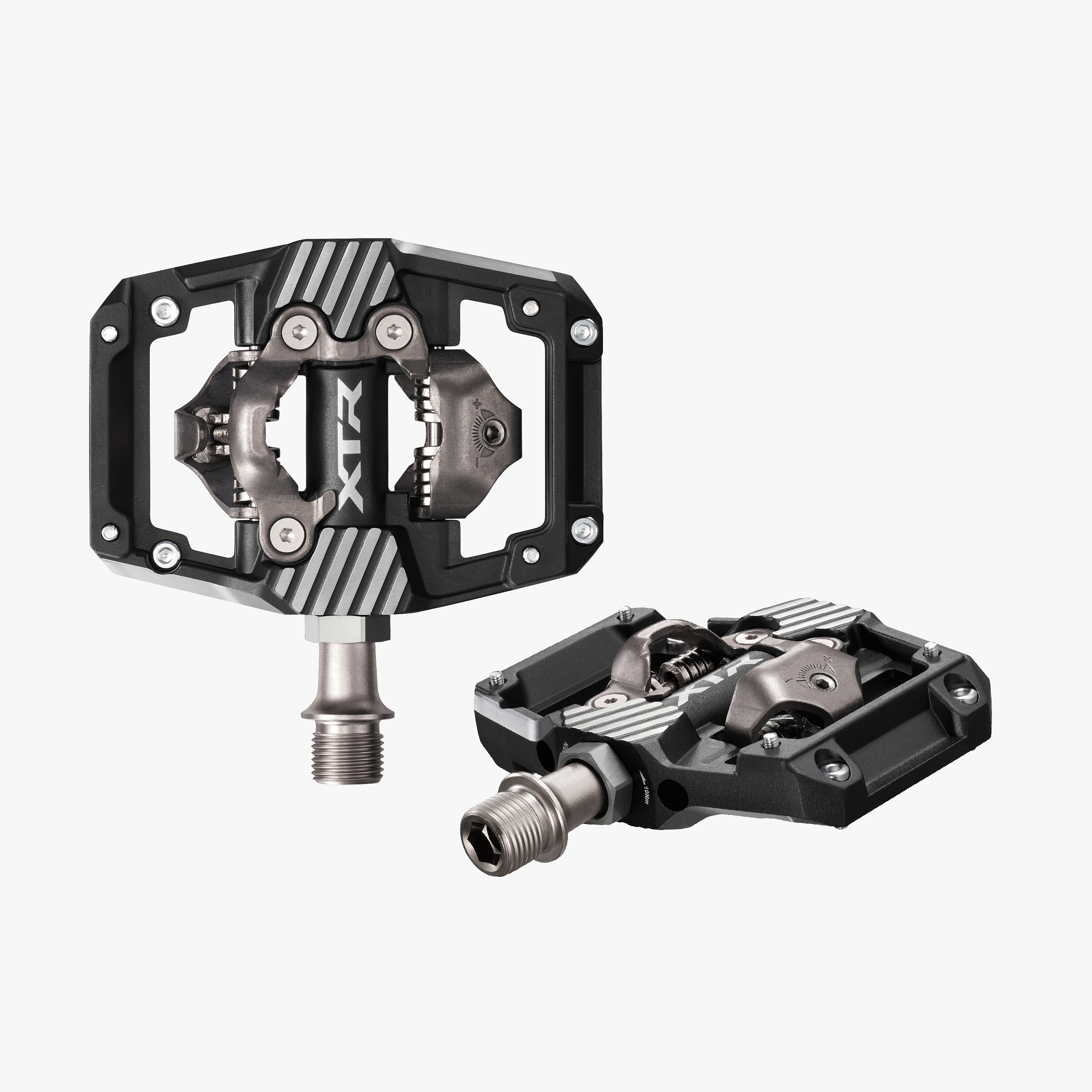
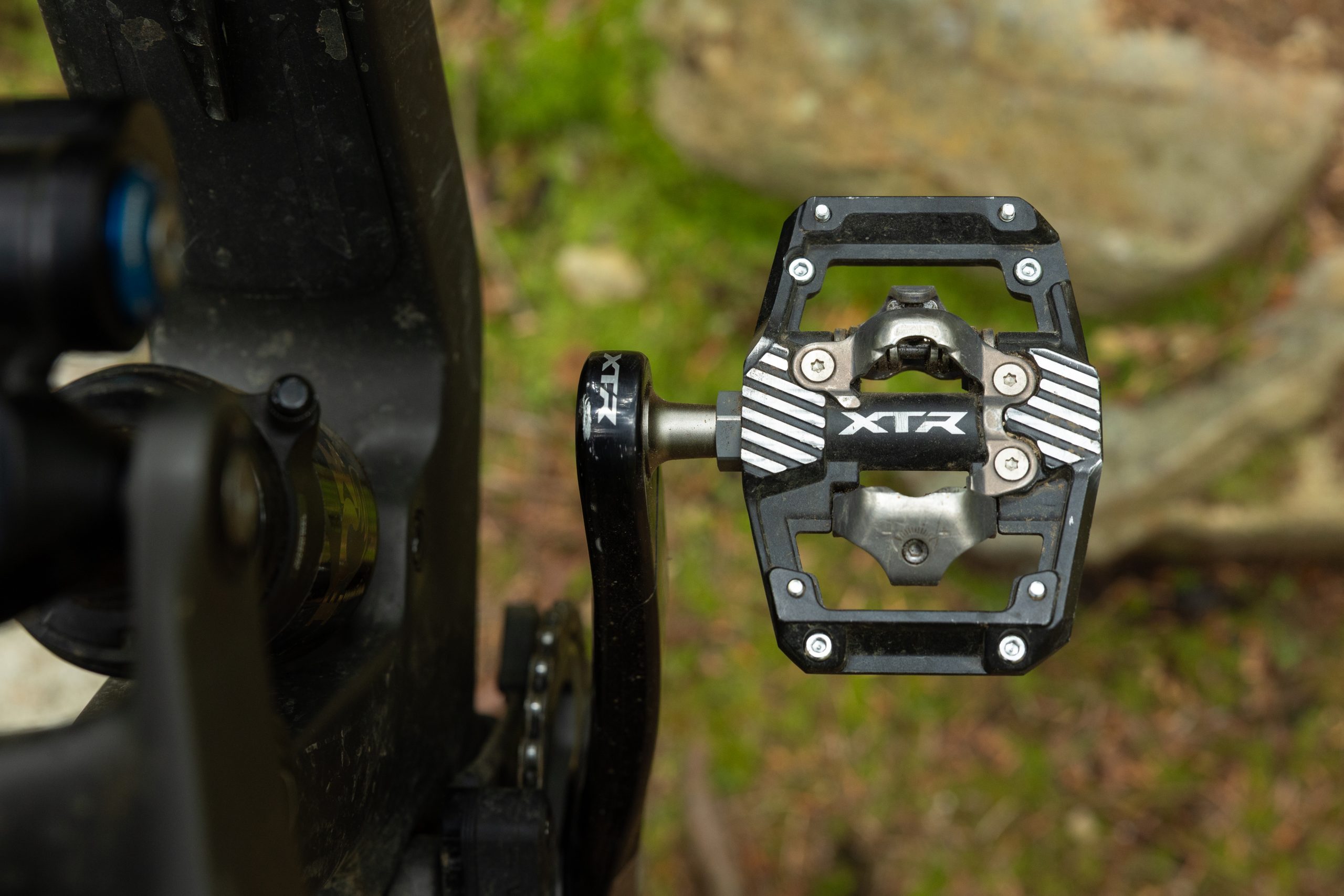
Shimano has launched its new XTR PD-M9220 pedals, which offer a wider platform, removable pins and improved bearing seals.
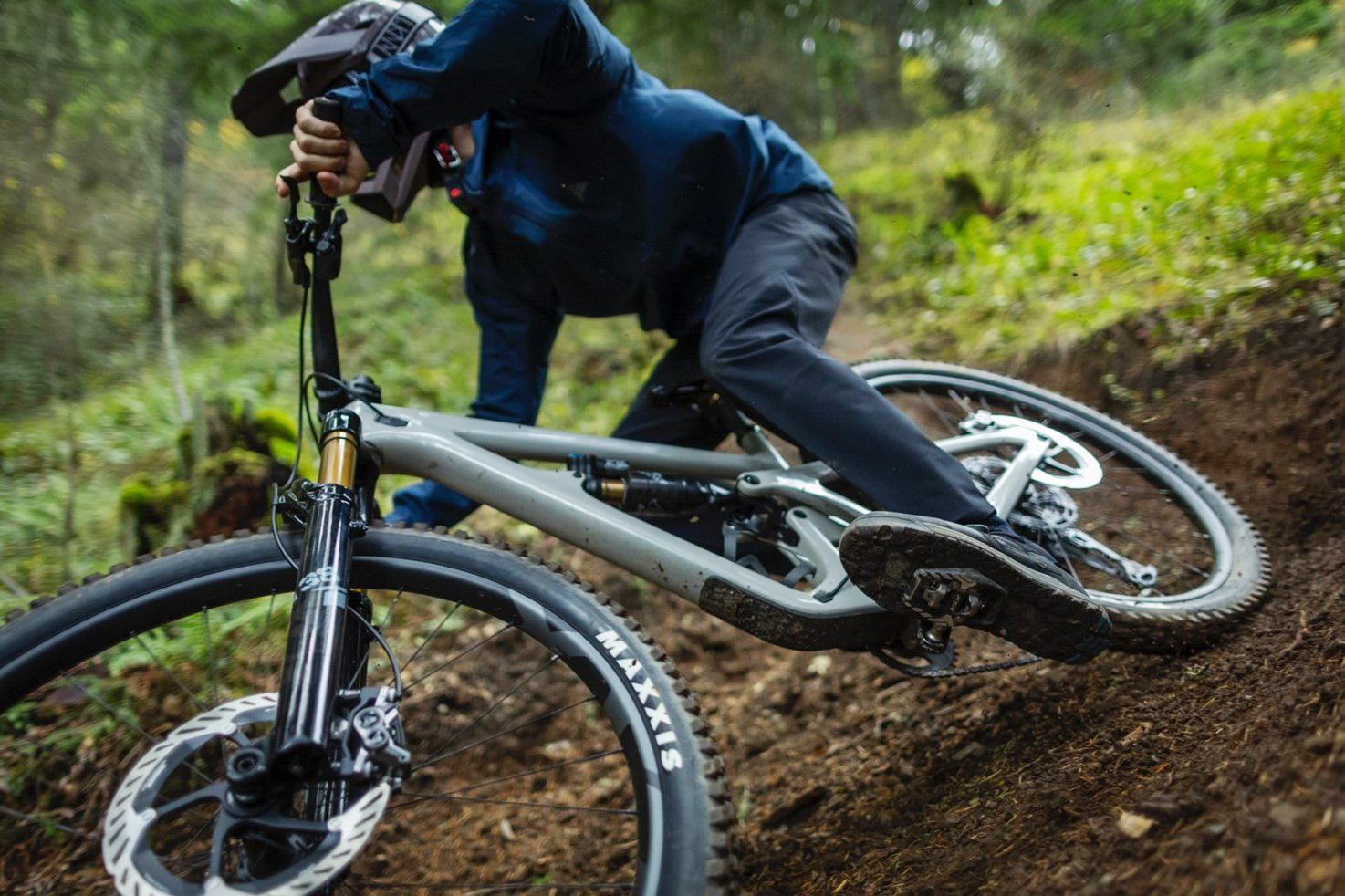
The mountain bike pedals match the new Shimano XTR Di2 groupset, which launched in June, and come with the brand’s new multi-entry cleats.
Tailored to aggressive trail and enduro riders, these pedals are more of an evolution than a revolution. However, they pack features that should mean they remain frontrunners in the crowded mountain bike pedals market.
Improved seals are said to improve bearing life and keep the new XTR pedals spinning more smoothly for longer. Shimano
Shimano says that the XTR PD-M9220 pedals focus on durability, with a robust outer cage protecting the binding mechanism from rock strikes and trail impacts.
This added toughness means extra weight. Shimano claims the PD-M9220 pedals weigh 435g, which is 40g heavier than the previous XTR PD-M9120 pedals.
Durability is also aided by the improved seal design, which should reduce any play and keep the bearings running smoothly for longer.
Enhanced control
Replaceable pedal pins and a wider platform make this generation of XTR pedal more aggressive. Shimano
Shimano also had “enhanced rider control” in mind when creating the PD-M9220.
It says the pedals have “a wide contact area that improves pedalling efficiency, assuring no wasted power when charging uphill”.
Shimano has also combined the wider raised pedal platform with four adjustable traction pins, which were not present on the previous model.
The pins increase traction on the bottom of the shoe, adding resistance to guard against accidentally unclipping, and improving stability and control when you’re not clipped in.
The two-bolt SPD cleat is the first major update to Shimano’s SPD cleat platform in nearly 30 years.
Whereas Shimano’s previous cleats required you to clip in ‘toe first’, the new cleats provide multi-directional entry for easier engagement.
While Shimano says the cleats are targeted at all riders – and should be particularly useful for beginners learning to use clipless pedals – they’ll also prove useful for enduro and trail riders who find themselves frequently clipping in and out.
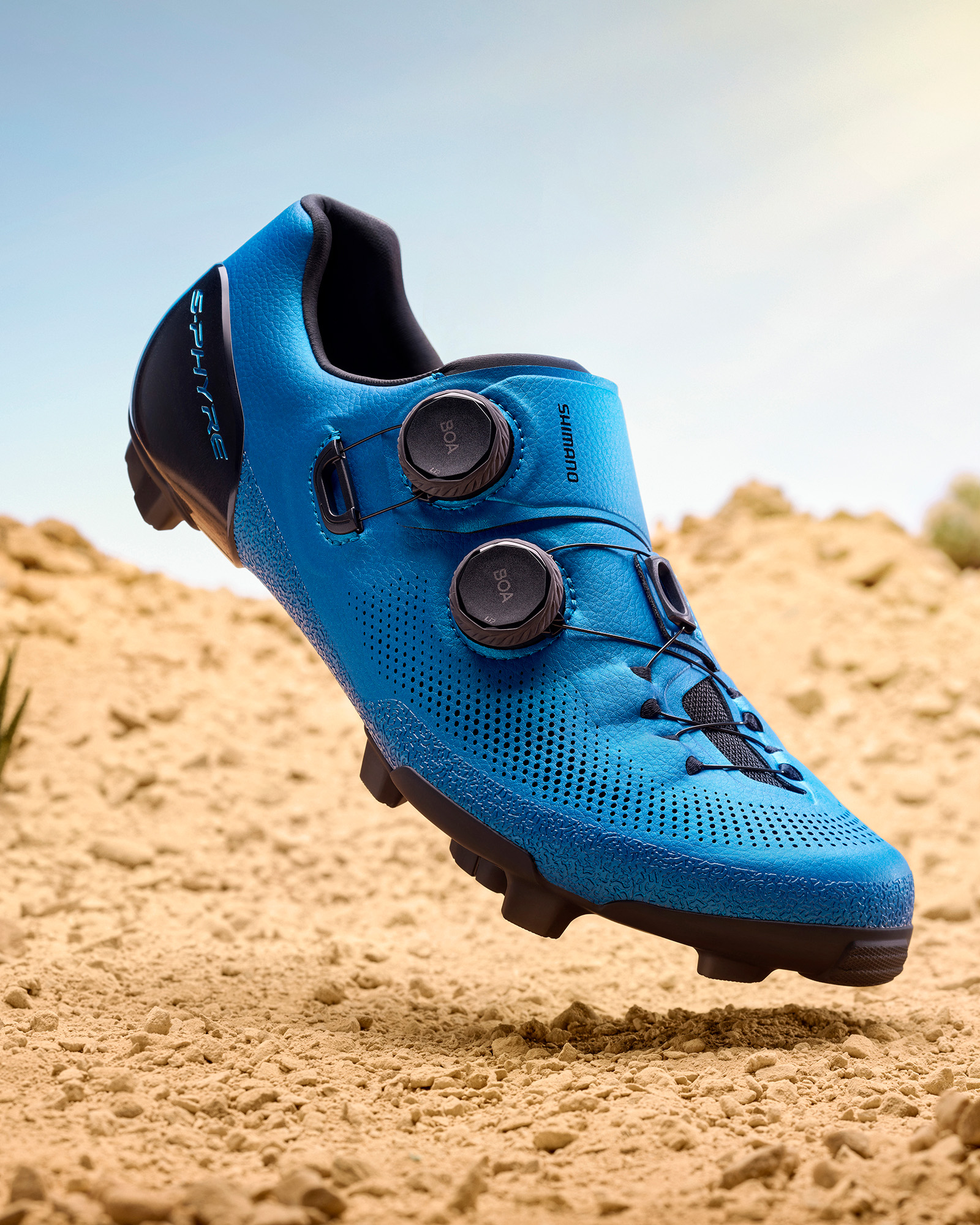
Shimano says its new RX910 S-Phyre gravel shoes resolve the contradictory demands gravel racing puts on your footwear.
Gravel racing requires the power transfer you get from road shoes and cleats, and off-road traction for technical terrain.
But Shimano says its latest gravel shoes resolve this by “offering unmatched power transfer, walking stability, and all-day pedalling comfort in one streamlined package”. And a big part of how the RX910 S-Phyres do this is Shimano’s new and “revolutionary” Pontoon cleat system.
The Pontoon cleat system
The system means the contact blocks move with your cleat position. Shimano
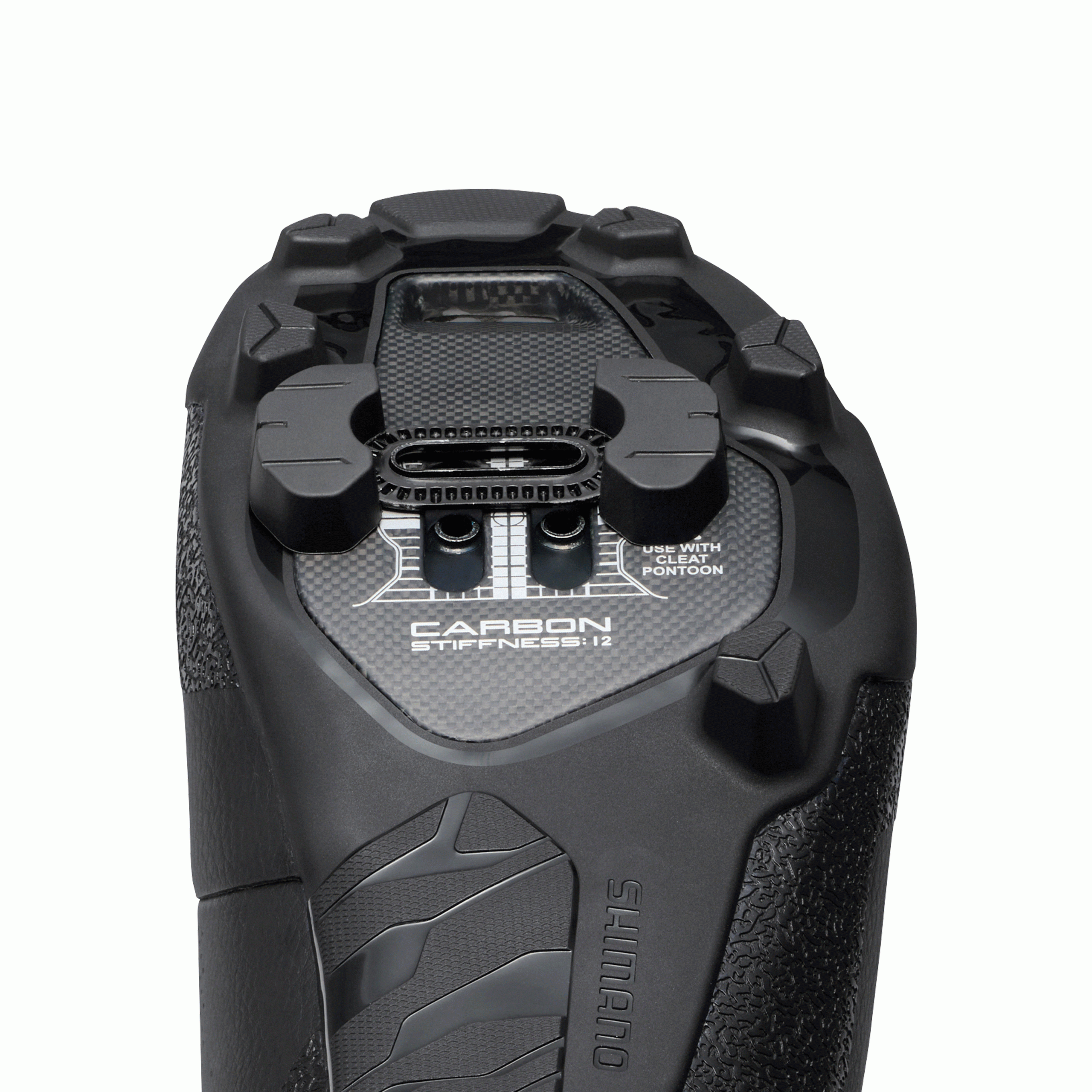
The Pontoon cleat system has a pair of modular, replaceable TPU contact blocks, which complement the lugged outsole. Shimano says these blocks “dramatically improve the shoe-to-pedal contact point” to optimise power transfer.
“The system enables a road-shoe-like pedalling interface while maintaining SPD compatibility and off-road functionality,” Shimano says.
The Shimano RX910 S-Phyre gravel shoes. Shimano
While conventional gravel shoes have blocks mounted on their outsoles, Shimano says the RX910’s ‘pontoons’ are part of the cleat interface. This means they move with your cleat position to provide “consistent support and efficiency”.
Shimano says it developed its latest shoes with the professional gravel racer, Pete Stetina. “For me [the Pontoon cleat system] is the most exciting point of this shoe,” says Stetina. “You now have road stability and power transfer while still having the offroad benefits of mud shedding and quick engagement of SPD.”
Shimano’s stiffest sole and other features
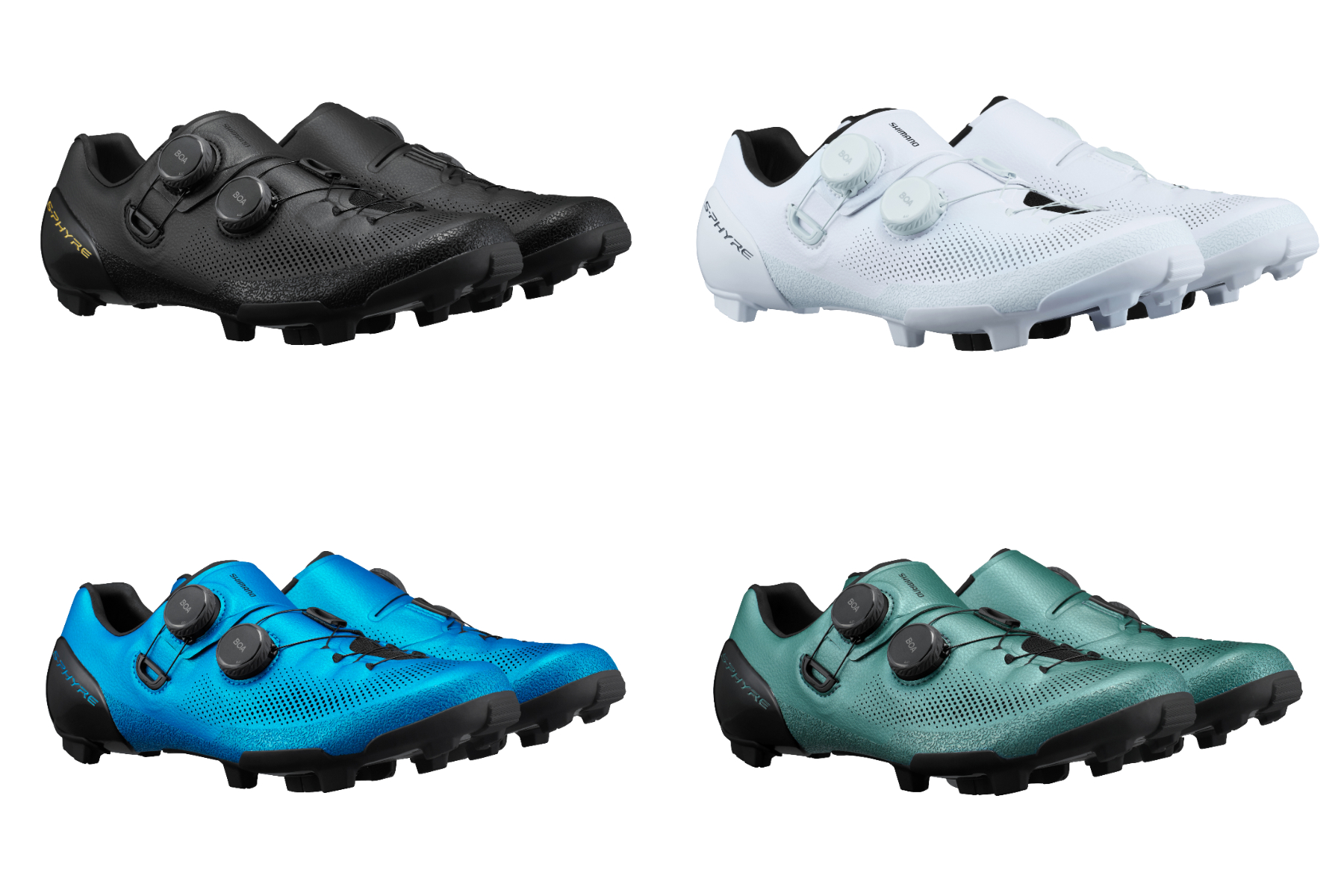
The RX910 S-Phyre gravel shoes come in four colours: black, white, blue and green. Shimano
The RX910 S-Phyre’s power transfer is also aided by its carbon sole, which scores 12/12 on Shimano’s own stiffness scale.
Elsewhere, Shimano says the RX910s have a seamless midsole construction to reduce stack height and improve pedalling efficiency.
Drainage holes will let water escape from crossing rivers and on rainy days, and provide ventilation in hot weather.
When it comes to fit, Shimano has equipped the RX910s with Boa dials for micro-adjustments. An anti-twist heel cup and surround wrapping upper should help hold your foot comfortably.
The shoes weigh a claimed 304g (size 43) and come in a range of standard, half and wide sizes.
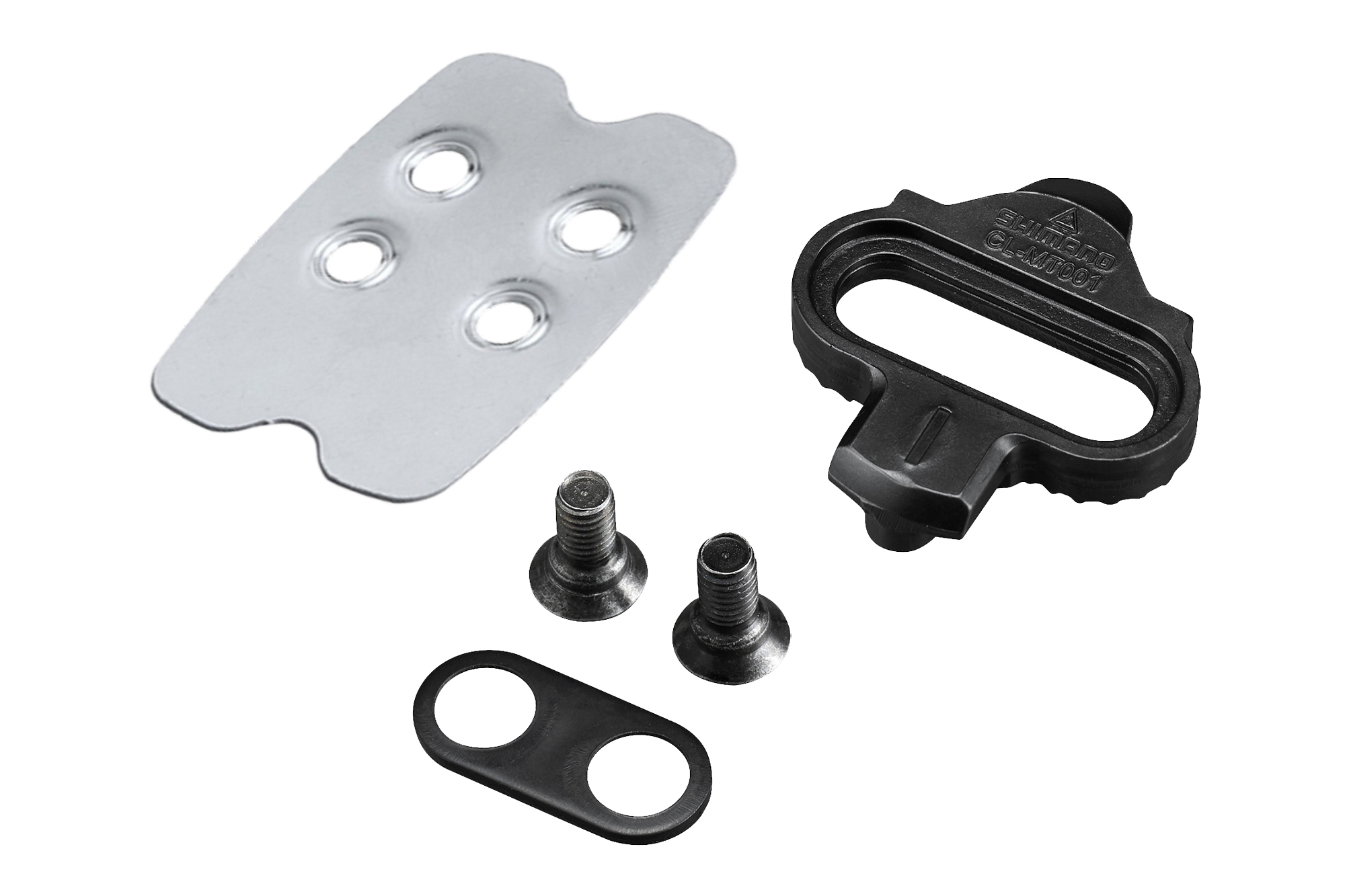
Shimano has updated its iconic two-bolt SPD cleat system for the first time in “nearly 30 years”, enabling riders to clip in to SPD pedals from multiple angles.
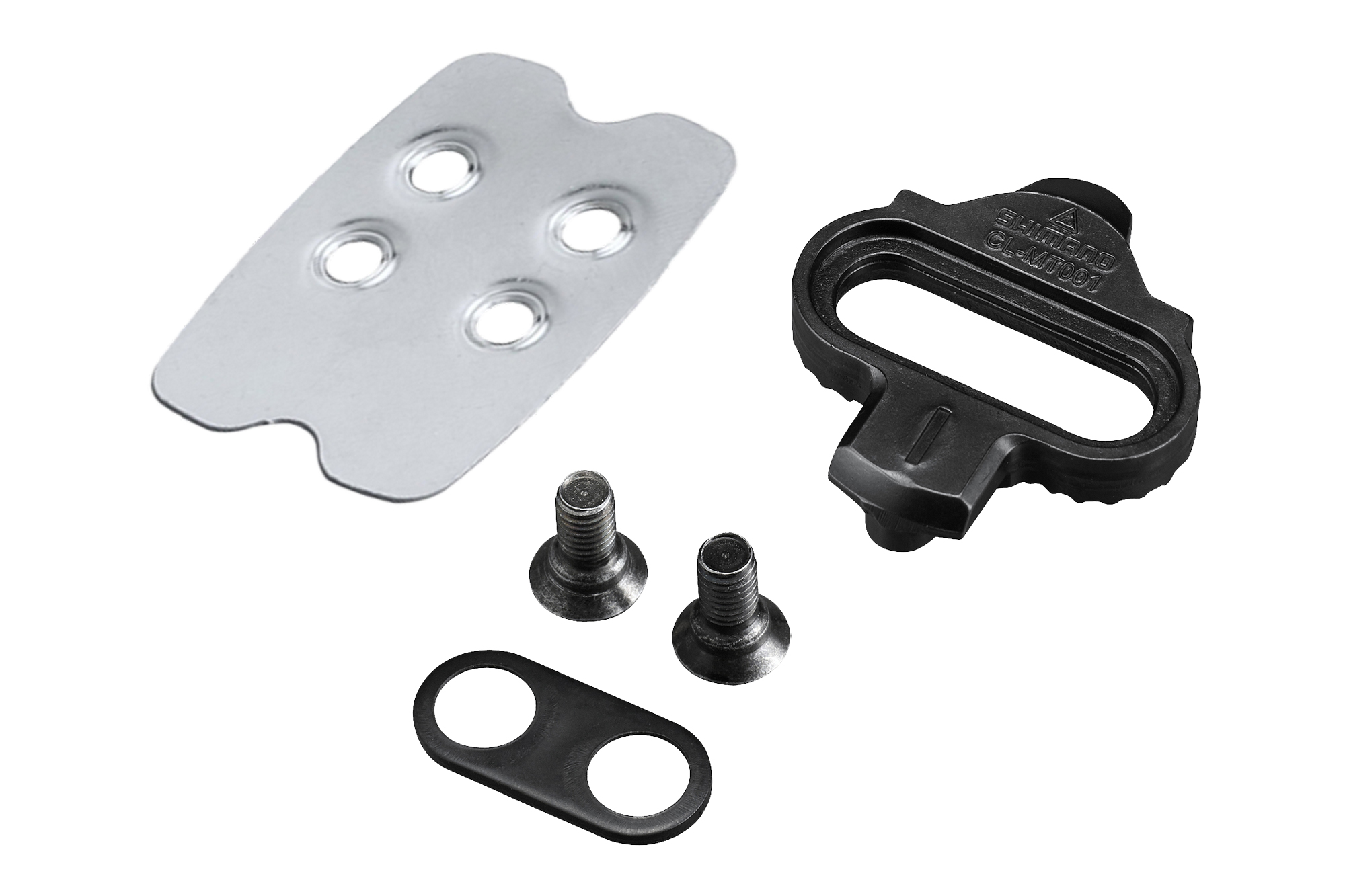
Built around the same two-bolt design as Shimano’s existing SH51 SPD cleats (which launched in 1995), the new CL-MT001 cleats feature a modified leading edge.
This is claimed to enable riders to connect to the pedal from multiple angles, rather than needing to lead with the front edge.
While that’s still an option, Shimano says the CL-MT001 cleats enable riders to clip in by engaging the rear first, then the front, or to “simply stomp straight down” on the pedal.
Shimano’s new CL-MT001 SPD cleats are based around its existing two-bolt cleat design. Shimano
Launched alongside a new set of flagship gravel cycling shoes, the S-Phyre RX910s, and a new XTR PD-M9220 trail pedal, Shimano says the CL-MT001 cleats offer a number of advantages for off-road riding.
Enduro, cross-country, gravel and cyclocross riders, for example, “will appreciate the quick re-engagement that is critical after dismounts or foot dabs in technical terrain”, Shimano says.
The Japanese brand also says the new cleats should make the experience of using clip-in pedals more intuitive, and says the multi-entry engagement offers “added peace of mind”.
The new cleats are claimed to offer improved performance for beginners as well as experienced off-road cyclists. Shimano
Because the new CL-MT001 cleats use the same two-bolt mounting system as existing SPD cleats, Shimano says the new cleats are “fully backwards compatible with all existing two-bolt Shimano SPD pedal and shoe systems”.
This means riders can upgrade their existing systems simply by replacing their cleats.
A Shimano spokesperson told BikeRadar that there are no plans to phase out the existing SH51 cleat. The CL-MT001 will be an additional option for two-bolt SPD pedal systems but Shimano is “confident it will become the new standard for clip-in pedals.”
The new Shimano CL-MT001 cleats are available now and cost £19.99 / $20 / €22.99.
Chris Froome was airlifted to hospital following a “serious training crash” in the south of France on Wednesday
The four-time winner of the Tour de France, and Great Britain’s most successful Grand Tour rider, was flown to the hospital by helicopter after crashing near Toulon, 170km away from his Monaco home.
While it’s unclear what caused the crash, Froome’s team said “no other cyclists or vehicles were involved” and that he was “stable”.
Israel-Premier Tech’s statement also confirmed that Froome had sustained a pneumothorax, five broken ribs and a lumbar vertebrae fracture. He will receive surgery today (Thu 28 Aug).
French newspaper L’Equipe reported that Froome remained conscious after the crash and was able to speak to those around him.
It’s a blow for the 40-year-old, who was dominant on our screens between 2012 and 2017, winning everything from Grand Tours to Olympic medals.
Froome suffered a heavy fall at the Critérium du Dauphiné in 2019, which saw him taken into intensive care.
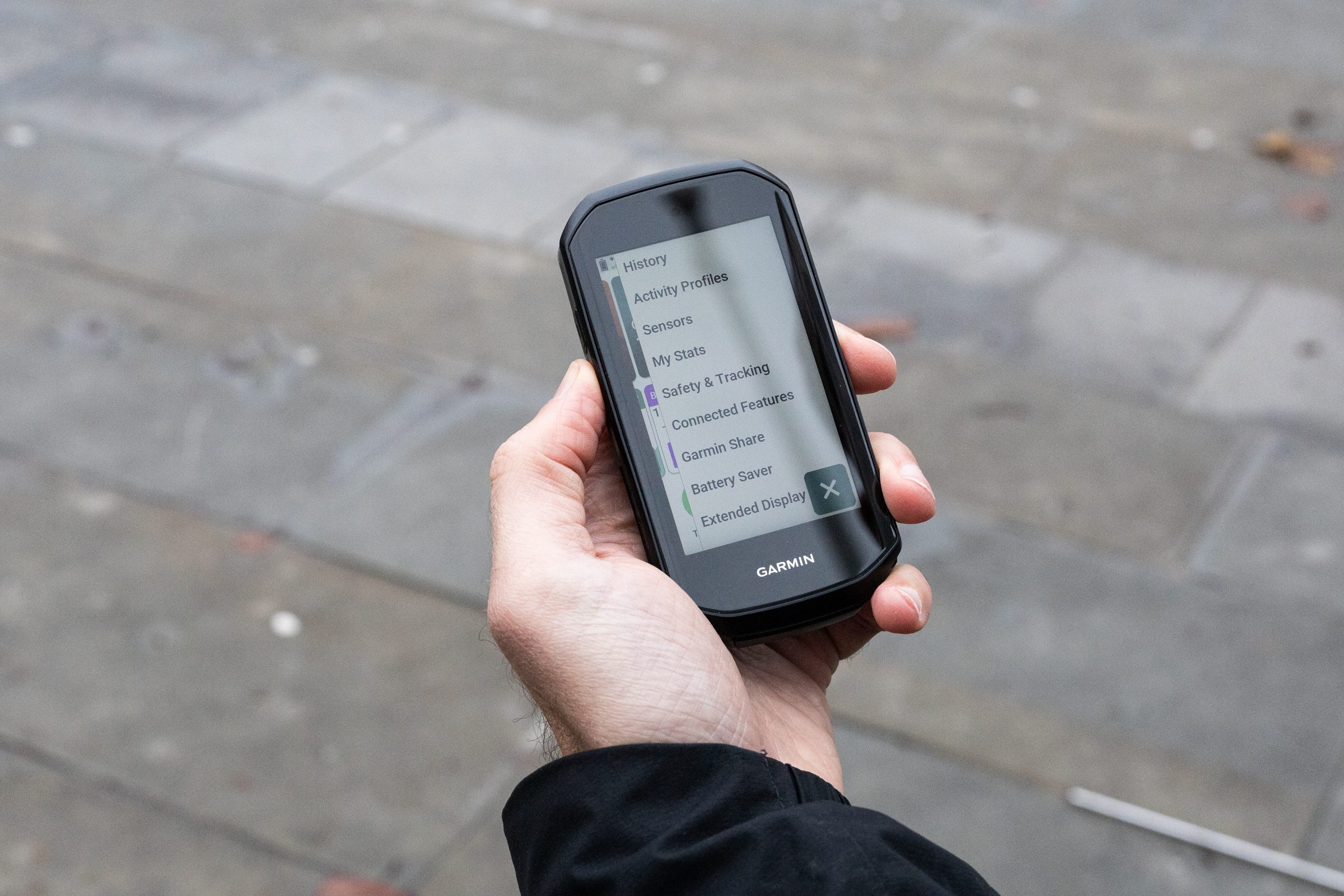
Garmin has revealed its latest software update, which includes bringing new mountain biking features to the Edge 1050 bike computer.
Launched in June 2024, the Garmin Edge 1050 was billed as the company’s “brightest and smartest” bike computer yet with the ability to offer ride-specific routing for mountain biking.
The bike computer has now received a host of updates, which should make it even better for mountain biking, courtesy of a free software update.
So what’s new?
Garmin has updated its flagship computer with five new mountain bike features. Stanley Portus / Our Media
Garmin says its flagship Edge 1050 bike computer has received five mountain biking updates, which first debuted on the Edge MTB that launched in June.
Like the Edge MTB, the Edge 1050 will now feature Garmin’s timing gates function. This lets you set timing gates through a trail or course to track split times and “better understand your performance in real time.”
You’ll also be able to see more detailed information about upcoming forks in the trail thanks to improvements to the forksight mode. These improvements include seeing the distance left on a trail, the elevation profile and the distance to return to the trail’s start.
Garmin has equipped the Edge 1050 with two new ride profiles, too. The enduro ride profile tracks total ascent and descent from each run and for the overall ride.
The downhill ride profile automatically laps when completing each run. Garmin says this means returning to the top of a shuttle or ski lift won’t affect your ride stats.
Finally, the Edge 1050 will now support faster 5Hz GPS recording so you can view trail lines in great detail.
Changes to Garmin’s smartwatches
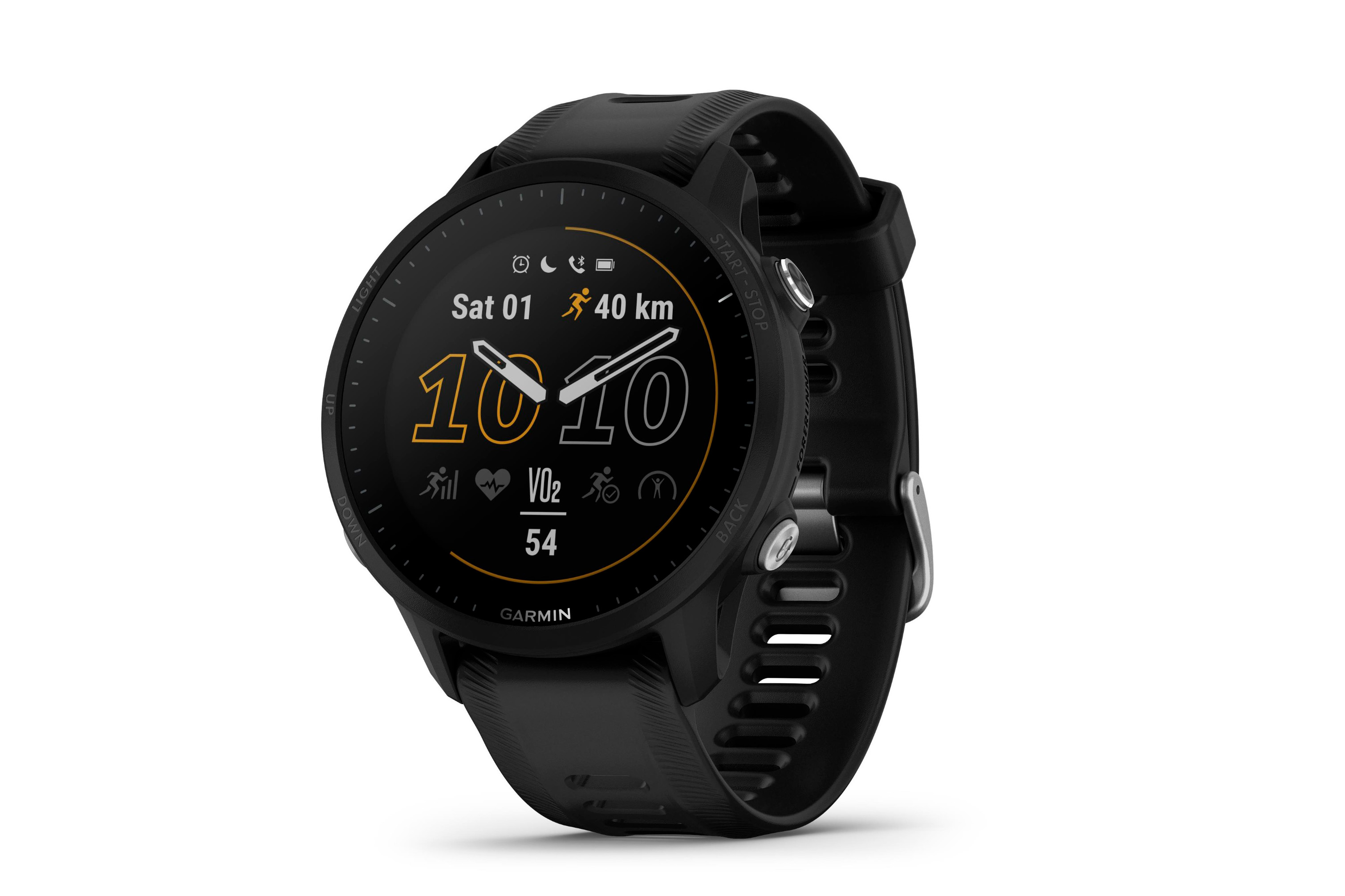
Some of Garmin’s latest smartwatch features debuted on the latest Forerunner watches. Garmin
Garmin’s latest software update will also bring a host of new features to its smartwatches, including the new Venu X1.
These are mostly targeted at runners, with new features such as running tolerance and running economy that first appeared on the latest Garmin Forerunner watches.
However, cyclists might be interested in the new evening report and smart wake alarm features.
The evening report is similar to Garmin’s morning report, but it suggested the amount of sleep you need, along with details about the following day’s suggested workout, plus weather and events.
The smart wake alarm provides gentle vibrations to help you “wake up at the optimal time and feel more refreshed.”
Cargo bikes are a great way to transport goods, your shopping and even cycle around town with your kids. But they’re no small investment, with many of the best cargo bikes costing at least a few grand.
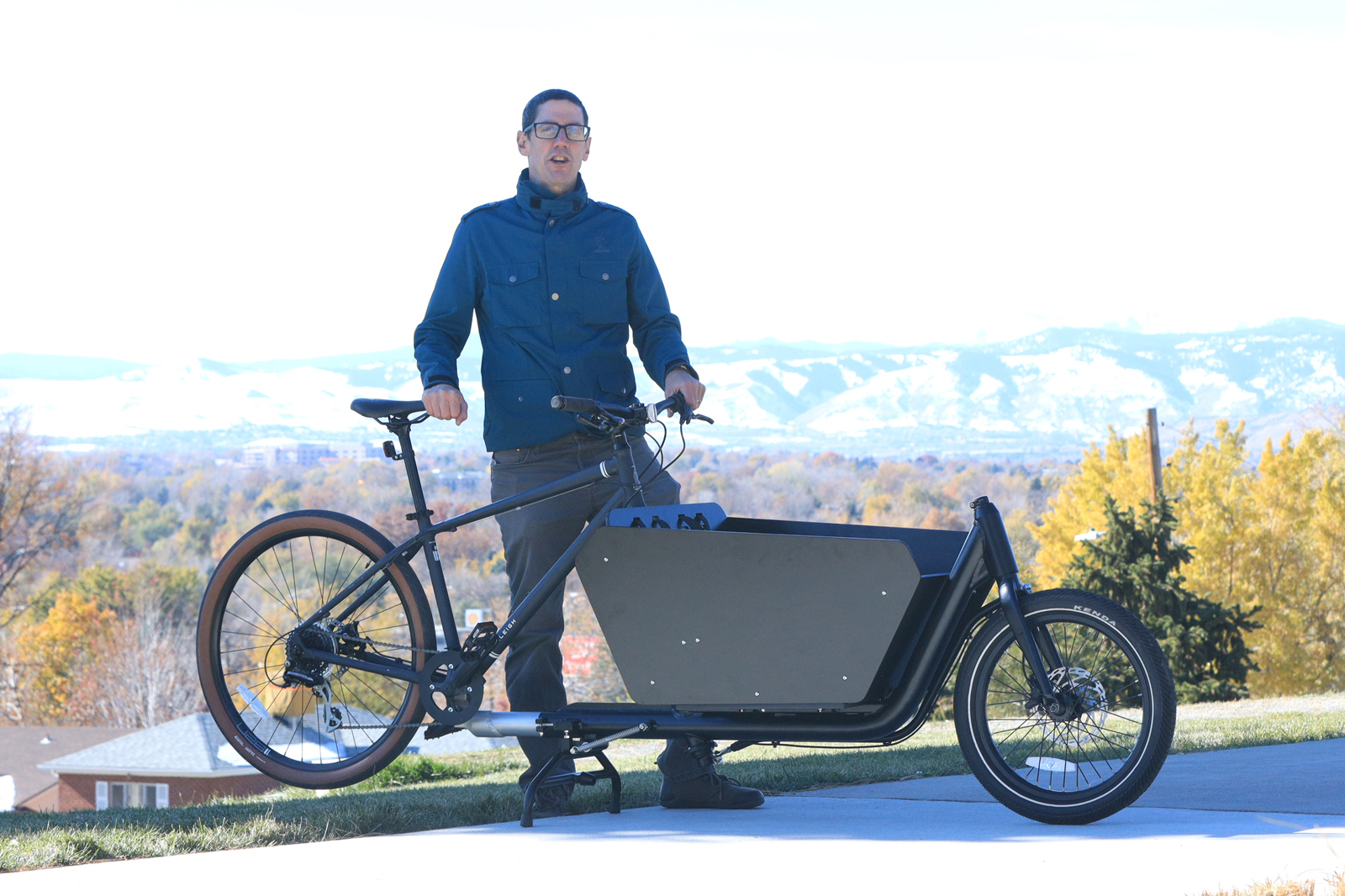
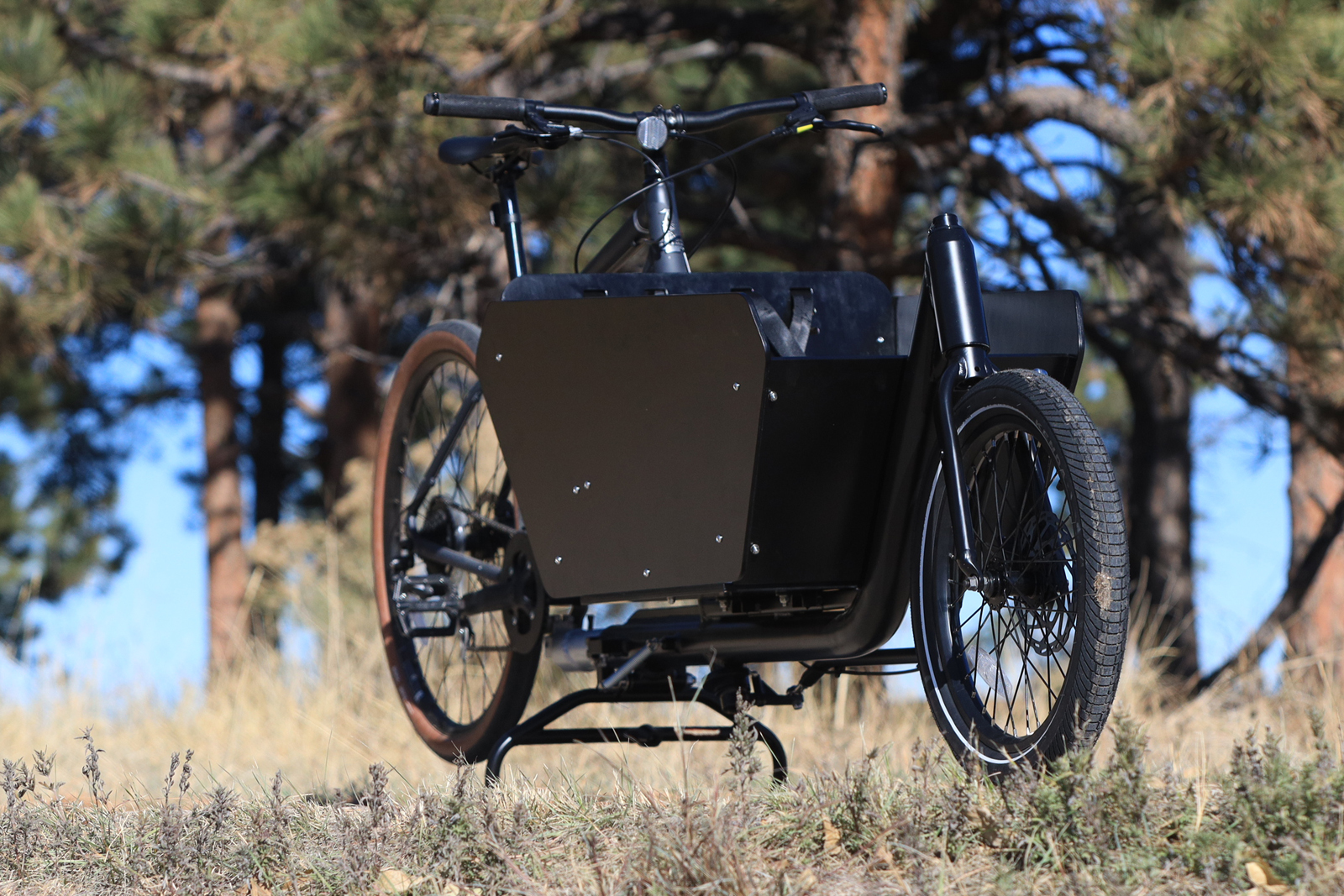
This is something Argo Cargo Bikes wants to change with the new Argo Fy, a flat-pack conversion kit that it says will turn any bike into a cargo bike.
Scott Taylor, founder of Argo Cargo Bikes, based in Denver, Colorado, said: “We’re part of a new wave in cycling that’s taking inspiration from companies like Rad Power Bikes, who democratised electric bikes by shipping direct and making them accessible to everyday families.”
“We saw what they accomplished for e-bikes and asked: why can’t cargo bikes work the same way?” added Taylor.
Approachable, affordable and accessible
Founder Scott Taylor said people need cargo bikes to be “approachable, affordable and accessible”. Argo Cargo Bikes
Taylor introduced the Argo Fy concept to his newsletter subscribers and previous customers. Argo Cargo Bikes said it sold “hundreds of units” across the world before this public announcement and sale.
“We’ve proven that people who know what one is, want cargo bikes – they just need them to be approachable, affordable and accessible,” said Taylor. “The challenge is that you take a risk when you order a cargo bike without riding it first. With the Argo, we’re not changing the size or fit of your bike. You already know that it fits – we just add massively what you can do with it.”
At $1,399 / £1,100, the Argo Fy uses standard components for easy repair and maintenance, with bolts you can pick up from hardware shops, alongside standard bearings and components that are serviceable by bike shops.
“When something needs repairing, people shouldn’t have to wait weeks for proprietary parts or pay premium prices. You should be able to walk into your neighbourhood shop and get back on the road,” said Taylor.
New and improved design
The Argo Fy comes with a kickstand and is now compatible with a wider range of forks. Argo Cargo Bikes
This isn’t the first time Argo has released a cargo bike conversion kit. There was a previous version simply called the Argo Cargo Bike Kit. But the company says the Fy improves the previous design based on user feedback.
The Fy now has a 6061 aluminium frame which it says offers “enhanced durability against weather and salt while improving control through increased stiffness.”
Protection against the elements is also aided by a new plywood front box which is waterproof, paint free and also more sustainable.
The Fy also has a hydraulic brake system, which Argo says is compatible with electric bikes for “enhanced stopping power”.
It now works with a wider variety of forks, including the carbon forks, making it compatible with many of the best road bikes and best gravel bikes.
A motorcycle-style kickstand will hold your bike and its load upright.
Argo says its mission is really about cultural change, not just selling products, and it wants to normalise cargo bikes in the way a certain children’s bike has become commonplace.
“Remember when balance bikes were niche?” said Taylor. “Now every parent knows about them, that’s our vision for cargo bikes – moving from specialist cycling equipment to everyday family transportation.”
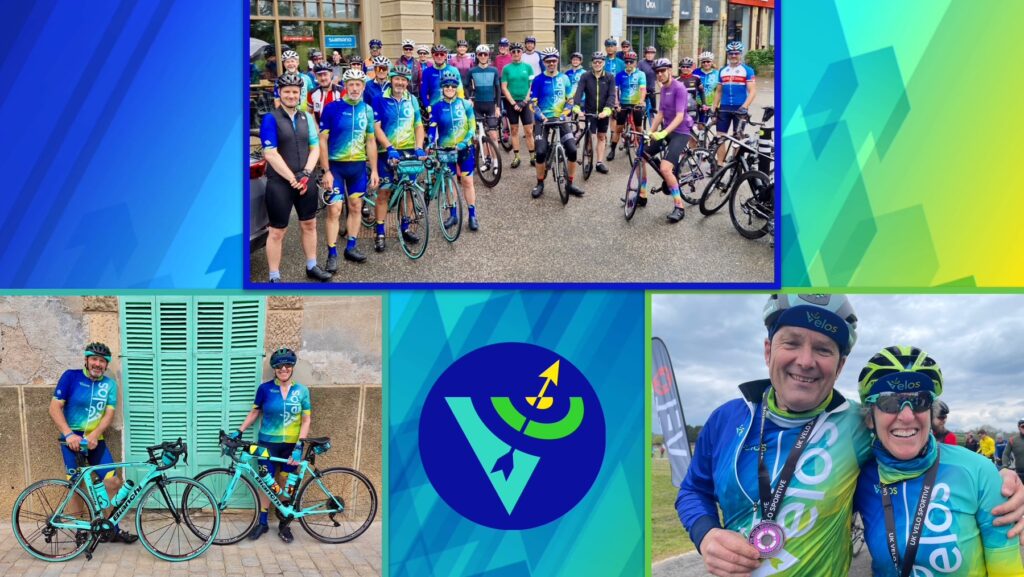
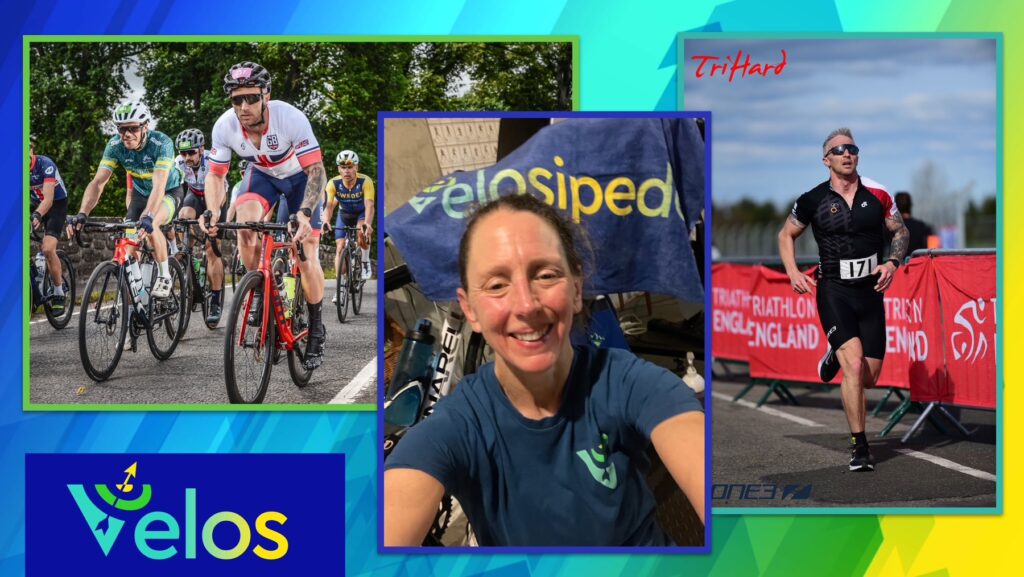
Team Velos is a longstanding Zwift club and racing team that aims to help riders of all abilities improve their fitness while having fun and competing in a supportive environment.
The club hosts nine group rides weekly, including beginner-friendly events that engage riders in entertaining ways, a competitive sprint training event with monthly winners and prizes, a climbing-focused event to develop “Grimpeurs” (cycling’s climbing specialists), and Poursuite de la Lanterne Rouge: a C-paced ride that includes optional challenges including a chase of the red beacon and featured as one of the Great Group Rides on Zwift.
Team Velos also hosts three weekly races: an individual time trial, a chase-style race, and the Monuments Race inspired by pro cycling’s Spring Classics and stage races.
Velos launched the Pretzelfest on 2 November 2024 as a weekly 2-hour group ride with an ‘After Party’ to encourage those wanting to complete all the Pretzel routes on Zwift. The event soon evolved to encompass all of Zwift’s epic routes, and now features a rotating monthly schedule of increasingly difficult routes to keep the event varied and interesting for its many regulars. Although the Pretzel ride officially ends after two hours, many riders stay on to support one another in completing the longer routes.
Each week, two pace groups start together, with the yellow beacon averaging 2.5 W/kg, and the red beacon 2.0 W/kg. The mass start enables everyone to participate in the ride chat and move between the two pace groups. A rider might start wanting to push a harder pace, then ease back to the red beacon group and finish at a gentler pace; or set off easier, then push higher watts to reach the faster group. A single field promotes camaraderie between the two pace groups, and others in the red beacon crew function as traditional sweeps supporting struggling riders.
During each Pretzel ride, the Yellow Beacon messages on a wide range of performance issues including cycling endurance training, nutrition, strength training, and related topics. This is interspersed with plenty of entertaining chat, including joke contests and quizzes to help the time fly with lots of laughs.
About the Ride Leaders
The Pretzel endurance ride was conceived by longtime Velos teammate and Yorkshire resident David Pickles, General Manager of The Gym Group — one of the largest fitness centers in England. David is also a certified personal trainer and owner of OnelifePt Coaching. David leads the Yellow Beacon group, and started the event with teammate Alicia Caron who leads the Red Beacon group. Alicia is a long-time cyclist in Massachusetts, working as a physical therapy aide trained in injury prevention, recovery, and performance. A lifelong athlete, she has extensive experience in strength and conditioning.
Says David Pickles: “Helping people collect hard-to-reach route badges is part of what we do, which sometimes results in our team riding 5+ hours because someone needed to complete The PRL Full. This event was designed to attract riders who want endurance training and enjoy an element of cycling that many avoid due to boredom. While the ride was founded with the idea of enjoyable zone 2 training, it has created a lively following that helped us grow together. Beyond our two pacing groups, there are bad jokes, silly quizzes, practical tips to improve training, and a team who loves helping others. Not only has the ride evolved, but so has the team. This has been the first Velos event for some riders, many of whom became regulars and so comfortable they joined our lead/sweep crew. Our two sweep teams never give up, since helping others is sewn into the fabric of Velos. We simply try to extend that to the 2nd, 3rd, and 4th hour of your training rides.”
Velos owner Stephen Whitcombe adds: “Velos launched its first endurance ride, the Routebagger Challenge, in February 2022, and it immediately gained a following since ticking off the tougher badges is so much more fun with company. But we were able to support that ride only once a month, so the Pretzel event was a perfect evolution since it offers something for everyone: two pace options, a great endurance session for those with limited time, and fantastic support to the end for those wishing to complete extremely tough routes like the Four Horseman, PRL Full, 25 Volcano laps, and Uber Pretzel. Feedback has been tremendous, and many Zwifters make this a must-ride event on their weekly schedule.”
The last week of every month is always the toughest route, and August features one of the most challenging in Zwift: the Uber Pretzel (128.8km, 2335m of elevation)!
The ride is on Saturday, August 30 at 11am UTC/7am ET/4am PT. Sign up here:
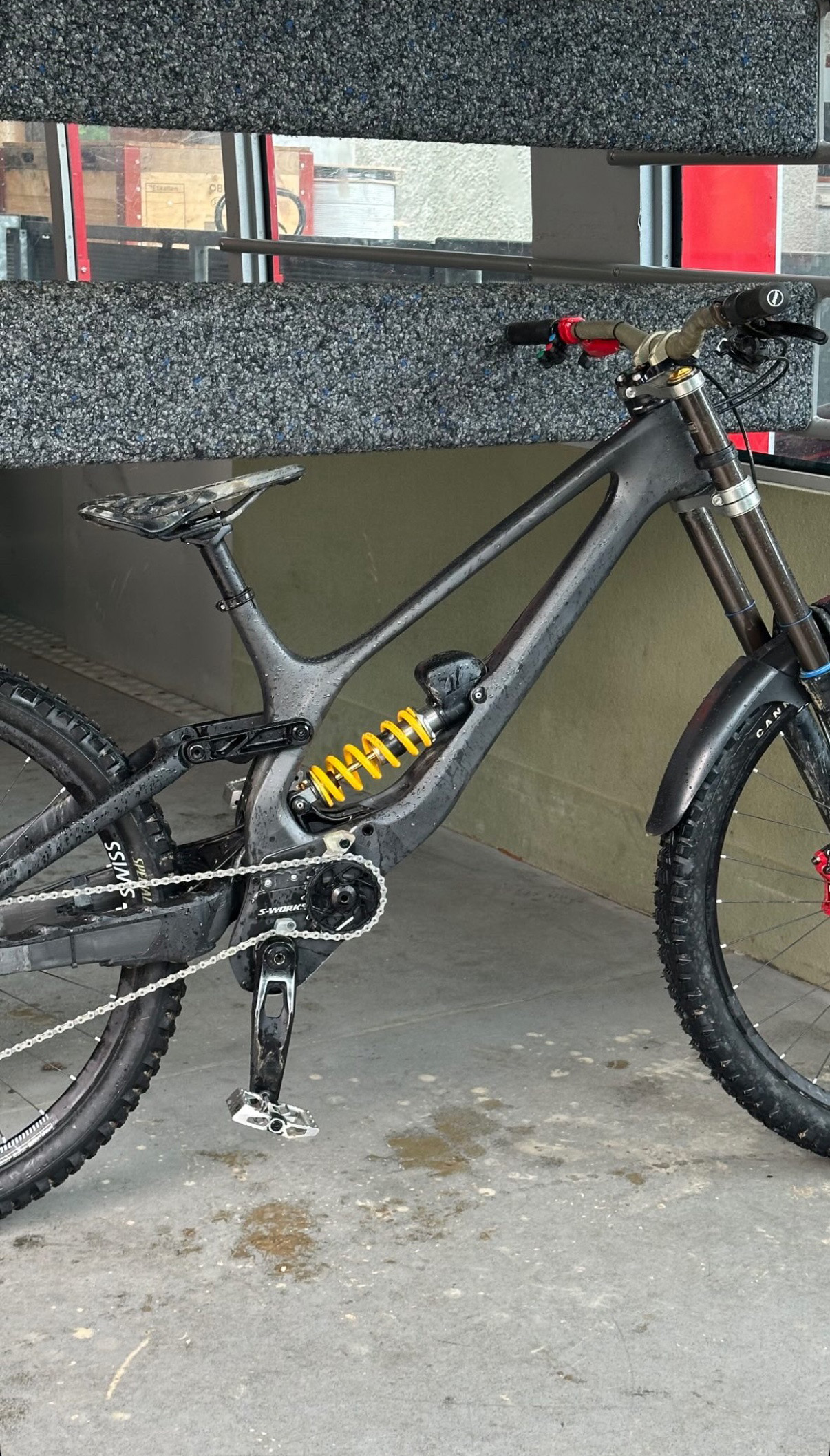
The covers look to have been taken off Specialized’s upcoming Demo downhill bike at the Les Gets UCI World Cup.
An Instagram post from Finn Iles revealed the unreleased bike, which appears to be fitted with an unreleased Öhlins rear shock featuring a black plastic housing that we assume suggests electronic adjustability.
The Canadian racer’s bike has been under the spotlight for a while now and was only recently the test bed for Brembo’s new disc brakes.
Production-ready Demo?
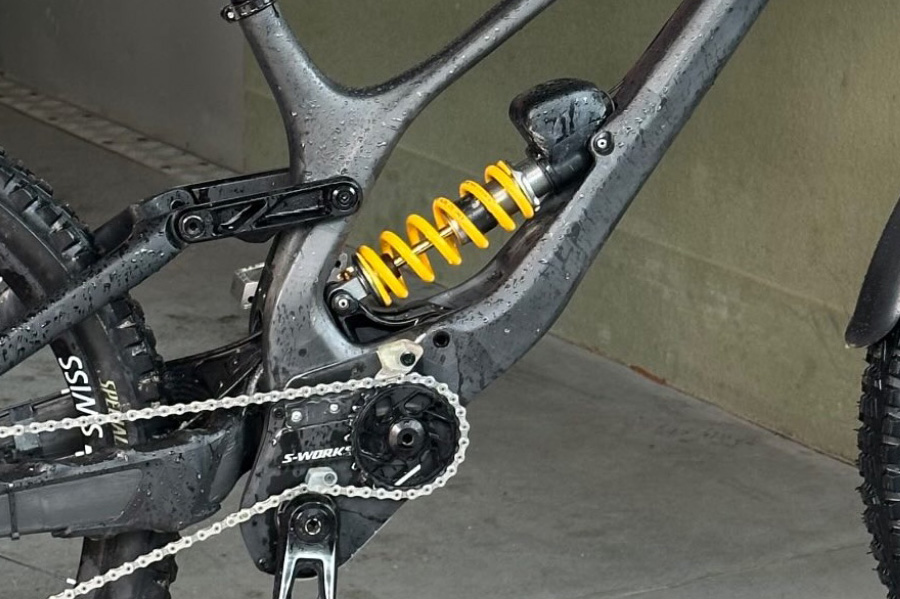
Another advantage of elevating the chainring is increased clearance to the ground. Finn Iles / Instagram
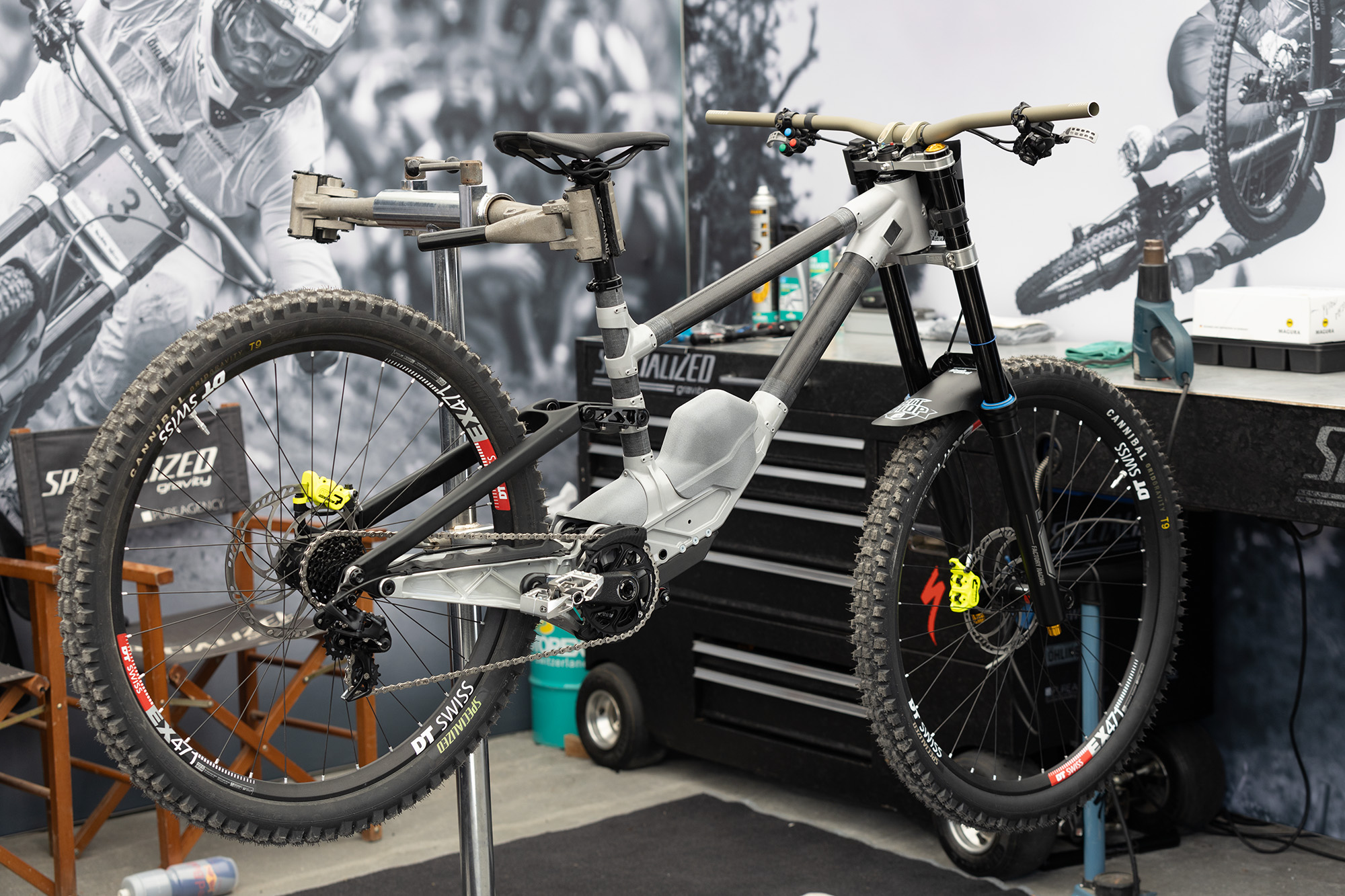
For the past couple of years, the Specialized Gravity team has been using a test mule made from carbon tubes and alloy lugs, leaving many to speculate the direction the American brand would take.
Now it appears the downhill bike has moved into the carbon fibre stage of development, suggesting that the production model isn’t too far away.
The new Demo was originally prototyped with carbon tubes and alloy lugs. Nick Clark / Our Media
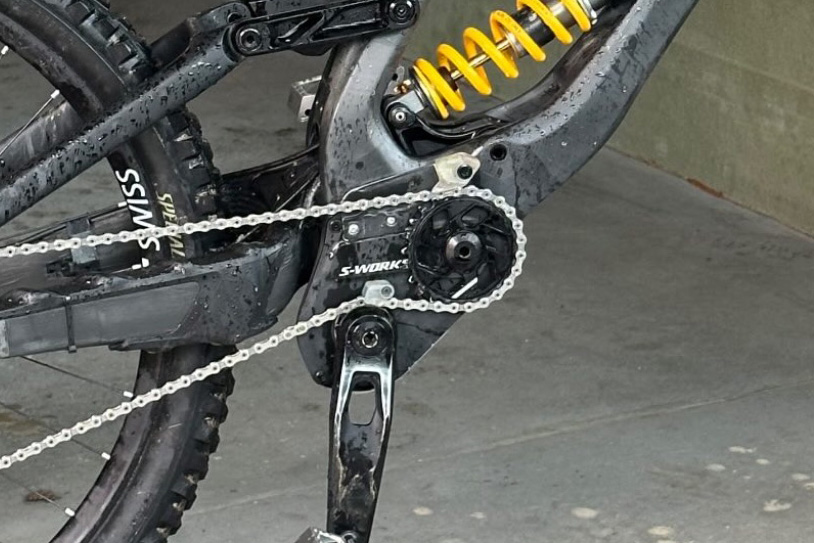
The enlarged bottom bracket area from the latest prototype has carried over to this monocoque frame, which many initially believed was a gearbox. While it’s not confirmed, the design enables the chainring to be positioned away from the cranks, allowing engineers greater control of anti-squat characteristics.
While the cranks have a small chainring, it appears the drivetrain chainring is connected internally to the cranks.
The S-Works logo features on the bottom bracket area. Could this be something limited to the flagship model? Finn Iles / Instagram
The suspension system appears to use Specialized’s UBB (Under Bottom Bracket) layout, which has been seen on previous test mules.
Electronic Öhlins Suspension
The plastic housing looks very refined. Finn Iles / Instagram
Öhlins has long been a partner of the Specialized Gravity programme, and it has been speculated that the brand is developing an electrically controlled.
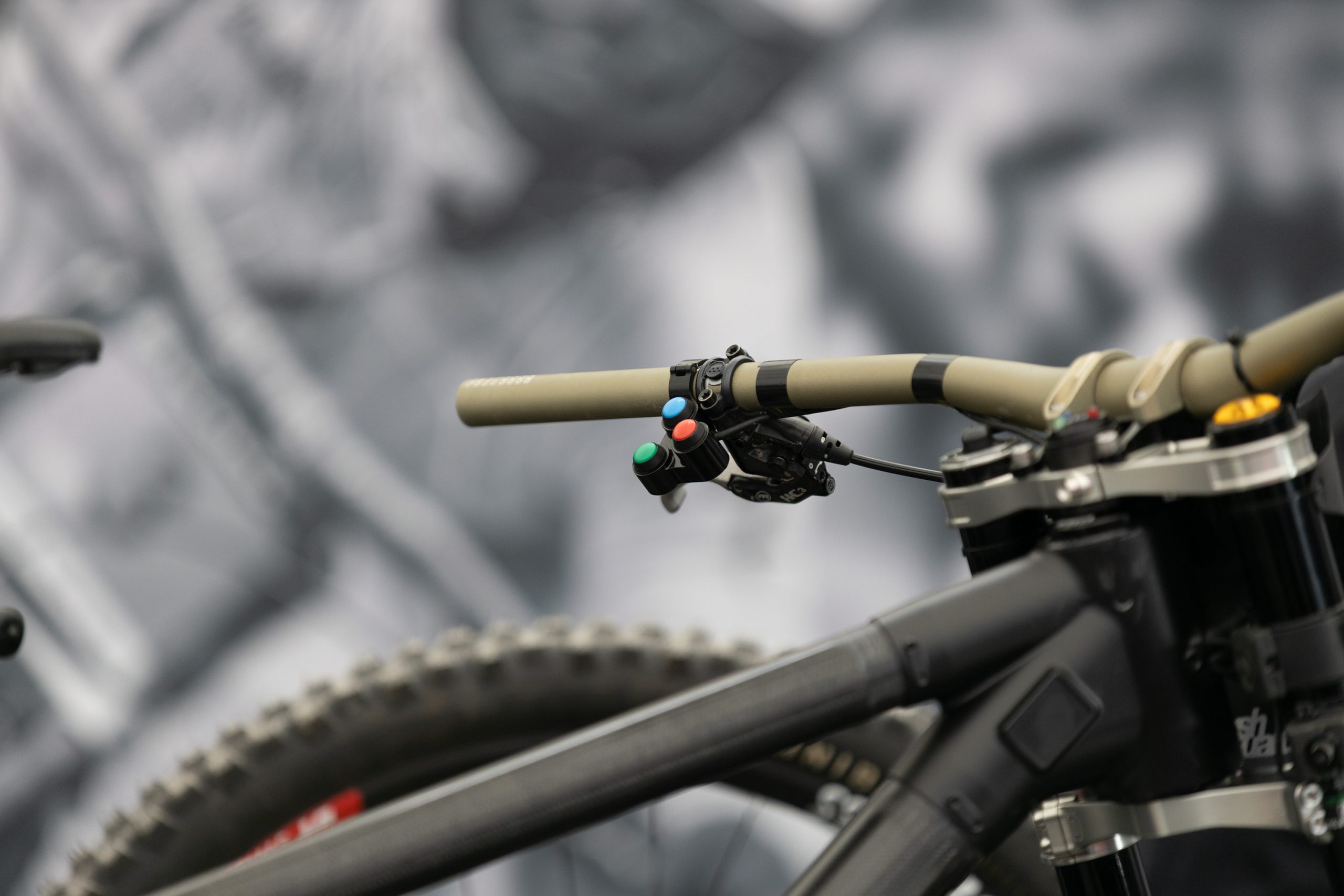
The buttons on a prototype from last year. Nick Clark / Our Media
Button’s on the prototype Demo showed up nearly two years ago, with many believing this allowed the rider to select different shock tunes to eke out as much performance on a single run.
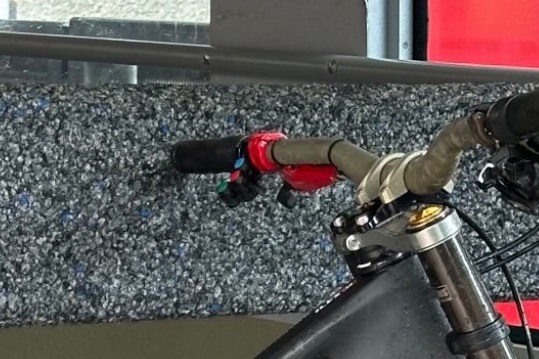
The buttons remain in the same layout on this latest prototype. Finn Iles / Instagram
Those buttons are still present on Finn Iles’ bike, although it now appears the shock is in a more refined stage of prototyping.
We’re unsure whether this shock will take the same automatic approach as RockShox Flight Attendant or Fox’s Live Valve, or whether it’ll remain programmable with the buttons on the bars.
If you’ve cycled for many years, you’ll likely have been through different phases of your two-wheeled adventures, where your goals, aspirations and interests shift up and down, and side to side – and may eventually change out of all recognition.
What you did as a teenager on the bike – had fun, rode fast and dreamed of the endless possibilities of where this machine might take you – will be very different from where you might find yourself in your 70s, still riding for the sheer pleasure of it and the memories it evokes from a life on the bike.
Because of the possibilities that this simple contraption promotes, your relationship with your bike constantly shifts. Not to mention how your life, the responsibilities it brings and the time it eats up, affects your time in the saddle.
Few cyclists experience this gearshift quite like a professional when the time comes to retire and hang up their cleats.
Many will have been on the pro pathway from an age that they can barely remember. Some may have had all the talent but had the enjoyment for the sport squeezed out of them, as their childhood hobby turned into a pressurised job, one that the livelihoods of many others depended on.
For others, their life as a professional becomes such a part of their identity that life on the other side of retirement is impossible to fathom.
Would they ever be able to relocate the simple pleasures of riding a bike again, after years of compromising it through fame and fortune?
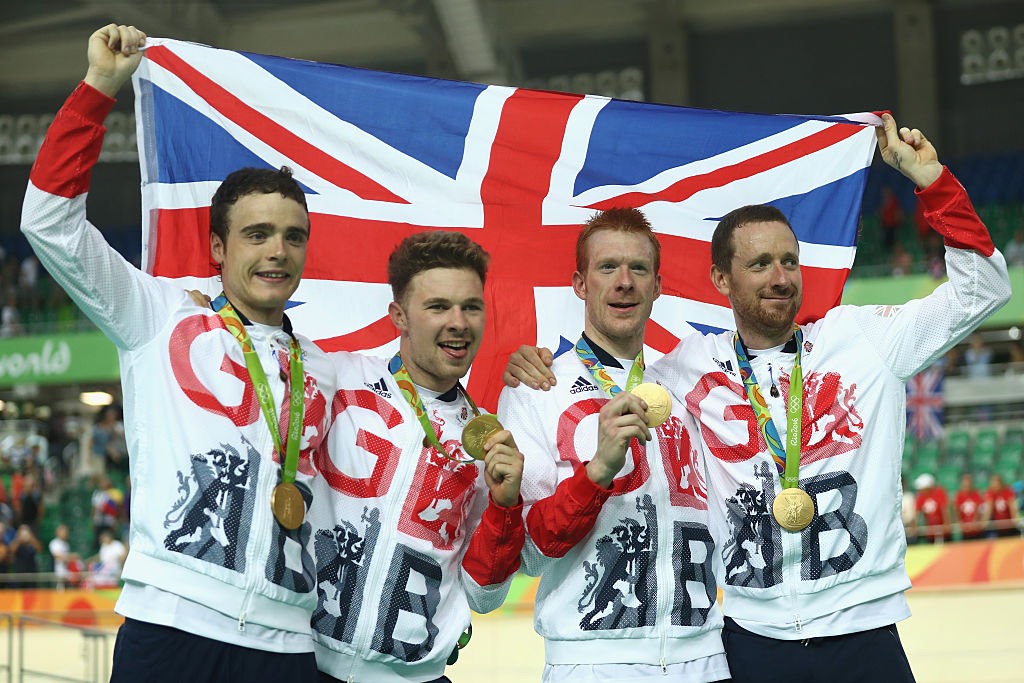
Retired British three-time Olympic team pursuit champion Ed Clancy is a poster boy for how bikes can remain as the fulcrum of a life through changing times.
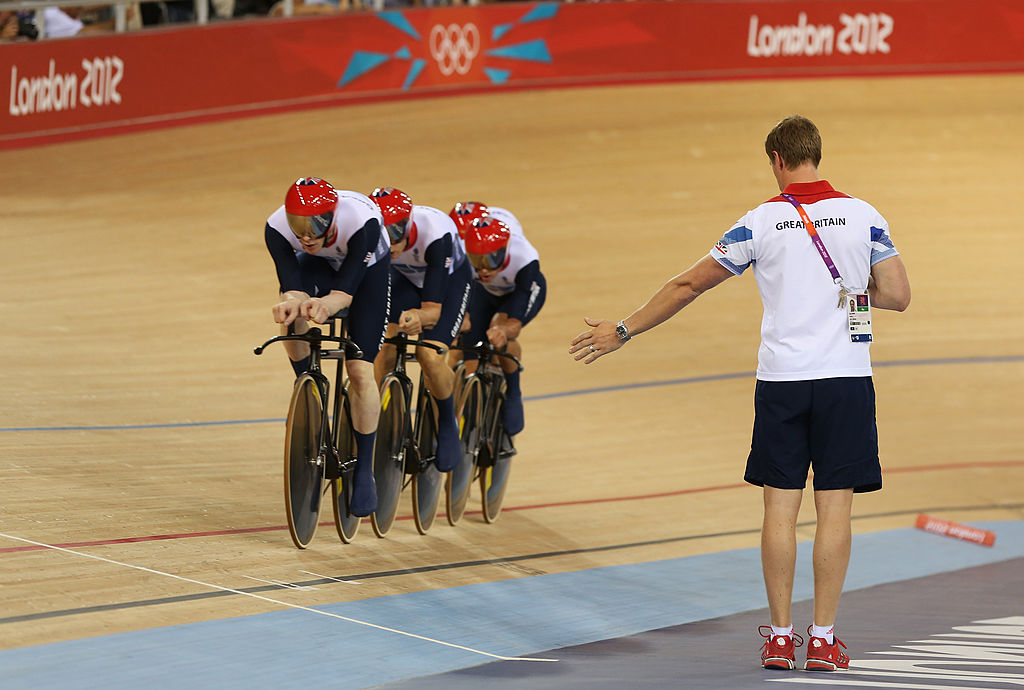
Ed Clancy (second right) made his name in successive British team pursuit squads. Bryn Lennon / Getty Images
“My love for cycling is as alive today as it was when I was three or four years old, scuttling about on balance bikes,” he tells me over the phone from the office of one of his new day jobs, which you can probably guess is tied up with cycling (he’s South Yorkshire’s active travel commissioner).
We’re chatting because he’s got a new book to promote, which he’s written with flexibility expert Lexie Williamson.
Full Gas Forever: A 40+ Cyclist’s Guide to Riding Further and Faster is a practical manual that capitalises on the trend for midlife cyclists to push themselves harder than at any time in history.
Clancy just about qualifies to write such a book, having turned 40 in March. It’s filled with hard-won advice from the pair on the training, nutrition, recovery and off-bike conditioning required for a long life on – and off – the bike.
Clancy and Williamson complement each other well, bringing their own expertise from very different backgrounds. “Bloomsbury, the publishers, approached me about it and with turning 40 this year I thought it sounded like a great idea,” Clancy adds.
“But I was honest with them about the things I was interested in – the technical side of bikes and the technique of riding them – and the things I didn’t have the first clue about.
“Things like stretching and nutrition – things that I managed to miraculously avoid as a pro rider. And why it made an awful lot of sense to partner up with someone [Lexie] who was better and smarter than me in every regard.”
The last time I rode with Clancy was on a Club Med press trip last summer in Alpe d’Huez, where he was bounding up and down the high mountains of the French Alps with the enthusiasm of a newborn foal.
Three years post-retirement, he was in fabulous shape. Not any better or worse than when he was propelling himself around a 4,000m track race. Just different. Lighter, less muscled and better prepared for this new chapter of his life.
Clancy on Alpe d’Huez in the summer of 2024. Club Med
The particular physicality of his old job on the track left him with worn-out discs in his back that required surgery. These days, the ability to simply ride, as opposed to train, frees up his body and soul.
“We’re all going to get older – that’s a given. But it’s also a given that cycling is the absolute best thing for us,” he says.
“Who wants to be trying to play stop-start sports like football in your 50s, 60s or 70s when there’s the option of riding a bike.
“I’m clearly very biassed but cycling is the best sport, leisure activity and means of transport – add all that together and it’s the best way to age gracefully.”
Life begins at 40
The Fred Whitton Challenge has the most challenging route in amateur British riding.
While hitting 40 might be a time when some cyclists decide it’s time to start racing at master’s level, for an ex-pro such as Clancy, who’s been riding bikes at full throttle from a very young age, organised racing is low on his agenda from this point onwards.
He wants to experience new things on a bike – which at times has overlapped with his old career.
“I ‘won’ the Fred Whitton this year,” he says to explain how his love for cycling has never been stronger.
Won is a strong word, he clarifies, because the event is a sportive (albeit the most competitive of its kind in the UK), but he got a thrill out of it nonetheless.
“2,500 riders do that event, whippersnappers in long-sleeve skin suits who take it dead seriously,” says Clancy.
“I haven’t touched a power crank or heart rate monitor since the day I got off the track in Tokyo [2021] but I still love riding bikes.
“I commute – I’ve cycled into the office in Sheffield today. Sometimes I ride to British Cycling in Manchester to do some work there.
“If I have a free Saturday, I’ll get on my electric mountain bike and head into the hills with people who have nothing in common except enjoying the fun and freedom of doing that.
“I have no desire to hit a certain weight, or coefficient of drag – I just love riding my bike.”
But let’s hear more about that Fred Whitton ride…
“I do some ambassadorial work for a company called CAMS [Cycling Accident Management Services, who help cyclists through the process of making a claim after a crash on the road]. One of their managers is Ian Bibby, a friend who I used to race with.
“We went up for the Fred, had a couple of beers the night before, and as is often the case, rumours start circulating around the village that the fast group is going to set off at 8.45 in the morning.
“So me and Ian sat on the back of the 8.45 train. Our tactics went out of the window after 30 minutes and we just went flat-out through and off for the rest of it. And we had a thoroughly enjoyable day out.
“The lad that really should have won it, I sat on him for about 90km, he was so strong that I couldn’t give him a turn. And then the poor lad got heat stroke on the final climb and I never saw him again.
“If I was a better man, I would have waited for him…”
That competitive instinct is clearly harder to shift than the legs sometimes.
“It’s just good fun,” says Clancy. “I’ve done a few of the big sportives. The Majorca 312 and I’m doing the Contador one [Gran Fondo Alberto Contador, in Valencia] later this year.”
Contador rode the 312 the same year as Clancy, in fact.
“And if you look at the results, guess who finished one place ahead of him. He did puncture, mind you…”
Build back better
Clancy, on the front here, in action at the London 2012 Olympics. Bryn Lennon / Getty Images
For now, back to the book. Although Clancy and Williamson each contributed their own expertise – sometimes independently in different chapters – one in which they both added their two cents was the section on strength training.
Off-the-bike strength exercises are under-utilised by so many cyclists, no matter their age or ability.
The home or gym-based location can seem boring and less stimulating than the great outdoors, and it requires more planning, knowledge and often motivation than riding a bike.
But it unquestionably reinforces our bodies for the one-dimensional activity of cycling, as well as reducking the risk of osteoporosis and boosting our testosterone production, which tails off in men with age without taking steps to remedy it.
“The book isn’t about me giving it the big Olympian – it’s about things I didn’t always get right,” says Clancy.
“I could have carried on my career if I’d been a bit smarter about things, and gym work was something I avoided.
“My asset as a team pursuit rider was that I was very fast and had good peak power. I took that as ‘great, I don’t need to do anything in the gym.’
“I can’t help but think I might have avoided those back operations and be in a better position to rehabilitate to the highest level if I was a bit more rounded.
“I am a classic example of someone who’s spent their whole life in a flexed position in one direction and probably suffered the consequences.
Balancing act
If there’s one thing Clancy took from writing the book – and hopes that readers take from it too – it’s that finding a balance, an equilibrium, is crucial to your enjoyment and achievement of cycling in midlife and beyond.
As an athlete, he says, you get more debriefs than you know what to do with, picking apart the minutiae of performance forensically.
“But one thing you never really did was helicopter out of the situation, step back and take a long-term, overarching look at how your training is going.
“In this book, we’re not necessarily talking about tiny marginal gains, like how to extract the nth degree of aerodynamics in a wind tunnel – it’s more about good solid, grounded advice.
“And I haven’t even been holding myself accountable to these standards, so it’s still possible to do alright on a bike!”
Full Gas Forever by Ed Clancy and Lexie Williamson is out now (Bloomsbury Sport, £18.99)
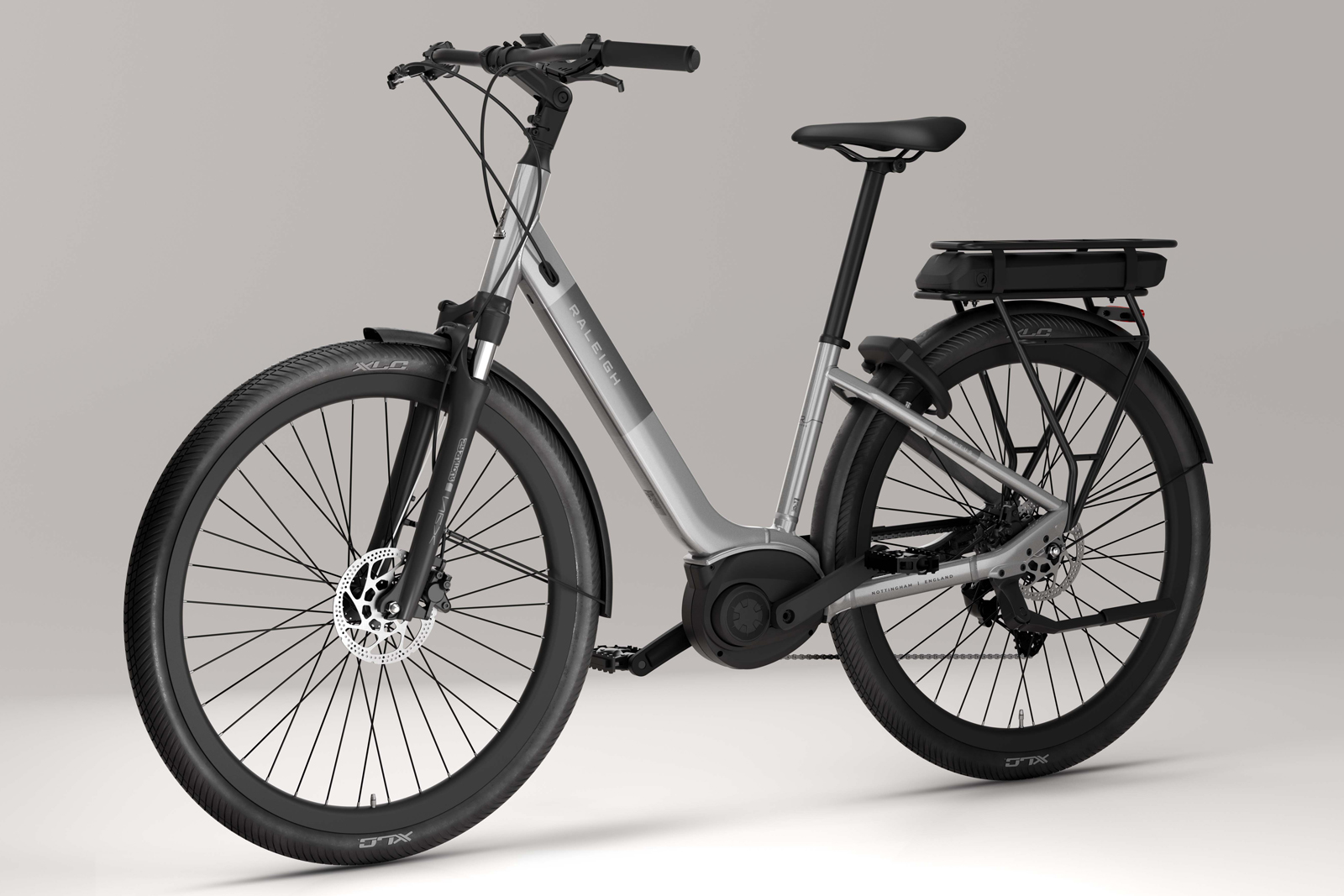
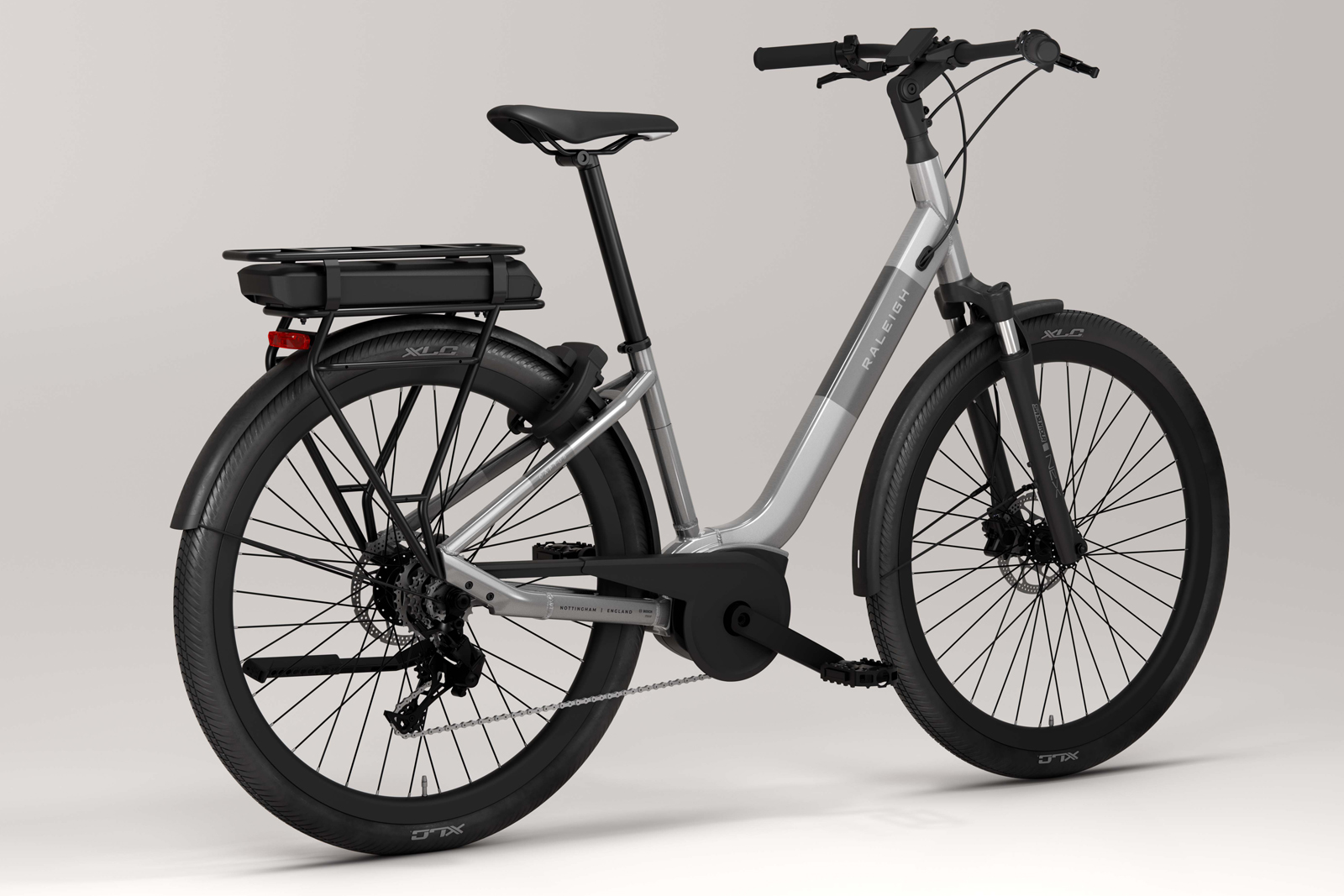
Raleigh’s latest electric bike, the Captus, features a premium Bosch motor but keeps the price to under £2,000.
Raleigh says the electric bike is “for riders who want proven, premium technology without the premium price tag”.
For £1,899, you get Bosch’s Active Line motor alongside a Shimano Cues drivetrain and Suntour suspension, with either a mid-step or low-step frame.
“By bringing Bosch e-system technology to a bike priced under £2,000, Raleigh is setting a new benchmark for value in the e-bike market,” the brand says.
“Riders can now enjoy the same level of safety, reliability and refinement found in higher-end models, at a price that makes switching to electric more accessible than ever.”
Bosch Active Line motor
Raleigh says the Captus is for “everyday city riders”. Raleigh
Alongside first-time ebike owners and people looking for a well-specced bike, Raleigh says the Captus is for “everyday city riders”, which matches up nicely with Bosch’s Active Line ebike motor.
Bosch says its Active Line motor is “ideal for city routes” and that its “finely balanced acceleration and barely perceptible pedal resistance over 25 km/h or in Off mode make every ride relaxing and leisurely – even in rush hour traffic.”
Raleigh has paired the ebike motor with a 40Wh battery for a range of up to 70 miles.
How does it compare in price to other Active Line ebikes?
Raleigh’s claim that the Captus offers the premium Active Line motor for a more affordable price stacks up against other big-name brands.
For instance, it’s £700 cheaper than the Cannondale Adventure Neo 4 and £350 less than the TrekDistrict+ 1 Lowstep, which has a similar set of features.
The Captus is also cheaper than British brand Raleigh’s other ebikes, the Motus (£2,299) and Hockley (£2,699).
In fact, the Raleigh Captus beats many of the best electric commuter bikes on price. But whether it earns a place in our list will have to be seen.
Components from Shimano and Suntour
The low-step Captus comes with a Suntour suspension fork. Raleigh
Alongside the Bosch motor, Raleigh has fitted the aluminium Captus with more components from respected brands.
The bike uses a 9-speed Shimano Cues drivetrain alongside Shimano MT200 hydraulic disc brakes.
The low-step version of the bike has a Suntour Nex-E25 suspension fork with 50mm of travel.
Raleigh has completed the Captus with integrated bike lights, a rack and mudguards.
However, the protest slowed Israel–Premier Tech who went through the first time check 47 seconds behind Ineos Grenadiers, the fastest team at that stage of the race. They finished 45 seconds down on stage winners UAE Team–Emirates XRG.
Pro-Palestine protestors have now disrupted all three Grand Tours of 2025, with incidents also taking place at the Giro d’Italia and Tour de France.
��� | Oei! De ploeg van Israel-Premier Tech wordt vertraagd door een protest met Palestijnse vlaggen. ⏱️ #LaVuelta25
While no group has yet taken responsibility for today’s protest, in April the Boycott, Divest and Sanctions Movement called for peaceful protests against Israel–Premier Tech at this year’s grand tours.
Israel–Premier Tech is co-owned by Israeli–Canadian Sylvan Adams who has vocalised his support for the country.
In a statement published on its Instagram this evening, the team said: “Israel–Premier Tech respects everyone’s right to freedom of speech, which includes the right to protest peacefully, but we absolutely condemn the dangerous acts of the protestors on stage 5 of the Vuelta a España which not only compromised the safety of our riders, race personnel, but the protestors themselves.
“The team continues to work with race organisers and relevant authorities to ensure our safety at the Vuelta a España and all races, and ensure any protestors do not impact our safety, nor our right to race.”
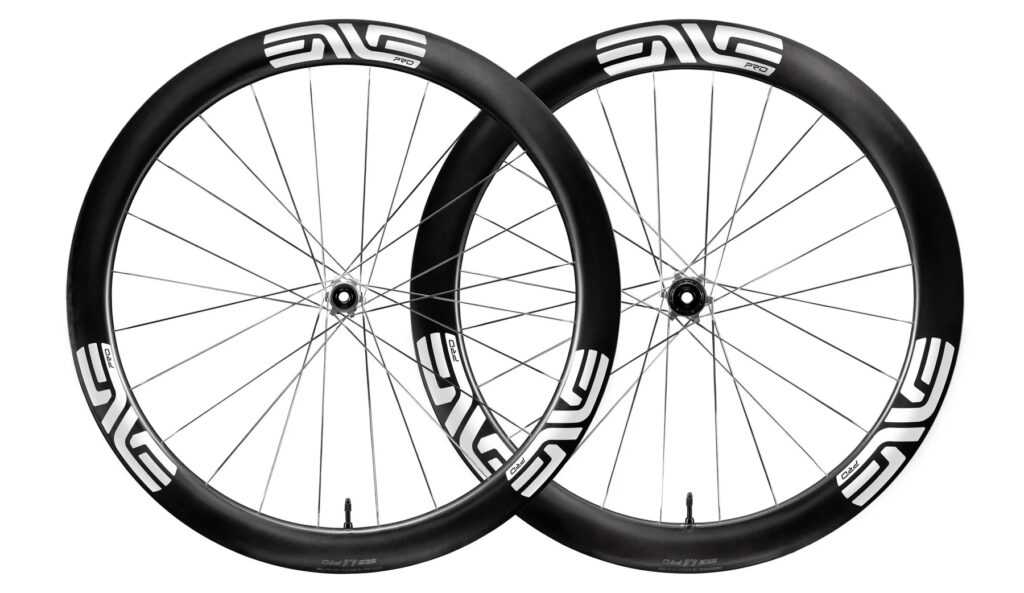
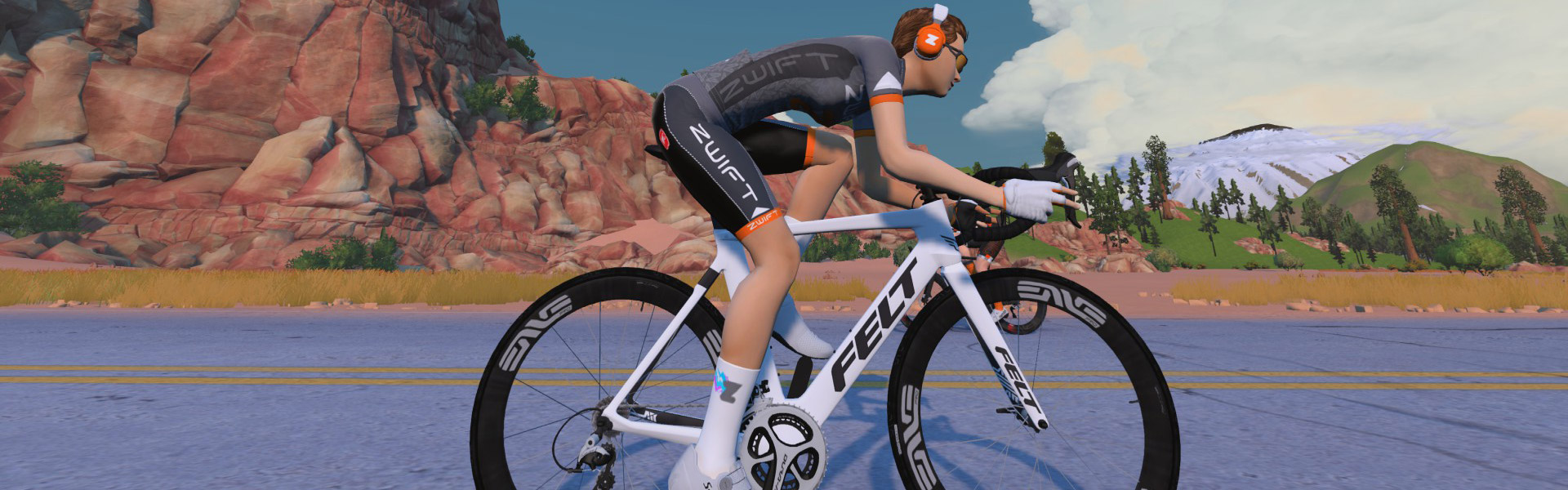
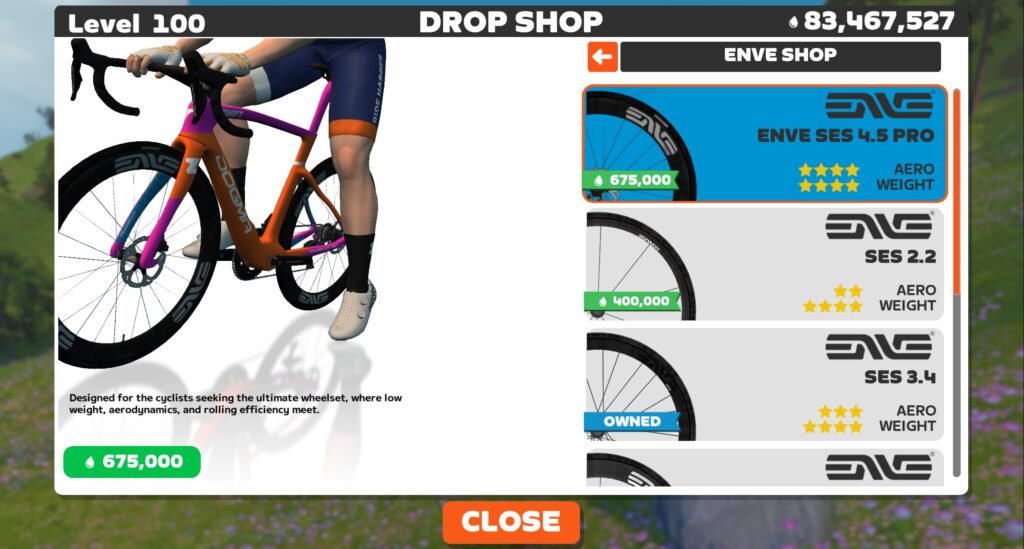
This week, Zwift releases a new wheelset from ENVE: the SES 4.5 PRO. The real-life ENVE SES 4.5 PRO wheels were announced in July of this year, and ENVE shared that the wheels were developed with direct input from Tadej Pogačar and UAE Team Emirates XRG over two seasons. When the wheels were announced, they had amassed 25+ victories this season alone … before Tadej won the Tour de France!
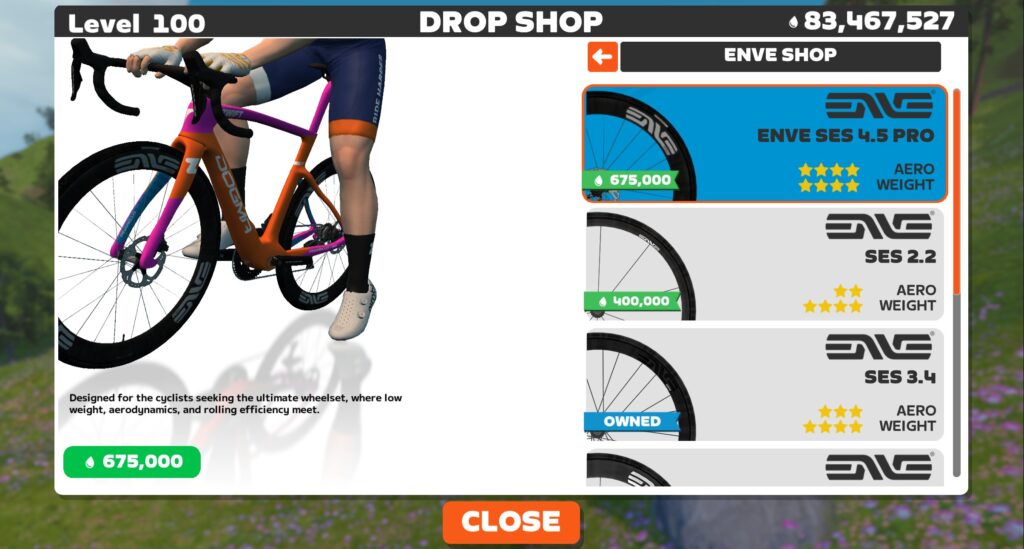
Here’s what the Drop Shop says about them: “Designed for the cyclists seeking the ultimate wheelset, where low weight, aerodynamics, and rolling efficiency meet.”
The wheels are now available in the Drop Shop, accessible at level 29 and above, for a price of 675,000 Drops. This is the only wheelset in the Drop Shop with a 4-star rating for both aero and weight, so we expected them to be both fast on the flats, and light on the climbs! Since Zwift’s 4-star rating system isn’t precise enough for our taste, we ran these wheels through our standard battery of tests to determine exactly how they perform in Zwift and stack up against other wheelsets in game. (Spoiler alert: they’re fast.)
Let’s dive in and learn all about the performance of this new wheelset from ENVE…
Aero (Flat/Rolling) Performance
The ENVE SES 4.5 PRO is definitely in the upper echelon of aero performance in Zwift, with our tests showing that it is bested by only three non-disc wheelsets: the ENVE SES 8.9, ENVE SES 7.8, and DT Swiss ARC 1100 DICUT 65.
The ENVE SES 4.5 PRO is 5 seconds slower than the ENVE SES 8.9 wheelset (the most aero non-disc wheelset) across an hour of flat riding. If you include disc wheels in the picture, the ENVE SES 4.5 PRO is 10.8s slower than the fastest disc wheels in game, the DT Swiss ARC 1100 DICUT 85/Disc.
Climb Performance
The climbs are where this wheelset really shines. It turns in a time that puts it within a half second of the top climbing wheels (Zipp 353 NSW, Lightweight Meilenstein, and Roval Alpinist CLX) across an hour of climbing. All of these wheelsets trim 9+ seconds off of our stock Zwift Carbon wheels’ times in our tests.
So the ENVE SES 4.5 PRO is essentially tied with the best climbing wheels in game, while delivering much better aero performance than the other top climbing wheelsets.
Note: all test results above are from a 75kg, 183cm rider holding 300W steady using the Zwift Carbon frame.
Conclusions
These wheels show exceptional performance as climb-focused all-arounders. Perhaps the best way to see this clearly is to compare them to the best aero all-arounders in game, the DT Swiss ARC 1100 DICUT 65. Consider this:
The ENVE SES 4.5 PRO wheels save 9.4 seconds across an hour of climbing compared to our stock Zwift Carbon wheels. The DT Swiss ARC 1100 DICUT 65 saves just 2.7 seconds. A 6.7s difference.
The ENVE SES 4.5 PRO wheels save 41.7 seconds across an hour of flat riding compared to our stock Zwift Carbon wheels. The DT Swiss ARC 1100 DICUT 65 saves 46.2 seconds. A 4.5s difference.
So if you swap from the DT Swiss ARC 1100 DICUT 65 to the ENVE SES 4.5 PRO, you’re essentially trading seconds gained on the flats for seconds gained on the climbs.
Another way to see it clearly: check out the Tron vs Top Performers chart, which we’ve just updated by swapping out the Zipp 454 wheels with these new ENVE SES 4.5 PROs, since the new ENVE wheels effectively replace the 454s as climb-focused all-arounders, beating them in our flat and climbing tests.
These wheelsets have been, or will soon be, added to the following posts:
Important note: this post contains speed test results for Zwift frames or wheels. These results may change over time, and a bike’s performance relative to others may also change. We don’t always revise posts when performance rankings change, but we do keep current, master versions of our speed test results which are always available. See the frame charts, wheel charts, and Tron vs Top Performers for current performance data.
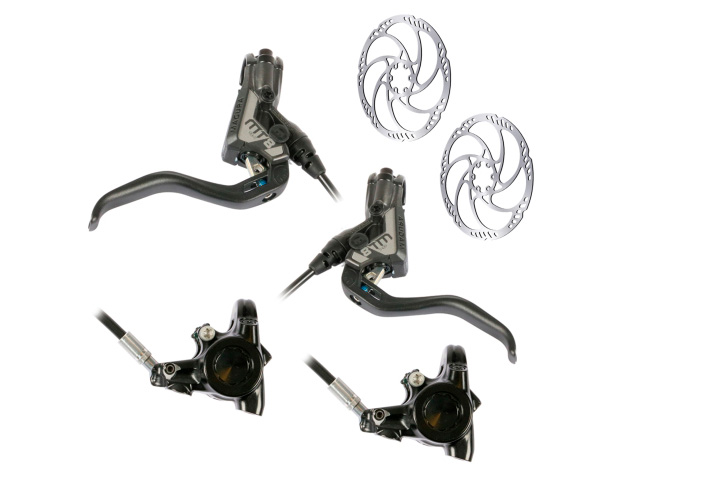
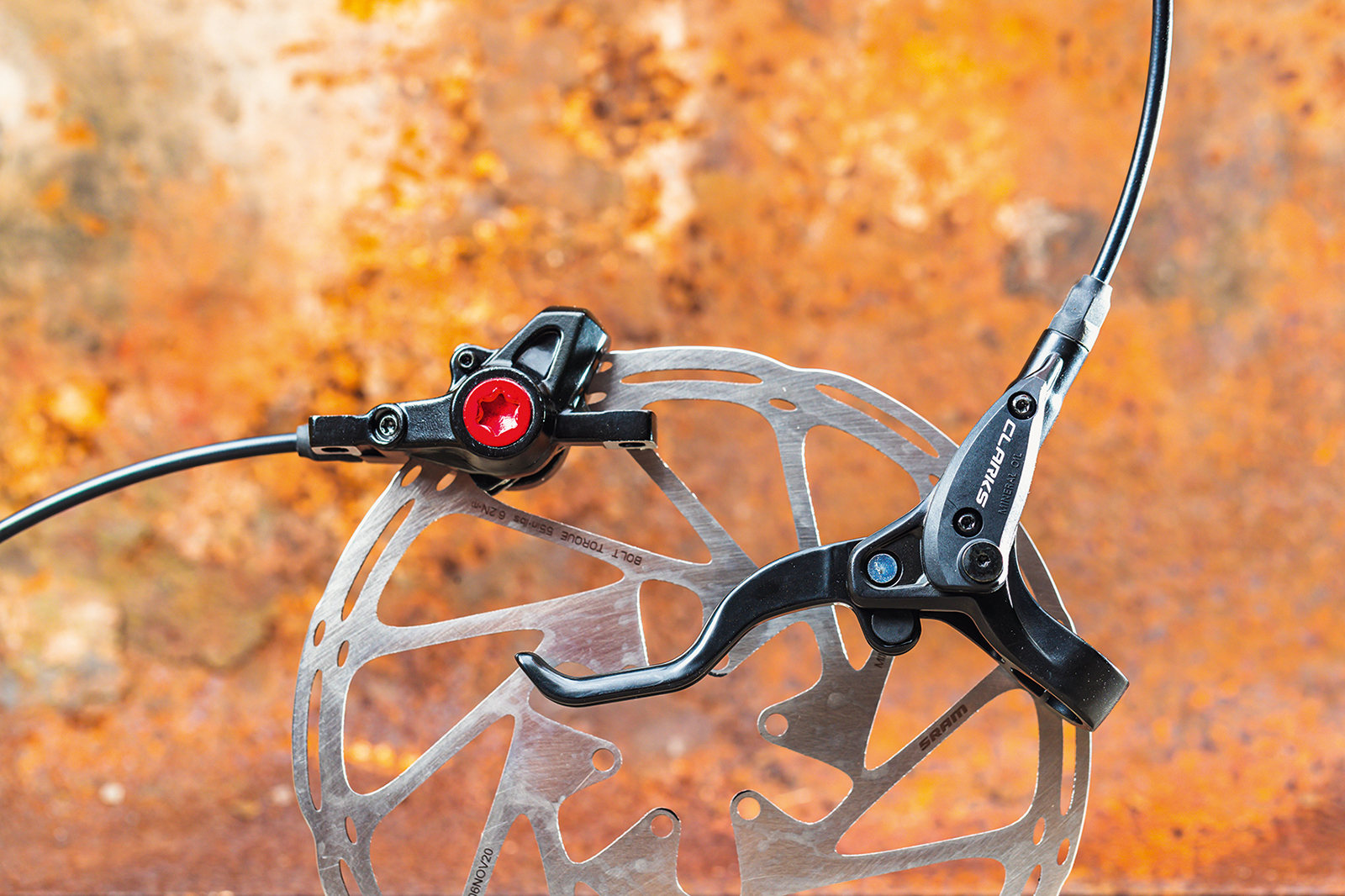
Brakes are one of the most important components on your mountain bike, with good-quality stoppers giving you the confidence to carry speed, knowing you’ll be able to slow down again.
Like many components, mountain bike brakes come in all shapes and sizes depending on the discipline.
Whether they’re going on a downhill or XC bike, upgraded brakes can make a big difference to your riding.
We’ve listed some of the best mountain bike brake deals on at the moment, just in time to get the most out of the last of the summer riding.
While these brakes have recently been replaced by the M8200 in Shimano’s line-up, they still offer excellent performance and are now available at a budget price.
We’ve tested these brakes on various bikes in the past, and awarded their beefier four-piston siblings 4.5 stars when we reviewed them.
This model is great for those looking to shave a few grams off, while still getting great stopping power.
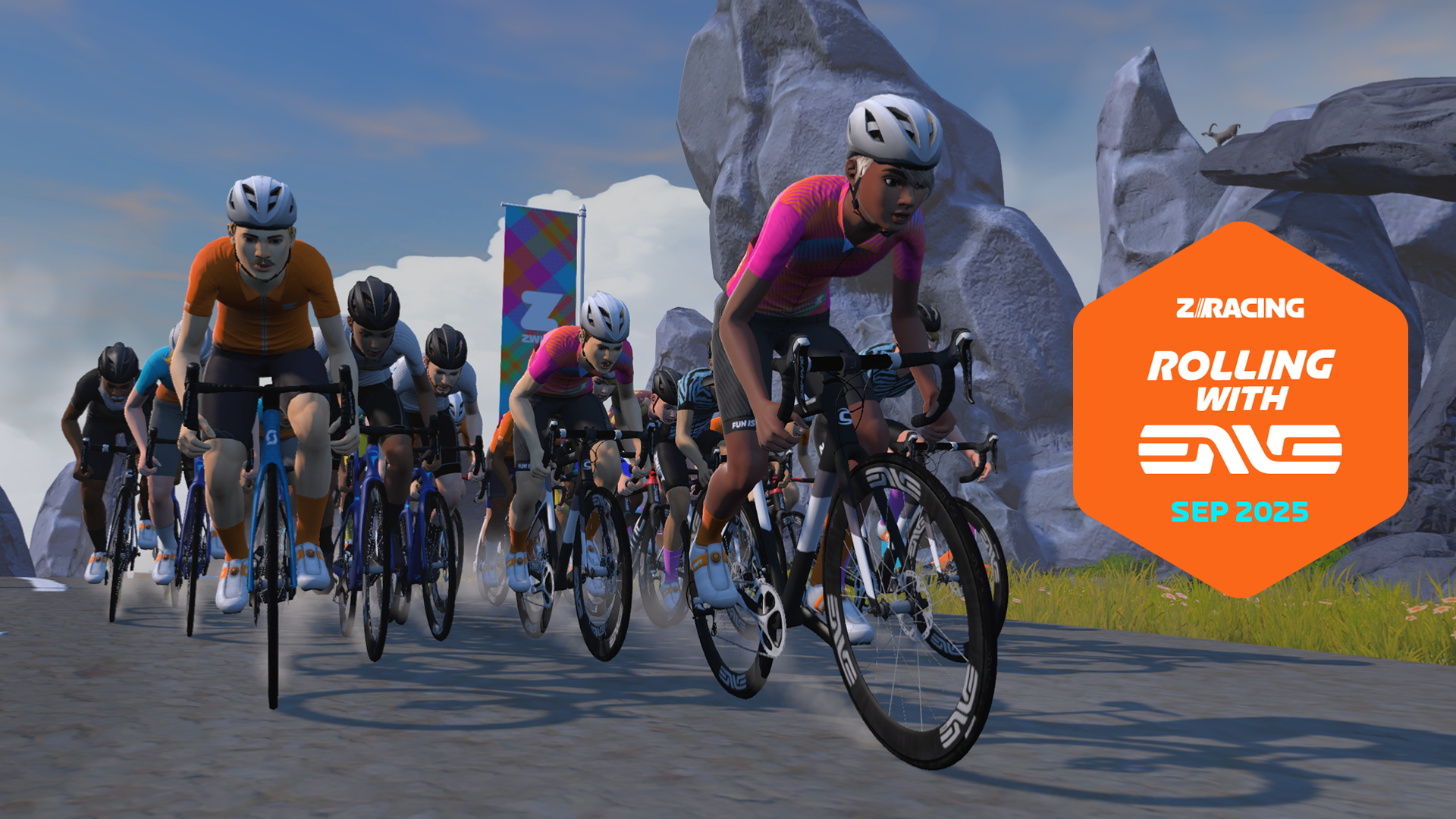
Zwift’s “ZRacing” is the platform’s most popular ongoing race series, and in September, the series teams up with ENVE for a wheelset worthy of the spotlight!
Read about this month’s race routes below, along with more on the ENVE SES 4.5 PRO wheels, including the real-life giveaway.
The new ENVE SES 4.5 PRO wheelset makes its in-game debut in September’s races, with every rider automatically placed on these wheels for each event. Word is these wheels are fast, and Zwift says this month’s courses were chosen “to showcase their all-round dominance.”
It’s not just marketing hype, either: the IRL wheels were developed with direct input from Tadej Pogačar and UAE Team Emirates XRG over two seasons, and this year they amassed 25+ victories before Tadej won the Tour de France! They’re lighter and more refined than the standard ENVE 4.5, including new hub and bearing technologies.
You can test the new wheels for free in September’s ZRacing, then head to the Drop Shop whenever you’d like to buy them:
Complete any stage for a shot at winning a real-life set of the new 4.5 PROs in ENVE’s official prize draw! (Zwift will send an email with an entry link…)
GC Leaderboards
Zwift’s web-based leaderboards are used for tracking the monthly GC competition for the ZRacing series. No ZwiftPower registration or use is necessary.
Your GC ranking is based on your best finishing time for each stage, and you can race each stage more than once to try for a better time.
Category Options
Zwift schedules three different flavors of ZRacing events in order to encourage “Fairer, more competitive racing for everyone.” They each use different racing score ranges for categorization and are titled Advanced, Range 1, and Range 2. Click banners below to see upcoming events for each:
Extras
Get the Badge
Each month’s ZRacing series has a unique achievement badge, which you can unlock by finishing every stage for the month. There are no makeup events, so if you miss a stage, you miss out on the badge and competing in the GC.
One and Done
Zwift has planned these events to deliver a solid 1-hour workout, so each race should only take around 1 hour to complete, including your warmup and cooldown.
Back in May, Zwift introduced a “Route of the Week” challenge, where a different route is featured each week, and completing it earns a 500XP bonus. Learn more here >
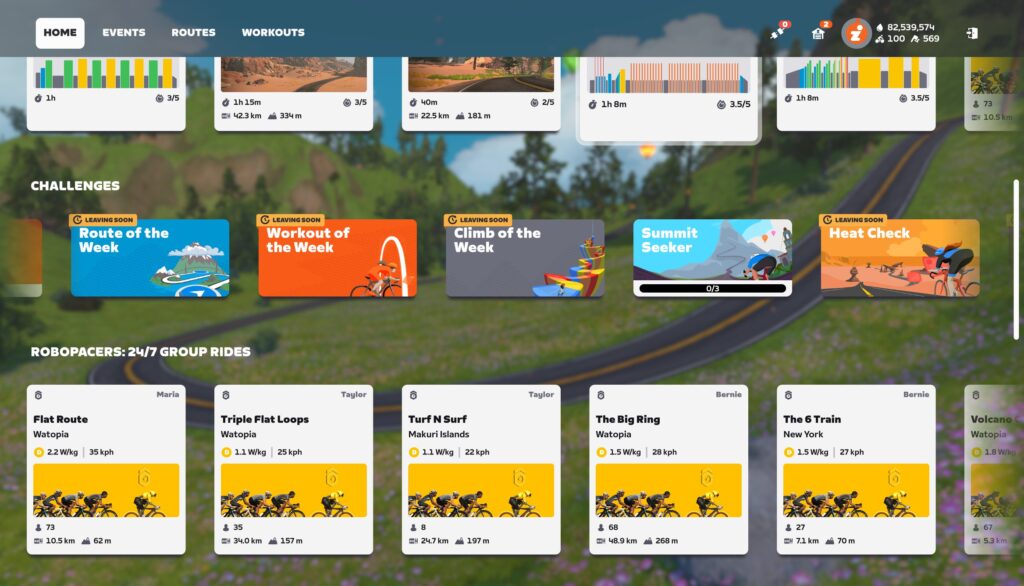
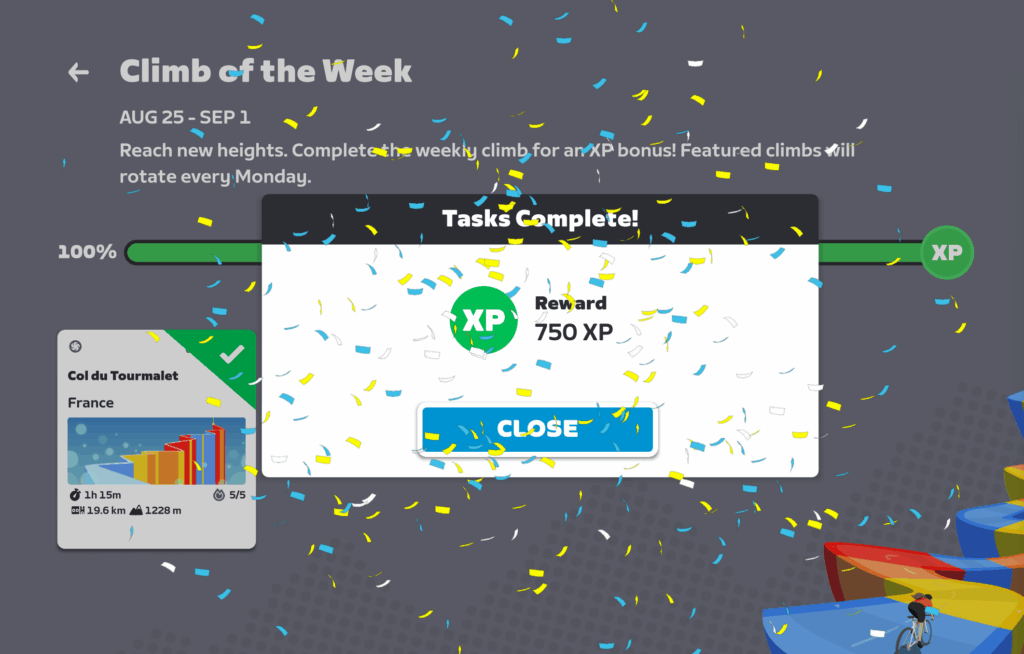
Yesterday, two new weekly challenges have launched: a “Workout of the Week” featuring an ERG workout from Zwift’s library and a “Climb of the Week” featuring a climb portal. In simple terms, these work like the Route of the Week: simply complete the featured workout or climb to earn an XP bonus. But let’s take a closer look…
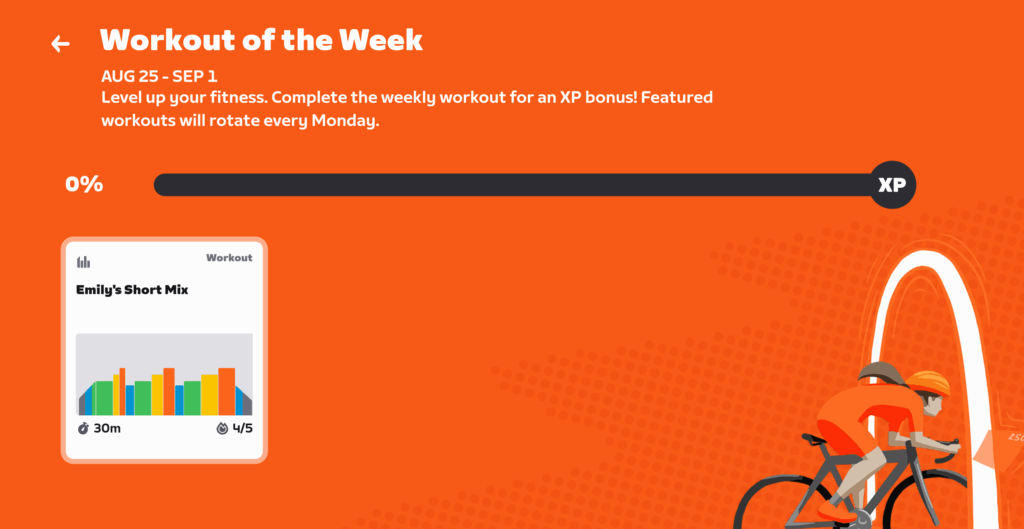
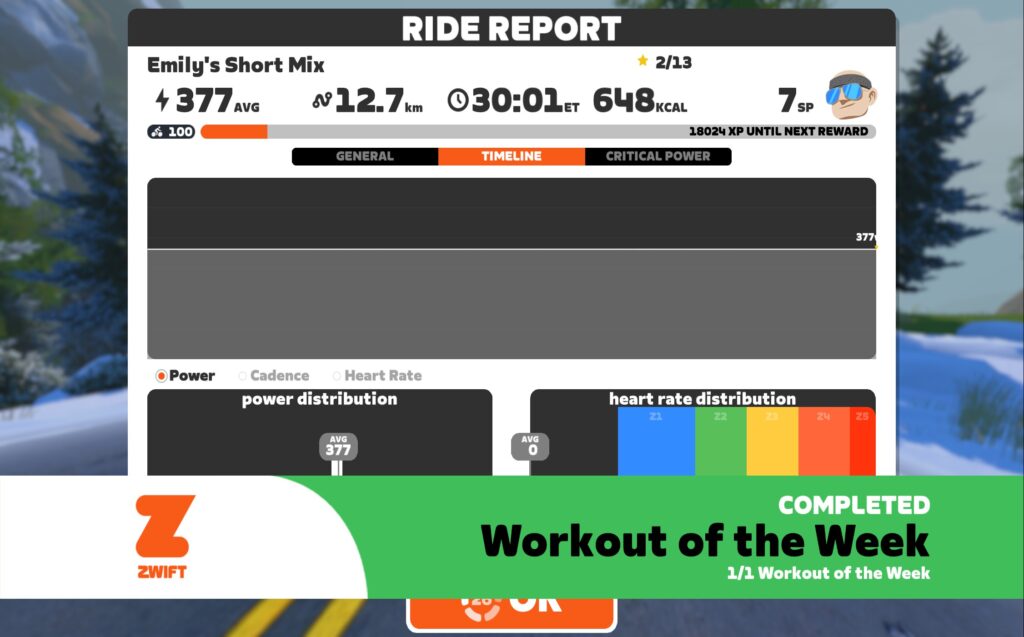
Click the Workout of the Week card on your homescreen to see the details of this week’s featured workout. Kicking it off? “Emily’s Short Mix”, a popular OG Zwift workout named after Emily Mullen, an early leader on the Zwift’s marketing team.
Finish the workout (I’m not sure what constitutes “finishing” the workout, as you definitely don’t have to earn all the stars), and you’ll see a banner on your screen:
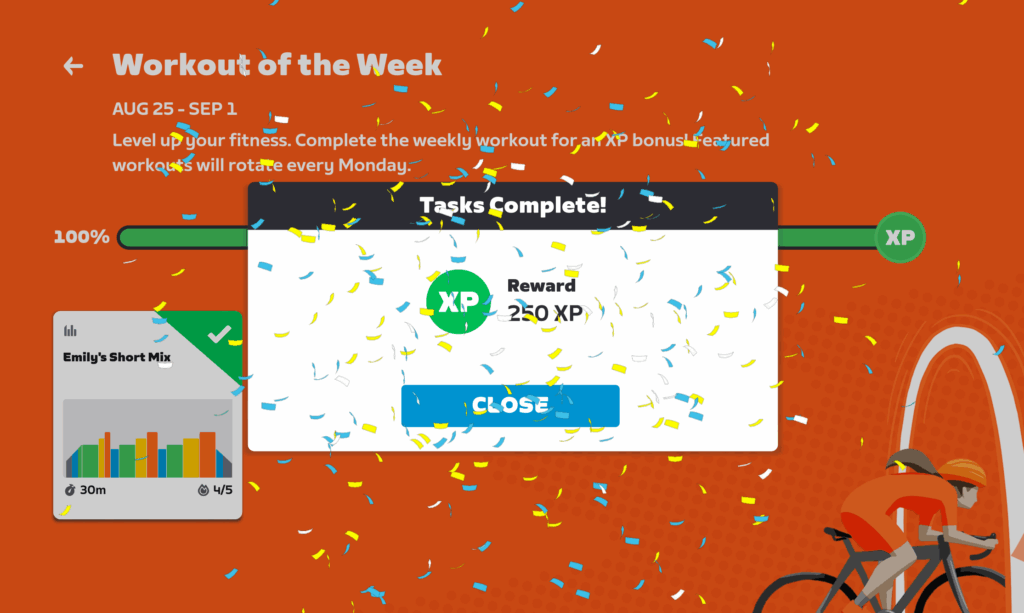
Once you finish the workout, clicking the homepage card initiates a confetti party and a popup telling how much much bonus XP you earned:
How Much Bonus XP?
Until this week, completing the Route of the Week would earn you a 500XP bonus. But Zwift has changed their XP bonus formula, giving different bonuses based on the difficulty/length of the featured route/workout/climb. On the weekly challenge forum thread, Zwift staffer Alex says, “The XP reward does vary based on the difficulty of the ride, though we’re still fine-tuning the reward for these.”
So Zwift isn’t sharing the exact formula yet, but you can see above that we get a 250XP bonus for the 30-minute Emily’s Short Mix workout, and a 750XP bonus for the longer Tourmalet climb. Alex also says, “We agree that the reward needs to be clear on the UI. We’re looking at some options.”
Climb of the Week
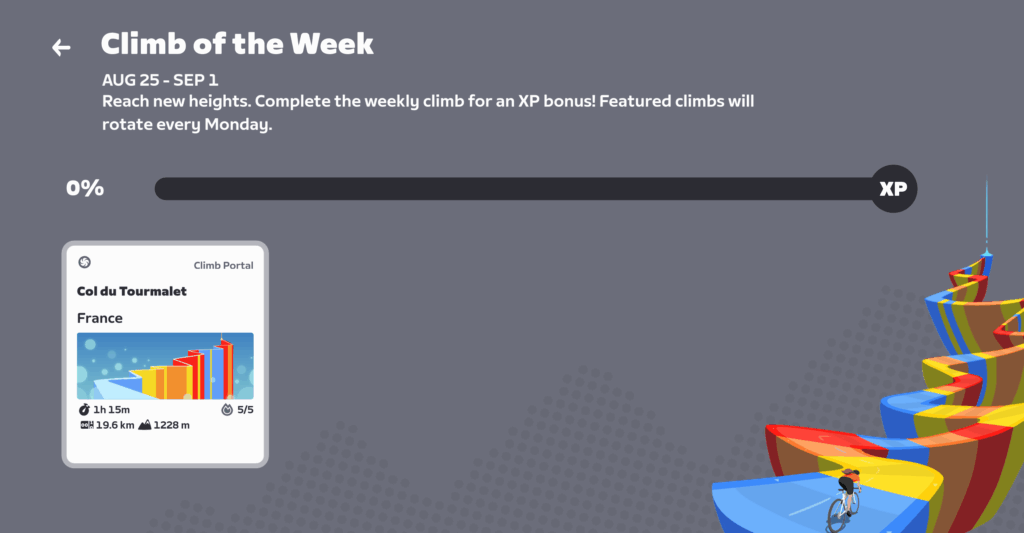
Click the Workout of the Week card on your homescreen to see the details of this week’s featured climb portal. Our first featured climb? The mighty Col du Tourmalet, with 1213 meters of elevation gain across 17.2km of riding.
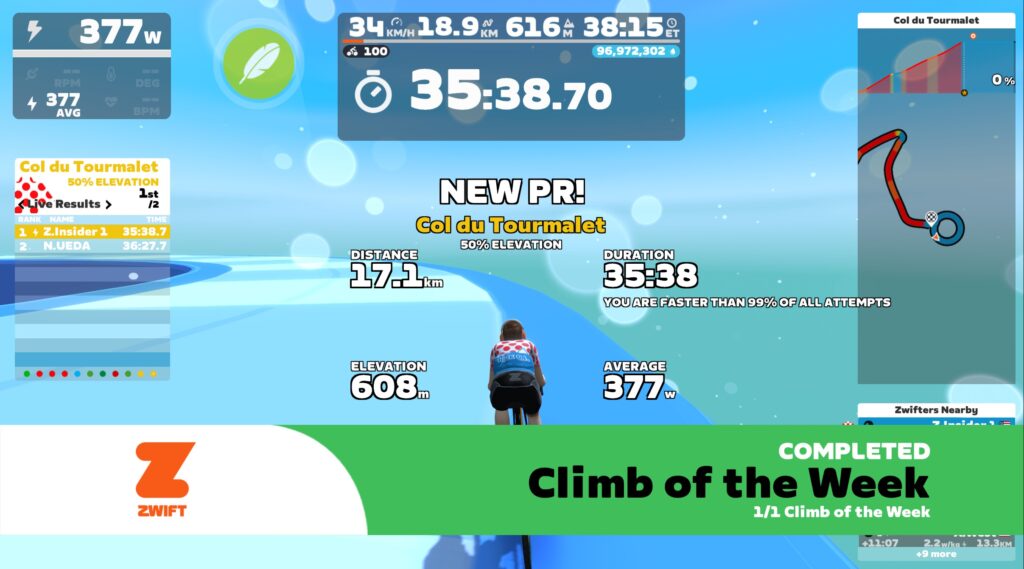
Finish the climb (yes, finishing it at 50% scaling counts), and you’ll see a banner on your screen:
Once you finish the climb, click the homepage card for a confetti party and a popup telling how much bonus XP you earned. (The Tourmalet earned my test bot 750XP.)
Double Dipping
Keen XP farmers will, of course, want to know how to maximize their earnings in these challenges. And there are certainly ways to do so! The trick is to figure out how to complete more than one of the three challenges (route, workout, and climb) in one go.
There really is no way to knock all three out at once, because you can’t do the Route of the Week and Climb of the Week at the same time. But you can certainly layer the Workout of the Week on top of a Route or Climb of the Week ride.
Alex from Zwift confirms, saying, “Yes, you can double dip! You just need to make sure you’re registered for both ahead of time until we update that.”
To register for a challenge, just click the challenge card on your homescreen. That signs you up for the challenge, and now, if you complete the route/workout/climb via another official pathway, it will still count.
(Note that it won’t always be this way. Alex also says, “You currently need to view each challenge to get credit for the ride, though you don’t have to start the route/workout/climb from the Challenge screen. We will soon change it so that you’re automatically registered for them on log in.”)
Two examples of double dipping (there are other ways to do this, but hopefully this illustrates how it works):
Click the Workout of the Week challenge card, then return to your homescreen. (Now you’re registered for this week’s WotW Challenge). Click the Route of the Week card, and click the route to enter the map and begin your ride. Now go to Menu>Workouts (“E” keyboard shortcut) and choose this week’s featured workout from the library. (Emily’s Short Mix is under the “30 minutes to burn” category). Complete the workout and finish the route, and you’ll finish both challenges and get both bonuses.
Click the Workout of the Week challenge card, then return to your homescreen. (Now you’re registered for this week’s WotW Challenge). Click the Climb of the Week card, and click the climb to enter the map and begin your ride. Now go to Menu>Workouts (“E” keyboard shortcut) and choose this week’s featured workout from the library. (Emily’s Short Mix is under the “30 minutes to burn” category). Complete the workout and finish the climb, and you’ll finish both challenges and get both bonuses.
Schedule of Upcoming Challenges
I don’t yet have the schedule of upcoming Workouts and Climbs of the Week, but I’ll share that ASAP in a separate post here on Zwift Insider. The Route of the Week schedule is available here.
Indoor cycling season is fast approaching for riders in the Northern Hemisphere, and we want to hear from you to better understand how you train.
We’ve created a short survey to dig a little deeper into the training apps and hardware you use. Even if you don’t take part in indoor cycling, we’d still love to hear from you.
Your feedback helps shape the stories, reviews and advice we share – and it only takes five to seven minutes to have your say.
As a thank you, UK mainland residents who complete the survey can enter our prize draw to win one of five £50 Sigma Sports eGiftcards.
Zwift version 1.96 begins its phased rollout today. This is a small update, but racers should take note of a fast new wheelset, and achievement badge completionists will want to know what’s changed on their badge list. Read on for details…
New ENVE SES 4.5 PRO Wheelset
The biggest news in this week’s update is a new, top-performing wheelset from ENVE. The real-life ENVE SES 4.5 PRO wheels were announced in July of this year, and ENVE shared that the wheels were developed with direct input from Tadej Pogačar and UAE Team Emirates XRG over two seasons. When the wheels were announced, they had amassed 25+ victories this season alone … before Tadej won the Tour de France!
The wheels are now available in the Drop Shop, accessible at level 29 and above, for a price of 675,000 Drops. They are the only wheelset in the Drop Shop with a 4-star rating for both aero and weight, so we expect them to be fast on the flats, and light on the climbs!
Watch this space for a detailed post about their performance once we finish our speed tests.
If you’d like to try the wheels before purchasing, September’s ZRacing events feature them, meaning everyone will be placed on these wheels for each of September’s races. (More info on September’s ZRacing will be published here on Zwift Insider tomorrow.)
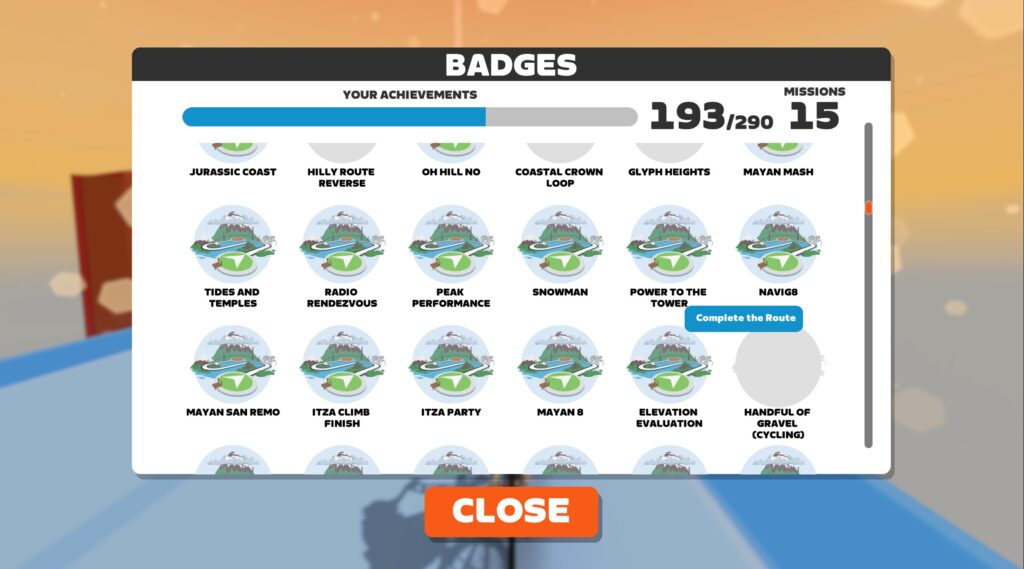
Unearned Event-Only Badges Now Hidden
Zwift says, “In the Achievements screen, placeholder badges will now only be shown for routes that are available to all Zwifters in the Routes list. If a route is only accessible via an Event, the badge will be shown in the Achievements screen if it has been earned.”
The event-only route badge situation has been a messy one for years on Zwift. In the early days, event-only routes didn’t have achievement badges. That changed with the release of the Neokyo Crit Course in November 2021, the first event-only route to ever have an achievement badge and corresponding bonus XP.
Since then, more and more event-only routes have had achievement badges attached. But there are still many that don’t.
Zwifters who love earning achievement badges have been frustrated by their inability to earn badges for certain event-only routes, and this seems to be the driving force behind Zwift removing unearned event-only route badges from the list and the counter at the top.
To be clear, you can still earn these badges. They just aren’t visible until you earn them, making them like other hidden “extra credit” badges in Zwift.
Here’s a full list of event-only routes with achievement badges and associated XP, in case you want to make sure you earn all these badges: