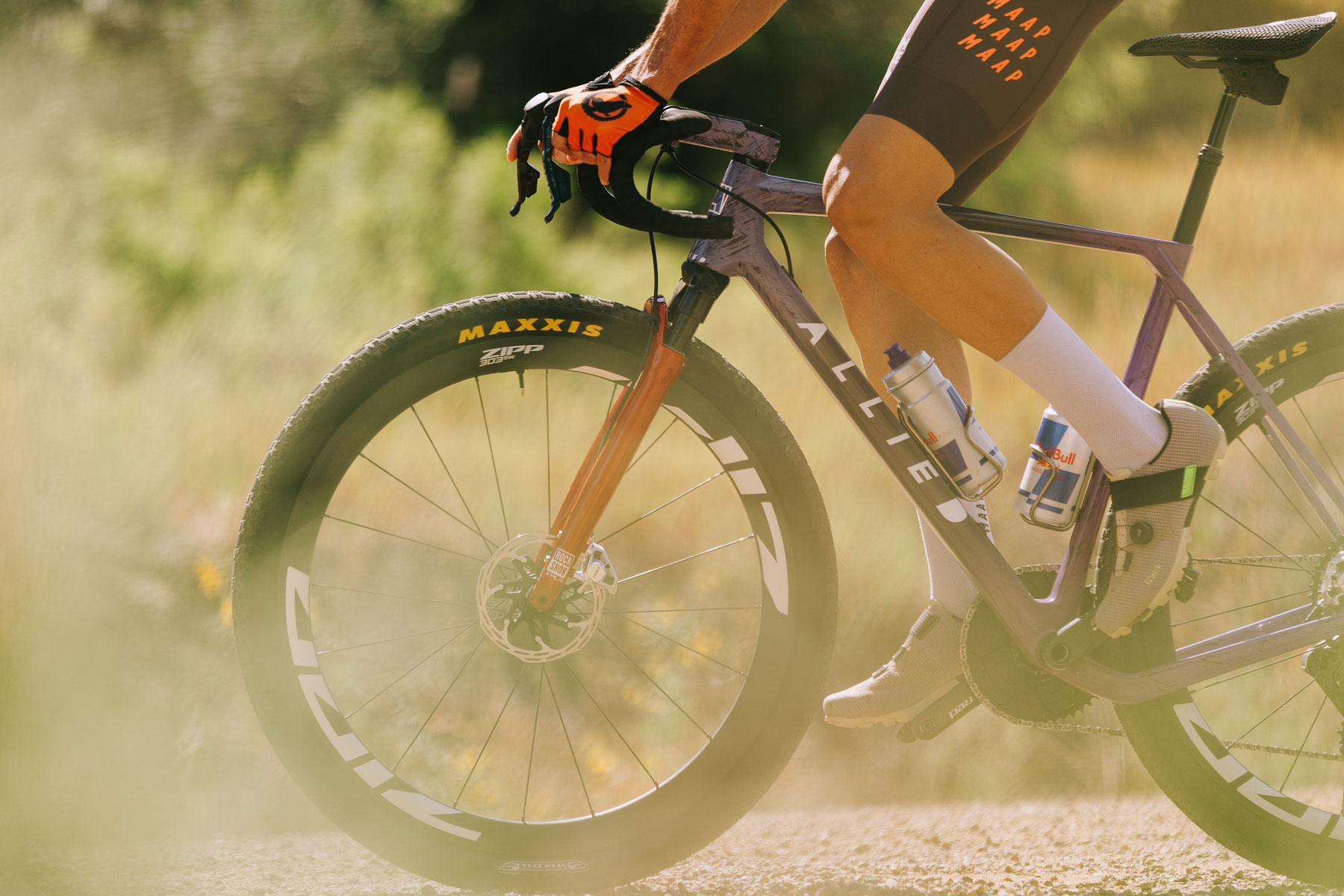
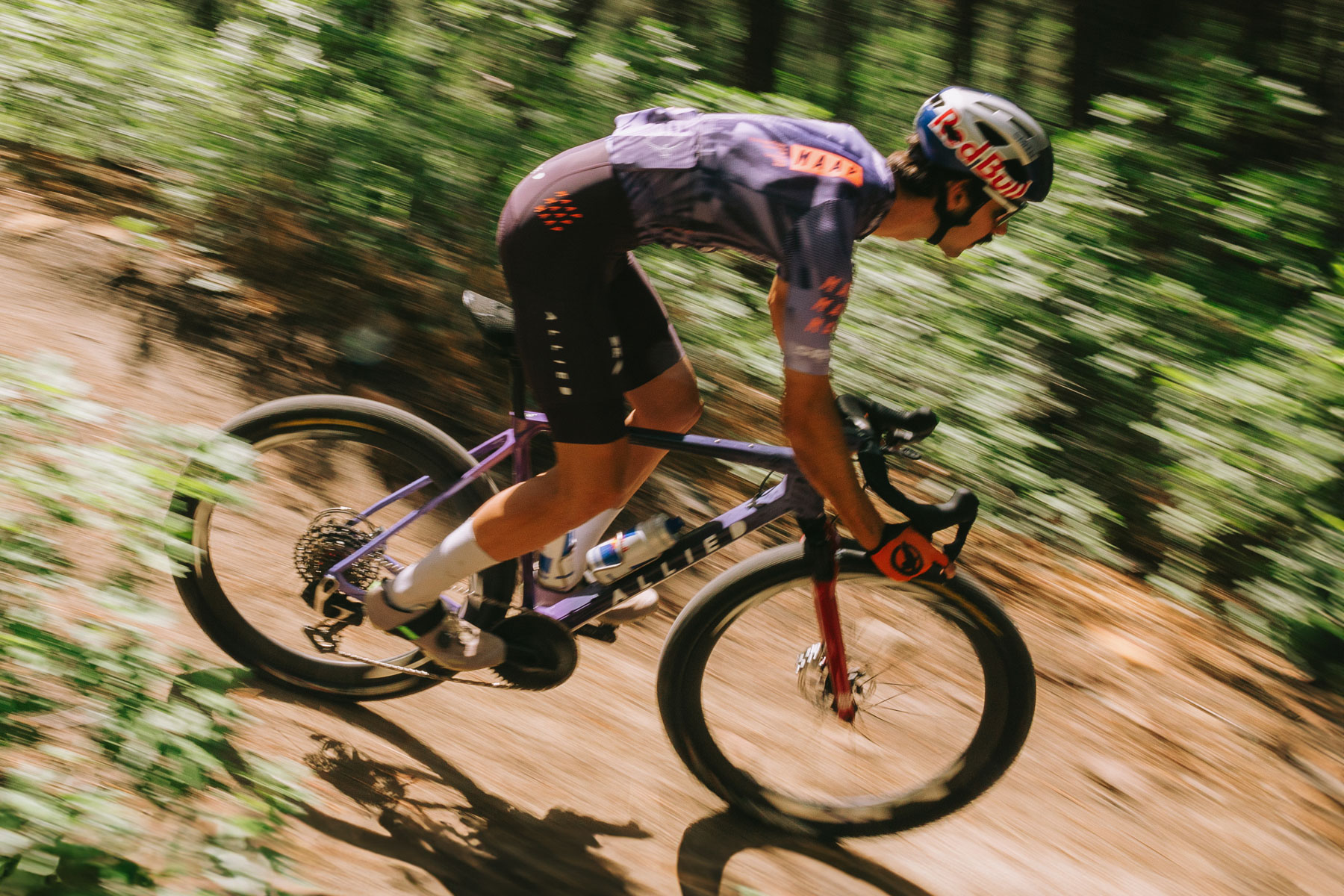
RockShox has expanded its gravel suspension offering by introducing the new Rudy XL.
The new gravel fork increases the tyre clearance from the highly rated Rudy XPLR Ultimate to 2.25in/57.5mm. RockShox also upped the suspension travel to 50mm and 60mm options, both coming with a 45mm fork offset.
The Rudy XPLR Ultimate continues to be offered in 30mm and 40mm-travel options, and 45mm and 51mm offsets, with 50mm tyre clearance.
Since the original Rudy launched, we’ve seen a shift in gravel design. Pro riders are looking to ever-wider tyres, leading to many adapting cross-country mountain bikes to take advantage of the larger tyres.
That’s good news for bike designers looking to update their adventurous gravel designs. We’d imagine that would include Trek’s as-yet-unnamed new gravel bike we spotted back in June being ridden to victory in the Trans Balkan Race by Justinas Leveika.
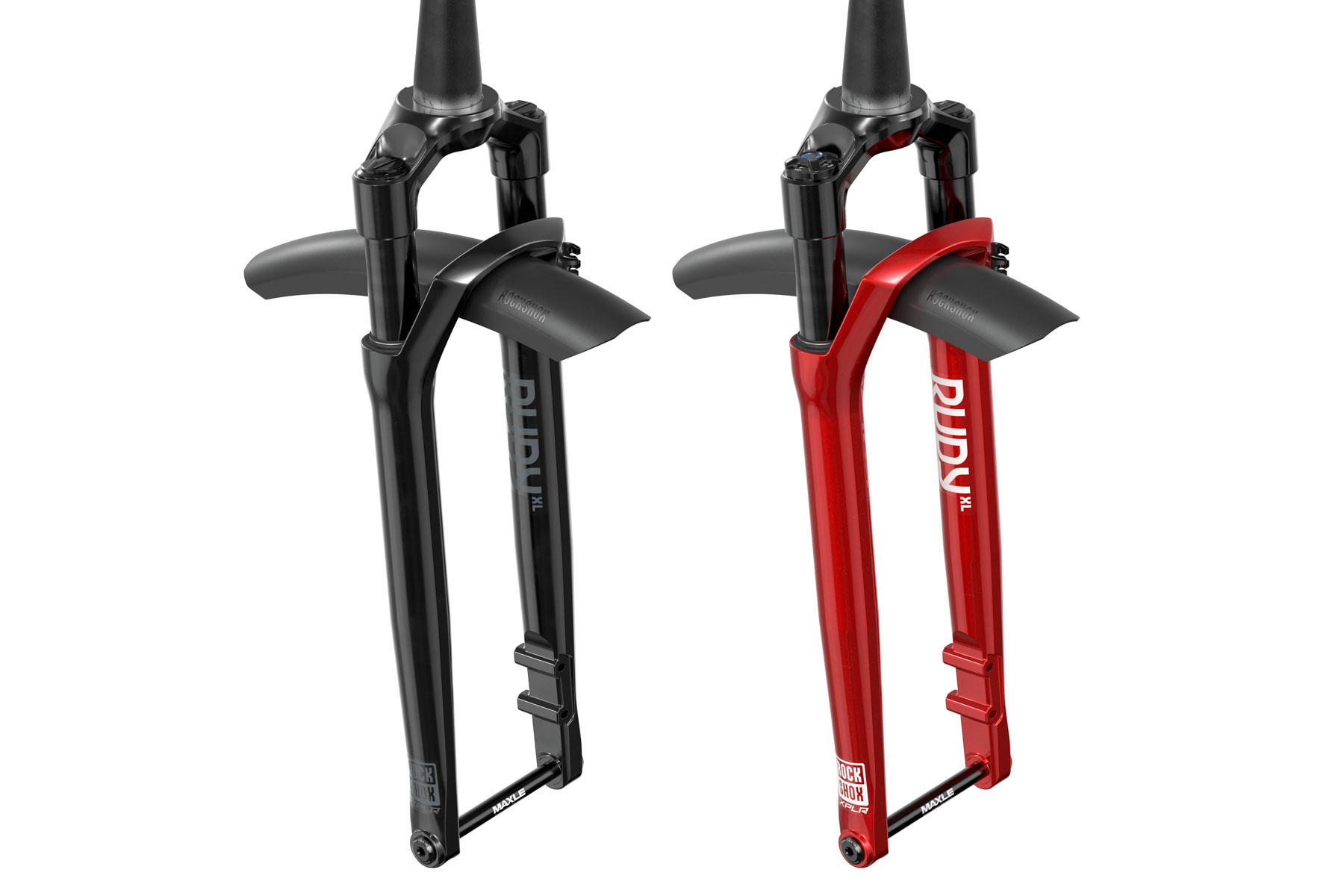
The Rudy XL offers huge tyre clearances for gravel bikes. SRAM / Rock Shox
RockShox say the Rudy XL has been in development for two years. The new design combines the same slender (compared to mountain bike forks) 30mm stanchions, combined with a fresh lower with a new-shaped angular crown to maximise tyre clearance.
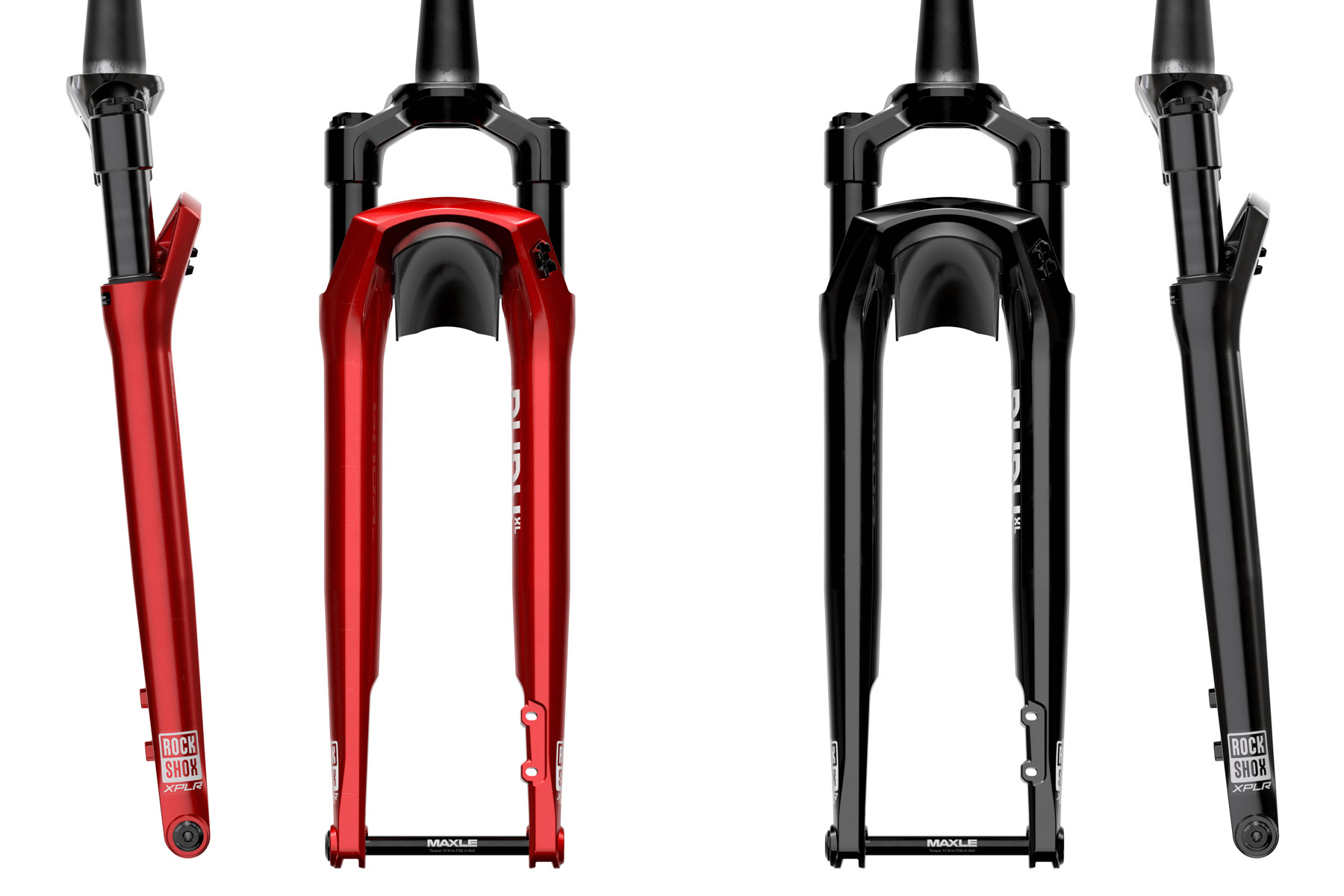
The Rudy XL comes in two colourways. SRAM / Rock Shox
The increase in travel also means a small increase in weight from the 40mm-travel Rudy XPLR Ultimate’s 1,300g to 1,370g on the new XL.
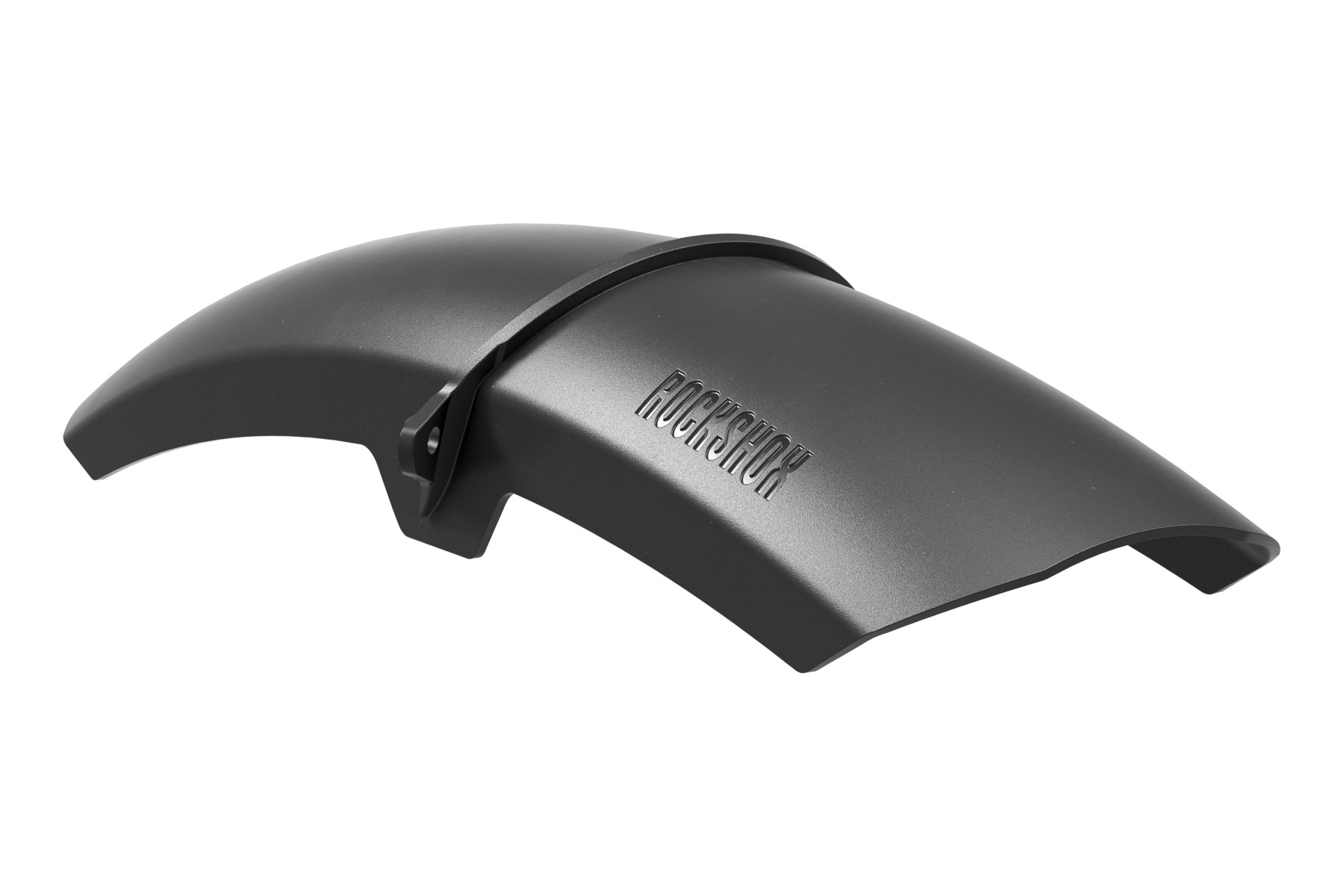
The accessory fender is available for £22. SRAM / Rock Shox
The fork also gains twin-bolt mounts for a new dedicated short mudguard/fender that’s available separately for £22 / $25 / €25.
What’s inside?
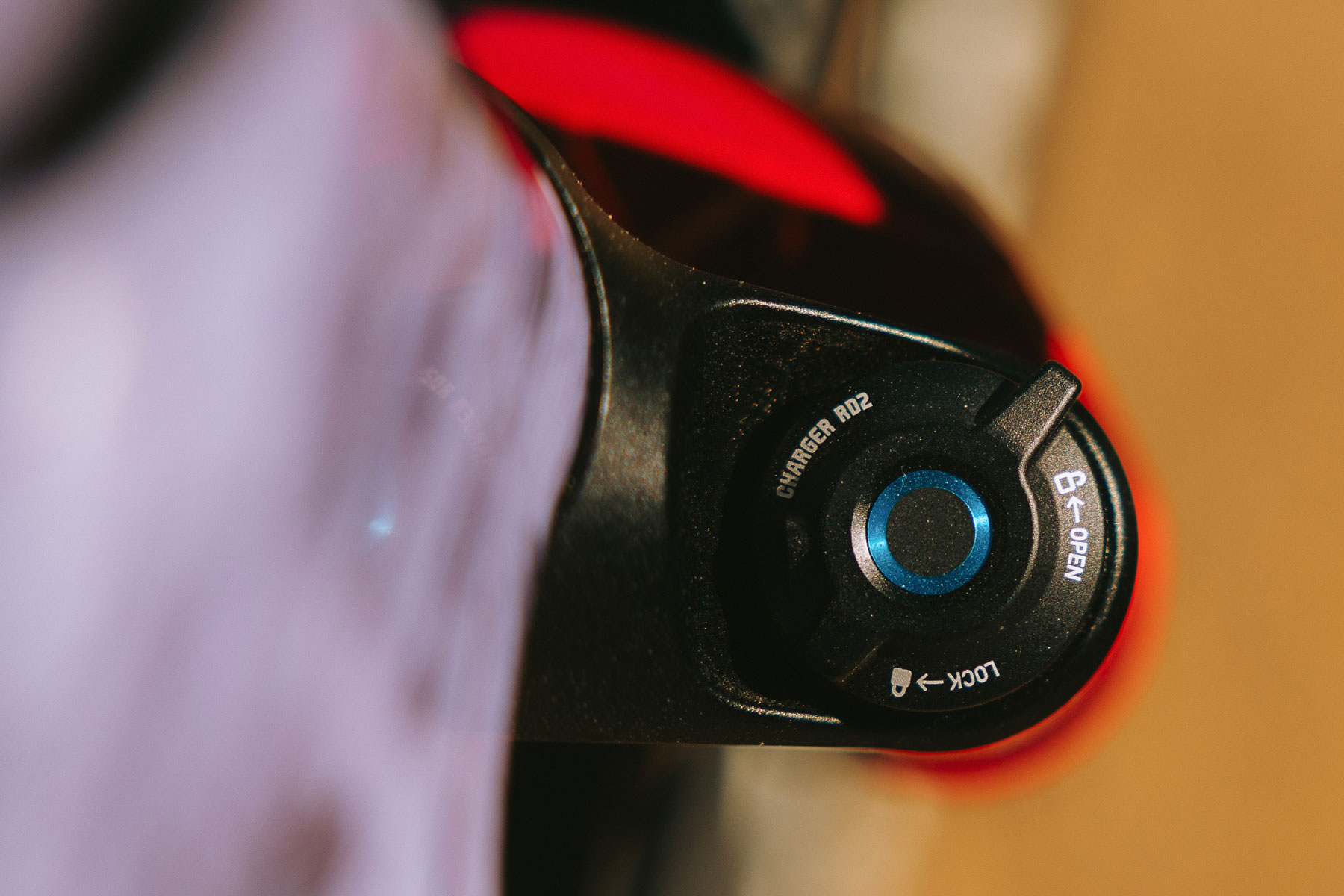
The Charger Race Day 2 switch offers a solid lockout. SRAM / Rock Shox
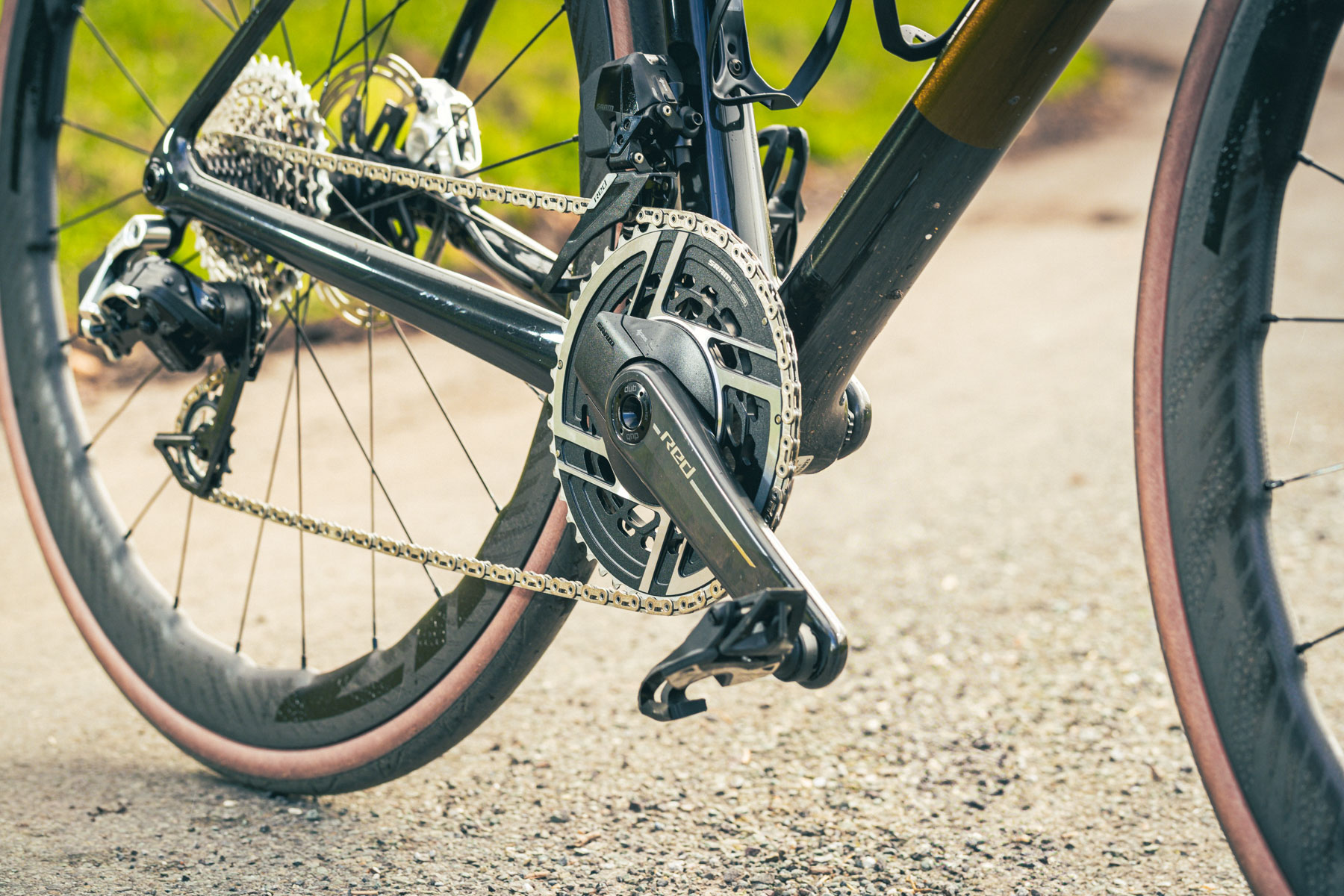
The Rudy XL uses the user-friendly Solo Air Spring found on some models of Judy, Reba and Recon mountain bike forks. However, here the Solo Air Spring has been tuned for the shorter 50 and 60mm of travel.
The Charger Race Day 2 damper is only found on RockShox’s premium lightweight SID fork range.
Like the original Rudy, the Rudy XL comes in two models. The range-topping Rudy XL Ultimate gets both the Solo Air Spring and the Charger Race Day 2 damper, and comes in a new bold Electric Red signature colourway.
The second standard Rudy XL gets the same Solo Air Spring but uses a cartridge-rebound damper with rebound adjust. Like the XL Ultimate, it comes in 50mm and 60mm-travel options and fits up to a 29×2.25-inch tyre.
What does this mean for gravel bike design?
We will see bikes designed around the longer-travel Rudy in the coming years. SRAM / Rock Shox
Up until now, the range of gravel suspension forks available has maxed out at 50mm travel (Fox and MRP). RockShox has upped the game by not only increasing travel but also tyre clearance.
The increase in travel shouldn’t render the latest generation of gravel bikes, such as our 2025 gravel Bike of the Year, the Parlee Taos, or progressive-geometry bikes such as Mondraker’s highly capable Arid obsolete. It means the Rudy XL can be set up with more sag than a shorter-travel fork.
We will, however, see bikes starting to arrive for 2026, designed around these new dimensions. That could mean the current trend of riders adapting XC mountain bikes to drop bars becomes unnecessary and a short blip in the timeline of gravel suspension design.
Pricing
The Rudy XL has a mini-fender option. SRAM / Rock Shox
The Rudy XL is not available aftermarket; it’s destined for OE (original equipment) fitment on compatible gravel bikes.
RockShox has the Rudy XL Ultimate available from today in 50mm and 60mm-travel options, priced at £900 / $929 / €1,010.
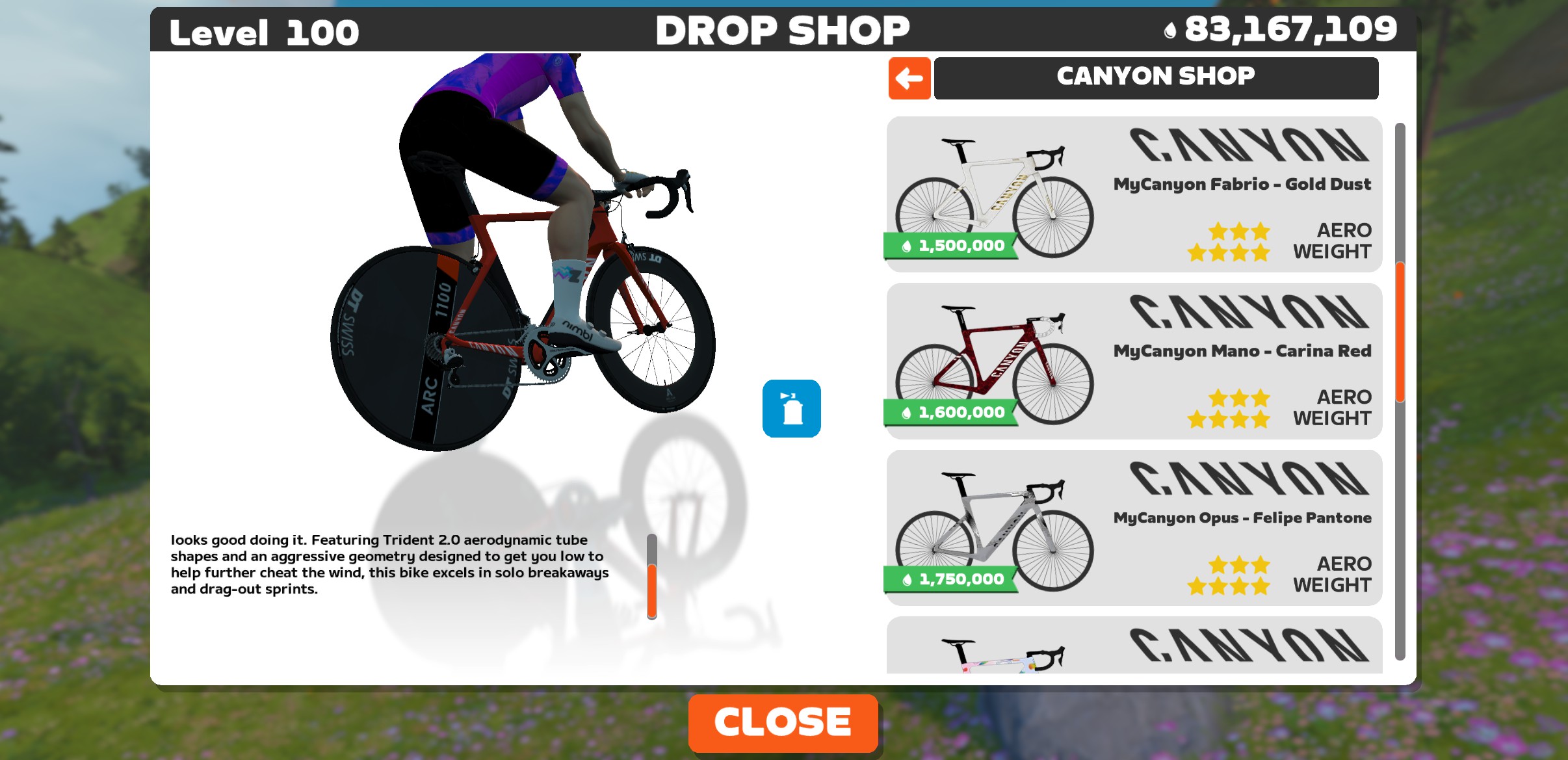
Yesterday, Zwift introduced a new concept in the Drop Shop – four fresh colorways of a frame that is already in game, the slippery Canyon Aeroad 2024. These four new bikes are painted in distinct designs from the MyCanyon collection.
The MyCanyon custom program was announced earlier this year, offering customers the opportunity to create a bike using a personalized mix of components paired with a unique, high-end colorway.
MyCanyon features nine different colorways, but this week’s Zwift release includes a select four:
MyCanyon Fabrio – Gold Dust:“A stunning golden yellow finish couples with striking mirrored decals. It’s a bike that radiates energy, and is as special as gold dust itself.”Read more >
MyCanyon Mano – Carina Red:“Home to many massive stars, including several that are 100 times bigger than the sun, Carina glows bright and bold. Painted using a hand-stamping process, this frame has a deep and fiery red color that looks three-dimensional under the surface.”Read more >
MyCanyon Opus – Felipe Pantone:“Inspired by the interplay of speed and technology, Felipe’s design represents organized chaos with some unexpected twists and turns as the bike moves. It’s modern speed, just like the Aeroad CFR.”Read more >
MyCanyon Opus – Elena Salmistraro:“Imagining a bike in motion, speeding towards the sun, light dancing on its surfaces, Elena used a kaleidoscopic color concept in her design, making a perfect combination of modernity and fun that is ideal for attracting attention.”Read more >
Opinion: An Odd Departure
Zwifters have asked for more bike colorways for years, particularly when it comes to popular race bikes. But Zwift has always been oddly hesitant to release more paintjobs.
The S-Works Venge, the most popular non-Tron race bike on Zwift for years? Available only in a dull gray to this day. The Pinarello Dogma F 2024? We’ll create a fun Zwifty colorway, but if you weren’t there to do all the races in September 2024, you missed your chance! The S-Works Tarmac SL8, the new favorite race bike? You can have it in any color you’d like. As long as it’s white.
It seemed logical to predict Zwift eventually releasing fresh colorways for frames and wheels which we could purchase using Drops.
But this is not that.
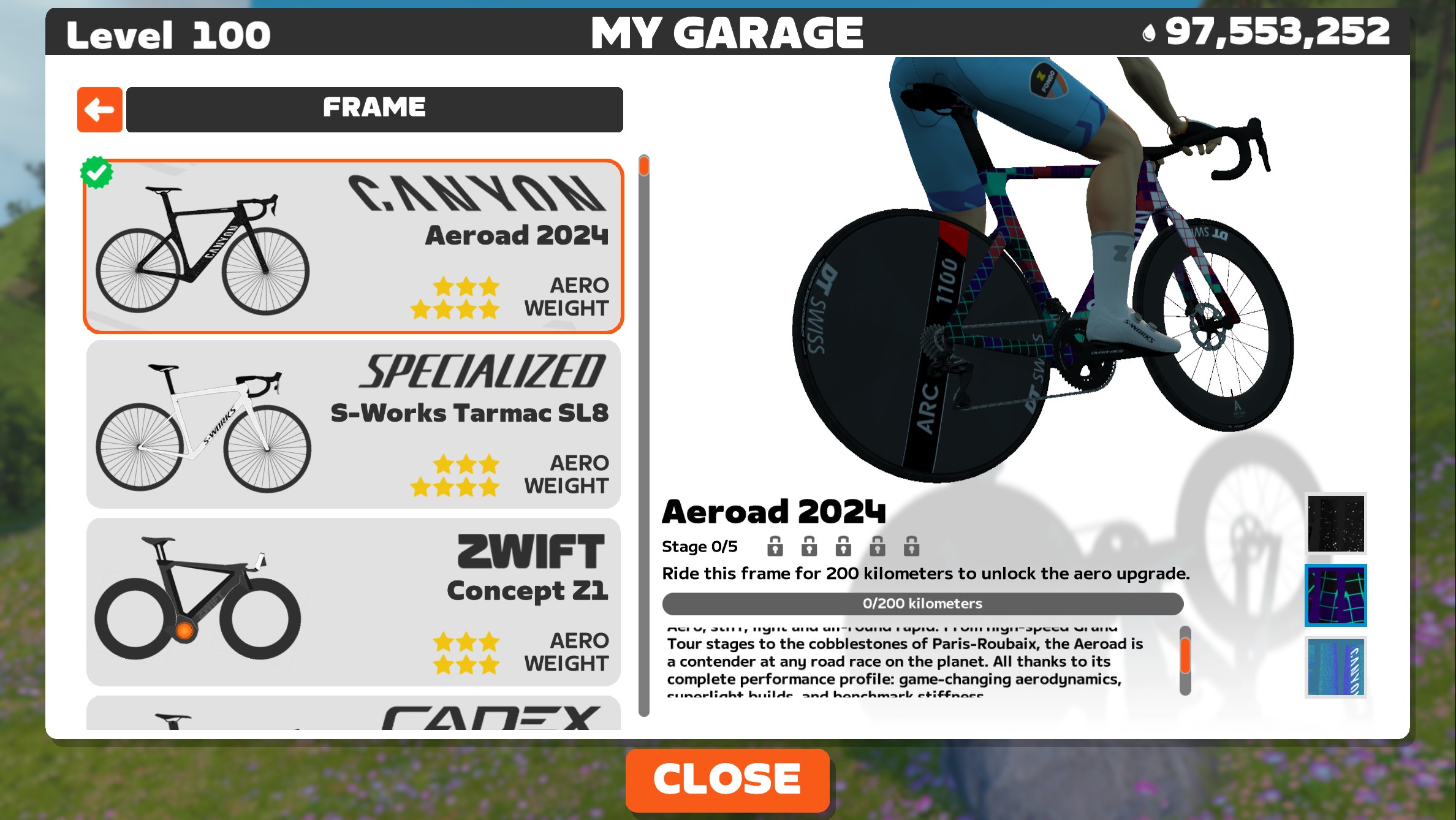
Instead, if you buy one of the new MyCanyon bikes, it adds an entirely new bike frame in your garage:
Sure, this is how it would work in the real world. But why does it need to work that way in Zwift?
Four big issues I foresee with Zwift using this method to release new colorways:
UI confusion (it’s not how the system has worked up until now): Many Zwifters already have multiple colorways unlocked for particular frames in their garage. You select the frame, then select which colorway you’d like. In fact, confusingly, the Canyon Aeroad 2024 has three different in-game colorways that work this way, meaning this week’s change adds four new colorways that work completely differently.
Upgrader anger: If riders love their Canyon Aeroad 2024, then they’ve already worked to upgrade it. Now, if they buy a new colorway, that new bike won’t upgraded at all.
Crowded garages: The request for Zwift to let us clean out our garages – even if it just means deleting items entirely without getting any Drops back – has been echoed so many times that it’s basically a community meme. This setup just makes our garages more crowded, when Zwift could have utilized the existing functionality of consolidating multiple colorways under one frame.
No model names: This is a minor issue, perhaps. But there’s no indication in the Drop Shop of what model of Canyon bike these four new frames actually are, apart from the fact that they look like the Aeroad 2024. But are they actually the same? Do they perform identically? (Zwift tells me yes, but that’s not clear in the UI.)
Let me be clear: I’d be happy if The Drop encouraged me to drop major Drops on a sweet colorway. I’ve got 83 million+ Drops to burn, after all! So please, Zwift, go ahead and create super-exclusive and incredible-looking colorways. Give some of them crazy high prices, in fact. You could even do limited-edition releases. Make it feel special to be one of only a few owners.
But releasing them as standalone bikes just seems all wrong. So I hope Zwift decides to modify the Drop Shop, allowing us to purchase colorways for frames we already own without further crowding our garages.
What’s Next?
Zwift’s This Season on Zwift announcement made it sound like additional colorways would be coming after the initial Canyon release (“Stay tuned for more Drops coming to the Drop Shop this season!”)
I haven’t heard of what’s coming, or when. And frankly, I hope they fix the issue above first. But we’ll just have to wait and see what happens next.
Your Thoughts
What do you think of the look of these new Aeroads? Will you be buying one? What do you think of the whole concept of buying new colorways of frames to add to your garage? Share your thoughts below!
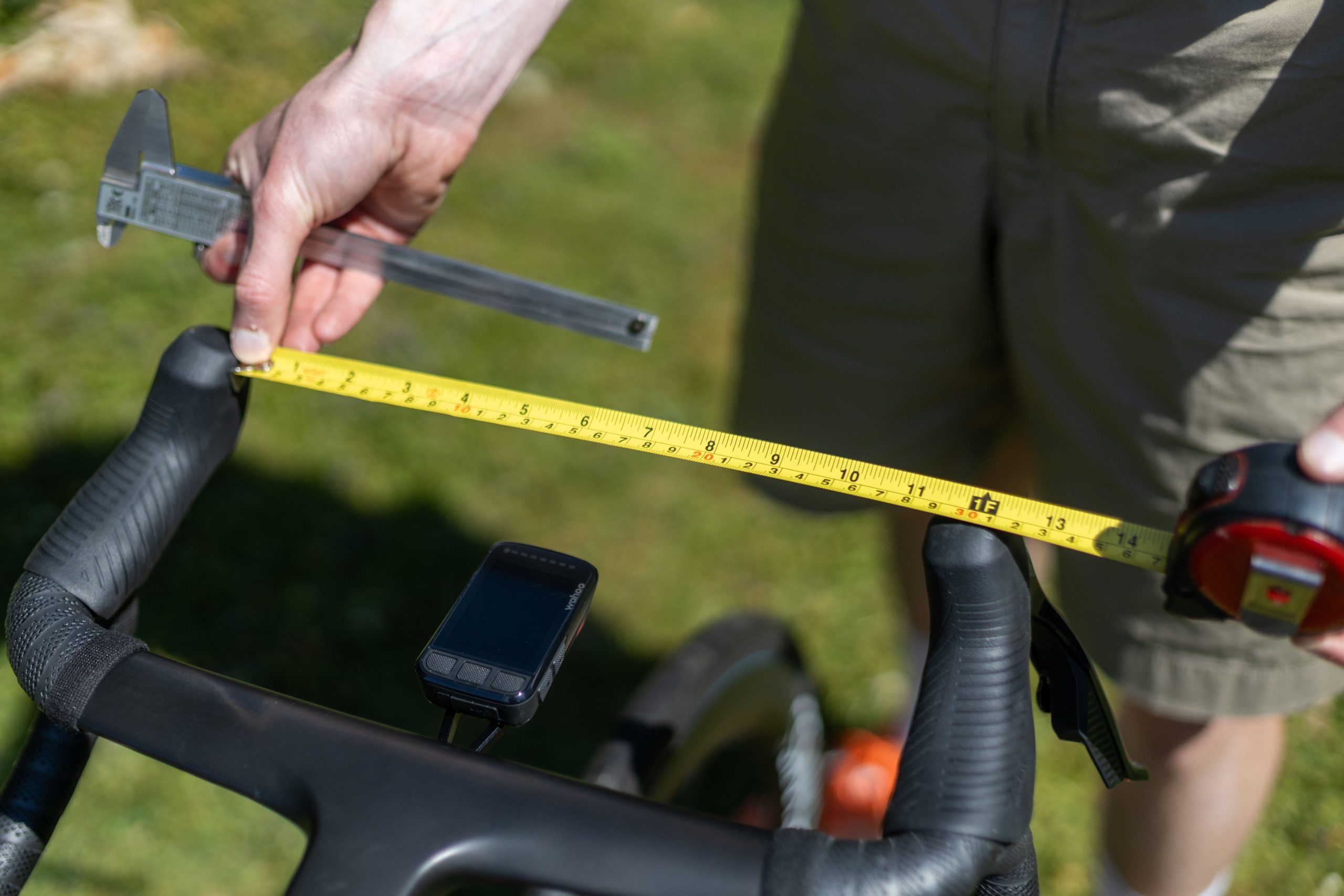
The UCI has backtracked on parts of its controversial handlebar width proposals.
While the UCI confirmed the proposed 400mm width measurement, the minimum distance between the inner edges of the brake hoods has decreased from the proposed 320mm to 280mm, and there’s a new maximum flare figure of 65mm.
This may go some way to winning round critics of the proposed rule, who claimed the original proposals could disadvantage women and smaller riders, although the UCI has also said the updated rule may be modified in the future.
Additional details have also been revealed about how the sport’s governing body intends to distinguish between ‘road’ and ‘time trial’ helmets.
Pro handlebars have been getting narrower in recent years, as riders chase aero gains. Ashley Quinlan / Our Media
The proposed handlebar width measurements proposed back in June were widely decried by professional riders and the bike industry alike.
One source told BikeRadar that the new rules were “hugely discriminatory” against women cyclists and smaller riders in general, who would typically currently ride handlebars narrower than 400mm. It would also force some brands to scrap their current road bike bars and develop new designs to conform to the regulations.
The new hood-to-hood measurement of 280mm should ease these objections somewhat, and the UCI said the new measurement follows consultation with “cycling’s stakeholders including representatives of the cycling industry, findings from extensive verifications of current dimensions used for bikes at UCI Women’s WorldTour and UCI WorldTour events”.
The UCI counters that the proposed regulation was aimed at slowing riders down by increasing the drag on riders and bikes, as part of its goal of controlling race speeds, with the objective of improving rider safety.
There’s already a test of limits on maximum gear ratios slated for this year’s Tour of Guangxi, taking place in October, also aimed at decreasing race speeds.
SRAM recently announced it is taking legal action against the UCI’s proposed maximum gearing test. Simon von Bromley / Our Media
There’s a sting in the tail of the relaxed bar width regs though, with the UCI management committee suggesting that the minimum handlebar width numbers could increase going forward.
It says its management committee has instructed the UCI Equipment and New Technologies Commission to “review” the measurements and consult with stakeholders during the 2026 season, “ with a view to potentially increasing it for future seasons”.
Track riders fare better, with a minimum 350mm width at the drops, 80mm flare and 65mm cross section for their bars.
Clarification of aero helmet regulations
The UCI has revealed details of how it will distinguish between TT and road helmets for 2026 and beyond. Simon von Bromley / Our Media
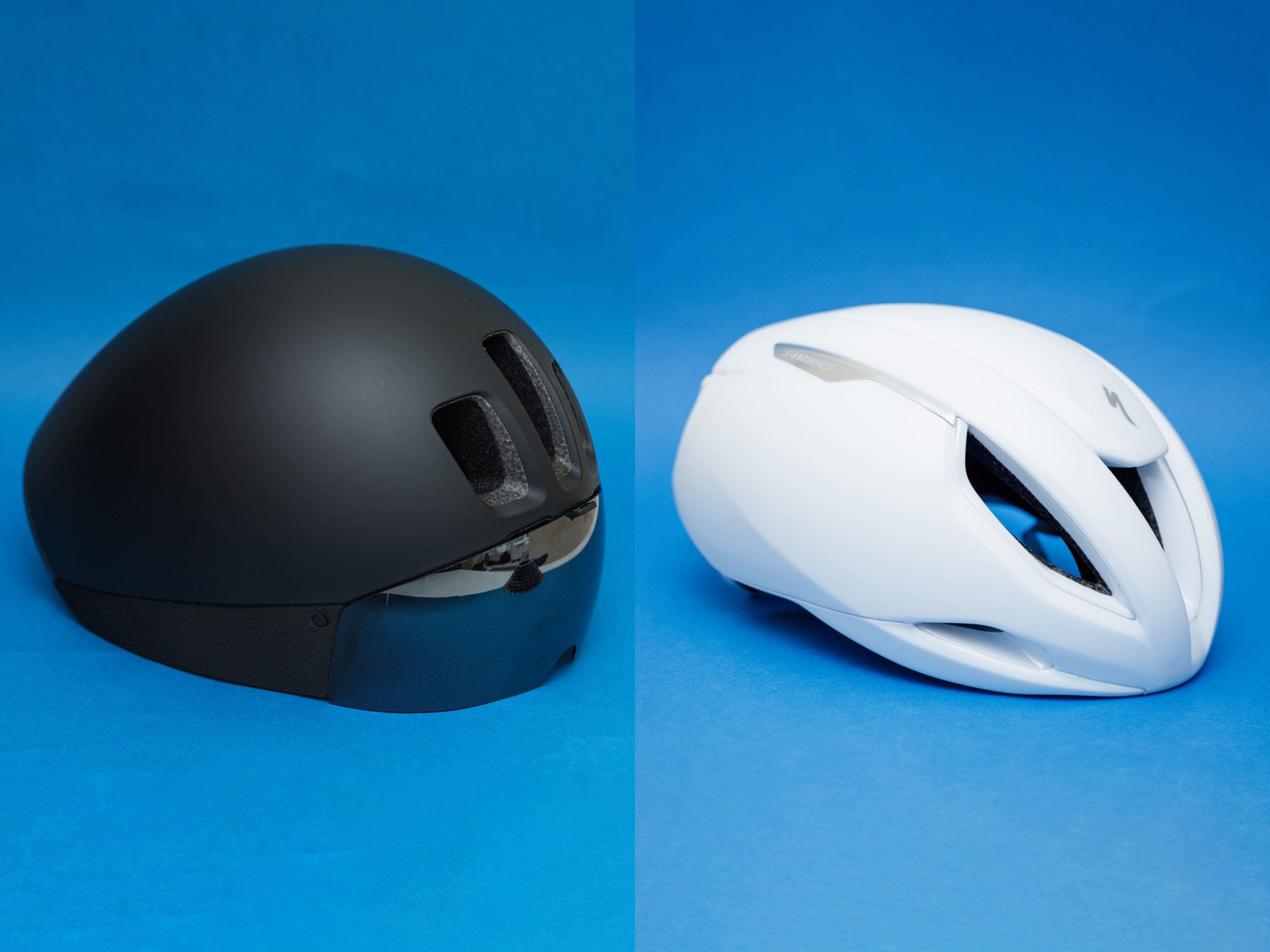
The UCI has also aimed to clarify the new regulation that will distinguish between ‘road’ and ‘time trial’ helmets, as aero road helmets have become steadily more TT helmet-like.
The POC Procen Air helmet worn by the EF Education pro team, for example, encloses the tops of a rider’s ears and there are just three front vents. Victor Campenaerts and his Visma-Lease a Bike teammates have also been wearing the Giro Aerohead MIPS TT helmet, minus its visor, in many mass start road races this season.
It appears both helmets would be banned from January 2026, under the new rules, which stipulate “minimum ventilation requirements, a ban on helmet shells or accessories covering or obstructing the riders’ ears, and a ban on integrated or detachable visors”.
Again, the UCI’s justification is “to contain aerodynamics”, decrease rider speeds and improve safety, as well as to distinguish between helmets used in different disciplines.
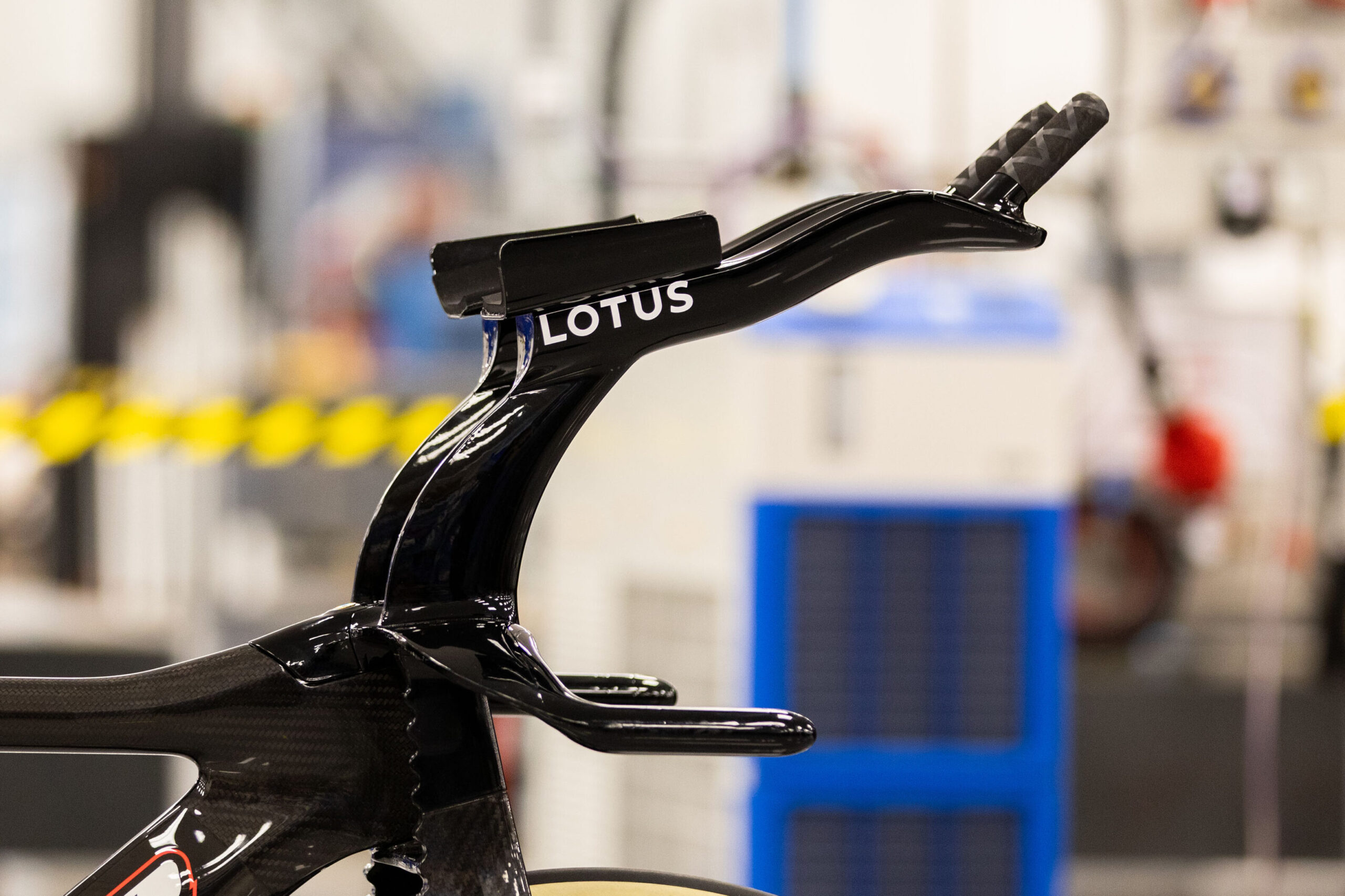
The UCI has announced it will cap the prices of track bikes and equipment used at the 2028 Olympic Games in Los Angeles.
Following the 2024 Paris Games, which saw the cost of track bikes and related equipment soar to unprecedented levels, cycling’s governing body says price caps will bolster “the integrity of competitions by preventing excessive cost barriers”.
Though details of exactly how price caps will be implemented – or what level they will be set at – have not been revealed, the UCI says “maximum prices will apply for framesets, forks, wheels, handlebars and their extensions, helmets and skinsuits” from 1 January 2027.
The UCI says this decision has been approved by its management committee, which is headed by UCI president David Lappartient, and is designed to ensure “participants from all nations have fair access to equipment”.
Why does the UCI want to cap the prices of track bikes and kit?
The cost of many track bikes has ballooned in recent years, and the UCI isn’t happy about it. Scott Windsor / Our Media
According to the UCI, the establishment of price caps for track bikes and related equipment will complement its existing rules on commercial availability, which are intended to create a more level playing field in terms of access to equipment.
As before, new bikes and related equipment will need to be registered with the UCI and used in events prior to the Olympics in order to ensure compliance with the rules.
In theory, this gives competing nations a chance to see – and potentially purchase – any bike or item of equipment, clothing and so on, prior to the Games.
It seems the spiralling cost of Olympic track bikes and kit may have prompted the UCI to take action against prices that appear to be designed to discourage or even prevent such kit from actually being purchased by rivals.
The V-IZU TCM2 and TC-M1 track bikes used by the Japanese cycling team, for example, were priced at €126,555 and €112,320, respectively, according to the UCI’s ‘Final Equipment List’.
The UK Sports Institute UKSI-BC1 track bike, used by Team GB, was listed at €64,350 for a frameset alone, while other bikes from top nations were priced at similarly astronomical levels.
Wild designs and novel constructions methods have put top track bikes and related equipment out of reach for many. Scott Windsor / Our Media
And that’s just bikes and framesets. The Pinarello MOST custom 3D-printed bar extensions used by the Italian cycling team were listed at €22,500, while the Black Inc Zero tubular disc wheelset was priced at €18,400.
In comparison, the most expensive bike listed ahead of the 2020 Tokyo Olympics was the Worx WX-R Vorteq Track, at €28,000.
With incoming regulation changes potentially banning radical track bikes such as the Hope HB.T and Look P24, it looks as if major cycling nations will need to go back to the drawing board and create bikes that are not only fast, but reasonably priced.
What counts as ‘reasonable’ according to the UCI remains to be seen, though nations will doubtless be hoping for clarity sooner than later given the limited time scale to develop new bikes and equipment before the next Olympic Games.
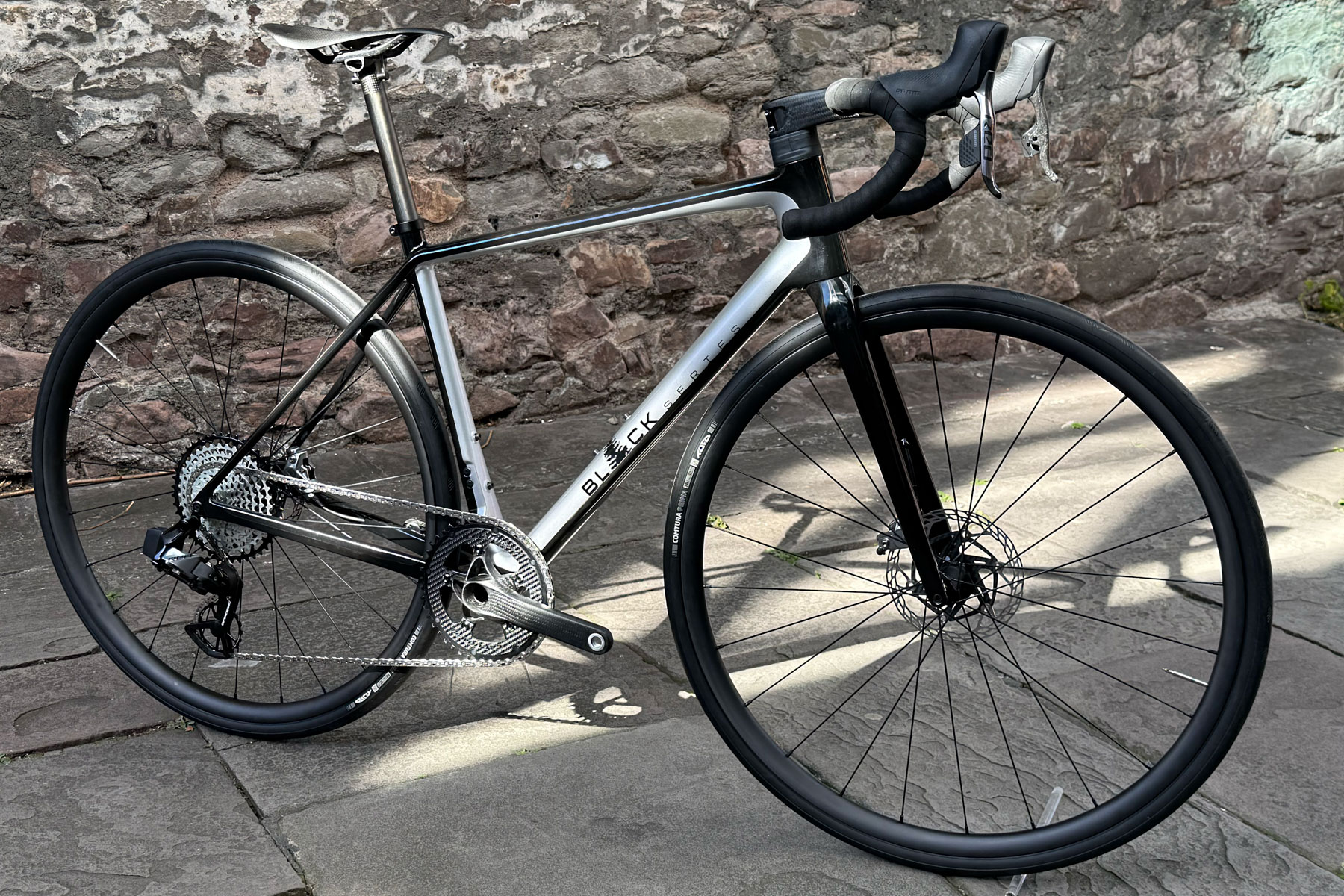
The new Black Series Corsa is the lightest production bike in the world, at 5.24kg, according to its designer, Andy Wallis.
The Black Series range of bikes and components has long been the ’secret’ or ‘special projects’ label of engineer and designer Wallis, the owner of Poshbikes.
Wallis says: “Whenever a new frame, wheelset or component was required to outperform the standard item, or a specific bicycle is required for a factory race team, when one was not available from their current line-up, a custom item was created under the Black Series codename.”
Over the years, this special project division has amassed a collection of frames and components that have proven themselves for pro riders. Yet they’ve never been available to the public, until now.
Wallis is readying a complete line-up of Black Series bikes and components, including road, aero, gravel and hardtail XC mountain bikes. There are also bars, stems, seatposts, wheels, hubs and a host of small parts, all under the Black Series name.
This special-edition Corsa tips our scales at an outlandish 5.338kg (size-medium). That’s with standard butyl inner tubes, as the bike was being studio shot when I came across it.
Wallis claims the bike weighs in at 5.241kg in full tubeless trim.
Frame and fork details
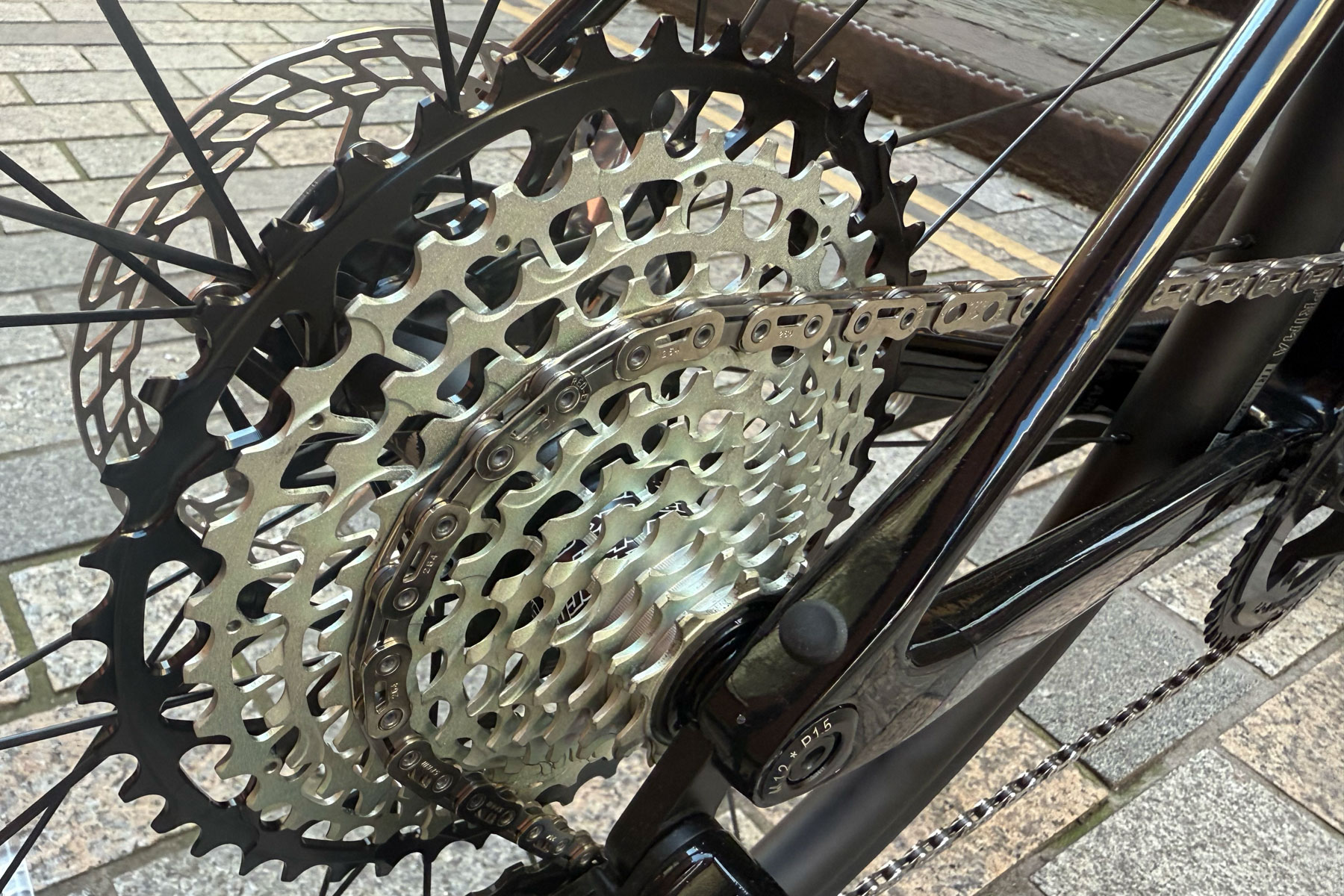
The Garbaruk cassette weighs only 275g for a 10-44. Warren Rossiter / OurMedia
The frame is a single monocoque construction made with a complex dual-mould technology. The Corsa frames are all proportional, meaning the diameter of the tubing expands across the sizes. This is intended to ensure the ride is the same from XS to XL sizes.
The geometry is aggressive, with a super-short back end with 405mm chainstays.
The Corsa frame has generous tyre clearances (conservatively 36mm, although it looks greater than that) and a threaded T47 bottom bracket shell.
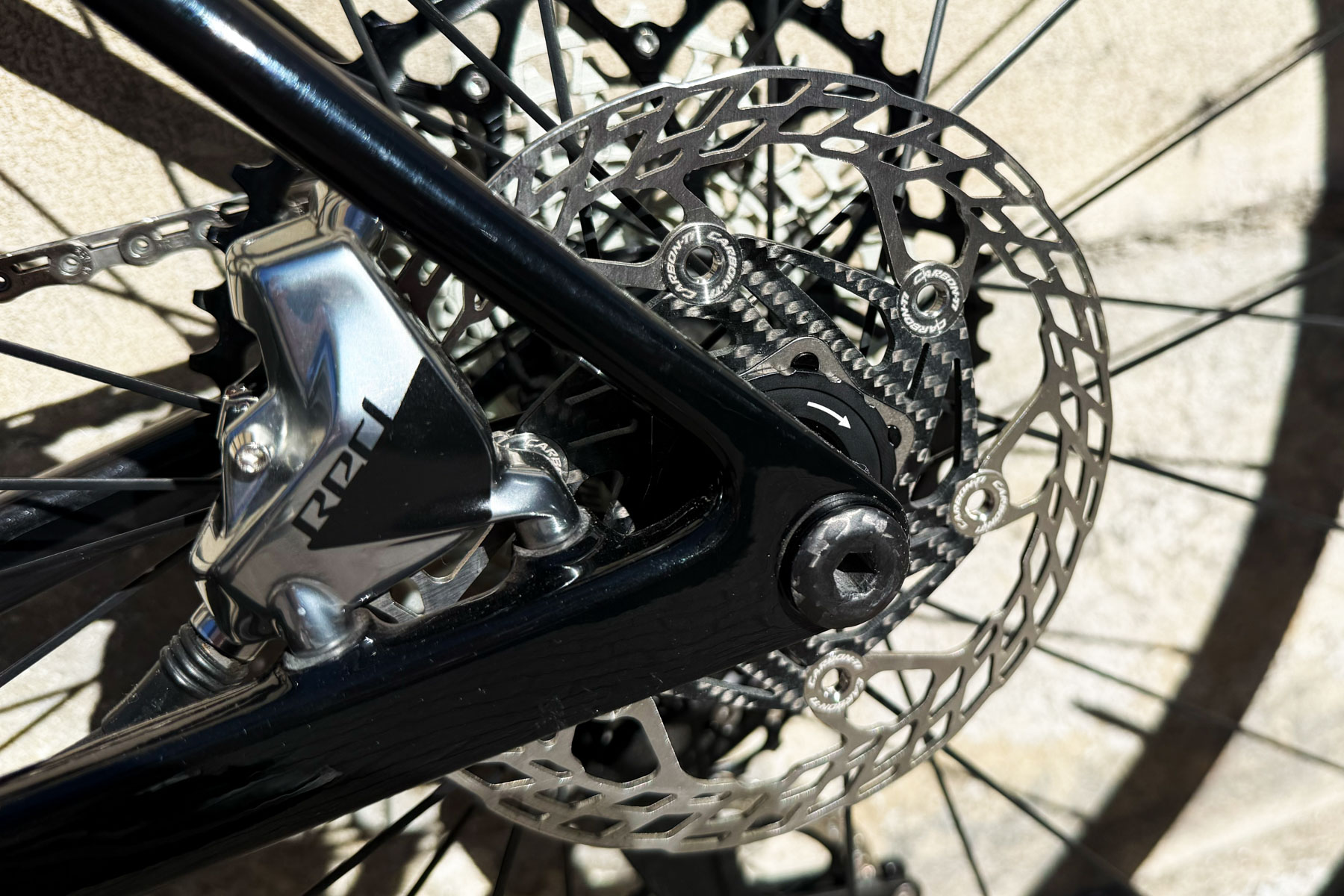
Even the 160/140mm disc rotors sit on carbon fibre carriers. Warren Rossiter / OurMedia
The head angle is race-bike steep, and the front centre is longer than standard road bike geometry.
Wallis tells me the idea behind the Corsa is to build a classic climber’s race bike, yet one that adds stability on descents with the longer front centre.
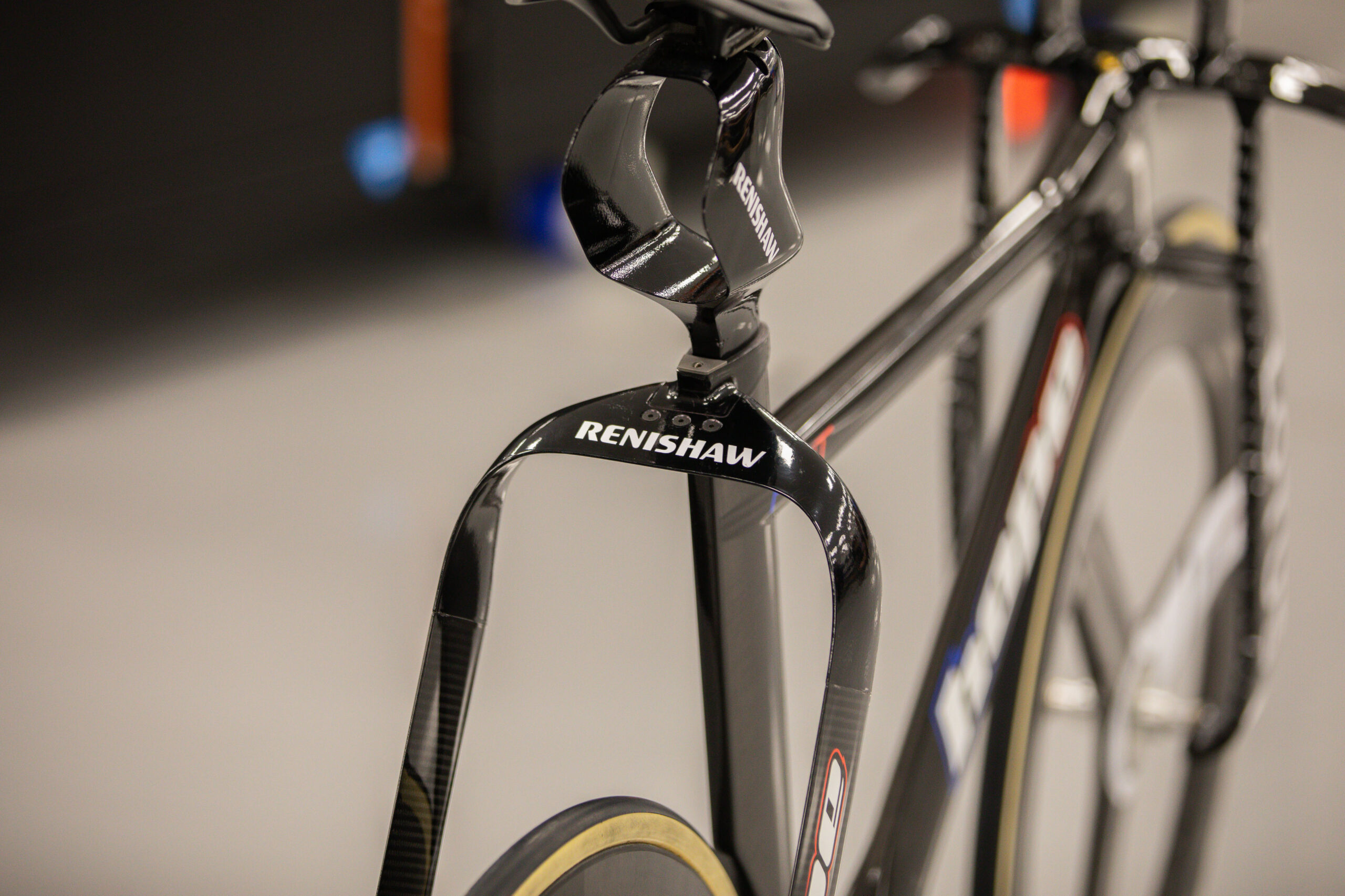
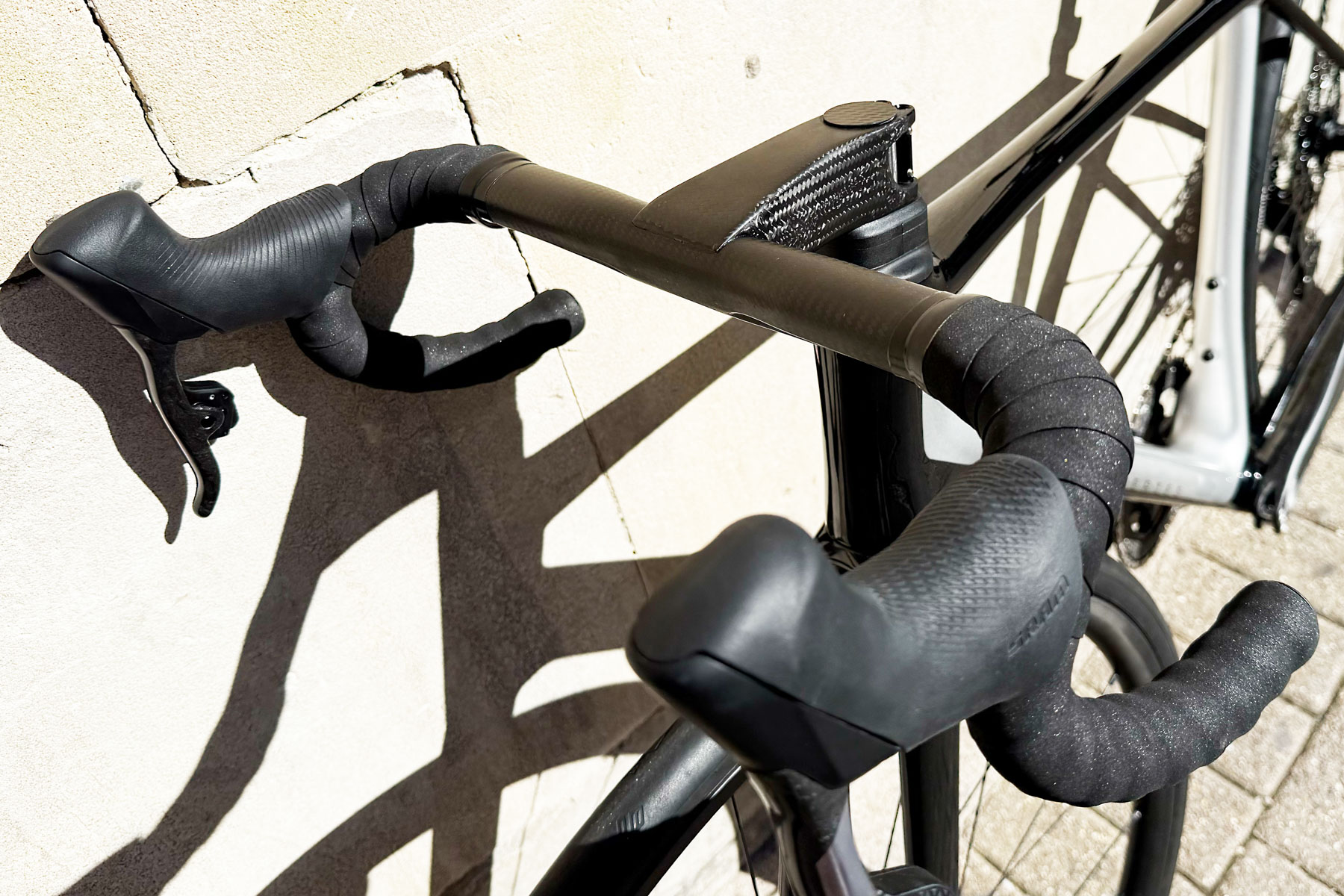
The carbon one-piece cockpit is available in a huge range of sizes and made to order. Warren Rossiter / OurMedia
The frame and fork are light at 595.7g (unpainted, size medium) and 348g (300mm steerer), respectively. That’s impressive for a bike with internal routing and clearance for 36mm tyres. It gives current featherweight bikes such as Scott’s latest Addict RC (640g) and Specialized’s Aethos (585g, size 56cm) a run for their money.
Attention to detail
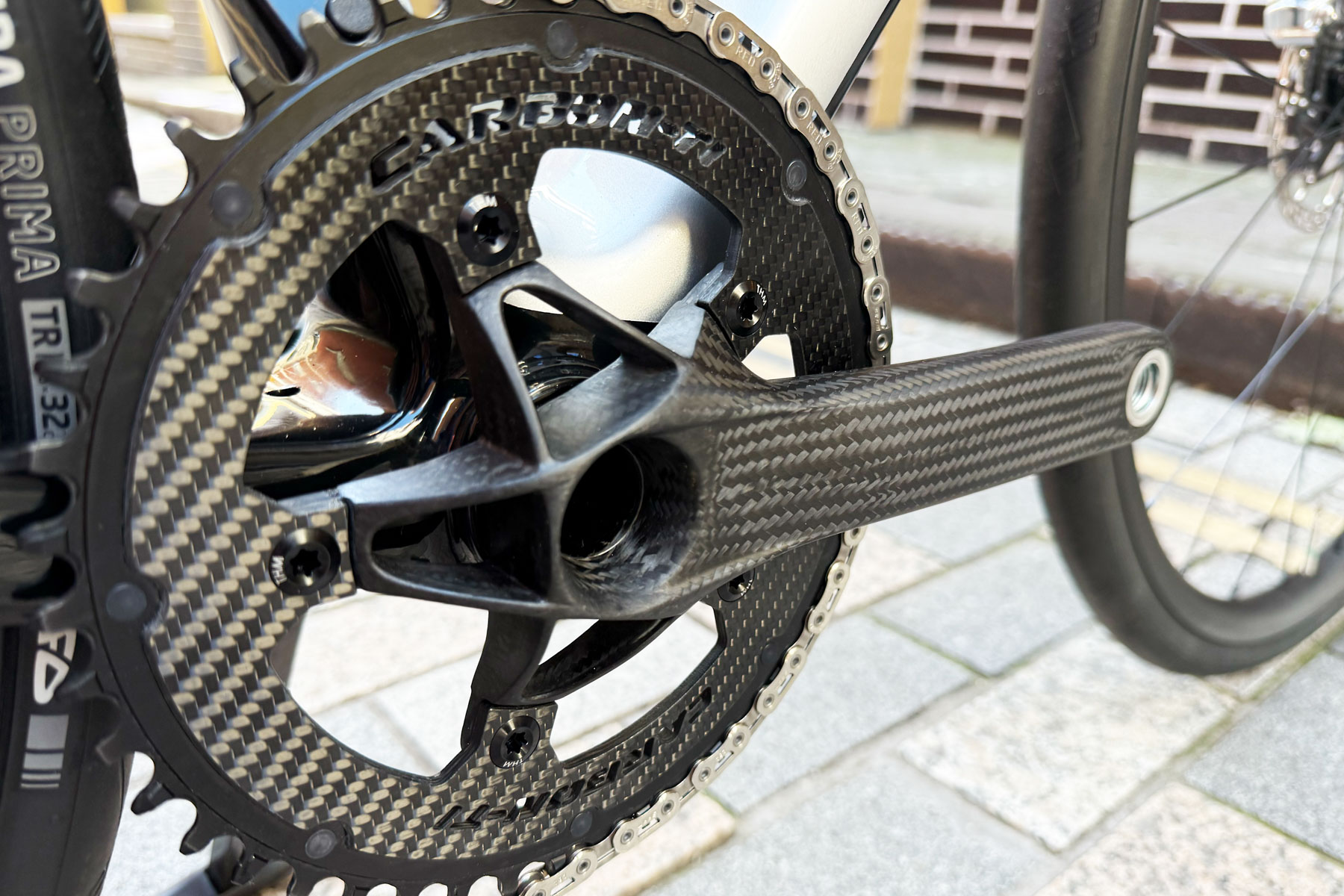
The Black Series Corsa crankset, here fitted with a Carbon-Ti chainring, is one of the lightest you’ll find. Warren Rossiter / OurMedia
This Black Series bike, however, cheats the scales further thanks to its build. The 220g (100mm x 42cm) one-piece bar/stem is made in collaboration with German lightweight specialist Schmolke. The internally routed one-piece design bonds the stem piece to the bar. That means the combination is available in any size you could wish for.
The carbon crankset is also a collaboration, with carbon specialist THM, weighing 289g (172.5mm) with a Carbon-Ti chainring at 112g.
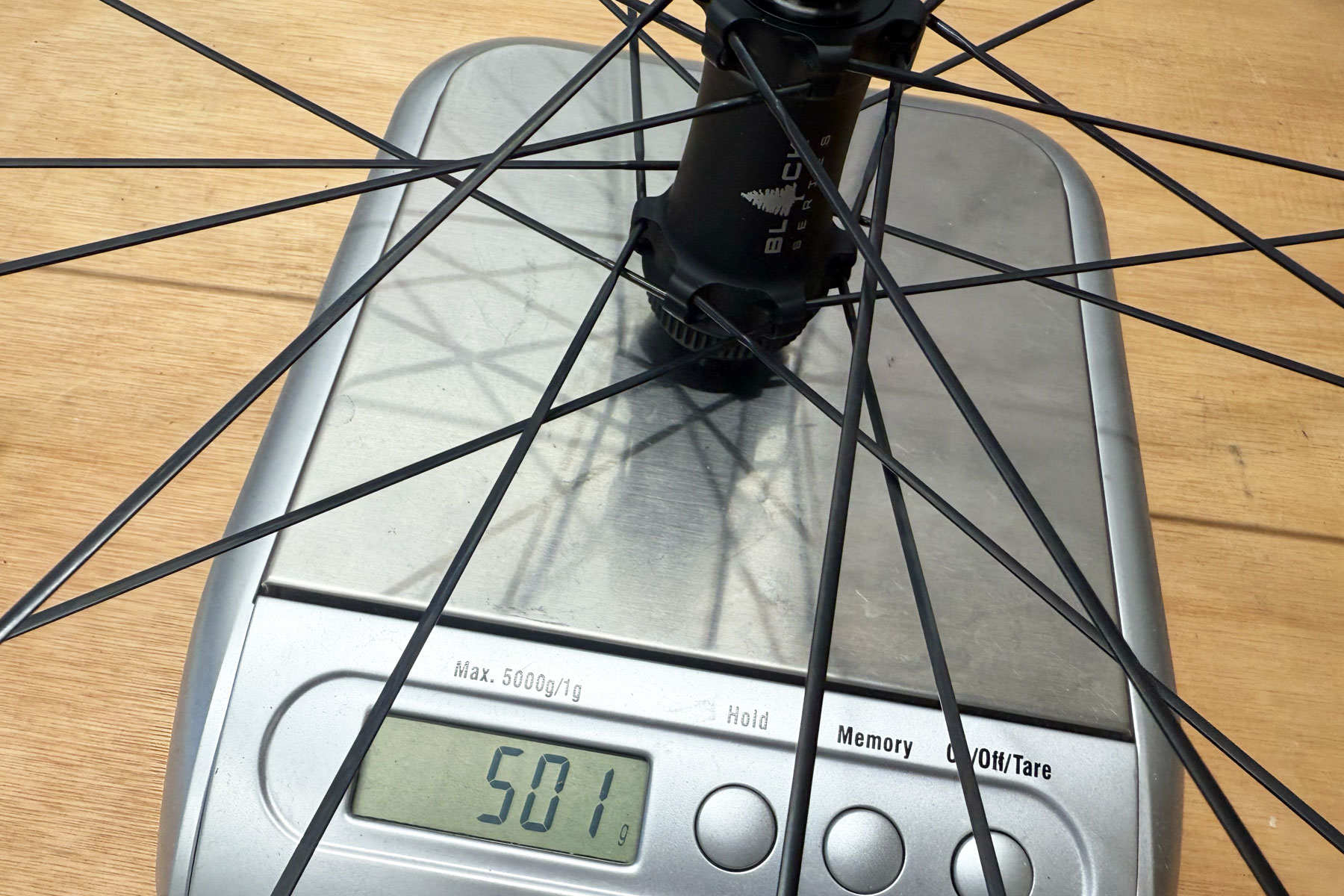
The Black Series Corsa front wheel tips the scales at only 501g. Warren Rossiter / OurMedia
Conventional wheels, unconventional weight
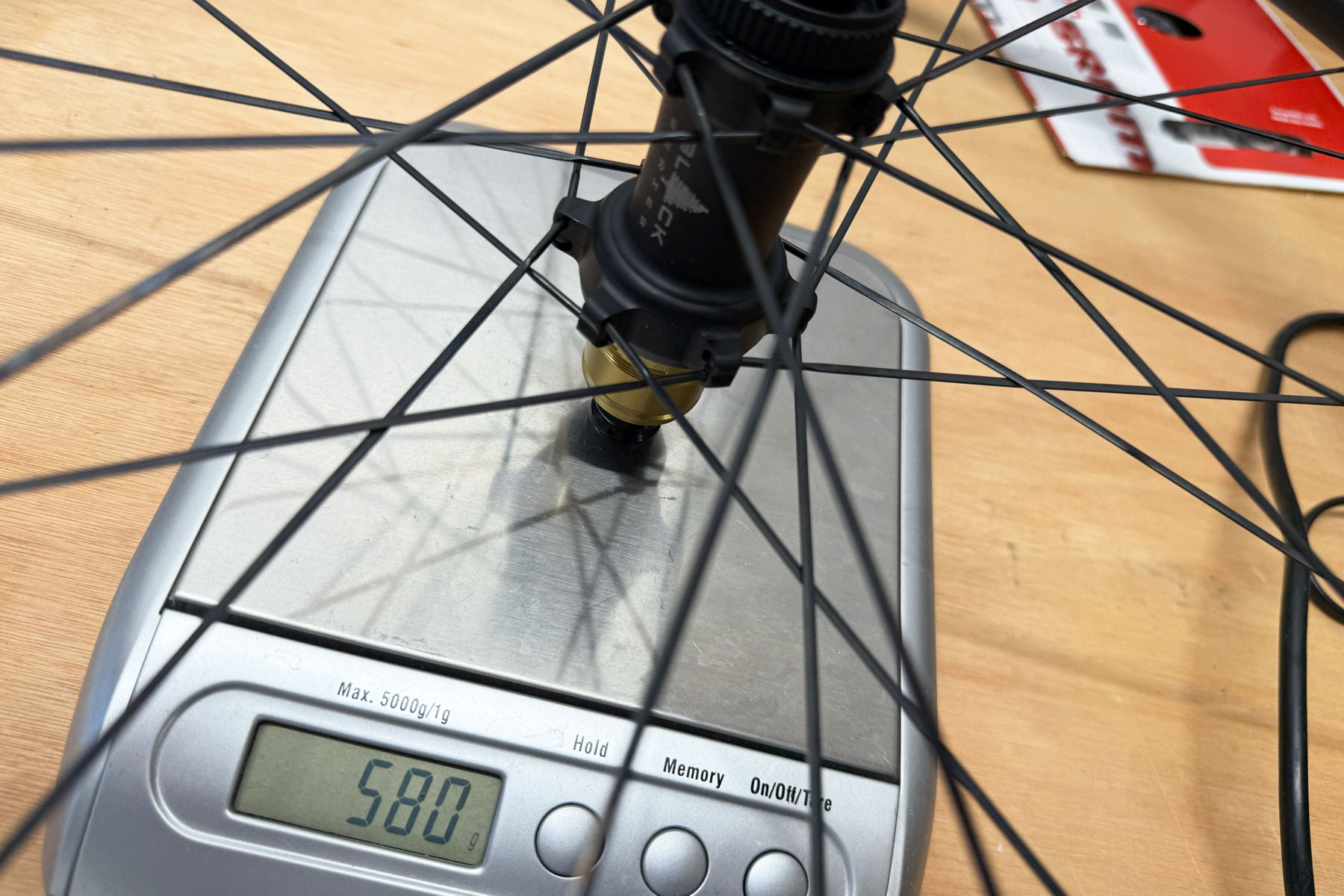
The rear wheel comes in at 580g. Warren Rossiter / OurMedia
The Corsa wheels, which use a conventional 28-spoke build, connect the 280g rims via Sapim CX-Ray spokes, with Black Series’ own ultra-light hubset (64g front, 149g rear). The wheels weigh in at a mere 1,081g a pair, including tubeless rim tape.
They’re shod with Tufo’s 220g Comtura Prima tubeless tyres in a rough-road ready 32mm width.
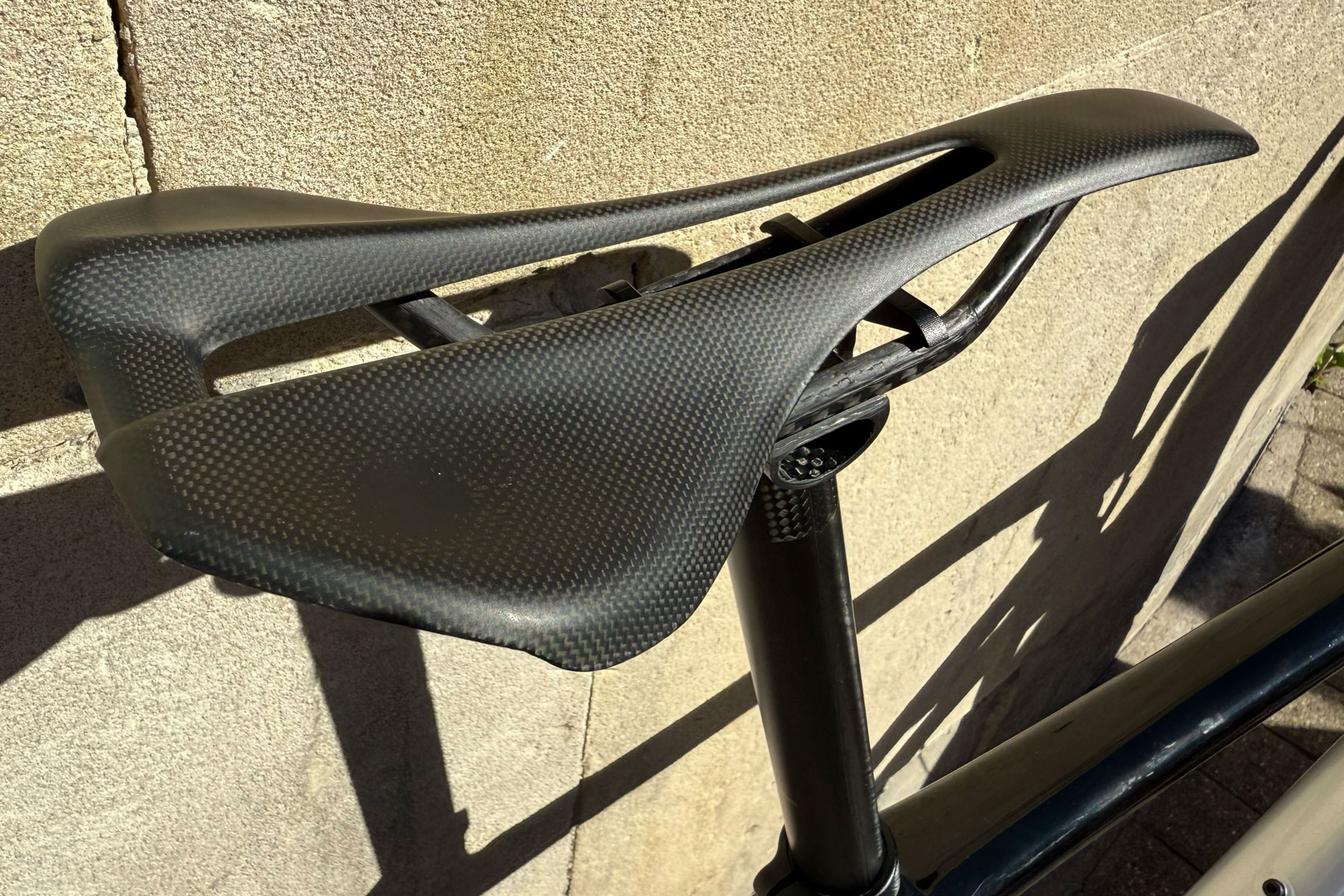
Completing the build is a Corsa seatpost made in collaboration with THM and weighing 85g (27.2x350mm). It’s topped with a Black Series Corsa saddle at an astonishingly light 52g. The 27.2mm-diameter post is available as an inline or offset option.
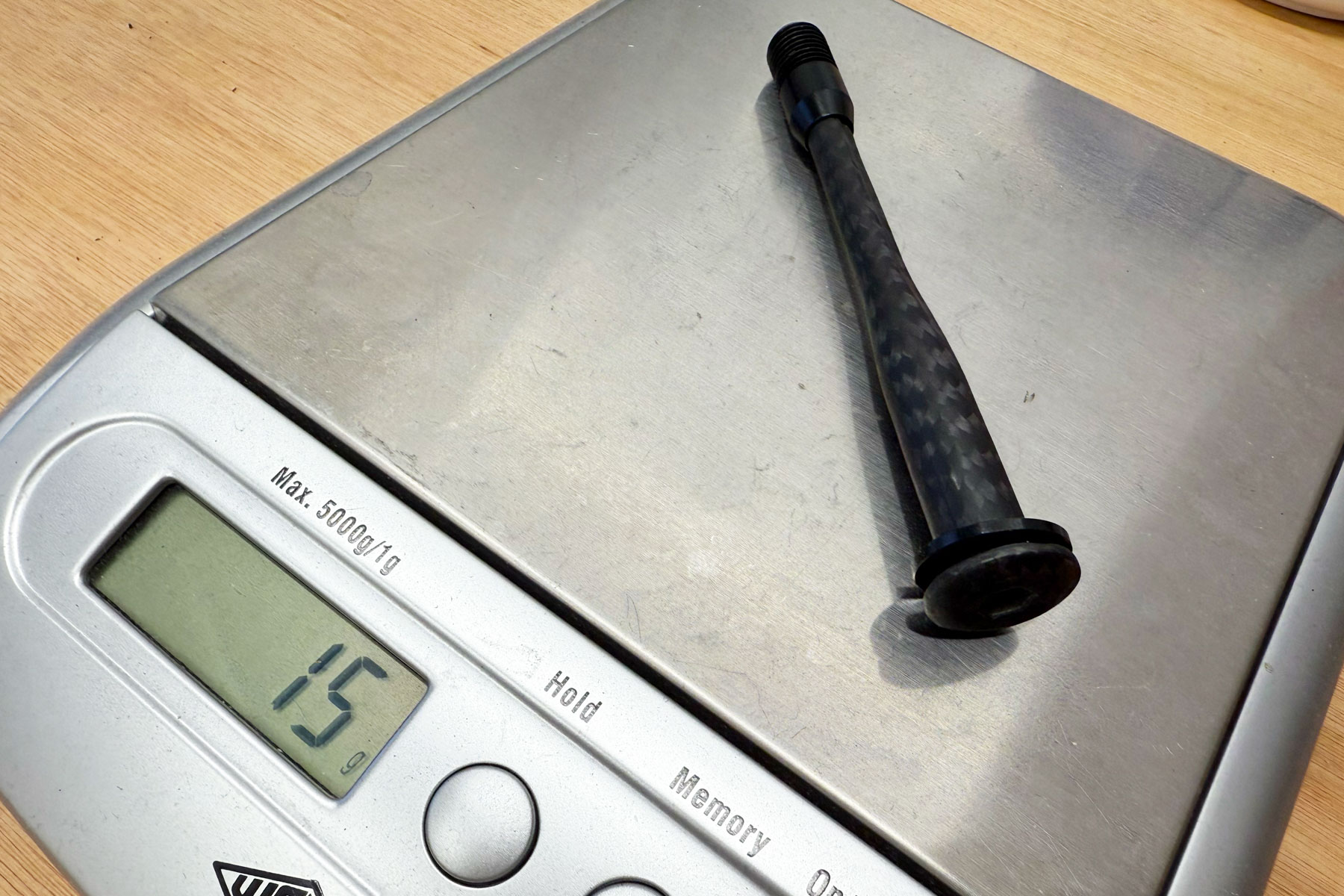
The Black Series front thru-axle weighs only 15g. Warren Rossiter / OurMedia
As you might expect from a brand born out of Poshbikes’ history, the attention to detail goes further in the pursuit of weight reduction than you’ll see from perhaps any other brand.
Take the Black Series Corsa thru-axles, for example.
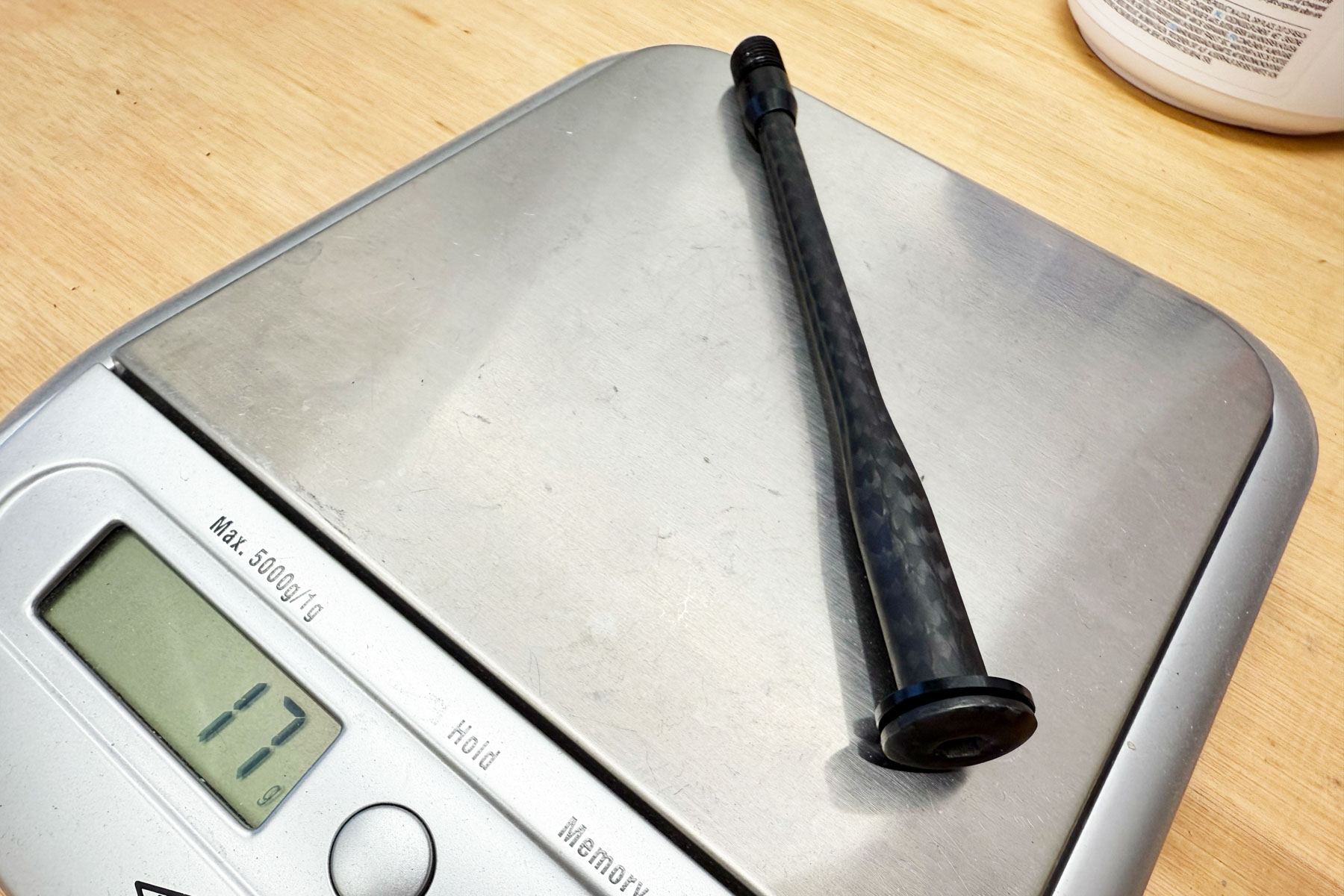
These are made from a moulded carbon shaft with a ceramic insert for the hex key slot. They are tipped with a metal-threaded end piece that’s keyed and bonded to the shaft. The weights for the road versions of these axles are an astonishing 17g (rear) and 15g (front).
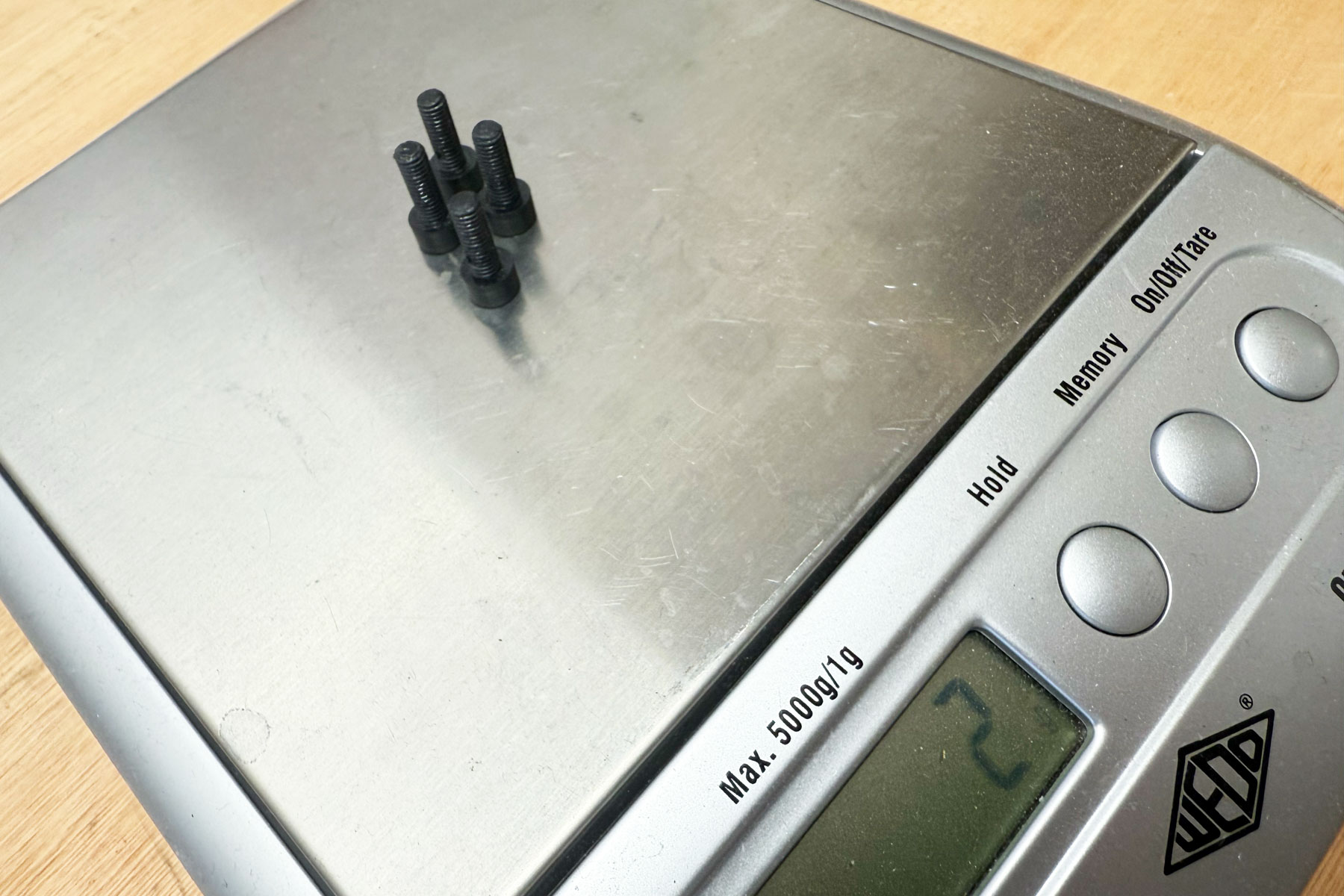
The Black Series rear thru-axle weighs only 17g. Warren Rossiter / OurMedia Four Black Series carbon M5 x 15mm bottle cage bolts weigh 2 grams. Warren Rossiter / OurMedia
Even the bottle cage bolts are the lightest available. These carbon fibre bolts are sourced from the aeronautic industry. A set of four M5 x 15mm bolts weighs only 2g.
The 52g carbon saddle is made in Italy by a carbon motorsport specialist. Warren Rossiter / OurMedia
Availability and pricing
The Black Series Corsa is a seriously lightweight bike. Warren Rossiter / OurMedia
This ‘Ultimate’ SL build will be available from Black Series before the end of the year with an expected retail price of £16,000 / $21,650 / €18,350.
Wallis told me he’s confident he could build an even lighter version of the bike at less than 5kg.
American customs officials will bar the import of bicycles manufactured in Taiwan by Giant Bicycles following an investigation that found evidence of forced labour.
The US Customs and Border Protection (CBP) will detain bicycles, bicycle parts and accessories manufactured in Taiwan, effective immediately after issuing a Withhold Release Order.
CBP said it identified five ‘forced labour indicators’ during its investigation of Giant: abuse of vulnerability; abusive working and living conditions; debt bondage; withholding wages; and excessive overtime.
CBP said Giant, the largest bicycle manufacturer in the world, “profited by imposing such abuse”, resulting in goods produced below market value and thereby “undercutting American businesses by millions of dollars”.
Acting Executive Assistant Commissioner of CBP’s Office of Trade Susan S. Thomas said: “Importers have a responsibility to do their due diligence and know their supply chains. CBP will continue to investigate allegations of forced labor and take action when we find it in U.S. supply chains.”
In a statement published on its website, the Giant Group said it is “firmly committed to upholding human rights and labor protections”.
Giant said it has taken “concrete actions” in the last year: “Since January 2025, we have fully implemented a Zero Recruitment Fee Policy, under which all recruitment, agency, and government-related fees for newly hired migrant workers are fully covered by the company.
“By the end of 2024, we completed upgrades to employee housing, providing a safer and more comfortable living environment.”
Giant Group said it will file a petition to seek the revocation of the Withhold Release Order and explain to the CBP that the company has “already adopted appropriate measures”.
Giant said it expects some shipments to the US may experience delays and inspections in the short term.
“The Group will continually provide timely updates and maintain open communication with global stakeholders to foster a responsible and resilient industry environment,” the statement said.
If you’re on an A or B team, you’ll be racing one lap of the Country to Coastal route. C and D teams will be racing one lap of Turf N Surf.
There’s much to discuss, including crucial course segments, powerup usage, bike decisions, and strategic options. So choose your category below, and let’s go!
A & B Categories – Country to Coastal
Looking at the Route
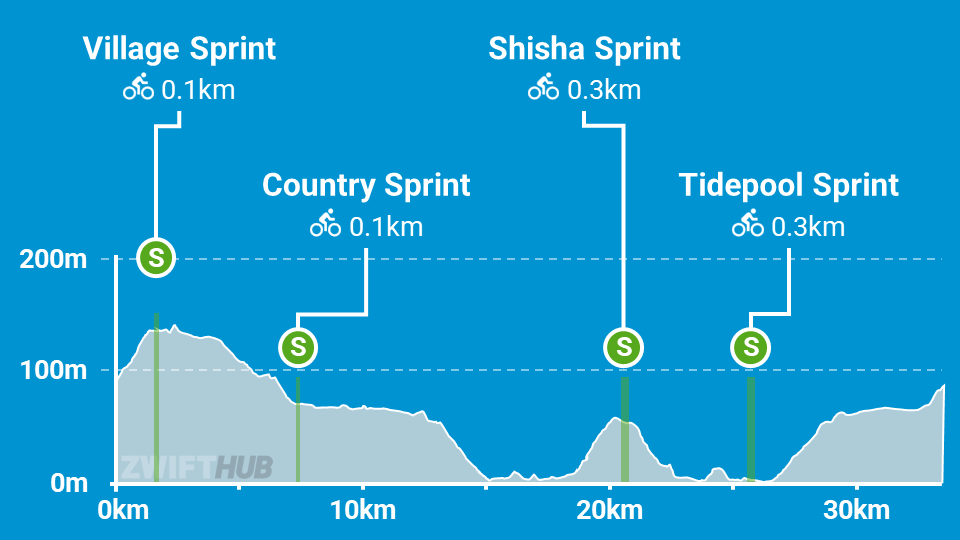
Makuri Islands’ Country to Coastal route is 33.5km long with 284m of elevation gain. This is the second time we’ve raced it for ZRL, as it featured in race 3 almost exactly 1 year ago.
Let’s discuss the key parts of this route, beginning just after we blast out of the start pen.
Note: riders will receive particular powerups at particular arches in this race. We’ve included those details below, along with notes about where to best use the powerup.
Uphill Start (0-1.4km): we begin with a quick climb from the start pens up to the Village Sprint. While the slope only averages 3.5%, it’ll make the first few minutes especially tough. Make sure you come into the pens warmed up! Once the race begins, mind your pack position, watch for gaps, hold onto those wheels, and know that recovery is just up the road as the next 13.5km are mostly downhill!
Draft Boost powerup at Village Sprint arch @1.7km: increases the draft effect you are experiencing for 40 seconds. Use at higher speeds (flats and descents) when you are already drafting off another rider (since this powerup only helps when you are drafting.) Best used before the next powerup at 7.4, while you’re in the pack, to grab additional recovery.
Anvilat Country Sprint arch @7.4km: makes you heavier for up to 15 seconds, so you can descend faster. It won’t hurt you, as it only adds weight when the road is at a -1.5% decline or greater. Event-only. Use this on downhills. Pair it with a supertuck to go extra fast with zero effort! Best used on the steeper portions of the slot canyon descent ~13-15km into the race.
Climb to Shisa Sprint (18.6-20.1km): the next pinch point begins at 18.6km when you cross a bridge onto the sandy, uphill corkscrew road taking you to the Shisa Sprint. Again, this isn’t a steep climb – it averages 3.3%. But climbers and puncheurs will push the w/kg here in an effort to thin the herd. If you aren’t attacking, you’ll want to hold onto a wheel to save energy in the draft.
Steamroller at Shisa Sprint arch @20.7km: reduces Crr for 30 seconds so you roll as fast as a road tire on pavement regardless of wheels or road surface. This is most effective when used on dirt, but it also provides an advantage on cobbles, bricks, gravel, wood, and ice/snow, etc. Best used on the dirt portion of the Mangrove Maze road at ~24.1km.
Lightweight (feather) at Tidepool Sprint arch @25.8km: reduces your weight by 10% for 30 seconds. Use on climbs, when weight matters the most. Best use? Either on the steeper portion of the Slot Canyon Climb (~26.2-28.5km) if you’re struggling to hold on, or save it for the base of the finishing climb, triggering it just before the lap arch so you get the next powerup!
Slot Canyon climb (26.7-29.2km): our last real climb (apart from the uphill finish) takes us up through the Slot Canyon we descended earlier. At just 2.4%, this is the slackest of our three climbs. But since it comes near the end of the race, you know it’s going to hurt! Pro tips: watch for riders attacking when the road turns right off the pavement and onto sand around 28.2km. This always seems to be a key inflection point.
Burrito at lap arch @33km: turns off the draft effect for riders in a cone-shaped window behind you for 20 seconds. Use when attacking off the front so opponents have to work harder to follow you, or in the peloton to make others work harder. Best used in the final seconds of the race, but watch out – your burrito may hurt nearby teammates!
Finish at Virtual Arch (@33.5km): after a flat lead-in from the Slot Canyon climb, you’ll get to slug it out in an uphill finish that is around 700 meters long, averaging 3.5%. Any powerup will help you here, and you’ll get another one as you pass under the lap arch with 400 meters to go. Time them wisely!
This route’s three key climbs plus an uphill finish may entice you toward a climbing-friendly bike. But it’s important to look at the pitch of the climbs, and not just their length.
As noted above, the climbs only average 2.4-3.5%, which means they are quite draftable, and your bike’s aero performance will be more important than its weight, especially at the speeds A and B riders travel.
So we’re recommending pairing the DT Swiss ARC 1100 DICUT 85/Disc wheels – the most aero wheels in game – with any of the following frames:
S-Works Tarmac SL8
Pinarello Dogma F 2024
Canyon Aeroad 2024
Cannondale SuperSix EVO LAB71
The Tron bike (Zwift Concept Z1) is also a good choice.
Lots of recon events are scheduled on upcoming ZRL routes, led by various teams. See upcoming ZRL recons for this race at zwift.com/events/tag/zrlrecon.
Various members of the Zwift racing community create helpful recon videos in the days leading up to each week’s race. Those videos, though, often reference information found in these detailed race guides! So the videos will be added here in the days to follow.
This route as a scratch race has all the makings of a classic attritional Zwift battle. Make no mistake: riders will fall off the back on each of the three key climbs as strong climbers and puncheurs push hard to drop whoever they can!
But does it always make sense to push on the climbs in a team event? Smart teams will look at the makeup of their squad beforehand to determine whether it makes more sense to attack or sit in at key pinch points. Riders will want to communicate well mid-race, too, so teams can make smart, on-the-fly decisions that maximize the team’s overall result.
C & D Categories – Turf N Surf
Looking at the Route
The Makuri Islands Turf N Surf route is essentially one big loop with two key climbs. It was first raced in ZRL in November of 2024, but as a points race.
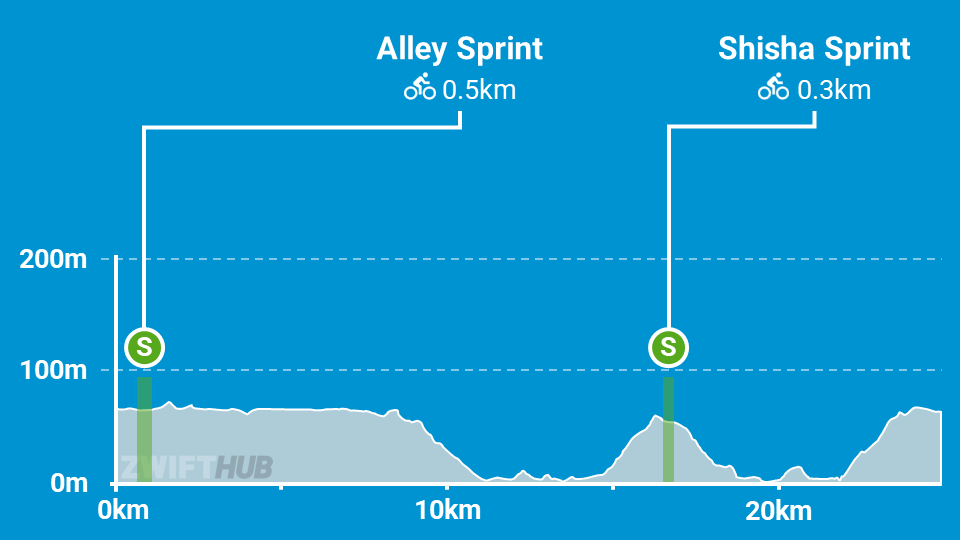
All C and D teams will be racing a single lap of the route for a total of 24.7km with 198m of climbing.
Let’s discuss the key parts of this route…
Note: riders will receive particular powerups at particular arches in this race. We’ve included those details below, along with notes about where to best use the powerup.
Flat Start (0-14.6km): Don’t expect any major action for the first half of the race, since it’s just a stretch of flat Neokyo roads, the Slot Canyon descent, and more flats. Until the Festival Harbor Climb arrives, any attempted attacks have a very slim chance of sticking.
Draft Boost at Alley Sprint arch @0.7km: increases the draft effect you are experiencing for 40 seconds. Use at higher speeds (flats and descents) when you are already drafting off another rider (since this powerup only helps when you are drafting.) Best used during or just after the Festival Harbor Climb to save you some effort on this key tough section. Just make sure you use it before the Shisa Sprint arch!
Festival Harbor Climb @ 14.6km (2.6% for 2km): This isn’t an official KOM segment, but make no mistake: the first major selection of the race happens here! This is a draggy, draftable climb (remember, it looks like you’re on dirt, but that’s just sand that rolls like tarmac).
Lightweight (feather) at Shisa Sprint arch @16.3km: reduces your weight by 10% for 30 seconds. Use on climbs, when weight matters the most. Best used in the Pain Cavern, when the effort gets highest near the end of the climb.
Recovery (16.6-21.6km): Again, don’t expect any action from the top of the Festival Harbor Climb to the start of the Pain Cavern (21.6km). This section is a twisty descent followed by flat or slightly rolling roads.
Pain Cavern @ 21.6km (3% for 2.1km): This isn’t an official KOM segment either, but it’s the longest climb of the route, and it’s where the second major selection of the race will happen! This is a draggy, draftable climb, and the big moves tend to happen as you enter the figure 8 section. Do everything you can to hold the wheels here, as doing so will give you a shot at the podium. If you lose ’em, you’ve lost.
Finish at Virtual arch: once you’re out of Pain Cavern, you’ve got 1km to go, and it’s quite flat. Did you save your aero powerup? Time it right so it runs out just before you hit that virtual arch shimmering in the distance, and you may just find yourself on the podium.
This route’s three key climbs plus an uphill finish may entice you toward a climbing-friendly bike. But it’s important to look at the pitch of the climbs, and not just their length.
As noted above, the climbs only average 2.4-3.5%, which means they are quite draftable, and your bike’s aero performance will be more important than its weight, especially at the speeds A and B riders travel.
So we’re recommending pairing the DT Swiss ARC 1100 DICUT 85/Disc wheels – the most aero wheels in game – with any of the following frames:
S-Works Tarmac SL8
Pinarello Dogma F 2024
Canyon Aeroad 2024
Cannondale SuperSix EVO LAB71
The Tron bike (Zwift Concept Z1) is also a good choice.
Lots of recon events are scheduled on upcoming ZRL routes, led by various teams. See upcoming ZRL recons for this race at zwift.com/events/tag/zrlrecon.
Various members of the Zwift racing community create helpful recon videos in the days leading up to each week’s race. Those videos, though, often reference information found in these detailed race guides! So the videos will be added here in the days to follow.
This route as a scratch race has all the makings of a classic attritional Zwift battle. Make no mistake: riders will fall off the back on each of the two key climbs as strong climbers and puncheurs push hard to drop whoever they can!
But does it always make sense to push on the climbs in a team event? Smart teams will look at the makeup of their squad beforehand to determine whether it makes more sense to attack or sit in at key pinch points. Riders will want to communicate well mid-race, too, so teams can make smart, on-the-fly decisions that maximize the team’s overall result.
Your Thoughts
Any insights or further thoughts on this race? Share below!
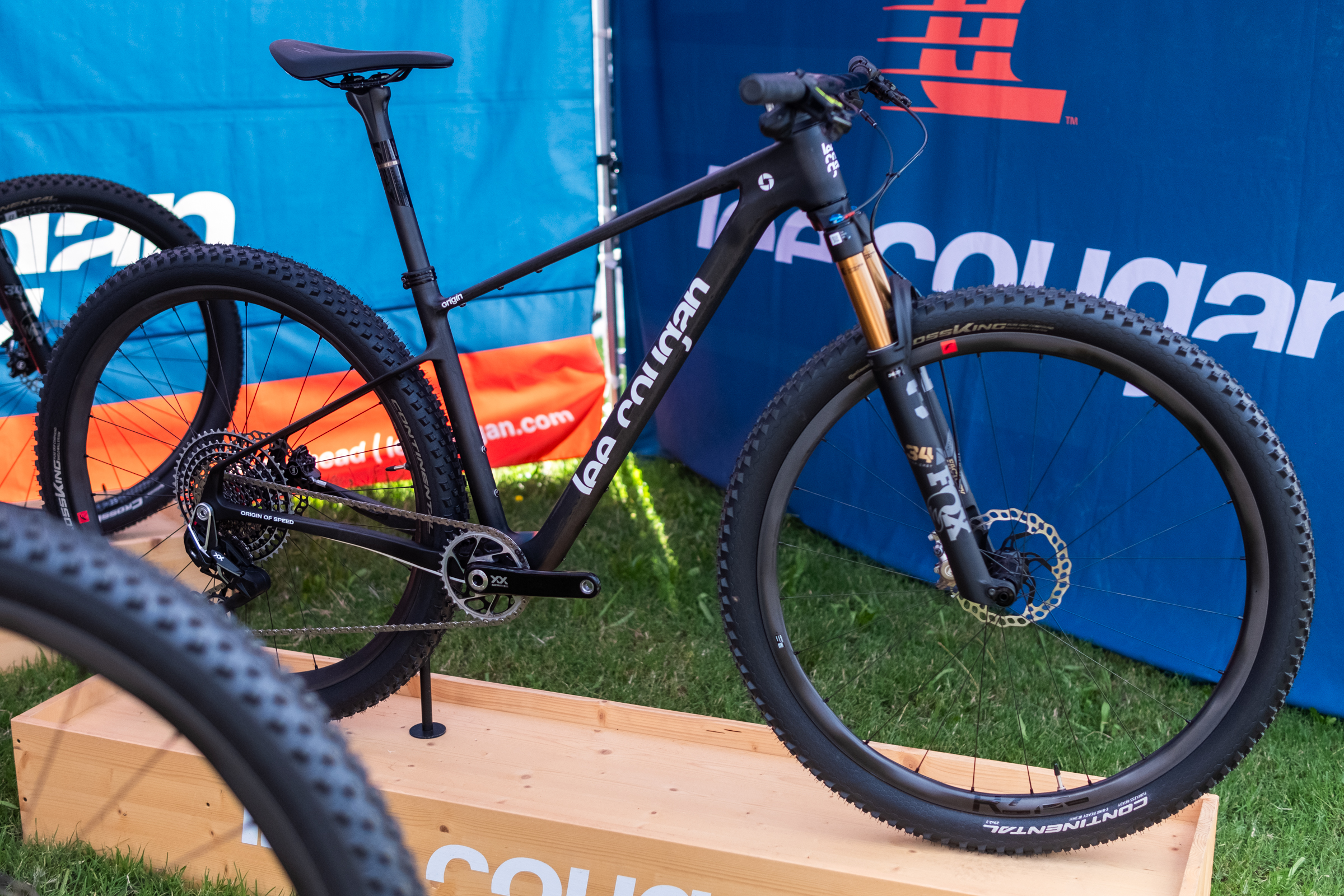
The Lee Cougan Rampage Origin is a proper cross-country race hardtail in the best sense of the word, offering a lot of what I’m looking for in this style of bike.
There are slacker, rowdier and even lighter XC hardtails out there. However, on paper, the Rampage Origin strikes an unusually rare balance, combining the – dare I say it – old-school charm of chasing low weight with practical features.
Spotted at Sea Otter Europe and launching officially today, it’s a hardtail MTB designed for XC marathon riding, that prioritises low weight and practical touches, with a claimed frame weight of only 940g for a size small in the raw-carbon finish.
The new frame has a far more contemporary silhouette than the outgoing Rampage, with slimmer, dropped seatstays and a less aggressive version of the distinctive kink where the seatstays and chainstays meet.
Geometry has also been brought up to date. The head angle has been slackened to 68 degrees (down from 70), while the seat tube angle steepens to 75 degrees (up from 73).
Neither number is wildly out there, and they are exactly what you’d expect of a modern XC race bike of this ilk.
Although not unheard of, it’s relatively unusual to see a proper XC bike with down tube bosses… Jack Luke / Our Media …but it’s even more unusual to see top tube bosses. Jack Luke / Our Media
Despite the focus on weight, practicality hasn’t been ignored.
I’m particularly fond of the triple boss accessory mounts under the top tube and space for an extra bottle cage beneath the down tube. This makes the bike more marathon- and ultra-friendly, but also offers a useful place to stash tools or spares for day-to-day riding.
The Merida Big.Nine springs to mind as a frame offering a similar setup on the underside of its top tube, although the additional boss on the Lee Cougan broadens compatibility with bikepacking accessories. Plus, the Big.Nine misses out on the additional down tube bosses.
Official tyre clearance is 2.4in. That’s around standard for a contemporary XC hardtail, particularly one focused on XC marathon racing. As expected, the frame now uses SRAM’s UDH standard.
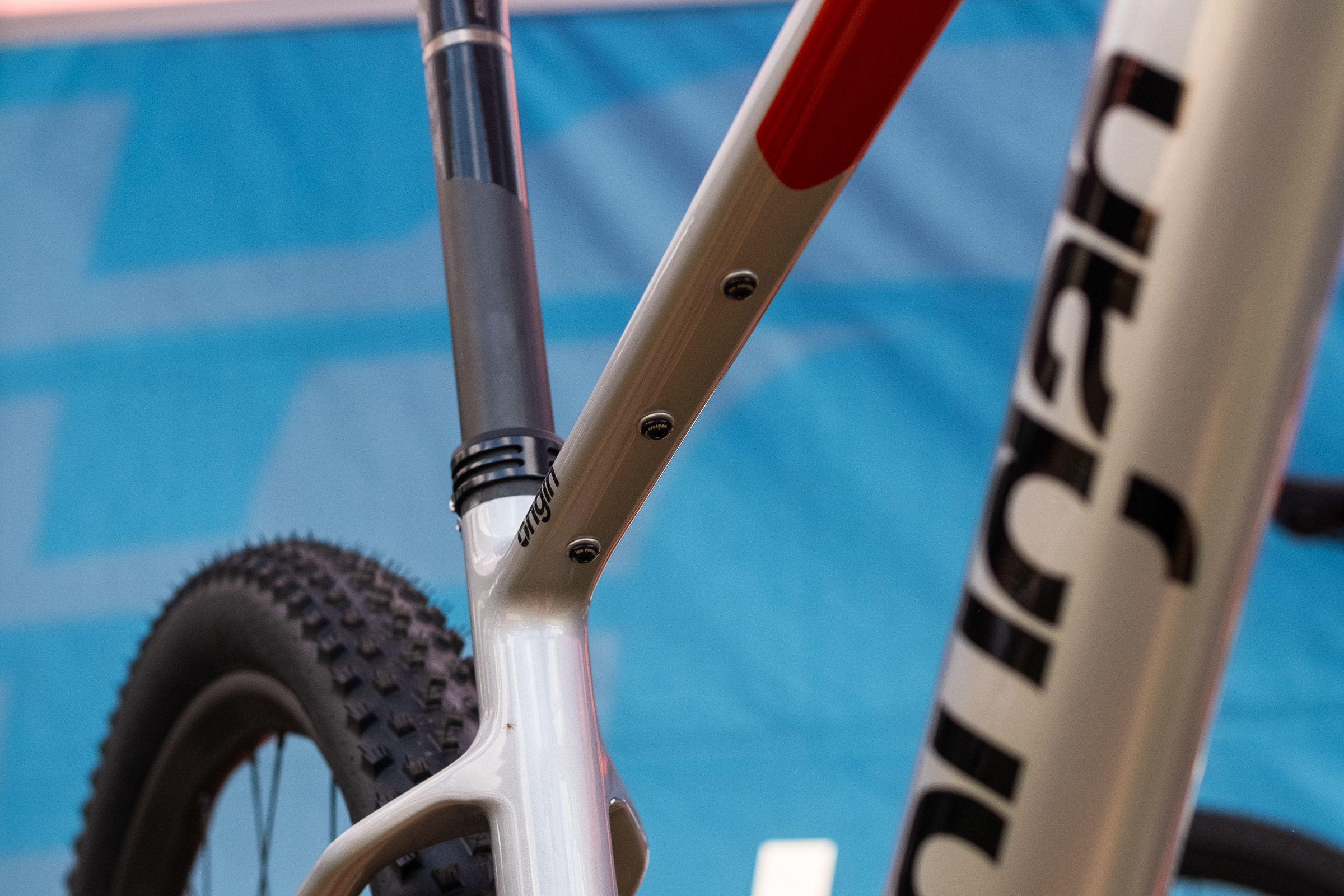
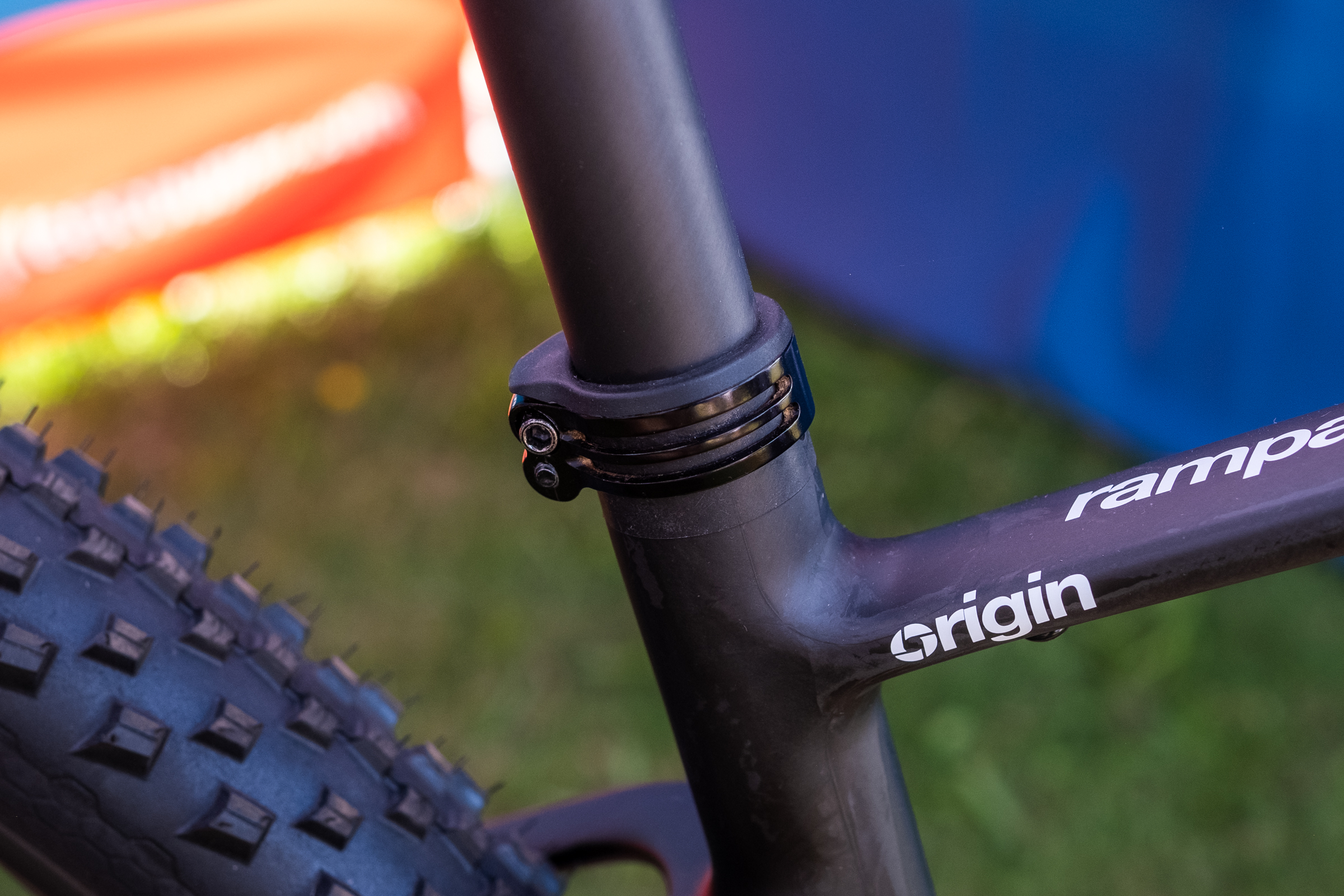
If nothing else, I like the look of the twin-bolt seat clamp. Jack Luke / Our Media
Other nice touches include a chunky double-bolt seat clamp – slipping seatposts are rare on quality frames, but it’s reassuring to see, and a nice touch beyond a generic rebranded single-bolt clamp.
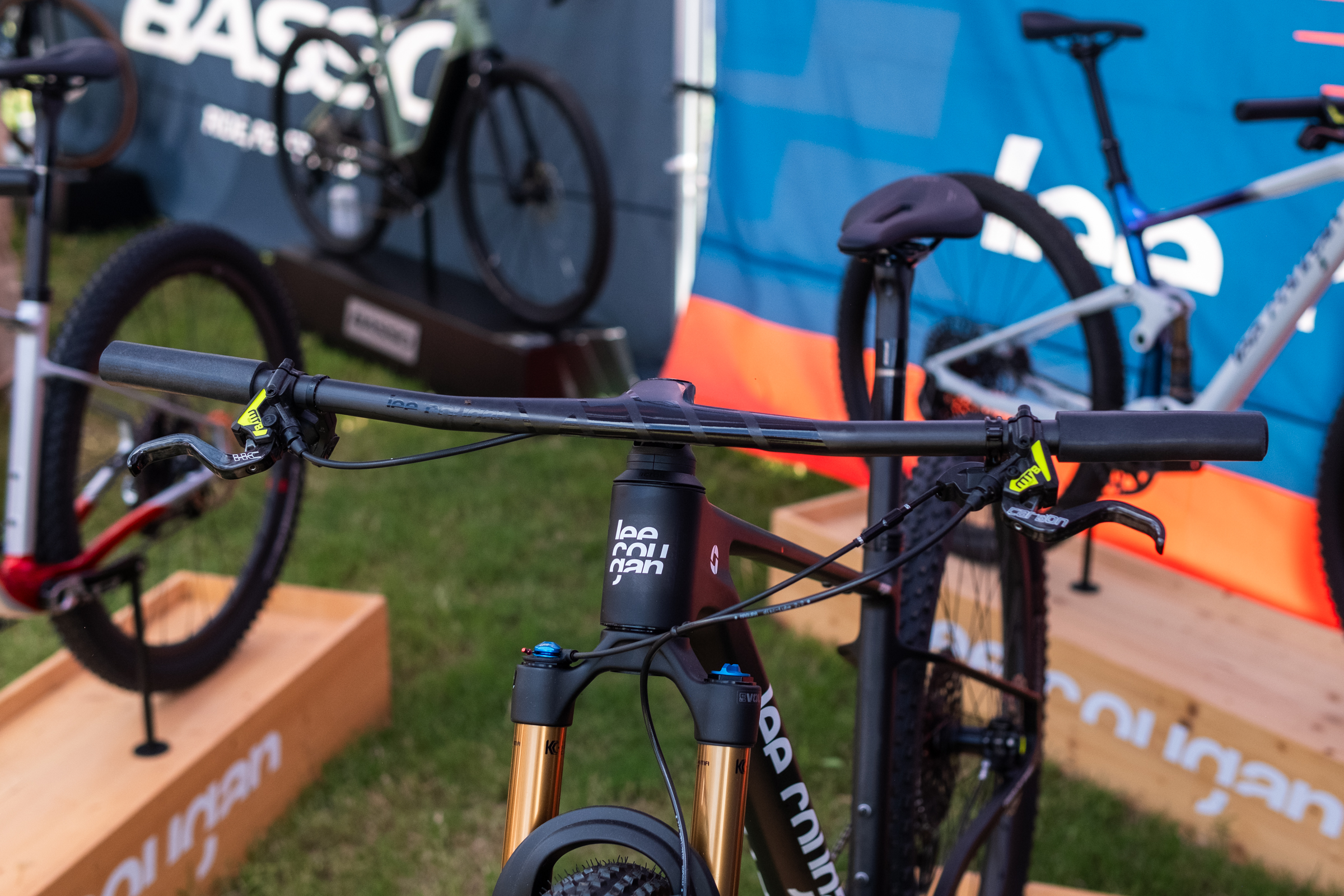
One-piece cockpits are par for the course on modern hardtails. Jack Luke / Our Media
Lee Cougan’s own integrated one-piece cockpit is a handsome visual match for the frame. While adjustability is, of course, impacted compared to a two-piece cockpit, these are an increasingly common sight on high-end XC builds, so it doesn’t feel out of place.
In a slightly unusual move, at least from the perspective of someone based in the UK, the two complete builds come specced with rigid posts.
Fixed posts remain popular in ‘traditional’ marathon racing, but dropper posts are approaching a point of anecdotal near-ubiquity and, to a lesser degree, as spec on complete XC bikes.
The bike is offered in two finishes, and the stealthy black option looks wicked. Jack Luke / Our Media
That said, the frame is, of course, fully compatible with internally routed droppers.
The bike was designed with input from two-time marathon world champion Leo Páez, who rode a custom build with a DT Swiss dropper, pedals and tyre inserts to a bronze medal at the 2025 XCM World Championships. That build tipped the scales at only 9.4kg.
The Rampage Origin will be offered in three complete builds, with either SRAM XX SL Eagle AXS, Shimano XTR Di2 or XT Di2. Pricing starts at €4,599 and runs to €6,799, depending on spec. No frame-only option is available at present.
The bike is available in the two finishes pictured. Some will argue that black bikes are boring, and I’m usually in agreement, but I will make an exception for the purposeful stealthiness of the matt carbon option, which looks fetching with its flash of Kashima-coated stanchion.
This week my team (Coalition Delusion, racing in the B1 Development Lime division), took on 8 others in a points race slugfest in Urukazi. Everyone knew heading in that it would be a tough race. Could we survive in the front to the finish, while grabbing enough sprint points along the way?
Only time would tell. Here’s how our race unfolded…
Planning + Warmup
Our team had been chatting on Discord for several days leading up to this race. How could we best attack four laps of Fine and Sandy? Nearly all the race-winning points were in the 8 sprints, but we would also have to survive 8 repeats of the short, dusty Mech Isle climb.
We really didn’t know much about the other teams, either, it being a fresh division and we having only raced a TTT together.
In the end, we decided that the key was to stay in the front group for as long as possible (first priority) while also contesting as many sprints as possible (second priority). It was left to each rider how exactly that would happen.
I was already one dirty chai and a few pieces of Neuro caffeine gum into my day by the time I got on the bike at 9:35am, so I was nicely caffeinated. I’d also applied some PR Lotion to my legs, then I rode a 20-minute warmup, keeping the effort mostly zone 2, with a few spinups to get my heart rate up in zone 4.
After updating my name to include [Coalition] and changing to my chosen race rig (Pinarello Dogma F 2024 + DT Swiss disc), I headed to the pens. Let’s race!
Lap 1 – the Start
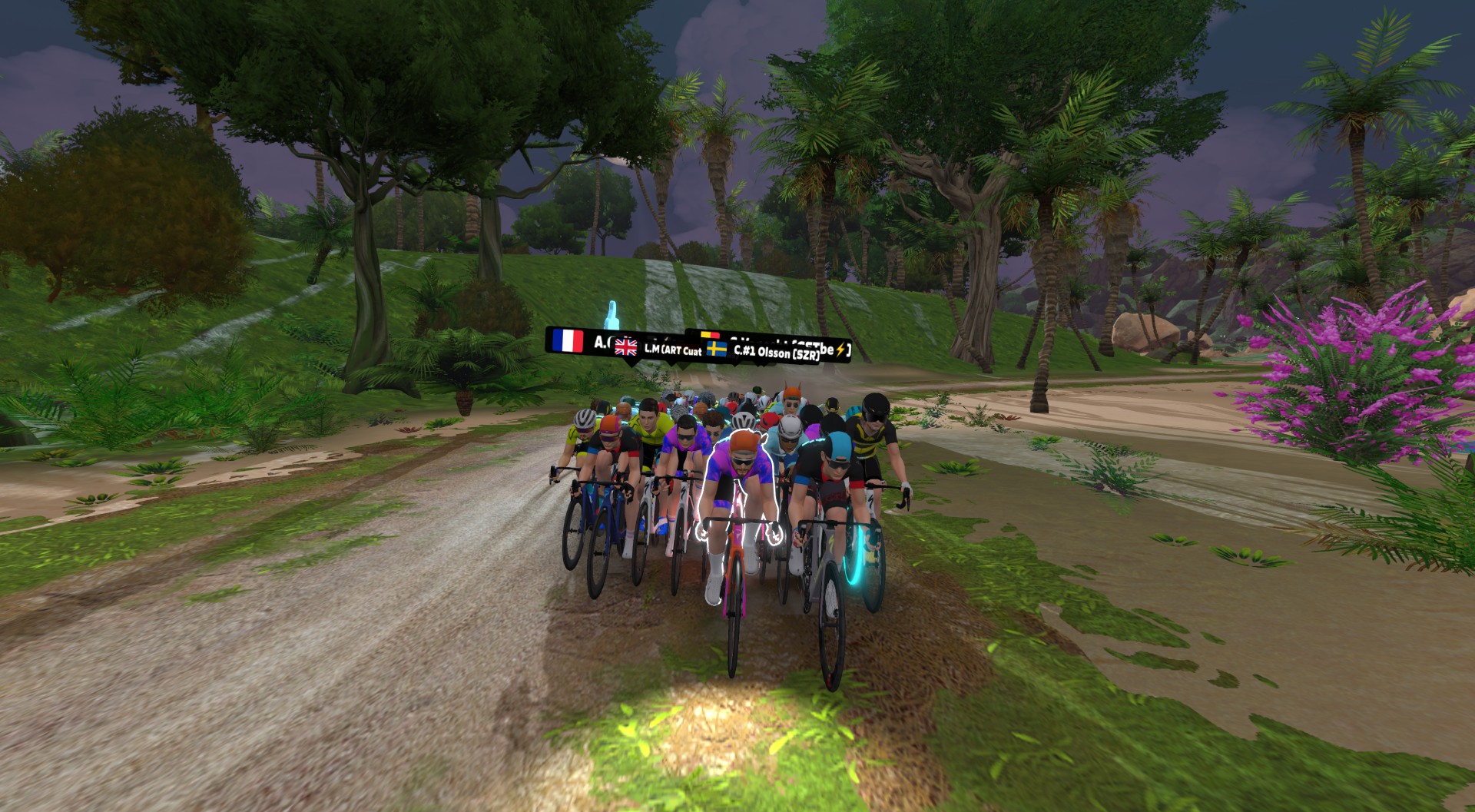
The 50 riders in our race started quite tamely, but that was expected. Everyone knew we would need every bit of power we could muster to hang on over 8x Mech Isle climbs and contest 8x sprint segments.
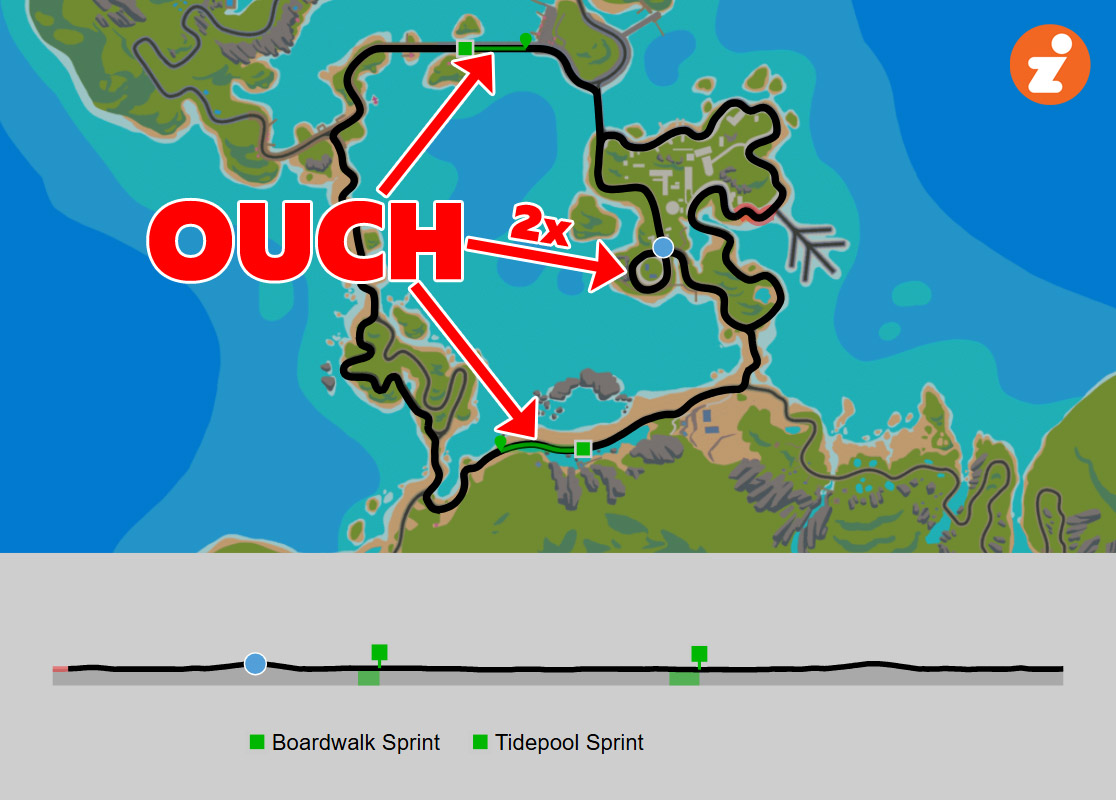
If you’re wondering what this course looks like conceptually, it’s this:
Captain Neil was on comms, keeping on and carrying on, calmly directing and giving atta boys.
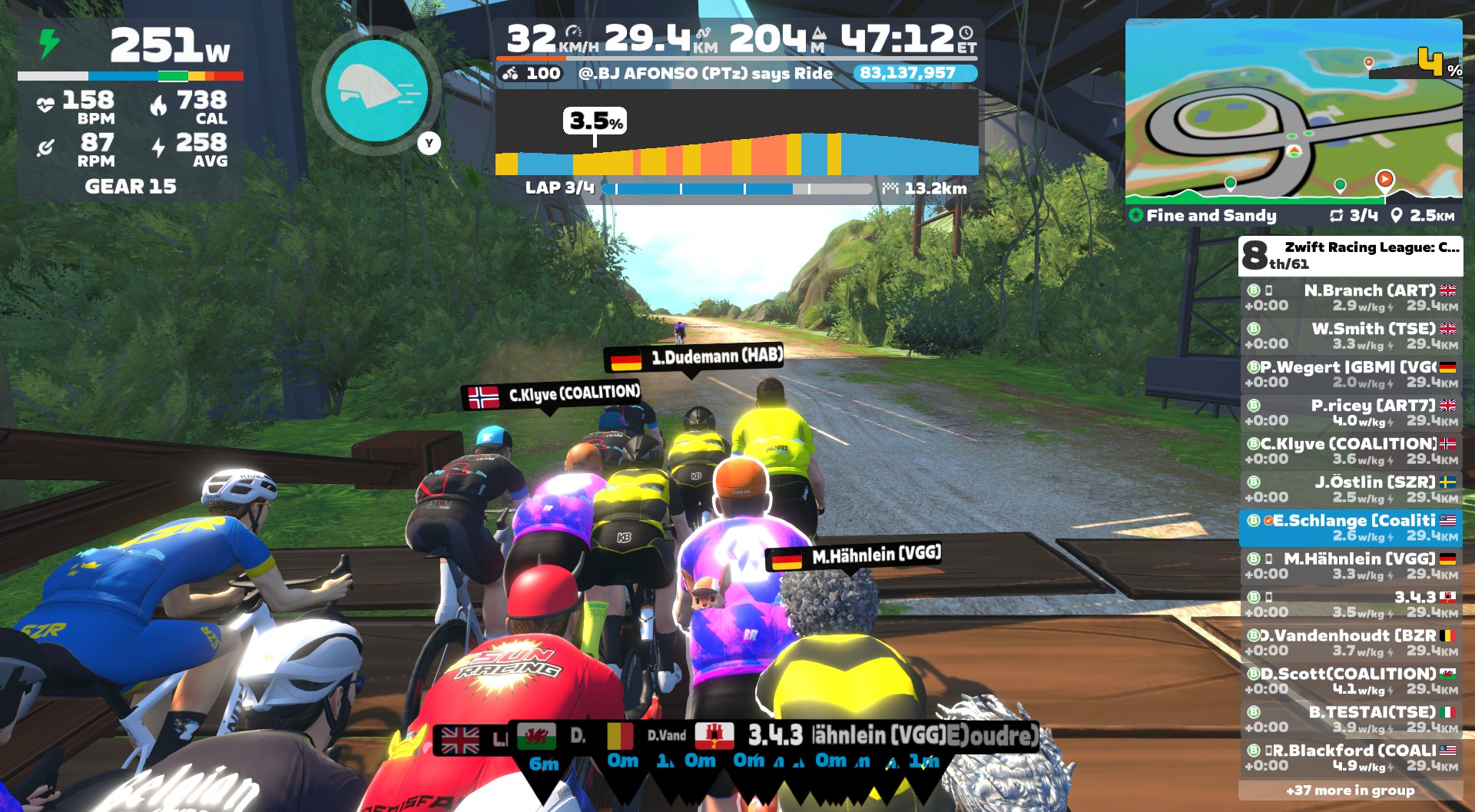
As we crossed the wooden bridge to begin the first Mech Isle climb, I was well-positioned just a bike length from the front, giving me room to “sag” the climb if the group was pushing harder than I could hold.
Vanecht from the Belgian Zwift Riders team through down a huge attack as we began, but I wasn’t going to chase that. Too much action up the road. Apparently others though the same, as he stayed away, taking max FAL points on the Boardwalk Sprint before sitting up and rejoining the peloton.
For my part, I put in a hard sprint, but not a maximal sprint. 11th place.
The group slowed quickly after the sprint point, and I realized I had my first powerup: a steamroller. Should I hold it for the Mech Isle climb up the road, or burn it in hopes of getting an aero at the next arch? I decided to hold onto it.
On Discord, it sounded like teammate Chris M was already feeling the effort. We all told him to hang on as long as he could. In ZRL, every point counts!
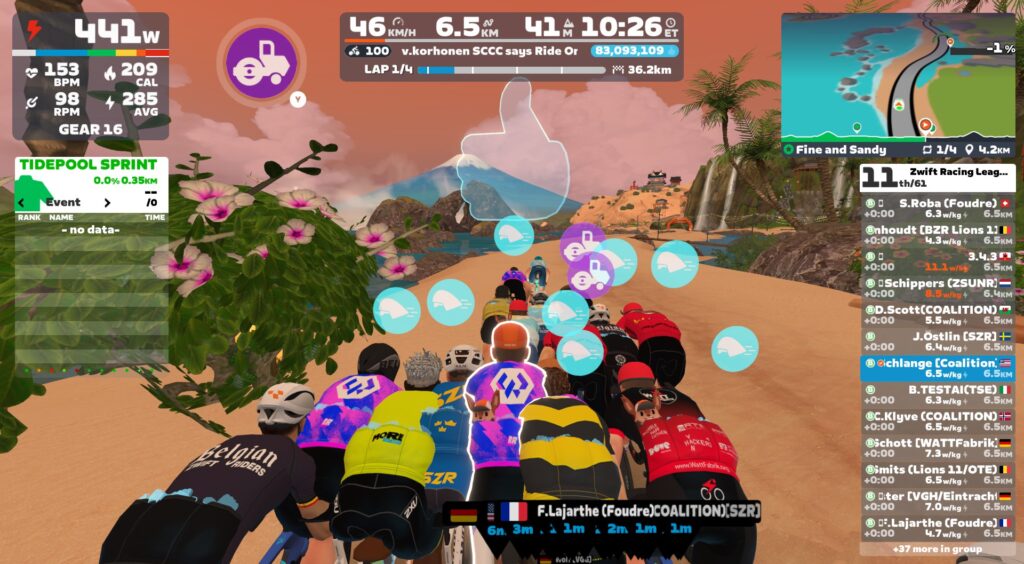
The first Tidepool Sprint is where I realized I’d made a tactical error in holding onto my steamroller. Because it was clear that riders with aero (helmet) powerups had a huge advantage in the sprints, as they rode away from me quite handily and I crossed in 23rd:
I decided then and there not to make that mistake again. My new goal was to have an aero powerup heading into as many of the sprints as possible. If that meant burning a steamroller and suffering more on the Mech Isle climb, so be it.
Because I thought I could hold on up that climb, even though it was a hard effort. And sprint points were all that mattered. 39 riders left in front. On to lap two.
Lap 2: the Winning Move
As the race unfolded, we settled into a rhythm: go hard on the Mech Isle climb and sprint segments. Ride easy in between. Most of that in between riding was really easy, in fact. I kept finding myself poking my nose into the wind, even though I was only holding 150-200 watts!
On the Mech Isle climb at the start of lap 2, ZSUN rider T. Schippers attacked hard, chasing another rider who was even further off the front. I didn’t think much of it, and neither did most of the riders, it seemed.
But this was the winning move.
I came through the Boardwalk Sprint in 11th, without any powerup to assist me. I was starting to believe that I had the legs today to grab some solid sprint points, especially if I could land an aero powerup. And just like that, the Zwift gods gifted me one – my first on the day!
As we wound our way through Mangrove Maze, we noticed T. Schippers was growing his gap off the front, now 15 seconds ahead. Impressive. But still, I don’t think anyone saw it as a move that would last.
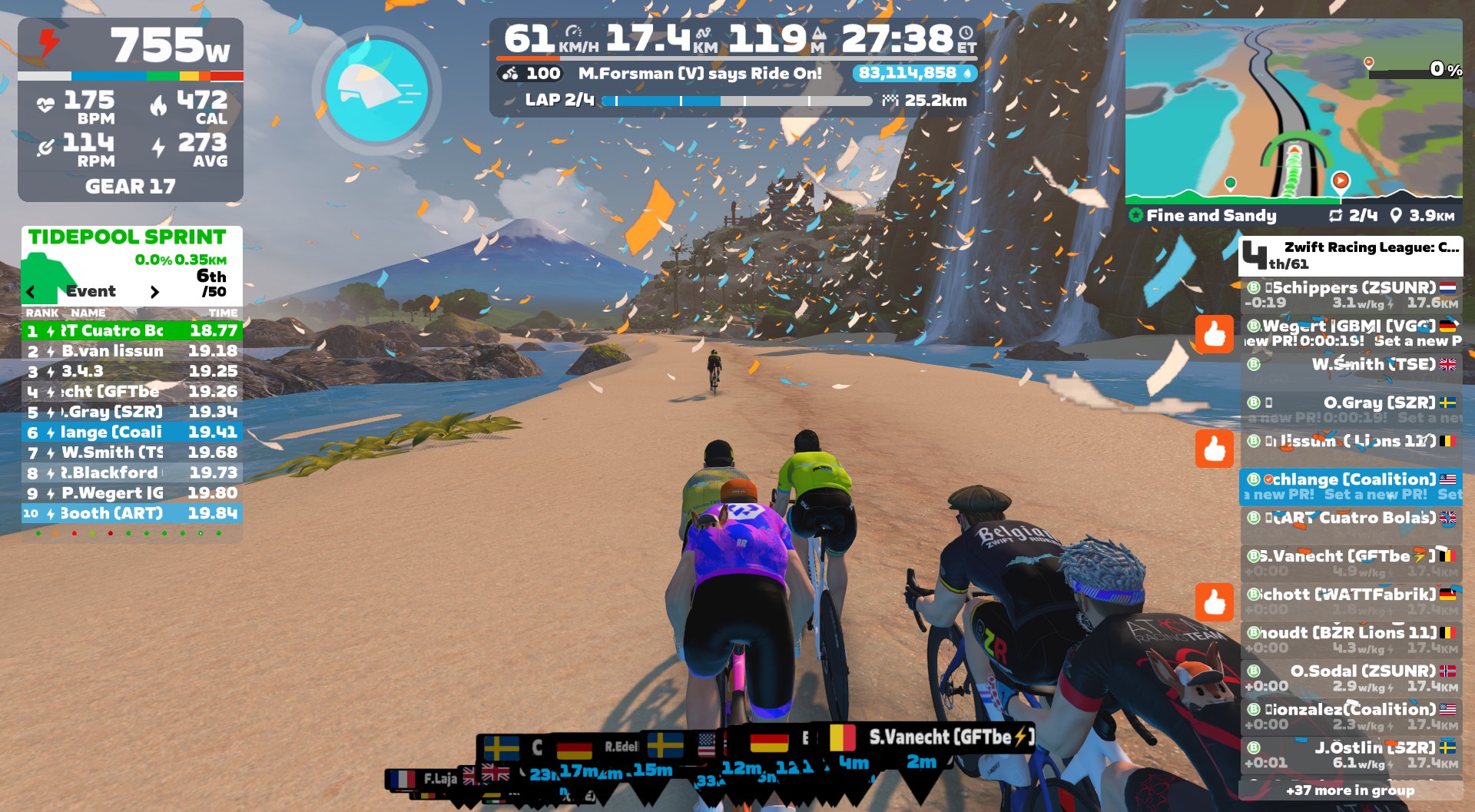
The Tidepool Sprint on lap two was my first all-in sprint effort, as I had an aero powerup and thus, I hoped, a shot at a top-5 finish. I crossed the line in 4th. 47 points! And a steamroller, which meant I’d have one easier go up the Mech Isle climb, but another meagure finish on lap 3’s Boardwalk Sprint.
35 riders were left in the front group as we finished our second lap, with 1 additional rider (Schippers) 38 seconds off the front.
Lap 3
As we made our way toward the first sprint of our third lap, we all began to understand the beautiful plan T. Schippers was executing. While we sprinted our guts out 4x each lap, sitting up in between to recover, he was keeping the power steady and slowly growing a gap on the peloton.
I certainly didn’t have the legs to bridge up to him solo. And it seems nobody else did, either. As long as he was riding within himself, he was going to win this race and land a huge points haul. Would that be what his team (ZSUN) needed to win? We weren’t sure, as we really didn’t know who the strongest teams were.
A 14th-place finish on the Boardwalk Sprint earned my team 37 more points, and more importantly, another aero powerup! I used that aero to grab 3rd (and 48 points) on the Tidepool Sprint, where I got another aero powerup.
It meant I would suffer a bit on the two Mech Isle climbs just up the road. But hopefully that meant I could finally put in a fast effort on the Boardwalk Sprint.
The Mech Isle climb at the end of lap 3 proved to be the one that dropped teammate Chris M from the front group. He’d done a remarkable job of holding on, though, and continued to soldier on in the chase group.
The front pack had been whittled down to 29 riders (plus Schippers well off the front) as we headed into our final lap. Five Coalition riders remained in the front group.
Lap 4 – the Finish
Several riders went surprisingly early on the final Boardwalk Sprint, but I wasn’t feeling spicy enough to follow. Still, I had an aero powerup, so I gave it a go, crossing in 8th.
Landing a steamroller powerup put me in a bit of a quandary. Should I hold onto it to ease my final effort up the dirt climb? Or ditch it in hopes of getting an aero powerup?
I decided to burn it – to literally trash it (so other riders wouldn’t see what I did). And it worked! I got 16th on the final Tidepool Sprint, well behind the riders with aero powerups. But I also landed an aero powerup myself, which I knew would be helpful in my finishing sprint, as long as I could hold onto the wheels up and over the final Mech Isle climb.
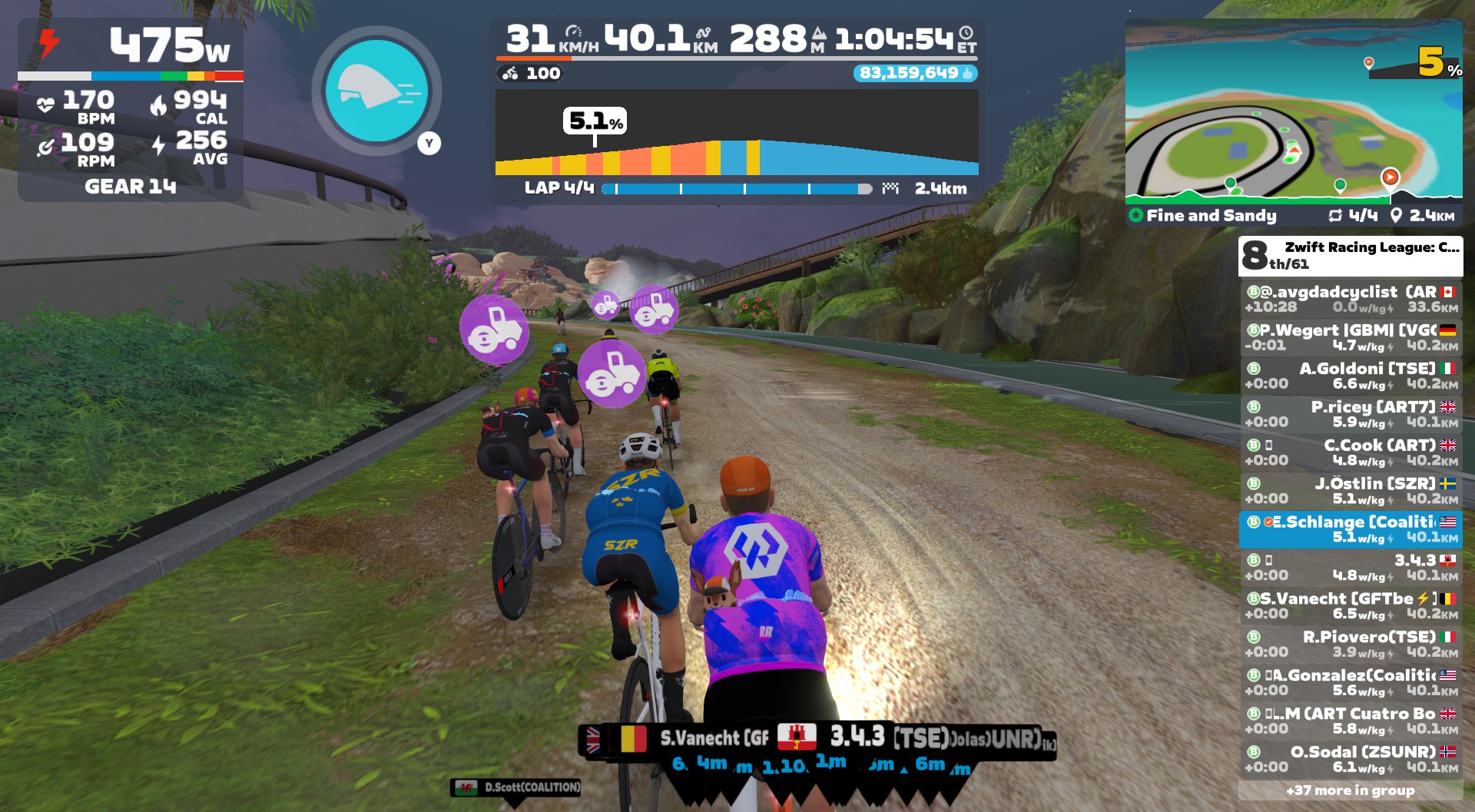
Three riders managed to get away off the front up that final climb, and I just suffered my way over it, making sure I didn’t get gapped off the back. My gamble had worked: I had survived the final climb, and had an aero in my pocket for the finish.
My plan was to surf the wheels until the final few hundred meters, and that’s what I did. I probably left it a bit late, but managed to cut through most of the group and finish 6th.
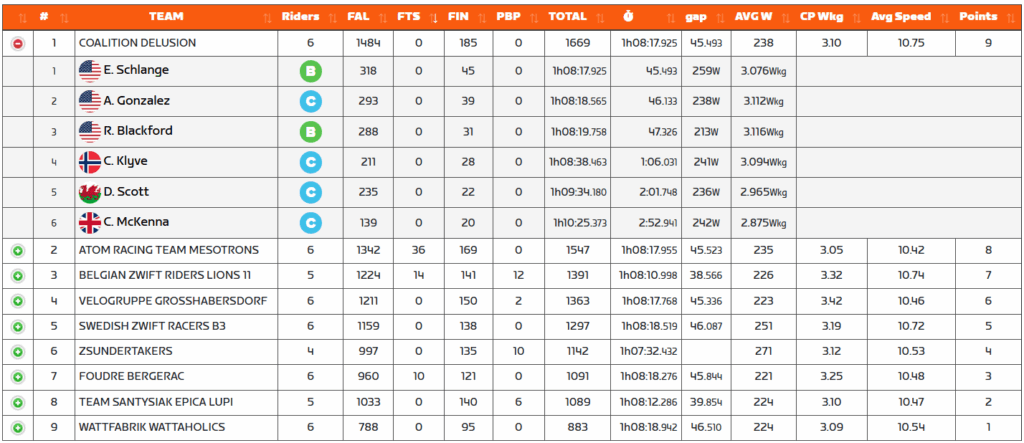
The results from WTRL came in quicker this week, and we were stoked to see Coalition Delusion atop the leaderboard!
Just like we’d told Chris M, every point counts. Without his 159 points we would have lost to Atom Racing. That’s why you never give up in a ZRL race.
Of course, everyone on the team contributed in a big way, as you can see from our points totals above. You can’t win these sorts of races with just one or two outstanding performers. Well done, Coalition Delusion!
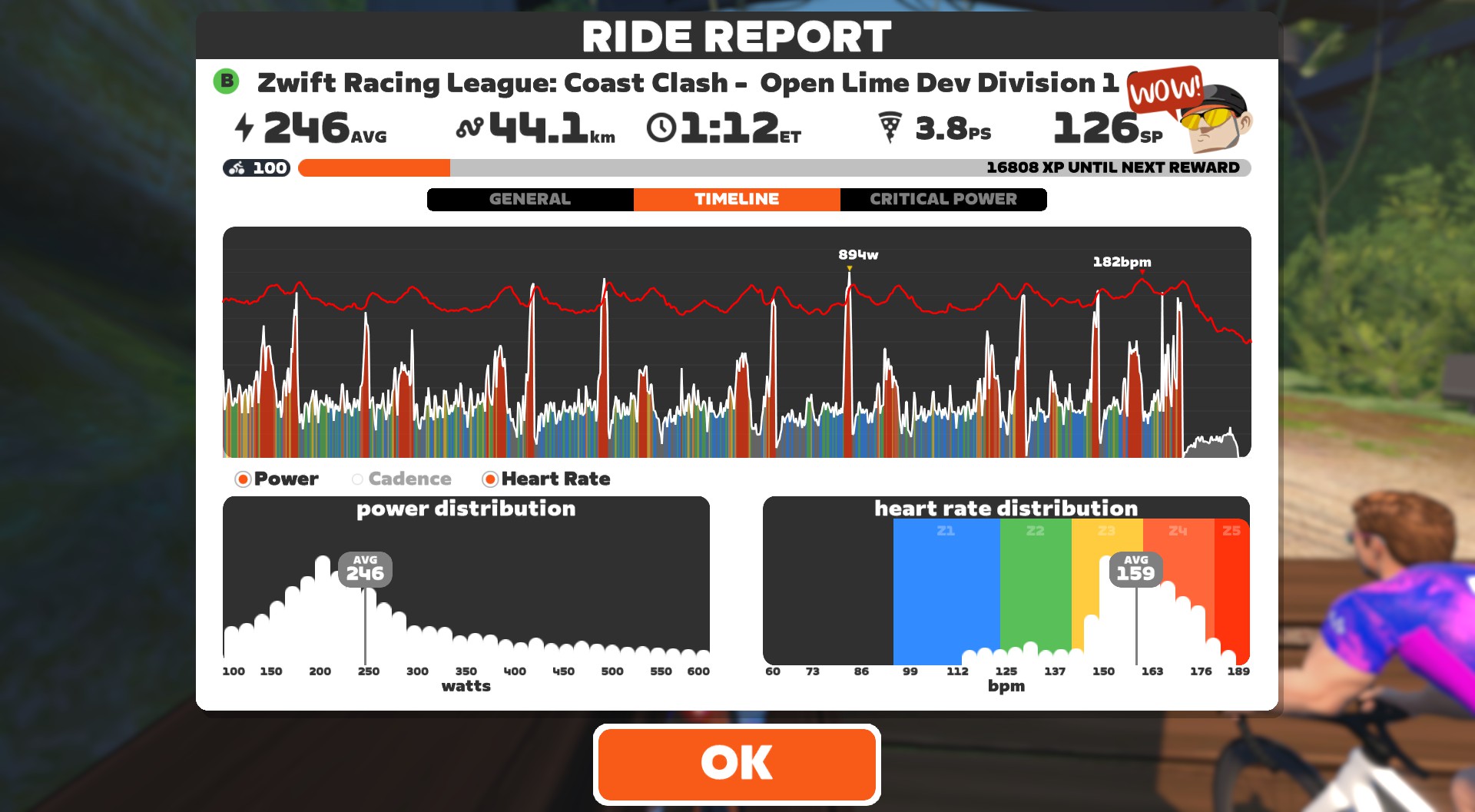
Personally, I was really happy with my result, as I somehow managed to be the leading points scorer for my team this week. While my average power for the race wasn’t anything impressive, 17 sprint efforts across 69 minutes of racing certainly emptied my matchbook!
I’m enjoying my ZRL races so far this year, more than I have in some past seasons. It’s fun to be in the mix, instead of just holding on for dear life until I get shelled off the back.
Lastly, kudos to T. Schippers for nailing the long breakaway, Jensie-style, and taking the overall win. It was a strategically brilliant move, and he managed to do it with a 319W (3.365 W/kg) average. He, not surprisingly, earned more FAL and FIN points than anyone else in the race (434 total).
Request: Realtime Points
This was a fun race. But it would have been so much cooler if we had real-time points results displayed in the HUD. Imagine the strategic elements that would bring into the race.
Please make it happen, Zwift!
Your Thoughts
How did your race on Fine and Sandy go this week? Share below!
Israel–Premier Tech’s main sponsor, Premier Tech, has demanded publicly that the team drops ‘Israel’ from its name and adopts a new identity and brand image.
In a press release published yesterday, the Canadian multinational company said: “We are sensitive and attentive to the situation on the international scene, which has evolved considerably since our arrival on the World Tour in 2017”.
Premier Tech has been involved in cycling for more than 30 years and said it “always placed the development of the sport and Quebec and Canadian cyclists at the heart of its involvement”.
Israel–Premier Tech has supported Canadian cyclists since its inception, including Michael Woods and Derek Gee, who recently terminated his contract with the team.
“However, the current situation regarding the team name is no longer sustainable to achieve our goal, which is the very reason for our involvement in cycling,” the press release said.
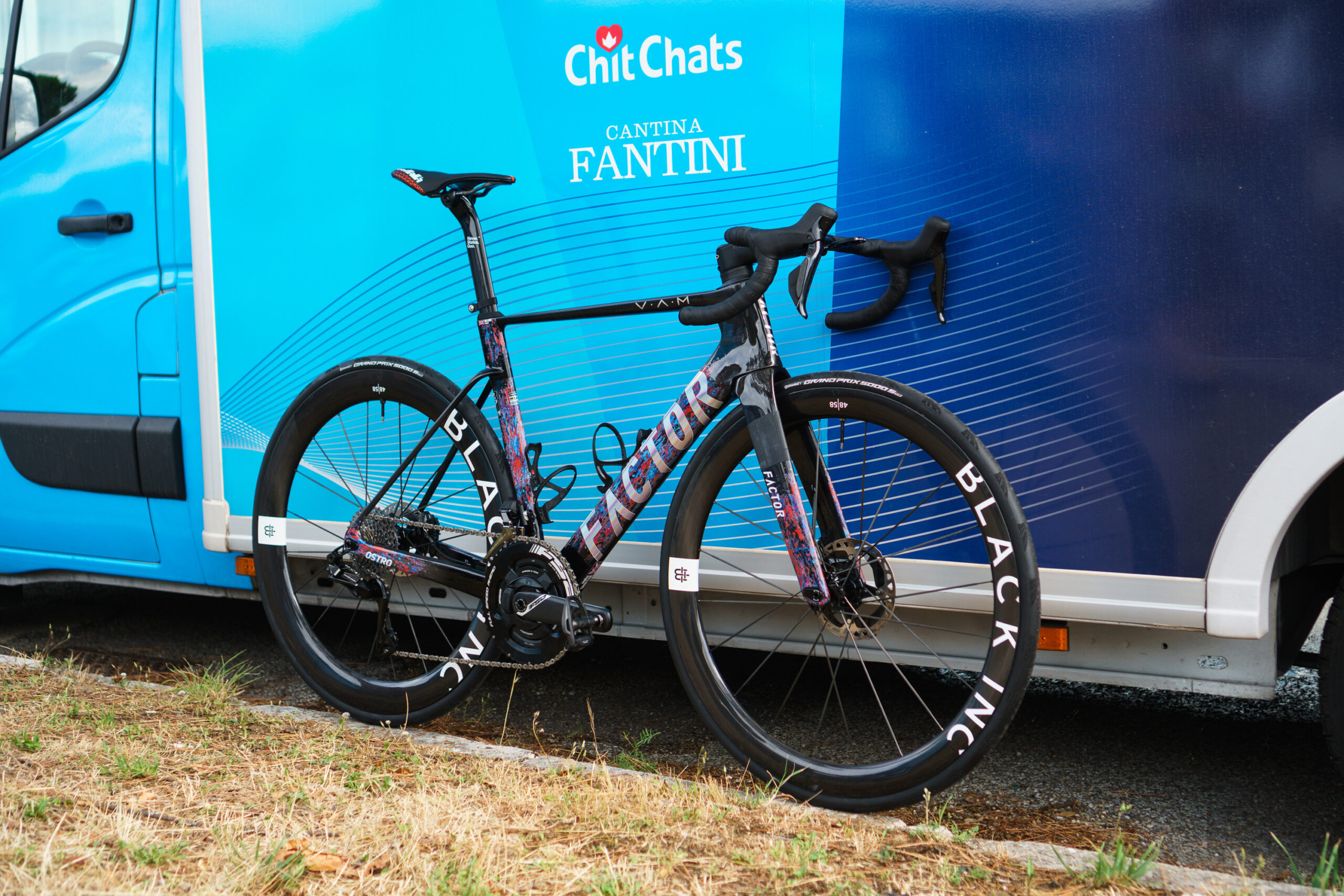
Factor has said its sponsorship of Israel–Premier Tech is untenable without a change of name and flag. Simon von Bromley / Our Media
On Monday, Cyclingnews revealed that Factor Bikes had informed the team’s co-founder, Sylvan Adams, that its sponsorship of the team was “untenable” unless it changed its name and nationality.
“I’ve already told the team: Without a name change, without a flag change, we won’t continue,” said Factor Bikes founder Rob Gitelis.
“It’s not a matter of right or wrong anymore. It’s become too controversial around our brand, and my responsibility is to my employees and my shareholders, to give them maximum space with which to grow this company and make it profitable,” Gitelis explained.
Israel–Premier Tech told BikeRadar: “The team is currently in the planning phase for 2026 team branding and will communicate any potential changes in due course.”
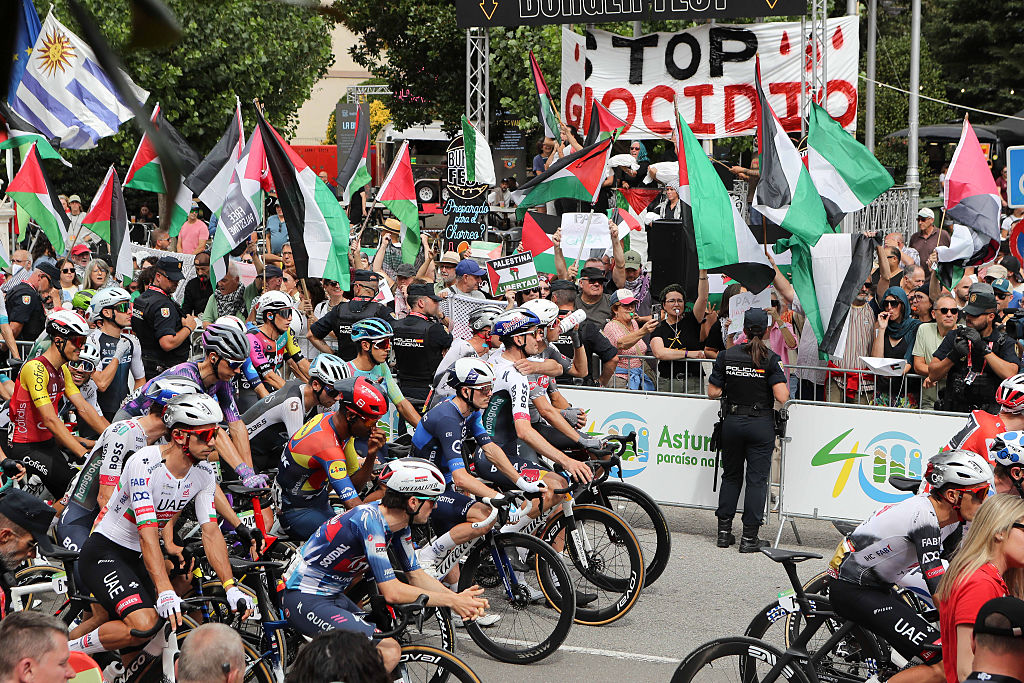
The pressure on Israel–Premier Tech to change its name follows protests at the Vuelta a España against the participation of Israel–Premier Tech, due to its claimed sportswashing of the state of Israel.
However, Jean Christophe Rattel, the founder of Ekoi, which supplies cycling clothing, sunglasses and helmets to Israel–Premier Tech, told BikeRadar that the company remains committed to the team.
“At Ekoi, we are driven by passion for the teams we sponsor. Abandoning them in such a moment would feel like an act of cowardice,” said Rattel.
Rattel explained that when Israel–Premier Tech changed kits at La Vuelta to remove ‘Israel’ due to safety concerns, Ekoi produced the new jerseys in three days “to show our support for the team during this difficult context”.
A Protest In Ribadeo against Israel’s participation La Vuelta a España. Carlos Castro / Getty Images
Rattel explained that cycling is facing tough times, with the Arkéa B&B–Hotel team, which also uses Ekoi equipment, losing its sponsors at the end of this season.
“In this environment, both Ekoi and myself remain committed and stand in solidarity with the teams and people who count on us,” said Rattel.
“This is an international team, with riders from many different countries, led by a manager I have known for years. I also have personal ties with several of the riders, and walking away now – simply because of the geopolitical situation – would feel like betraying them,” Ekoi’s founder explained.
Commenting on Factor Bikes’ decision to distance itself from Israel–Premier Tech, Stephanie Adam, an organiser with the Palestinian Campaign for the Academic and Cultural Boycott of Israel, which called for the protests at La Vuelta, told BikeRadar: “This step would clearly weaken the team’s underlying goal of providing propaganda for Israeli apartheid and is a tribute to the many protests against the team at major races, including most recently at La Vuelta.
“This also sends a strong signal to UCI and other sporting bodies that teams sportswashing genocide and apartheid will never be accepted in world sports.”
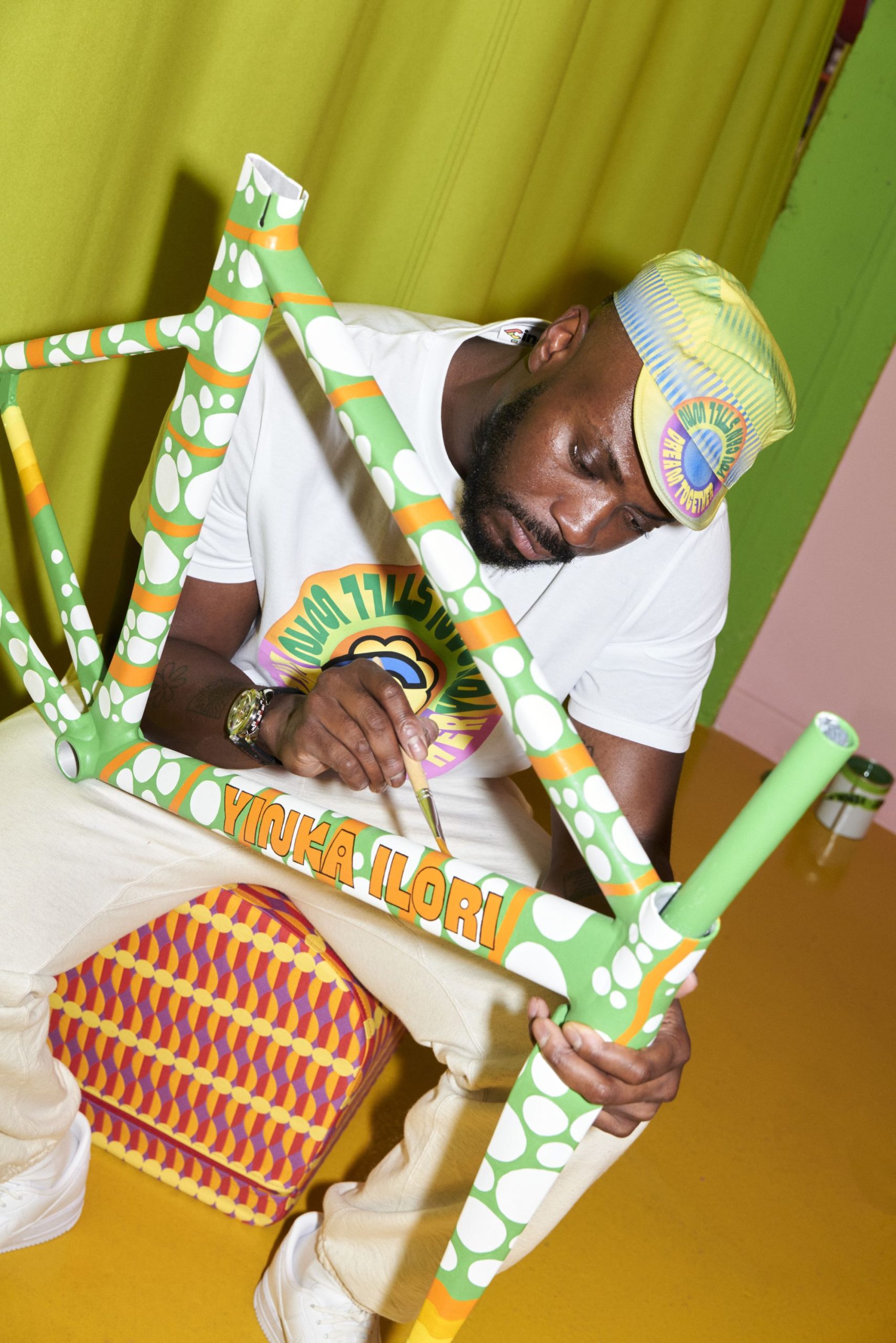
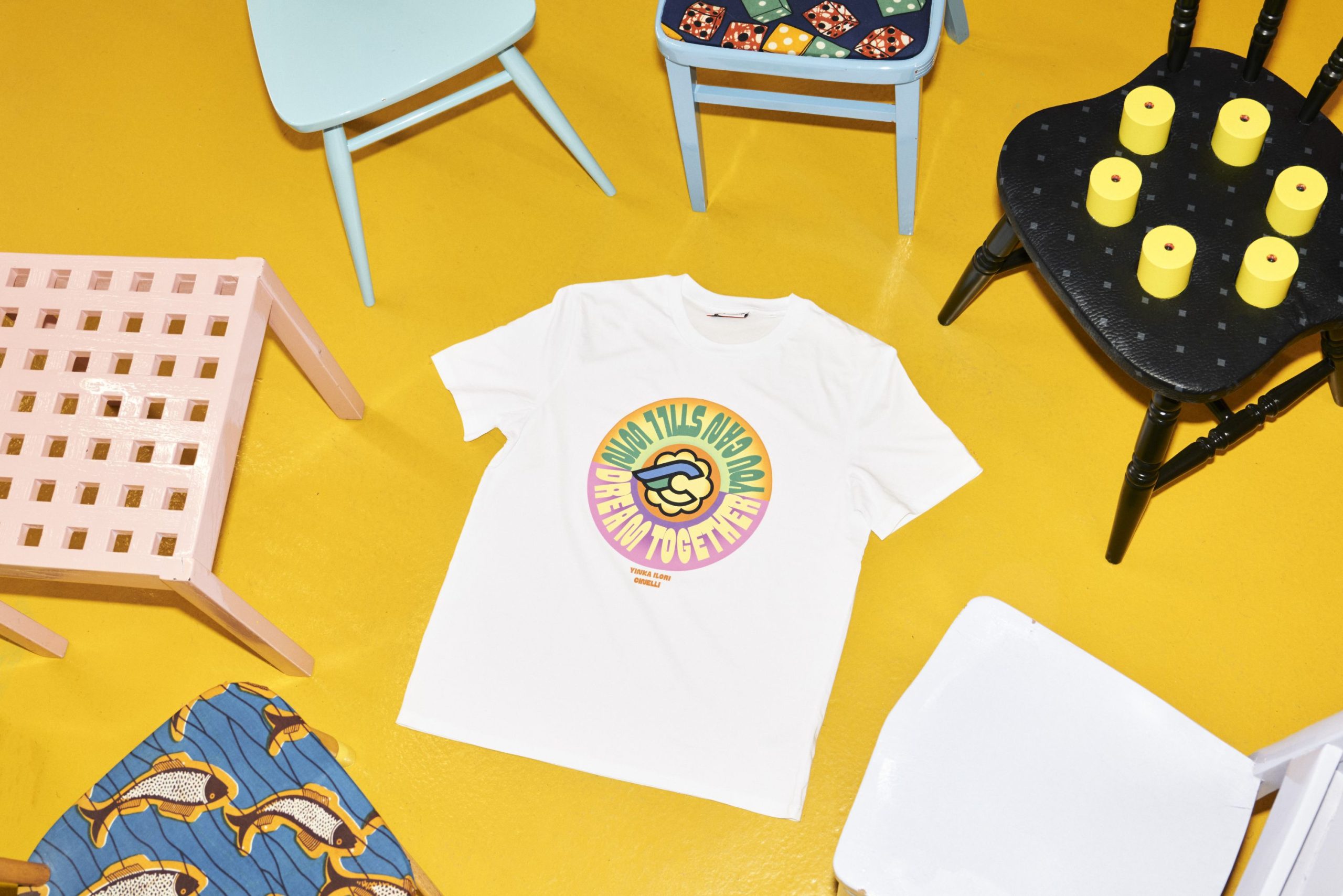
Cinelli has worked with British-Nigerian artist and designer Yinka Ilori on a limited-edition collaboration – called Dream Together, You Can Still Win – which will be launched officially on 29 September.
It’s the second artist collaboration by Cinelli in 2025, part of an ongoing series, with Cinelli previously working with Brooklyn, New York based artist Futura’s Futura Laboratories design studio.
Cinelli has also recently worked with Oakley to release limited-edition retro sunglasses, with Italian streetwear brand Iuter, and with Kask to offer limited-edition Protone Icon and Utpoia Y helmets. Back in 2022, it worked on a collab with the Italian football club Inter, including custom Cinelli bikes and cycling kit.
There’s a one-off track bike frame painted by Ilori.
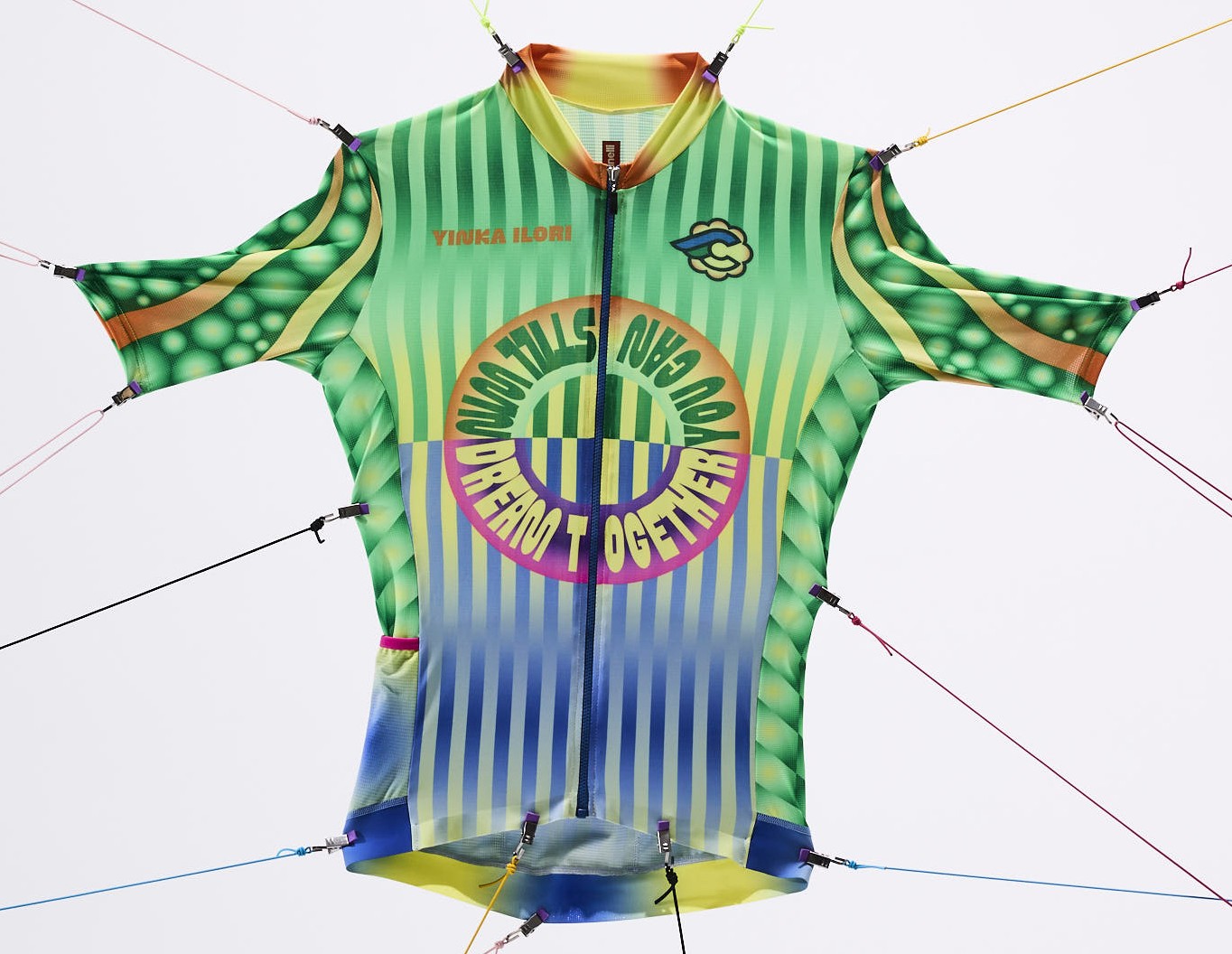
The collaboration with Ilori showcases a one-off edition of the Cinelli Vigorelli track bike. It also includes a cycling jersey and cap, and a striking casual T-shirt. We’ve previously reviewed the Vigorelli in road-legal form, decked out with rim brakes and a 1×11-speed SRAM Apex groupset.
The collection includes this artist-designed jersey.
Cinelli and Ilori claim the Dream Together, You Can Still Win collection’s vivid colours are inspired by the freedom of cycling and its connection to the living world, saying that: “At its core, cycling remains a spiritual, joyful and recreational experience; ‘Dream Together, You Can Still Win’ flips the concept of competition, redefining what it means to ‘win’.”
“Bike culture has been an integral part of my childhood, shaping many of my experiences as an inner city kid in London. The bike itself symbolizes freedom – it’s a tool which allows you to venture, to escape and to expand your horizons,“ says Ilori.
Community bike ride through Milan
There’s also a matching T-shirt.
There will be a one-off event in Milan on 29 September to mark the launch of the new limited-edition collection, featuring an exhibition of bikes from Cinelli’s vintage collection and, of course, a community bike ride, slated to take one hour and visiting some of Milan’s cultural and creative hot spots.
“Cinelli holds a decades-long reputation for collaborating with creatives, exploring the interplay between art and cycling. It’s a pleasure to be able to contribute my own spin on this, collaborating with Cinelli’s creative team to take cycling back to its essence,” says Ilori.
Want to put in some big miles for a good cause? On October 18-19, the Cycle Nation team is hosting its third annual 24-hour charity ride on Zwift to benefit the Distance For Difference organization.
You don’t have to ride all 24 hours to take part… 12 events are scheduled over the weekend so riders can jump in whenever they’re able! Read on for details…
About Distance For Difference
Distance For Difference (D4D) is a registered non-profit organization which, since 2005, has made a significant impact on the well-being of children in South Africa. D4D use sport to generate funds for distribution to various children’s charities.
To participate, you’ll need to join one or more of the 12 “Cycle Nation”Cycle Nation/CMC Distance 4 Difference 24 Hour Ride” events taking place on October 18/19 and listed at zwift.com/events/tag/distance4difference.
Late join is enabled, and each event is 90 minutes long and held on Tempus Fugit to help everyone stay together. Yellow beacons will lead the rides at 1.8w/kg, but riders are free to form their own groups above or below this pace.
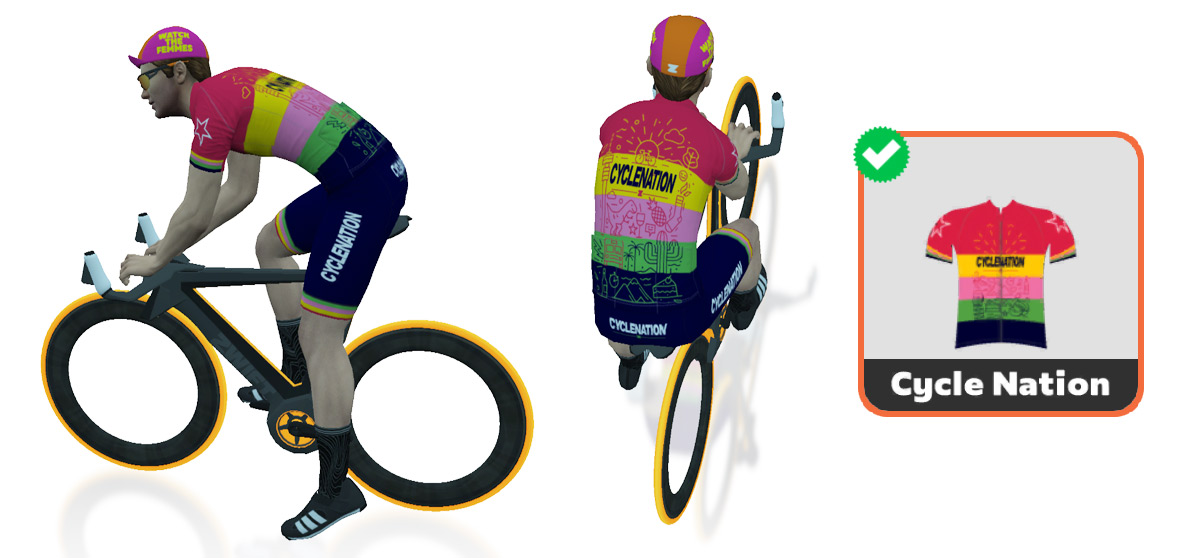
Cycle Nation Kit Unlock
Finish any of the rides and unlock the Cycle Nation kit!
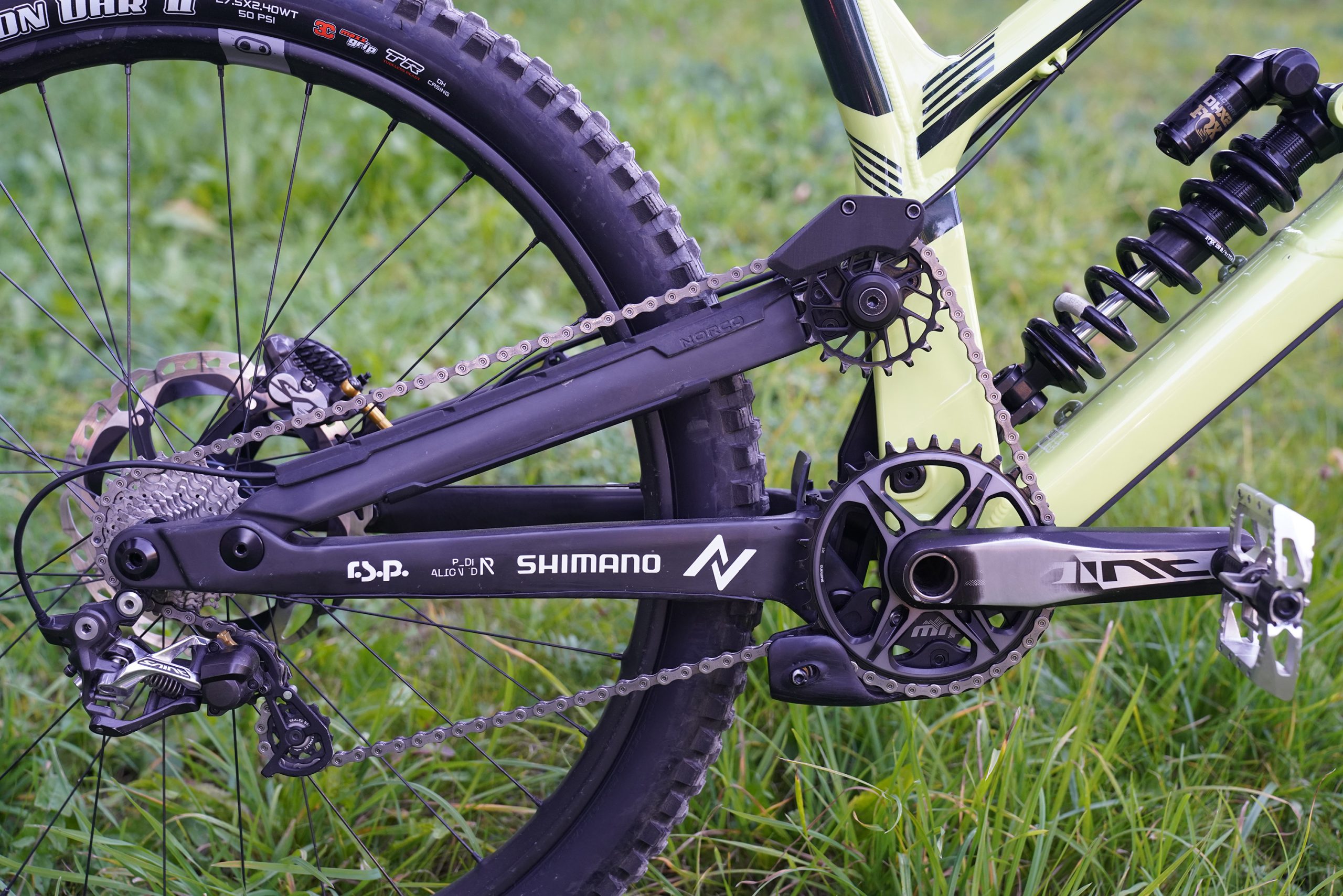
Norco’s prototype downhill bike looks to be edging closer to production, with Danny Hart’s Lenzerheide DH World Cup race bike sporting a new rear end.
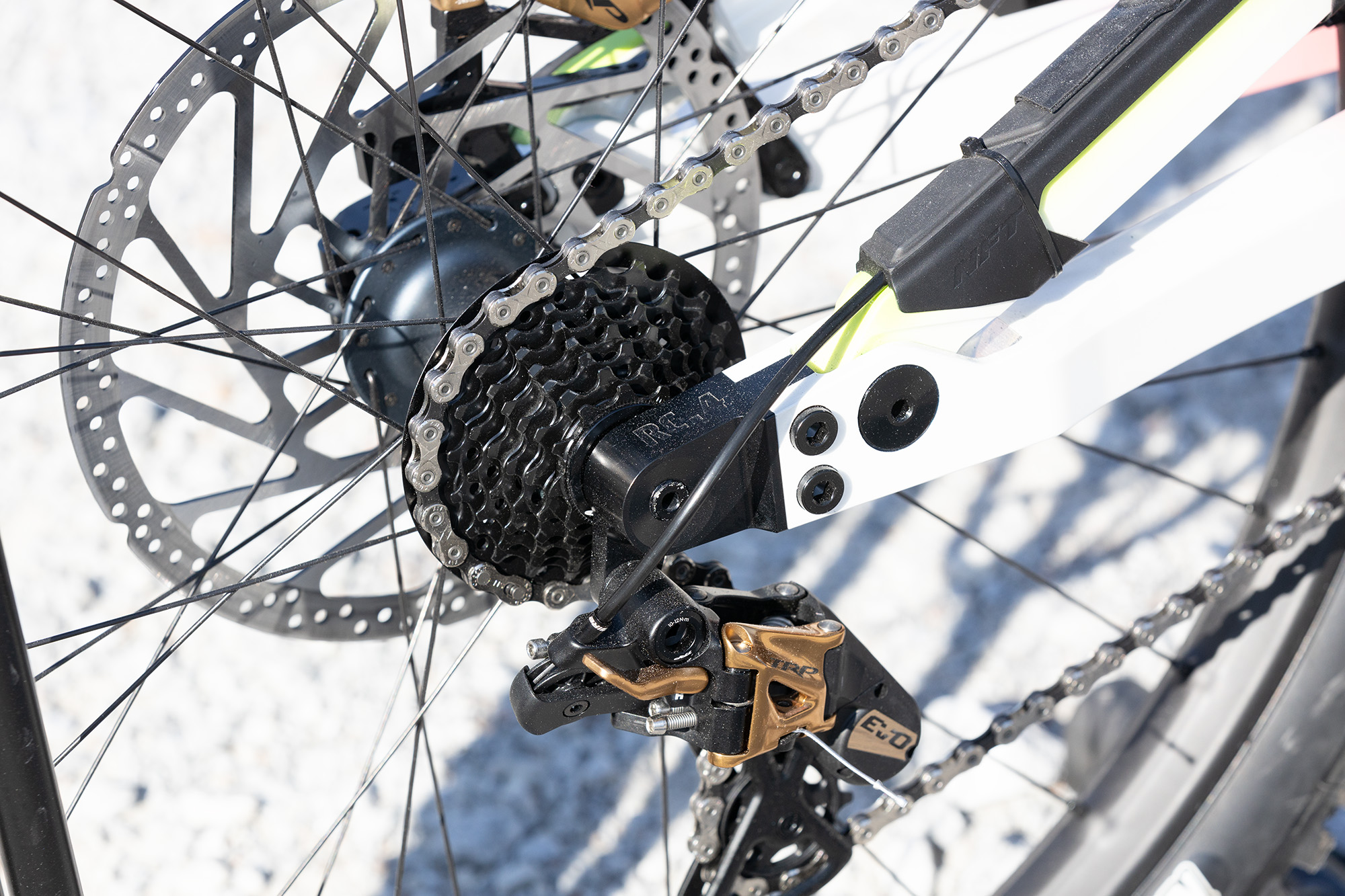
Previously, the bike featured an adjustable rear dropout to experiment with chainstay length, but it now appears this won’t make it to the production model.
We got hands-on with Hart’s bike in the pits to see the British rider’s setup and spot any other changes to the frame.
With the new rear end, the bike looks almost production-ready. Nick Clark / Our Media
Norco has been developing its downhill bike on the UCI World Cup circuit for the past couple of years, with the Canadian brand missing a race bike from its line-up.
Hart has been using this bike throughout the year, but this is the first time we’ve seen it with what looks like a production rear end.
This suggests the designers have settled on at least one chainstay and wheelbase length in its size range.
Last time we saw the Norco DH bike, there was an adjustable dropout. Nick Clark / Our Media
It’s not uncommon for teams to test new rear triangles at the UCI World Cup, with Troy Brosnan testing a prototype rear end on his Canyon Sender at Lenzerheide.
Shorter chainstays usually make a bike feel more playful and easier to turn, while longer chainstays provide a more stable ride, especially at high speeds.
The bike features a high-pivot suspension design, something Norco has adopted throughout its enduro and trail bikes.
This design is used by many frame manufacturers in order to combat pedal kickback.
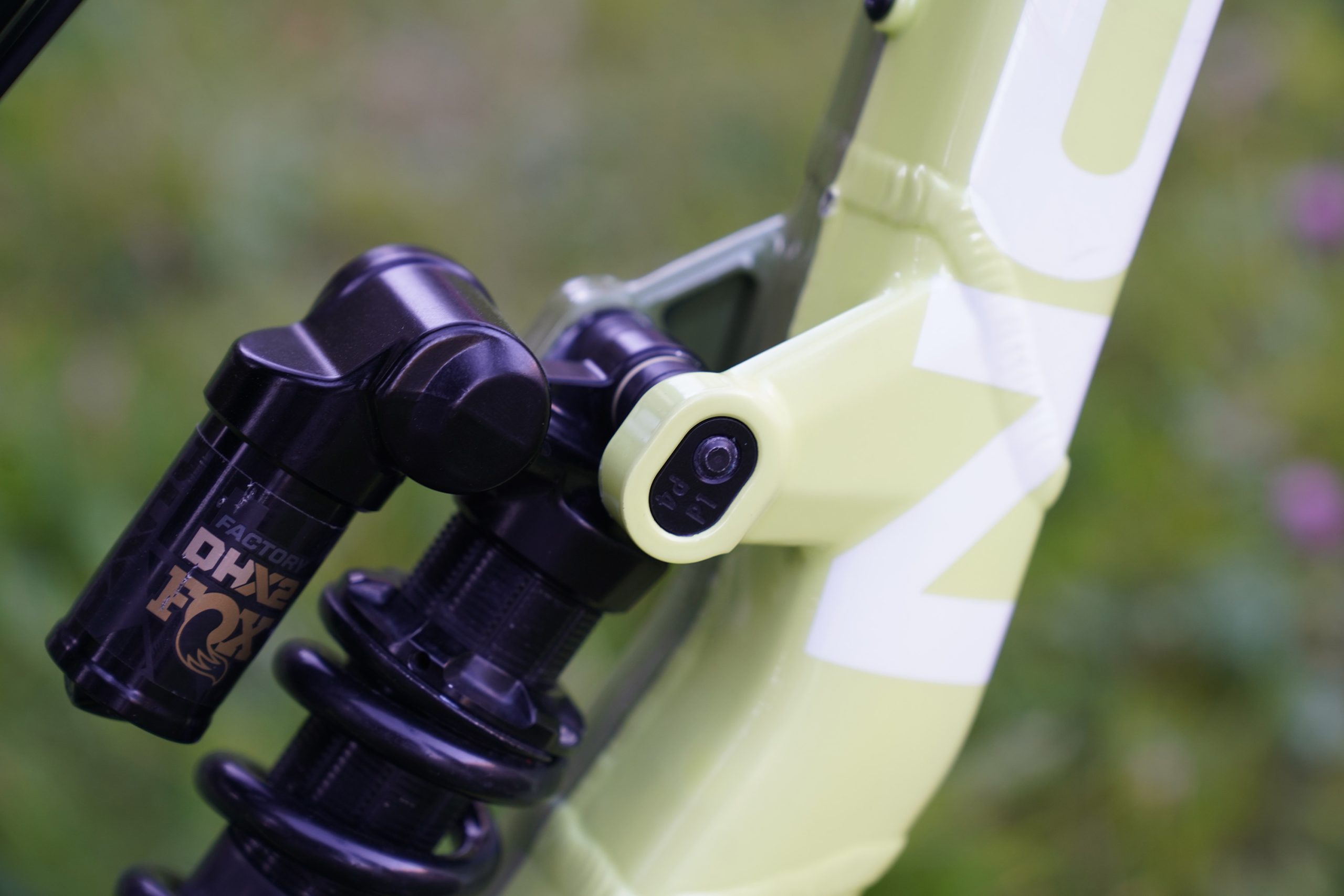
It looks as if this flip chip could be used for adjusting the progression of the rear suspension. Nick Clark / Our Media
Controlling the linkage is a Fox DHX2 coil rear shock, with Hart looking to have the bike in the ‘P1’ setting on the flip chip located by the mount.
We’re unsure what this flip chip does, although there’s a possibility it changes the progression of the suspension or enables the bike to be run with either a 29in or 27.5in rear wheel.
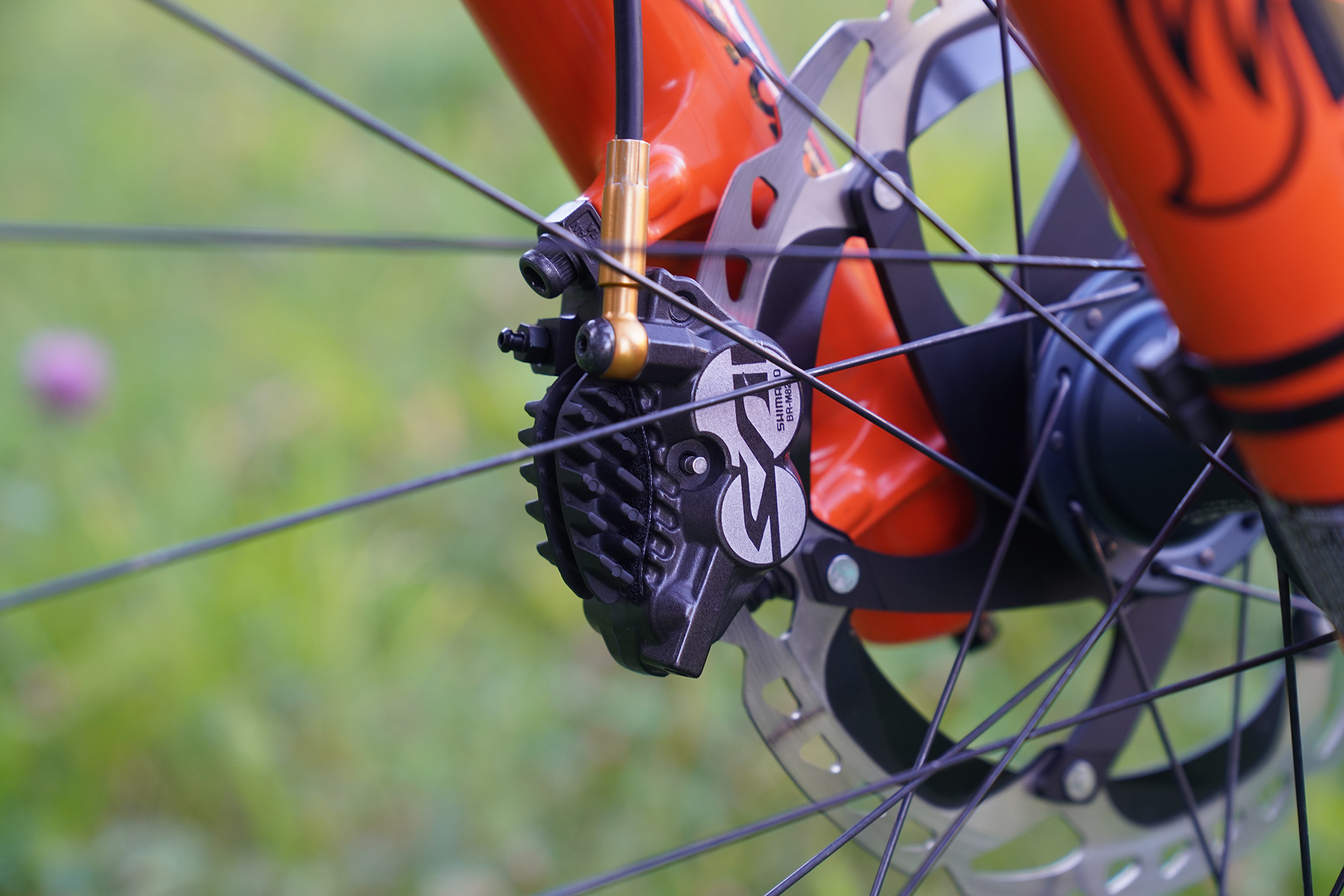
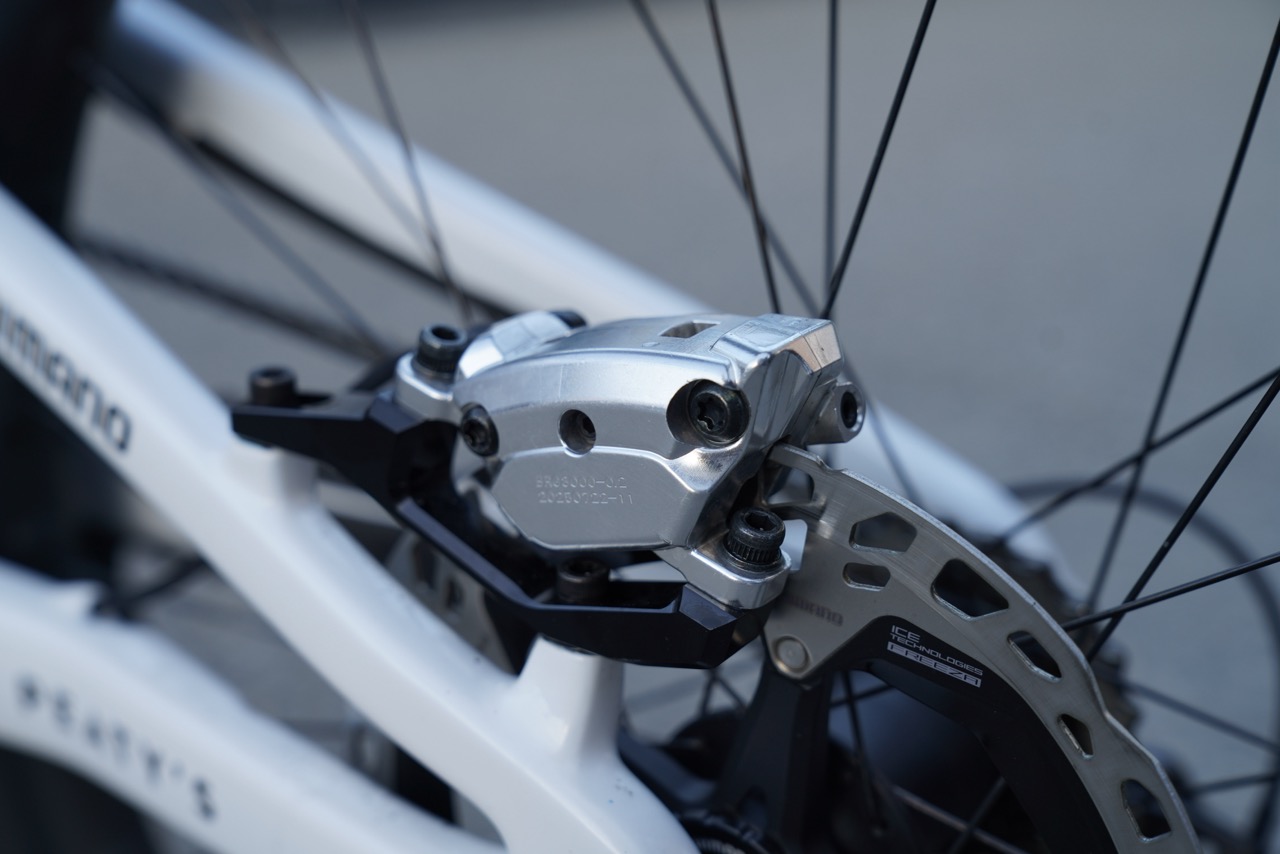
We’ve seen what appear to be prototype Saint brakes on Jackson Goldstone’s Santa Cruz V10. Nick Clark / Our Media
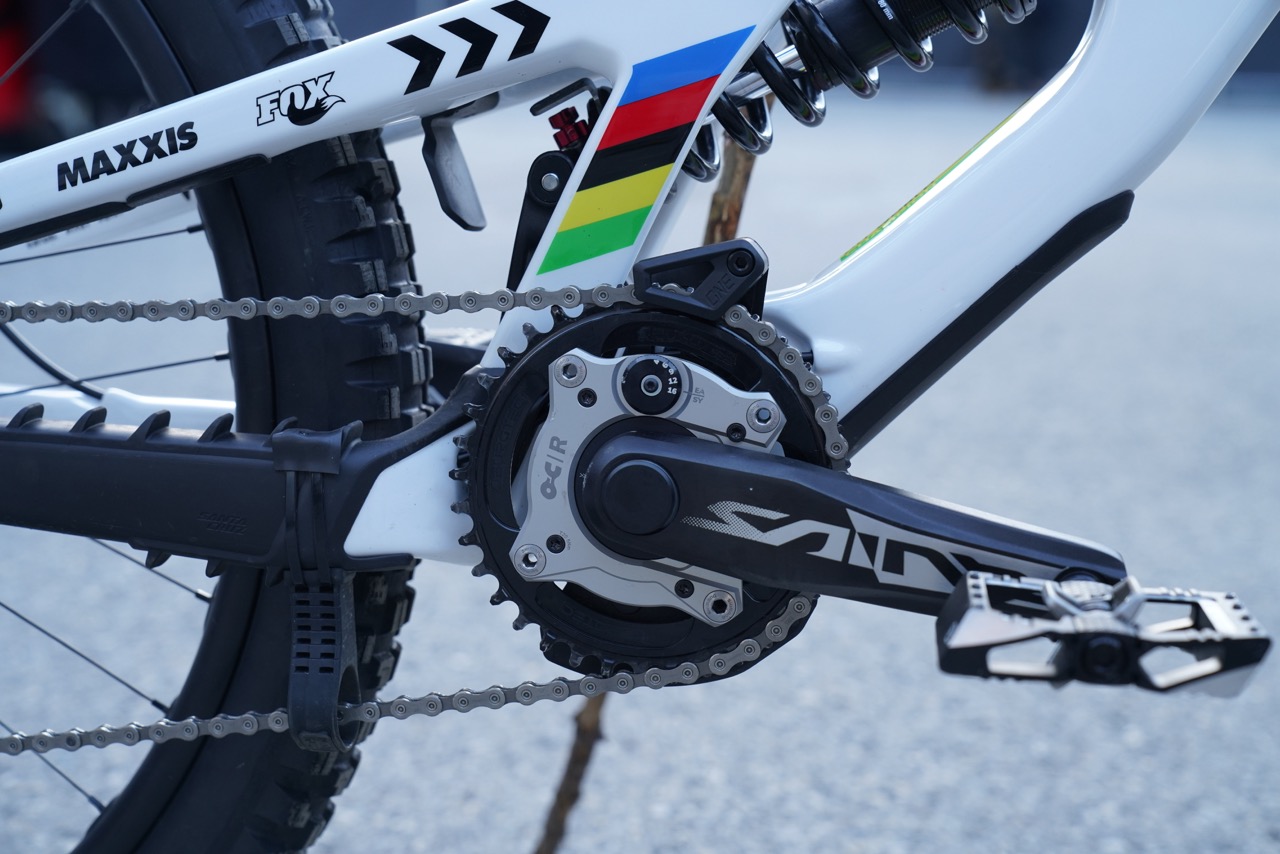
Hart is using Shimano’s Saint drivetrain and brakes, a groupset that is nearly 13 years old and expected to be updated in the near future.
Some riders who choose this setup opt to run an XTR lever with Saint calipers, but Hart has gone full Saint.
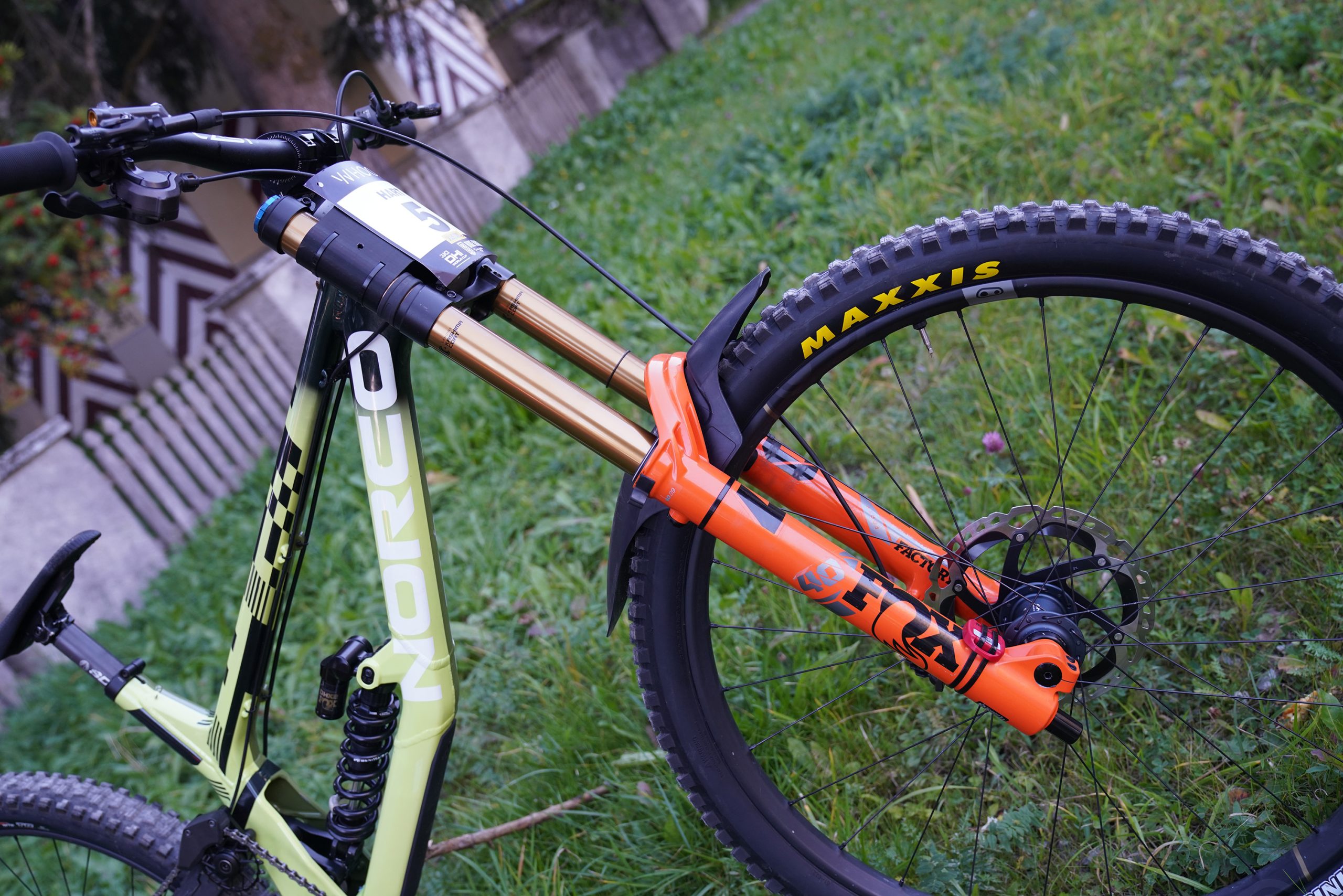
It looks as though Hart will have to wait like the rest of us to get his hands on the new Fox 40. Nick Clark / Our Media
At the front of the bike, a Fox Factory 40 fork provides 203mm of travel to keep Hart supported on big hits.
We’ve seen some prototypes from Lenzerheide of an upcoming Fox 40 with the generative architecture crown we’ve seen on the recently released Fox 36.
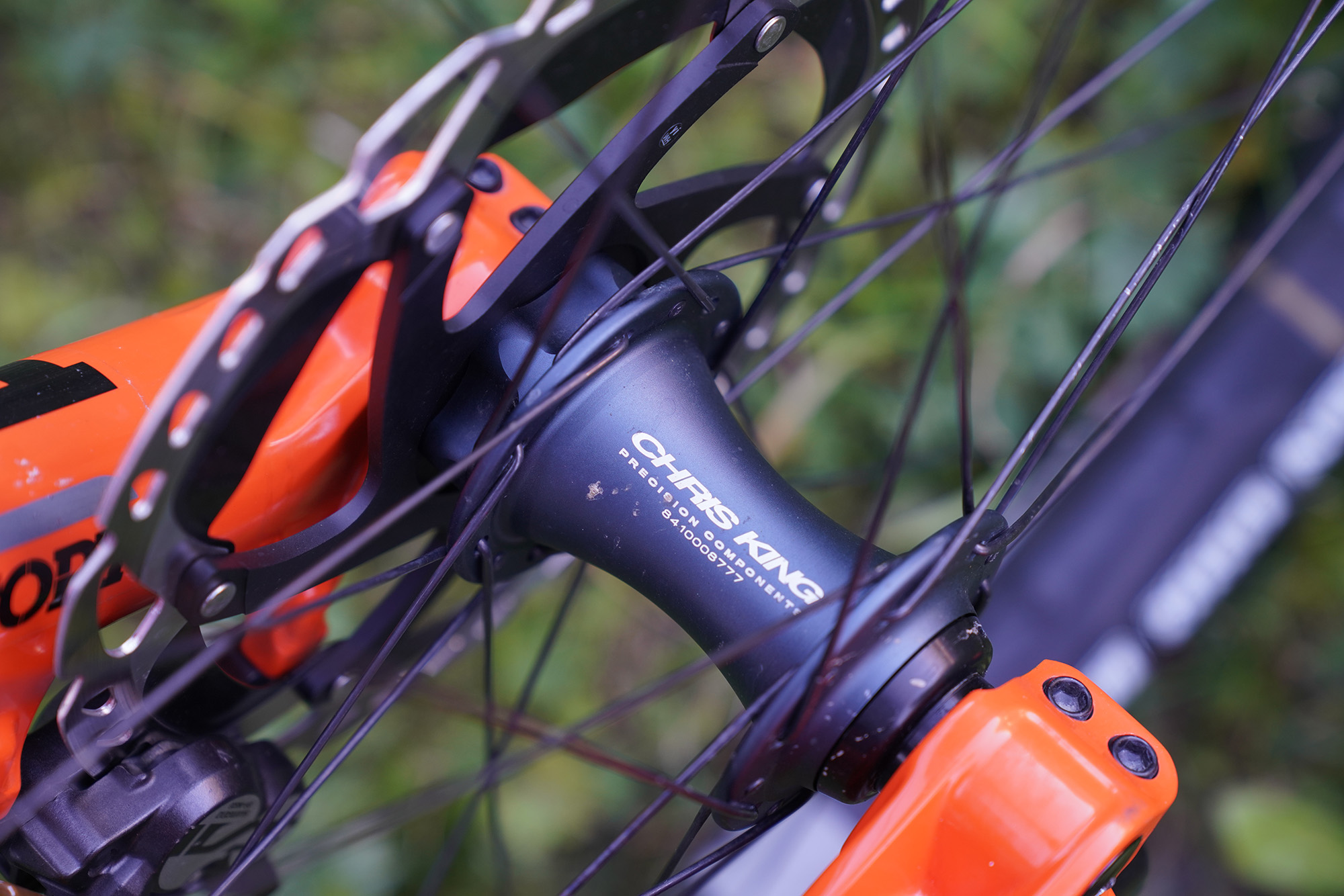
Chris King hubs whine as they come down the trail. Nick Clark / Our Media
The British rider uses Crankbrothers Synthesis rims laced to Chris King hubs and booted in Maxxis Minion DHR II rubber at both ends.
While Maxxis labels its downhill tyres DHF and DHR II (Downhill Front and Downhill Rear), we’ve seen riders opting to use the rear tyre on the front and rear a lot this season.
SRAM has just revealed a firmware update that will make shifting faster on its Eagle AXS mountain bike groupset.
The update is available via the SRAM AXS app on your phone, and should only take a few minutes.
SRAM says: “Firmware 2.53.8 reduces the time between successive derailleur shifts of three or more and aligns better with common cassette rotational speeds. This means that on successive shifts of three or more, the derailleur will move quicker between gear positions.”
The update contains a timing update to the Cassette Multishift intervals, and will bring the shifting in line with the shifting of the limited-edition SRAM Eagle Transmission 1987 groupset, which was released earlier this month.
The timing of the original Cassette Mapping was optimised through field and lab tests. “The goal was to have the best shift quality possible and to focus on long-term wear of the system,” SRAM says.
Now, after more testing and ride data, SRAM says: “[W]e are confident that we can reduce the time between successive shifts while maintaining our industry-leading shifting under load and the long-term durability of Eagle Transmission cassettes and chains.”
To experience the new shifting, you’ll have to have SRAM’s Multishift feature enabled.
Zwift version 1.98 begins its phased rollout today. This is a minor update that brings emoji support to in-game chat and rider names, along with a few other tweaks. Read on for details…
In-Game Emoji Support
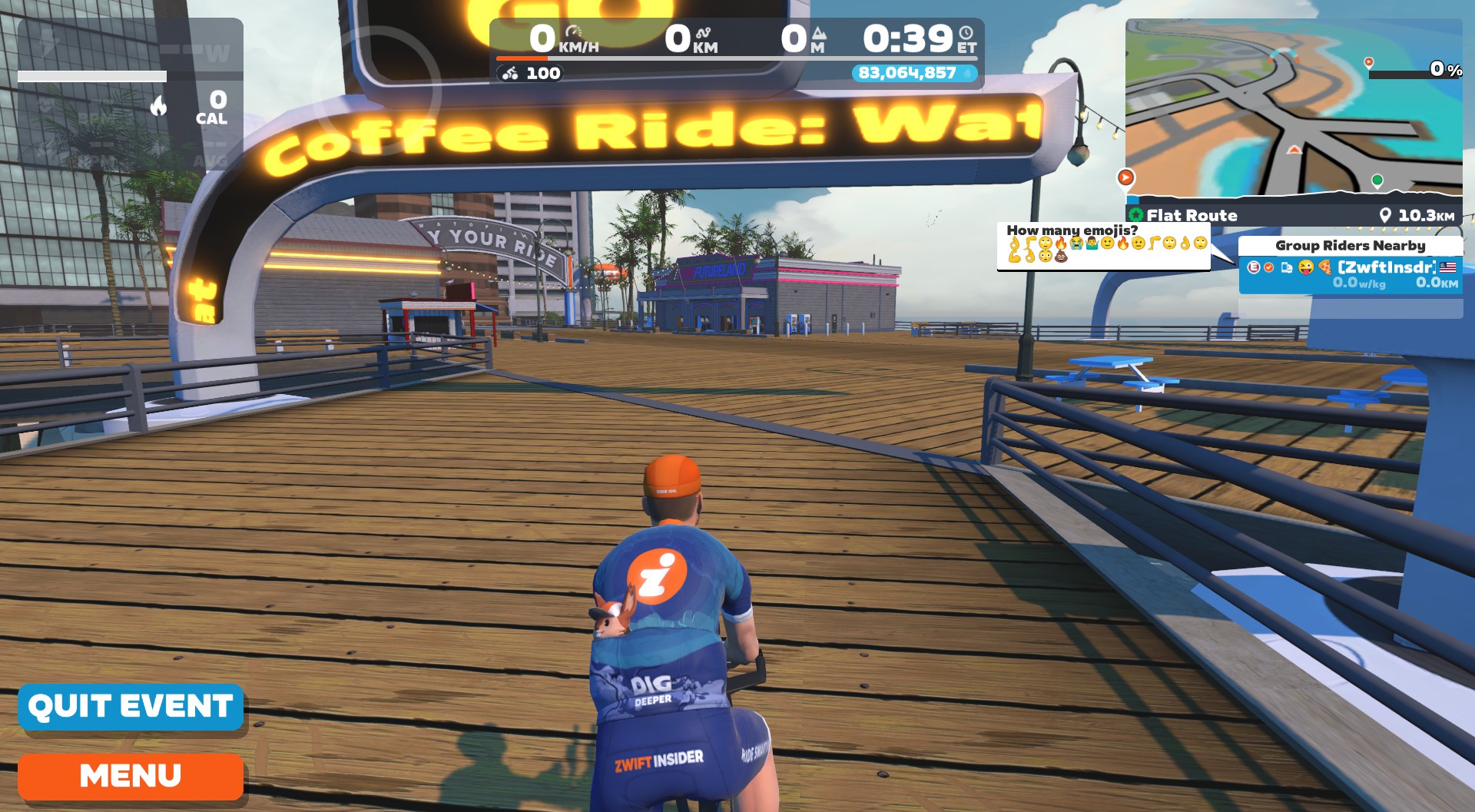
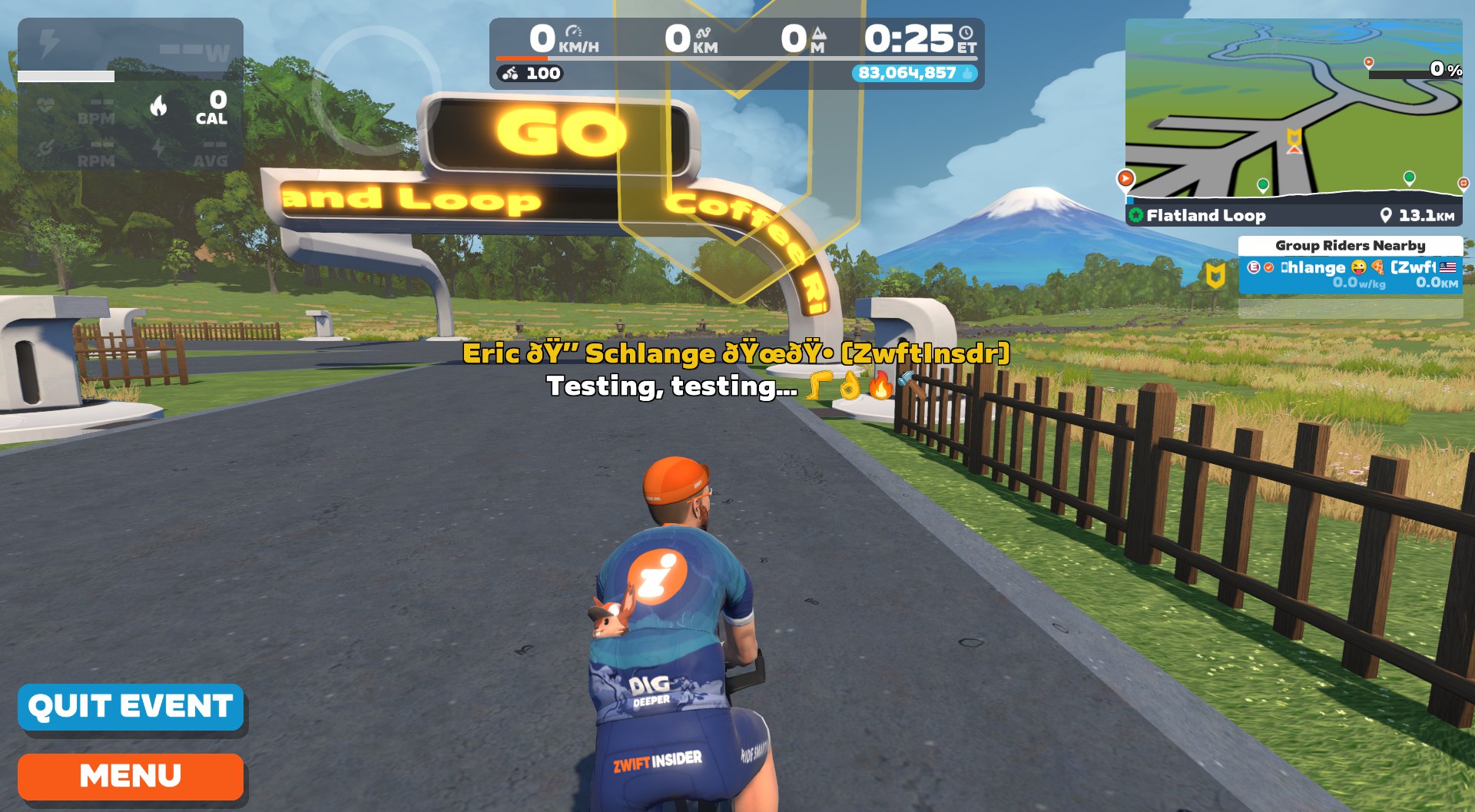
Emojis have always worked when reading messages in the Companion app, but they didn’t show up in game. That changes with this week’s update, which will show emojis in messages and Zwifter’s names. How many emojis can you put in a message? A lot.
But only up to two emojis will be displayed in your surname (the first two you use).
Ride leader’s names are displaying emojis correctly yet, but we assume this will get fixed soon:
Leaderboard
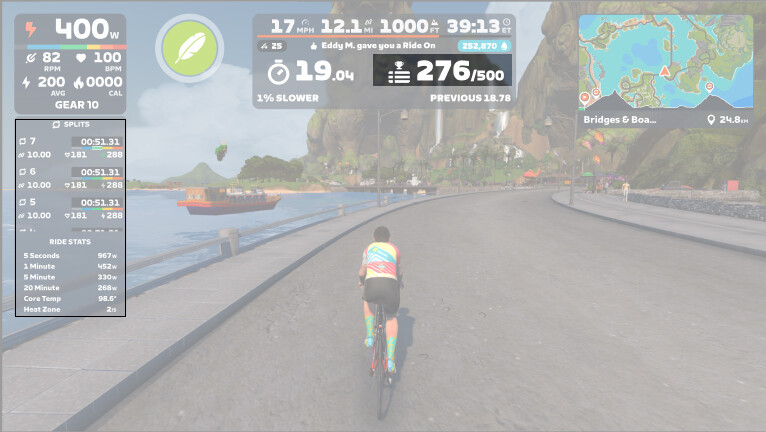
After completing a timed segment, your leaderboard ranking is now shown in the center HUD.
This is particularly helpful if you have swapped out the leaderboard on the side HUD for the ride stats panel that was added in July.
Release Notes
Zwift provided notes on additional tweaks and bug fixes in this update:
Fixed an issue where Zwift Companion and Zwift Game could potentially show different streak week numbers.
Fixed an issue that could cause workout arch lighting to appear on the roadway without a corresponding workout arch.
Fixed an issue where TT bikes could potentially automatically steer toward draft in free rides (where drafting provides no benefit); TT bikes now only seek draft in TTT events.
Discuss this update in Zwift’s forum > (link coming soon)
Questions or Comments?
If you spotted any other changes or bugs in the update, please comment below!
Last Friday, SRAM announced it is taking legal action against the UCI, in a dispute over the cycling governing body’s proposed maximum gearing protocol.
The protocol’s objective is to limit speeds achieved by riders and hence improve rider safety, following a number of high-profile fatalities when descending at speed in races, most notably those of Gino Mäder and Muriel Furrer, both last year.
The UCI refers to the new protocol as a “test” at a single race, the Tour of Guangxi, taking place in China in mid-October, although it says additional events may follow.
The UCI will test gearing restrictions at the 2025 Tour Of Guangxi. Dario Belingheri / Getty Images
The number for the maximum gearing is 10.46 metres of forward motion per pedal revolution. It’s a figure that’s dependent on the bike’s gearing, but also the tyre width (and hence its circumference).
In real terms, this means the maximum gear a cyclist could use in a race would be a 54×11-tooth, when paired with a 28mm-wide tyre.
And therein lies the problem. SRAM (and Campagnolo with the launch of its Super Record 13 groupset) produces cassettes that start at 10 teeth, and SRAM’s pro riders often opt for a crankset with a 54-tooth outer chainring. Under the new rules, this combination would be banned.
The UCI’s solution? Make pro teams block off the 10-tooth sprocket, so they can’t use it, reducing their 12-speed groupsets to 11-speed.
So why is SRAM taking legal action against the UCI?
SRAM says the regulations “hinder innovation, limit rider choice, and unfairly disadvantage SRAM riders and SRAM”. Russell Burton / Our Media
SRAM has filed a complaint with the Belgian Competition Authority (BCA), which has in turn launched anti-trust proceedings against the UCI.
The basis of SRAM’s complaint is that it is the only major manufacturer whose current pro team gearing will be blocked by the new regulation. Shimano cassettes still have an 11-tooth smallest sprocket and are paired with a 54/40t crankset. Campagnolo currently only supplies Team Cofidis and its Super Record 13 groupset offers cassettes with 11-tooth smallest sprockets as well as 10-tooth ones.
So, according to SRAM, the regulations “hinder innovation, limit rider choice, and unfairly disadvantage SRAM riders and SRAM”. It reckons it would take years to engineer a drivetrain that conformed to the UCI’s regulation.
“Lack of transparency and collaboration”
SRAM says the UCI leadership has refused to engage with it, over multiple attempts, and that “the lack of transparency and collaboration left legal action as the only remaining path forward”.
It claims that its gearing “has been publicly labeled as non-compliant, creating reputational damage, market confusion, team and athlete anxiety, and potential legal exposure”.
It further claims that the new ruling was made without any consultation, transparency, supporting evidence or safety justification and distorts competition.
An open letter from SRAM’s CEO
SRAM’s CEO, Ken Lousberg, published an open letter explaining why the company filed a formal complaint with the BCA.
In the letter, Lousberg wrote: “The UCI’s new Maximum Gearing Protocol is set to restrict the equipment many of you rely on to ride and race at your best. It limits choice, stifles innovation, and unfairly targets SRAM riders – and SRAM itself.”
“We’ve tried to engage the UCI, cycling’s governing body, in good faith, but our concerns went unheard. That’s why we’ve taken legal action – not just to protect SRAM, but to protect the right to compete on equal footing.”
“We’re not asking for much. We simply want our racers to compete on a level playing field, and for the industry to be recognized and included as a core stakeholder – working together to make our sport safer for athletes and more inspiring for fans,” the letter went on.
Focus on course design
Better course design will do more to improve rider safety, according to SRAM. Marco Bertorello / Getty Images
SRAM says it crunched the numbers for the 2025 Tour de France and found that crashes on descents were rare, and that there was no correlation between higher gearing and crash risk.
SRAM claims better course design will do more to improve rider safety – and it’s not alone in this belief.
Dan Bigham, head of engineering at Red Bull – Bora – Hansgrohe, presented his research into gearing restrictions at the Science and Cycling Conference in Lille earlier this year.
Bigham said the restrictions would have no impact on the speed of the peloton, so they would not improve safety.
Instead, Bigham proposed four pillars to focus on: course design, bike design, rider protection and medical response.
“We have the power to make changes. But restricting gear ratios simply distracts from making meaningful changes to rider safety,” said Bigham.
The UCI responds twice
On Saturday 20 September, a day after SRAM’s announcement, the UCI expressed concern over the BCA’s announcement that it had opened an investigation.
The UCI said in an official press release that it was “puzzled by the issuance of the Belgian Competition Authority’s press release before the UCI has even been served with the complaint and by the obvious inaccuracies contained in this statement”.
The UCI also issued a second statement in response to SRAM’s press release, where it defended its test at the Tour of Guangxi.
“The UCI reiterates that all its technical regulations, including the protocol for testing maximum gear ratios, are developed in the best interests of cycling, athlete safety, and fair sport. These rules are the result of a consultation process involving stakeholders in the sector, including teams, riders, and organisers,” the UCI said.
“[T]he UCI questions SRAM’s objectives in opposing a test designed to assess the relevance of a safety enhancement measure, thereby undermining the necessary unity among cycling stakeholders, which is essential for progress toward a safer sport,” the statement concluded.
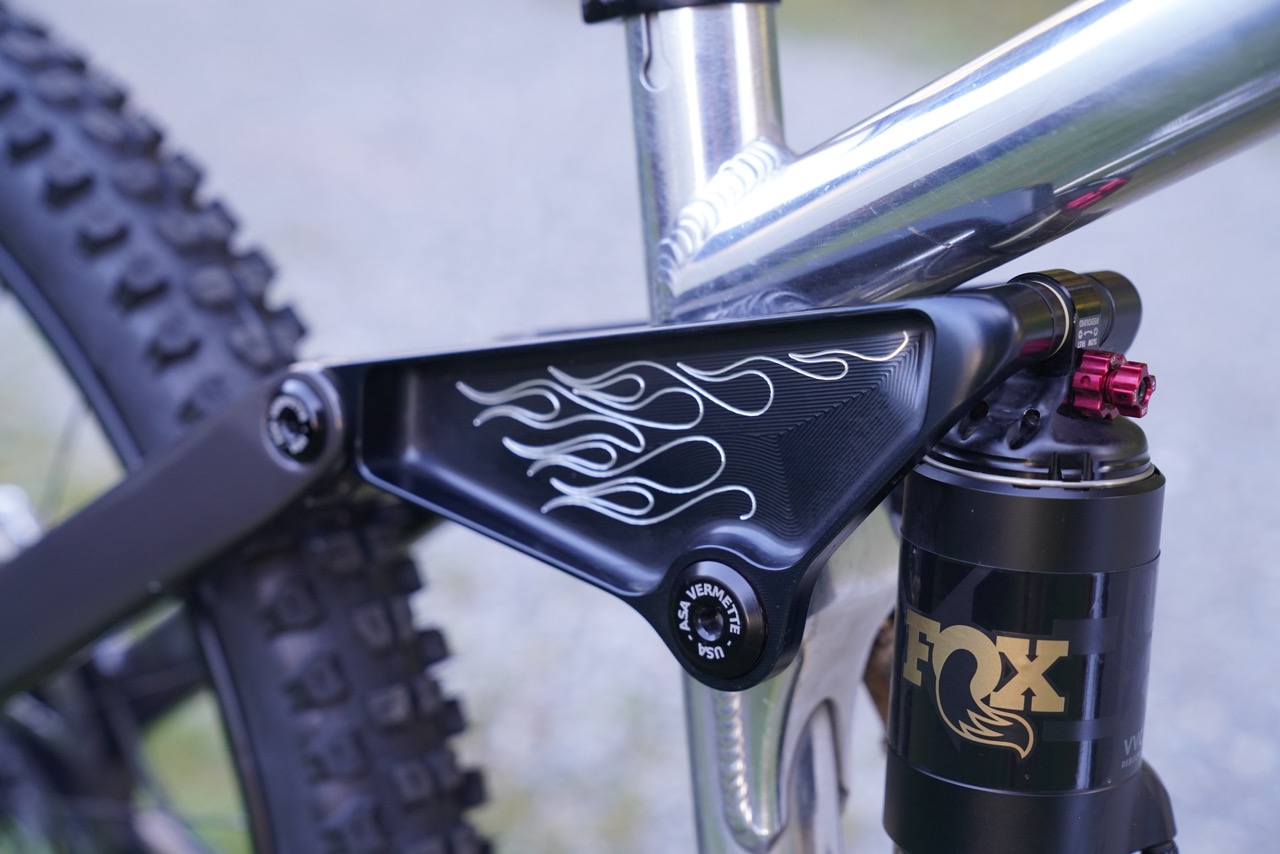
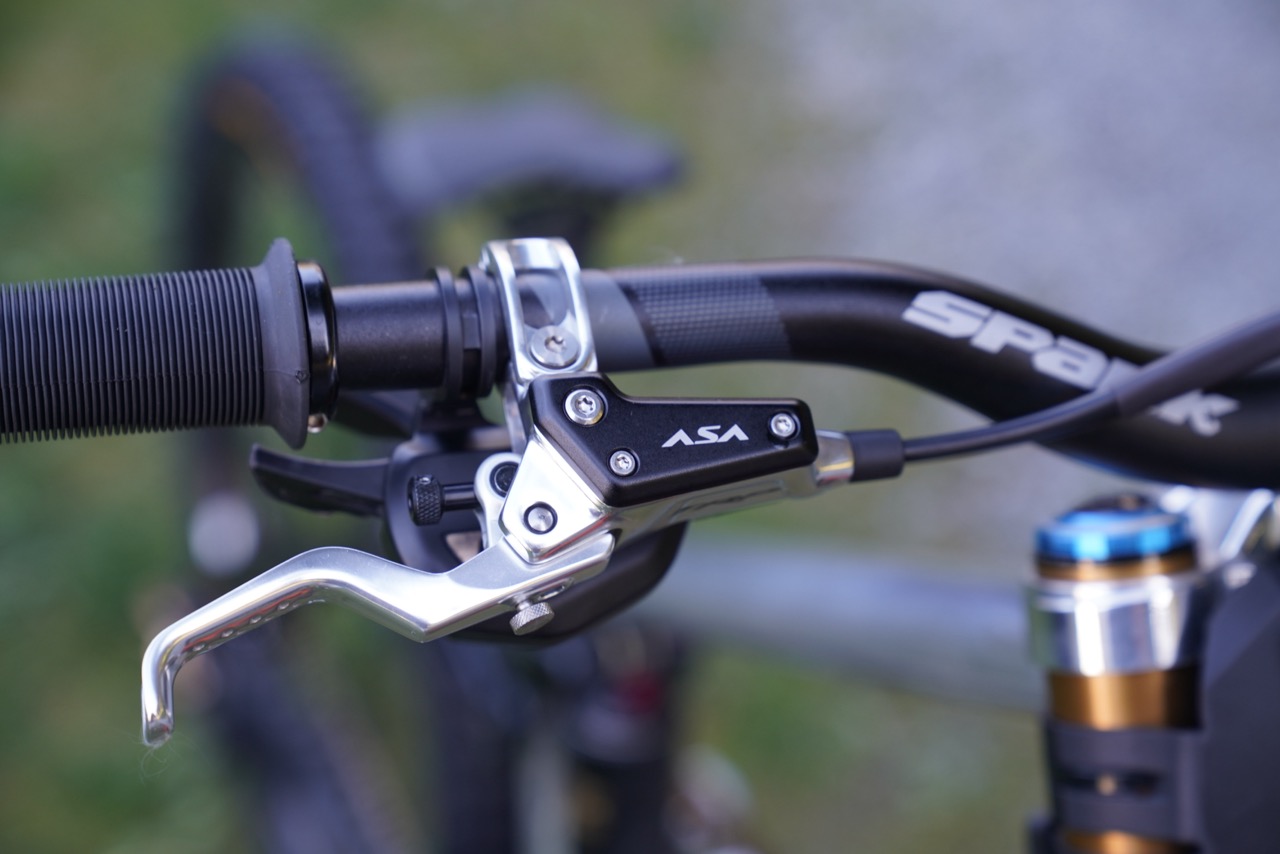
Vermette’s Frameworks DH looked more bling than ever as he backflipped his way to men’s junior victory at the Lenzerheide UCI World Cup, with the American’s bike featuring chrome fork crowns, custom brake levers and a possible 5Dev signature crankset.
It also appears that Frameworks is experimenting with anodisation, with the rider’s link now black to match the carbon fibre rear end.
We caught up with the young American in the pits at Lenzerheide to take a closer look at his bike before it crosses the Atlantic to finish the season.
Vermette’s bike shows you don’t need big budgets to win bike races. Nick Clark / Our Media
Vermette rides for Frameworks Racing 5Dev, and uses the brand’s simply named DH bike.
The team was founded by ex-racer Neko Mulally, who decided to develop and bring his own bikes to market in 2022.
The bike has been around in various guises for a while, but there appears to be a creeping darkness lately – with the main link now featuring a black anodised coating that not only makes the go-faster flames stand out, but highlights the chrome beauty of the front triangle.
This is the first time we’ve seen Frameworks add colour to the metal elements of its bikes. Nick Clark / Our Media
This linkage is connected to a Fox Float X2 Factory rear shock, controlling the frame’s 200mm of rear suspension.
Many riders choose to use coil shocks for their sensitivity, with Vermette in the minority with his air shock.
The bike can be set up in two travel options, with 200mm of travel in the linear setting or 205mm in the progressive position.
Could we be looking at an Asa Vermette signature crank? Nick Clark / Our Media
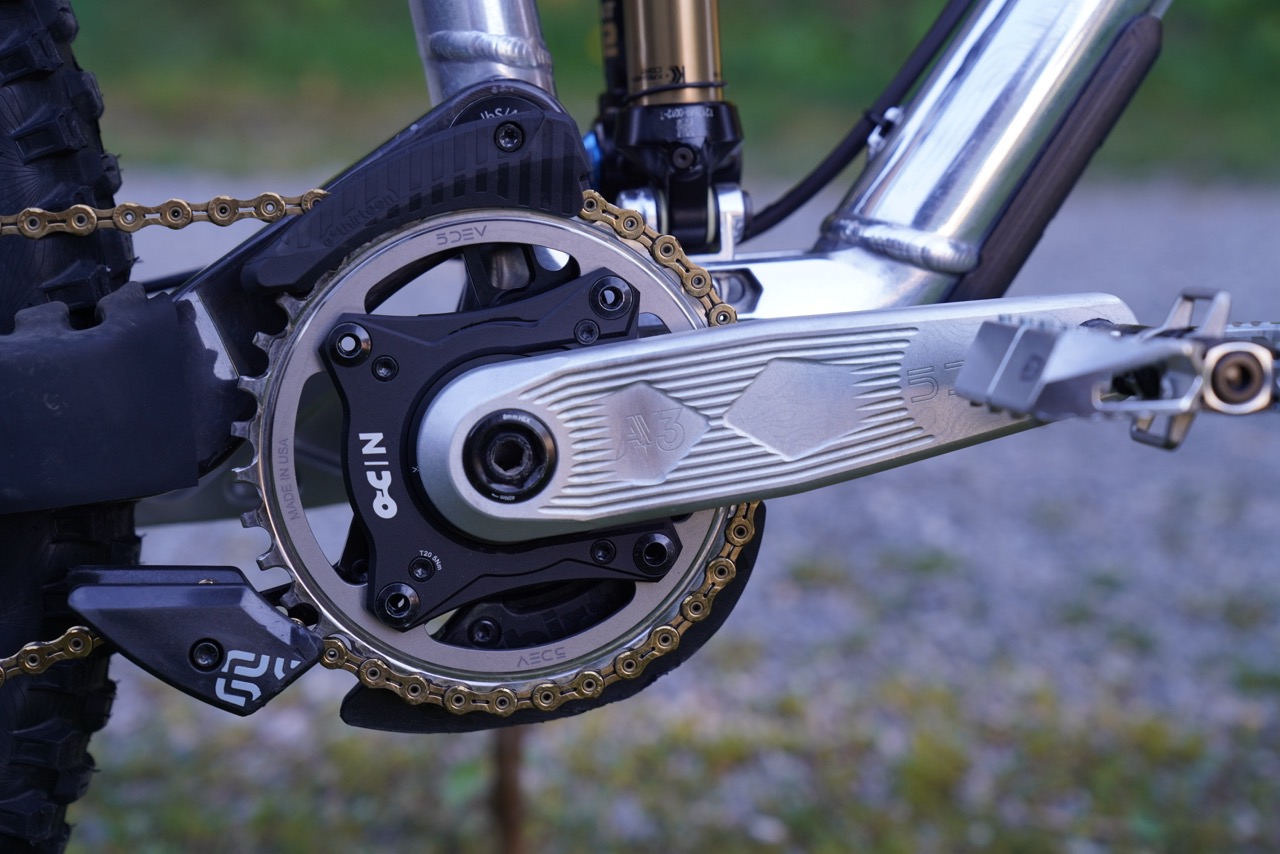
In the centre of the bike are 5 Dev crank arms, which appear to take the shape of Cam Zink Signature Freeride Cranks, but with custom engraving, including more flames and an ‘AV3’ enscription.
Earlier in the year, we saw Vermette using what appeared to be R-SPEC Trail Enduro Cranks, with hollow cutouts.
These are connected to an Ochain device, which reduces pedal kickback from the suspension on large hits.
Pedal kickback comes from the cassette and chainring moving away from each other as the bike compresses, requiring more chain on the topside of the drivetrain.
Ochain’s design enables the chainring to feed that chain to the topside without rotating the crank arms, keeping your feet secure on the pedals.
The chrome version of the TRP DH-R Evo Pro brakes is in line with the rest of the bike. Nick Clark / Our Media
Asa Vermette’s name features on other parts of the bike, with the TRP DH-R Evo Pro brakes marked with ‘Asa’ on the right reservoir cap.
Vermette has switched to the chrome version of the brakes since we last saw his bike at RedBull Hardline Wales earlier this year.
The Fox Factory 40 fork delivers up to 203mm of suspension travel. Nick Clark / Our Media
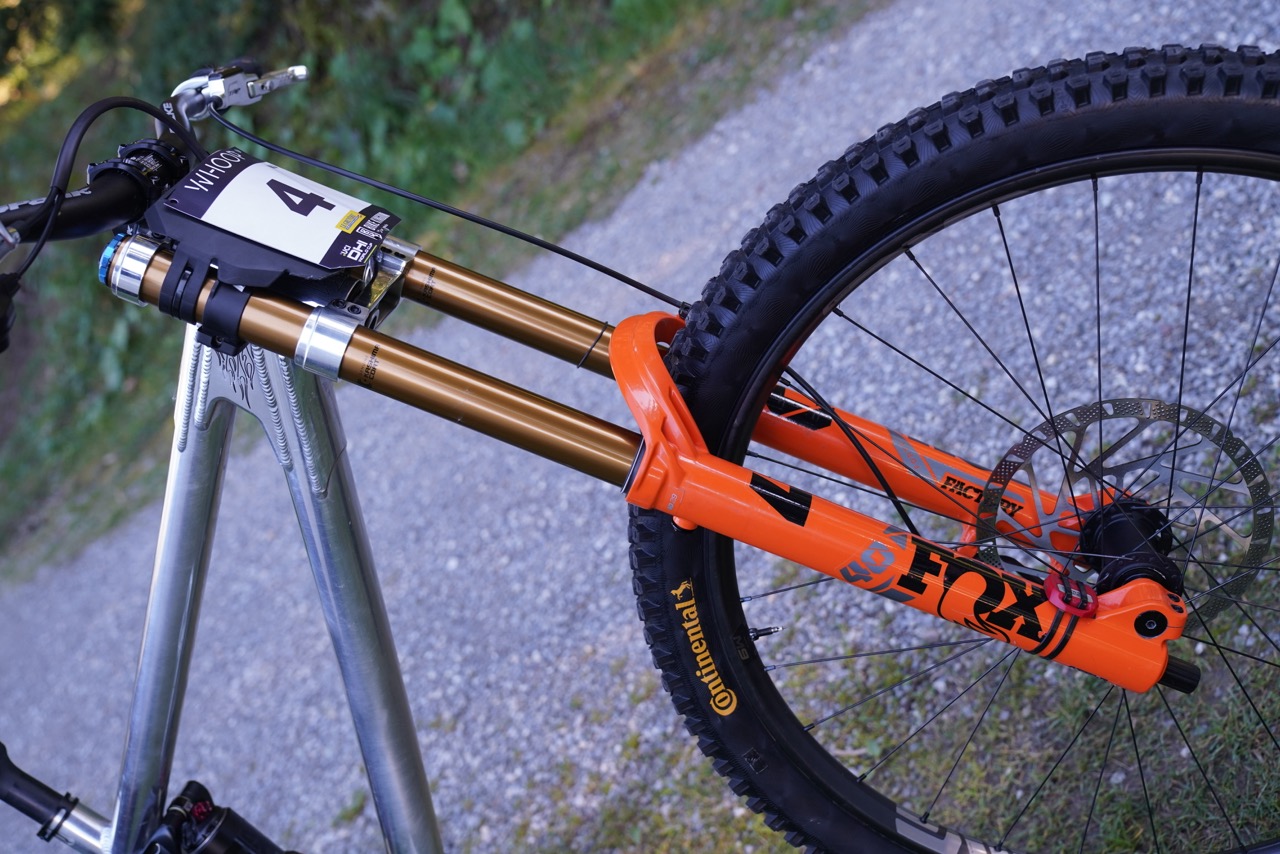
Up front, the bike is supported by a Fox Factory 40 fork, which features chrome crowns to match the raw aesthetic of the Vermont welded frame.
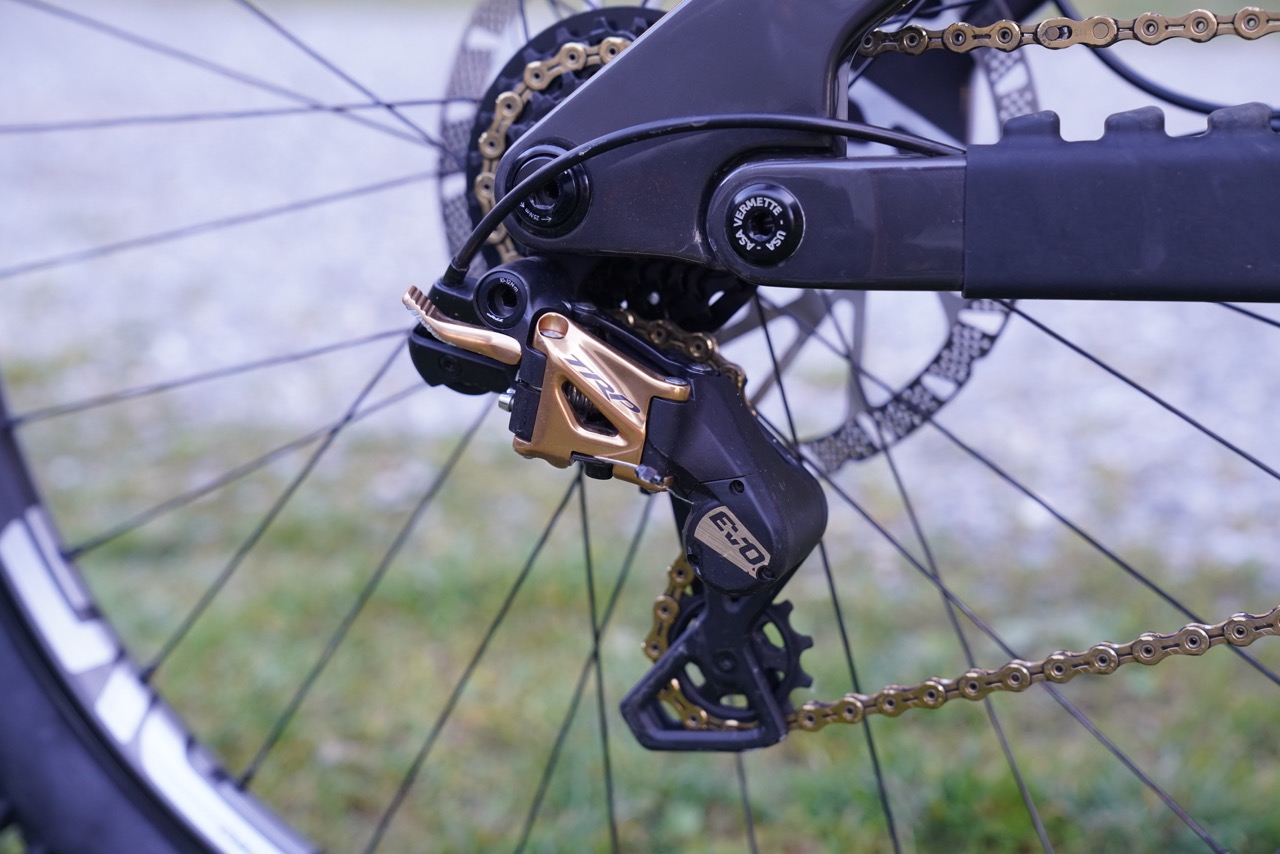
TRP just needs to make a chrome version of its Evo 7 derailleur to match the rest of the bike. Nick Clark / Our Media
TRP’s Evo 7 groupset is used for shifting and has one of the only derailleurs found on the DH scene that isn’t made by SRAM or Shimano.
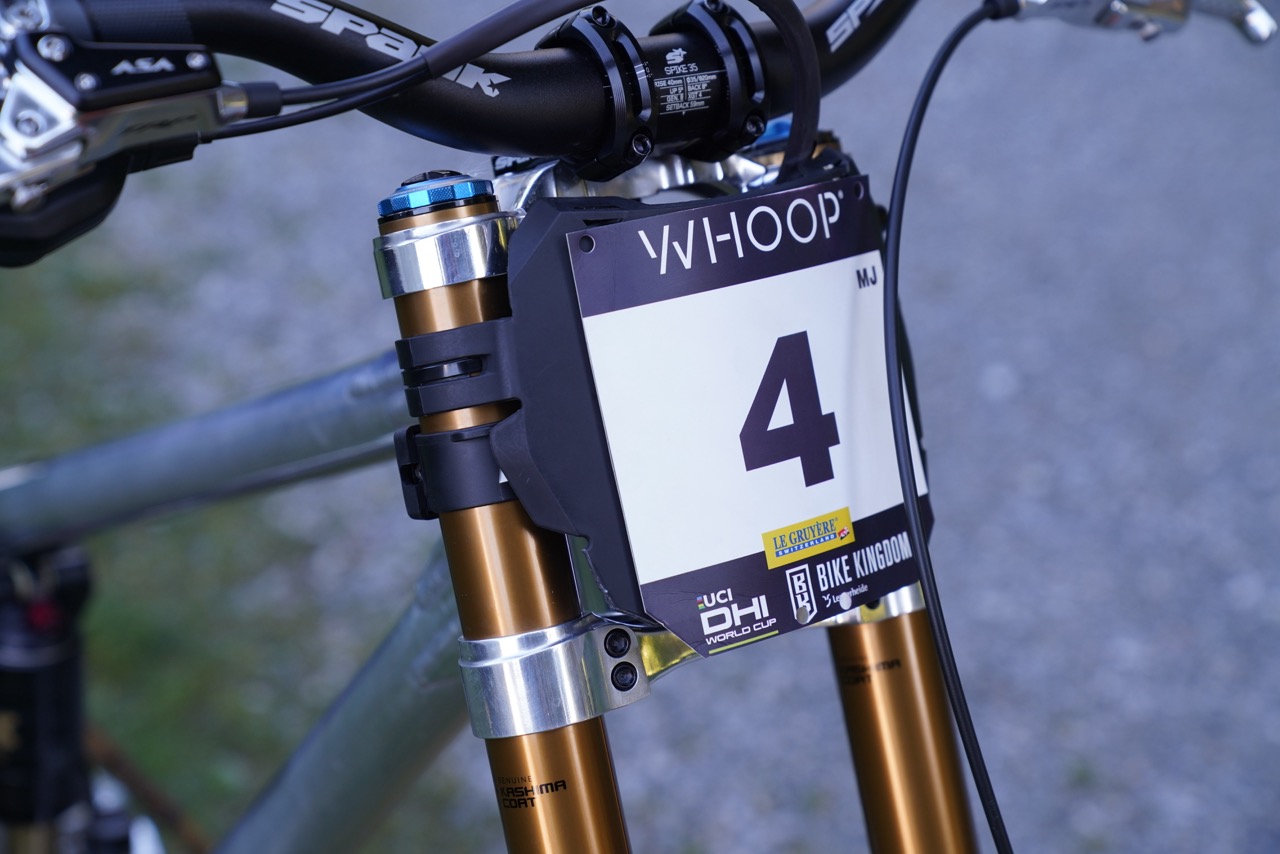
The chrome crowns add more bling to Fox’s Factory 40 fork. Nick Clark / Our Media
Vermette chooses a Spank Spike 35 handlebar with 40mm rise. While it’s not quite at the ape-hanger heights of 75mm we’ve seen Dakotah Norton riding, more riders are choosing high-rise bars.
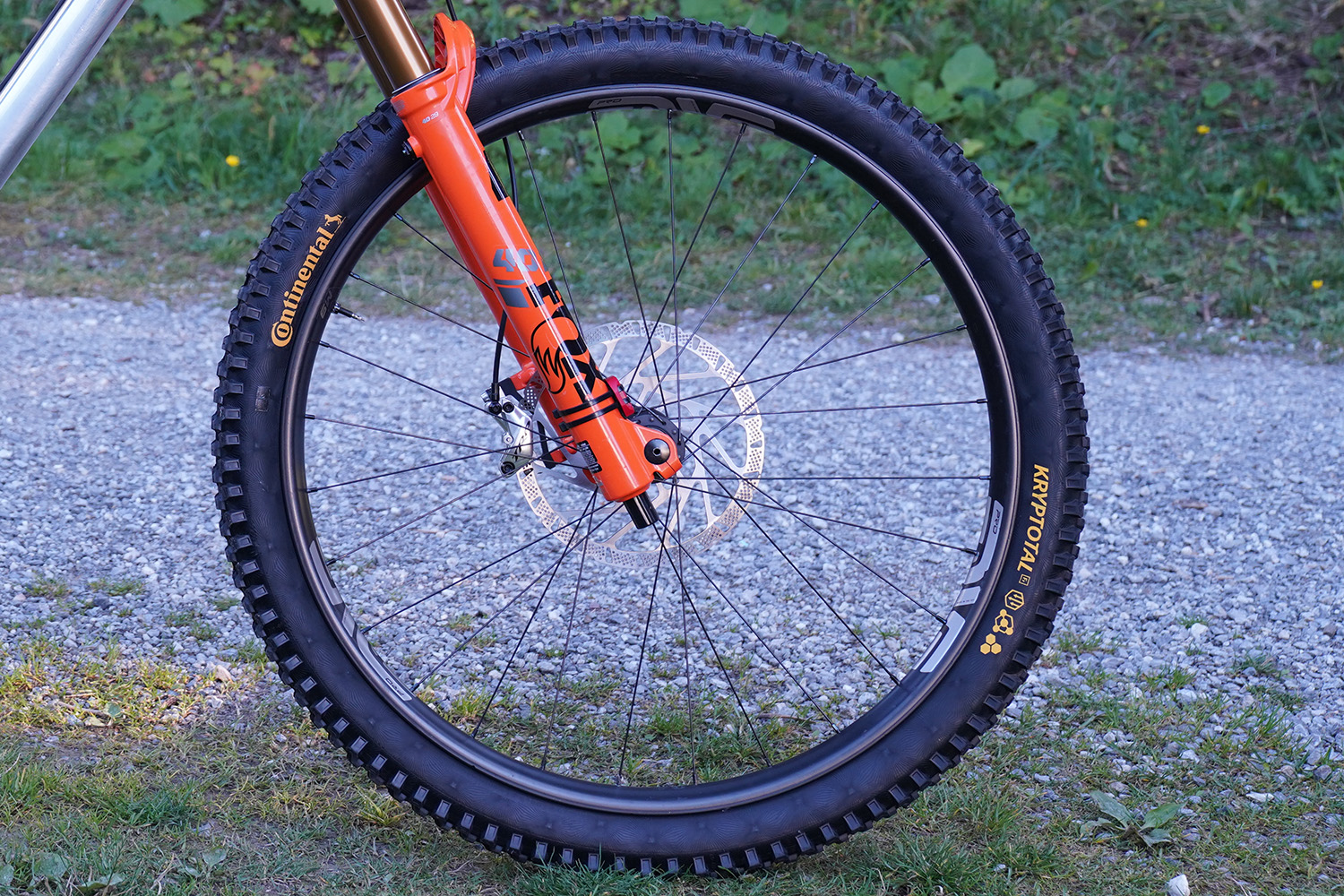
Vermette has been riding these ENVE wheels for quite a while. Nick Clark / Our Media
Continental’s Kryptotal tyres are wrapped around ENVE rims.
A new helmet technology called RLS (Release Layer System) is said to reduce the risk of concussion by four times, on average, compared with conventional helmets.
With roughly 55 million cases of Traumatic Brain Injury (TBI) reported globally each year, RLS says “it’s never been more important to develop a solution that reduces TBI”.
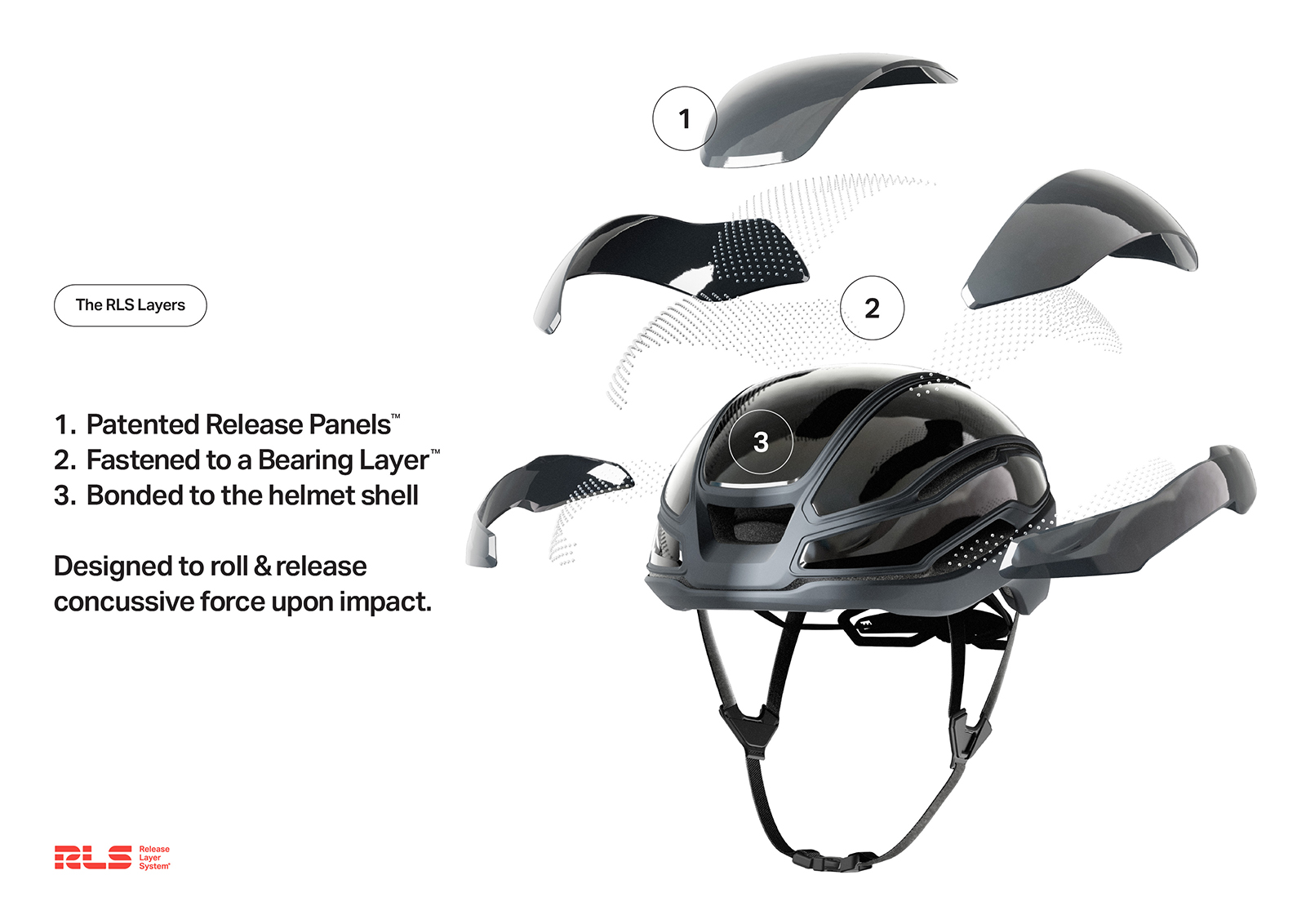
RLS is intended to provide that solution through panels on the exterior of a helmet that “roll and release” on impact.
A graphic showing the components of RLS helmet technology. RLS
The panels are connected to a lightweight polycarbonate bearing layer, which ‘activates’ when a significant impact force has been detected. This redirects rotational energy away from the brain.
The bearings are free to roll in any direction to enable the RLS panels to release, which is said to redirect concussive forces away from the brain.
RLS, based in East London, claims its technology was discovered “almost by accident” by its founder and CEO Jamie Cook.
Cook was the co-founder of HEXR, a 3D-printed custom helmet company. He noticed the outer shells of his colleagues’ 3D-printed helmets were released in an accident, and this action was found to reduce rotational forces and therefore the risk of concussion.
“Jamie and his research team began exploring the most efficient ways of releasing panels which led to the use of small lightweight bearings between the shells,” says RLS.
Sounds familiar?
MIPS is a common sight on many of the best helmets. Simon von Bromley / Our Media
If this all sounds familiar, that’s probably because RLS protects against the same kind of impacts as MIPS.
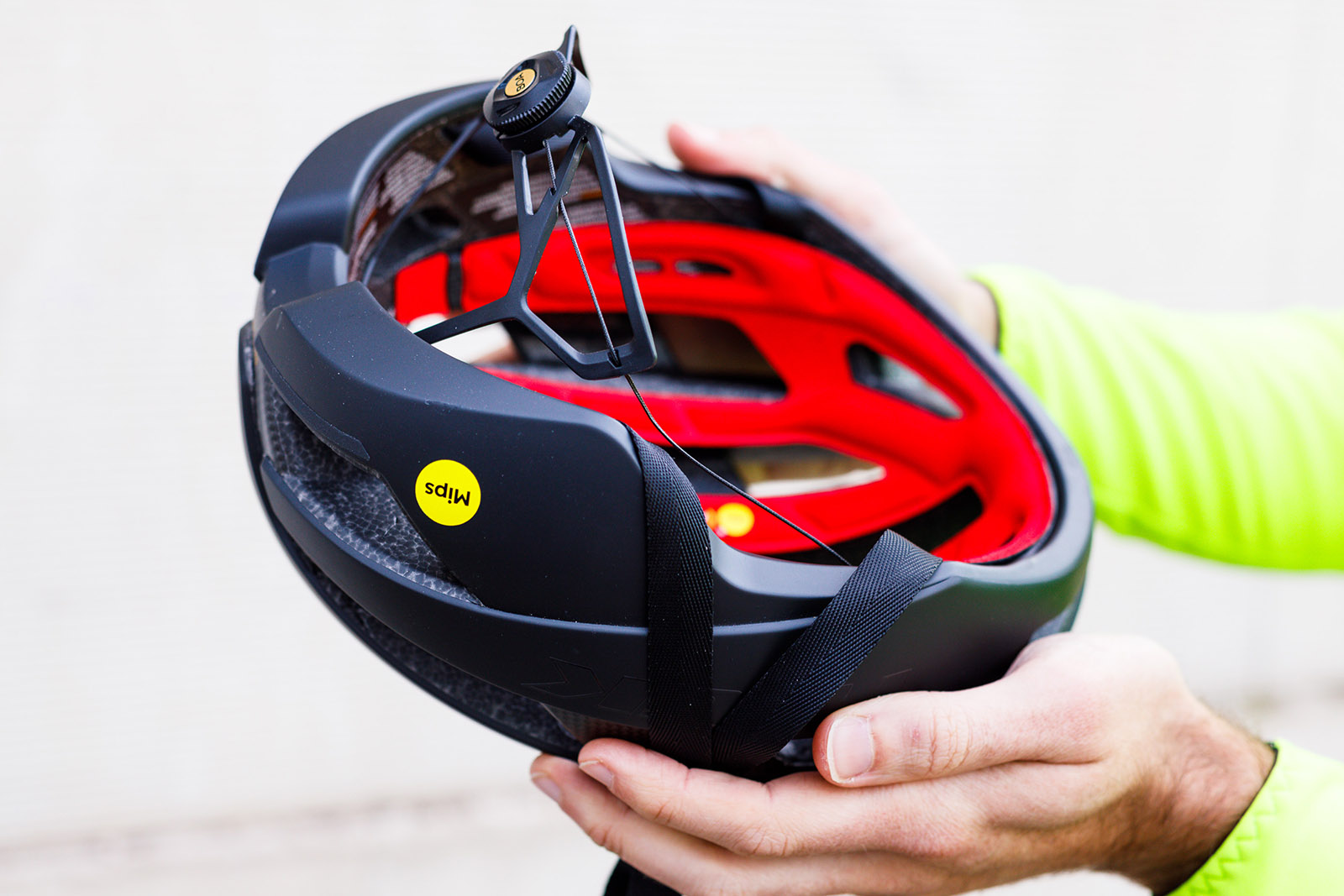
Short for ‘Multi-directional Impact Protection’, MIPS is also a helmet ‘ingredient’ technology, which protects against rotational impacts. The small yellow dot marking that a helmet has the technology has become commonplace across the best road bike helmets, mountain bike helmets and even budget helmets.
Many of the safest cycling helmets tested by the HEAD Lab at Imperial College London include MIPS, but RLS aims to distinguish itself from technologies such as MIPS.
“Some technologies, such as MIPS, aim to mitigate these rotational forces by allowing the helmet to rotate independently from the skull. These technologies, which are generally located on the inside of the helmet, offer a limited range of motion during the critical milliseconds of an impact,” says RLS.
“RLS addresses rotational motion through the free-release of panels located on the outside of the helmet,” it adds.
How safe is RLS?
A helmet with RLS rotational impact protection technology. RLS
Independent testing by the biomechanics research centre ICUBE at the University of Strasbourg reveals that RLS could play a part in reducing TBI.
ICUBE found that helmets with RLS reduced the peak rotational velocity by an average of 56–66 per cent across different impact locations, compared to helmets without the technology.
“This corresponds to a 68–84 per cent reduction in the probability of brain injury as estimated by the Abbreviated Injury Scale – Level 2,” says RLS.
Where can we expect to see RLS?
The first helmet you’ll be able to buy with RLS will be the Canyon Deflectr Trail Helmet, due for release this autumn.
Canyon has been working closely with RLS to build the technology into its forthcoming helmet. RLS says that as a result of the technology, the Deflectr Trail Helmet is already number one on the Virginia Tech helmet safety ratings, as of September 23.
Cook says: “RLS is first and foremost designed to protect what makes you, you. Your memories, your personality, your loves and hates are all in the most fascinating part of the body – the brain – and RLS has been developed to protect what matters most.
“We are incredibly excited to launch this technology today, especially with our launch partners at Canyon as we share a passion for safety and disruption technology.”
RLS says it will reveal further brands and partners that will incorporate the technology over the coming months.
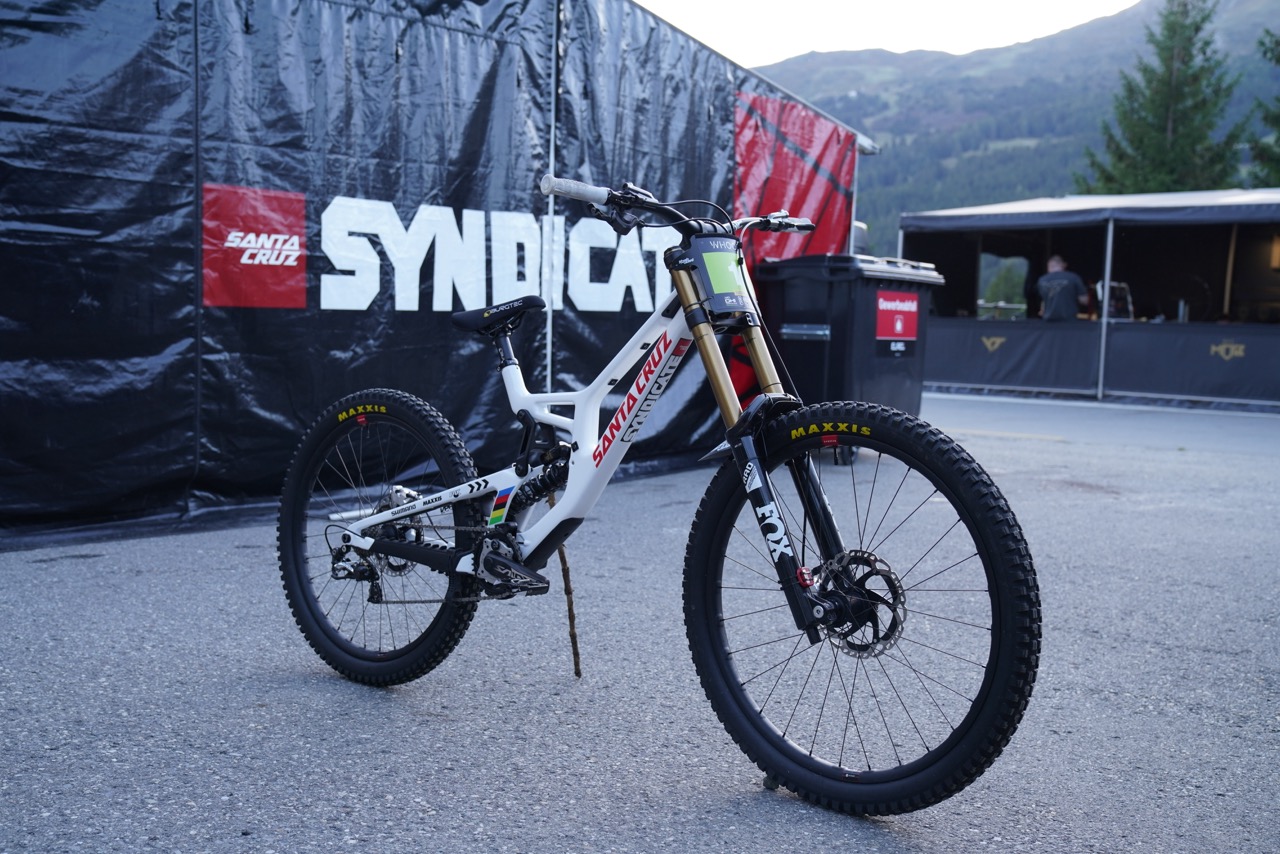
After winning the MTB World Championships in Champéry, the UCI Mountain Bike World Series in Lenzerheide was the first time we’d seen the world champion stripes on Jackson Goldstone’s bike.
Some interesting tech points were hiding on his Santa Cruz V10, including a prototype Fox 40 fork and new Shimano brake calipers that we believe are prototypes for an upcoming Saint groupset.
While Goldstone showed good speed for the whole weekend, qualifying fourth on Saturday, an unfortunate crash in his race run cost him 8 seconds and resulted in a 22nd place.
We checked out the new world champion’s bike in the pits to get a close-up look at the rainbow details.
The new 40 looks to adopt Fox’s latest design language. Nick Clark / Our Media
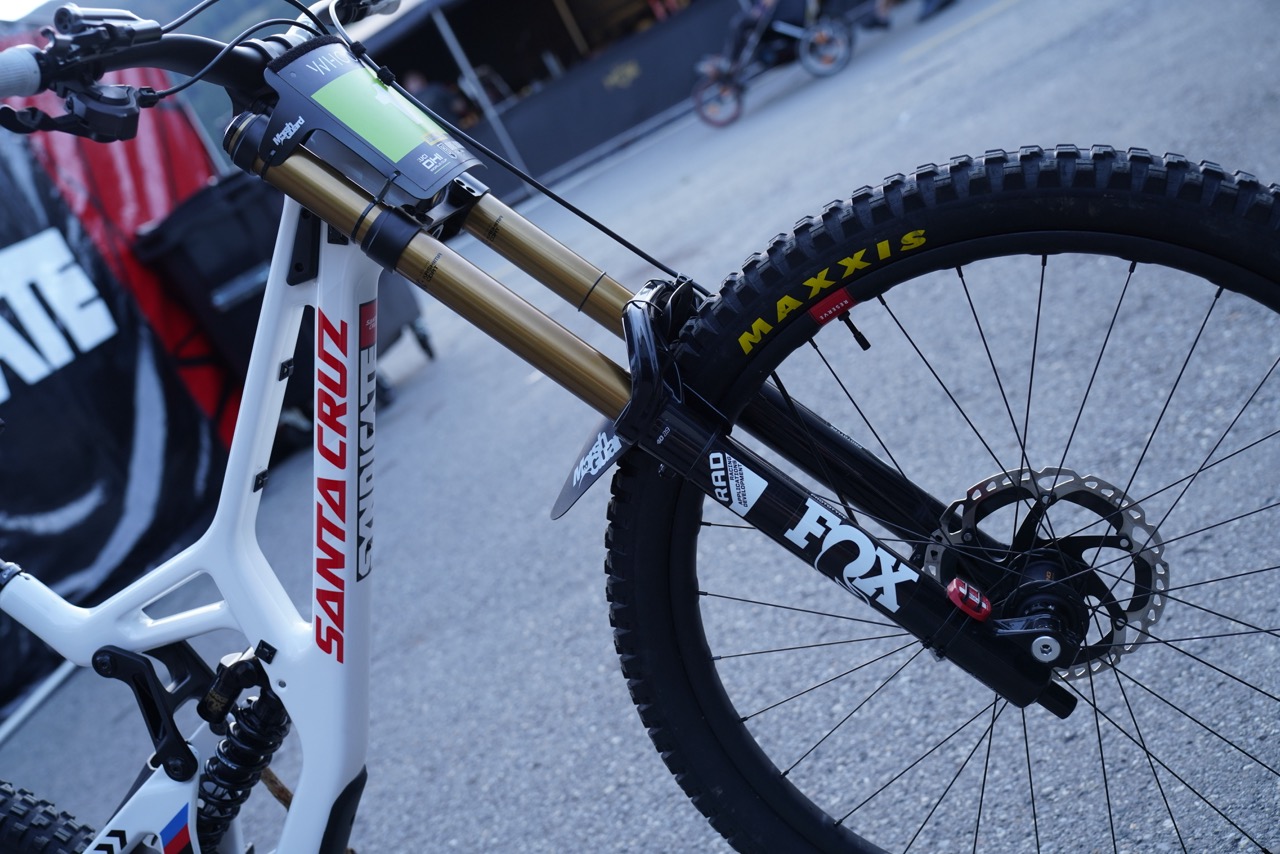
At the front of Goldstone’s bike is a new Fox Factory 40 fork, which features stickers from the brand’s RAD (Racing Application Development) programme.
There were no clues on the top of the fork. Nick Clark / Our Media
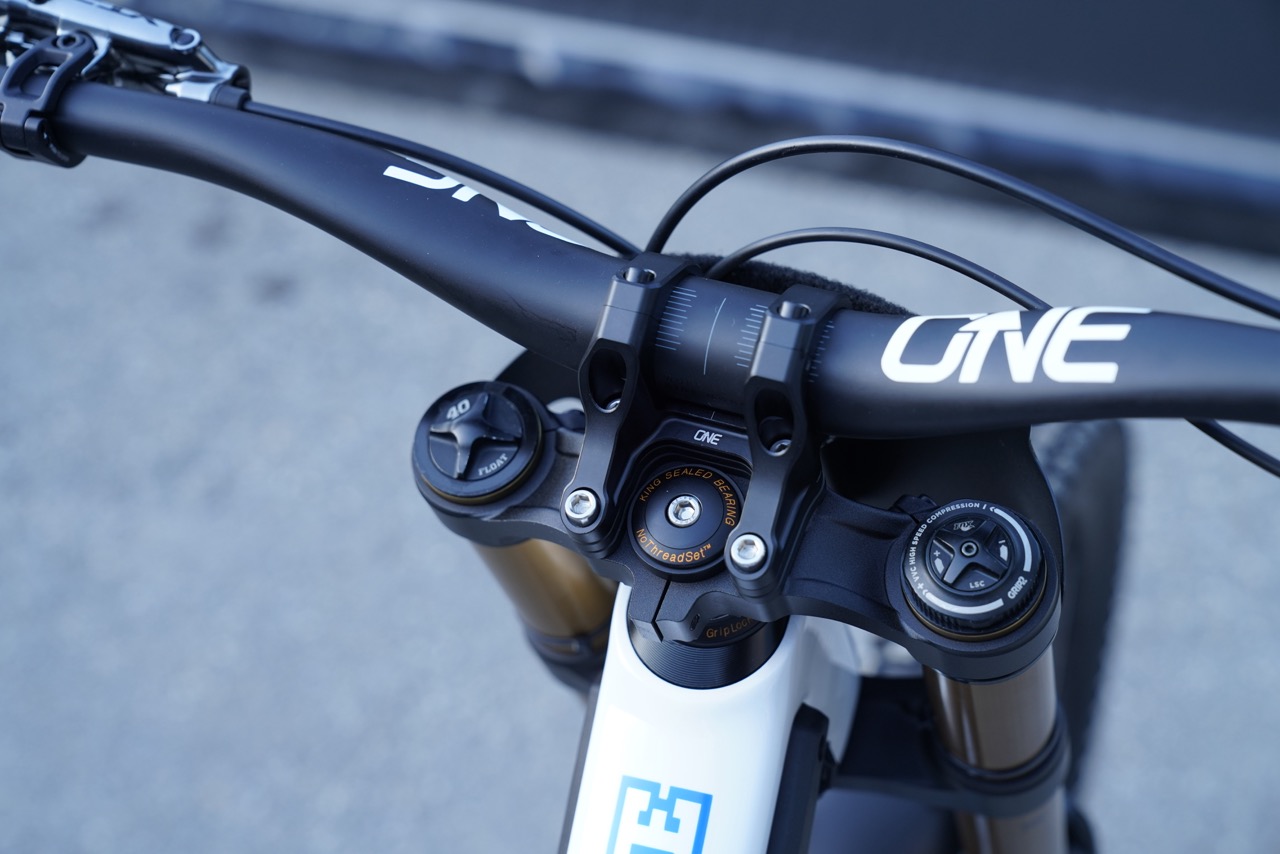
The crown looks to feature the generative architecture we’ve seen on Fox’s latest forks, including the new 36, where the brand says it increased torsional stiffness by 20 per cent.
At the top of the stanchion, it appears the fork is using a GRIP X2 damper, the same as that found on the current 40. However, we’d expect the insides to be different from how it’s labelled.
New Shimano Saint brakes
It would be cool if Shimano left these raw for the production model. Nick Clark / Our Media
It’s been nearly 13 years since Shimano last updated its Saint groupset, with many fearing the Japanese brand had forgotten its gravity-inspired riders.
While we’ve seen nothing of a new drivetrain, these chunky stoppers suggest Shimano has something in the works.
The calipers are much larger than the recently released XTR 9220 brakes, closer to SRAM’s Mavens, hinting that these may be the big-power brakes many fans have been waiting for.
The current-generation Saint has been used with XTR levers by pros for a long time. Nick Clark / Our Media
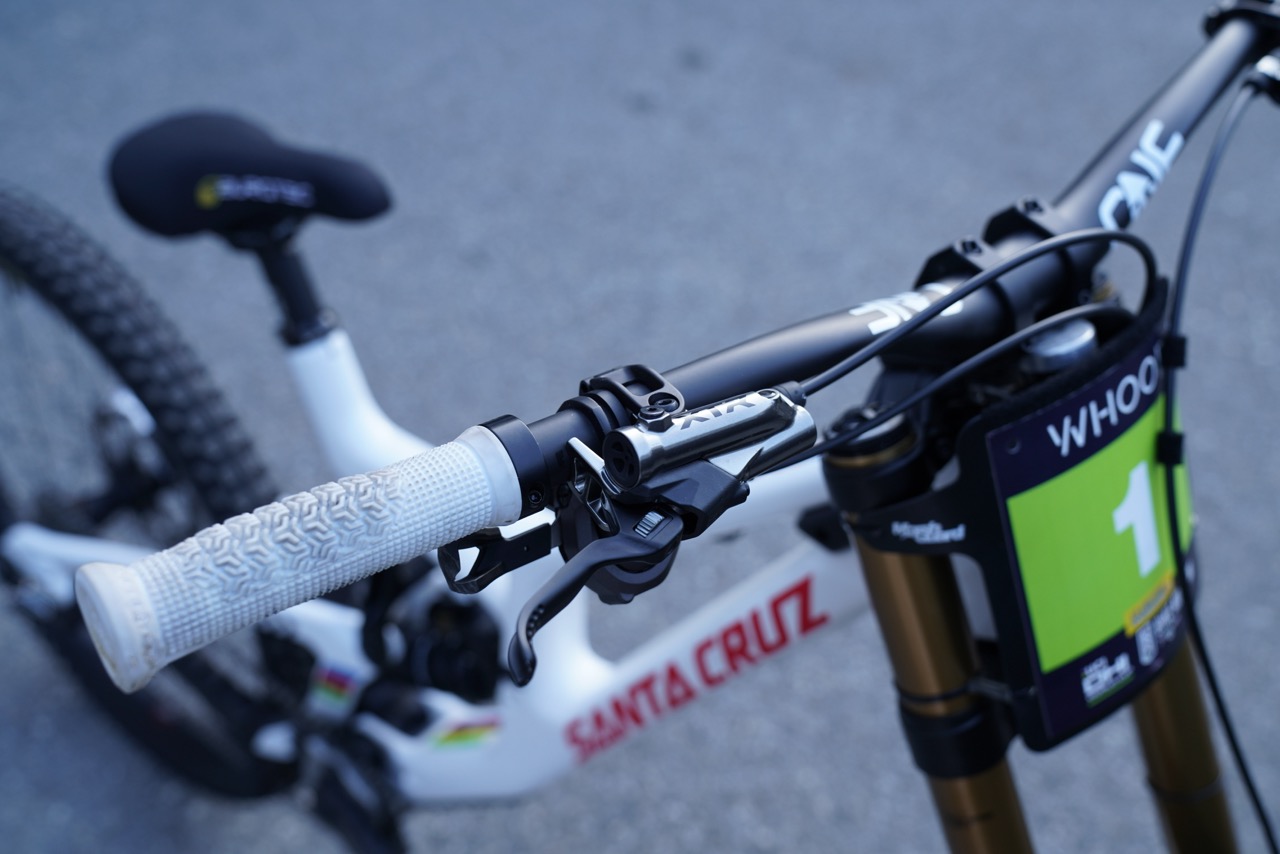
An XTR lever is used in conjunction with the caliper on Goldstone’s bike, which we assume means the lever on upcoming Saint brakes may be the same.
Santa Cruz had the frame painted and shipped to Lenzerheide. Nick Clark / Our Media
Goldstone took the stripes two weeks ago in Champéry, but we’ve had to wait until now to see them.
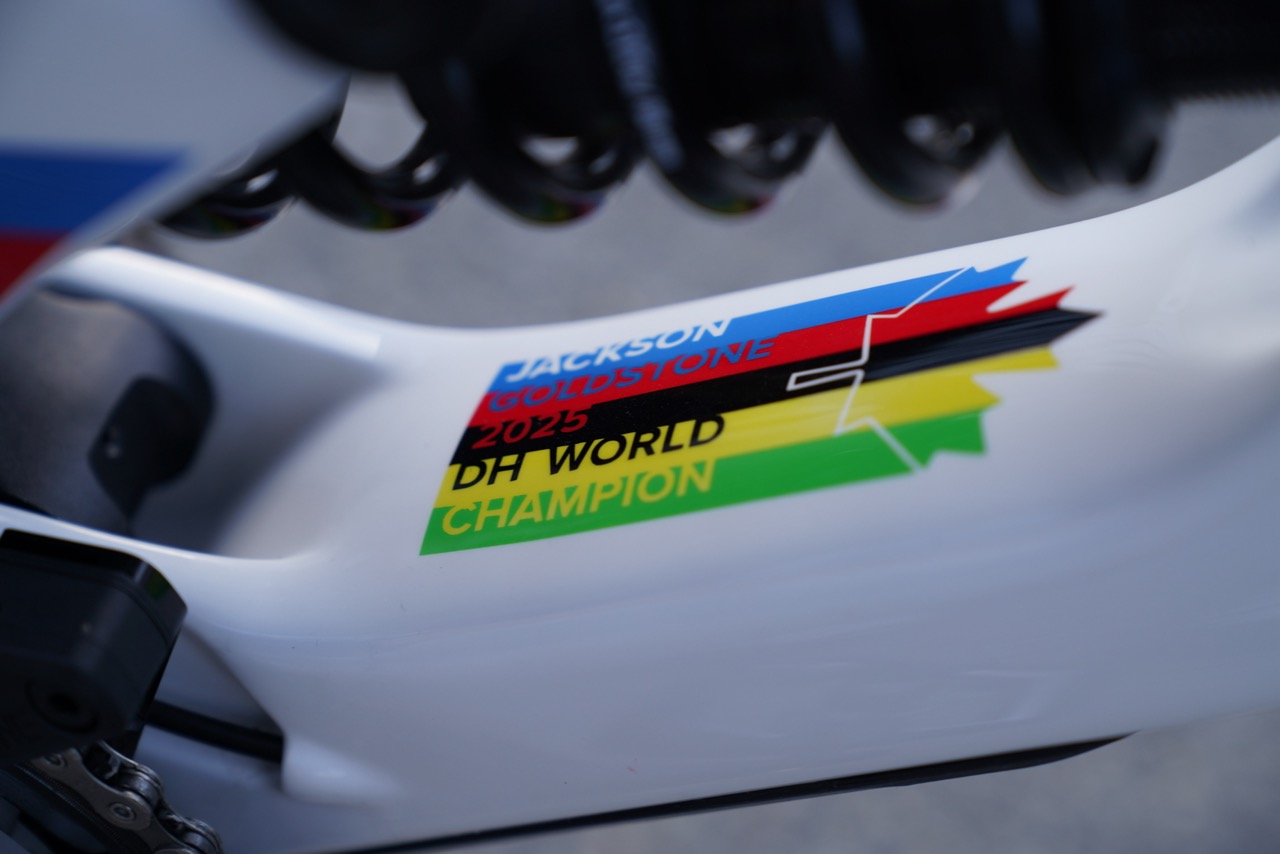
There are details of the win throughout the bike. Nick Clark / Our Media
The 21-year-old American’s team have gone to great lengths to make sure his victory is well celebrated across the bike, with the stripes featuring on various components.
Goldstone appears to see the benefits of a tuned mass damper. Nick Clark / Our Media
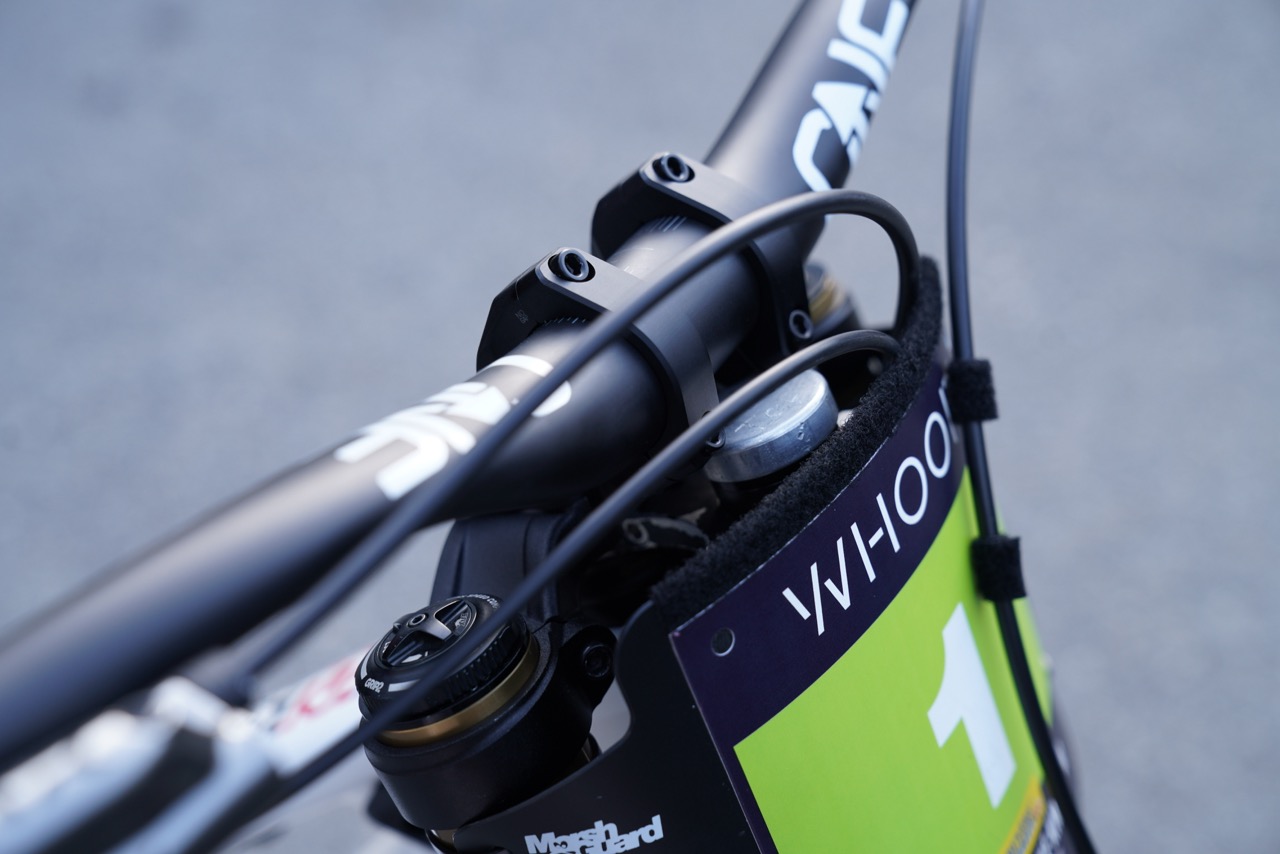
Goldstone’s bike features other techy details, with his raceplate hiding a tuned mass damper.
We’ve seen a few riders experimenting with this, with the component said to reduce the amplitude and duration of vibrations down the trail.
This setup should reduce pedal kickback and reduce chain slap. Nick Clark / Our Media
At the centre of the bike, an Ochain device is used to reduce pedal kickback, while a STFU Trail chain damper is used to silence the chain.
Goldstone’s mechanic says these hubs have been hand-painted. Nick Clark / Our Media
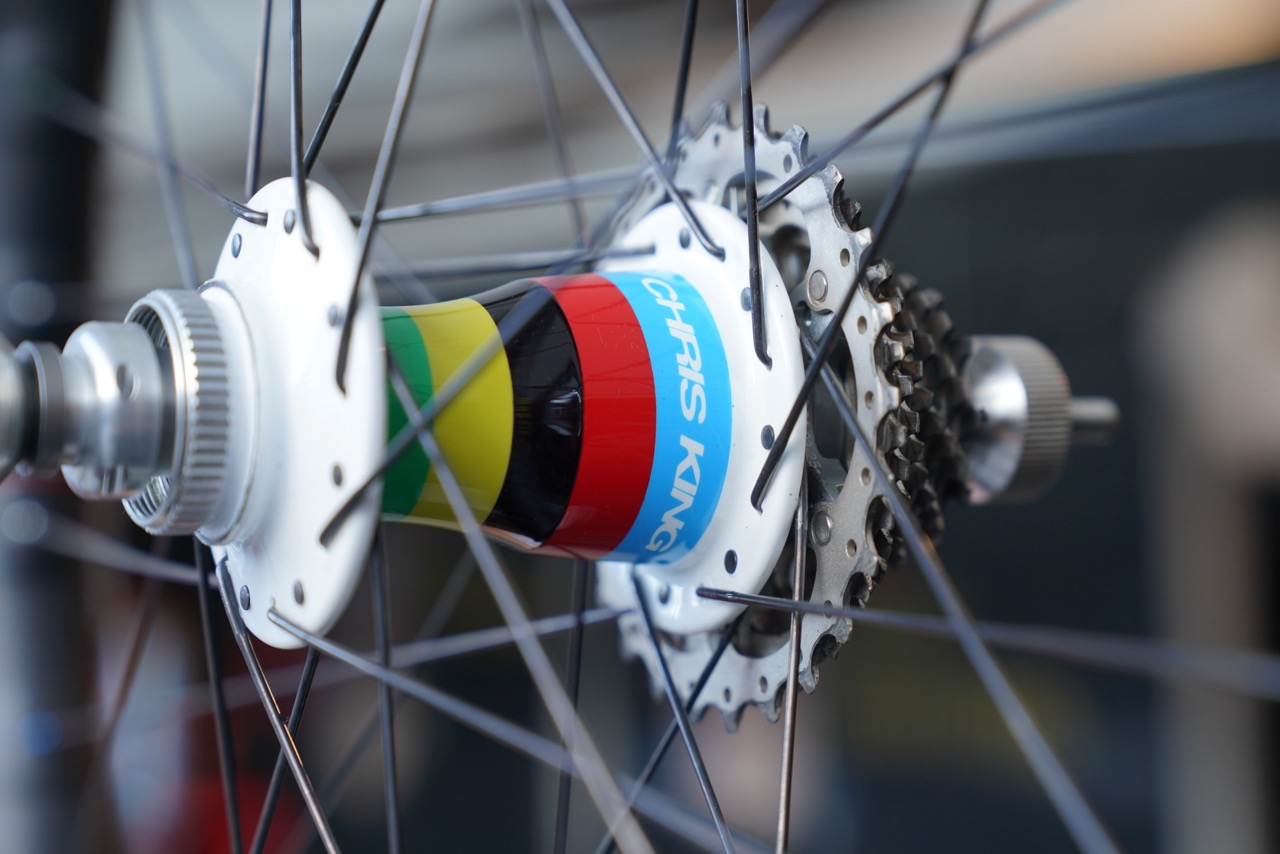
Keeping the rainbow scheme together were these hand-painted Chris King hubs, which Goldstone’s mechanic, Woody, has laced into Reserve DH rims with rainbow nipples.
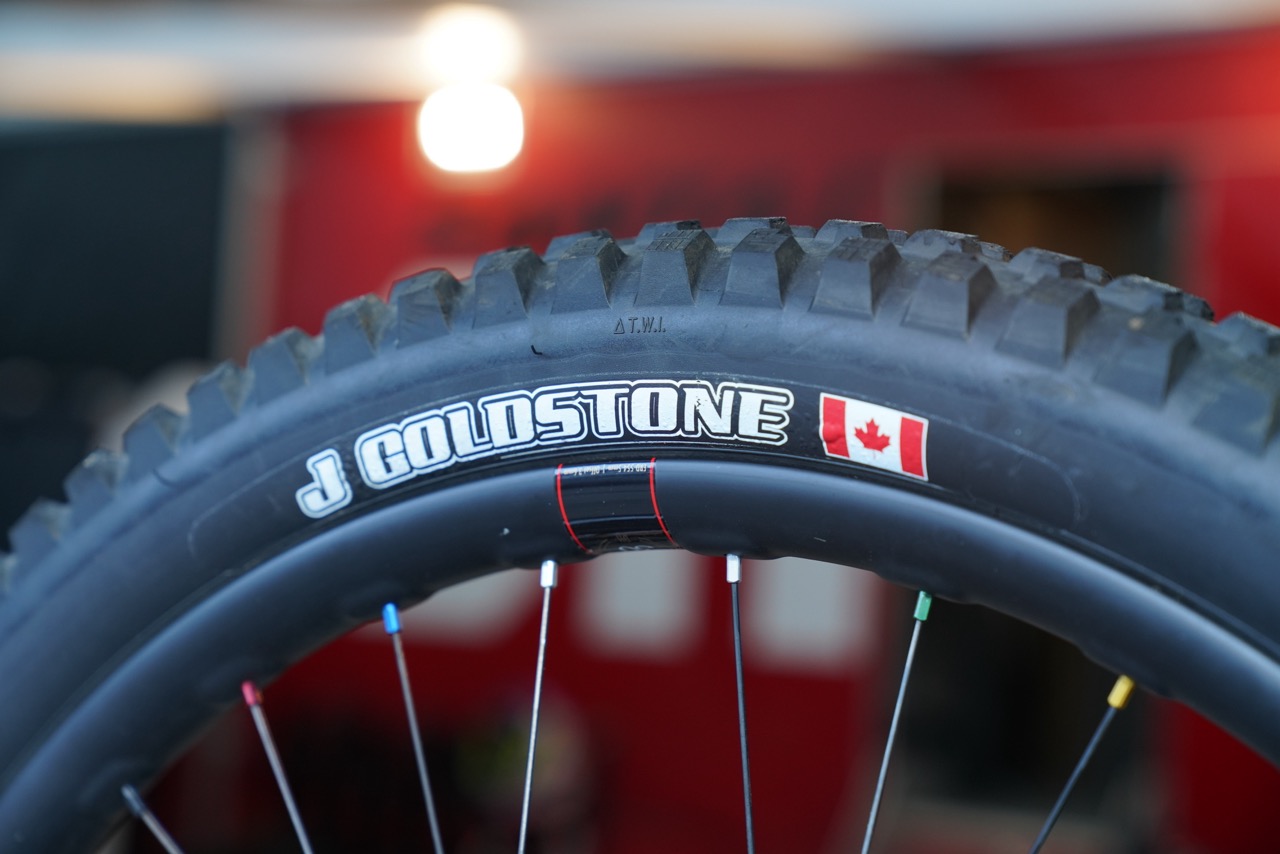
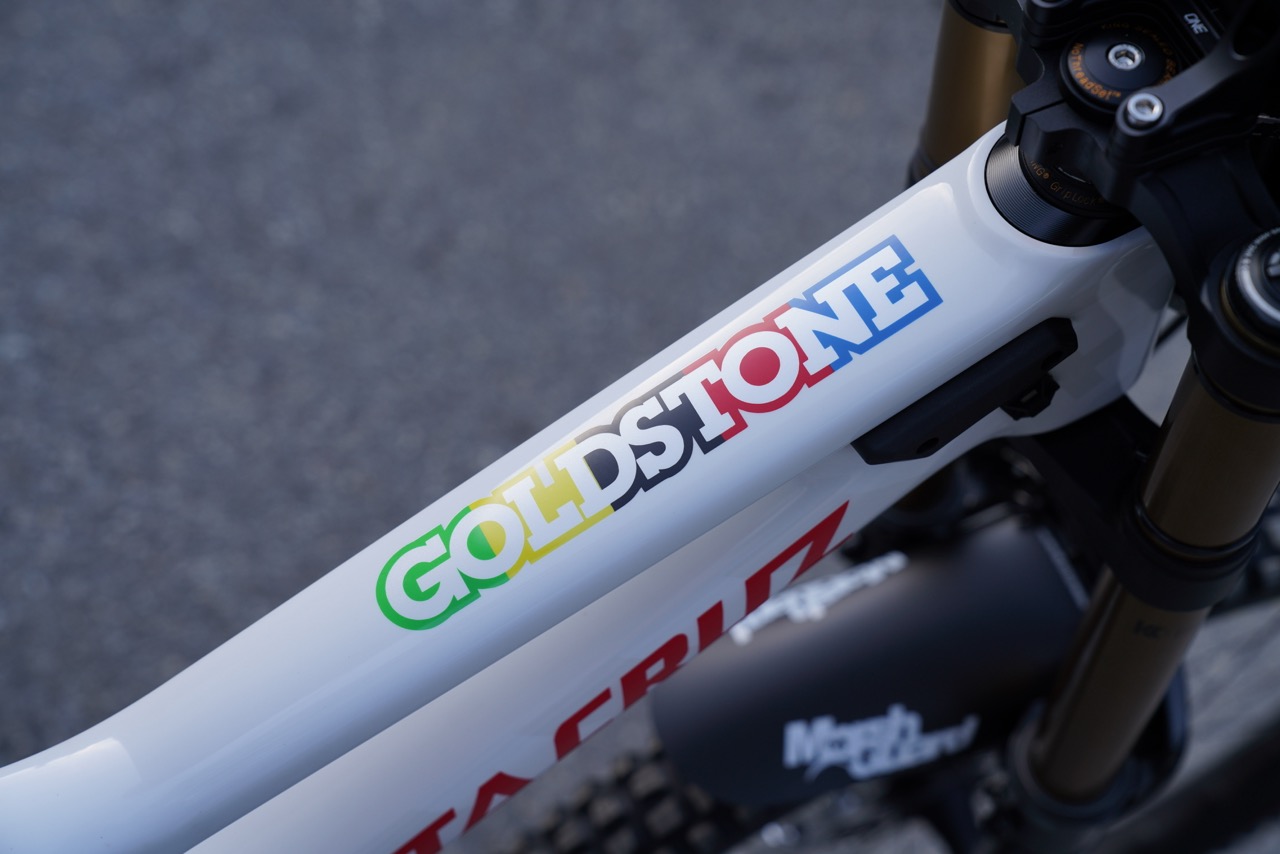
Goldstone is still using his prototype tyres, which display his name. Nick Clark / Our Media Goldstone’s name features on the top tube with rainbow flare. Nick Clark / Our Media
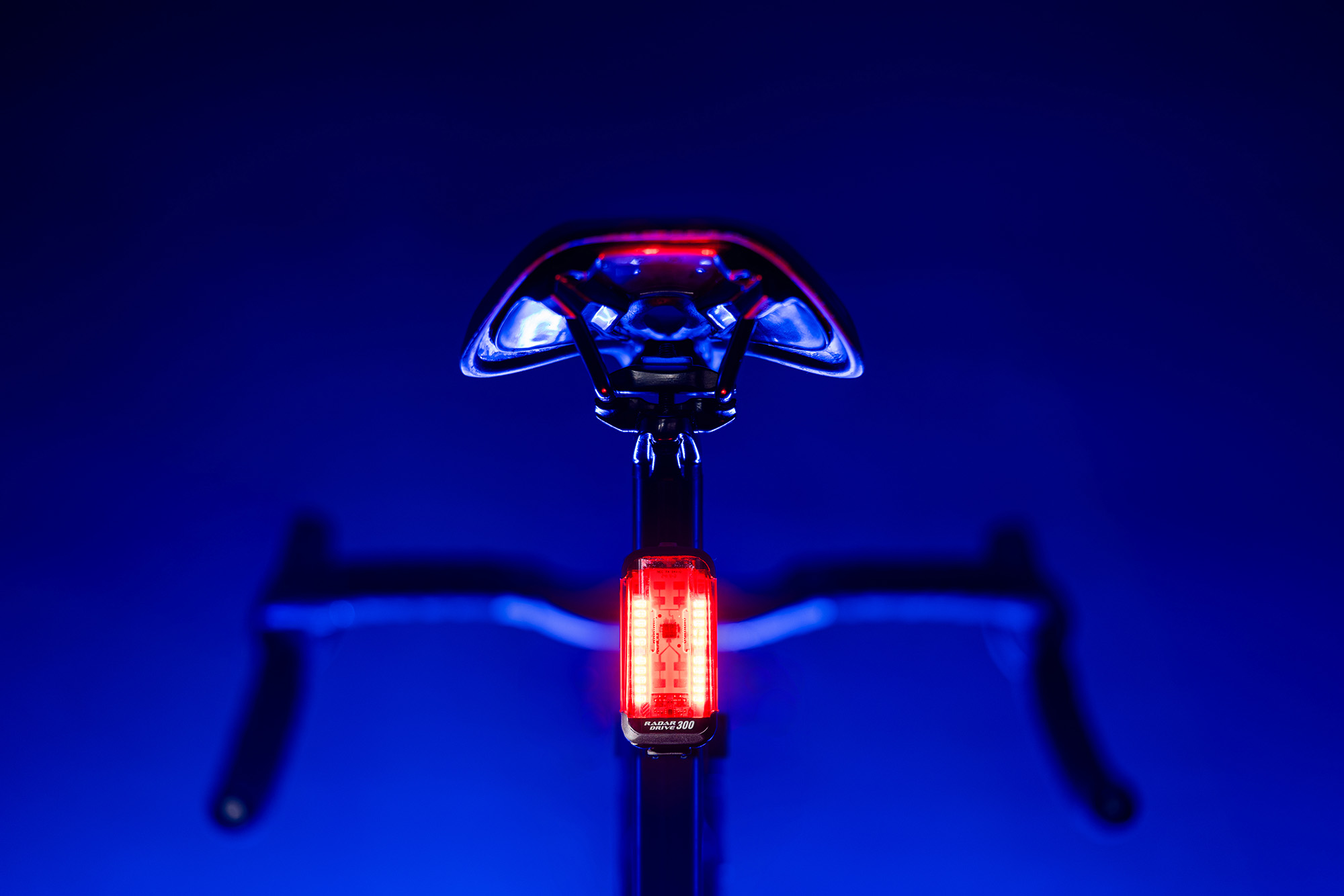
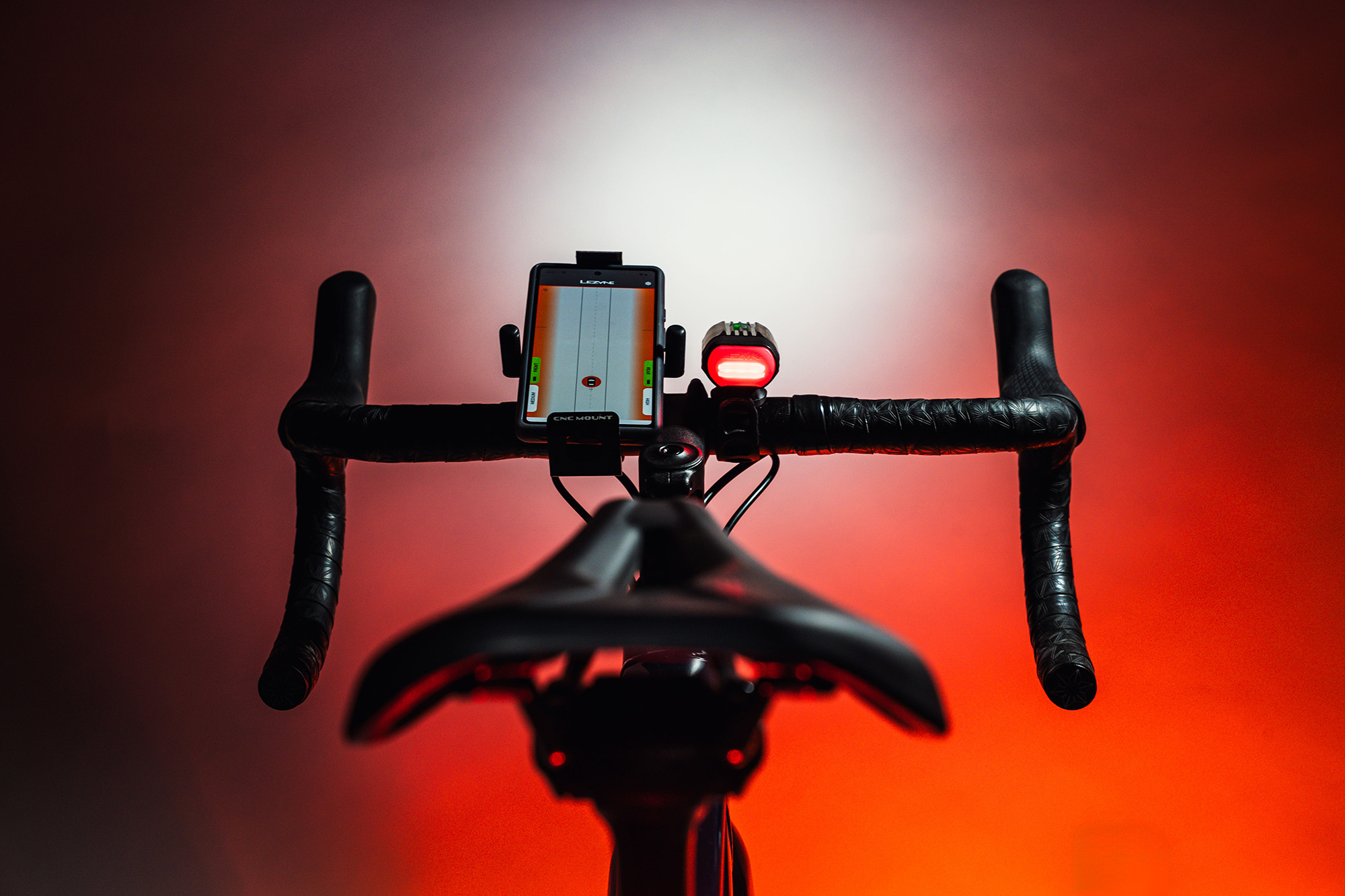
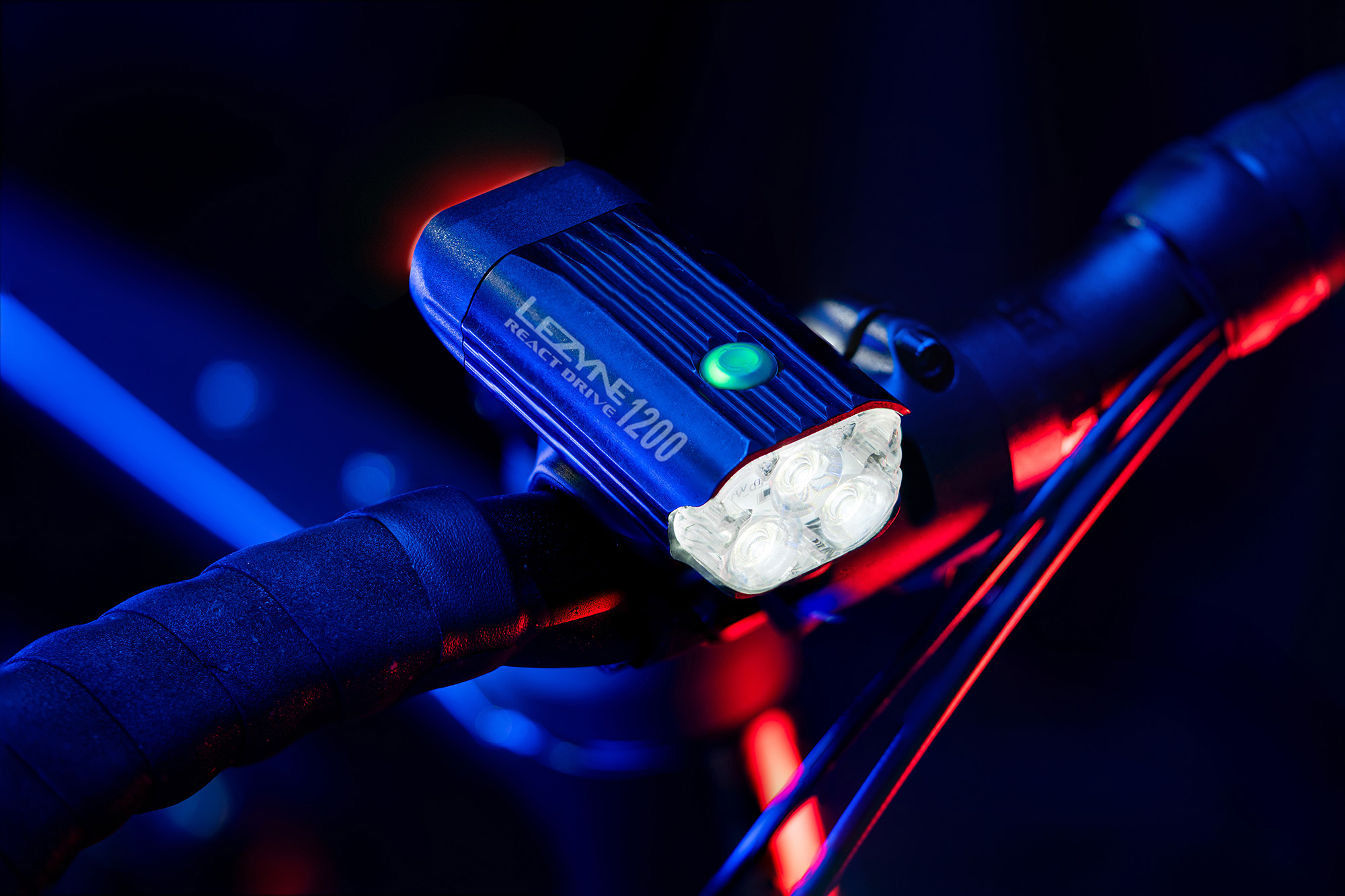
Lezyne has released its Radar React front and rear lights, which use radar tech to alert you to cars approaching from behind.
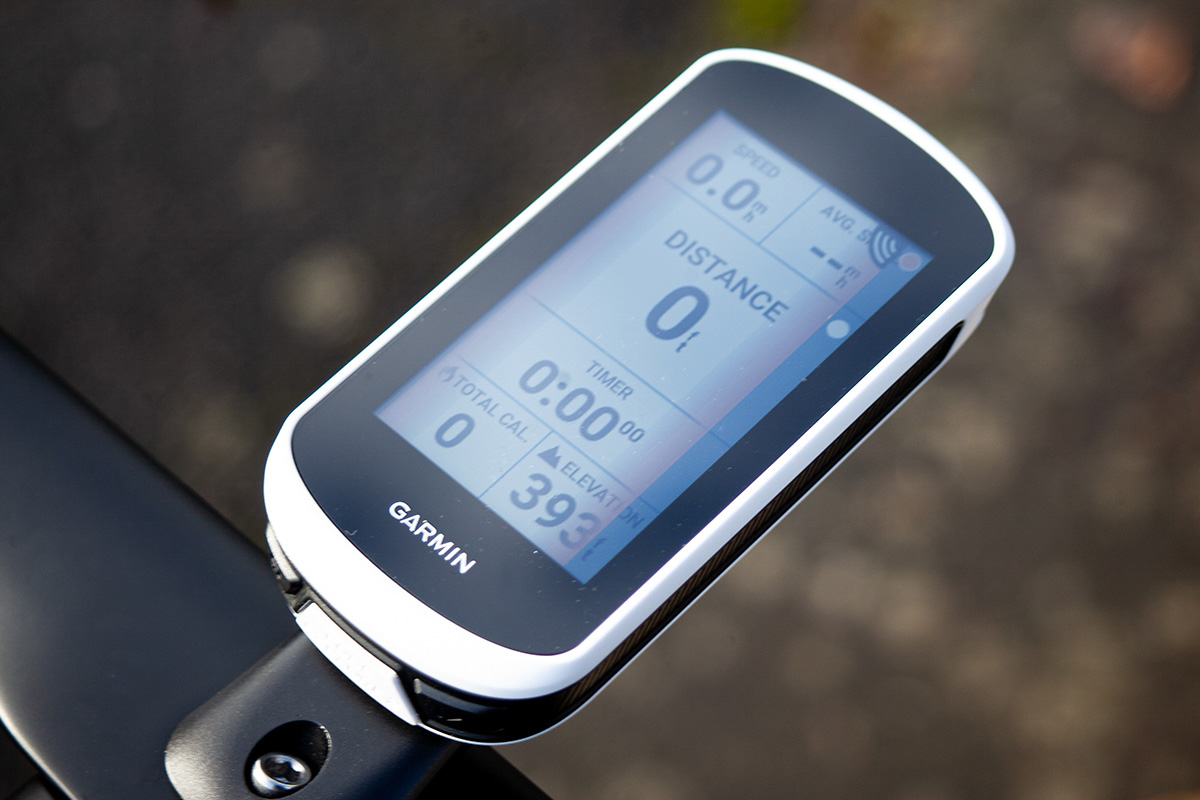
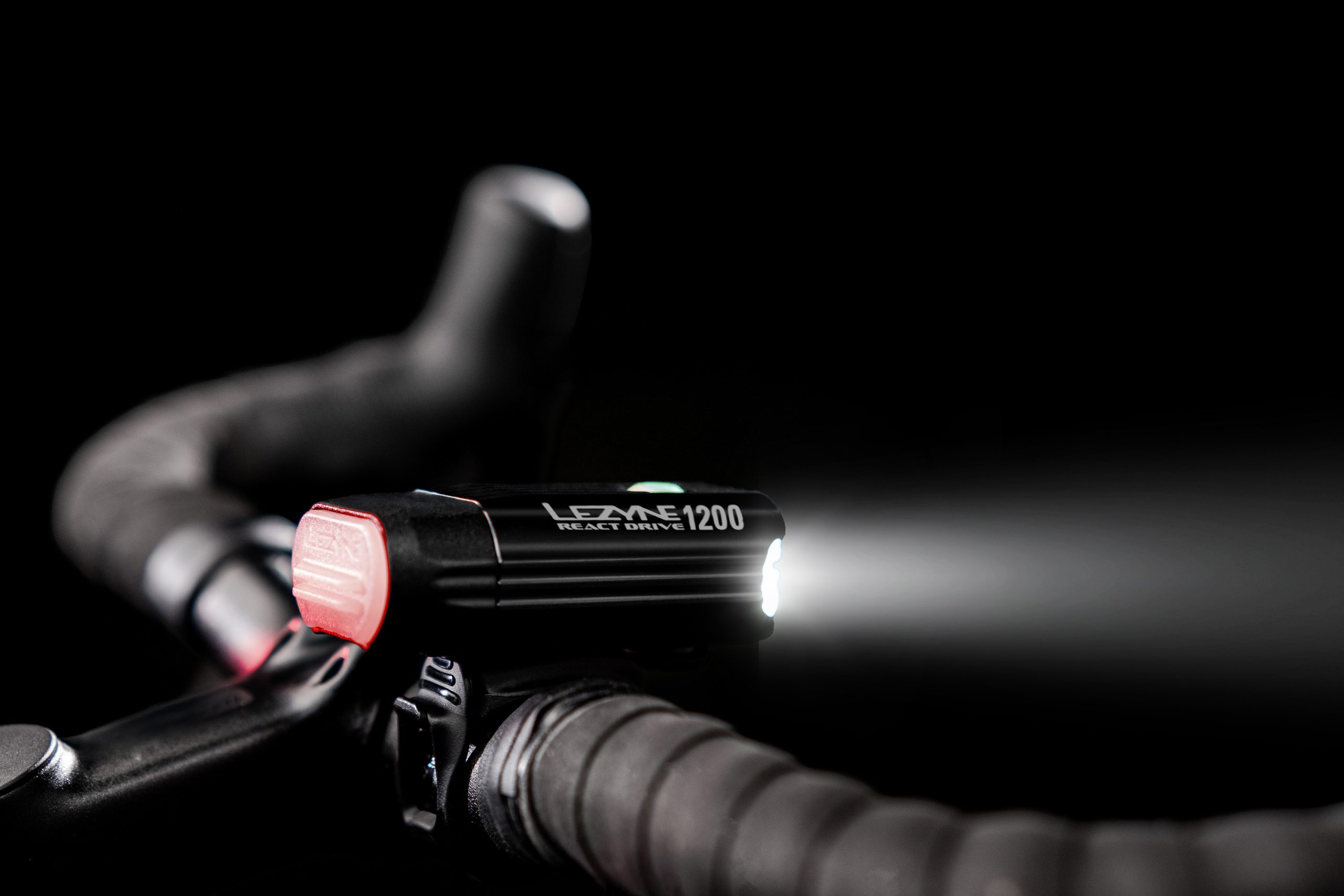
The system is available as a Radar Drive single rear light or can be linked to the React Drive front light.
With the combined setup, the system doesn’t need to be used in conjunction with a GPS bike computer, with LEDs on the rear of the front-mounted React Drive light signalling when a vehicle is behind you.
The price for the single Radar Drive rear light is £100 / $179.99 / €169.95, with the React Drive front light priced at £170 / $124.99 / €119.99.
Both lights can be bought as a system for £250 / $279.99 / €259.99.
The rearview radar-equipped Radar Drive light can be used on its own or with Lezyne’s Radar Ally app to use the radar feature, removing the need for a bike computer or the React Drive light.
The Radar Drive can shine 300 lumens out of the rear of your bike. Lezyne
Lezyne says the Radar Drive provides increased safety even when not connected to the system, with the rear light using a special flash pattern when it detects a rear-approaching vehicle to improve visibility.
Garmin’s devices go red at the edges when a vehicle is behind. Warren Rossiter / Our Media
But as with Garmin’s Varia radar, it can be connected to a head unit to alert you to vehicles behind.
Lezyne says it can spot vehicles up to 150 metres away, and the device is able to detect how fast they are approaching.
If the vehicle is coming fast, the head unit or React Drive light will show a different set of visual cues to indicate that it may be dangerous.
The panel at the rear glows red when a car is behind. Lezyne
The visual cues are shown via the translucent rear portion of the unit, lighting up when a car is behind you.
Changing lighting patterns indicate the distance to the approaching vehicle, with faster flashing indicating greater danger.
The React Drive front light doesn’t only show visual cues, with a built-in speaker giving audible alerts to vehicles passing.
The app can be downloaded from the App Store and Google Play Store. Nick Clark / Our Media
Lezyne says the Radar Drive light is compatible with most GPS bike computers that support radar, or it can be used with the Radar Ally app.
The Radar Ally app also enables you to customise system alerts, control the front and rear lights, and check for system firmware updates.
The lights connect via ANT+ and Bluetooth, meaning they should work with a range of cycling computers.
Bright enough for the road
The React Drive features a CNC-machined aluminium body. Nick Clark / Our Media
Both lights are IPX7-rated, so they should be able to keep you visible even on the wettest days.
Charging is via USB-C, with the front light having a claimed 70-hour max runtime and the rear 20 hours.
Lezyne says the React Drive front light has an output of 1,200 lumens on the maximum setting, which should be enough to navigate by on the road.
The rear light has a 300-lumen maximum output, which should ensure you’re seen from far away down the road.