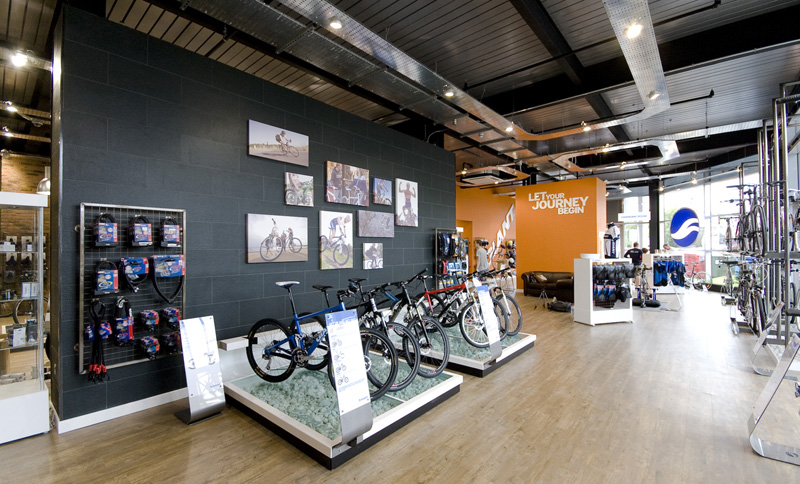
Bumps, scrapes, and scratches are an inevitability of bike ownership. Rather than mourn them, inspired by the Japanese practice of kintsugi, Velo Orange suggests they should be celebrated as a mark of a bike’s past through its newly distributed product, Goldfinger.
Goldfinger is a metallic paint-like compound originally manufactured for the art world by UK-based company Daler-Rowney. It’s designed to fill scrapes and scratches with a gold or silver finish, highlighting rather than concealing them.
The process is similar to kintsugi – or ‘golden joinery’ – the Japanese craft of repairing broken pottery with lacquer mixed with powdered gold, silver or platinum. It’s celebrated as a craft that highlights wear, rather than hiding it.
Velo Orange co-owner Igor Shteynbuk explains the idea came through a friend of the brand, Shane Sellers – a ceramics professor and fellow dedicated bike nerd.
Sellers is also an ambassador for the Philly Bike Expo and previously collaborated with Velo Orange on the amazing Yakimono Neutrino project.
Sellers uses Goldfinger in his restoration work, applying it to everything from lamps and picture frames to bike frames.
Shteynbuk says Goldfinger’s consistency is like “toothpaste mixed with grout”. Once applied, it cures and sets quickly, and in his experience, it stands up to the rigours of daily cycling: “I’ve had it on my bike for the whole season, through rain and everything, and I haven’t noticed any washing off.”
The product can be applied by hand. Velo Orange
Even if it does fade eventually, reapplying takes “30 seconds” and keeps the finish looking fresh.
Shteynbuk says the Goldfinger reframes wear and tear on a bike: “Every scratch tells a story… embrace that history instead of hiding it.”
I’m all for this. While bikes, including paint and broken frames, are far more repairable than many realise, refinishing a whole bike is a specialist process.
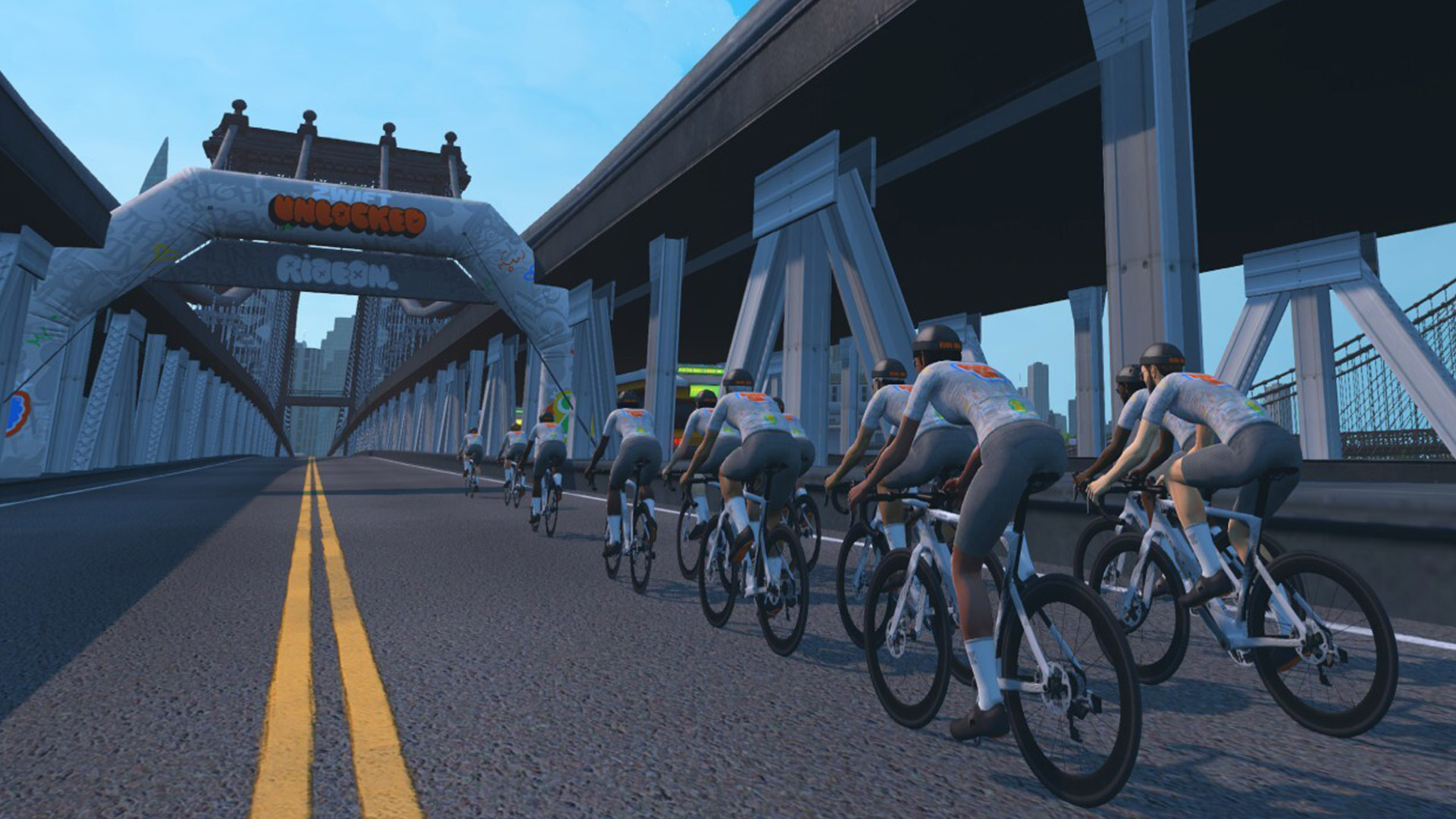
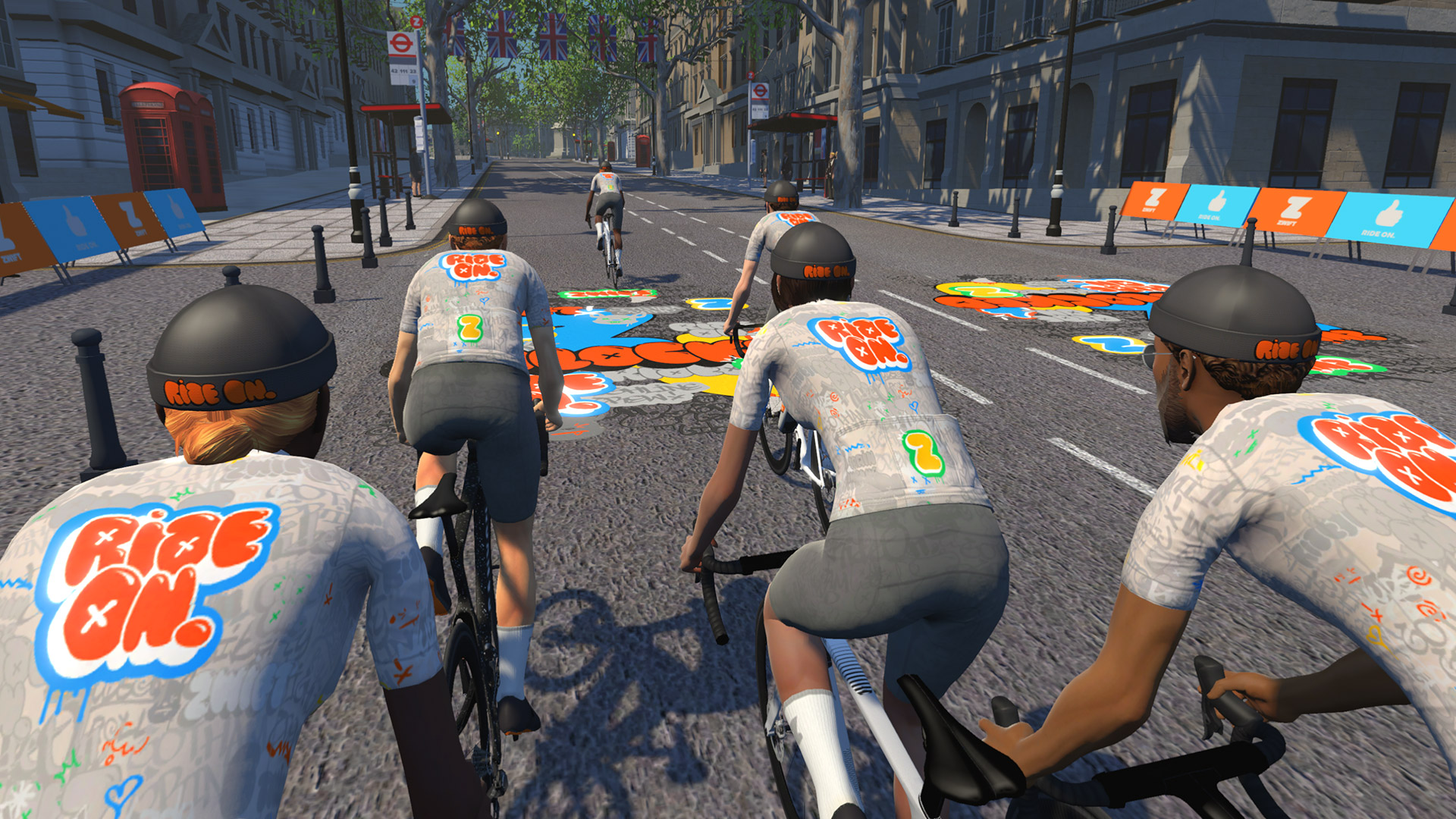
Today, Zwift released details for their upcoming Zwift Unlocked tour which kicks off October 6.
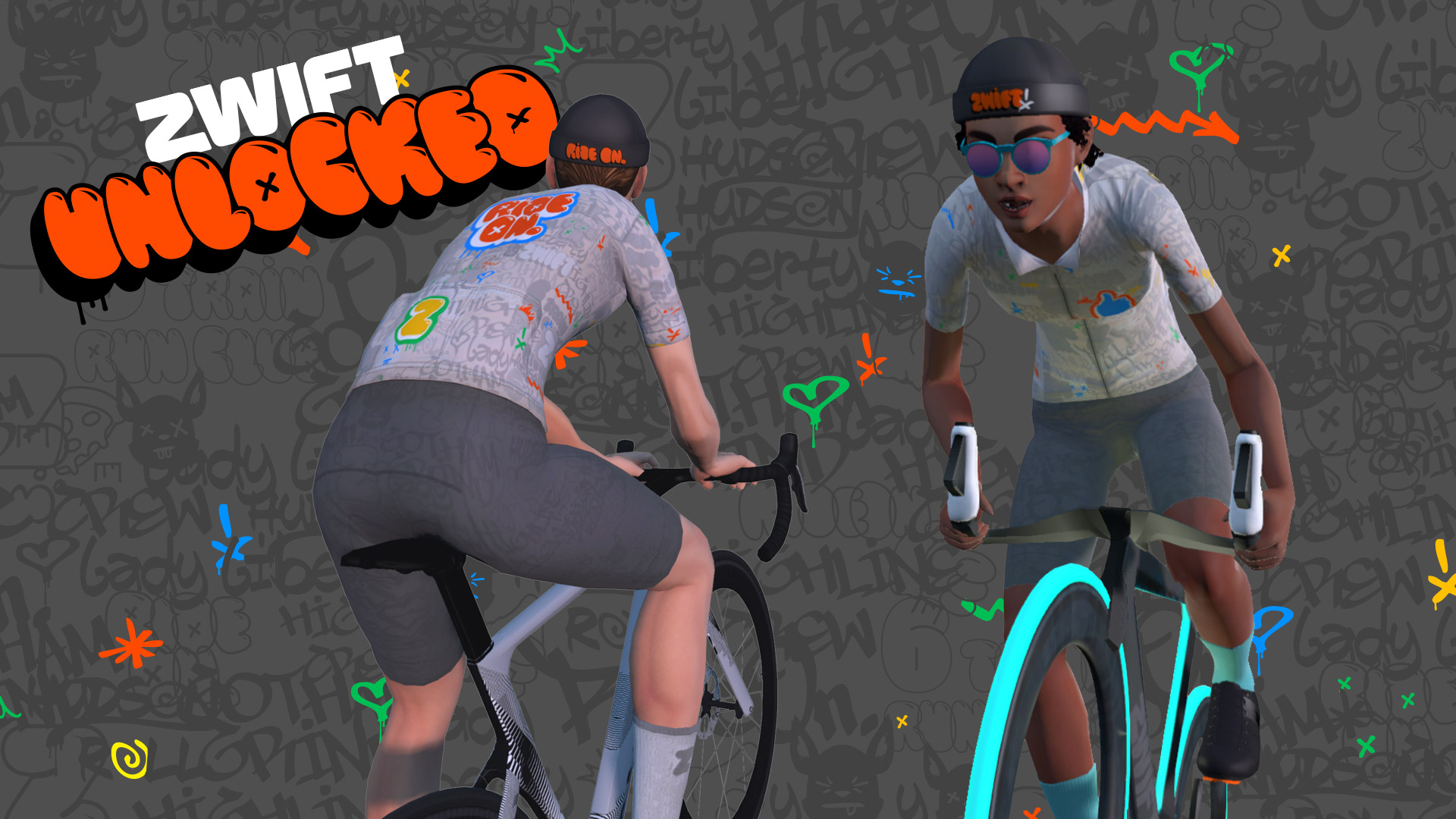
Featuring double XP, XP bonuses, extra-long powerups, and a sweet urban kit, the 5-stage series comprises long and short group rides, races, and runs all held on brand-new routes. Read on for details…
Double Up
This season, Zwift Unlocked is effectively replacing the popular Tour of Watopia with its double XP. But never fear: we’re getting double XP for all Zwift Unlocked events!
Additionally, powerups are doubled in length.
New Routes
All Zwift Unlocked rides and runs are held on brand-new routes in Watopia, Makuri Islands, Scotland, and New York. (That’s 10 new routes to ride, and 5 new run-only routes. See details below.)
The most exciting new routes will be used for stages 4 and 5, when Zwift reveals their New York expansion, including the new power segments feature. Read more about the expansion >
Stage Details and Schedule
Each stage lasts for a week and includes long rides, short rides, races, and run events.
Long rides will take approximately 90 minutes to complete at 2.5 W/kg, while short rides and races will be closer to 45 minutes.
Rides and runs are scheduled hourly on the hour, and races are scheduled hourly at ten minutes past the hour. Rides can be completed on-demand whenever you’d like, but races and runs are available as scheduled events only.
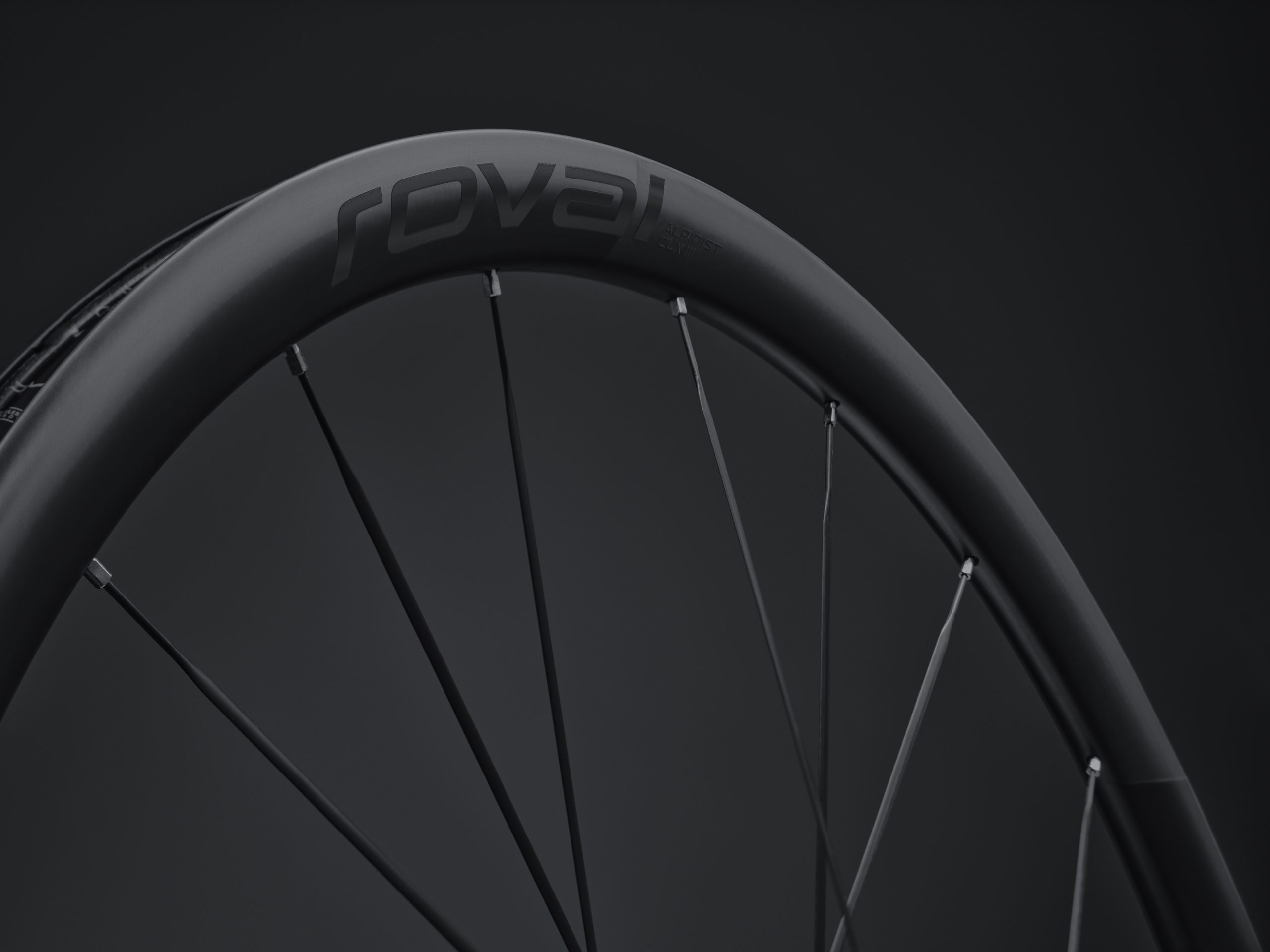
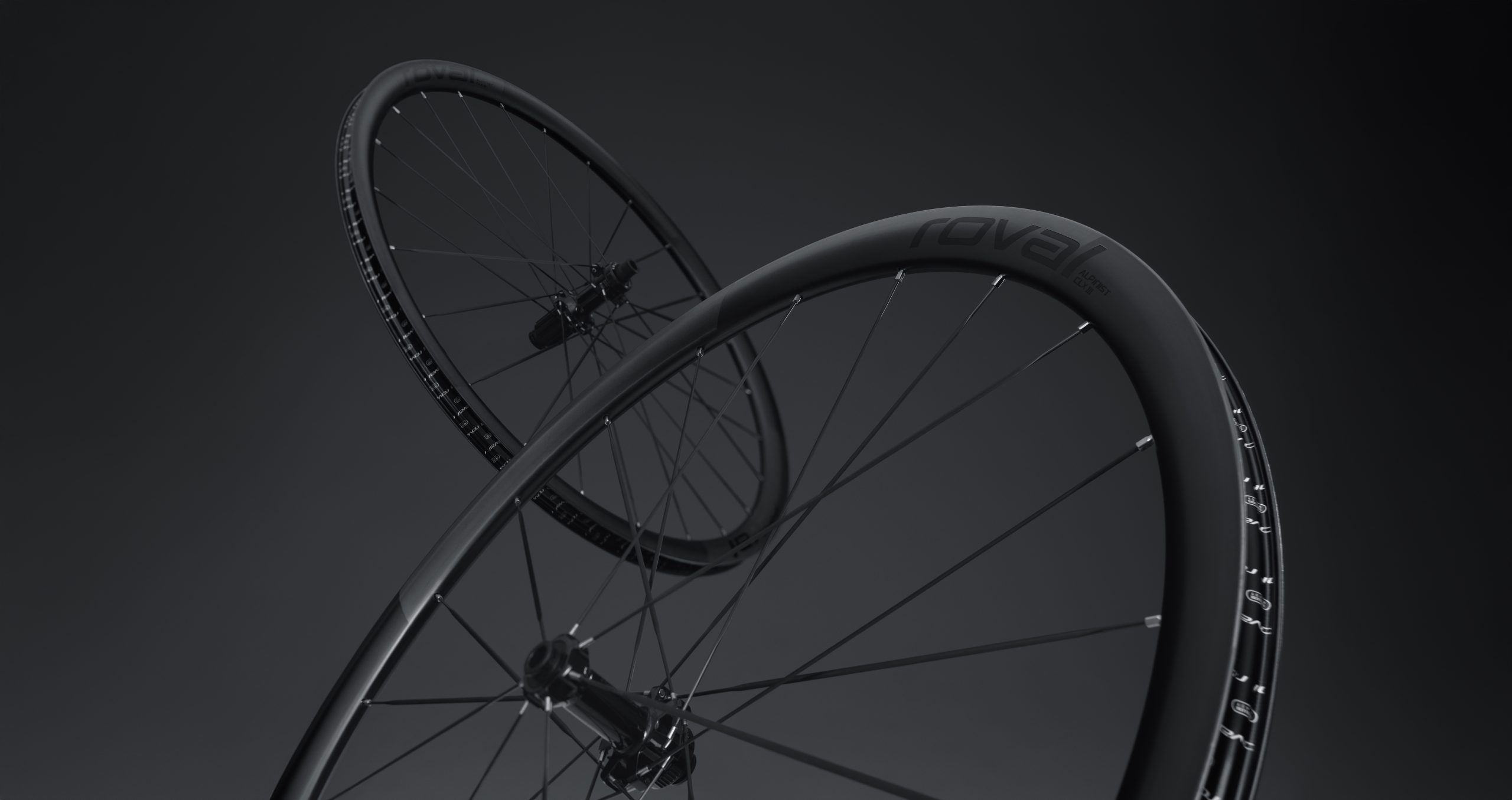
Specialized’s offshoot components brand Roval has announced the release of its new Alpinist CLX III wheelset, which is claimed to weigh only 1,131g.
Roval says the Alpinist CLX III is 134g lighter than the outgoing Alpinist CLX II, and claims it would have saved Demi Vollering five seconds in her ascent of the Col du Tourmalet during the 2023 Tour de France Femmes.
The new wheels benefit from shared technology with the aero Rapide CLX III wheelset, including specially developed composite spokes and modified Roval LF hub shells, while the rims retain a bead hook.
However, unlike the latest Rapide wheelsets, which subverted the norm by debuting a deeper and wider front rim compared to the rear in the name of aerodynamics, the rim profiles are uniform at 33mm deep and a relatively modest 21mm wide internally.
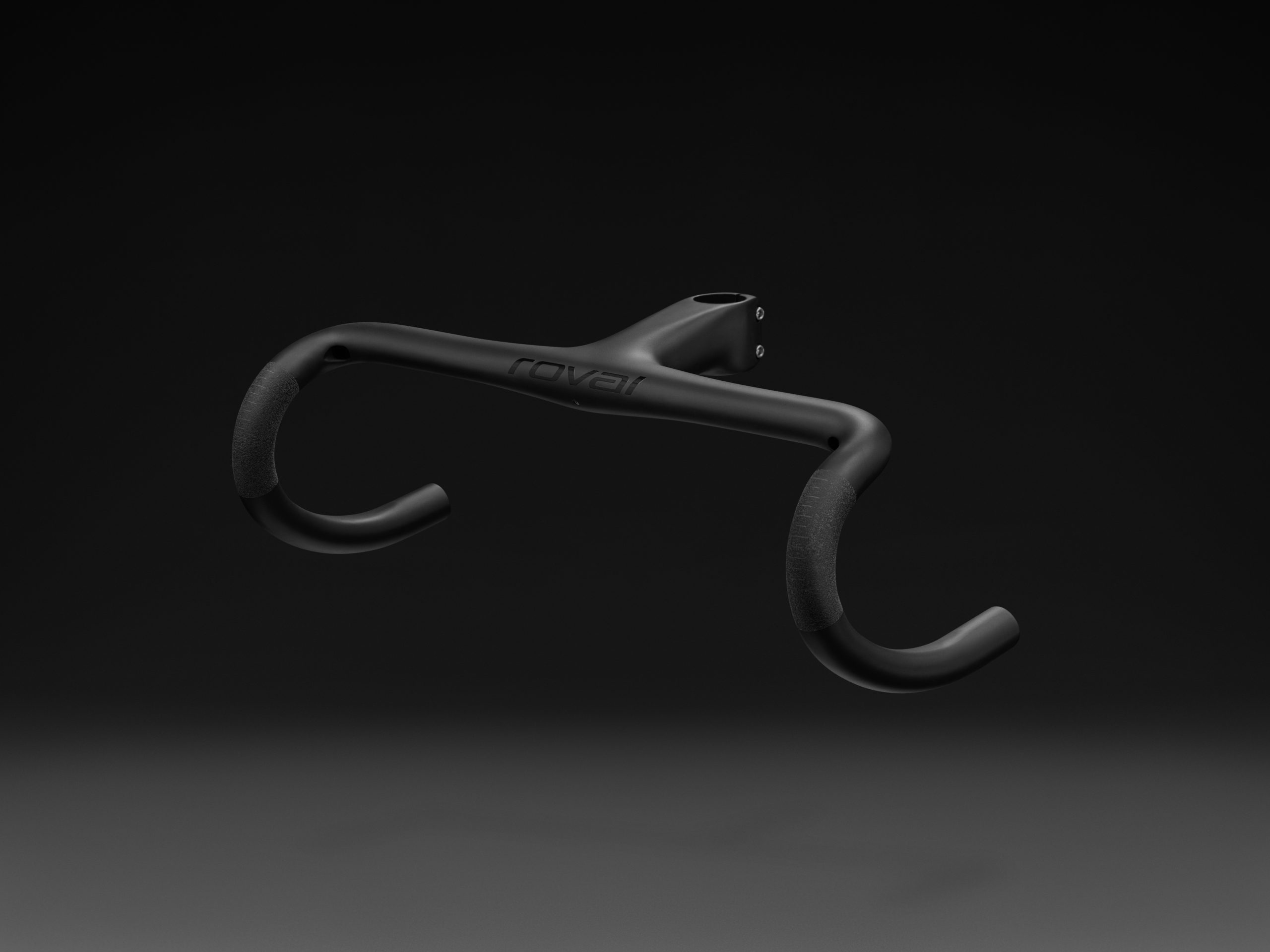
The launch of the wheelset, which costs £1,149 (front) and £1,599 (rear), is accompanied by a new Alpinist II one-piece cockpit, which is said to weigh 270g in a size 400x100mm. The Aplinist II cockpit costs £575.
Specialized reckons Demi Vollering would have saved five seconds using the Alpinist CLX III compared to the Alpinist CLX II when she raced up the Col du Tourmalet at the 2023 Tour de France Femmes. Specialized
The Roval Alpinist CLX III wheelset is designed chiefly for use in the mountains, thanks to its low claimed 1,131g weight.
According to Roval product manager Chris Whelan, this weight includes factory-fitted rim tape and tubeless valves, and was arrived at by drawing an average from an initial cohort of production wheels then cutting the lightest 10% from the calculation.
In short, he says customers should receive wheelsets that are “at least as light as the claimed weight” – a refreshing change from the general norm should it prove to be true.
The wheels use composite spokes created in partnership with Arris Composites. Specialized
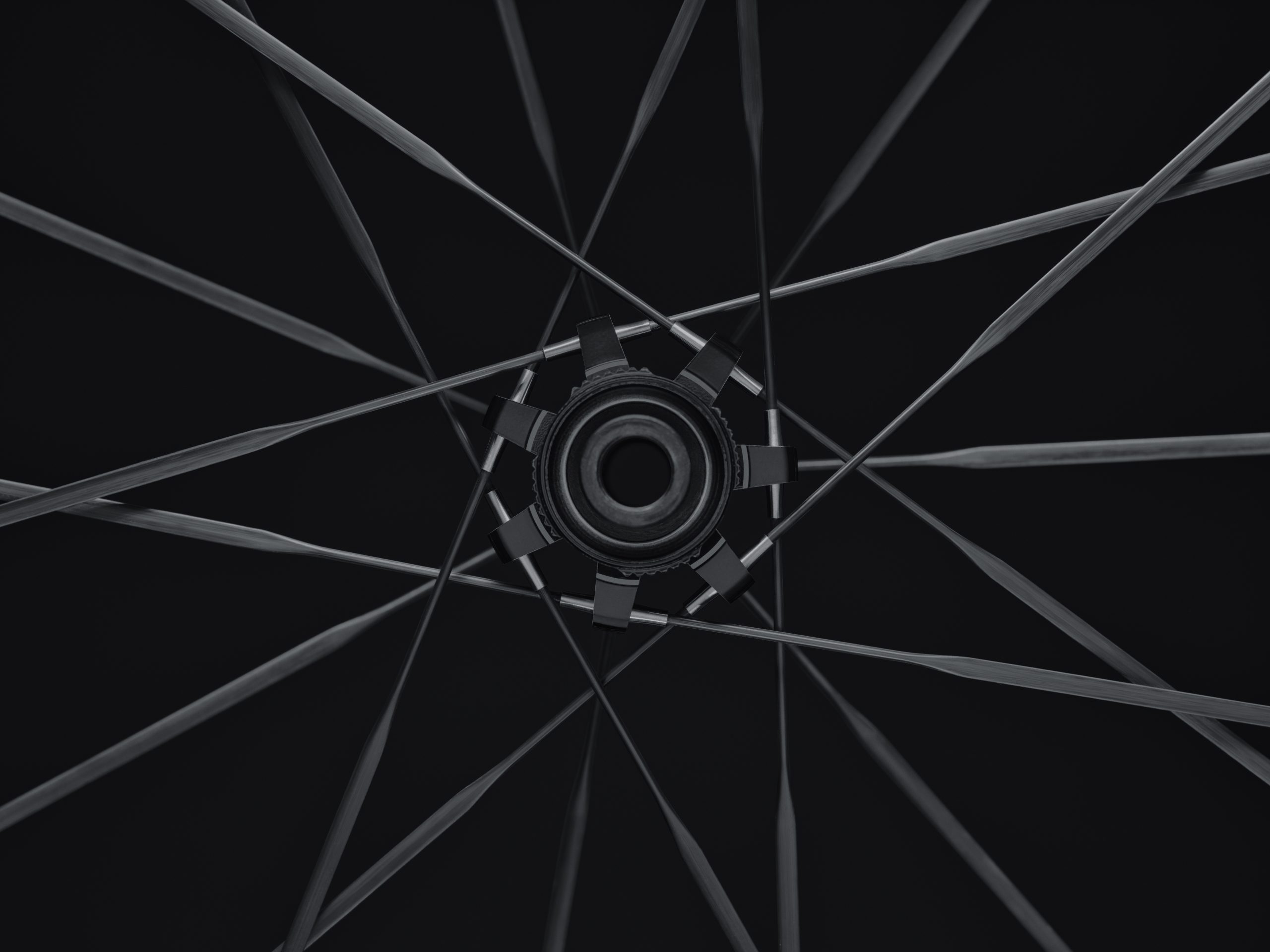
The main weight saving has been achieved through adopting thermoplastic composite spokes, initially seen on the Rapide CLX III wheels. Developed in conjunction with Arris Composites, a California-based specialist in carbon development and manufacture, they are claimed to save 1.9g per spoke compared to the DT Swiss Aerolite spokes used for the Alpinist CLX II (103.5g across the entire wheelset).
These spokes sport titanium end pieces, which fit to internally housed alloy nipples and new hub shells – but unlike carbon spokes typically seen in the industry, these aren’t designed to maximise stiffness.
The spokes have a bladed central portion, tapering at each end. Specialized
Instead, Roval claims their construction enables a small extra degree of flexion, which is said to boost strength by 20%, fatigue life (given they handle deforming forces more easily), and handling and ride quality.
Overall, Roval says its simulations show the new Alpinist wheelset would have saved Vollering five seconds in her stage-winning ascent of the Col du Tourmalet two years ago.
Given that ascent took Vollering 53mins 8secs according to her Strava file of the ride, this equates to a 0.16% improvement – not nothing, but not a lot.
Narrower than expected?
Overall dimensions have remained the same, save for a small update to the rim bed to make it “fully compliant” with ETRTO standards. Specialized
Given the trend towards wider tyres, you might have expected Roval to widen its Alpinist rims accordingly.
However, the general design remains very similar to the previous-generation wheelset – a hooked rim, and still 33mm deep front-to-rear, 21mm wide internally and 27mm wide externally.
These dimensions are optimised around a 28mm tyre, and Roval confirms that the wheels now “fully meet” ETRTO (European Tyre & Rim Technical Organisation) standards.
According to Whelan, the old Alpinist II rim design sat “slightly” outside of these standards as the brand sought to prioritise tyre retention in the event of a sudden deflation, but the side effect was a tougher installation process.
The hubs have been updated to accept the new titanium spoke end caps. Specialized
Whelan says Roval tested 19, 21 and 23mm-wide rim designs, using a mix of 26, 28 and 30mm-wide tyres, but found the best performance was seen with a rim optimised for 28mm tyres.
The bead hooks are 4.5mm wide in order to help reduce the risk of pinch flats, which the brand claims it tests for using its own proprietary tubeless impact testing protocol.
It’s worth noting that these rim shape updates have also been rolled over to the Alpinist CL II wheelset, but the hubs (DT Swiss 350) and spokes have remained the same.
DT Swiss internals
As with the previous Alpinist CLX wheelset, Roval has stuck with its tried-and-tested method of using DT Swiss 180 EXP internals for its hubset.
That said, the Roval-designed hub shells have been modified to sport the titanium end pieces, and the flanges widened slightly to complement the properties of the composite spokes.
The hubs use SINC ceramic bearings and a 36-tooth ratchet ring.
Alpinist II cockpit
The new Alpinist II cockpit has been developed using more than 100,000 Retül bike fit scans. Specialized
Alongside the Alpinist CLX III wheelset, Roval has also introduced the new Alpinist II cockpit.
This features refined ergonomics compared to the previous Alpinist SL, including D-shape tops for improved grasping comfort. The drop flare has also increased, from zero to four degrees.
Roval claims the changes have been informed by more than 100,000 scans of Retül rider fit data, to comply with a range of natural hand and wrist angles riders hold.
The new bar is available in 15 sizes, each with a 4-degree drop flare. Specialized
Feedback from Specialized’s customer base has also been informative. BikeRadar understands this saw demand for a handlebar with internal cable routing. Hoses exit out of a port in the underside of the stem, and back into a port in the top of the headset.
Despite the extra material in the design, Roval says it has kept weight down to 270g – 15g more than the Alpinist SL (and 10g less than the old two-piece arrangement fitted to the Specialized Aethos).
Compared to the Rapide cockpit seen on the Specialized Tarmac SL8, the new Alpinist front end is said to offer 28.3% more damping. Roval says you could swap the two cockpits easily, plus upgrade those on the Aethos and Roubaix bikes, if desired, given it sports a 1-1/8in steerer clamp.
It’s available in 15 sizes, ranging from 80-130mm stem lengths and 380-440mm bar widths (measured centre-to-centre).
Pricing
Roval Alpinist CLX III wheelset: £1,149 (front), £1,599 (rear)
If you’re new to indoor bike training, ERG mode can be confusing. What exactly is it, anyway? And when should you use it? Here’s a full explanation…
What Is ERG Mode?
Smart trainers run in different modes which determine how much resistance they apply while you ride. The two most common modes are ERG and Sim.
Sim mode is simulator mode. This is the mode used in all Zwift activities except for structured workouts. In Sim mode, the controlling software (Zwift) sends parameters such as rider weight, air density, Crr, and gradient to your trainer. The smart trainer then tries to replicate the “feel” of that virtual ride environment through its resistance on your drivetrain.
ERG mode is completely different. In ERG mode, your trainer’s job is to help you maintain a specific wattage. “ERG” comes from Greek “Ergasía” which means “work,” becase ERG mode literally forces you to work at a particular level.
Example:
Your Zwift workout interval wants you to hold 200 watts for 10 minutes
If you are spinning at a cadence of 90 and putting out 200 watts, then slow your cadence to 60, your trainer will increase resistanceso you are still holding 200 watts even though you are pedaling slower.
If you are spinning at a cadence of 90 and putting out 200 watts, then increase your cadence to 110, your trainer will decrease resistance so you are still holding 200 watts even though you are pedaling faster.
ERG mode simplifies your workout so your only job is to manage your cadence. You don’t need to worry about shifting (although it is certainly allowed), or whether you are hitting your wattage target. You just need to keep your cadence where you want it, and the trainer will make sure you’re hitting the target power.
When Should I Use ERG Mode?
ERG mode is enabled by default if you begin a workout while using a smart trainer in Zwift. And you should leave it that way, for workouts where you want to maintain specific power levels for designated intervals without needing to focus on holding accurate power.
Some riders (and/or coaches) prefer to do structured training with ERG mode disabled so they can learn to hit and hold steady power targets without help from the trainer. This is a valid point, particularly for time trialists.
I’ve been asked if ERG mode should be used in races. First of all: this would be a little challenging to implement given Zwift’s event functionality. But even if you could do it, why would you? Racing requires constantly adjusting your effort to stay with the pack, attack on punchy climbs, ease off on descents, etc. ERG mode was not made for on-the-fly adjustments.
That said: you could use ERG mode in a race by pairing your smart trainer to your head unit and controlling it in ERG mode there. (You wouldn’t pair anything for “resistance” in Zwift.) This may be interesting in a flat TT race, where you want to hold a target wattage for certain amounts of time.
How to Disable and Enable ERG Mode in Zwift
You can disable and enable Erg mode from the workout browser screen by toggling the “Use ERG Mode” button. But you won’t see this option if you simply choose your workout from the workout collections when Zwift starts up.
You can also turn it on or off during your workout via the action bar, which is reachable by clicking the up arrow, or clicking your mouse near the bottom-middle of your screen, or swiping up from the bottom of the screen. This will bring up the action bar which includes a button for turning Erg on and off (see below).
Additionally, the Companion app has the same button to toggle ERG on and off during your workout.
While ERG mode will work in any gear on your bike with no shifting required, riders sometimes wonder which gearing is best. There is no clear “right answer” for everyone, but here are a few things to consider:
If you want to work on climbing, train in a climbing gear (small ring on the front). This will reduce your trainer’s flywheel speed, mimicking the feel of a low-speed climbing effort where your muscles aren’t able to “coast” as long at the top and bottom of each pedal stroke.
Train what you race. If you’re training for a particular type of outdoor race, use a gear that mimics the pedal inertia you’ll be experiencing during the race. So a flat TT might use the big ring and one of your smaller cogs in back (high inertia), while a hill climb race might use the small ring and a big cog in back (low inertia).
If you ride a lot of ERG workouts, you might consider varying your gearing in order to wear your cassette more evenly. If 90% of your riding is in the same gear, you’ll wear out your cassette prematurely.
Chain line is always a consideration. Although your trainer and bike may allow it, having a bad chain line will increase drivetrain wear and wattage loss. So if you’re in your big ring in front, try to stay out of your easiest gears in back. And if you’re in your little ring in front, stay out of your hardest gears in back. Try to keep that chain line as straight as possible.
The lower your trainer’s inertia, the faster it can change resistance between intervals. If your trainer is slow to respond, and/or you’re doing very short intervals, you might consider shifting to the small ring to help your trainer respond more quickly to resistance changes.
Noise may also be an issue with certain trainer setups. An easier gear (small ring in front) should reduce your overall spinning and thus the overall noise level.
For more info on the muscle recruitment side of things, check out this video from our favorite Aussie Lama:
The Spiral of Death
If you understand how ERG mode works, you’ll understand what we mean by the “Spiral of Death.” This torturous event happens when you are in ERG mode, attempting to hold a particular wattage, then your legs get tired and your cadence slows. To keep hitting the wattage target, your trainer will then increase the resistance (see examples above).
Your cadence will slow even more due to this increased resistance, which means the trainer will pile on more resistance… until you come to a grinding halt.
Feeling the spiral of death beginning? Ramp up your power a bit while shifting to an easier gear so you can raise your cadence. If you’re out of gears, the only way out of the spiral is to push harder, increasing your cadence so the trainer reduces its resistance.
ERG Mode FAQ
What is ERG mode power smoothing, and should I use it?
This feature is included and enabled by default on some popular smart trainers, including those from Wahoo. It essentially smooths out the power data sent from the trainer to Zwift, so your structured workout graphs look very clean. Some riders like the clean lines of smoothed ERG workouts, while others prefer the more “accurate” and jagged graphs with smoothing turned off. Read more about ERG mode power smoothing >
How is resistance controlled during a “free ride” section in an ERG workout?
Some workouts, including 20-minute FTP tests and certain sprint workouts, include “free ride” sections where you can hold whatever wattage you’d like. In ERG mode, free ride sections feel like you’re on a flat road, with resistance not changing to match in game gradients or have you hit a particular power target. To change resistance in free ride mode, you’ll need to shift gears.
Questions or Comments?
Still confused about ERG mode? Got some insights to share? Comment below!
Along with the boatload of new features recently announced, lots of new indoor cycling gear has also been announced. In this week’s top video, learn all about the new Wahoo KICKR Core.
Also included in this week’s top videos are videos about the new KICKR Bike Pro, a rundown of the cheapest Zwift setups, an intro to one Zwifter’s Zwift Racing League team, and a 30-day fitness challenge.
Shane Miller, GPLama, provides an in-depth review of the new Wahoo KICKR CORE. Is it worth the upgrade?
Wahoo KICKR BIKE PRO Review: Quieter Ride, Better Zwift Integration
This past week, Wahoo also launched an updated KICKR Bike (KICKR BIKE PRO). Tariq from Smart Bike Trainers shares a review of this trainer after riding it for some time.
The Cheapest Ways To Get Started On Zwift
Looking to get started on Zwift? GCN briefly covers the most budget-friendly ways to get started on Zwift.
My Zwift Racing League team is faster than yours
Recently, Zwift reached out to Caryl to put together a team of Zwift-fluencers (Zwinfluencers?) for the upcoming Zwift Racing League season. Watch as she introduces the team and covers some of her recent races.
I Cycled Every Day for 30 Days — Here’s What Happened
Indoor cycling is often praised for its convenience and ease of use. After trying indoor cycling with Zwift for 30 days, Jordan shares his thoughts and considers how it has impacted his life.
Got a Great Zwift Video?
Share the link below and we may feature it in an upcoming post!
Today, Zwift posted a set of rides for the coming weekend (October 3-6) as part of an event dubbed “Zwift’s Big Weekend.” It’s Zwift’s birthday celebration – 11 years old this fall – and it’s “Our celebration of everything Zwift—pure energy, on and off the bike.”
There are actually two pieces to this weekend. The first is a set of fun banded rides led by pros and ambassadors, which I’ve detailed below. The second piece… well, that’s a secret we can’t talk about until we get closer to the weekend.
Ride Schedule and Guest Leaders
All events are 45 minutes long and rubberbanded, so as long as you keep pedaling, you’ll stay with the group!
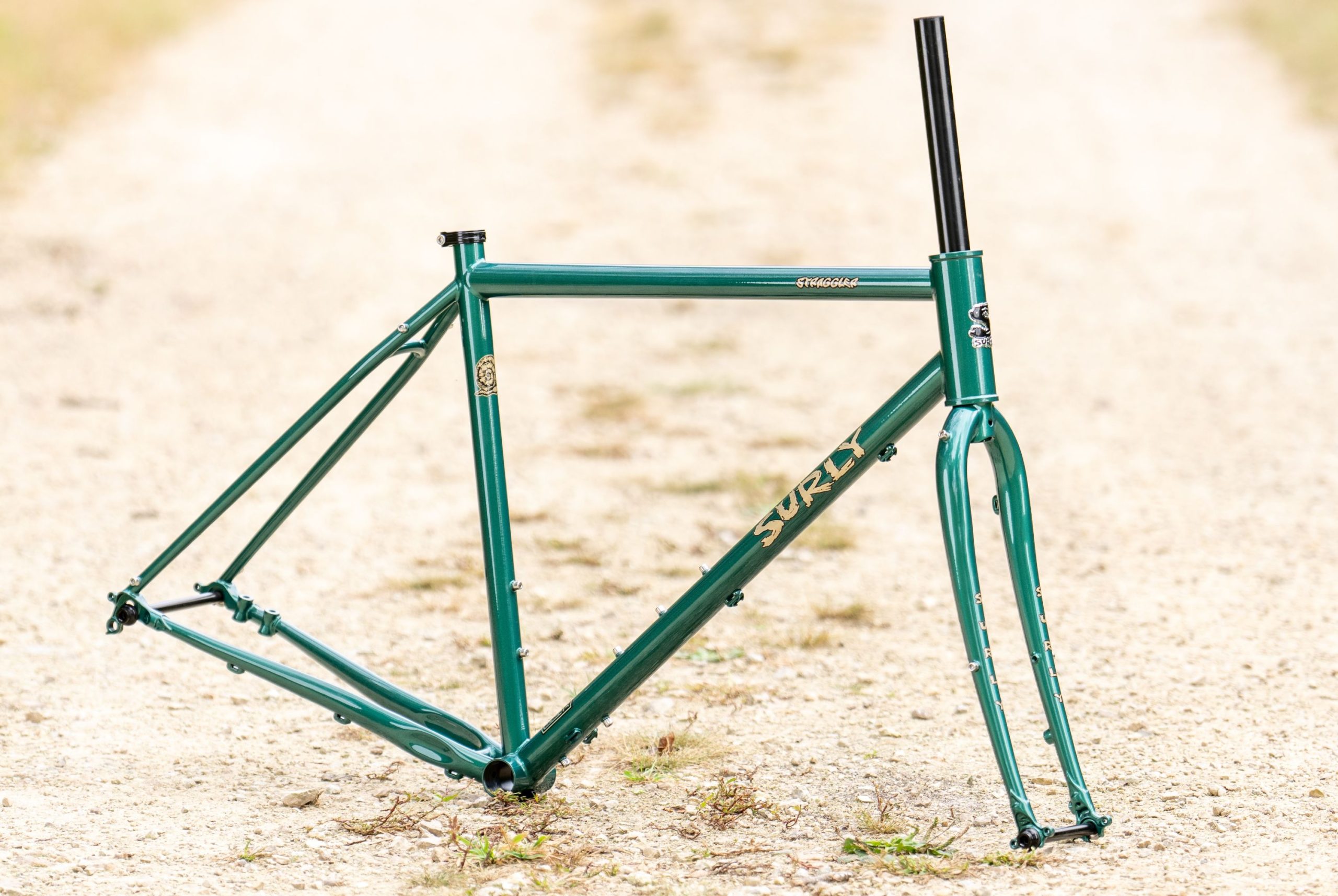
Surly has updated its Straggler gravel bike. It’s still made of double-butted 4130 chromoly steel tubing and retains its on/off-road and light-bikepacking mandate.
However, after 10 years without an update, there was a lot of catching up to do on the standards front, with today’s gravel bikes very different from those of a decade ago.
According to Surly “the new Straggler is for the rider who sees challenges, not obstacles”, aimed at those looking for a do-it-all gravel bike that’s equally comfortable on- and off-road.
The updated geometry sees space for 50mm tyres and the option to fit a suspension fork in place of the standard steel.
While the previous-generation Straggler, which we reviewed in 2023, had a classic double-diamond frameset with a horizontal top tube, the new bike leans into gravel design with a sloping top tube.
Surly says this offers better standover and more travel for riders who choose to fit a dropper post, which wasn’t an option with the previous frameset.
The sloping top tube and shorter seat tube are part of a geometry update that sees Surly also raise the stack for a more upright ride position. It says this should be more comfortable and improve visibility.
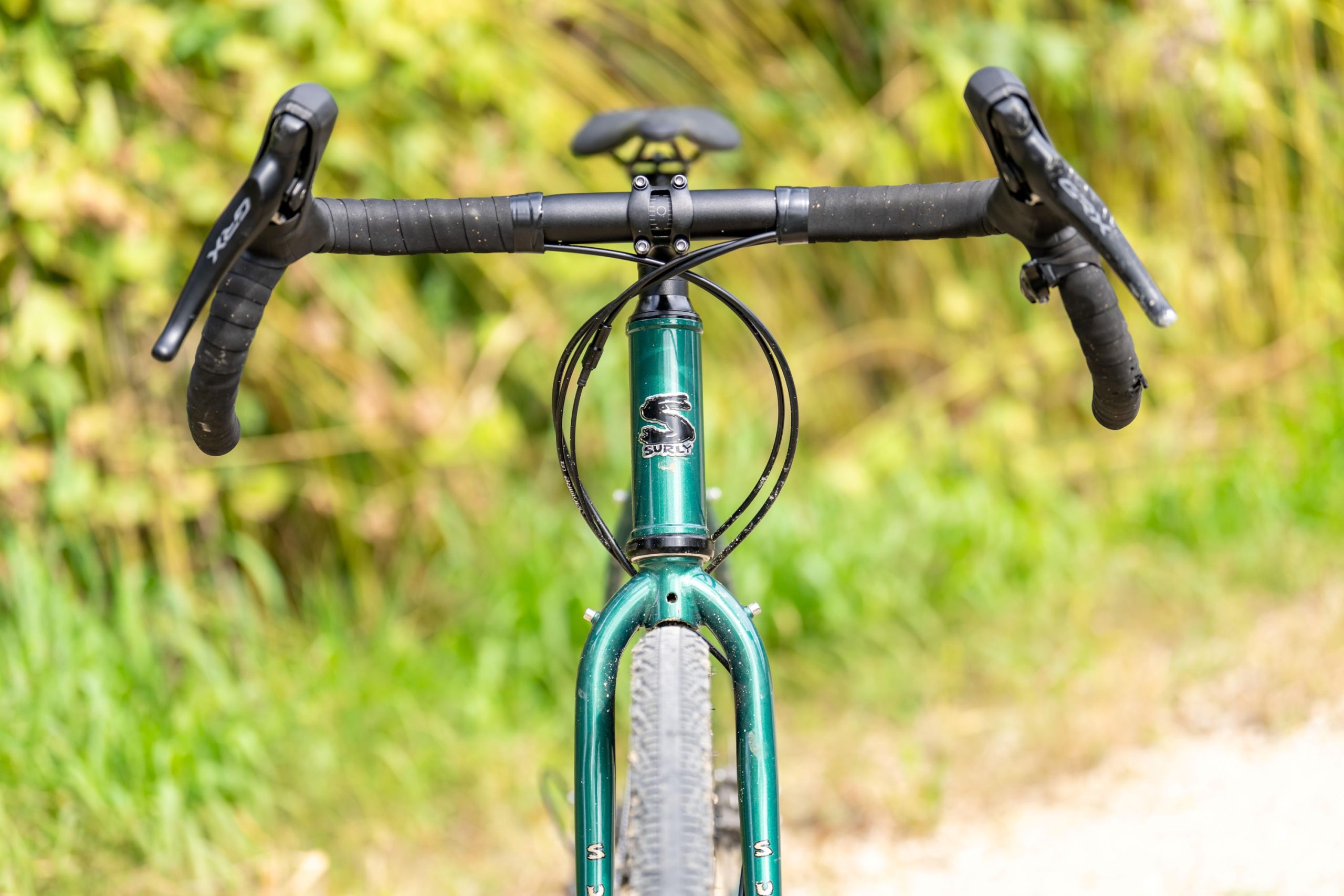
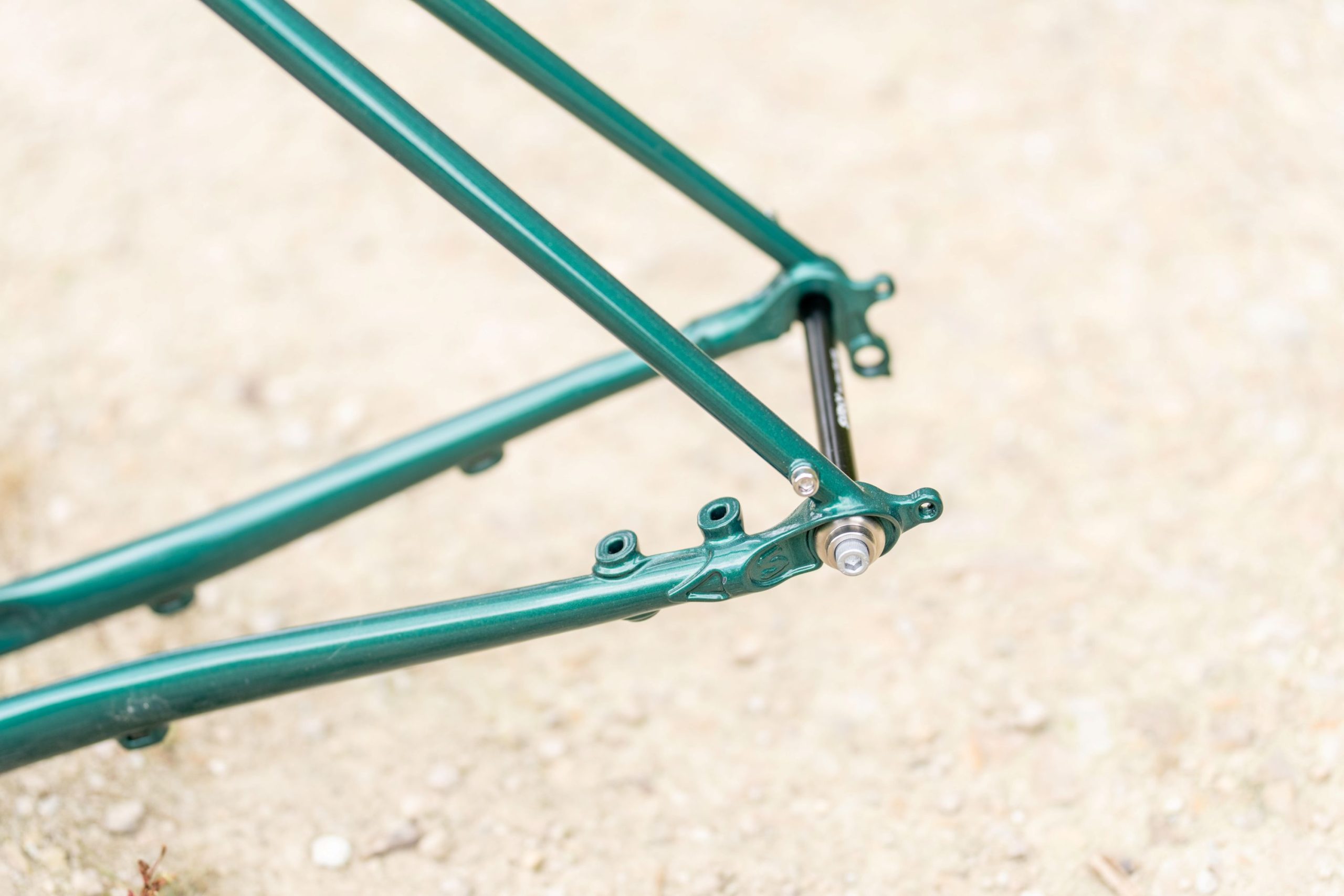
Surly has switched from quick releases to thru-axles and from brake post mounts to flat mounts.
With riders fitting ever-wider gravel tyres, Surly has also increased the bottom bracket drop, with the aim of improving stability.
Tyre clearance is upped from 42mm to 50mm. Surly has done the inevitable and converted from 100mm front/135mm rear quick-release dropouts to 100mm/142mm 12mm-diameter thru-axles.
It’s also changed from brake post mounts to flat mounts, and the rear caliper sits inside the rear triangle rather than on the back of the seatstay, again in line with modern gravel bike standards.
The Straggler still comes with a steel fork as standard, but the 44mm non-tapered head tube opens the option to fit a carbon fork or a gravel suspension fork.
The steel fork has an array of bosses, and there are also three sets of bottle bosses on the frame, along with rack and mudguard mounts.
There are no top tube mounts, though, and the frame is designed for external gear/brake cabling with full outers rather than bare cables, as was the case with the previous Straggler. You can route a dropper cable through the frame, though.
Surly Straggler size and pricing details
The Straggler frameset is available in two colours and eight sizes.
While the previous bike was available in 11 sizes, Surly has pared down the sizing options to eight. There’s still a good size range, though, with frames from 46 to 64cm.
The price for the Straggler frameset is £899.99 in the UK and $899 in the US.
US riders can also choose from two full builds: Shimano Cues 1×11-speed and Alexrims on Novatec hubs, priced at $1,999 or Shimano GRX RX820 2×12-speed and Teravail Washburn wheels, priced at $2,499.
Full builds of the size 46, 49 and 52 frames are fitted with 650b wheels in place of 700c.
Leaked retailer listings, trademark filings and recently published patents suggest Shimano is preparing to launch a new road bike pedal system called SPD-SLR – potentially including long-rumoured power meter pedals.
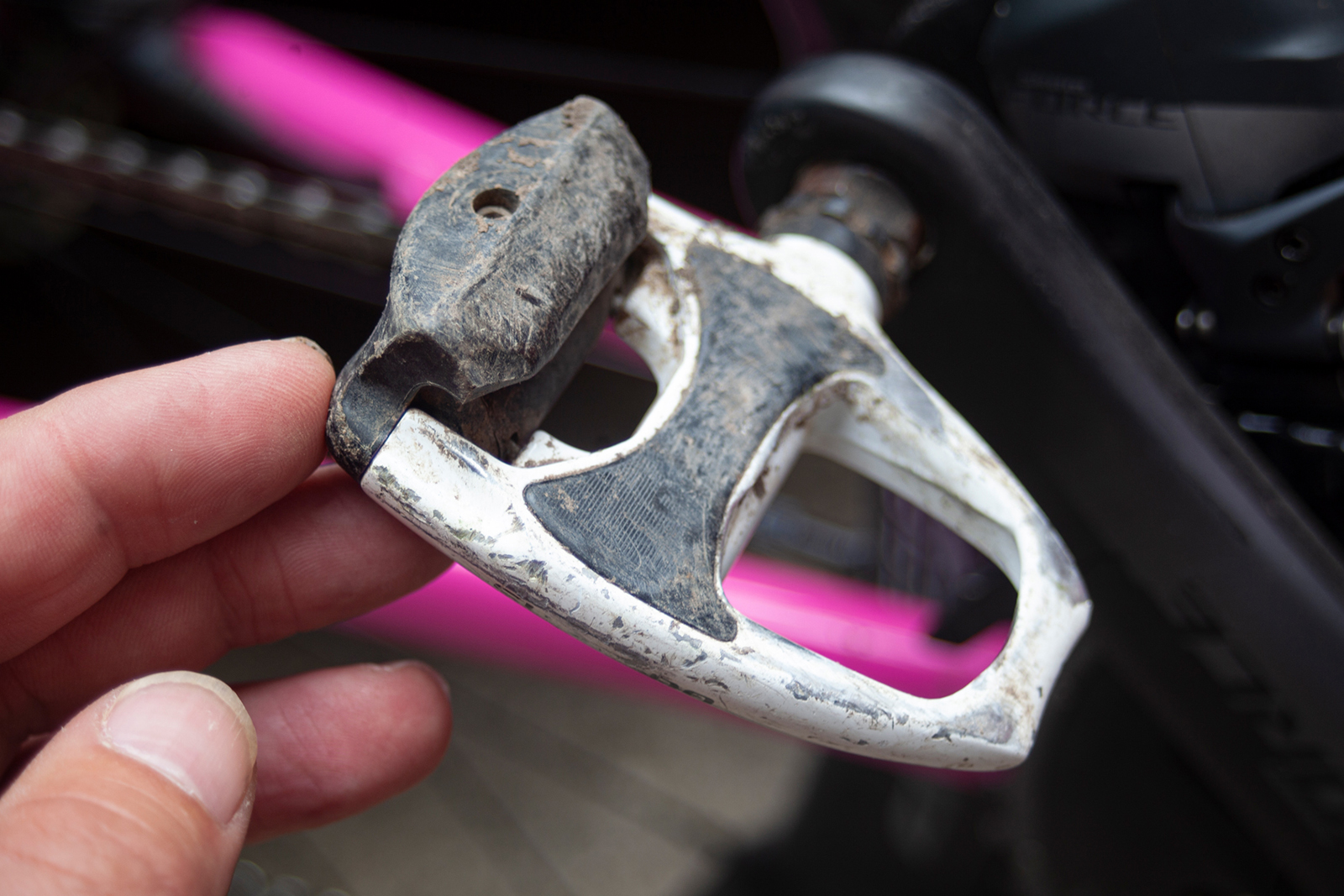
Shimano’s clipless pedal technology has remained relatively stable for decades. Riders broadly have two options: SPD, the two-bolt recessed system generally used for off-road riding, and SPD-SL, the three-bolt road-specific standard.
Now, there are signs Shimano could be preparing to introduce a third system: SPD-SLR.
It’s unclear what physical form SPD-SLR would take, and Shimano declined to comment on the matter when approached by BikeRadar, but here’s what we can glean from the leaked information
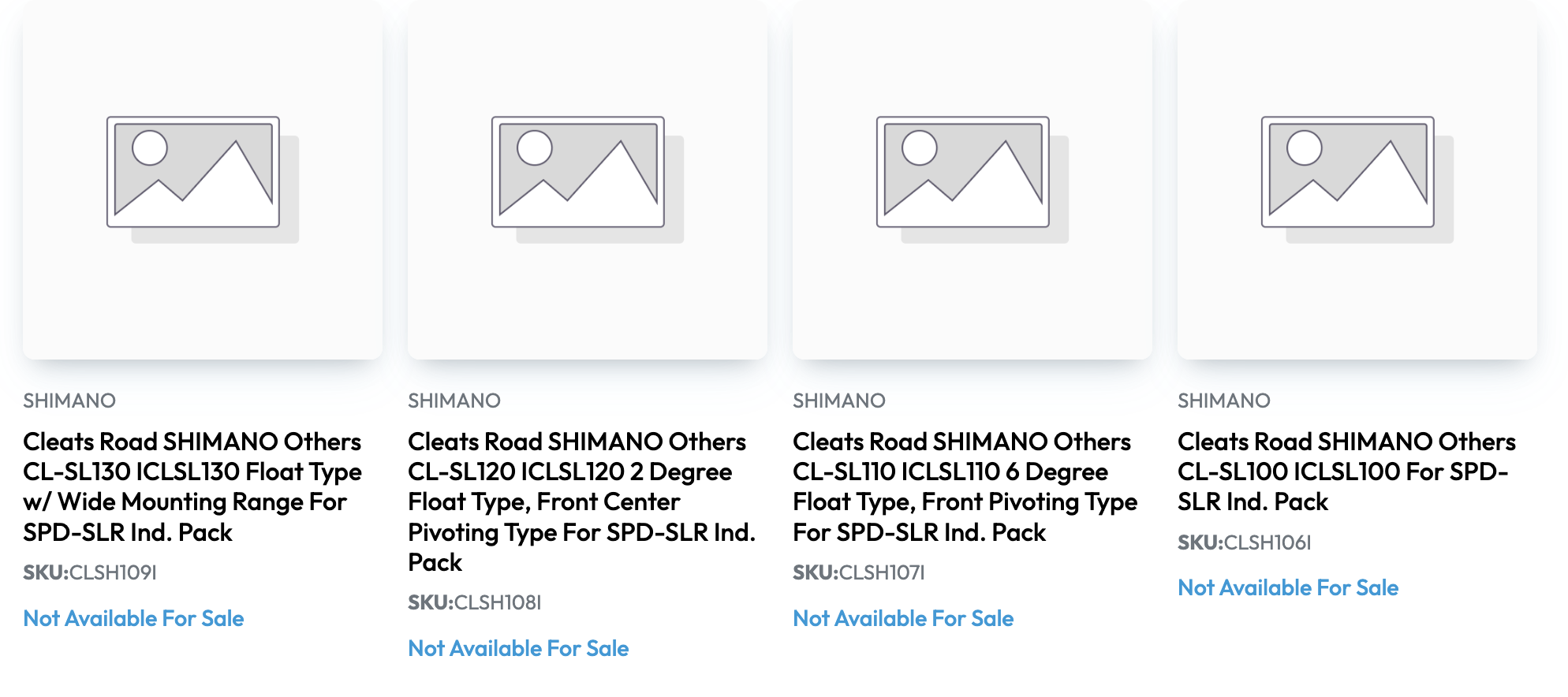
The listings show Ultegra and Dura-Ace pedals. Neo Zigma
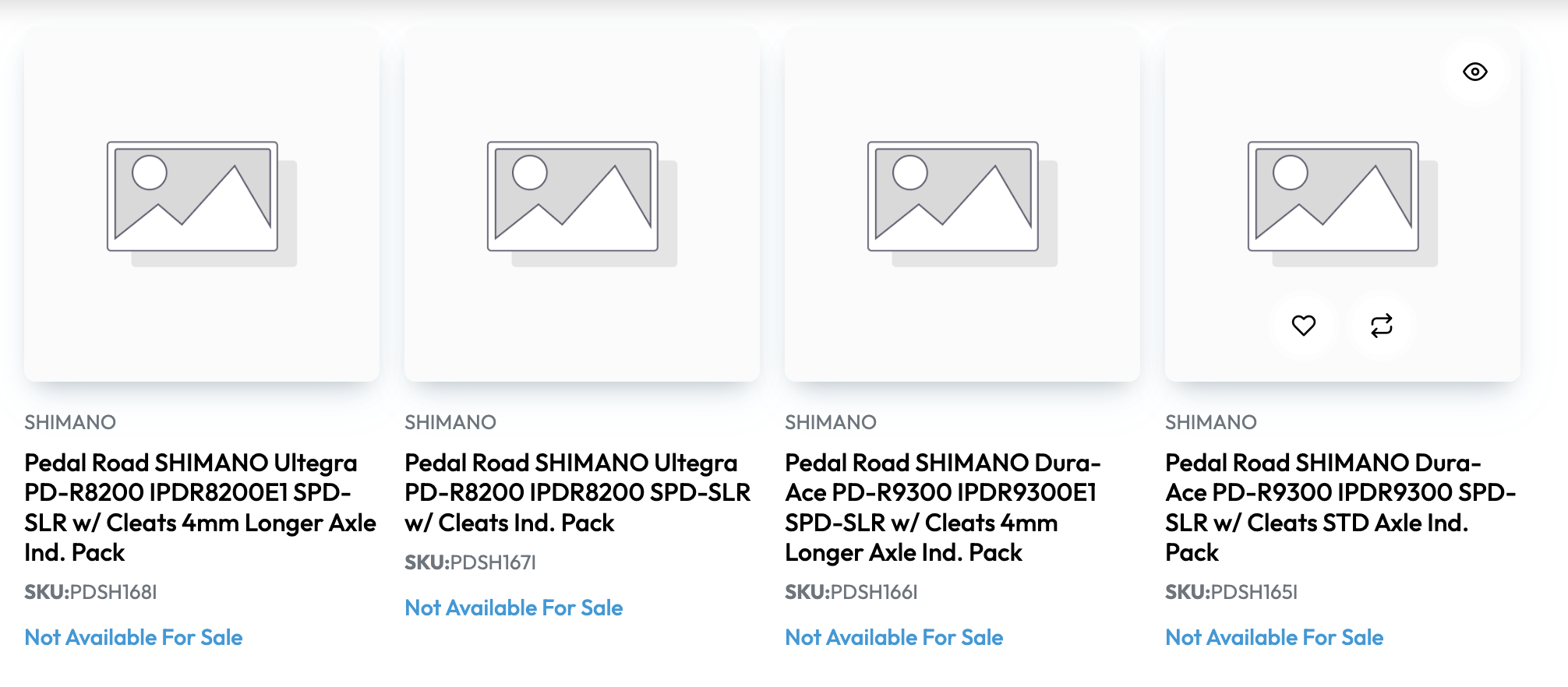
I first spotted the pedals via a listing on Neo Zigma – the official Shimano distributor for the Philippines. It shows multiple new pedal models bearing the SPD-SLR name.
The listings include:
Shimano product name
Shimano product code
Dura-Ace SPD-SLR Pedals – +4mm axle, w/ cleats
PD-R9300
Dura-Ace SPD-SLR Pedals – standard axle, w/ cleats
Clicking through to the products reveals no specifications or images, and none are available to purchase at the time of writing.
On its own, an erroneous listing is not proof that a new product line is imminent.
However, the product codes and SKUs align closely with Shimano’s existing conventions, suggesting these are not mistaken entries.
It is also common for retailers to be supplied with a list of product codes prior to products going on sale, and for those to be published accidentally. I have found pre-release products in this manner before and expect the same to have happened here. That the listings are on an official distributor’s site is also notable.
The trademark explicitly references power meter pedals. USTPO
Supporting evidence that Shimano is developing a new pedal system under the SPD-SLR name comes from a recently filed trademark.
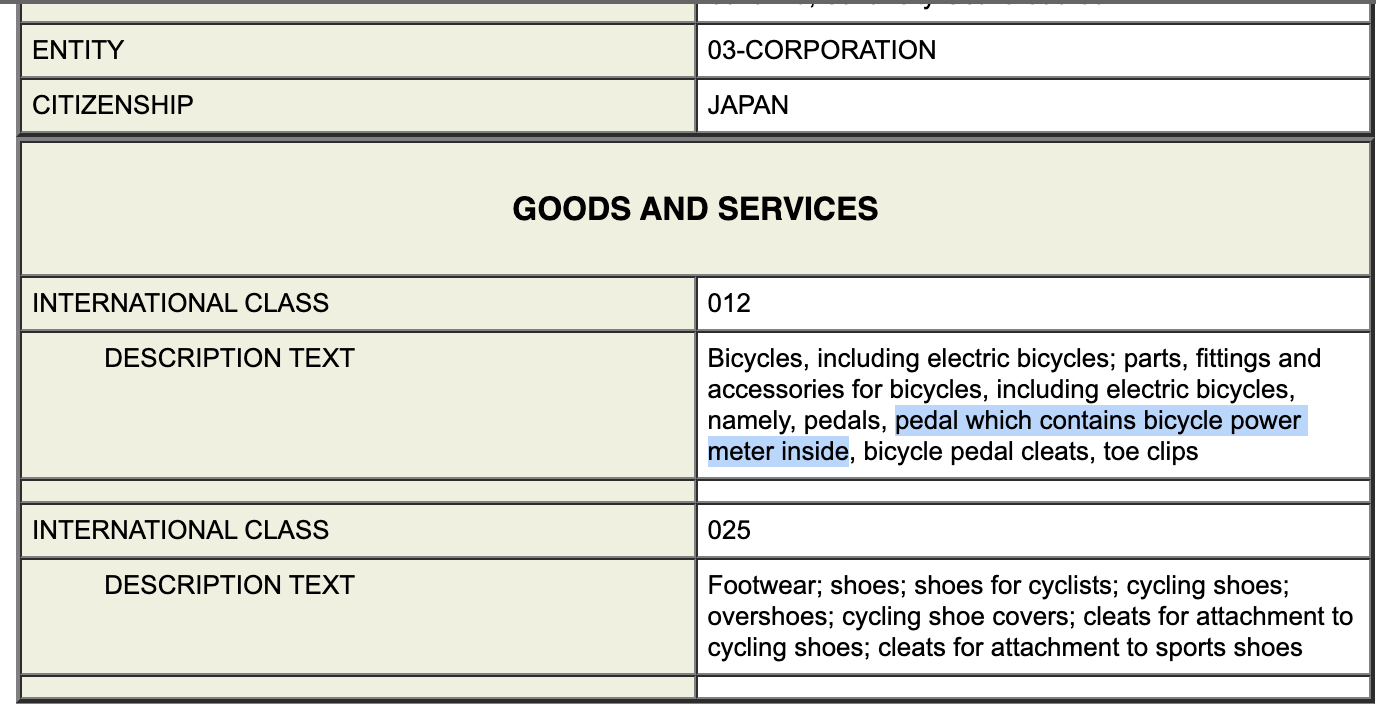
Shimano registered SPD-SLR as a trademark with the USPTO on 25 March 2025. The trademark covers a broad spectrum of categories, but it all but confirms that SPD-SLR relates to pedal technology.
Most interesting is the inclusion of power meter pedals in the description of goods covered by the trademark: “Bicycles, including electric bicycles; parts, fittings and accessories for bicycles, including electric bicycles, namely, pedals, pedal which contains bicycle power meter inside, bicycle pedal cleats, toe clips.”
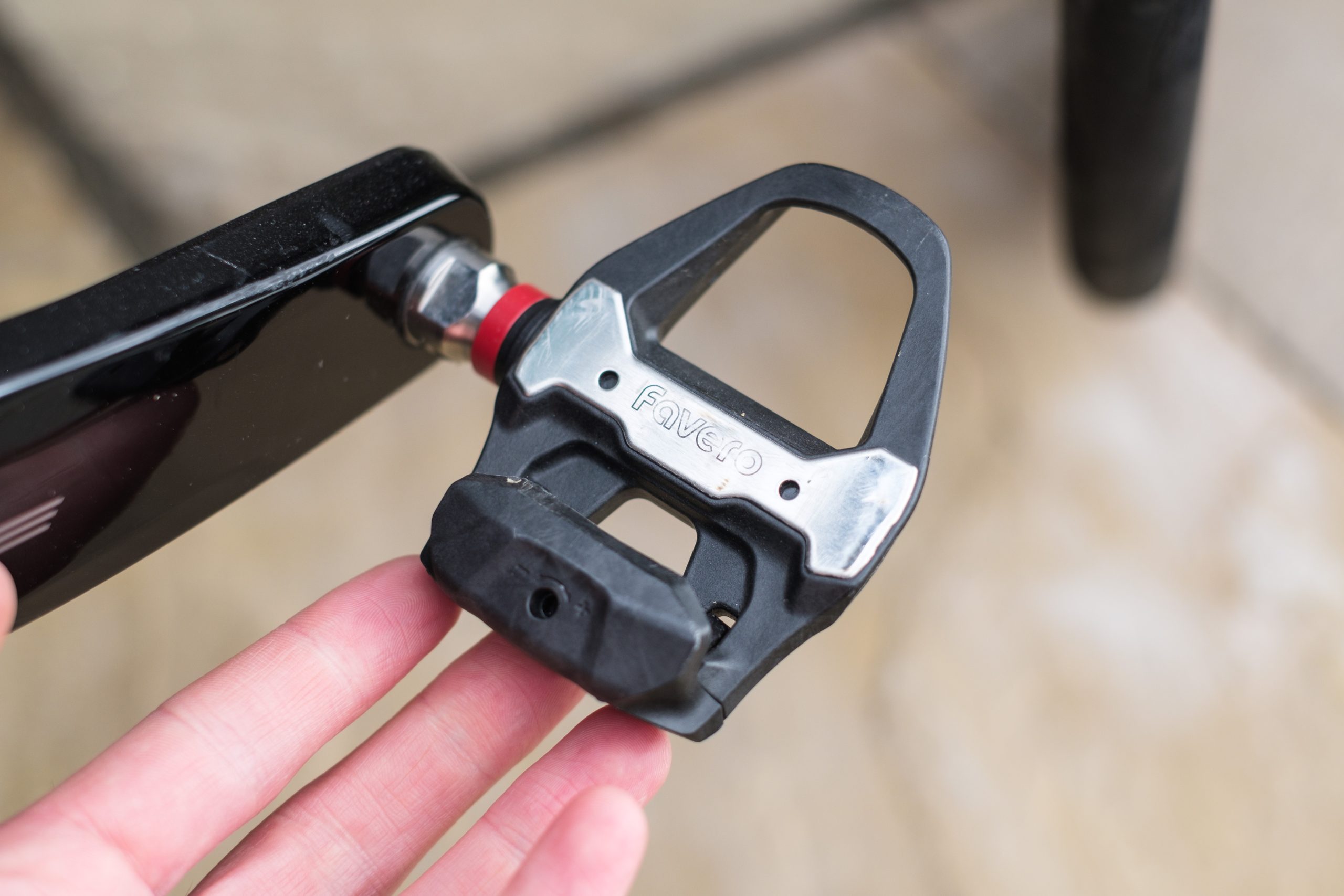
The likes of Favero and Garmin have popularised power meter pedals. Simon von Bromley / Our Media
It is entirely possible that Shimano is merely covering its bases with the filing by referencing power meter pedals, leaving the door open for future developments.
However, it is hard to envisage where the existing SPD-SL system can be taken from a development perspective, or to understand if Shimano would even have the desire to fundamentally change a well-liked system, without integrating new technology such as a power meter.
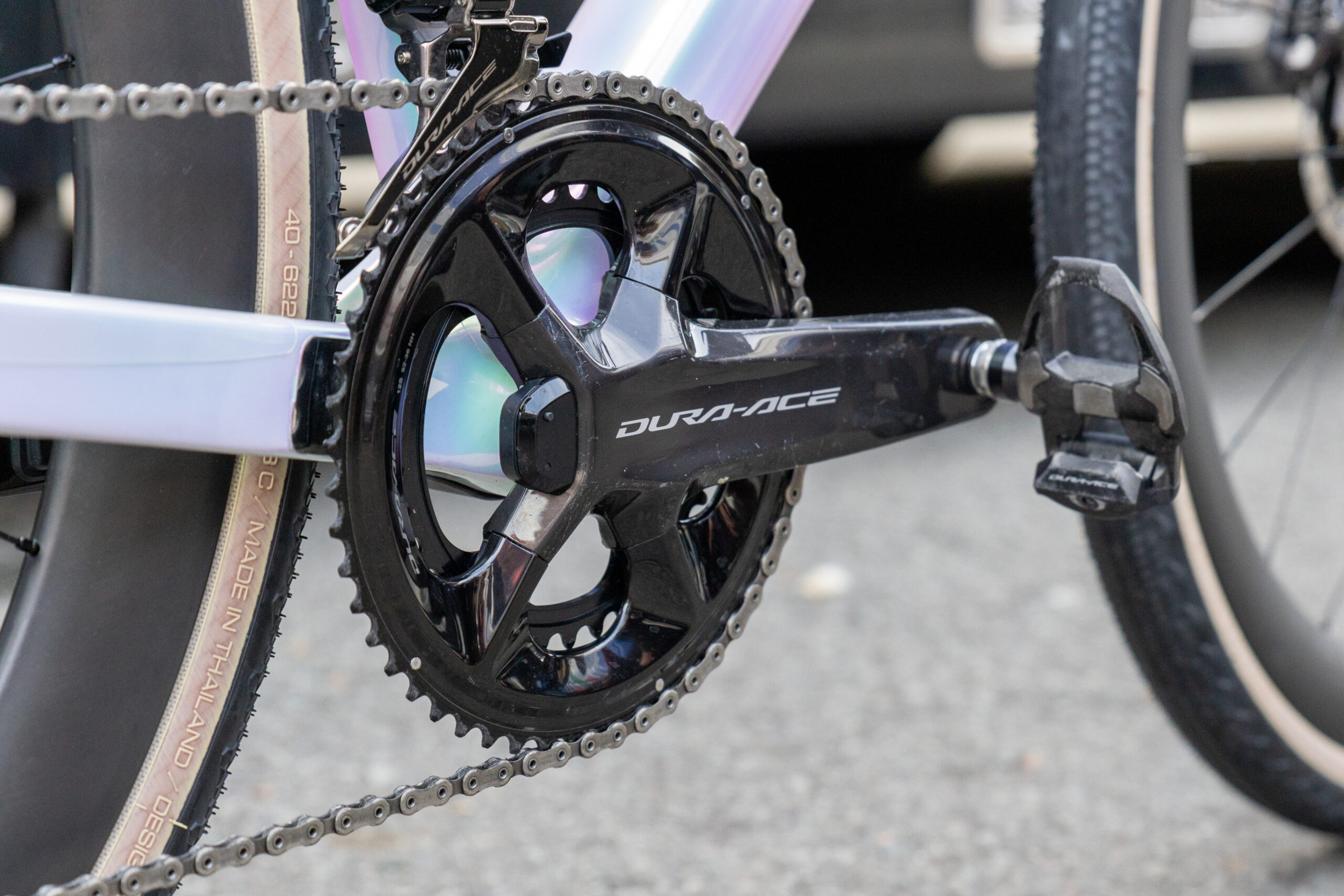
Shimano Dura-Ace power meters do not enjoy the best reputation. Liam Cahill / Our Media
Shimano has resisted pedal-based power meters even as Garmin, Favero and Wahoo have made them mainstream products.
Given their widespread adoption and Shimano’s well-publicised difficulties in developing reliable crank-based power meters, entering the power meter pedal market could be a savvy move.
This leads me to believe a power meter pedal system is the most likely direction of travel for the SPD-SLR system.
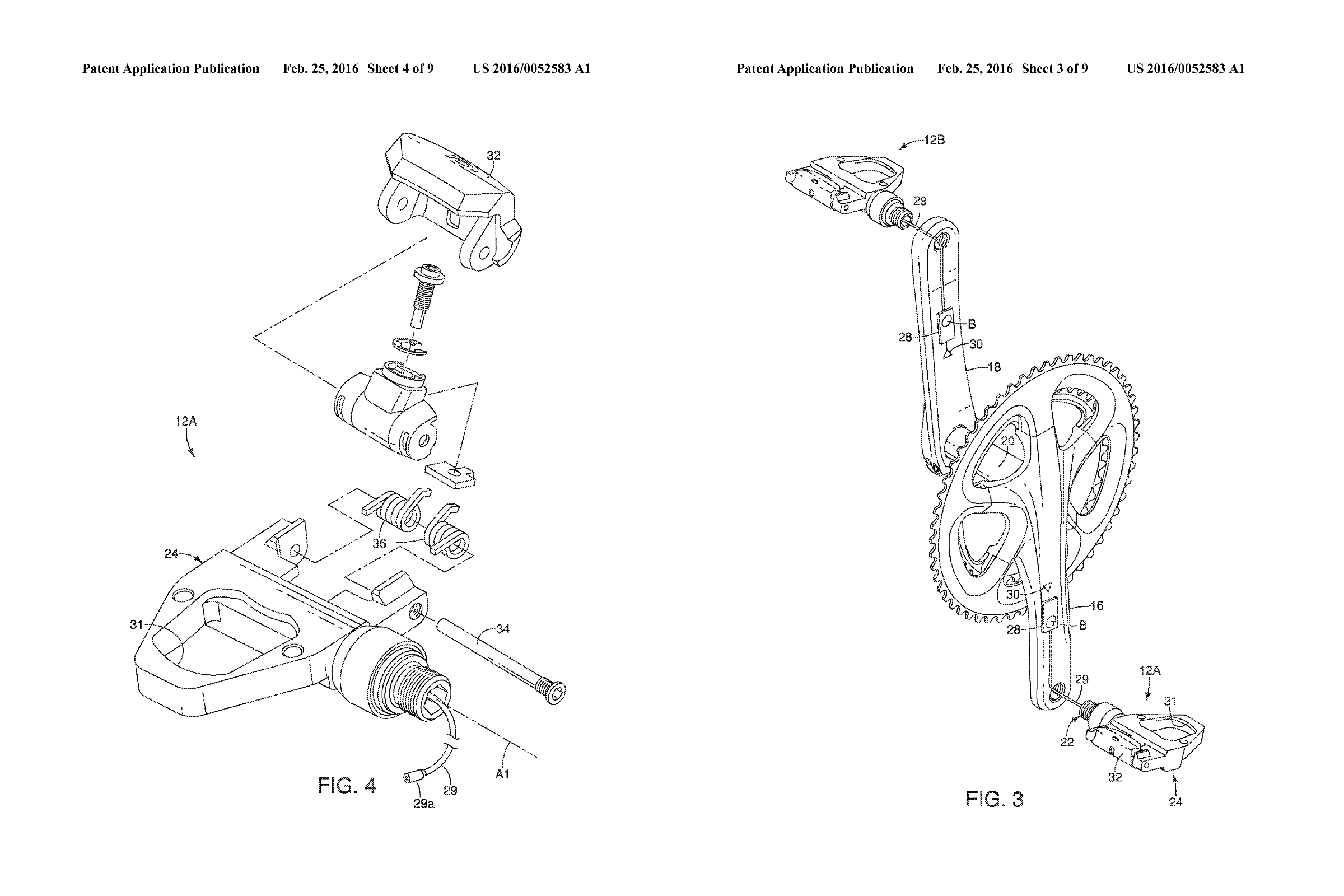
A patent filed in 2014 showed a Shimano power meter pedal – abeit a wired one. Shimano
Technology has moved on a great deal since then, but a patent filed in 2014 and granted in 2018 shows the brand has seriously investigated the possibility of producing power meter pedals in the past.
That the SPD-SLR range appears to be limited to Ultegra and Dura-Ace-level components also appears to back this up.
Although third-party manufacturers, such as Stages and 4iiii, offer power meters down to 105 level, Shimano’s range of crank-based power meters extends only to its two premium road bike groupsets.
If Shimano follows through with its typical naming conventions, the ‘R’ in SPD-SLR is likely to stand for Race. Power meters have historically been reserved for Shimano’s race-level groupsets, hinting further that this is a new power meter system.
What might Shimano SPD-SLR pedals and cleats look like?
The existence of new cleats suggests a different trajectory for SPD-SL. Neo Zigma
However, the potential existence of new cleats gives me pause for thought.
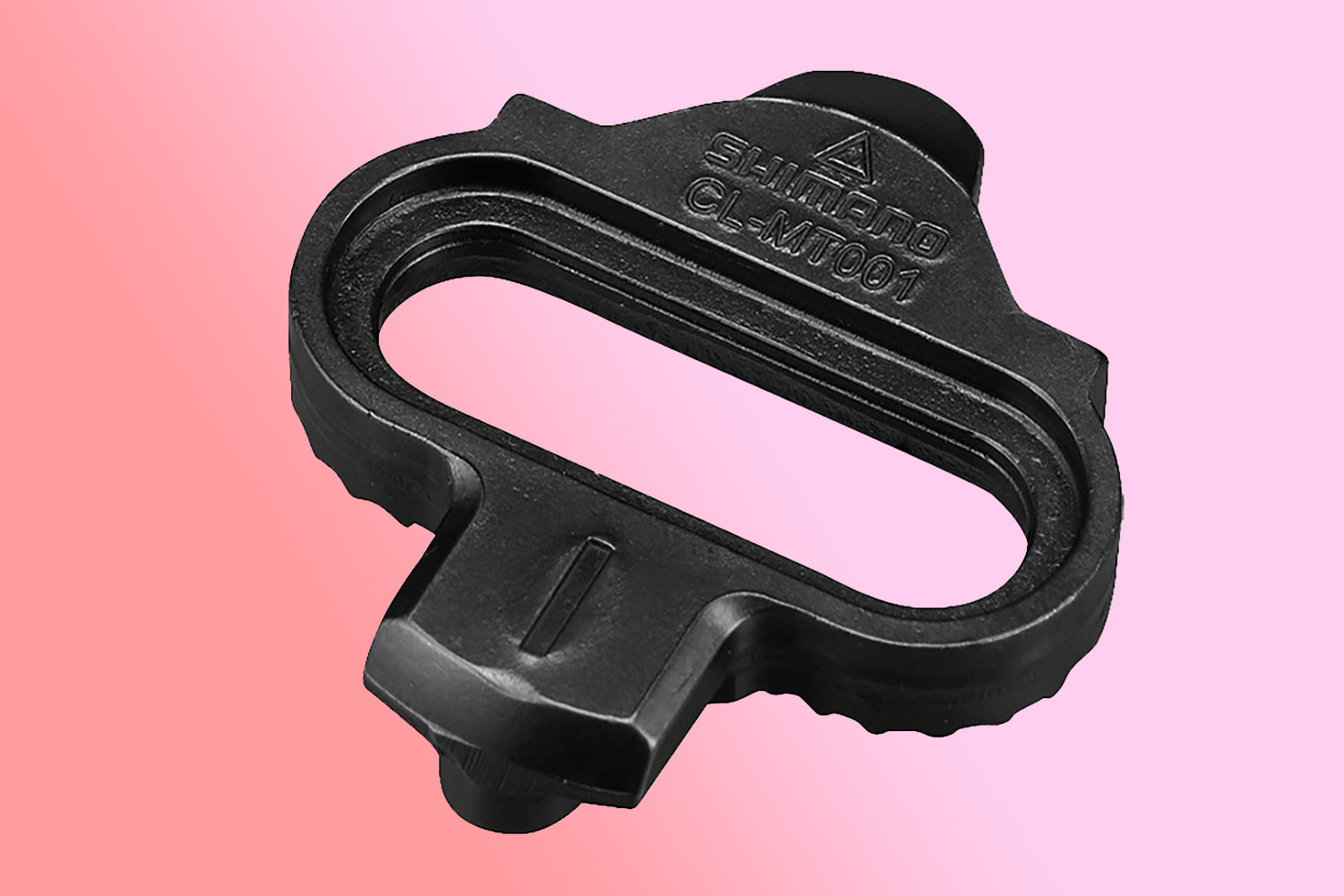
As with its new CL-MT001 MTB cleats, ensuring a new power meter pedal system had backwards compatibility with its existing pedals would be in keeping with Shimano’s overall philosophy.
With that in mind, to see standalone cleats marketed as SPD-SLR for sale suggests the new system may take a different trajectory from power meters. But what form might new cleats take?
Shimano’s CL-MT001 cleats improve clipping and unclipping. Shimano
At the basic end of the scale, Shimano may make similar moves to its CL-MT001 cleats, making it easier to clip and unclip within the existing form factor of the SPD-SL cleat.
SPD-SL is among the easiest systems to use on the market, and the ability to walk is decent. However, the same could have been said of its existing two-bolt SPD cleats, but Shimano MT001 is claimed to bring small tangible improvements. Could we see the same for SPD-SLR?
Systems such as Ekoi’s PW8 show there’s still more to be squeezed out of reducing pedal stack height. Warren Rossiter / OurMedia
Into more speculative territory, while its pedals have among the lowest stack heights on the market, Shimano may also look to slim down its cleat system.
It’s worth noting that Shimano has quoted SPD-SL pedal stack heights, including the cleat (unlike most competitors), which makes them appear taller on paper than they are.
For example, a Dura-Ace PD-R9100 pedal is listed at 14.6mm, but that figure includes around 5mm for the SPD-SL cleat, putting the true pedal-only stack height closer to 9.3mm.
Even still, if this is a racing-focused product, Shimano could look to squeeze out a little more ground clearance and a closer shoe-pedal interface – although I have no evidence to support this assumption.
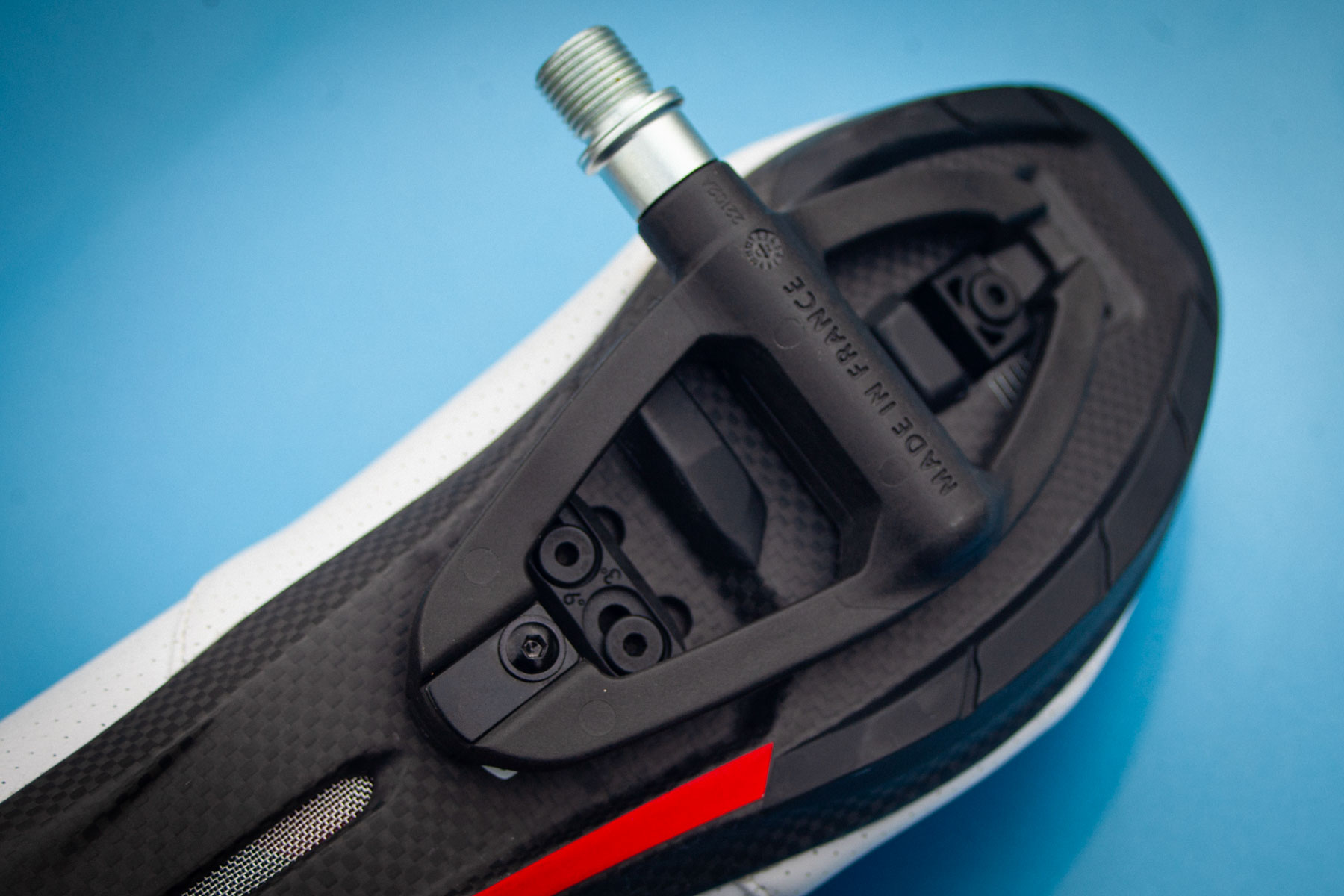
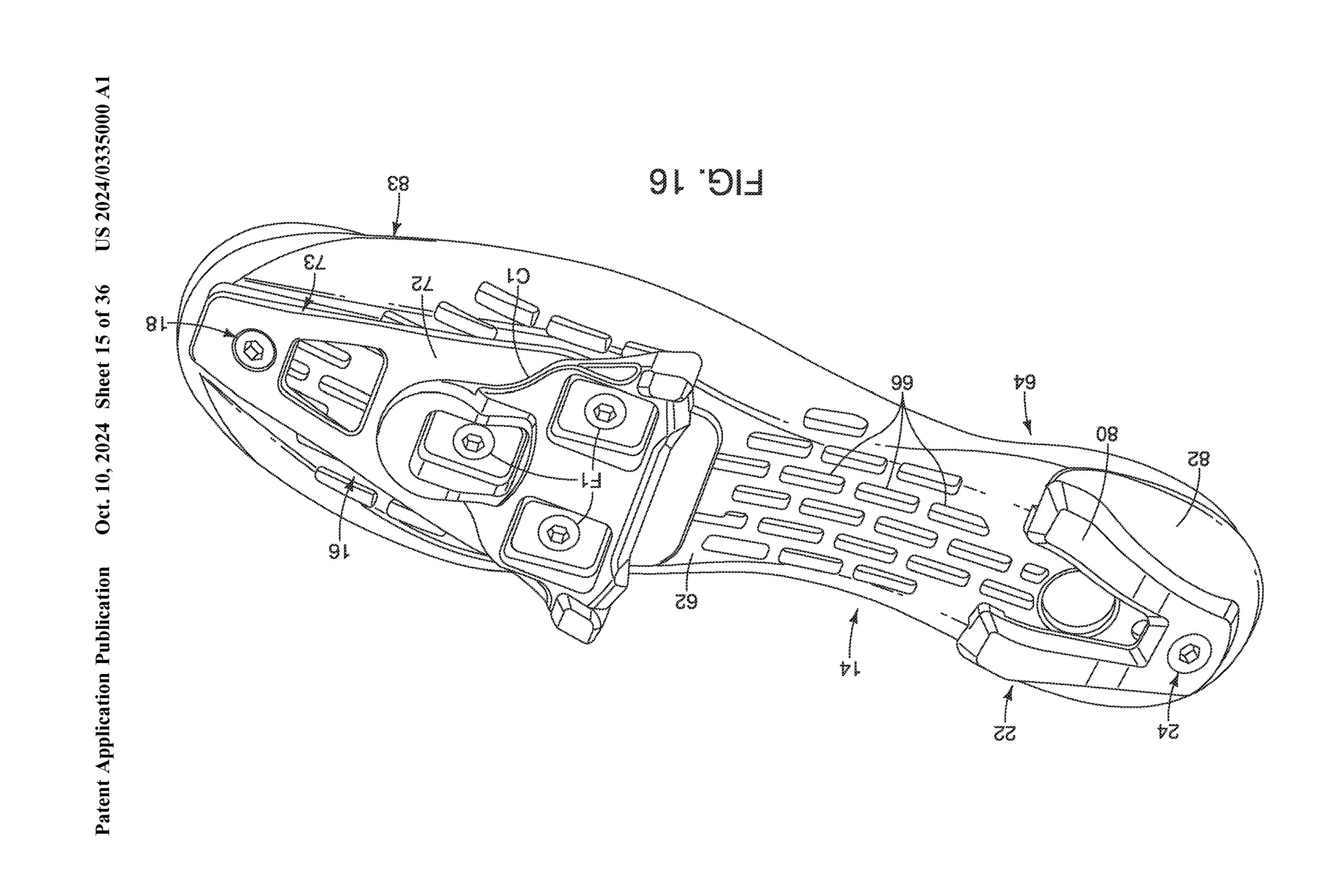
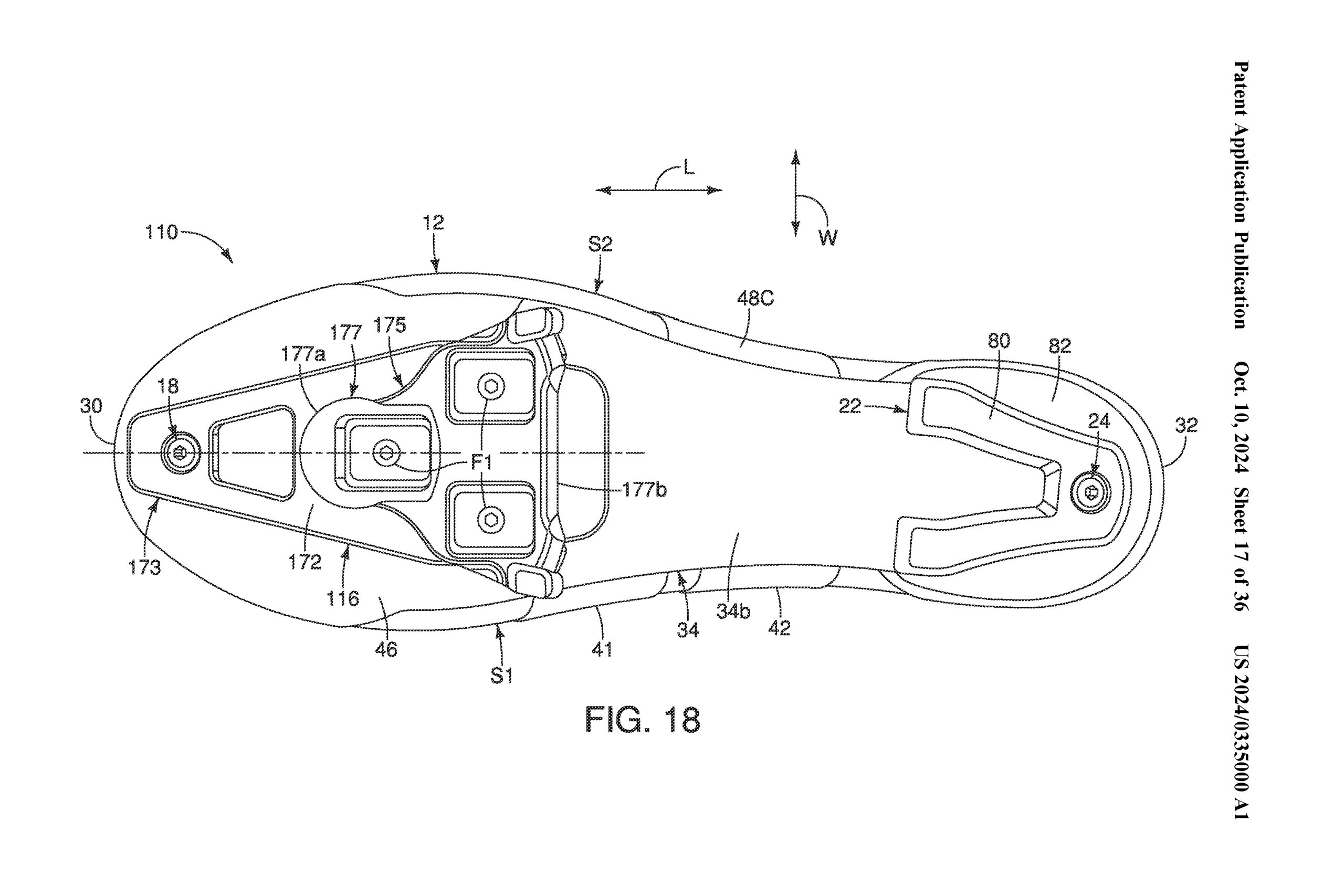
Recent patents have shown potential new cleat designs. Shimano
Looking more outlandish, Shimano has released a flurry of patents in recent years relating to pedal and cleat technology.
A recent Shimano filing shows a pedal and cleat system that operates differently from Shimano’s existing SPD and SPD-SL designs. Instead of a spring-loaded jaw that clamps the cleat when you stamp down, the new design uses a sliding, track-style interface.
Could SPD-SLR take Shimano’s road bike pedals in a new direction? Shimano
The cleat is shaped to fit into a channel on the pedal, locking into place in a docking motion rather than a forceful stomp. A small locking mechanism or flexible element secures the cleat.
Shimano has also filed patents describing electronic, automatically adjusting cleat systems, which would adapt as you ride.
As always with patents, there is no guarantee any design will ever reach the market – Shimano, in particular, regularly patents concepts, from the mundane to the outlandish, that never see production.
What’s next?
The first SPD-SL pedal was released in 2003 and hasn’t changed since then. Warren Rossiter / Immediate Media
For its part, Shimano declined to comment on the leak, issuing its boilerplate statement: “We are constantly in development of new products, and Shimano does not comment on rumours or speculation about products, whether they are in development or not.”
However, taken together, the evidence points towards Shimano significantly updating its road pedal ecosystem – potentially as part of a wider refresh of its road bike groupset line-up.
The potential integration of power meters would mark a major milestone for Shimano, bringing it in line with rivals who already offer dual-sided, pedal-based systems.
Recently filed patents could hint at a new design direction for its road bike pedals, although there’s no strong evidence to suggest what trajectory this may take.
If and when SPD-SLR does arrive, it could represent the first major shift in Shimano’s road pedal ecosystem in decades – and perhaps the long-awaited moment when Shimano finally embraces pedal-based power meters.
Indoor cycling app Rouvy has announced a raft of updates as cyclists in the northern hemisphere batten down for a winter of riding on their turbos.
First up is Rouvy’s answer to Strava segments, offering a range of pre-defined timed segments in the app, complete with leaderboards.
The Rouvy segments aren’t only climbs; they offer sprints and rolling roads to ride, and you can challenge your fellow riders in real time to see who’s fastest, as with Strava Live segments in the great outdoors.
With Rouvy’s segments, as with Strava’s, you can race against the segment leader, your friends’ and your own best times, but rather than a dot on a map, each is represented by an avatar.
While Rouvy has chosen to create its own segment network, Zwift has Strava segments in its app. Initially, anyone could create Strava segments in Zwift, but as in the real world, these became a mish-mash of the useful and the confusing, so Zwift has now cut back to offer only its own segments.
Rouvy’s Winter Training Camp Spotlight includes routes around Girona. Christopher Lanaway
Rouvy is scattering its segments over its existing roads, as well as a suite of new roads. Its Winter Training Camp Spotlight arrives on 8 December and continues into 2026, with pro-team inspired routes in destinations including Girona, Calpe and (we guess not in the winter) Andorra.
If you’ve been there, done that and don’t fancy repeating it on the turbo, there are also new routes arriving between the tail end of October and mid-January 2026. They’re in further-flung destinations including Sri Lanka, Bolivia and even Tajikistan, even if, unlike the real thing, the latter two don’t add altitude acclimatisation to the mix.
There’s also a five-week climbing spotlight, running from 10 November to 23 December. It features five passes in the Dolomites: Passo Pordoi, Passo Sella, Passo Giau, Passo Fedaia and Passo Gardena. Rouvy’s rides star Andrew Feather, who’s a Rouvy ambassador and should know his climbs because he’s a former British hill climb champion.
New app features
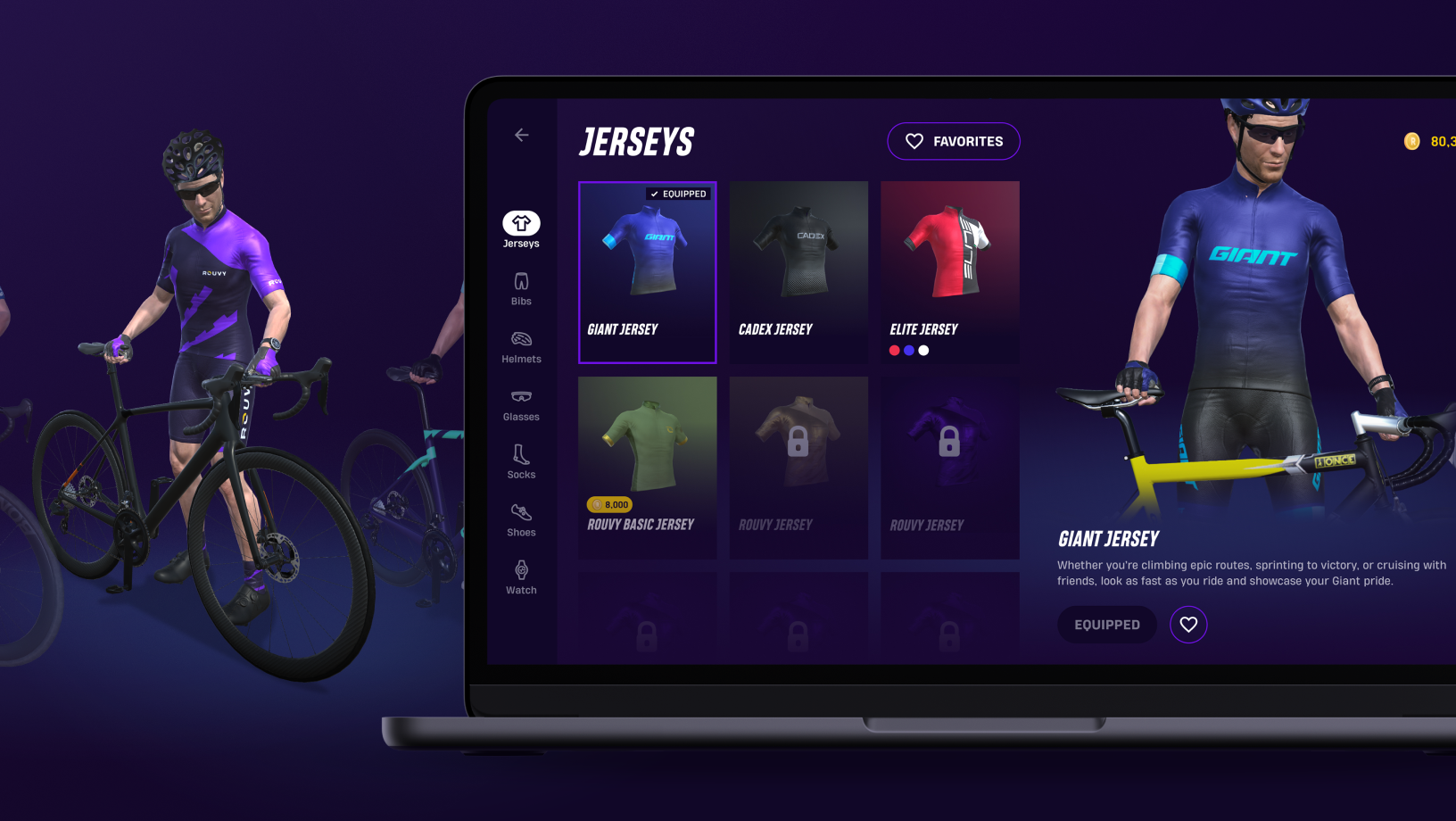
There are new options to customise your avatar, including Giant bikes and kit.
Rouvy has added functionality to enable you to toggle ERG mode on and off as you ride, so you can choose your own resistance level if the app-controlled power level becomes too much. It’s also handy to add more precision for structured workouts, Rouvy says.
There are also refinements to route searches, including selection by gradient, and to Rouvy’s virtual garage, enabling you to choose your avatar’s appearance and equipment.
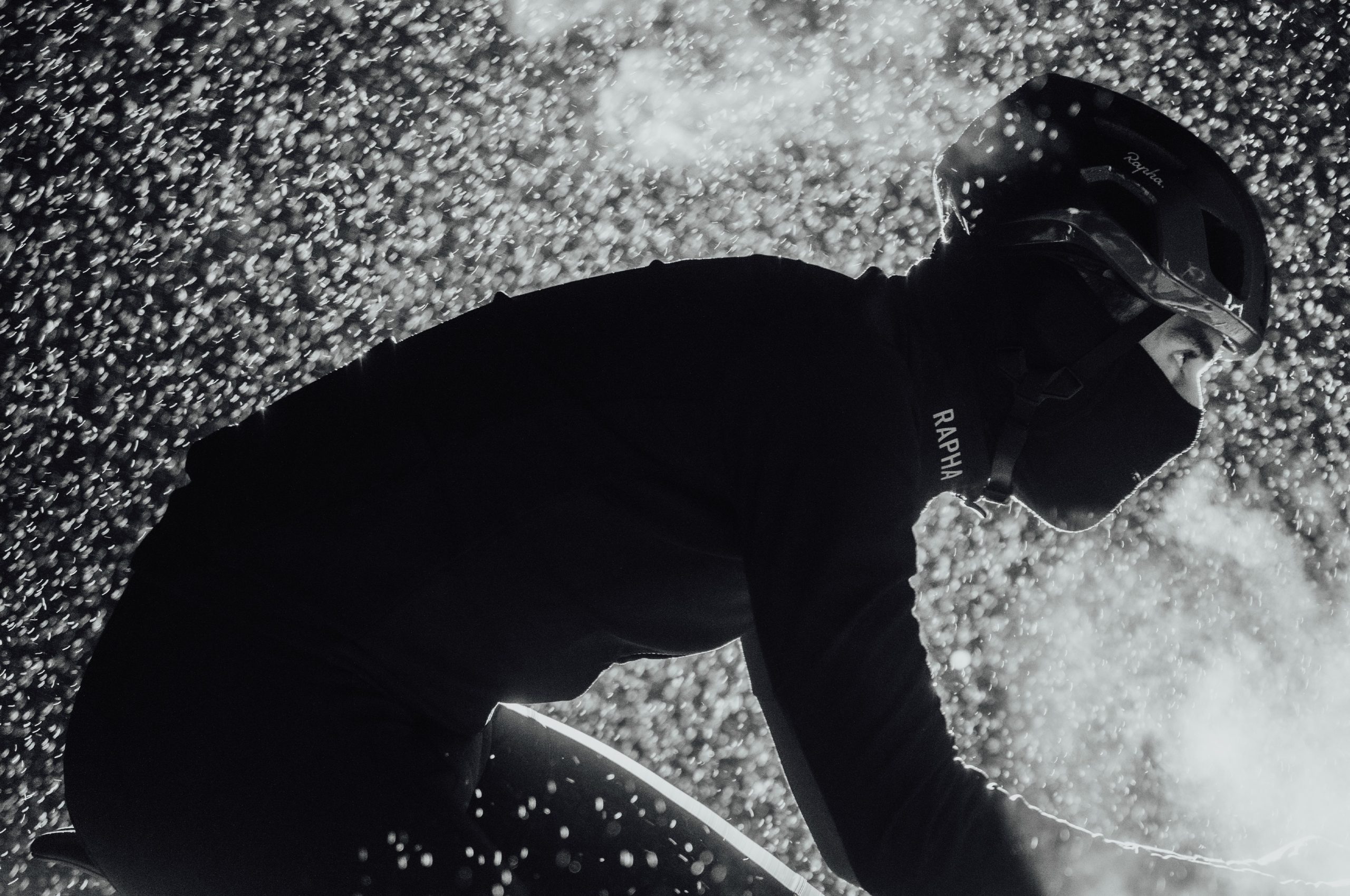
Rapha says its new Pro Team Shadow collection, launched today, is “dialled for your hardest efforts on the most unpredictable days”. There’s a jacket, a gilet and a long-sleeved jersey, all available for men and women, alongside a hat and gloves to finish off your weatherproof ensemble.
Rapha has had a Pro Team Lightweight Shadow jacket in its range for a few years. The former version of the jacket didn’t include a membrane, but was double-treated with a DWR coating.
However, with brands phasing out PFAS ‘forever’ chemicals, the new Pro Team Shadow collection has a PFAS-free water-resistant surface treatment.
There’s also a microporous membrane built into the new jacket, which was absent from its predecessor, and Rapha says its new fabric is high-stretch and windproof, too. There’s internal taping on major seams to help keep the rain out, and you can load up with your ride stuff thanks to the usual array of rear pockets.
The addition of a membrane increases water resistance in the new jacket.
According to James Stannard, Rapha’s head of product management: “When we developed the Rapha Pro Team Shadow range, we wanted to address some of the key pain points which riders experience during winter.”
Stannard says Rapha tested its fabrics and design in a climate chamber, as well as letting riders including Lachlan Morton loose to test the new Pro Team Shadow range in real-world conditions.
Morton praises the gilet’s versatility and packability, while Noah Streif of the EF Education-Aevolo development team reckons the new jacket can replace three or four layers, keeping out wind and cold.
“We opted for high-stretch fabrics for comfort across a range of body types and an all-over membrane to eliminate cold-spots. This combination hits the sweet spot between protection and breathability, so you can head out and ride in changeable conditions whilst remaining totally comfortable,” Stannard continues.
Rapha says the new range is designed for riding in poor weather.
Rapha isn’t the only brand to have launched new lightweight weatherproof jackets recently. Castelli has just unveiled the Perfetto RoS 3, offering a trifecta of windproofing, water resistance and low weight, alongside the Do.Di.Ci jacket, which sacrifices water resistance in favour of breathability that Castelli says is 12 times greater than the original Gabba.
Rapha’s new Pro Team Lightweight Shadow range will be available to buy from Tuesday 30 September, while Rapha Cycle Club members get early access from today.
The Pro Team Shadow jacket is priced at £325, the gilet at £225 and the long-sleeved jersey at £275. There are four colours available for men and two for women. The matching hat costs £48 and the gloves £70.
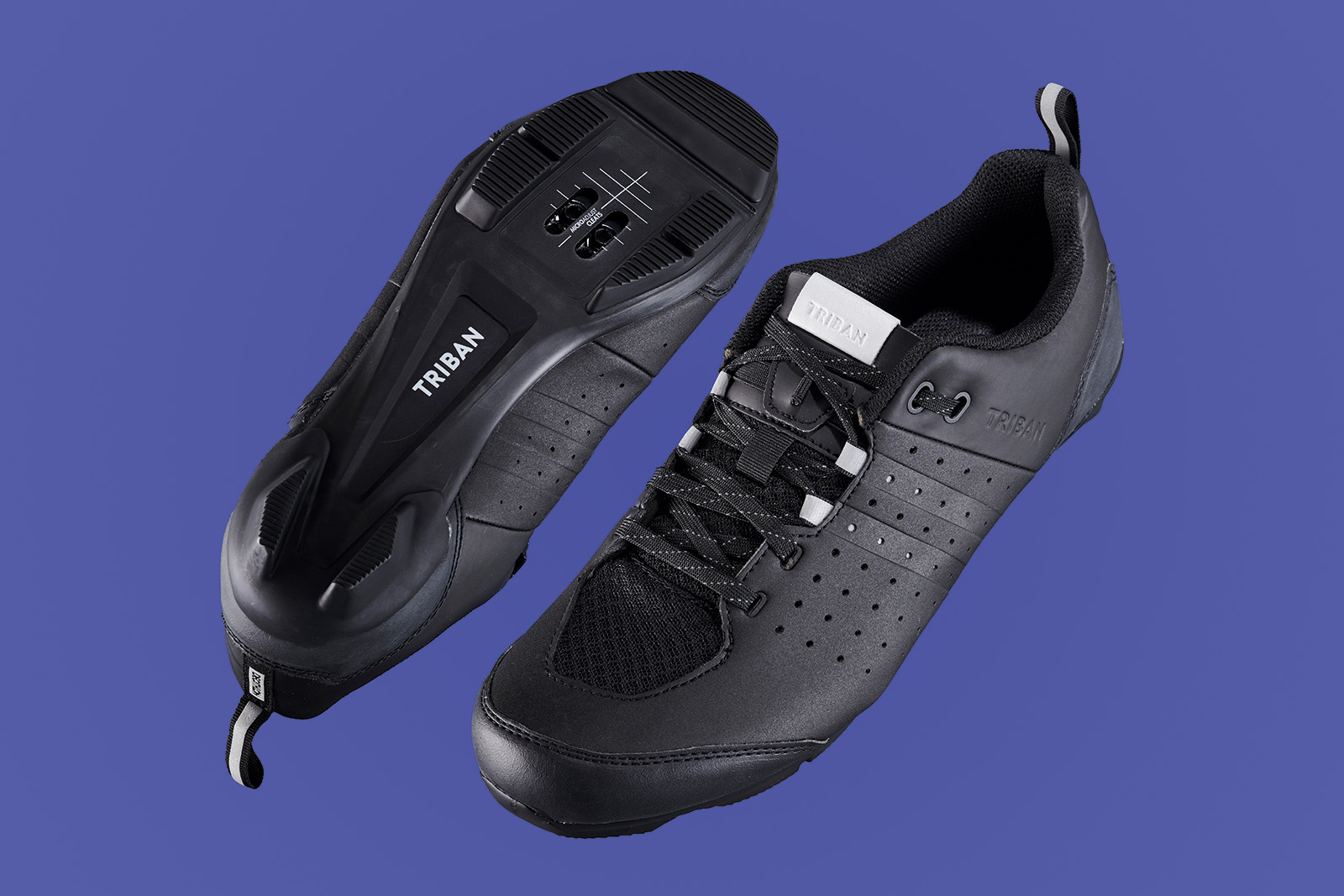
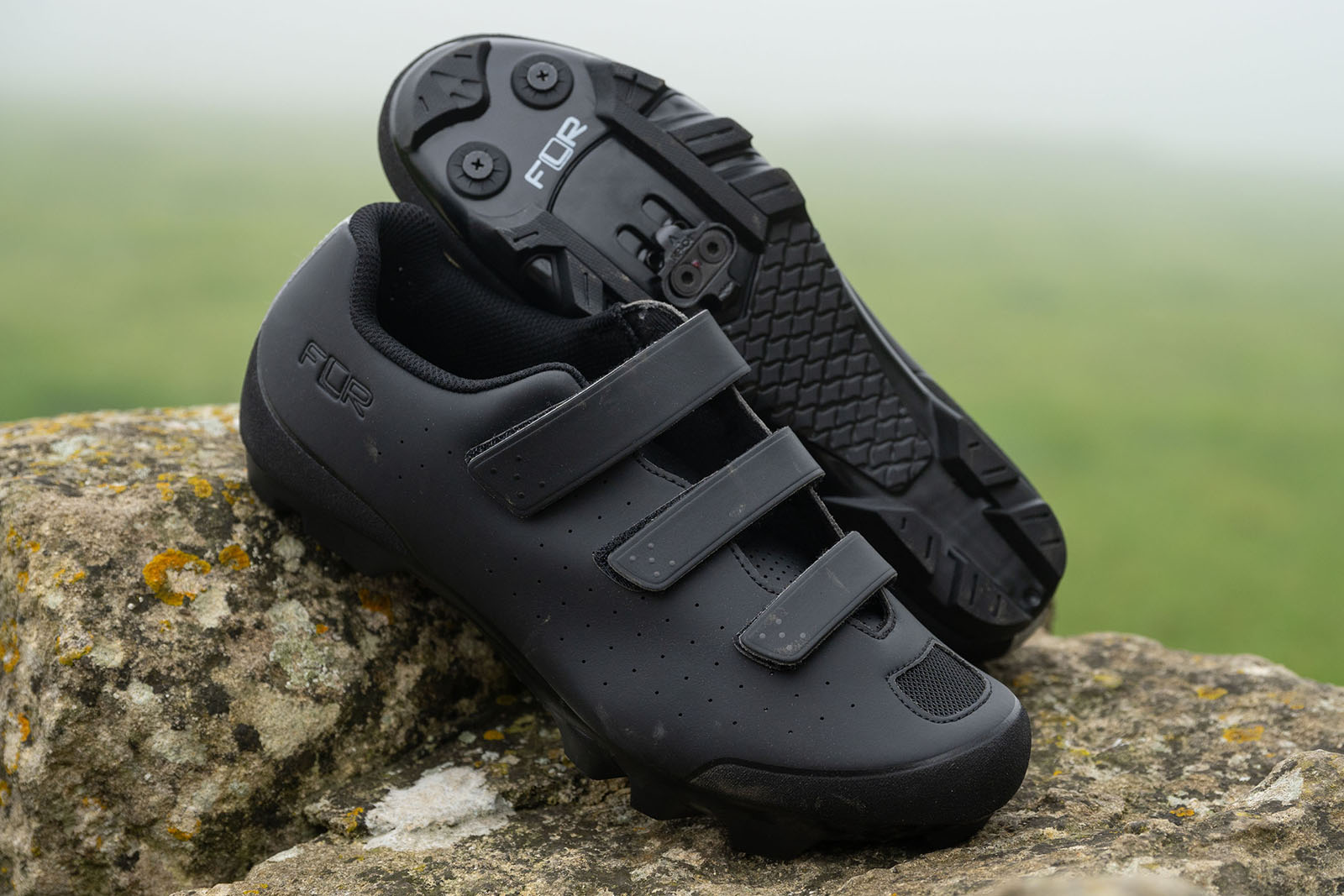
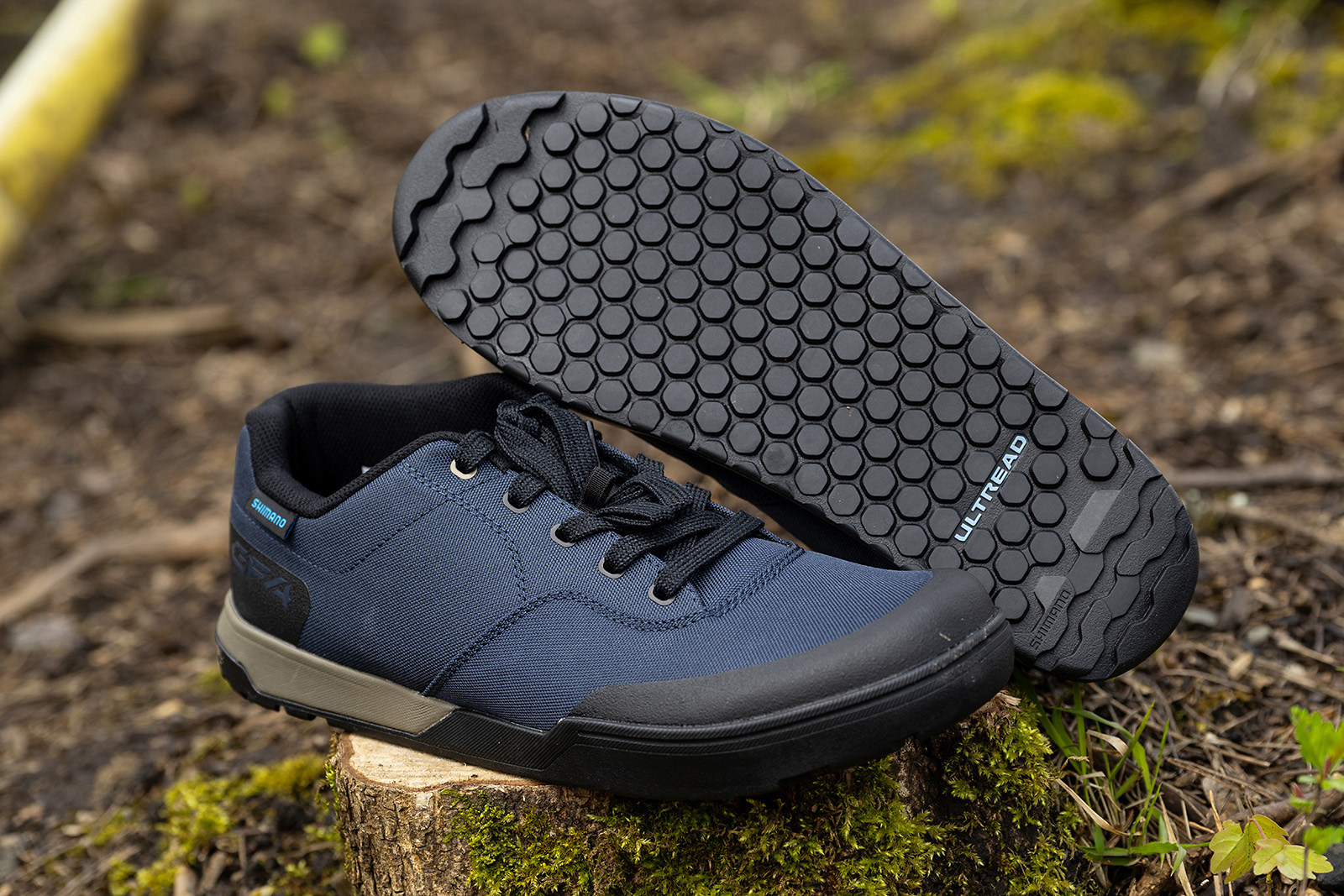
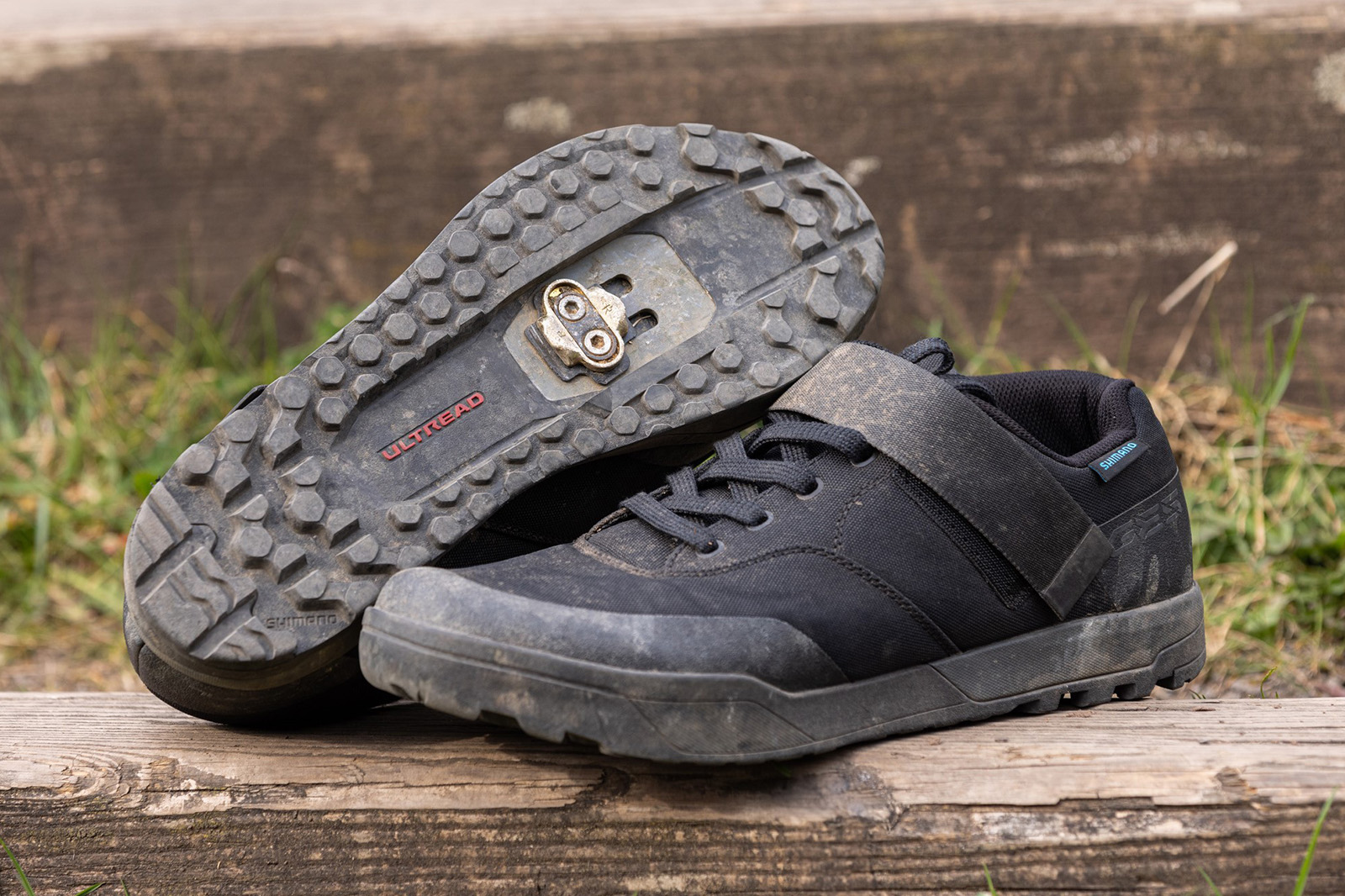
If you’re looking for a decent pair of cheap cycling shoes due to a limited budget, then look no further.
We’ve rounded up a selection of cheap road and mountain cycling shoes priced under £120 to help you find the right pair for your performance requirements and budget.
£120 might sound like a lot of money, and for many riders it is. However, it’s around the point at which upgrades begin to become more marginal. And, in any case, most of the options listed below are regularly available for substantially less than their RRP.
We have separated this list into road bike and mountain bike shoes, though bear in mind that the SPD design found on mountain bike shoes may be a better choice for those starting out with clipless pedals.
Editor’s note: This list was updated on 26 September 2025, with all new entries from our best road and mountain bike buyer’s guides.
Best cheap road cycling shoes in 2025
Bontrager Solstice
SQUIRREL_TEXT_13111489
The Bontrager Solstice has a great fit for a reasonable price. Simon Withers / Our Media
£100 / $85 / €105 / AU$105 as tested
Pros: Compatible with SPD-SL and SPD cleats; light for the price; good value for money
Cons: Not the best ventilation
Bontrager’s Solstice is well-priced and offers great comfort in a simplistic form factor.
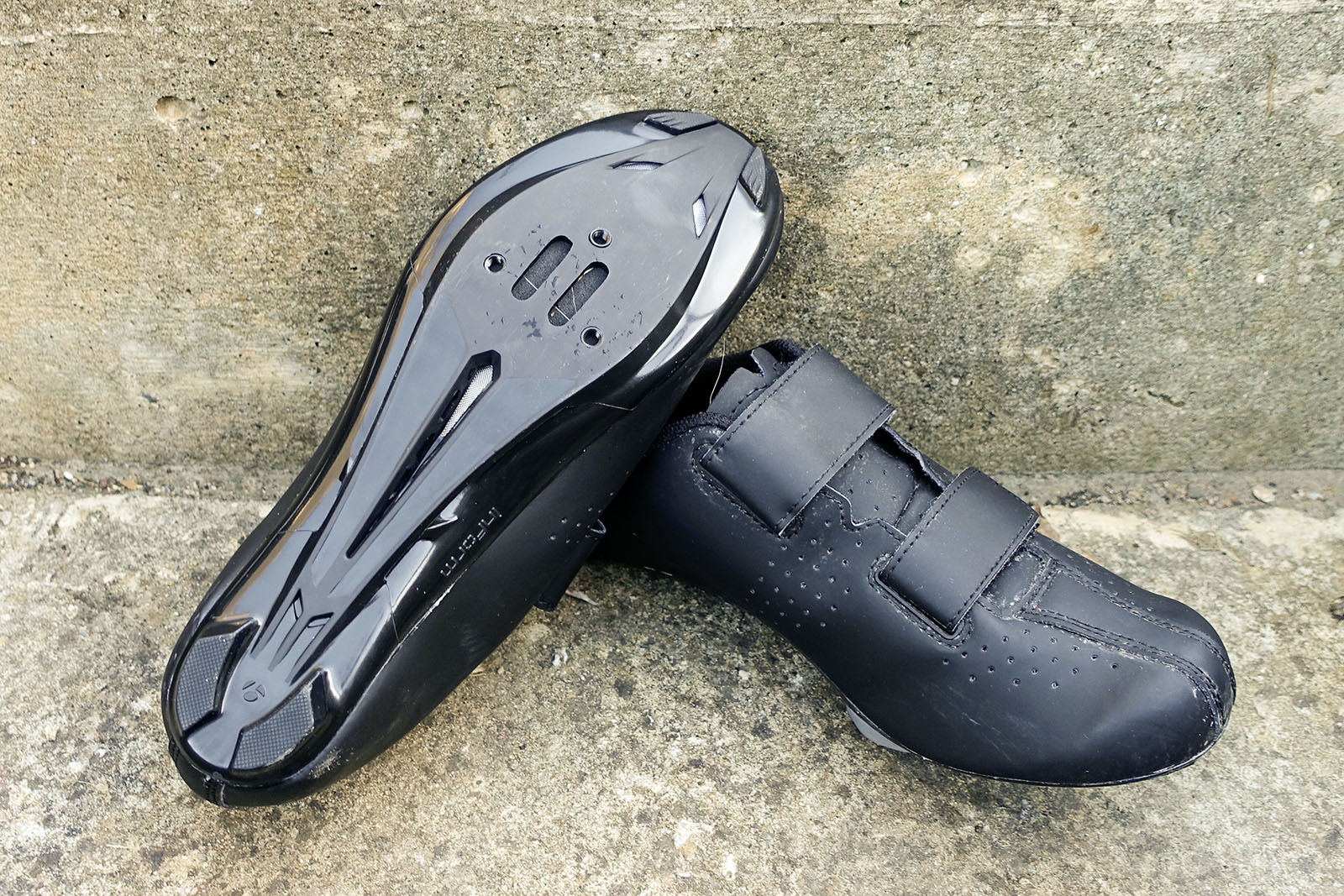
The shoes feature velcro closure straps and a moderately stiff nylon sole that make for an adjustable and wide-ranging fit.
Compatible with SPD-SL and SPD cleats, the Solstice give options for riders who are new to clipless pedals. Although keep in mind, the two-bolt cleat adaptor is not included.
The weight per shoe of 227g in EU42 is competitive.
Our tester found the shoes to be comfortable on long rides, but felt the ventilation was lacking on warmer days.
Beginner racers fall into one of two categories: those who have raced IRL but not on Zwift, and those who haven’t raced indoors or out, but want to give it a try in a safe place like Zwift. Zwift Beginner Racing (ZBR) is a new club hosting events to help both types of riders better understand the sport in a club-neutral environment.
To help both groups of riders, ZBR hosts group rides where the ride leader shares their experience and knowledge of racing on Zwift. For example, their next event is Monday’s “Zwift Beginner Racing The Ins and Outs of Sprinting” in which “The ride leader is an experienced Zwift racer and will provide insight into how to set up for sprints and all the key points to get you over that line as fast as possible.“
Upcoming Events
Currently. ZBR events are held on Mondays and Wednesdays and rotate between the following:
ZBR ride leaders message the group during events and are also on a Discord voice channel (https://discord.gg/PpCQzfuFdW) so event participants can communicate via either method.
Beginner Race Discussion
In addition to hosting events to introduce people to racing, ZBR provides new racers with a Facebook and Discord presence to discuss racing and to provide visibility for events that are focused on beginner racers. (ZBR defines Beginner events as those with a pen supporting a Zwift Racing Score (ZRS) of 0-150 or Category D with 0-1.7 w/kg.)
Zwift Beginner Racing is open to anyone interested in learning about racing and trying it out.
In addition, ZBR would love to add new ride leaders interested in sharing their knowledge of racing!
YT Industries has suspended most of its operations and released the majority of its employees as the German mountain bike brand undergoes insolvency proceedings, CEO and founder, Markus Flossman confirmed in a statement.
The company entered into self-administration in July after its main shareholder, a private equity investor, announced it would no longer finance the business. This left YT three months to secure a new backer, the company said in the statement.
“Unfortunately, the offers we received were an absolute joke and not worth considering,” Flossman said.
“That’s why I decided to buy the company back myself. The creditors’ committee has already approved my offer, and we are now in the process of finalising the contracts to relaunch the business under the new setup. As you can imagine, this is anything but a small undertaking, both financially and in terms of effort.”
Flossman confirmed that most staff had been released, though a small team remains in place to handle customer inquiries and process orders “to ensure that no work is performed by employees that the old company would no longer be able to pay for.”
“We hope to conclude the negotiations as quickly as possible to minimise the impact on our customers,” he added.
Flossman also stressed that the situation affects only YT Industries GmbH in Germany. “Our U.S. subsidiary is not affected, business there continues as usual, and there are no restrictions,” he said.
YT had previously blamed its financial struggles on the post-Covid market downturn, which left many bike brands with unsold inventory and forced heavy discounting.
“While customers scored deals, small brands like us were pushed to the limit,” Flossman said in a video released earlier this year, describing the situation as a “brutal discount war for survival.”
Since returning as CEO in 2024, he said YT had been improving its position by developing new products and reinvesting in the business, but setbacks with a key supplier and instability in the U.S. market compounded difficulties earlier in 2025.
The company is now preparing for a relaunch under Flossman’s ownership, with details expected once contracts are finalised.
Editor’s note: This article has been updated, clarifying the position of YT Industries and including a statement issued by the brand
This weekend’s big events are the kickoff to Zwift’s 2025/26 Fondo Series. But we’ve also selected two unique races and two unique group rides, none of which we’ve featured before. Check them all out below!
zFondo Series on Bambino Fondo
Bonus XP Popular Endurance Challenge
Zwift’s popular monthly Fondo Series is back, and it kicks off this weekend! This is by far the most popular event happening this weekend, so if you’re looking for a longer effort you can race if desired, this is it.
The folks at Team Evolve have spun up a new weekly ride concept where the purpose is to progressively ride longer (5km added each week) until you hit 100 miles in March.
This weekend is the first ride of the series: 30km on France’s R.G.V.
Based on early signup numbers, this new race series looks to be a popular one. It’s a 4-stage series, raced each weekend, with mass starts and not categories. And it begins this week with the first stage on Greatest London Flat (31km, 222m).
Enter individual races for the fun of it, or compete in all four stages. There’s a GC on ZwiftPower which uses cumulative time to rank riders across the series!
Looks like Team Evolve gets two features this weekend! On Sunday, they’re hosting a three-race omnium that will take a total of ~95 minutes to complete. You earn points based on your finishing position in each of the race, then the rider with the most points in each category wins the Omnium.
This is a three-race series:
Race 1 Croissant 12.5km iTT
Race 2 Petite Douleur 24.8km
Race 3 The Bell Lap 8km 4-lap crit
Bike are neutralized – same weight, CdA, and upgrade level. As always, be sure to read event description for more details.
We choose each weekend’s Notable Events based on a variety of factors including:
Is the event unique/innovative in some way?
Are celebrities (pro riders, etc) attending/leading?
Are signup counts already high, meaning the event is extra-popular?
Does the ride include desirable unlocks or prizes?
Does the event appeal to ladies on Zwift? (We like to support this under-represented group!)
Is it for a good cause?
Is it just plain crazy (extra long races, world record attempts, etc)?
Is it a long-running, popular weekly event with a dedicated leader who deserves a shout out?
In the end, we want to call attention to events that are extra-special and therefore extra-appealing to Zwifters. If you think your event qualifies, comment below with a link/details and we may just include it in an upcoming post!
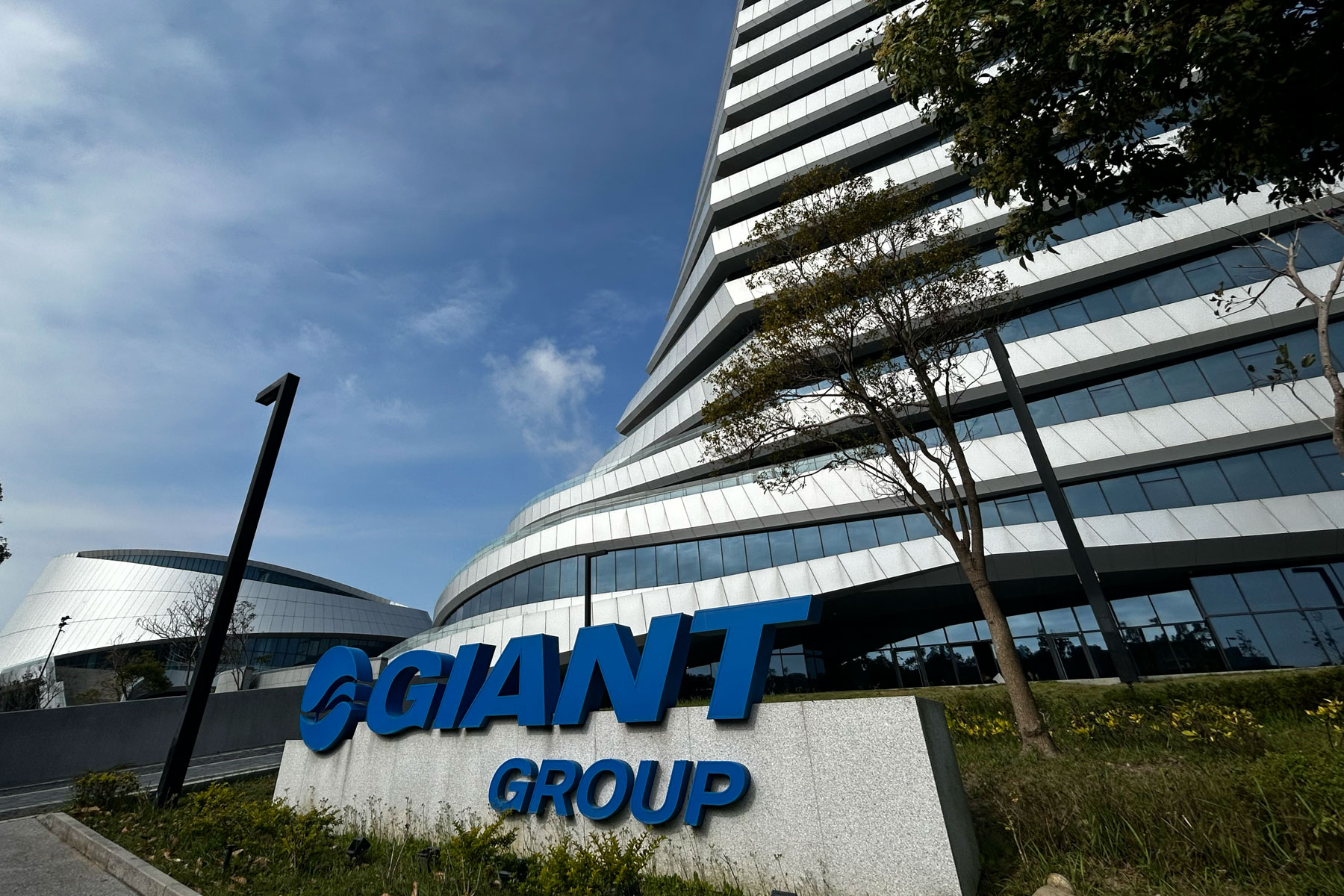
On Wednesday, American customs officials revealed that they will block the import of bicycles manufactured in Taiwan by Giant Bicycles after a US Customs and Border Protection (CBP) investigation “that reasonably indicates forced labour use”.
The CBP alleges that it has identified five ‘forced labour indications’ during an investigation of Giant, including debt bondage, where a person is forced to work to pay off a debt.
For investigative journalist Peter Bengtsen, this is not a surprise. “The risk of debt bondage,” he told BikeRadar, “is the rule, not the exception, for migrants employed in Taiwan’s bicycle and other industries.”
Bengtsen has led investigations into the labour conditions of Taiwan’s bicycle, car, electronic and other industries. Between 2022 and 2025, Bengtsen and his team conducted 200 interviews with migrant workers, gathering testimonies that covered debt bondage and other forced labour indicators.
Bengtsen’s work investigating labour conditions in the Taiwanese cycling industry was published in Le Monde diplomatique in June 2024 and February 2025.
His piece from 2024 asked whether major cycling brands were overlooking forced labour risks. Around a dozen of Giant’s migrant employees were interviewed for the story, with Bergtsen reporting that Vietnamese employees said they paid $5,700 to home-country recruiters, while Thai employees said they paid up to $3,200.
Following the CBP’s announcement, Giant said it was “firmly committed to upholding human rights and labour protections”. Warren Rossiter / OurMedia
Bengtsen reported in his story from earlier this year, ‘The Bicycle industry’s dirty secret’, that one Vietnamese employee had paid $5,500. “I had to pay up front. I borrowed everything from the bank and mortgaged the house,” they said.
“Migrant workers in Taiwan are vulnerable to forced labour due to several factors, of which high recruitment fees and limited freedom to change employers are key,” Bengtsen told BikeRadar.
“For decades, workers hired from abroad have paid exorbitant fees to home-country recruiters and Taiwanese labour brokers for jobs and services. As a result, workers borrow significantly from banks and money lenders, often at excessive interest rates, and thereby risk debt bondage while working in Taiwan to pay off loans.
“Other migrant vulnerabilities include language barriers, lack of knowledge of laws and rights, lack of support measures or knowledge thereof, and lack of organisation and representation. Fear of repatriation for speaking up adds to the vulnerabilities,” he went on.
Following Bengtsen’s second report in Le Monde diplomatique, the publication received a statement from the Taiwanese Bicycle Association (TBA), an industry trade association that represents companies engaged in exporting bicycles, components and accessories.
The TBA said: “Taiwanese companies have strictly abided by the labour regulations in Taiwan, which nonetheless, may in one way or another, differ from the international method and reference for betterment. We would always obey Taiwan’s labour law and try our very best when there’s room for improvement.”
Giant said it will file a petition to seek the revocation of the import ban, and that it is “firmly committed to upholding human rights and labour protections”.
It said it has taken “concrete actions” in the last year, including the implementation of a Zero Recruitment Fee Policy and upgrading employee housing to provide a “safer and more comfortable living environment.”
Many of the world’s biggest bicycle brands have had bikes or components made in Taiwan. The country is the biggest exporter of bikes to Europe, and trade data shows 28 per cent of bikes imported to the US in 2022 came from Taiwan.
The US can ban imports of goods if they are suspected of being made as a result of forced labour. The country has imposed regulations on imports from China’s Xinjiang region, because members of the minority Uyghur community have been detained and forced to work, according to US officials.
The CBP’s statement says Giant has “profited by imposing such abuse… resulting in goods produced below market value and undercutting American businesses by millions of dollars in unjustly earned profits”.
CBP’s statement echoes the logic behind Donald Trump’s tariff trade war earlier this year, which aimed to make it harder for foreign companies to compete in the US. One trade organisation called the tariffs “devastating” for the US bicycle industry.
Premium track bikes are expensive. As per the UCI rules, equipment used in competition needs to be available to purchase.
So you can buy a Hope HB.T track bike frameset, as used by Matthew Richardson to break the 200m world record, from Hope, but it will cost you £30,000. The V-IZU TCM2 frameset ridden by the Japanese team at the Paris 2024 Olympics has a price listed at €126,000.
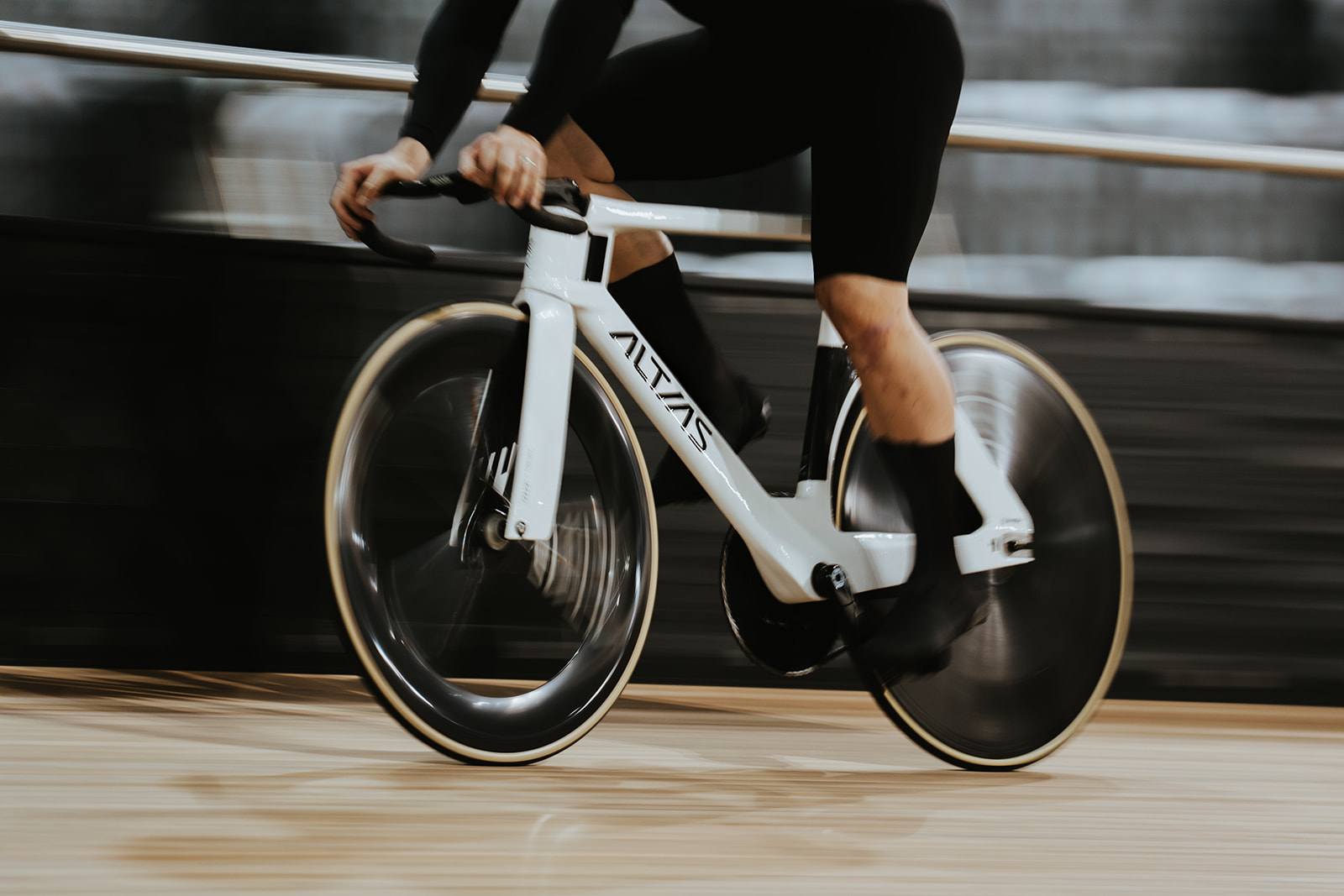
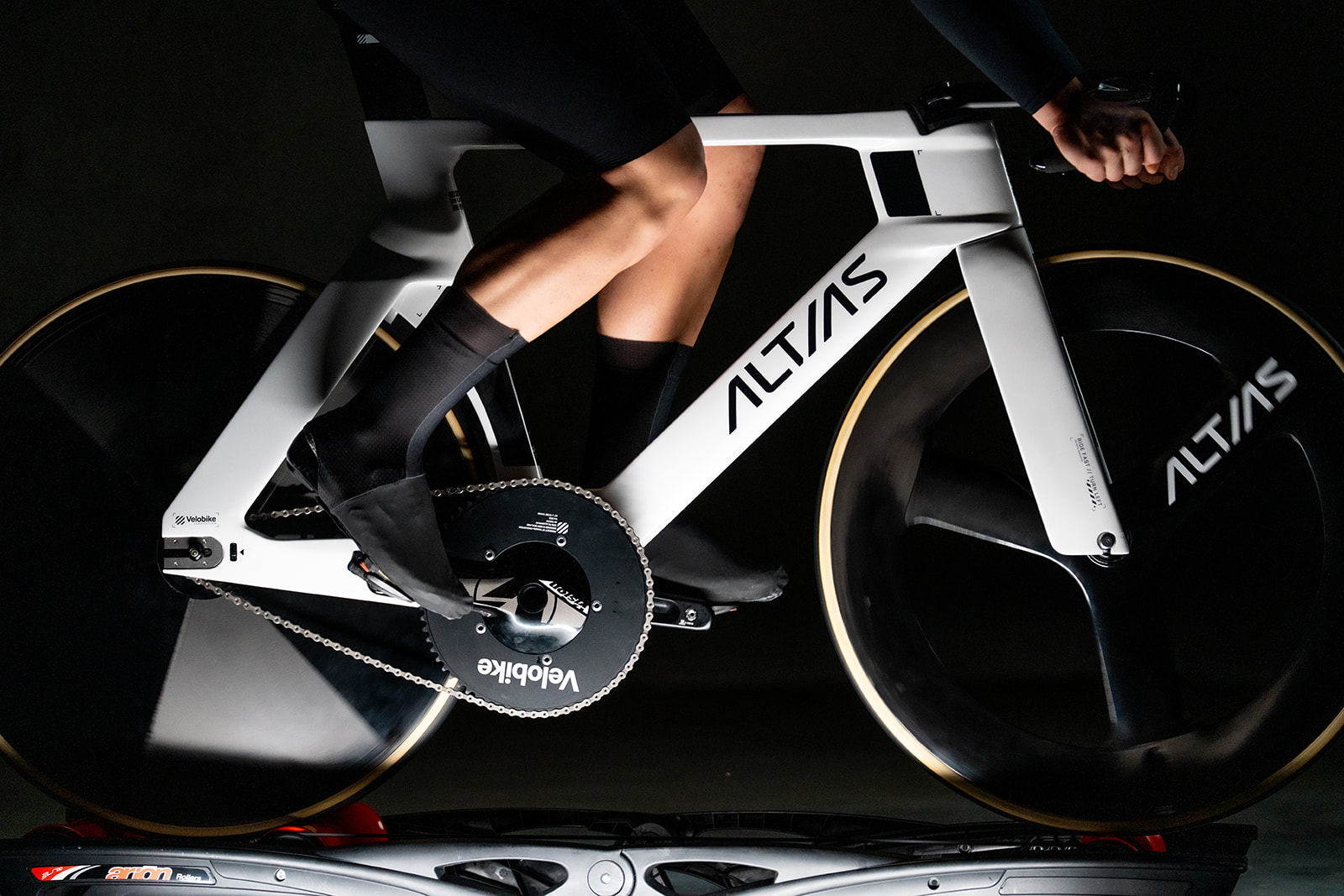
New Zealand-based Velobike Innovation is looking to offer a more affordable alternative, with its new Altias Fusion track bike frameset. It says it’s designed for Olympic-level performance, but in a frameset that’s competitively priced and accessible to the wider cycling community.
Starting at £5,300, the frameset’s price is comparable to many premium road bike framesets.
According to Glenn Catchpole, the founder of Velobike Innovation: “The Altias Fusion is the bike I’ve always wanted for myself. It combines all the best features of a traditional track bike while leaving room to embrace more progressive ideas in the future.”
Velobike Innovations says its design will be able to evolve in future.
Velobike Innovation describes track cycling as the Formula 1 of cycling, where countries spend millions on frames with cutting-edge features and ”if you don’t turn up with competitive equipment, you will be disadvantaged”.
At the 2024 Paris Olympics, the track bike arms race featured an array of exotic and very pricey equipment. However, just yesterday, the UCI revealed price caps for track cycling equipment for the 2028 Los Angeles Olympics, although the proposed values haven’t yet been made public.
Velobike points out that track bike design typically revolves around interchangeable components such as wheels and cranksets, while it says that its approach with the new Altias bike is to develop components designed to work together for maximum performance.
So the new bike system will, in the future, offer interchangeable forks, cockpits and aero components to suit the needs of specific track events.
Velobike says its approach also aims to futureproof its design, so that it can adapt to future developments and rule changes.
The Altias frameset is designed aa a system around Velobike’s range of components.
Specific design features of the Altias frame include a geometry that positions the rider as aggressively as possible, without contravening the UCI’s regulations. That’s paired with front-end components that can be swapped out, for example to reduce drag in a time trial or increase power delivery in the Keirin, and which can be custom designed for individual riders.
The Altias Fusion track frame will be available in size L from October, with three other frame sizes, S, M and XL, to follow in early 2026. Prices for the track frame start at £5,300 / $7,200 / €7,700, with the frameset available exclusively via www.altias.co.
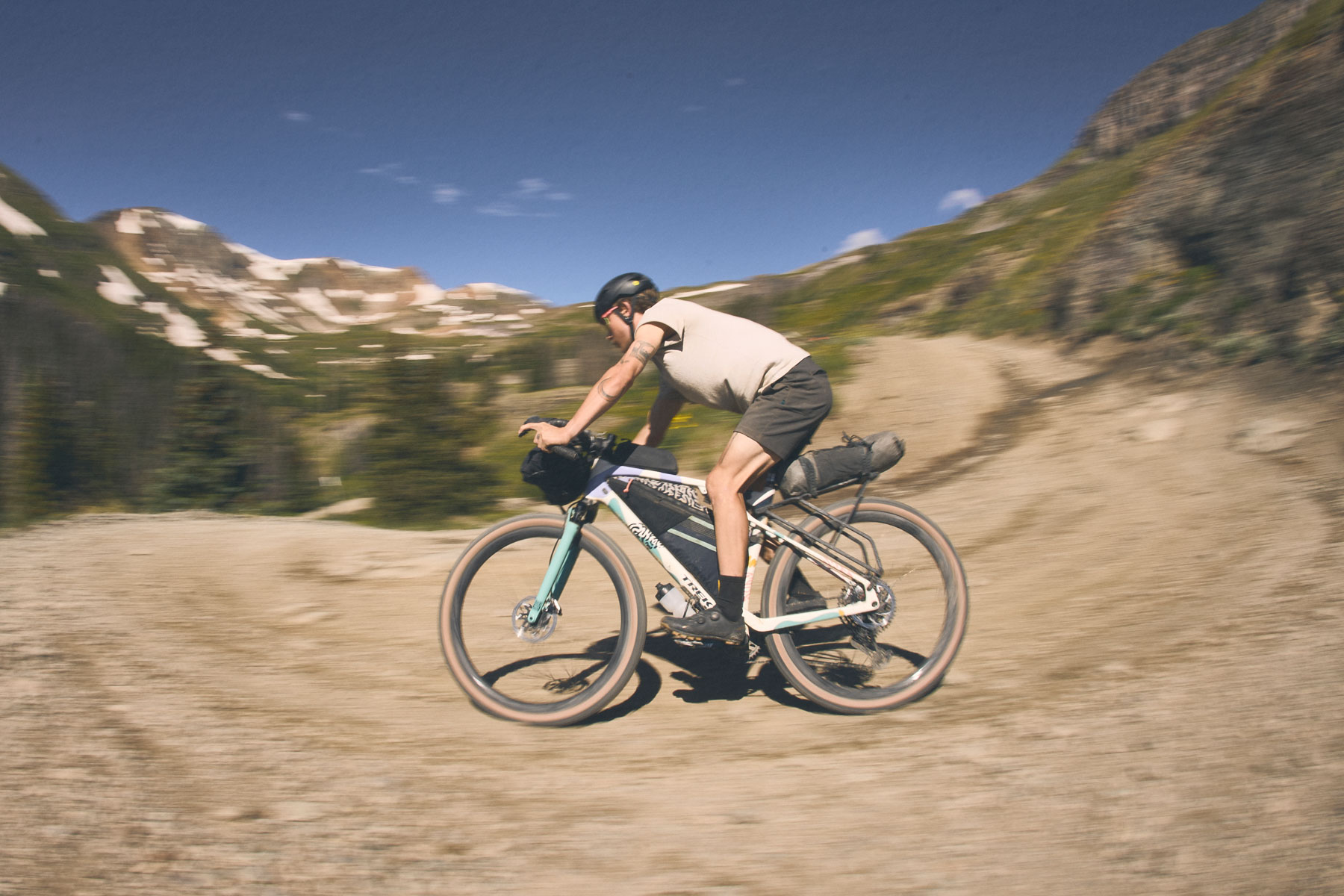
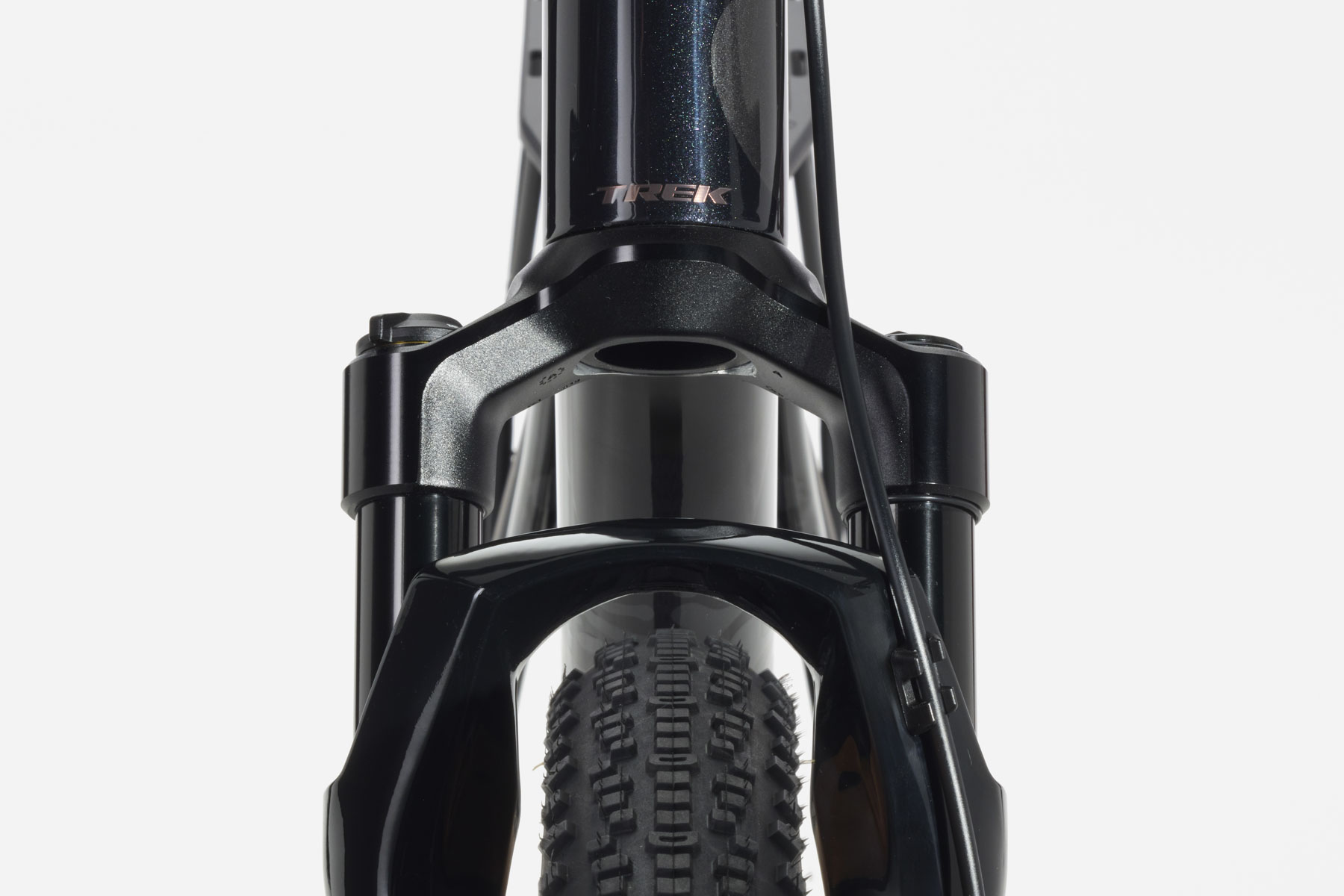
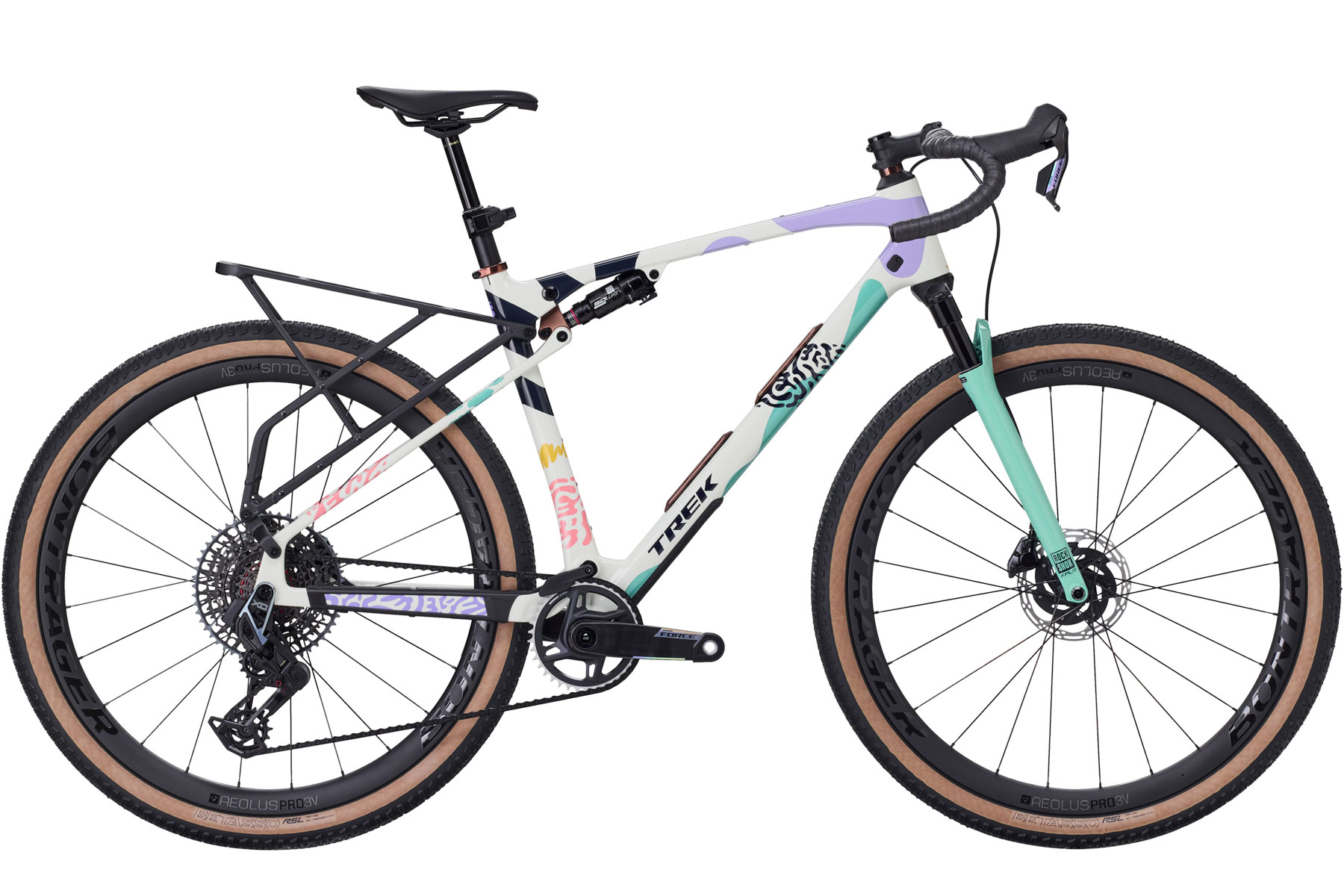
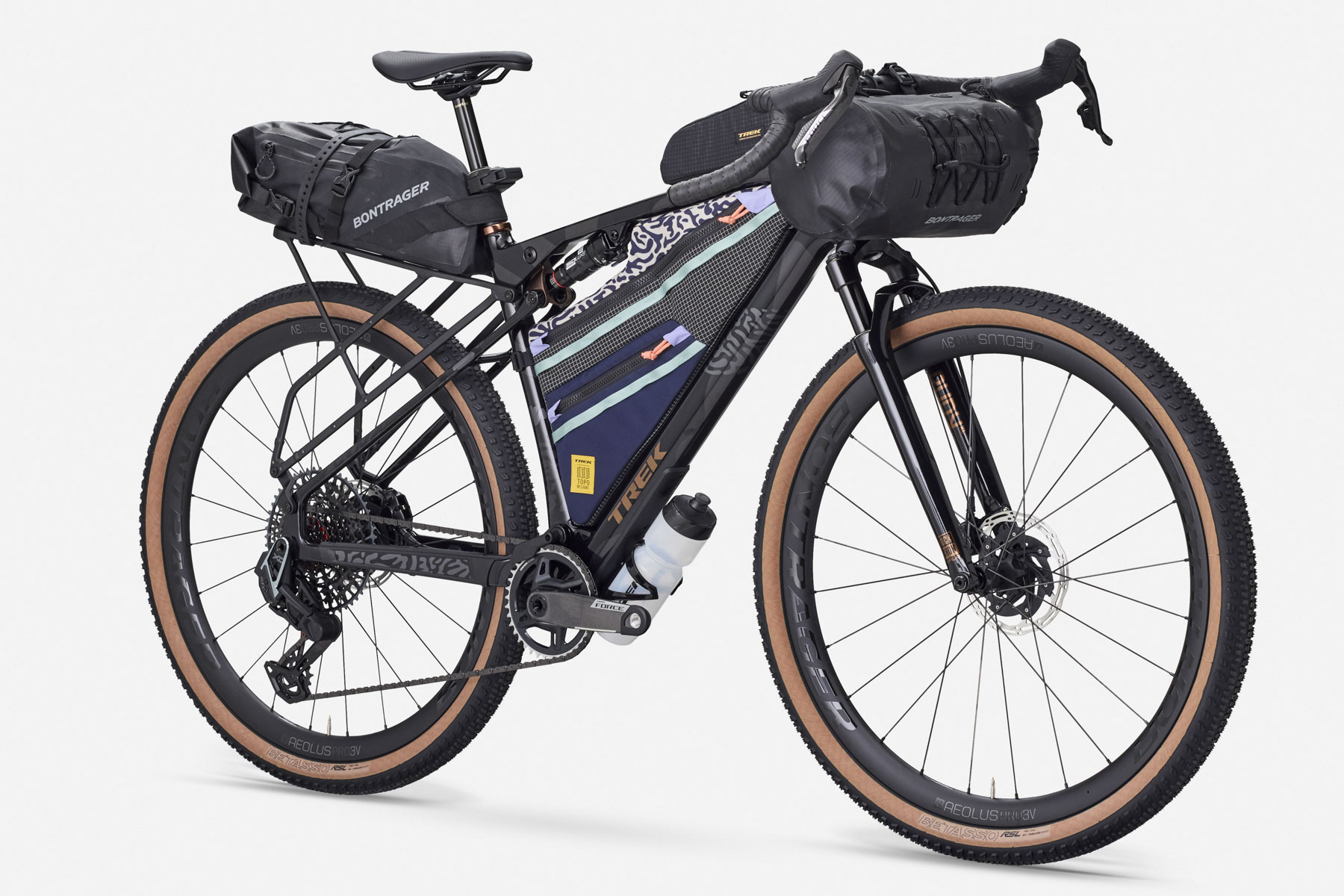
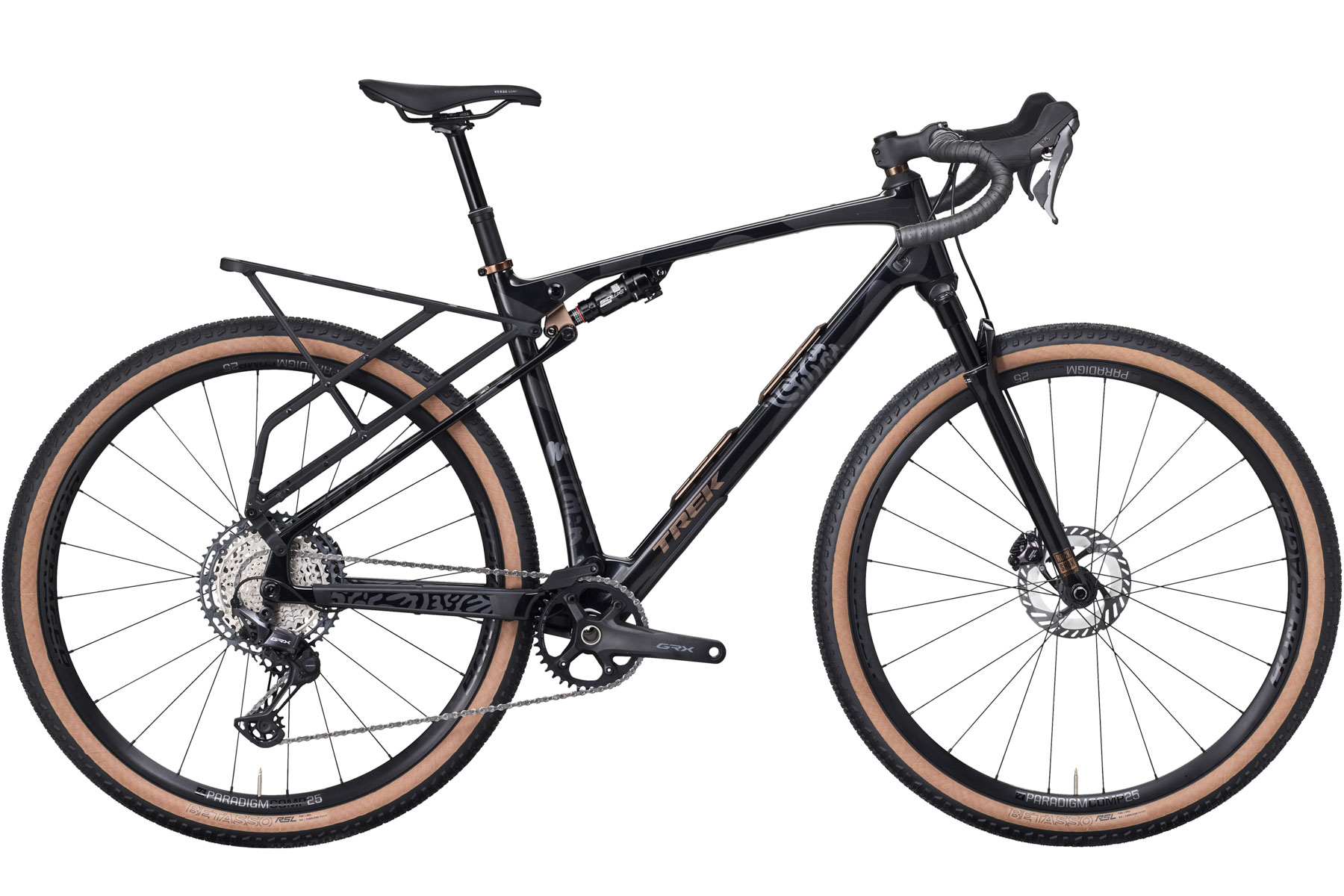
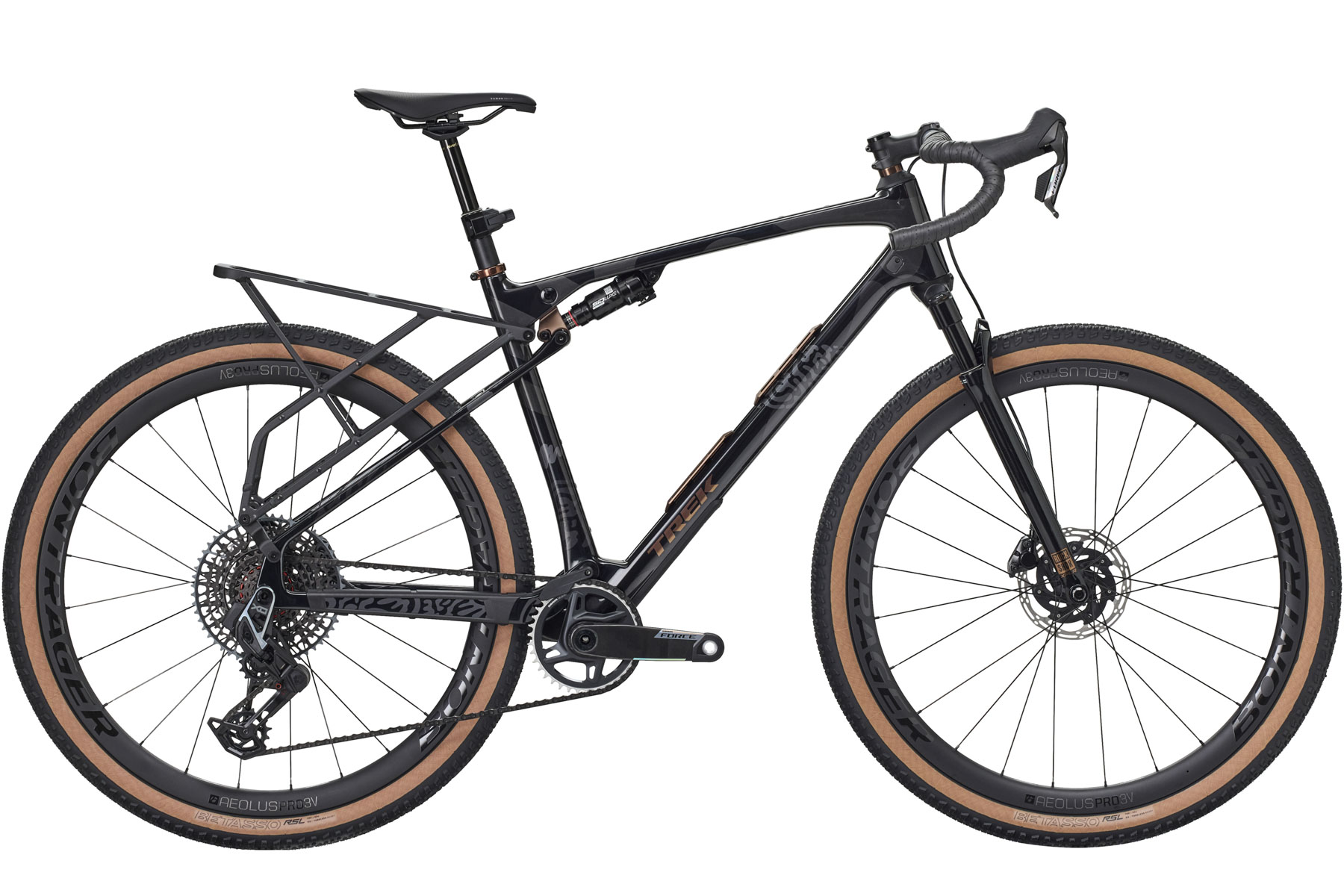
Trek has launched the CheckOUT, its first full-suspension gravel bike, claiming it offers greater comfort and control on rough terrain without sacrificing speed.
Trek says its lab testing shows its suspension reduces rider fatigue by cutting vibration and steering input, while a new geometry, wider bar, and extensive mounting options further underline its adventure focus.
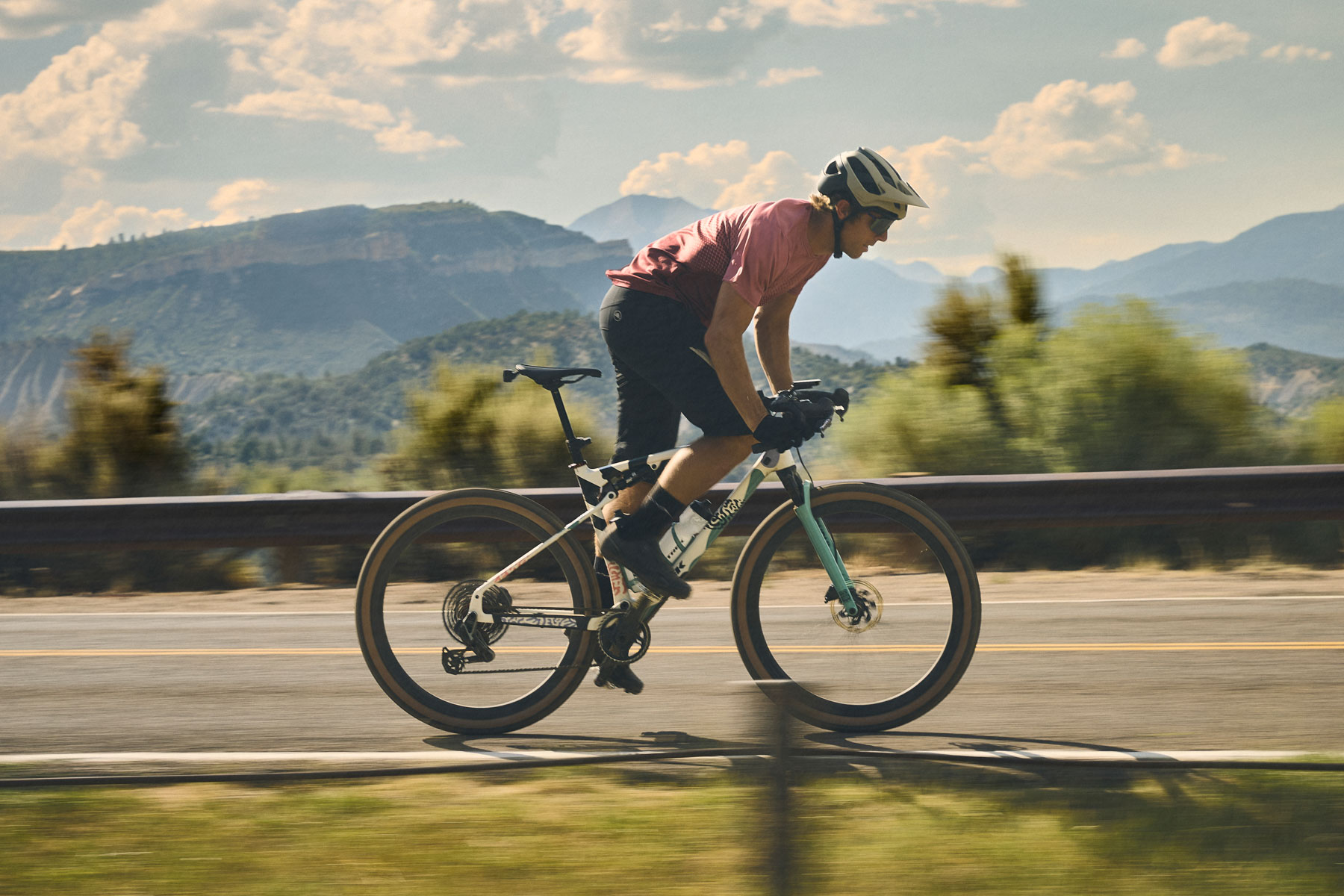
Trek claims the CheckOUT is its most capable gravel option for tough terrain. Dylan Remis / Trek bikes
According to Trek, the CheckOUT’s suspension is primarily intended to enhance rider comfort and reduce fatigue.
Trek says it paid particular attention to the relationship between conventional chassis bounce and bike-rider decoupling, where you’re thrown out of the saddle on rough terrain.
Trek found that when a rider moves out of the saddle, they naturally put in more effort to maintain control and stability.
For a bike that’s aimed at tackling singletrack and the toughest gravel endurance events, Trek says reducing this fatigue-inducing element was the priority.
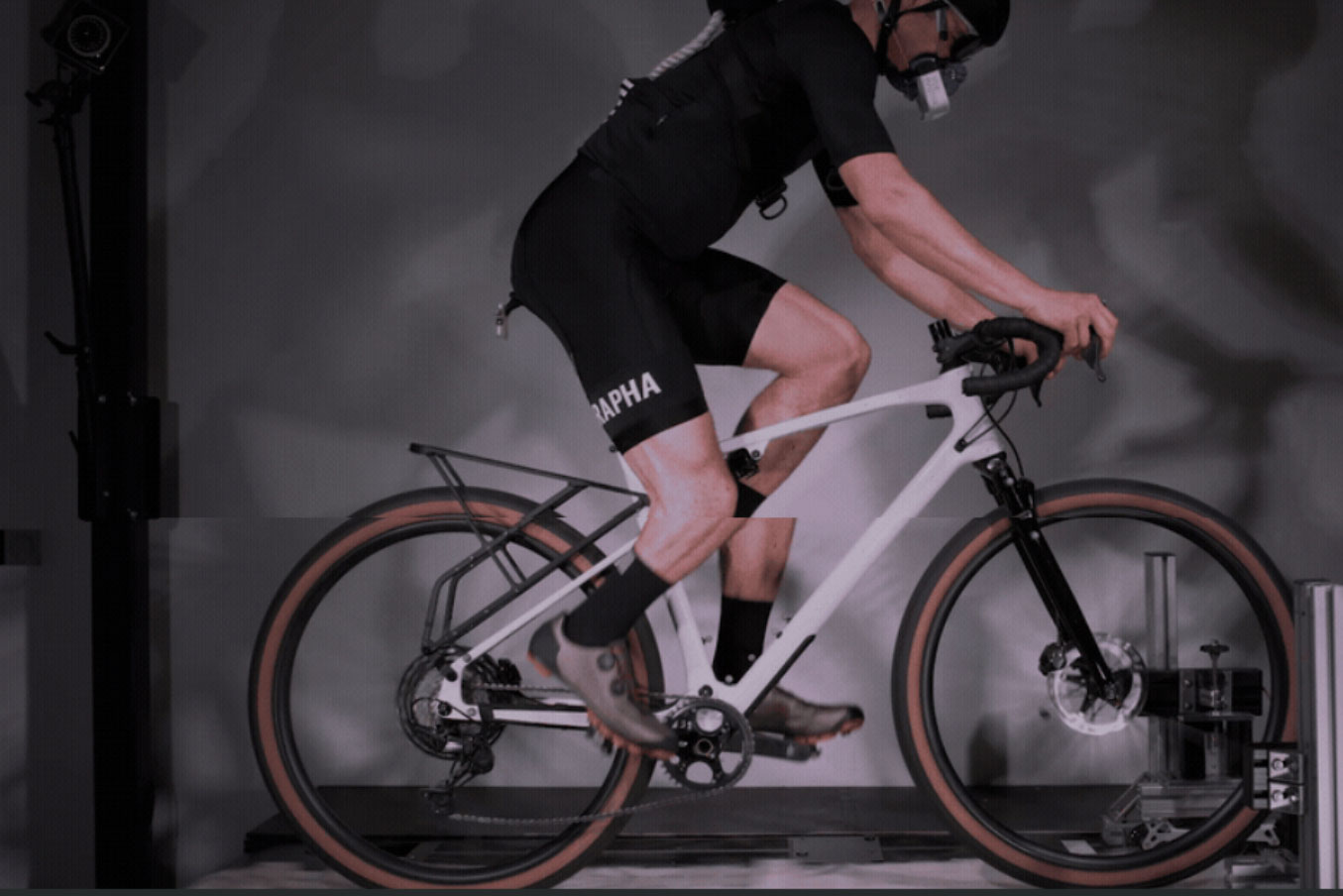
Trek tested the bike extensiely on its bike treadmill. Trek Bikes
Trek says its lab treadmill, which mimics rough gravel surfaces, proved essential in the development and testing of the bike.
Trek tested the new bike against a rigid gravel bike, plus a CheckOUT with a 55mm tyre.
The engineers then monitored the rider’s motion and tracked the movement of the rider’s tailbone (sacrum).
Trek says this shows how well the rider stays coupled to the bike, especially on rougher terrain
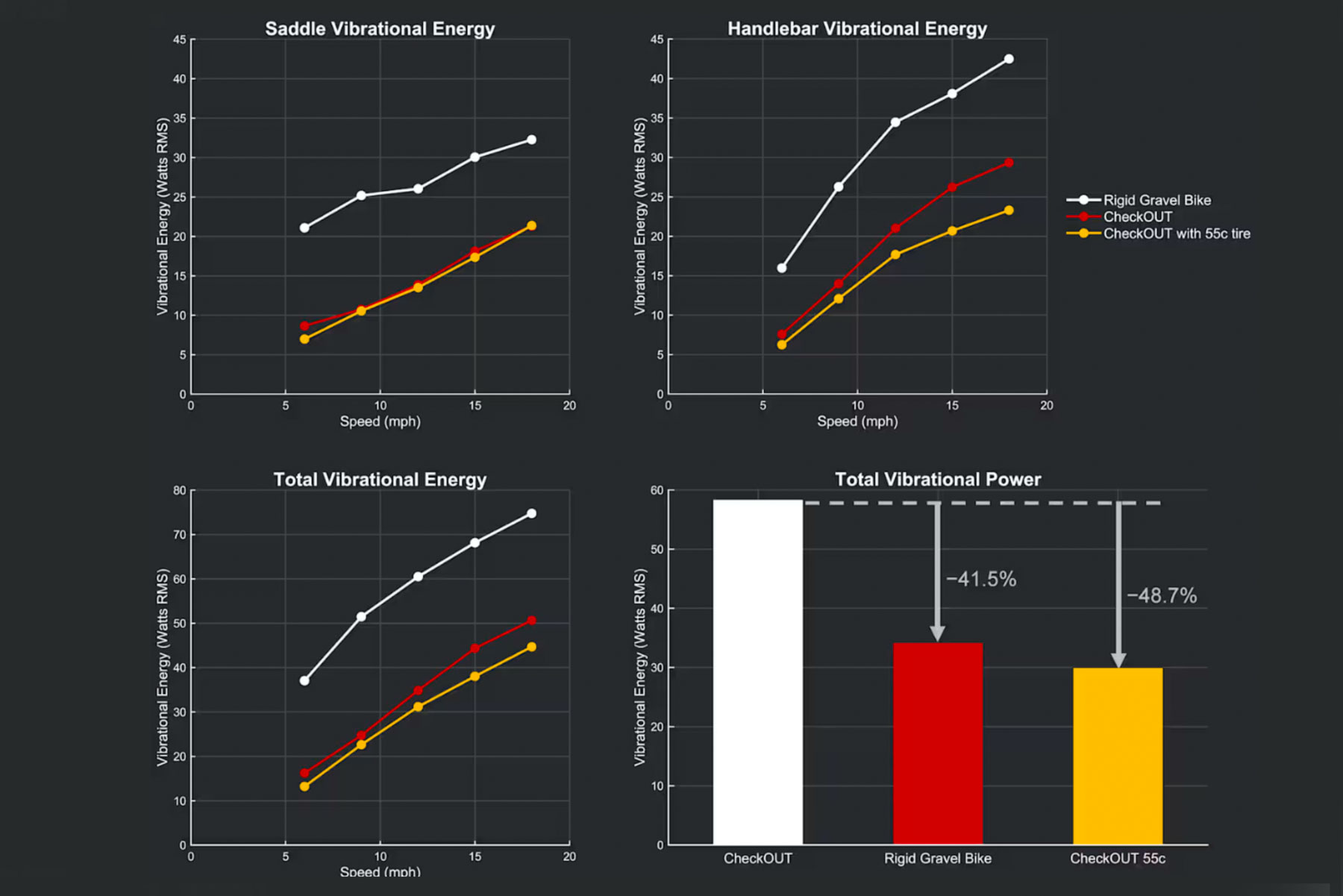
Trek’s vibration testing showed the CheckOUT reduced fatigue by a significant margin. Trek Bikes
The CheckOUT suspension design provided a 27 per cent reduction in rider position variability with 50mm tyres, reducing a further 32 per cent when a larger 55mm tyre was used.
The suspension design also reduced vibrational forces reaching the rider by 41.5 per cent compared to a rigid gravel bike.
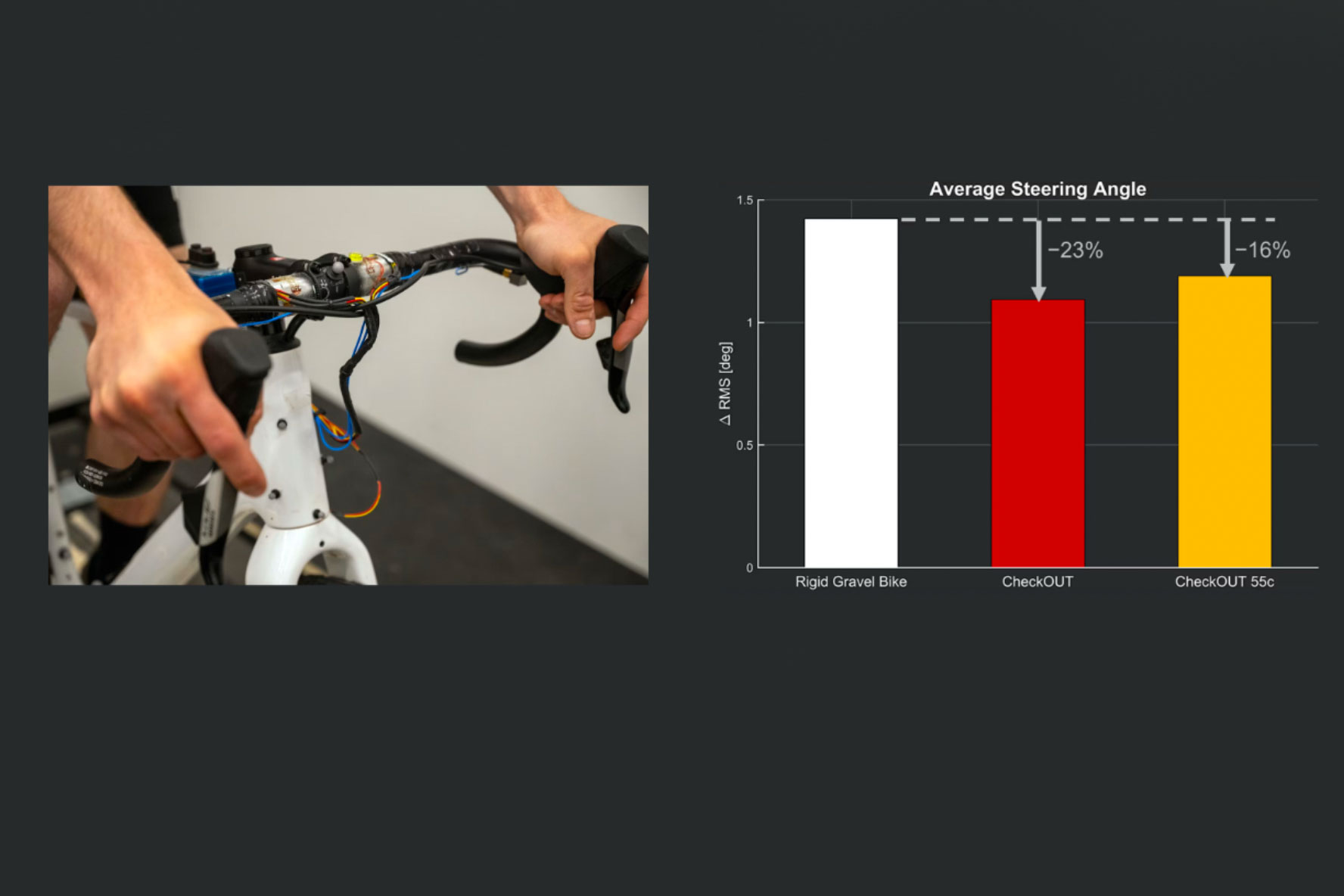
The reduction in steering input was also tested in Trek’s lab. Trek Bikes
Trek’s testing also showed that rough surfaces have a significant impact on a bike’s steering, with the constant corrections required when riding a fully rigid gravel bike causing fatigue.
Under testing, it showed that with the CheckOUT setup, steering saw a 23 per cent reduction in variability with a 50mm tyre. This was further reduced to 16 per cent with a 55mm tyre fitted.
New design and new suspension
The new RockShox Rudy XL brings 60mm of travel and 56mm tyre clearance. Trek Bikes
Trek didn’t want to use a mountain bike fork on the CheckOUT, so it worked with RockShox to create the Rudy XL – a burlier version of its existing gravel fork, which ups travel to 60mm and tyre clearance to 56mm, while maintaining a gravel-friendly 45mm offset.
The Rudy XL will be available separately in 50 and 60mm travel options and priced at $929, €1,010, £900.
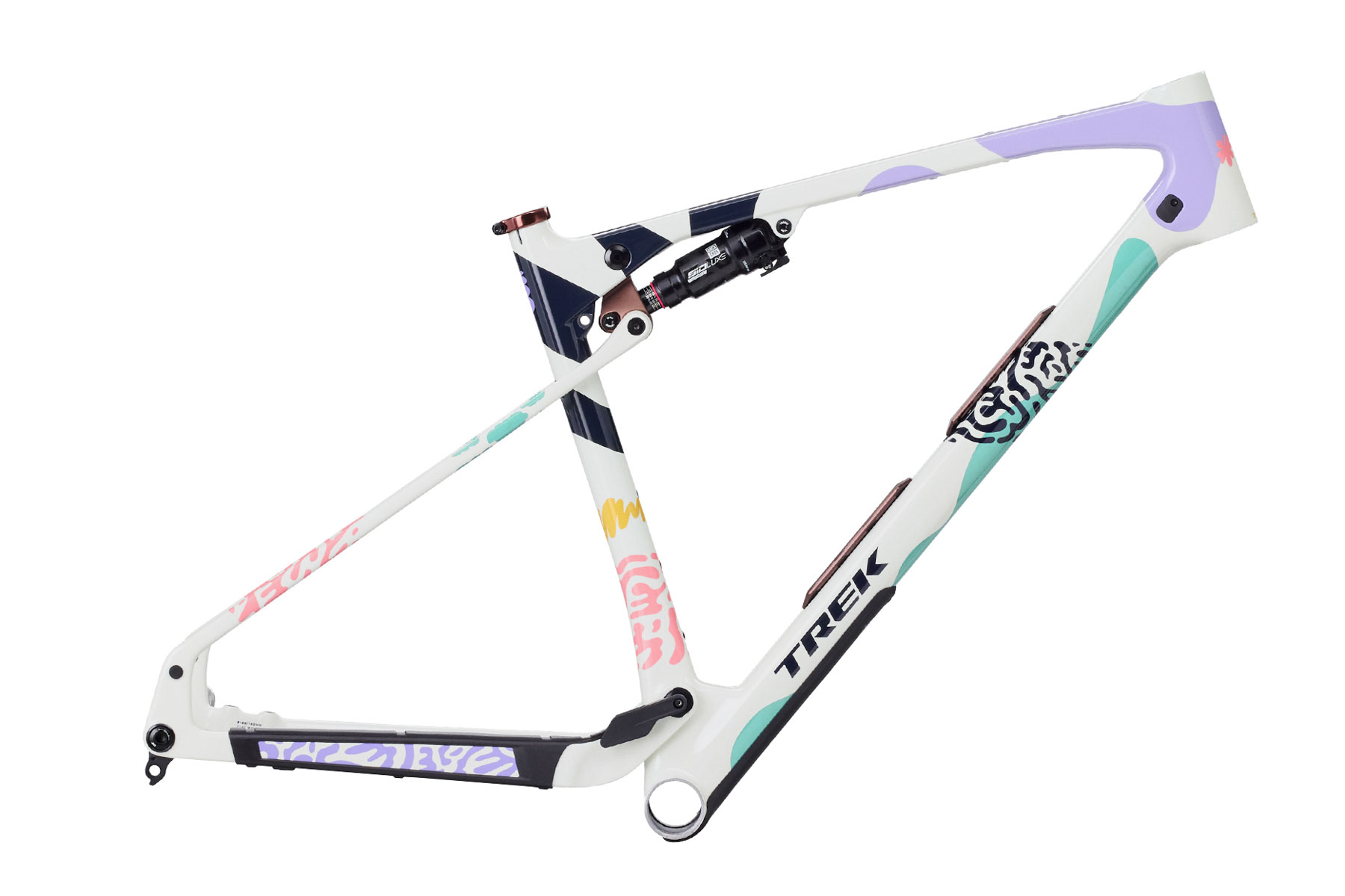
The CheckOUT SL7 in Era white is our favourite finish. Trek Bikes
RockShox provides a SIDLuxe 170 x 27.5mm shock. This gives 55mm of travel at the rear wheel.
All models come equipped with a dropper post.
TransX is providing a cable-operated dropper on the SL5 model and RockShox’s wireless Reverb AXS on the SL7.
New wider bar
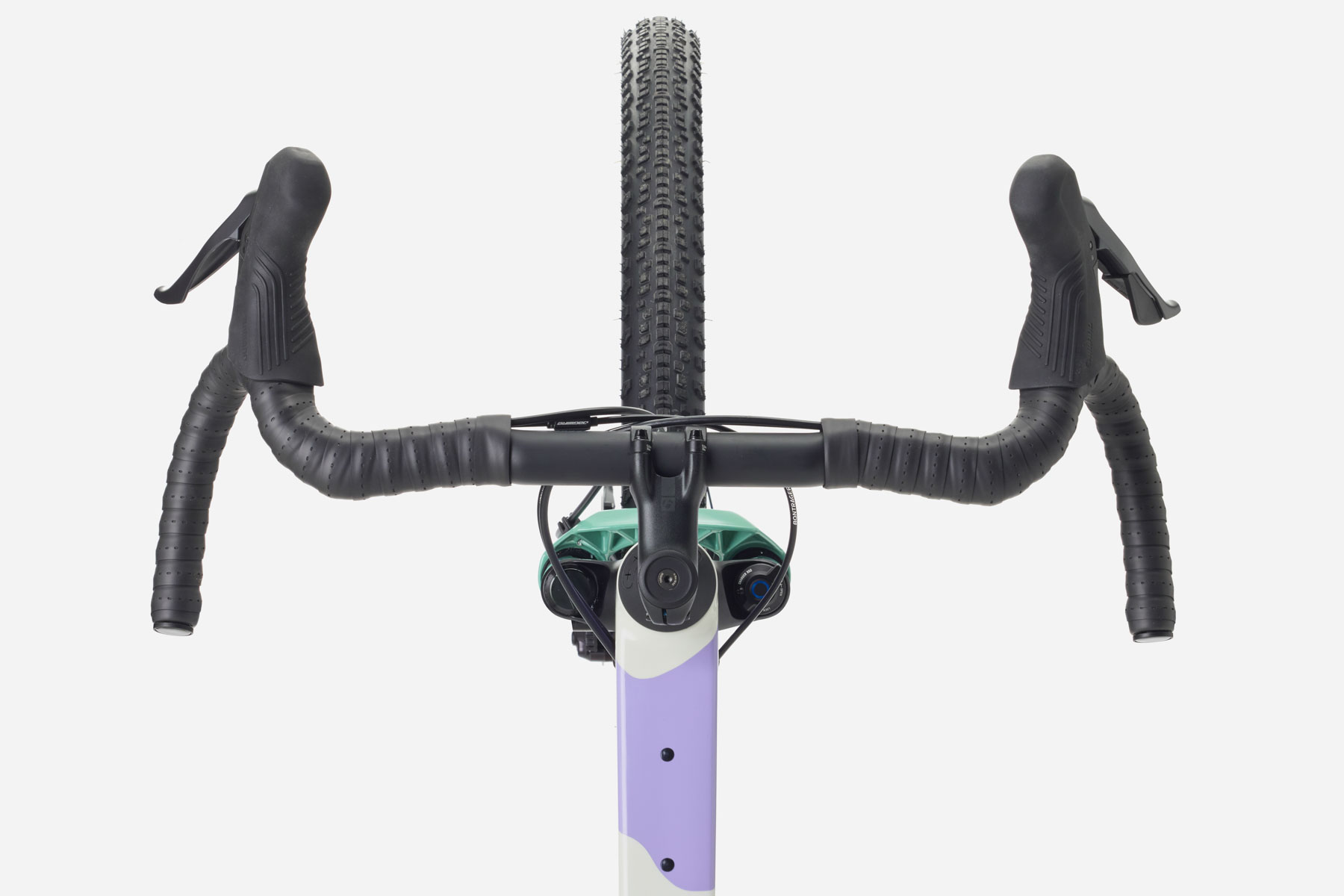
The CheckOUT SL bar features a wide flare and gentle backsweep. Trek Bikes
Trek bucks the trend towards narrow bars with the new GR Checkout bar.
The bar is designed to be more aero on the hoods, with a narrower position, pushing out 12cm wider in the drops. Trek claim this gives more confident handling over burlier terrain without sacrificing aero performance.
The top section of the bar is designed to add all-day comfort. The rounded top’s larger radius on the rear gives you somewhere for your palms to rest. Trek’s longstanding Carbon IsoCore construction is used to further absorb vibrations.
New gravel geometry
Trek claims the new bike is faster on the road than a mountain bike. Dylan Remis / Trek bikes
The CheckOUT features Trek’s new adventure geometry.
Compared to the rigid adventure-focused Checkpoint, the CheckOUT gets both a longer reach and a higher stack.
Up against Trek’s lightweight XC race bike, the Supercaliber, the CheeckOUT has a more upright position that also places the rider further back.
A full range of luggage is available for the CheckOUT SL. Trek Bikes
The CheckOUT doesn’t have any in-frame storage, but Trek has collaborated with Topo on a frame bag that fits within the front triangle in colour-matched finishes.
At the rear, a proprietary rack with a built-in linkage matches the rear suspension movement, so your bikepacking load won’t get shaken.
The frame features a huge number of mounts, with 18 in total on size M/L and above bikes.
There are two on the top of the top tube, seven on the downtube, three on the seat tube, and three on the underside of the downtube.
Trek CheckOUT range overview
Both models of the CheckOUT are built from Trek’s OCLV 500 series carbon and tested to mountain bike standards.
The SL5 and SL7 AXS complete builds are joined by a frameset option.
The SL5 comes with Shimano’s 1 x 12 mechanical GRX groupset. Trek Bikes The SL7 is built around SRAM’s Force AXS XPLR and X0 AXS. Trek Bikes The CheckOUT SL is available as a frame-only option. Trek bikes
Today, Giant has responded to US Customs and Border Protection’s “Withhold Release Order”, issued on 24 September and suspending imports on products manufactured in Taiwan. The ban included bikes, bike parts and components.
Giant says it plans to engage with US CBP and will seek the revocation of the order, although it’s unclear what the timeline might be for any resolution and whether this might involve formal arbitration.
Giant says in its response that it is “firmly committed to upholding human rights and labor protections” and since the start of 2025 has implemented a zero recruitment fee policy, as well as upgrading its employee housing.
In addition, Giant states that it has “established internal supervision mechanisms and third-party audits, and continues to conduct due diligence to ensure compliance with international standards”.
Giant points out that the order applies to US imports of its Taiwan-made products only. Giant Bicycles
Giant’s response continues: “Giant Group remains dedicated to protecting labor rights through concrete actions and ensuring a transparent, fair, and sustainable development. The Group will continually provide timely updates and maintain open communication with global stakeholders to foster a responsible and resilient industry environment.”
Giant points out that supply and sale in other markets of its products manufactured in Taiwan are unaffected – the Withhold Release Order only applies to imports into the US. It says that some shipments to the US may be subject to delays and inspections, but it’s activated contingency measures and is working closely with business partners to minimise the impact.









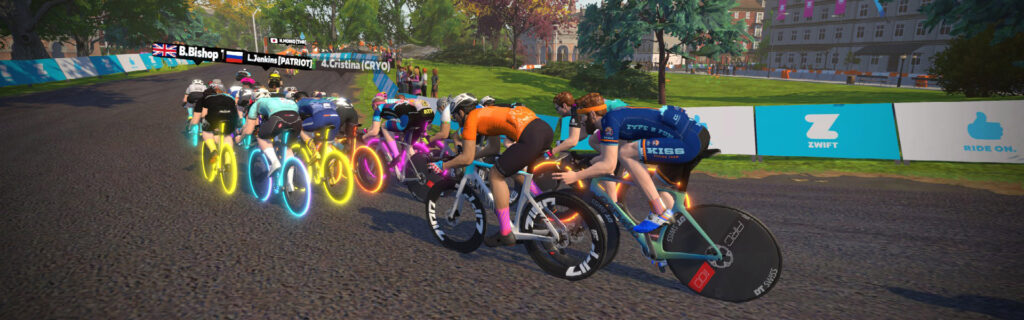
 zFondo Series on Bambino Fondo
 Bonus XP
 HISP London Minitour, Stage 1