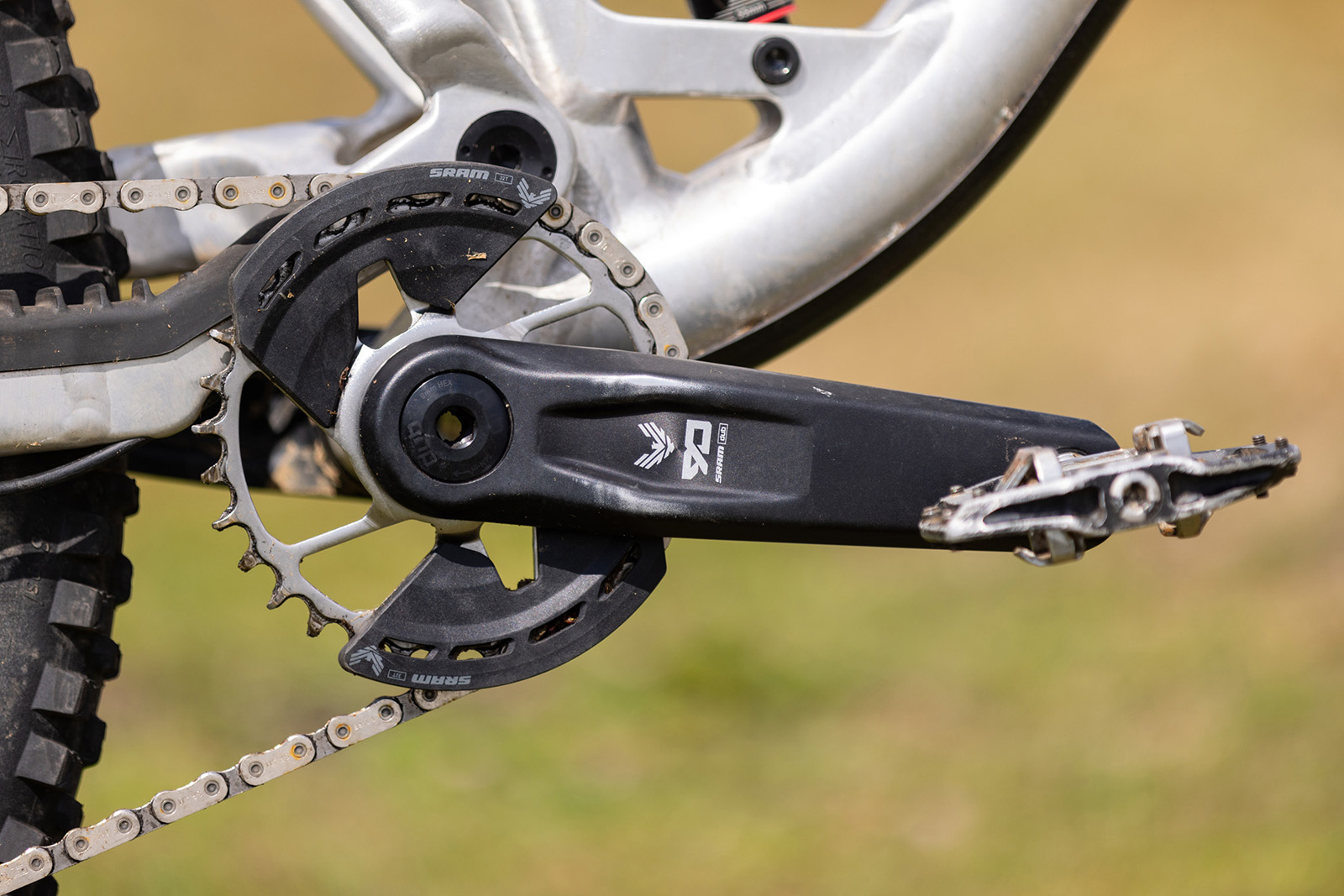
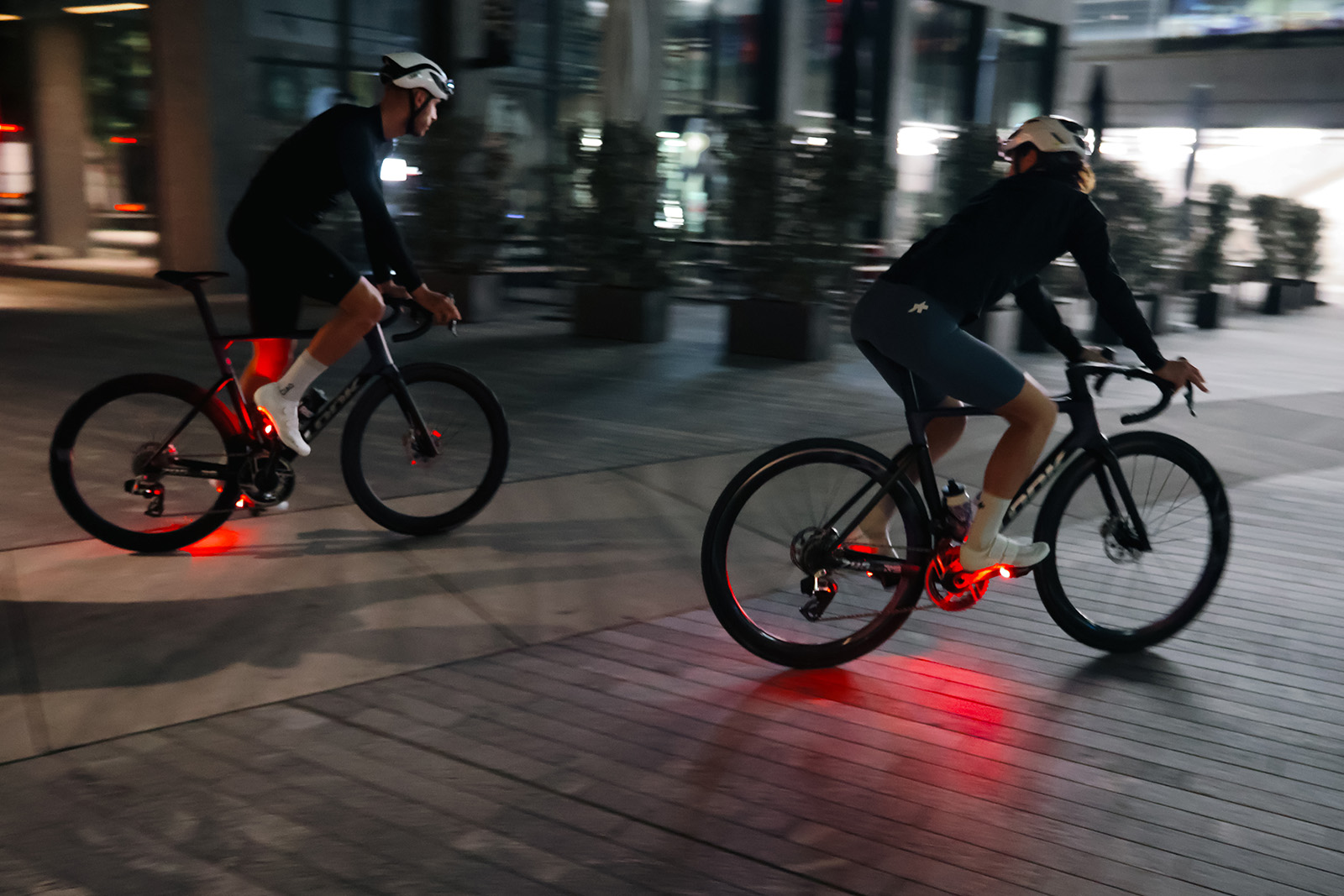
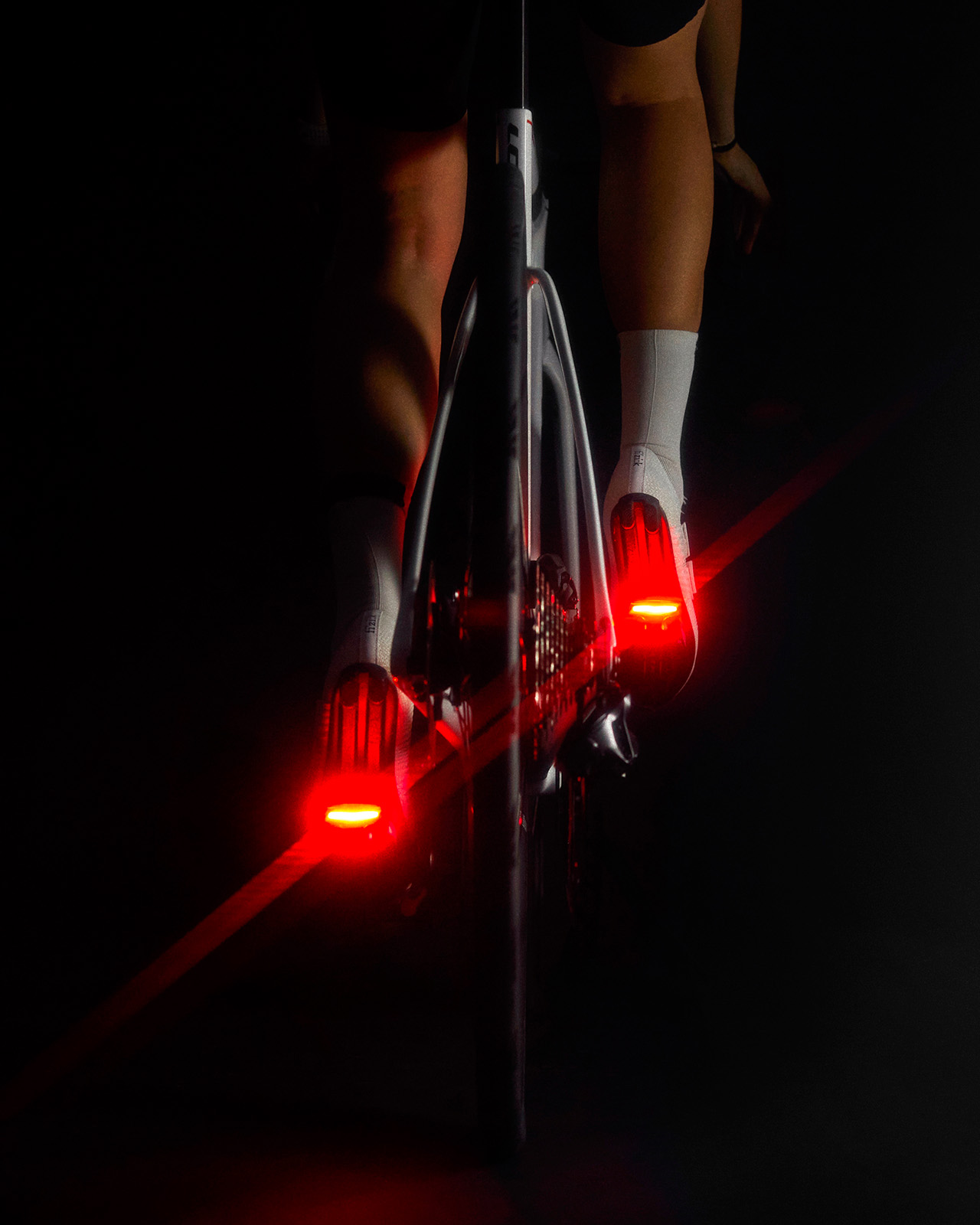
Look says its new Keo Vision pedal collection emphasises safety and performance, thanks to integrated lights that will ensure you’re visible from up to 1km away.
The lights integrate into the rear of the road bike pedals and are said to highlight your “biomotion”. In other words, they’ll rise and fall as you pedal, which Look says “increases visibility by 5.5 times” compared to a bike light mounted on your seatpost.
Look adds that the two moving lights help drivers perceive speed and distance more accurately.
“Offering 180° visibility and four versatile light modes—including both continuous and flashing patterns—these lights are engineered to adapt to any riding condition, guaranteeing optimal safety in all environments,” Look says.
The pedals are said to make you 5.5 times more visible than a bike light mounted to your seatpost. Look
Look already offers the Geo City pedals with integrated lights, but these flat pedals are aimed at city riding rather than performance road cycling.
Alexandre Lavaud, head of product at Look, says integrating and “miniaturising” the light technology to fit into a road bike pedal “was a real challenge.” But Lavaud says the result is “not just a pedal; it’s a commitment to a safer, more confident ride for everyone”.
Look’s Keo Vision collection will be available from 1 November and will include two models, the Keo Blade Ceramic Vision and Keo 2 Max Vision.
The Keo Blade Ceramic Vision (€249.90) has a carbon body, ceramic bearings and a 705mm² contact surface for optimal performance.
The Keo 2 Max Vision (€124.90) has a composite body and steel bearing and a slightly smaller contact surface at 500mm².
The lights weigh 20g and have a claimed battery life of 40 hours. Look
Both models feature the integrated lights with four modes (day flash, night flash, steady and night steady).
There will also be a Keo Vision kit available. The kit allows owners of the Keo Blade V4 pedals to add lights to their pedals for €60.
The lights themselves are said to only weigh 20g each and have a battery life of 40 hours. They charge in just 2 hours via a USB-C cable.
This isn’t the only change Look has made to its road bike pedal range in recent weeks. Earlier in October, the French company added wider Q-Factor options to its Keo range.
The president of the Israel Cycling Federation, Dafna Lang, has suggested Israel could one day host the Tour de France Grand Départ.
Israel previously hosted the inaugural stage of the 2018 Giro d’Italia, under the leadership of Canadian–Israeli billionaire and co-founder of Israel–Premier Tech, Sylvan Adams. It was the first time a Grand Tour started outside Europe, with three stages in Israel, including a time trial in Jerusalem.
Now, Lang says he has discussed the idea of hosting the first stage of the Tour de France in Israel with Adams. “I can’t tell you right now that we’re going to bid for the Tour de France or organize it, but we never stop dreaming,” Lang told L’Equipe.
Israel’s participation in international sport has prompted intense debate over the last two years, amid Israel’s war on Gaza.
“I can’t speak for Sylvan Adams, but I believe that once we have a stable peace, we will realise many projects at the highest level by welcoming the world. We are very optimistic people; we’ve already brought the Giro here; anything is possible,” Lang said.
Lang told L’Equipe that he has not yet discussed Israel hosting the Tour de France with the UCI’s president, David Lappartient. But last year, Adams said he had discussed the idea with Tour de France organisers.
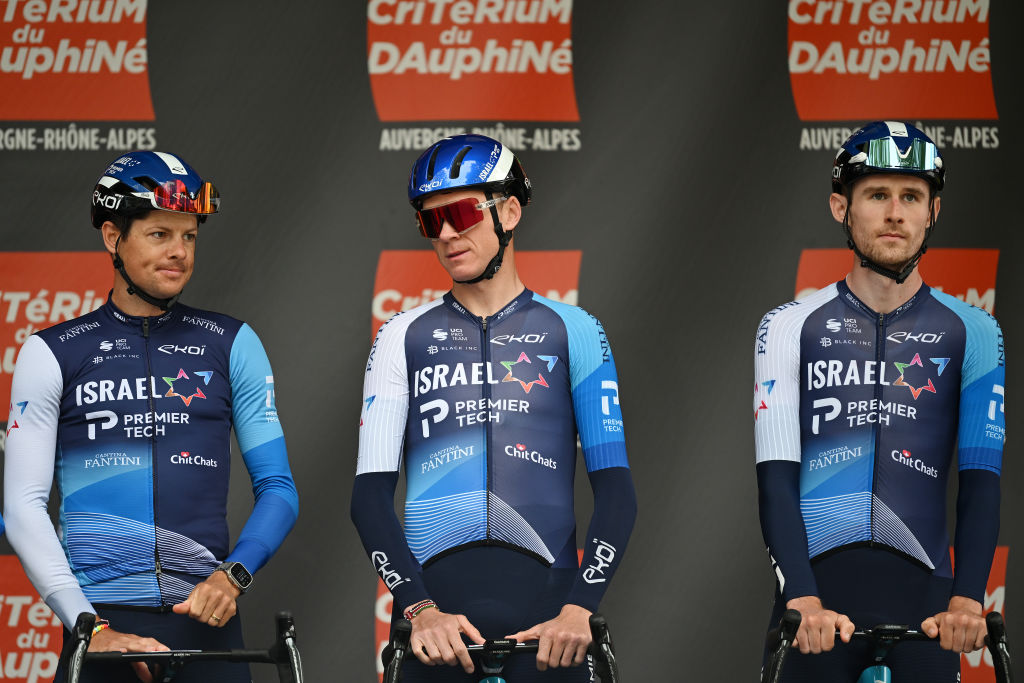
Israel–Premier Tech riders said in October that it will change its name. Dario Belingheri / Getty Images
Lang’s comments on Israel hosting the Tour de France follow a tense cycling season, where there were protests against the participation of Israel–Premier Tech at all three Grand Tours.
Protests disrupted much of the 2025 Vuelta a España, with demonstrators labelling Israel–Premier Tech’s participation as “sportswashing”. The protests led to riders expressing concern for their safety, stages being shortened, and the final stage in Madrid being cancelled.
Israel–Premier Tech later withdrew from several races. Following pressure from sponsors, it revealed it would drop Israel from its name and Adams would step back from the running of the team.
Before the team said it would change its name, Barcelona, the host of the 2026 Tour de France Grand Départ, called for the team to be banned from the race.
The UCI’s list of road cycling teams for 2026 has Israel–Premier Tech listed as Cycling Academy, but a spokesperson for the team told BikeRadar this is a placeholder before announcing a new name.
Amaury Sports Organisation, the organisers of the Tour de France, did not immediately respond to BikeRadar’s request for comment.
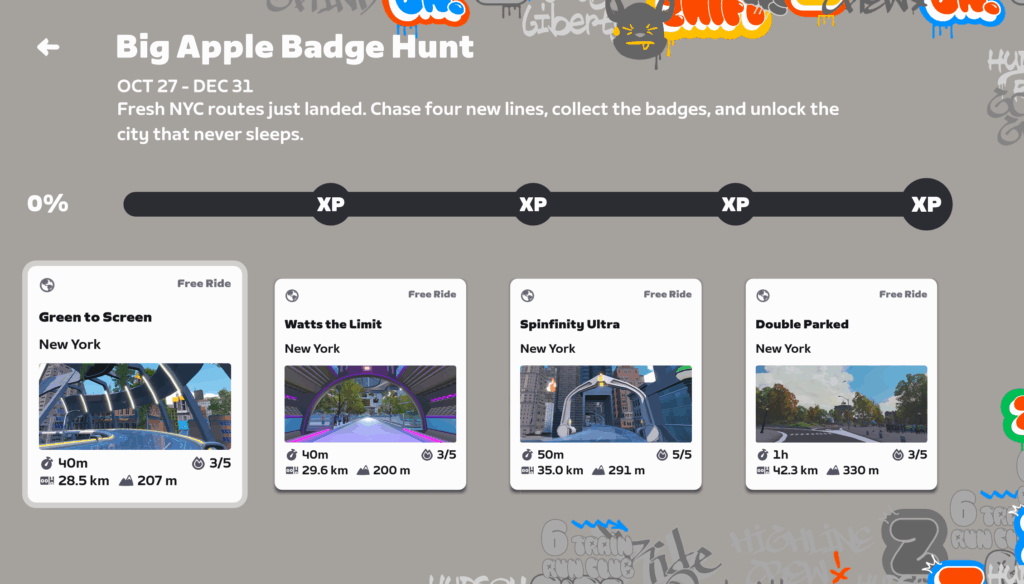
Today, Zwift launched a new “Big Apple Badge Hunt” mini-challenge featuring four routes from the New York map expansion that also launched today. Ride all four routes to complete the challenge and earn XP bonuses! Read on for details…
Challenge Requirements
The Challenge features four routes from today’s New York map expansion. The routes are sorted by length on the challenge screen, but you can do them in whatever order you’d like:
Green to Screen (28.4km, 207m): perhaps the best route for seeing most of NYC’s new roads within an hourlong ride, as it covers nearly every bit of new tarmac from Times Square south.
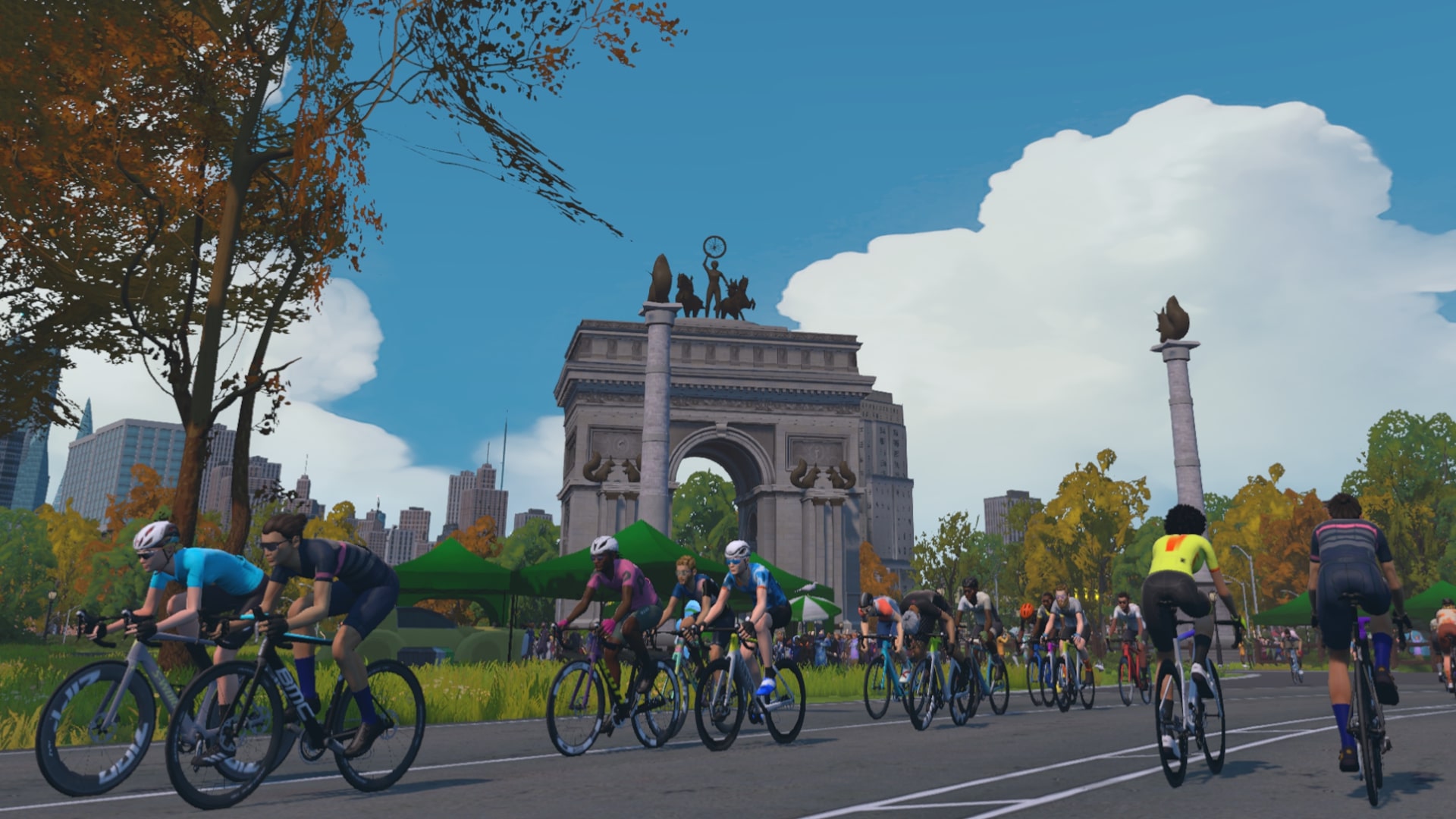
Watts the Limit (31km, 219m): an out-and-back course that begins in Central Park and travels south to loop around Grand Army Plaza and return by the same roads.
Spinfinity Ultra (35km, 291m): almost like two laps of Spinfinity, except you cross the bridges in a different direction on the second lap.
Double Parked (42.2km, 330m): begin with an almost complete lap of Prospect Park, then head all the way up to do a lap of Central Park before coming back down to finish that Prospect Park lap.
Challenge Rewards
You will receive a 500 XP bonus for each route you complete in the challenge. (Keep in mind, if this is your first time riding each of these routes, you’ll also receive an XP bonus for earning that route’s achievement badge.)
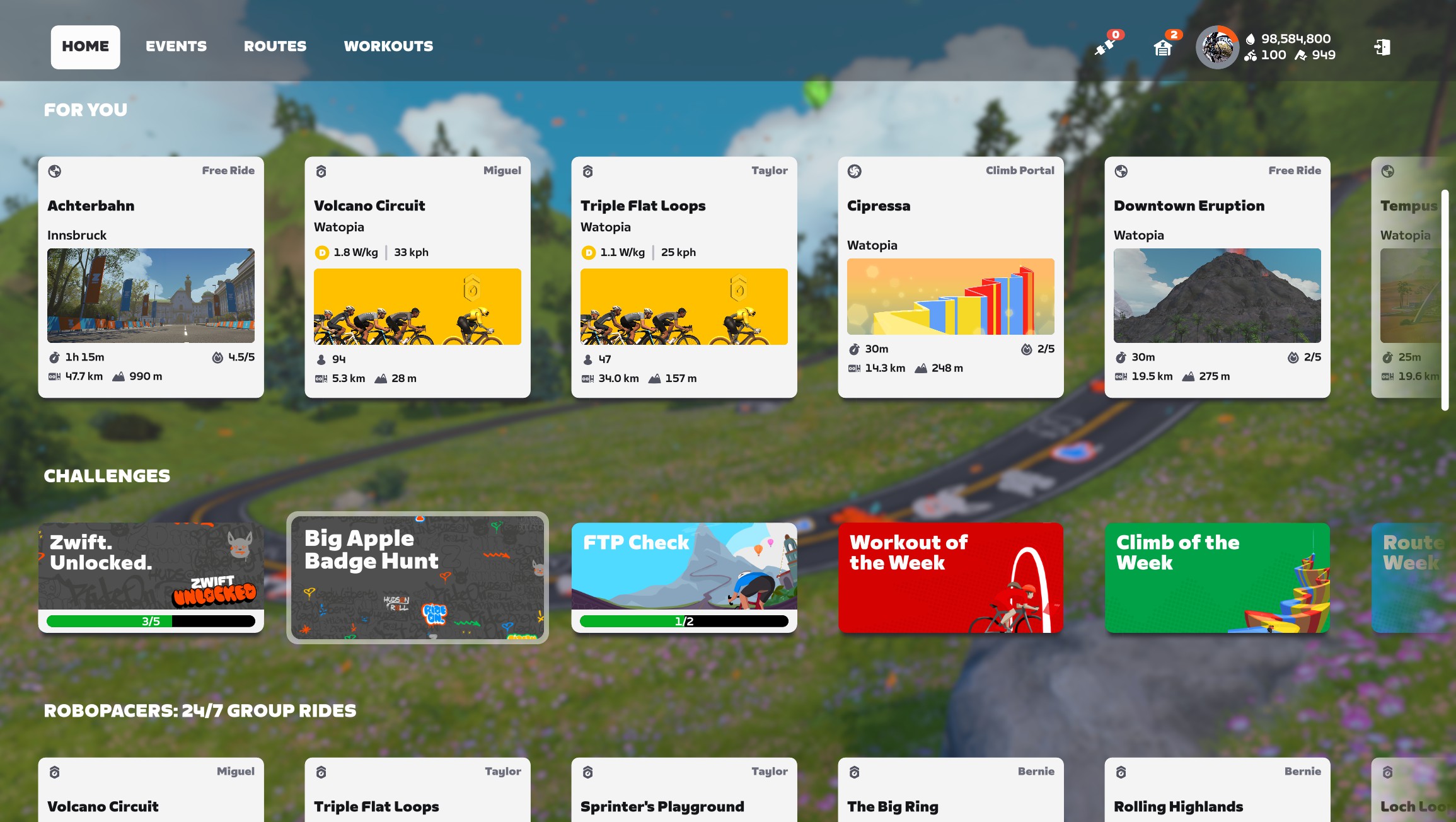
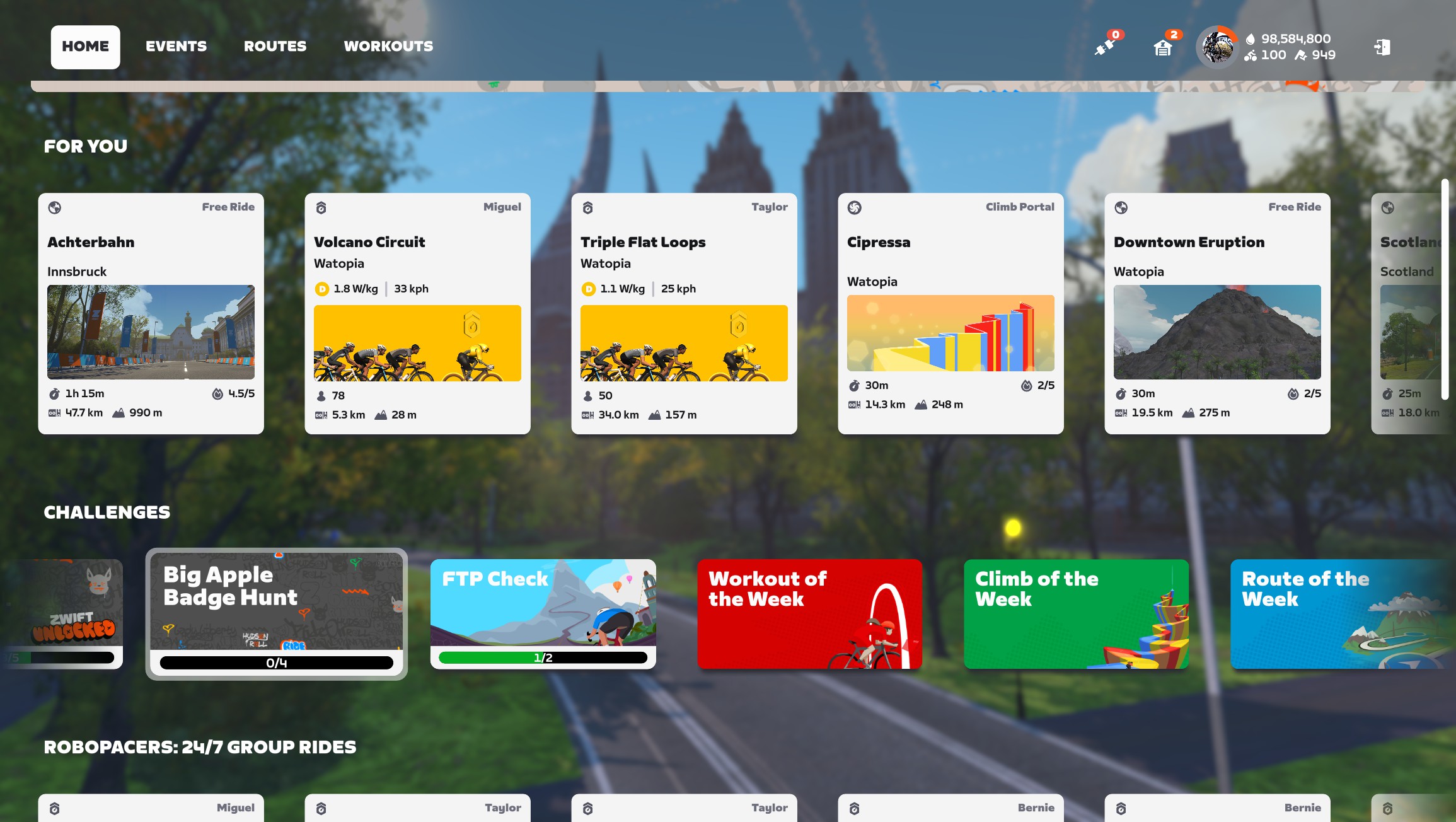
To join the Challenge, just click its card on the home screen. If you return to the home screen after doing this, you’ll see the card now shows your progress. If it’s showing your progress (0/4, 1/4, etc) you know you’re signed up!
Not signed upSigned up!
Once you’ve joined the Challenge, completing one of the Challenge routes in any sort of activity (free ride, workout, group ride, race) will mark the route as completed and earn your bonus XP.
Stacking Rewards
Pro tip: “stacking” mini challenge requirements lets you earn bonus XP even faster. For example, you could ride The Ultimate Warmup from the FTP Check Challenge on one of the routes for this challenge and get credit for finishing both!
Deadline
This challenge is live from October 27-December 31. (We recommend finishing before the final day, though, as the Challenges sometimes end at an unexpected time on the last day.)
Today, Zwift released the much-anticipated New York map expansion. With ~30km of new roads, this is Zwift’s largest expansion ever of an existing map, more than doubling New York’s existing ~20km.
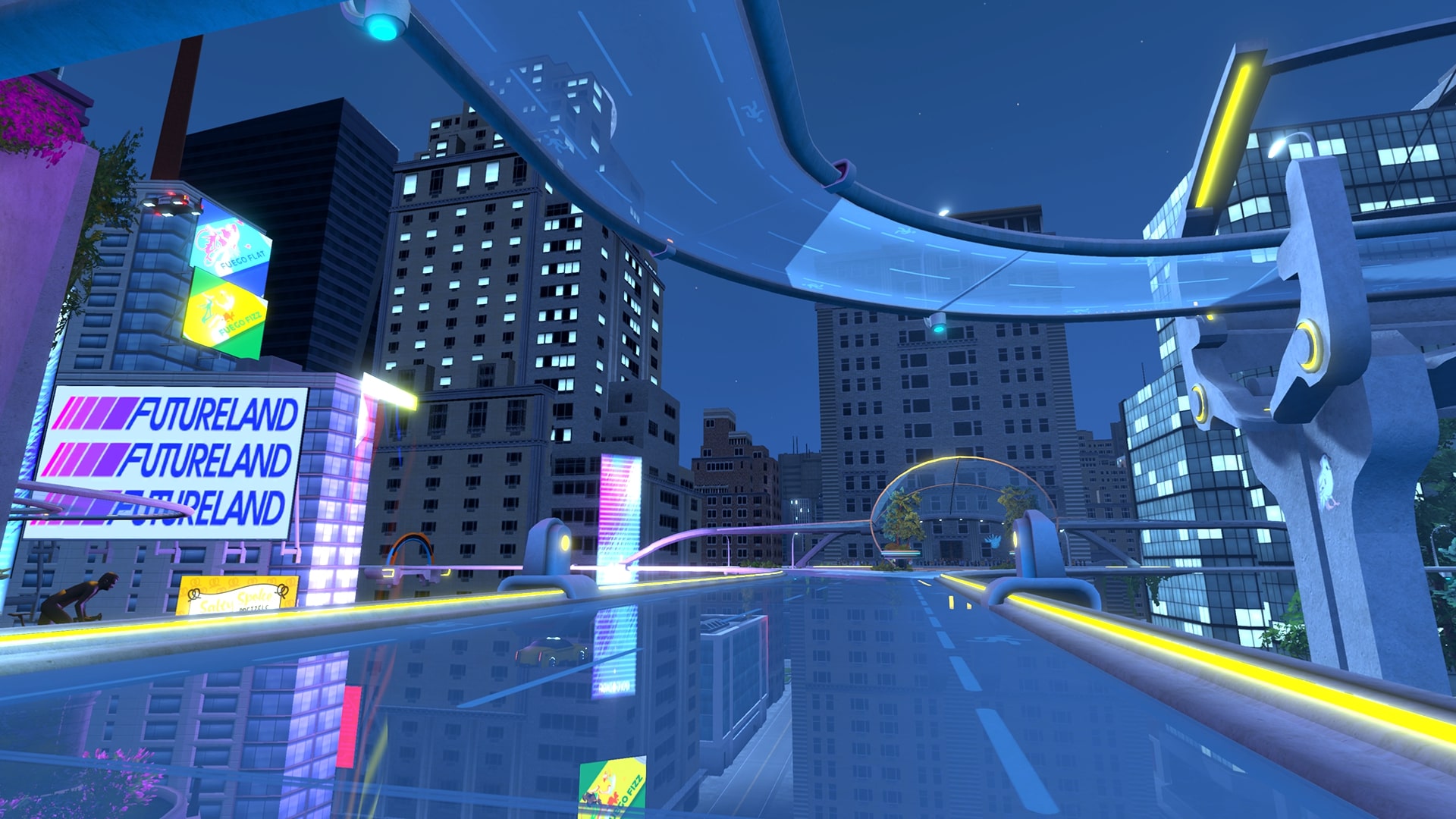
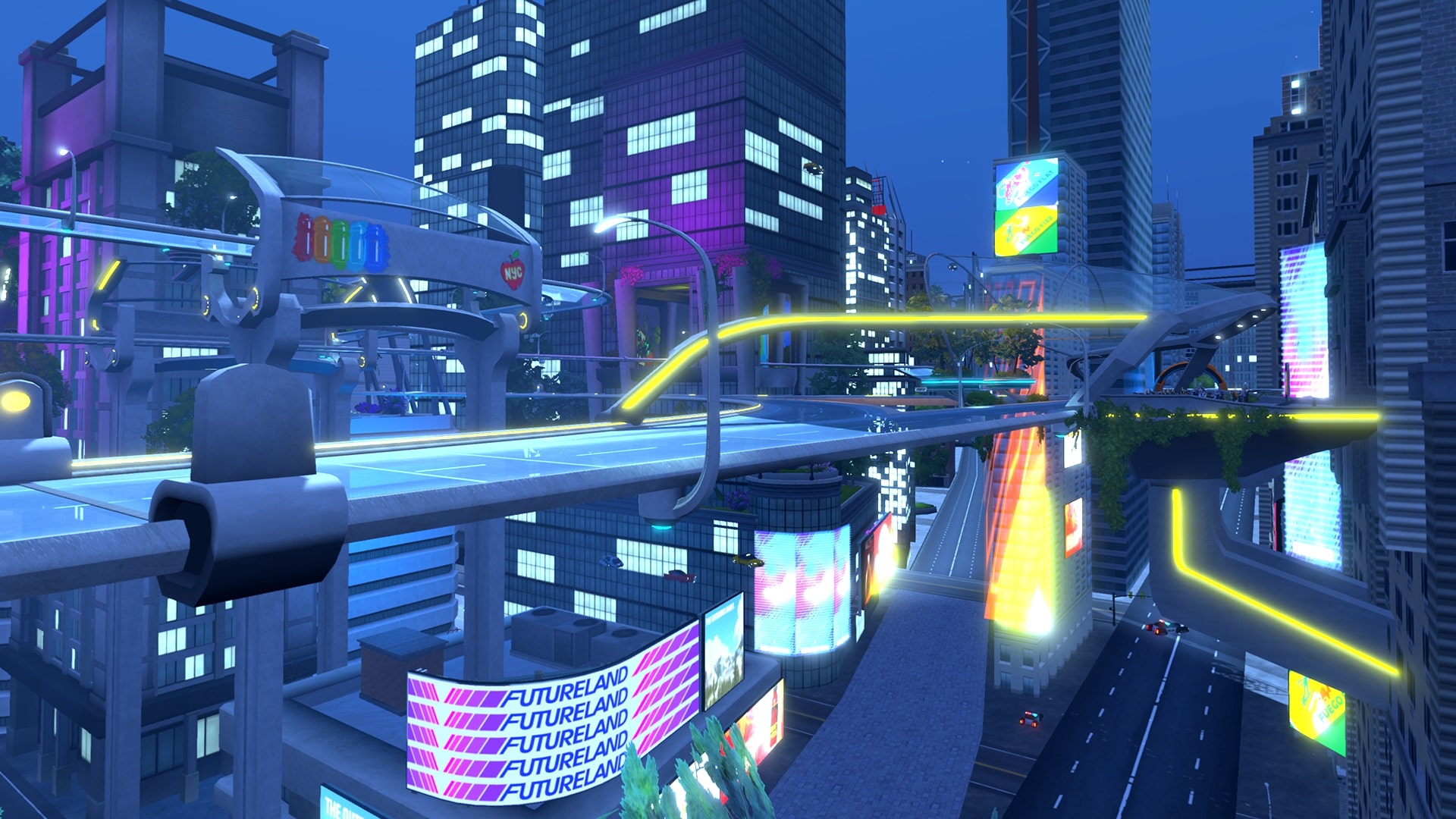
Zwift has kept the “future NYC” theme, reimagining how New York City may exist 100 years in the future. But they’ve also included many references to present-day NYC, so native New Yorkers should feel right at home. Read on for a tour of the Big Apple’s new tarmac and surrounding sights…
A Tour of the New Roads
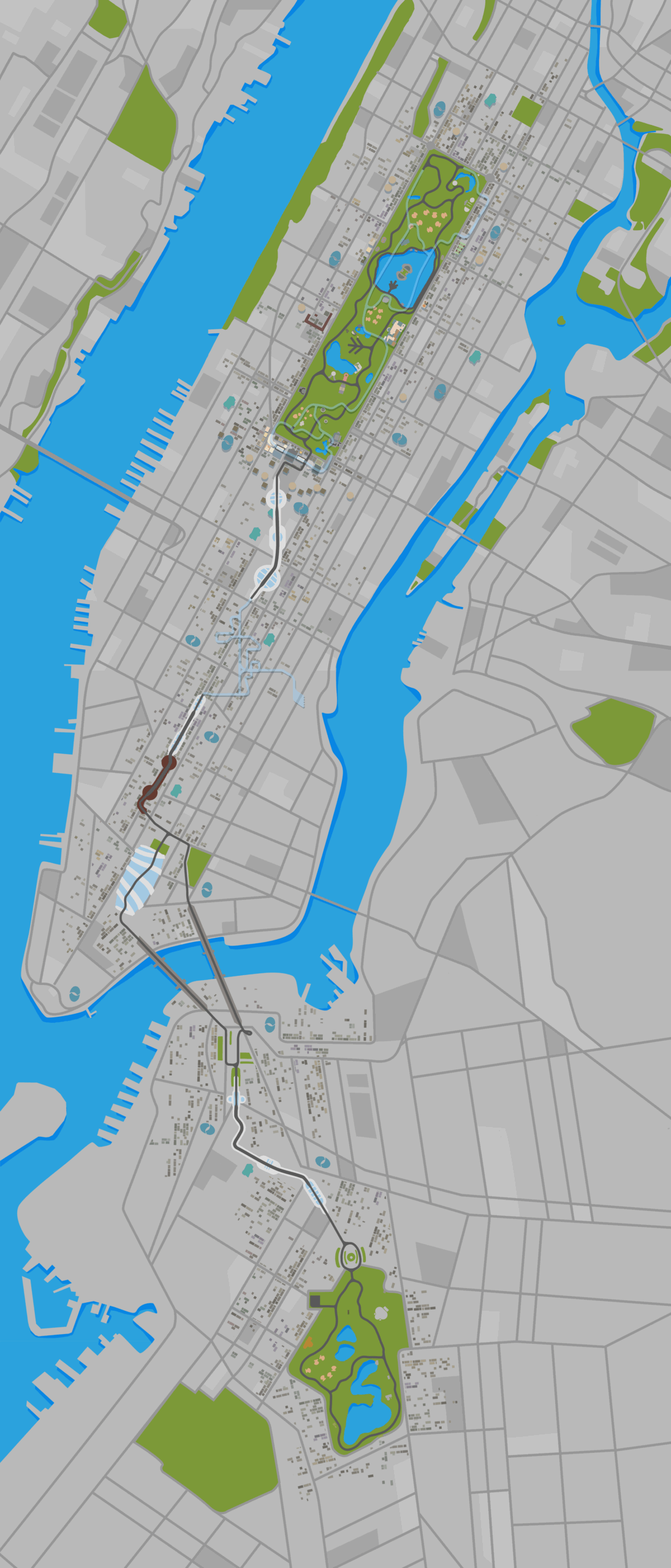
Zwift’s expansion adds ~30km of new roads south of the existing Central Park area. Most of the new surface roads are located in the same places as their real-life counterparts, including 6th Avenue exiting Central Park, Brooklyn Bridge, Manhattan Bridge, Flatbush Avenue, Grand Army Plaza, and Prospect Park.
The subways and Times Square, on the other hand, take plenty of liberties in their layouts. While they are roughly located in the same place as their present-day counterparts, their layouts don’t match what exists today.
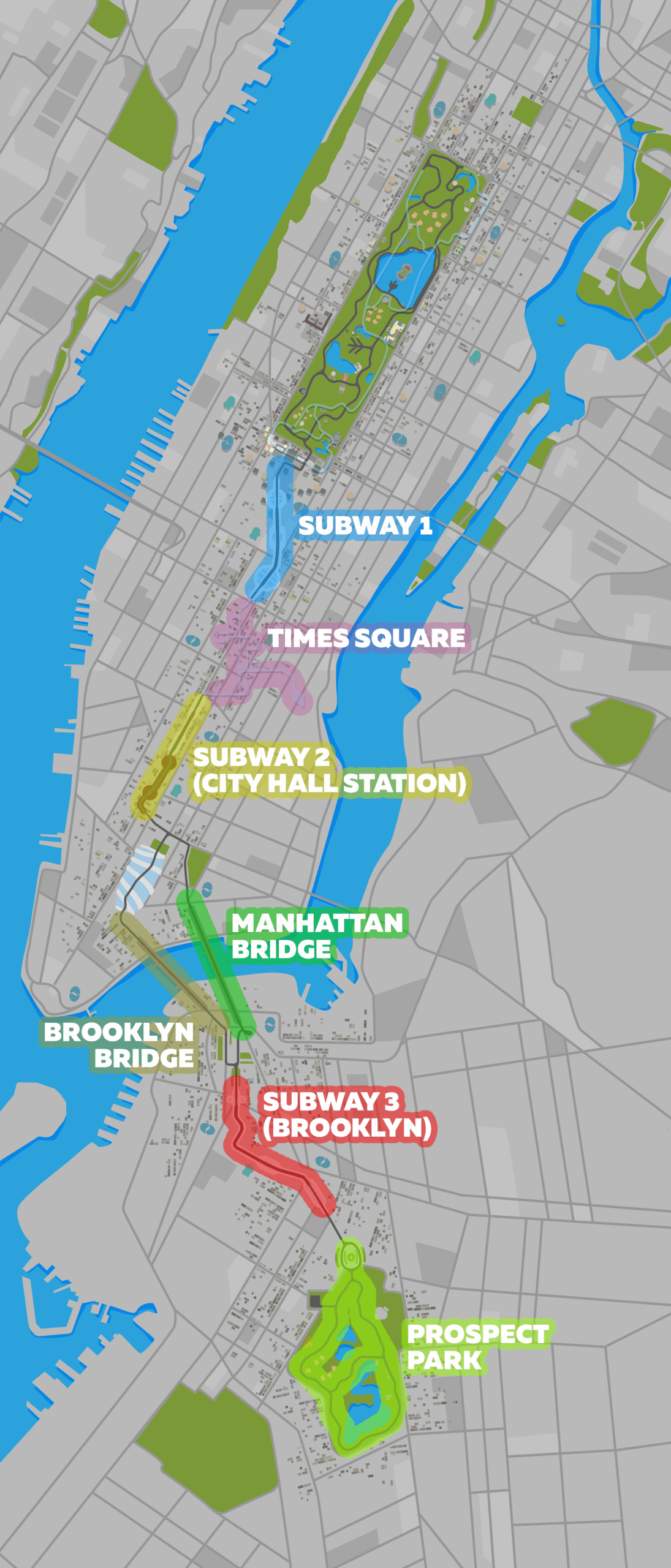
Below you’ll find a “clean” version of Zwift’s updated New York map, and a marked-up version showing each of the new sections:
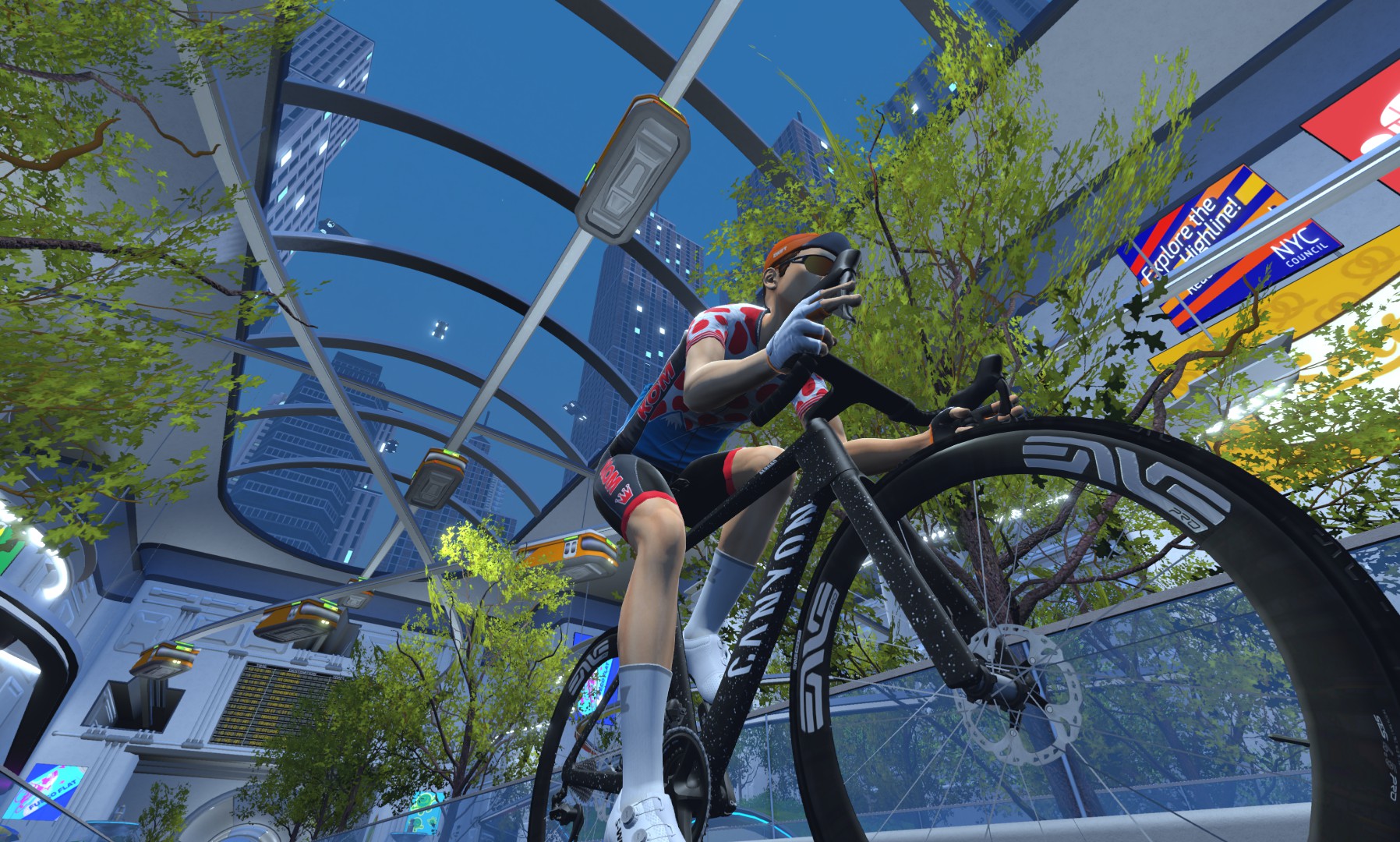
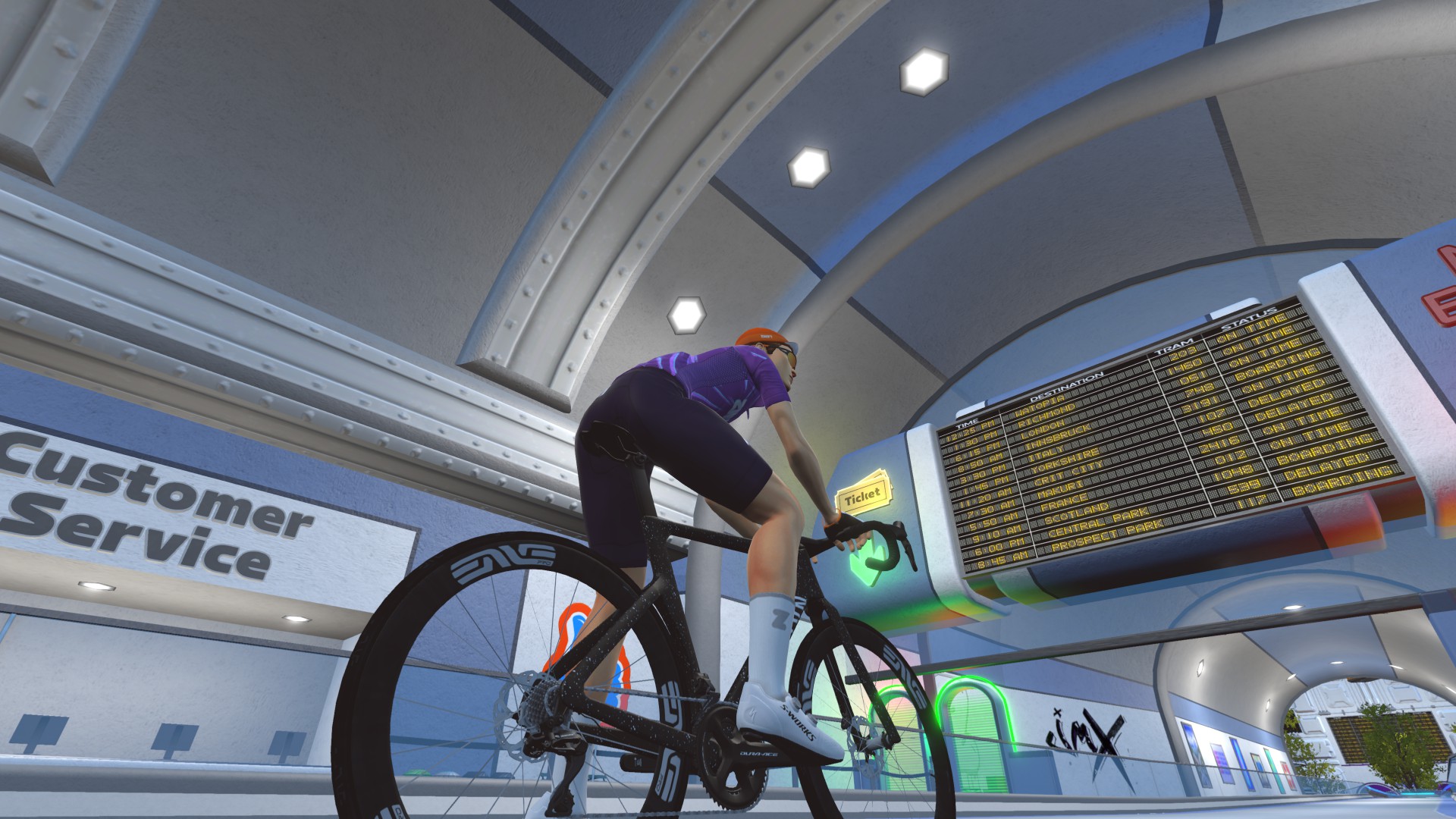
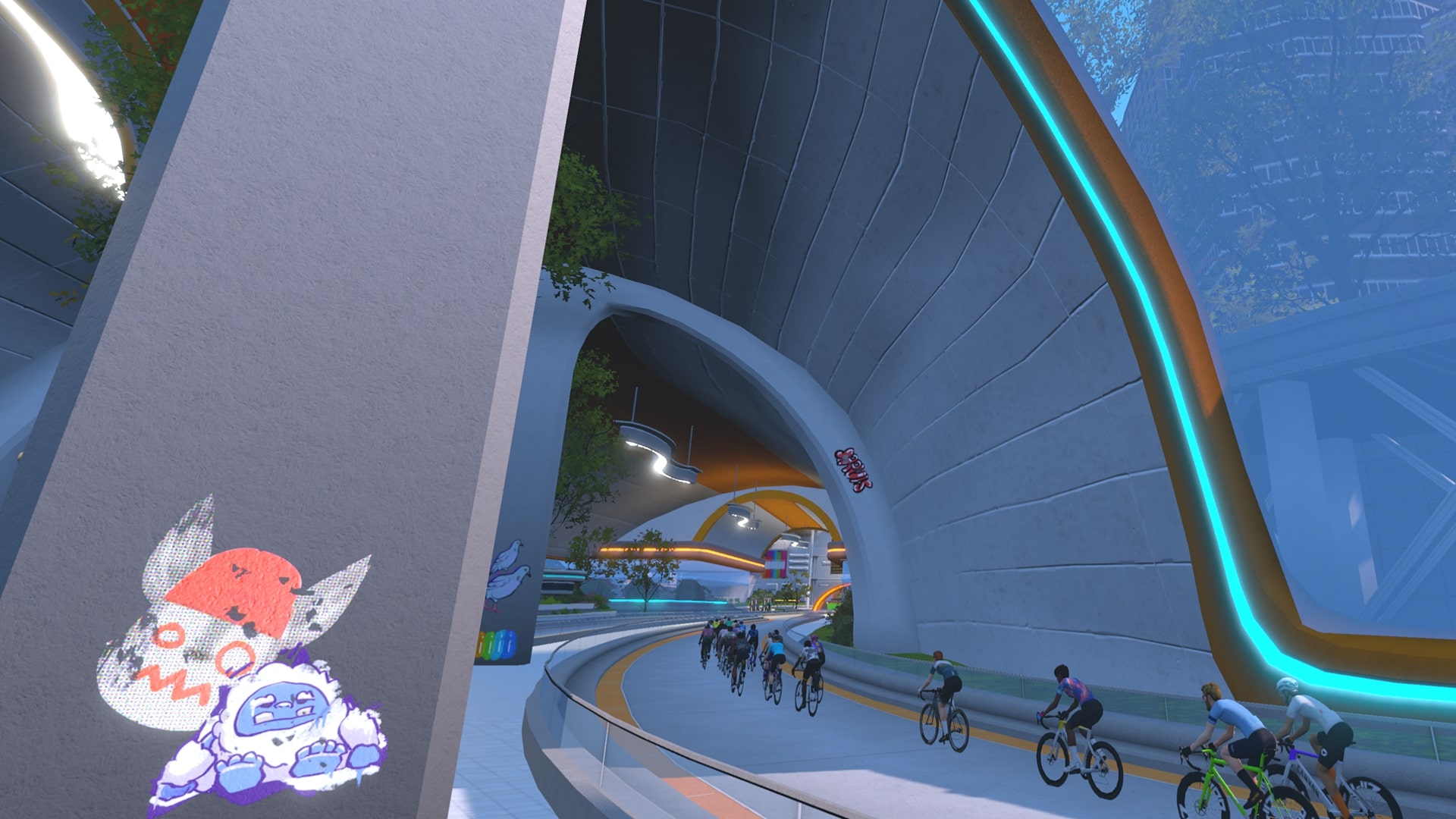
Subway 1
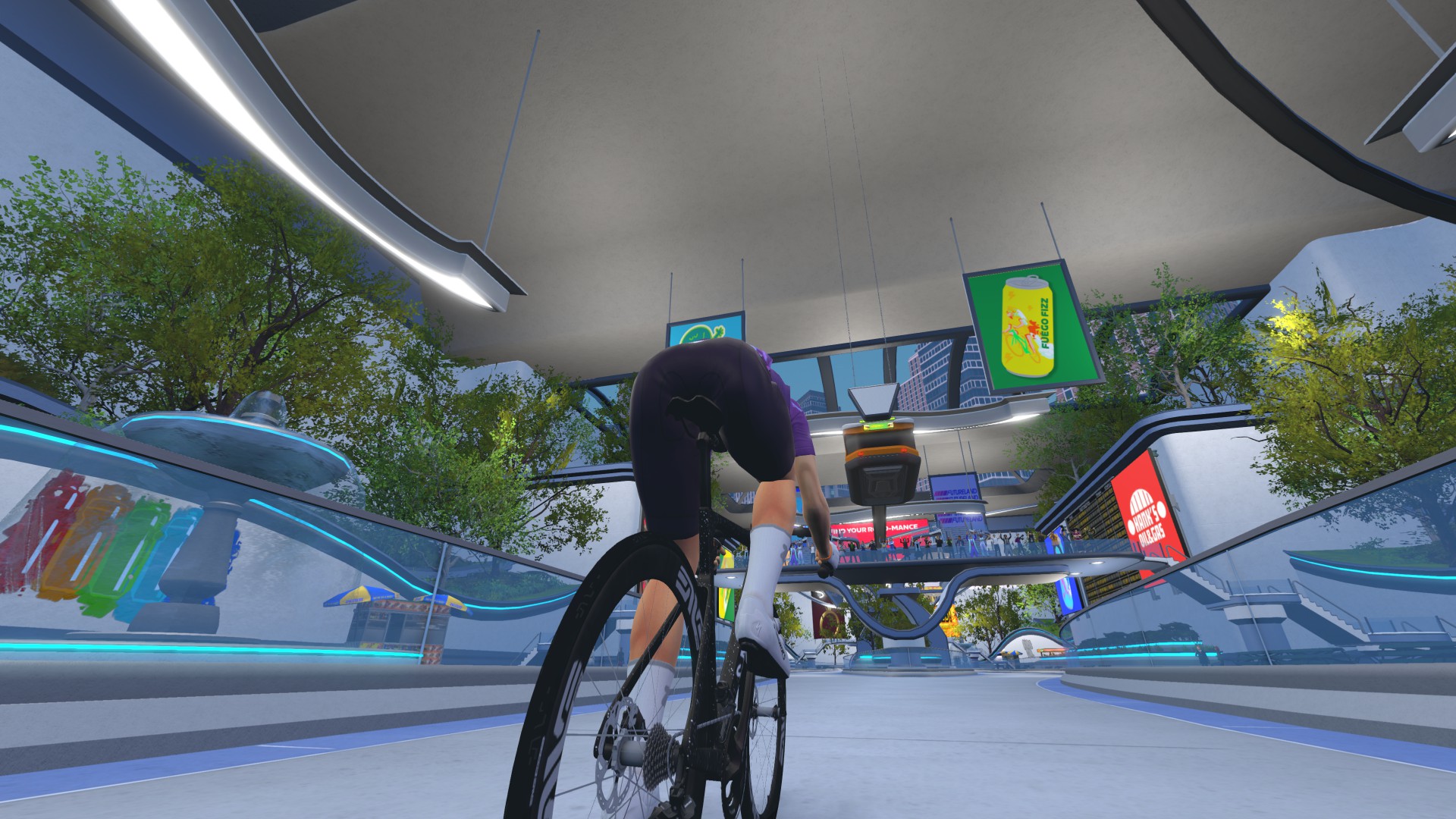
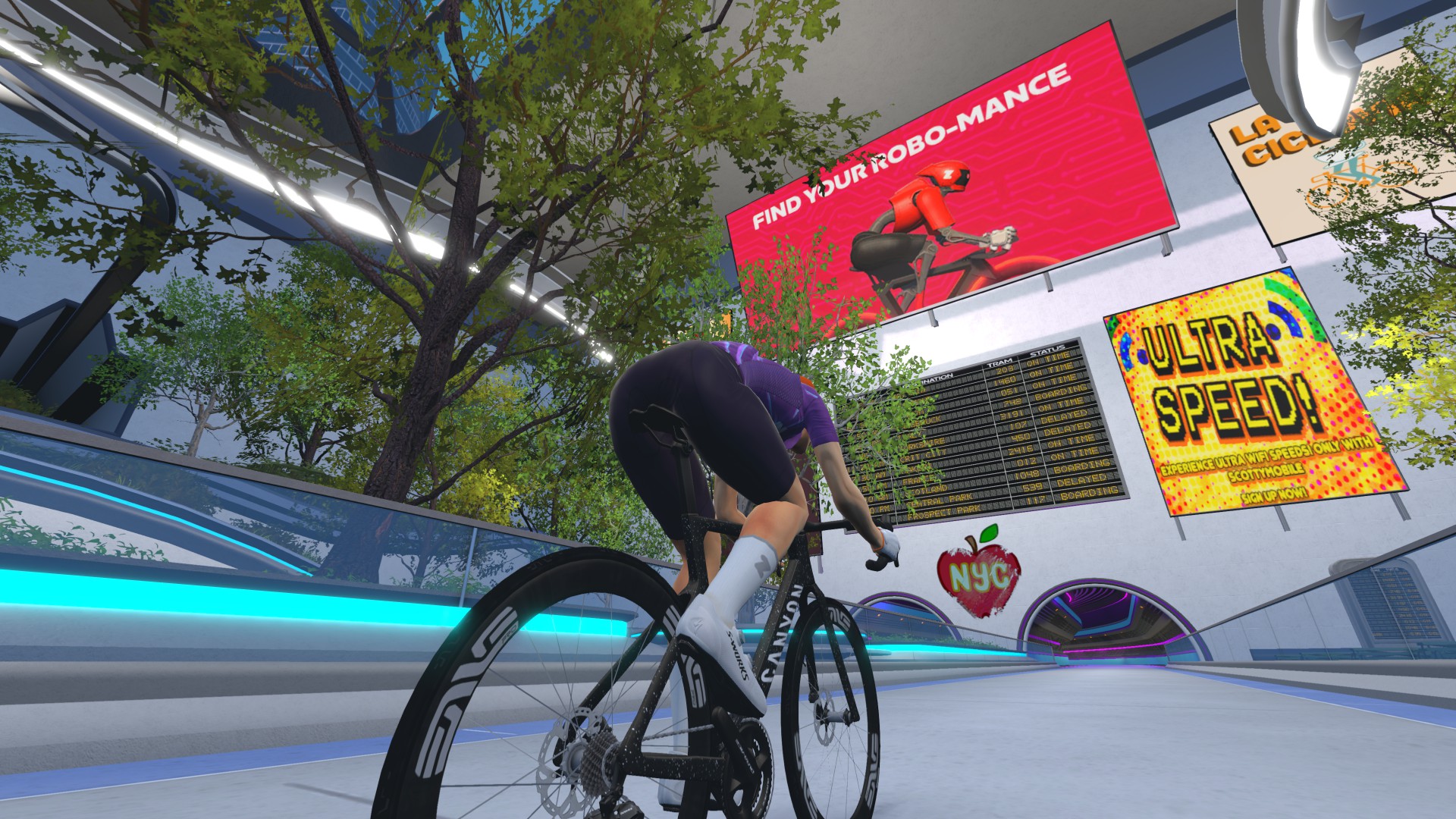
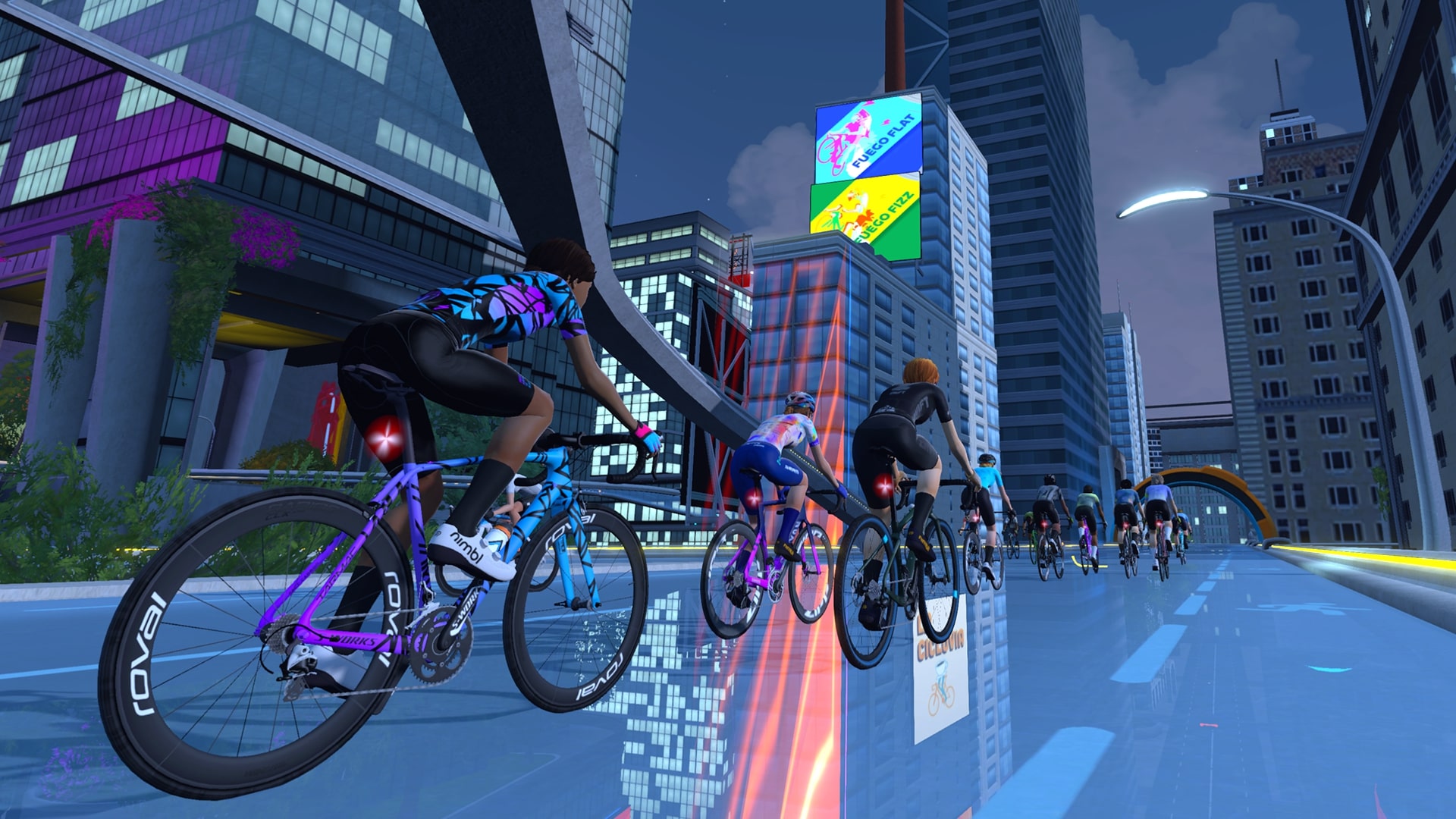
The first of three subway sections as you travel north to south, this subway feels most like a traditional New York station. Its distinctive visual feature is a plethora of advertising billboards, which include cheeky throwbacks to other Zwift maps and features. You’ll see a sign advertising “Fuego Fizz” soda as well as “Fuego Flat”, a Robopacer (dating?) ad, and more.
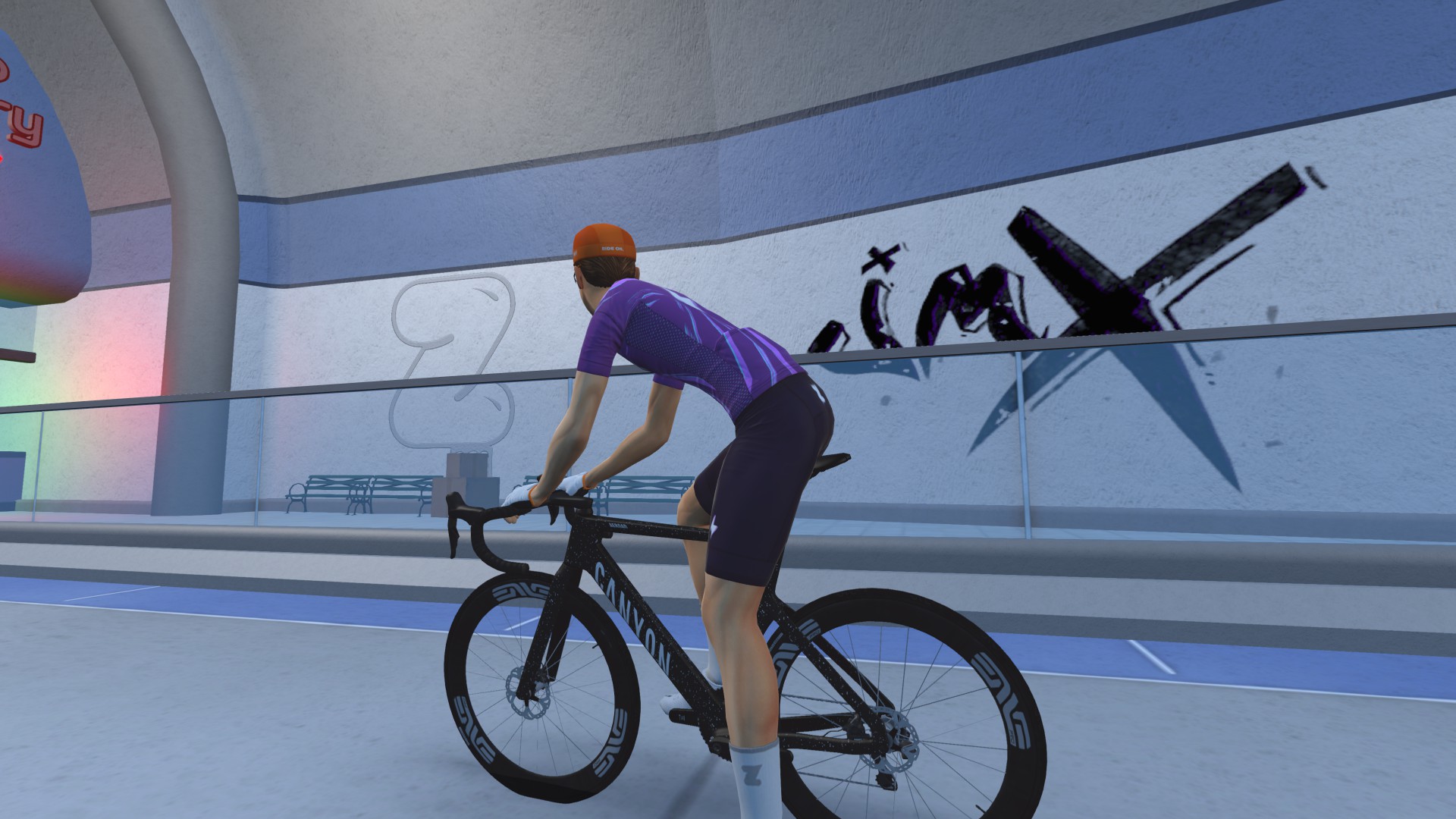
You’ll also see the first bits of graffiti, including a “jmX” tag you’ll find elsewhere in this expansion. (It’s a nod to Jon Mayfield, original creator of what would become Zwift, who named his software “jmX Trainer Coach”.)
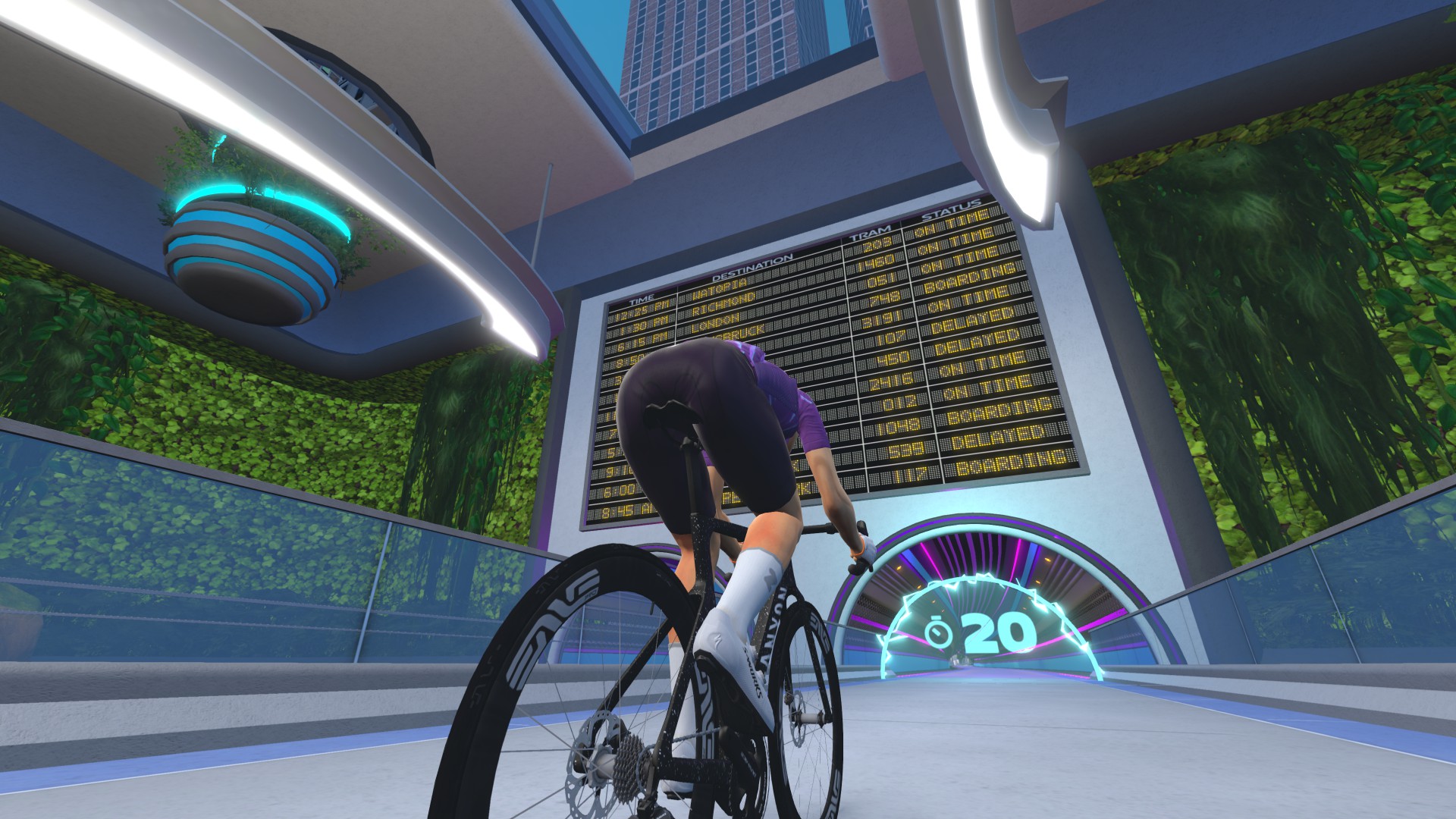
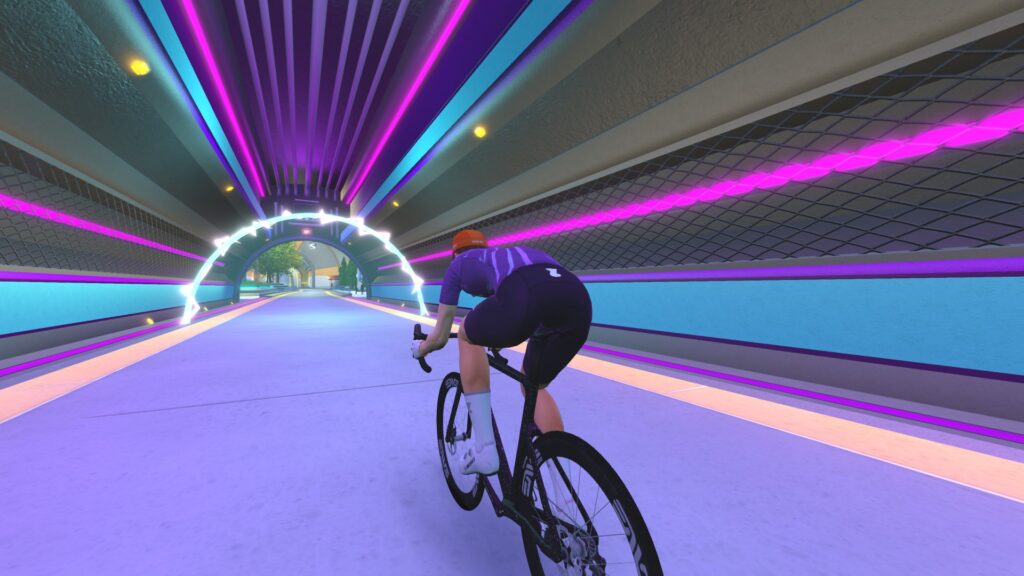
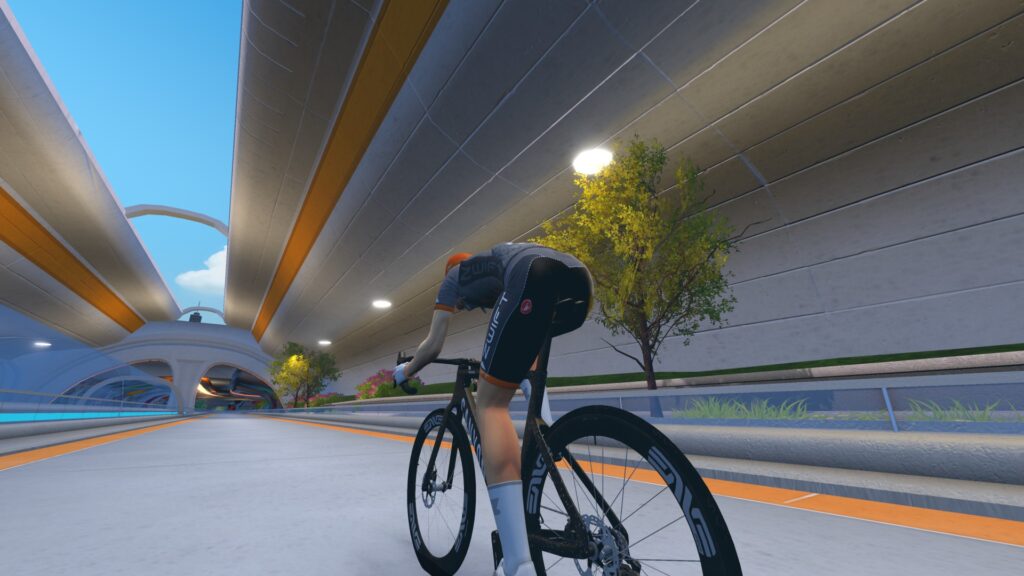
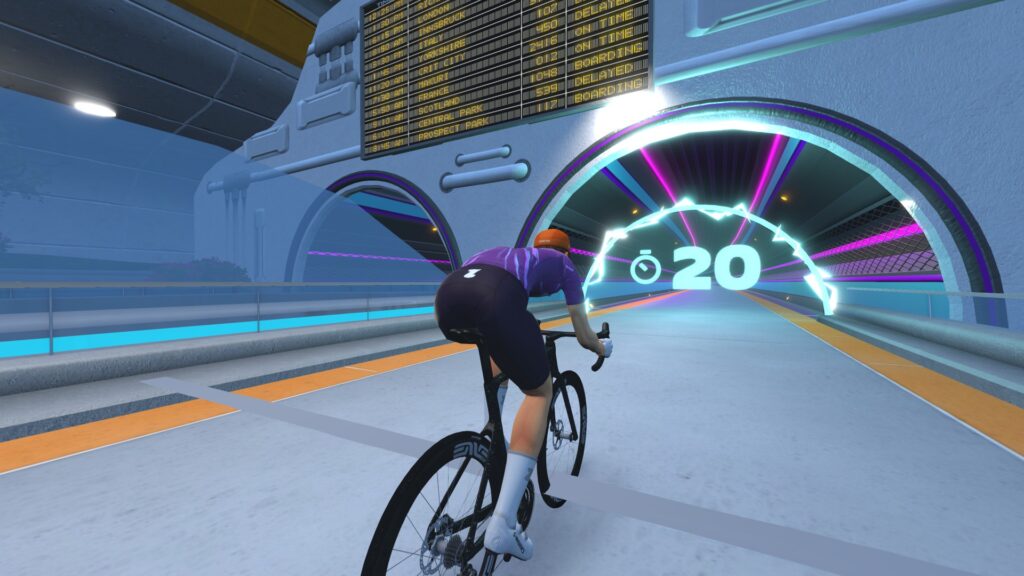
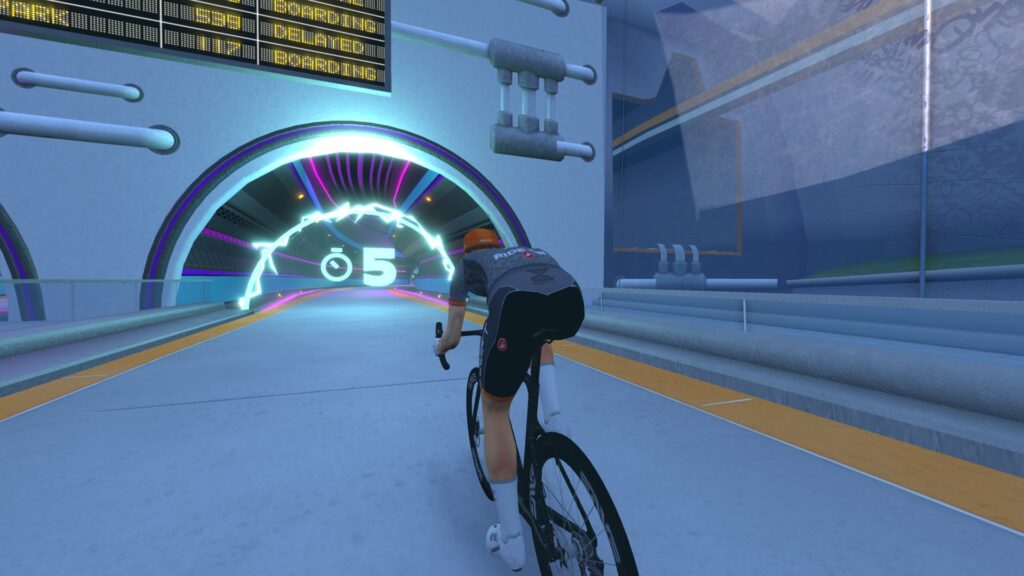
This subway, like the other two, includes Power Segments in both directions. Traveling south, you’ll hit a 5-second Power Segment, while north contains a 20-second segment. These sections of road are one-way, meaning you cannot u-turn.
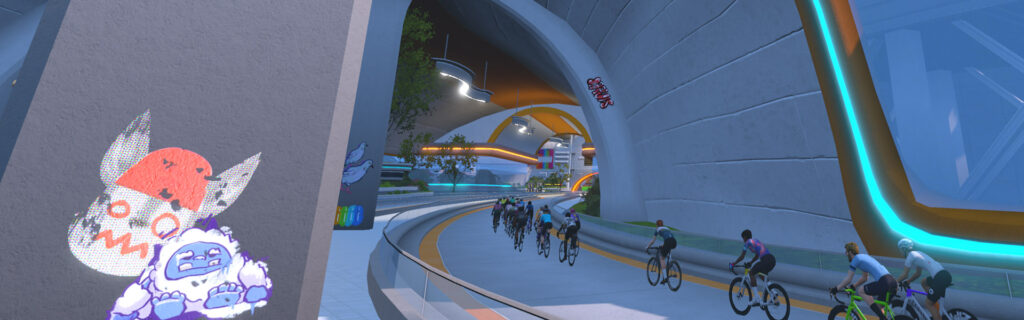
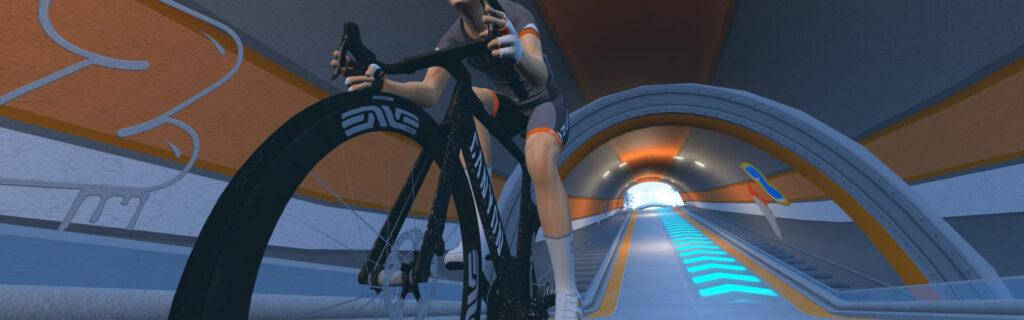
To exit this and the other two subways, you’ll ride up a steep ramp. Good news, though: there’s a bit of an “escalator” built into the ramp to help you to the top! Here’s what it looks like:
Escalator photo taken from the third subway, in Brooklyn
Times Square
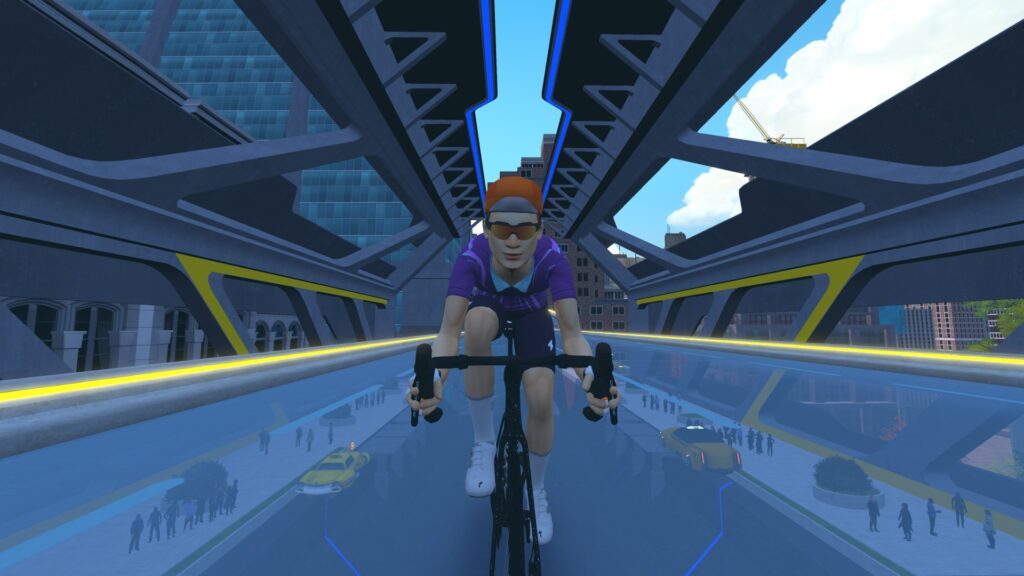
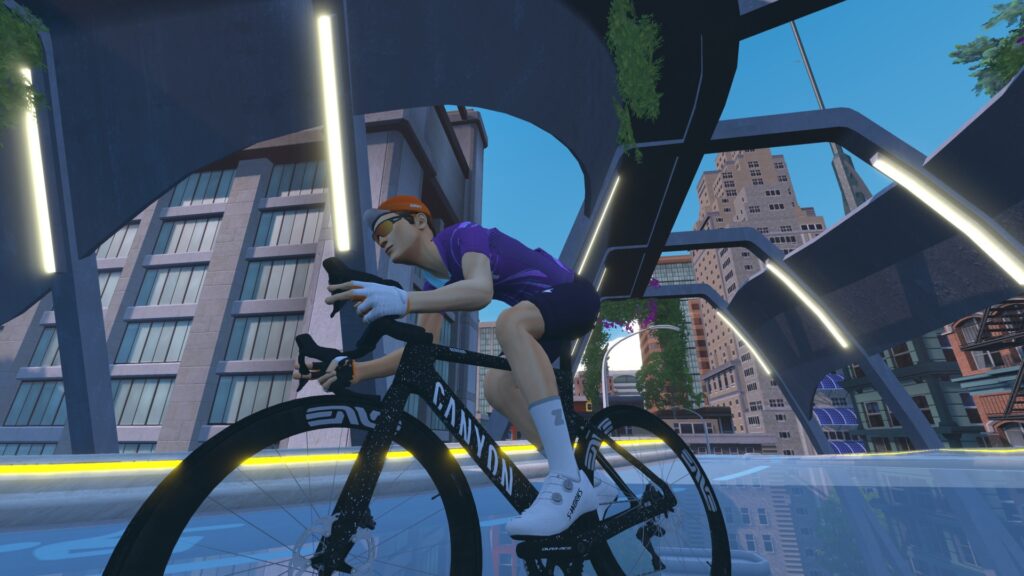
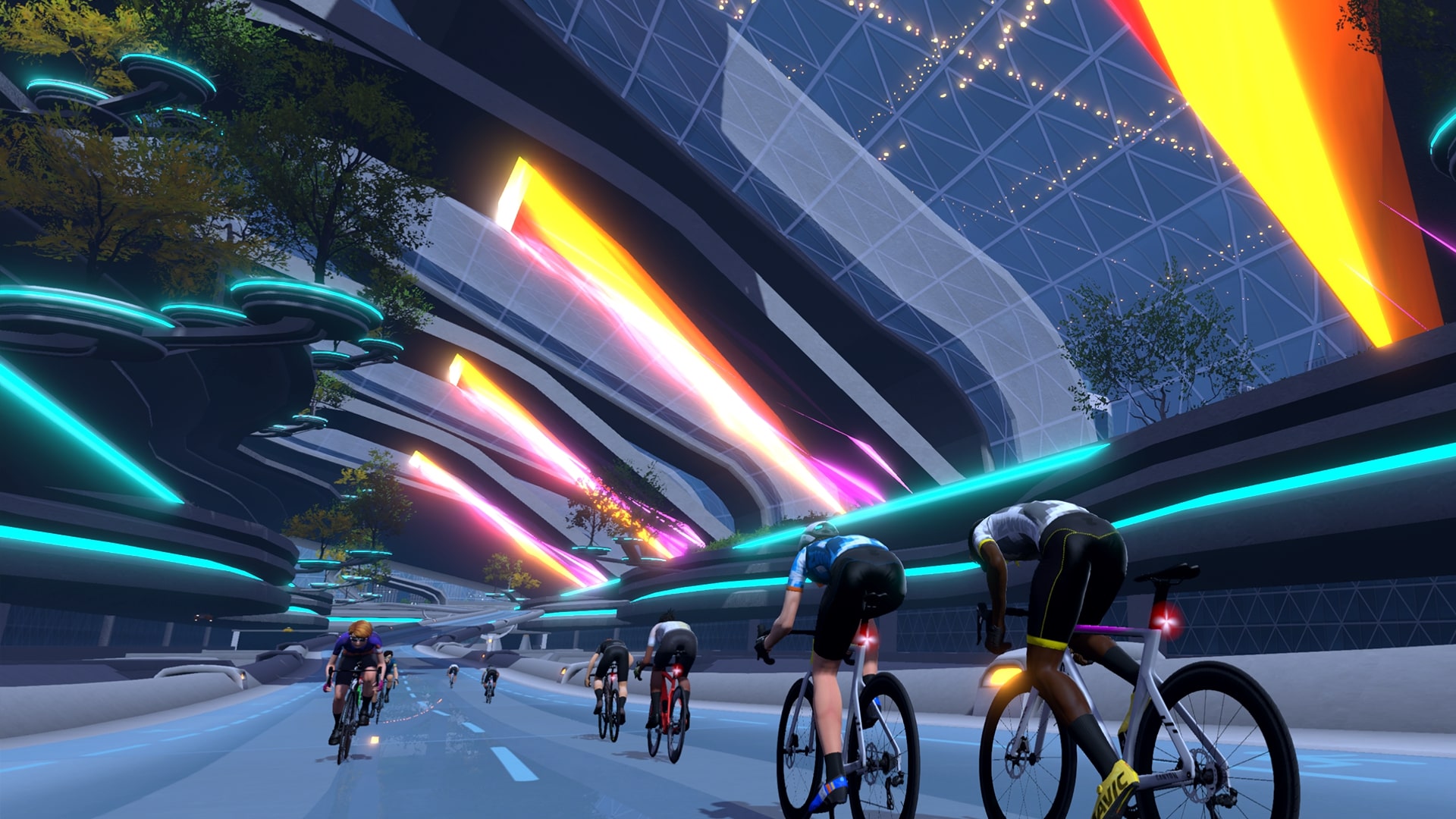
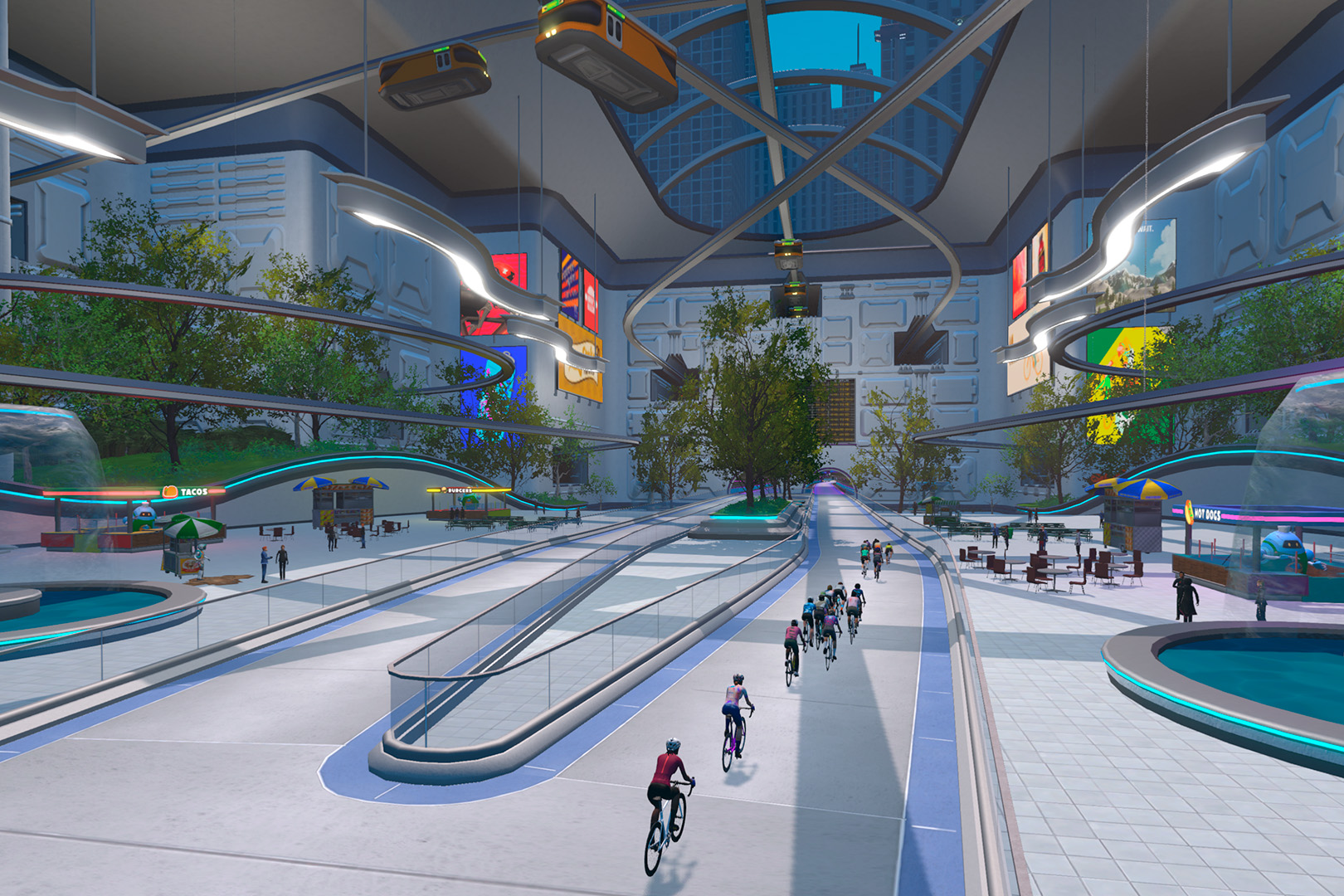
The Times Square section is a 3.5km glass road circuit with a leaderboard that awards an orange jersey to the current fastest man and woman on course, in both directions. There are also new start pens located on this circuit.
While the idea of more glass roads in New York may strike fear in the heart of non-climbers like myself, in talking to Tony Yruegas, Zwift’s Game Art Director, he explained that they pulled a bit of a visual trick in this section by sinking the ground-level roads so the glass roads could appear elevated without much climbing being needed to reach them. “Overmuscled” cyclists everywhere salute you, Tony and team!
While this section doesn’t have many distinctive visual features beyond the glass roads, Tony tells me it will be the site of future celebrations (parades, confetti, etc.), including a possible NY-style Ball Drop on New Year’s.
Subway 2 (City Hall Station)
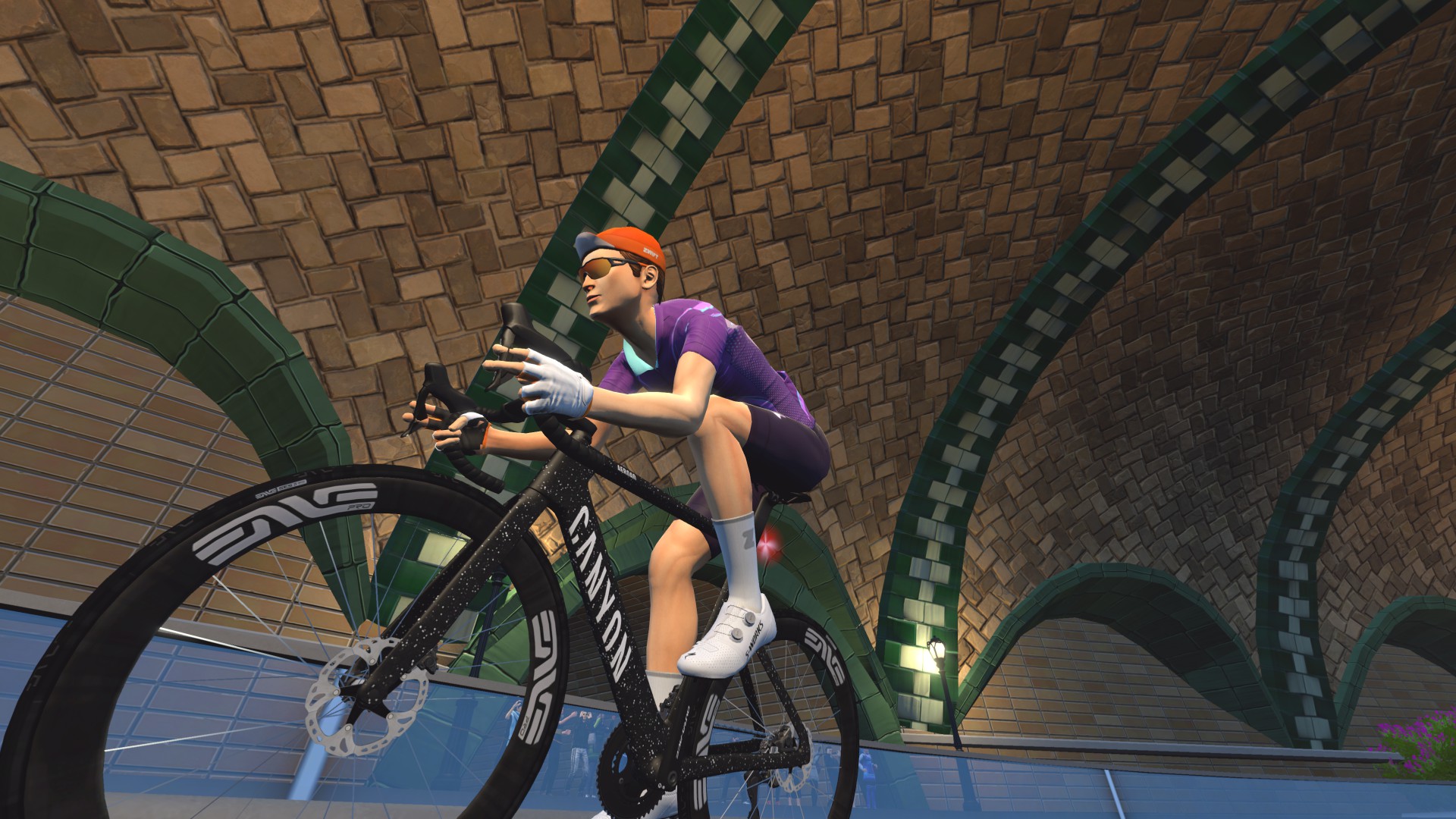
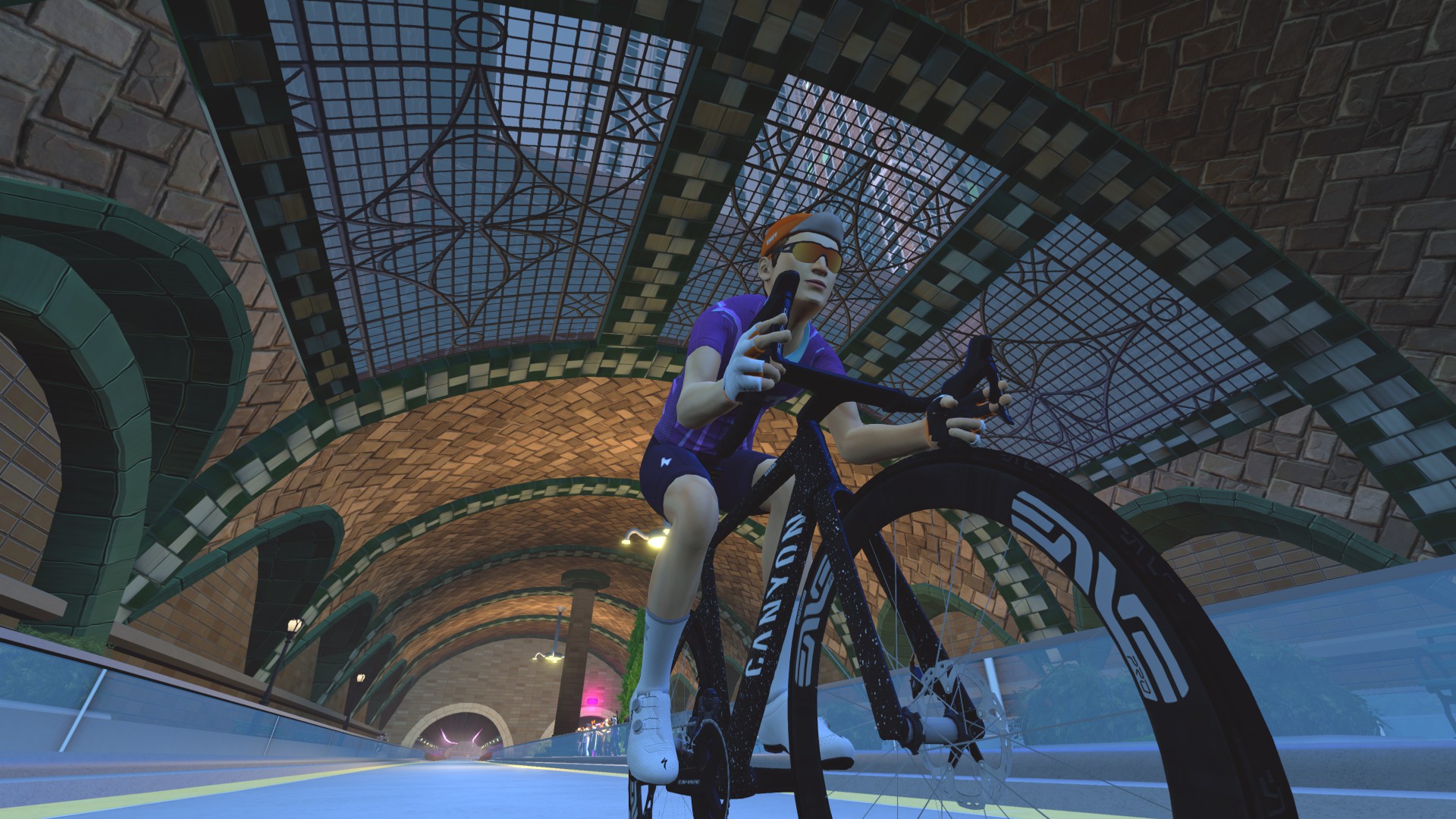
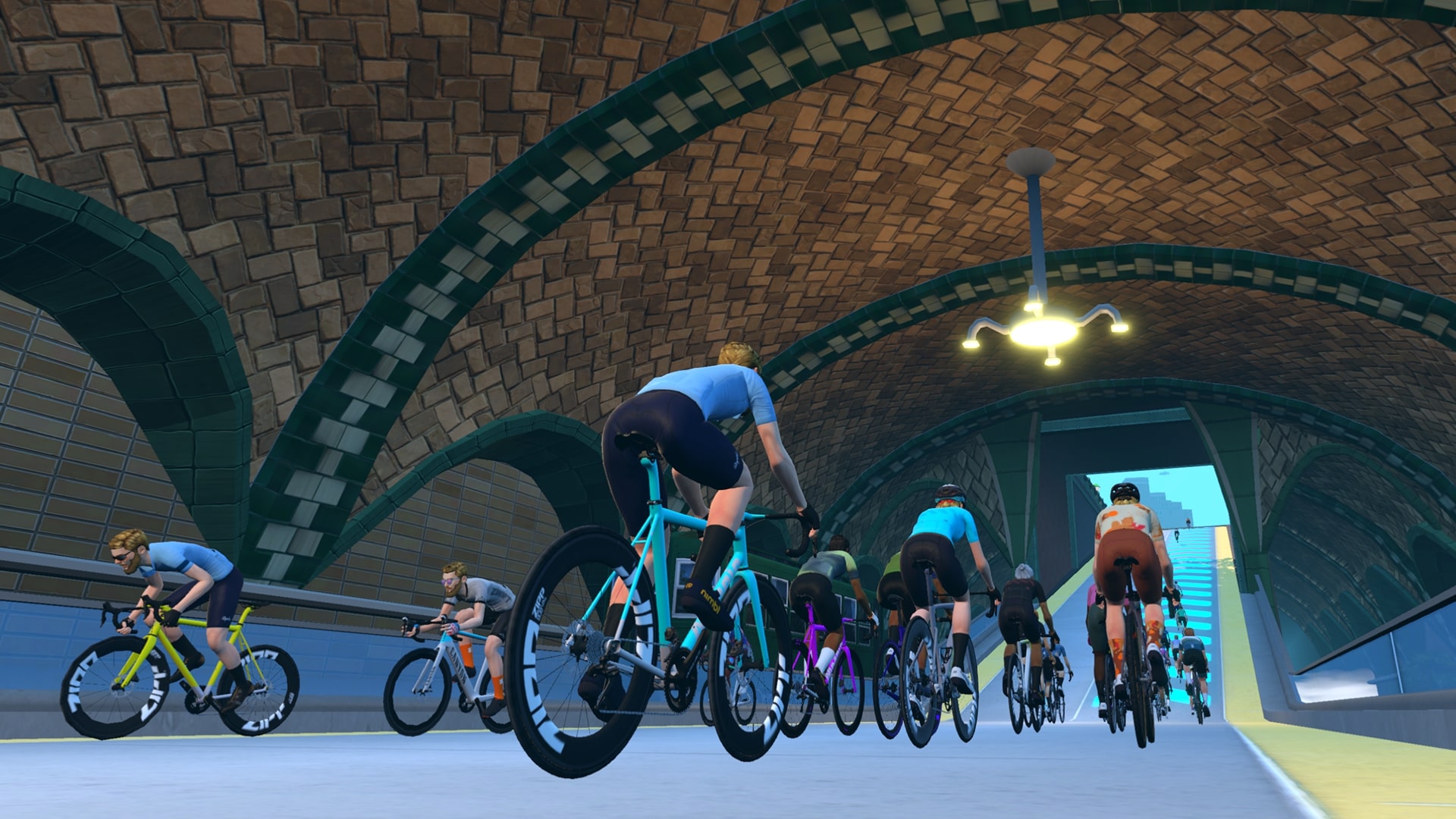
Continuing south, we descend into the second subway section, which is a throwback to New York’s City Hall station. This station opened in 1904, but has been closed since 1945, although you can still tour it today. It features distinctive brick archways, which Zwift has replicated in game:
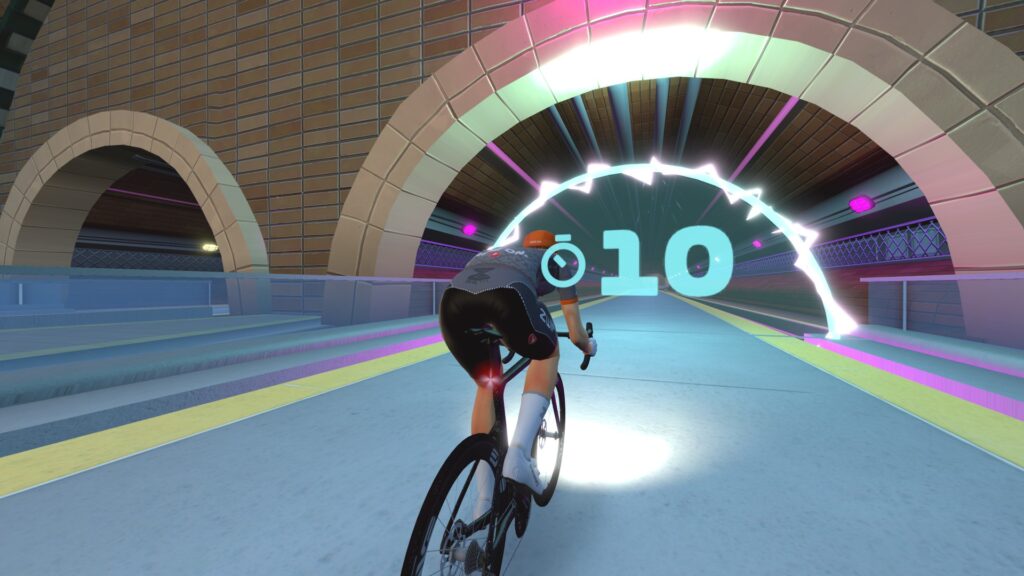
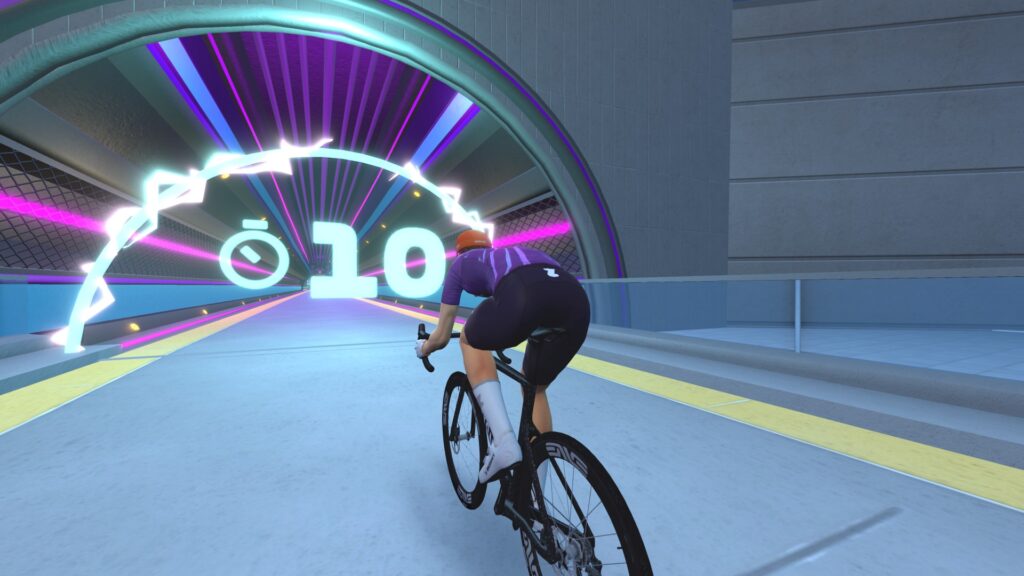
This section includes 10-second Power Segments in both directions:
Manhattan Bridge
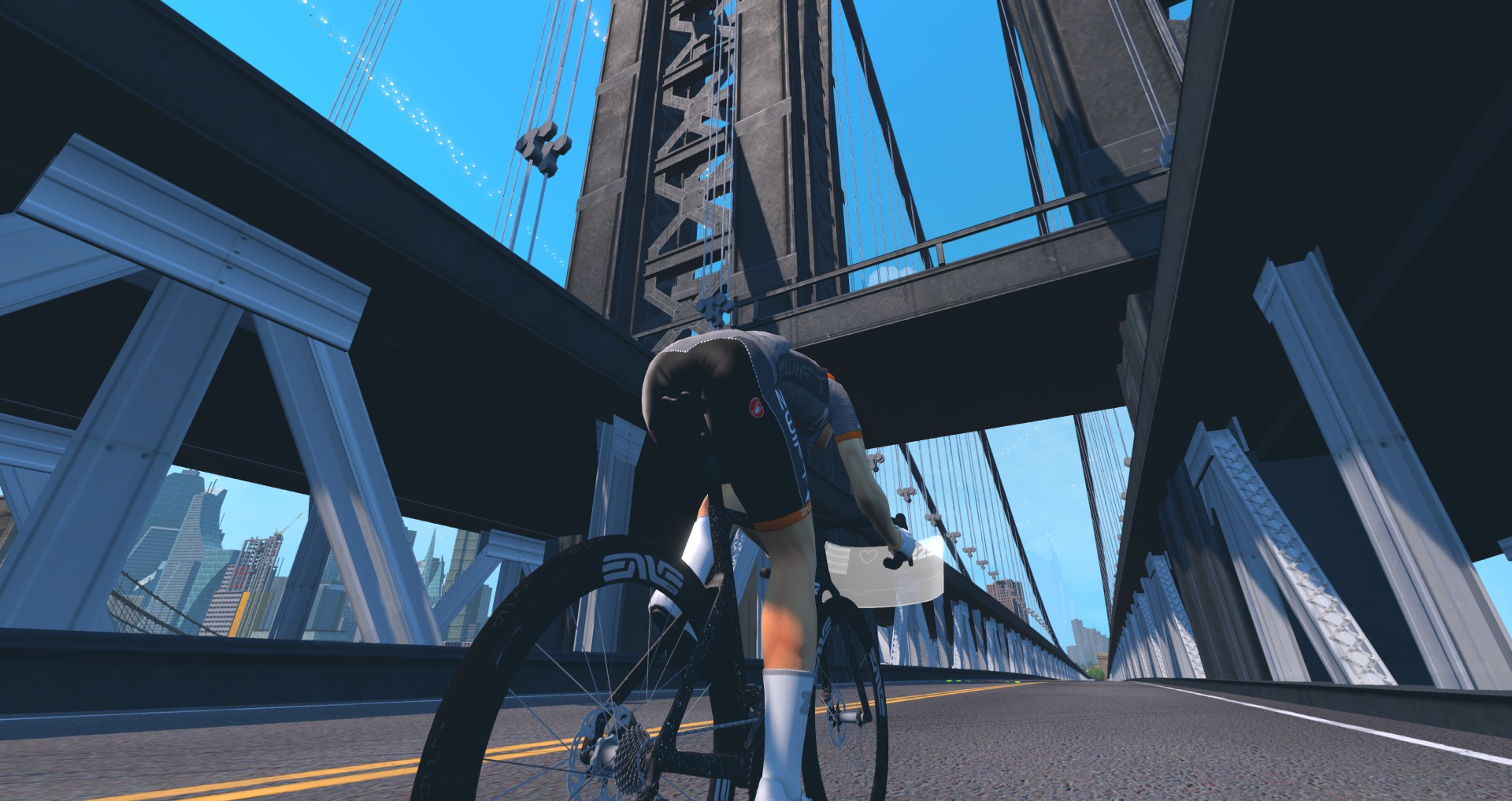
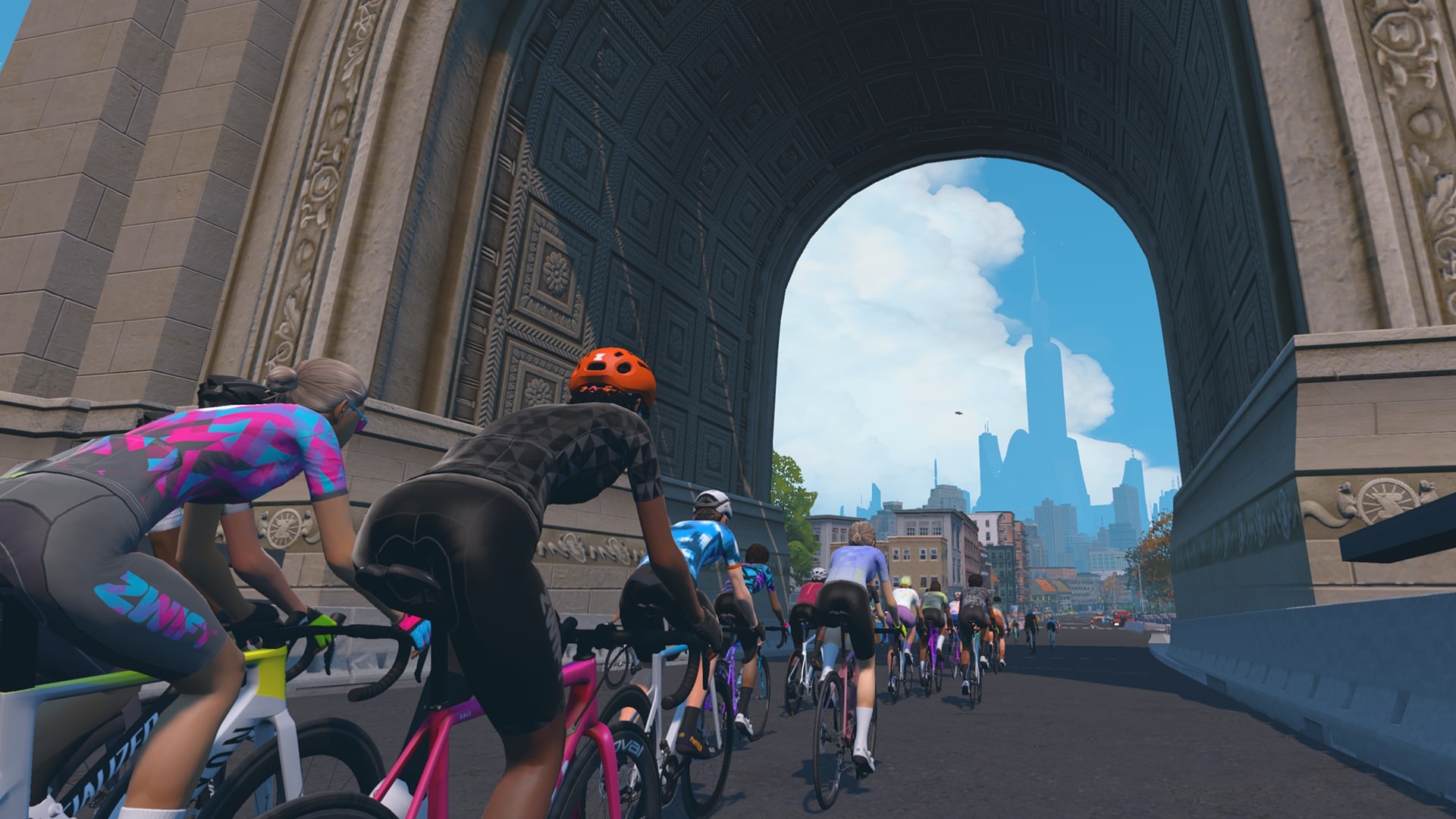
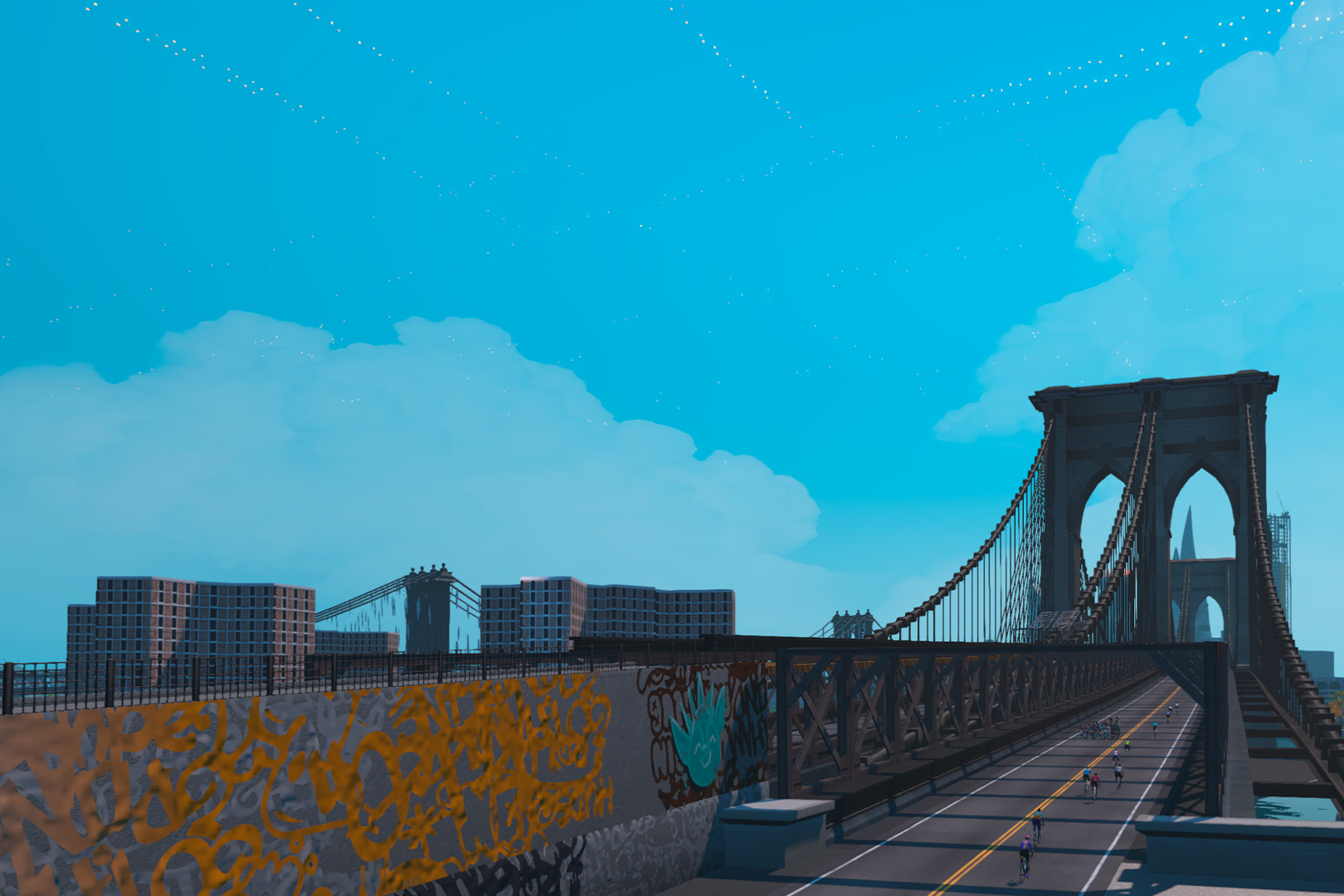
Traveling north to south, the first bridge you’ll encounter is the Manhattan Bridge. For non-NYC natives, the Manhattan Bridge is easily distinguished from the Brooklyn Bridge by its ironwork towers and grey steel girders. (The Brooklyn Bridge, in contrast, has stone/concrete towers and horizontal iron beams which block the skyline views.) The Manhattan Bridge also includes a huge stone archway at the entrance to the Manhattan side:
Looking for your best skyline view from a bridge? It’s found on Manhattan Bridge, heading toward Manhattan.
Manhattan Bridge has 250-meter sprint segments in both directions. Both sprints are slightly uphill, since the bridge arches a bit:
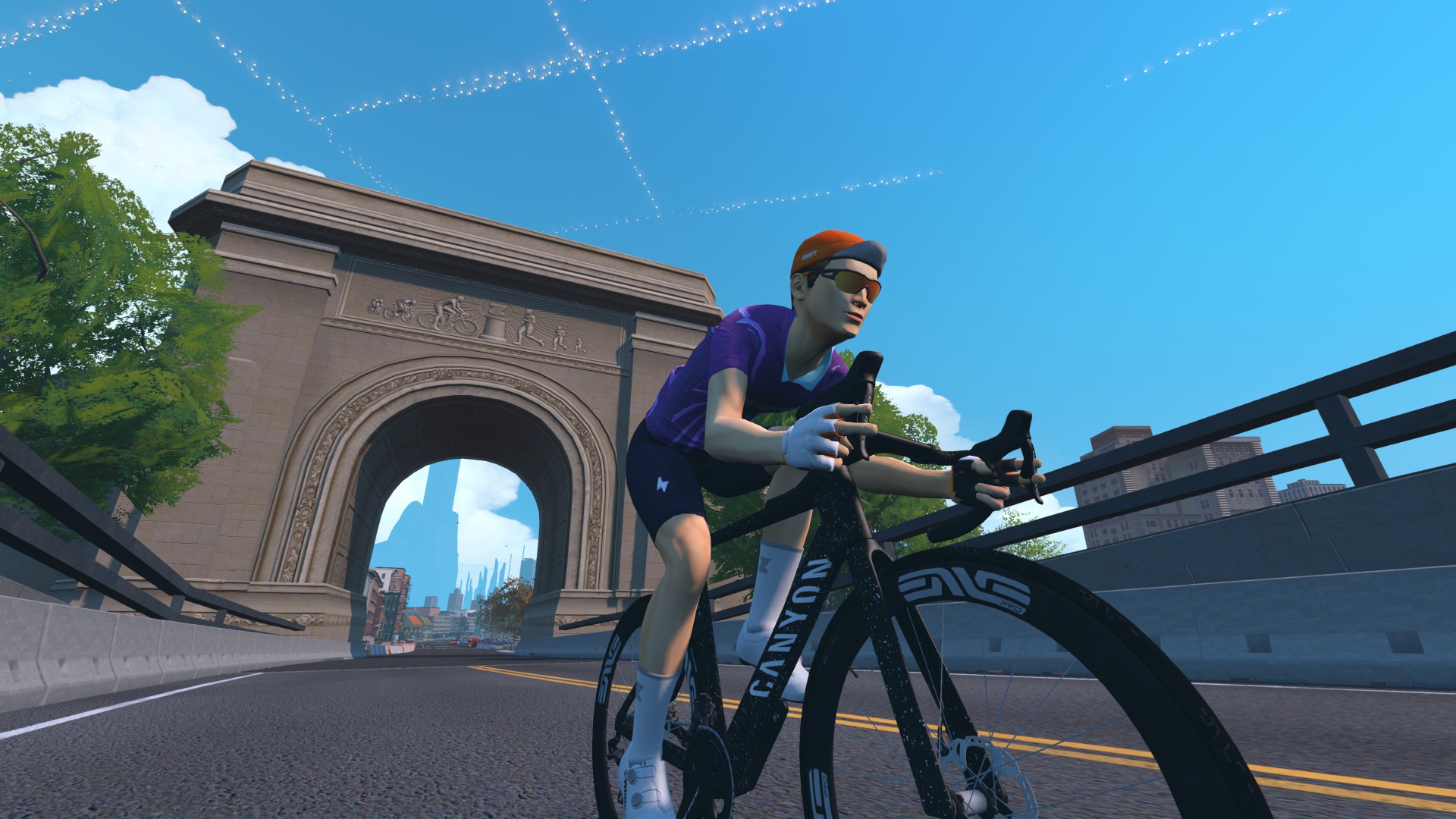
A large stone arch marks the bridge’s exit on the Manhattan side, while a corkscrew road is the exit on the Brooklyn side.
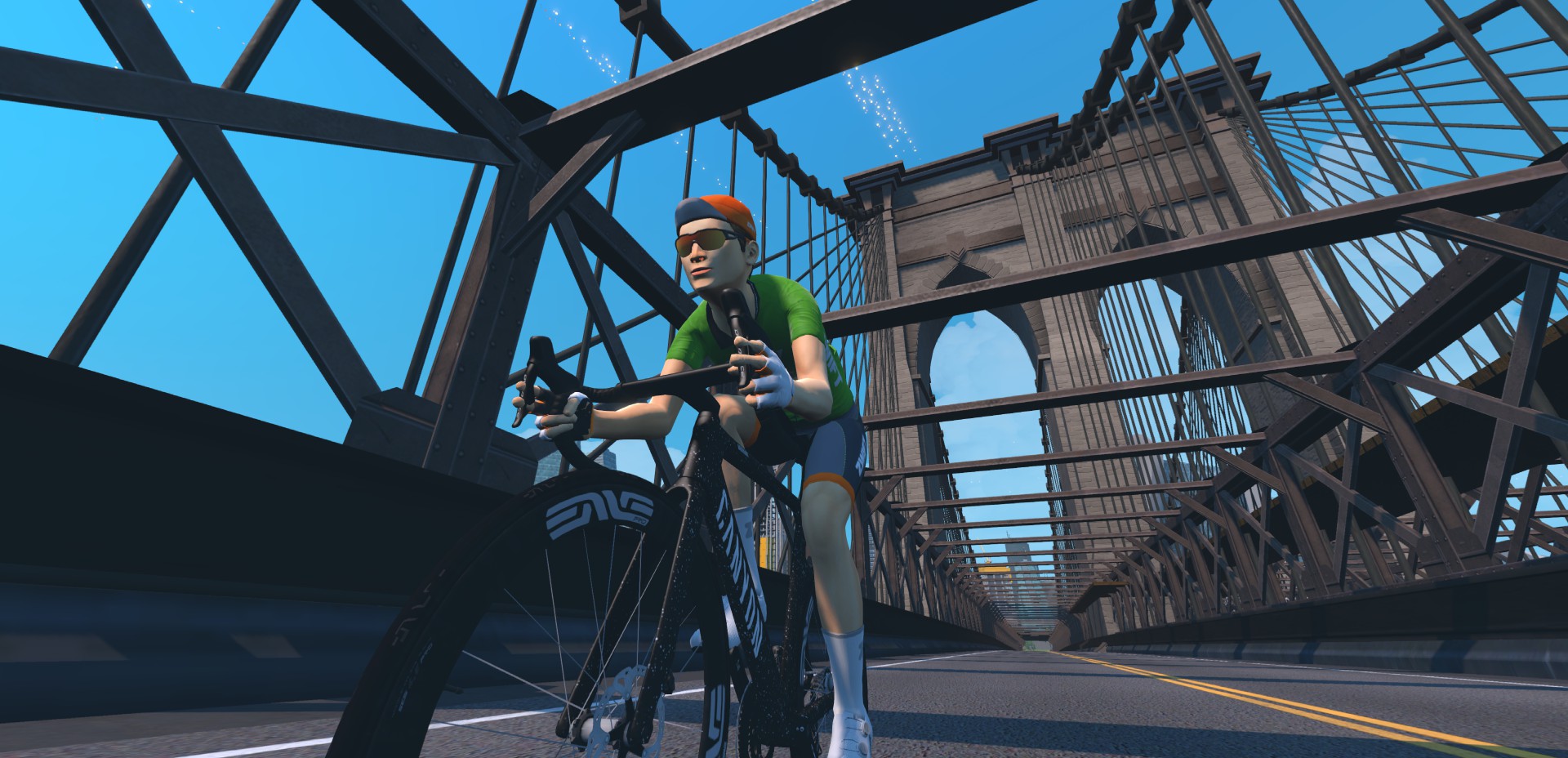
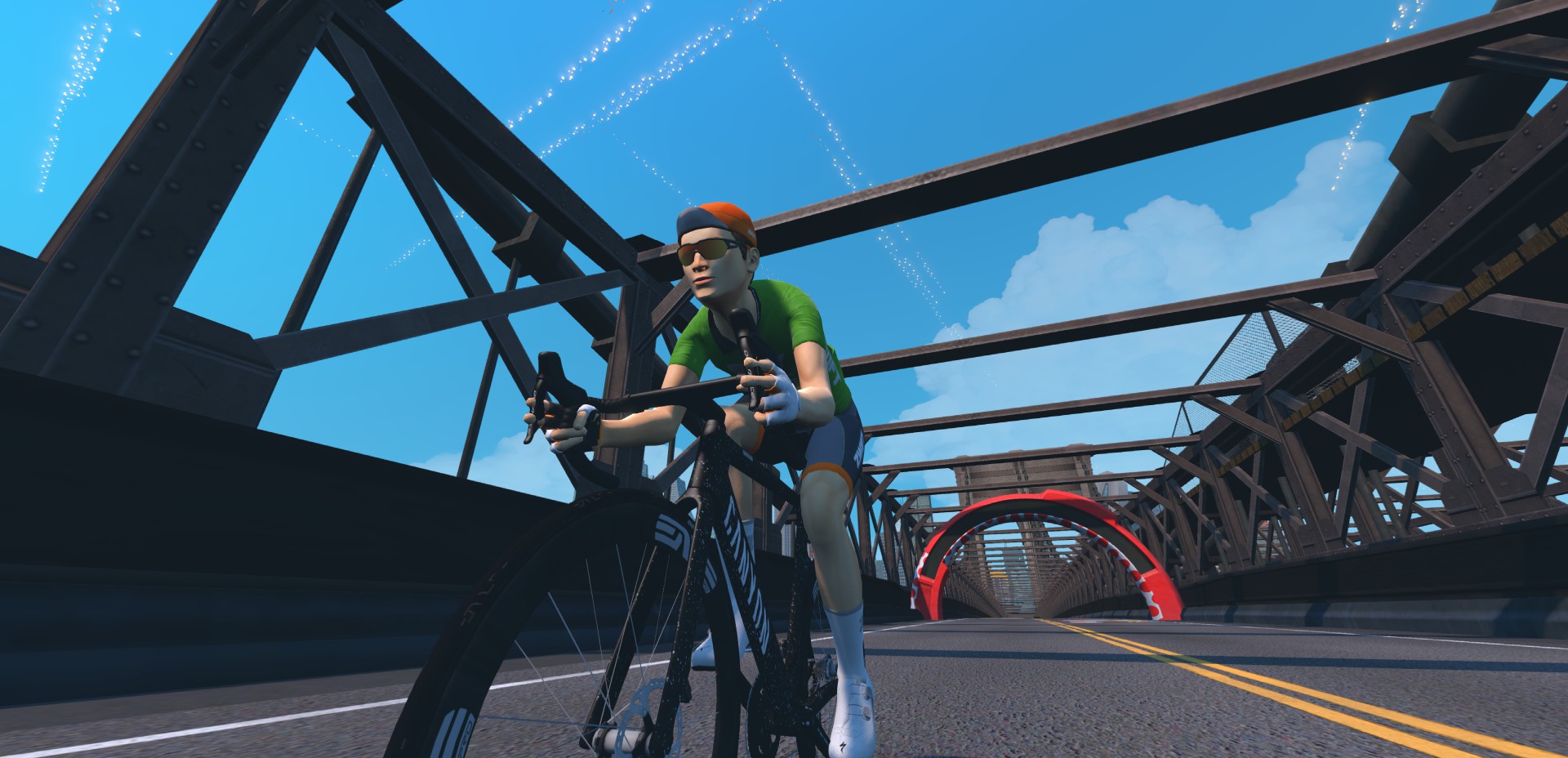
Brooklyn Bridge
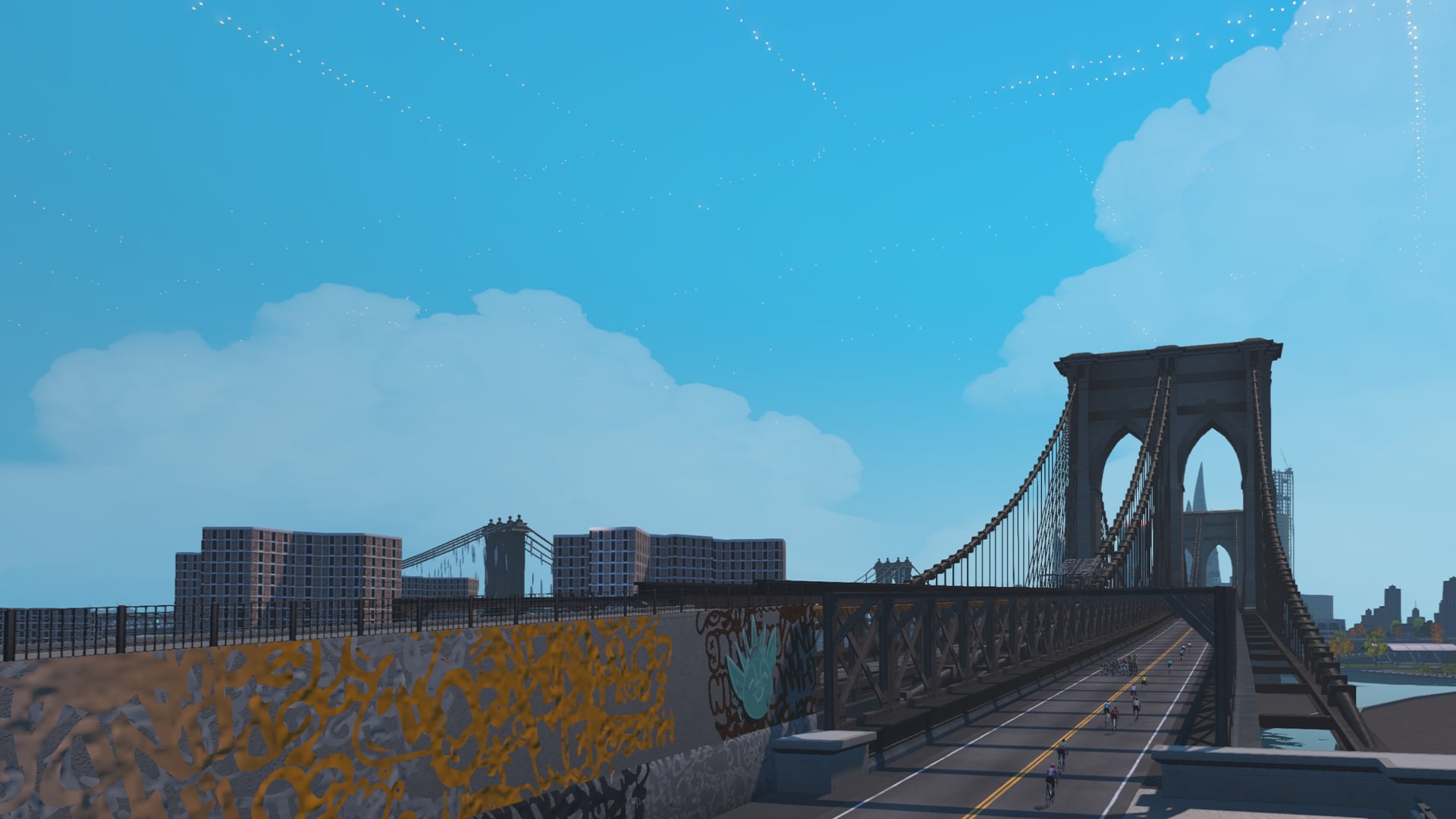
The Brooklyn Bridge includes a KOM section (Brooklyn Bridge KOM, 2km, 1.7%) which runs in only one direction, from the Manhattan side to the center of the bridge. It’s an interesting KOM, too, because it actually begins with a descent! (So don’t let that 1.7% number fool you, as this is really more like 1.5km at 3.6%.)
Subway 3 (Brooklyn)
Almost to Prospect Park! After crossing the East River via the Brooklyn or Manhattan bridges, you’ll descend into the third and final subway section. This is the only one located on the Brooklyn side.
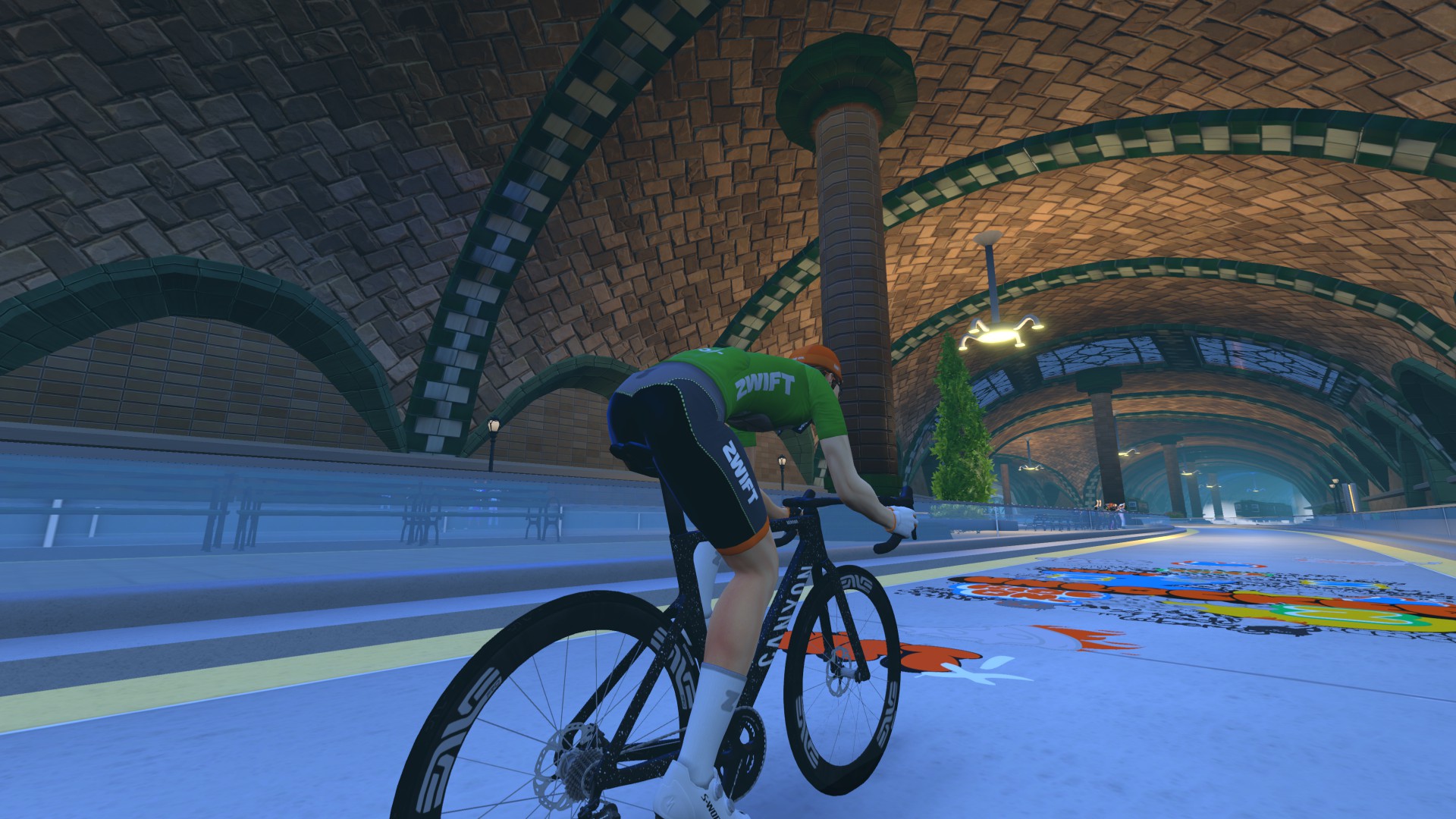
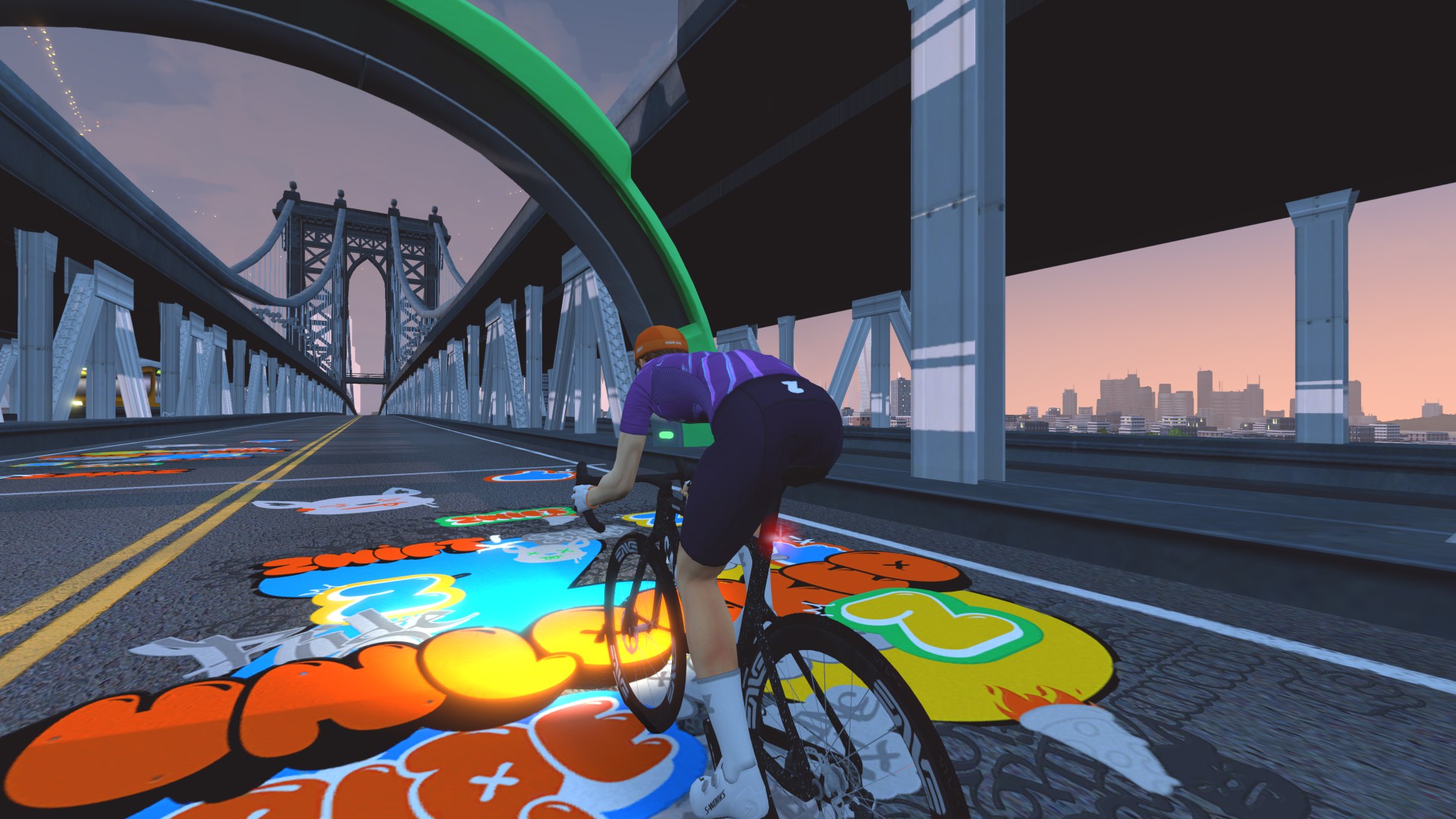
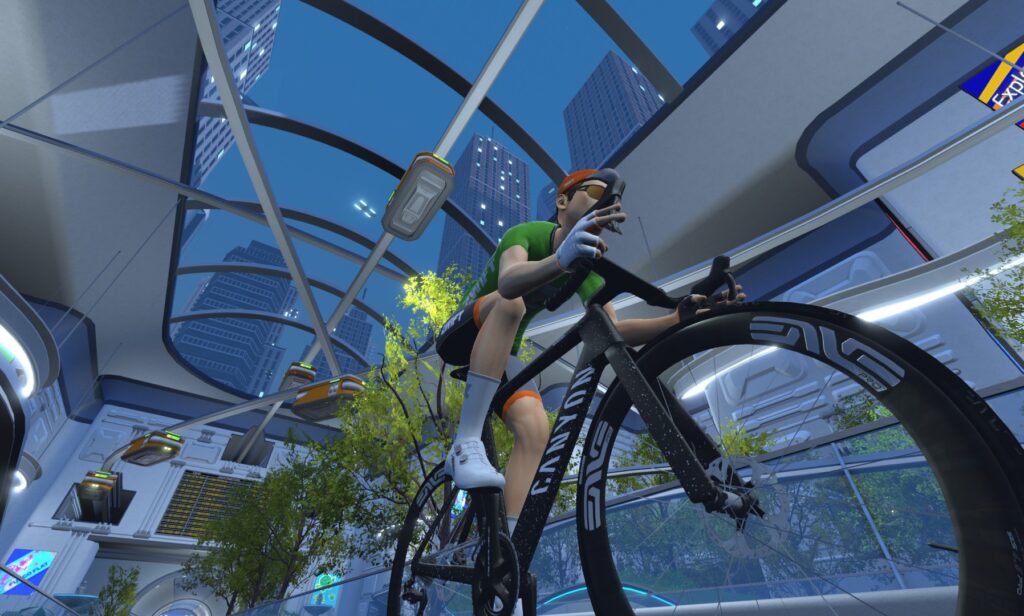
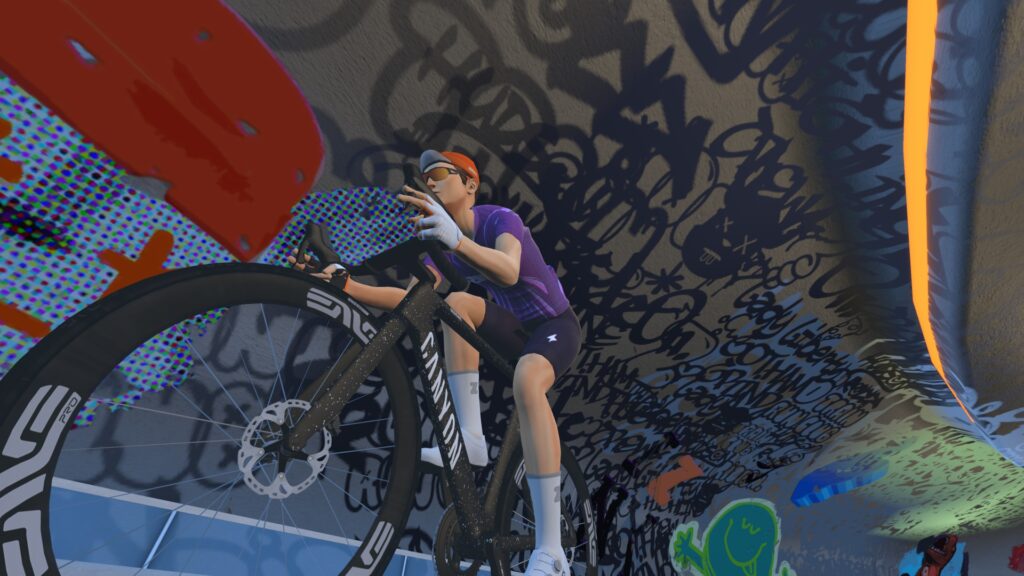
This subway is the “greenest” of the three, with more open skylights and windows to let the sun shine on the trees and plants in the station. This is also the most graffiti-heavy of the three stations, especially as you exit out the Prospect Park side.
The Brooklyn subway includes two Power Segments. Traveling southeast toward Prospect Park you’ll hit a 20-second Power Segment, while northwest includes a 5-second segment.
Prospect Park
Exiting the subway, you’ll travel south down Flatbush Avenue (which is actually a climb), arriving at a ring road that takes you around Grand Army Plaza to the entrance of Prospect Park.
Grand Army PlazaThe BandstandThe Peristyle Sprint
This park was designed by Frederick Law Olmsted and Calvert Vaux 8 years after they collaborated to design Central Park. Zwift’s layout matches the IRL park roads, including a 5.5km loop and a central road (aptly named Center Drive) that offers a shortcut to the other side.
Prospect Park includes 2 sprint banners and one KOM:
The Hill KOM Reverse (length and gradient unknown – while it shows on the leaderboard, there is no visible start line on course)
As you make your way around the circuit counterclockwise, you’ll notice various sites: the lap banner, which comes just after the new Prospect Park start pens. The Bandshell, which has received significant upgrades in Zwift’s reimagining. The Peristyle, which hosts the banner for a sprint that runs in both directions. And the Prospect Park Zoo, here much more visible than the real-life zoo, which is hidden behind a high gate!
Lots of dogs, with their humansLap bannerKOM banner
There are lots of nods to real-life Prospect Park layouts and features, too. The Peristyle Sprint is where the original sprint finish of Prospect Park’s IRL bike races was located. You’ll see lots of people chasing their dogs in the northwest portion, because dogs can be walked off-leash before 7am IRL. And you’ll pass Prospect Park Lake and the ballfields, whose real versions I saw when riding through the park with Jon Mayfield a few weeks ago.
Detailed List of New Routes
Here’s a complete list of the new routes Zwift released today, including short descriptions from me:
Avon Flyer (5.1km, 30m)*: named for Greg Avon, level 100 Zwifter and Prospect Park race organizer, this simple loop takes in the southern half of Prospect Park.
Double Parked (42.2km, 330m): begin with an almost complete lap of Prospect Park, then head all the way up to do a lap of Central Park before coming back down to finish that Prospect Park lap.
Double Span Spin (12.6km, 120m): a CCW circuit of the Manhattan and Brooklyn Bridges.
Fuhgeddaboudit (79km, 838m): the new longest route in NYC, this doozy covers all the roads on the map, including some in both directions!
Green to Screen (28.4km, 207m): perhaps the best route for seeing most of NYC’s new roads within an hourlong ride, as it covers nearly every bit of new tarmac from Times Square south.
Issendorf Express (7.3km, 53m): named for Charlie Issendorf (NYC racer, Prospect Park race organizer, and former head of events at Zwift), this route is a figure 8 of Prospect Park and Center Drive.
Prospect Park Loop (5.5km, 37m)*: a good place to chase the orange jersey, this is a simple CCW loop of the Prospect Park circuit.
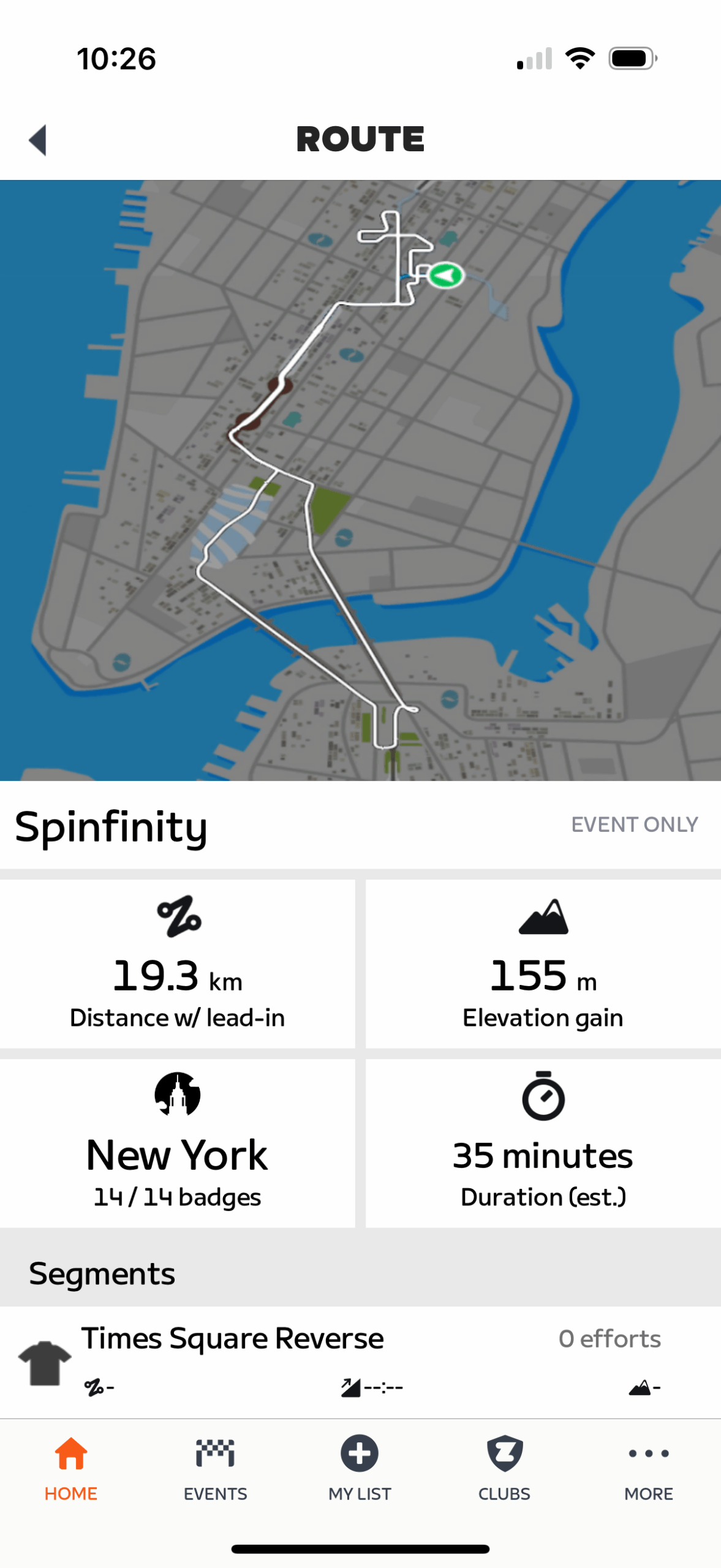
Spinfinity (19.3km, 155m): start and finish in Times Square, with a jaunt down to ride across the two bridges.
Spinfinity Ultra (35km, 291m): almost like two laps of Spinfinity, except you cross the bridges in a different direction on the second lap.
Stay Puft Pursuit (31.2km, 416m): starting in Times Square and traveling south to turn around at the bridges, this is the only route in the expansion that takes on the NY KOM in Central Park, both ways.
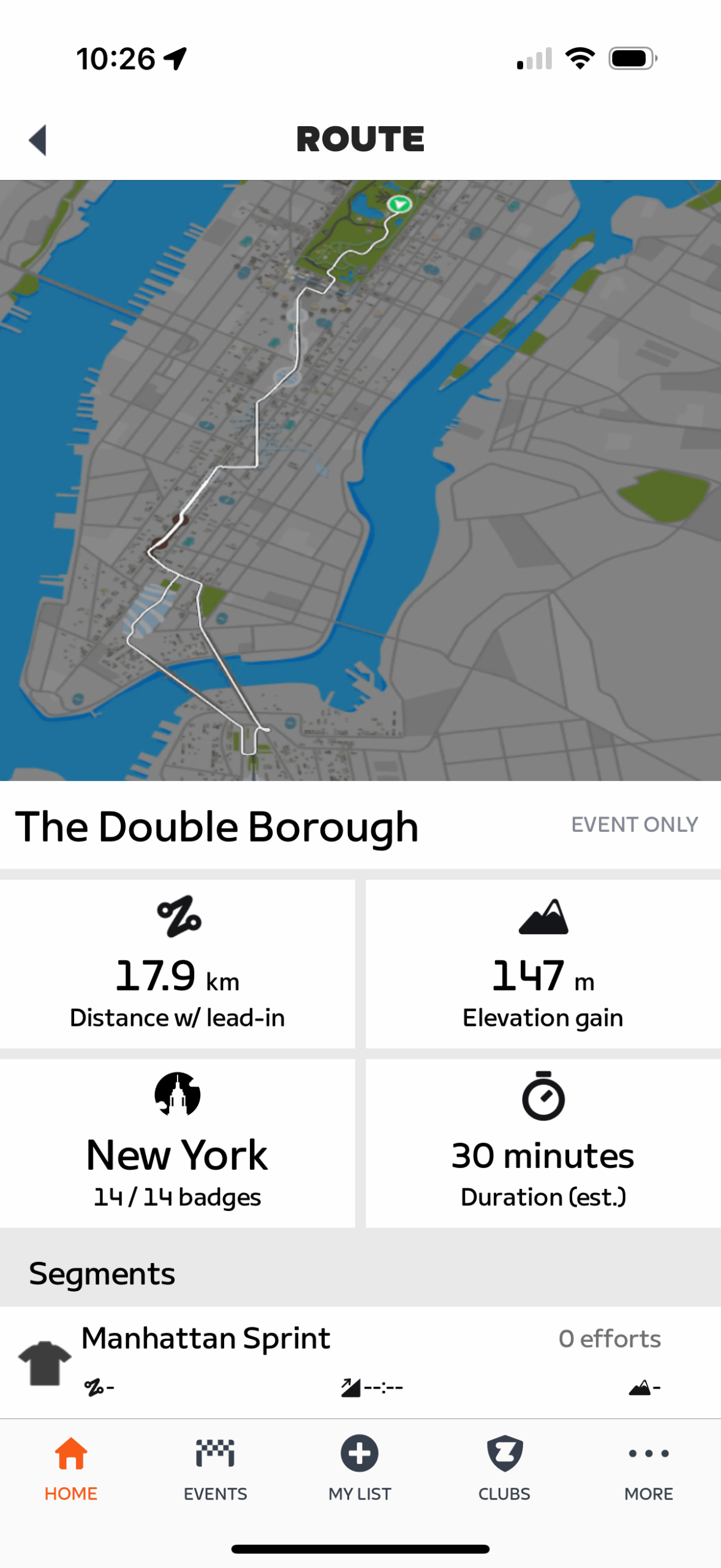
The Double Borough (17.9km, 147m): starts in Central Park and travels directly south, turning around by way of the Manhattan Bridge after crossing the Brooklyn Bridge.
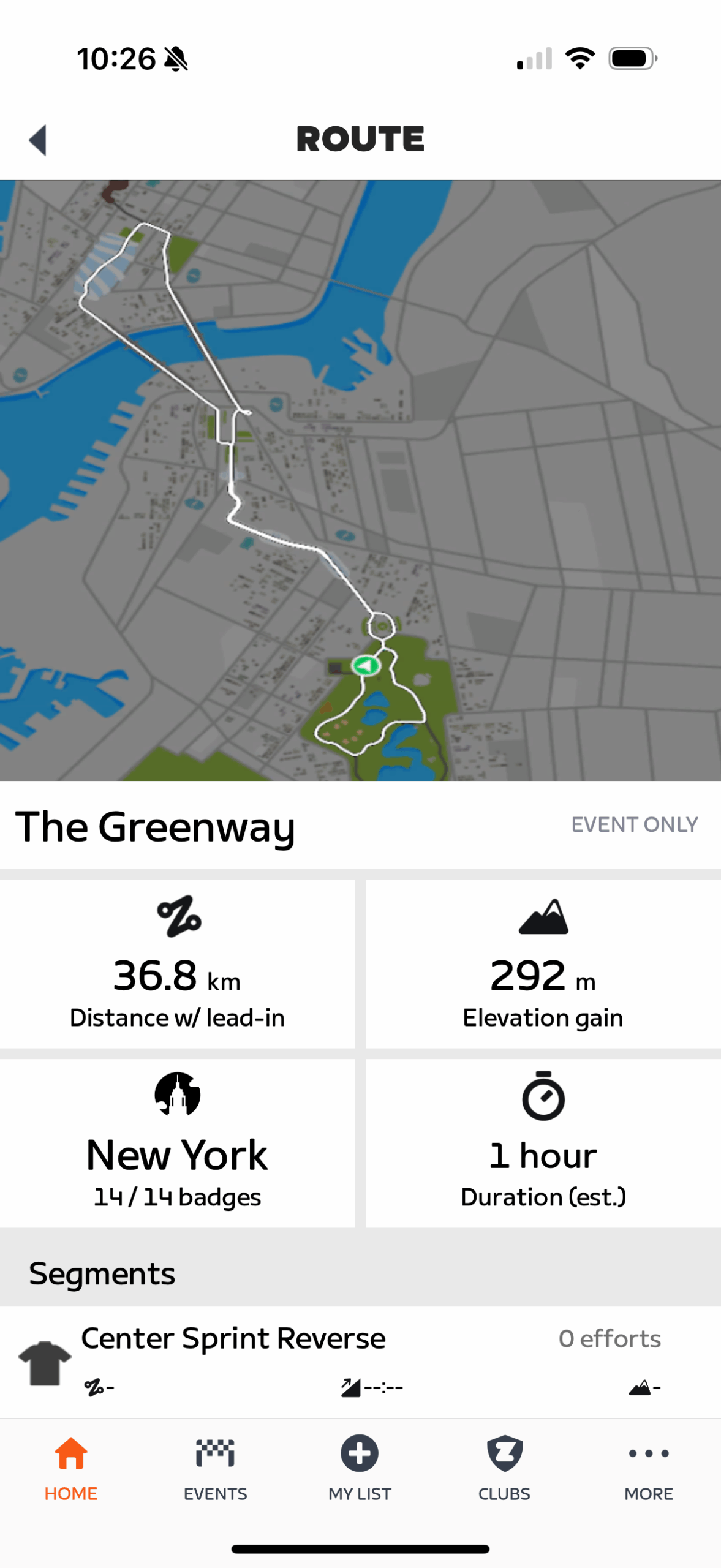
The Greenway (36.8km, 292m): ride the northern half of Prospect Park, then up to the two bridges. Then do it again, hitting the bridges in the other direction this time.
Toefield Tornado (10.3km, 53m)*: named for legendary Prospect Park race organizer Al Toefield, this route matches Issendorf Express, apart from three cheeky loops of Grand Army Plaza thrown in near the end.
Watts the Limit (31km, 219m): an out-and-back course that begins in Central Park and travels south to loop around Grand Army Plaza and return by the same roads.
* While all 12 routes listed have achievement badges and accompanying bonus XP for riders, only those marked with * have an achievement badge for runners.
How To Experience the New Routes Today
Want to ride the NY expansion today? While New York isn’t featured in the guest map rotation until November 5, getting on the new tarmac is sort of like navigating Manhattan traffic: it’s not too difficult, if you know what you’re doing!
But Zwift tells me that, starting today, Club events and Meetups can be scheduled on any of the routes listed above. So you’ll start seeing events popping up on the expansion roads this week, including Zwift Insider’s 100km Pizza Burner and Tiny Races!
Free Rides and Workouts
If you’re looking to ride the new routes as a free ride or on-demand workout, that’s easy as well. Oddly enough (and this is one of those “if you know what you’re doing” Zwifty things), both activities work the same way, since New York isn’t on the guest map schedule until next month.
To free ride/run one of the new routes, or cover it in a workout, select your workout, then select your desired New York route from the pop-up menu.
If you’re only looking to free ride the route, once your avatar arrives in New York, you can tab through all the workout intervals to quickly skip through the workout and revert to free ride mode. I call it the “fake workout” hack (see three other ways to ride any Zwift route at any time).
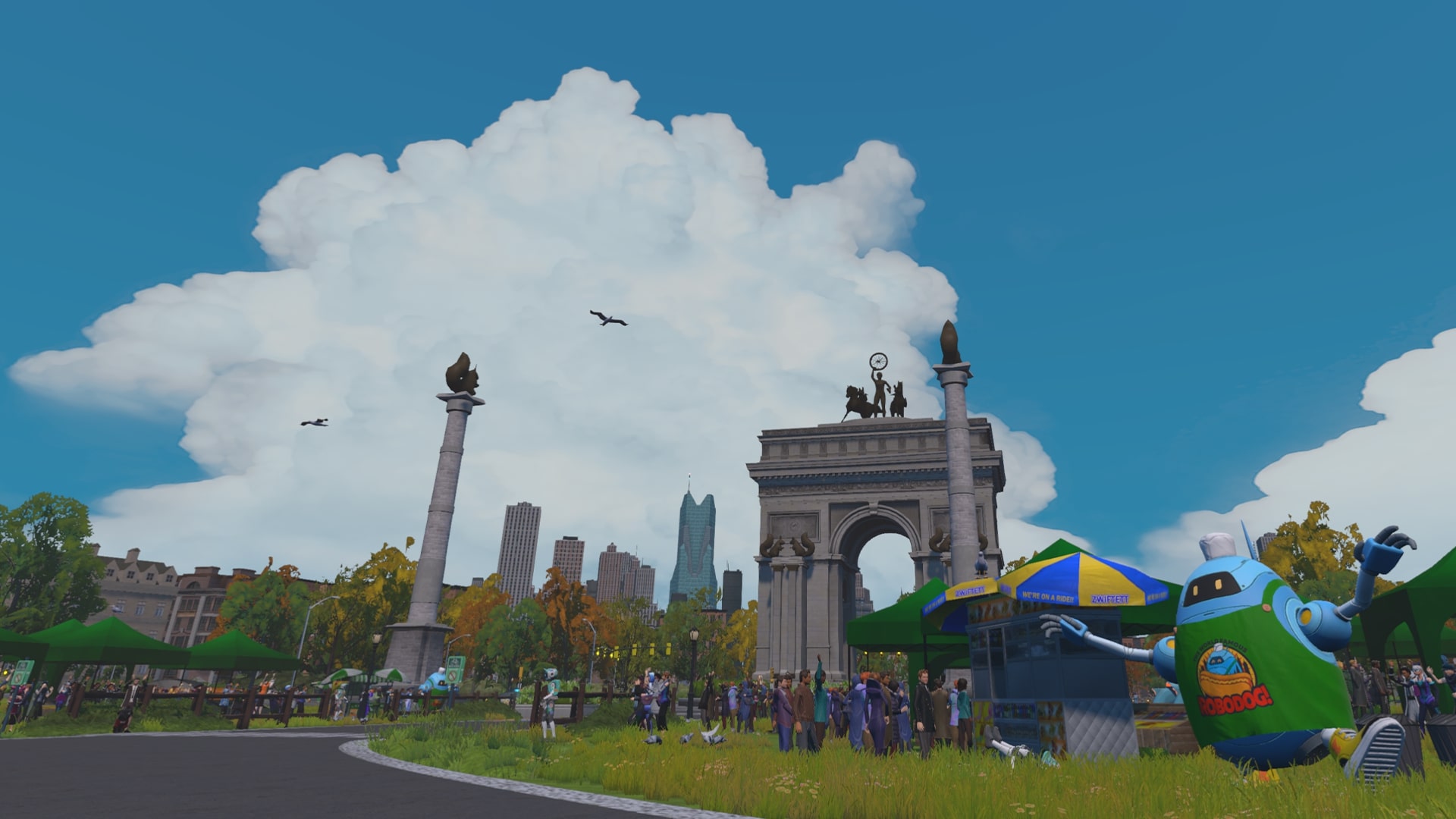
Prospect Park entrance, with Grandy Army Plaza in the background
Upcoming Routes Releases
Zwift says, “Over the coming months, an additional five routes will be unlocked, allowing Zwifters to explore more.” I don’t have any further details on these new routes at this time.
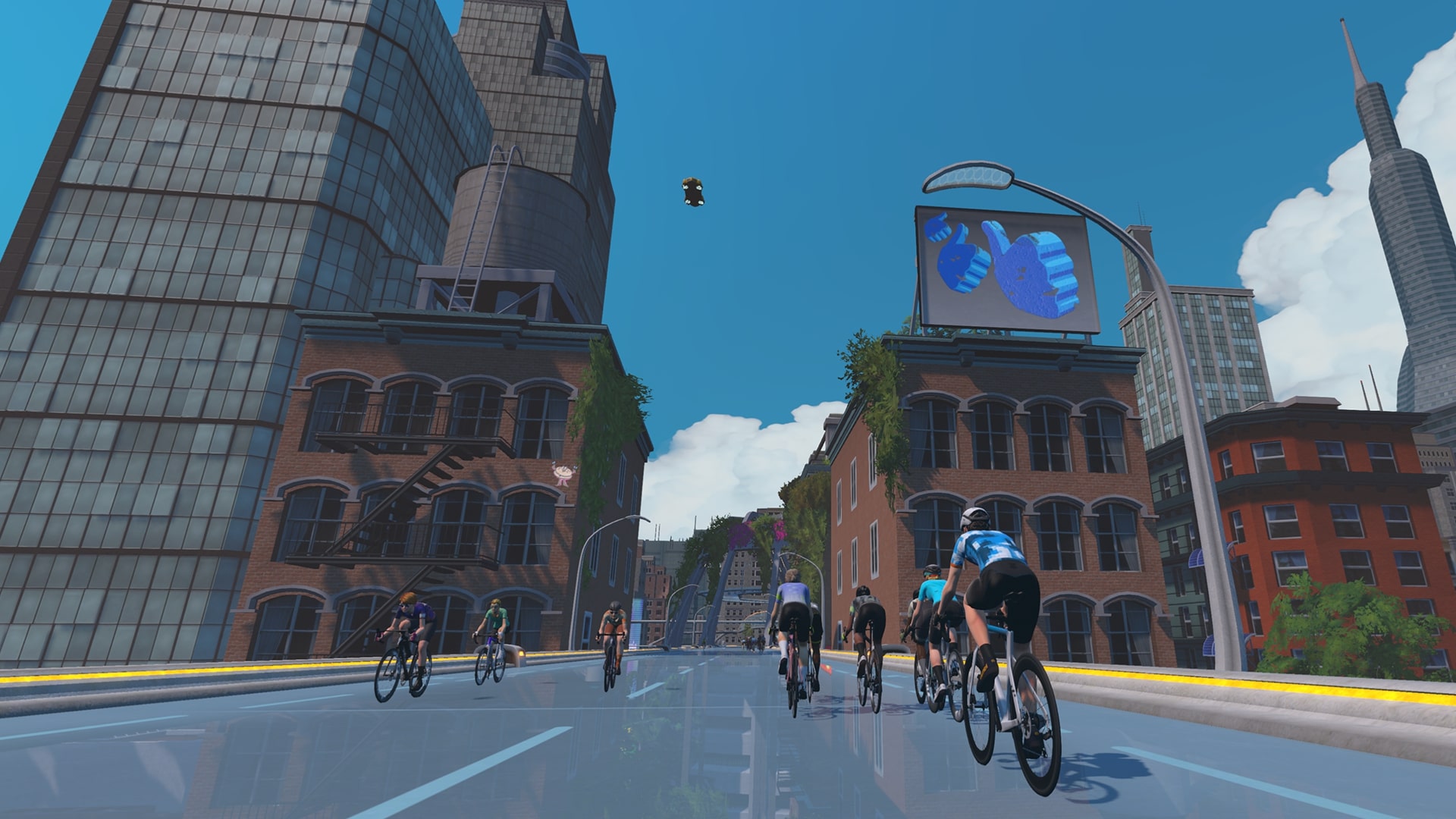
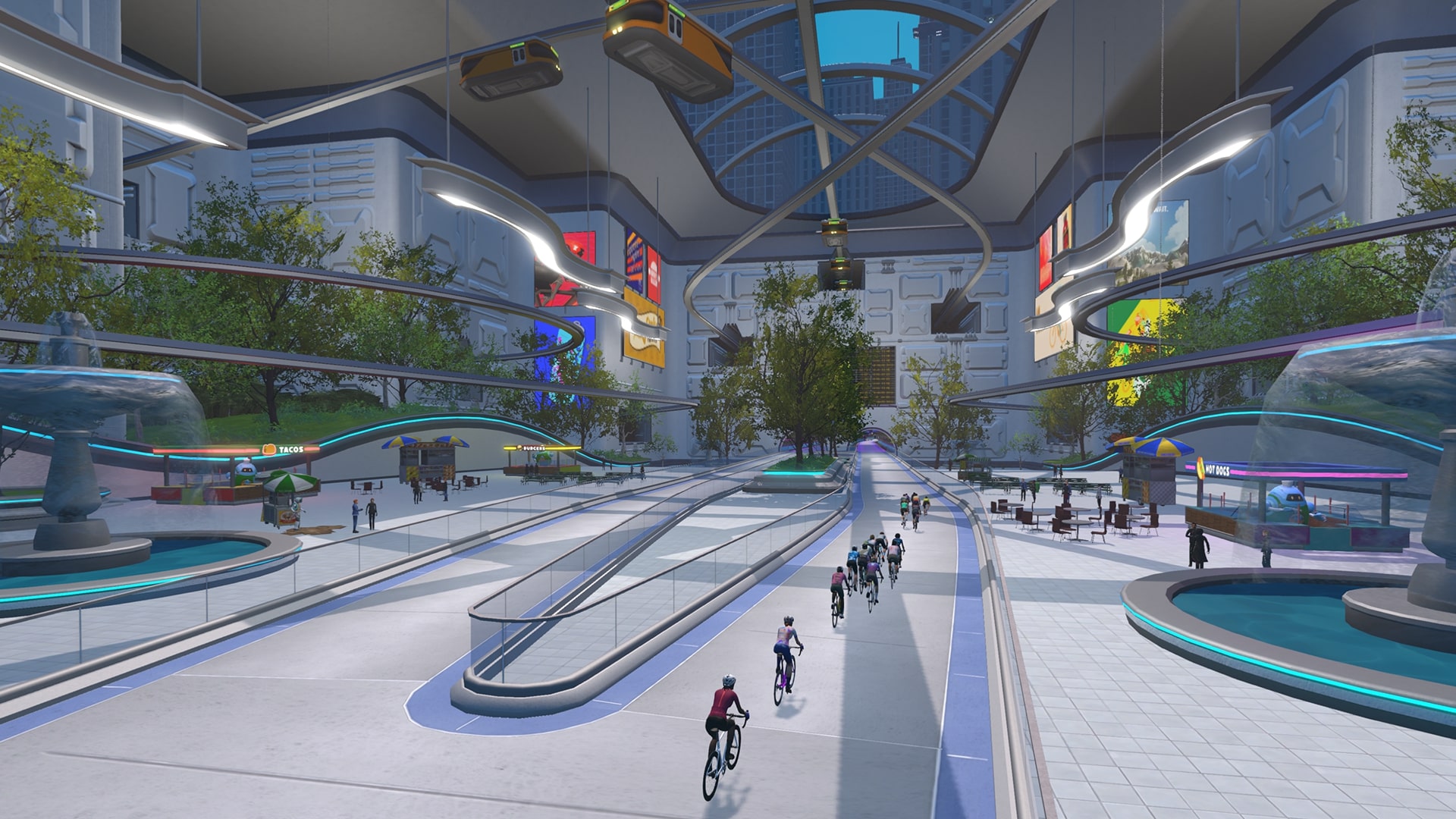
I’ll wrap up with a gallery of images Zwift sent over, since these are the only shots available that show multiple riders, giving us a better feel for what things will look like when it all goes live:
The one image still missing? The Statue of Liberty. Or should I say… the Scottie of Liberty. Yup. They did it!
Zwift has released its “biggest map expansion in five years” today, with 31km of new virtual roads added to its new New York map.
The New York map is set 100 years into the future with a “futuristic” network of glass sky roads around Central Park. But the expansion also heads out of Manhattan across the Brooklyn Bridge and into Prospect Park.
Zwift says that “in contrast to the challenging climbs of around Central Park, this expansion brings new faster, rolling roads.”
Zwift’s New York map now heads out over Brooklyn Bridge. Zwift
Alongside the expanded map, Zwift has also revealed a new take on its Timed Sprint Segments.
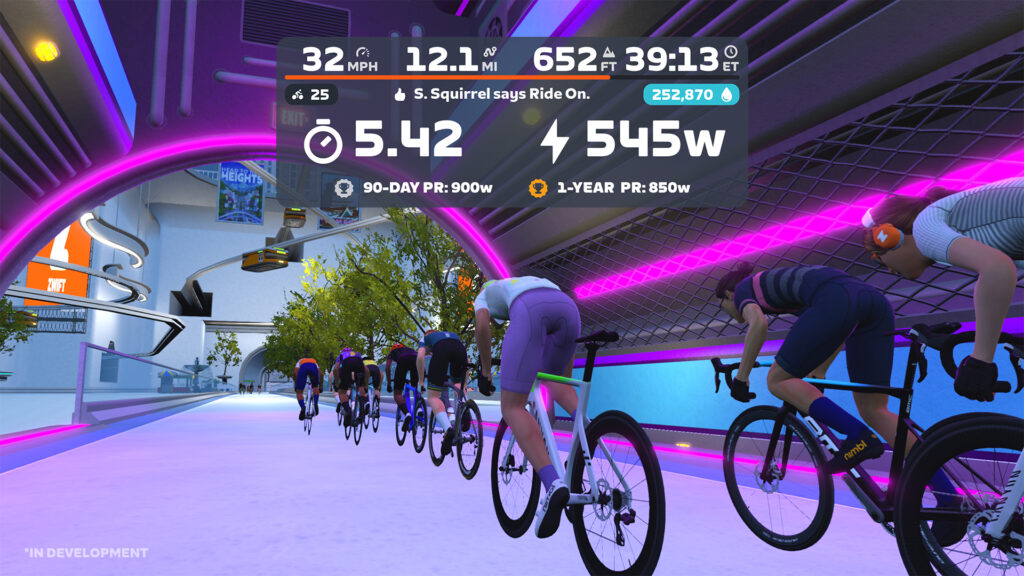
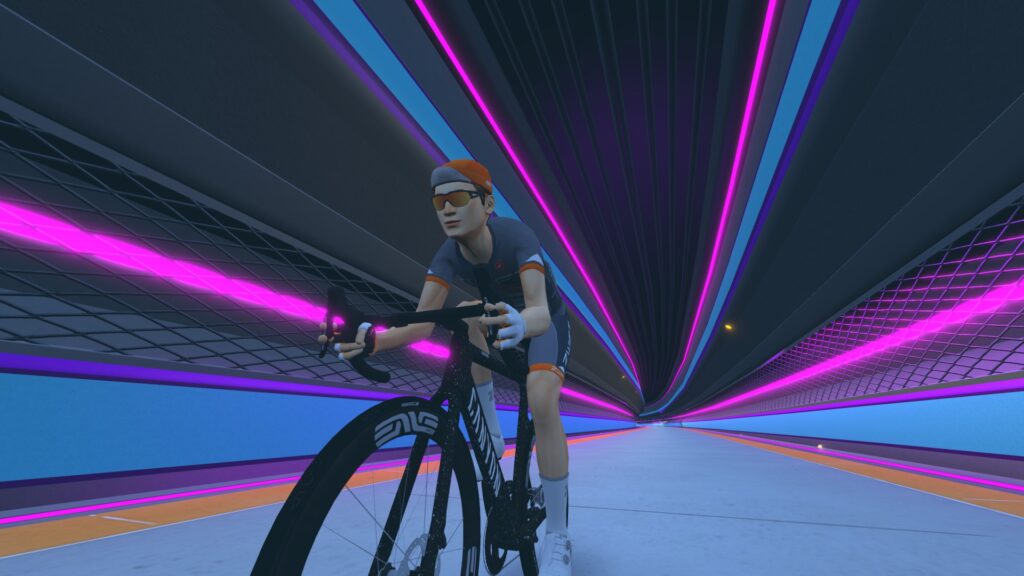
When riding in Zwift’s New York subway, you’ll find Power Segments on the map with a glowing start arch and timer displayed. Once you ride through the arch, the aim is to hold maximum power for the specified duration.
An average wattage display alongside graphics showing your 90-day and one-year power bests will be shown on screen.
There will be six Power Segments to tackle, helping you work on your 5-, 10- and 20-second peak power, according to Zwift.
“Jerseys are on offer for those with the biggest watts but personal improvement is the main aim here, so personal results will take priority when crossing the finish arch,” Zwift says.
There will also be more futuristic parts of Zwift’s New York map. Zwift
The expansion is stage 4 of Zwift Unlocked, a new Zwift Tour that replaces the Tour of Watopia and runs from 6 October to 16 November, and is your first opportunity to ride the expansion.
At launch, Zwift says there will be 12 new rides to explore:
Watts the Limit: 31km; 219m
Double Span Spin: 12.6km; 120m
Prospect Park Loop: 5.5km; 37m
Green to Screen: 28.4km; 207m
Double Parked: 42.4km; 330m
Fuhgeddaboutit: 79km; 838m
Spinfinity: 19.3km; 155m
Spinfinity Ultra: 35km; 291m
The Greenway: 36.8km; 292m
Toefield Tornado: 10.3km; 53m
Avon Flyer: 5.1km; 30m
Issendorf Express: 7.3km; 53m
Zwift says five additional routes will be unlocked in the coming months.
Electric mountain bikes are ruining mountain biking by impacting our personal relationships with effort and reward.
Traditional arguments against eMTBs centre on jeopardising trail and land access rights, abuses of in-built, country-specific speed limits and tearing up the trails with excessive erosion, among plenty of other legitimate concerns.
I agree with those frequently aired arguments – anything that puts our sport, and anyone’s right to go out and make the most of the countryside at risk, isn’t positive.
But I think the real reason eMTBs are ruining mountain biking is a deeply personal one.
It’s a reason any long-standing cyclist – who’s been around way before ebikes zipped up and down our hills and mountains – can surely identify with.
Heck, even those new to our sport can understand and appreciate how there’s no such thing as a free lunch.
Do ebikes preclude type two fun? Scott Windsor / Our Media
Type one fun – the descents, a jump line, freewheeling to the bottom of the hill – was, in the past, only made possible by copious amounts of type two fun.
The long, slow, grinding, sweat-inducing winch to the descent’s start makes that very fling with gravity even better, even more fun and rewarding.
But here’s the kicker, that type two fun with its grimace-making effort of burying yourself is, in retrospect, also highly rewarding and enjoyable.
Electric mountain bikes are disrupting our relationships with these two core ingredients of mountain biking like never before, and we’re much worse off for it.
That’s the face of someone – me – who loves riding their ebike. Tommy Wilkinson / Santa Cruz Bicycles
Before I go on, there needs to be an acknowledgement that eMTBs – and what they enable people to do – are excellent.
For people with a disability, people looking to start their fitness journey, people who don’t have much free time to ride, those coming back from an injury, or anyone else for that matter, they’re such a great tool, facilitator and enabler.
Even as an able-bodied, relatively fit guy who tests bikes as a job, I love riding mine, and there are plenty of people like me who love riding theirs.
Whether that’s for a lunchtime blast, an all-day epic or just a regular ride, ebikes are wicked.
I’m not singling anyone out, I’m not judging you for your choices or what you ride, but I still believe my point stands.
Please, sir, I want some more. Scott Windsor / Our Media
When eating out, or even at home, have you ever finished a dish that’s supposed to be a main meal and thought, ‘that was a nice starter, I wonder what’s for dinner’?
You leave unsatiated, hungry for more, dissatisfied with the quantity – cheated even – regardless of whether the food ticked all your other boxes.
In my eyes, ebiking is cycling’s equivalent of a lacklustre lunch.
More frequently than not, at the end of an eMTB ride, I’ve been left feeling slightly hollow, disappointed and unfulfilled.
Those rides have been long enough, they’ve had enough elevation gain and descent, and were tremendous fun, but the relationship between how much effort I’ve been putting in and the amount of sweet downhill reward isn’t in balance.
That same feeling of mild disappointment you get when you’ve not been given enough food lingers after an eMTB ride.
But it wasn’t while riding ebikes that this occurred to me.
Buzz kill
Pedal up or take the lift? I know which one I now prefer. Andy Lloyd / Our Media
The penny dropped when experiencing the balance of effort versus reward at its most stark while riding chairlifts and bike parks in the Alps earlier this year.
After casually racking up more than 6,000m of ascent and descent in one afternoon riding laps on what can only be described as some of the best trails in the world, I expected to have an afterglow; a buzzing, elated feeling I could relive and ride through the evening’s lull until the next morning’s fix.
But the feeling didn’t come.
I was flat, unfulfilled, my appetite unquenched by the repeated laps.
The next day, rather than buying another lift pass, I decided to pedal to the chairlift’s summit instead of slouching on the soft, padded and comfortable lift.
One lap was only 600 metres of elevation change, and the pedal – while not taking that long – set the tone for the ride.
Winching to the trail’s start under your own power feels very rewarding. Ian Linton / Our Media
On the way up, I decided to see how long I could hold certain power outputs for, I drifted off and thought about the mountains, I enjoyed the cowbells, I appreciated the morning sun and dew on the grass, and I pondered the lines I was going to take on the descent.
I got to the top of the mountain sweaty, energised and ready to savour every last turn, braking bump, root and rock on my way back down.
Earning something precious – created by the relationship between the climb and descent – added so much value to my lowly, single downhill run.
Pedalling to the top of the track made that run infinitely better than the 10 I did the afternoon before.
Back to ebikes
Do you need to earn your descents with hours of sweaty effort? I think so. Tommy Wilkinson / Santa Cruz Bicycles
While I’ll admit chairlifts and ebikes don’t have a great deal in common, taking the example of effort versus reward to its extremes helped me grasp what was going on.
On the chairlift, you’re sat fully stationary, free to snack, scroll or do whatever you please, while on the ebike you’ve got to be engaged, pedal, steer, brake and exercise.
But I realised that same hollow feeling I’d been experiencing at the end of ebike rides was the same I got from lapping the chairlift all day.
It was a eureka moment – the disruption between my effort input and my reward output was messing with my head and causing a disconnect.
Electric mountain bikes are preventing me from accessing the pleasure only the purest all-out efforts seem to be able to unlock.
Don’t be angry
Would this be an impossible climb on a regular bike? Ian Linton / Our Media
I’ve said it before, but I’ll reiterate it again.
You can still bury yourself on an ebike.
You can max out your heart rate, you can burn as many calories as you want, and you can certainly get stronger, fitter and become a way better rider with one.
You can also put in the same amount of effort as you would on your pedal bike, but go twice as fast or twice as far.
But don’t be angry if I call you out – how many people are using their ebikes like this?
How many of you are going as hard as you can – in the same way you would on your non-assisted bike – on your eMTB?
How often do you sit on your ebike’s speed limiter and keep pushing? Dave Mackison / SRAM
From personal experience, I’m going to bet confidently that very few are, me included.
Hitting the bike’s speed limiter feels like ramming headlong into a brick wall while maxing out the motor’s cadence window, so when support drops off it’s also demoralising.
There’s no incentive to push just that bit extra, to lift yourself truly out of your comfort zone as you would on your regular bike because your ebike doesn’t give you that instant, torquey, powerful dopamine hit when you do.
Recalibration
This feels much harder after you’ve been riding ebikes a lot. Mountain Bike Connection Winter / Rupert Fowler
The next time you head out on your regular bike, it takes a while to recalibrate – I frequently asked myself, ‘why isn’t this climb easier, or worse yet, already over?’. That is, until I came to terms with the impending slog.
Our perceptions of the amount of effort needed to get to the top of a favourite trail versus how much effort is required are totally out of whack.
It’s easy to see how people get stuck riding only ebikes.
They begin doubting whether they can make it up the climb on their non-electric bike and they question whether they’d be able to do more than one or two climbs and descents in a day.
Along with the other – very good – reasons for riding only ebikes, people get stuck, hooked on that gentle glide to the trail’s top.
eMTBs are ruining mountain biking
Stoked. Dave Trumpore / Fox
There’s no substitute for your regular bike, for pushing yourself, for going that little bit harder, for longer.
And, most importantly, for earning that sweet reward on the way back down after hours of hard, all-out effort.
The dichotomous relationship between time spent going up and down, and the amount of fun they both bring to the equation isn’t mathematically sound, but it’s the reason I and many others love this sport.
The effort makes the reward – no matter how small – that bit more worth it.
Bank Road in Matlock plays host to the 2025 CTT National Hill Climb Championship this weekend and BikeRadar will be there, hunting down the weirdest, lightest, sketchiest and most wonderful bikes on show.
The Nationals mark the finale of Britain’s short but savage hill climb season, a uniquely British racing niche that sits entirely outside UCI regulation.
This sees riders strip their bikes to the bare minimum in pursuit of speed, racing solo against the clock in a time trial format on climbs lasting anywhere from one to 20 minutes.
From high-end carbon frames with the paint sanded off, to featherweight fixies and DIY creations held together with little more than hope, the National Hill Climb always delivers a brilliant mix of ingenuity and pure suffering.
Always a professional and personal highlight of my year, I’ll be there this year for the whole weekend to document the best bikes on show. If you’re racing and think your setup deserves a moment in the spotlight, send a few photos and a short description of your bike to news@bikeradar.com. If it catches our eye, I’ll be in touch – and you and your bike can enjoy your five minutes of fame.
This year’s course covers 834 metres of Bank Road and Rutland Street, finishing on Wellington Street. It averages a brutal 14 per cent, pitching up to 20 per cent near halfway – short, sharp, and guaranteed to make even the fittest riders see stars.
We’ve been to Bank Road before, and it never fails to deliver. Back in 2016, former BikeRadar staff member Joe Norledge rode the Nationals on a custom 5.1kg Engineered Bikes fixed gear, stripping every gram he could while still keeping it rideable.
This week, as the Tour de France Femmes avec Zwift 2026 route was presented, Zwift announced a 3-year extension of their TdFFaZ presenting partnership with Amaury Sport Organisation (A.S.O.). Read yesterday’s press release below…
Zwift, the global online fitness platform for cyclists, is today proud to announce the extension of its sponsorship of Tour de France Femmes avec Zwift, continuing as Presenting Partner until at least 2029. The deal marks a continuation of a long-term partnership with A.S.O. that saw the introduction of the Tour de France Femmes avec Zwift to the UCI calendar in 2022.
“This is much more than a sponsorship for Zwift, it’s a part of our identity, underpinned by our mission to make more people, more active, more often.” Says Eric Min, Zwift CEO and Co-Founder of Zwift. “Growing women’s participation in cycling is a critical mission. We truly believe that to be successful, the Tour de France Femmes avec Zwift is essential. The first four years of this partnership have been incredible. The excitement is tangible and the impact is clear. I can’t wait to see what we can achieve over the next four years and beyond.”
The Tour de France Femmes avec Zwift was born from a shared vision between Zwift and A.S.O. to elevate women’s cycling to the global stage it deserves. The partnership began with the Virtual Tour de France in 2020, launched during the pandemic with equal fields for both men and women, to keep racing alive and connect fans around the world. The success of this event cemented the co-determination to bring back a Tour de France for women. That vision became reality with the launch of the Tour de France Femmes avec Zwift, a milestone moment that continues to inspire, engage, and grow the sport globally.
“The Tour de France has always been the most famous race in cycling and it has been fantastic to have it added to the calendar for the women’s peloton,” says Kasia Niewiadoma-Phinney, CANYON//SRAM zondacrypto rider and 2024 Tour de France Femmes avec Zwift winner. “Winning the iconic yellow jersey has been the highlight of my career and it is so exciting that the Tour de France Femmes avec Zwift will continue to be the biggest race on the calendar and show off the excitement of women’s cycling to people around the world.”
Central to Zwift’s mission to grow women’s cycling is the Watch The Femmes campaign. Over four years, the call to action has evolved into a movement, inviting everyone who supports women’s cycling, from media and industry partners to brands and fans, to unite around a shared goal: growing the sport and ensuring women’s cycling receives the visibility and recognition it needs to continue thriving. The impact of this united effort is clear in the rising visibility and audience engagement around women’s cycling. There is no race on the women’s calendar that has helped bring more attention to the sport. 2025 brought an average audience of 2.7 million viewers per stage, in France alone, with the coverage accounting for a 31.6% audience share. The final stage with Pauline Ferrand-Prevot storming to victory brought a peak audience of 7.7 million. Since the introduction of the Tour de France Femmes avec Zwift in 2022, Zwift has also seen an increase in the number of women joining the platform. Currently, 23% of new subscribers are women – a notable increase since the first edition of the race in 2022, where women accounted for 18% of new subscribers.
“The Tour de France Femmes avec Zwift continues to break records and exceed even our own expectations,” says Marion Rousse, Director of the Tour de France Femmes avec Zwift. “It’s a pleasure to work alongside a partner that helps amplify the race and women’s professional cycling in the way that Zwift does. We’ve achieved a lot already and I’m excited that we can continue this journey together.”
For more information on the Tour de France Femmes avec Zwift, head to www.letourfemmes.fr/en
Van Rysel has issued a recall of RCR Ultegra Pro and Dura-Ace bikes equipped with Swiss Side Hadron² Classic 500 and Swiss Side Hadron² Ultra 500 wheels.
The recall, published on the UK Office for Product Safety and Standards site on 15 October, states: “The product presents a serious risk of injuries as the outer carbon layers of the bicycle wheels can delaminate during use. This structural weakening may cause the wheel rim to fail, leading to serious falls and injuries.”
The bikes were sold from 1 August 2024 until 4 August 2025, with the following model codes:
Van Rysel says riders can contact Swiss Side directly or visit their nearest Decathlon store. Customers in the UK can also contact Madison Cycles – the UK distributor of DT Swiss products.
A ‘bike bait’ unit should be set up in the National Crime Agency to carry out “bike bait” operations to catch bicycle thieves, the Liberal Democrats have said.
The party has suggested the unit would work with local police forces to carry out targeted operations, planting bicycles fitted with trackers in theft hotspots so officers can catch offenders and uncover criminal networks.
‘Operation Bike Bait’ would also coordinate the collection and sharing of intelligence and best practice across police forces, “helping to build a national picture of bike theft and improve the policing response.”
It has cited Home Office data which shows that across England and Wales, 86 per cent of bike theft cases are unsolved.
Bristol Liberal Democrat councillor Nicholas Coombes said: “Like thousands of other cyclists, I am always worried to leave my bike around the city because of the danger posed by bike thieves. It shouldn’t have to be like this.
“I know local people are furious about the effective decriminalisation of bike theft in our city. Hundreds are denied the justice they deserve after their property is stolen, letting criminals get away scot-free. Our police do fantastic work in our community, but they need support and resource.”
Cycling UK supports the proposal. Kyle Dewick / Our Media
The Liberal Democrats proposal is not without precedent. In 2024, ITV News reported that City of London police were able to follow a ‘bait bike’ through London, which led officers to a haul of around £130,000 worth of stolen bicycles.
Duncan Dollimore, head of campaigns at Cycling UK, said: “The idea to target bike theft and the wider criminal networks that treat it like a business is a strong one. With so many stolen bikes being resold through online platforms, we know full well that targeting these groups can significantly reduce theft.
“People rely on their bikes as one of the most affordable ways to get around. It is simply not acceptable that the British Transport Police will not review the evidence of these crimes, when they relate to larger issues around organised crime. It’s time we treat this issue seriously.”
The ‘Operation Bike Bait’ proposal comes as part of the Liberal Democrats renewed calls for the Government to implement “proper community policing”.
The British Transport Police refuted the claim that bicycle thefts have been decriminalised, stating: “Bicycle thefts have not been de-criminalised as some headlines have suggested. When we do not have a clear time or location for the offence, or if there is a lack of CCTV, witnesses or other evidence, it can be very difficult to solve a crime.
“If it is available, we will review around two hours of CCTV footage to try to identify the incident, but it is not proportionate to review longer periods.”
This weekend’s notable events are headlined by Zwift’s Fondo Series, but we’ve also got a popular community race series kicking off, a unique women’s team chase event, a massive charity ride, and more. See details below!
Note: European clocks change on Sunday, so some of the times for Sunday events below may shift by an hour depending on where you’re located!
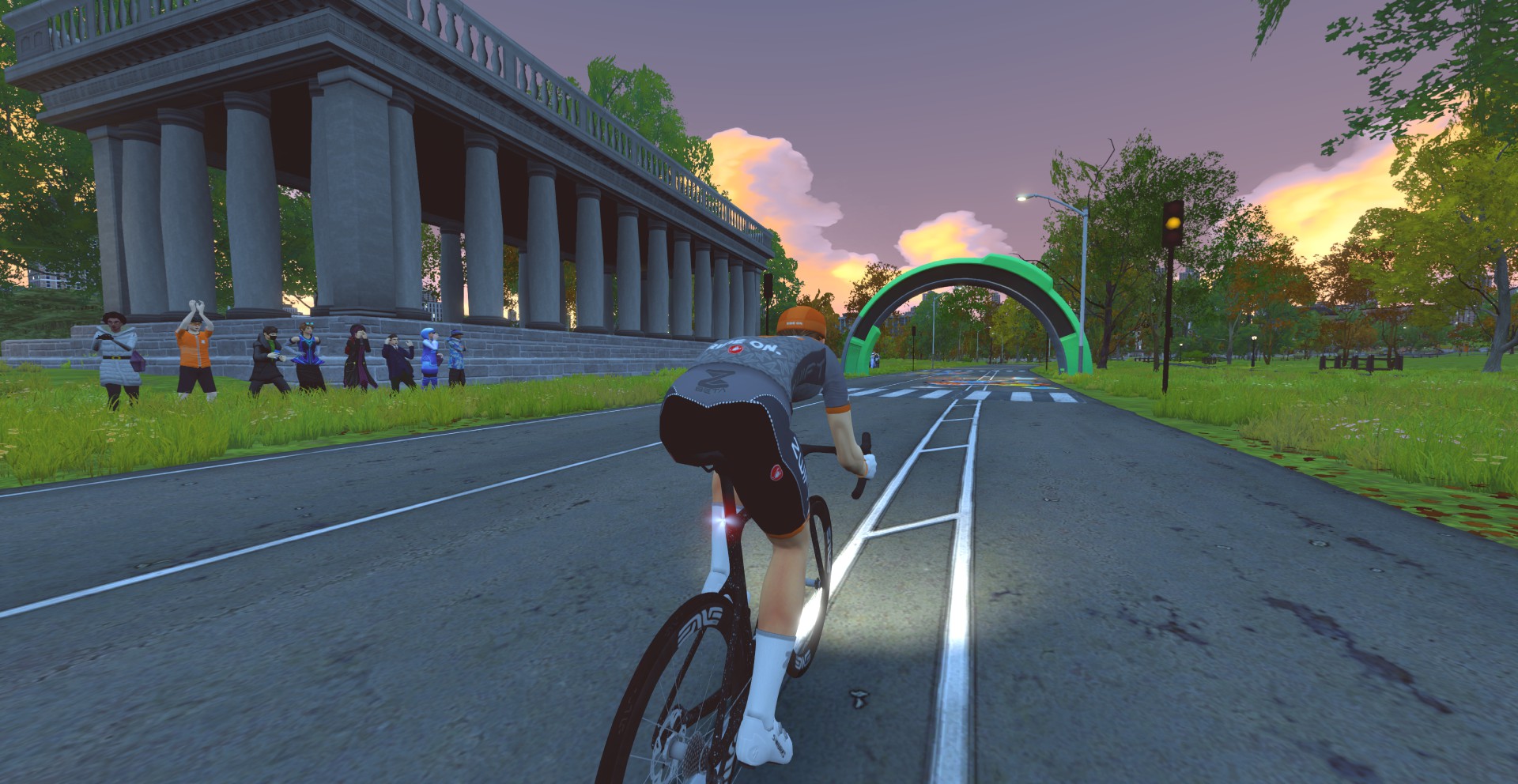
zFondo Series on Medio Fondo
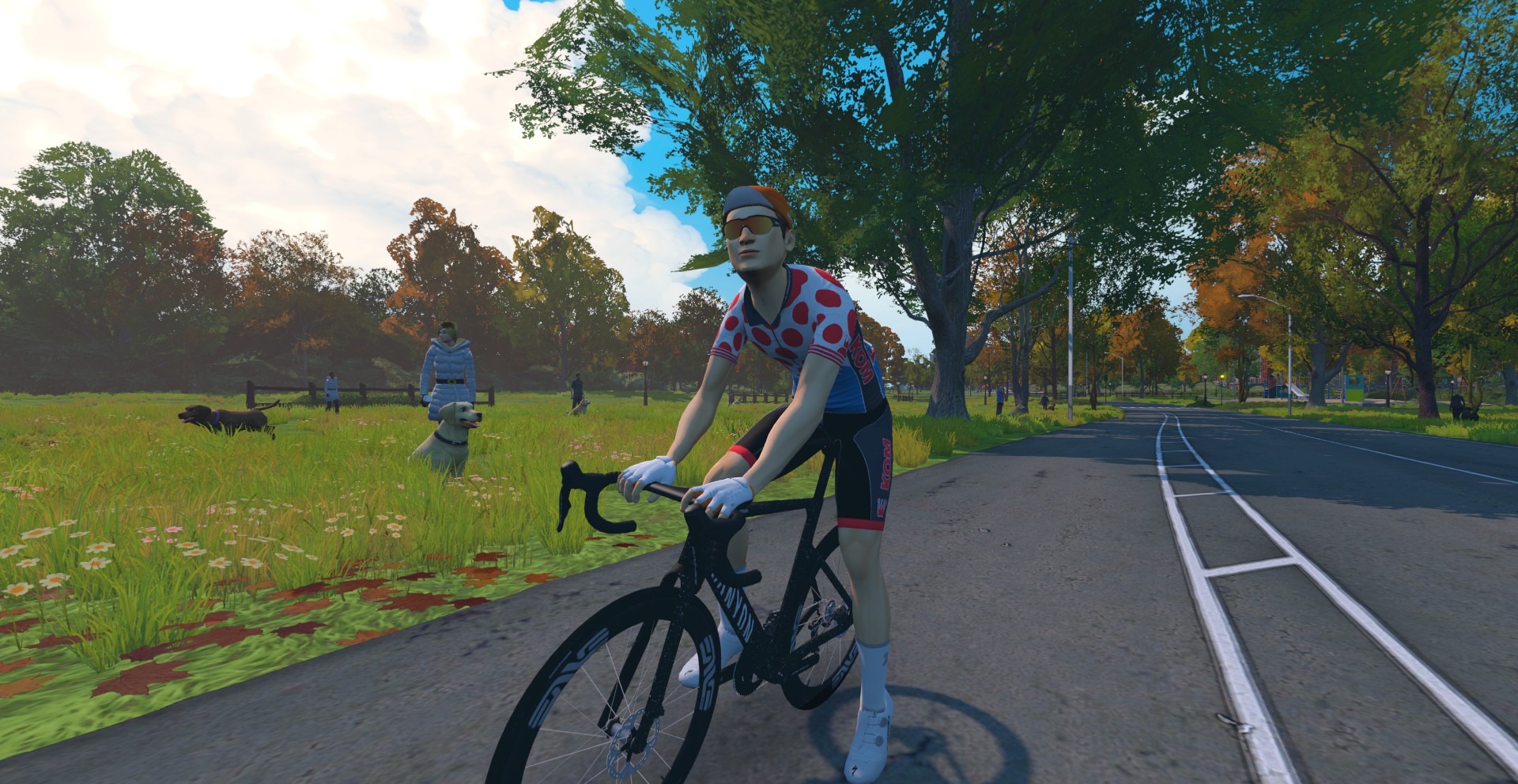
Bonus XP Popular Endurance Challenge Jersey Unlock
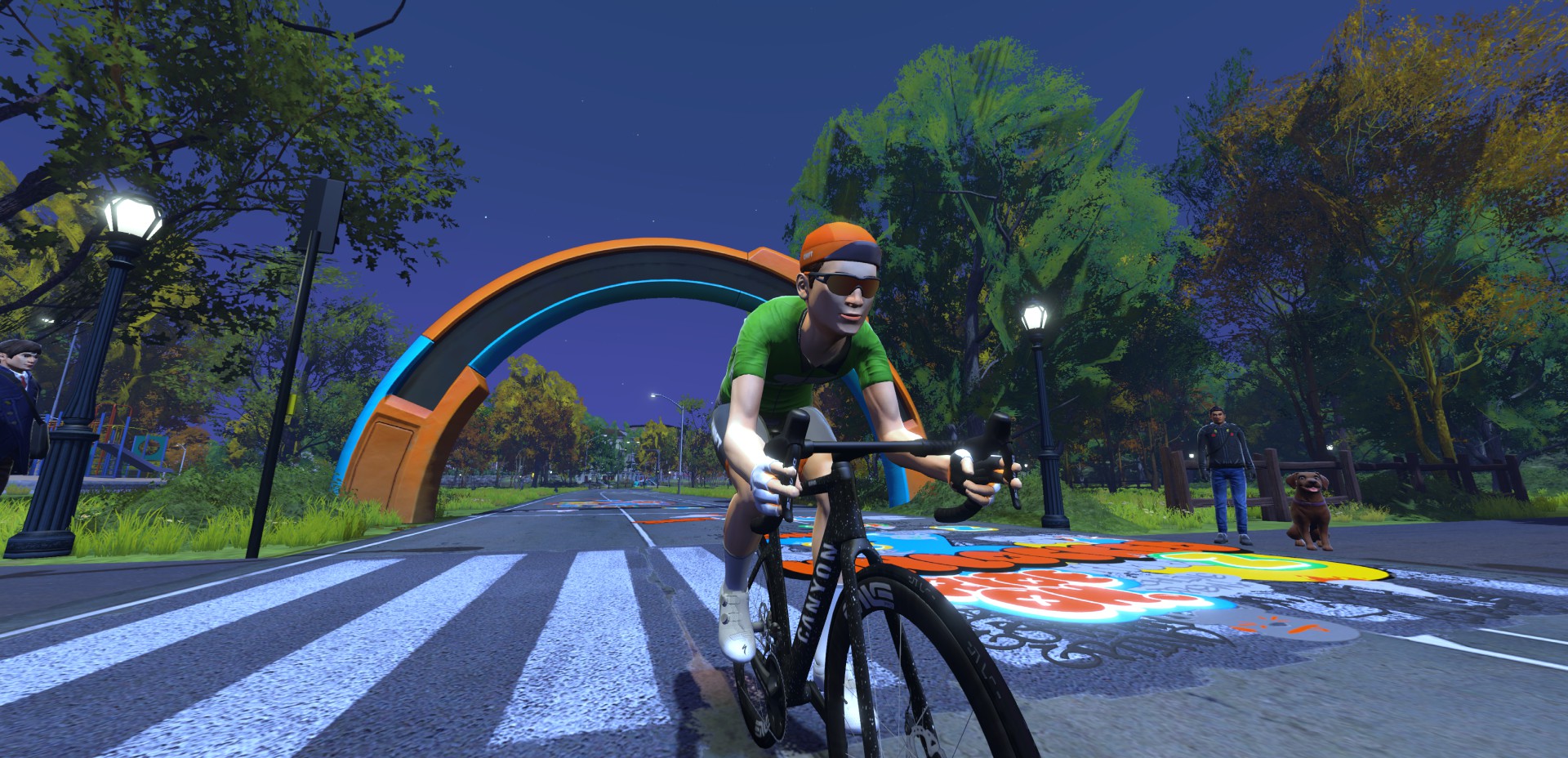
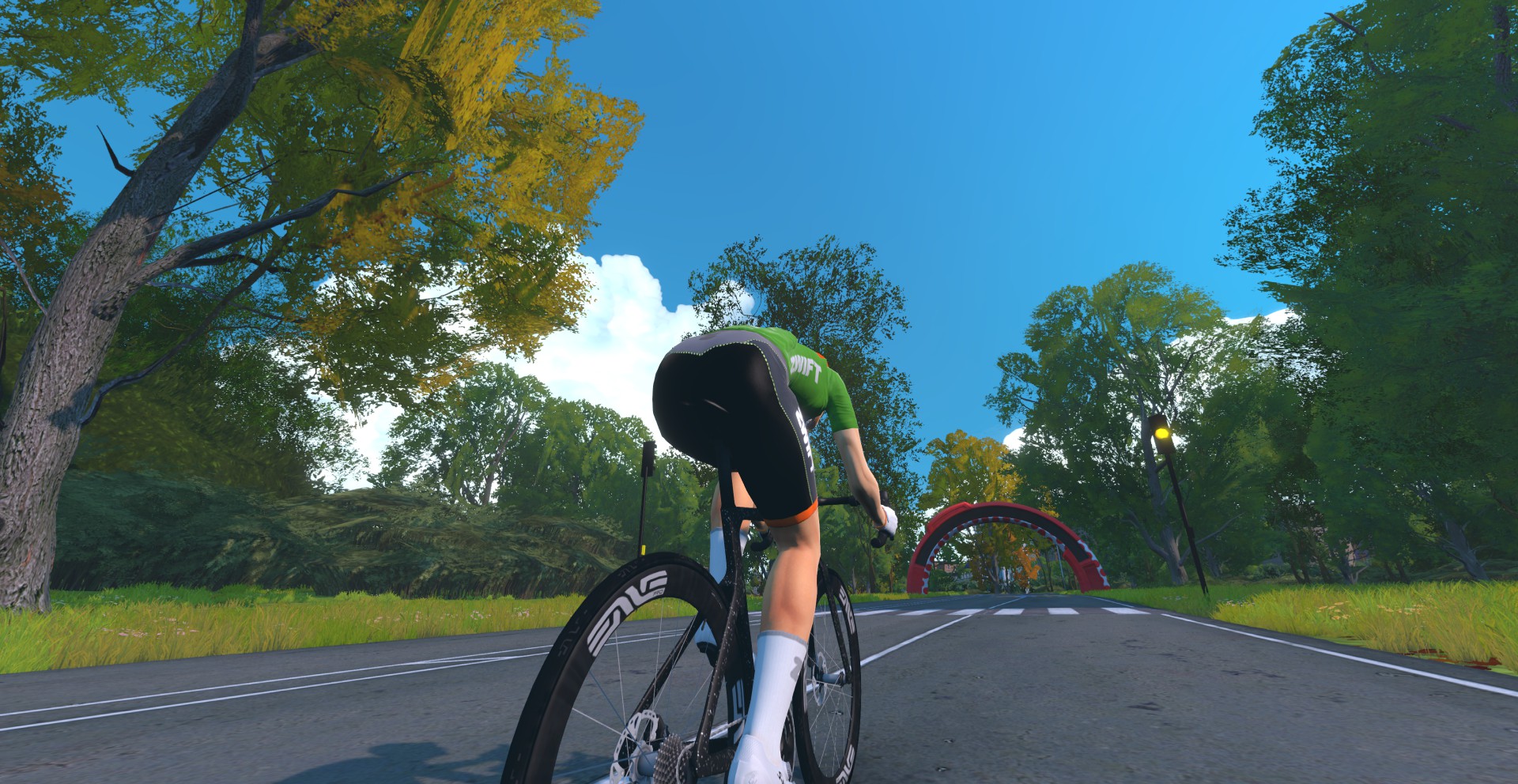
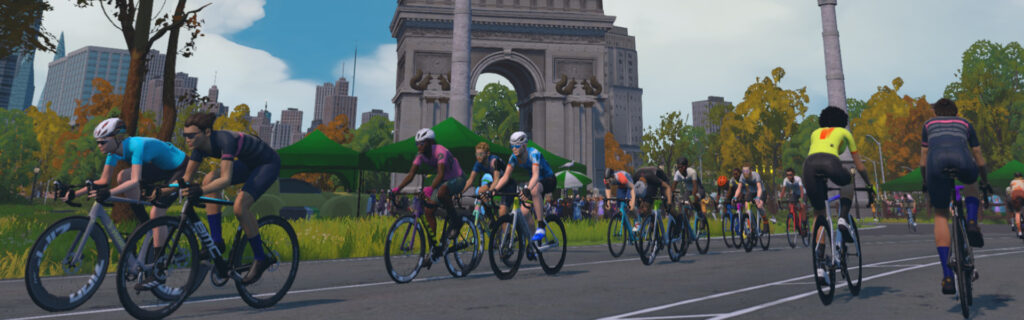
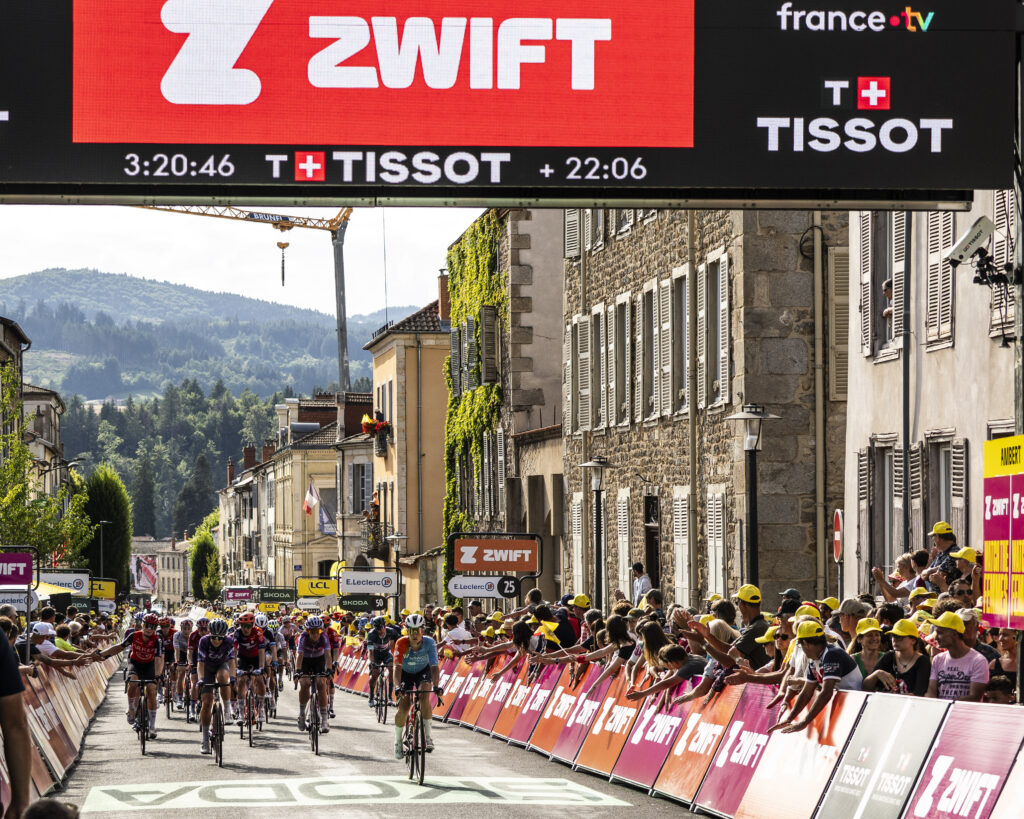
This is the second weekend of Zwift’s popular monthly Fondo Series, and we’re already seeing lots of riders signing up for these long “fun races.”
On the heels of last week‘s 24-hour charity ride, BMTR is holding their annual Breast Cancer Awareness 500km event! There are four events set up which you can choose from if you aren’t able to ride the full 500km, or join all four and stick around afterward to finish the full 500km.
In all four events, the yellow beacon will ride at a C category pace, averaging 2.4-2.8 w/kg. However, BMTR encourages riders to form groups that work for your pace.
This event benefits Metavivor, whose mission to offer hope for those with metastatic breast cancer. Donate here >
This interesting women-only event is a chase race… with a twist! This is truly a team chase race designed to encourage all riders in each category to work together to the end, because the final time for each rider is taken from the 4th rider in your category who crosses the line. (So your solo breakaway off the front isn’t going to help… you’ve got to work together!)
The race is on Scotland’s The Muckle Yin (23.7km, 282m) and groups are based on Zwift Racing Score.
The popular HERD Winter Racing Series kicks off this weekend! This is a 20-week series of weekend mass-start races. The series has a mix of flat, rolling, short climb, and even some long climb courses, so there’s something for everyone. It also visits all Zwift worlds.
A GC on ZwiftPower tracks series results, with your best 16 finishes counting (so you can miss a race or four if needed). This week’s race is on France’s Gentil 8 (25.8km, 258m).
This popular group ride from Morning Glory Cycling Club returns this weekend after a summer break. The club describes this as “not an easy ride, but a friendly don’t get dropped type of ride.” A Discord channel for voice chat is available, which always helps pass the time on longer group rides.
Pacing notes: warm up ~2.0 for 7 minutes. The rest of the ride will be at around 2.3-2.5w/kg, and the hills will be max at 3.2w/kg. There’s also a finishing sprint!
This week’s event is held on Watopia’s Big Foot Hills (69.9km, 714m).
We choose each weekend’s Notable Events based on a variety of factors including:
Is the event unique/innovative in some way?
Are celebrities (pro riders, etc) attending/leading?
Are signup counts already high, meaning the event is extra-popular?
Does the ride include desirable unlocks or prizes?
Does the event appeal to ladies on Zwift? (We like to support this under-represented group!)
Is it for a good cause?
Is it just plain crazy (extra long races, world record attempts, etc)?
Is it a long-running, popular weekly event with a dedicated leader who deserves a shout out?
In the end, we want to call attention to events that are extra-special and therefore extra-appealing to Zwifters. If you think your event qualifies, comment below with a link/details and we may just include it in an upcoming post!
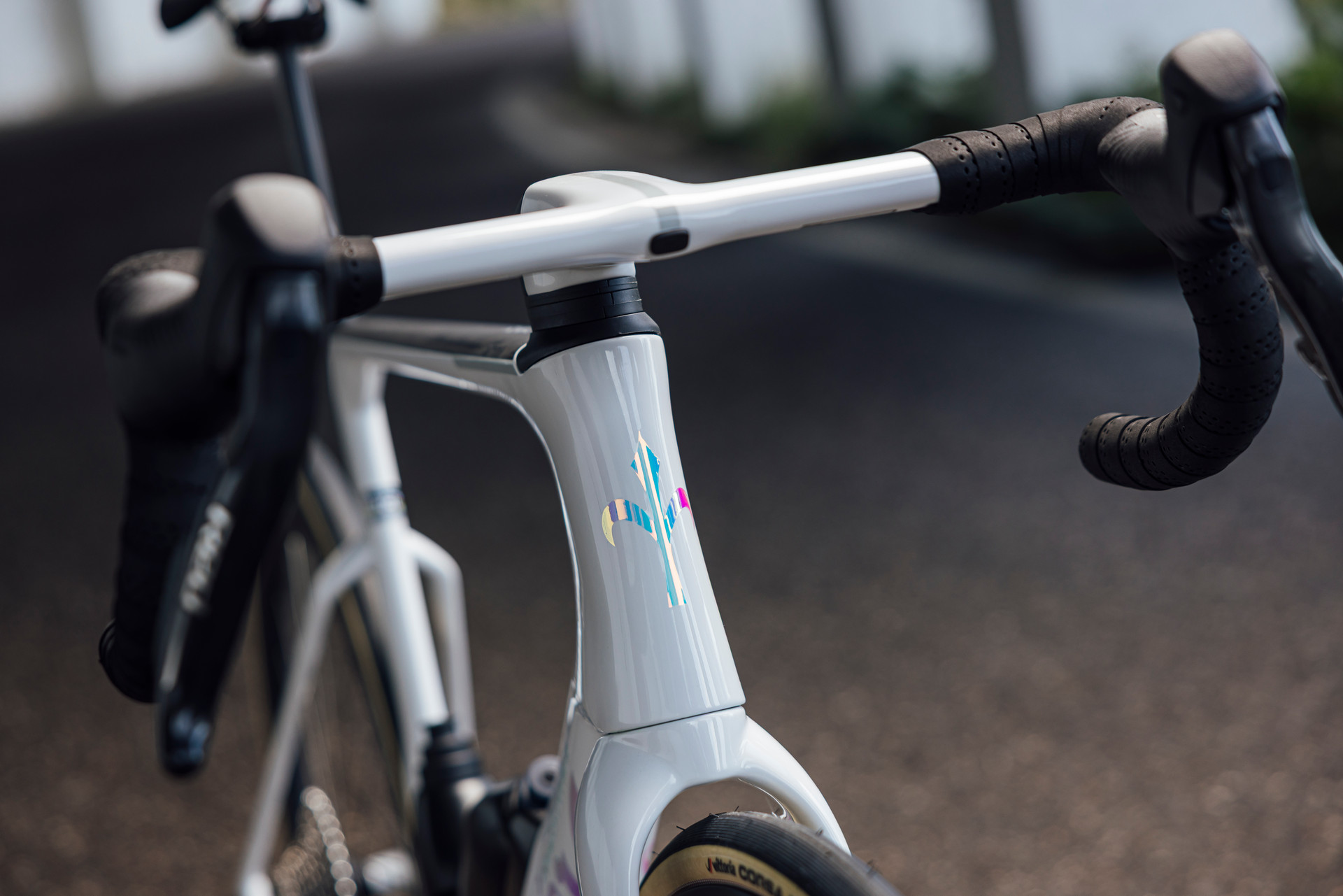
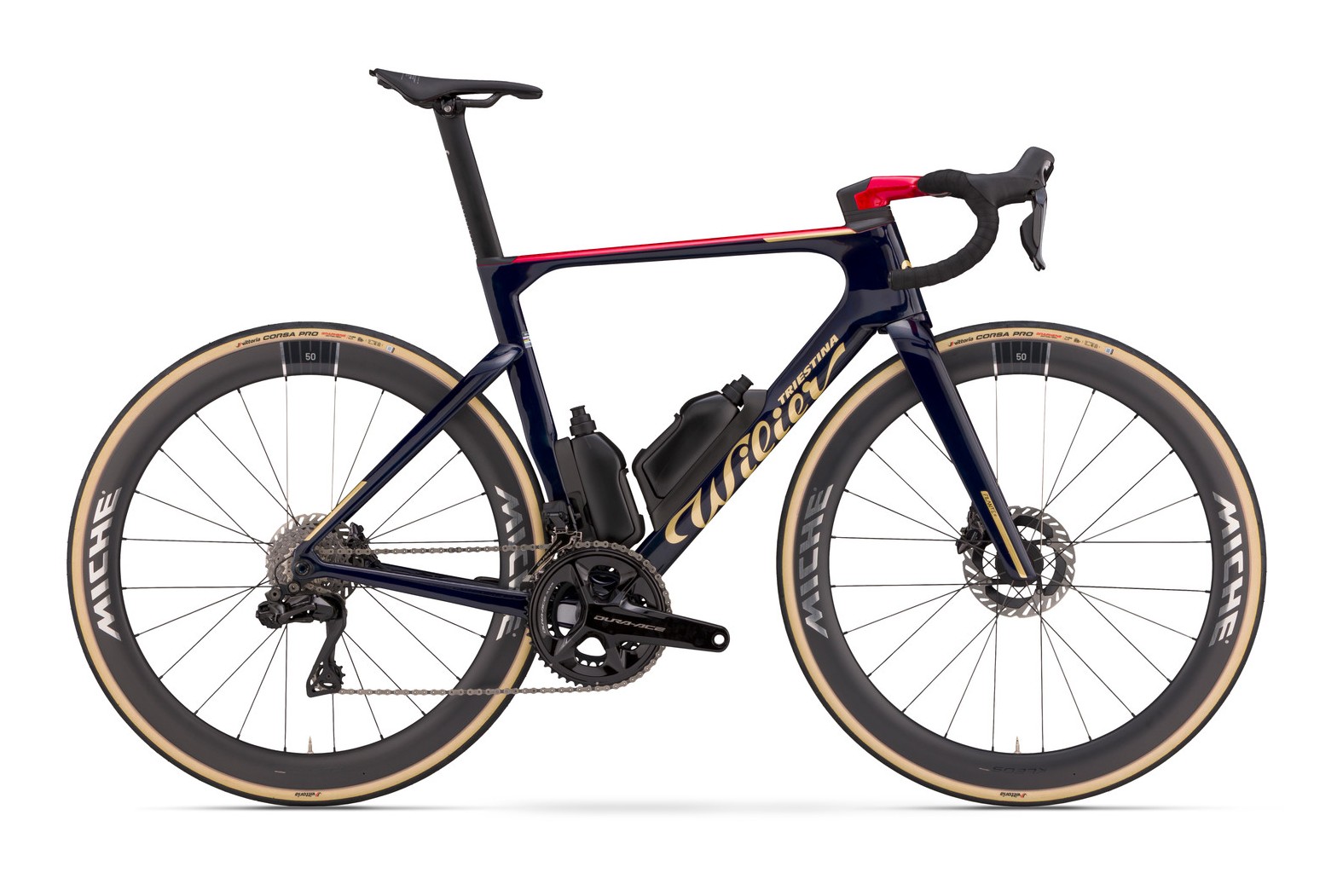
Wilier has launched an update to its Filante pro-level race bike, ridden by the Groupama-FDJ WorldTour pro team.
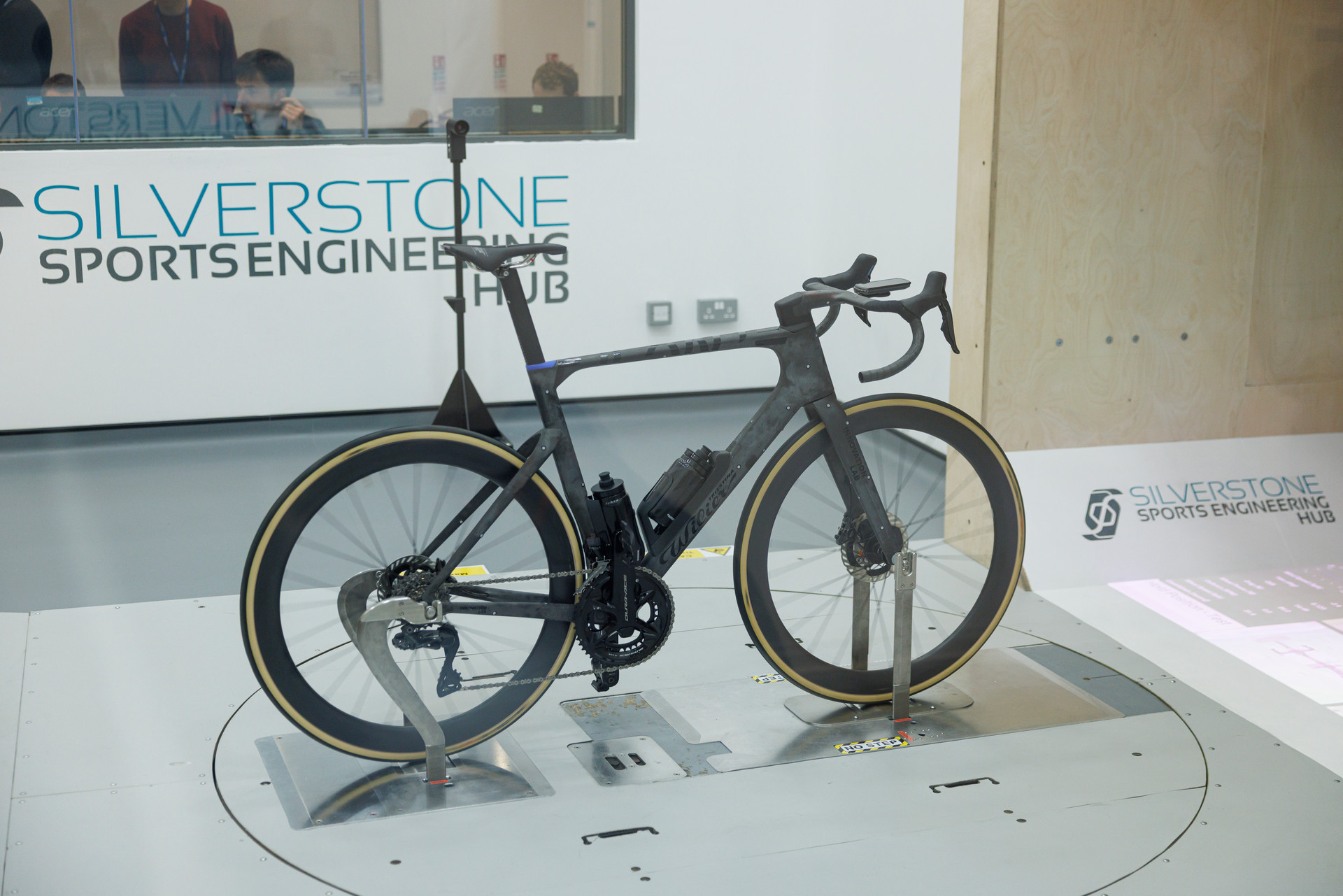
Wilier claims the new Filante ID2 is 13.6% more aero than its predecessor, based on its analyses at the Silverstone wind tunnel in the UK. That’s greater than Wilier had expected based on its CFD modelling, which predicted a 12% improvement in aerodynamics. When it placed a rider atop the bike, it registered a 4.5% aero benefit.
Wilier says that equates to a 14.15-watt drag reduction at 40km/h, or a 1 minute, 45 seconds faster time over 70km when riding at 290W.
A trip to the Silverstone wind tunnel is becoming an essential for any bike with aero pretentions.
The brand has also carried out a head-to-head comparison against five WorldTour bikes, claiming the new Filante ID2 is 2.42% faster on average.
Wilier uses a mix of M46JB, T1100 and T800 carbon fibre for the bike’s frame and claims an 860g frame weight, as well as a 7.5% increase in bottom-bracket stiffness over the previous-generation Filante. It says a complete bike equipped with Shimano Dura-Ace weighs 7.1kg.
Aero bottles and cages
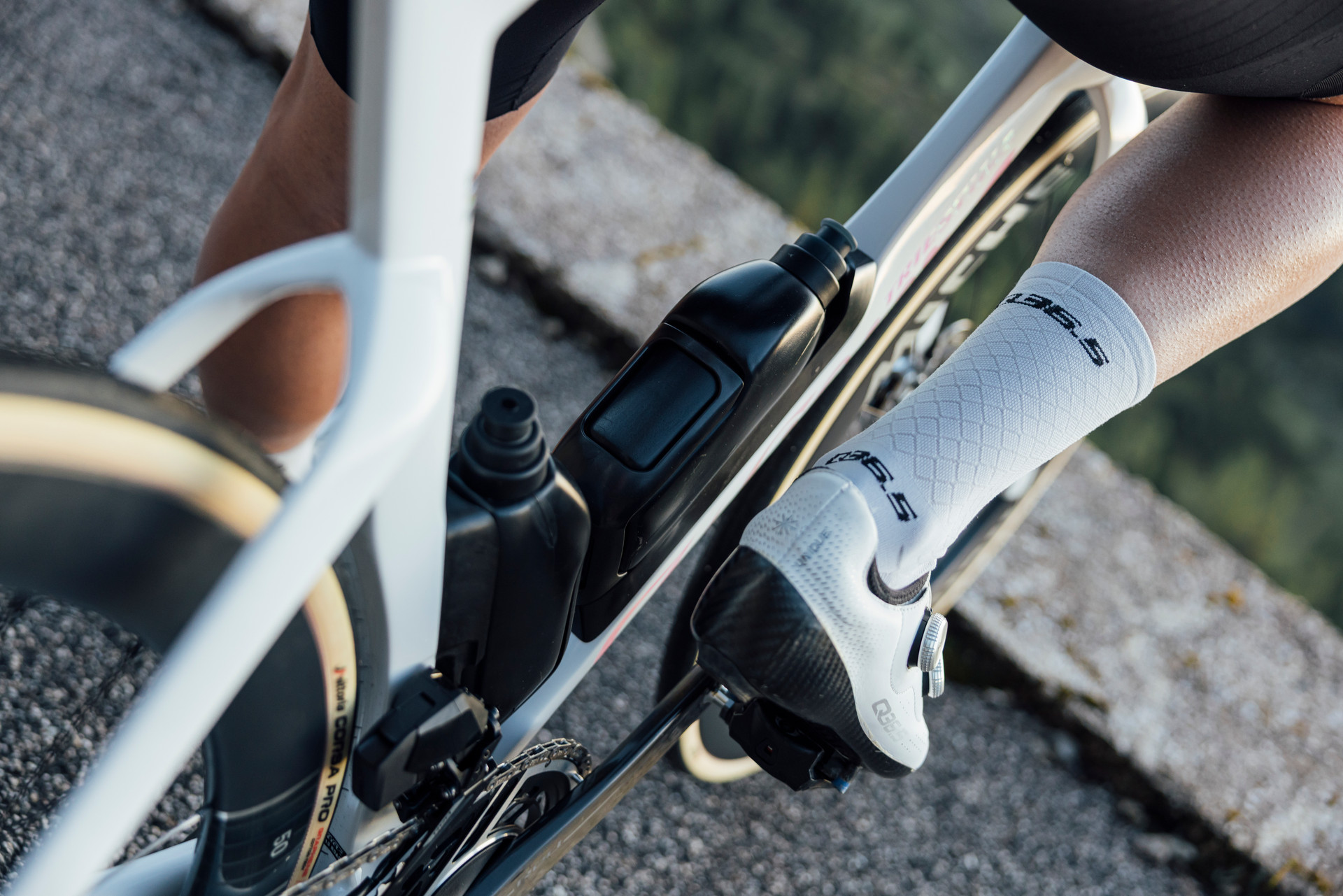
Much of the aero gain is claimed to come from the down tube shape, and the aero bottles and cages.
Wilier says much of the Filante ID2’s aero gain comes from its down tube shape, designed to shield the custom-designed aero bottles and cages, which are a collaboration with Elite.
As with other bikes, such as the Trek Madone Gen 8, Wilier says the Filante ID2 is more aero with bottles in place than without, claiming they reduce drag by more than two thirds compared to standard bottles and cages.
Like the Madone, its system is compatible with regular round bottles as well as its aero bottles, an important consideration for bikes used in races.
There’s 1,100ml total capacity with the aero bottles in place, or the option to hold a 750ml round bottle on the seat tube to carry more.
New flared bar
The Filante ID2 follows the Wilier Verticale with its flared bar.
Wilier adopted front-end integration as long ago as 2016 and the Filante ID2 is fitted with its latest bar/stem iteration, which it calls the F-Bar ID2.
As is now common on new performance race bikes, including Wilier’s own Verticale, there’s a flare to the bar – in this case, 3 degrees. Wilier has three widths available: 350/380mm, 370/400mm and 390/420mm. Effective stem lengths run from 75mm to 120mm.
The new handlebar completely encloses the clamping hardware, protecting it from contamination.
Wilier has also borrowed the aero, vibration-absorbing seatpost profile from its Supersonica SLR time trial bike. It comes stock in 0mm setback, but you can request a 15mm-setback version when ordering.
As is increasingly the case with modern road bike designs, including the Specialized Tarmac SL8 and the Cannondale SuperSix Evo, there’s not enough room in the seatpost to fit a Shimano Di2 battery, so Wilier has moved it to the bottom bracket area, where it’s housed in a resin casing. It can be removed easily if needed.
Wilier says the placement also lowers the bike’s centre of mass, improving high-speed stability.
Updated fork and seatstay profiles
Wilier says the seatstays are angled in slightly for better airflow.
Wilier has worked on its fork design, with a new aero blade profile, a more robust fork crown for increased torsional stiffness, an aero fin on the left leg that helps improve aerodynamics around the brake caliper and rotor, and a blind thru-axle bolt on the right leg to smooth airflow.
There’s been more work done on the rear triangle, which now offers 34mm tyre clearance and a UDH dropout, with a slightly increased 41.1cm chainstay length. The seastays are now angled slightly inwards, with the 2.5-degree angle claimed to improve aerodynamic interaction between the stays and the rider’s legs.
Along with the Universal Derailleur Hanger at the rear, the front derailleur hanger can be removed, so the Filante ID2 is compatible with SRAM Full Mount 1×13-speed groupsets or a 56-tooth single chainring.
Wilier Filante ID2 specs and prices
Royal blue is one of five colour options.
Wilier will sell the Filante ID2 equipped with a range of top-tier groupsets, including options with and without a power meter.
There are two wheelset options: the higher-spec 1,445g Miche Kleos RD 50 and the lower-spec Kleos 50 with a 1,545g claimed weight. There’s also a frame-kit option, complete with bar/stem, and aero bottles and cages.
There are six frame sizes available, which in combination with the different component choices and setups offer 420 different sizing options. The Filante ID2 is available in five colours.
Campagnolo Super Record 13 w/o power meter, Miche Kleos RD 50 wheelset: €13,100
SRAM Red AXS w/ power meter, Miche Kleos RD 50 wheelset: €12,900
Yesterday, Zwift added a set of new New York City routes to the Companion app’s route browser. The new routes are marked as “event only” and include route length, total elevation, and a list of included leaderboard segments. The routes also include maps showing the new roads… here are a few examples:
New Routes
Here’s a complete list of the routes that showed up in Companion yesterday. (Click a route for details, which are pretty sparse right now. We’ll be filling in these route pages next week after we’re able to ride the routes, take cool photos, launch Strava segments, etc.)
Since the Companion app lists which leaderboard segments are included in each route, we can figure out the names of new segments being added to the NYC map. (Again, click for details, which are currently sparse and will be filled in next week.)
There are also new lap segments for “Prospect Park Lap” and “Times Square Circuit” which will probably award orange jerseys like other in-game lap segments.
This expansion includes a new feature called “Power Segments” which are time-based (5 seconds, 20 seconds, etc) instead of distance-based like current sprint and KOM segments throughout the game. The leaderboards, in turn, rank results based on power output, not finishing time. I don’t see any mention of Power Segments in Companion, but it seems sensible that we would eventually be able to browse our power KOMs on these segments.
When can we ride the new roads?
Some of the routes (The Greenway, Spinfinity, and Prospect Park Loop Run) added to Companion yesterday will be released on Monday, October 27, as they are the routes used in next week’s stage 4 of Zwift Unlocked.
Additional NYC routes will be featured for the final Unlocked stage the following week: Stay Puft Pursuit, The Double Borough, and Times Square Circuit Run.
It’s unclear when the other routes on the list will be available for free rides, club events, Meetups, etc. I’m guessing some or all of them will be available for free riding beginning this Monday, but we won’t know for sure until then.
Your Thoughts
This is the first time Zwift has “teased” an expansion via the Companion app. Are you looking forward to new roads next week? Share your thoughts below…
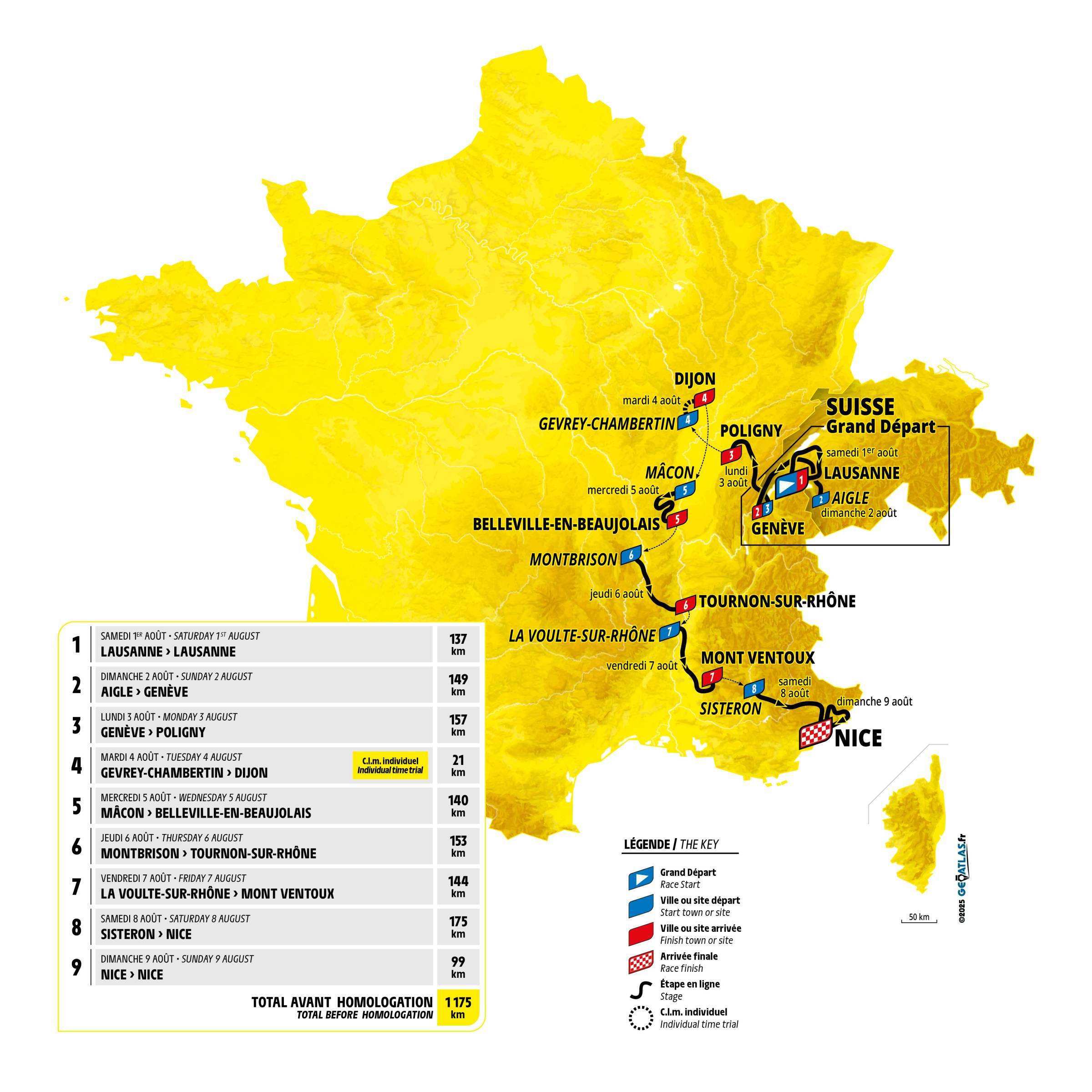
The Tour de France Femmes avec Zwift will cover a total of 1,175km, with 18,795m of climbing over nine stages, its longest distance ever. It starts off with three stages in Switzerland along the shores of Lake Geneva, before heading to France for a fourth-stage individual time trial around Dijon.
It’s Stage 7 that’s the queen stage, though, with a summit finish on Mont Ventoux. The eighth stage takes the race to Nice, with the final stage taking in four loops through the city and over the famous Col d’Èze.
Here’s a stage-by-stage guide to the route and what to expect.
The first stage of the 2026 Tour de France Femmes looks finely balanced between puncheurs and sprinters. But Marion Rousse, who heads up the Tour de France Femmes, reckons the steep 2.5km finale through the city roads away from Lake Geneva could favour the former.
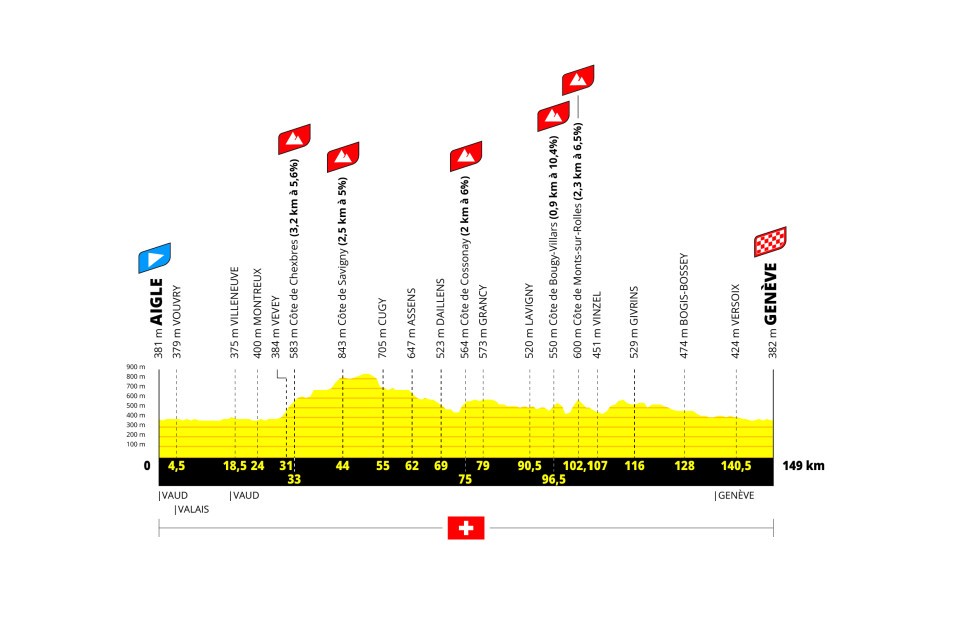
Stage 2: Aigle to Geneva
Sunday 2 August
149km
There are plenty of ups and downs on the Stage 2 route, which climbs out of Aigle, home of the UCI, before a series of short, sharp climbs in the mid-section. Rousse thinks the peloton will likely regroup for a sprint finish on the banks of the lake on the Quai du Mont-Blanc.
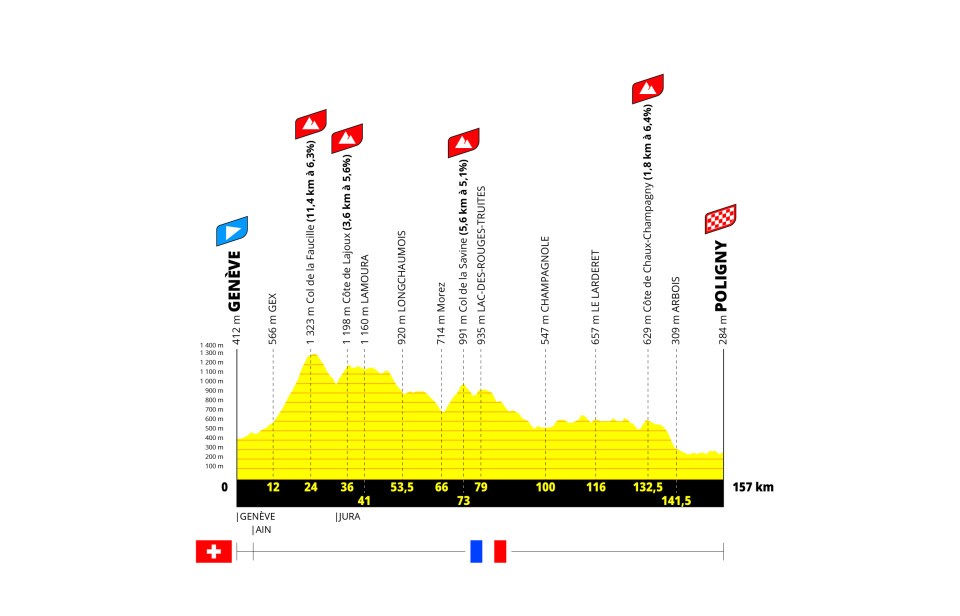
Stage 3: Geneva to Poligny
Monday 3 August
157km
As the race heads into France, there’s plenty of climbing from the start, with the 11.4km Col de la Faucille averaging 6.3%. More cols follow before the flat run-in to Poligny. One for a breakaway or will the sprinters triumph? With 2,400m of total climbing, there’s plenty to play for.
Stage 4: Gevrey-Chambertin to Dijon
Tuesday 4 August
21km ITT
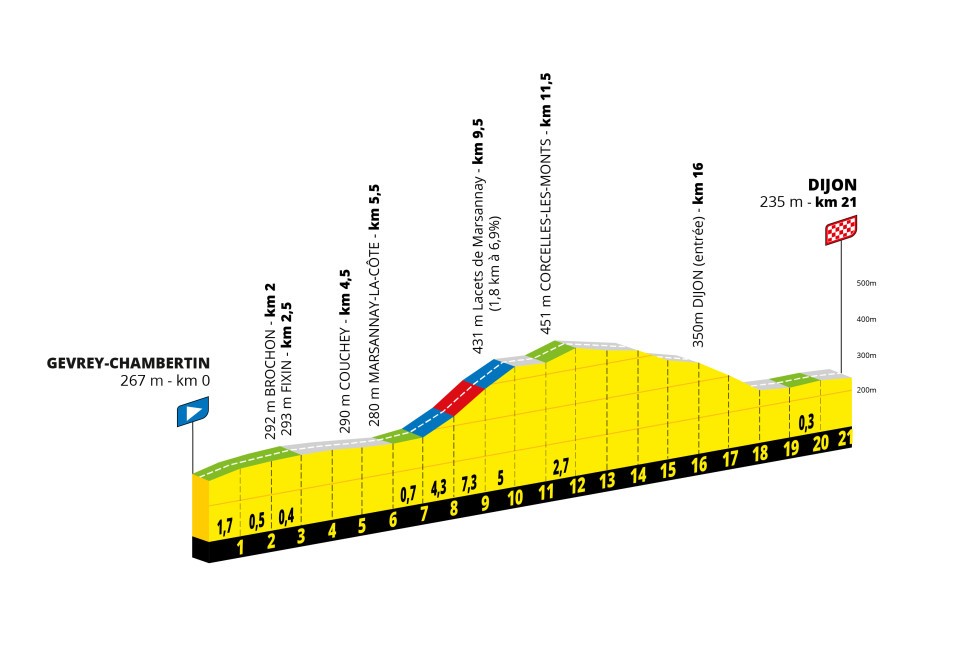
The only time trial in the race covers 21km through the vineyards of the Côte d’Or. There’s a 1.8km climb in the middle, with a 6.9% average gradient, plus a kicker to the apex at Corcelles-les-Monts, before a rolling downhill to the finish in Dijon. This is a time trial that favours riders who can climb, rather than the flat time trial specialists.
Stage 5: Macon to Belleville-en-Beaujolais
Wednesday 5 August
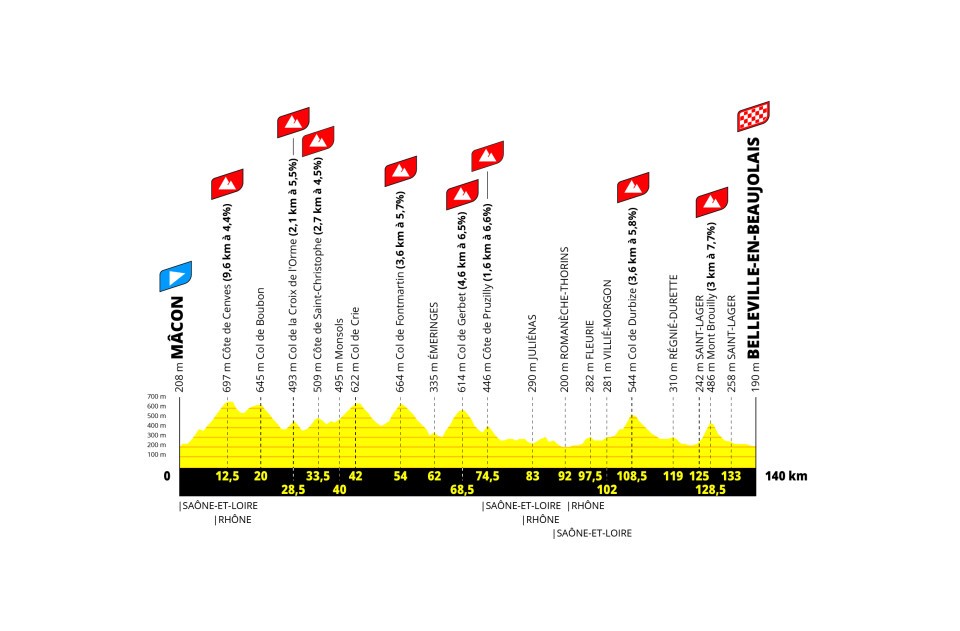
140km
There’s 2,850m of elevation gain on this lumpy stage into the Beaujolais wine region. The final 3km, 7.7% climb of Mont Brouilly is only 10km from the finish line and likely to split the field or force a solo winner from a breakaway.
Stage 6: Montbrison to Tournon-sur-Rhone
Thursday 6 August
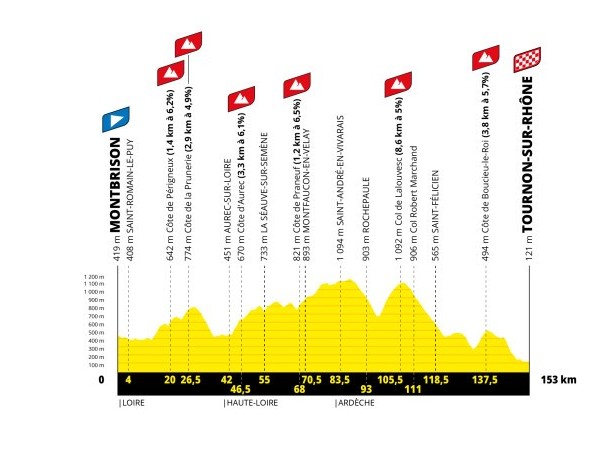
153km
There are more lumps on Stage 6, with Rousse highlighting the 8.6km, 5% climb of the Col de Lalouvesc as a point where a breakaway might go clear along the narrow descent.
Stage 7: La Voulte-sur-Rhone to Mont Ventoux
Friday 7 August
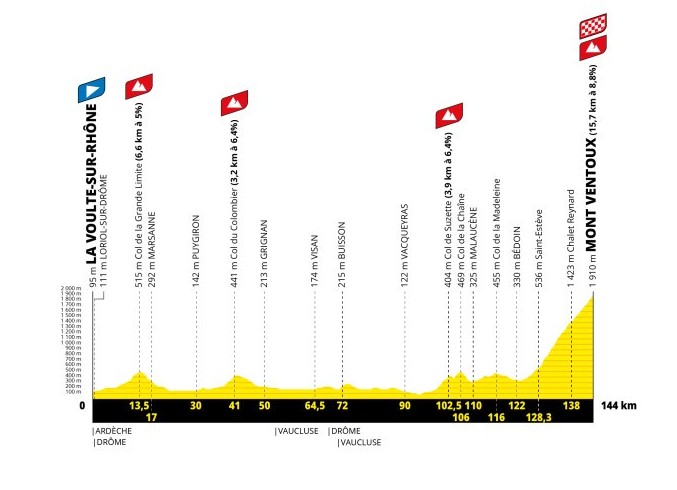
144km
Don’t let the size of the final climb fool you, there’s plenty of climbing before the riders even get to the foot of Mont Ventoux in this queen stage of the 2026 race. Once they hit the giant of Provence, there’s another 15.7km to go from Bédoin at an average 8.8%. Will it be one for the pure climbers, or will a GC rider triumph? This is also the stage chosen for the Etape du Tour de France Femmes.
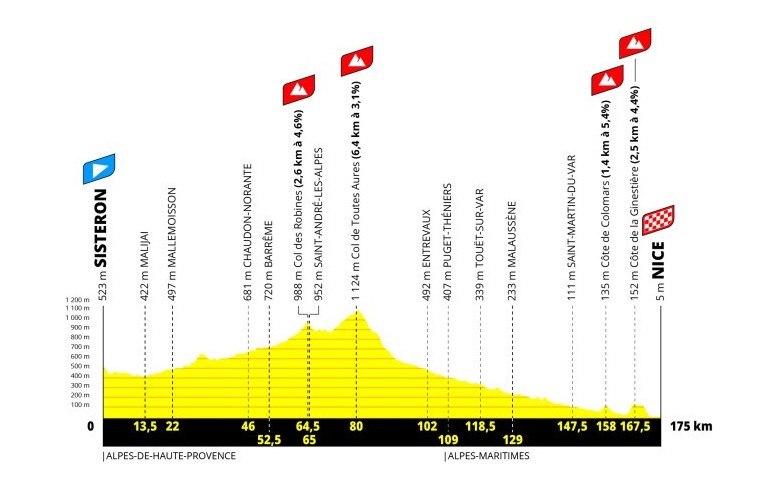
Stage 8: Sisteron to Nice
Saturday 8 August
175km
The longest stage of the 2026 Tour de France Femmes tops the Col de Toutes Aures before it follows the river Var into Nice. To spice things up, there are two nasty little climbs before the finish, with the Côte de la Ginestière hitting 13.6% only 6km from the finish on the Promenade des Anglais. Is this another stage that will favour a lone puncheur holding off a sprint finish?
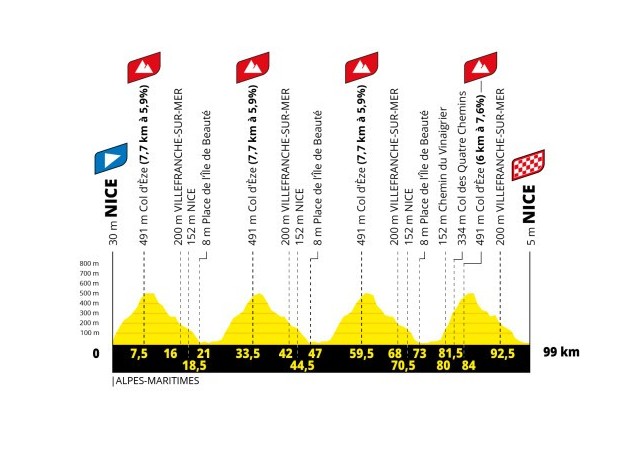
Stage 9: Nice to Nice
Sunday 9 August
99km
The final stage is a showcase for Nice, taking in four loops through the city and out to the famous Col d’Èze. But, rather than a smooth descent into the city, the final lap takes in a detour of 6km at 7.6%, which includes a kilometre-plus section at 12%. Another finish that favours a puncheur coming in alone?
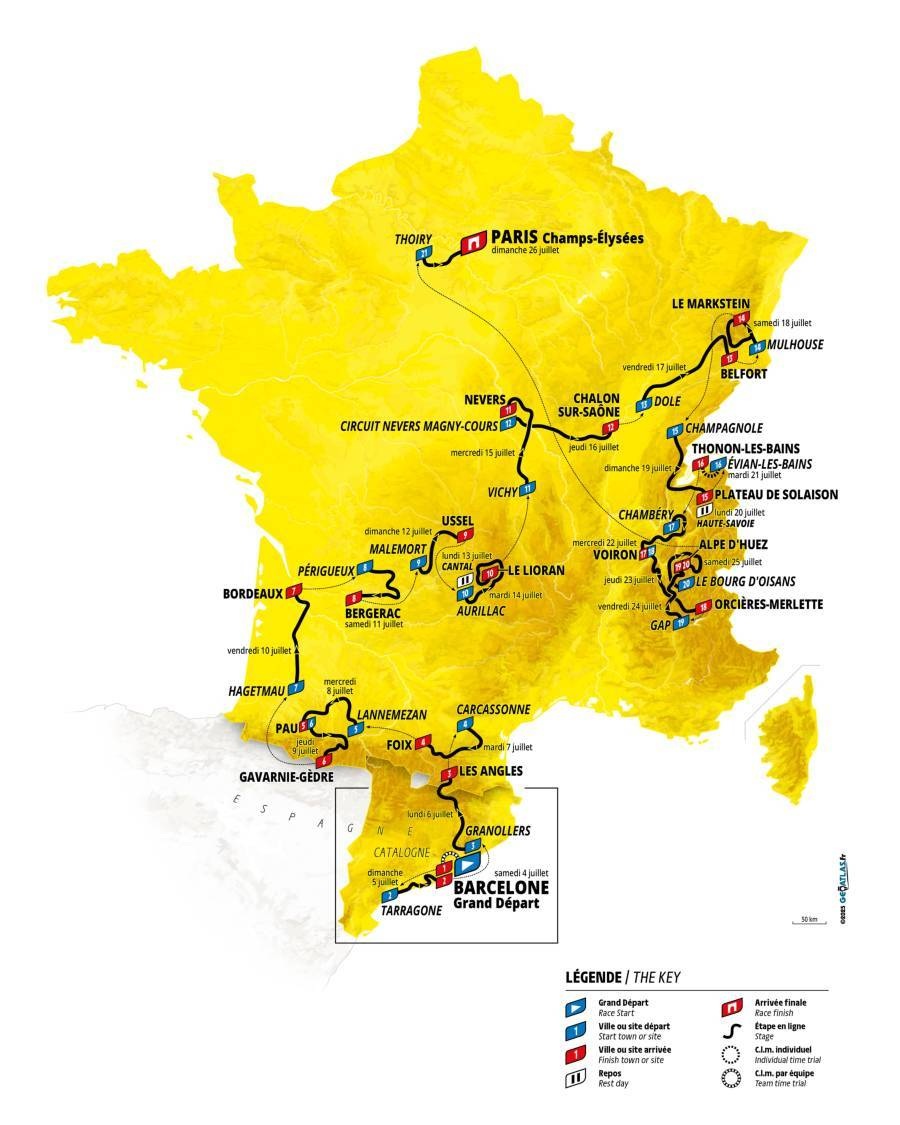
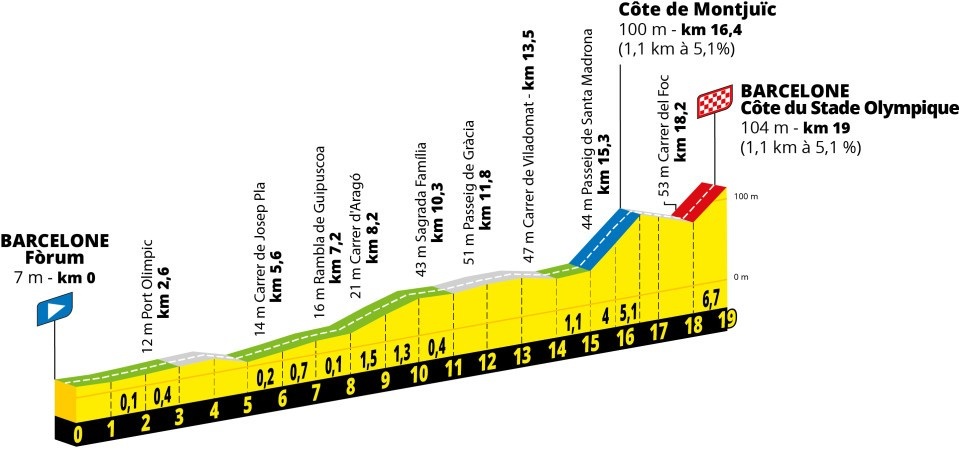
For the first time since 1971, the Tour de France will start with a team time trial, this time of 19km in Barcelona. It will cover 3,333km with 54,450m of climbing before finishing in Paris.
Once again, the final stage in Paris will include the climb to Montmartre to spice up the final laps of the Champs-Elysees.
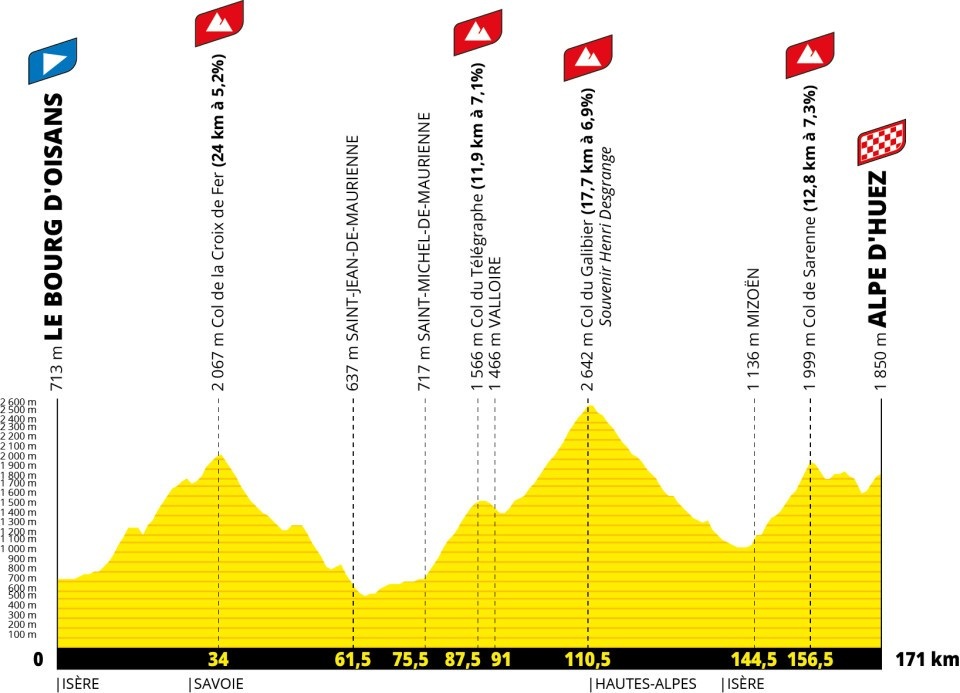
But the highlight must be the two ascents to summit finishes on the iconic Alpe d’Huez on Stage 19 and Stage 20, with the latter throwing in the Col de la Croix de Fer, Col de la Télégraphe and the Col du Galibier for good measure in a stage with 5,600m of climbing.
In the interim, the Tour will visit the Pyrenees, the Massif Central, the Vosges and the Alps, with new climbs in all four French mountain ranges. There’s a 26km individual time trial along the shores of Lake Geneva on Stage 16, too.
Here’s a stage-by-stage guide to how the 2026 Tour de France route will unfold.
The opening team time trial won’t be easy, with the climbs up to the Olympic stadium testing the teams’ ability to stay together on the climbs. Individual finish times will be taken, so riders will want to stay with their teammates.
Stage 2: Tarragona to Barcelona
Sunday 5 July
182km
The second-stage start in Tarragona marks the furthest south that the Tour has ever travelled, while the stage finish is one for the puncheurs.
Tour boss Christian Prudhomme points out that the last three winners on the final climb of Montjuic in Barcelona, when it has featured in the Tour of Catalonia, were Primož Roglič (2025), Tadej Pogačar (2024) and Remco Evenepoel (2023). However, the Tour’s GC contenders may want to lay low this time for what’s in store.
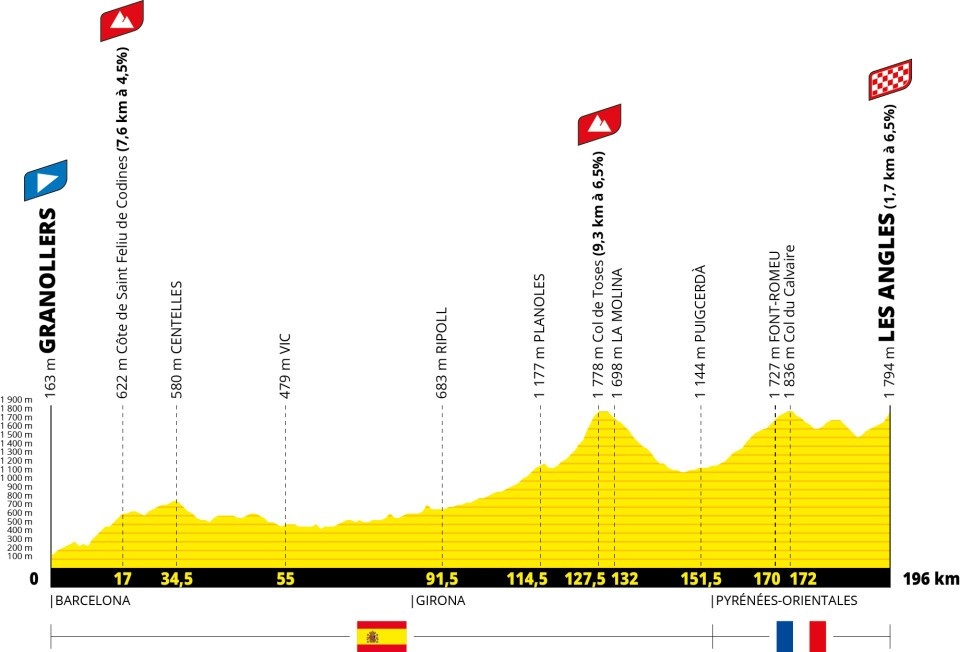
Stage 3: Granollers to Les Angles
Monday 6 July
196km
With Barcelona’s proximity to the Pyrenees, it’s no surprise that the Tour has headed straight there. There’s 3,950m of elevation gain, although Prudhomme reckons this is more a stage for a breakaway, with GC hopefuls again keeping their powder dry.
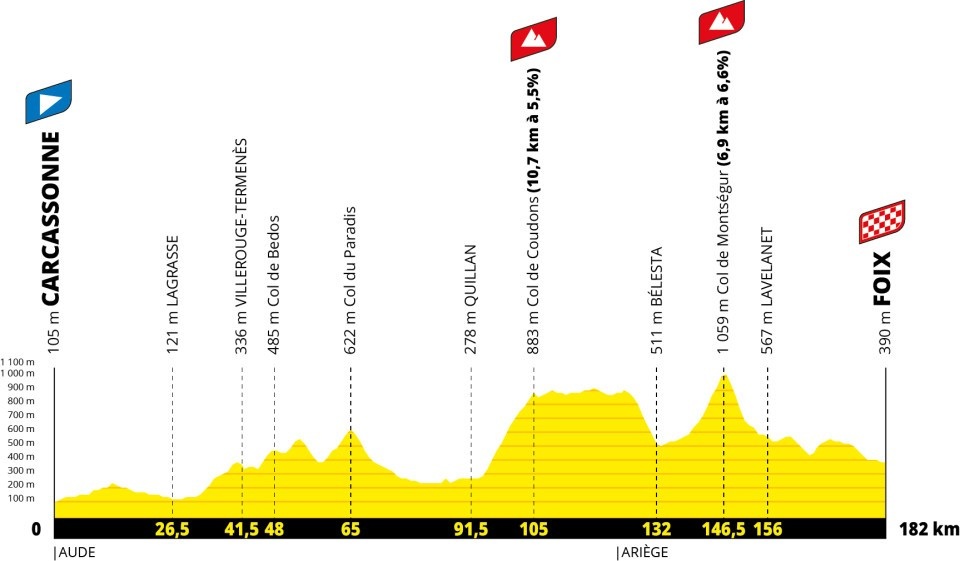
Stage 4: Carcassonne to Foix
Tuesday 7 July
182km
This could be another day for a breakaway, according to Prudhomme, although he reckons it could be chased down by the sprinters who have survived the hills on the approach to the finish.
Stage 5: Lannemezan to Pau
Wednesday 8 July
158km
Prudhomme thinks this is the first stage marked out for a bunch sprint. It comes unusually late, with most Tours offering something for the sprinters earlier on the parcours.
Stage 6: Pau to Gavarnie-Gedre
Thursday 9 July
186km
The last stage in the Pyrenees is also the most demanding, with the Col d’Aspin and Col du Tourmalet both featuring. Prudhomme reckons this could provide the first big GC battle or, if they again decide to hold their fire with 40km still to ride after the Tourmalet, a climbers’ breakaway.
Stage 7: Hagetmau to Bordeaux
Friday 10 July
175km
Another stage for a breakaway/sprint battle, as it passes through the forests of the Landes. It’s most likely to end in a sprint finale on the banks of the Garonne river, though.
Stage 8: Périgueux to Bergerac
Saturday 11 July
182km
It’s two potential sprint stages in a row, with only 1,150m of elevation gain today as the Tour passes along the Dordogne river.
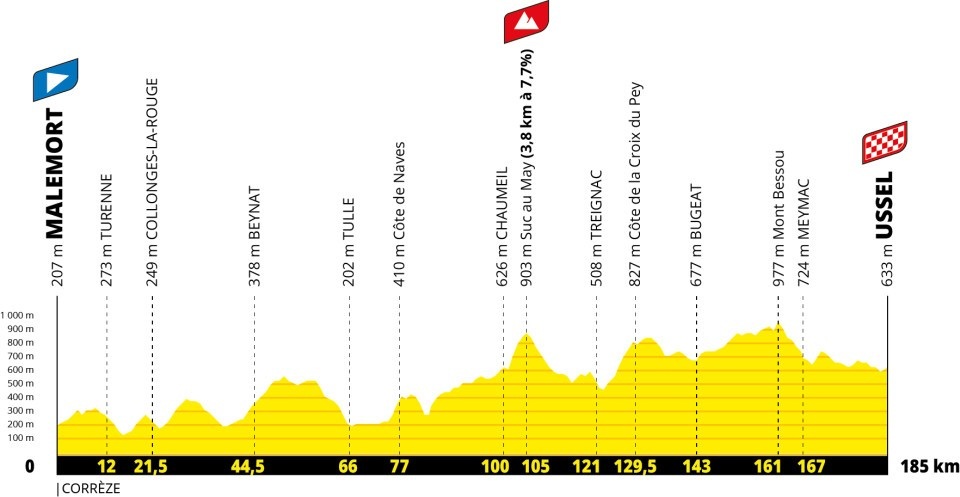
Stage 9: Malemort to Ussel
Sunday 12 July
185km
The sprinters will have to return to the autobus on this stage, with its two major climbs in 3,300m of elevation gain. Prudhomme marks out the climb of the Suc au May as the point at which a selection might be made.
Rest day
Monday 13 July
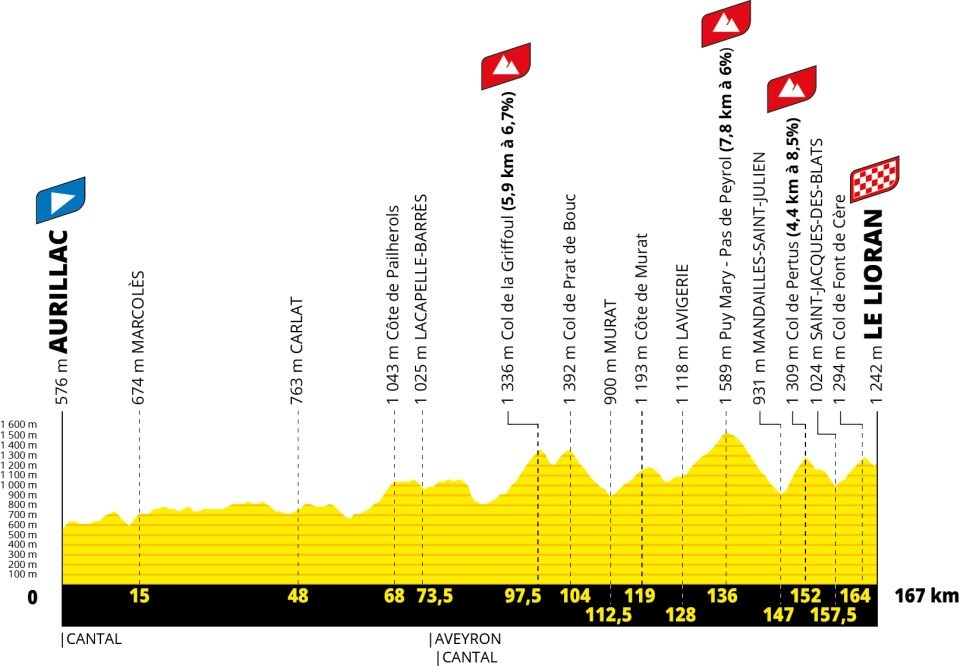
Stage 10: Aurillac to Le Lioran
Tuesday 14 July
167km
Bastille Day is another climbers’ day, with the Col de la Griffoul, the Pas de Peyrol, the Col de Pertus and the final climb to the ski station at Le Lioran. It may be one for a breakaway, rather than a GC battle, though.
Stage 11: Vichy to Nevers
15 July
161km
Prudhomme reckons this is another sprinters’ day, with the odds not in favour of a breakaway surviving. It’s the first visit by the Tour to the home of Look bikes since 2003.
Stage 12: Circuit Magny-Cours to Chalon-sur-Saône
Thursday 16 July
181km
Helping to assuage the sprinters after their meagre start to the race, this looks like another bunch finish, as the race heads into the vineyards. Chalon-sur-Saône was also the site of Great Britain’s first Tour stage win, when the late Brian Robinson took the stage solo back in 1959.
Stage 13: Dole to Belfort
Friday 17 July
205km
The longest stage of the 2026 Tour takes in the Ballon d’Alsace, before its downhill run to the finish in Belfort.
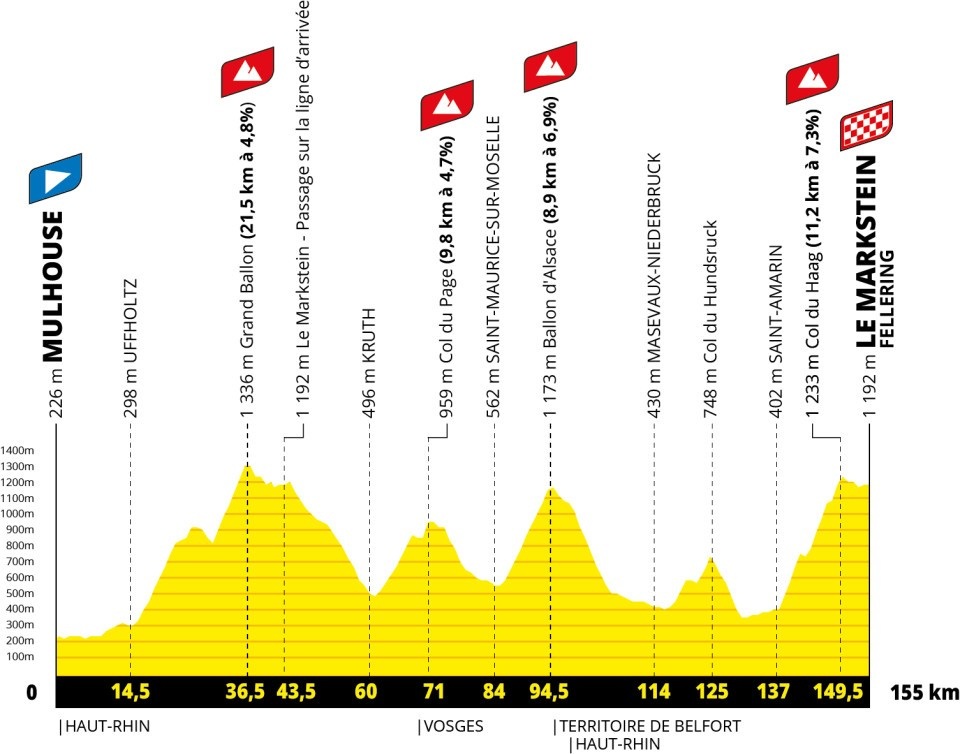
Stage 14: Mulhouse to Le Markstein Fellering
Saturday 18 July
155km
A double loop through the Vosges sees the Tour cross the Grand Ballon before the finish line at Le Markstein for the first time. The second loop includes the Col du Haag, an 11.2km-long bike path with an average gradient of 7.3%. Prudhomme picks it out as a highlight of the 2026 Tour route, where major gaps could emerge.
Stage 15: Champagnole to Plateau de Solaison
Sunday 19 July
184km
The Tour heads to the Alps to start its journey through its final mountain range, with this stage marked out by Prudhomme as likely to be the start of the final GC shake-out. With the final climb of 11.3km to the summit finish averaging 9.1%, it should draw out the gaps to the final winner.
Rest day
Monday 20 July
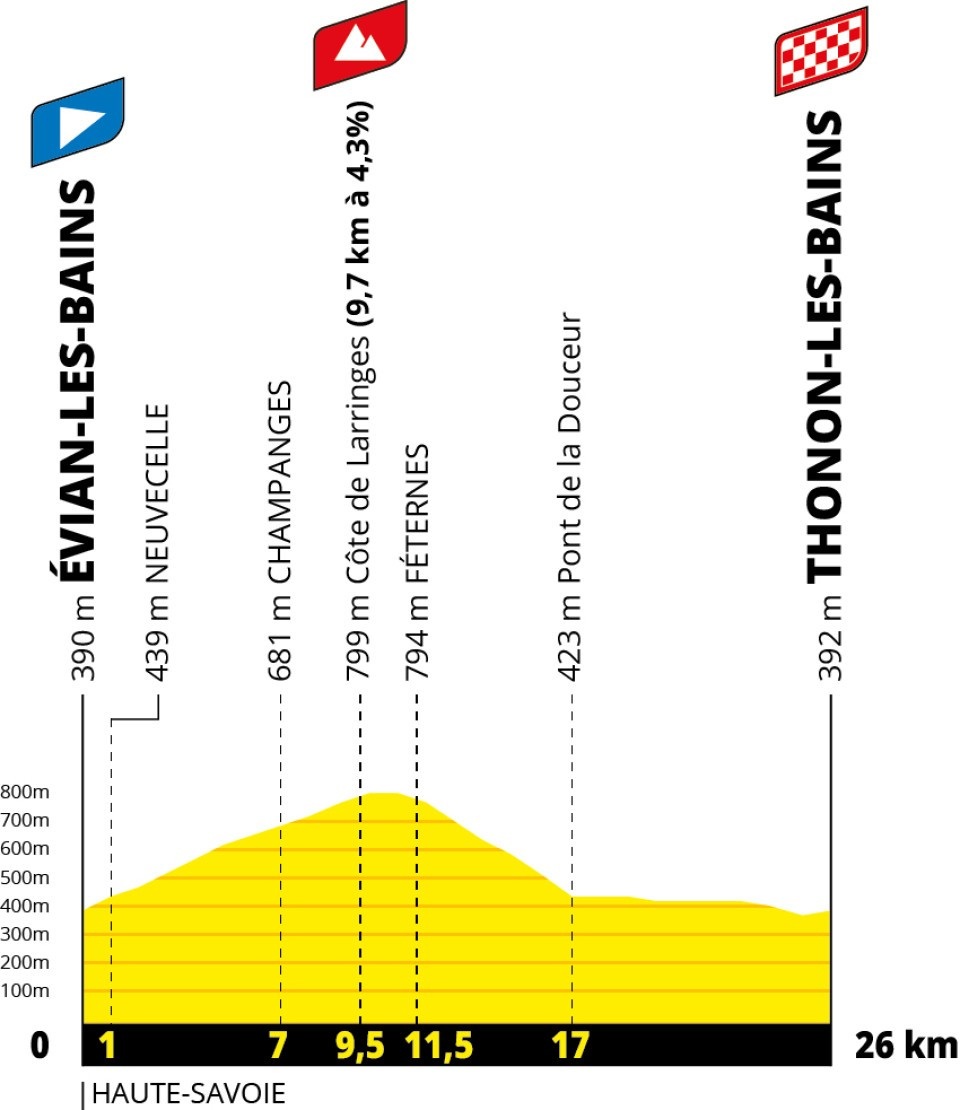
Stage 16: Evian-les-Bains to Thonon-les-Bains
Tuesday 21 July
26km ITT
The only individual time trial in the 2026 Tour offers a mix of climb, descent and flat roll-in to the finish along the shores of Lake Geneva.
Stage 17: Chambery to Voiron
Wednesday 22 July
175km
Prudhomme reckons the climbs on today’s route shouldn’t be enough to stop the sprinters from contesting the finish – if they’ve survived the climbing stages up until now.
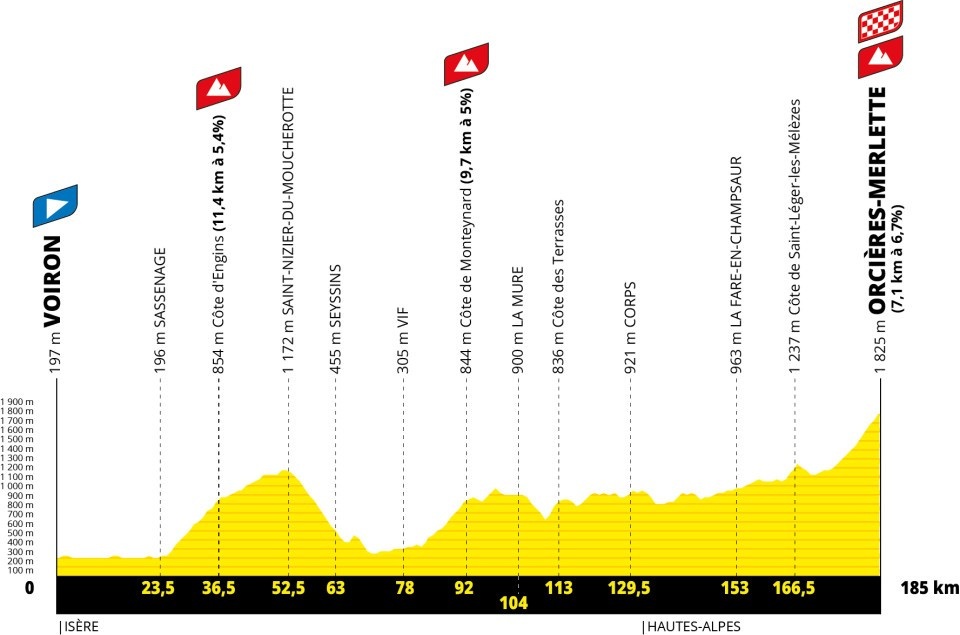
Stage 18: Voiron to Orcieres-Merlette
Thursday 23 July
185km
With what’s to come on the final two days in the Alps, Prudhomme has marked this stage as one for a battle between the climbers, rather than the GC contenders, but don’t rule out Pogačar proving a point.
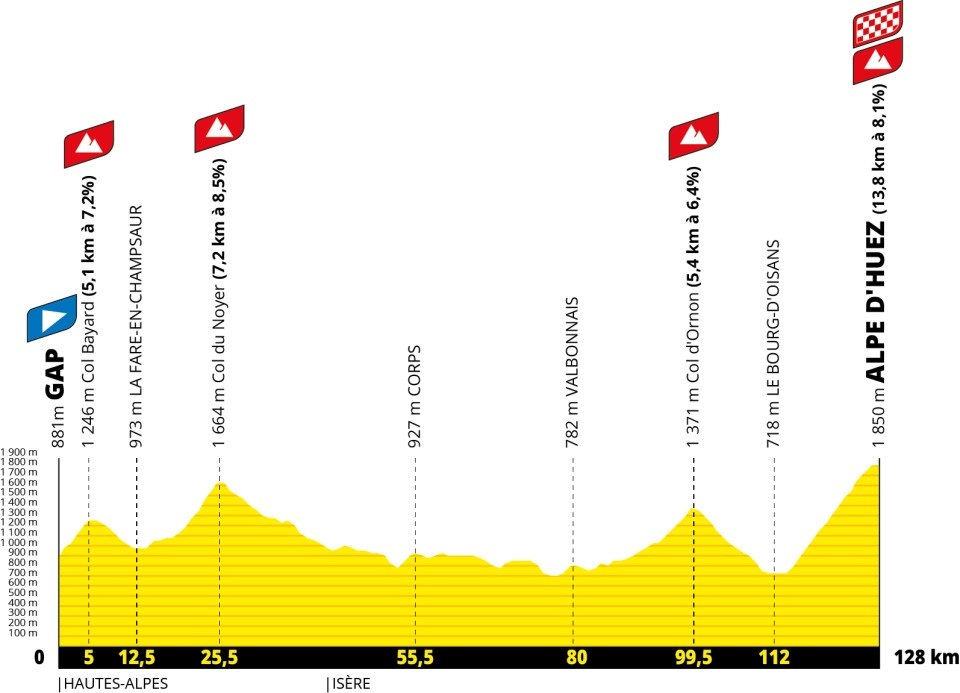
Stage 19: Gap to Alpe d’Huez
Friday 24 July
128km
Yep, we’re into the finale now, with the first of two days finishing on Alpe d’Huez. There are three climbs before the Alpe, though, which may again tempt the climbers to show their mettle.
Stage 20: Le Bourg d’Oisans to Alpe d’Huez
Saturday 25 July
171km
With 5,600m of elevation gain, the penultimate and queen stage of the 2026 Tour takes in three iconic Tour climbs before it has even reached the foot of Alpe d’Huez, which is taken via the Col de Sarenne, a route that has only ever been used in the 2013 Tour, and then as a descent.
Stage 21: Thoiry to Paris
Sunday 26 July
130km
It may have taken the 2024 Olympics to discover the Rue Lepic climb to Montmartre, but the Tour is back for a second time in 2026, taking on the climb three times. But whereas Wout van Aert had a short run from the climb to the finish line in 2025, in 2026 the last ascent is 15km from the line, which Prudhomme reckons will put the final stage in the balance between a puncheur and the sprinters.
SRAM has joined industry group PeopleForBikes in opposing proposed US tariffs that could see an additional 50 per cent duty placed on imported aluminium and steel used in bicycles, frames and electric bikes. Independent retailers warn the move could devastate already fragile margins, but one bike brand supports it.
In a message sent to US retailers on 16 October, SRAM said the proposed Section 232 tariff increases “could have serious consequences for our industry”, warning they would mean “higher costs for you and your customers, reduced product availability, [and] disruption to innovation and supply chains”.
SRAM’s letter urged retailers to join PeopleForBikes in submitting public comments before the 21 October deadline, calling on them to “ensure our voices are heard” and resist measures that could “impact nearly every part of the bicycle supply chain – from raw materials to finished goods”.
In a statement sent to retailers, SRAM said the tariffs will harm customer choice. Scott Windsor / Our Media
SRAM’s letter, signed by vice president of global sales John Nedeau and America aftermarket sales director Dragana Pajovic, warned retailers that the new duties would “impact nearly every part of the bicycle supply chain – from raw materials to finished goods”.
“For retailers like you,” the letter continues, “this means margin pressure, delayed product timelines, and fewer choices on the sales floor, and most importantly, a very difficult economic model for all our businesses.”
While acknowledging that the intent of the tariffs is to support domestic manufacturing, SRAM argued “the reality is more complex”.
Industry infighting
Guardian Bikes supports the tariffs.
The period for public comment on the proposed aluminium and steel tariff saw 95 requests for the inclusion of derivative products. Two of those requests came from Guardian Bikes and the Aluminium Extruders Council, who asked for bicycles, frames and electric bikes to be included.
Guardian Bikes’ filing cites its upcoming US manufacturing facility as part of its rationale to apply tariffs to bicycles, frames and electric bikes.
“Earlier this year, Guardian Bikes announced a $19 million financing with JP Morgan Chase to launch the first large-scale bicycle frame manufacturing operation in the United States,” the company wrote.
“The new facility… represents a pivotal step in reshoring a critical industry that was once a cornerstone of American manufacturing but has been nearly entirely offshored for decades,” it added.
PeopleForBikes disagrees. The trade body has already argued that Trump’s tariffs will be “devastating” for the US bicycle industry, warning that Guardian Bikes’ proposal “would dramatically increase prices, reduce product availability, and threaten jobs across the U.S. bicycle industry”.
SRAM’s letter also urged its retail partners to submit a comment to the US Trade Representative before the 21 October deadline on both the Guardian Bikes and Aluminium Extruders Council’s requests, directing people to the PeopleForBikes’ tariffs web page, which provided a letter template.
What do bike shops think?
Independent retailers have also voiced concern over the impact of the tariffs. Allan McKenzie / SWPix.com
SRAM’s letter read: “Voices of small, independent businesses matter and might be stronger than you realise.”
Independent bike shops share SRAM’s concerns over the tariffs on imported aluminium and steel.
“With the proposed 50 per cent increase in tariffs, we’ll see many companies no longer able to continue doing business,” said Kevin Purcell of Golden Pliers in Portland, Oregon.
“The ripple effect will hit every player in the supply chain, ending with the customers paying substantially more than they had previously,” he added.
Tommy Barse, of Cutlass Velo in Baltimore, said the new duties would compound price hikes that have already forced him to cut back on stock. “All of my product wholesale prices have increased at least 10 per cent,” he said. “When you impose massive increases in costs to US-based companies that use overseas manufacturing, you’re eliminating their ability to invest in US manufacturing.”
Purcell says the industry has “limped along for years, constantly looking for new ways to give bicycle commerce a boost amongst consistent decline,” adding that profit margins “have also continued to decline, dipping to new lows of 25 per cent and less for some items.
“We have had to pivot repeatedly in the last five years. At times it’s like screaming into the void, but here we are.”
Barse said the proposed tariffs would further strain small businesses’ ability to operate sustainably, and doubts the effectiveness of the tariffs: “While I… purchase goods made in the US when I am able, the reality is: we sold all those jobs to the lowest bidders at the expense of American workers for investors and CEOs to gain a higher yield.
“I don’t have faith in our market reclaiming the manufacturing throne.”
Zwift is a virtual cycling playground with nearly infinite possibilities. What new things could the platform support, if Zwift invested the resources to make it happen?
That’s what I’m exploring in this series of articles. Each post focuses on a particularly compelling idea for a new Zwift feature or event type that doesn’t yet exist. I dig into how it could work, why Zwifters might love it, and what Zwift may need to change in the game to make it happen.
Today, we’ll focus on a race format that is already used on Zwift and also seen regularly in outdoor competition. Let’s dive in!
Points Race Basics
In very generic terms, points races are events where riders earn points based on their ranked performance against other riders. Instead of the winner being determined by who crosses the finish line first (a classic scratch race) or who survives the longest (an elimination race), you win by amassing more points than everyone else.
This opens up a world of possibilities for race organizers and racers:
Organizers can designate which “segments” they’d like riders to compete on, decide what sort of competition is being held (typically first across the line and/or fastest through segment), and decide how to allocate points to the finishers.
Racers must then strategize how to maximize points based on the race’s setup, their individual abilities, and competing riders.
The Now and Not Yet
Unlike some of the race concepts I’ve written about in this series, such as elimination and relay races, points races are already happening on Zwift. In fact, they are arguably some of the most popular races on the platform, showing up in Zwift Racing League, the Tiny Races, and other community-organized leagues!
But the current state of points racing on Zwift is best described as shoehorned into the platform. Nothing in the HUD or course design elements indicates that a particular section is a points segment, or how those points work. And instead of being natively supported and displayed in game, points are tabulated and displayed on third-party websites like ZwiftPower or WTRL.racing. You don’t see points in real time on Zwift’s HUD as you race. You only see them after the entire race is over, and then only if you know where to look.
This, of course, hampers riders’ ability to race strategically. Without native points support, it’s hard to know when to push and when to conserve, to know how well you’re doing, and to identify who your real competitors are.
Points Racing Possibilities on Zwift
What would it look like to upgrade the current Zwift Points Racing experience? From the riders’ point of view, upgrades fall broadly into two categories:
Real-Time HUD: the first and most obvious experience upgrade would be a HUD that shows race points in an intuitive, useful, and immediate way as each unique race unfolds.
Custom Segments: the second, less obvious experience upgrade would happen when race organizers have the ability to designate custom start and end points for points segments. Can you imagine the variety of courses and strategies that would unfold as a result? I don’t think anyone can! And that’s the fun of it.
With a real-time HUD in place and custom segments at organizers’ fingertips, points race possibilities become endless. Of course, you could do “standard” points races like we see in ZRL today, where riders compete for FAL (first across the line) and FTS (fastest through segment) on sprint and KOM segments. The real-time HUD would just take those races to the next level, especially if team functionality is also supported. You could also level up simple events like the Tiny Races, assuming Zwift builds a structure so multiple events can be scored.
But beyond upgrading existing races, the ability to designate custom points segments on any route would lead to a wide variety of new race experiences. Maybe it’s a new timed climb where no in-game KOM has ever existed, or a downhill sprint where we’ve never seen an arch before. Maybe it’s an extra-long segment that allows more strategic riding to unfold compared to the typical “sprint the segment” approach.
Perhaps some segments are FAL, while others are FTS. And perhaps the points awarded vary in such a way as to cause riders to truly think strategically about the best approach on the given course.
As you can see, the possibilities are virtually endless.
Fun For All
How can points racing on Zwift be made more fun for everyone? This is an important question to answer when it comes to any ride format in Zwift, because Zwift needs to remain an inclusive platform where everyone can find motivation and fun, regardless of fitness level.
There are two aspects of points racing which support Zwift’s inclusive ethos: segment variety and strategic complexity.
With a variety of segments possible in points races, organizers can ensure their event (or series of events) is a balanced competition that attracts all types of riders. Mixing up flat/downhill segments with climbs would make the race attractive to lighter riders with strong w/kg as well as heavier riders with strong pure watts. Longer and shorter segments could also be used to appeal to riders with strong short-term power as well as those whose strength lies in the longer efforts.
Organizers could make their points races as strategically complex as they’d like. A higher level of strategic complexity may prove extra attractive to “thinking racers” who can use their mental acuity to get a leg up on the competition.
Why Points Races?
Upgrading the Points Race experience on Zwift is important for several reasons:
A fresh approach: given the right tools, creative organizers could create a variety of points racing experiences never before seen on Zwift
Improving popular existing races: as mentioned above, some of the biggest races on the platform today are points races. Making improvements to support points races natively would level up these events.
Uniquely indoor: while points racing already happens outdoors, indoor training platforms can improve on that experience with intuitive HUDs and in-game elements, so riders are better informed and thus able to race more strategically.
The competition is already doing it: both MyWhoosh and TrainingPeaks Virtual already support points racing natively, as shown from these livestream grabs:
Required Game Changes
What would Zwift need to implement in order to make points races work well as a native race format? With the disclaimer that I’m not a game developer or platform engineer, here are a few things I can think of:
Must Haves
Points HUD: races would have to display a real-time points tracker in the HUD.
Segment Visibility: it must be crystal-clear which segments in the race are being contested for points. Right now, this sort of information is (at best) buried in the event description text.
Results Screens: the standard race results screens in game, Companion, and at Zwift.com would need to be modified to rank results by points and display those points clearly.
Segment Designator: even if Zwift doesn’t let organizers define custom points segments, they’ll need to let them define which segments on a given course are assigned which points and based on which results (FTS and/or FAL).
Possible Extras
Team Builder UI: I’ve called this out in some other race format posts, but if points races are going to be contested by teams, ideally Zwift would build the menus and functionality to create teams so points can be tabulated on a team-by-team basis during and after a race.
Cross-Event Tracking: many points races are actually a series of events. Being able to view series points in the HUD, and not just points from the current event, would enhance competition and lead to more creative race series.
Custom Segment Creator: if Zwift wants to let organizers get truly creative and define their own points segments on course, they’ll need to create the tools to do so. A simple point-and-click web-based interface similar to ZwiftMap.com is exactly what race organizers like myself would love to see!
Your Thoughts
What did you think – should the points race experience be upgraded on Zwift? Did I miss any great ideas above? Share your thoughts below!






 zFondo Series on Medio Fondo
 Bonus XP
 LEVEL Racing – Ladies Chase Race – Muckle Yin