
See zwiftinsider.com/tiny for current Tiny Race details.
Category Archives: Bikes
Zwift Update Version 1.106 (158210) Released
Zwift version 1.106 begins its phased rollout today. This is a minor update containing mostly bug fixes, but it also coincides with a broader rollout of the Personalized Recommendations feature. See details below…
Personalized Recommendations Rollout
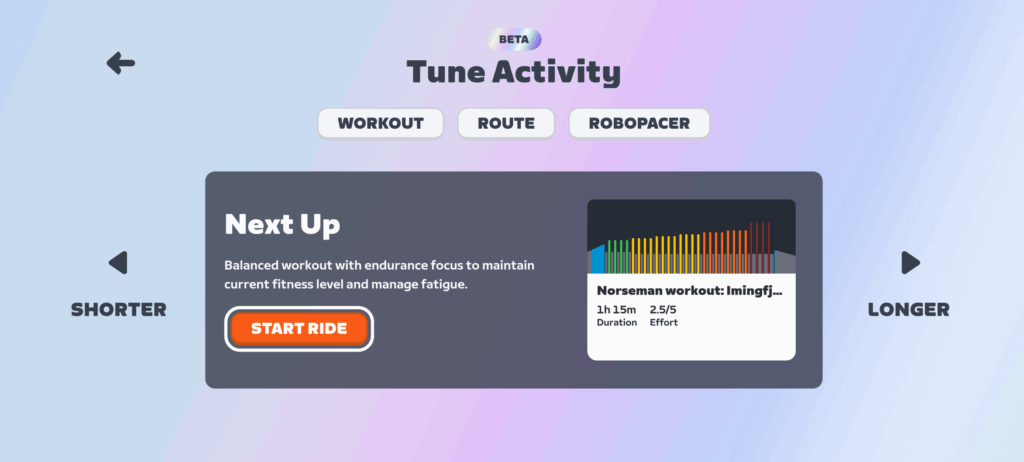
Zwift rolled out the initial beta version of Personalized Recommendations to a small cohort in early November. This exciting new feature looks at your Zwift activities and any outdoor rides (if you’ve connected your Garmin, Wahoo, or Karoo account), then recommends a session for the day based on your habits, fitness, freshness, and in-game content.
Since the initial beta release, Zwift has made important changes to dial in (and dial up) features and functionality based on feedback and metrics. Personally, I’ve seen it evolve from a “5 out of 10” feature to, let’s say, a 7 out of 10. There are plenty of improvements still to be made, and lots of untapped potential, but it works quite well at this point.
So Zwift is doing a “Full English Rollout” of Personalized Recommendations this week. No, the feature isn’t being bundled with black pudding and baked beans. But if you have English set as your in-game language, you’ll see Personalized Recommendations on your homescreen by the end of the week. (As of Monday, January 26, approximately 30% of English users had the feature enabled.)
Not an English speaker? Zwift says Personalized Recommendations should be released for all other supported languages by the end of February. They’re just taking some extra time to make sure the translations are accurate.
Pairing Screen Changes
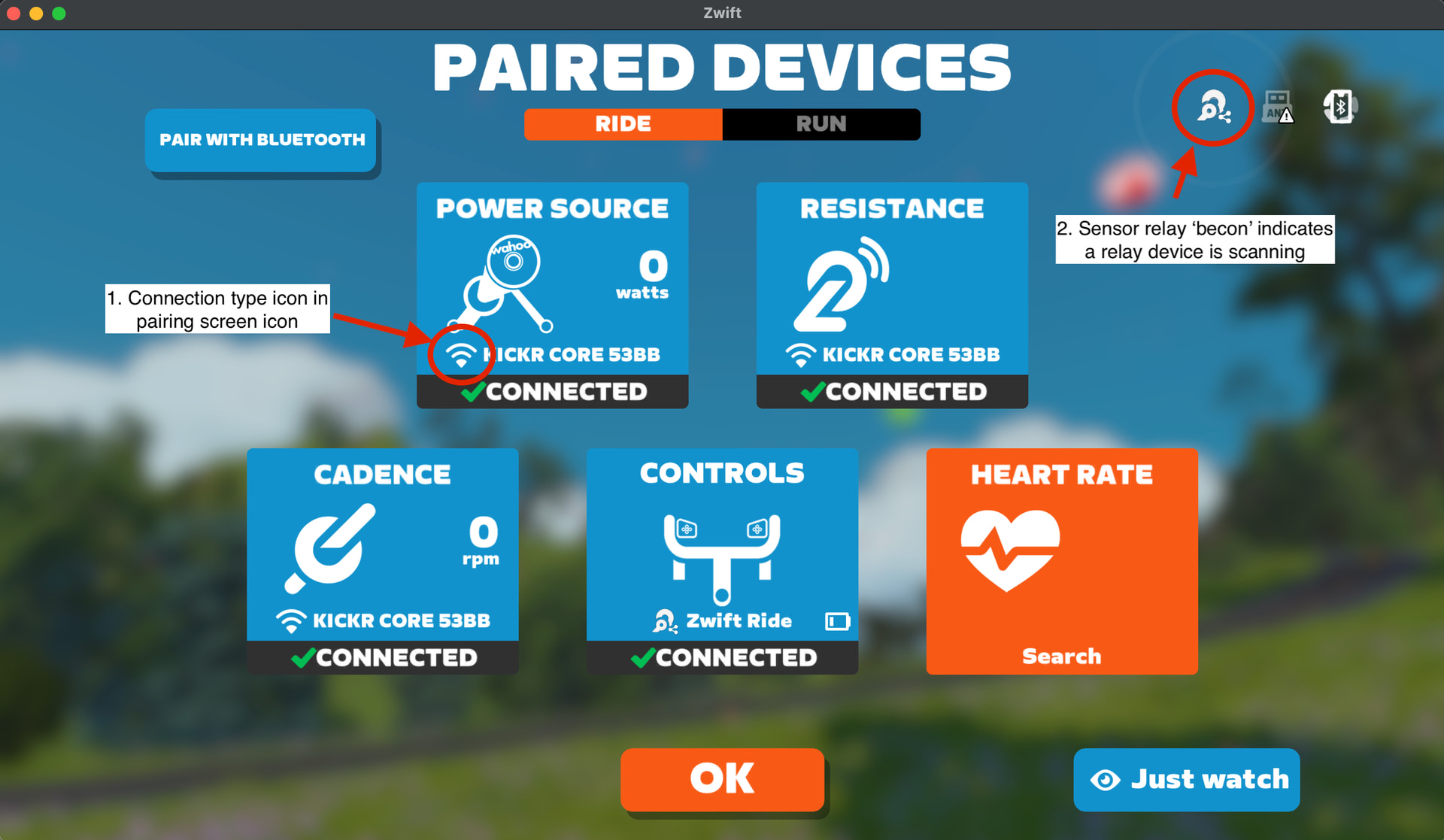
Today’s release includes some updates to the pairing screen UI. Icons now indicate how your devices are connected to Zwift: WiFi, Ethernet, Bluetooth, ANT+, or Sensor Relay (through a trainer).
More Missing Socks
Zwift’s release notes say, “Fixed an issue that could potentially cause cycling socks to be at their minimum height, or missing. Seems we caught the triathlon bug.”
We reported that Zwift had stolen socks in the previous update, and since then, an inordinate number of sockless avatars have been spotted on Zwift’s roads. Does this update fix the problem? Well, maybe. But it makes things worse before it makes them better.
I had adjusted my socks back to roadie height after the v105 release took them away. But once today’s v106 release was installed, my socks were, once again, missing:
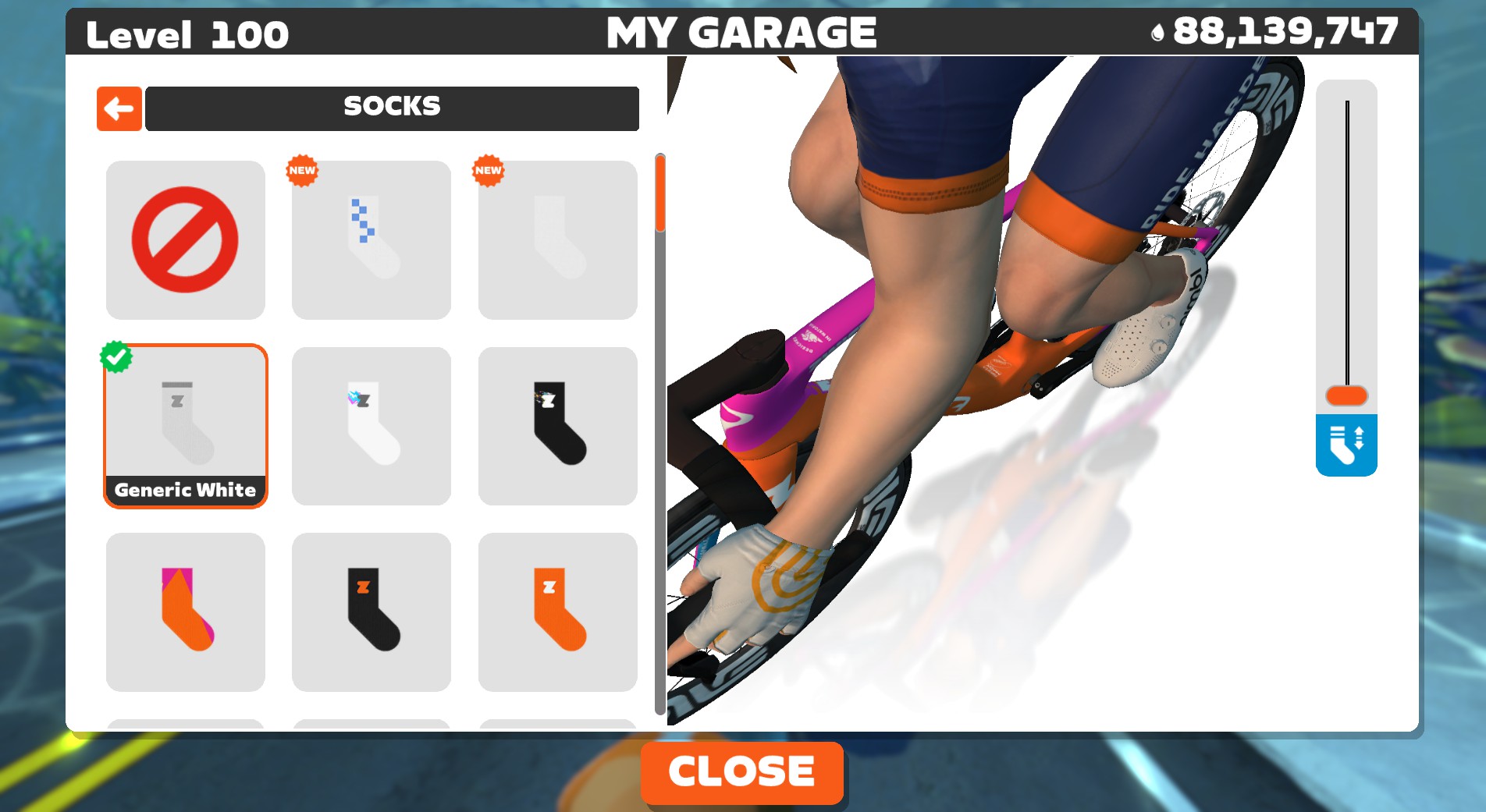
Zwift assures me that this is known behavior, and once you fix your socks in v106 they’ll be fixed for good. But I say fool me once, shame on you. Fool me twice…
New RoboPacer (Sofia) and Expanded RoboPacer Routes
There are two late additions to Zwift’s release notes for this update, both related to RoboPacers:
- Introducing Sophia! Our 10th RoboPacer rides at 0.8 w/kg, ideal for new and lower-FTP Zwifters.
- Expanded the route rotation for RoboPacers to include more pacer-friendly routes from our recent map expansions.
Read all the details in our dedicated post: Zwift Adds “Sofia” RoboPacer and Modifies RoboPacer Route Schedule.
Release Notes
Zwift supplied the following additional release notes:
- The Empire Elevation route in New York is now available for free rides and meet-ups. Go get that badge!
- Minor refinements to draft indicator behavior.
- Fixed an issue that could make workout arch pulses difficult to see.
- Fixed an issue that could cause Tour de Zwift reward previews to display incorrectly when a handcycle is equipped.
- Improved readability of bike frame description text in the Garage.
- Various visual improvements in Richmond and New York.
- Apple TV: Fixed a crash that could potentially occur in the Pairing screen.
- Windows: Fixed a crash that could potentially occur when saving or discarding an activity.
Discuss this update in Zwift’s forum >
Questions or Comments?
If you spotted any other changes or bugs in the update, please comment below!
New Orbea Rallon RS redefines lightweight eMTBs with next-level integration, big travel and light weight
While most brands are pushing their full-power eMTBs – complete with massive batteries and enough torque to shift the earth momentarily on its axis – it’s refreshing to see something a little different from Orbea.
The new Rallon RS is based on Orbea’s Rallon enduro bike – and let’s be honest, looks very much like it, too. It’s got plenty of travel and burly components, but despite being an eMTB, it doesn’t weigh much more than its non-powered counterpart.
It’s a modern take on a lightweight eMTB. Remember those? It was a nice idea but rarely, if ever, came to fruition.
However, the new Rallon RS takes that concept and harnesses the technological advancements to right the wrongs of the early ‘SL’ bikes.
Housed within the carbon tubes, you’ll find a motor – one of the smallest on the market – capable of only 200 watts of peak power, and the small 290Wh battery that powers it, along with a host of other electronics.
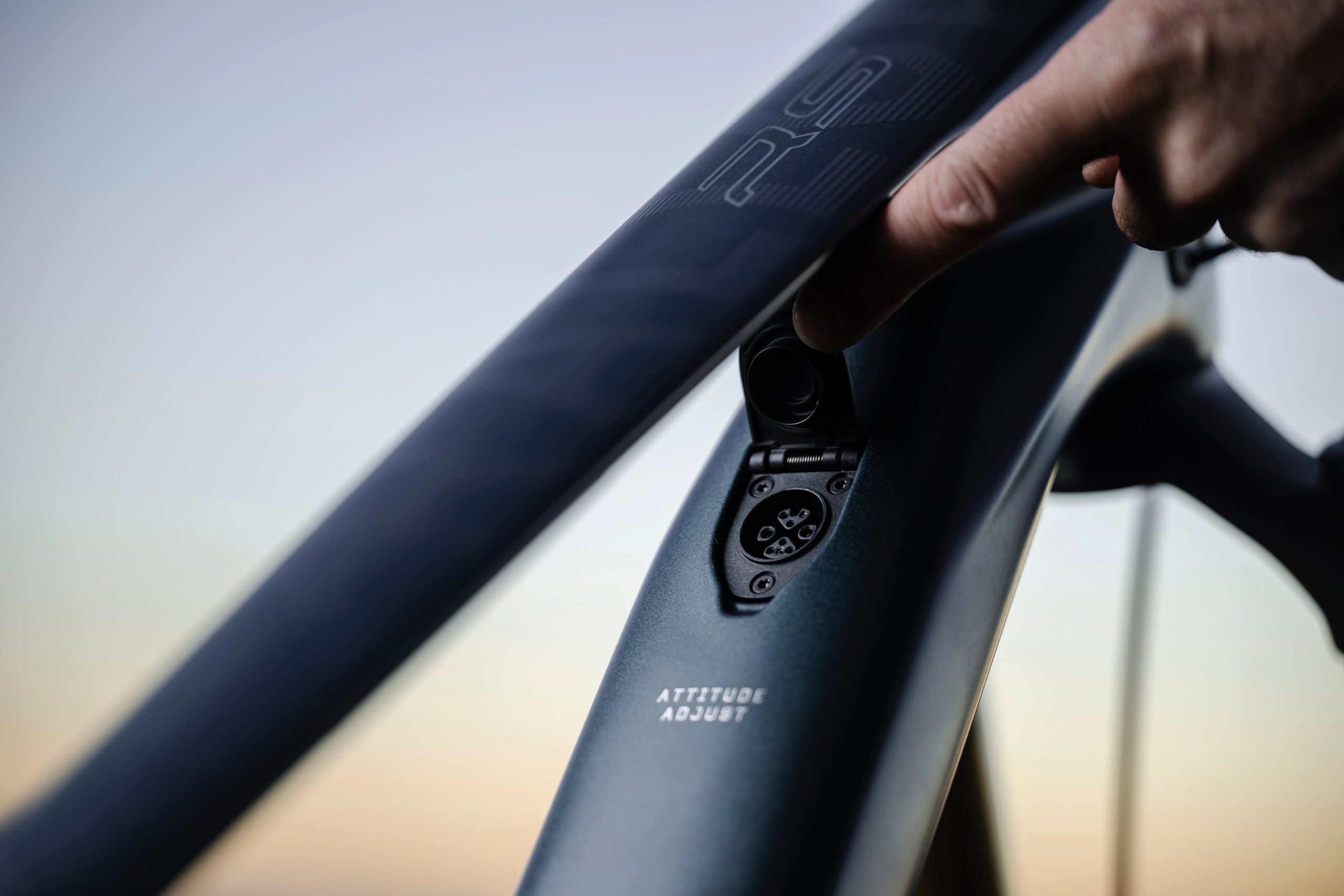
And that’s where things get really cool. Orbea has integrated every electronic component on the Rallon RS in a way we’ve not seen before.
Those low power and torque figures will no doubt put people off, but I’m here for it.
The dinky motor means you’ll get some help when you need it riding uphill, but you’ll still need to work on the climbs – no matter what mode you’re in. And I like that.
Orbea has taken a risk with the new Rallon RS and clearly ploughed a lot of cash into it, but I think it’s worth it. Here’s why…
A different kind of eMTB
With the Wild, Rise (SL and LT) and Urrun eMTBs already in Orbea’s stable, you could argue the Rallon RS is less of a risk, and the lower-powered sibling complements the line-up.
But when you consider how the eMTB market has shifted since Amflow’s super-powerful DJI-motor equipped bikes arrived, launching a bike with power and torque stats at the opposite end of the spectrum might not make a lot of sense.
However, the Rallon RS has the potential to appeal to purists – riders looking for a bit of help on the climbs, but who value that regular-bike feel on the descents.
That might sound like a stretch. After all, who doesn’t want more power? But this bike is pretty special.
When we first started seeing SL eMTBs being launched, their promise of minimal assistance and a natural ride feel was extremely appealing.
Let’s not forget, Orbea was one of the first to the party with the Rise RS, which was a great bike.
The problem was, the motors were still quite hefty and took up a lot of space. The bikes were often quite heavy, and in a bid to keep weight down, generally used trail-bike parts, which were too fragile.
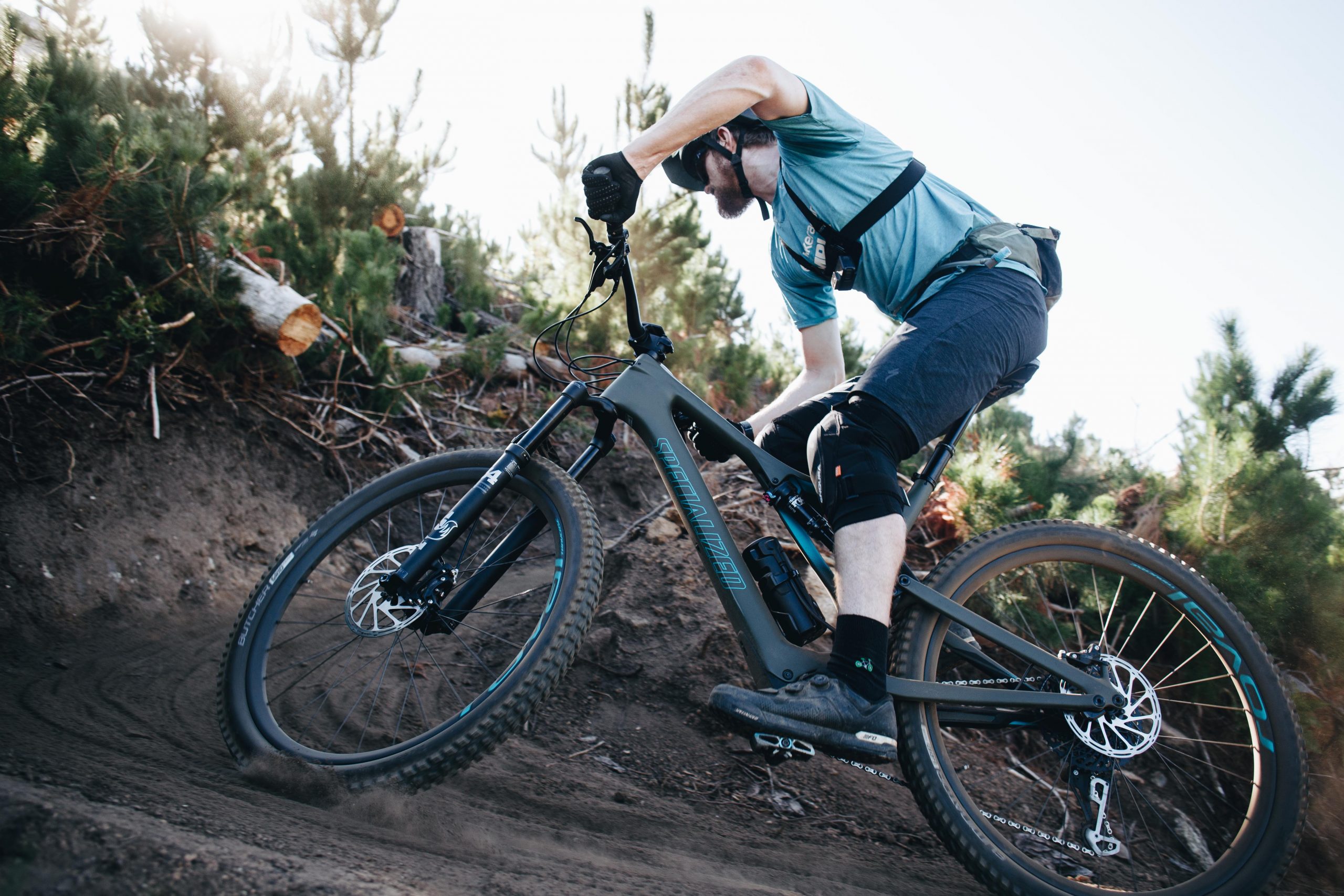
With only a few kilos between many SL models and their full-power counterparts, it’s easy to see why those (only slightly) lighter bikes were overlooked.
As ebike motors became smaller and more powerful, ‘SL’ bikes morphed into ‘mid-power’ bikes, with more power and torque, along with slightly tougher components.
But if you wanted to ride with mates on full-power bikes, you’d still struggle, making the whole ‘SL’ category something of a conundrum.
The new Rallon RS harks back to that original ‘SL’ concept in a lot of ways, but uses advances in tech to right many of the wrongs and offers something very different from the high-power, torque-tastic eMTBs that seem to be everywhere right now.
The 200 watts of peak power and 40Nm of torque mean the Rallon RS isn’t all about the motor feel. It’s not the dominant factor here by a long stretch.
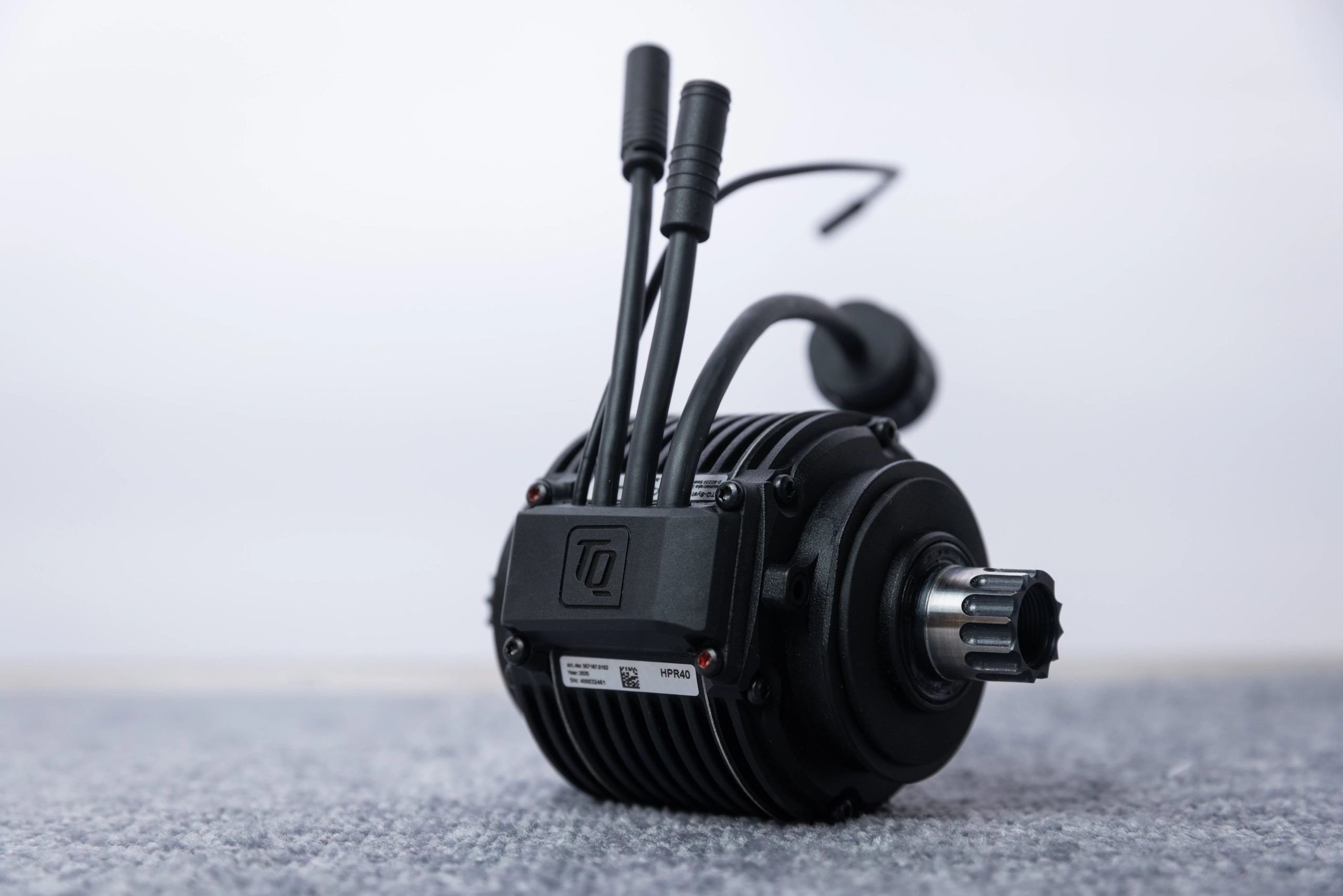
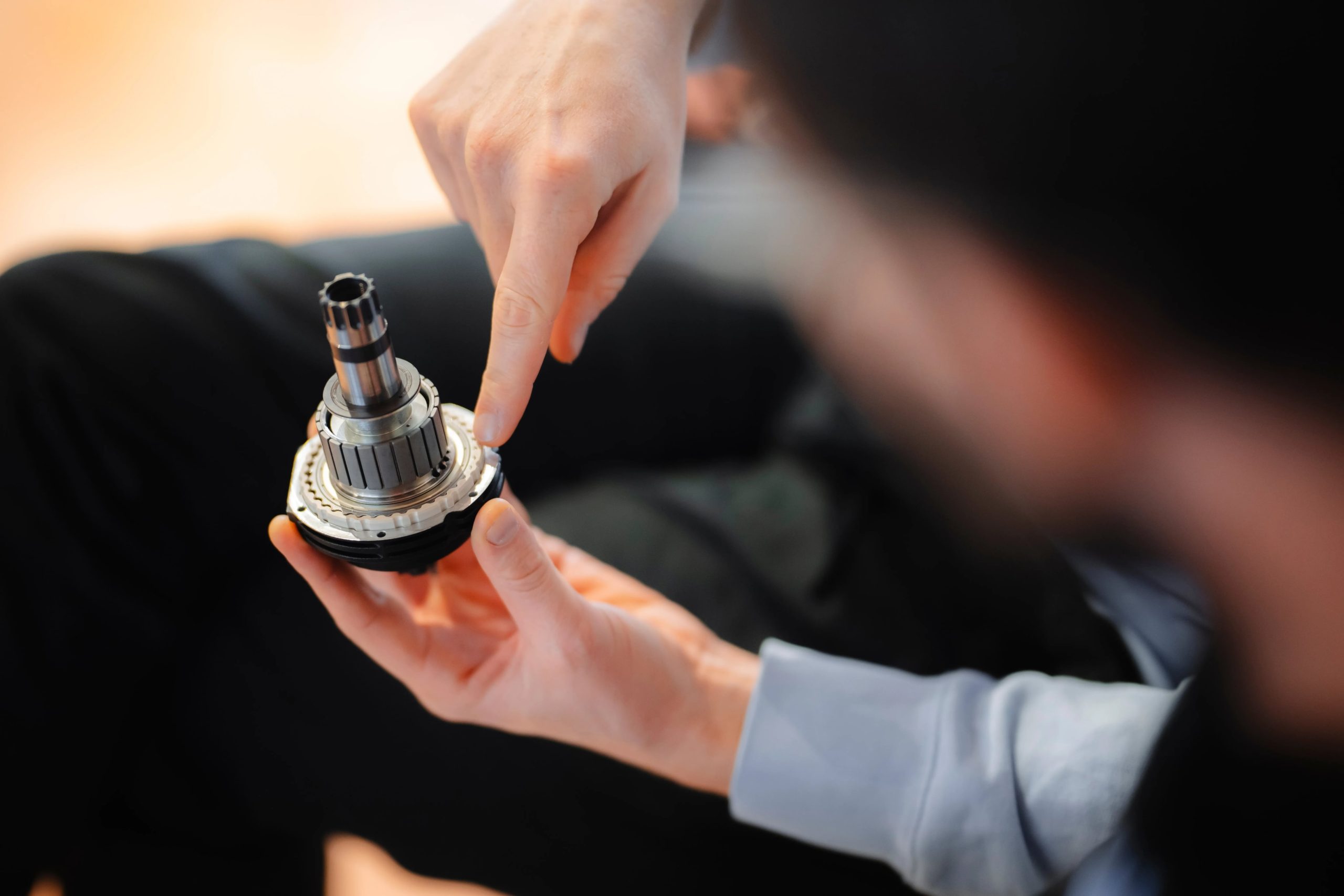
The silent, compact TQ HPR40 motor and its low weight help, boosting your input and making the climbs feel easier, but this bike is way more than its drive unit. Its small form factor and unobtrusive feel have enabled Orbea’s engineers to create a bike with a very special ride.
Weighing a claimed 1,170g, the HPR40 doesn’t take up much real estate in the frame. At first glance, you’d probably be hard-pressed to realise this is an eMTB. Its compact size means, unlike bikes of old, the geometry and suspension layout aren’t compromised.
Using the small motor limits packaging problems. This meant Orbea could create a long-travel enduro bike with tough parts to suit, rather than a shorter-travel trail bike with flimsy tyres. Yet it still weighs just over 17kg (claimed) in size medium.
Even considering all of the above, along with the impressive ride feel and almost silent motor, the sticking point for many riders will be the low power and torque figures.
But I think this bike needs to be considered slightly differently.
If you’re looking for a bike that’s super-fast up the climbs and aim to clock up as many laps as possible, this isn’t the machine for you. But, if you’re a bit of purist, who’d appreciate a little helping hand when riding with fitter friends on regular bikes – or are keen on riding a little further than usual – this could be the bike for you.
Integration stations
Orbea has gone beyond building a great bike with an intriguing motor – that’s only half of what makes the Rallon RS interesting.
It takes component integration to the next level and could be a sign of where eMTB tech is going next.
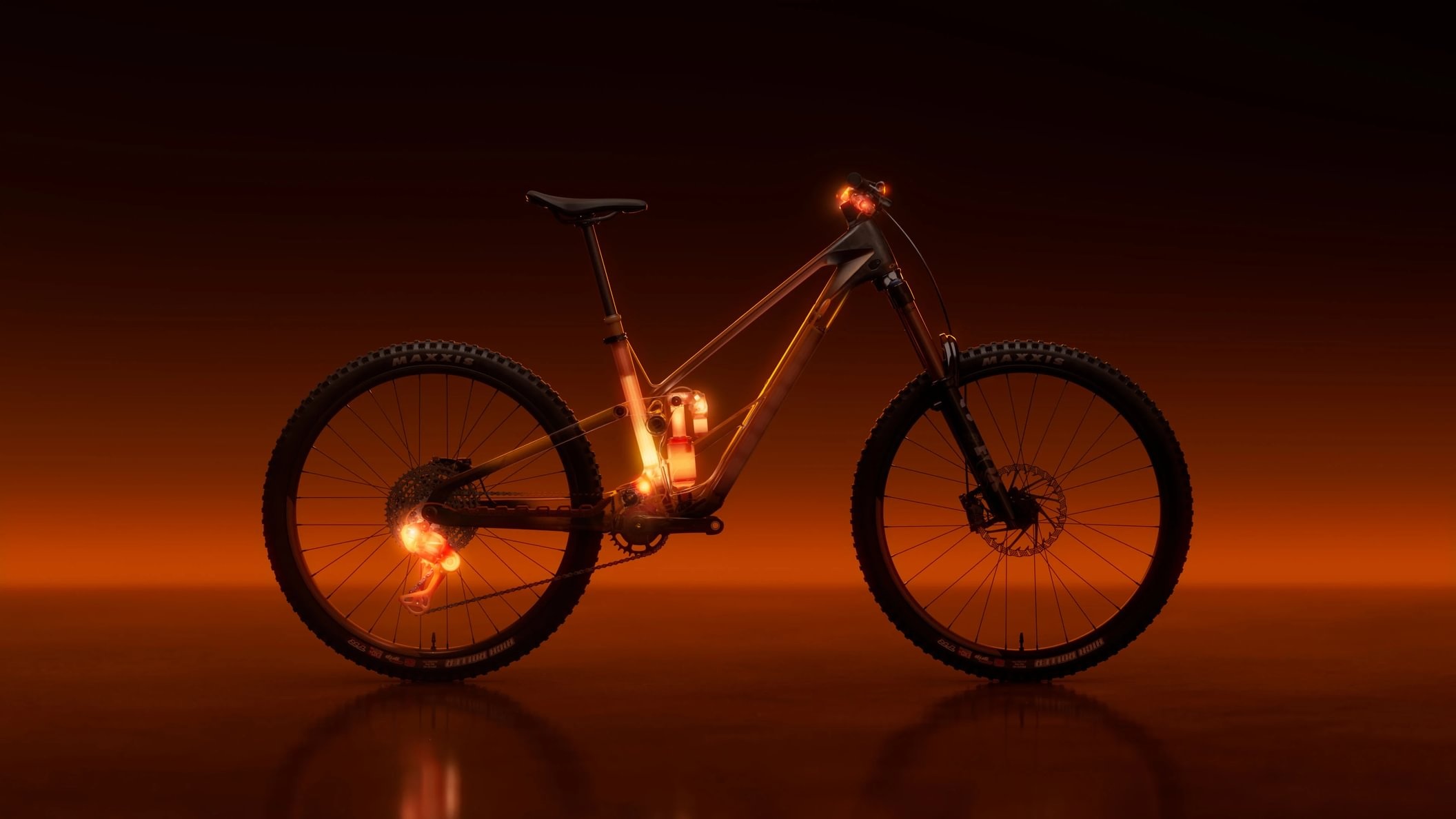
Orbea has designed the bike to be used with an electronic, auto-adjusting rear shock, its own electronic dropper post and electronic gears.
These components are hard-wired into the main 290Wh battery via a central control unit.
What’s more, they communicate with one another, in a bid to enhance the ride.
Having partnered with Fox suspension and TQ motors for this project, Orbea says enabling the shock to receive data from the motor, its algorithm is able to use power, cadence and speed to help optimise shock settings more effectively and efficiently.
The dropper post plays its part here, too. When the post is fully compressed, the shock knows it needs to keep its damping circuits open to maximise downhill bump absorption.
If the post is dropped and the motor sensors detect the bike is on a descent, it can lower assistance modes to avoid any unwanted or untimely bursts of power.
That’s a lot of electronics, which generally means a lot of bar-mounted buttons and remotes. That’s not the case here, though.
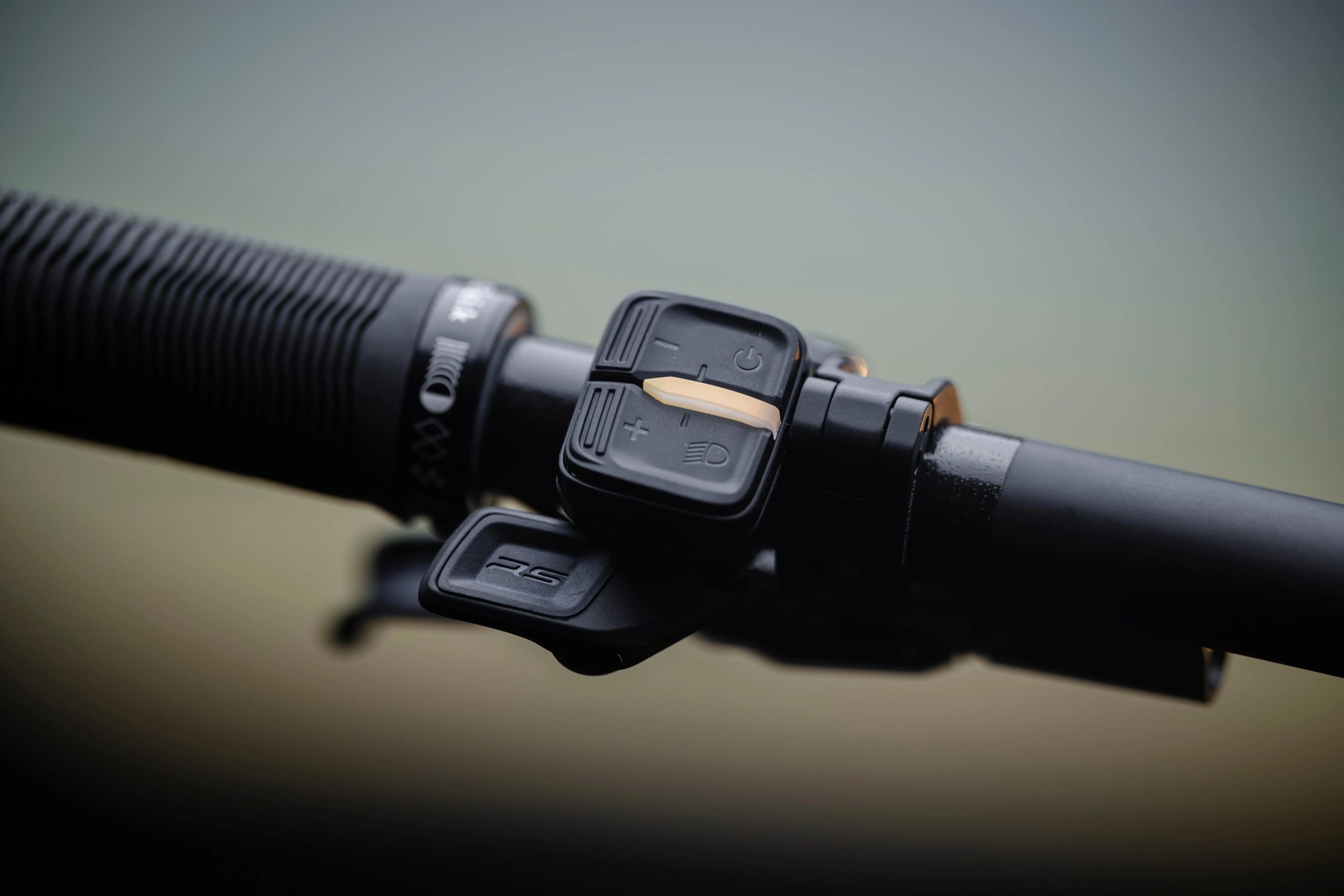
While you lose the wireless capability of the Fox Live Valve NEO shock and Shimano XTR Di2 gearing because both are wired into the main battery, it has enabled Orbea to control everything (with the exception of the gears) using one remote.
The HMI (Human Machine Interface) remote enables you to tweak just about everything. That means altering motor modes, shock settings and the dropper post, which has a programmable ‘smart’ mode.
Enduro travel, geo and build
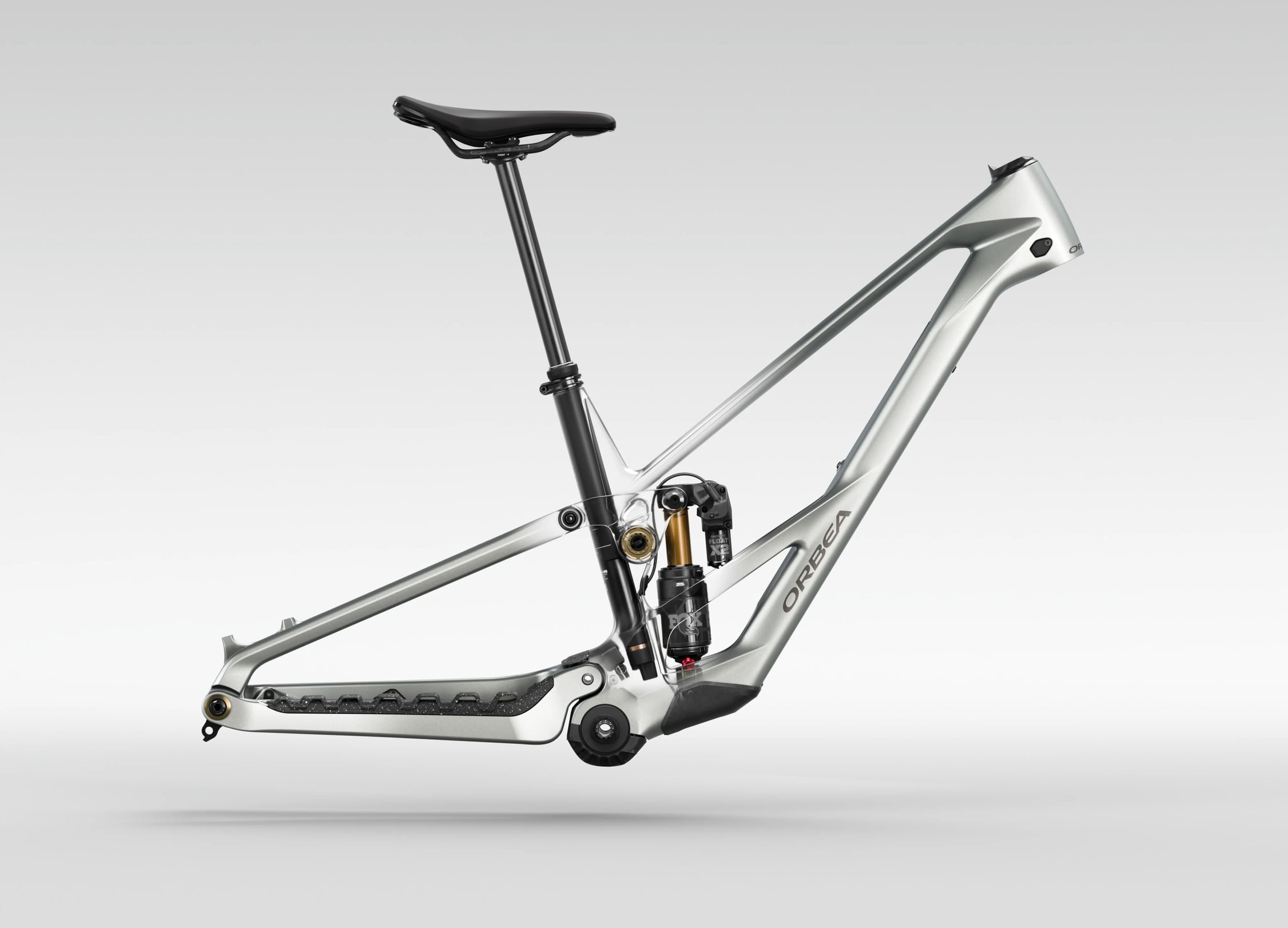
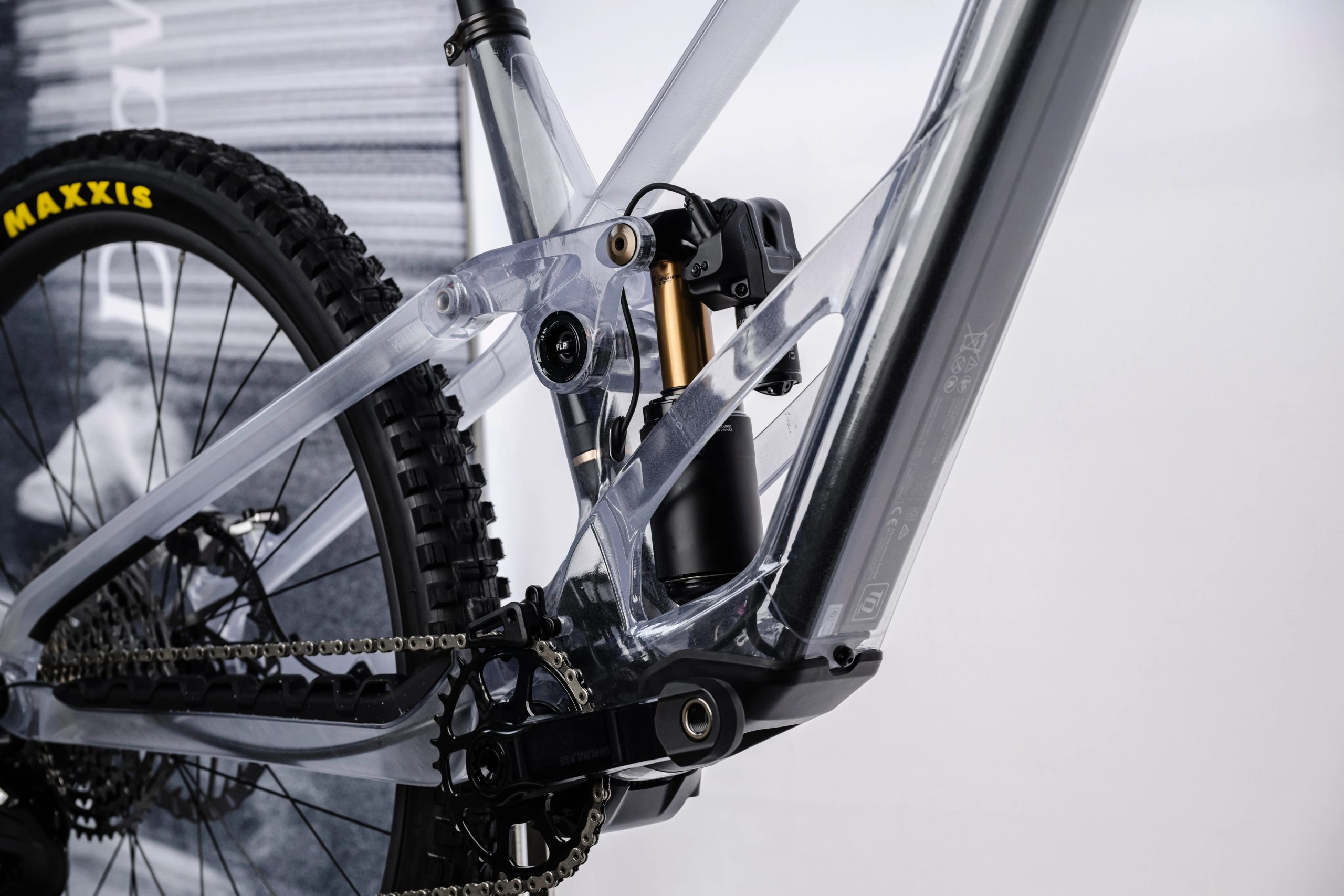
Orbea manufactures the new Rallon RS from its OMR (Orbea Monocoque Racing) carbon in what it claims was its most challenging project to date.
To reduce weight, compensating for the use of a motor and battery, the Rallon RS is equipped with a carbon rocker link. This saves a reported 200g, yet is as strong and stiff as its alloy equivalent.
Because Orbea designed the Rallon RS around a shock that was able to control damping levels automatically, there was less need to build in the ability to resist squatting or ‘bobbing’ as the pedals are being turned (often referred to ‘anti-squat’) into the suspension system.
Instead, leaving the automated shock to do the heavy lifting and keep the Rallon RS as efficient as possible, Orbea designed relatively low levels of anti-squat into the platform (just over 80 per cent at sag), with the aim of keeping the back end more sensitive and active.
As with the regular Rallon, the RS version also uses a linkage-driven single-pivot system, which places the rear pivot concentric to the rear axle. There’s 170mm of travel on tap at the rear, paired with a massive 180mm-travel fork up front.
Should you want to get a little rowdier, the frame is designed to handle a dual-crown fork, upping its versatility further – that’s not something many SL-style bikes can boast.
The enduro stats don’t stop there. Reach figures span 430mm on the small to 505mm on the XL. Seat tubes are short, with the medium coming in at 405mm. All frames use the same 445mm chainstay.
Orbea hasn’t shied away from geometry adjustment. There’s a flip chip on the lower shock mount, enabling you to alter the bottom-bracket height by 8mm and head tube angle by 0.5 degrees. You can also make use of the angled headset cups, which enable you to tweak the head angle further by +/- 0.75 degrees.
In the neutral position, the head angle is 64.25 degrees, while the seat tube angle is steep, at just over 79 degrees.
You can run a 29in or 27.5in rear wheel by swapping the rocker link, which ensures geometry remains the same between the two rear wheel sizes.
Fit for purpose
Orbea realises this bike won’t be for everyone. As well as being a fresh take on lighter-weight eMTBs, it’s also very expensive and only available in two models.
The top-end RS-LTD build features some drool-worthy kit. But, most importantly, that kit is fit for purpose and suits the Rallon RS’s intentions. There’s a burly fork, big brakes and suitably tough, grippy tyres that’ll take an absolute beasting.
All in, Orbea says the RS-LTD model weighs 17.45kg in size medium, which is impressive considering this is a big bike with some heavy parts bolted to it.
Who will buy it?
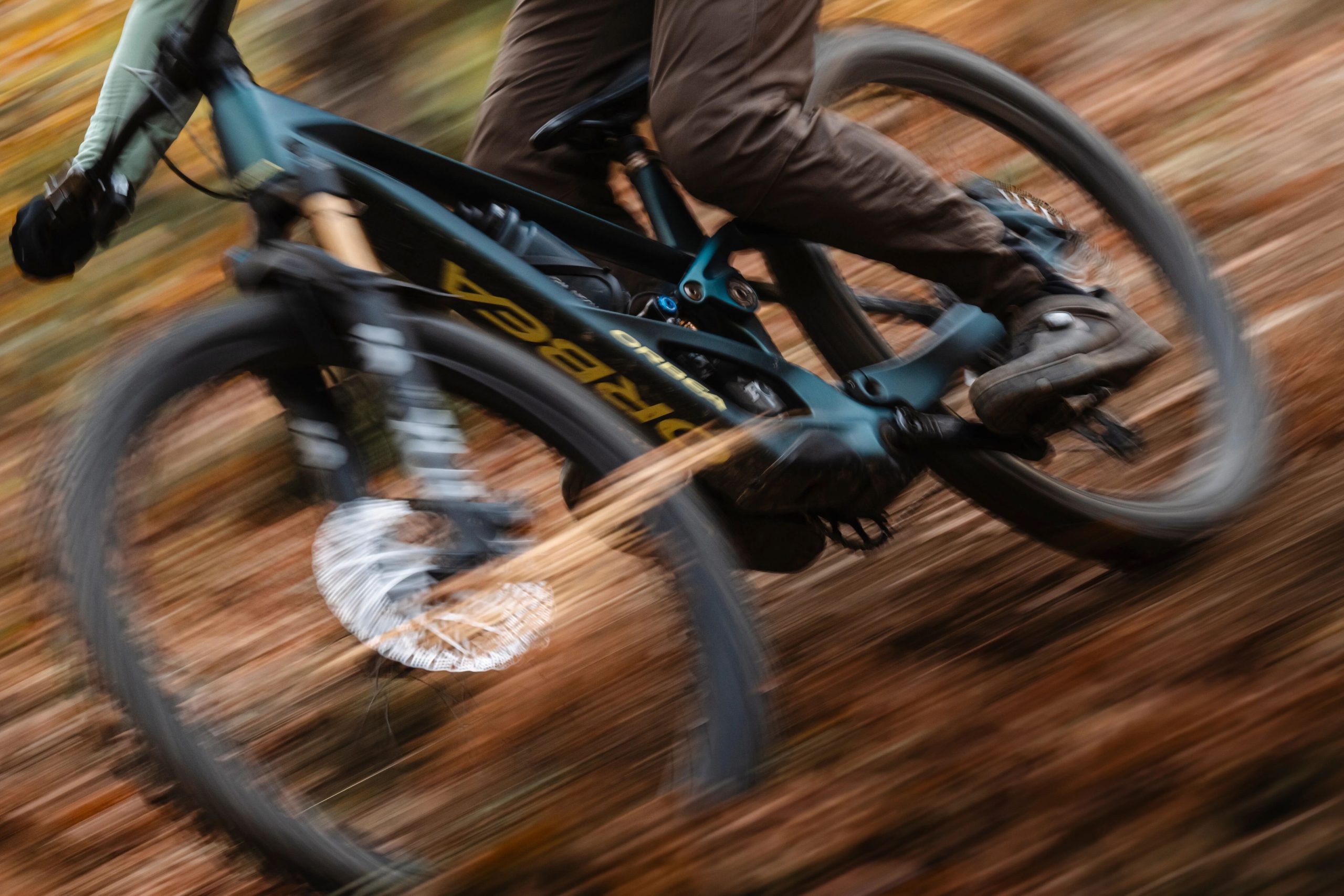
During the presentation, Orbea was very open about the risks involved in creating a bike like this.
While it’s clearly pushing boundaries in terms of integration, those motor stats go against where we’re seeing a lot of the interest in eMTBs.
But I love the idea of the Rallon RS and how it feels on the trails.
I was a big fan of SL eMTBs first time around and, although they had issues, always had fun riding them. The Rallon RS has taken that old blueprint and improved upon it – it offers something for those who aren’t keen on the big-motor eMTBs.
This isn’t a bike for everyone, but I’m sold.
Orbea Rallon RS range details
Orbea Rallon RS-LTD (29in or 29in/27.5in wheels)
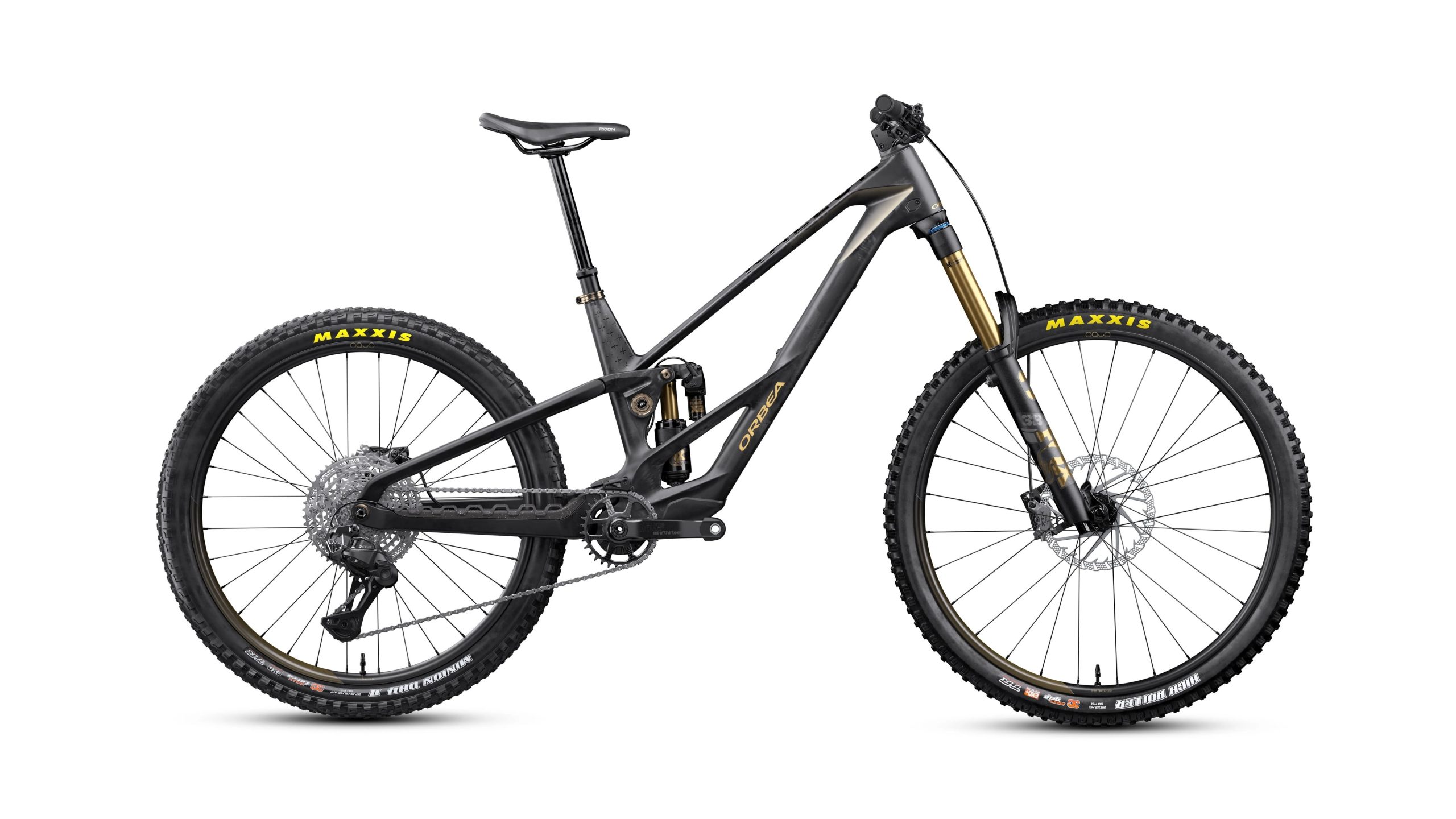
- Frame: OMR carbon, 170mm travel
- Motor: TQ HPR40
- Battery: TQ 290Wh
- Fork: Fox 38 GRIP X2 Factory, 180mm
- Shock: Fox X2 Live Valve NEO Factory
- Brakes: Shimano XTR
- Drivetrain: e*thirteen Helix Race alloy crankset, Shimano XTR Di2 gearing
- Wheels: Oquo Mountain Control MC32 LTD (29in) / Oquo Mountain Control MC32 Team (27.5in)
- Price: £12,999 / $14,999 / €14,999 (29in) / £12,499 / $14,199 / €14,199
Orbea Rallon RS-Team (29in or 29in/27.5in wheels)
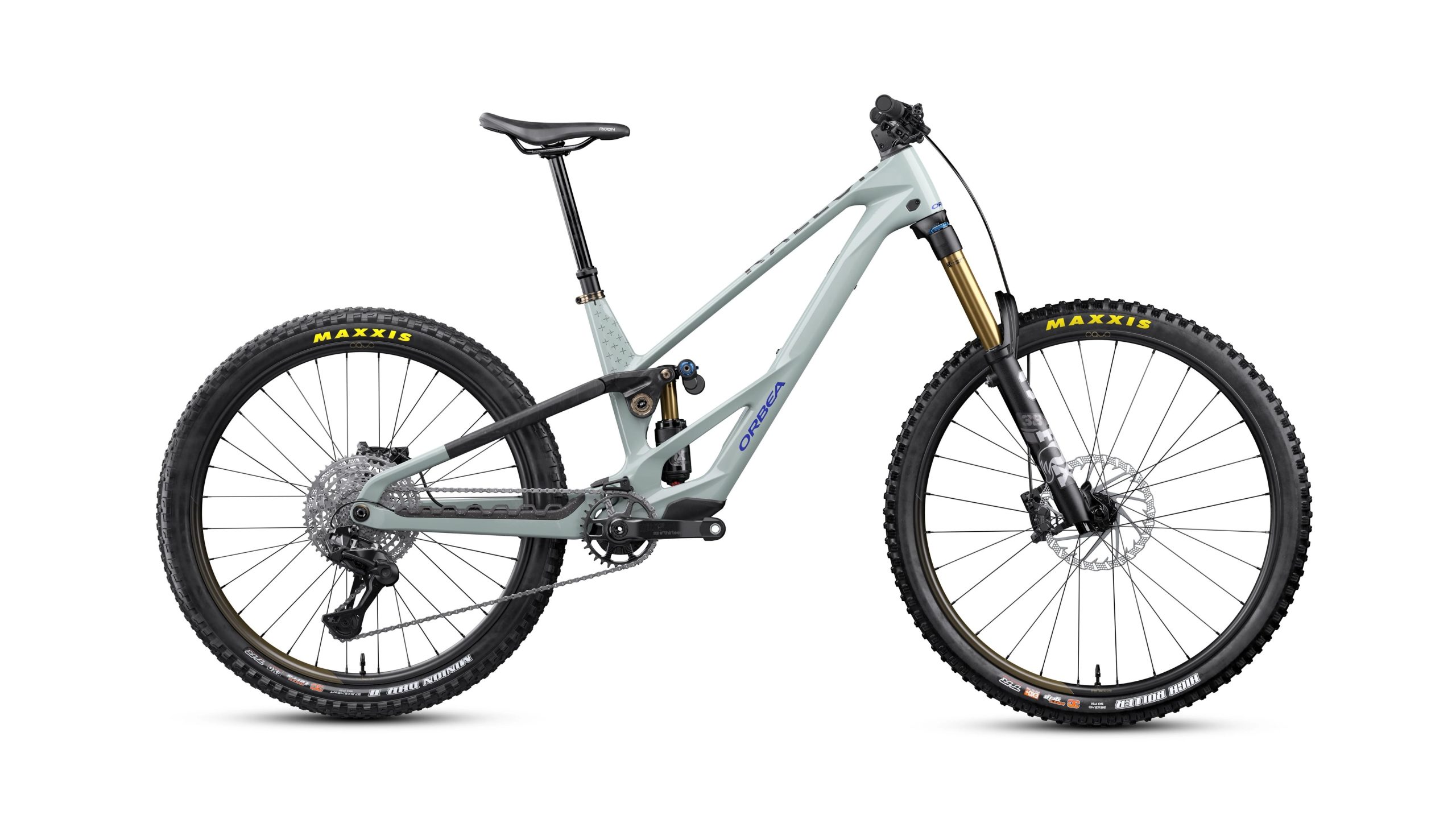
- Frame: OMR carbon, 170mm travel
- Motor: TQ HPR40
- Battery: TQ 290Wh
- Fork: Fox 38 GRIP X2 Factory, 180mm
- Shock: Fox X2 Factory
- Brakes: Shimano XT
- Drivetrain: e*thirteen Helix Race alloy crankset, Shimano XT Di2 gearing
- Wheels: Oquo Mountain Control MC32 Team (29in or MX)
- Price: £9,999 / $10,999 / €10,999 (29in) with Fox X2 NEO shock / £9,499 / $10,199 / €10,199
Police reverse decision not to investigate theft of bikes left for more than two hours outside train stations
The British Transport Police has announced a reversal of its controversial policy not to investigate bicycles stolen from outside train stations if they were left for more than two hours, or stolen bikes worth less than £200.
It was revealed that the BTP wouldn’t investigate certain bike thefts in October, after the policy was introduced in August 2024. The policy meant most thefts would not be investigated because CCTV footage would not be reviewed after the two-hour timeframe.
But today the BTP revealed it updated the cycle-theft section of its Crime Screening Policy on 5 January “to enhance the force’s service to victims of this crime”.
The BTP’s assistant chief constable, Ian Drummond-Smith, says: “Rail passengers whose bikes are stolen rightly expect a thorough police investigation to trace offenders and reunite them with their property, and we are committed to bringing more bike thieves to justice in 2026 than ever before.
“To further improve our service to victims, and following an internal review, we have recently refreshed our Crime Screening Policy.
“Under this updated Policy, our officers will investigate more reports and explore all viable lines of enquiry if a bike is identifiable on CCTV, or if there is a witness to the crime.”
Drummond-Smith added that since reviewing the policy, the BTP has already charged a man with cycle theft.
There is now no reference to the cost of a bike or the amount of time a bike was left unattended in the BTP’s policy. It says a crime will be screened if there is a witness to the offence, the bike is identifiable on CCTV or the bike was stored in an on-train cycle rack.
When the BTP first introduced its revised policy not to investigate certain bike thefts, a spokesperson for the force told the BBC: “Our experience tells us at an early stage that there are some crimes that are unlikely to ever be solved – such as those without a clear estimate of time or location for the incident or if there is a lack of CCTV or witnesses.
“The more time our officers spend reviewing CCTV footage for these offences, the less time they have available for patrolling railway stations and trains, investigating crimes which cause the most harm and providing a visible presence across the network.”
Between 2021 and 2023, more than 14,000 bicycles were stolen from outside train stations. There was a 39 per cent increase from 2022 to 2023 in the number of bikes reported as stolen from outside stations.
The BTP’s previous policy was heavily criticised by cycling advocacy groups. Cycling UK’s Sophie Gordon said the decision not to investigate the theft of bicycles left for more than two hours would “hit the lowest income groups the hardest”.
“These are often working people who might not be able to afford a car and are relying on bikes and public transport to get to work. If you’re on shift or at work, you will inevitably be away longer than a couple of hours,” she said.
Days after the BTP’s policy not to investigate certain bike thefts was revealed, it sought to clarify its position. Drummond-Smith appeared on the BBC’s Today programme, where he explained the BTP targets bike-theft hot spots.
The BTP also released a statement, which has now been deleted from its website.
Alpkit enters administration having “faced incredible challenges over the last three years”
Alpkit has entered administration after three difficult years, and is in talks with a new owner and investment partner in an attempt to secure the bicycle and outdoors brand’s future.
In a letter sent to shareholders via the investment platform Crowdcube, Alpkit CEO and co-founder David Hanney writes: “It is an extremely sad day for everyone at Alpkit, and for us co-founders in particular. Today, we are confirming that the Board has accepted that we must place Alpkit into administration.”
“We’ve faced incredible challenges over the last three years,” Hanney adds. These include cost inflation, a challenging market and “new trade barriers coupled with the rising weight of interest rates and recovery loan repayments”.
Hanney’s letter, forwarded to BikeRadar by a shareholder, explains that Alpkit is in “talks with a new owner and investment partner”, with the company set to share news of the deal soon.
“Everything is in place to complete the deal. We expect that all jobs will be saved, our stores will remain open, and all customer orders will be fulfilled,” Hanney writes.
Alpkit, which also produces Sonder bicycles, grew its number of shareholders through crowdfunding campaigns via the Crowdcube investment site. In 2020, the company raised £1.5m from 1,350 customers. It then raised over £2.3m in 2022.
Hanney says the value of the shares is now lost, but that the company is “doing something rare”. “Every shareholder who joined us through either of our crowdfunding campaigns will be given shares in the new company,” he explains.
Alpkit incurred a net loss of £1,457,902 in the year ended 31 October 2024, following a loss of £1,118,397 in the year prior, according to its accounts filed in November 2025.
According to Hanney’s letter, Alpkit wrote to shareholders to explain its financial challenges in October. It then engaged an advisory firm, which helped the Nottingham-based company decide on its next steps after it had considered all options, including a third round of fundraising and breaking up the business.
“We weighed up the pro’s and con’s to all these options and believe this financial restructuring through a pre-pack gives the best outcome overall balancing all our Stakeholders,” the letter says.
Alpkit says it will take several steps to focus on its products and service, and reach “good profitability”. These include resourcing production from high-wage and tariff to lower-cost and tariff territories. It will add new products after it acquired the intellectual property of Scottish outdoor and travel bag manufacturer Trakke in April 2025. It will also “keep a relentless focus on our cost base”.
“This does not mean we are going cheap, downmarket or anticipate a drop in our product standards – we remain totally committed to technical performance, social justice and environmental responsibility – it will let us compete better on performance and price in a challenging market environment. And gives us the profit margin so we can make money on the products we sell,” the letter says.
According to the letter, all staff will transfer to the new company.
The letter also says Alpkit remains committed to the Alpkit Foundation, which receives 1 per cent of the company’s sales and provides grants to individuals, small community groups, schools and organisations to encourage participation in the outdoors.
Adidas has sneakily released new cycling shoes – and they’re already on sale with up to 45% off
Adidas has quietly released a new range of cycling shoes, including the Heritage Road Cycling Shoes, which are intended to honour cycling’s rich legacy with a modern take on lace-up road shoes.
The range also features the SPD Heritage Tour Cycling Shoe and the more performance-oriented Tempo 3-Stripes Boa Cycling Shoe.
The Heritage Cycling Shoes feature full-grain leather and are said to combine the latest tech with a classic style.
Inspired by Eddy Merckx
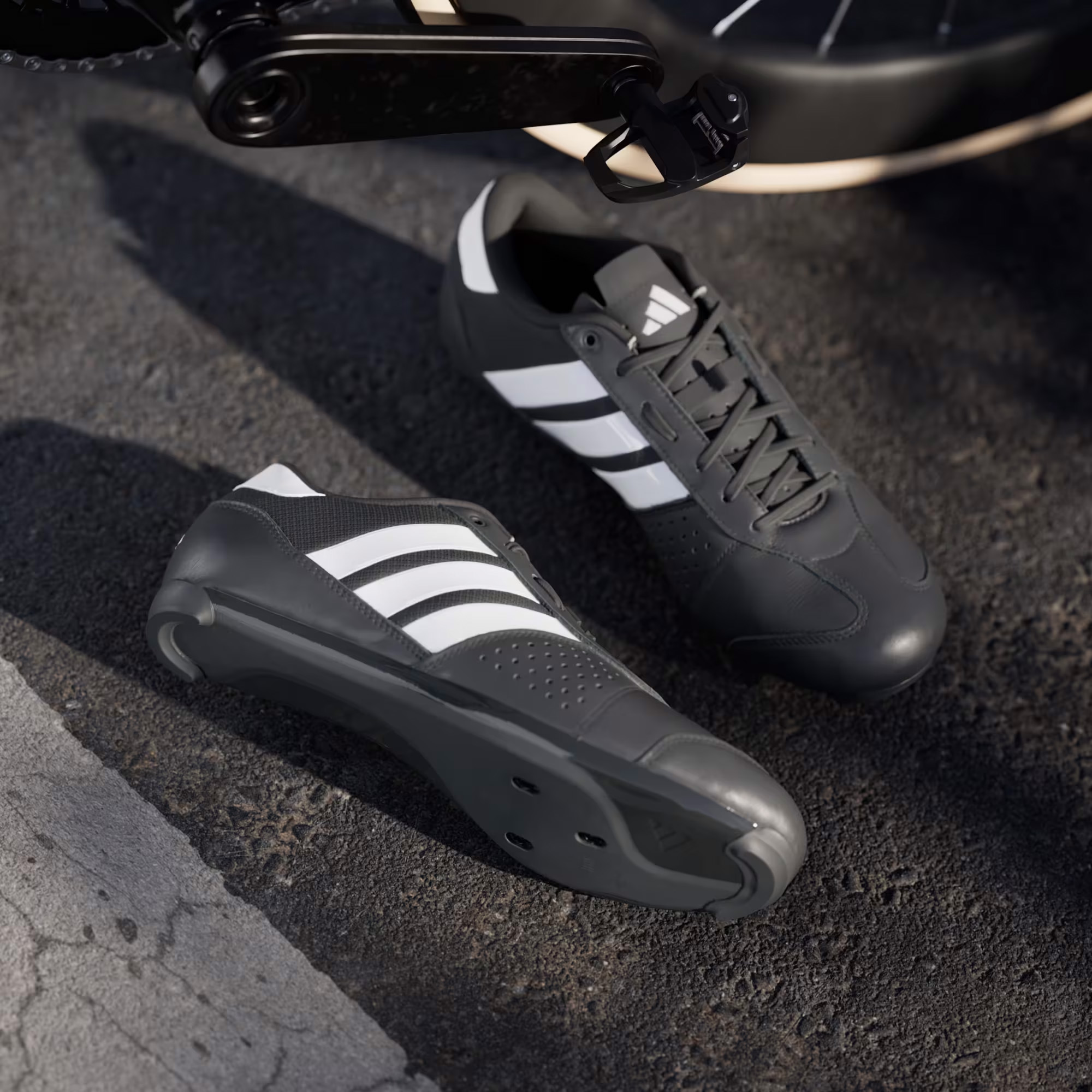
The Heritage models appear to draw inspiration from the shoes worn by Eddy Merckx in the 1970s, with the black colourway looking perfect for those wanting to cosplay The Cannibal.
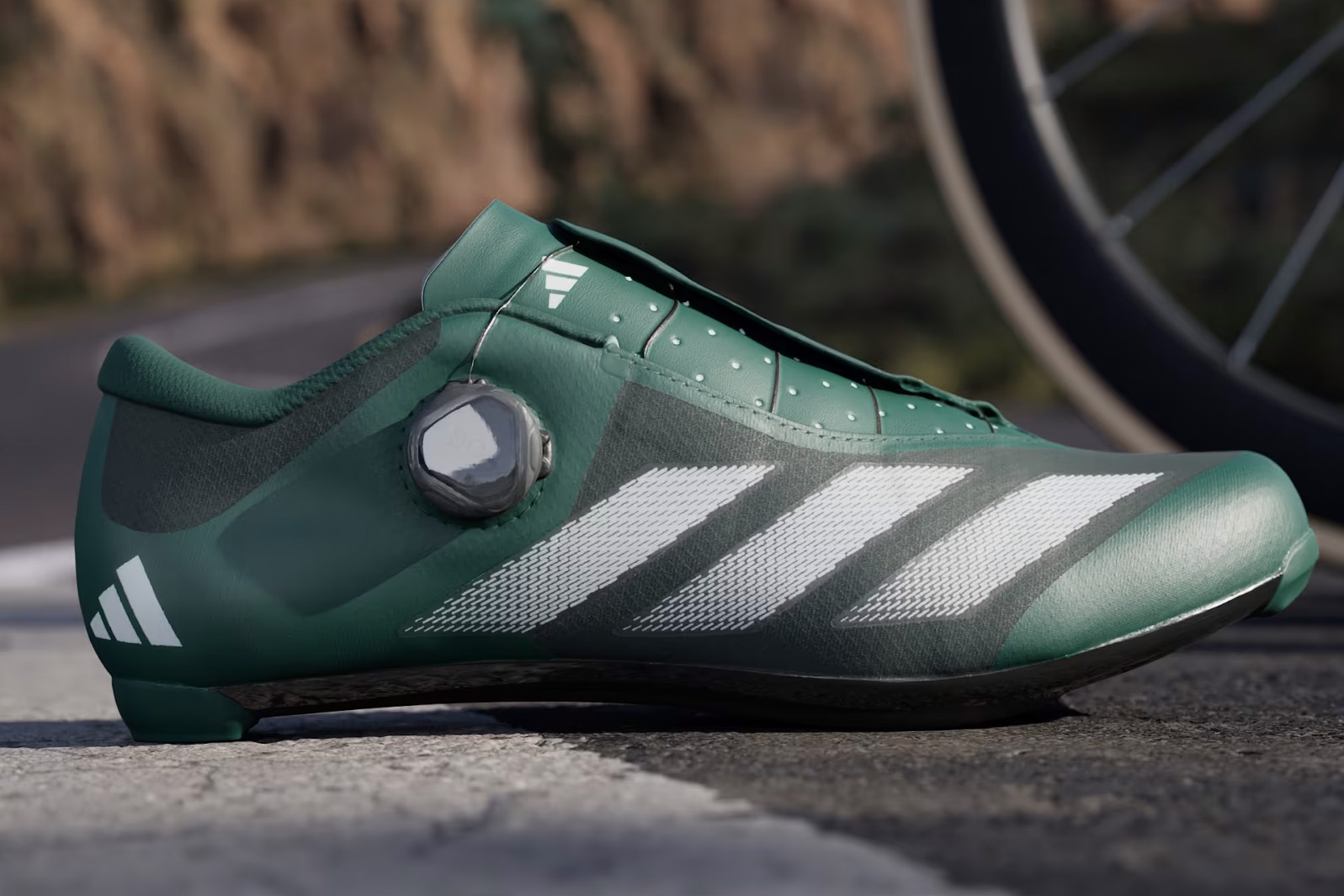
The Tempo 3-Stripes Boa Cycling Shoe is more modern in its design, featuring a Boa fit system and an open mesh upper for breathability.
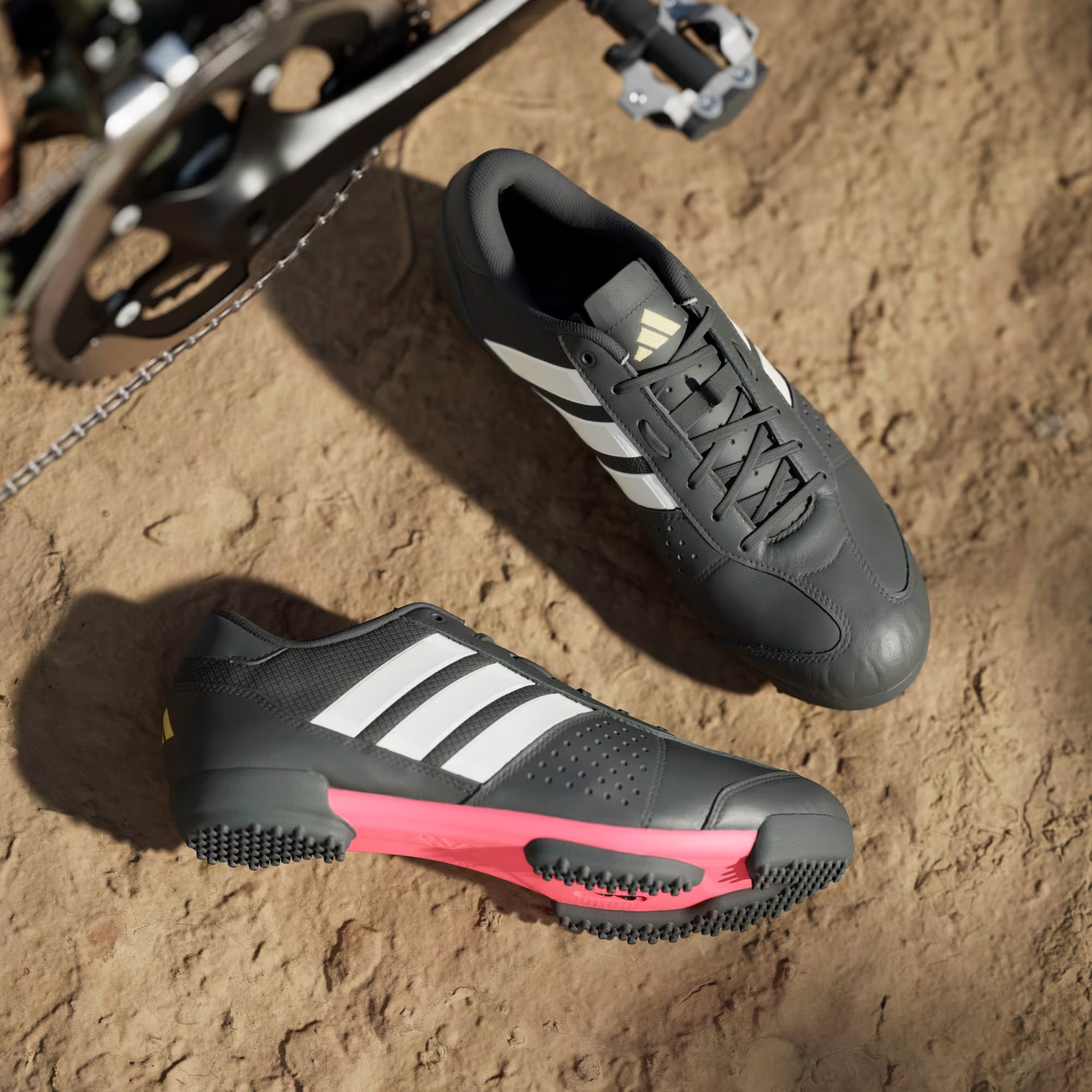
All the shoes in the range use a fibreglass-reinforced plate that is said to enable efficient power transfer, with the Heritage models featuring 360-degree reflectivity to ensure you’re seen in low light.
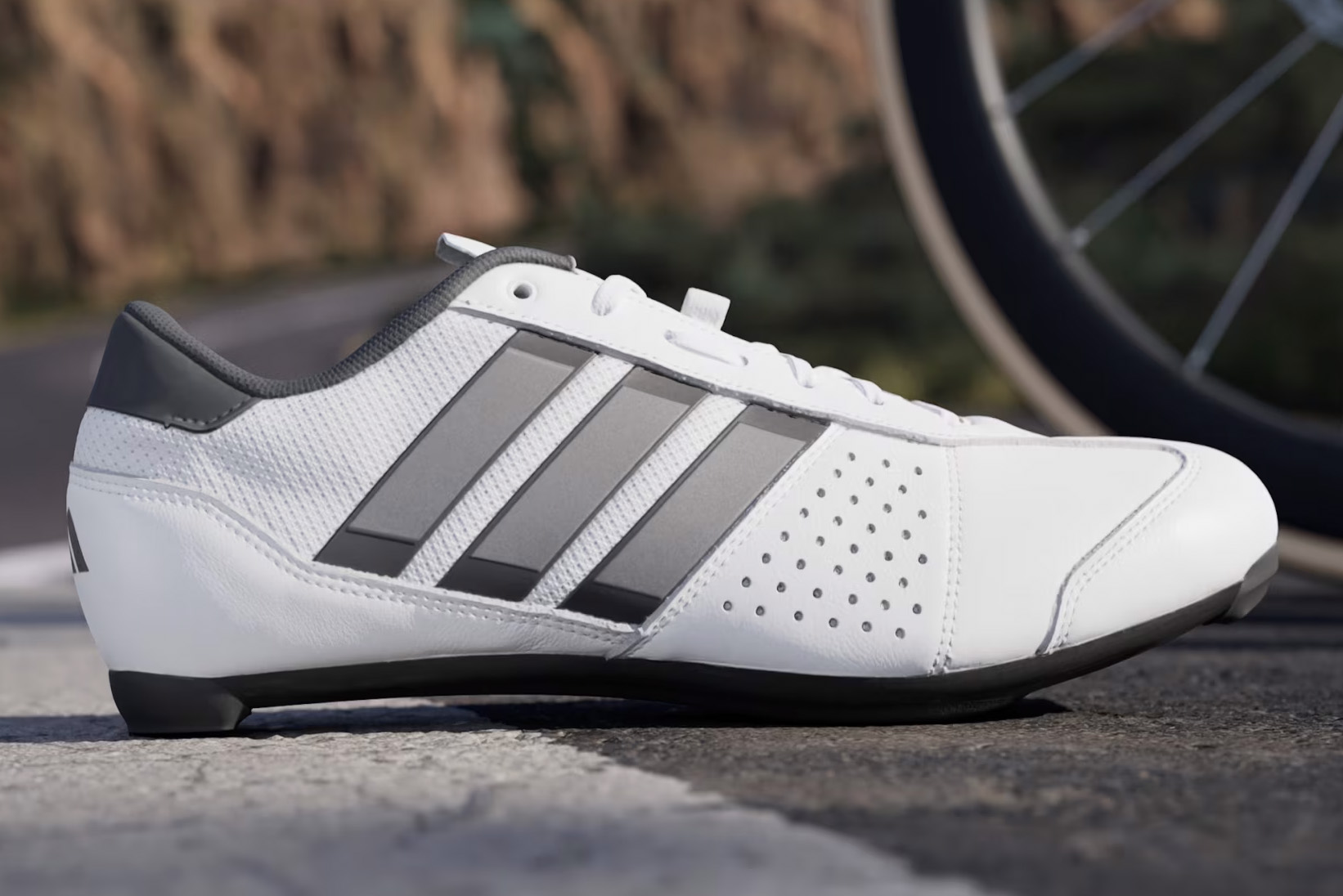
You can also customise the Heritage Road Cycling Shoes with your name, although this is only available for the white colourway.
While the shoes have only just been released, many of them are on offer on Adidas’ website, with the brand offering up to 45% savings.
The RRP of the Heritage Road Cycling Shoes is £140, with the white shoes currently priced at £77, saving 45%.
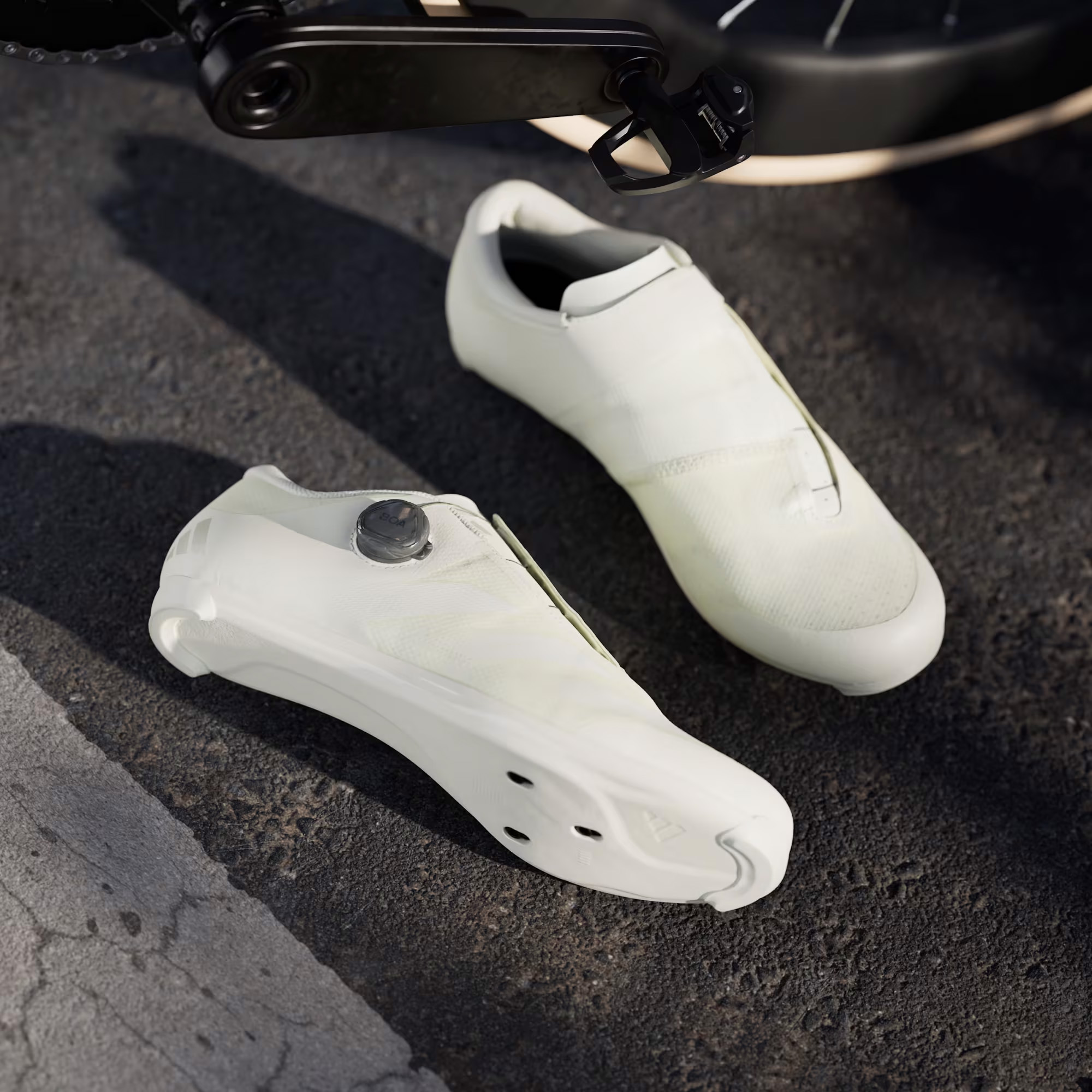
The Tempo 3-Stripes Boa Cycling Shoes are listed at £160, with the green colourway priced at £92.80 and the white pair £88.
Iconic cycling team is now riding Chinese bikes – and has one of the best pro kits I’ve seen in years
Having claimed a first UCI Road World Championships victory courtesy of Harry Hudson in Kigali last September, Chinese brand Quick Pro is now sponsoring the iconic Euskaltel-Euskadi team for 2026.
Long-time fans of the sport will likely remember the orange-clad team, the exploits of riders such as Iban Mayo and Samuel Sánchez, and their Orbea bikes.
Having ridden bikes from the Basque brand for more than 30 years, the partnership ended in 2024.
The team briefly rode bikes from Mendiz (another Spanish brand) in 2025, but has now teamed up with Quick Pro for “the 2026 season onwards”.
The partnership, which was announced last month, will see the Chinese brand’s bike debut in the WorldTour – road cycling’s premier racing calendar – at the Volta a Catalunya in March.
A milestone
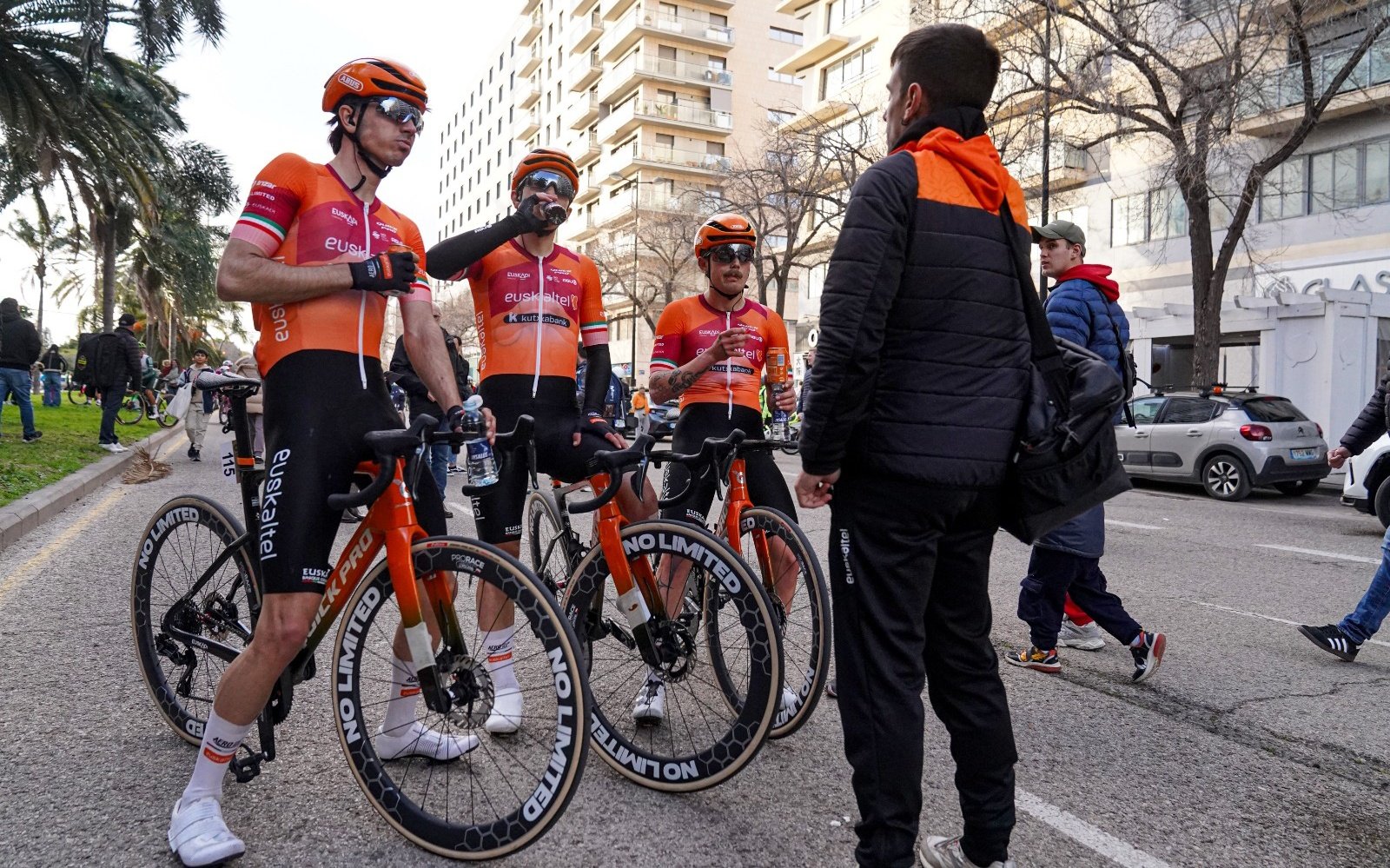
According to Quick Pro, its partnership with the Euskadi Foundation “marks a milestone in its international expansion and provides an opportunity to validate its designs in the most rigorous environment of competitive cycling”.
The team will ride the ER One aero road bike, the AR One all-rounder (as ridden by Harry Hudson) and the TT One time trial bike, and has committed to “joint work in technological development, prototype validation, and equipment optimisation” with the brand.
The bikes are, of course, painted orange to match the foundation’s iconic team colours.
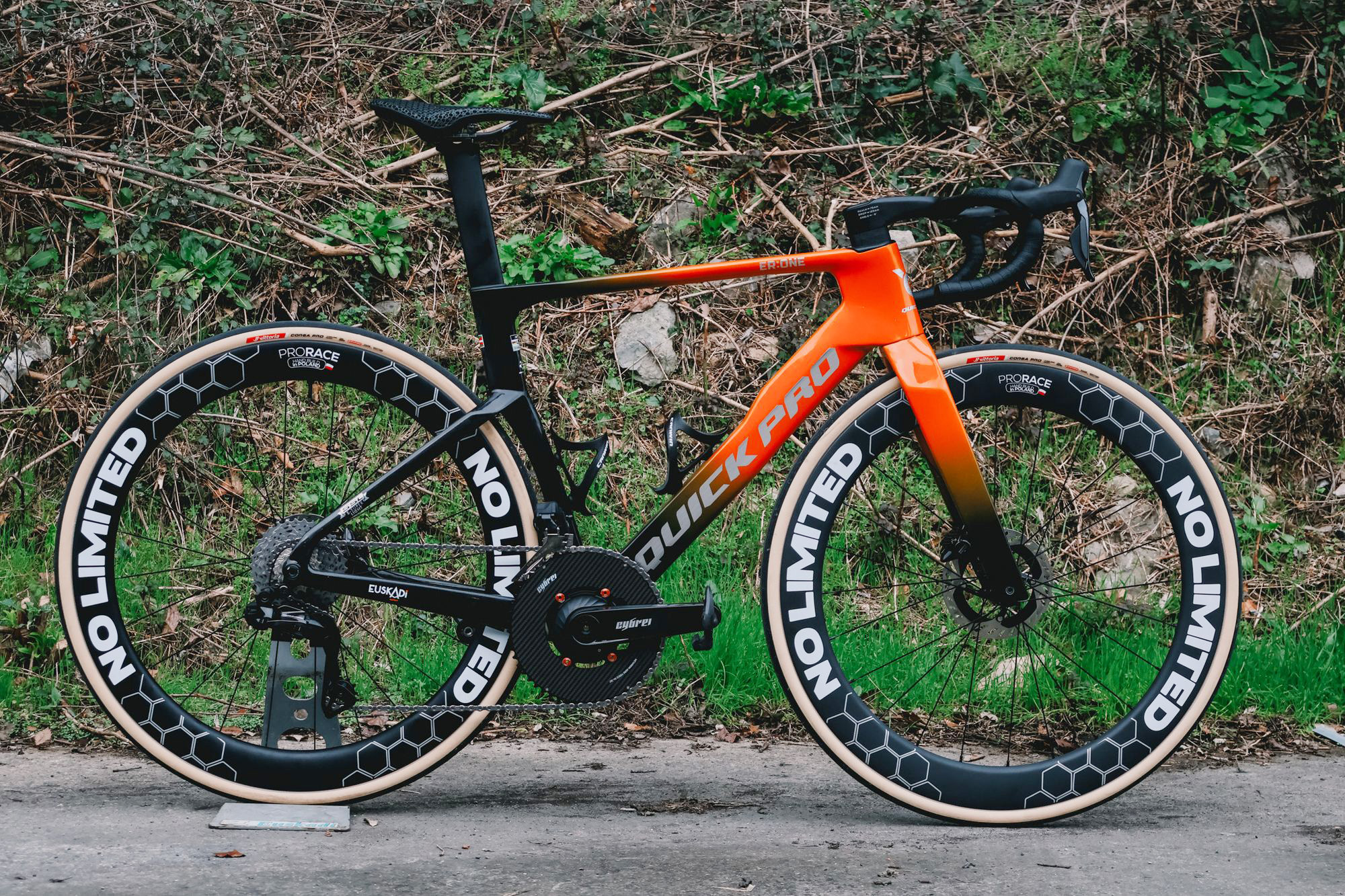
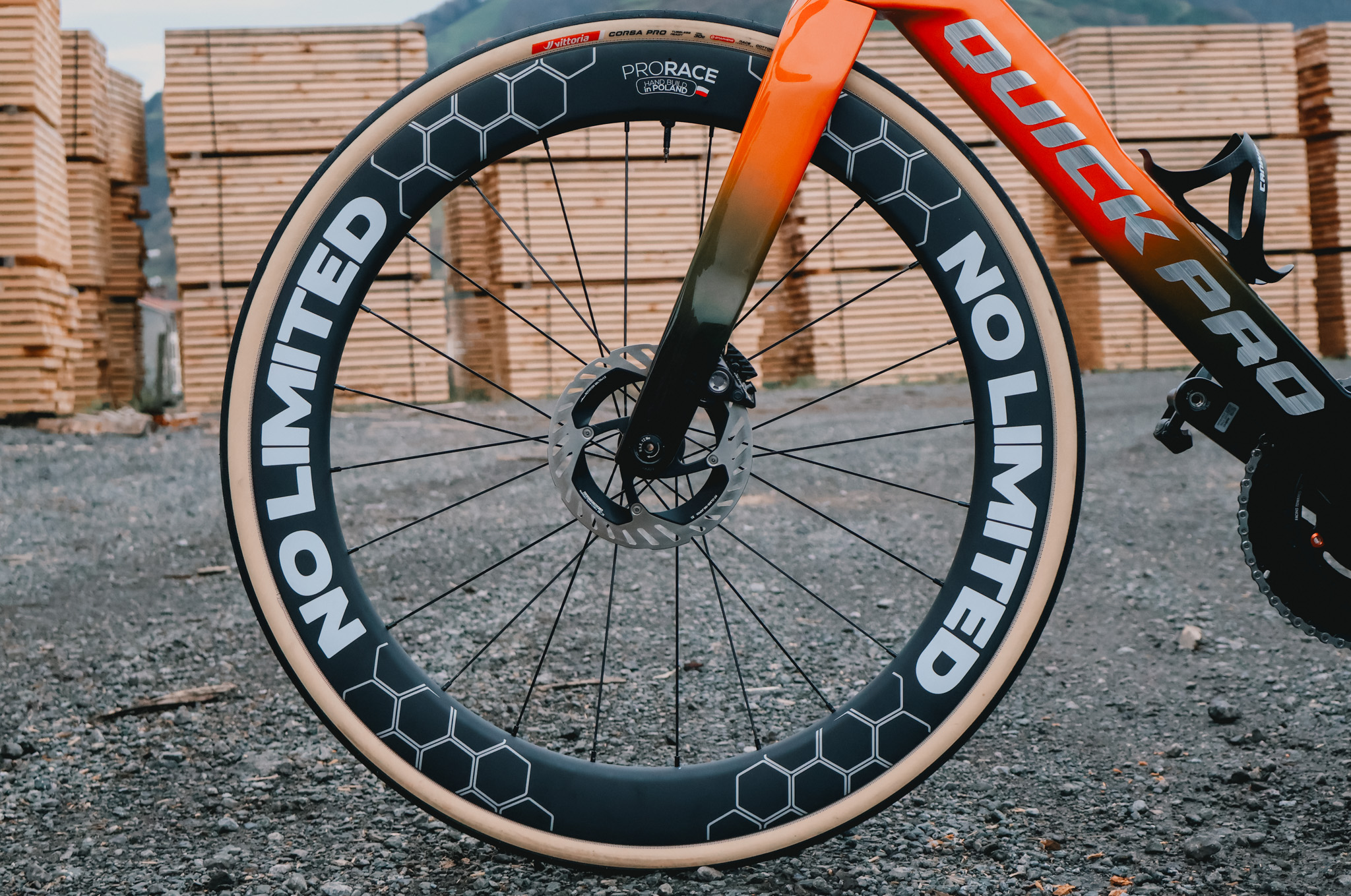
In addition to Quick Pro framesets and finishing kit, the Euskaltel-Euskadi team bikes also feature carbon fibre cranksets and chainrings from Cybrei and power meter spiders from Xcadey – both also Chinese brands.
The bike is finished with a Shimano Dura-Ace Di2 R9200 groupset, Vittoria Corsa Pro TLR tyres and carbon wheels from Polish brand No Limited.
Laboral Kutxa-Euskadi team riding XDS bikes
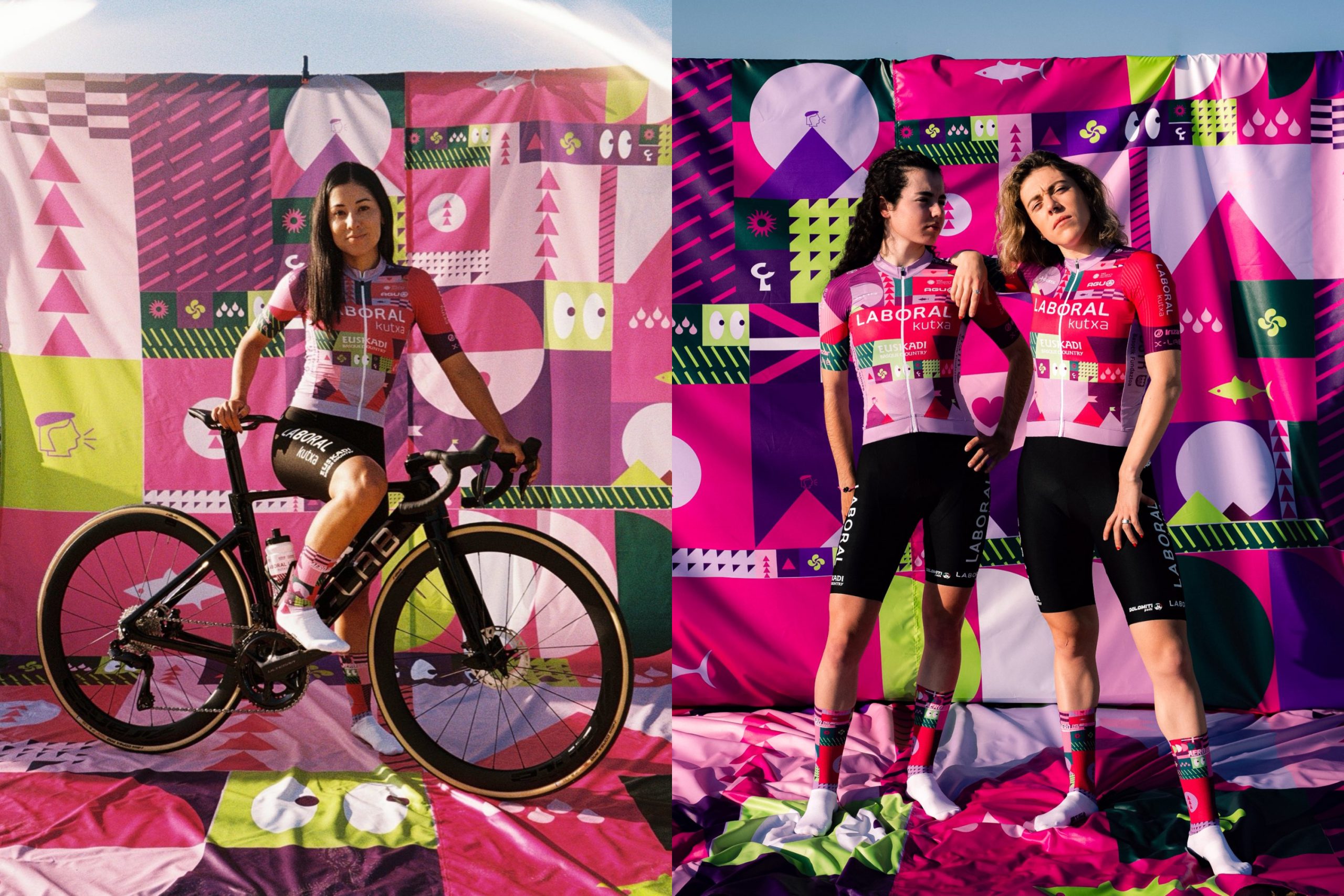
While the men’s team is on bikes from Quick Pro, the Euskadi Foundation’s women’s team – Laboral Kutxa-Euskadi – is riding XDS bikes in 2026.
Like the XDS-Astana Team, Laboral Kutxa-Euskadi is riding the X-Lab AD9 aero bike, complete with Shimano Ultegra Di2 R8100 groupsets and FSA PowerBox power meter cranksets.
The team is also using carbon wheels from XDS, such as the Branta C50UL model, paired with Vittoria tyres.
As the name implies, the Branta C50UL wheelset features 50mm-deep carbon rims, with 22 and 30mm internal and external widths.
Built with carbon aero spokes, the wheelset features a claimed weight of 1,350g, yet appears to cost only AU$1,499 (around £760) – far less than we’d typically expect of a wheelset with this kind of spec.
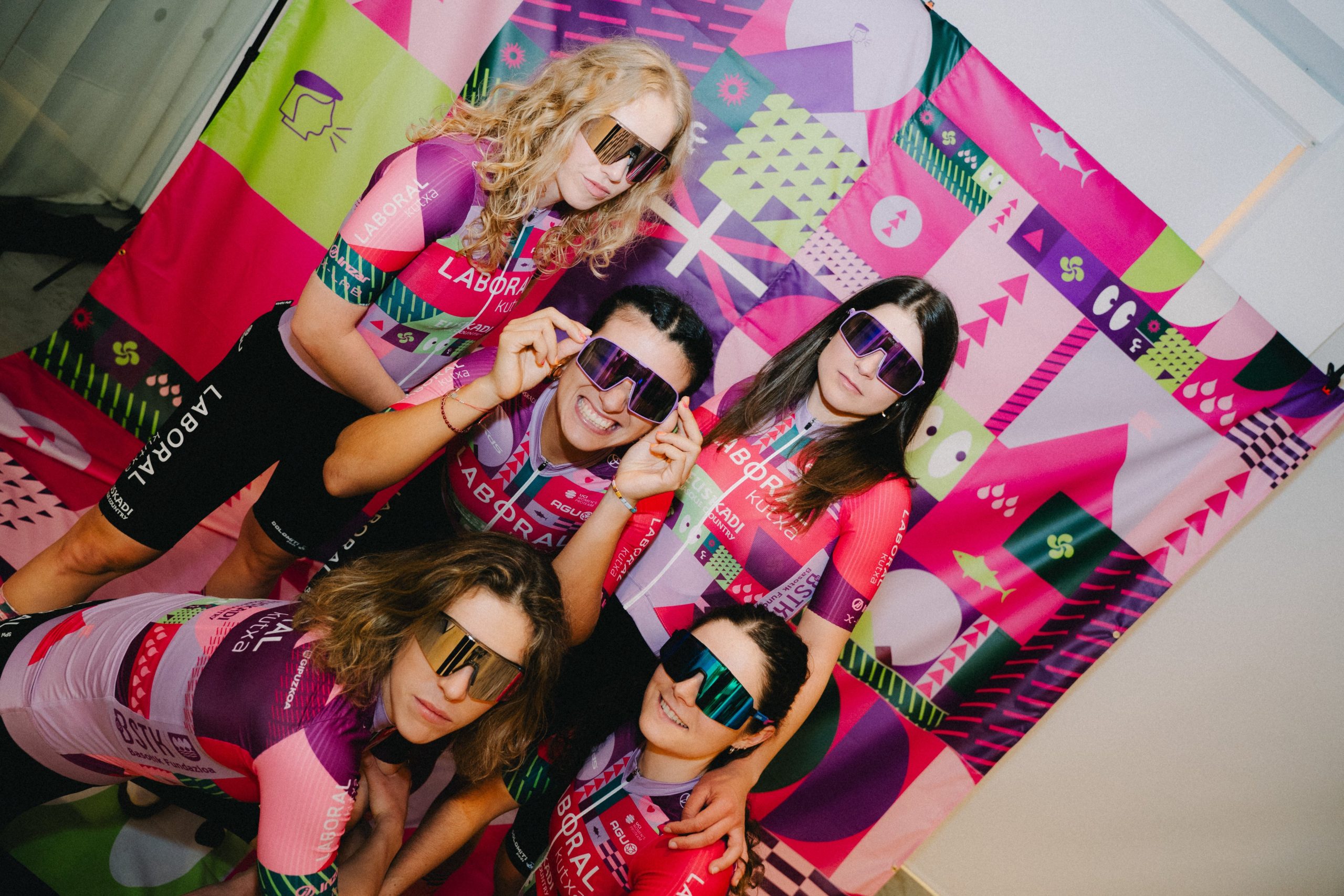
Topping things off, the team also has one of the best jersey designs I’ve seen in the pro peloton this year.
Made by Agu and designed by creative agency MUY Company, the jersey incorporates multiple icons representing influential Spanish women from a diverse array of fields.
More of this, please, pro cycling.
Reserve partners with Tune for its lightest wheelsets yet
Reserve’s top-of-the-range road wheels range, the Turbulent Aero, is already a light wheelset that’s proven at WorldTour level.
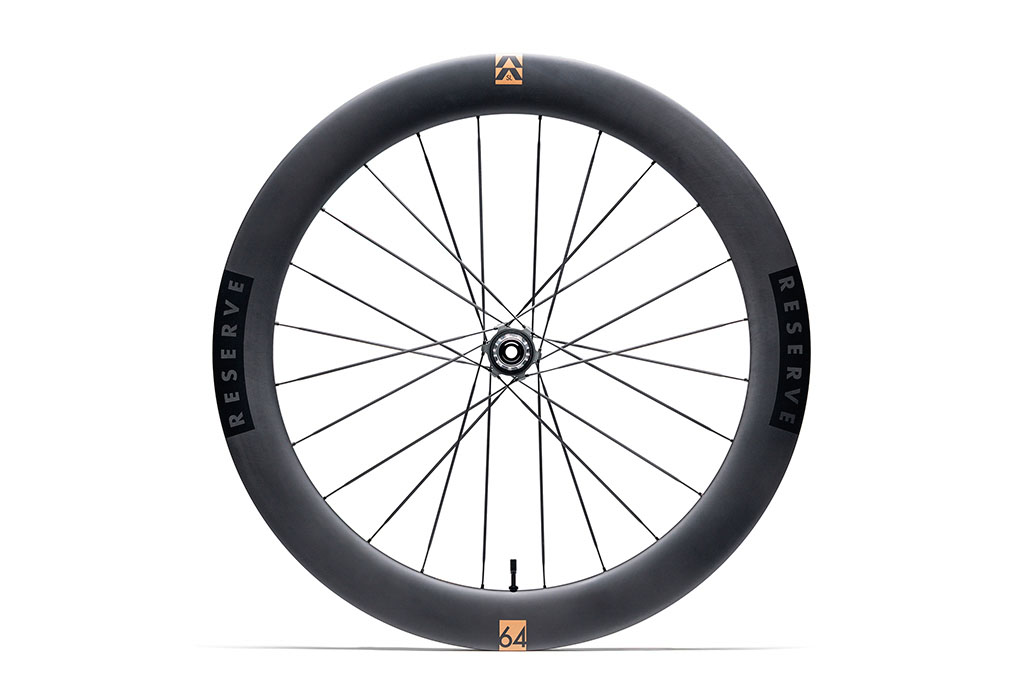
Now, Reserve has partnered with German lightweight specialist Tune on the 34/37, 42/49 and 57/64 rim-depth wheelsets.
In this limited run, Reserve’s Turbulent rims have been optimised to reduce weight by 30g per rim. These are then paired with Tune’s Pico hubs, laced to the rims using straight-pull bladed carbon spokes.
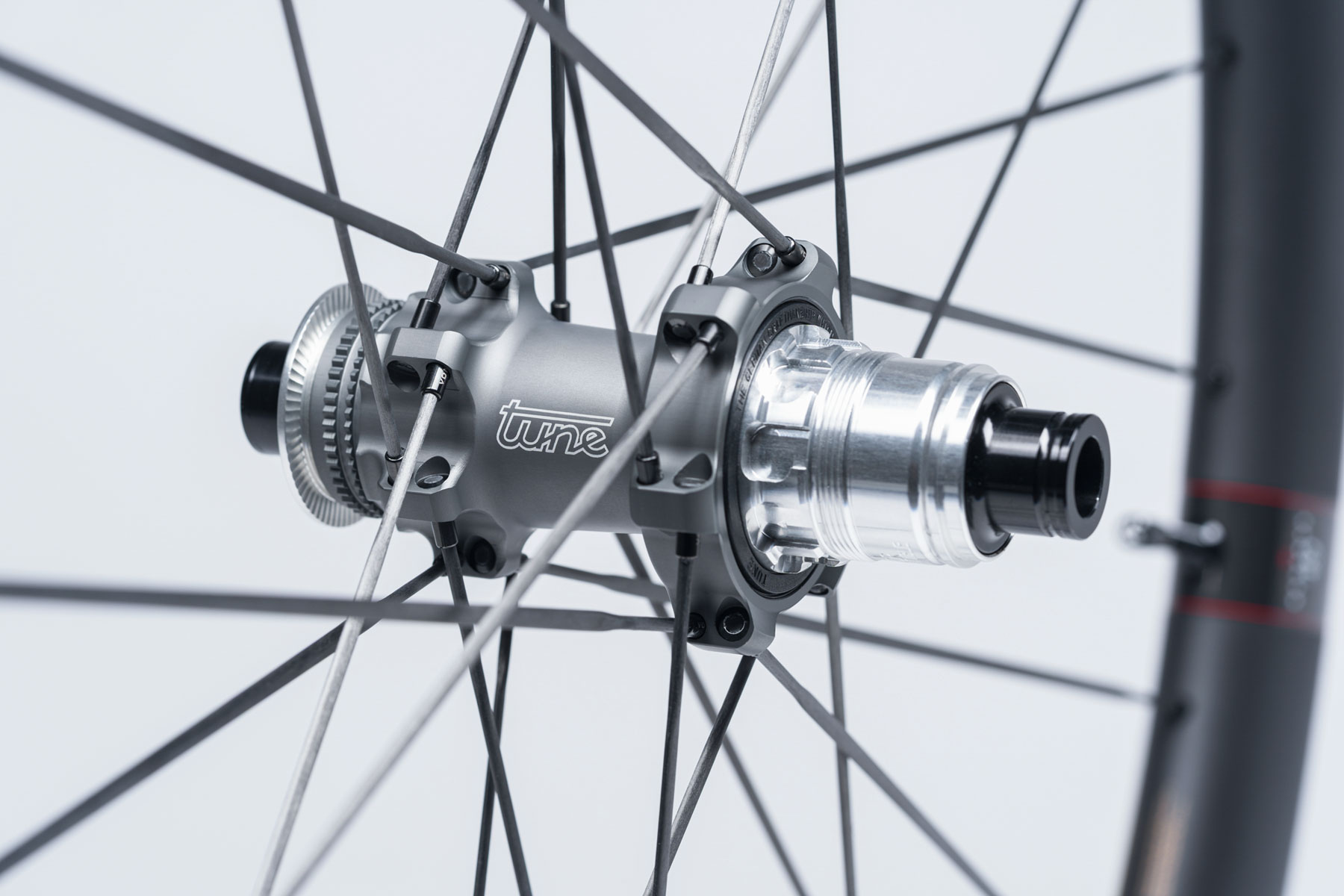
We spotted early versions of these production wheels on the Cervelo S5s ridden by Team Visma-Lease a Bike in last year’s Tour.
The Pico hubs aren’t part of Tune’s current line-up. They’re hard anodised and the freehub body can be upgraded from 69 to 138 points of engagement (5.2 and 2.6 degrees of engagement, respectively). They are machined from 7075-T6 alloy and weigh 275g per set, including the driver body and rotor lockrings. The Pico hubs share several small parts with Tune’s Micro and Nano hubs.
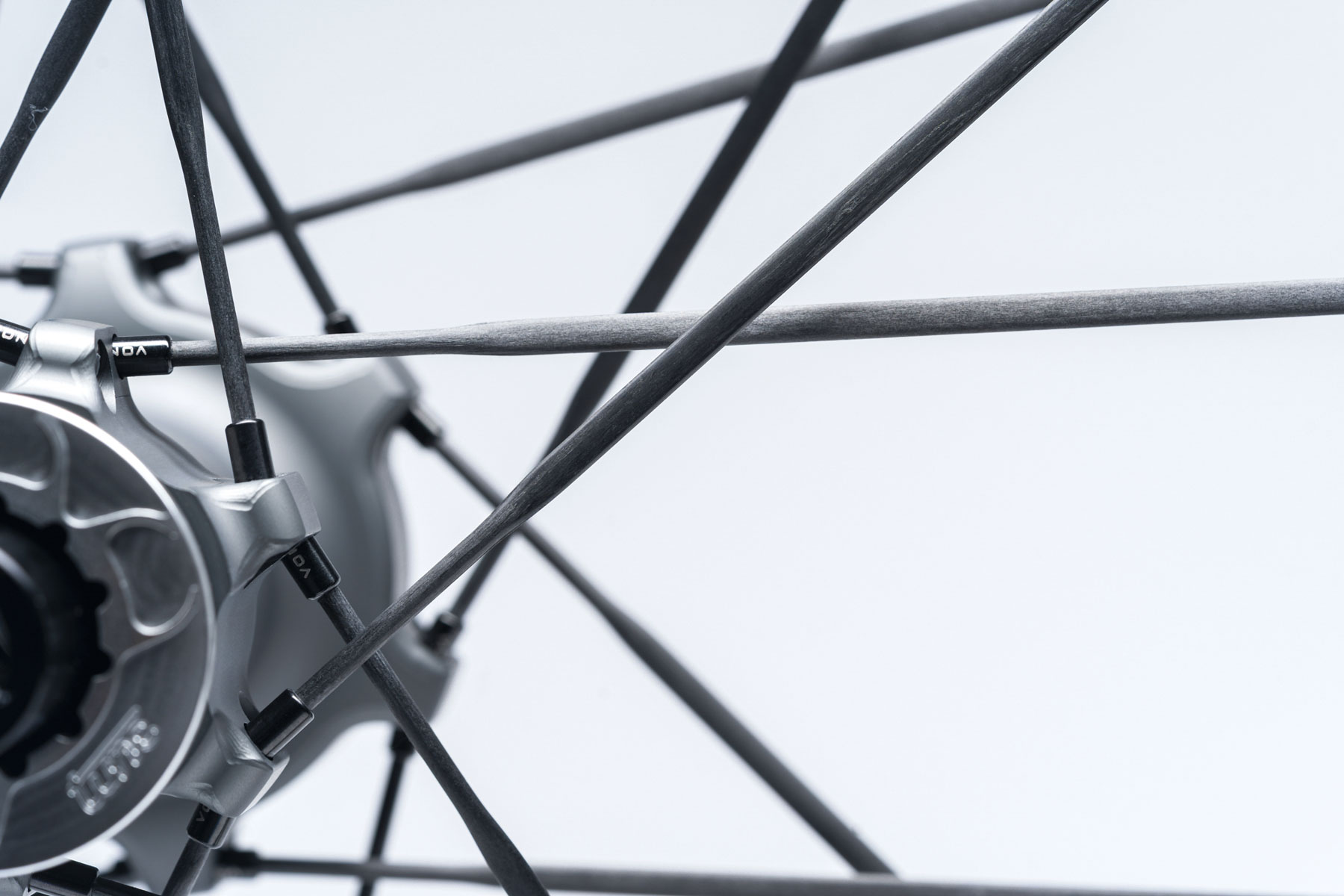
The Pico hubs have been designed specifically to work with the ERD and spoke hole offset of Reserve’s rims. Reserve claims this means the carbon spokes don’t have any bends or twists between hub and rim. This creates a stiffer, stronger wheel, according to Reserve.
They’re said to be better for sprints and, with reduced stress at the spoke nipple and optimised load distribution, more durable.
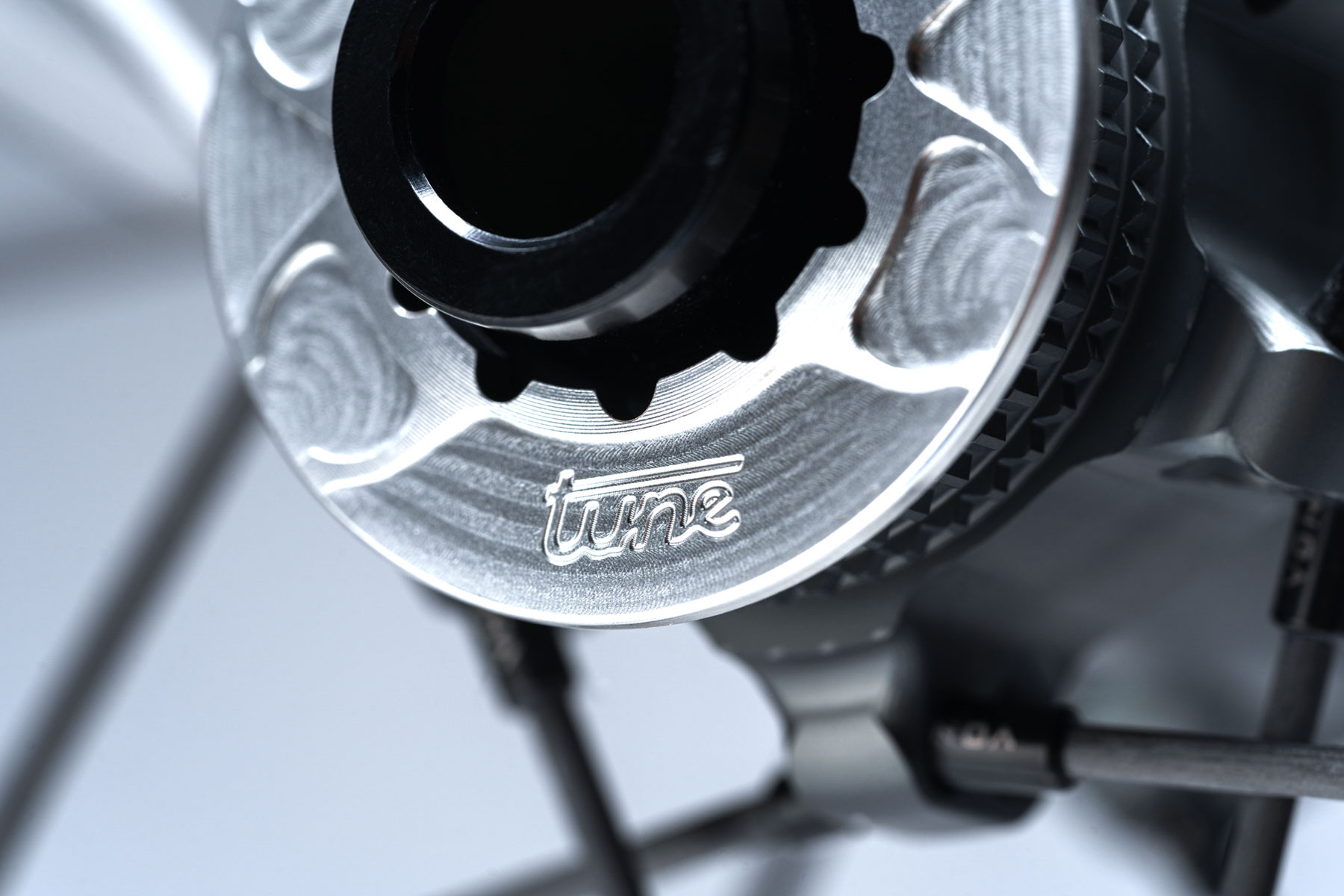
The wheels weigh in at 1,140g a pair for the 34/37 option. They come with a lifetime warranty and no rider weight limit.
Reserve Turbulent Aero wheelsets pricing and weight details
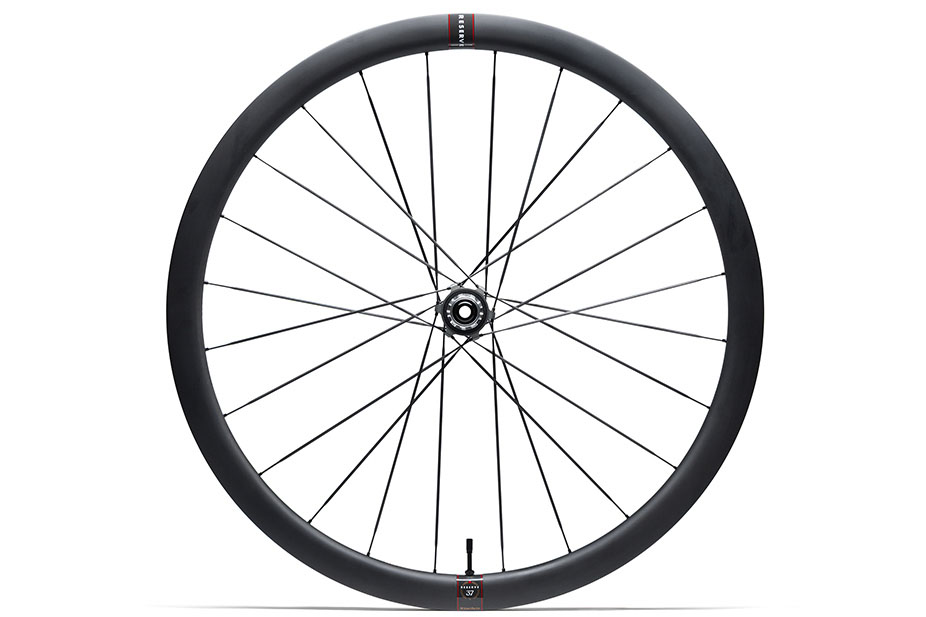
- Wheelset weights: 34/37, 1,140g; 42/49, 1,290g; 57/64, 1,470g
- Prices: £2,999 / $3,499 / €3,499 / CAD$4,599 / AU$6,199
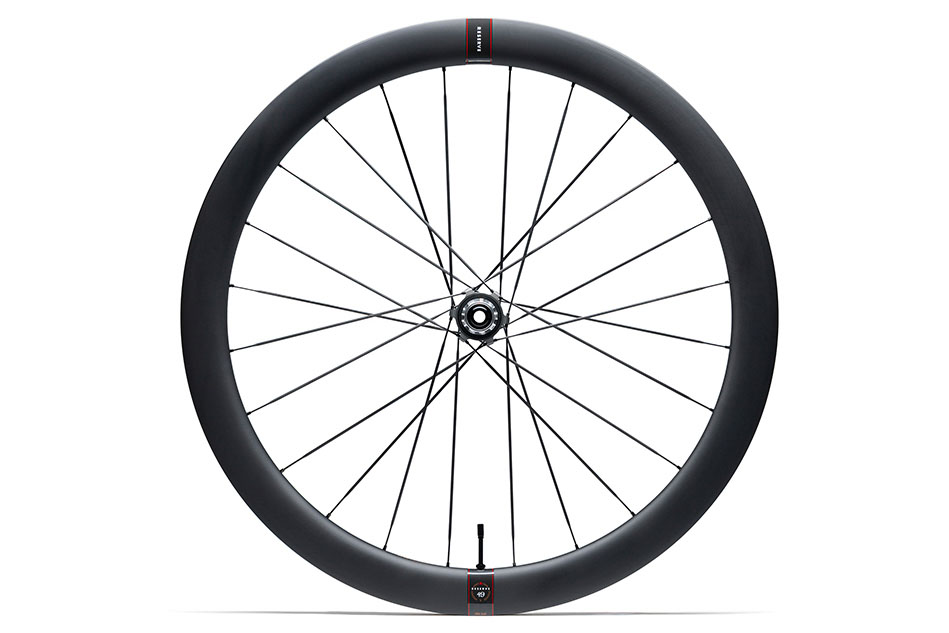
All wheelsets come with tubeless tape, Reserve’s Fillmore valves, replacement carbon spokes (4x), rotor lockrings and wheel bags. They are available with XDR or HG freehubs.
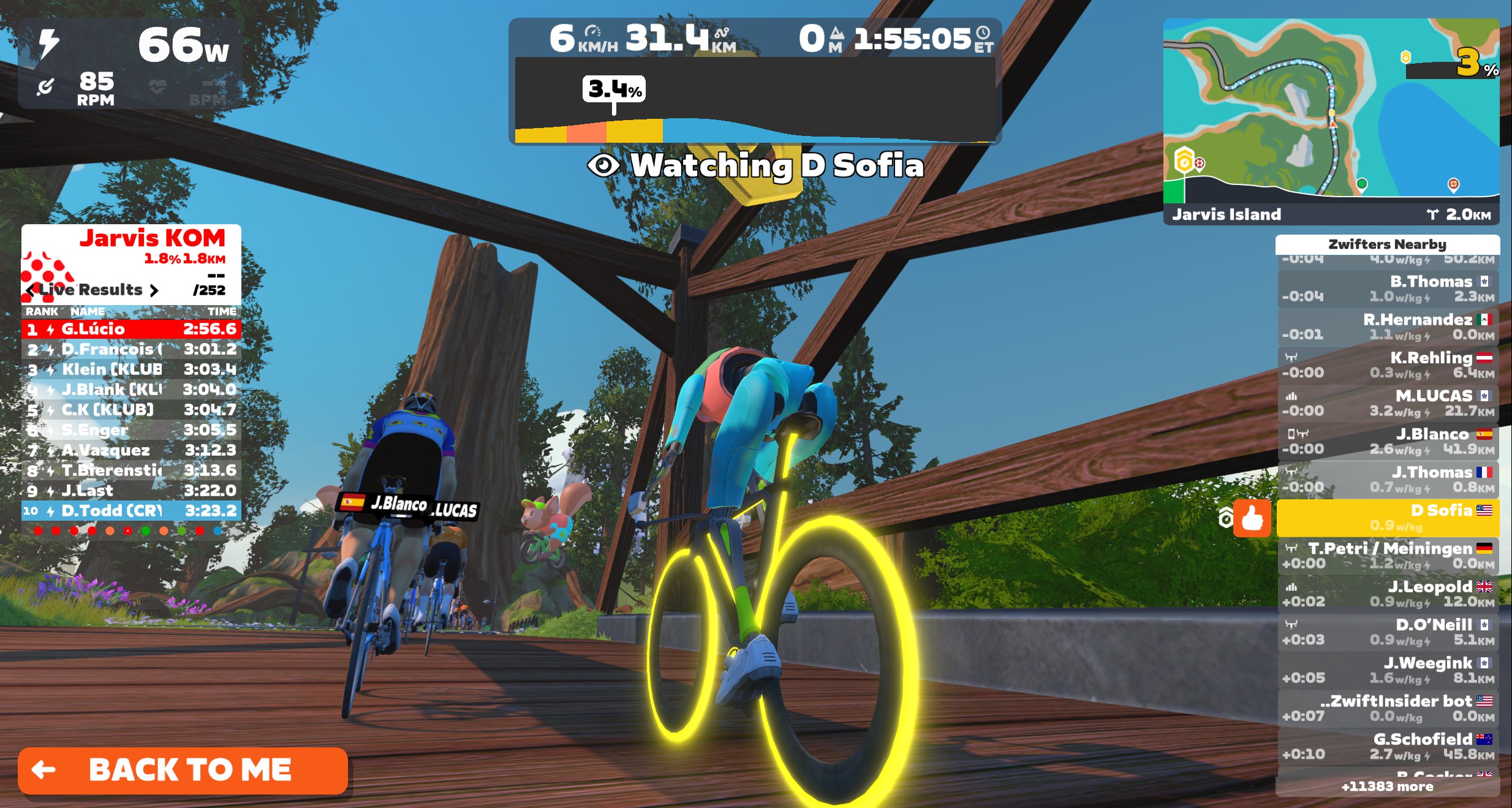
Zwift Adds “Sofia” RoboPacer and Modifies RoboPacer Route Schedule
Today, Zwift made some noticeable changes to their RoboPacer setup.
First, they added a 10th cycling RoboPacer named “Sofia” at 0.8 W/kg (63 watts), “designed for new and lower-FTP users.”
Next, they’ve modified and expanded the list of routes used by RoboPacers “to include more pacer-friendly routes from our recent world expansions.” This means you can expect to see a much wider variety of routes, especially on maps with lots of routes like Watopia, Makuri Islands, and New York. And you can expect to see newer routes in the rotation, especially on recently-updated maps like France and New York.
See the current RoboPacer schedule >
As an example, here are the routes Zwift was formerly rotating through in Watopia, and the routes being used this week:
This is an entirely fresh set of routes, although it appears that we’ll be seeing the old routes rotated in as well. So instead of Watopia’s RoboPacers just rotating through the same 9 routes (changing weekly), they will be rotating through, perhaps, 15-20 routes.
Another good example is France, where RoboPacers are now mostly on routes that include the new cobbled roads from the April 2025 expansion:
While three of the routes on France’s new rotation were included in the old rotation as well, I have a hunch we’ll see this and other maps’ rotations change in the coming weeks as Zwift tightens up their route selections based on user feedback and metrics.
What do you think?
What do you think of Zwift’s RoboPacer changes? Share your thoughts below!
Winter is nearly over! We’re here to help make 2026 your best riding season ever
For most of us, the realities of winter road riding mean grinding away on grit-strewn roads, trying to catch a ride in the precious hours of daylight, only to be passed by cars emerging alarmingly from the gloaming.
For mountain bikers and gravel riders, a quick jolly turns into a logistical nightmare as post-ride clean-up can easily take as long as the ride itself.
Others will turn indoors, toiling away on the smart trainer to help maintain fitness through the darker months.
As the weeks roll – seemingly ever slower – towards the end of the cold, wet months, even the most committed cyclists can’t help but wonder why we bother.
But as spring bulbs begin to emerge from the grimy roadside verges turned black from a season’s gritting, a little inkling of form starts to creep back into your legs.
Like a Gore-Tex-clad onion, your winter-paled flesh is slowly exposed as gloves, arm warmers, and extra layers are shed progressively with each ride. Days stretch out, and the prospect of long rides once again feels possible. Everything begins to feel more optimistic.
Here in the UK, come the turning of the clocks, everything that makes bike riding good comes into full flow.
However, it’s all too easy to stumble upon this magical moment and find yourself lacking direction – or the form needed to make the most of these precious warm, long months.
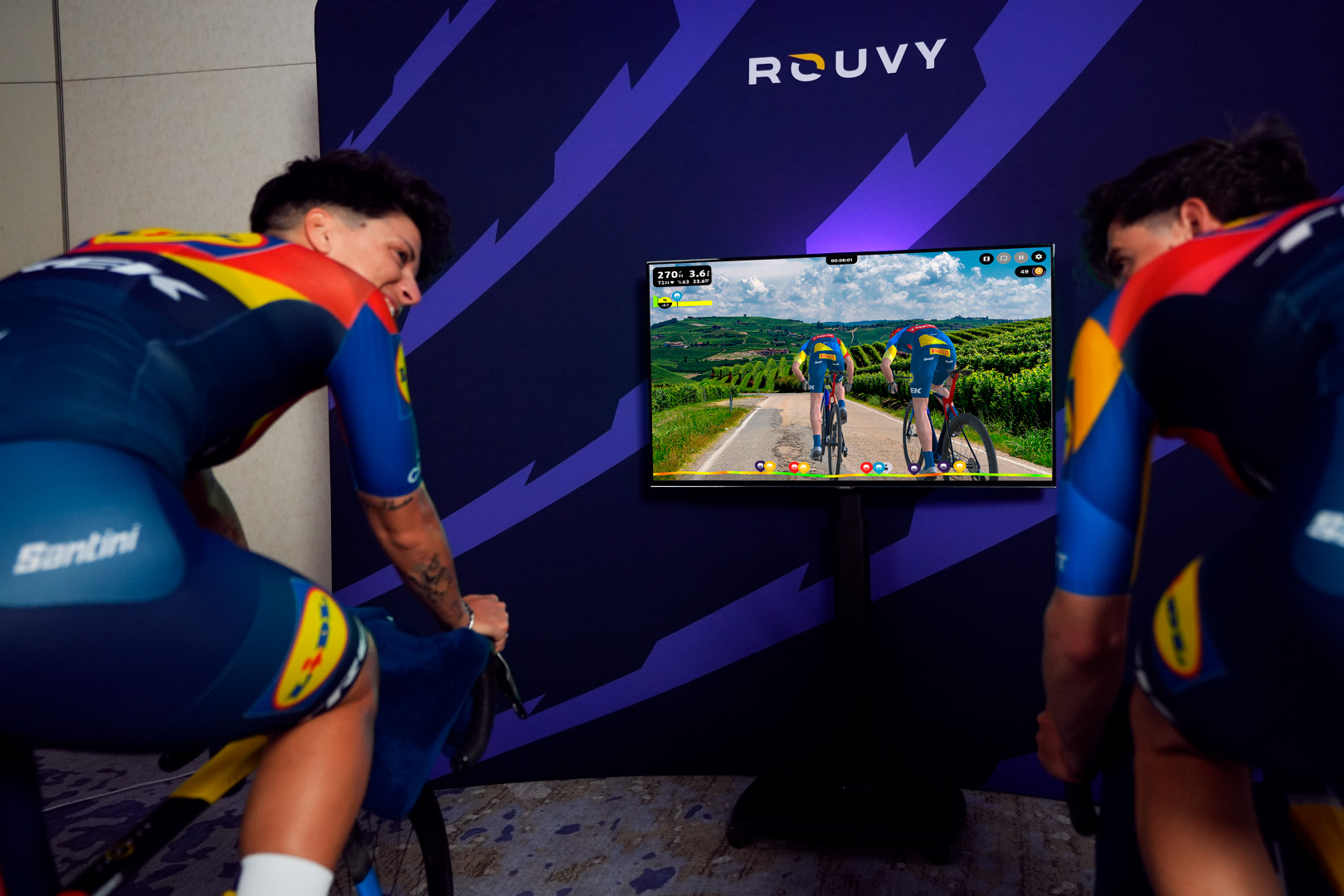
With that in mind, we invite you to start 2026 right, in association with ROUVY.
Over the course of this themed week, we’ll be sharing practical training tips and riding advice to help ensure you’re in top form come spring.
Covering races and must-visit destinations, we’ll also bring you inspiration for the year ahead from some of the finest cycling spots around the world.
Thanks again to ROUVY for supporting this week, and I look forward to seeing you down the road in fine fettle come spring.
Top 5 Zwift Videos: Strength Training, Pain Caves, and The Grade
Looking to add some watts to your top-end power? In this week’s top video, hear about one Zwifter’s experience with using strength training to increase sprint power.
Also included in this week’s post are videos about pain cave setups, climbing “The Grade,” tackling Alpe du Zwift, and completing the Rapha 500 in one ride.
Does Strength Training Improve Sprint Power? I Tested It
Inside My Cycling Pain Cave: Bike, PC Streaming & Full Setup Tour
Is The Grade Actually a Good FTP Test?
Finally! I Attempted Alpe Du Zwift
Attempting to Cycle 500km in One Ride!
Got a Great Zwift Video?
Share the link below and we may feature it in an upcoming post!
New Komoot Apple Watch app enables offline navigation, so you can leave your phone at home
Komoot has announced a new app for Apple Watch users, which works without a smartphone to provide offline maps and navigation, along with turn-by-turn navigation. Users can download maps and routes from Komoot for offline browsing on their watch.
Komoot promises sport-specific maps in its Apple Watch app, with details such as trails and paths, as well as roads. There’s functionality to enable you to pan and zoom to see what’s around you, too.
The Apple Watch app will also track activities and provide real-time stats while on the move and it passes activity data to the Apple Health app.
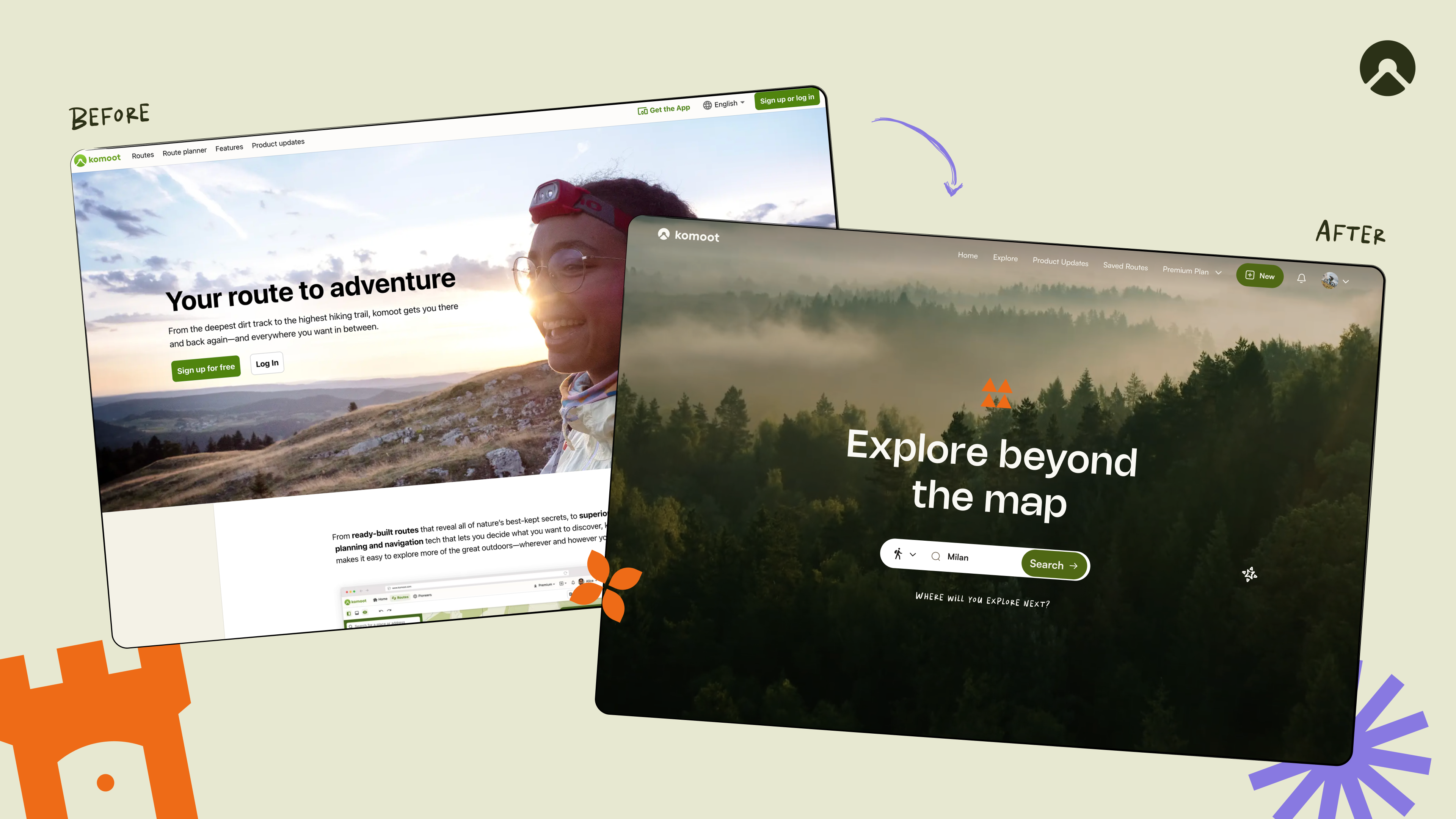
Other functionality enables the screen to be locked using Apple Water Lock, so it is not susceptible to interference from rain or other moisture.
According to Komoot product manager, Tom Eldred: “Our goal was to make Komoot’s Apple Watch app fully capable on its own.
“For many of us, the ability to disconnect is the best part of being outdoors, so we wanted the community to have the freedom to leave their phone at home – or at least in their pocket.”
The new Apple Watch app can be used for an unlocked map region by any user, without needing to be subscribed to Komoot Premium.
First stop on the 2026 development roadmap
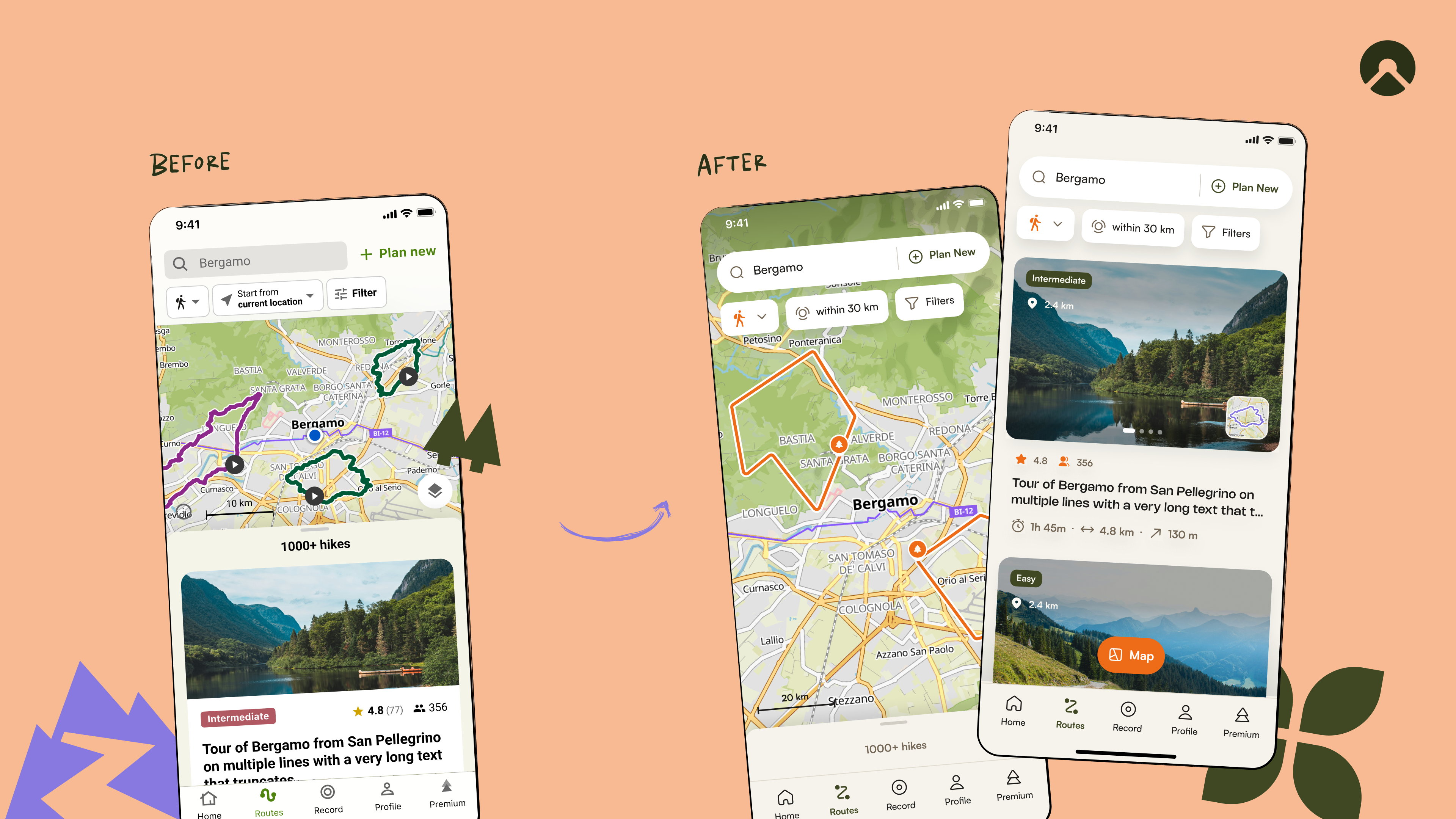
Komoot says the Apple Watch app was one of the most frequent requests when it surveyed its user base and conducted more than 100 interviews to understand its users’ needs in 2025.
It updated its user interface last year and claims to have made more than 80 other enhancements since it was bought for around €300m by Italian private equity group Bending Spoons last March. The acquisition reportedly saw the majority of Komoot’s previous 150-strong development team laid off.
Komoot says other new features for the Komoot iOS and Apple Watch apps that are in development include instant syncing between the two, automatic rerouting, real-time location sharing and increased customisation. It’s not the only fitness-tracking app to focus on Apple Watch enhancements, with Strava refreshing its own Apple Watch app at the tail end of 2025.
Komoot’s enhancements are part of its roadmap for app development during 2026, including improved route planning in the mobile app, personal heatmaps and waypoints, easier route searches and better organisation of saved routes. There’s a long-list of further potential enhancements stretching later into 2026.
The hottest ebike of 2025 is in the January sale – and you can save £1,300
Amflow is the eMTB name on everyone’s lips at the moment, with an impressive power-to-weight ratio and the powerful DJI Avinox motor boasting 1,000W and 120Nm of torque, with either a 600Wh or 800Wh battery.
The brand has just announced 14% off its flagship PL Carbon Pro model, which features Fox Factory suspension and an overall weight of only 20.64kg (size L).
This discount means for a limited time the bike will be available for £7,699, a saving of £1,300 on the £8,999 RRP.
Pricing details
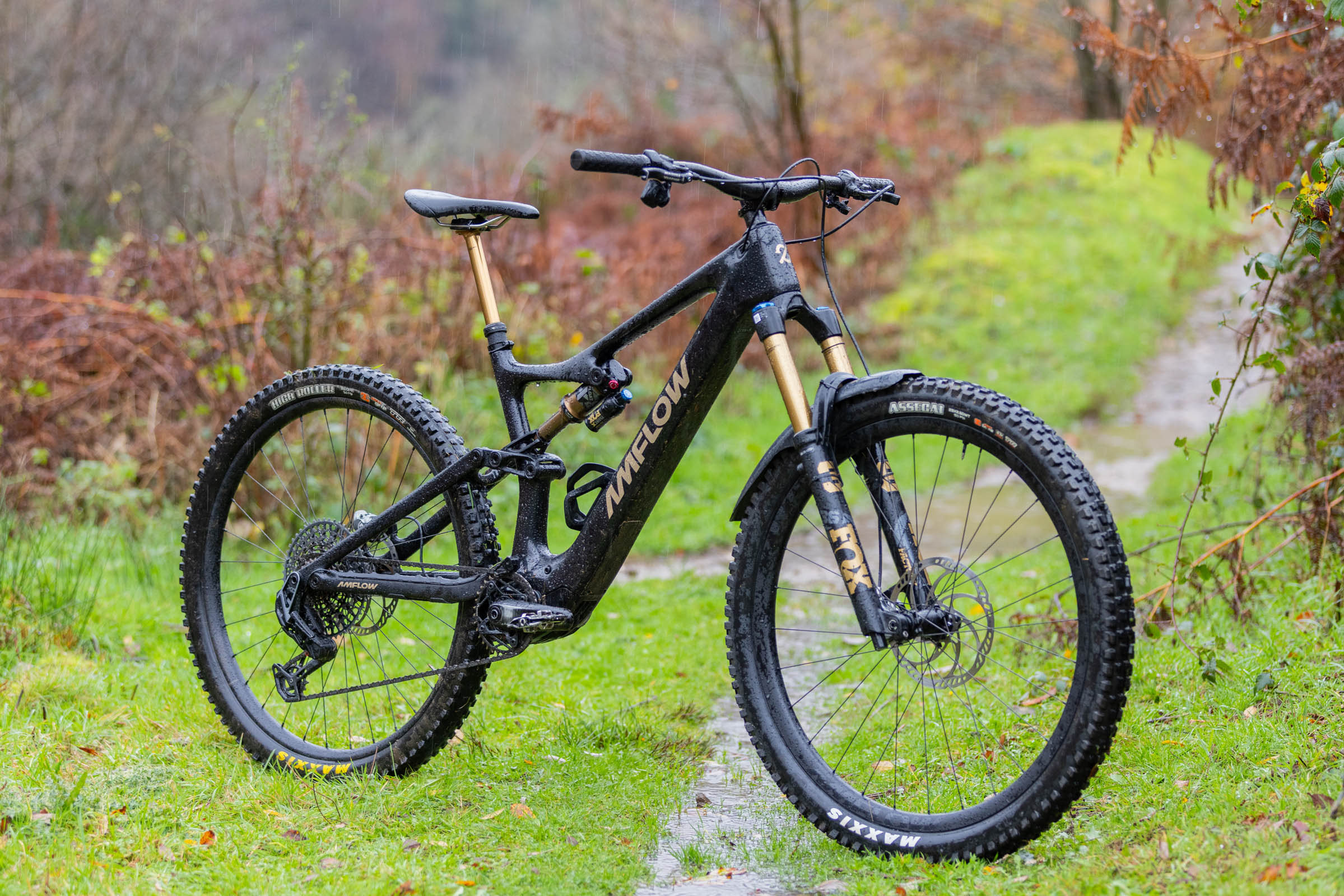
All sizes of the Amflow PL Carbon Pro with 800Wh battery (M, L, XL, XXL) will be available in the UK at a sale price of £7,699 (14% off RRP) from today (26 January) until Monday, 2 March. This discount will only apply to bikes purchased from Amflow’s website.
Every purchase will also include a free Amflow-branded front light with a £189 RRP.
DJI Avinox motor
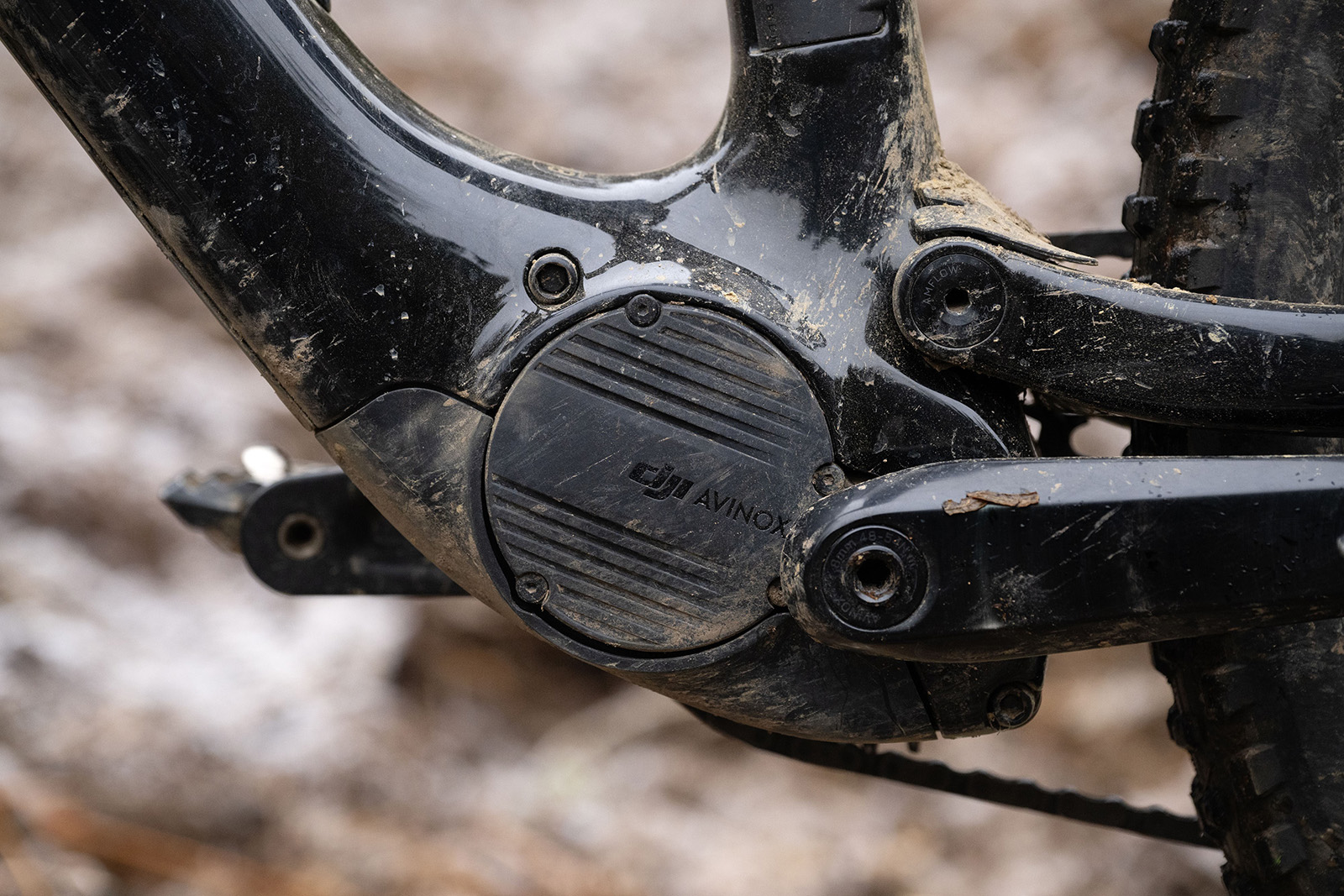
DJI’s Avinox motor has quickly gained popularity due to its performance and monster power, even prompting riders to question how much power is too much.
It offers Auto, Eco, Trail, Turbo and Boost modes, and includes Intelligent Walk Assist and Hill Start Assist functionality.
Save 14%
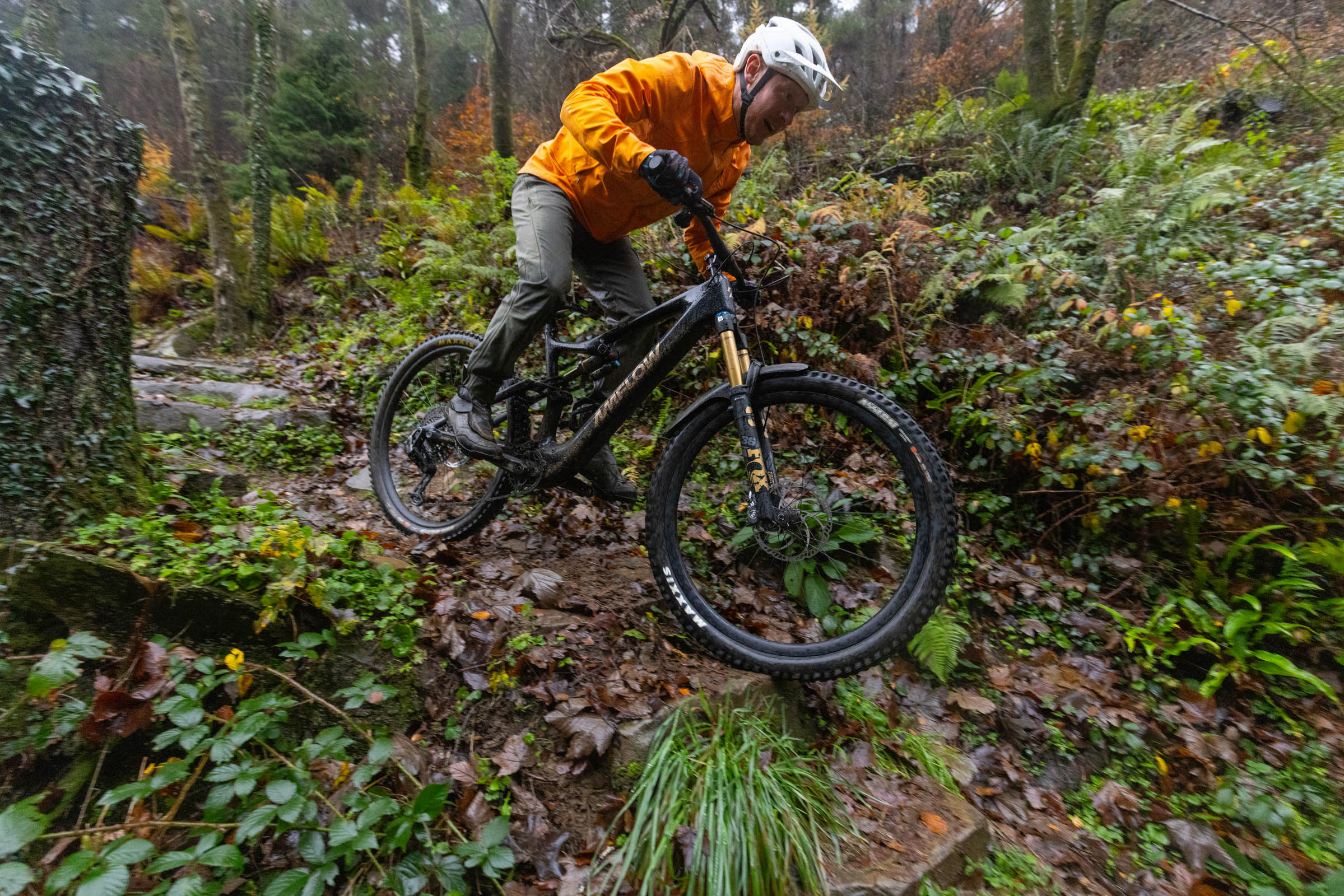
The Amflow PL Carbon delivers 150mm of rear-wheel travel via a Horst-link suspension design and is specced with a 160mm Fox Factory 36 fork and Factory Float X shock. The Amflow-branded wheels are 29in front and rear, wrapped in Maxxis 3C tyres.
Its Avinox drive unit can deliver up to a claimed 120Nm of torque and 1,000W of peak power in Boost mode.
DJI offers either 600Wh or 800Wh battery options on both Amflow PL builds. Amflow has confirmed that only the larger 800Wh battery option will be included in the sale.
Other details include SRAM’s X0 Eagle Transmission drivetrain, Amflow’s own-brand cranks, and a carbon bar.
Why are my gears shifting when I pedal backwards?
In our Tech Q&A series, we tackle cycling queries – big or small, complex or simple – with insights from the BikeRadar team and trusted industry experts. Next up, a reader wants to know why his gears are shifting when he pedals backwards.
I’m finding the chain shifts through the cogs when pedalling backwards. What’s going on?
Raf, via email
This isn’t uncommon on both 2x and 1x systems, as anyone who has used a plastic chain-cleaning tool will know.
Simon von Bromley explains that there can be a number of reasons for it.
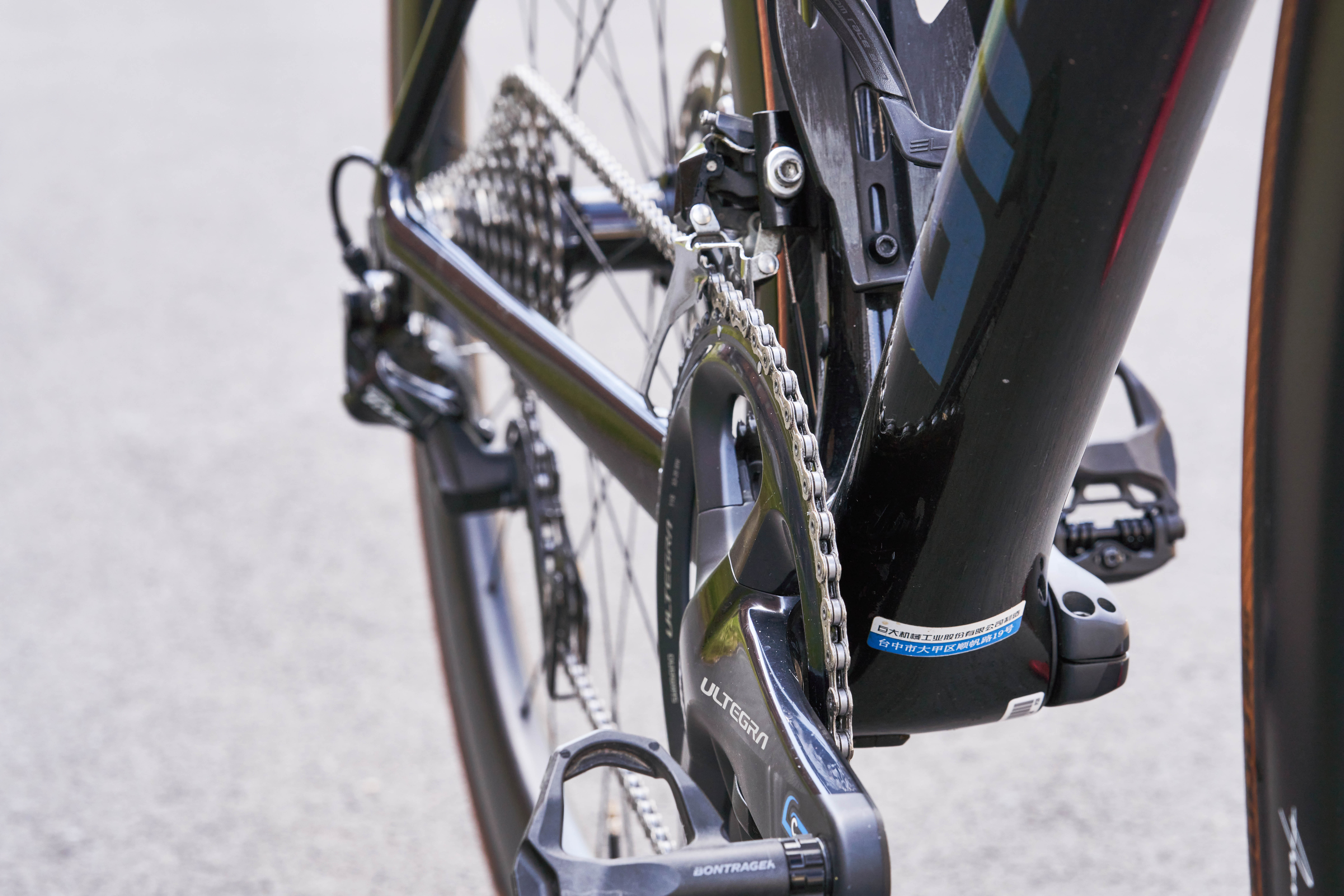
First, if you’re cross-chaining (riding with the chain on the smaller chainring and smallest sprocket, or larger chainring and largest sprocket), it’s likely to happen because the chain and cogs aren’t designed to work in those combinations.
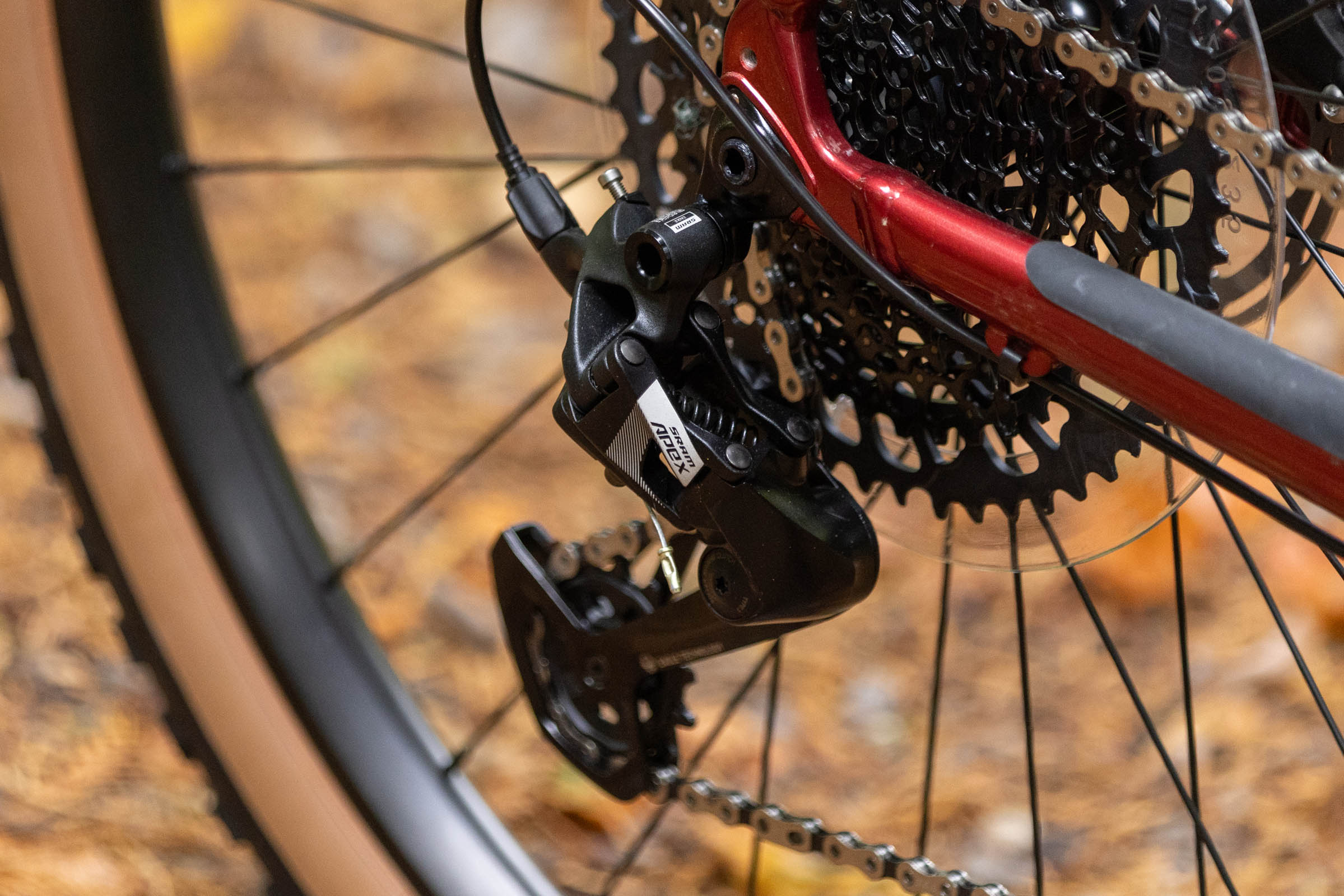
It could also be caused by a misaligned rear derailleur – even the slightest twist in the derailleur hanger can leave the chain not sitting correctly on the cassette, making it liable to shift and move unpredictably.
Next, the range of movement and chainline angles on a 1x drivetrain sometimes makes it impossible to back-pedal smoothly.
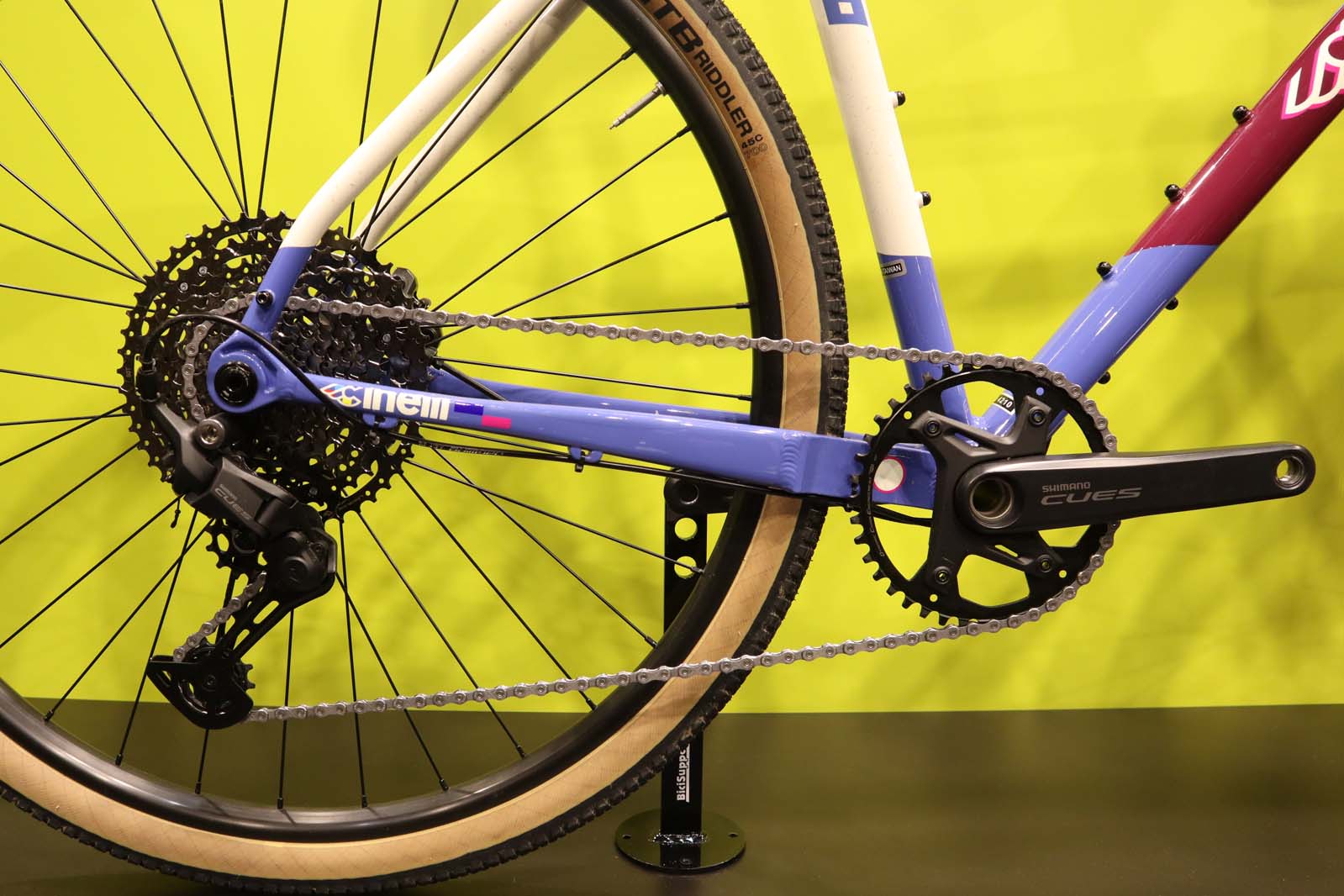
This is particularly true if a wide-range cassette is used on a bike with short chainstays.
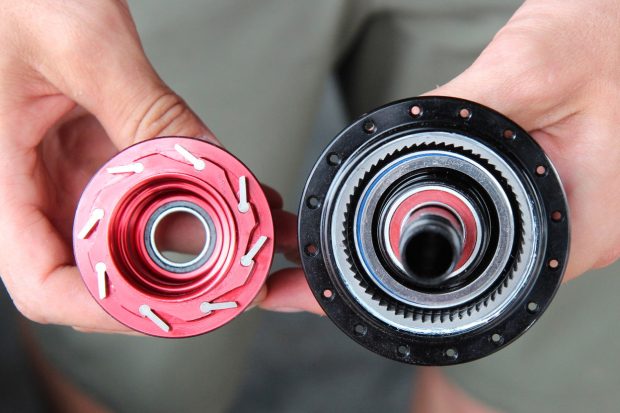
Finally, it can also be symptomatic of a sticky freehub. If the freehub bearings are becoming gritty and worn, it can stick, which stops the chain running smoothly – especially if you’re pedaling backwards.
The answer is to keep an eye on all of these things and try to avoid cross-chaining. It’s not usual to need to back-pedal for any length of time, except when applying chain lube.
Review: Tour de Zwift 2026 Kit by Pedal Mafia
Tour de Zwift 2026 is underway, and Zwift has partnered with Pedal Mafia to create a real-life version of the eye-popping in-game kit.
Zwift has worked with Pedal Mafia on several kits in recent years, including:
- Tour de Zwift 2023 Kit (read my review)
- Zwift’s 10-Year Anniversary kit (which was originally only going to exist in game, but people liked the look so much that Zwift eventually had it produced)
- Kits of Zwift Community Live 2025 in Mallorca
- The fresh Watopia Essentials kit now available at zwift.com (read my review)
This means I’ve grown very familiar with Pedal Mafia’s offerings. Fortunately, I like the fit and feel of Pedal Mafia’s stuff!
This year’s Tour de Zwift kit is nearly identical in construction to the Watopia Essentials kit I recently reviewed, since both are based on Pedal Mafia’s workhorse “Core” collection. Therefore, much of the content below will be duplicated from my recent review. (The two kits are built the same, but of course, use very different colors.)
Note: You may have noticed cycling influencers wearing this kit recently in social media posts. In the past year or two, Zwift has clearly pivoted away from traditional paid marketing campaigns and leaned instead into the influencer space, where you get more bang for your buck. That’s why you’re seeing more big-name riders pitching Zwift Ride and early-release versions of Zwift merch. And while I’m not a big-name rider by any stretch, I was sent this kit free of charge, like other “Zwinfluencers.” It’s how the cycling world works these days!
Also: sizing can be tricky with cycling kit. For reference, I’m 5′-10″ tall (178cm) and currently around 185 lbs (84 kg). I put my actual measurements in the text below where appropriate.
Tour De Zwift 26 Bib Shorts
Priced at $168USD, the bib shorts are from Pedal Mafia’s Core collection. (This is the more affordable “do everything” collection vs the more expensive “Pro” line.)
The most distinctive thing about these shorts is their bright turquoise color, which will certainly stand out in a crowd. I’d go so far as to call them high vis shorts, which isn’t something you see every day!
Speaking of colors, it’s worth noting that, like any non-black kit, sweat darkens these shorts (see the second photo below), which may or may not concern you.
I have a 34.5″ waist and 39.5″ hips, so I went with the medium bib as recommended by the sizing chart.
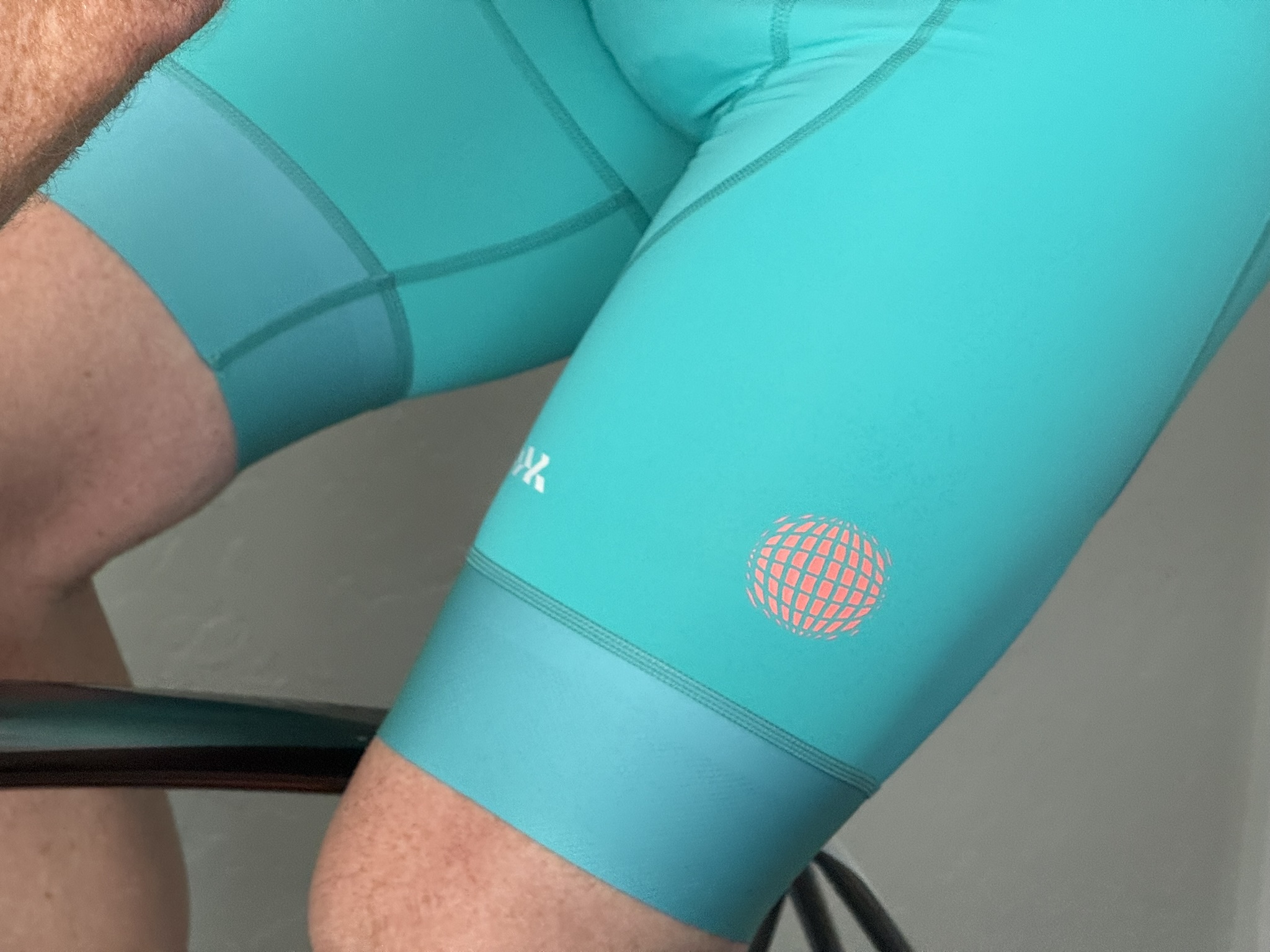
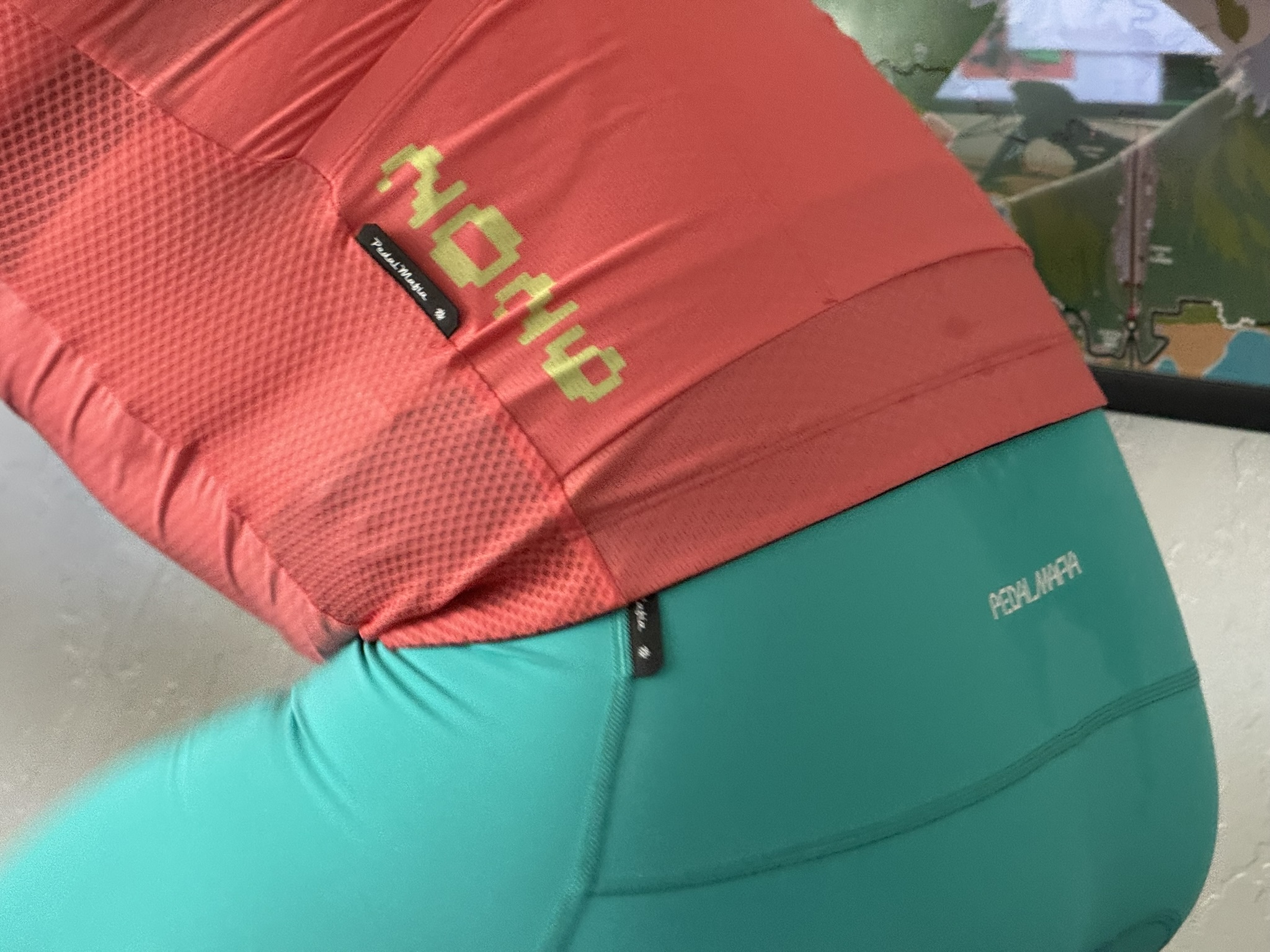
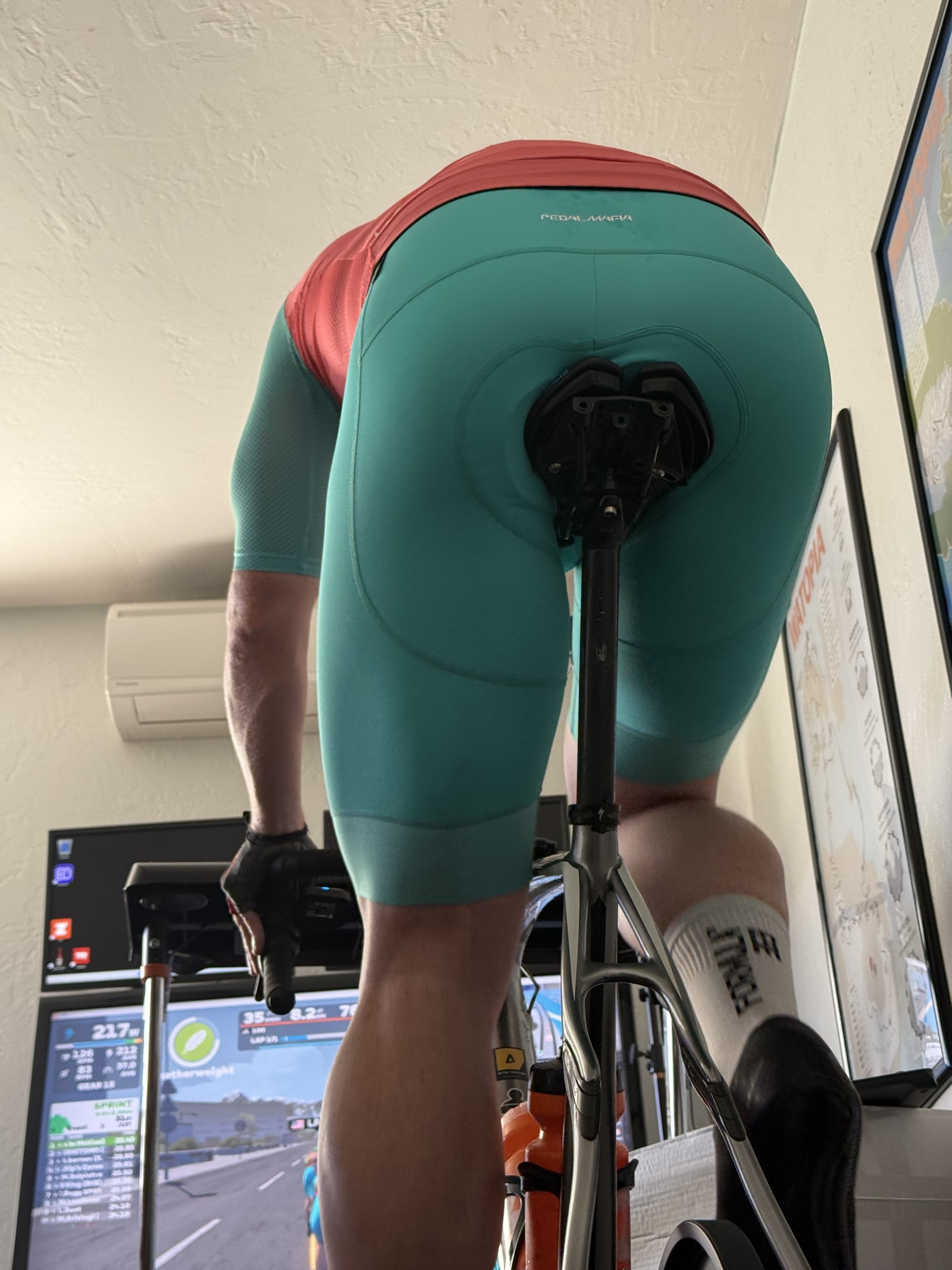
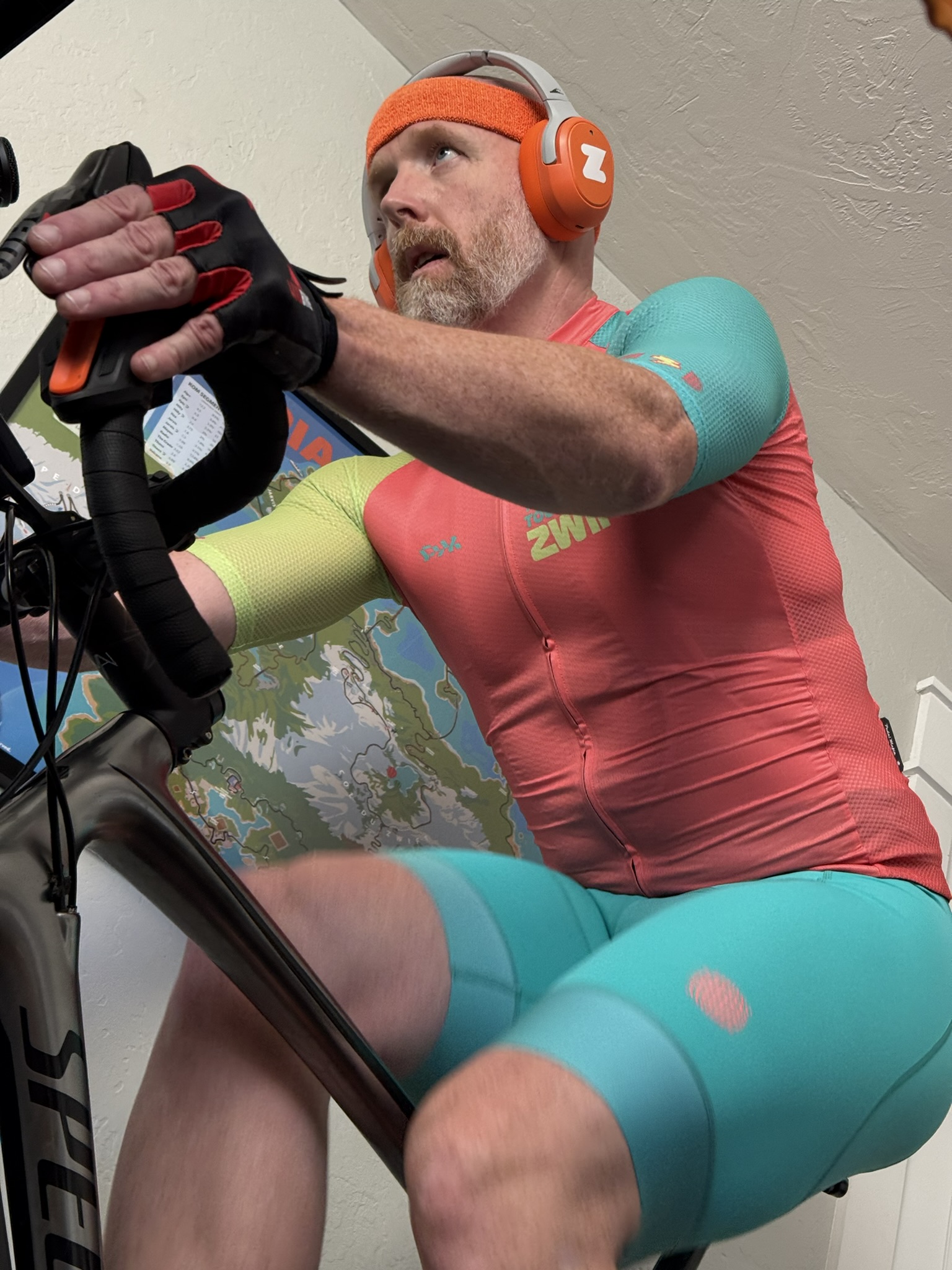

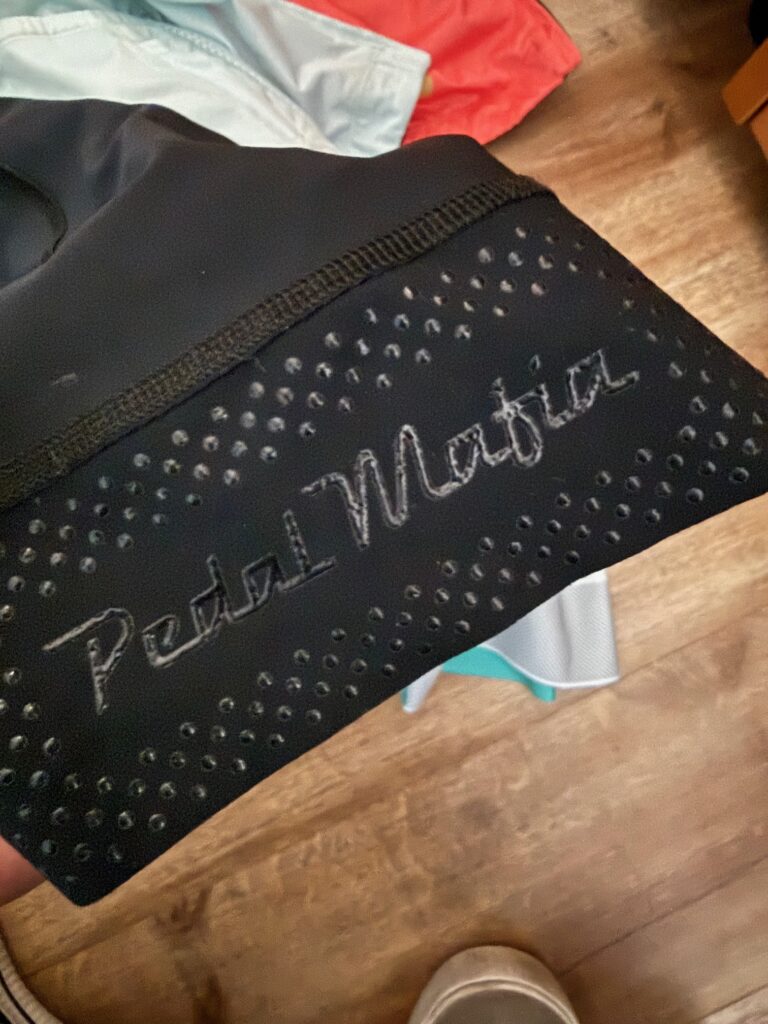
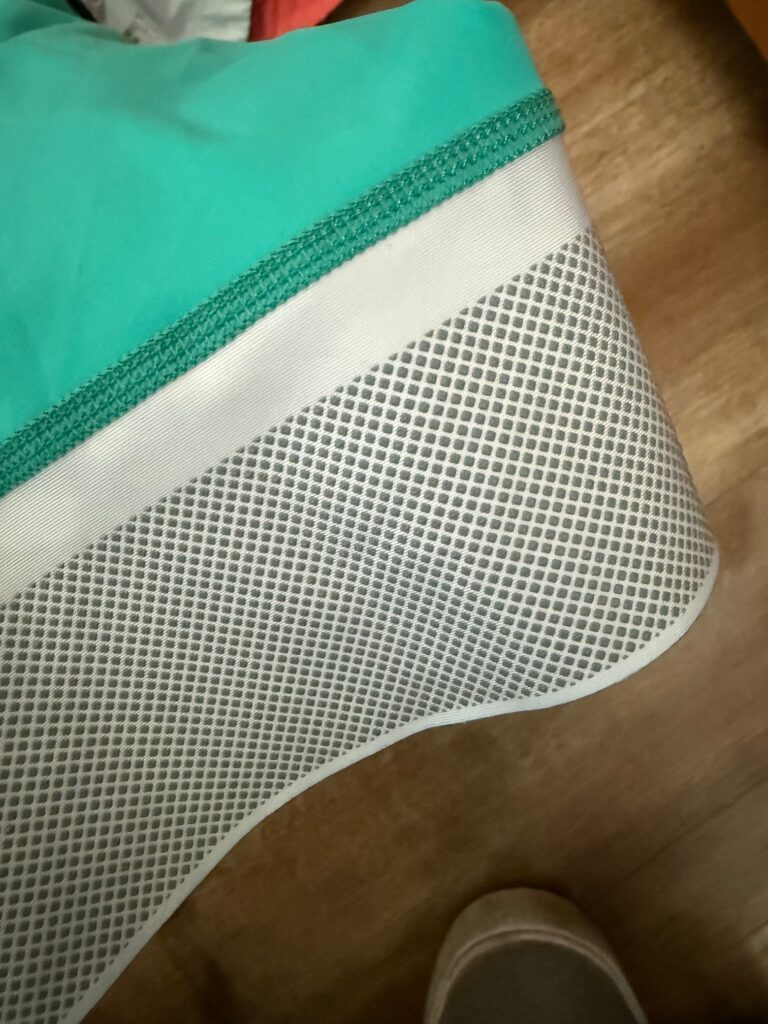
The Tour De Zwift 26 bibs aren’t indoor-specific, so they don’t include some of the extra-breathable features indoor kits often have, like mesh panels, minimal chamois, or super lightweight strapping. That said, the brace paneling on the back and lower front is nicely perforated, even though the straps themselves are not, and the main short fabric (75% recycled warp knit lycra) is just the right thickness to allow sweat to evaporate indoors while still working well outside in most conditions.

While I haven’t had time to run the Tour De Zwift 26 bibs through the wringer across many rides (since they were just released), I do own multiple pairs of Pedal Mafia’s core bibs, so I know what kind of durability to expect. I’d say these shorts hold up as well as other mid-range bibs, with the first point of failure for me being some frayed stitching in the inner leg area due to saddle rub. (This hasn’t affected the feel or wearability of the bibs, but it’s something worth noting.)

Chamois fit is a very personal thing, but I prefer thinner pads, especially for indoor riding. I’d say the Tour De Zwift 26 bibs’ chamois is on the thin side as chamois go, while still having plenty of thickness for all-day/outdoor wear.

Leg length on Pedal Mafia bibs tends to be on the longer side, as this “pro look” is the trend in today’s kits. I don’t particularly love super-long legs, as they aren’t helpful for indoor riding. That said, I ordered the medium bibs, which fit great on my frame.

If you look closely, you’ll see some nice finishing touches on these bibs: a little pocket on the back brace to hold a gel or even your phone, a logo on the chamois, plus the feel-good factor of 75% recycled lycra composition… these aren’t just basic bibs. They also feature an extra-wide leg gripper, which is actually the only difference I can see between these and the Watopia Essentials bibs, which feature a Pedal Mafia-branded leg gripper via the more “generic” diamond gripper of the TdZ bibs (see below).
Tour De Zwift 26 Jersey
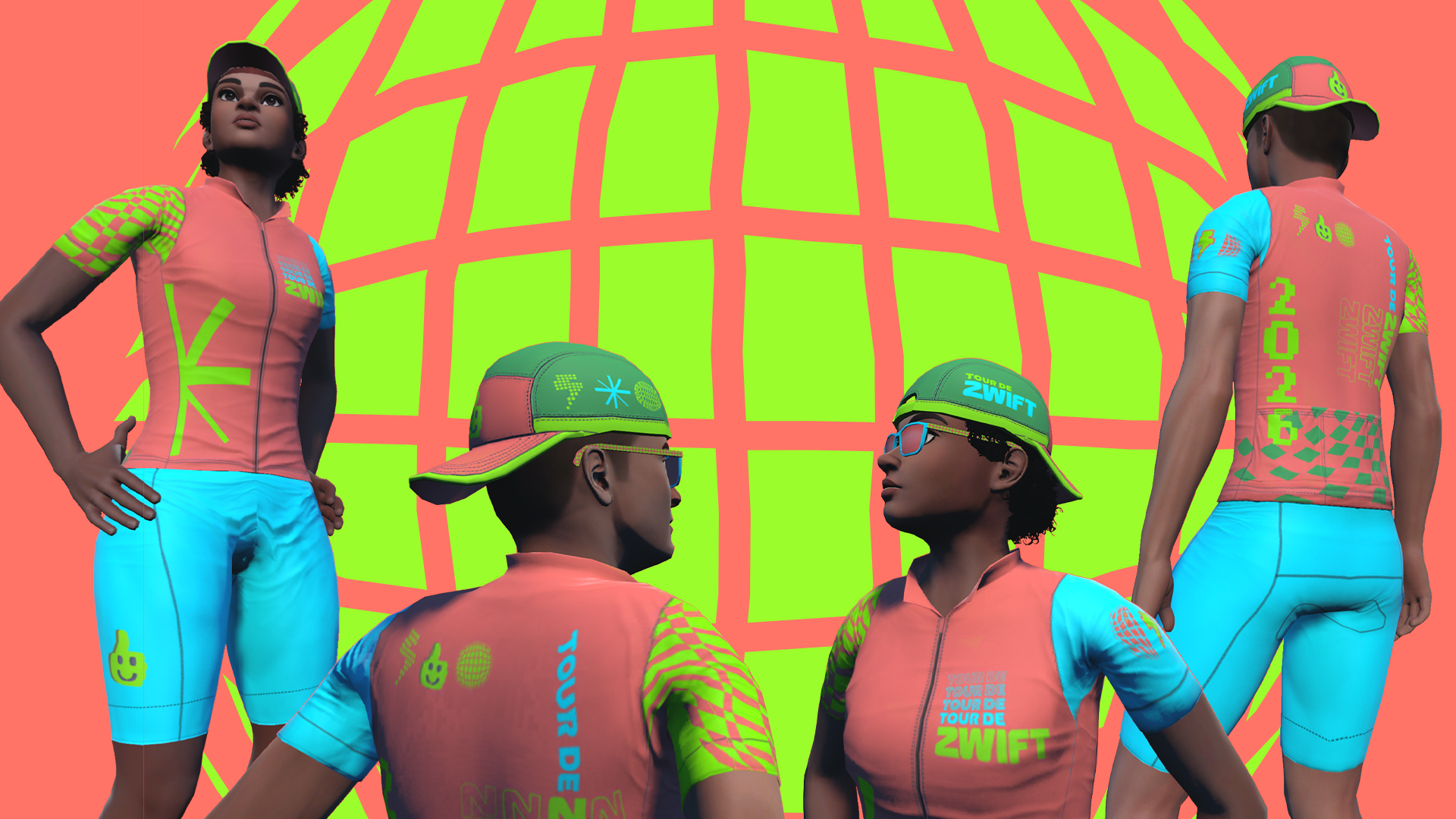
The Tour De Zwift 26 jersey, like the bibs, is based on Pedal Mafia’s “Core” line. Priced at $128USD, this is a well-made, indoor-friendly jersey with some nice finishing touches.
It’s interesting that the IRL jersey doesn’t quite match the in-game jersey, for whatever reason. The overall color panels match, as do a few of the graphics and their placements. But there are lots of differences, too. How many can you spot? 
Based on my chest measurement of 38″ (and my experience with wearing other PM Core kits) I went with a medium jersey, as I prefer a tighter fit.
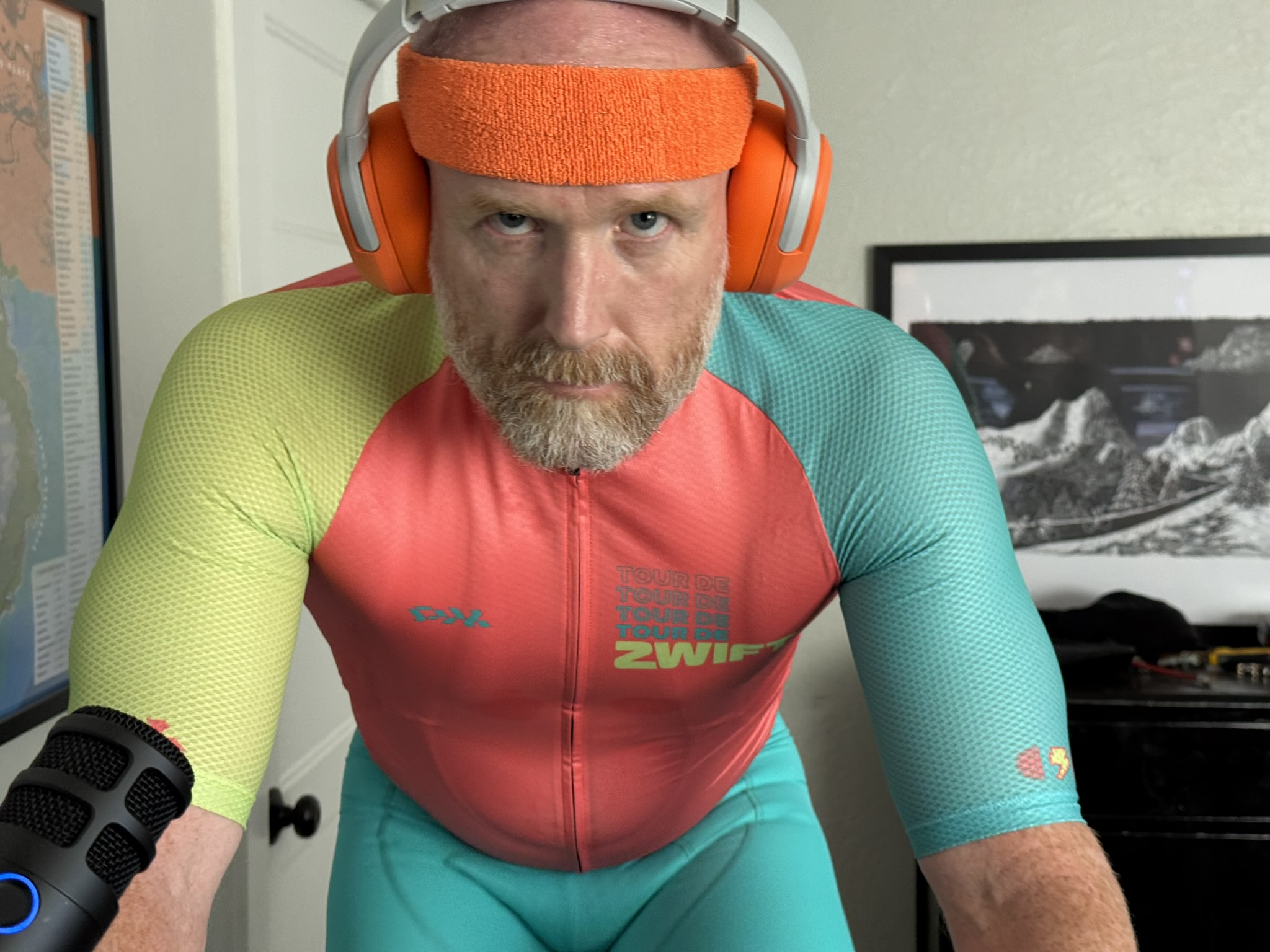
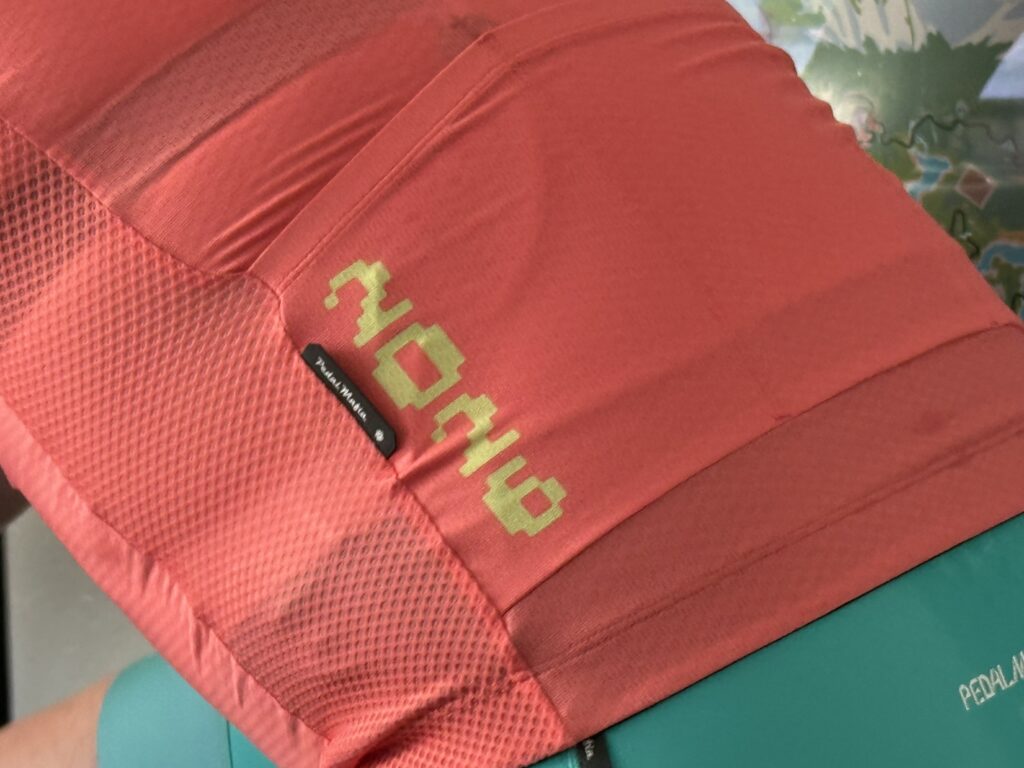
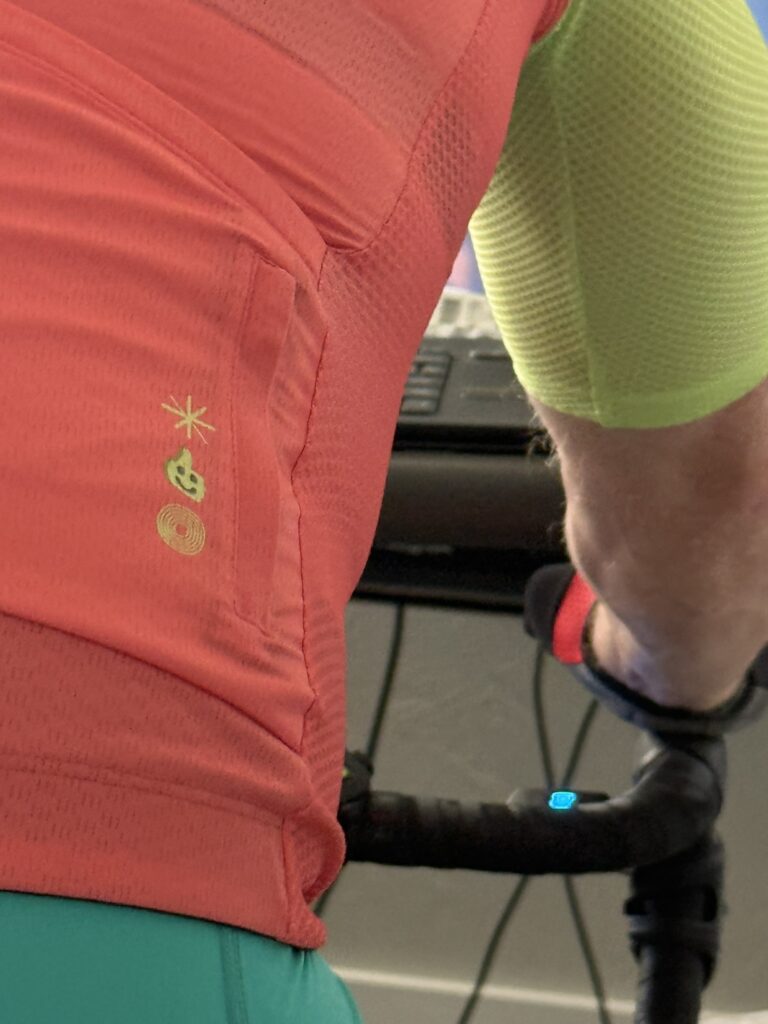
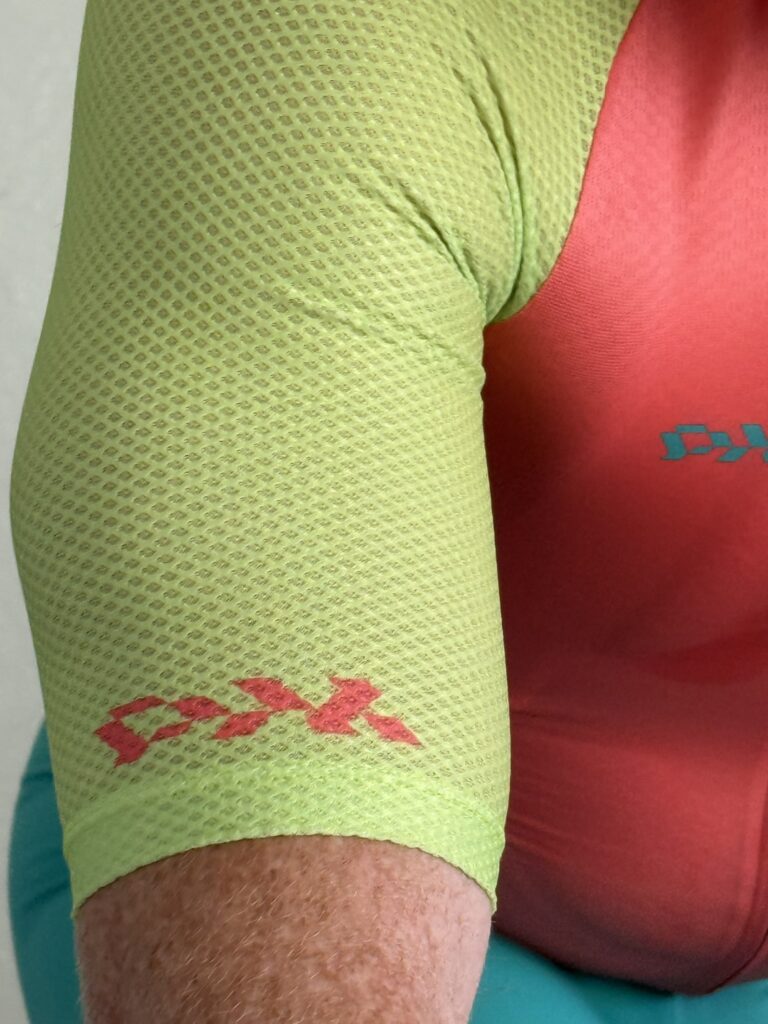
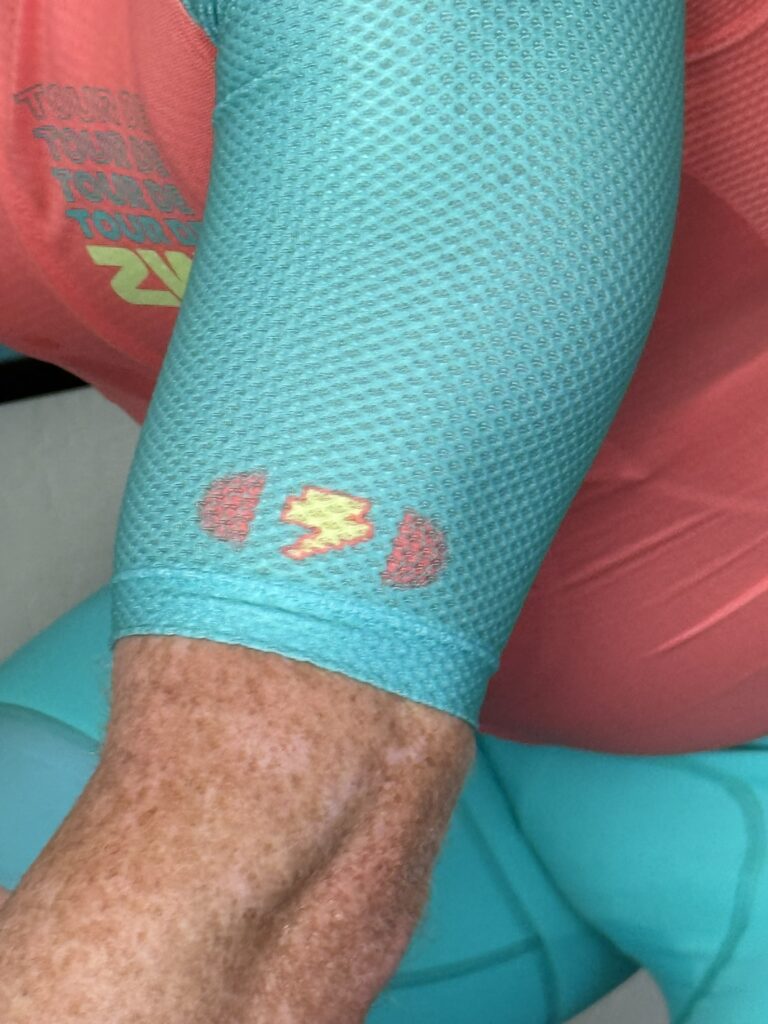
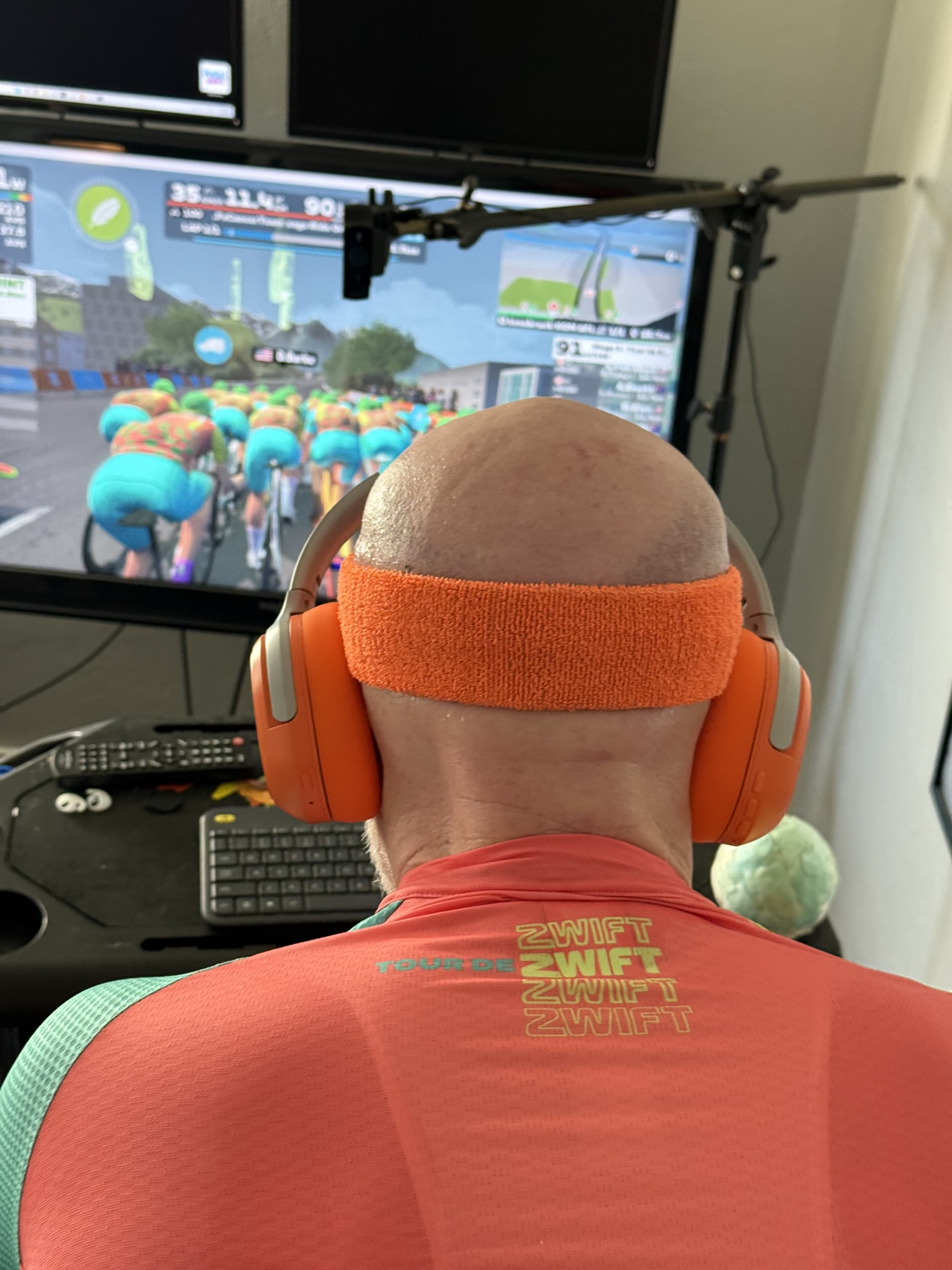
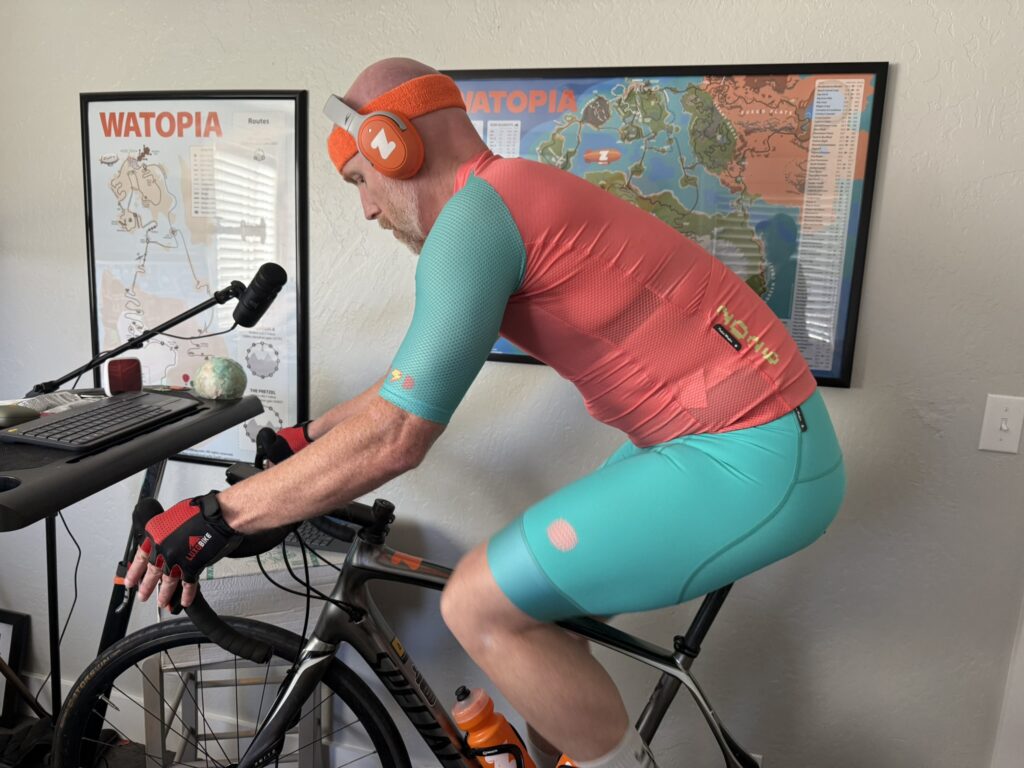

While the sizing chart would have placed me in a large jersey (just barely), I went with a medium because I prefer a tighter fit, and because I’ve got a few medium Pedal Mafia core jerseys in my closet already. These jerseys fit nicely, with plenty of length in the arms and rear torso without being too long in the front. (I hate it when jerseys bunch up in front when you’re hunched over the bike.)

While this isn’t an indoor-specific jersey, it is a very breathable top that works well outdoors in summer heat as well as indoors on the trainer. The arms and side panels use a 3D mesh material that keeps you dry and cool without being so fragile that it breaks down in the wash (not an easy balance to strike!). The front and back use a denser but still lightweight perforated fabric that provides more coverage but still wicks sweat and allows airflow for drying.

In my experience, it takes a lot of riding to wear out a jersey, unless it’s a super-light one made specifically for indoor riding or hot weather. All of my Pedal Mafia Core jerseys have held up well with no tears from washing or frayed stitching, so I expect the Tour De Zwift 26 jersey to do the same.

There are lots of small finishing touches on this jersey. These include a PM-branded waist gripper, a tag with spaces to write your emergency details, a zippered side pocket, and various TdZ 26 graphics (see pics above).
Final Notes
Overall, I’d say the Tour De Zwift 26 kit does what Pedal Mafia’s core line is known for: walking the line between quality and price. It performs where you want kit to perform, without soaring into the upper price ranges.
The colors will be a sticking point with some, for sure. The bright bibs, especially, will prove to be a fashion bridge too far for some riders! But others will love the distinctive look of this kit. Tour de Zwift kits have historically been playful and brightly colored, and this year’s design clearly builds on that tradition.
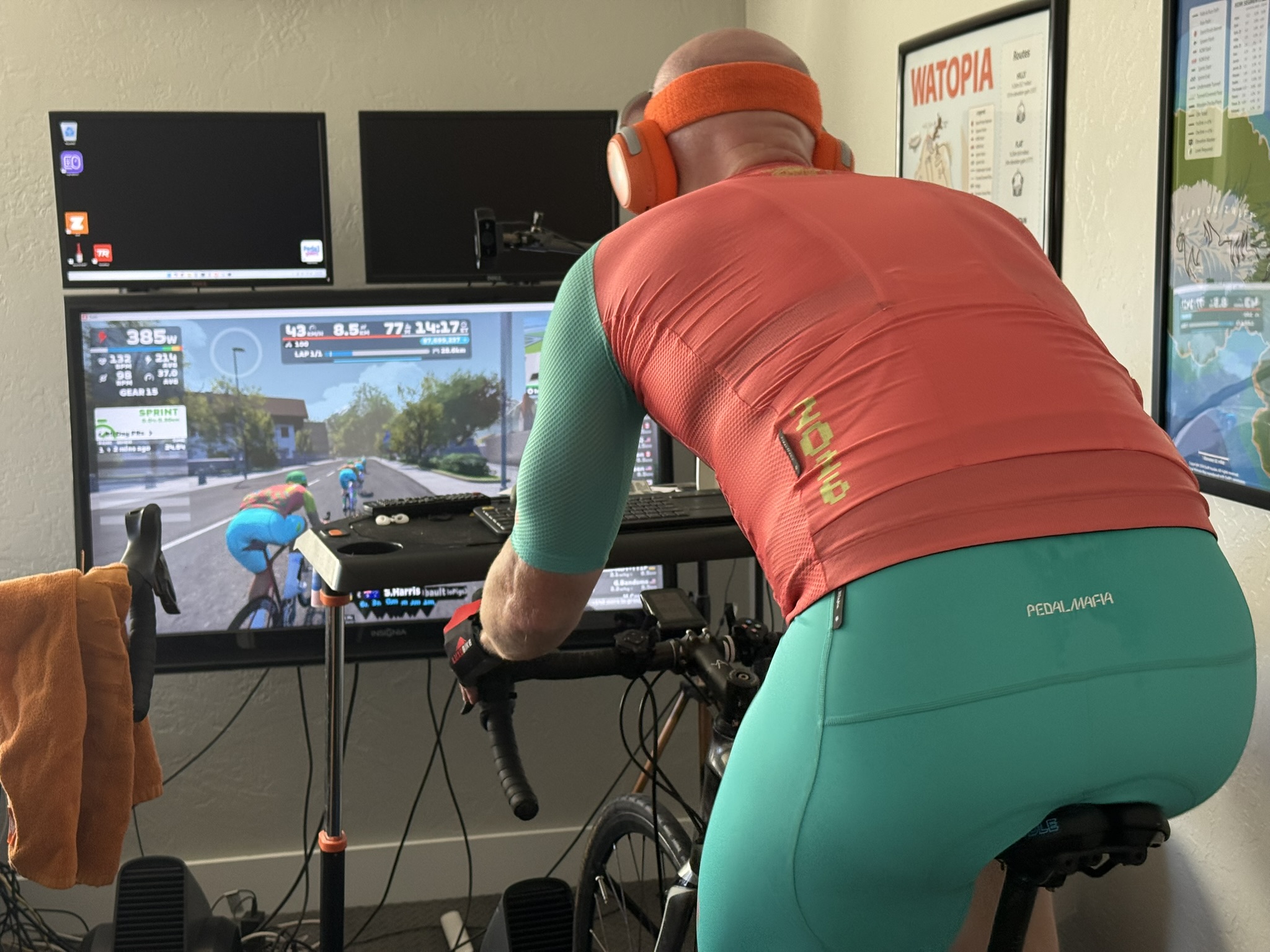
Lastly, I should mention: it’s always fun to have the same in-game kit as you’re physically wearing, like I’m doing above. To unlock the TdZ 26 kit in game, you must complete all 6 stages.
Read all about Tour de Zwift 2026 here >
Questions or Comments?
Post below!
Notable Zwift Events for the Weekend of January 24-25
This week, all of our event picks are from community organizers. Zwift-sponsored events like Tour de Zwift and the Fondo Series are always popular (and fun), but that’s mostly because they get a lot of exposure! Hopefully, shining some light on the events below brings even more participation to these deserving rides…
 BMTR Cares Flat 125 (Miles) – Pedaling for a Purpose!
 Popular Good Cause
We regularly feature BMTR’s popular Flat 100 ride, but this week it’s an extra-special event, as it’s being increased to 125 miles “to highlight the significance of the cause we are passionate about supporting.” Several members of BMTR are riding 225 miles on the day to support the Autism Society of America (ASA) (donate here). Be sure to read the event details for more info!
Three pace groups are available, all riding on France’s Sacre Bleu route.
Saturday, January 24 @ 1:10pm UTC/8:10am ET/5:10am PT
Sign up at zwift.com/events/view/5369952
Vatternrundan Group Ride Series #3
Popular Endurance Training Tour de Zwift Route
The Vätternrundan group ride series seems to be getting more popular as the rides get longer! This week the ride has increased to 120 minutes, and there are over 250 riders signed up when this post was composed, making it the most popular event of the weekend.
The premise of the series is simple: rides increase in duration from January 11 to March 1, with the goal of preparing you to handle many hours on the bike when the IRL race day arrives in June. (The Vätternrundan Group Ride Series is part of Vätternrundan’s official training program.)
This week’s ride is on Greatest London Flat (a Tour de Zwift stage 4 route), and there are two pace group options (1.8-2.2 and 1.5-1.8 W/kg).
Sunday, January 25 @ 8am UTC/3am ET/12am PT
Sign up at zwift.com/events/view/5203599
 Level Racing Chase Race
Chase Race Popular
Chase Races are fun events we don’t see often enough in Zwift, and this event from Level Racing has lots of signups already, which is always a good sign!
Related: Zwift Chase Race Basics, Strategies, and More
This race is on two laps of Makuri Islands’ Sprinter’s Playground route (24.9km, 135m).
Sunday, January 25 @ 2pm UTC/9am ET/6am PT
Sign up at zwift.com/events/view/5356937
Zwift Riders Scotland: Badge Hunters on PRL Full
Endurance Challenge Route Badge
What’s that… you still haven’t completed The PRL Full, Zwift’s longest route (173.5km, 2625m)? Take it from me: you want to do it in a group. And here’s your chance! Join Zwift Riders Scotland for eleven repeats of Box Hill, and earn that coveted route badge with its 3460 XP bonus.
Related: The Longest Route: 7 Tips for London’s PRL Full
Saturday, January 24 @ 8am UTC/3am ET/12am PT
Sign up at zwift.com/events/view/5327954
(Rubber-Banded) TDZ Ride with James’ Friends!
Banded Tour de Zwift Route
This beginner-friendly banded ride is on Yorkshire Double Loop, so completing it will count as completing Tour de Zwift stage 3.
Ride at whatever pace you’d like. As long as you keep pedaling, you’ll stay with the group!
Saturday, January 24 @ 1:30pm UTC/8:30am ET/5:30am PT
Sign up at zwift.com/events/view/5369957
How We Make Our Picks
We choose each weekend’s Notable Events based on a variety of factors including:
- Is the event unique/innovative in some way?
- Are celebrities (pro riders, etc) attending/leading?
- Are signup counts already high, meaning the event is extra-popular?
- Does the ride include desirable unlocks or prizes?
- Does the event appeal to ladies on Zwift? (We like to support this under-represented group!)
- Is it for a good cause?
- Is it just plain crazy (extra long races, world record attempts, etc)?
- Is it a long-running, popular weekly event with a dedicated leader who deserves a shout out?
In the end, we want to call attention to events that are extra-special and therefore extra-appealing to Zwifters. If you think your event qualifies, comment below with a link/details and we may just include it in an upcoming post!
This bizarre new saddle could kill bum pain and erectile dysfunction, says cycling surgeon
The bicycle has been around for a long time, with the saddle remaining largely unchanged over that time.
However, Dr James Colthurst FRCS(Ed), a surgeon and long-time cyclist, has invented and developed the prototype Felix bicycle seat, which is anatomically designed to improve cycling comfort.
The saddle is claimed to prevent pain and damage for both male and female cyclists, reducing the pressure of body weight on soft tissue and focusing it on your sit bones.
The company has plans to roll out a series of bicycle seats that can be retrofitted to the majority of the world’s bicycles.
Dr Colthurst says current bike saddles prioritise appearance and streamlining over function, resulting in some major body problems.
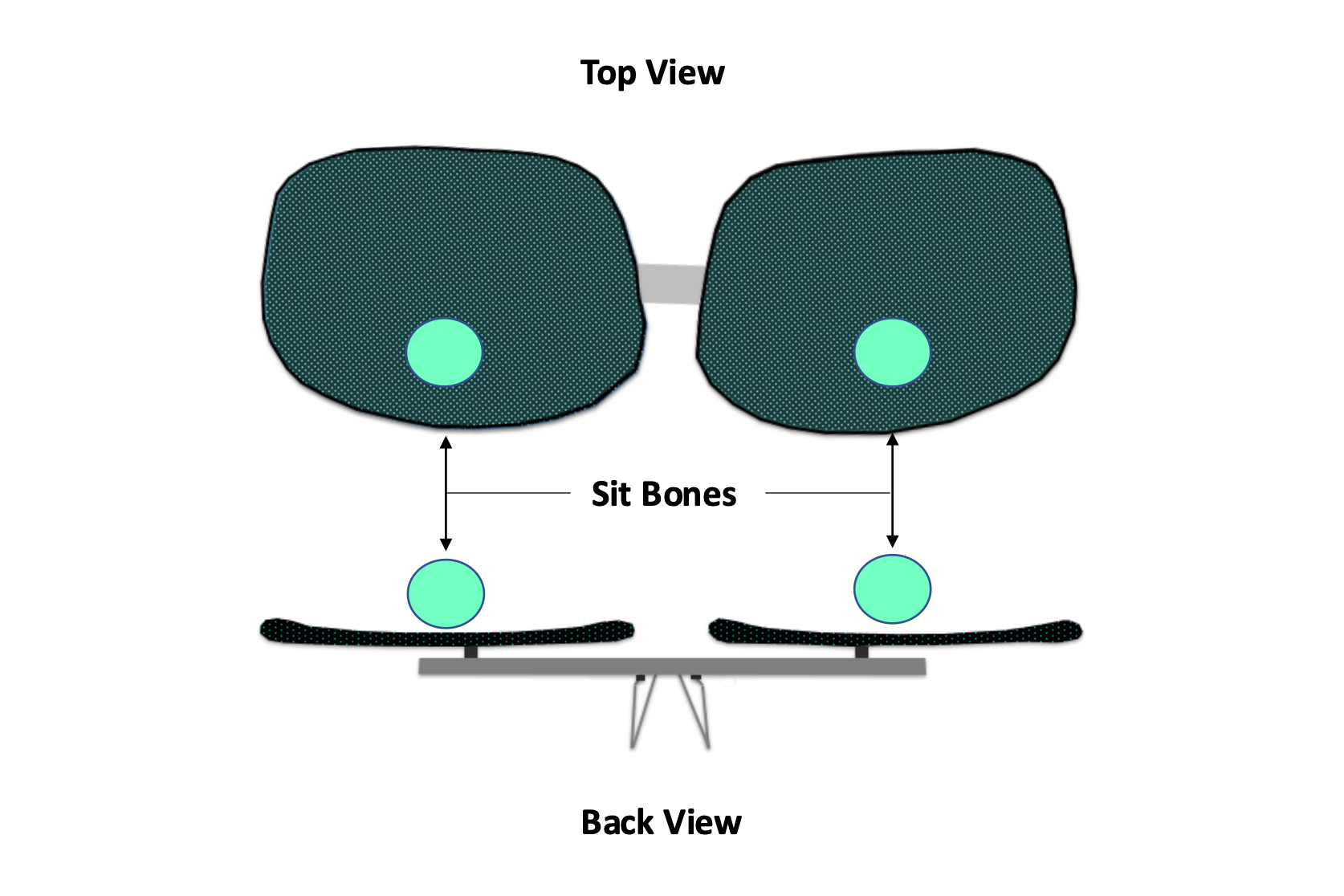
Because men’s and women’s sit bones vary, the pads of the saddle are fully adjustable, so you can be sure you’re sitting on your sit bones.
There is also forward, backward and tilt adjustability to make sure you can find a comfortable position.
The seating panels are concave, which is said to help ‘cup’ the cyclist into the correct position on the seat.
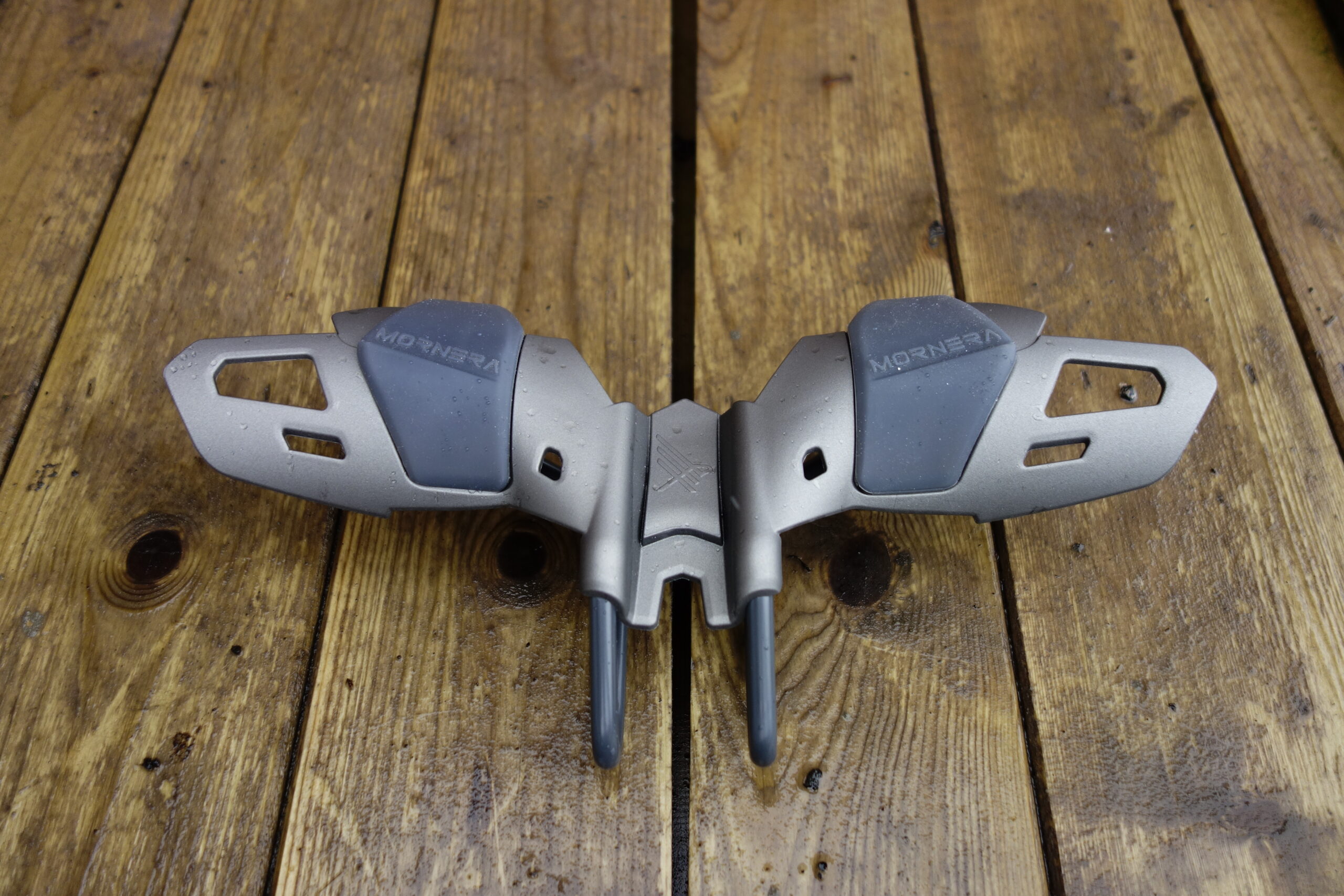
Having ridden Mornera’s Daimon saddle, which promises similar benefits, this design seems more appealing.
However, similar restrictions, such as manoeuvrability when riding off-road trails, look to remain.
One of the greatest ever steel framesets is back – and it’s the only rim-brake bike I want
Cinelli’s Supercorsa was introduced 70 years ago. Now it’s back, still made in Italy to the same exacting standards.
That means the same elegant classic geometry, the iconic sloping fork crown, super-slender ‘fastback’ seatstays and one of the first examples of internal cable routing for the rear brake.
The new Supercorsa is handmade at Cinelli’s Milan-based facility. The tubing is from fellow Italian brand, Columbus, with its Spirit tubeset. Columbus is the literal neighbour of Cinelli, based within walking distance, giving the Supercorsa perhaps the shortest supply chain in the bike industry.
The Supercorsa legacy
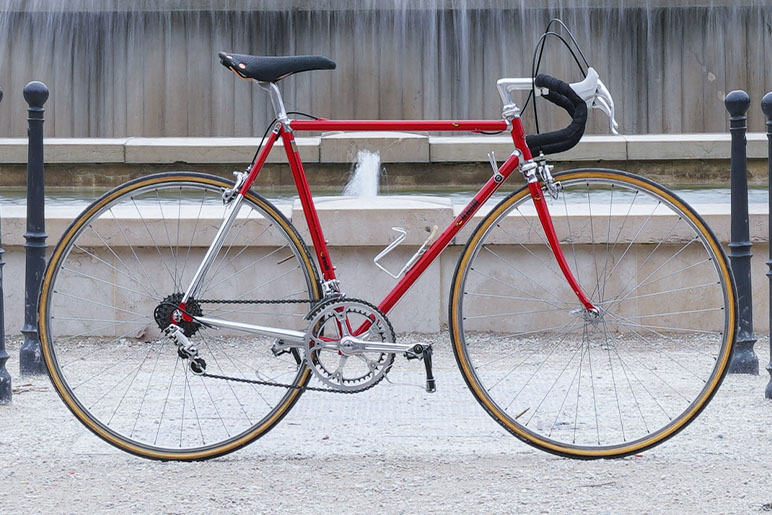
The first Supercorsa was introduced in 1951 by Cino Cinelli and frame builder Luigi Valsassina, built for Valsassina’s friend, Fausto Coppi.
Coppi, known as Il Campionissimo (champion of champions), was the first rider to win the Tour and Giro in the same year, twice. He also held the hour record, was a world champion, and won Paris-Roubaix, multiple Milan-San Remos, a Lombardia and many more honours.
The Supercorsa is one of the most iconic Italian framesets ever made, with a reputation based not only on its beauty but on its performance, too.
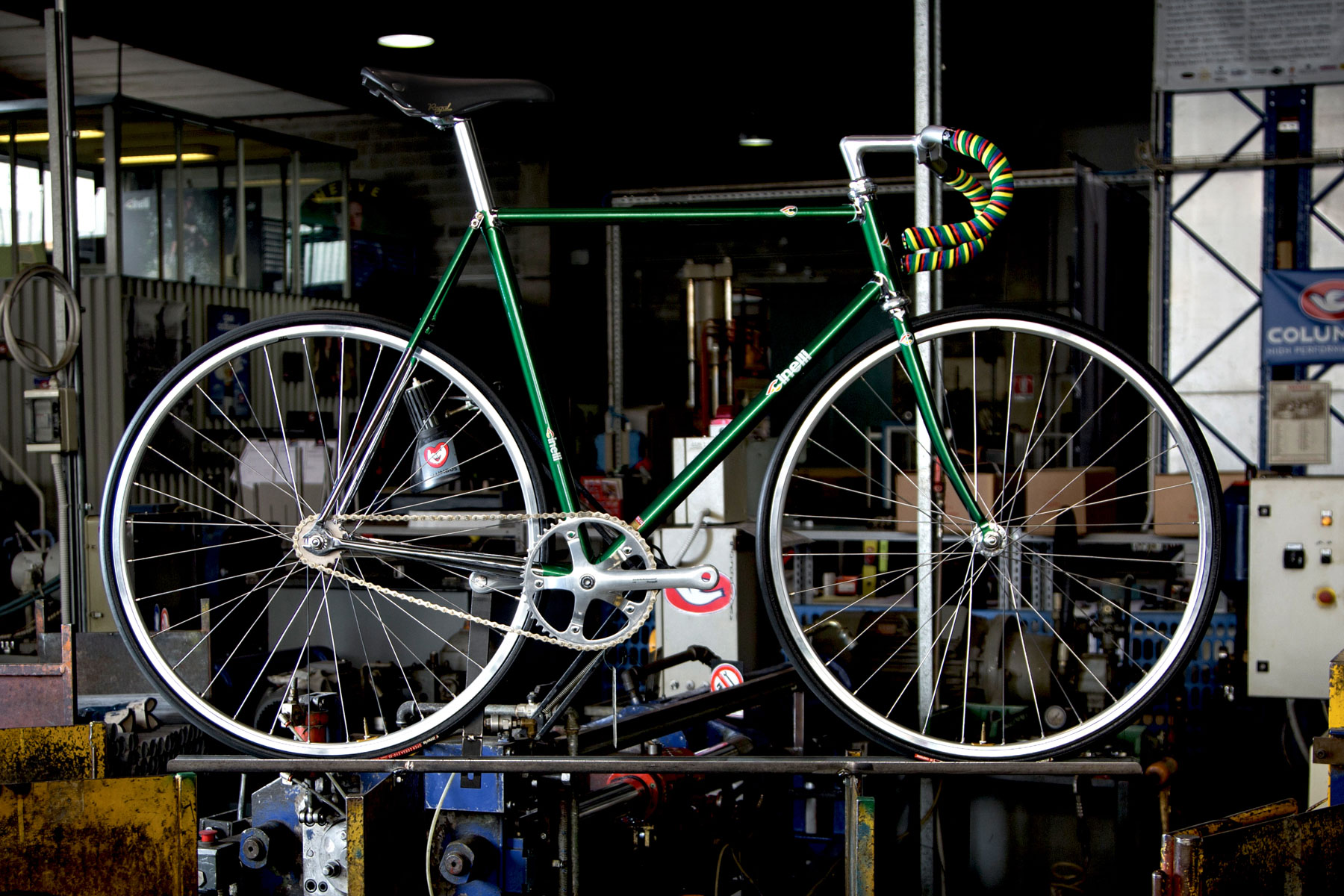
“The Supercorsa is Cinelli’s soul,” says chairman Victor Luis. “For over 70 years, it has embodied the timeless pursuit of performance through craft. This latest iteration stays true to its legacy and continues to pay homage to Italian steel tradition as an object of desire for riders and collectors alike.”
The 2026 Supercorsa
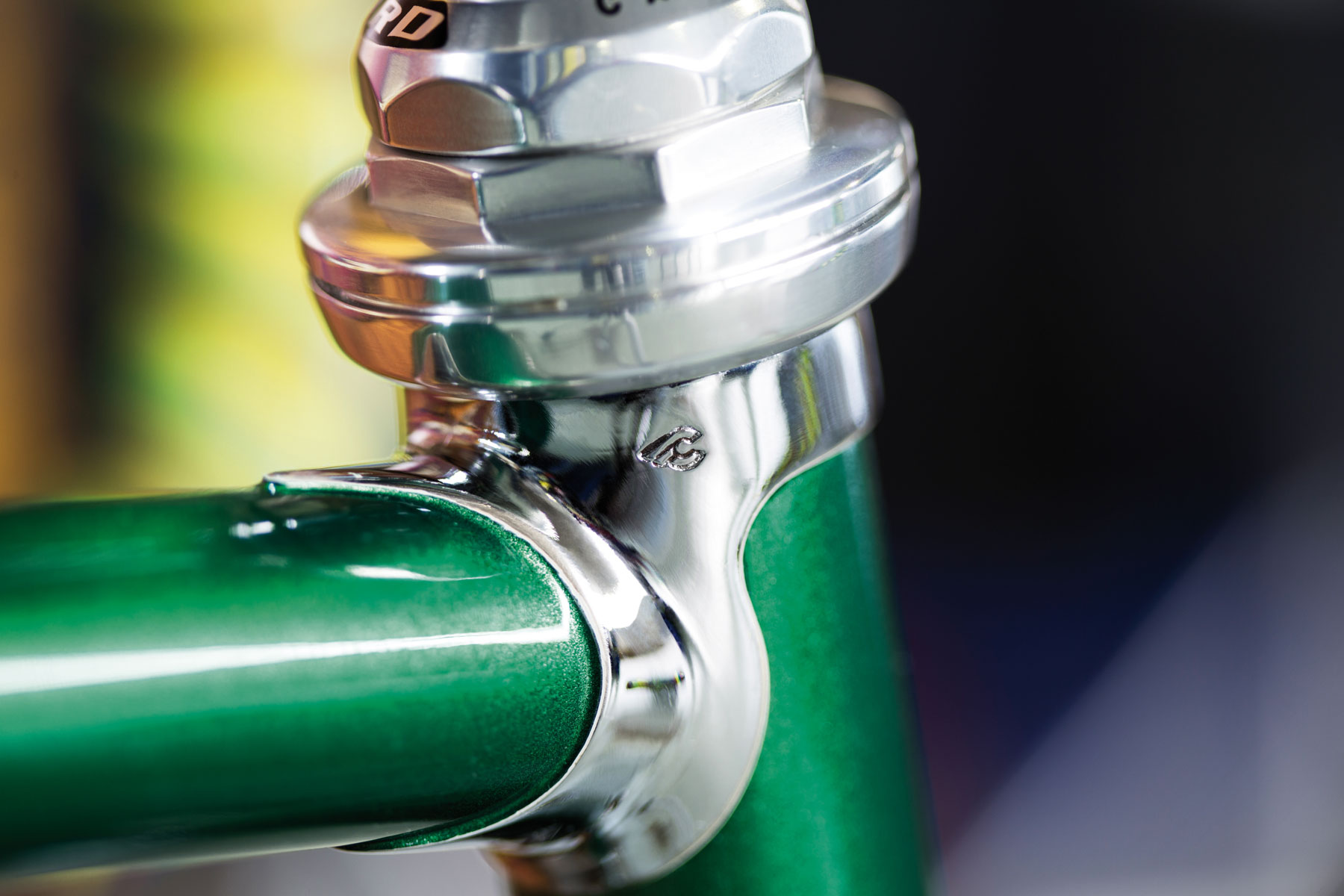
The new Supercorsa is now part of the Cinelli range, building on the ultra-limited-edition Pink Supercorsa from 2025, when only 12 frames were produced.
The 2026 Supercorsa features double-butted Columbus SL tubing and original lugs, together with a matching Columbus SL 1in threaded sloping fork.
It’s compatible with standard rim brakes, and features an ITA 70mm bottom bracket shell, internal rear brake routing and down tube shifter bosses.
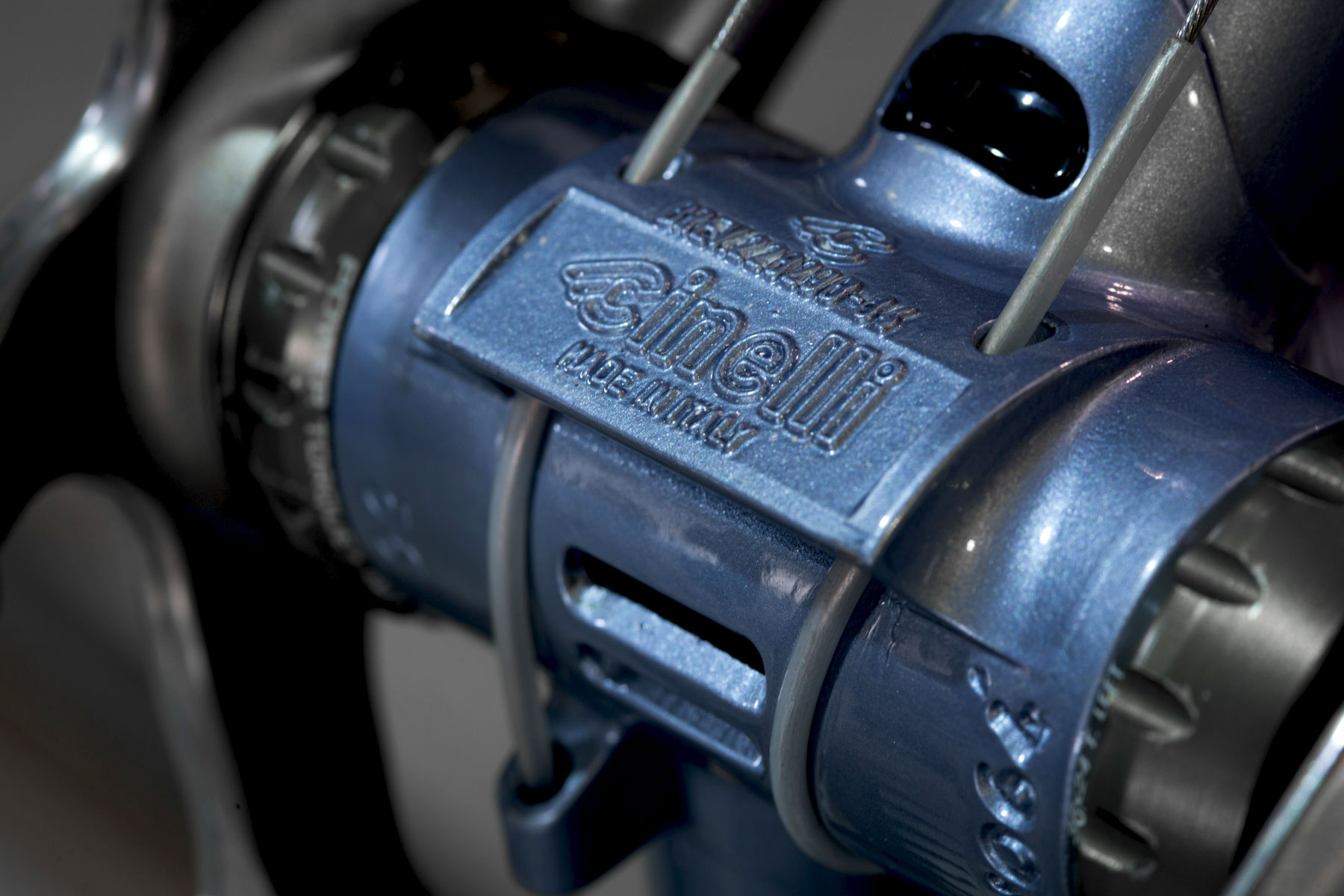
The bike incorporates details such as the ‘Spoiler’ bottom bracket shell, a patented design from 1984 that resolved the problem with condensation collecting in the bottom of traditional bottom brackets.
The graphics are a reissue of Italo Lupi’s 1979 winged-C logo and the rear brake cable is routed through the top tube.
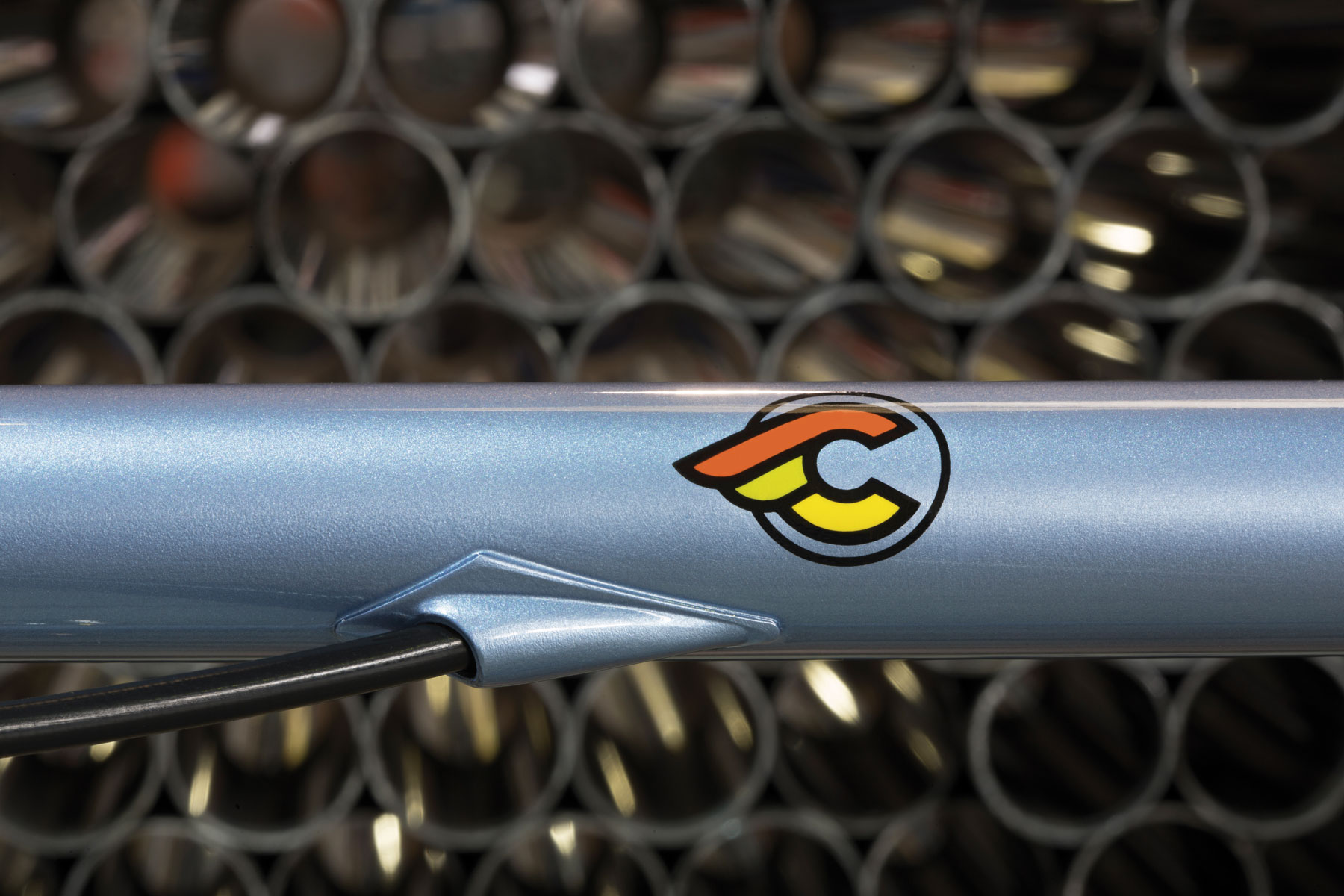
For those of us who think internal routing is a modern idea, this was a detail first introduced by Cinelli in the late 1970s.
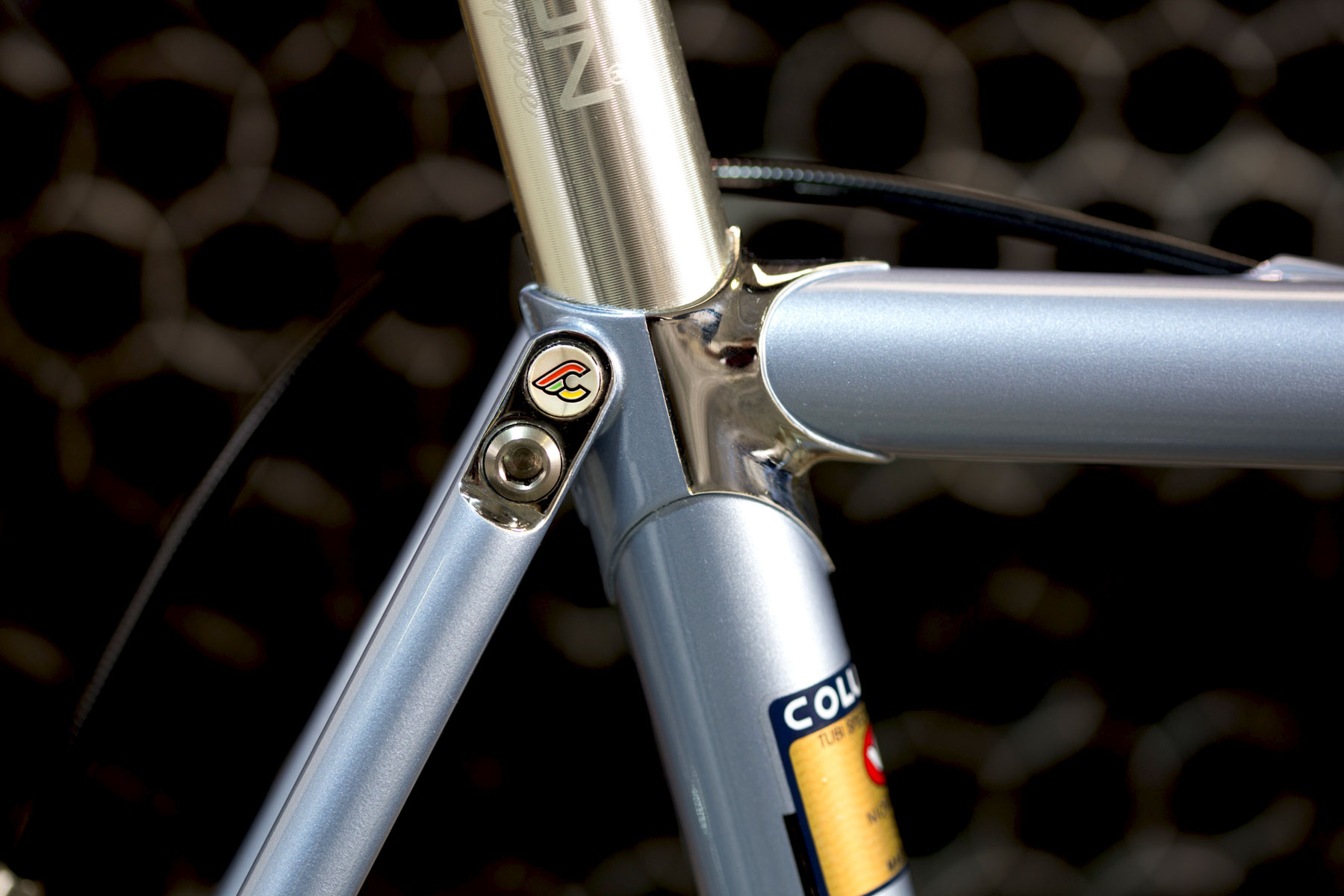
It looks to be the perfect retro reissue, encompassing the evolution of the Supercorsa over 70 years, and I’m somewhat smitten by the Supercorsa in classic Cinelli Azzurro Laser blue.
Size and colour options
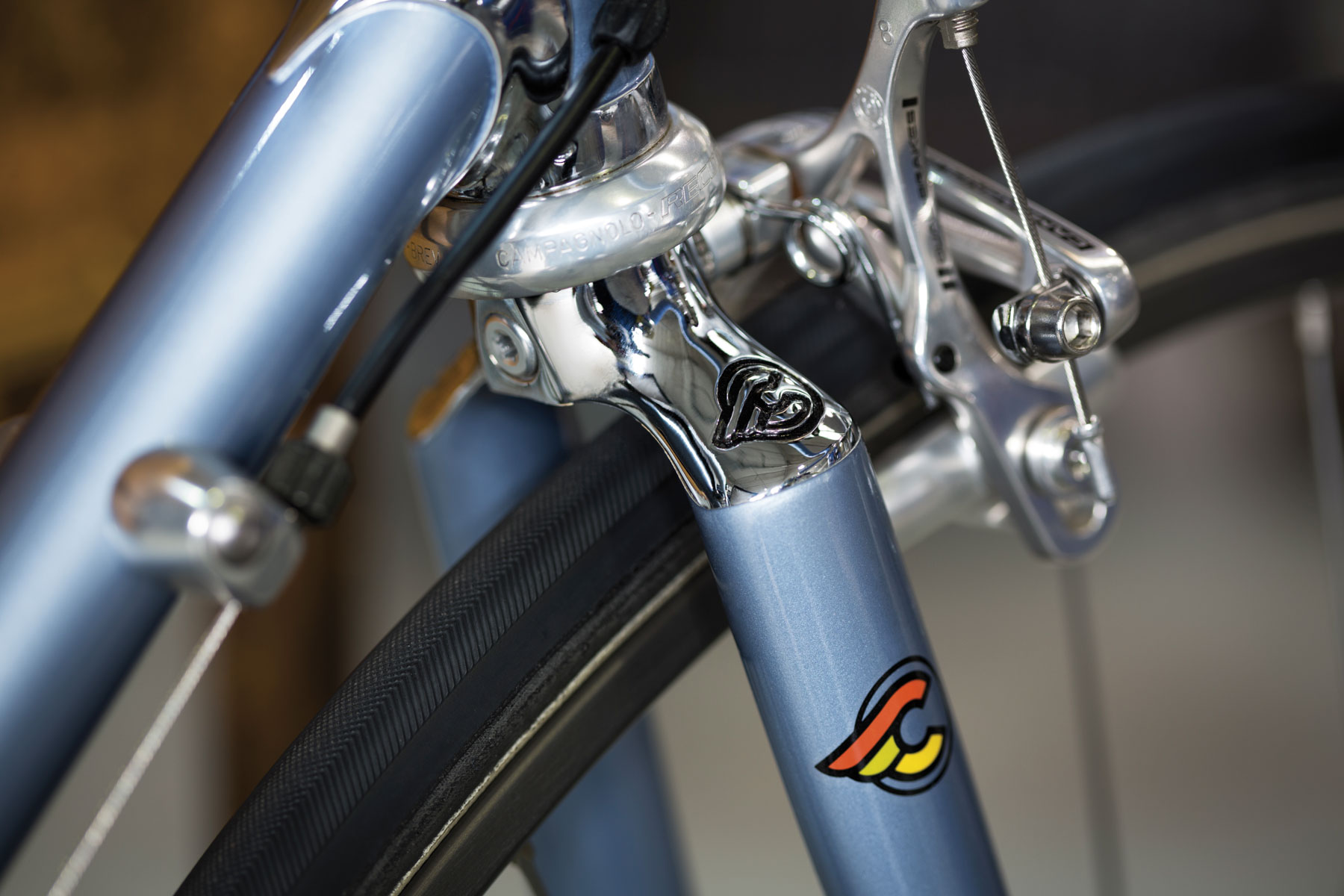
The Supercorsa will be available as a frameset in a massive range of 17 sizes, from 48cm through to 64cm. Each size can be had in eight colours.
The frameset is priced at €3,150. International pricing is to be confirmed.
Frameset specs
- Sizes: 17 available, 48cm to 64cm (1cm increments)
- Colours: Rosso Ferrari, Bianco Perla, Azzurro Laser, Titanium Grey, Verde Jaguar, Black Tie, Blu China, Giallo Curry
- Weight: frame 1,830g (M), fork 670g (uncut)
- Headset: EC 30/25, 4-24TPI EC 30/26
- Seatpost: 27.2mm
- BB shell: ITA, 70mm
- Tyre clearance: 700×25
Tiny Race Series – January 24 Routes – A Fresh Mix
See zwiftinsider.com/tiny for current Tiny Race details.
How the Race Was Lost: ZRL Powerup Roulette on Countryside Tour
This week’s ZRL scratch race was the longest of Round 3, with A/B teams completing 3 laps of Makuri Islands’ Countryside Tour for a total of 47.8km with 556m of elevation.
There are two key features of this route – one I love, and one I hate:
- I love the finish, because it’s downhill and fast.
- I hate the Temple KOM. This dirty little 7-minute monster has been my nemesis in many races.
As it turned out, my real nemesis would be the Zwift gods and their capricious powerup assignments. Or the “powerup roulette,” as I’ve decided to label it today. Read on to see how my race unfolded…
Race Prep and Warmup
The days leading up to this race saw the usual team chat on Discord as we figured out who would be racing this week and how to attack the race most effectively as a team.
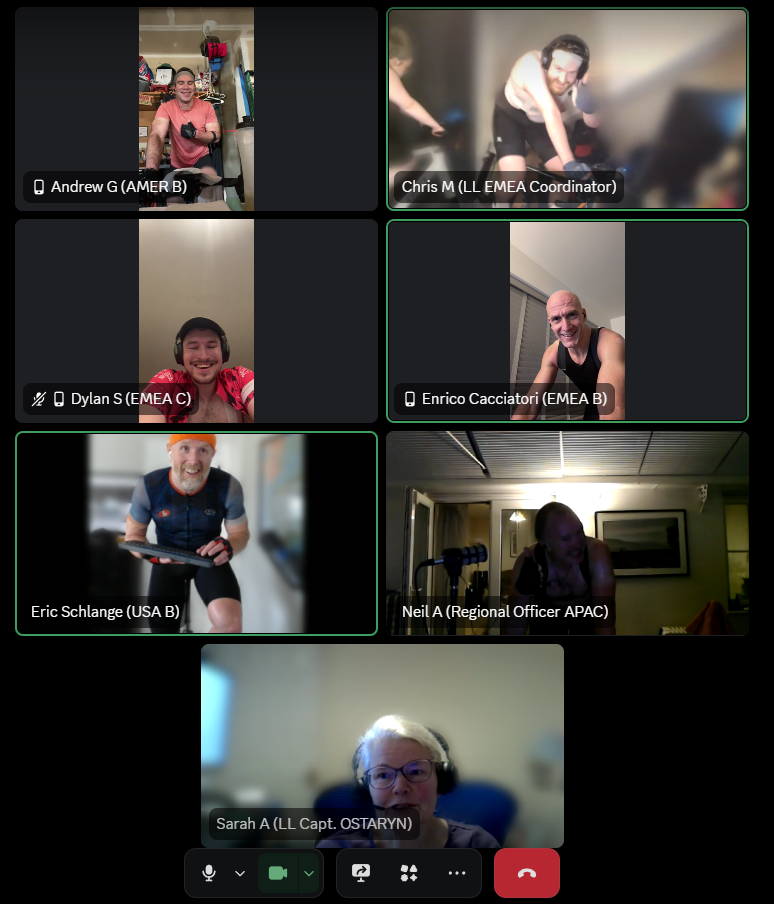
Our team would feature Captain Neil, Chris, Dylan, Andrew, Enrico, and me. Additionally, and perhaps most excitingly, this week we welcomed Sarah, Neil’s wife, to the virtual team car as our DS.
What was our strategy? Pretty simple, really:
- Don’t push the pace on the front during the Temple KOM, because the slower the pack moves on that climb, the better it is for us
- Push hard to hang onto the front group over the KOM
I made two slight modifications to my nutrition/supplement routine for this race. First, I chewed an extra piece of caffeine gum, which combined with my two lattes earlier in the day meant I had 300-400mg of go-go juice coursing through my veins. I wanted to see if I’d notice the difference.
Secondly, I stockpiled two SiS energy gels for the race, instead of the usual one, just to make sure I had plenty of carbs since it would be a longer effort.
After a short warmup, in which I observed my heart rate being nicely responsive to harder efforts (thanks, caffeine!), I joined my team at the start line. Let’s go!
Lap 1
We jumped out of the Yumezi start pen and quickly headed downhill. There were 70 riders in the pack, but that number would drop dramatically by the end of the long race, which we guessed would take over 75 minutes to complete.
Sarah did a lovely job of making sure we all knew the powerup situation as we rode through the flat farmlands at a fairly leisurely pace. Since we were getting feathers, draft boosts, or aero powerups at each arch (equal probability of each), it was smart to “burn” your powerup if you didn’t have a feather yet, so you could get a new powerup at the sprint arch and hopefully have a feather in your pocket heading into the key climb up the road.
So I did just that, using my draft boost so I could spin the roulette wheel of powerups at the green arch. And I got a feather! Excellent.
The pace picked up a bit after the sprint arch as we hit the slack climb up through Village Onsen and on to the fishing village. This ~4.5km lead-in to the Temple KOM wakes the legs up, but riders typically don’t push hard, because they know the big climb is just up the road.
Soon enough we were there, turning left off the tarmac and onto the dirt singletrack of the dreaded Temple KOM. The moment of truth.
I tried to stay positioned near the front of the group, in that magic spot where you get just a bit of draft without being so far back that gaps can open up and you get stranded in a chase group.
This climb breaks up into 4 sections for me:
- The first bit up through the Temple building
- The second bit up to where it flattens out at the first bridges
- The final climby stretch, with its steep, straight final pitch into the left hairpin
- The last bit, which is mostly flat and on wooden bridges
If I can survive to the end of the second section – to that first set of bridges – I find I can usually survive to the top.
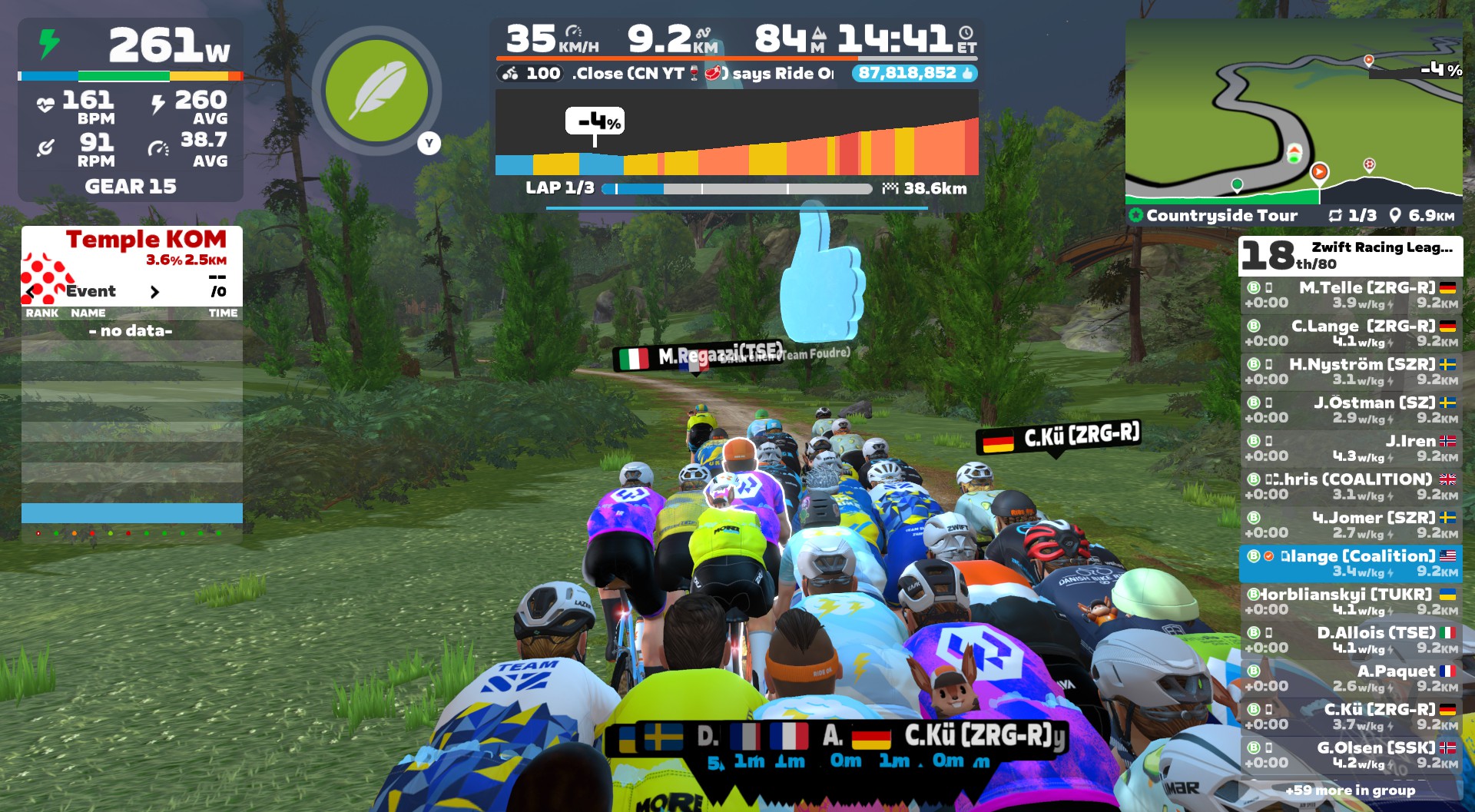
To my surprise, I found myself able to hold position consistently as we climbed toward the mystical tree. I wasn’t even on the limit! (Not that it was easy, mind you. But we’ve all felt the difference between a hard push and a max effort. Sometimes it’s only a few watts… but that’s all it takes.)
Over the top of the Temple KOM, our group had shrunk from 70 to 42 riders. A long descent followed, during which I essentially soft-pedaled for 5 minutes, letting the legs recharge for the next go at the KOM.
The Countryside Tour loop breaks down into 4 distinct sections. Here are my times and power numbers on the first lap (pulled from Strava, so times and power have some margin for error, apart from the Temple KOM which is an actual segment):
- Flat Start: 234W (~8 minutes)
- Lead-In climb: 290W (~6.5 minutes)
- Temple KOM: 330W (6:28)
- Descent: 167W (~5 minutes)
- Full Lap: 258W (25:16)
Laps 2 and 3 would be remarkably similar. I’ll put those times below.
Lap 2
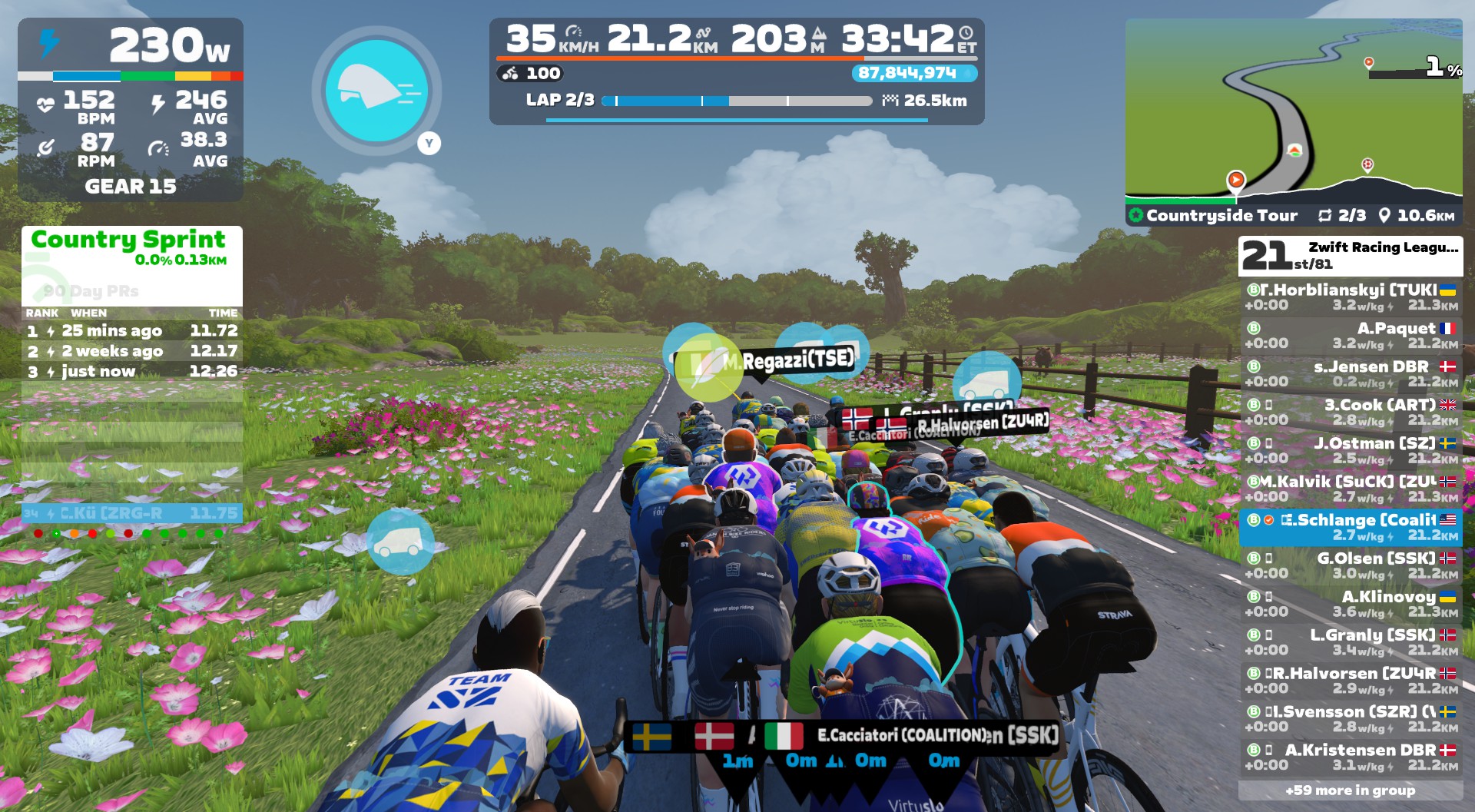
The second lap was, unsurprisingly, the chillest of the three. The big selection had already happened; it was clear nobody was chasing back on, and everyone wanted to save their legs for the third KOM.
My team had three riders in the front group: Enrico, Andrew, and myself. Dylan, Chris, and Neil were in groups behind. (Because we were hurting for riders, this was Neil’s second ZRL race of the day. So I was just impressed that he was alive!)
The second Temple KOM was the slowest of the three, which was fine with me, since I hadn’t managed to grab a feather despite my best efforts. I used my aero powerup on the first set of bridges, giving myself a bit of respite before the final push. And I survived the KOM a second time!
Sauce showed the second KOM had shrunk the peloton to 33 riders. As we chilled on the descent, I took the chance to survey the front group. We still had three riders, but unfortunately (and unsurprisingly) I saw our rivals, Team SEA, had 4 riders in the front pack. As far as I could tell, no other teams had 4 riders in front – but that’s also not easy to see with some jerseys looking like others in a churning group of 30+ riders.
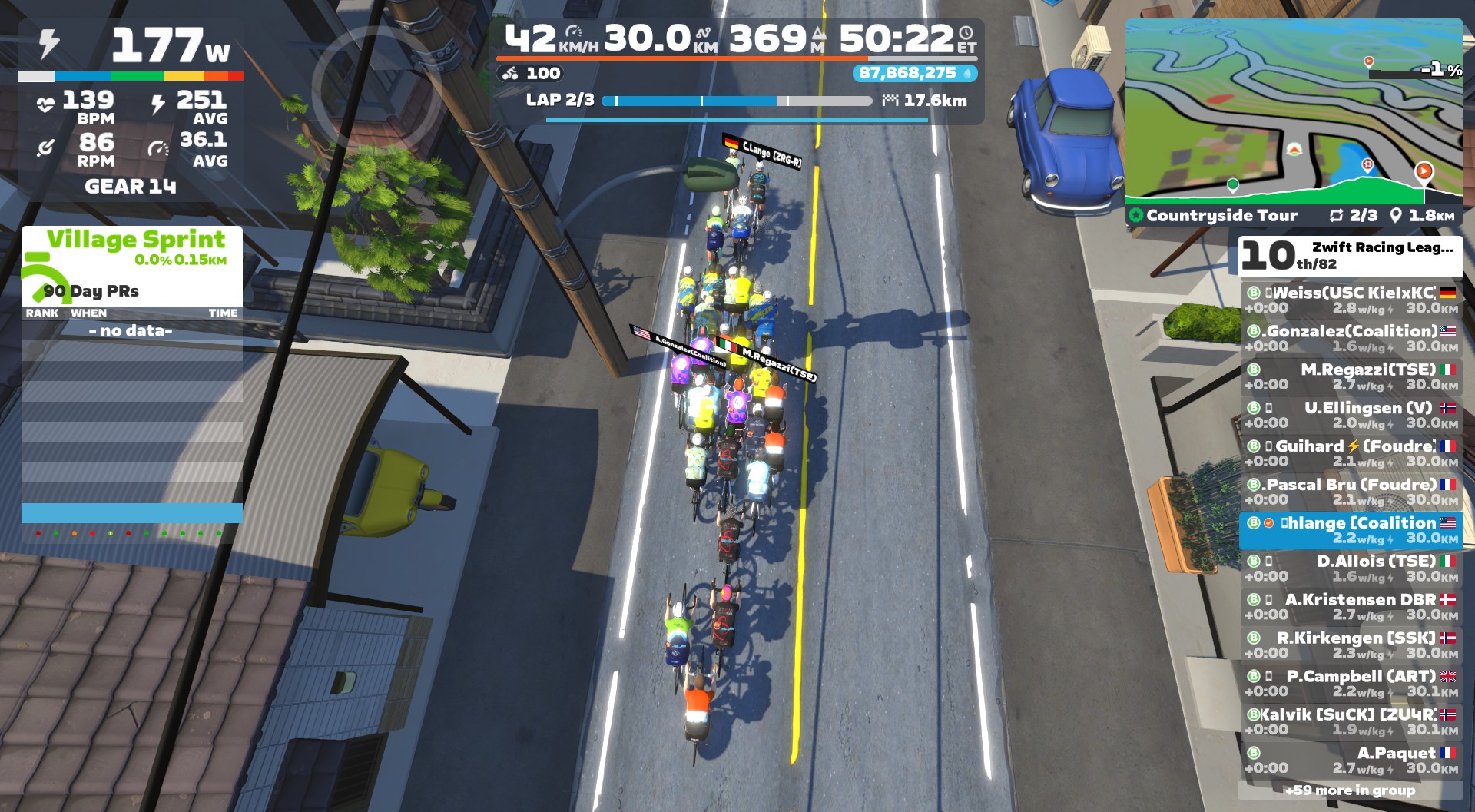
The second lap’s numbers:
- Flat start: 211W (~8 minutes)
- Lead-In climb: 258W (~6.5 minutes)
- Temple KOM: 327W (6:34)
- Descent: 145W (~5 minutes)
- Full Lap: 235W (26:27)
Lap 3
In the flat start of the final lap, I sucked down my second SiS gel and tried to seriously entertain the idea that I could survive the final climb and be in contention for the win. My pessimistic side was saying this race would be like last week, where I got dropped on the final climb. But I knew I needed to think positively, and the first two climbs hadn’t pushed me to my limit, which was a great sign.
I also had a feather from the lap arch, so I was holding onto that for the KOM, and hoping I would land either a draft or aero at the top of the KOM for use on the fast, downhill finish.
Apart from one slight attack on the flats from SZR, we stayed gruppo compatto. Everyone else seemed nervous about the final KOM as well.
Soon enough, we were there. The pace was definitely a bit higher than the previous lap, but I had plenty of virtual gears to use and kept my cadence high, where it felt like I could make good power with the least effort. Enrico put in a bit of a dig with his feather powerup on the final push, and I sat in the wheels behind, once again pushing hard but not quite on the limit.
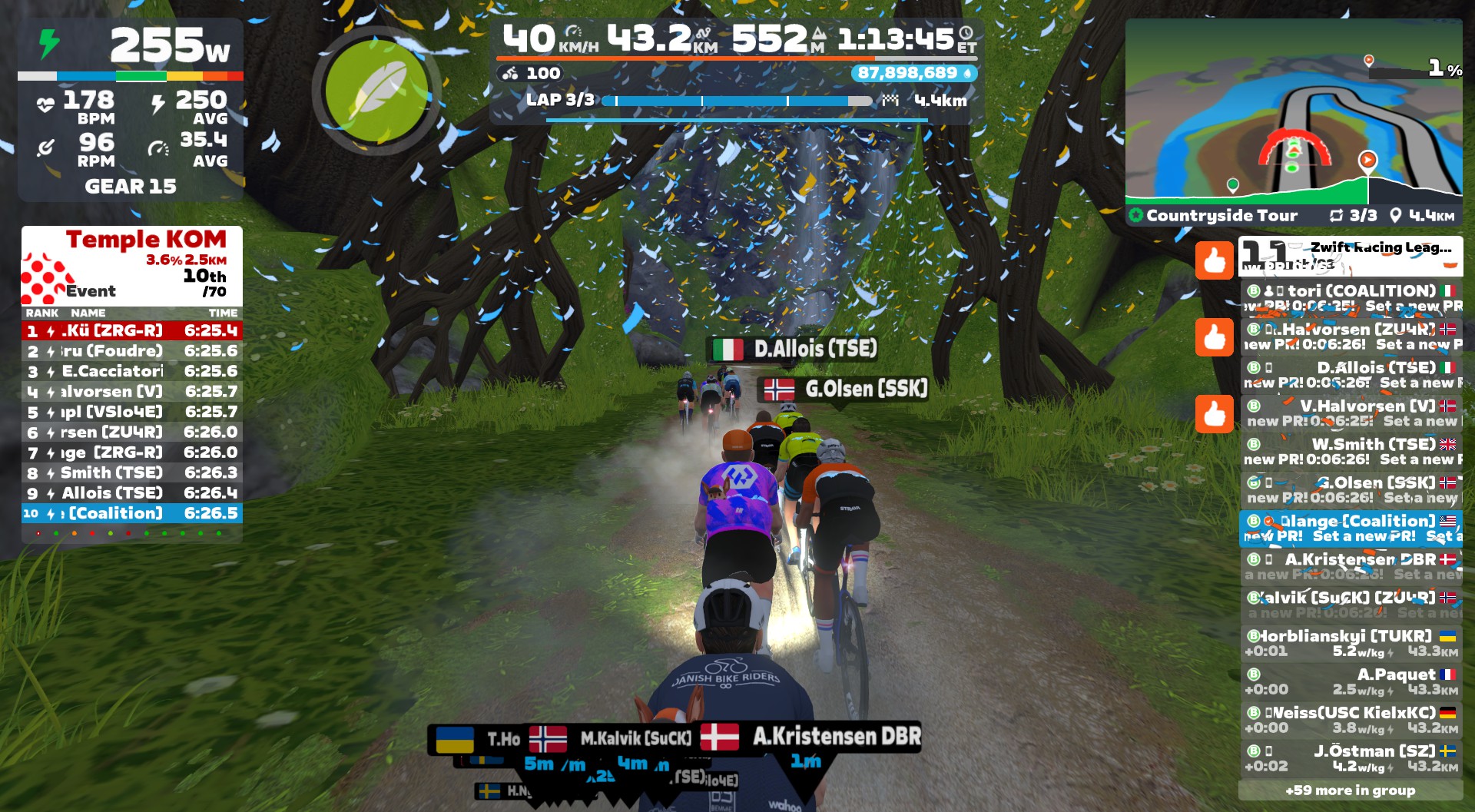
I’d made it! Honestly, I could hardly believe it. And while I was silently jumping for joy, as we went through the KOM arch, the Zwift gods rained on my parade by handing me a feather powerup for the final sprint.

The front group had shrunk to 20 riders. Enrico was still with me, but Andrew had been dropped on the final KOM. As I spun lightly on the descent, I tried to figure out the best plan of attack for the finish. Should I use my feather at all? When should I go?
I decided not to use the feather. I figured it was a toss-up: the feather would take away weight on the downhill, which would slow me down, but it would also make me a bit smaller (in terms of CdA), so I would be a bit more aero. (Note to self: I really should test the effect of feathers on downhill sprints…)
The descent gave me plenty of recovery, and I was feeling good as I dropped the hammer with 400 meters to go, entering the right hairpin with its steep downward drop. I had my head down, hammering in a seated sprint. Glancing up, I saw there were still a few riders ahead, and the finishing arch was just peaking out in the distance.
Keep pushing!
The aero helmets and draft vans were everywhere. I hammered with everything I had, but crossed the line in 7th.
The final lap, by the numbers:
- Flat start: 207W (~8 minutes)
- Lead-In climb: 256W (~6.5 minutes)
- Temple KOM: 335W (6:27)
- Descent: 168W (~5 minutes)
- Final Sprint: 813W for 20 seconds
- Full Lap: 260W (26:20)
Watch the Video
Results and Takeaways
COALITION Delusion finished the race in 4th place, and I was surprised to see Team SEA finish second, behind ZU4R Peacock. Nice work, all!
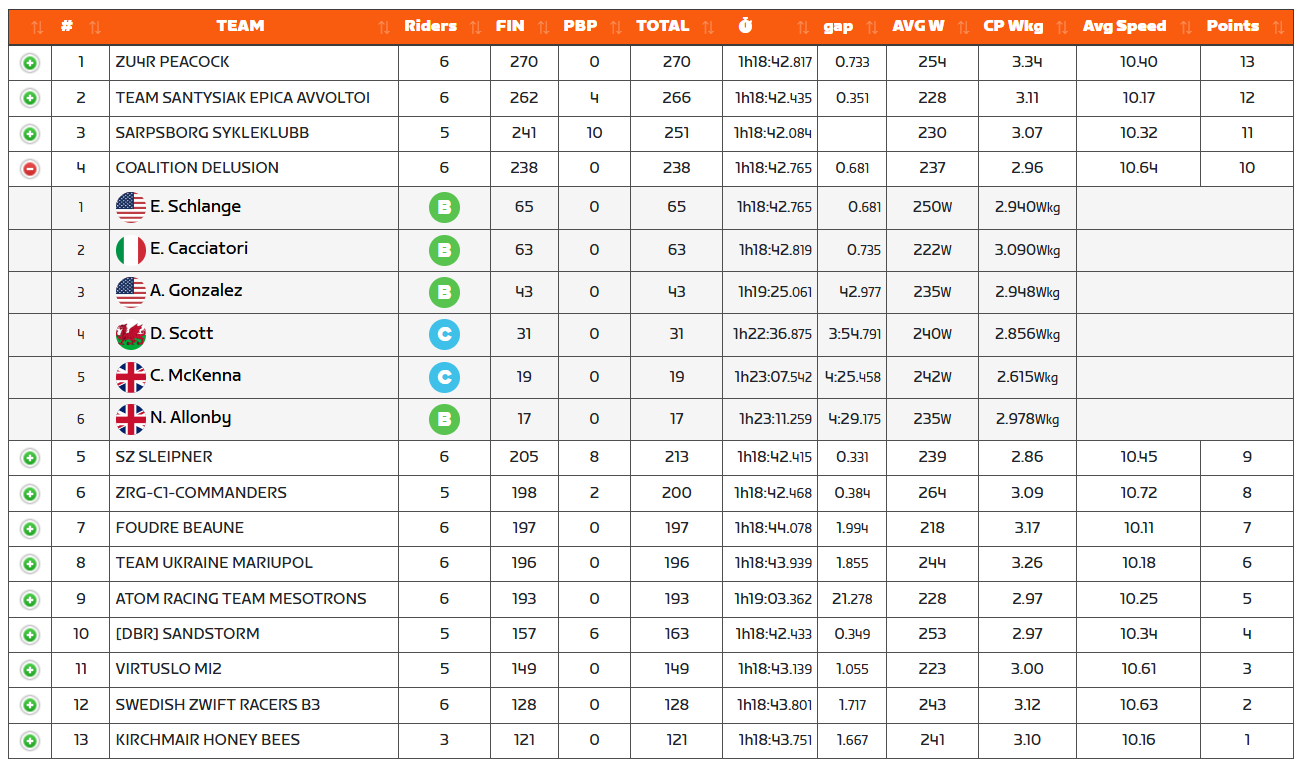
That means we’re sitting in 2nd place overall midway through Round 3:
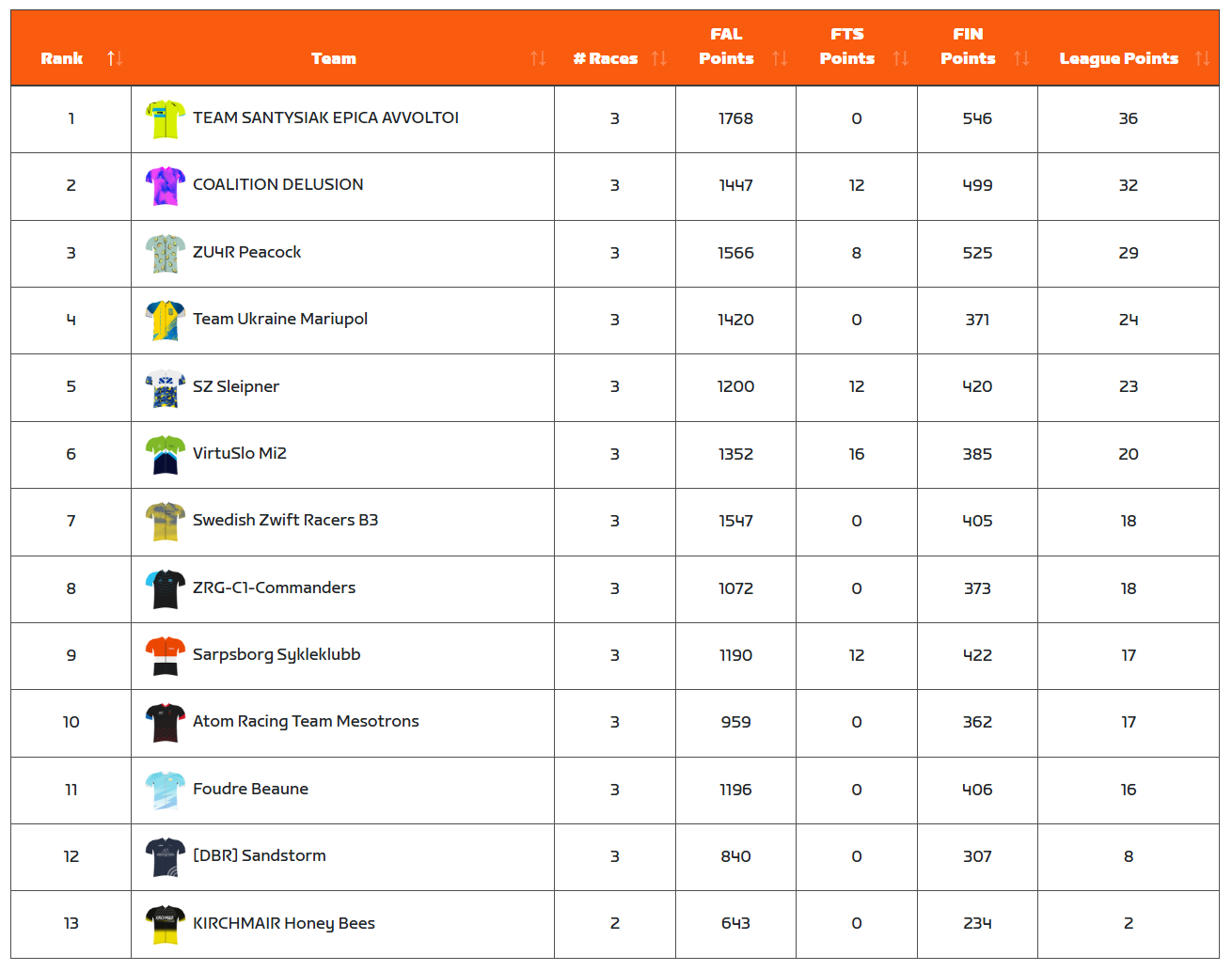
Personally, I was both stoked and disappointed with this race. Stoked that I was able to hang with the front group to the finish, which was unexpected. But disappointed in how the powerup roulette worked out this time around.
I analyzed my race video afterward, trying to find a mistake I could blame on myself instead of being annoyed at the universe. Should I have used my feather in the finish? Should I have held onto an aero and tried to survive the final KOM without a powerup?
(Hindsight is 20/20, of course. Knowing what I know now, I would have held onto my aero powerup for the finish, because I could have survived the final KOM without the feather.)
Powerups don’t always play a huge role in Zwift races. But this week, they certainly did. In fact, every rider who finished ahead of me triggered either an aero or draft boost in the final sprint. (The two riders who magically glided past me without powerups over their heads in the final seconds? They triggered their aero powerups at the perfect time, so they would run out with a few seconds to go…)
The final moments of the sprint, as recorded by Zwift…
That’s frustrating. While I’m typically a fan of powerups – I like the strategic element they add – I don’t like it when they’re assigned randomly on a course where they affect the outcome so dramatically. (This is why Zwift Insider’s Tiny Races have always given the same powerups to all.)
But that’s bike racing for you, isn’t it? You know the rules going in, and you try to play it as smart as you can. But you can’t eliminate all the randomness. You can’t control every factor. Sometimes the odds work in your favor. Sometimes they don’t.
Hopefully, my airing of frustration doesn’t sound like me trying to cheapen my competitors’ results, as that’s not my intent at all. They played the game well and beat me, fair and square. (Plus, for all I know, some of them may have held onto a draft or aero powerup up the final KOM, like I should have. Respect to anyone who made that brave, 200-IQ move.)
We finished with our customary team photo, featuring DS Sarah, who did a mighty fine job:
What about you?
How did your race 3 go? Did you win at powerup roulette? Share below!