Zwift version 1.109 begins its phased rollout today. This is a very minor update, so all we’re doing is showing the release notes from Zwift…
Launcher Update
Not technically directly tied to the version 1.109 game release, but noteworthy nonetheless, is a launcher update Zwift rolled out today. Notes from Zwift:
Windows
Reduced incidence of blank or white window when launching Zwift.
All Zwift files moving forward are written to C:Users<username>AppDataLocalZwift by default, instead of My Documents. Look for your FIT files and ZWO workout files in the new location.
Includes a workaround for those impacted by Windows system freezes introduced by a Microsoft security patch. See this thread for details.
Improved tracking of launcher app issues.
macOS
Zwift Installer now runs natively on Apple Silicon, without requiring Rosetta for the installation process
Fixed the “full storage” message so it appears if installing the game app while storage is full.
Fixed an issue where Zwifters could potentially lose bike upgrade progress when performing multiple teleports.
Fixed an issue that could cause estimated route completion time to be inconsistent between route cards on the home screen and the route details sidebar.
Fixed an issue that could cause flickering colors in Makuri Islands.
Mobile only: Fixed an issue where Zwift would let you log in with your old password after a password change.
Cannondale has announced the release of its new CAAD14 aluminium road bike, with a focus on a “return to [its] performance roots”.
Where the previous CAAD13 sought to straddle the gap between race bike and practical, cost-effective endurance bike, the CAAD14 has been “pared down”, according to Cannondale, to deliver a purer race-bike experience.
Accordingly, the bike lacks mudguard mounts, but features the mod cons of a modern race bike, including 32mm tyre clearance, fully integrated cable routing and a Universal Derailleur Hanger.
The geometry is marginally more aggressive than even the SuperSix EVO’s, reflecting the bike’s focus on racy fit and handling.
There are three models, with prices starting from £2,995 / $2,499 / €2,499, rising to £7,500 / $7,499 / €7,499, plus a frameset, available from today.
A return to racy roots
Cannondale has reverted the CAAD14 to a more race-oriented design, more reminiscent of the CAAD11 and prior models. Cannondale
The CAAD14 represents a significant shift in approach to Cannondale’s popular aluminium bike platform.
Where the CAAD13 effectively sought to create a SuperSix Evo-imitating entry point to road-bike ownership, the new bike is positioned as a “celebration of aluminium”, with more than a nod to CAAD bikes of yesteryear.
Andreas Krajewski, Cannondale’s road category marketing manager, says: “CAAD13 lost sight of what makes CAAD, CAAD. [The CAAD13] looked like a SuperSix Evo, and it sold well, but it failed to put a spotlight on aluminium – it failed to stir the soul.”
Given the CAAD13 itself represented a revamp of the platform towards the SuperSix EVO, and the bike reviewed strongly, the CAAD14 represents a bold return to its roots that may surprise some.
Go hard or go home
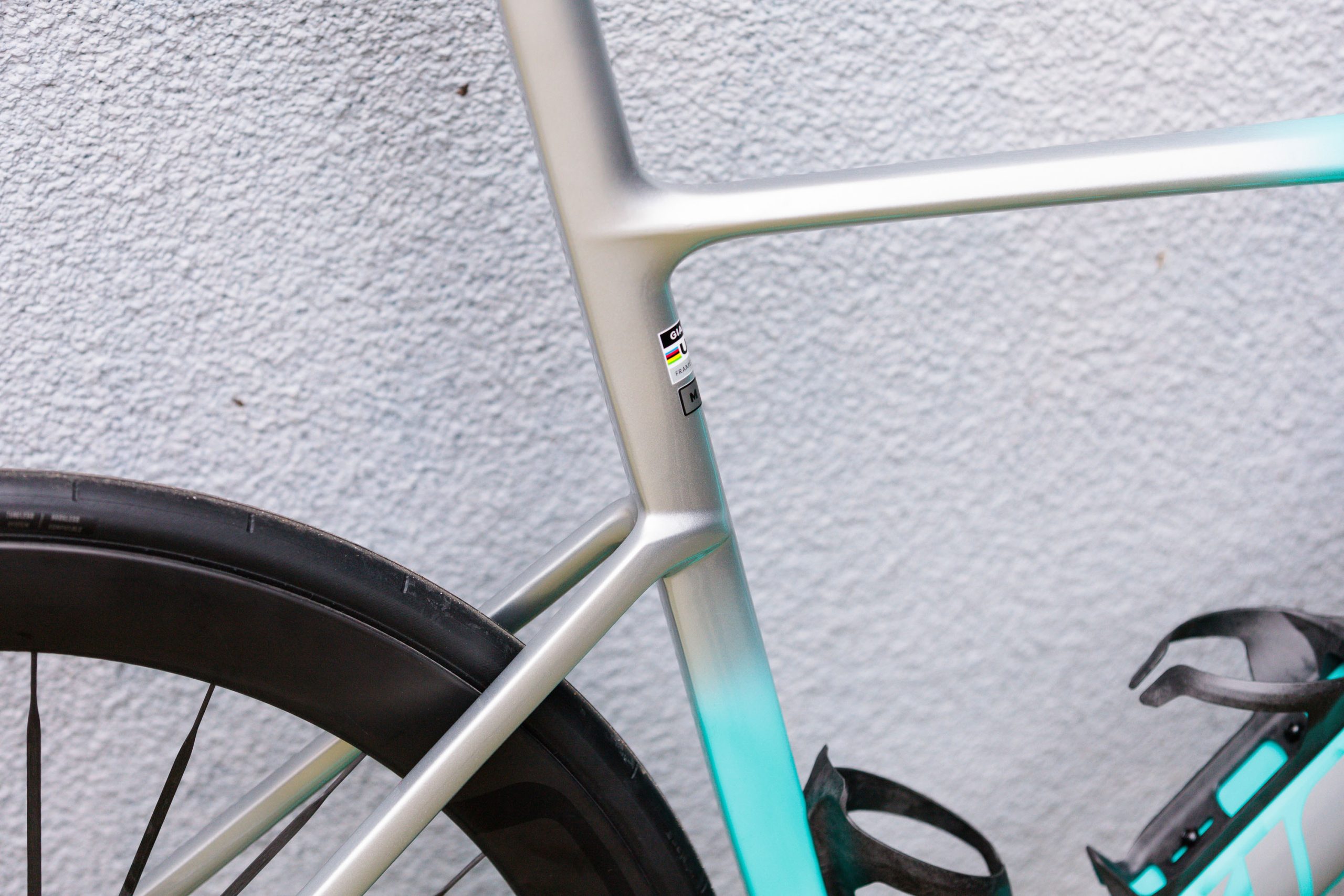
Gone are the dropped seatstays and aerodynamic tubes, with a return to classical round designs. Cannondale
The most striking change is to the frame’s tube shapes – gone are the truncated aerofoils, with a return to more rounded profiles. Cannondale suggests these shapes make the most of the inherent qualities of aluminium to deliver “stiffness, explosiveness, and razor sharp handling”.
The aesthetic is therefore traditional (albeit with a modern twist), but senior industrial designer Tanner Van De Veer says that while his team considered designs with more complex tube shapes, they quickly found that “[these] wouldn’t translate to aluminium”, instead choosing to “focus on maximising the properties of the frame material itself”.
Cannondale says it has doubled down on the CAAD14’s aggressive stance by raising the junction of seat tube and seatstays, while opting for an oversized head tube and enlarged junctions with the down tube and top tube.
The geometry reveals an aggressive layout. Cannondale
Despite Cannondale saying it has moved away from the SuperSix EVO for source material, the geometry is remarkably close to the flagship carbon race bike’s – and even slightly more aggressive.
A size-56cm frame, for example, sports an identical 73-degree head tube angle, a 1mm shorter reach (392mm) and 5mm shorter stack. The seat tube angle is 0.6 degrees slacker, which makes the effective reach a little longer.
Cannondale says a size-56cm frame weighs 1,280g in its ‘raw’ form, which comes with the CAAD14 1-spec bike (see below), and 1,410g when painted. The fork is claimed to weigh 397g.
Cannondale has dropped provision of mudguard mounts, in a move reflective of the CAAD14’s more focused race-oriented design.
Clip-on mudguards remain an option, of course, but this means those who might have thought of the CAAD14 as a permanent winter training bike may now reconsider.
That said, the bike is now bang up to date with modern trends, with clearance for 32mm tyres (up from 30mm), a Universal Derailleur Hanger and a move from the press-fit BB30A bottom bracket standard to a 68mm BSA threaded design.
The ‘raw’ finish of the CAAD14 1 reveals the tube joins to their fullest extent. Cannondale
The full-carbon fork continues to use Cannondale’s Delta steerer design, offering full internal routing inside the headset bearings, but has shoulders remodelled to fit with the oversized head tube, and a blind thru-axle dropout.
Given the frame sports a standard 1-1/8in upper headset bearing, upgrading the cockpit should prove relatively easy.
An oversized head tube provides stiffness, but also the capacity for full internal brake-hose routing. Cannondale
On the top-spec CAAD14 1, Cannondale has specced the one-piece Momo-designed SystemBar R-One, which was replaced as the SuperSix EVO’s premium cockpit choice last month. The other two full-spec bikes feature two-piece cockpits.
Reflective of the more traditional, rounded tube shapes, the seatpost is now a standard round 27.2mm-diameter model, secured in place by an external collar.
Cannondale CAAD14 pricing and availability
The Cannondale CAAD14 is available now in three complete builds, alongside a frameset costing £1,750 / $1,799 / €1,799. This includes a Cannondale Save Carbon seatpost.
An update to Shimano’s E-Tube Project app strongly suggests that next-generation Shimano groupsets will go 13-speed – and the brand will potentially add 13-speed compatibility to its existing groupsets.
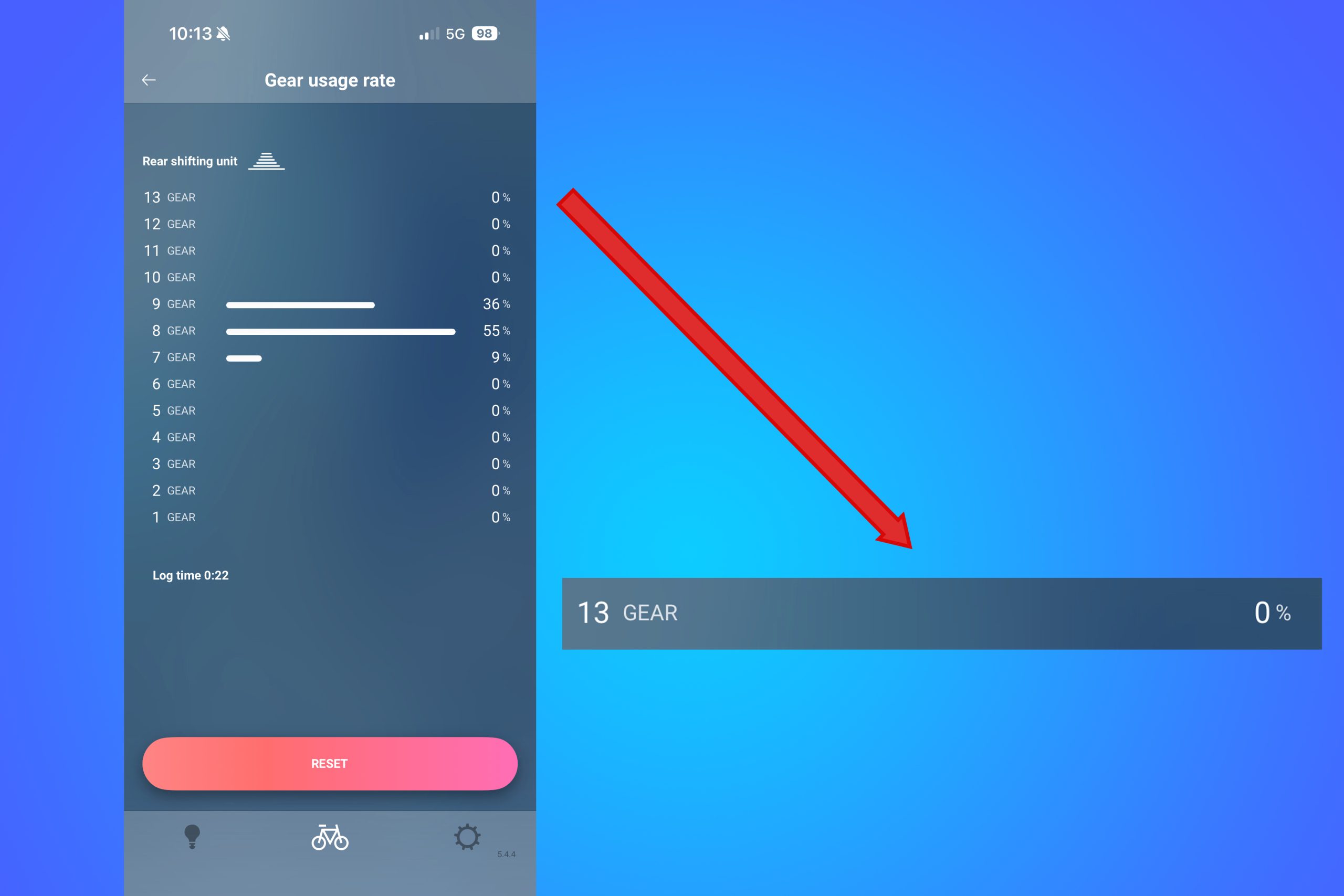
First spotted by a BikeRadar reader and confirmed by us, the app now shows a new 13th cog on the ‘Gear usage rate’ view.
This all but confirms Shimano’s next-generation groupsets will get an additional cog.
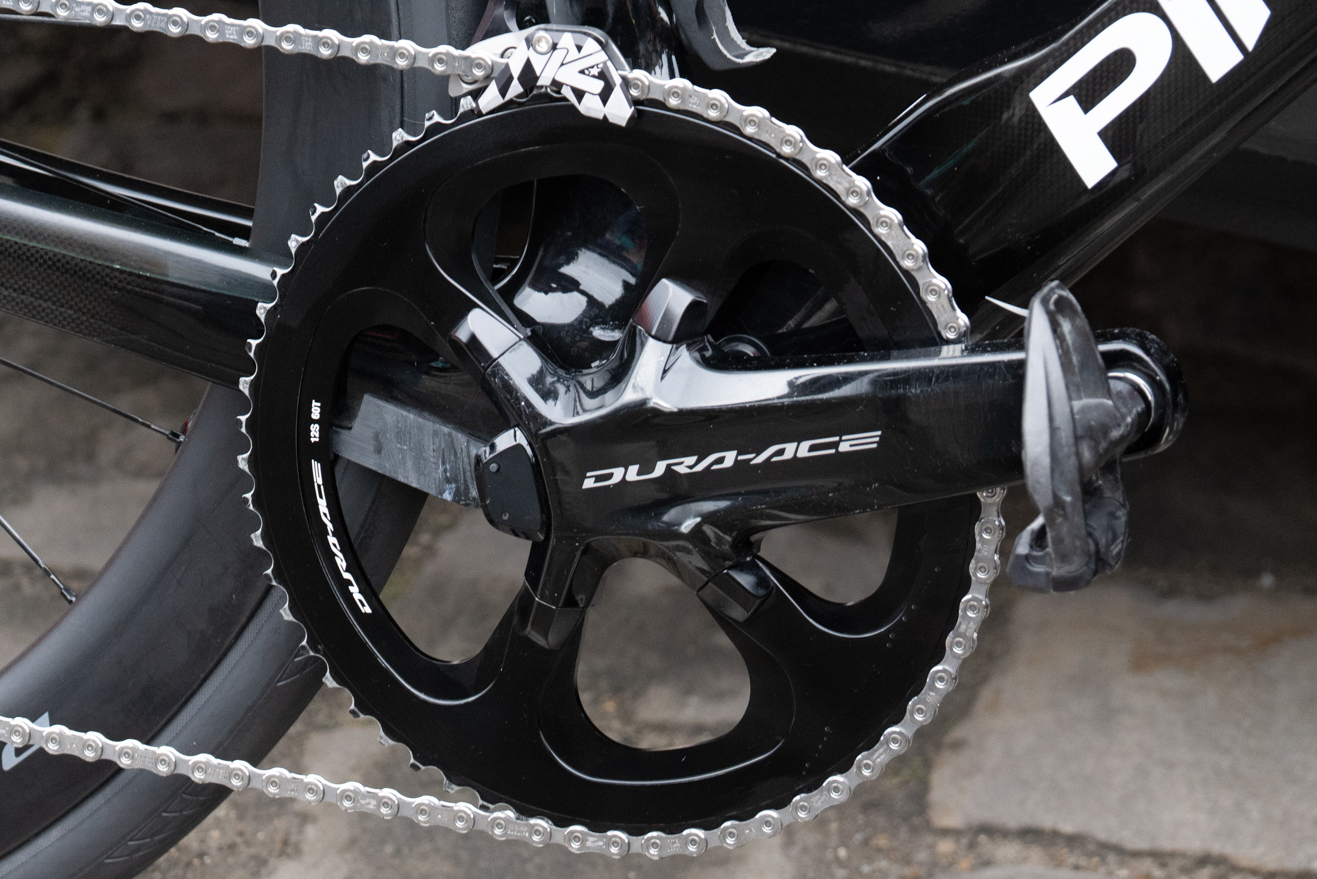
The addition of a 13th cog would not only bring Shimano in line with its competitors but, alongside a trickle of patents and leaks over the last two years, this latest development gives the strongest hints yet at the potential trajectory of future road and gravel groupsets.
This is not a setup Shimano would endorse. Matt Grayson / Our Media
This alone may be reason enough to add a 13th cog, but we suspect the glaring absence of a native 1x drivetrain option in Shimano’s road bike line-up is the more likely reason to add another cog.
Shimano has long resisted the move to 1x on the road, maintaining that 2x offers the best balance of range, cadence control and efficiency for road riding.
However, 1x has seen widespread uptake in the pro peloton for certain races, and is the near de-facto option for time trial racing.
This has led to many instances where Shimano-sponsored teams use third-party components or setups the brand would not officially endorse.
Although 12-speed is already sufficient for many 1x riders, moving to 13-speed would offer greater range or closer steps between gears, and align Shimano with its rivals.
That said, a patent filed in 2023 showed a 13-speed 2x groupset, so we wouldn’t rule out a Campagnolo-style shift to 13-speed across the board from the Japanese giant.
13-speed gravel patent confirmed?
Patents show Shimano is likely working on a 13-speed gravel groupset. Shimano
If not for the road, earlier reporting suggests 13-speed could be coming to Shimano’s gravel groupsets.
The same patent as above showed a fully wireless 13-speed drivetrain concept with a clutch-equipped rear derailleur for off-road use.
Again, where SRAM now offers 13-speed 1x setups for its XPLR range, Shimano will not want to be left trailing in its wake.
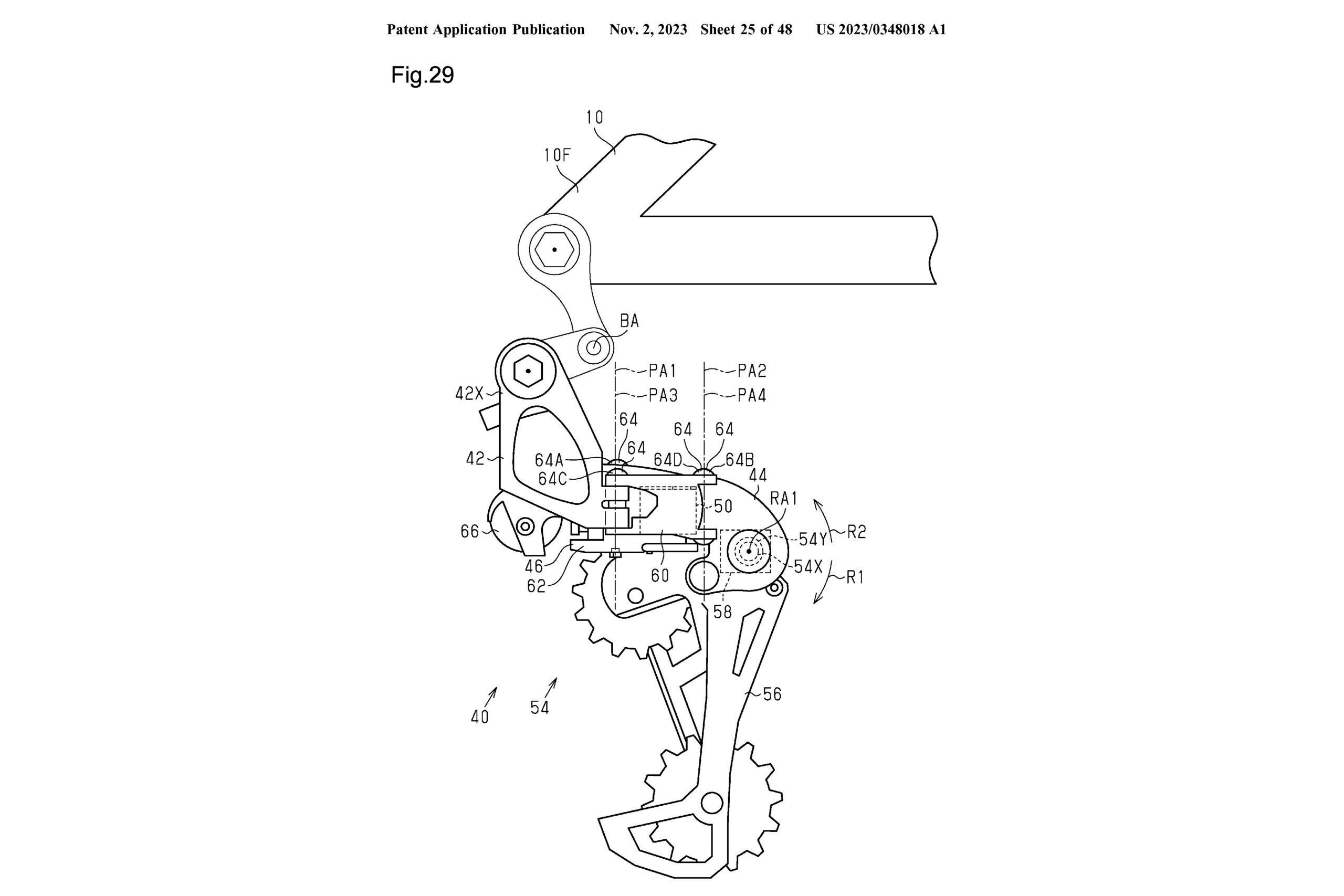
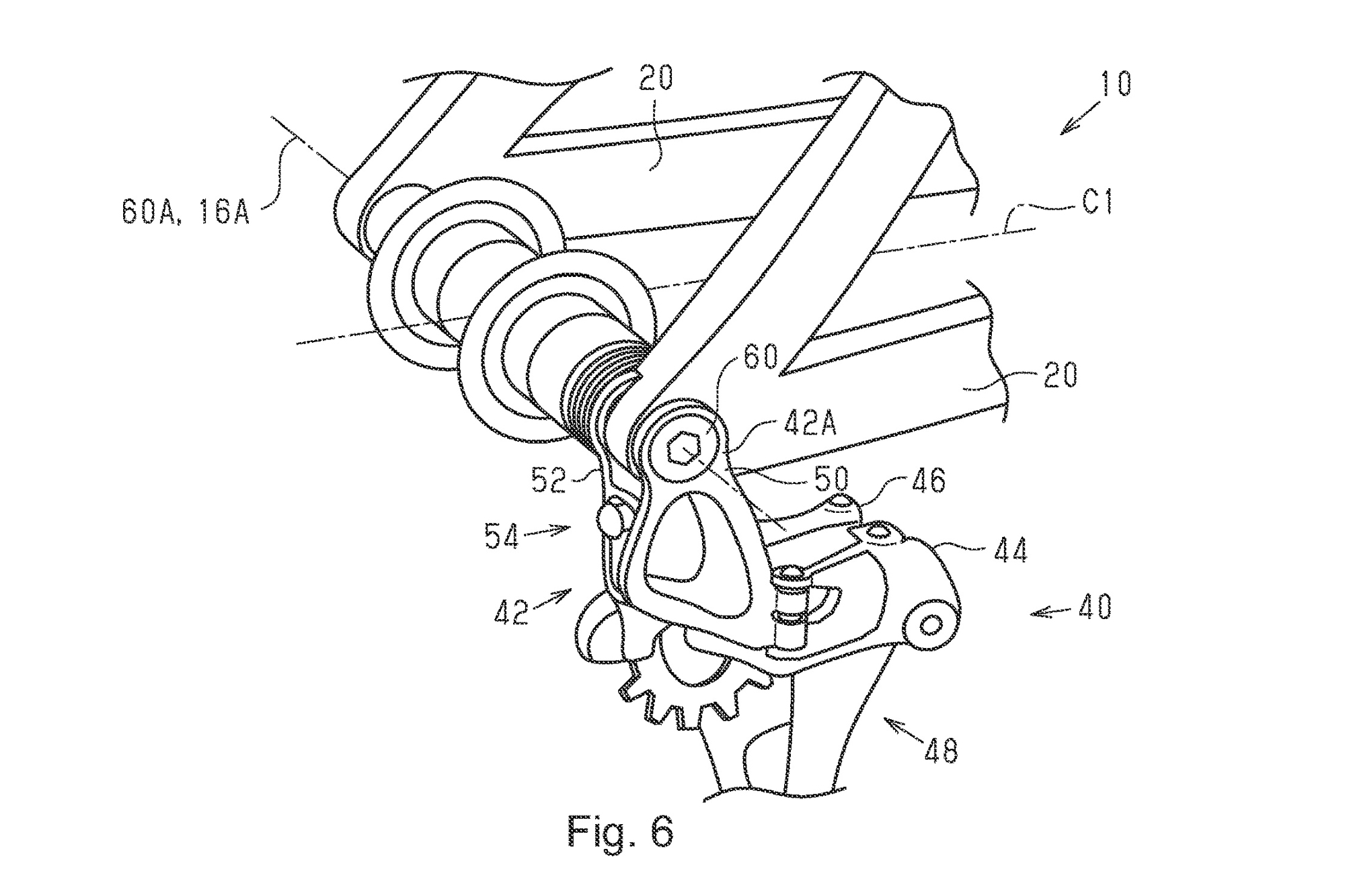
Could Shimano introduce a direct-mount derailleur at the same time as 13-speed? There’s a precedent with SRAM.
This patent shows a direct-mount derailleur design that – like SRAM’s full-mount derailleurs – attaches coaxially to the rear axle rather than a conventional hanger.
Like SRAM, Shimano may adopt this to make space for a 13th cog without needing to resort to a new, narrower chain.
Outside of patents, as noted by Warren Rossiter in his analysis of Shimano’s latest gravel tech, the slow uptake of new GRX groupsets also hints that a more substantial change could be coming.
OEMs will be aware of Shimano’s plans long before the public and media, and where the latest generation of GRX may be viewed as a “placeholder”, a new groupset gives brands something more substantial to talk about. It’s possible the industry is holding out for a new, 13-speed option.
Backwards compatibility?
We spotted the reference to 13-speed when E-Tube was paired with an Ultegra R8100 groupset. Russell Burton / Our Media
Although the reference to 13-speed has appeared before any confirmation Shimano is working on a new range, it’s notable this was spotted on a configuration page for a current generation 12-speed groupset (we tested it on a bike equipped with Ultegra R8100 Di2).
It’s theoretically possible to add 13-speed compatibility to any Di2 groupset because there are no hard mechanical stops on an electronic groupset.
And, as seen with the likes of Wheeltop’s groupsets, it could be programmed to shift across additional sprockets – provided the throw of the derailleur is sufficiently wide.
However, we’re less convinced by this possibility. Shimano hasn’t previously made new Di2 groupset generations backwards-compatible with older ones, so there isn’t a precedent to suggest it would do so this time round.
Still, it’s a tantalising possibility, and one we’re sure would be welcomed warmly by the market if Shimano were to offer riders a simple upgrade path rather than requiring a full groupset replacement.
What about mountain bikes?
Shimano has only just updated its mountain bike groupsets. Max Wilman / OurMedia
At the time of publishing, we were unable to confirm whether there’s any mention of a 13th cog in E-Tube for Shimano’s mountain bike groupsets.
However, given Shimano’s latest Di2 mountain bike groupsets were released only last year, we think it’s unlikely a switch to 13-speed is imminent.
SRAM has also not adopted 13-speed for its mountain bike groupsets. And where cadence control is less vital on mountain bikes, and range already sufficient for most riders, there’s a less compelling case overall to add a cog off-road.
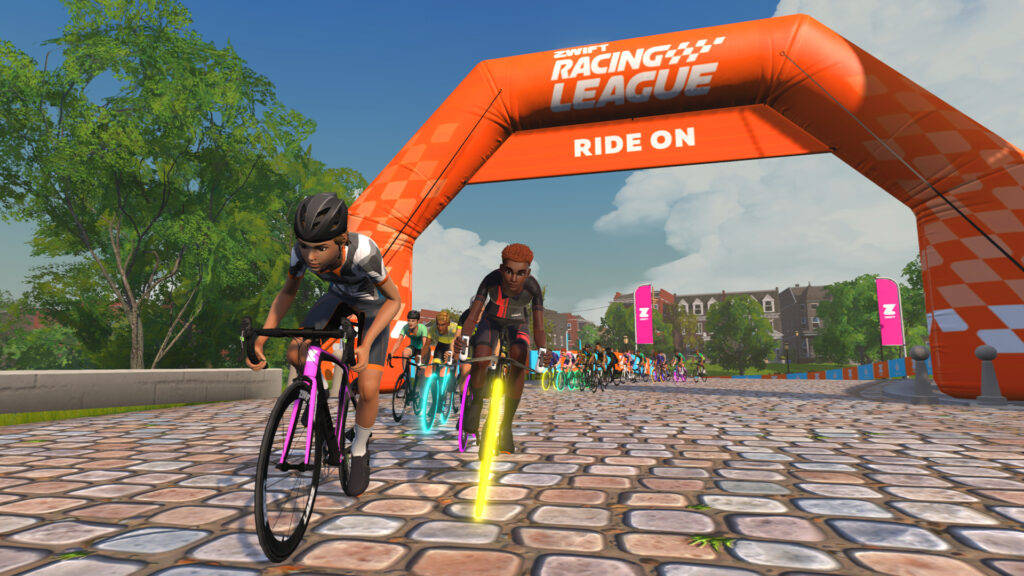
Now in its 19th round, Zwift Racing League continues to take racing to the next level on Zwift! Registration is now open for the fourth round of the 2025/26 season, which begins on April 7.
This page contains everything you need to know about the current ZRL round, and is updated as WTRL announces new details.
Intro to ZRL
Zwift Racing League (ZRL) is team-based racing for all abilities. It’s also the world’s largest virtual cycling competition, with over 30,000 riders of all abilities participating in each of the past two seasons!
Organized by WTRL, this is a team-based points competition spanning multiple weeks, with teams divided into divisions based on time zones and ability. Races take place every Tuesday, and the season is divided into distinct rounds with brief breaks in between.
ZRL is Zwift racing at its highest level. Its unique structure and varied race formats drive serious Zwift racers to show up week after week while providing a place for new racers who jump in and find their first team home.
Key Changes this Round
Zwift + WTRL continously collaborate to modify ZRL’s structure and rules with the aim of engaging as many racers as possible. Heading into this final round of 2025/26, no rules have changed according to WTRL. But it is worth noting that this final round has only 4 races!
Each ZRL round comprises weekly races which are either scratch races, points races, or team time trials (TTT). Scratch Races and Points Races are both actually points-based in terms of final results, but Points races include intermediate segments while Scratch Race points are all earned at the finish line. TTT winners are the teams who complete the race course fastest, with team time taken from the fourth rider across the line.
Race #1: Hell of the North April 7, 2026 (TTT)
The round begins with a team time trial on a route we’ve never TTT’d before. Despite starting on Les Intestins, Hell of the North is quite flat… until the final 2.7km climb up the Petit KOM! New this round, WTRL says we’ll get a Draft Boost powerup in the pens and at all arches, for a total of 5 Draft Boosts.
PowerUps: Draft Boost in start pen, and at all arches �
Race #2: The Classic April 14, 2026 (Points Race)
The first points race of Round 4 finds us racing CCW loops of Jarvis Island, which is basically uphill for the first half, and downhill for the second! Points will be contested on the KOM and sprint segment each lap, with a flat finish.
A/B: 6 Laps of Watopia’s The Classic (32.3km, 310m elevation)
C/D: 4 Laps of Watopia’s The Classic(22.9km, 212m elevation)
The only scratch race of round 4 is on a flat French circuit with a slightly uphill long sprint finish. Who will sit in the pack and trust their sprint, and who will try to go long?
A/B: 4 Laps of France’s Croissant (40.4km, 219m elevation)
C/D: 3 Laps of France’s Croissant (31.1km, 170m elevation)
Race #4: Double Span Spin April 28, 2026 (Points Race)
The final race of the round takes us onto repeated CCW loops of New York’s Manhattan and Brooklyn bridges, where both the sprint and KOM sections are draftable uphill efforts.
A/B: 5 Laps of New York’s Double Span Spin (40.6km, 531m elevation)
C/D: 3 Laps of New York’s Double Span Spin(26.6km, 371m elevation)
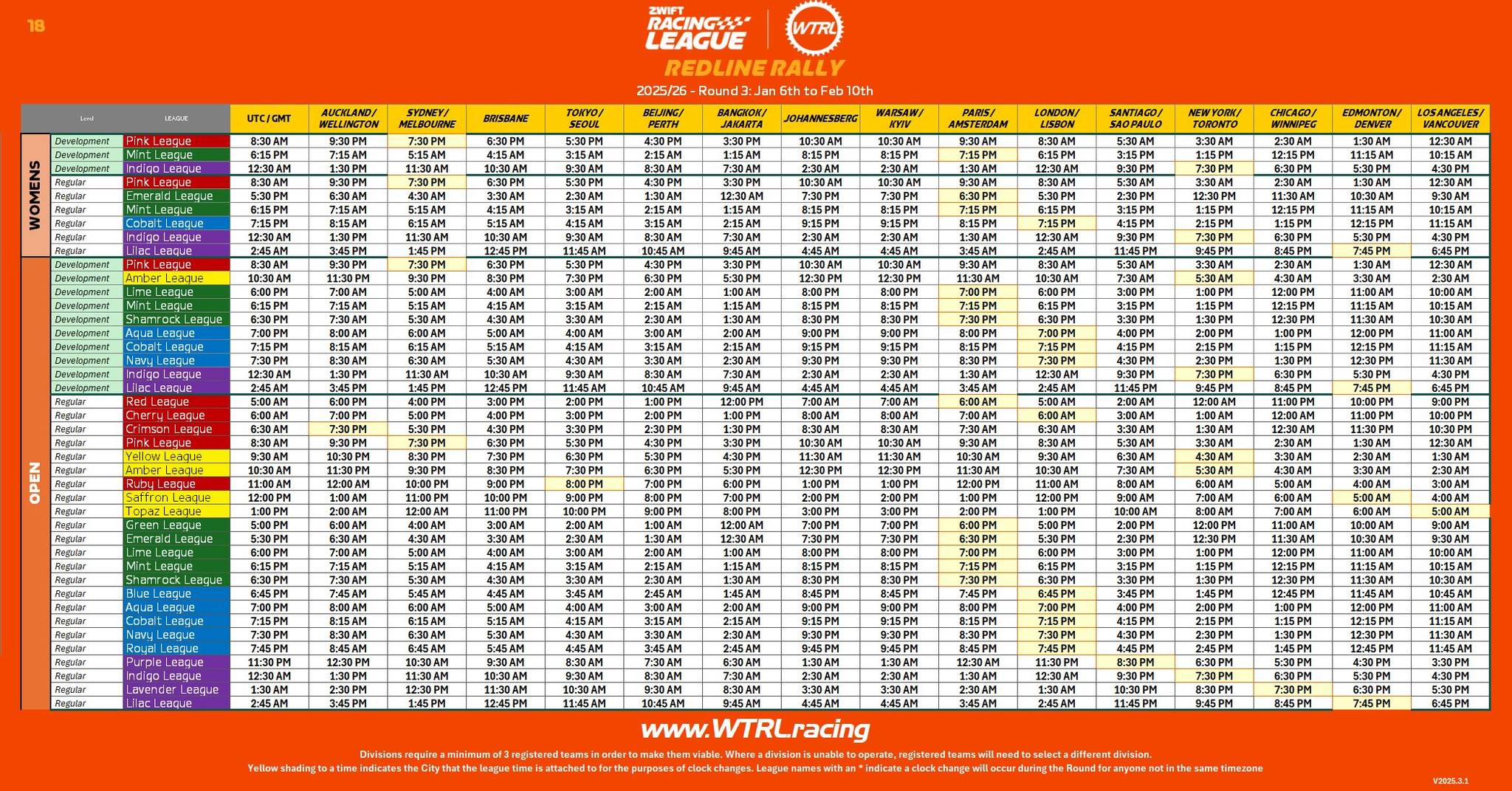
Some divisions and start times are adjusted between rounds. Use the table below to find a time slot that works for your team. Please note that time slots may shift a bit – we will update the table below once WTRL publishes it for round 4.
ZRL is a team-based competition – you cannot sign up as an individual rider. Teams can roster up to 12 racers, but only 6 can race in each event. Teams must have at least 4 riders on their roster, and a rider can join as many teams as they’d like, but only a maximum of two teams per league category.
Want to race, but don’t have a team? Here are seven ways to find a team:
If you’re already a member of a larger Zwift Club, contact a senior Club representative to see if you can join one of your Club’s ZRL teams.
Join an official team-lead ZRL Group Recon Ride (see below) where several teams can be found looking for more riders. These run several times a day, starting two weeks before the first race.
Join the ZRL Facebook Group and post preferred race times/league, Pace Group Category, and any other preferences under the #zrlteamhunt tag where many teams are eagerly waiting.
Reply to one of the #zrlrecruiting posts that teams make in the ZRL Facebook Group if you don’t want to post your own request.
Reach out directly to WTRL and they can match you to a team based on race times, category, and team preferences.
The minimum category you’ll race is determined by your power history on Zwift. See this post for details.
Riders must use a power sensor to transmit power to the game – this would be a smart trainer, smartbike, or power meter. (You’re allowed to race C and D categories with a “classic” trainer and virtual power, but your points are cut in half.)
Heart rate monitors are required. (You’re allowed to race without a HRM, but your points are cut in half.)
Cadence monitors are required.
You’ll want to have at least a few races under your belt before you try to join a team, so you are confident that you’re in the correct category. It causes a lot of hassle if you join a team and are forced to upgrade to a new category mid-round!
Race Recon Events
If you’re unfamiliar with a particular week’s race course, join a ZRL recon ride! These happen multiple times per day and are led by experienced racers who may share route info and racing tips as you ride.
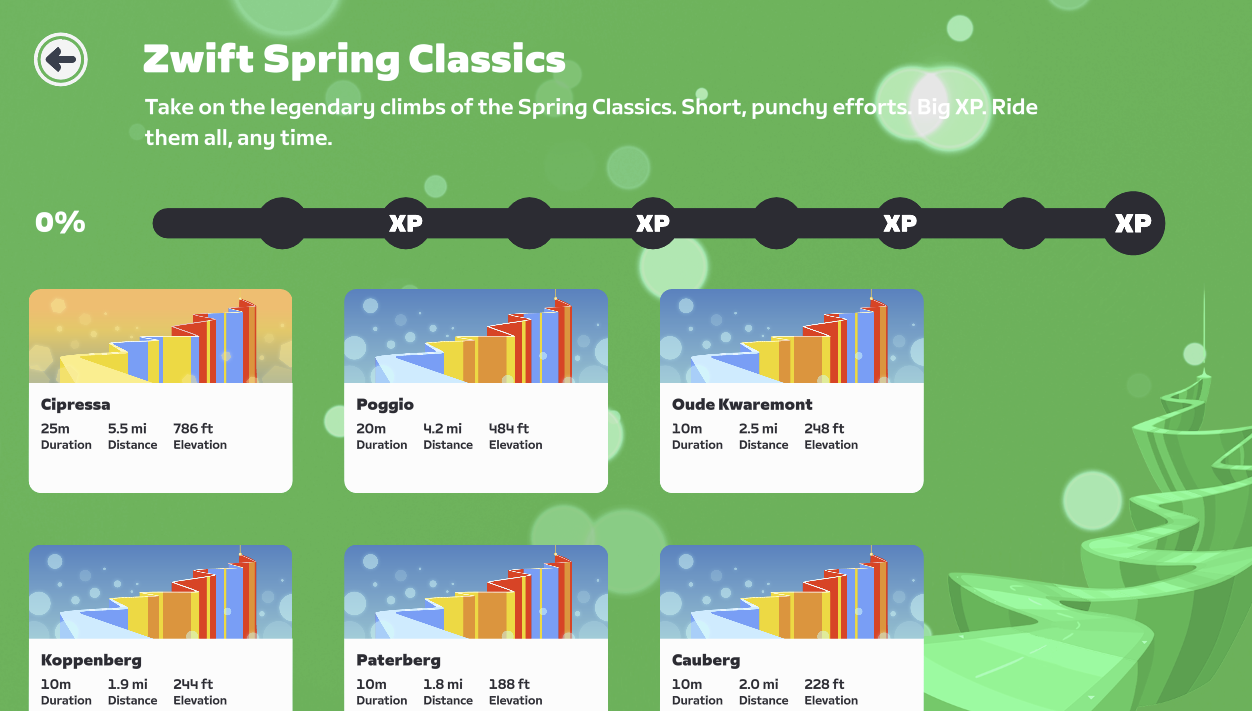
Today, Zwift launched an eight-climb challenge featuring legendary climbs of the Spring Classics. The series runs from March 9 to May 1, and features three new Climb Portals. Read on for details!
Challenge Requirements
The Challenge features eight climbs, including three that are brand-new:
Finish all eight climbs to complete the Challenge!
Joining the Challenge
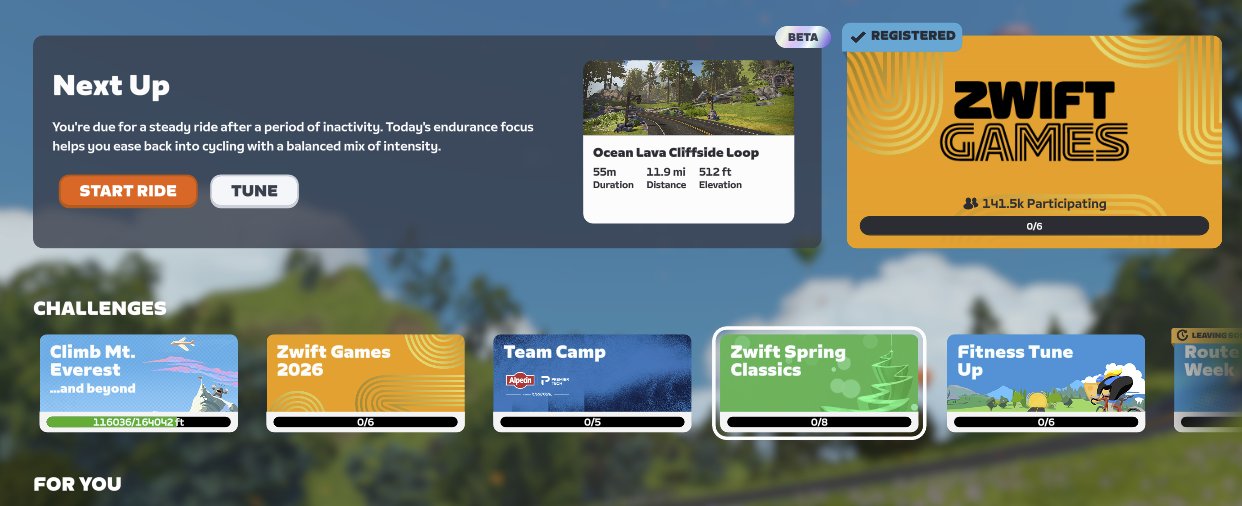
Everyone is automatically signed up for this challenge. As long as you’ve got version 1.108 or higher installed, you’ll see a progress bar in the challenge card on your homescreen.
Click that card to access the climbs and see reward details.
Challenge Rewards
You will earn 500 XP for every two climbs you complete in the challenge, which means you will earn a total of 2000 XP if you complete the full Challenge.
This challenge goes live at 9:00 PT on March 9, 2026, and ends May 1, 2026, at 23:59 PT.
(I recommend finishing before the final day, though, as some past Challenges have ended earlier than expected, and you don’t want to be caught out if that happens.)
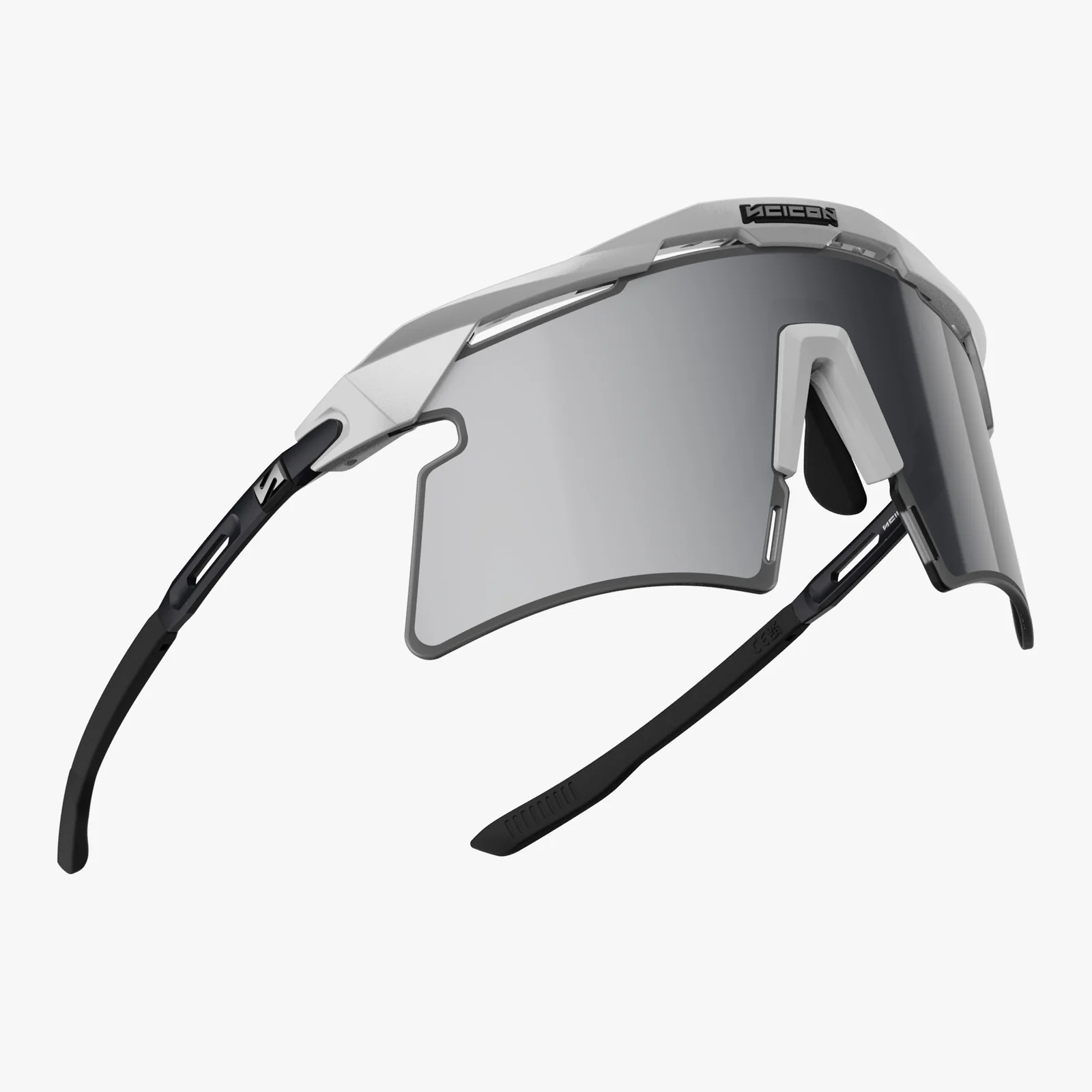
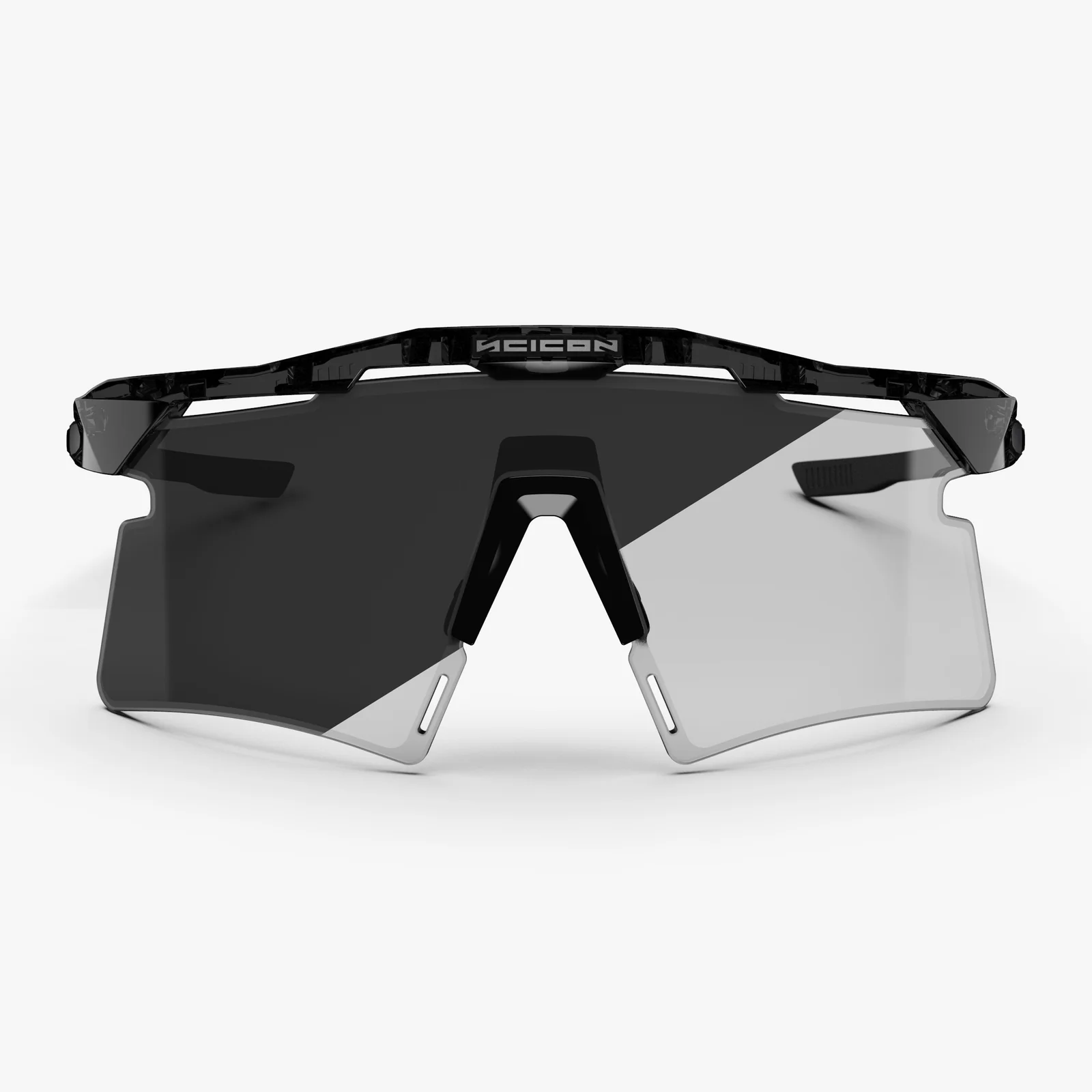
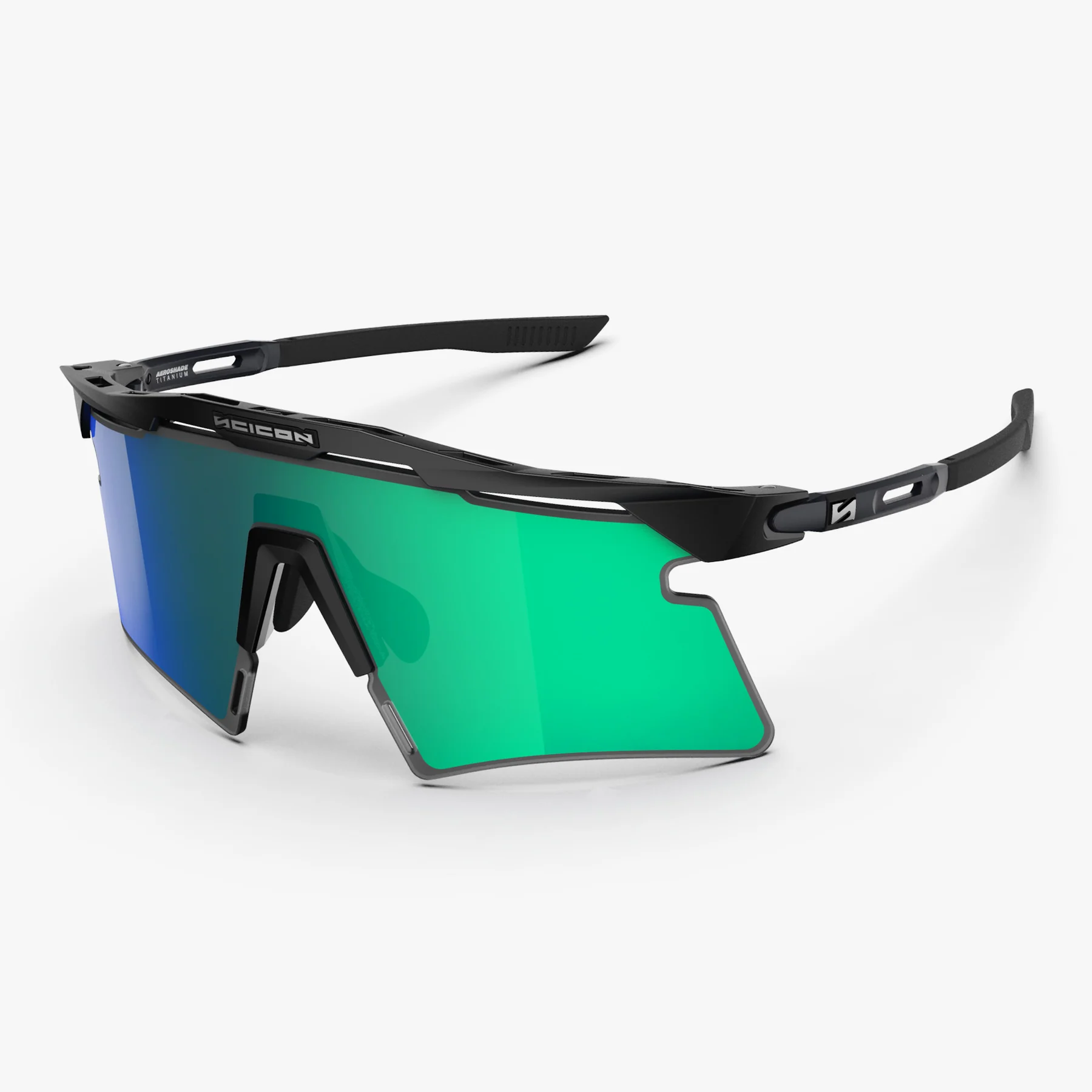
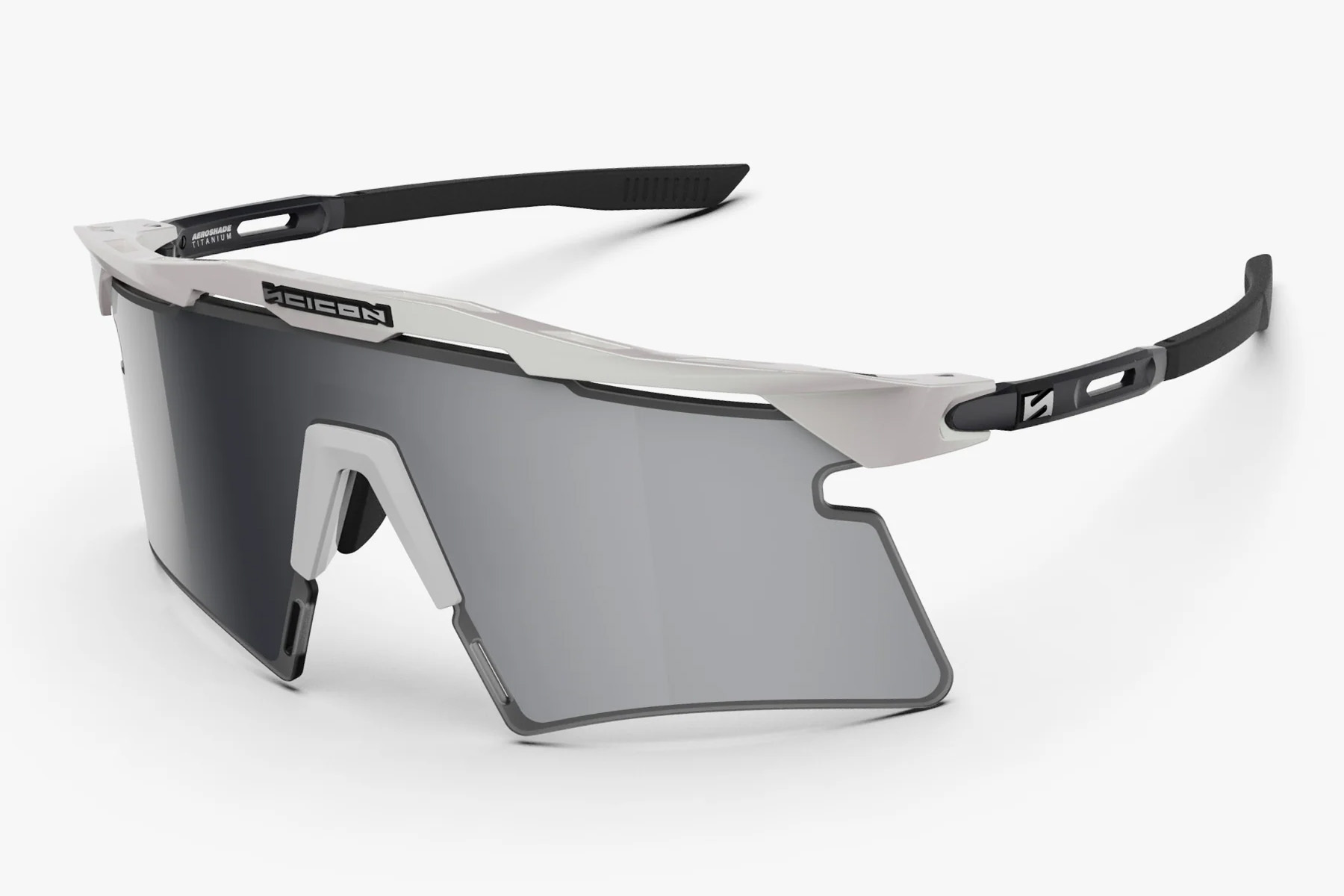
Scicon has released its new Aeroshade 2.0 Titanium sunglasses, an evolution of the glasses worn by Tadej Pogačar, featuring titanium temples and a Grilamid TR90 mono-shield front frame.
The brand says it has used the medical-grade material for strength, flexibility and long-term structural integrity.
It says titanium resists deformation, corrosion and temperature extremes, maintaining a consistent fit and retention ride after ride.
Pogačar wore the glasses at the weekend as he took victory at Strade Bianche, becoming the first rider ever to win the race four times.
The new sunglasses use Scicon’s FlexiFit 2 adjustable nose pad and TactiGrip temple tips are employed for a flexible fit.
The Grilamid TR90 mono-shield front frame is said to have outstanding strength, flexibility and long-term durability, maintaining precise alignment even under high-speed stress.
Elsewhere, the glasses feature the brand’s VortexFlow ventilation system, which uses strategically positioned ports to optimise airflow and minimise fogging.
Photochromic lenses adjust to the ambient light. Scicon
The original Aeroshade glasses have seen plenty of success, with multiple Tour de France wins from Pogačar alone, and more than 500 professional race victories worldwide.
However, the new additions mean the Aeroshade 2.0 is heavier than the previous model, up from 36g to 40g.
Frame colours are limited. Scicon
There are 20 options to choose from on Scion’s website, with frame colours including white, black, and a white and red option.
Lenses vary too, with mirror and photochromic options available.
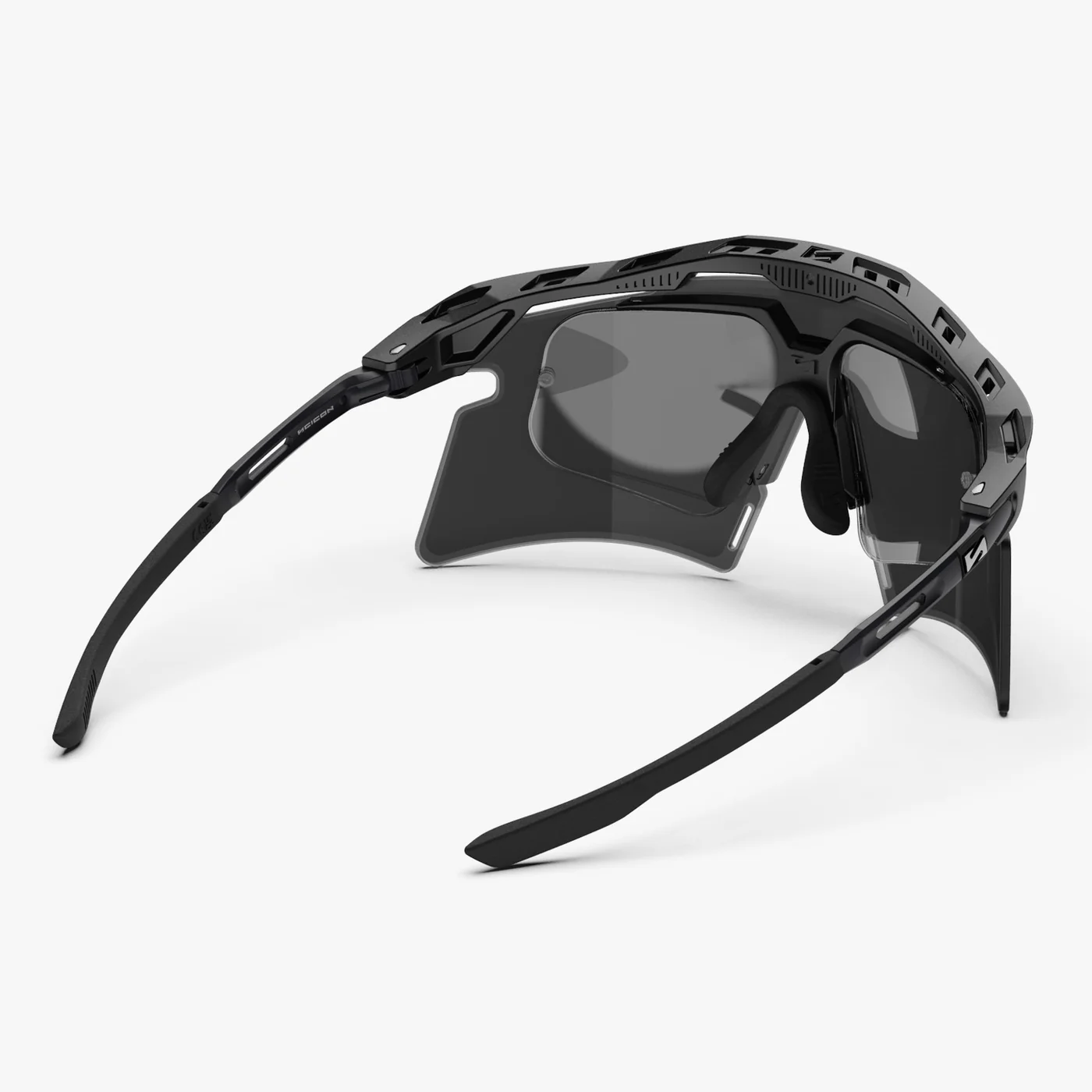
There are options for prescription lenses. Scicon
For spectacle wearers, the glasses are also compatible with the Scion’s AC028 Optical Insert, and the RX model comes with this as standard.
Prices vary depending on lens type. Scicon
Prices start at £192 / $265 / €220, with photocromic lenses priced at £220 / $295 / €250 and the RX model £265 / $360 / €300.
If you’re one of the first 200 to buy the glasses from Scicon’s website, you’ll also receive a Tadej Pogačar Triple Crown photobook with your order.
At the time, the company said it would accept and fulfil orders until 31 March, with the Gorewear website remaining online to sell its remaining inventory.
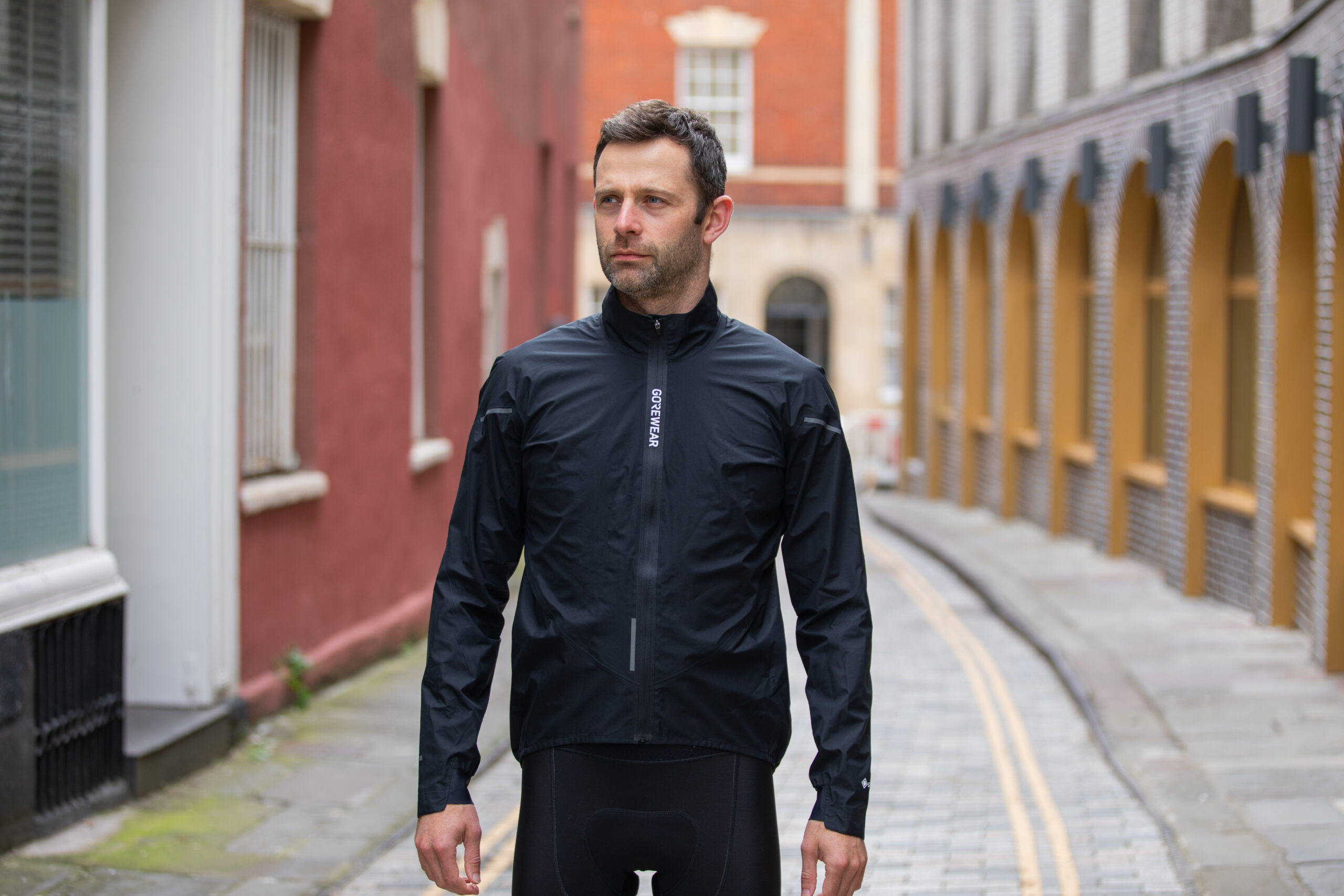
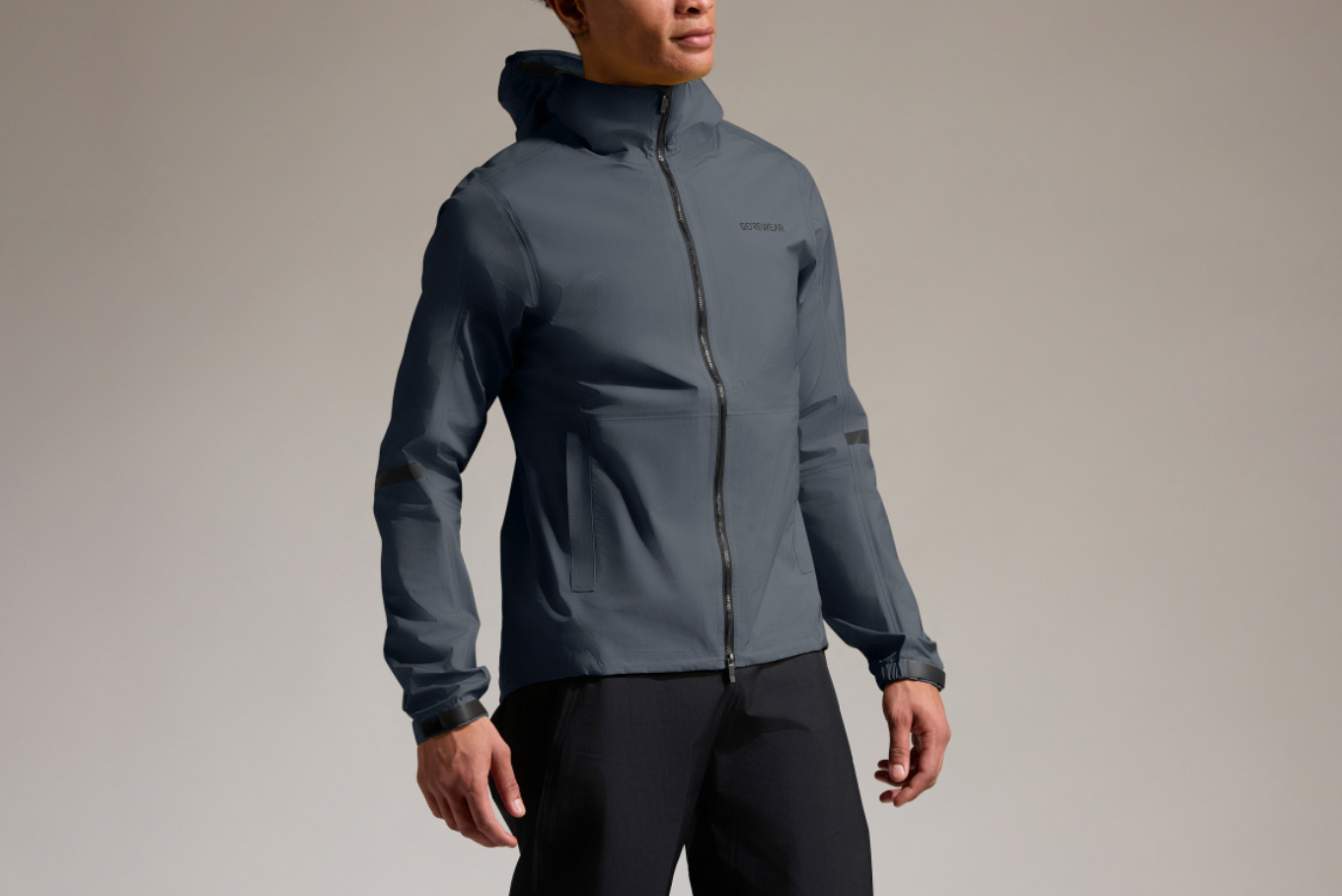
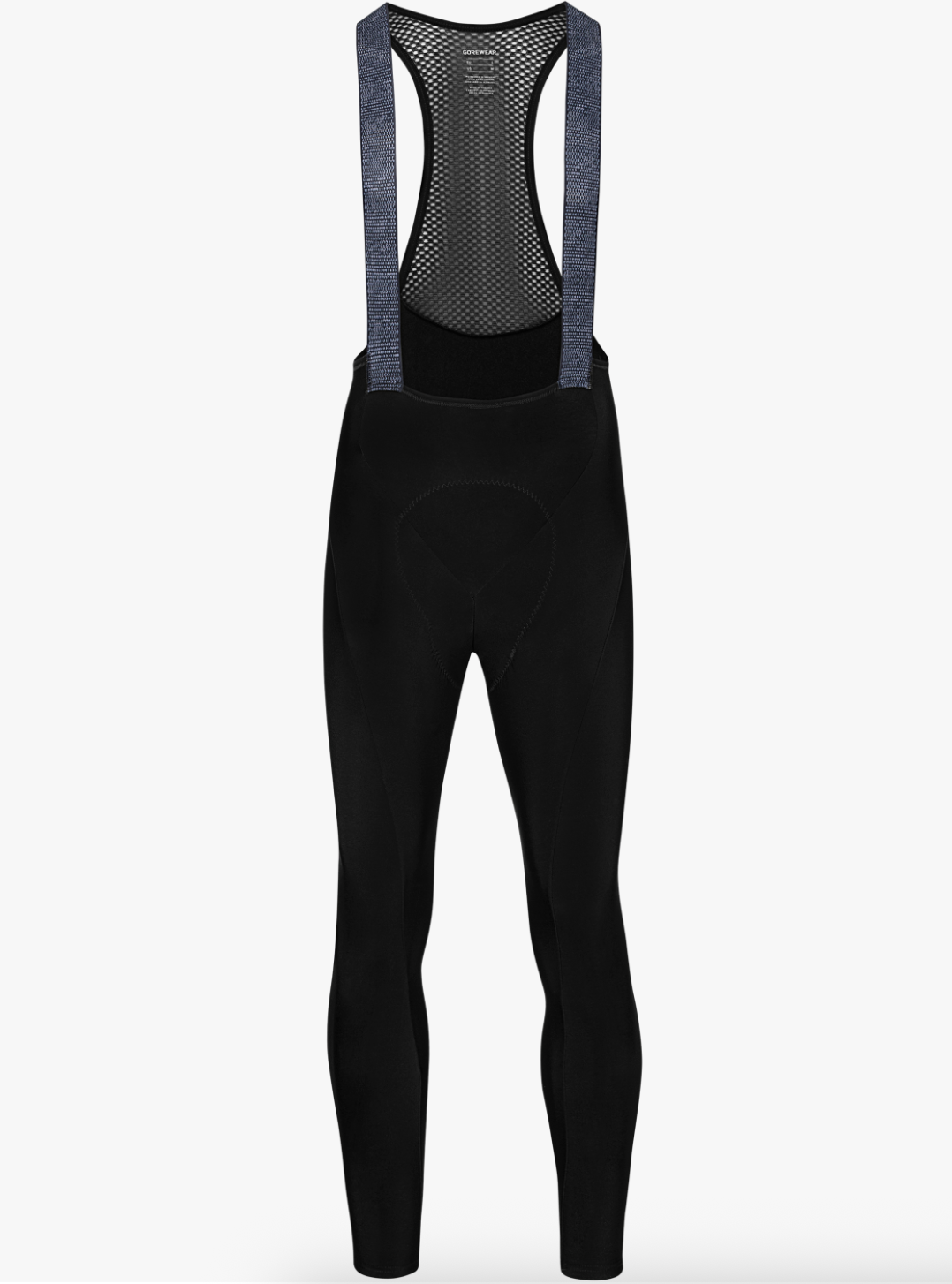
We’ve had a look through the brand’s website and highlighted some of the pieces we believe are worth a look at.
There is plenty of reflective detailing on the jacket that should help enusre you’re seen when out on the road, plus there’s good pocket storage for keeping your things close to hand.
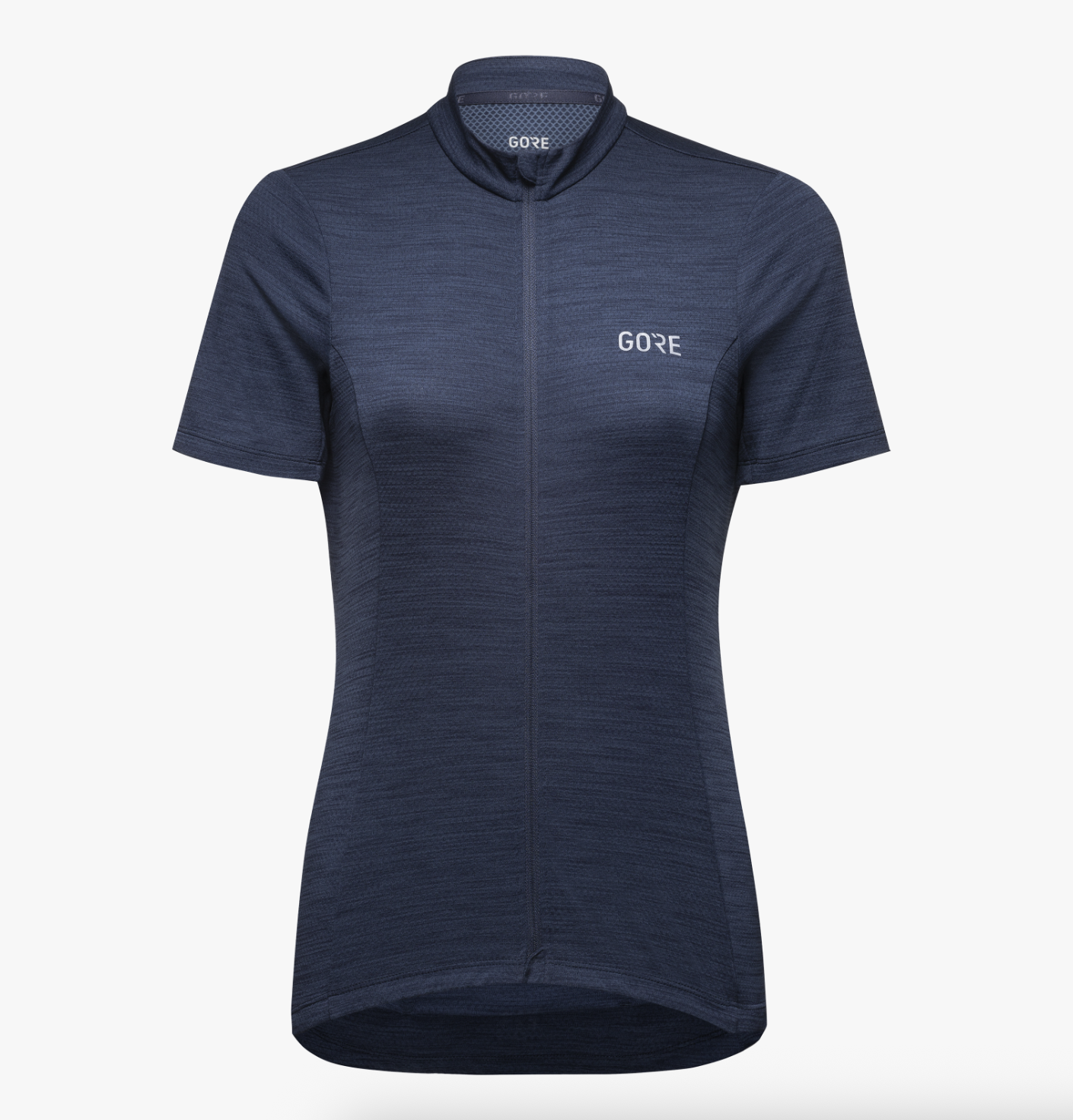
Gorewear says the C3 jersey has a modern, relaxed fit for comfortable riding in warm weather, with the jersey featuring lightweight polyester material.
There are three gusseted back pockets for keeping your essentials close, with one featuring a zipped pocket for valuables.
The front zip has a semi-lock slider that should keep it in place wherever you leave it on the zipper.
There is also an elastic grip on the bottom hem for added security.
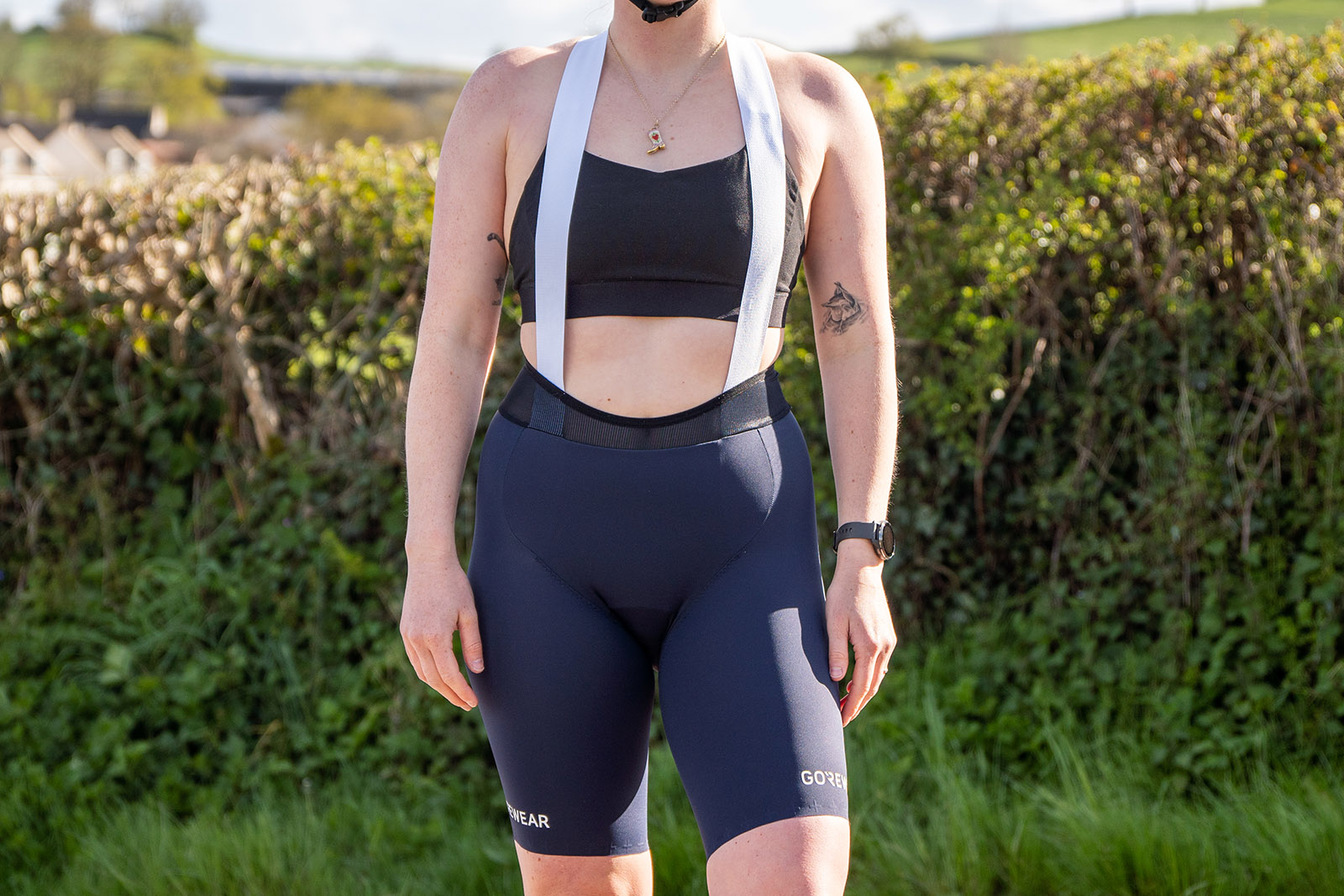
The Spinshift Bib Shorts are also available in a men’s version. Sam Voaden / Our Media
The Spinshift Bib Shorts are focused on comfort, with the brand saying they are durable and thoughtfully engineered for everyday rides.
We tested the women’s shorts and gave them a solid 3.5-star rating, with Katherine saying she liked the easy-pee mechanism, luxurious fabric and seamless leg hems.
She highlighted that they weren’t the easiest to size, though, so make sure you’re confident before clicking the buy button.
It was March 2017, and Cara and Stephen Lockwood had been married six months. Stephen’s 40th birthday was coming up on the 22nd, and Cara wanted to do something special for him. “I wanted to plan something fun to do.”
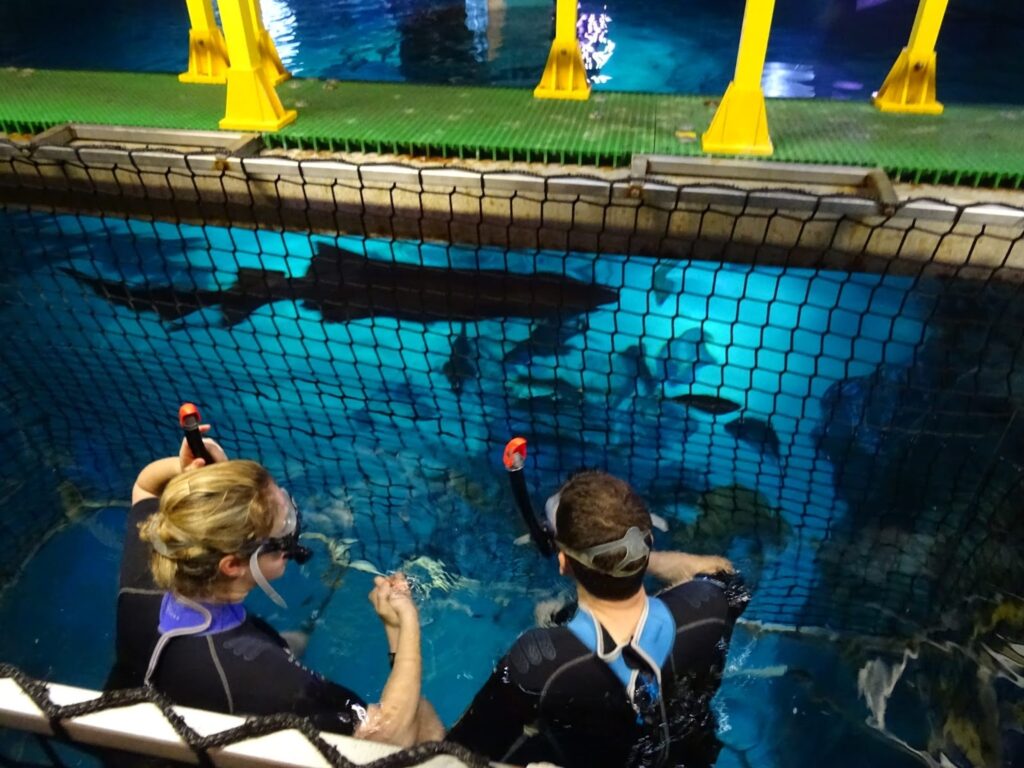
What could be more fun than swimming with sharks at the London Aquarium? “You basically get into a shark cage made of string and have sharks swim at you,” she says. Stephen quickly corrects her, “Rope! Not string. It was something we always wanted to do.”
They both laugh. It’s a subdued laugh, though, because that special day would turn into a nightmare.
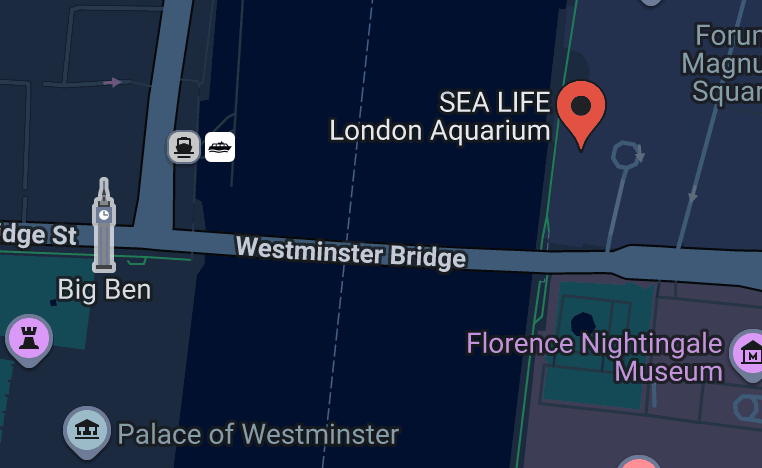
After swimming with sharks, they planned to go to The Berkeley, a high-end hotel with an amazing restaurant. Cara, who has always been a bit sociophobic, was nervous about taking the London Tube because of all the people. Plus, there had been terrorist scares recently, so the city was on high alert, which really ramped up her anxiety. They decided to take a stroll across Westminster Bridge and get a taxi on the Big Ben side.
She remembers walking with Stephen up the steps onto the bridge, feeling a bit off. It was a fairly nice day, and there were a few other people farther across the bridge, and four or five behind them. She and Stephen were halfway across the bridge when she heard a vehicle accelerating behind her. At first, she thought it was one of the smaller maintenance vehicles that buzz across the bridge occasionally. But why was it accelerating?
Suddenly, both she and Stephen were hit from behind by an SUV. She flew up into the air and fell to the ground. She was stunned, but realized she was okay; she could still walk and run. But where was Stephen? She scanned the bridge. He was lying in the road, not moving. She ran to him.
Stephen has no memory of what happened.
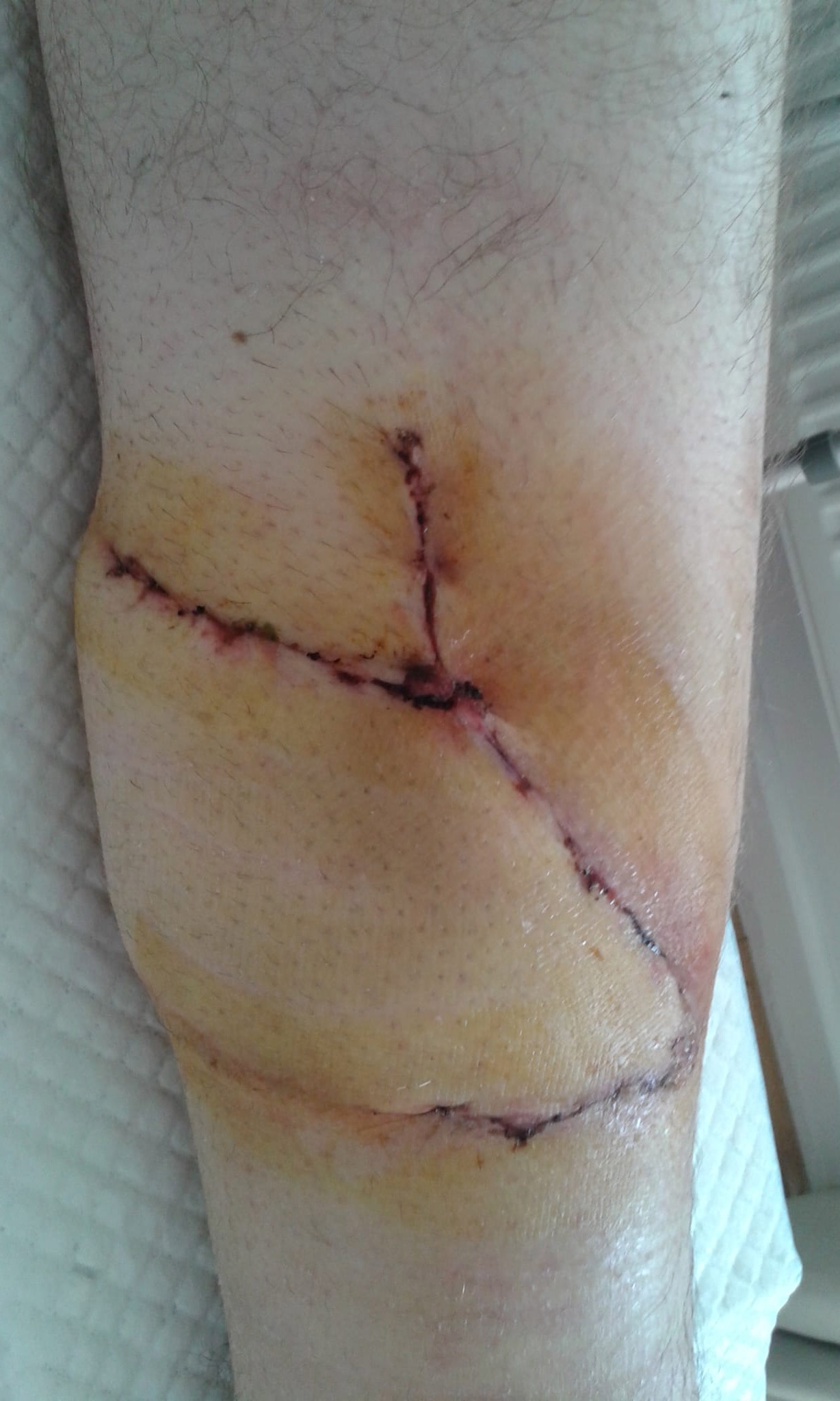
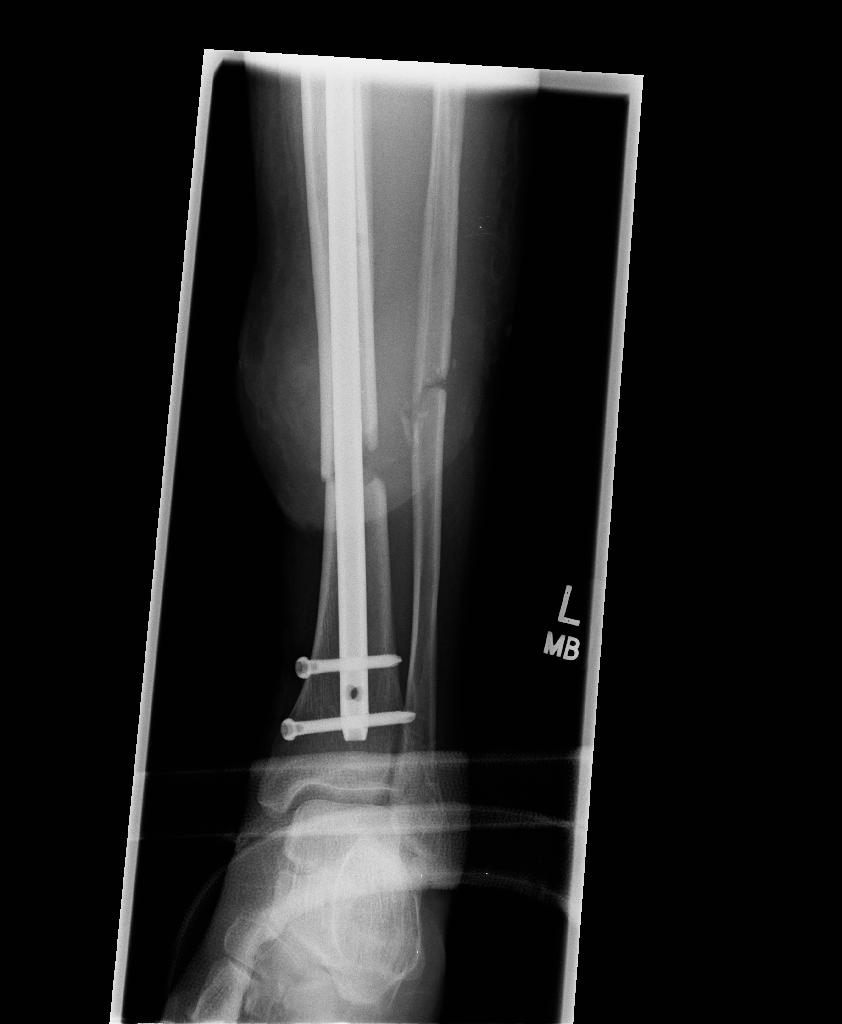
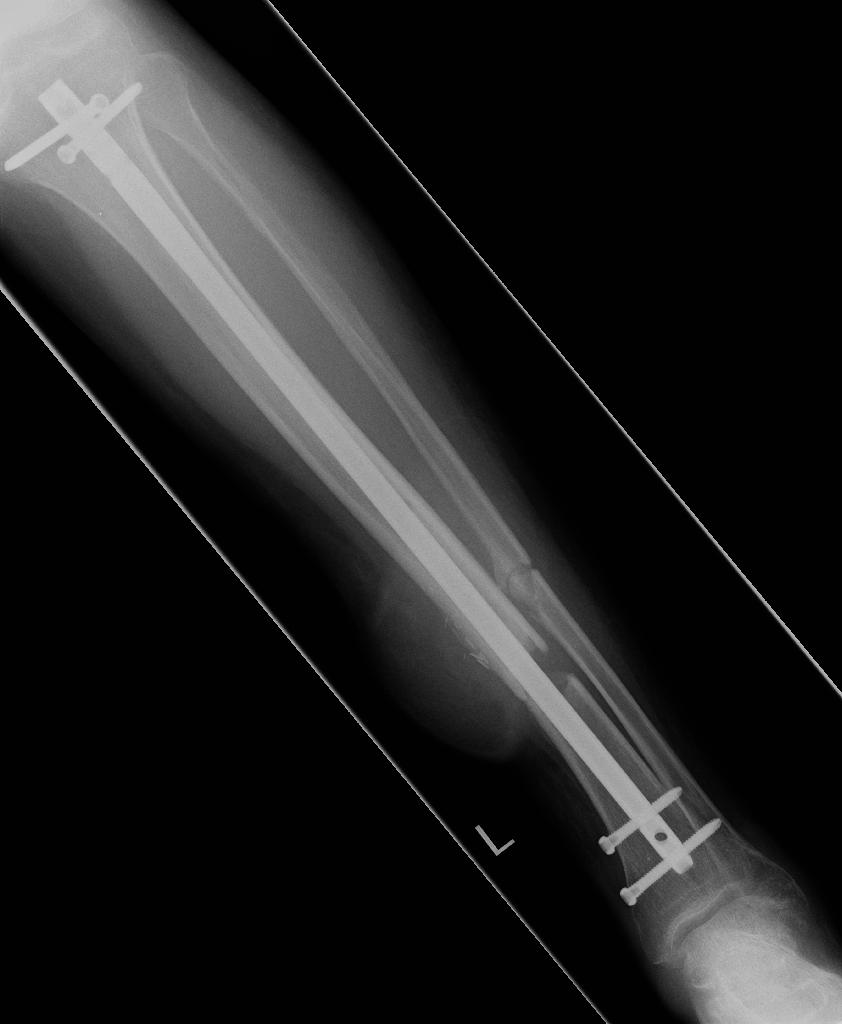
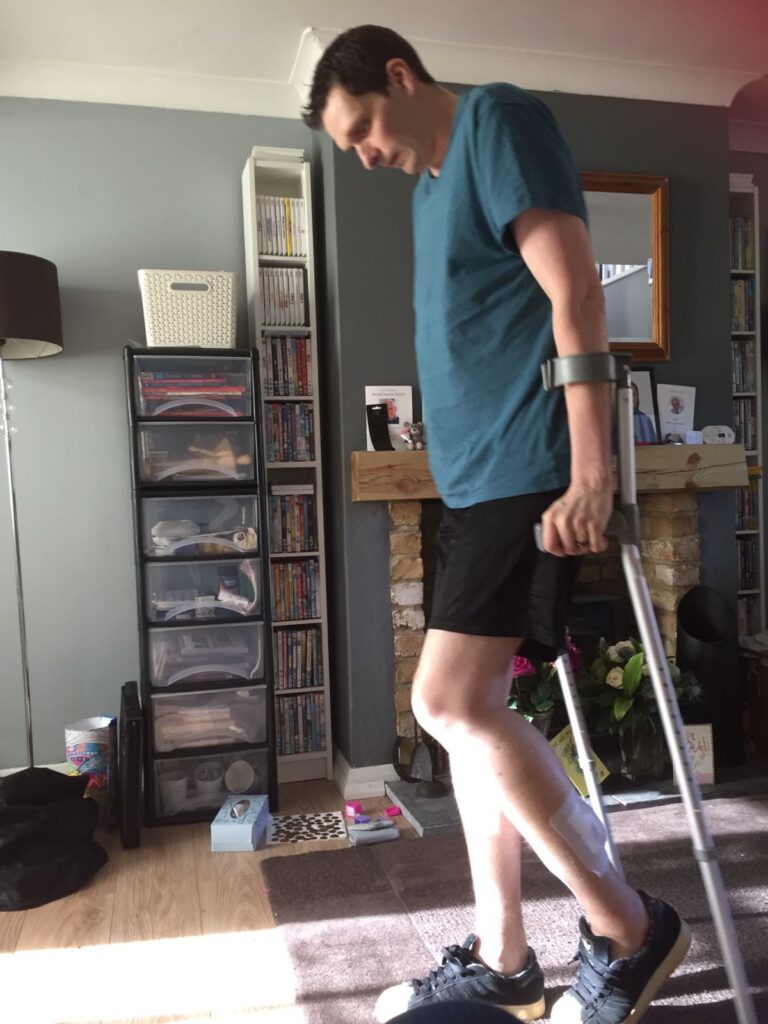
From news reports, Stephen was scooped up onto the hood of an SUV that was barreling down the bridge, flew into the air, thrown into the back end of a bus, and was dumped onto the road, hitting his head, fracturing his skull, neck, back, ribs, puncturing his lung – and shattering bones in his left leg, ripping part of his calf open.
This was the Westminster Bridge terrorist attack. The aftermath of the attack is well-documented in a BBC series called Hospital as the victims, including Stephen and Cara, arrive at St. Mary’s Hospital. You can watch it here.
Recovery: “It was heartbreaking.”
Recovery was long and slow, taking years of physical therapy for Stephen to be able to walk again. He had seven operations on his leg. They had to keep repeating the surgery in order to get the bone to grow properly. A skin flap had to be taken from his right thigh to reconstruct his calf, which was completely ripped open.“The repetition was heartbreaking,” says Stephen. “We’d get our hopes up and then have to go back into surgery over and over again.”
That was just the physical side. “The mental side was torture,” says Cara. “We were completely unprepared for this, both individually and as a couple. Trying to move back to normalcy. You feel different in the world. How do you reconnect?”
“Watching people pass away and your husband nearly dying,” says Cara. “Steve would sometimes say that he had it better than me. All he’s got to do is lie there, medicated, and get operated on.”
Husband and wife became Patient and Nurse. Cara had to lift, carry, and wash Stephen during his long recovery. She had no background in this. To add to the immense pressure, within a few months of the attack, Cara’s father was diagnosed with cancer and was slowly dying. He sadly lost his battle in February 2018.
“We lost our identity. We went to therapy to help deal with the ordeal. To understand this new normal. And to try to realize there is a future.”
Finding Zwift
In September of 2021, after Stephen’s last operation and recovery, they decided to move to the French countryside.
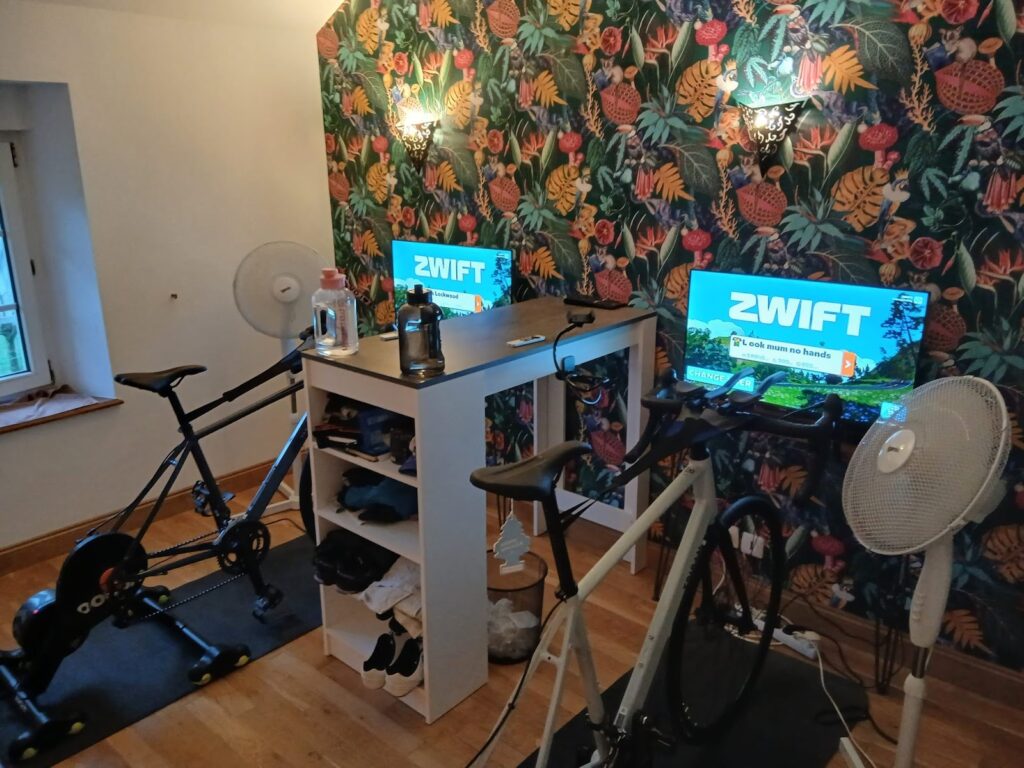
One day in France, Stephen was watching YouTube and Zwift popped up. Because of the incident, they both struggled to be in crowded places. They had tried running, but with the high impact on Stephen’s leg and the increasing anxiety of hearing vehicles coming from behind, they felt it wasn’t the right fit. But Zwift looked interesting to him. He investigated it a bit more and thought it looked safe. He started watching Zwift streamers. He asked Cara if it was okay for him to invest some money into it. Cara checked it out and said, “Only if I can do it too!” So, in January 2024, they went to the local bike shop, got the cheapest bikes they could afford, and started Zwifting.
“Zwift is a big part of our lives now,” says Stephen.
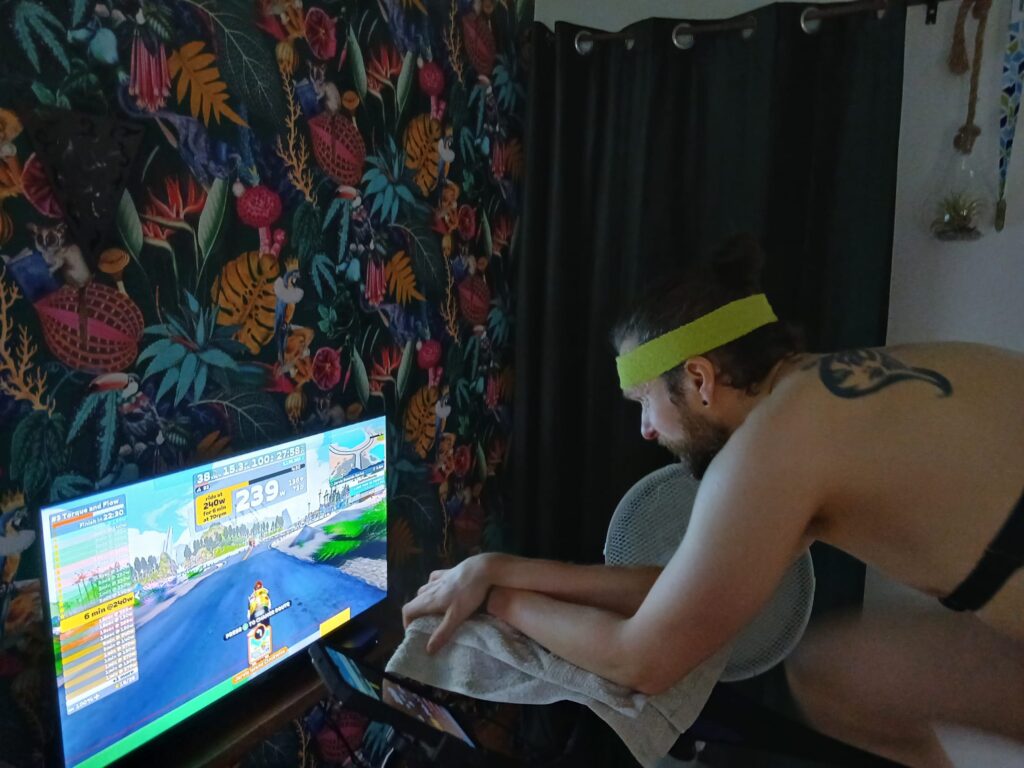
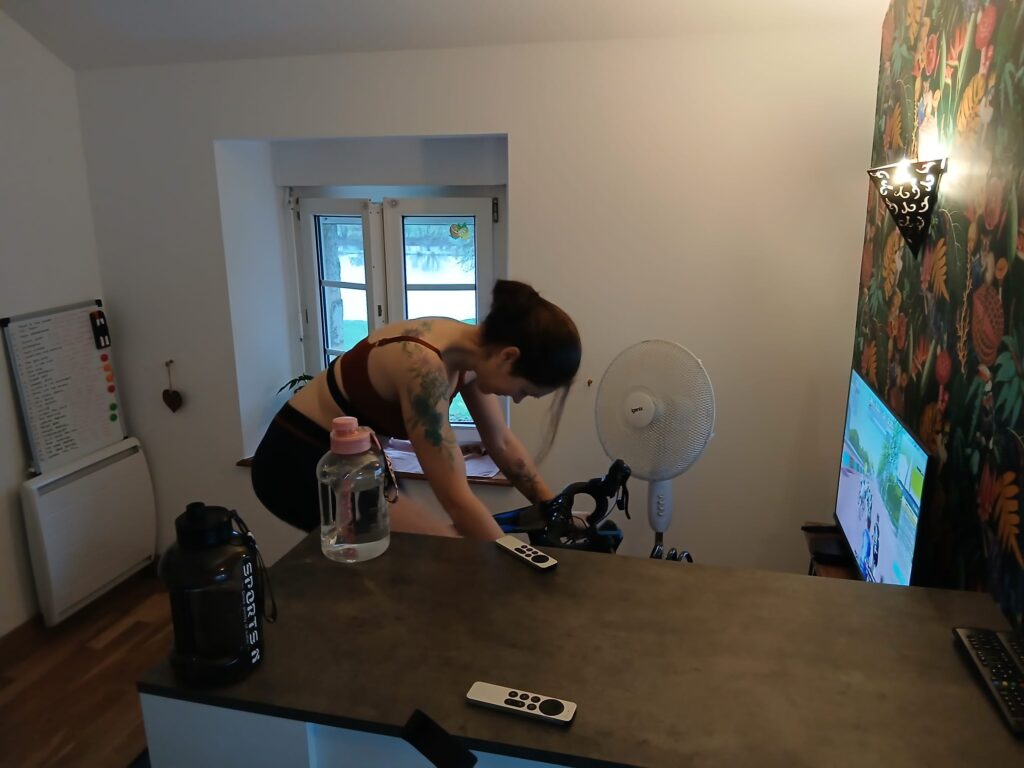
They Zwift together five to six times a week. “We love it! Especially the epic races. It feels so good to work your butt off and finish – and maybe have a bit of a cry when you achieve a big goal.”
Over Christmas 2025, Cara joined Christoffer Wikman’s charity ride for cancer and helped raise funds by riding 100 km a day. The ride was also a personal connection for Cara to remember her father who had passed away from cancer.
They love racing and doing the long rides and challenges, like riding Zwift’s 30 longest routes in 30 days.
“It’s helped build up strength in my legs,” says Stephen. “It gives me a mental lift – a sense of fulfillment. I’ve lost weight and I’m eating right. We haven’t had a drink of alcohol in over a year.”
They have dark days. “Zwift and the wonderful community give you a sense of goodness, camaraderie. If I drop out of a group, people come back and help me get back in. That’s kindness. It’s encouraging,” says Cara.
“We can’t tell you how important Zwift is to us. We are so grateful. So full of gratitude. It has helped us reconnect and have hope again.”
Ride on, Stephen and Cara! We are grateful for you two as well.
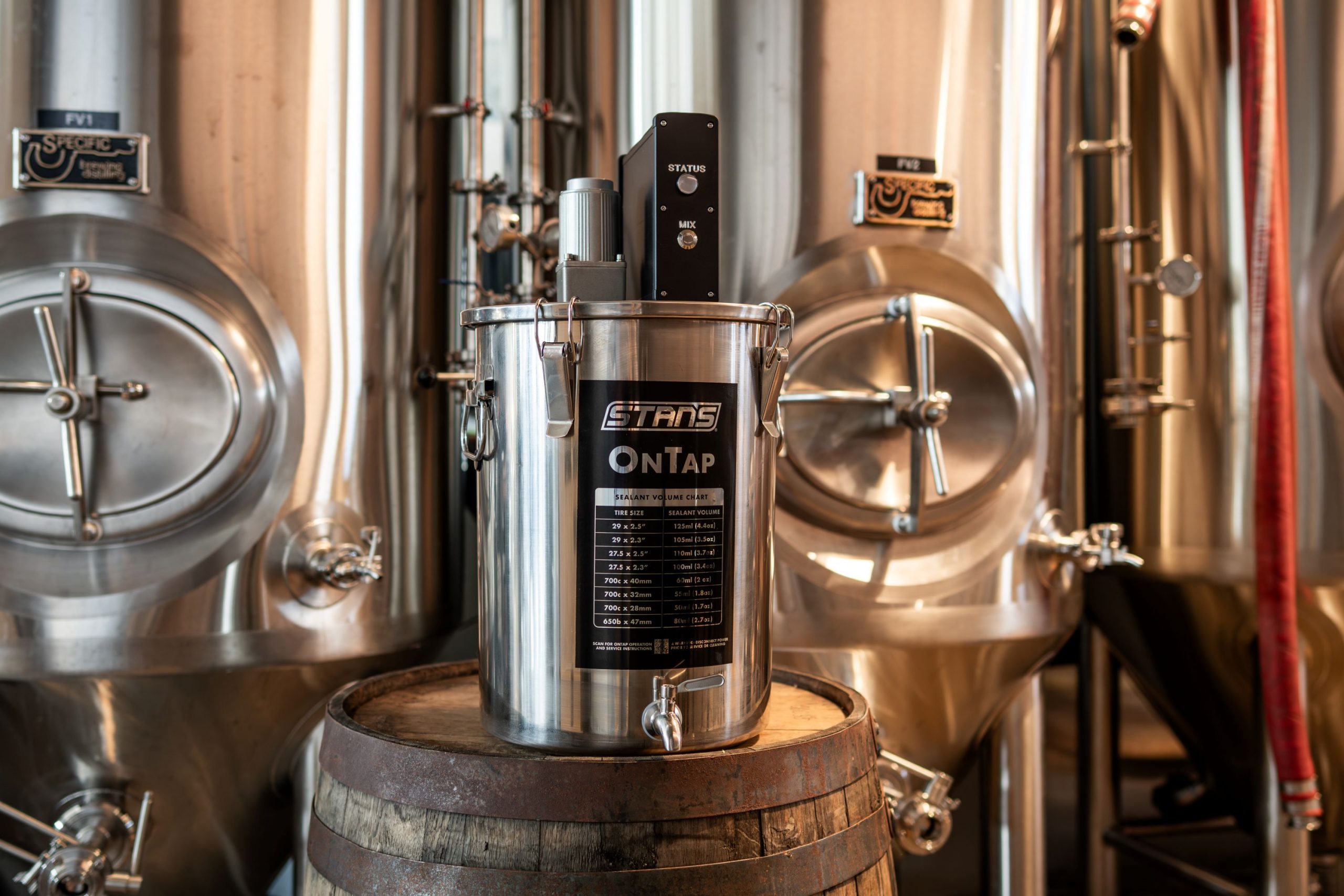
Bike retailers go through a lot of sealant, as tubeless tyres increasingly take over the bike world. Stan’s has just launched its OnTap sealant urn that stores and mixes a large volume of sealant to make the task of dispensing easier.
Stan’s OnTap looks suspiciously like a coffee urn, with a tap at the base to dispense tubeless sealant into an injector or measuring cup to add the sealant to tyres. But rather than coffee, it’s designed for efficient mixing and dispensing of tyre sealant for bike workshops.
Because the particles in sealant have a tendency to settle out over time, there’s a motorised stirrer built into the dispenser, with a mix button that Stan’s says takes 10 seconds to get the sealant ready to dispense.
“A positive rider experience depends on evenly dispersed puncture-sealing particles throughout the sealant, which becomes difficult to maintain in containers larger than one litre,” says Mike Bush, Stan’s chief product officer.
A computer-controlled mixer distributes sealant particles in 10 seconds, so the sealant is ready to dispense.
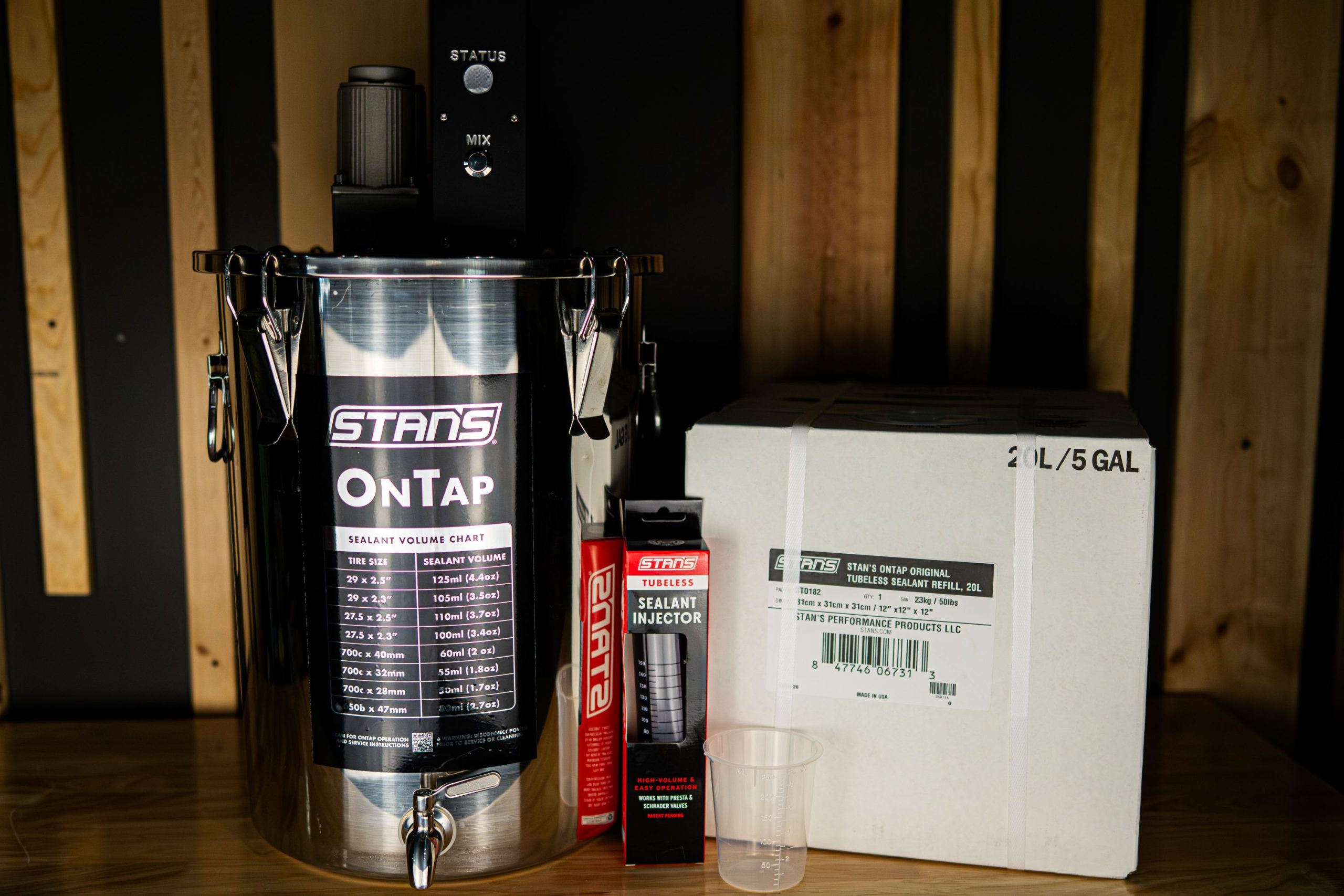
The OnTap dispenser has the capacity for enough sealant for 80 mountain bikes or 160 road bikes. There’s a list of recommended volumes for different tyre sizes on the front of the urn.
Stan’s cites more precise sealant dispensing, better tracking of sealant usage and improved shop service margins as key benefits of the system for bike workshops.
The 20-litre refill saves 75% of the packaging of one-litre bottles.
Stan’s sells 20-litre refills for the OnTap dispenser, which it says reduce plastic use by 75% over individual one-litre sealant bottles, as well as being a lot cheaper. It reckons the price of the OnTap dispenser is paid back after only 10 refills.
The OnTap dispenser is for sale to registered Stan’s dealers only, so you can’t buy one to put in your shed. Stan’s hasn’t advertised the price either.
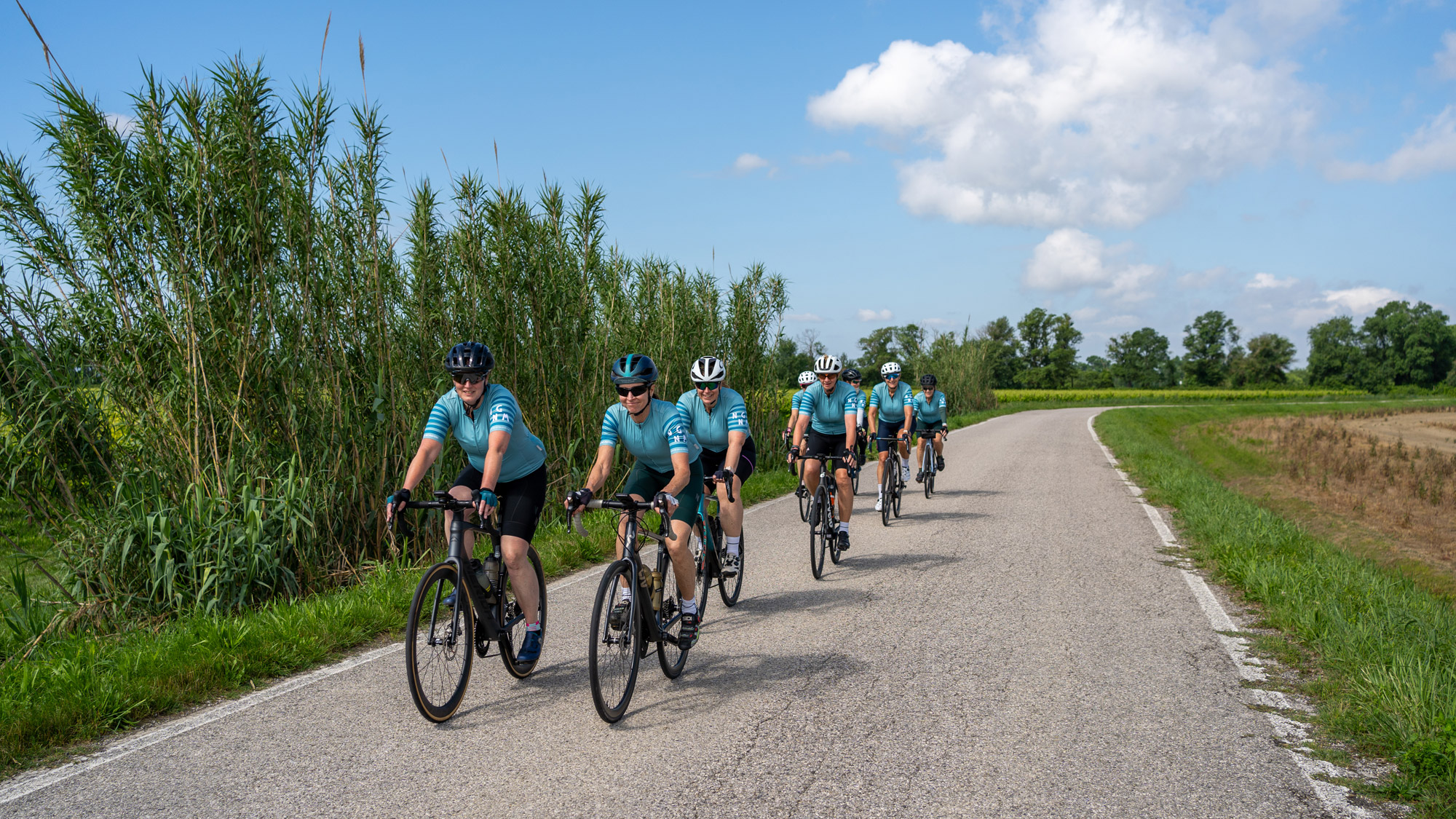
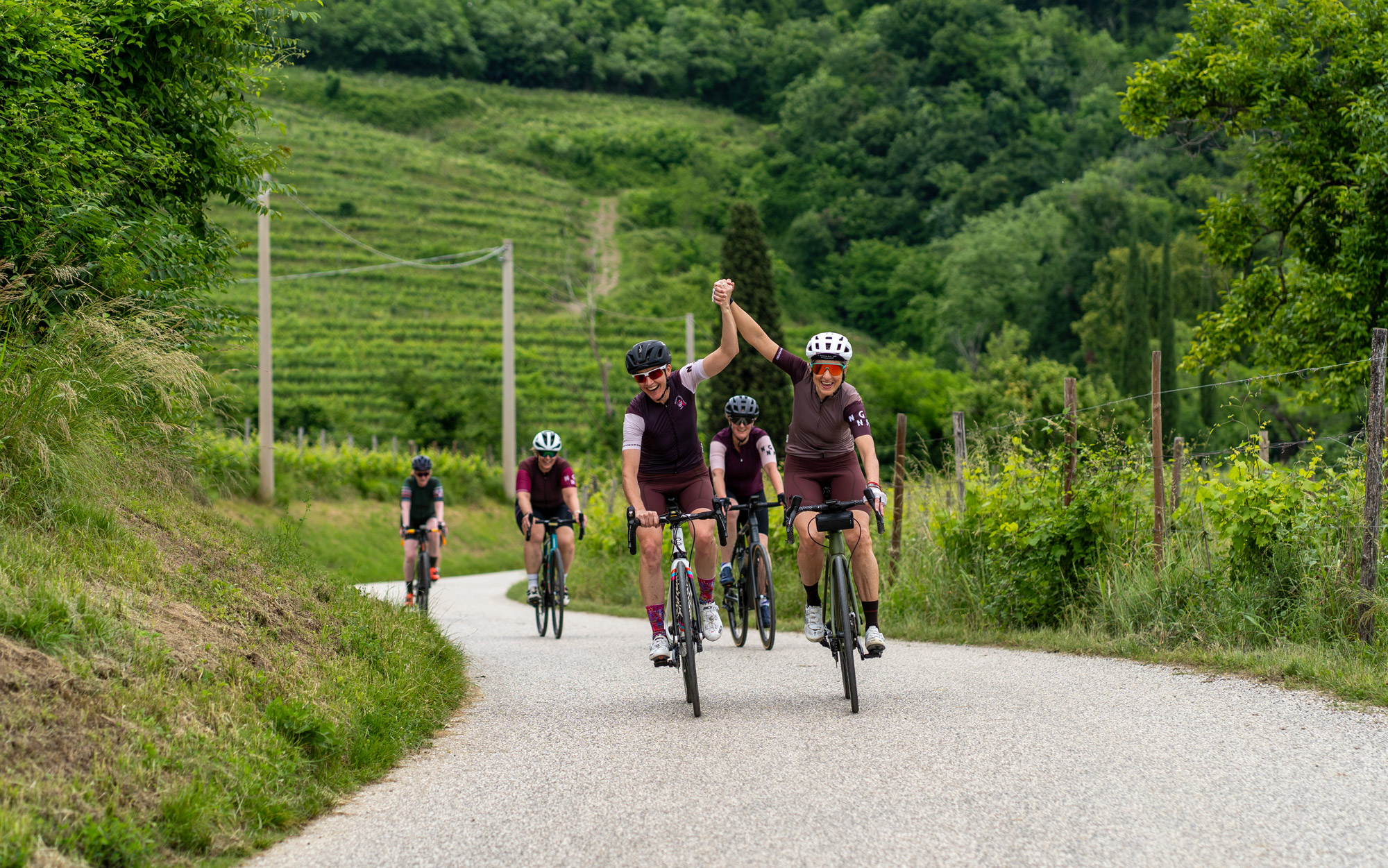
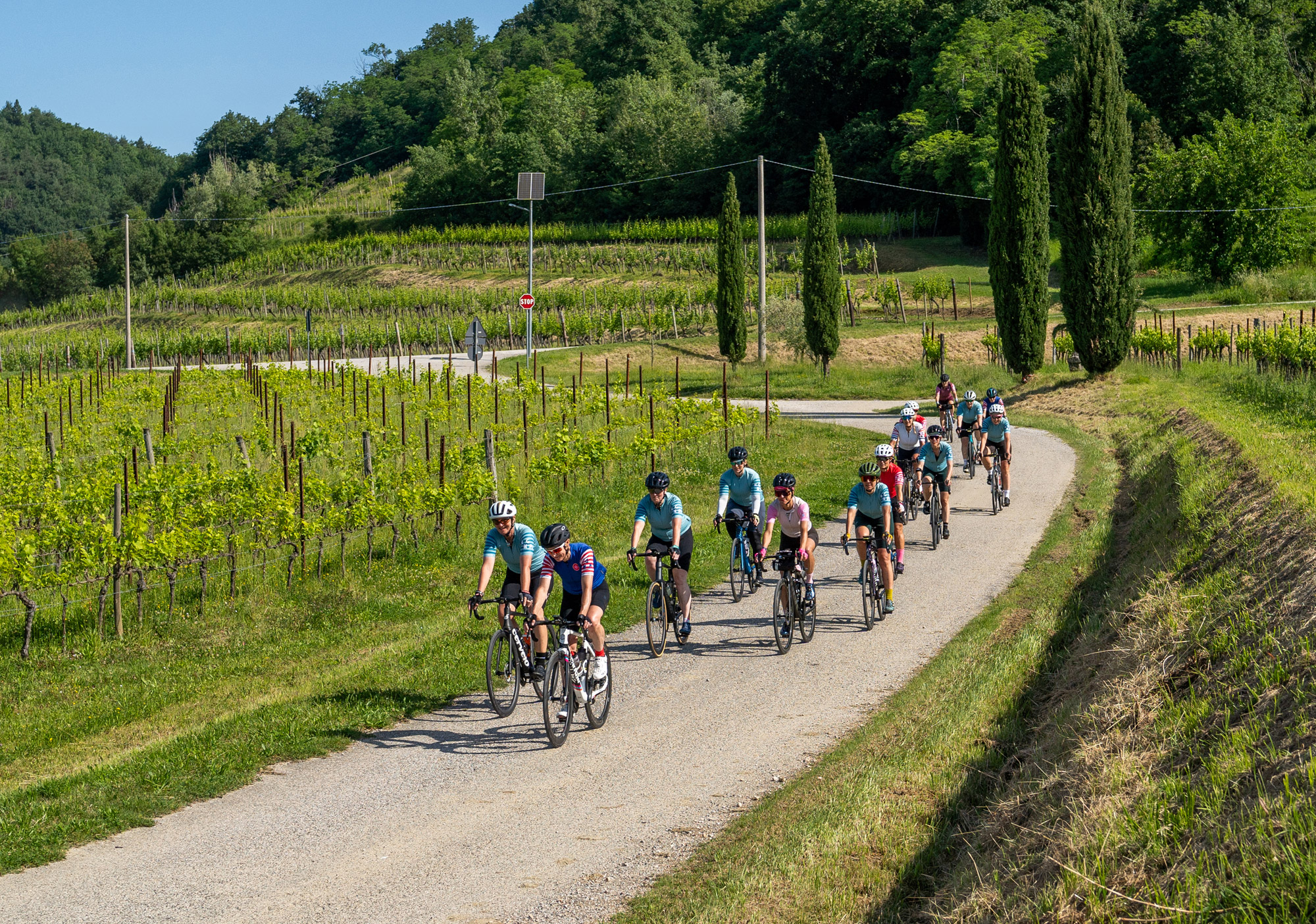
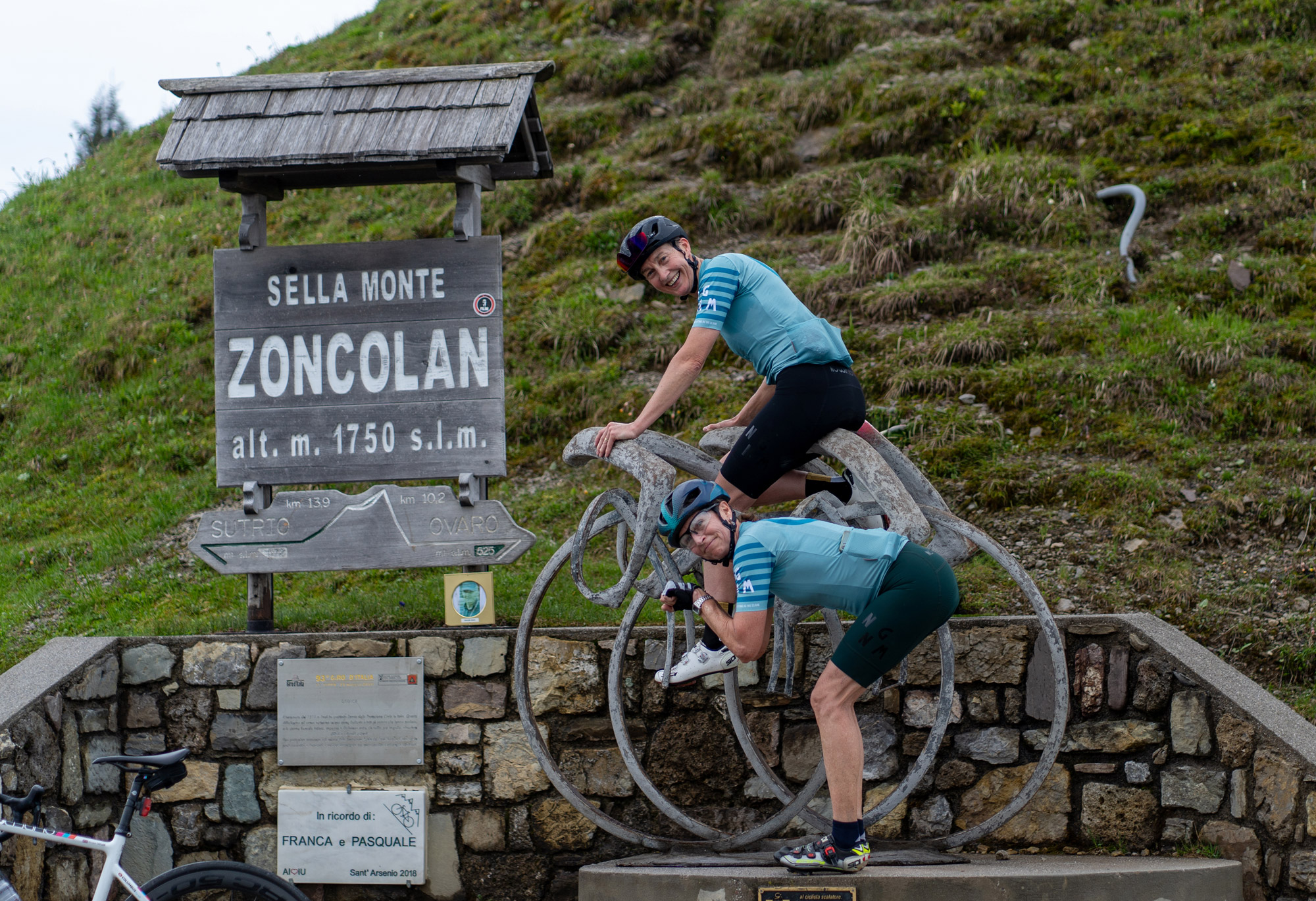
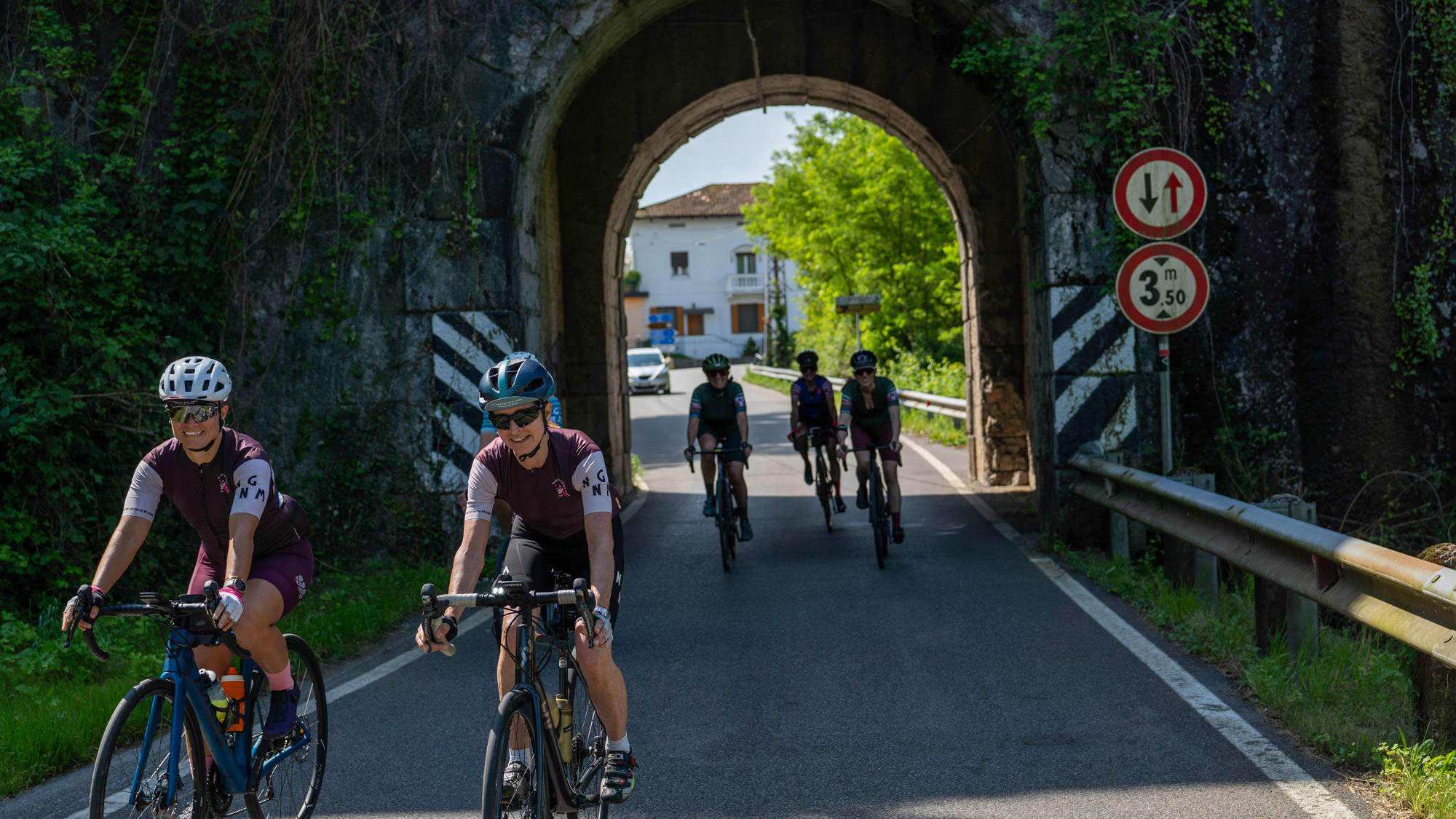
As part of Women’s History Month, we’re featuring four different women’s clubs with a strong presence on Zwift. We start with Milly De Mori giving us insight into the cycling brand/club she founded, No Gods No Masters (NGNM).
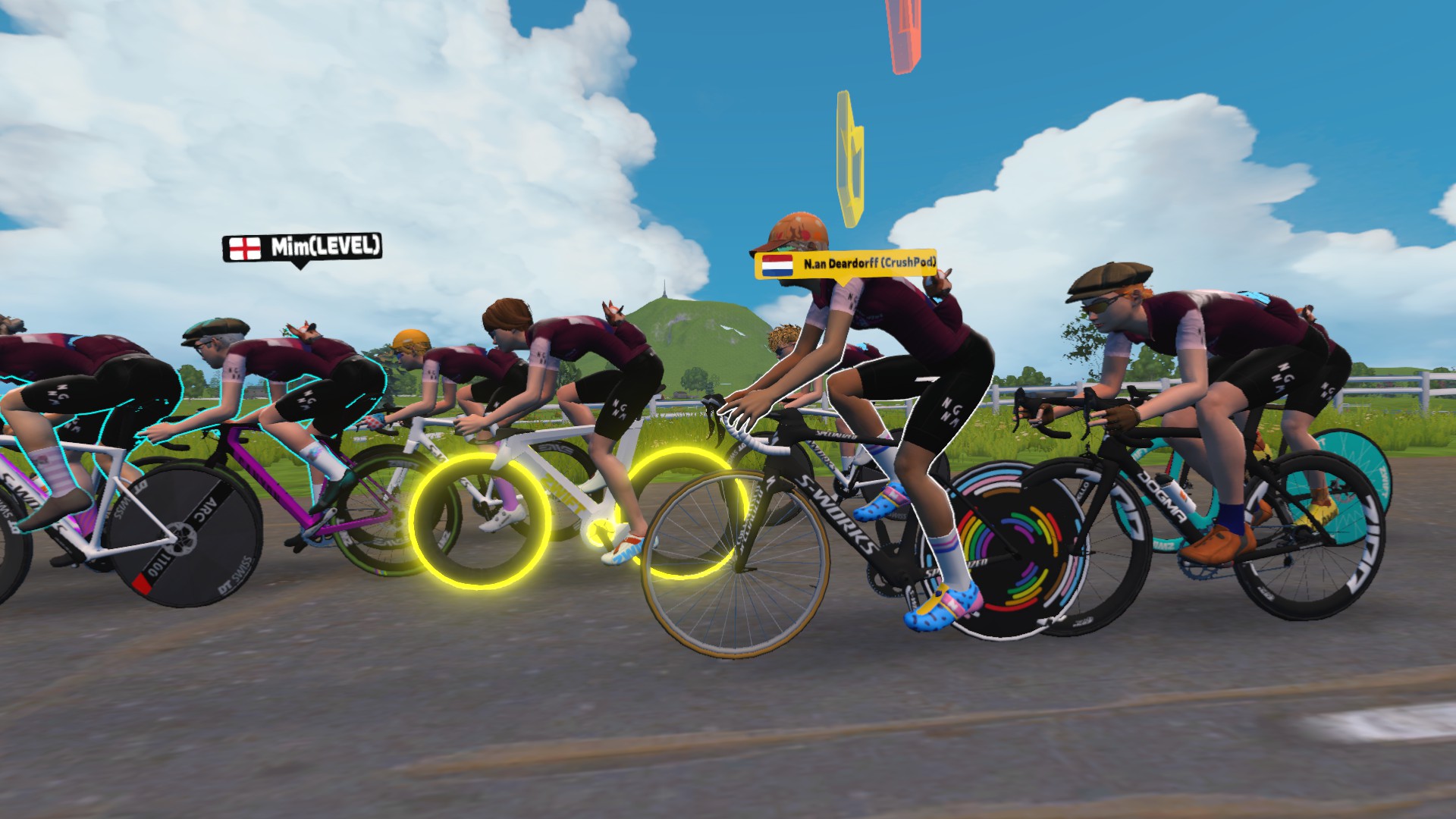
No Gods No Masters as a cycling apparel brand was founded in 2017, our first collection hit the market in 2018. Soon after we started running women-only local rides in Europe supported by a network of ambassadors. Moving our rides onto Zwift felt like the most natural step, as I’ve been a long term advocate of indoor cycling and training. The Women Crush Wednesdays group ride on Zwift was born in early 2019.
The NGNM United We Are Zwift club followed as soon as clubs became a feature on Zwift, I believe it was 2020-21.
How did your club come to exist?
NGNM was founded combining two core ideas: offering high-end apparel for women (rather than entry level products, which were the norm back then), and building an empowering international community of women cyclists. These were, and still are, the pillars of the brand. Cycling offers a powerful space to grow physically, mentally and even spiritually, having the support of an encouraging, like-minded community makes this journey stronger and more meaningful.
Have any/all your club members ever met up IRL? If so, please tell us about it!
It’s a mix. Some members first met through our Zwift rides and later connected in real life by joining our United We Are cycling events in Italy. Others discovered the community through our IRL rides or UWA events and then continued to train and ride with us online throughout the year. I met my co-ride leaders Mim Taylor and Nan Deardorff McLain via Zwift. All of these United We Are activities wouldn’t be possible without them, I’m very grateful to have them by my side in this journey!
I also love this cross-pollination between RL and Zwift and vice versa. Zwift makes it easy to keep the community connected year-round and to offer multiple ways to ride and train together. This is what I love about Zwift: it enables my vision of a truly borderless community of women, united by a shared love of cycling.
That’s also why we named both our events and our Zwift Club United We Are.
It’s also the opening line of one of our brand mantras: United We Are, Lifting as We Climb.
Do most/many/any of your members also ride outdoors?
Most of our community rides outdoors as well. I would say that just a minority is strictly riding indoors on Zwift.
What do you see as the biggest hurdle for women to start cycling?
There are many hurdles to starting cycling, including the investment of time and money, and concerns around safety.
But in my opinion, the biggest barrier is the lack of other women to ride with. Especially at the beginning, riding alone, or only with men, can feel intimidating rather than enjoyable. There’s a lot to learn, and without the right support and role models, it’s easy to feel out of place, talked down to, or simply left behind.
This is something I care deeply about, and it’s one of the reasons behind the name No Gods No Masters, a mantra about becoming our own masters and pursuing our goals within a loving, supportive environment.
A strong female community is the best way to start and progress in this sport. It helps remove many of the other hurdles mentioned above and replaces them with confidence, belonging, and shared motivation.
That’s why, after offering local group rides, challenges, and structured workouts on Zwift, the natural next step was to create our IRL cycling events, United We Are. They allow women to experience this supportive mindset firsthand, while adding a sense of discovery and adventure. Italy, where I’m originally from, is a particularly powerful setting for that.
Is the answer the same for women starting cycling on Zwift?
Not entirely. Zwift makes the introduction to cycling much easier. Today, there are many women-only rides, teams, and communities that make it simpler to get started, feel welcomed, and learn the basics quickly.
For women who live in places with few cyclists, or where winter or summer conditions are extreme, Zwift is the perfect platform to bridge that gap. It offers choice, structure, and a genuinely rewarding experience, regardless of geography or season.
That’s why I love it so much: it lowers the barrier to entry while making cycling feel accessible, social, and fun from day one.
Do you have thoughts/ideas/dreams for how we (we as a collective humanity, not necessarily Zwift – but it can include Zwift if you want) get more women riding?
I believe it starts when we, as women, place a little less pressure on ourselves to be the perfect everything, and begin to unlearn the conditioning that tells us to always put others first, to multitask endlessly, and to serve before honoring ourselves.
Being a woman today can feel like a complex game of Tetris, constantly trying to make everything fit, and I truly believe we’re capable of it. What matters is allowing ourselves to also honor our own needs, and to consciously carve out time that is just for us. That’s often the first step toward finding the space to ride.
From there, one of the strongest activators is word of mouth. Seeing other women ride, hearing their stories, and feeling personally invited into the experience makes cycling feel accessible rather than intimidating. Community grows through shared experiences, not perfection.
Cycling can feel time-consuming, but once invested in the right setup at home, most of us can find one hour to jump on an indoor trainer and join a Zwift group ride or workout, often more easily than fitting in a trip to the gym.
Outdoor cycling adds another dimension: discovery, presence, and a kind of meditation in motion. Even a short one- or two-hour ride on the weekend can become a powerful way to disconnect, reset, and tap into that flow state that comes from being outside and close to nature.
What is a fun fact you’d like to share about your club?
Two fun facts:
No Gods No Masters traces back to a motto used by women activists in the early 1900s, particularly in the United States, as a call for equal rights both at work and at home. Funny enough, and perhaps telling, more than a century later, we’re still fighting for many of the same forms of recognition.
It felt like the perfect name for a women-first brand in a traditionally male-dominated industry. That said, the progress we’ve seen in recent years has been incredible, across many fronts. The Tour de France Femmes avec Zwift is just one powerful and very visible example of how things are changing.
The Zwift racing team CrushPod was born out of NGNM’s weekly group ride, Women Crush Wednesdays. The founding members met through these rides and quickly went on to create a fantastic women’s team that truly rips on Zwift races. Many of the CrushPod racers still ride with us every week, and it’s a pleasure to host them at our United We Are cycling holidays in Italy.
If you had a magic wand to change one thing about the Zwift product OR the Zwift community, what would you wish for?
If I had a magic wand, I’d love to see full control functionality built into the Companion App, so it truly works as a remote control. For example, if I forget to pair my Zwift controllers, I currently have to do it directly on my Mac rather than through the Companion App.
In my setup, the computer is far from my bike, which means stopping, losing the group I’m riding with, walking over to the computer, pairing the device, and then jumping back on the bike. Having these basic actions available directly from the phone would make the experience much smoother and more rider-friendly.
On the community side, for the Clubs feature, I’d also love the option to upload a custom club image instead of using a generic one .
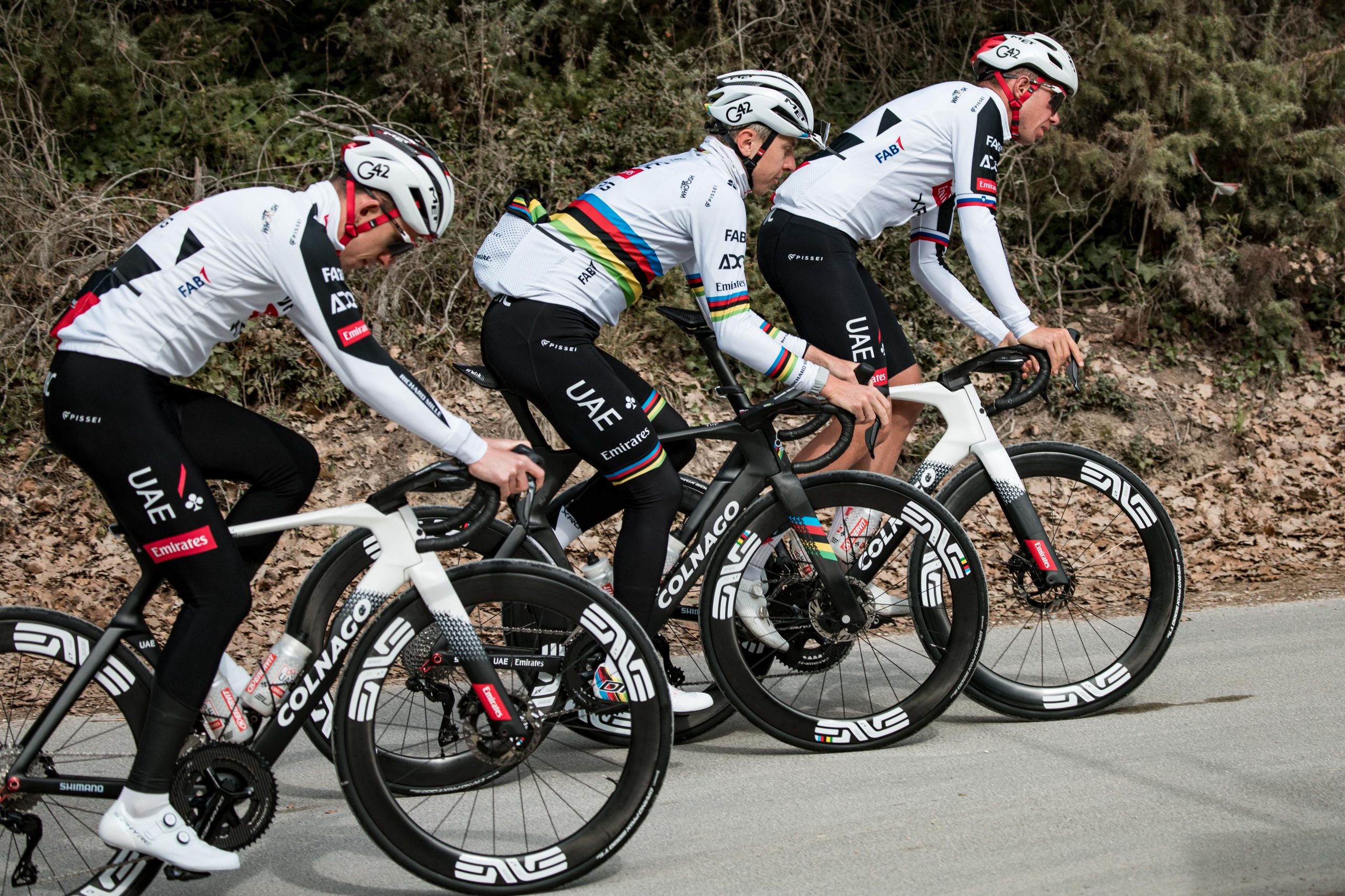
Tadej Pogačar took to the white gravel roads of Strade Bianche today on a training ride with his UAE Team Emirates XRG teammates, revealing clues to the set up he’s likely to go with for the race.
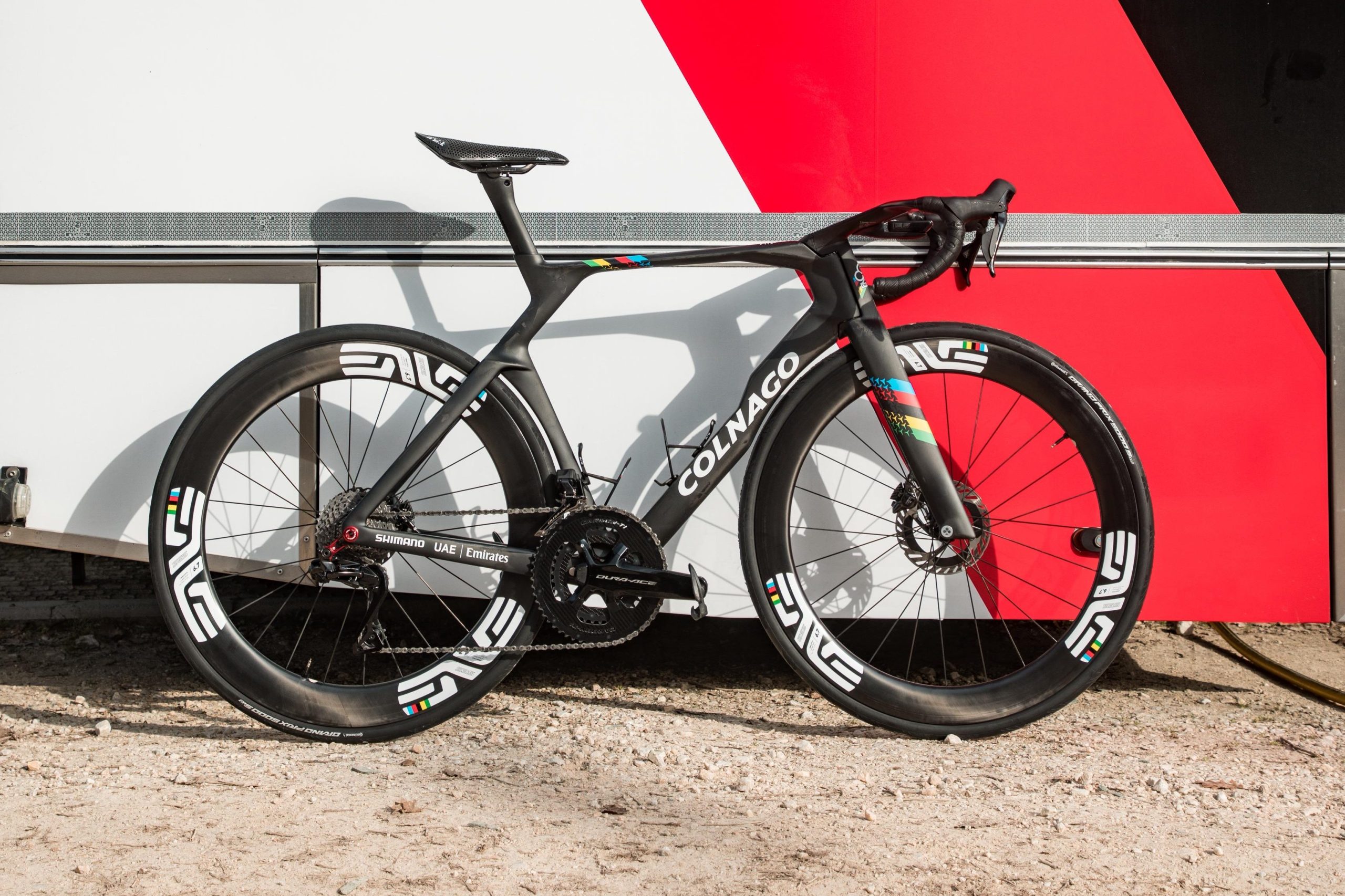
Unsurprisingly, he’s riding the Colnago Y1Rs, the team’s aero bike, in a switch up from 2025 when he rode the brand’s all-round racer (at the time), the V4Rs.
But a couple of key spec choices reveal a little about Pogačar’s approach to the race.
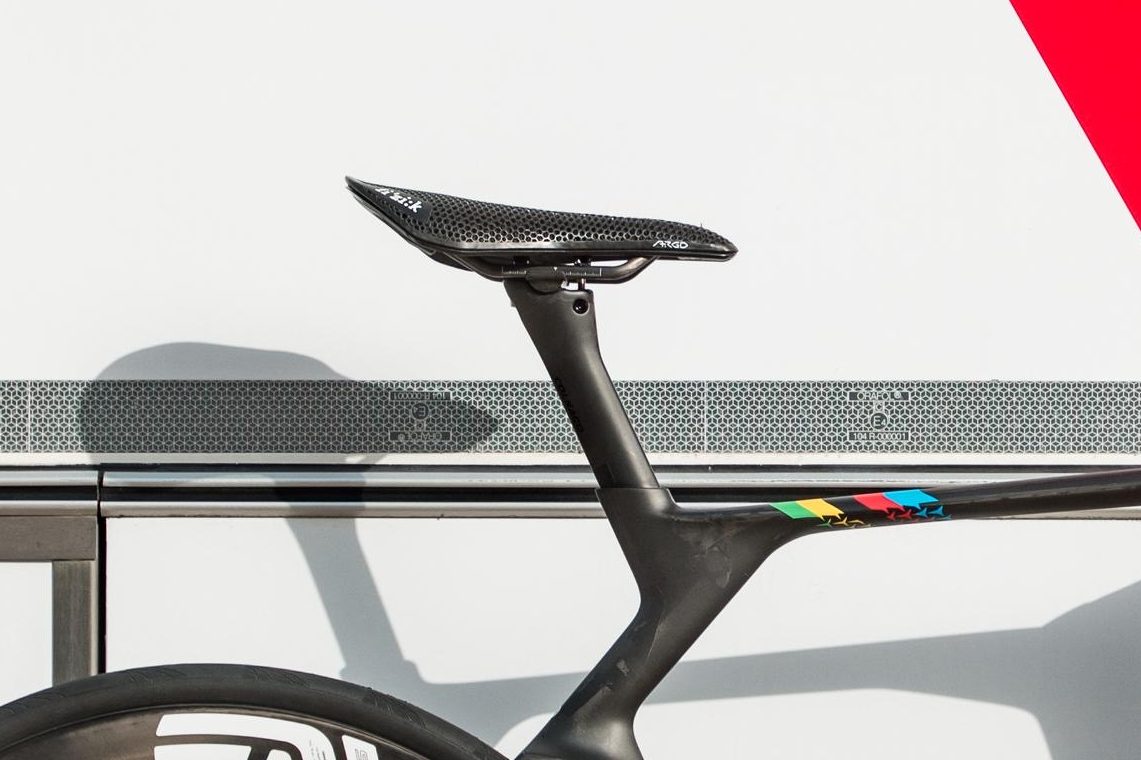
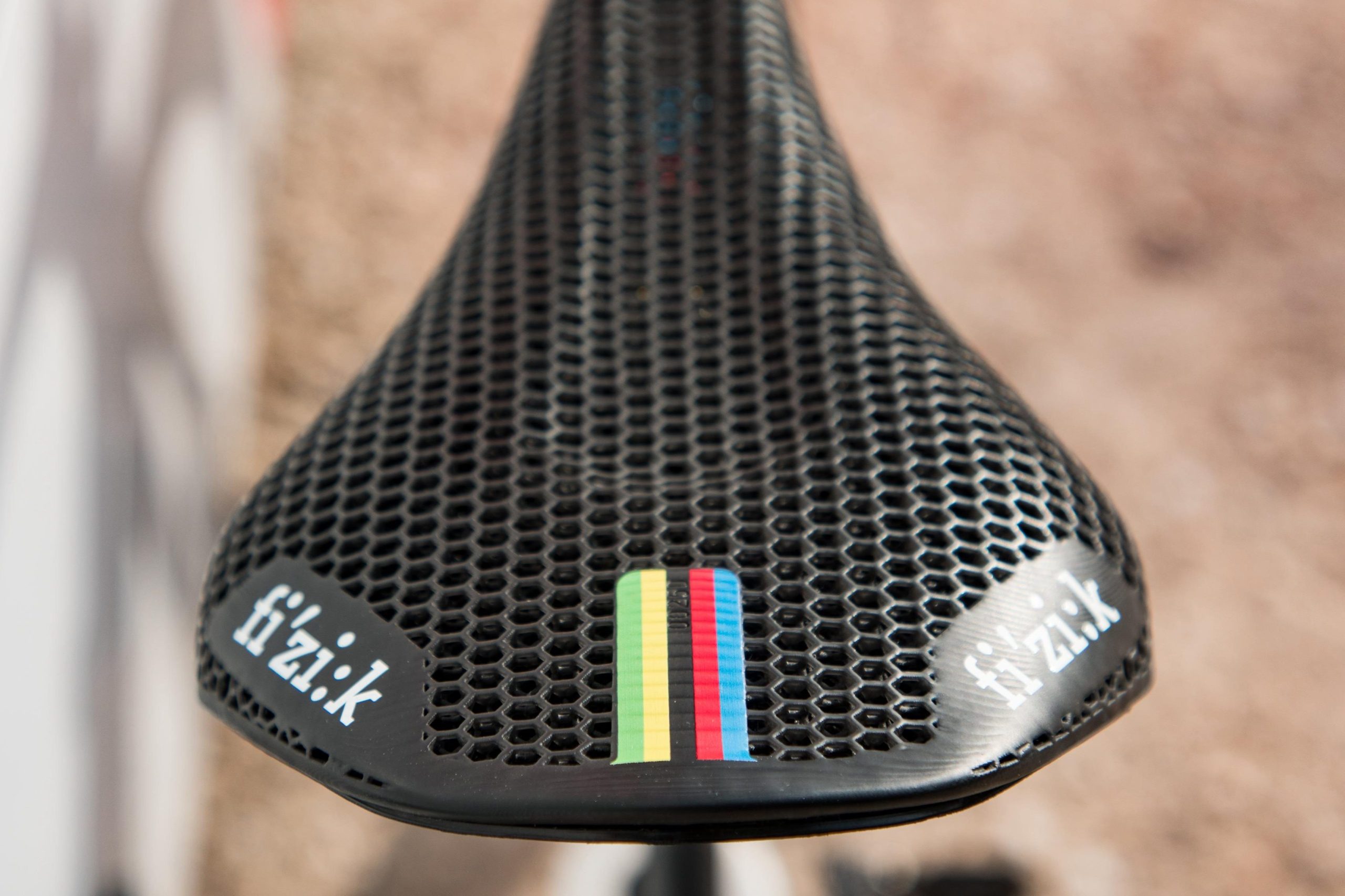
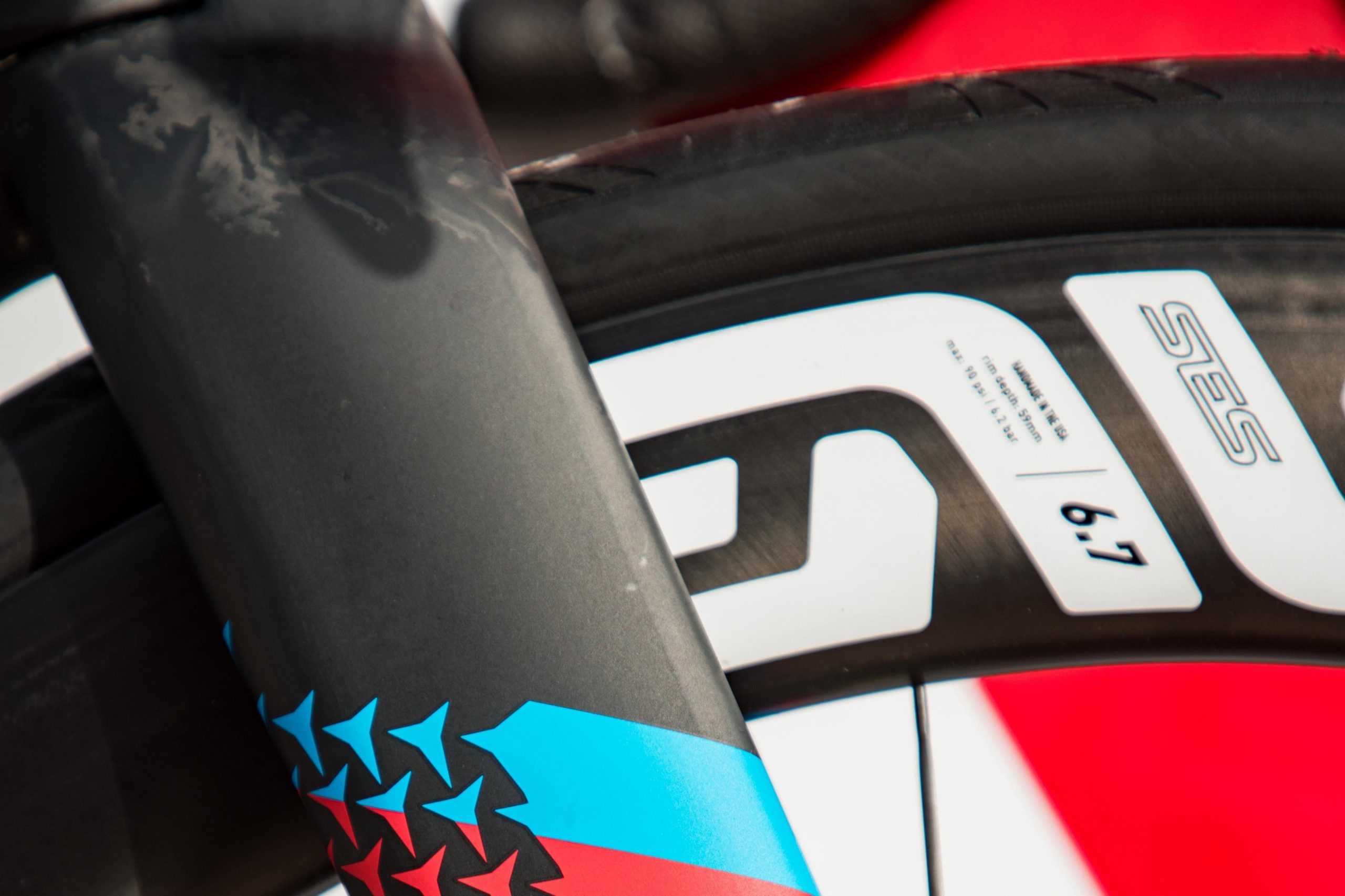
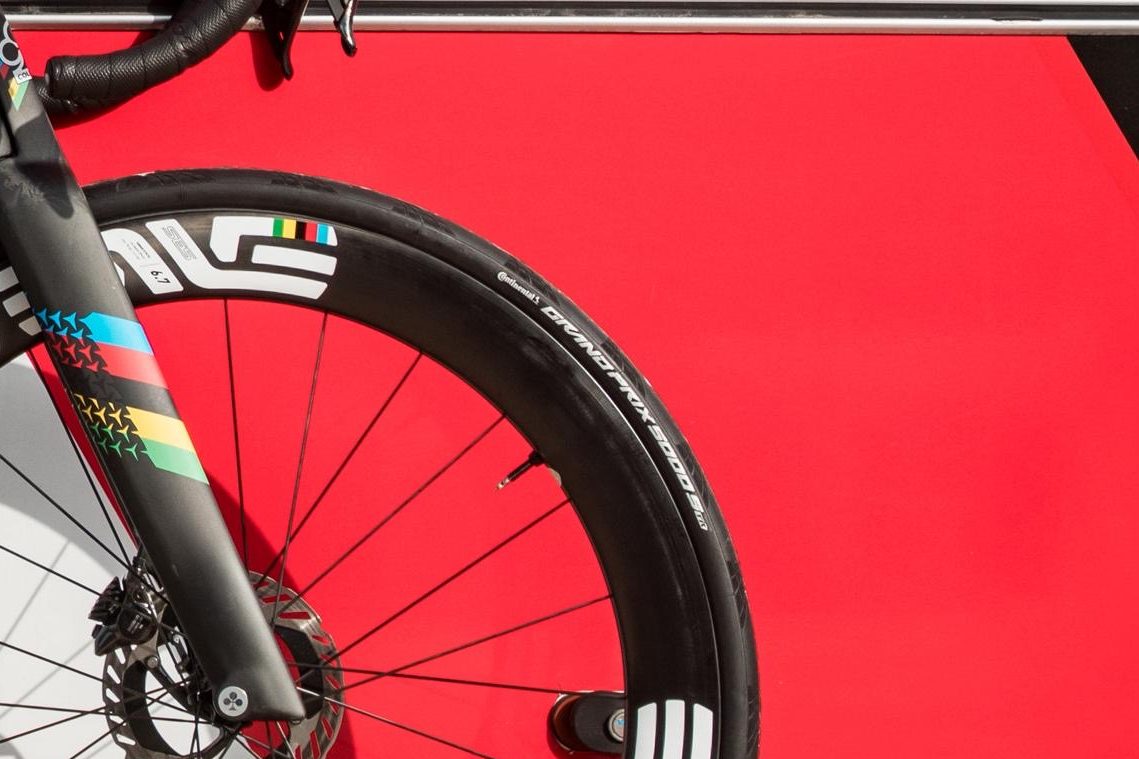
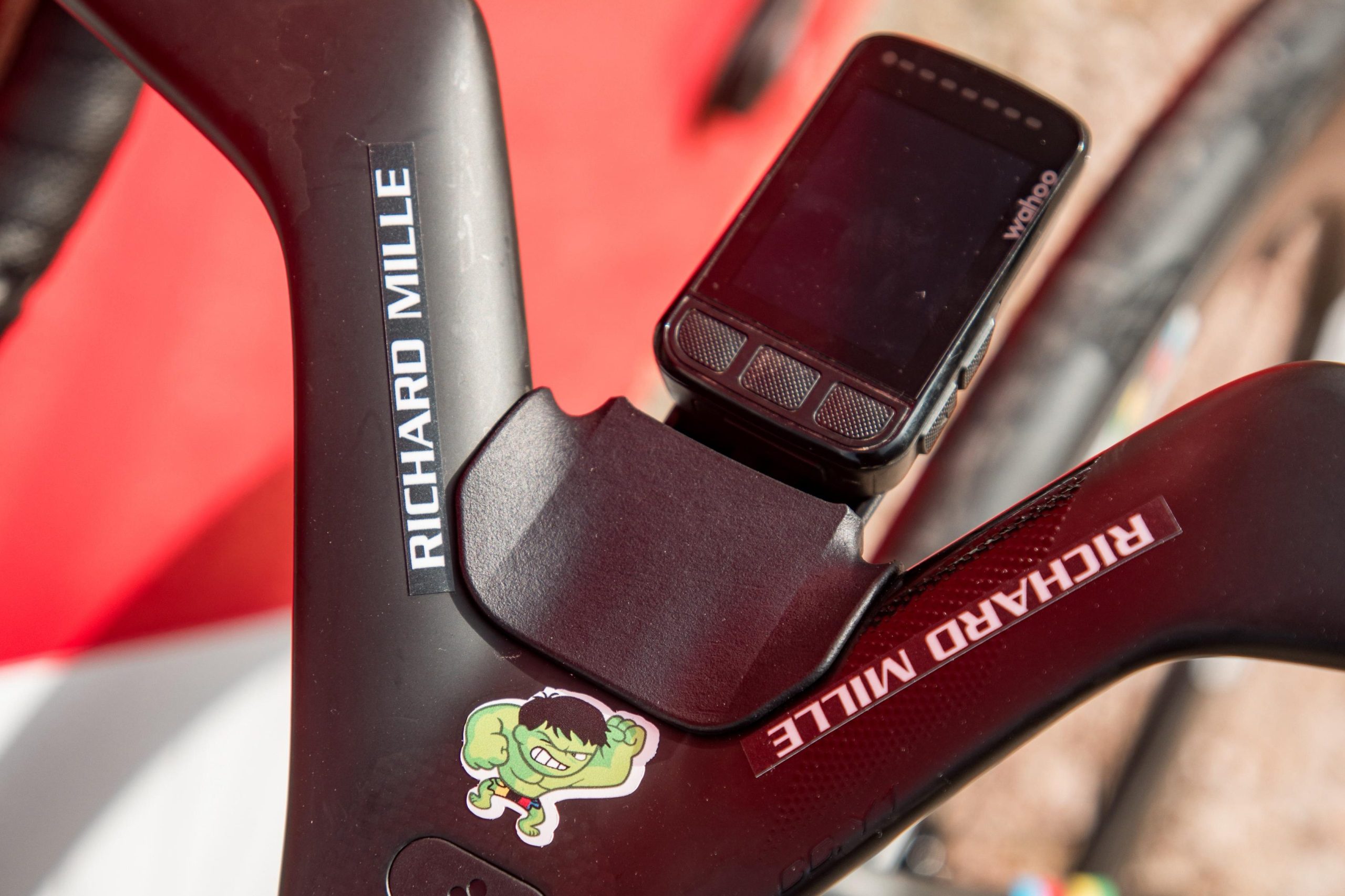
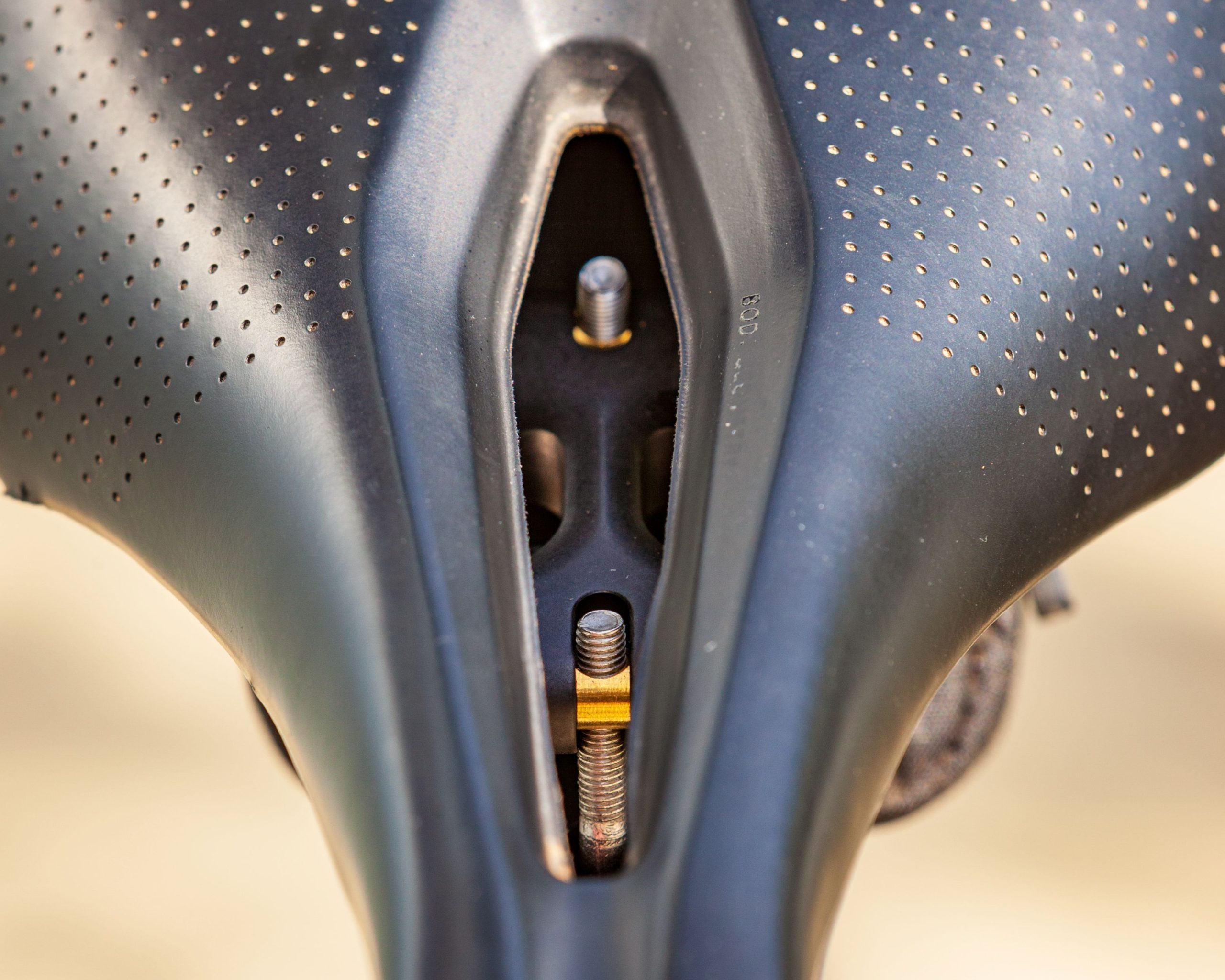
First up, Pogačar is using the lightweight version of the Colnago Y1Rs which debuted during the 2025 Tour de France for the mountain time trial, with World Champion’s stripes applied. Weight is unlikely to be a factor until the final steep ascent into Siena, where – should he be accompanied – this might prove vital. Images reveal his teammates riding standard-colourway Y1Rs’, indicating that the lightweight version of the Y1Rs remains a rarified beast. Colnago Pogačar’s 3D-printed Fizik Tempo Argo saddle is noticeably tilted downward, while he’s using an inline seatpost to help him pitch over the cranks. Close inspection reveals that the saddle isn’t slammed as far forward as the rails might allow, indicating that he doesn’t feel an even more extreme position is necessary. The saddle features neat World Champions’ stripes on the rear portion. Pogačar’s rolling stock choice is perhaps the most interesting part of his build. He trained using ENVE SES 6.7 wheels, and with conditions expected to be calm on race day, this deeper, more aerodynamic option appears to be the wheelset of choice compared to ENVE’s SES 4.5 or 4.5 Pro wheels. He’s also running Continental Grand Prix 5000 S TR tyres, which feature a more resilient construction compared to the lighter TT TR or Archetype tyres, and might help reduce the chance of punctures on the white roads. Finally, Pogacar is running a team-issue mount for his Wahoo Elemnt Bolt v2 bike computer, which helps fill the gap created by the twin-vane handlebar, complete with his Hulk sticker complete with World Champion’s undergarments.
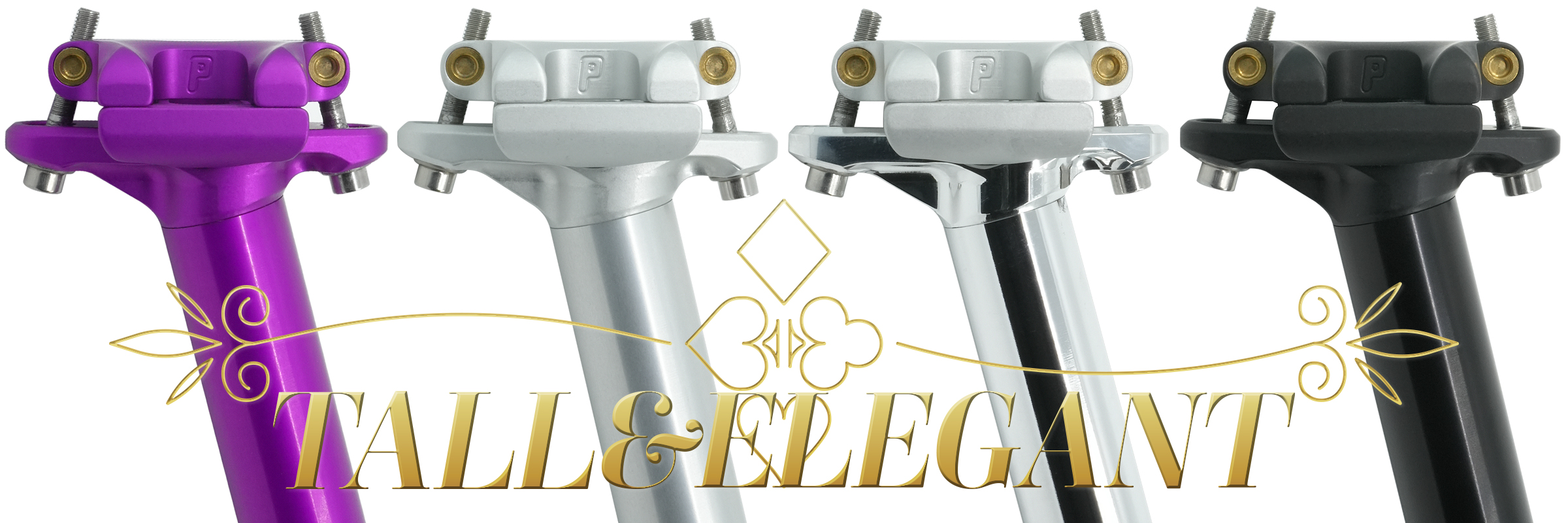
Paul Components has launched a new seatpost named the Tall & Elegant with a not-inconsiderable $286 price tag.
For that price, you might expect carbon, but the new seatpost is made from 2024 and 6061 aluminium alloy. The brand says it delivers ‘no cut corners’ craftsmanship.
The new seatpost is a zero-setback update to the brand’s original Tall & Handsome 26mm-setback seatpost. It’s been launched in response to consumer requests and is machined in-house in Chica, California.
Stainless steel and brass hardware is claimed to provide smooth saddle adjustment.
Paul says its design spaces the saddle clamp bolts away from the post itself, so they can be adjusted easily with a multi-tool or a torque wrench. It claims the two-bolt design is self-aligning and should avoid any slippage.
It uses a pair of brass rail-top retainers that Paul says are compatible with oval rails, shouldn’t corrode or bind, and offer smooth saddle-tilt adjustment through around 15 degrees.
Your cash buys you a choice of colours and finishes.
The new seatpost is available in three diameters: 27.2mm, 30.9mm and 31.6mm, with weights between 327g and 402g dependent on diameter – a little more than the brand’s setback seatpost.
There’s a choice of silver, polished, purple or black finishes – maybe the black would pass for carbon.
Despite the Tall and Elegant name, there’s no mention of how tall the seatpost is. The setback Tall & Handsome is 360mm in length though, so we’d guess it’s the same.
Bianchi’s new Infinito embraces the latest endurance bike trends that have appeared since it was last updated in 2024.
The previous generation saw only subtle changes, with Bianchi keeping the Infinito’s tyre clearance at 32mm. That felt conservative at the time, with some of the best endurance bikes fitting rubber up to 38mm wide.
Now, Bianchi appears to have taken a leaf out of where this category of bike is headed and the latest Infinito can fit tyres up to 40mm wide.
That puts its tyre clearance neatly between the recent Scott Addict, which has a clearance of 38mm, and the Cannondale Synapse, which won our 2025 Bike of the Year Award, that can fit 42mm-wide tyres.
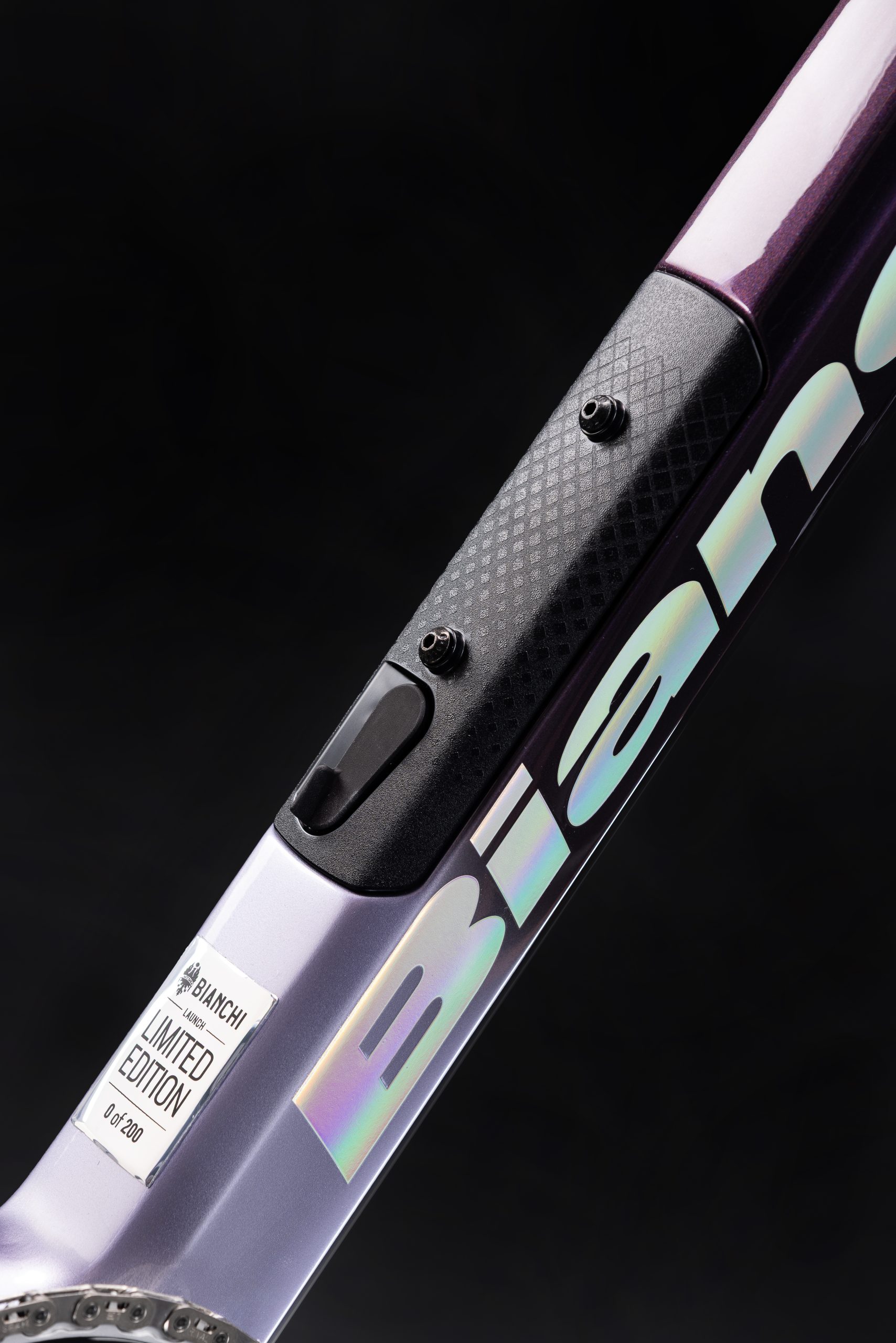
Another endurance trend the Infinito shares with these two bikes is down-tube storage. This is becoming commonplace on endurance bikes, and is a feature Warren Rossiter argues should take the place of saddle packs.
The Bianchi Infinito can now fit 40mm tyres. Bianchi
When the latest Addict launched, Scott described it as “long ride ready” and Bianchi makes a similar pitch for the 2026 Infinito, describing it as an “all-rounder” that “makes you feel like you could ride forever”.
That is down partly to the increased tyre width, which is said to bring “gravel-ready versatility” – although the best gravel bikes now fit tyres wider than 40mm – but it also comes down to the performance and comfort of the bike.
Bianchi says the new Infinito’s frame and form were developed as a “fully integrated system” to ensure stiffness and precise handling, which has also resulted in a 12-watt improvement compared to the previous generation.
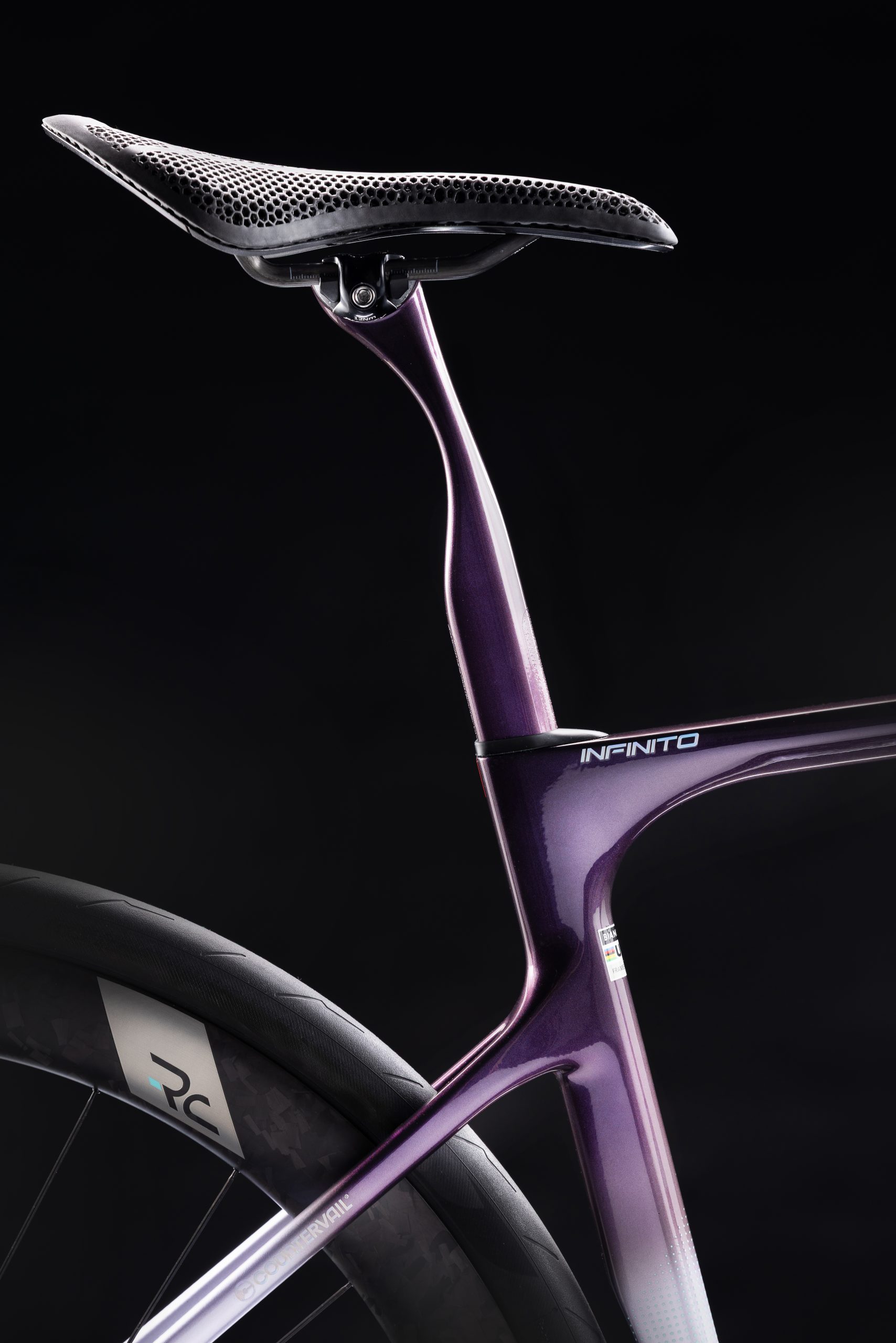
Elsewhere, Bianchi has added a new sculpted seatpost to the Infinito, which is “designed to flex where it’s needed, without compromising reactivity”.
The Bianchi Infinito’s down-tube storage. Bianchi The Infinito 2026 seatpost uses Countervail technology. Bianchi
The post uses Bianchi’s updated Countervail vibration-cancelling technology, a viscoelastic material incorporated into the carbon fibre, which is said to be 20 per cent lighter than the previous generation.
Bianchi has also tweaked the Infinito’s geometry, with a higher stack for increased comfort and longer chainstays for extra stability. The new seatpost has zero offset to optimise “the hip angle to improve breathing and pedalling efficiency”.
Bianchi CEO Alberto Cavaggioni says: “With the new Infinito, we wanted to honour our high-performance racing DNA whilst fully embracing modern cycling, where a single ride might transition from pristine asphalt to unpredictable light gravel.
“This is a bike that doesn’t just manage the road, it empowers cyclists to ignore the surface altogether and focus entirely on the pure joy of the ride, allowing them to go further, faster, and with more control.”
Bianchi Infinito range
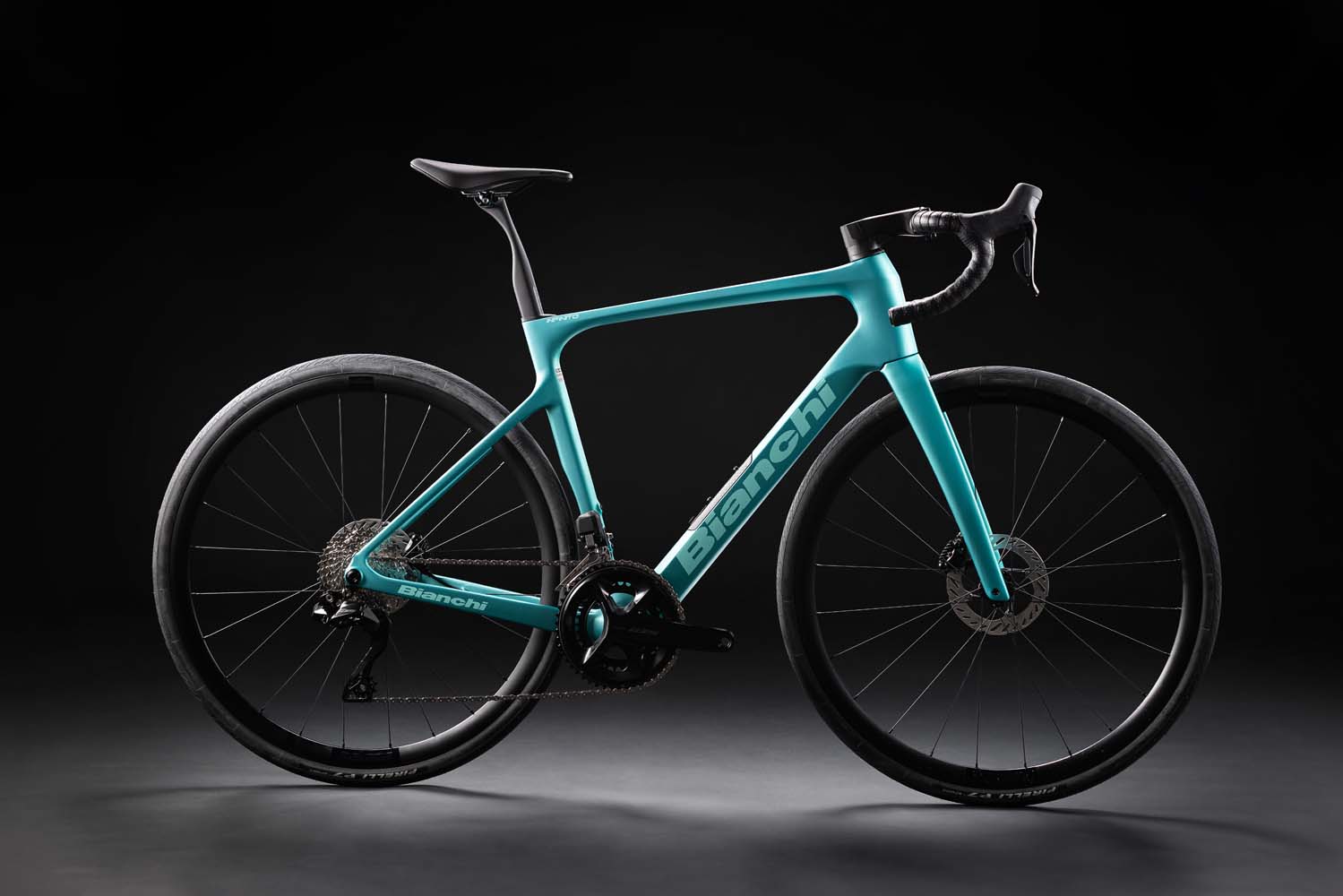
The Infinito in Bianchi’s signature colour. Bianchi
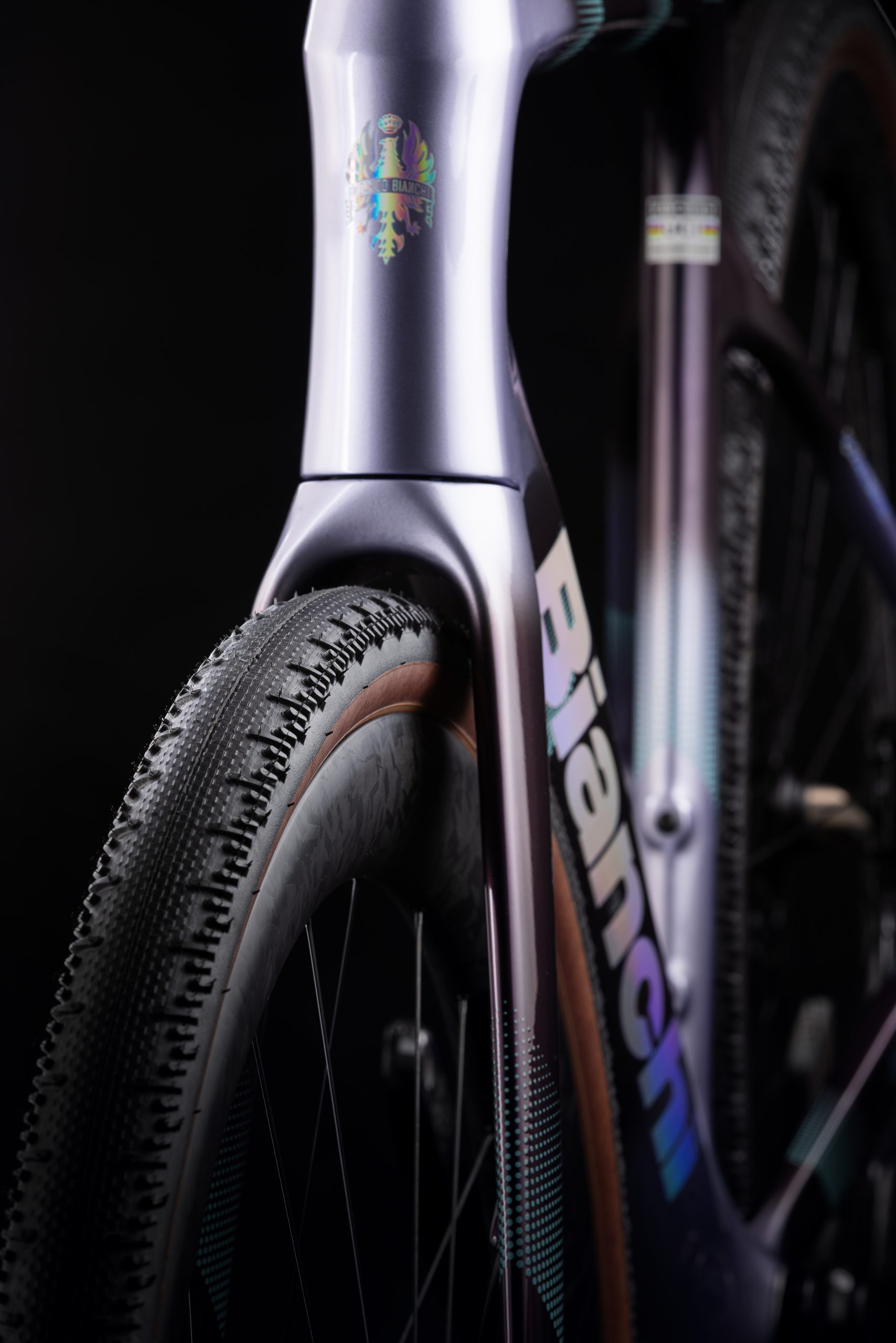
To mark the release, Bianchi has made a ‘Launch Edition’, limited to 200 numbered bikes and costing €7,790.
The bike comes with a personalised welcome kit and a “unique, glossy white and purple fade”. It can be fitted with either a Shimano Ultegra Di2 groupset or a SRAM Force XPLR 1×13 AXS groupset, pushing the Infinito further into gravel territory.
Otherwise, the Infinito is available in two builds:
Infinito Pro: available in five colours with either a SRAM Force or Rival, or Shimano Ultegra Di2 or 105 Di2 groupset, starting from €4,950
Infinito: available in two colours with Shimano 105 Di2 or mechanical, starting from €2,790
New wheelsets
To coincide with the release of the Infinito, Bianchi has revealed two new wheelsets, the RC 49R and the B 49R.
The RC 49R carbon wheels are being introduced on the Infinito Pro. They are 49mm deep with an internal width of 25mm and Bianchi says they have been “optimised to complement the frame”.
The B 49R wheelset shares the same depth and internal width as the RC 49R, but it trades straight-pull for J-bend spokes and weighs 135g more at 1,575g.
This week’s top events are rides celebrating International Women’s Day. But we’ve also got a Bike MS new kit unlock ride and two very different races featured. See the details of our picks below!
International Women’s Day Rides with Rapha
Popular Good Cause
Rapha and Zwift are collaborating to host four different rides on Sunday, celebrating International Women’s Day! (Men are also welcome to join.) The rides are hosted by big names in the cycling space:
Fran Millar & Kate Veronneau
Danni Shrosbree, Nicole Frain & Klara Hansen
Kate Courtney
Dominique Powers & Lael Wilcox
Rides are 45 minutes long and open-paced on a variety of routes. See link below for time and route options.
Femme Cycle Collab is holding a special race on Sunday to celebrate International Women’s Day. It’s a race inspired by the legendary Paris-Roubaix—a professional race notorious for its brutal, mud-caked 19th-century cobblestones that demand extreme endurance, technical skill, and a bit of luck.
The race is on France’s Knights of the Roundabout, with riders categorized by Zwift Racing Score. A and B riders will race the full lap (54.4km, 359m) while C/D/E riders will race a shortened version (40.4km, 266m). All riders will start together.
There are two events – one just for women, and the other an open “Ally” event for all!
Join the Bike MS club on Saturday for a ride that unlocks their new in-game kit! This is a celebration ride that honors the MS Warriors the club raises funds and awareness for on a daily basis. Just like the many Bike MS Events across the US, there is something for everyone in these Zwift events. Whether you have a connection to multiple sclerosis or are just along for the XP or new kit, Bike MS is excited to have you along for the journey.
The ride is open-paced on Watopia’s Figure 8 Reverse route (29.9km, 254m), but there are three different length options: 50km, 40km, and 30km.
Thanks to a big response in opening rounds, Rhino Racing’s 2upTT is now a monthly event which begins on the first Saturday of the month and runs for 1 week. That means it kicks off this Saturday!
Team Not Pogi – Ride the White Roads: Strade Bianche Challenge
Same Time Starts Strade Bianchi
Strade Bianchi happens on Saturday, and Team Not Pogi have organized a race to go along with it!
Inspired by the iconic Strade Bianche, this race isn’t just about raw power—it’s about positioning, bike handling, and the mental toughness to conquer the “Sterrato.” Expect rolling hills, punchy climbs, and treacherous sectors of dirt and gravel. We’ve selected a route that mimics the relentless undulations of the Sienese countryside. Whether you’re a mountain goat or a powerhouse puncheur, this race will test every watt you’ve got.
The race is held on 3 laps of Makuri Islands’ Two Village Loop, for a total length of 38.6km with 264m of elevation gain.
We choose each weekend’s Notable Events based on a variety of factors including:
Is the event unique/innovative in some way?
Are celebrities (pro riders, etc) attending/leading?
Are signup counts already high, meaning the event is extra-popular?
Does the ride include desirable unlocks or prizes?
Does the event appeal to ladies on Zwift? (We like to support this under-represented group!)
Is it for a good cause?
Is it just plain crazy (extra long races, world record attempts, etc)?
Is it a long-running, popular weekly event with a dedicated leader who deserves a shout out?
In the end, we want to call attention to events that are extra-special and therefore extra-appealing to Zwifters. If you think your event qualifies, comment below with a link/details and we may just include it in an upcoming post!
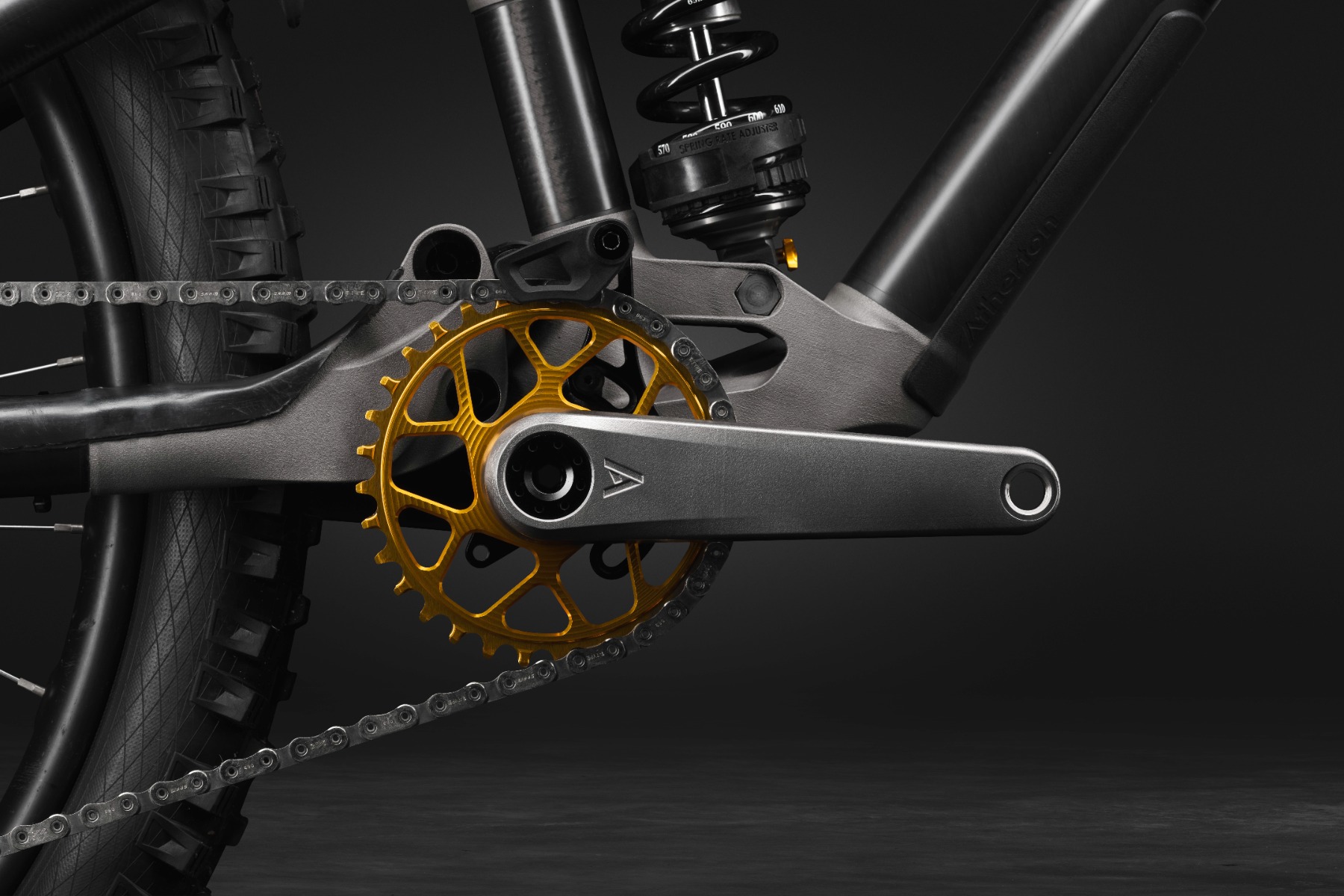
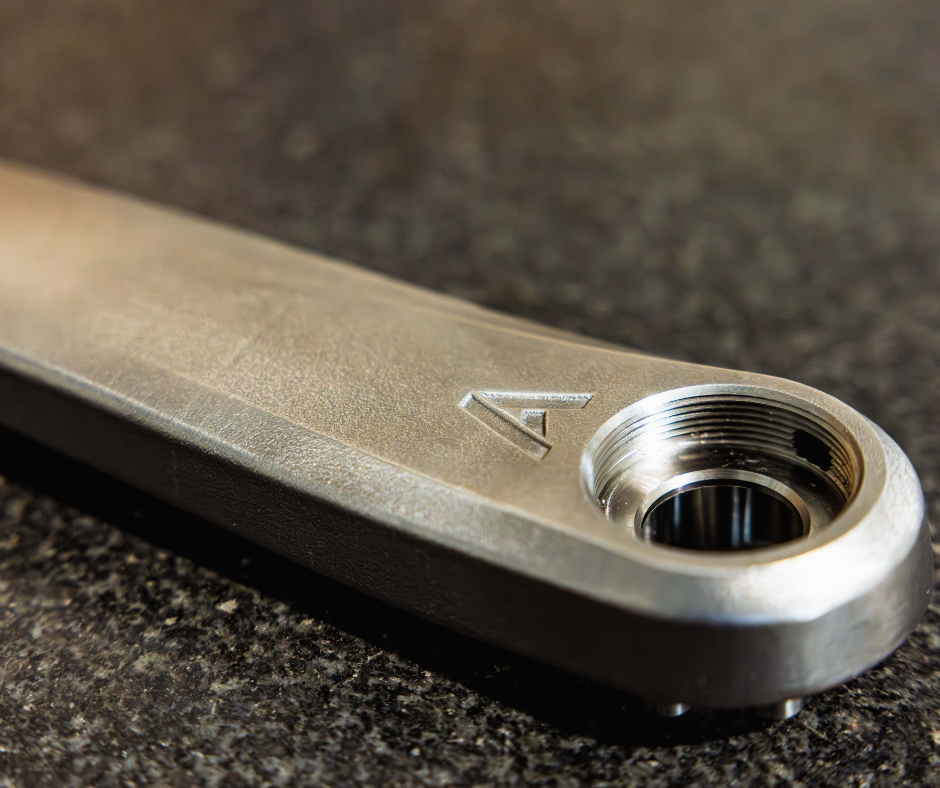
Atherton Bikes has announced details of its new GR titanium crankset – with prices starting at £845.
The new crankset is additive manufactured in Atherton’s Renishaw 3D printer, like the British brand’s top-end AM-series frames.
The GR cranks are available in 11 lengths, and Atherton says they’re not only tough enough for downhill mountain biking, but also light enough for trail riding.
They have an ultra-low profile pedal end for maximum ground clearance – thinner than is possible with an aluminium or carbon crank because titanium is stronger and so less material is required.
11 lengths, three offsets, two axle standards and three finish options mean these cranks are highly customisable. Atherton Bikes
The lengths on offer range from 150mm to 175mm in 2.5mm increments, and the chainring offset choices are Trail (52mm), Trail Wide (55mm) and DH (56.5mm).
You can chose between 28.99mm (SRAM DUB) and 30mm (Hope, 5DEV, etc) axle diameters.
The GR Ti cranks are additive-manufactured in Atherton’s in-house Renishaw 3D printer. Atherton Bikes
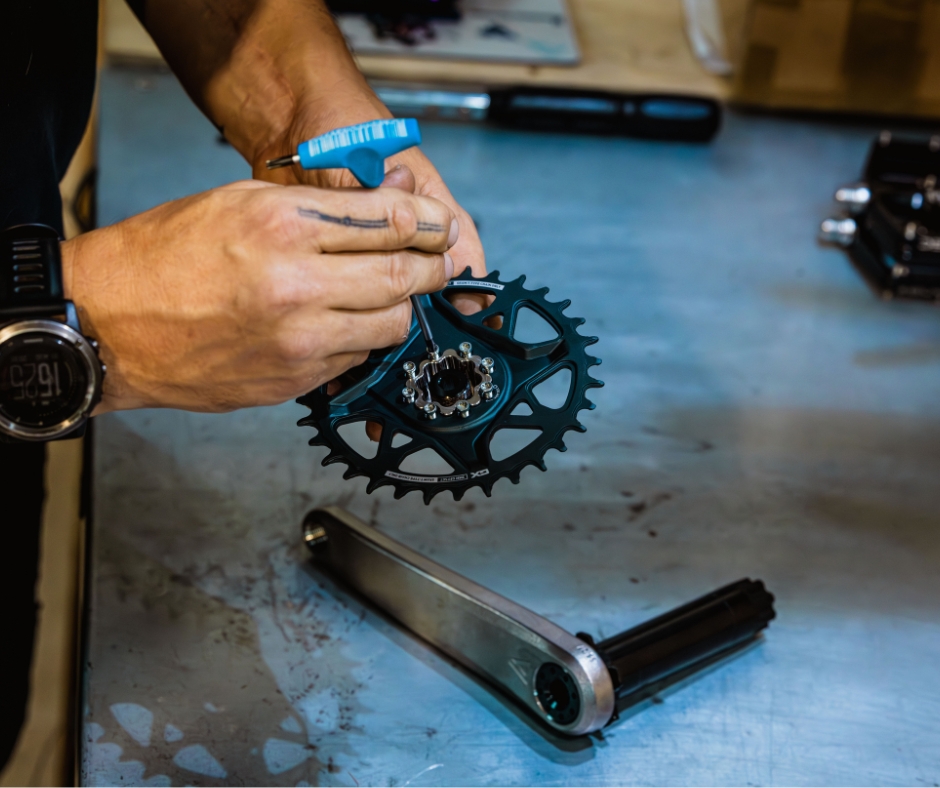
They run the latest SRAM standard eight-bolt chainring interface, so finding compatible chainrings shouldn’t be difficult.
Atherton Bikes sells Works Components’ Staffordshire-made chainrings alongside the cranks if you want to order them as a package.
The GR cranks all use the SRAM standard eight-bolt direct-mount chainring interface. Atherton Bikes
Titanium is highly abrasion-resistant and Atherton is confident these cranks will last a long time. They come with a lifetime warranty for any use and are EFBE and ISO cat-5 certified for DH use.
Atherton claims a weight of only 506g for a bare 165mm crank, which is not ultra-light for trail cranks, but it’s competitive for a downhill crank.
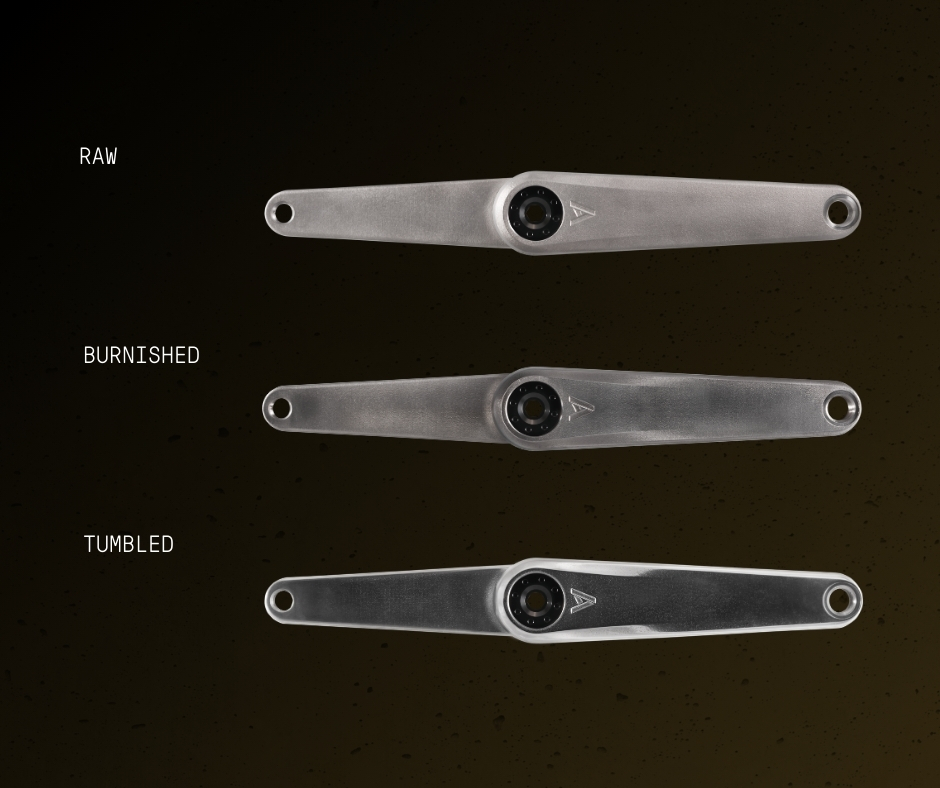
Three finishes enable you to choose the roughness of the raw titanium on show. Atherton Bikes
There are three finishes available: raw (the roughest), burnished (slightly finished) and tumbled (shiny and smooth).
They will take four to eight weeks to arrive after ordering the specific length, chainring offset, spindle diameter and finish you require.
The cranks are available now, direct from Atherton Bikes’ website.
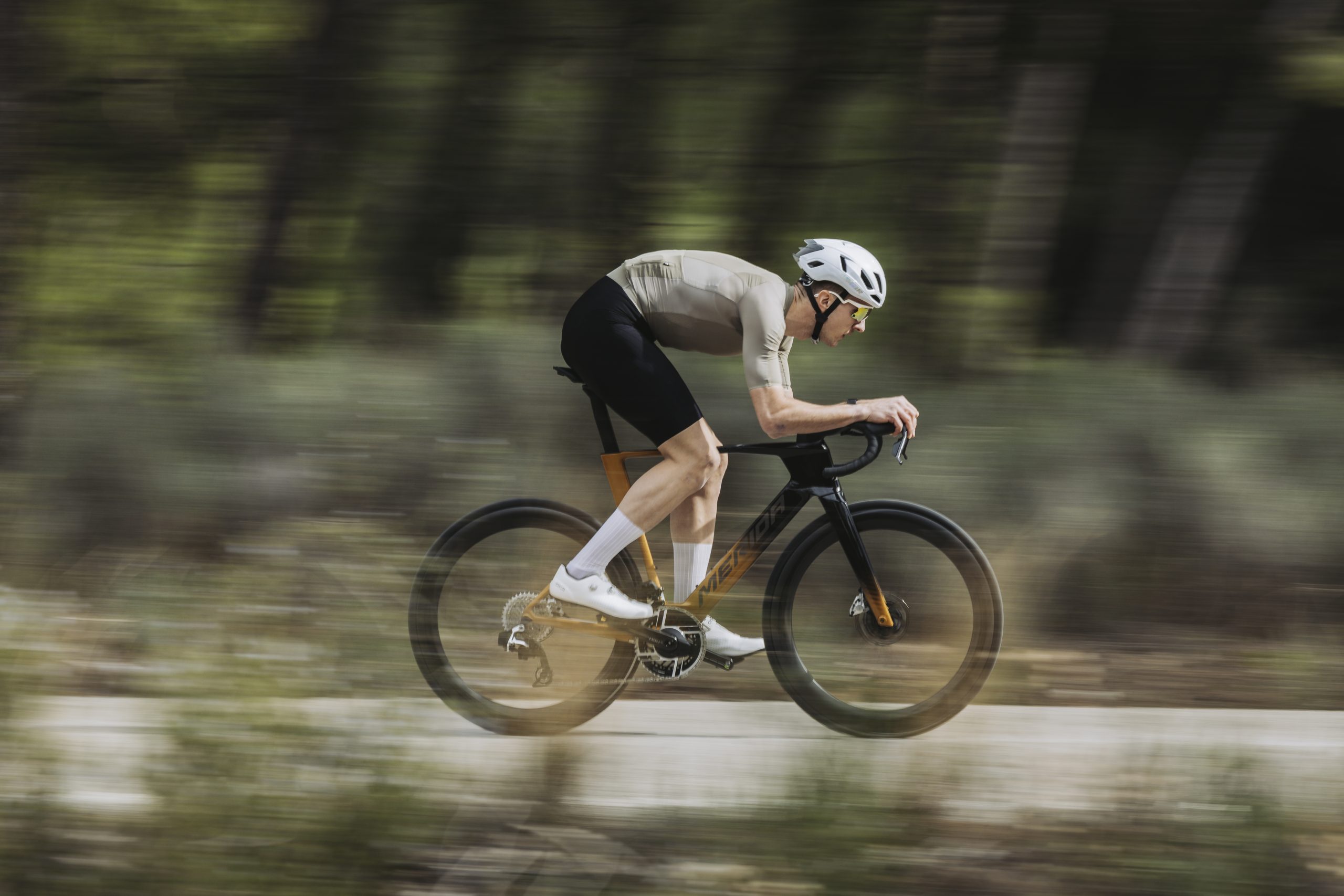
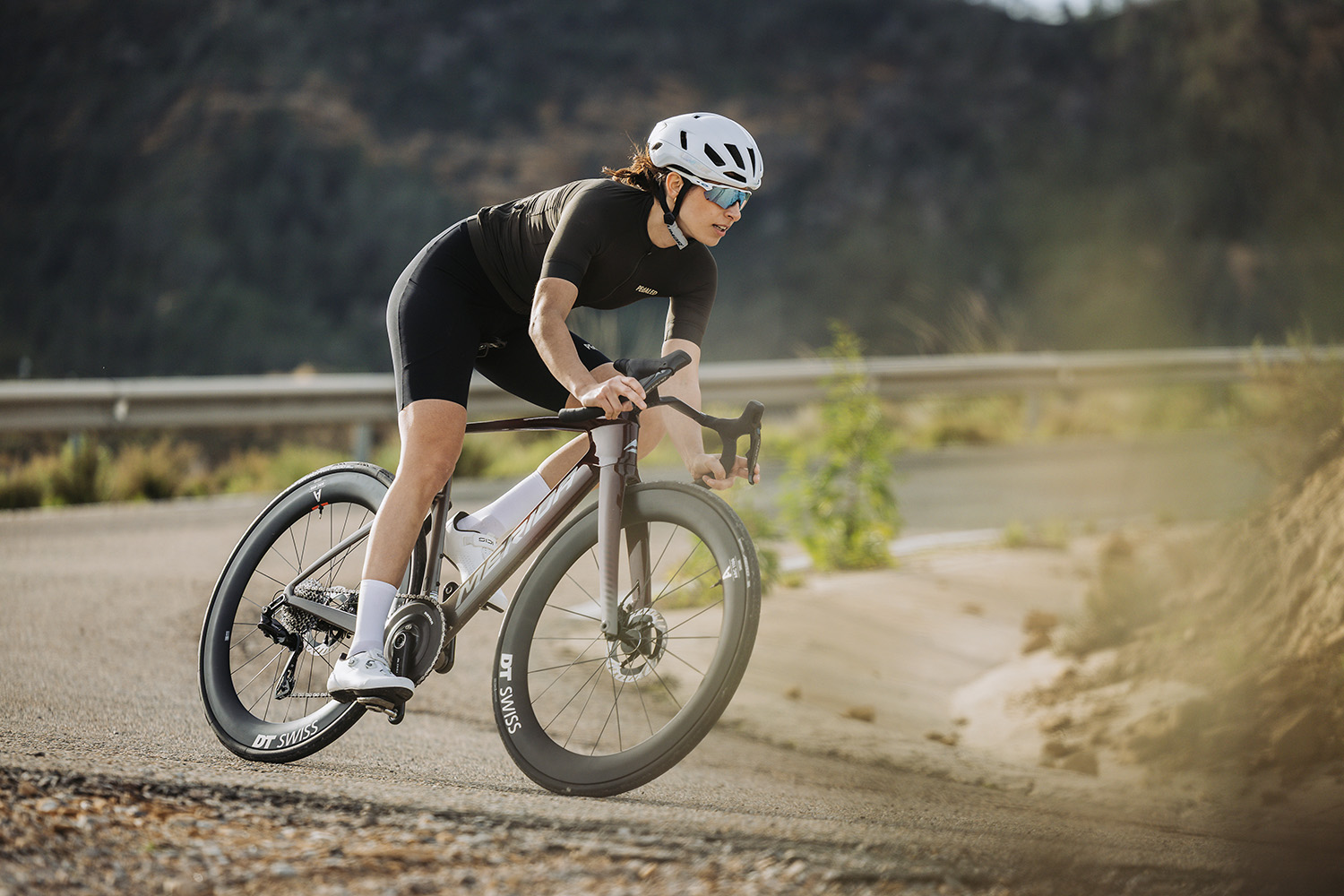
When Merida set out to design the new Reacto, it had one major goal in mind: to create a bike fast enough to break the 200-watt barrier, as measured by Tour Magazine in its wind-tunnel tests.
The German cycling publication’s independent wind-tunnel tests have become a benchmark in the industry for how well road bikes perform. The 200-watt barrier refers to the pedalling power required to overcome drag at 45km/h, which only two bikes have surpassed.
According to Tour Magazine, the 2022 Simplon Pride II had an aero drag of 199W and the Storck Aerfast.5 Pro achieved 198W.
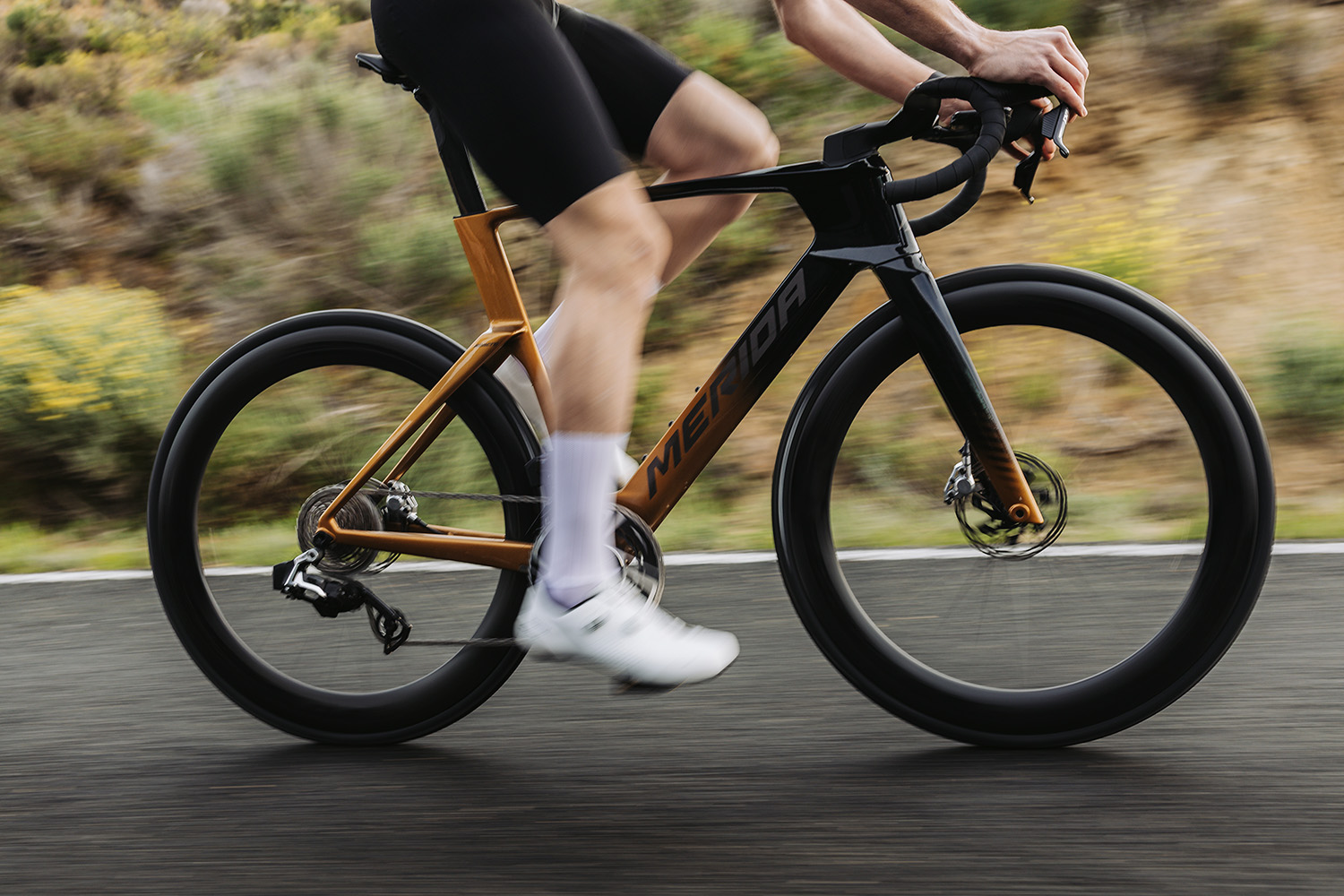
Merida says the new Reacto is 2.5 per cent quicker than the previous generation of the bike. Merida
Merida says the previous-generation Reacto IV, which was one of the best-value aero bikes, and was released back in 2021, required 211W to overcome its own drag.
For its latest aero bike, Merida has managed to shave that figure down to 206W for the top-spec Reacto One (£10,000 / €11,500), according to a Tour Magazine test.
However, there are some caveats to this figure. Merida says the Reacto IV and the new Reacto One were both fitted with the brand’s SL 1P cockpit and 60mm-deep wheels.
But the newest version was fitted with a wider 30mm tyre, because the clearance of the bike has increased from 28mm to 32mm, which Hutchinson recently suggested could be faster than 30mm.
The new Reacto One is also fitted with a Classified Powershift hub and 1x drivetrain, which would help reduce aero drag compared to a more conventional 2x setup.
Yet, Merida adds that if you switch the SL 1P cockpit for its new CW 1P design, the Reacto One drops below 200W and achieves 196W.
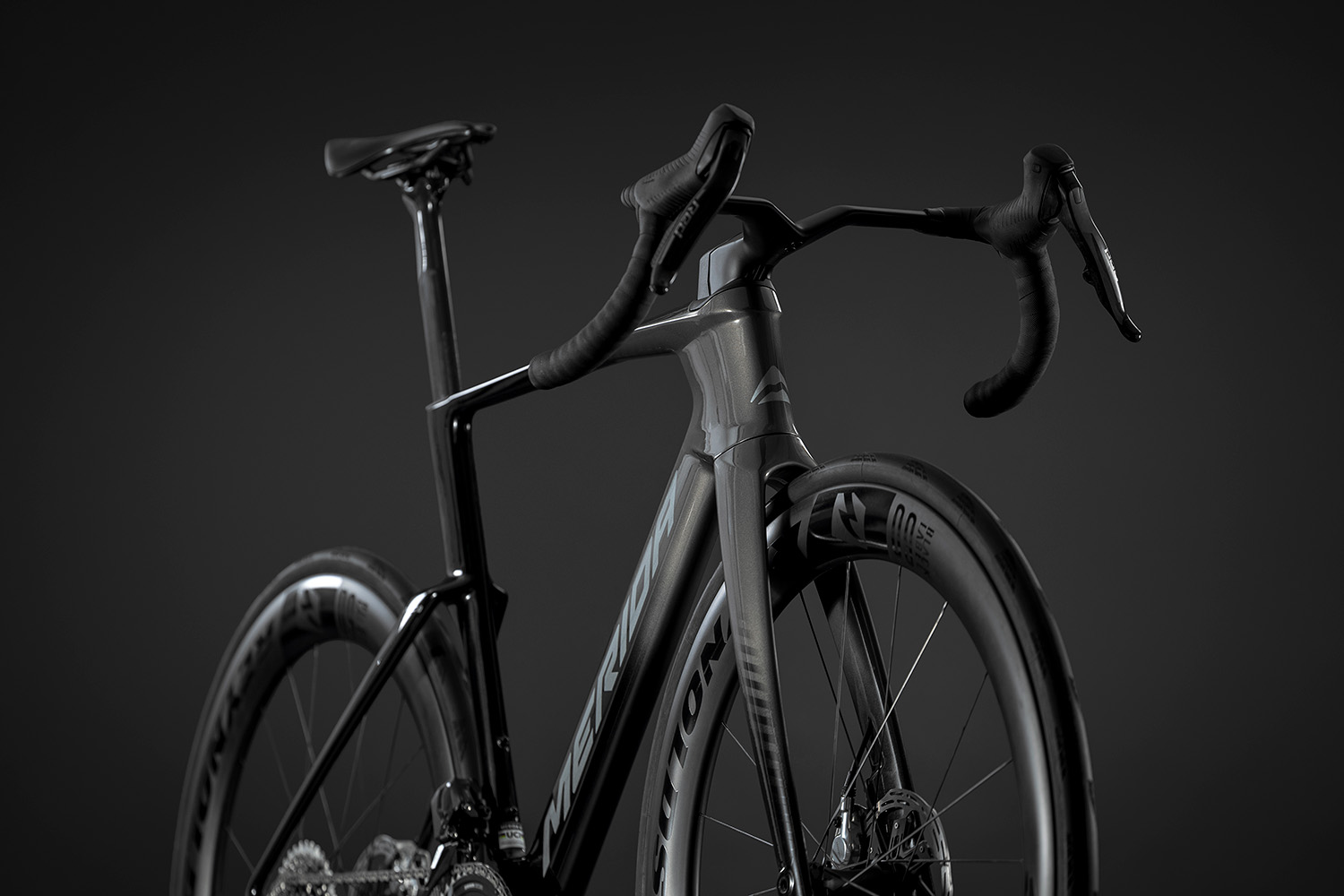
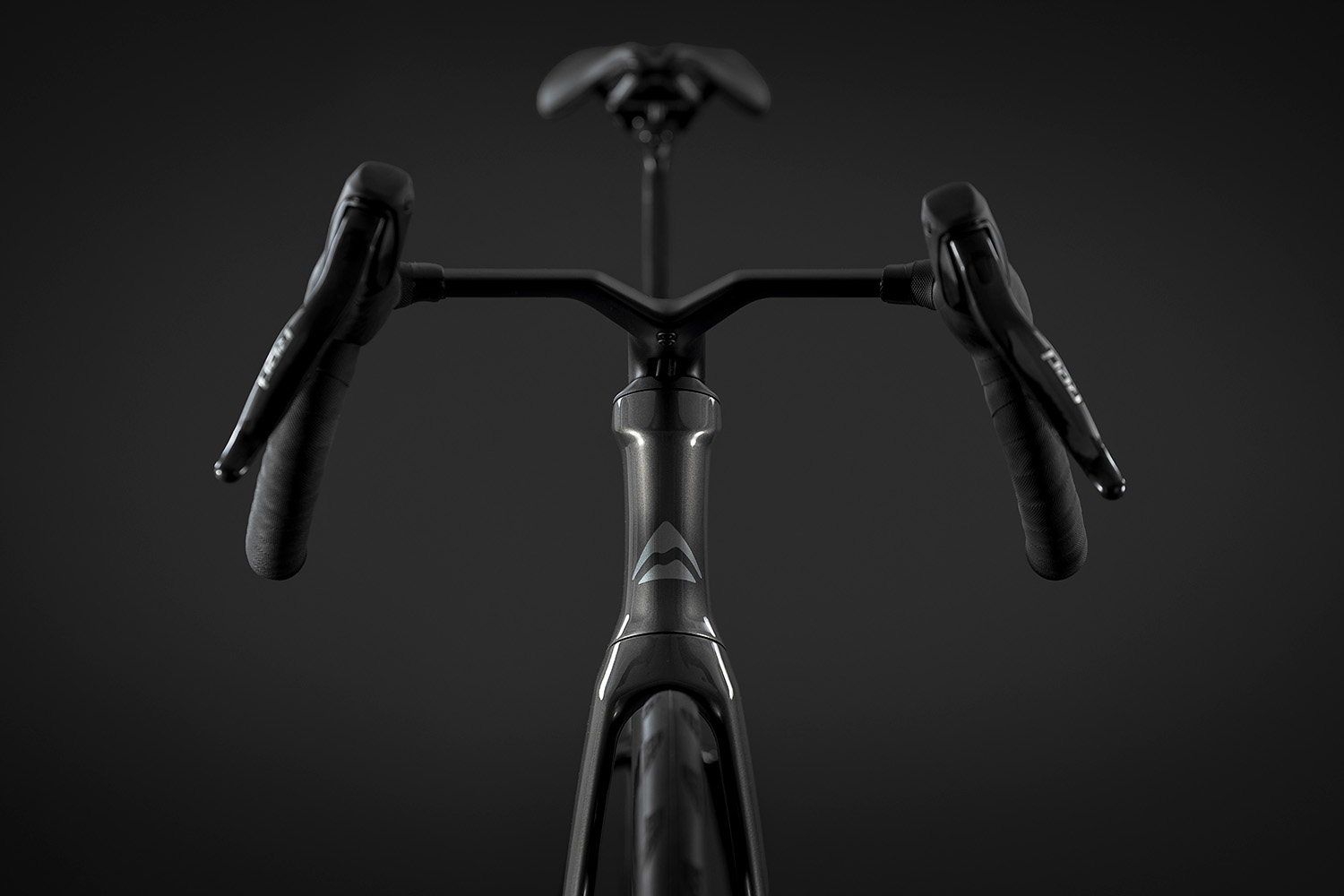
The bike can be fitted with the new CW 1P, a gull-shaped cockpit. Merida The CW 1P is similar to the cockpit found on the Colnago Y1Rs. Merida
The CW 1P cockpit is a ‘gull wing’ design similar to that found on the Colnago Y1Rs. Merida says the “V-shape and foil profile maximise efficiency in all wind conditions, and its ergonomic shape ensures comfort and relief during even the most demanding rides”.
The bar is available for the top Reacto One and the Reacto 10k (£9,500 / €11,000), which features a 2x SRAM Red AXS groupset, and still achieves a score of 202W, according to Tour Magazine and Merida.
This means the new Merida Reacto is faster than the Simplon and Storck bikes tested by Tour Magazine and faster than aero bikes from bigger brands. Tour Magazine said the 2021 Canyon Aeroad scored 202W and the latest Cervélo S5 scored 204W.
Aerodynamic shapes
Merida has refined the Reacto’s tube shapes following a change in UCI regulations. Merida
Alongside the new bar, Merida has made use of changes in UCI regulations to make the Reacto faster.
Merida says the bike utilises the “aerodynamic boundaries set by the UCI”, which we can take to mean the change in tube ratios. In 2022, cycling’s governing body said bicycle tubes could be eight times longer than they were wide, whereas the ratio had previously been 3:1.
The previous Reacto was released just before this change, and therefore couldn’t make use of it, but the latest version has.
As we remarked when we spotted the unreleased bike at last year’s Tour de France, the new Reacto’s head tube is far deeper than the previous version. This is one of the latest trends in road bike design and is particularly notable on the latest Ridley Noah.
The Reacto now has a deep head tube, following one of the biggest trends in current road bike design. Merida
Merida says it has also updated the Reacto’s fork shape, “which now features deeper and thinner fork legs to reduce air drag at the fork/tyre intersection”.
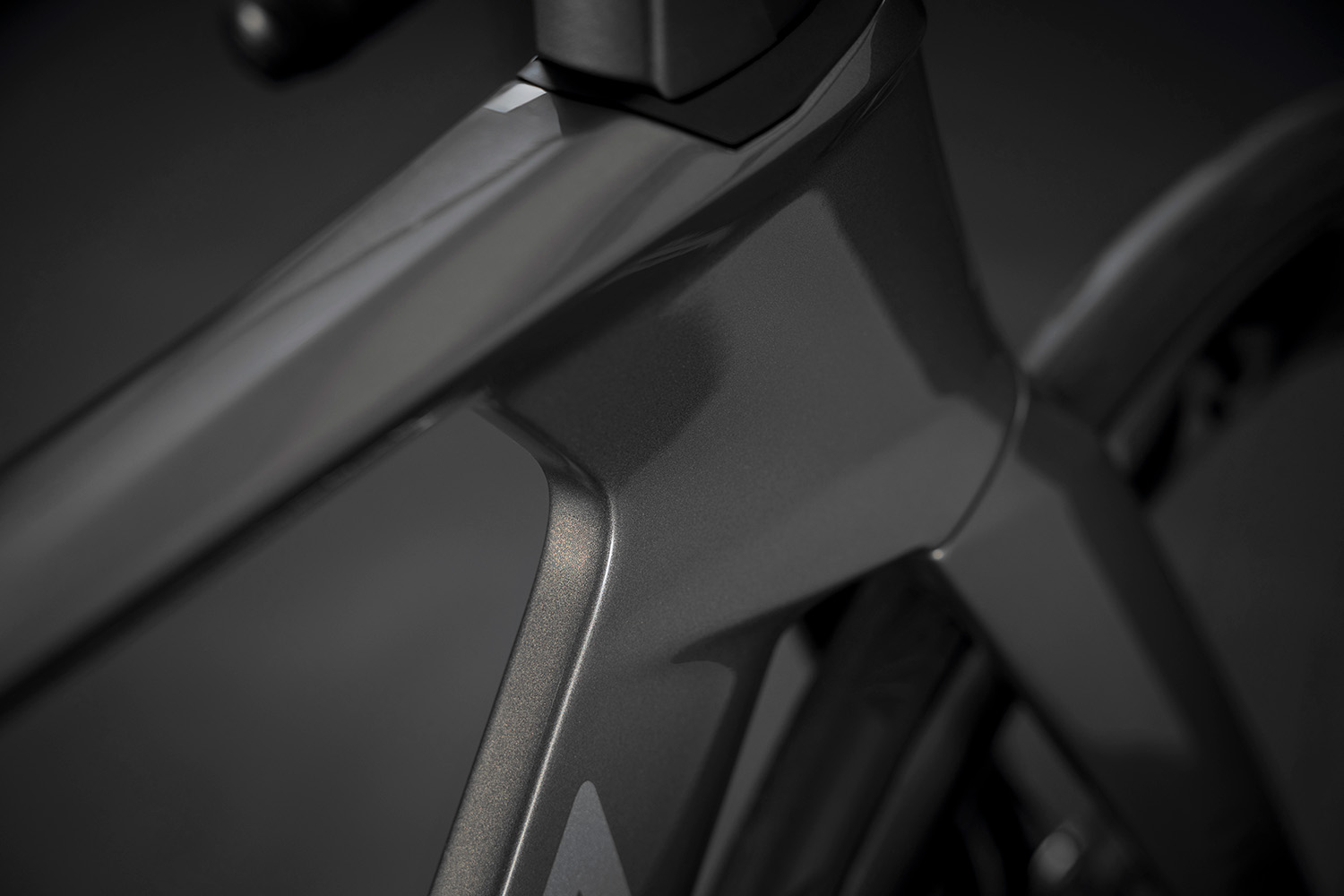
“Updates have also been made to the head tube, especially in terms of integrating the cockpit and stem areas into the frame. The downtube has been positioned further away from the front wheel to improve aerodynamics and reduce weight,” Merida explains.
The Taiwanese company also paid attention to the position and integration of water bottles.
“We maintained a more conventional aero downtube profile, but are very close to releasing our own aero bottle and cage combination, which, when used on the new Reacto, easily outperforms the often-seen cradle-shaped downtubes that hide a classic bottle and cage combination,” it says.
Speed isn’t everything
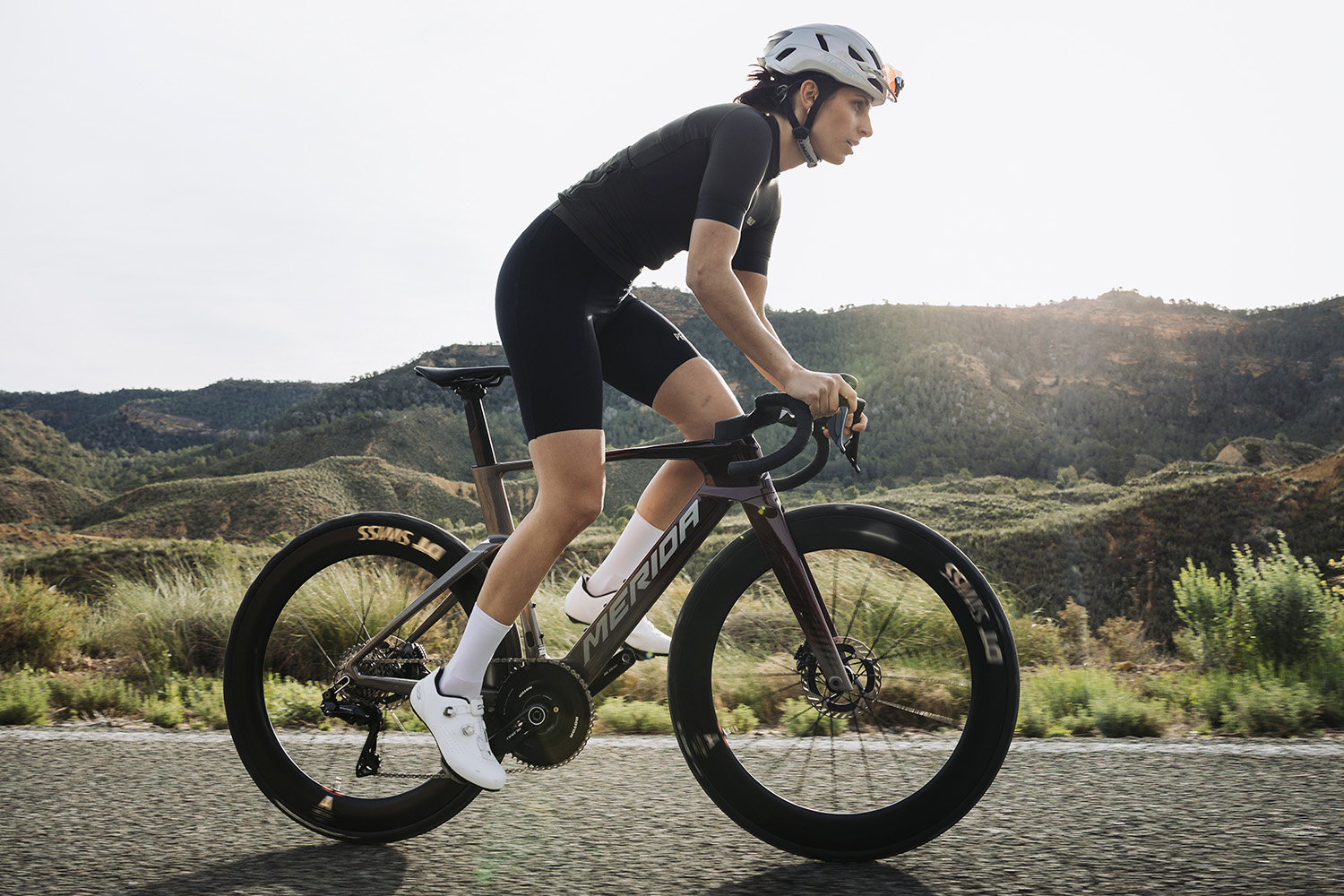
Merida says it has ensured the new Reacto is comfortable and lighter than before to make it an “all-rounder”. Merida
Just as Tour Magazine doesn’t only consider aerodynamic performance in its overall ranking of road bikes, Merida says it has balanced the Reacto’s speed with comfort.
“We also wanted to create one of the most aerodynamic bikes that still maintains impressive comfort and control attributes,” Merida says.
Merida says it has managed to achieve a comfortable ride quality comparable to a “classic, thin-tubed road bike,” by combining the compliance of the S-Flex seatpost with the clearance for 32mm tyres. But it should be noted that none of the 10 models available at launch come with tyres this wide.
Merida adds that the carbon layup of the bike achieves a balance of stiffness and flex: “Balancing the contrasting needs of comfort and efficiency is no easy task, but by using knowledge gained over years of carbon fibre manufacture and the efforts of our in-house testers and world-class athletes, we’ve found what we feel is the correct balance in each area of the bike.”
Merida says it could be possible to get the top Reacto models under the UCI weight limit. Merida
Merida says it has also reduced the weight of the Reacto. The Reacto 10k is the lightest version in the new range with a claimed weight of 7.1kg, but Merida says it could be possible to get the bike under the UCI weight limit of 6.8kg.
It claims this combination of aerodynamics, comfort and low weight makes the Reacto a “more versatile ‘aero all-roudner’” and that this makes it “hugely significant amongst road racing professionals as well as speed loving enthusiasts”.
The Reacto is available with two carbon levels. The top five models in the range use the lighter CF5 frame, which is 11g lighter than the previous generation, while the complete frameset weighs 108g less at 1,616.2g in a size medium.
Meanwhile, the CF3 frameset – available on bikes ranging from £2,400 / €2,800 to £5,000 / €5,750 – weighs 1,704g in the same size.
The framesets have the same geometry and offer “identical aerodynamic performance”.
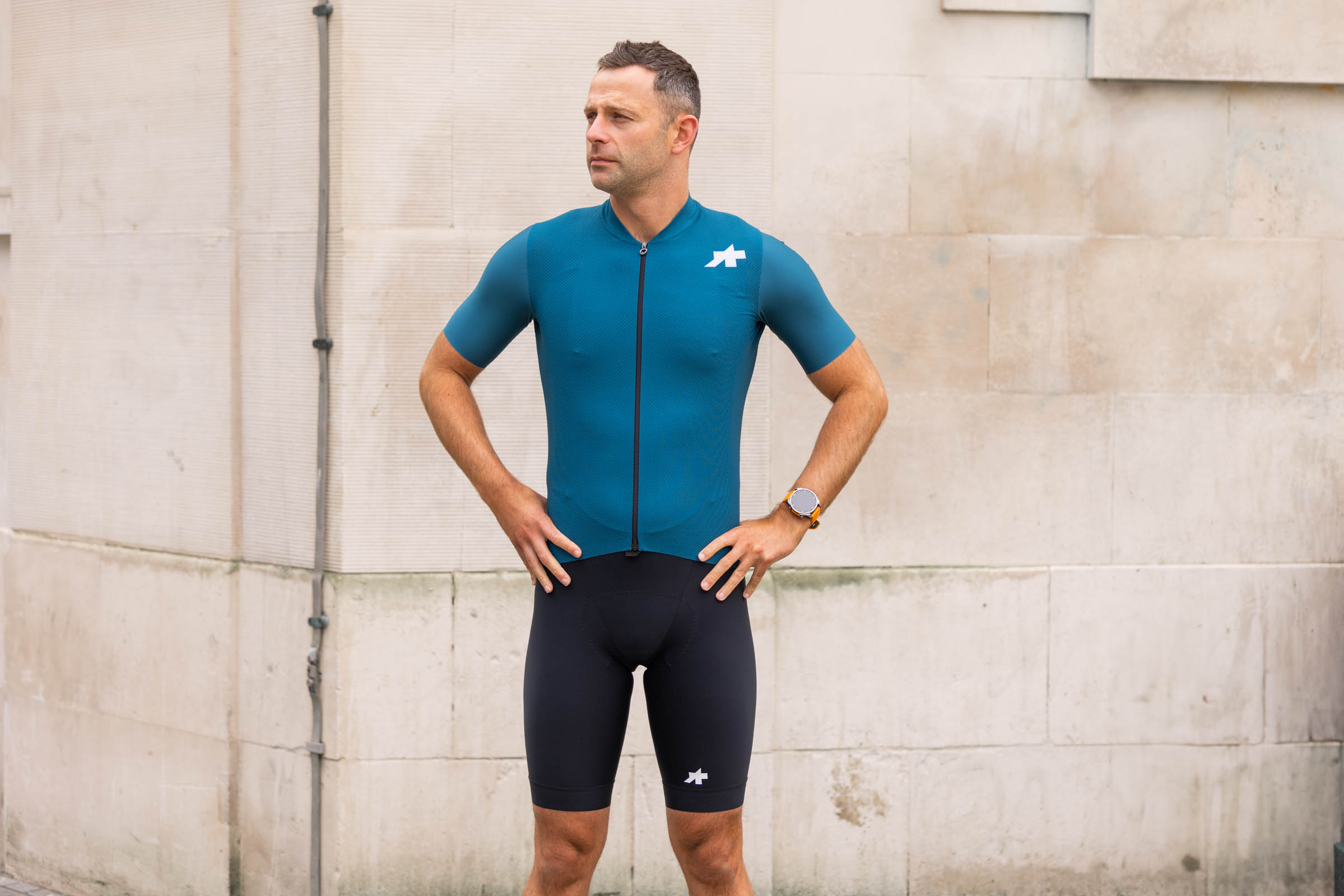
I’ve got my hands on the latest Assos Mille GT jersey and bib shorts, and I can’t believe how comfortable the ensemble is.
Comfort is always subjective, but consider the context. I’m a wide-built, 188cm-tall 36-year-old, who weighs close to 87kg.
Most kit I wear is compromised in some way, with spare fabric here and there, where I’ve had to go up a size to accommodate my broad-for-a-cyclist chest and shoulders. Likewise, when I stick to a size for desirable compression levels, I might find it’s a bit… snug.
But the latest Mille GT kit has some refined features geared towards making it more comfortable for endurance riding, with an accommodating cut suitable for more than just racing whippets.
Bearing in mind a reasonable total price tag of £250, don’t dismiss it on Assos’ premium-price reputation alone.
For the longest days: Assos Mille GT jersey
SQUIRREL_TEXT_13821002
The Mille GT jersey features a lightweight and breathable main fabric. Scott Windsor / Our Media
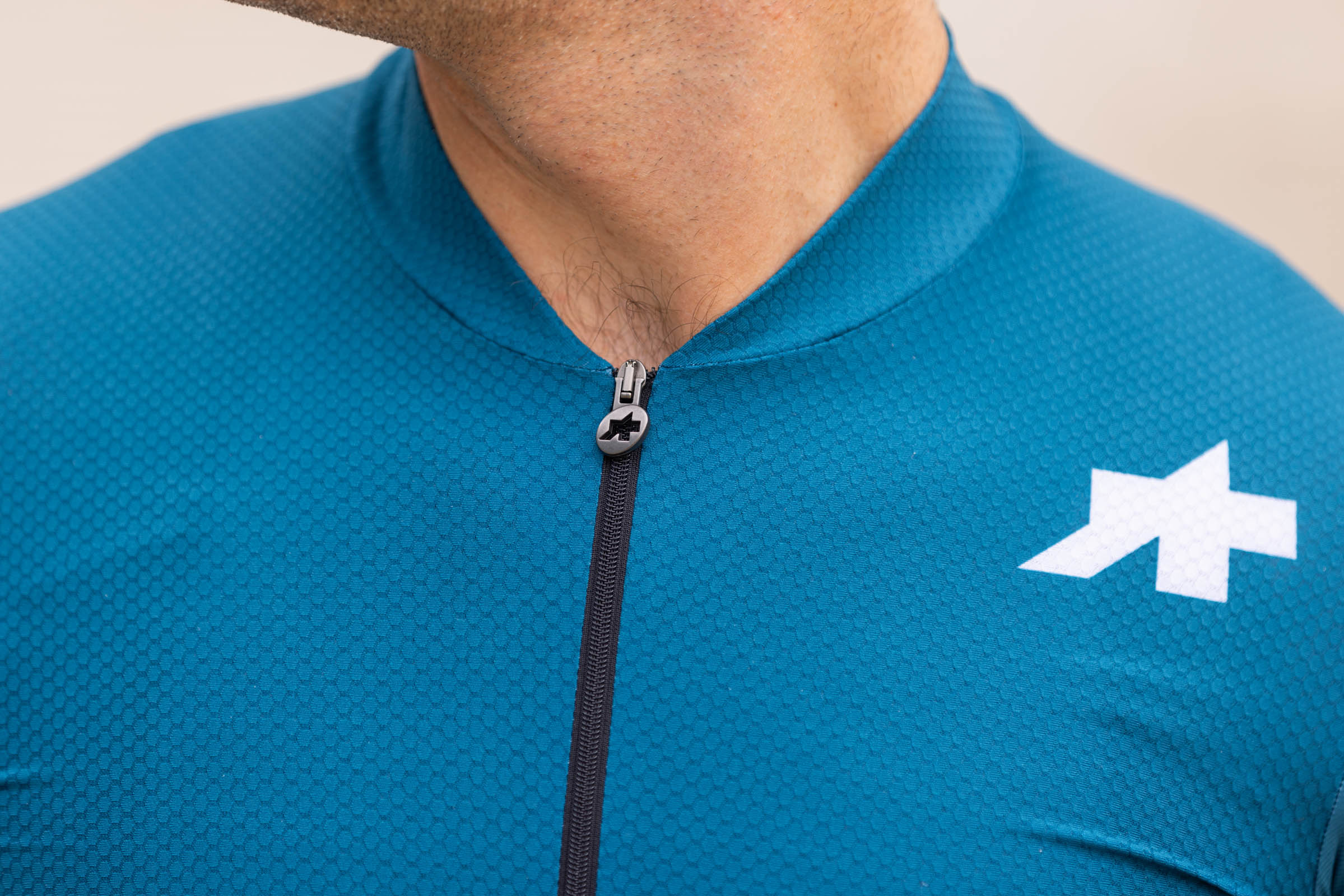
Up top, the Mille GT jersey makes use of Assos’ lightweight AirCell fabric. Its hexagonal structure is engineered to promote airflow while remaining stretchy.
This helps it feel light and breathable, while avoiding the tell-tale flap of excess material or an overly tight feel.
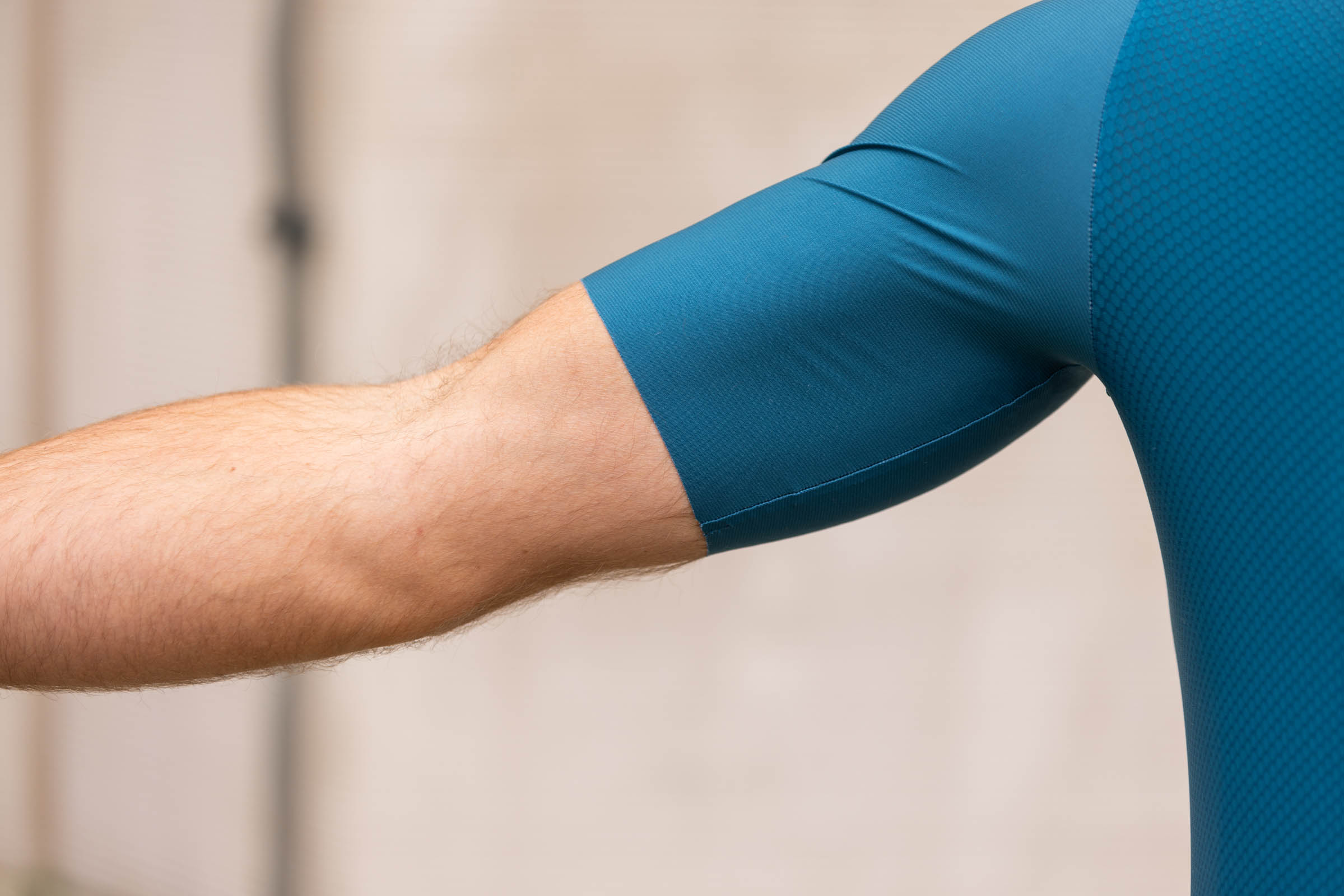
The sleeves have been reworked using a new lightweight ‘Eclipse’ fabric and finished with a raw-cut hem. Even with my broader shoulders, the sleeves settle naturally around the mid-point of my arm without digging in or pulling on the neckline. It’s a subtle update, but one I suspect will prove comfortable on the long rides this kit is designed for.
The sleeves are raw-cut, which should increase comfort. Scott Windsor / Our Media
Round the back, Assos’ familiar ‘Triple Ramp’ pockets are designed to help prevent sagging when you’ve packed in the supplies for an all-day ride. Fully loaded, I’ve found the jersey doesn’t feel too weighed down.
The overall cut is excellent, though, with generous enough proportions that it will accommodate riders like me who don’t conform to the snake-thin cycling stereotype, but still manage to flatter.
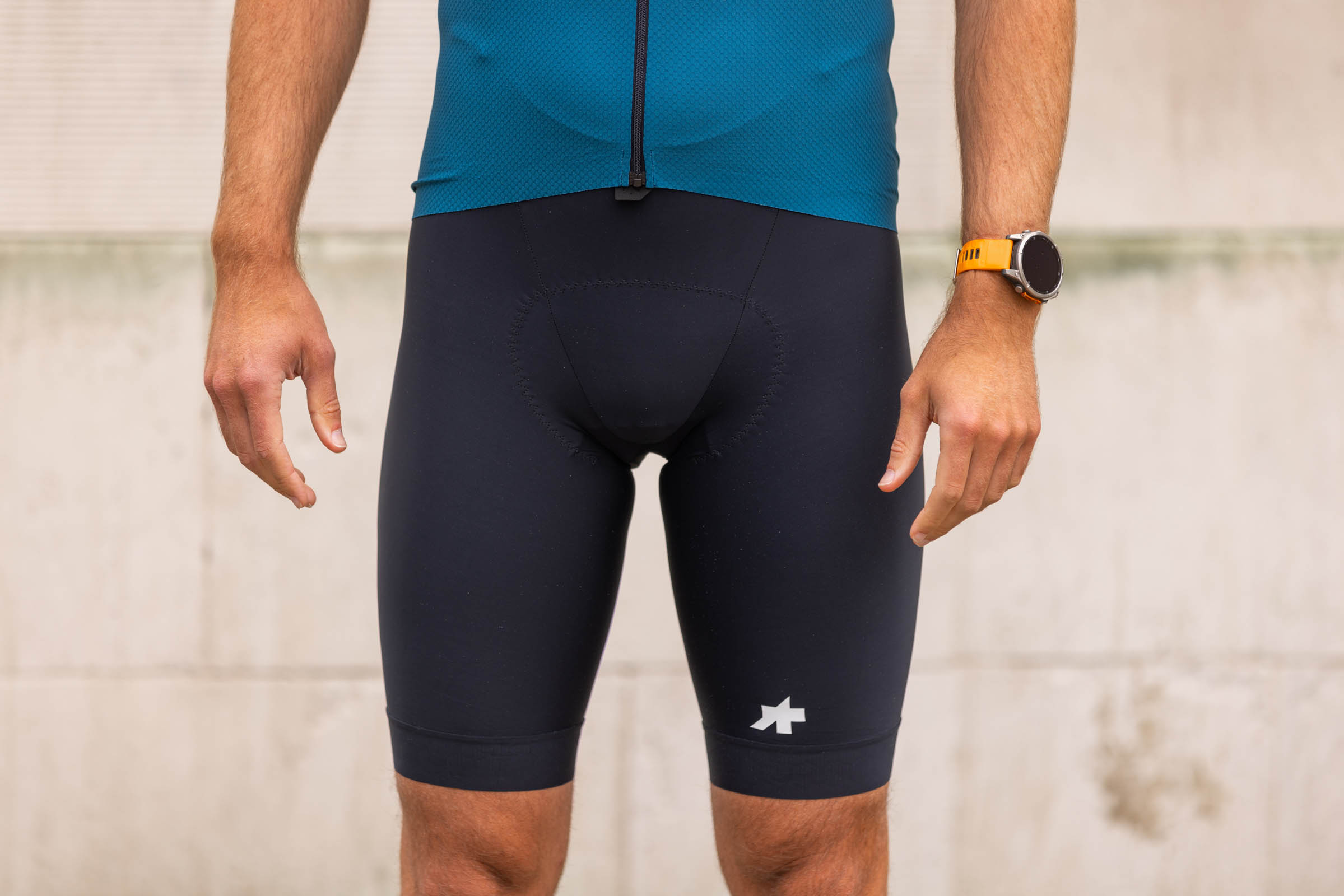
The shorts feel like remarkably good value at £135, including a version of Assos’ excellent S11 chamois. Scott Windsor / Our Media
The matching Mille GT Bib Shorts S11 retain Assos’ slightly awkward naming convention, but the focus on endurance riding is clear.
Assos says the slightly longer leg offers a modern silhouette, and while I’m not a fan of shorts that extend right down to the back of the knee, this design seems to strike a happy medium.
The legs are made from Assos’ Quartz fabric, which is said to be permanently odour-free (ideal if you wanted to use the shorts on a light bikepacking trip).
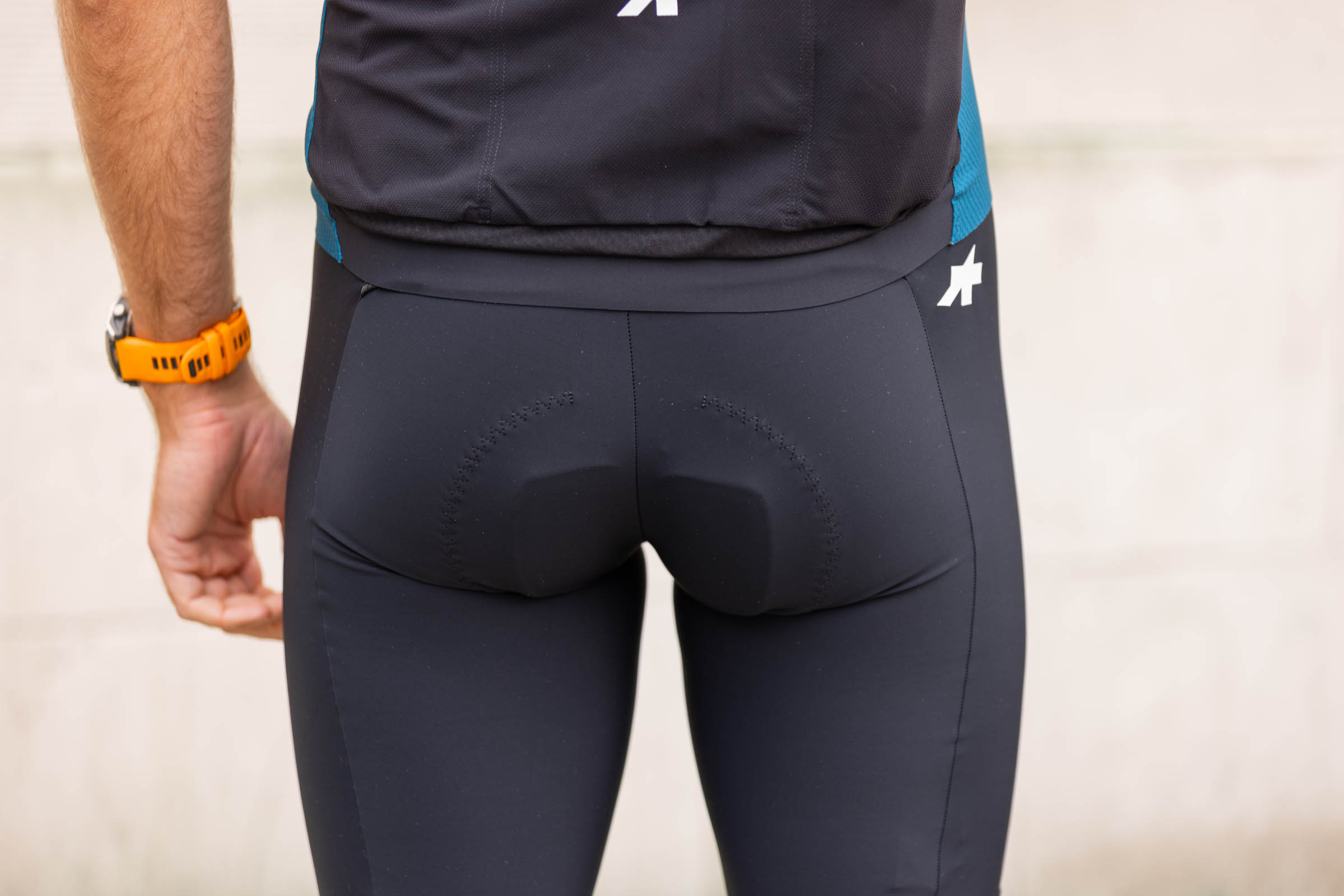
Assos has prioritised a low-profile pad design, cutting away unnecessary cushioning. Scott Windsor / Our Media
80 per cent of the material is made from recycled polyamide, a welcome move for the eco-conscious, yet it feels tough-wearing and compressive. Assos says the fabric is engineered to remain a deep black even when stretched, saving potential blushes and retaining a premium look.
The GT chamois is based on highly regarded ‘S11’ tech shared with the brand’s top-level shorts, and is 12mm thick but designed to be as minimalist and breathable as possible to avoid the dreaded hot puffy-pillow sensation.
Assos’ Rollbar bib-strap design is said to keep the insert securely in place during hard efforts, by anchoring lower down the backside. It’s this that gives a real supportive, locked-in sensation when riding.
The updated Assos Mille GT kit seems to offer an enticing blend of premium performance and a mid-range price tag. Scott Windsor / Our Media
The brand’s Golden Gate 2.0 tech, whereby the pad is only partially stitched in, enables it to settle into the optimum position more easily before the bib-strap design does its work to hold everything in place.
I’m also a fan of the leg grippers, which use a textured design that I find slightly reminiscent of the first-generation Rapha Pro team bib shorts, offering a definitive feel to the end of the shorts. These are less tight-feeling, though, which helps to mitigate a sausage-leg look or unsightly marks on the skin.
The Assos Mille GT kit is available now, priced at £115 for the jersey and £135 for the bib shorts, both in multiple colourways.
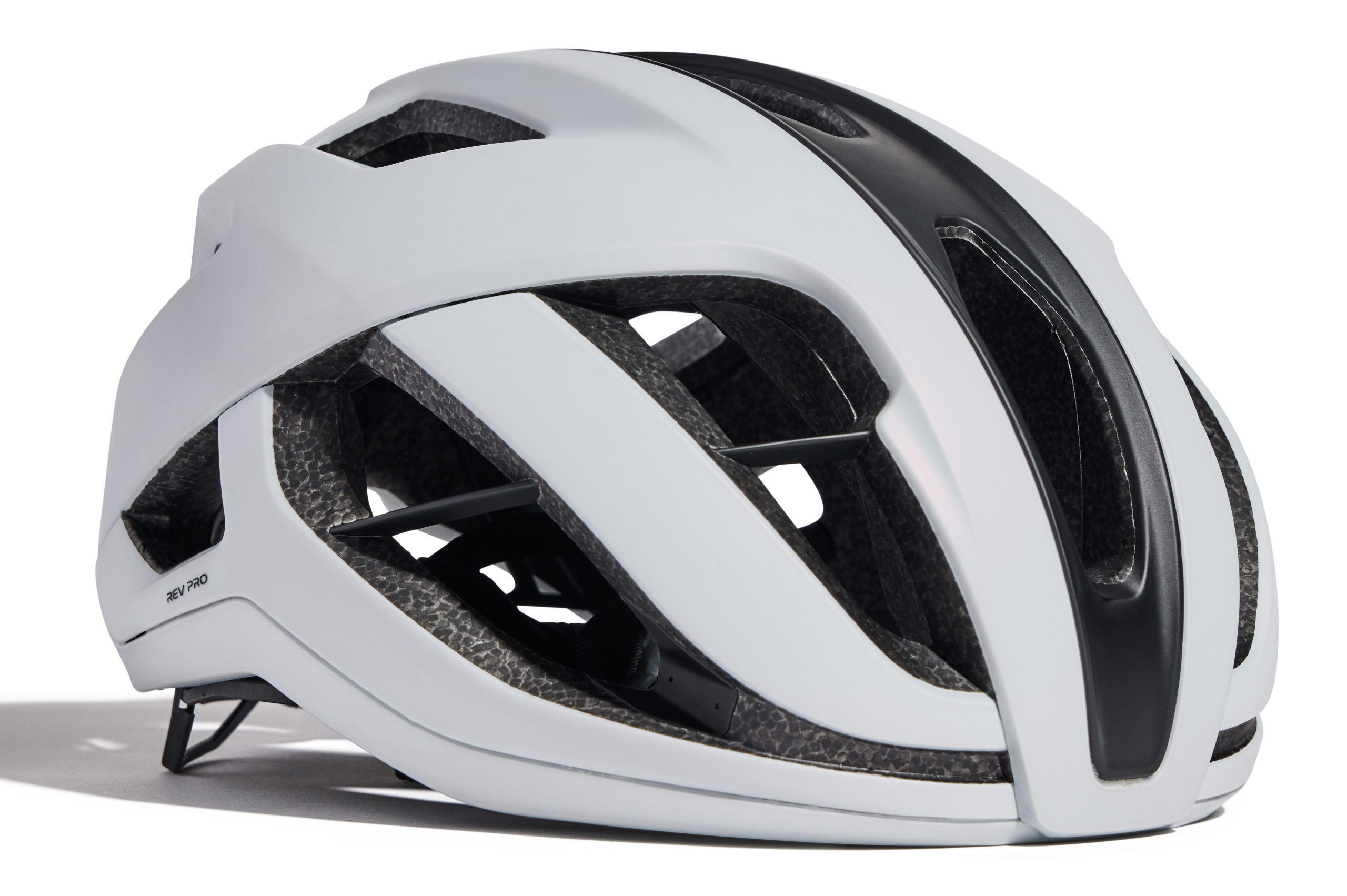
Giant has updated two of its helmets, both with wind-tunnel developed aero features. While the Pursuit is an aero road helmet tuned for aero gains at higher speeds, the Rev Pro is a more vented helmet with low weight and heat management its focus, but still with aero credentials.
The Pursuit was due an update, because the previous model was introduced 10 years ago. We highlighted it as among the oldest gear still being used in pro cycling, worn on his way to Giro d’Italia victory by Tom Dumoulin, back in 2017 when rim brakes still ruled and cable integration was a twinkle in a bike designer’s eye.
Giant claims the new Pursuit MIPS helmet will save you an average of 1.55 watts over its previous-generation Pursuit and that a size medium weighs 280g.
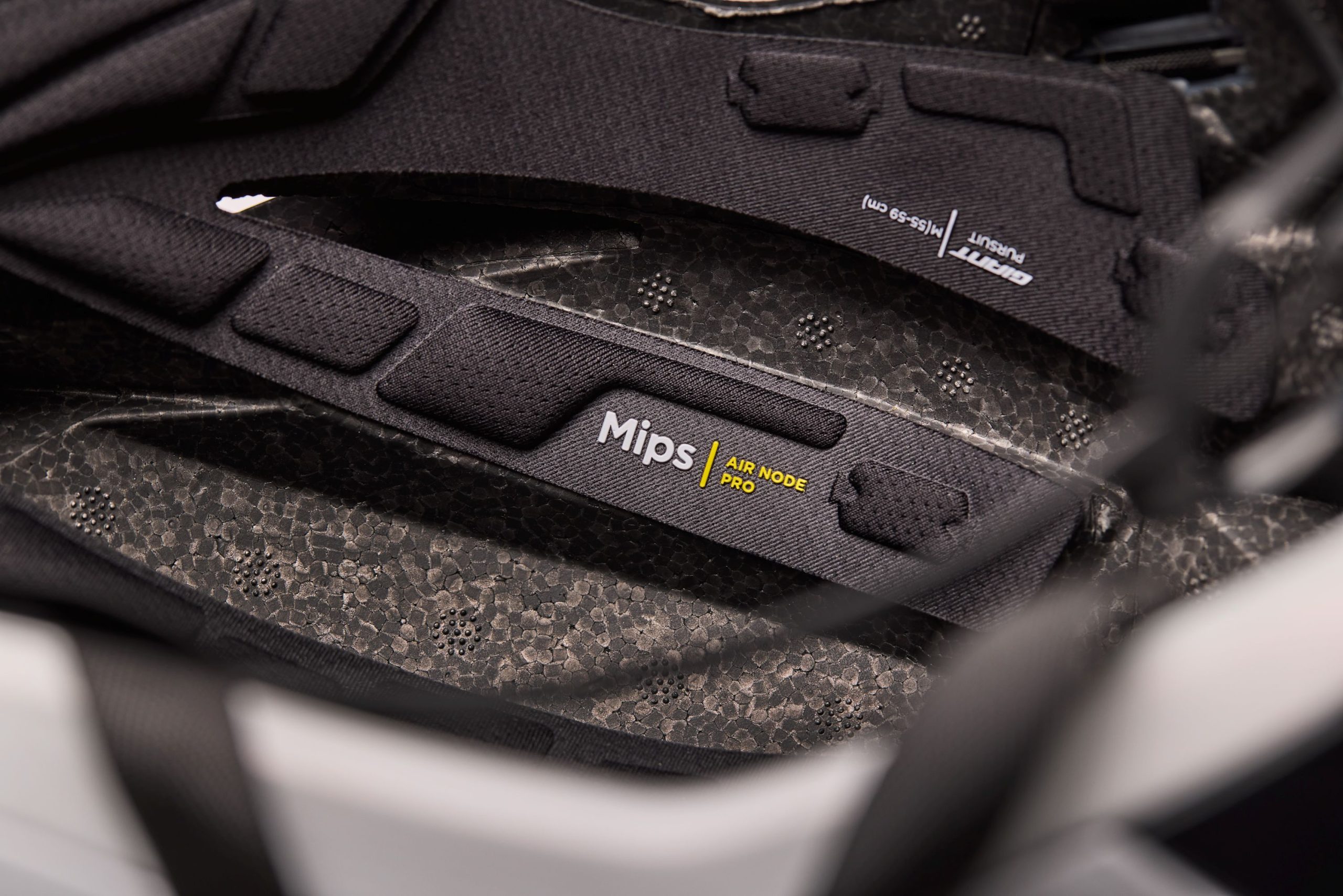
The MIPS Air Node Pro system is integrated into the helmet’s padding.
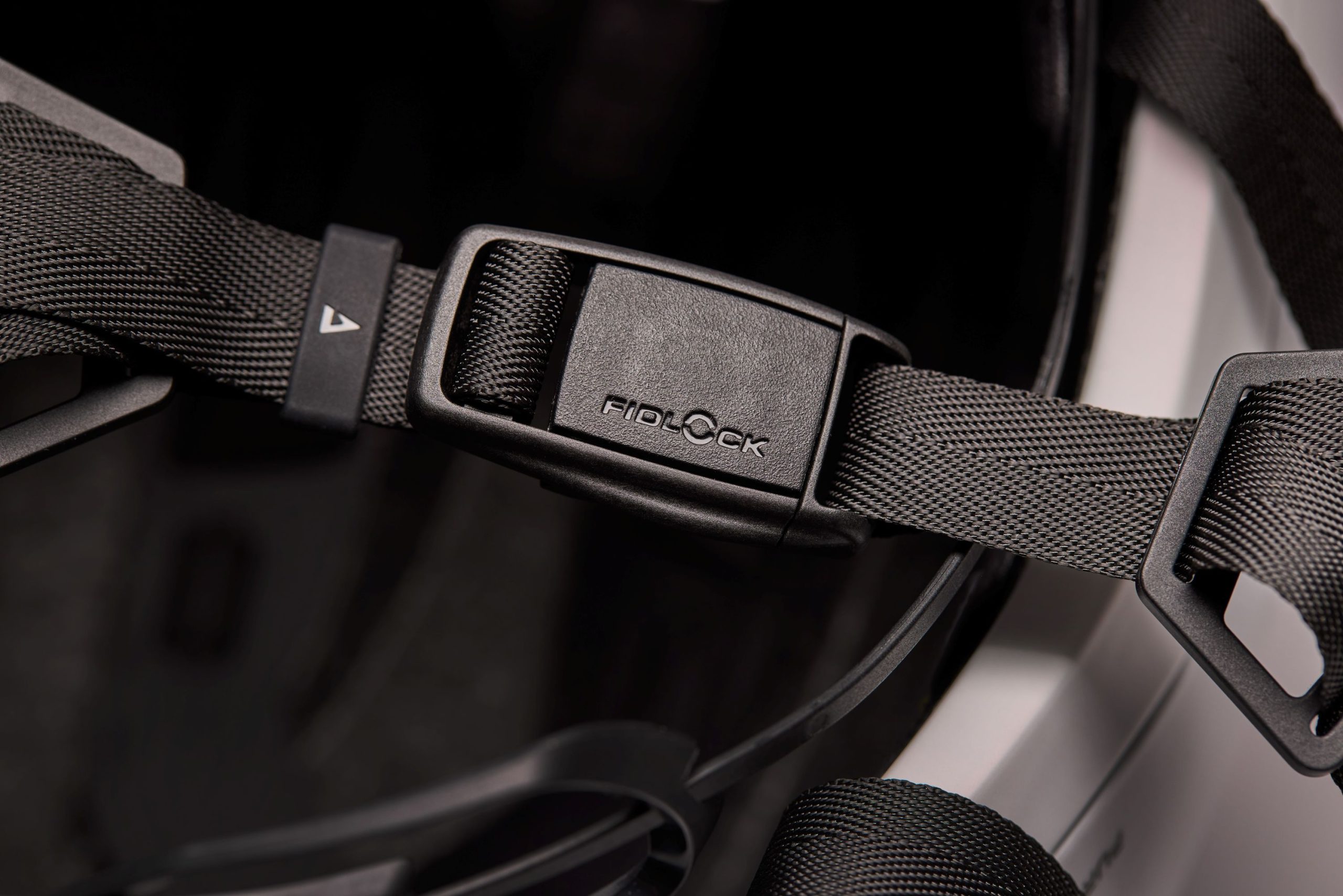
The helmet has a shell with a central longitudinal groove, which Giant says helps smooth airflow over a range of wind yaw angles. There’s a Fidlock magnetic buckle for easy strap closure, Giant’s Cinch Pro adjustment and dual-density EPS foam.
Giant uses the minimalist MIPS Air Node Pro rotational impact protection system. Virginia Tech awarded the Pursuit MIPS a five-star rating in its independent impact-protection tests.
Giant claims the Rev Pro is cool at climbing speeds, while still aero when riding faster.
The Rev Pro hasn’t been around as long as the Pursuit, having been launched in 2020 and followed by the mid-tier Rev Elite MIPS in 2024.
The updated Rev Pro MIPS helmet’s venting has been developed using thermal mapping to ensure effective cooling. Giant claims the interior channelling helps remove heat at climbing speeds, without compromising aero efficiency when going faster.
The shell is reinforced to enable Giant to include larger vents and keep the weight of a size-medium helmet down to 280g, the same weight as the Pursuit MIPS and 5.4% lighter than the previous-generation helmet.
Both Giant’s helmets have a magnetic Fidllock buckle for easy strap closure.
The Rev Pro MIPS has the same MIPS Air Node Pro rotational impact protection system and other features as the Pursuit MIPS and, as with that helmet, the Rev Pro has a five-star rating from the Virginia Tech Helmet Lab.
In the UK, the Rev Pro MIPS helmet is priced at £189.99 (€280 in Ireland), while the Pursuit MIPS is priced at £199.99 / €290. Both are available in three sizes to fit head sizes between 51cm and 63cm and either black or white, with either Giant or Liv branding.
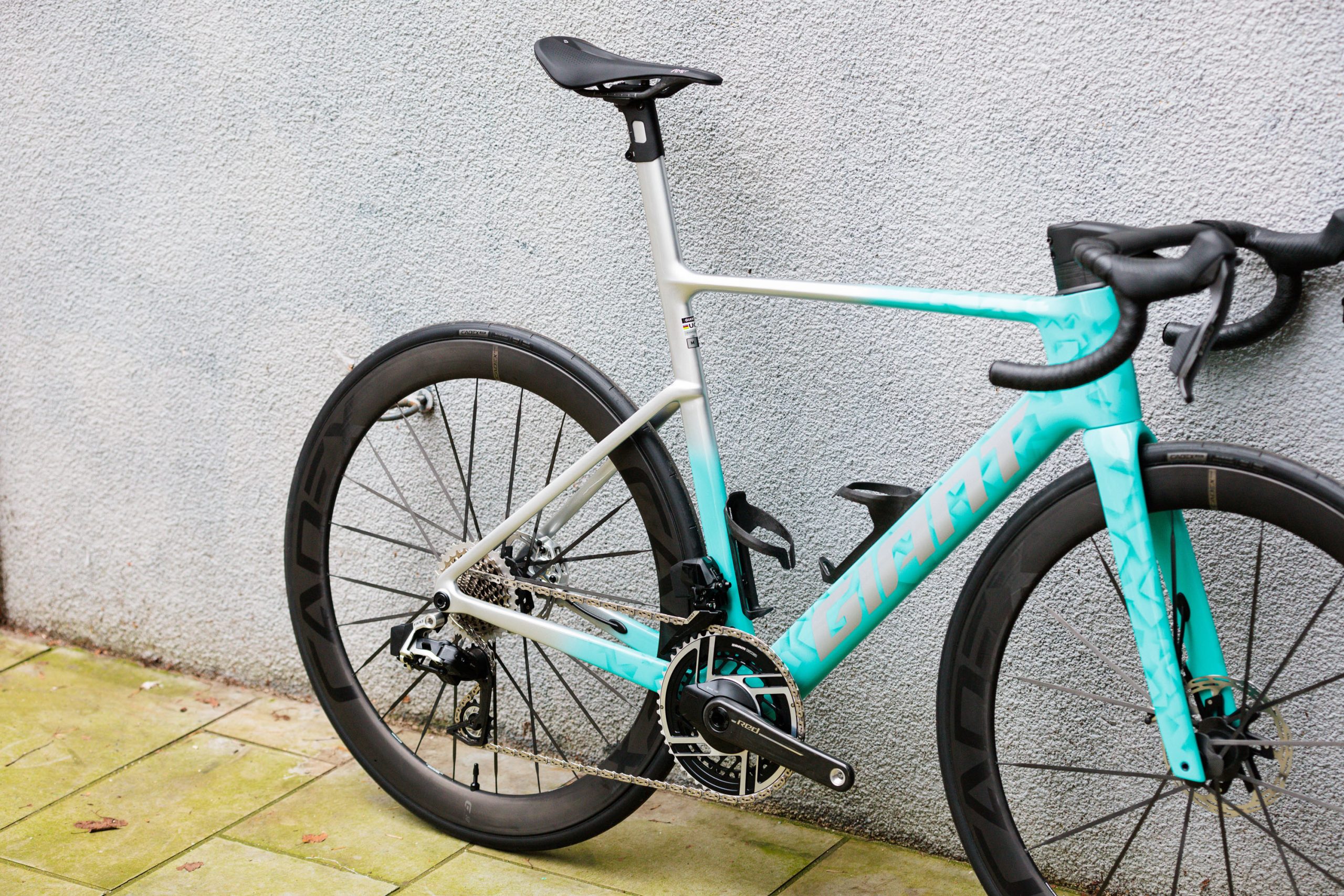
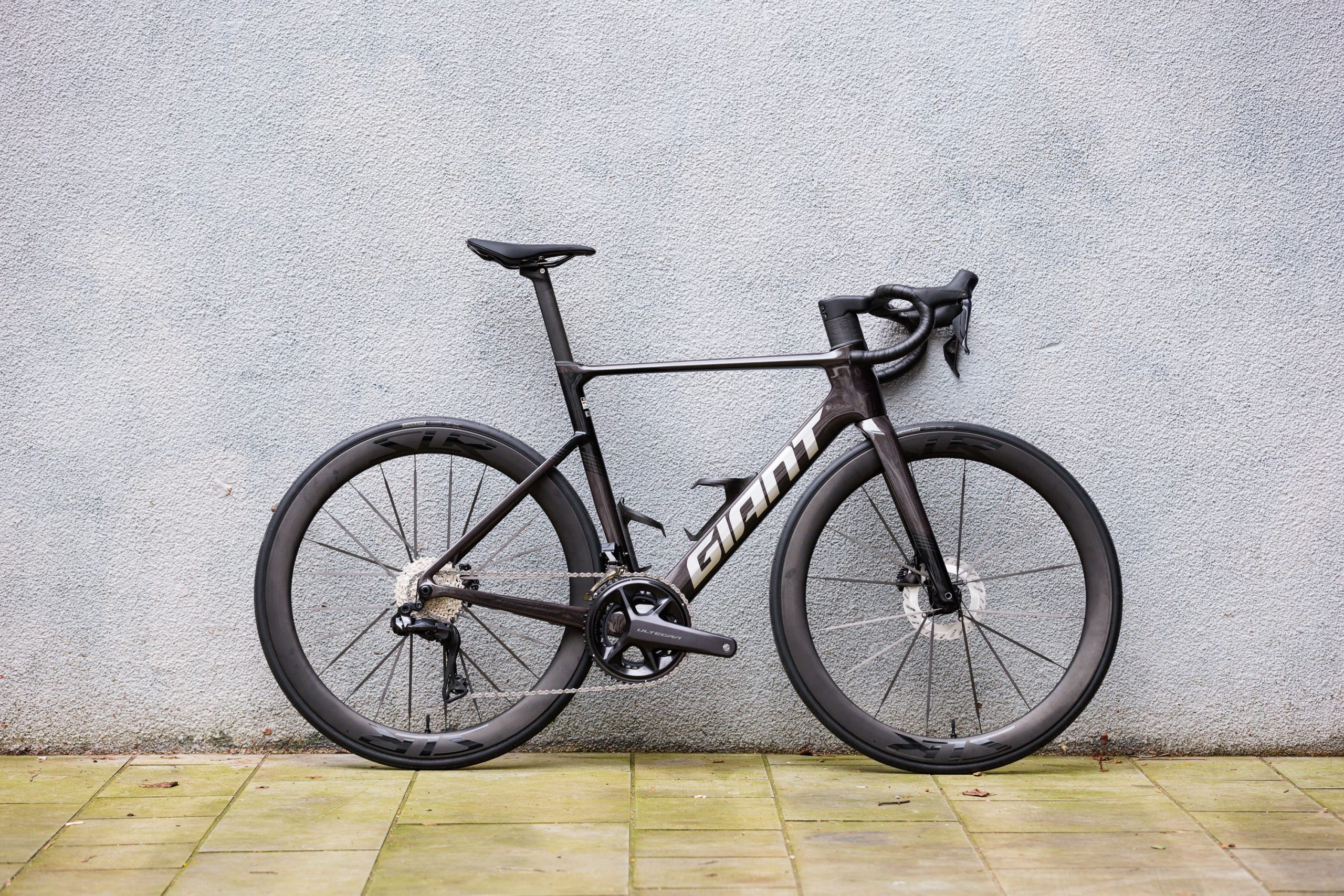
The fourth-generation Giant Propel is here and it weighs as little as 6.56kg in a top-spec, size-medium build.
Despite a reduction in complete bike weight of around 350g (for the top-spec, Advanced SL 0 model), Giant claims the new version doesn’t skimp on aerodynamics or efficiency.
In total, Giant says the 2026 Propel has an 18.4-watt ‘advantage’ at 40kph over the previous model, thanks in part to a suite of new and improved components and finishing kit.
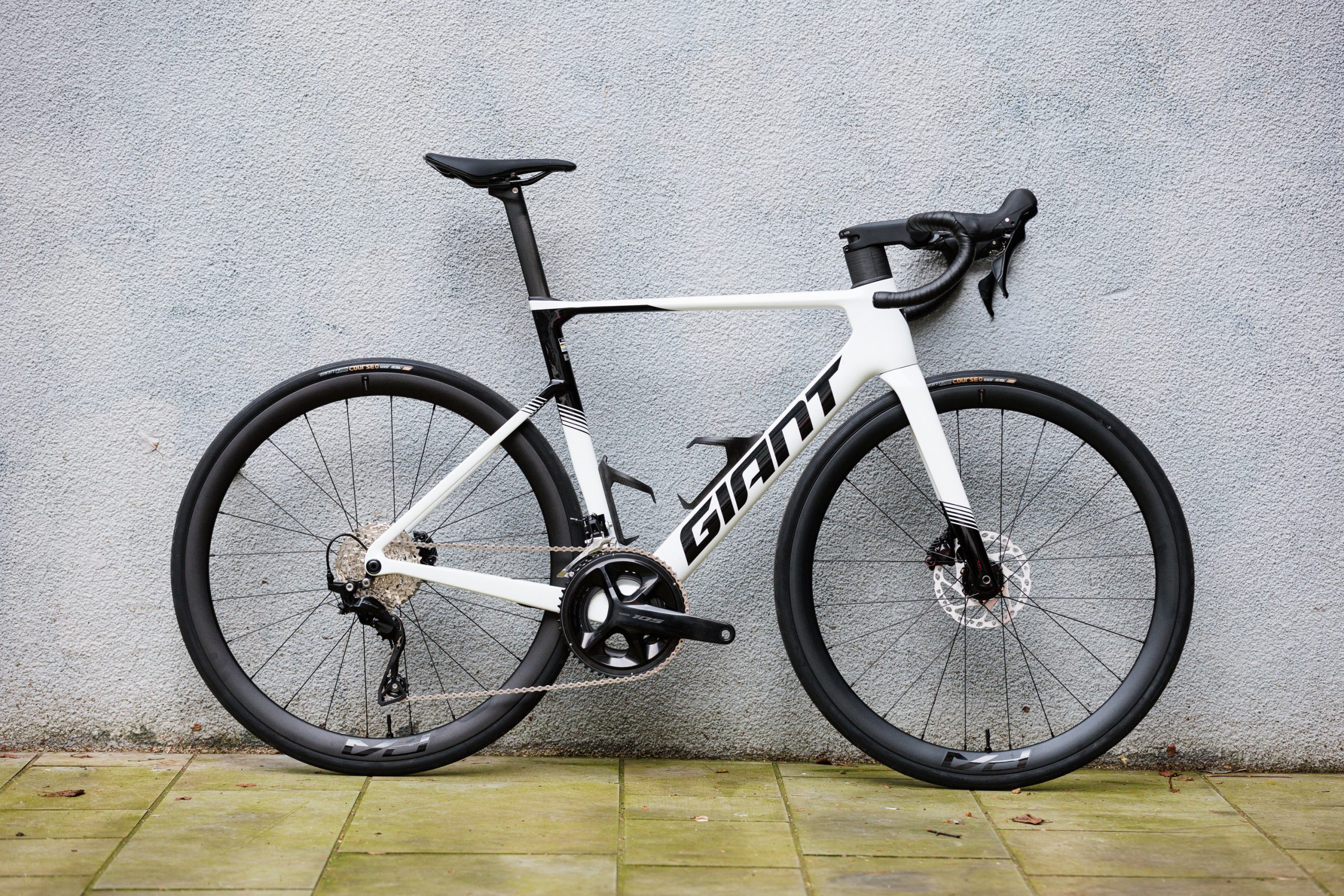
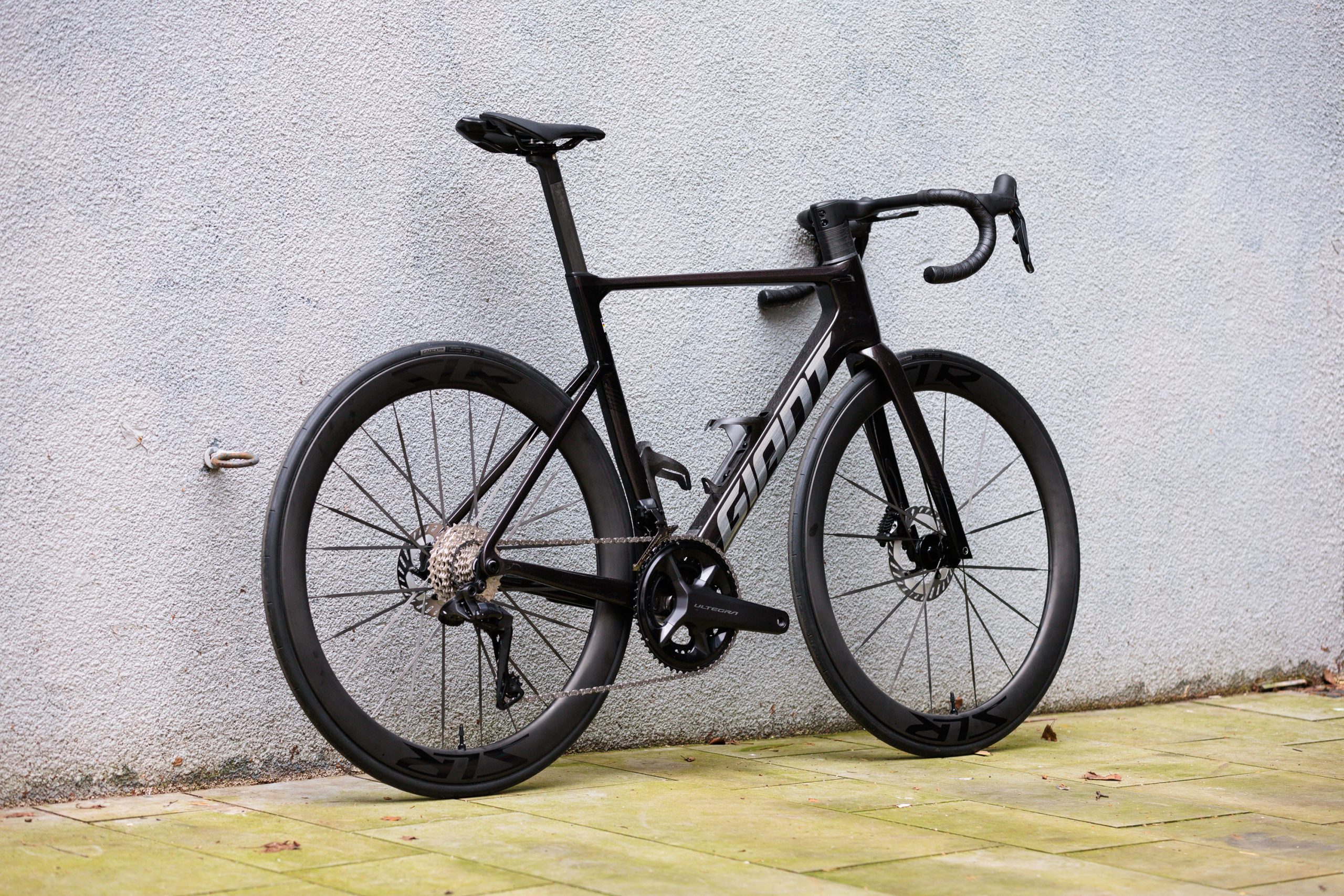
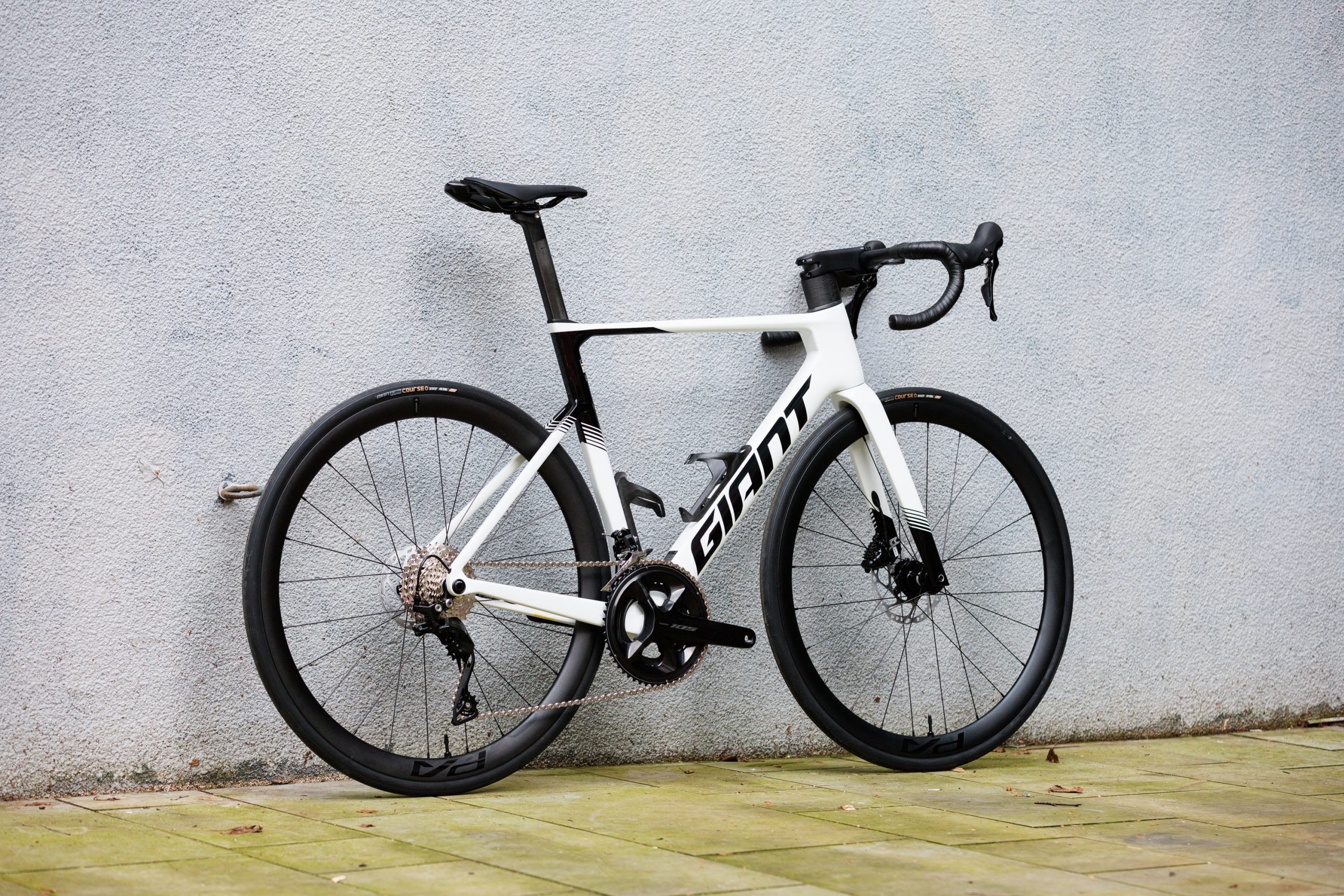
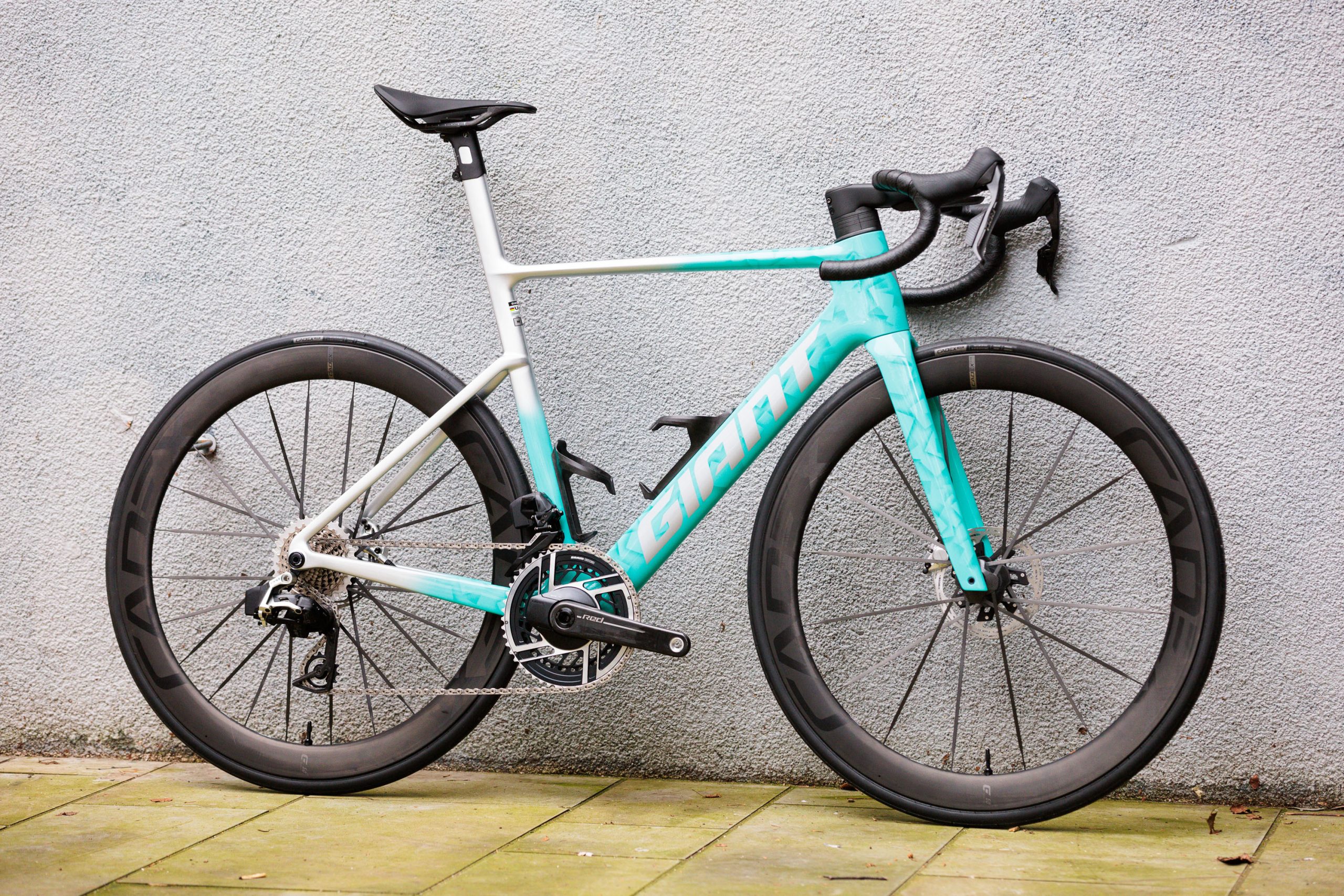
Ahead of the bike’s launch, we got our hands on the flagship, Propel Advanced SL 0 AXS (£10,499 / $13,500 / €11,999), the mid-range Advanced Pro 0 Di2 (£5,799 / €6,499) and the cheapest bike in the range, the Advanced 0 (£3,499 / €4,399).
Let’s take a look at what’s changed, and how much difference it makes going from the flagship Propel down to the more affordable models.
Total System Speed
The Giant Propel remains an all-rounder aero bike. Simon von Bromley / Our Media
While many aero road bikes take an ‘aero is everything’ approach, the Propel has always been more weight-conscious.
The latest model doubles down on that ethos, shaving weight from almost every part of the bike.
Nevertheless, the new Propel looks almost identical to the old one at a glance.
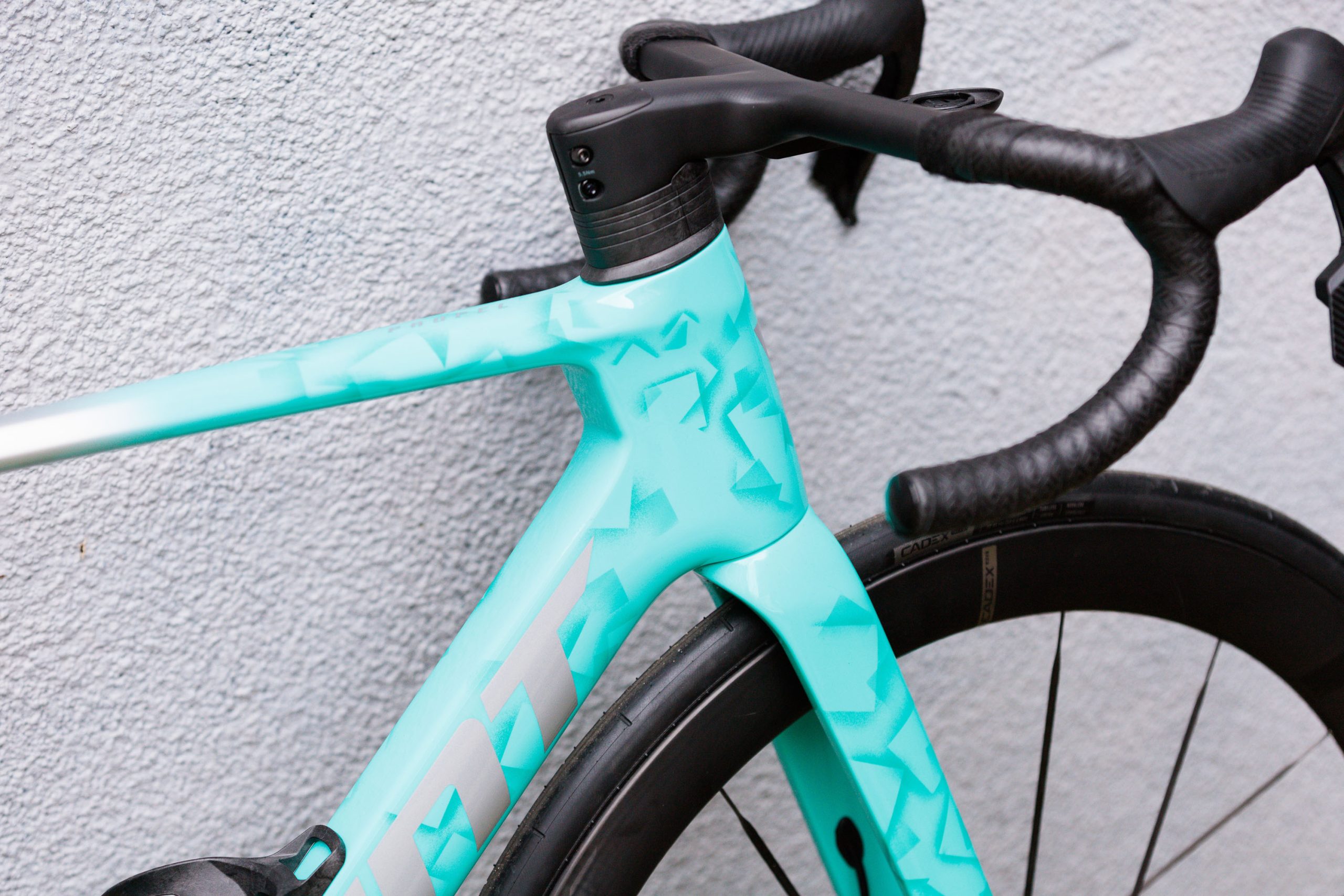
The most obvious changes are the more heavily dropped seatstays and the move to an integrated cockpit up-front. Simon von Bromley / Our Media The Propel Advanced Pro 0 Di2 is a mid-range model, which forgoes an integrated seatpost. Simon von Bromley / Our Media
As with the latest Cannondale SuperSix EVO, there are plenty of small changes – which Giant says add to a big overall improvement. However, it’s fair to say Giant has refined the Propel formula rather than reinventing it.
That’s nothing to grumble about. Both the Advanced SL and Advanced Pro versions of that bike performed extremely well during testing (bar a couple of somewhat outdated spec choices), so a more drastic change to the design would have likely alienated fans of its existing charms.
In terms of what’s new and improved, let’s run through the headline features on the 2026 Giant Propel platform.
Frameset refinements
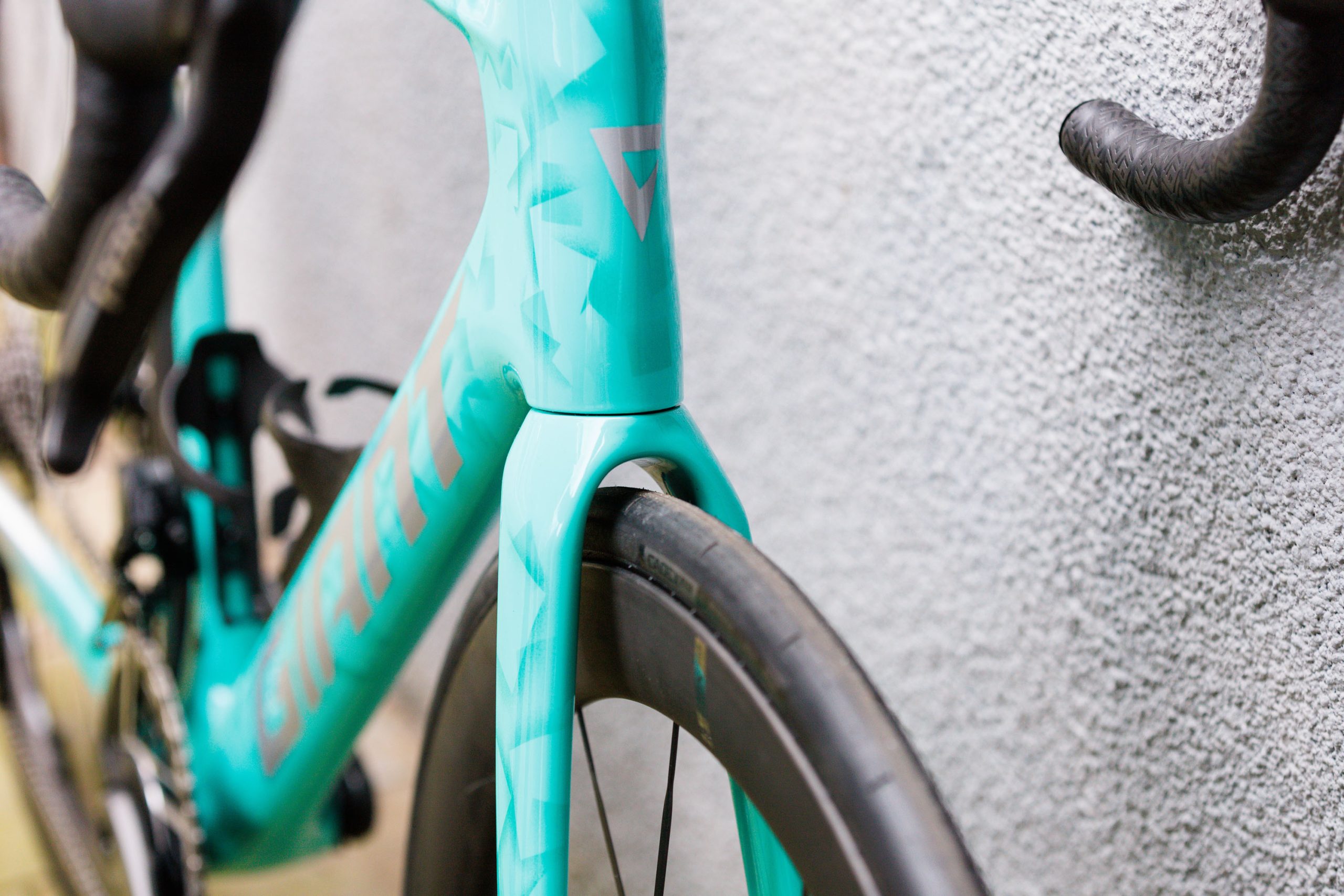
There’s some (very) subtle reshaping up front, plus a bump in tyre clearance to 32mm. Simon von Bromley / Our Media
While the overall silhouette is very similar, the 2026 Propel gets subtle reshaping across the frameset to improve aerodynamic performance, as well as a bump in tyre clearance to 32mm (up from 30mm).
Vertical compliance at the rear of the bike is also said to be 25 per cent better, thanks to more heavily dropped seatstays, and Giant has refined the carbon layup to save 40g and improve the bike’s pedalling and handling stiffness.
There’s plenty of room to spare around the 28c tyres fitted as stock on the new Propel. Simon von Bromley / Our Media Giant says the more heavily dropped seatstays improve rear-end compliance by 25 per cent. Simon von Bromley / Our Media
It also gets a Universal Derailleur Hanger rear dropout, for compatibility with SRAM’s recently launched direct-mount rear derailleurs.
As before, the Advanced SL frames get an integrated seatpost and Giant’s lightest carbon fibre blend, while Advanced Pro and Advanced frames use a telescoping aero seatpost plus a heavier (and cheaper) carbon layup.
The more meaningful changes come elsewhere on the new Propel, however, with new and updated components bringing more tangible gains – especially at the front of the bike…
Integrated and narrower cockpits
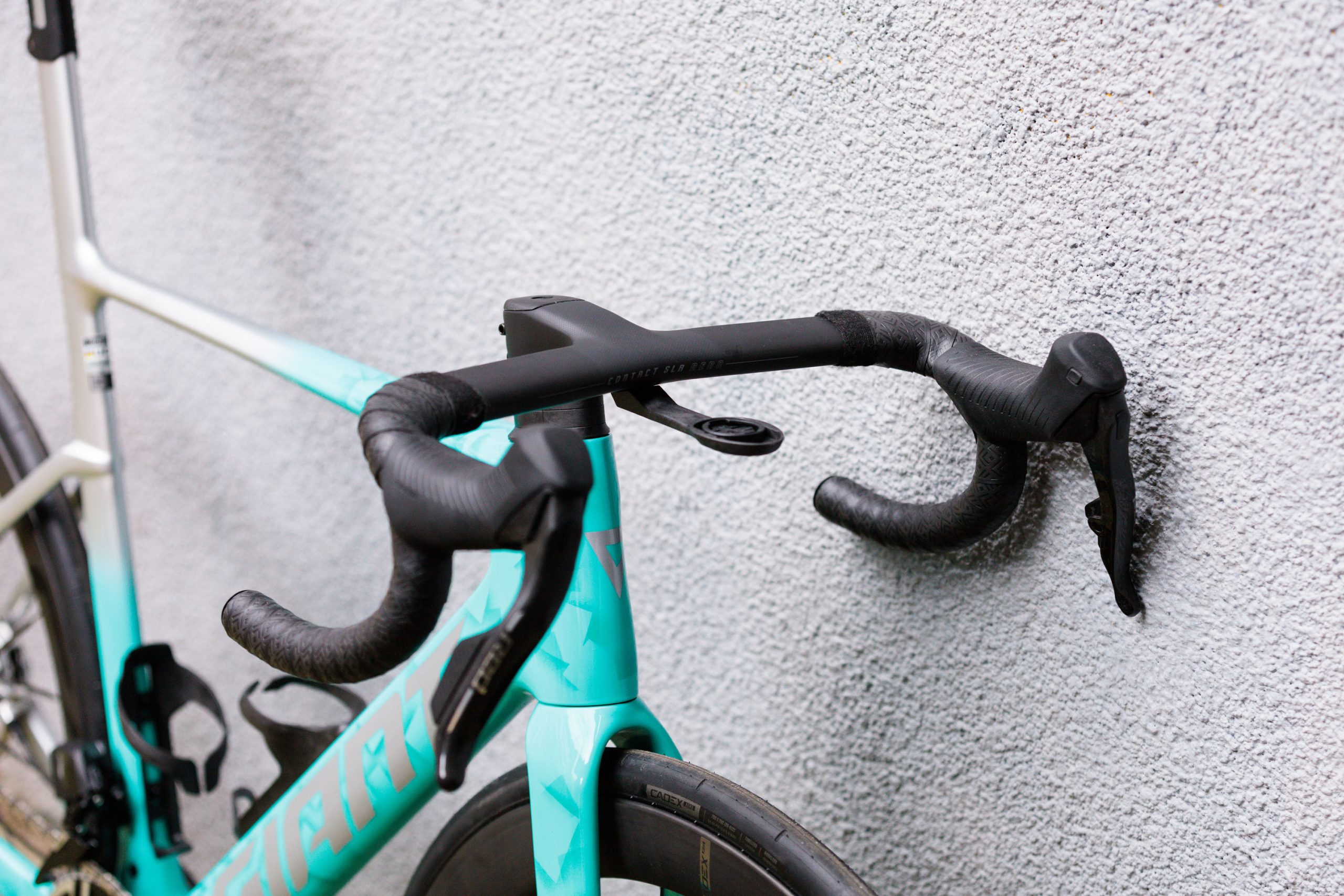
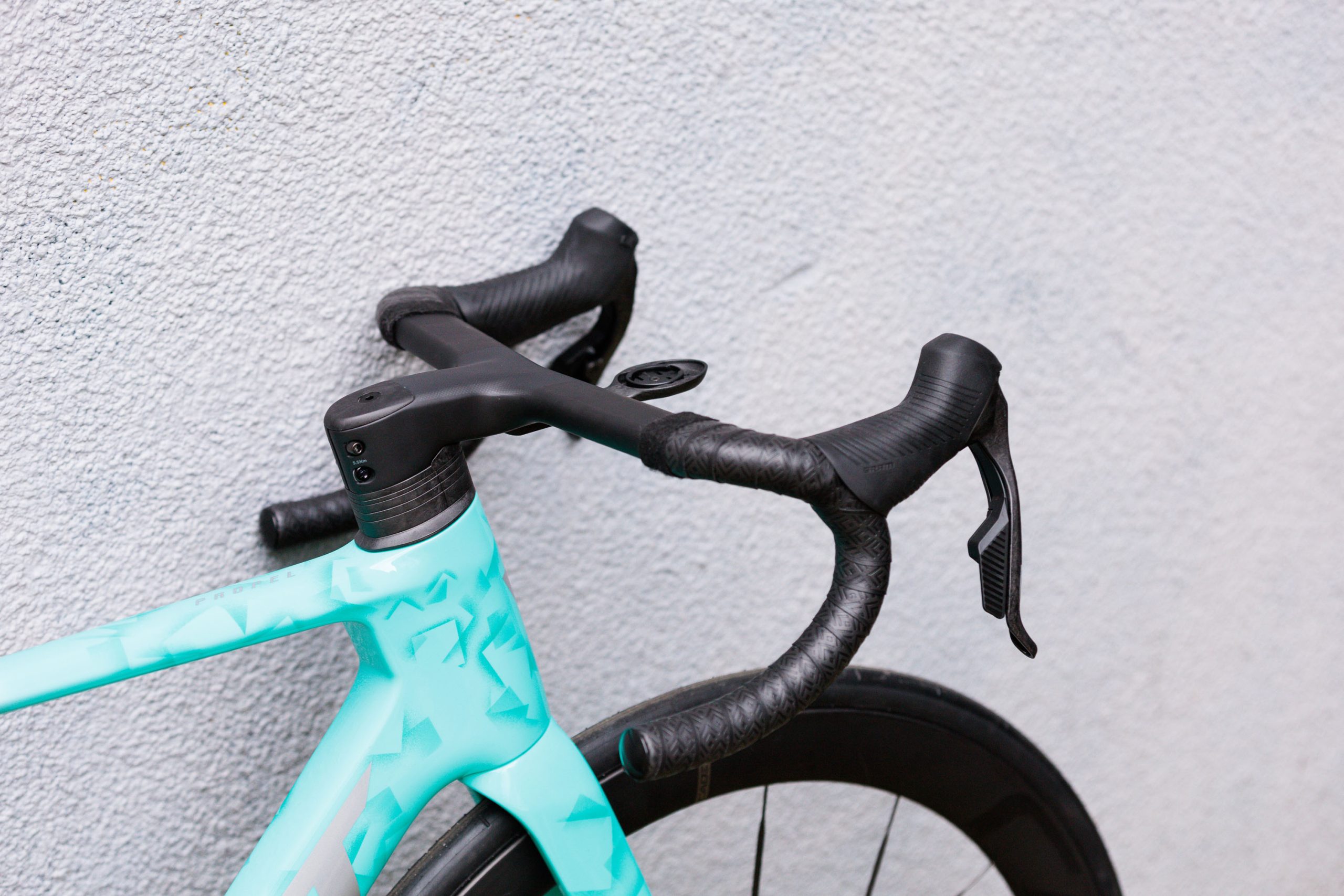
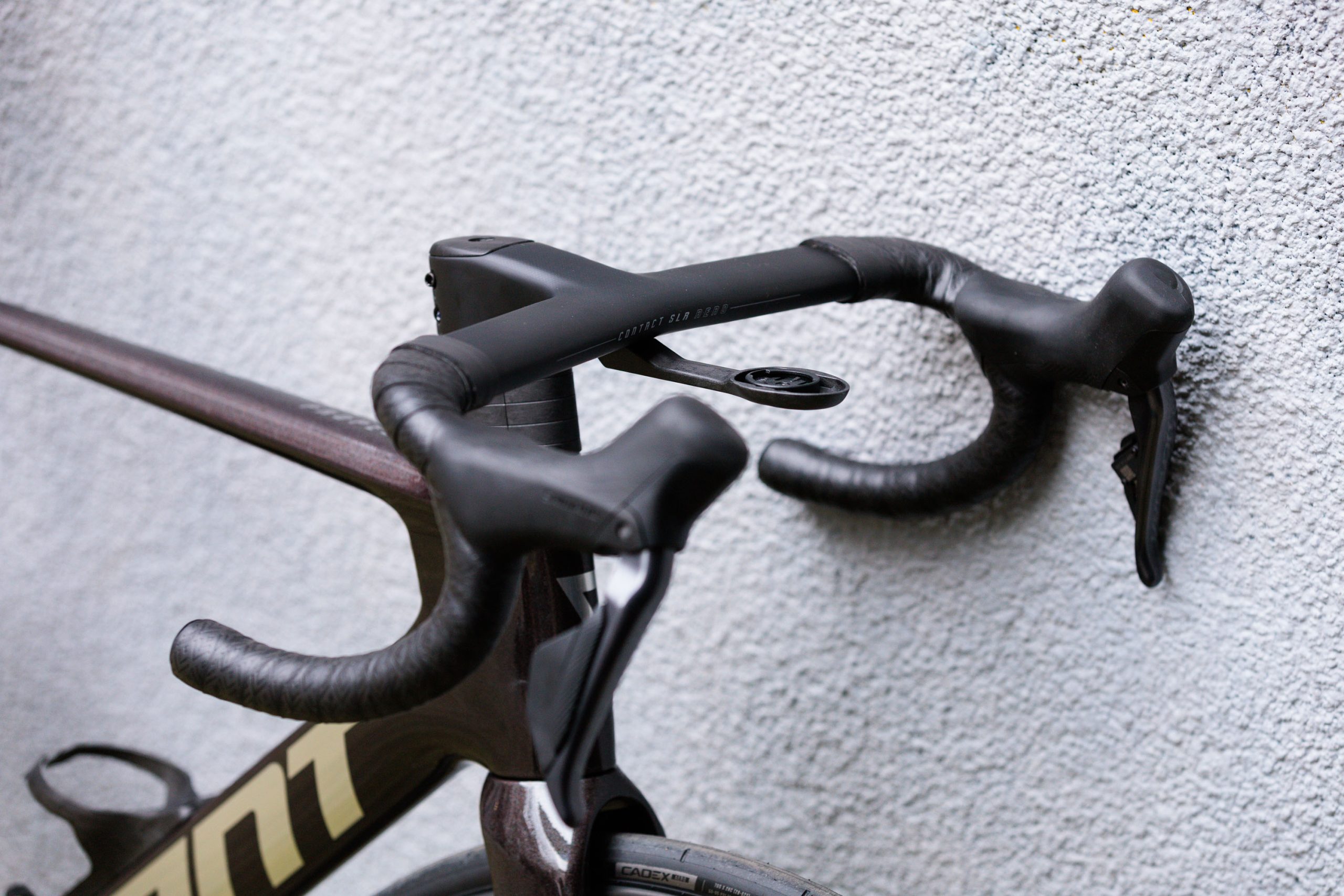
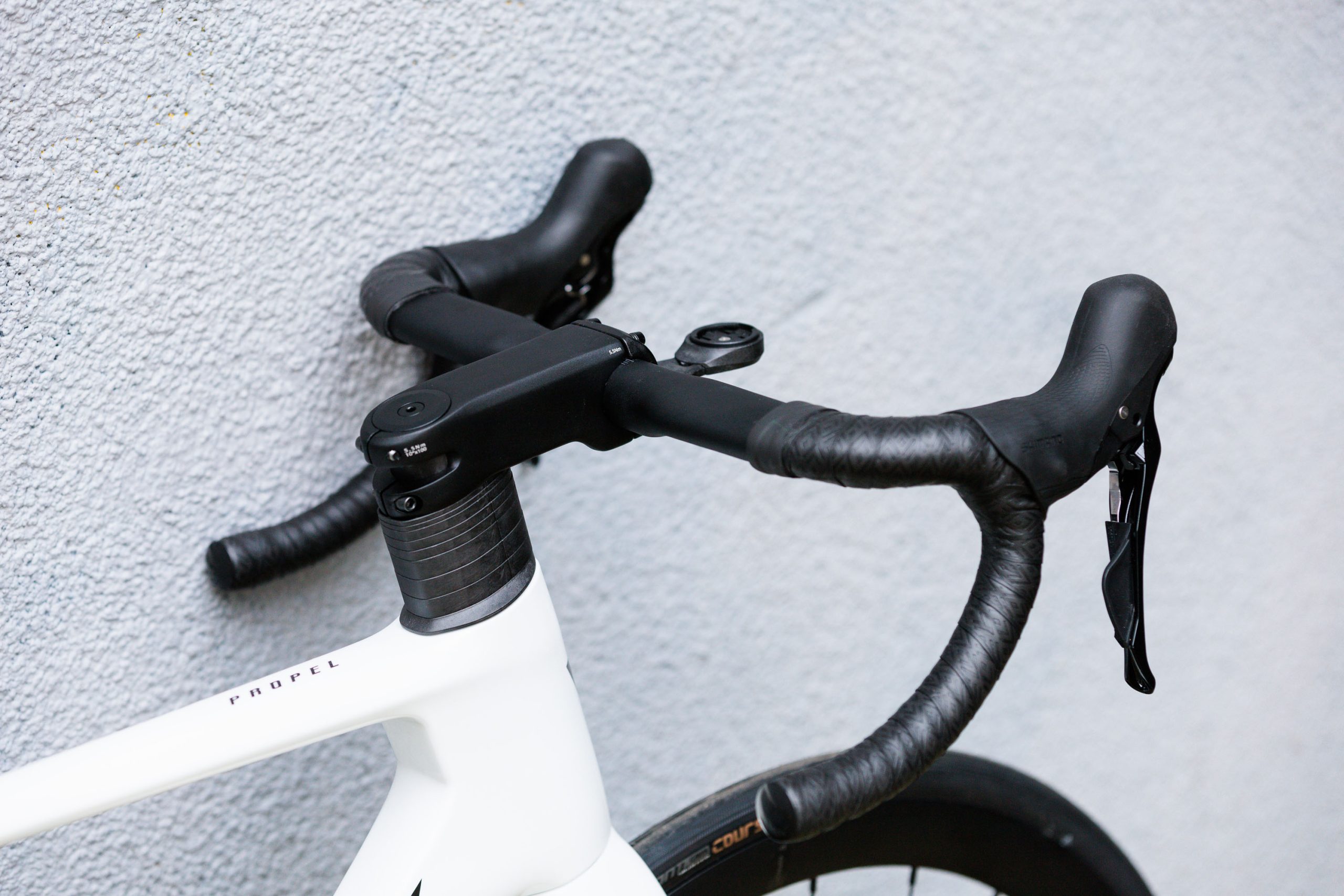
Giant’s new Contact SLR integrated carbon fibre cockpit cuts drag and weight. Simon von Bromley / Our Media
While many (myself included) valued the adjustability of the old two-piece cockpit, the direction of travel in road cycling is clear – fully integrated, one-piece handlebars are more aerodynamic, lighter and, perhaps most importantly, make a bike more attractive to prospective customers on shop floors. They’re what 99 per cent of pros use at the Tour de France, after all.
Notably, Giant has also got on board with the trend for narrower handlebars and flared drops – which contributes to that 18.4-watt advantage.
The bar features a narrow hoods position with wider, flared drops. Simon von Bromley / Our Media
A size-medium Propel, for example, now comes with a 400mm-wide bar (measured centre-to-centre at the drops), compared to 420mm on the previous model, and that 400mm bar measures only 370mm-wide at the brake hoods.
Bike fitters will be relieved to read there are plenty of choices, with bar widths from 360 to 440mm and stem lengths from 80 to 140mm. The D-shaped OverDrive Aero steerer and cable-routing system is also carried over from the previous model, so riders can still use a two-piece setup (or a third-party option) if desired.
The Propel Advanced Pro also gets a one-piece carbon cockpit, albeit a slightly heavier version. Simon von Bromley / Our Media Advanced builds get the two-piece aluminium cockpit, which is carried over from the previous version. Simon von Bromley / Our Media
The top-spec Contact SLR 1 Aero handlebar is claimed to tip the scales at 286g (420x100mm), saving 77g compared to the old two-piece cockpit.
Advanced Pro builds also get an integrated cockpit, albeit a slightly heavier, 350g version. The Advanced builds make do with the two-piece setup from the previous Propel, with an aluminium stem and aero handlebar.
Trickle-down carbon spokes and Aero tyres
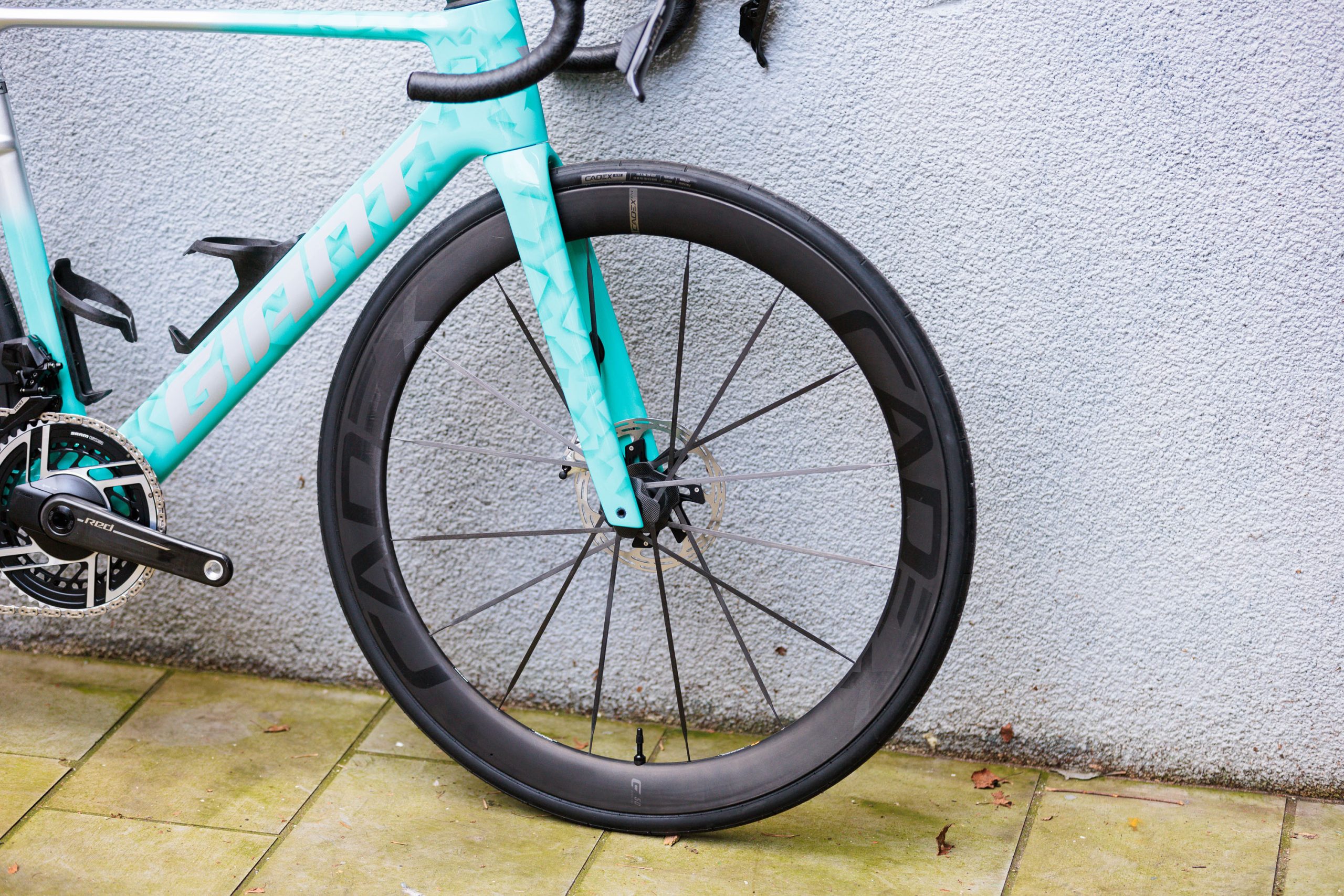
The Advanced SL builds get the new Cadex Max 50 wheelset. Simon von Bromley / Our Media
Designed as a “unified aerodynamic system”, these 1,290g, carbon-spoked wheels and aero-optimised tyres come fitted to Propel Advanced SL models, such as the Advanced SL 0 AXS model we got hands-on with prior to the launch.
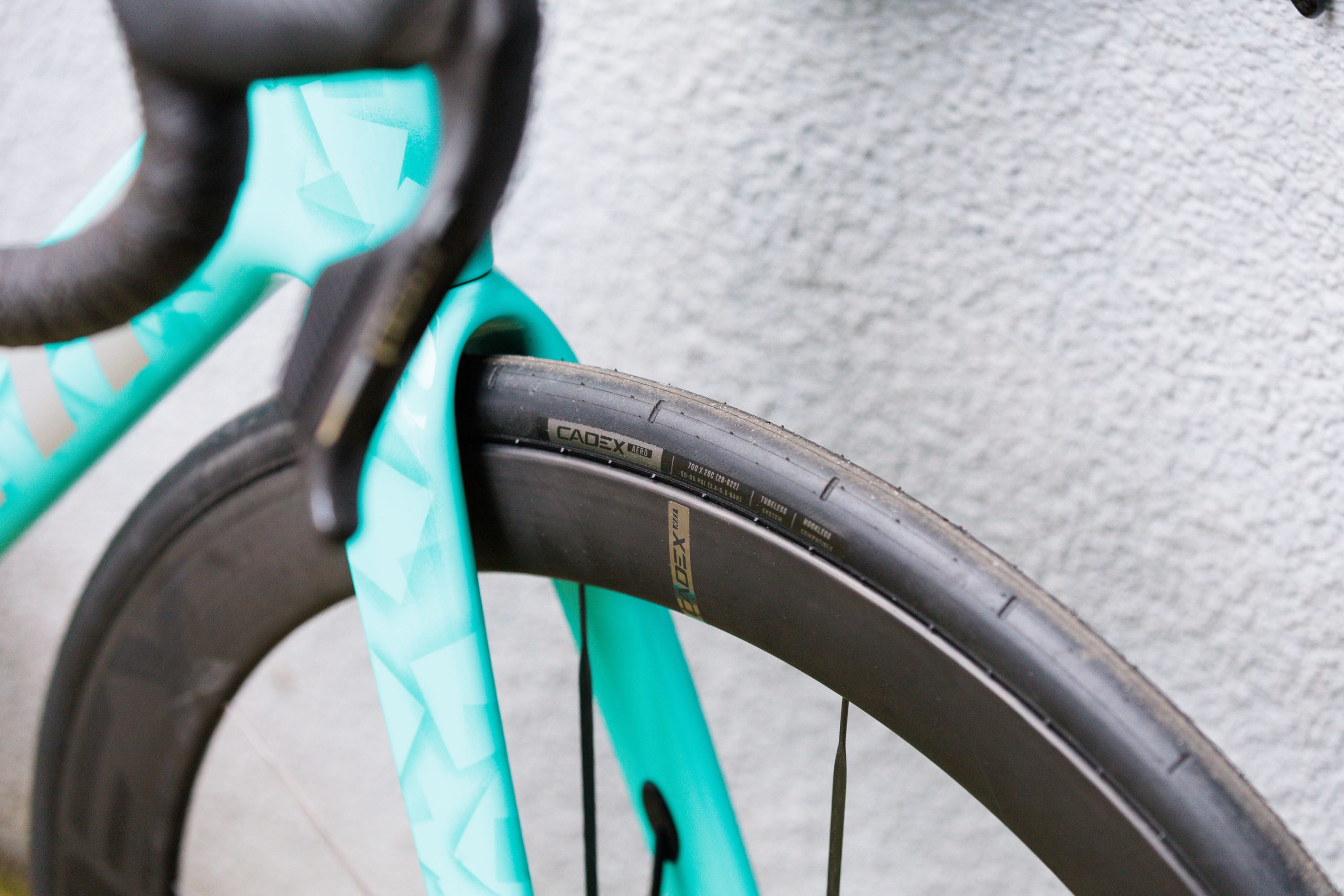
Cadex’s new Aero tyres are also specced on Advanced SL and Advanced Pro builds. Simon von Bromley / Our Media
As detailed in our news story on those wheels and tyres, the carbon spokes are bonded directly into the hub flanges for a lightweight and reactive construction, while the new Aero tyres are claimed to have lower rolling resistance as well as a tread pattern that helps improve aerodynamic performance.
All bikes in the new Propel range are specced with 28c tyres, up from 25c on previous models, which is a welcome update (even if pro choices are trending wider nowadays, as evidenced by our bike checks at this year’s Opening Weekend).
Together, these wheels and tyres cut another 240g of weight compared to the top-spec old model – the most significant saving of all the changes.
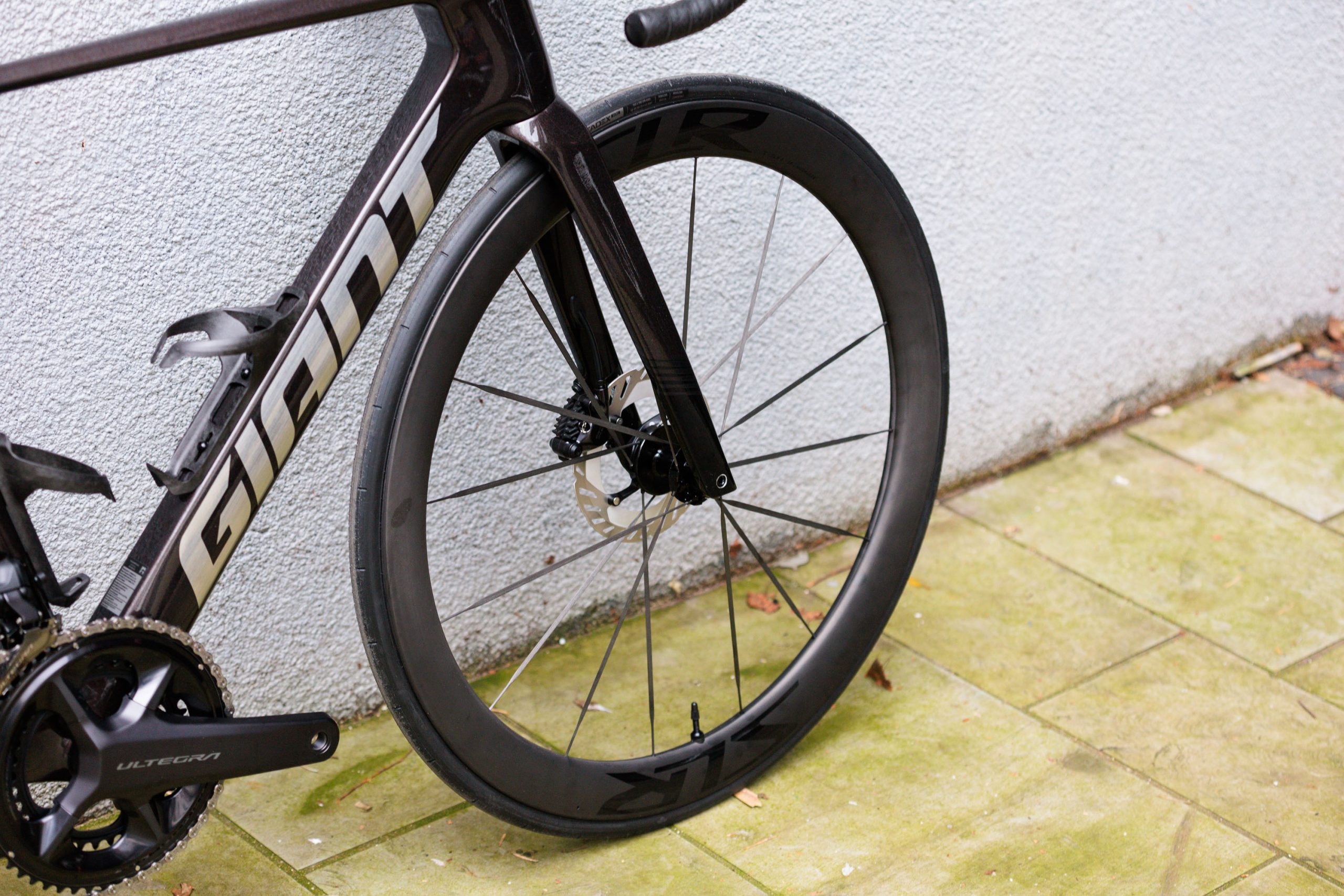
The Advanced Pro 0 Di2 is specced with Giant’s SLR 0 50 wheelset, with carbon spokes. Simon von Bromley / Our Media
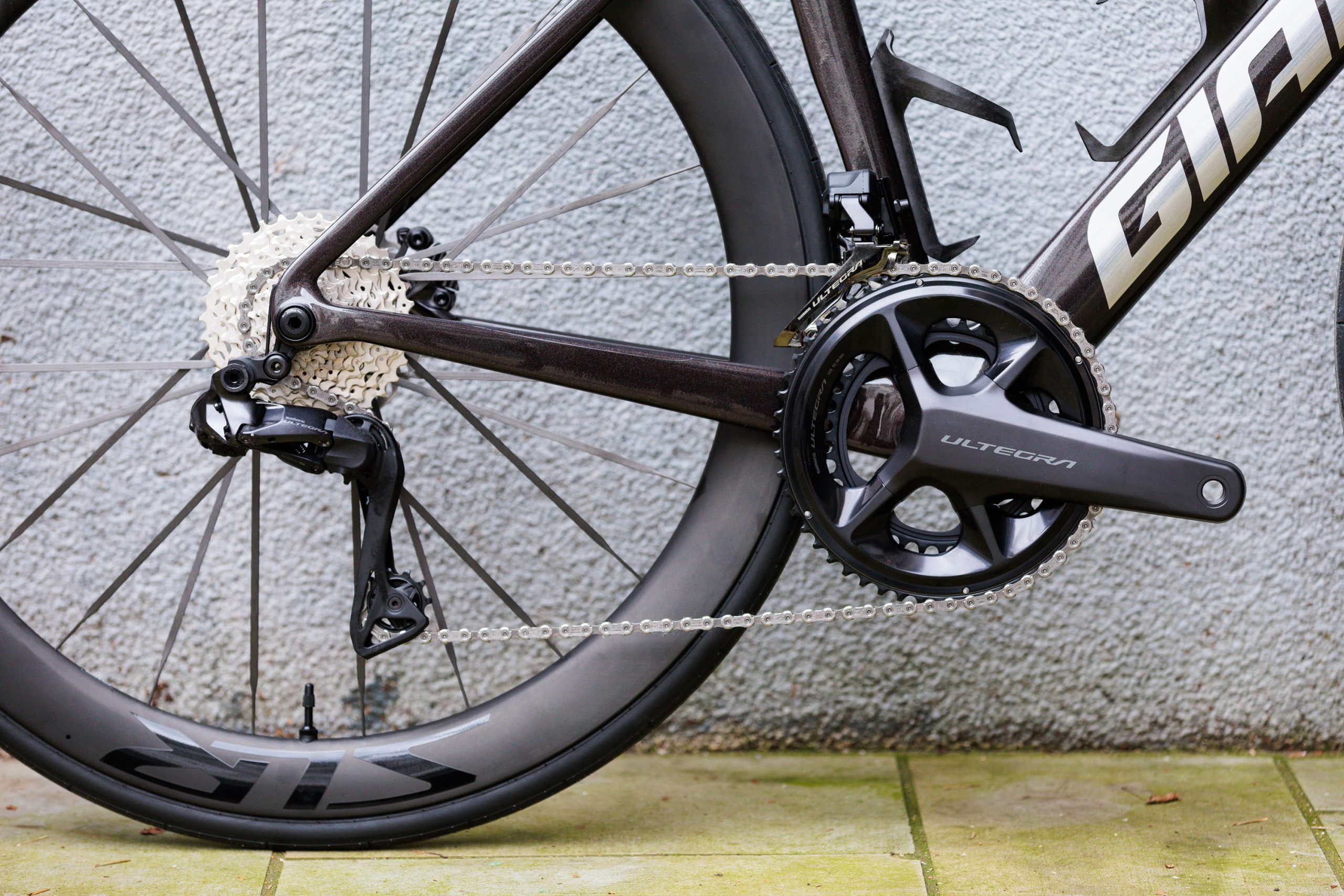
The two pricier Advanced Pro builds, which feature Shimano Ultegra Di2 (£5,799 / €6,499) and SRAM Force AXS groupsets (£5,999 / $7,800 / €6,499), have Giant wheelsets with identical rim dimensions and carbon spokes, but more conventional hubs. This bumps the weight up to 1,410g. They also get the Cadex Aero tyres.
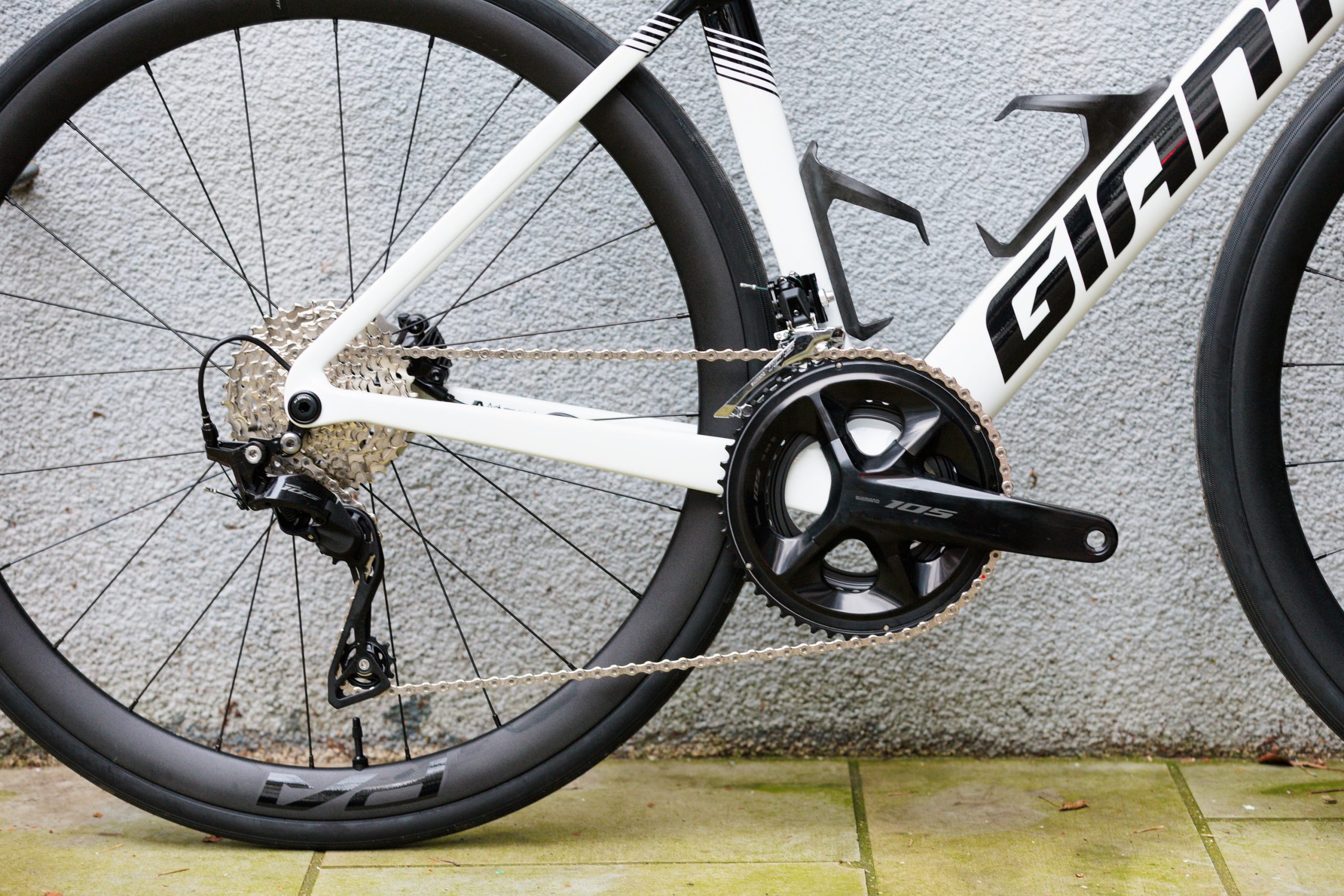
The Advanced Pro 1 (£4,599 / €4,999), with Shimano 105 Di2, sees a step down to steel, Sapim CX-Ray spokes, plus Giant’s Gavia Course 0 tyres. These have also been updated to feature a lower-rolling-resistance rubber compound and an aero tread pattern, Giant says.
The cheapest build in the range gets aero-optimsed aluminium wheels. Simon von Bromley / Our Media
Advanced builds also feature Giant’s SLR 2 carbon wheels and the Gavia Course 0 tyres, except on the cheapest, Advanced 2 model (£3,499 / €4,399), which rolls on aluminium Giant P-A1 hoops.
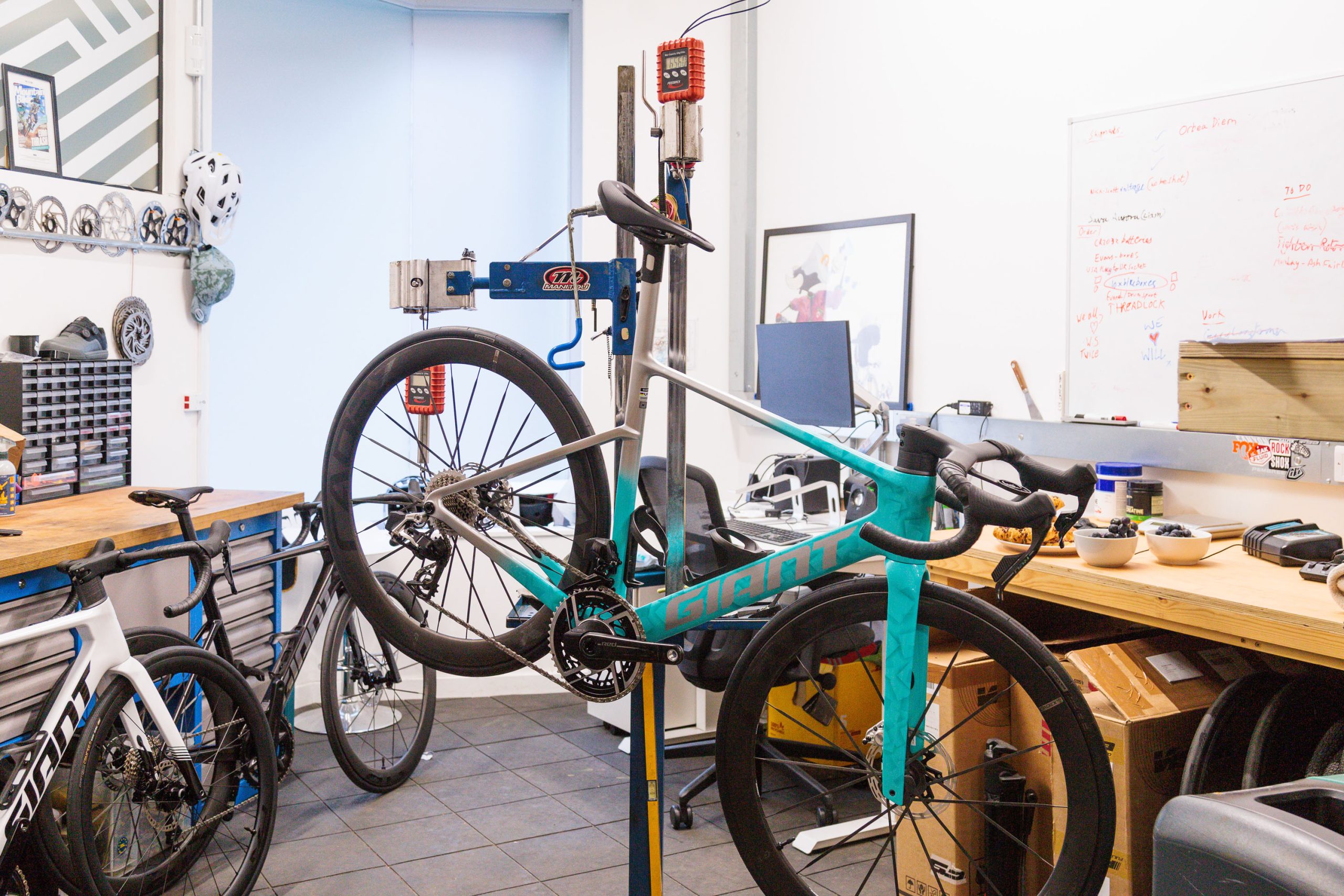
The Propel Advanced SL 0 AXS tipped our scales at 6.56kg as pictured. Simon von Bromley / Our Media
Giant says the net effect of these changes is an 18.4-watt improvement to aerodynamic and rolling efficiency, compared to the previous model, plus – according to our scales – a drop in weight of roughly 350g.
Showing it’s working, Giant breaks down where these efficiency savings come from in its press materials:
Model
Previous Propel Advanced SL (watts)
New Propel Advanced SL (watts)
Linear drag (+/- 20 degrees yaw)
234.9
222.48
Wheel rotating drag (front & rear)
5.46
5.04
Tyre rolling resistance (front & rear)
27.4
21.8
Total resistance
267.76
249.32
Total energy savings
-18.44
The previous Propel was set up with the old two-piece cockpit, with Cadex Ultra 50 wheels and 25c Cadex Aero tyres. The new one had the new one-piece cockpit, plus the new Max 50 wheels and 28c Cadex Aero tyres.
Both bikes were ‘ridden’ by Giant’s Grischa 2.0 dummy, which simulates a rider on the bike with articulating legs.
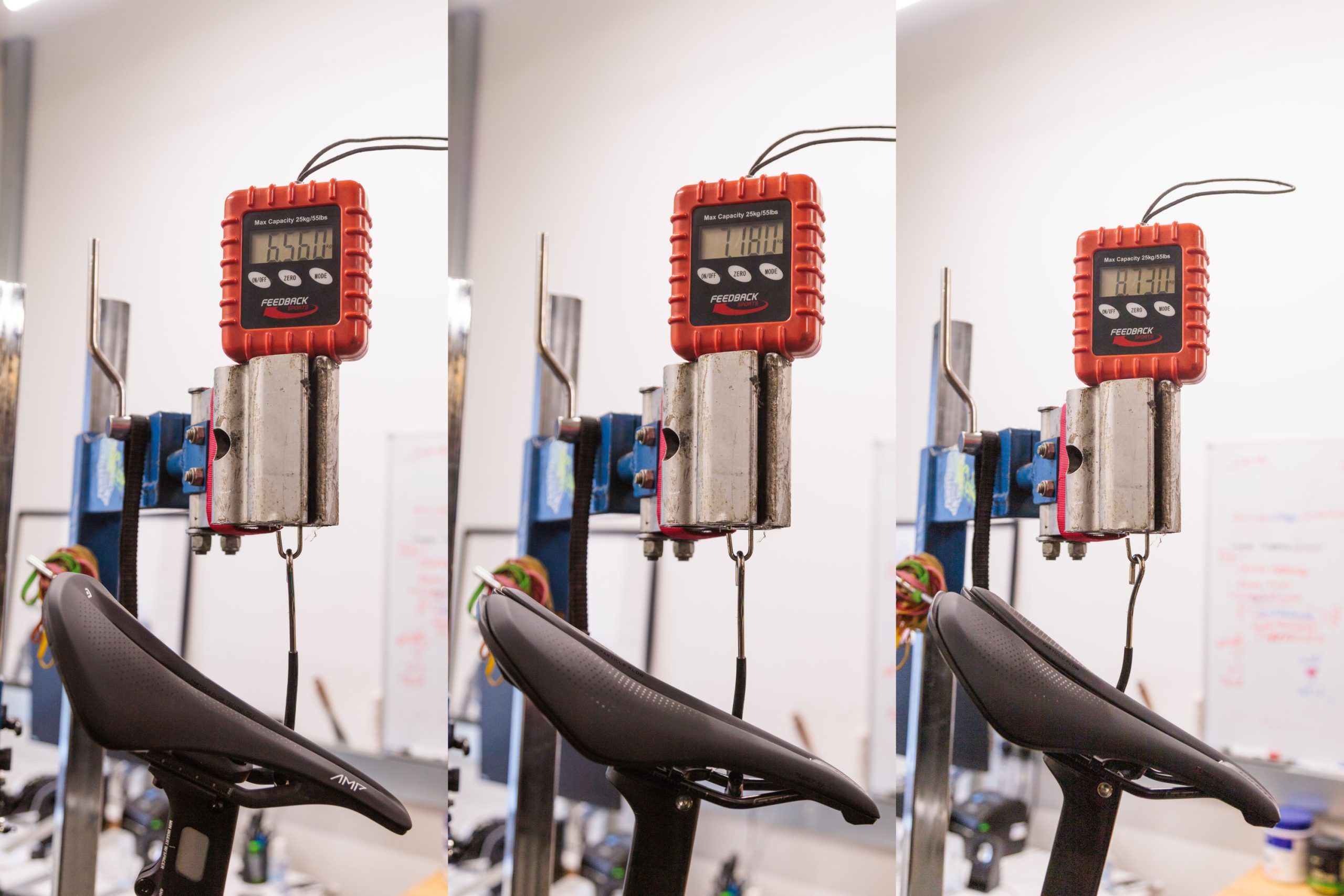
Left to right, the Propel Advanced SL 0 AXS, Advanced Pro 0 Di2 and Advanced 2 on our scales. Simon von Bromley / Our Media
To underscore how impressive the Advanced SL 0’s 6.56kg weight is, that figure represents a fully painted bike with aero components, bottle cages, a computer mount and sealant in the tyres.
Essentially, it’s ready to race once you add pedals, and riders with smaller sizes taking part in UCI-sanctioned events might even need to add some ballast to their bike to comply with the minimum bike weight rule.
Of course, the big caveats to that are that we’ve not yet had a chance to ride the new Propel, and the Advanced SL build is obviously very expensive (£10,499 / $13,500 / €11,999).
The Propel Advanced Pro 0 Di2 is just over half the price of the top-spec model, but is still competitively light. Simon von Bromley / Our Media It gets an Ultegra Di2 (or SRAM Force AXS) plus Giant SLR 0 50 carbon wheels. Simon von Bromley / Our Media
Stepping down to the Advanced Pro 0 Di2 build still nets you a lightweight bike, though, with the size-medium model we saw weighing only 7.18kg.
That’s also impressive, given it costs just over half what the Advanced SL 0 AXS does and it stacks up very well compared to the competition. The £6,995 / $6,999 Cannondale SuperSix Evo 3 I tested recently weighed 7.7kg, for example.
Unsurprisingly, the Advanced 2 build (£3,499 / €4,399) is substantially heavier, at 8.73kg for a size medium.
The Propel Advanced 2 is the cheapest and heaviest bike in the range. Simon von Bromley / Our Media A mechanical Shimano 105 R7100 groupset and aluminium wheels help get the price down. Simon von Bromley / Our Media
You’re still getting a full-carbon frame and fork with the same aero shaping as the more expensive models, though, with plenty of scope to upgrade the spec down the line, should you wish.
All things considered, it looks to be an impressive package at first glance. Giant hasn’t simply put the Propel on a crash diet and compromised its aerodynamic capabilities just to shed a few grams and grab some headlines.
Giant hasn’t revolutionised the Propel platform, but perhaps that’s no bad thing. Simon von Bromley / Our Media
It’s a restrained update, but one that appears to smartly refine and modernise the Propel platform. It still doesn’t have the outlandish design features of pure aero bikes such as the Ribble Ultra SL R, Factor One or Cervélo S5 (and may not be as slippery as a result), but it also looks to retain the all-rounder characteristics that make the Propel a compelling bike to own and ride.
As with any new bike, though, the proof is in the riding, so we’ll reserve final judgement on the new Propel until we’ve had a chance to test one fully.





 .
.
 International Women’s Day Rides with Rapha
 Popular
  Queen of the Classics Race