

In a surprise move, Western Digital is splitting its hard disk drive (HDD) and flash memory storage businesses into separate companies, effectively spinning off its solid state drive (SSD) division. The move comes around the eight-year anniversary of when Western Digital announced plans to acquire SanDisk for $19 billion (the deal closed in
Source: Hot Hardware – Western Digital Spins Off Flash Memory Business After Kioxia Merger Talks Fizzle
Monthly Archives: October 2023
Linux will soon offer switchable x86-32 binary support
And other novelties likely next year in kernel 6.7. The merge window has opened for what will become Linux version 6.7, and below we’ve compiled some things that are likely to be included in the new release.…
Source: LXer – Linux will soon offer switchable x86-32 binary support
Starfield’s Future Desperately Needs Dogs

This story is part of our new Future of Gaming series, a three-site look at gaming’s most pioneering technologies, players, and makers.
Source: Kotaku – Starfield’s Future Desperately Needs Dogs
Coding futures: Celebrating our educational partnership in Telangana
On September 29 2023, amidst much excitement and enthusiasm, a significant event took place at a unique school in Moinabad, Telangana: the teams of the Raspberry Pi Foundation and Telangana Social Welfare Residential Educational Institutions Society (TSWREIS) gathered to celebrate our partnership on the esteemed Coding Academy of TSWREIS.


This event marked a special project for us where we are piloting a distinctive, progression-based computing curriculum in a government school and a degree college in India.

Partnering with TSWREIS to bring computing education to Telangana
At the Foundation, our goal is to work closely with schools, tailoring our offerings to their contexts. Our objective is to design and evaluate unique learning experiences by integrating content from our diverse range of high-quality educational products. Through these efforts, we aim to drive significant advancements in education and technology, benefiting both students and education systems across the world.
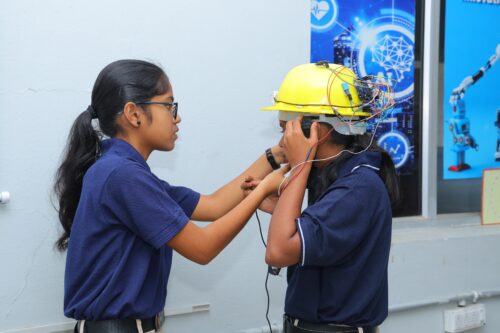

TSWREIS manages 268 residential educational institutions in Telangana, with a primary focus on delivering quality education to under-resourced young people, particularly children from scheduled castes and tribes in rural areas. Among these institutions is the Coding Academy school, located in Moinabad, which operates as a fully residential co-ed school for grades 6 to 12, accommodating around 800 students. Additionally, TSWREIS oversees another centre of excellence, the Coding Academy degree college in Shamirpet catering to 600 undergraduate female students.


We joined forces with TSWREIS to form a collaborative partnership with their Coding Academy units at both high school and college. We’re committed to sharing our expertise in computing and coding curriculum for students from Grade 6 to intermediate at the school, and across all courses at the college.

Our computing curriculum encompasses computer science, information technology, and digital literacy, and all its materials have been thoroughly researched and tested in the UK. Based on our 12 pedagogical principles, our curriculum ensures a project-based and holistic approach to learning. We also plan to provide national and international avenues for the Coding Academy students to showcase their learnings, for example through Coolest Projects, the world-leading, global technology showcase for young creators that we host every year.
The exciting model for our partnership with TSWREIS
We took on the challenge of directly delivering a comprehensive curriculum at the Coding Academy school and college through our own educators, exclusively hired and trained for this project. This is an exciting new approach for us, because up to this point, we have never directly delivered a curriculum anywhere in the world. However, we know we have created a world-class computing curriculum for educators in formal (and non-formal) settings, and we have many years’ experience of training teachers, so we are well-prepared to face this project and its potential challenges head-on and make it a success.

To begin the project, our team members based in India conducted a thorough study of the Coding Academy students’ interests and learning levels. Based on this, our Curriculum team in the UK and India customised and localised the content in our curriculum. We will be observing the curriculum’s delivery in classrooms and collecting students’ responses, and based on this data we’ll further refine the localised curriculum.
Throughout the project’s lifespan, we’ll measure the effectiveness of our curriculum and the impact of learning on the students. To do this, we’ll collect data from classroom observations, periodic assessments, and focused group discussions with students and educators.

Starting from the second year of the project, we will build capacity within the system. In collaboration with TSWREIS, we’ll select teachers from within the organisation based on their interest and competence, and initiate their training. Our objective is that by the project’s fifth year, TSWREIS will have achieved self-sufficiency in delivering computing education to students at the Coding Academy as well as other institutions in its purview.
The promise of this project for our work in India
We began delivering lessons at the Coding Academy college and school in July, and it’s worth mentioning that it’s been a rollercoaster ride so far. We’ve been working closely with the TSWREIS team to equip both the academic units with the resources needed for seamless implementation of the project. Our India-based team has been able to ensure continuity in the project’s momentum and plug every gap, and is working tirelessly to make this big, challenging, and exciting project blossom and succeed. When it comes to the students’ energy, enthusiasm, and the sparkle in their eyes for their learning, it’s unmatched, and everyone feels proud of their achievements so far.

This work with TSWREIS holds immense importance for us, representing our dedication to shaping a brighter educational landscape especially for young people from under-resourced communities. We hope to replicate similar initiatives across various regions in India, enabling widespread access to quality education. We also aspire to take forward our initiatives in much larger dimensions for the entirety of India.

In addition to our partnership with TSWREIS, we are actively engaged in several other impactful projects in India, such as our partnership with Mo School Abhiyan in Odisha to serve the government’s schools across Odisha state, and our collaboration with Pratham Foundation, which is helping us reach under-resourced communities and furthering our commitment to enhancing educational experiences.
We look towards the future
In reflection, the voices at the launch event on September 29 echoed the anticipation and optimism that filled the air on that memorable day. Chief guests who graciously attended the event were Shri. E Naveen Nicholas, IAS, Secretary at TSWREIS & TTWREIS, and Rachel Bennett, our Managing Director at the Raspberry Pi Foundation. Heartfelt gratitude to them for their presence and blessings. We also extend our thanks to our funding partner in this work, Ezrah Charitable Trust, and our delivery partners for their invaluable support.

The energy felt on the event day continues to drive our determination to do the work that lies ahead. As we look forward to the future, our hope and the hope of both the Coding Academy team and students are aligned: hope for a brighter, technologically empowered future, where education becomes a beacon of opportunity for all.
The post Coding futures: Celebrating our educational partnership in Telangana appeared first on Raspberry Pi Foundation.
Source: Raspberry Pi – Coding futures: Celebrating our educational partnership in Telangana
SEC Charges SolarWinds CISO With Fraud and Cybersecurity Failures
wiredmikey shares a report from SecurityWeek: In a surprising development on Monday that is spooking the cybersecurity community, the SEC filed charges against SolarWinds and its Chief Information Security Officer (CISO), Timothy G. Brown, alleging that the software company misled investors about its cybersecurity practices and known risks. The charges stem from alleged fraud and internal control failures related to known cybersecurity weaknesses that took place between the company’s October 2018 initial public offering (IPO) and its December 2020 revelation of the infamous supply chain cyberattack dubbed “SUNBURST.” […] The SEC’s complaint also points to internal communications among SolarWinds employees, including Brown, in 2019 and 2020, which raised questions about the company’s ability to protect its critical assets from cyberattacks.


Read more of this story at Slashdot.
Source: Slashdot – SEC Charges SolarWinds CISO With Fraud and Cybersecurity Failures
Crucial T500 Gen4 NVMe SSD: New Flagship Melds Micron 232L 3D TLC and Phison E25
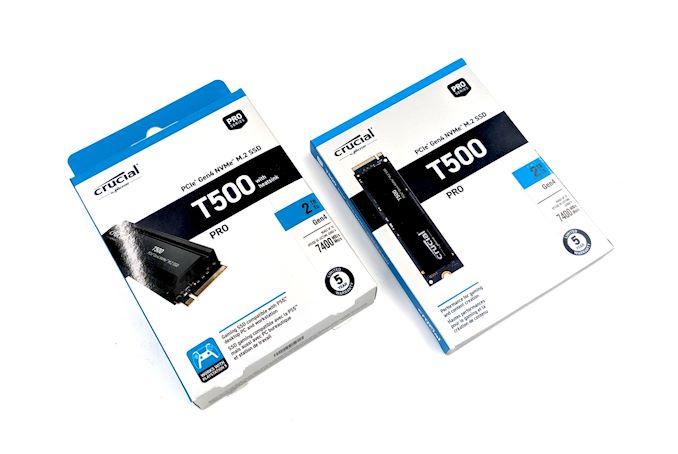
Crucial is unveiling its latest addition to its Gen4 consumer NVMe SSD lineup today – the T500 PCIe 4.0 M.2 2280 NVMe SSD. It takes over flagship duties from the Crucial P5 Plus in this category. The company had started to put focus on the high-end consumer SSD segment earlier this year with the launch of the T700 Gen5 NVMe SSD – it was one of the first to offer more than 12 GBps read speeds. The company is now introducing a T-series drive in the Gen4 segment with similar flagship credentials – sequential read and write speeds of 7400 / 7000 MBps.
The Crucial T500 is one of the first consumer SSDs to utilize the Phison E25 controller launched last year. The Micron 232L 3D TLC NAND in the SSD has been in mass production for a few quarters now, allowing the company to price the product competitively. Similar to the T700, this drive is targeted towards gamers, content creators, and professional users. While PCIe 5.0 SSDs are slowly getting introduced into the market, Gen4 units are still a sweet spot in terms of system compatibility, price, and performance for many use-cases.
The T500 is launching in three capacities and two variants – a heatsink and non-heatsink one. The 500GB version comes in a non-heatsink SKU only, while the 1TB and 2TB ones come in both variants. Crucial is promising a 4TB version next year. The company indicated that the heatsink SKUs is low-profile enough to be be used in the PlayStation 5.
Phison has been pushing DirectStorage optimizations in its high-end controllers, and it is no surprise that the T500 advertises the use of Phison’s ‘I/O+ Technology’ to appeal to gamers. Given its high-performance nature, it is no surprise that the E25 controller needs to be equipped with DRAM for managing the flash translation layer (FTL). Crucial is using Micron LPDDR4 DRAM (1GB / TB of flash) in the T500 for this purpose.
| Crucial T500 Gen4 NVMe SSD Specifications | ||||
| Capacity | 500 GB | 1 TB | 2 TB | |
| Controller | Phison PS5025-E25 | |||
| NAND Flash | Micron 232L 3D TLC NAND | |||
| Form-Factor, Interface | Single-Sided M.2-2280, PCIe 4.0 x4, NVMe 2.0 | |||
| Sequential Read | 7200 MB/s | 7300 MB/s | 7400 MB/s | |
| Sequential Write | 5700 MB/s | 6800 MB/s | 7050 MB/s | |
| Random Read IOPS | 800K | 1150K | 1180K | |
| Random Write IOPS | 300K | 600K | 1200K | |
| SLC Caching | Static / Dynamic (up to 20% of user capacity) | |||
| TCG Opal Encryption | Yes | |||
| Warranty | 5 years | |||
| Write Endurance | 300 TBW 0.33 DWPD |
600 TBW 0.33 DWPD |
1200 TBW 0.33 DWPD |
|
| MSRP | $90 (18¢/GB) | $120 (Non-Heatsink) (12¢/GB) $130 (Heatsink) (13¢/GB) |
$170 (Non-Heatsink) (8.5¢/GB) $180 (Heatsink) (9¢/GB) |
|
Flash pricing is quite low, with the memory industry being caught up in one of its downturns currently. While this has not been kind to the revenue numbers for the NAND flash / DRAM vendors, it has translated to excellent launch pricing for even flagship SSDs such as the Crucial T500 – starting from as low as 8.5¢/GB for the 2TB non-heatsink SKU.
Source: AnandTech – Crucial T500 Gen4 NVMe SSD: New Flagship Melds Micron 232L 3D TLC and Phison E25
You Can Get the Google Pixel 7a for Its Lowest Price Ever Right Now

The Google Pixel 8 came out on Oct. 12 after a much-anticipated release, and inevitably, this meant that the Google Pixel 7 was bound to come down significantly in price at some point. That moment is now, according to Camelcamelcamel and Honey’s price history, with the 128GB unlocked Google Pixel 7a currently going…
Source: LifeHacker – You Can Get the Google Pixel 7a for Its Lowest Price Ever Right Now
Lawn Equipment Spews ‘Shocking’ Amount of Air Pollution, New Data Shows

This story was originally published by Grist. Sign up for Grist’s weekly newsletter here.
Source: Gizmodo – Lawn Equipment Spews ‘Shocking’ Amount of Air Pollution, New Data Shows
Toyota has built an EV with a fake transmission, and we’ve driven it
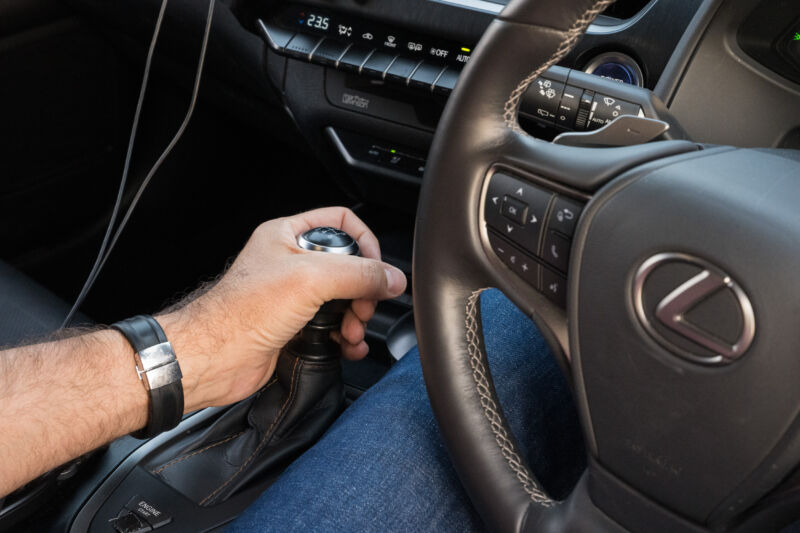
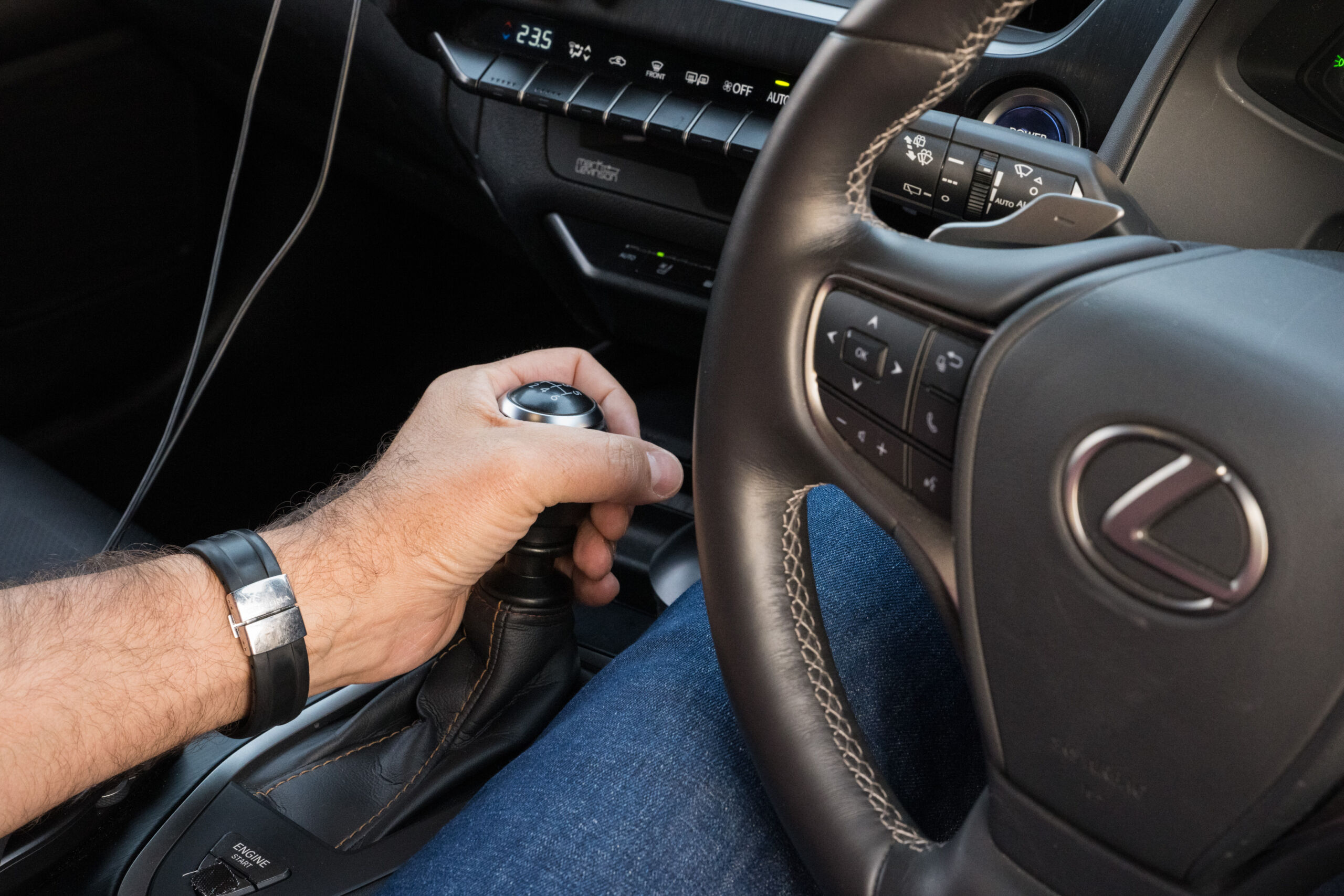
Enlarge / The Lexus UX300e is an electric crossover available in Europe, China, and Japan, but not usually with three pedals or a gear lever. (credit: Toyota)
Electric cars do a lot of things well. They’re smooth. They’re quiet. They’re easier on the environment, and they’re even scientifically proven to be less stressful. But what they don’t tend to be is engaging, at least not in the way that a traditional car with three pedals and a stick shift is.
A manual car requires a lot more of the driver. That level of forced engagement brings with it a sort of focus that can make the simple act of driving a lot more fun. In an ideal world, it would be possible to layer that kind of engagement on top of the otherwise ideal EV experience.
That is exactly what Toyota has done with what it calls the “Manual BEV concept.” Think of it as an EV that brings all the hands-on enjoyment of a manual transmission—despite lacking a manual transmission. It’s something of a testbed to find ways to bring more fundamental driver enjoyment to the next generation of battery-powered electric vehicles, and after running a few laps around Toyota’s test track in one, I’m convinced every sports-oriented EV in the future needs this.
Read 21 remaining paragraphs | Comments
Source: Ars Technica – Toyota has built an EV with a fake transmission, and we’ve driven it
Apple Warns Indian Opposition Leaders of State-Sponsored iPhone Attacks
Apple has warned over a half dozen Indian lawmakers from Prime Minister Narendra Modi’s main opposition of their iPhones being targets of state-sponsored attacks, these people said Tuesday, in a remarkable turn of events just months before the general elections in the South Asian nation. From a report: Rahul Gandhi, Indian opposition leader, said in a media briefing Tuesday that his team had received the said alert from Apple. Shashi Tharoor, a key figure from the Congress party; Akhilesh Yadav, the head of the Samajwadi Party; Mahua Moitra, a national representative from the All India Trinamool Congress; Priyanka Chaturvedi of Shiv Sena, a party with notable influence in Maharashtra reported that they too had been notified by Apple regarding a potential security attack on their iPhones. Asaduddin Owaisi, the leader of the All-India Majlis-e-Ittehadul Muslimeen (AIMIM); Raghav Chadha from AAP, originating from an anti-corruption crusade a decade prior and later securing a political foothold in the national capital region; Sitaram Yechury, the General Secretary of the Communist Party of India; alongside Congress spokesperson Pawan Khera were also impacted, they said. Journalists Siddharth Varadarajan and Sriram Karri, along with Observer Research Foundation (ORF) India President Samir Saran shared that they had been served with identical warnings from Apple.


Read more of this story at Slashdot.
Source: Slashdot – Apple Warns Indian Opposition Leaders of State-Sponsored iPhone Attacks
NVIDIA 545.29.02 Linux Driver Released With Much Better Wayland Support
Earlier this month NVIDIA published the R545 Linux driver beta while today it’s been promoted to the stable series with the NVIDIA 545.29.02 Linux driver release…
Source: Phoronix – NVIDIA 545.29.02 Linux Driver Released With Much Better Wayland Support
Apple Announces M3 SoC Family: M3, M3 Pro, and M3 Max Make Their Marks
Capping off a busy month for new processor announcements, Apple this week has announced a new generation of M-series Apple Silicon processors – and with it, a newly refreshed generation of MacBook Pros. Anchored by the new M3 series of processors, Apple has opted to launch most of the stack in a single go, announcing products based on the vanilla M3, and more powerful M3 Pro and M3 Max SoCs at the same time. Built on TSMC’s N3B process, Apple is looking to once again raise the bar on both CPU and GPU performance, as well as setting a new record for the number of transistors used in a single laptop SoC.
The launch of the new M3 chips goes hand-in-hand with new MacBook Pro laptops, as well as a refreshed 24-inch iMac. But as Apple isn’t making any external design or feature changes to any of these devices – they’re all the same dimensions with the same ports and parts as before – they are a straightforward update to the internals of these devices. As a result, the star of the show for these latest product launches are the new M3 family of SoCs, and the features and performance they bring.
With their latest generation of high-performance silicon for Macs (and, undoubtedly, high-end iPads), Apple is seemingly taking full advantage of the density and power improvements offered by TSMC’s N3B process. But at the same time, they are also changing how their SoCs are configured; the M3 Pro in particular is a significant departure from its predecessor. So although the M3 chips do not in and of themselves rise to the level of “groundbreaking”, there are some important changes here that we’ll be taking a look at.
Source: AnandTech – Apple Announces M3 SoC Family: M3, M3 Pro, and M3 Max Make Their Marks
Use the RAFT Technique to Quickly Sort Emails

To manage your inbox, you need dedication. You need a plan. You need acronyms. One such acronym is RAFT, which will literally keep you afloat in the sea of emails you receive every day. You can combine it with others, like LIFO and 4D to maximize its benefits, but first you need to know what to do with it on its own.
Source: LifeHacker – Use the RAFT Technique to Quickly Sort Emails
Systemd Working On "Storage Target Mode" Feature – Inspired By Apple macOS
Lennart Poettering has been working on a new systemd feature called systemd-storagetm that is inspired by the Apple macOS “Target Disk Mode” feature…
Source: Phoronix – Systemd Working On “Storage Target Mode” Feature – Inspired By Apple macOS
Daily Telescope: A spooky image of the Solar System’s largest planet

Enlarge / A view of Jupiter from 7,700 km above the surface. (credit: NASA/JPL-Caltech/SwRI/MSSS/ Image processing by Vladimir Tarasov)

Welcome to the Daily Telescope. There is a little too much darkness in this world and not enough light; a little too much pseudoscience and not enough science. We’ll let other publications offer you a daily horoscope. At Ars Technica, we’re going to take a different route, finding inspiration from very real images of a universe that is filled with stars and wonder.
Good morning. It is October 31—or, for people in many countries around the world, Halloween.
According to the US Library of Congress, Halloween has its roots in the ancient Celtic festival of Samhain. This was a pagan celebration to welcome the harvest at the end of summer, when people would light bonfires and wear costumes to ward off ghosts. Celtic people believed that during the festival, spirits walked the Earth. Later on, Christian missionaries introduced All Souls’ Day on November 2, which perpetuated the idea of the living coming into contact with the dead around the same time of year.
Read 4 remaining paragraphs | Comments
Source: Ars Technica – Daily Telescope: A spooky image of the Solar System’s largest planet
This Is the Right Way to Store Firewood

Cold weather is coming, which means it’s time to light up your fireplace or firepit and build up your woodpile for the season. Whether you’re chopping firewood yourself or buying it and bringing it home, make sure you’re storing it correctly—don’t just dump it on the ground.
Source: LifeHacker – This Is the Right Way to Store Firewood
Diarrhea-Causing 'Crypto' Parasites Are Surging in the UK

The UK is currently dealing with an alarming rise of crypto—the diarrhea-causing intestinal parasite, not the baffling currency. In a report this month, health officials documented a much higher number of cases than expected so far in 2023. It’s not clear yet why crypto is surging in the country, though the increase…
Source: Gizmodo – Diarrhea-Causing ‘Crypto’ Parasites Are Surging in the UK
Why you should take your 3DS along for a “StreetPass Halloween”

Enlarge / It’s no trick, 3DS players are treating themselves to StreetPass tags this Halloween. (credit: Aurich Lawson | Getty Images)

When it comes to unique gimmicks, the Nintendo 3DS is mainly remembered for the wow factor of its glasses-free stereoscopic 3D effects (which Nintendo would eventually abandon with the introduction of the 2DS line). But today, more than 12 years after the launch of the 3DS, a group of dedicated players has been gathering to ensure that another unique 3DS feature still has a bright and active future after being abandoned by Nintendo.
We’re talking about StreetPass, the proto-social-network that Nintendo devised to let 3DS owners instantly and silently exchange Mii avatars (and some basic information) when two consoles get close enough to communicate wirelessly. Those exchanged Miis can then be used as companions in simple minigames, like tiny board-game pieces crafted to look like 3DS-owning friends and strangers you pass on the street.
Even as most portable gamers have given up their 3DS consoles for the Switch or Steam Deck, thousands of 3DS fans have met at various events this year to trade StreetPass “tags” with their nostalgic brethren. The next such set of gatherings will take place on “StreetPass Halloween,” when participants are encouraged to throw a system in their candy bag, leave one on and idle near a candy distribution door, or even just drive slowly around town with a 3DS in the front seat.
Read 10 remaining paragraphs | Comments
Source: Ars Technica – Why you should take your 3DS along for a “StreetPass Halloween”
The Morning After: Apple reveals a new MacBook Pros, M3 chips and a new iMac
During its Scary Fast product event last night, Apple officially debuted its new M3, M3 Pro and M3 Max chips. The company is positioning the M3 chips as major upgrades over its M1 hardware — if you bought an M2 system, you’re probably not itching for a replacement just yet.
The M3’s GPU is the biggest leap forward, delivering new features, like hardware-accelerated ray tracing and mesh shading, enabling more realistic lighting and better geometry handling. If you’re into chip architecture and other fun endeavors, the M3 chips are also notable for being the first PC chips built on a three-nanometer process — both the M1 and M2 families are based on a 5nm process. This means more transistors packed into the same space, which helps with power efficiency, as well as providing better overall performance. The M3 series will feature in the revamped MacBook Pro 14-inch and 16-inch (more on those below), as well as the 24-inch iMac.
That new chip will make the new iMac up to twice as fast as its predecessor, but there aren’t too many upgrades elsewhere in the latest Mac. Apple is sticking with a 4.5K Retina display, for instance. There are some handy changes on the connectivity front, now with support for Wi-Fi 6E and Bluetooth 5.3 The new iMac starts at $1,299 and ships on November 7.
— Mat Smith
You can get these reports delivered daily direct to your inbox. Subscribe right here!
The biggest stories you might have missed
Sweeping White House executive order takes aim at AI’s toughest challenges
Sony’s WH-1000XM5 ANC headphones drop to $330
The best cheap phones for 2023
Avatar: Frontiers of Pandora’s adventurous spirit might just win you over
Apple kills off the 13-inch MacBook Pro
But it has new 14- and 16-inch models, don’t worry.
Apple
Apple’s updated line of 14- and 16-inch MacBook Pros features a range of new M3 chips and a new Space Black chassis. Was that the spooky part of Apple’s event?
The 14-inch MBP with a base M3 processor will cost $1,599 — the first time the 14-inch laptop has hit that low of a price. The M3 Pro iteration will still cost you $1,999, and prices go up from there for M3 Max options. Meanwhile, a base 16-inch MacBook Pro with an M3 Pro chip will have the same $2,499 starting price as its M2 Pro predecessor. Alas, the 13-inch version is no more. Farewell, Touch Bar.
Continue reading.
Lenovo Smart Paper review
A solid e-ink tablet spoiled by the cost.
Engadget
In the last few years, we’ve seen Amazon get into e-ink scribes, while startups like ReMarkable have carved out their own niche with capable hardware for a reasonable price. Lenovo, having dabbled with e-ink on devices like the Yoga Book, has joined the fray with a dedicated device, the Smart Paper. While the product hasn’t yet launched in the US, the Smart Paper has launched elsewhere, including the UK. At around $400 (or £500 in the UK), it’s expensive. The hardware is impressive (and useful), but it’s all tainted by a subscription service that demands even more money.
X won’t pay creators for tweets that get fact checked with community notes
The ‘slight change’ is the latest attempt to address misinformation.
X will no longer pay creators for tweets promoting misinformation. Elon Musk said the company is making a “slight change” to its monetization program, and tweets fact-checked via community notes will no longer be eligible for payouts.
The latest change comes as researchers, fact-checkers and journalists have raised the alarm about the amount of viral misinformation spreading on X amid the ongoing conflict in Israel and Gaza. Recent analysis from NewsGuard, a nonprofit that tracks the spread of misinformation, found 74 percent of “the most viral posts on X advancing misinformation about the Israel–Hamas war are being pushed by ‘verified’ X accounts.”
This article originally appeared on Engadget at https://www.engadget.com/the-morning-after-apple-reveals-a-new-macbook-pros-m3-chips-and-a-new-imac-111552483.html?src=rss
Source: Engadget – The Morning After: Apple reveals a new MacBook Pros, M3 chips and a new iMac
A giant battery gives this new school bus a 300-mile range

Enlarge / GreenPower has given its class-D electric school bus a big battery bump. (credit: GreenPower)

On Tuesday morning, the West Virginia-based GreenPower Motor Company debuted its latest electric vehicle. It’s the newest version of its class-D electric school bus, now fitted with a great big battery to give the big yellow bus the kind of range it needs for longer routes.
GreenPower has been building electric buses for almost a decade now, and in 2019 it delivered the first BEAST buses (it stands for Battery Electric Automotive School Transportation) to a school district in California. More recently, GreenPower has been testing its buses in real world conditions, conducting a nine-month pilot program in West Virginia that split its time across 18 different school districts (for six weeks each), clocking up more than 32,000 miles (51,500 km) in the process.
“We found that in ideal conditions, so not a real cold morning or anything like that, but the bus was getting between 1.4 and 1.5 [miles] to 1 percent state of charge. So that means that your range on 100 percent state of charge is in that 140 to 150 mile range,” explained Mark Nestle, vice president of business development and strategy at GreenPower.
Read 9 remaining paragraphs | Comments
Source: Ars Technica – A giant battery gives this new school bus a 300-mile range