Master & Dynamic hasn’t debuted new wireless earbuds since 2021 when the company revealed the MW08 and MW08 Sport within a few months of each other. Now M&D is back with a new model, the MW09, with a refined design, better battery life, redesigned acoustics and upgraded call quality. As is typically the case with the company’s audio gear, the MW09 is made with premium materials, including aluminum, Kevlar and sapphire glass. Master & Dynamic is also introducing all of its updates without raising the price as the new model costs the same at the company’s most recent true wireless option.
Like the MW08 Sport, the MW09’s outer panel is a combination of aluminum and sapphire glass, with a similar overall D shape to the two previous versions. Master & Dynamic says it gave this new model a more ergonomic shape on the other side and reduced the weight with an updated acoustic enclosure and construction. It explains that this should offer a better fit for a wider range of ear shapes while also increasing comfort. Another key design difference is that outer panel now has a circular section where the company’s “M” branding is prominently displayed. It’s not a touch panel though as the physical controls still reside on the top edge.
Inside, M&D gave the MW09 a new acoustic architecture with its 11mm beryllium drivers. The company promises its “most expansive sound profile ever” as a result of the improvements there. When it comes to active noise cancelation (ANC), Master & Dynamic explains that updated microphone and sensor placement alongside new adaptive noise-blocking algorithms combat more environmental noise. For calls, a new AI-powered “high-definition” speech setup should keep you sounding clear and natural even in loud settings, according to the company. What’s more, there’s improved battery life of up to 12 hours with ANC on (16 hours with it off). That’s two hours longer than the MW08 Sport (four hours more with ANC off).
Master & Dynamic is also making significant updates to its M&D Connect App for its earbuds and headphones. For the MW09, the app will provide a fully adjustable EQ, battery monitoring, an earbud fit test and sidetone, or the ability to hear your voice better during calls. The new model supports Bluetooth 5.4, Snapdragon Sound and Auracast in addition to multipoint connectivity for easier switching between devices.
The MW09 will be available in black, white and gold options with an aluminum case for $349. That’s the same price at the MW08 Sport, but it’s $150 more than the MW08. If you prefer a Kevlar case, you can choose from green, blue or gunmetal hues and those cost an extra $50. All colors and case options will be available for purchase or preorder at the company’s website on November 14.
This article originally appeared on Engadget at https://www.engadget.com/master–dynamic-debuts-mw09-earbuds-with-upgraded-sound-anc-and-battery-life-130042393.html?src=rss
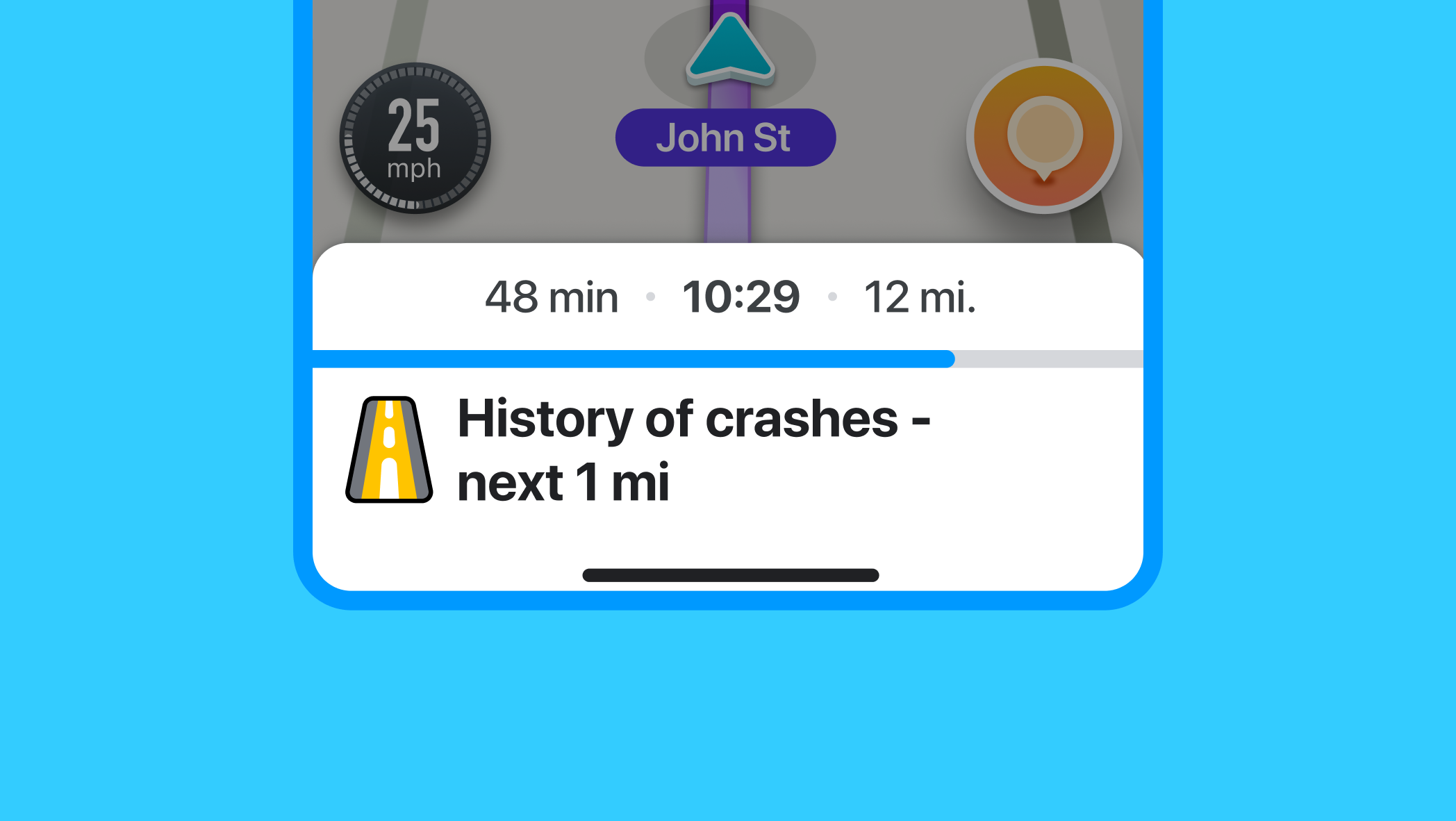
Enlarge/ The Waze crash history alerts look like this. (credit: Waze)
Traffic navigation app Waze is adding a new feature to its toolbox today. It’s called crash history alerts, and it’s meant to warn drivers about dangerous hotspots, based on a combination of historical data plus road and traffic data.
Originally an independent startup, in 2013 Google purchased the Israeli company for $1.15 billion, perhaps beating Apple to the punch. Even before the purchase, Waze was becoming an Ars reader favorite thanks to more advanced traffic rerouting than either Google Maps or Apple Maps.
It has not been entirely smooth sailingdriving; for a while the app was infamous for asking drivers to make difficult left turns across busy multi-lane roads and routing cars through once-quiet neighborhoods as shortcuts, aggravating the people who live in those neighborhoods.
Waze’s latest feature focuses on safety and will give you the knowledge needed to make an informed choice about the route you’re taking. The Google-owned navigation app has launched crash history alerts, which will send you a notification if you’re driving along a crash-prone road. Waze will publish a prompt that says “history of crashes” in-app before you reach, say, a curve that’s particularly tricky to navigate. That way, you can slow down or be on the lookout for anything that could derail your vehicle.
Waze
The app decides whether to show you a notification based on reports from the Waze community and an AI analysis of your route, such as its traffic levels, its elevation and whether it’s a highway or a smaller local road. It will not show you crash alerts for routes you usually take in order to minimize distractions, which suggests that its main purpose is to give you a heads up if you should drive with more caution than usual in places you’re not familiar with.
Waze has released several protective features intended to keep you safe on the route you’re planning to take over the years. A few years ago, it started sending out real-time accident data so that you can take an alternate route if needed and first responders can get to accident sites sooner. In 2020, it also rolled out guidance prompts telling you to get in the right spot for an upcoming merge or exit before you get there.
This article originally appeared on Engadget at https://www.engadget.com/waze-will-now-warn-you-if-a-road-has-a-history-of-crashes-130011100.html?src=rss
An anonymous reader quotes a report from 404 Media: Hakan Ayik, an infamous drug trafficker who also popularized the use of certain brands of encrypted phones around the world, was arrested during a series of dramatic raids in Turkey last week. At one point a group of heavily armed Turkish tactical officers in brown and gray camouflage piled outside an apartment and banged on the door repeatedly. They then smashed the door down and moved inside with a riot shield, according to a video tweeted by Turkey’s Minister of the Interior. The video then showed a photograph of Ayik, shirtless and on his knees while staring straight ahead, surrounded by multiple officers.
It was a moment that capped off the arrest of Australia’s most wanted man, and a sign that Turkey is no longer a safe haven to organized criminals. But it was also something of a closing act on Anom, a brand of encrypted phone that the FBI secretly took over and managed for years after inserting a backdoor into the product, allowing agents to read tens of millions of messages sent across it. Ayik unknowingly helped the FBI gain that piercing insight into organized crime by selling the devices to other criminal associates. Given Ayik’s position as a trusted authority on what communications tools drug traffickers should use, one associate even referred to him as the ‘encryption king’ in an Anom message I’ve seen. According to the Sydney Morning Herald, Ayik will not be extradited to Australia. Instead, Australian police are encouraging Turkish authorities to investigate and prosecute him as a Turkish citizen.
AMD has sent word over this morning that the company is extending the product lifecycle for their previous-generation EYPC 7003 “Milan” family of server CPUs. The company will now be offering the Zen 3-based CPUs through at least 2026, and as part of that extension plan, has already launched a further 6 SKUs. With these changes, Milan is effectively being repositioned as a budget server platform for AMD, offering AMD’s past tech at a discount to cost-weary customers.
First launched in early 2021, AMD’s EPYC 7003 “Milan” platform is based on the company’s Zen 3 architecture, offering chips with up to 64 CPU cores, 8 channels of DDR4 memory, and PCIe 4.0 connectivity. The platform has since been superseded by AMD’s numerous Zen 4-based EPYC 9004/8004 server platforms – Genoa, Bergamo, and Siena – but for continuity and support reasons, the Milan platform is still being offered to customers. And now, it seems, it will be for even longer than AMD was first expecting.
As of today, AMD is extending the availability of the Milan platform to 2026. All the while, the company is repositioning the platform as their newest budget offering, pitching it at customers who are on the trailing-edge of server technology and need a proven platform to upgrade to, but for whatever reason aren’t ready to upgrade to the 4th generation EPYC platforms. In practice, AMD is trying to entice Intel Xeon Scalable customers who are looking to replace their aging servers, but aren’t ready or eager to move on to 4th gen Xeon Scalable (Sapphire Rapids).
Competitively, Milan doesn’t offer much of note with regards to performance or features compared to AMD and Intel’s contemporary platforms. But for customers already invested in it and who need the ability to repair or bring online additional matching systems over the next couple of years, it will remain in service.
Meanwhile, the company is also re-launching 6 new Milan SKUs to underscore its position as a budget platform. All of these chips were first released by AMD back in September without much fanfare, but now that AMD is extending Milan’s availability to 2026, they are using the moment to spotlight their existence.
AMD EPYC 7003 Milan New SKUs
AnandTech
Core/
Thread
Base
Freq
1T
Freq
L3
Cache
PCIe
Memory
TDP
(W)
cTDP
(W)
Price
(1KU)
7663P
56
112
2000
3500
256MB
128 x 4.0
8 x DDR4-3200
240
225-280
$3,139
7643P
48
96
2300
3600
256MB
225
225-240
$2,722
7303
16
32
2400
3400
64MB
130
120-150
$604
7303P
16
32
2400
3400
64MB
130
120-150
$594
7203
8
16
2800
3400
64MB
120
120-150
$348
7203P
8
16
2800
3400
64MB
120
120-150
$338
The 6 new chips are a bit of an eclectic mix. The top two SKUs – the 56-core 7663P and 48-core 7643P – are 1P-only versions of existing Milan chips at a lower price. Meanwhile the 7303 and 7203 parts are new, with AMD offering ultra-budget server chips with just 16 and 8 cores respectively. The 7203/7203P are true entry-level chips by server standards, with just 8 CPU cores, 64MB of L3 cache, and peak clockspeed well below AMD’s only other 8 core Milan (72F3). However, all of these chips come with the full I/O and memory channels supported by the Milan/SP3 platform, allowing AMD to position them as alternatives to the more limited EPYC 8004 Siena platform.
There are a lot of apps on the Play Store, and it’s easy to download any that grab your attention on a whim. However, your Android’s storage isn’t limitless, so at some point, you’ll be looking to clean things up. Here are a few ways to delete apps from your Android.
This mysterious model appeared on eBay with little fanfare. [credit: eBay
]
The first model of the USS Enterprise ever used in shooting the original Star Trek series may have surfaced after going missing decades ago.
An eBay listing of a 3-foot model of the Enterprise appeared early last week and named a starting bid of $1,000. The listing was removed hours after it went up after enthusiasts on social media and forums discovered it and pieced together what it likely was. Some of those enthusiasts said in the private Facebook group “Star Trek Prop Makers & Collectors” that they had contacted the seller suggesting it be returned to its rightful owners, which many believe to be the estate of Star Trek creator Gene Roddenberry.
On Thursday evening, Rod Roddenberry, son of Star Trek creator Gene Roddenberry and steward of the Roddenberry estate, shared a message on Facebook expressing a desire to get in touch with the seller to see about the model’s return. That post has since become inaccessible, but a nearly identical one appeared on X, formerly known as Twitter, on Friday afternoon. He wrote:
Apple’s MacBook problem was a confusing lineup of similar machines with different names, different chips, different hardware and the rest. But it may have finally solved the problem. The long-rumored 15-inch MacBook Air arrived months ago, and then Apple surprised us by delivering two MacBook Pro revisions — notably in less than 12 months — to showcase the company’s most powerful chips yet. These new M3-equipped MacBook Pro 14- and 16-inch are a clearer sign of Apple’s direction.
Engadget
The company has killed off the long-suffering 13-inch MacBook Pro, and in the same stroke, put an end to an aging design and the divisive, frustrating Touch Bar. These Pro machines — especially the M3 Max models — are great for professionals, and the MacBook Airs are for everyone else.
I think, for the first time in a long time, Apple’s laptop lineup finally makes sense.
— Mat Smith
You can get these reports delivered daily direct to your inbox. Subscribe right here!
Organizer Yuga Labs is ‘aware of the eye-related issues.’
@CryptoJune777 / X
So you thought just the idea of attending an NFT event was torturous enough. At least 15 visitors at Yuga Labs’ ApeFest, a celebration of Bored Ape Yacht Club NFTs (which are still a thing), may have experienced serious eye injuries. Bloomberg reports that multiple people attending the event in Hong Kong last weekend experienced vision problems, which they suspect stem from the event’s stage lighting. Some claim doctors subsequently diagnosed them with welder’s eye, a condition caused by overexposure to ultraviolet rays. The company is apparently investigating the reports.
Smart cars, dumb privacy policies, terms and conditions.
Mozilla recently reported that all 25 car brands it reviewed failed its privacy tests. While all, in Mozilla’s estimation, overreached in their data collection and use policies, some even included caveats about obtaining highly invasive information. Today’s cars can collect personal information, and the fine print of user agreements describes how manufacturers get you to consent every time.
Another twist in the WeWork saga this week as the office space rental company has filed for bankruptcy protection. Following reports last week that the company was expected to file for Chapter 11 protection, WeWork’s shares were halted on the New York Stock Exchange on Monday. According to The New York Times, it described its bankruptcy filing as a “comprehensive reorganization” of its business. WeWork has been toiling in a real estate market shaken by rising borrowing costs while also facing the pandemic-accelerated change of millions more people working remotely.
This article originally appeared on Engadget at https://www.engadget.com/the-morning-after-apples-new-macbook-lineup-makes-much-more-sense-121543140.html?src=rss
The holiday season might be the most wonderful time of the year, but it’s arguably also the most expensive. Ahead of the mad dash to find the best presents for the lowest prices, Google is attempting to undo some of that financial load with the launch of its new deals hub. Now, if you type in “shop deals” on Google, the search engine will bring you to a page filled with markdowns on categories like electronics and apparel.
If you’re looking for a specific type of item, you can Google something like “shop headphone deals” and see promotions for that product. Displayed items should come from a range of sources, including big box stores, luxury brands, and local shops. Google will also show items based on what you’ve browsed for in the past while signed into your account. Plus, if you’ve looked at a certain shirt or a watch, for instance, it might appear in your “resume browsing” card alongside any current promotions on it.
Google is also coming for extensions like Honey and Capital One Shopping, with a new discount tag icon right in the Chrome address bar. Click on the button, and, just like with the others, you’ll get a list of coupon codes for the site you’re currently shopping on.
Plus, Google is providing more tracking information to monitor whether a price is above average — or has recently dropped. Participating sites will have a “shopping insights” label in the address bar that you can click on to view an item’s 90-day price history. This chart could give you an idea of whether the item goes on sale frequently or if its sticker price has dropped recently. You can also click the bell icon on Search for mobile to receive push and email notifications when a product goes on sale. Bookmark the item instead if you’re shopping on Chrome from your computer.
This article originally appeared on Engadget at https://www.engadget.com/google-creates-a-brand-new-hub-for-shopping-deals-120042109.html?src=rss
Young people can now learn to code and create with our brand-new path of micro:bit coding projects. The ‘Intro to micro:bit’ path is free and kids can follow it to code projects that focus on wellbeing, including topics like mental health, relaxation, and exercise.
As you might know, a micro:bit (pronounced “microbit”) is a small, programmable device designed for education. You can program it using any computer. It’s easy to use and learn with, and suitable for beginners, especially young people in and out of school.
The theme of the new project path: Wellbeing
Our aim for this new micro:bit project path is to help young people explore how they can create their own tech tools that help them look after themselves and others. By designing the micro:bit coding projects around wellbeing, we want to not only help kids develop programming and digital literacy skills, but also promote open conversations about the important topic of mental health.
Credit: David Bird
The six micro:bit coding projects in our new path all cover different aspects of wellbeing in a fun, creative way:
Good sleep patterns
Relaxation
Self-confidence
Happiness
Health
Entertainment
We hope that following the path and making projects helps encourage learners to ask questions, share their experiences, and feel like they can ask parents, teachers, or mentors for support, and help support their friends and peers.
What is in the ‘Intro to micro:bit’ project path?
The ‘Intro to micro:bit’ path is designed according to our Digital Making Framework. Its aim is to encourage young people to become independent coders and tech creators as they progress along the projects in a path by gently removing scaffolding.
Our project paths begin with three Explore projects, in which learners are guided through tasks that introduce them to new coding skills.
Next, learners complete two Design projects. Here, they are encouraged to practise their skills and bring in their own interests to personalise their coding creations.
Finally, learners complete one Invent project. This is where they put everything that they have learned together and create something unique that matters to them.
The structure of the path means that learners are led through the development process of a coding project and learn how to turn their ideas into reality. The path structure also supports them with fixing programming errors (debugging), showing them that errors are a normal part of computer programming and just temporary setbacks that they can overcome.
Credit: David Bird
Because community is important for learning, the path also offers young people the chance to share the projects they make with peers around the world.
What coding skills and knowledge will young people learn?
The Explore projects at the start of the path are where the initial learning takes place. Learners then develop their new skills and knowledge by putting them into practice in the Design and Invent projects, where they add in their own ideas and creativity.
The key programming concepts covered in this path are:
Variables
Using selection (if, else if, and else)
Using repetition (for loops)
Using randomisation
Using functions
Credit: David Bird
There are two versions of the micro:bit (V1 and V2) and learners can use either version to create the micro:bit coding projects in the path, using the micro:bit’s input and output features:
Input features:
Buttons
Accelerometer
Sound sensor/microphone (micro:bit V2 only)
Capacitive touch sensor
Light sensor
Output features:
LED display
Speaker
Headphones connected via GPIO (micro:bit V1 only)
Explore project 1: Music player
In this Explore project, kids create a music player on the micro:bit to explore how listening to music can improve their mood. While creating their music player, young people get to choose melodies that they enjoy or that make them feel more relaxed. They also add a range of functions such as pausing, skipping, and shuffling tracks.
Explore project 2: Sound level meter
Noise levels can affect people’s well-being, so in this project, kids create a program to use the micro:bit to display how noisy their environment is. They will also learn how to save the noise data the micro:bit measures so they can identify the noisiest times in their day.
Explore project 3: Sleep tracker
Sleep is an important factor that contributes towards well-being. With this third Explore project, kids create a program to track their sleep movements using the micro:bit. This teaches them about variables and about using the micro:bit’s accelerometer, and its LEDs to display data.
Design project 1: How’s your day?
The first Design project of the path gets young people to build a mood checker program using the question ‘How’s your day?’. Kids get creative design control over the mood checker’s outputs according to the user’s replies, including displaying an animation or positive messages, or playing music. Kids can also make use of sensors to measure the various factors in the environment that could be affecting the user’s mood.
In this project, young people apply all of the coding skills and knowledge covered in the Explore projects, including selection, repetition, variables, functions, and randomisation.
Design project 2: Active assistant
In the second Design project, young people create an assistant that helps them get active.The project provides examples, a structure, and brief summaries of what kids have learned to do on the path so far to inspire and motivate them. This mean young people can work independently to produce their own outcomes and the functionality of their assistant is up to each young tech creator.
Invent project: Party game
The final project, Party game, encourages learners to independently replicate their favourite party game for entertainment and relaxation. Learners will combine all of the knowledge and skills they’ve gained throughout the path to make something of their own around the theme of well-being. This is a chance for them to unleash their creativity and reflect on real-life games they enjoy. The outcome will be unique, and fun for them to share with their friends and family.
Key questions answered
Who is this path for?
We have written these micro:bit coding projects with young people around the age of 6 to 13 in mind. Building the projects on the path does not require any previous coding experience, although complete beginners may want to try our free ‘Intro to Scratch’ path first.
What software do learners need to code these projects?
A web browser on a computer. In every project, starter code is provided in the MakeCode online code editor. Learners can either download their project code to a physical micro:bit (recommended) or use the micro:bit simulator in MakeCode.
Credit: David Bird
Young people who live where there isn’t constant internet connectivity can also download the offline version of the MakeCode editor. There are also free micro:bit coding apps for smartphones and tablets.
How long will the path take to complete?
We’ve designed the ‘Intro to micro:bit’ path to be completed in six one-hour sessions, with one hour per project. However, the project instructions invite learners to take additional time to upgrade their projects if they wish.
What can learners do next?
Take part in Coolest Projects
At the end of the micro:bit path, learners are encouraged to register a project they’re making with their new coding skills for Coolest Projects, our annual online technology showcase for young people around the world.
Taking part is free, and beginners as well as more experienced young tech creators are invited. This is their opportunity to share their ingenuity in an online gallery for the world and the Coolest Projects community to celebrate.
The HID subsystem updates for the Linux 6.7 kernel don’t bring any shiny new features or notable hardware support additions, but there is a clean-up to the Logitech HID++ (logitech-hidpp) driver probing code as well as some notable quirks/fixes to different hardware…
In addition to the continued FUTEX2 improvements that landed in Linux 6.7, another pull request merged last week for the new kernel bring FUTEX support to IO_uring…
Nintendo’s digital game sales are helping the company continue to perform well as the Switch nears the end of its tenure as its flagship console. In its latest earnings report (PDF) from March to September 2023, Nintendo has revealed that it sold 19.5 million copies of The Legend of Zelda: Tears of the Kingdom, which was released in May. It also sold 2.61 million units of Pikmin 4 after it came out in July, while Mario Kart 8 Deluxe posted 3.22 million more in unit sales after The Super Mario Bros. Movie was shown in April. Nintendo has sold 57.01 million copies of the kart racing game so far.
The gaming company says other Switch titles also continued to grow steadily, including those from other publishers, and that there were 16 games that posted sales of millions of units for the aforementioned period alone. In all, the company’s digital sales amounted to 217.5 billion Yen ($1.45 billion) from March to September, which is almost 16 percent higher than its digital sales for the same timespan last year.
“As a result of these factors,” Nintendo says, its unit sales for the entire Switch family rose by 2.4 percent year-on-year to 6.84 million units. The only model that sold well and brought the average up, however, was the Switch OLED console. Nintendo sold 32.8 percent more Switch OLEDs this period compared to last year, but it only moved 1.25 million units of the basic Switch model, representing a 44 percent decrease in sales year-on-year. The decrease in sales for the Switch Lite wasn’t quite as dramatic, but Nintendo still sold 1.9 percent fewer units.
Going forward, Nintendo intends to release more games so as to entice people to keep playing on the Switch and to buy more than one console for their homes. For this holiday season, it has a few releases in pipeline, including WarioWare: Move It!, Super Mario RPG and add-on content for Pokémon Scarlet and Pokémon Violet. Nintendo is expected to release its new flagship console sometime next year and has reportedly started showing developers the upcoming device’s ray-tracing capabilities and other more advanced technologies.
This article originally appeared on Engadget at https://www.engadget.com/zelda-mario-and-pikmin-give-nintendo-a-boost-as-switch-sales-continue-to-dwindle-112508240.html?src=rss
Dead By Daylight has brought a fan-favorite collaboration back into its universe: Gamers can once again access the Stranger Things chapter, entering The Upside Down and choosing to play as Survivors Nancy Wheeler or Steve Harrington against the Killer, The Demogorgon.
Behaviour Interactive first released a Dead By Daylight and Stranger Things crossover in 2019 on the heels of other horror collaborations like A Nightmare on Elm Street and The Texas Chainsaw Massacre. However, the license ended in 2021, and — despite pleas from fans for Netflix to renew the contract — the TV show-inspired board and characters left. To be fair, anyone who already owned the game could still play as Nancy or Steve, but no updates or additional purchases were available.
Now, the Stranger Things chapter is once again available to all “including the Underground Complex Map from the Hawkins National Laboratory, and the iconic Survivor duo composed of Nancy Wheeler, a tough aspiring journalist, and Steve Harrington, a former high school jock with a knack for finding trouble,” Mathieu Côté, head of partnerships for Behaviour Interactive, said in a statement. Players can also grab new outfits from the in-game store, including items for the Demogorgon.
Speaking of the ever-frightening Demogorgon, the creature can navigate the map through a series of portals. Then, when it finds its prey, the Demogorgon uses one lunging strike to end things. While much of the Stranger Things chapter mirrors its initial iteration, as of now, related achievements and trophies won’t be available.
This article originally appeared on Engadget at https://www.engadget.com/stranger-things-is-coming-back-to-dead-by-daylight-104511407.html?src=rss
Tech YouTuber Dave Lee provided a hands-on first look at the new PlayStation 5 “slim” and gave a preview of how it looks compared to the original 2020 launch versions. Kotaku reports: One of his biggest takeaways is that the console, while lighter, doesn’t necessarily feel that much smaller in contrast to initial predictions. Maybe that’s why Sony’s not officially marketing the new device as a “slim” version. From there, Lee runs through some of the less obvious changes. A few we already knew about like the USB-a slot on the front being replaced by two USB-c ports, as well as the t side panels split into two pieces to accommodate the new detachable disc drive. Lee actually showed how the disc drive comes out, and it looks really simple and convenient. There’s no screws involved. Instead, putting pressure on a tab releases it from the housing while a socket near the bottom is how it plugs into the rest of the console.
Less neat are the new see-thru plastic pegs that stabilize the console when it’s laid horizontal. While they’ve been added to help secure the PS5 given its new detachable disc drive design, Lee was unimpressed. I kind of agree. They’re not a very elegant solution. The same goes for the divided panels themselves. I didn’t realize this before, but they actually have different finishes. The bottom is a matte white that’s a little different from the current PS5 plates and the top has a glossy finish.
Inside the new PS5, Lee pointed out a handful of differences. The top heat exhaust is less stylized, with plain vents instead of a snail shell like spiral. The internal SSD unit layout is also different. That’s the piece that powers the PS5’s lighting-quick load speeds, and it’s not yet clear if the new design will impact performance at all. Lee’s initial testing showed there was no real difference. It will also be interesting to see how the new PS5s deal with heat given its the same CPU running in a smaller layout.
GM’s autonomous vehicle Cruise division is already going through a rough patch, with the California Department of Motor Vehicles (DMV) recently suspending its driverless permits over safety issues. Now, several new reports have highlighted other issues with the company, including problems with its autonomous vehicles (AVs) recognizing children and the frequency with which human operators must remotely take control. The company also just announced that it’s temporarily suspending production of its fully autonomous Origin transport.
The most concerning issue is that Cruise reportedly kept its vehicles on the streets even though it knew they had problems recognizing children, The Intercept reported. According to internal, previously unreported safety assessment materials, Cruises autonomous vehicles may have been unable to effectively detect children in order to take extra precautions.
“Cruise AVs may not exercise additional care around children,” the document states. Because of that, the company was concerned that its robotaxis might drive too fast near children who could move unexpectedly into the street. Cruise also lacks data around child-specific situations, like kids separating from adults, falling, riding bicycles or wearing costumes.
In one simulation, the company couldn’t rule out a scenario where a vehicle strikes a child. In another specific test drive, a vehicle detected a child-sized dummy but still struck it with a mirror at 28 MPH. The company chalked up the problems to a inadequate software and testing — specifically, it lacks AI software that could automatically detect child-shaped objects around the car and maneuver accordingly.
In a statement to The Intercept, Cruise admitted that its vehicles sometimes temporarily lost track of children by the side of the road during simulation testing. It added that the problem was fixed and only seen in testing and not on public streets, though it didn’t say what specific actions it took to resolve the issue. A spokesperson also said that the system hadn’t failed to detect the children, but did fail to classify them as such.
It further stated that the odds of an accident involving children were relatively low. “We determined from observed performance on-road, the risk of the potential collision with a child could occur once every 300 million miles at fleet driving, which we have since improved upon. There have been no on-road collisions with children.”
The report also notes that Cruise AVs have trouble detecting large holes in the road, such as construction site pits with crews inside, something the company itself called a “major risk.” GM’s own documents indicated that even with its small AV fleet, a vehicle was likely to drive into such a hole at least once a year — and into a pit with people inside once every four years.
That scenario almost happened, according to video reviewed by The Intercept. Onboard cameras show an AV driving right to the edge of a pit, inches away from workers, despite the presence of construction cones. It only stopped because someone waved a “slow” sign in front of the windshield.
“Enhancing our AV’s ability to detect potential hazards around construction zones has been an area of focus, and over the last several years we have conducted extensive human-supervised testing and simulations resulting in continued improvements,” the company said in a statement. “These include enhanced cone detection, full avoidance of construction zones with digging or other complex operations, and immediate enablement of the AV’s Remote Assistance support/supervision by human observers.”
All of that raises the question of whether Cruise should be operating its vehicles on public roads. “If you can’t see kids, it’s very hard for you to accept that not being high risk — no matter how infrequent you think it’s going to happen,” Carnegie Mellon engineering professor Phil Koopman told The Intercept.
The child detection issue isn’t the only recent exposé on Cruise, as it turns out that the robotaxis aren’t really autonomous at all. In fact, they require human assistance every four to five miles, according to a report in The New York Timesconfirmed in large part by Cruise CEO Kyle Vogt in Hacker News.
“Cruise AVs are being remotely assisted (RA) 2-4 percent of the time on average, in complex urban environments.” wrote Vogt. That equates to someone intervening every four to five miles, which could be multiple times on many trips. There is typically one remote assistant “for every 15-20 driverless AVs,” Cruise stated later.
In a statement to CNBC, the company provided additional details: “Often times the AV proactively initiates these [remote assistance actions] before it is certain it will need help such as when the AV’s intended path is obstructed (e.g construction blockages or detours) or if it needs help identifying an object,” a spokesperson wrote. “Remote assistance is in session about 2-4 percent of the time the AV is on the road, which is minimal, and in those cases the RA advisor is providing wayfinding intel to the AV, not controlling it remotely.”
Finally, it appears that Cruise has halted production of its Origin autonomous vehicle after the California DMV pulled its license, Forbes reported. In an all-hands meeting with employees, Vogt, referring to the DMV license withdrawal, stated that “because a lot of this is in flux, we did make the decision with GM to pause production of the Origin,” according to audio from the meeting.
Cruise is still operating its AVs in California, but now must have a human backup driver at the wheel. Meanwhile, California says it has given Cruise a path back to driverless operation “The DMV has provided Cruise with the steps needed to apply to reinstate its suspended permits, which the DMV will not approve until the company has fulfilled the requirements to the department’s satisfaction,” it said in a statement.
This article originally appeared on Engadget at https://www.engadget.com/things-are-going-from-bad-to-worse-for-cruises-robotaxis-094529914.html?src=rss
TikTok only launched its Creator Fund a few years ago, but is already shutting it down in favor of a new monetization scheme that arrived earlier this year. “Starting December 16, 2023, the Creator Fund will be discontinued in the United States, United Kingdom, France, and Germany,” a spokesperson told Engadget in a statement. “All creators currently enrolled in the Creator Fund can upgrade to the Creativity Program.”
The Creativity Program emphasizes longer content, with a required minimum video length of at least one minute. (TikTok now allows videos up to 30 minutes long.) The company said it wants to create “the best possible experience” on the platform with the new system, but longer videos also help TikTok sell more ads. The main benefit for streamers is that it pays up to 20 times the amount offered by the Creator Fund, according to the company.
“We developed the Creativity Program based on the learnings and feedback from the Creator Fund, and we’ll continue listening and learning from our community as we explore new features and enhance existing ones to further enrich the TikTok experience,” TikTok said. The Creator Fund will continue to be available for users in Spain and Italy, at least for now.
The Creator Fund was unveiled in 2020 with an initial commitment of $200 million to be paid out to top streamers. Soon after, the company said it would support hundreds of thousands of creators with over $2 billion in funding over the next three years.
However, it got off to a rough start after top users complained that they weren’t receiving much money. Last year, streamer Hank Green shared that he made about 2.5 cents per 1,000 views on the platform — a fraction of his YouTube earnings and about half of what he earned on TikTok prior to the fund.
We designed the Creativity Program based on [creator] feedback, to encourage creators to create high-quality, original content, generate higher revenue potential, and open doors to more real-world opportunities. The program offers higher cash incentives, giving creators the potential to earn up to 20 times the amount previously offered by the Creator Fund.
What is the TikTok Creativity Program
The Creativity Program, by contrast, arrived in February of this year as an invite-only system before opening up to all eligible creators. It’s still in beta, but any Creator Fund users can join, provided they’re at least 18 years old and have at least 10,000 followers and 100,000 video views in the last 30 days, along with a US-based account (or account in one of the other eligible countries). After switching to the Creativity Program, users are removed automatically from the Creator Fund.
Some creators have embraced the Creativity Program, according to a report from Insider. Streamers with subscriber numbers varying from a half million to several million have seen payouts ranging in the low thousands to nearly $100,000 per month, “a complete 180” from what they were seeing before, according to one creator.
Streamers may like the longer format and extra revenue, but users may need to some to adjust. In a recent TikTok internal survey, nearly 50 percent of users said videos over a minute in length were “stressful,” and a third of users watched videos online at double speed, according to a Wired report from earlier this year.
This article originally appeared on Engadget at https://www.engadget.com/tiktok-is-shutting-down-its-2-billion-creator-fund-and-steering-users-to-the-creativity-program-091023832.html?src=rss
TikTok only launched its Creator Fund a few years ago, but is already killing it off in favor of a new monetization scheme that arrived earlier this year. “Starting December 16, 2023, the Creator Fund will be discontinued in the United States, United Kingdom, France, and Germany,” a spokesperson told Engadget in a statement. “All creators currently enrolled in the Creator Fund can upgrade to the Creativity Program.”
The Creativity Program emphasizes longer content, with a required minimum video length of at least one minute (TikTok now allows videos up to 30 minutes long). The company said it wants to create “the best possible experience” on the platform with the new system, but longer videos also help TikTok sell more ads. The main benefit for streamers is that it pays up to 20 times the amount offered by the Creator Fund, according to the company.
“We developed the Creativity Program based on the learnings and feedback from the Creator Fund, and we’ll continue listening and learning from our community as we explore new features and enhance existing ones to further enrich the TikTok experience,” TikTok said. The Creator Fund will continue to be available for users in Spain and Italy, at least for now.
The Creator Fund was unveiled in 2020 with an initial commitment of $200 million to be paid out to top streamers. Soon after, the company said it would support hundreds of thousands of creators with over $2 billion in funding over the next three years.
However, it got off to a rough start after top users complained that they weren’t receiving very much money. Last year, streamer Hank Green shared that he made about 2.5 cents per 1,000 views on the platform — a fraction of his YouTube earnings and about half of what he earned on TikTok prior to the fund.
We designed the Creativity Program based on [creator] feedback, to encourage creators to create high-quality, original content, generate higher revenue potential, and open doors to more real-world opportunities. The program offers higher cash incentives, giving creators the potential to earn up to 20 times the amount previously offered by the Creator Fund.
The Creativity Program, by contrast, arrived in February this year as an invite-only system before opening up to all eligible creators. It’s still in beta, but any Creator Fund users can join, provided they’re at least 18 years old and have at least 10,000 followers and 100,000 video views in the last 30 days, along with a US-based account (or account in one of the other eligible countries). After switching to the Creativity Program, users are removed automatically from the Creator Fund.
Some creators have embraced the Creativity Program, according to a report from Insider. Streamers with subscriber numbers varying from a half million to several million have seen payouts ranging in the low thousands to nearly $100,000 per month, “a complete 180” from what they were seeing before, according to one creator.
Streamers may like the longer format and extra revenue, but users may need to some to adjust. In a recent TikTok internal survey, nearly 50 percent of users said videos over a minute in length were “stressful,” and a third of users watched videos online at double speed, according to a Wired report from earlier this year.
This article originally appeared on Engadget at https://www.engadget.com/tiktok-is-discontinuing-its-creator-fund-and-steering-users-to-the-creativity-program-091023327.html?src=rss
Xbox has teamed up with a startup called Inworld AI to create a generative AI toolset that developers can use to create games. It’s a multi-year collaboration, which the Microsoft-owned brand says can “assist and empower creators in dialogue, story and quest design.” Specifically, the partners are looking to develop an “AI design copilot” that can turn prompts into detailed scripts, dialogue trees, quests and other game elements in the same way people can type ideas into generative AI chatbots and get detailed scripts in return. They’re also going to work on an “AI character runtime engine” that developers can plug into their actual games, allowing players to generate new stories, quests and dialogues as they go.
On Inworld’s website, it says its technology can “craft characters with distinct personalities and contextual awareness that stay in-world.” Apparently, it can provide developers with a “fully integrated character engine for AI NPCs that goes beyond large language models (LLMs).” The image above was from the Droid Maker tool it developed in collaboration with Lucasfilm’s storytelling studio ILM Immersive when it was accepted into the Disney Accelerator program. As Kotaku notes, though, the company’s tech has yet to ship with a major game release, and it has mostly been used for mods.
Developers are understandably wary about these upcoming tools. There are growing concerns among creatives about companies using their work to train generative AI without permission — a group of authors, including John Grisham and George R.R. Martin, even sued OpenAI, accusing the company of infringing on their copyright. And then, of course, there’s the ever-present worry that developers could decide to lay off writers and designers to cut costs.
Xbox believes, however, that these tools can “help make it easier for developers to realize their visions, try new things, push the boundaries of gaming today and experiment to improve gameplay, player connection and more.” In the brand’s announcement, Haiyan Zhang, General Manager of Gaming AI, said: “We will collaborate and innovate with game creators inside Xbox studios as well as third-party studios as we develop the tools that meet their needs and inspire new possibilities for future games.”
This article originally appeared on Engadget at https://www.engadget.com/microsoft-will-let-xbox-game-makers-use-ai-tools-for-story-design-and-npcs-083027899.html?src=rss