Arm Total Design to Facilitate Development of Custom Datacenter SoCs

Arm this week introduced its Arm Total Design initiative, which is aimed at accelerating development of custom datacenter-oriented system-on-chip (SoC) designs using Neoverse Compute Subsystems (CSS). The collaborative ecosystem unites various developers in a bid to speed up time-to-market and reduce development costs of custom SoCs for AI, cloud, and high-performance computing markets. ATD promises to enable development of datacenter processors that will offer formidable competition for x86 CPUs.


The Arm Total Design ecosystem is a conglomerate of ASIC design houses, IP vendors, EDA tool providers, foundries, and firmware developers that is aimed to facilitate rapid and cost-efficient delivery of custom silicon for datacenters based on Arm Neoverse cores for AI, HPC, cloud, and networking workloads. The ecosystem provides preferential access to Neoverse CSS to its partners, fostering innovation, and facilitating faster time-to-market strategies, while also lowering development costs.


The initiative aims to harness collective industry expertise at every stage of custom SoC development, thereby promoting the broad availability of specialized, Arm Neoverse-based solutions. 


Central to this initiative is the delivery of pre-integrated, validated IP and EDA tools, courtesy of collaborative efforts from partners such as Cadence, Rambus, and Synopsys. Such strategic collaborations are instrumental in speeding up silicon design process as it simplifies incorporation of essential components like memory, security, and various peripherals.


In addition to the abovementioned companies, Arm Total Design leverages design services prowess of such companies ADTechnology, Alphawave Semi, Broadcom, Capgemini, Faraday, Socionext, and Sondrel. These companies bring their expertise to the table, providing robust support to the ecosystem given their experience with Neoverse CSS as well as other Arm IPs and technologies.


Since the expected future of datacenter processors is multi-chiplet, the Arm Total Design ecosystem not only makes custom chips more accessible, but also poised to support AMBA CHI C2C, and UCIe standards. Intel Foundry Services and TSMC also participate in the Arm Total Design ecosystem bringing in leading-edge process technologies and advanced packaging techniques.


Complementing the hardware-focused aspects, the initiative also places a strong emphasis on commercial software and firmware support for Neoverse CSS, drawing upon the specialized contributions from AMI.


On paper, Arm Total Design emerges as a major alliance that could significantly alter the landscape of custom datacenter silicon development. By combining a diverse spectrum of industry leaders under one roof, it promises a seamless and efficient pathway towards realizing the potentials of Neoverse CSS. This collaborative venture aspires to unlock new levels of performance and features for AI, edge, and HPC SoCs based on the Arm technology, offering a decidedly more group-oriented approach to chip design than the vertically integrated strategies employed by industy heavyweights such as Intel and AMD.


Source: AnandTech – Arm Total Design to Facilitate Development of Custom Datacenter SoCs

Tesla Announces Cybertruck Deliveries In November, Claims 125K Production Capacity

An anonymous reader quotes a report from Electrek: Today, Tesla released (PDF) its Q3 2023 financial results and as expected, there was an update about Cybertruck in there. In the quarterly presentation, Tesla mentioned that “pilot production” of the Cybertruck has begun: “At Gigafactory Texas, we began pilot production of the Cybertruck, which remains on track for initial deliveries this year.” While that doesn’t include any new information, in the photo section of the presentation, Tesla added a comment confirming that “deliveries will begin in November 2023.”

The previous official comment from CEO Elon Musk was that Tesla was aiming for the end of Q3, which ended last month. Interestingly, Tesla also updated its “installed annual vehicle capacity” and added capacity for the Cybertruck for the first time. Surprisingly, Tesla already claims a capacity of “over 125,000 Cybertrucks” at Gigafactory Texas. In a company post on X, Tesla specifies that its first Cybertruck deliveries are scheduled for November 30th at Giga Texas.

These are the highlights of Tesla’s Q3 shareholder update, as mentioned in the company’s X post: “Cybertruck production remains on track for later this year, with first deliveries scheduled for November 30th at Giga Texas.

Production of our higher density 4680 cell is progressing as planned & we continue building capacity for cathode production & lithium refining in the US.

In Europe, Model Y remains the best-selling vehicle of any kind (based on latest available data as of August) Thank you to our European owners!

We have more than doubled the size of our AI training compute, accommodating for both our growing data set & Optimus, which is currently being trained for simple tasks through AI rather than hardcoded software, while its hardware continues to improve.

All Hertz rentals in the US & Canada now allow Tesla app access, enabling renters to use keyless lock/unlock via phone key, remotely precondition the cabin & more.

In addition, we redesigned the in-app service experience for owners, making scheduling & tracking service appointments & loaner access much simpler.”

Energy deployments increased 90% YoY to 4GWh — our highest quarterly deployment ever!

Read more of this story at Slashdot.


Source: Slashdot – Tesla Announces Cybertruck Deliveries In November, Claims 125K Production Capacity

Both Sides Want to Resume SAG-AFTRA Strike Talks but the Clock Keeps Ticking

As the SAG-AFTRA strike continues, and working-class actors are still on the picket line, A-list stars are navigating their movements almost too cautiously, calling for contentious talks with the AMPTP to resume as we head into the winter months.

Read more…


Source: Gizmodo – Both Sides Want to Resume SAG-AFTRA Strike Talks but the Clock Keeps Ticking

Binance.US Halts Direct Dollar Withdrawals

Sandali Handagama reports via CoinDesk: Binance.US users can no longer withdraw dollars directly from the platform after the exchange updated its terms of use on Monday. “In the event that customers wish to withdraw U.S. dollar funds from their account, they may do so by converting U.S. dollar funds to stablecoin or other digital assets, which can subsequently be withdrawn,” the email said.

In early June, the firm suspended dollar deposits, saying the U.S. Securities and Exchange Commission’s (SEC) “extremely aggressive and intimidating tactics” against the crypto industry had left banking partners reluctant to engage with the sector. In the same message, Binance.US warned customers that its banking partners were preparing to pause dollar withdrawals as early as June 13.

Read more of this story at Slashdot.


Source: Slashdot – Binance.US Halts Direct Dollar Withdrawals

Industry united in push to extend ban on human spaceflight regulations

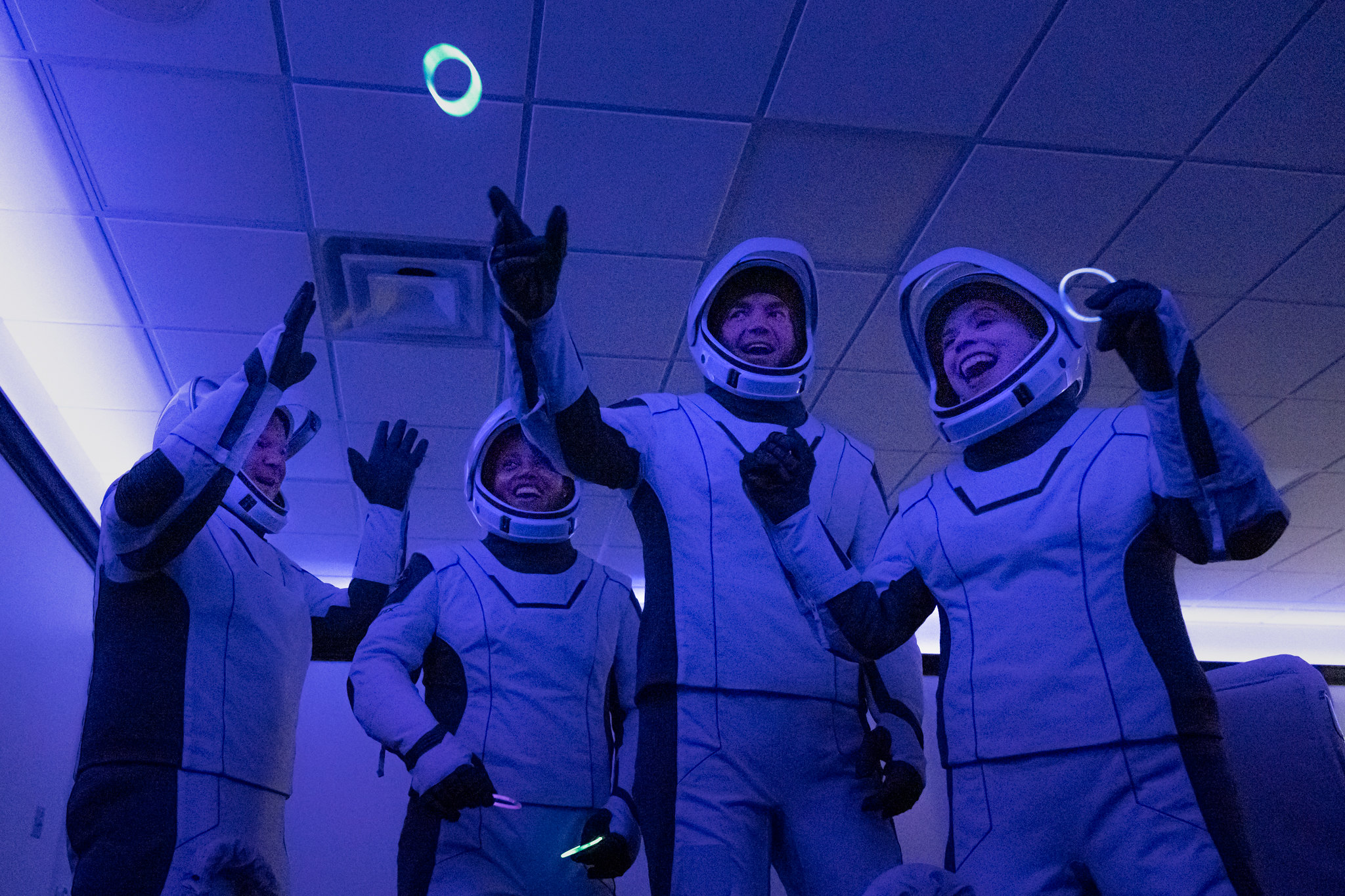
The four private astronauts who flew into orbit with SpaceX on the Inspiration4 mission in 2021, the first fully commercial human spaceflight mission to low-Earth orbit.

Enlarge / The four private astronauts who flew into orbit with SpaceX on the Inspiration4 mission in 2021, the first fully commercial human spaceflight mission to low-Earth orbit. (credit: Inspiration4/John Kraus)

There are three US companies now capable of flying people into space—SpaceX, Blue Origin, and Virgin Galactic—and representatives from those three companies told lawmakers on Wednesday that the industry is not yet mature enough for a new set of federal safety regulations for their customers.

A nearly 20-year moratorium on federal regulations regarding the safety of passengers on commercial human spaceflight missions is set to expire on January 1. It was scheduled to lapse at the beginning of October, but Congress added a three-month extension to a stopgap spending bill signed into law to prevent a government shutdown.

That allows a bit more time for lawmakers to write a more comprehensive commercial space bill addressing several issues important to the commercial space industry. These include industry-wide concerns about the Federal Aviation Administration’s ability to quickly license commercial launch and reentry operations, a hurdle SpaceX is eager to overcome as it waits for FAA approval to launch the second full-scale test flight of its giant Starship rocket.

Read 19 remaining paragraphs | Comments


Source: Ars Technica – Industry united in push to extend ban on human spaceflight regulations

Qualcomm Swaps Out Arm for RISC-V for Next-Gen Google Wear OS Devices

As part of a broad collaborative agreement with Google, Qualcomm this week said that that it will be adopting the RISC-V instruction set architecture (ISA) for a future Snapdragon Wear platform. Working together, the two companies will be bootstrapping a RISC-V ecosystem for Wear OS devices, with Qualcomm providing the hardware while Google expands its wearables OS and associated ecosystem of tools to support the new processor architecture.


Qualcomm’s Wear processors have been the de facto chip of choice for Wear OS devices since the launch of Google’s wearables platform almost a decade ago, with Qualcomm employing multiple generations of Arm CPU designs. This makes Qualcomm’s decision to develop a RISC-V wearables SoC especially significant, as it not only represents one of the highest profile adoptions of RISC-V in a consumer platform to date, but it means that, depending on Qualcomm’s specific product plans, this could see the overall Wear OS market make a hard turn from Arm to RISC-V in relatively short order.


As laid out in the relatively brief announcement from Qualcomm, the company will focus on development of RISC-V-based hardware suitable for wearable devices. While the company isn’t disclosing detailed technical specifications of their in-development products, given the company’s significant chip-design background, this likely includes customized RISC-V general purpose cores as well as sensors.


Notably here, the announcement is for “a RISC-V based wearables solution,” rather than a complete pivot to RISC-V with multiple solutions. Wearables as a whole are a much smaller market than smartphones, so Qualcomm has historically not offered a particularly deep lineup of hardware – meaning that even one chip is significant. Still, this also means that Qualcomm is not formally dropping Arm from its Snapdragon Wear platform at this time.


Qualcomm’s decision to embrace RISC-V for a future wearables SoC is significant news for the up-and-coming ISA, as this marks one of the highest profile adoptions of RISC-V in consumer gear to date. The open standard ISA has seen success over the last several years in the microcontroller market, with chip vendors adopting RISC-V CPU cores – often in place of Arm Cortex-M designs – as a means of having more control over their CPU core designs, and avoid paying ISA royalties in the process. Conversely, RISC-V has seen very limited adoption in the application processor space thus far, owing to the more complex chip designs and the overall smaller market. So Qualcomm’s plans to use RISC-V in their Snapdragon Wear platform, which has traditionally been based on Arm Cortex-A designs, marks a significant milestone for the adoption of RISC-V into higher-performing mobile devices.


Similarly, Google’s backing of the ISA by porting Wear OS to RISC-V is a major milestone on the software front. Bootstrapping a platform based on a new ISA is not just about the hardware, but the software as well, as there needs to be well-developed operating systems and applications to make the hardware useful. All of which requires significant tooling to enable that development. Google, for its part, is no stranger to embracing multiple ISAs – Android has long supported Arm, x86, and even MIPS – and the company already announced earlier this year that they’re working to make RISC-V a “tier-1” platform for Android, so the company’s efforts with Wear OS will go hand-in-hand with that.


Between the two companies, Google and Qualcomm essentially make up the software and hardware backend of the Wear OS ecosystem. Google’s Wear OS, in turn, is used by a range of popular smart watches, including those from Samsung, Fossil Group, Motorola, and Casio.


“Qualcomm Technologies have been a pillar of the Wear OS ecosystem, providing high performance, low power systems for many of our OEM partners,” said Bjorn Kilburn, GM of Wear OS by Google. “We are excited to extend our work with Qualcomm Technologies and bring a RISC-V wearable solution to market.”


Meanwhile, the decision to use RISC-V for wearables also has the potential to be a big change for the business side of Qualcomm. The company is current butting heads with Arm over licensing and royalty rates, particularly in regards to their acquired Nuvia IP. That relationship has already devolved to lawsuits, including Arm looking to block Qualcomm’s use of Nuvia-designed Arm CPU cores.


In short, swapping out Arm for RISC-V would allow Qualcomm to do away with paying royalties to Arm for Snapdragon Wear chips. The current royalties aren’t thought to be extravagant – Qualcomm is using Cortex-A53 here – but a penny saved is a penny booked for Qualcomm’s quarterly earnings. If nothing else, the very public announcement about the development of a RISC-V Snapdragon Wear SoC can be considered a shot across Arm’s bow, as a reminder that Qualcomm could eventually do the same thing with bigger and higher royalty bearing chips.


“We are excited to leverage RISC-V and expand our Snapdragon Wear platform as a leading silicon provider for Wear OS,” said Dino Bekis, vice president and general manager, Wearables and Mixed Signal Solutions, Qualcomm Technologies. ” Our Snapdragon Wear platform innovations will help the Wear OS ecosystem rapidly evolve and streamline new device launches globally.”


Source: AnandTech – Qualcomm Swaps Out Arm for RISC-V for Next-Gen Google Wear OS Devices

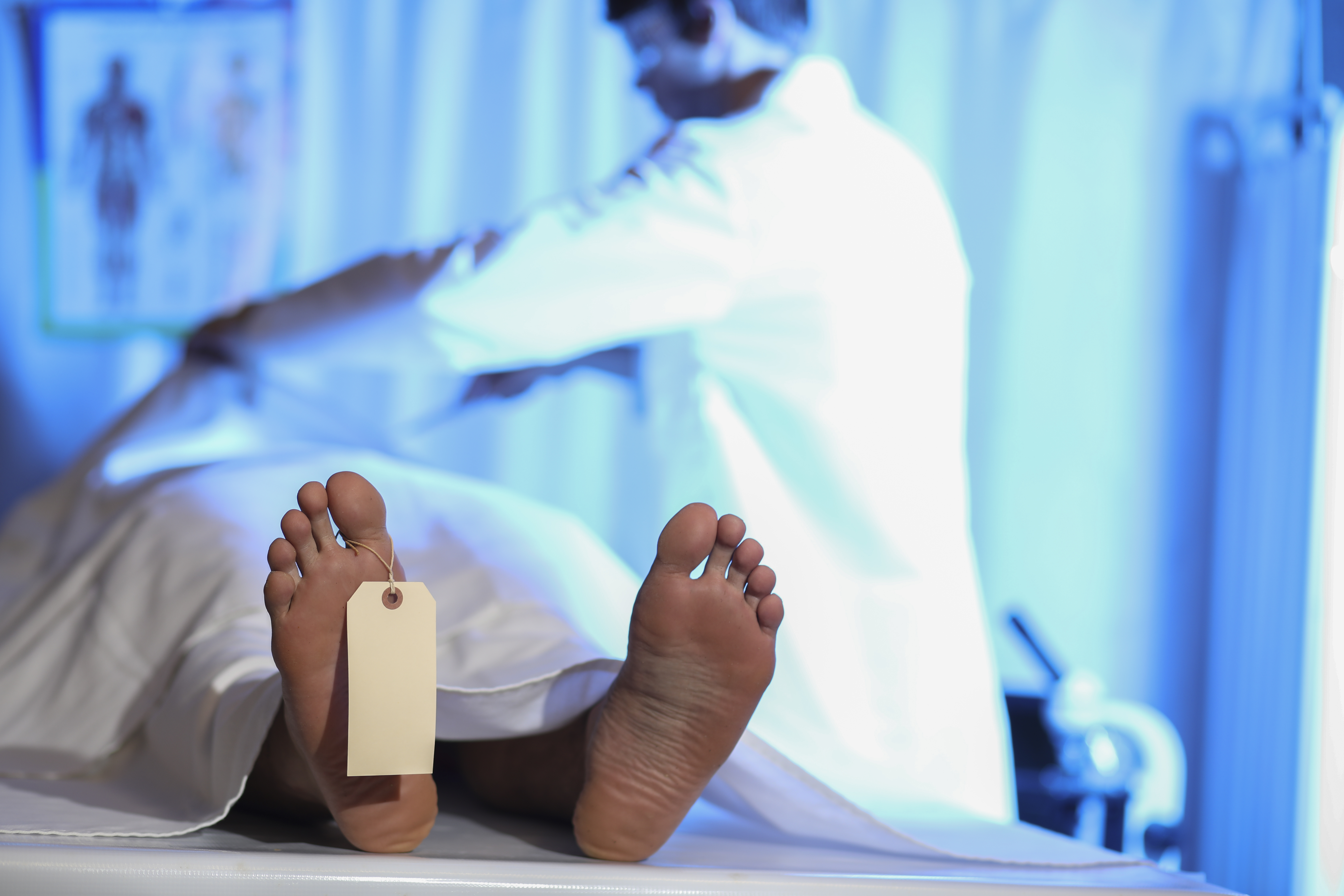
Stench leads officials to 189 rotting corpses at taxidermist’s funeral home

Read 12 remaining paragraphs | Comments


Source: Ars Technica – Stench leads officials to 189 rotting corpses at taxidermist’s funeral home

Amazon Plans To Deploy Delivery Drones In the UK and Italy Next Year

Amazon announced today that it plans to expand its Prime Air drone delivery program to Italy and United Kingdom, as well as one more yet-to-be-named U.S. city. “The new Prime Air locations will be announced in the coming months, with an anticipated launch date of late 2024,” reports The Verge. From the report: Another step by Amazon today suggests it’s ready to make drones a more serious part of its actual delivery network. The company said it plans to add Prime Air delivery to its existing fulfillment network — specifically by adding delivery drones to some of its same-delivery sites. Prime Air drones currently only operate out of the two standalone sites in Texas and California, so expanding drones to other sites means a wider delivery range and closer integration with Amazon’s delivery network.

Amazon also gave us a sneak peek of its new Prime Air delivery drone that it claims flies twice as far as its current model. Even more critically, the drones will be able to operate in light rain and what Amazon calls more “diverse weather.” The company released photos of the MK30 drone today, which it said will replace its existing delivery drones by late 2024.

The MK30 is also smaller and quieter than the existing Prime Air model, Amazon claims. The new drone can deliver objects of up to five pounds, with a typical delivery time of “one hour or less.” The new drone includes a “sense and avoid” feature that can help it avoid pets, people, and property. The new design will hopefully result in smoother flights. “Not only will this help boost the economy, offering consumers even more choice while helping keep the environment clean with zero emission technology, but it will also build our understanding how to best use the new technology safely and securely,” said UK’s Aviation Minister Baroness Vere in a statement in Amazon’s announcement.

Read more of this story at Slashdot.


Source: Slashdot – Amazon Plans To Deploy Delivery Drones In the UK and Italy Next Year

Beware the Season With Lord of Misrule's First Trailer

A small town in England celebrates the Harvest Festival every year, electing a Harvest Angel who helps throw out the evil spirit, Gallowgog. But when Rebecca Holland’s (Tuppence Middleton) daughter disappears after the festival, she finds herself in over her head, fighting against the townspeople and supernatural…

Read more…


Source: Gizmodo – Beware the Season With Lord of Misrule’s First Trailer

This WFH Headset Is on Sale for $35 Right Now

This Chat Directional headset is on sale for $34.99 right now through October 23 (reg. $69.95). The Chat headset rests over your ears and has an ENC boom microphone that picks up clear audio and reduces unwanted noise. It has a wireless range of 30 feet, an IPX5-waterproof rating, and lasts up to six hours on a…

Read more…


Source: LifeHacker – This WFH Headset Is on Sale for Right Now

System Performance Monitoring and Tuning Guide

In the world of computing, Linux stands as a paragon of flexibility and power. Yet, much like a musical instrument, it requires regular tuning to produce its best performance. Through this article, we’ll embark on a journey exploring the intricacies of Linux system performance, emphasizing the importance of monitoring and proactive tuning.

Source: LXer – System Performance Monitoring and Tuning Guide

Apple’s $130 Thunderbolt 4 cable could be worth it, as seen in X-ray CT scans

Apple's Thunderbolt 4 (USB-C) Pro cable connector in its reinforced, grounded metal shell (left) and its single-piece crimped cable strain relief (right).

Enlarge / Apple’s Thunderbolt 4 (USB-C) Pro cable connector in its reinforced, grounded metal shell (left) and its single-piece crimped cable strain relief (right). (credit: Lumafield)

When Apple finally made the move to USB-C, it did so in a very Apple way. That includes the offering of a $130 Thunderbolt 4 (USB-C) Pro cable, one that’s actually $160 if you need the full 3 meters. Could one cable, an object whose job is to transfer power and data and be completely unnoticed, be worth that kind of cash?

Lumafield, maker of manufacturing-minded industrial CT scanners, studied this question across three dimensions. After scanning Apple’s top-of-the-line cable, a $10 Amazon Basics model, and USB-C cables costing $5.59 and $3.89, Lumafield had no definitive answer other than “we buy cables that meet our needs” and that “there’s plenty of room for clever engineering and efficient manufacturing” inside a seemingly defined spec like USB-C.

But we can say that if your goal is to buy one cable that will hold up to abuse, work with the power and data speeds of today and a reasonably distant tomorrow, and remove cables from your list of things that might be the problem? Lumafield’s images show why Apple’s alpha-cable might just be worth it.

Read 7 remaining paragraphs | Comments


Source: Ars Technica – Apple’s 0 Thunderbolt 4 cable could be worth it, as seen in X-ray CT scans

Hacker Leaks Millions More 23andMe User Records On Cybercrime Forum

An anonymous reader quotes a report from TechCrunch: The same hacker who leaked a trove of user data stolen from the genetic testing company 23andMe two weeks ago has now leaked millions of new user records. On Tuesday, a hacker who goes by Golem published a new dataset of 23andMe user information containing records of four million users on the known cybercrime forum BreachForums. TechCrunch has found that some of the newly leaked stolen data matches known and public 23andMe user and genetic information. Golem claimed the dataset contains information on people who come from Great Britain, including data from “the wealthiest people living in the U.S. and Western Europe on this list.”

On October 6, 23andMe announced that hackers had obtained some user data, claiming that to amass the stolen data the hackers used credential stuffing — a common technique where hackers try combinations of usernames or emails and corresponding passwords that are already public from other data breaches. In response to the incident, 23andMe prompted users to change their passwords and encouraged switching on multi-factor authentication. On its official page addressing the incident, 23andMe said it has launched an investigation with help from “third-party forensic experts.” 23andMe blamed the incident on its customers for reusing passwords, and an opt-in feature called DNA Relatives, which allows users to see the data of other opted-in users whose genetic data matches theirs. If a user had this feature turned on, in theory it would allow hackers to scrape data on more than one user by breaking into a single user’s account.

Read more of this story at Slashdot.


Source: Slashdot – Hacker Leaks Millions More 23andMe User Records On Cybercrime Forum

Chan Zuckerberg Initiative’s $250 million NYC biohub will engineer disease-fighting cells

The Chan Zuckerberg Initiative is opening a research center in New York City dedicated to developing new techniques for early disease detection and treatment. CZ Biohub NY, as it’s being called, will work with Columbia, Rockefeller and Yale universities to learn how immune cells detect and attack specific diseases, and eventually use this insight to engineer cells that could do the job more precisely.

The charitable organization headed by Priscilla Chan and Meta CEO Mark Zuckerberg has committed $250 million to the effort, according to STAT, alongside investments of $10 million each from the State of New York and New York City. In a blog post announcing CZ Biohub NY, the Chan Zuckerberg Initiative said it will start by focusing on cancers and other diseases that often go undetected until they’ve advanced to the point of being difficult or impossible to treat. That includes “ovarian and pancreatic cancers; neurodegenerative diseases, including Parkinson’s and Alzheimer’s; as well as aging and autoimmunity,” CZI says.

CZ BioHub NY aims to get to the bottom of how immune cells work, down to their ability to spot tissue-specific changes that can be among the earliest indications of a disease’s onset. Then, its researchers hope to be able to create cells that can sniff out these abnormalities even earlier than they’re currently able, and be sent to the disease sites directly for more effective treatment. These bioengineered immune cells would “scout, report, and repair damage to our cells before it leads to serious illnesses,” said Chan.

The New York hub is the latest in CZI’s growing network of research institutions, and joins three others that have been established in San Francisco, Chicago, and Redwood City. All have pledged to break ground on their respective scientific goals within a time frame of 10-15 years. Now, according to STAT, the New York biohub just needs to secure a site to work out of.

This article originally appeared on Engadget at https://www.engadget.com/chan-zuckerberg-initiatives-250-million-nyc-biohub-will-engineer-disease-fighting-cells-214721932.html?src=rss

Source: Engadget – Chan Zuckerberg Initiative’s 0 million NYC biohub will engineer disease-fighting cells

Make High-protein Dumplings With Egg White Wrappers

Dumplings are a perfect food, but there’s always room for some spirited modification, like switching out the wrapper. By substituting the flour wrapper for something more protein-centric, you can make dumplings that are friendly towards the gluten-sensitive, folks minimizing their carb intake, or anyone who needs to…

Read more…


Source: LifeHacker – Make High-protein Dumplings With Egg White Wrappers

Tesla just posted its Q3 financial results, and they’re underwhelming

Brand new Tesla cars sit parked at a Tesla dealership on October 18, 2023 in Corte Madera, California.

Enlarge (credit: Justin Sullivan/Getty Images)

Tesla posted its financial results for the third quarter of 2023 on Wednesday afternoon. It’s not been the best three months for the company—Tesla is still profitable, but its margins are shrinking, and its expenses are rising, both consistent trends since the start of the year. It also delivered fewer cars than in Q2 and will need to find homes for nearly half a million more EVs by the end of the year if it’s to keep to its target of 1.8 million cars in 2023.

Tesla brought in $23.4 billion in total revenue for Q3 2023, a 9 percent increase year over year. But gross profits are down 22 percent year over year, with net income decreasing 44 percent, despite Tesla selling more than 90,000 electric vehicles in Q3 2023 than Q2 2022. Tesla has engaged in several rounds of price cuts in the US and abroad and says that currency fluctuations also cost the company $400 million.

But there were some bright spots on the balance sheet. Automotive regulatory credit revenues doubled to $554 million for Q3, and its energy generation and storage business, as well as its services, increased their revenues slightly. Tesla has also increased its R&D spending to $1.2 billion. Tesla’s cash, cash equivalents, and investments also grew by $3 billion to $26.1 billion. And the company says it continues to reduce the cost of goods sold per vehicle.

Read 4 remaining paragraphs | Comments


Source: Ars Technica – Tesla just posted its Q3 financial results, and they’re underwhelming

Starfield Just Busted The Biggest Myth About Xbox Game Pass

Bethesda’s newest giant role-playing game Starfield, which hit Xbox’s Game Pass service the day of its release, enjoyed a very loud launch last month. In fact, its developer singled it out as “the biggest Bethesda game launch of all time.” Now new data from consumer analytics company Circana backs up that boast with…

Read more…


Source: Kotaku – Starfield Just Busted The Biggest Myth About Xbox Game Pass